This 3D-Printed Lamp Was Designed to Feel Like Mom’s Hug

There’s something quietly revolutionary happening in design right now, and it doesn’t involve flashy colors or radical shapes. Instead, it’s about something far more intimate. Hu Yuanlin’s HER Floor Lamp proves that the most innovative designs often emerge from the most personal places, bridging the gap between cutting-edge technology and deep emotional resonance.

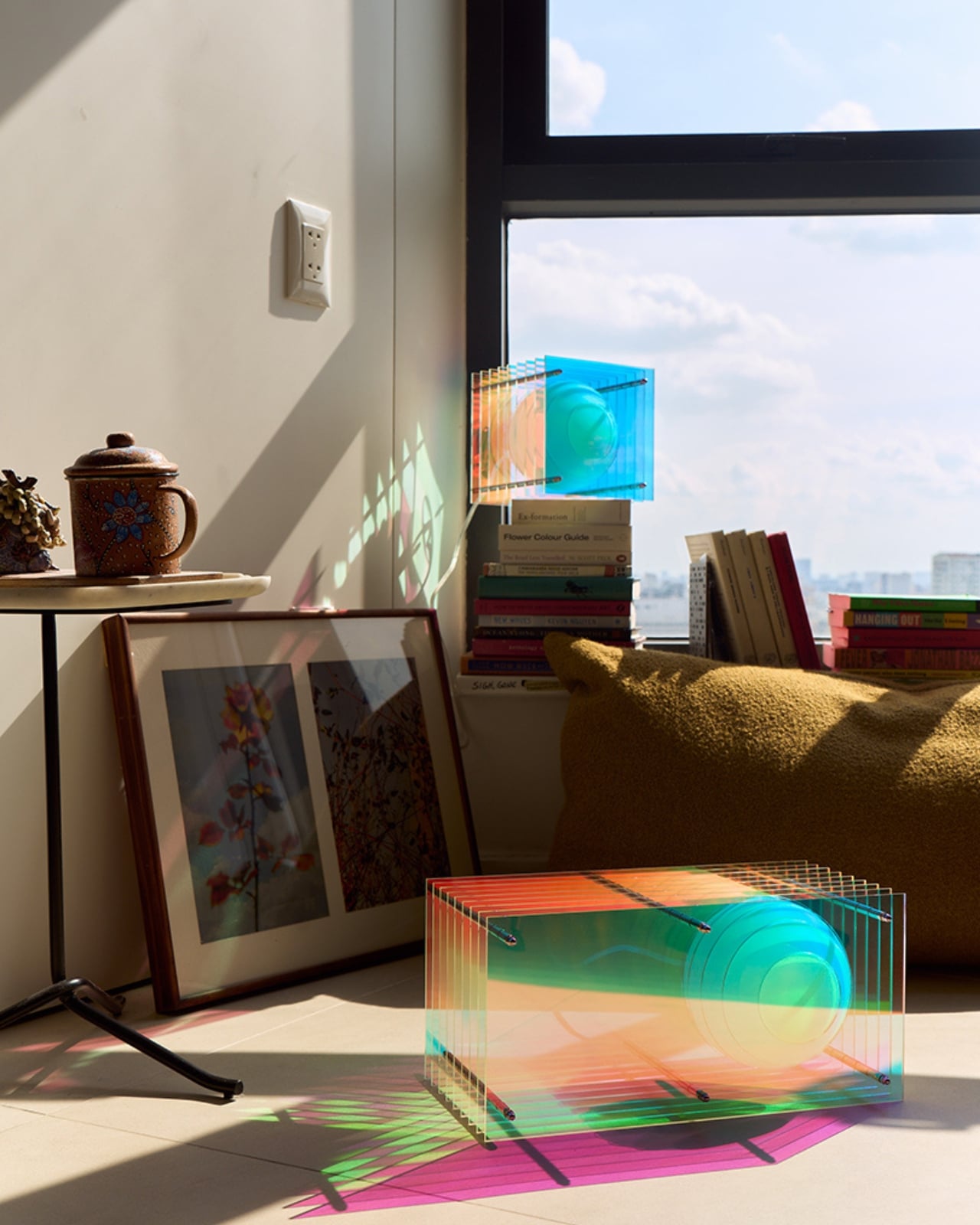
The story behind HER is achingly simple yet profoundly universal. While studying abroad, Hu found himself missing his mother’s presence, that comforting silhouette that represents home and safety. Rather than simply enduring that longing, he transformed it into something tangible. The lamp’s gracefully curved form echoes the protective stance of a maternal figure, creating what he calls a “quiet emblem of safety and peace at home”. It’s a reminder that the objects we surround ourselves with can do more than illuminate rooms or look aesthetically pleasing. They can hold memories, evoke emotions, and provide companionship.

Designer: Hu Yuanlin

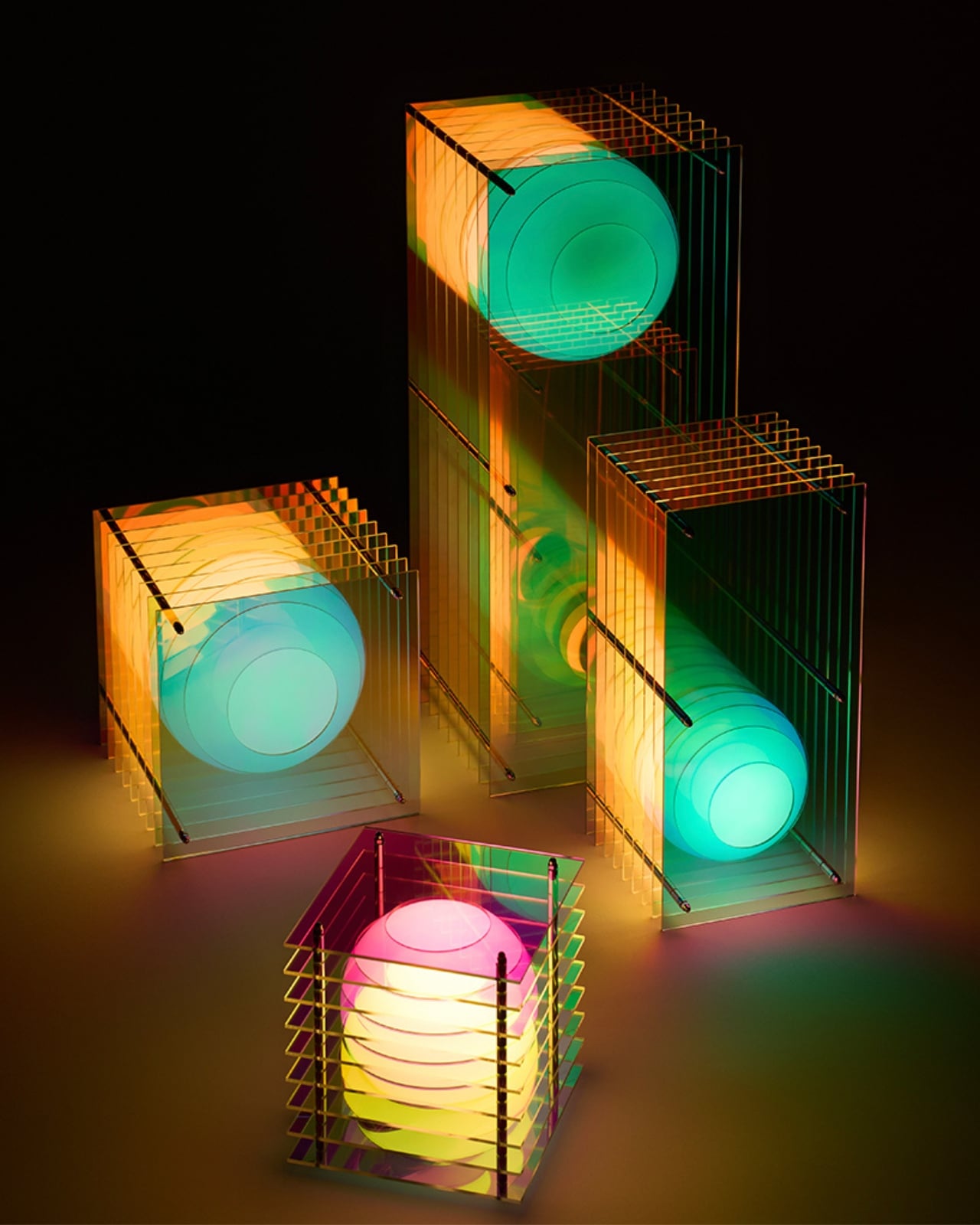
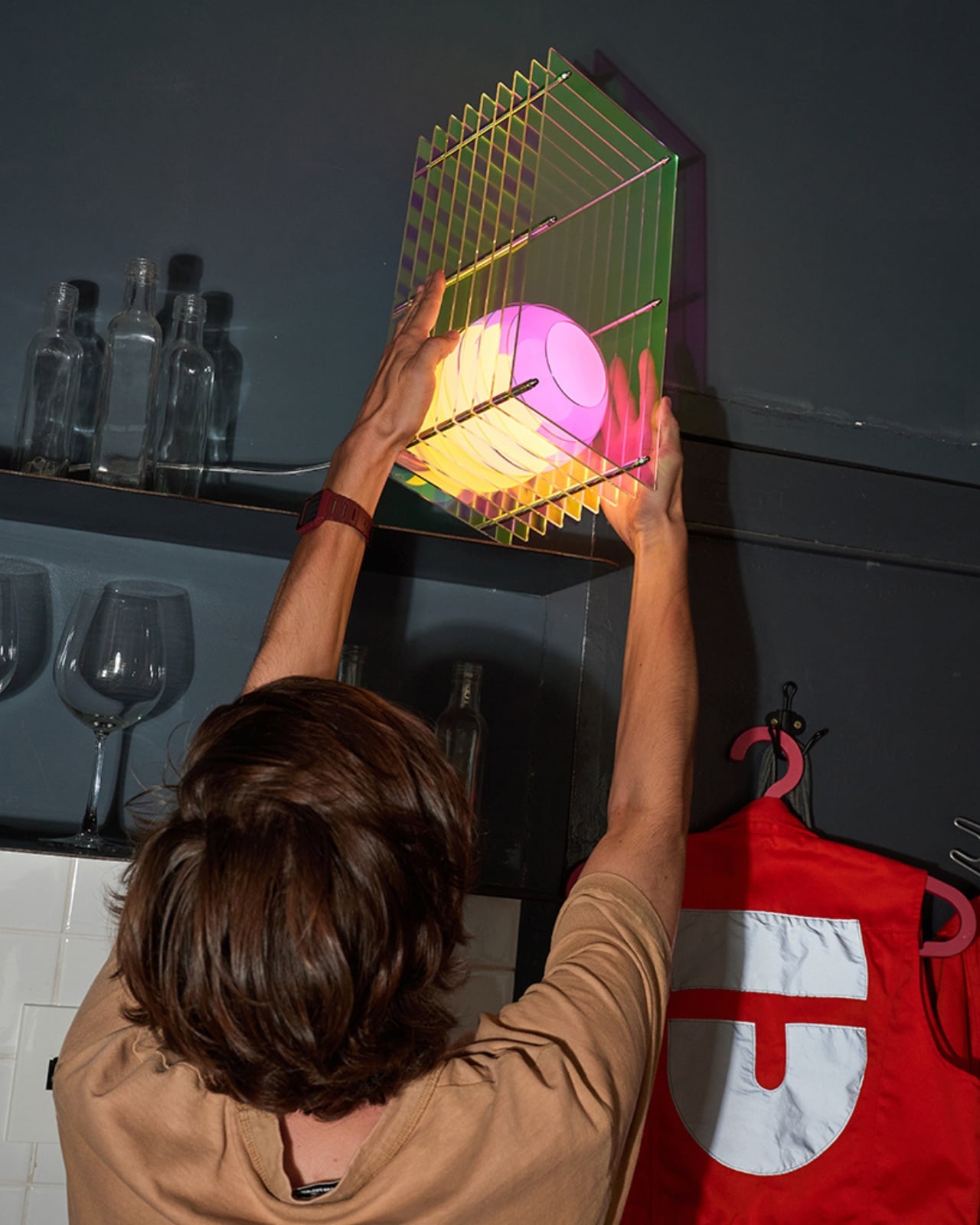
What makes HER particularly fascinating is how it marries this emotional depth with technological innovation. The lamp isn’t just symbolically sustainable through its emotional longevity. It’s literally made from recycled materials, with its segmented lampshade 3D-printed from recycled PETG sourced from old eyeglass frames and disc cases. This choice transforms what might have become waste into something beautiful and functional, proving that sustainability and design excellence aren’t mutually exclusive.

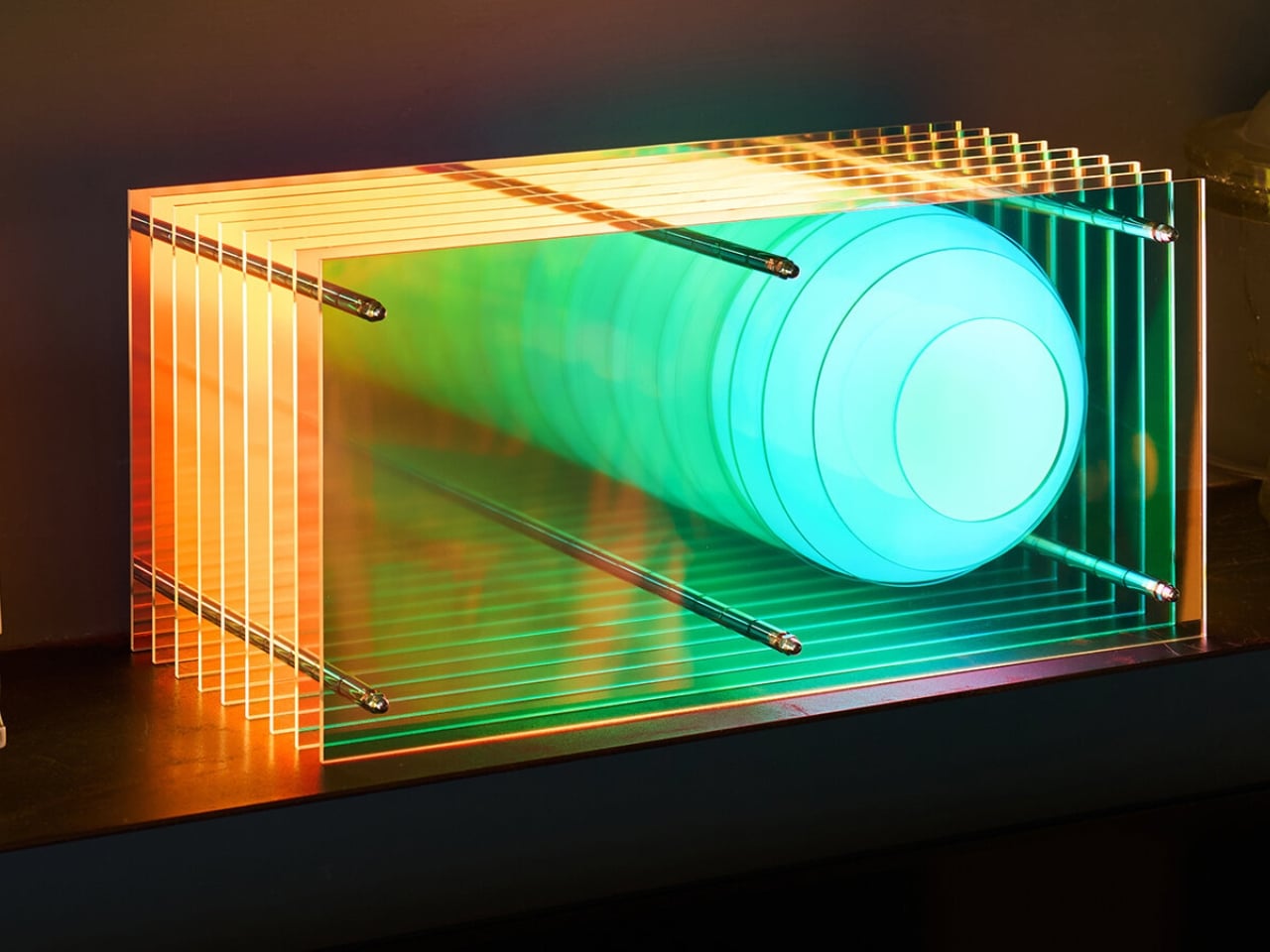
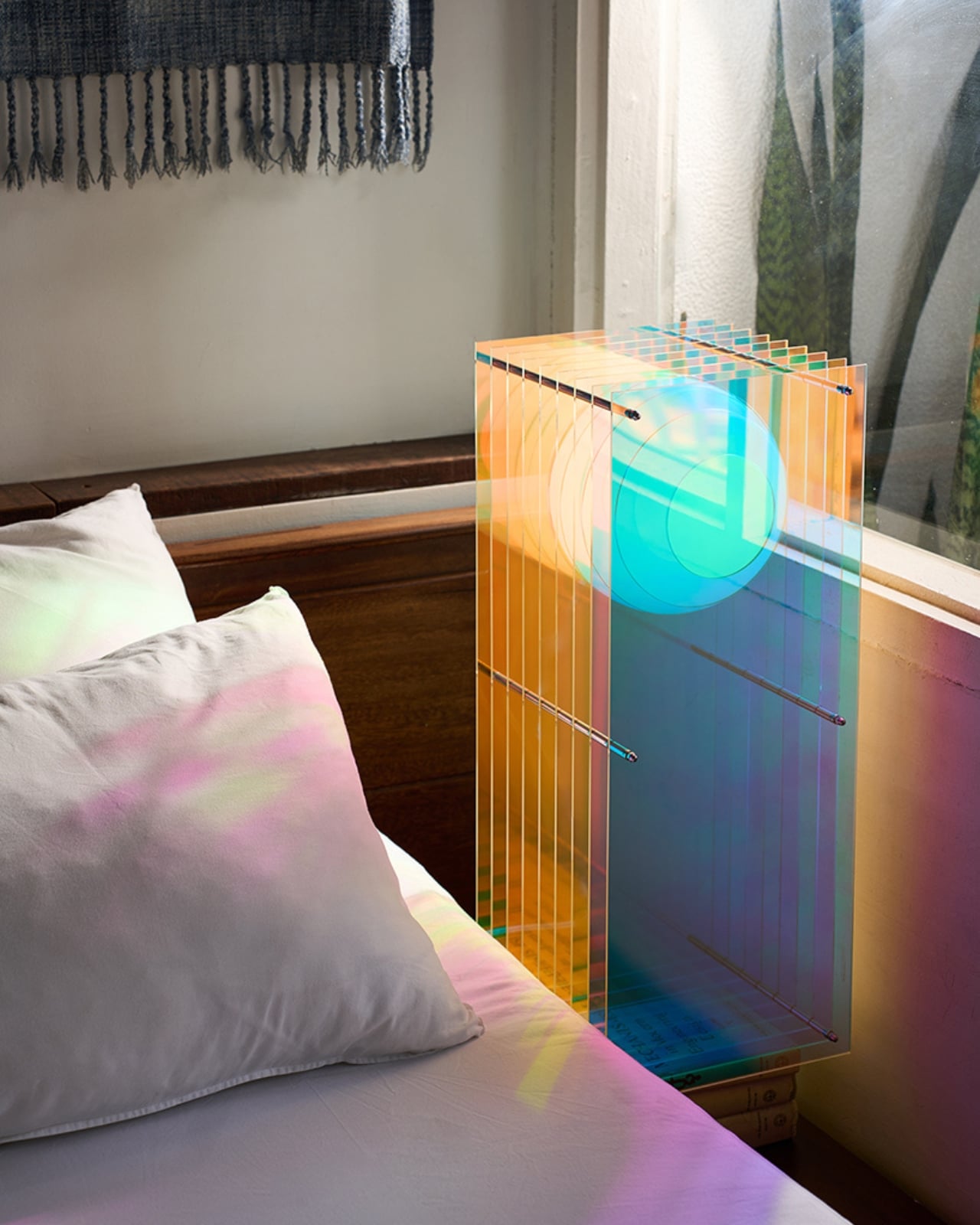
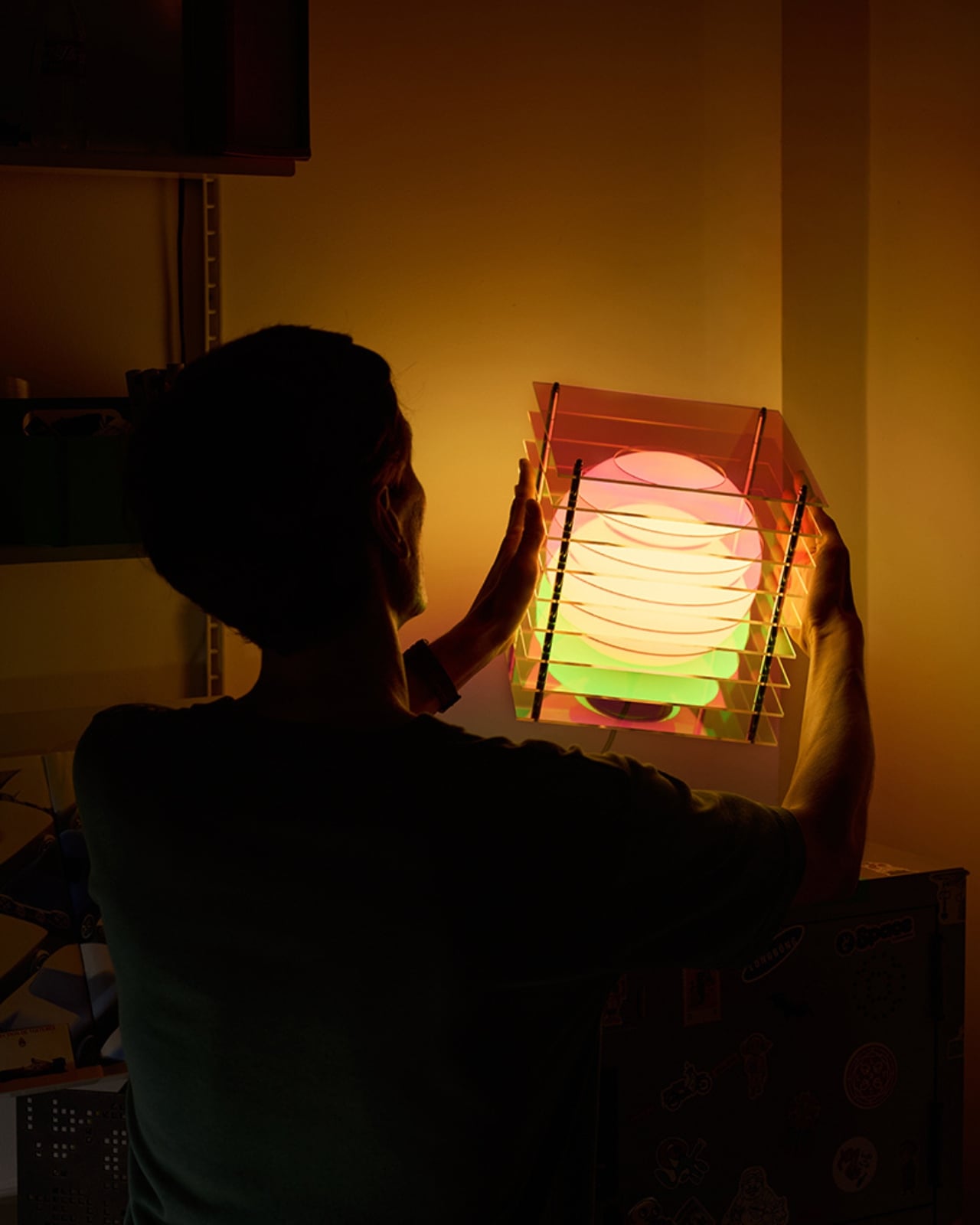
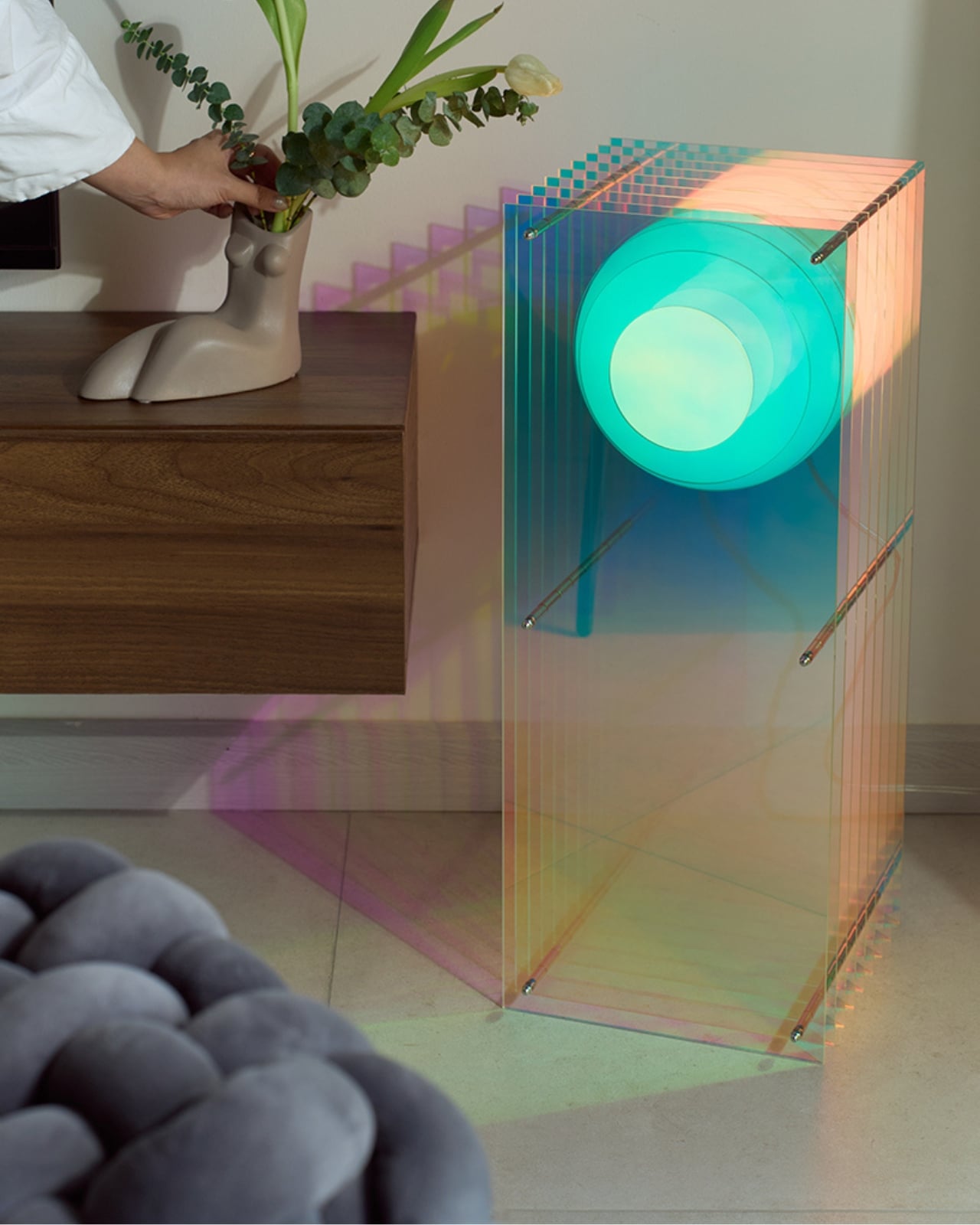
The technical execution deserves attention too. The crystal-clear shade refracts light in ways that create flowing shadows and an atmosphere of serenity. It’s not harsh or clinical despite its modern manufacturing method. Instead, the lamp combines streamlined structural design with organic, leaf-like details that express natural vitality within a minimalist framework. This balance between the organic and the technological, between warmth and precision, feels distinctly contemporary.

HER has already garnered significant recognition in the design world. The lamp won a 2025 Red Dot Design Award, one of the most prestigious accolades in the field, while Hu was still a student. That’s no small achievement. It signals that the design community is hungry for work that doesn’t just look good in a portfolio but carries genuine meaning and innovative thinking about materials and manufacturing.

The timing feels right for a design like this. We’re living in an era where people increasingly crave authenticity and connection, where the sterile perfection of mass-produced items often feels empty. Meanwhile, technology like 3D printing has matured to the point where it can produce objects with both technical sophistication and artistic nuance. HER exists at this intersection, using advanced manufacturing to create something that feels handcrafted and personal.

There’s also something poignant about a lamp designed to evoke maternal presence. In our hyper-connected yet often isolated modern lives, especially for those living far from family, objects that provide emotional anchoring become increasingly valuable. HER doesn’t just light a room. It occupies space with a presence, standing sentinel like a protective figure. It’s the kind of design that transforms a house into a home, that makes a lonely apartment feel less empty.

What Hu has achieved with HER suggests exciting possibilities for the future of product design. As 3D printing technology becomes more accessible and sustainable materials more refined, designers have unprecedented freedom to create forms that would be impossible through traditional manufacturing. More importantly, they can create limited runs or even custom pieces that maintain deeply personal narratives without sacrificing quality or sustainability.

The lamp has already been exhibited at events like TCT Asia 3D Printing and Shanghai Design Week, introducing it to broader audiences and manufacturing partners. It’s moving from student project to commercial reality, which means more people might soon have the opportunity to bring this piece into their homes and lives. HER Floor Lamp reminds us that great design doesn’t need to shout. Sometimes the most powerful statements are quiet ones, standing in the corner of a room, casting gentle shadows, and making us feel a little less alone.

The post This 3D-Printed Lamp Was Designed to Feel Like Mom’s Hug first appeared on Yanko Design.

Tesla’s $350 Pickleball Paddle Is Peak Design Absurdity

When your car company starts selling pickleball paddles, you know we’ve officially entered a new dimension of brand expansion. Tesla, the same company that brought us electric vehicles and the occasional flamethrower, has teamed up with Selkirk Sport to create the Tesla Plaid Pickleball Paddle, a limited-edition piece of sports equipment that costs more than some people’s monthly car payments.

Let’s talk about that price tag first. At $350, this paddle is basically the Hermès Birkin of the pickleball world. For context, professional tennis players like Carlos Alcaraz swing rackets that cost $299. But here we are, in a timeline where a paddle designed to hit a plastic ball over a net somehow commands a higher price than equipment used at Wimbledon. The paddle sold out in under three hours during its initial release, which either says something profound about consumer behavior or absolutely nothing at all.

Designers: Tesla and Selkirk Sport

So what exactly are you getting for that eye-watering price? According to Tesla and Selkirk, this isn’t just some branded merchandise with a logo slapped on it. This is apparently a genuine engineering collaboration that involved actual wind tunnel testing. Yes, the same aerodynamic technology that helps Tesla vehicles slice through air resistance has now been applied to your weekend hobby. The paddle features an elongated form with an open-air throat design and rounded, edgeless perimeter, all calculated to reduce drag while increasing your reach on the court.

The specifications read like something from a tech blog rather than a sports equipment catalog. We’re talking about a two-ply carbon fiber face, a full-foam core, and Selkirk’s patent-pending InfiniGrit Surface designed to generate spin. There’s also a MOI Tuning System integrated into the design, because apparently moment of inertia is now a critical concern when you’re playing a sport that was invented in someone’s backyard. The paddle weighs between 7.8 and 8.1 ounces, measures 16.4 inches by 7.5 inches, and comes USAP approved, which means it’s actually legal for official tournament play.

But here’s where things get interesting from a design perspective. This collaboration isn’t just about Tesla lending its name to boost sales. Selkirk’s co-owner and Director of Research and Development has emphasized that Tesla’s aerodynamics expertise was key in determining the paddle’s overall shape. The elongated form and sharp edgeless style weren’t arbitrary aesthetic choices but the result of actual testing in Tesla’s facilities. In a world where most sports equipment collaborations are purely cosmetic exercises, there’s something almost refreshingly nerdy about bringing automotive engineering to a paddle sport.

The secondary market has predictably gone wild. The paddle spawned a thriving resale ecosystem on eBay almost immediately, because of course it did. When something is both expensive and artificially scarce, collectors and resellers descend like moths to a very expensive flame. The paddle dropped again in an even more limited quantity recently, ensuring that the hype cycle continues churning.

From a pure design standpoint, the Tesla Plaid Paddle represents an interesting collision of worlds. It’s where automotive engineering meets recreational sports equipment, where brand extension becomes an engineering challenge, and where price points lose all connection to reality. The paddle looks sleek in its black and red colorway, clearly drawing visual cues from Tesla’s Plaid mode branding. It’s undeniably cool looking, and there’s genuine innovation in applying aerodynamic principles to paddle design.

But it’s also kind of ridiculous. Pickleball, for all its recent popularity surge, remains a sport most people play on converted tennis courts at their local park. Bringing wind tunnel testing and automotive-grade engineering to that equation feels simultaneously impressive and completely absurd. It’s the design world equivalent of using a sledgehammer to crack a walnut, except the sledgehammer costs $350 and you can’t even buy one because it sold out in three hours.

Whether this paddle actually improves your game or just your Instagram aesthetic is almost beside the point. What it really represents is how far we’ve come in blurring the lines between technology, sports, fashion, and brand identity. And honestly? That’s kind of fascinating.

The post Tesla’s $350 Pickleball Paddle Is Peak Design Absurdity first appeared on Yanko Design.

This Cute AI Robot Just Turned Your Car Into a 4G Hotspot

Picture this: you slide into your car, and instead of being greeted by cold, silent technology, there’s a little spherical companion perched on your dashboard, ready to chat. That’s TOOOONY, and it’s rethinking what it means to have tech in your vehicle.

At first glance, Toooony looks like it escaped from a Pixar film. It’s got this perfectly round head with big, expressive eyes that light up on its circular screen, and honestly, you can’t help but smile when you see it. The design team at ZIZ Intelligent Manufacturing, led by Junjia Yang, Yang Shen, Yanan Liu, and Ruilin Niu, clearly understood something crucial: if you’re going to spend hours in your car, your tech companion should feel like an actual companion, not just another gadget bolted to your dashboard.

Designers: Junjia Yang, Yang Shen, Yanan Liu, Ruilin Niu

But Toooony isn’t just sitting there looking cute. This little robot is packed with functionality that genuinely changes how you interact with your vehicle. The anthropomorphic AI dialogue system means you can actually have conversations with it, not just bark commands. It responds to voice, recognizes touch, and here’s where it gets interesting: it features “tap-to-interact” functionality that lets you communicate with other Toooony users on the road.

Think about that for a second. We’ve all had those moments driving where we wish we could easily communicate with another car. Maybe it’s a friendly wave, sharing traffic info, or just acknowledging a fellow road tripper. Toooony makes this possible through LoRa near-field encrypted communication, positioning itself as the world’s first cross-brand non-contact travel social device. You can connect with other drivers without switching car brands or fumbling with apps, all while keeping your communication secure and encrypted.

The circular screen serves as Toooony’s face and information hub, displaying a variety of customizable watch faces. One minute it might show you the weather with a sunset reflection, the next it’s displaying your vehicle stats or just giving you those cheerful cartoon eyes that make even traffic jams slightly more bearable. The screen adapts to different contexts, whether you need navigation info, want to control your music, or just need a visual companion during your commute.

What really sets it apart is how it blends personality with practical features. Built-in lighting creates ambiance and provides visual feedback, while the sound system handles everything from navigation prompts to music. The expressions change based on what’s happening, giving you emotional cues that feel natural rather than robotic. When you’re low on battery, the device might look concerned. Hit the road after a long day? It might greet you with a cheerful face that genuinely makes you feel less alone.

Then there’s the connectivity piece. Toooony isn’t just another Bluetooth speaker pretending to be smart. It’s equipped with 4G capability and can transform into a stable mobile hotspot that covers your entire vehicle. This means passengers can stream, work, or browse without draining phone data plans, and the connection stays consistent because it’s not relying on your phone’s tethering. For families on road trips or remote workers who treat their car like a mobile office, this feature alone justifies the device’s existence. The cross-device communication capability extends beyond just car-to-car interaction. It can sync with your other devices, creating a seamless tech ecosystem that follows you from home to vehicle and beyond. That playlist you were listening to in your living room? Toooony picks it up. Calendar reminders? They’ll pop up on that circular screen at the right time.

What makes Toooony particularly clever is that it’s designed as a customizable physical robot. This isn’t one of those “smart assistants” that’s just a speaker with lights. It’s an actual presence in your car with physical character. You can personalize its responses, change its watch faces to match your mood or aesthetic, and over time, it genuinely starts to feel like your driving buddy rather than just another piece of car tech.

The form factor matters too. Toooony sits on your dashboard without being intrusive, positioned where you can see it but it doesn’t block your view. The spherical design with what appears to be little headphone-like elements gives it this endearing character that makes sense in a vehicle environment. It’s friendly tech that doesn’t demand your attention but is there when you need it. The device brings a human touch to the driving experience when usually it seems like it’s designed by engineers for engineers. It’s functional without being cold, smart without being intimidating, and connected without being creepy. Sometimes the best innovations aren’t about cramming in more features but about making technology feel like it actually belongs in our lives. Toooony gets that balance right.

The post This Cute AI Robot Just Turned Your Car Into a 4G Hotspot first appeared on Yanko Design.
This 2025 Award-Winner Solved the One Thing Thermal Pots Get Wrong

There’s something deeply satisfying about a product that just works. Not in a flashy, look-at-me kind of way, but in that quiet, thoughtful manner where every detail clicks into place. That’s exactly what Doogdesign Inc. has achieved with their Vacuum Insulated Pot PWR, a redesign for Tiger Corporation that recently earned a 2025 Good Design Award.

At first glance, it might seem like just another thermal pot. But here’s where things get interesting. This isn’t a fresh concept pulled from thin air but rather a thoughtful evolution of Tiger’s previous PWO model. The designers at Doogdesign, an Osaka-based studio founded by Kazuya Koike, took on the challenge of addressing real-world frustrations that users had been living with for years.

Designer: Doogdesign Inc

Think about the last time you struggled with a stubborn lid or fumbled with an awkward lever while trying to pour your second cup of tea. Those little moments of friction add up. The PWR tackles exactly these pain points, transforming daily annoyances into seamless interactions. Through extensive prototyping and adjustments, the team refined the lever and lid mechanism until attachment and detachment could happen with just a light touch. It’s the kind of improvement that sounds simple until you realize how much testing and iteration goes into making something feel effortless.

But functionality alone doesn’t make great design. What sets this pot apart is how it balances practical usability with visual grace. The lid features a smooth, curved form that plays beautifully with light and shadow, evoking the quiet presence of fine tableware. There’s an understated elegance here that doesn’t scream for attention but somehow makes your kitchen counter look a little more put-together.

The design philosophy becomes clear when you examine the details. This is about more than just keeping beverages hot (though the vacuum insulation handles that job brilliantly). It’s about creating an object that belongs on your everyday table, something you’re happy to see sitting out rather than hiding away in a cupboard. The stainless steel construction speaks to durability and longevity, while the refined aesthetic ensures it won’t clash with your interior choices, whether you lean minimalist or eclectic.

One of the smartest moves? Offering three size options at 1.2L, 1.6L, and 2.0L. This versatility means whether you’re brewing tea for yourself on a quiet afternoon or hosting a small gathering, there’s a PWR that fits your needs without forcing you to compromise. It’s the kind of practical thinking that shows the designers actually considered how people live, not just how products photograph.

The recognition from the Good Design Award 2025 isn’t just industry back-patting. These accolades matter because they signal that experts in the field recognize when someone has genuinely moved the needle on product design. In a market flooded with thermal containers that prioritize either pure function or pure aesthetics, finding one that nails both deserves acknowledgment.

What makes this project particularly fascinating from a design perspective is how it demonstrates the value of iteration. Redesigning an existing product requires a different kind of creativity than starting from scratch. You’re working within established constraints, user expectations, and manufacturing realities. Yet Doogdesign managed to identify the friction points and address them without losing what made the original concept valuable in the first place.

If you’re someone who appreciates when form follows function without sacrificing beauty, or if you’ve ever caught yourself thinking “there has to be a better way to do this” while using everyday objects, the Vacuum Insulated Pot PWR is a perfect example of what happens when designers listen. It’s not trying to reinvent hot beverage storage. It’s just making it notably, measurably better, which might be the most refreshing approach of all.

The post This 2025 Award-Winner Solved the One Thing Thermal Pots Get Wrong first appeared on Yanko Design.
This Glowing Drone Fortress Could Save Lives in the Mountains

Picture this: you’re hiking through the Carpathians when fog rolls in and you lose your bearings. Instead of waiting hours for a helicopter rescue team, a drone reaches you in minutes, delivering supplies and guidance while thermal cameras track your location. This isn’t science fiction. It’s the vision behind Lynx, a jaw-dropping architectural concept that’s equal parts rescue station, tourist destination, and gothic cathedral.

Architect Alina Sanina has designed something that looks like it was pulled straight out of a fantasy epic, yet serves an incredibly practical purpose. These circular stations would perch in remote mountain locations across ranges like the Alps and Pyrenees, acting as autonomous hubs where drones can charge, launch, and coordinate rescue operations. But here’s where it gets interesting: they’re not just utilitarian tech boxes. Each station could house a planetarium, research facilities, viewing terraces, or even overnight accommodations. Think of them as architectural landmarks that happen to save lives.

Designer: Alina Sanina

The design itself is absolutely stunning. Sanina describes the aesthetic as “gothic futurist,” and you can see why. Concentric rings echo ancient fortress layouts, while serrated concrete walls rise in rhythmic peaks that mirror the surrounding ridgelines. It’s architecture that doesn’t fight the landscape but converses with it. The real magic happens in the materials, though. The structure uses a composite that blends concrete with glass inclusions, gradually shifting from solid concrete at the base to increasingly translucent glass as it climbs upward. The result? A building that literally appears to dissolve into the sky.

Those microscopic glass particles aren’t just pretty either. They refract light throughout the day, creating a crystalline shimmer that changes with cloud cover and sun position. Integrated photovoltaic cells turn the entire exterior into an energy-generating skin, allowing these stations to operate completely off-grid in locations where traditional infrastructure would be impossible. Additional roof panels power the drone charging systems and internal operations. Inside, floor-to-ceiling glass opens onto panoramic mountain views, blurring the line between shelter and wilderness. The flexible design means each station could adapt to its location and needs, functioning as an observatory in one spot, a wayfinding beacon in another, or a resort-adjacent public space somewhere else.

The concept emerged from a real and growing problem. In Ukraine’s Carpathian mountains alone, rescue teams conducted over 500 missions in 2024. Sudden weather shifts, communication failures, and treacherous terrain put hikers at constant risk. Traditional rescues require extensive resources: trained teams, search dogs, specialized equipment, helicopters. It’s expensive, time-consuming, and sometimes dangerous for the rescuers themselves. Drones can survey vast territories in minutes, detect thermal signatures through fog or darkness, deliver urgent supplies, and provide real-time communication.

What makes this concept particularly timely is Ukraine’s rapid advancement in drone technology, accelerated by wartime innovation. “The moment for Lynx has come,” Sanina explains. “The technology is ready, aerial routes exist, and there are hundreds of skilled operators. It’s time to imagine how drones can serve rescue, care and human well-being.” It’s a powerful reframing of technology often associated with warfare, repositioning it as infrastructure for care and conservation.

The system would integrate through a mobile app providing hikers with route data, weather updates, and a crucial SOS function. Service drones would deliver essentials like water, food, and medical supplies to remote hiking segments, while separate passenger drones could offer aerial sightseeing tours. The stations would form a networked system, monitoring environmental conditions and coordinating responses across entire mountain ranges.

Lynx imagines a future where drone stations become as commonplace in mountain regions as ski lifts or ranger stations, but far more intelligent and adaptive. It’s infrastructure that doesn’t dominate nature but works symbiotically with it. These aren’t just buildings or tech installations. They’re a new architectural typology entirely, one where technology, tourism, and wilderness protection converge in structures as beautiful as they are functional. In an era when we’re constantly told to choose between technological progress and environmental preservation, Lynx suggests maybe we don’t have to choose at all.

The post This Glowing Drone Fortress Could Save Lives in the Mountains first appeared on Yanko Design.
Lunora Just Solved the One Thing Sleep Trackers Get Wrong

We’ve all been there. It’s 2 a.m., you’re staring at your phone for the third time, and your brain refuses to shut down even though you have an early morning ahead. The usual advice is always the same: put away screens, create a routine, dim the lights. But what if someone actually designed a product that does all of that for you, and looks good doing it?

Enter Lunora, a sleep aid device designed by Prithvi Manoj Bhaskaran that’s honestly unlike anything you’ve seen on your bedside table. At first glance, it looks like a little sculptural figure taking a much-needed rest, complete with a glowing orb balanced on its back. That gentle lean, those smooth curves, it all feels intentional in the best way. This isn’t another gadget screaming for your attention. It’s the opposite.

Designer: Prithvi Manoj Bhaskaran

What makes Lunora interesting is how it approaches the whole wind-down process. Instead of tracking your sleep or buzzing you awake, it focuses on helping you actually get there. The device combines three sensory elements: a softly dimming light, gentle aroma diffusion, and low-distraction sound. Think of it as creating a mini sanctuary that guides your body from alert mode to rest mode, without any jarring alarms or bright screens interrupting the vibe.

The way it works is refreshingly simple. You start your routine, and Lunora does its thing. The light gradually dims, signaling to your brain that it’s time to power down. The aroma diffuser releases calming scents that help cut through mental clutter. And the sound component keeps things ambient without being distracting. It’s all about repetition and ritual, the kind of stuff our bodies actually respond to when we give them a chance.

For anyone juggling late-night study sessions or those particularly brutal stress-heavy days, this kind of product makes a lot of sense. You’re not adding another task to your routine or forcing yourself to follow some complicated sleep protocol. You just let Lunora do the heavy lifting while you focus on actually relaxing. It’s like having a friend gently remind you that yes, it’s okay to slow down now.

But here’s where the design really shines. That leaning posture isn’t just for show. It creates this almost human-like presence that feels comforting rather than clinical. The warm terracotta color and those organic curves make it look more like a piece of art than a piece of technology. You could absolutely see this sitting in a carefully curated room on Instagram, but it’s also genuinely functional. The glowing orb on top doubles as the light source, while the body houses the aroma diffuser, visible in those beautifully detailed close-ups.

There’s something refreshing about a product that doesn’t promise to hack your sleep or optimize your REM cycles. Lunora just wants to help you unwind at your own pace. No data tracking, no app notifications, no performance anxiety about whether you’re sleeping correctly. It’s tech that knows when to step back and let you be human.

In a world where we’re constantly optimizing, tracking, and measuring everything, maybe what we need at the end of the day is something that simply helps us transition. Something that looks friendly, feels calming, and doesn’t demand anything from us except the willingness to slow down. Lunora manages to package all of that into a form that’s both sculptural and functional, the kind of design that makes you stop and appreciate the thoughtfulness behind it.

Whether you’re a design enthusiast who appreciates objects with personality, a tech lover curious about ambient devices, or just someone tired of staring at the ceiling at night, Lunora offers something different. It’s a reminder that good design doesn’t always have to be complicated. Sometimes it just needs to understand what you need, and then quietly help you get there.

The post Lunora Just Solved the One Thing Sleep Trackers Get Wrong first appeared on Yanko Design.
This 3D-Printed Clock Uses Orbital Rings to Tell Time

You know that moment when you see something so clever you wonder why it hasn’t been done before? That’s exactly what happened when I came across Denis Turitsyn’s Radius Clock. This isn’t just another minimalist timepiece fighting for wall space in your Pinterest feed. It’s a genuinely fresh take on something we look at dozens of times a day without really seeing anymore.

The concept is simple but brilliant. Turitsyn looked up at the solar system and thought, what if a clock worked like that? Planets orbit at different speeds and distances from the sun, each following their own path. The Radius Clock captures that same energy, turning timekeeping into something that feels alive and kinetic rather than just functional.

Designer: Denis Turitsyn

Here’s where it gets interesting from a design perspective. Instead of the traditional center-mounted mechanism we’ve all grown up with, the hour and minute hands on this clock are driven by external rings hidden behind the case. Picture it like invisible tracks guiding each hand at its own pace. The second hand, meanwhile, runs on a completely separate motor that’s mounted right at the base of the hour hand. It’s this layered independence that gives the clock its orbital quality.

What really caught my attention is how Turitsyn balanced artistic vision with practical engineering. The dial is 3D printed using FDM technology on a standard desktop printer. That’s the kind you could theoretically have in your home or studio, not some industrial-grade machine. This accessibility makes the design feel less like an untouchable art piece and more like something that could actually exist in the real world of production and commerce.

The hands themselves are made from a lightweight metal alloy, which might sound like a small detail but it’s actually crucial to the whole operation. Lighter hands mean less mechanical stress on the system, which translates to smoother movement and longer lifespan. It’s the kind of thoughtful problem-solving that separates concept designs from functional products. Behind that sculptural white body, two synchronized motors work in tandem to drive the hour and minute hands. This paired configuration isn’t just redundancy for the sake of it. It keeps the system balanced and prevents uneven load on those hidden rings, which means the clock can maintain precise timekeeping over months and years rather than gradually falling out of sync.

The second hand solution is particularly clever. Its miniature motor comes with an integrated battery and sits directly at the base of the hour hand. This setup lets the seconds tick away independently without adding strain to the main mechanism. It’s a bit like having a parasite motor hitching a ride, but in the best possible way.

Visually, the Radius Clock has this organic, almost fluid quality. The concentric rings create depth and movement even when you’re looking at a still image. That bright orange second hand provides the perfect pop of color against the white body and black hands, making it feel contemporary without trying too hard to be trendy. You could see this fitting into a modern apartment just as easily as a creative studio or tech startup office.

What strikes me most about this design is how it makes you reconsider something as fundamental as reading time. We’re so conditioned to the standard clock face that we don’t question it anymore. Turitsyn’s orbital approach doesn’t make the clock harder to read, it just makes the experience more engaging. Time becomes something you observe rather than something you just glance at. The modularity shown in the photos, with multiple clocks arranged together on a wall, opens up even more possibilities. Imagine using these to display different time zones, or creating a sculptural installation that turns practical timekeeping into a genuine design statement.

Denis Turitsyn’s Radius Clock proves that even the most familiar objects still have room for innovation. By borrowing from the cosmos and combining it with accessible manufacturing technology, he’s created something that feels both futuristic and strangely timeless. It’s the kind of design that makes you pause and appreciate the everyday objects we usually take for granted.

The post This 3D-Printed Clock Uses Orbital Rings to Tell Time first appeared on Yanko Design.
This Sculptural Bench Captures Sardinia’s Sea in Recycled Resin

You know that moment when you’re standing at the edge of the ocean, watching waves roll in with that hypnotic rhythm that makes everything else fade away? Designer Andrea Ponti wanted to bottle that feeling, and honestly, I think he nailed it with Cresta, a sculptural bench that looks like it was pulled straight from the Mediterranean and frozen in time.

Cresta, which means “crest” in Italian, is more than just a place to sit. It’s a love letter to Sardinia’s coastline, where Ponti grew up surrounded by the kind of natural beauty that gets under your skin and never really leaves. The bench captures that raw, untamed energy of water in motion, translating it into something you can actually touch and experience in your own space. And the best part? It’s made entirely from recycled plastics, proving once again that sustainability and stunning design don’t have to be mutually exclusive.

Designer: Ponti Design Studio

Let’s talk about what makes this piece so visually striking. The color alone is enough to stop you in your tracks. Cresta features a gradient that flows from deep ocean blue at the base to crystal-clear transparency at the top, mimicking the way sunlight filters through water. It’s the kind of detail that makes you want to walk around the piece from every angle, watching how the light plays through the material and creates new patterns depending on where you’re standing.

The texture adds another layer of intrigue. Those fine vertical lines running through the resin give it a tactile quality that invites you to reach out and touch it. From certain angles, it almost looks like the surface is rippling, as if the bench is caught in a perpetual state of movement. It’s a clever trick that keeps the piece feeling alive rather than static.

What really sets Cresta apart is its structure. The bench is composed of two distinct elements that work together to create its distinctive character. The top section is designed for comfort, providing seating for two people. But it’s the bottom that steals the show. That wave-like base isn’t just visually dramatic, it’s the heart of the design, giving Cresta its sculptural identity and making it feel less like furniture and more like a piece of contemporary art that happens to be functional.

Now, about that sustainability angle. Ponti and his team at Ponti Design Studio didn’t just slap some eco-friendly marketing on this project and call it a day. They carefully curated a blend of recycled plastics, including PMMA (acrylic), PET (the stuff in water bottles), PC (polycarbonate), and PS (polystyrene). These materials would otherwise end up in landfills or, ironically, polluting the very oceans that inspired this piece. By transforming waste into something beautiful and functional, Cresta makes a quiet but powerful statement about what’s possible when we rethink our relationship with discarded materials.

This approach feels particularly relevant right now. We’re all drowning in conversations about plastic waste and environmental responsibility, and sometimes it can feel overwhelming and abstract. But when you see something like Cresta, it suddenly clicks. Recycled materials don’t have to look recycled. They don’t have to sacrifice beauty or craftsmanship. In fact, they can become something that people actively want in their homes and public spaces.

The bench would be right at home in a contemporary gallery, a modern office lobby, or even a stylish outdoor space where it could echo the natural environment it celebrates. Its clean aesthetic and sculptural form give it versatility, while that unmistakable wave-inspired silhouette ensures it never fades into the background. What I find most compelling about Cresta is how it manages to be both minimal and dramatic at the same time. There’s nothing extraneous about the design. Every curve, every gradient shift, every textured line serves the larger vision. Yet the overall effect is bold and memorable, the kind of piece that makes people stop and ask questions.

In a world where so much furniture blends together into beige sameness, Cresta stands out as something genuinely different. It’s a reminder that good design can tell a story, honor a place, and push us toward better environmental choices, all while looking absolutely stunning. Andrea Ponti took his memories of Sardinian seas and transformed them into something tangible, something that lets the rest of us experience a little bit of that coastal magic, no plane ticket required.

The post This Sculptural Bench Captures Sardinia’s Sea in Recycled Resin first appeared on Yanko Design.
This Engineer Built a 9-Instrument Orchestra From Vintage Computers

You know that moment when someone takes something impossibly complicated and makes it look like the most natural thing in the world? That’s exactly what happens when you watch Linus Akesson perform Maurice Ravel’s Boléro on nine homemade 8-bit instruments. And honestly, it’s the kind of thing that makes you stop scrolling and just stare.

Akesson isn’t your average musician or engineer. He’s both, which is probably the only way a project like this could exist. The Swedish creator has spent years building custom electronic instruments from vintage computer parts and retro gaming hardware, and this 15-minute performance might just be his magnum opus. We’re talking about a piece that required nearly 10 hours of footage and 52 mixer channels to capture. This isn’t just a fun weekend project. It’s a full-blown technical and artistic achievement.

Designer: Linus Akesson

Ravel’s Boléro is one of those classical pieces that you recognize even if you don’t think you know classical music. It’s hypnotic and repetitive, building slowly over 15 minutes with the same melody cycling through different instruments until it reaches this massive crescendo. It’s also notoriously difficult to perform because of how exposed every musician is. There’s nowhere to hide when you’re playing the same pattern over and over. Now imagine tackling that with a collection of beeping, blooping 8-bit computers that you built yourself.

The instruments in Akesson’s arsenal include things like the Chipophone, an organ-like device that uses old computer sound chips, and the Commodordion, which is essentially a Commodore 64 turned into an accordion. Yes, you read that right. These aren’t instruments you can just buy off the shelf or even find in some obscure music shop. Akesson designed and built them from scratch, combining his deep knowledge of electronics with a genuine love for the aesthetic and sound of vintage computing.

What makes this performance so compelling isn’t just the technical wizardry, though there’s plenty of that. It’s the way Akesson treats these humble, squeaky sounds with the same reverence you’d give to a string section in a concert hall. Chiptune music, the genre that emerged from early video game soundtracks, often gets dismissed as novelty. But in Akesson’s hands, it becomes something genuinely moving. The piece still builds, still swells, still commands your attention the way Ravel intended.

There’s something deeply satisfying about watching someone honor both the past and the present in the same breath. Akesson isn’t trying to prove that 8-bit sounds are better than traditional orchestras, and he’s not making a joke out of classical music. He’s finding a middle ground where nostalgia, craftsmanship, and artistry all meet. It’s retro without being kitsch. It’s technically impressive without being cold or showy.

The video itself is a treat for anyone who loves behind-the-scenes peeks at creative processes. You see Akesson switching between instruments, his workspace cluttered with wires and vintage gear, every sound painstakingly triggered and mixed. It’s a one-man orchestra in the truest sense, except the orchestra is made of machines that were obsolete before many of us were born. In a world where we’re constantly told to upgrade, to move forward, to embrace the newest and shiniest technology, there’s something quietly rebellious about what Akesson does. He takes the discarded, the outdated, the supposedly useless and turns it into art. And not just functional art or conceptual art. Beautiful art. The kind that makes you feel something.

If you’re someone who gets excited about the intersection of design, technology, and culture, this project is basically catnip. It’s proof that limitations can breed creativity, that old technology still has stories to tell, and that sometimes the best way to appreciate a classic is to reimagine it completely. Akesson’s 8-Bit Boléro doesn’t replace the original. It sits alongside it, offering a new way to hear something we thought we already knew.

So do yourself a favor and watch it. Turn up the volume, let those retro beeps wash over you, and marvel at what one person with vision and skill can create. It might just change how you think about what’s possible when art and engineering collide.

The post This Engineer Built a 9-Instrument Orchestra From Vintage Computers first appeared on Yanko Design.
Atlanta Airport Has Chairs Made From Campus Trash. They’re Gorgeous
There’s something quietly radical about sitting in a recycled Adirondack chair while you’re waiting for your flight at the world’s busiest airport. Plastic Reimagined transforms locally sourced plastic waste into full-scale seating prototypes, bridging design education, material research, and civic infrastructure at Hartsfield-Jackson Atlanta International Airport, and honestly, I can’t stop thinking about how clever this is.
Here’s what happened. Assistant Professor Hyojin Kwon, founder of the research-oriented practice Pre– and Post–, developed this through a graduate design research studio at Georgia Tech’s School of Architecture, where students took a very practical question and turned it into something beautiful. What if all that plastic waste from campus could actually become something useful again?

Designer: Hyojin Kwon (curator and instructor)

Graduate students collected post-consumer HDPE and PLA from campus makerspaces, waste collection streams, and local recycling facilities. Think about that for a second. The plastic cups from the student union, 3D printing scraps from late-night projects, all that everyday campus detritus that usually ends up in a landfill. Instead of being tossed, the materials were shredded, pressed into sheets, milled with CNC routers, or cast into volumetric forms.

What I love most is that they didn’t try to hide the recycled nature of these pieces. Surface variations, including marbled color patterns and irregular textures, were retained as integral elements of the final designs, so each chair has this gorgeous, swirly aesthetic that screams “I used to be something else.” The imperfections became the personality.

The project started modestly enough. It was first exhibited at Atlanta Contemporary from June to September 2025, where a series of Adirondack chairs and collective seating elements were presented as both design artifacts and material propositions. But then it went public in a bigger way. During SITE 2025 at the Goat Farm Arts Center, the chairs were installed across the 12-acre property during a one-night arts festival and encountered by over 4,000 visitors who could actually sit on them, touch them, use them in the wild.

Now comes the really exciting part. Plastic Reimagined transitioned into a long-term civic setting as part of TRANSPORT | Transform | TRANSCEND, a year-long exhibition partnership between Georgia Tech Arts and Hartsfield-Jackson Atlanta International Airport, installed in Terminal T and on view through November 2026. That means millions of travelers from around the world will see these chairs, and maybe pause long enough to wonder about their own relationship with plastic waste.

As Kwon noted, “These post-consumer materials were coming from our campus, our students’ everyday life. By repurposing them, we created meaningful research outcomes.” There’s something deeply satisfying about that circularity. The students created the waste, then figured out how to give it a second life as functional furniture that other people can actually use.

The individual pieces have names and personalities. There’s Vincent, with its hand-shaped forms and marbled surfaces. There’s Modu-Chair, built from cubic modules that echo quilting patterns. And Framework, a translucent lattice structure that reimagines what an Adirondack chair can even be. Each one asks the same question in a different way: what if we stopped seeing plastic as garbage and started seeing it as potential?

Across its transitions from gallery to festival to global transit hub, Plastic Reimagined argues for sustainability as infrastructural literacy rather than aesthetic signaling. This isn’t performative environmentalism. It’s practical, tangible, and sitting right there in the airport terminal where anyone can plop down and rest their feet.

This project proves something I’ve always believed: the best design solutions come from constraints, not abundance. When you have to work with what’s already there, you get creative in ways you never would with unlimited resources. These Georgia Tech students turned their campus waste stream into a civic contribution, and now their work is literally supporting weary travelers at one of the planet’s busiest crossroads.

The post Atlanta Airport Has Chairs Made From Campus Trash. They’re Gorgeous first appeared on Yanko Design.