This Seoul Studio Just Grew a Building From Mushrooms


Picture a world where buildings aren’t just constructed but cultivated, where walls grow in custom molds and construction materials come from nature’s own filtration system. It sounds like science fiction, but on the campus of Seoul National University of Science and Technology, that vision became reality in 2024 with the Mycelial Hut.

Designed by Yong Ju Lee Architecture, this project arrives at a critical juncture. The architecture and construction sector currently accounts for the highest carbon emissions among all global industries. After 10,000 years of evolution alongside humanity, architecture entered the 20th century prioritizing efficiency and economy above all else, adopting concrete and steel as its near-exclusive materials. This pursuit of industrial optimization, while enabling rapid development, detached architecture from its ecological roots and intensified the environmental burden of the built environment.

Designer: Yong Ju Lee Architecture

Following the era of environmental crisis and the pandemic, a new approach has emerged to redefine sustainability itself. Organism-based composite materials present fresh possibilities for architecture, challenging the non-recyclable and non-degradable nature of inorganic construction materials. The Mycelial Hut experiments with mycelium, the fungal network that serves as nature’s filter, to reinterpret what eco-friendly architecture can be.

But here’s where it gets really interesting. This isn’t about simply replacing one material with another. The project explores bio-integrated fabrication methods that align growth, decay, and design within a single process. Think of it as architecture that understands its own lifecycle from the moment it begins taking shape.

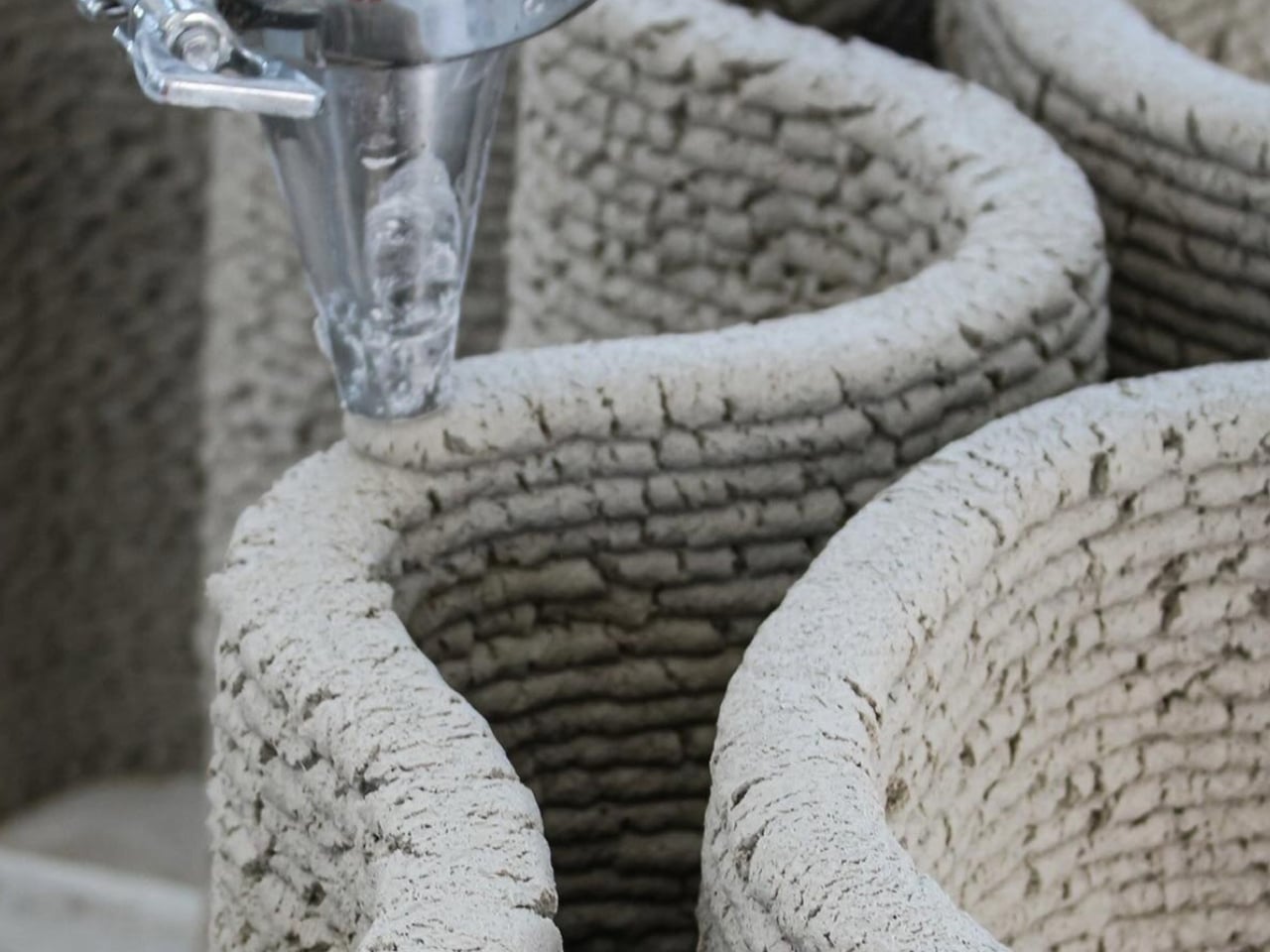
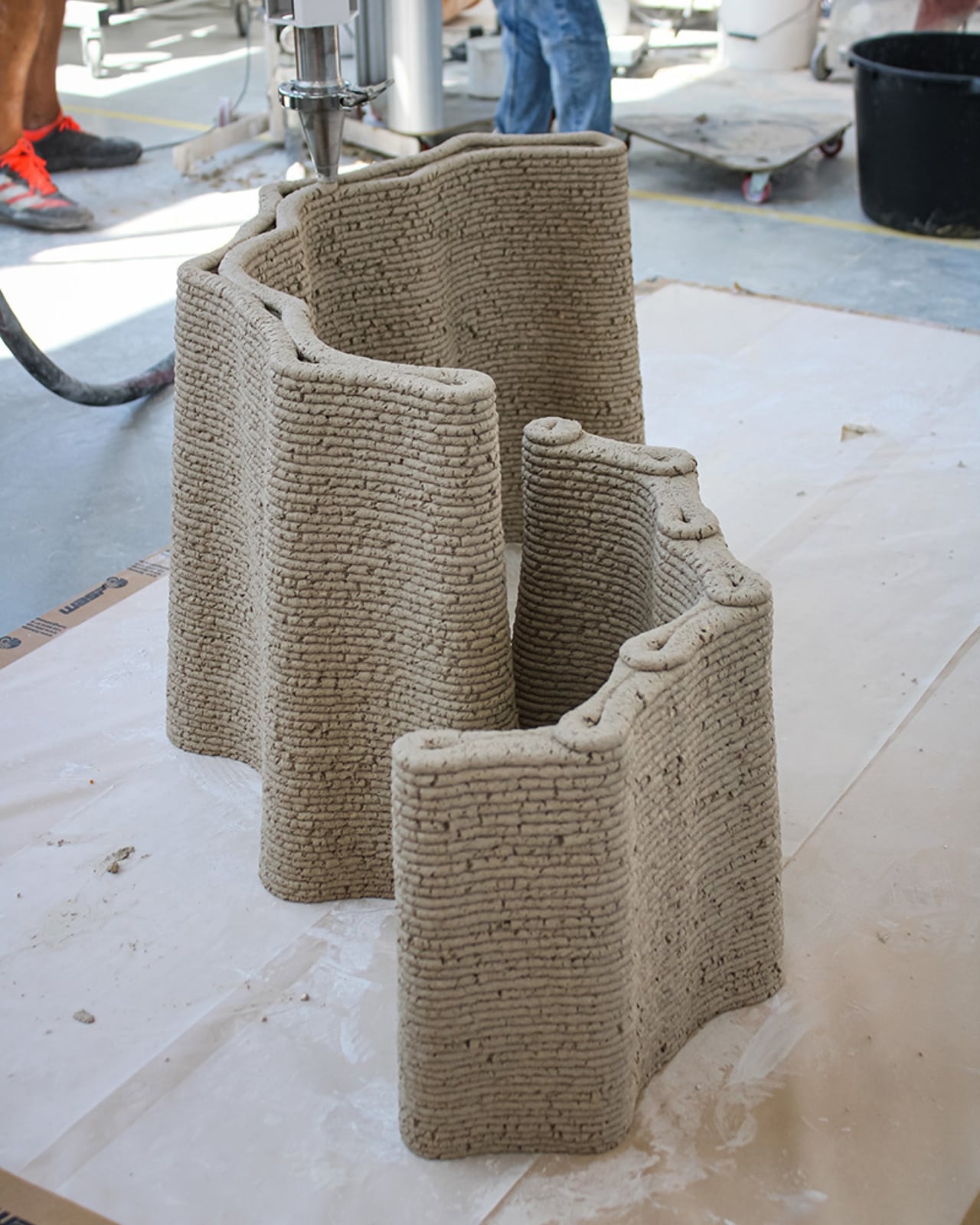
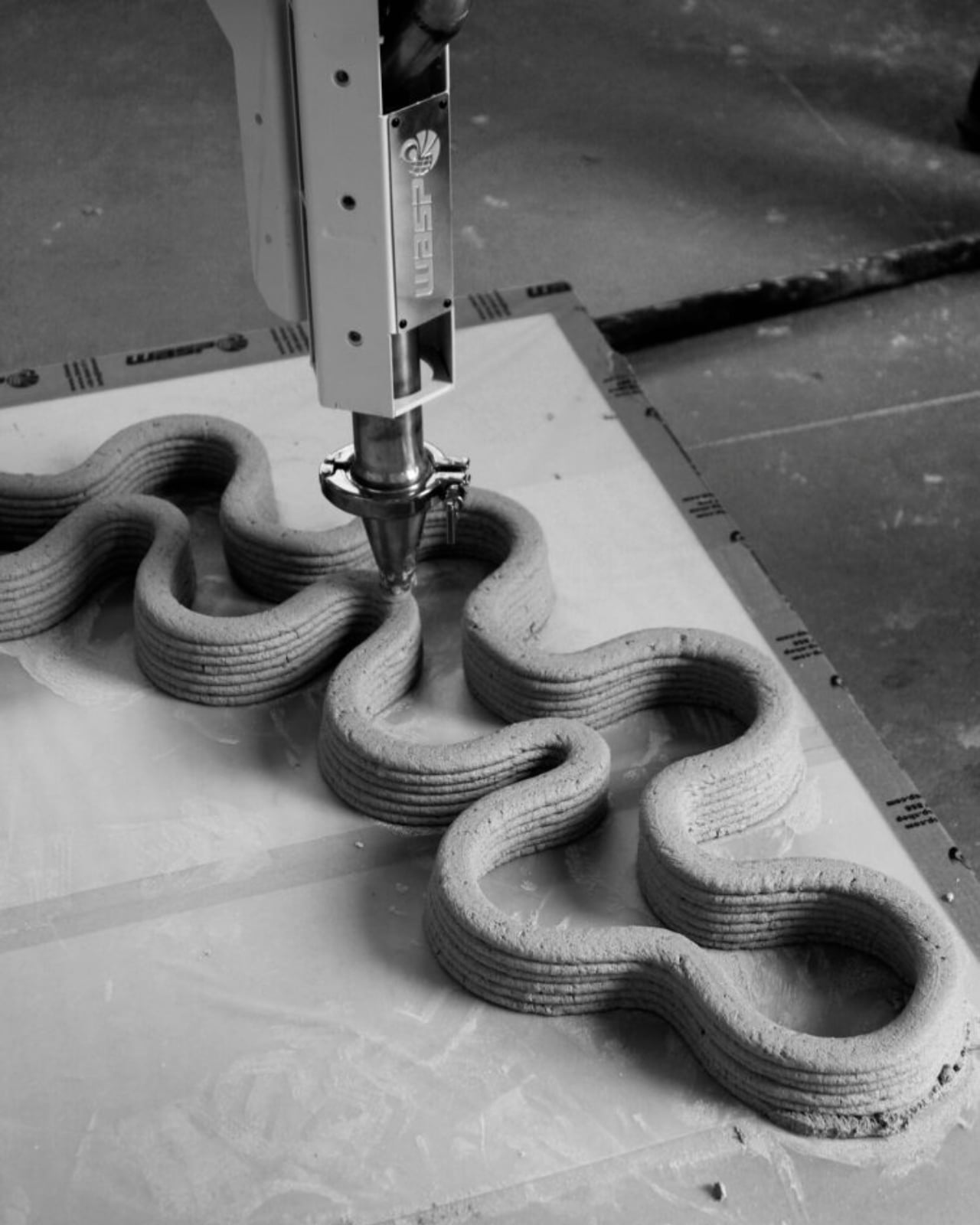
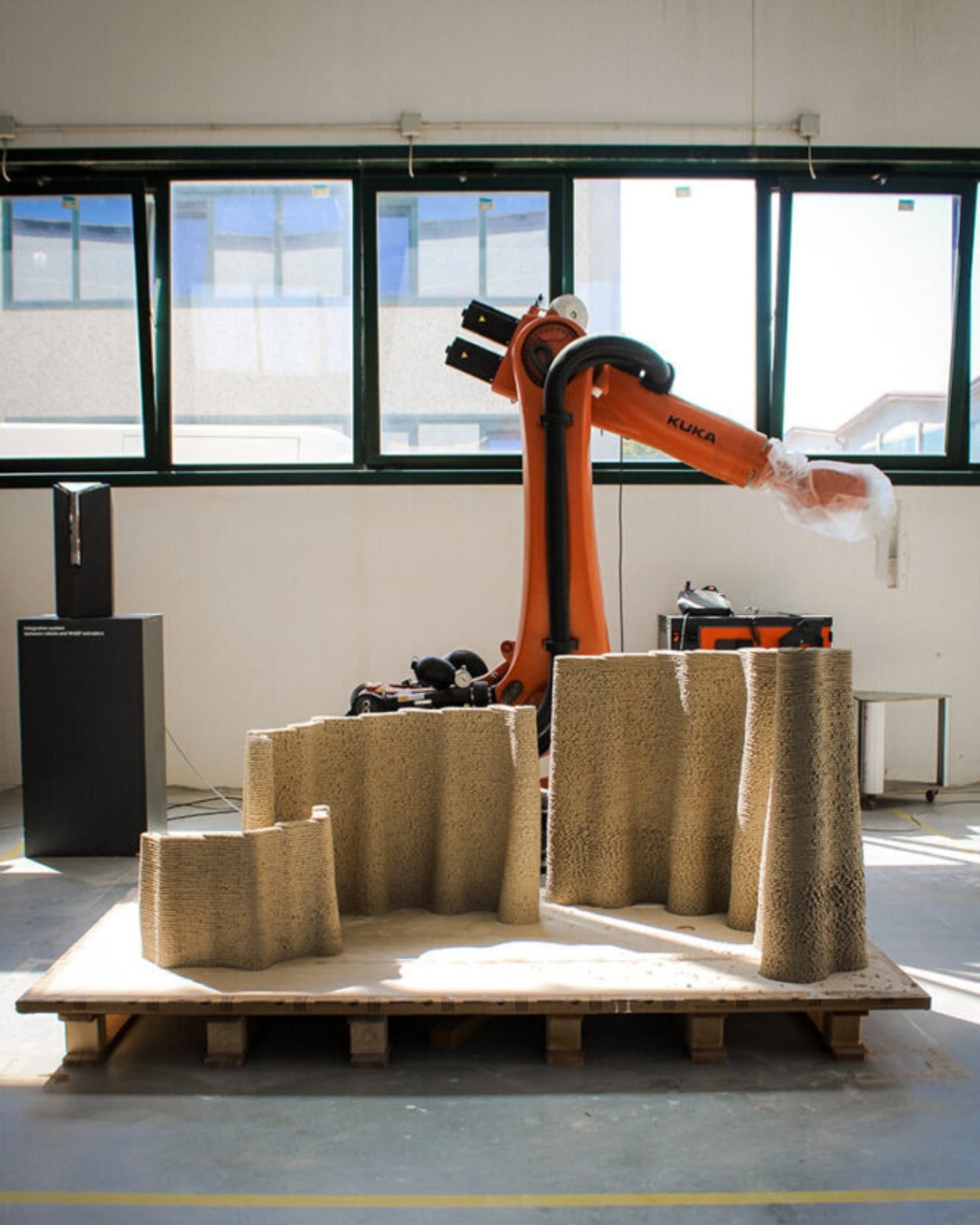
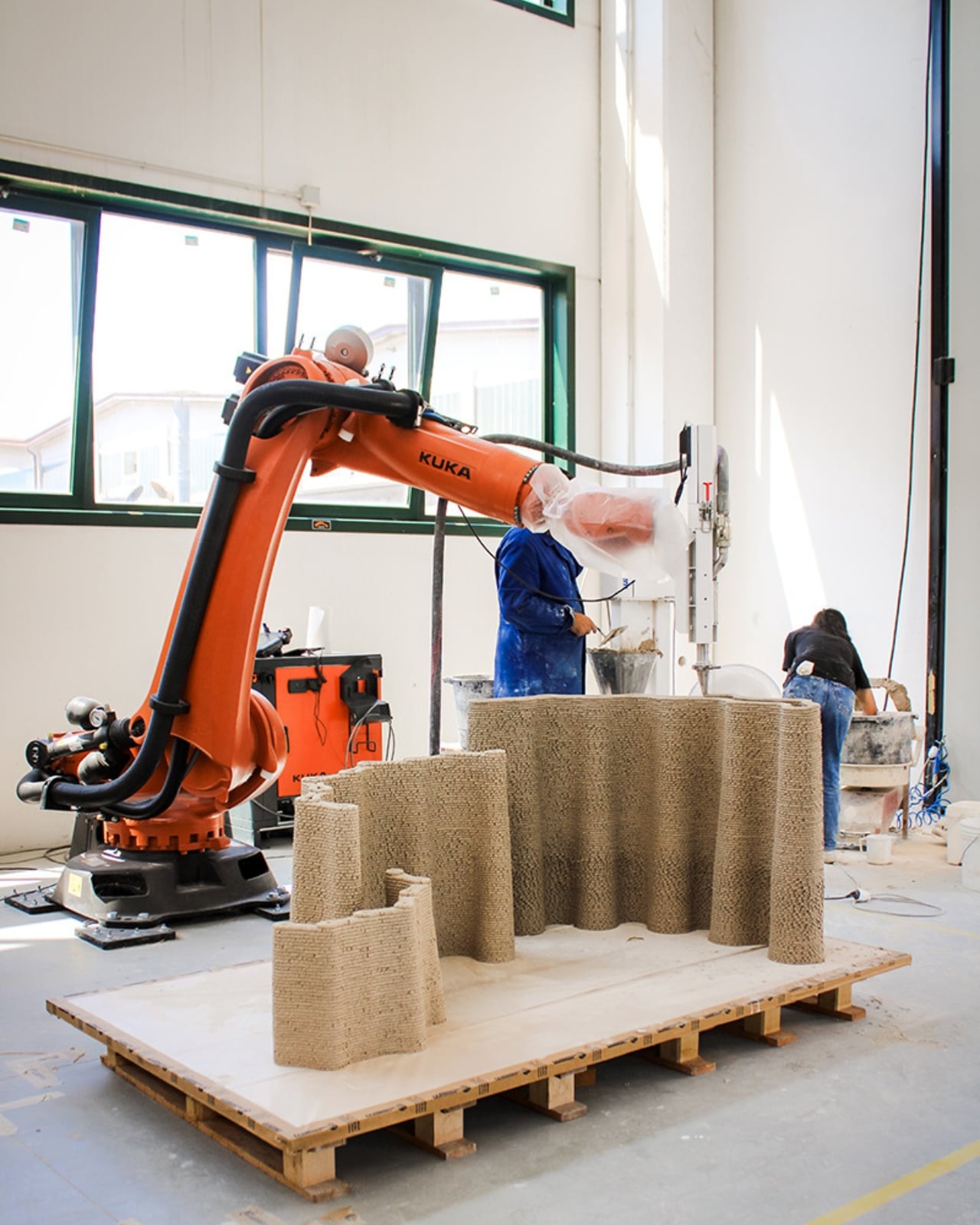
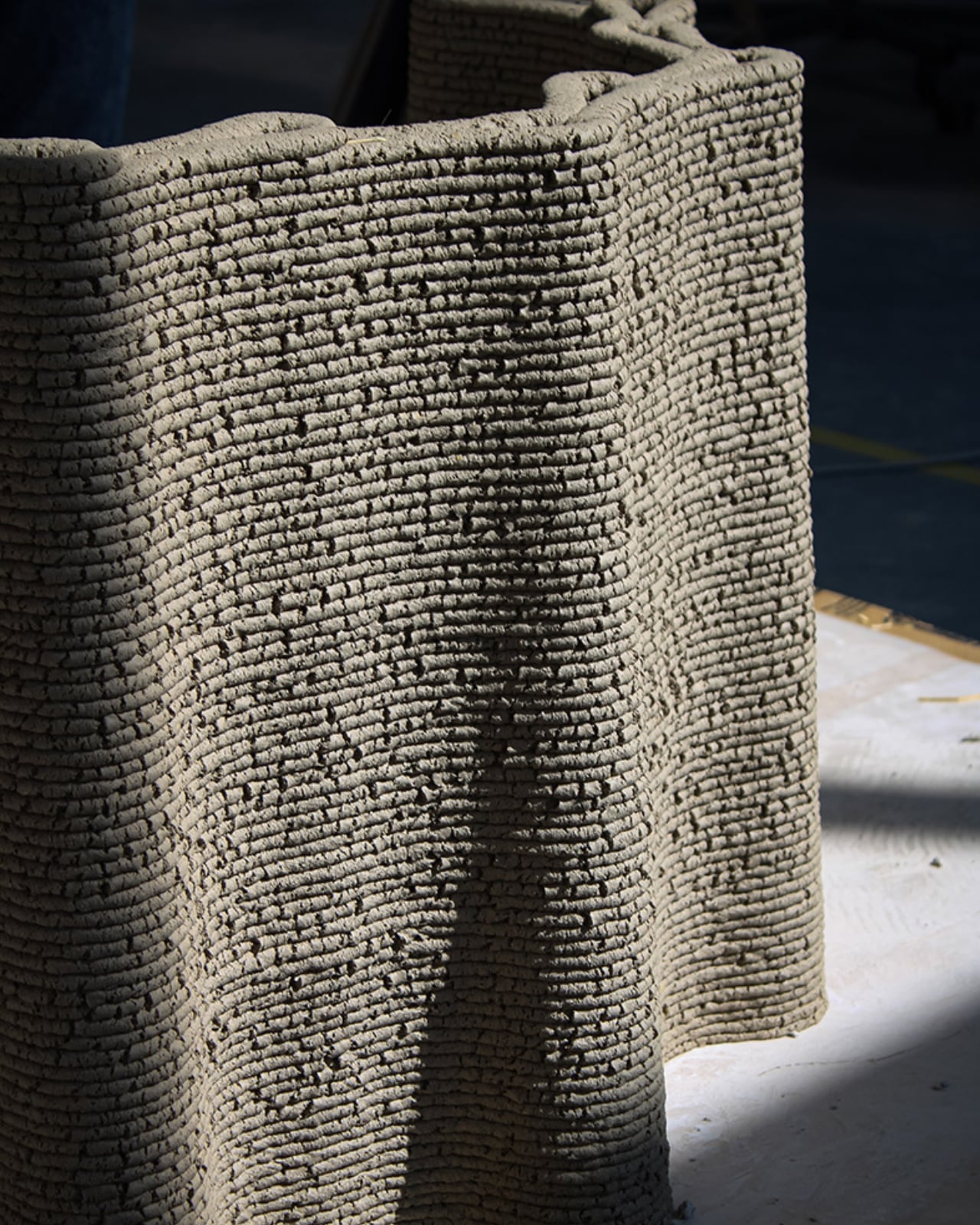
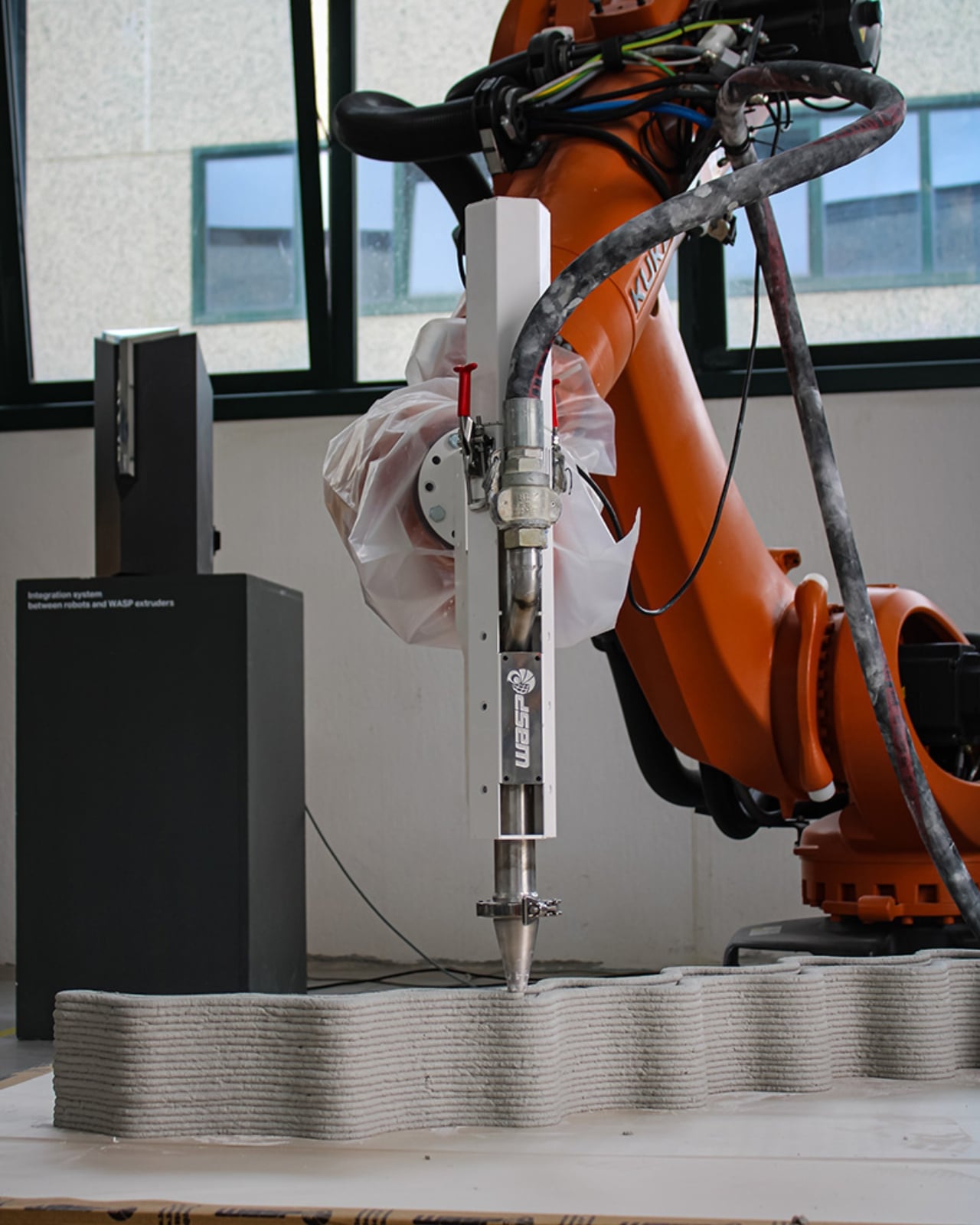
The Mycelial Hut demonstrates large-scale application of mycelium as a building material through customized molds fabricated by robotic 3D printing. This design-based research produces a bio-hybrid pavilion where a wooden frame serves as the structural backbone while customized mycelium panels form the external envelope. It’s a marriage of old and new, natural and digital, strength and adaptability.

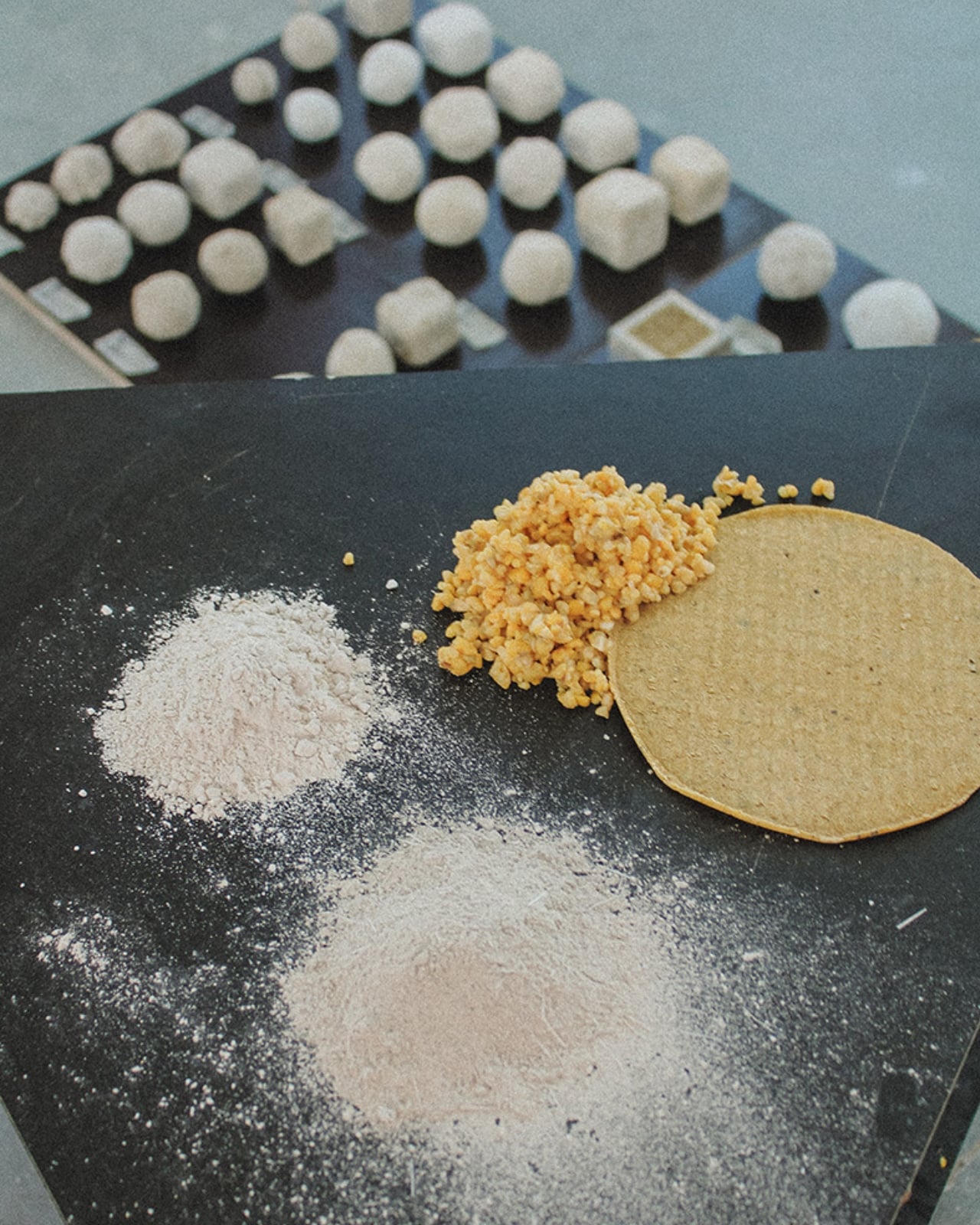
The process itself reads like an experimental recipe. In the initial phase, various types of mycelium substrates were tested to evaluate their workability, growth, and strength. Based on these results, specific molds were fabricated using 3D printing. Then came the innovation that makes this project particularly fascinating: a new workflow combining industrial robotic arms was established to merge digital processes with natural growth systems. The result is a large-scale structure that embodies the coexistence of computation and biology. Robots and fungi working together. Algorithms guiding organic growth. It’s the kind of collaboration that wouldn’t have made sense even a decade ago, but now feels inevitable.

What makes the Mycelial Hut more than just an interesting experiment is how it addresses the real challenges of fungal material application. Mycelium is structurally weak compared to concrete or steel. It grows unpredictably. It needs specific conditions to thrive. These aren’t bugs in the system but features that demand smarter design thinking. By using geometry, custom molds, and a supportive wooden frame, the project demonstrates the feasibility of bio-composites for architectural construction without pretending the material is something it’s not.

The location matters too. Situated on a university campus, this bold installation makes the concept of sustainable architecture tangible and accessible in everyday life. It’s not hidden away in a research lab or showcased only at industry conferences. Students walk past it. Visitors encounter it. The project invites everyone to imagine a future where buildings respond to their environment because they’re fundamentally made from it.

We’re watching a shift in architectural thinking that goes beyond sustainability buzzwords. When your building materials can be composted after use, when construction happens through cultivation rather than extraction, when robots program molds for fungus to fill, you’re not just reducing environmental impact. You’re reimagining what construction can be. The Mycelial Hut suggests that the next revolution in architecture won’t come from stronger concrete or lighter steel but from learning to work with living systems. By combining digital fabrication with biological growth, Yong Ju Lee Architecture has created something that’s both cutting-edge and ancient, high-tech and earthy, experimental and surprisingly practical.

The real question isn’t whether we can build with mushrooms. The Mycelial Hut proves we can. The question is whether we’re ready to rethink our entire relationship with materials, growth, and the built environment. On a university campus in Seoul, that conversation has already begun.

The post This Seoul Studio Just Grew a Building From Mushrooms first appeared on Yanko Design.
This $100 Alarm Clock Finally Wakes You Up Without the Rage

There are people who set their alarms every 15 minutes to make sure that they actually wake up but oftentimes they still hit the snooze button several times. I am one of those people. When I still lived with other people, it became a joke that the whole house wakes up from my alarms except me. And even now, this abrupt disruption to my beauty sleep doesn’t really help me adjust to a morning routine. What if there was a device, aside from a clock and my mobile phone, that can help me wake up better and healthier?

That’s the idea behind the Sunrise 1 device by Dreamegg. Not only does it look so much better than regular alarm clocks, but it is actually a 4-in-1 multifunctional device that serves as your sunrise alarm, sound machine, bedside light, and dimmable clock. The most important feature of this is that it is able to simulate a natural sunrise glow so that your circadian rhythm is not so abruptly interrupted and you wake up naturally and gently. We are not meant to be jarred out of our sleep and so this device is a wonderful option to get a more restful morning routine.

Designer: Dreamegg

The Sunrise 1 is able to simulate the sunrise so you can gradually wake up over 15, 30, 45, or 60 minutes. The light emitted from the device goes from 0% to 100% brightness before your scheduled alarm goes off. And even when you’re supposed to wake up, you can choose other sounds rather than the annoying sounds that break through our slumber. There are 29 soothing sounds to choose from: 8 nature sounds, 5 baby sounds, 2 meditation sounds, 2 brown noise, 2 white noise, 3 pink noise, and 7 fan sounds. You can also choose from 15, 30, 45, or 60 minute timer options. The sounds can also be used to help you sleep at night, to relax in the middle of the day, or to drown out unwanted noise.

The device can also serve as your dimmable night light as you get 9 color options that range from warm amber tones to cooler shades. You can independently control it if you don’t want to use it as a sound machine at the same time. It also serves as an actual clock with an easy-to-read clock face and adjustable brightness as well. Setting it up is pretty easy as you don’t need to connect it to your phone or another gadget. You are also able to customize both your morning wake-up routine and your night sleep routine just the way you want it.

Design-wise, it’s also an aesthetic bedside piece that beats your typical plastic gadgets. It is crafted with cotton-linen fabric which is pretty soft and gentle on the skin, in keeping with its gentle wake-up call. The sleek, rounded design can fit in with the usual bedroom decor. Because it is only 2.87 inches thick and 5.91 inches in diameter, which is around the size of an adult palm, you can actually bring it with you when you travel so you can still wake up and sleep the way you want to even outside of your house.

The way that the Sunrise 1 is designed and the features that come with it will make you feel like you’re on vacation every day and not always in a hurry to start work, school, or your chores. Our usual jarring wake up routines may be a reason why we start off our day grumpy or already tired. Having a device like this may slowly turn you into a morning person if you aren’t already. I mean, sure, you may still wake up reluctantly, but at least not angrily.

The post This $100 Alarm Clock Finally Wakes You Up Without the Rage first appeared on Yanko Design.

This Tiny Red Shelter in the Alps Blurs Art and Architecture

Picture this: a bright red pod perched at 2,300 meters in the Italian Alps, measuring just 4 by 2 meters, designed to shelter nine climbers in an emergency while also serving as a cultural outpost for a contemporary art gallery. If that sounds like a wild concept, well, that’s because it is.

The Aldo Frattini Bivouac, designed by the research and design studio EX., is part of something called “Thinking Like a Mountain,” a biennial program organized by GAMeC (Bergamo’s Gallery of Modern and Contemporary Art) that explores the relationship between art, landscape, and ecology. But unlike your typical art project, this one involves helicopters, emergency shelter protocols, and a whole lot of mountain weather.

Designer: EX. (photos by Tomaso Clavarino)

Located along the Alta Via delle Orobie Bergamasche in Val Seriana, the structure replaces a decaying asbestos shed that was no longer safe for climbers. The design team, led by Andrea Cassi and Michele Versaci, approached this project with a humility that’s refreshing in contemporary architecture. They weren’t trying to create some iconic landmark that screams “look at me” from across the valley.

Instead, the bivouac takes its visual cues from classic alpine tents, those temporary shelters that early mountaineers relied on during their high-altitude adventures. The exterior is wrapped in a lightweight fabric skin made by Ferrino, a Turin-based company known for mountaineering equipment. This rippling, shimmering material gives the structure a sense of impermanence, almost like it’s acknowledging its own fragility against the backdrop of ancient mountains.

The construction process was its own kind of adventure. Because the site sits at such a high altitude and is accessible only to experienced climbers, traditional building methods were out of the question. The solution? Prefabricate the entire thing in three parts, weighing about 2,000 kilograms total, and have a helicopter drop it into place during a brief weather window before snowstorms rolled in. It’s the kind of logistical puzzle that makes you appreciate the careful planning behind what looks like a simple structure.

Inside, natural cork lining provides both thermal and acoustic insulation, creating a surprisingly cozy refuge against harsh alpine conditions. The space is engineered to accommodate up to nine people through a carefully choreographed arrangement of beds that unfold from the walls when needed. Most of the time, it might sit empty or shelter just one or two climbers. But in emergency situations, every inch of that compact interior becomes crucial.

What makes this project fascinating is its dual identity. Yes, it’s a functioning emergency shelter that serves a vital practical purpose for alpinists. But it’s also an extension of GAMeC’s cultural reach into the alpine environment. The gallery isn’t trying to stage exhibitions up there or host events. Instead, the bivouac serves as what they call an “observatory,” a place for gathering data, images, and environmental monitoring that helps create connections between Bergamo’s urban context and the mountainous terrain to the north.

This approach represents a kind of anti-artwashing, if you will. Rather than imposing bold artistic statements onto a landscape, the project tries to listen to and learn from the culture of the Alps. The architecture becomes a medium for presence and observation rather than display, a subtle but significant shift in how we think about bringing art and design into remote natural spaces.

The red fabric exterior is deliberately vulnerable looking. It flutters in the wind, showing creases and movement rather than presenting some pristine, unchanging surface. EX. describes it as “embracing fragility as an aesthetic,” a rejection of the idea that mountain architecture needs to be sleek and immaculate. In a way, that fabric skin becomes a kind of truth-telling, acknowledging that all human structures in the mountains are provisional and temporary when measured against geological time.

Supported by Fondazione Cariplo and Fondazione della Comunità Bergamasca, the Aldo Frattini Bivouac might just be one of the smallest buildings you’ll read about this year, but it punches well above its weight in terms of ambition and thoughtfulness. It’s a reminder that good design isn’t always about scale or spectacle. Sometimes it’s about finding elegant solutions to complex problems while respecting the environment you’re working in, even when that environment is barely accessible and completely unforgiving.

The post This Tiny Red Shelter in the Alps Blurs Art and Architecture first appeared on Yanko Design.
3 Rammed Earth Homes in Brazil Just Solved Sustainable Living

Picture this: walls made of compressed earth, windows that frame the Brazilian hillside, and a roof that collects rainwater like nature always intended. It sounds like something from a utopian novel, but Arquipélago Arquitetos just turned it into reality with the Piracaia Eco-Village, and honestly, it might be the coolest thing happening in sustainable architecture right now.

Located about two hours from São Paulo in the village of Piracaia, this project isn’t just another eco-home talking the talk. It’s three distinct residences built using rammed earth construction, a building technique so old it’s new again. We’re talking walls made by literally compressing soil into wooden frames, creating structures that are both load-bearing and breathtakingly beautiful.

Designer: Arquipélago Arquitetos

The genius behind this approach comes from Arquipélago Arquitetos, who developed a modular system that makes sustainable building actually scalable. They created three different home sizes (a studio at 538 square feet, a one-bedroom at 1,076 square feet, and a two-bedroom at 1,245 square feet) using the same basic building blocks. Think of it like architectural Lego, except instead of plastic bricks, you’re working with earth and wood.

What makes these homes special isn’t just the eco-friendly materials. The architecture firm cracked the code on making rammed earth construction repeatable and adaptable. They use wooden frames repeatedly to build foundations and walls, then grow the number of rooms with each consecutive plan. The rammed earth walls aren’t just pretty; they’re the primary load-bearing elements supporting wooden roof panels through compression. Steel tie rods connect the roof to the footings, balancing all those forces to keep everything stable.

The homes nestle into the hillside with a row of clerestory windows at the back, letting in natural light while maintaining privacy. The aluminum roofs do double duty, collecting rainwater that the homes use throughout. It’s that kind of thoughtful design where form and function aren’t just friends; they’re best friends who finish each other’s sentences.

This project had a pretty interesting start. A psychologist named Lia, living alone in São Paulo, watched a Netflix documentary about rammed earth houses and thought, “That’s it. That’s what I want.” She wasn’t just looking to escape the city; she wanted a home that connected her to nature in a meaningful way. After experiences with psychedelics that deepened her understanding of how humans relate to the natural world, she sought a living space that embodied that connection. Lia built one home for herself and two others to sell to people who share her vision, creating an actual ecovillage rather than just a single sustainable home. There’s something powerful about that; building community around shared values instead of just personal retreat.

The construction process itself is fascinating. Artesania Engenharia and engineer Alain Briatte consulted on the rammed earth work, bringing specialized knowledge to compress local soil into walls that will last generations. The wooden structures came from Stamade Estruturas, with detailed installations by Jarreta Projetos. Photography by Pedro Kok captures how these earthy structures seem to grow organically from the landscape rather than imposing on it.

What’s striking about Piracaia Eco-Village is how it challenges our assumptions about sustainable living. We often think going green means sacrificing aesthetics or comfort, but these homes prove you can have both. The natural materials create spaces that feel warm and lived-in, not sterile or performative. The modular design means this approach could theoretically be replicated anywhere with suitable soil conditions.

Projects like this feel important since we’re living in a time of climate anxiety and housing crises. They show us that sustainable architecture doesn’t have to be expensive, complicated, or ugly. Sometimes the answer is literally beneath our feet: good old dirt, thoughtfully compressed and beautifully arranged. Arquipélago Arquitetos took an ancient building technique, applied modern engineering, and created something that feels both timeless and urgently necessary.

The post 3 Rammed Earth Homes in Brazil Just Solved Sustainable Living first appeared on Yanko Design.

This Chinese Greenhouse Folds Open Into a Community Kitchen

You know that feeling when you stumble upon something that makes you reconsider everything you thought you knew about a space? That’s exactly what happened when I discovered this incredible project in Guangzhou, China. Office for Roundtable and JXY Studio have created something that refuses to fit into neat categories, and honestly, that’s what makes it so compelling.

The project is called “Your Greenhouse Is Your Kitchen Is Your Living Room,” and yes, that title is doing exactly what it promises. This isn’t just a clever name. It’s a modular pavilion that literally transforms from a functioning greenhouse into an open pavilion for community gatherings, and it does so in the most satisfying way possible.

Designers: Office for Roundtable and JXY Studio (photography by Leyuan Li)

Picture this: a steel A-frame structure wrapped in polycarbonate panels that can hinge open using tension cables suspended from the top of the frame. When the sides are closed, you have a microclimate perfect for growing potatoes, green peppers, lettuce, bok choi, and various herbs. When you pull those cables and the walls lift up, suddenly you’ve got an airy pavilion ready to host a dinner party or a community workshop.

What I love about this design is how it emerged from a very specific moment in time. Designer Leyuan Li secured a grant from Hong Kong’s Design Trust to explore the small-scale, community-based farming projects that popped up during the COVID-19 pandemic. You remember those, right? When everyone suddenly became obsessed with sourdough starters and backyard gardens because we were all grappling with questions about food security and supply chains.

But instead of just documenting that cultural moment, Li and the teams at Office for Roundtable and JXY Studio decided to create something that pushes the conversation forward. The pavilion, installed at Guangzhou’s Fei Arts museum, is their answer to a bigger question: what if we could challenge the entire system of centralized food production by creating spaces that make growing, cooking, and sharing food feel more accessible and communal?

The technical details are pretty clever too. Those polycarbonate sheets aren’t just randomly placed. The designers carefully positioned gaps between the panels to allow for passive cooling, which is essential in Guangzhou’s subtropical climate. Nobody wants to be stuck in a sweltering greenhouse when they’re trying to tend their herbs or host a gathering. Inside, metal shelving racks hold the vegetables and herbs, creating a practical growing system that doesn’t sacrifice aesthetics. The whole structure is lightweight and modular, which means it can be adapted, moved, or reconfigured based on what the community needs.

This flexibility feels important. The design doesn’t dictate how people should use the space. Instead, it offers possibilities. Maybe today it’s a greenhouse where neighbors learn about urban farming techniques. Tomorrow it could transform into an outdoor kitchen where everyone gathers to cook what they’ve grown. Next week, it might become a living room for community conversations about food systems and sustainability.

What Office for Roundtable describes as an “architectural device that amalgamates the roles of a greenhouse, an outdoor kitchen, and a living room” is really about something deeper than just multipurpose design. It’s about reimagining our relationship with food, land, and each other in urban environments.

The truth is we’re increasingly disconnected from where our food comes from so this project offers a refreshingly tangible alternative. It proposes new forms of what the designers call “domesticity and collectivity” by literally breaking down the walls between growing food, preparing it, and gathering around it. The beauty of this installation is that it doesn’t preach or demand. It simply exists as an invitation. Want to grow something? Here’s the space. Want to cook together? The pavilion opens up. Want to talk about how we can build more resilient, community-centered food systems? Pull up a chair.

That’s the kind of design that sticks with you. Not because it’s flashy or complicated, but because it’s thoughtful enough to adapt to real human needs while being bold enough to suggest we might want to rethink some pretty fundamental assumptions about how we live, eat, and come together.

The post This Chinese Greenhouse Folds Open Into a Community Kitchen first appeared on Yanko Design.

The Arnardo Desk Looks Like It Time-Traveled From 2084

There’s something deeply satisfying about furniture that refuses to play by the rules. You know the kind I’m talking about: pieces that make you stop mid-scroll and think, “Wait, is that even real?” The Arnardo Desk by Paddy Pike Studio is exactly that kind of design unicorn, and honestly, I’m not sure whether to sit at it or frame it on a museum wall.

At first glance, this desk looks like someone melted the future and poured it into a mold. The high-polish metallic finish catches light like liquid mercury, creating reflections that shift and distort depending on where you’re standing. It’s the kind of visual trickery that keeps you staring, trying to figure out where one curve ends and another begins. The whole thing reads like a single continuous surface, even though it’s clearly a complex piece of engineering.

Designer: Paddy Pike Studio

What makes the Arnardo Desk so compelling is how it balances sculpture with function. This isn’t just a pretty object meant to gather dust in a collector’s home (though it would certainly earn its keep there). The design integrates storage drawers seamlessly into those bulbous, almost pod-like pedestals. These aren’t slapped-on afterthoughts either. The drawer fronts follow the same flowing lines as the rest of the piece, maintaining that unbroken visual rhythm that makes the desk feel like it was grown rather than built.

The form itself is wonderfully ambiguous. From certain angles, it almost looks biological, like some kind of metallic organism frozen mid-movement. From others, it channels retro-futurism vibes, the kind of aesthetic you’d expect in a 1960s vision of what the year 2000 would look like. And depending on the light, it can read as sleek and minimal or dramatically sculptural. That versatility is part of its magic.

Paddy Pike Studio has clearly spent time thinking about how people interact with their workspace. The curved desktop surface isn’t just a stylistic choice. It creates distinct zones without the need for physical dividers. You can imagine spreading out projects across that generous surface, using the natural flow of the form to organize your work. The height and proportions suggest careful consideration of ergonomics, even as the overall aesthetic screams art installation.

What’s particularly interesting is how this piece positions itself in the current design landscape. We’re living through a moment where maximalism is having a serious comeback, where bold statement pieces are replacing the stark minimalism that dominated the 2010s. The Arnardo Desk fits perfectly into this shift. It’s unapologetically dramatic, refuses to blend into the background, and makes a space feel intentional rather than default.

The material choice matters here too. That mirror-like metallic finish isn’t just about looks (though it certainly delivers on visual impact). It’s a callback to the Space Age furniture of designers like Eero Aarnio and Joe Colombo, who experimented with then-novel plastics and metals to create pieces that felt radically different from traditional wood furniture. Pike is working in that same experimental tradition, pushing against our expectations of what a desk should look like.

There’s also something delightfully impractical about this desk, and I mean that as the highest compliment. In a world obsessed with optimization and efficiency, where every object needs to justify its existence through maximum utility, the Arnardo Desk dares to be extra. It takes up space. It demands attention. It makes you rethink your entire room just to give it the stage it deserves. That kind of boldness feels refreshing.

Of course, this is collectible design, which means it exists in that fascinating space between art and furniture. It’s fully functional, but it’s also limited and clearly positioned as an investment piece for serious collectors. That doesn’t make it less relevant to the rest of us, though. Pieces like this push the conversation forward. They remind us that furniture doesn’t have to be boring, that our everyday objects can inspire genuine emotion and spark conversations.

The post The Arnardo Desk Looks Like It Time-Traveled From 2084 first appeared on Yanko Design.
Orbit Kinetic Turntable: See Your Music Move with Flipping Wooden Tiles

Remember when music was something you could actually see? Not just album art or a Spotify playlist, but something physical that moved and breathed with the beat? Designer Lillian Brown is bringing that tangible connection back with Orbit, a kinetic turntable that literally flips the script on how we experience sound.

What started as Brown’s senior thesis at the Savannah College of Art and Design has evolved into something genuinely captivating. Orbit isn’t just a turntable; it’s a performance piece that translates every beat, every note, every rhythm into visible motion through a mesmerizing display of flipping wooden tiles.

Designer: Lillian Brown

The concept is beautifully simple yet surprisingly complex in execution. Picture a classic vinyl turntable, then imagine surrounding the record with 39 handcrafted wooden tiles arranged in concentric circles. As your favorite album spins, these tiles respond to the music’s frequency and amplitude, flipping and rotating to create constantly shifting patterns of light and shadow. It’s like watching your music dance.

What makes Orbit particularly special is how it bridges the gap between vintage nostalgia and contemporary design innovation. In an era where most of us stream music through invisible algorithms and wireless speakers, there’s something deeply satisfying about watching music become a physical, visual experience. Brown has essentially created a hybrid object that transforms passive listening into an active sensory moment, where you’re not just hearing the music but witnessing it unfold in real time.

The wooden tiles themselves are a thoughtful material choice. Each one is carefully crafted and balanced, allowing them to respond with precision to the audio signals they receive. As the music plays, different frequencies trigger different tiles, creating organic patterns that shift with every song. A bass-heavy track might trigger the outer rings more intensely, while high notes could activate the inner tiles. The result is an ever-changing visual symphony that’s unique to each recording.

There’s also something wonderfully analog about the whole concept. While the mechanism that translates sound into motion likely involves some modern electronics, the physical expression is entirely mechanical. No screens, no digital displays, just wood, motion, and light playing together in space. It’s the kind of design that makes you slow down and actually pay attention to your music again.

Brown’s work taps into a growing desire for meaningful interaction with the objects in our lives. As more of our experiences become digital and ephemeral, pieces like Orbit remind us of the joy that comes from tangible, physical engagement with art and technology. It’s not just furniture and not quite sculpture; it exists in that fascinating in-between space where functional objects become art. The timing feels right for something like this. Vinyl has already made a remarkable comeback, with younger generations discovering the ritual of carefully selecting a record, placing it on the turntable, and actually sitting with an album from start to finish. Orbit takes that ritual one step further, adding a visual dimension that makes the experience even more immersive and meditative.

Imagine hosting friends and dropping the needle on a new album as everyone gathers around to watch the tiles respond and shift with the music. Or picture yourself unwinding after a long day, watching the hypnotic patterns emerge from your favorite tracks. It transforms listening from background noise into a focused, contemplative practice. What Brown has created with Orbit goes beyond clever design or technical innovation. It’s a reminder that some of the best ideas come from asking simple questions: What if we could see music? What if listening became watching? What if technology enhanced rather than replaced the analog experiences we value? In answering these questions, she’s created something that feels both nostalgic and refreshingly new, proving that great design doesn’t have to choose between the past and the future. It can honor both.

The post Orbit Kinetic Turntable: See Your Music Move with Flipping Wooden Tiles first appeared on Yanko Design.

This AI Music Sketchbook Captures Ideas Before They Disappear

You know that feeling when a melody pops into your head while you’re walking down the street, but by the time you pull out your phone to record it, the magic’s already gone? Or when you’re hit with a musical idea but don’t have the technical skills to translate it into something real? That frustrating gap between inspiration and creation is exactly what designer Woojin Jang is trying to bridge with their concept project, Everglow.

Think of it as a sketchbook, but for sound. Just like artists carry notebooks to capture visual ideas before they fade, Everglow is designed to help musicians and creators capture sonic inspiration in real time. The concept combines a physical hardware interface with generative AI technology, creating something that feels both wonderfully tactile and futuristic at the same time.

Designer: Woojin Jang

What makes this particularly interesting is how it rethinks the relationship between humans and music-making tools. Traditional instruments require years of practice, and digital audio workstations can feel overwhelming with their endless menus and options. Everglow sits somewhere in between (hence the design name “InBetween”), offering immediate access to sound creation without the steep learning curve.

The hardware interface is key here. Instead of clicking around on a screen or fumbling with software, you’d interact with physical controls that respond to your touch and gestures. This tactile element matters more than you might think. There’s something about physically manipulating sound that connects you to the creative process in a way that mousing around never quite achieves. It’s the difference between typing a description of a drawing and actually sketching it with your hands.

But the real innovation happens when you pair that physical expressiveness with AI-generated sound. The generative system doesn’t just play preset sounds or samples. Instead, it responds to your input by creating and shaping audio in real time, almost like having a collaborative partner who instantly understands where you’re trying to go musically. You guide it with your gestures and adjustments, and it fills in the gaps, suggesting possibilities you might not have considered. This approach democratizes music creation in a fascinating way. You don’t need to know music theory or have mastered an instrument to explore sonic ideas. The concept suggests a world where musical literacy isn’t a prerequisite for musical expression, where the barrier between “I hear something in my head” and “here’s what it sounds like” becomes paper-thin.

Of course, as a concept, Everglow exists in that exciting space where possibility meets imagination. We’re not looking at a finished product you can buy tomorrow, but rather a vision of what music-making tools could become. That’s what makes design concepts so valuable. They push our thinking forward, challenge assumptions about how things should work, and inspire both creators and technologists to pursue new directions.

The timing feels right, too. We’re living in an era where AI is rapidly transforming creative tools, from image generation to writing assistance. Music has been part of this evolution, but often in ways that feel disconnected from the physical, intuitive experience of making sound. Everglow suggests a different path, one where AI enhances rather than replaces the human touch, where technology becomes invisible enough that you can focus on the creative flow rather than the technical obstacles.

Whether or not Everglow itself becomes a reality, the questions it raises are worth sitting with. How do we design tools that capture the fleeting nature of inspiration? What’s the right balance between human control and AI assistance in creative work? And how can we make music creation feel as natural and immediate as doodling in a notebook? For anyone who’s ever had a musical idea slip away before they could catch it, concepts like this offer a glimpse of a more intuitive future. One where the tools get out of the way, and the space between imagination and creation becomes just a little bit smaller.

The post This AI Music Sketchbook Captures Ideas Before They Disappear first appeared on Yanko Design.

This Looped Umbrella Stand Soaks Up Rain and Looks Like Art

There’s something quietly revolutionary happening in the world of everyday objects, and it starts with something as humble as where you put your umbrella. Arihant Israni and Anoushka Braganza have created InBetween, a piece that challenges our assumptions about what functional design can be. It’s not just a place to stash wet umbrellas. It’s a whole vibe.

Let’s be honest: most umbrella stands are afterthoughts. They’re plastic cylinders hiding in corners, collecting dust and forgotten receipts. But what if that neglected corner could hold something beautiful? What if the act of coming home on a rainy day could feel a little more intentional, a little more like a ritual worth noticing?

Designers: Arihant Israni and Anoushka Braganza

That’s where InBetween comes in. The design is built around flowing loops that curve and connect, creating this continuous rhythm that feels almost hypnotic. It’s sculptural in a way that makes you stop and look twice. The loops aren’t just aesthetic choices, they’re functional, too, each one cradling an umbrella while creating negative space that gives the whole piece a sense of movement. Even when it’s sitting still, it feels alive.

The designers say the form is inspired by the idea of transitions, those moments between leaving and arriving, between chaos and calm. And honestly? You can see it. There’s something about the way the curves flow into each other that captures that feeling of moving through your day, of pausing to shake off the rain before stepping into your space. It’s design that understands that our homes aren’t just backdrops. They’re where we reset, where we breathe.

Now let’s talk about the base, because this is where things get really interesting. It’s made from Diatomaceous Earth, which sounds incredibly science-y but is actually just fossilized algae. And here’s the genius part: it’s naturally porous and absorbent, which means it soaks up all that rainwater dripping off your umbrella without you having to do anything. No puddles, no mess, no gross waterlogged mats that smell like mildew after a week. The material is also antimicrobial, so it resists mold and odor naturally. It dries fast, stays clean, and if it ever needs refreshing, you just give it a light wipe or a gentle sanding. That’s it. In a world where everything seems to require constant maintenance and upkeep, there’s something deeply satisfying about a product that just works quietly in the background.

But beyond the practical magic, there’s a conceptual layer here that makes InBetween feel special. The base becomes this mediator between outside and inside, between the storm you just walked through and the calm you’re entering. It’s material intelligence meeting emotional design, and it works on both levels.

Visually, the stand fits into almost any space. The minimalist aesthetic and organic geometry mean it doesn’t scream for attention, but it definitely holds its own. Whether you’re living in a sleek modern apartment, a cozy studio, or something in between (pun intended), it adapts. The deep, muted burgundy tones in the images give it warmth without being loud. It’s the kind of piece that elevates a space just by existing in it.

What really gets me about InBetween is how it reframes something we barely think about. We’re so used to design being about big statements, about the couch or the coffee table or the art on the wall. But what about all the little moments? What about the act of setting down your umbrella when you get home, shaking off the rain, taking a breath before you move further into your day? InBetween turns that mundane gesture into something worth noticing. It’s a reminder that thoughtful design doesn’t have to be loud or expensive or complicated. Sometimes it’s just about paying attention to the details, about understanding that every object in our lives has the potential to be more than just functional.

In a culture obsessed with productivity and optimization, there’s something radical about slowing down enough to appreciate the poetry of an umbrella stand. InBetween proves that even the most ordinary objects can become opportunities for beauty, mindfulness, and a little bit of wonder. And honestly? We could all use more of that.

The post This Looped Umbrella Stand Soaks Up Rain and Looks Like Art first appeared on Yanko Design.

How to Fix Your Beautiful But Cluttered Desk

You know that feeling when you sit down at your desk and immediately feel overwhelmed? It’s not you. It’s your desk. More specifically, it’s the fact that modern desks have basically turned into minimalist slabs with zero storage solutions. Sure, they look sleek in furniture showrooms, but try working on one every day and you’ll quickly realize something crucial is missing.
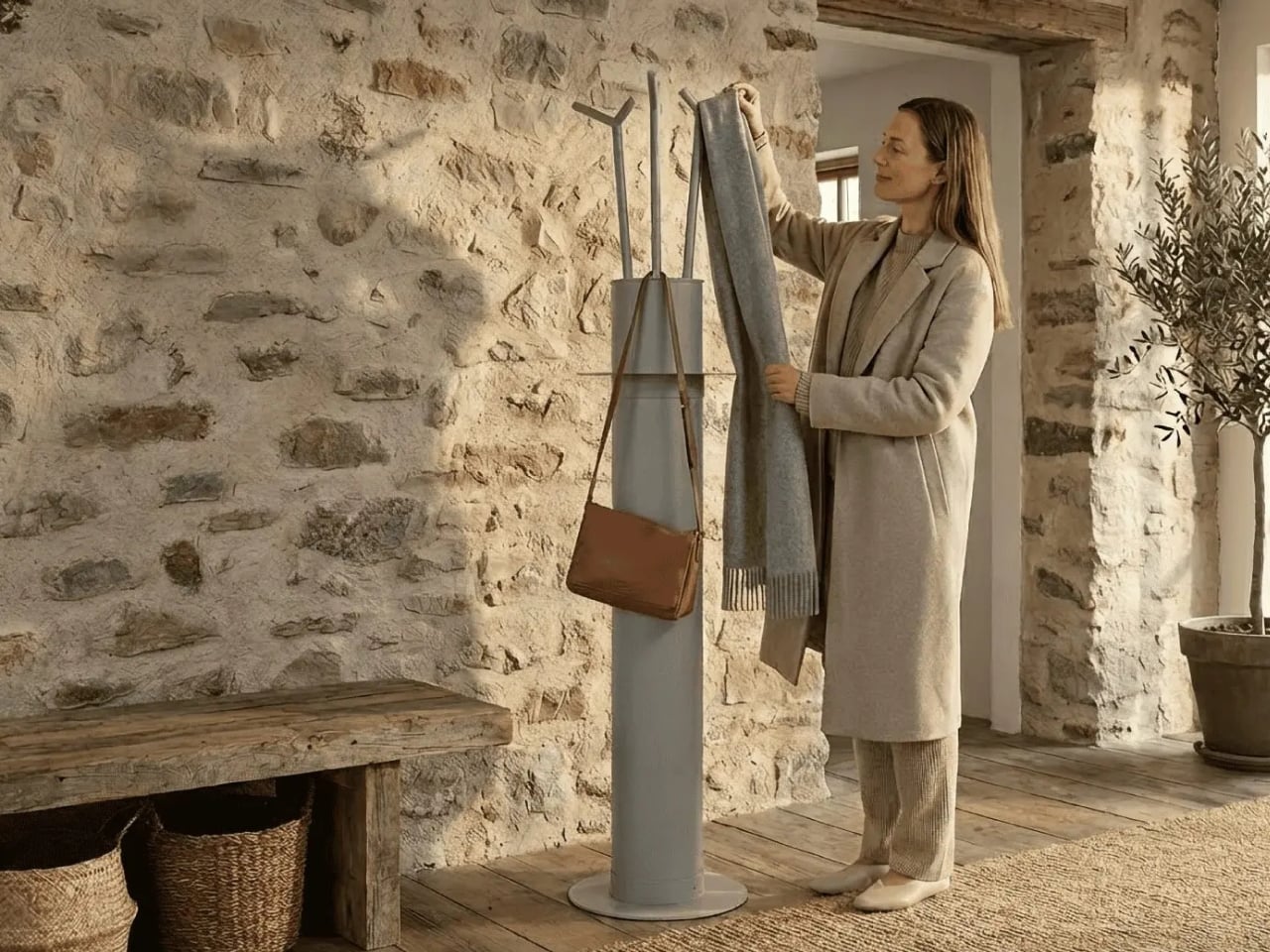
Enter Tidy Desk and their Desk Dock System, a collection of add-on storage solutions that feel less like accessories and more like the missing pieces modern workspaces desperately need. The brand has essentially created what I’d call “remedial design” for the era of beautiful but impractical furniture. And honestly, it’s about time someone did.

Designer: Tidy Desk

The star of the show is the Invisible Laptop Dock, which does exactly what the name suggests. It hides your laptop under your desk while keeping it accessible and properly ventilated. Think about it: your laptop just sits there taking up premium real estate on your desk surface, surrounded by a tangle of charging cables and dongles. The Invisible Laptop Dock mounts underneath, giving you full access to all ports from both sides, so whether you’re using a single USB-C dock or plugging in multiple cables, everything stays organized and out of sight. What makes this particularly clever is that it doesn’t just hide your laptop. It actually improves your workflow. One customer put it perfectly when they said, “Finally got my laptop out of the way. Desk looks cleaner and somehow I just focus better now.” That connection between visual clutter and mental clarity isn’t just aesthetic preference. It’s psychology at work.

But Tidy Desk didn’t stop at laptops. They’ve expanded the Desk Dock System to include custom solutions for specific tech gear. The Focusrite 2i2 Dock is designed specifically for the popular audio interface, keeping it locked in place and accessible without eating up desk space. There’s also a Fast Connect LaCie Dock for external hard drives, featuring USB-C with 10 Gbps data transfer speeds and multiple ports. These aren’t generic cable management clips. They’re thoughtfully designed docks that treat each piece of equipment as if it deserves its own intentional home.

The whole system operates on a simple premise: why should we adapt to poorly designed furniture when we can just fix the problem? The rise of sit-stand desks and aesthetic-focused workspace design has given us gorgeous offices, but at the cost of practicality. Drawers disappeared. Cable management became an afterthought. And suddenly everyone was posting photos of their “clean desk setup” while their actual workspace looked like a rat’s nest of wires and adapters. What Tidy Desk understands is that minimalism isn’t about having less stuff. It’s about having the right systems to manage your stuff invisibly. Their tagline says it all: “Craft Your Perfect Workspace.” From cable management to laptop docks, the system aims to keep you focused, organized, and actually proud of your setup.

The products are surprisingly affordable too, with most items ranging from $35 to $37. That’s less than what many people spend on decorative desk accessories that don’t actually solve any problems. And the modular approach means you only buy what you need. Got a laptop and a Focusrite interface? Get those two docks. Just need cable management? Grab that piece. The system grows with your needs.

There’s something refreshing about design that acknowledges real-world messiness instead of pretending we all live in impossibly tidy showrooms. Another user review captures this perfectly: “Didn’t think hiding a few cables would do much, but damn it actually helps. Feels like my mind’s clearer when my desk is too.” Since we’re living at a time where we’re obsessed with standing desks, ergonomic chairs, and expensive monitors, it’s oddly satisfying to see someone focus on the unglamorous stuff that actually makes daily work better. Because at the end of the day, your desk should work for you, not against you.

The post How to Fix Your Beautiful But Cluttered Desk first appeared on Yanko Design.