Beatbot AquaSense Pro review: Smart and Powerful Swimming Pool Cleaner

PROS:


  • Versatile 5-in-1 pool cleaning functionality

  • Long battery life up to 9.5 hours continuous runtime

  • Smart MemoryPark feature ensures effortless retrieval from the surface

CONS:


  • Needs to be charged

  • Unable to detect new debris in previously cleaned areas

  • Larger debris may float away during surface cleaning

RATINGS:

AESTHETICS
ERGONOMICS
PERFORMANCE
SUSTAINABILITY / REPAIRABILITY
VALUE FOR MONEY

EDITOR'S QUOTE:

Beatbot AquaSense Pro redefines pool cleaning with AI, efficient floor-to-surface cleaning, and water clarification, becoming a dream for pool owners.

Swimming pool cleaners have been around for a long time, but those available from Leslie’s Pool Supply or even the robotic ones on Amazon lack technological innovation, making them no better than traditional pool cleaners. These traditional pool cleaners, often known as suction-side or pressure-side cleaners, operate more simply than their robotic counterparts. They’re costly and need to be connected to a hose that hooks up to the pool’s existing filtration system.

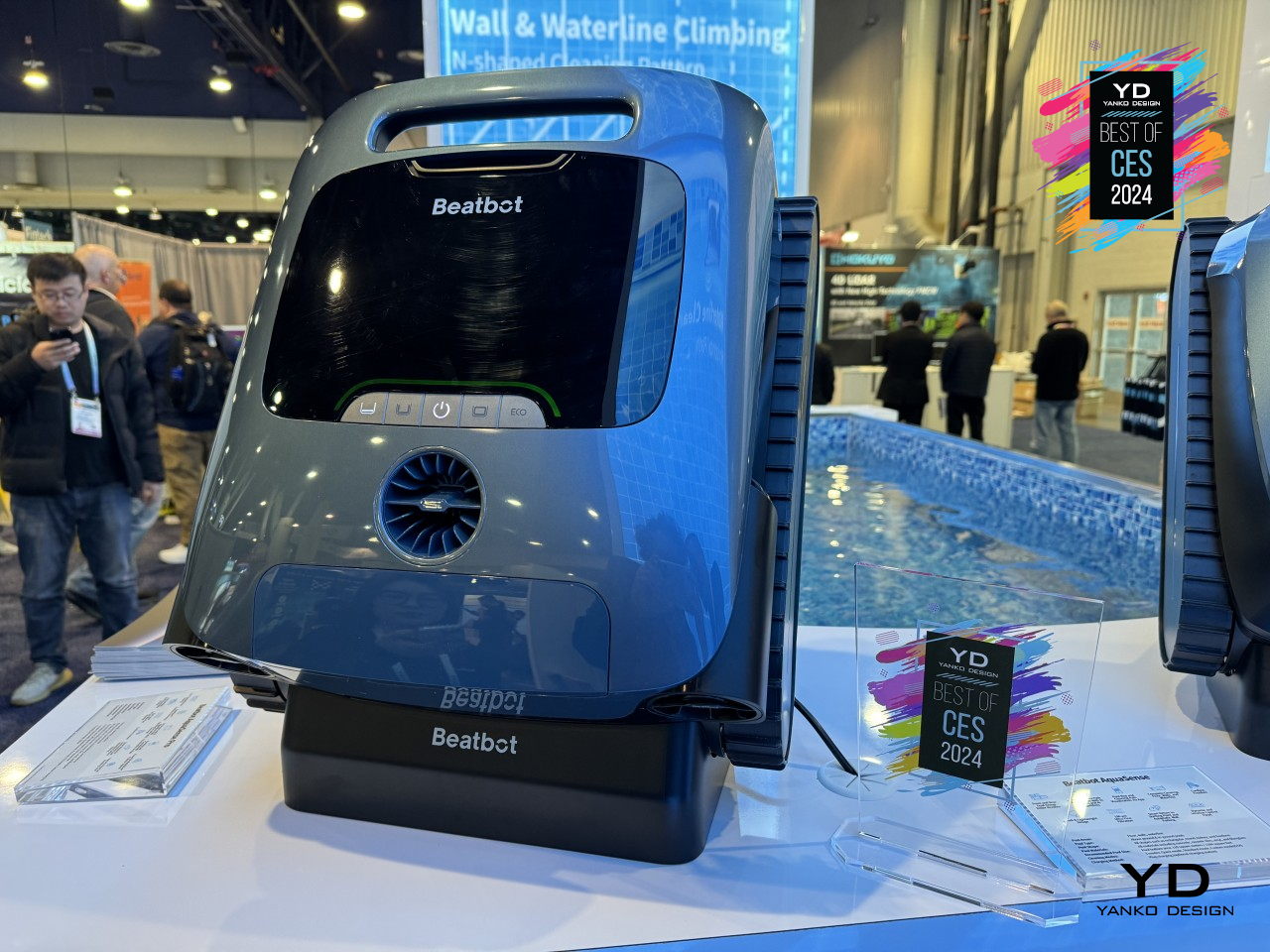
This review explores why smart robotic pool cleaners, particularly the Beatbot AquaSense Pro, are the future. As a spoiler, Yanko Design named it one of the best consumer products at CES 2024.

Designer: Beatbot

Aesthetics

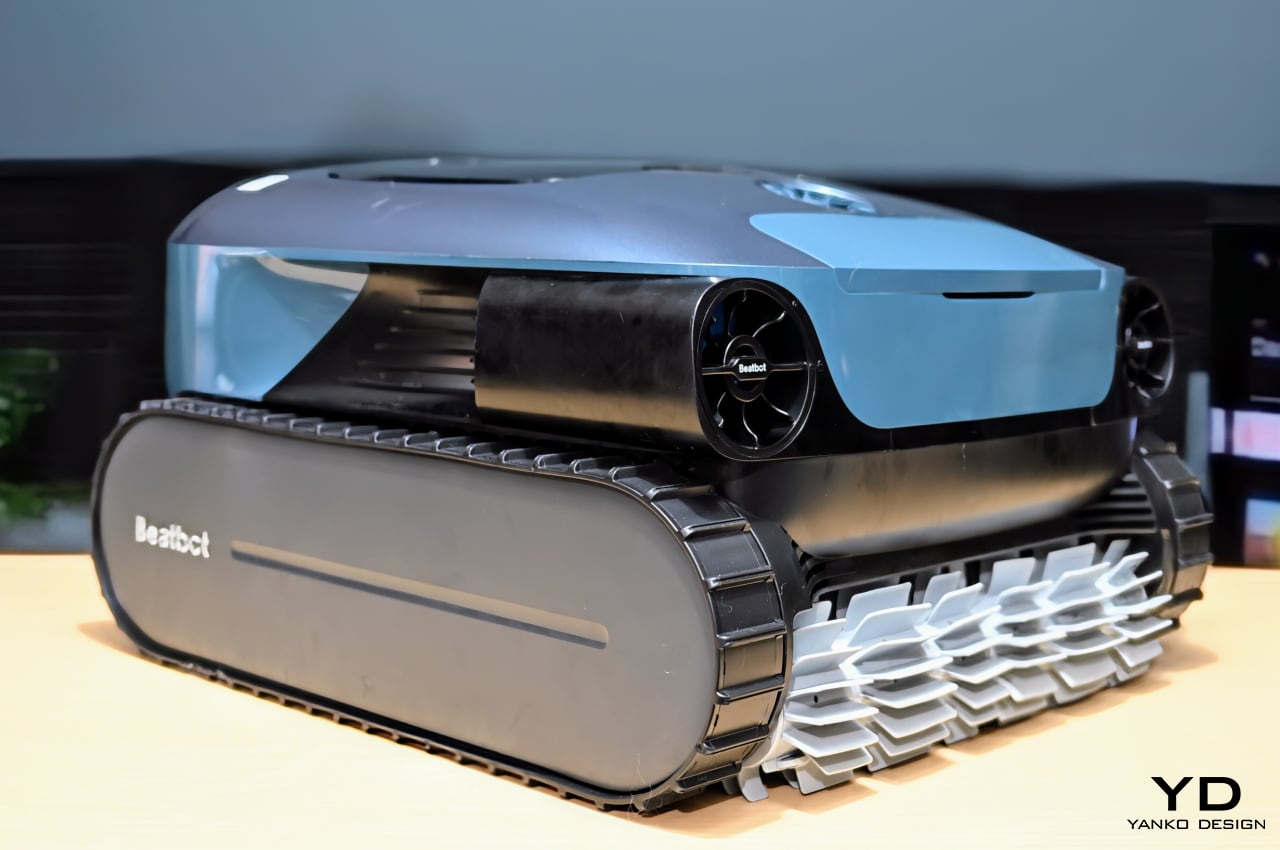
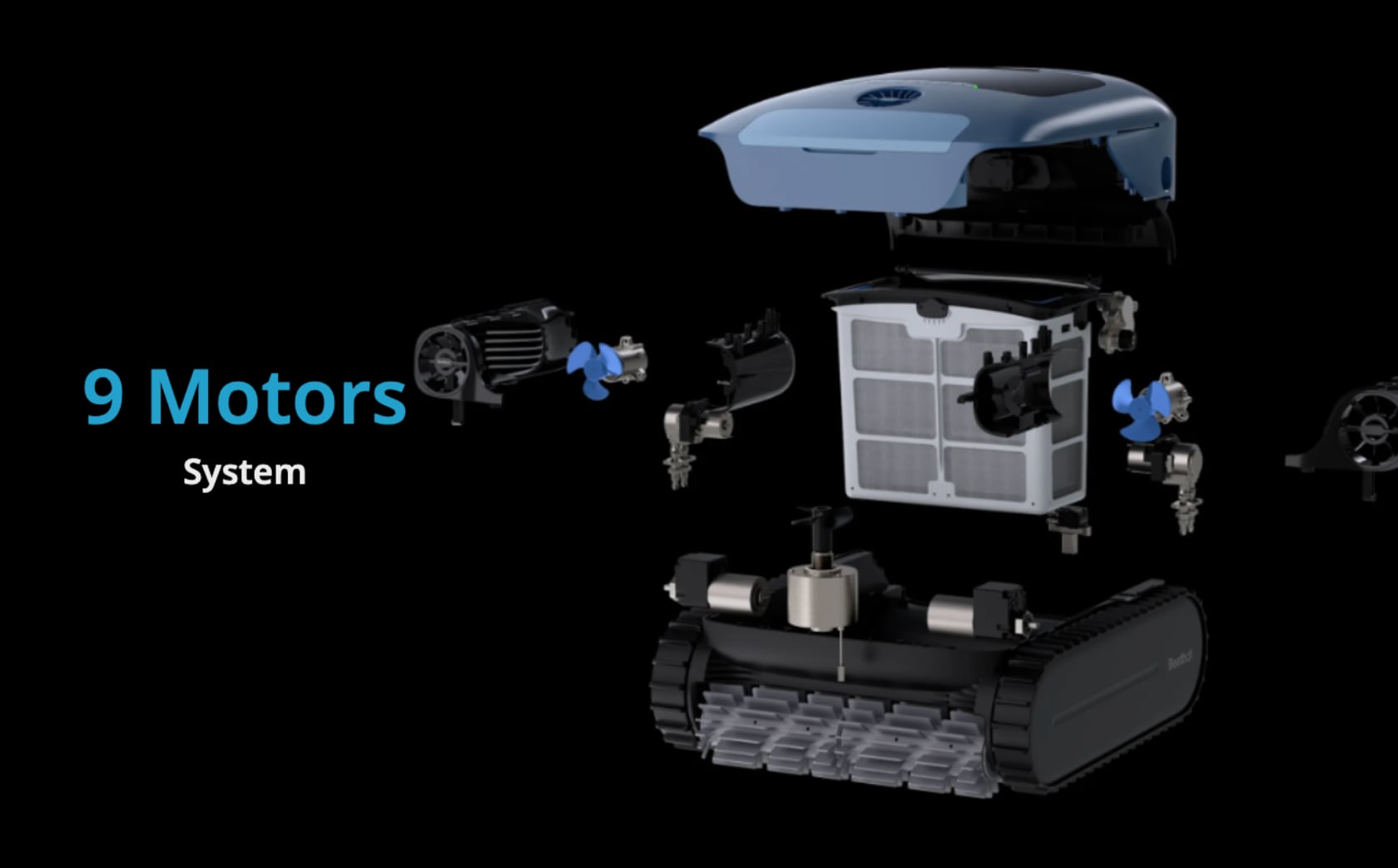
The Beatbot AquaSense Pro is the world’s first all-in-one intelligent pool-cleaning robot. It’s cordless and cleans the floor, waterline, and surface. It also features a water clarification function. With 20 onboard sensors, nine powerful motors, a dedicated Quad-Core 1.8 GHz processor, and an AI algorithm powered by Beatbot OS, it’s a dream come true for pool owners.

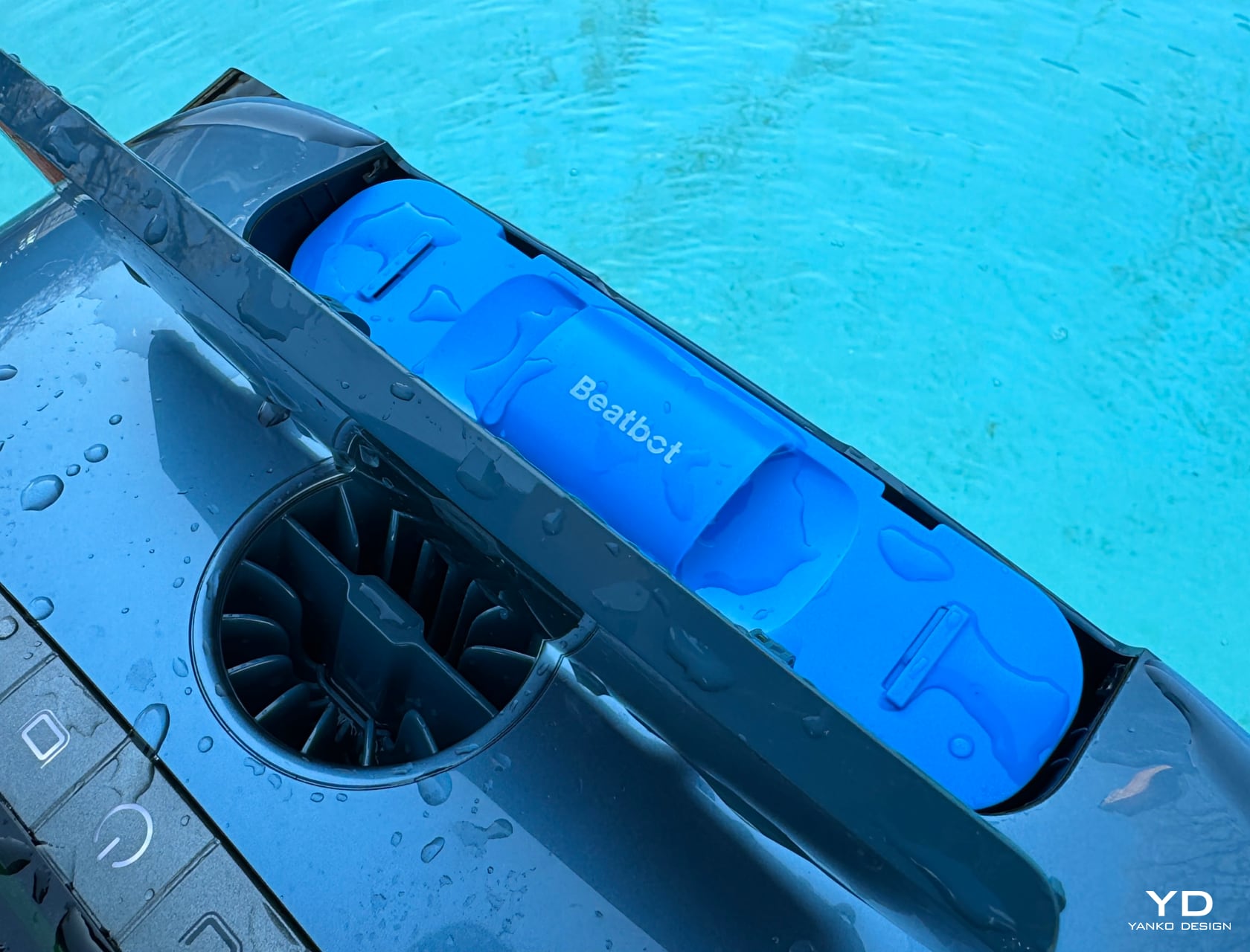
The “holistic” view of this robotic pool cleaner is impressive, given its numerous industry-first innovations. Let’s start with its simulated flight propulsion design. No other pool cleaner on the market can float to the surface and clean it intelligently.

This design draws inspiration from nature, specifically from the feeding mechanism of blue or humpback whales. These whales use a unique mechanism called filter feeding to consume large quantities of small prey, such as fish and tiny sea creatures. They do this by opening their mouths wide to gulp in a massive amount of water, then pushing the water out through their baleen plates with their tongues.

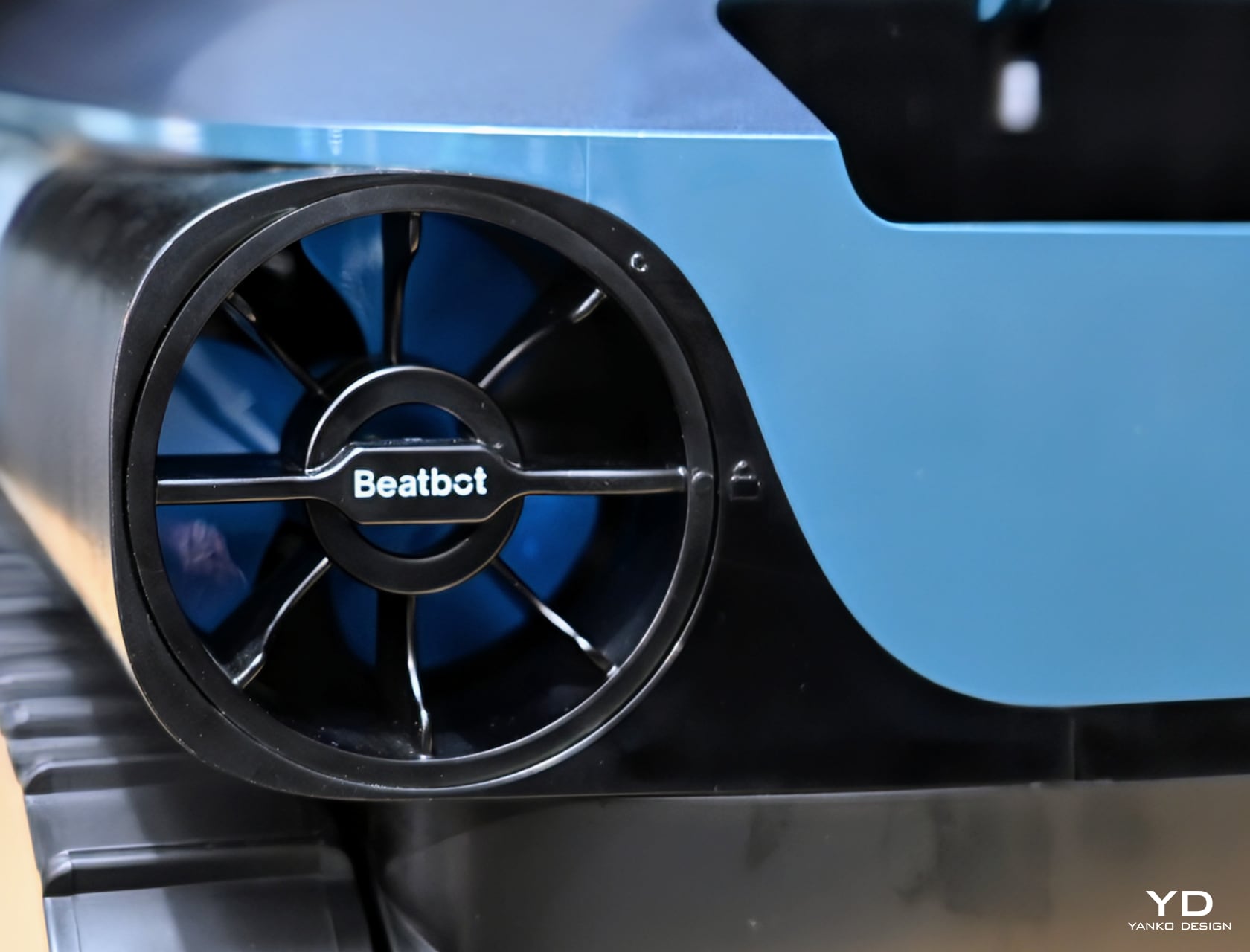
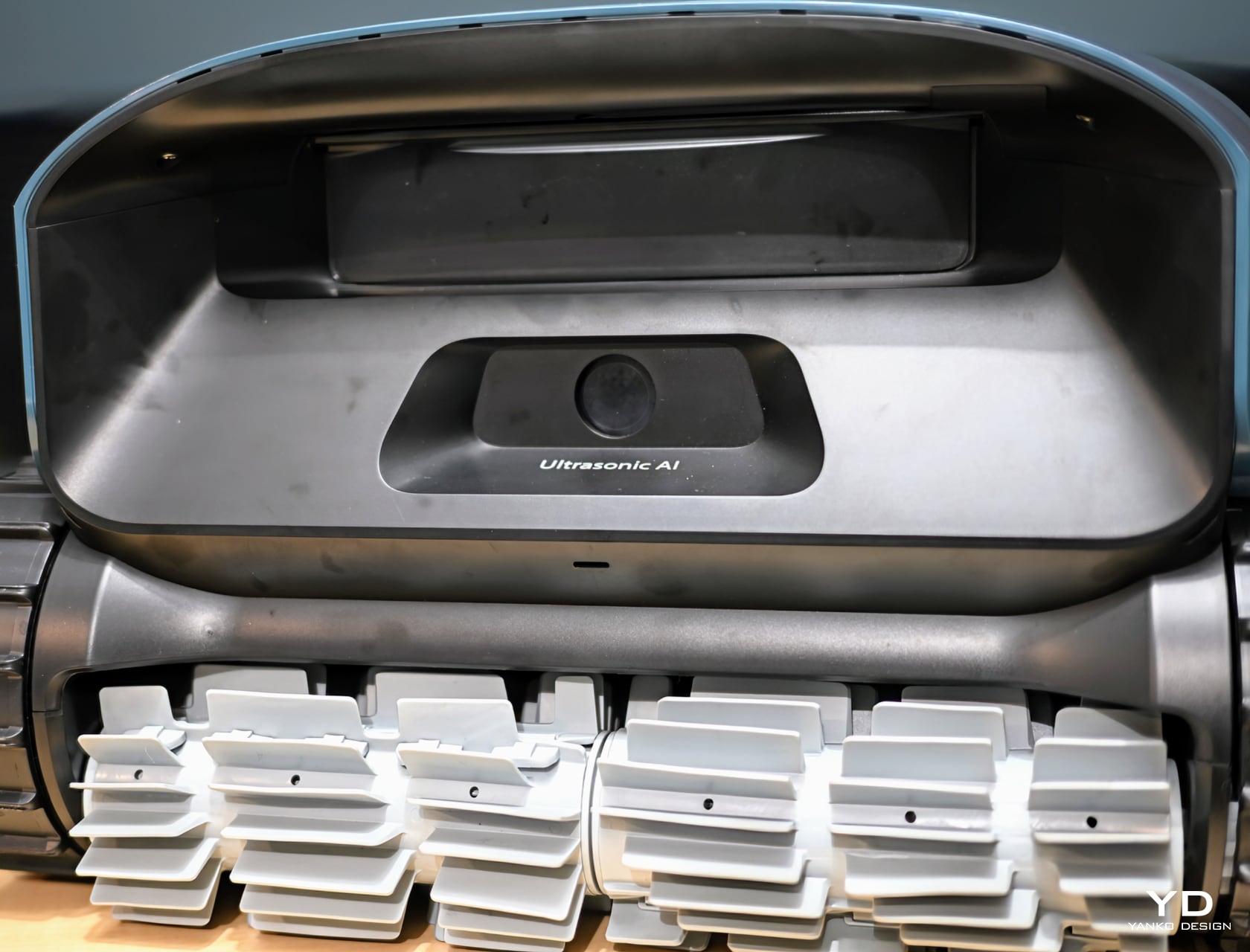
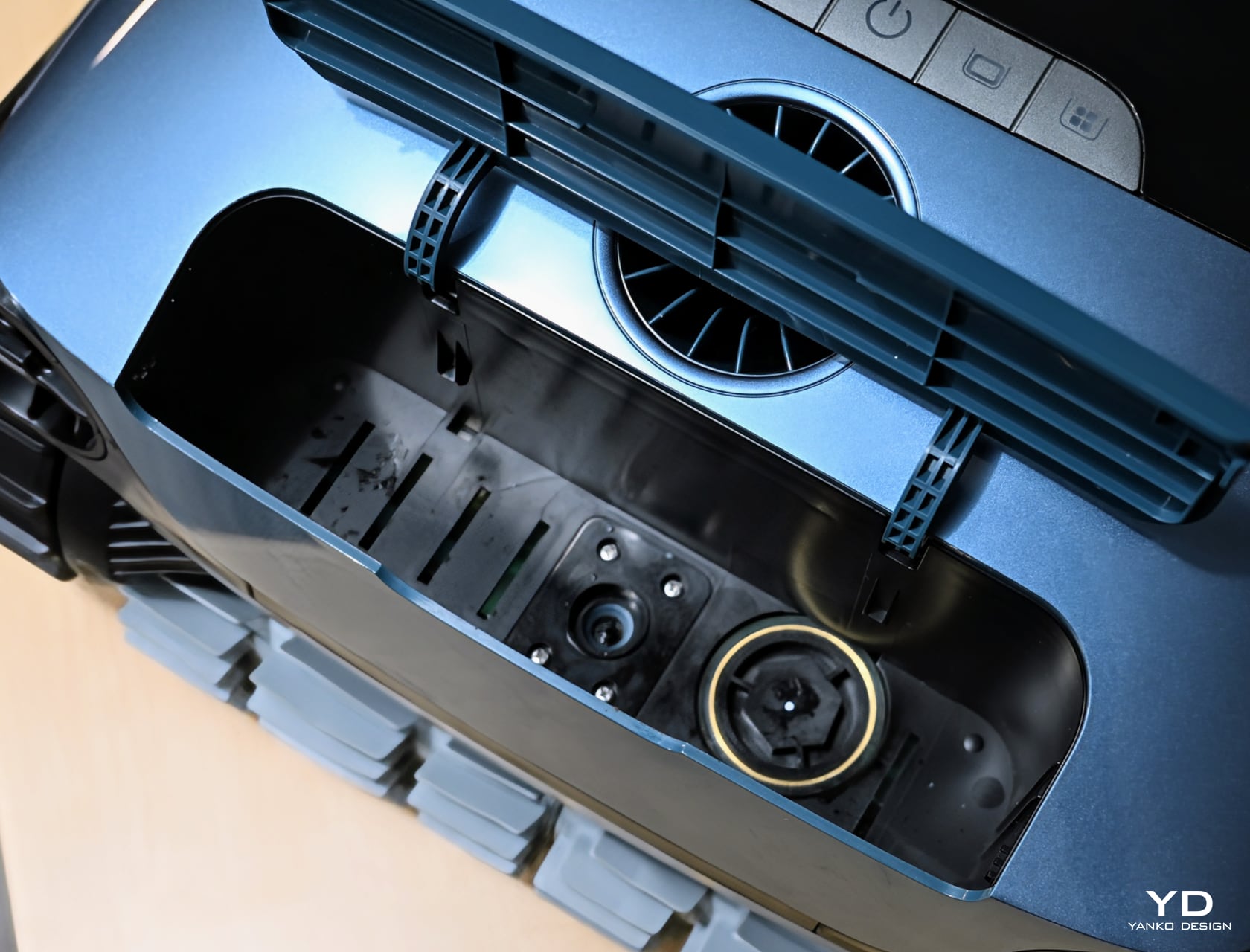
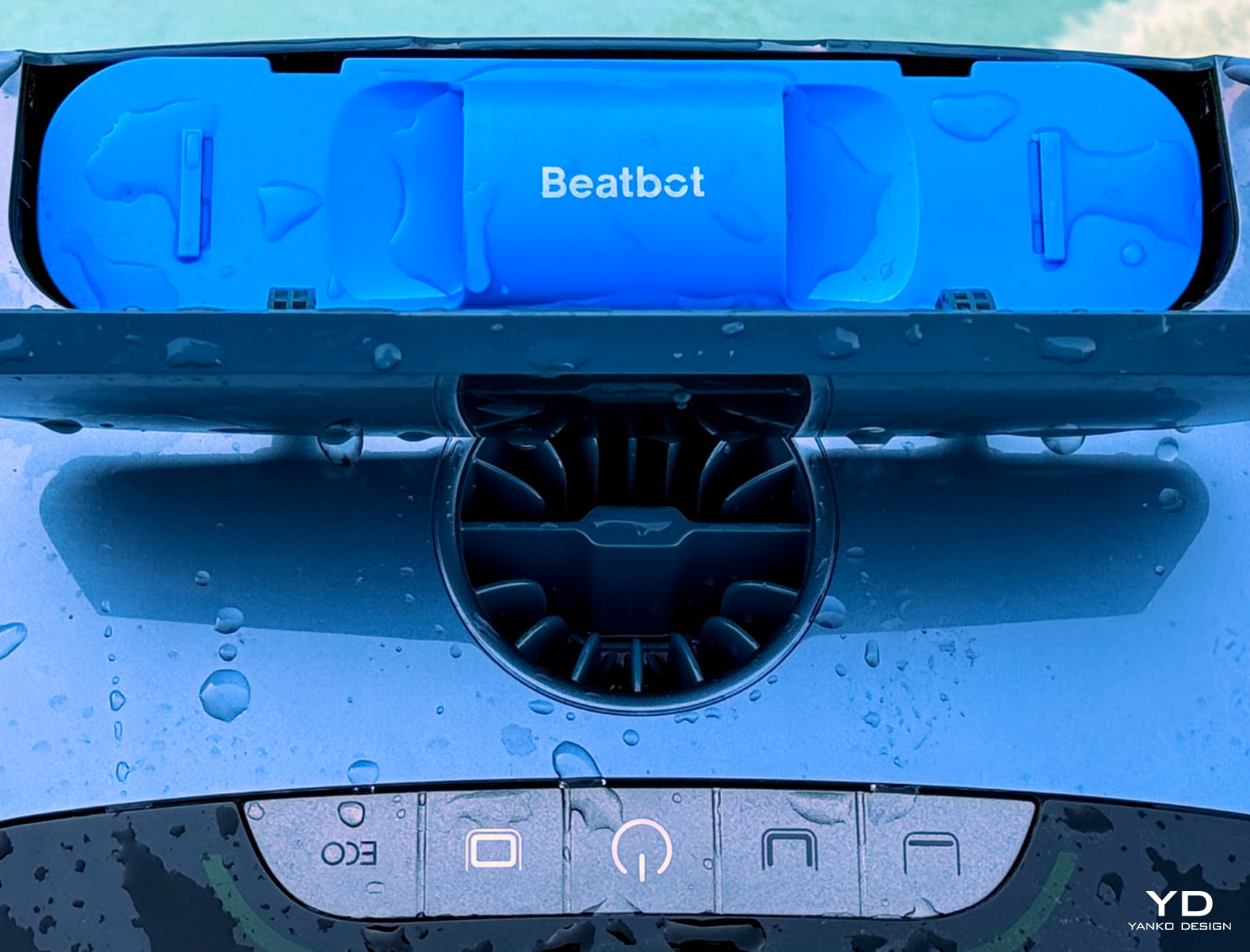
The AquaSense Pro robotic pool cleaner works similarly. It has a front flap and uses two propeller motors and two floating chamber motors to glide and suck in debris, leaves, bugs, and other pool pollutants. Its unique AquaGlide™ Simulated Flight Propulsion Design System enables it to move on water. Its top suction mouth and dust-rolling brush capture debris, preventing them from sinking. This feature alone saves significant pool cleaning time. After each cleaning cycle, the results are satisfactory.

It’s important to note that in its current form, the Pro Mode only makes one pass over the surface. After cleaning an area in an S-shaped pattern on the pool floor and surface, additional debris or leaves may fall into the pool. In such cases, do not expect the device to recognize and go back to clean that area again.

Performance

Where the AquaSense Pro truly shines, literally, in every sense of the word, is another industry-first — the built-in clarifier dispenser for a cleaner-looking pool by clearing up the pool water. This process takes place while cleaning the floor. The AI algorithm determines the amount needed based on the pool size for the most efficient use of the chemical.

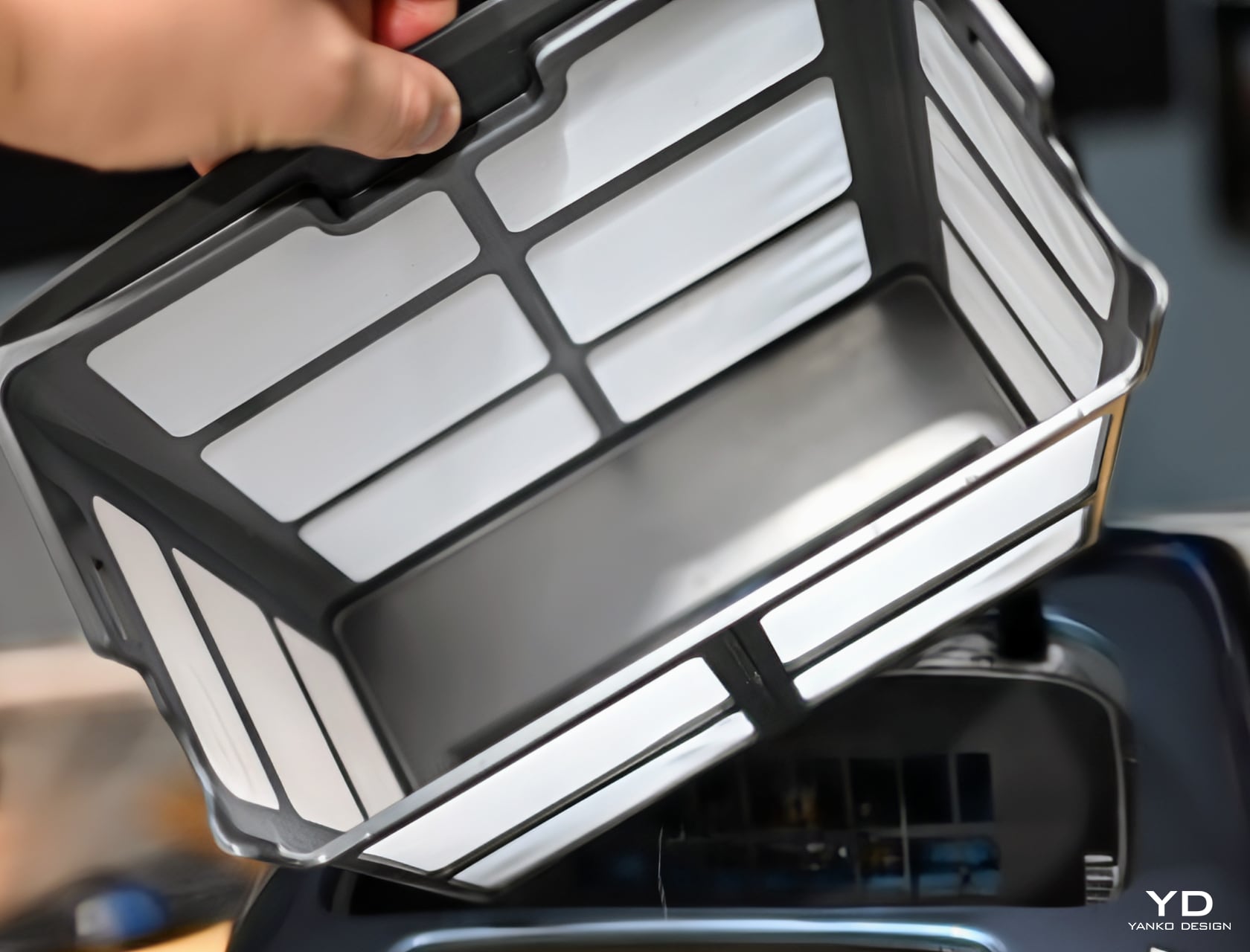
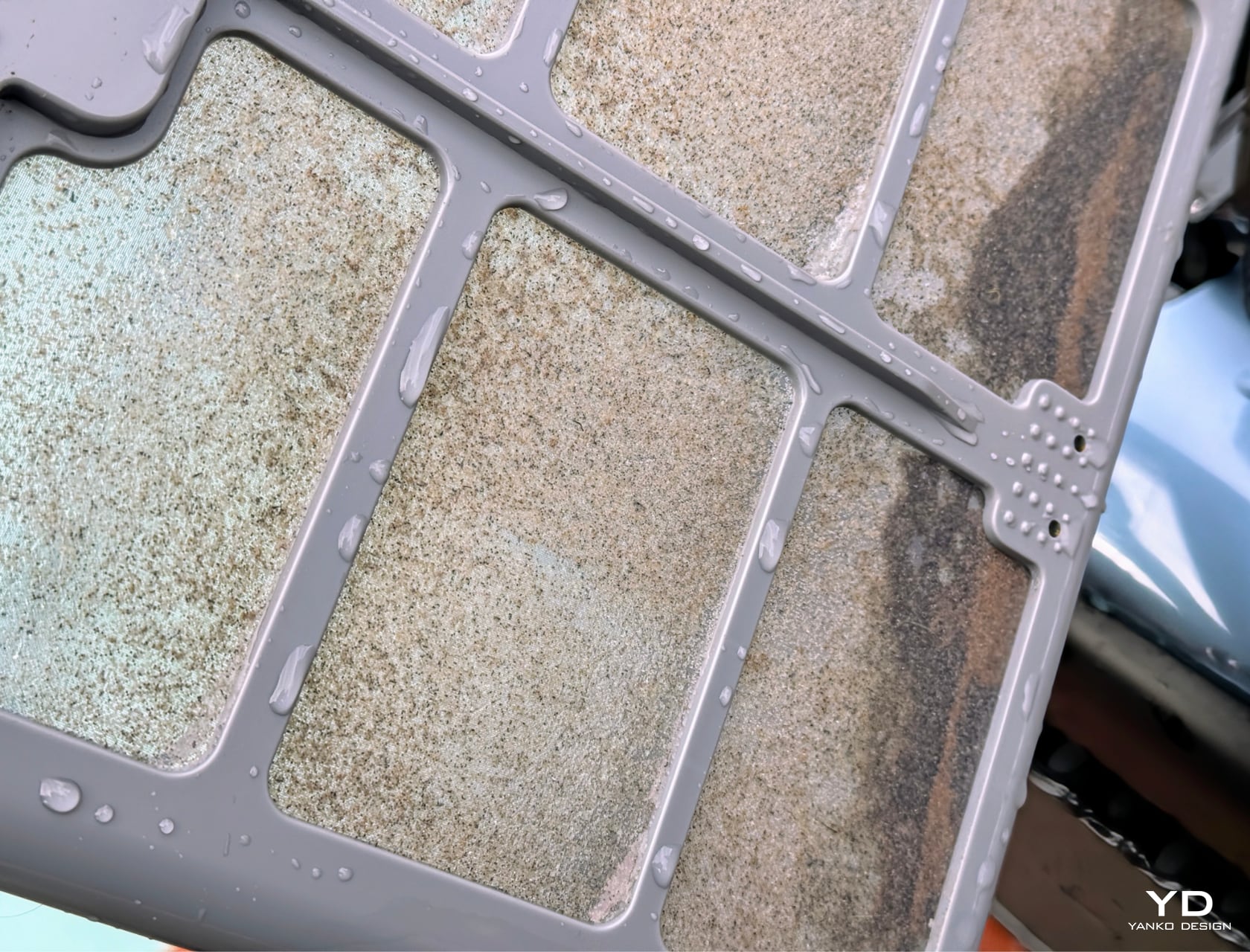
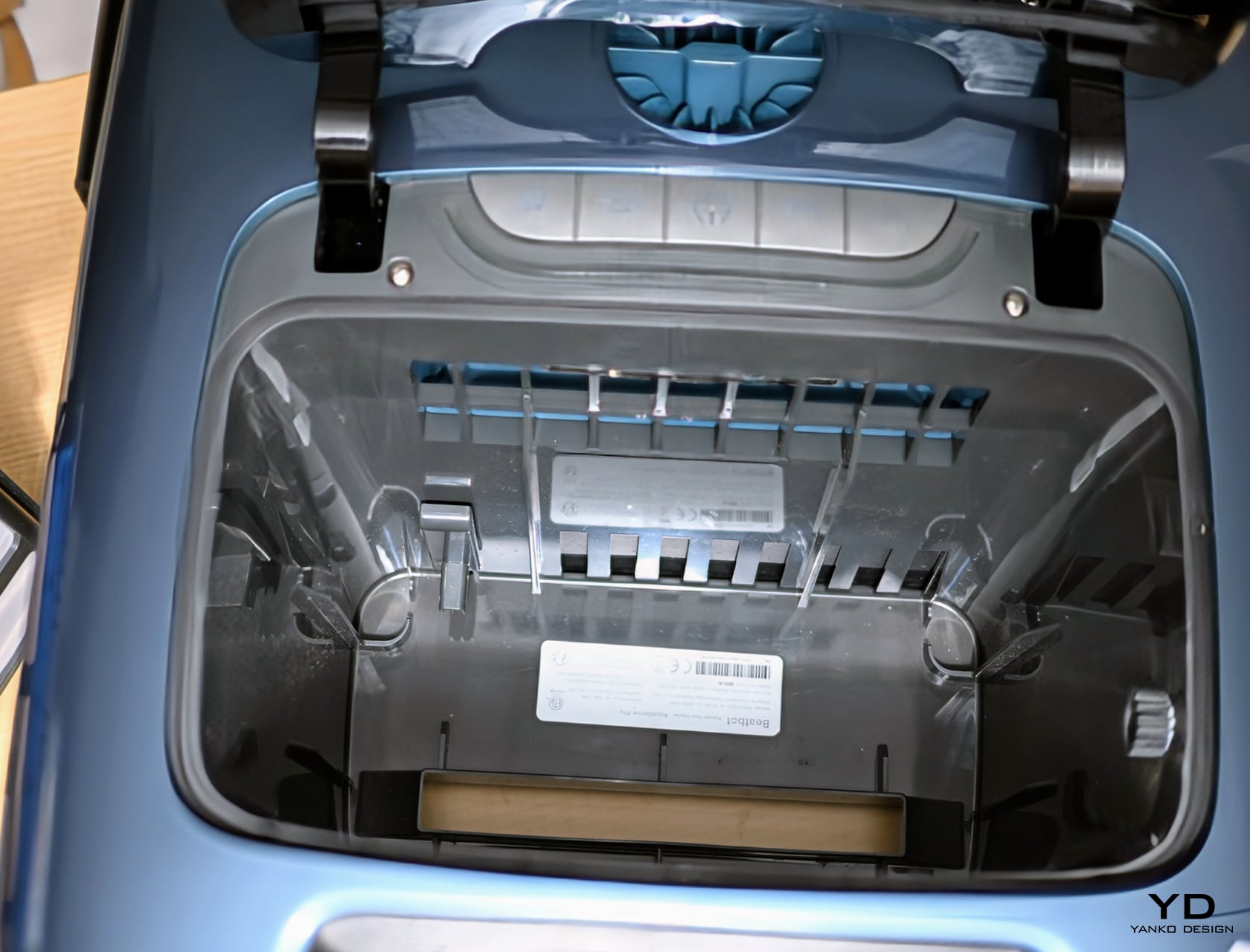
In terms of cleaning, this robotic swimming pool cleaner excels. I’ve had the opportunity to use it in my pool and can attest that it effectively removes both visible and invisible debris. It’s surprising to realize how dirty the pool water is when you remove and clean the two-layer filter. This filter basket captures and holds all debris, accommodating particles as tiny as 150 micrometers.


Strong suction is just one aspect. The two sets of brushes, placed at the front and back, scrub simultaneously, enhancing the cleaning power. It’s quite captivating to observe them in action. These brushes operate at different speeds and in different directions at times for precise control and extensive coverage, ensuring a thoroughly clean pool. Usually, I find myself scrubbing the sides and bottom of the swimming pool every few days. Now, that task is reliably delegated.

The CleverNav plan effectively maps out and charts the path forward for an S-shape cleaning pattern for the pool floor and surface, while the sides and waterline utilize the N-shaped cleaning pattern. It does a great job of preventing overlaps. However, I don’t mind a bit of overlap, considering my swimming pool is as old as the house, which is over 35 years old.

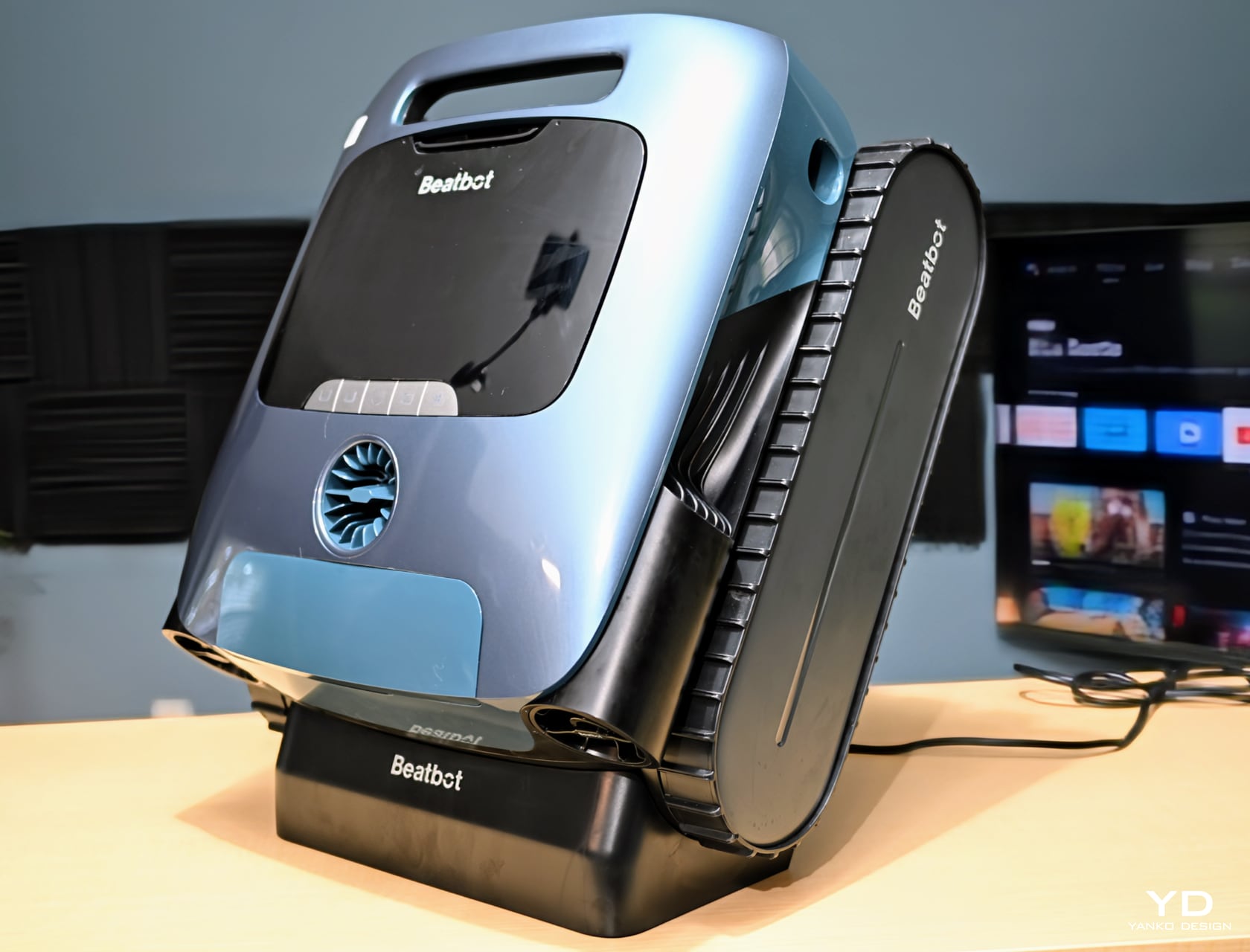
Beatbot informed me that future firmware updates will allow for customized cleaning modes, which could enable the robot to clean continuously for up to 9.5 hours if necessary. On average, the battery life of the robot is over 5.5 hours on a single charge, taking less than 3 hours to fully recharge from complete depletion. If the battery level falls below 15%, the robot smartly returns to its starting point and parks itself on the water surface near a wall. It then automatically expels the water from its cavities. This makes it lighter when lifting it out of the pool and prevents a lot of water from spilling out. This MemoryPark smart return to the starting point is another industry first.

Ergonomics

I appreciate that, unlike other robotic pool cleaners, I don’t need to manually turn this one on or off for charging or use. It begins charging as soon as I place it on the charger, regardless of whether it’s on or off. After removing it from the base charger, it takes only 3 seconds to calibrate on a level surface before it’s ready to clean.

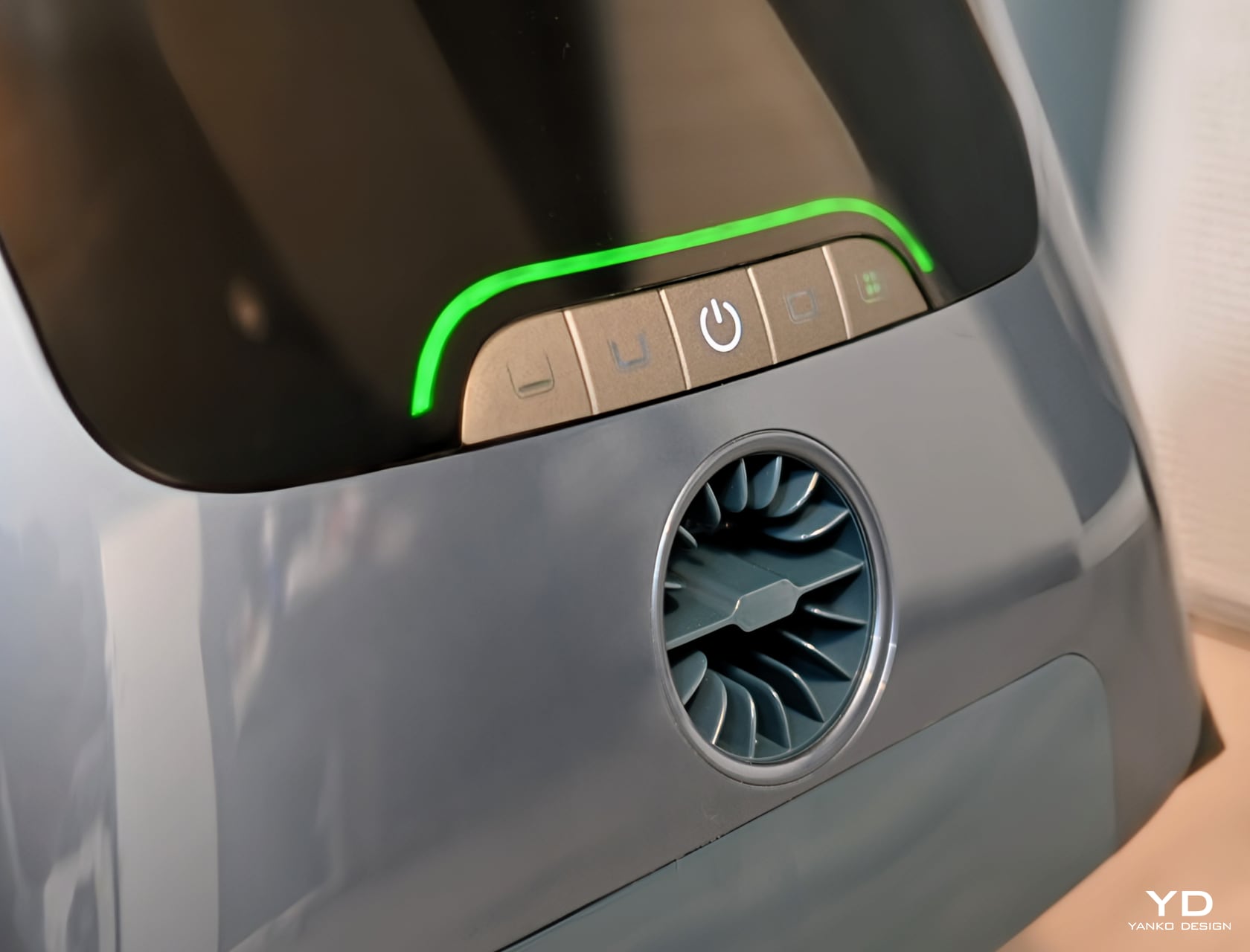
The buttons are designed and arranged intuitively. From left to right, they include quick clean mode, standard mode, power on/off, pro mode, and eco mode. My preference is the pro mode as it cleans the entire pool, encompassing the bottom, sides, water line, and surface. The Quick mode cleans the floor once, while the Standard mode also cleans the floor, walls, and waterline once. The ECO mode cleans the floor once every other day. A Custom mode, set to be available later through an over-the-air update, will allow for personalized cleaning settings.

Verdict

Beatbot has impressively incorporated a vast amount of technology and innovation into the AquaSense Pro. It’s hard to comprehend the 131 patents it holds, including 51 inventions and 20 sensors measuring water pressure, ultrasonic sensors, hall sensors, and temperature and humidity sensors. It even includes IMU and electrical current sensors to ensure smooth operation. Thanks to its nine motors, this robot can climb steps, clean them, and then proceed. The brushless main water pump motor at the robot’s core is a powerhouse. It’s akin to a 16-cylinder engine on a Bugatti arranged in a unique W configuration, ready for action every time water oozes out. Collectively, the drive-wheel motors, floating chamber peristaltic pump, surface propeller, stepping motor, and reagent pump motor make the AquaSense Pro one of the best swimming pool cleaners I’ve used in the past two decades. If you’re looking for a new cordless, hassle-free robotic cleaner, this will be the last one you’ll need to invest in.

The post Beatbot AquaSense Pro review: Smart and Powerful Swimming Pool Cleaner first appeared on Yanko Design.
A New and Improved TSA-approved Titanium everday carry tool

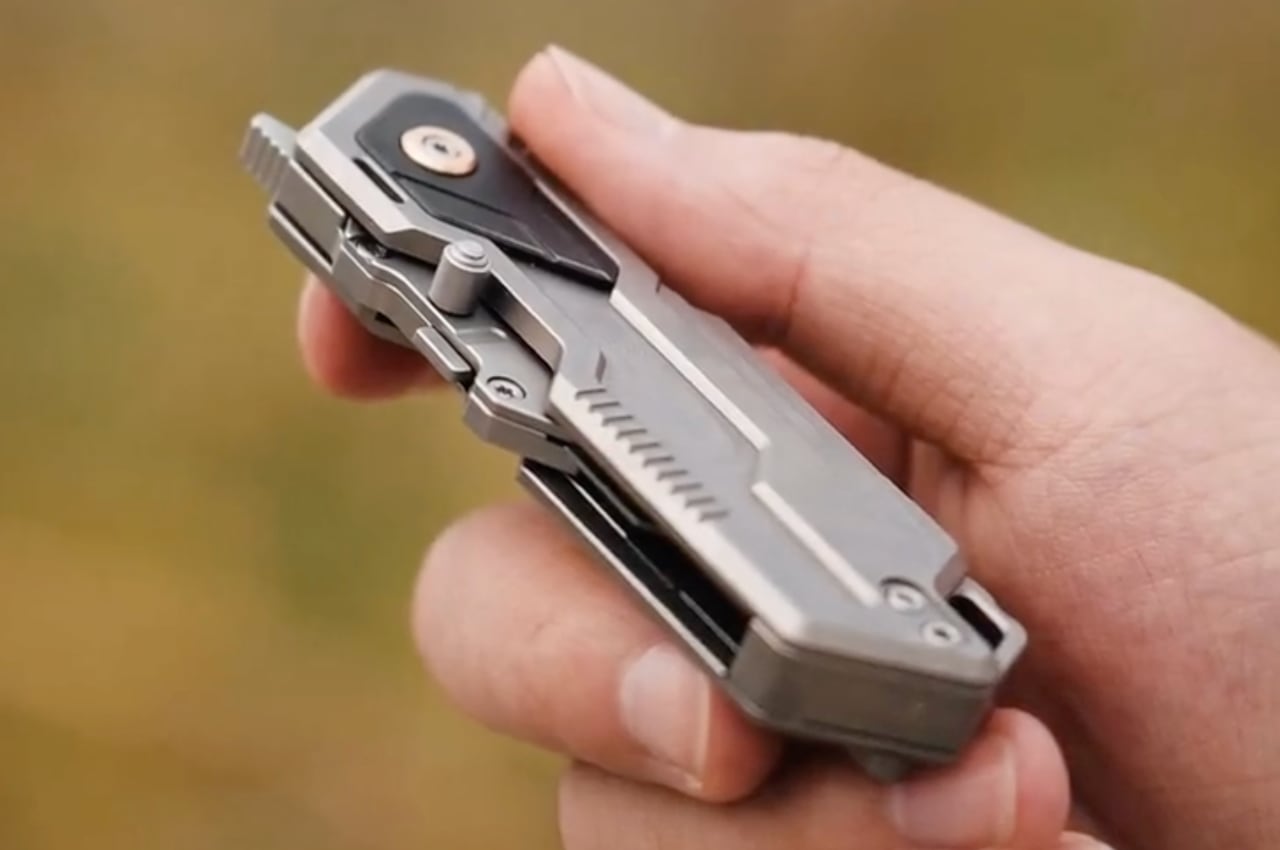
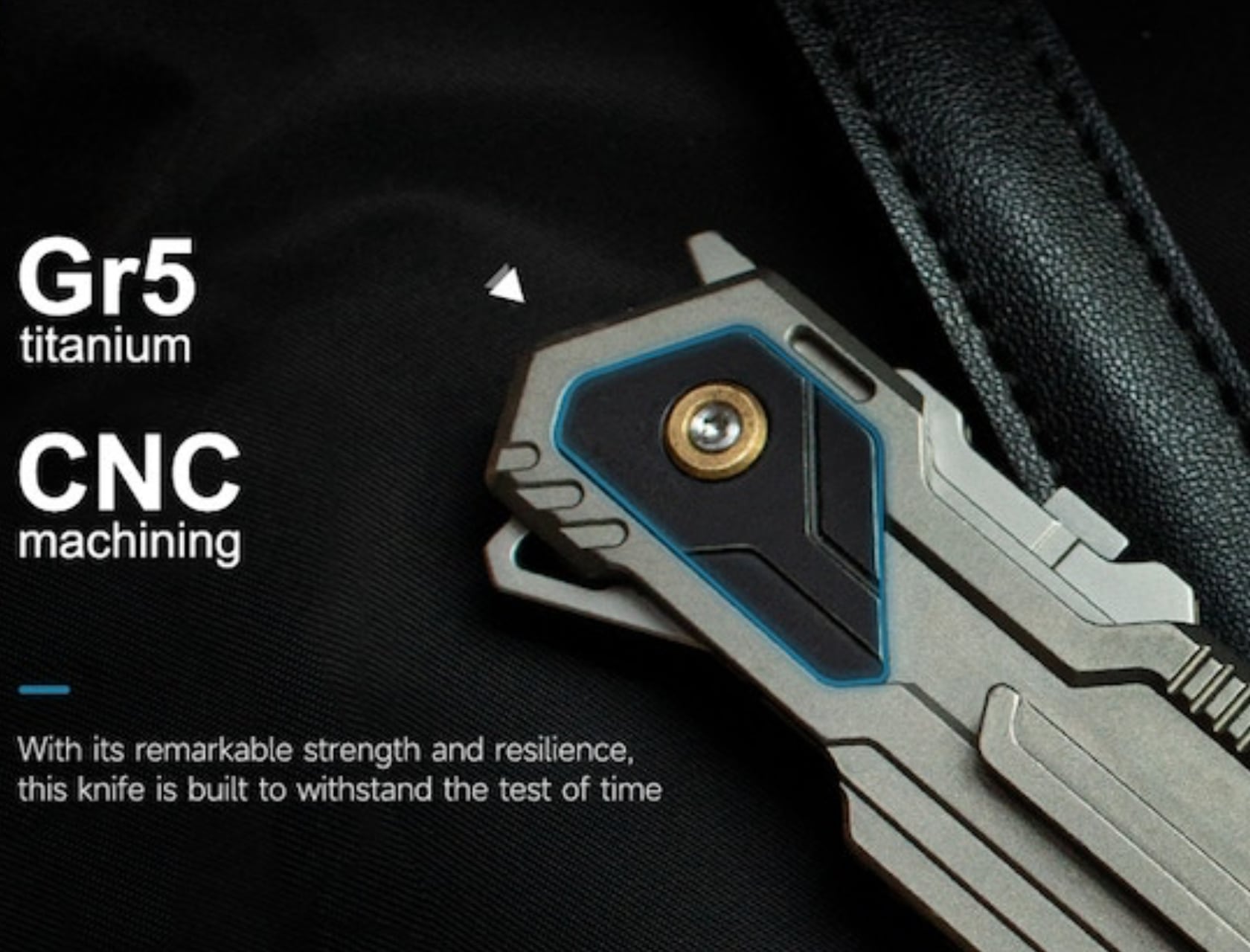
The Phantom 2.0 is an upgraded folding utility knife made from Gr5 titanium and carbon fiber sheets. It features replaceable blades and multiple ways to open it. This everyday carry (EDC) has an improved grip, double-side tritium slots for durability, convenience, versatility, and, most importantly, a safer lock mechanism. It also comes with a deep pocket clip, a lanyard hole, and smooth one-hand operation. And, it’s TSA-approved and allows for easy blade replacement. Let’s explore all these features in detail to help you determine if this EDC fits your needs for everyday tasks, traveling, or outdoor activities.

Designer: EDC Monster

Click Here to Buy Now: $129 $169 (24% off). Hurry, only 10/440 left! Raised over $78,000.

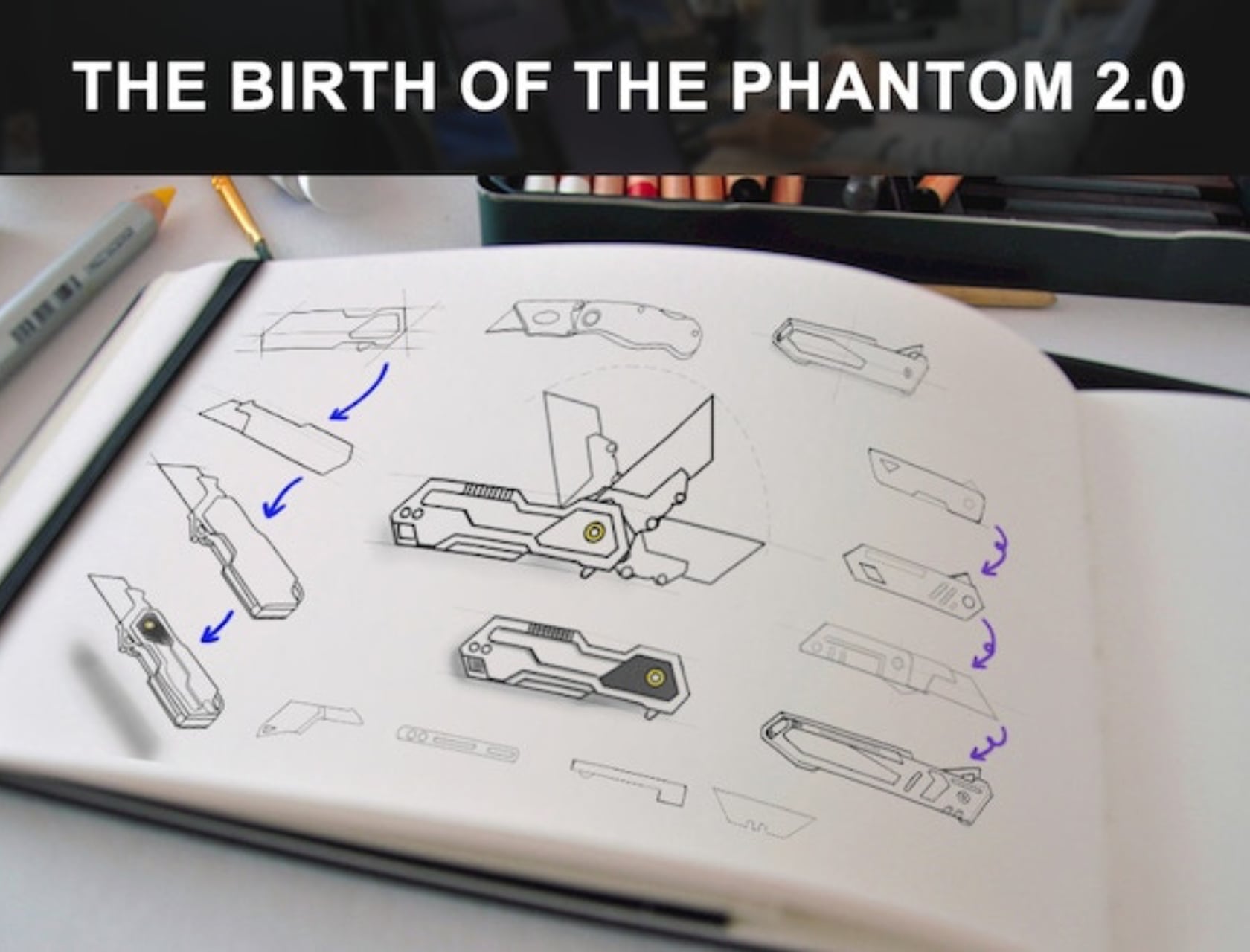
The new Phantom 2.0 is finally here, building on what people loved about the first version. It keeps popular features like the flip opening and blades you can change out. But there’s more to it this time around.

Unlike ordinary pocket knives, The Phantom 2.0 is a folding utility knife made from Gr5 titanium, boasting real carbon fiber sheets.

Backers and owners of the Phantom 1.0 love this product so much that they’re sharing their “backer number” along with comments about their anticipation for the release of version 2.0.

It’s a brilliant move for EDC Monster to listen to what users say and keep the well-loved features while adding additional cool updates. Now, there’s a thumb stud and a back flipper for opening it, making it easier to use with one hand. They’ve also added something neat: slots for tritium, a type of glow-in-the-dark material. This means no more fumbling around in the dark trying to find your cutting tool.

These updates are all about making Phantom 2.0 more useful and user-friendly. It’s clear that the feedback from users really shaped this new version, making it a tool that’s even better suited for everyday tasks.

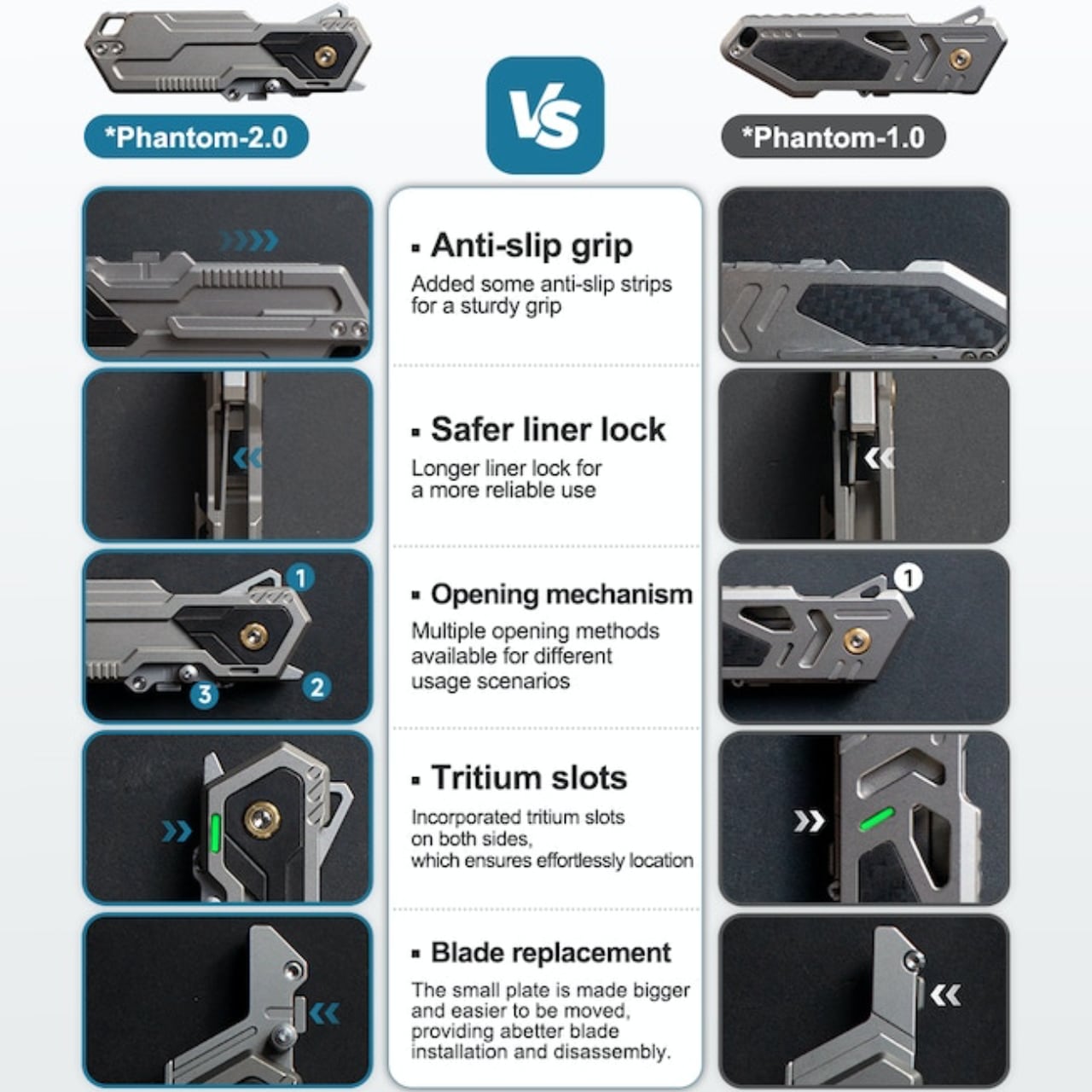
Next, let’s detail the differences between versions 1.0 and 2.0. The Phantom 2.0 introduces several key enhancements to its design, making it an even more reliable and user-friendly everyday carry tool.

Firstly, the grip has been significantly improved. In addition to the existing groove on the side of the frame, additional lines and grooves have been added to both sides. This design ensures a more stable and comfortable hold between the thumb and index finger, enhancing the overall grip during use.

Safety and ease of operation have also been addressed with a safer lock mechanism. The liner lock has been extended by 0.59 inches to facilitate better locking functionality. This longer Liner Lock feature enhances the knife’s reliability and security, allowing users to focus on the task at hand with increased confidence.

The centerpiece of this Everyday Carry (EDC) is the cutting feature. It reliably performs tasks such as slicing through paper, carpet, cartons, leather, PVC, and even fruits over time.

<

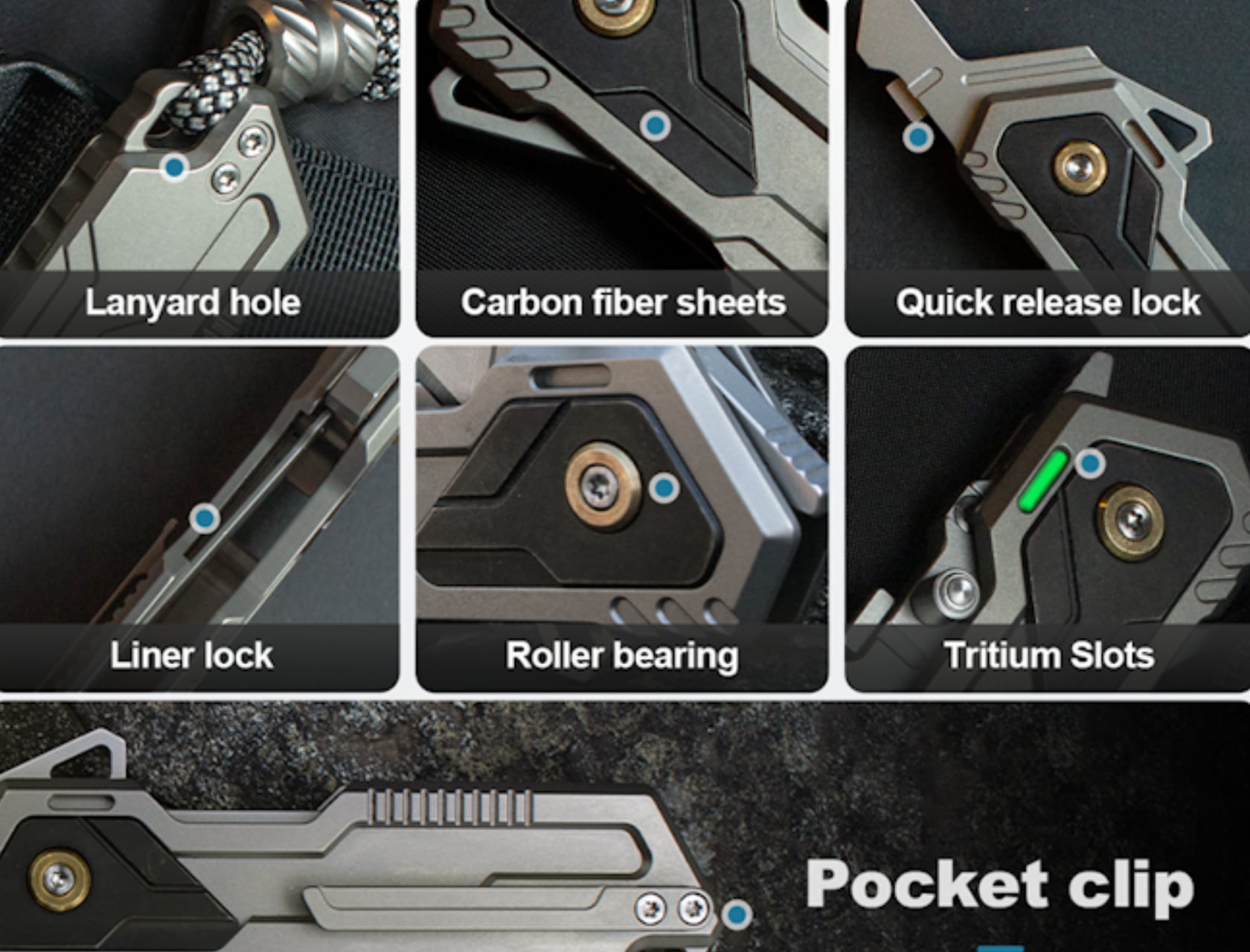
Accessing the blade only requires one-hand operation thanks to the roller bearing mechanism. Common utility knives often jam with frequent use, hindering smooth and rapid operation. The Phantom 2.0, equipped with a roller bearing mechanism, is a folding knife capable of opening in 0.5 seconds. It opens and closes swiftly and smoothly, maintaining its performance over time.

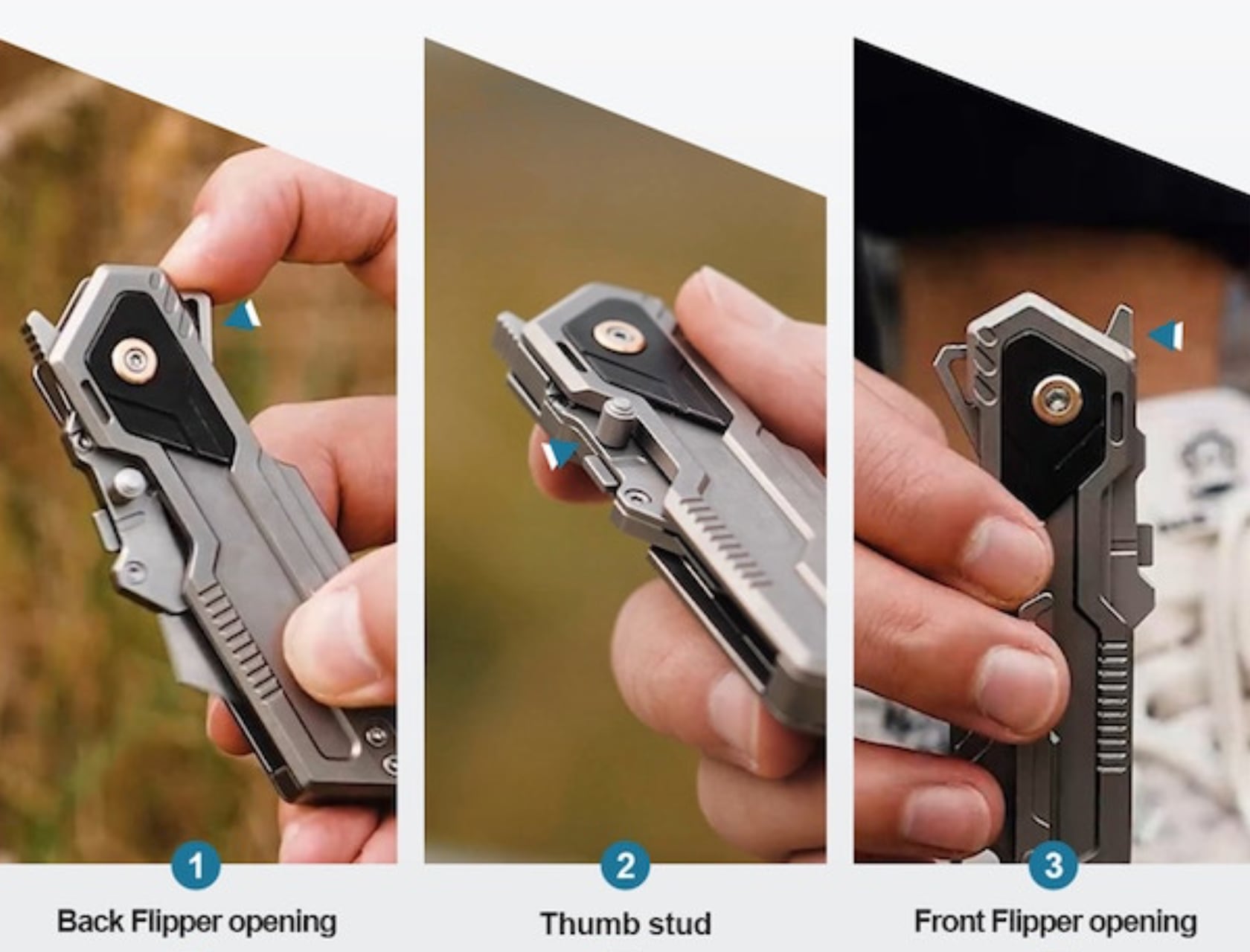
The Phantom 2.0 introduces a range of opening mechanisms to cater to different preferences and situations, making the knife more versatile and user-friendly. The back flipper opening is a standout feature that allows for quick and easy unfolding of the knife with a simple flick of the index finger. This method ensures a smooth and reliable action, providing users with immediate access to the blade when needed.

In addition to the back flipper, the Phantom 2.0 features a front flipper opening, a new addition not found in its predecessor, the G1. This design includes an extra flip tab located at the top of the blade, enabling users to effortlessly unfold the knife with a single motion. This alternative method offers an additional way to quickly deploy the blade, enhancing the knife’s functionality.

Furthermore, the Phantom 2.0 is equipped with a thumb stud, allowing for swift and easy blade access using just the thumb. This feature adds to the knife’s versatility, making it suitable for a wide range of cutting tasks. The inclusion of the thumb stud, alongside the front and back flipper openings, ensures that users have multiple reliable options for opening the knife, catering to personal preferences and situational needs.

As we’ve already briefly mentioned above, another significant upgrade is the addition of double-side Tritium Slots. Unlike the previous model, which only has one, the Phantom 2.0 comes with a tritium slot on each side, measuring 1.5 x 6mm each, to ensure that you can effortlessly locate your knife in any low-light environment. This improvement makes the knife an indispensable tool in various low-light or emergency situations, ensuring visibility regardless of its position.

There’s also an add-on option for glass luminous vials and tritium vials (both come in several color options) to meet your different needs and preferences.

The blade replacement mechanism has been upgraded for even greater convenience. The small metal plate has been redesigned to facilitate easier blade installation and disassembly, making blade maintenance more effortless than ever. EDC Monster is very proud that while maintaining the excellent features of the Phantom 1.0, the Phantom 2.0 is also TSA-compliant. Remove the blade, discard it, and keep the handle. This makes it an ideal travel companion for all your creative needs.

Tying everything together, the Phantom 2.0 enhances everyday carry convenience and security with its thoughtfully designed deep pocket clip, positioned strategically in the middle of the knife to ensure secure and discreet placement. Additionally, it features a keychain hole designed to accommodate a lanyard bead, adding a layer of personalization and versatility. This specific design not only elevates the functionality but also the aesthetic appeal of the knife, making it a more tailored and essential component of your everyday carry.

Together, these enhancements make the Phantom 2.0 a superior choice for an everyday carry knife, combining improved functionality, safety, and ease of use in one sophisticated tool.

Click Here to Buy Now: $129 $169 (24% off). Hurry, only 10/440 left! Raised over $78,000.

The post A New and Improved TSA-approved Titanium everday carry tool first appeared on Yanko Design.

From Clutter to Clarity: Reinventing the Art of Stationery

Having all the right tools is crucial for unleashing creativity, whether you’re seeking inspiration in a coffee shop, a shared space, or anywhere else. This calls for a significant level of discipline to select a great stationery set to keep your creative flow uninterrupted. The Bento Jot from NOOE may be the perfect solution. The concept is borrowed from the Japanese bento – a single-portion home-packed meal or for take-out, with a history dating back to the Kamakura period. Modern bento boxes have evolved from simple packed meals to more elaborate arrangements with separate compartments for different dishes, emphasizing aesthetic presentation. This is where the Bento Jot shines. They’ve distilled the essential elements of a bento box, a cornerstone of Japanese culture, to create a tool designed to help you excel at what you do best – nurturing your creativity at work.

Designers: Neetica Pande and Piyush Suri

Click Here to Buy Now: Starting at $99 $189 ($90 off). Hurry, only 3/106 left!

12-Item Stationery Collection

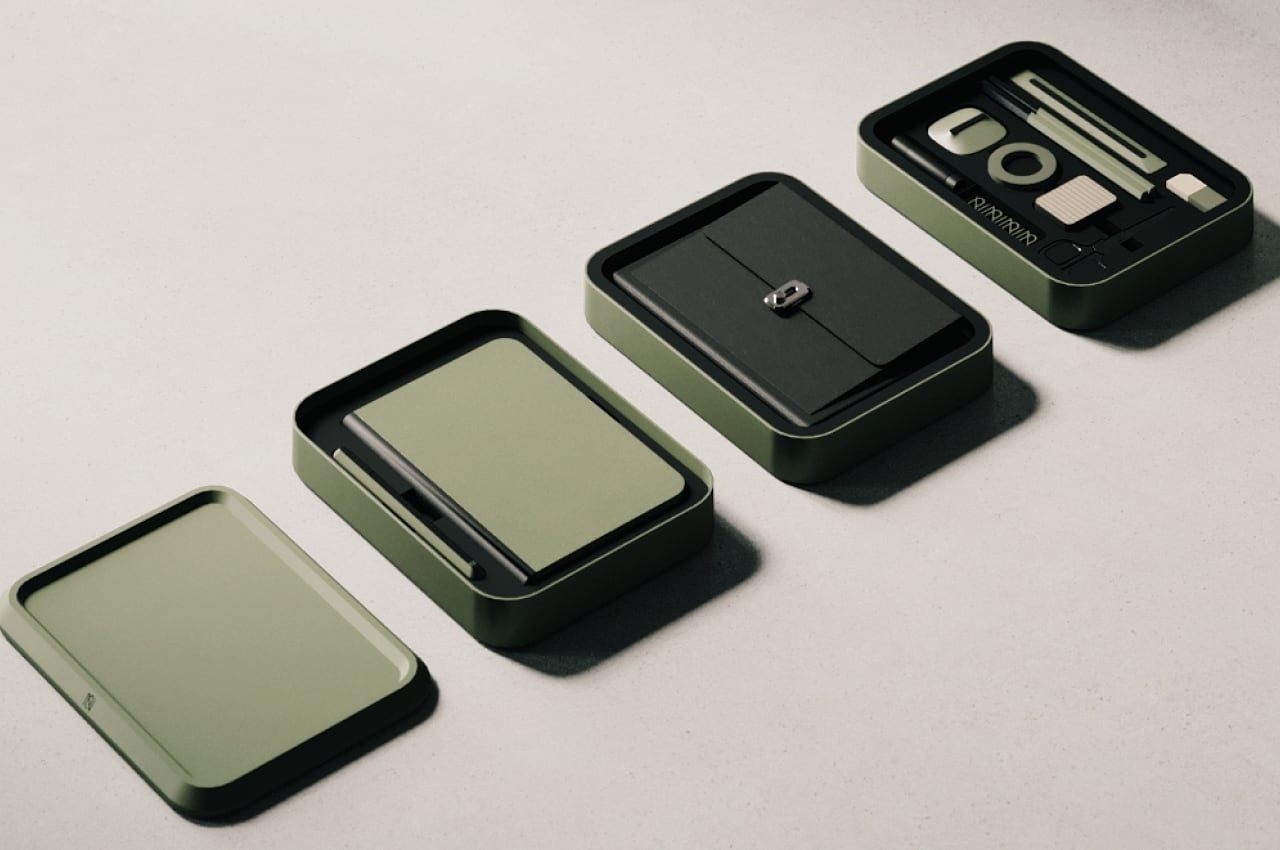
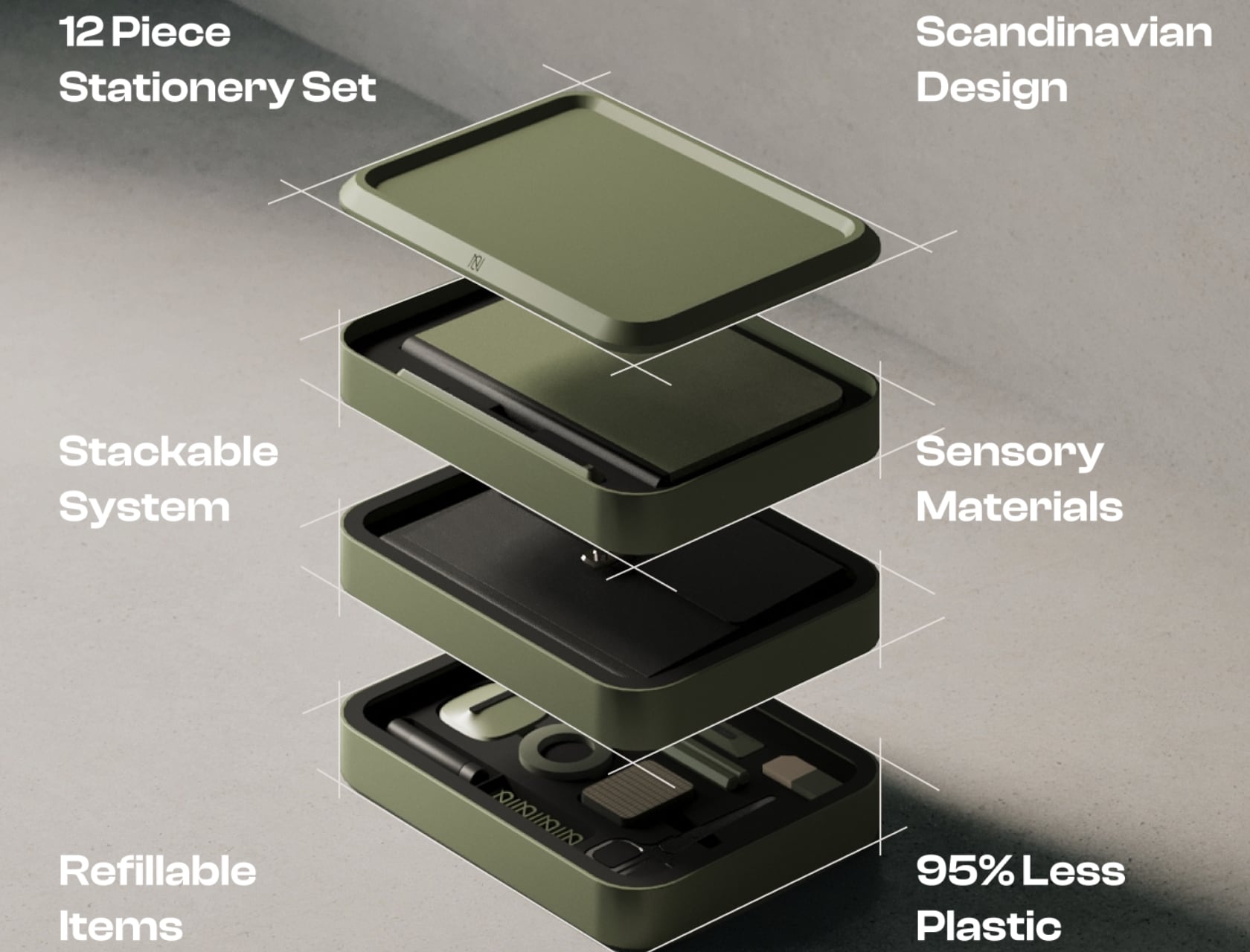
Just as a traditional bento box offers various dishes, Bento Jot presents a unique 3-layer stationery set inspired by the bento box and the simplicity of Scandinavian design. It combines a sleek design with distinctive functionality. Composed of 12 carefully designed stationery items, Bento Jot uses premium materials to enhance your desk space and inspire creativity. The design philosophy behind Bento Jot, deeply rooted in the principles of quality, sustainability, and a cohesive aesthetic, reflects the serene and clutter-free ethos of Scandinavian design, as explained by Neetica Pande, Co-founder and Chief Design Officer of NOOE:

“We love stationery, however, the main challenges we saw with most available stationery today were poor quality and the lack of standardization. We envisioned a collection that has a cohesive aesthetic and performs exceptionally well, while still being designed sustainably. We wanted to move from cheap-plasticky to a more emotive-tactile experience,” Pande elaborates.

Every contour, edge, corner and part of the Bento Jot has been molded to be the perfect fit for the creative in you.

This approach to stationery design, focusing on quality and tactile experience, reflects a deeper understanding of the user’s needs and the environmental impact of products. It emphasizes NOOE’s commitment to redefining stationery with an eye for detail and sustainability, making Bento Jot a tool and a statement of purpose and creativity.

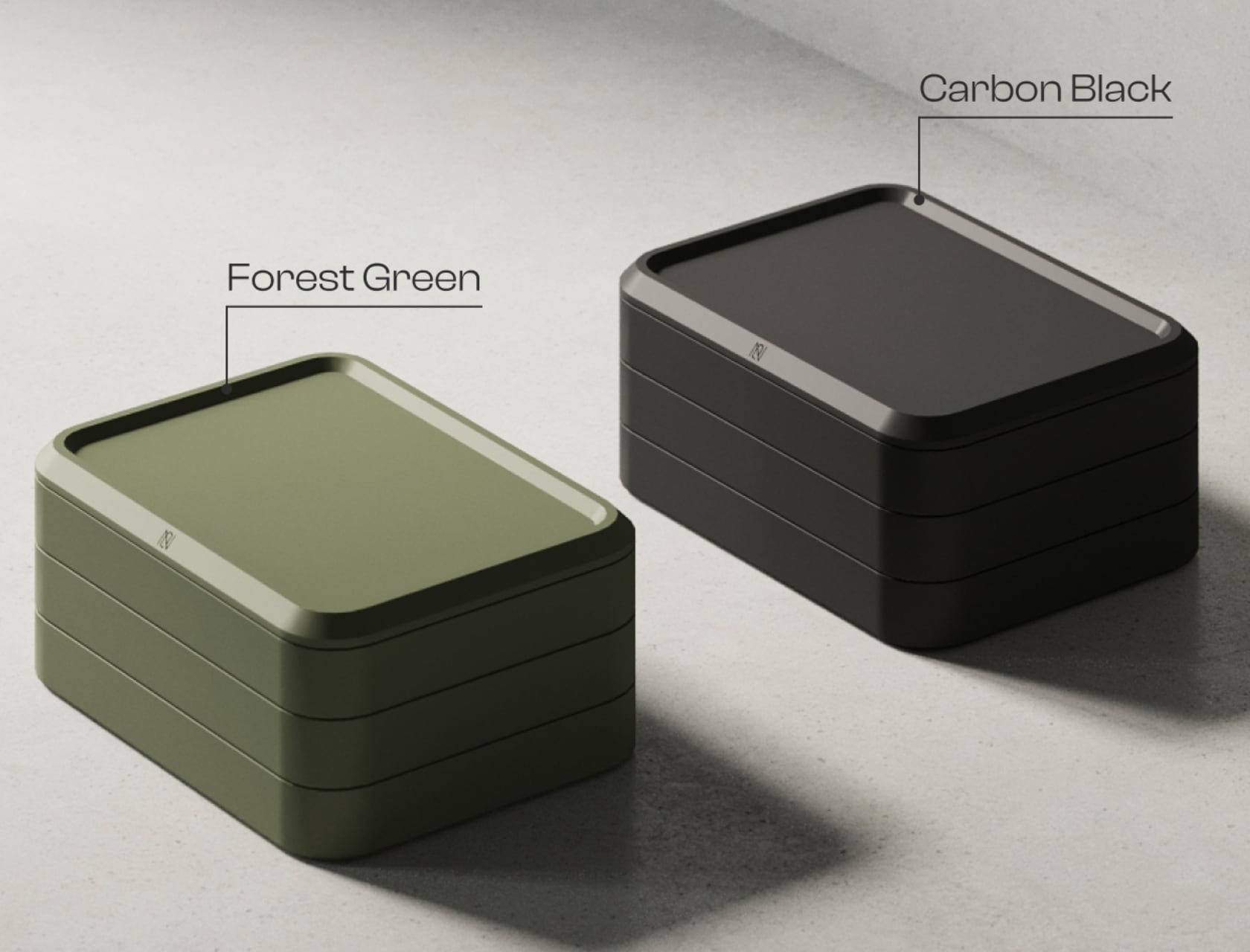
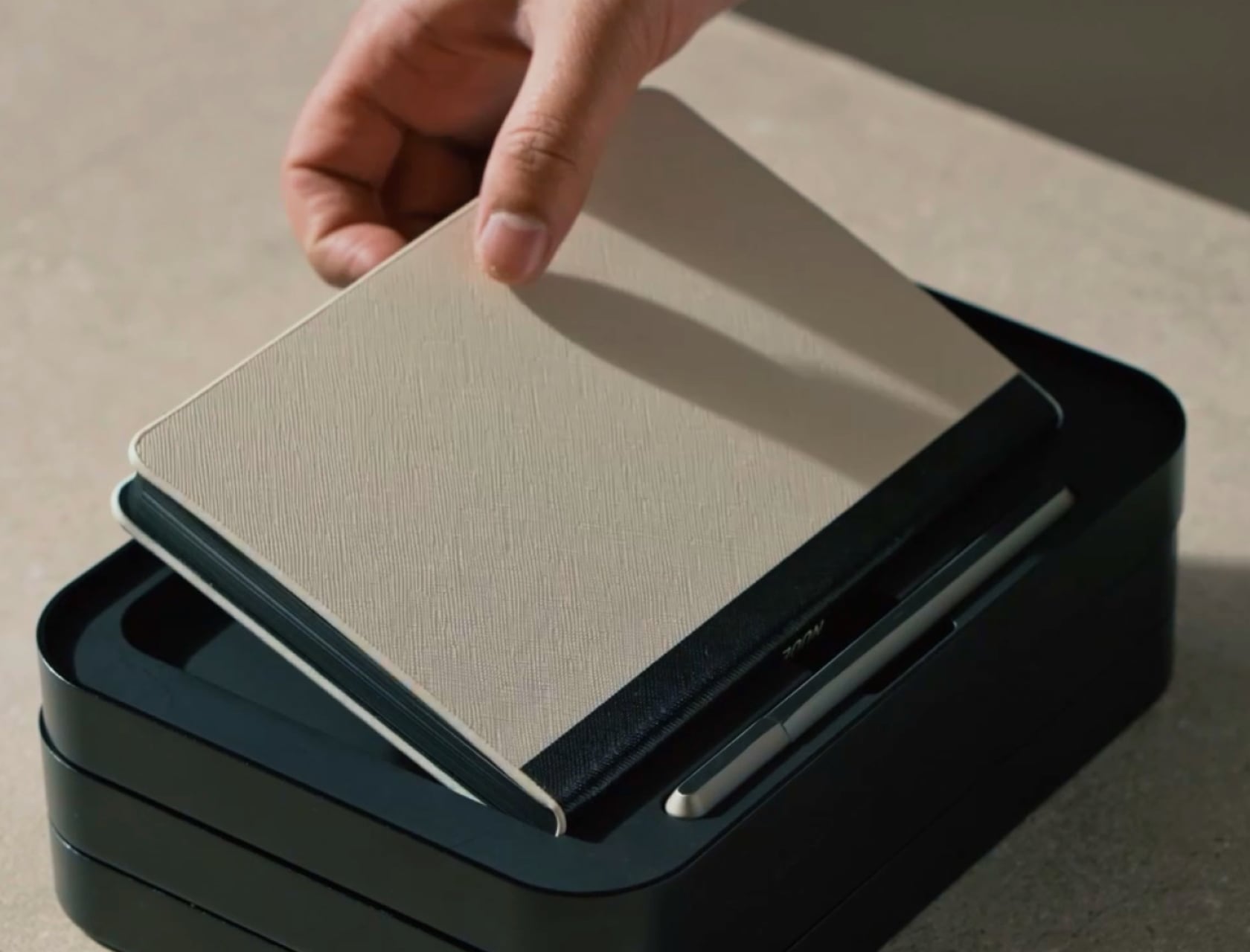
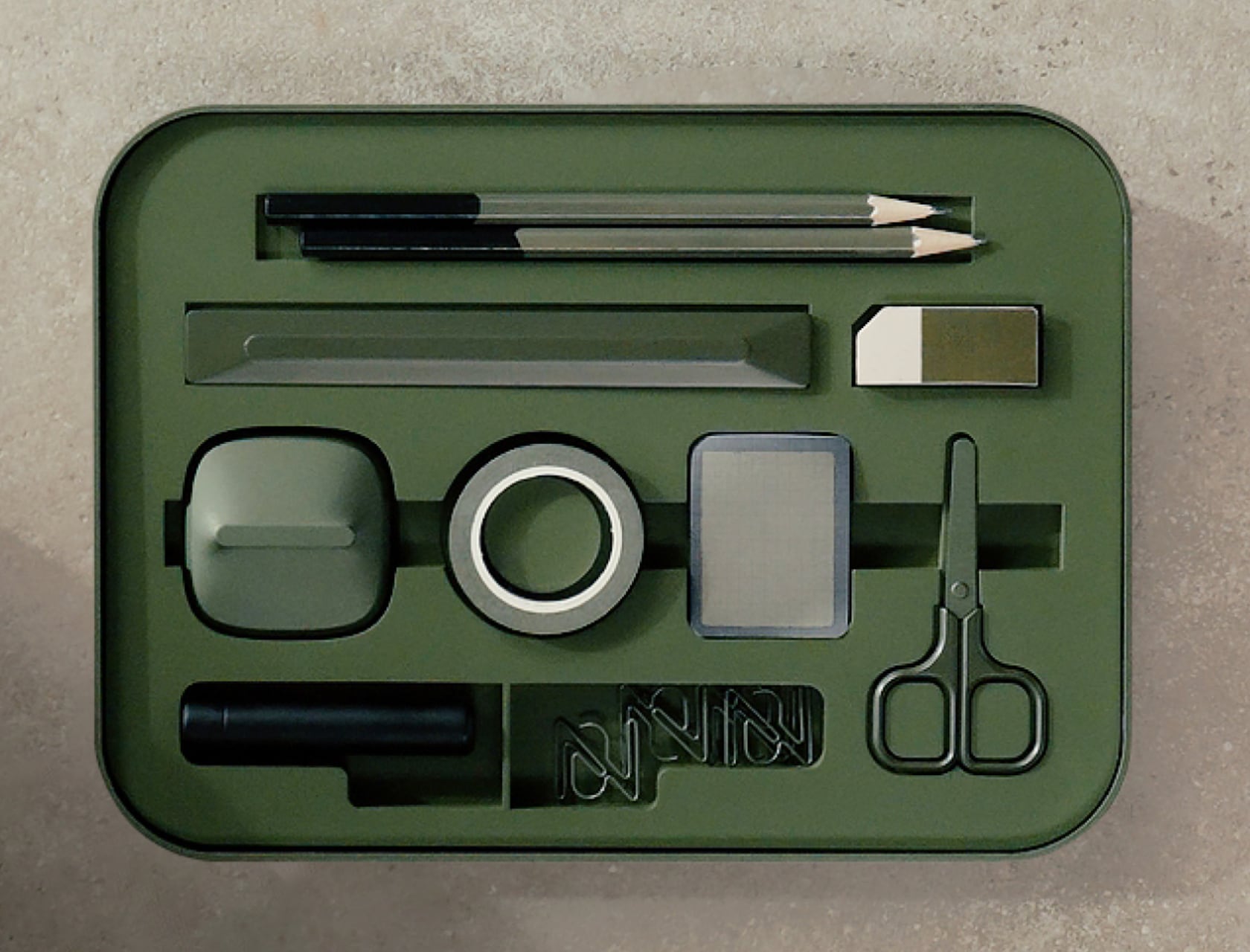
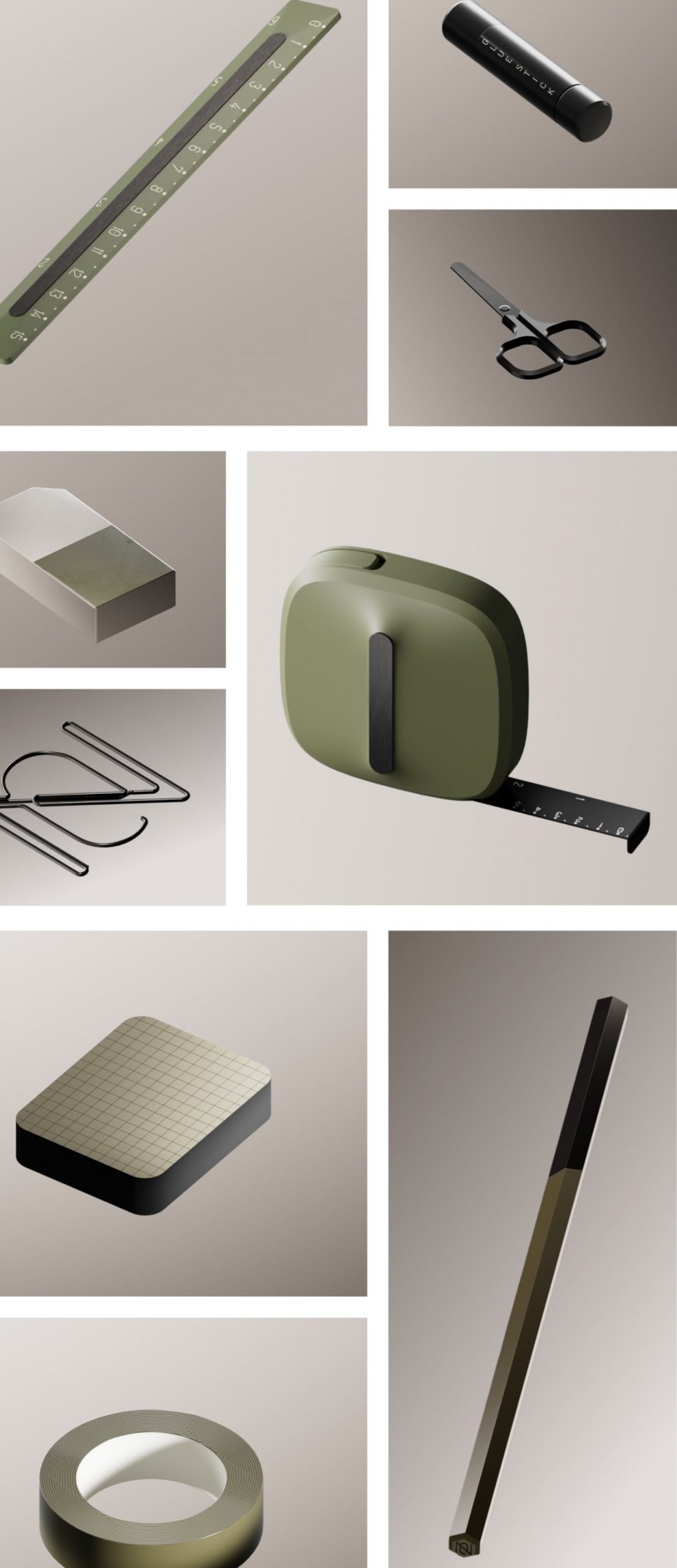
The three layers of Bento Jot include the Øver layer, where the Aluminum pen and Monograph Journal are stored. In the Mid layer, a high-quality leather organizer is available for keeping necessary items. The Base layer neatly organizes desk essentials to prevent loss: Aluminum ruler, Blok Measuring Tape, Dipped Pencil, Sticky Note, Logo Pins, Gluestick, Geo Eraser, and Draft Scissor. All items feature authentic designs explicitly made for Bento Jot.

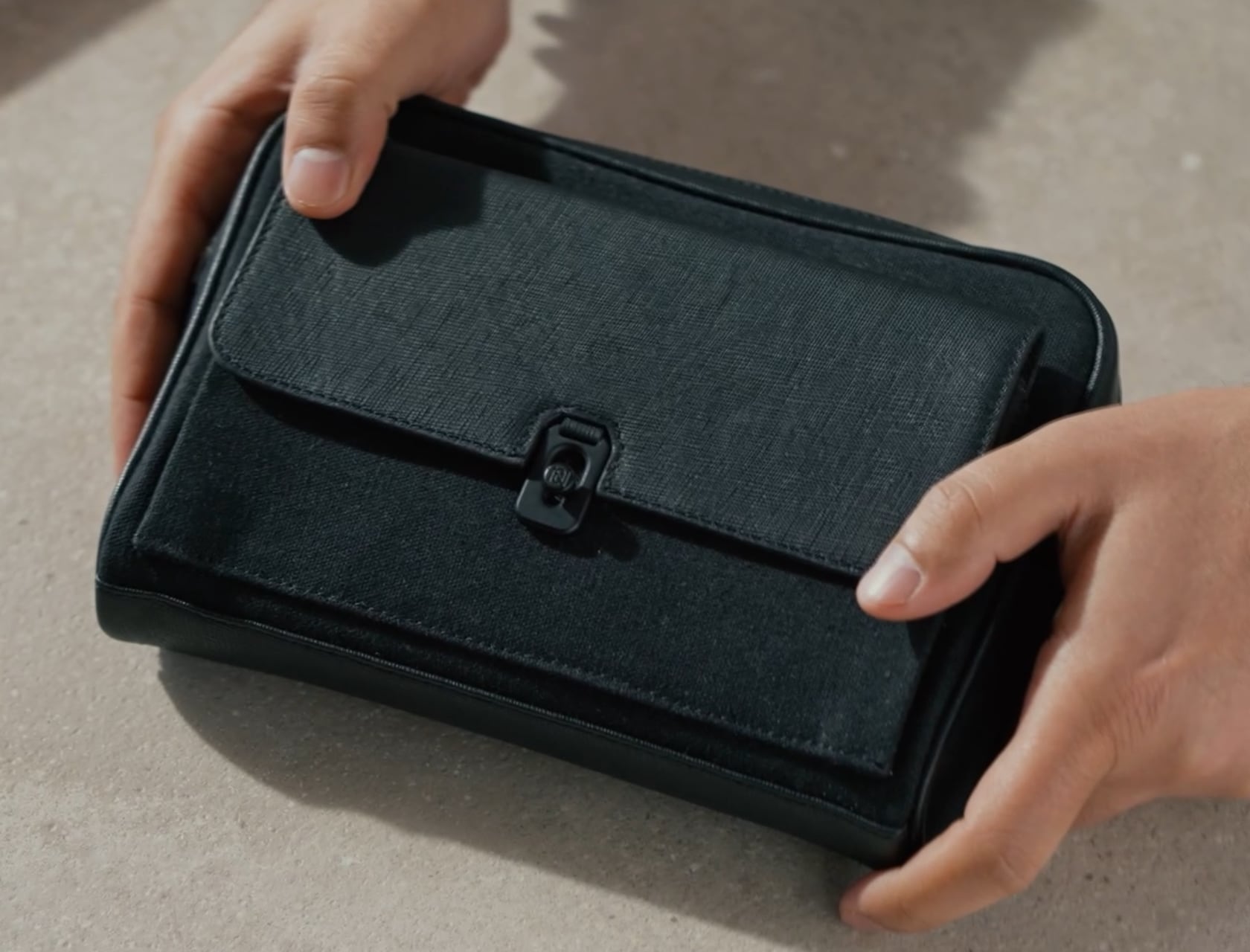
Beneath the essentials lies the mid layer, a dedicated space for the Bento Jot organizer – the vegan leather carrying case that makes the act of carrying your stationery effortless with its expandable features and adjustable holders.

As you explore each element of this smart stack and store system, the tactile feel of premium materials instantly conveys quality. The design adheres to a singular theme: minimalism. Bento Jot is crafted from premium recycled materials, utilizing 95% less plastic than other stationery options available on the market.

The shell is the sum of all parts, so it’s delightful to see that every detail has been carefully considered, such as the rubbers placed at the bottom to prevent scratches, soft die-cut compartments, and the interchangeable lids for customization. The “Forest Green” and “Carbon Black” color options are exclusive and only available on Kickstarter.

Bento Jot’s innovative design encourages users to maintain an organized tableau, fostering undistracted and clutter-free creativity.

Now, let’s examine the individual tools to understand their advantages. They provide everything you need for your desk, reminiscent of a deliciously organized bento box.

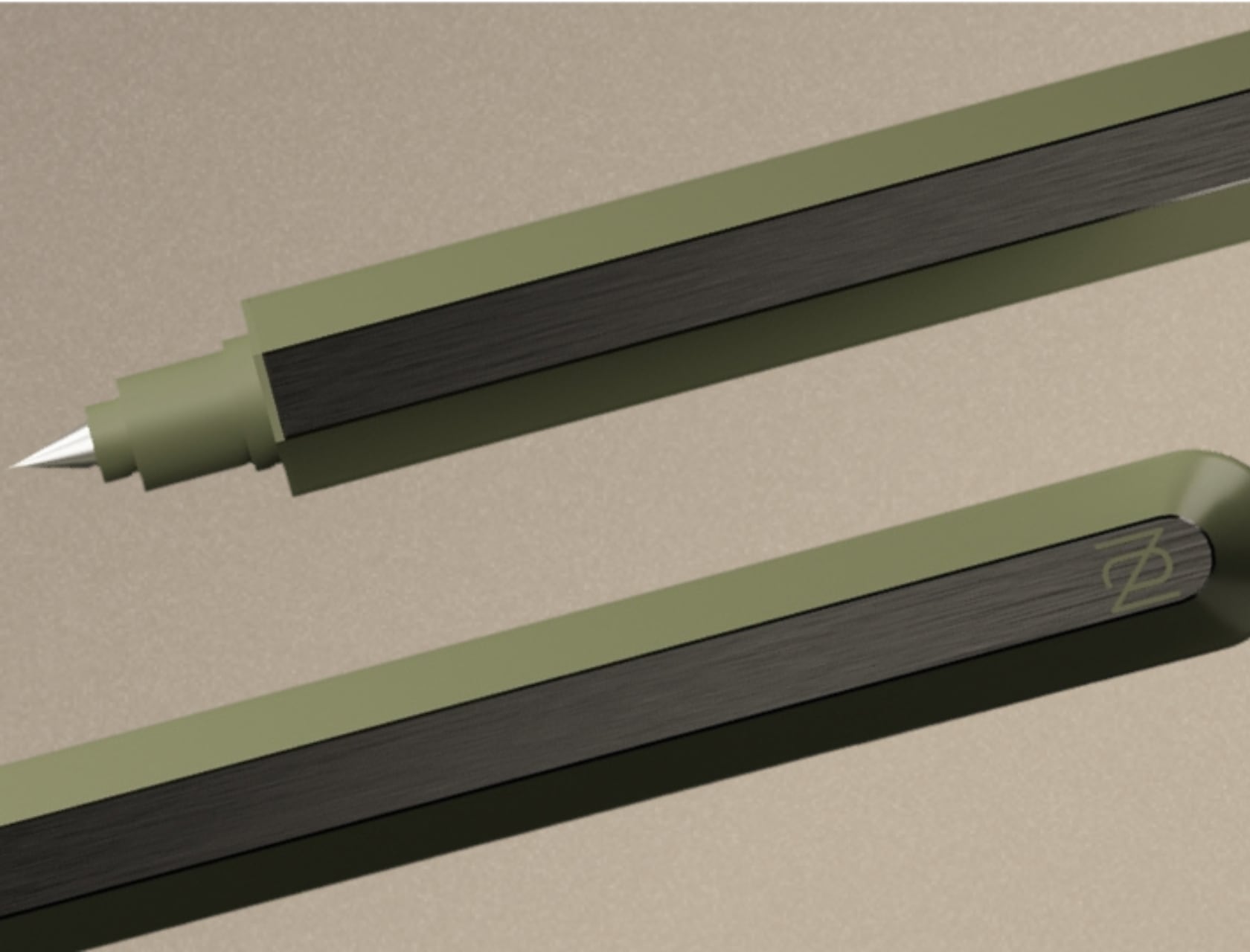
Crafted from solid anodized aluminum, the pen’s body is resilient and immune to scratches, maintaining its pristine appearance over time.

The Blade Aluminum Pen, crafted from solid anodized aluminum, offers durability, ensuring it won’t scratch if accidentally dropped. Its magnetic cap closure adds convenience, and refilling with the Schmidt Roller 888 ink filler is a simple task when the ink runs low.

At the heart of the collection lies the Monograph Journal, featuring natural white, 120-gram paper with a dot grid and edge recess for a seamless writing experience. Every page is thoughtfully numbered, and the flat open binding allows for easy writing, making it an indispensable companion for personal reflections and professional endeavors. The journal’s durability is matched by its sustainability, with a cover crafted from cross-grain recycled polyurethane, embodying the collection’s commitment to eco-friendly design.

The dot-grid Monograph Journal

Complementing the journal is the Attaché Organizer, a compact yet expansive tool designed to streamline your workspace. Its expandable front pocket adapts to your needs, while the 100% cotton herringbone lining adds a touch of sophistication. The organizer’s recycled cross-grain leather exterior speaks to the collection’s sustainable ethos and adds a layer of durable elegance.

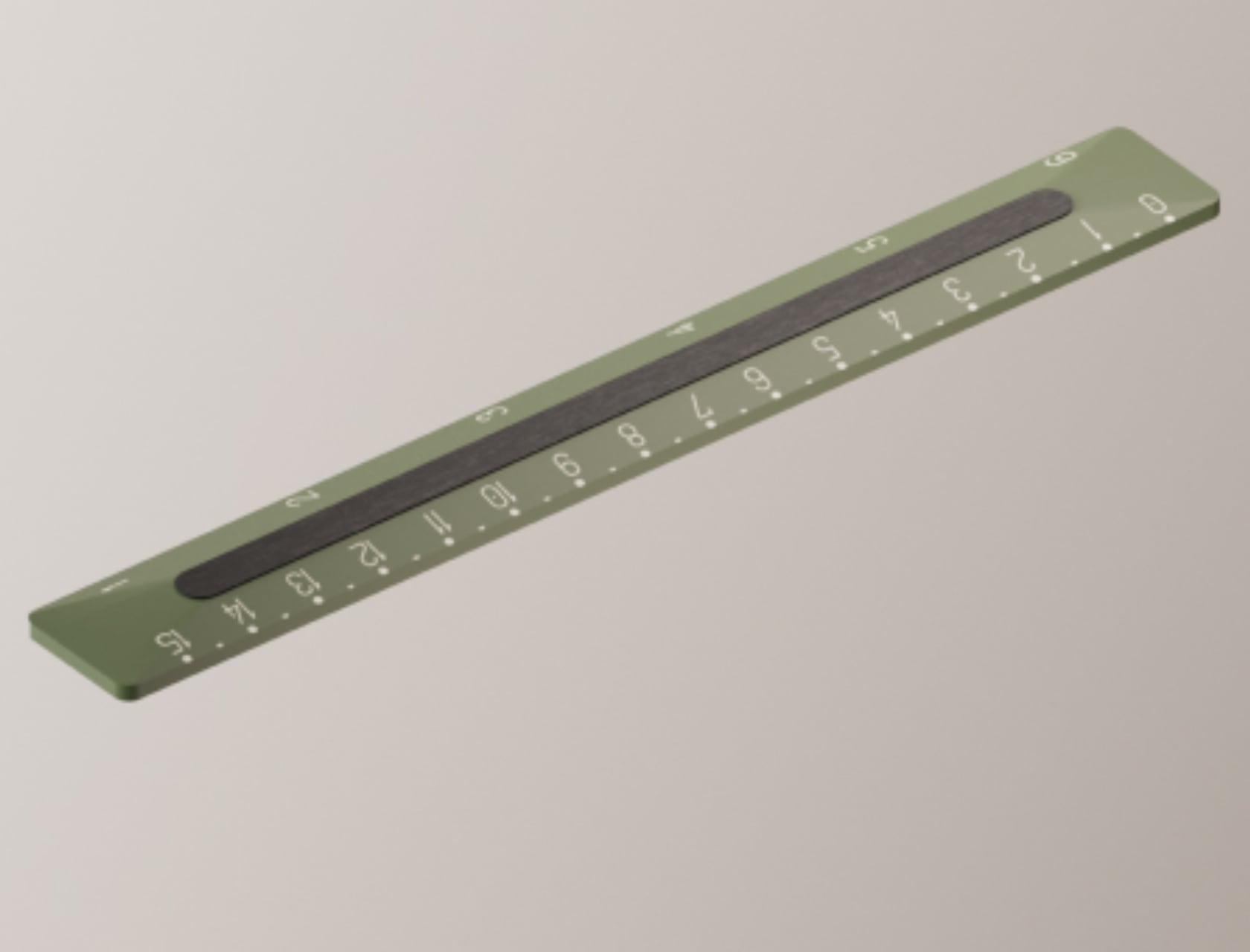
For precision tasks, the Al Ruler and Blok Measuring Tape offer unmatched accuracy. The solid aluminum machined ruler boasts dual units for versatile measurements. At the same time, the Blok Measuring Tape features a dark mode measuring strip, dual units, and a lock & release mechanism, ensuring precision and ease of use in various contexts.

With its HB graphite and dual-color dip, the Dipped Pencil infuses creativity into every stroke, making it a vibrant addition to any desk. This is complemented by the Sticky Note set, utilizing high-quality 3M paper in a check design, perfect for organizing thoughts and tasks with style and efficiency.

Adding a touch of personalization to the collection, the Logo Pins can secure up to 12 papers, offering a functional yet stylish way to keep your documents organized. The Geo Eraser, with its slant cut and dual-color design, combines functionality with a modern aesthetic, ensuring that even corrections contribute to the creative process.

Rounding off the collection is the Draft Scissor, a solid MS tool with a matt black finish designed for everyday use. Its durability and sleek design make it a staple in any office environment, embodying the Bento Jot collection’s fusion of style, functionality, and sustainability.

Together, these items form a cohesive set that not only enhances productivity and creativity but also brings a sense of harmony and order to your workspace, inspired by the minimalist elegance of Scandinavian design and the practical beauty of a well-arranged bento.

The Bento Jot set redefines stationery by tackling desk clutter and elevating personal esteem through its thoughtful design and premium materials. It organizes and beautifies workspaces and boosts users’ morale, making each written word feel valuable. This transformation extends beyond the physical to alter perceptions, ensuring users’ ideas and efforts are esteemed. Additionally, its sustainable, adaptable design aligns with the modern consumer’s preference for minimalist, eco-conscious products, enhancing its appeal. Ultimately, Bento Jot is more than an organizational tool; it’s an emblem of mindful living and personal expression, indispensable for those seeking to enhance their productivity and creative space.

Click Here to Buy Now: Starting at $99 $189 ($90 off). Hurry, only 3/106 left!

The post From Clutter to Clarity: Reinventing the Art of Stationery first appeared on Yanko Design.
Galaxy Fit 3 leaked fitness tracker boasts an ultra-long battery life and advanced features

The recent leaks surrounding Samsung’s Galaxy Fit 3, especially those shared by Evan Blass and Ahmed Qwaider on social platforms, have shed light on the device’s design, features, and potential launch timeline. While speculation was rife about its introduction alongside the Galaxy S24, the consistent appearance of leaked images and specifications over the past months suggests an imminent unveiling.

Designer: Samsung

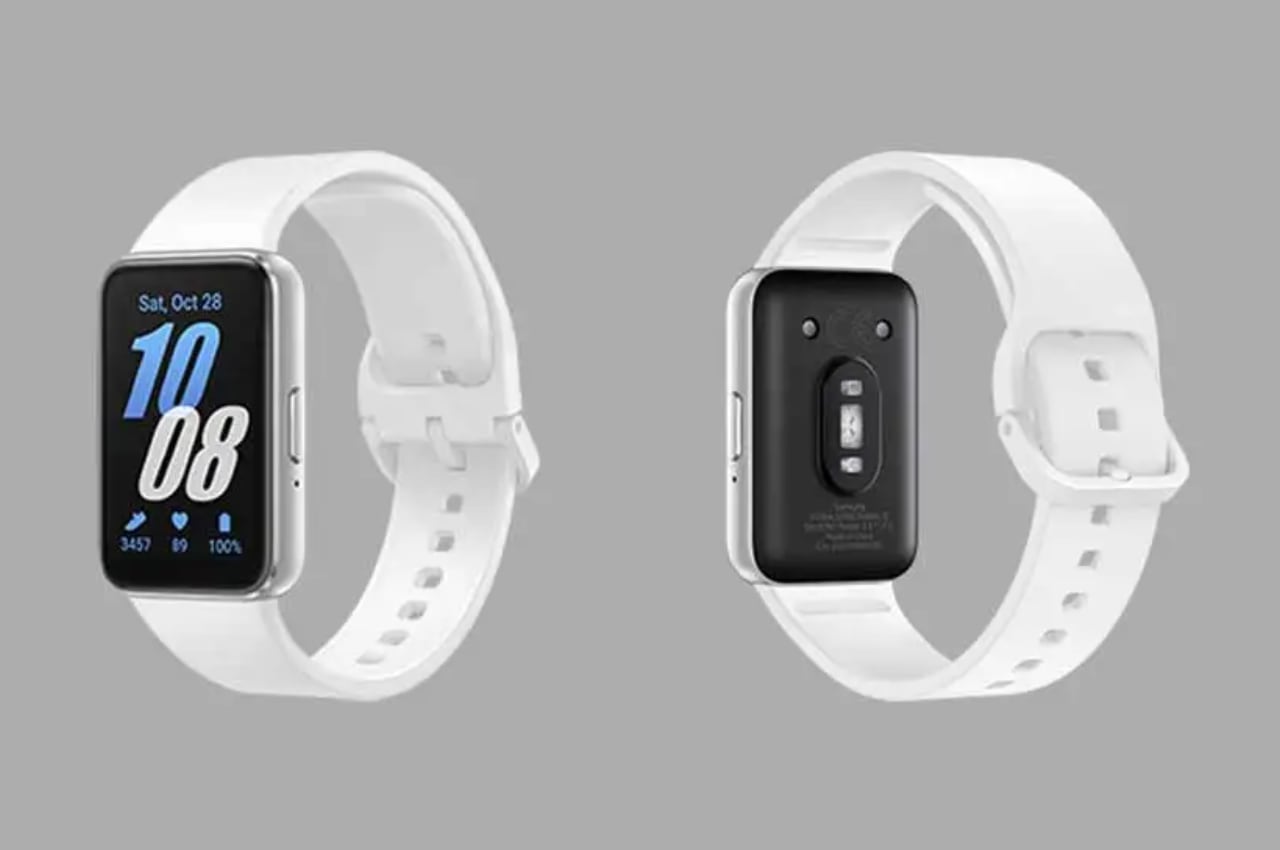
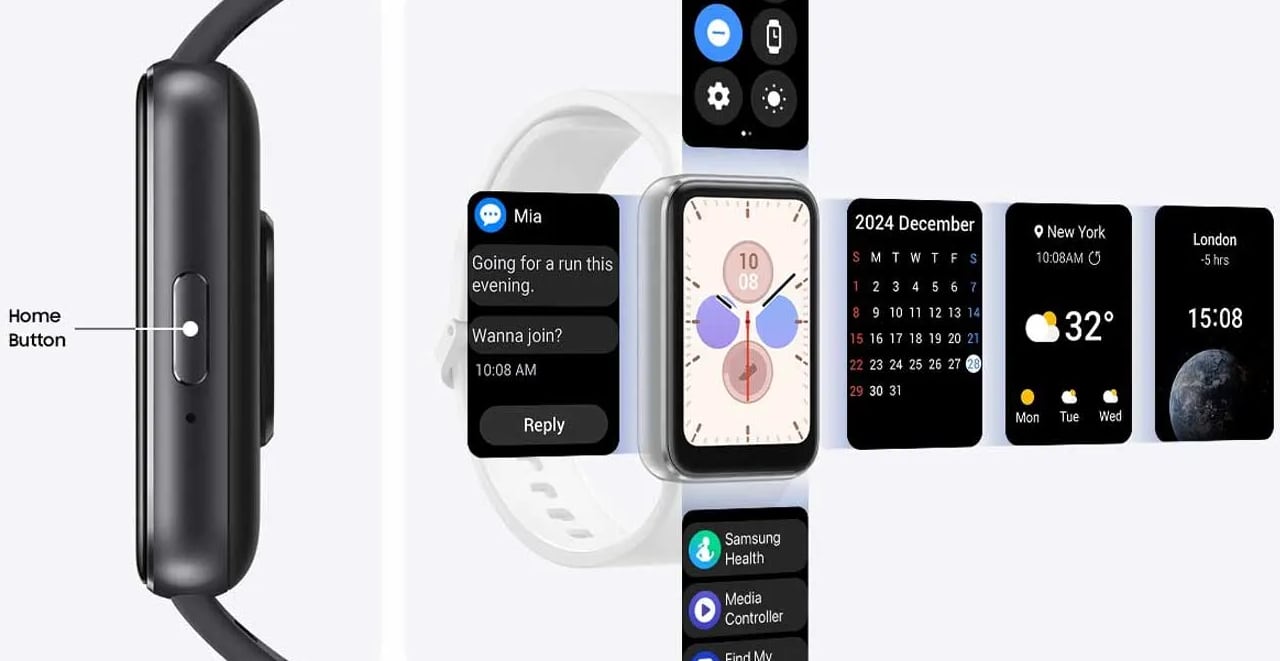
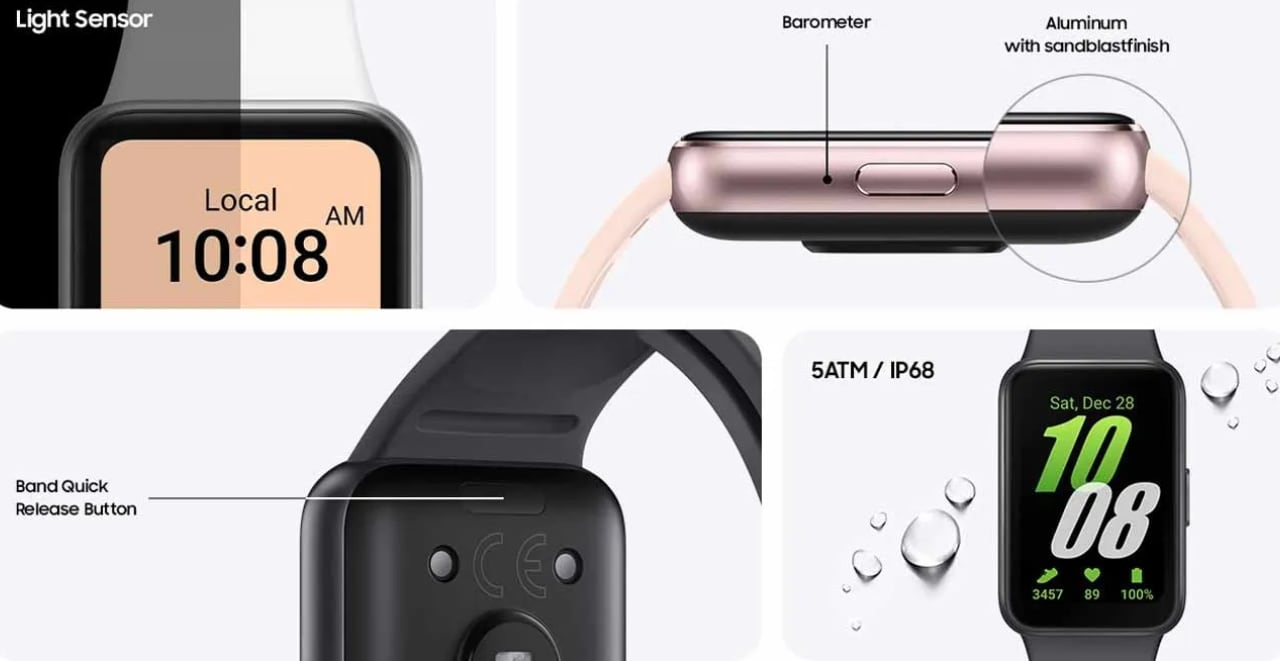
According to rumors, the Galaxy Fit 3 is expected to have a 1.61-inch display, which is 46% larger. It’s speculated to feature a bright OLED screen with a resolution of 256 x 402 and a pixel density of 302ppi. This marks a notable visual clarity and detail improvement, enhancing the user experience. The device’s build quality is also upgraded with an aluminum case, ensuring durability, an IP68 rating for dust and water resistance, and a lightweight silicon wristband at just 21.39g, combining comfort and resilience.

Battery life stands out as a key feature, with rumors pointing to an ultra-long battery life of up to 21 days on a single charge, surpassing the Galaxy Fit 2’s 15-day battery life and offering a significant advantage over the typical battery life of Samsung’s Wear OS-based Galaxy Watches. While the Galaxy Fit 3 may forego wireless charging, the extended battery life presents a compelling trade-off for users prioritizing longevity over convenience. A new and potentially significant feature being introduced on a Samsung fitness band for the first time is a blood oxygen level or SpO2 sensor.

The device is anticipated to come in three colors: Grey, Pink, Gold, and Silver, catering to diverse personal styles. It’s expected to be equipped with an array of sensors, including an accelerometer, gyro, and heart rate monitor, alongside sleep-tracking capabilities. The inclusion of GPS remains uncertain, leaving room for speculation about the device’s navigational features.

Pricing rumors suggest an attractive $80 price point, positioning the Galaxy Fit 3 as an accessible option for fitness enthusiasts seeking a blend of style, functionality, and endurance in their wearable devices. This combination of features and the device’s focus on health and fitness tracking solidifies the Galaxy Fit 3’s place within Samsung’s wearable lineup, offering a fresh alternative to the more comprehensive Galaxy Watch series and promising several advancements in design, display, and battery life.

Samsung fans and tech enthusiasts appear to be super hyped about the upcoming Galaxy Fit 3. It’s going to be the perfect fitness companion, packed with all the latest tech from Samsung and designed with fitness enthusiasts in mind. So stay tuned for more details!

The post Galaxy Fit 3 leaked fitness tracker boasts an ultra-long battery life and advanced features first appeared on Yanko Design.
Driving the Thrilling Evolution of BMW with the Electrifying i5 M60 xDrive

The all-new, all-electric BMW i5 represents a pivotal moment in the evolution of the BMW 5 Series, introducing two electrified variants that masterfully combine speed, cutting-edge technology, and comfort into a compelling package. For those contemplating the fully electric 5-series sedan, the choices include the i5 M60 xDrive and the i5 eDrive40, each offering a distinctive mix of enjoyment, comfort, and luxury within the electric driving realm. The optimal selection hinges on your speed requirements and budget considerations. I had the opportunity to experience both models at BMW’s 2023 TestFest, and here are my initial impressions.

Designer: Christopher Weil, Head of Exterior Design for BMW

As the Head of Exterior Design for BMW, Christopher Weil has played a pivotal role in shaping these two new additions to the 5-Series EV lineup, complementing BMW’s existing electric vehicle range, including the i4, i7, and the stylish iX SUV. After testing the i4, i7, and iX SUV, I found that the 5 series strikes the perfect balance in size, driving dynamics, comfort, and both interior and exterior design aesthetics.

The BMW i5 M60 xDrive stands out as the more potent variant, showcasing BMW’s commitment to powerful electric mobility. Boasting an impressive 593 hp and 549 lb-ft of torque, it accelerates 0-60 mph in just 3.7 seconds. The torque can be temporarily boosted to 605 lb-ft via the Boost paddle on the steering wheel’s left side. This model fuses M Performance DNA with electric efficiency, featuring an all-wheel-drive system with a second electric motor on the front axle for superior handling and grip, thus delivering an exhilarating drive on any terrain. However, its high performance slightly compromises its range, with an estimated 256 miles on a single charge.

On the other hand, the BMW i5 eDrive40 emphasizes efficiency and elegance in electric driving. It boasts 335 horsepower and 295 pound-feet of torque. However, a paddle on the left-hand side of the steering wheel can increase this to 317 ft-lb by activating the Sport Boost or Launch Control functions. BMW asserts that the i5 eDrive40 can accelerate from zero to 60 mph in 5.7 seconds and has an electronically capped top speed of 120mph. Its rear-wheel-drive layout stays true to the brand’s heritage, offering a balanced and engaging drive. The eDrive40 shines in its range efficiency, boasting an estimated 295 miles. It makes it the perfect everyday car for commuting or shuttling the kids between school activities and longer drives to the office.

The two models come equipped with the BMW Curved Display and the latest version of the BMW iDrive system, which enhances the digital experience of the car. BMW continues to lead the way in automotive innovation with the introduction of advanced technologies such as the Highway Assistant that allows for hands-free driving up to 85 mph, and the first-ever Active Lane Change with eye activation.

Both models maintain the sporty elegance of the 5 Series while showcasing unique features that underscore their electric character. The i5 M60 xDrive highlights its performance-driven nature with its specific design elements, like the black surfaces on the front apron and large air intakes. Conversely, the i5 eDrive40 emphasizes subtler elegance, prioritizing efficiency and grace.

The i5 is compatible with Level 2 and DC fast charging. BMW estimates that the battery can recharge from 10% to 80% in approximately 30 minutes due to a maximum charging rate of 205 kW. First-time BMW i5 owners are offered two years of free 30-minute charging sessions at Electrify America’s network of DC fast-charging stations.

Regarding pricing, the entry-level i5 eDrive40 begins at $66,800, providing an appealing entry point into luxury electric driving. With 21″ wheels, my test vehicle was priced at $77,645 due to a $650 paint job, a $3,000 M Sport Package, and a $2,850 Premium Package.

The i5 M60 xDrive starts at $84,100, appealing to those who desire high-end electric performance and the prestige of the BMW brand. However, the price can escalate quickly if you choose all the available features, reaching a maximum of $97,494. The priciest package is the Dynamic Handling, which costs $3,600. The Executive Package adds $3,350, and the Driving Assistance Pro package costs $2,000.

The BMW i5 M60 xDrive and the i5 eDrive40 represent a harmonious blend of BMW’s sporting heritage and forward-thinking approach to electric mobility. Whether it’s the exhilarating performance of the M60 or the balanced efficiency of the eDrive40, BMW offers a compelling electric option for a range of drivers in the luxury segment. With these additions, the BMW 5 Series continues to evolve, setting new benchmarks in premium electric sedans.

Regarding evolution, whether you choose an EV, a mild-hybrid internal combustion engine, or a plug-in hybrid, you’ll get the same sleek kidney grille, which looks good. It’s brilliant that BMW can manufacture all three variants on the same production line and adjust as necessary based on consumer demand. If you choose the Carbon exterior package, the i5 M60 exterior receives additional features. This package includes M High-gloss Shadowline, M Specific Diffuser, 19″ M Wheels, M Sport Exteriors, and M Side Mirrors.

The new 5 Series is more significant than its predecessor, being longer by 3.4 inches (199.2 inches total), wider by 1.3 inches (74.8 inches total), and taller by 1.4 inches (59.6 inches total). The wheelbase has also been extended by 0.8 inches, reaching 117.9 inches.

Its interior has been completely revamped, featuring a curved display screen with a 12.3-inch digital instrument panel behind the steering wheel and a 14.9-inch touchscreen above the center console. These displays utilize the new BMW Operating System 8.5, which enhances operational speed and graphics quality and introduces features like video streaming and gaming.

Additionally, the gaming platform app AirConsole enables you to use your smartphones as controllers and supports multiple players.

Electric Thrills: The i5 Drives Like a BMW

Without a doubt, both models provide a rapid response, thanks to the instant torque feature of electric vehicles. Everyday driving on surface streets and highways is stress-free and comfortable. The i5 felt stable and well-grounded during brief periods of acceleration.

The BMW i5 M60 xDrive offers more than just an additional motor for the front axle. The Adaptive M Suspension Professional package includes several features to improve the car’s performance and the driver’s experience. One feature is the electronically controlled dampers. These automatically adjust the car’s suspension to the road conditions, providing a smoother ride and better handling. In addition, the M60 has a ride height that is 0.3 inches lower than the eDrive40, giving it a lower center of gravity and thus improving stability.

The M60 xDrive also includes rear-axle steering. This feature enhances stability at high speeds by aligning the rear and front wheels. At lower speeds, the rear wheels turn opposite the front wheels, reducing the car’s turning radius. This makes the M60 more agile, improving maneuverability in tight spaces. As with other BMW models, rear-axle steering has proved to be a beneficial feature.

Another benefit of the M60 is the inclusion of M Sport brakes. These high-performance brakes provide excellent stopping power, ensuring the car can handle the power its motors offer. Additionally, BMW’s active roll stabilization system is included. This system reduces body roll during cornering, enhancing comfort and providing more precise handling.

Thanks to these advanced features, the M60’s steering excels on tight, twisty roads along the test route. BMW was able to provide an abundant amount of track time, allowing me to push the car to the best of my driving ability. I was impressed with how light and easy it was to control through tight turns, providing more than adequate feedback and road feel. This allowed me to sense the road through the steering wheel, enhancing the connection between the car and the road.

Yanko Design’s take on the electrified BMW i5 sedans

With their performance, comfort, and advanced features, BMW’s recently launched electric vehicles, such as the compact i4 sedan and midsize iX SUV, have made a significant impression. After spending some time with the all-new i5, it seems to meet, and perhaps even exceed, the high standards set by competing brands.

The i5, in line with our expectations of BMW’s renowned 5 Series, offers an unmatched combination of speed, comfort, and luxury. It seamlessly integrates these traits to deliver a driving experience that is both thrilling and comfortable. The car’s swift and responsive acceleration boosts the driver’s confidence on the road, while the plush interiors and cutting-edge features ensure a luxurious journey.

Adding to its impressive attributes, the i5 is quiet, creating a peaceful and serene driving environment. This quality is a defining trait of electric vehicles and is particularly prominent in the i5, setting it apart from its petrol-powered counterparts.

The post Driving the Thrilling Evolution of BMW with the Electrifying i5 M60 xDrive first appeared on Yanko Design.
In-Car VR Entertainment Solutions that Promise to Eliminate Motion Sickness

In-car entertainment is gaining importance given the substantial time people spend in vehicles, whether daily commutes, long-distance trips, or leisure journeys. This time can feel unproductive or monotonous, particularly for passengers. Additionally, extended travel can cause discomfort and motion sickness. Car motion sickness often arises from a mismatch between the motion perceived by the eyes and that sensed by the inner ear. This is particularly common when reading or focusing on a stationary object within a moving vehicle.

Designer: holoride

holoride aims to provide engaging in-car entertainment while addressing the common motion sickness problem. It does this through innovative virtual reality synchronized with the vehicle’s motion. By matching the virtual experiences with the car’s real-world movements, holoride creates a cohesive perception of motion. For example, the virtual environment reflects this movement if the vehicle turns. This helps the brain align visual and sensory inputs, reducing the conflict that often causes motion sickness.

The immersive experience of VR entertainment provided by holoride significantly distracts from the monotony or discomfort of travel. Passengers can immerse themselves in a virtual world that moves in sync with the car, transforming the travel experience into an engaging and enjoyable activity. This is especially beneficial on long journeys, where potential hours of boredom or discomfort can be converted into time spent exploring virtual landscapes, playing games, or engaging in other interactive VR experiences.

I first experienced Holoride’s technology at CES 2019. Audi drove me around the Las Vegas Speedway while I played a special demo created by Disney Games and Interactive Experiences. The experience gave me the impression that holoride was on the verge of revolutionizing in-car entertainment by integrating virtual reality (VR) with the car’s movements. The test system utilized Oculus Rift VR glasses, providing a uniquely immersive experience. The initial trial featured a game developed by Disney Games and Interactive Experiences, “Marvel’s Avengers: Rocket’s Rescue Run,” which I played in a virtual space as the car moved.

holoride’s technology uses the car’s telemetry data to sync the VR experience with real-time car movements, such as turns, acceleration, and braking, creating a seamless blend of the real and virtual worlds. This synchronization helps to minimize motion sickness, a common issue when using VR in a moving vehicle.

One of the exciting features of holoride is its adaptability. The duration of the VR experience can stretch or shrink to match the length of the car journey, making each ride a unique adventure. Beyond just entertainment, it can also offer educational experiences based on the journey’s location.

Though holoride was born within Audi, it’s not exclusive to the automaker and isn’t fully owned by Disney. The plan is to invite additional investors and open the platform to other content creators and automakers. It also has potential for use in autonomous vehicles, and the experience could be enriched by integrating data from the vehicle’s sensors.

In its early stages, holoride aims to enhance the passenger experience, transforming every car ride into a unique adventure. As the platform evolves and attracts more developers, the possibilities for in-car VR experiences are expected to expand significantly.

So, where’s holoride today? holoride, the Munich-based tech company, announced the release of its holoride retrofit device at CES 2023. This product is a compact device that turns any vehicle into a platform for extended reality entertainment. The company recognized as a 2023 CES Innovation Awards honoree, has made its mark in the industry by integrating virtual reality (VR) and real-time vehicle data.

The holoride retrofit device is about the same size as a typical smart speaker. It connects to a VR headset via Bluetooth and uses movement and location data to create adaptive virtual experiences that respond to a vehicle’s movements in real-time. This data-driven approach creates a dynamic experience that helps mitigate motion sickness.

Nils Wollny, CEO and co-founder of holoride said that the retrofit device brings them closer to their goal of making every vehicle a portal into holoride’s immersive world. “Any vehicle can serve as your gateway into holoride’s adaptive virtual experiences where each new ride becomes the blueprint for your next immersive adventure,” Wollny said.

In conjunction with the launch of the retrofit device, holoride also announced an addition to their content library. Subscribers will now have access to a new game, Pixel Ripped 1995: On the Road, from Emmy Award-winning studio ARVORE. The game takes place in a car during a family road trip and is available to all holoride subscribers.

The holoride retrofit device weighs less than half a pound and can be mounted on a vehicle’s windshield. It boasts a 14-hour battery life and can simultaneously connect to two headsets. The device is priced at $199, with a bundle option available for 699€/$, including a HTC VIVE Flow headset, and includes a 3-month holoride subscription and 3-month access to VIVEPORT Infinity Vista.

The post In-Car VR Entertainment Solutions that Promise to Eliminate Motion Sickness first appeared on Yanko Design.

The TITANIUM Utility Knife is an elegantly designed EDC for everyday use

Everyday Carry (EDC) is everywhere, and they come in all shapes and sizes with what appears to be an unlimited laundry list of features. However, if you’re the type of person who wants a simple yet elegantly designed utility knife that lives side by side with your keys, then the KIWI, a titanium trapezoid utility knife, could be considered as striking the perfect balance between functionality and convenience that stand out as indispensable tools. With its focus on precision cutting and ease of use, unlike the conventional multitools that aim to cover a broad range of functionalities, the KIWI carves its niche by excelling in what it does best: cutting with unparalleled precision and reliability.

Designer: Ying Wang for DailyGizmo

Click Here to Buy Now: Starting at $59 $79 (25% off). Hurry, only 39 left!

The design philosophy of the KIWI is rooted in minimalism, stripping away the unnecessary to focus on the essential. It boasts a sleek titanium blade holder that houses a standard trapezoid utility blade, epitomizing the “less is more” approach. This design choice enhances the knife’s aesthetic appeal and ensures its functionality, allowing for smooth and effortless blade deployment and retraction. I respect the idea that simplicity can coexist with efficiency, offering a seamless cutting experience without the fuss.

Crafted for standard trapezoid utility blades, KIWI boasts a quick-release design for effortless blade replacement

One of the most notable features of the KIWI is its quick-release blade mechanism. This thoughtful design addresses the common issue of maintaining a sharp edge in utility knives. This feature allows for easy and quick blade replacement, ensuring that you’re always carrying around a knife that’s always ready for action. The knife’s lightweight yet robust construction is another hallmark of its design. By hollowing out a significant portion of the titanium sheet, the KIWI achieves an impressive lightness akin to a quail egg without compromising strength or durability.

Changing the blade is exceptionally convenient—effortless for anyone, ensuring a hassle-free experience.

The one-piece structure, specifically designed to work with standard trapezoid utility blades, measures 5.2mm in width, 25.1mm in height, and 76.6mm in length. I like comparing the Kiwi to a bespoke Italian suit for an everyday utility blade, which can be easily replaced when dull. Changing blades in small knives can often be a cumbersome and risky task, but the KIWI addresses this issue with a blade change mechanism that is both safe and simple.

KIWI’s user-friendly method of changing blades involves merely pressing and pushing the blade all the way out to remove it and doing the reverse to install a new one. This approach underscores KIWI’s commitment to a hassle-free experience, ensuring the knife is accessible and convenient for users of all skill levels.

In terms of blades, the housing is compatible with the standard blade and the hook, black-coated, and rounded-edge blades.

Safety is a paramount concern in the design of the KIWI, with a reliable locking mechanism that securely holds the blade in place, eliminating concerns for accidental slips leading to injuries thanks to a milled bump inside the trail serves to halt the blade, allowing precise control over the extension length. This focus on safety and the knife’s versatility makes the KIWI a trustworthy companion for many tasks, from delicate crafting projects to the rugged demands of outdoor adventures.

The addition of the built-in mini ruler, meticulously milled for precision, adds another layer of functionality, offering a convenient measuring tool that complements the knife’s primary purpose.

Its single-hand operation ensures unparalleled convenience, allowing for effortless use in various situations.

The choice of GR5 Titanium and brass for the knife’s construction contributes to its durability and stability and adds a touch of design elegance with the brass inlay decoration. This blend of materials sets the KIWI apart from its counterparts, making it a tool and a piece of art that lives on your keyring. The convenience of single-hand operation further elevates the user experience, allowing for effortless use across various use cases, from quick adjustments to precise cutting tasks.

The KIWI holds the blades safely and you don’t need to worry about the blade dropping or cutting your lap at all.

The robust mechanism, derived from the intrinsic properties of titanium and precision CNC machining, ensures a secure and reliable blade operation. The ergonomic grip, enhanced by CNC-machined grooves, provides comfort and control, even in challenging conditions, making the KIWI a tool and an extension of the user’s hand.

Once the blade is mounted, the locking bar securely locks it, preventing any accidental openings.

As a regular creator of unboxing videos for Yanko Design, I don’t require a large EDC. A beautifully crafted tool like the Kiwi enhances the production value of my videos. Since I often hold a camera or iPhone in one hand while opening a box, the ease of deploying the blade makes it both safe and effortless.

KIWI excels in a myriad of tasks, ensuring accuracy and adaptability for a wide range of uses.

A couple of convenient features include the ability to attach a 1/4 bit for times when you need to tighten or loosen screws. I use various photography accessories and mounts that require tightening; often, a hex tool is not readily available! Two tritium slots are on each side if you need to add tritium tubes.

Featuring a distinctive keychain hole, KIWI employs a 1/4 bit for effortless tightening or loosening of screws.

Lastly, the KIWI Titanium Trapezoid Utility Knife comes in two colorways: CNC satin silver or stonewashed grey. I personally prefer the latter because it creates a nice contrast between form and function.

Its minimalist design, innovative features, and premium materials make it an indispensable tool for a wide range of activities. Whether for everyday repairs, precision cutting, or outdoor adventures, I can see the KIWI being an essential addition to my EDC collection because it lives up to my expectations of an everyday carry with elegance and efficiency.

Click Here to Buy Now: Starting at $59 $79 (25% off). Hurry, only 39 left!

The post The TITANIUM Utility Knife is an elegantly designed EDC for everyday use first appeared on Yanko Design.
Celebrating 40 Years of the Apple Macintosh: A Beacon of Human-Centric Design

As we celebrate the 40th anniversary of the Apple Macintosh, we reflect on how this technology has transformed our lives. The Macintosh changed how we interact with computers and redefined our relationship with technology. In 1984, Apple introduced the Macintosh, a computer that put the future at our fingertips. It embraced the philosophy of human-centric design long before it became a popular term in design circles.

Designer: Apple Computer, Inc.

Its graphical user interface (GUI) was a significant departure from the cumbersome command-line interfaces of the time. Using icons, windows, and a friendly desktop metaphor made technology accessible and approachable. This leap was not solely about technology but also about how humans interact with it.

On January 24, 1984, Steve Jobs famously unveiled the first Macintosh by dramatically pulling it out of a bag. The personal computer boasted a 9-inch black and white display powered by an 8MHz Motorola processor and 128KB of RAM. In classic Steve Jobs style, he then produced a 3.5-inch floppy drive and inserted it into the computer, much to the delight of Apple shareholders. Jobs had famously said, “We want to put an incredibly great computer in a book that you can carry around with you and learn how to use in 20 minutes.” At its launch, the original Macintosh cost $2,495.

Design Aesthetics: More Than a Machine

The all-in-one design of the Macintosh broke the mold. Its compact, boxy frame, complete with a built-in 9-inch screen, was an object of desire – sleek, stylish, and something you wouldn’t mind having on your desk. Looking back, it was more than a machine; where multiple layers of innovation and thoughtful design choices distinguish it from anything else of its time, it was a piece of art that complemented the user’s space.

The Macintosh computer differed from the early personal computers as it didn’t have a bulky, segmented design with separate units for the monitor, CPU, and keyboard. Instead, it had a compact, all-in-one design. This unique design of integrating the monitor and computer into a single unit was not only space-efficient but also symbolically significant. It represented a unified, holistic approach to computing, aligning with the philosophy that technology should seamlessly integrate into people’s lives without complicating them.

The friendly beige plastic casing, rounded edges, and compact size make it appear warm and approachable. The designers wanted to communicate that technology can be pleasant and welcoming rather than intimidating and alienating. Steve Jobs, known for his attention to detail regarding aesthetics, believed that good design was integral to the user experience. He famously said, “Design is not just what it looks and feels like. Design is how it works.” He believed good design, not just a superficial veneer, was essential to make things look good.

Did you know that the Macintosh had some fantastic design elements? One of the most unique features was the handle on the computer’s top. Not only was it functional, but it also represented portability and personal ownership. It made you feel like the Macintosh was your personal computer, one you could take charge of and create your own. This feature reflected a shift in how we see computers, from impersonal corporate machines to personal tools for creativity and expression.

The Macintosh’s 9-inch screen may seem tiny now, but it was a big deal in the day. It’s what made the Mac look so cool and funky. The cool thing about it was that it showed graphics and text in a way that had never been seen before. It was like a window into the heart of the Macintosh, showing everyone what made it unique and innovative.


Bridging Human and Machine: The Mighty Mouse – A Closer Look

When Apple Macintosh introduced the mouse, it wasn’t just another peripheral device. It changed the way we interact with machines. This tiny device played a massive role in connecting the digital world with its users. It transformed the personal computer from a specialized tool to an accessible and creative medium.

The mouse, tailored for the human hand, turned physical gestures into digital actions. Its design was simple yet effective – a small, palm-sized device with a single button, embodying the principle of simplicity and ease of use. This approachability was crucial. It invited users who might have been intimidated by the complexity of computers to explore this new world. Steve Jobs, ever the proponent of intuitive design, understood this connection, emphasizing, “We made the buttons on the screen look so good you’ll want to lick them.” The mouse was an extension of this philosophy, making the digital environment tangible and inviting.

Before the Macintosh, interacting with computers mainly involved typing commands – an efficient method for experts but alienating for novices. The mouse changed that, making computing a more intuitive, point-and-click experience. This change was akin to learning a new language where actions and commands became visual and direct. The mouse demystified the computer, aligning its use more closely with natural human behavior and less with the need to learn complex command languages.

The mouse was integral to the success and functionality of the Macintosh’s GUI. It allowed users to navigate the interface easily, interact with icons, open windows, and use menus. This ease of navigation made the computer’s advanced capabilities accessible to a broader audience, fostering a more inclusive digital culture. The mouse and GUI combination was a powerful duo that set the standard for future user interfaces, influencing the design of operating systems and software for decades. Applications became more visually oriented, focusing on ease of use and accessibility. Programs like MacPaint and MacWrite showcased what was possible with this new form of interaction, allowing users to create graphics and documents in previously unimaginable ways on a personal computer.

Over the years, the mouse has evolved, gaining more buttons, adopting new technologies like laser tracking and wireless connectivity, and even transforming into touchpads and touchscreens in modern devices. However, the core principle remains: technology should adapt to human needs, not vice versa.

In celebrating the 40th anniversary of the Macintosh, the significance of the mouse in bridging humans and machines cannot be overstated. It was a bold step towards making technology more personal, intuitive, and human. The Macintosh’s mouse was a harbinger of a future where technology becomes an extension of ourselves, seamlessly integrated into our daily lives, facilitating creativity, productivity, and exploration in the digital realm.

Echoing Steve Jobs’s vision, he said, “It’s in Apple’s DNA that technology alone is not enough — it’s technology married with liberal arts, married with the humanities, that yields us the result that makes our heart sing.”

The Macintosh made our hearts sing then, and forty years on, its legacy continues to inspire.

The post Celebrating 40 Years of the Apple Macintosh: A Beacon of Human-Centric Design first appeared on Yanko Design.
Early Pixel 9 Pro Leaks Stir Excitement: Could Google’s Latest Flagship Sport Bard AI and Shake Up Pricing Trends?

In a market where style and ergonomics are essential, the Google Pixel 9 Pro emerges as a notable contender. Its design, bearing a striking resemblance to the iPhone 15 Pro Max at first glance, makes a strong statement. Yet, a closer examination unveils Google’s distinct flair. The nuanced differences, such as the Pixel’s front-facing punch-hole camera, differentiate it from Apple’s Dynamic Island. Both models adopt the fashionable flat-edge design, marrying aesthetic allure with ergonomic ease.

@OnLeaks & MySmartPrice

Pixel 9 Pro leaks point to a new design language

This move towards flat edges, prevalent in both tablets and smartphones, might not just be about following trends. The renders from @OnLeaks and MySmartPrice point to the evolution of internal components, paving the way for slimmer devices. The ergonomic advantage of flat edges with a subtle taper is noteworthy, and credit goes to Apple for adopting this in the iPhone 15’s design. The Pixel series, though sleek, often felt a tad slippery, and this shift could enhance the user experience significantly. A potential reduction in bezel size, shrinking the display from 6.7 to 6.5 inches, would be a welcome change, emphasizing compactness without compromising on-screen space.

When it comes to the sides of the device, the Pixel 9 Pro retains the familiar placement of the power button and volume rocker on the right side, akin to the Pixel 8 Pro. If true, I applaud Google for retaining a physical SIM card, and simply relocating it is a practical touch, especially for those who frequently travel internationally.

@OnLeaks & MySmartPrice

Flipping to the back, the Pixel’s iconic design is unmistakable. The 12mm thick ‘visor,’ housing an additional camera, flash, and microphone cutout, is a signature Google feature. This design, closely resembling the new Pixel Fold, highlights Google’s consistent design language across its product range.

Google’s Pixel 9 Pro is stepping in the right direction with its design. It cleverly borrows elements from competitors and the visionary design of Andy Rubin’s Essential Phone. It seems Google acknowledges great design is about more than functionality; it’s about creating a connection with the user, a device that’s as pleasing to hold as it is to use.

When will the Pixel 9 Pro come out, and how much will it cost?

The anticipation around the Google Pixel 9 Pro’s release and pricing is palpable, especially given the early leaks compared to the Pixel 8 Pro’s timeline. This early buzz could hint at Google possibly introducing some notable changes this year. One intriguing possibility, although highly speculative, is the integration of Bard AI into the core of the Pixel 9 Pro, which would be a significant development.

@OnLeaks & MySmartPrice

Pricing predictions for the Pixel 9 Pro are challenging, especially considering the recent price dynamics in Google’s lineup. After an initial price increase, Google unexpectedly slashed prices, adding to the unpredictability. This move could influence the pricing strategy for the Pixel 9 Pro, but only time will tell how Google positions this eagerly awaited device in the market.

The post Early Pixel 9 Pro Leaks Stir Excitement: Could Google’s Latest Flagship Sport Bard AI and Shake Up Pricing Trends? first appeared on Yanko Design.
First Drive: Rolls-Royce Spectre EV – An Electrifying Blend of Luxury and Performance

Anders Warming, the Director of Design at Rolls-Royce, presented the Spectre EV’s design philosophy at Amelia Island Concours d’Elegance a couple of years back, providing a comprehensive look into its design philosophy and highlighting the specific elements that make the Rolls-Royce Spectre unique. During his in-depth presentation, Warming strongly emphasized the integral role of storytelling in the design process at Rolls-Royce. He explained that each design element tells a story that reflects a deep and enduring connection to the brand’s rich heritage. However, this commitment to tradition doesn’t hinder innovation. On the contrary, it acts as a potent platform for challenging design limits, enabling the integration of creative elements that improve the overall vehicle’s experience, providing a glimpse into the delicate equilibrium of tradition and advancement that characterizes Rolls-Royce.

Designer: Anders Warming for Rolls-Royce

Exterior Design: Front & Side Profile – Elegant, Aerodynamic and Nautical Elegance

The car’s exterior design achieves a unique elegance and strength with a playful mix of upright and flowing lines. ItThear gives you a friendly wink, saying, “I’m strong, but I also know how to have fun!” The design creates a dynamic vibe, with waft lines that remind you of a sailing adventure, adding a sense of motion and speed, even when the car is parked. The two-tone color scheme is like a cherry on top. The Aero Two-Tone finish, a fantastic design element, highlights the car’s sporty spirit. It’s like the car is wearing a stylish cap, with the upper color extending across the bonnet and along the sweeping fastback roofline, leaving out the side pillars for an eye-catching contrast. This coloring choice, a classic feature of Rolls-Royce designs, creates an unforgettable visual impact, significantly adding to the car’s overall look.

The Rolls-Royce Spectre redefines luxury automotive design in many ways, beginning with its iconic Spirit of Ecstasy. This revered emblematic figure is now reimagined for aerodynamic finesse, embodying ce and forward thrust. It’s a poetic blend of heritage and modernity.

With its unique split headlights, this modern design is not about looks; it’s a mix of old and new design, similar to the famous Phantom Coupé’s lights but with a modern touch.

The Pantheon grille, a key feature of Rolls-Royce, has been stylishly updated for the brand’s first EV. It’s a great example of old design meeting new needs. The grille is broader, showing how the brand can change with the times but still keep its grand style. This grille isn’t just for looks; it also helps air flow smoothly around the car.

This is where the blend of design and aerodynamics has culminated in the Spectre’s drag coefficient. While it may not match other high-end luxury EVs, the figure is remarkable, considering the car’s adherence to Rolls-Royce’s design principles.

The side profile of the Spectre is a canvas where Rolls-Royce’s rich history of bespoke design merges with nautical elegance. This is apparent in the sweeping fastback glasshouse, which resembles a yacht ready for a voyage. It’s a visual narrative that combines motion and grace, intertwining car design with the elegance of maritime aesthetics.

The Spectre opts for a cleaner, more sculptural approach, avoiding excessive lines. Two defining lines – the ‘bow line’ and the ‘waft line’ – serve as key design elements and narrative features. The bow line guides the observer’s eye from the front wheel arch to the rear tail light, shaping the car’s form and emphasizing its powerful stance. The waft line, a fluid representation of movement, is reminiscent of a yacht slicing through the waves.

Together with the two-tone paint and the fastback roof, these lines create a tapering that mirrors a yacht’s stern, blending luxury maritime design and elite automotive architecture.

Rear Design – An Artistic Culmination

At the back, the Spectre’s design story reaches its peak. The converging bow and waft lines culminate at the tail of the Spectre, where the car’s yacht inspiration is arguably most evident.

Similar to the subtle taper the stern of a yacht might have, the Spectre’s rear haunches have a gentle inwards curve that draws the eye to the U-shaped tailgate, with the rear bumper featuring an otherwise clean, uncluttered design.

Another exciting feature is the transparent, art-deco style tail lamps equipped with a metal inset, with the company claiming the neutral finish, which allows the tail lamp design to work well with any exterior color.

Inside the Spectre: Rolls-Royce Craftsmanship and Innovation

Inside, the design focuses on superior craftsmanship and unparalleled luxury. This is apparent in the meticulous attention to detail and the use of high-end materials throughout the interior. One of the standout features is the Starlight Headliner, a distinctive Rolls-Royce feature that adds a mesmerizing, starry sky effect to the interior ambiance. This creates an ethereal and magical atmosphere within the car, making every journey a celestial experience.

Another unique element is The Gallery, a feature that beautifully marries art and automotive design. It provides a space for personalized art displays, allowing the owner to imbue their vehicle with a personal touch and aesthetic. Beyond visual appeal, emphasis is also placed on the tactile experience. High-quality materials and finishes are used throughout the interior, ensuring every touchpoint communicates the car’s luxury and craftsmanship. This enhances the visual appeal and contributes to a more immersive, sensory driving experience.

Supporting its grandness are formidable 23″ wheels, a first for Rolls-Royce, enhancing both aesthetics and performance. These wheels, adaptable for winter conditions with specialized tires, add to the Spectre’s versatility.

Entering and exiting the Spectre is truly elegant, thanks to the largest doors in Rolls-Royce history, measuring 1.5 meters. They allow for a graceful entry and exit. The effortless opening and closing technology mirrors the luxury of having a personal chauffeur, an expectation for any Rolls-Royce owner.

Color plays a vital role in the Spectre’s allure, with the introduction of Chartreuse, a vivid, eye-catching hue inspired by French liqueur, adding a mesmerizing richness to its appearance.

Each of these elements converges to create a vehicle that is not just a mode of transport but a statement of luxury and innovation, pushing the boundaries of electric vehicle design.

Spectre’s Performance and Range

Yes, the Spectre is entirely electric. It uses the same platform as the Cullinan SUV but with two electric motors that generate 577 hp and 664 lb-ft of torque. Despite the Spectre’s weight, the abundance of torque makes it hardly noticeable during a test drive at BMW’s Test Fest. It’s estimated to accelerate from 0-60 mph in a little over 4 seconds, a remarkable feat considering its 6,500-pound weight.

In its stride towards electric luxury, the Rolls-Royce Specter boasts a 102.0-kWh battery, mirroring the advanced technology in the BMW i7. This marks a notable step in the evolution of electric vehicles in the luxury segment. In fact, the driving range exceeds earlier expectations, offering an impressive journey of up to 291 miles on a single charge with its 22-inch wheel variant. This figure surpasses the initial projection of over 260 miles. The version sporting 23-inch wheels drops the range to 266 miles, showcasing the minor trade-offs between style and efficiency.

Meanwhile, the Black Badge edition of the Spectre, known for its heightened performance and bespoke features, offers a range of 280 miles with 22-inch wheels and 264 miles with the more prominent 23-inch option. These variations underscore Rolls-Royce’s commitment to providing choices that cater to the diverse preferences of its discerning clientele, balancing elegance, performance, and environmental consciousness.

The Spectre doesn’t just signify luxury but also represents changes in high-end car design. It combines electric power with the luxury and custom design that Rolls-Royce is known for. This shows that the brand can excel in the era of electric cars while maintaining its luxury and uniqueness.

The Spectre also features DC fast-charging capabilities, a standard that speaks to the modern luxury car buyer’s need for speed and convenience. However, in true Rolls-Royce fashion, where every detail is about personal luxury, it’s envisaged that many Spectre owners will opt for a more bespoke charging solution. The idea of a custom-installed charging system at one’s private estate aligns perfectly with the brand’s ethos – it’s not just about the practicality of charging but also about integrating this new electric age into the refined lifestyles of its clientele. This approach ensures that the experience of owning and charging the Spectre remains exclusive and seamless as the vehicle itself.
Final Thoughts

From my perspective, the Rolls-Royce Spectre EV, which starts at $422,750 and can exceed $500,000 with customization, is the pinnacle of opulent electric vehicles. It’s a remarkable blend of luxury, innovation, and environmental consciousness. The elegant design, blending the brand’s rich heritage with modern elements, is breathtaking. The Spectre shows that electric vehicles can be both luxurious and distinctive. The performance, particularly the impressive torque and range, challenges the usual limitations of electric cars, making it a joy to drive. The ride’s quietness, the quality of the interior materials, and the meticulous attention to detail all encapsulate the essence of Rolls-Royce. In conclusion, the Spectre EV successfully maintains Rolls-Royce’s commitment to its legacy while embracing the future. It was a thrill to experience.

The post First Drive: Rolls-Royce Spectre EV – An Electrifying Blend of Luxury and Performance first appeared on Yanko Design.