This Gorgeous Coffee Advent Calendar gives you 24 Unique Blends to count down days till Christmas

A calendar that looks AND tastes great!

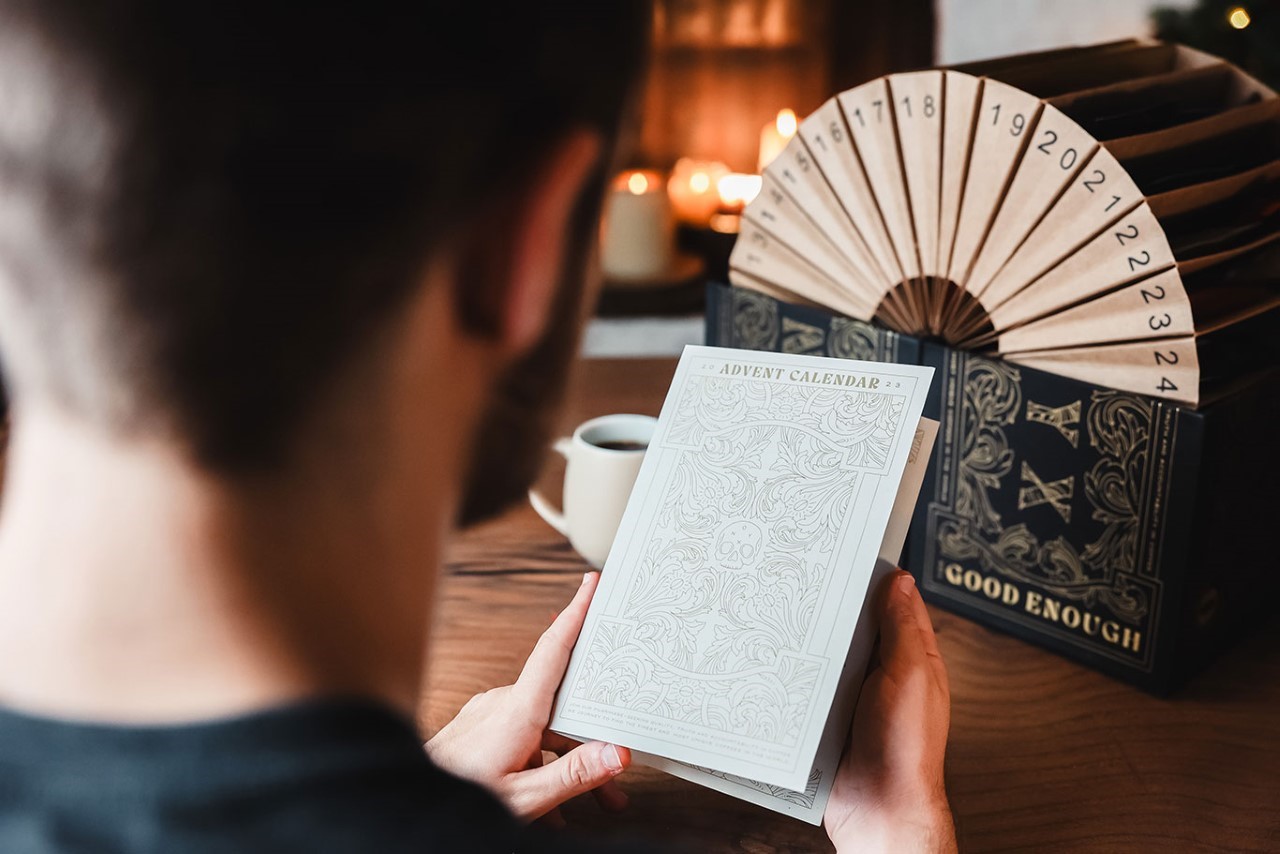
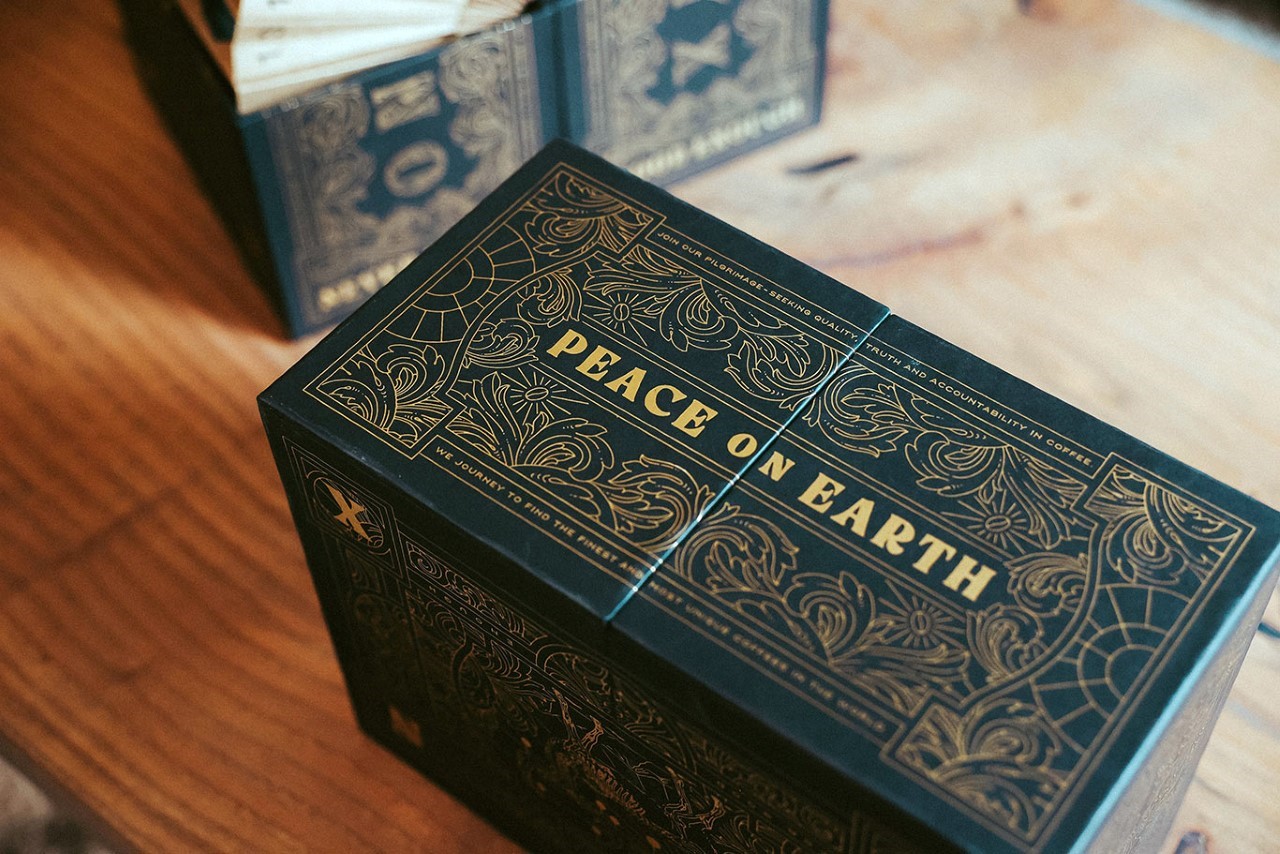
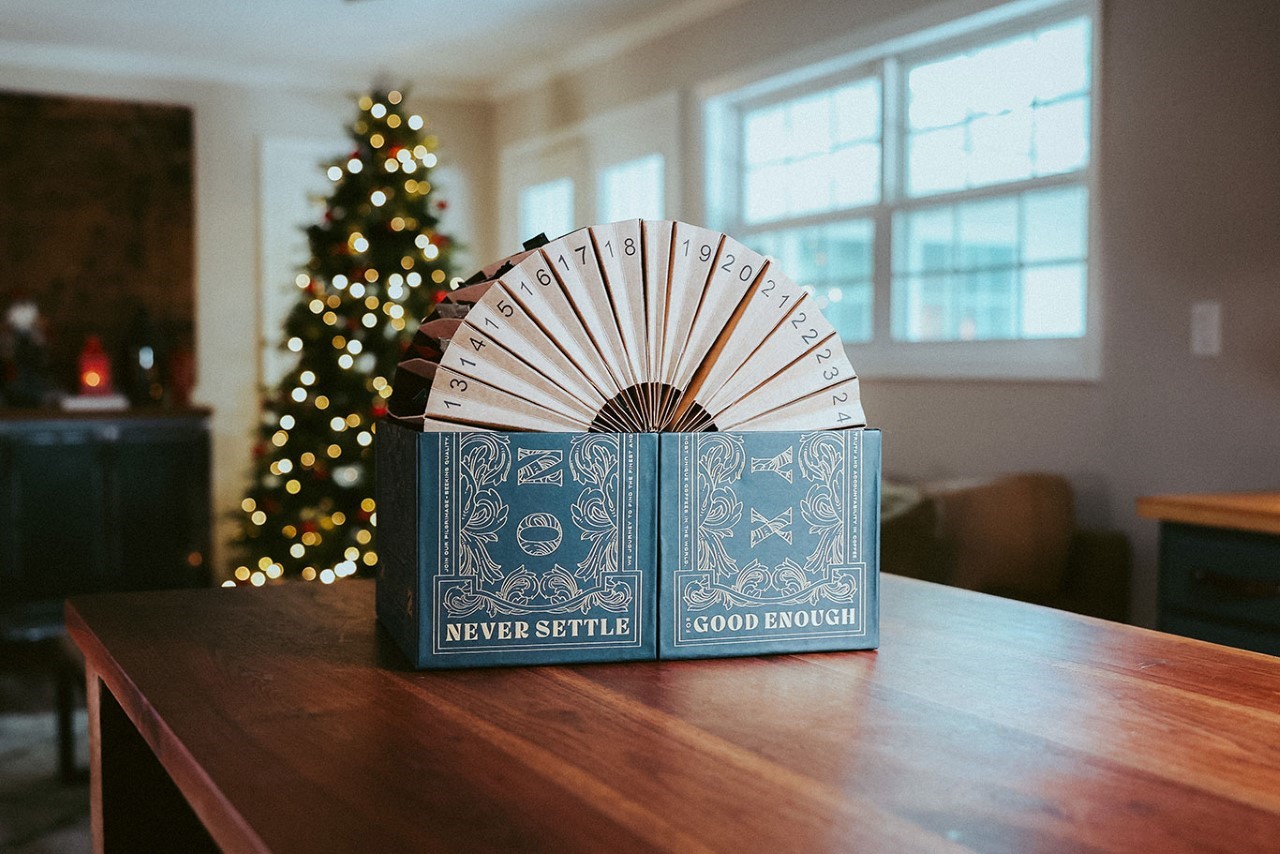
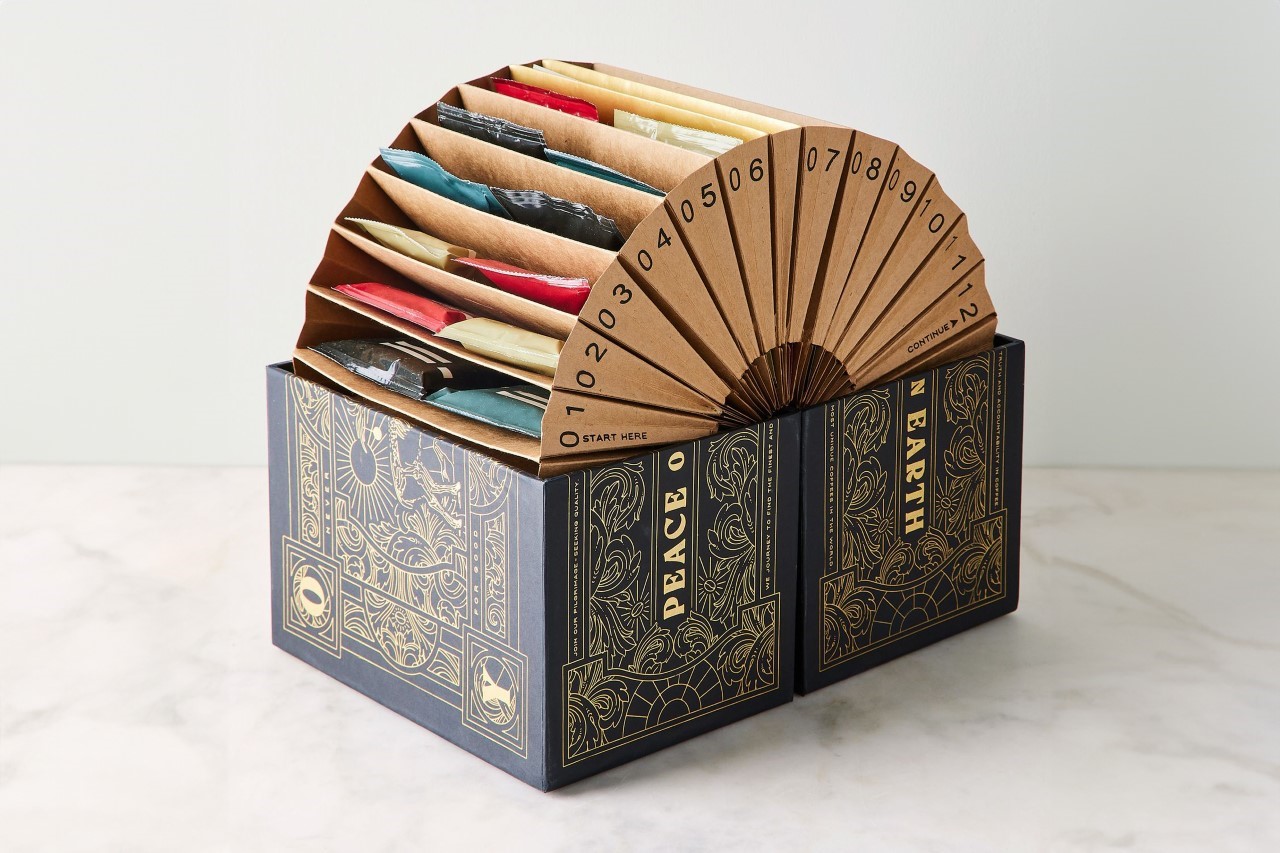
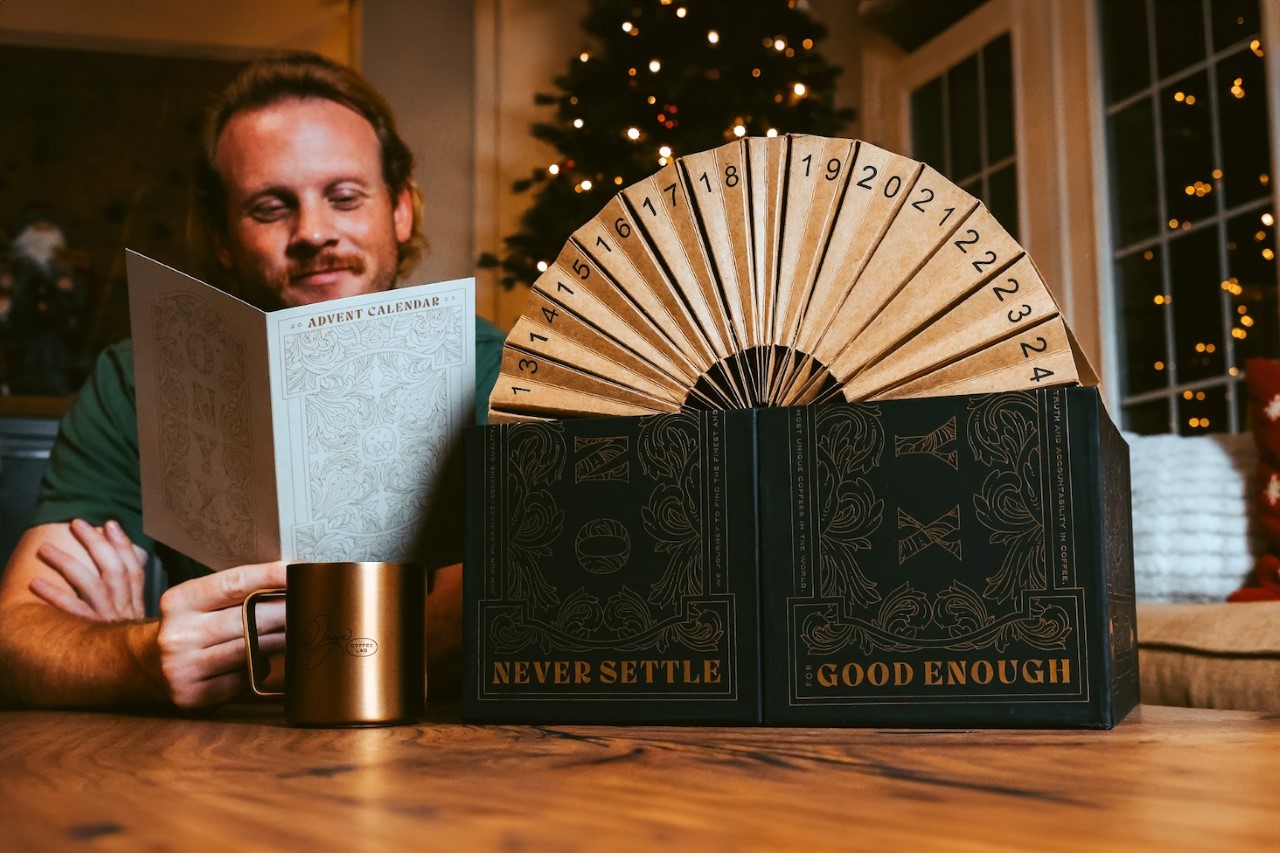
For the uninitiated, Advent Calendars aren’t your standard calendars. Rather than chronicling the 365 days into 12 months, Advent Calendars have just one simple purpose – to count down the days till Christmas. The calendar became somewhat of a tradition in the 1850s, with 24 different flaps that had Bible verses that you’d read every day up until Christmas Day on the 25th of December. In modern times, the calendar has become more of a gifting ritual, with brands creating tiny calendars with products/gifts for each day. This year, the folks at Onyx Coffee Lab decided to make a calendar that quite literally gets you ‘charged up’ for Christmas. The 2023 Coffee Advent Calendar comes in a gorgeous box that opens up to reveal an entire spread of coffee. The box itself is decorated beautifully with gold foil, and creates a wonderful fanned presentation of coffee sachets when opened. I imagine once you’re done drinking all that coffee, it would make for an incredible book or magazine holder!

Designer: Onyx Coffee Lab

Click Here to Buy Now

Featuring 24 days of coffee, the calendar explores various origins, blends, and processing methods, allowing you to experience a veritable tapestry of coffee flavors leading up to Christmas. It’s a perfect way to explore the world through a single cup before deciding on what coffee you want to try more of in the next year!

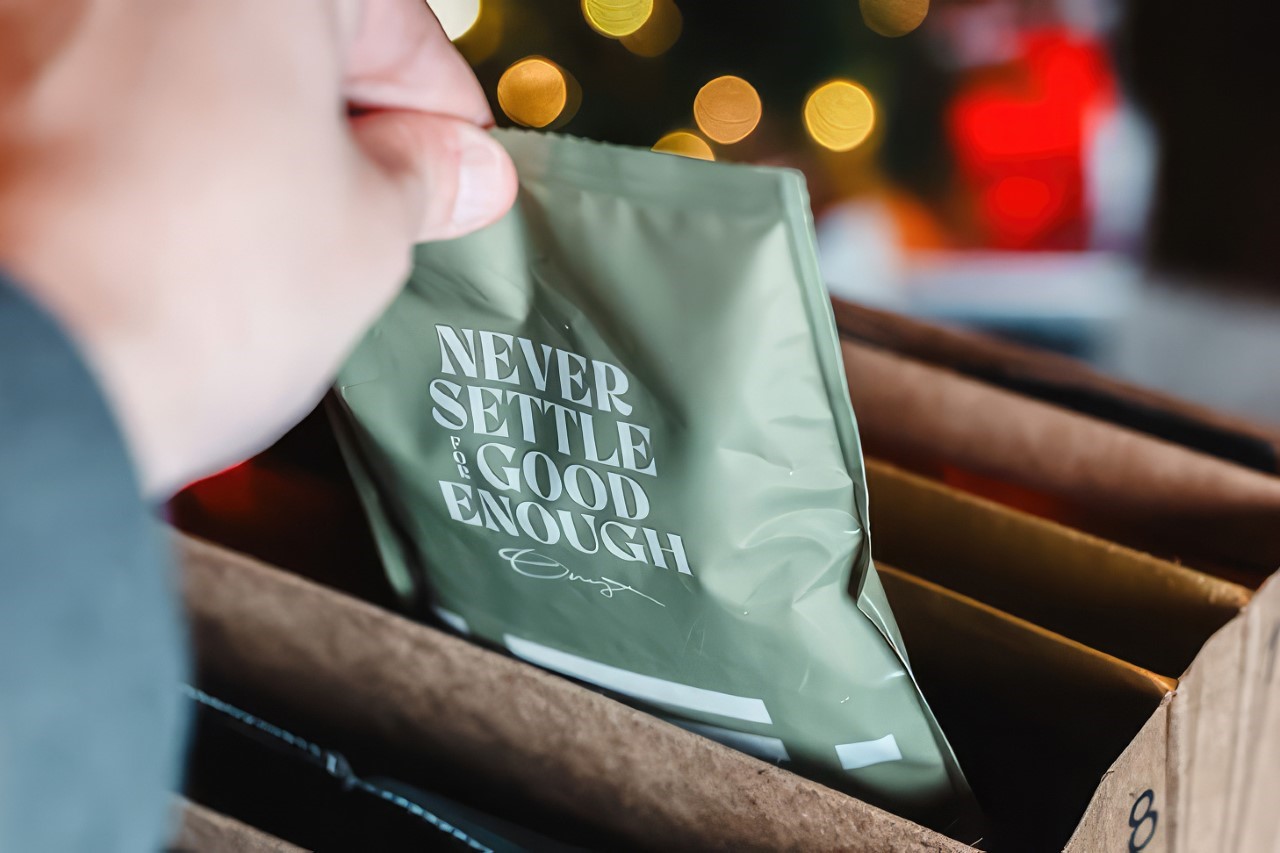
While Onyx delights practically every year with its gorgeous advent calendars, this year’s packaging exudes elegance and is designed to leave a lasting impression. The box’s exterior is adorned with stunning seasonal illustrations, enhanced with gold foil treatments. Upon opening the box, you’ll discover an accordion-style collection box revealing 24 individually wrapped bags of coffee. Each bag is marked from Day 1 to Day 24, guiding you on a daily journey of coffee discovery. A beautifully designed information card is also included, providing details about each coffee, adding to the overall unique coffee experience.

Click Here to Buy Now

The post This Gorgeous Coffee Advent Calendar gives you 24 Unique Blends to count down days till Christmas first appeared on Yanko Design.

Adidas Unveils Euro 2024 Official Football with Real-Time Kick Detection

For most football purists, the advent of technology has ruined the nature of the game rather than improved it. Ask anyone and they’ll tell you that football was MUCH more enjoyable before the accuracy of the VAR, but the point of such technologies isn’t to cater to audience entertainment, it’s to make the game as fair and unbiased as possible. Today, Adidas announced yet another tech-driven product to improve the game of Football. The FUSSBALLLIEBE (German isn’t the most elegant language) is a connected ball that detects kicks in real-time, and has also been adopted as the Official Football for the upcoming UEFA EURO 2024. Beyond its mouthful of a name, which translates to “love of soccer,” this ball is a groundbreaking fusion of sport and tech, designed to change how we experience and analyze football.

Designer: Adidas

At the core of FUSSBALLLIEBE’s innovation is Adidas’ Connected Ball Technology, developed in collaboration with Kinexon. This tech marvel includes a 500Hz inertial measurement unit (IMU) motion sensor, ensconced in a suspension system at the ball’s center. It’s capable of providing detailed insights into every aspect of the ball’s movement, a feature unprecedented in football history. Not only does this technology offer real-time data to video match officials, enhancing the accuracy and speed of in-match decisions, but it also dovetails with UEFA’s semi-automated offside technology, marking a significant leap in the sport’s adjudication.

The ball isn’t just smart; it’s also a study in precision engineering. Its PRECISIONSHELL 20-piece panel shape, augmented by strategically placed deboss grooves, helps control airflow over the ball for maximum precision. The CTR-CORE within the ball further supports this precision, ensuring accuracy, consistent play, and maximum shape and air retention.

In terms of aesthetics, FUSSBALLLIEBE is a vibrant homage to the spirit of the game and the diversity of its global audience. The design, featuring black wing shapes with colorful edges, curves, and dots, encapsulates the movement of the ball and the energy of football. The use of bright colors like red, blue, green, and orange not only celebrates the competing nations but also the sheer joy and universality of football. The inclusion of tournament stadiums and host city names adds a personal touch to this edition of the ball, making it a collector’s item as much as a piece of advanced sporting equipment.

Sustainability is another cornerstone of the FUSSBALLLIEBE’s design. Made from bio-based materials like corn fibers, sugar cane, wood pulp, and rubber, combined with recycled polyester and water-based ink, Adidas touts the FUSSBALLLIEBE as featuring more bio-based materials than any previous Adidas Official Match Ball, without impacting its performance.

As we ‘kick-off’ EURO 2024 with Adidas’ FUSSBALLLIEBE, it’s clear that the future of football is as much about innovation and technology as it is about the game itself. From Adidas’ high-tech, real-time data-gathering ball to even Nendo’s airless football, these designs are not just about playing a game; they’re about changing it.

The post Adidas Unveils Euro 2024 Official Football with Real-Time Kick Detection first appeared on Yanko Design.

Spotify reportedly struck a special deal with Google that let it skip Play Store fees

Spotify struck a special deal with Google that lets it pay no commission to Google when people sign up for subscriptions using the music streaming service’s own payment system on Android, according to new testimony in the ongoing Epic v. Google trial first reported by The Verge. As part of the same deal, Spotify paid Google just four percent commission if users signed up for the service through Google, far less than most other apps which typically pay 15 percent for subscriptions through the Google Play Store.

“Listening to music is one of [the phone’s] core purposes… if we don’t have Spotify working properly across Play services and core services, people will not buy Android phones”, Google’s partnerships head Don Harrison reportedly said in court. Both Google and Spotify also agreed to put $50 million each in a “success fund” as part of the deal.

The remarks were made as part of a lawsuit first filed against Google by Epic Games, the maker of the wildly popular Fortnite, in 2020. Epic claimed that Google’s Play Store on Android was an illegal monopoly that forced app makers to part with huge sums of cash in exchange for offering users in-app purchases through the Play Store. Epic filed a similar lawsuit against Apple in 2021, which it lost.

“A small number of developers that invest more directly in Android and Play may have different service fees as part of a broader partnership that includes substantial financial investments and product integrations across different form factors," Dan Jackson, a Google spokesperson, wrote to Engadget in a statement. "These key investment partnerships allow us to bring more users to Android and Play by continuously improving the experience for all users and create new opportunities for all developers.”

Spotify initially supported Epic in its fight against Google and Apple. But in 2022, the company started using a Google program called User Choice Billing that let Android apps use their own payment systems in exchange for giving a reduced cut to Google. The special deal revealed in court showed that Google was willing to carve out even more exceptions for popular apps like Spotify.

Google has had some pretty big business secrets spilled in the last few days. Last week, an economics professor testifying on behalf of the company in a separate antitrust trial that has since wrapped up, revealed that Google pays Apple 36 percent of all ad revenue it generates through Apple’s Safari browser, a figure which Alphabet CEO Sundar Pichai later confirmed while he was testifying in the Epic v. Google trial.

The Verge also reported earlier this month that Google offered Netflix, another popular streaming service, a custom deal. It offered a reduced commission of 10 percent, which Netflix turned down – instead choosing to not offer users a way to sign up for Netflix directly within its Android app.

Update, November 20, 2023, 6:50PM ET: This story was updated with a statement from Google.

This article originally appeared on Engadget at https://www.engadget.com/spotify-reportedly-struck-a-special-deal-with-google-that-let-it-skip-play-store-fees-224646377.html?src=rss

What is going on with OpenAI and Sam Altman?

It’s been an eventful weekend at OpenAI’s headquarters in San Francisco. In a surprise move Friday, the company’s board of directors fired co-founder and CEO Sam Altman, which set off an institutional crisis that has seen senior staff resign in protest with nearly 700 rank-and-file employees threatening to do the same. Now the board is facing calls for its own resignation, even after Microsoft had already swooped in to hire Altman’s cohort away for its own AI projects. Here’s everything you need to know about the situation to hold your own at Thanksgiving on Thursday.

How it started

Thursday, November 16

This saga began forever ago by internet standards, or last Thursday in the common parlance. Per a tweet from former-company president Greg Brockman, that was when OpenAI’s head researcher and board member, Ilya Sutskever, contacted Altman to set up a meeting the following day at noon. In that same tweet chain (posted Friday night), Brockman accused the company of informing the first interim-CEO, OpenAI CTO Mira Murati, of the upcoming firings at that time as well:

- Last night, Sam got a text from Ilya asking to talk at noon Friday. Sam joined a Google Meet and the whole board, except Greg, was there. Ilya told Sam he was being fired and that the news was going out very soon.

- At 12:19PM, Greg got a text from Ilya asking for a quick call. At 12:23PM, Ilya sent a Google Meet link. Greg was told that he was being removed from the board (but was vital to the company and would retain his role) and that Sam had been fired. Around the same time, OpenAI published a blog post.

- As far as we know, the management team was made aware of this shortly after, other than Mira who found out the night prior.

Friday, November 17

Everything kicked off at that Friday noon meeting. Brockman was informed that he would be demoted — removed from the board but remain president of the company, reporting to Murati once she’s installed. Barely ten minutes later, Brockman alleges, Altman was informed of his termination as the public announcement was published. Sutskever subsequently sent a company-wide email stating that “Change can be scary,” per The Information.

Later that afternoon, the OpenAI board along with new CEO Murati addressed a “shocked” workforce in an all-hands meeting. During that meeting, Sutskever reportedly told employees the moves will ultimately “make us feel closer."

At this point, Microsoft, which just dropped a cool $10 billion into OpenAI’s coffers in January as part of a massive, multi-year investment deal with the company weighed in on the day’s events. CEO Satya Nadella released the following statement:

As you saw at Microsoft Ignite this week, we’re continuing to rapidly innovate for this era of AI, with over 100 announcements across the full tech stack from AI systems, models and tools in Azure, to Copilot. Most importantly, we’re committed to delivering all of this to our customers while building for the future. We have a long-term agreement with OpenAI with full access to everything we need to deliver on our innovation agenda and an exciting product roadmap; and remain committed to our partnership, and to Mira and the team. Together, we will continue to deliver the meaningful benefits of this technology to the world.

By Friday evening, things really began to spiral. Brockman announced via Twitter that he quit in protest. Director of research Jakub Pachocki and head of preparedness Aleksander Madry announced that they too were resigning in solidarity.

How it’s going

Saturday/Sunday, November 18/19

On Saturday, November 18, the backtracking begins. Altman’s Friday termination notice states that, “Mr. Altman’s departure follows a deliberative review process by the board, which concluded that he was not consistently candid in his communications with the board, hindering its ability to exercise its responsibilities. The board no longer has confidence in his ability to continue leading OpenAI.”

The following morning, OpenAI COO Brad Lightcap wrote in internal communications obtained by Axios that the decision “took [the management team] by surprise” and that management had been in conversation “with the board to try to better understand the reasons and process behind their decision.”

“We can say definitively that the board’s decision was not made in response to malfeasance or anything related to our financial, business, safety, or security/privacy practices,” Lightcap wrote. “This was a breakdown in communication between Sam and the board … We still share your concerns about how the process has been handled, are working to resolve the situation, and will provide updates as we’re able.”

A report from The Information midmorning Saturday revealed that OpenAI’s prospective share sale being led by Thrive Capital, valued at $86 billion, is in jeopardy following Altman’s firing. Per three unnamed sources within the company, even if the sale does go through, it will likely be at a lower valuation. The price of OpenAI shares has tripled since the start of the year, and quadrupled since 2021, so current and former employees, many of whom were offered stock as hiring incentives, were in line for a big payout. A payout might not be coming anymore.

On Saturday afternoon, Altman announced on Twitter that he would be forming a new AI startup with Brockman’s assistance, potentially doing something with AI chips to counter NVIDIA’s dominance in the sector. At this point OpenAI’s many investors, rightly concerned that their money was about to go up in generative smoke, began pressuring the board of directors to reinstate Altman and Brockman.

Microsoft’s Satya Nadella reportedly led that charge. Bloomberg’s sources say Nadella was “furious” over the decision to oust Altman — especially having been given just “a few minutes” of notice before the public announcement was made — even going so far as to recruit Altman and his cohort for their own AI efforts.

Microsoft also has leverage in the form of its investment, much of which is in the form of cloud compute credits (which the GPT platform needs to operate) rather than hard currency. Denying those credits to OpenAI would effectively hobble the startup’s operations.

Interim-CEO Mira Murati’s 48-hour tenure at the head of OpenAI came to an end on Sunday when the board named Twitch co-founder Emmett Shear as the new interim-CEO. According to Bloomberg reporter Ashley Vance, Murati had planned to hire Altman and Brockman back in a move designed to force the board of directors into action. Instead, the board “went into total silence” and “found their own CEO Emmett Shear.” Altman spent Sunday at OpenAI HQ, posting an image of himself holding up a green “Guest” badge.

“First and last time i ever wear one of these,” he wrote.

Monday, November 20

On Monday morning, an open letter from more than 500 OpenAI employees circulated online. The group threatened to quit and join the new Microsoft subsidiary unless the board itself resigns and brings back Altman and Brockman (and presumably the other two as well). The number of signatories has since grown to nearly 700.

Despite Sutskever’s early morning mea culpa, that seemed unlikely. The board had missed its deadline to respond to the open letter, Microsoft claimed to have hired Altman and Brockman and Shear had been named interim CEO.

Shear stepped down as CEO of Twitch in March, where he led the company for more than 16 years and has been working as a partner at Y Combinator for the past seven months. Amazon acquired the live video streaming app in 2014 for just under $1 billion.

“I took this job because I believe that OpenAI is one of the most important companies currently in existence. When the board shared the situation and asked me to take the role, I did not make the decision lightly,” Shear told OpenAI employees Monday.

“Ultimately I felt that I had a duty to help if I could,” he added.

Shear was quick to point out that Altman’s termination was “handled very badly, which has seriously damaged our trust.” As such he announced the company will hire an independent investigator to report on the run-up to Friday’s SNAFU.

“The board did *not* remove Sam over any specific disagreement on safety, their reasoning was completely different from that,” Shear continued. “I’m not crazy enough to take this job without board support for commercializing our awesome models.”

Following his departure to Microsoft on Monday, Altman posted, “the OpenAI leadership team, particularly mira brad and jason but really all of them, have been doing an incredible job through this that will be in the history books.”

“Incredibly proud of them,” he wrote.

There was one more twist in store on Monday, however. Reports suggested that Altman's move to Microsoft wasn't a sure thing — and that he was still angling for a return to OpenAI.

Tuesday, November 21

Tuesday was another eventful day in this soap opera-esque saga. Altman was said to be discussing his potential return to OpenAI with the board, just four days after those same people booted him out of the company. Bloomberg reported that, until Monday, the board "largely refused to engage" with Altman, so the fresh talks were notable. The negotiations were said to involve board member Adam D’Angelo (who is CEO of Quora) along with OpenAI investors who had been pushing for Altman's return.

Things largely remained quiet on the OpenAI front for several hours. However, on Tuesday afternoon, Brockman posted about ChatGPT's voice conversation feature becoming available to all users. That raised a few eyebrows, given that he seemed not to be involved with the company at the time.

The biggest shock of all emerged late on Tuesday night (early Wednesday on the East Coast) when OpenAI said it had reached an agreement in principle for Altman to return as CEO. The company noted that all parties were "collaborating to figure out the details." Brockman also said late Tuesday that he was returning and "getting back to coding tonight."

The board has a new look as well, with only D’Angelo remaining. Google Maps co-creator and former Salesforce co-CEO Bret Taylor succeeded Brockman as chair. Former US Treasury Secretary Larry Summers is the other member of the three-person board, which will reportedly vet a new set of up to nine permanent directors who will have the task of resetting OpenAI's governance. One of those board seats is said to be earmarked for Altman, while Microsoft is set to take one.

"I love OpenAI, and everything I’ve done over the past few days has been in service of keeping this team and its mission together," Altman said after the news of his return broke. "With the new board and with Satya's support, I'm looking forward to returning to OpenAI and building on our strong partnership with [Microsoft]." Altman added that when he decided to join Microsoft on Sunday evening, he felt at the time that "was the best path for me and the team."

"We are encouraged by the changes to the OpenAI board," Nadella wrote on X. "We believe this is a first essential step on a path to more stable, well-informed, and effective governance." Other OpenAI investors, such as Thrive Capital, were pleased about Altman's return, as was Shear.

"I am deeply pleased by this result, after ~72 very intense hours of work," Shear wrote. "Coming into OpenAI, I wasn’t sure what the right path would be. This was the pathway that maximized safety alongside doing right by all stakeholders involved. I’m glad to have been a part of the solution." In a nod to his time at Twitch and that platform's speedrunning community, Shear joked that he'd zipped through his time as OpenAI CEO in 55 hours and 32 minutes.

Many OpenAI workers went to the company's office to celebrate Altman and Brockman's return. At one point during the party, a smoke machine was said to have triggered a fire alarm.

Altman and Brockman may not have too much time to enjoy their stunning comeback before it's back to serious business, though. It also emerged on Tuesday that yet another lawsuit has been filed alleging that OpenAI didn't gain permission from rights holders before using their intellectual property without permission to train its generative AI models. In this case, a group of non-fiction authors say OpenAI did not compensate them for feeding their books and academic journals into its systems.

This article originally appeared on Engadget at https://www.engadget.com/what-is-going-on-with-openai-and-sam-altman-215725312.html?src=rss

Cruise co-founder resigns following CEO exit

Cruise, the self-driving car company owned by General Motors, confirmed to Reuters that its co-founder and chief product officer Daniel Kan has resigned. Kan’s departure comes just a day after the company’s CEO Kyle Vogt announced his resignation on X after a 10-year tenure. Kan is said to have announced his resignation over Slack, however, the reasoning for his departure has not been made clear by the company.

The company’s executive reshuffling follows a public relations nightmare that started last month when a Cruise robotaxi hit a pedestrian in San Francisco and pinned them under the vehicle. The parent company, GM, is still conducting a safety probe on the accident and both autonomous and manual vehicle operations at Cruise remain suspended. The company’s public image has been reeling from the accident ever since, and about 950 robotaxis had to be recalled by GM. The California DMV suspended Cruises’ driverless permits shortly after, and that ruling has remained in place.

In a recent tweet, Cruise said that the company is focused on taking steps “to rebuild public trust.” Things have yet to look up for the company, especially after an expose by The Intercept revealed that the company knew its self-driving cars have trouble recognizing children and large holes in the roads. Furthermore, the former CEO said that the company would have to lay off an undisclosed number of employees and staff members in a memo.

Cruise has not made any statements about finding replacements for either its CEO or chief product officer as of yet. The New York Times reports that “instead of installing a new chief executive” General Motors has appointed two new members to the company board and Mo Elshenawy, Cruise’s executive vice president of engineering, will take up the role of President.

This article originally appeared on Engadget at https://www.engadget.com/cruise-co-founder-resigns-following-ceo-exit-214747271.html?src=rss
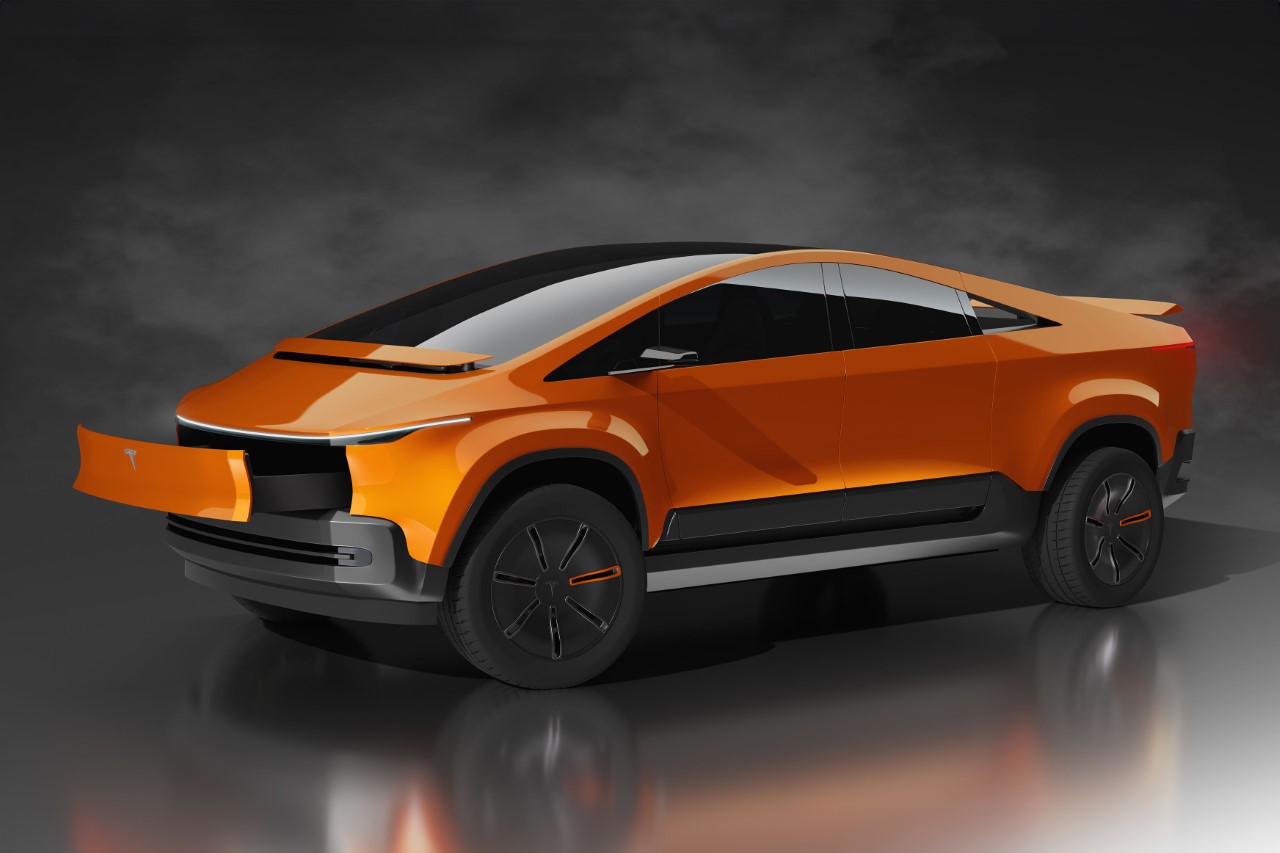
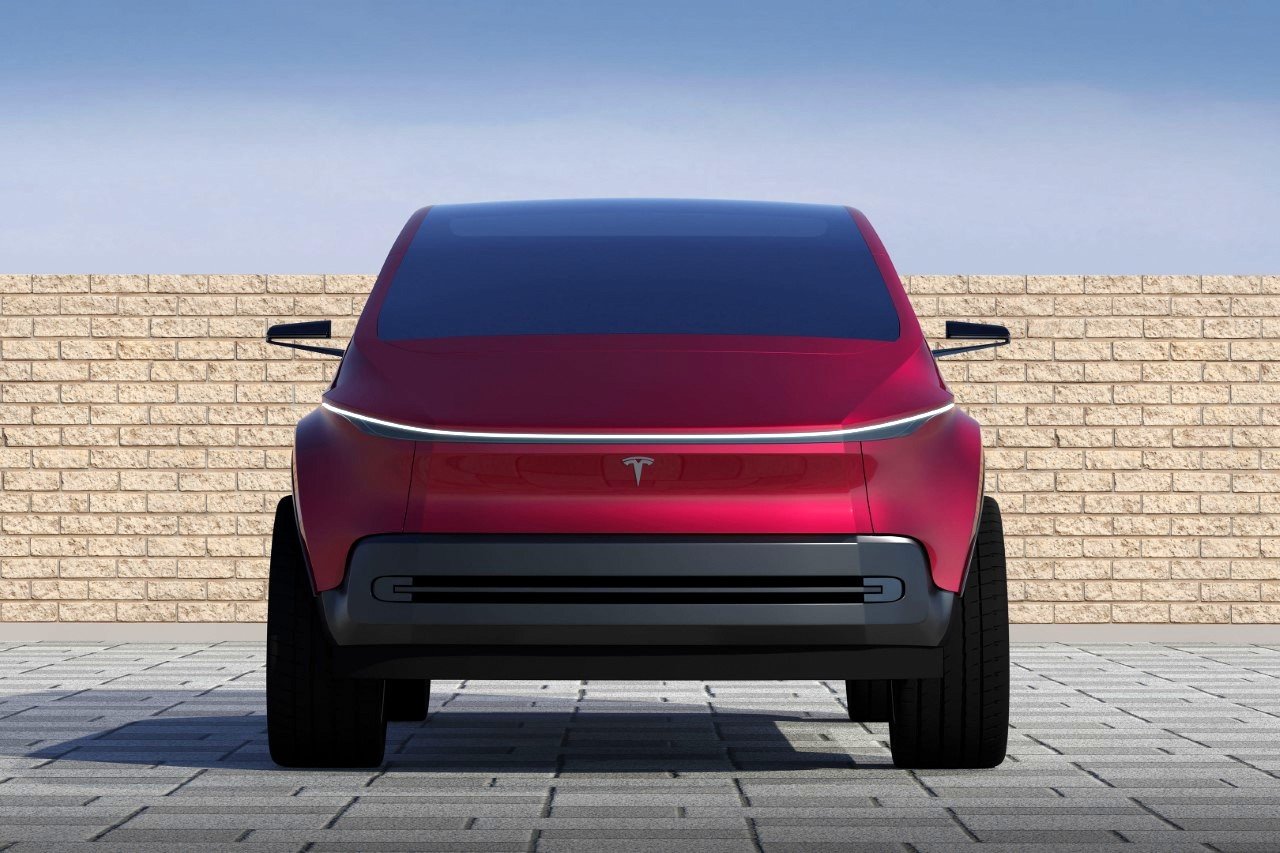
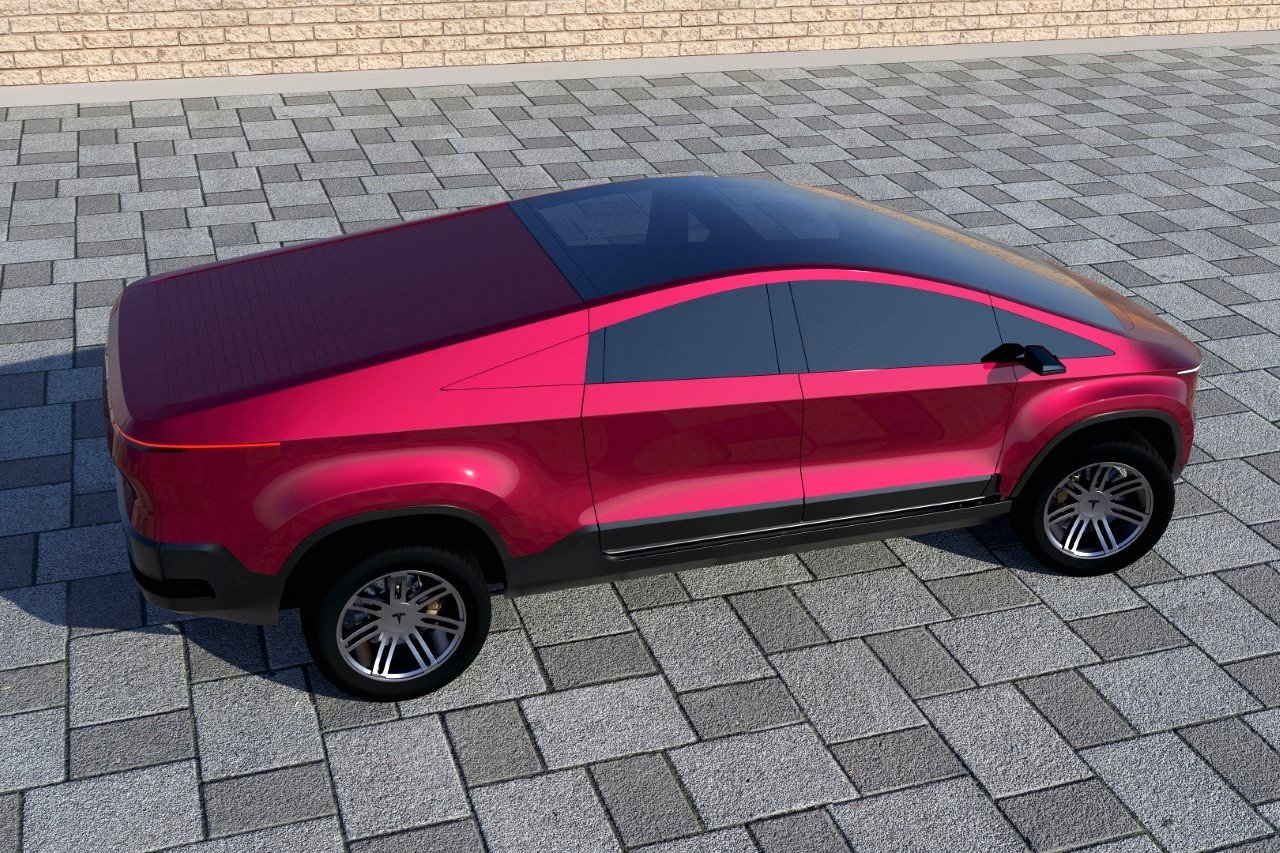
Cybertruck 2.0 concept showcases an elegantly curved design, color options, and a ‘frunk’

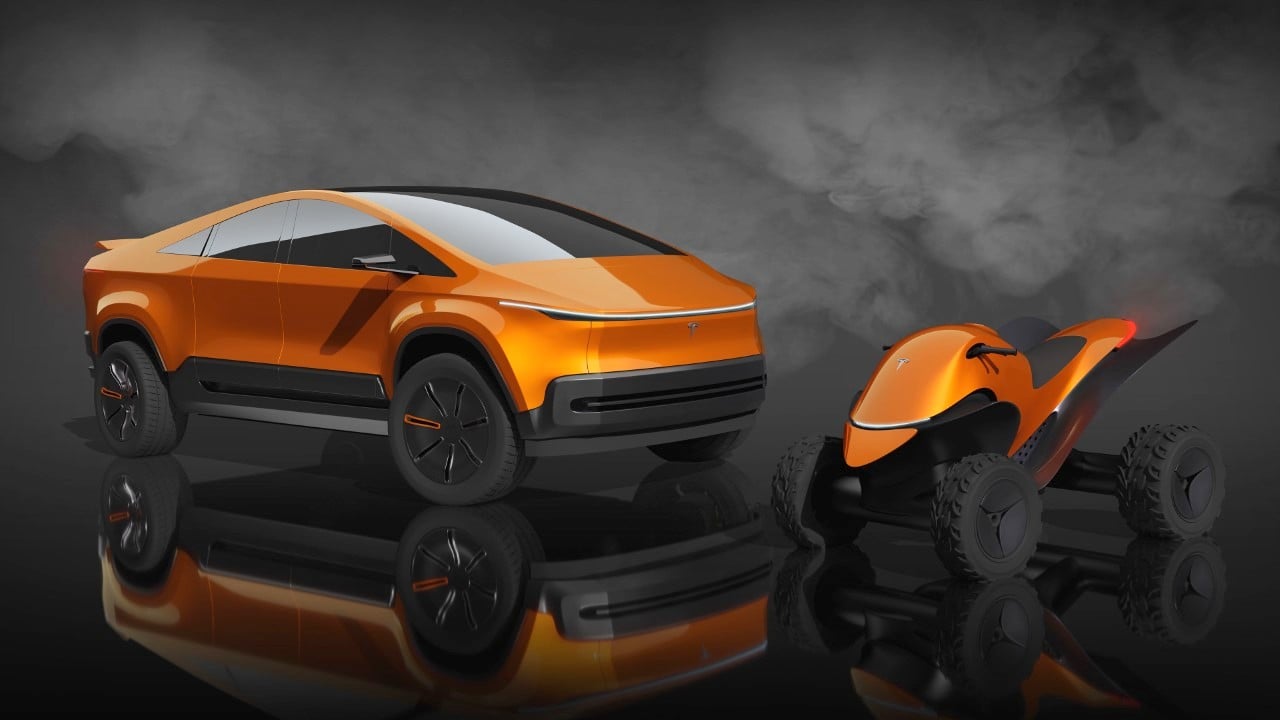
I wouldn’t be surprised if Tesla announced a Cybertruck 2.0 before even delivering the Cybertruck 1 (after all that’s sort of what they did with the Roadster)… however, this redesign comes from the mind of automotive designer Dejan Hristov, who’s probably waiting for his Cybertruck to deliver too.

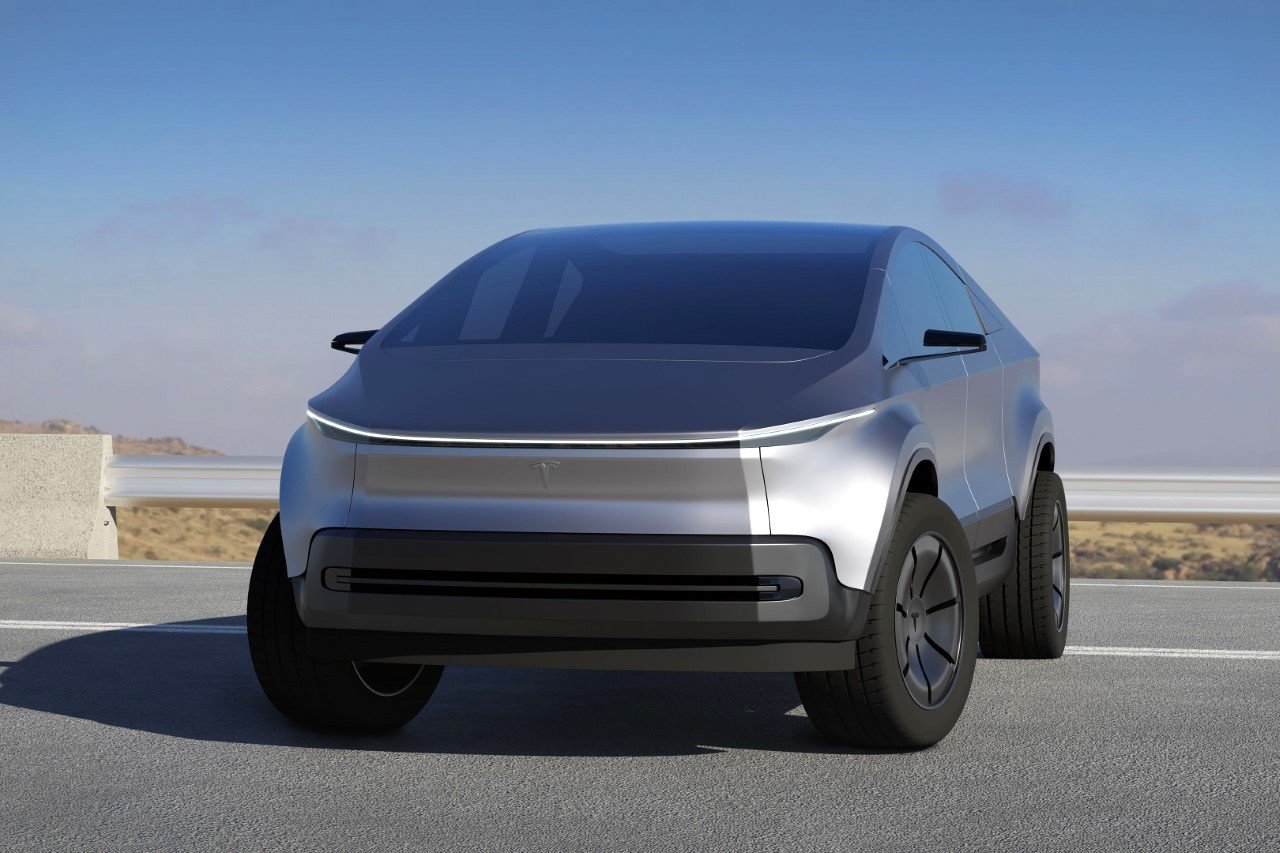
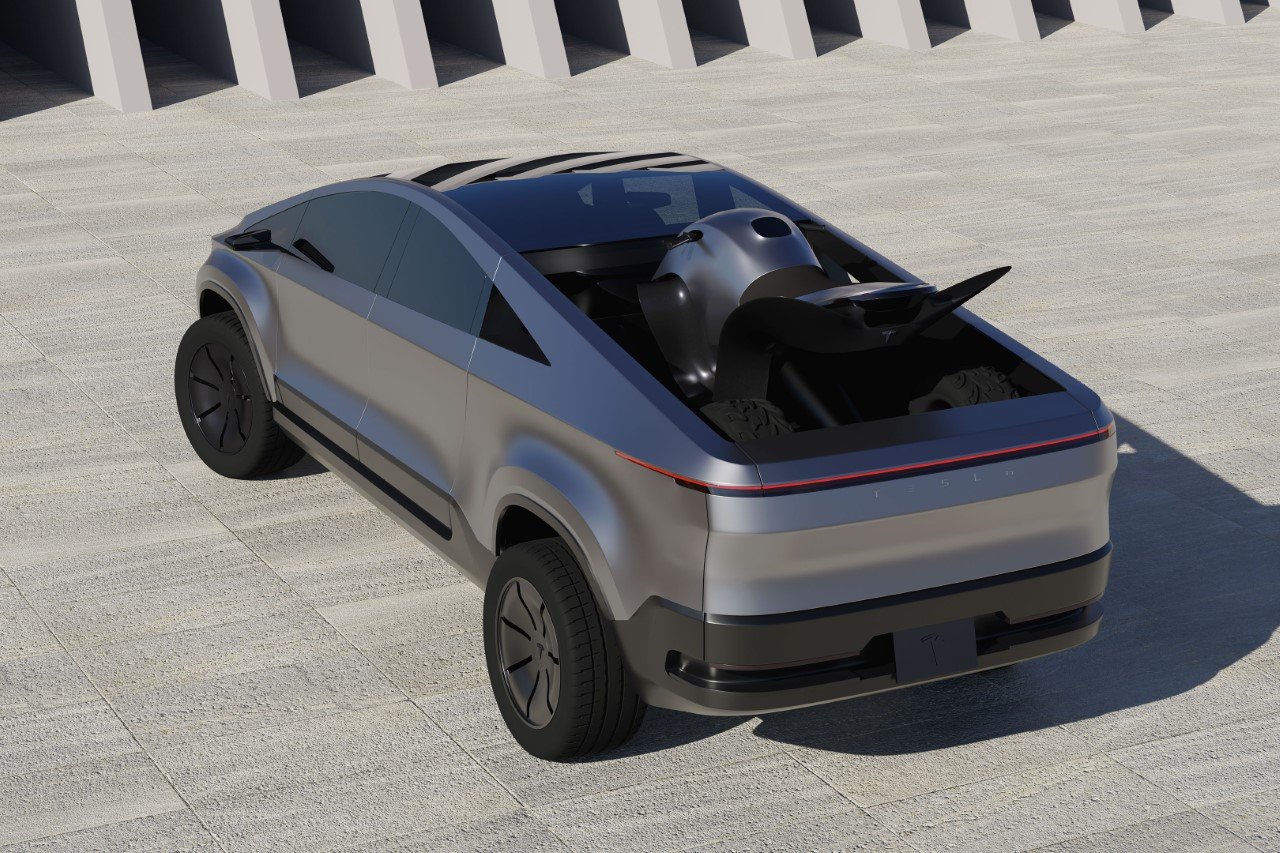
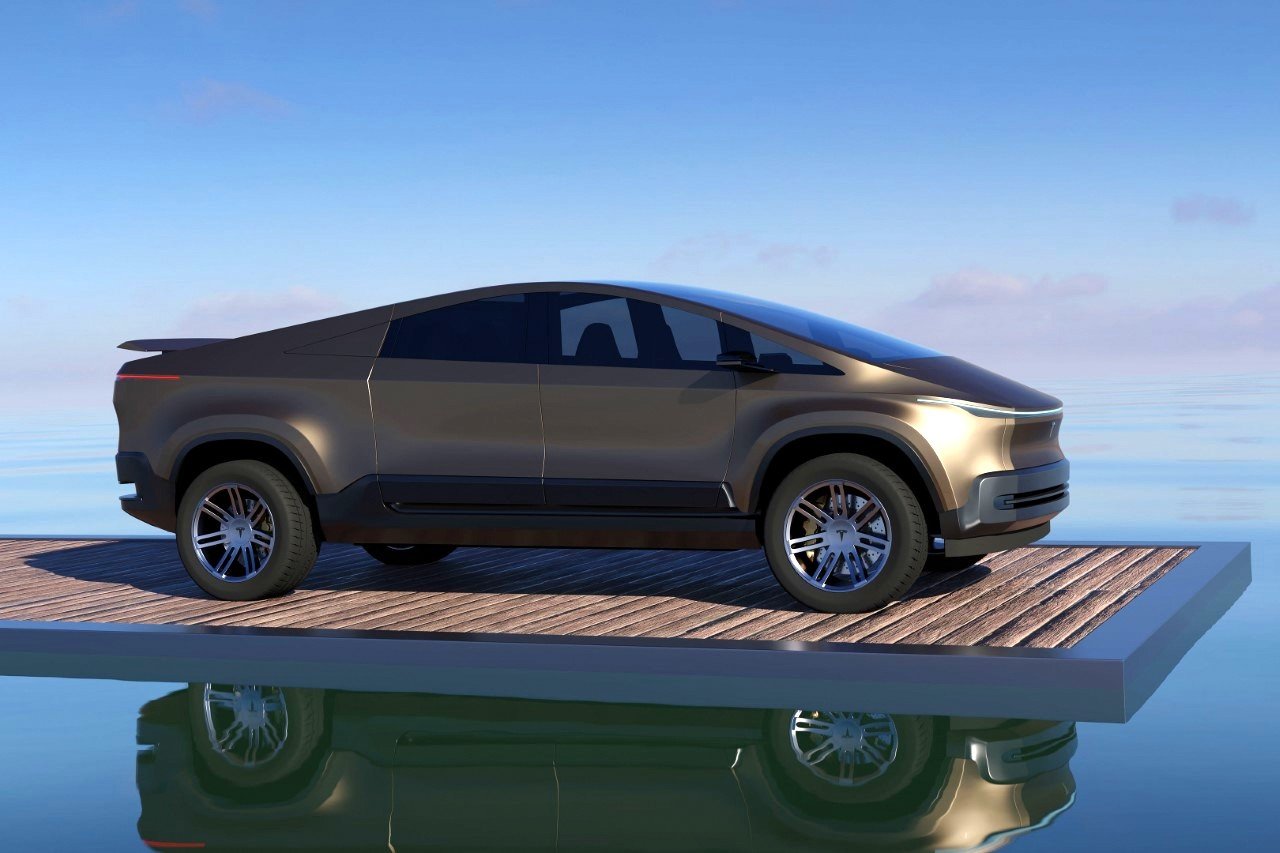
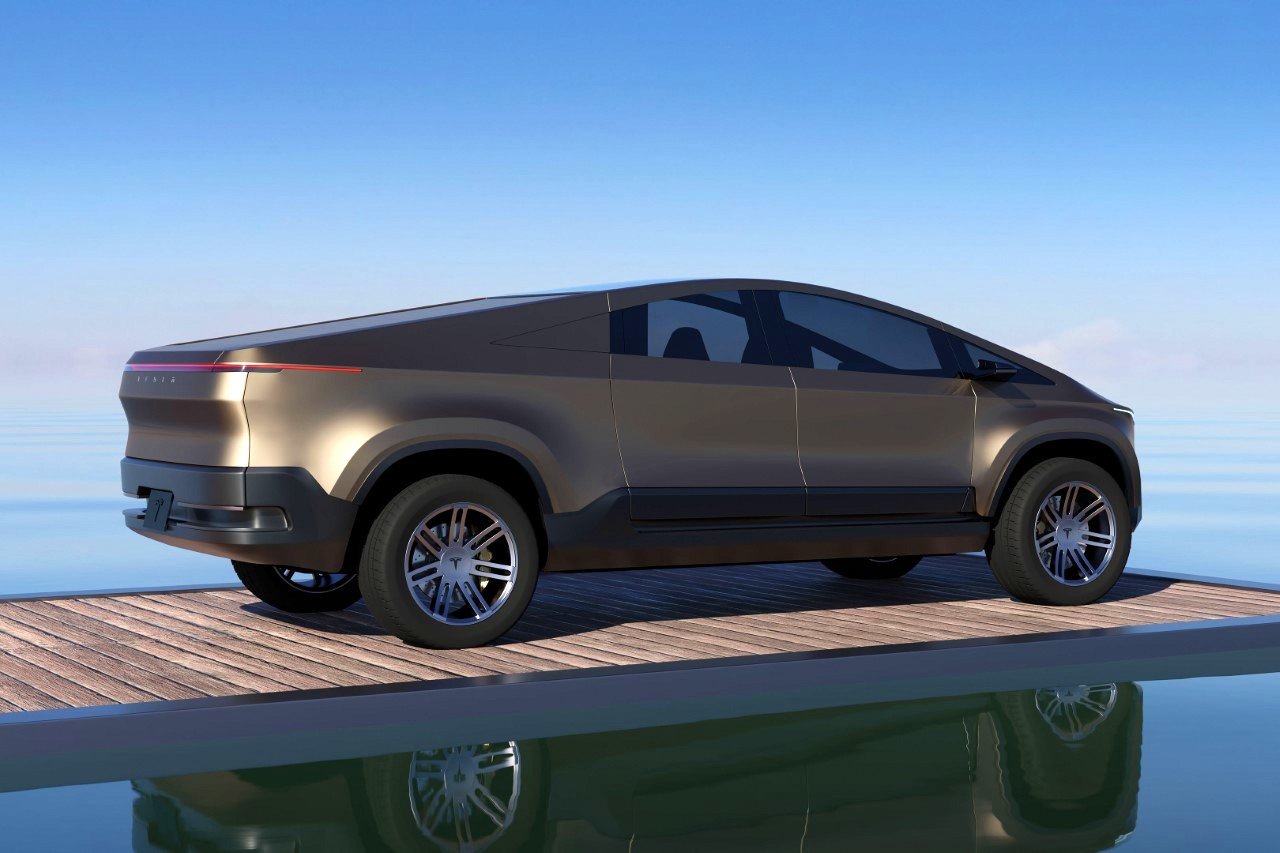
The Cybertruck 2.0 concept focuses on getting right the few things that the first truck got arguably wrong. The first design was way too polarizing, and according to Musk himself, incredibly difficult to build at mass scale. Rather than focusing on a truck that’s tommy-gun bulletproof, the Cybertruck 2.0 adopts a less aggressively divisive design, opting for the use of gentle curves instead of sharp angles. Musk mentioned that the Cybertruck hoped to shatter the design monotony of the pickup category, and the Cybertruck 2.0 does that too with a pretty eye-catching design that has the potential for being iconic… but those mild curves definitely give the car a more ‘finished’ appearance rather than looking like something you find at the bottom of a box of cornflakes.

Designer: Dejan Hristov

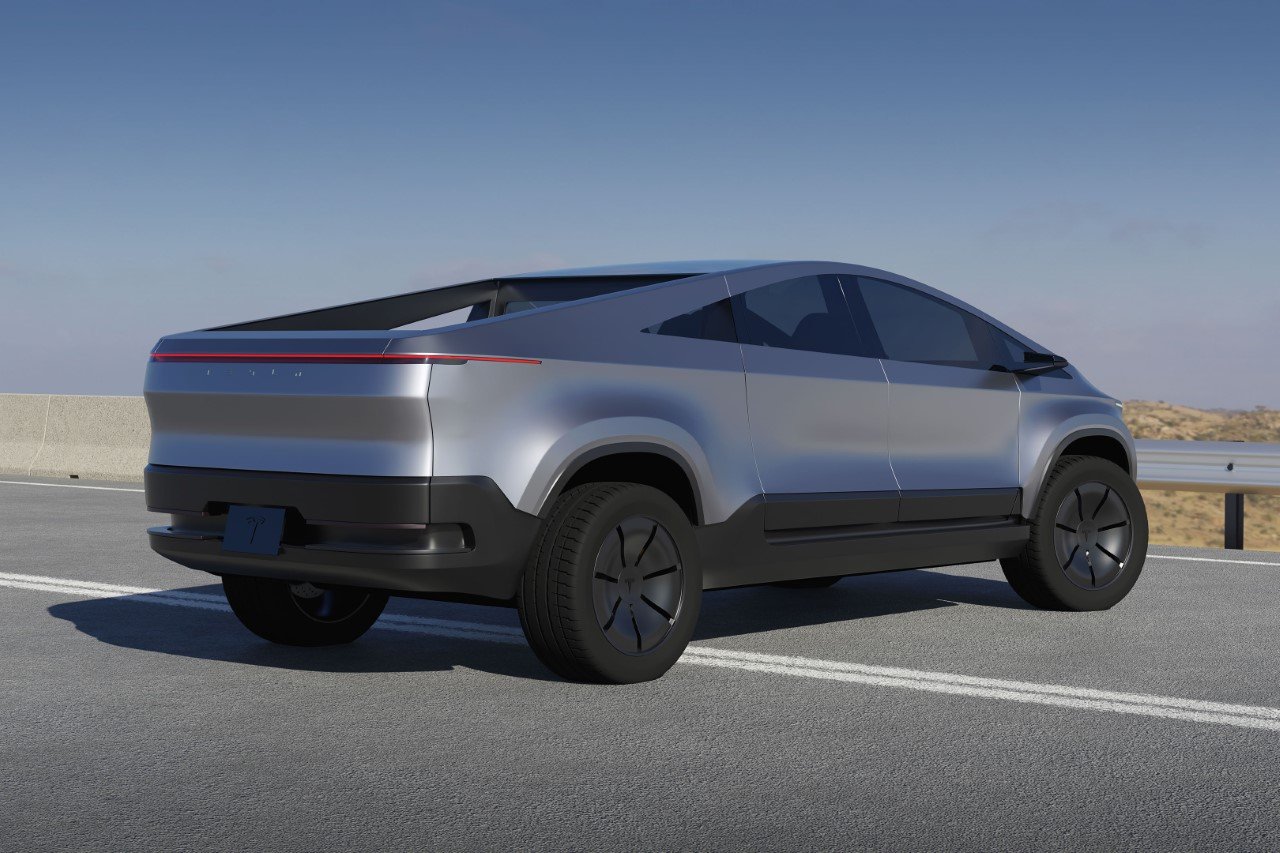
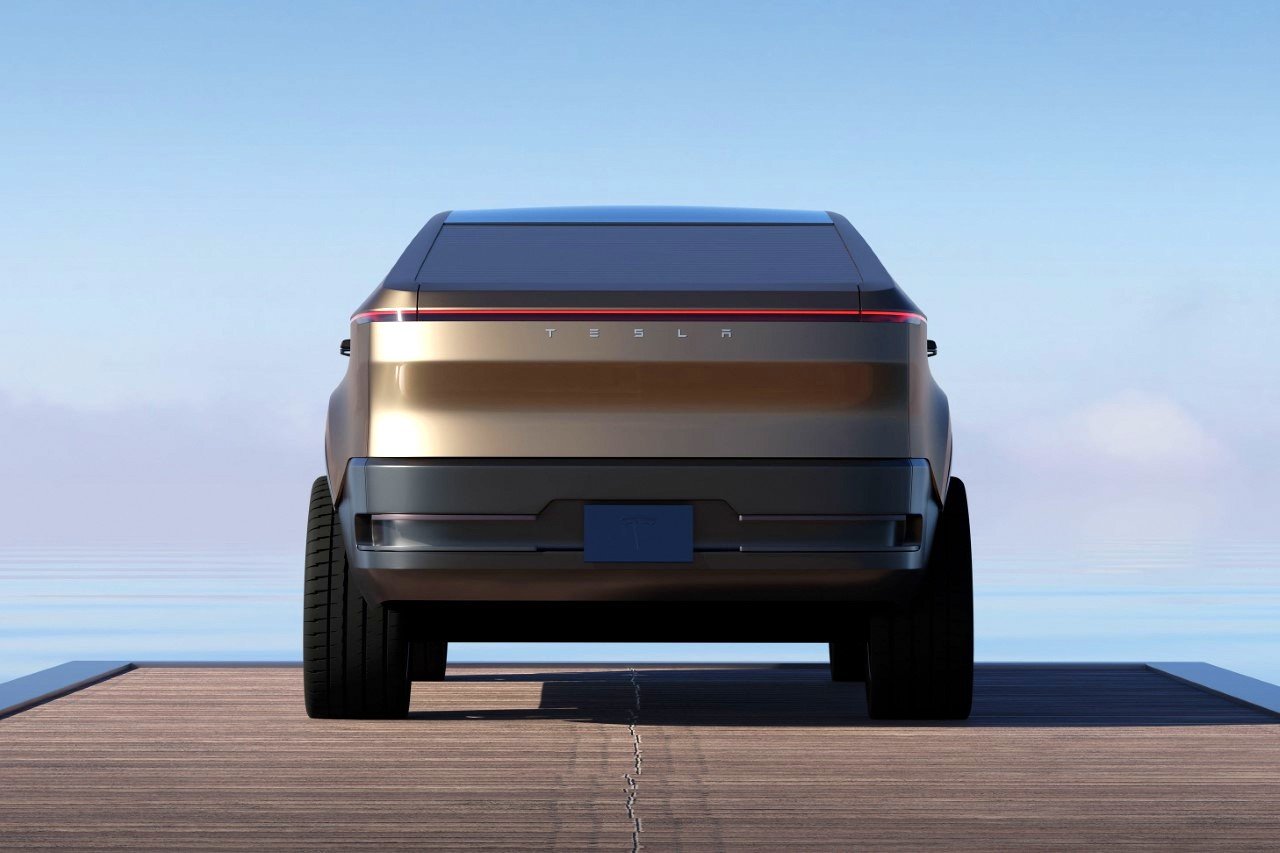
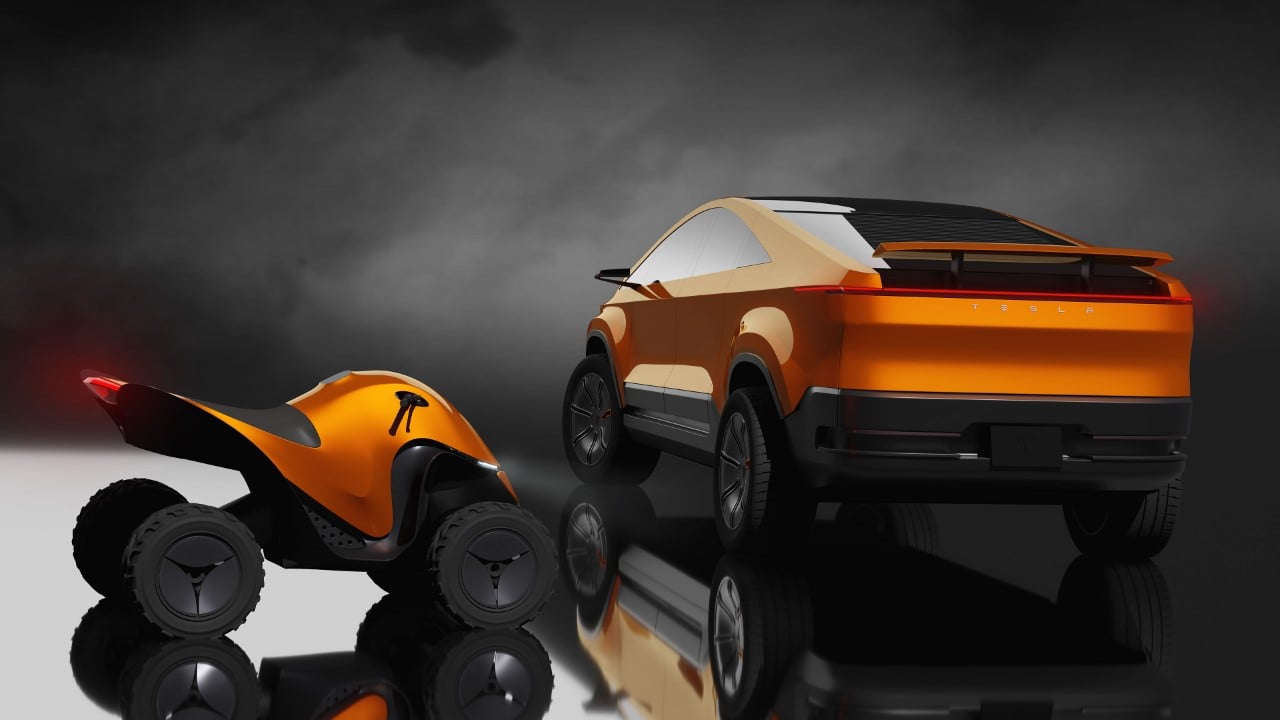
The Cybertruck redesign has a remarkably improved silhouette while still retaining the cyber-ish design direction set by the original. For starters, it still has edge-lines that give the truck definition, along with LED-strip headlights and taillights. The metal used on the redesign is clearly not the same as the one found in the original Cybertruck, given its ability to be formed into 3D curves, and even be embossed (notice the Tesla logo on the front and the back?)

One could assume that either Tesla’s developed a way to bend their bulletproof space-grade metal sheets, or Musk just decided to cave and make the car out of a more manageable metal but provide a solid chassis that gives the car its brute strength. Aesthetically, this just seems like a better direction to go in given that your vision isn’t really clashing with current technologies.

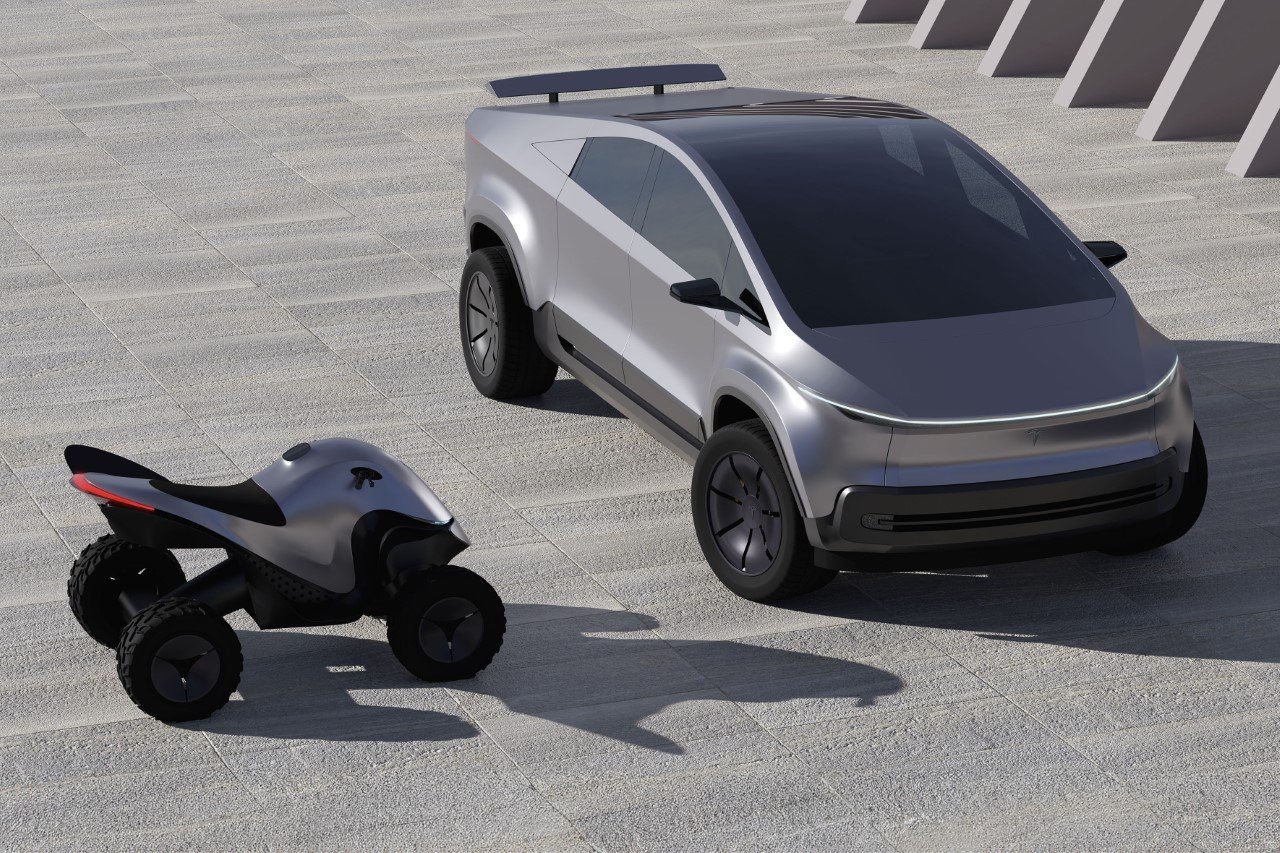
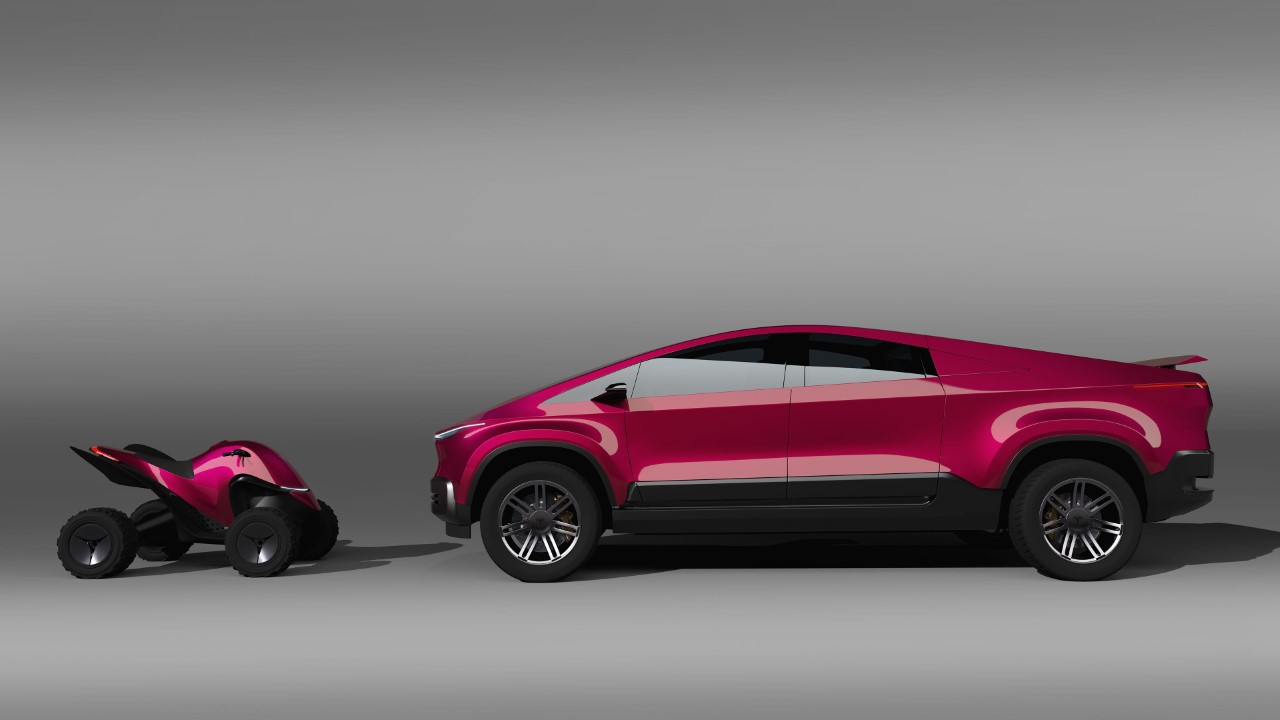
The truck is accompanies by a redesigned Cyberquad that, like back in 2019, fits right in the truck’s bed. The quad’s design borrows from sports bikes with its tank-shaped form, and matches its companion truck with a similar paint job.

In true pickup fashion, the back of the truck has its storage bed that’s ideal for camping, tailgating, or storing a Cyberquad. It comes with its own shutter, just like the original, but look a little ahead and you’ll notice that the Cybertruck’s windscreen now extends all the way to the back, giving you a wonderful vertically panoramic view from inside the car. You won’t want to camp in the back with that view!

A major departure from the original Cybertruck is the presence of color options. Hristov visualized the new Cybertruck with colors to match the rest of Tesla’s lineup, carrying forward the same logic to the Cyberquad too. As interesting as the original Cybertruck was, its lack of color options was probably one of its most noticeable flaws. Musk believed in showcasing the truck’s cold-rolled stainless steel in its true rawness, leaving a lot to be desired in the CMF department. This redesign corrects that mistake with color options that allow the truck to stand out through a stunning color palette, not through that flat-planed design seen on the 1st gen Cybertruck.

In Hristov’s final reimagination of the Cybertruck, he gives it one last feature to blow everyone’s minds away – a frunk! A detail seen on every Tesla car before it, the frunk can now be accessed on the Cybertruck 2.0 concept by opening it like you would a drawer. The hood doesn’t pop upwards like conventional cars; instead, the grille unit on the front slides forward, giving you ample space for storing bags, backpacks, and brewskis. The truck also comes with a retractable spoiler at the back, and a panel on the front that lifts up to reveal the windshield wipers. The redesign also gets sleeker rear-view cameras that share footage to the dashboard, eschewing the archaic rear-view mirror.

As gorgeous as the Cybertruck 2.0 is, it’s probably just wishful thinking for now given how Musk has constantly backtracked on delivery dates for the truck announced in 2019. The Cybertruck is officially (for now) going to start delivery at the end of November, although Tesla hasn’t been clear on how many units will be delivered, or even what its final price is going to be (amid mass fear of a massive price surge). For now, the truck is actually making its way to Tesla showrooms across USA, so maybe that’s one good sign?

The post Cybertruck 2.0 concept showcases an elegantly curved design, color options, and a ‘frunk’ first appeared on Yanko Design.

Polyend’s $799 Play+ has a shot a being the ultimate groovebox

In 2022 Polyend announced the Play, a fascinating sample-based groovebox and MIDI sequencer that was pretty much universally beloved by anyone who could get their hands on one. The pandemic fueled chip shortage made them pretty hard to come by, at least initially. But my, how things have changed in a little over a year. In just around 18 months, the company has managed to bring the cost of the Play down from $799 to just $499. More exciting though, is the availability of the Polyend Play+

The updated version is dramatically more powerful than the original. It still has eight tracks of sample playback and eight tracks of polyphonic MIDI sequencing. But, it now supports stereo sample playback and there are four built-in synth engines that can be controlled by the dedicated MIDI tracks. There's also support for audio over USB-C. And impressively, it's multitrack with 14 individual stereo tracks available for each of the eight sample channels, the three synth slots, the reverb and delay sends, plus a master audio out.

The synths are limited to eight voices collectively, but you can divide them up over three tracks however you see fit. So you can have a monophonic bass, a duophonic lead and then have a five note polyphonic track for chords. The four different engines are ACD, FAT, VAP and WTFM. The first three are different flavors of virtual analog synths, with ACD delivering simple single oscillator not unlike Roland's famed SH-101. While FAT and VAP are more complicated, with the former delivering thick three-oscillator tones, and the latter having a pretty extensive modulation matrix for evolving pads. WTFM, is a two operator FM synth that, at least based on the samples posted on Polyend's site, is far more capable and versatile than you'd expect.

While you can do some menu diving and customize the synth patches to your liking. There are plenty of presets, each with macro controls for quickly dialing in something pleasing. That is the big selling point of the Play in general, its immediacy. There's still the semi-generative pattern filling options, and that includes being able to auto-generate bass and chord progressions using the synth engines. 

One of the more intriguing things, however, is that Polyend is allowing owners of the original Play to trade theirs in for the Play+ for $399. This gives people who shelled out for a unit an upgrade path to the new more powerful hardware, but also reduces waste (and potentially saves Polyend some money) by allowing it to sell those returned units as refurbished down the road. 

The Polyend Play+ is available now for $799

This article originally appeared on Engadget at https://www.engadget.com/polyends-799-play-has-a-shot-a-being-the-ultimate-groovebox-210001667.html?src=rss
X CEO calls article that led to latest brand exodus ‘misleading and manipulated’

X CEO Linda Yaccarino called a report from a watchdog group that led to a large-scale advertiser pullout “misleading and manipulated” in a note she sent to X employees on Sunday night.

“While some advertisers may have temporarily paused investments because of a misleading article, the data will tell the real story,” Yaccarino wrote in the note, which was first published by The Hollywood Reporter, and which Engadget has seen a copy of. “Because for all of us who work at X, we’ve been extremely clear about our efforts to combat antisemitism and discrimination, as there’s no place for it anywhere in the world.” Yaccarino’s note was titled “Our Work is Meaningful”.

She also framed the situation as a free speech issue, writing that “no critic will ever deter us from our mission to protect free speech.” In doing so, she aligned herself with X owner Elon Musk’s repeated claims that free speech on the platform is paramount. Musk has repeatedly dismissed concerns of hate speech increasing on X ever since he bought the service last year.

Major advertisers including IBM, Apple, Disney, Lionsgate, Warner Brothers Discovery, Paramount Global, and NBCUniversal, whose advertising division Yaccarino previously headed, pulled their ads from X last week after a report from watchdog group Media Matters for America found that ads from some of these brands ran next to pro-Nazi content on the website. The move also came days after Musk publicly endorsed an antisemitic conspiracy theory as a response to a far-right X user. Musk’s comment drew widespread criticism, including a statement from the White House, which called his post an “abhorrent promotion of Antisemitic and racist hate” that “runs against our core values as Americans.”

On Friday, Musk said that the company would file “a thermonuclear lawsuit against Media Matters and ALL those who colluded in this fraudulent attack on our company[.]" The company filed the lawsuit on Monday. 

Yaccarino was already under pressure to resign as X CEO from advertisers who are questioning her decision to risk her reputation to protect Musk, Forbes reported. In a post on X on Monday morning, Yaccarino doubled down on her criticism of Media Matters. “When you’re this consequential, there will be detractors and fabricated distractions, but we’re unwavering in our mission,” she wrote. “Thank you for standing with us!”

An X spokesperson sent a link to Yaccarino’s X post in response to Engadget’s request for comment.

Update, November 20, 2023, 7:41PM ET: This story was updated to state that X filed a lawsuit against Media Matters on Monday. 

This article originally appeared on Engadget at https://www.engadget.com/x-ceo-calls-article-that-led-to-latest-brand-exodus-misleading-and-manipulated-204025411.html?src=rss
Amazon Black Friday deals include the Dyson Airwrap for its lowest price yet

Amazon has the Dyson Airwrap on sale for a record low. The innovative styling tool uses air rather than extreme heat to dry and shape hair — potentially boosting your hair’s long-term health when used regularly. Typically $599, a clickable coupon on its product page drops the price to $480.

The Dyson Airwrap utilizes the Coanda effect, a phenomenon describing airflow’s tendency to follow the path of a curved surface. Here, the air jet flows around the tool’s barrel or brush attachment, wrapping, drying and styling your hair. It does so without extreme heat, which could cause hair damage if used long-term. Dyson says the device measures the airflow’s temperature over 40 times per second, maintaining a safe temperature for your hair.

The styling tool has a rotating cool tip, three airflow speeds, three heat settings and a cold shot feature that immediately turns off the heating element, setting your style with a blast of cool air. Its seven bundled accessories include a 1.2-inch long barrel, a 1.6-inch long barrel, separate brushes for soft or firm smoothing, a Coanda smoothing dryer, a round volumizing brush and a detangling comb. In addition, you’ll get a filter cleaning brush and storage case.

Still from a product video showing a woman holding the Dyson Airwrap styling tool vertically as it wraps her long black hair around its barrel. Gray background.
Dyson

The blue blush holiday gift set and a complete set for straight-to-wavy hair are covered in the sale. Note that a third model on the product page, “Complete Diffuse for Curly to Coily Hair,” isn’t eligible for the $119 coupon.

The Dyson Airwrap has been a hot item on social media that’s regularly gone in and out of stock. So, if you’ve been considering one, you may not want to wait long before snagging Amazon’s record deal.

Your Black Friday Shopping Guide: See all of Yahoo’s Black Friday coverage, here. Follow Engadget for Black Friday tech deals. Learn about Black Friday trends on In The Know. Hear from Autoblog’s experts on the best Black Friday deals for your car, garage, and home, and find Black Friday sales to shop on AOL, handpicked just for you.

This article originally appeared on Engadget at https://www.engadget.com/amazon-black-friday-deals-include-the-dyson-airwrap-for-its-lowest-price-yet-203322271.html?src=rss
Webb telescope images show an unprecedented and ‘chaotic’ view of the center of our galaxy

The James Webb telescope is back with some more gorgeous images. This time, the telescope eyed the center of the Milky Way galaxy, shining a light on the densest part of our surrounding environs in “unprecedented detail.” Specifically, the images are sourced from a star-forming region called Sagittarius C, or Sgr C for short.

This area is about 300 light-years from the galaxy’s supermassive black hole, Sagittarius A, and over 25,000 light-years from a little blue rock called Earth. All told, the region boasts over 500,000 stars and various clusters of protostars, which are stars that are still forming and gaining mass. The end result? A stunning cloud of chaos, especially when compared to our region of space, which is decidedly sparse in comparison.

As a matter of fact, the galactic center is “the most extreme environment” in the Milky Way, as stated by University of Virginia professor Jonathan Tan, who assisted the observation team. There has never been any data on this region with this “level of resolution and sensitivity”, until now, thanks to the power of the Webb telescope.

At the center of everything is a massive protostar that weighs more than 30 times our sun. This actually makes the area seem less populated than it actually is, as this solar object blocks light from behind it, so not even Webb can see all of the stars in the region. So what you’re looking at is a conservative estimate of just how crowded the area is. It’s like the Times Square of space, only without a Guy Fieri restaurant (for now.)

James Webb telescope image.
NASA, ESA, CSA, STScI, and S. Crowe (University of Virginia).

The data provided by these images will allow researchers to put current theories of star formation to “their most rigorous test.” To that end, Webb’s NIRCam (Near-Infrared Camera) instrument captured large-scale emission imagery from ionized hydrogen, the blue on the lower side of the image. This is likely the result of young and massive stars releasing energetic photons, but the vast size of the region came as a surprise to researchers, warranting further study.

The observation team’s principal investigator, Samuel Crowe, said that the research enabled by these and forthcoming images will allow scientists to understand the nature of massive stars which is akin to “learning the origin story of much of the universe.”

This is obviously not the first interesting image produced by the James Webb telescope. We’ve seen stars born in the Virgo constellation, water around a comet in the main asteroid belt and a fairly offputting view of the Pillars of Creation, among others. It’s seen things you people wouldn't believe and, luckily, it won’t all be gone like tears in the rain because of the internet and because Webb’s still out there.

This article originally appeared on Engadget at https://www.engadget.com/webb-telescope-images-show-an-unprecedented-and-chaotic-view-of-the-center-of-our-galaxy-185912370.html?src=rss