Cities: Skylines 2’s embarrassed developers are giving away beachfront property for free

Cities: Skylines 2 developer Colossal Order is unlisting and refunding purchases of its controversial Beach Properties asset pack less than a month after its release. It’s also significantly delaying the game's future DLC and console port.

Beach Properties was the first paid DLC for Cities: Skylines 2, and has an “Overwhelmingly Negative” rating on Steam, with just 4 percent of user reviews marked as positive. In a note announcing the reverse of course, Colossal Order CEO Mariina Hallikainen said the company had let its community down. 

“We thought we could make up for the shortcomings of the game in a timeframe that was unrealistic, and rushed out a DLC that should not have been published in its current form," Hallikainen said. "For all this, we are truly sorry.”

The asset pack itself worked as advertised, adding a number of zoneable waterfront-style properties to the game, but it was definitely thin for the $9.99 asking price. Most will admit, though, that the content itself wasn’t the problem: The DLC was largely derided because it was released at a time when players were waiting on patches for the base game. Cities: Skylines 2 was released in a poorly optimized state in October 2023, and although it’s in better shape now, many in the community feel there are fundamental issues with the simulation, and there is still work to be done to make the game run better. Mod support — perhaps the reason that the original Cities: Skylines had such a long lifespan — was also slow to arrive, and is still only in beta, with no support for custom assets.

In an FAQ accompanying the announcement, Colossal Order explains how the refund and compensation program will work. Essentially, if you bought the DLC separately, you should be able to get a refund. Those who redeemed a code as part of the game's Deluxe or Ultimate editions will not. Instead, compensation will come in the form of creator asset packs and radio stations which Colossal Order says will "total around $39.99 in added value." The beachfront properties will be added to the base game, free of charge, for all players.

To call Cities: Skylines 2’s launch messy would be kind. Since the game’s release on PC last October, developer Colossal Order has burned through the goodwill it built up over a near-decade of the original game’s lifespan. Things came to a head in late January, when many of the community's loudest and most respected voices broke rank to talk openly about the game's issues.

Another casualty of today's announcement is the game's console release. Cities: Skylines 2 was supposed to launch simultaneously on PC and console, but the PS5 and Xbox versions were pushed back to spring 2024 weeks before release. It has been clear for some time that revised date was not going to happen, and Colossal Order confirmed it's now hoping to have the console ports ready for October.

The final piece of bad news is that Bridges & Ports — the first expansion pack that will go beyond assets — is going to be further delayed to Q1 2025 to allow the developers to "focus on additional free patches and game updates in the coming months." The expansion pack was supposed to be released in Q2 2024, and is included in the game's Ultimate Edition.

This article originally appeared on Engadget at https://www.engadget.com/cities-skylines-2s-embarrassed-developers-are-giving-away-beachfront-property-for-free-170042260.html?src=rss


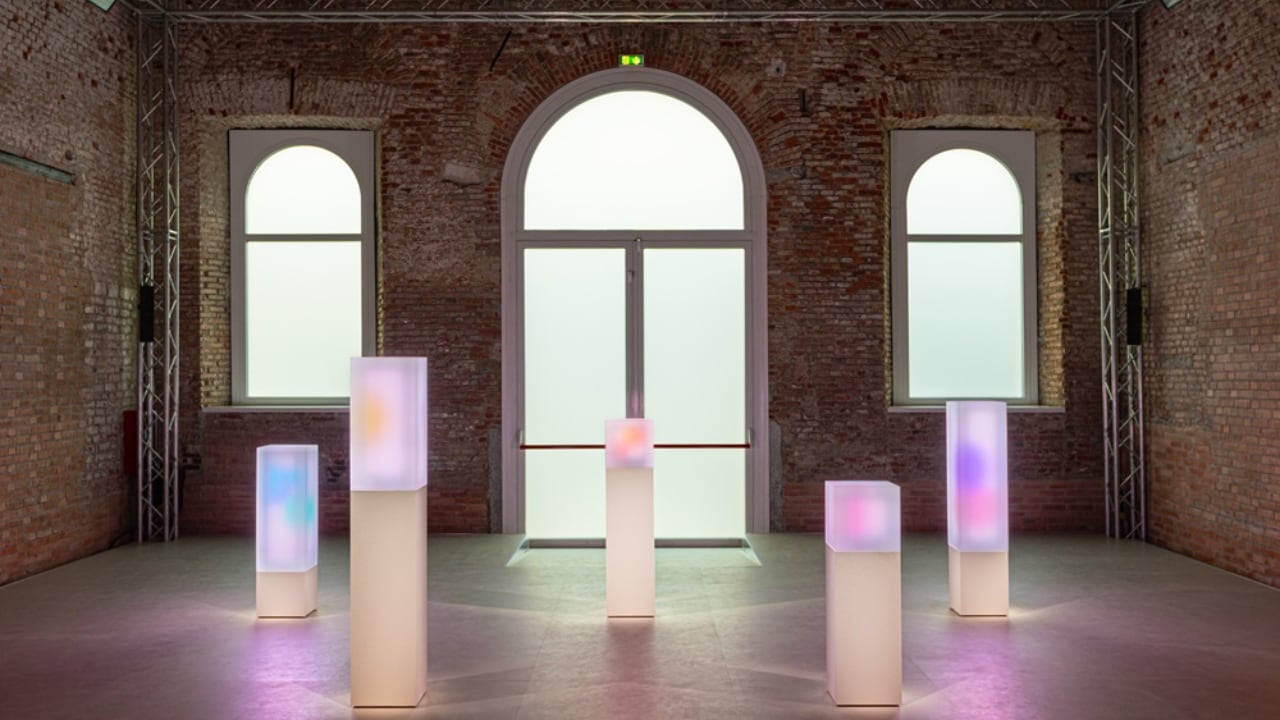
Samsung’s Visual Display of Essential, Innovative, Harmonious Design at Milan Design Week 2024

At Milan Design Week 2024, Samsung Electronics unveiled its “Newfound Equilibrium” exhibition. This impressive showcase is all about Samsung’s forward-thinking design philosophy, which they call “Samsung Design Identity 5.0: Essential∙Innovative∙Harmonious.” It focuses on drawing inspiration from people and shaping the future. Samsung has over 1,500 designers spread across seven global studios, all working to keep their design language fresh and relevant for their customers.

Designer: Samsung

INNOVATIVE, the second exhibition space of Samsung Design’s Newfound Equilibrium

The exhibition is in the Leonardo da Vinci National Museum of Science and Technology in Milan, specifically in Le Cavallerizze. This place is a mix of 16th-century architecture and modern design, showing off Samsung’s knack for blending old and new.

Leonardo da Vinci National Museum of Science and Technology in Milan, Italy, where Samsung Design’s Newfound Equilibrium exhibition is being held.

First up in the exhibition is the “Essential” area. This is all about getting back to basics and focusing on what really matters. It’s shown in the sleek design of the Galaxy S24 series and some really practical home appliances like the all-in-one washer and dryer. There are also some awesome minimalist installations with translucent cubes and playful lighting that really get the point across.

ESSENTIAL, the first exhibition space of Samsung Design’s Newfound Equilibrium

ESSENTIAL, the first exhibition space of Samsung Design’s Newfound Equilibrium

Next, we move to the “Innovative” section. Here, Samsung shows off its drive to make everyday life better with functional advancements. There are interactive displays that change based on how close you are to them, just like Samsung’s smart TVs and vacuum cleaners that adapt to your needs. This part really shouts about Samsung’s ambition to push tech boundaries.

A display shown at INNOVATIVE, the second exhibition space of Samsung Design’s Newfound Equilibrium, displays forms that shift from solid to ethereal textures as guests move closer or farther away.

INNOVATIVE, the second exhibition space of Samsung Design’s Newfound Equilibrium

INNOVATIVE, the second exhibition space of Samsung Design’s Newfound Equilibrium

Then there’s the “Harmonious” section. This is all about how tech can blend into daily life, like the SmartThings ecosystem and the Music Frame that enhance your home without taking over. There are interactive LED displays that mimic natural events, inviting visitors to imagine a world where tech fits in naturally with human and environmental needs.

HARMONIOUS, the third exhibition space of Samsung Design’s Newfound Equilibrium

The exhibition wraps up with the “Infinite Dream” and “New Dawning” spaces, which celebrate the blend of modern tech with traditional craftsmanship, through collabs with artisans like MUTINA and ALPI.

INFINITE DREAM, the fourth exhibition space of Samsung Design’s Newfound Equilibrium

In a nutshell, the ‘Newfound Equilibrium’ exhibition at Milan Design Week 2024 shows off Samsung’s big ideas about the future of tech and design. It’s about tech and design, living together, and making life better for people all over the world. Samsung’s ongoing commitment to thoughtful and progressive design is clear, and it’s really exciting to see what they’re doing to make tech a force for good in our lives.

Bespoke creations that blend modern technology with traditional craftsmanship are showcased at NEW DRAWING, the concluding exhibition space of Samsung Design’s Newfound Equilibrium.

The post Samsung’s Visual Display of Essential, Innovative, Harmonious Design at Milan Design Week 2024 first appeared on Yanko Design.

Google’s wired Nest security camera is cheaper than ever

Google's wired Nest security camera has dropped to its lowest price to date. The second-gen device is for indoor use and it's motion sensitive. It's capable of capturing 1080p HDR video. You can snap one up for $70, which is $30 or 30 percent off the regular price of $100, at Amazon if you opt for the fog or linen colorway. However, if you go for the snow variant you can save a little more. That one is on sale for $67.59, or 32 percent off.

The Nest Cam uses AI to discern between people, animals and vehicles. It can send you alerts via the Google Home app, and you won't need a subscription for that. You will need a Nest Aware plan if you want up to 60 days of video history. Otherwise, Google will offer three free hours of event video history. Handily, if you have a Wi-Fi outage, up to an hour of event recordings will be stored on the device itself.

There's a two-way audio function, so you can chat with house guests if you're not home. In the event of an unwanted visitor, you can contact emergency services directly from the Google Home app if you're a Nest Aware member who is perhaps using a tablet instead of a phone. You'll be able to view live video feeds on compatible smart displays and smart TVs too.

Nest Aware subscribers can receive notifications when familiar faces are recognized. There's also the option to set up home and away routines so the camera doesn't capture video while you're at your place.

Elsewhere, the Outdoor Nest Cam with Floodlight is on sale too. It has dropped by 29 percent to $200. That's just $10 more than the lowest price we've seen for it to date.

Follow @EngadgetDeals on Twitter and subscribe to the Engadget Deals newsletter for the latest tech deals and buying advice.

This article originally appeared on Engadget at https://www.engadget.com/googles-wired-nest-security-camera-is-cheaper-than-ever-163019138.html?src=rss

Sonos refurbished speakers and soundbars are up to $170 off right now

A speaker doesn't have to be brand new to sound good. Sonos speakers get high marks in our reviews and buying guides and the company has one of the better refurbished programs out there. Right now, you can grab a refurbished Sonos Arc SL soundbar for $509, which is $170 off the refurbished price and $240 off the speaker's full $749 price tag when it was new. A decent selection of other renewed soundbars and speakers are also on sale at Sonos, with up to 25 percent off the refurbished prices.  

We named the Sonos Arc the runner-up premium soundbar in our buying guide, praising its stellar sound quality and ability to calibrate its sound to match the room its in. The difference between the Sonos Arc and the Arc SL is the lack of a microphone, so you won't be able to talk to Alexa or the Google Assistant directly through your speaker. That might be a plus for anyone interested in the extra privacy of a mic-less device. Other than the lack of microphone, the Arc SL hardware is the same. It can even calibrate its sound to the room with the Trueplay feature, which uses the Sonos app on an iOS device to measure how sound reflects off your walls and furniture. The Arc SL is Wi-Fi enabled, supports Dolby Atmos, Apple Air Play 2 and connects to your TV via HDMI ARC or eARC. Though, sadly, there's just one HDMI port. 

Buying a refurbished device from Sonos carries a lot of the same perks of buying new, including the same one-year warranty, all necessary cables and manuals plus all-new packaging. They also donate one percent of refurbished sales to environmental non-profits as part of 1% for the Planet. 

If you'd rather a speaker that does have a mic, the refurbished second-generation Beam soundbar is also on sale. It's down to $299 after a $100 discount off the refurbished rate — which works out to $200 off the brand new sticker price. The Beam is our top pick for a mid-range soundbar in our guide and has great sound quality, supports Dolby Atmos and, like all of the company's wares, does an excellent job of pairing up with other Sonos speakers. 

Follow @EngadgetDeals on Twitter and subscribe to the Engadget Deals newsletter for the latest tech deals and buying advice.

This article originally appeared on Engadget at https://www.engadget.com/sonos-refurbished-speakers-and-soundbars-are-up-to-170-off-right-now-161504151.html?src=rss

Meta rolls out an updated AI assistant, built with the long-awaited Llama 3

Meta just announced a major update for its AI assistant platform, Meta AI, which has been built using the long-awaited open source Llama 3 large language model (LLM). The company says it's “now the most intelligent AI assistant you can use for free.” As for use case scenarios, the company touts the ability to help users study for tests, plan dinners and schedule nights out. You know the drill. It’s an AI chatbot.

Meta AI, however, has expanded into just about every nook and cranny throughout the company’s entire portfolio, after a test run with Instagram DMs last week. It’s still available with Instagram, but now users can access it on Messenger, Facebook feeds and Whatsapp. The chatbot also has a dedicated web portal at, wait for it, meta.ai. You don’t need a company login to use it this way, though it won’t generate images. Those recently-released Ray-Ban smart glasses also integrate with the bot, with Quest headset integration coming soon.

On the topic of image generation, Meta says it's now much faster and will produce images as you type. It also handles custom animated GIFs, which is pretty cool. Hopefully, it can successfully generate images of different races of people. We found that it struggled with this basic concept a couple of weeks back, as it seemed biased toward creating images of people of the same race, even when prompted otherwise.

Meta’s also expanding global availability along with this update, as Meta AI is coming to more than a dozen countries outside of the US. These include Australia, Canada, Ghana, Jamaica, Pakistan, Uganda and others. However, there’s one major caveat. It’s only in English, which doesn’t seem that useful to a global audience, but whatever.

As for safety and reliability, the company says Llama 3 has been trained on an expanded data set when compared to Llama 2. It also used synthetic data to create lengthy documents to train on and claims it excluded all data sources that are known to contain a “high volume of personal information about private individuals.” Meta says it conducted a series of evaluations to see how the chatbot would handle risk areas like conversations about weapons, cyber attacks and child exploitation, and adjusted as required. In our brief testing with the product, we've already run into hallucinations, as seen below. 

Meta AI makes a mistake on a recipe.
Engadget/Karissa Bell

AI has become one of Meta CEO Mark Zuckerberg's pet projects, along with raising really expensive cattle for beef in a secluded Hawaiian compound, but the company’s still playing catch up to OpenAI and, to a lesser extent, Google. Meta’s Llama 2 never really wowed users, due to a limited feature set, so maybe this new version of the AI assistant will catch lightning in a bottle. At the very least, it should be able to draw lightning in a bottle, or more accurately, slightly tweak someone else’s drawing of lightning in a bottle.

This article originally appeared on Engadget at https://www.engadget.com/meta-rolls-out-an-updated-ai-assistant-built-with-the-long-awaited-llama-3-160053435.html?src=rss

Geometric chair concept almost looks like an Escherian optical illusion

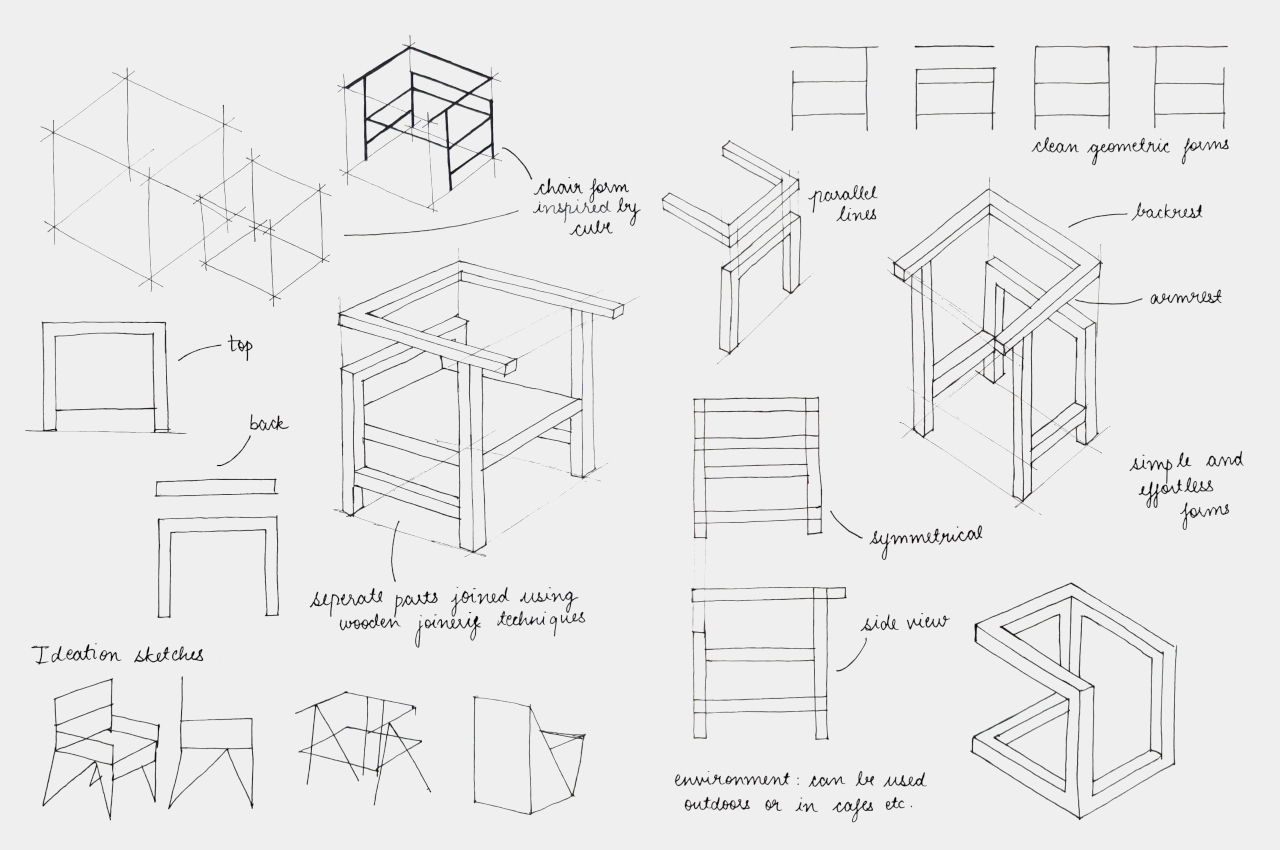
Chairs can come in all shapes and sizes. Some can take on complicated and organic forms, while others can be extremely minimalist or even brutally raw. They can range from designs that take inspiration from nature to those that adhere to simpler geometric shapes. The Euclid concept is one of the latter, aptly named after the ancient Greek mathematician. But while it draws its shape from a simple cube, its execution sparks a bit of wonder and curiosity as it resembles more the skeleton or wireframe of the shape, represented by almost unbroken lines that are reminiscent of Escher’s famed optical illusion, the impossible cube.

Designer: Sonakshi Gupta

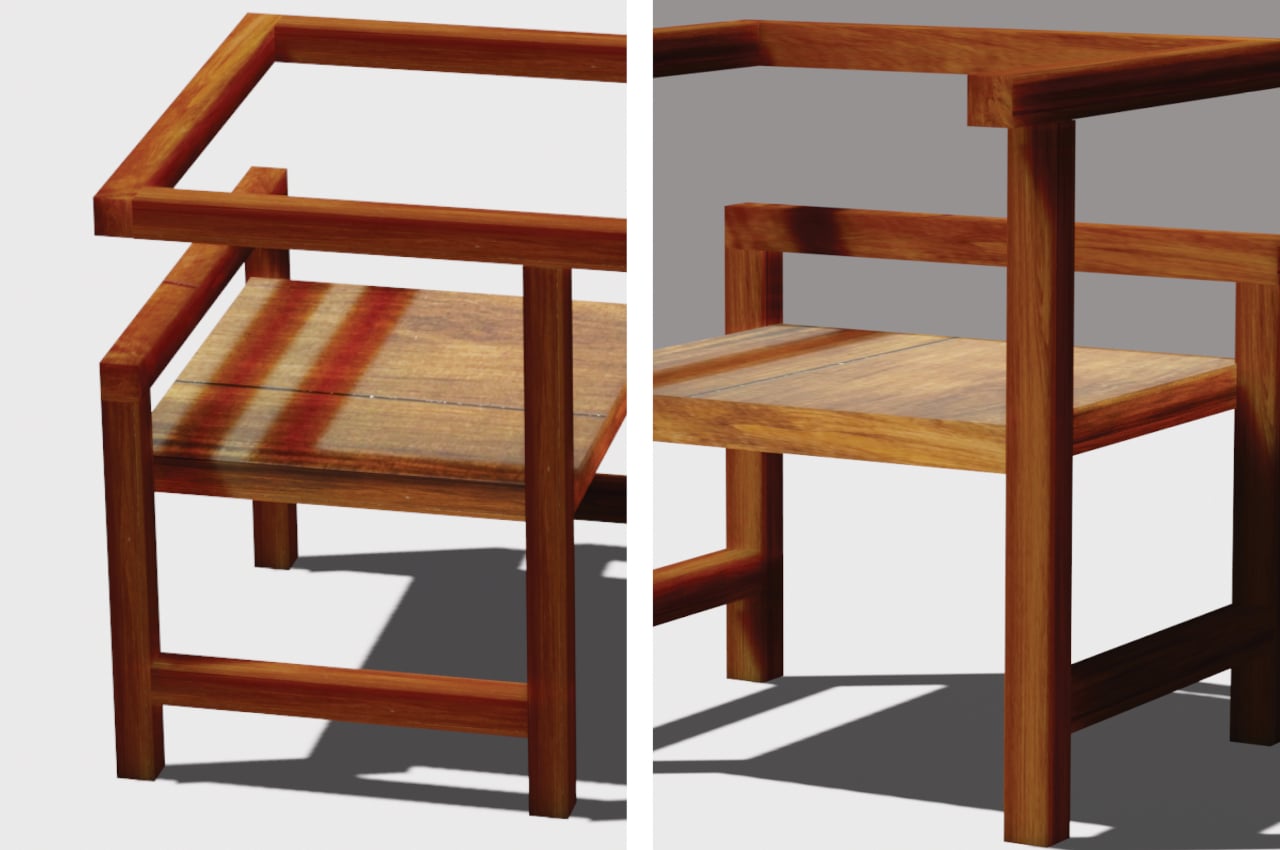
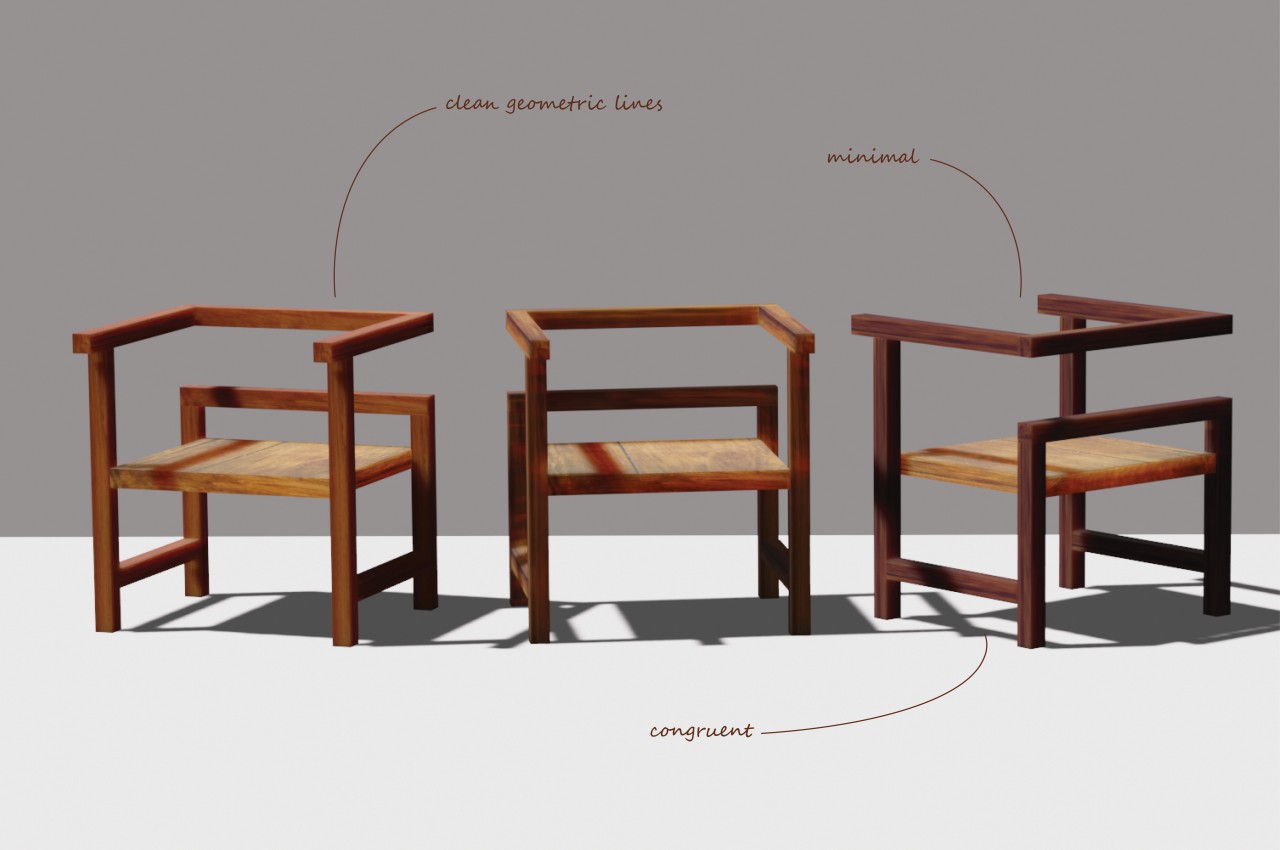
Admittedly, it’s a bit difficult to see the Euclid chair as a cube, since most of us have this idea of a cube as having 12 lines that are all connected at eight corners to form six faces. Then again, that popular Escher object already shows an impossible depiction of that shape, and those familiar with that print might see some of that characteristic in this chair when viewed from certain angles. Overall, it creates a dynamic form that has your eyes following the lines and moving all over the place, sometimes confused about where the front and back sides are.

Its unique form isn’t the only notable thing about this concept, however. Its use of reclaimed wood gives it more than a sustainable character. That material, in a way, carries some history from what it was before becoming a part of this chair. Even if that past is unknown to the new owner, simply knowing it has one could give each Euclid chair its own unique charm.

And then there’s the method used to bring all the pieces together. Instead of requiring screws or even glue, a mortise and tenon joinery is used to provide stability without introducing complicated mechanisms. In theory, this could make it easy to later take the chair apart if some pieces need to be replaced, though that could also start to weaken the connection over time if done too frequently.

The Euclid concept chair offers a design that is minimalist, sustainable, and visually interesting. Whereas a cube is pretty much the epitome of symmetry, the missing edges and disconnected faces give the chair a bit more volatility. That said, it doesn’t seem like the most comfortable chair to sit on. Even if you put a cushion on the seat, the hard edges of the armrest and especially the backrest could give your body some grief after a long period of time.

The post Geometric chair concept almost looks like an Escherian optical illusion first appeared on Yanko Design.

TSMC will charge more for chips made outside of Taiwan, possibly making devices more expensive

TSMC is the world’s biggest chipmaker and its products are found in everything from phones to game consoles and computers. But devices using TSMC chips could become more expensive if manufacturers opt to buy ones that the company makes outside of its home base of Taiwan.

“If a customer requests to be in a certain geographical area, the customer needs to share the incremental cost,” TSMC CEO CC Wei said on an earnings call. “In today’s fragmented globalization environment, cost will be higher for everyone, including TSMC, our customers and our competitors.”

Talks with customers over price increases have already started. As the Financial Times points out, it’s more expensive for TSMC to manufacture chips outside of Taiwan (where over 90 percent of the planet’s most advanced semiconductors are made). But the company will be passing on those costs amid a push by companies and governments to increase chip supply outside of Taiwan, over which China is attempting to control.

TSMC has plants in Japan and is building several in Arizona, the first of which started operating this month and is expected to go into full production this year. It’s also constructing a plant in Germany.

In addition, the US government last week agreed to provide the company with $6.6 billion in funding under the CHIPS Act, which seeks to bolster semiconductor manufacturing in the country. In return, TSMC pledged to up its US investment by $25 billion to $65 billion. Aligned with that, the company announced plans to build a third US plant by the end of the decade and to start making more advanced 2nm chips by 2028.

Meanwhile, TSMC expects its manufacturing costs to increase in Taiwan. That’s because power prices there are soaring. An earthquake earlier this month is also expected to have a negative effect on the company’s profitability, as is its struggle to make the manufacturing of its most advanced 3nm chips more efficient.

Apple, NVIDIA, AMD and Qualcomm are among TSMC’s more notable customers. So if they end up buying chips from the company’s US, Japan or Germany fabs, their manufacturing costs could go up. Take a wild guess who’d end up having to eat the cost of those increased expenses so device makers can maintain their profit margins.

This article originally appeared on Engadget at https://www.engadget.com/tsmc-will-charge-more-for-chips-made-outside-of-taiwan-possibly-making-devices-more-expensive-145146879.html?src=rss

TSMC will charge more for chips made outside of Taiwan, possibly making devices more expensive

TSMC is the world’s biggest chipmaker and its products are found in everything from phones to game consoles and computers. But devices using TSMC chips could become more expensive if manufacturers opt to buy ones that the company makes outside of its home base of Taiwan.

“If a customer requests to be in a certain geographical area, the customer needs to share the incremental cost,” TSMC CEO CC Wei said on an earnings call. “In today’s fragmented globalization environment, cost will be higher for everyone, including TSMC, our customers and our competitors.”

Talks with customers over price increases have already started. As the Financial Times points out, it’s more expensive for TSMC to manufacture chips outside of Taiwan (where over 90 percent of the planet’s most advanced semiconductors are made). But the company will be passing on those costs amid a push by companies and governments to increase chip supply outside of Taiwan, over which China is attempting to control.

TSMC has plants in Japan and is building several in Arizona, the first of which started operating this month and is expected to go into full production this year. It’s also constructing a plant in Germany.

In addition, the US government last week agreed to provide the company with $6.6 billion in funding under the CHIPS Act, which seeks to bolster semiconductor manufacturing in the country. In return, TSMC pledged to up its US investment by $25 billion to $65 billion. Aligned with that, the company announced plans to build a third US plant by the end of the decade and to start making more advanced 2nm chips by 2028.

Meanwhile, TSMC expects its manufacturing costs to increase in Taiwan. That’s because power prices there are soaring. An earthquake earlier this month is also expected to have a negative effect on the company’s profitability, as is its struggle to make the manufacturing of its most advanced 3nm chips more efficient.

Apple, NVIDIA, AMD and Qualcomm are among TSMC’s more notable customers. So if they end up buying chips from the company’s US, Japan or Germany fabs, their manufacturing costs could go up. Take a wild guess who’d end up having to eat the cost of those increased expenses so device makers can maintain their profit margins.

This article originally appeared on Engadget at https://www.engadget.com/tsmc-will-charge-more-for-chips-made-outside-of-taiwan-possibly-making-devices-more-expensive-145146879.html?src=rss

Delta Emulator on iPhone in Action (Video)

Delta Emulator

The highly anticipated Delta Emulator has made its official debut on the Apple App Store, marking a significant milestone for iOS gaming enthusiasts. This launch follows Apple’s recent policy change that now allows game emulators on its platform, opening up new possibilities for mobile gaming. Developed by the creator of the widely popular GBA4iOS emulator, […]

The post Delta Emulator on iPhone in Action (Video) appeared first on Geeky Gadgets.

Airchat is the latest app trying to make ‘social audio’ cool again

There’s a new invite-only app going semi-viral among VCs, tech execs and other Silicon Valley personalities. It’s called Airchat and it’s trying to revive the concept of an audio-first social media app.

The premise is similar to Clubhouse, the audio app that had a viral moment at the height of the pandemic in 2021 and inspired copycat features in Facebook, Twitter, LinkedIn and Reddit before gradually fading into obscurity. But unlike the original version of Clubhouse, Airchat isn’t built around live audio streams that require users to all tune it at once. It’s more like Twitter or Threads, except posts can only be shared as voice notes.

The app uses a timeline format, and automatically plays audio clips as you scroll your feed. You do have the ability to pause the playback and read text instead — each post is accompanied by an AI-generated transcript — but posts and replies can only be shared by recording an audio clip. There don’t seem to be any time constraints on how long individual clips can be, I found at least one post where a user spoke for a full hour just to see if it would work (it did).

It sounds a bit gimmicky (because it is), but the app has all the hallmarks of the kind of social apps that briefly go viral among a certain segment of extremely-online Silicon Valley nerds. It’s led by a pair of well-connected tech founders: AngelList co-founder Naval Ravikant and former Tinder exec Brian Norgard. It’s invitation-only and has drawn a number of well-known tech personalities among its early users: Y Combinator CEO and San Francisco political provocateur Gary Tan, Spotify CEO Daniel Ek, OpenAI founder Sam Altman, VC and Elon Musk confidant Jason Calacanis.

Over on X, Airchat’s high-profile user base is building hype and creating FOMO for those who haven’t been able to score an invite. (The app had to briefly shut off invites over the weekend due to “an influx of new users,” according to Ravikant, Airchat’s CEO.)

It’s not clear exactly how many users Airchat has just yet, but it seems to be in the low tens of thousands. The app has been downloaded close to 50,000 times, research firm Appfigures told Engadget, but it’s likely some of those downloads have come from people who don’t yet have an invite. Ravikant, who seems to be one of the most-followed users, currently has just over 11,000 followers in the app.

Using Airchat is, well, noisy and a bit confusing. Upon joining, the app asks to tap your contacts list to find friends who are already on the app, but finding people to follow beyond that can be challenging. The app doesn’t have the equivalent of a “for you” feed with recommended content so your only options are to manually search for users or lurk in conversations that do appear in your feed and check out other users’ posts and follows.

When I signed up, there were four people from my contacts in the app, only two of whom are actual friends. I followed them and the app’s founders and a couple other familiar names. I then began randomly following other users as conversations began to appear in my feed. This was a terrible strategy as my feed was quickly dominated by the voices of a few especially active (but not terribly interesting) posters. With so many new users all joining at the same time, at one point my feed was just a bunch of people talking about Airchat.

It’s also somewhat jarring to actually hear the voices of people you’ve followed on social media for ages but haven’t interacted with IRL. The app defaults to playing back audio at 2x speed, which tends to make people’s speaking voices sound a bit unnatural, but is also kind of necessary for long-winded posts.

The bigger issue, though, is that it’s not entirely clear what Airchat is for. There are a handful of “channels,” smaller groups dedicated to chatting about specific topics like coffee or astrology or AI or war, but conversations are disjointed and hard to follow. There seem to be some corners with spirited discussion. The “coffee” channel has 755 members and has lots of earnest discussion of pour-over techniques and photos of latte art. The channel is also “moderated heavily,” according to Ravikant (Airchat’s moderation policy is “self moderation,” which means they expect you to make good use of blocking and muting features, though an FAQ states they will remove users for “harassment, impersonation, foul behavior, and illegal content.)

More creative users are also finding ways to play with the audio-centric format. I found an ASMR group that consisted mainly of people speaking in breathy whispers that kind of gave me the ick (one person did post a nice clip of their cat purring). I listened to a few poetry readings in the “poetry” channel, but didn’t have the patience, even at 2x speed. There’s also a lot of talk of in-app karaoke, though I have yet to see it actually happen.

Some might see these kinds of gimmicks as the start of some new paradigm, where people use their voices to unlock new ways of interacting. But all I can think about is how Clubhouse, at its peak, had similar gimmicks: in-app game shows, open mic nights and (very NSFW) “moan rooms.” It was new and interesting at a time when most people were stuck at home with nothing to do, but the novelty wore off quickly.

While Clubhouse’s initial success sparked copycat features from almost every other major social media company, many of those have since shut down due to lack of interest. Even Clubhouse itself is a shell of what it once was. While the app still exists, it’s an entirely different service than the one that briefly captured the attention of bored tech workers. The company laid off half its staff in 2023 and has since pivoted to audio-centric group chats.

This article originally appeared on Engadget at https://www.engadget.com/airchat-is-the-latest-app-trying-to-make-social-audio-cool-again-140050450.html?src=rss