The way we capture videos and view them has constantly been changing and along with that, mobile devices have also been evolving. With the introduction of spatial videos, we see brands like Apple trying to become the pioneer in this new form. Basically, this is a video that lets you view photos and videos as if you were there instead of looking at them with just a single fixed view. It’s a more immersive form of 3D since you’re able to turn your head and see different perspectives.
Designer: Suosi Design
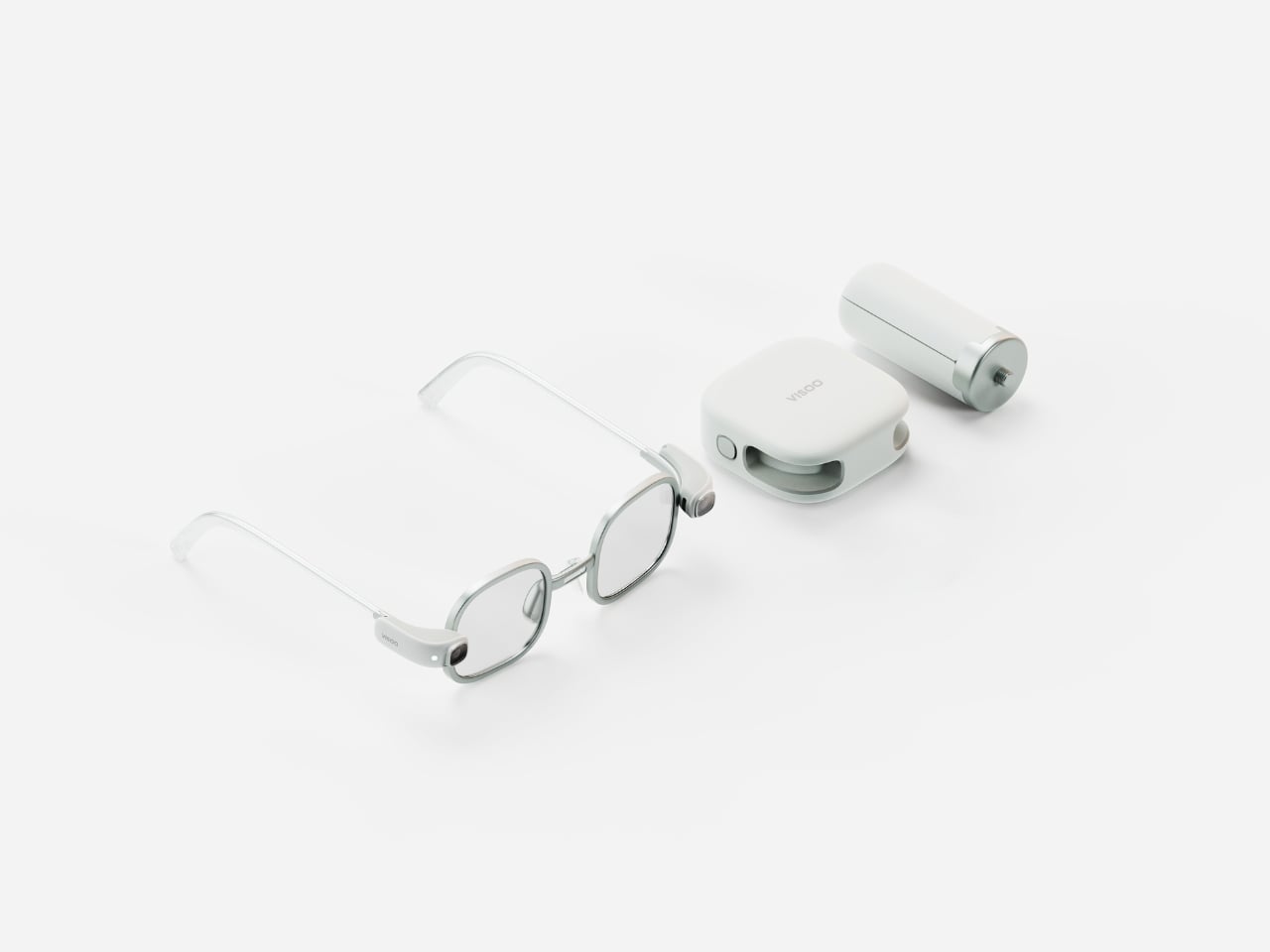
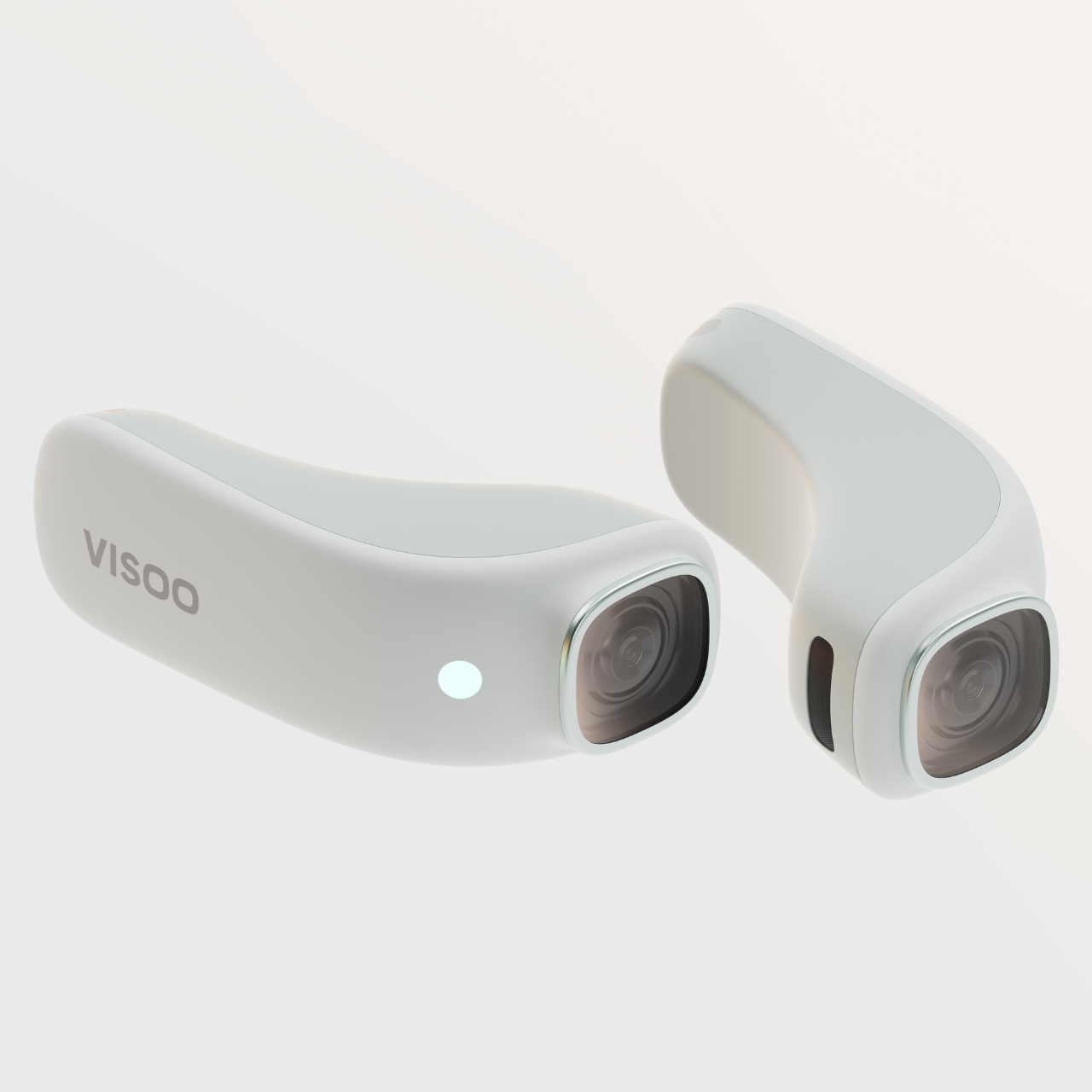
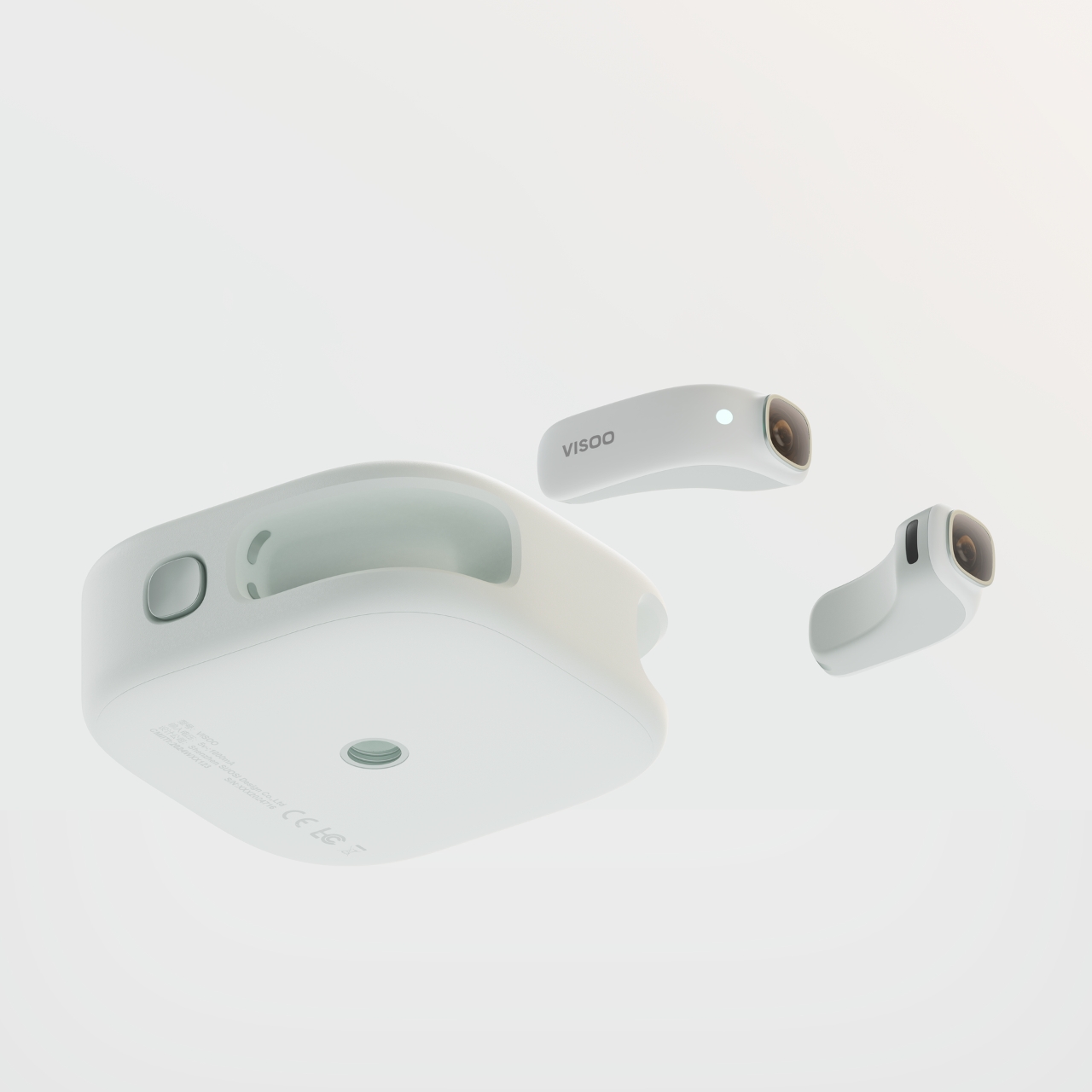
As more people get into spatial videos, we’ll see all kinds of tools that will be able to capture and view videos like these. One concept tool is called VISOO, a spatial video camera that you can to take videos that can later be viewed using devices like Apple’s iPhone 15 Pro. It is not a bulky camera at all as probably one of the things that will be taken into consideration when developing tools for this kind of video is that it’s easy to carry around.
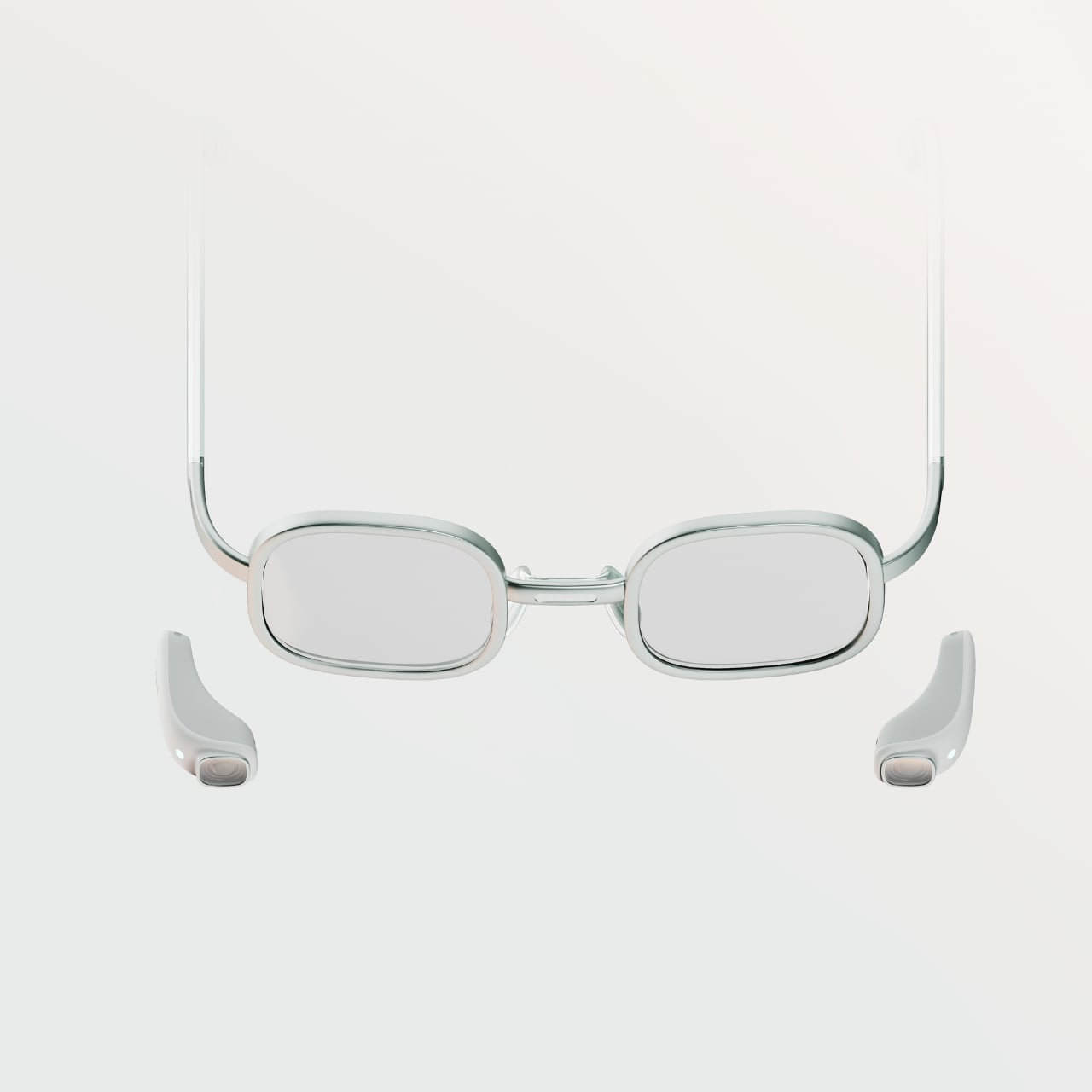
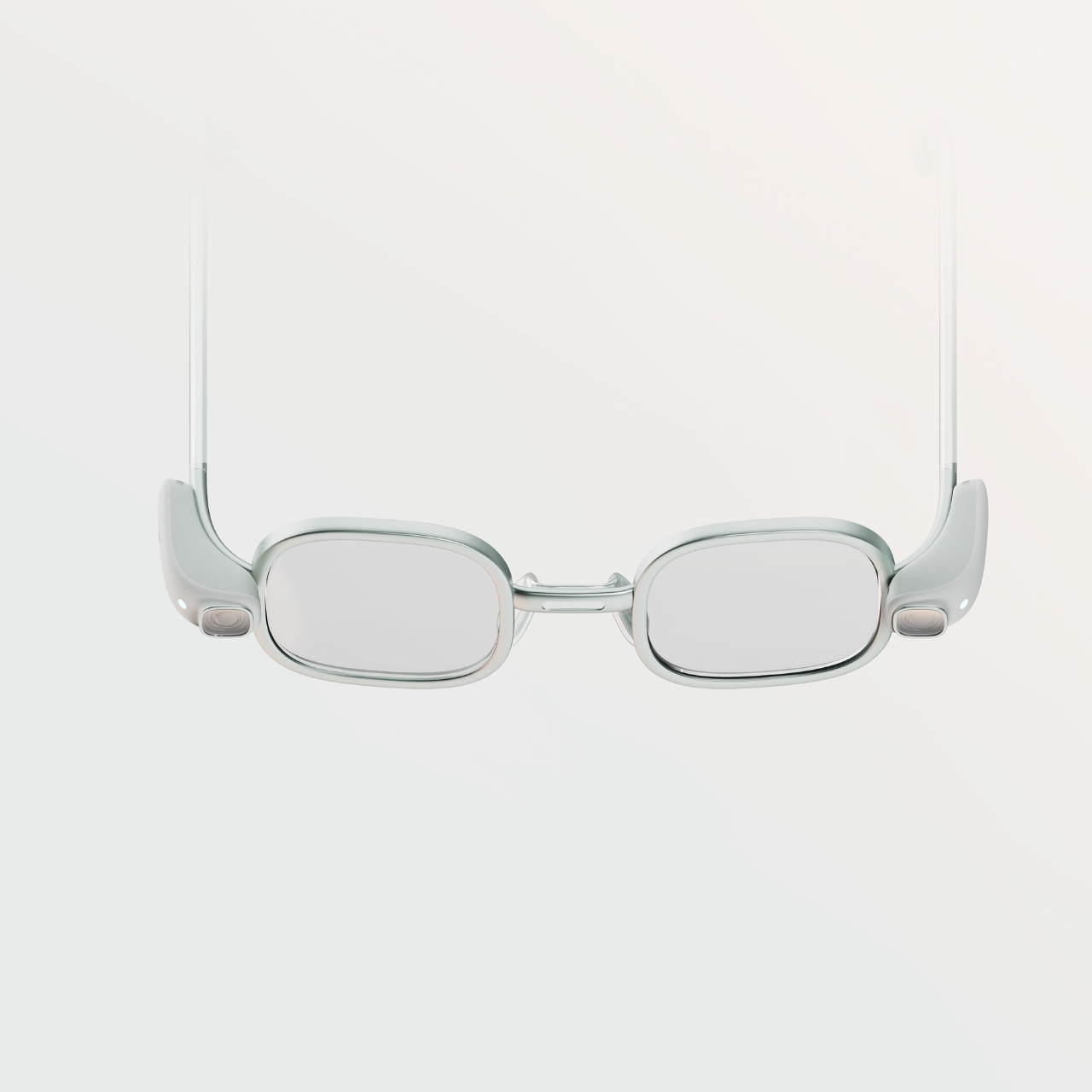
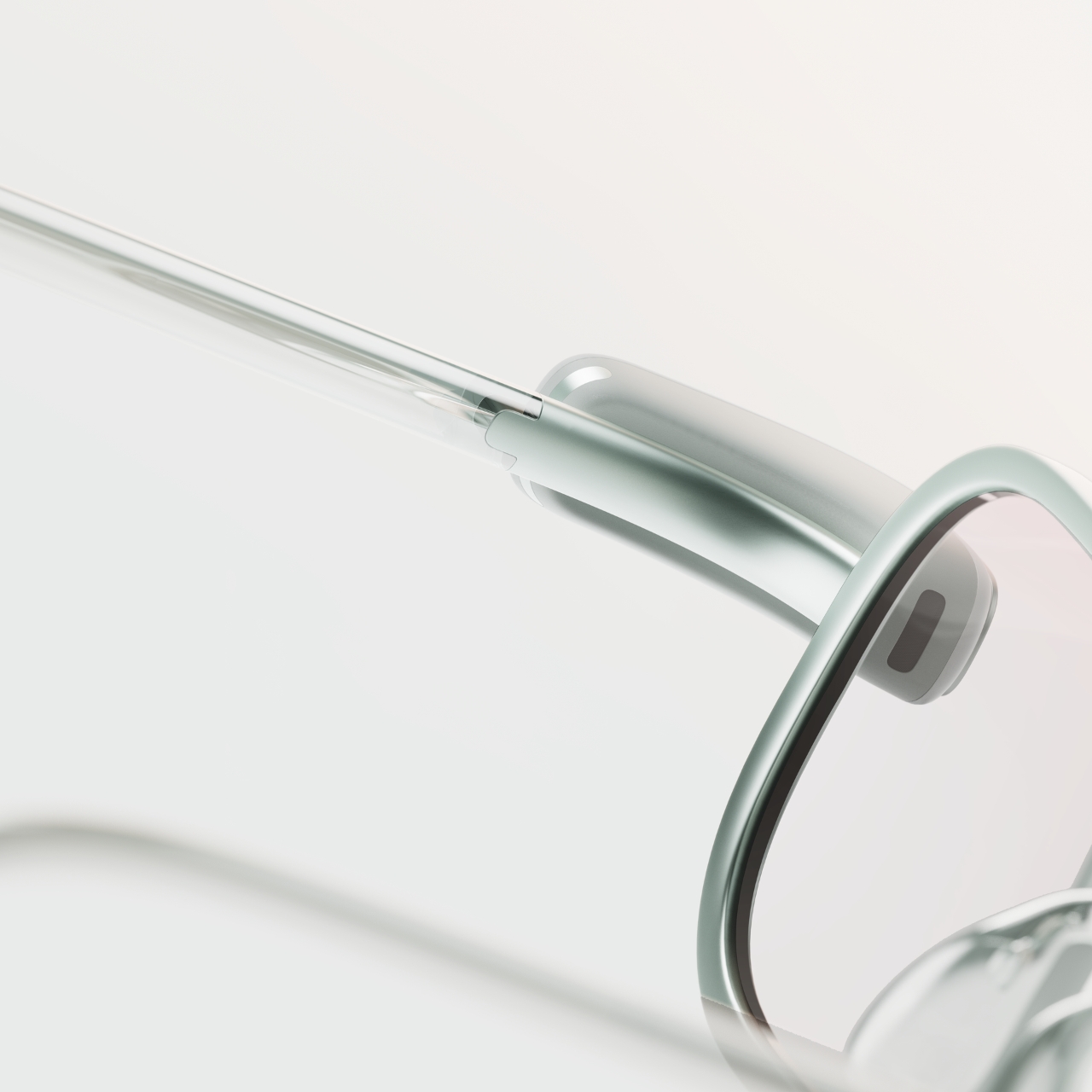
Based on the product renders, VISOO is a pretty light device that you can either carry around or attach to the accompanying glasses. For the handheld option, the cameras will be stored onto the battery case as you shoot your photos and videos. It seems there’s also a tripod where you can attach the case to for times when you need to have it placed on something a little more stable. For the glasses option, the cameras are attached to the hinges so you can move around easily while capturing moments.
Since this is still in the conceptual stage, there’s no information about the quality of photos and videos that it will capture. And with spatial videos still in early days, there’s still a lot to be discovered and explored for brands that are developing tools that can be used to enjoy capturing and viewing them.
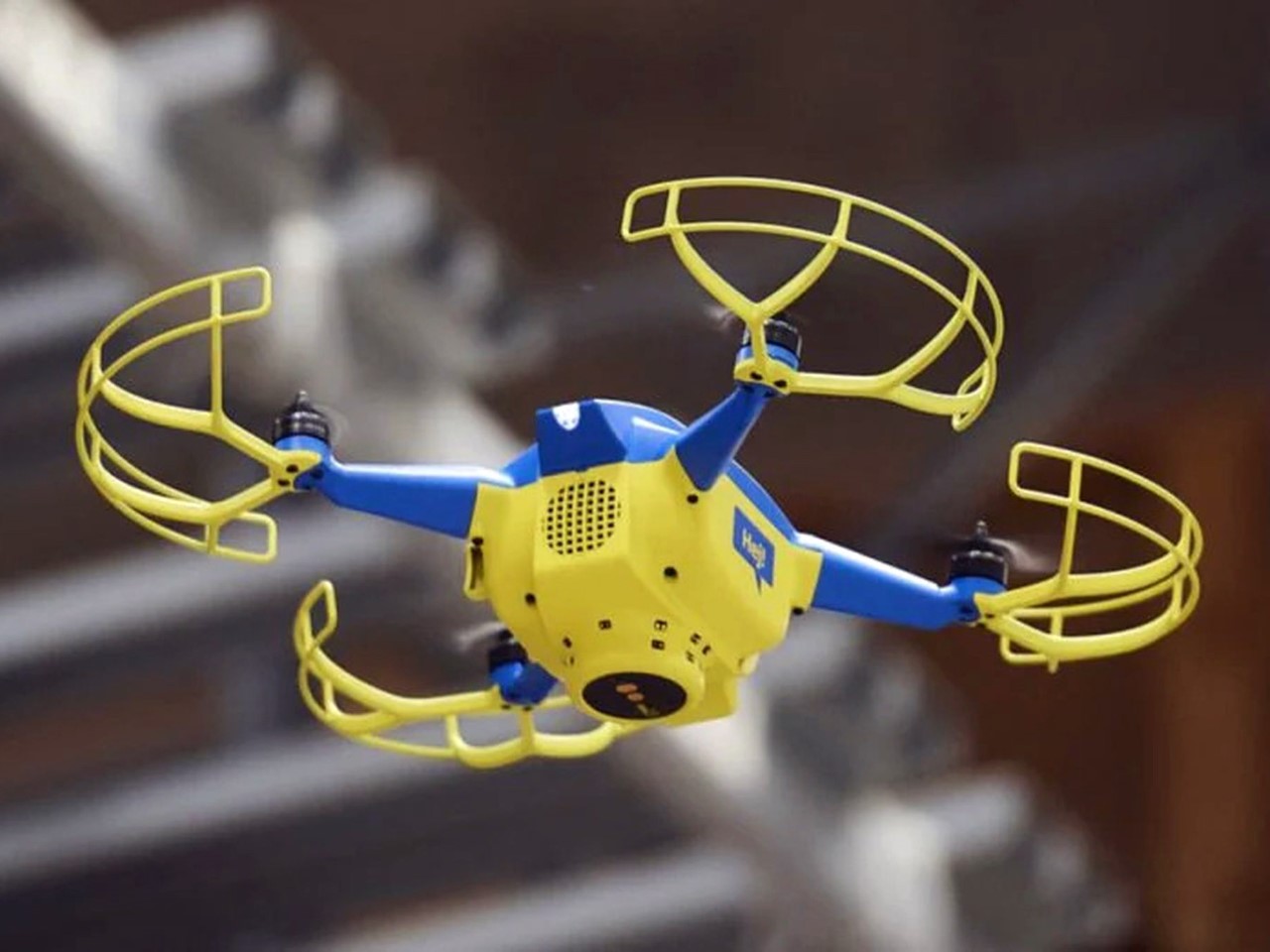
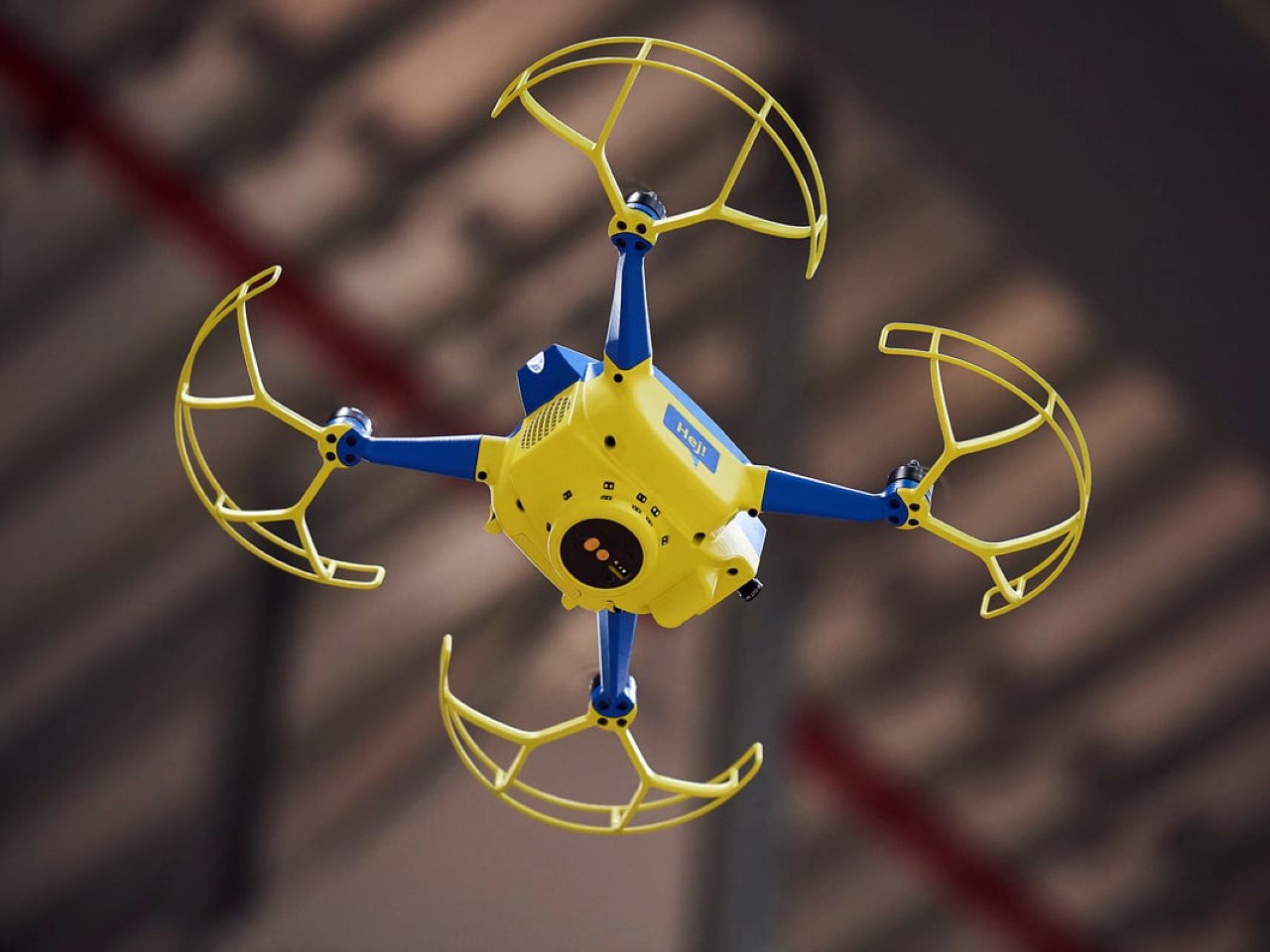
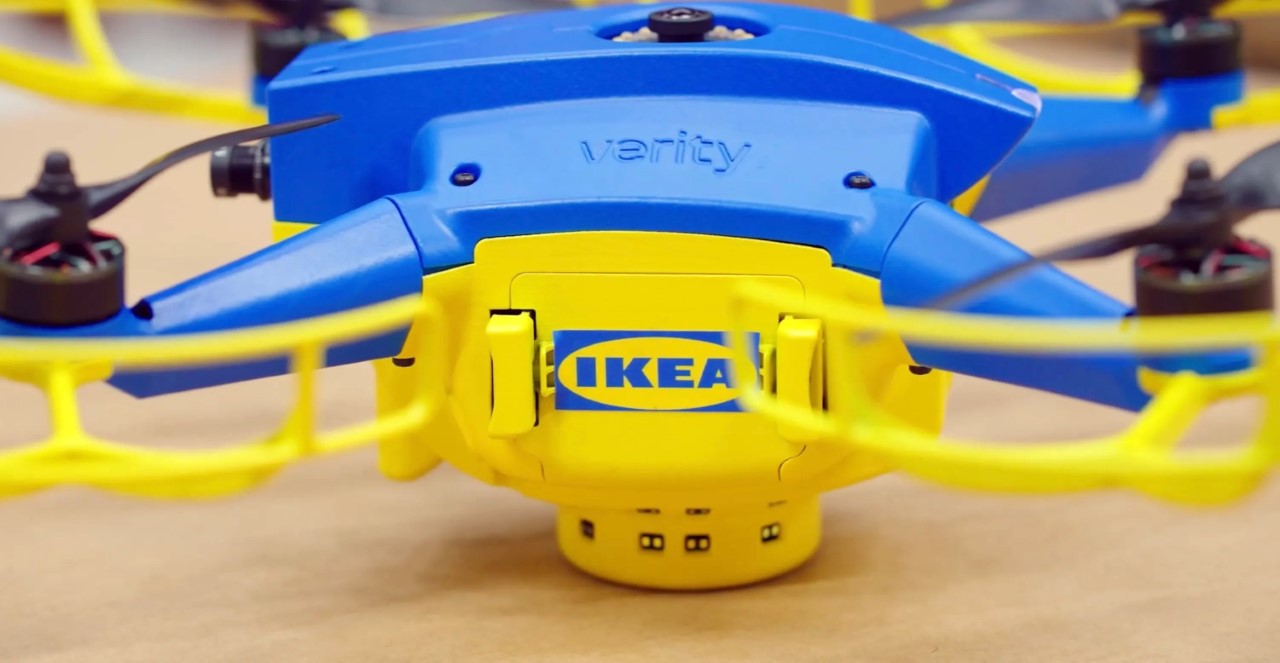
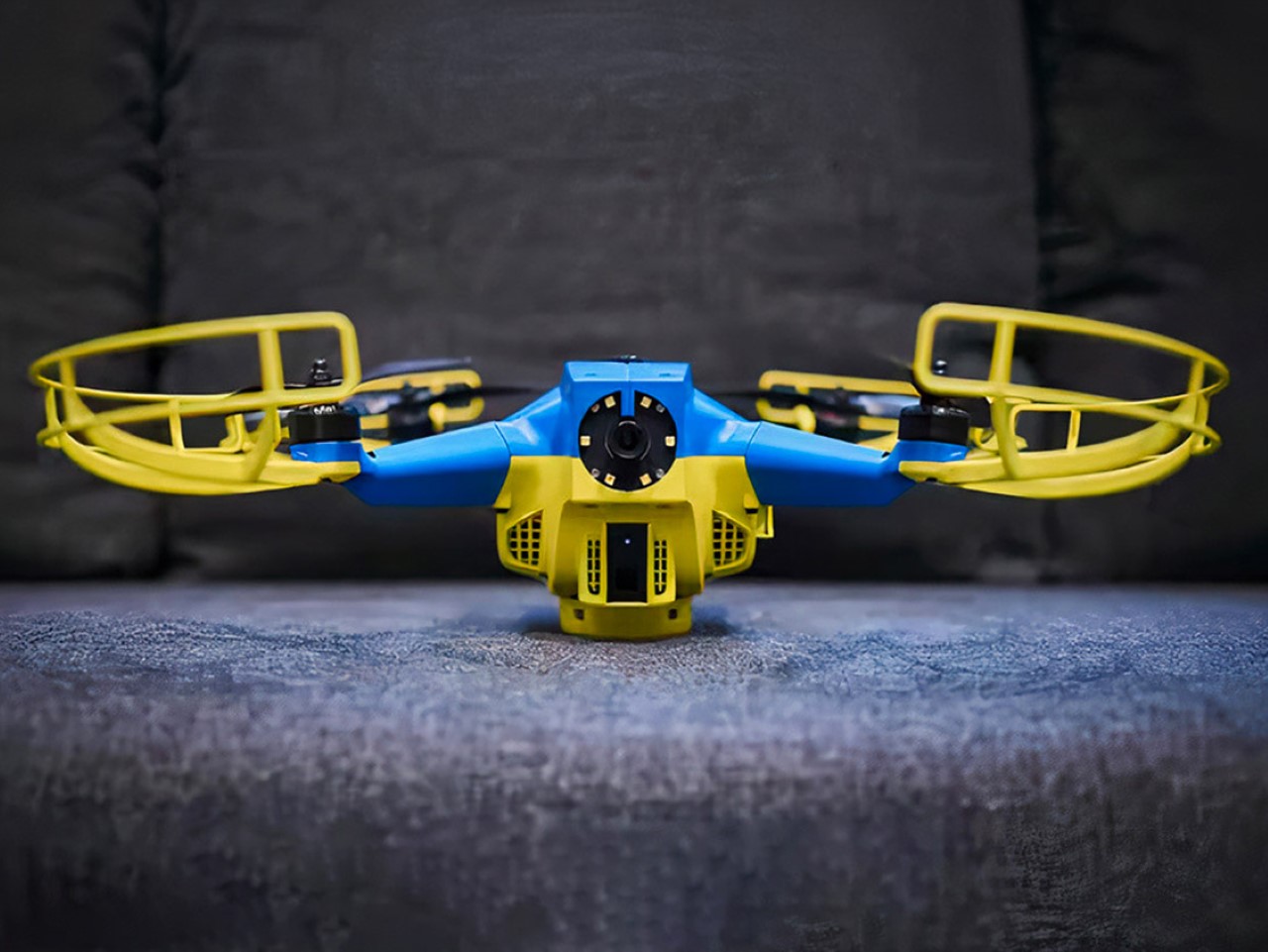
Unlike your average drones used for cinematic shots or racing gigs, these IKEA drones can scan massive warehouses, tracking the influx and outflow of inventory.
IKEA’s recent move to scale its fleet of inventory drones marks a pivotal moment in the integration of cutting-edge tech within retail logistics. The company is looking to advanced drone tech to take charge of the decor giant’s warehouses across Europe. IKEA’s collaboration with Verity, a startup known for its specialized drones, now spans 16 locations across Europe. The project initially began in 2021 and has grown steadily, positioning IKEA at the forefront of innovative supply chain management. The 100 drones currently in use represent a practical solution to a logistical challenge: monitoring vast warehouse spaces packed with towering shelves that are difficult for human workers or traditional robots to navigate.
Designer: Verity for IKEA
These drones come equipped with sensors and high-resolution cameras that allow them to scan inventory with accuracy and speed, providing a constant stream of data that updates in real time. This capability is especially vital for IKEA, whose warehouses handle everything from bulky furniture to smaller, more complex products. The drones can cover areas that would be impossible or highly inefficient for human workers to manage, enabling continuous operations that reduce errors and ensure stock levels are maintained effectively. This kind of precise monitoring cuts down on the time and labor traditionally required for manual stock-taking, while also minimizing the risk of overstocking or stockouts—issues that can disrupt the supply chain.
Beyond hardware, Verity’s role in this development involves customizing a solution that aligns with IKEA’s needs. The drones operate independently, requiring minimal intervention, which allows IKEA to focus more on strategic planning and less on routine logistical tasks. By maintaining 24/7 operations, these drones are able to deliver inventory data that’s constantly updated, offering insights that traditional systems simply cannot match. Their integration is smooth, even down to the branding—with each drone featuring IKEA’s colors and logo, they fit seamlessly into the company’s broader identity.
As retail continues to evolve with increasing emphasis on automation, IKEA’s strategy serves as a model for how large-scale companies can use technology to disrupt operations by radically improving efficiency. The expansion of these drones into multiple European markets signals that this is not just an experiment but a calculated investment in the future of inventory management. It also allows IKEA to focus its literal man-power in other places, rather than having them manage massive warehouses which can be unsafe. For IKEA, the future is not just about selling furniture; it’s about rethinking how logistics can be optimized to support a global business in a fast-changing world.
Lately, all we see around us are existing tall buildings and upcoming skyscrapers it’s surely a beautiful sight and enhances the skyline of the city and perhaps even benefits the economy, but it is imperative to also keep the sustainable approach in mind and the adverse effects of these skyscrapers on the society and its well being. The divide between urban centers, agricultural areas, and natural ecosystems is widening, leading to significant environmental, social, and logistical challenges. Urumqi, the political, economic, and cultural hub of Xinjiang in northwest China, epitomizes this conflict between urban development and agricultural ecological resources. To address these pressing issues, the innovative architectural design concept of “Urban Intercropping” has been proposed.
Designers: Penghao Zhao, Hanyu Sun, Sinuo Jia, Jingxuan Li, Songping Jing, Yibo Gao, YuJie Zeng, and An Jiang
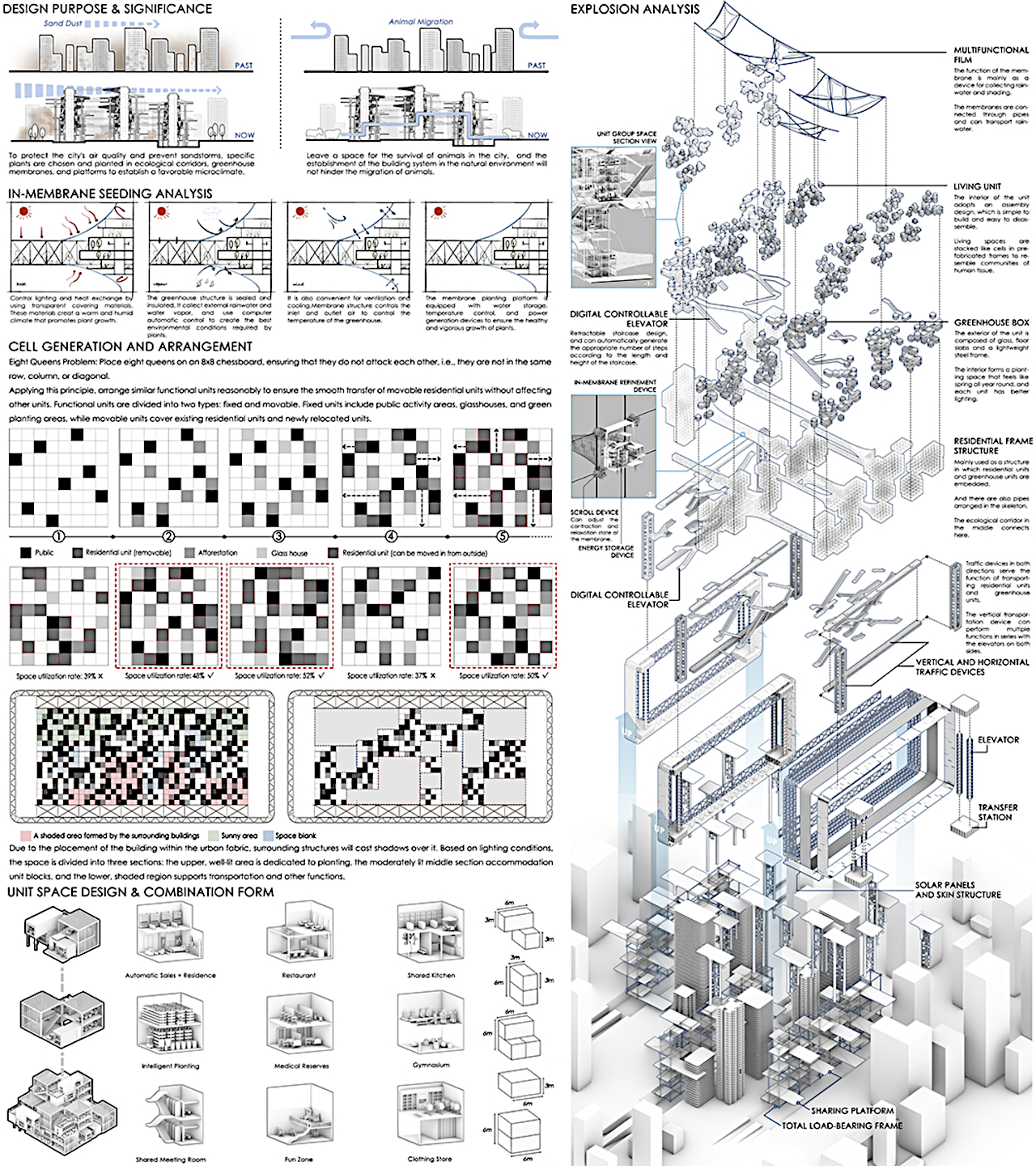
Inspired by traditional agricultural intercropping systems, where different crops are grown together to optimize the use of resources, the Urban Intercropping concept integrates this planting pattern with urban spatial planning. By strategically inserting architectural structures into the “gaps” of the city, a new urban system is formed. The Urban Intercropping model shifts from a centralized to a decentralized urban development approach. Architectural slicing devices are introduced into underutilized spaces within the city, transforming them into productive and functional areas. This approach maximizes the use of space and resources, addressing the issues of urban sprawl and inefficient land use.
Central to this design is the concentration of agricultural industries in high-rise buildings using a vertical intercropping planting model. This model optimizes the use of space, light, and other resources, enabling high-density agricultural production within urban settings. These high-rise agricultural hubs are composed of mechanical devices, non-mechanical facilities, and movable living units, addressing urban housing shortages, traffic congestion, and the lack of green spaces. By enhancing urban efficiency and revitalizing intermediate urban areas, these structures create a dynamic and sustainable urban environment.
Urban Intercropping emphasizes the transformation of urban morphology by integrating skyscrapers and other tall structures into existing urban spaces. These buildings are designed to connect seamlessly with the underground transportation system, alleviating traffic congestion and improving urban mobility. The incorporation of these vertical elements redefines the city’s skyline and promotes a more efficient use of urban space.
A key component of the Urban Intercropping concept is the construction of ecological corridors. These corridors are designed to preserve air quality and prevent dust storms by planting specific types of vegetation that stabilize sand and purify the air. Greenhouse membranes and platforms support these plants, creating green spaces that serve as habitats for wildlife and recreational areas for residents. These corridors also facilitate the migration of animals and provide healthy, green environments for pedestrians and transportation networks.
The design also focuses on the generation and arrangement of social unit spaces, drawing inspiration from the Eight Queens Problem. This mathematical problem involves placing eight queens on a chessboard so that no two queens threaten each other, ensuring optimal spatial efficiency. Similarly, in Urban Intercropping, functional units are arranged to allow for the smooth transfer of movable community units without disrupting other activities. This ensures flexibility and efficiency in urban spaces, accommodating changing needs and uses.
To maximize the effectiveness of Urban Intercropping, detailed structural components are optimized. Multifunctional membranes, vertical and horizontal transportation equipment, modular units, and greenhouse boxes are integrated to form an interconnected system. These components work together to enhance the overall design, making urban spaces more adaptable and resilient.
The architectural design concept of Urban Intercropping offers a revolutionary approach to urban planning and development. By bridging the gap between cities, agriculture, and nature, this concept provides sustainable solutions for modern urban challenges. Through innovative design and technological advancements, Urban Intercropping promotes ecological environmental protection and sustainable urban development, paving the way for a harmonious coexistence of urban and natural ecosystems.
The US Department of Transportation has laid out a nationwide road safety plan [PDF] that will lead to cars communicating with each other. The agency is hoping that broadly deploying vehicle-to-everything (V2X) tech will boost its "commitment to pursue a comprehensive approach to reduce the number of roadway fatalities to zero." The National Highway Traffic Safety Administration estimates that 40,990 people died in motor vehicle crashes last year.
V2X enables vehicles to stay in touch with each other as well as pedestrians, cyclists, other road users and roadside infrastructure. It lets them share information such as their position and speed, as well as road conditions. They'd be able to do so in situations with poor visibility, such as around corners and in dense fog, NPR notes.
A US-wide rollout will require an array of mobile, in-vehicle and roadside tech that can communicate efficiently and securely while protecting people's personal information, the DoT said in its National V2X Deployment Plan. The agency said smaller-scale deployments of V2X across the country have demonstrated safety benefits. Safety advocates claim the tech could prevent hundreds of thousands of crashes and mitigate the impact of collisions that do occur by reducing the speed of impact.
The timeline for the DoT's plan extends to 2036, by which time it hopes to have fully deployed V2X across the National Highway System, for the top 75 metro areas to have the tech enabled at 85 percent of signalized intersections and to have 20 vehicle models that are V2X capable. In the shorter term, the agency aims to have V2X tech installed across 20 percent of the National Highway System and 25 percent of signalized intersections in major metro areas by 2028.
It won't be an easy task, as a wide range of stakeholders have to play a part, including the Federal Communications Commission, which the DoT says will have to determine rules about spectrum allocation. Automaker suppliers (which will build V2X-enabled components), freight operators and app developers are also players in the DoT's vision.
There are some concerns, particularly in terms of cybersecurity and how to cover the costs of rolling out the tech (though the Federal Highway Administration recently announced nearly $60 million in grants related to V2X). But V2X has the potential to prevent thousands of deaths and serious injuries.
"The Department has reached a key milestone today in laying out a national plan for the transportation industry that has the power to save lives and transform the way we travel,” Secretary of Transportation Pete Buttigieg said in a statement. “The Department recognizes the potential safety benefits of V2X, and this plan will move us closer to nationwide adoption of this technology.”
"This plan is a vital first step towards realizing the full lifesaving potential of this technology — technology that could prevent up to 615,000 crashes," National Transportation Safety Board Chair Jennifer Homendy said. The NTSB has determined that V2X deployments could have prevented many fatal crashes over the last few decades, Homendy noted. The agency has been advocating for the tech since 1995.
As you might imagine, then, V2X is hardly a new concept. Several automakers — including Audi, Toyota and Volkswagen — have long been working on ways for their cars to communicate with each other and city infrastructure, in part because that plays a factor in autonomous driving.
There were efforts under the Obama administration to make vehicle-to-vehicle (V2V) communication a mandatory feature of new cars. However, the National Highway Traffic Safety Administration scuttled that plan during the Trump administration.
The rollout of V2X has been slowed by "regulatory uncertainty,” said John Bozzella, president and CEO of the Alliance for Automotive Innovation, an automaker trade group. “This is the reset button,” Bozzella added, according to NPR. “This deployment plan is a big deal. It is a crucial piece of this V2X puzzle.”
This article originally appeared on Engadget at https://www.engadget.com/transportation/the-us-lays-out-a-road-safety-plan-that-will-see-cars-talk-to-each-other-170043265.html?src=rss
X says it's ending business operations in Brazil effective immediately, but the service will remain available to users in the country. The company says Alexandre de Moraes, the president of the Superior Electoral Court and a justice of the Supreme Federal Court, threatened one of X's legal representatives with arrest if it did not "comply with his censorship orders."
According to Reuters, de Moreas demanded that X remove certain content from its platform. Rather than comply, X has opted to end its local operations "to protect the safety of our staff."
According to X, de Moraes made the threat in a "secret order," which it shared publicly. X owner Elon Musk claimed that the demand "would require us to break (in secret) Brazilian, Argentinian, American and international law." He added that, "The decision to close the 𝕏 office in Brazil was difficult, but, if we had agreed to @alexandre’s (illegal) secret censorship and private information handover demands, there was no way we could explain our actions without being ashamed."
Last night, Alexandre de Moraes threatened our legal representative in Brazil with arrest if we do not comply with his censorship orders. He did so in a secret order, which we share here to expose his actions.
— Global Government Affairs (@GlobalAffairs) August 17, 2024
"Despite our numerous appeals to the Supreme Court not being heard, the Brazilian public not being informed about these orders and our Brazilian staff having no responsibility or control over whether content is blocked on our platform, Moraes has chosen to threaten our staff in Brazil rather than respect the law or due process," X said in a statement on its Global Government Affairs account. "[de Moraes'] actions are incompatible with democratic government. The people of Brazil have a choice to make — democracy, or Alexandre de Moraes."
Musk has been railing against de Moraes for months. In April, he said he would defy orders from the legislator to block certain accounts in Brazil, claiming that they were unconstitutional. In response, de Moraes opened an obstruction of justice inquiry against Musk. X said later in April it would comply with every order issued by Brazil's top courts.
That same month, the House Judiciary Committee released an interim staff report claiming that the Brazilian government was trying to force X (and other social media platforms) to censor more than 300 accounts. It said that the accounts included those belonging to former Brazil president Jair Bolsonaro, a member of the country's federal senate and a journalist.
X does not have a public relations team that can be reached for comment.
This article originally appeared on Engadget at https://www.engadget.com/social-media/x-is-closing-its-operations-in-brazil-immediately-but-its-service-will-remain-live-for-users-165224020.html?src=rss
Instagram is testing a new profile grid layout that features rectangular images instead of the squares you're used to. In an Instagram story, Adam Mosseri has revealed that the app is testing a vertical grid for users' profiles. He explained that the original square grid was designed back in the day when the app only allowed users to upload square photos. Those days are long gone, and the vast majority of Instagram uploads are apparently vertical, specifically 4 x 3 images and 9 x 16 videos. He called cropping those uploads down to square as "pretty brutal."
When you click on Instagram's video tab, you'll already see a rectangular grid, so the experimental layout won't look terribly unfamiliar. In fact, the test profile looks exactly the same, based on a screenshot that a user posted on Threads, except the grid includes photo posts and not just videos. A spokesperson told The Verge that the test has only rolled out to a small number of users and that the Instagram team will listen to feedback before expanding the redesigned grid's availability.
Based on an old post by reverse engineer Alessandro Paluzzi, the app has been working on the new rectangular grid layout since at least 2022. It looks like the test is making its way to more users — and it seems like not everyone's happy about it. Mosseri posted his Story in response to a comment submitted to his "Ask Me Anything" session, pleading for the app not to kill the old layout.
This article originally appeared on Engadget at https://www.engadget.com/social-media/instagrams-experimental-profile-grid-has-rectangular-images-instead-of-squares-160007086.html?src=rss
Invideo AI is an innovative platform that harnesses the power of artificial intelligence to transform the way videos are created. By leveraging innovative AI technology, Invideo AI enables users to generate professional-quality videos quickly and efficiently, without the need for extensive technical expertise or resources. This powerful tool streamlines the video production process, making it […]
What a week to kick off a new review recap series on Engadget. Google held its Made By Google event on Tuesday, launching the Pixel 9 lineup and the Pixel Watch 3. Since then, though, it's already had to admit to a mistake in one of the forms it had members of Team Pixel sign for access to devices. Coincidentally, that brought up a lot of discourse on social media around what reviewers do, and how they gain access to products.
I'll take this opportunity to point you to our document on our reviews process, which details how and what we test. That includes specific articles on our evaluation process for specific categories like laptops, VPNs and video games, with more to come. You'll find all our reviews by clicking Sections and then Reviews, or on Engadget.com/reviews.
Anyway, I've wanted to write a roundup of the reviews our team publishes for a while now, in part because I want to highlight the work of our smart, hardworking reviewers. It's also a good way to contextualize our scores, remind people of the breadth of devices we cover and, well, I just like writing for fun and seeing my name on things. AI will never take this from me; I will blog from my own brain for as long as I can.
So here you go: Engadget's reviews recap. (ERR, for short. It doesn't quite work, but it works for me, OK?) I'm not committing to a frequency here, because a weekly cadence might be overly ambitious, while monthly would just result in a novel every 30-ish days. Bi-weekly sounds good but I might mix it up, just to keep you on your toes (or, honestly, while I figure things out).
Dyson OnTrac: Too basic for $500
by Billy Steele
Remember the Dyson Zone? The headphones with an air-purifying system and mask built in? The company is back this year with a less gimmicky version that focuses purely on sound. Our audio expert Billy Steele spent weeks with the Dyson Ontrac and found that it outlasts most of the competition. It even beat than Sony’s WH-1000XM5 by about 18 hours in his testing. Dyson had explained in a briefing that with all its experience working to reduce the noise of its other wind-generating products (like hair-dryers), it's learned a lot about how to combat unwanted sound.
But thanks to Billy's experience with pretty much every other pair of headphones out there, I also learned that the Dyson OnTrac's active noise cancellation is only average. As the kids today say, it's mid.
Though these headphones look great and have intriguing hearing health features, ultimately Billy didn't feel they do enough to justify the $500 price, awarding it a pretty mid score of 73. You'll probably find something better from Master & Dynamic, Sony or even Apple.
Lenovo ThinkPad X1 Carbon Gen 12: A top-notch business laptop that needs a few tweaks
by Sherri L. Smith
Contributing reporter Sherri L. Smith was once the editor-in-chief at Laptop Magazine, and has years and years of experience reviewing notebooks. So when she says the Lenovo ThinkPad X1 Carbon Gen 12 is the king of business laptops, I believe it.
Though she liked the X1 Carbon's display and long-lasting battery, Sherri pointed out that Lenovo's decision to place the power button along the edge instead of on the keyboard deck is a con. She also cautioned that the gap between the ThinkPad X1 Carbon and the competition is a small one that is continually shrinking.
One year with Google's Pixel Fold
by Sam Rutherford
Photo by Sam Rutherford/Engadget
This week, the entire Engadget team worked hard to cover Google's hardware launch event, which means less time for writers and editors to publish reviews. Our reviewers are usually involved in hands-on and other launch coverage of the companies whose products they test, and though these aren't full reviews, I consider them relevant for this roundup.
Sam Rutherford, our reviewer of mobile phones, laptops, gaming PCs and more (he does a lot!), spent time with the Pixel 9 Pro Fold at a Google hands-on session. Sam is one of those people who actually went out and bought himself a Galaxy Fold when the first generation went on sale. That's how deep his love for and, more importantly, firsthand experience of the category runs. To this day, he uses a foldable as his daily driver.
In fact, he's been using Google's original Pixel Fold for a whole year, and took the time to write up a durability report that was published this week. Flexible screens are still fairly fragile components, and early foldables were easily damaged. With the Pixel Fold, Sam was pleasantly surprised that it's held up to life with his rambunctious (and adorable) toddler. It's not only heartening news for those considering buying a foldable device, but also fascinating that technology has come this far this quickly.
On the horizon: Upcoming reviews
Elsewhere on the site, we've published a hands-on with the new Pixel Watch 3, and as the dust from Google's event starts to settle, it'll soon be time to expect full reviews of each new device announced. With the Pixels coming out at various points throughout August and September, people will be getting their hands on them quickly enough, and I expect we'll have reviews of those... soon.
We also continue to test a whole host of Copilot+ PCs (remember those?) from companies like HP, Dell, ASUS and Samsung? Then there's the Samsung Galaxy Watch Ultra, which is taking a little longer to evaluate considering a lot of its features require longterm testing. Plus, it's almost September, which is when we usually expect Apple to launch new iPhones. There'll be plenty of reviews here soon, so stay tuned.
This article originally appeared on Engadget at https://www.engadget.com/engadget-review-recap-dysons-non-weird-headphones-and-lenovos-thinkpad-x1-carbon-140049529.html?src=rss
It’s that time of year again. Gamescom is nearly upon us. For the uninitiated, Gamescom is a huge gaming trade show held annually in Germany. This year, Microsoft has announced a major Xbox presence throughout the event. All told, four streams will highlight upcoming Xbox games.
The first is the opening night livestream. This stream isn’t Xbox-centric, but we’re expecting some relevant news during the keynote. The event kicks off on August 20 at 2PM ET and it will be available via the Gamescom YouTube page and the official Twitch page. The event’s website will also host a stream or, you know, just click play directly below this sentence.
After that, there will be three streams from Xbox, each focusing on a unique slate of upcoming games. You can watch all of them via the Xbox YouTube page or the official Twitch page. The company hasn’t said how long each stream will last, but it’ll be popping up individual trailers after the fact.
The first one goes down on August 21 at 9AM ET. Xbox has announced an array of games that’ll get covered here. These include Stalker 2: Heart of Chornobyl, the upcoming expansion Diablo 4: Vessel of Hatred, Atomfall and the long-awaited Starfield DLC.
The next stream starts on August 22 at 9AM ET. This one will spotlight Star Wars Outlaws, which actually hits store shelves at the end of the month. The stream will also feature trailers or information for Towerborne, Little Nightmares 3 and Fallout 76: Milepost Zero, among others.
August 23 at 9AM ET brings the final stream. This is likely to be the most exciting one for many Xbox fans. There will be news about Indiana Jones and the Great Circle, Avowed, Metaphor: ReFantazio, Tails of Iron 2 and a whole lot more.
That’s it! Four streams. If the idea of remembering when and where to watch all of these events gives you the anxious sweats, just keep this page open. Beyond that, we’ll have separate posts for all of the big news from Gamescom.
This article originally appeared on Engadget at https://www.engadget.com/gaming/how-to-watch-all-of-xboxs-gamescom-streams-130034008.html?src=rss
In the rapidly evolving landscape of smartphone photography, two devices stand out from the crowd: the Google Pixel 9 Pro and the iPhone 15 Pro Max. These flagship smartphones have pushed the boundaries of what’s possible with mobile cameras, offering users unprecedented image quality, versatility, and features. In the video below, DrTech dives deep into […]