YouTube is now showing ads when you pause videos

Google has found another way to turn your eyeballs into money: by turning paused YouTube videos into a new real estate for ads. A YouTube communications manager told The Verge they’ve seen “strong advertiser and strong reviewer responses” since they “rolled out Pause ads to all advertisers.”

YouTube first started looking at using ads on pause screens in 2023 with select advertisers. Google’s chief business officer Phillip Schindler announced last April that advertisers loved the new ad concept. YouTube’s viewers aren’t as enthusiastic about the idea.

Reddit users posted screenshots of the new pause screen ads and to say they aren’t happy with the ads is the understatement of the year.

The new ads aren’t just showing up on the website. Ads also pop up when you pause videos on the YouTube mobile app, according to others on the site.

Pause screen ads are not a new concept. Streaming services like AT&T’s DirecTV and Hulu show ads when the screen is paused if you have one of the lower tier subscription plans. Some Amazon products like the Fire tablets also show ads on the lock screen and Amazon announced last May that it plans to expand its ad space offerings for living-room devices, according to Amazon’s official blog.

This article originally appeared on Engadget at https://www.engadget.com/entertainment/youtube/youtube-is-now-showing-ads-when-you-pause-videos-193622495.html?src=rss

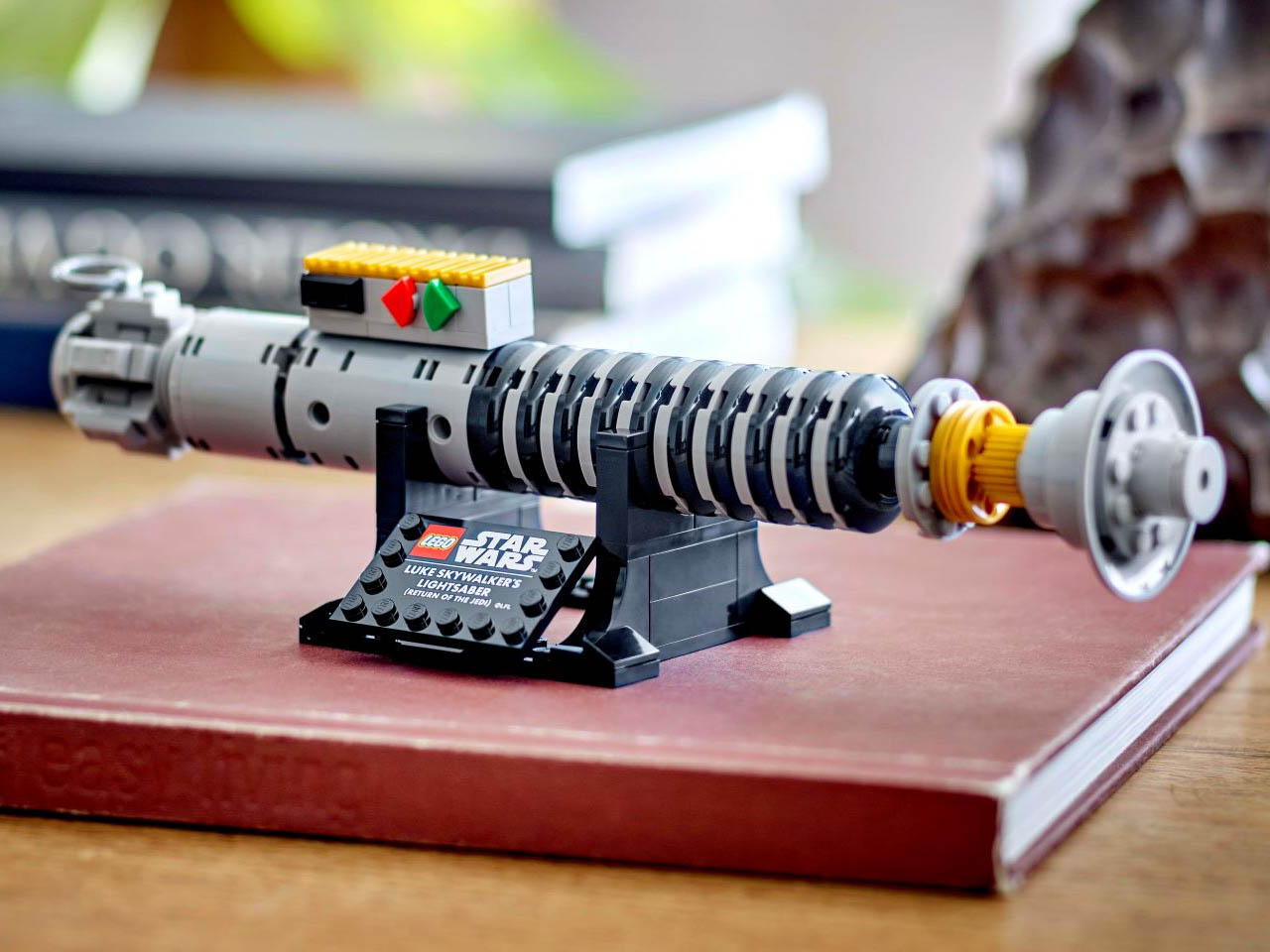
Intricately detailed LEGO Luke Skywalker’s Lightsaber ready to adorn your desk

Remember the deleted scene from the Return of Jedi where Luke constructed the hilt at the beginning? The very first Lightsaber seen then has now taken LEGO form as an official set named LEGO Star Wars Luke Skywalker’s Lightsaber (40730) that cannot be bought standalone but comes as a complementary gift with the UCS Jabba’s Sail Barge (75397) LEGO set.

This Lightsaber is an intricately detailed recreation of the very first fighting weapon seen in the Star Wars saga used by Jedi. Sci-fi fans will want to sport this one on their work desk or living room shelf since it comes with a nameplate and sturdy stand.

Designer: LEGO Group

The realistic build model comes with instantly recognizable details of the revered weapon destined for intergalactic supremacy. This LEGO set is a part of the official LEGO Star Wars building kit for people who love to indulge themselves in immersive DIY projects for weekend relaxation. It is the third one in the series of buildable hilts of which the first one came in 2020. Comprising 145-LEGO pieces, the lightsaber in signature colors measures over 10 inches and 3 inches in diameter. The saber is built around the central core which is made up of 4×4 bricks, just like the 6346097 Yoda’s Lightsaber and 40483 Luke Skywalker’s Lightsaber.

Luke Skywalker’s Lightsaber is going to be up for grabs for Insiders starting October 3-5. The general public can get their hands on this compact LEGO set from October 6-10 until the units last. This brings us to the 3,942-piece Jabba’s Sail Barge set that comes with details including the folding down vessel, lifting sails and top deck. It has a very authentic interior adorned with a cockpit, prison cell, armory, kitchen and entertainment room equipped with Jabba’s bed. The LEGO set is priced at $500, so you’ll have to get this one if you desperately want to add Luke Skywalker’s Lightsaber to your collection.

The post Intricately detailed LEGO Luke Skywalker’s Lightsaber ready to adorn your desk first appeared on Yanko Design.

Cruise resumes operations in California, thankfully with human drivers

Autonomous vehicle outfit Cruise is slowly returning to operation in California following an incident in which a pedestrian was struck and dragged by a robotaxi for approximately 20 feet in October 2023. The company posted on X that it is reintroducing human-operated mapping vehicles to the streets in Mountain View and Sunnyvale. Its next stated goal is "to progress to supervised testing with up to 5 AVs later this fall."

The past year has not been a pretty picture for Cruise, which was acquired by GM in 2016. On October 2 last year, a pedestrian in San Francisco was hit by a human driver who fled the scene, but the impact put her in the path of a Cruise driverless taxi that dragged her 20 feet and ultimately stopped on top of her leg. After the incident, Cruise was stripped of its license to operate autonomous vehicles in California. The company stopped all operations of both its driverless cars and its manned robotaxi service in order to engage in a comprehensive safety review.

CEO Kyle Vogt resigned in November, followed by the exit of co-founder and chief product officer Daniel Kan. GM announced plans to slash Cruise's funding and to restructure leadership based on external safety reviews. Nine more members of Cruise leadership were dismissed in December, and nearly a quarter of the company's workforce was also cut that month. The final blow was an investigation by the Department of Justice and the Securities and Exchange Commission in January 2024, questioning whether the company failed to disclose additional details about the accident during reviews with regulators.

Since then, however, Cruise has gradually been bouncing back. Vehicles with drivers returned to Arizona in April and to Houston in June. The re-emergence in Texas was paired with an announcement that GM would invest $850 million into Cruise in support of its operational costs. Now it's rejoined the California market, if in an extremely attenuated capacity. These new excursions have all been preliminary and none of the driverless cars have returned to the streets yet. But Cruise still has a long road ahead to prove its safety credentials and win back public trust.

This article originally appeared on Engadget at https://www.engadget.com/transportation/cruise-resumes-operations-in-california-thankfully-with-human-drivers-191522681.html?src=rss

God Of War: Ragnarok’s PC port is out and it fixes one of the game’s most annoying quirks

The long-awaited PC port of God of War: Ragnarok is out. This comes nearly two years after the game was released for PS4 and PS5 to positive reviews. This is a pretty big deal on its own, but the port has a feature that not even the original console release had. Players can finally tell Kratos’ son Atreus to shut the heck up, as first reported by Kotaku.

In the original release, Atreus was like Ocarina of Time’s Navi on Adderall. He was, in a word, talkative. Even worse? He tended to ruin puzzle solutions by offering up hints unprompted. Many players complained that this happened even when they weren’t attempting a puzzle. 

In any event, the settings tab includes an option to reduce puzzle hints. This applies to the babbling Atreus, but also other companions throughout the game. I’m no game designer, but adding a mute button to some characters doesn’t seem like a difficult fix. In other words, bring this to the console versions Sony. Digital children should be seen and not heard.

The PC port also brings some other features to the table. There are now audio descriptions for the game’s cinematics and a set of streamer gifs to use on Twitch or YouTube. Of course, the port integrates with both NVIDIA and AMD’s upscaling tools, with support for ultrawide monitors. Let’s hear it for playing games as nature intended, with a ridiculous aspect ratio of 32:9.

The port needs a massive amount of hard drive space, anywhere from 175GB to 190GB, so start the install early in the morning for an afternoon play session. It’s available now via Steam and the Epic Games Store. As a bit of bad news, the PC specs required to play this game are on the beefy side, so performance on the Steam Deck will likely be underwhelming. Redditors are saying that it runs, but is only playable in 30FPS on the lowest settings.

This article originally appeared on Engadget at https://www.engadget.com/gaming/pc/god-of-war-ragnaroks-pc-port-is-out-and-it-fixes-one-of-the-games-most-annoying-quirks-185925455.html?src=rss

The iOS 18.1 public beta is here, bringing Apple Intelligence (almost) to the masses

Apple Intelligence is edging closer to being ready for primetime. Apple has released the public beta of iOS 18.1, which includes some of the major generative AI features that the company has been talking up over the last few months.

We'll have to wait a few more weeks for the public versions of iOS 18.1, iPadOS 18.1 and macOS Sequoia 18.1 to bring Apple Intelligence features to everyone with a compatible device. The public betas should be more stable and less risky to install than the developer betas, but it's still definitely worth backing up your data to your computer and/or iCloud before putting this build of iOS 18.1 on your iPhone.

Right now, the only iPhones that support Apple Intelligence are the iPhone 15 Pro and iPhone 15 Pro Max, but that will change on Friday when Apple ships the iPhone 16 lineup. M-series iPads and Macs will support Apple Intelligence too.

For now, you'll need to have your device and Siri language set to US English to access Apple Intelligence tools. If you want to use Apple Intelligence in a language other than English (or in a localized version of English), you may need to wait until at least December for the public versions of the operating systems that support it.

Apple is gradually rolling out Apple Intelligence tools over the coming months, so not all of them will be available right away. The initial wave of features includes the ability to transcribe phone calls (and audio notes in the Notes app) and get summaries of the key details. Writing tools (rewriting, proofreading and summarizing), email prioritization and smart replies, notification summaries and photo clean up features are also on the docket. You'll be able to create memories in the revamped Photos apps and check out the first incarnation of the redesigned, glowing Siri (including the ability to type requests to the assistant).

You'll need to wait longer for certain other features, including ChatGPT integration, Genmoji, Image Playground (i.e. image generation) and Siri's ability to better understand personal context. Apple will roll those out over the coming months.

On your iPhone, go to Settings > General > Software Update > Beta Updates and select the iOS 18 public beta option. Once the iOS 18.1 public beta is available for your device, you'll be able to see it on the software update page. You might need to free up some space before you can install the beta. To enable Apple Intelligence, go to Settings > Apple Intelligence & Siri > Join the Apple Intelligence waitlist.

The public beta installation process is almost identical on iPad. On your Mac, you'll need to go to System Settings > General > Software Update. Click the info symbol next to the ”Beta updates" option and you should be able to install the iOS 18.1 public beta from there when it's available.

This article originally appeared on Engadget at https://www.engadget.com/ai/the-ios-181-public-beta-is-here-bringing-apple-intelligence-almost-to-the-masses-175248580.html?src=rss

PlayStation’s 30th anniversary PS5 and PS5 Pro consoles are so very pretty

The original PlayStation console, otherwise called the PS1, came out in Japan in late 1994. So we are quickly coming up on the console’s 30th birthday. To commemorate the occasion, Sony just revealed nostalgia-tinged redesigns of both the PS5 and the forthcoming PS5 Pro. They look like the original PlayStation, with that classic gray colorway and the old-school logo. Gamers of a certain age will have a hard time resisting these things. Sony did something similar in 2014 with the PS4 for the console line’s 20th anniversary.

This isn’t a quick and dirty redesign. There was legitimate thought put into this. The updated DualSense controller doesn’t quite match the original design, but does mesh with the overall aesthetic. Sony’s throwing in a retro-looking cable connector housing, PlayStation-shaped cable ties and a themed vertical stand. The box even looks like it came from a Toys "R" Us in the 1990s. 

There are two bundles to choose from. The PS5 bundle ships with the digital version of the console (so no disc drive,) a standard DualSense controller, the aforementioned accessories and additional goodies like a sticker, a poster and, uh, a PlayStation paperclip. 

The PS5 Pro bundle includes everything mentioned above, but includes both a standard controller and the DualSense Edge. It also includes a retro cover for the optional disc drive and the charging stand. It’s easy to dunk on that costly PS5 Pro when it looks basically the same as a regular PS5. It’s much harder to do when it looks like it stepped out of a 1995 fever dream.

A retro redesign.
Sony

Even the bizarre pseudo-portable PlayStation Portal is getting a themed refresh, which features the iconic gray exterior. Sony fans can even pick up redesigned controllers without springing for an entire console.

Preorders start on September 26 at participating retailers and via the company itself. These items will be released on November 21. That’s just a couple of weeks after the PS5 Pro launches. To that end, Sony’s only making 12,300 of the PS5 Pro retro consoles, so we recommend getting that preorder in early. The company hasn’t released pricing information, unfortunately, and it’s likely that the PS5 Pro bundle will absolutely obliterate bank accounts. We reached out to ask about pricing and will update this post when we hear back.

While we wait for the pre-orders to start, Senior reporter Jessica Conditt got a brief glimpse of the 30th anniversary edition PS5 Pro and DualSense controllers, which you can see below:

PlayStation 5 Pro and DualSense controllers — 30th anniversary edition
Photo by Jessica Conditt / Engadget
PlayStation 5 Pro and DualSense controllers — 30th anniversary edition
Photo by Jessica Conditt / Engadget
PlayStation 5 Pro and DualSense controllers — 30th anniversary edition
Photo by Jessica Conditt / Engadget

Update, September 20 2024, 2:00PM ET: This story has been updated with photos of the 30th-anniversary PlayStation 5 Pro console and its controller.

This article originally appeared on Engadget at https://www.engadget.com/gaming/playstation/playstations-30th-anniversary-ps5-and-ps5-pro-consoles-are-so-very-pretty-170713396.html?src=rss

Google passkeys can now sync across devices on multiple platforms

Google is rolling out a really useful update for Google Password Manager, allowing users to sync passkeys across their many devices. Up until this point, folks could only save passkeys to Google Password Manager on Android, so the cross-device utility was limited. It was possible to use the passkeys on other devices, but it would require users to scan a QR code. 

The update allows for passkey saving via Google Password Manager on Windows, macOS, Linux and, of course, Android. ChromeOS is currently being beta tested, so that functionality should come sooner rather than later. Google also says that iOS support is “coming soon.”

Once saved, the passkey automatically syncs across other devices using Google Password Manager. The company says this data is end-to-end encrypted, so it’ll be pretty tough for someone to go in and steal credentials. 

For the uninitiated, a passkey is slightly different from a password. A passkey is a digital credential that allows users to sign in to an account without using a password. The company’s been using passkeys across its software suite since last year.

Today’s update also brings another layer of security to passkeys on Google Password Manager. The company has introduced a six-digit PIN that will be required when using passkeys on a new device. This would likely stop nefarious actors from logging into an account even if they've somehow gotten ahold of the digital credentials. Just don’t leave the PIN number laying on a sheet of paper directly next to the computer.

Google passkeys can already be used with the company’s productivity software, of course, but also with Amazon, PayPal and WhatsApp. Google Password Manager is built right into Chrome and Android devices.

This article originally appeared on Engadget at https://www.engadget.com/apps/google-passkeys-can-now-sync-across-devices-on-multiple-platforms-160056596.html?src=rss

Sweeping FTC study finds that social media sites engage in ‘vast surveillance’ of its users

The FTC just published results of a sweeping study of social media sites that has been going on for four years. The organization said that many social media sites and streaming services engage in “vast surveillance of consumers in order to monetize their personal information.” This mass surveillance impacts adult users, but also children and teens.

This isn’t exactly surprising. After all, the old saying goes “if you're not paying for the product, you are the product.” Still, the study suggests a level of surveillance that could shock even the most cynical among us. According to the FTC, these entities collect and “indefinitely retain troves of data.” The companies also engage in “broad data sharing” with “woefully inadequate” security measures.

The report also found that some companies didn’t delete all user data in response to deletion requests. That’s not a good look. Additionally, some companies were found to be using privacy-invasive technologies like tracking pixels to “facilitate advertising to users based on preferences and interests.”

But wait, there’s more. The report found that users (and even non-users) had little or no way to opt out of how their data was used by automated systems, like algorithms, data analytics and AI. The FTC found that these companies employed “different, inconsistent and inadequate approaches to monitoring and testing the use” of these automated systems.

Finally, the report found that “social media and video streaming services didn’t adequately protect children and teens on their sites.” The study goes on to suggest that social media, and digital technology as a whole, contributes to “negative mental health impacts on young users.” This is nothing new, though some social media companies are putting tools in place to protect kids. Instagram just made it mandatory for teen accounts to include parental controls.

The FTC says that all of these issues boil down to the profit models of the big social media and streaming companies. These business models mandate the “mass collection of user data to monetize, especially through targeted advertising.” This is in “tension” with privacy concerns as, well, privacy doesn’t make money.

The study concludes that “self-regulation has been a failure.” To that end, the FTC has issued several recommendations to help solve these problems. It wants Congress to pass comprehensive privacy legislation to limit surveillance and to offer “baseline protections.” It also wants social media and streaming companies to limit data collection and data sharing with third parties.

The FTC also recommends that these companies actually delete consumer data when it’s no longer needed or upon request and to stop using invasive ad tracking technologies like pixels. It also wants these entities to address the overall lack of transparency regarding their methods. As for kids and teens, the FTC says these organizations should “recognize teens are not adults and provide them greater privacy protections.” Finally, it urges Congress to pass federal privacy legislation for teens over the age of 13.

Again, none of this information is new, but it's pretty damning to see it all laid out this way. You can read the full report right here. The services involved in the study include X, TikTok, Reddit, Discord, Twitch, YouTube, Instagram and several others.

This article originally appeared on Engadget at https://www.engadget.com/big-tech/sweeping-ftc-study-finds-that-social-media-sites-engage-in-vast-surveillance-of-its-users-155846997.html?src=rss
Amazon joins the Motion Picture Association, highlighting its power in Hollywood

Amazon is joining Hollywood's top lobbying group as its seventh member. To be precise, Prime Video & Amazon MGM Studios will become part of the Motion Picture Association on October 1, alongside six other heavy hitters in Paramount Pictures, Sony Pictures, Universal Studios, The Walt Disney Studios, Warner Bros. Discovery and Netflix (which became a member in 2019).

Amazon was already involved with the MPA, having worked with its Alliance for Creativity and Entertainment, an anti-piracy coalition, as a governing board member since 2017. MGM (which Amazon bought in 2022) was previously an MPA member from 1928 until 2005.

“The MPA is the global voice for a growing and evolving industry, and welcoming Prime Video & Amazon MGM Studios to our ranks will broaden our collective policymaking and content protection efforts on behalf of our most innovative and creative companies,” Charles Rivkin, MPA chairman and CEO, said in a statement. “MPA studios fuel local economies, drive job creation, enrich cultures and bolster communities everywhere they work. With Prime Video & Amazon MGM Studios among our roster of extraordinary members, the MPA will have an even larger voice for the world’s greatest storytellers.”

Amazon's involvement with the MPA speaks to the foothold that the company has in entertainment. The fact that Amazon and Netflix are both members also highlights the major influence of streaming over the industry at large.

This article originally appeared on Engadget at https://www.engadget.com/entertainment/amazon-joins-the-motion-picture-association-highlighting-its-power-in-hollywood-155129973.html?src=rss