Apple’s iOS 26.2 developer beta 2 introduces a series of updates designed to enhance your iPhone and AirPods experience. With a focus on performance improvements, bug fixes, and usability enhancements, this release aims to deliver smoother operation and a more refined user interface. Whether you’re an iPhone enthusiast or rely on AirPods for daily convenience, […]
There is a moment of hesitation familiar to anyone who has ever wanted to personalize their living space: the moment before drilling a hole into a pristine wall. For renters, it brings the risk of a lost security deposit. For homeowners, it is a small but permanent commitment, a mark that will need to be patched and painted over if they ever change their minds. This single action is often the barrier between the generic, builder-grade blinds that came with a property and a window treatment that truly reflects personal style and serves a specific need. It is this universal reluctance that has given rise to a new class of home solutions, designed around ingenuity rather than brute force. Window coverings are no longer a project requiring a tool belt and a steady hand; instead, they are evolving into something far more accessible.
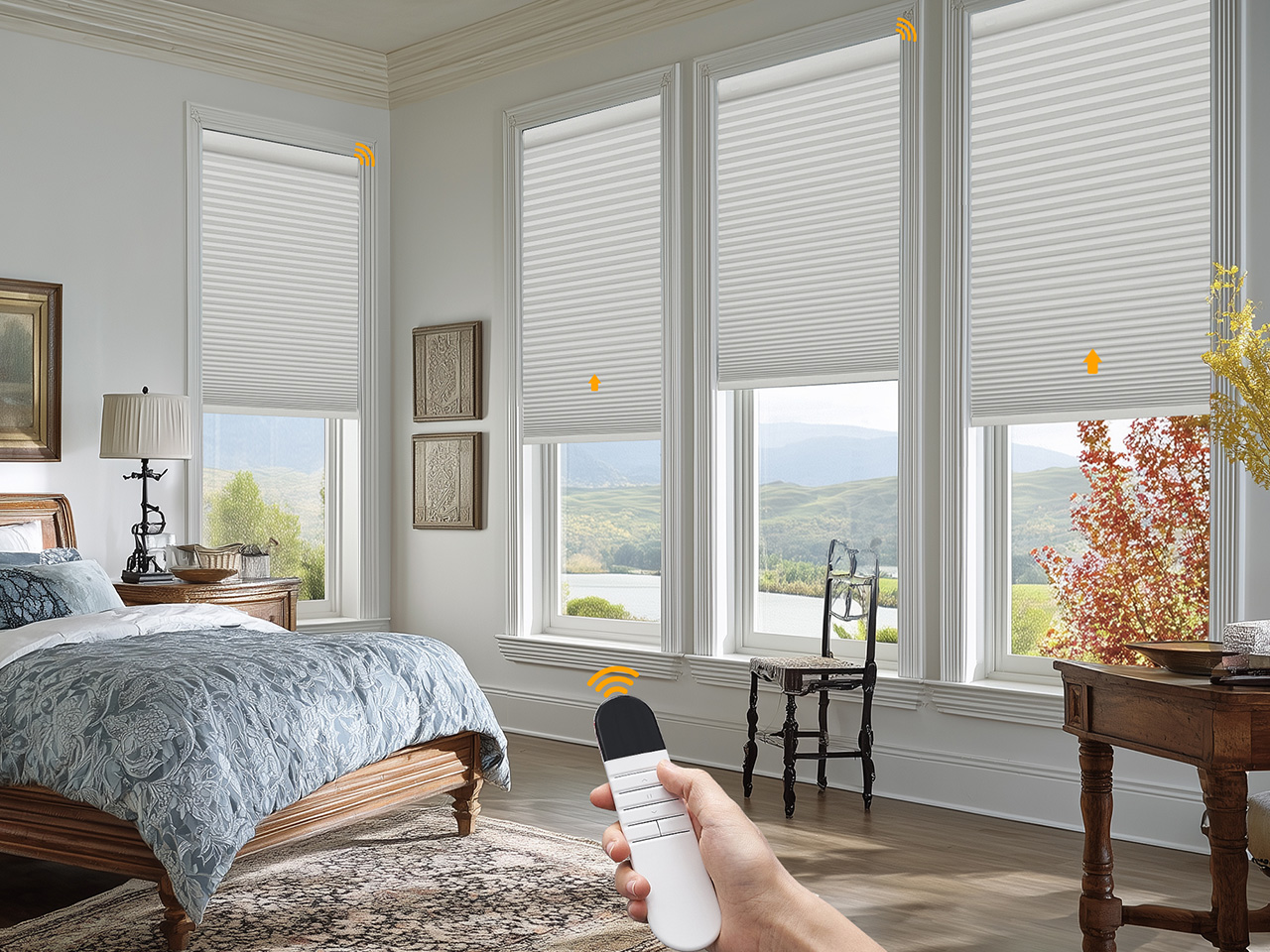
This friction point in home improvement is where clever design really gets to shine. It is one thing to make something look good, but it is another thing entirely to re-engineer the user experience from the ground up. The best products eliminate the most painful step of the process so effectively that you wonder why it ever existed in the first place. This is precisely the space Keego has stepped into, offering no-drill blinds that promise a complete transformation in about a minute, turning a once-dreaded task into a simple, satisfying upgrade. The core mechanism is a tension rod system, essentially a sophisticated pressure mount that wedges the entire blind assembly securely into the window frame. It is a simple, elegant solution to a problem that has plagued homeowners and apartment dwellers for decades.
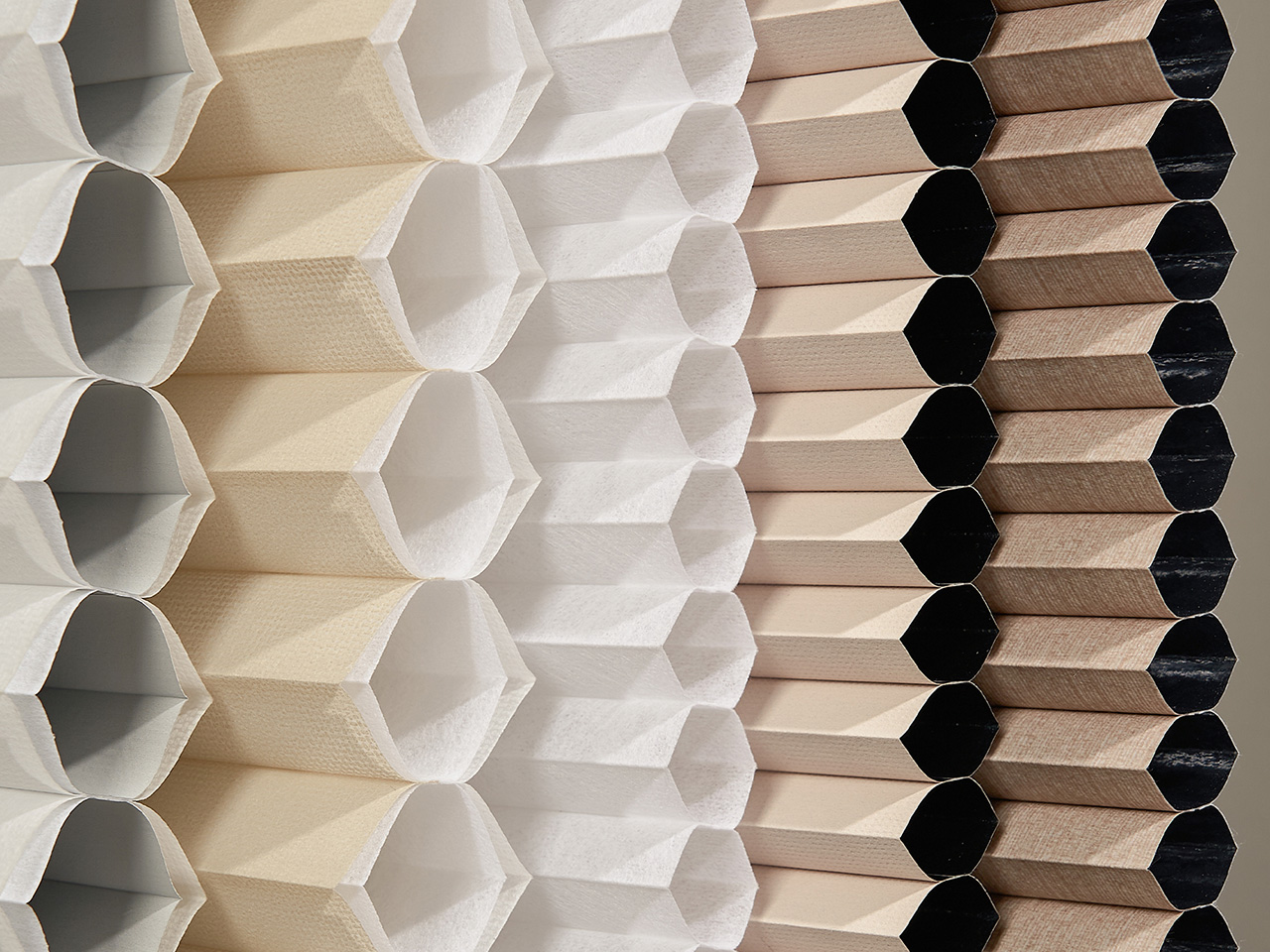
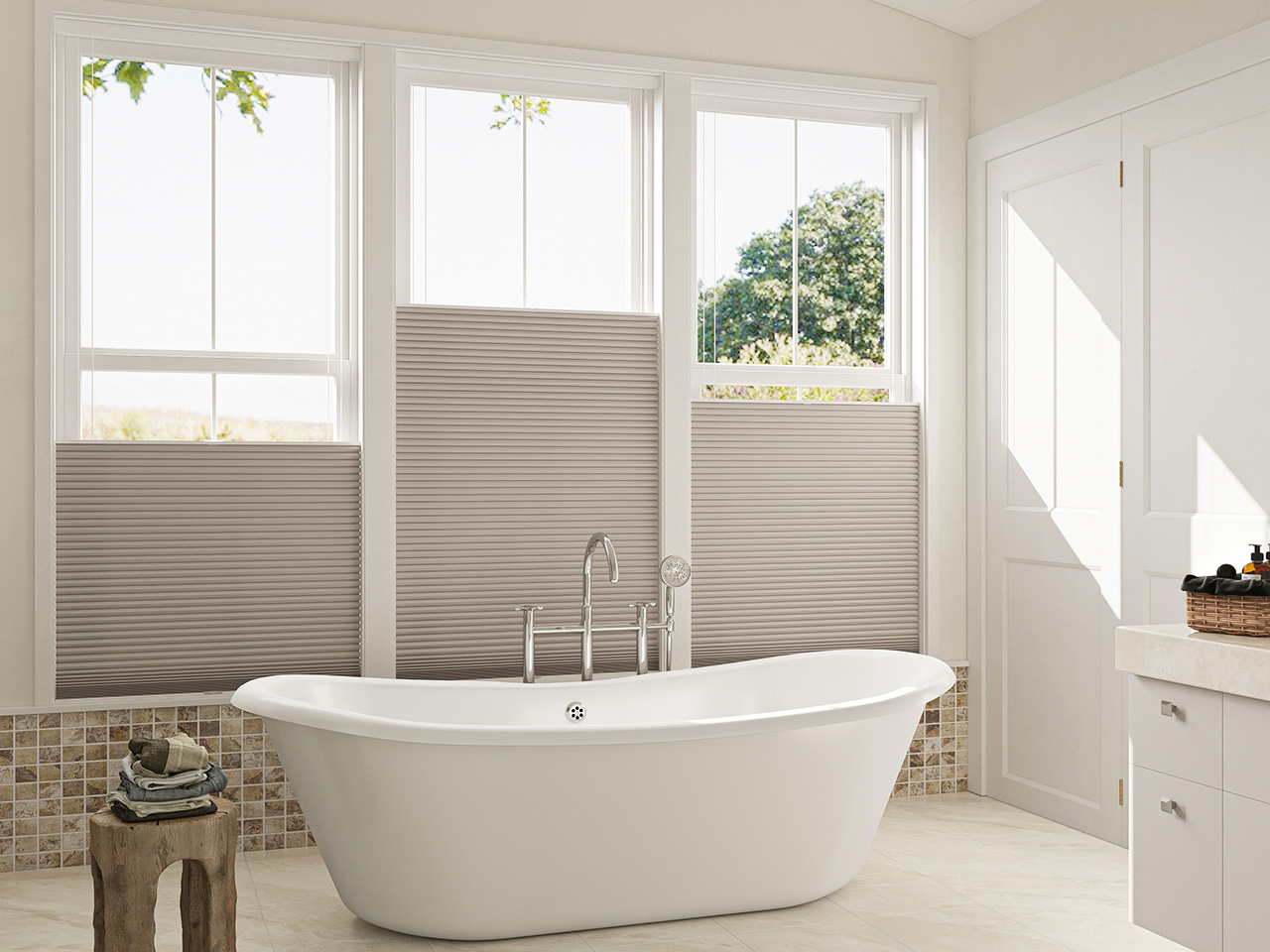
First up is the Extra Wide Top Down Bottom Up Honeycomb Cellular Shade, which solves a problem most blind manufacturers pretend does not exist: oversized windows. This variant supports custom widths up to 78 inches, a dimension that immediately makes it relevant for bay windows, sliding glass doors, or any architectural feature where standard sizing falls embarrassingly short. The top down bottom up functionality is the real highlight here, allowing you to lower the shade from the top or raise it from the bottom independently. This gives you surgical precision over privacy and light, perfect for ground-floor rooms where you want daylight streaming in overhead while keeping neighbors from peering inside. The honeycomb structure still delivers the thermal insulation you would expect, trapping air in those hexagonal cells to regulate temperature and dampen street noise.
What separates this from the standard honeycomb offerings is the sheer flexibility it provides. Opening from both directions turns a passive window covering into an active design element you can adjust throughout the day as the sun moves and your needs shift. The cordless mechanism operates smoothly in both directions, which is critical when you are managing a shade this wide. The blackout fabric options are effective, creating near-total darkness when fully deployed, while the light-filtering versions provide that soft, diffused glow that keeps a room feeling open without sacrificing privacy. This is the choice for anyone dealing with non-standard window dimensions or who wants granular control over how light enters their space, all without committing to permanent hardware.
Zebra Shades
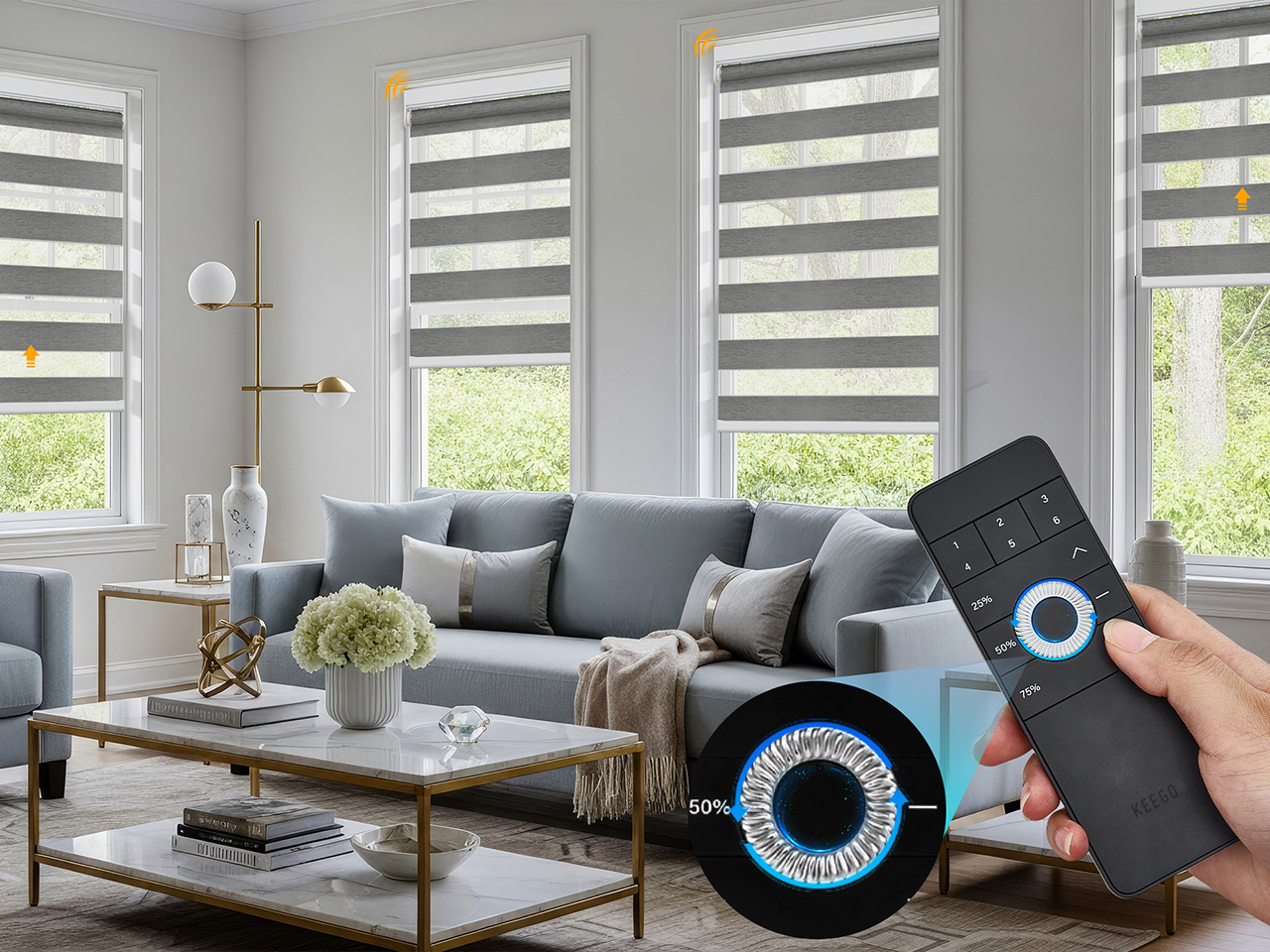
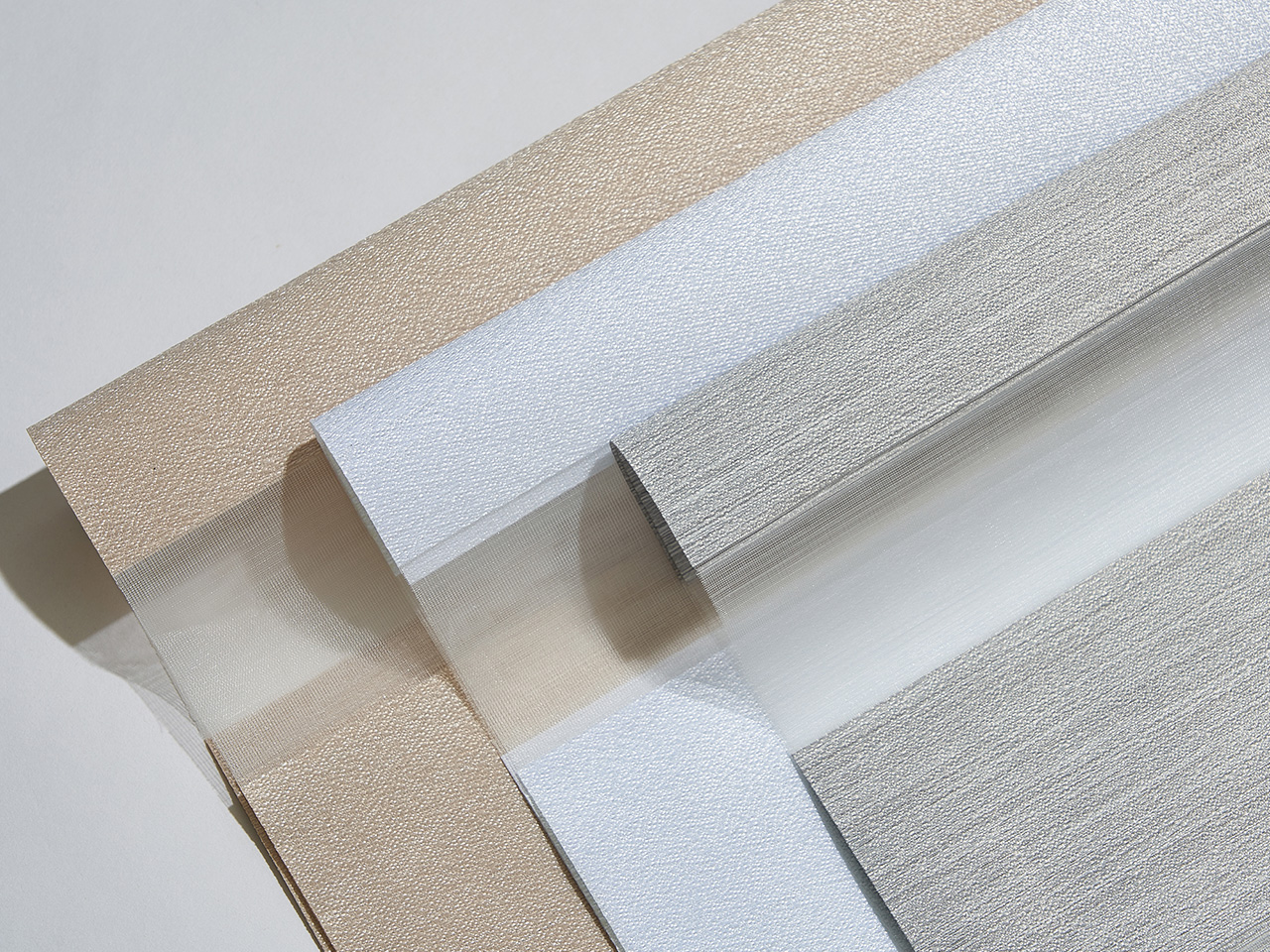
Then we have the Zebra shades, which take a completely different approach to the same problem. Where the Honeycomb is about brute-force light blocking, the Zebra is about nuanced light management. The design consists of two layers of fabric that slide over one another, with alternating horizontal stripes of sheer and opaque material. This construction gives you granular control over the amount of light entering the room. You can align the solid bands for privacy and room darkening, align the sheer bands to let in diffuse daylight, or set them anywhere in between to strike the perfect balance. It is an incredibly clever system that feels more dynamic and interactive, turning the window into a feature rather than just an opening.
The Zebra shades lean more into the tech and design-forward category, especially with the motorized option. The system comes with a remote capable of controlling up to 15 blinds at once, which is a fantastic quality-of-life feature for rooms with multiple windows. The fabrics often have a texture, like an imitation linen, that adds a layer of softness and visual interest to a space, preventing it from feeling too sterile. This style is for the person who wants to actively shape the light in their room throughout the day, treating it as another element of their interior design. The Zebra shades are a statement piece that merge a clever mechanical concept with a modern aesthetic, all while retaining that brilliantly simple no-drill installation.
Ultimately, the choice between the two comes down to a fundamental difference in philosophy. The Extra Wide Top Down Bottom Up Honeycomb Cellular Shade is the pragmatic solution for oversized windows and surgical light control, combining thermal efficiency with the flexibility to adjust from both top and bottom. The Zebra is the expressive design object, offering a more artistic and flexible way to interact with natural light. Both, however, are built on that same foundation of accessibility. By removing the drill from the equation, Keego has made a meaningful upgrade to a home’s comfort and style something that can be achieved on a lunch break.
These blinds are available to order directly from the Keego website and can also be found on major online retail platforms like Amazon and Walmart. Custom sizing is a key part of the offering, ensuring that the pressure-fit system works perfectly for a wide range of window dimensions.
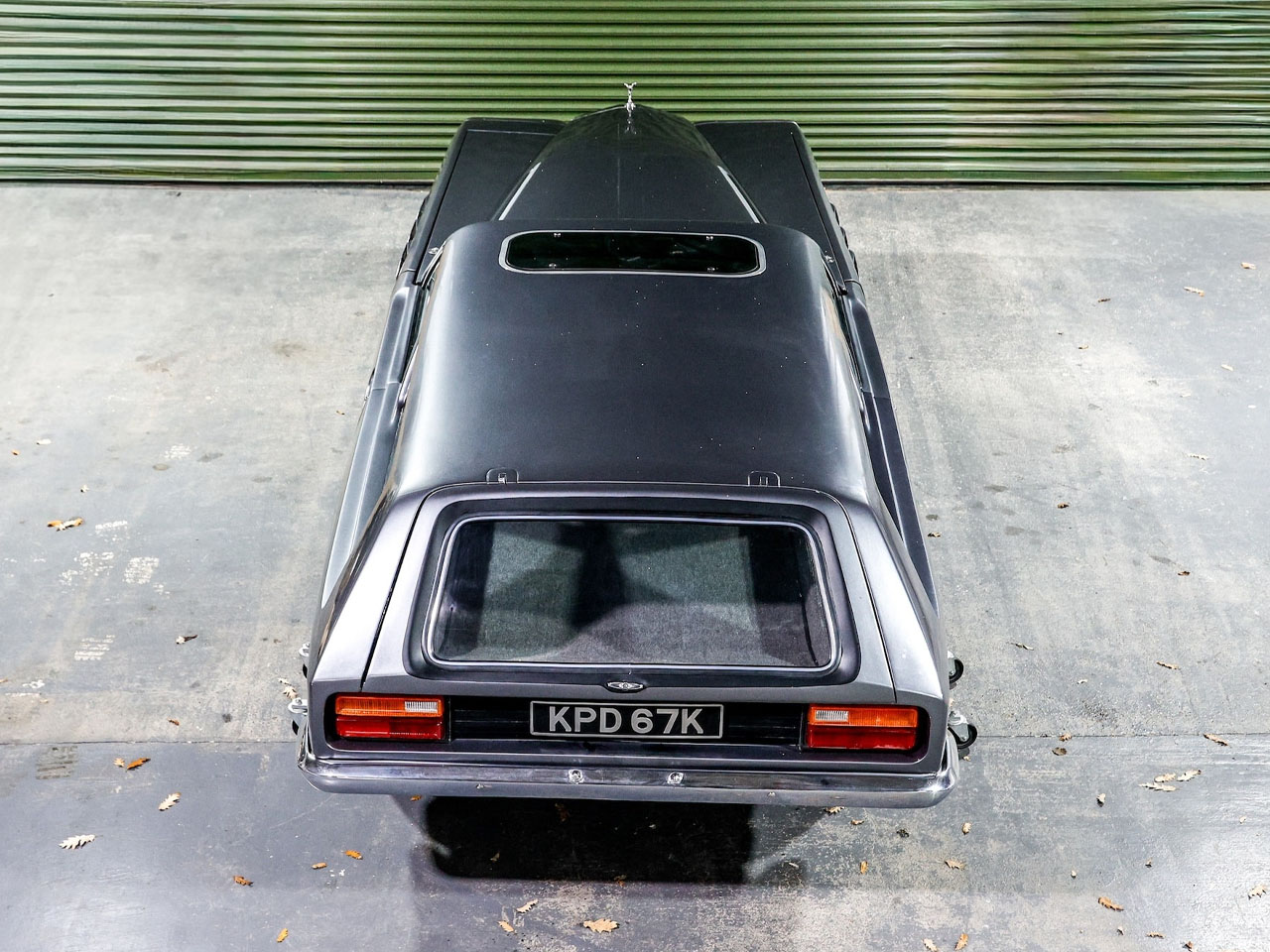
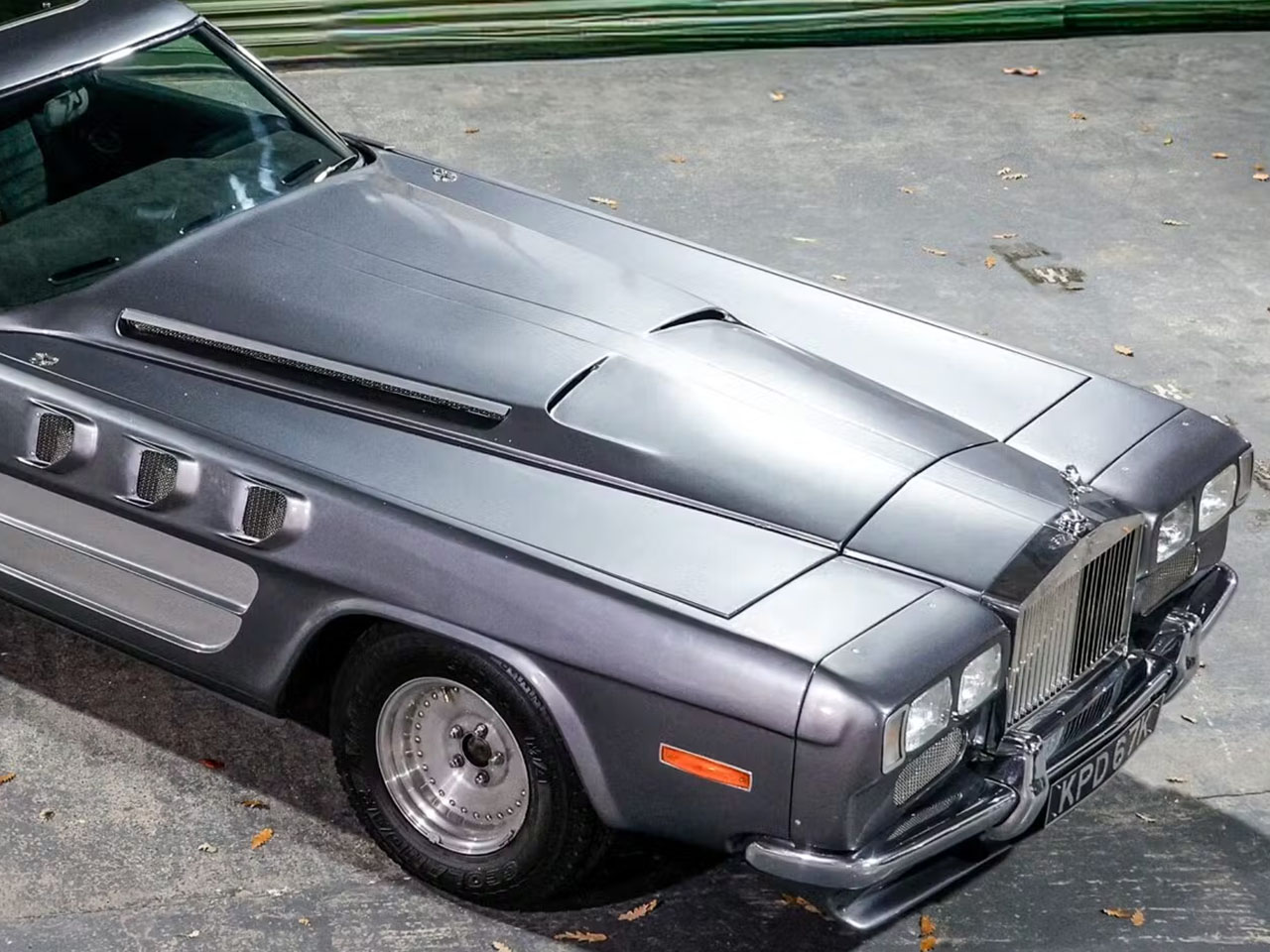
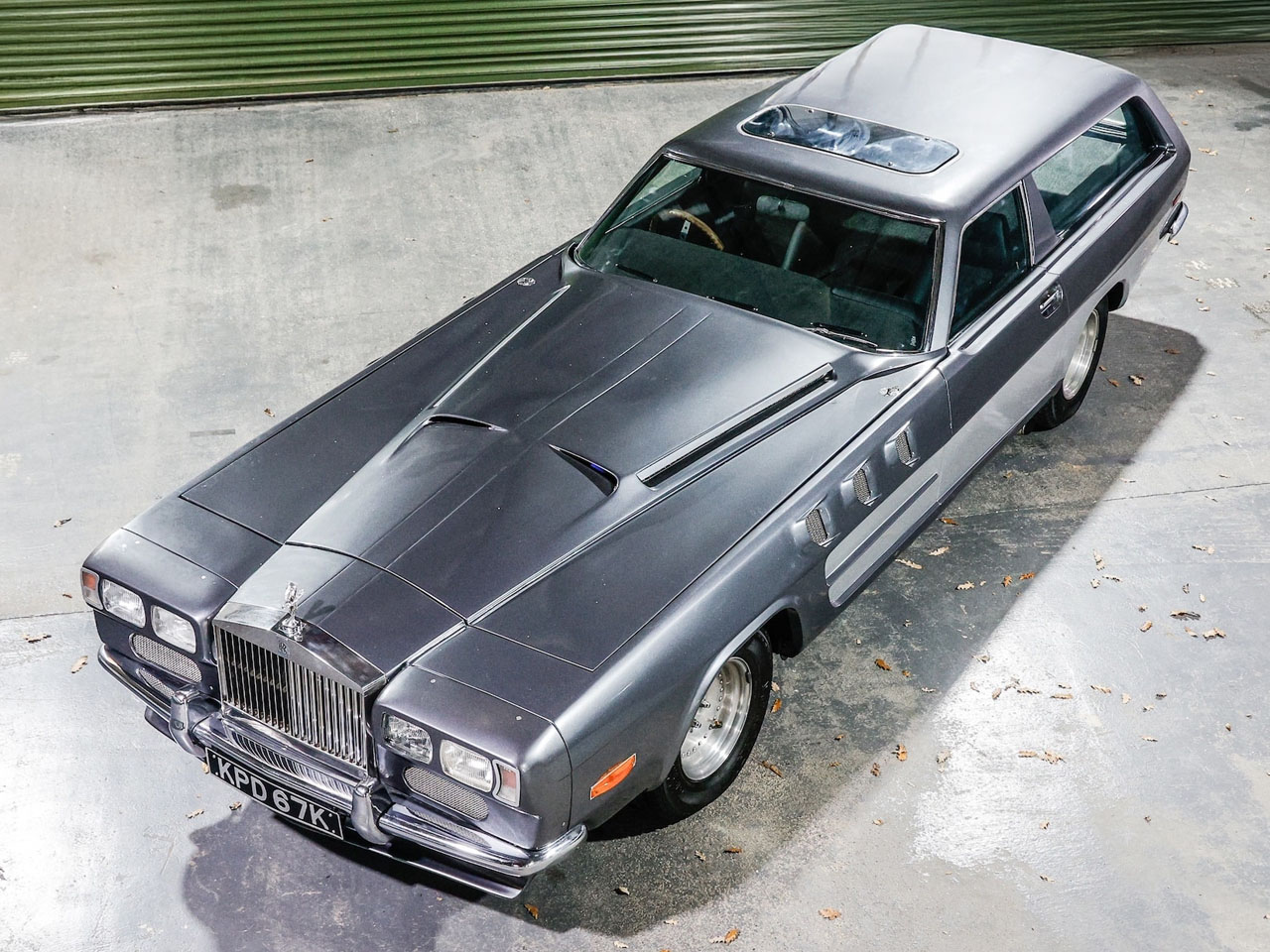
When I first came across the story of the car known simply as The Beast, crafted by British engineer John Dodd, I was reminded of those wild, boundary-pushing machines you’d expect in vintage concept renderings. Except this one was real. Dodd, a gearbox specialist, wasn’t dreaming of design for design’s sake; he was building a functioning road-legal car that defied logic and convention. Built in 1972, The Beast is a one-off shooting-brake style creation, nearly 19 feet long (about 5.8 m), powered by a 27-liter (1,650 cu-in) Rolls‑Royce Merlin V12 aero engine, the same type that powered the Supermarine Spitfire and Lancaster bomber in WWII.
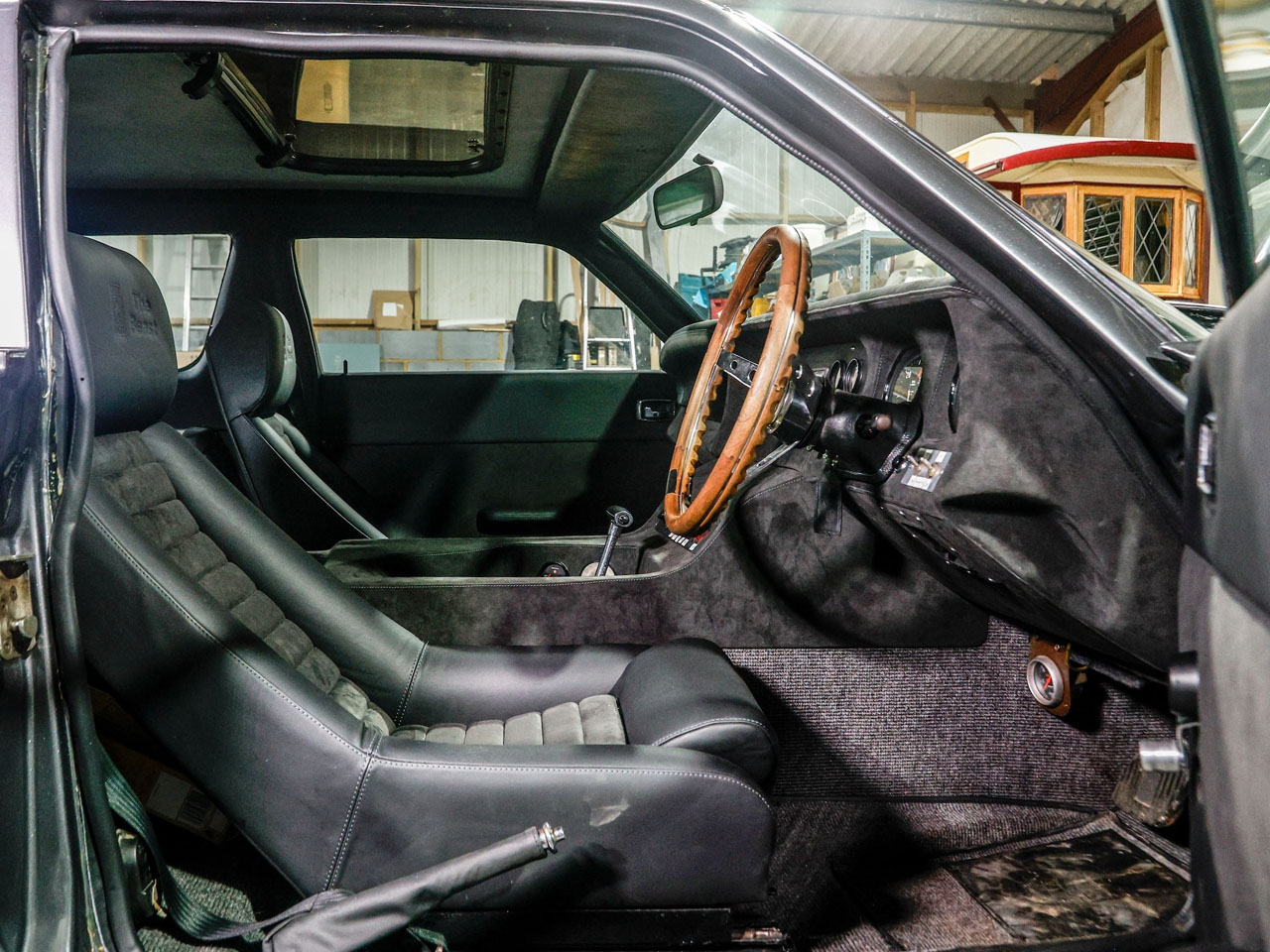
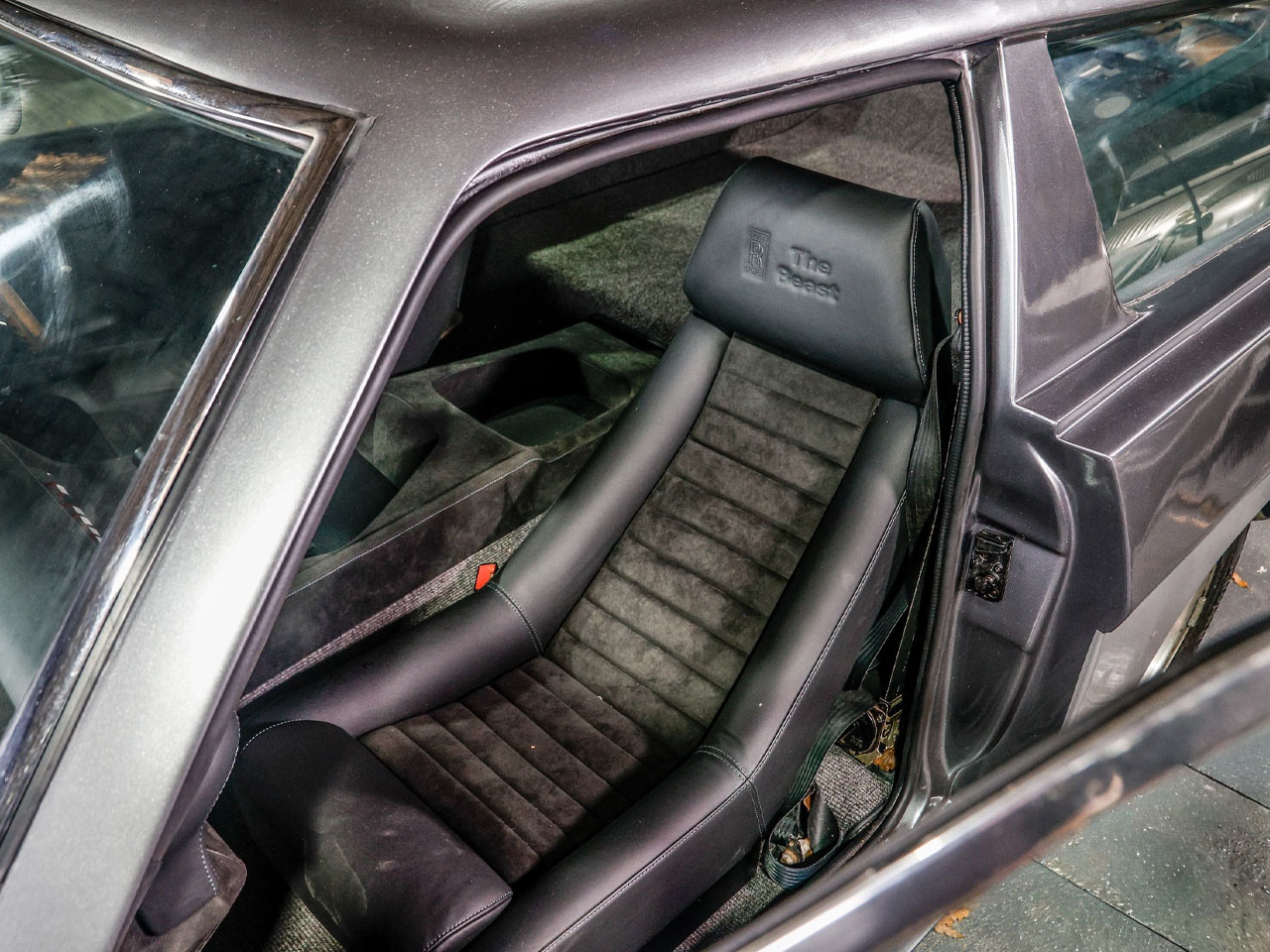
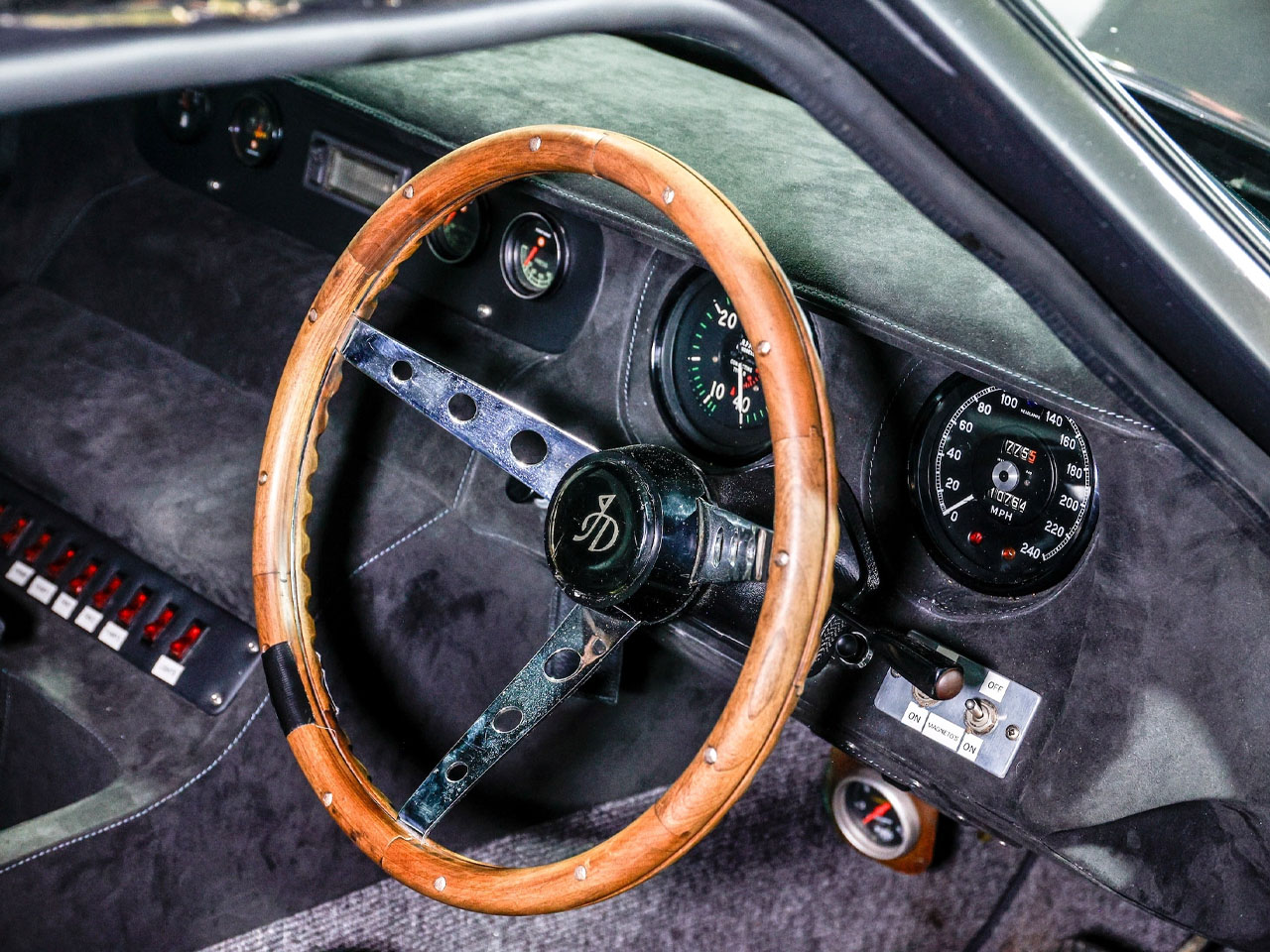
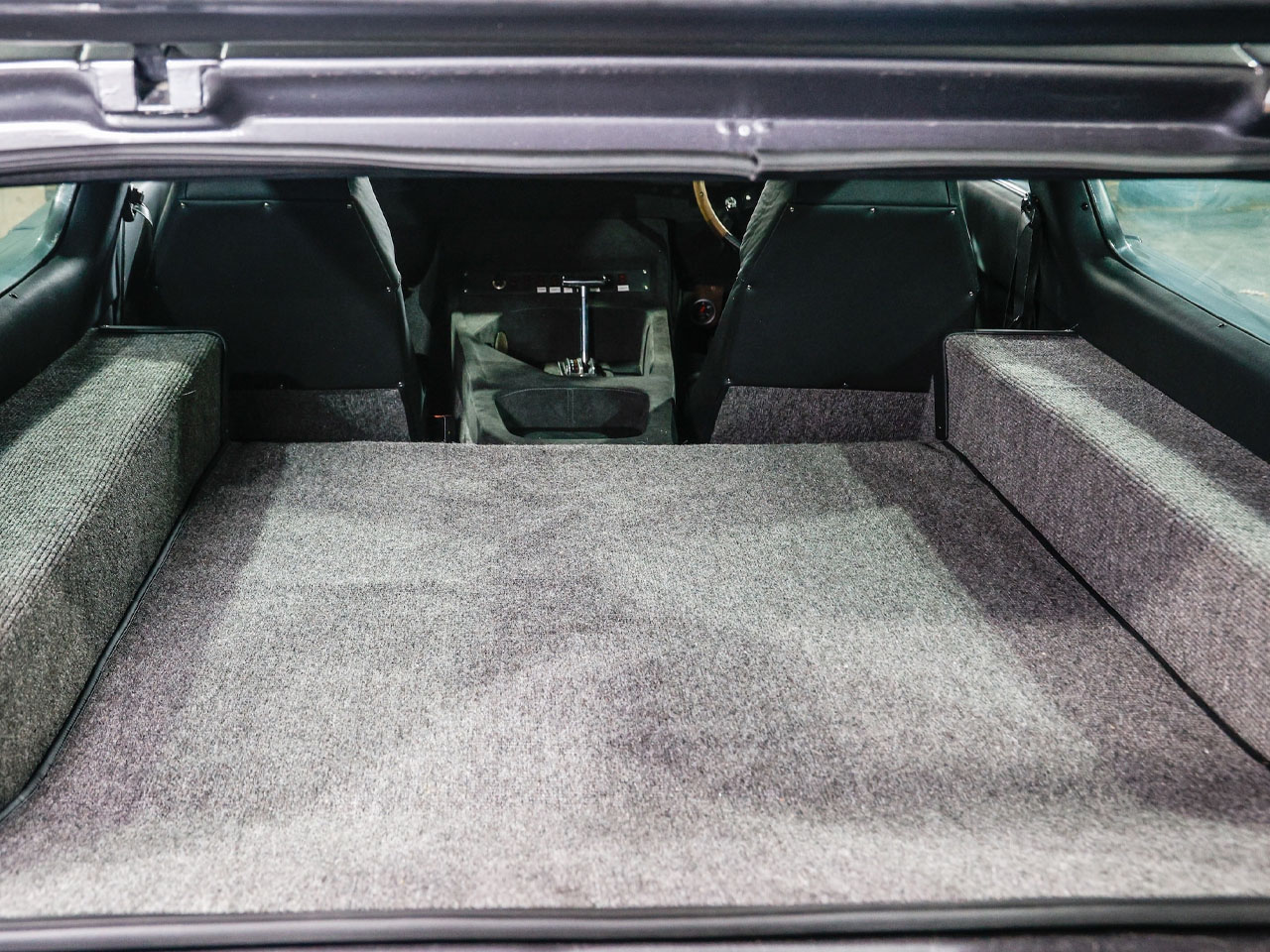
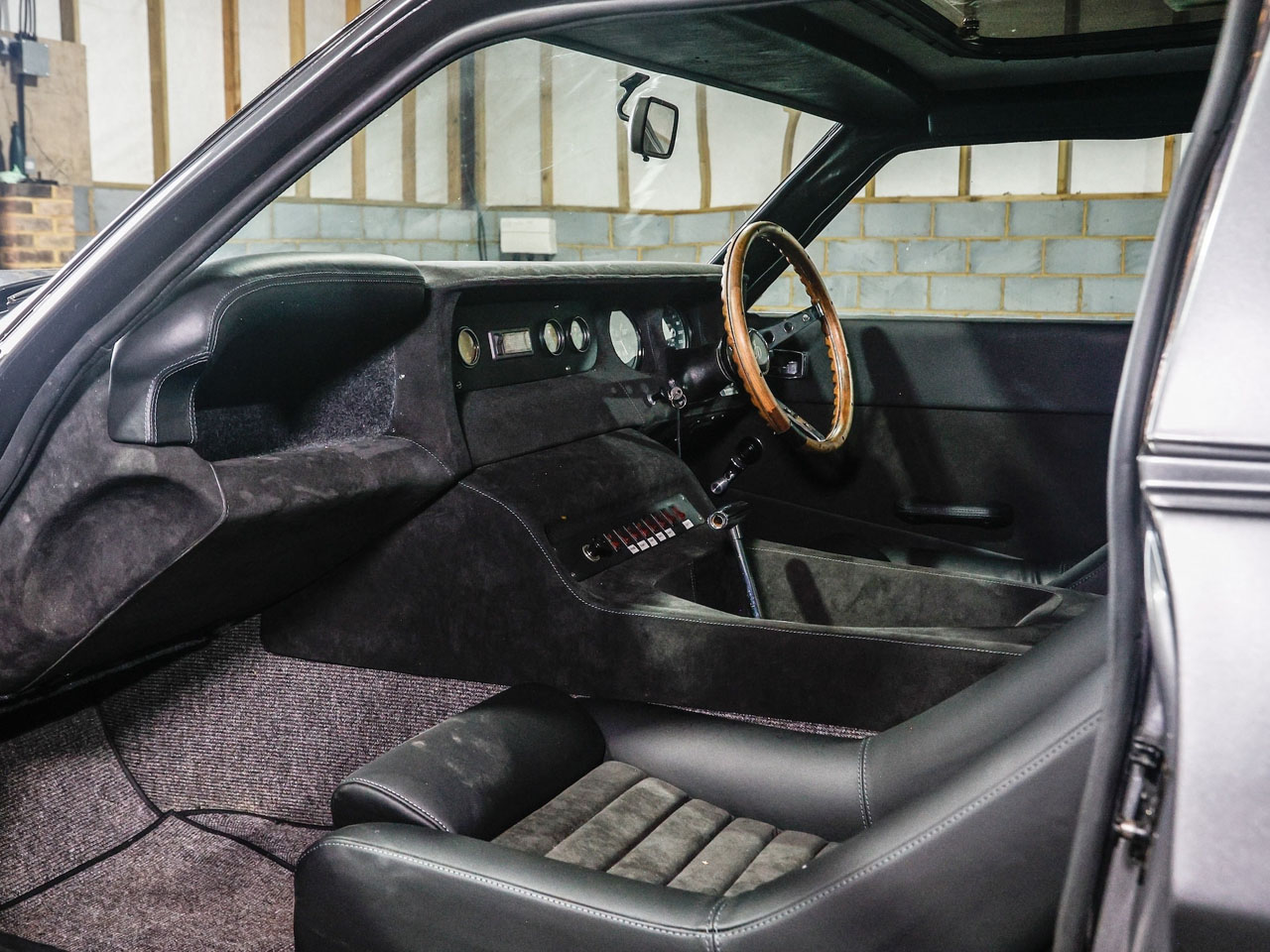
Dodd’s journey began when engineer Paul Jameson created a chassis to house a Rolls-Royce Meteor tank engine in the late 1960s. When that project stalled, Dodd took over, rebuilt it after a fire destroyed the first version, and stepped up the ante by installing the Merlin V12. To handle the immense torque from the engine, Dodd engineered a bespoke transmission, adapting a heavy-duty automatic gearbox. The bodywork, by Fiber Glass Repairs of Bromley, blends the length of a dragster nose with the profile of a grand touring estate. Inside, Dodd did not neglect refinement: leather upholstery, walnut veneer, and an interior that belies the car’s wild intent.
Designer: John Dodd
Performance figures are largely anecdotal (since formal dyno tests are lacking), but contemporaneous reports estimate output between 750-850 horsepower, with claims of over 183 mph achieved on the German Autobahn. What truly matters is the ambition: a road-going car using an aeroplane engine, built by a private engineer in Britain. Although it may not meet modern supercar standards, for its era, it smashed boundaries. The car incorporated independent suspension and disc brakes all around, making it more usable than you’d expect for such a dramatic build.
Legal drama is part of the story too. The original Beast carried a Rolls-Royce grille and the Spirit of Ecstasy mascot. The marque sued Dodd in the 1980s for trademark infringement and won, forcing him to replace the grille with one bearing his initials. Later, the car accompanied Dodd to Spain, where locals became accustomed to the thunderous note of the engine echoing around Malaga.
In recent times, the car has been refreshed. The original bright yellow paint is now hidden under a reversible two-tone metallic grey wrap (so the yellow could be restored in the future) and the interior retrimmed to a high standard. The Beast was consigned to auction by Historics Auctioneers with an estimate of £75,000–£100,000 (roughly USD $98,000–$131,000) in late 2025.
What stands out most is how The Beast blends ludicrous scale and genuine engineering into a drivable road car. It’s not just a showpiece; it was built to move, to roar, to defy expectation. For someone fascinated by the intersection of bespoke craftsmanship and automotive maverick thinking, this car is a landmark. If you’re someone considering bidding or simply telling the story, here is a piece of motoring folklore that truly warrants attention.
Candle holders have always favored traditional taper candles and their elegant, statuesque forms. Tea lights, meanwhile, get relegated to shallow dishes and basic glass cups, functional but hardly inspiring. The problem is practical as much as aesthetic. Most holders treat tea lights as single-use items, offering no solution for storage or replacement beyond keeping a stash somewhere in a kitchen drawer. That leaves you with a scattered collection of metal tins and the constant need to hunt for spares when one burns out.
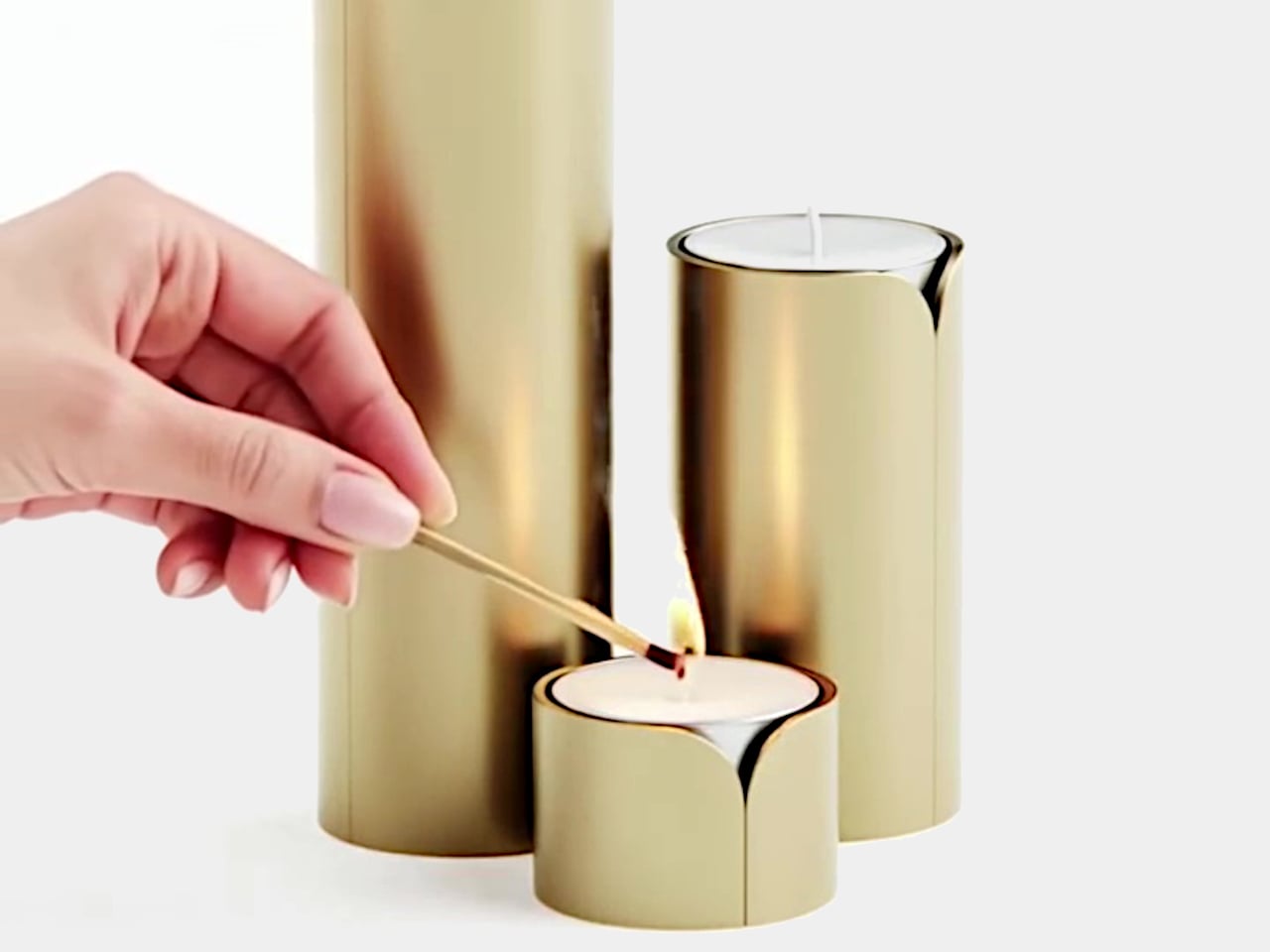
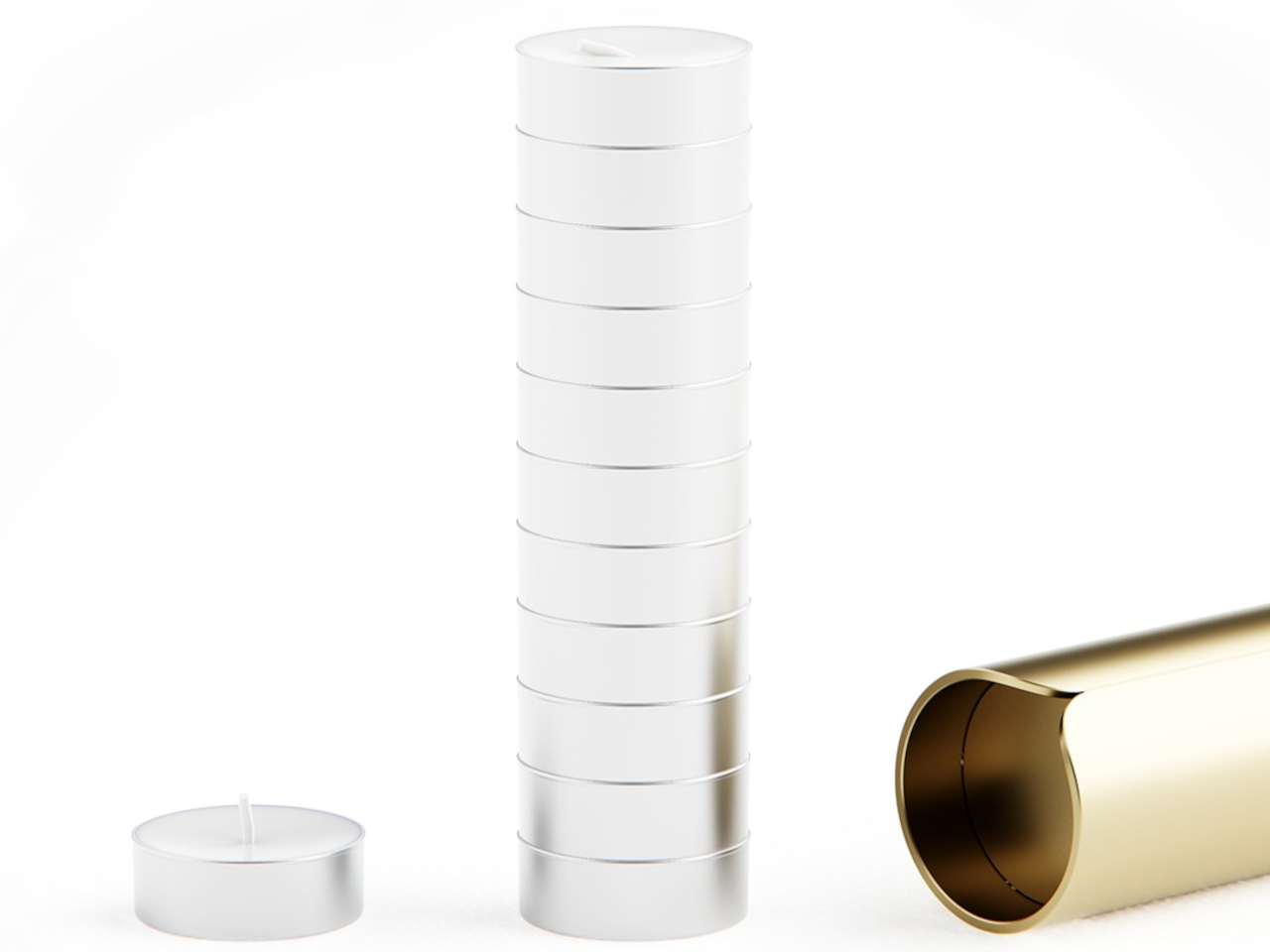
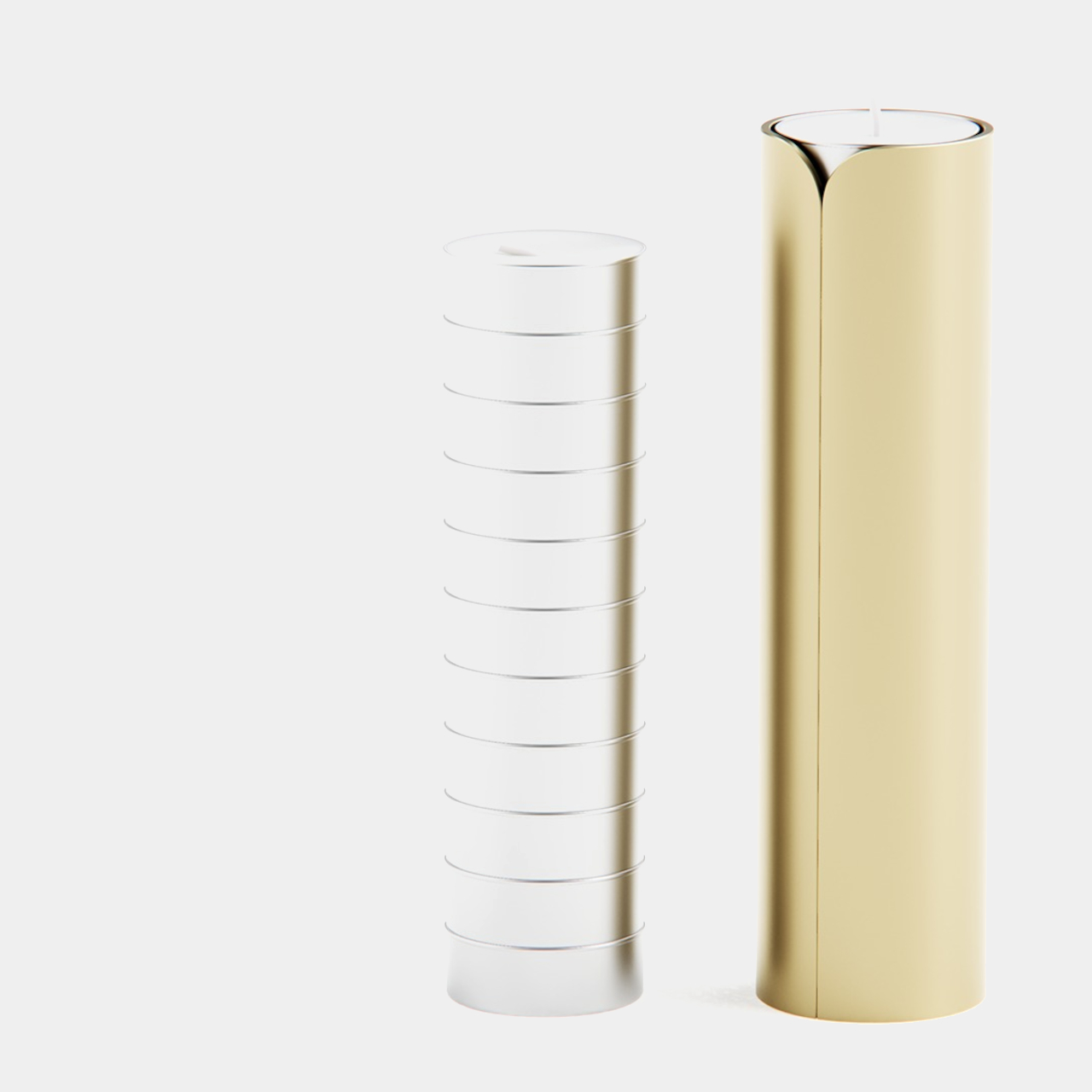
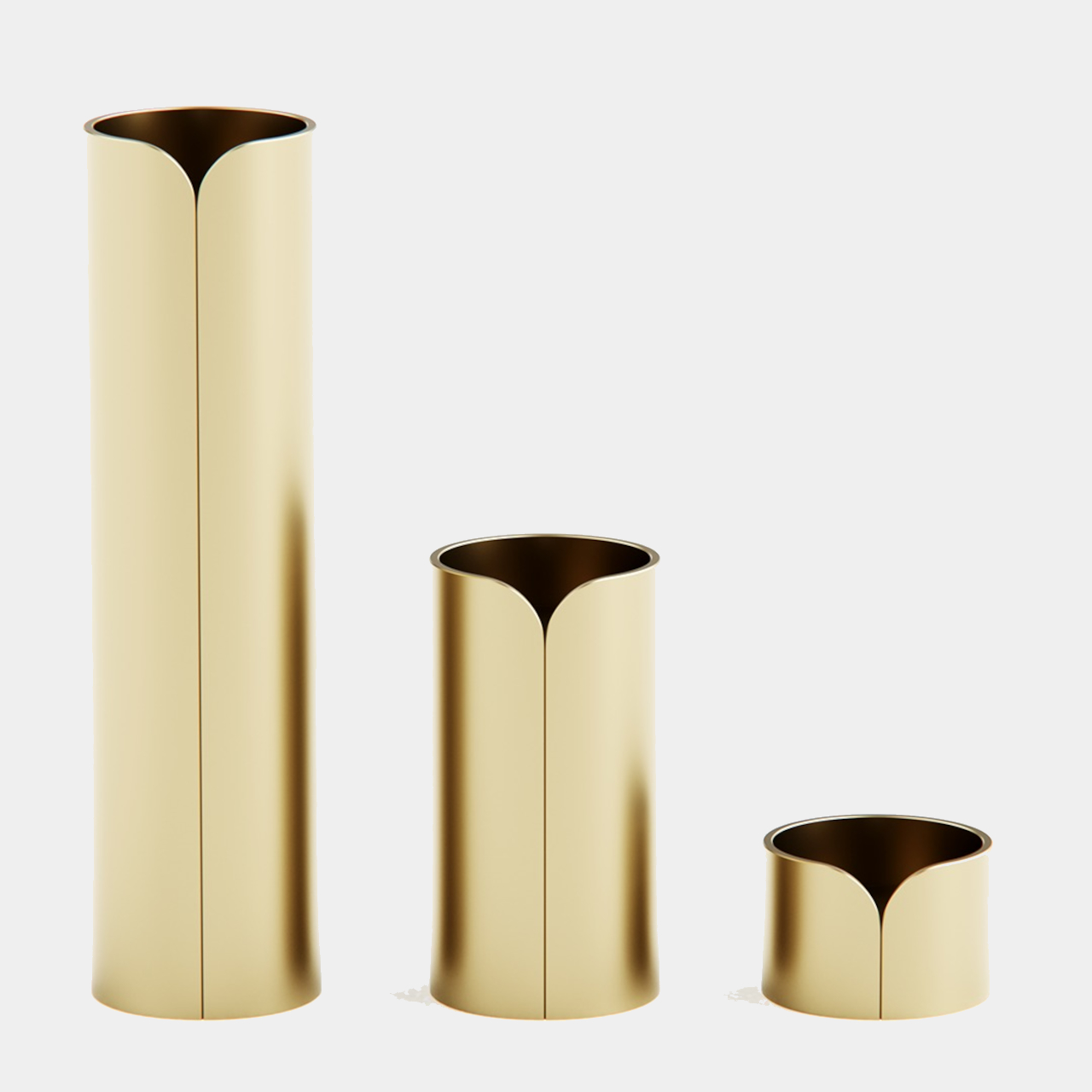
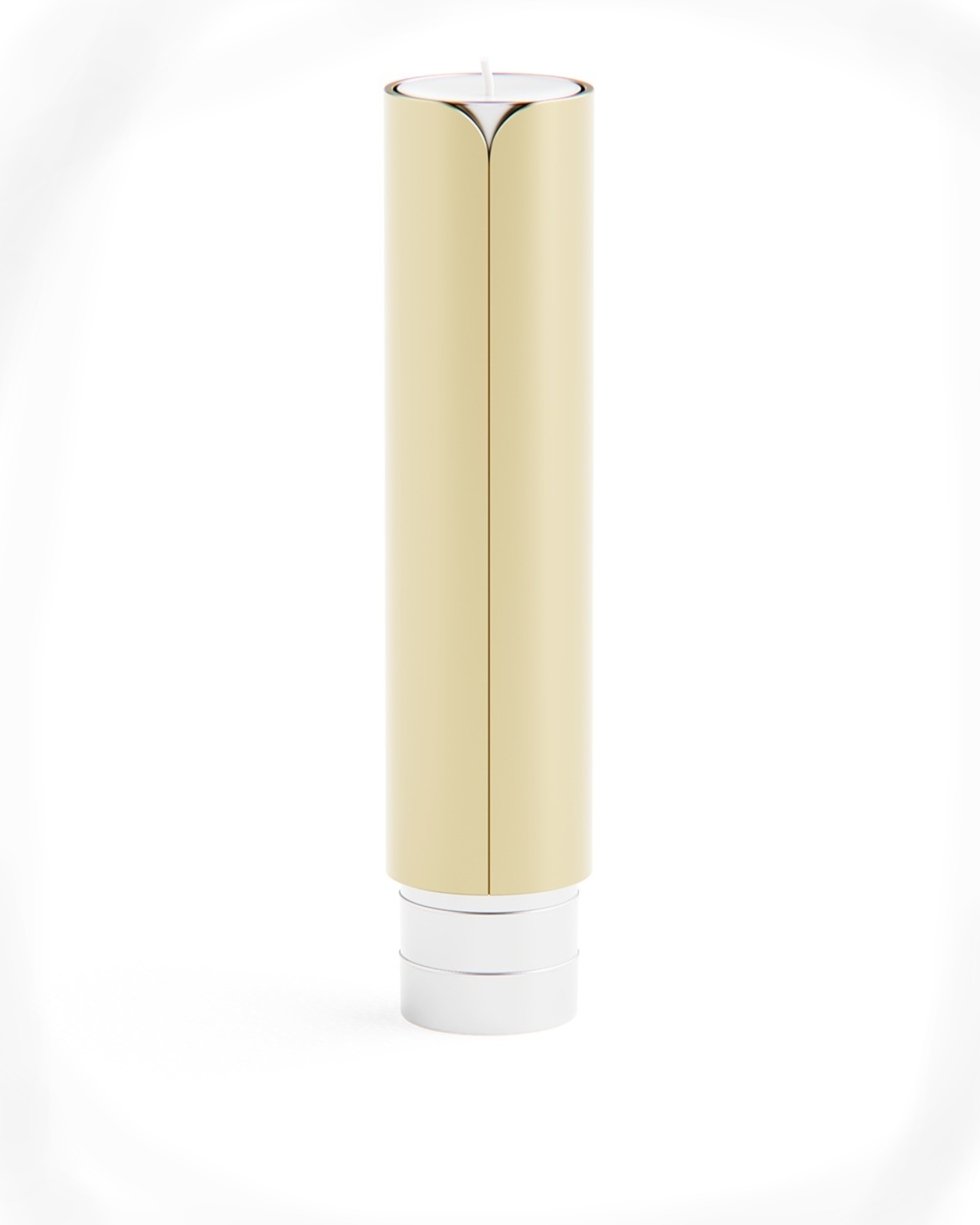
The TOLO Tea Candle holder takes a different approach, drawing inspiration from an unexpected source to solve both issues at once. Designer Liam de la Beyodere looked at how Polo mints stack neatly inside their cylindrical wrapper and applied the same logic to tea lights. The result is a minimalist metal tube that holds multiple candles vertically, with one sitting at the top ready for use while others wait below. It’s a simple idea that gives tea lights the height and presence of traditional candles without any of the usual mess or inconvenience.
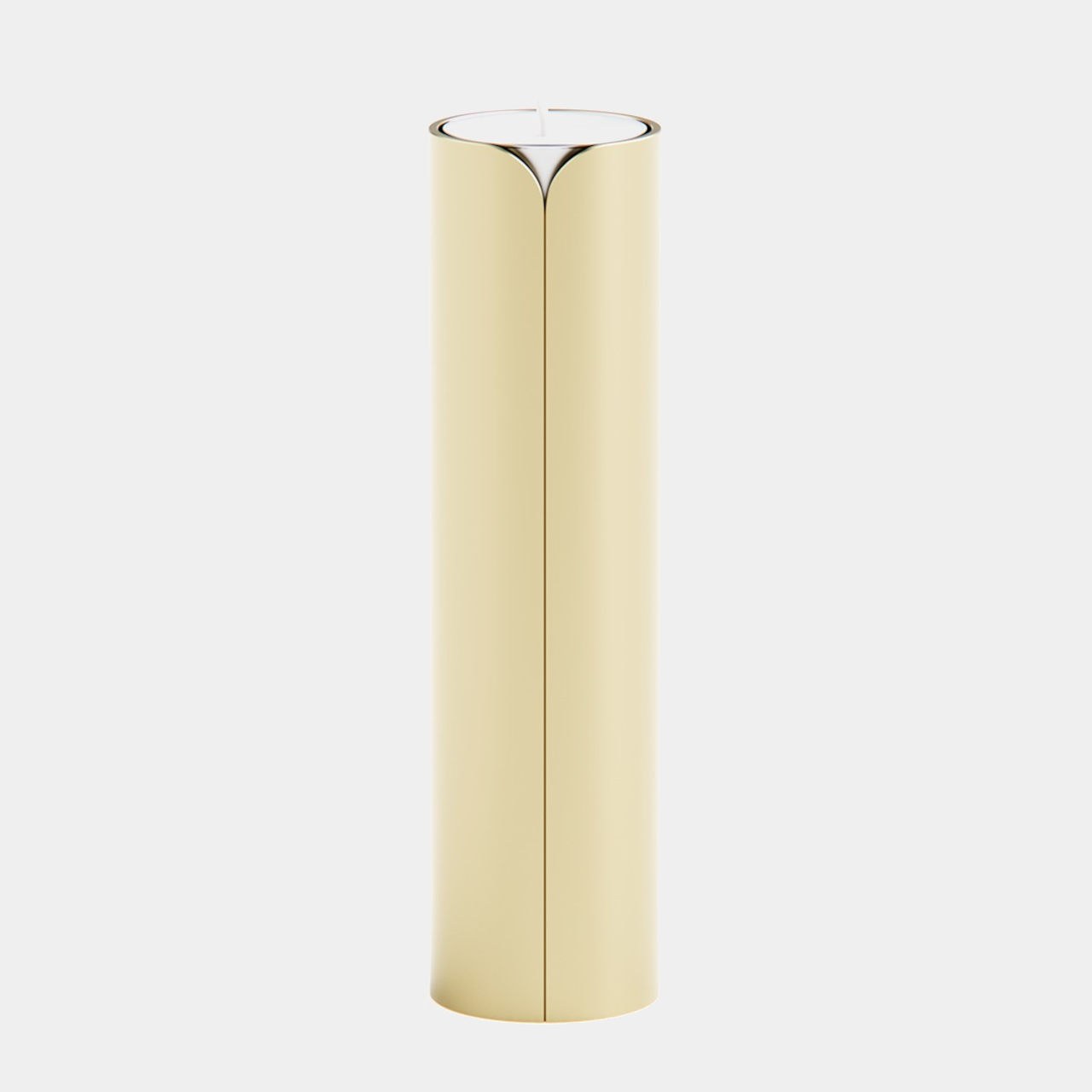
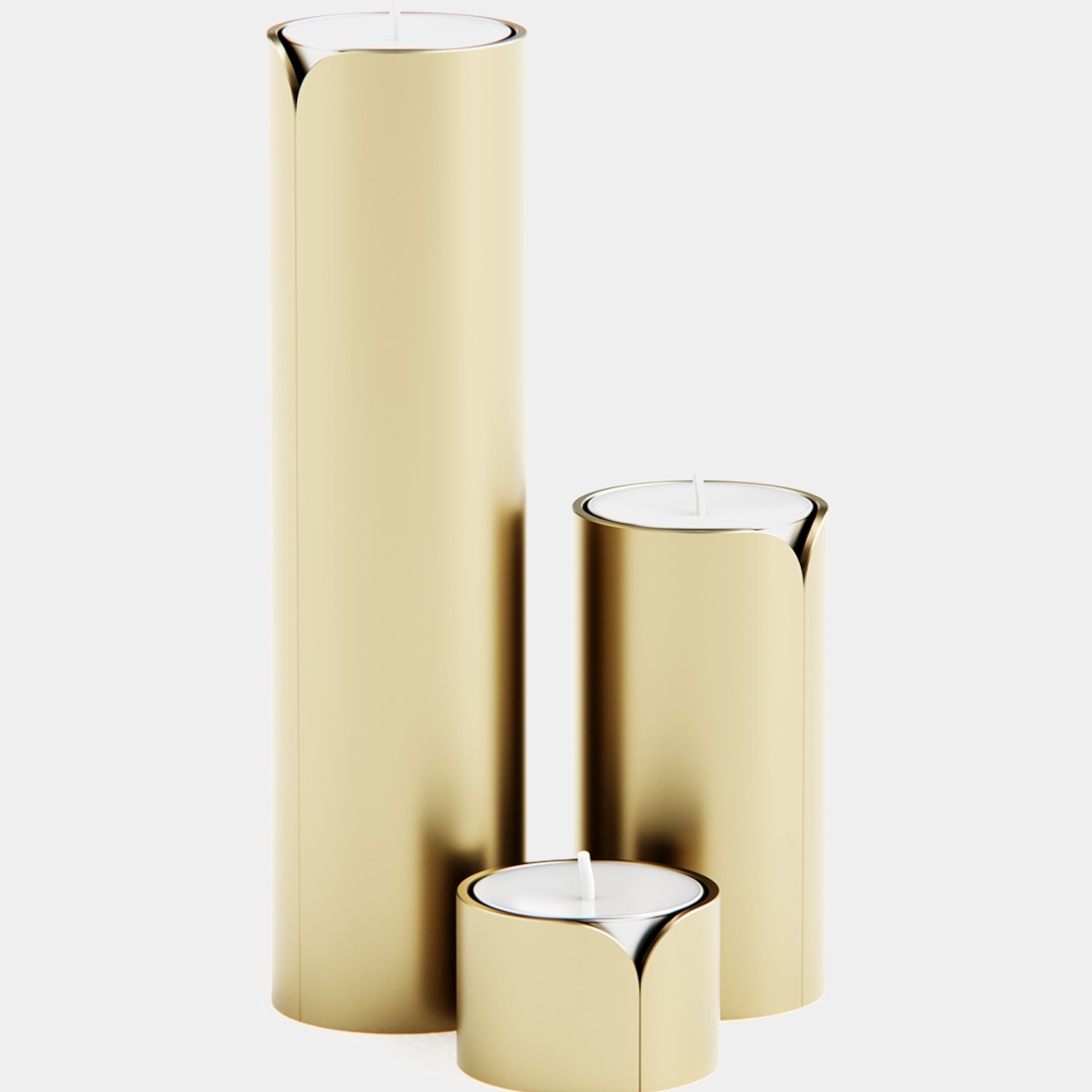
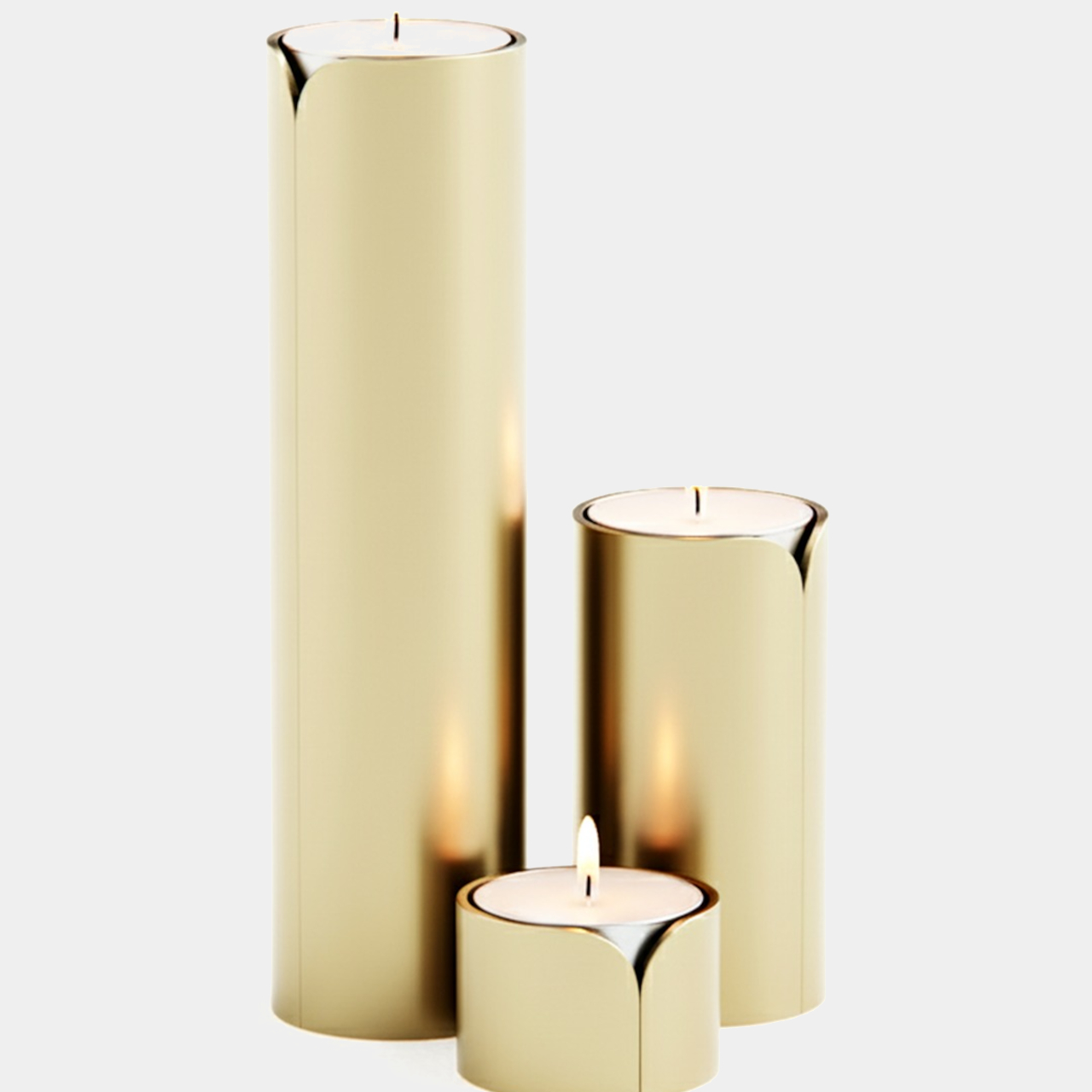
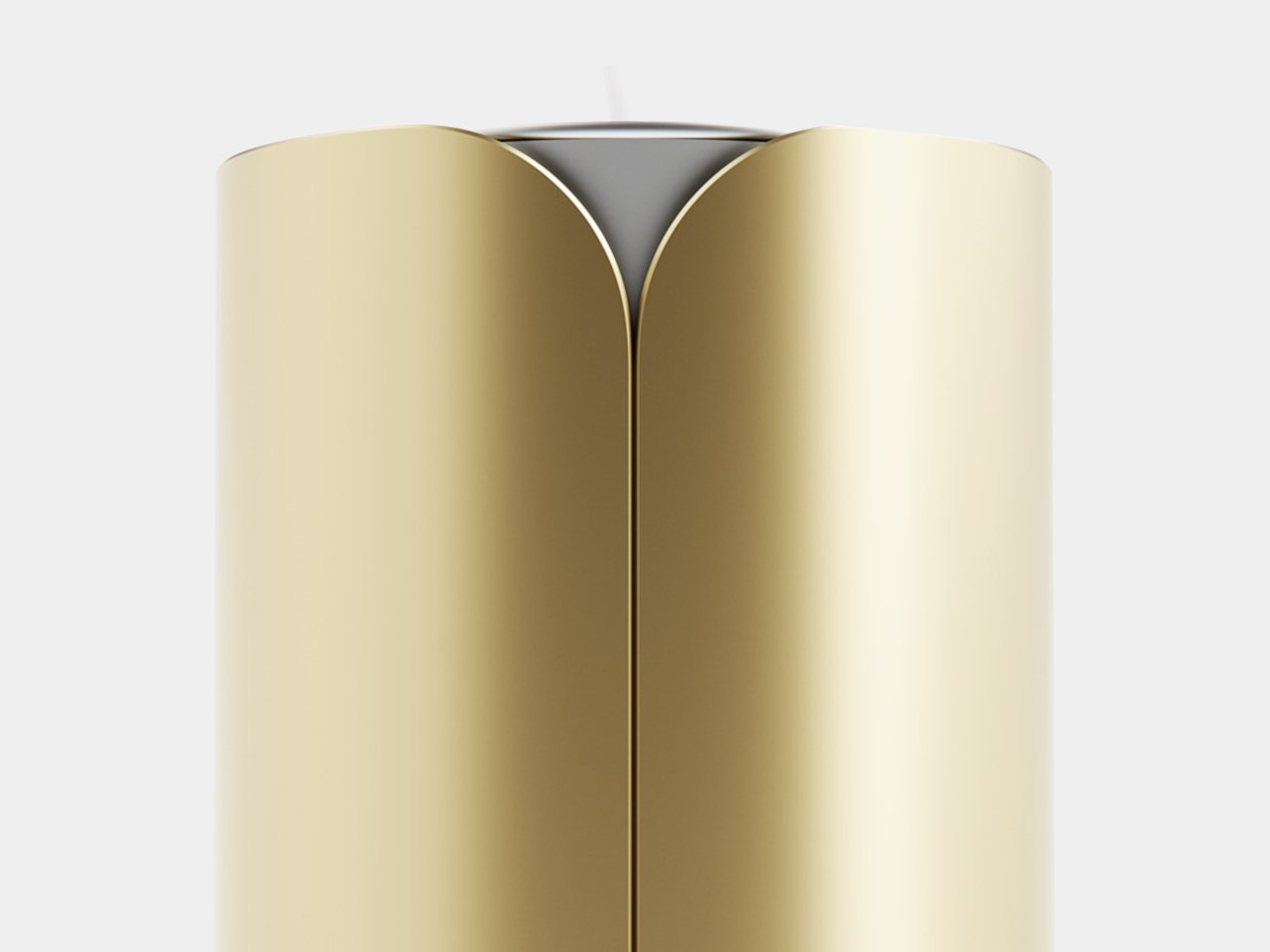
The holder itself is straightforward in construction. A seamless metal tube, likely brass or gold-plated steel, features a precise cutout at the top that exposes just enough of the uppermost candle for lighting. The polished finish adds a touch of elegance, while the clean cylindrical form fits easily into modern interiors. Different heights are available depending on how many tea lights you want to store inside, turning what’s typically a storage problem into part of the design’s appeal.
Of course, the real advantage is how effortless this makes candle replacement. When the top tea light burns out, you simply remove the spent tin and the next one rises into position. No rummaging through drawers, no loose candles rolling around in cabinets, and no need to interrupt your evening to fetch replacements. The tube keeps everything organized and accessible, which is exactly the kind of thoughtful detail that separates good design from merely functional objects.
What sets TOLO apart is how it reframes tea lights entirely. Instead of treating them as cheap alternatives to proper candles, the design gives them structure and verticality that command attention. The holder looks intentional even when unlit, standing as a sculptural object rather than just another utilitarian accessory. That shift in perception, from disposable to deliberate, is what makes the concept feel genuinely fresh rather than just clever packaging.
TOLO remains a concept for now, existing only as renderings rather than a finished product. That said, the design’s simplicity and practicality suggest it could translate well into production, offering a more elegant solution for anyone who prefers the convenience of tea lights but wants something better than the usual uninspired holders cluttering store shelves.
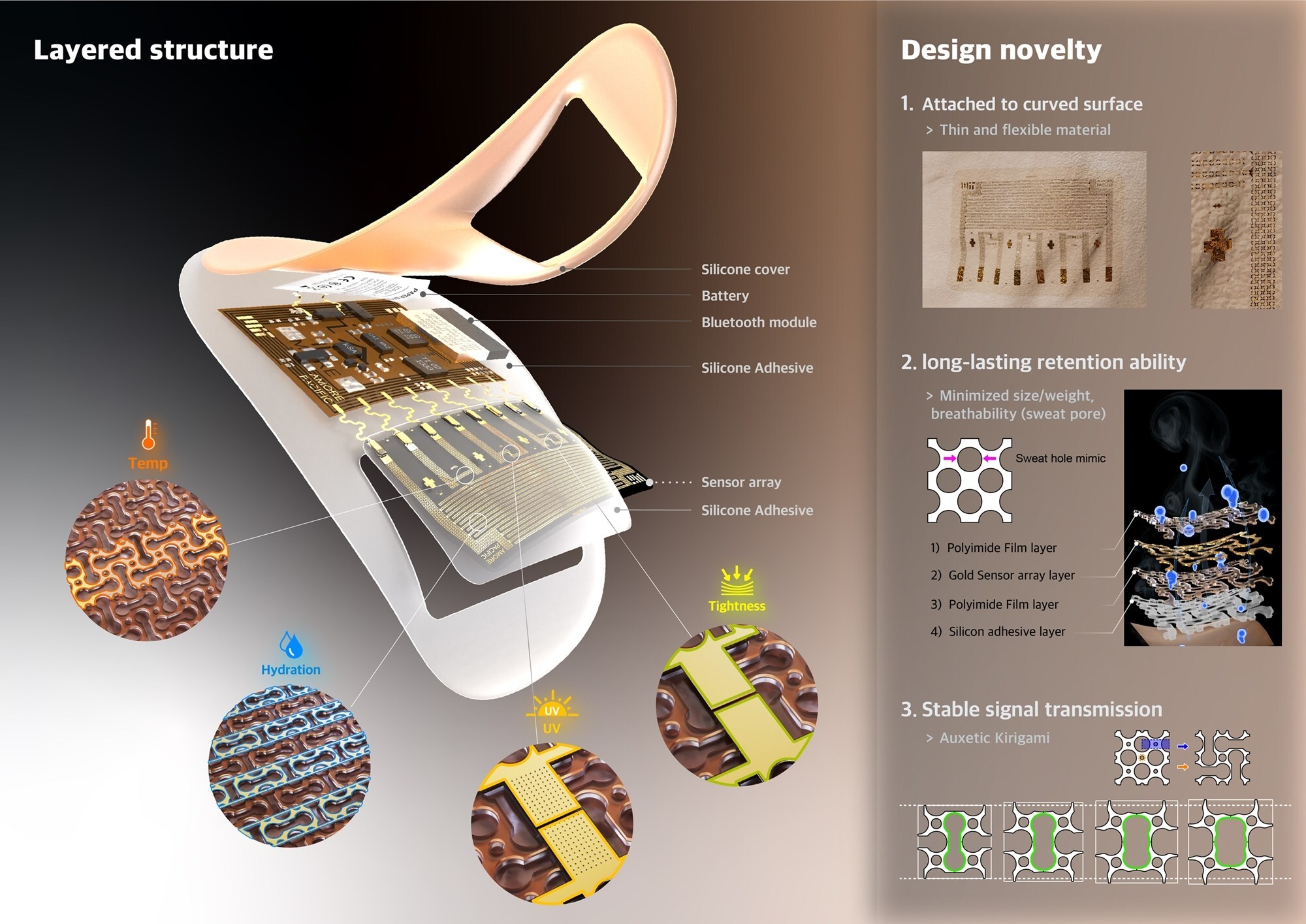
Researchers at MIT have been working with the South Korean beauty company Amorepacific for the past few years to develop a wearable "electronic skin" platform that can provide real-time insights about skin aging and make personalized skincare recommendations, and it's due to debut at CES 2026 as "Skinsight." Skinsight, which was announced as one of the CES 2026 Innovation Award Honorees this week, is a Bluetooth-equipped sensor patch that sticks to the skin and works with a mobile app, tracking skin tightness, UV exposure, temperature and moisture.
An artist's rendering of the Skinsight patch showing various sensors and a bluetooth module
Amorepacific
Based on the readings, the AI-powered app will approximate how the different factors might contribute to or speed up skin aging, and suggest the products best suited for the job so the user can incorporate them into their skincare routine. The patch is designed to be breathable and withstand sweat so it can stay on for long periods of time. The team hasn't yet shared on Skinsight's availability and cost.
This article originally appeared on Engadget at https://www.engadget.com/wearables/mit-researchers-and-beauty-brand-amorepacific-made-a-wearable-patch-that-analyzes-skin-aging-225125621.html?src=rss
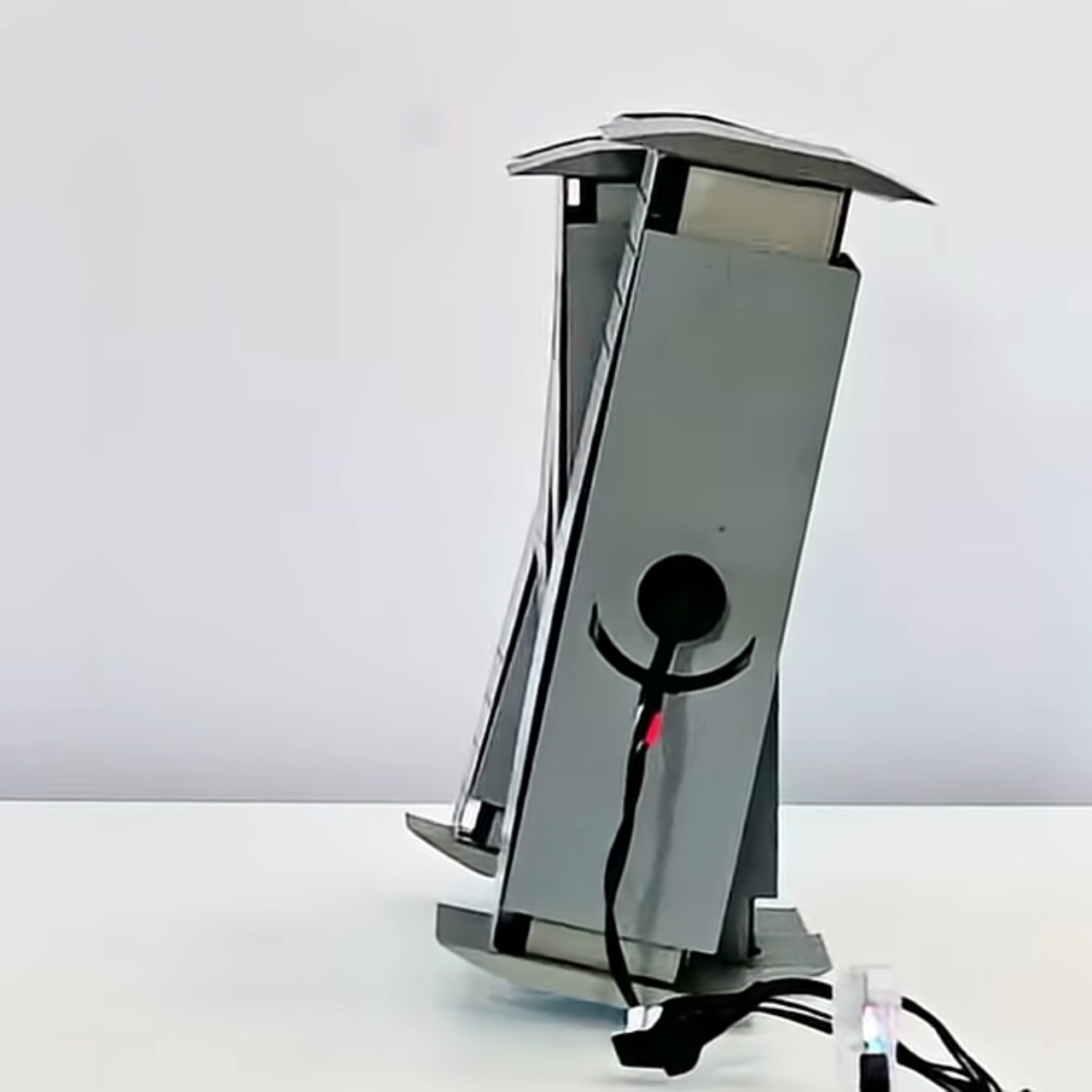
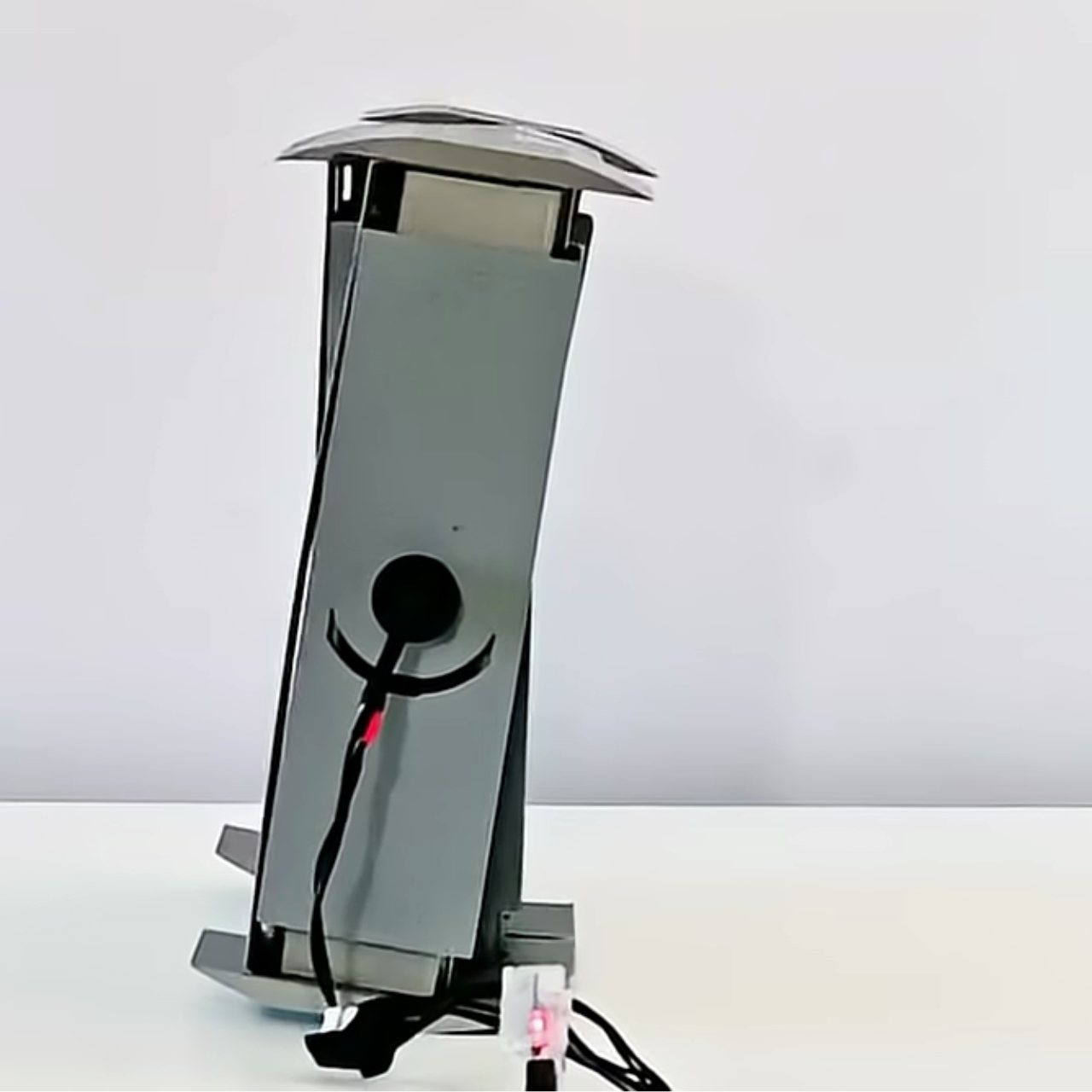
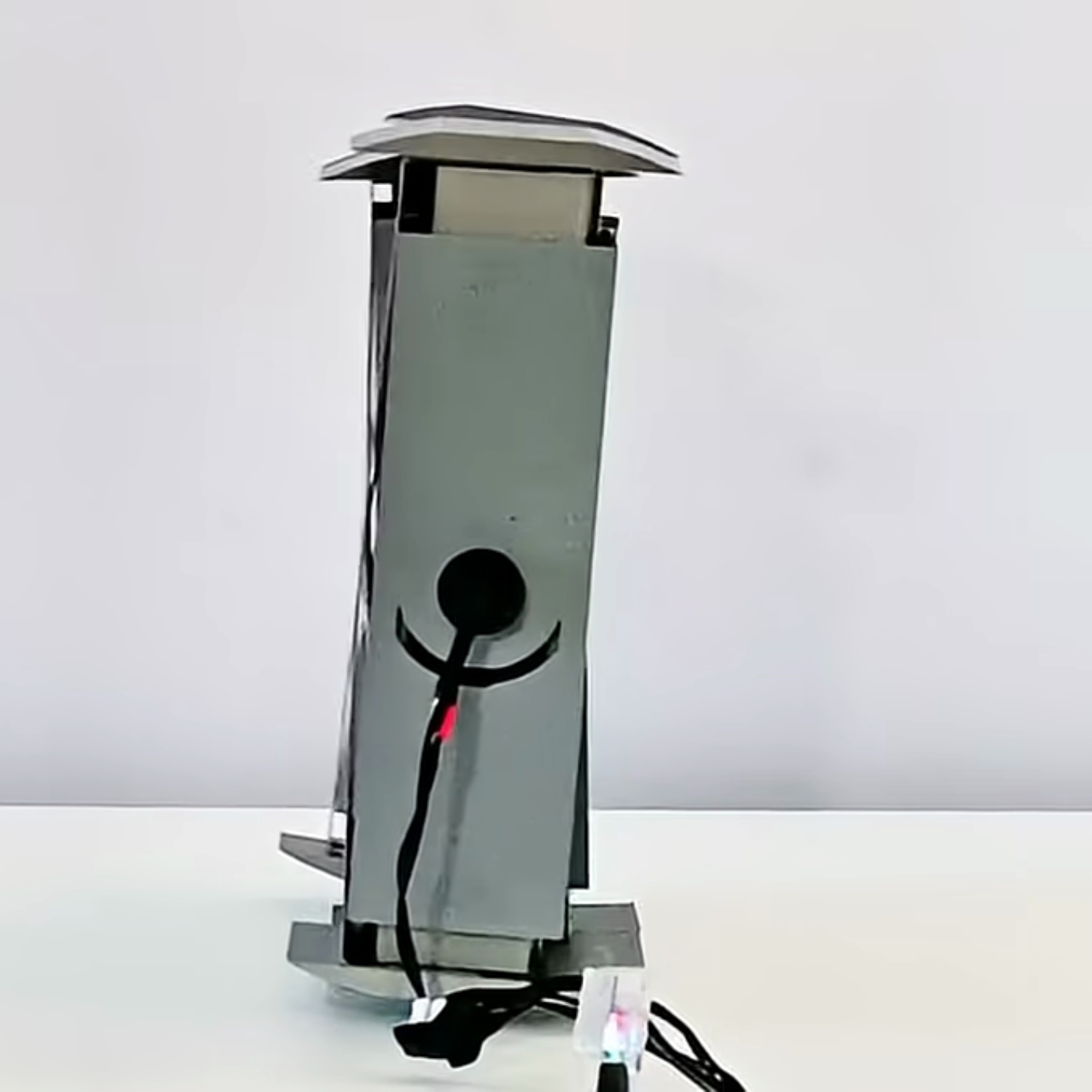
Remember that sarcastic rectangular robot from Interstellar that somehow managed to walk, roll, and save humanity while delivering deadpan one-liners? Yeah, turns out someone actually built a working version of TARS, and it’s just as mesmerizing as you’d hope.
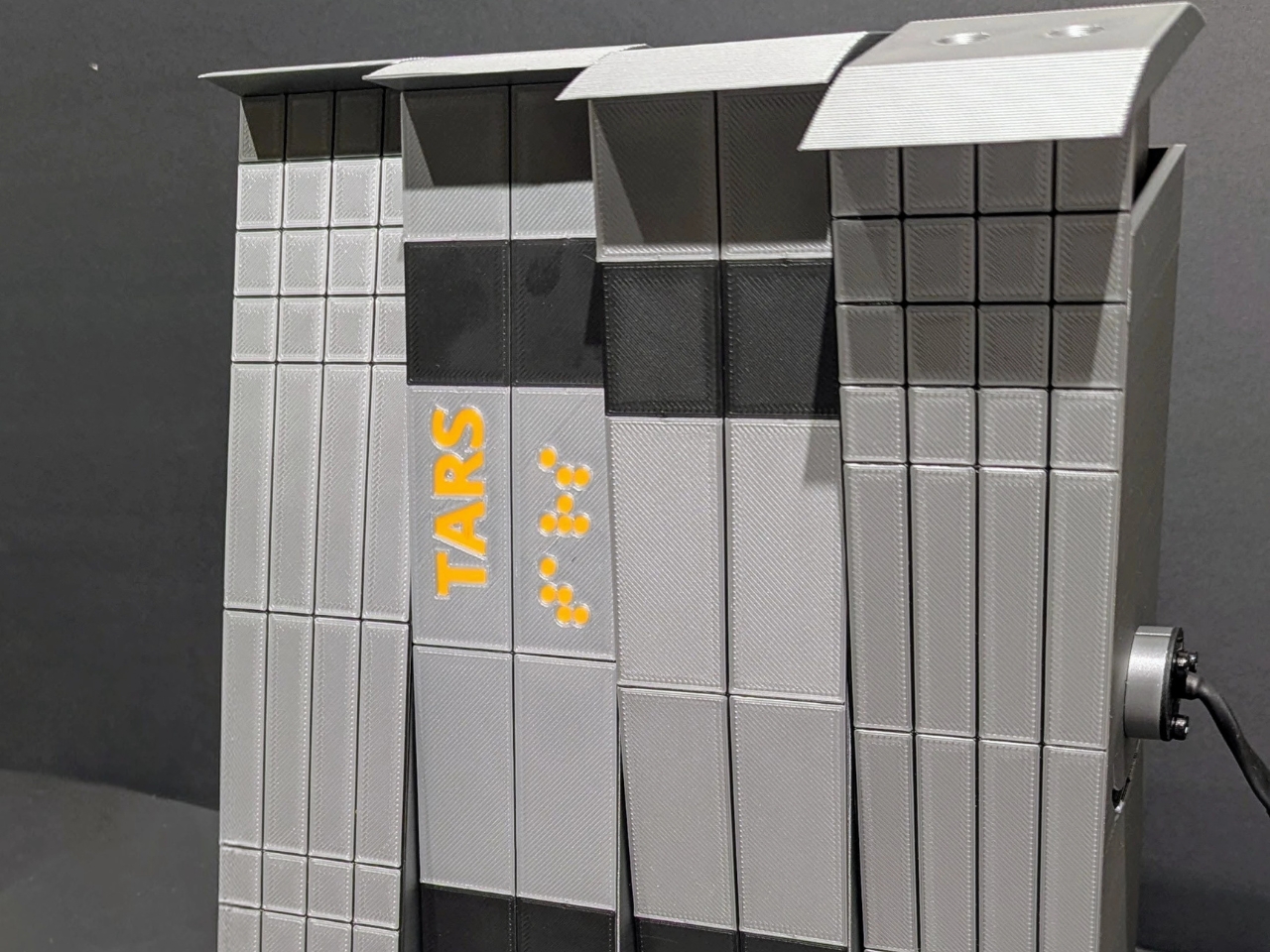
Meet TARS3D, the brainchild of roboticist Aditya Sripada and his longtime collaborator Abhishek Warrier. What started as what Sripada calls “a desire to reconnect with the simple joy of building robots” has turned into something that looks like a collapsing sculpture decided to get up and move across your living room floor. It’s weird, it’s wonderful, and it’s earning serious academic recognition.
If you’ve seen Christopher Nolan’s Interstellar, you know TARS. That blocky, impossibly versatile assistant robot that accompanied astronauts across alien landscapes, morphing from a walking tower of metal rectangles into a rolling wheel when speed was needed. The movie version was actually a human-sized puppet with operators digitally erased from scenes, and its wheel form was attached to a motorized dolly. Movie magic, not actual robotics. But Sripada, who holds a master’s degree from Carnegie Mellon University’s Robotics Institute and works as a senior robotics engineer at Nimble.ai, wasn’t satisfied with movie illusions. He wanted the real deal.
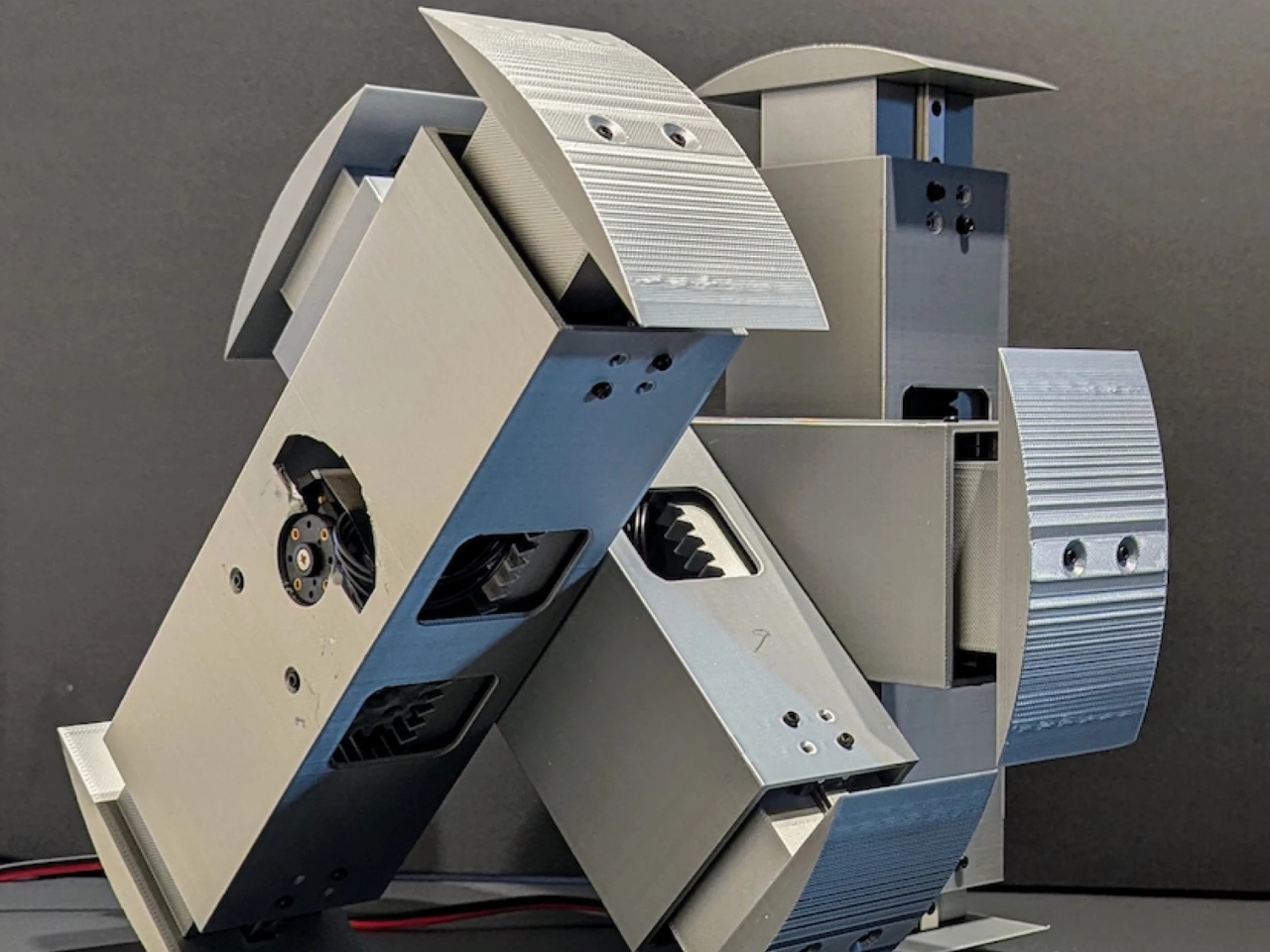
TARS3D features four independently articulated telescopic pillars that transform into an X-shape faster than you can say “Cooper, this is no time for caution.” Pillars one and three rotate forward while pillars two and four swing back, and curved pads extend from the tops and bottoms of each pillar to serve as feet. The result? An eight-spoke double rimless wheel that actually rolls. According to Sripada, this is the only recreation of TARS that can genuinely both walk and roll.
What makes this even cooler is the tech behind the transformation. Sripada and Warrier wrote an entire research paper titled “Walking, Rolling, and Beyond: First-Principles and RL Locomotion on a TARS-Inspired Robot,” which explores reinforcement learning-based control for the robot’s gait. They’re combining first-principles physics with modern learning techniques, a hybrid approach that opens new possibilities for adaptable locomotion in robotics. The paper was named a finalist for the Mike Stilman Award at the 24th IEEE RAS Humanoids Conference in Seoul, which is essentially the Olympics of humanoid robotics research. Pretty impressive for what started as a curiosity project.
Here’s the thing that makes TARS3D particularly fascinating: it challenges our assumptions about what robots should look like. Most robotic locomotion research focuses on biomimicry, trying to recreate how animals and humans move. But Sripada and Warrier note in their research that robots operating in human-engineered environments might actually benefit from non-anthropomorphic forms. Why make a robot look like a person when you can make it look like an alien geometry problem that somehow solves itself?
The implications reach beyond just being a really awesome tribute to a beloved sci-fi film. This kind of adaptable, multi-terrain locomotion could have real applications for space exploration. NASA and planetary robotics programs are always looking for designs that can handle unpredictable alien landscapes. A robot that can walk carefully across rough terrain, then transform into a wheel to speed across flat surfaces? That’s the kind of versatility you want on Mars or the Moon.
There’s something refreshing about TARS3D’s existence in our current robotics landscape dominated by humanoid bots trying to walk like people or dog-like machines trotting around warehouses. This project reminds us that inspiration can come from anywhere, even a fictional robot from a movie about wormholes and time dilation. And sometimes the best solutions don’t look like anything nature ever designed.
What Sripada and Warrier have created proves that with enough engineering know-how, determination, and probably more than a few late nights, you can turn movie magic into reality. TARS3D might not crack jokes about its humor setting being at 75%, but watching it transform from walker to roller is its own kind of entertainment. Science fiction has a way of becoming science fact when the right people decide to make it happen.
In a longstanding and complicated legal battle between Apple and Masimo, a recent ruling from a California jury may be the first step towards a certain conclusion. As reported by Reuters, a federal jury sided with Masimo, a medical tech company known for its patient monitoring devices, when it said that Apple infringed on the company's patent for technology that tracks blood-oxygen levels.
The case revolves around whether Apple violated Masimo's patent related to blood-oxygen sensors, which the jury claimed can be seen with the Apple Watch's Workout and Heart Rate apps. According to Reuters, Apple disagreed with the verdict, adding that "the single patent in this case expired in 2022, and is specific to historic patient monitoring technology from decades ago." The tech giant is reportedly planning to appeal the decision.
While there may be some closure with this California lawsuit, Apple and Masimo are entangled in a web of related but separate lawsuits. Masimo first accused Apple of infringing on its pulse oximeter patents, leading to Apple temporarily halting sales of its Series 9 and Ultra 2 smartwatches. In August, Apple redesigned its blood-oxygen monitoring feature and rolled it out to the Series 9, Series 10 and Ultra 2. The redesign was approved by the US Customs and Border Protection, but Masimo filed a suit against the agency for overstepping its authority by allowing the sale of these updated Apple Watches without input from Masimo.
This article originally appeared on Engadget at https://www.engadget.com/wearables/a-federal-jury-ruled-that-apple-has-to-pay-634-million-for-infringing-smartwatch-patents-202846266.html?src=rss
While I love traveling with friends and family, I also enjoy traveling alone. My time is my own and I can do whatever I want. But let’s be honest: solo travel also comes with its own unique challenges. Getting lost in translation at a local market, struggling to take a decent photo of yourself without looking like you’re holding a selfie stick, or standing paralyzed at a subway station trying to decode which train goes where. We’ve all been there.
Designer Siwoo Kim clearly understands these moments because Comes, their latest design concept, feels like it was born from real solo travel experiences. This isn’t just another gadget trying to solve problems that don’t exist. It’s a thoughtful response to the growing culture of solo exploration that’s taken over social media feeds and reshaped how we think about travel.
The rise of solo travel isn’t just a trend anymore. It’s become a full-blown cultural movement. YouTube channels dedicated to solo journeys rack up millions of views, not just because people want travel tips, but because there’s something deeply relatable about watching someone navigate a foreign city alone. These videos lower the psychological barrier that once made eating alone at a restaurant feel awkward or booking a solo trip seem lonely. Now? It’s empowering.
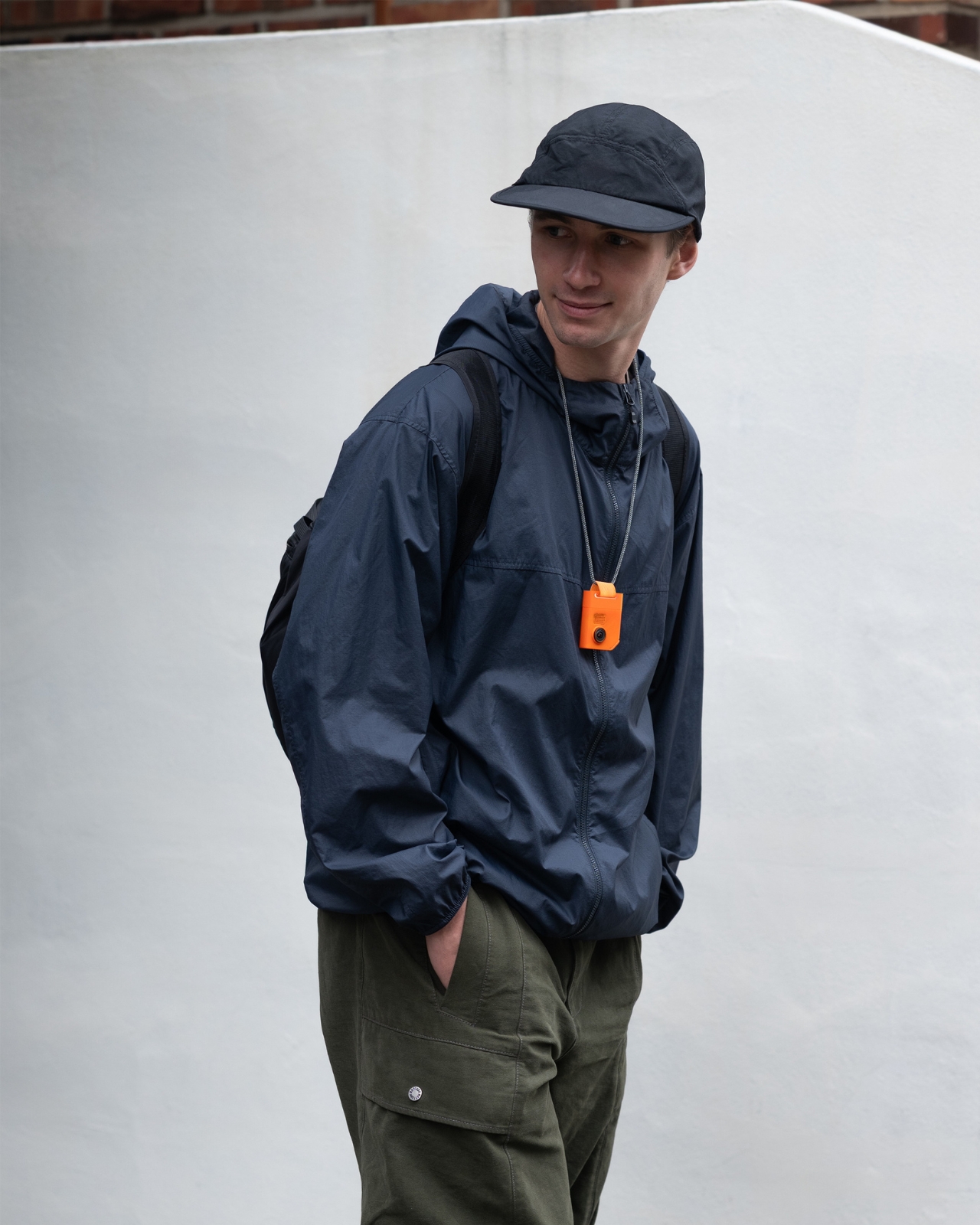
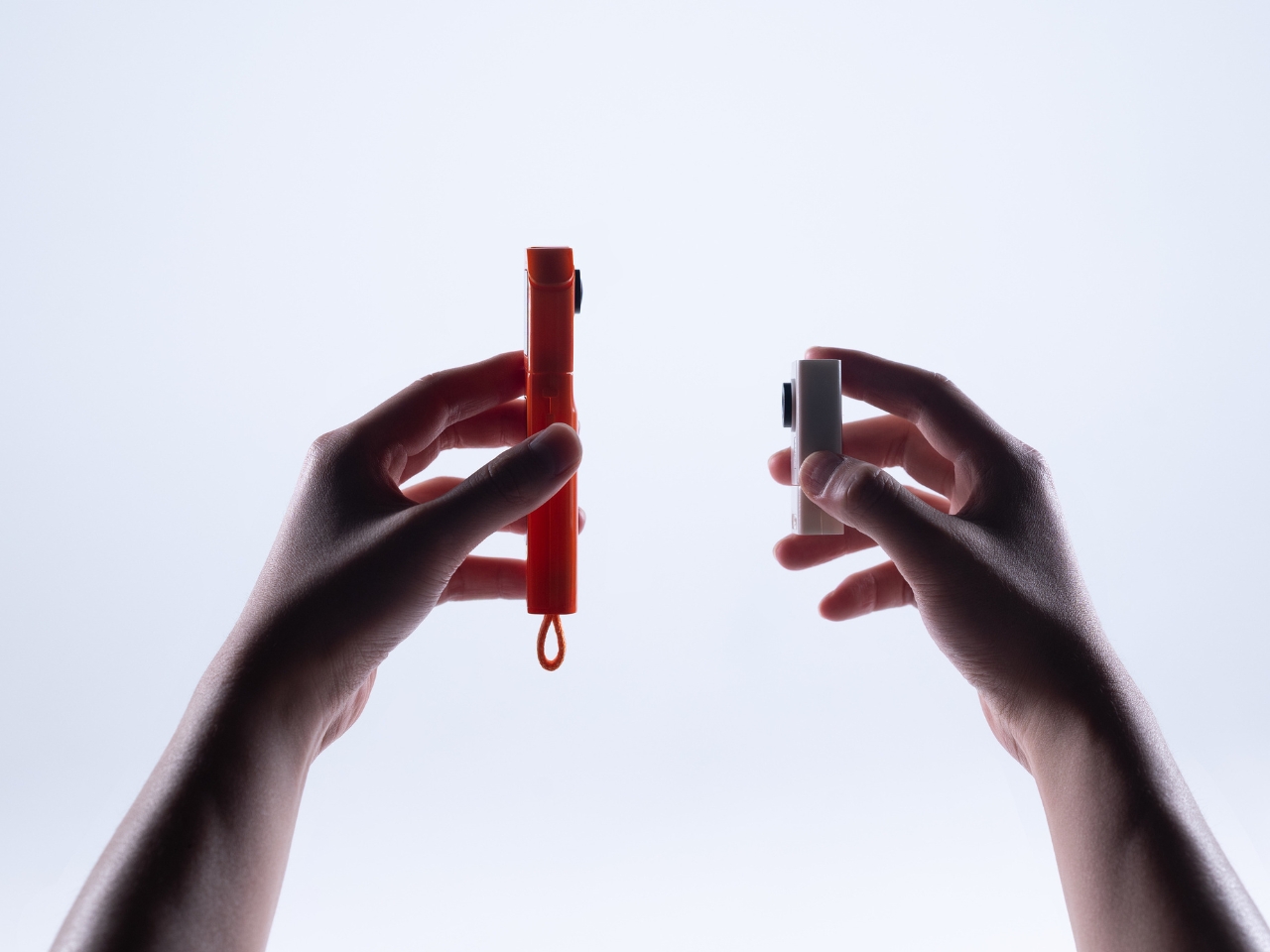
Comes taps into this shift with an approach that’s refreshingly human-centered. It’s a small AI-powered companion device equipped with a high-performance camera that can observe your surroundings and offer assistance exactly when you need it. But here’s where the design gets interesting: Comes features a modular, detachable structure that adapts to different travel situations. Think of it as a Swiss Army knife for the modern solo traveler, but way more elegant.
Picture this scenario. You arrive in a new city, step off the train, and immediately feel that familiar flutter of “okay, now what?” Just tell Comes where you want to go, and it becomes your personal guide, helping you take those first uncertain steps into unfamiliar territory. The device walks you through navigation in a way that feels supportive rather than intrusive.
The real genius shows up in how Comes splits apart. The head can attach to a necklace module around your neck, capturing your point of view while recording your journey. Meanwhile, the body remains accessible in your hand or pocket, ready to provide information about whatever you’re looking at. It’s like having a curious travel companion who can answer questions on the fly without you having to pull out your phone and break the moment.
For those who love zipping around cities on shared bikes or scooters (because who doesn’t anymore?), Comes includes a strap module that securely mounts the device onto various mobility options. It guides your route while documenting your ride, turning practical navigation into visual storytelling.
But perhaps the most valuable feature addresses every solo traveler’s occasional nightmare: the language barrier. Standing in front of a menu board, making awkward gestures at a shopkeeper, desperately trying to communicate something simple. Comes looks at both faces in a conversation and translates in real time. You speak naturally in your language, they respond in theirs, and Comes bridges the gap. No fumbling with translation apps or pointing desperately at pictures.
And then there’s the social aspect. You find the perfect spot for a photo, but you’re alone. Asking strangers for help can feel awkward, but Comes makes it easier. Because the device detaches, you can hand someone the camera module while keeping the main body with you to check the frame in real time. Composition slightly off? Comes relays your feedback instantly, even from across the plaza. It transforms what could be a frustrating experience into an opportunity for genuine human connection. Who knows, you might even learn about a hidden local gem in the process.
What makes Comes compelling isn’t just its functionality but its underlying philosophy. Solo travel has always involved embracing uncertainty and turning unexpected moments into memorable experiences. This design doesn’t eliminate those variables. Instead, it provides just enough support to help travelers feel confident facing them. It’s the difference between removing adventure and enabling it. Comes offers something different: a tool designed to help solo travelers engage more deeply with the world around them, not retreat from it.
Google may have to fork over 572 million euros, or nearly $665 million, to two German companies for "market abuse," according to a recent ruling from a Berlin court. First reported by Reuters, the tech giant was ordered to pay approximately 465 million euros, or approximately $540 million, to Idealo and another 107 million euros, or roughly $124 million, to Producto, both of which are price comparison platforms based in Germany. According to the ruling, Google abused its dominant market position by favoring Google Shopping in its own search results.
Idealo pursued legal action against Google, claiming that the Alphabet subsidiary was "self-preferencing" its own platforms, which led to unfair market advantages that hindered competitors. The company first demanded at least 3.3 billion euros, or more than $3.8 billion, in damages in February 2025. To counter, Google said it made changes in 2017 that allowed competing shopping platforms the same opportunity as Google Shopping to display ads through Google Search.
Idealo said in a press release that it will continue the legal pressure on Google, claiming that "the amount awarded reflects only a fraction of the actual damage." Albrecht von Sonntag, co-founder and member of Idealo's advisory board, added in a press release that "abuse of dominance must have consequences and must not be a profitable business model that pays off despite fines and damages."
It's not the first time Google has found itself in legal trouble in Europe. Beyond Google Shopping, Google was accused of favoring its own Google Flights and Google Hotels in search results, leading the European Union to threaten massive fines for violating its Digital Markets Act. A month prior, the European Commission fined Google nearly 3 billion euros, or more than $3.4 billion, for its anticompetitive practices in the advertising tech industry.
This article originally appeared on Engadget at https://www.engadget.com/big-tech/google-ordered-to-pay-665-million-for-anticompetitive-practices-in-germany-184505191.html?src=rss
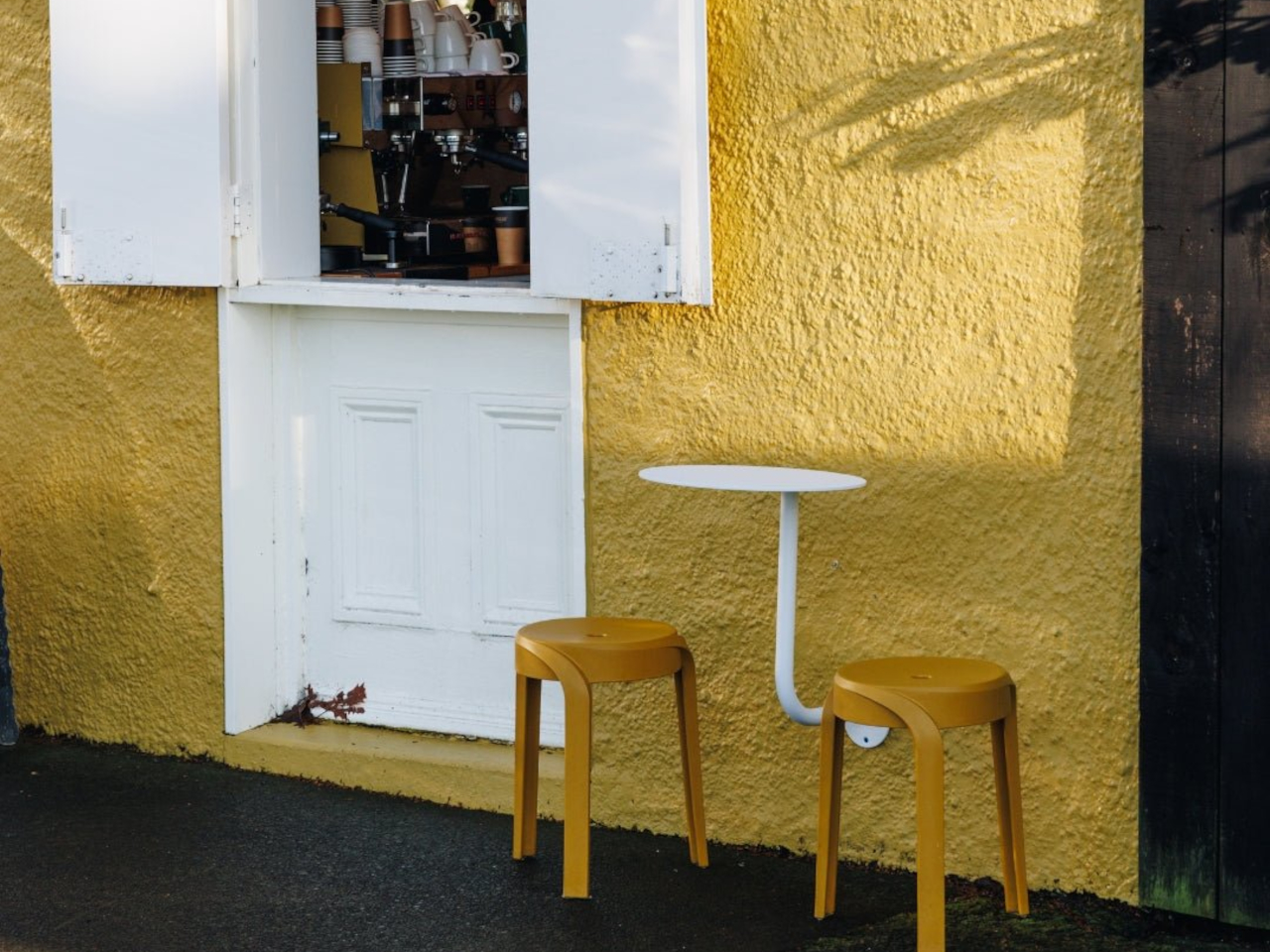
Small cafes and bistros face a constant battle with space. You need enough seating to make the business worthwhile, but cramming too many tables and chairs into a narrow sidewalk or patio turns the whole setup into an obstacle course. Floor-standing tables claim precious real estate even when they’re not in use, and moving them around every day to accommodate different crowds or weather becomes a hassle nobody wants to deal with.
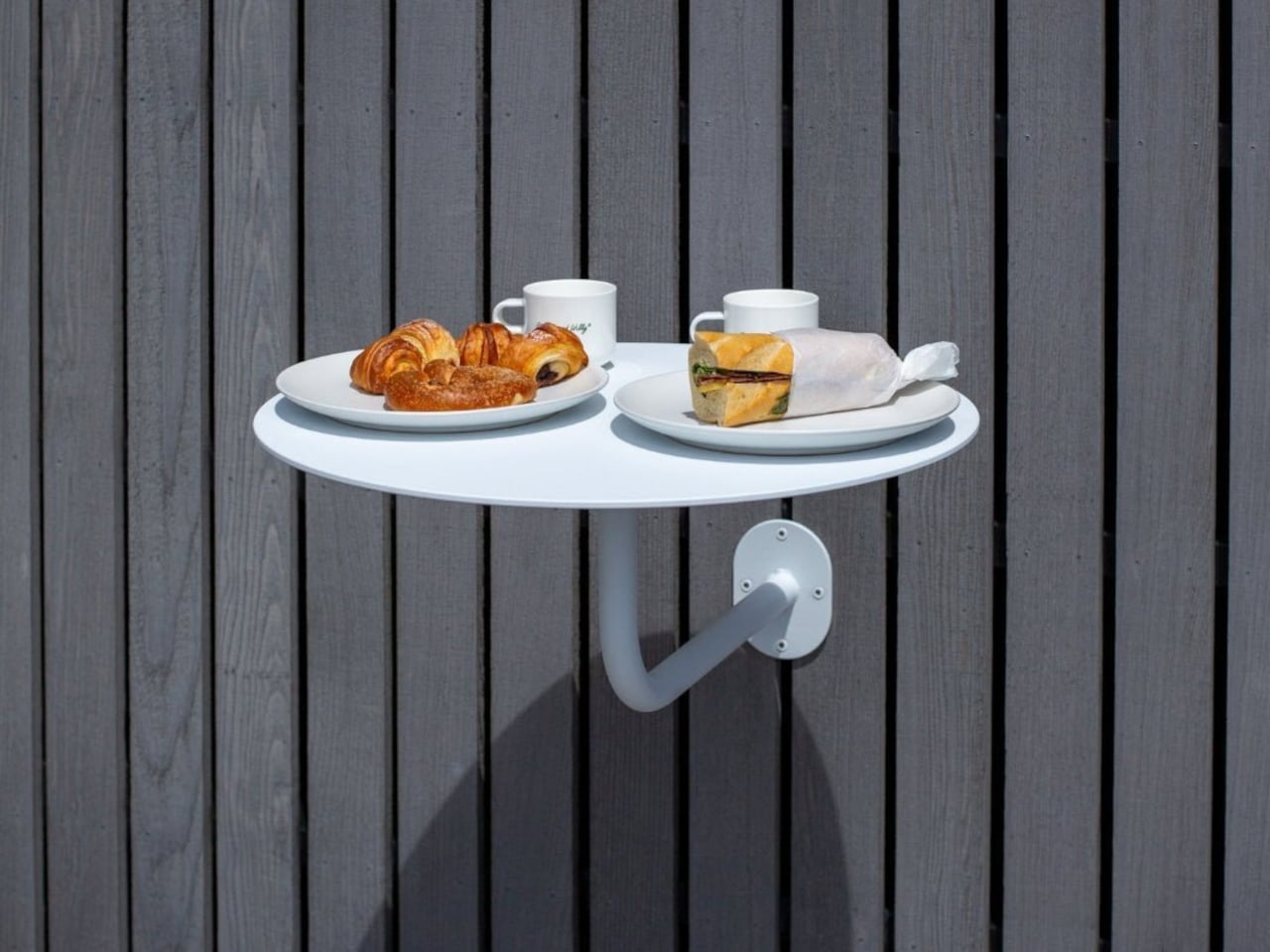
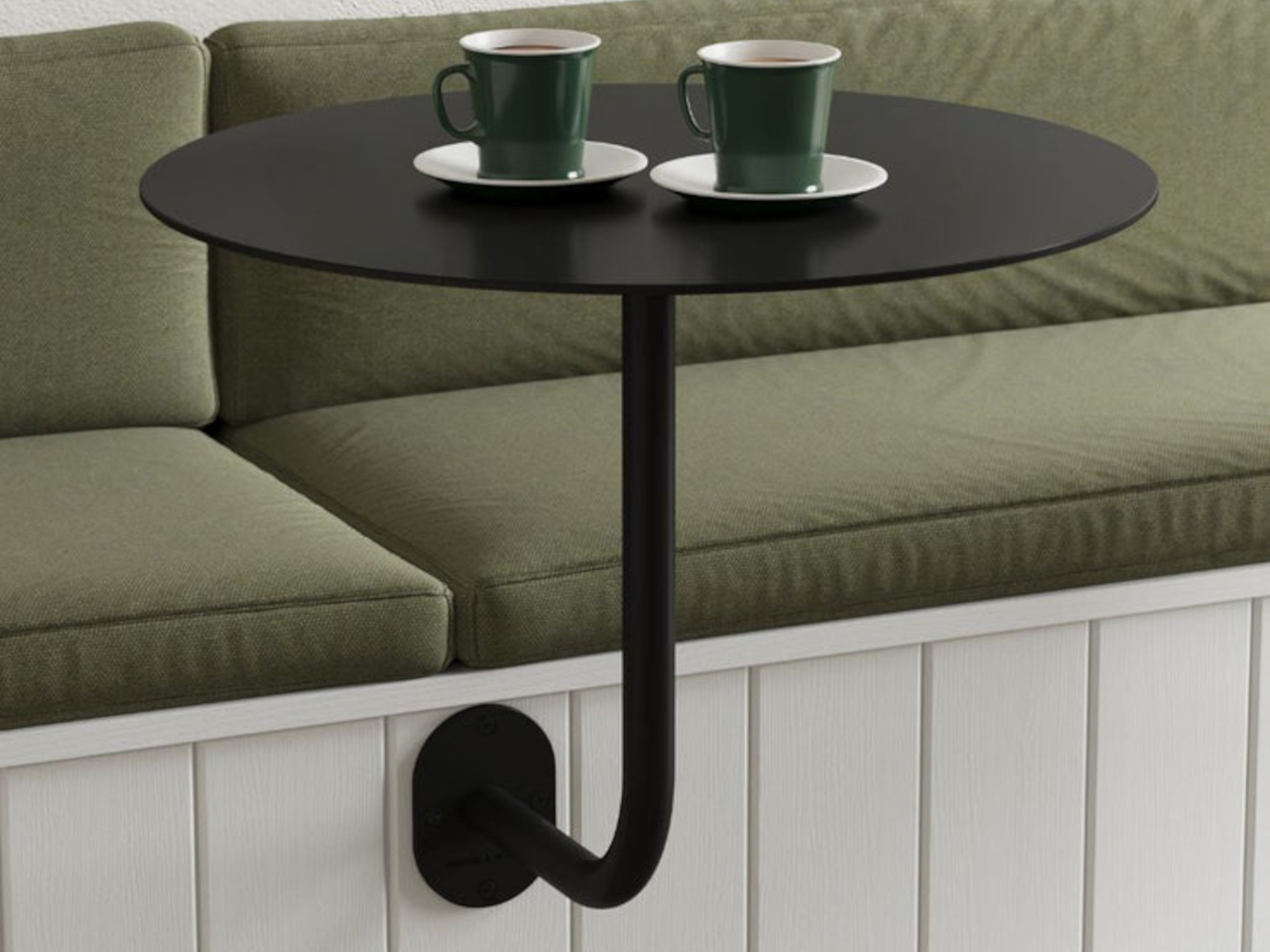
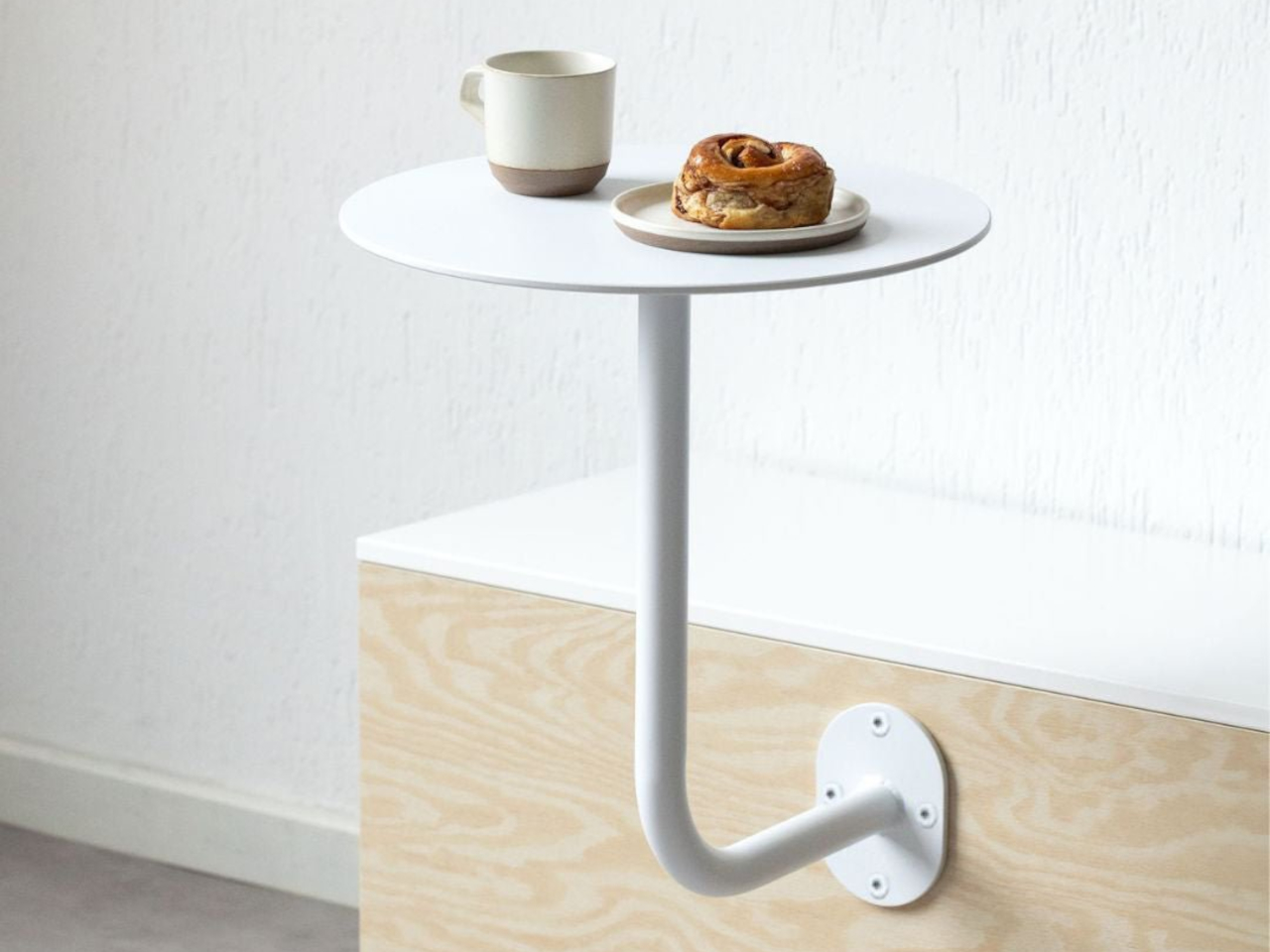
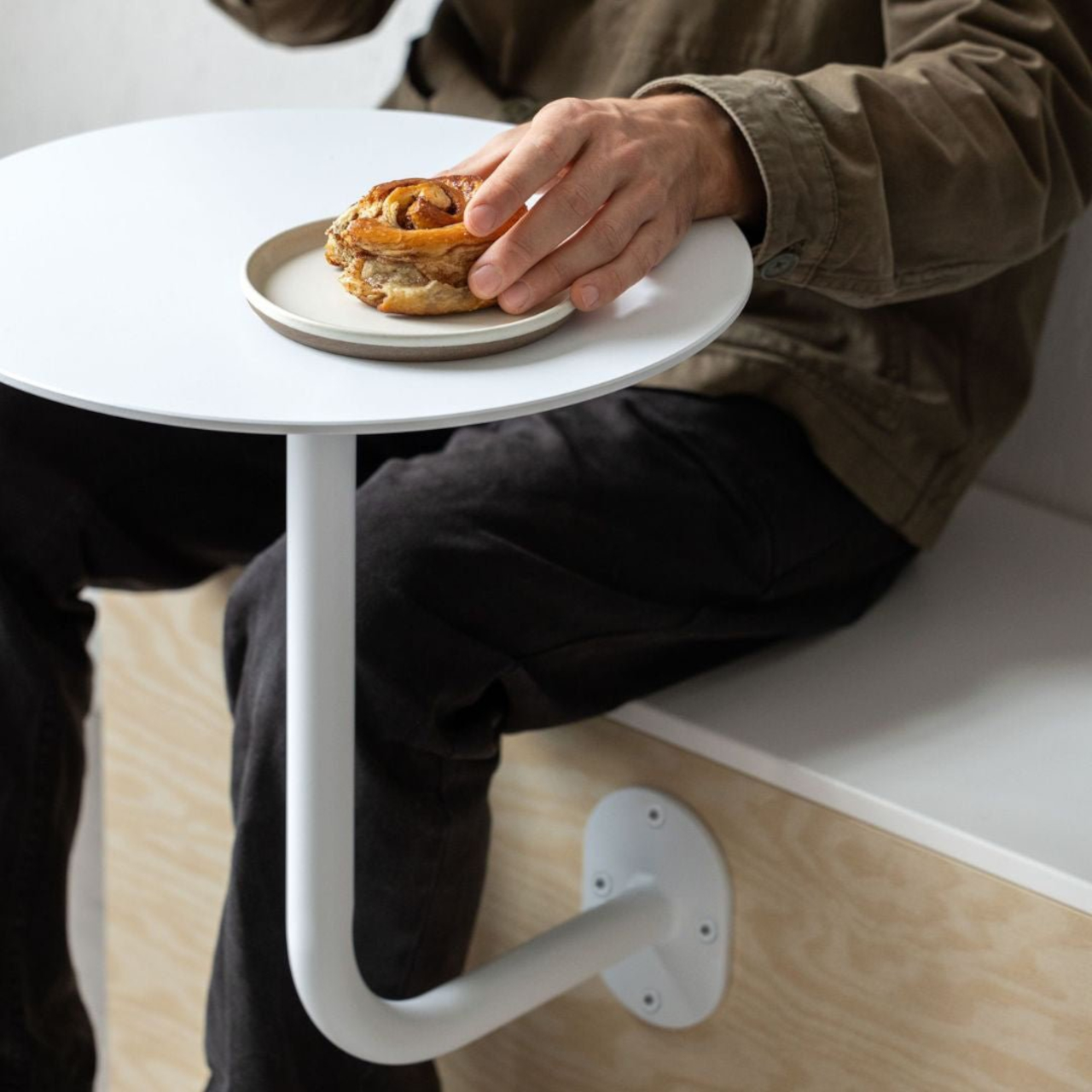
George & Willy’s Wall-mounted Cafe Table solves this by eliminating the floor space problem entirely. The table attaches directly to the wall or a bench seat with a reversible bracket that lets you position it high or low depending on your needs. When the day’s done, you can slot the table out of its bracket and bring it inside, leaving nothing behind but a small wall plate. It’s a simple approach that makes flexible seating actually flexible.
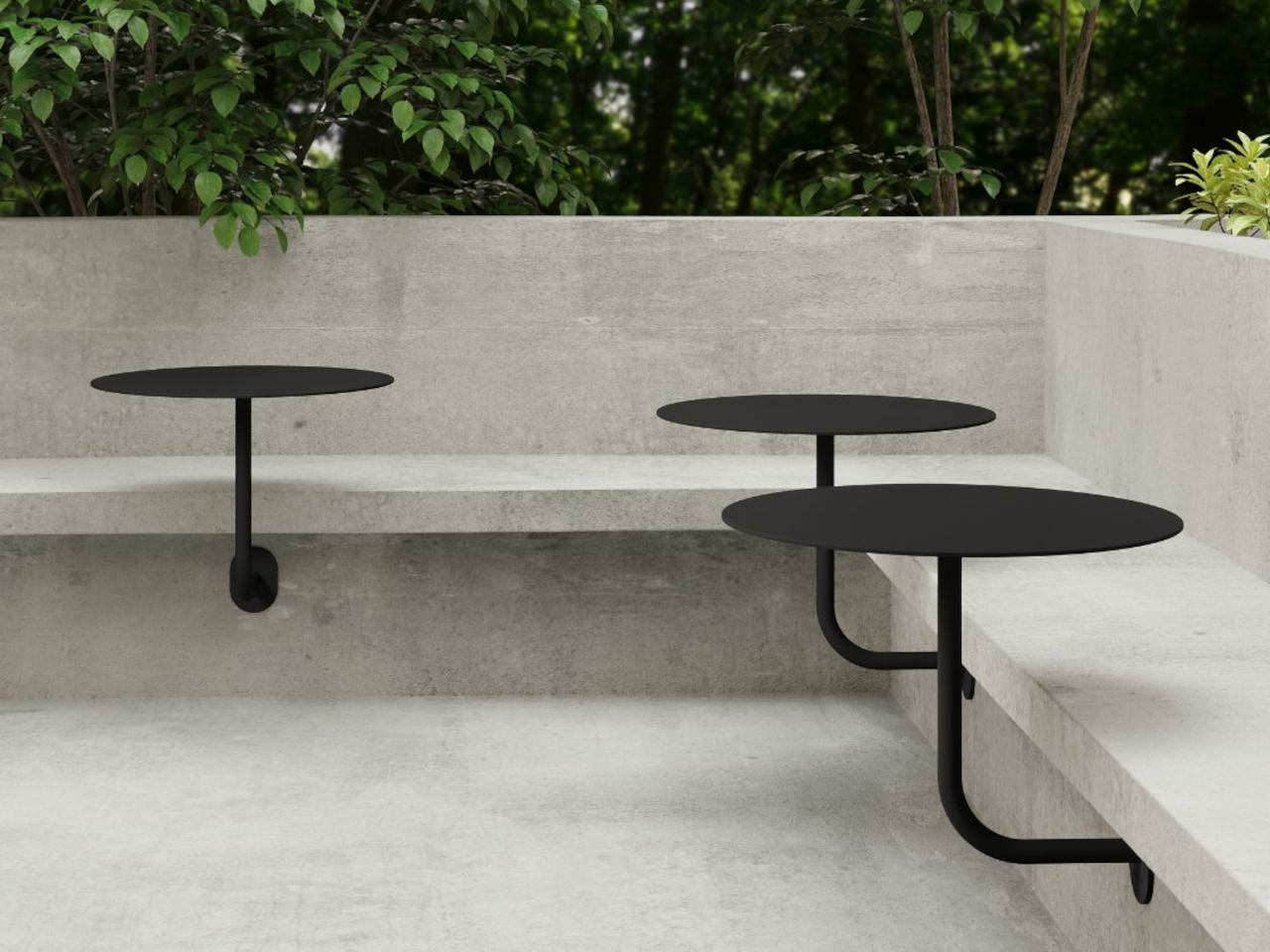
The table itself features a round aluminum top available in two sizes, either 40 cm or 60 cm in diameter, both with a clean powder-coated finish in black or white. A curved stem extends from the wall bracket, creating a graceful arc that supports the tabletop without needing legs underneath. The whole thing weighs just 8.4 pounds but can hold up to 17.6 pounds, which is plenty for coffee, pastries, laptops, or small meals.
Of course, the real cleverness is in the bracket system. You can mount it in a tall orientation, where the table attaches to a bench seat and sits higher and closer to the wall, or in a short orientation, where it mounts directly to the wall and extends further out for more legroom. The same bracket handles both setups, so you’re not locked into one configuration when your space inevitably needs to change.
The table’s weatherproof construction means it works just as well outdoors as it does inside. Rain, humidity, and temperature swings won’t damage the aluminum or zinc-coated steel, which is why you see these tables installed on patios, sidewalks, and garden walls. The removable design also makes cleaning straightforward since you can take the whole thing down, wipe it off, and slot it back in without any tools.
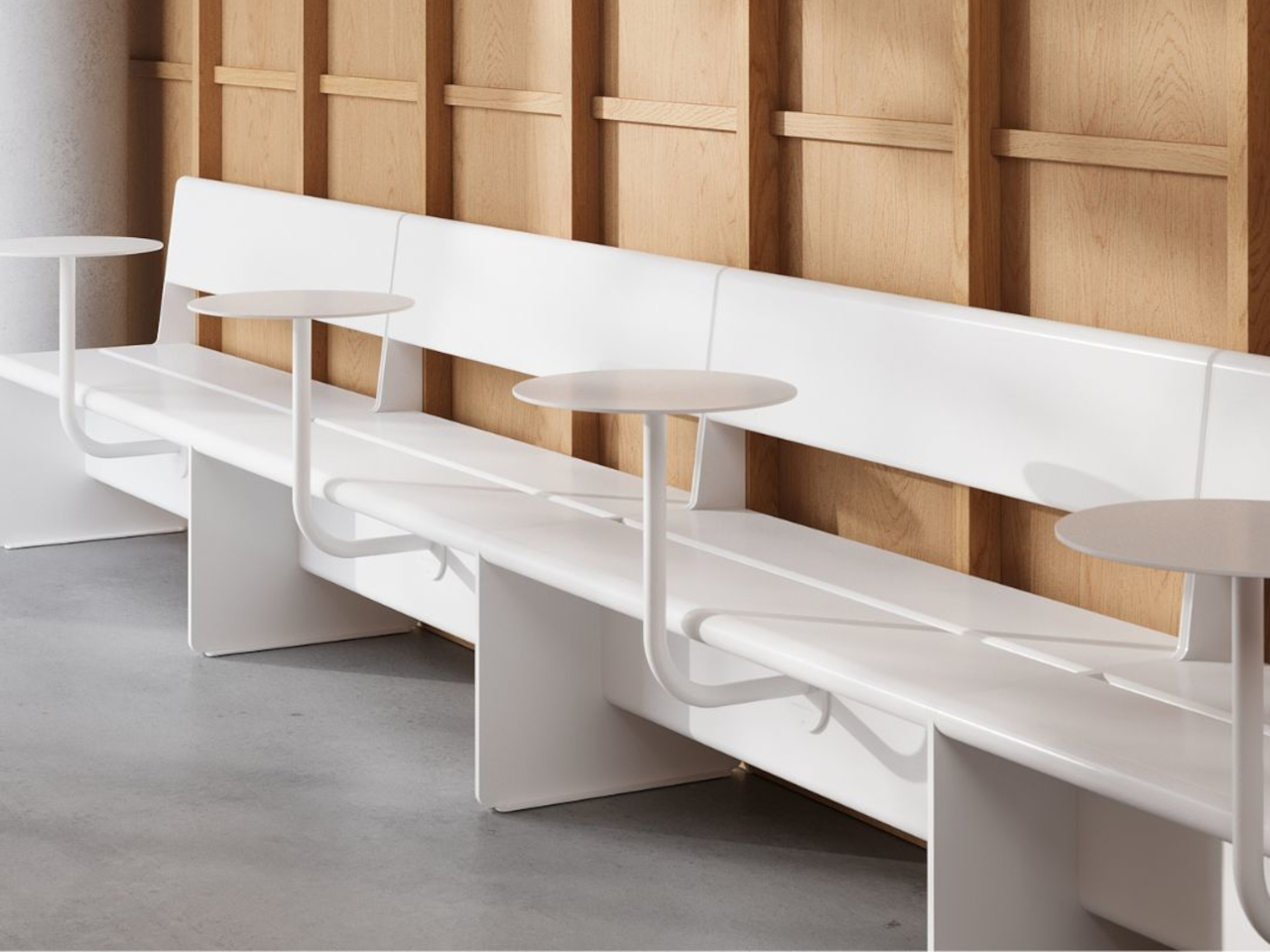
What makes the Wall-mounted Cafe Table feel genuinely smart is how it adapts to different situations. You can install multiple tables in a row along a wall for group seating, space them out for solo customers, or mix tall and short orientations to accommodate benches and stools in the same area. That kind of modularity is rare in furniture that also looks this minimal and intentional.
The table’s slim profile and clean lines fit seamlessly into modern cafes, but the design works just as well in home settings where space is tight. Balconies, small patios, or even compact kitchens can benefit from a surface that doesn’t claim floor space and can be tucked away when you need the room. It’s the kind of simple, thoughtful design that makes you rethink how furniture occupies space.