Netflix is acquiring Estonian startup Ready Player Me, a company creating "cross-game avatar tech" that allows players to bring their digital personas with them to different games, the company's CEO Timmu Tõke shared in a LinkedIn post. The acquisition is part of Netflix's new games strategy, which puts an emphasis on approachable multiplayer titles and adaptations of the streaming service's IP.
Ready Player Me's team of around 20 employees will be incorporated into Netflix's staff, TechCrunch writes, though Tõke is the only one of the startup's four founders who will continue on after the acquisition. Neither company has shared when the avatar tech will be incorporated into Netflix's games or what games will support the feature when they do.
Besides designing its avatar system to be easy for developers to implement in their games, Ready Player Me's big pitch for their system is using AI to automatically redesign avatars for different games' art styles and "automatically fit assets to any avatar rig or topology without manual work."
Netflix has taken multiple different approaches to games in the last few years, but lately, the company has actively retreated from AAA development and its more ambitious projects. Other than the premiere of its take on HQ Trivia, Netflix's last few game announcements of 2025 were focused on a collection of streamable party games, and a partnership with FIFA to release a new soccer sim in 2026. All of those projects could support avatars in one form or another, now Netflix just needs to decide how.
This article originally appeared on Engadget at https://www.engadget.com/gaming/netflix-is-acquiring-game-avatar-maker-ready-player-me-204443001.html?src=rss
We have seen luxurious mobile homes, liveable work pods built on trailers, and compact campers to slide onto the truck beds. But this expandable rig is not going that route; it’s changing the spectrum by presenting itself as a first self-sufficient ‘dorm on wheels.’ Perhaps, Expandable Trailers, the company behind the build, will refrain from calling its dedicated creation something on those lines, but if you’re a team of six, requiring a ‘dependable space to rest, recharge, and regroup’ – before a game in the city or in the middle of a sandstorm – this expandable pod is all that you will want.
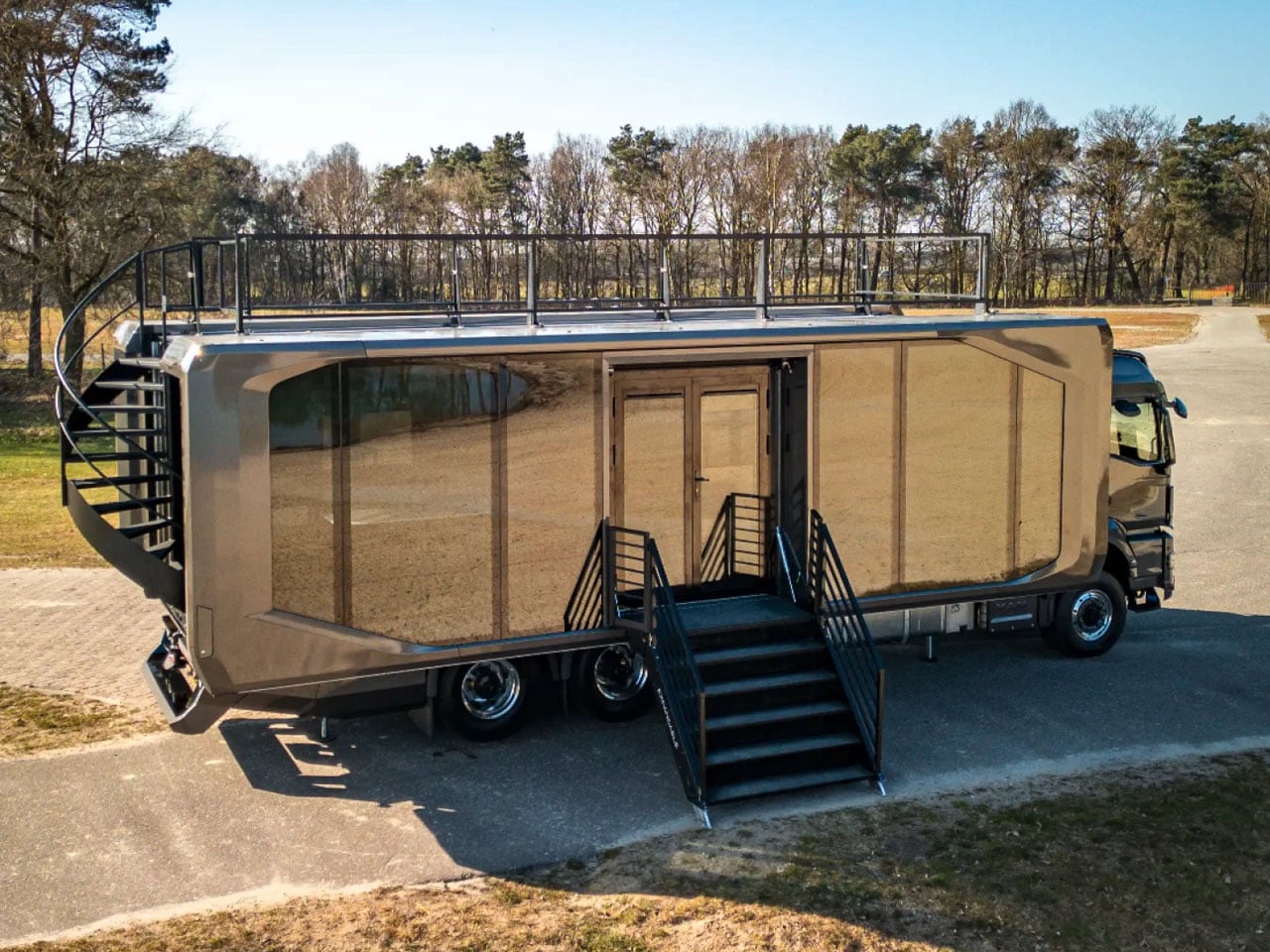
Expandable Trailers has custom-built this 30-foot expandable motorhome for Shiver Offroad, a prominent raid team that’s a regular at the Dakar Rally – a challenging desert race. It is based on a MAN 6×6 HD truck chassis for the team that needs a stable and comforting basecamp in the most remote place, without compromising space, facilities, and functionality necessary for all the individual and team needs. The compact Shiver Offroad mansion is designed to expand on location into a spacious living area for six.
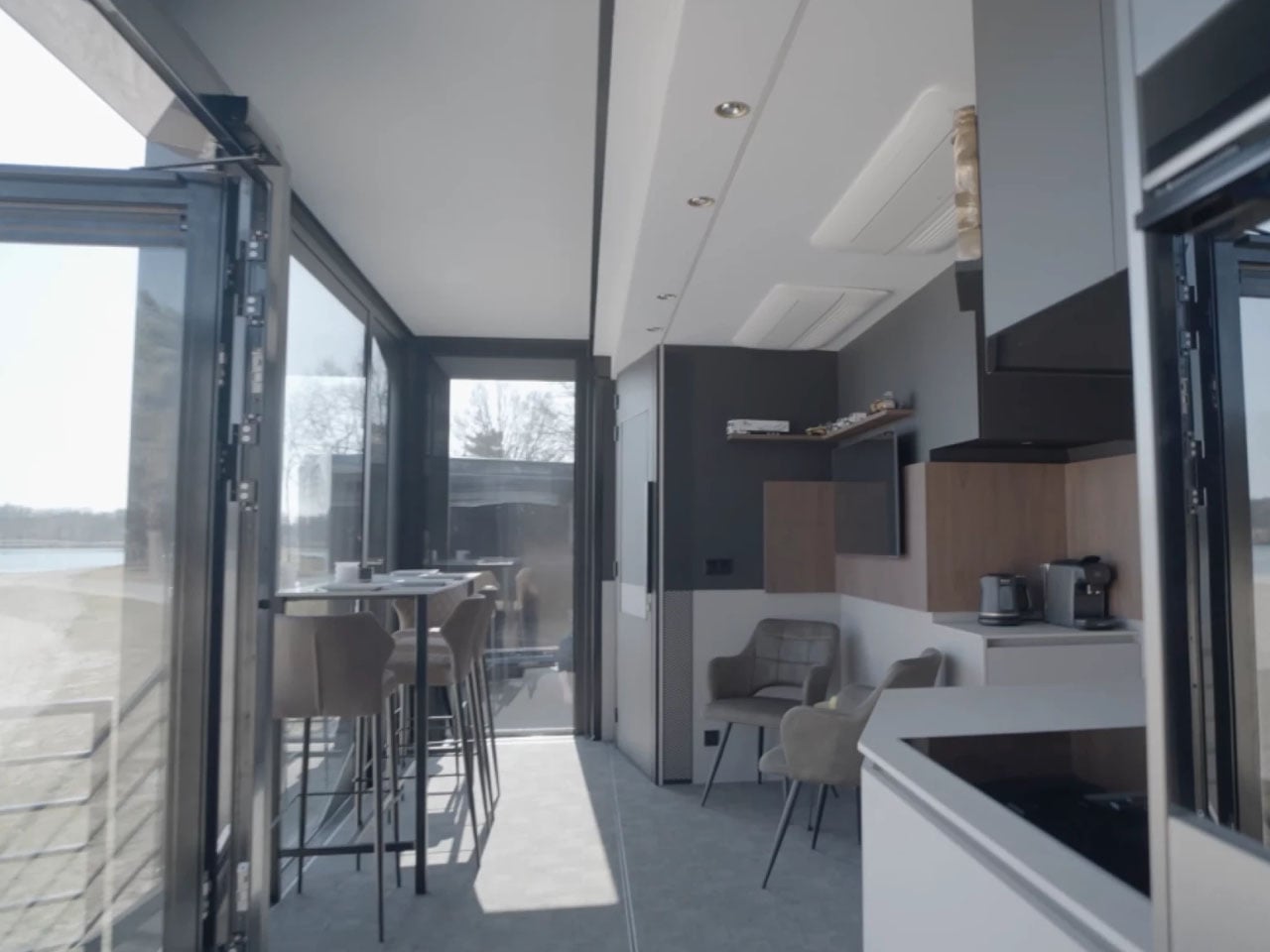
The Shiver x Expandable motorhome is not about pomp and show, even though it’s built on the Expandable Trailers’ signature expanding mechanism, which opens the interior on either side for all the necessary elements Shiver Offroad may need for its team of six. It is for all good reasons, a mobile space that puts functionality and comfort ahead of everything else. “No hassle with temporary tents or booking accommodations. Just pull up, expand, and get to work — or rest,” the company press information notes.
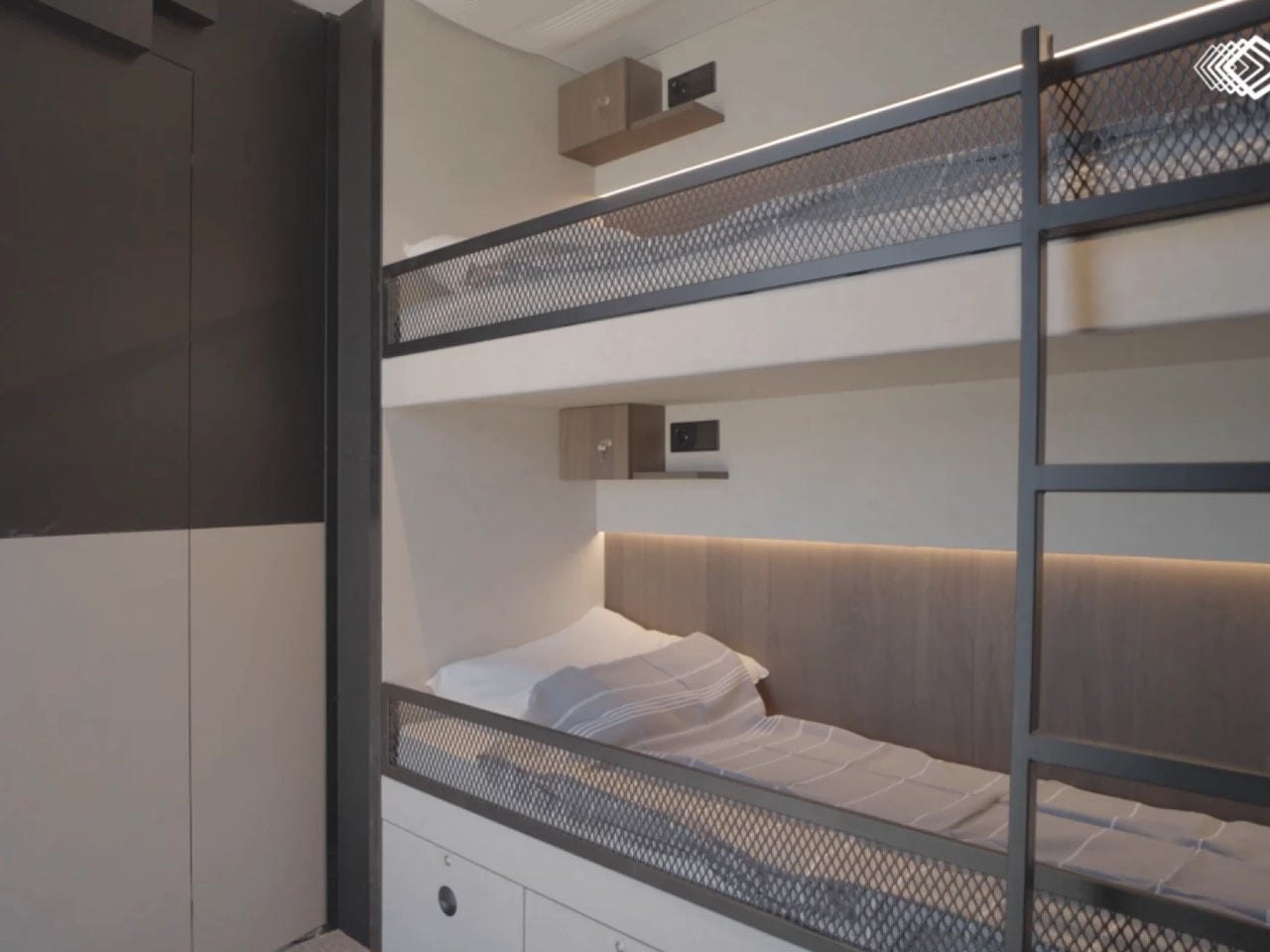
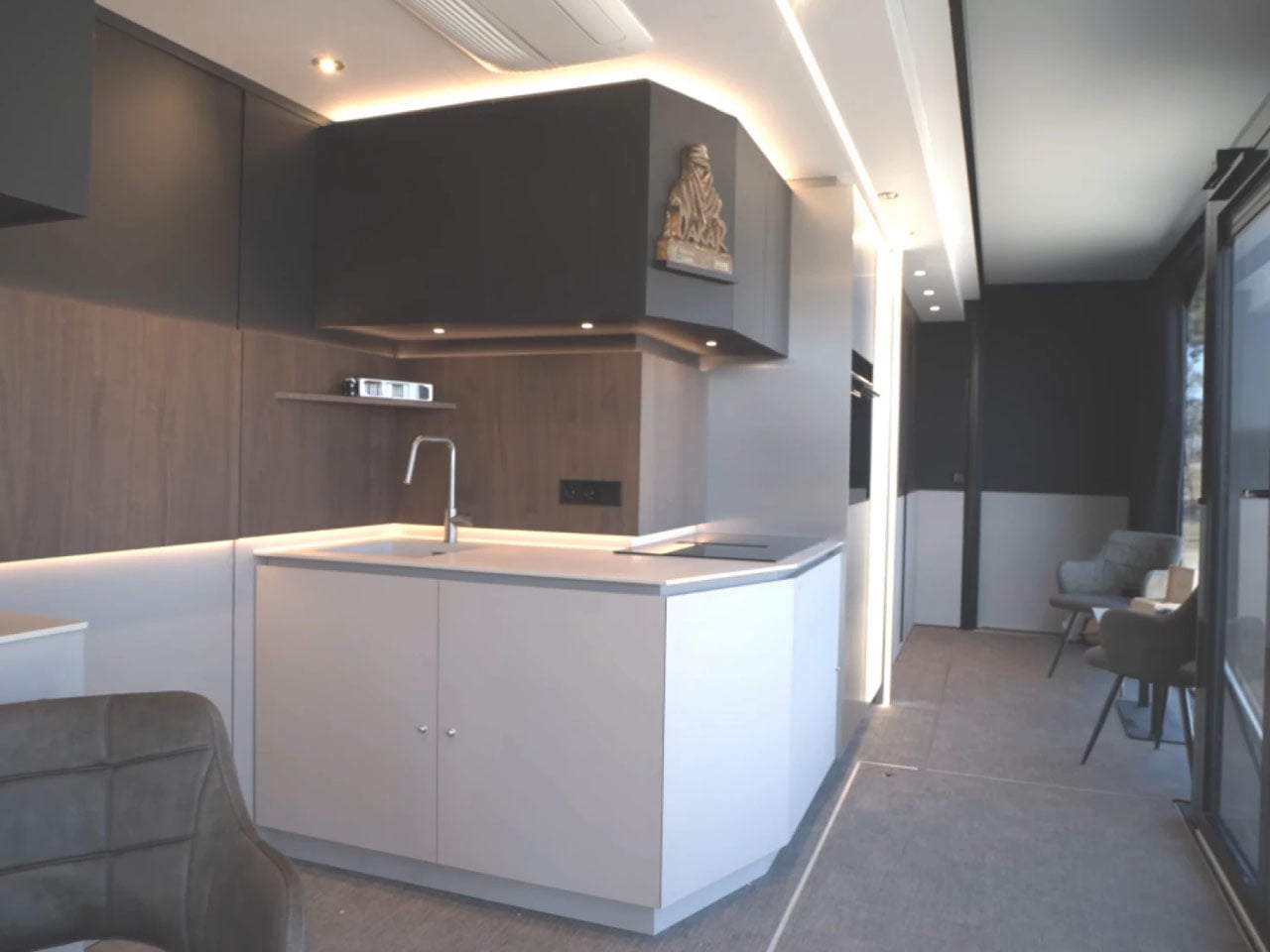
The glass exterior of this mobile rally base is topped with a full-size rooftop terrace. It starts as an open floor plan on the inside. For Shiver Offroad, it has, however, been customized to meet the team’s needs with fixed bunk beds for six members on one side (which presents itself like a shared dorm room). Each bed is provided with its own power outlet, a reading light, and a tiny storage compartment for stowing away personal belongings.
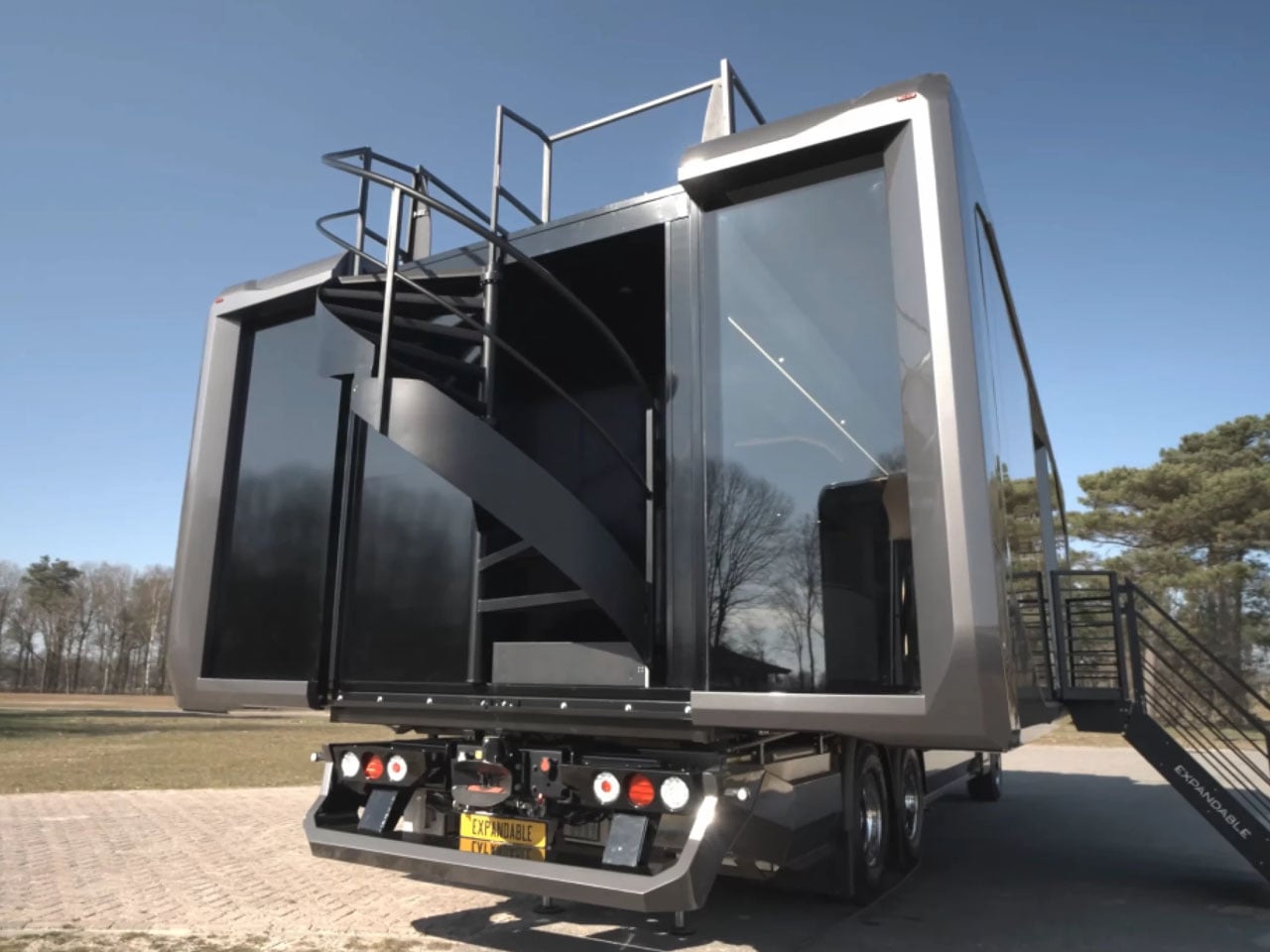
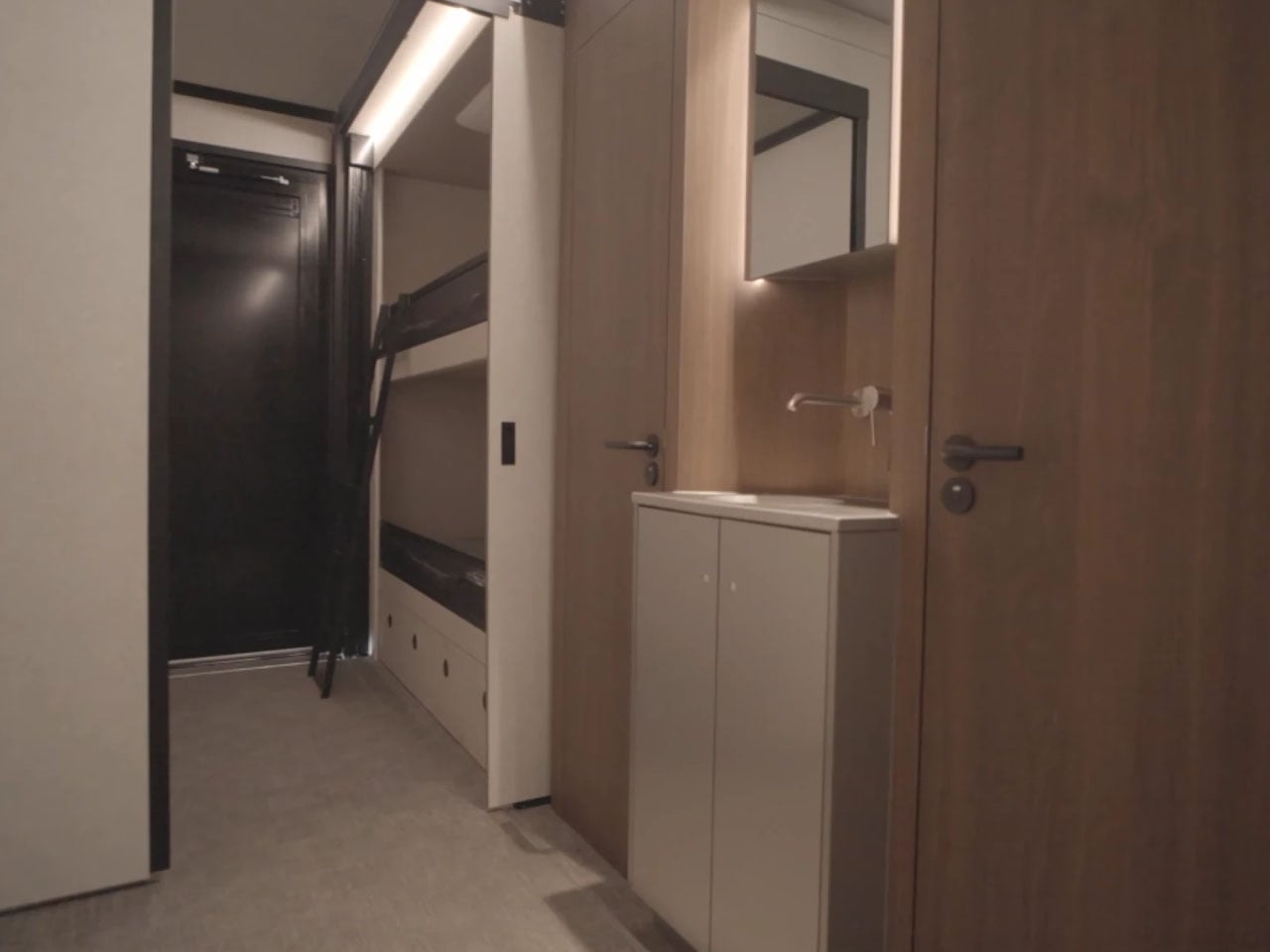
The pod is more than just an off-road capable mobile home. It is designed to be fully self-reliant with its own power supply from a generator and a battery. The expanding rig has a kitchen comprising a cooktop, sink, fridge, and storage cabinets. A dining area is also provided for the team members to have shared meals. Without the bathroom, this would be incomplete. We learn that it also features a separate shower room and a toilet, and a washer-dryer combo to handle the laundry. For when the team wants to wind down after the hustle, a small lounge space, along with a large window, makes it possible. Just outside – in the rear – is the spiral staircase leading to the terrace on the roof.
It looks like the holidays aren't a bad time to shop for a VPN subscription. ExpressVPN, Engadget's pick for the best premium provider, currently has a less premium price. This deal gives you two years of the Advanced plan (with a bonus of four free months) for only $101. When it isn't on sale, the same subscription would cost $392.
Engadget's VPN guru, Sam Chapman, praised ExpressVPN's service. He described it as "high-performing" and having "very few flaws." The service received high marks for its speeds, easy-to-use interface and global network availability. The only significant mark against it was its relatively high standard pricing. But with this holiday sale, that criticism is (temporarily) null and void.
ExpressVPN recently switched to a multi-tier pricing structure. (That previously mentioned Advanced plan is the mid-range one.) There's a cheaper Basic plan that allows 10 simultaneous devices (compared to the Advanced plan's 12) and doesn't include perks like a password manager. You can also choose the highest-priced Pro plan. It allows for 14 simultaneous devices and adds several extras. You can compare plans on ExpressVPN's website.
When buying a two-year plan, the Basic tier is available for $2.79 per month (78 percent off). The Advanced plan is $3.59 per month (74 percent off). And the Pro plan is $5.99 per month (70 percent off). All three include the bonus of four additional months, giving you 28 total.
This article originally appeared on Engadget at https://www.engadget.com/deals/get-up-to-78-percent-off-expressvpn-two-year-plans-for-the-holidays-194912043.html?src=rss
Behold Mark Zuckerberg: man of principle. Witness the Meta CEO's dedication to the most high-minded of causes: "currying favor with whoever's in charge." In 2013, when Barack Obama was president, Zuckerberg co-founded FWD.us, a pro-immigration advocacy group. For years, he vocally supported providing paths to citizenship for "the most talented and hardest-working people, no matter where they were born." Now, in 2025, with Donald Trump back in power and pushing draconian immigration policies, Zuckerberg's philanthropy organization has officially cut ties with the group. Who says Big Tech executives don't stand for anything?
On Friday, Bloombergreported on the Chan Zuckerberg Initiative (CZI) severing its ties with FWD.us. Zuckerberg's group provided no funding to the advocacy group for the first time this year. Up to that point, over half of the roughly $400 million donated to the nonprofit since 2013 had come from CZI.
In addition, CZI's chief of staff, Jordan Fox, resigned from the FWD.us board. No one else at CZI will fill the vacant slot, another first for the pro-immigration and justice reform advocacy group.
In a statement to Engadget, a spokesperson for CZI said the change had been in the works for several years. “Nearly five years ago, we shared that we were focusing on our core work in science, education, and supporting our local communities,” the spokesperson said. “As part of that transition, we committed foundational funding to FWD.us to continue their bipartisan work. We have fulfilled that financial commitment and wound down our social advocacy funding.” She added that the couple’s Biohub initiative is currently their “primary philanthropy.”
Mark Zuckerberg listens attentively to Stephen Miller at Trump's January inauguration
BRENDAN SMIALOWSKI via Getty Images
In late 2024, Zuckerberg met with Trump adviser Stephen Miller, who reacts to brown-skinned humans being sent to foreign gulags the way my dog responds to a juicy steak. Among other topics during the exchange, Miller reportedly questioned Zuckerberg's ties to FWD.us.
Apparently, his words resonated with Zuckerberg’s principles. In January, before Trump was sworn in for his second term, Meta unleashed an overhaul that reads like a Miller wishlist. The company ended its diversity, equity and inclusion (DEI) programs. That same month, it ditched third-party fact-checkers, calling them "too politically biased." It also changed its policies to allow for "insulting language" on topics of immigration and LGBTQ+ issues. The company even added Trump backer Dana White to its board.
"We're in the middle of a pretty rapidly changing policy and regulatory landscape that views any policy that might advantage any one group of people over another as something that is unlawful," Zuckerberg told the New York Times in January. "Because of that, we and every other institution out there are going to need to adjust."
"We now have a US administration that is proud of our leading companies, prioritizes American technology winning and that will defend our values and interests abroad," Zuckerberg said in a January investor call. "I am optimistic about the progress and innovation that this can unlock, so this is going to be a big year."
US Chief Border Patrol Agent, Gregory Bovino and masked ICE agents in New Orleans
Ryan Murphy via Getty Images
Now witness the contrasting words of one of Zuckerberg's chief rivals in Silicon Valley. "When you meet these [immigrant] children who are really talented, and they've grown up in America, and they really don't know any other country besides that, but they don't have the opportunities that we all enjoy, it's really heartbreaking, right?" the tech executive said. "That seems like it's one of the biggest civil rights issues of our time."
Despite the funding setback, thanks to our principled hero, FWD.us will press forward. "We're thankful to our donors, past and present, and so grateful to the many new donors who have stepped up in the past few years — and particularly the influx of new supporters we have seen this year," FWD.us President Todd Schulte said in a statement. "This allows us to fight for immigrants under attack today and to build a better approach to immigration and criminal justice reform for many, many years to come."
Update, December 19, 2025, 1:19PM PT: This story was updated to include a statement from a spokesperson for the Chan Zuckerberg Initiative.
This article originally appeared on Engadget at https://www.engadget.com/big-tech/mark-zuckerbergs-nonprofit-cuts-ties-with-the-immigration-advocacy-group-he-co-founded-183447900.html?src=rss
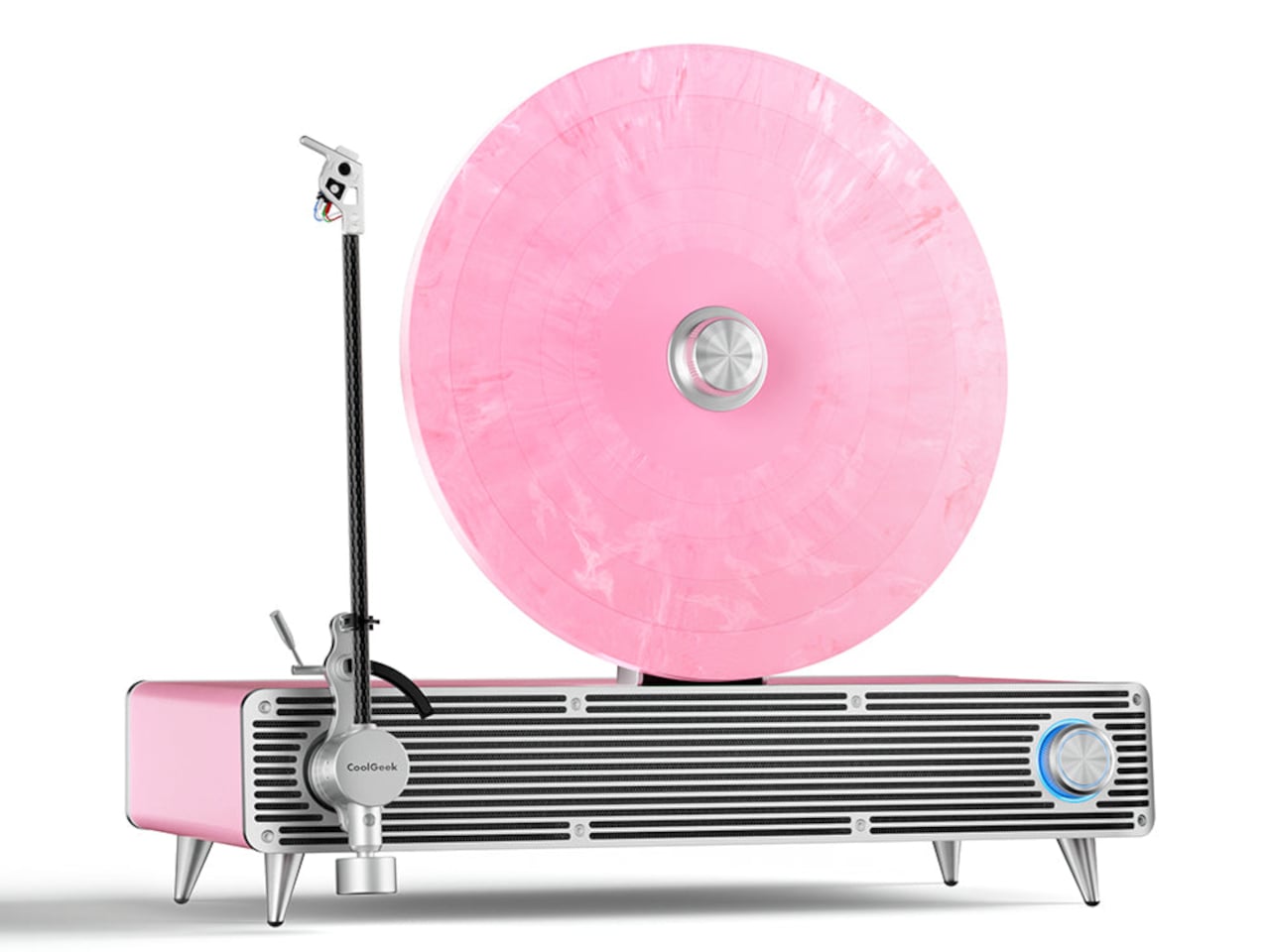
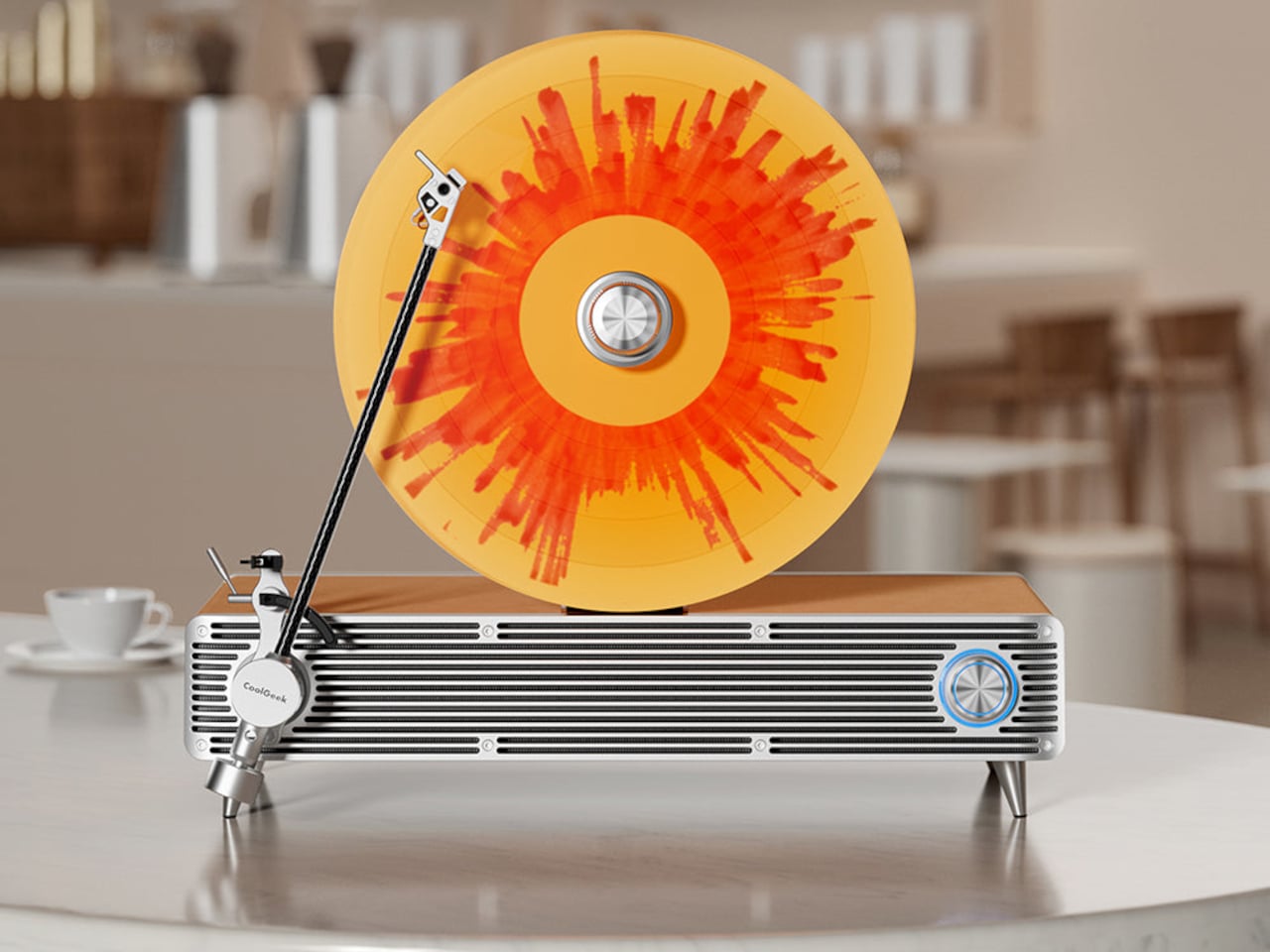
Vinyl has come back as much for the ritual and artwork as for the sound, yet most turntables still hide records flat on a plinth, as if they are shy. People lean records against walls or shelves to show them off, while the deck itself sits in a corner doing its work horizontally. The VS-01 is a vertical Bluetooth turntable that treats the spinning disc as a display piece instead of something to tuck away.
The VS-01 Bluetooth Vertical Turntable is a retro-futuristic record player that stands the platter upright behind a low, mid-century-inspired base. The front is all CNC-machined aluminum grille and vegan-leather-wrapped MDF, with a handcrafted carbon fiber tonearm reaching across the record. The design blends cool metal and warm materials, so the whole thing reads like a small hi-fi sculpture that happens to play vinyl and stream Bluetooth audio when you ask it to.
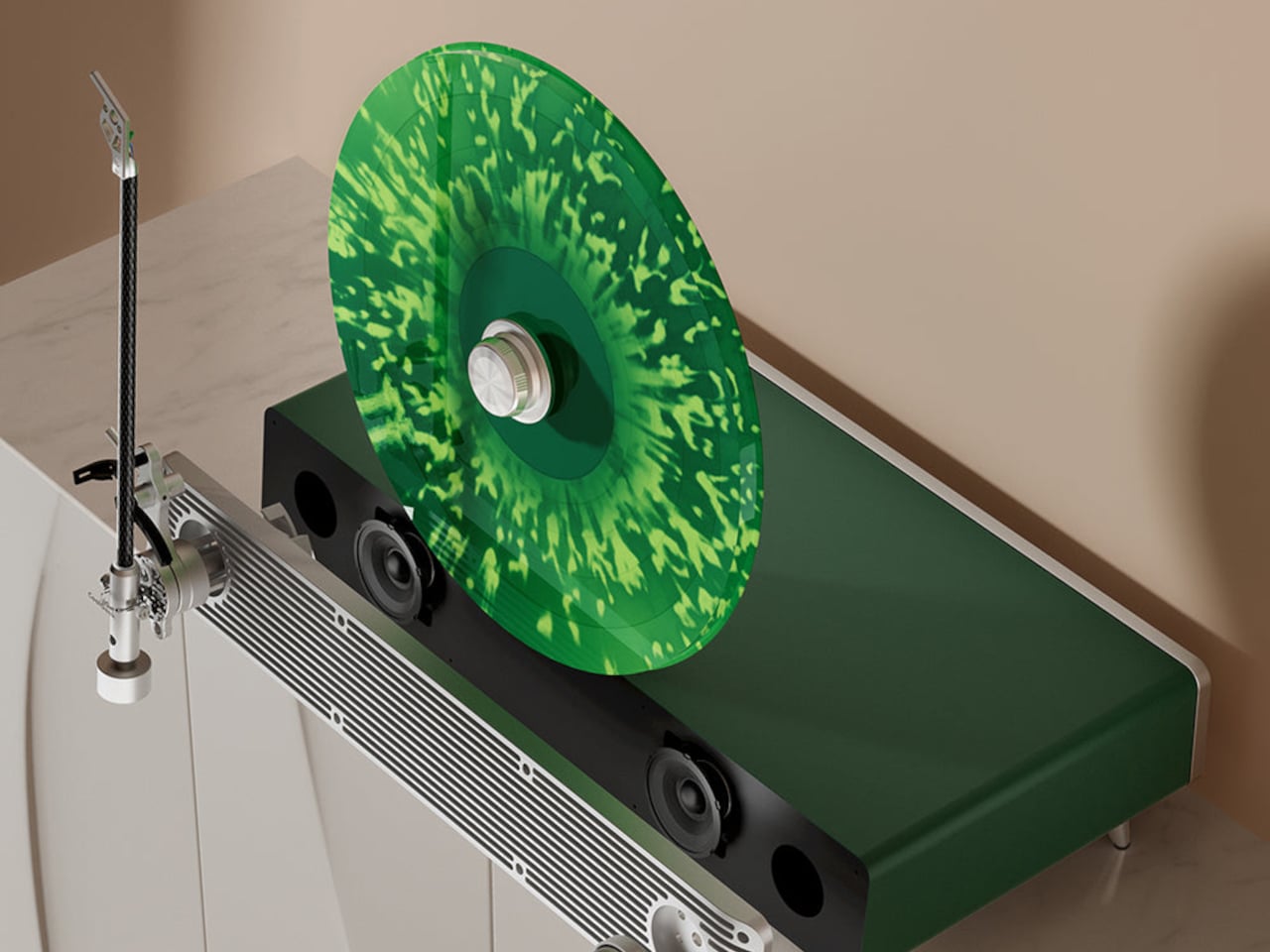
Inside sits a 2.1-speaker system with two 2-inch tweeters and a 4-inch 30 W mid-bass driver, driven by a Hi-Fi-grade amplifier. The desktop reflective acoustic structure uses the surface it sits on to reinforce bass, aiming for layered, expansive sound that can handle vocals and low-end without needing separate speakers cluttering the room or demanding extra cables and shelf space.
The turntable side is a belt-drive platter with 33.3 and 45 RPM speeds controlled by a closed-loop system that keeps rotation stable. A zirconia ceramic spindle and high-precision mechanical design reduce friction and wear over time. The tonearm geometry is carefully specced, with low tracking distortion and adjustable tracking force, so the engineering backs up the visual drama and ensures your records are not getting chewed up while spinning vertically.
Bluetooth 5.3 lets the VS-01 act as a wireless speaker for your phone when you are not spinning records. It can also transmit vinyl audio out to Bluetooth headphones or speakers, turning analog grooves into a private listening session without cables. A line-out port and RCA outputs let you feed an external amplifier or active speakers if you want bigger sound or bypass the integrated drivers.
The vertical format changes the everyday experience. Records become a kinetic art installation you can see from across the room, especially with colored vinyl. The footprint on a shelf is shallower than a traditional deck, which helps in tight spaces. Purists may still prefer a classic horizontal setup, but the visual payoff and integrated speakers will outweigh that concern when your living room needs the turntable to double as decor.
The VS-01 treats vinyl as something to see while you hear it, with a vertical platter that makes every record into spinning artwork. The combination of serious belt-drive mechanics, a 2.1-speaker system, and Bluetooth flexibility wrapped in a retro-modern chassis means it can handle the full range from late-night wireless listening to showing off splattered-vinyl art during a party. Records become the centerpiece of the room, doing their work upright instead of lying flat and being forgettable.
Most entryways are chaos zones. Umbrellas lean against walls, keys land on whatever surface is closest, and the stand is usually just a metal tube catching drips in a corner nobody looks at twice. This corner of the home rarely gets the same design attention as the living room or kitchen, even though it is the first thing you see when you walk in and the last thing you touch before leaving.
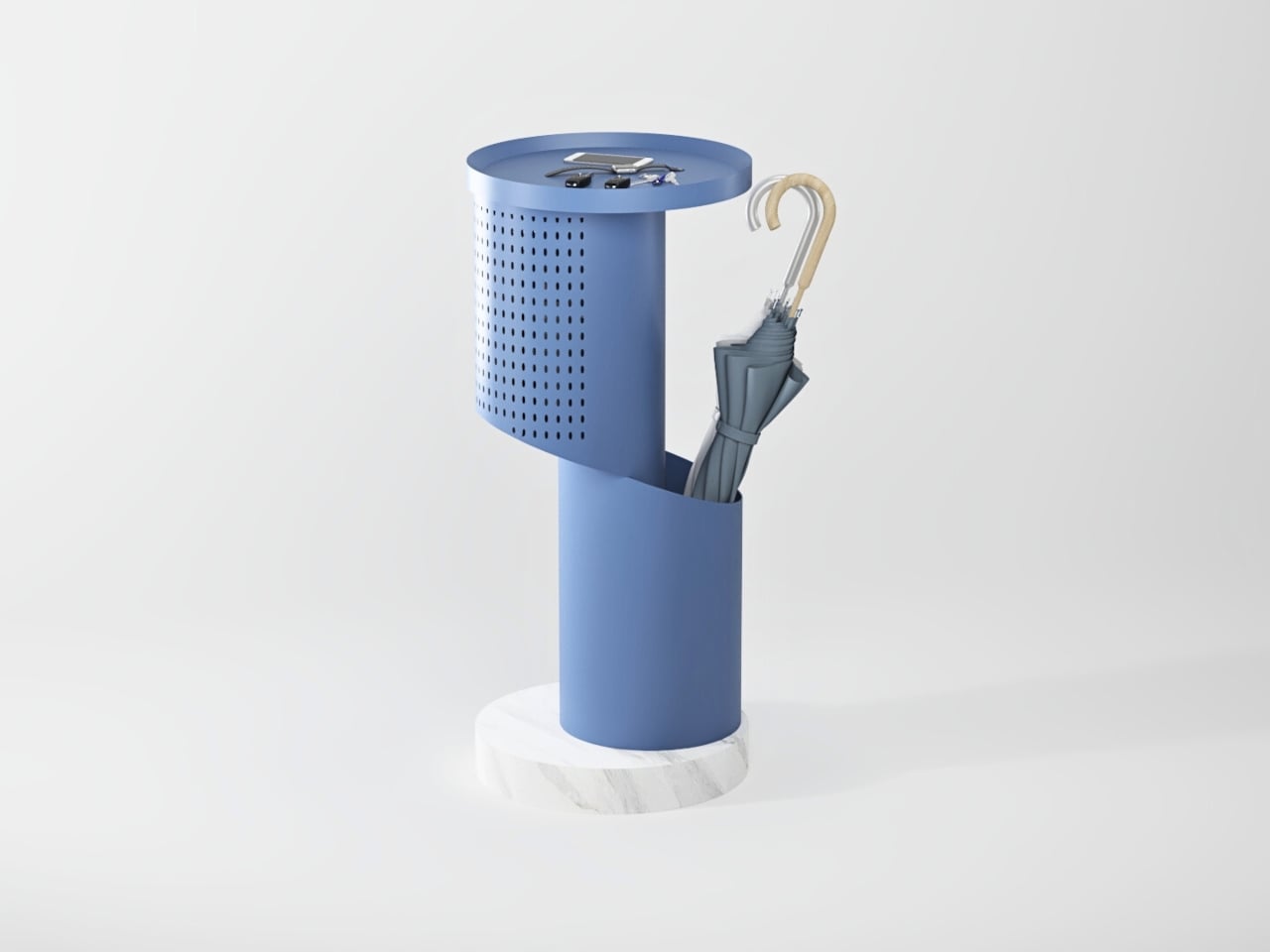
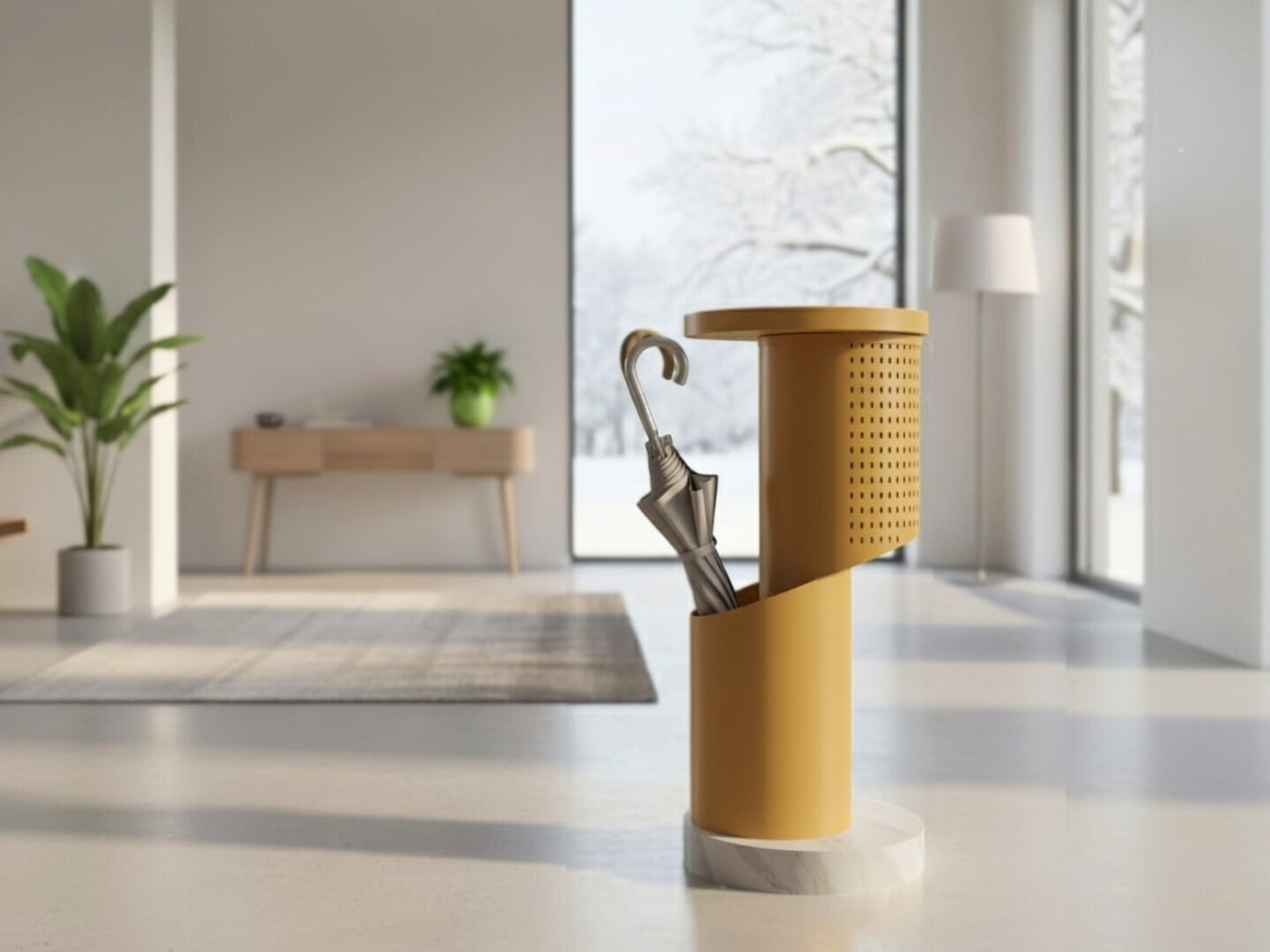
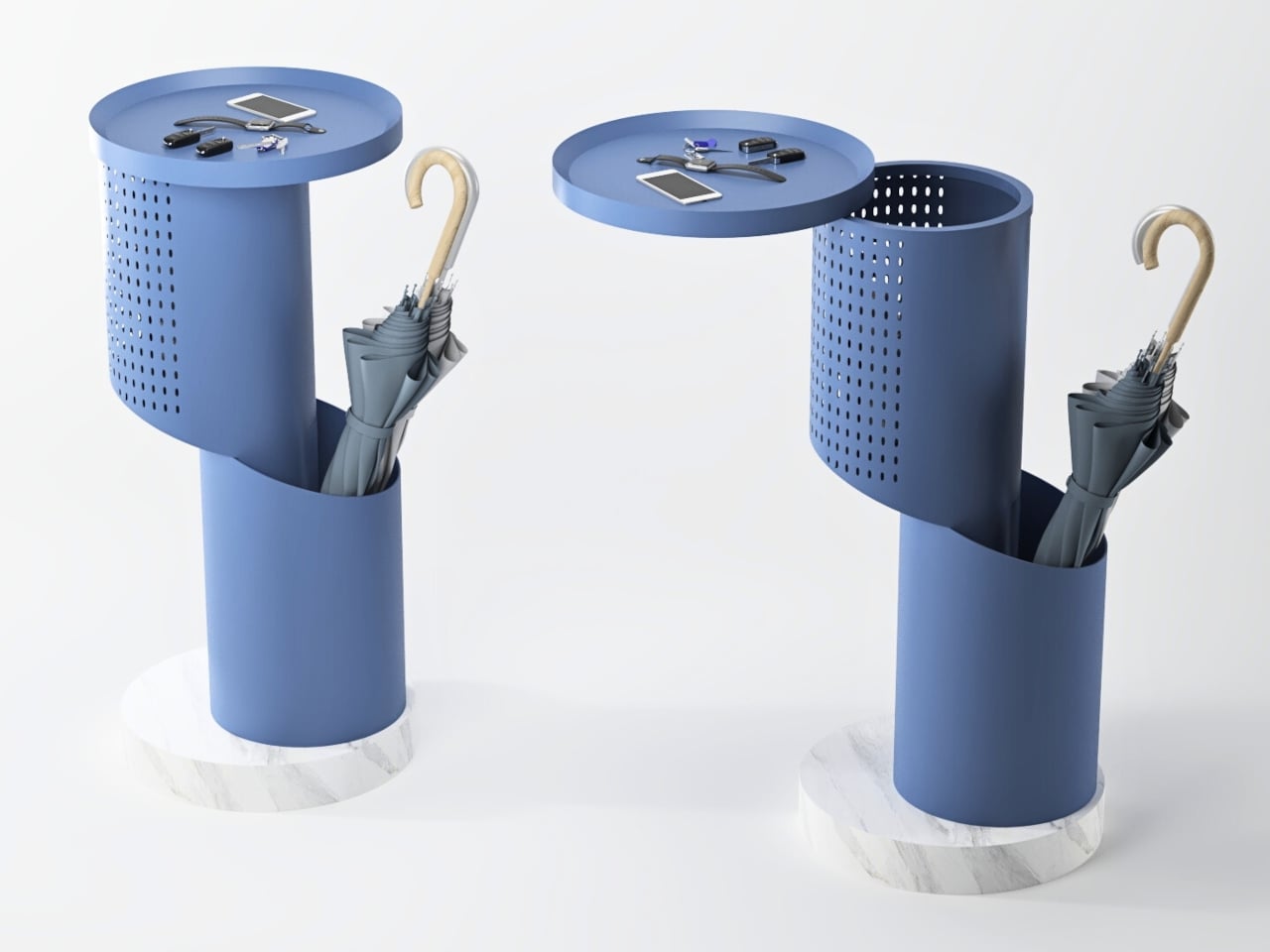
Split is an umbrella stand concept that behaves like a small, movable console. It is built around a sleek cylindrical form that opens with a pivoting lid, revealing storage for short and long umbrellas. When closed, the lid becomes a tabletop for keys, phones, or a wallet, turning the stand into a compact landing zone for everything you carry through the door, wet or dry.
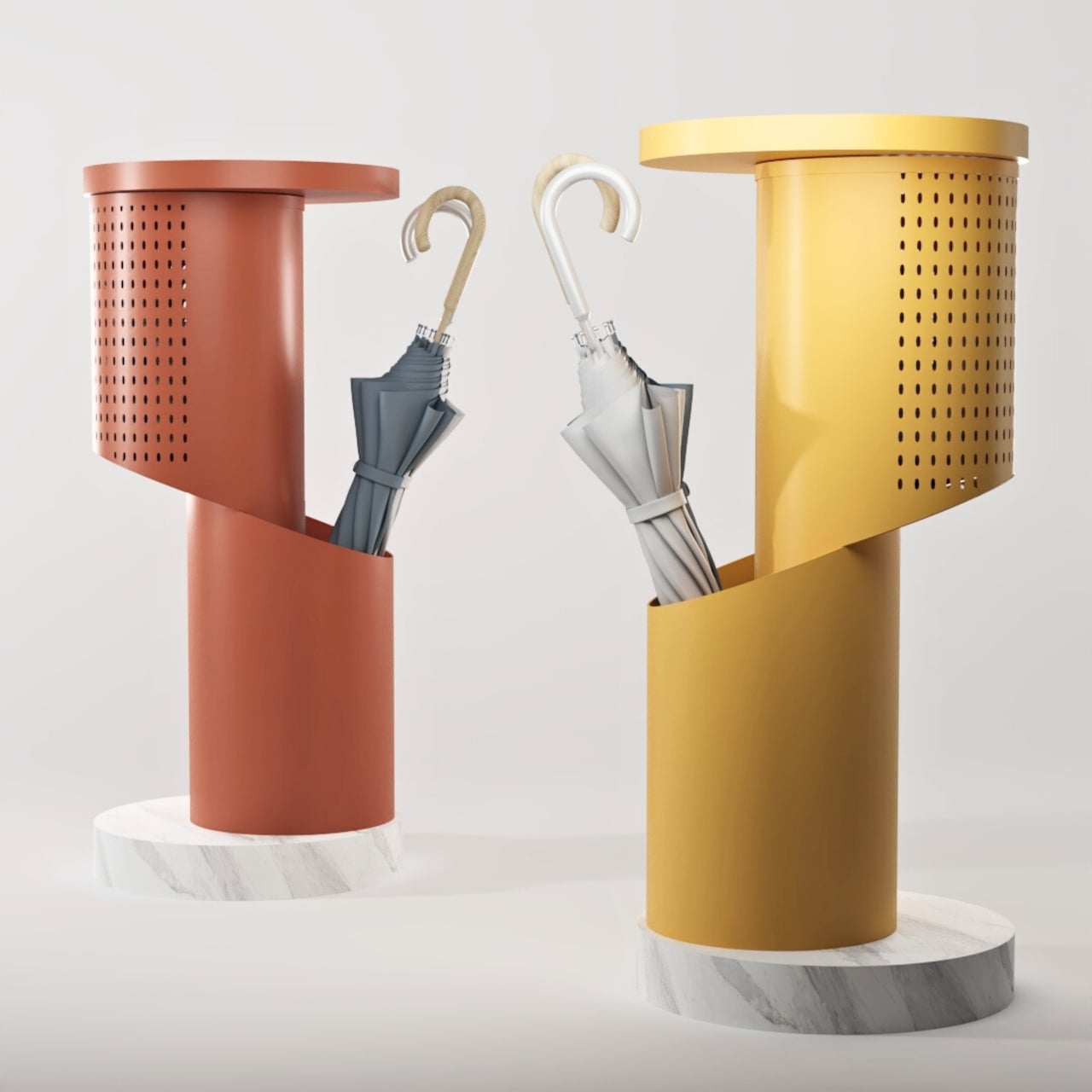
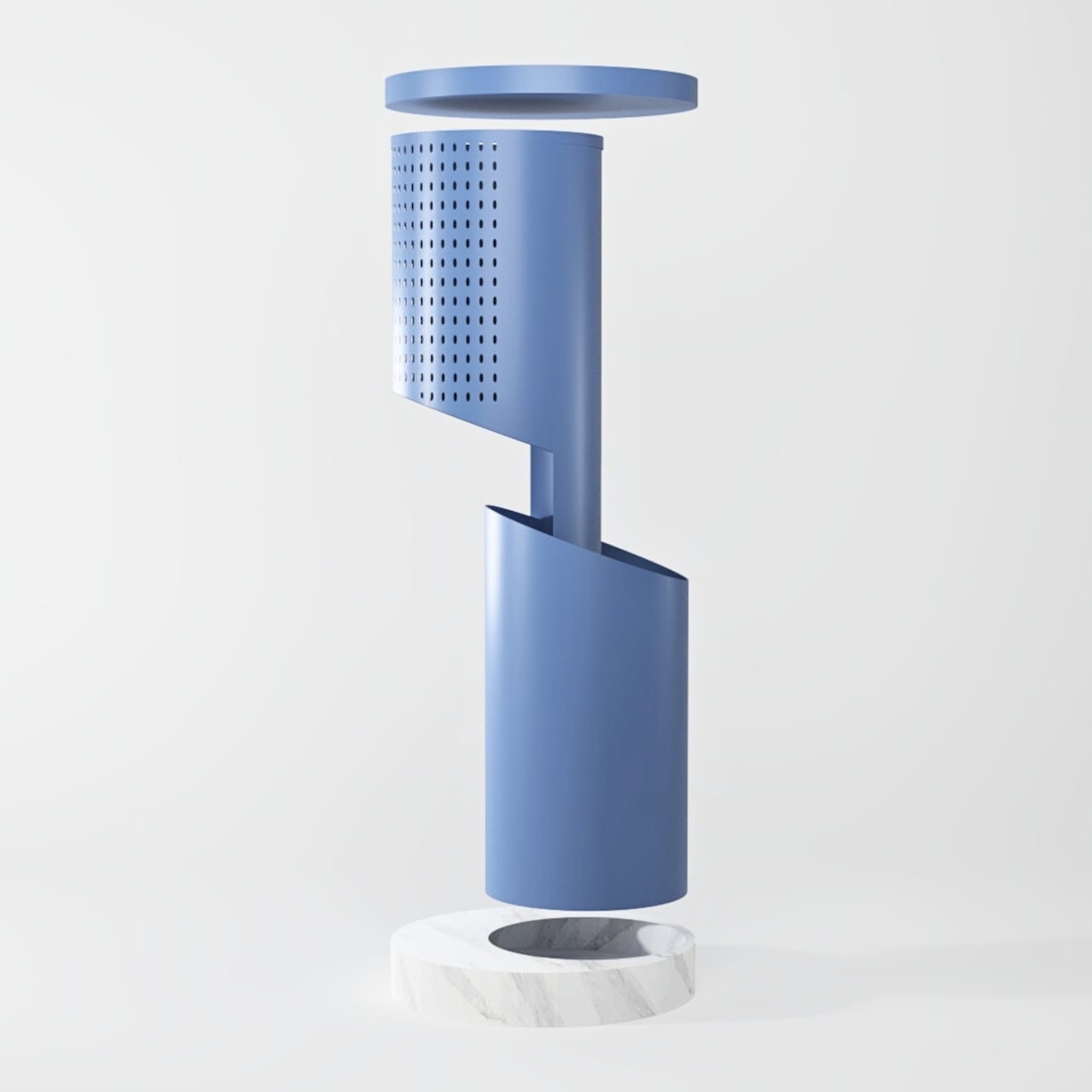
The cylinder splits into two functional zones. An open lower section holds long umbrellas, keeping handles accessible and letting wet fabric breathe. A closed upper section stores compact umbrellas or other small items, hiding clutter without sealing it in a damp box. The geometry makes it obvious where things go, which is half the battle in keeping an entryway tidy without thinking about it every single time.
The perforated upper shell works like a pegboard and a vent at the same time. The grid of circular holes can accept hooks for hanging small items like dog leashes, lanyards, or lightweight bags, and it also lets air circulate through the closed space so damp umbrellas or gloves can dry. That detail keeps the object from becoming a humid box and gives it a subtle, graphic texture that reads well from across a room.
The pivoting lid turns a simple stand into something interactive. A quick swing of the lid reveals the inner compartment without forcing you to clear off the top first, and when it is closed, the flat surface is ready for keys, a phone, or a small tray. The motion adds a bit of ceremony to arriving home, making the act of putting things away feel deliberate instead of automatic or rushed.
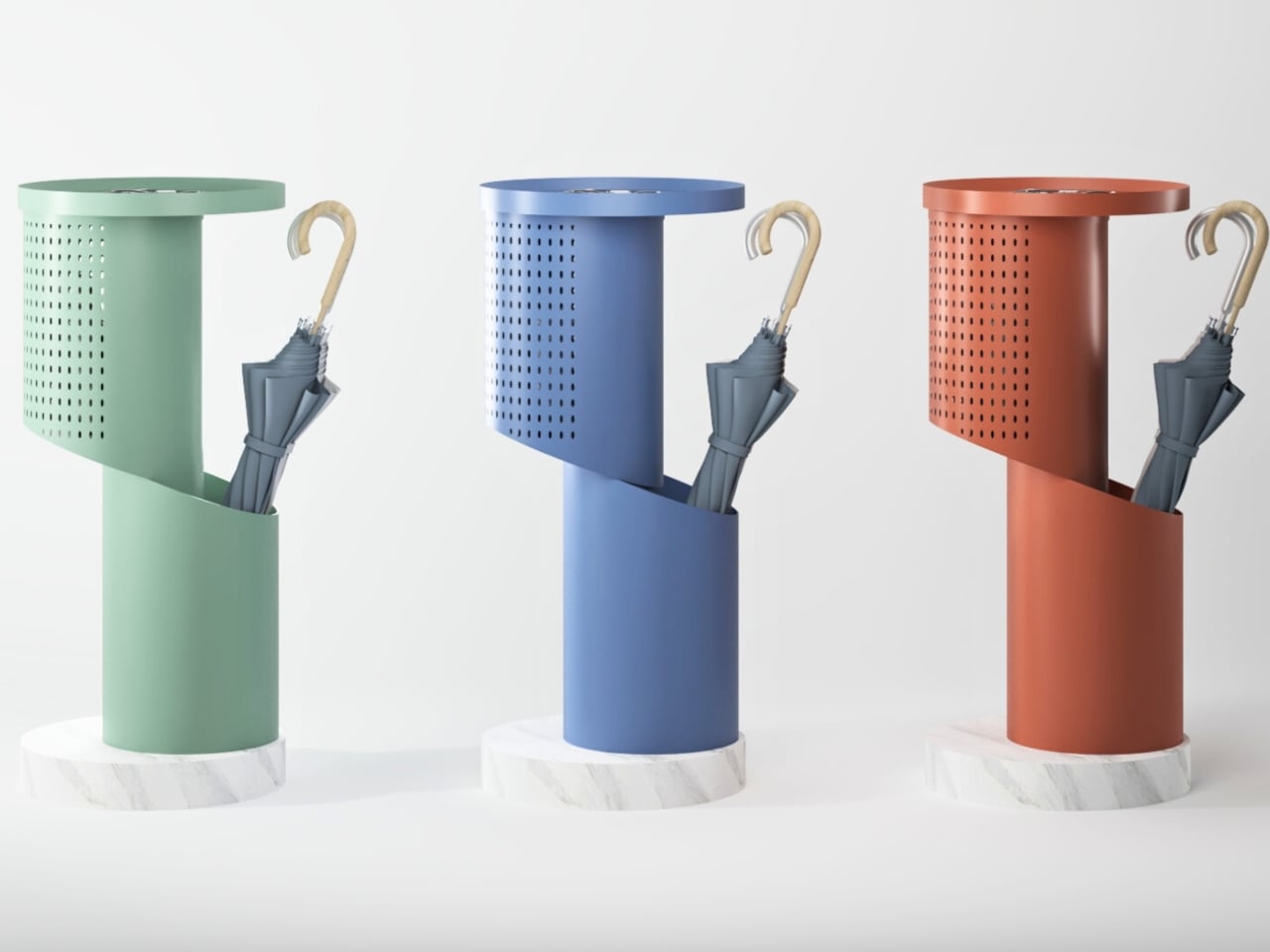
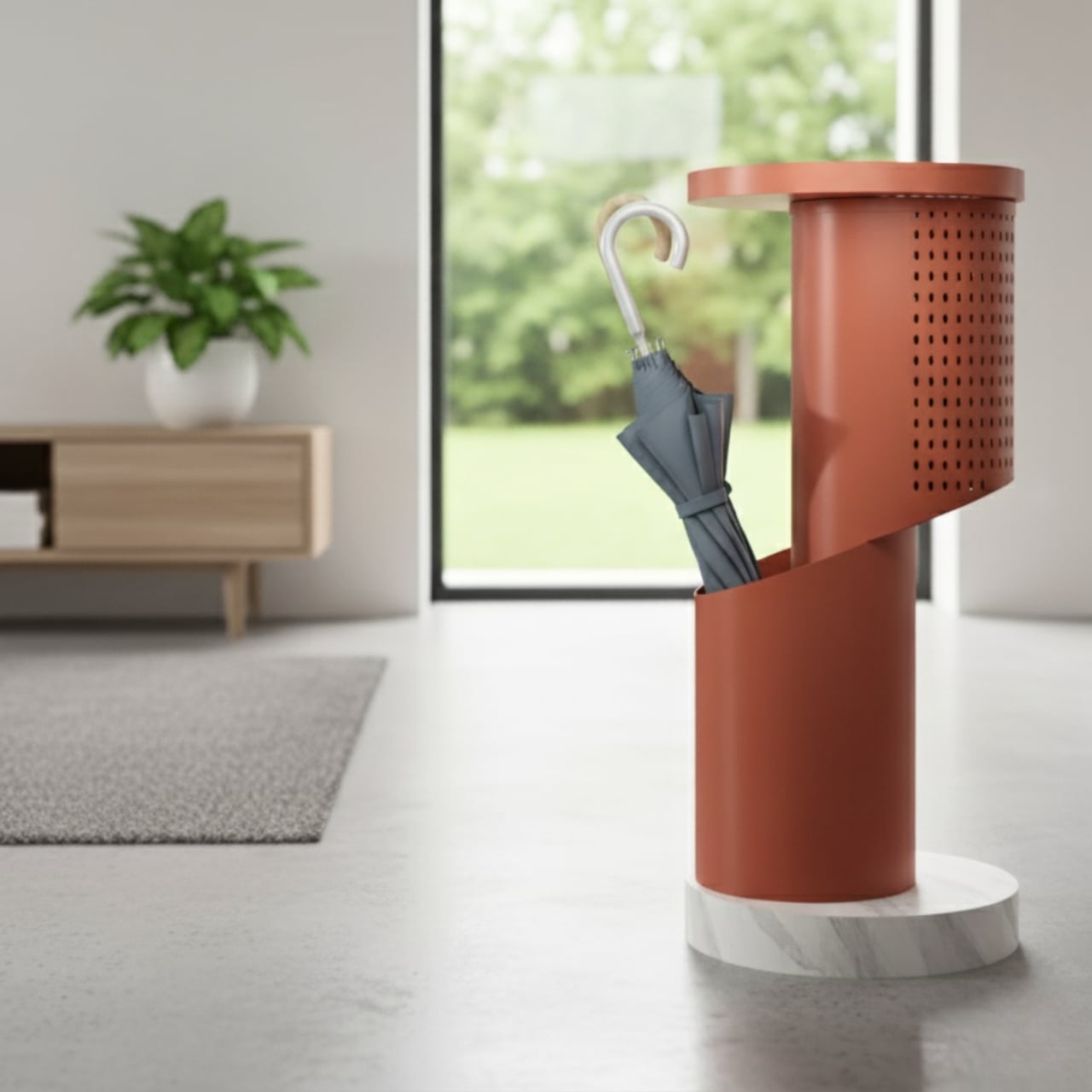
The body is imagined in lightweight aluminum, which keeps it easy to move while resisting rust and corrosion from wet umbrellas. It sits on a heavier stone base that keeps it stable when loaded with multiple umbrellas and everyday items. The concept uses warm, modern colors like terracotta, mustard, and muted blue, so it reads as a small piece of furniture rather than a purely utilitarian object and can live comfortably in a hallway, living room corner, or office lobby.
Split reframes a neglected object. It does not try to reinvent storage, it simply layers a console, a pegboard, and a ventilated umbrella stand into one compact cylinder. It feels like a quiet but meaningful upgrade over the usual metal tube shoved in a corner. People who care about the small transitions in their day will love the idea of an entryway piece that catches umbrellas and everyday carry with a bit of elegance.
Amazon is selling Apple's USB-C Magic Mouse for $68, which is a discount of 14 percent. This isn't a record-low price, but it's darned close. The mouse typically sells for $79, though today's sale only applies to the white model.
It's rare for official Apple accessories to go on sale, and the USB-C Magic Mouse is pretty much a must-have for those working on desktop computers. It's also fairly handy when combined with a laptop, letting folks avoid the trackpad.
As the name suggests, this mouse charges via USB-C. Apple stuck with replaceable AA batteries for way too long, so this change was much appreciated. A charge should power the mouse for around a month, a metric I find to be more-or-less accurate depending on usage.
This is a good mouse, and a great option for Apple devotees, but it's not without its flaws. The biggest one is port placement. The USB-C port is underneath the mouse, rendering it unusable while charging. Bloomberg recently reported that a major redesign is coming for Apple's wireless mouse that should address that issue.
Since I live in a tropical country, I’ve never truly experienced a winter season. So I really can’t relate when I see people huddled in front of a fire, trying to get a modicum of warmth. But I can just imagine how terribly cold it can get during these times and while most of the time you’d just want to stay indoors, you do need to spend some time out on your porch or background every once in a while.
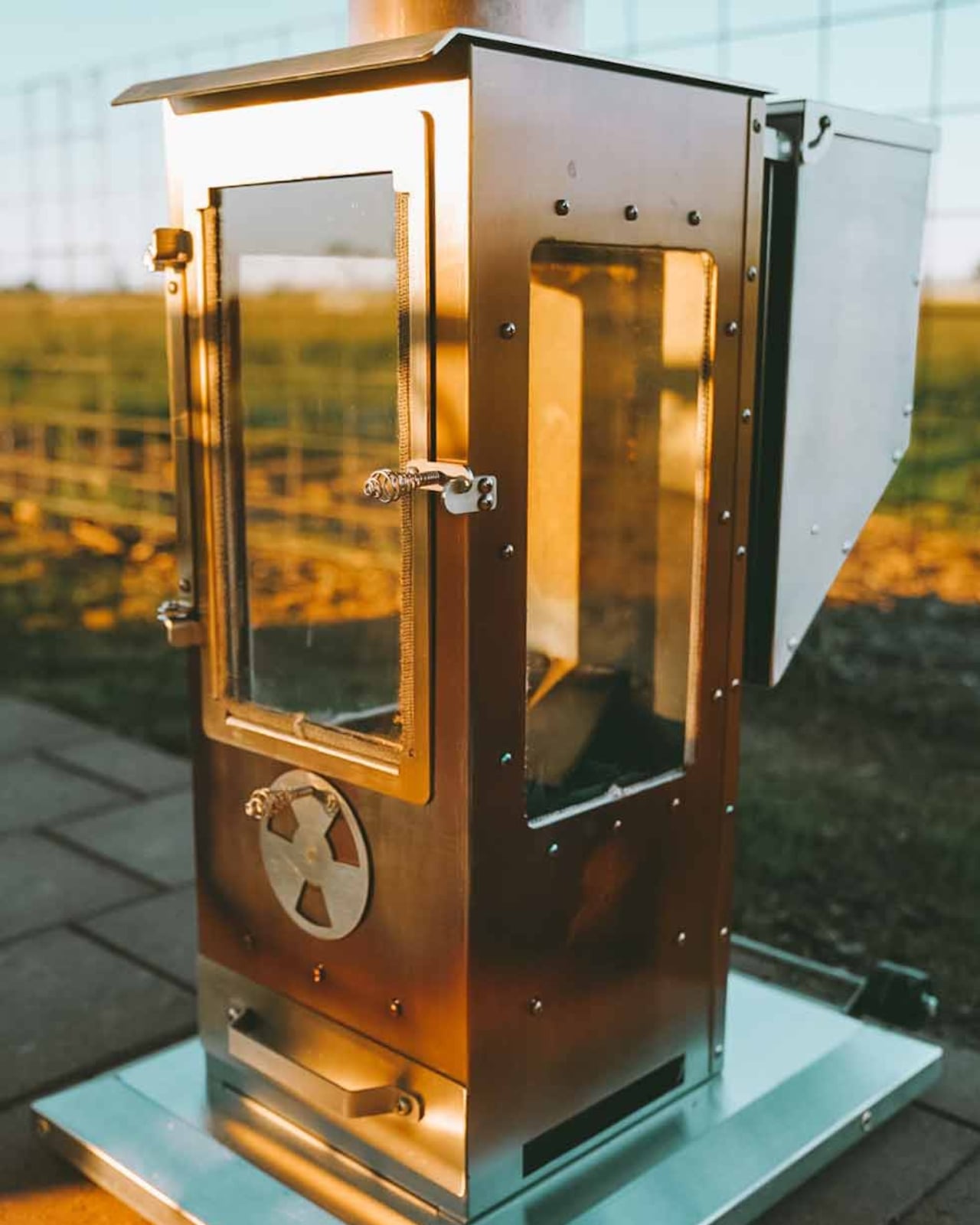
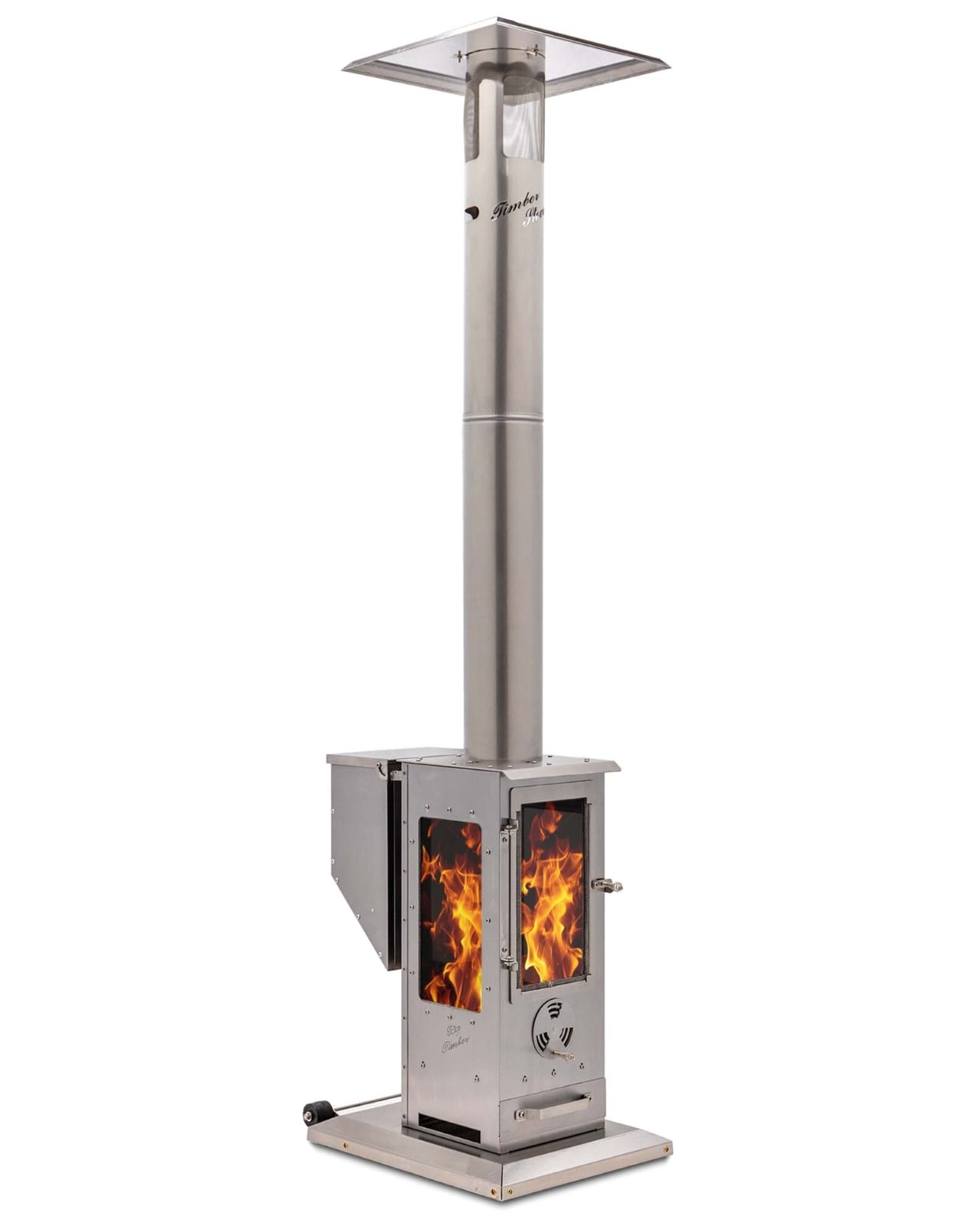
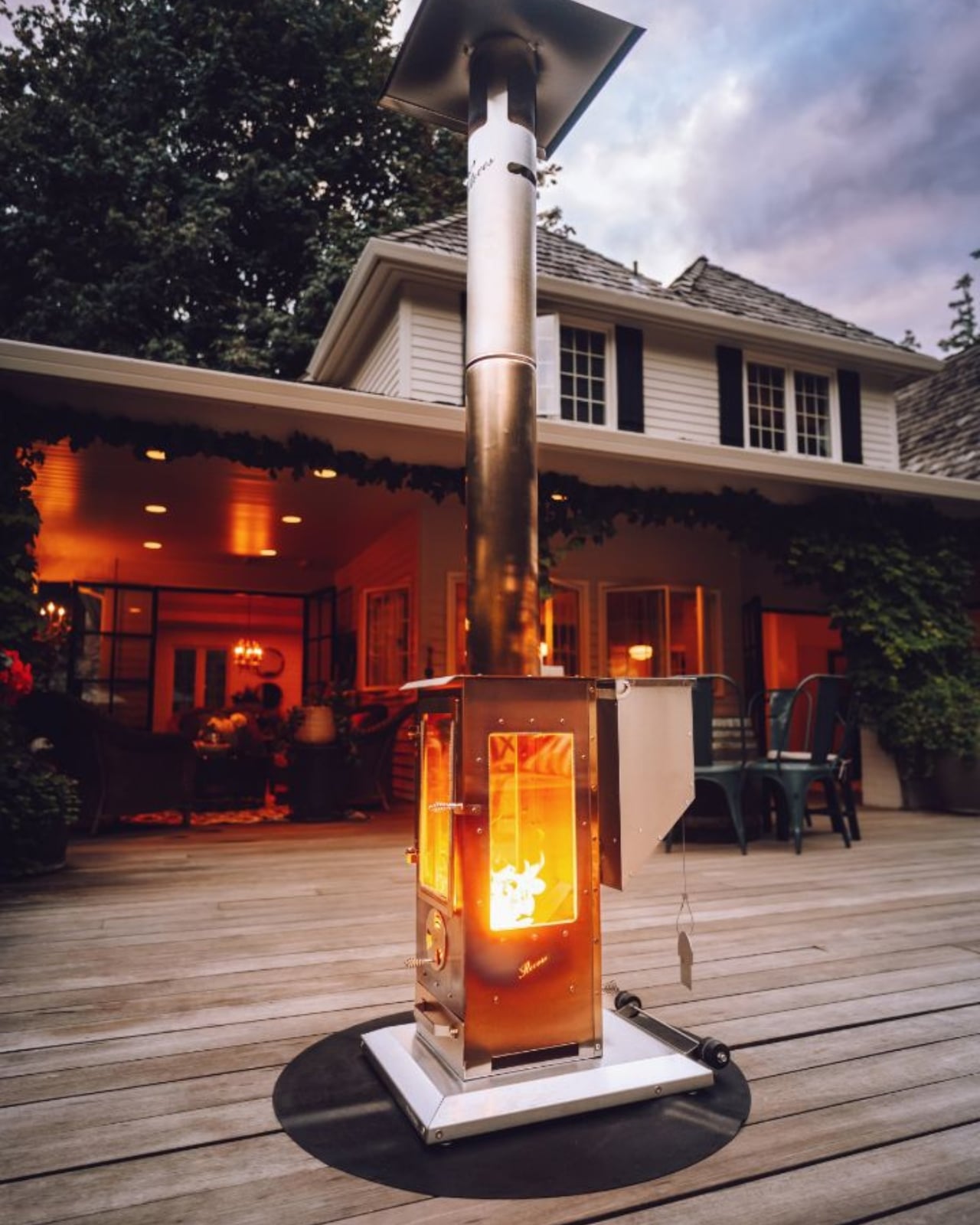
Look, most patio heaters are basically expensive lawn ornaments that happen to produce a tiny bubble of warmth if you stand directly underneath them while wearing a parka. The Timber Stoves Revere Patio Heater is not that. This American-made beast is more like a seven-foot tall sculpture that moonlights as a radiant heating powerhouse, and honestly, it’s about time someone figured out how to make outdoor heating both beautiful and brutally effective.
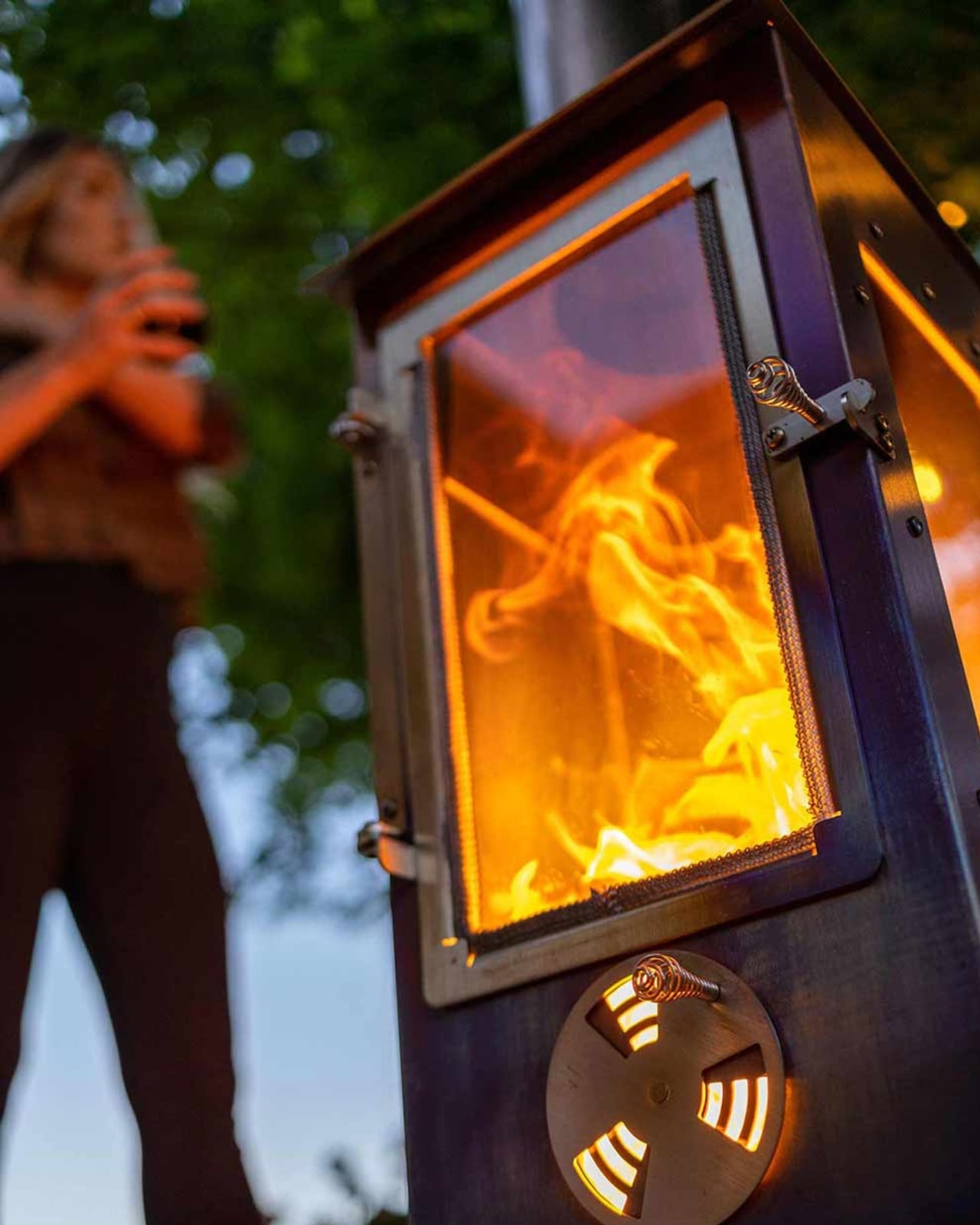
Let’s start with what makes this thing fascinating from a design perspective. At 84 inches tall and wrapped entirely in stainless steel, the Revere looks like something that belongs in a modern art museum or a very chic industrial loft. But here’s where it gets interesting: this heater requires absolutely zero electricity. The entire operation runs on gravity and thermodynamics, using wood pellets that feed down into a firepot where the draft from the stovepipe creates an almost hypnotic flame behind those generous 7.5 by 14.5 inch viewing windows. It’s basically engineering theater, and you get to watch it through the glass while staying warm.
The pellet system is where Timber Stoves really shows its cards. While everyone else is fussing with propane tanks and dealing with that distinctive smell, the Revere chomps through wood pellets at roughly a quarter of the operating cost of propane while producing double the BTUs. We’re talking 90,000 BTUs of heat radiating out in a 12-foot circle, which means you’re actually warm from head to toe rather than just getting that weird sensation where your face is hot but your back is freezing. The hopper holds 25 pounds of pellets, so you’re not constantly babysitting the thing. Fill it up, let gravity do its job, and go back to being the host who actually enjoys their own party.
Now let’s talk about what happens when you use this thing regularly. The stainless steel body doesn’t just sit there looking pretty. As the Revere heats up over multiple uses, the metal begins developing these incredible patina colors: gold, purple, blue, and green. It’s like the heater is keeping a visual diary of every fire you’ve lit, every conversation you’ve had around it. Some design objects try desperately to stay pristine forever. The Revere embraces the passage of time and looks better for it.
The engineering nerd stuff matters too. That firepot at the heart of the operation? It’s crafted from a high-temperature stainless steel alloy designed to handle up to 2,100 degrees Fahrenheit, and it’s rated for approximately 1,000 hours of use before you need to think about replacement. Most outdoor equipment starts showing its age after a season or two, but Timber Stoves built this thing to last through years of entertaining, late-night conversations, and those random Wednesday evenings when you just want to sit outside with a book.
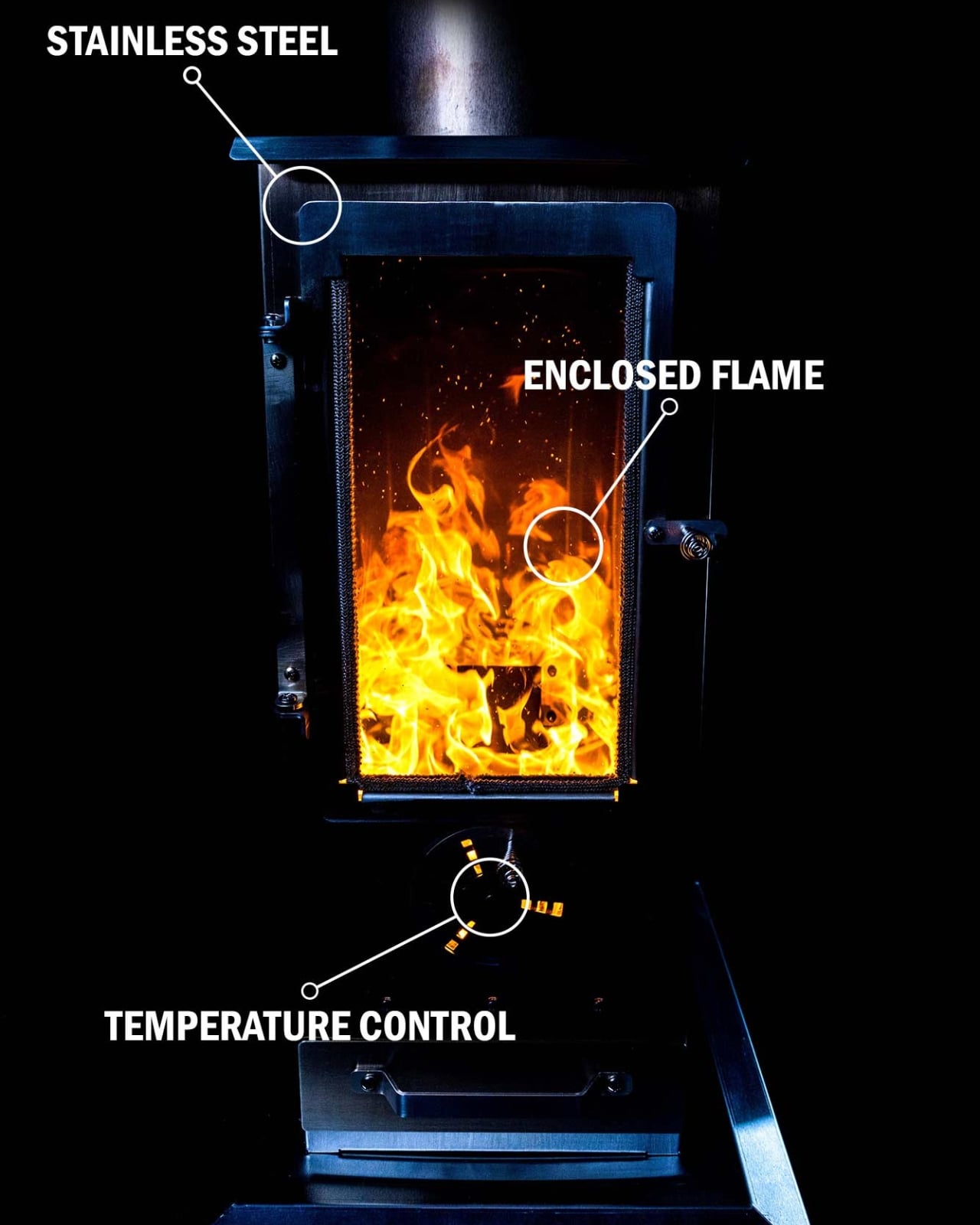
The virtually smokeless operation deserves its own paragraph because it’s a game changer. Wood pellets burn clean, which means you’re not standing in a cloud of smoke trying to remember which way the wind was blowing when you started the fire. You don’t smell like a campfire afterward unless you want to. And because everything is contained within that stainless steel body with an enclosed flame, you get all the ambiance of a traditional fire without the constant worry about sparks.
There’s something refreshingly analog about the controls too. No app to download, no Bluetooth connection that drops out randomly. You’ve got a key for easy shut-off and a damper dial that lets you adjust the temperature by up to 250 degrees. Turn it up, turn it down, walk away if you need to. The heater just keeps doing its job. The Revere weighs 75 pounds, which sounds heavy until you realize it means this thing isn’t going anywhere in a windstorm. It’s substantial, grounded, the kind of outdoor equipment that feels permanent even though it’s technically portable. At $1,299, it’s not an impulse purchase, but here’s the thing about investing in good outdoor gear: it fundamentally changes how you use your space.
Suddenly those fall evenings extend later into the season. Winter gatherings move outside. You’re not held hostage by the weather forecast anymore. The Revere turns patios, decks, and backyards into year-round destinations rather than seasonal amenities. And unlike trendy outdoor furniture that’ll be dated in three years, this is a piece of functional design that’ll still look modern a decade from now, just with better patina colors.
We now have some new data as to the specifics of the deal. Nearly 50 percent of assets will be split between three companies. Oracle, Silver Lake and MGX will each control around 15 percent of the newly-formed entity. It's worth noting that MGX isn't an American company at all, but rather Abu Dhabi’s state-owned investment firm.
The rest will remain in the hands of affiliates of TikTok's parent company, ByteDance. That company will also take a direct ownership stake of around 20 percent. US platform operations will be managed by a seven-member board of directors. The majority of this board will be Americans.
US data will be stored under a system operated by Oracle. That company is run by Larry Ellison, a long-time ally of President Trump who once brainstormed ideas on how to overturn the 2020 presidential election. Oracle has been trying to get its mitts on TikTok since at least 2020. As for Silver Lake, it has deep ties to Trump allies like Michael Dell and his son-in-law Jared Kushner.
The deal is expected to close on January 22, according to an internal memo shared by TikTok CEO Shou Chew. "With these agreements in place, our focus must stay where it’s always been — firmly on delivering for our users, creators, businesses and the global TikTok community," he wrote to employees.
If a deal is truly finalized by next month, it will come just over a year after Trump's first executive order to delay a law that required a sale of the app to prevent a ban. He has signed several other extensions since.
This article originally appeared on Engadget at https://www.engadget.com/social-media/we-have-more-details-on-the-tiktok-deal-including-some-ownership-statistics-163003507.html?src=rss
Holiday lighting has long relied on repeated patterns and static effects, but this music-reactive LED Christmas tree brings a new dimension to seasonal decor by turning sound into visual effects. The project is a simple wooden frame with off-the-shelf LEDs and an audio sensor to create a festive display that animates in real time with sound. Built around an ESP32 microcontroller running the open-source WLED software, the assembly combines woodworking, basic electronics, and wireless configuration into a project that is both instructive and visually striking.
The core of this DIY is an ESP32-D1 mini microcontroller, chosen for its built-in Wi-Fi, processing capability, and compatibility with WLED, a flexible lighting control platform. WLED runs on the ESP32 and provides a web-based interface for configuring LED lighting effects, colors, and patterns without requiring deep coding knowledge. In this tree, WLED’s audio-reactive mode analyzes sound input and drives the LED effects so that the lights flash, pulse, and change in response to music playing nearby. A small INMP441 digital microphone module is wired to the ESP32 to capture ambient audio, enabling this interaction between the physical decorations and sound.
Designer: DB Making
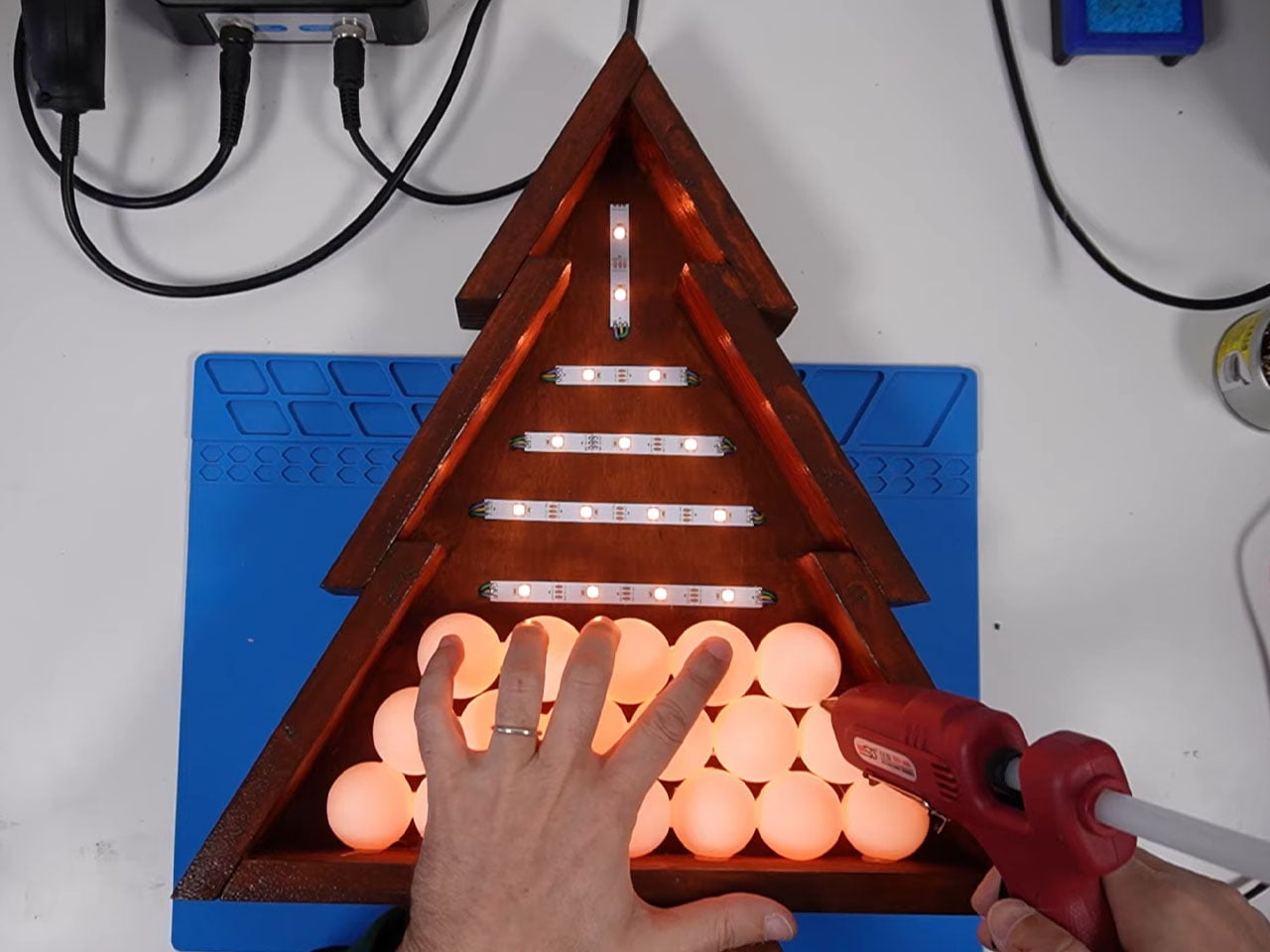
Structurally, the tree is made from common materials. A wooden frame cut into the triangular silhouette of a Christmas tree serves as the backbone. Addressable WS2812B LED strips are mounted along this frame, arranged to expose each LED through a round opening in a corresponding ping-pong ball acting as the light diffuser. These balls soften and spread the light emitted by each LED, creating a uniform glow rather than pinpoint beams. A 3D-printed jig assists in cutting consistent openings in the balls, which are then glued in orderly rows to complete the tree’s face.
Electronic assembly happens on a small perfboard, where the ESP32, microphone module, power connector, and LED strip connector are soldered together. Wiring the LEDs to follow the correct data flow direction and securing the controller board in a neat enclosure ensures reliable operation. Once built, a 5V DC supply powers the tree, and the ESP32 is connected to a computer or network to install WLED firmware via the official web installer. Within WLED’s setup interface, users enter Wi-Fi credentials, set the total number of LEDs, assign the correct data pin, and enable audio-reactive settings along with microphone parameters.
After configuration, the tree’s lighting can be controlled from a smartphone or computer, allowing owners to adjust brightness, choose effects, or simply enjoy music-responsive visuals. The sound-reactive mode responds to ambient audio captured by the microphone, translating beats and rhythms into dynamic light patterns that bring an interactive element to holiday decorations.
Beyond its immediate festive appeal, the project provides a learning platform for hobbyists seeking hands-on experience with microcontrollers, programmable lighting, and real-time sensor integration. By using off-the-shelf components and open-source software, builders can expand or modify the design. This can be done by increasing the number of LEDs, experimenting with alternative diffuser materials, or adding networked effects.