A mechanical LEGO Typewriter that types using Gravity, not ink

When the official LEGO Typewriter was released in 2021, it was one of the coolest sets around. The brick typewriter had a major kink, though: it could not type any genuine text. Koenkun Bricks was bugged by this shortcoming and wanted to build a working model that could type in character fits for the LEGO world.

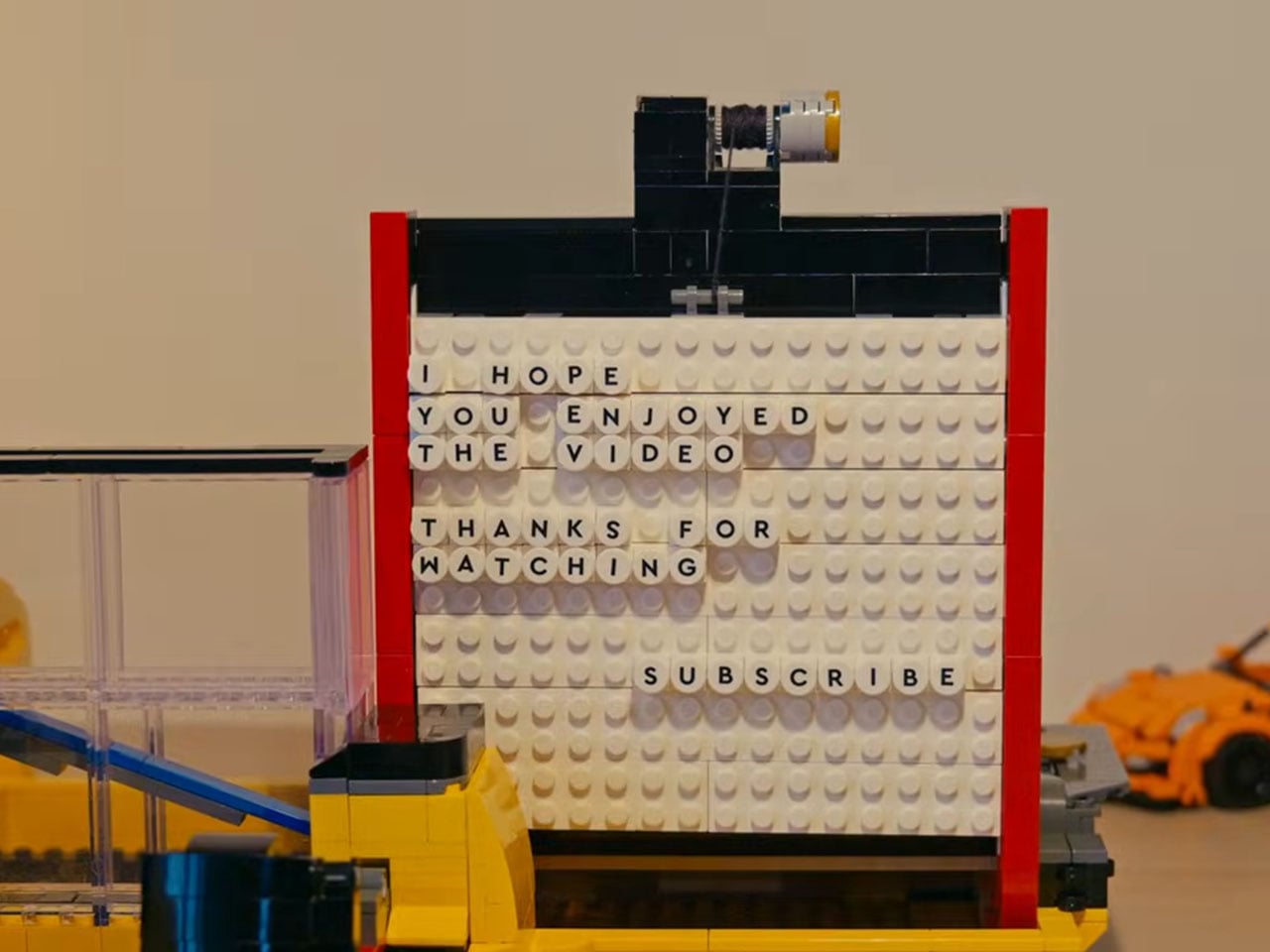
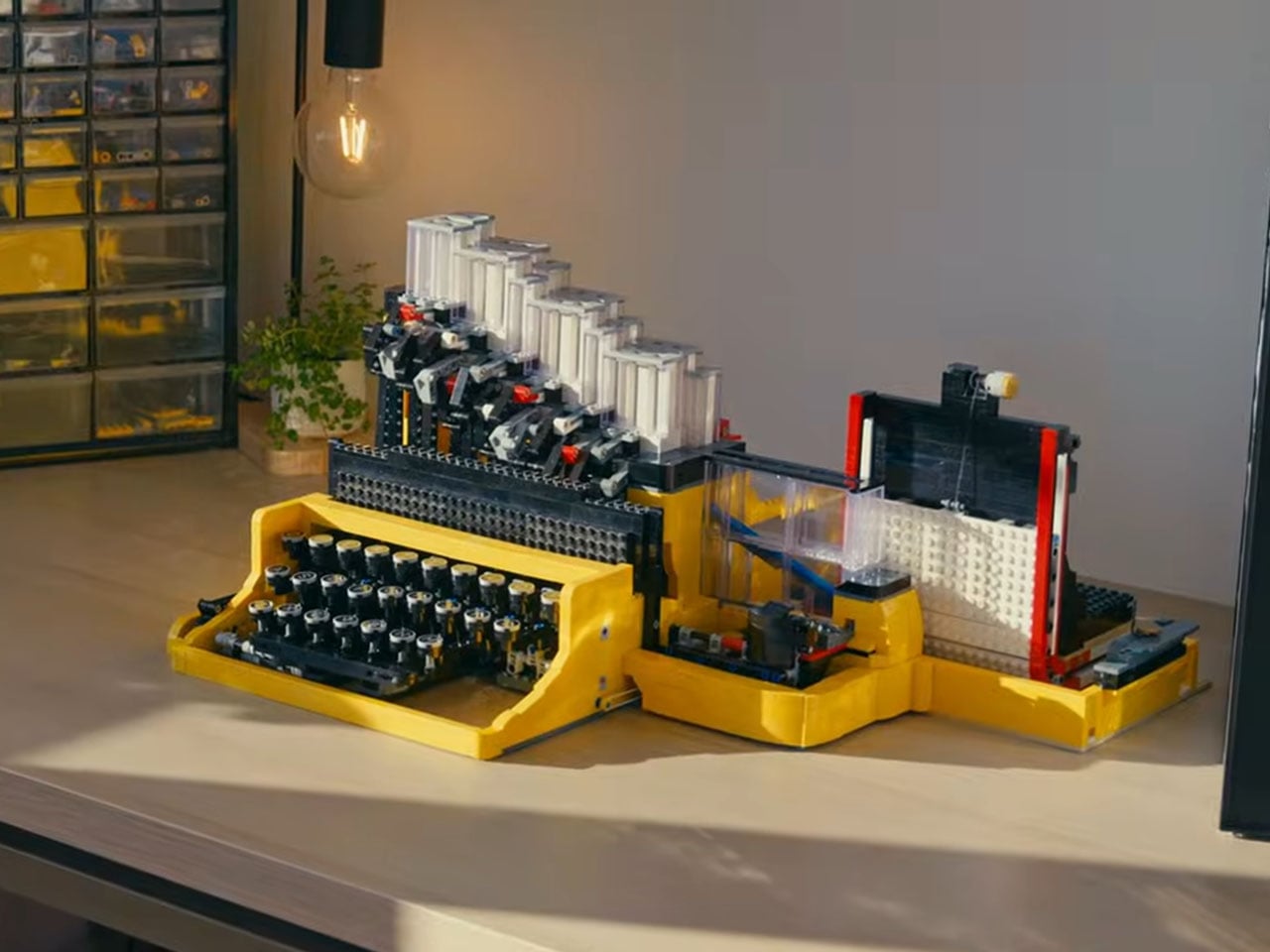
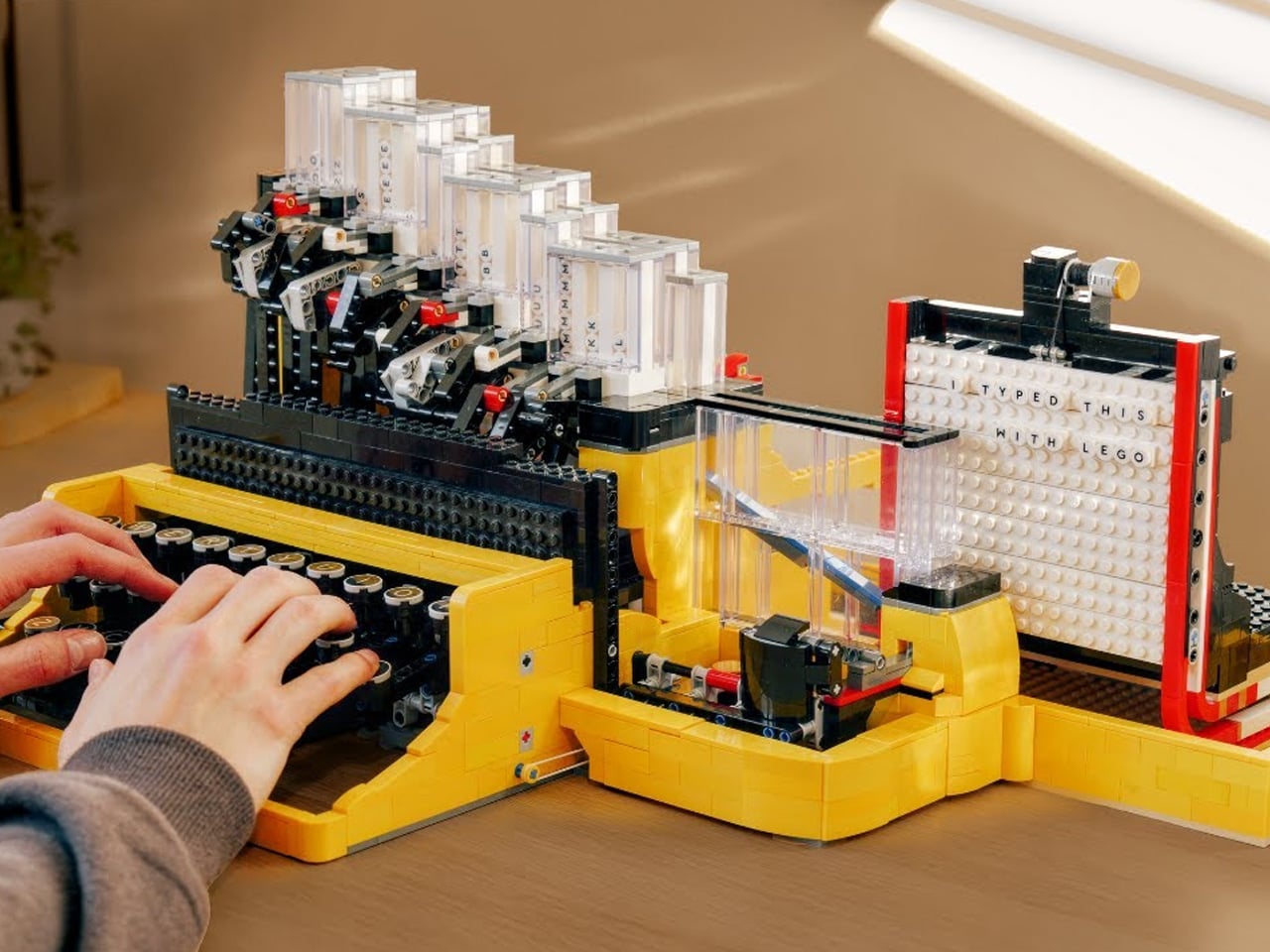
This incredibly detailed LEGO Typewriter is a result of that ambition, as the typewriter sticks LEGO character tiles onto the LEGO brick, making the LEGO typewriter set complete in its own right. The detailed DIY is achieved with LEGO parts, a rubber band, and, of course, the maker’s intuitive engineering brain.

Designer: Koenkun Bricks

Rather than trying to replicate the full complexity of a real typewriter’s mechanics, which would require dozens of articulated typebars and space far beyond a reasonable LEGO build, the creator reinvented the typing process to fit within standard LEGO constraints. Koenkun Bricks’ solution foregoes ink and paper entirely, instead using LEGO letter tiles as the “characters” that are pushed onto a reusable base plate that stands in for the page. This clever redesign allows the model to remain roughly the size of a classic typewriter while still delivering a tactile, playful typing experience.

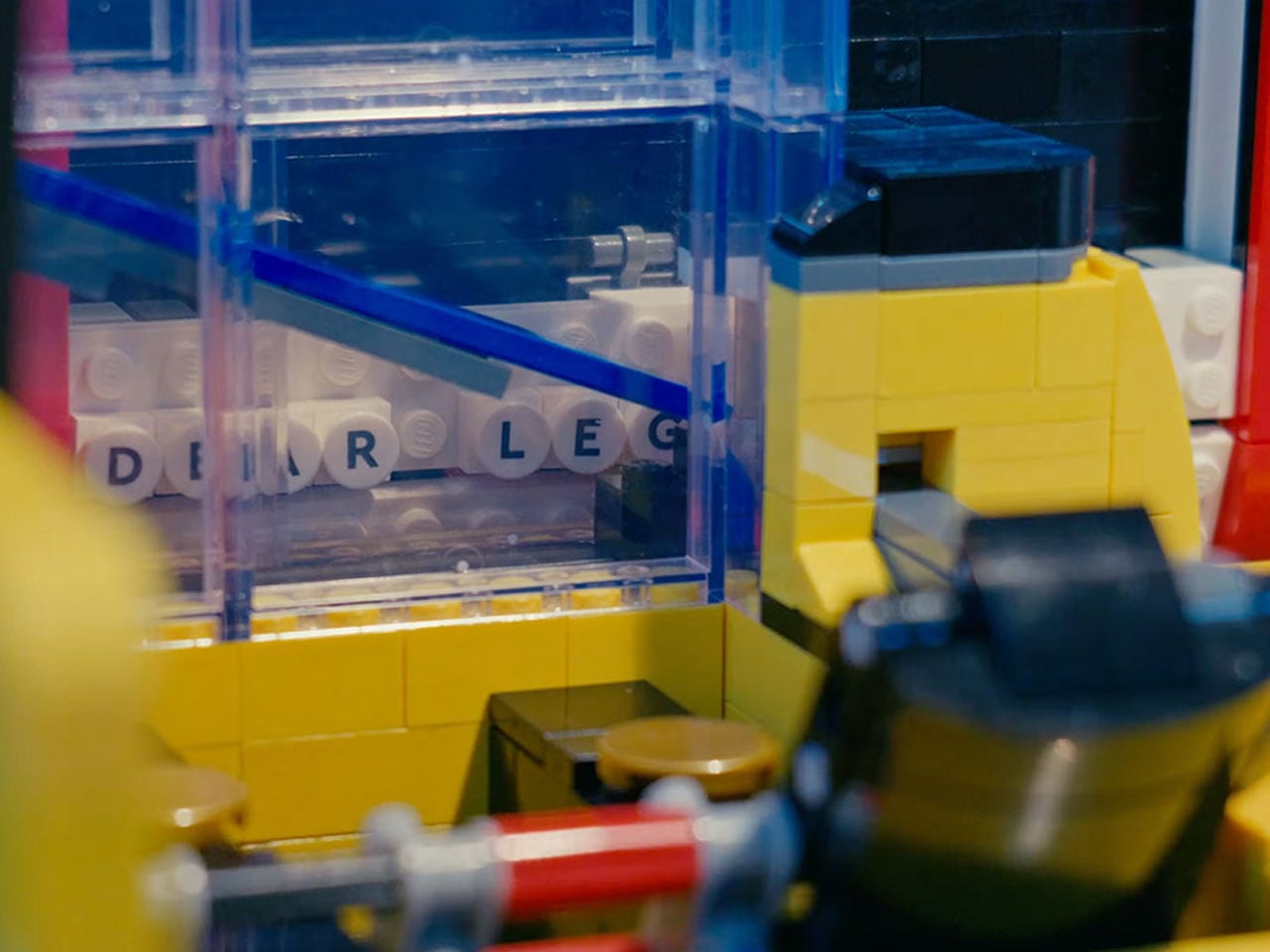
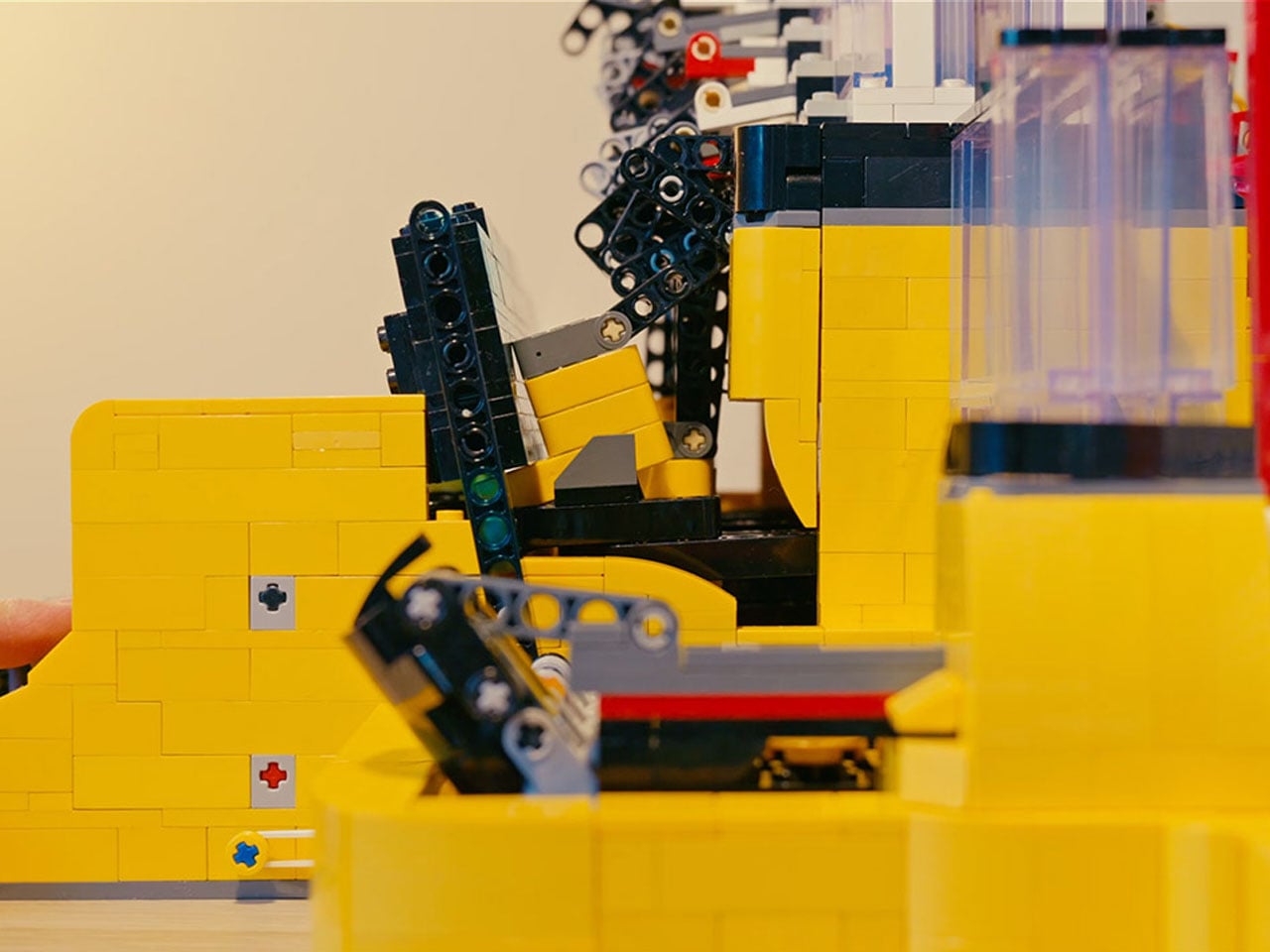
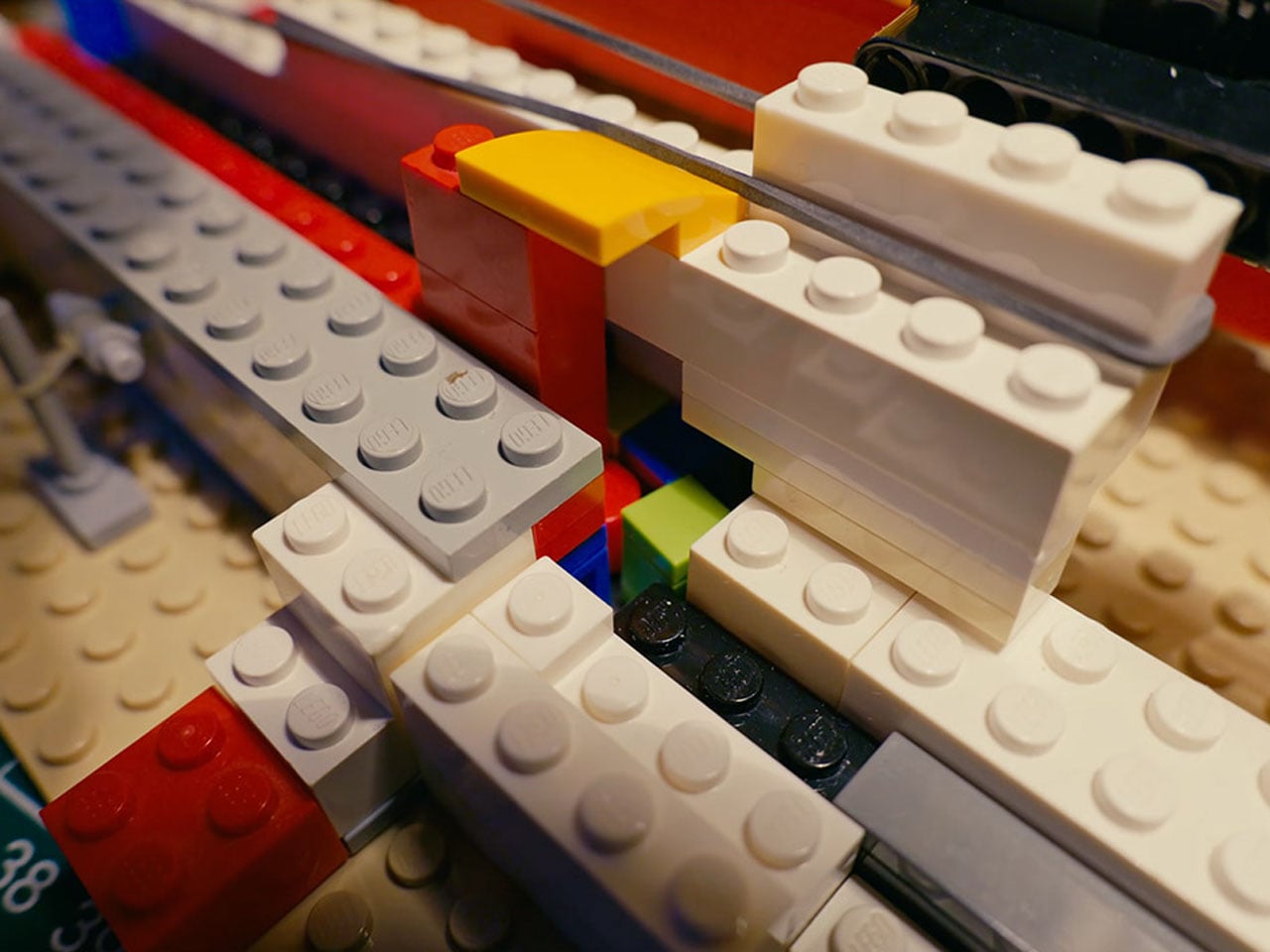
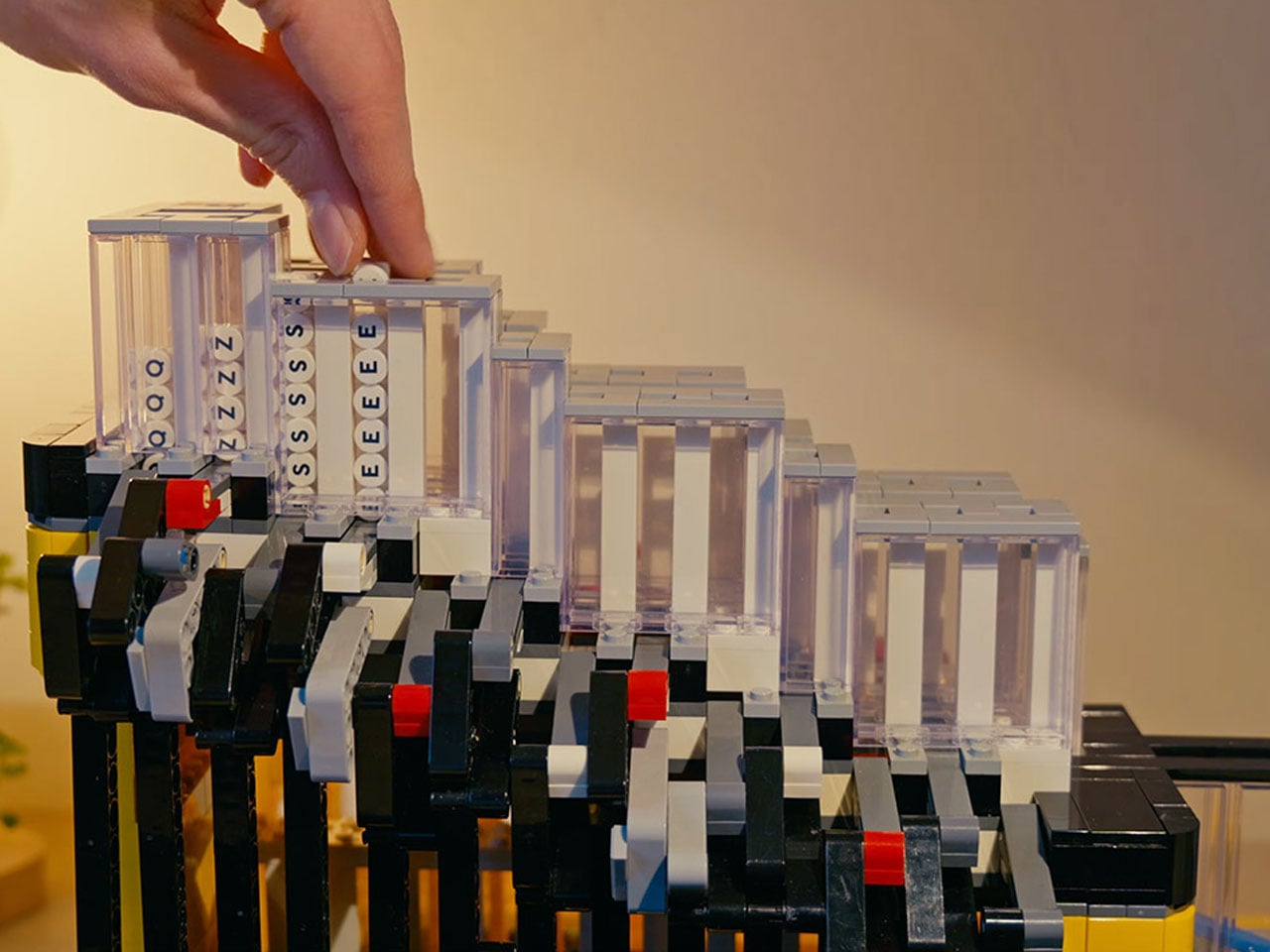
Each key on this functional LEGO typewriter serves two purposes. When pressed, a corresponding hopper opens to release a specific letter tile by gravity. On release, stored tension in rubber bands powers a pusher that drives the tile through a ramp and around a guiding arch before it contacts the white LEGO base plate, ensuring the tile lands facing correctly. This sequence cleverly simulates letter placement without needing complex print mechanics and shows a deep understanding of LEGO’s modular systems.

The arrangement of keys posed its own challenge. With 26 letters to accommodate, space was at a premium. Early versions attempted to eject characters forward like classic typebars, but this caused interference between adjacent mechanisms. The final design staggers the key rows slightly, allowing each to operate independently while maintaining the familiar typewriter silhouette. Rubber bands are central to the build, functioning as springs and return mechanisms throughout the machine and making iterative design adjustments more straightforward.

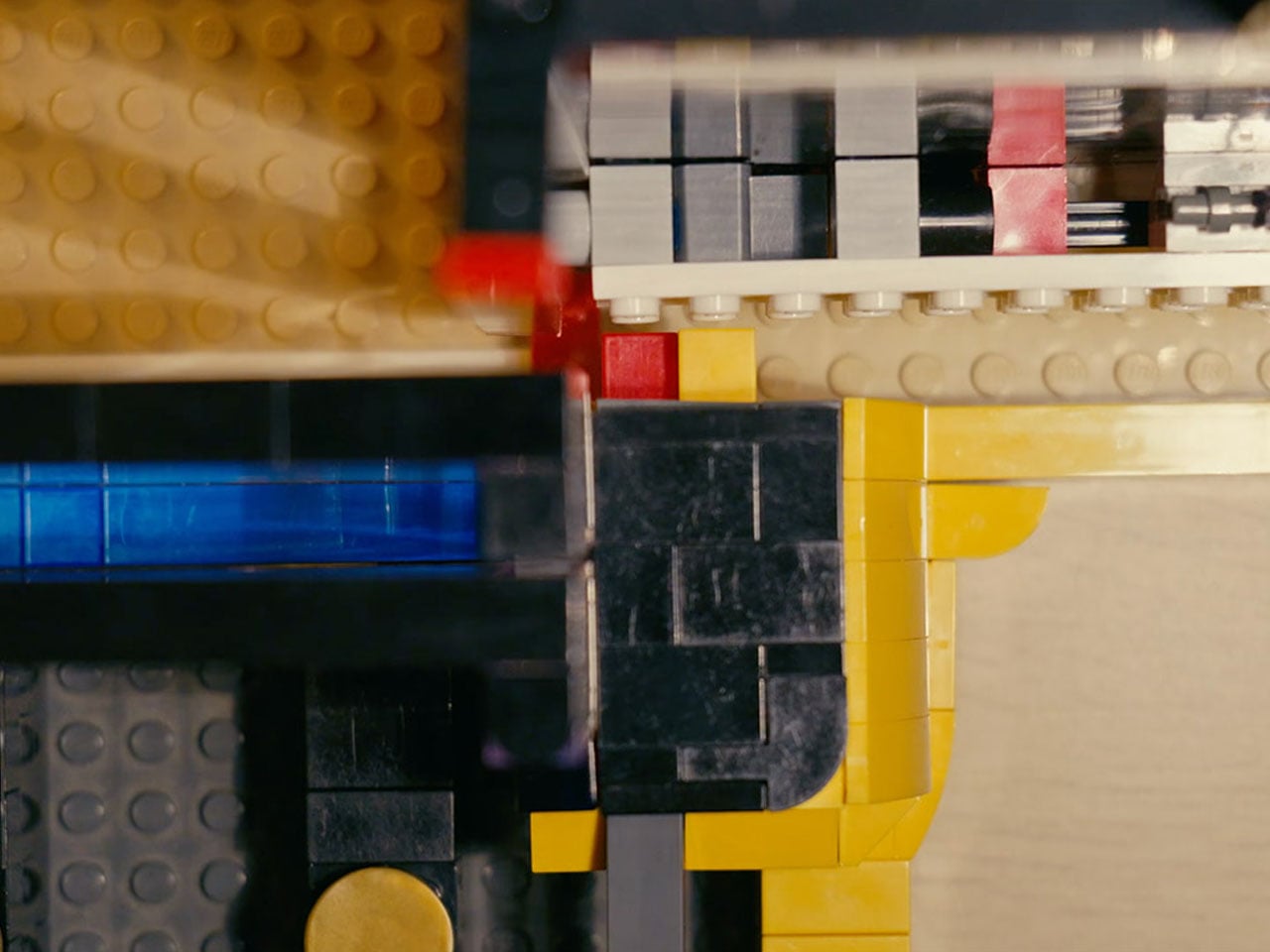
The movement of the plate that receives the tiles also mimics traditional typing action. After each key press, the board advances sideways automatically through a ratcheting mechanism actuated by the key itself. When a line is complete, vertical advancement is done manually with a small reel, echoing the feel of rolling the paper on an old trusty typewriter. This mix of automatic and manual motion adds to the sense of interaction and gives users a satisfying control loop as they “type.”

While Koenkun’s LEGO typewriter might not deliver ink on paper, it embodies the spirit of mechanical ingenuity and playful engineering that draws many to LEGO building in the first place. The reusable white plate means typed messages can be erased and retyped, inviting experimentation and wordplay.

The post A mechanical LEGO Typewriter that types using Gravity, not ink first appeared on Yanko Design.

Astronomers discover over 800 cosmic anomalies using a new AI tool

Here's a use of AI that appears to do more good than harm. A pair of astronomers at the European Space Agency (ESA) developed a neural network that searches through space images for anomalies. The results were far beyond what human experts could have done. In two and a half days, it sifted through nearly 100 million image cutouts, discovering 1,400 anomalous objects.

The creators of the AI model, David O'Ryan and Pablo Gómez, call it AnomalyMatch. The pair trained it on (and applied it to) the Hubble Legacy Archive, which houses tens of thousands of datasets from Hubble's 35-year history. "While trained scientists excel at spotting cosmic anomalies, there's simply too much Hubble data for experts to sort through at the necessary level of fine detail by hand," the ESA wrote in its press release.

After less than three days of scanning, AnomalyMatch returned a list of likely anomalies. It still requires human eyes at the end: Gómez and O'Ryan reviewed the candidates to confirm which were truly abnormal. Among the 1,400 anomalous objects the pair confirmed, more than 800 were previously undocumented.

Most of the results showed galaxies merging or interacting, which can lead to odd shapes or long tails of stars and gas. Others were gravitational lenses. (That's where the gravity of a foreground galaxy bends spacetime so that the light from a background galaxy is warped into a circle or arc.) Other discoveries included planet-forming disks viewed edge-on, galaxies with huge clumps of stars and jellyfish galaxies. Adding a bit of mystery, there were even "several dozen objects that defied classification altogether."

"This is a fantastic use of AI to maximize the scientific output of the Hubble archive," Gómez is quoted as saying in the ESA's announcement. "Finding so many anomalous objects in Hubble data, where you might expect many to have already been found, is a great result. It also shows how useful this tool will be for other large datasets."

This article originally appeared on Engadget at https://www.engadget.com/ai/astronomers-discover-over-800-cosmic-anomalies-using-a-new-ai-tool-205135155.html?src=rss

The Must‑Have Portable Power Station Setup Every Household Should Own For Storms And Blackouts

This is not a normal cold snap. The polar vortex that usually stays locked over the Arctic has split and sagged south, dragging temperatures in parts of the Midwest and East Coast to levels that feel closer to the Far North than to cities where millions live. Across affected regions, the results have been immediate and severe. Hypothermia deaths in Louisiana. Rolling blackouts. Ice storms that shatter tree limbs and bury power infrastructure under frozen weight. Nearly 250,000 people in Tennessee alone woke up this week without electricity, and utilities are warning that repairs could take days.

If you are watching the forecast from a warm, lit room, it is worth asking what happens if your block goes dark. Your thermostat stops, your phone begins to drain, your internet dies, and you lose access to weather updates and family check‑ins just when you need them most. For people in small apartments or older homes without backup systems, this is not a thought experiment, it is the reality playing out at this moment. A compact, indoor‑safe power station is one of the few tools that can soften that blow, quietly keeping phones, medical devices, and a few essential lights running while the grid catches up.

Click Here to Buy Now

Why the Mid‑Size Power Station Makes Sense for Most Households

Portable power stations fall along a spectrum, and most of them do not fit the use case of a typical household facing a winter outage. The small units, typically in the 200 to 300 watt‑hour range, are barely larger than heavy‑duty power banks. They can charge phones and tablets, maybe run a laptop for a few hours, but they lack the capacity and output to keep anything more demanding alive. A router pulls too much. A CPAP machine drains them in a single night. A small electric blanket finishes them off in two or three hours. They are fine for a day hike or an overnight car trip, but in a multi‑day blackout during freezing weather, they run dry too quickly to matter.

On the other end, the large systems in the 2,000 to 4,000 watt‑hour class are designed for off‑grid living, RV installations, or whole‑home backup with automatic transfer switches. They can run refrigerators, sump pumps, and multiple high‑draw appliances at once, but they weigh 50 to 100 pounds, cost as much as a used car, and take up serious floor space. For someone in a studio apartment or a rented house, they are impractical both financially and logistically.

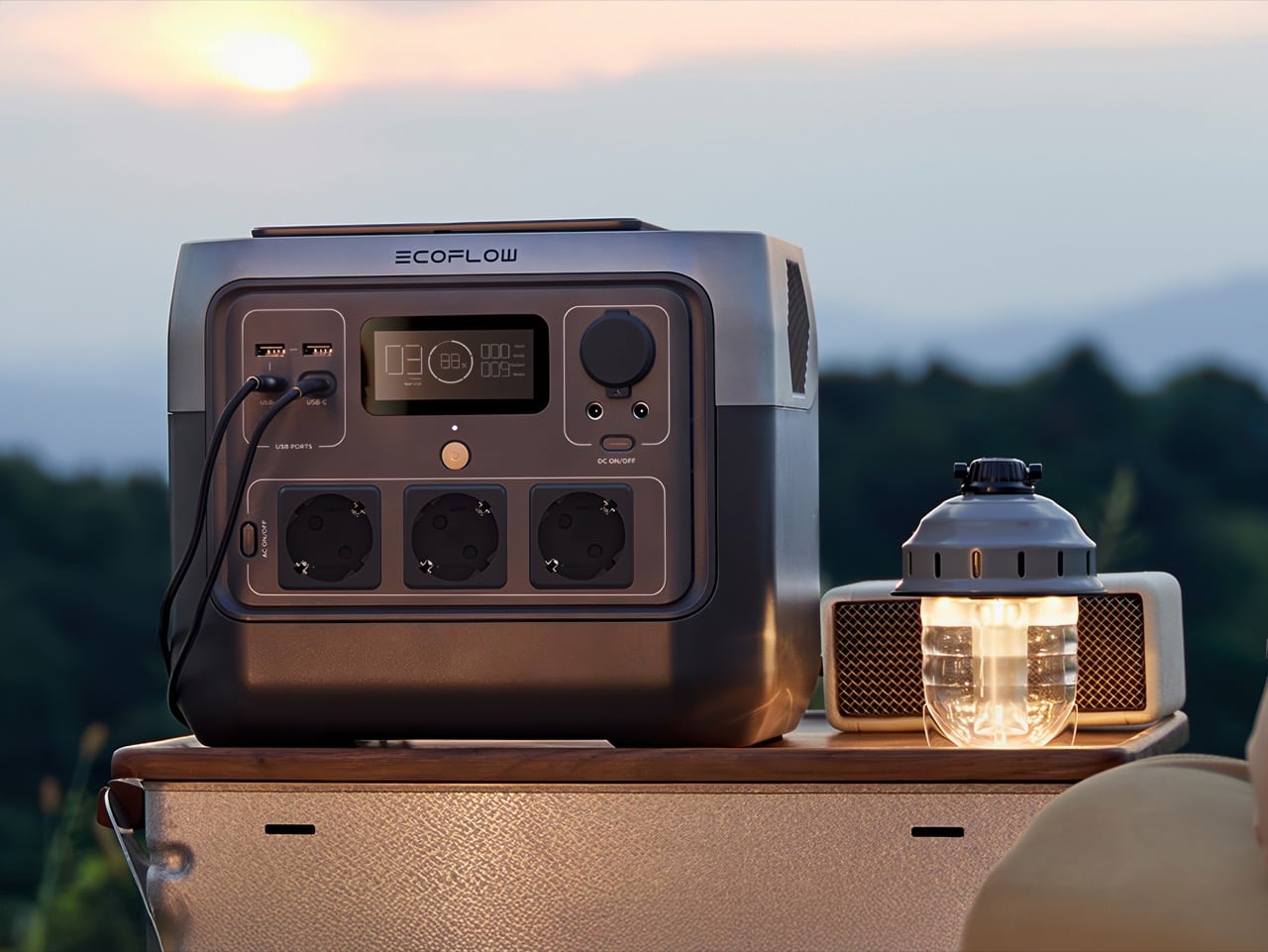
The mid‑size tier, roughly 700 to 1,000 watt‑hours with 800 watts of continuous output, occupies the useful middle ground. These units are light enough to move with one hand, affordable enough to justify as a one‑time purchase rather than a major investment, and powerful enough to keep the essentials running for several days if used carefully. They are not designed to replace the grid. They are designed to bridge the gap between when the grid fails and when it comes back online, which is exactly the scenario playing out across the East Coast right now.

What the River 2 Pro Brings Over Its Predecessor

We reviewed the standard EcoFlow River 2 a couple of years back and liked it for what it was: a genuinely portable, well‑designed 256 watt‑hour unit that charged fast and looked good doing it. The dual‑tone design was sharp, the handle redesign made it easier to store, and the price was right for weekend adventurers. But 256 watt‑hours is just not enough capacity to be useful in a real emergency. You could maybe get through one cold night if you were very, very careful.

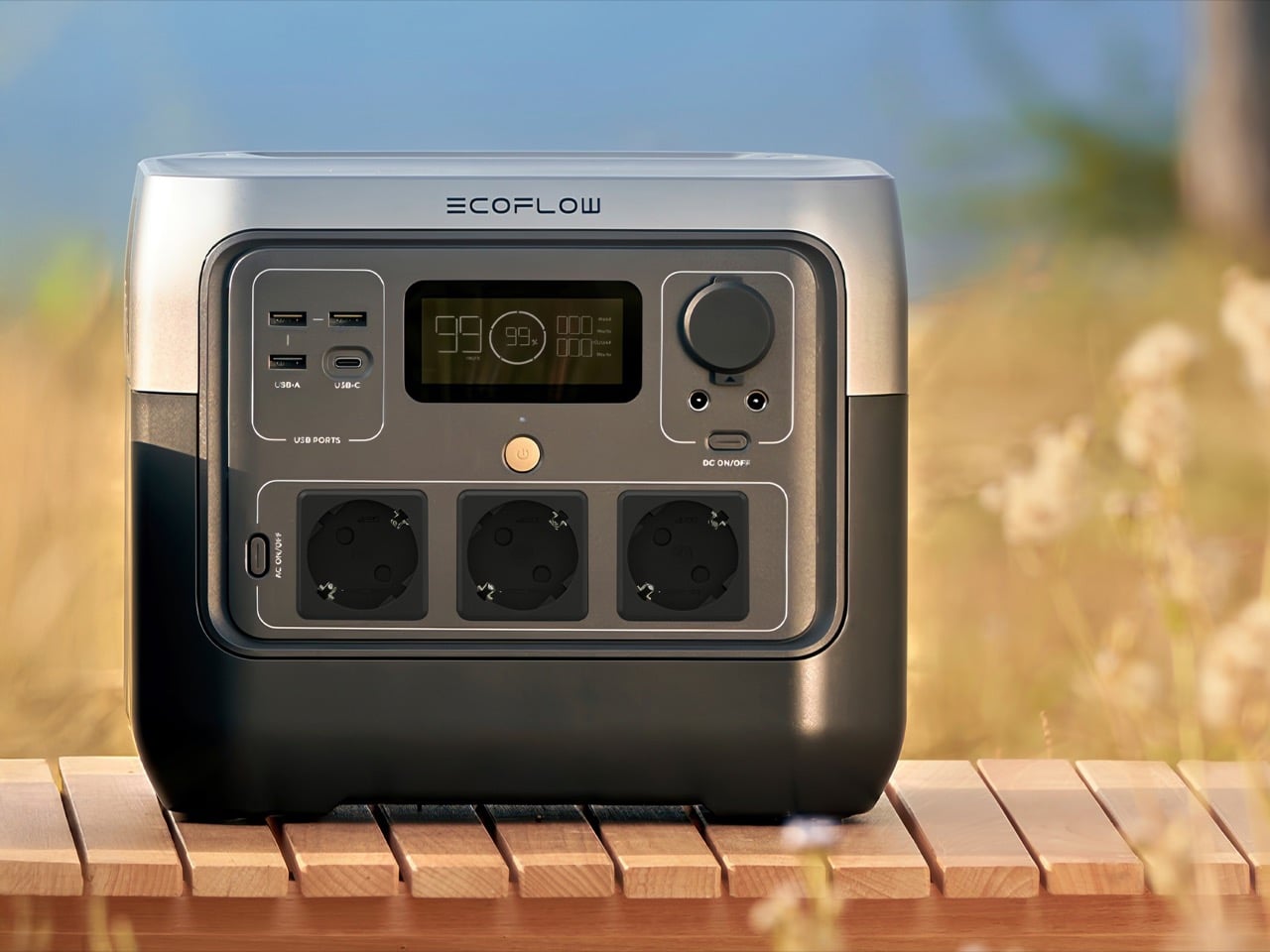
The Pro triples that to 768 watt‑hours and bumps the continuous AC output from 300 watts to 800 watts, all while adding only about 11 pounds to the overall weight. That capacity jump is not incremental, it is transformational. Now you are talking about running a CPAP for multiple nights, keeping a router alive for over a week of intermittent use, and still having juice left for phone charging and LED lights. The original River 2 was a nice‑to‑have for camping trips. The Pro is something you can actually rely on when the infrastructure around you stops working.

EcoFlow also stuck with LiFePO₄ chemistry, which is the right call here. These cells handle temperature swings better than standard lithium‑ion, they are safer, and they are rated for over 3,000 cycles before they start losing capacity. If you are buying this as a piece of emergency gear that might sit unused for months or years at a time, that longevity matters. This is not a gadget you replace every couple of years. It is something you buy once and forget about until the lights go out.

70 Minutes from Empty to Fully Charged

EcoFlow has been pushing fast charging as a selling point across their lineup for a while now, and in the River 2 Pro it is not just a spec sheet flex, it is genuinely useful. The unit goes from dead to full in about 70 minutes off a standard wall outlet. In normal times, that is convenient. During a rolling blackout, it is the difference between a functional backup and a paperweight.

Think about how most grid failures actually play out in populated areas. Power does not just drop and stay off for three days straight. It flickers. It comes back for an hour, goes out again, comes back for two hours overnight. If your power station takes five or six hours to charge, you are constantly playing catch‑up and never actually filling the tank. With the River 2 Pro, every time the grid comes back on, you have a realistic shot at getting back to 100 percent before it drops again. That changes the whole strategy of how you manage an outage.

The unit also takes up to 220 watts of solar input, so a pair of decent folding panels can top it off in four or five hours under good sun. Winter solar is sketchy, clouds and short days mean you are not going to get reliable full charges, but even partial sun can stretch your runtime by enough to matter. It is not a primary charging method in January, but it is a useful fallback if the outage drags on longer than expected.

What It Costs and How That Compares

Online pricing on the River 2 Pro right now is hovering around the $315 mark, depending on where you shop. The MSRP is technically $549, but there’s almost always a discount running somewhere.

Compare that to a Jackery Explorer 1000 V2, which offers about 1,070 watt‑hours and usually runs $500 to $600. Or the Bluetti AC180, which is in the same ballpark for capacity and price. The River 2 Pro is giving you about 70 percent of the capacity at roughly half the cost, which for most apartment and small‑home use cases is the right tradeoff. You are not powering a refrigerator for a week either way, so the extra 300 watt‑hours does not fundamentally change what you can do. What changes is whether you can justify the expense as a one‑time purchase or if it feels like a luxury you will never pull the trigger on.

The really small units, the 200 to 300 watt‑hour boxes, run $150 to $250. So you are paying maybe $100 to $150 more to triple your capacity and double your output. That is an obvious upgrade if you are serious about emergency preparedness. The giant 2,000+ watt‑hour systems start north of $1,200 and climb fast from there, which is a completely different budget conversation.
What It Can Actually Power During an Outage

The numbers on a spec sheet do not always translate clearly to real‑world use, so it helps to think in concrete scenarios. A fully charged River 2 Pro, used carefully, can sustain:

Communication and information: A smartphone pulls maybe 10 to 15 watt‑hours per full charge. You could recharge your phone 50 times off a full River 2 Pro. A typical Wi‑Fi router and modem together draw 15 to 25 watts while they are on. Run them three hours a day to pull weather updates, check news, coordinate with family, and you are using about 60 watt‑hours daily. That gives you a week and change of intermittent connectivity from a single charge.

Medical devices: A CPAP machine is slightly trickier because the power draw varies wildly depending on your model and settings. If you are running a basic unit without the heated humidifier, you might pull 30 to 40 watts. With the humidifier cranked, that can jump to 60 watts or more. Let us say you are at 40 watts for eight hours a night. That is 320 watt‑hours per night, so you get two full nights of sleep therapy before you need to recharge. Not great if the power is out for a week, but enough runway to get through the worst of a storm without ending up in an ER.

Targeted warmth: Low‑wattage electric blankets and heated throws usually run 50 to 100 watts. A 75‑watt throw for three hours in the evening is 225 watt‑hours. Combine that with CPAP and phone charging and you are looking at maybe 600 watt‑hours total per day, which gives you a full day of decent comfort before you need to think about recharging.

Lighting: LED lighting is almost free by comparison. A 10‑watt bulb for five hours a night is 50 watt‑hours. You could light up a small apartment every night for a week and barely dent the battery.

The key here is prioritization. You shouldn’t be running everything at once. Keep the critical stuff alive, lights, communication, medical devices, and use targeted warmth instead of trying to heat the whole space. That is what makes a mid‑size unit like this viable, and truly accessible to the vast population who can divert sub-$500 on a moment’s notice. The power station might be tiny, but it forces you to be smart about power – which is exactly what you need to do in a real outage anyway.

Need More Power? Just Buy A Second One And Connect Them

One feature that does not get talked about enough is that you can actually chain two River 2 Pro units together for expanded capacity. EcoFlow builds this into their ecosystem, so if you find yourself consistently running up against the limits of a single 768 watt‑hour unit, you are not stuck buying a completely different, more expensive system. You just add a second River 2 Pro and suddenly you are working with over 1,500 watt‑hours of usable capacity. That is enough to stretch a multi‑day outage without obsessively rationing every watt, or to run slightly higher‑draw appliances that a single unit would struggle with.

The math here is quite interesting because it gives you a more flexible upgrade path than most power station ecosystems offer. Instead of dropping $1,200 to $1,500 on a single large unit right out of the gate, you can start with one River 2 Pro, see how it performs in real‑world use, and then add a second one later if you need the extra capacity. You end up spending around $630 total for a combined system that gives you more modularity than a single giant battery box. If one unit dies or needs servicing, you still have backup power. If you only need light capacity for a short trip, you take one and leave the other at home. That kind of flexibility is genuinely underrated.

It also means the River 2 Pro scales better for different household sizes and needs. A single person in a studio apartment might never need more than one unit. A family of four in a larger house might find that two units let them cover essentials in multiple rooms without running extension cords everywhere or constantly shuffling devices between outlets. The ability to grow the system incrementally, rather than making one big all‑or‑nothing purchase decision, makes it a lot easier to justify the initial investment and adapt as your needs change.

How to Use It Effectively in Cold Weather

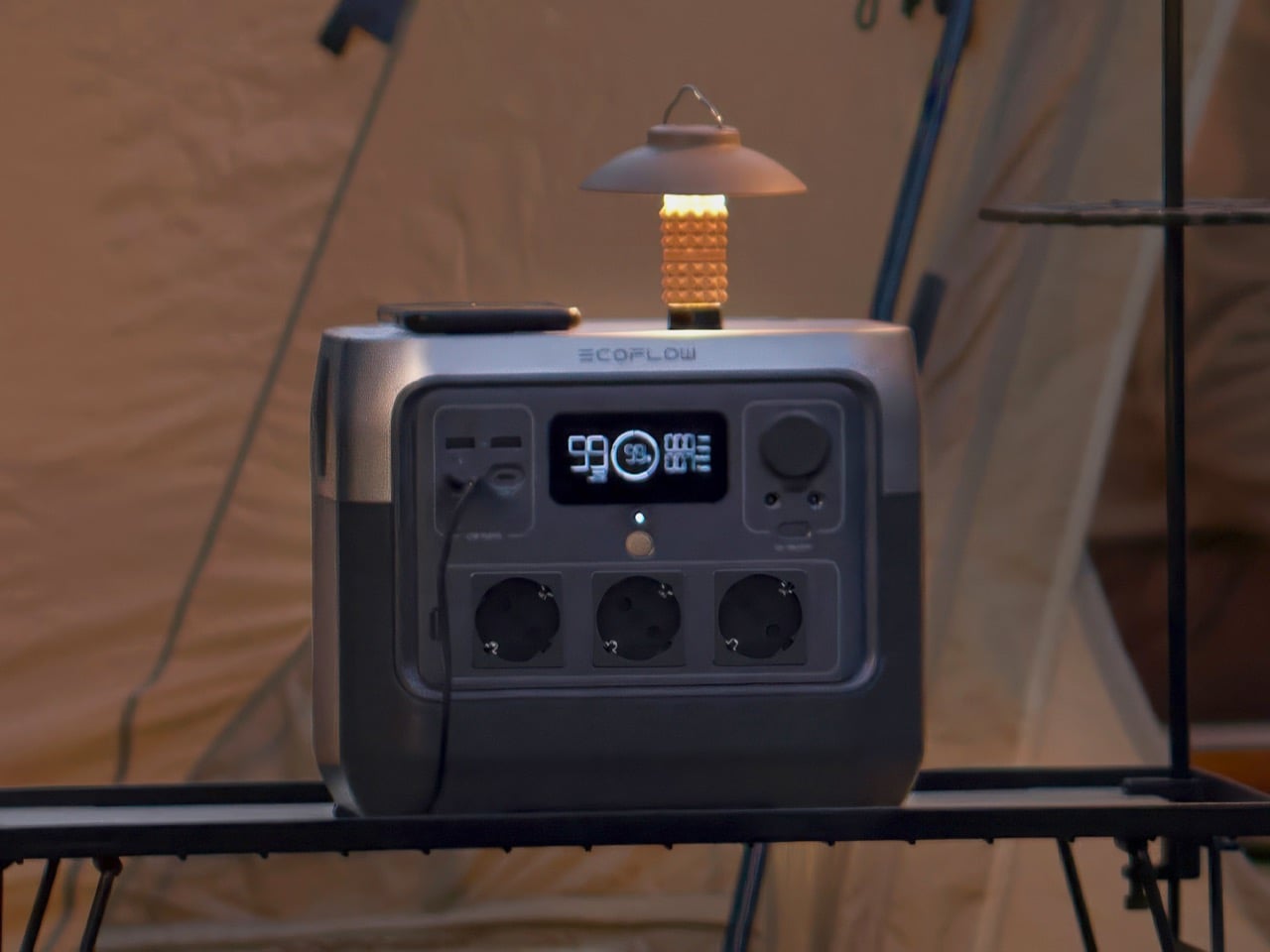
Store and operate it indoors. LiFePO₄ cells can discharge in cold temperatures, but they should not be re-charged when the internal temperature is below freezing.

Most modern power stations, including the River 2 Pro, have battery management systems that will flat‑out refuse to charge if the cells are too cold. So keep the unit inside, away from exterior walls and drafty windows, and you will be fine.

Turn things off when you are not using them. That sounds obvious, but in the chaos of a blackout it is easy to leave the router on all day or forget a phone plugged in after it hits 100 percent. The River 2 Pro has a small parasitic draw just from being powered on, so if you are not actively using an outlet, shut it down and save every ounce of power you can.

And for the love of all that is holy, do not try to heat your apartment with this thing. Yes, the 800‑watt continuous output can technically run a small space heater. Yes, the X‑Boost mode can push that to 1600 watts for short bursts. But a 1,500‑watt space heater will drain the entire battery in about 30 minutes. That is not a strategy, that is just lighting your stored energy on fire. Layer up, use blankets, deploy a low‑watt heated throw for targeted warmth if you need it, but resistive heating is a losing game with battery power.
What It Cannot Do

The River 2 Pro is not a whole‑home backup system. It will not keep your refrigerator running for days, it will not power your furnace, and it definitely will not run a sump pump if your basement starts flooding. If those are your needs, you are shopping in the wrong category. You want a 2,000+ watt‑hour system, probably with a transfer switch and professional installation, and you are going to spend a lot more money.

The usable capacity is also not quite the advertised 768 watt‑hours. Independent testing puts the real‑world output closer to 620 watt‑hours, which is about 81 percent of the rated capacity. That is normal for the industry, battery management systems always hold back some reserve to protect longevity, but it is worth knowing so you do not plan your runtime calculations around the full number.

And while the unit is rated for 3,000+ cycles, that assumes you are not constantly hammering it from zero to 100 percent under extreme conditions. If you want to maximize lifespan, try to keep the charge between 20 and 80 percent when you can, and store it at around 50 percent if it is going to sit unused for months. Treat it like a piece of infrastructure, not a toy, and it will last you a decade.

Preparing Before the Next Storm

Hundreds of thousands of people are sitting in the dark tonight while the cold keeps piling on. More are watching the forecast and realizing their block could be next. The grid is not built for this. It was not designed to handle ice storms in places that rarely freeze, or sustained cold snaps in cities where winter is usually mild. And when it fails, the gap between “uncomfortable” and “dangerous” closes fast.

A power station like the River 2 Pro does not fix the underlying problem. It does not make the grid more resilient, and it does not replace the need for serious infrastructure investment. What it does is give you a buffer. A way to keep the essentials running while you wait for the repair crews to get the lines back up. A way to avoid the kinds of decisions that turn a bad night into a genuine emergency.

For $315, that is not a bad insurance policy to have sitting in your closet, charged and ready, before the next storm rolls in.

Click Here to Buy Now

The post The Must‑Have Portable Power Station Setup Every Household Should Own For Storms And Blackouts first appeared on Yanko Design.

Sennheiser debuts new models of wired headphones and earbuds

Wireless audio has become the industry standard, but there are still options out there for people who prefer a wired connection. Two new choices joining the market come from Sennheiser, which has released the CX 80U wired earbuds and HD 400U wired over-ear headphones. These new takes on the company's previous models for wired listening have replaced the 3.5mm audio jack connector with a USB-C cable. Both sets support 24-bit, 96 kHz digital audio playback. They're compatible with a broad array of devices, including iOS, iPadOS, Android, ChromeOS, MacOS, Windows and SteamOS. 

Both of these items are priced at an entry level for a brand that might charge up to $500 for its higher-end headphones. The CX 80U earbuds cost $40 and the HD 400U headphones retail for $100. Both products are available starting today.

This article originally appeared on Engadget at https://www.engadget.com/audio/headphones/sennheiser-debuts-new-models-of-wired-headphones-and-earbuds-201245058.html?src=rss

Pornhub will become unavailable for many UK users as of February 2

Pornhub will stop offering full access to new users in the UK on February 2, its parent company Aylo said Tuesday, citing the nation's Online Safety Act and its age-verification requirements. The company said users who already verified their ages before the cutoff will still be able to access the adult site through existing accounts.

The move follows the Online Safety Act’s Protection of Children Codes, which took effect last summer and require adult sites to use "highly effective" methods of age verification. Aylo claims the system is backfiring and shifting both adults and minors to noncompliant porn sites that don’t verify age or moderate content according to Politico. Aylo's lawyers argued that only device-based age verification methods sufficiently protect user data.

Alexzandra Kekesi, VP of Brand and Community at Aylo, said "anyone who has not gone through that process prior to February 2 will no longer be able to access [the sites] and they're going to be met with a wall," according to 404 Media. The adult site was similarly made unavailable in various US states after the passage of age-verification laws that Pornhub claimed put users' privacy at risk. "These people did not stop looking for porn," Aylo said at the time. "They just migrated to darker corners of the internet that don’t ask users to verify age, that don’t follow the law, that don’t take user safety seriously, and that often don’t even moderate content."

Users who wish to get around these sorts of bans typically use VPNs to mask the origin of their internet traffic, though the UK is reportedly considering a ban on VPNs for children. The nation has also been considering a social media ban for users under 16 years of age, similar to the one enacted in Australia.

This article originally appeared on Engadget at https://www.engadget.com/entertainment/pornhub-will-become-unavailable-for-many-uk-users-as-of-february-2-194622124.html?src=rss

Apple and Google reportedly still offer dozens of AI ‘nudify’ apps

A recent investigation by an online advocacy organization called the Tech Transparency Project (TTP) found that the Apple App Store and Google Play Store are rife with so-called "nudify" apps. These are AI applications that create nonconsensual and sexualized images, which is a clear violation of both companies' store policies.

All told, the investigation found 55 of this type of app in the Google Play Store and 47 in the Apple App Store. Both platforms also still offer access to xAI's Grok, which is likely the most famous nonconsensual deepfake maker in the world.

"Apple and Google are supposed to be vetting the apps in their stores. But they've been offering dozens of apps that can be used to show people with minimal or no clothing—making them ripe for abuse,” said Michelle Kuppersmith, an executive director at the nonprofit that runs TTP.

The apps identified by the report have been collectively downloaded over 700 million times and generated more than $117 million in revenue. Google and Apple get a cut of this money.

Many of the apps named in the investigation are rated as suitable for teens and children. DreamFace, for instance, is rated suitable for ages 13 and up in the Google Play Store and ages nine and up in the Apple App Store.

Both companies have responded to the investigation. Apple says it has removed 24 apps from its store, according to a report by CNBC. However, that falls shy of the 47 apps discovered by TTP researchers. A Google spokesperson has said the company suspended several apps referenced in the report for violating store policies, but declined to say how many apps it has removed.

This report comes after Elon Musk's Grok was found to be generating sexualized images of both women and children. All told, the AI chatbot generated around three million sexualized images and 22,000 that involved children over a period of 11 days.

Representatives from the company haven't really responded to these allegations, except to send an automated email to journalists that read "Legacy Media Lies." Musk has also stated that he is "not aware of any naked underage images generated by Grok. Literally zero."

X's safety account did post that "anyone using or prompting Grok to make illegal content will suffer the same consequences as if they upload illegal content." Grok has proven to be more forthcoming than actual humans at the company, as the chatbot apologized for creating sexualized images of minors.

This article originally appeared on Engadget at https://www.engadget.com/ai/apple-and-google-reportedly-still-offer-dozens-of-ai-nudify-apps-192712446.html?src=rss

Sonos introduces Amp Multi for complicated residential installs

Sonos has unveiled its first new product of 2026, the Amp Multi. This amplifier is a niche option for the owners of very large or complicated spaces, and it's being billed as professional grade option for residential audio installations. The Amp Multi has eight 125W outputs and four configurable zones, and each channel can support up to three Sonos Architectural speakers. In other words, that's a lot more audio than the average home needs. Even the Sonos Amp would probably be overkill for those of you living the apartment life.

The Amp Multi will be available "in the coming months," according to the company's press release, and there's no pricing information yet for the product listing on its website. But given the high-end customers this is targeting, expect the Amp Multi to cost a fair bit more than the $800 Sonos Amp.

Sonos has mostly been keeping its proverbial head down on the product side as it continues to address fallout from a bungled app redesign in 2024 that soured customers and put the company in dire straits. First there were layoffs, then the CEO left. Sonos' temporary chief exec, Tom Conrad, got the position permanently last summer. Once the business' position does stabilize at last, we will hopefully be hearing more positive updates from Sonos in the future.

This article originally appeared on Engadget at https://www.engadget.com/audio/sonos-introduces-amp-multi-for-complicated-residential-installs-191000421.html?src=rss

The French government is ditching Zoom and Microsoft Teams for a home-grown alternative

The French government is saying au revoir to Microsoft Teams and Zoom as it embraces a home-grown alternative. By next year, civil servants across all departments will have switched to French videoconference platform Visio, as EuroNews reports.

As with Teams and Zoom, Visio has an AI-powered transcription tool. Visio runs on a French company's cloud infrastructure as well. The platform has around 40,000 users and it's been in testing for the last year. The government expects the switch to help reduce costs by as much as €1 million ($1.2 million) each year for every 100,000 users.

The decision to ditch Microsoft Teams and Zoom is part of a broader effort to rely less on foreign software services — particularly US ones. Under the Suite Numérique project, France also plans to jettison the likes of Gmail and Slack for government use. 

"The aim is to end the use of non-European solutions and guarantee the security and confidentiality of public electronic communications by relying on a powerful and sovereign tool," David Amiel, minister for the civil service and state reform, said. "This strategy highlights France's commitment to digital sovereignty amid rising geopolitical tensions and fears of foreign surveillance or service disruptions."

This article originally appeared on Engadget at https://www.engadget.com/apps/the-french-government-is-ditching-zoom-and-microsoft-teams-for-a-home-grown-alternative-184747010.html?src=rss

TikTok settles to avoid major social media addiction lawsuit

TikTok has reached a settlement in a closely-watched lawsuit over social media addiction, narrowly avoiding a trial that's scheduled to begin jury selection Tuesday. Terms of the deal, which was reported by The New York Times, weren't disclosed. 

TikTok's settlement comes about one week after Snap reached a settlement in the same case. The trial is expected to move forward in Los Angeles with Meta and YouTube as the only defendants. Mark Lanier, a lawyer for the plaintiff, said in a statement to NYT that they were "pleased" with the settlement and that it was "a good resolution." TikTok didn't immediately respond to a request for comment. 

The trial stems from a 2023 lawsuit brought by a California woman known in court documents as "K.G.M." She sued Meta, Snap, TikTok and YouTube and alleged that their platforms were addictive and had harmed her as a child. The judge in the case previously ordered the companies' executives, including Mark Zuckerberg and Adam Mosseri, to testify. YouTube's top exec, Neal Mohan, is also likely to testify, according to The New York Times

The lawsuit is the first among several high-profile cases against social media companies to go to trial this year. Meta is expected to head to court in New Mexico in early February in a case brought by the state's attorney general, who has alleged that Facebook and Instagram have facilitated harm to children. TikTok and Snap are collectively facing more than a dozen other trials in California courts this year.

This article originally appeared on Engadget at https://www.engadget.com/social-media/tiktok-settles-to-avoid-major-social-media-addiction-lawsuit-183943927.html?src=rss

Dark Vader Tiny Home Crosses to the Dark Side of Small Living with Bold Black Design

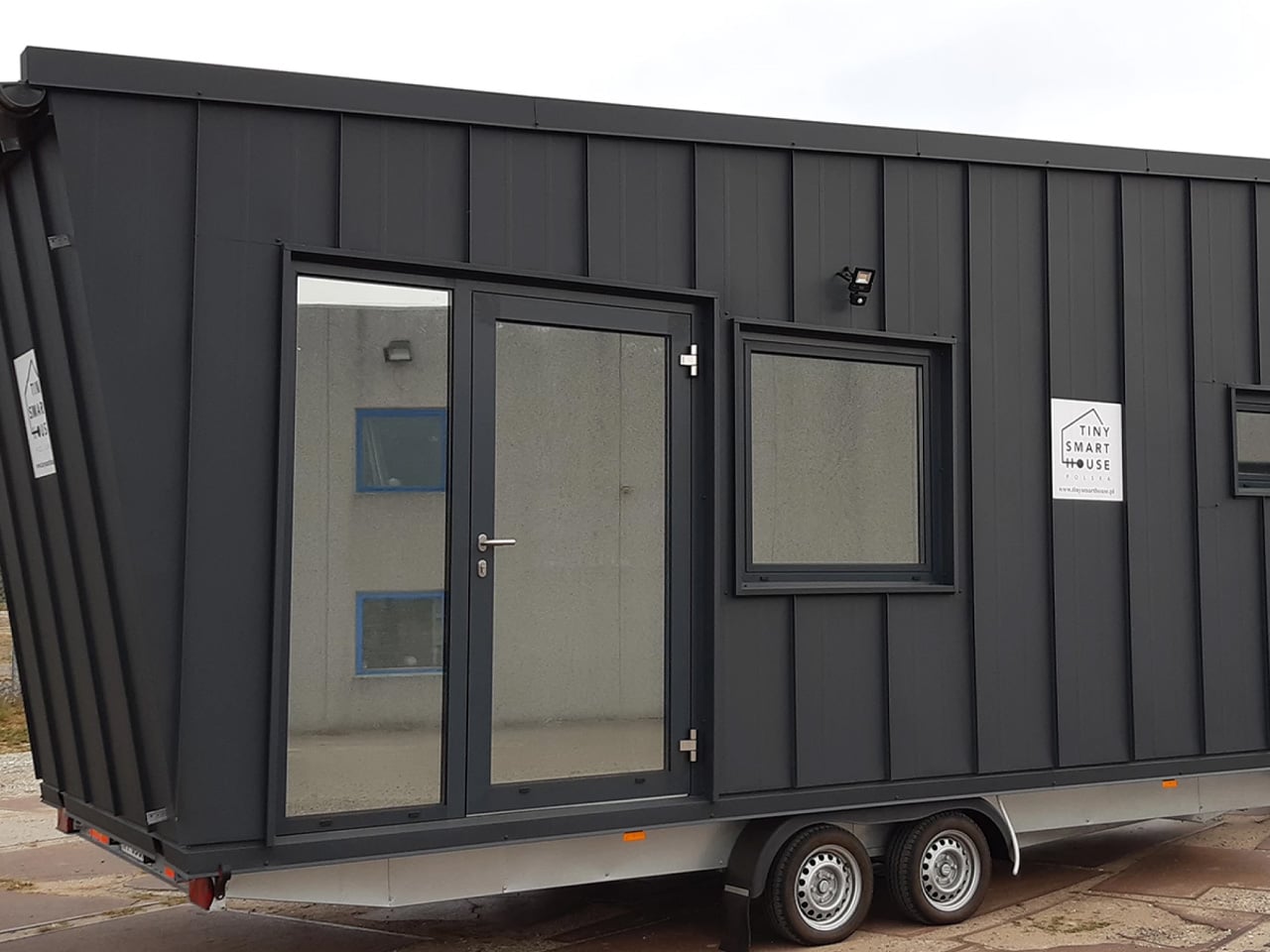
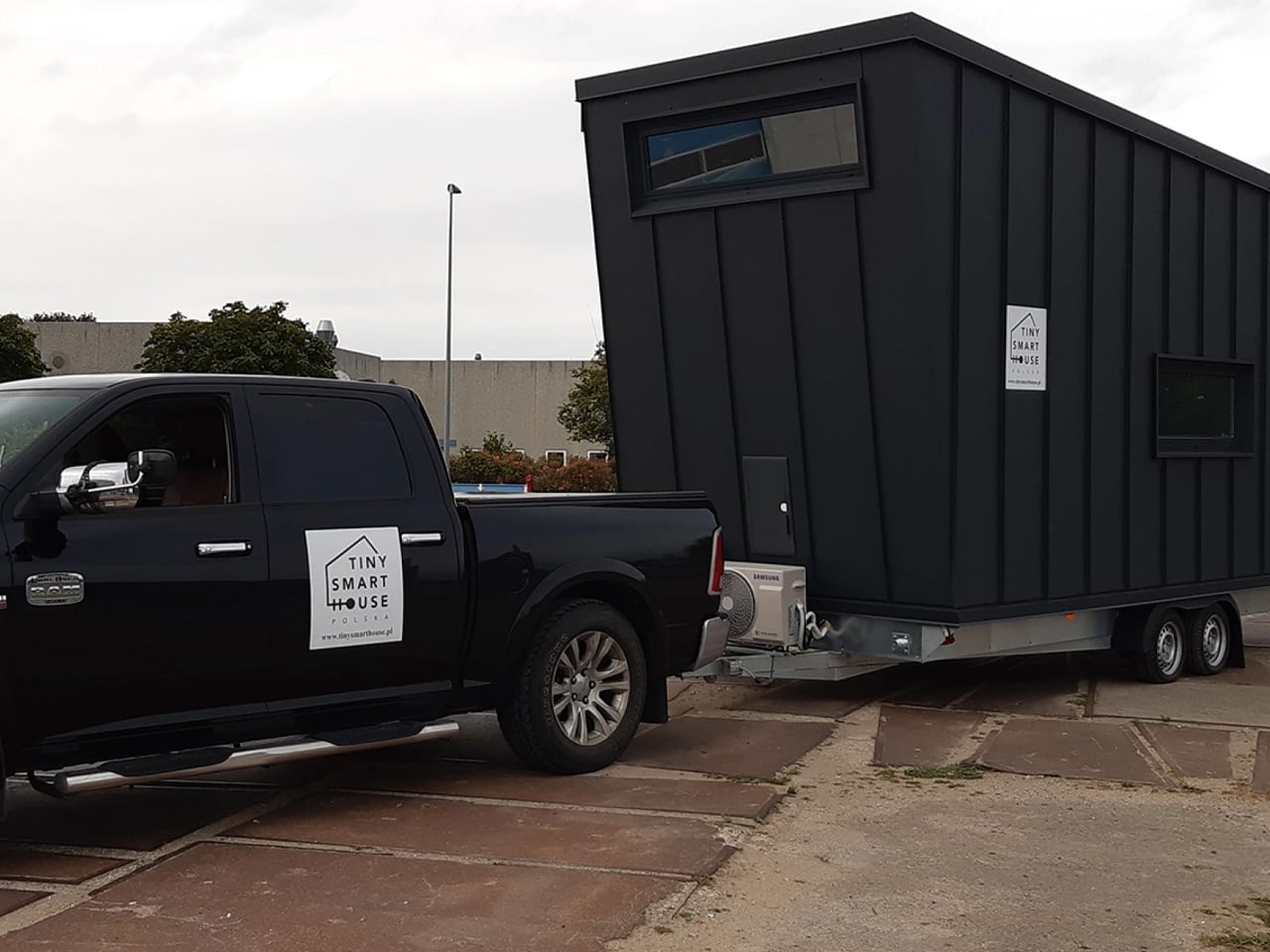
When Poland’s Tiny Smart House unveiled the Dark Vader, they created something truly exceptional in the world of compact living. This mobile dwelling isn’t your typical tiny home with cutesy charm and rustic wood siding. Instead, it channels the intimidating presence of one of cinema’s most notorious villains, transforming that dark energy into a sophisticated living space that commands attention wherever it travels. The inspiration is obvious from the name alone, yet the design team showed restraint by avoiding kitsch Star Wars memorabilia, focusing instead on capturing the essence of power and sleekness associated with the iconic character.

The exterior is where this tiny home truly makes its statement. Wrapped entirely in black sheet metal, the Dark Vader creates an imposing silhouette that stands in stark contrast to the cheerful pastels and natural wood tones dominating most tiny house communities. This bold material choice isn’t just about aesthetics; the metal cladding provides durability and weather resistance while maintaining that distinctive edge. Mounted on a double-axle trailer foundation, the structure spans six meters, which translates to roughly twenty feet of living space. While this dimension might seem modest, especially when compared to the forty-foot behemoths common across North America, it represents the sweet spot for European tiny house design, balancing mobility with livability.

Designer: Tiny Smart House

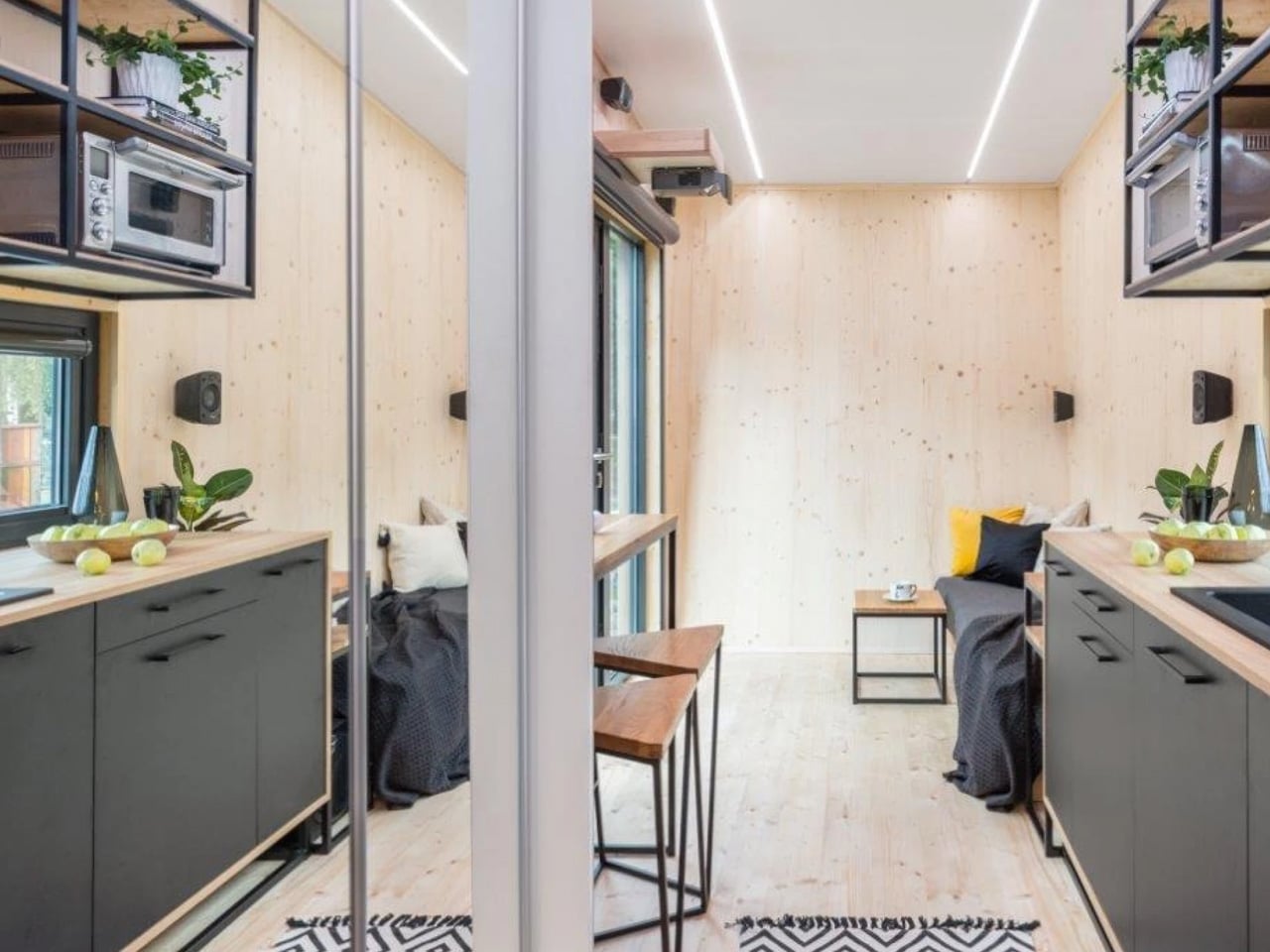
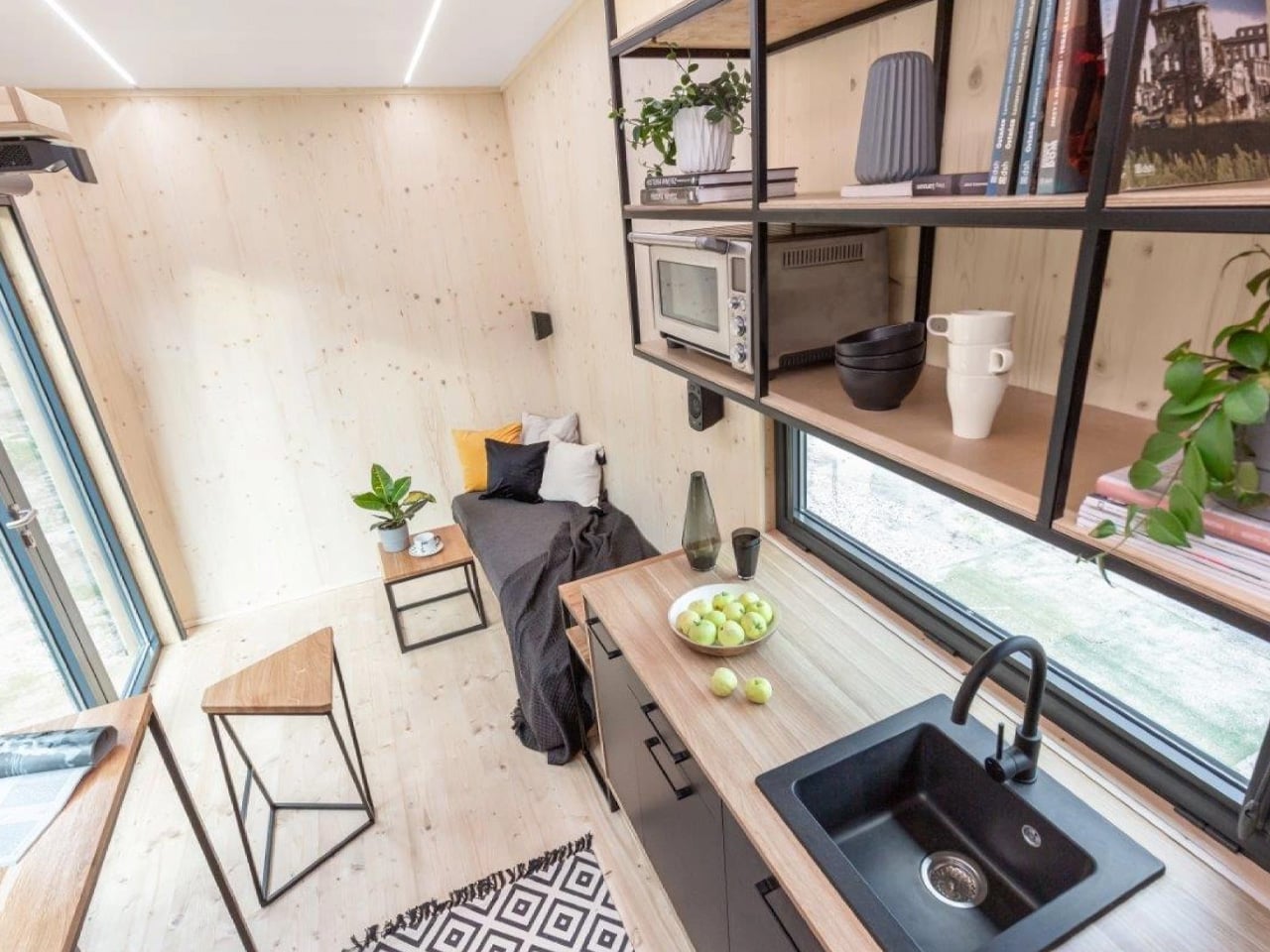
Step inside, and you’ll discover an unexpected contrast to the menacing exterior. The interior spaces showcase beautiful spruce wood throughout, creating warmth and organic texture that immediately softens the industrial vibe. Large windows punctuate the walls, flooding the compact floor plan with natural light and preventing any sense of claustrophobia. This juxtaposition between dark and light, industrial and natural, demonstrates sophisticated design thinking that elevates the Dark Vader beyond novelty status into genuine architectural achievement.

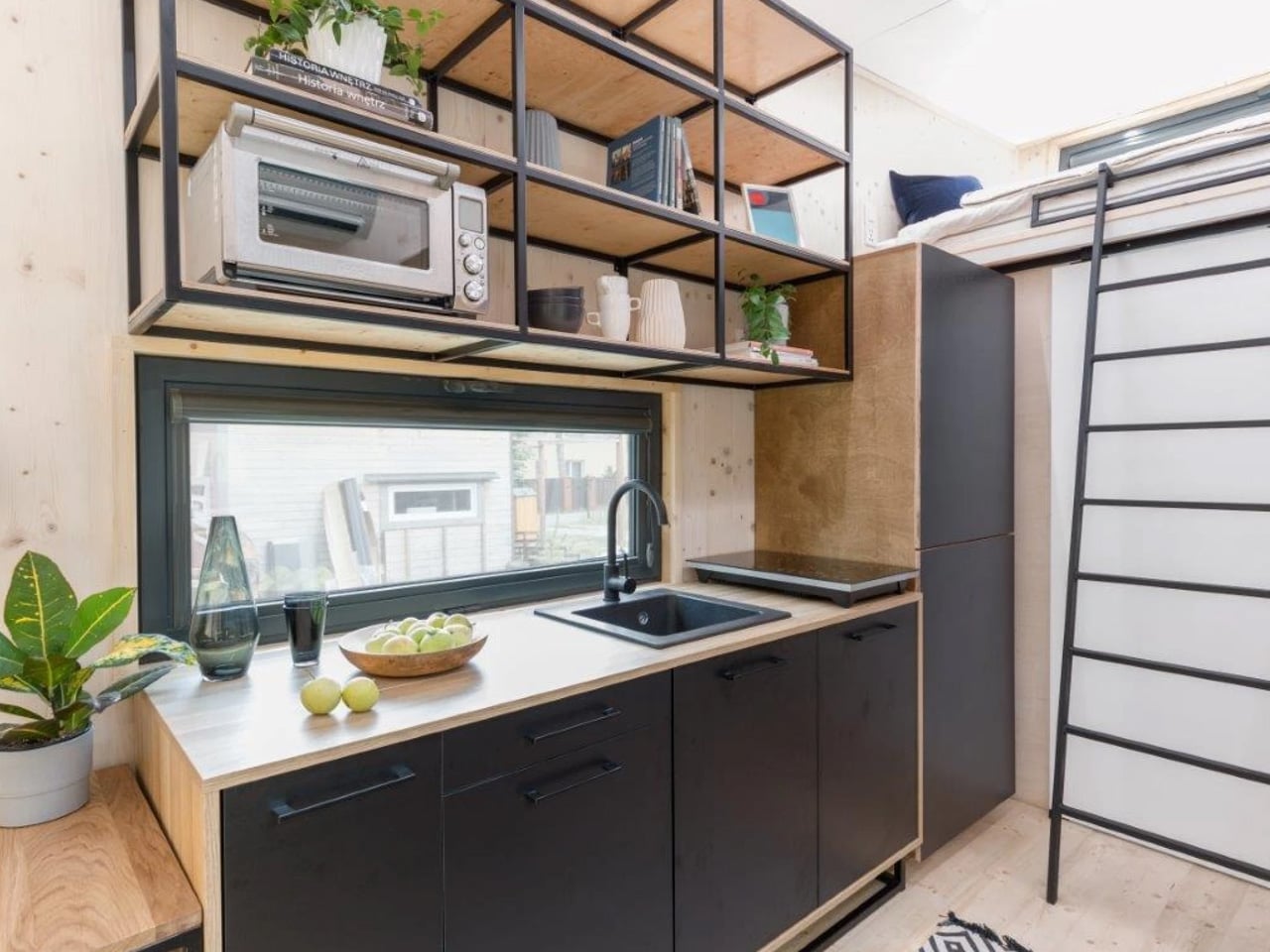
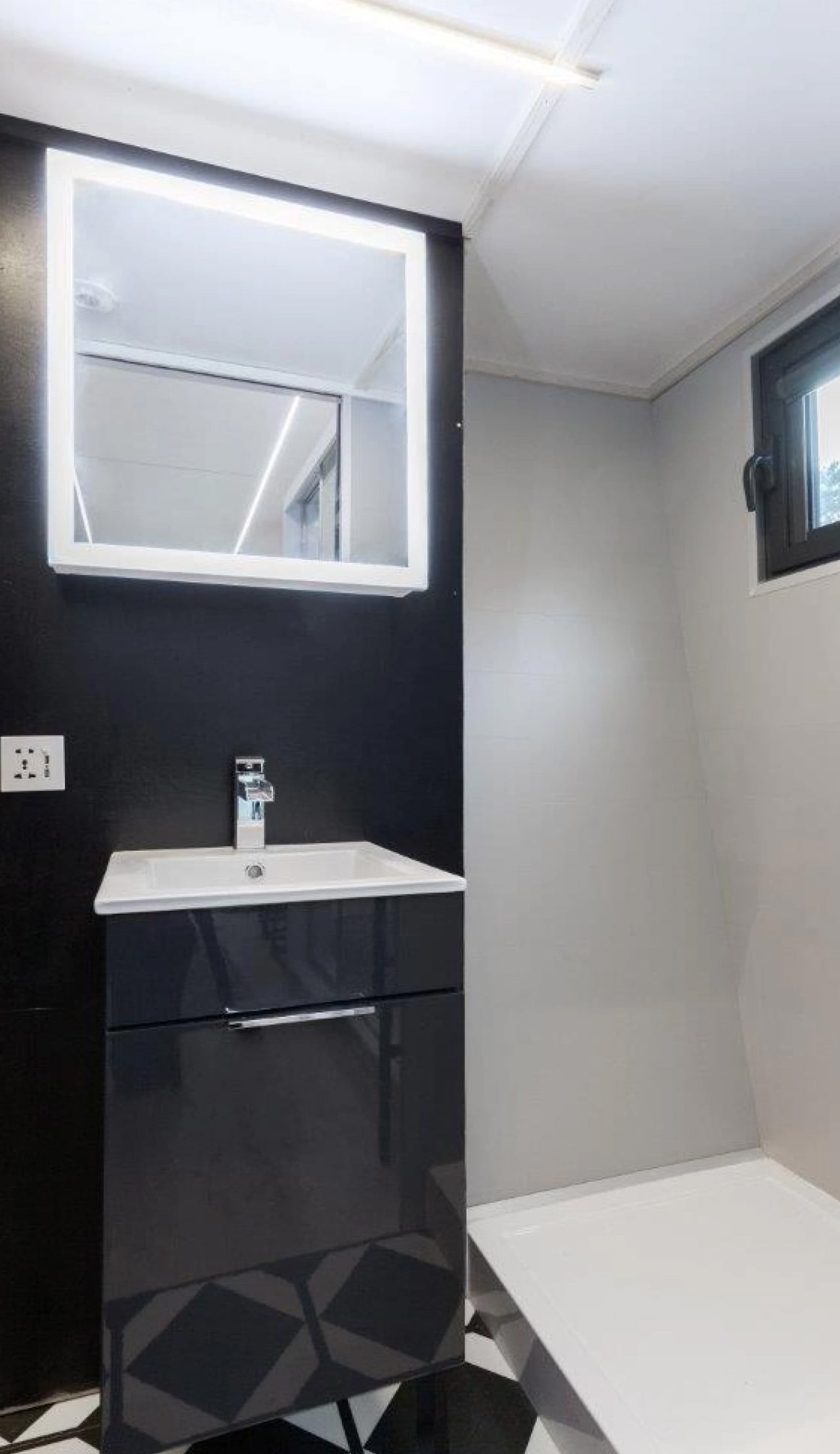
The main level houses the primary living spaces with impressive efficiency. A comfortable sofa anchors the living room alongside a petite coffee table, creating an intimate gathering spot perfect for unwinding after work or hosting friends for evening conversations. The kitchen area integrates seamlessly into the open layout, while the bathroom surprises with full-sized amenities including a proper walk-in shower, contemporary vanity sink, and standard flushing toilet. These features matter tremendously in tiny living, where many occupants struggle with composting toilets and cramped shower stalls.

Above the main living area, a sleeping loft provides private quarters accessed through an ingeniously designed staircase. Rather than using a space-wasting ladder or simple steps, the builders incorporated extensive storage directly into each riser, creating cubbies and compartments that swallow clothing, books, linens, and countless other items that would otherwise clutter the limited square footage. The bedroom ceiling sits low, as physics demands in these compact structures, but the trade-off grants valuable storage throughout the home’s vertical circulation path.

This particular Dark Vader found its permanent home in Denmark after successful completion, though its influence ripples through the tiny house community worldwide. The design philosophy behind this project celebrates authenticity and creative expression, proving that alternative housing can embrace personality and fun without sacrificing functionality. Whether serving as a bachelor pad, artist’s retreat, or minimalist primary residence, the Dark Vader demonstrates how tiny living can align with bold personal style while meeting all practical needs of modern life.

The post Dark Vader Tiny Home Crosses to the Dark Side of Small Living with Bold Black Design first appeared on Yanko Design.