OpenClaw is an open source AI agent designed to act as a fully autonomous “AI employee,” handling tasks such as coding, research and device control. Alex Finn outlines the setup process, emphasizing the importance of using personal devices or dedicated machines instead of Virtual Private Servers (VPS). This approach minimizes security and performance risks, making […]
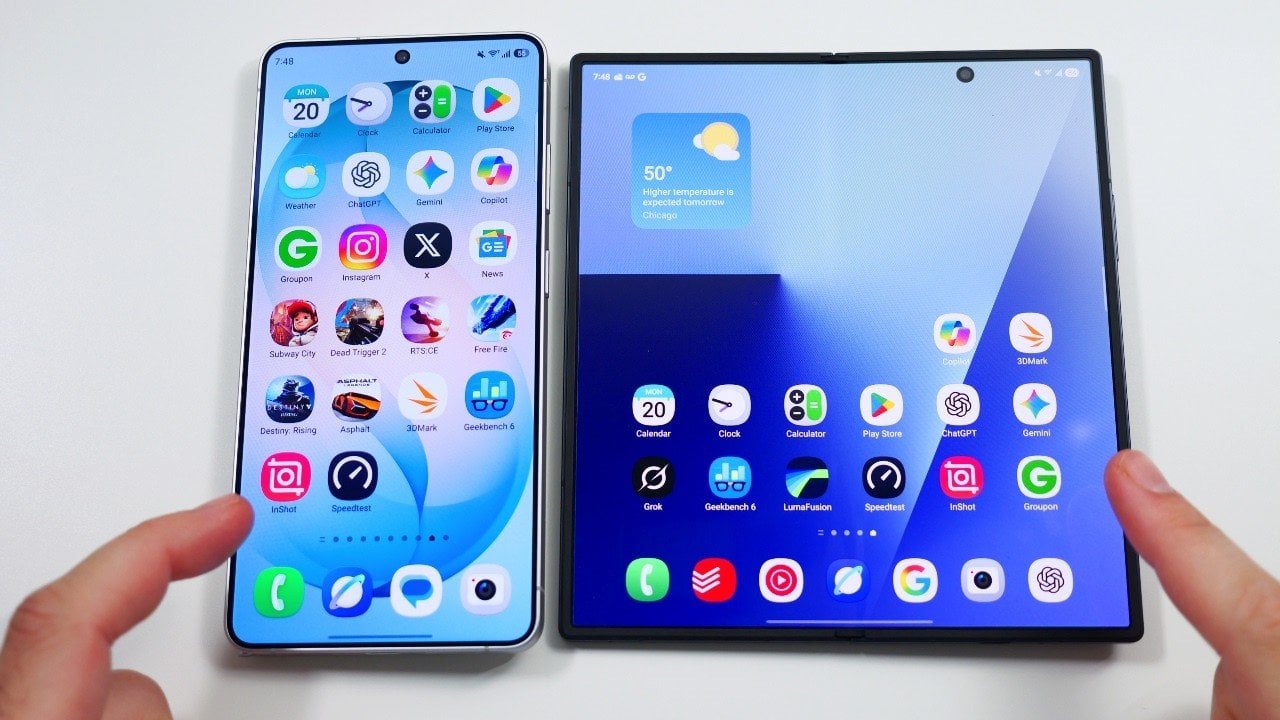
Selecting between the Samsung Galaxy S26 Ultra and the Galaxy Z Fold 7 hinges on your specific priorities and how you use your smartphone. The Galaxy S26 Ultra offers a robust, traditional design with top-tier performance, while the Galaxy Z Fold 7 redefines versatility with its foldable display, tailored for multitasking and productivity. Both devices […]
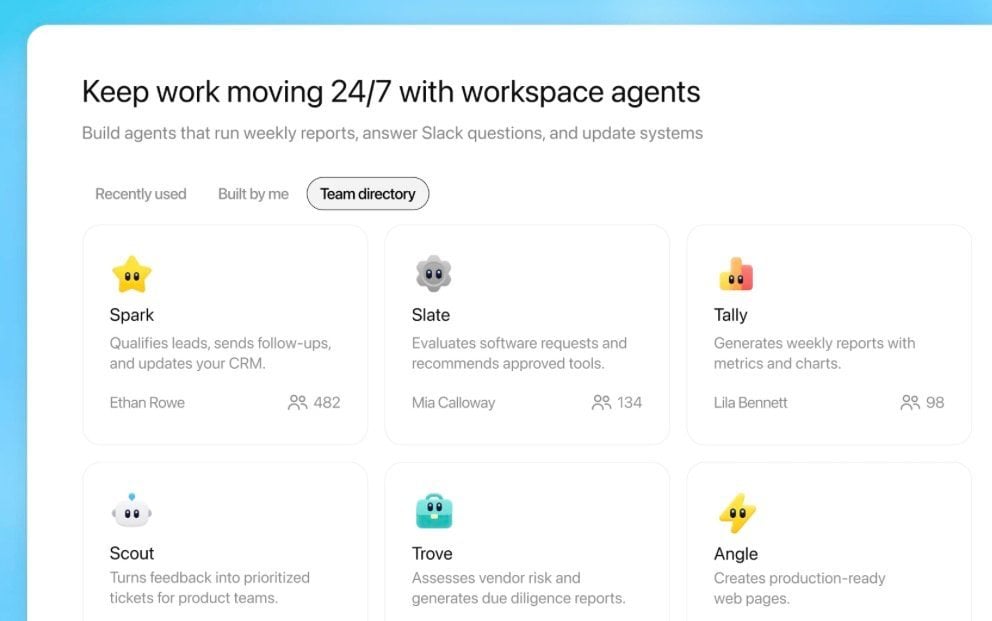
ChatGPT Workspace Agents, introduced by OpenAI, are designed to streamline workplace automation by handling repetitive tasks and managing complex workflows. These AI-powered agents operate within organizational permissions to ensure compliance with company policies while enhancing productivity. For example, the Software Review Agent automates software requests, enforces policy adherence and routes approvals to the appropriate stakeholders, […]
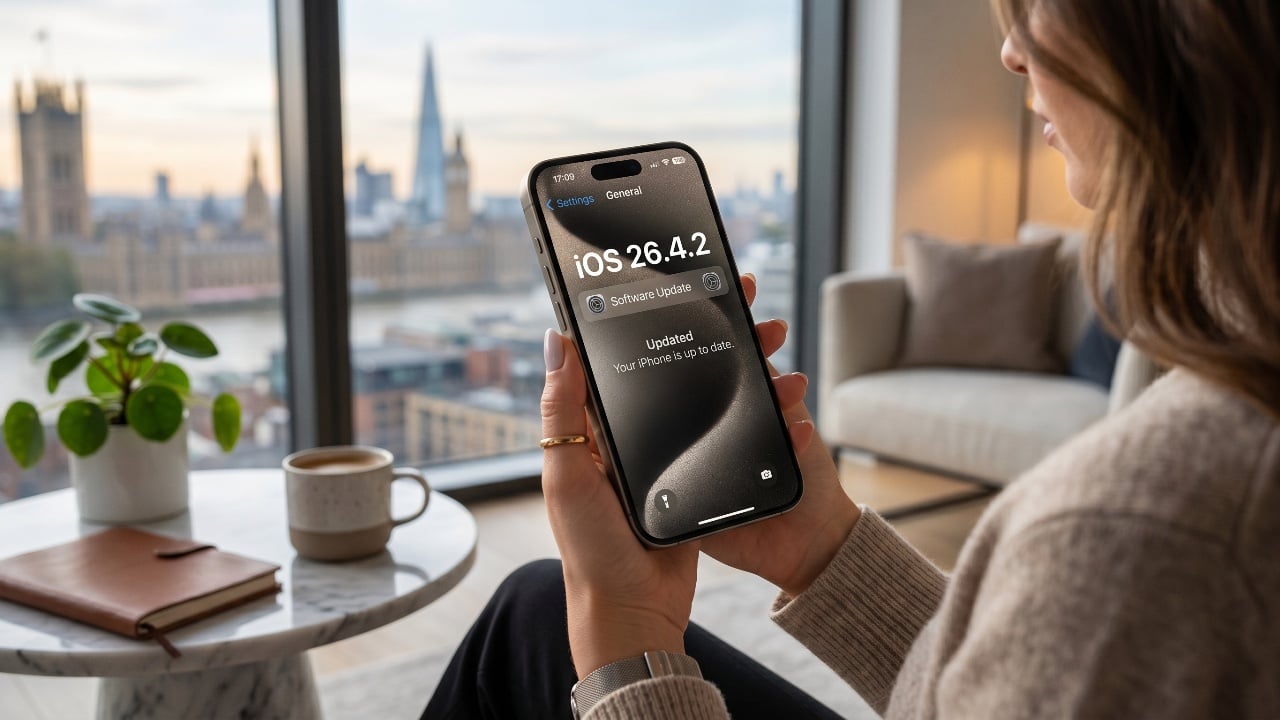
Apple has officially rolled out iOS 26.4.2 and iPadOS 26.4.2, alongside updates for iOS 18 (18.7.8) and iPadOS 18.7.8, targeting a critical security flaw while introducing minor system enhancements. These updates are designed to bolster your device’s security, improve stability, and refine overall performance. By addressing specific vulnerabilities and bugs, Apple continues its commitment to […]
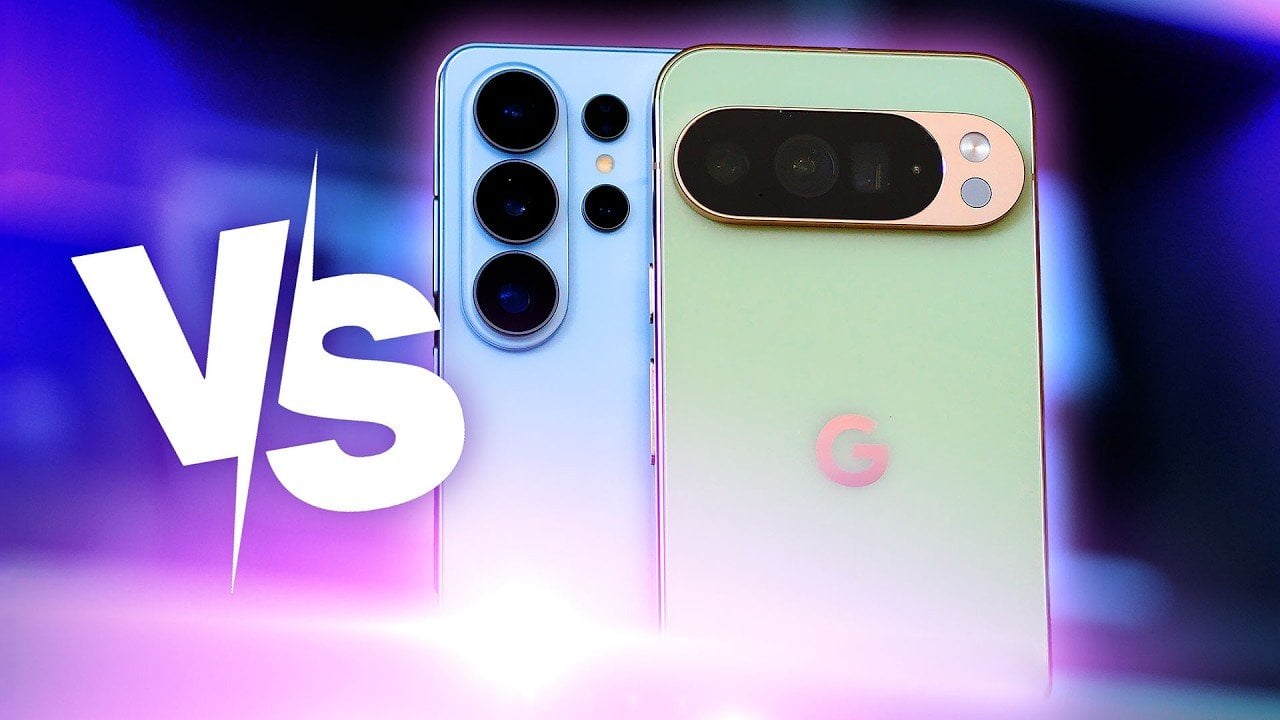
In 2026, the Galaxy S26 Ultra and Pixel 10 Pro XL stand as the pinnacle of Android smartphones, each offering distinct advantages tailored to different user preferences. Samsung’s Galaxy S26 Ultra excels with its innovative hardware, exceptional performance, and extensive customization options. On the other hand, Google’s Pixel 10 Pro XL focuses on AI-driven innovation […]
United States soldier Gannon Ken Van Dyke has been arrested and charged for placing bets on prediction marketplace Polymarket using classified information he had access to related to the capture of former Venezuelan president Nicolás Maduro. The US Army Special Forces master sergeant, who was directly involved with the planning and execution of the operation, allegedly made $409,881 in profits.
According to the Department of Justice, Van Dyke created a Polymarket account around December 26, 2025 and made 13 bets related to Maduro from December 27 to January 2. He took the “Yes” position on several Polymarket wagers, including “US Forces in Venezuela… by January 31, 2026,” “Maduro out by… January 31, 2026, “Will the US invade Venezuela by January 31” and “Trump invokes War Powers against Venezuela by… January 31.” The US military captured Maduro and his wife on January 3.
Van Dyke allegedly bet a total of $33,034 and made over ten times that amount from his winnings. He withdrew his money from Polymarket on the day Maduro was captured and then sent it to a foreign crypto vault before depositing it to a new online brokerage account.
Shortly after Maduro’s capture, reports came out about how an anonymous gambler made almost half a million dollars before it was announced, raising concerns that someone had profited off insider military knowledge. The Justice Department says Van Dyke tried to cover his tracks. After reports about the potential insider bets were published, he allegedly asked Polymarket to delete his account, falsely claiming that he lost access to the email he used. He also changed the email address linked to his crypto account to another one not associated with his name.
Van Dyke has been charged with three counts of violation against the Commodity Exchange Act, with each one carrying a max sentence of 10 years in prison. He has also been charged with one count of wire fraud with a max penalty of 20 years in prison, as well as one count of unlawful monetary transaction with a max sentence of 10 years.
Prediction marketplaces have been struggling with insider trading problems, and this is far from the first incident. Recently, Kalshi took action against three political candidates, accusing them of insider trading related to their campaigns. Matt Klein of Minnesota and Ezekiel Enriquez of Texas face a fine of less than $1,000 and suspensions of up to five years. Meanwhile Mark Moran of Virginia faces disciplinary action, a five year suspension and a fine of more than $6,000.
This article originally appeared on Engadget at https://www.engadget.com/apps/us-soldier-arrested-for-allegedly-making-over-400000-on-polymarket-with-classified-maduro-information-014531367.html?src=rss
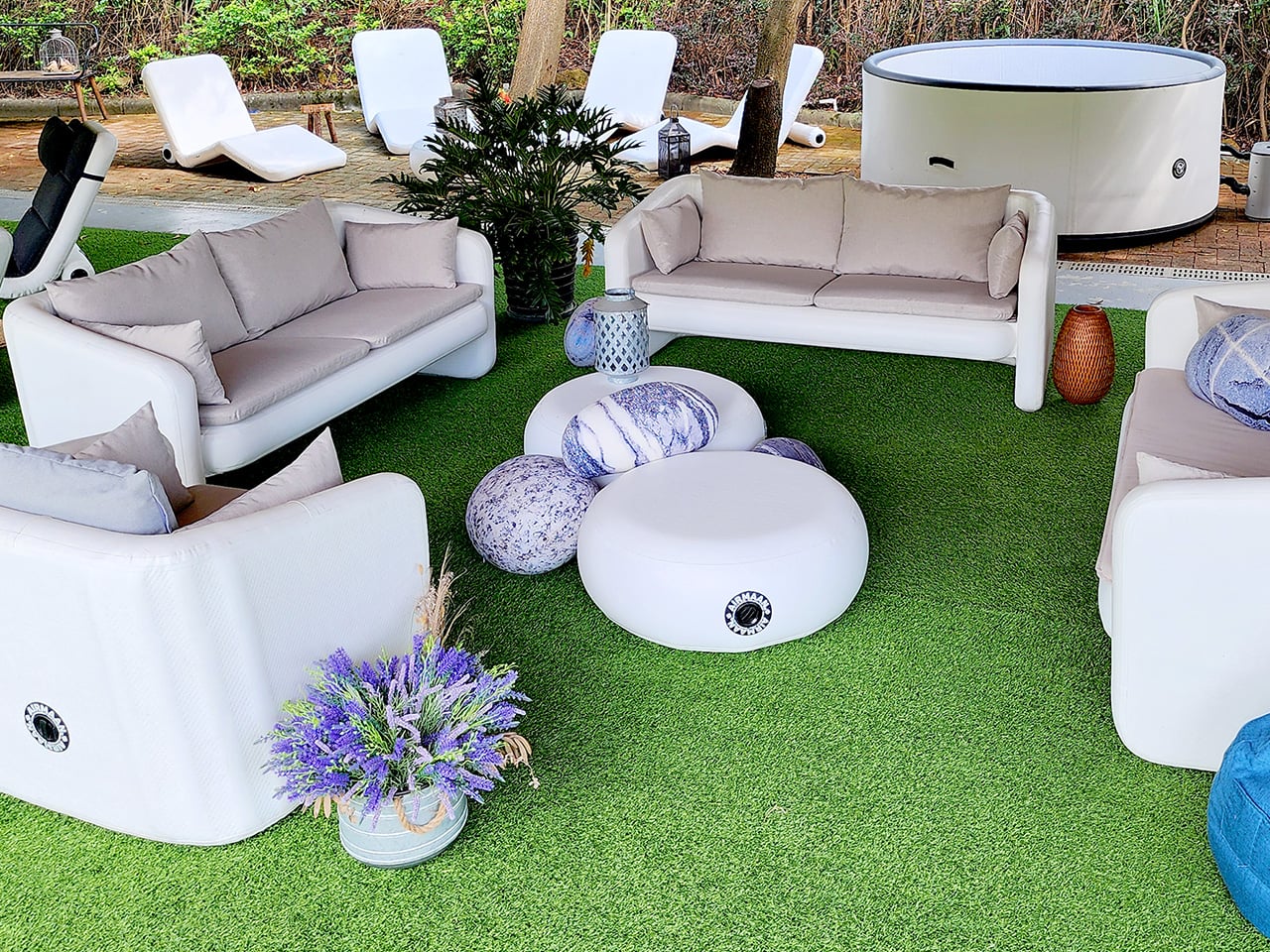
There’s a quiet tension in how most furniture is still designed. Sofas are built to stay put, claiming floor space indefinitely, whether you need them there or not. Meanwhile, the way people actually use their homes has shifted considerably, moving between indoors and outdoors, hosting spontaneously, clearing space for workouts or kids, and treating balconies and terraces as proper extensions of their living areas.
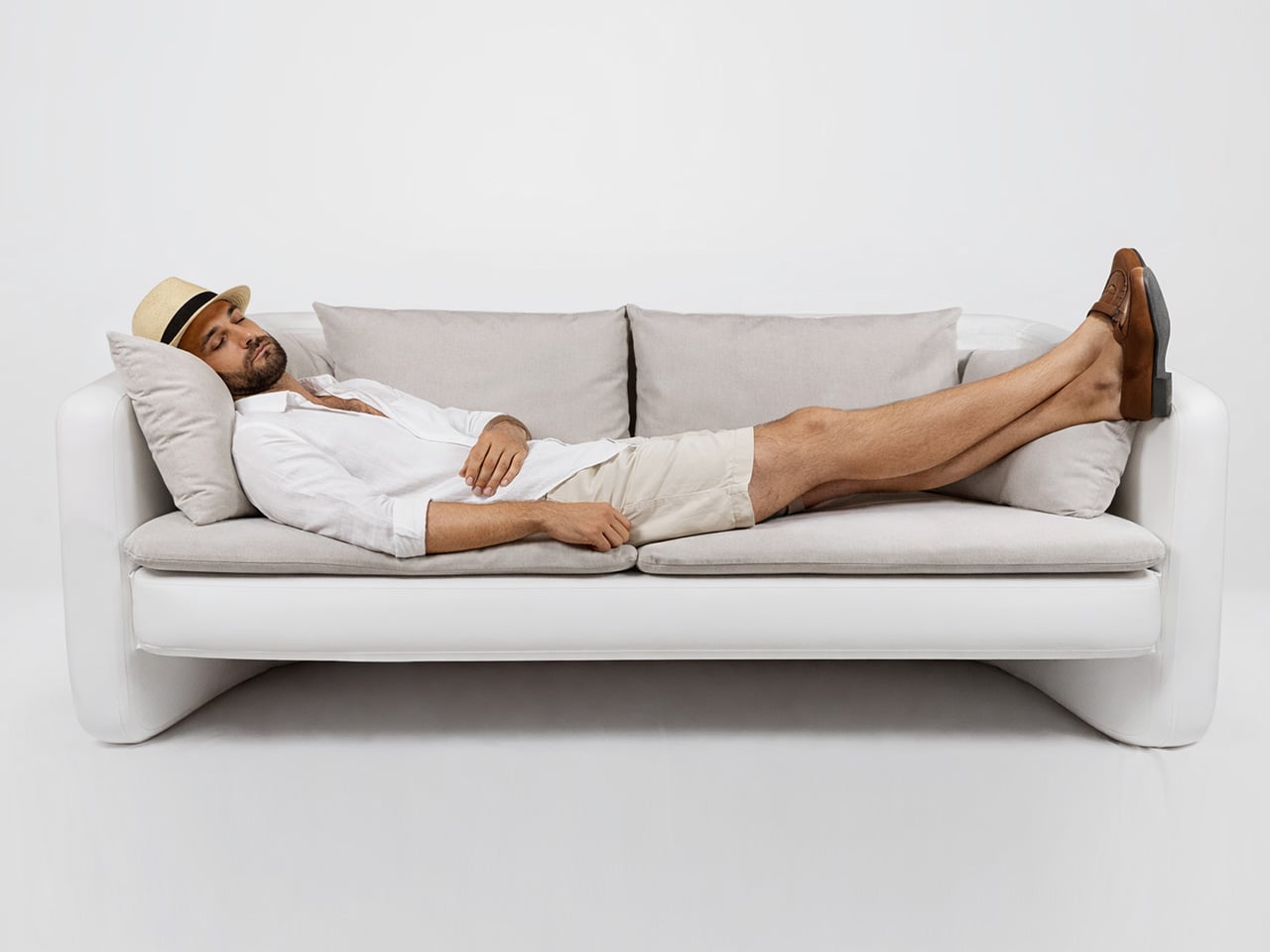
That’s the gap Airmaan’s M Sofa is designed to fill. Rather than asking you to choose between comfort, portability, and design, the M Sofa brings all three together in an inflatable sofa that looks and sits like proper furniture. It can serve as your primary home setup year-round and then disappear into a bag the moment you need the space cleared or want to take it somewhere else entirely.
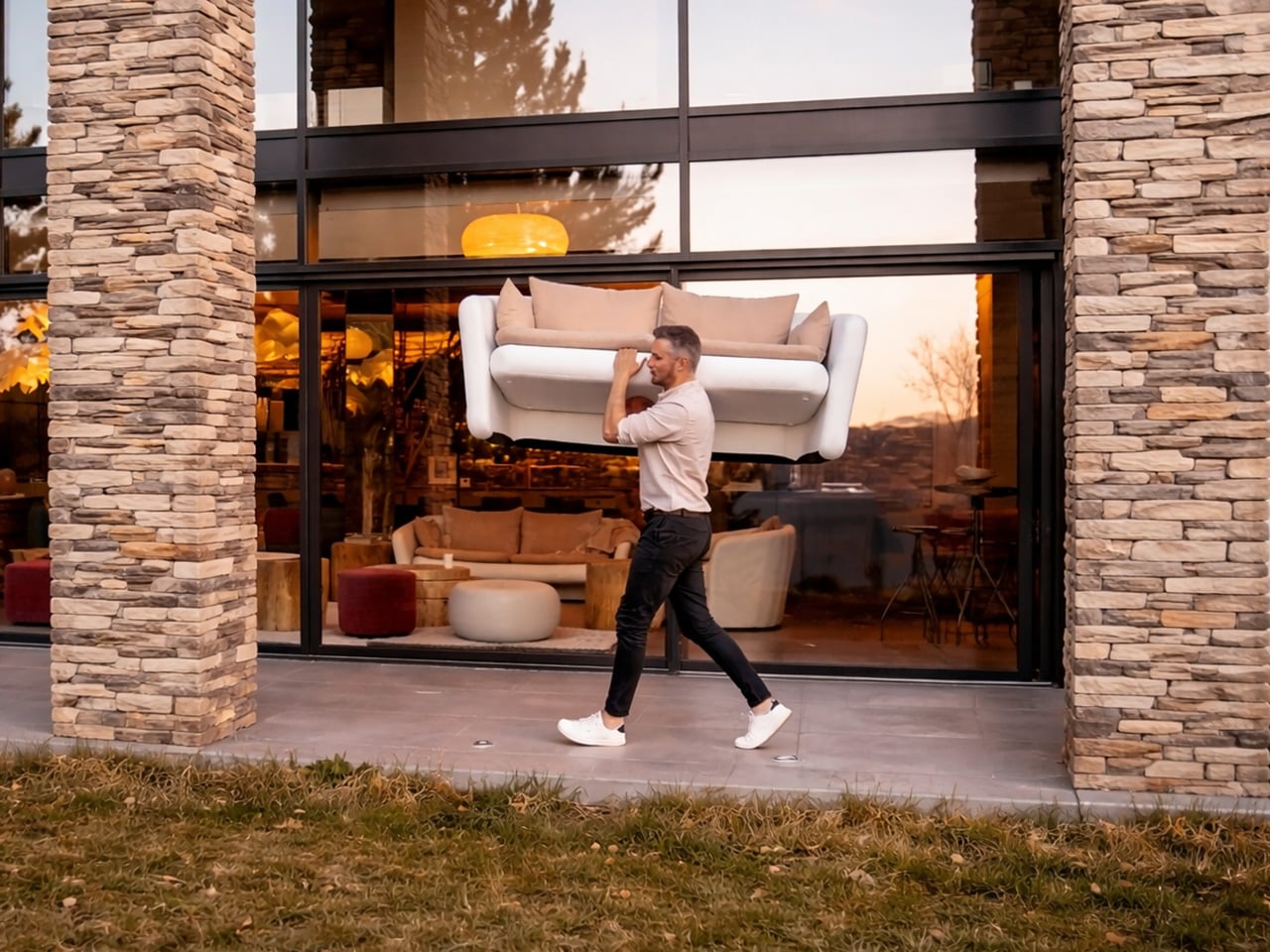
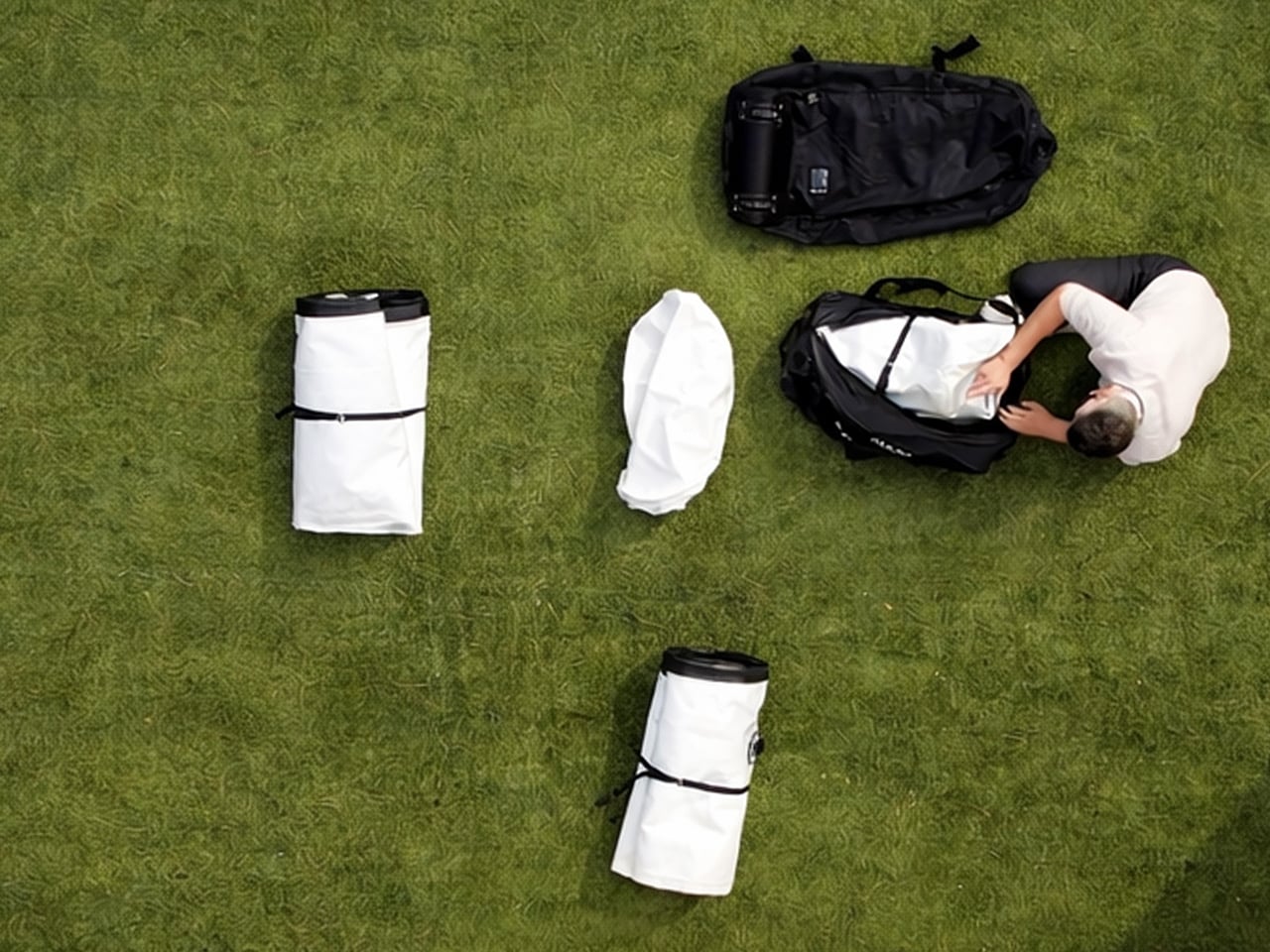
One of the more underrated things it does is give space back. Fixed furniture occupies a room all the time, even when you’d rather use that area for something else. With M Sofa, a terrace can be a lounge one afternoon and completely open the next morning. The same goes for living rooms and balconies. You can deflate it, pack it away, and reset the space in minutes.
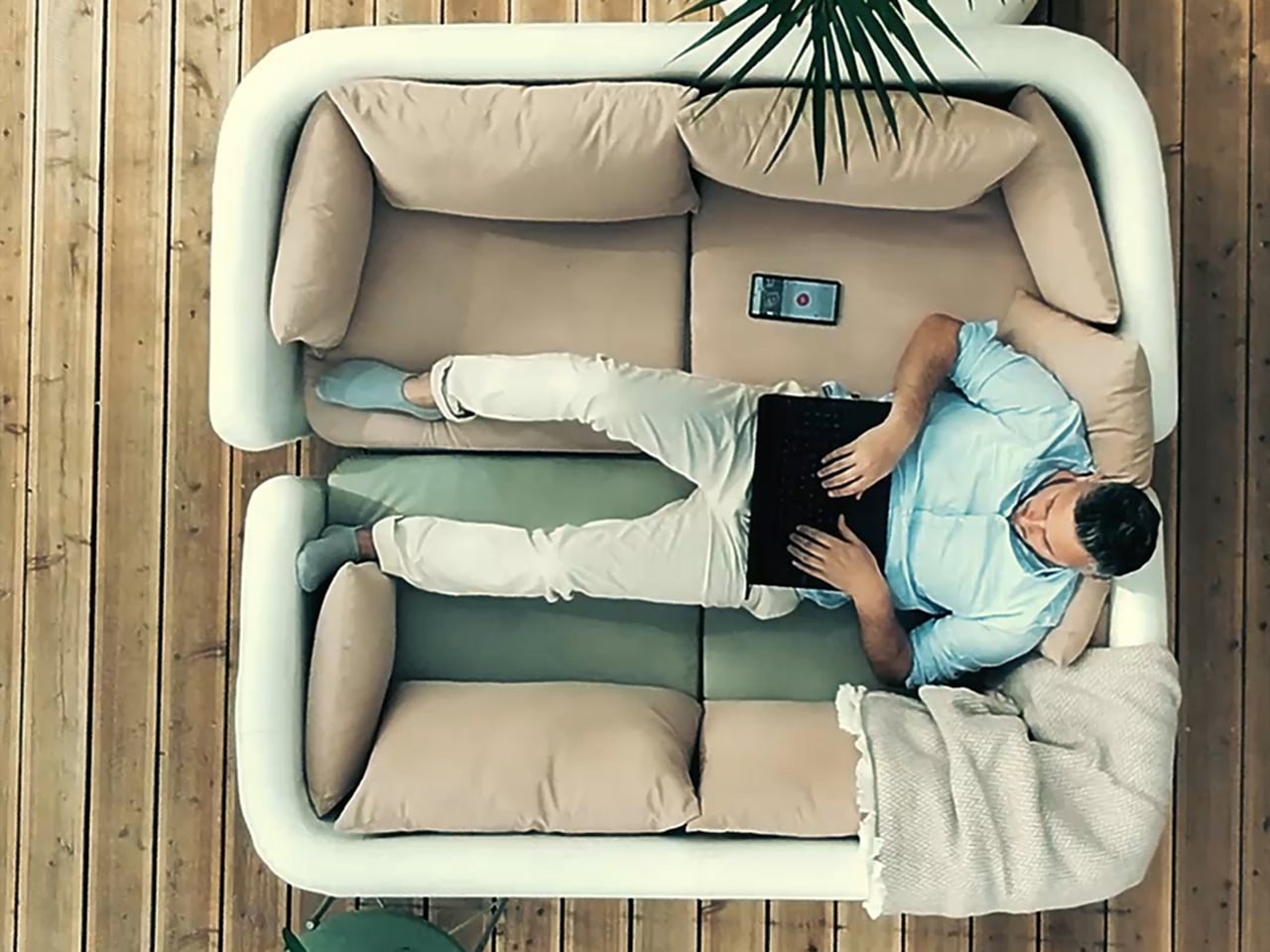
Of course, an innovative sofa would be pointless if it didn’t offer comfort, and thankfully, the M Sofa delivers. The seat and backrest are set at a natural resting angle, with smooth, rounded edges and no pressure points, giving you enough support for extended stretches. There’s a subtle firmness to the inflated structure that feels more like a well-tuned mattress than a balloon, and you can adjust it simply by changing the air pressure.
Despite preconceived notions about inflatable sofas, the M Sofar is at home indoors and outdoors. In fact, it thrives on moving between spaces. It can sit on a garden terrace for a lazy morning, get moved poolside for the afternoon, and come back indoors for the evening without any real effort. That kind of fluidity isn’t something traditional outdoor furniture can offer, especially not without the weight, bulk, and maintenance that come with most permanent garden setups.
With inflatable furniture, durability is naturally a major cause for concern. To that end, the M Sofa was designed around a high-strength inflatable structure rooted in dropstitch technology, the same kind used in marine and aerospace applications. Its outer shell is fully waterproof, resistant to UV exposure, salt, sand, and temperature extremes, and the bonded, airtight construction keeps the air in for weeks at a time rather than days.
M Sofa’s portability also goes beyond deflating and rolling up some heavy and cumbersome material. It packs down into a bag compact enough to carry by hand or throw in a car trunk, which means it can go to the beach, a mountain setting, or a camping spot just as easily as it moves from your garden to your living room.
The M Sofa is part of a broader collection that includes the N Club Chair and a matching side table, so you can put together a proper lounge arrangement rather than a single seat. That modular nature means you can expand for a gathering or pare things down for a quieter setup, without having to own separate furniture for separate occasions.
What makes the M Sofa worth paying attention to has less to do with the inflation angle and more with what it says about furniture design broadly. The more interesting question isn’t whether an inflatable sofa can look good; it’s whether furniture should still be the heaviest, most permanent object in a room. For a growing number of people, the honest answer is that it probably doesn’t need to be, and the M Sofa proves it.
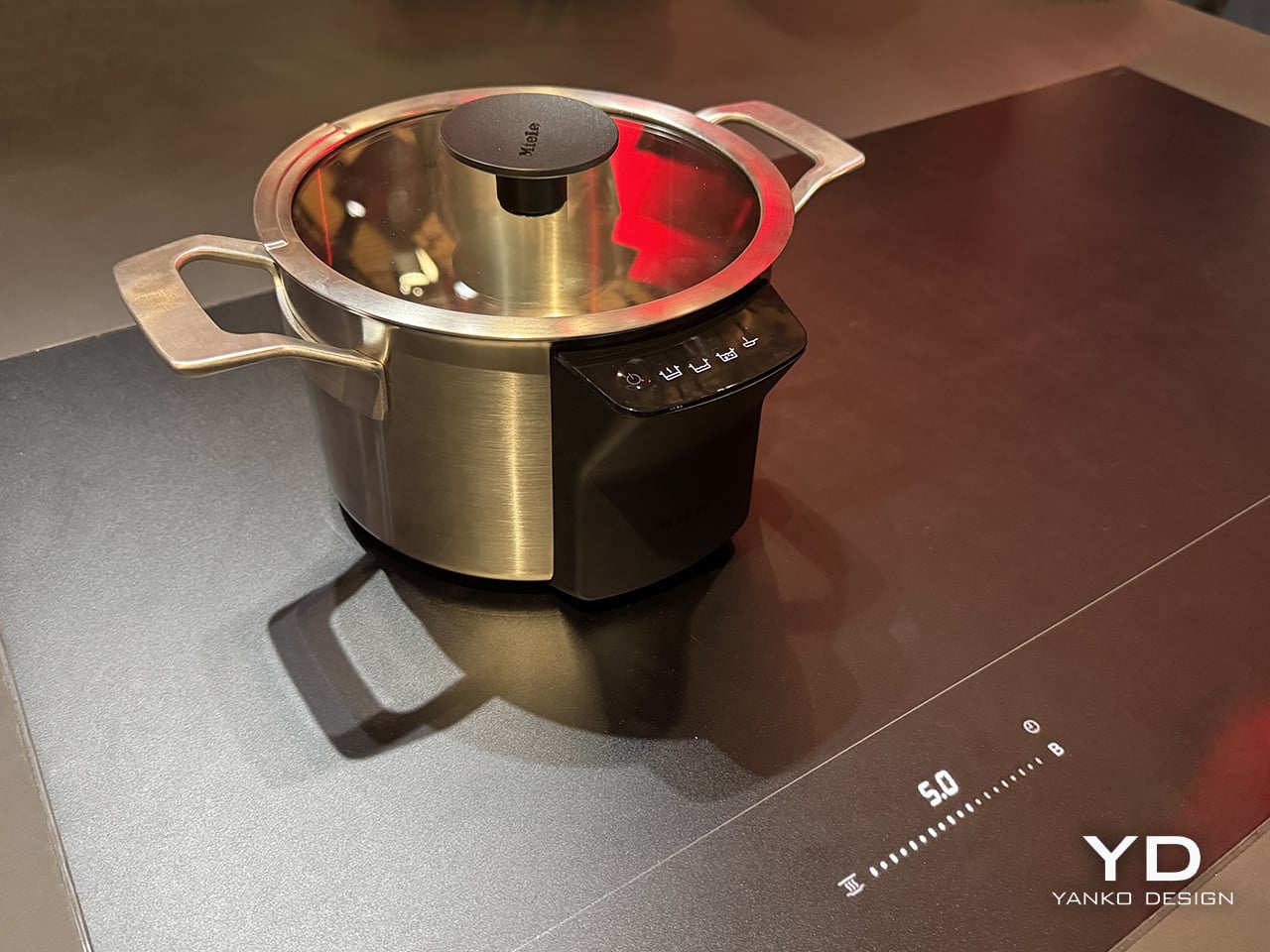
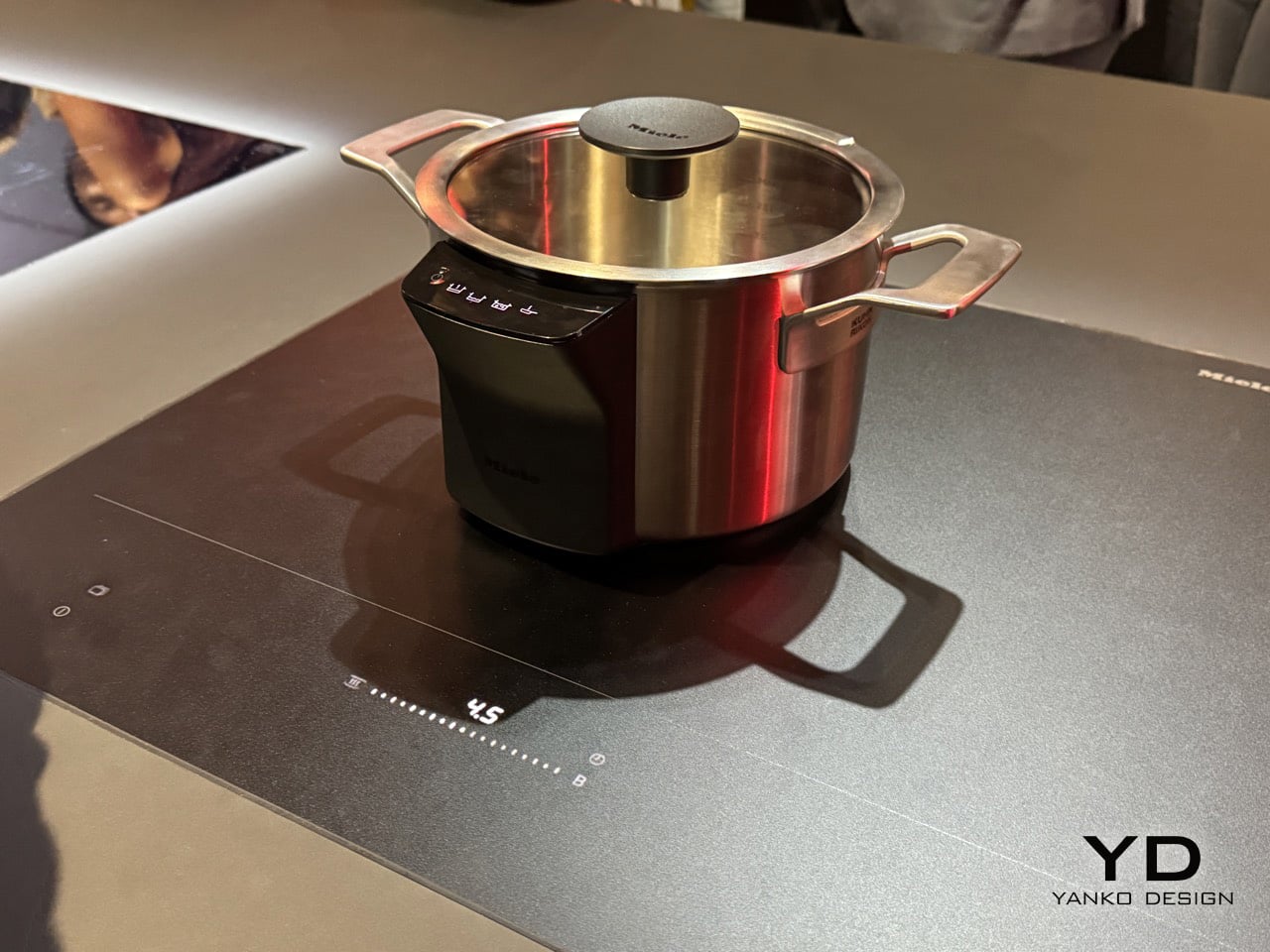
A watched pot may never boil, but an unwatched one seems to do so with a special kind of enthusiasm. That familiar kitchen truth highlights a basic challenge; the cook must serve as the constant monitor for every vessel on the stove, standing guard against the sudden surge of a boil-over or the sharp, bitter smell of a sauce beginning to catch and burn. With its new M-Sense system, Miele proposes a more cooperative arrangement, one where the cookware itself takes over the job of watching for trouble.
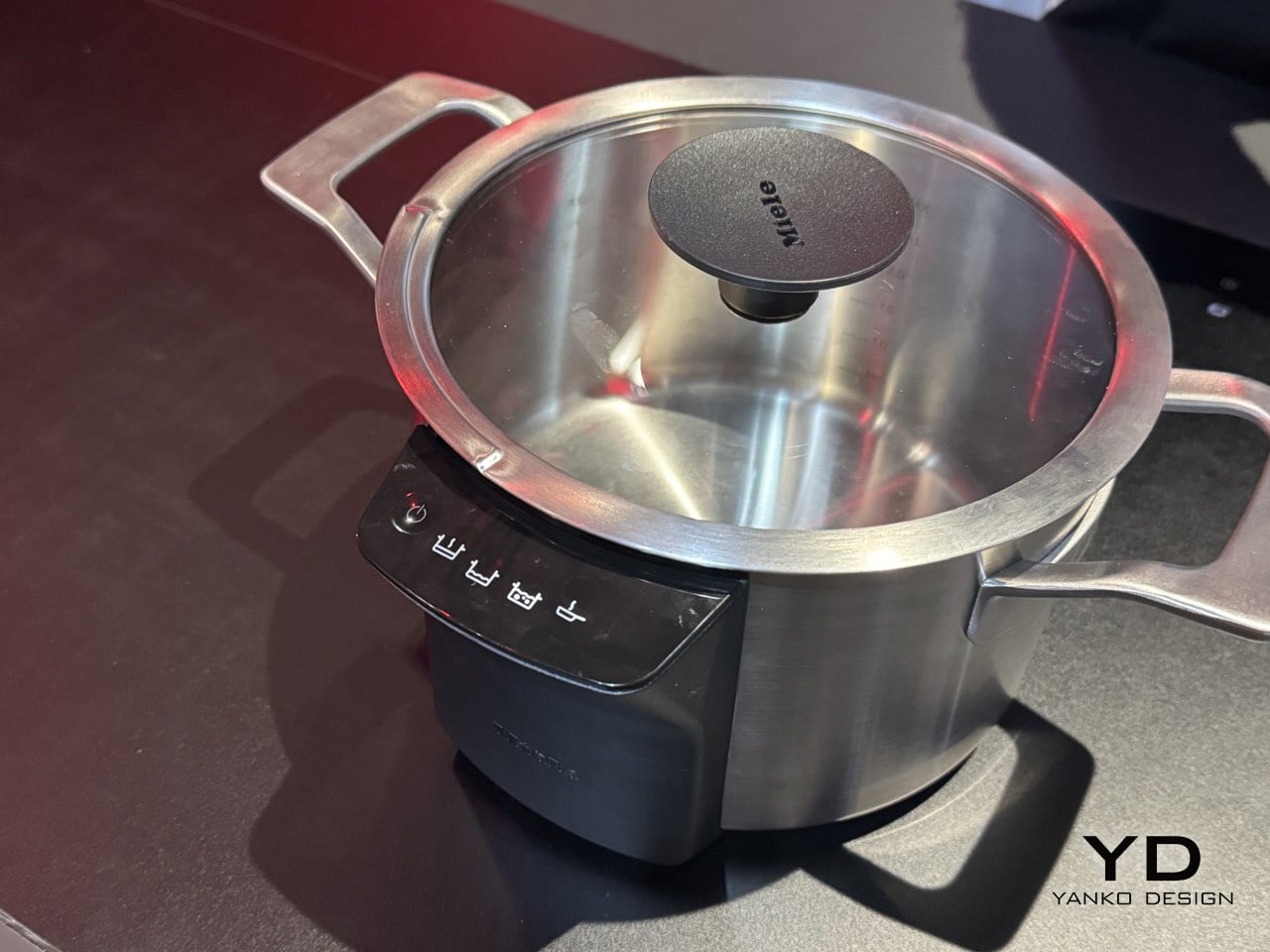
By integrating sensors and communication hardware directly into its cookware, Miele creates a live feedback loop between the pot and the induction hob. This connection allows the vessel to detect the telltale temperature spikes that precede a messy boil-over or the localized hot spots that lead to scorching. It then signals the hob to regulate its power automatically, transforming the simple pot from a passive container into an active, intelligent partner in the cooking process. It is a sensible and deeply practical innovation aimed at creating a calmer, more forgiving kitchen.
Designer: Miele
The appeal of that idea becomes obvious the moment real food enters the picture. Caramel demands close attention because it can move from amber to acrid in seconds. Milk rises fast, stocks foam unpredictably, and sauces have a habit of catching at the base just when your focus shifts elsewhere. M-Sense is built around those ordinary kitchen disasters, which makes it feel refreshingly grounded. There is a lot of smart kitchen technology that promises convenience in abstract terms, but this system is easy to understand because it targets problems almost every home cook has experienced firsthand.
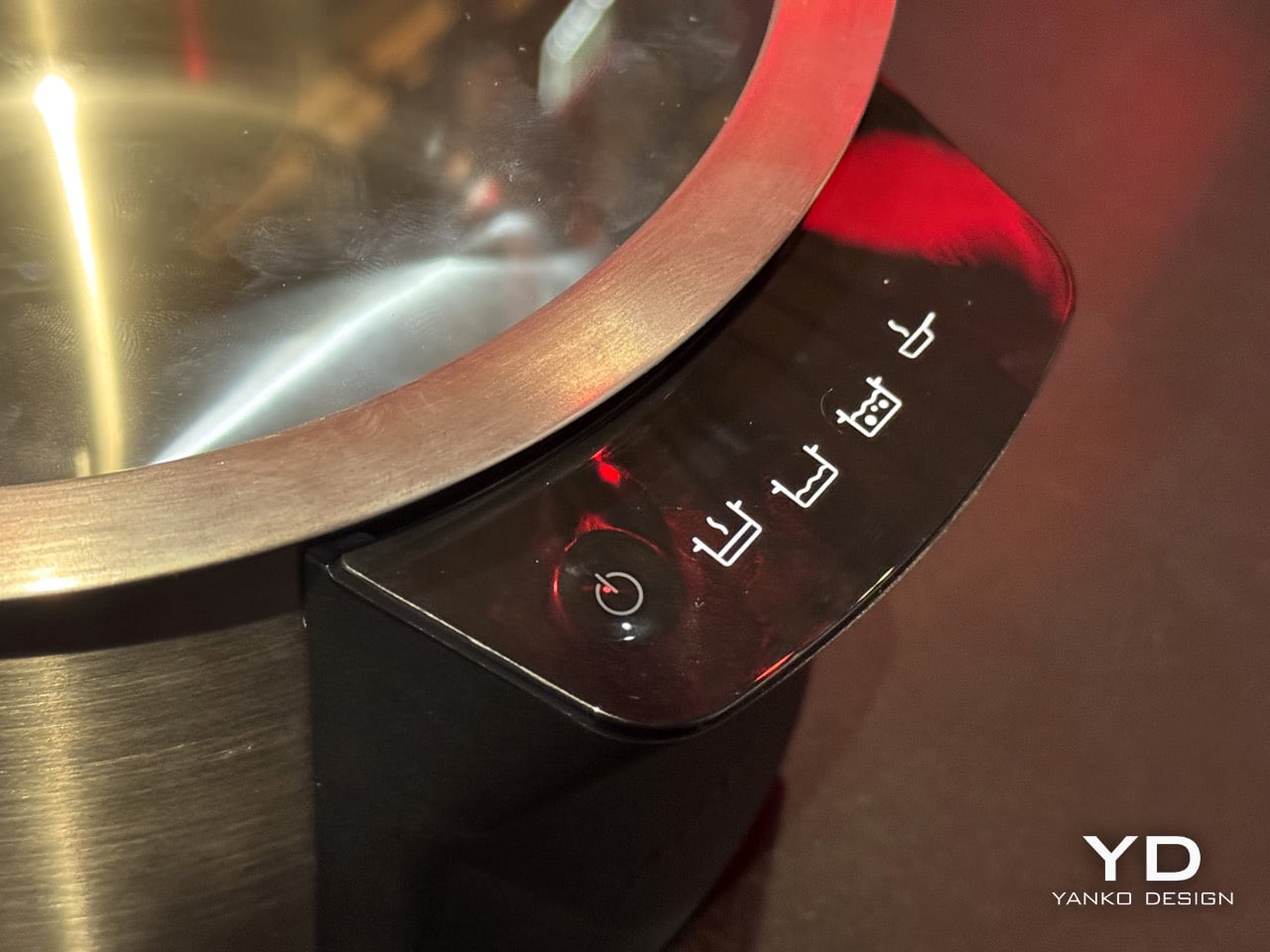
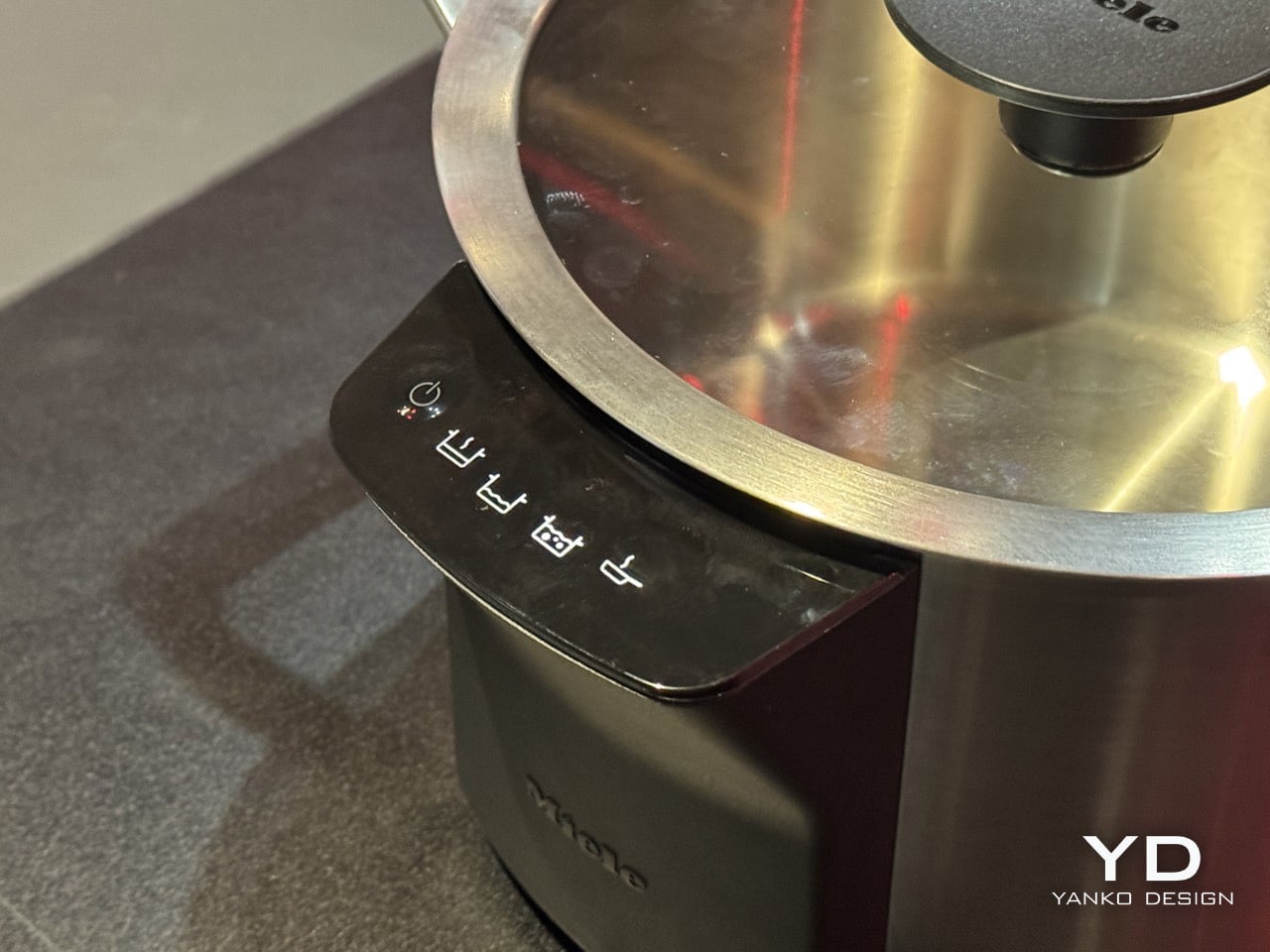
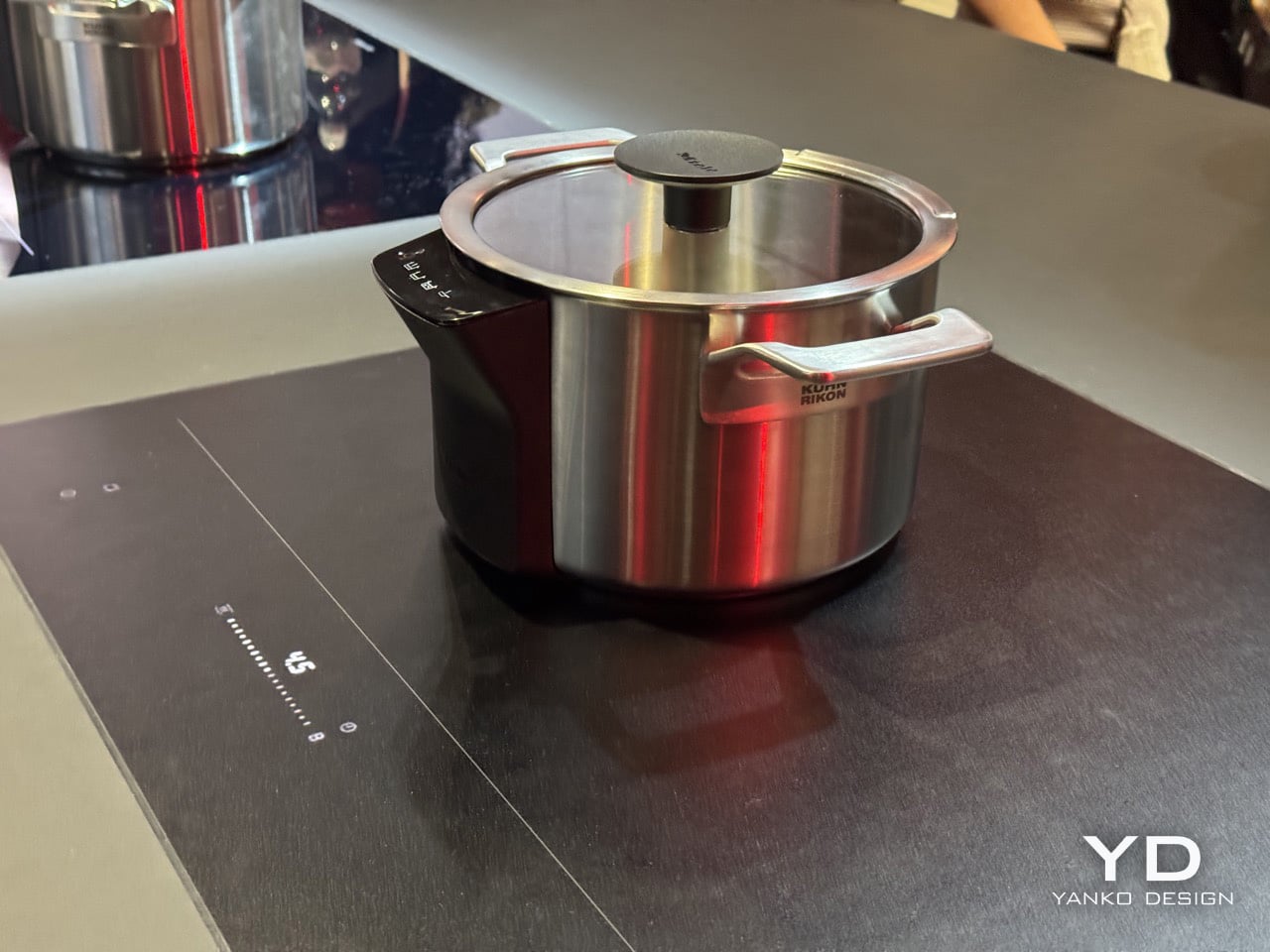
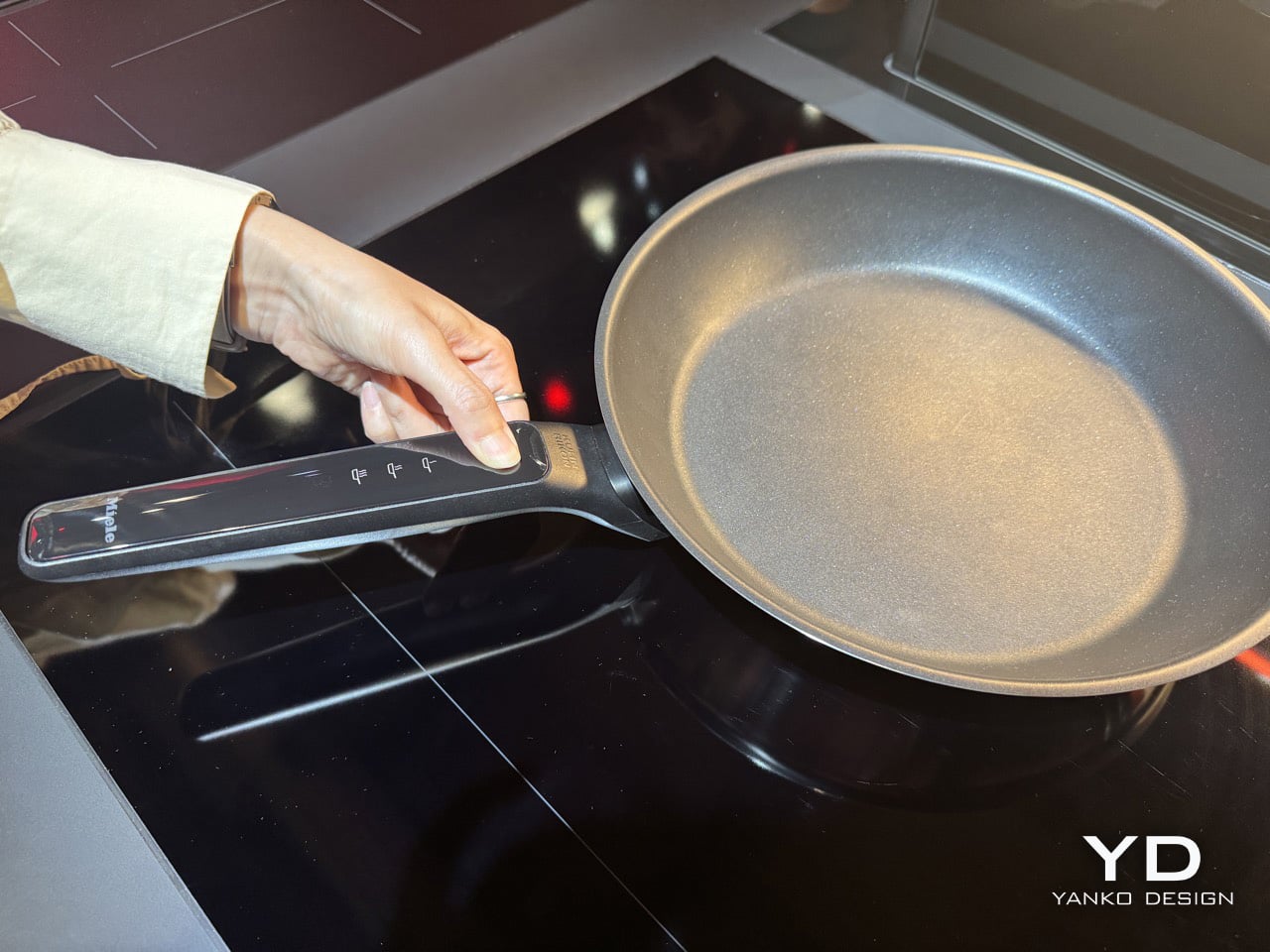
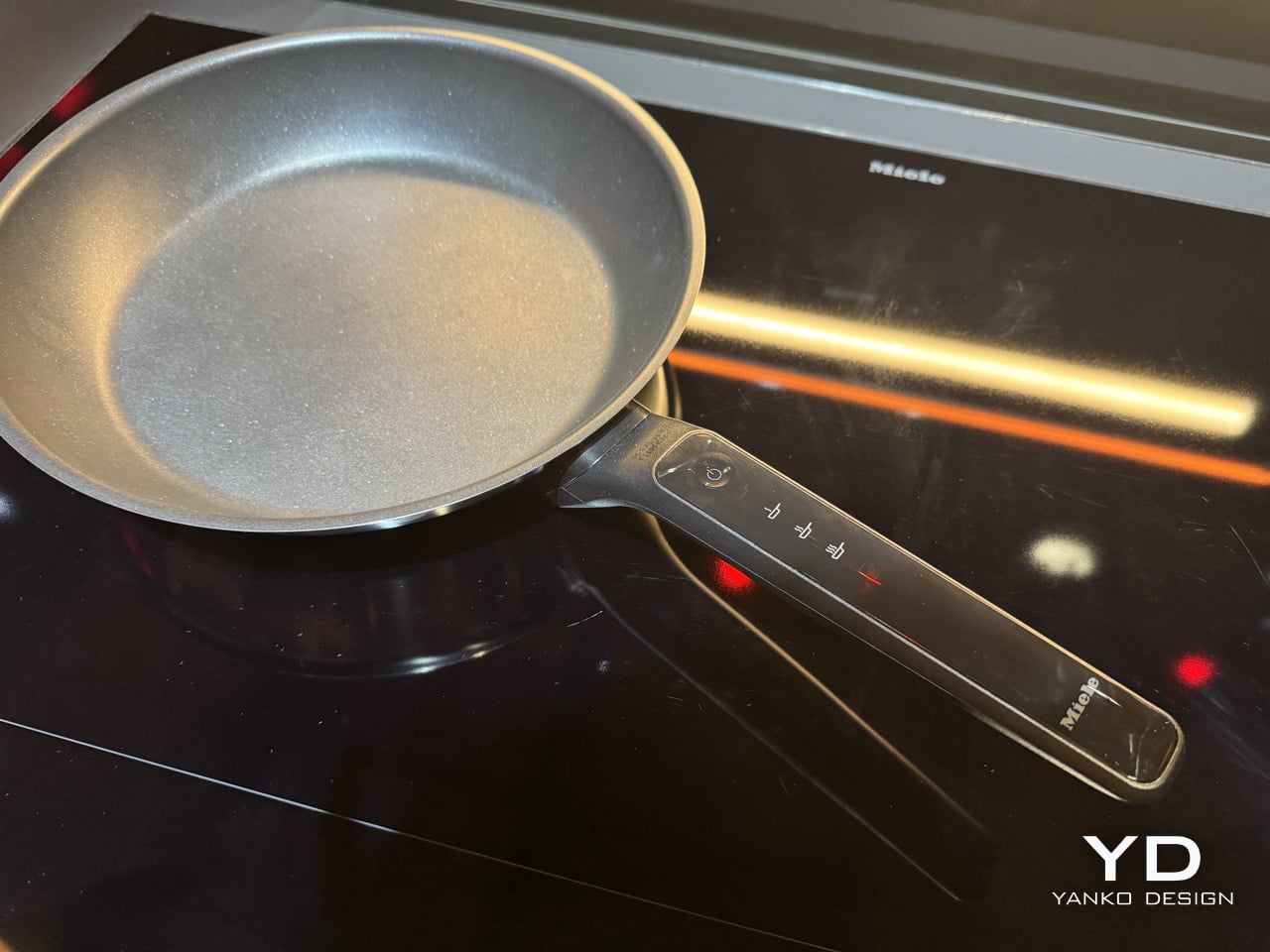
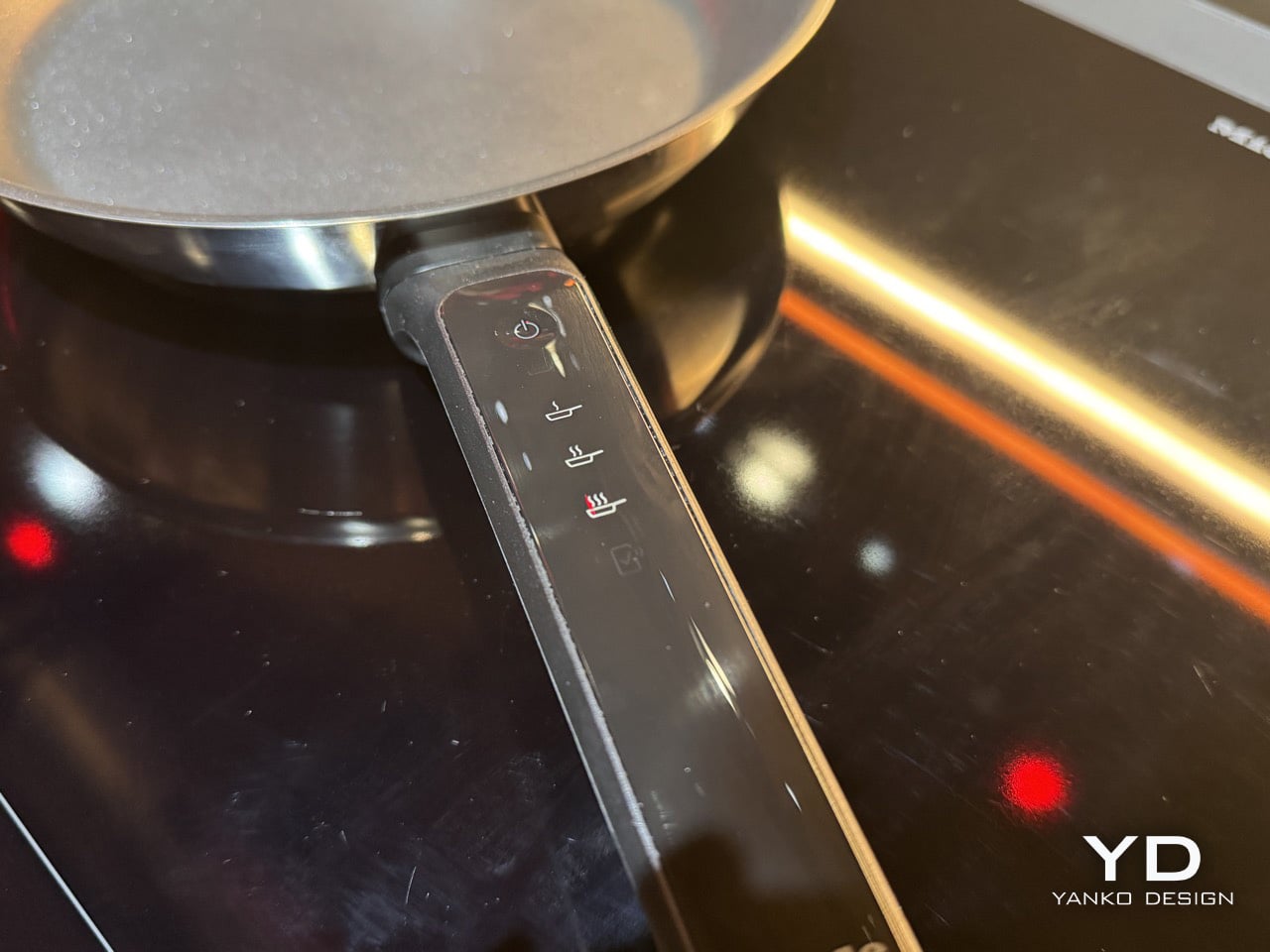
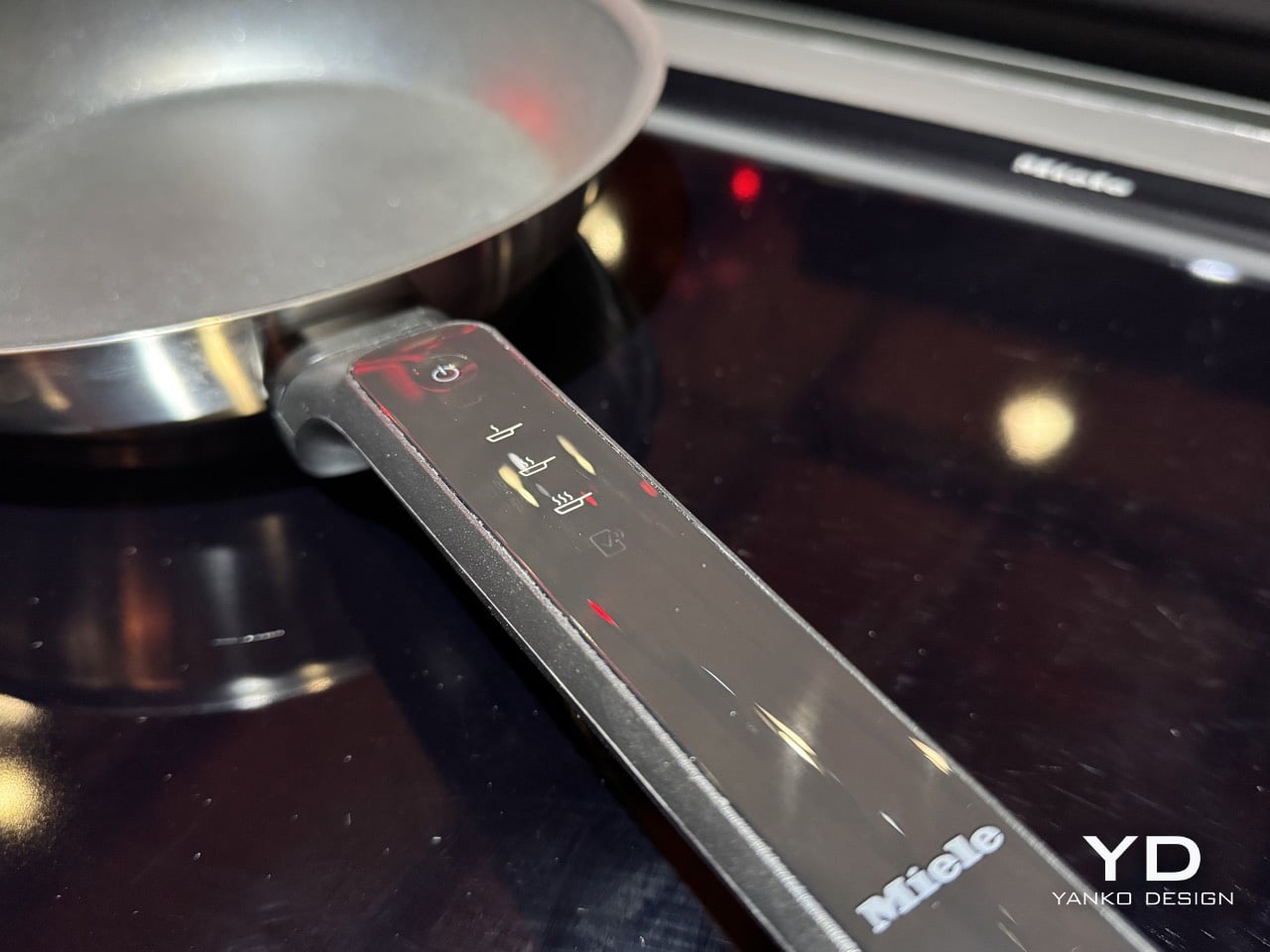
Miele is showcasing at least two pieces, a brushed stainless steel saucepot and a frying pan with a dark non-stick interior, and both reveal how carefully the interaction has been considered. The saucepot carries a compact touch interface integrated into the side of the vessel, while the frying pan places its controls directly into the handle where the thumb naturally lands. In both cases, the controls feel embedded into the object rather than added on as an afterthought, which helps the cookware read as premium kitchenware first and connected hardware second.
The induction hob at the center of the system is the KM 8695 FL MattFinish, a full-surface model finished in scratch-resistant MattFinish ceramic glass. Full-surface induction means the cookware can sit anywhere on the hob while maintaining the communication link, which matters considerably for a system built on continuous sensor feedback. Miele states the promise with welcome directness: No Burn. No Overboil. No Problem. Both outcomes trace back to a single cause, a vessel with no way to communicate with the heat source beneath it. M-Sense addresses that by making the cookware itself the sensing layer, so power adjustments happen before smoke or overflow enters the picture.
The Miele app extends the system beyond the counter, enabling remote monitoring, direct program transfer to the hob, and a recipe library that maps dish choices to actual hob settings. The cookware can connect to the app before it even reaches the hob, arriving on the induction surface already configured for the task at hand. That pre-loading capability closes a gap most connected kitchen products have only gestured toward. Working across hob, cookware, and app simultaneously, M-Sense operates as a coordinated platform rather than a loose set of individual smart features. It is a more coherent model than the kitchen tech category has typically managed to deliver.
For all the talk around smart homes, this is the kind of intelligence that feels worth having because it addresses a genuine friction point in daily life. Cooking often demands divided attention, especially in real homes where dinner happens alongside conversations, children, emails, and the dozens of small interruptions that shape an evening. A system that can sense trouble early and quietly intervene before a sauce burns or a pot boils over feels less like novelty and more like relief. Miele is showing the M-Sense collection in the EuroCucina section at Salone del Mobile, where visitors can see the cookware paired with its compatible induction setup as part of the brand’s broader vision for a more responsive kitchen.
Hurricane season doesn’t announce itself with a calendar invite. It builds quietly offshore, gathers speed, and by the time a named storm is tracking toward your zip code, the window for thoughtful preparation has already closed. For anyone living within reach of a coastline, the months between now and June 1st aren’t a countdown — they’re a design problem. What gear do you actually trust when the power is out, the roads are flooded, your signal has dropped, and your phone is sitting at 8%?
The smartest coastal preparedness kits aren’t built around bulk. They’re built around precision. Tools that work without electricity. Radios that function when networks collapse. Lights that require no batteries, no charging, no maintenance. Blades that deploy on physics rather than springs that quietly corrode in salt air. What follows are five designs that solve real coastal emergencies without adding clutter to your go-bag or guilt to your preparation plan.
1. NoxTi Titanium Tritium Keychain Light
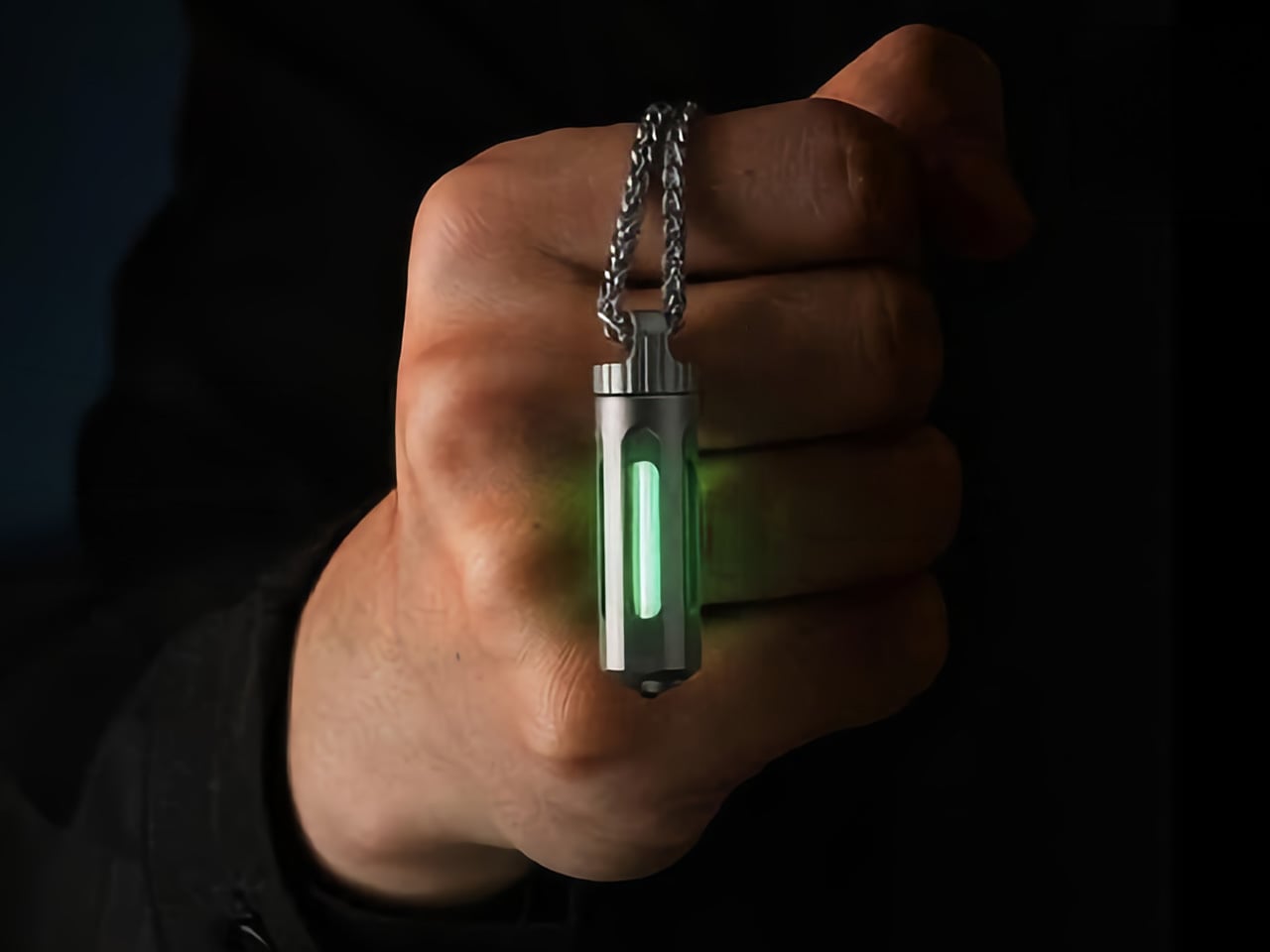
Tritium is a hydrogen isotope with a 12.3-year half-life. As it decays, beta particles strike a phosphor coating and produce continuous light — no battery, no charging, no maintenance required. The same physics used in emergency exit signs and military watches is packaged into the NoxTi: a 45mm Grade 5 titanium cylinder weighing 10.7 grams that glows reliably for 25 years. For coastal homeowners facing multi-day outages, that guarantee is worth more than any lumen count.
The tritium vial sits inside a precision quartz tube with 92% light transmission, held inside a CNC-machined body that resists salt-air corrosion. A ceramic glass breaker at one end handles vehicle-escape emergencies — one of the most critical scenarios during coastal flooding. When the vial dims after two decades, you push it out and slide in a replacement. Six color options, two titanium finishes, tritium pricing from $45.
What We Like
25 years of passive illumination powered entirely by material physics, with zero maintenance
Ceramic glass breaker turns an everyday keychain accessory into a genuine flood-escape tool
What We Dislike
The glow is intentionally faint — it orients you in the dark, it doesn’t light a room
Tritium is regulated in certain countries, worth confirming before you order
2. RetroWave 7-in-1 Radio
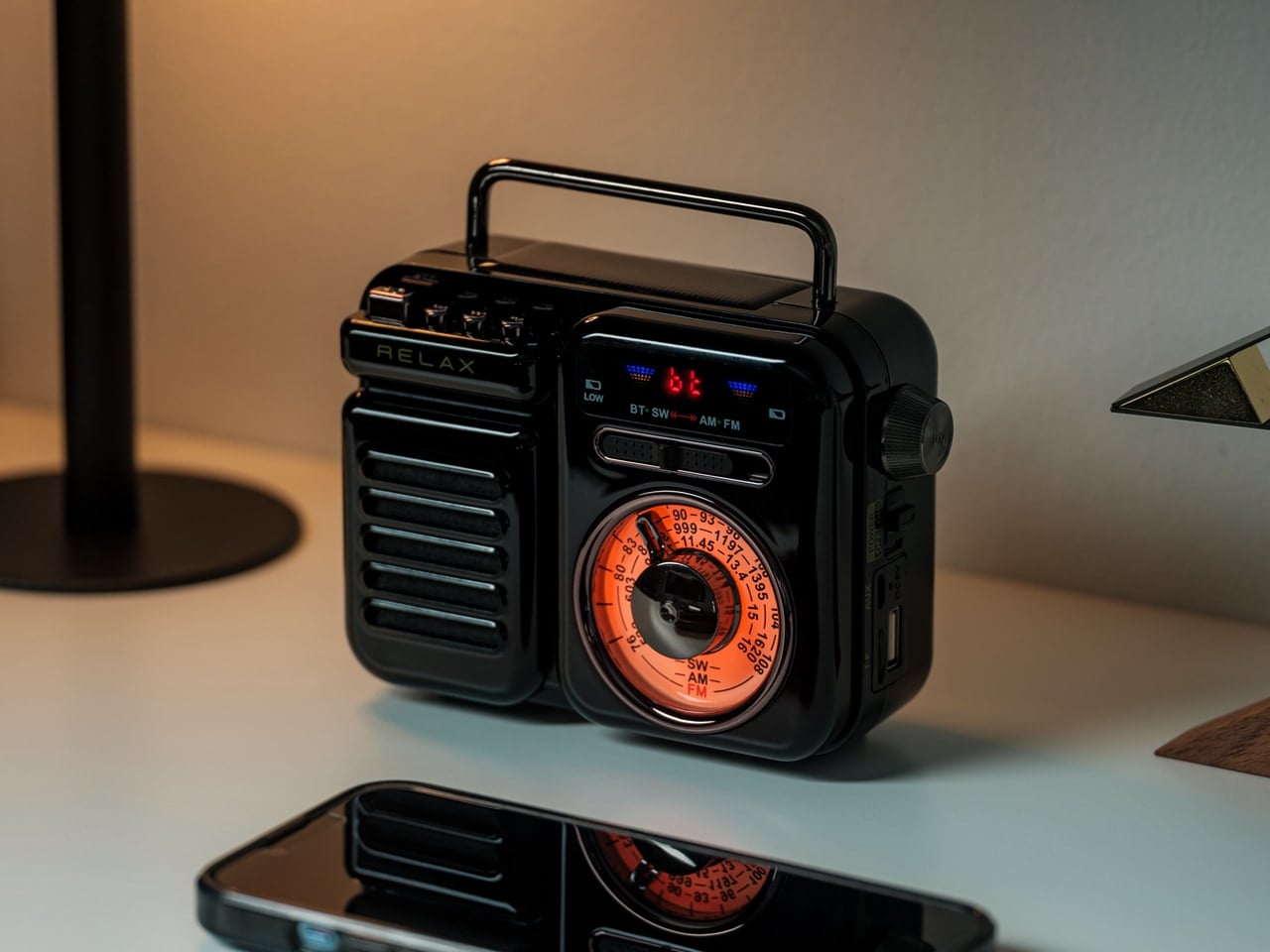
When a hurricane makes landfall, cell towers flood, lose power, or get overwhelmed. The RetroWave 7-in-1 Radio receives AM, FM, and shortwave broadcasts — infrastructure that operates completely independent of internet providers and remains live when everything digital has collapsed. Shortwave is the detail that separates it from a novelty: international emergency transmissions reach you even when every local tower in your county is offline.
Beyond its radio identity, the RetroWave functions as a Bluetooth speaker, MP3 player, LED flashlight, SOS alarm, hand-crank generator, and solar charging unit. That crank-plus-solar pairing is the decision that makes it genuinely coastal-ready. During a multi-day outage with no infrastructure in sight, a radio that generates its own energy isn’t a clever feature — it’s the only communication device in the room still working.
Hand-crank and solar charging mean it never fully runs out of operational power
Shortwave reception works completely independent of the internet and cellular networks
What We Dislike
Seven integrated functions mean a single point of failure affects the entire device
The retro aesthetic may cause buyers to underestimate it as decor rather than serious emergency hardware
3. Edgelet SpearEdge Titanium Folder
Hawks don’t cut with force — they cut with geometry. Their curved talons guide material naturally into the cutting path while the arc concentrates force exactly where it needs to land. That principle is what Edgelet has brought into the SpearEdge: a 66.3mm titanium folder with a hawk-talon blade profile built for the pull-cut motions your hand already makes naturally. Through cordage, packaging, and emergency sheeting, it demands less effort than a straight edge in a high-stress moment.
The finger ring adds slip resistance when handles are wet — a coastal reality worth designing around from the start. The titanium body resists the salt-air corrosion that quietly destroys conventional carry gear over a coastal season, and the open keyring slot at the tail means tool-free attachment to any go-bag loop.
Hawk-talon geometry reduces pull-cut effort through cordage and wet materials under pressure
Full titanium construction resists the salt-air corrosion that degrades conventional coastal carry gear
What We Dislike
The curved blade profile is a specialist shape — it won’t feel as universal as a straight edge for every task
4. TriBeam Camplight
Most emergency lighting treats light as binary. The TriBeam Camplight approaches illumination the way good design should — with modes built to match the moment. A 5-lumen ambient glow for navigating interiors without destroying night vision. A diffused camping mode for shared spaces. A focused 180-lumen beam for moving through flooded exteriors or searching in the dark. All three live inside a 12.8cm, 135-gram form factor that disappears into a jacket pocket without negotiation.
The TriBeam’s coastal value is its coherence across the full arc of a storm event. Ambient light for the final hours before landfall, flashlight mode for immediate tasks during the storm, and a 50-hour battery life that outlasts the extended outages that follow a major hurricane without a single recharge. It earns a permanent shelf position long before the season arrives, which is precisely the kind of preparedness tool that actually makes it out the door.
Three distinct modes adapt fluidly across pre-storm, during-storm, and post-storm scenarios
50-hour battery life comfortably outlasts most extended post-hurricane power outages in coastal zones
What We Dislike
180-lumen maximum output is solid for camp-scale use but limited for long-distance emergency signaling
Single-button mode cycling may slow down switching for users who need to change modes quickly under pressure
5. Cubik
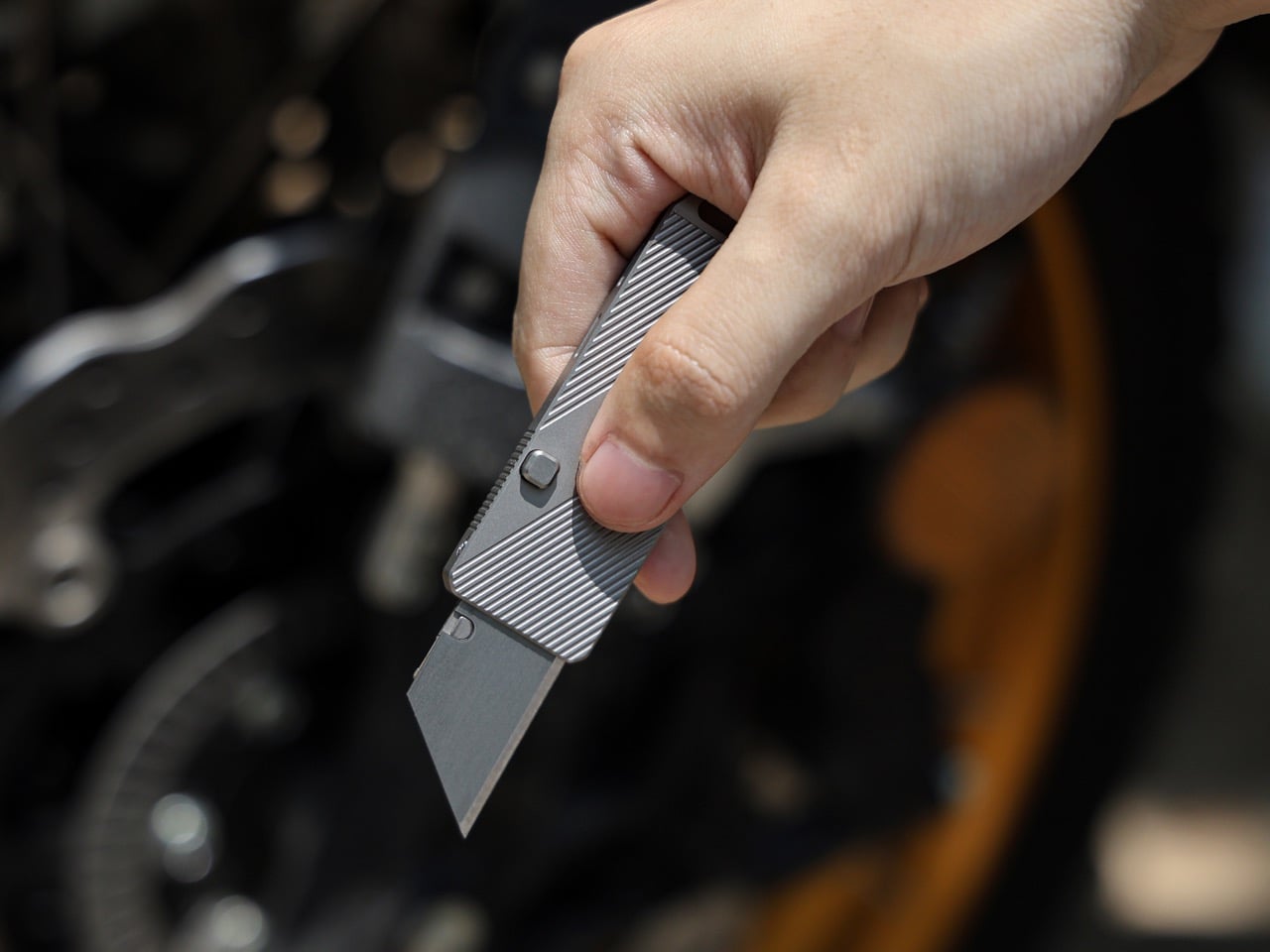
Most EDC knives fail the coastal environment test quietly. Springs corrode. Bearing systems fill with salt residue. The Cubik solves this at the mechanical level: press the trigger, tilt the knife downward, and gravity deploys the blade. Release, and it locks solid. No springs, no bearings, no hidden pivot mechanisms accumulating salt. In a marine environment, removing every rust-prone component isn’t minimalism — it’s engineering honesty applied to a real problem.
The blade locks solidly enough to pierce hardwood, proving that restraint and functional strength aren’t at odds. The tungsten carbide glass breaker integrated into the rear handle adds a vehicle-escape capability inside a format most people would read as a refined daily carry — the same critical function the NoxTi covers from the keychain end. Two glass breakers across a coastal kit means redundancy, which is the structural principle every good preparedness strategy is built around.
What We Like
Gravity deployment eliminates springs and bearings — the primary corrosion vulnerabilities in any coastal carry knife
Tungsten carbide glass breaker adds a high-stakes vehicle-escape function inside an unassuming daily carry format
What We Dislike
Gravity deployment requires a learned wrist motion that takes deliberate practice to make instinctive under stress
The stripped-back mechanism may read as feature-light to buyers who equate knife quality with mechanical complexity
The Best Coastal Kit Is the One You’ll Actually Carry
Preparedness fails most often not because people lack the right gear, but because the right gear never made it into the bag. These five designs earn permanent carry not by stacking features, but by removing the ones that fail under salt air, dead batteries, and sustained pressure. The best coastal kit isn’t the most expensive — it’s the one built around tools you trust completely before the season ever starts.
Hurricane season 2026 begins June 1st, and the window for deliberate preparation is narrower than it feels from the other side of spring. Each tool on this list solves a specific coastal failure mode — lighting without electricity, communication without infrastructure, cutting without corrosion, illumination without recharging, and emergency signaling without a signal. Put them together, and you have a kit that performs at the precise moment every conventional backup stops working.
Anthropic is expanding its directory of connected services for its Claude AI chatbot. The platform can now link up with your accounts on AllTrails, Audible, Booking.com, Instacart, Intuit Credit Karma, Intuit TurboTax, Resy, Spotify, StubHub, Taskrabbit, Thumbtack, TripAdvisor, Uber, Uber Eats and Viator. Additional services will be added in the future.
More and more AI companies are trying to up their third-party integrations in a pitch to make their services as useful as possible. The benefit of having multiple apps connected means that a chatbot can theoretically execute more complicated tasks on your behalf. This expansion takes that capability from the professional and educational settings, where Anthropic’s connectors have been focused for the past year, to a personal one. So, for instance, Claude can now help plan a hike on AllTrails and then pull up a Spotify playlist that will last for the duration of your trek.
Anthropic noted that it is also reframing how apps are showing up so that an appropriate service is suggested for the task you want to perform. The apps should appear dynamically within the Claude conversation rather than needing a user to swipe between programs. As with most AI actions, Claude is supposed to check with its user before actually taking any actions like securing a reservation or making a purchase.
This article originally appeared on Engadget at https://www.engadget.com/ai/claude-can-now-connect-to-lifestyle-apps-like-spotify-instacart-and-alltrails-225510552.html?src=rss