Watch the First Real Galaxy Z Fold 8 Hands-on Video

Watch the First Real Galaxy Z Fold 8 Hands-on Video Hands-on view of the new Samsung Galaxy Z Fold 8 smartphone

Samsung continues to lead the charge in foldable smartphone innovation with the release of its Galaxy Z Fold 8 lineup. This latest iteration introduces notable advancements in design, functionality, and performance, reinforcing Samsung’s commitment to shaping the future of mobile technology. With the addition of the Galaxy Z Fold 8 Ultra as a premium model, […]

The post Watch the First Real Galaxy Z Fold 8 Hands-on Video appeared first on Geeky Gadgets.

Posted in Uncategorized

Google Home Just Got Smarter, but the Best Features Are Now Hidden Behind a Paywall

Google Home Just Got Smarter, but the Best Features Are Now Hidden Behind a Paywall New audio smart glasses developed by Google and Warby Parker

Google I/O 2026 delivered a mix of excitement and disappointment for smart home enthusiasts. While the event showcased significant advancements, such as the introduction of the Gemini AI Assistant with multi-step command capabilities and expanded language support, it also left a notable gap in its lineup. The long-awaited $99 Google Home Gemini speaker, teased in […]

The post Google Home Just Got Smarter, but the Best Features Are Now Hidden Behind a Paywall appeared first on Geeky Gadgets.

Posted in Uncategorized

The Personal Cooling Device That Blows Cold Air Rather Than Just Moving It

Handheld fans have been a summer staple for years, but the basic formula hasn’t changed much. You press a button, blades spin, and air moves. That works fine when it’s mildly warm, but as summers grow hotter and more people spend time outdoors, a fan that simply redistributes hot air starts to feel less like relief and more like a polite gesture against a much bigger problem. And yet for years, that has remained the only option most people know and reach for.

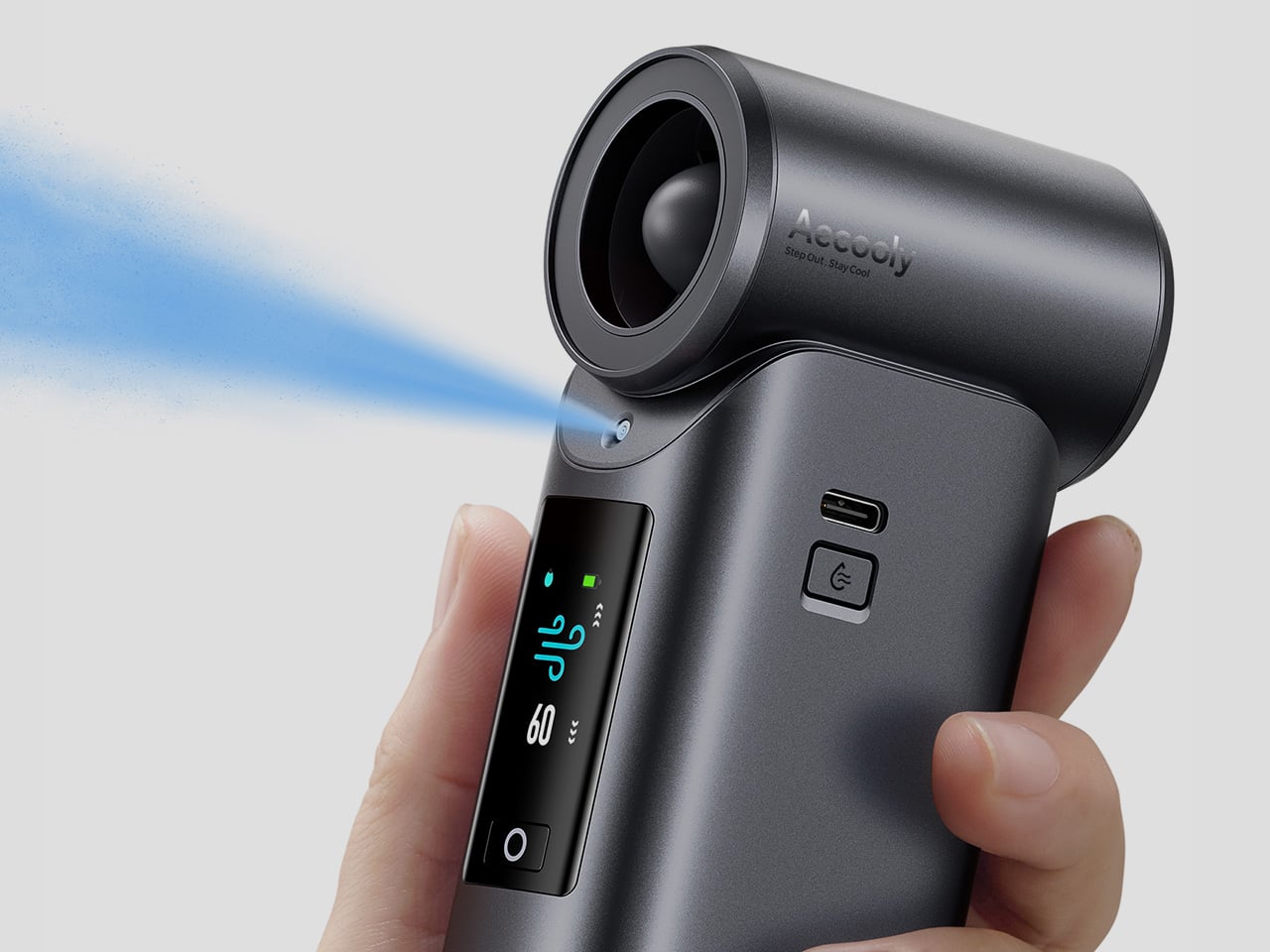
That’s the gap Aecooly is trying to close with the Cold Air Ultra, the brand’s flagship personal cooling device. Rather than simply moving warm air from one side of your face to the other, Aecooly built it around an active cooling system that delivers genuinely cooled airflow, thanks to ultra-fine mist particles that accelerate evaporation to actively draw heat away from the skin. If you’ve ever thought there has to be a fan that actually cools the air, this is that device.

Designer: Aecooly

Click Here to Buy Now: $63.99 $79.99 (20% off, use coupon code “YANKO2026”). Hurry, deal ends in 48 hours!

1

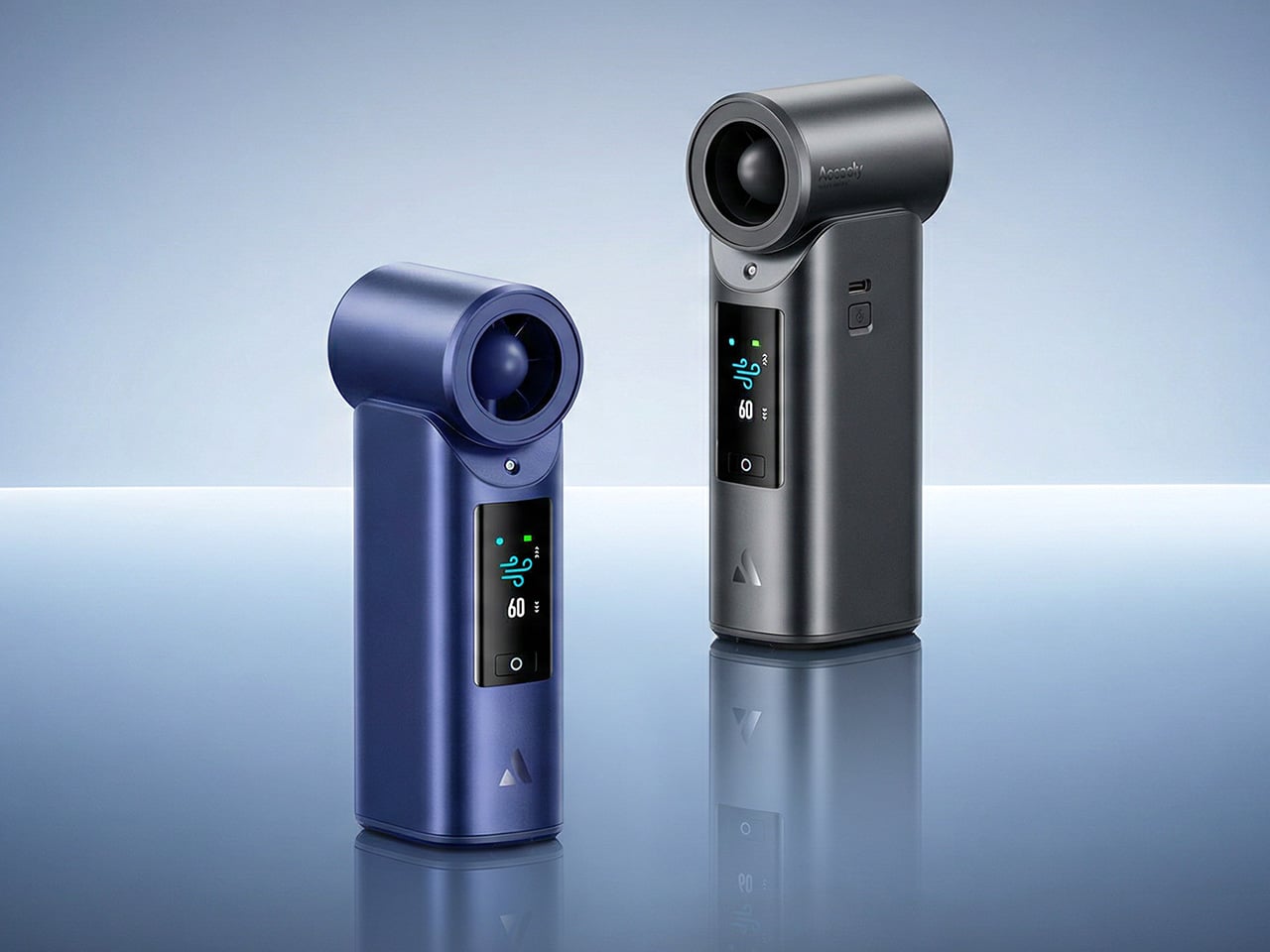
It’s worth noting how the Cold Air Ultra looks, because the design says a lot about what it’s trying to be. The body is compact and upright, with a cylindrical air outlet with a straight, high-pressure duct design, giving it a shape closer to a precision tool than a seasonal gadget and ensuring that the powerful airflow reaches you with zero efficiency loss. Unlike the plastic housing common to most portable fans, the Cold Air Ultra comes in a lightweight body with a premium metallic-inspired finish that’s more resistant to scratches and daily wear, better in hand, and can passively conduct heat away from the motor during extended use.

1

The cooling technology is where the Cold Air Ultra stands apart. An 70,000 RPM brushless motor drives high-speed air that “breaks through” the sticky sweat layer so the mist can evaporate and pull heat away instantly. It’s this dual action of the wind clearing the path for the mist that makes it possible to reduce skin temperature by up to 18°F (10°C) in just 10 seconds, a noticeably different experience from what you’d get with a standard fan.

Two side-by-side thermal camera frames from a HikMicro device showing a person in warm colors; left frame lists center 82.4°F, hottest 100.5°F, coldest 77.8°F, right frame lists center 74.6°F, hottest 103.0°F, coldest 71.9°F, with crosshair markers along a line

What makes the airflow cold rather than simply wet comes down to how the system atomizes water. Rather than using a vibrating membrane to break liquid into droplets, the approach used in most portable evaporative devices, the Cold Air Ultra uses pneumatic atomization: a high-pressure pump forces compressed air through a precision copper nozzle, shearing water into ~20 μm micro-particles at speed. The compression process itself lowers the air temperature before it exits the device, so that what reaches your skin is genuinely cooled airflow, not ambient air with moisture added. The water and air channels are sealed in a patented airtight structure that optimizes flow efficiency and prevents leakage, a design detail that also keeps the electronics fully separated from the water circuit.

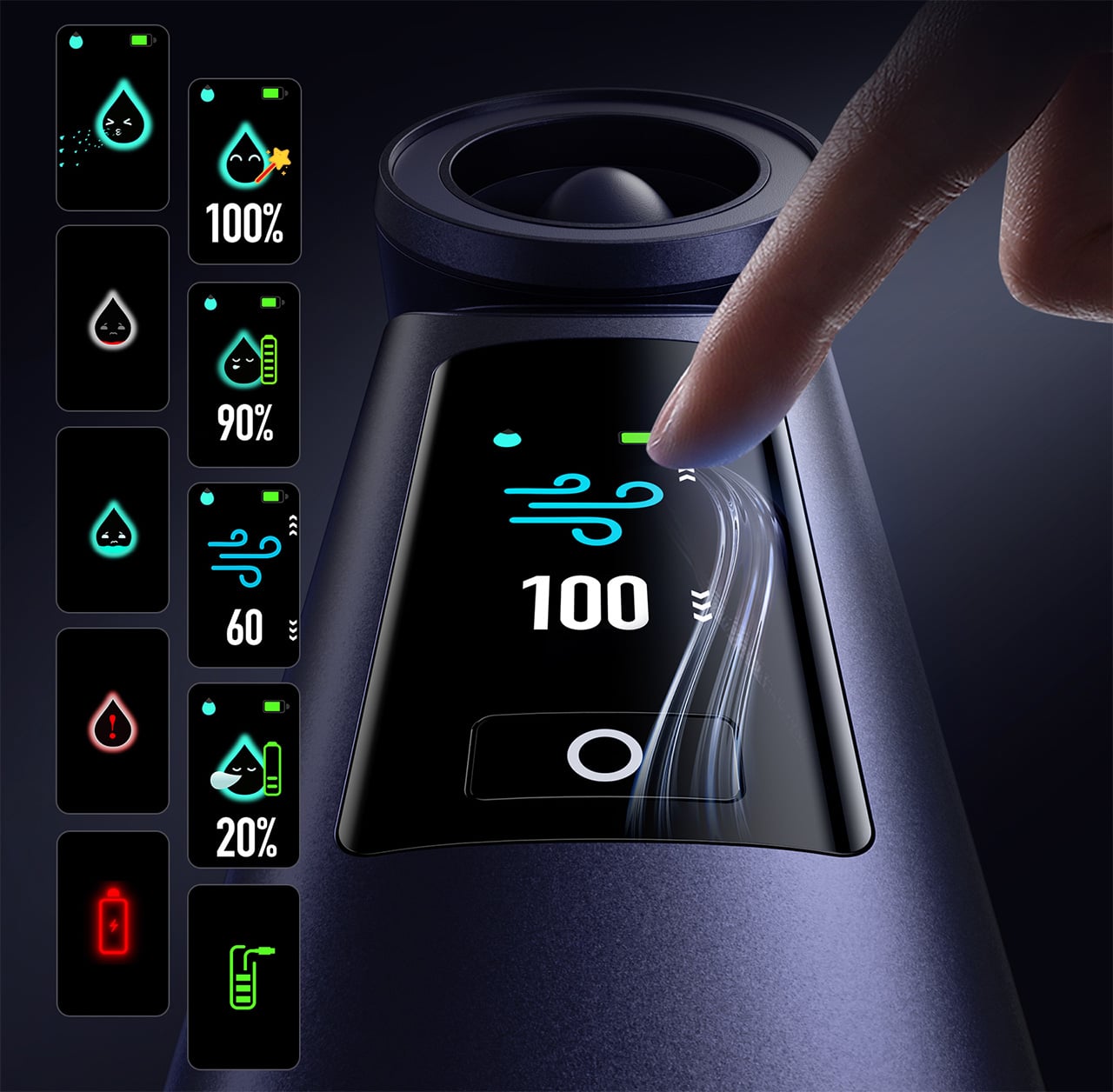
Control is handled through what Aecooly calls the “Little Droplet,” a full-color touchscreen built into the front of the body. This enables fast, intuitive, and precise control, allowing users to swipe through the 100-level settings instantly, which is a much more modern and responsive way to manage airflow compared to traditional fans. And with dynamic icons that display battery level, water level, and mist status in real time, you’re never left guessing what’s left.

1

Picture stopping mid-hike to cool down, or waiting on a sweltering subway platform with no breeze in sight. A standard fan doesn’t do much in either of those moments beyond moving hot air around. The Cold Air Ultra is built for situations like these, where getting your skin temperature down quickly during a break or a commute actually makes a noticeable difference to how you feel.

Smart kettle display showing 100% readiness with air/wind icon and finger tapping the lid; side column shows additional status cards with percent values and icons.

Battery life isn’t a compromise here either. The Cold Air Ultra packs a 7,000 mAh cell for up to 10 hours, charges via USB-C in about 2.5 hours, and doubles as a 20W power bank with Quick Charge and Power Delivery support. The magnetic accessory system includes a pointed nozzle and a round nozzle for directing airflow, plus a brush head, each of which can snap on and off without tools. The included lanyard enables hands-free carry, so the device stays accessible during commutes or outdoor use without needing to be held.

Aecooly says the Cold Air system has received the Red Dot Design Award 2026, a recognition that speaks to its functional engineering as much as its considered form. It’s available in a black and a blue finish, and retails for $79.99. For a device that covers personal cooling, emergency power, and outdoor utility in a single package, the price puts it squarely in premium handheld territory.

The standard Aecooly Cold Air at $31.99 $39.99 (20% off, use coupon code “YANKO2026”) brings the same active cooling concept in a simpler package, with a 4,500 mAh battery and five speed settings. It’s a solid introduction to the concept, but the Cold Air Ultra’s touchscreen, 7,000 mAh battery, 20W power bank output, and magnetic tool system make $79.99 feel less like a premium and more like the smarter spend.

Click Here to Buy Now: $63.99 $79.99 (20% off, use coupon code “YANKO2026”). Hurry, deal ends in 48 hours!

The post The Personal Cooling Device That Blows Cold Air Rather Than Just Moving It first appeared on Yanko Design.

$450 Smart Glasses, 78 Languages, Zero Smartphone Required

Smart glasses companies love to talk about a grand future, but the strongest case for INMO GO3 arrived in a very ordinary setting: a live presentation. During its appearance at Global Connect in China, an INMO presenter used the glasses’ teleprompter feature while addressing the room, letting the script move with her speaking pace. It was a simple demonstration, slightly funny once the audience noticed the note cards she held as a backup option, and far more memorable than a spec sheet.

That kind of practicality is central to INMO’s broader strategy. The company describes its mission as building glasses people can wear daily, and GO3 reflects that approach with features aimed at frequent, low-friction use. Real-time translation, live transcription, meeting summaries, HERE Maps navigation, and photo translation all point toward the same goal: putting AI and information in front of the eye in a form people might actually keep on their face all day.

Designer: INMO

What makes the GO3 feel more meaningful than many smart glasses pitches right now is the kind of display it chooses to be. The category is increasingly pulled toward a model where glasses become another surface for platforms to mediate your attention, observe your behavior, and layer commerce or data collection into the act of seeing. That vision promises convenience, but it also raises the prospect of a device that quietly turns everyday life into a stream of signals for someone else to measure, sort, and monetize.

INMO’s framing, at least from this demo and conversation, points in another direction. The GO3 display feels useful because it serves the wearer in immediate, legible ways. It helps you follow a script. It helps you catch a conversation through live transcription. It helps you understand another language, navigate a route, or pull information from the world through photo translation. The point is not to create a new theater for algorithmic persuasion. The point is to reduce friction between a person and the task in front of them.

That’s a fairly important distinction because smart glasses will live or die on trust as much as technical ability. People may tolerate a phone screen as a chaotic marketplace of prompts, ads, feeds, and nudges because phones already carry that baggage. Glasses sit closer to the body and closer to perception. They ask for a different kind of acceptance. A product in that position has to prove it deserves to be there, and the most convincing way to do that is by helping with something clear, fast, and human scale.

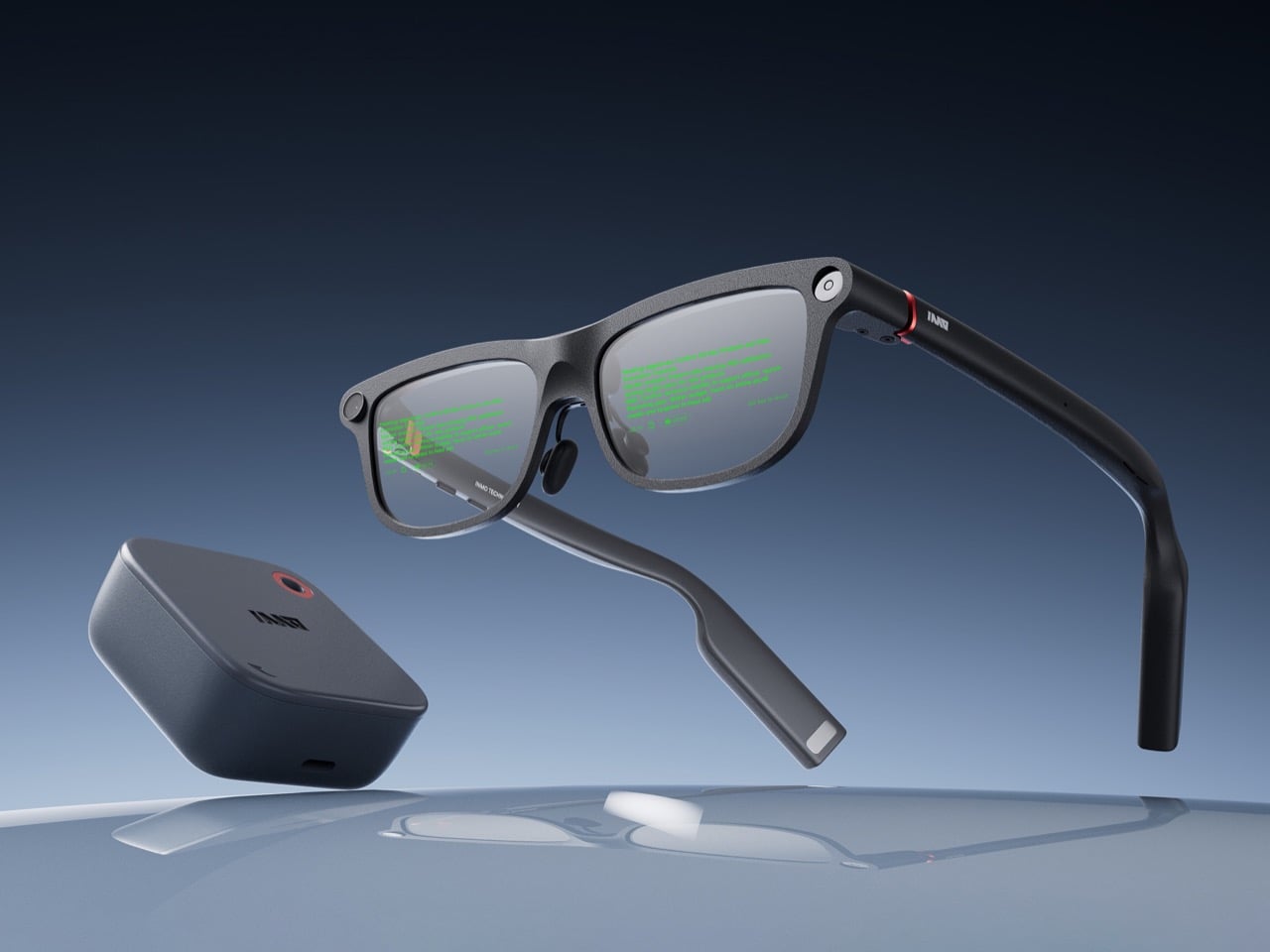
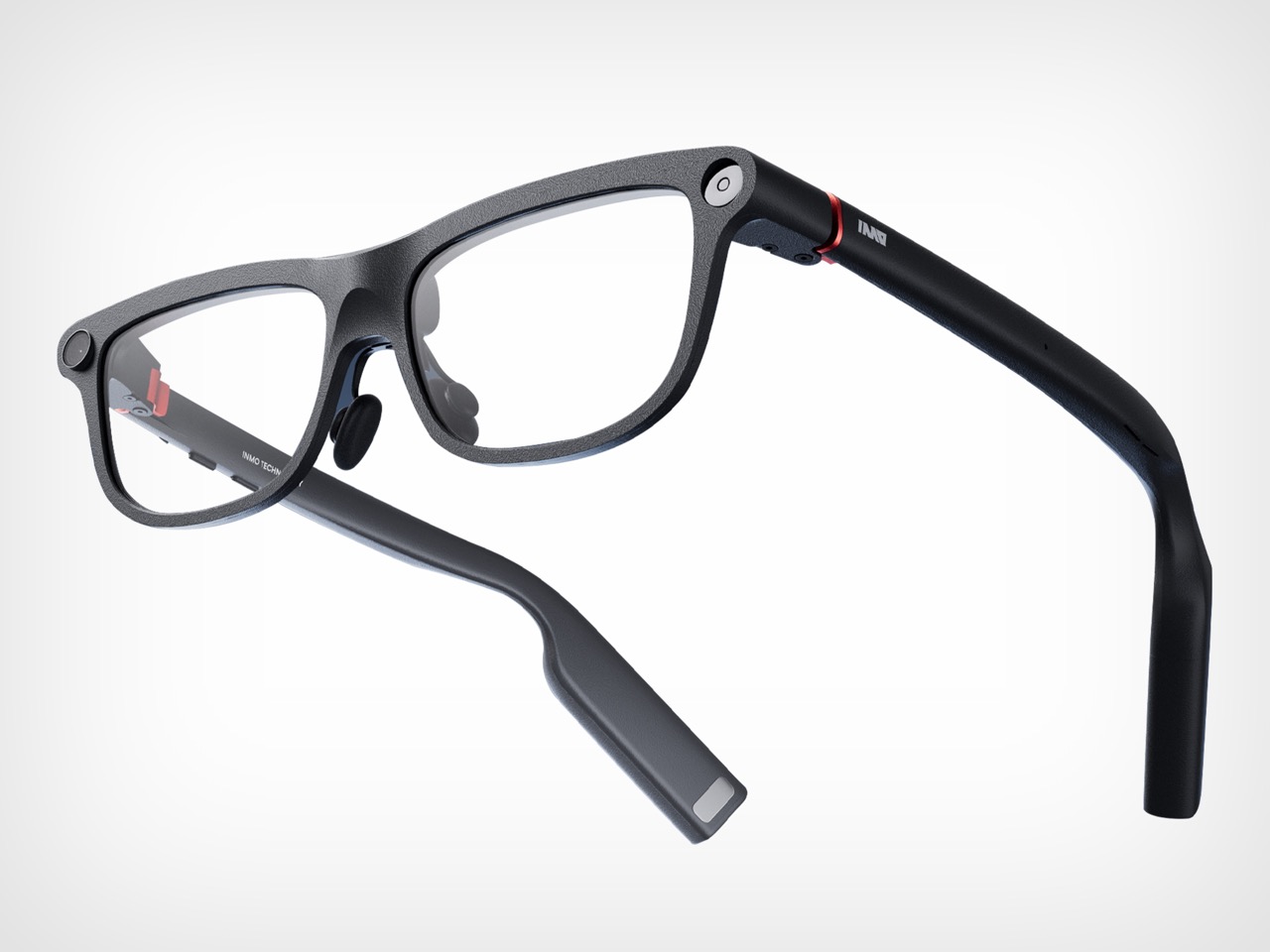
The GO3 seems to understand that. On paper, its features are varied enough to sound ambitious: standalone real-time translation in 78 languages, AI teleprompting with auto-scroll, meeting summaries, action items, hands-free navigation through HERE Maps, photo translation, prescription support up to 2000 degrees, and a swappable battery system that can be changed in about five seconds. In practice, though, the appeal comes from how these features collapse into ordinary moments. A work presentation. A multilingual conversation. A commute. A quick glance for context instead of a full stop to unlock and consult a phone.

That is why the live teleprompter demo landed so well. It showed the GO3 handling one of the simplest possible tasks, and in doing so, it made a broader case for the category. Smart glasses do not need to begin with spectacle to feel transformative. They can begin with assistance. They can begin with a line of text, quietly placed where you need it, moving at your pace, leaving your hands and attention freer than they were a moment before. Once that works, bigger use cases start to feel plausible.

Some details remain fuzzy, especially around video recording, which was less clearly explained in conversation than photo capture. Any smart glasses company also has to prove that software quality can hold up outside the demo environment, particularly for translation, transcription, and AI-generated summaries. Those are high-value features, but they are also the ones most likely to disappoint if latency, accuracy, or interface design slips. INMO’s been in the business long enough to know that, and to also have a fairly strong grip on a fix.
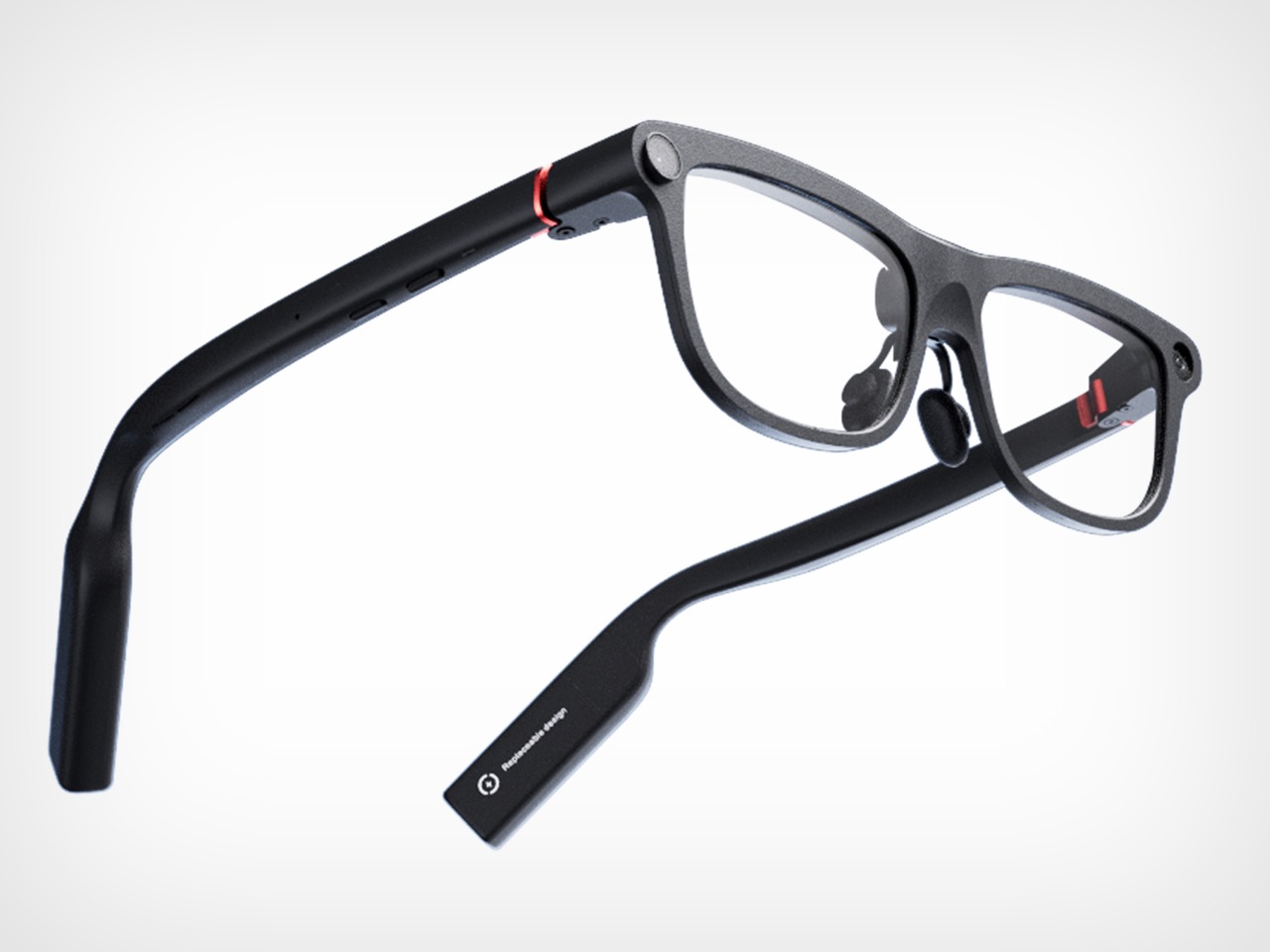
Even with those caveats, INMO’s pitch feels unusually coherent. Founded in 2020, the company says its goal from day one has been to make glasses people will wear every day, and GO3 is the strongest expression of that idea so far. At 58 grams, with prescription support and a battery system designed for long use, it is clearly being shaped around wearability rather than occasional novelty. That design logic gives the product a sense of discipline that many competitors still lack.

The larger vision behind GO3 is that smart glasses will become the next mobile computing platform, eventually taking over as the primary interface for AI. That is a huge claim, and one the industry repeats often. What gives INMO a better argument than most is that it starts from the simple setting rather than the maximal one. If smart glasses are going to matter, they have to prove themselves in the small moments first. GO3 makes that case persuasively. It suggests the future of wearable computing may arrive not through spectacle, but through usefulness that quietly earns its place.
The post $450 Smart Glasses, 78 Languages, Zero Smartphone Required first appeared on Yanko Design.

Simplify Further’s Goa Tiny Home Fits a Full Life Into 252 Square Feet

Most tiny homes ask you to give something up. The Goa by Simplify Further Tiny Homes is built around the idea that you shouldn’t have to. It’s a 24 x 8-foot home on wheels designed for people who want to genuinely live small, not just survive it. At 252 square feet, the Goa is built to sleep four to five people, which already tells you something about how thoughtfully the space has been planned.

Two sleeping lofts — one measuring 7×8 feet and another at 7×5 feet — sit overhead, leaving a loft height clearance of 36 inches at the low side and 6 feet 4 inches of headroom beneath them. It’s a layout that stacks the private spaces upward and reserves the ground level for living, cooking, and everything in between.

Designer: Simplify Further Tiny Homes

The kitchen is the centerpiece of the Goa, and Simplify Further leans into that fully. A U-shaped layout tucks beneath one of the sleeping lofts, fitted with a four-burner electric range, a 7.1 cubic foot refrigerator, and generous built-in storage — including more tucked beneath the staircase that leads to the loft. It’s a kitchen that actually invites you to cook, not just reheat. A small dining table and seating area sit nearby, keeping the social flow between the kitchen and living room easy and natural.

The bathroom is full-sized — a detail that shouldn’t feel remarkable but often does in homes this compact. Buyers can opt for a full-size bathtub or a 36-inch shower with additional storage, depending on how they want to use the space. A washer/dryer combo is also included as standard, which rounds out the Goa as a proper full-time residence rather than an extended camping experience.

Finish-wise, the interior is dressed in drywall, pine tongue-and-groove ceilings, and vinyl flooring — warm without trying too hard. Upgrade options include shiplap interior walls and furnishings for those who want to move in without lifting a finger beyond signing a check.

The Goa rolls on a hand-built chassis with double axles rated at 7,500 pounds each, trailer brakes, and DOT-approved highway lighting. It carries NOAH certification as an RV and can also be built to satisfy IRC Appendix AQ standards by request. Starting at $65,000, the Goa lands as one of the more compelling full-time tiny home options on the market — a house that earns its footprint rather than apologizing for it.

The post Simplify Further’s Goa Tiny Home Fits a Full Life Into 252 Square Feet first appeared on Yanko Design.

Crocs Just Entered the Mushroom Kingdom and We’re Into It

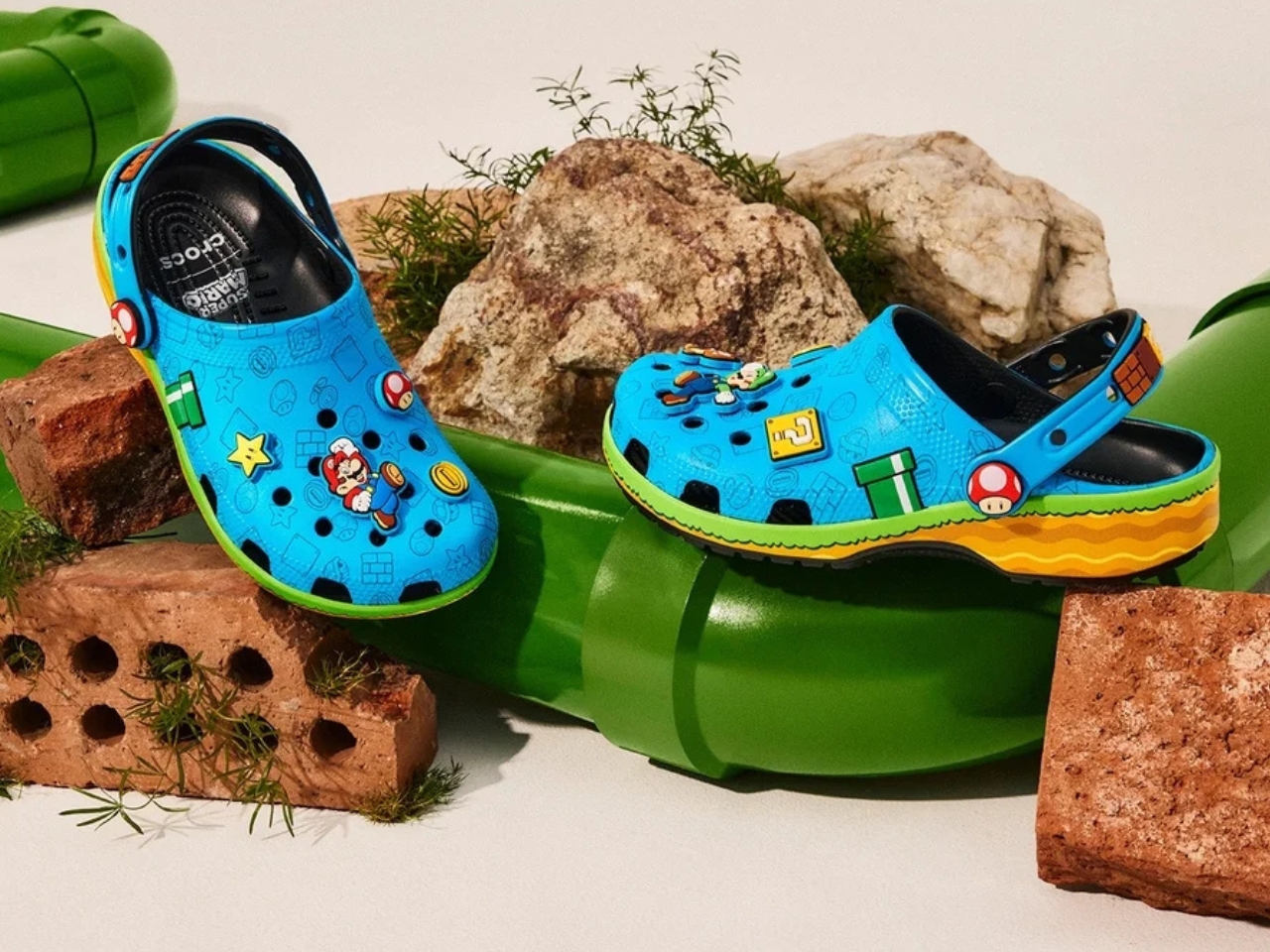
Crocs and Nintendo are not brands you’d typically put in the same sentence as “high-concept design collaboration.” And yet here we are, with the Crocs x Super Mario collection dropping July 15, 2026, looking far better than the premise suggests it should.

The announcement landed earlier this week, and the first reaction — at least my first reaction — was that resigned nod you give when two things that were always meant to go together finally figure it out. Crocs has been quietly rebuilding its cultural credibility for years through a series of increasingly clever partnerships, and Super Mario is the one IP on the planet that genuinely belongs to everyone. People who grew up with a Game Boy, adults who still boot up Mario Kart on a Friday night, and people who have never touched a controller but know exactly who Mario is. That kind of universal ownership is rare, and landing it on a foam clog might be the smartest move either brand has made this year.

Designer: Crocs x Nintendo

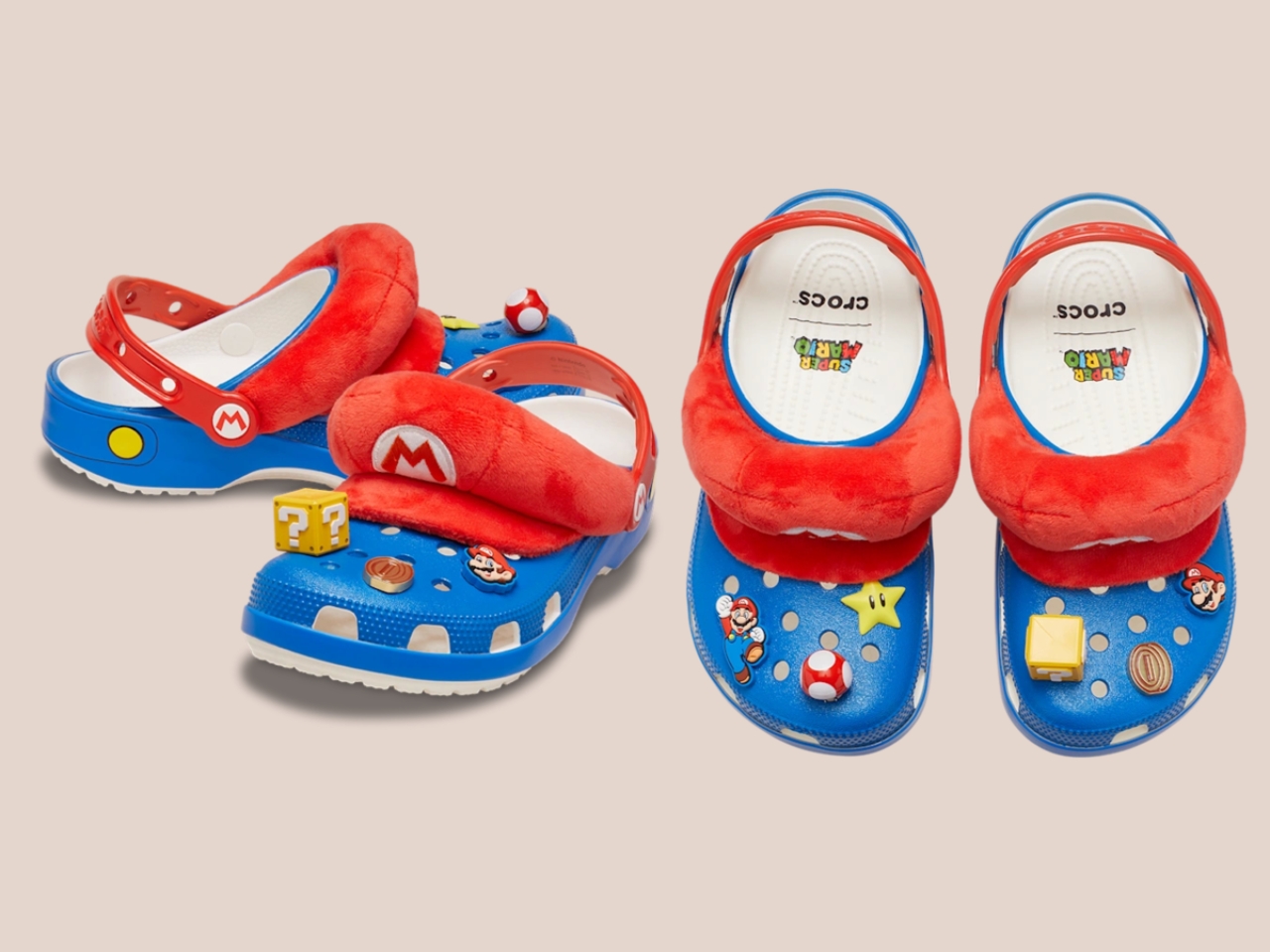
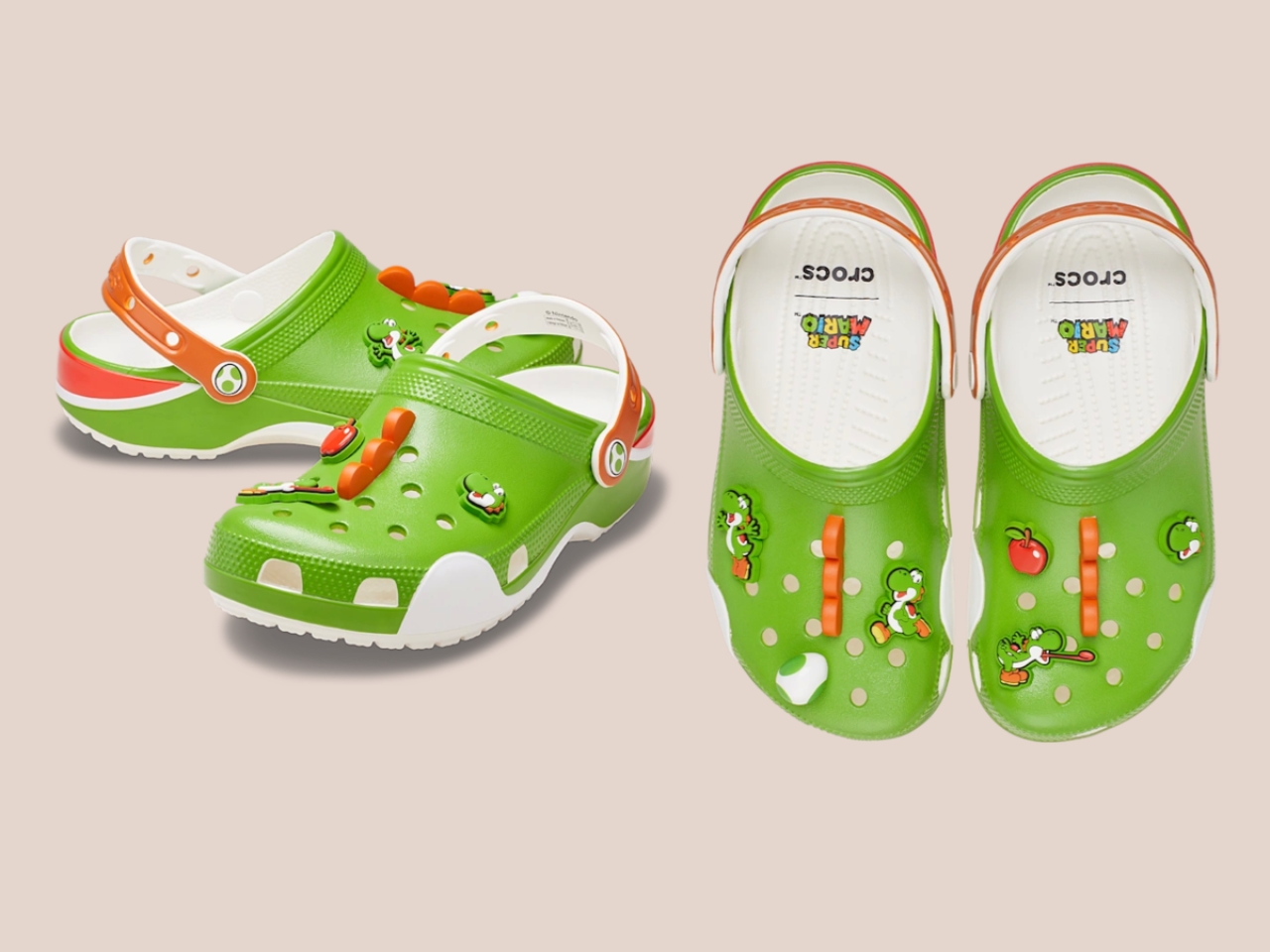
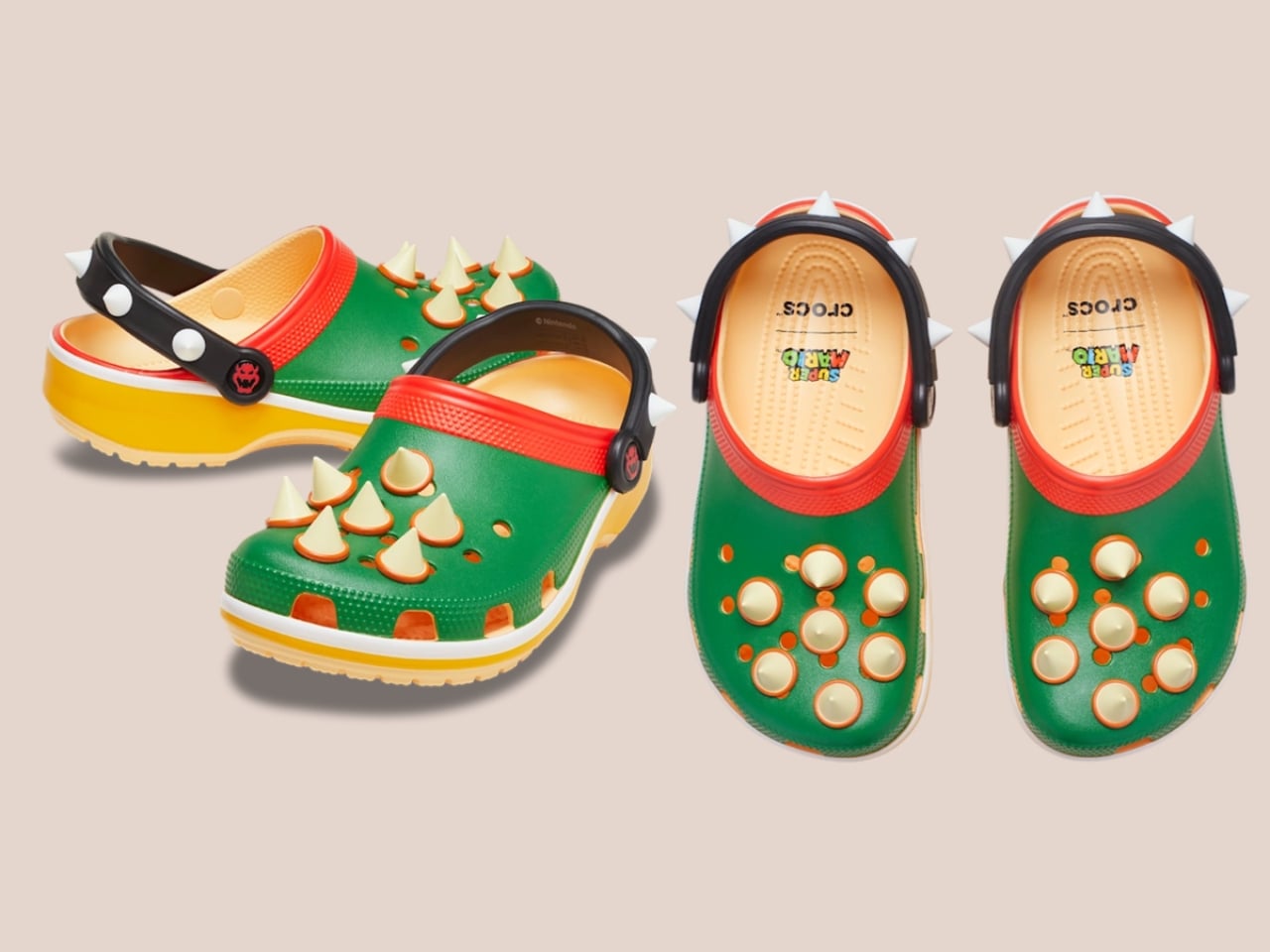
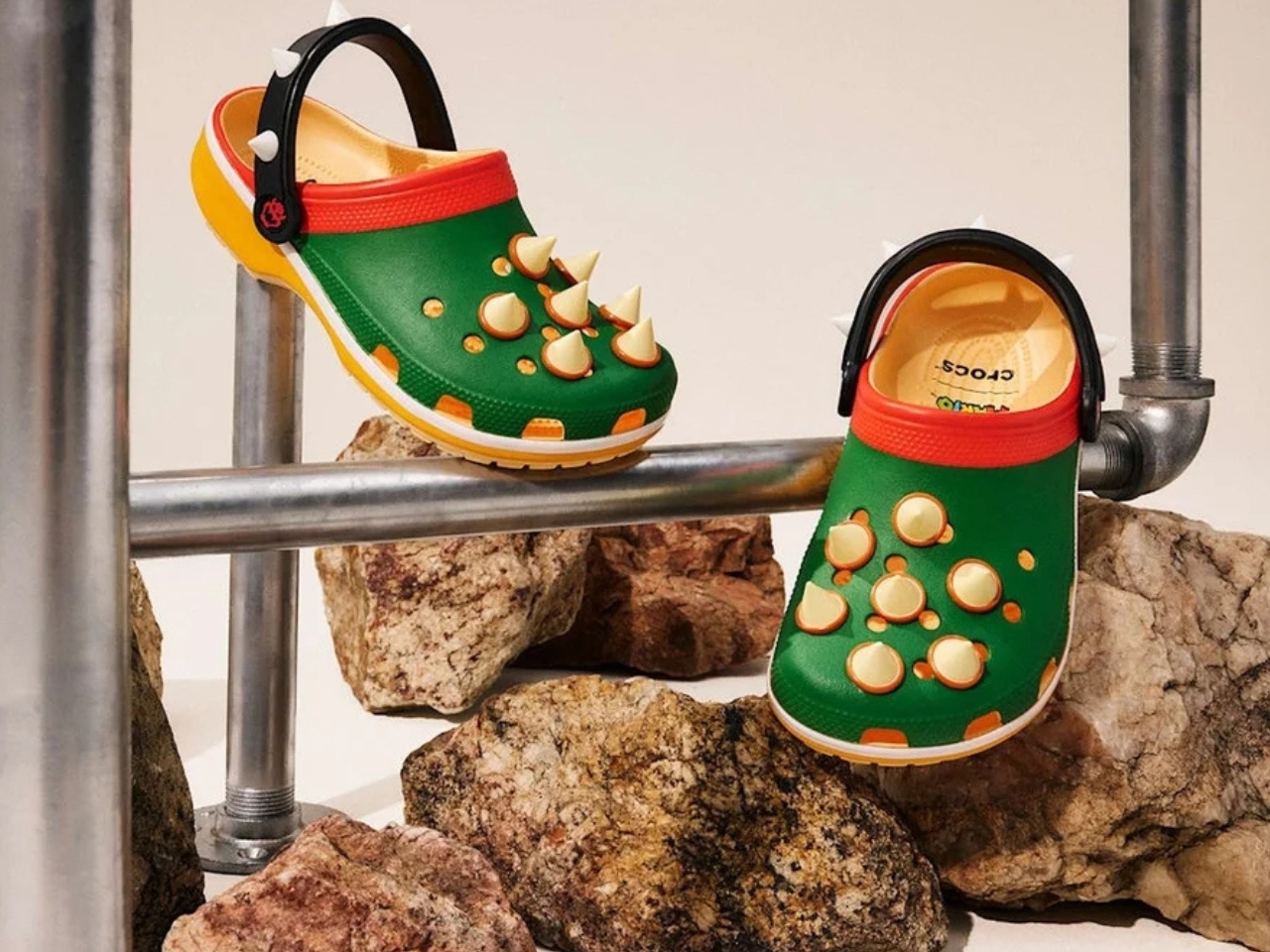
Five styles make up the collection, each built around a specific character, and the level of detail is more than you’d expect from a licensed shoe drop. The Mario clog sits on a blue foam base with a plush version of Mario’s signature red cap attached directly to the upper — playful without being costume-y. The Yoshi style goes full green with PVC fins running along the upper, which somehow manages to feel sculptural rather than silly. Then there’s the Bowser clog: dark green foam, seven PVC spikes on the upper, and five more replacing Jibbitz on the strap. Bowser would absolutely approve.

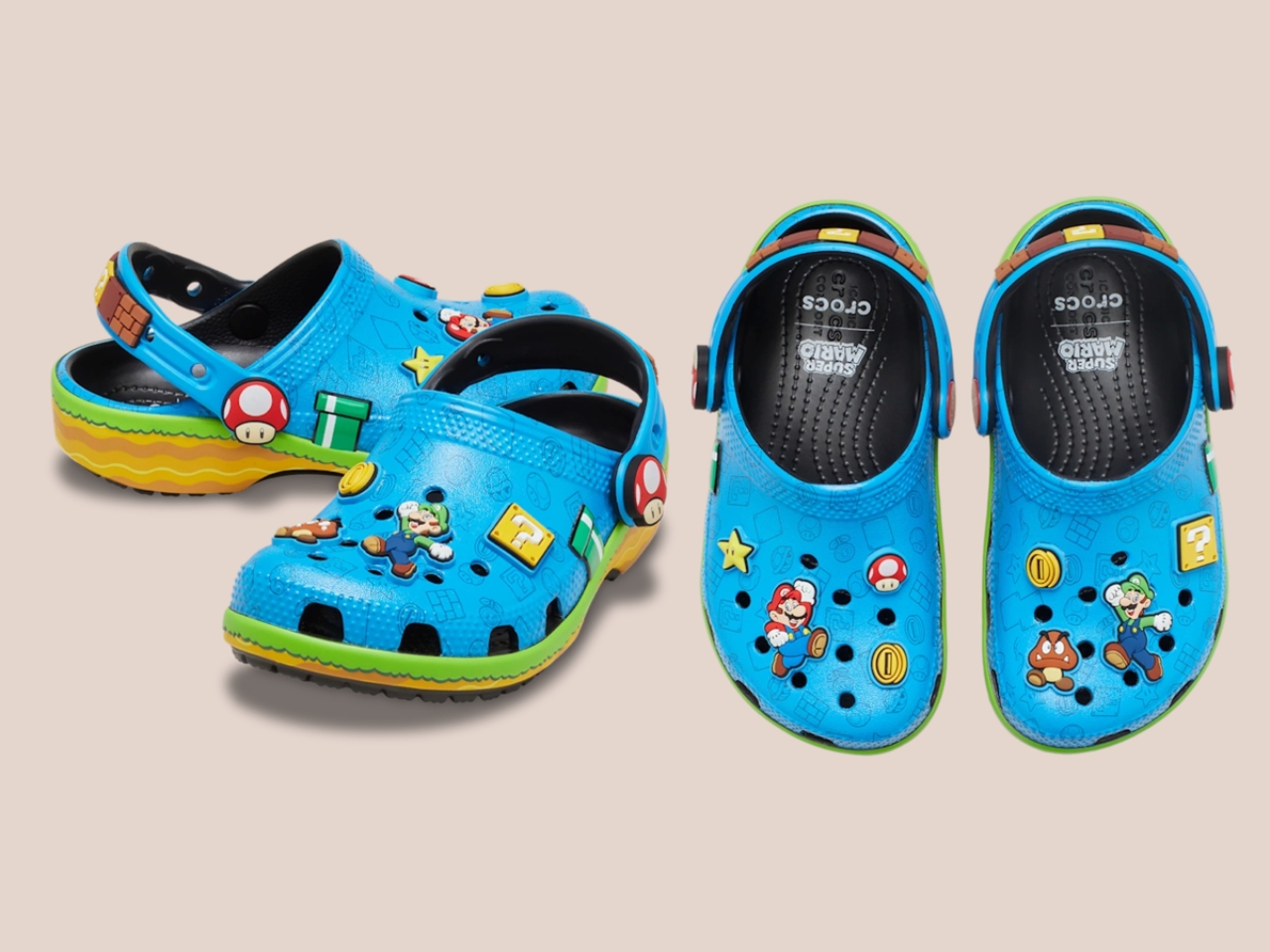
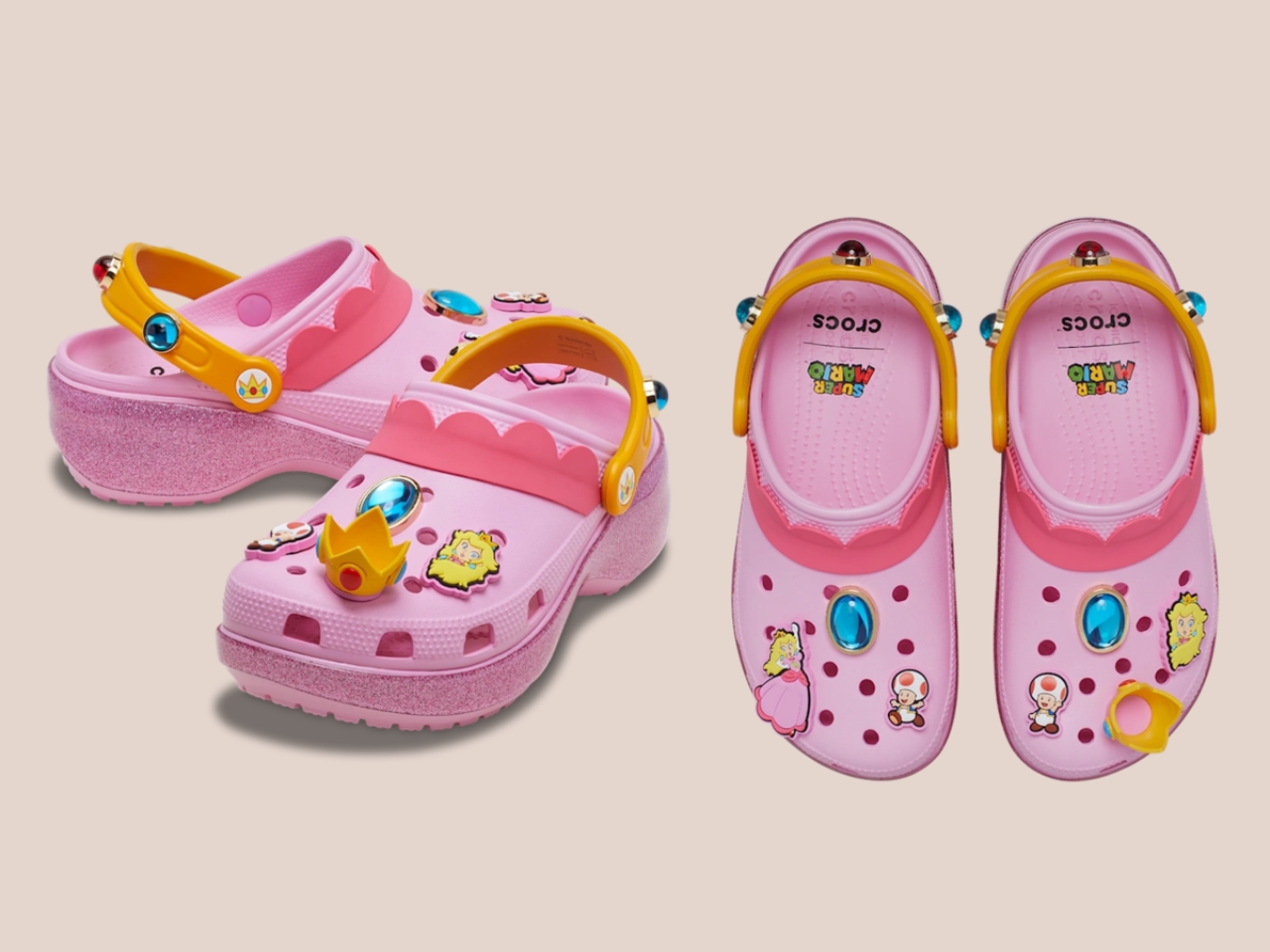
Princess Peach gets the most elevated treatment, with a platform sole finished in pink glitter and seven exclusive Jibbitz charms. It reads more fashion than novelty, which is a genuine design achievement for a shoe that has a question block on it. Rounding out the group is the Core Classic Clog, which pulls from the game’s broader iconography — coins, stars, turtle shells — and comes with eight Jibbitz charms and an option in kids’ sizing. The right call.

Pricing runs from $55 to $90, which lands comfortably in impulse-buy territory for any adult who will absolutely tell themselves they’re buying it for their kid.

What makes this feel considered rather than purely commercial is how naturally the characters map onto what Crocs already does. Crocs has never been a brand that does subtle. It’s loud, comfortable, and entirely unapologetic about existing. Nintendo’s Super Mario roster operates the same way. These are characters drawn in primary colours with maximum personality and zero pretension. They don’t need your endorsement. So when Bowser turns up as a spike-covered clog, it doesn’t feel like a brand sticking a logo on a product. It feels like the character found the right medium.

The Jibbitz element is doing quiet but important work across the collection. Each pair ships with six to eight exclusive co-branded charms, which means every clog doubles as an entry point into Crocs’ customisation ecosystem. Crocs has always understood that Jibbitz turn a shoe into something personal, closer to a wearable mood board than just footwear. Giving Super Mario fans a way into that system is smart, and it means the collection will live well past its launch date.

I’ll be straight: I did not expect to be genuinely interested in a pair of foam shoes shaped like Yoshi. I expected novelty for children and maybe a few nostalgic adults grabbing one on a whim. What the collection actually delivers is a thoughtful translation of game design into product design — character-specific textures, shapes, and details that suggest someone actually played the games and asked what it means for a shoe to feel like a character, not just look like one.

The Crocs x Super Mario collection is available from July 15 on crocs.com, the Nintendo Store, and select retailers globally. Your feet are going to the Mushroom Kingdom.

The post Crocs Just Entered the Mushroom Kingdom and We’re Into It first appeared on Yanko Design.