
20+ things you may have missed in the GTA 6 extended look
The GTA VI extended-look trailer is full of clues, if you know where to look.
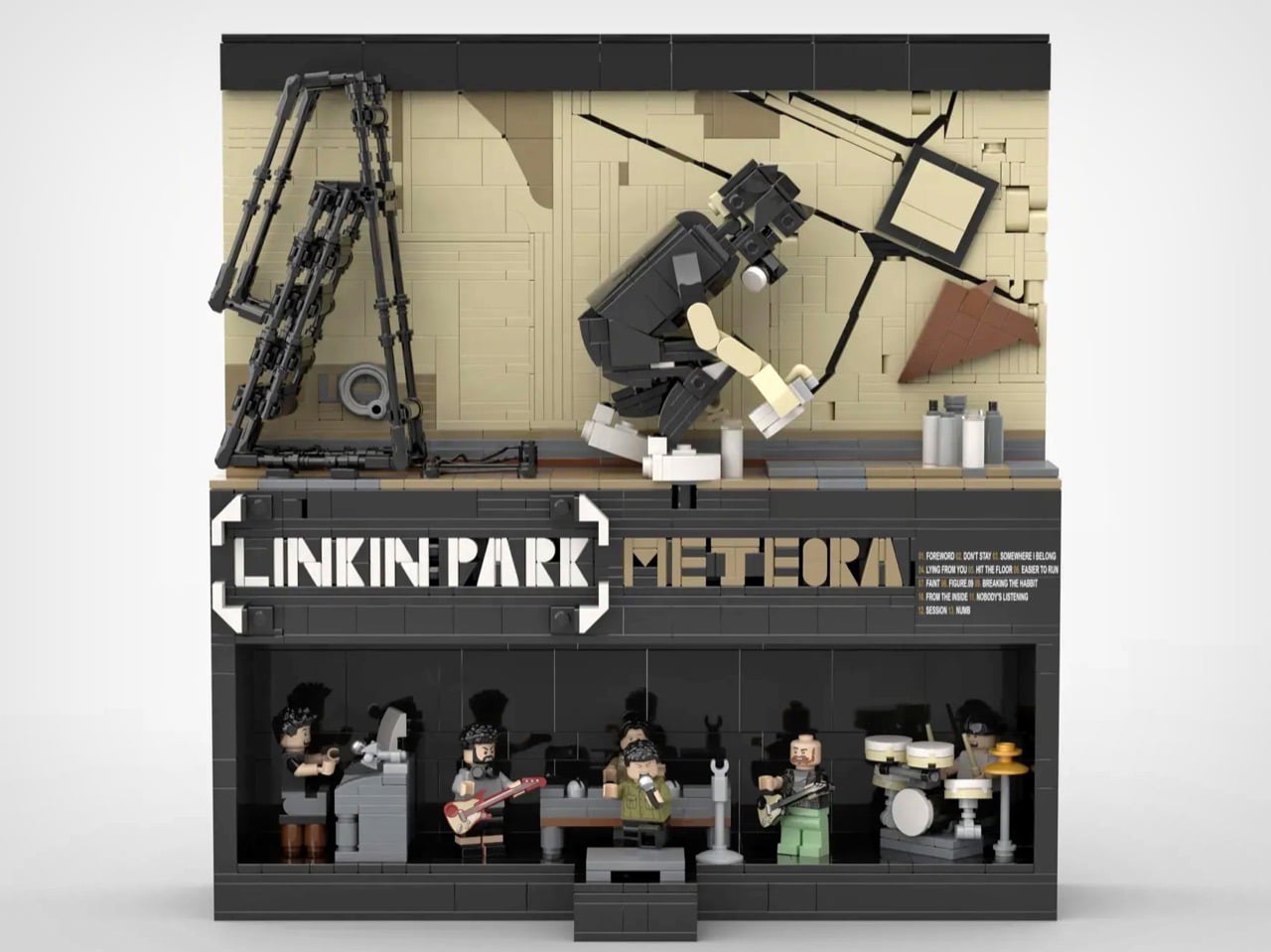
Quick pop quiz for anyone who owns Meteora on CD, RIP CD collections. Who’s the guy on the cover, crouched down in a respirator with a spray can? If you said Mike Shinoda, you’re wrong, and so was I for about fifteen years. It’s actually Boris Tellegen, a Dutch graffiti artist who goes by Delta, and the whole thing started as a giant collaborative mural before the band decided the quiet shot of one guy working was more powerful than the finished wall. Which, honestly, is a very 2003 nu-metal thing to do. Make something huge, then zoom in on the one moment that feels honest.
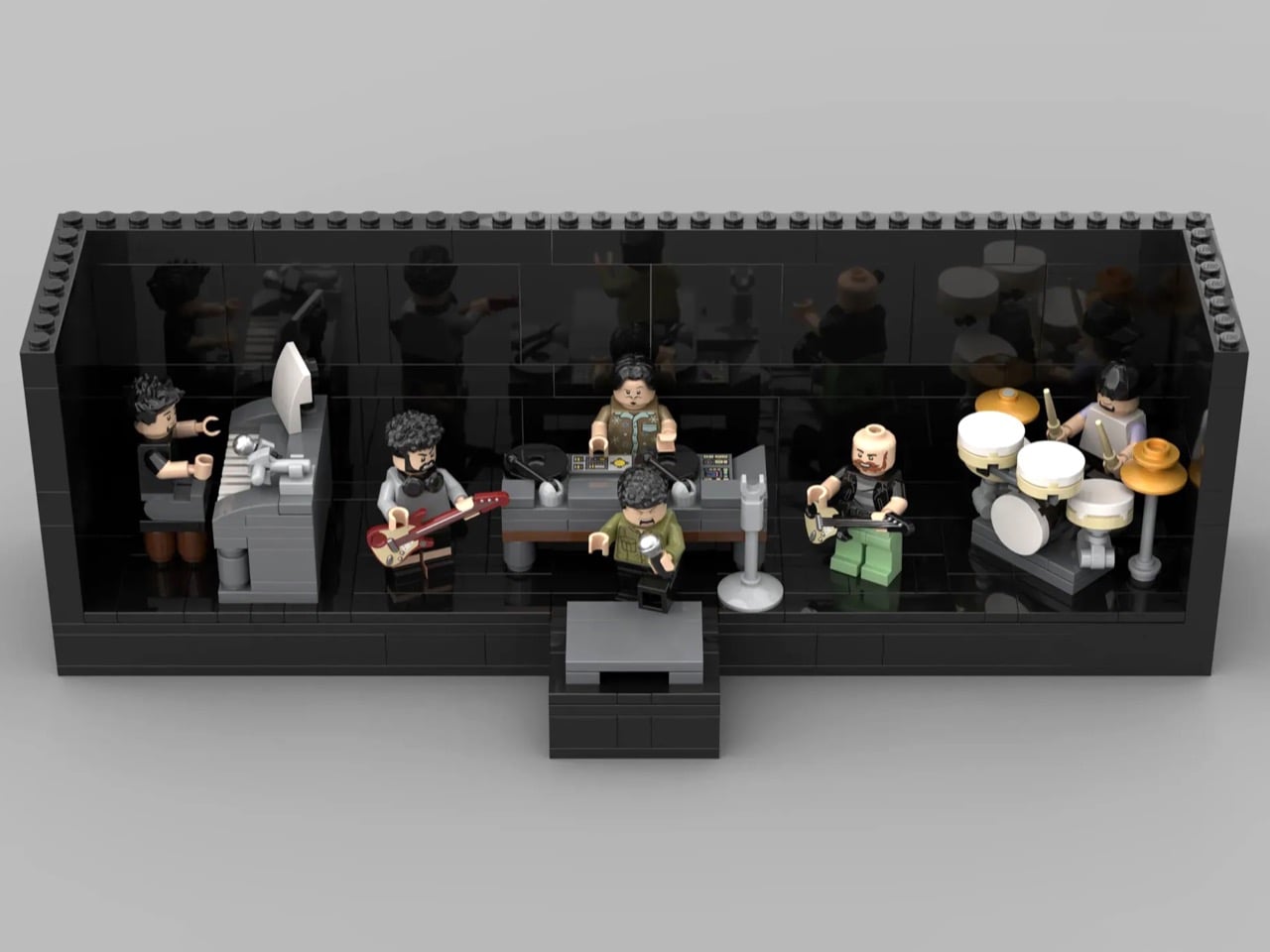
Anyway, LEGO builder Zihnisinir_61 apparently had the same reaction I did, because he went and turned that exact photo into a brick-built diorama, complete with the ladder, the scaffolding, and Delta himself mid-spray. And then, because why stop at faithful, he added an entire concert underneath it that was never part of the original artwork at all.
Designer: Zihnisinir_61
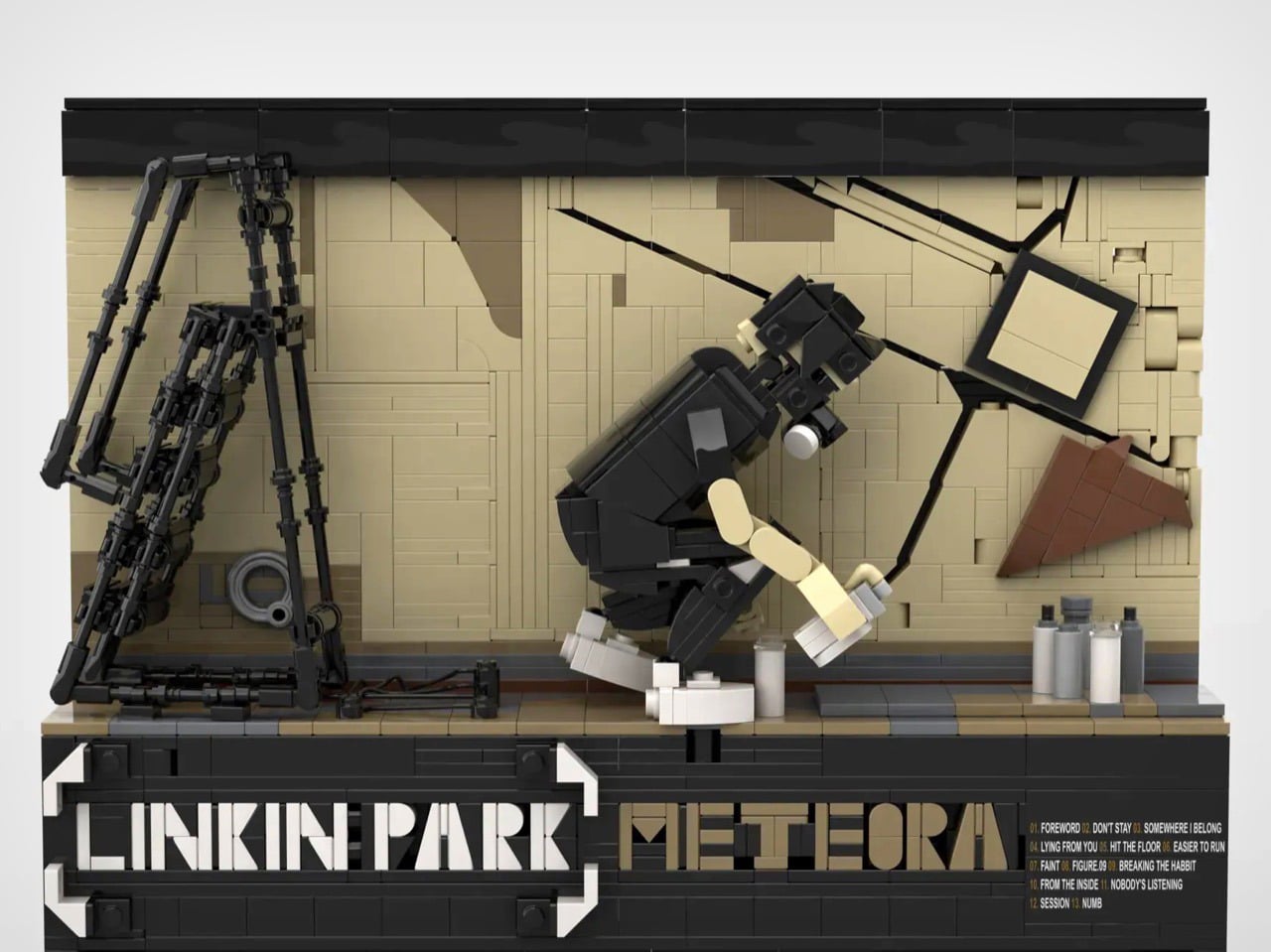
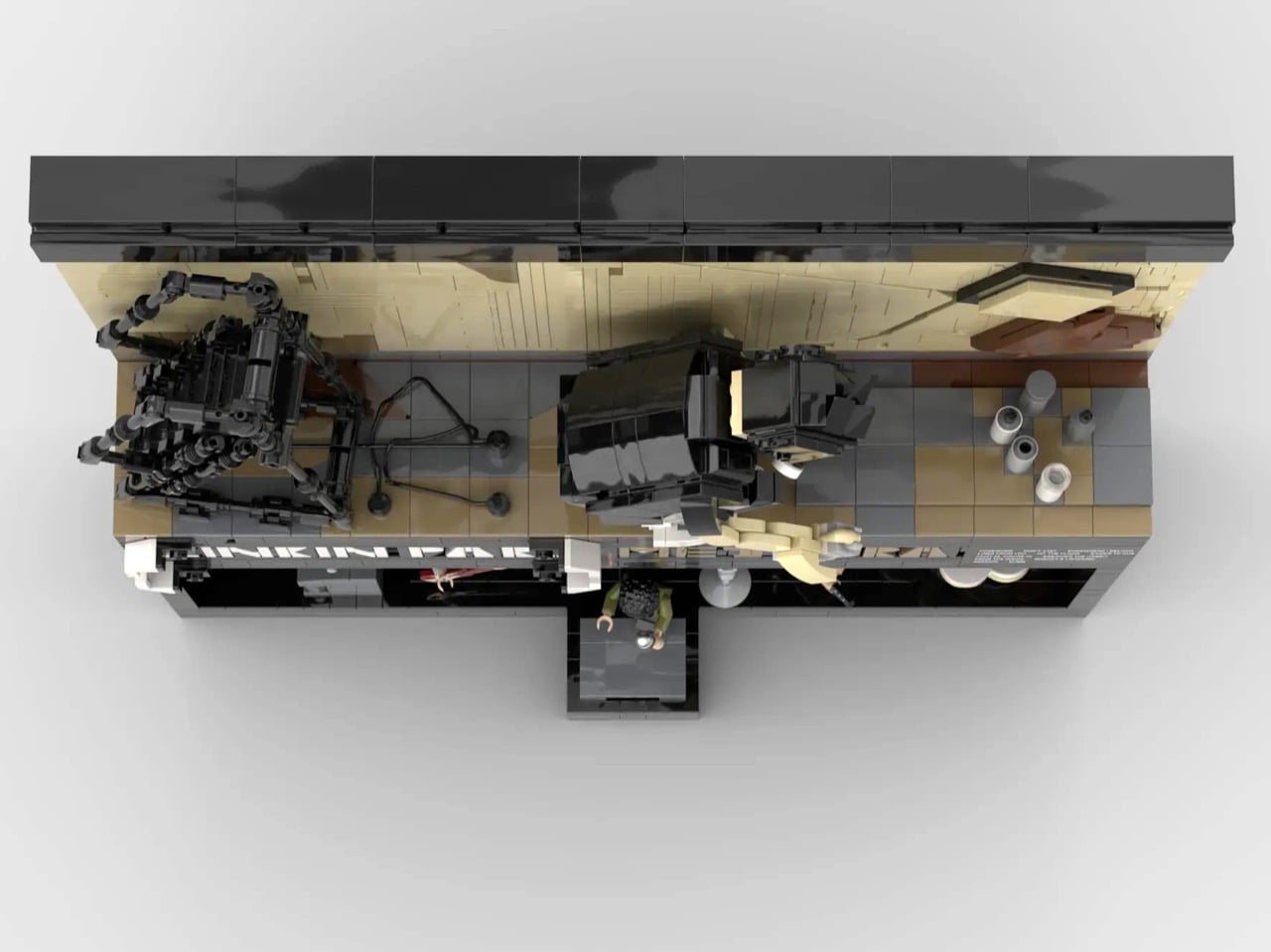
The top half of the build is the album cover you already know, rebuilt with genuinely impressive detail. The scaffolding on the left is all thin, angular Technic framing that somehow reads as rickety and load-bearing at the same time, and Delta himself is hunched over mid-spray with a tiny paint can in hand, exactly like the photo. The wall behind him is where the real craft is hiding though. It is packed with SNOT, studs not on top, techniques both inside and outside the build, and Zihnisinir_61 pointed out something I would not have caught on my own, that all those angled bricks are what create the deliberate imperfections and diagonal shadow line running through the original mural. It should not work as well as it does, but it does.
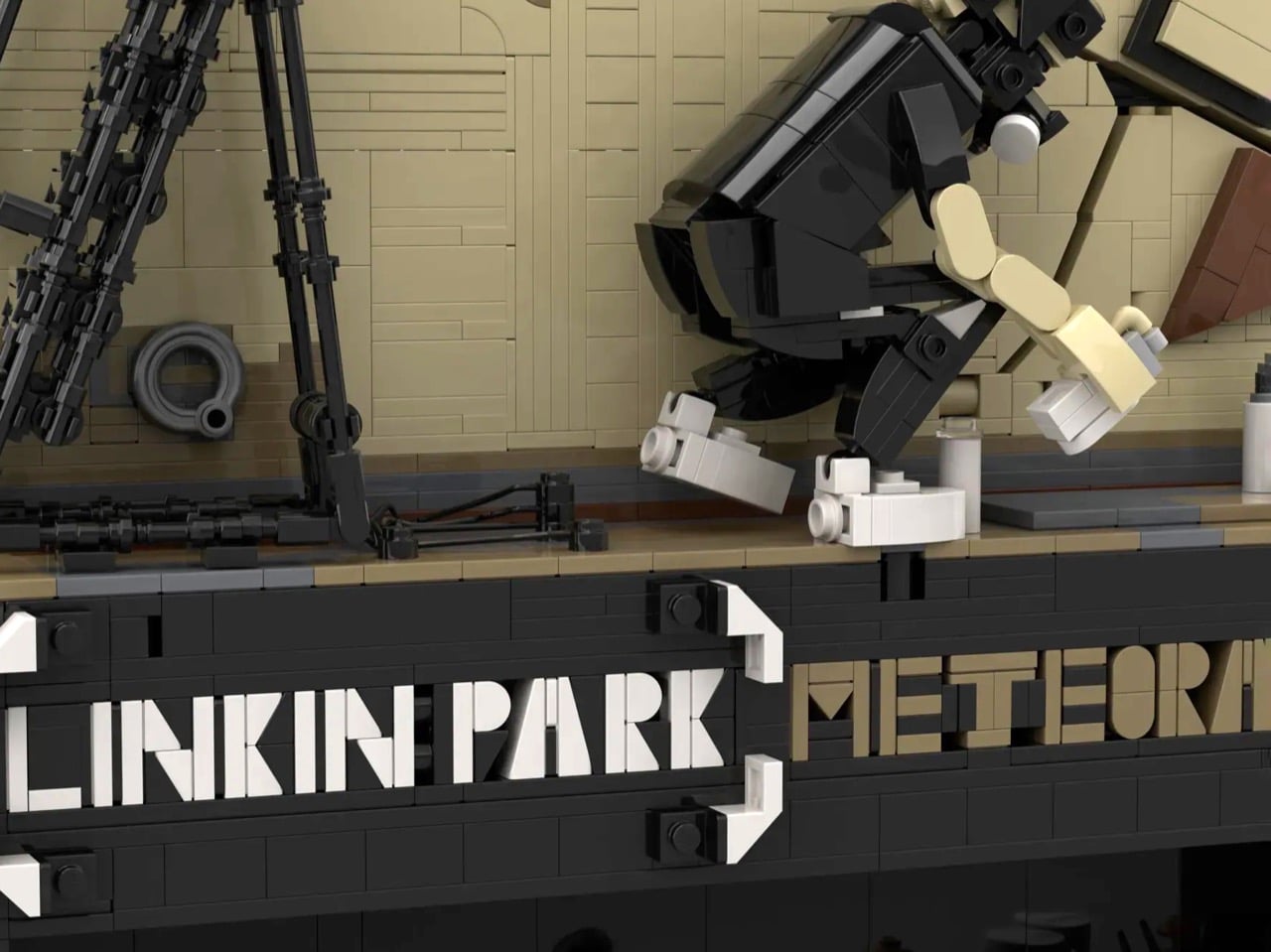
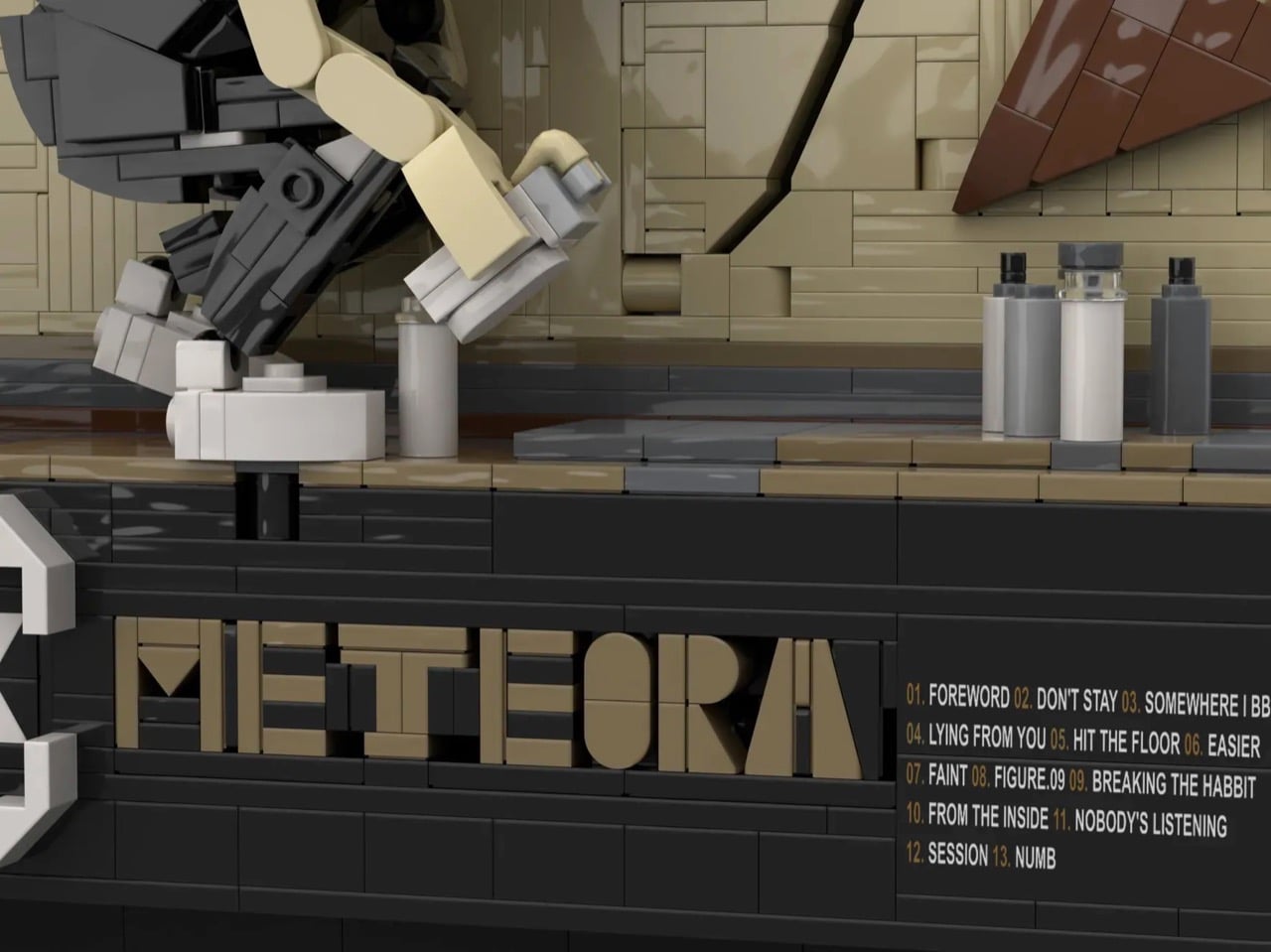
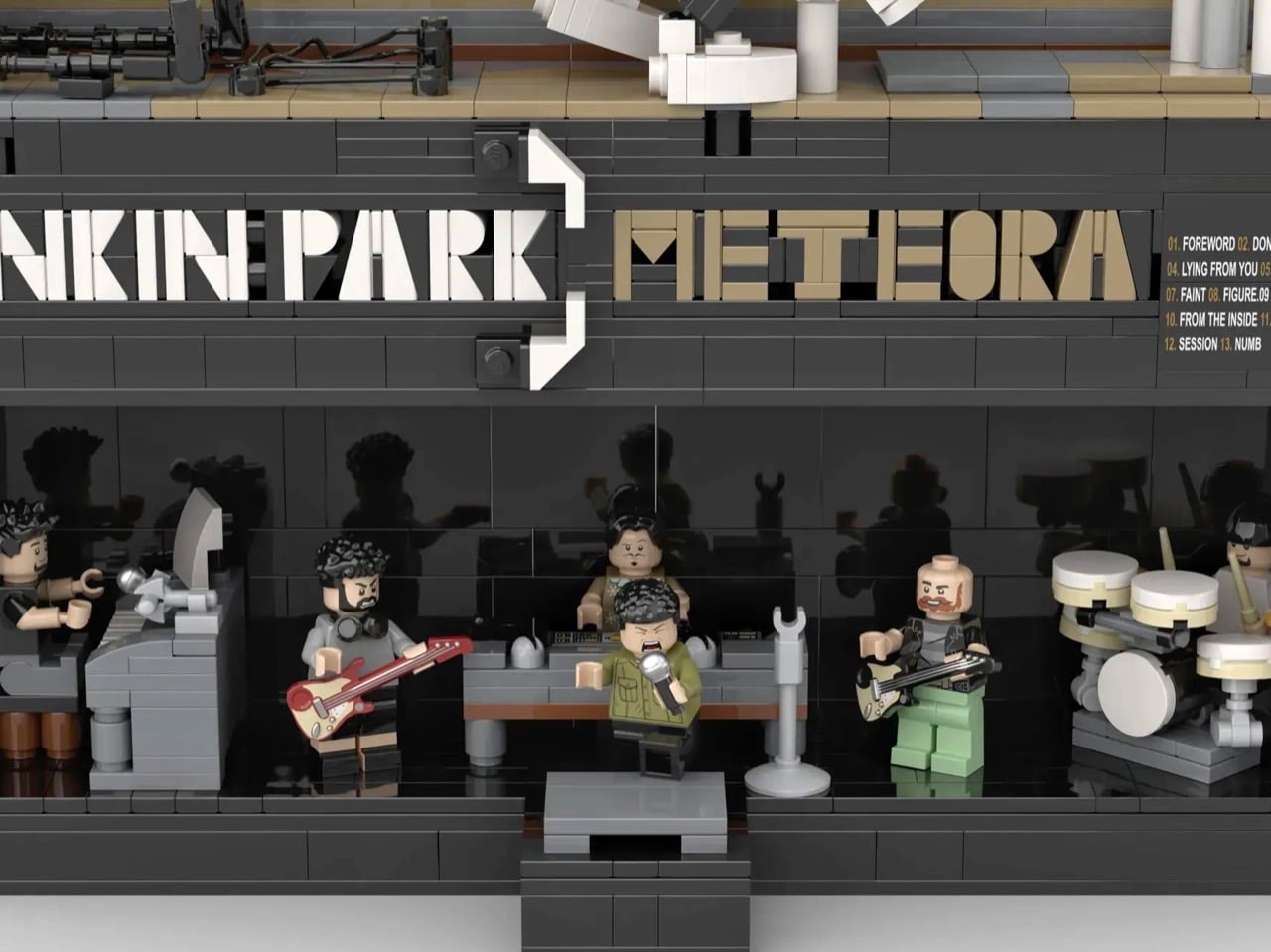
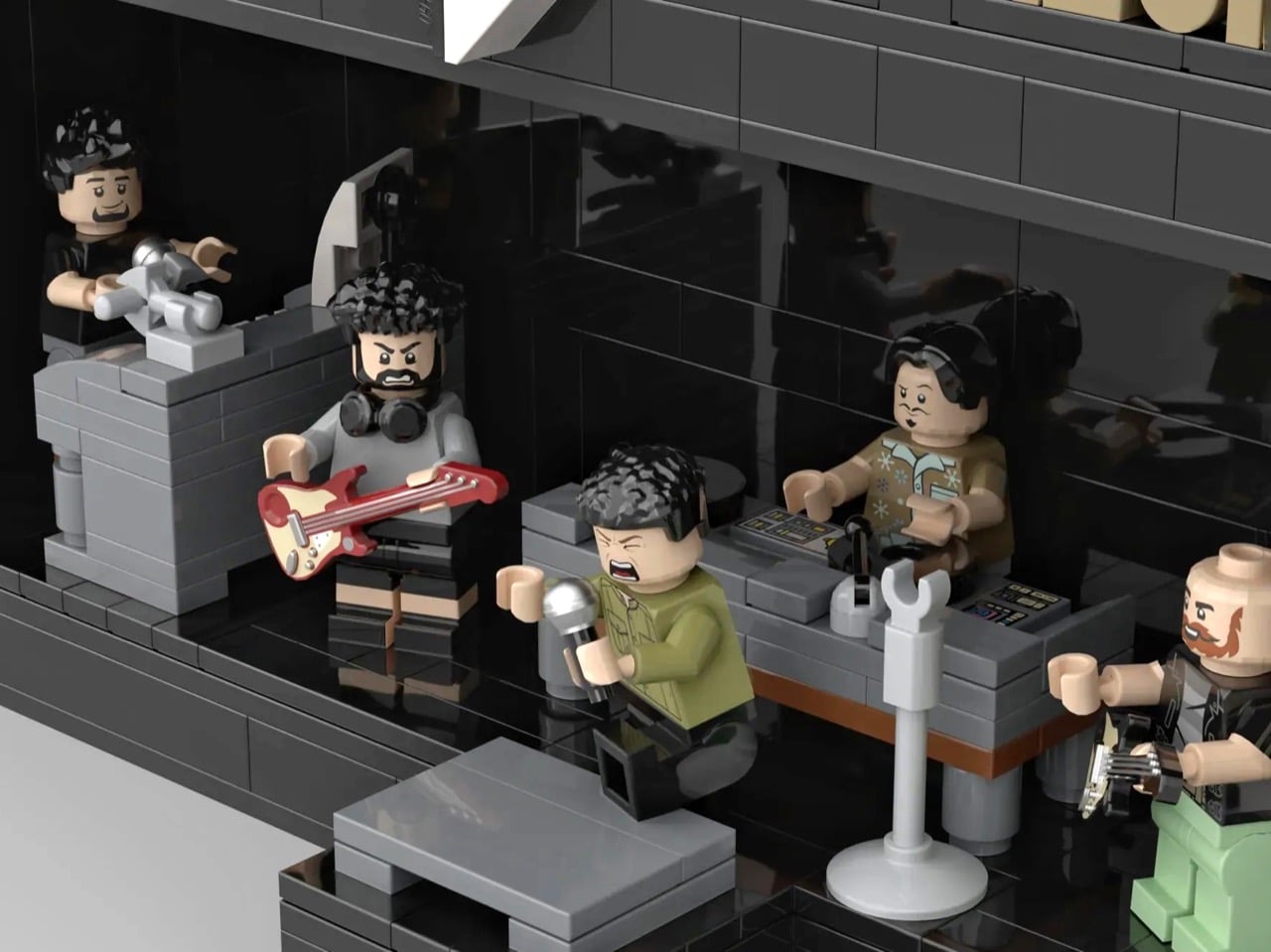
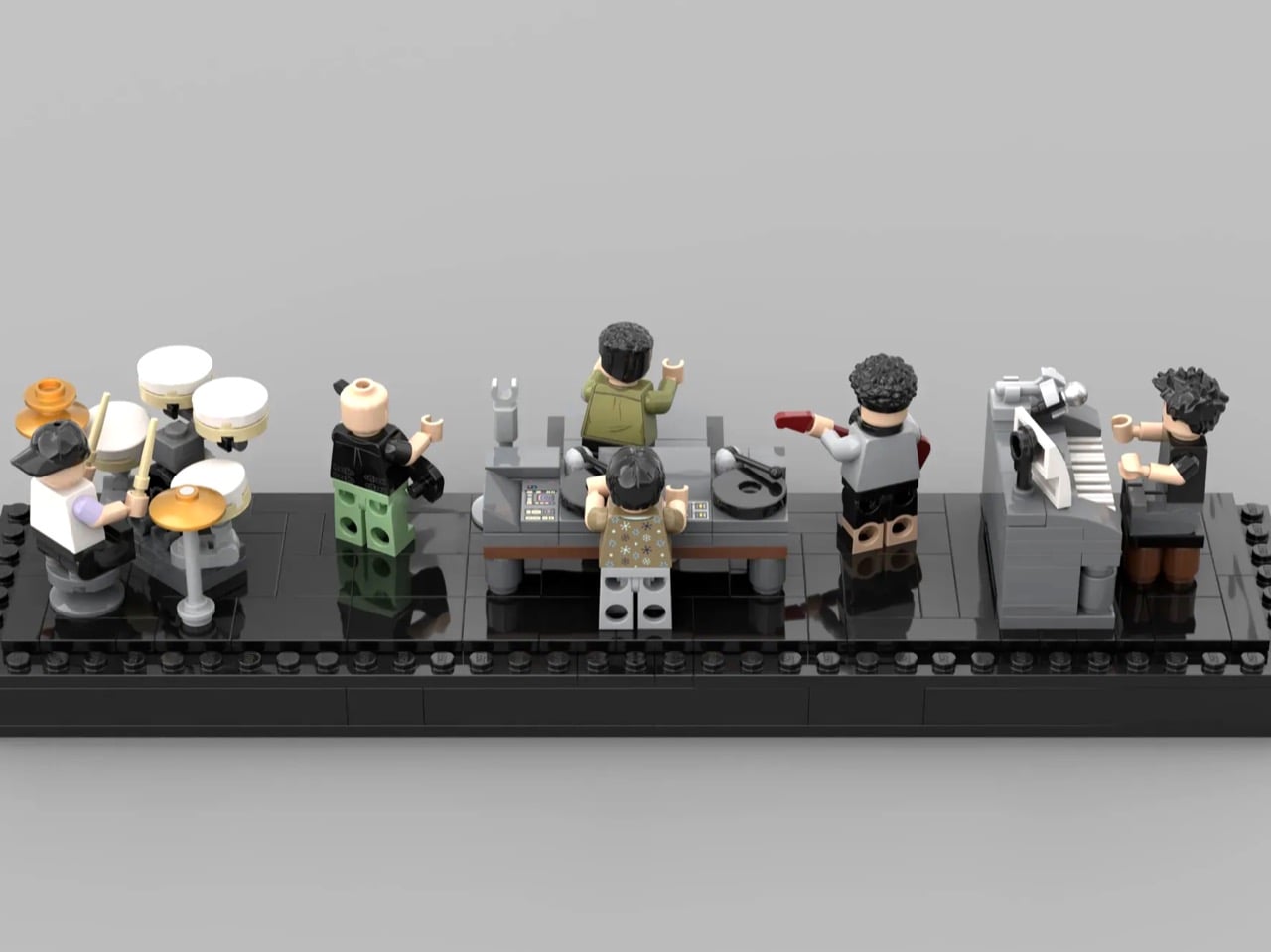
The “LINKIN PARK” and “METEORA” logos sit just below that, fully brick-built in layered plates rather than printed tiles, alongside a custom tracklist graphic listing all thirteen songs. But the real swing is what happens underneath. The original cover has a solid black lower third and nothing else. Zihnisinir_61 looked at that empty space and decided it needed a full band. Chester is mid-scream at the mic, Mike is on piano, Joe is at the turntables, Brad is on guitar, Phoenix is on bass, and Rob is behind the kit, all set against glossy black tiles that actually reflect the minifigures like stage lighting. My favorite detail is a tiny one a fan pointed out in the comments, a horn piece used as Delta’s spray-painting index finger. Once you see it you cannot unsee it.
It is a fitting way to honor an album that took its name from the Meteora monasteries in Greece, ancient structures somehow balanced on top of sheer sandstone cliffs, because Shinoda thought the word felt epic and cinematic. Meteora debuted at number one, sold around 810,000 copies its first week, and even scored a Grammy nomination for the instrumental track “Session.” This is also round two for Zihnisinir_61, who previously built Hybrid Theory’s Winged Herald cover, and one commenter already called it, joking that Minutes to Midnight has to be next.
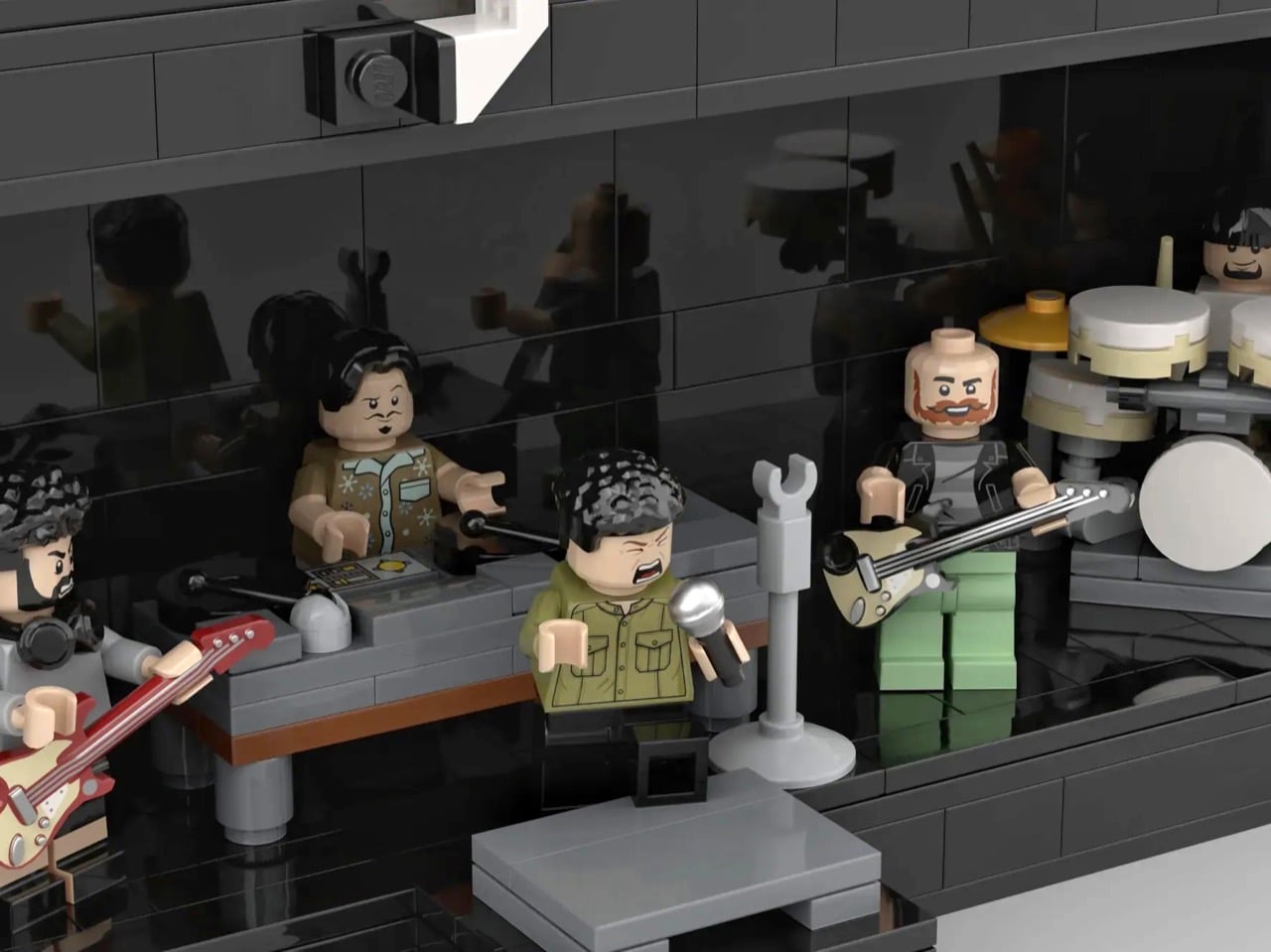
The MOC is sitting at 207 supporters right now, with 425 days left to hit the first 1,000-vote milestone on the road to the full 10,000 needed for LEGO’s official review. You can head to the LEGO Ideas page here to add your vote. If Zihnisinir_61 really is building out the whole discography, I would not mind seeing a tiny brick-built version of that infamous label meeting where Warner almost buried this album entirely.
The post This LEGO Fan Rebuilt Linkin Park’s Meteora Cover In Bricks, Then Added the Whole Band Below Too first appeared on Yanko Design.

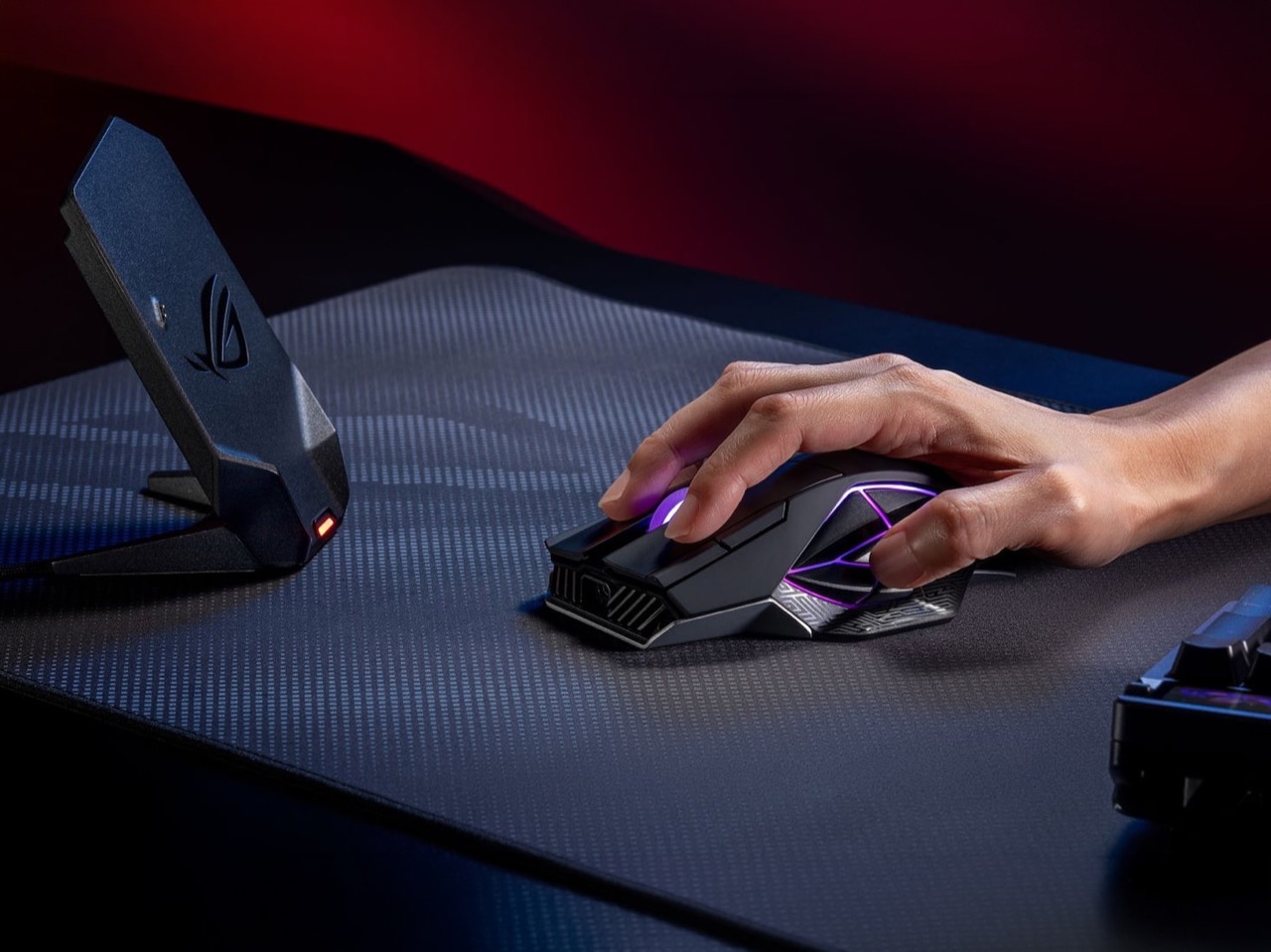
The ROG Spatha X 65K comes with a charging dock, and the dock is doing four jobs. It’s the 2.4 GHz receiver, the charger, a battery status readout with a toggle button on the back, and an angled plinth that holds the mouse nose-up like a museum piece. Fifteen minutes parked on it gets you 25 hours of gaming, which is roughly one very poor decision about bedtime.
The mouse it holds is worth the pedestal. ASUS revived its MMO flagship at Gamescom 2026 with 12 programmable buttons, a 65,000 dpi AimPoint Pro sensor, hot-swappable Push-Fit Socket III switches, and a 126-gram body that takes two 10-gram weights across five front, center, and rear configurations. On the same stage, ASUS also showed the 56-gram Gladius IV Ace. One brand, one day, two completely opposite theories of what a mouse should weigh.
Designer: ASUS Republic of Gamers
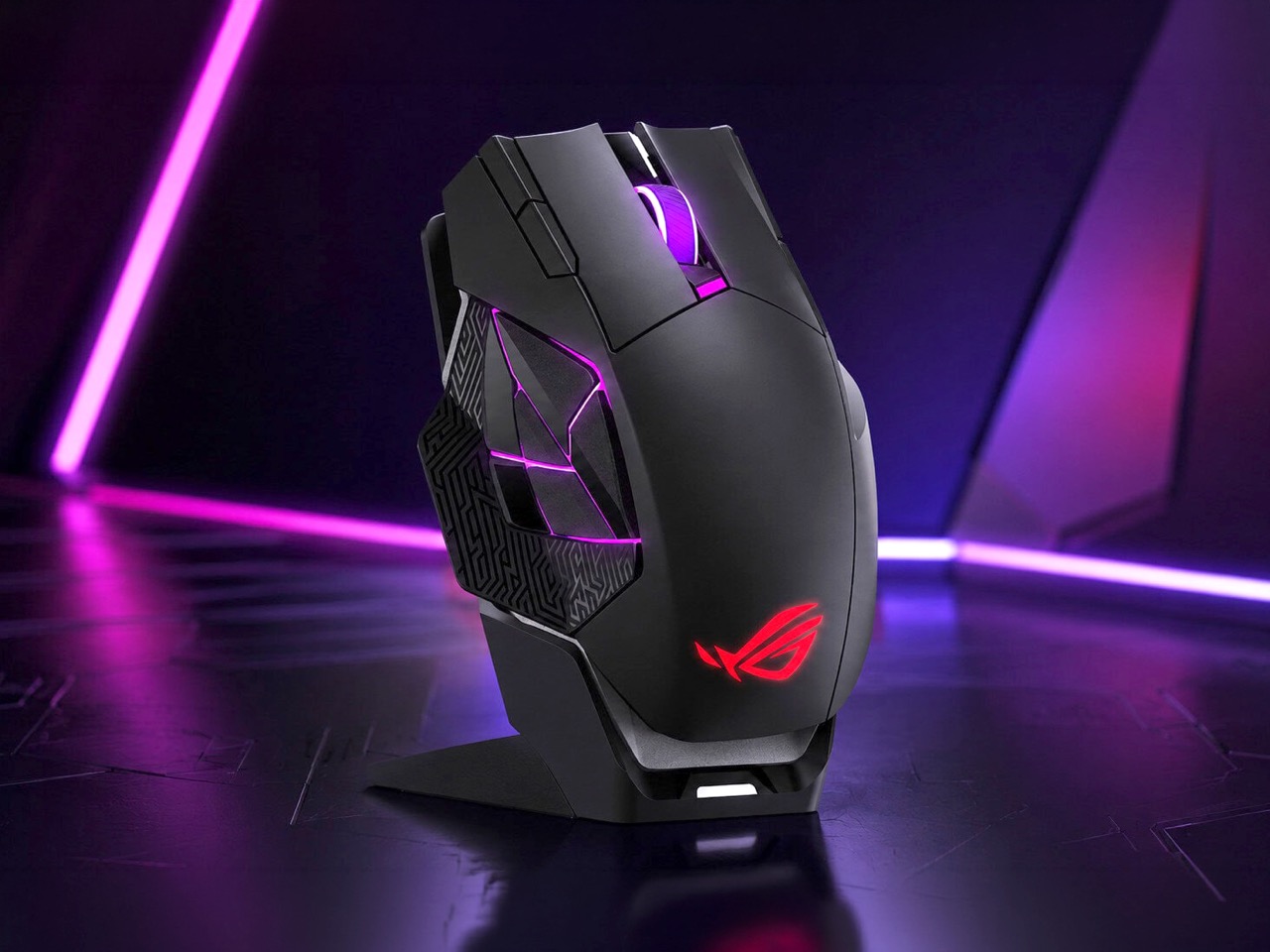
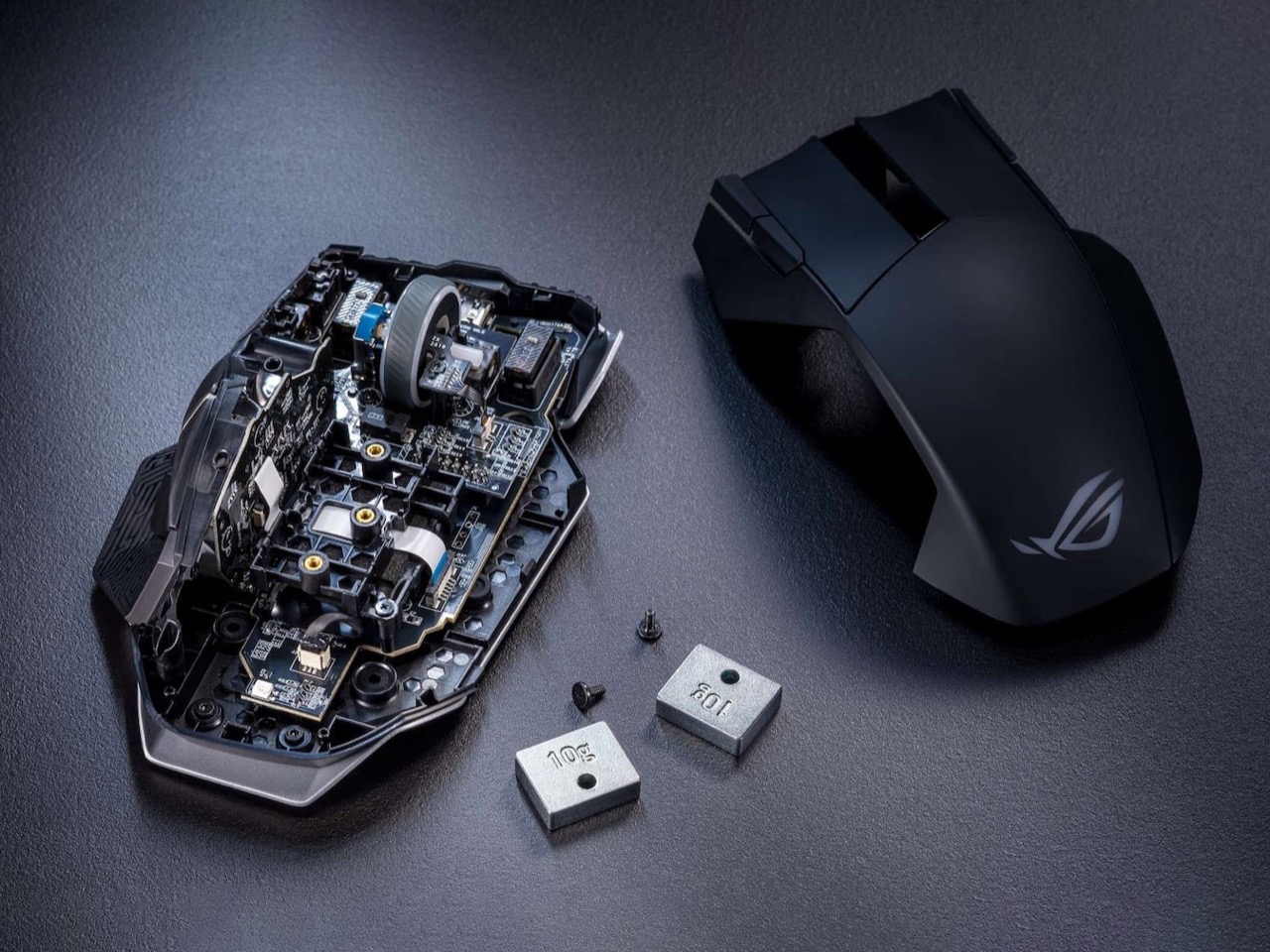
Two 10-gram modules and three mounting positions produce the five configurations ASUS advertises: bare at 126 grams, a single weight sitting front, center, or rear at 136, and both installed at 146. Three of those five options weigh exactly the same amount. What changes between them is the center of gravity, which moves the pivot point when you swing from the wrist. ASUS built a balance system and marketed it as a weight system, which undersells the more useful half. Anyone who has shimmed a mouse with coins and electrical tape will recognize the intent immediately.
Angular, deliberately mismatched thumb buttons arranged in the outline of the ROG eye carry straight over from the 2015 original, and ASUS says so out loud rather than pretending the shape is new. No two buttons in that cluster share a profile, so your thumb identifies them by edge geometry instead of counting positions. The side grip carries a Mayan-inspired pattern pressed into the surface, and the primary buttons are dished so fingertips settle into them. Eleven years on, that thumb logic holds up better than most ergonomic thinking from its era.
Nobody plays above 3,200 dpi, so the 65,000 figure exists to sit on a box next to a competitor’s smaller number. The upgrade that actually changes how the mouse behaves is the 11 preset lift-off distances, which matter enormously for a device built around low-sensitivity sweeping across a large pad. Repositioning a 126-gram body means lifting it constantly, and a badly calibrated lift-off turns every reset into a cursor jump. ASUS spent the engineering where it counts, then wrote the press release around the other thing. Standard industry practice, and mildly annoying every time.
Worn-out clicks kill more mice than dead sensors do, which makes Push-Fit Socket III the feature most likely to still matter in three years. The box ships with a switch tweezer, two spare ROG Silent Micro Switches, a PTFE feet set, and grip tape. The default ROG Micro Switch II is rated at 100 million clicks and the silent option at 50 million, with third-party switches dropping in within a few minutes. Configuration runs through Gear Link in a browser, so no Armoury Crate install is required. Anyone who has fought that software will read this as an apology.
ASUS has announced no price, no release date, no color beyond black, and no total battery life, which is a conspicuous omission for a device this heavy on radio duty. At 137mm long and 126 grams before you add anything, it also rules out small hands entirely. The 2021 Spatha X landed near $150, so budget accordingly and expect a premium on top of that. For a mouse asking you to push nearly a third of a pound around all evening, I’d want the runtime figure in writing before committing. The dock is beautiful. It should not have to work that hard.
The post ASUS ROG Spatha X 65K: The Heavy MMO Mouse That Comes With Its Own Museum Dock first appeared on Yanko Design.

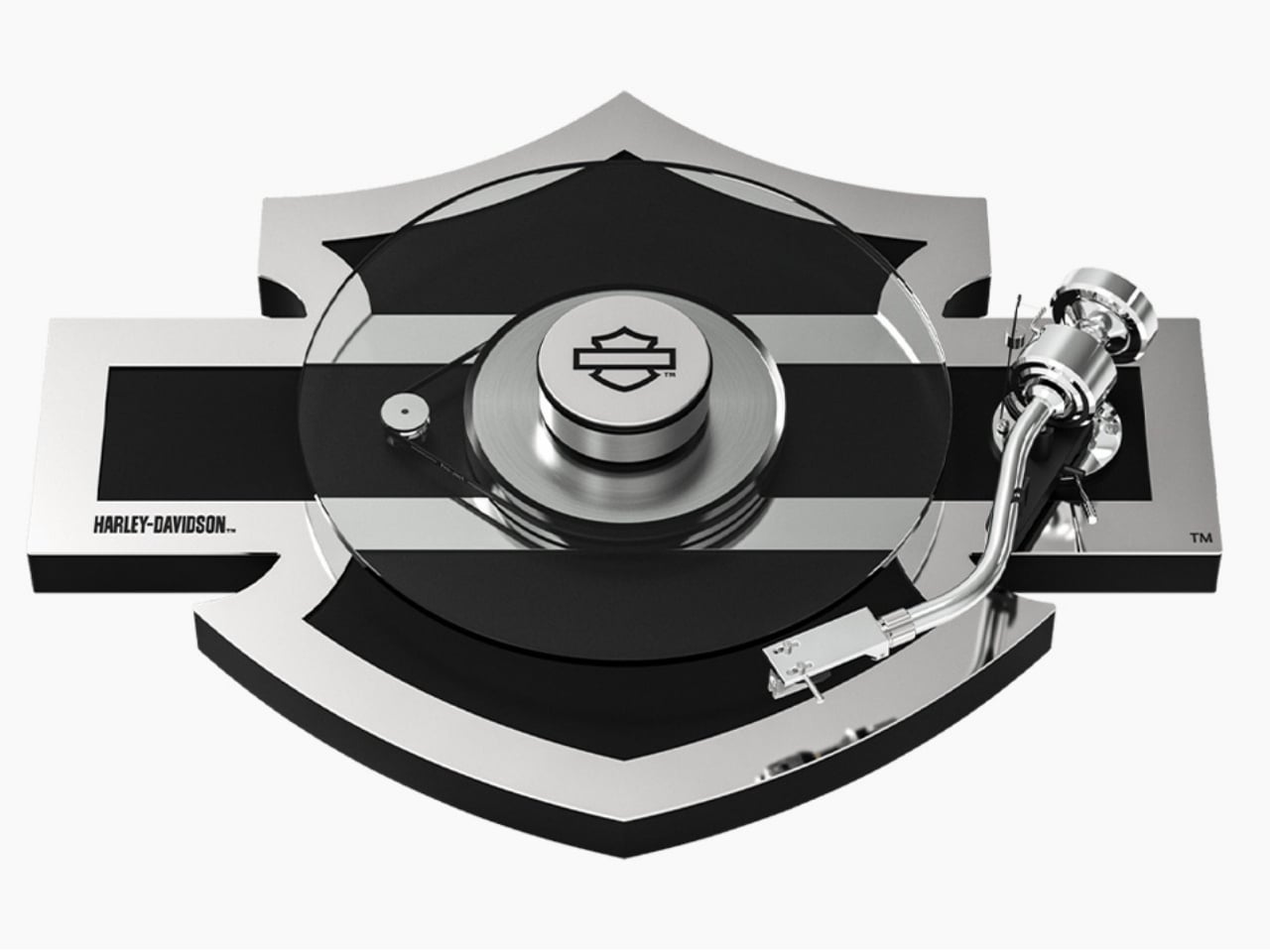
The moment you see the Pro-Ject x Harley-Davidson Turntable, you know exactly what it is, and you know exactly who it is for. That kind of immediate clarity is rare in product design, and it is worth paying attention to.
Pro-Ject Audio has built a reputation for doing collaborations the right way. The Austrian turntable maker has previously teamed up with The Beatles, Pink Floyd, Metallica, AC/DC, and Elvis Presley, and the pattern across all of them is consistent: these are not logo-on-a-box exercises. Pro-Ject uses each collaboration as an opportunity to rethink the physical design of the hardware itself, from the ground up. The Harley-Davidson edition follows that same standard, and arguably pushes it further than any of its predecessors.
Designer: Pro-Ject
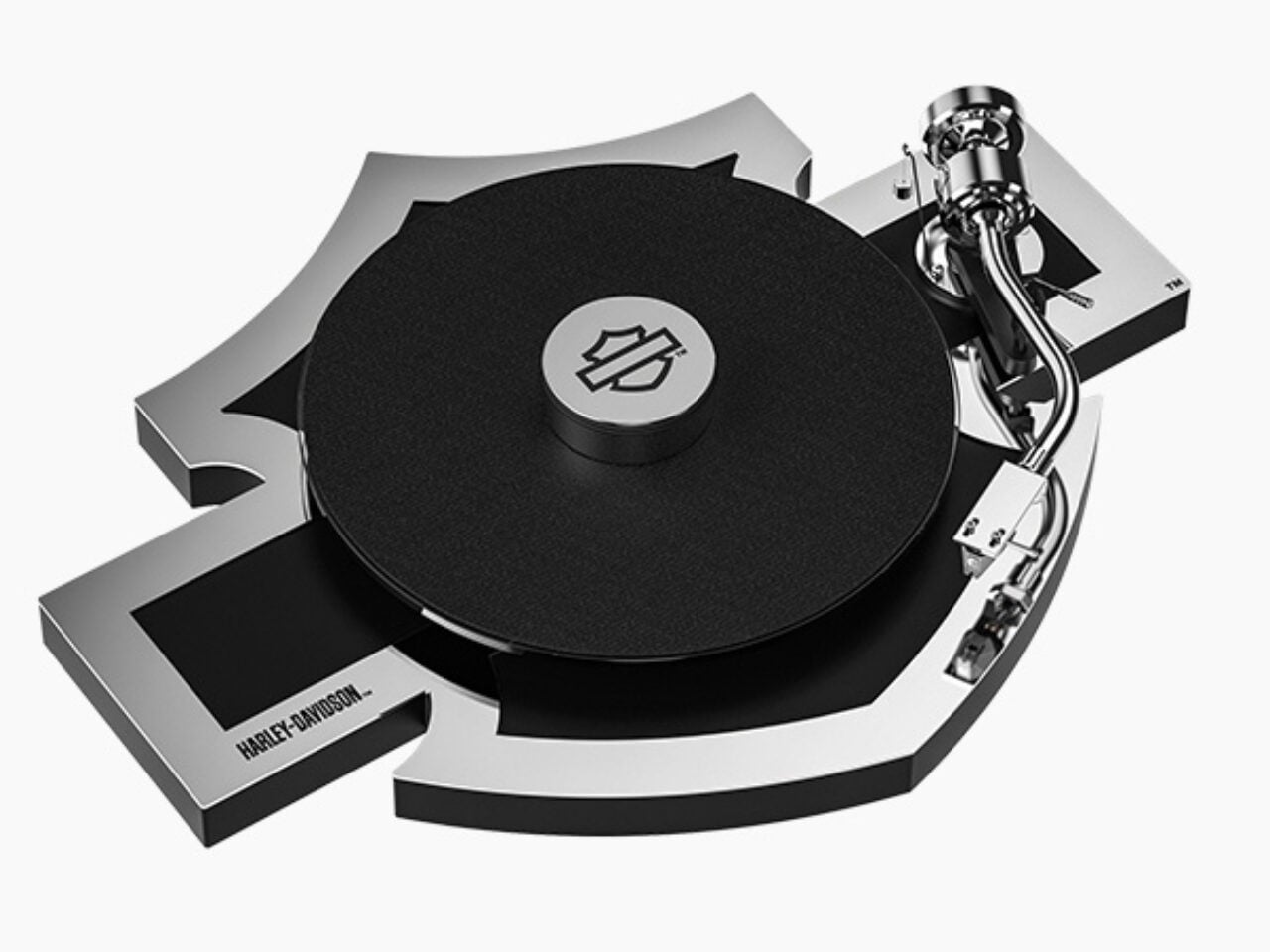
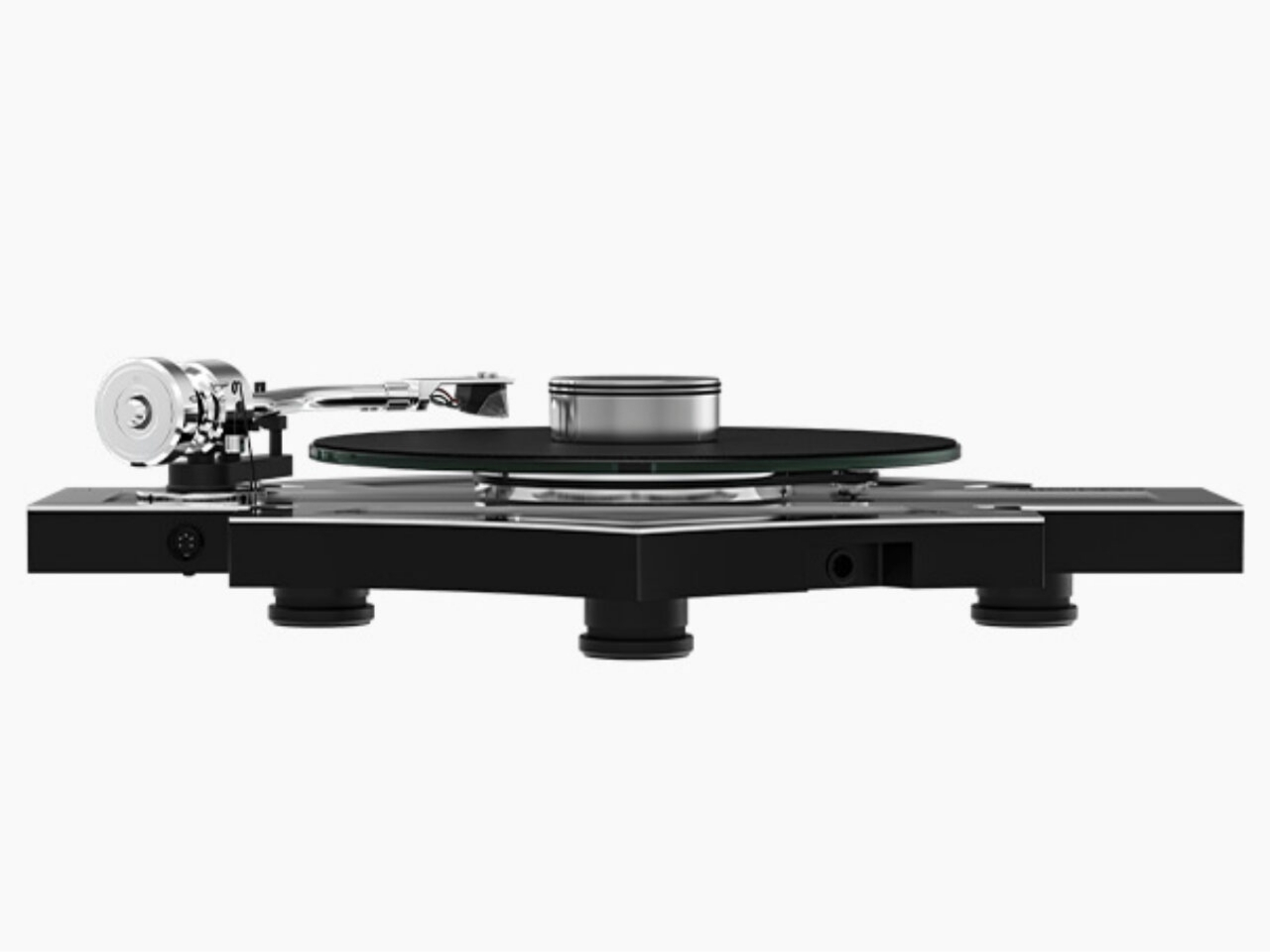
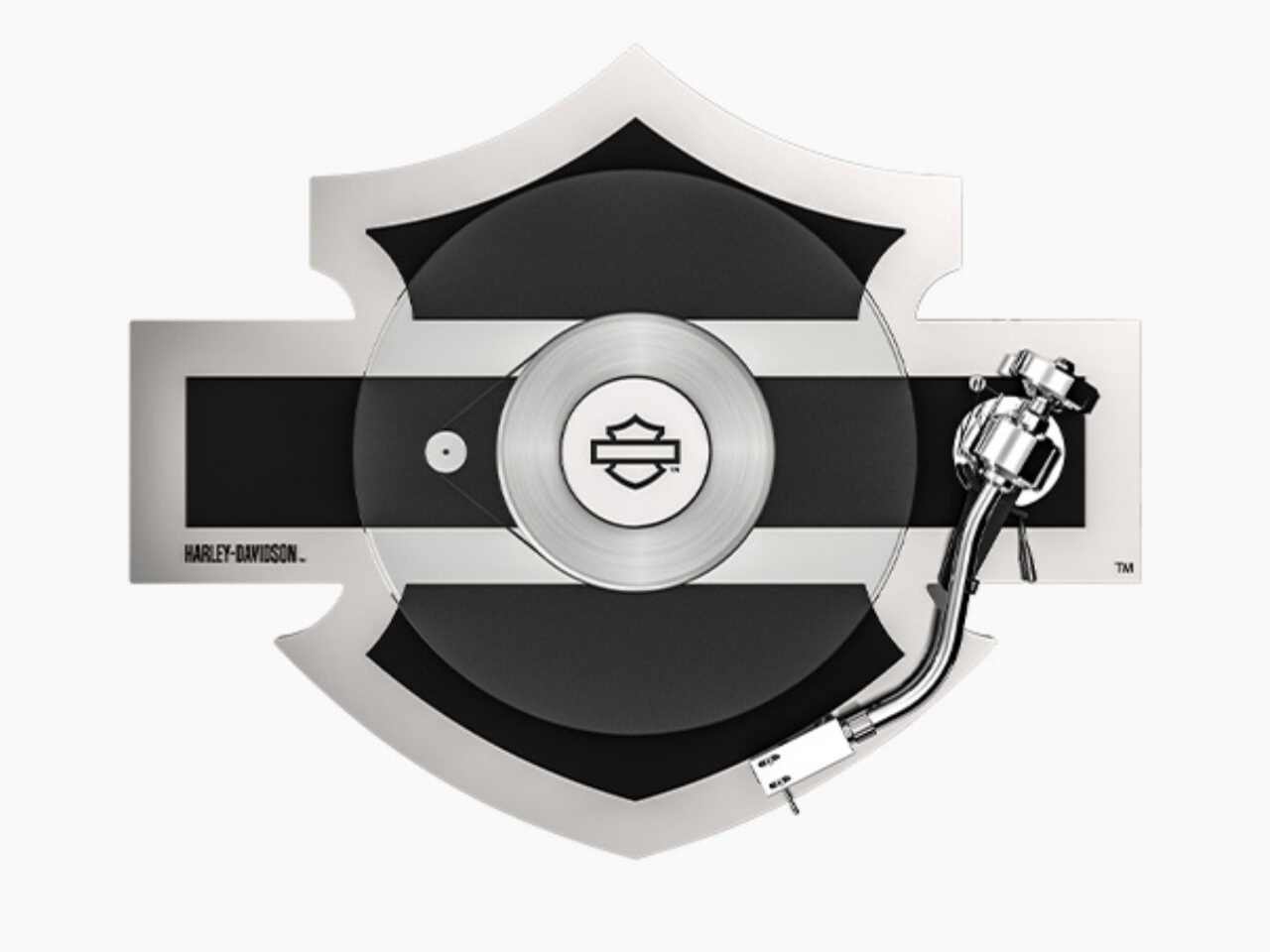
The plinth, which is the chassis of the turntable, is literally shaped like the Harley-Davidson Bar & Shield logo. Not decorated with it. Shaped like it. That distinction matters more than it might initially seem. It means every design decision radiates from an identity that already carries enormous cultural weight, and Pro-Ject had to make the engineering work around that shape without cutting corners. The result is a chassis milled from solid MDF with no hollow spaces, which ensures maximum resonance damping and a dead-quiet noise floor. A precision-milled aluminum top surface sits above it. The whole thing looks like it belongs in a museum of industrial design, or possibly a very well-curated garage.
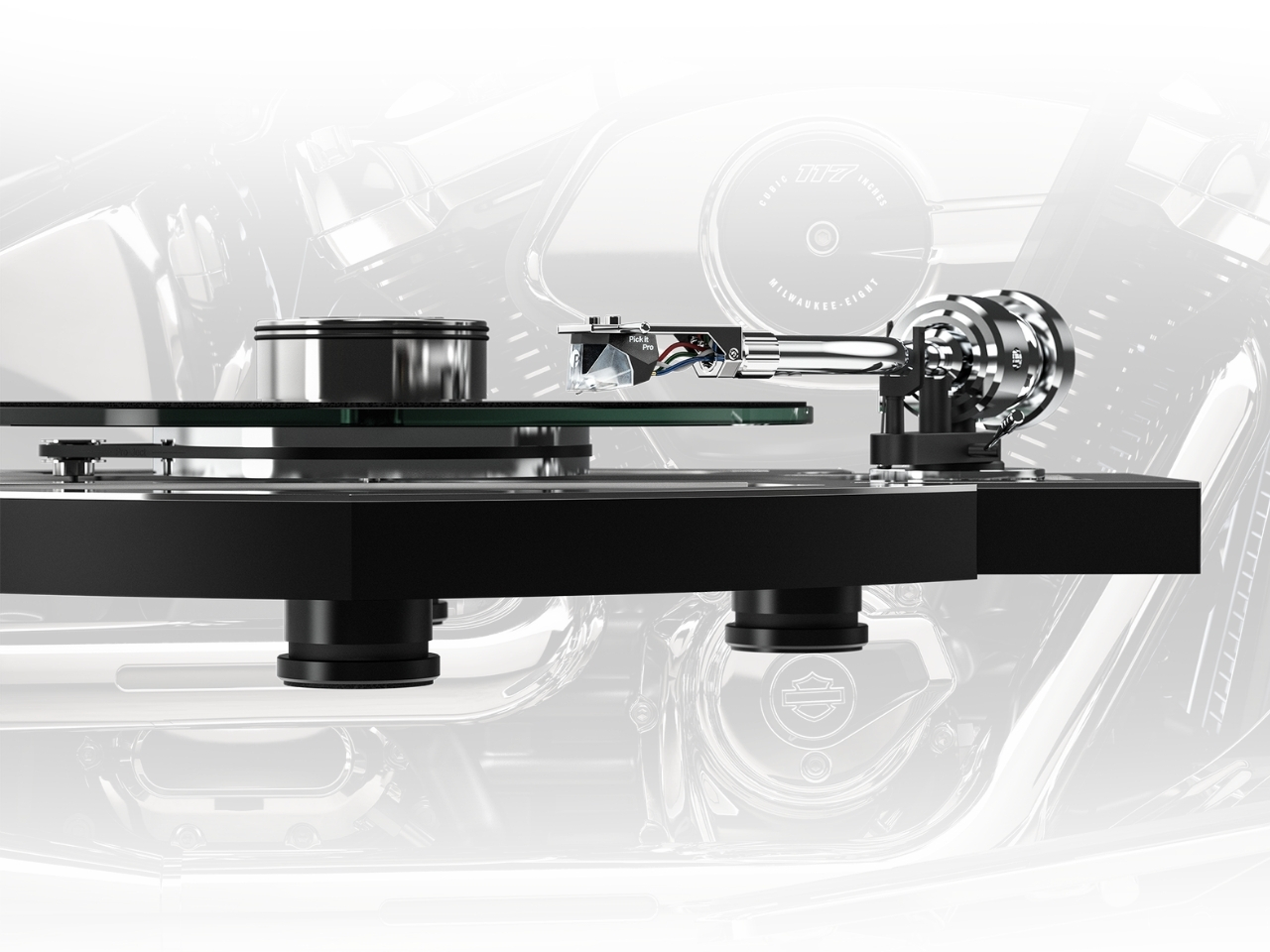
The materials continue the story. Polished aluminum, stainless steel, and a genuine leather platter mat that echoes the texture and feel of a classic Harley saddle. The 300mm glass platter sits above a diamond-cut aluminum sub-platter, and the total moving drive mass clocks in at 2.75 kilograms. The 915-gram Harley-Davidson record puck alone communicates seriousness. This is not a turntable that was assembled casually.
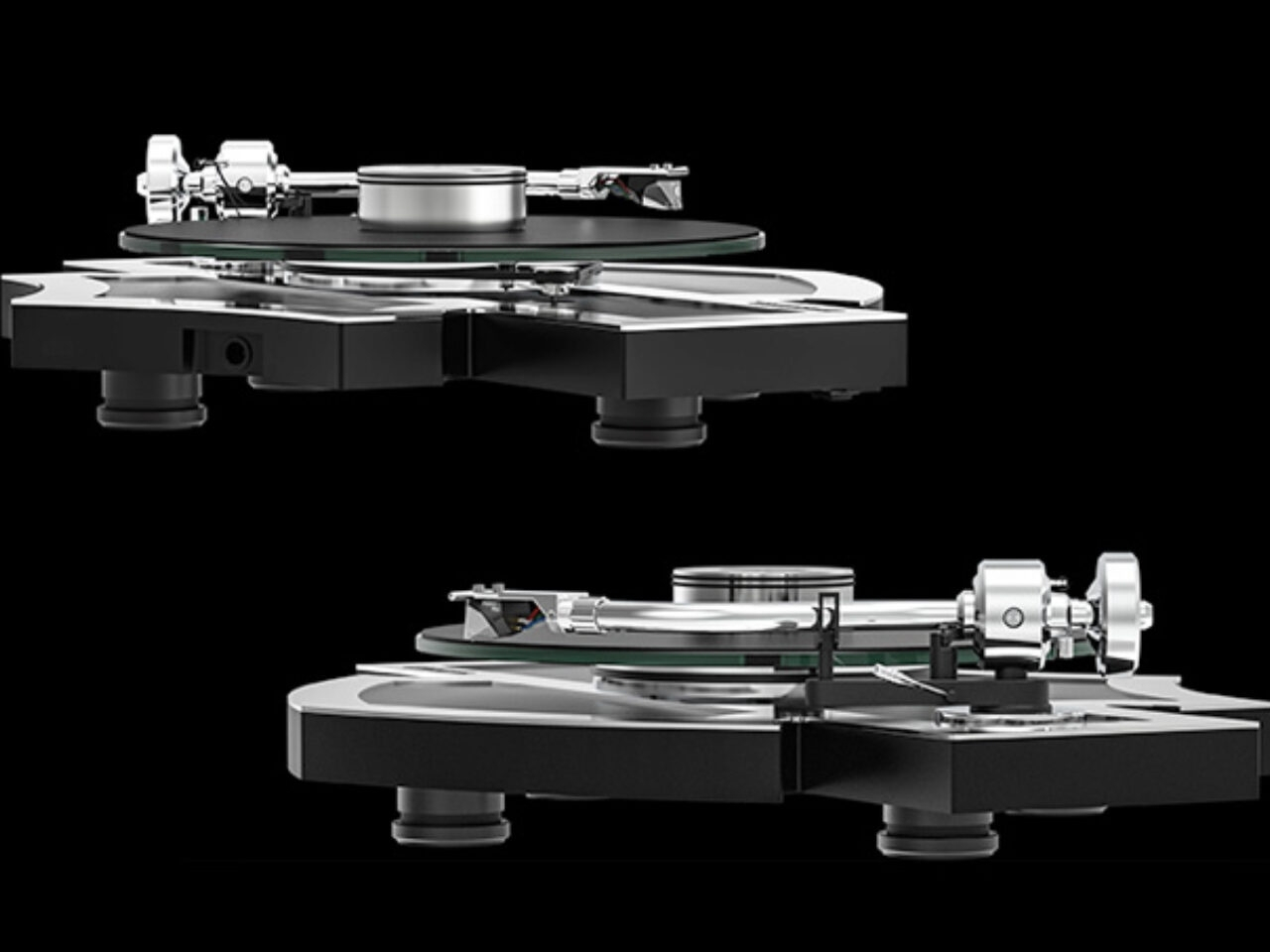
Then there is the tonearm. A hand-polished 8.6-inch S-shaped aluminum arm with an SME-style removable headshell, high-purity copper internal wiring, and a TPE-damped counterweight. The removable headshell is more useful than it might initially appear, because cartridge swapping becomes considerably easier, and Pro-Ject designed the arm to accommodate a wide range of cartridges for anyone who eventually wants to upgrade beyond the included Pick it PRO moving-magnet cartridge. Out of the box, it is ready to play. Down the road, it is ready to grow.
It is handmade in Europe, available for special order, and priced at $3,299. That is not an entry-level number, and it was never trying to be. Placed next to a $40,000 motorcycle inside a Harley-Davidson showroom, which is apparently one of the places where these will be sold alongside traditional hi-fi dealers, the price reads very differently. Context shifts perception. That is also one of the more quietly brilliant moves of this entire release: distributing it through Harley showrooms introduces serious audio equipment to an audience that may have never walked into a dedicated hi-fi store. That kind of crossover is genuinely good for the culture of listening.
My honest take is that this collaboration works because neither brand had to compromise to get here. Harley-Davidson’s visual identity is so iconic that a lazy licensed product would have been obvious immediately. Pro-Ject’s reputation is built on engineering, not lifestyle branding, so a piece that looked great but performed poorly would have been an embarrassment. The fact that both came away intact says everything about how seriously this was approached.
Production is limited, with no confirmed quantity and no guarantee of a second run. If the convergence of motorcycles, vinyl, leather, aluminum, and genuine hi-fi performance speaks to you at all, waiting feels like an unnecessary gamble. Some objects exist at exactly the intersection of who you are, and this turntable is very specifically that for a certain kind of person: someone who values craft, has opinions about sound, and is not apologetic about having taste with an edge. The open road has always had a soundtrack. Now it finally has a turntable to match.
The post Harley-Davidson’s $3,299 Turntable Is Shaped Like Their Logo first appeared on Yanko Design.

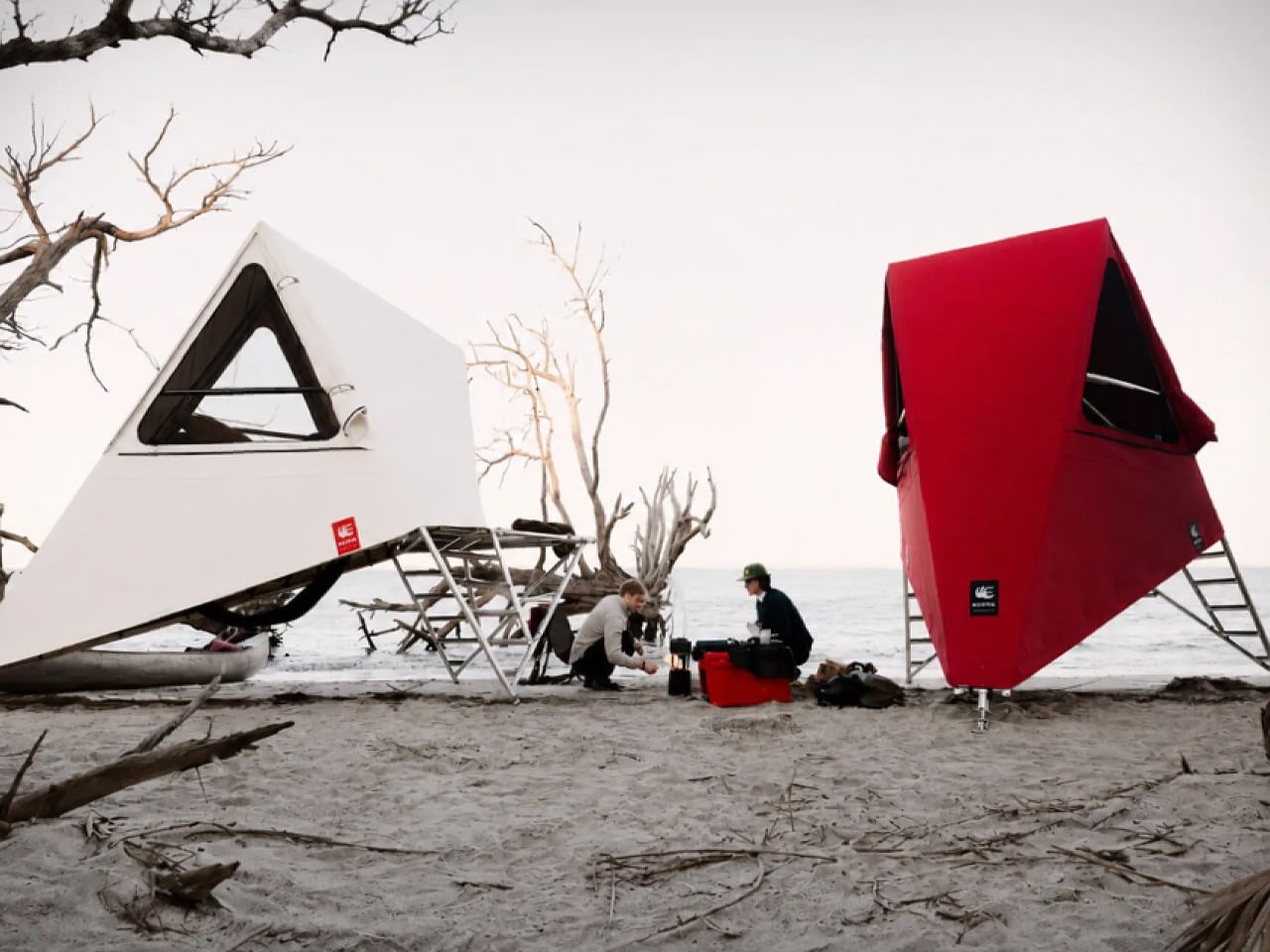
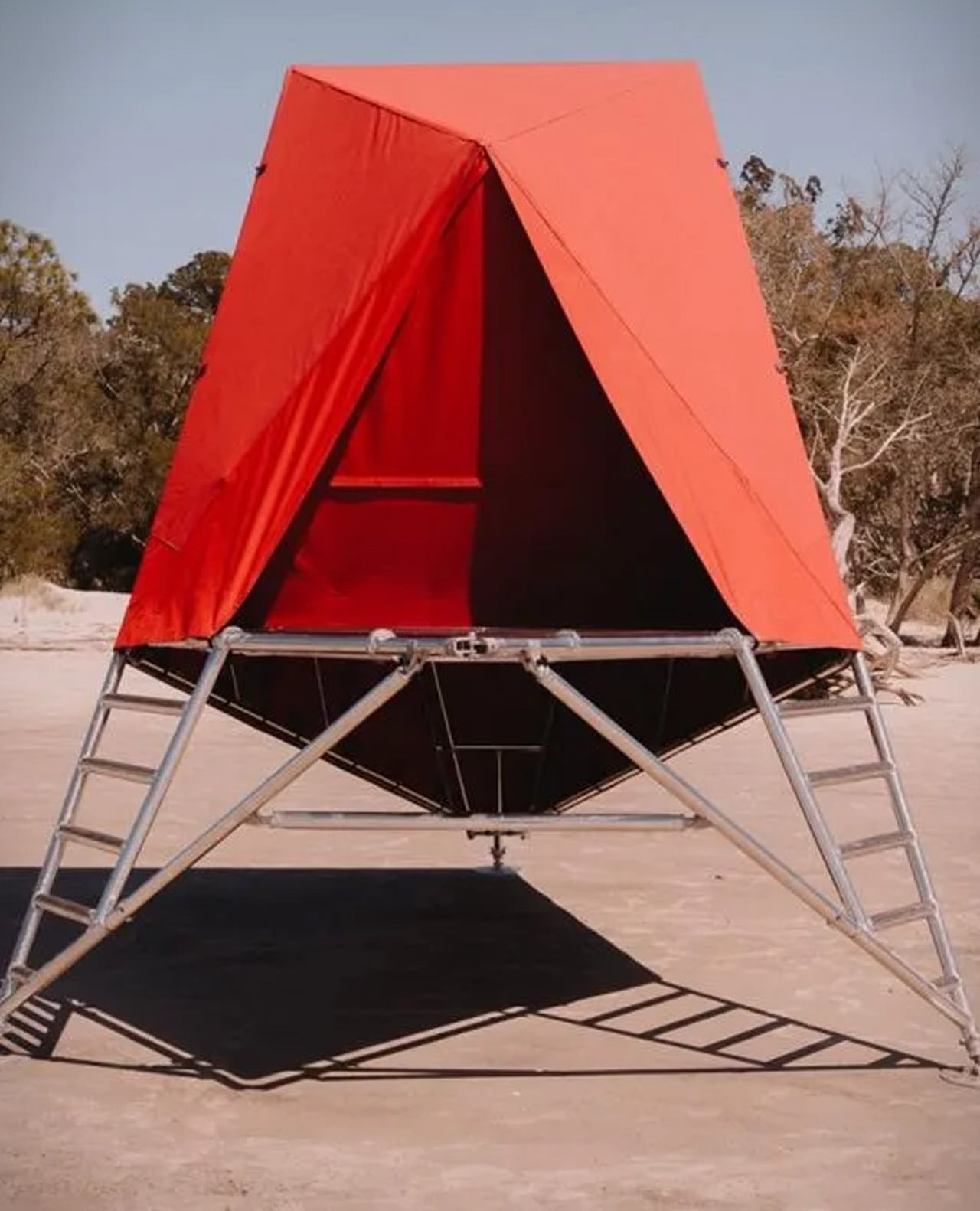
You’ve seen a building so good you immediately wanted to live in it. Ben Huggins built one you can actually move. His latest project, the Kudhva K1, is a portable elevated cabin that somehow manages to feel both seriously considered and completely untethered from the ground beneath it. Huggins is co-founder of Sandford-based New British Design, and the K1 is the kind of thing you design when you love architecture but have no patience for permanence.
The K1 grew directly out of Kudhva, the beloved off-grid retreat carved into a disused slate quarry on the north coast of Cornwall. The original cabins, perched above the landscape on angular stilts, became something of a cult object in British architectural circles. Huggins, working alongside co-designer Hannah Huggins, took that angular, treehouse-like geometry and asked a simple but ambitious question: what if you could move it?
Designer: Ben Huggins of New British Design
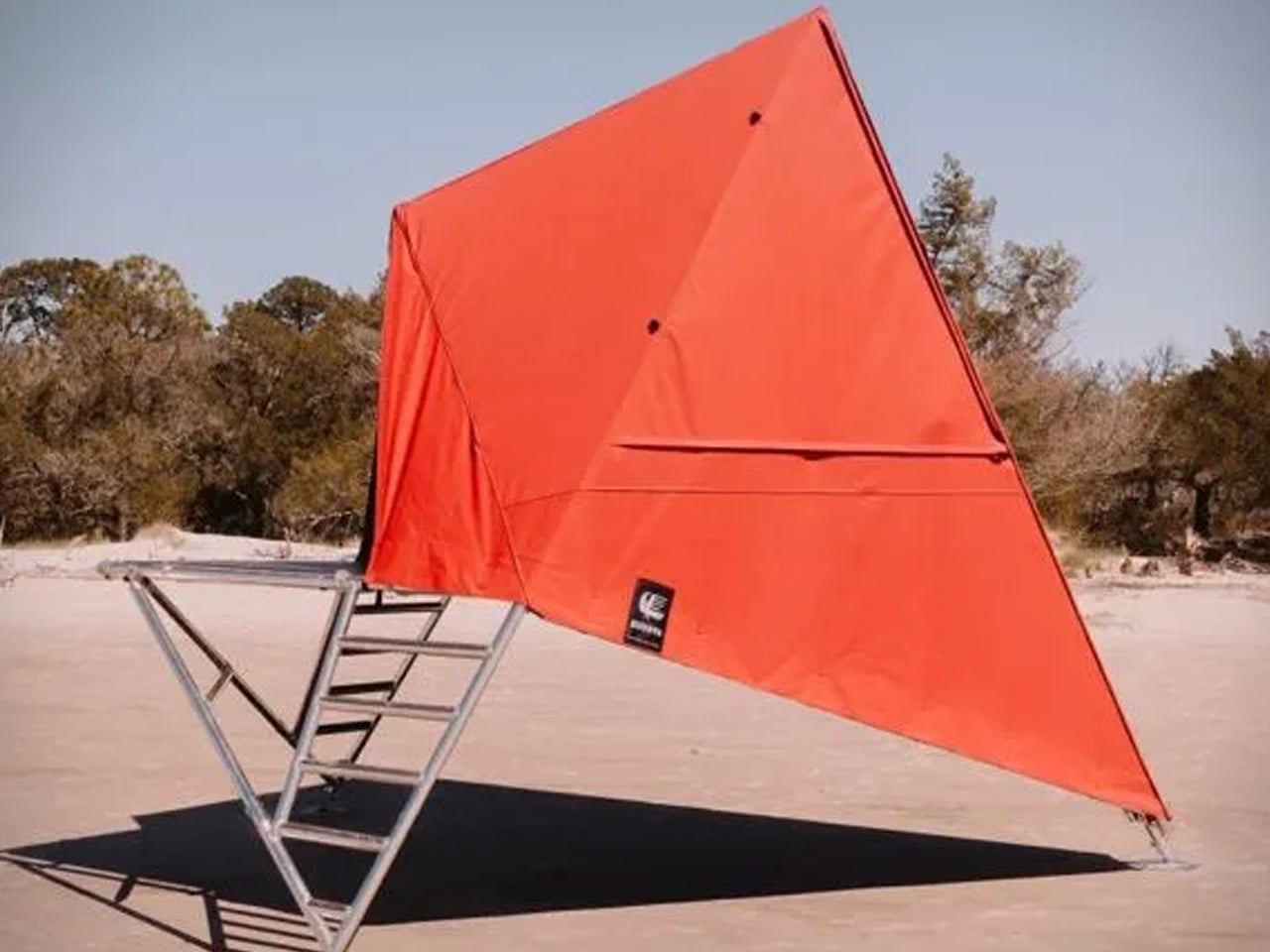
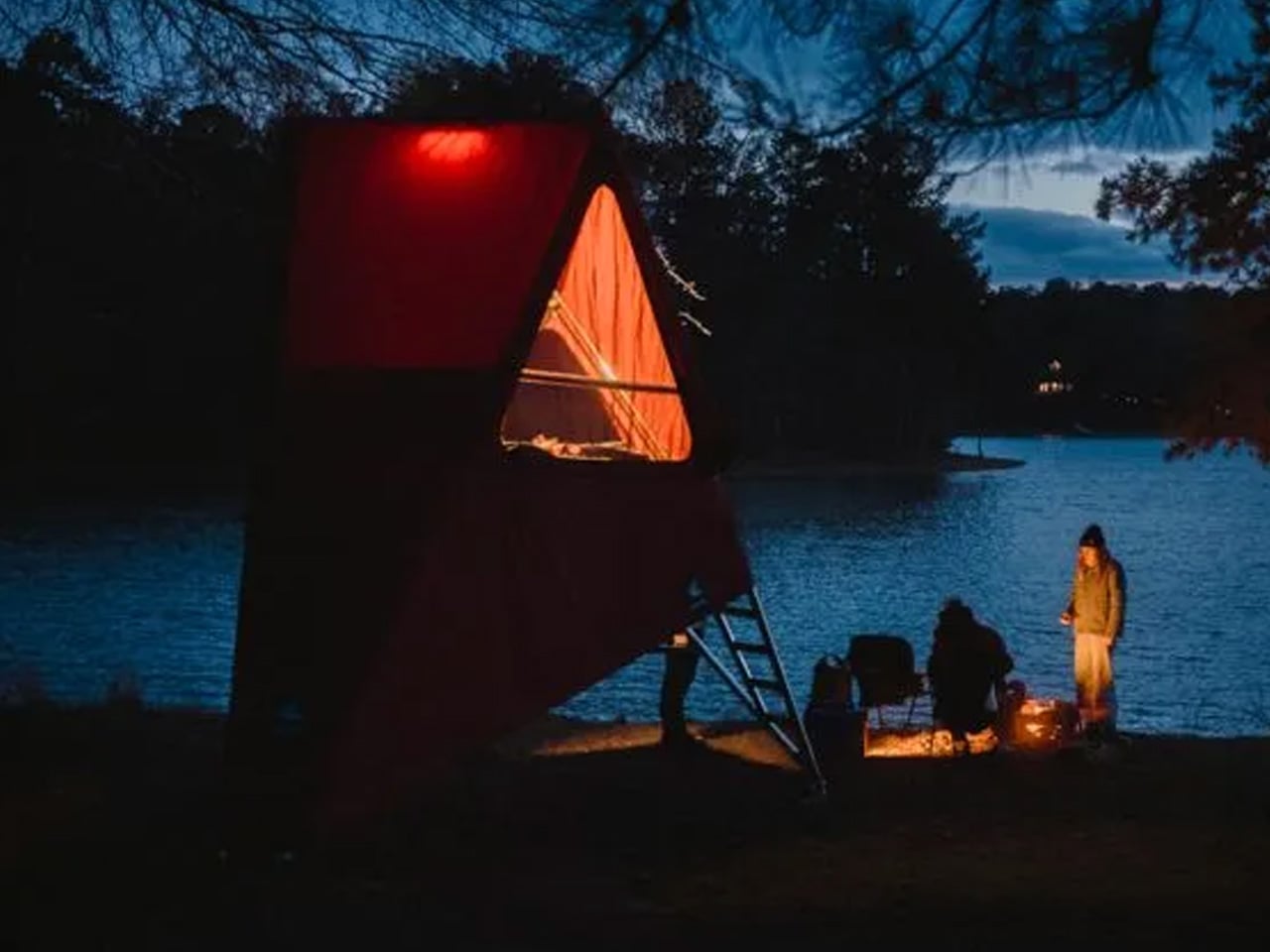
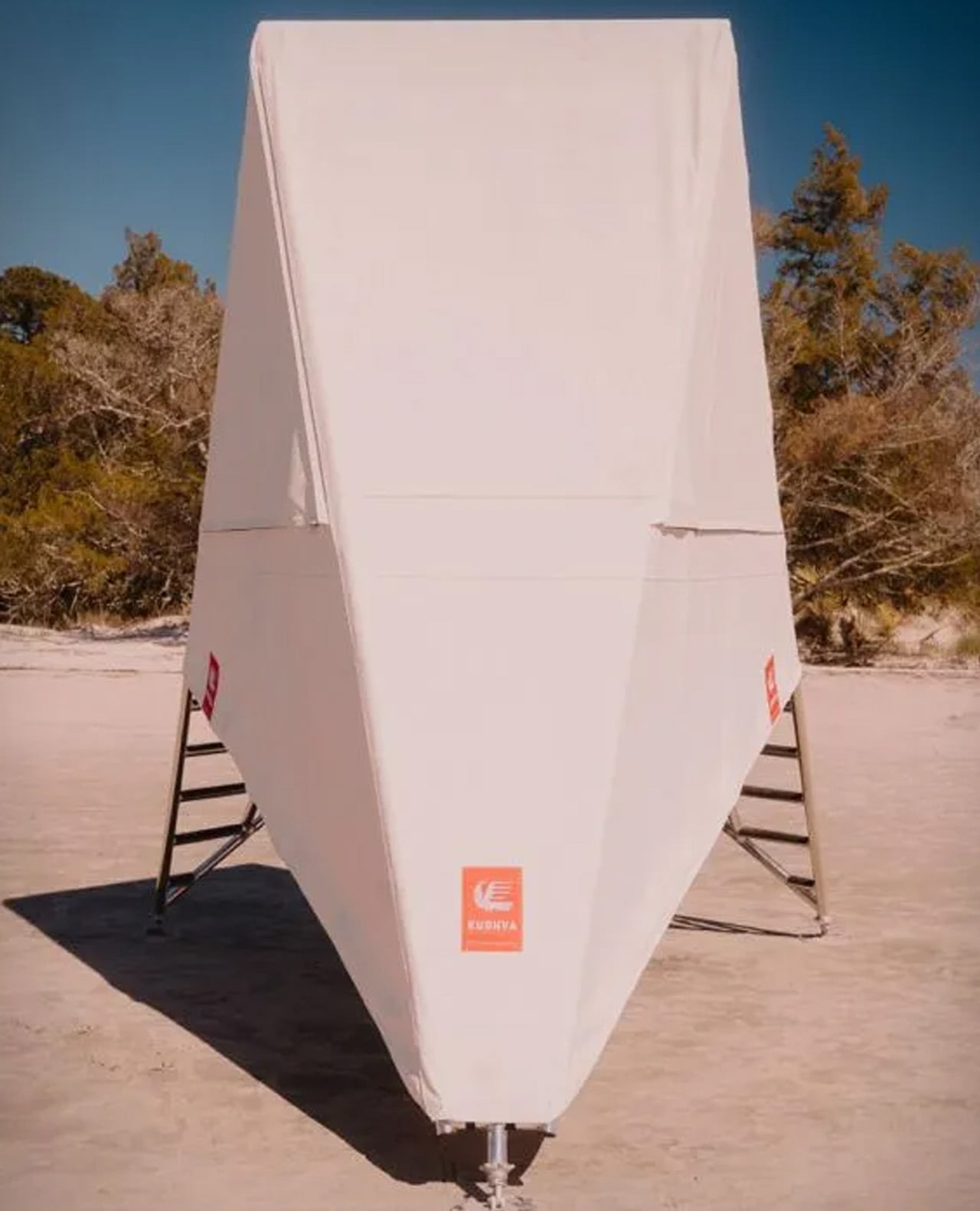
The answer is a structure built around a recyclable aluminum frame wrapped in heavy-duty British Millerain Regentex poly-cotton canvas, rated at 407g/m2. Standing 3.6 meters tall, 3.3 meters wide, and 4.9 meters deep, the K1 isn’t small. An elevated deck extends beyond the entrance, accessed by integrated ladders, giving it a genuinely architectural presence that photographs like a building and packs down like equipment. The tripod leg system adjusts independently, meaning it can sit perfectly level on rocky, sloped, or otherwise uncooperative ground without disturbing a single blade of grass below it.
That relationship with the land matters. The K1 requires no foundation, no planning permission, and leaves no trace when it leaves. Two people can have it standing in 30 to 45 minutes. At 320 kilograms, it isn’t light, but it is relocatable, which places it in a category almost entirely its own: too architectural to call a tent, too mobile to call a cabin.

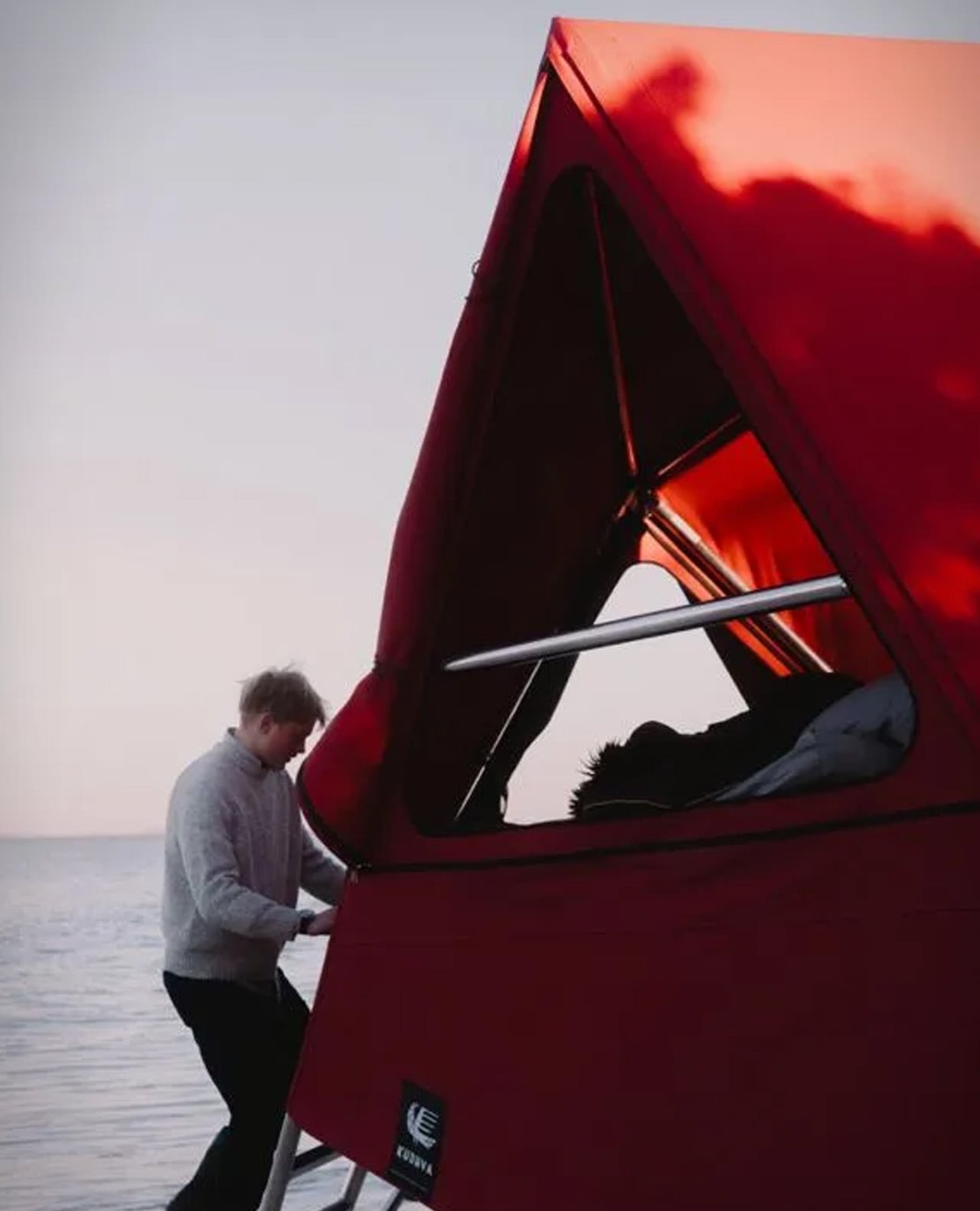
The canvas shell is built to withstand winds up to 80 mph, suggesting a product designed for real weather rather than curated glamping conditions. Inside, the two-person sleeping space carries the same minimal, considered proportions as the original Kudhva structures. The frame is described as infinitely recyclable, which fits neatly within the retreat’s broader ethos of leaving places better than you found them.
Priced at around $15,500, the K1 is now making its way to the United States through British American Camping, with initial deployments planned across glamping destinations in Georgia. The price puts it squarely in the commercial hospitality bracket, though nothing about the design reads like a product built for budget corners. It reads like a building that decided to keep its options open.

The post The Kudhva K1 Is the Off-Grid Cabin You Can Actually Take With You first appeared on Yanko Design.