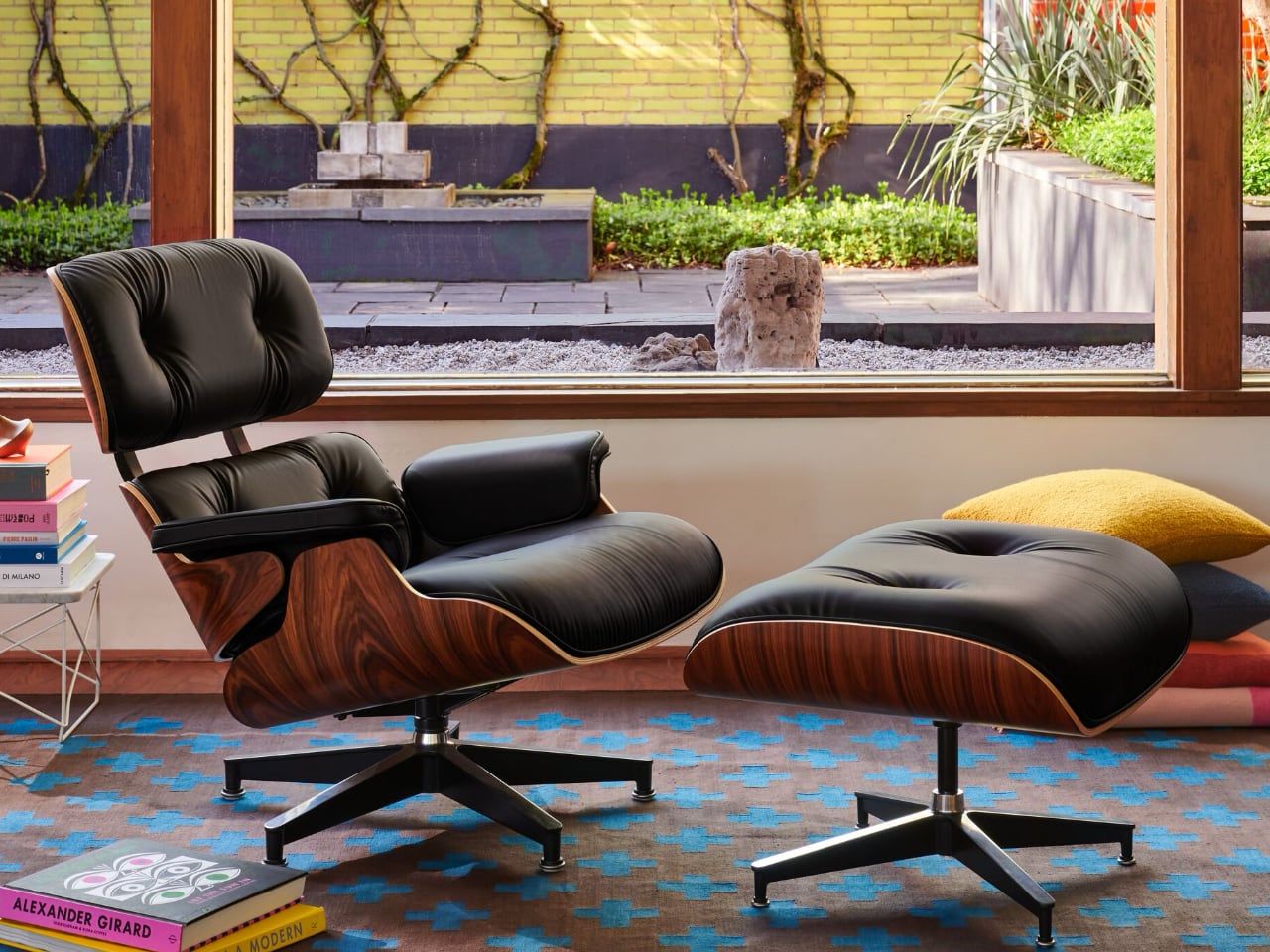
Welcome to the first Furniture Friday, where we’ll explore the furniture that shapes our lives each week. Today, we begin with a design icon, the Eames Lounge Chair and Ottoman by Herman Miller. This legendary piece has captivated enthusiasts for decades with its blend of elegance, innovation, and comfort. From its rich history to its meticulous design, the Eames Lounge Chair and Ottoman are timeless symbols of modern living.
Designer: Herman Miller
A Timeless Classic: The Eames Lounge Chair and Ottoman
The Eames Lounge Chair and Ottoman journey began in the 1940s when Charles and Ray Eames were exploring new materials and techniques in furniture design. Their pioneering use of molded plywood and ergonomic principles set the stage for this iconic piece. Introduced to the public on the Arlene Francis “Home” show on NBC in 1956, the chair quickly became a design sensation.
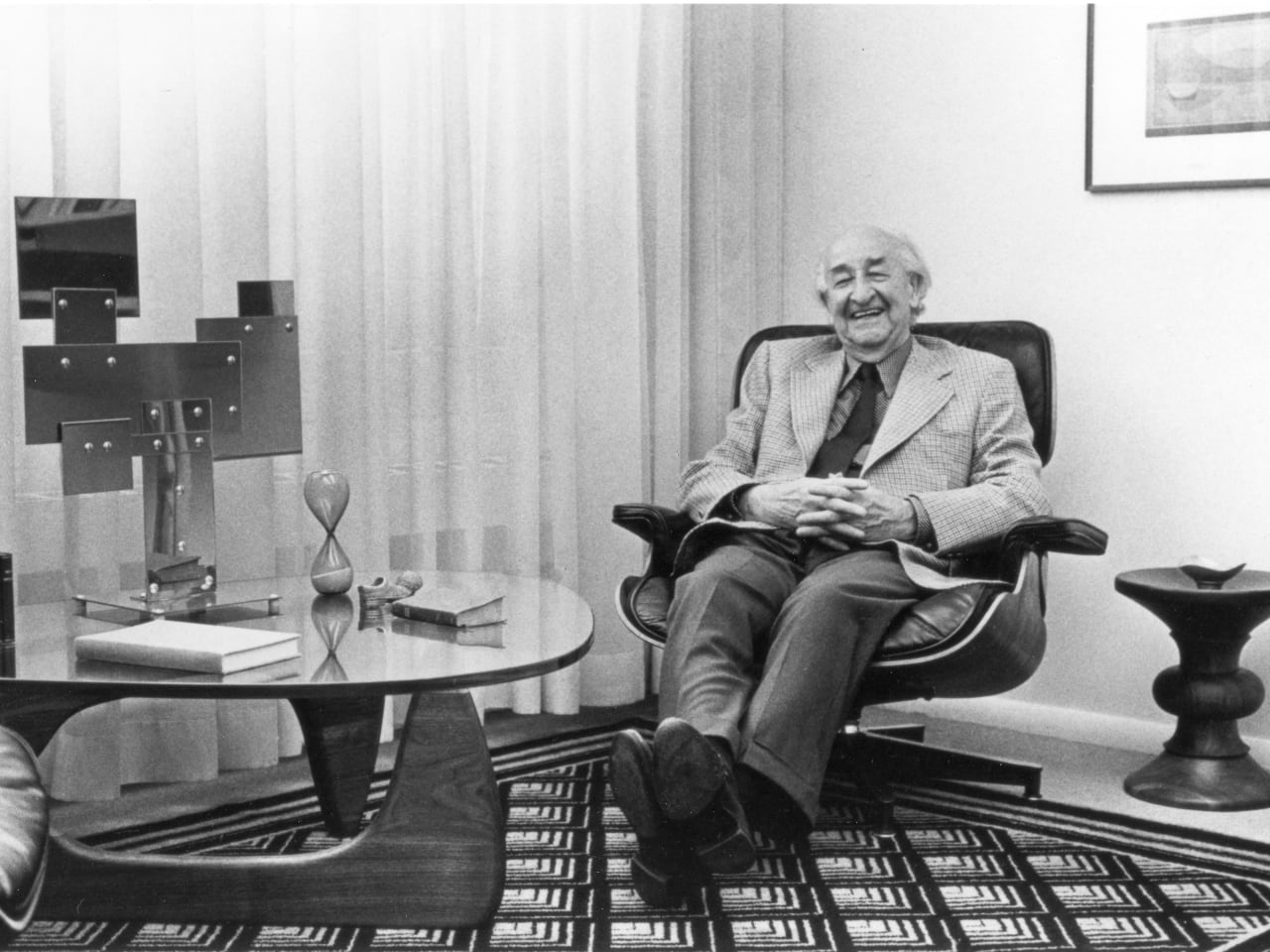
Herman Miller founder D.J. De Pree in his home office
Charles and Ray aimed to create a chair that offered a warm, welcoming appearance and exceptional comfort. They crafted a luxurious and functional design by merging the aesthetics of a traditional club chair with modern materials. This innovative use of molded plywood showcased their ability to push the boundaries of furniture design.
Produced by Herman Miller in 1956, the Eames Lounge Chair and Ottoman have remained true to their original design while incorporating new materials and manufacturing techniques. This consistency has ensured their status as timeless pieces of furniture. The chair’s popularity extends beyond homes and offices, having appeared in numerous TV shows and films, such as “Frasier,” “Iron Man,” and “Tron: Legacy,” cementing its place in popular culture.
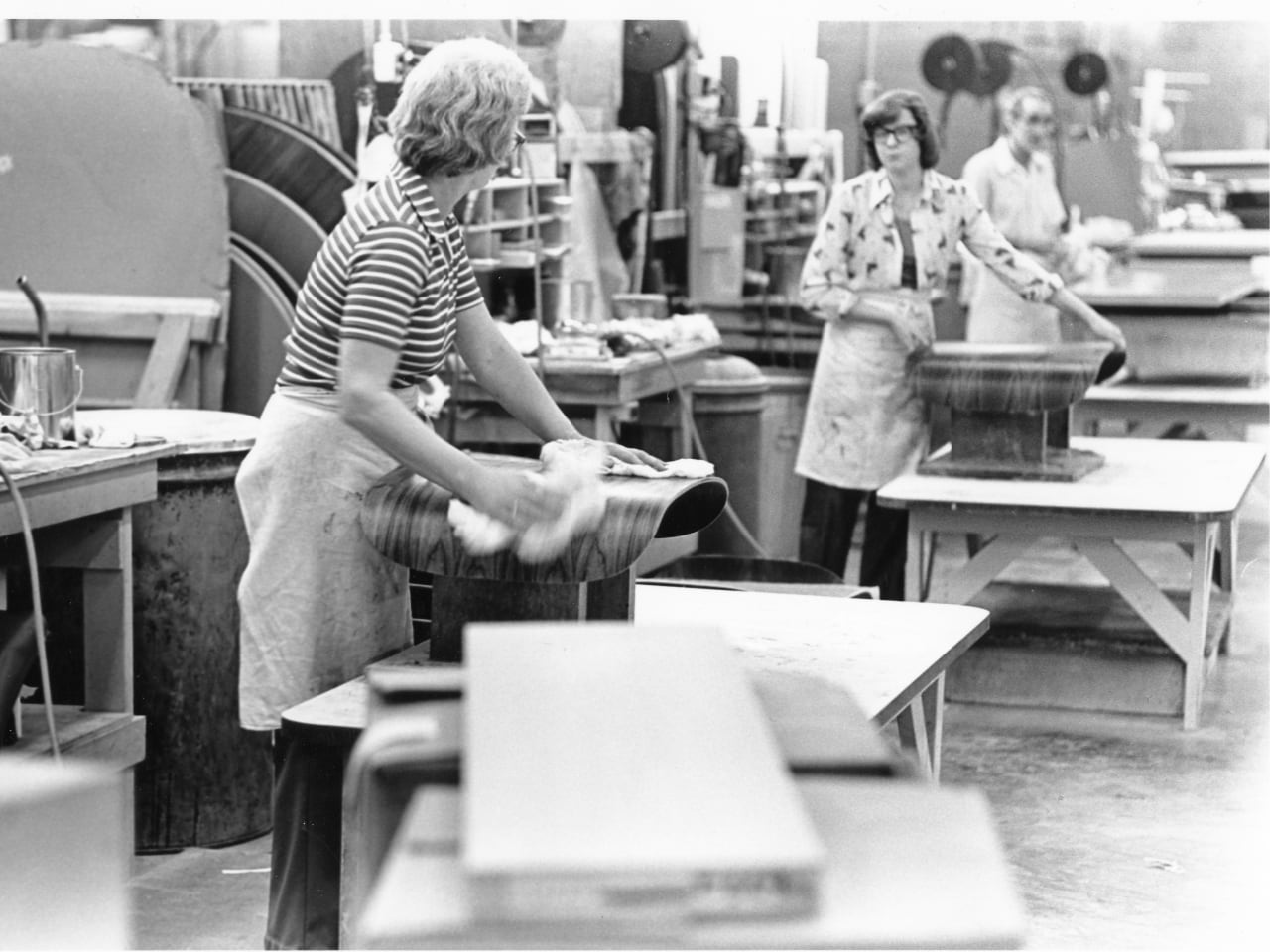
Design and Craftsmanship
The Eames Lounge Chair features a shell constructed from layers of molded plywood, providing a solid yet lightweight framework that supports the body comfortably. The plywood is finished with a rich veneer, adding natural elegance to its modern silhouette.
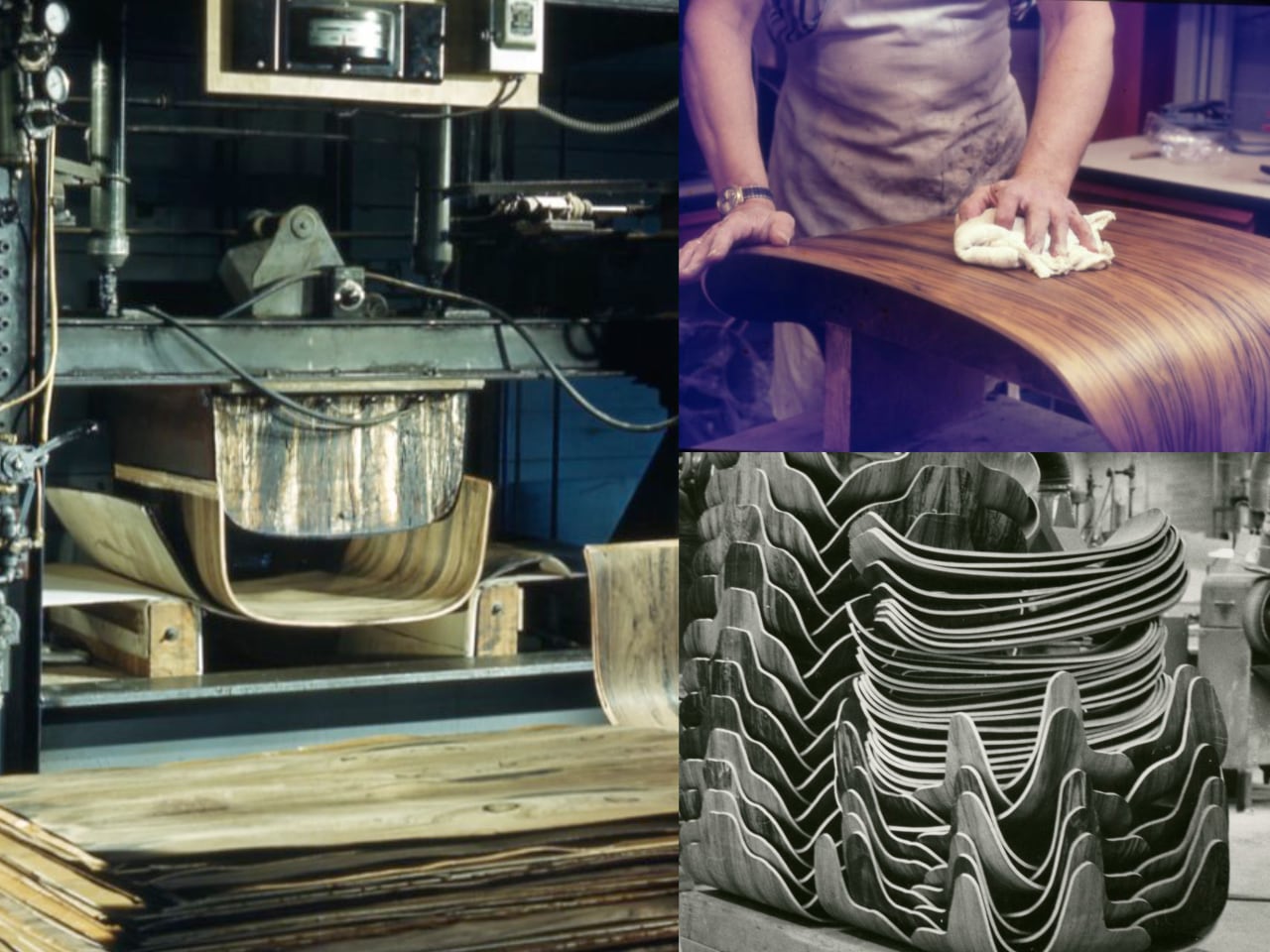
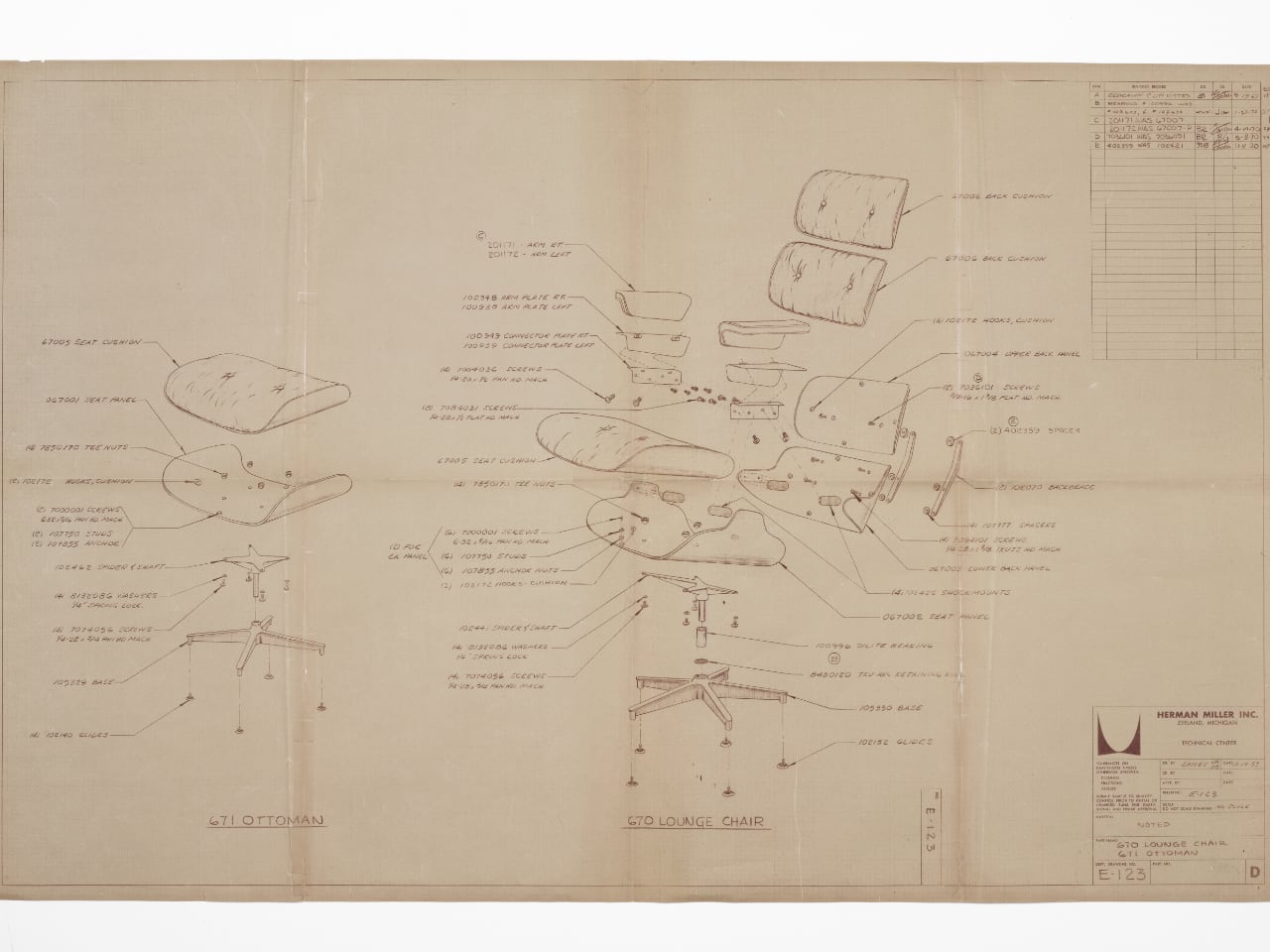
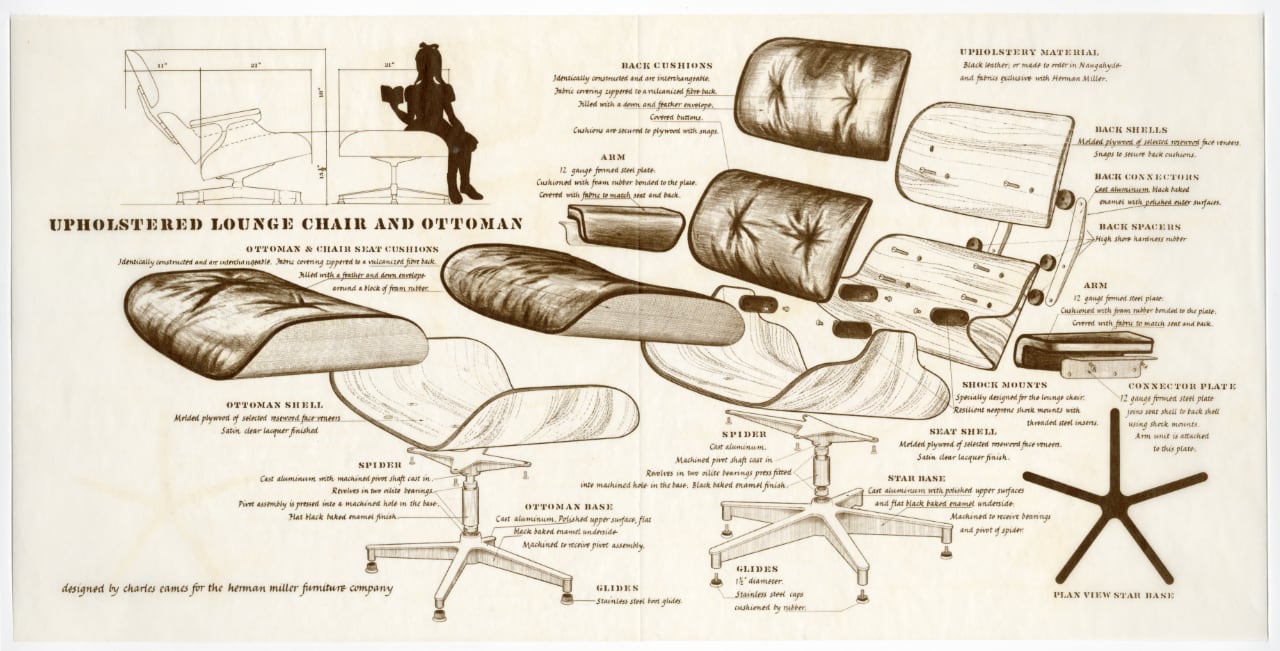
The chair includes several distinct components:
- The seat and back cushions are identical in construction and are interchangeable. They are made from high-density foam wrapped with a blend of down and feather, ensuring comfort and durability. The cushions are upholstered in premium leather or high-quality fabric and secured to the plywood shells with snaps to maintain their position.
- The back shells, crafted from molded plywood, are designed to secure the back cushions and provide structural support. They are connected to the base with cast aluminum back connectors and reinforced with rubber spacers to ensure flexibility and resilience.
- The chair’s arms are constructed from 12-gauge steel plates, cushioned with foam rubber, and covered with fabric or leather to match the seat and back cushions. These arms provide sturdy support while enhancing the chair’s overall comfort.
- Shock mounts made from resilient natural rubber attach the backrest to the seat, allowing for a slight flex that increases comfort without compromising support. This design element is crucial for the chair’s ergonomic functionality.
- The chair’s base features a five-point star design made from die-cast aluminum, which includes a built-in swivel mechanism. This base is designed for stability and ease of movement, with stainless steel glides that adjust to ensure the chair remains level on various surfaces.
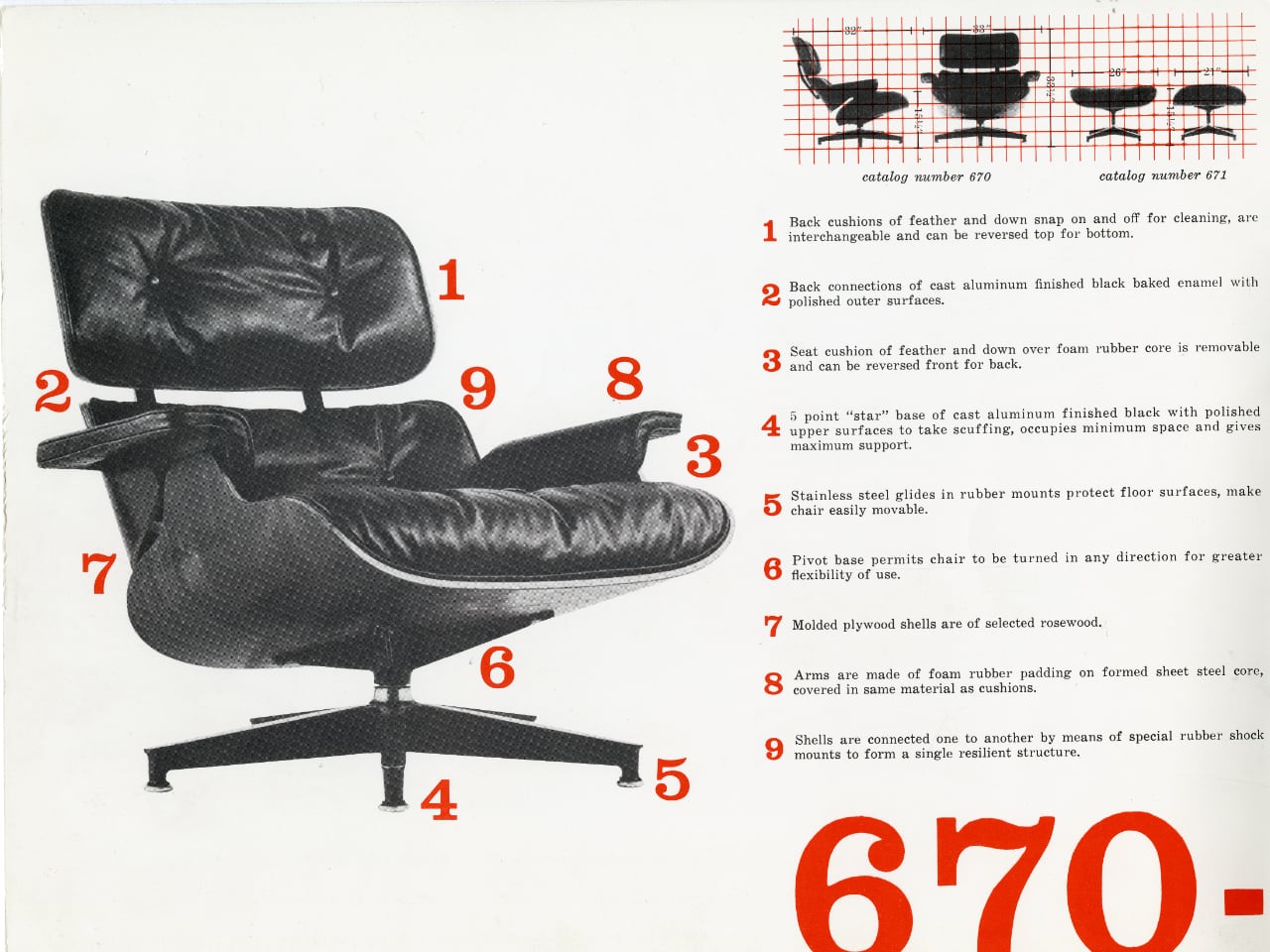
The ottoman, designed to complement the lounge chair, shares the same construction principles. Its shell is made from molded plywood and features high-density foam cushions upholstered in matching leather or fabric. The ottoman’s base mirrors the design of the chair’s base, ensuring a cohesive and stylish appearance.
Unique Appeal and Comfort
The Eames Lounge Chair and Ottoman are distinguished by their exceptional comfort and unique charm. Their curved, ergonomic design conforms to the body’s natural contours, providing excellent support, particularly in the lumbar region. This makes the chair ideal for long periods of sitting.
Eames Lounge Chair and Ottoman
The foam and leather upholstery combination enhances the overall sitting experience, creating a luxurious feel. Generous proportions and thoughtful design details, such as the angled seat and backrest, contribute to the chair’s inviting and relaxing nature.
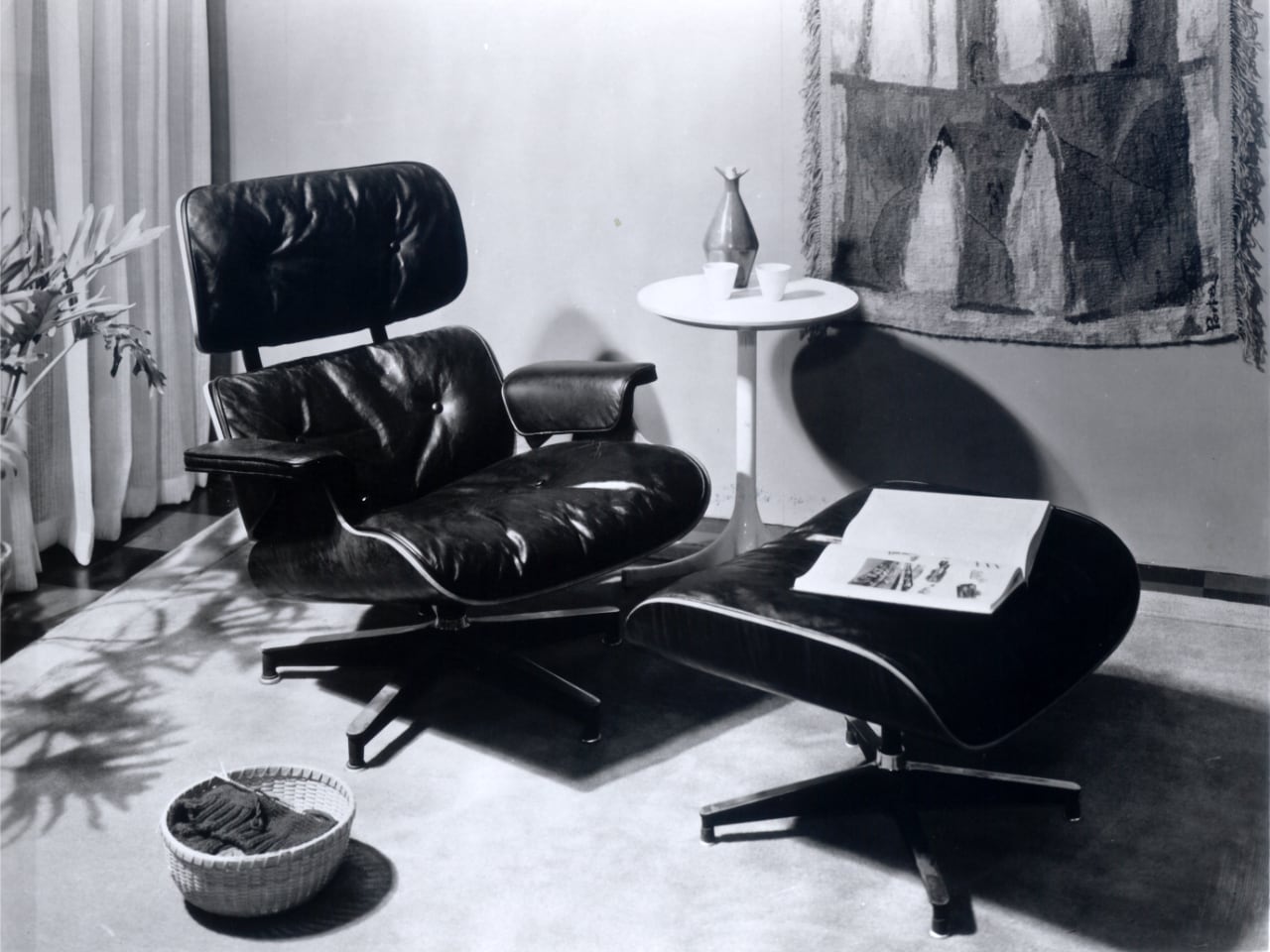
Meticulous attention to detail in the production process ensures each piece is of the highest quality, with every seam and joint carefully constructed. This craftsmanship adds to the chair’s aesthetic appeal and durability, embodying the Eameses’ philosophy of seamlessly combining design and function.
Vision Then and Now
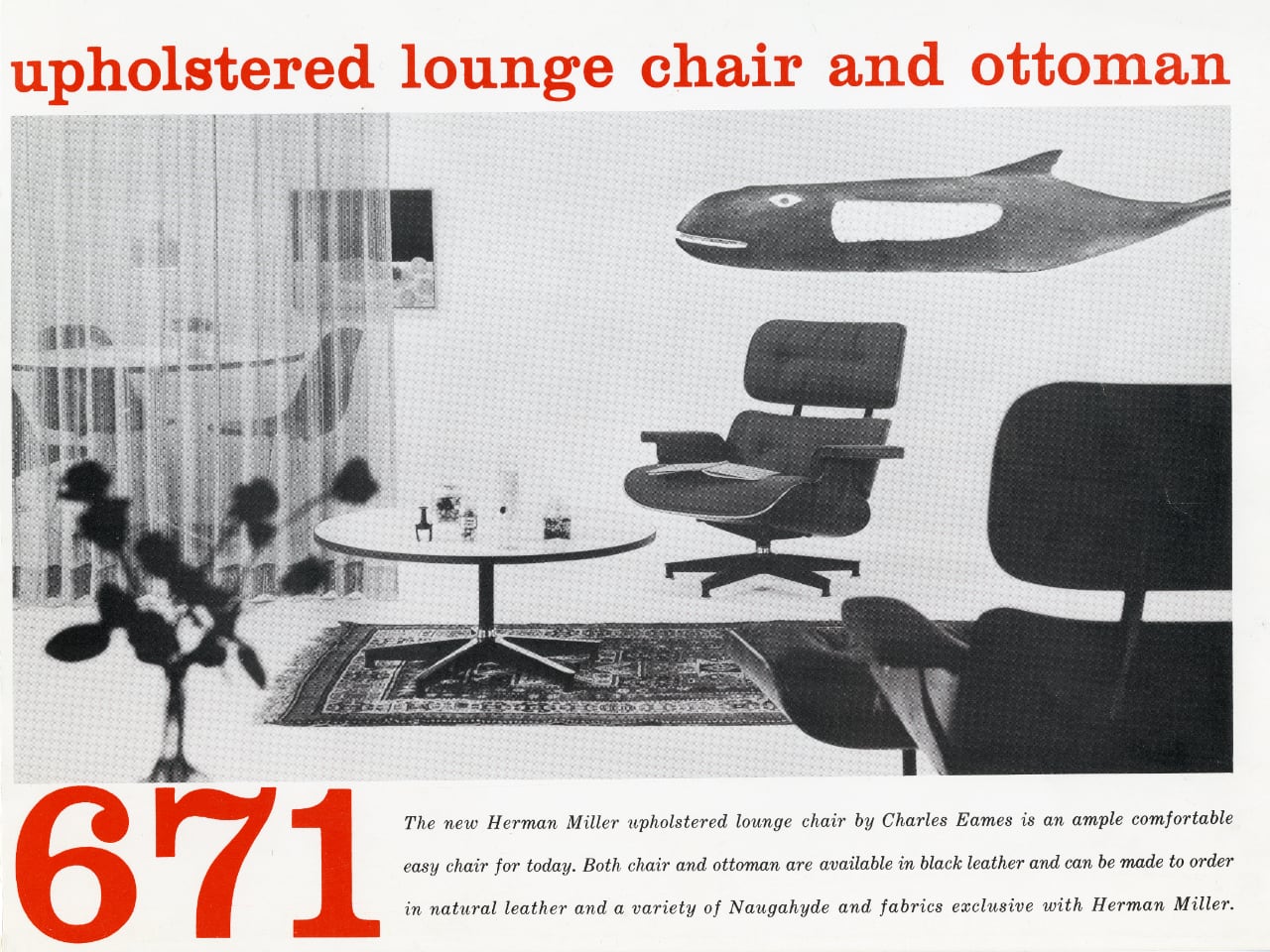
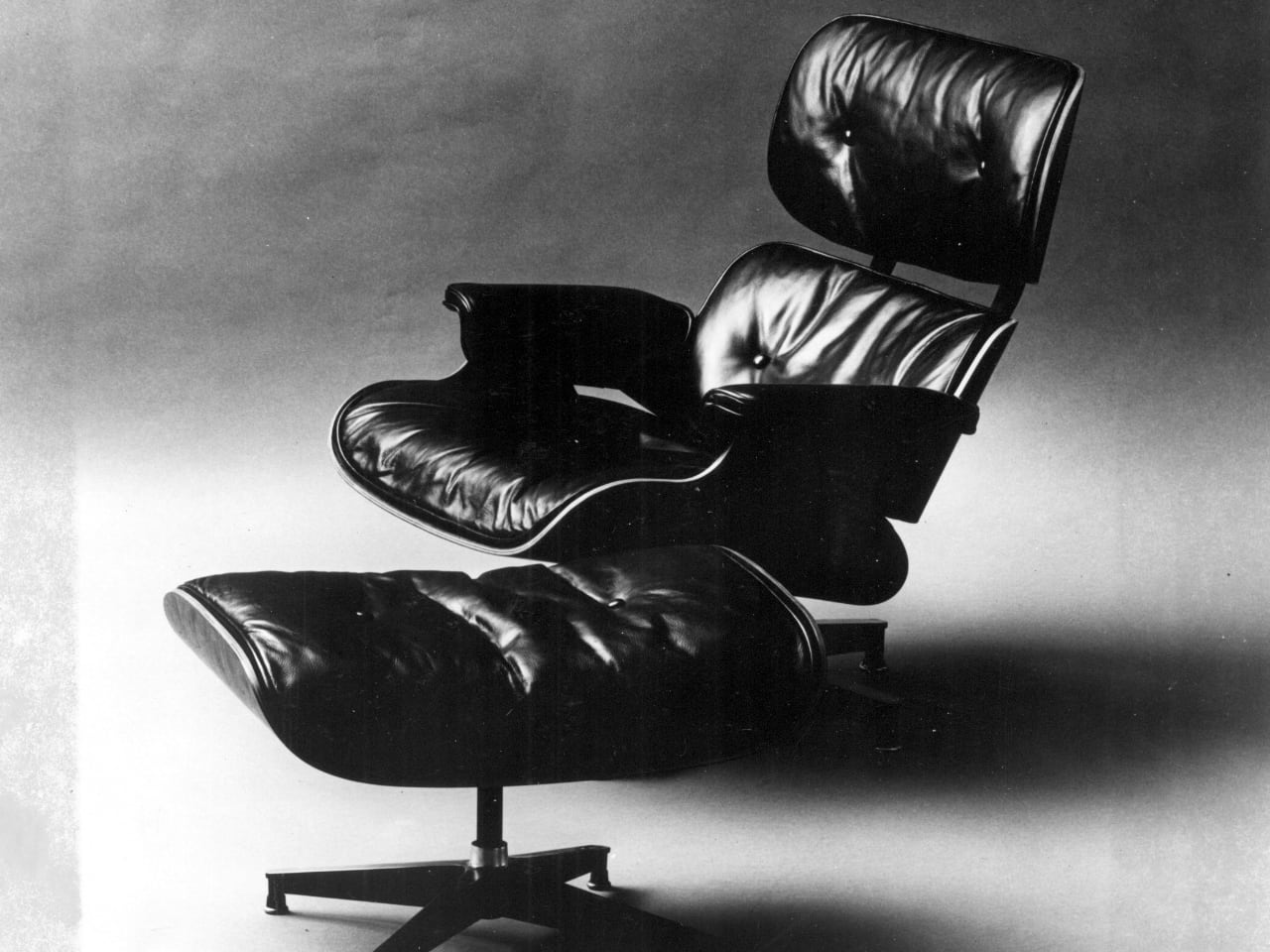
The 1963 ad for the Eames Lounge Chair and Ottoman, featured in Progressive Architecture, captures the essence of the chair’s design philosophy. The ad emphasizes “peace of mind and ease of body” in a chair “you live in rather than sit in.” This messaging highlights the Eameses’ focus on creating a piece of furniture that goes beyond mere functionality to enhance the user’s quality of life. The visual design of the ad, with its clean lines and modern aesthetic, underscores the timeless charm of the Eames Lounge Chair and Ottoman.
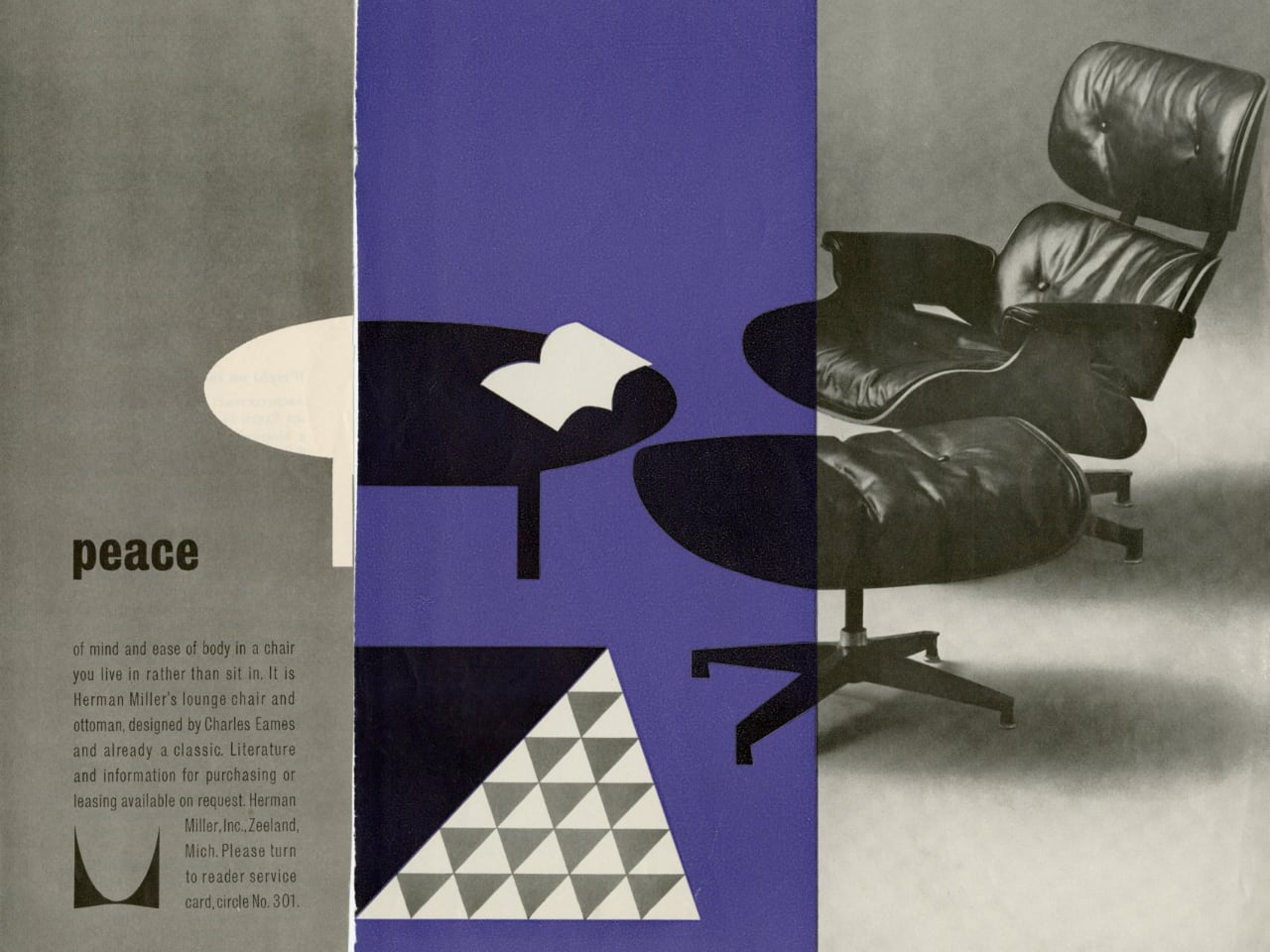
The Eames Lounge Chair and Ottoman were featured in a 1963 ad in Progressive Architecture magazine.
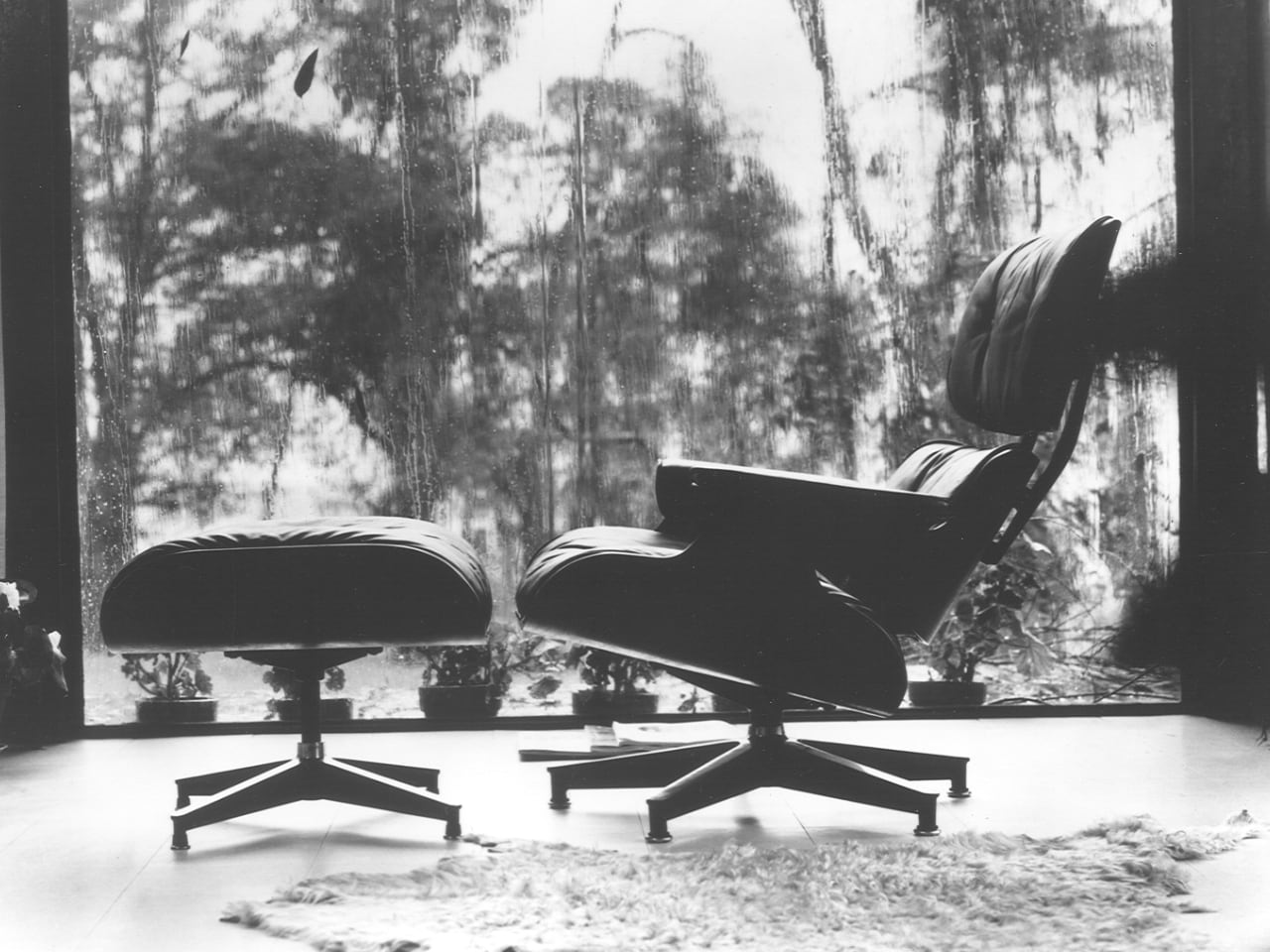
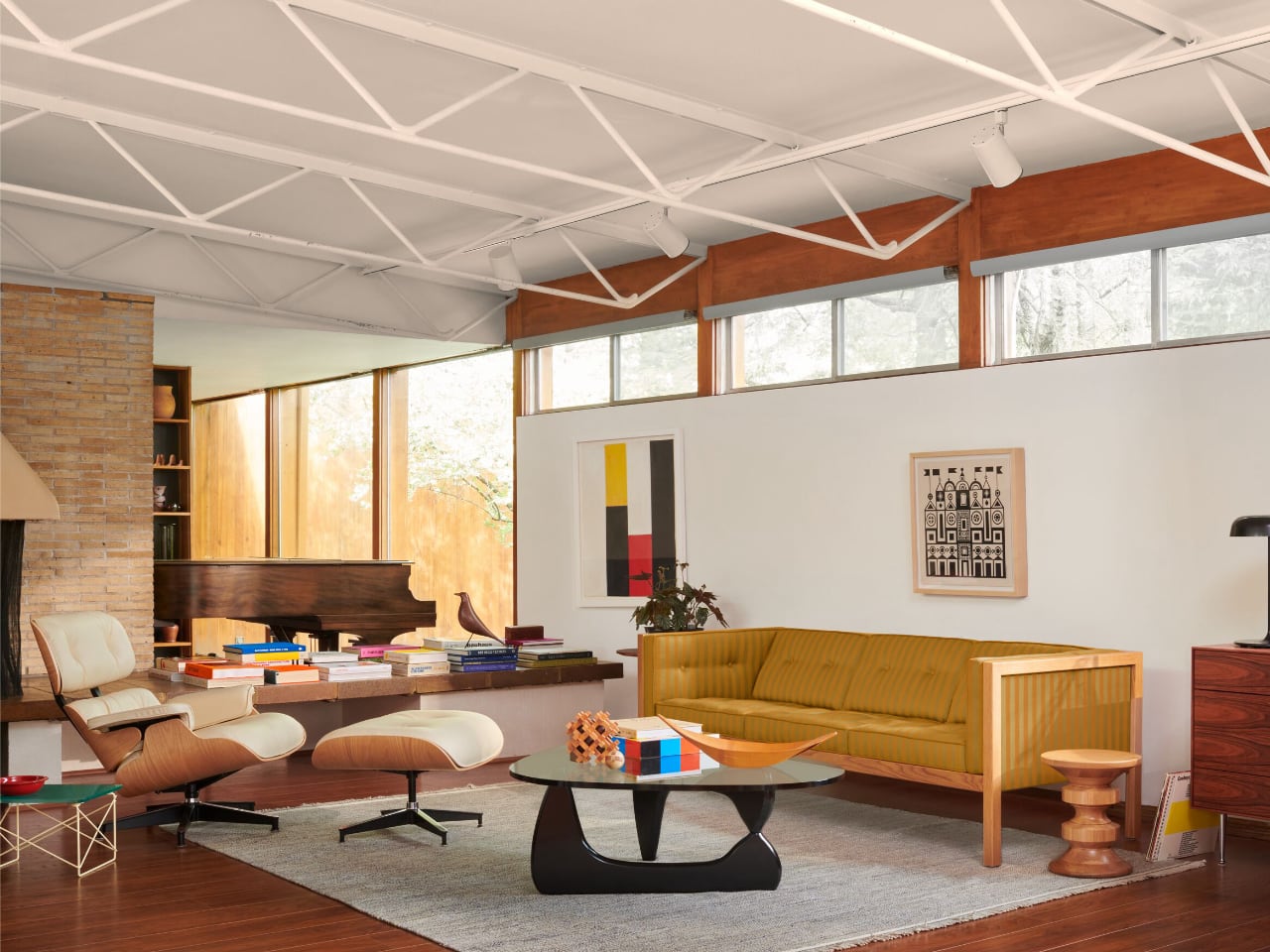
Today, the vision remains unchanged, but the context has evolved. Modern interiors continue to embrace the Eames Lounge Chair and Ottoman for their unmatched comfort and iconic design. The contemporary photograph of the chair in a modern living space shows how seamlessly it integrates into today’s homes, maintaining its status as a symbol of sophistication and comfort. The chair’s ability to adapt to changing styles while retaining its core design principles is a testament to the enduring genius of Charles and Ray Eames.
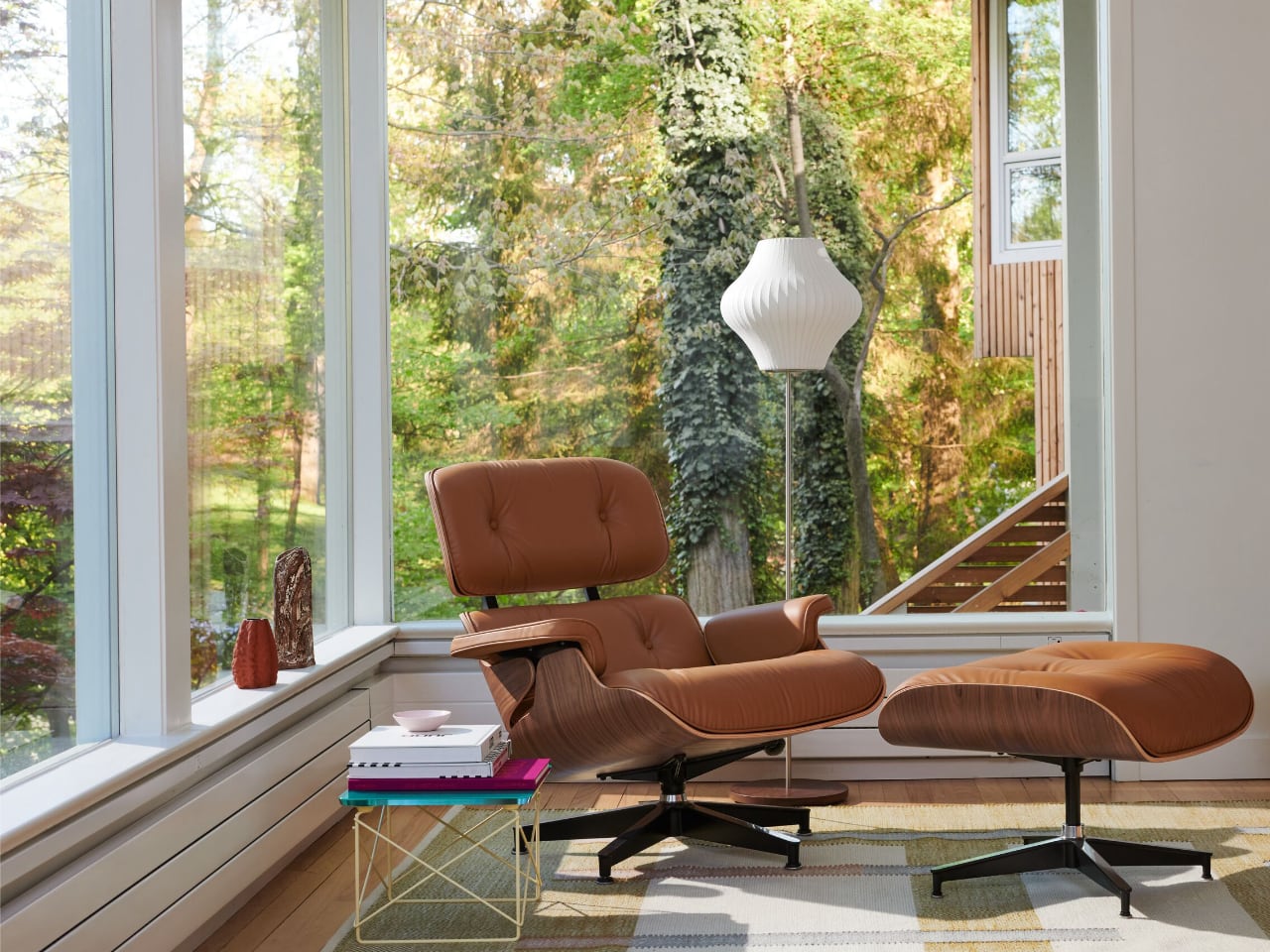
Eames Lounge Chair and Ottoman in Russet Walnut
Introducing Sustainable Materials
This is the perfect segue to Herman Miller’s exciting new development. Herman Miller introduces bamboo-based upholstery to the iconic Eames Lounge Chair and Ottoman, reflecting its ongoing commitment to sustainability across its portfolio.
Eames Lounge Chair and Ottoman with bamboo-based leather alternative
Herman Miller expands its offering for the Eames Lounge Chair and Ottoman to include a bamboo-based leather alternative. This plant-based material is derived from bamboo, known for being one of the world’s most sustainable resources due to its rapid growth, higher CO2 absorption rate, and minimal water requirements.
A Sustainable Innovation
The new bamboo-based leather alternative is softer, more durable, scratch-resistant, and more colorfast than traditional materials. It has been used in designer handbags, luxury automotive interiors, and now, as an upholstery option for the Eames Lounge Chair and Ottoman. Upholstering the Eames Lounge Chair and Ottoman in material derived from bamboo helps reduce the material’s carbon footprint by up to 35 percent, contributing to a lighter environmental impact.
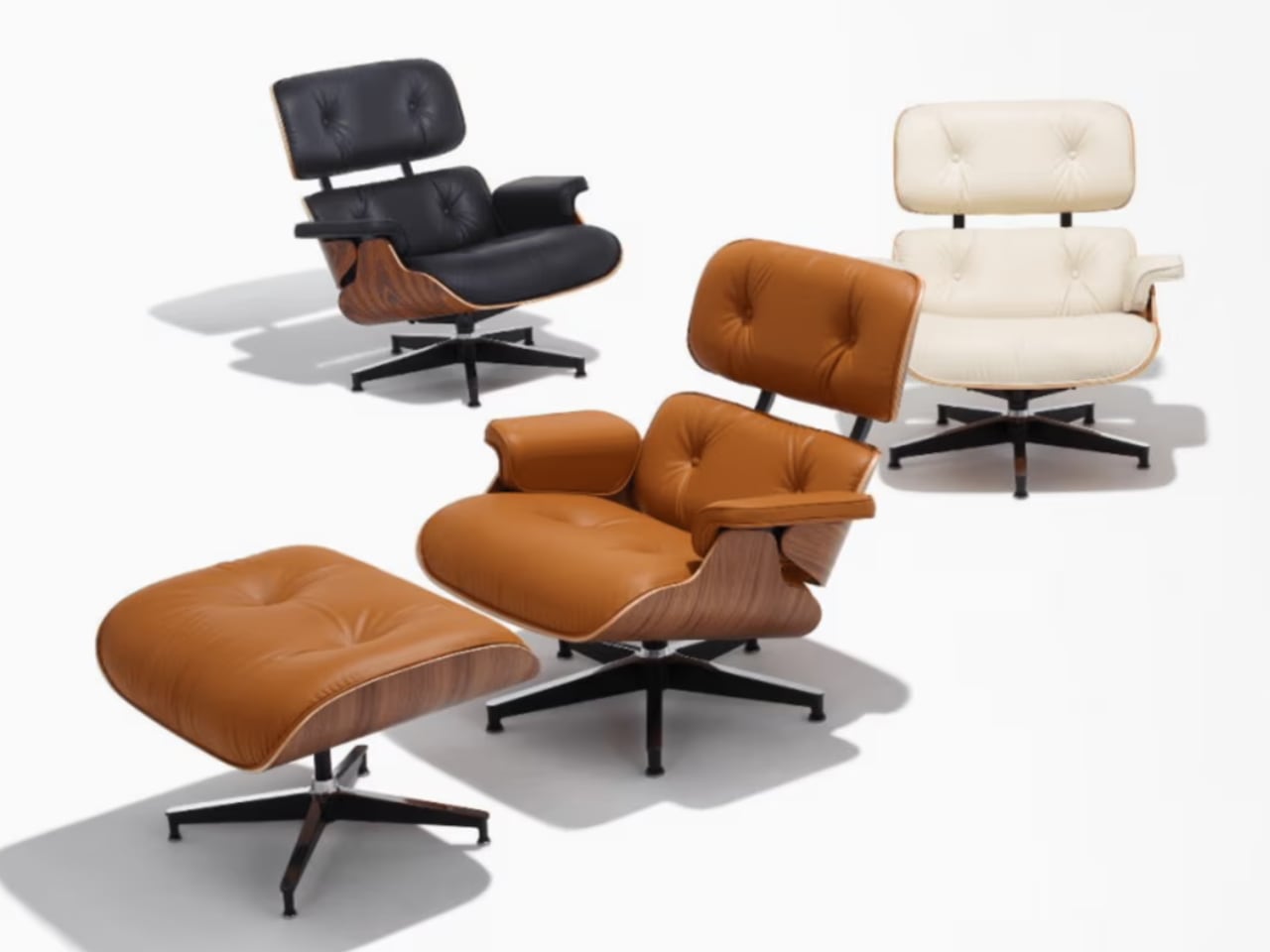
Eames Lounge Chair and Ottoman using bamboo-based leather alternative
Maintaining Quality and Aesthetics
The new upholstery is available in ivory, russet, and black, each of which can be paired with any existing shell types—walnut, Santos Palisander, ash, or oak—in standard and tall sizes. This ensures that the iconic design and high-quality standards of the Eames Lounge Chair and Ottoman are upheld while integrating modern sustainability practices.
Legacy and Modern Sustainability
Noah Schwarz, vice president of product design for Herman Miller, emphasizes the significance of this innovation: “Charles and Ray Eames pioneered the use of molded plywood in furniture, one of the central material innovations of their time. Today, Herman Miller is among the first furniture brands to offer a plant-based leather alternative—made almost entirely from bamboo. The two materials come together in the latest offering of the iconic Eames Lounge Chair and Ottoman, upholding the aesthetic and quality standards that have defined the chair for nearly 70 years.”
The Eames Lounge Chair and Ottoman are celebrated for their timeless charm and enduring quality, making them a benchmark for furniture design and comfort. This new development continues the legacy of the Eames Lounge Chair and Ottoman, combining timeless design with modern sustainability, ensuring that these iconic pieces remain relevant and cherished for generations to come.
The post Sustainable Luxury: Herman Miller’s Bamboo Upholstery for the Eames Lounge Chair first appeared on Yanko Design.