Leaked Google Pixel 9a image shows a MAJOR Design Change and No Camera Bump

It seems like the Pixel’s A-series is a victim of its own success. While the last few A-series phones like the Pixel 6a, 7a, and 8a have been phenomenal retail successes (sometimes even being preferred by people over the flagships), this year might be different. If these leaked images are any indication, the upcoming Pixel 9a might see a major design update… but there’s probably a good reason why.

The recent leak of the Google Pixel 9a suggests a fresh approach to design in Google’s mid-range offering, one that may mark a departure from the aesthetic norms established by previous Pixel devices. The leaked renders, shared by @VNchocoTaco on X, reveal a design that forgoes the familiar visor-like camera bar seen on its predecessors. Instead, the Pixel 9a opts for a sleek, minimalistic camera island. This module, positioned on a flat back panel, introduces subtle design refinements that indicate a clear intention by Google to redefine the visual identity of its A-series line. Why, you ask? I can think of a few potential reasons.

Rendered Image Representation of the Google Pixel 9a

Like I mentioned earlier, the Pixel A-series has a reputation for being a little too popular. Even though it’s touted as a budget phone, most YouTubers and reviewers claim that it’s just as good as its flagship counterpart, if not better. It looks just like the flagship, with a very similar design, and an equally good camera. The A-series only gets a few minor downgrades in the form of screen quality, processor speed, lack of wireless charging, larger bezels, and notably a lower price… all of which are fairly acceptable trade-offs. As a result, most budget phone lovers prefer the A-Series phones OVER the flagships, leading to more sales while Google tries to push the more expensive models instead by providing offers/discounts, etc. This dramatic redesign is probably Google’s way of making sure the Pixel 9a doesn’t steal the 9 and 9 Pro’s thunder. If Google’s last keynote was any indication, the company is making a HARD pivot to Gemini, and the Pixel 9a will probably get the same Tensor G4 chip to support those Gemini features (otherwise nobody will buy the phone). By cutting back on the design but still providing remarkable AI functionality (along with camera chops), the Google team seems to be future-proofing their flagship phone while still making the A-series fairly lucrative. It’s a nice strategy, although the Pixel 9a images (if they’re real) show a phone that lacks any character.

The images show a phone with flat sides that curve gently at the edges, just like the Pixel 9, 9 Pro, and 9 Pro Fold. This shift creates a more ergonomic experience, addressing one of the criticisms directed at the earlier A-series models, which were sometimes described as cumbersome in hand. Despite this redesign, the bezel size remains largely unchanged compared to the Pixel 8a. For some, this may be a missed opportunity for a more streamlined display experience, especially when considering the bezel trends across mid-range competitors. Nevertheless, these design choices suggest that Google is focused on maintaining the practicality and accessibility that the A-series has become known for, rather than chasing industry trends.

Though the images’ authenticity remains unverified, the source claims that the leak originates from a Compal employee. Compal, a well-known manufacturing partner for Google, has been involved in producing various Pixel devices. It’s also rumored that the Pixel 9a will drop at the end of this year (rather than 2025) and will be available in 4 colors. If this information holds true, it adds credibility to the likelihood that these design changes are indeed intended for the upcoming Pixel 9a. Such a move to alter the design language signals that Google is perhaps aiming to establish a different identity for its A-series, distancing it from the flagship models while still retaining core features that are essential for a consistent user experience across the lineup.

The post Leaked Google Pixel 9a image shows a MAJOR Design Change and No Camera Bump first appeared on Yanko Design.

Google Gemini Nano vs Apple Intelligence: Which AI Assistant is Better?

With Google’s Pixel event coming to a conclusion, we now have a comprehensive look at what AI upgrades are coming to the Pixel 9 devices, as well as a fair understanding of what Apple’s plans are for AI (or Apple Intelligence) on their upcoming iPhone 16 series. Although neither of these features has launched yet (both Google and Apple plan on rolling out their multimodal AI assistants later this year), it’s fair to quickly compare how they stack up against each other, and whether it makes sense to go the Pixel or the iPhone route this smartphone season.

On-Device Models

Both Google and Apple boast the ability to handle AI queries on the device itself, which means all the AI processing is happening on your phone instead of a server on the cloud. For Pixel phones, this is courtesy Gemini Nano, Google’s on-board multimodal AI model, while for Apple, they just call it Apple Intelligence instead of bogging you down with model names and version names. When the phone can’t handle a task on-device, it accesses the cloud – something common to both Gemini and Apple Intelligence. However, every single thing Gemini does is handled by Google’s own AI model, whereas for Apple, some tasks get outsourced to ChatGPT, without logging any private data… but more on privacy later. Google benefits from owning the entire ‘stack’, whereas Apple benefits from being able to be truly diverse by leaning on ChatGPT’s capabilities when it finds itself lacking.

Multimodality

The term multimodality refers to the ability to work across different modes – text, video, and audio. Both Gemini and Apple Intelligence are designed to be multimodal. They accept text input, can take voice commands, can analyze audio files, inspect images, and can even search within videos. It’s worth noting that while Google and Apple both announced these multimodal capabilities, the final AI assistants are still weeks/months away from launch.

Language Input

Apple Intelligence has only been demonstrated to work in English as of this writing. Google’s Gemini, however, holds the edge by accepting 45+ different languages as input.

The Gemini ‘Feature Quilt’

Text Generation/Rewrite

This might be the simplest yet most effective feature on both platforms, and one you’ll find yourself using the most. Text generation and rewriting isn’t new for Gemini at all, and is available across all of Google’s own apps/services regardless of your device. You can prompt Gemini to compose emails, write letters/flyers, and even proofread your documents, either within the Gemini website or across apps like Gmail, Docs, etc. Apple Intelligence offers the same features too (refining, proofreading, rewriting), but these capabilities seem limited only to Apple devices like the iPhone, iPad, MacBook, and Mac desktops. While Apple Intelligence’s text-generation features are yet to make their debut on Apple devices, Google’s Gemini-powered features are already available across all devices regardless of their make.

Image Generation

Aside from just analyzing images, Gemini and Apple Intelligence have image generation features too, with their own different abilities. The Pixel Studio text-to-image feature was unveiled today, limited to Pixel 9 models only. Type a prompt out and the app creates an image that you can then view variants of, refine by refining the prompt, or even change the style by choosing from a selection of style templates. At WWDC this year, Apple unveiled their Image Playground which has the exact same capabilities. However, the Image Playground offers fewer styles to choose from, staying consciously away from generating realistic images. Google’s Pixel Studio can generate photorealistic images, although the company also unveiled tools to detect AI images earlier, which may play a crucial role in minimizing the spread of deepfakes and misinformation.

Additionally, Google’s Magic Editor (its upgrade to the Magic Eraser) is set to debut on Pixel phones and also see a broader Android (and even iOS) rollout. The feature lets you correct your photo by adjusting parameters like reframing or expanding the composition, or edit parts of your photo by adding GenAI details to them. Google, however, doesn’t get Apple’s GenMoji, or the ability to generate custom emojis based on prompts and context. These custom emojis can be shared on Apple’s Messages app, but can also be saved as stickers and used on other messaging apps like WhatsApp and Instagram.

Live Mode

Debuted at Google’s Pixel Launch event today, Gemini’s Live Mode lets you talk to your AI the way you would another person. If you remember ChatGPT’s GPT 4o model from not too long ago, that’s what the Live Mode lets you do. You can summon the AI and just have a conversation with it, asking it questions, sparring on ideas, or instead collaborating over them. This feature is currently available only in English, and to Gemini Advanced subscribers, which means free users won’t be able to tap into the Live Mode feature. Apple Intelligence doesn’t have a Live Mode as of now, but you could expect it to drop in the future as soon as the intelligence features actually begin rolling out. Notably, ChatGPT lets you chat with the GPT 4o model for free, but it’s limited to a ‘few’ times within a limited time window.

Call Record/Transcribe

Both Gemini and Apple Intelligence boast the ability to record and transcribe conversations. Recorded calls get transcribed using on-device AI, and all participants are notified that the call is being recorded. Apple, however, adds transcriptions to the Notes app, while Google lets you view the transcriptions right within the Call Log using a feature called Call Notes.

The Apple Intelligence ‘Feature Quilt’

Memory + Context

What good is an AI if it doesn’t remember your conversations? Both Gemini and Apple Intelligence ‘allegedly’ get context very well by understanding what you require, which apps need to be referenced, and also people within your contacts. You can have a steady conversation with both AI models, and they’ll remember what you’re talking about without constantly needing to be reminded. This is in major contrast to just a few years ago when Voice Assistants only had a limited memory that existed only within that chat command. Now you can reference something from an image taken years ago, or details from an email buried in your inbox, and the AI models will get working without missing a heartbeat. Or at least that’s what Apple and Google will have us believe. We’re still waiting to see these features roll out on devices, and can only understand their limitations once they do.

Privacy

A lot of AI talk is also supplemented by a fair amount of fearmongering. AI replacing humans, AI training itself on your data, and AI going rogue – all valid concerns that Google and Apple understand rather well. To that end, a lot of the Pixel 9 Gemini Nano and Apple Intelligence’s features occur on device, without even connecting to the internet (the Gemini Nano on-device AI is different from the Gemini available on other Android devices). However, when Gemini or Apple Intelligence needs to access an on-cloud version of the AI model, it happens within its own sandbox, without having any data be accessible to any third parties. Notably, Apple also relies on ChatGPT to power some of its AI experiences, although Craig Federighi was quick to mention that ChatGPT doesn’t (or cannot) log any data or queries inputted through Apple Intelligence.

Availability

As far as availability goes, Google’s Gemini Nano model will only be available on Pixel 9 devices, with an official release said to occur weeks from now. While Gemini will be available across all devices, the ability to use Gemini as a personal smartphone assistant is limited only to the latest Pixel 9 range. Apple Intelligence awaits a formal launch too, and will be available on the iPhone 15 Pro series from last year, along with this year’s iPhone rollout. EU users, unfortunately, will not be able to use Apple Intelligence features on the iPhone following the EU’s strict DMA (Digital Markets Act) legislation.

Neither Gemini Nano nor Apple Intelligence have an official launch date, but chances are they’ll both debut in the weeks/months to come. Apple Intelligence will be free for all users (you can even use the ChatGPT features for free without making an account), and Gemini Nano’s core features will be free for Pixel users too. Pixel users also get a 1-year access pass to Gemini Advanced, which can handle more complex tasks, has a larger context window, and allows you to use the Gemini Live Mode.

Watch the official videos on Gemini Nano and Apple Intelligence below.

The post Google Gemini Nano vs Apple Intelligence: Which AI Assistant is Better? first appeared on Yanko Design.

Google Pixel 9 Pro and Pixel 9 Pro XL Released with AI-Driven Features and Superior Display Unveiled

Google has unveiled the Pixel 9 Pro and Pixel 9 Pro XL, highlighting advanced AI capabilities, cutting-edge camera systems, and vibrant displays. Powered by the Tensor G4 chip, these devices offer improved performance and functionality. Built with durability and sustainability in mind, they feature recycled materials and plastic-free packaging.

Designer: Google

The Pixel 9 series is powered by the new Tensor G4 chip, which brings advanced AI capabilities to the forefront. With Gemini Nano’s Multimodality, the phones can effortlessly understand text, images, and audio, providing a more seamless AI experience. One of the standout features is Gemini Live, which lets you have natural, flowing conversations with your phone or Pixel Buds, perfect for planning events or brainstorming ideas. Plus, handy tools like Pixel Screenshots help you keep track of important information, and the improved Pixel Weather app delivers accurate, AI-powered weather updates to help you plan your day.

Design and Display

The Pixel 9 Pro and Pixel 9 Pro XL feature a sleek, sculpted design with the iconic camera bar taking center stage. Both phones are crafted with a silky matte glass back and polished metal sides, offering a premium feel. The Pixel 9 Pro, with its 6.3-inch Super Actua display, measures 6 inches in height (152.4 mm), 2.8 inches in width (71.12 mm), and 0.3 inches in thickness (7.62 mm), and weighs 7 ounces (198.4 grams). It’s compact yet powerful. Meanwhile, the Pixel 9 Pro XL offers a larger 6.8-inch Super Actua display, measuring 6.4 inches in height (162.56 mm), 3 inches in width (76.2 mm), and 0.3 inches in thickness (7.62 mm), with a weight of 7.8 ounces (221.1 grams), providing a bigger screen for those who prefer more display real estate.

The displays are some of the brightest and most vivid in their class. The Pixel 9 Pro boasts a 6.3-inch LTPO OLED display with a resolution of 1280 x 2856 pixels and 495 PPI, capable of reaching up to 2000 nits in HDR and 3000 nits peak brightness. The Pixel 9 Pro XL features a 6.8-inch LTPO OLED display with a resolution of 1344 x 2992 pixels and 486 PPI, offering the same brightness capabilities. Both displays support a smooth refresh rate of 1-120Hz and feature Corning Gorilla Glass Victus 2 for enhanced durability.

Performance and Battery

The Google Tensor G4 chip powers both models, which were developed in collaboration with Google DeepMind. This processor is optimized for running advanced AI models, enabling faster app launches, seamless browsing, and enhanced AI-driven features. The Pixel 9 Pro and Pixel 9 Pro XL come with 16 GB of RAM and storage options ranging from 128 GB to 1 TB, ensuring ample space for all your needs.

Battery life is robust. The Pixel 9 Pro houses a typical 4700 mAh battery, providing over 24 hours of usage and up to 100 hours with Extreme Battery Saver mode. The Pixel 9 Pro XL, with its larger 5060 mAh battery, offers similar endurance. Both models support fast charging, achieving up to 55% and 70% charge, respectively, in about 30 minutes using the Google 45W USB-C charger, sold separately. Wireless charging and Battery Share features add further convenience.

Camera Capabilities

The Pixel 9 Pro and Pixel 9 Pro XL share a pro triple rear camera system that sets a new standard for smartphone photography. The setup includes a 50 MP wide camera with an ƒ/1.68 aperture, a 48 MP ultrawide camera with Macro Focus, and a 48 MP telephoto lens offering 5x optical zoom and up to 30x Super Res Zoom. These cameras are equipped with advanced features like optical and electronic image stabilization, a multi-zone LDAF sensor, and a spectral and flicker sensor to ensure crisp and clear images in any condition.

Cameras: 50 MP wide with ƒ/1.68 aperture, a 48 MP ultrawide with Macro Focus, and a 48 MP telephoto lens with 5x optical zoom and up to 30x Super Res Zoom

The front camera is a 42 MP Dual PD selfie camera with an ƒ/2.2 aperture and a 103-degree ultrawide field of view, designed for sharper and brighter selfies, even in low light.

Video capabilities are equally impressive, with the rear camera capable of 8K video recording at 30 FPS, powered by Video Boost, and 4K video recording at up to 60 FPS. The front camera supports 4K video at 30/60 FPS. Features like Night Sight Video, Super Res Zoom Video, and various stabilization options ensure high-quality video capture.

Pixel Studio is a unique feature that allows users to create images from scratch on their phone, powered by a diffusion model and the Imagen 3 text-to-image model. The camera system includes advanced features like Add Me, which ensures no one is left out of group photos, and Magic Editor’s Reimagine and Auto Frame tools for enhanced editing capabilities.

Comparison with Pixel 8 Pro and Pixel 8 Pro XL

The improvements are clear when comparing the Pixel 9 Pro and Pixel 9 Pro XL to the Pixel 8 Pro and Pixel 8 Pro XL. The Pixel 9 series offers a brighter and more vibrant display, enhanced by Super Actua technology, with significant camera resolution and feature upgrades. The new Tensor G4 chip provides faster and more efficient processing compared to the previous generation Tensor G3 chip.

In terms of design, the Pixel 9 series adopts a more refined and durable build, featuring Gorilla Glass Victus 2 and increased use of recycled materials. The battery life has also seen improvements, offering longer usage times with faster charging capabilities.

Overall, the Pixel 9 Pro and Pixel 9 Pro XL present a significant step forward, offering users a powerful, feature-rich smartphone experience. These enhancements make the new Pixel 9 series a compelling choice for those seeking cutting-edge technology with a focus on sustainability and performance. With prices starting at $999 for the Pixel 9 Pro and $1,099 for the Pixel 9 Pro XL, both models provide a range of options to suit different preferences and needs.

The post Google Pixel 9 Pro and Pixel 9 Pro XL Released with AI-Driven Features and Superior Display Unveiled first appeared on Yanko Design.

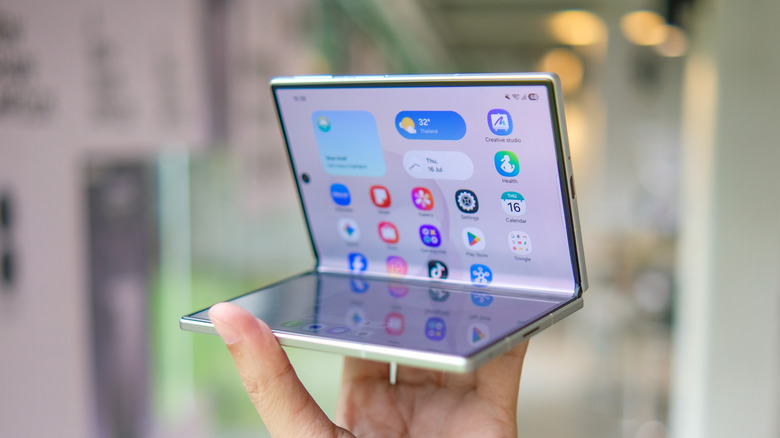
Google Pixel 9 Pro Fold: The Thinnest, Brighter, and More Powerful Foldable

Google has unveiled the Pixel 9 Pro Fold, a device that combines the functionality of a high-performance smartphone with the expansive capabilities of a tablet. This new addition to the Pixel family sets a new standard for versatility in mobile devices.

Designer: Google

Pixel 9 Pro Fold: 8-inch (204 mm) Super Actua Flex display (LTPO) and 2076 x 2152 OLED at 373 PPI

The Pixel 9 Pro Fold features a sleek design and innovative technology. When folded, it mirrors the size and thickness of the Pixel 9 Pro, making it both compact and portable. Its dimensions are impressive: when folded, it measures 6.1 inches in height, 3 inches in width, and 0.4 inches (10.16 mm) in thickness. Unfolding the device reveals an 8-inch Super Actua Flex display, the largest on any foldable phone, with a resolution of 2076 x 2152 pixels at 373 PPI. This stunning display is 80% brighter than the previous generation, reaching up to 1,600 nits in HDR mode and up to 2,700 nits in peak brightness, making it ideal for everything from entertainment to productivity.

The Pixel 9 Pro Fold’s design is built for durability and elegance. It features a luxurious metal frame with seamless rounded corners and is protected by scratch-resistant Gorilla Glass Victus 2. This construction ensures the device can withstand everyday wear and tear while maintaining a sophisticated appearance. The hinge is crafted from multi-alloy steel with an aerospace-grade high-strength aluminum alloy cover, providing structural integrity and a smooth folding experience.

Underneath its polished exterior, the Pixel 9 Pro Fold is powered by Google’s Tensor G4 chip, a fourth-generation processor designed in collaboration with Google DeepMind. This chip optimizes the device for AI-driven tasks, enhancing everyday activities such as web browsing, streaming, photography, and videography with minimal battery impact. The device is equipped with 16 GB of RAM, providing ample memory for smooth multitasking and seamless performance, especially when handling the complex demands of foldable technology.

The Pixel 9 Pro Fold’s camera system is equally impressive. It features a triple rear camera setup with a 48 MP wide lens, a 10.5 MP ultrawide lens with Macro Focus, and a 10.8 MP telephoto lens with 5x optical zoom and up to 20x Super Res Zoom. This setup allows users to capture stunning images and videos with incredible detail and clarity, regardless of the setting.

Triple rear camera with a 48 MP wide lens, 10.5 MP ultrawide lens with Macro Focus, and a 10.8 MP telephoto lens with 5x optical zoom and up to 20x Super Res Zoom

Battery performance is robust. With a typical capacity of 4,650 mAh, the device offers more than 24 hours of usage and up to 72 hours with Extreme Battery Saver mode. The device supports fast charging via a 45W USB-C charger and wireless charging. To ensure optimal performance, Google has introduced a new vapor chamber cooling system in the Pixel 9 Pro Fold, maintaining peak performance even during intensive use.

Moreover, the Pixel 9 Pro Fold is the first in the Android lineup to feature Satellite SOS, enabling users to contact emergency services and share their location even when cellular service is unavailable. Initially available in the U.S., this feature provides peace of mind for those venturing into remote areas.

Pre-orders for the Pixel 9 Pro Fold are now open. Prices start at $1,799 or $49.97 per month, with 36-month financing before trade-in. Customers can choose from Porcelain and Obsidian colors and choose between 256 GB and 512 GB storage options. The unlocked version works with any major carrier, providing flexibility for users who want to switch networks. As a special offer, Google is providing $500 back on the device and $350 in Google Store credit for purchases made by Sept. 7.

Comparing the Pixel 9 Pro Fold to its predecessor reveals several enhancements that make it a worthy upgrade. In terms of design and build, the Pixel 9 Pro Fold is more compact and portable, with a weight of 9.1 ounces (approximately 258 grams), making it lighter than the previous model. Its luxurious metal frame, seamless rounded corners, and scratch-resistant Gorilla Glass Victus 2 provide enhanced durability. The hinge is crafted from multi-alloy steel with an aerospace-grade aluminum cover, offering better structural integrity and smoother folding mechanics than the previous Pixel Fold.

The display of the Pixel 9 Pro Fold is a significant improvement over its predecessor. The Pixel 9 Pro Fold features an 8-inch Super Actua Flex display with a resolution of 2076 x 2152 pixels at 373 PPI, which is 80% brighter than the previous generation, reaching up to 1,600 nits in HDR mode and 2,700 nits peak brightness. The external cover display is a 6.3-inch Actua display with a resolution of 1080 x 2424 pixels and a peak brightness of 2,700 nits. In contrast, the previous Pixel Fold had a smaller 7.6-inch main display with a resolution of 2208 x 1768 pixels at 370 PPI, reaching lower brightness levels and making it less visible in bright conditions. The cover display on the older model was also smaller, at 5.8 inches, with a resolution of 2092 x 1080 pixels.

Pixel Fold

Performance and features have also seen a boost with the Pixel 9 Pro Fold. It is powered by the Google Tensor G4 chip and equipped with 16 GB of RAM, which allows for better multitasking and overall performance. The advanced triple rear camera system has improved sensors and zoom capabilities, setting it apart from the previous Pixel Fold’s camera system, which had fewer features and lower resolution sensors.

Powered by the G4 powerful chip and 16 GB of RAM

The Pixel 9 Pro Fold offers battery and durability improvements. It offers a 4,650 mAh battery capacity with extended battery life, supporting over 24 hours of usage and up to 72 hours with Extreme Battery Saver. The device is twice as durable as its predecessor, featuring Gorilla Glass Victus 2 for better protection against damage. Additionally, the Pixel 9 Pro Fold introduces a new vapor chamber cooling system, which provides more advanced thermal management than the previous model.

When compared to the Samsung Galaxy Z Fold 6, the Pixel 9 Pro Fold holds its own with a folded thickness of 0.4 inches (10.16 mm) and an unfolded thickness of 0.2 inches (5.08 mm). This is thinner than the Samsung Galaxy Z Fold 6, which is typically about 0.51 inches (13 mm) thick when folded and 0.22 inches (5.6 mm) when unfolded. The previous generation Pixel Fold was 0.5 inches (12.7 mm) thick when folded and 0.24 inches (6.1 mm) thick when unfolded, making the Pixel 9 Pro Fold a notable advancement in slimness and portability. These refinements highlight Google’s focus on achieving a more elegant and user-friendly foldable device.

The Pixel 9 Pro Fold is a significant upgrade over the previous Pixel Fold, offering enhancements in almost every aspect of physical hardware. The improved design, brighter and larger display, enhanced performance with the Tensor G4 chip, superior camera system, and increased durability make it a compelling choice for users seeking a foldable phone that meets modern demands. With these upgrades, the Pixel 9 Pro Fold is a worthy successor, addressing many of the limitations of its predecessor while introducing new features and capabilities. For more details on availability and specifications, visit Google’s official website.

The post Google Pixel 9 Pro Fold: The Thinnest, Brighter, and More Powerful Foldable first appeared on Yanko Design.

Google Pixel Buds Pro 2 make first appearance as a display unit ahead of official launch

The options for premium true wireless earbuds have gotten more interesting since the Samsung Galaxy Buds 3 Pro debuted with the stem design. Now, users have more reasons to rejoice as Google Buds Pro 2 is just around the corner, according to reliable leaks. The new ANC earbuds for the Pixel ecosystem are slated to make an appearance at the Made by Google event on August 13. The Pixel 9 series smartphones will be released at this event, and we have our calendars marked already.

According to numerous leaks and rumors, the buds will have wings for a secure grip, and unlike the Galaxy Buds 3 Pro that have adapted the stem design (very similar to the AirPods) this time, the Google’s audio accessory will continue with the stemless aesthetic of the current generation. As it goes in the gadget rumor mill, the Buds Pro 2 display unit has been received at a Reddit user’s store.

Designer: Google

User [nothighandmighty] has not been shy about sharing the picture of the display model of the upcoming earbuds. For the most part, the new buds will be a lowkey upgrade to the previous version with incremental improvements that help them stay at par with heavyweights like Sony WF-1000XM5, Bose QuietComfort Earbuds II and Jabra Elite 10 Gen 2. The Buds Pro 2 will be smaller than the current generation Pro model which makes them comfortable and compatible with small ears. Also, the wingtip is slightly larger for a more secure fit and will be color-matched with the chosen option. According to a leak by Dylan Roussel, the earbuds will come in peppy color options including Raspberry, Mojito, Porcelain and Haze.

The case will be smaller as well which makes them easier to carry around in a pocket. [nothighandmighty] notes that there is a small speaker mesh at the bottom, most probably to beam sound for the Find My Device feature just in case you happen to lose them a lot.

The post Google Pixel Buds Pro 2 make first appearance as a display unit ahead of official launch first appeared on Yanko Design.

Google Next-inspired Omni Smart Speaker has integrated display to show what’s happening in real-time

Google Nest has had a fair share of success thanks to its built-in Google Assistant capabilities. The capable speaker has been the first introduction to the world of smart speakers for many of us, and now it is inspiring the Omni Smart Speaker – which looks similar to the Google speaker – but adds an auxiliary screen to it that distinguishes it for the better.

So, if you’re looking to upgrade your smart speaker, you may have a new option, amid a plethora of choices already available from Google, Amazon, Apple and many other manufacturers. The Omni is far from the others with its novel display that shows real-time visual feedback of what’s happening, saving effort and confusion during voice commands.

Designer: One Object Design Studio

One Object is a Hong Kong-based design and innovation studio with an undwindling focus on creating mobility, smart home, and home furnishing designs. Fueled by passion, dedication, and curiosity for novelty, the designers at One Object have come up with the distinct design of the Omni, which looks pretty recognizable in both form factors, yet is starkly different with the interesting, integrated display.

Described as the “next-generation smart speaker concept” – the Omni is equipped with a voice-enabled assistant – not sure which one though – and allows the users to tap on the convenience of voice to control home appliances easily and more intuitively. Whether the speaker is splash-proof or not, we are uncertain, so we are guessing it is made for indoor use only, where it would allow you to listen to different music in any room of your house.

You should be able to connect multiple devices in different rooms across the house and control them from the Omni, without moving a stride. And when you think, the commands are going to get mixed, you can look up and see the sleek, modern speaker’s integrated auxiliary display and see what’s happening in real time. Whether you’re adjusting the thermostat, turning on the lights, or setting the music, the Omni smart speaker will make every voice command “straightforward and responsive.”

The post Google Next-inspired Omni Smart Speaker has integrated display to show what’s happening in real-time first appeared on Yanko Design.

Google Pixel Watch 3 leak reveals more details about the upcoming wearable

Before every gadget is released officially it must go through the rumor mill to keep things spiced up for prospective buyers and reviewers. Google Pixel Watch 3 slated for an August 13 release will take on the Samsung Galaxy Watch 7 head-on with its rounded dial and we hope it doesn’t have any inaugural issues like battery drain.

We’ve already seen OnLeaks and 91Mobiles reveal the first batch of design and specification details for Google’s upcoming wearables. Now another spar of leaked marketing material by Android Headlines reveals more information. The highlighting one has 10 percent more screen space than the predecessor – the Pixel Watch 2.

Designer: Google

Going by the leaked information, the Watch 3 could have a brighter display at 2,000 nits which is almost double the Watch 2, courtesy of the in-house Actua Display. According to the specs sheet, the smartwatch will get 24 hours of battery life with AOD enabled and around 36 hours if you opt for the battery saver mode. The charging speed of the 41mm model will be 20 percent better than the predecessor, although no mention of the 44mm model is there. That directly implies that the new smartwatch will not employ the hybrid interface on the Wear OS 4.

On the software front, the Watch 3 can stream live Google Home videos from your Nest Cam or Nest Doorbell. The user will also get the option to toggle between image and video feed when controlling the phone’s camera from the watch. There’ll also be voice support and quick access to apps including Maps and Wallet. Fitness is going to be another focal point of the interface with workout tracking. It’ll have audio and haptic feedback for initiating a spring, run or cooldown. For better workout planning, the Fitbit morning brief offers a summary of health and fitness metrics.

According to Android Headlines, the Pixel Watch 3 will be available in Matte Black Aluminum with an Obsidian band and Polished Silver Aluminum with a Porcelain band. Model-specific colors include the Champagne Gold Aluminum with a Hazel band for 41mm, and Matte Hazel Aluminum with a Hazel band for 45mm. The band options are going to be plentiful with Active Band, Woven Band, Metal Link Band, Crafted Leather Band and Performance Loop Band each having a further set of color options. According to the leak Google will offer exclusive options for the 41mm model that’ll include Strech Band, Metal Mesh Band, Metal Slim Band and Two-Tone Leather Band.


The post Google Pixel Watch 3 leak reveals more details about the upcoming wearable first appeared on Yanko Design.

Google Chromecast Rebrands to ‘Google TV Streamer’ and comes with a new flat tabletop design

It was a long time due and now news has it, the new Chromecast version is on the horizon. Though it’s not called the Chromecast anymore and neither does it look the same: as it hides behind the TV HDMI dongle. It is more articulately designed (as seen in pictures) and delivered in a more recognizable set-top-like form factor.

The successor to the Chromecast is likely to be called the “Google TV Streamer.” Pitted as a natural rival to the Apple TV, this new 4K streaming device from Google has a slanted top, resting on a firm block base, and a nice white color theme to it. Of course, it’s starkly different from the compact dongle Chromecast, but it retains the “Google TV” branding, 9to5Google reports.

Designer: Google

The new design of the Google TV Streamer is accompanied by a remote control, which is slightly longer than the previous remote of the Chromecast, and also has some upgrades in design and feel. The steaming box itself seems to be connected to two cables at the back, as apparent in images, which could be for “power and HDMI.”

The remote is led by the D-Pad on the top followed by the back and a gray-colored home button. The volume buttons are removed from the side to appear on the front below the home button, while the voice input on its left is a simple microphone. The Google Assistant branding is gone. What is this indicative of, it’s only for the time to tell, but without the Google labeling the remote looks pretty straightforward.

That said, it does have shortcut buttons for YouTube and Netflix, while at the bottom of the remote face is the power button and the customizable star shortcut. We, as mentioned above, do not have a definite release date or the supposed pricing of the new Chromecast variant yet. The Google TV Streamer could, however, make its debut alongside the new range of Google Pixel phones, smartwatches, and other goodies at “Made by Google,” the tech giant’s next hardware event scheduled on August 13.

The post Google Chromecast Rebrands to ‘Google TV Streamer’ and comes with a new flat tabletop design first appeared on Yanko Design.

Google’s Official ‘Made by Google’ Event on August 13: Here’s What the Pixel 9 Pro and Fold Look Like

With Google officially announcing the “Made by Google” event on Aug. 13, excitement is high for the new Pixel lineup. This year, Google is shaking things up by revealing the Pixel 9 and 9 Pro series earlier than usual, likely aiming to capture attention before the expected iPhone 16 launch in September.

Designer: Google

In addition to the Pixel 9 Pro, Google is also unveiling the Pixel 9 Pro Fold, accompanied by a Gemini-linked teaser video. While leaks have provided glimpses of these devices, Google’s announcement finally puts to rest any speculation about their appearance and names. The teaser video highlights the double-stacked lenses on the rear camera module and the exterior screen and hinge design.

The Pixel 9 Pro Fold marks a noticeable change from its predecessor. It adopts a taller and narrower profile than the original’s short and wide passport-style form factor. This new design aligns more closely with devices like the OnePlus Open, offering a larger, more practical outer display that enhances usability.

One of the most striking changes is removing Google’s signature camera bar. The first-generation Pixel Fold featured a prominent, elongated camera bar, while the Pixel 9 Pro Fold opted for a new, more streamlined camera housing. This redesign provides a cleaner aesthetic and ensures the phone remains stable when laid flat.

Examining the new model’s inner display, there’s still a noticeable crease, although it appears less prominent. The screen ratio has shifted to a taller and narrower format, with slimmer bezels for a more modern look. However, this change includes an inner camera cutout on the upper-left part of the display instead of being part of the bezel, which might not please everyone.

The first-generation Pixel Fold’s short and wide design made it a great one-handed device despite its weight. However, its cover screen was often too wide to comfortably hold for extended periods. In contrast, the new Pixel 9 Pro Fold’s taller form factor should enhance ease of use and portability.

A potential concern with the new model is its slightly smaller battery capacity of 4,560mAh compared to the first Fold’s 4,727mAh. Given that the original wasn’t known for its battery longevity, this reduction might raise some concerns. However, Google’s latest Tensor processor promises efficiency gains that could help mitigate this issue.

Alongside these design changes, the Pixel 9 Pro Fold has a new 45-watt USB-C charger. This new charger, which sports a more rounded design than its predecessors, is part of Google’s effort to improve charging speeds and overall user convenience.

Having used the first-generation Pixel Fold extensively, I can attest to its decent quality despite its drawbacks, such as dim screen brightness, subpar speakers, and limited app optimization. With the Pixel 9 Pro Fold, Google can address these issues and deliver a more refined and competitive product.

The Google Pixel 9 Pro Fold represents a significant step forward in design and functionality. By transitioning from the unique but bulky passport form factor to a more practical and user-friendly design, Google is making strides to compete more effectively in the foldable phone market. We’ll have to wait and see how Google plans to structure the pricing this time, but here’s hoping the new model looks impressive and delivers on performance and user experience.

The post Google’s Official ‘Made by Google’ Event on August 13: Here’s What the Pixel 9 Pro and Fold Look Like first appeared on Yanko Design.