This Dutch Studio Just Built a Room Divider From Old T-Shirts

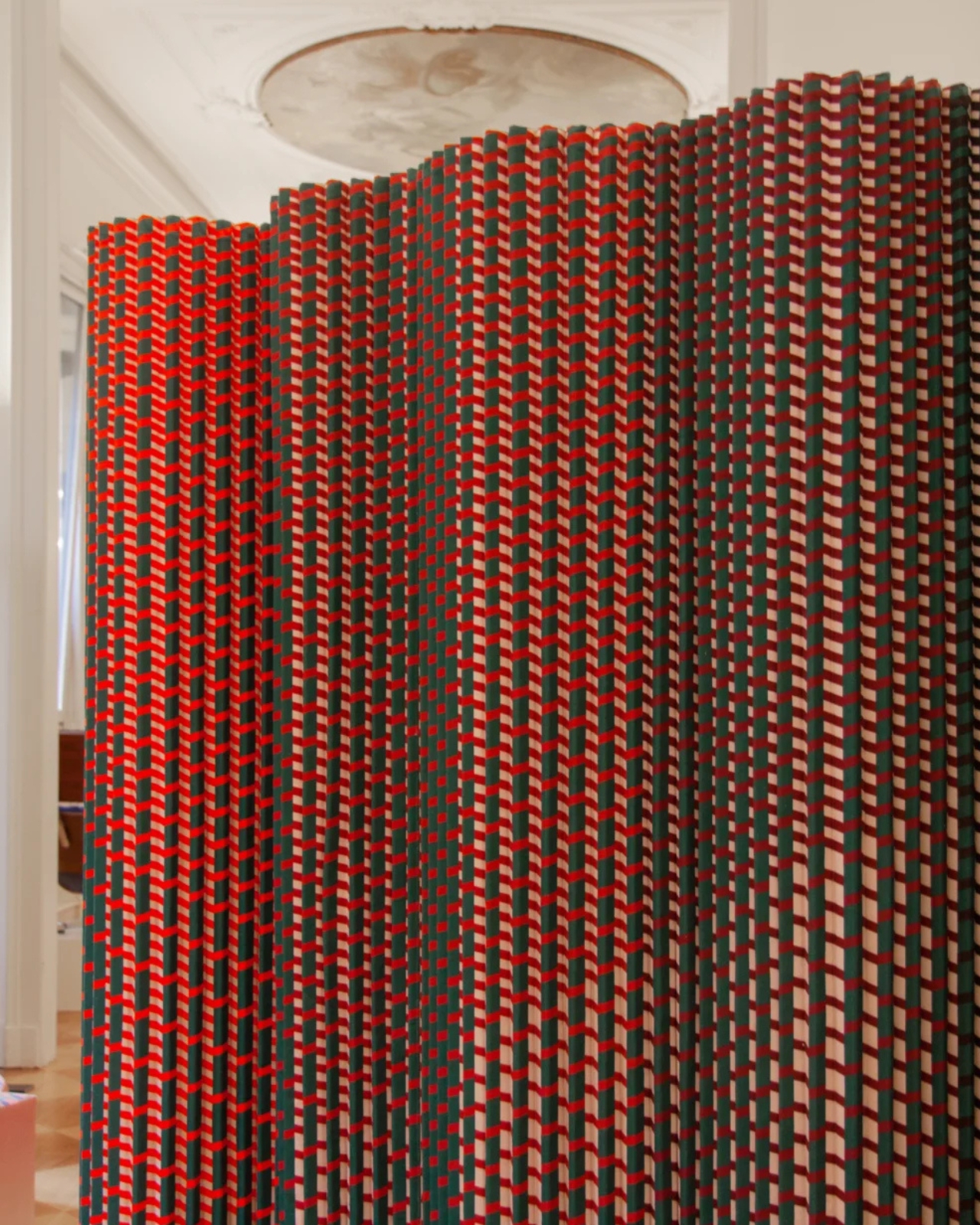
Have you ever looked at a piece of fabric and wondered what would happen if you gave it superpowers? That’s essentially what Dutch design studio Luis Marie did with their latest creation, Plissade, a room divider that’s turning heads for being completely, wonderfully, all about textiles.

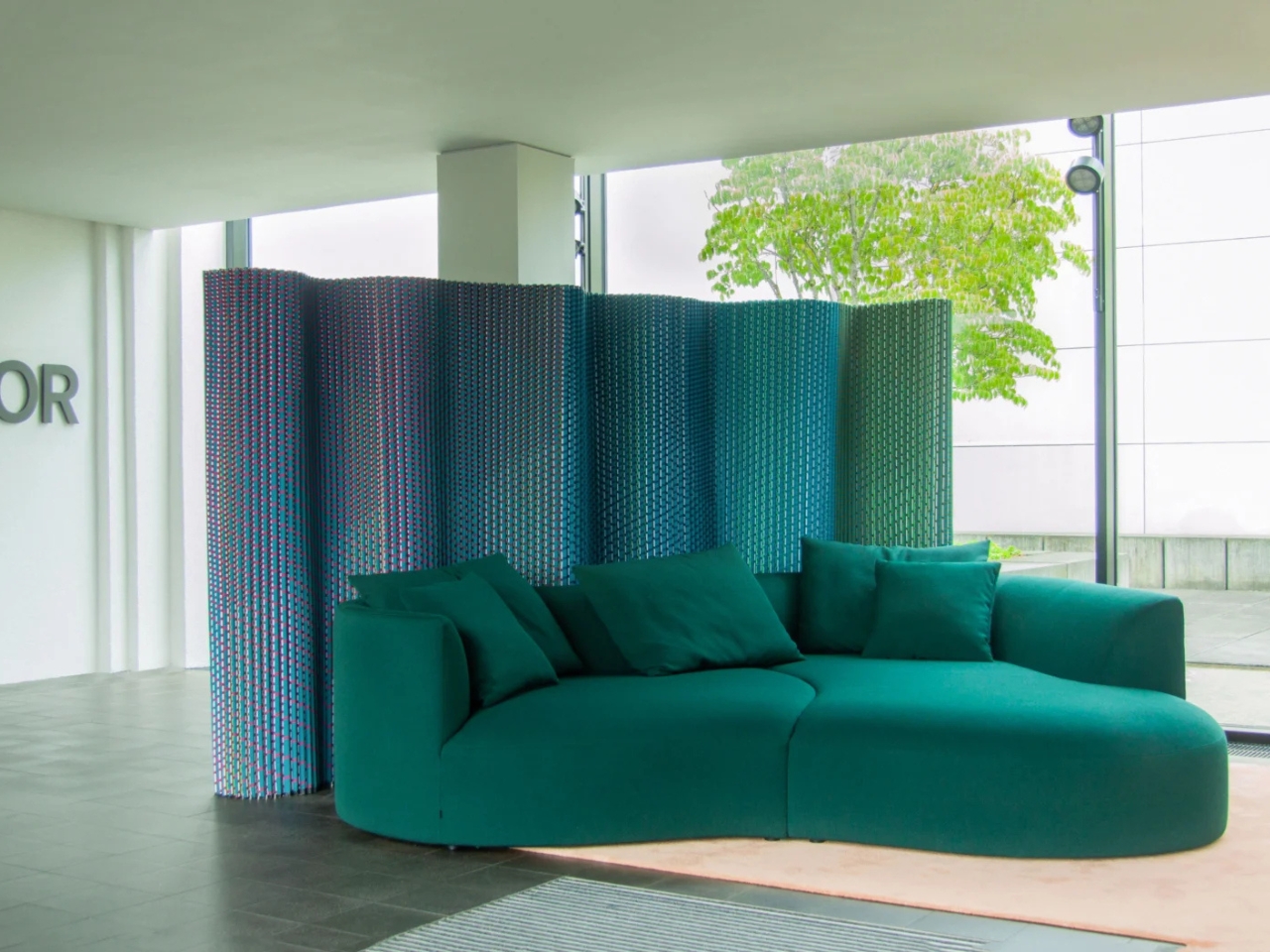
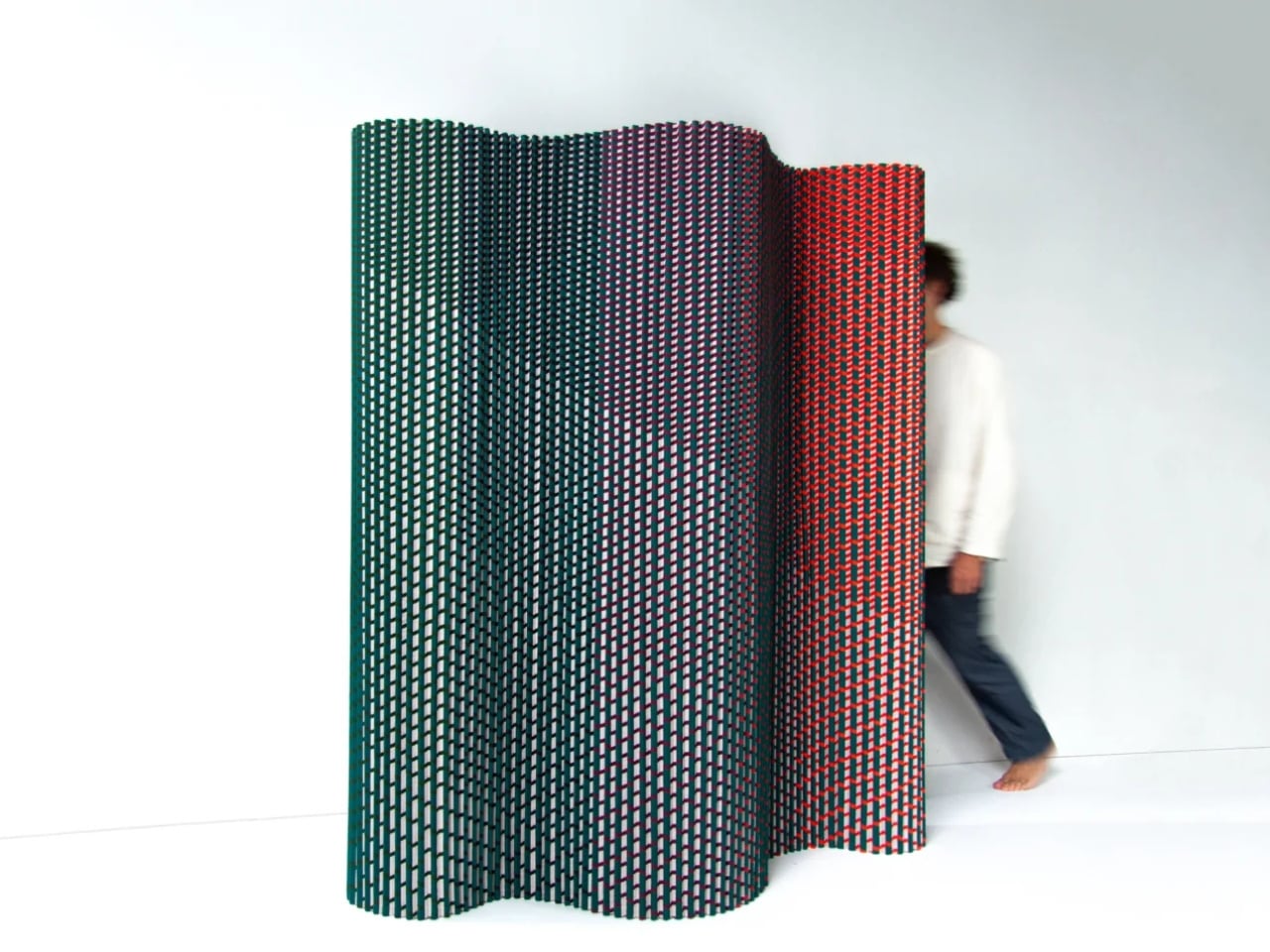
Here’s the thing about room dividers: they’re usually pretty predictable. You’ve got your folding screens, your sliding panels, your wooden frames with some fabric stretched across them. They do the job, sure, but they’re not exactly exciting. Plissade, on the other hand, ditches the traditional playbook entirely. Instead of relying on rigid frames or heavy materials, this sculptural partition stands on its own through the power of pleating alone.

Designer: Luis Marie

The designers behind this clever piece, Fenna van der Klei and Patricio Nusselder, drew inspiration from the traditional craft of textile pleating, where fabric is carefully folded to create different shapes and volumes. It’s the same technique that gives your favorite pleated skirt its structure or adds dimension to fancy curtains. But here, pleating isn’t just decorative. It’s doing all the heavy lifting, quite literally. The folds are engineered in a way that gives the divider enough rigidity to stand upright without any additional support, which is pretty remarkable when you think about it.
What makes Plissade even more interesting is what it’s made from. The inner layer consists of felt created from recycled post-consumer polyester clothing. Yes, that means your old t-shirts and jeans could theoretically have a second life as sound-absorbing room dividers. The outer layer features woven textile made from recycled polyester yarns. So not only is this piece solving the age-old problem of dividing space in style, it’s also addressing our growing waste problem in a tangible way.
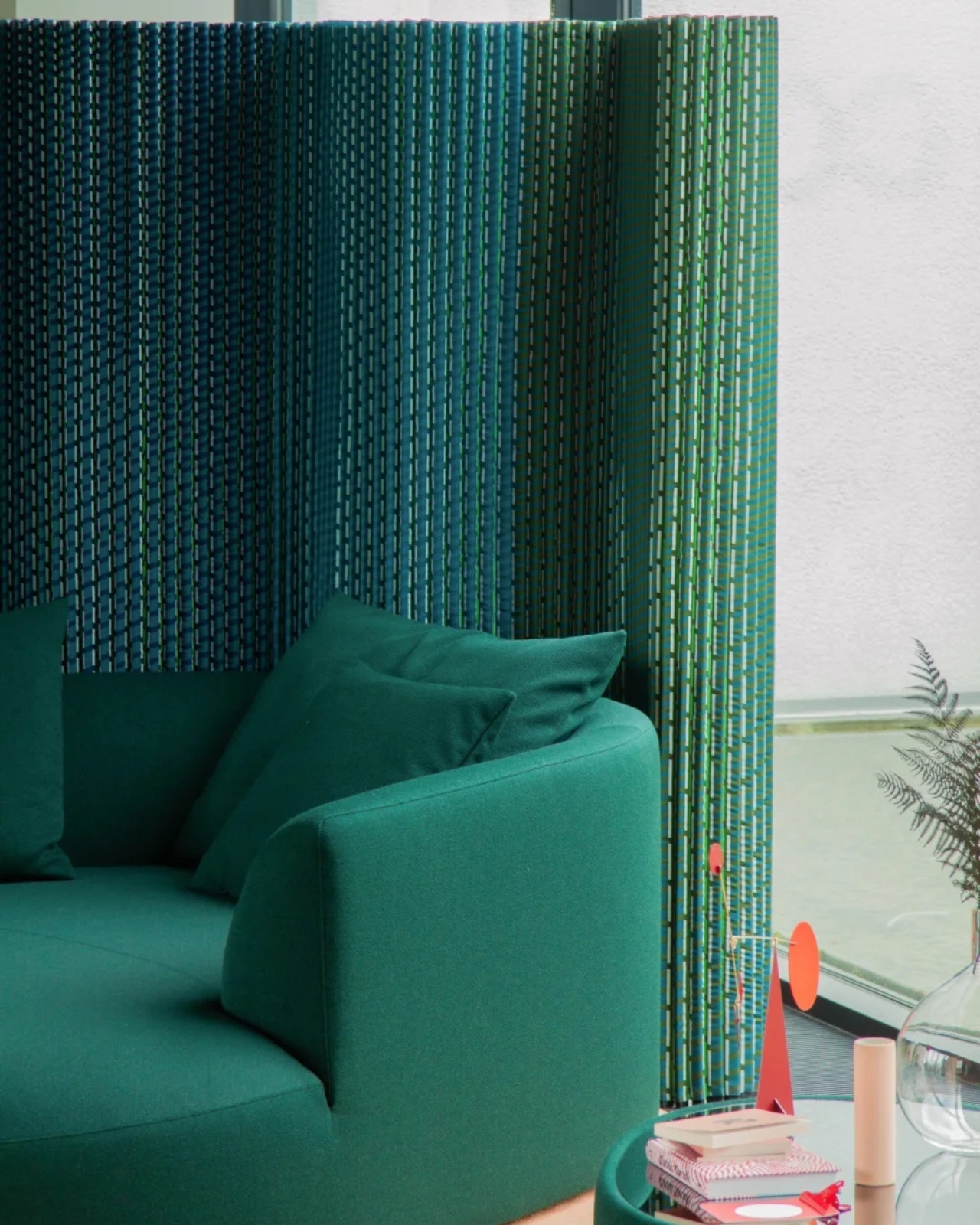
The acoustic properties are another bonus feature that makes Plissade particularly relevant for our modern living situations. With more people working from home and living in open-plan spaces, the need for flexible sound management has never been greater. Those pleated layers of textile don’t just look sculptural, they actually absorb sound, creating little pockets of acoustic privacy without the permanence of walls.

And then there’s the visual impact. Luis Marie offers Plissade in vibrant colors that create optical illusions reminiscent of gem facets. The way light plays across those pleated surfaces changes depending on your viewing angle, making the divider feel alive and dynamic. It’s the kind of design detail that transforms a functional object into something you actually want to look at. In a world where so much of our stuff is just background noise, having a piece that demands attention in the best way possible feels refreshing.

What Luis Marie has really done here is challenge our assumptions about what textiles can do. We’re used to thinking of fabric as something that needs support, something that drapes and folds because it’s soft and pliable. But Plissade proves that with the right engineering and understanding of material properties, textiles can be structural, functional, and beautiful all at once. For anyone who loves the intersection of old techniques and new applications, this room divider is a fascinating case study. It takes centuries-old pleating knowledge and applies it to solve very current problems: flexible space division, sound absorption, sustainable material use, and visual interest in our homes and workspaces.

Whether you’re dealing with a studio apartment that needs better zoning, an office that could use some acoustic help, or you simply appreciate design that makes you think twice about material possibilities, Plissade offers something genuinely fresh. It’s a reminder that sometimes the most innovative solutions come from looking at traditional crafts through a contemporary lens and asking, “What if we pushed this further?”

The post This Dutch Studio Just Built a Room Divider From Old T-Shirts first appeared on Yanko Design.


Gemini for TV is rolling out to the Google TV Streamer

Google is continuing to push its Gemini AI assistant into as many of its products as possible. The latest to get the treatment is Google TV Streamer, where Gemini for TV will begin rolling out today and over the coming weeks. The Google TV Streamer had a few minor AI features when we reviewed the hardware, but this new voice-controlled application of Google's Gemini is more robust. It can offer suggestions for viewing based on the preferences of whoever is watching or provide additional context for the content playing. 

We knew from The Android Show this spring that Google was planning to bring Gemini to additional platforms, including televisions. A lot of those plans have been coming to fruition in the final quarter of 2025; for instance, last month Google opened early access to Gemini for Home, which brings a specially-designed AI assistant to its Google Home smart speaker hardware.

This article originally appeared on Engadget at https://www.engadget.com/ai/gemini-for-tv-is-rolling-out-to-the-google-tv-streamer-220448361.html?src=rss

Meta is killing off the external Facebook Like button

Next year will see the end arrive for two of Facebook's external social plugins. The platform's Like button and Share button for third-party websites will be discontinued on February 10, 2026. The blog post from Meta explains that site admins shouldn't have to take any additional steps as a result of the change, although they can choose to remove the plugins before the discontinue date. Any remaining plugins will "gracefully degrade," which sounds much more dramatic than what will actually happen, which is that they'll render as a 0x0 invisible element. 

Ending support for these features marks the end of an era for Meta and Facebook. External Like and Share buttons were introduced in 2010. The tools were promoted as ways for sites to generate more traffic through the social network, which was a major way that people shared and saw articles at that time. The company's official line is that the plugins "reflect an earlier era of web development, and their usage has naturally declined as the digital landscape has evolved." But Facebook also plays a much smaller role in the broader Meta business operation than it once did, and anecdotally, it's less common to see sites running only integrations with a single social network.

Update, November 10, 2025, 4:45PM ET: Corrected the original release date for the plugins.

This article originally appeared on Engadget at https://www.engadget.com/meta-is-killing-off-the-external-facebook-like-button-205207354.html?src=rss

Samsung Ditches Galaxy S26 Edge plans for an even slimmer handset called the ‘More Slim’

Samsung‘s flagship phone strategy has been all over the place lately, and the latest twist in this saga is honestly kind of wild. After months of rumors and contradictions about whether the Galaxy S26 Edge would exist, it turns out the answer is no, but not for the reasons you might think. Samsung apparently has something even more ambitious in the works.

The whole thing started when rumors emerged that Samsung would replace the Galaxy S26 Plus with a new Edge model. Then those plans seemed to reverse, with reports suggesting the Plus was back and the Edge was getting axed entirely. It looked like Samsung had cold feet about the whole slim phone concept. But according to a new leak from Dutch site GalaxyClub, the truth is more interesting. Samsung didn’t abandon the idea of a super-thin flagship. They’re just going bigger, or rather, thinner.

Designer: Samsung

The company is reportedly developing a new device with the internal codename “More Slim,” which has been in the works for a few months now. The name is a pretty obvious nod to the previous S25 Edge, which carried the codename “Slim” during development. It suggests Samsung isn’t backing away from thin phones at all. They’re doubling down on the concept and pushing it even further.

Here’s where things get puzzling though. The Galaxy S25 Edge, which did make it to market, had some pretty significant compromises. You got just a dual-camera setup with no telephoto zoom capability, and Samsung crammed in only a 3,900mAh battery to keep things thin. For the premium price tag attached to it, those trade-offs felt steep. Now Samsung wants to make something even slimmer? The engineering challenges alone would be intense. You need custom components that can fit into tighter spaces, which drives up manufacturing costs considerably. And the elephant in the room is how they plan to address battery life when they’re already starting from a modest capacity.

The math doesn’t immediately add up from a consumer perspective. Making a phone thinner for the sake of thinness is a questionable strategy when it means sacrificing features people actually use every day. Unless Samsung has figured out some breakthrough in battery technology or component miniaturization that we don’t know about yet, it’s hard to see how More Slim won’t face the same criticism the S25 Edge received.

Still, Samsung must have a plan. Maybe they’re betting on a specific market segment that prioritizes aesthetics and portability above all else. Maybe there’s new tech in the pipeline that makes these compromises less painful. Maybe this will help bolster the tri-fold they just recently teased. Whatever the case, we’ll probably hear more details in the coming months as development continues. For now, it’s just another chapter in Samsung’s increasingly chaotic flagship phone strategy, and one that leaves more questions than answers about where they’re really headed with their premium lineup.

The post Samsung Ditches Galaxy S26 Edge plans for an even slimmer handset called the ‘More Slim’ first appeared on Yanko Design.

Snap is bringing back 2D Bitmoji for Snapchat+ subscribers

Snap is offering Snapchat+ subscribers the chance to have 2D Bitmoji avatars once again. In the coming days, they’ll be able to activate a setting called Comic Bitmoji. Snap said this will revive “the charm of classic avatars, while keeping all the benefits of today’s 3D infrastructure.” If you turn on Comic Bitmoji, all Bitmoji avatars that you see in Snapchat will be rendered in 2D. You’ll also be able to send stickers to your friends in that style.

Snap switched from 2D to 3D avatars back in 2023. The company said the move allowed it to offer a larger array of customizations, including more body types, hairstyles and makeup looks.

However, many users yearned for a return to a 2D look. Nearly 100,000 of them signed a Change.org petition demanding the return of 2D Bitmoji, and Snap said it listened. CEO Evan Spiegel signed the petition too.

Snap says Comic Bitmoji effectively applies a filter to the 3D avatars. To make the animations and expressions work properly in the 2D format, the team had to make adjustments to proportions, shading and outlines, according to Fast Company. Snap said that more than 320 million people use Bitmoji every day, so getting the 2D renders right was important.

It’s a little disappointing that Snap is locking the the Comic Bitmoji setting behind a paywall. However, it seems like just the kind of feature that might prompt more users to sign up for a Snapchat+ subscription.

This article originally appeared on Engadget at https://www.engadget.com/apps/snap-is-bringing-back-2d-bitmoji-for-snapchat-subscribers-202257144.html?src=rss

DIYer builds first 100% solar-powered drone that flies without batteries

It’s not usual for DIYers to step up and experiment with the logic of solar-powered devices as we know it. The ideal generally is to keep it simple. Add solar panels, connect them to a battery system, and power the connected devices. But that’s way too straightforward for Luke Maximo Bell, who runs an eponymous YouTube Channel and already has a Guinness World Record to his credit.

Last year, Luke and his father challenged the record for the fastest drone from Red Bull with their 3D-printed drone. It not only officially surpassed the former’s top speed of 350km/h, but actually bettered it by nearly 50 percent, hitting high speeds of 500km/h (310mph). A record-breaking feat verified by the team at Guinness Book of World Records.

Designer: Luke Maximo Bell

The idea of this new solar-powered drone, based on an X-shaped frame, is not to shatter any records per se, but to experiment with the feasibility of a drone that runs completely on solar power, without any battery attachments. Of course, as you see it, a drone like that would practically have little real-world applications, but it could pave the way for more exploration, certainly. Maybe the kite festival of Jaipur, India, could see ropes tethered to kites mounted with solar panels on them someday.

Jokes apart, Luke as for years had this thought of, what if a drone could fly on solar power alone? And this project is “designed to find that out.” From the video demonstration, the drone looks like nothing more than a flying sheet of solar panels, but it has been successfully tested to fly, which is an achievement.

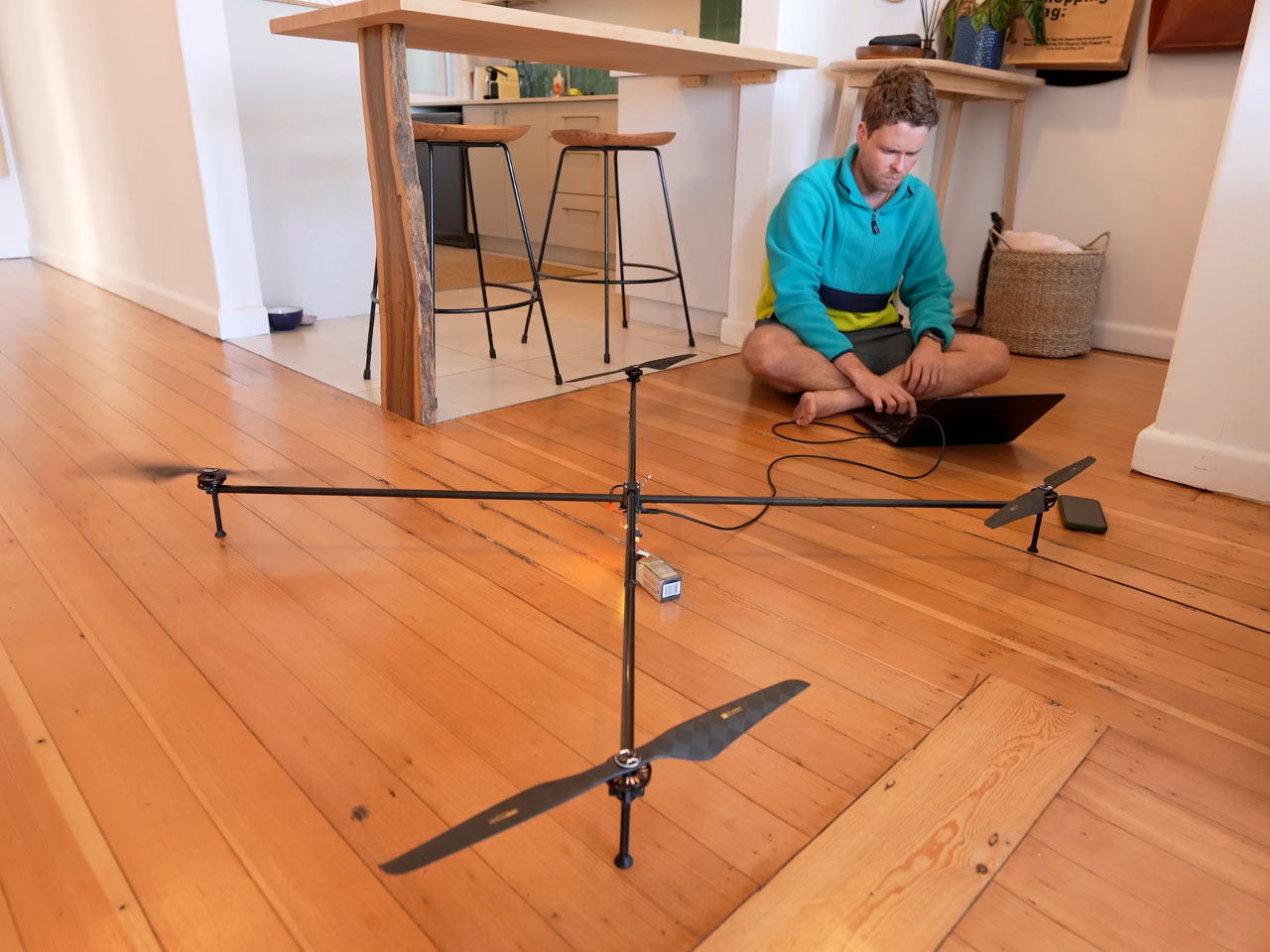
The idea of the drone is based on two parts, as Luke puts it, the drone itself (comprising antigravity motors residing on 3D printed mounts, propellers, and frame. And the second part being the photovoltaic panels. Both are combined to create this sun-loving drone that keeps airborne as long as the sun shines on it. The 18-inch X-frame of their unique drone is made of carbon fiber tubing, and it features the decisive flight controller installed right at the X intersection of the two frame bars holding the propellers at their ends.

Understandably, the entire contraption has taken Luke hours of jostling through the odds, check out the video above for more details; but he has been able to pull it off. With solar panels and no batteries on board, the drone does take off after a few nervous minutes on 100 percent solar power alone. The flight was a “bit shaky,” Luke says in the video, but it’s “flying,” and the testing was “successful,” he proudly notes.

The post DIYer builds first 100% solar-powered drone that flies without batteries first appeared on Yanko Design.

Renders show off Samsung’s upcoming Galaxy S26+

It looks like Samsung is sticking with its Plus line of Galaxy phones, according to a report by Android Headlines. This comes after rumors swirled that the company would be dropping the Plus line in favor of the slim Edge handset. This report indicates that not only is Samsung keeping the Plus, but it's ditching the well-reviewed Edge entirely.

A leaker has given us a peek at the forthcoming S26+ and it looks similar to the company's other modern smartphones. The camera island has been tweaked a bit. The leak shows a small, raised camera island, which is different from the design of the S25+.

Also, the leaked images seem to suggest that the S26+ won't have the full-width camera that was rumored to be coming with the S26 Edge. That phone is now reportedly cancelled, so we don't know when we'll get that camera.

The publication suggests that the S26+ will be 7.35mm thick, which is in line with the S25+. It also seems to be decidedly chunkier than the S25 Edge, so this is likely not a covert rebrand. The Verge has suggested that the company is also ditching the long-rumored S26 Pro. In other words, we'll likely be getting a standard S26, the S26+ and the S26 Ultra next year. That's the same naming convention as this year.

We won't have too long to wait for actual details from Samsung. The company typically reveals new Galaxy phones sometime in January. It's been reported that Samsung is dropping the Edge due to poor sales. However, Dutch fansite Galaxy Club has reported that the company is still developing a slim handset for release sometime in the coming years.

This article originally appeared on Engadget at https://www.engadget.com/mobile/smartphones/renders-show-off-samsungs-upcoming-galaxy-s26-194014359.html?src=rss

Use this hack to get a year of Peacock for $49 before Black Friday

Walmart is offering its Walmart+ subscription at half off for new sign-ups, and it includes a choice of either Peacock Premium or Paramount+ Essential. The deal for new subscribers is just $49 for the first year, marked down from $98.

The real value is in selecting Peacock Premium, which would normally run you $110 per year on its own. With the current discount on a Walmart+ subscription you are essentially getting half off on your streaming subscription for that year.

Just about every major streaming service has raised its prices in the last year, including HBO Max, Disney+, Netflix, Apple TV and YouTube TV, so saving some money on one of them just might be worth the effort. Cord cutting is not nearly as affordable as it used to be, so finding a deal like this is pretty helpful.

Walmart+ itself offers myriad additional benefits like early access to Black Friday deals, free shipping on orders over $35, discounts on gas, free online veterinary care and more. Earlier this year, Walmart+ subscribers got first dibs on the Nintendo Switch 2 at the retailer. You can also use that free shipping to take advantage of Walmart's drone delivery program in a handful of select cities.

This article originally appeared on Engadget at https://www.engadget.com/deals/use-this-hack-to-get-a-year-of-peacock-for-49-before-black-friday-192739009.html?src=rss

Fotile’s X20 Max Is the Space-Saving Dishwasher That Finally Fixes the Bending Problem

Fotile may not be a household name everywhere yet, but in China, the company has been quietly transforming kitchens for nearly three decades. This design-savvy brand was founded in 1996 in Ningbo, a vibrant city neighboring Shanghai, and its journey began with range hoods that quickly set new standards for form and function. Since then, Fotile’s lineup has blossomed to include everything from ovens and microwaves to refrigerators, washing machines, and, most notably, cutting-edge dishwashers. Guided by a mission to enhance everyday kitchen life, Fotile blends advanced technology with modern, ergonomic design, earning a devoted following at home and growing recognition abroad.

Fotile isn’t satisfied with merely following trends. The brand is busy setting them. The company’s kitchen innovations have earned international acclaim, with dozens of prestigious design awards and a footprint that extends to over 30 countries. This global success is rooted in a deep commitment to research, sustainability, and an unwavering focus on real user needs. With more than 16,000 patents to its name, Fotile is a go-to brand for those who want their kitchens to blend performance with style.

A visit to Fotile’s headquarters reveals just how seriously the company takes its legacy of innovation. While the showroom isn’t open to the public, those lucky enough to step inside are greeted by a visual celebration of Fotile’s achievements. Patent certificates are artfully arranged to form a tunnel, inviting visitors to walk through a corridor of invention. Immersed in this glowing passage, you cannot help but feel the depth of dedication and creativity that drives Fotile’s mission to make everyday life better for millions of families.

A New Era in Dishwashing: The X20 Max 3-in-1 In-Sink Dishwasher

Now, Fotile is making headlines with the X20 Max, a flagship in-sink dishwasher that is redefining what’s possible in compact, modern kitchens. Imagine a single, sophisticated station where you can prep, rinse, and wash everything from plates to produce, all without ever bending over or sacrificing precious counter space. The X20 Max brings together a sink, a dishwasher, and a dedicated cleaning zone for fruits, vegetables, and even seafood, wrapped in a seamless, minimalist charcoal-grey shell that feels right at home in any contemporary kitchen.

This clever design addresses two of the biggest complaints about traditional dishwashers. First, it saves space, thanks to a top-open configuration that means you no longer need to leave room in front for a bulky door to open. Its narrower profile makes it ideal for apartments, small homes, and anyone looking to maximize efficiency. Second, the top-open design means no more awkward bending to load or unload, making the chore of dishwashing easier on your back and your daily routine.

The magic does not stop at ergonomics. Powered by Fotile’s proprietary High Pressure HydroJet technology, the X20 Max delivers thorough, multi-stage cleaning not just for dishes but also for fresh ingredients. When you wash fruits, vegetables, or seafood, it’s like a jacuzzi for your produce – gentle streams and swirling water bubbles remove up to 99 percent of pesticide residues, so you can prep food with confidence and a touch of delight. Multiple cleaning modes ensure that everything, from delicate greens to heavy cookware, gets the right care with a simple press of a button.

In a recent demonstration, the X20 Max handled a variety of produces without issue, even delicate raspberries. After the multi-stage cleaning, even the most fragile berries emerged completely intact, highlighting the thoughtful engineering behind the system. For busy households, the X20 Max also cuts the typical washing cycle to about 30 minutes while maintaining impressive cleaning power. According to a Fotile representative, its cleaning strength actually surpasses that of many standard dishwashers available in the U.S., giving users sparkling results in less time.

Fotile’s innovative approach isn’t limited to traditional homes. The company also offers space-saving in-sink dishwasher solutions that are perfectly suited for RVs and other compact living environments. With their streamlined footprint and top-open design, these dishwashers make it easy for travelers and small-space dwellers to enjoy the same level of cleanliness and convenience, no matter where the road takes them. This versatility has earned Fotile praise from RV owners and apartment residents alike, highlighting how thoughtful engineering can bring comfort and efficiency to every kind of kitchen.

Why This Matters in China – and Beyond

To understand why Fotile’s dishwashers have become a sensation in China, it helps to know a bit about local culture. Chinese households tend to wash dishes immediately after every meal, and the tradition of meticulously cleaning produce before eating or cooking is common. With family sizes shrinking and urban living spaces becoming tighter, the demand for compact, efficient, and easy-to-use kitchen appliances is at an all-time high.

Fotile’s innovative approach has resonated deeply, helping to turn dishwashers from a niche luxury into an essential part of daily life. But the appeal is not limited to China. Since expanding globally, Fotile has tailored its solutions to diverse cooking habits and kitchen layouts, earning praise from users and experts alike. The X20 Max, with its streamlined workflow and intuitive features, is poised to make life easier for busy families, apartment dwellers, and anyone seeking a cleaner, more beautiful kitchen.

If you are searching for a kitchen upgrade that blends thoughtful design, proven technology, and genuine user-friendly features, Fotile’s X20 Max deserves a closer look. It brings together the best of modern engineering and practical elegance, promising a new era of comfort and efficiency for kitchens around the world. With its focus on real-life needs and a flair for innovation, Fotile continues to inspire a smarter, cleaner, and more beautiful way to live.

The post Fotile’s X20 Max Is the Space-Saving Dishwasher That Finally Fixes the Bending Problem first appeared on Yanko Design.
Northern lights could be visible in 15 states this week

US residents across 15 states could be in for a show tonight and throughout the week. Incoming coronal mass ejections may spark geomagnetic storms that blaze up the northern lights for all to see, according to a report by the National Oceanic and Atmospheric Administration (NOAA).

Forecasters anticipate geomagnetic activity and aurora displays from November 10 until November 12 in states such as New York, Minnesota, Iowa and Alaska, among others. This is due to a trio of coronal mass ejections that began on November 7.

This week's view.
NOAA

As previously stated, the latest NOAA aurora forecast map notes that 15 US states are fully or partially above the view line. This isn't an exact science, as it's entirely possible that those living below the view line could get a glimpse of something in the night sky. Auroras are fickle, so it's also possible that the lightshow will be understated. A number of conditions have to align for the perfect display.

If you're planning on heading out tonight for a look, here are some tips. Make sure to find a north-facing vantage point with a clear view of the horizon. You want to be as far from light pollution as possible, so head away from large cities. Use a mobile phone to scan the skies as the camera is actually better at picking up faint lights before being visible to the naked eye. This can help pinpoint where to focus attention.

The last truly powerful and widespread aurora event in the US took place last year. That geomagnetic storm was one of the strongest in the past two decades. It's unlikely this week's activity will be quite as striking.

This article originally appeared on Engadget at https://www.engadget.com/science/space/northern-lights-could-be-visible-in-15-states-this-week-180056871.html?src=rss