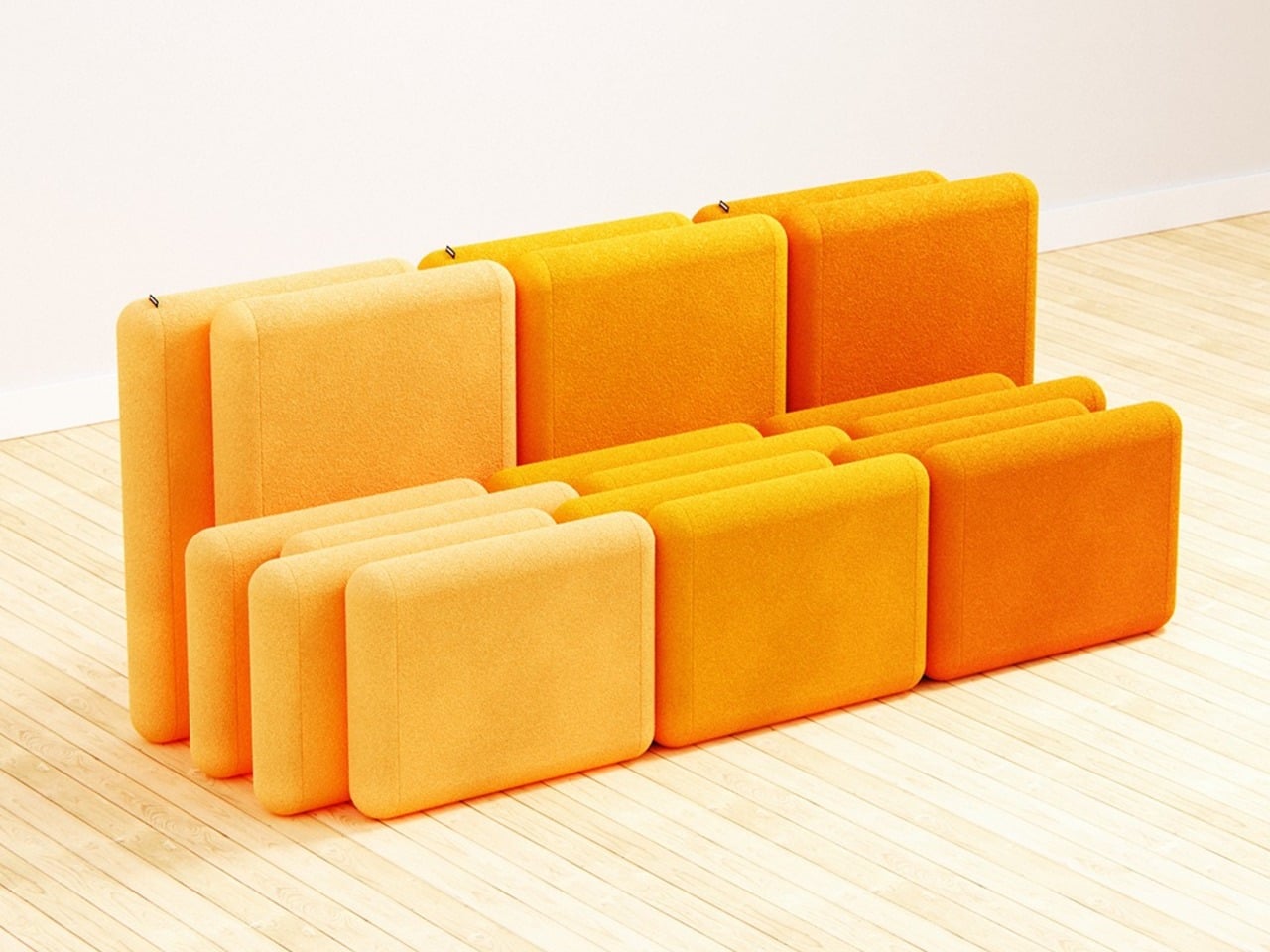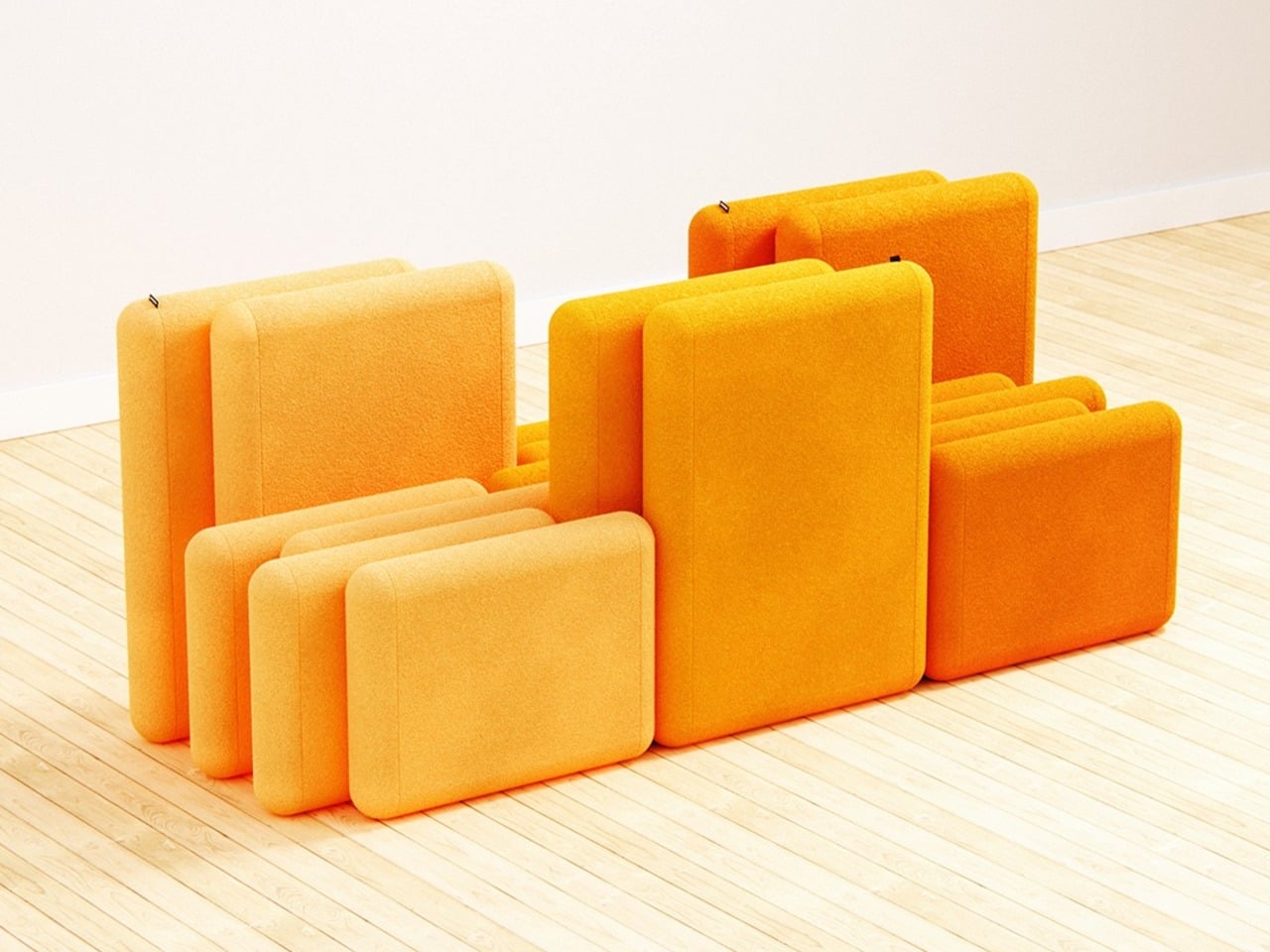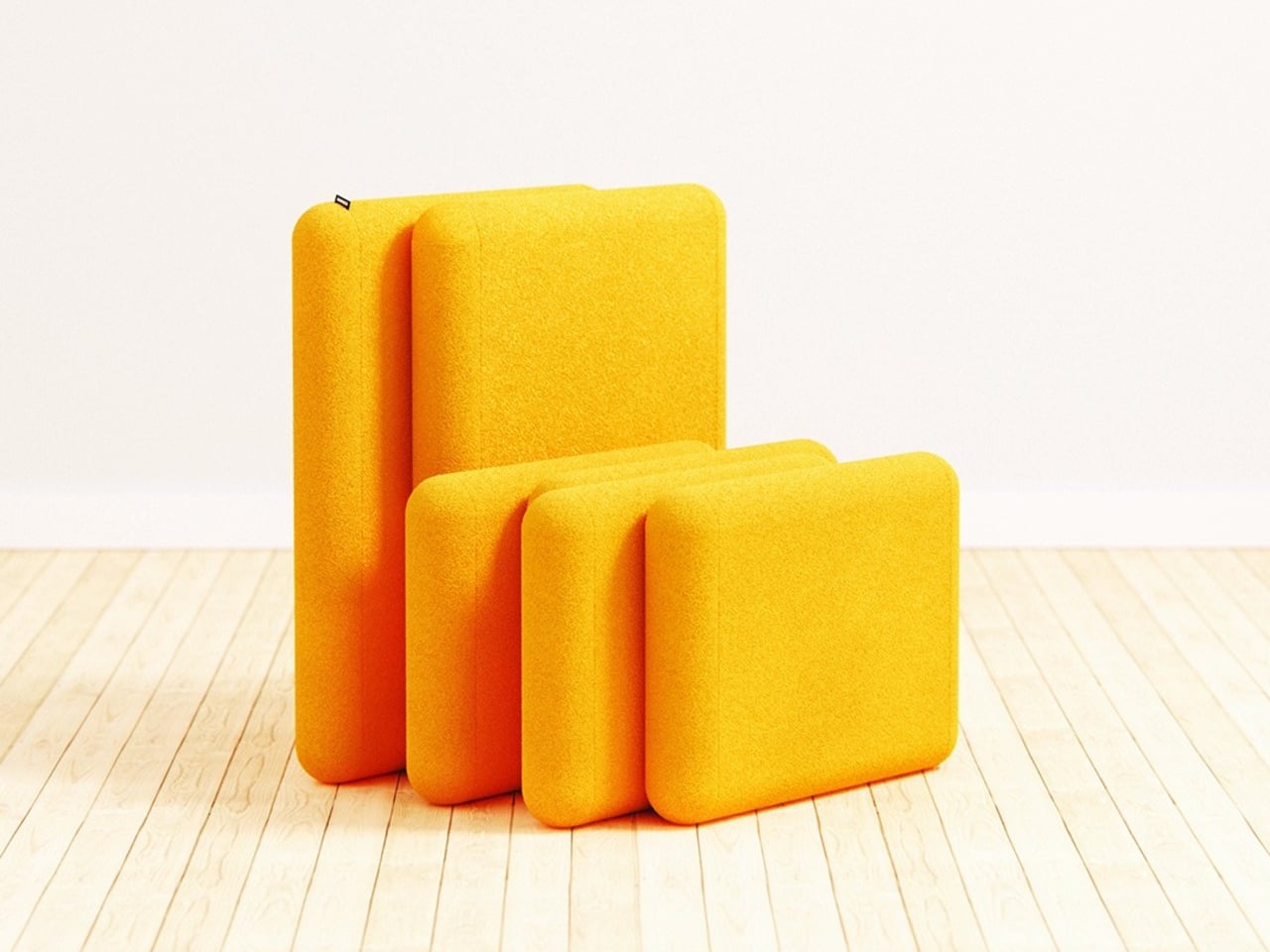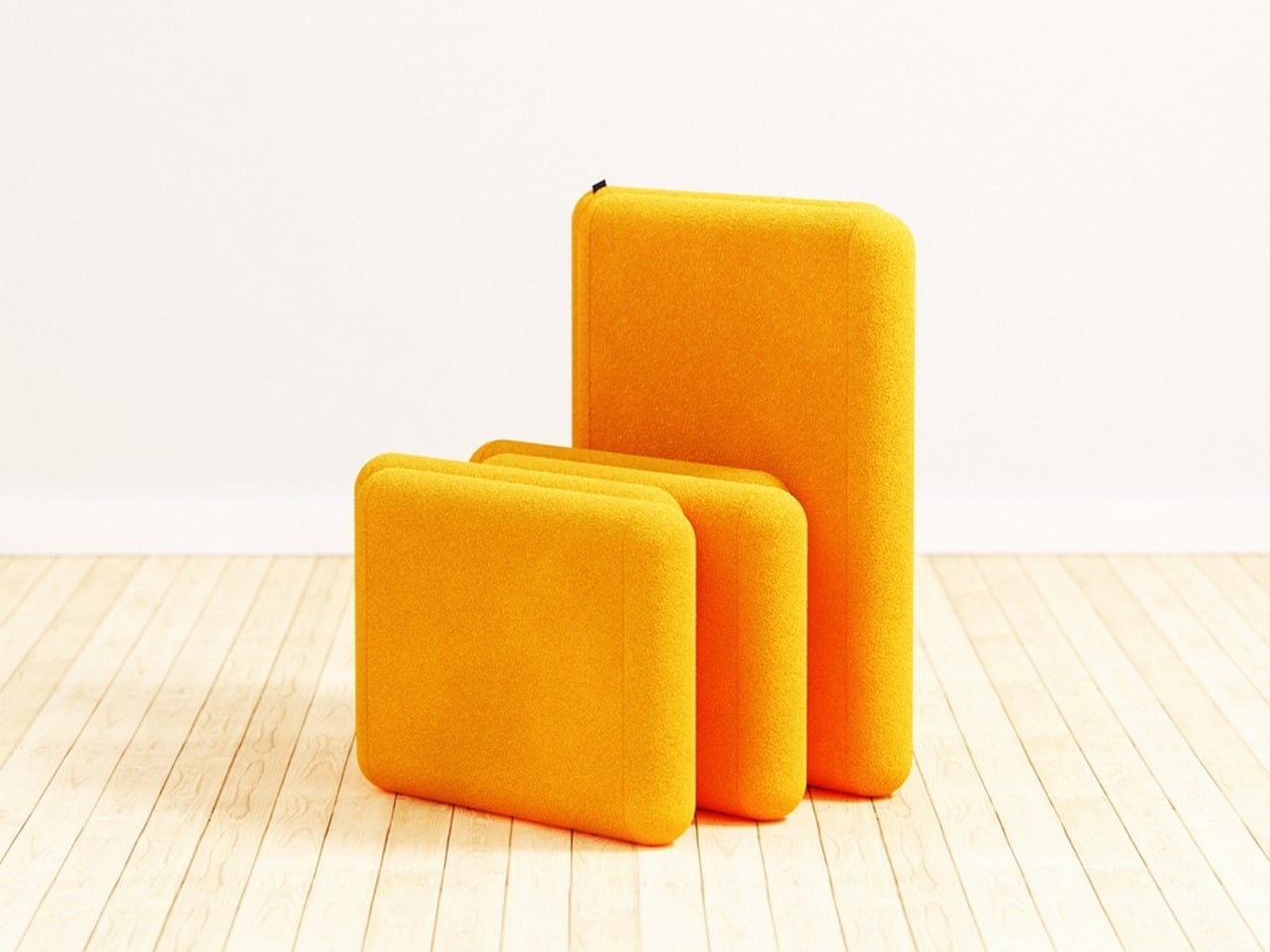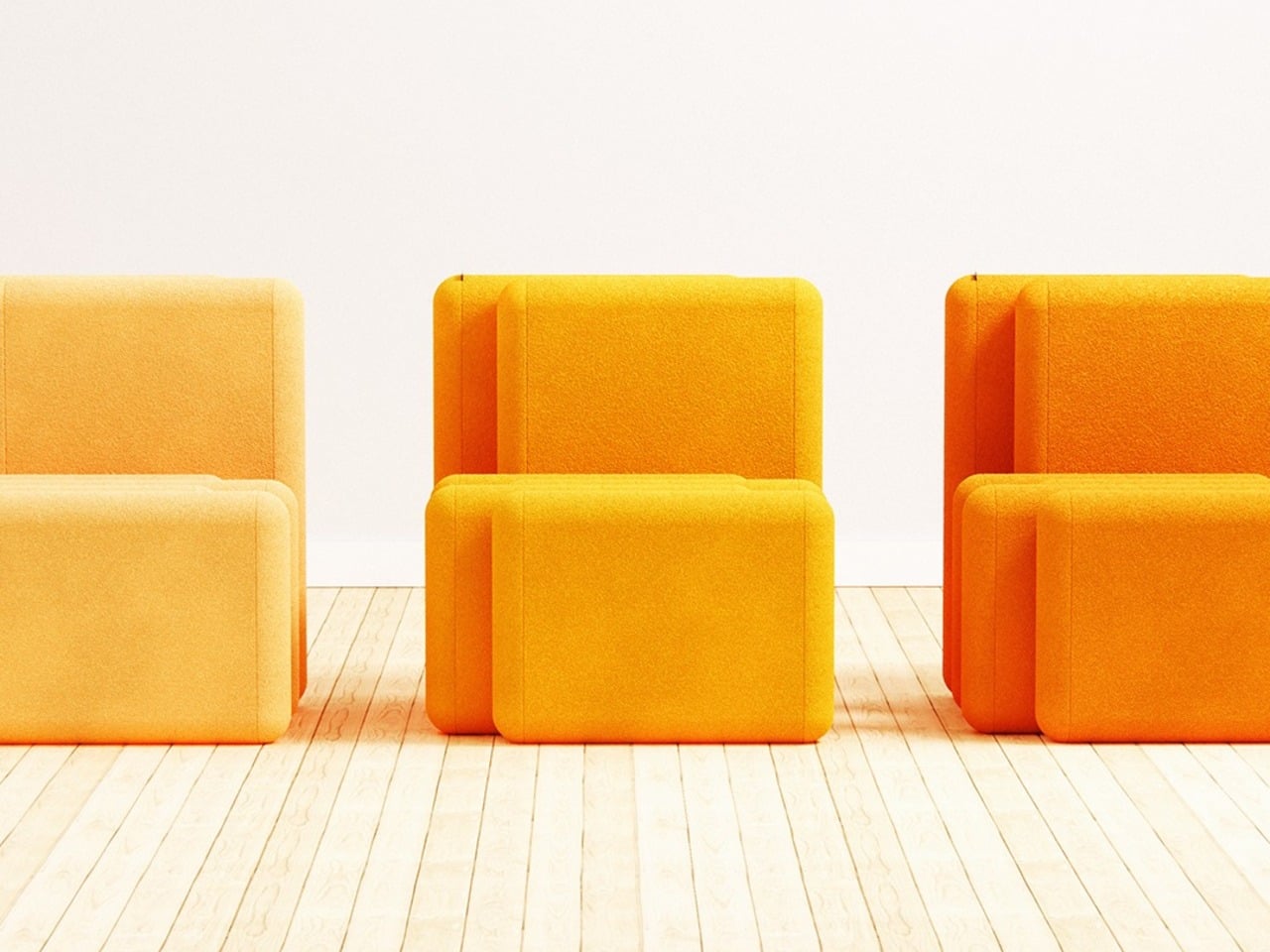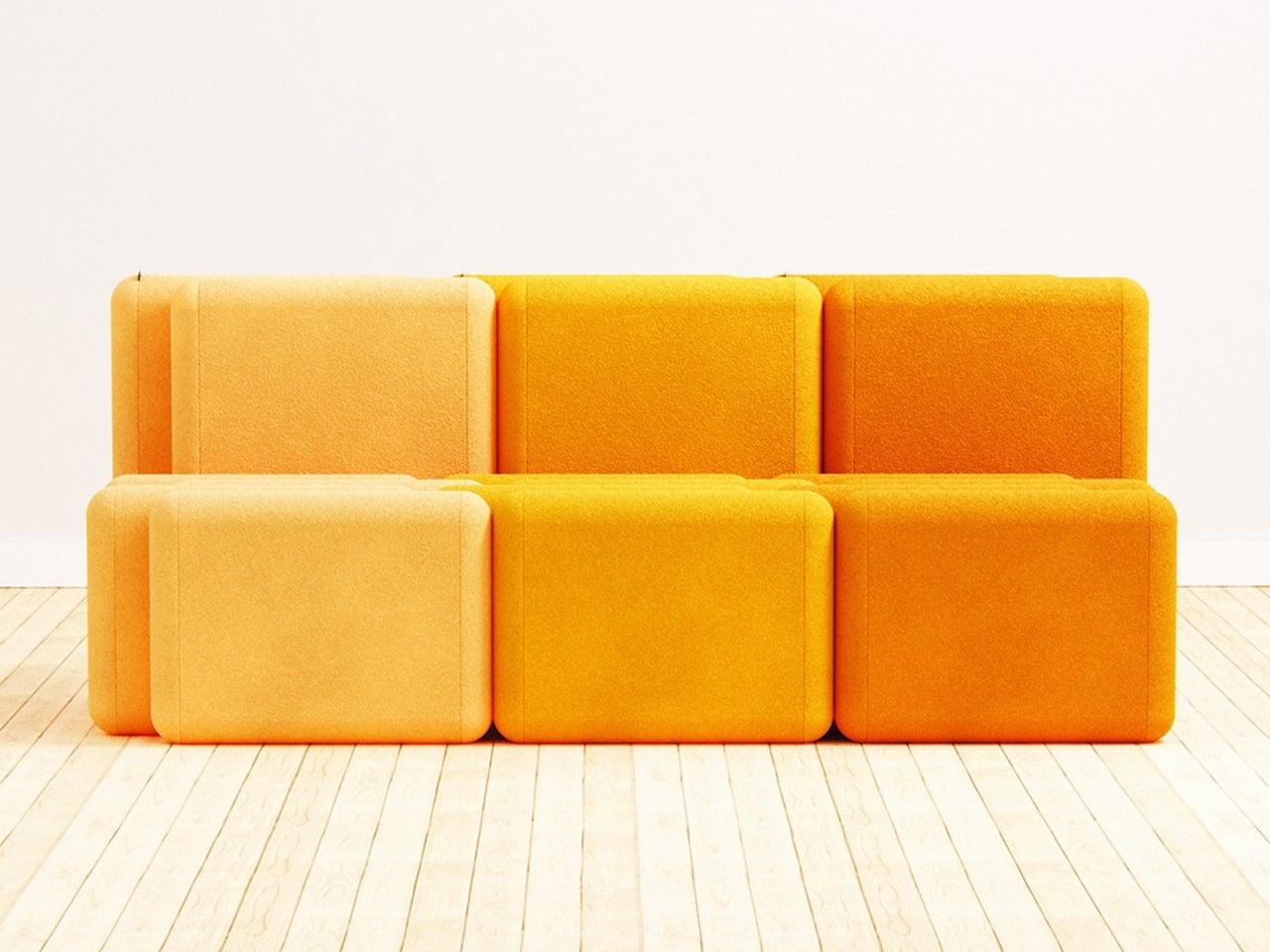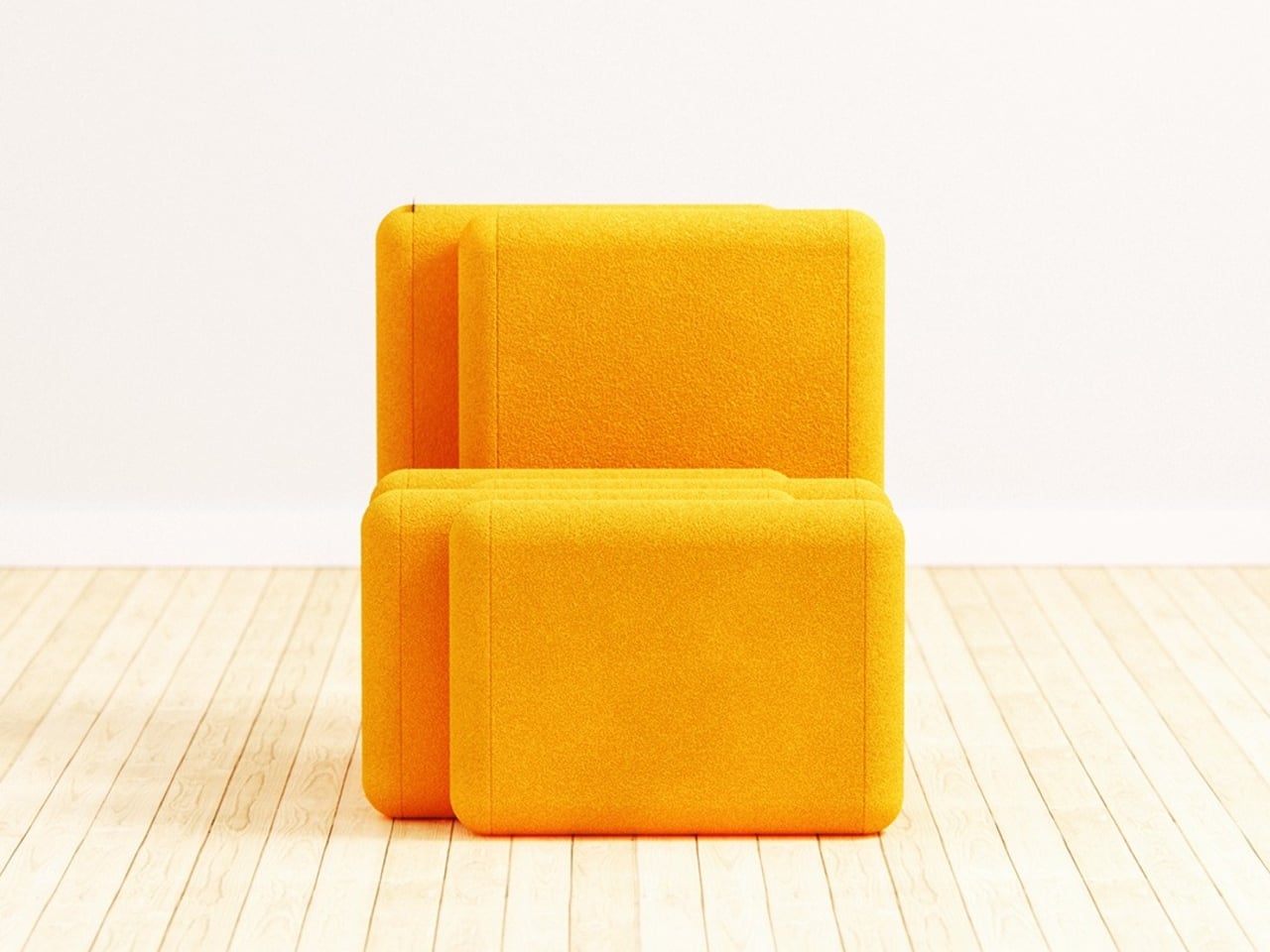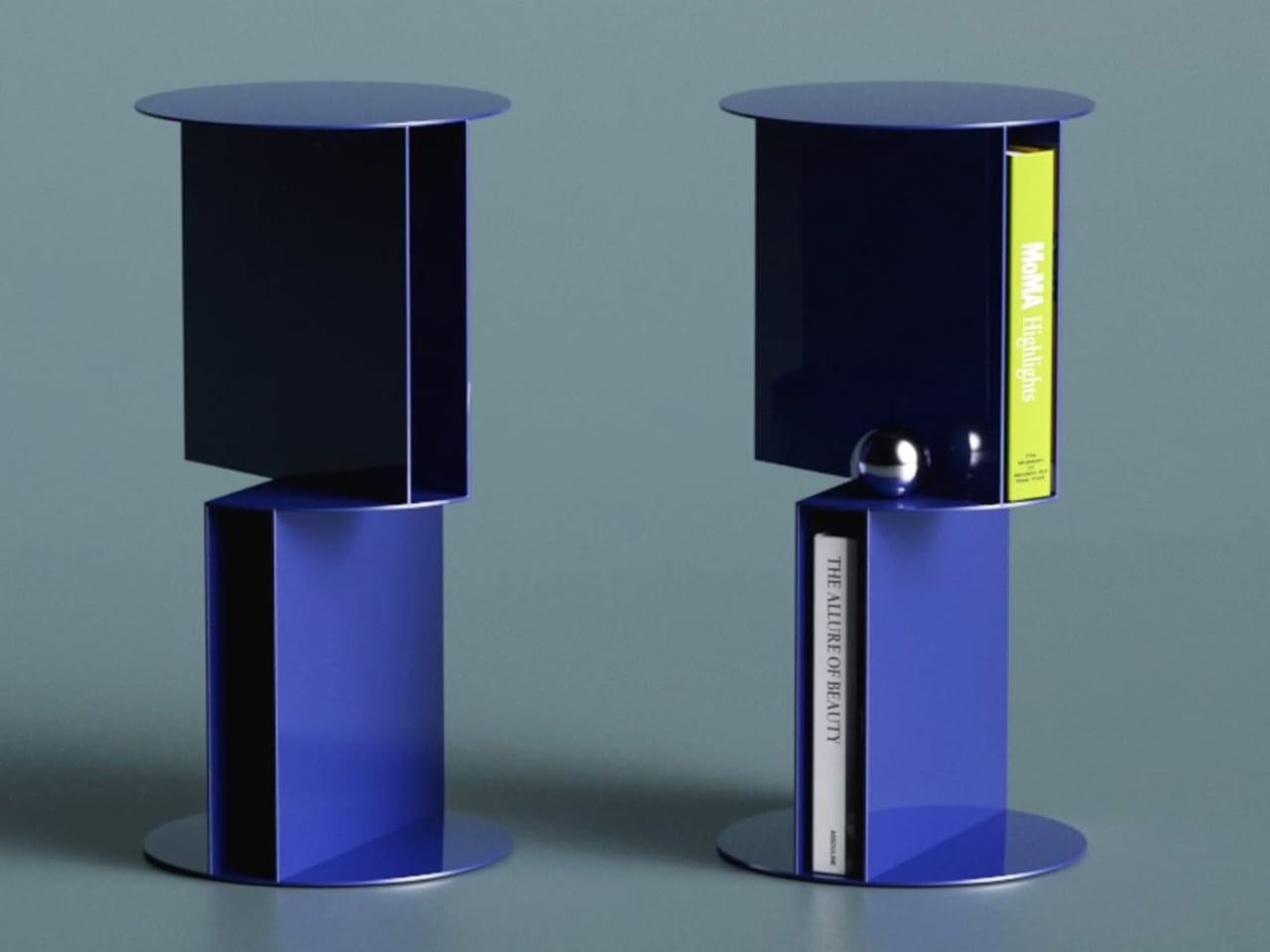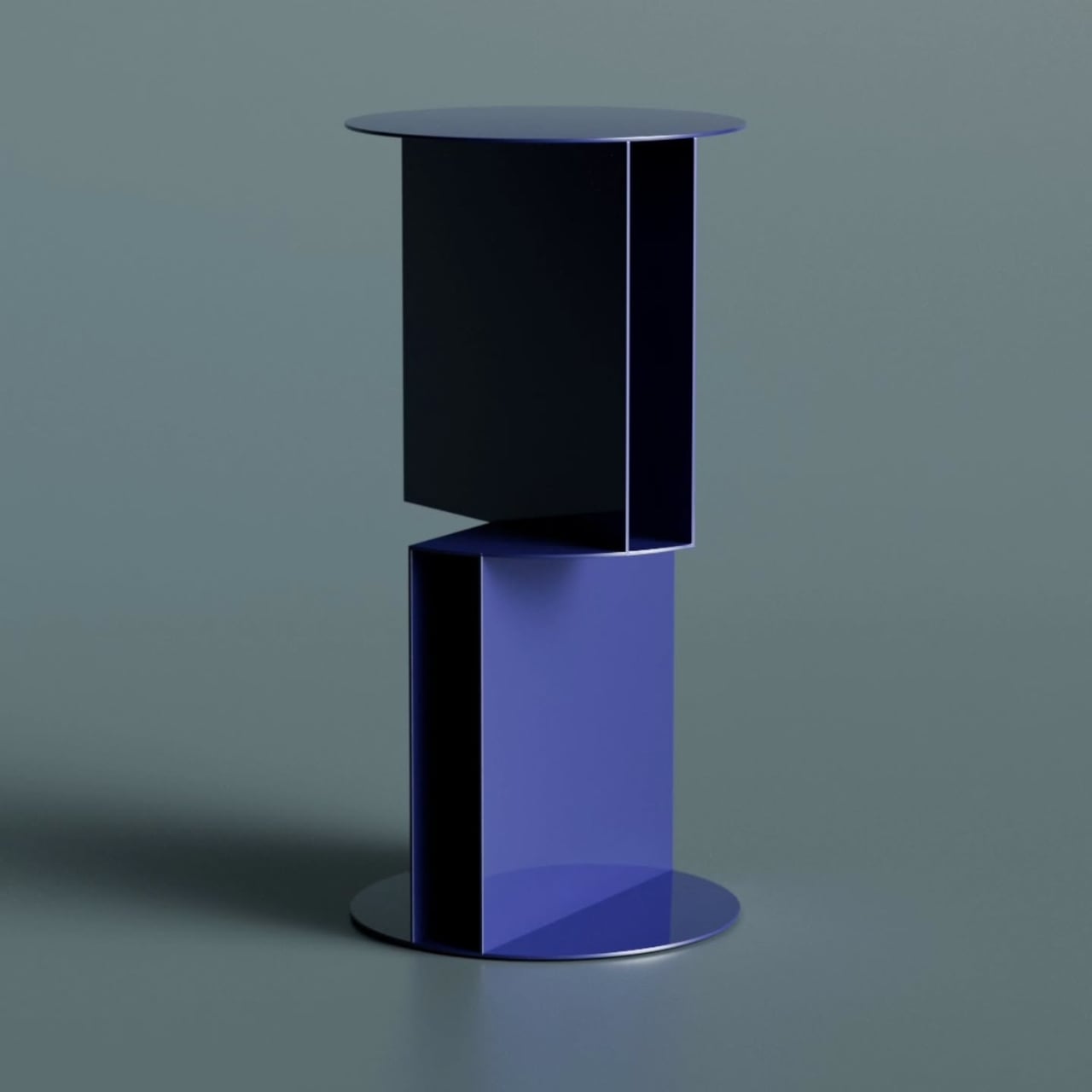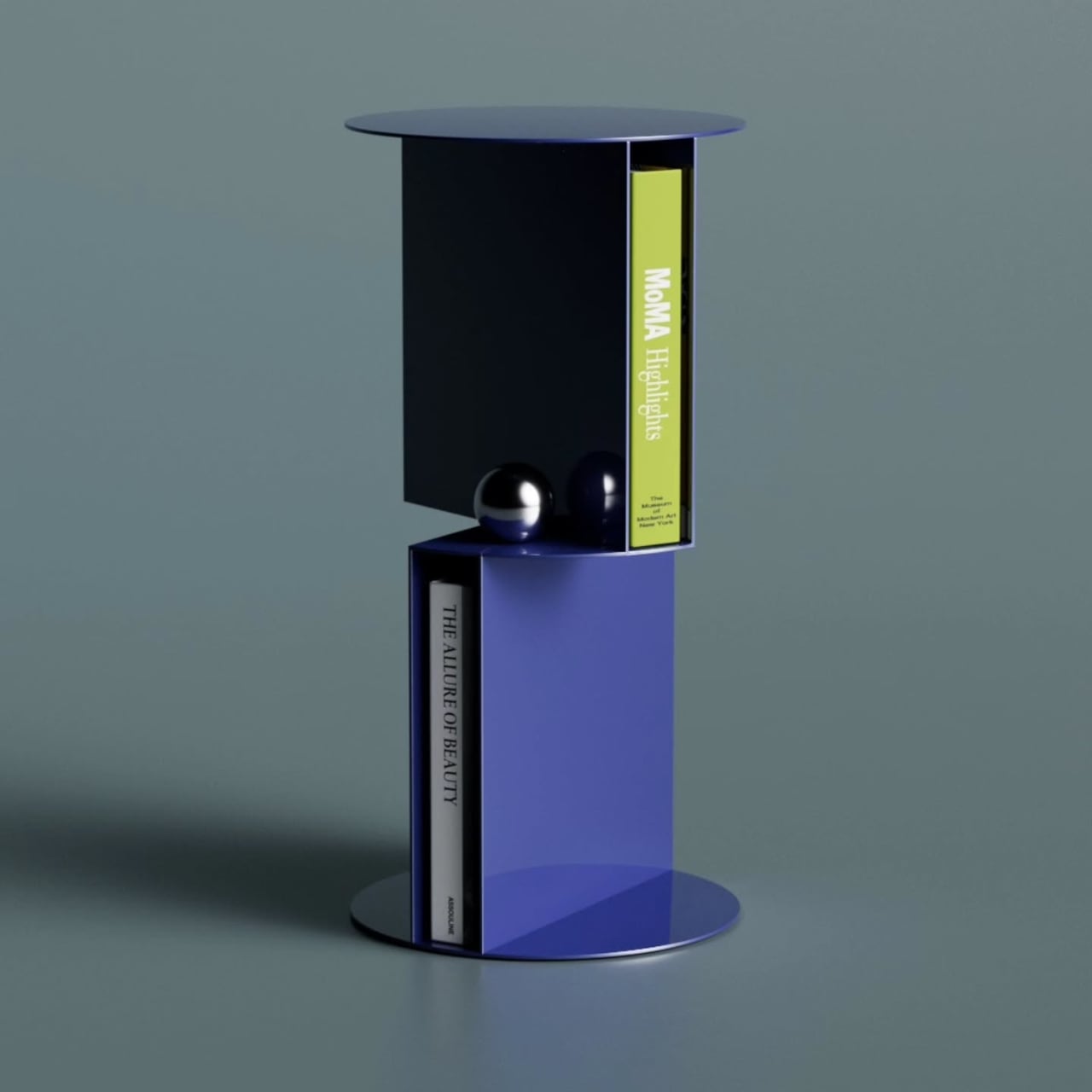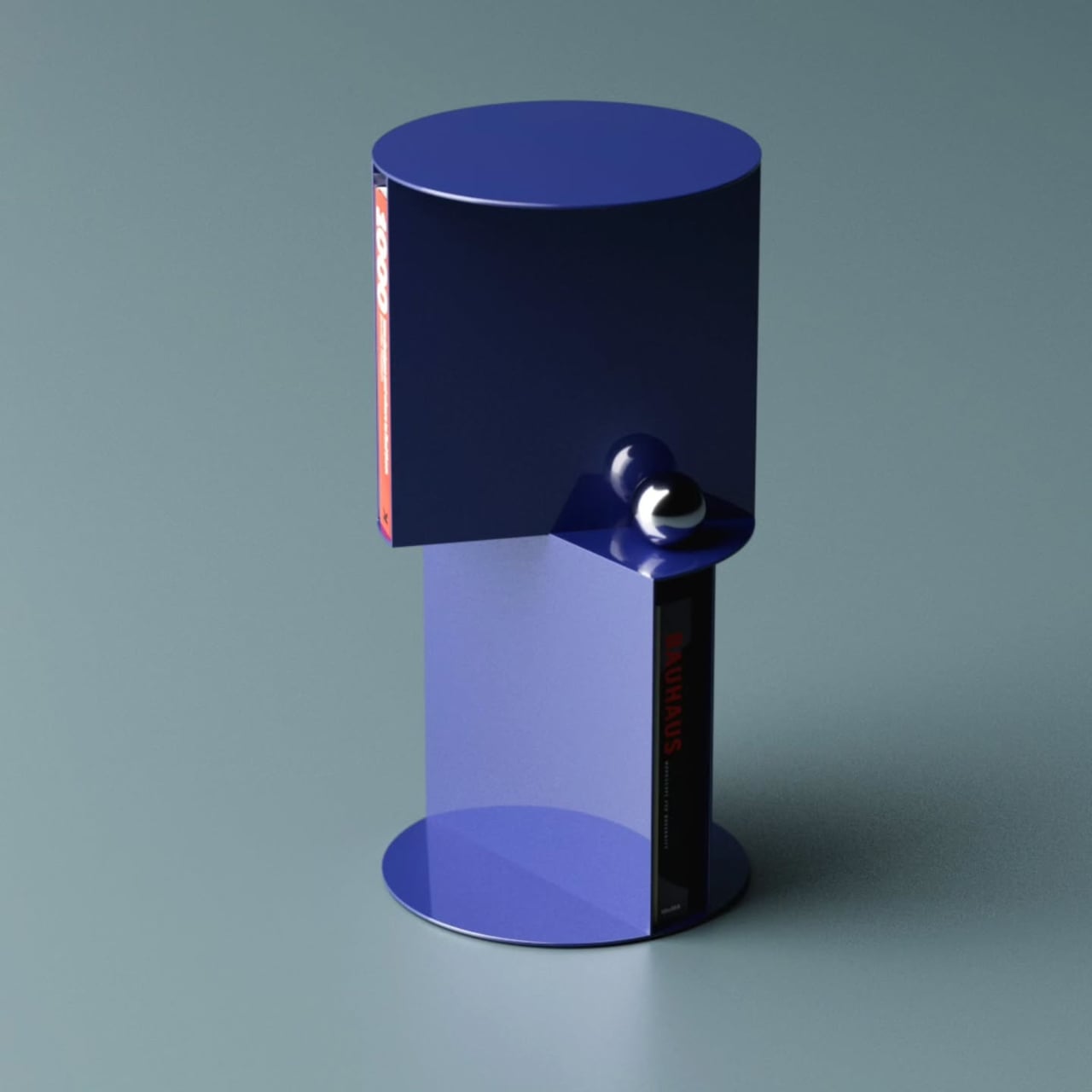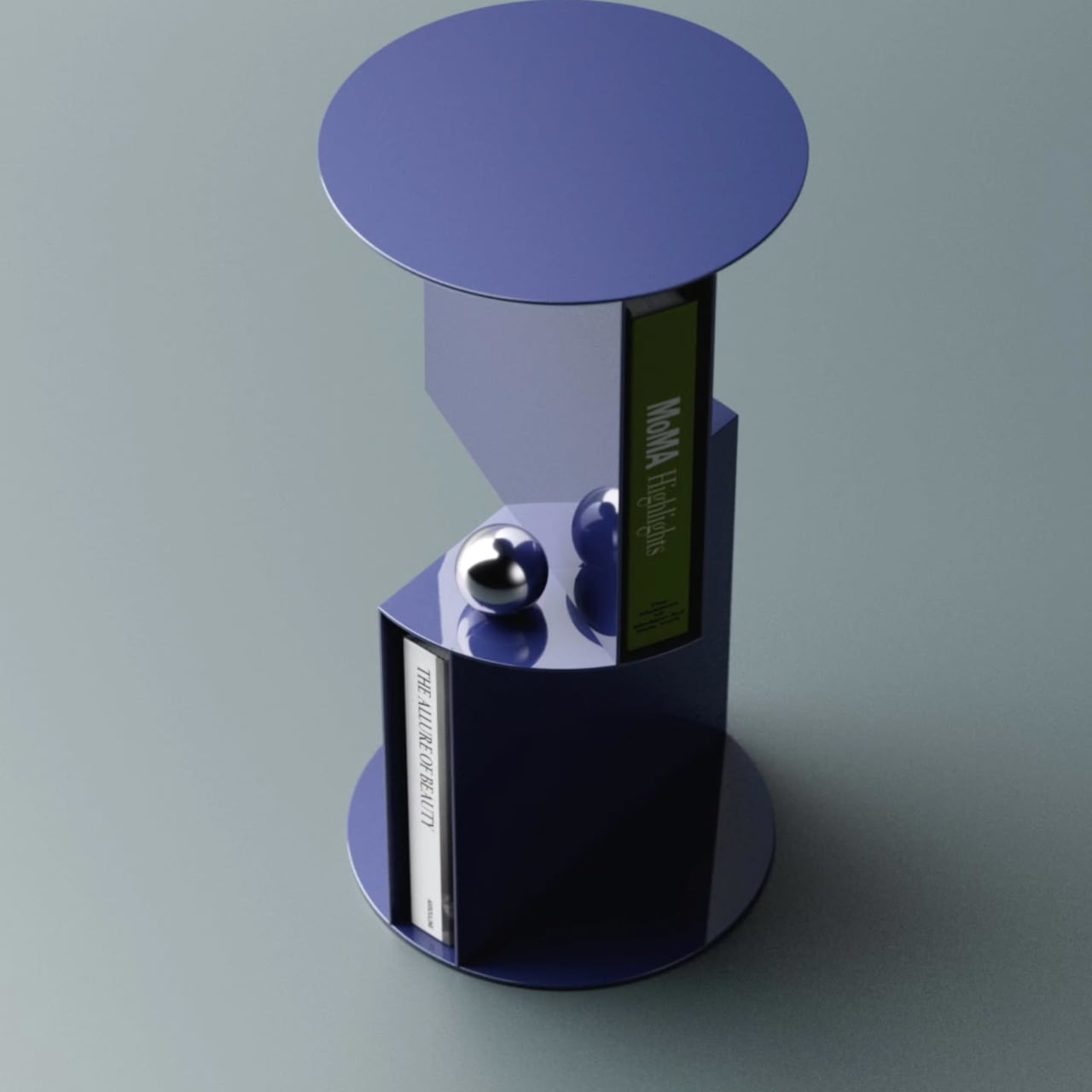
This mathematical equation-inspired flatpack table has an integrated vinyl player and wireless charger

Way back in 1903 the English mathematician Henry Ernest Dudeney worked out a way to morph a perfect square into an equilateral triangle. The trick involved dissecting the square into rearrangeable four distinct shapes. This method holds merit even after more than a century of varied applications.

Fast forward to 1986, and the mathematical formula was experimented with by architect David Ben-Grunberg and his artist father Maty Grunberg to create a table. This piece of furniture dubbed DTable was a unique creation at that time since it doubled as a storage solution, seating, or a centerpiece for the living room. Furthermore, the eight different configurations from a square to a triangle shape brought an element of freshness and the freedom to put in any space with any arrangement. The individual pieces could be detached to act as stand-alone pieces too.

Designer: DHaus

In that era, the table design by DHaus was as exclusive as it could get and the high-end offering was manufactured in Denmark for an exorbitant price. The design studio has now reincarnated the DTable as a low-cost flat-pack furniture piece, initially as a prototype, that’ll later hit production lines with the option to customize the finish. Dubbed DTable Deco HACK, it is designed in Paris and prototyped in London by Base Models. The table is crafted from recycled plastic materials for a modern, eco-conscious element.

DHaus is going to showcase the new-age prototypes – DTable Deco, Deco GREEN GOBLIN and the Deco HACK at the Paris Design Week. We’re more interested in the Deco HACK version as it has an integrated vinyl player for music lovers. The buck doesn’t stop there as the flatpack table has a Bluetooth speaker, wireless charger, alarm clock and bottle opener. This modern-day inclusion and the highly configurable features of the table make it ideal for apartment living and blend in with contemporary interior décor as well.

There’s no word yet on when the DTable will be available to buy but we can expect some revelation post the Paris Design Week from 5th to 14th September, 2024.

The post This mathematical equation-inspired flatpack table has an integrated vinyl player and wireless charger first appeared on Yanko Design.

Cork in Interior Design: Combining Sustainability with Style

Sourced sustainably from cork oak trees, cork is a renewable material favored in architecture and interior design for its porous texture, softness, and lightweight nature. Its versatility extends to various applications like flooring, walls, furniture, and home accessories, complementing materials such as metal, wood, and marble, and it adds a distinctive touch to any design. The design industry is progressively acknowledging cork’s value, especially considering its eco-friendly extraction method that allows tree barks to naturally regenerate. Also, cork’s ability to reduce plastic usage while offering limitless creative possibilities has firmly established its role in the design field

Designer: MB Cork

What are the advantages of using Cork?

• Renewable

Cork products have a minimal environmental impact, harvested without felling trees. With no waste in manufacturing and recyclability, cork is highly sustainable. Re-harvesting every 14 years makes it rapidly renewable. Demand drives the cultivation of more cork oak trees, promoting a healthier environment.

• Anti-microbial

Cork products promote good health as it is naturally antimicrobial. Cork resists mold, mildew, and pests while its antistatic surface reduces dust absorption. Low in volatile organic compounds, cork improves indoor air quality.

• Sustainable

Cork, a natural material, is fully biodegradable and recyclable, offering endless possibilities for reuse.

• Durable

Cork is commonly used in household items like flooring and bath mats due to its exceptional durability. With resistance to cracking, abrasions, and moisture, cork products can last up to 30 years or more with proper care. Cork maintains its pristine condition under furniture weight, making it a highly long-lasting material.

• Water Resistant

Cork’s high resistance to moisture, oxidation, and decay, due to its suberin and ceroid content, renders it impermeable to liquids and gases. This durability ensures that cork ages gracefully without deteriorating, making it an ideal option for environments with high humidity levels, like bathrooms, kitchens, or tropical climates.

Image courtesy of: FabrikaPhoto

• Provides Thermal and Acoustic Insulation

Cork doesn’t let heat, sound, or vibrations pass through easily because it traps gases in tiny compartments that are sealed off from each other. Wall cork panels offer these benefits and are available in interesting geometric patterns that make rooms look unique.

• Ensures Comfort

Cork offers remarkable comfort due to its cellular structure featuring microscopic gas pads, providing excellent shock absorption. Its soft texture, along with a temperature akin to that of the human body makes it a very cozy material. Note that chairs with cork seats are designed to provide warmth and softness, ensuring seating comfort.

What are the disadvantages of using Cork?

Cork is a comfortable and eco-friendly material as hand-harvesting contributes to its cost. Additionally, cork offers a limited color range, primarily in shades of beige and brown. However, it’s important to note that cork surfaces can be susceptible to damage from pets’ nails, and prolonged exposure to sunlight may cause fading over time, as with many natural materials.

How to incorporate cork into Interior Design?

The different applications of cork include:

1. Furniture

Designers: Erika Avery, Stu Cole

Seating is crucial in daily life, often seen in various forms in public spaces. However, predicting seating needs can be challenging. This stool concept offers a sustainable solution by transforming two stools into a bench and back, as required. The design centers on a sturdy cork column, offering stability and sustainability. The removable seat, with a center hole, can vary in shape and material. This adaptable design minimizes waste and meets changing needs effectively.

Designer: ( ae ) offices

The DOL furniture collection draws inspiration from the rugged volcanic rocks of Jeju Island in South Korea. Crafted from the outer bark of cork oak trees, each piece replicates the raw, uneven appearance of these natural formations. Handcrafted with care, the collection offers a unique blend of comfort, stability, and charm. Despite its unconventional material choice, cork provides lightweight, impact-absorbing, and insulating properties. Wooden profiles enhance structural support, while layers of wood oil and waxes add texture and character. Sustainable and visually captivating, DOL furniture embodies the beauty and resilience found in nature’s aftermath, making it a distinctive addition to any space.

Designer: Noé Duchaufour-Lawrance

The Burnt Cork furniture collection celebrates the resilience of Portuguese cork, with minimalist chairs, tables, and a stool crafted from blocks of blackened cork. Inspired by the forest fires of 2017 in Portugal, these pieces blend functionality with sculptural beauty, making them ideal for display in any living or dining space. With a gradual transition from rigid bases to curved forms, the chairs offer both comfort and aesthetic appeal. The eclectic shape of the stool adds an artistic flair to any room, making the Burnt Cork collection a testament to the enduring beauty and strength of cork as a furniture material.

2. Lighting

Designer: Oorjaa

Taking cues from modern design, this LED hanging pivot lamp, meticulously crafted from lightweight cork and accented with teak wood and brass fittings, creates the perfect ambiance for both work and leisure in corporate offices and residential spaces.

Transforming a traditionally industrial material, this LED hanging fragment box lamp, skillfully crafted from laser-cut lightweight cork, offers gentle illumination ideal for residential and hospitality environments.

3. Acoustic Panels

Designer: ClearSound Acoustics

Corkbee Concave presents acoustic wall panels that allow for unique wall designs. These panels effectively absorb sound and regulate environmental conditions. Made from recycled materials and recyclable themselves, they are sustainable and provide a natural and eco-friendly solution to improve sound quality in any space.

4. Flooring

Image courtesy of: oleksandrsh

Cork flooring is increasingly popular due to its numerous benefits. It offers shock absorption and comfort, lasting up to 40 years with proper maintenance. Additionally, Cork floors resist mold, mildew, termites, and dust, making them hypoallergenic. Their natural variations in tone and texture provide unique aesthetics. Cork floors can be dyed or stained, hold warmth, muffle sound, and are fire-resistant.

5. Home Goods

Designer: Mind the Cork

Mind the Cork offers a stylish collection of home goods crafted from sustainable cork. From hanging planters to cylindrical storage vessels, each piece is designed with eco-consciousness in mind. Founder Jenny Espirito Santo’s passion project has evolved into a line of practical yet minimalist products, including planters, dishware, and storage containers. Sourced from cork oak trees, this biodegradable material undergoes a regenerative harvesting process every decade, ensuring its sustainability. Collaborating with artisans in the UK and Portugal, Mind the Cork delivers functional and environmentally friendly items for modern homes.

6. Cladding

Designer: Atelier SAD and Iveta Zachariášová

This family home in the Czech countryside, designed by Atelier SAD and interior designer Iveta Zachariášová, is clad in cork for its weather-resistant and thermal properties. Situated near Rašovka at the foot of the Ještěd Ridge, the residence integrates seamlessly into the landscape of the Bohemian Paradise Protected Landscape Area. With its sleek design, gabled aluminum roof, and innovative use of Portuguese expanded cork, this home embodies modernity and sustainability. This stunning residence showcases the beauty and functionality of cork as a building material, creating a harmonious blend of architecture and nature.

7. Product Design

Designers: Assorted

Cork, a preferred material in product design, is prominently featured in the INNGAGE woodstove. Its main body, made of steel, incorporates cork profiles fixed at a distance from the structure to prevent darkening over time. Additionally, the cork acts as a safety layer, allowing users to touch and feel the stove securely.’

In conclusion, cork stands out as a remarkable material celebrated for its biodegradability, sustainability, and versatility. As we explore cork’s potential further, it embodies a dedication to environmentally friendly design and conscious consumption.

The post Cork in Interior Design: Combining Sustainability with Style first appeared on Yanko Design.
Tangled outdoor furniture concept provides rest and direction for communities

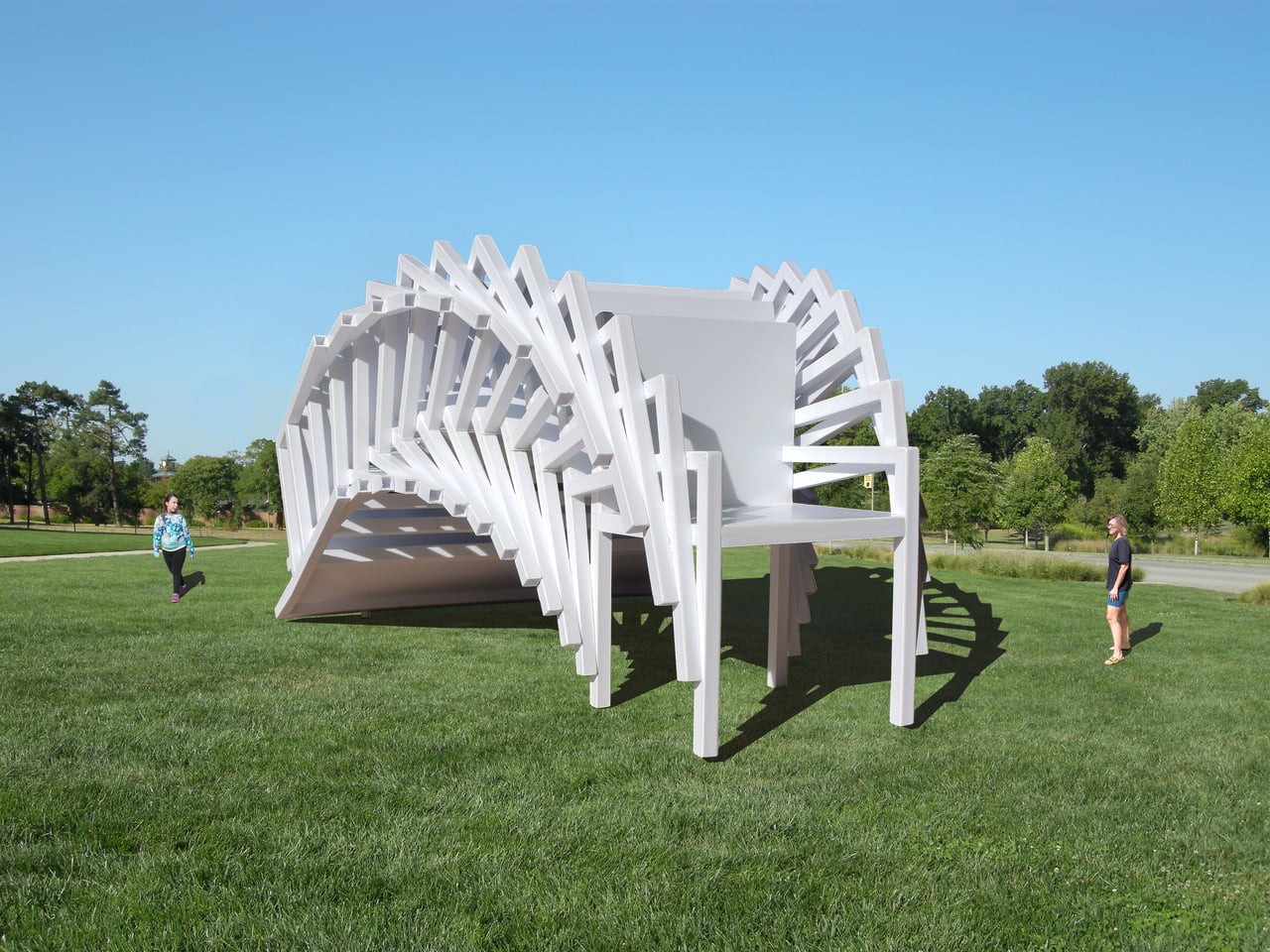
Residential complexes and small communities are on the rise, and some of these areas try to provide open spaces for rest and relaxation like parks or gardens. People new to such communities might find themselves often lost in the beginning, and guests or couriers will definitely be unfamiliar with the place. Signs aren’t always visible, and those that are might not blend well with the aesthetics and atmosphere of the residential complex. This concept design tries to hit multiple birds with a single stone by providing multi-functional furniture that not only looks like an art installation but also a rather subtle navigation guide for both residents and guests.

Designer: Alice Vakhni

Unlike typical home and office furniture, outdoor furniture offers only temporary respite for people. They’re not exactly the most comfortable products to use, especially since they have to be built to withstand unfavorable weather, but they do offer a place to sit, put down their things, or maybe even work and eat even if only for a while. Ironically, this also frees up outdoor furniture design from certain requirements, allowing them to embrace more unconventional forms, as long as they get the job done.

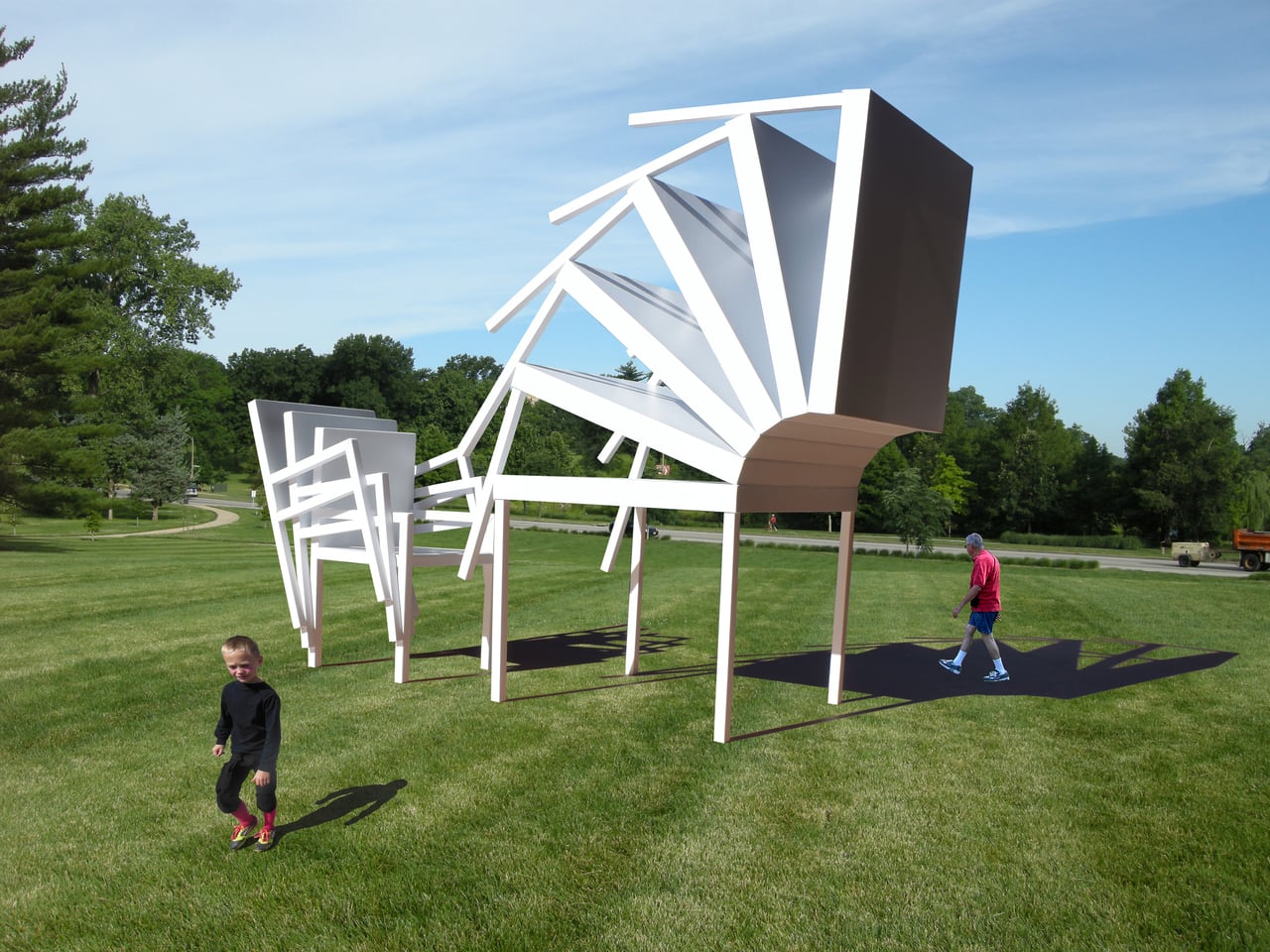
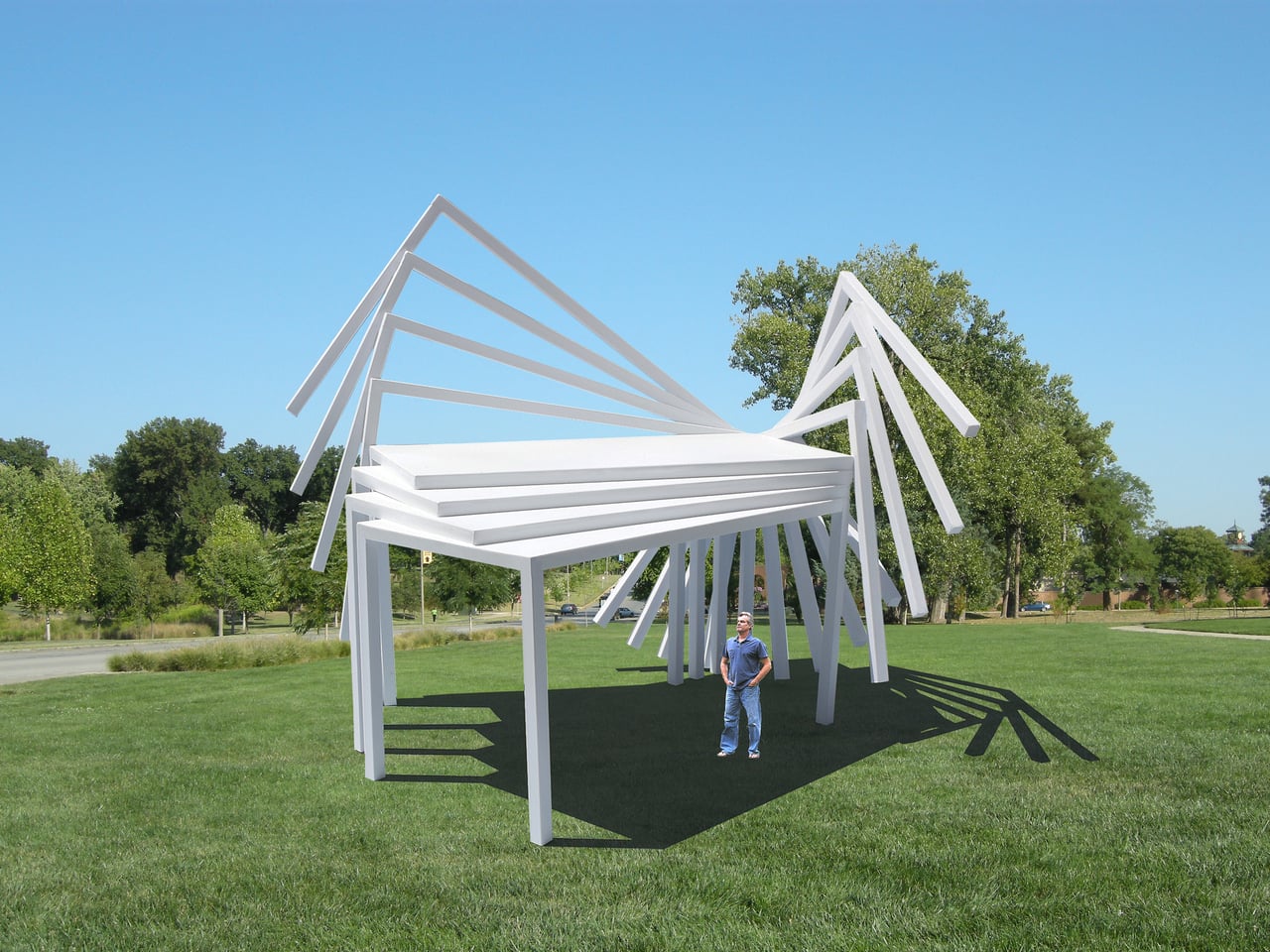
THREADS is an example of such freedom, conceptualizing furniture that hardly looks like any typical benches or tables. They look more like giant metal thread, hence the name that snakes and loops around the complex, one segment at a time. Some have wavy structures with crests that provide stools for people to sit on, while others coil around structures like benches and tables. Some rise upward to become lamps, while others branch and loop to show directions.

That’s the second not-so-obvious function of THREADS. Just like how Theseus used threads to navigate the labyrinth, the large pipes guide your eyes and your feet in the direction you need to go. They act like railings and guidelines that bend in the direction you should be walking if you’re a bit lost. Of course, not all residential communities have the same layout, so the pipes’ modular design allows builders to combine different parts with different corners to create the navigation system they need.

THREADS is also a piece of art, like an abstract sculptural installation designed to give communities a distinct character. The almost freeform flow of the “threads” leaves each segment open to interpretation and any use. Made with powder-coated hot-rolled steel pipes, what would normally convey an industrial and impersonal appearance transforms into something playful and approachable, becoming the proverbial thread that binds communities together.

The post Tangled outdoor furniture concept provides rest and direction for communities first appeared on Yanko Design.
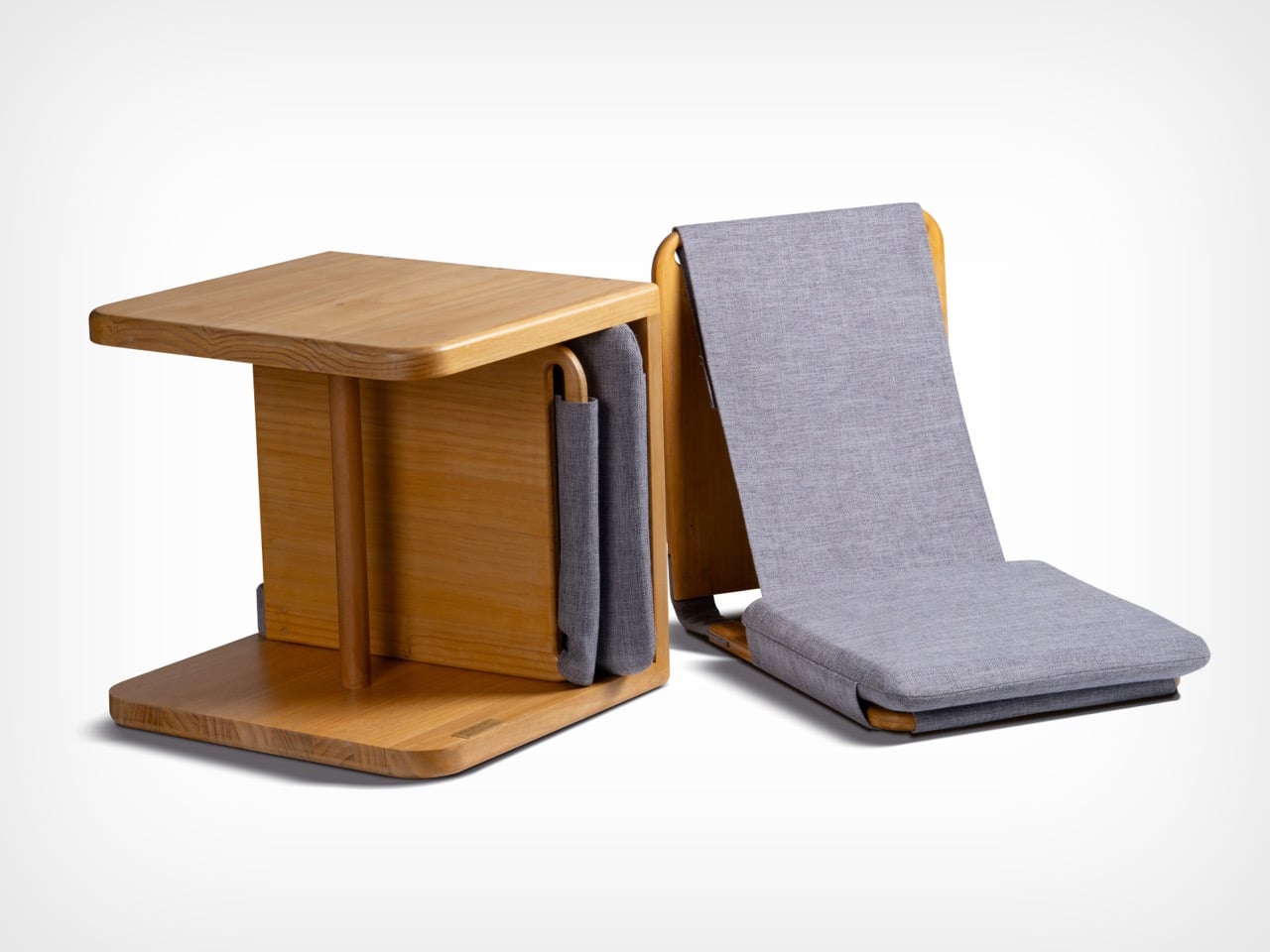
Modular stool concept is designed for people who love sitting cross-legged

Stools are often classified as tall, backless chairs, and like most seats, they’re designed to be used in a specific way. You simply sit on top of the stool and have your legs hanging from the edge, with your feet planted firmly on the ground. This style of sitting might be common, but it’s definitely not how everyone sits around the world. In some cultures, particularly in Asia, people tend to sit cross-legged on the floor, at least when they’re at home or in establishments designed to cater to that culture. Stools, of course, aren’t meant to support that way of sitting, but this concept design tries to expand the traditional stool design to be more inclusive while also offering an additional feature completely unrelated to sitting.

Designer: Gisung Han

It’s probably too much of a generalization but sitting cross-legged has become associated with Asian cultures. Especially in countries like Korea and Japan, some families tend to sit on the floor during meals in that position, something that might not sit well with those who don’t consider it proper during meals. Eating outdoors, of course, is a completely different matter, especially in public places like outdoor restaurants that only provide simple stools for customers. One simply can’t sit cross-legged comfortably, but still try to do it.

Named after a famous avenue in South Korea, the Euljiro stool concept tries to solve this conundrum with a design that caters to both normal sitting and cross-legged sitting. This seemingly magical capability is made possible by the stool’s two-part modular design. When joined together, it looks like a simple, two-color stool that you can use normally. But remove the top part and you actually get two stools, with the top shorter than the bottom.

1

When you insert one of the legs of the taller stool into the middle of the shorter one, you get a two-tier seat seemingly joined at the hip. This setup would allow the person to sit with their legs crossed without worries they’ll tumble backward or to the side. It doesn’t take up too much space either, and it can even be used as two separate stools if there aren’t enough seats to go around.

Euljiro’s flexibility also extends to its use as a place to put bags while eating. This is especially useful in restaurants that don’t have designated storage for bags, where putting bags down on the ground might be unhygienic. It’s definitely a creative way to solve multiple problems with a single design while ironically still sticking to the most common stool shape of all.

The post Modular stool concept is designed for people who love sitting cross-legged first appeared on Yanko Design.
Minimalist Side Table Hides a Simple But Effective Cable Management System

Many of our everyday items find their way to the side tables sides couches, desks, and beds, and some of these items have cables that snake their way down and across the floor. These wires might not always ensnare your feet, but they definitely turn any beautiful interior into a dangling mess of cables. There are some side tables these days with built-in power outlets, but those still show the wires that crisscross each other. Some might even have the uninspiring charging bricks also rearing their ugly heads. This simple side table, on the other hand, has an equally simple solution that makes sure that nothing but your phones or tablets get the spotlight.

Designer: Rudolph Schelling Webermann

At first glance, the Charge Table looks like a pretty nondescript side table, albeit one with some elegance thanks to its minimalist design. The body itself is made from sturdy powder-coated steel that provides stability and handsome looks. The top of the table is lined with soft felt that protects your devices from scratches and bumps. It also gives a rough surface for mugs and cups to grip, keeping them from sliding.

This simplicity, however, is deceptive, because that tabletop slides out a bit to reveal a hidden compartment inside. This storage space has one primary function: to house a power strip that can charge your devices. You simply plug in your chargers, slide the tabletop back in, and have the charging cable discreetly coming out from the small gap at the side. And when you need to leave with that charger, simply slide the tabletop out again, unplug the charger, and go. You can also leave as many chargers in there thanks to the compartment’s spacious area.

As for the power strip’s own thick cable, a hole in the middle of that hidden storage for it to pass from beneath the table. Ideally, you’d have it find its way down one of the table’s legs or across to a nearby couch or chair, completely hiding it from view. Admittedly, it’s going to be trickier than keeping devices’ charging cables hidden, but at least there’s only one snake to wrangle.

The Charge Table offers a simple, elegant, yet very effective solution to ensuring that unsightly wires don’t ruin the aesthetics of your interior, though the compact size of the table does present another problem. Given today’s practice of owning more than one device per person, it might not be big enough to charge a phone and a tablet or a combination of multiple devices at the same time. Then again, the very design of the table itself encourages simplicity and frugality, and it might give people pause for thought on what’s really important, at least as far as the devices they keep close are concerned.

The post Minimalist Side Table Hides a Simple But Effective Cable Management System first appeared on Yanko Design.
Plywood desk concepts use waves to create easy-access storage spaces

Just because a design is minimalist doesn’t mean it has to be featureless. Part of the challenge of this design style is to deliver the same functionality that more complicated products offer in simpler ways. A desk, for example, would normally have drawers and shelves to put things in, but drawers often introduce mechanisms that wear down over time, and they often block their contents from view, forcing the person to remember what’s inside or waste time going through each drawer in search for an item. Aalto, which means “wave” in Finnish, removes the blinders and designs an open storage system that uses no extra parts, just the table’s body itself.

Designer: Liam de la Bedoyere

Common desk drawers use a sliding mechanism to move a box in and out of the table. Regardless of the design of the slider, it will eventually fall victim to wear and tear, making it less useful and more stressful. Desks with “open” shelves instead of drawers do remove that variable but doesn’t make it easy to see what’s inside unless everything is at the front or you stoop to take a peek inside.

The Aalto design concept uses a series of undulating forms that create nooks that can become storage spaces. Thanks to the glass (or any transparent material) tabletop, you can immediately see what’s inside, ready to be taken out when you need it. Conversely, you can also easily see which compartments are still unoccupied in case you need an empty space.

The waves can come in different sizes, which makes room for different kinds of stationery and tools as well, like a laptop in the larger space or pens for the smaller ones. What makes the design even more interesting is that it doesn’t use any extra pieces other than the tabletop. It’s a single unbroken form, though sheets of plywood are indeed joined together to create the semblance of a flowing shape. Regardless, there are no moving parts that will break down or extra parts that can get lost. It is minimalism at its finest.

Another version of the Aalto design uses shorter and more uniform waves to address concerns about the troughs hitting people’s knees and legs. That said, it also reduces the flexibility of those spaces to hold objects of any size, but that also becomes a sort of enforced organization system to keep the desk tidy. In exchange, this Aalto variant has a small shelf off to the side, for holding smaller items like books or even a vase. It does have to switch to a polycarbonate material for the tabletop in order to support that bending shape.

The post Plywood desk concepts use waves to create easy-access storage spaces first appeared on Yanko Design.

New Steelcase Furniture Inspired by Frank Lloyd Wright’s Iconic Designs


Welcome to Furniture Friday! Today, we explore Frank Lloyd Wright’s iconic design legacy through two new collections from Steelcase, created in collaboration with the Frank Lloyd Wright Foundation. The Rockford and Galesburg collections breathe new life into Wright’s mid-century Usonian aesthetics, blending historical elegance with modern functionality to suit today’s lifestyles.

Designer: Steelcase + Frank Lloyd Wright


Frank Lloyd Wright’s philosophy of “organic architecture” emphasized the integration of human habitats with their environment. This principle is beautifully manifested in the Rockford and Galesburg collections, which draw directly from Wright’s archival designs. These collections honor their historical roots while offering pieces that meet modern needs.

The Rockford Collection is inspired by Wright’s Laurent house, a project designed for a disabled veteran. The collection features a lounge chair that maintains the original’s focus on accessibility but updates it with modern materials such as plywood. Accompanying the chair are movable seating and polygonal tables designed to enhance interaction and serve practical daily use.

Continuing this theme, the Galesburg Collection transforms the built-in banquettes of Wright’s Usonian homes into standalone pieces suitable for modern settings. The collection includes sofas, sectionals, and lounge chairs characterized by clean lines and geometric shapes, reflecting Wright’s architectural finesse. These pieces merge historical inspiration with contemporary needs, making them perfect for home and office environments.

A key element of both collections is using plywood, a material Wright favored for its versatility. In these designs, plywood is celebrated as a main feature, highlighting its durability and aesthetic appeal. The modern, understated upholstery complements the wooden structures, enhancing the overall experience and focusing on quality craftsmanship.

The collaboration between Steelcase and the Frank Lloyd Wright Foundation goes beyond a typical business partnership. It actively engages with historical contexts, aiming to adapt Wright’s innovative designs to contemporary needs. This partnership began with Wright’s designs for the SC Johnson Administration Building 80 years ago and continues to ensure his architectural philosophies remain influential in today’s spaces.

By introducing Wright’s timeless designs into everyday environments, Steelcase honors his architectural legacy while demonstrating that thoughtful design continues to enhance human experiences and environments. These collections show that great design effectively bridges historical heritage with modern functionality, impacting how we live and work today.

The post New Steelcase Furniture Inspired by Frank Lloyd Wright’s Iconic Designs first appeared on Yanko Design.
10 Best Outdoor Furniture Designed To Make Your Yard Comfy, Fun & Functional

You can actually do a lot at home, especially in your backyard! It definitely made us realize we shouldn’t underestimate our backyards, they can be locations of major fun, recreation, and relaxation…depending on how we do them up. You can turn your backyard into an ideal date spot for you and your partner, or host a barbecue party! We’ve curated a collection of furniture designs to help you transform these exciting ideas into a reality. These designs will turn your yard into the ultimate relaxation destination. We bet you won’t want to step out of your yard, once you introduce these furniture pieces to it. These furniture pieces will majorly transform your humble backyard.

1. Hut Lounge Bed

Named the Hut Lounge Bed, this exceptional furniture design for the outdoors was created by Marco Levit for the Italian outdoor furniture company Ethimo. It serves as a cozy and comfy space to relax and unwind in and is an excellent place to lounge about after a long day at work.

Why is it noteworthy?

With the Hut Lounge Bed, you can soak up the sun, and connect peacefully with nature. It has a conical and semi-enclosed space which offers protection while letting you rest and relax.

What we like

  • Perfect fit for your backyard during the spring or summer season
  • It can handle years of exposure to the elements and weather

What we dislike

  • Bulky and space-consuming design, intended for large yards

2. Cosmo Pavilion

Called the Cosmo Pavilion, this furniture design is a revamped version of the classic garden pergola. It is a pretty and quaint pavilion that is designed to frame outdoor furniture settings while also offering protection from the elements. The pavilion brings comfort and coziness to the outdoors.

Why is it noteworthy?

The Cosmo Pavilion is designed for the evenings, and it features integrated LEDs which shine upwards, scattering light across the fabric canopy, and creating a lovely ambiance.

What we like

  • Offers protection and creates a lovely ambiance

What we dislike

  • Bulky and space-consuming design, not intended for places with space constraints

3. Tool Seat

If you like getting down and dirty, then you need to get your hands on the Gardeners Tool Seat. It provides you with everything you need – a collapsible seat to sit on, gardening tools, and a bonus pocket for carrying a cool drink.

Why is it noteworthy?

Equipped with a standard collapsible tool, the seat is built from stainless steel piping, amped with a nylon fabric seat, as well as a detailed base that holds your gardening toolbag underneath it. It also features a gardening toolkit.

What we like

  • Equipped with a space on the inside to accommodate your gardening trimmings

What we dislike

  • It really doesn’t look too comfy to sit on for long periods

4. Strap Furniture Collection

Called the Strap furniture collection, this outdoor furniture collection draws inspiration from the 1970s poolside furniture. It includes eleven seating designs such as stools, armchairs, benches, loungers, and stackable chair. It brings the lovely 1970s charm to your yard.

Why is it noteworthy?

The metallic chairs are made from aluminum straps, which seem to be quite tightly wound around simple tubular frames. The furniture pieces draw inspiration from the designer’s childhood memories of sun loungers around the local pool.

What we like

  • Evokes childhood nostalgia
  • They can be used in shopping districts, university campuses, and other urban spaces

What we dislike

  • The aesthetics need some work and innovation, as they are a bit dry and boring

5. Bello! Bench

Named the Bello! bench. This outdoor bench was created by aluminum producer Hydro and draws inspiration from the penne rigate pasta. It is a unique-looking bench that makes a lovely addition to your yard, for those warm evenings when you want to get some fresh air.

Why is it noteworthy?

It is a versatile piece of furniture and is influenced by the form, shape, and design of pasta. The bench can be used both indoors and outdoors and is made from ninety percent recycled and one hundred percent recyclable aluminum.

What we like

  • Influenced by the penne rigate
  • It can be customized to fit lamps, tables, or chargers

What we dislike

  • The shape may create a slipping sensation, making it uncomfy to sit on the chair for longer durations

6. Aluminum Week-End Outdoor Furniture

If youre in the mood to spruce up your yard, then you may want to get your hands on the Aluminum Week-End outdoor furniture by Petite Friture. The unique collection includes tables and chairs with slatted aluminum surfaces, and is equipped with a silvery metallic finish.

Why is it noteworthy?

The furniture pieces showcases a raw and stark aesthetic, and it has a grained epoxy paint finish available in a variety of colors, which brings focus to the furniture’s aluminum material in its raw and bare state.

What we like

  • Adds a whole dose of personality and amusement to your yard

What we dislike

  • Is only exclusively available for contract buyers to buy

7. Stack Stool & Combo Table

Created by Raffaello Galiotto for the Italian furniture brand Nardi, this Stack Stool and Combo Table are an excellent stool and table collection that are equipped with a linear designed complemented by strips of wood.

Why is it noteworthy?

Made from 100 per cent recyclable regenerated polypropylene, the collection is designed to look like traditional timber furniture. The furniture collection is lightweight and sturdy, and they can be easily moved, lifted and handled.

What we like

  • The furniture pieces are completely weatherproof

What we dislike

  • Aesthetics are simple and unassuming

8. Mondos

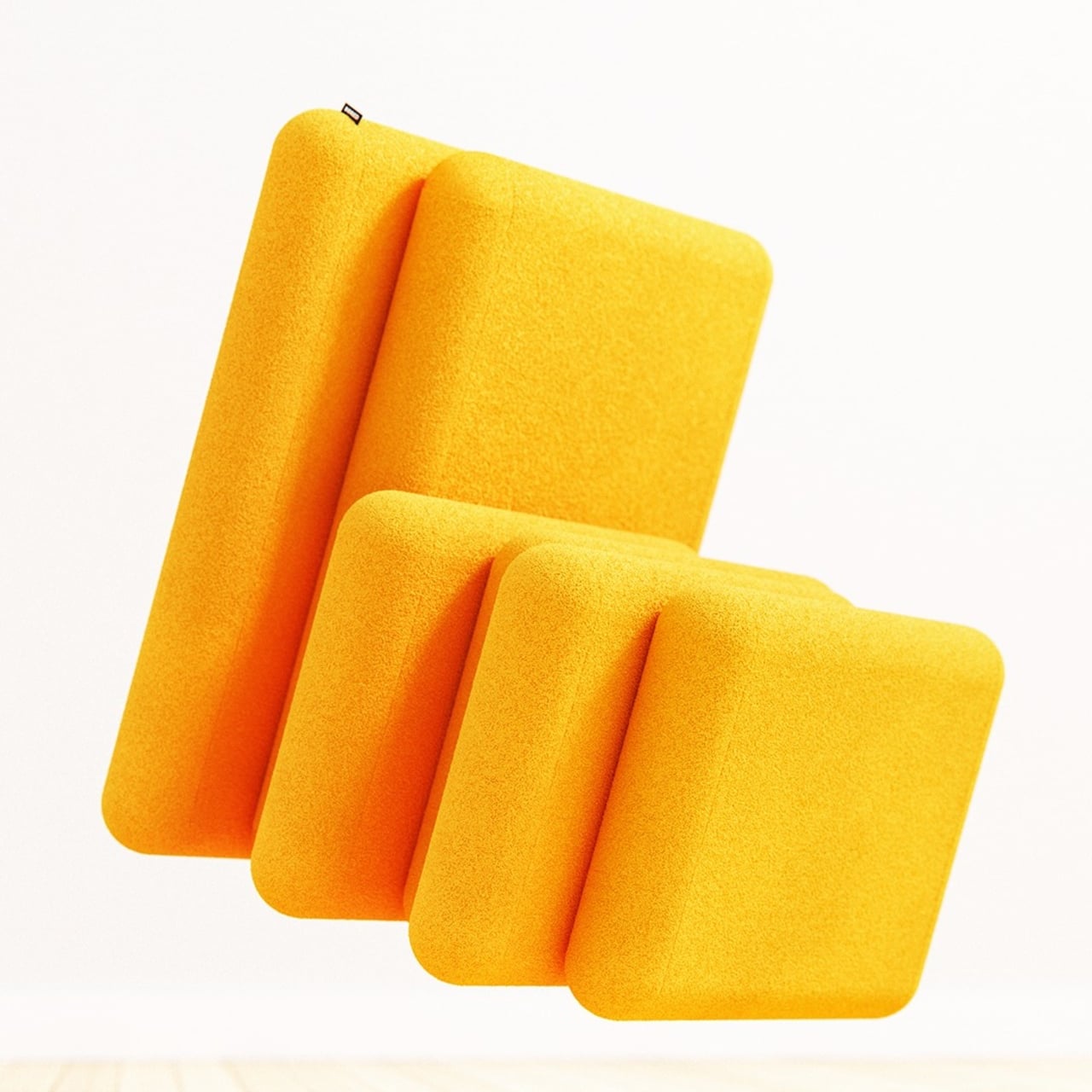
The Mondos is a warm and cozy afternoon spent on a Southern Californian beach transformed into comfy and chonky furniture pieces. Designed by two California-based brands Laun and Chet Architecture, the furniture collection includes six pieces.

Why is it noteworthy?

The six pieces are inspired by Mondos Beach in Ventura, California, which is said to be the capital of the state’s surfing culture. The entire collection is designed to be bold yet low-key, inviting, and exclusive.

What we like

  • Brings the beach to your backyard
  • Inspired by the 1980s pool and garden furniture

What we dislike

  • The entire collection is quite bulky, so it is only suitable for backyards with an ample amount of space

9. Gravitas

Called Gravitas, this outdoor furniture looks “grated”. It is sturdy and strong enough to handle the strong winds, rains, and snow. It is designed to be “all-weather all-rounder” pieces of furniture, making them an exceptional fit for a garden, patio, or the backyard.

Why is it noteworthy?

It features a unique galvanized grating design, and is a good fit for cafes and restaurants with an industrial look or theme. It is a great fit for both outdoor and indoor spaces.

What we like

  • It makes for an excellent fit for different spaces

What we dislike

  • The steel material might be too hot for when the sun is out

10. Mass Table

Alexander Lotersztain designed the Mass Table for Derlot. The table is the reimagined and recreated version of the stereotypical and mundane picnic table!

Why is it noteworthy?

Alexander took the typical picnic table and transformed it into a unique flat-packed table in an almost fluorescent yellow color. Made from a sturdy combination of powder-coated steel and aluminum, the Mass table is ideal for both indoors and outdoors.

What we like

  • Inspired by the iconic garden table, but a more sturdy and contemporary version

What we dislike

  • The table can be used indoors, but we don’t think it would be a suitable fit

The post 10 Best Outdoor Furniture Designed To Make Your Yard Comfy, Fun & Functional first appeared on Yanko Design.
The Allure of the Golden Chair: A Singular Expression of Art and Design

In this week’s Furniture Friday feature, we explore a piece that caught my attention for its striking artistry. Over my years of observing and writing about design, it’s rare for a piece like the golden chair to cross my path—a piece that serves as both furniture and a profound statement of art. This chair, which I discovered gracing the lobby of a hotel I recently stayed at, carries the unmistakable mark of bespoke craftsmanship, likely the work of a local artist. Here’s my reflection on its unique design elements, speculated materials, and what makes it unique.

Designer: Unknown

Design That Commands Attention

The chair goes beyond traditional function; it is a bold statement of art. Its striking golden color makes it the focal point of any room. Its textured surface, reminiscent of the roughness of geological formations or the fluidity of molten metal, introduces a raw elemental quality.

The chair’s rough texture and shiny gold finish create a unique look that catches the eye, blending rustic charm with a sleek, modern feel. Its shape breaks away from traditional designs, featuring edges that look like an artist’s chiseled. This daring design encourages us to think differently about what furniture can be, pushing the limits of typical forms and introducing a touch of bold creativity.

Materials and Craftsmanship

Speculating on the materials, the chair’s metallic sheen suggests it could be crafted from a metal like aluminum or a light alloy, capable of being worked into such detailed textures and shapes. The golden finish might be achieved through gold leafing, high-grade metallic paints, or sophisticated plating. Each method serves the aesthetic demands while ensuring the piece’s durability and structural integrity.

The pronounced texture suggests a meticulous, labor-intensive creation process involving hand-hammering or sophisticated casting techniques. These processes highlight the chair as much a product of skilled artistry as of functional design, emphasizing that behind every exceptional piece lies a deep, personal creation story.

Symbolism and Personal Reflection

As a fan of “Game of Thrones,” I found the chair’s chaotic yet regal aesthetic resonates with me. It echos the series’ portrayal of chaos intertwined with power. This chair isn’t just furniture; it embodies the essence of a throne, with its grand design and intricate textures evoking a sense of majesty.

When I first saw the chair in the hotel lobby, it felt like stepping into a storybook. Sitting on its golden surface, I couldn’t help but feel a touch of royalty, as if I were a king in my own right. Its robust form stood out against the hotel’s understated elegance, asserting itself as a central art piece. My simple attire contrasted sharply with the chair’s ornate design, highlighting its features even more.

This experience was more than an interaction; it was a reminder of how design can elevate our sense of self and place. The chair enveloped me in an aura of majesty reminiscent of the drama and grandeur of a throne room. For a moment, I felt part of that world, seated on a throne that was as much a piece of art as a symbol of power.

DIY: Echoing the Golden Touch

While recreating this exact chair might be daunting due to its unique nature, those inspired by its aesthetic can still bring elements of its style into their own spaces. Starting with a basic chair, one might consider applying gold leaf to textured areas or using metallic paint to achieve a similar effect.

Integrating golden accents through home decor can also help bring a part of this chair’s majestic and raw aesthetic into any interior design, allowing enthusiasts to capture a hint of its grandeur and artistic flair in their environments.

The post The Allure of the Golden Chair: A Singular Expression of Art and Design first appeared on Yanko Design.
Bamboo folding staircase adds a bit of functional “art” to your space

Even though I am vertically challenged, I rarely use steppers or ladders because I am also naturally clumsy. The chances of me falling off anything stairs-related, especially those that are not that stable, is always pretty high. Folding staircases are a necessity for some homes but those are not always the safest and design-wise, they are just purely functional.

Designer: Bcompact

The Bcompact Bamboo Folding Staircase aims to stand out from those that are currently in the market by bringing something that is both a piece of furniture and also partly a piece of art, not to mention part “engineering masterclass”. It is meant to be installed and used in spaces that normally don’t have staircases. It can also be customized according to what you need and the specifications that your home or office requires with its multiple angles and height options.

When folded or not in use, it can also blend into your area with its aesthetic design. It uses sustainably sourced, natural blonde Bamboo for its body or you can also color stain it to match your space. It also uses brass, stainless stell and aluminum hardware for the other parts. Its retractable flat folding mechanism and its space-saving design are both patented already.
This folding staircase can actually replace any ladeer, attic steps, or staircase that you may already be using. It also has manual or automatic gates that you can add in case you need something safer. It can be used for your attic, mezzanine, loft, basement or any space where you need to have a staircase installed, with minimal infrastructure alteration.
The post Bamboo folding staircase adds a bit of functional “art” to your space first appeared on Yanko Design.