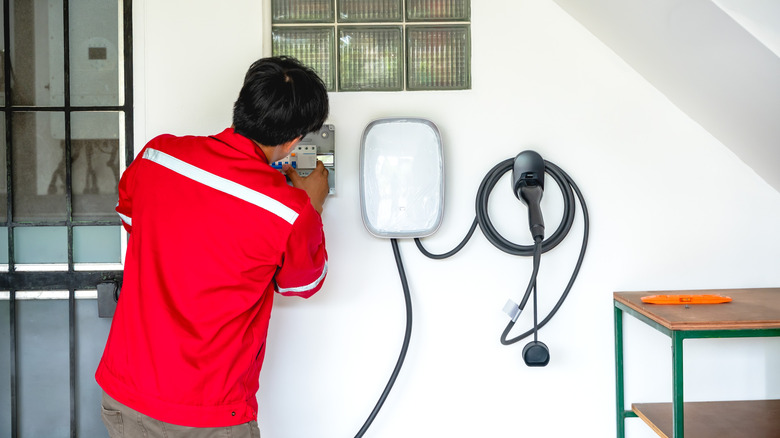
Considering a Level 2 EV charger? How to know if you need one
Charging your EV from home is cheap and convenient, but knowing which type of charger will get the most out of your electric car can often be confusing.
Picking a phone case is one of the most low-stakes high-stakes decisions in consumer tech. The stakes are low because it’s a $40 purchase. The stakes are high because you’re going to look at it roughly 150 times a day for the next two years, and a wrong pick is the kind of thing that will quietly gnaw at you. The market that erupts around every new iPhone launch does not help, flooding storefronts with interchangeable shells that share dimensions and absolutely nothing else. aulumu’s A18 collection tackles that problem by running nine products across genuinely different design philosophies, from a 1500D aramid drop-protection case to a transparent polycarbonate case with a built-in glow-in-the-dark luminous array, all landing at once for the new iPhone Pro season.
aulumu has built its reputation by doing something the accessory market rarely bothers with: making sure everything in the catalog looks like it came from the same design brief. Their G03 magnetic wallet won the 2025 Red Dot Award, their A17 frosted case brought superconductive cooling tech to a category most brands treat as pure commodity, and their B01 sling bag pulled that vocabulary into carry gear entirely. The brand targets commuters, creators, and EDC enthusiasts who want things genuinely designed rather than manufactured to a price point. The A18 collection is that philosophy’s clearest expression yet, fielding four cases across four distinct material territories in one coordinated launch. The finish detail and surface craft running through the lineup is the kind of thing the September case flood never delivers.
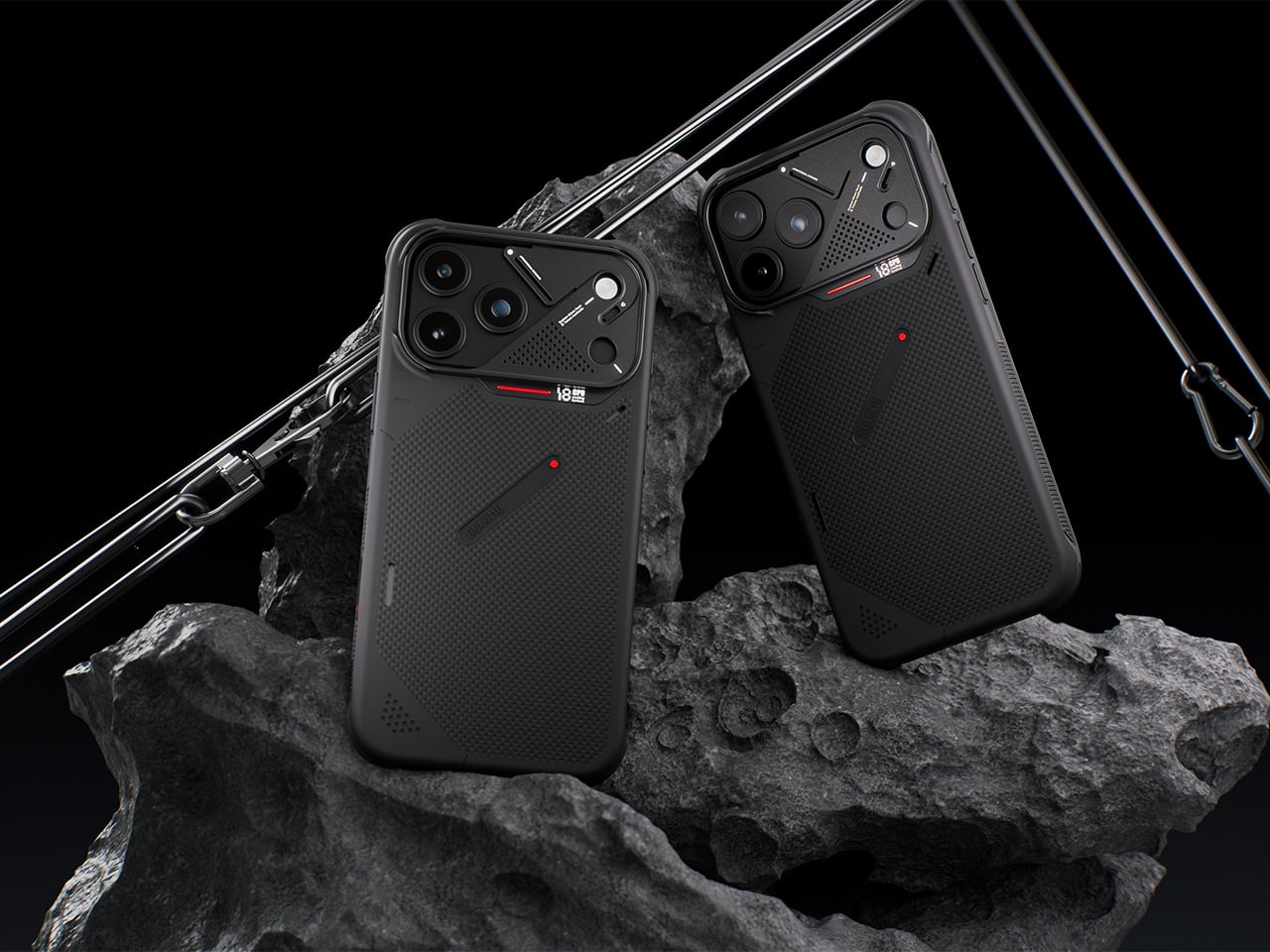
Aramid fiber is the same material in a bulletproof vest, which sounds impressive until you remember that a bulletproof vest will stop a bullet and do absolutely nothing for you if you fall off a ladder. The material is legitimately exceptional at being lightweight and stiff, and genuinely terrible at absorbing the kind of omnidirectional impact a phone takes when it bounces across pavement. aulumu’s AFT construction addresses that gap directly, combining 1500D aramid fiber with TPU in a single one-piece build, letting aramid carry the weight savings and refined texture while TPU handles the flex and cushioning. No separate layers to delaminate, no seams to work loose over eighteen months of daily carry. The result sits closer to a protective case than the ultra-slim aramid builds that look sharp and quietly terrify you every time the phone grazes a countertop.
A 2m drop rating headlines the protection claim, but the geometry tells the more interesting story. The screen sits behind a 1.36mm raised case edge, the camera system gets a 1.3mm raised frame, and full-wrap coverage extends across every edge with reinforced corners built to distribute directional impact. Corner drops are statistically the scenario that kills most phones, and the Armor treats that with structural reinforcement rather than optimism. For a case that still fits comfortably in the everyday carry conversation, the protection spec here reads like something that belongs in the rugged case category, which is a harder balance to land than it sounds.
Click Here to Buy Now: $79.98.
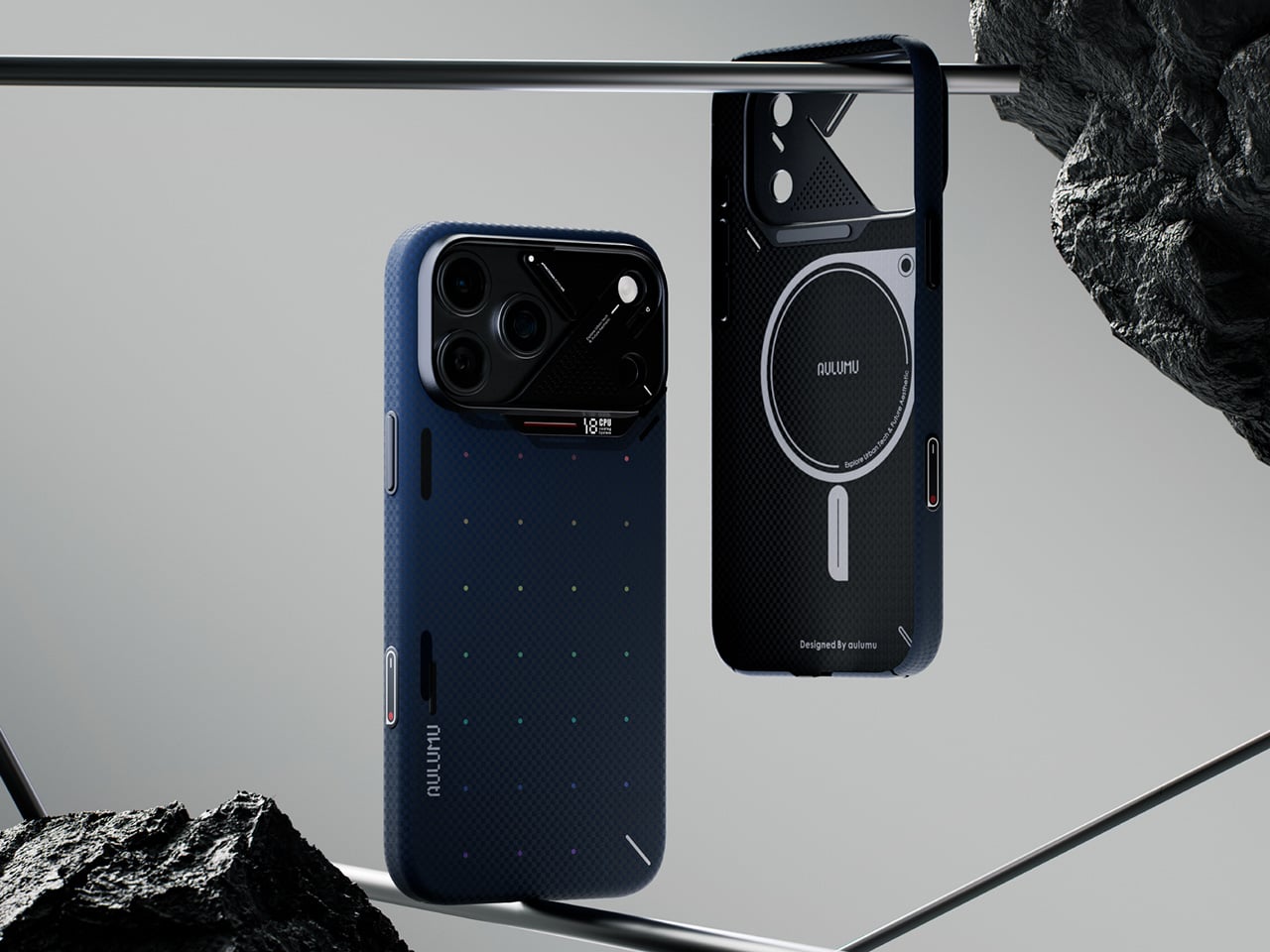
Particle structures and tactical technology aesthetics are not phrases that typically show up in a phone case brief, which is part of what makes the Particle Aramid Fiber Case such an interesting product to look at. The UV-treated gradient particle array across the aramid surface creates depth and movement that shifts with light and angle, producing a dimensional quality that a smooth polycarbonate case running the same finish could never replicate. The dense plain-weave aramid construction gives the particle array a textured foundation to sit on, and the two layers of visual information working together read closer to a topographic rendering than a fabric finish. aulumu calls it “Aramid Meets Digital Order,” which sounds like marketing copy until you actually look at the surface and realize the description is pretty accurate. Available in Black and Blue, both colorways lean hard into the tactical reference rather than softening it for a mainstream audience.
At 1.2mm thick from 27g, the carry weight is essentially a non-conversation. Full-coverage design extends across the edges and buttons with the same seamless enclosure that runs through the rest of the A18 family, so the visual drama does not come at any structural cost. The UV treatment is what separates the Particle Aramid Fiber Case from a conventional woven aramid surface, adding a gradient particle finish that feels genuinely considered rather than decorative. For a case sitting at this weight and profile, the amount of surface personality aulumu packed into it is a harder design problem than it looks.
Click Here to Buy Now: $69.98.
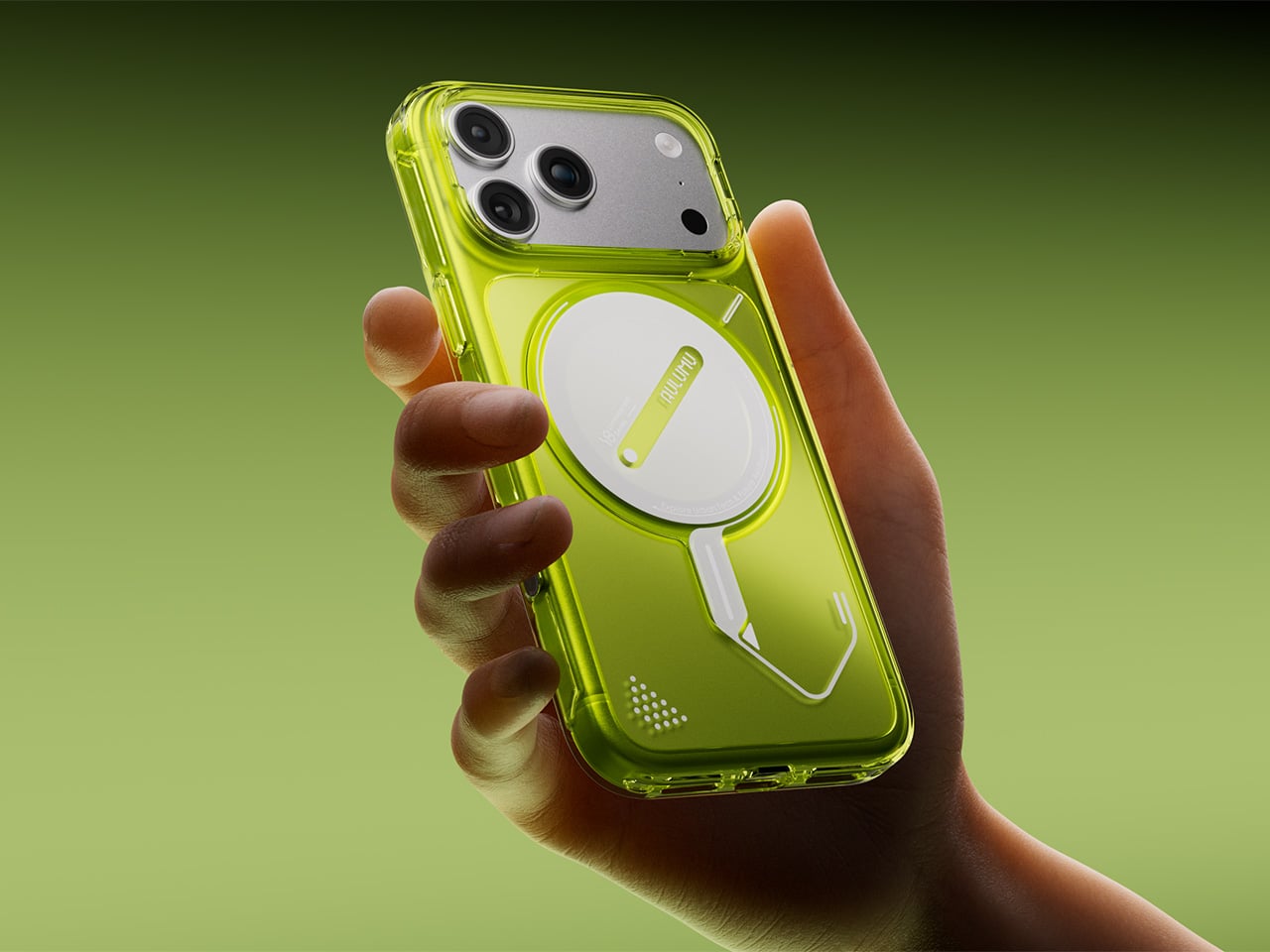
Premium transparent PC material that mimics the original metal and glass textures of the device, with a glow-in-the-dark cyberpunk aesthetic. That sentence describes a product that could very easily go wrong, and aulumu somehow stuck the landing. Optical-grade PC sheets with a light transmittance of 88-92% mean the phone’s hardware reads clearly through the case rather than disappearing behind a foggy plastic shell. The IML Laminating Luminous Array is what drives the glow effect, and the IML process keeps it long-lasting rather than fading out after a few weeks the way cheaper phosphorescent finishes tend to. It comes in transparent or lemon yellow, and lemon yellow is the correct choice, full stop.
The Ghost Lumen’s UV-resistant molecular formula protects against daily sun exposure, hand sweat, and heat-induced aging, which is the engineering answer to the single most common complaint about transparent cases. Nobody wants to spend money on a case that turns the color of old newspaper by spring. aulumu enhanced their molding process to create a fully enclosed PC case design without notches, keeping the one-piece aesthetic clean across every edge. As the most visually adventurous case in the A18 lineup, the Ghost Lumen sits at the opposite end of the spectrum from the Armor’s utilitarian brief, and the collection is considerably more interesting for having both ends covered.
Click Here to Buy Now: $39.98.
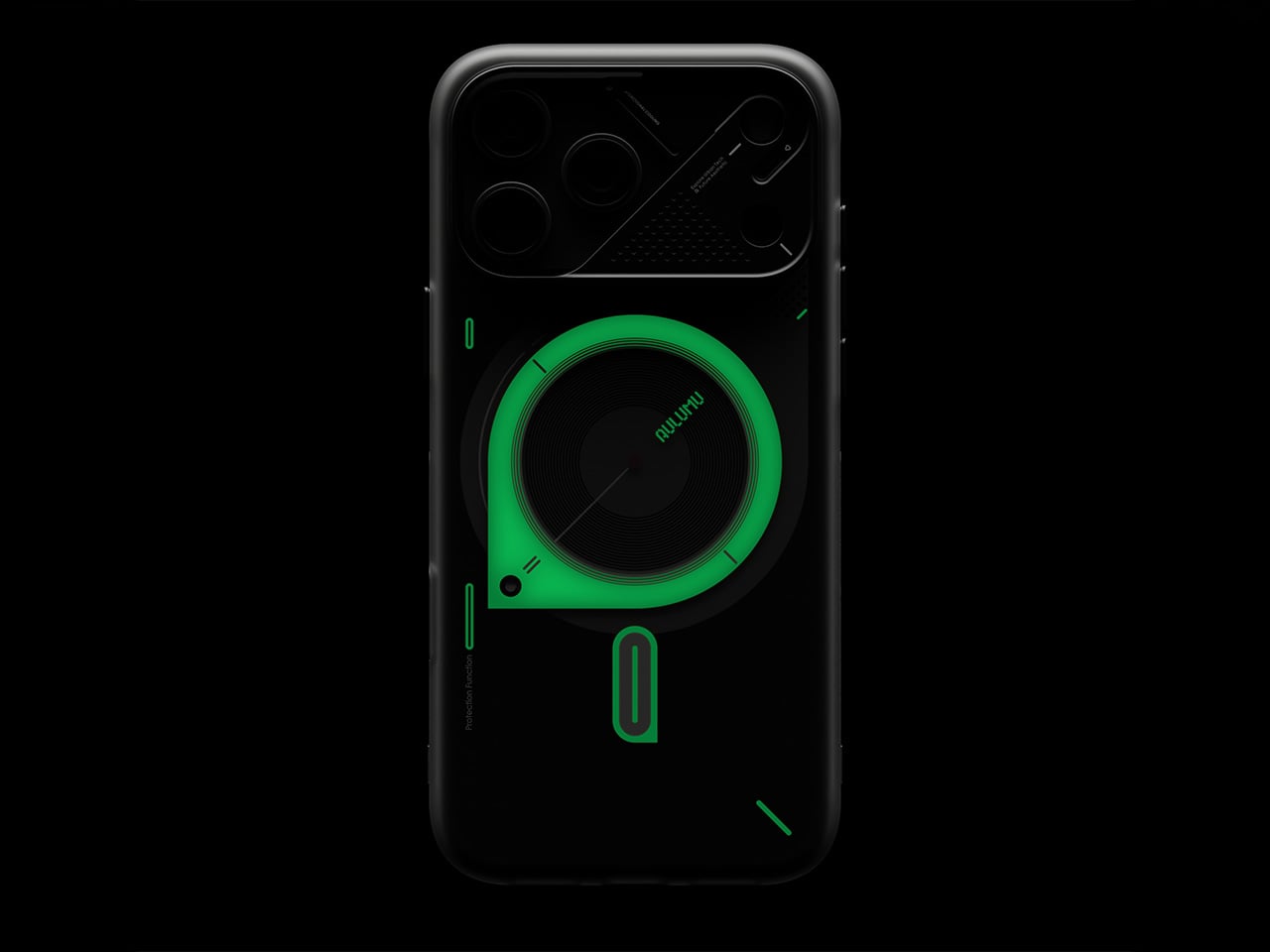
Phone cases do not typically come with a thermal engineering story, which is part of what makes aulumu’s CoolHyper Tech worth paying attention to. The A18 Hyper Frosted takes that signature technology and upgrades it with a bigger silicone thermal pad, repositioning the heat dissipation area closer to the phone’s CPU to achieve more efficient heat transfer. The result is a claimed 2 to 3 degree Celsius temperature reduction, which sounds modest until you consider that sustained heat is the primary reason flagship phones throttle performance during long gaming sessions or extended video work. A case that actively keeps the chip cooler is, in a subtle way, a case that keeps the phone faster. That is a genuinely different value proposition from anything else in the A18 lineup.
The frosted transparent TPU shell uses aulumu’s one-piece full-cover design, fully enclosed without notches, in Transparent Gray and Translucent White. At 43g it is the heaviest case in the collection, and that extra weight is essentially a direct accounting for the thermal hardware sitting inside. An IML Laminating Luminous Array adds the same glow-in-the-dark character as the Ghost Lumen, making the Hyper Frosted the only case that combines active cooling with a light-up finish. That combination is either exactly what you want or the detail that helps you rule it out, which is useful information either way. Ultra-strong MagSafe is built in for fast and stable attachment, and for people who push their phone hard through gaming, long video sessions, or navigation, this is the case designed with that use pattern in mind.
Click Here to Buy Now: $39.98.
The post aulumu’s iPhone 18 Pro Cases Survive Drops, Glow In The Dark, And Auto Cool Your Phone first appeared on Yanko Design.


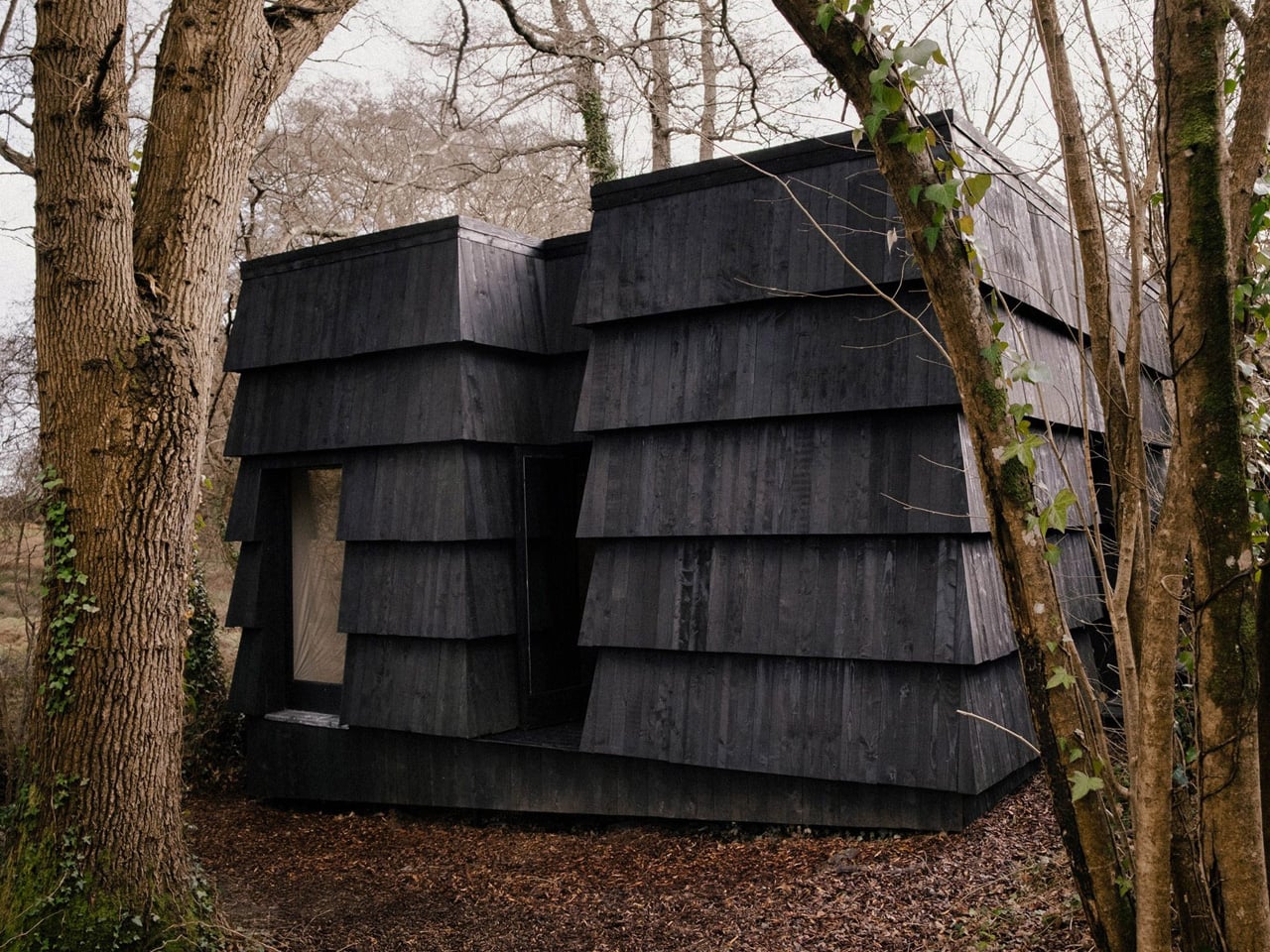
Built Works’ Bather’s Cabin doesn’t ask to be noticed — it earns it. Nestled deep within the woodland at Great Park Farm in East Sussex, it is less a cabin than a choreographed sequence of rituals, each one drawing you closer to water, timber, and the quiet of the trees. Completed in Spring 2026 for Architects Holiday, the practice’s own hospitality venture, it is the kind of project that makes you reconsider what a retreat can be.
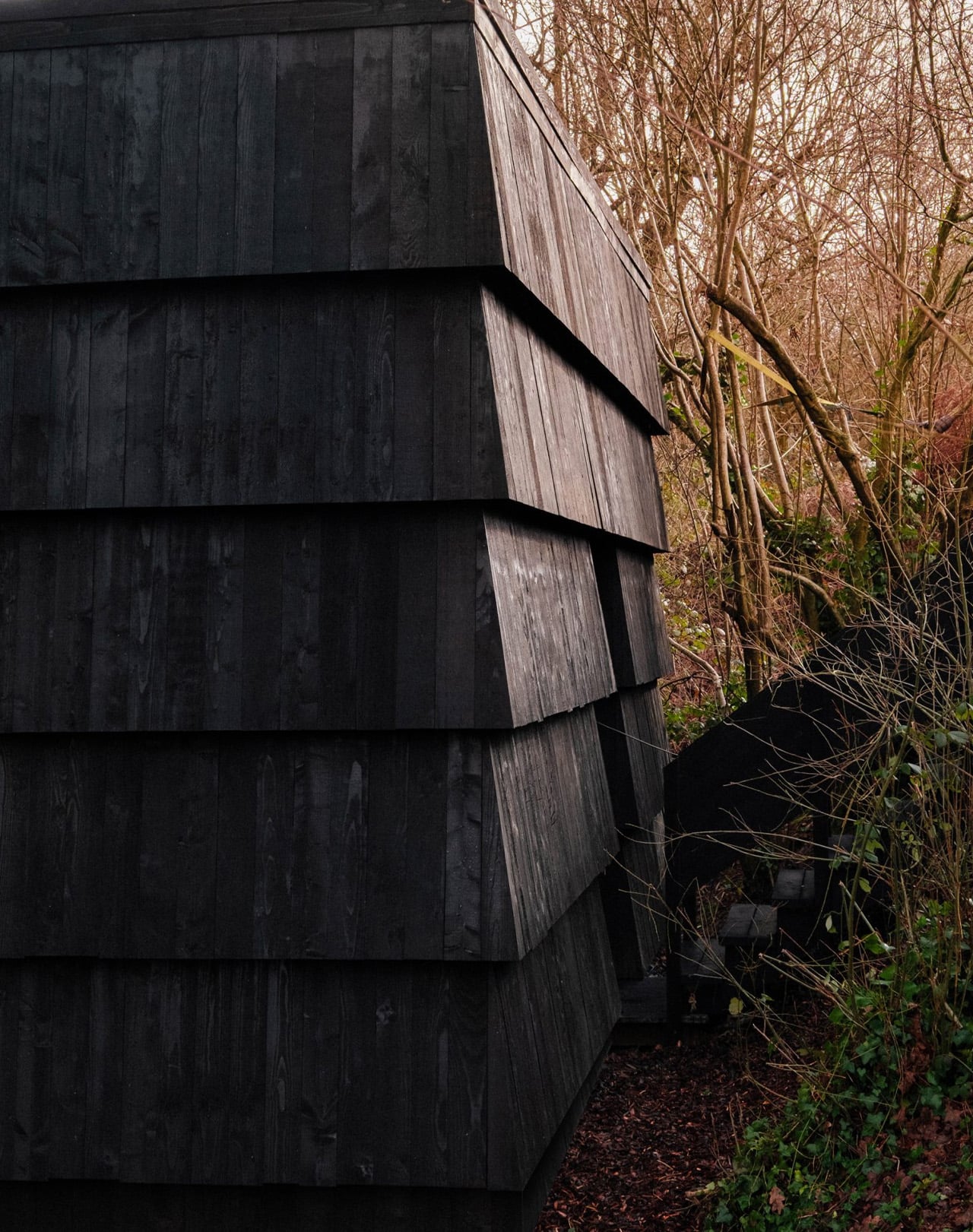
The design reaches back into the agricultural vernacular of Southeast England — specifically the elevated granaries and grain stores that once dotted the High Weald landscape. These modest, functional structures, typically raised on stone footings to protect harvests from moisture and vermin, become the conceptual foundation for something entirely contemporary. The cabin’s form is wrapped in vertically louvered larch cladding sourced directly from the surrounding estate, with filtered light pressing through the slats like something between forest shade and Japanese shoji. Pine tar staining darkens the exterior, letting it dissolve into its wooded context with ease.
Designer: Built Works
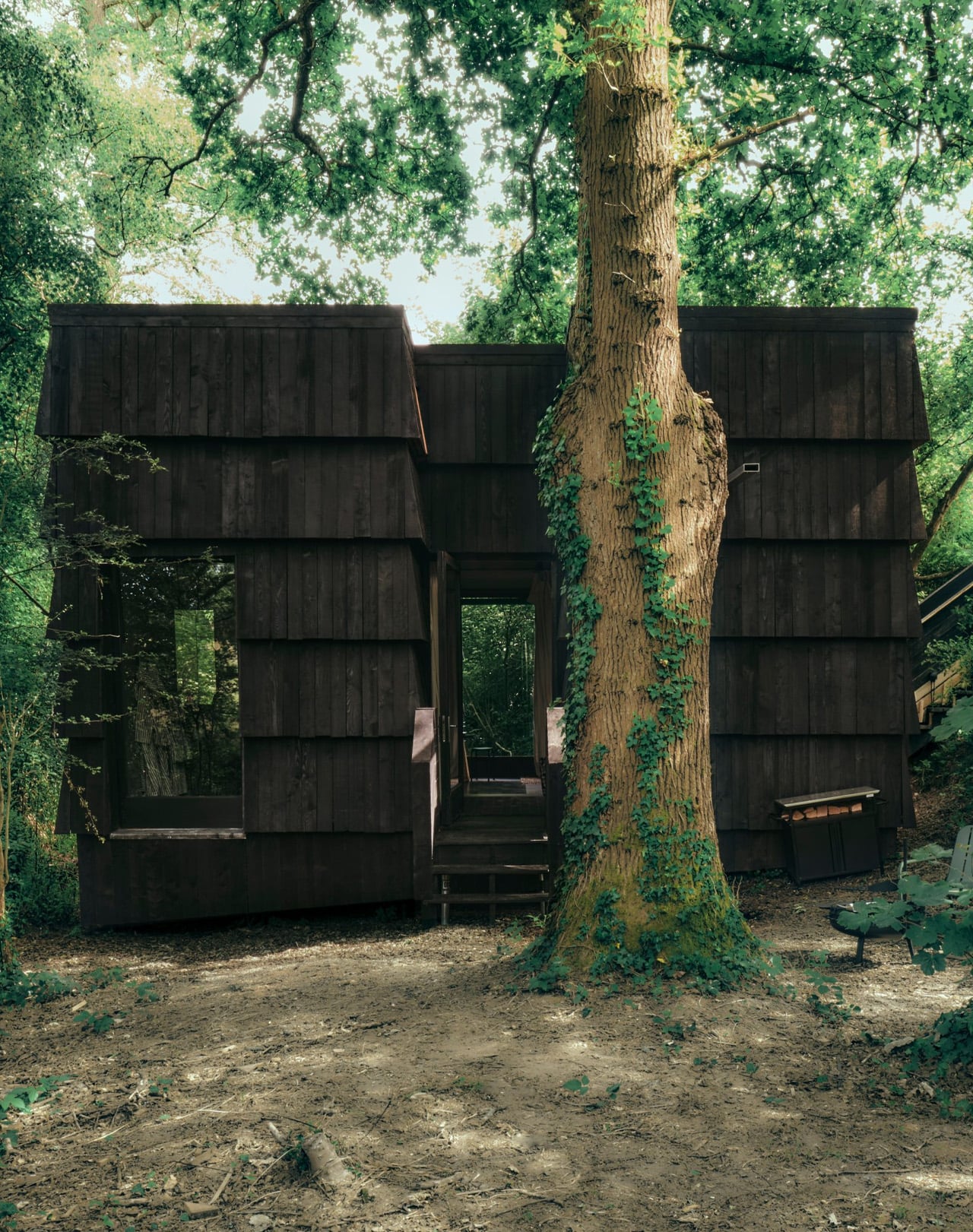
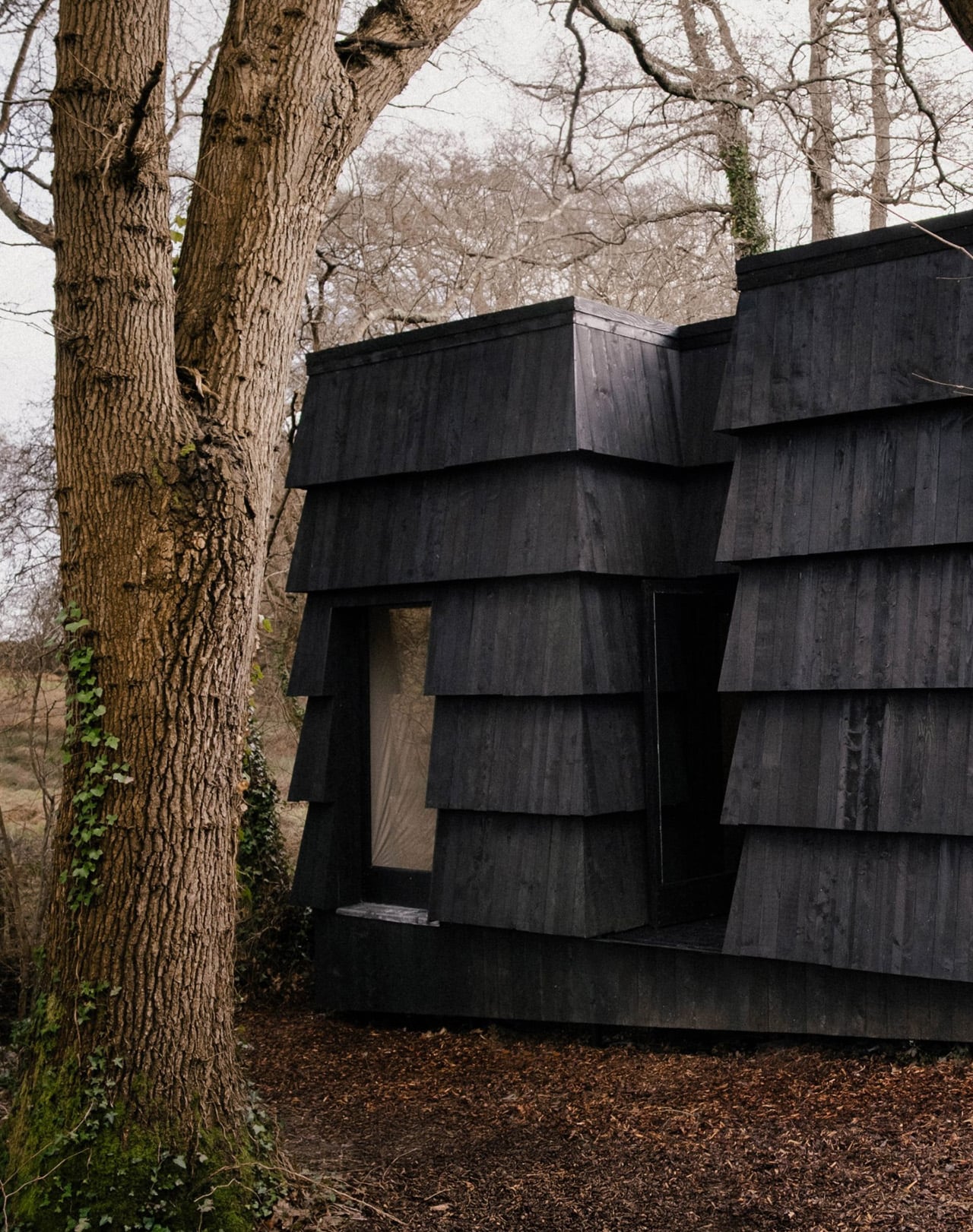
What makes the site plan quietly brilliant is the topography. The cabin sits at the foot of a steep bank beside a small stream, which means guests arrive at roof level and descend inward. The rooftop — blanketed in mosses, grasses, and ferns transplanted directly from the very plot on which the cabin was built — gives the impression that the woodland floor has simply been lifted into place. Above it, a raised boardwalk floats through the planting, guiding guests toward a rooftop spa terrace complete with sauna, hot tub, and ice bath. Built Works described the intention plainly: the terrace should feel “rooted in the woodland while also being slightly transportive and otherworldly.”
Inside, the cross-shaped plan opens into a series of material-rich, tactile spaces. Doors are kept to a minimum — curtains offer privacy where needed, keeping the atmosphere soft and uninterrupted. The centrepiece is a bespoke soaking bath positioned to frame a direct view of the forest. Bathroom tiles were hand-pressed by Built Works co-director Harry Kay alongside his family, carrying imprints of flowers and the fingerprints of his children — small gestures that shift the project from architecture into something far more personal.
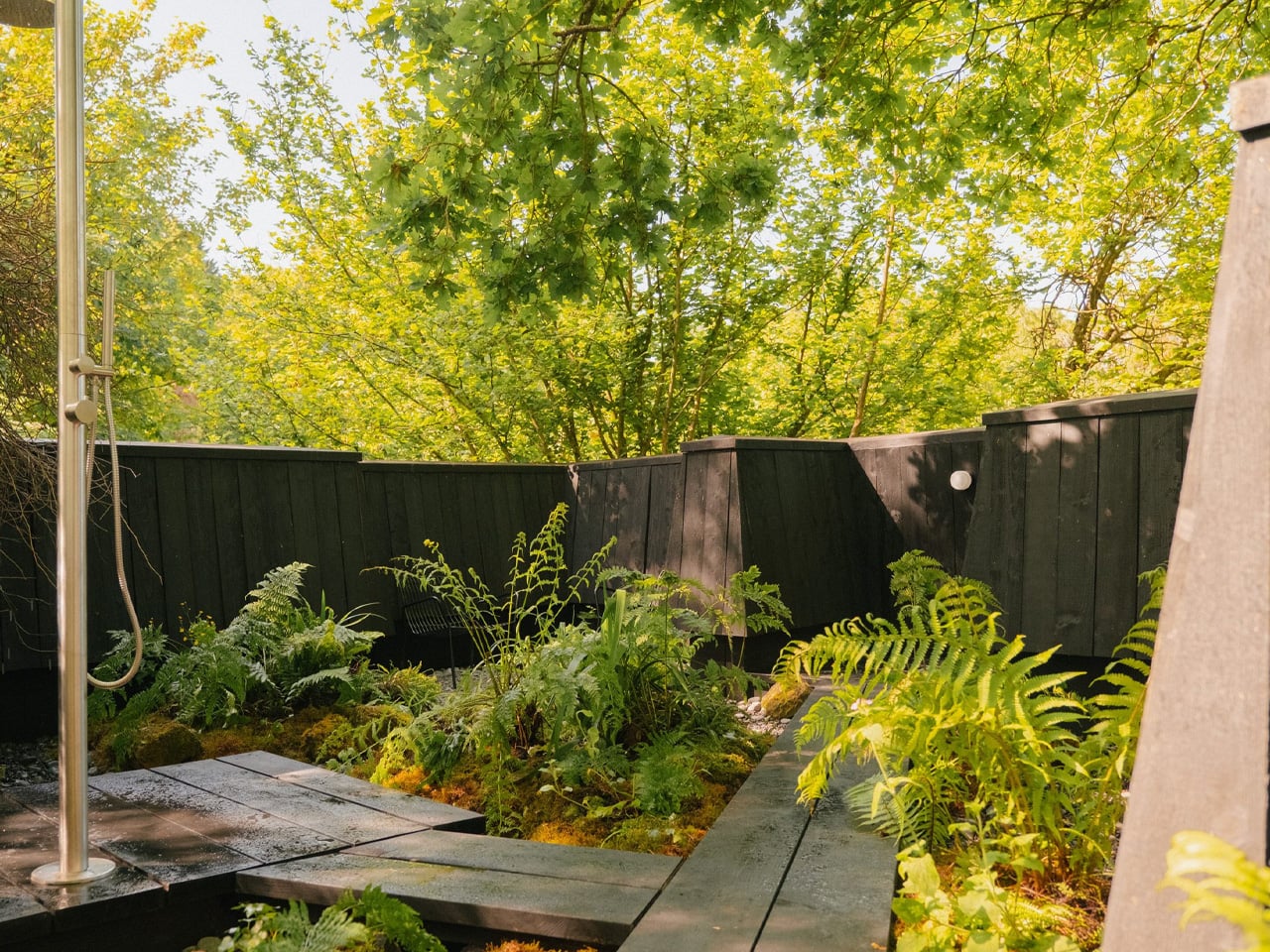
The Bather’s Cabin sits alongside the practice’s earlier Yogi’s Cabin and Drying Shed Sauna at Great Park Farm, each one a study in how architecture might serve a single, specific human act. Here, that act is bathing — and Built Works has elevated it into something close to ceremony.
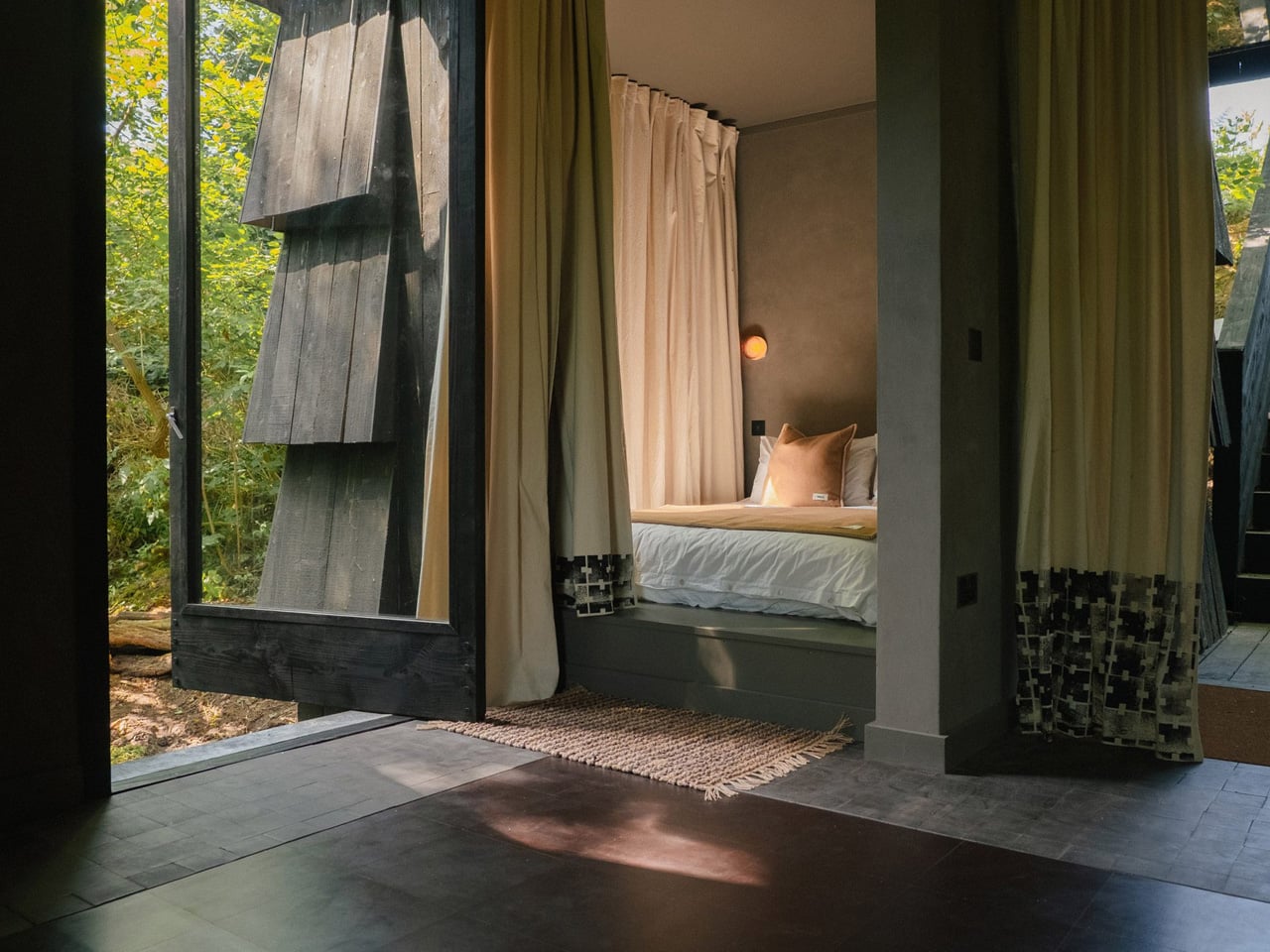
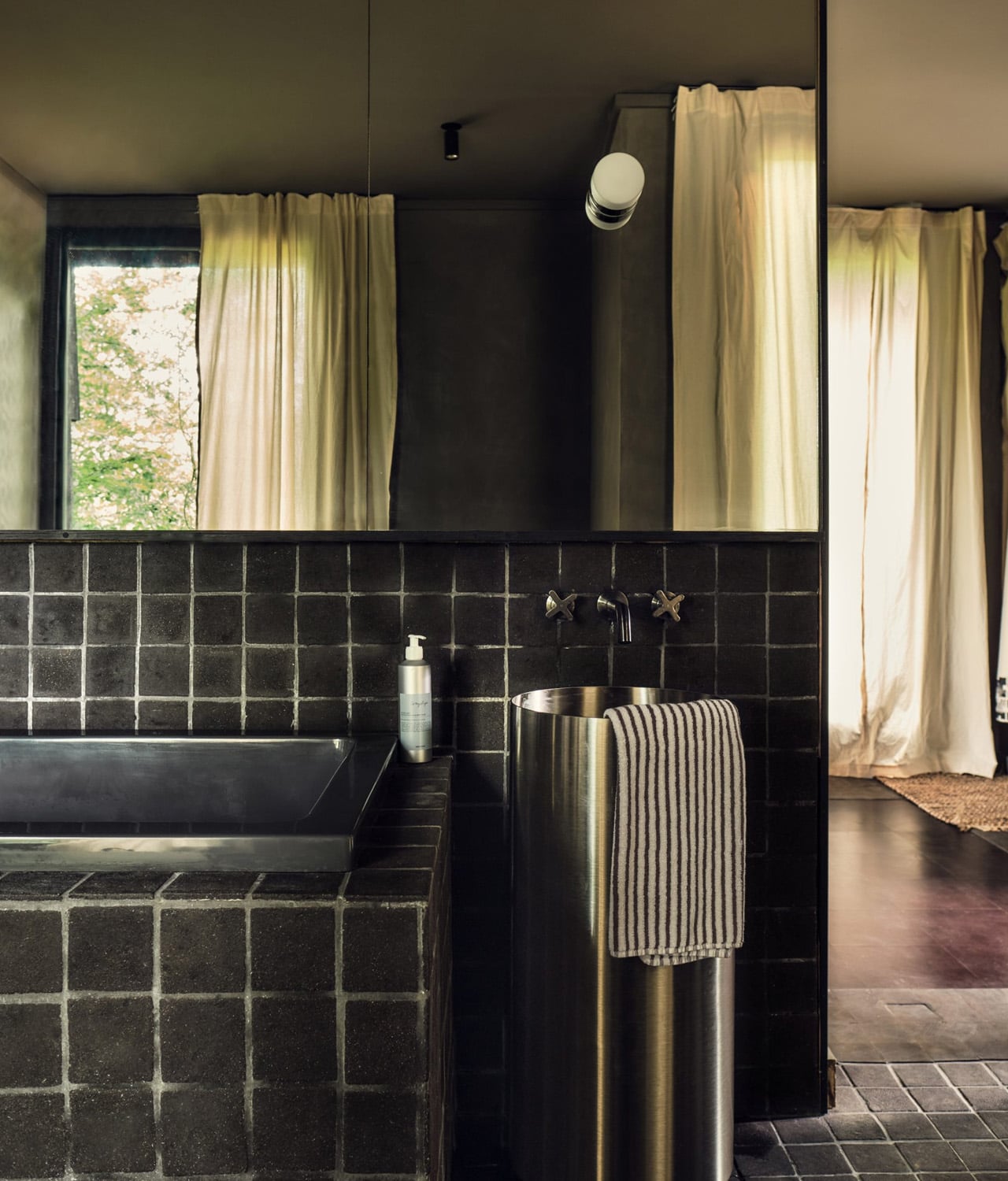
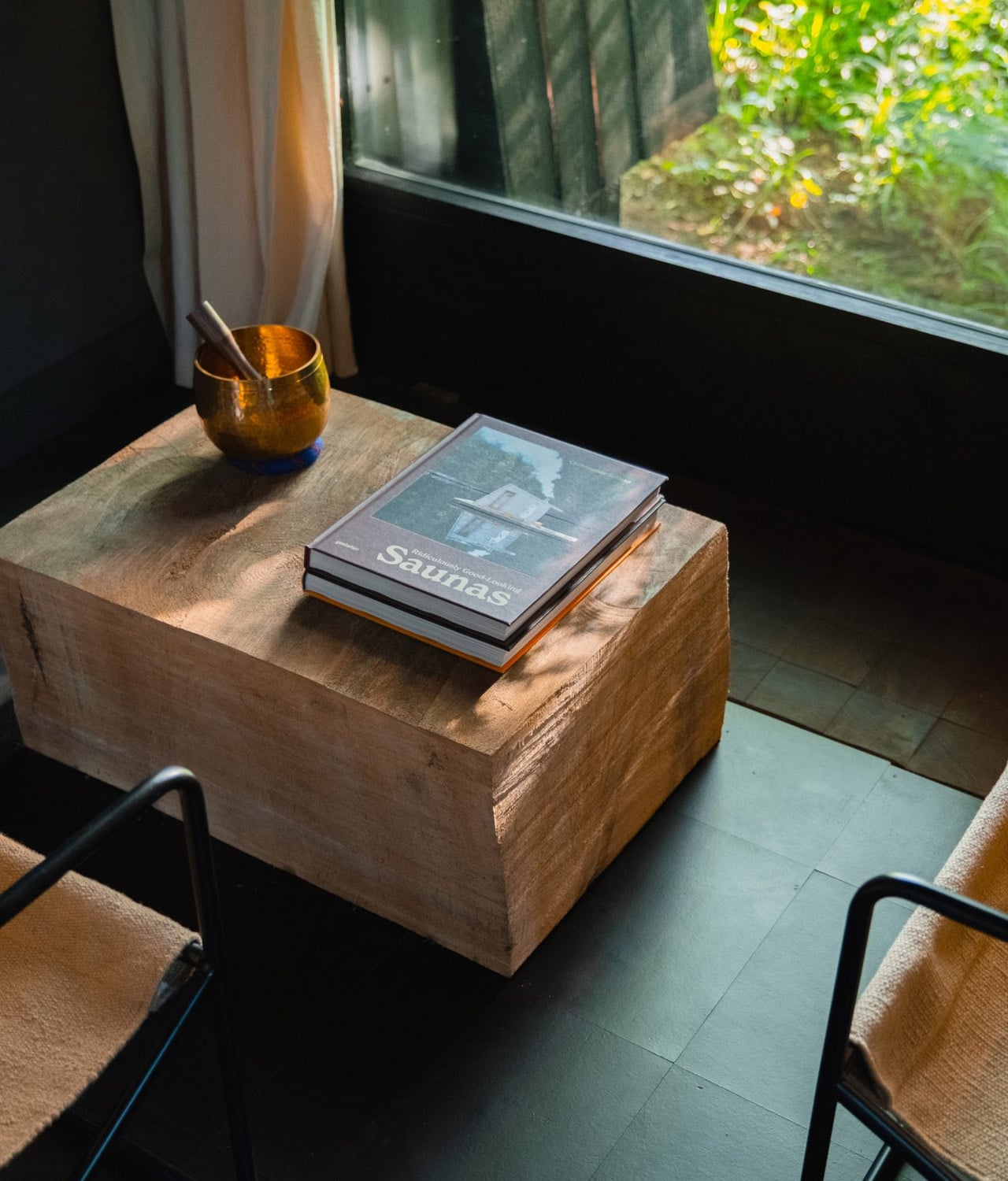
The post A Woodland Cabin Where the Forest Floor Becomes the Ceiling first appeared on Yanko Design.
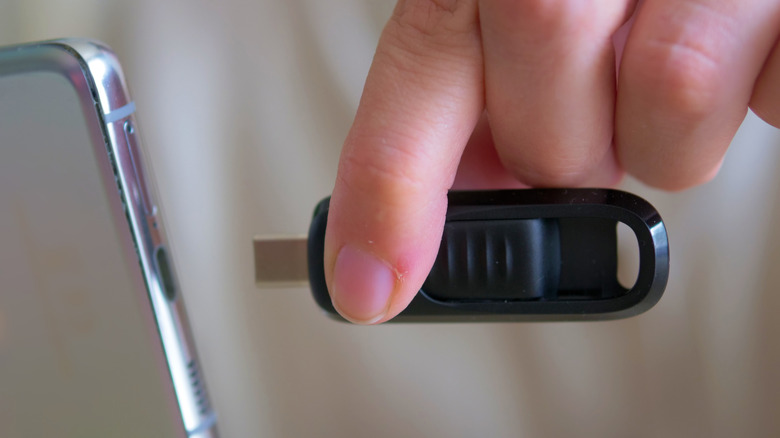


Pick up almost any pepper mill in an average kitchen drawer and you’ll notice the same small, dumb problem: you have to guess which part twists. Is it the top? The bottom? Do you squeeze and turn, or hold still and crank? Manufacturers have spent decades solving how a grinder crushes peppercorns and almost no time solving how a hand is supposed to hold the thing in the first place.
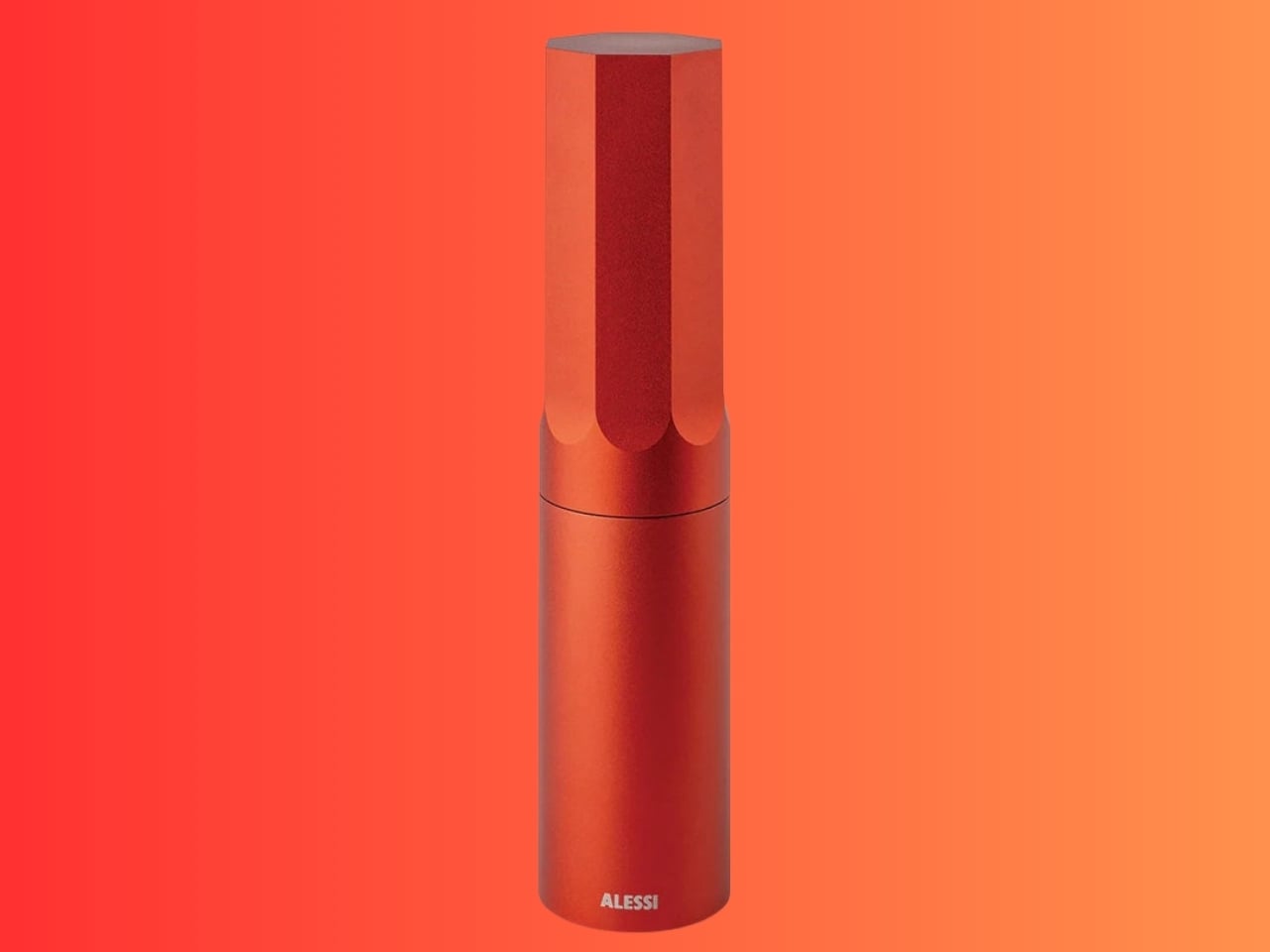
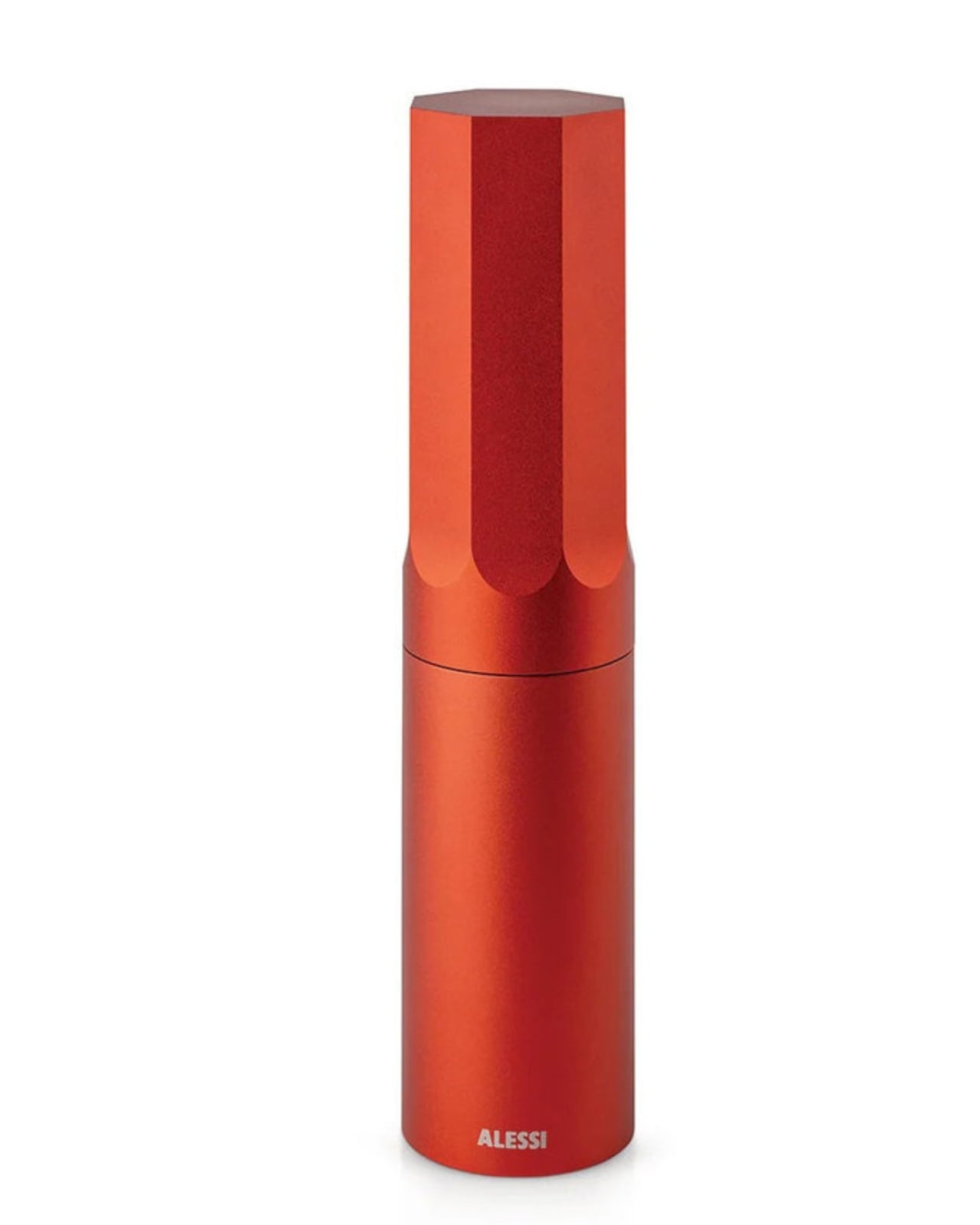
Konstantin Grcic’s new KG01 for Alessi fixes exactly that, and it does it with a trick so simple you wonder why it took this long. The body starts as a smooth cylinder up top, then shifts into an eight-sided, octagonal shape lower down. Your fingers find that transition instinctively. The shape itself tells you where to grip and where to twist, no instructions, no fumbling, no accidentally spinning the wrong half and dumping salt across the table. That’s the kind of design problem I find genuinely satisfying to see solved, because it’s invisible until someone points it out, and then it’s all you notice. A grinder’s form has to communicate its function without a single word of explanation, and Grcic clearly took that as a personal challenge rather than a footnote.
Designer: Konstantin Grcic for Alessi
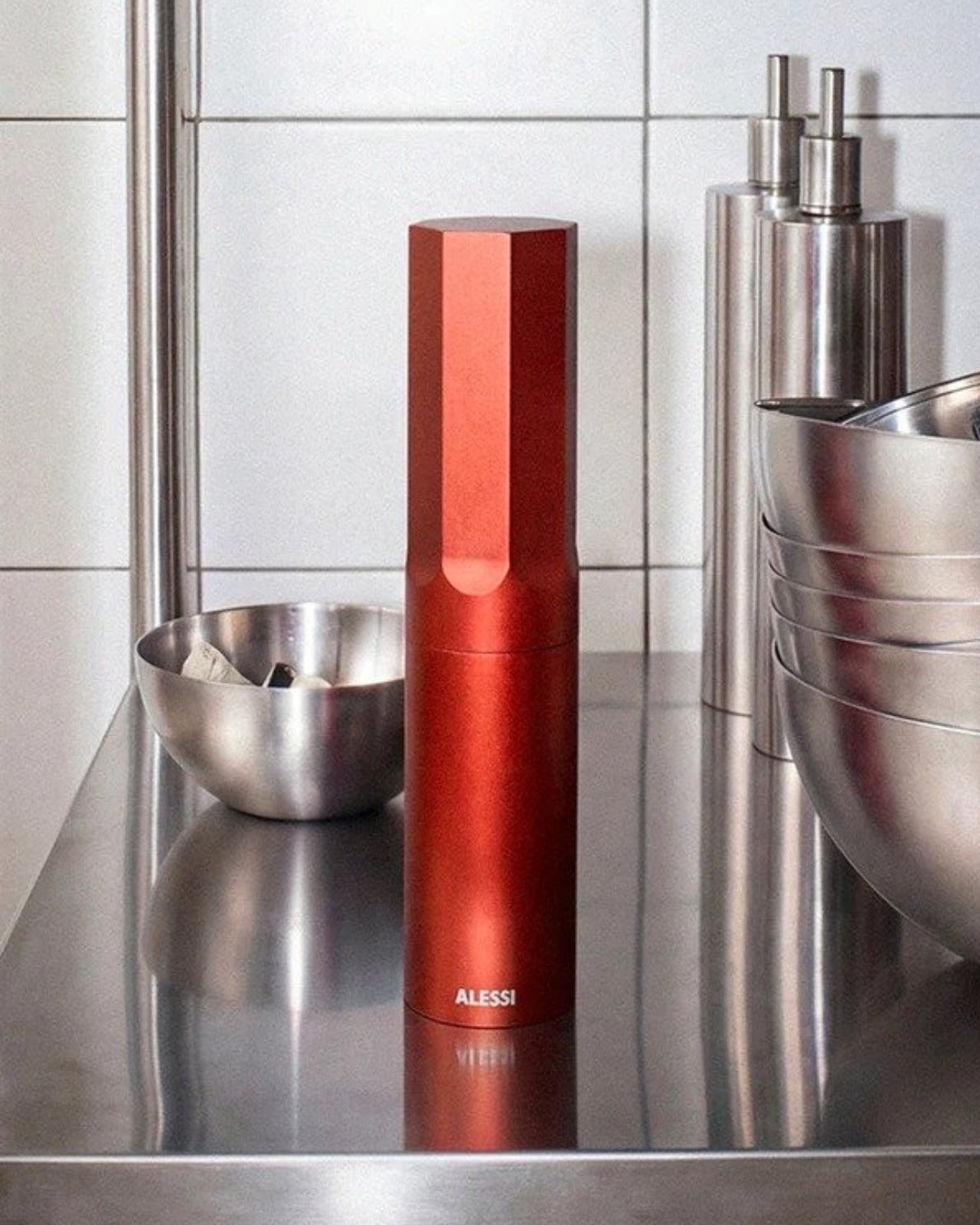
Grcic isn’t chasing novelty for its own sake here, either. He trained as a cabinetmaker before studying at the Royal College of Art in London, and his Berlin studio has spent decades making objects that lean industrial without feeling cold. That background shows up in the KG01. It’s machined from a solid block of aluminum, sandblasted for a matte, slightly grippy texture, and finished with an anodized coat that keeps it from looking like shop equipment that wandered onto your dinner table. Alessi describes it as standing “upright and emblematic like a king on a chessboard,” which sounds like marketing copy until you actually see it next to a wine glass and realize the comparison is fair.
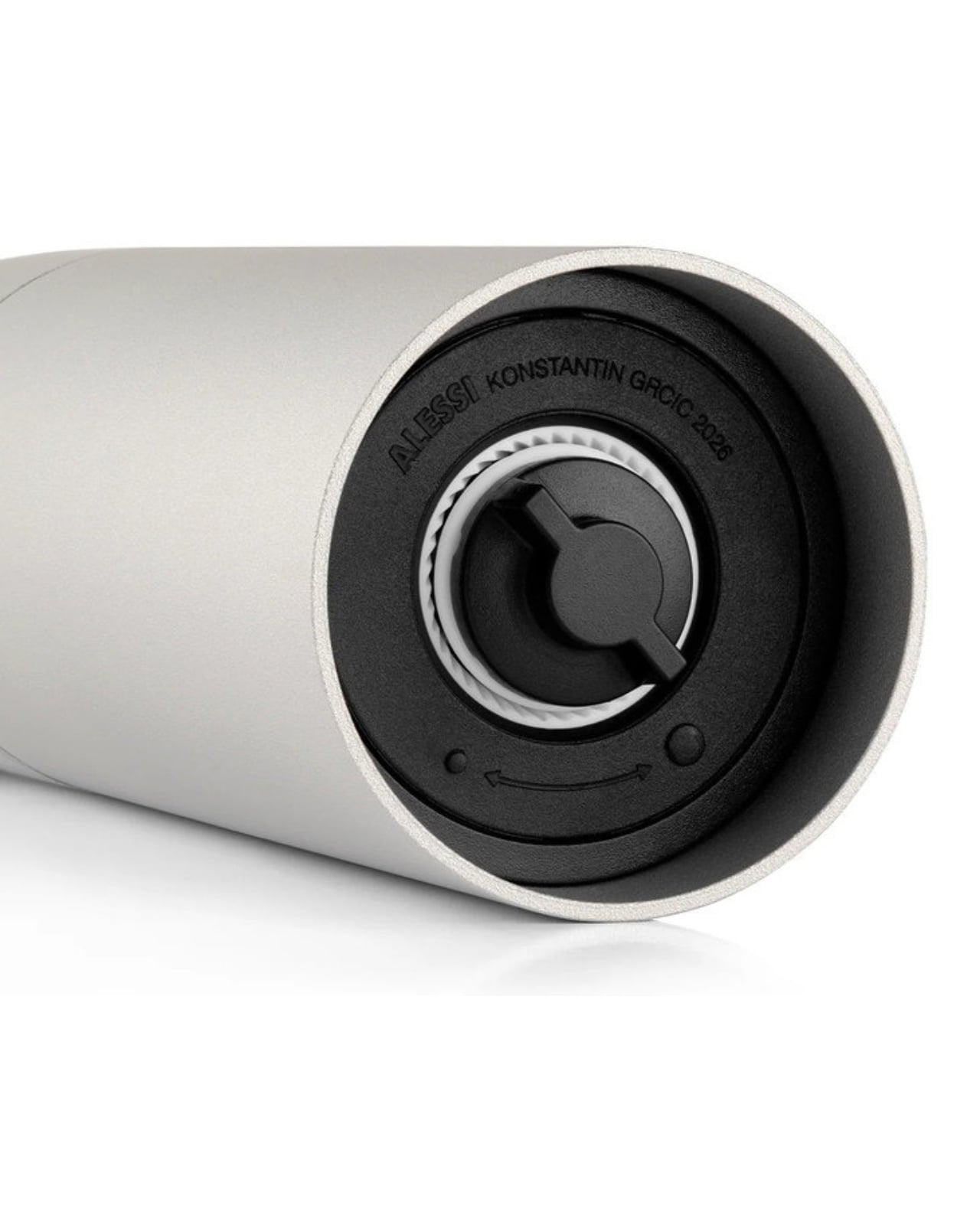
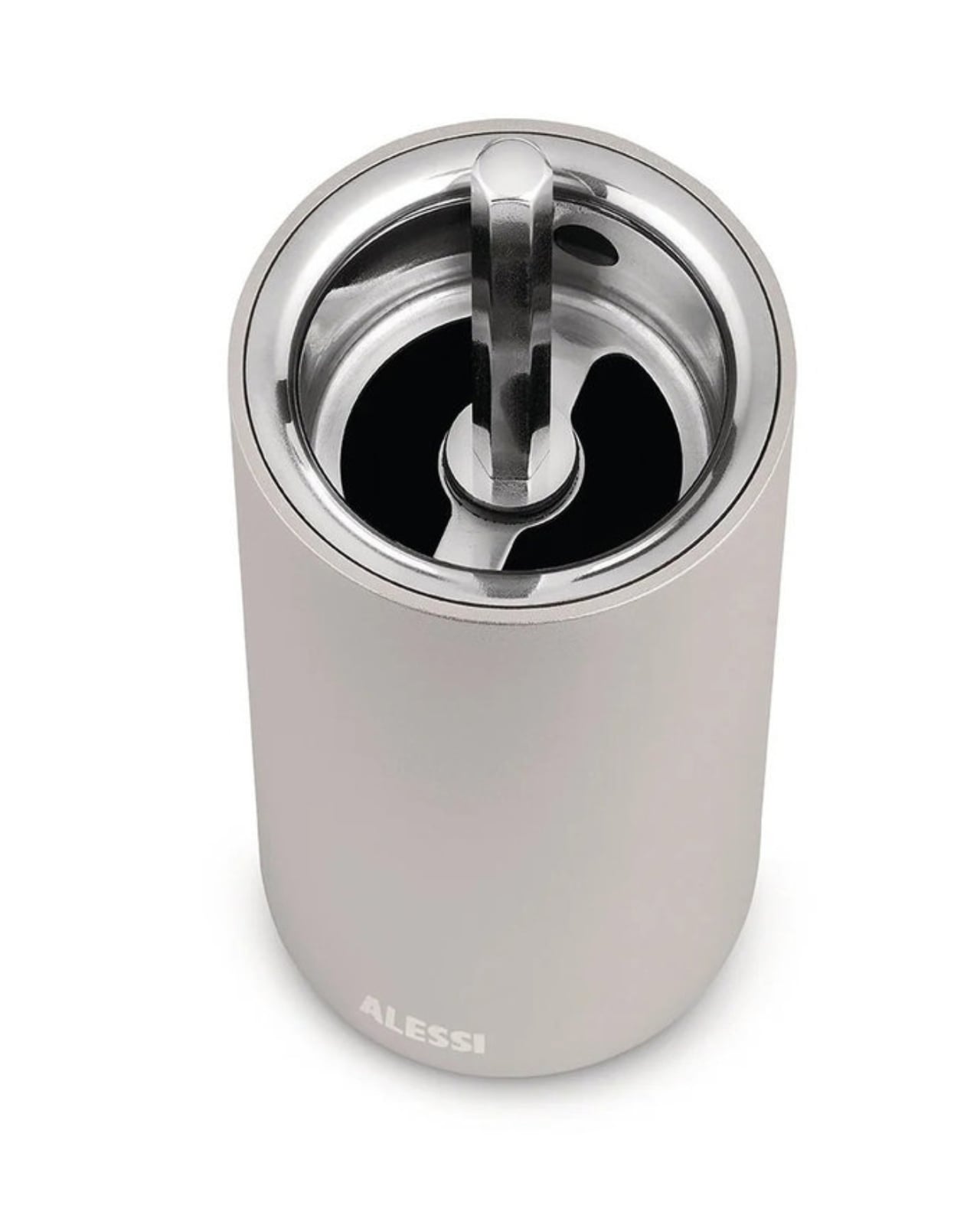
Inside, there’s an adjustable ceramic grinding mechanism built to handle peppercorns, coarse salt, and dry spices, and you can dial the coarseness from fine to chunky by twisting a setting at the base. At roughly 8.5 inches tall, it has real presence on a table without tipping into novelty-object territory. It comes in raw aluminum, a dark grey finish, and a red version that reads more like a piece of hardware than a kitchen accessory, in the best way.
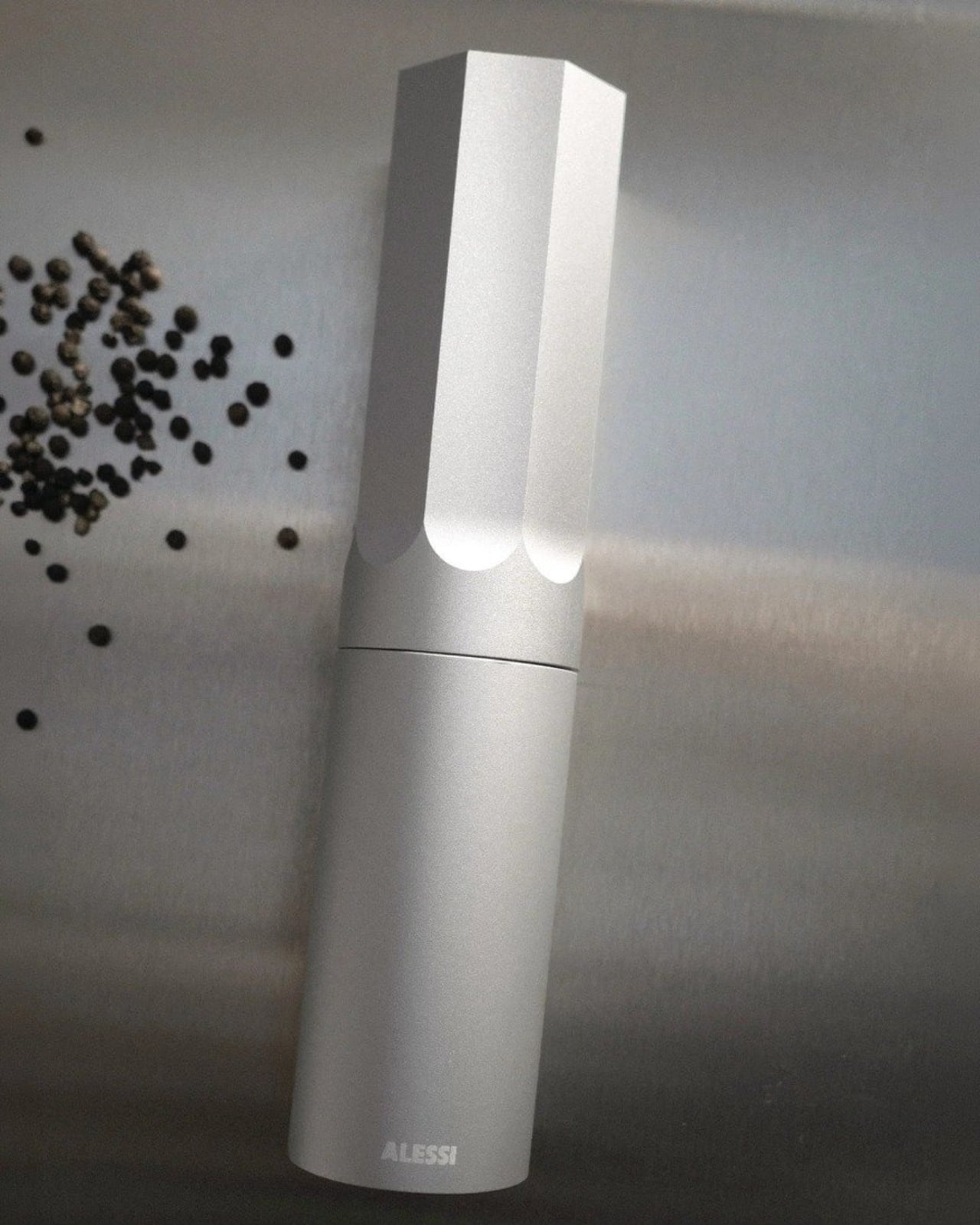
None of this is revolutionary in the sense of new technology. Grinders have used ceramic mechanisms for years, and adjustable coarseness isn’t new either. What’s actually different is the confidence of the shape. So much tableware today tries to disappear, all soft curves and neutral tones designed to offend no one and be remembered by no one. The KG01 refuses that approach entirely. It looks like a tool, reads like a sculpture, and somehow manages to be more comfortable to use than the friendlier-looking mills it’s replacing.
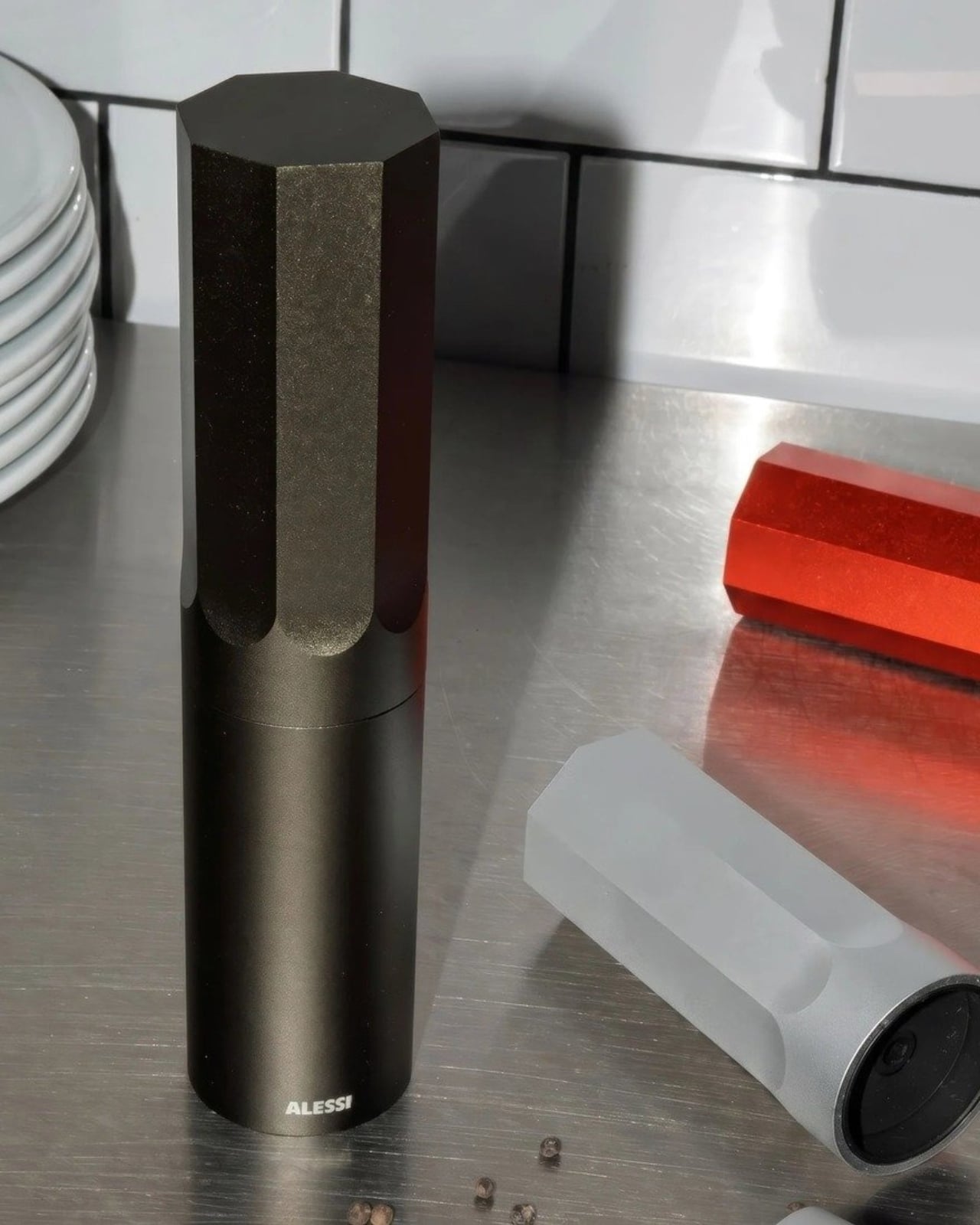
At $175, it’s priced like the design object it is rather than the kitchen gadget it also happens to be, and that’s worth being upfront about. This isn’t an impulse buy next to the register at a home goods store. It’s closer to the kind of piece you put on a wedding registry or buy yourself after walking past it at a design shop and thinking about it for a week straight. Alessi has built an entire business on that exact instinct, turning everyday objects into things people want to display, and the KG01 fits comfortably into that lineage.
What sticks with me isn’t the price or even the aluminum. It’s the fact that a company still bothers to ask a well-known designer to rethink something as small as where your hand goes on a pepper mill. Most of the objects we touch every day were never designed with that kind of attention. The KG01 was, and you can feel it the first time you pick it up and just know what to do.
The post Finally, a Pepper Grinder Your Hands Actually Understand first appeared on Yanko Design.

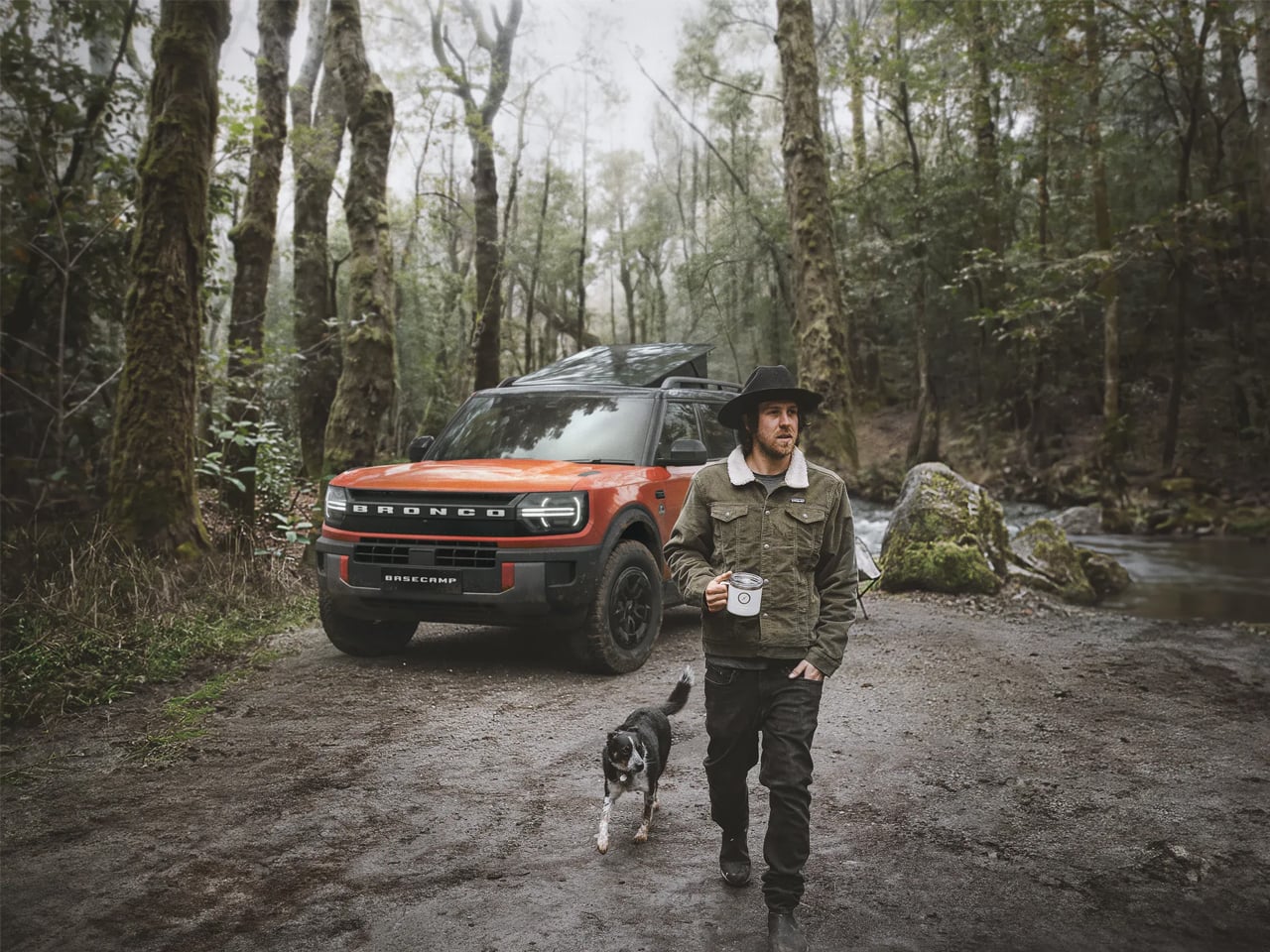
Ford Bronco has earned its reputation for being one of the most rugged, mid-size 4×4 SUVs designed for outdoor adventures. Now, it’s changing that image for the first time in years to be more of a ride for everyday adventurers than one to leave the highway behind and take on the tough terrain. The new iteration is called the Bronco Basecamp and is the first electrified Bronco ever.
Of course, the change is not in the name alone. The overall idea of the vehicle has changed. So, this is not the usual Bronco you know. It’s a little more contemporary and thoughtful, with the same five-seater all-wheel drivetrain. It is created in China through Ford’s partnership with Jiangling Motors.
Designer: Ford

The electric Bronco Basecamp combines large batteries, multiple electric motors, and electronics to make it a convenient adventure-ready SUV. The Basecamp, unlike the body-on-frame chassis of the regular Bronco, is built on a unibody chassis, and comes with an extended-range electrified powertrain. The SUV is headed first for release in Australia and New Zealand, but there is no word on if and when it will make it stateside.


As mentioned, the Basecamp comes with an extended-range electric vehicle (EREV). Ford calls it a super-hybrid powertrain, which is nothing but a hybrid of electric and gas running the SUV. There is a 49-kWh battery onboard, which feeds two electric motors located alongside the gas engine. While the exact word on the kind of range we can expect from the Basecamp is not out at the time of writing, Ford does hint at a driving range of 800-900 kilometres on its website.


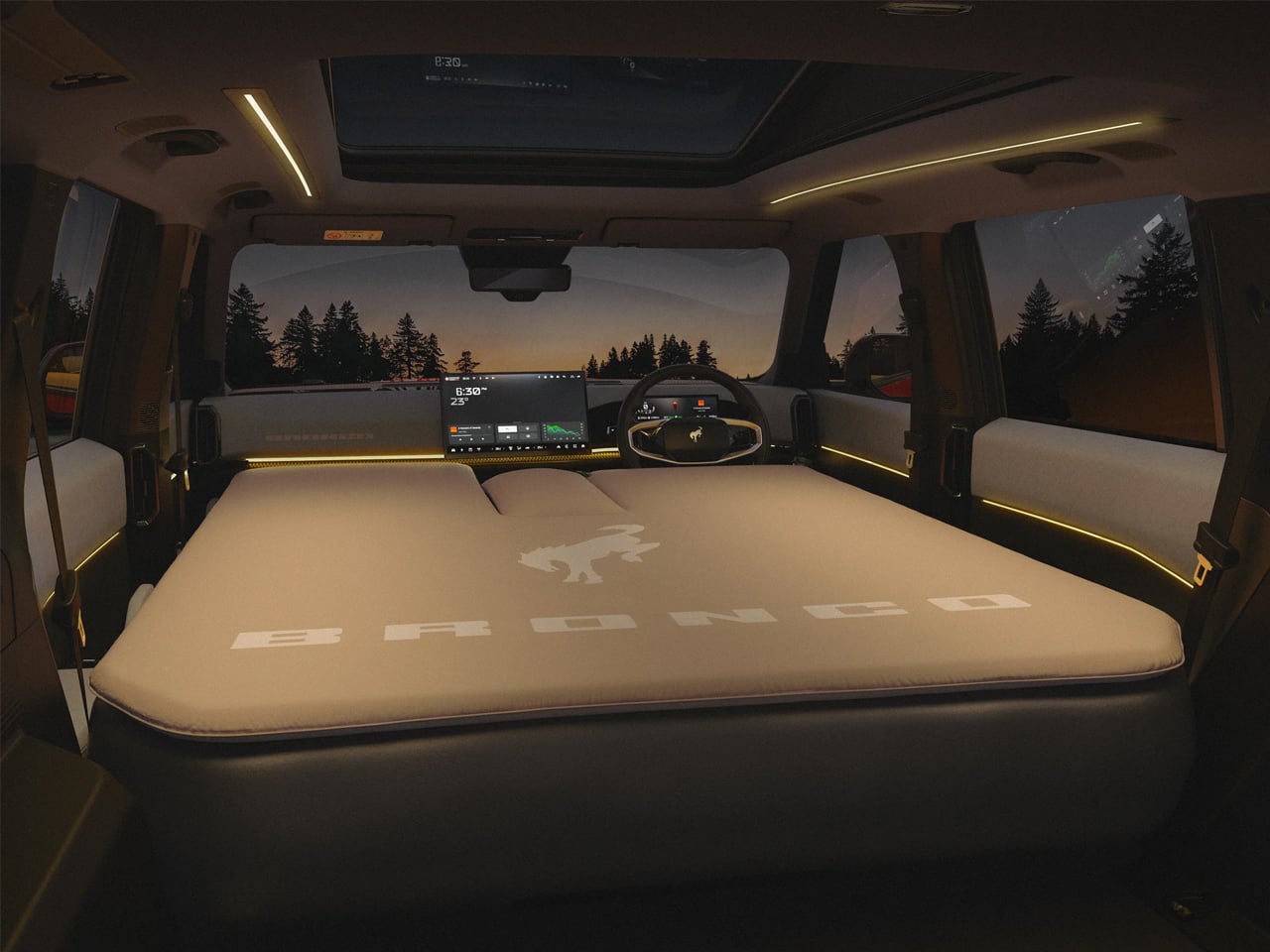
It also suggests that the Bronco from China is designed for camping where your please. To that accord, the Basecamp comes with a transforming cabin where the front and rear seats fold to make a comfortable sleeping space. You place the provided inflatable mattress, and you’re good to retire for the day. The flagship Outer Banks model also arrives with a motorized pop-up roof that deploys at the touch of a button to offer more headroom and ventilation when you’re living inside the Basecamp.

The same model also features an interior with a 7.5L warm/cool storage console to heat and cool day-trip drinks and food, while its rear swing gate doubles as a table. Ford also provides the Basecamp with a 6.6kW battery to run it off-grid. The battery can power cooktops, kettles, lights and your gadgets at the camp.
The Ford Bronco Basecamp is expected in Australia and New Zealand in 2027. Ford remains tight-lipped about the pricing at this time, but notes that I will be “sharing specifications, pricing, variants and availability timelines closer to vehicle arrivals from mid-2027.”

The post Ford Bronco Basecamp turns iconic 4×4 into electric adventure SUV you can sleep and camp in first appeared on Yanko Design.