Prime Day deals include three free months of Amazon Music Unlimited for new users

Amazon is hoping to get more people hooked on Music Unlimited with a pre-Prime Day offer. Those who haven't tried the service before can get three months of access for free. The offer is even better for Prime members who haven't checked out the music-streaming platform. They can use it for four months at no extra cost. Music Unlimited typically costs $11 per month without Prime and $10 per month for Prime members.

The company isn't leaving existing subscribers entirely out in the cold. Those with an individual Amazon Music Unlimited plan can upgrade to the Family Plan at no extra cost for two months.

Amazon Music Unlimited includes more than 100 million songs, many of which are available in high definition and/or spatial audio. The service also includes ad-free versions of many popular podcasts.

While it may not be the first music streaming service that springs to mind for most folks, Amazon Music Unlimited may be worth checking out. The HD music selection is particularly notable, since Spotify has yet to offer that feature.

Follow @EngadgetDeals on Twitter for the latest tech deals and buying advice in the lead up to October Prime Day 2024.

This article originally appeared on Engadget at https://www.engadget.com/deals/prime-day-deals-include-three-free-months-of-amazon-music-unlimited-for-new-users-184228736.html?src=rss

Tales of the Shire: A The Lord of the Rings Game is now due out in March 2025

Tales of the Shire, a cozy life sim set in the world of Lord of the Rings, has gotten a new release date and a strange new name. It’s scheduled for release on March 25, 2025 and it’s now called Tales of the Shire: A The Lord of the Rings Game, because apparently referencing the Shire wasn’t enough to clue in fans. LOTR diehards are well known for being ignorant about the franchise they love. That was extreme sarcasm.

Anyways, this information was served up during Private Division and Wētā Workshop’s Hobbit Day Showcase, which revealed a lot of new footage and included plenty of interviews with the game’s designers. Wētā Workshop is actually helping to develop the game, after making effects for all of Peter Jackson’s Middle-earth films.

Tales of the Shire: A The Lord of the Rings Game (that really rolls off the tongue) was supposed to come out in 2024, but it was delayed so the developers could iron out some bugs and present a fully realized version of their original vision. Here’s hoping that translates to a polished gameplay experience in March.

For the uninitiated, this is a cozy sim. There are elements of Animal Crossing, Stardew Valley and other games in the genre. There’s farming, fishing and a deep character interaction system. Of course, there’s also a big emphasis placed on cooking huge feasts. We all know how much hobbits love a good feast.

The game looks cute enough and, heck, I’m always down for a new cozy sim. However, the developers have confirmed that there will be no romance, despite the emphasis on cultivating relationships and friendships. The developers say that romance simply doesn’t fit the tone of the game. In any event, Tales of the Shire: A The Lord of the Rings Game will be released for PC via Steam, Nintendo Switch, PS5 and Xbox Series X/S. It’s also coming to Netflix.

This article originally appeared on Engadget at https://www.engadget.com/gaming/tales-of-the-shire-a-the-lord-of-the-rings-game-is-now-due-out-in-march-2025-180726777.html?src=rss

Herman Miller Gaming x FAILE artistic gaming chairs and character joysticks are impressive

Herman Miller is known better for its consortium of office chairs than for gaming chairs. But its gaming division: Herman Miller Gaming, has a new, artistic vision to turn some eyes its way. The furniture giant has partnered with FAILE, a brainchild of Patrick McNeil and Patrick Miller, to revive the nostalgia of the Arcades, Ataris, and Nintendos of the ‘80s through painting and printmaking approach on chairs, wooden Joysticks, and printed posters.

The initial idea for Herman Miller and FAILE collaboration was to work with the prints collection of the former. McNeil and Miller, however, saw varying opportunities in the furniture maker’s gaming repertoire and besides gaming-inspired printed posters and tangible painted joysticks with whimsical game-like characters, they have gone ahead to give colorful art love to Herman Miller’s ergonomic gaming seat.

Designer: Herman Miller Gaming x FAILE

Brooklyn-based collaboration between artists Patrick McNeil and Patrick Miller, FAILE, has been blurring the lines between fine art and popular culture through painting and printmaking. The choice of material is little of significance, since their collaboration since 1999, the two artists have worked with a range of materials ranging from traditional canvas to sculptures, from window pellets to wooden boxes and their idea of transforming the Embody Gaming Chair into a piece of exceptional art is therefore no surprise.

McNeil and Miller have characterized 12 variants of the Embody, using its seat and back as the canvas of distinction similar to skateboard decks. According to the duo, through the artwork, they intend to bring to ‘Herman Miller Gaming that which was not in the digital realm but captured some of the character making of gaming.’ This also extends into the creation of joysticks, which have a tactile wood feel and personality of their own that uniquely comes to life depending on the setting they’re used in.

FAILE and Herman Miller have created 100 unique characters, based on drawings and doodles. Each of these is handcrafted and painted with hand for uniqueness. While the chairs are designed exclusively for the Herman Miller Gaming archives, and are not available to purchase. Joysticks and prints are available for preorder and will go on retail starting October 1 for $995 and $250 respectively. If you want an experience of the artistic collection before committing to it, you can check them out in an installation in New York from September 27 through September 29.

The post Herman Miller Gaming x FAILE artistic gaming chairs and character joysticks are impressive first appeared on Yanko Design.

Sony’s next State of Play stream is set for September 24

With the Tokyo Game Show taking place this week, major publishers have lined up showcases for the coming days. Sony is getting the jump on its rivals as it will run its next State of Play on September 24 at 6PM ET.

The company plans to shine the spotlight on more than 20 PS5 and PS VR2 games during the stream, which is set to run for over 30 minutes. You'll be able to watch the showcase on YouTube and Twitch in English or Japanese.

It seems very likely that we'll get a release date for Horizon Lego Adventures, the final first-party game that Sony currently has on its slate for the rest of the year. We'll surely get another look at the Until Dawn and Silent Hill 2 remakes before they arrive in early October too. There's also chatter that there are remasters of Horizon Zero Dawn and Days Gone on the way, so Sony might spill the beans on those. Death Stranding 2: On The Beach and Marvel's Wolverine are among the other upcoming titles that could make an appearance.

Here's hoping for a major surprise or two. Hardware news seems unlikely given that the PS5 Pro is coming soon. However, it's a good opportunity for Sony to remind everyone about those dope PS1-style 30th anniversary editions of the PS5 consoles and controllers. (For what it's worth, Sony may reveal the prices of those at the State of Play.)

Meanwhile, let's not forget that September 26 is The Last of Us Day. If we don't hear anything about that franchise at the State of Play, Sony will certainly have something to say about it then. A release date for the PC version of The Last of Us Part 2 Remastered is possible, though we should at least get an update on season two of the HBO adaptation.

This article originally appeared on Engadget at https://www.engadget.com/gaming/playstation/sonys-next-state-of-play-stream-is-set-for-september-24-171708006.html?src=rss

Telegram will now provide IP addresses and phone numbers in response to legal requests

Telegram’s CEO Pavel Durov stated that the messaging app will now start handing over the IP addresses and phone numbers of users if prompted by legal requests. Bloomberg, which first reported the policy change, notes that Telegram has historically been "notoriously non-responsive to takedown requests" and "often ignored requests for information about suspected criminals."

Accompanying this development is the implementation of some moderation. Telegram has started using AI, as well as a human moderation team, to remove "problematic" content from its search results, Durov said. Durov also asked users to report unsafe and illegal content to the team so they can remove it.

How much these changes will affect the popularity of Telegram with those engaged in illicit activities (or authorities' ability to prosecute them) remains unknown. While IP addresses and phone numbers may be useful for triangulating users' activities elsewhere, Telegram users can opt for several layers of anonymizing features, like disappearing messages, end-to-end encryption or the ability to use the service without a SIM card. The service's FAQ continues to brag that "To this day, we have disclosed 0 bytes of user messages to third parties, including governments."

Back in August, Durov was arrested in France for crimes committed on Telegram and ordered to remain there. He denies these charges.

This article originally appeared on Engadget at https://www.engadget.com/apps/telegram-will-now-provide-ip-addresses-and-phone-numbers-in-response-to-legal-requests-170300911.html?src=rss

How to watch Meta Connect 2024

It's Meta's turn to step up to the plate and host a developer conference. This year's Meta Connect takes place on September 25 and 26. While the bulk of the event will focus on how developers can get the most out of Meta's products, most of the actual news is likely to come from the opening keynote and developer keynote, which run back to back on September 25 starting at 1PM ET.

You'll be able to watch the keynote live on Facebook on the Meta for Developers page. There's also the option to drink in the keynote in Horizon Worlds, in "a virtual experience inspired by the Meta campus in Menlo Park." Meta has also shared the keynote on its YouTube channel in previous years, but only after Connect is over, so it's unlikely to livestream the event there.

The Connect keynote will feature Meta CEO Mark Zuckerberg discussing advancements in mixed reality, AI and wearables. The company is also promising a look at new products and features. Those may well include a pair of augmented reality glasses codenamed Orion that executives have been teasing for quite some time.

We're also expecting to see a less-expensive version of the Quest 3, dubbed the Quest 3S. Leaks suggest that this could sell for $300, which is significantly less than the $500 Quest 3. The Quest 3S could make it easier for Meta to finally ditch the Quest 2, which debuted in 2020 and is significantly less powerful than the Quest 3.

Elsewhere, Meta may announce an update for the Ray-Ban Meta smart glasses at Connect. Meta and Ray-Ban owner EssilorLuxottica recently renewed their partnership, so there's more to come from that pact, either now or in the future.

In addition, there will likely be lots of talk about AI in the developer keynote starting at 2PM ET. It's likely that we'll learn more about how it's being used across Meta's headsets and smart glasses. As a result, the open-source Llama large language model is expected to be a topic of discussion.

This article originally appeared on Engadget at https://www.engadget.com/wearables/how-to-watch-meta-connect-2024-163643686.html?src=rss

Biden administration seeks ban on auto software from China

The Biden administration just announced a comprehensive plan to ban Chinese software and some hardware from internet-connected cars in the US. This is being framed as a national security measure, with the administration stating that this software poses “new threats to our national security, including through our supply chains.”

This is the same reasoning behind a recent ban of telecommunications equipment from Chinese companies like Huawei and ZTE. In that case, the claims had teeth, as documents reportedly showed how Huawei was involved in the country’s surveillance efforts. Today’s announcement goes on to say that China “could use critical technologies” from connected vehicles “within our supply chains for surveillance and sabotage to undermine national security.”

The rules announced today go beyond mere software. It would also cover any piece of hardware that connects a vehicle to the outside world, which includes Bluetooth, cellular, Wi-Fi and satellite components. It also includes cameras, sensors and onboard computers. The software ban would go into effect in model year 2027, with the related hardware prohibition starting in model year 2030.

The proposed ban also includes Russian auto software. The country has a fairly robust EV industry, but primarily for domestic use. There’s nothing in Russia that’s globally lusted after like the cheap EVs from Chinese companies like BYD.

This leads us to a major point. While this proposed ban is primarily for internet-connected software, it would effectively block all Chinese auto imports. The software is pretty much baked in, as are the items of hardware that allow for connectivity. It’s already tough to get one of these vehicles stateside, due to the recent tariffs placed on Chinese EVs, but this would make it nearly impossible.

Government officials, however, have held steadfast that this is a move to improve national security, and not to ban cheaper EVs from another market. “Connected vehicles and the technology they use bring new vulnerabilities and threats, especially in the case of vehicles or components developed in the P.R.C. [People's Republic of China] and other countries of concern,” said Jake Sullivan, President Biden’s national security adviser. These remarks were given to reporters over the weekend and were transcribed by The New York Times. 

Sullivan went on to reference something called Volt Typhoon, which is an alleged Chinese effort to insert malicious code into American power systems, pipelines and other critical infrastructure. US officials fear that this program could be used to cripple American military bases in the event of a Chinese invasion of Taiwan or a similar military excursion.

Peter Harrell, who was previously the National Security Council’s senior director for international economics during the Biden administration, told The New York Times that “this is likely to be opening the door, over a number of years, to a much broader governmental set of actions” that would “likely see a continuation” no matter who wins the presidential election.

It’s worth noting that the BYD Seagull, as an example, sells for around $10,000. This makes it much cheaper than American EVs, even after getting slapped by that fat 100 percent tariff. A full-featured EV for $20,000 sounds pretty nice right about now. Oh well. It was fun to dream.

This article originally appeared on Engadget at https://www.engadget.com/transportation/evs/biden-administration-seeks-ban-on-auto-software-from-china-154025671.html?src=rss

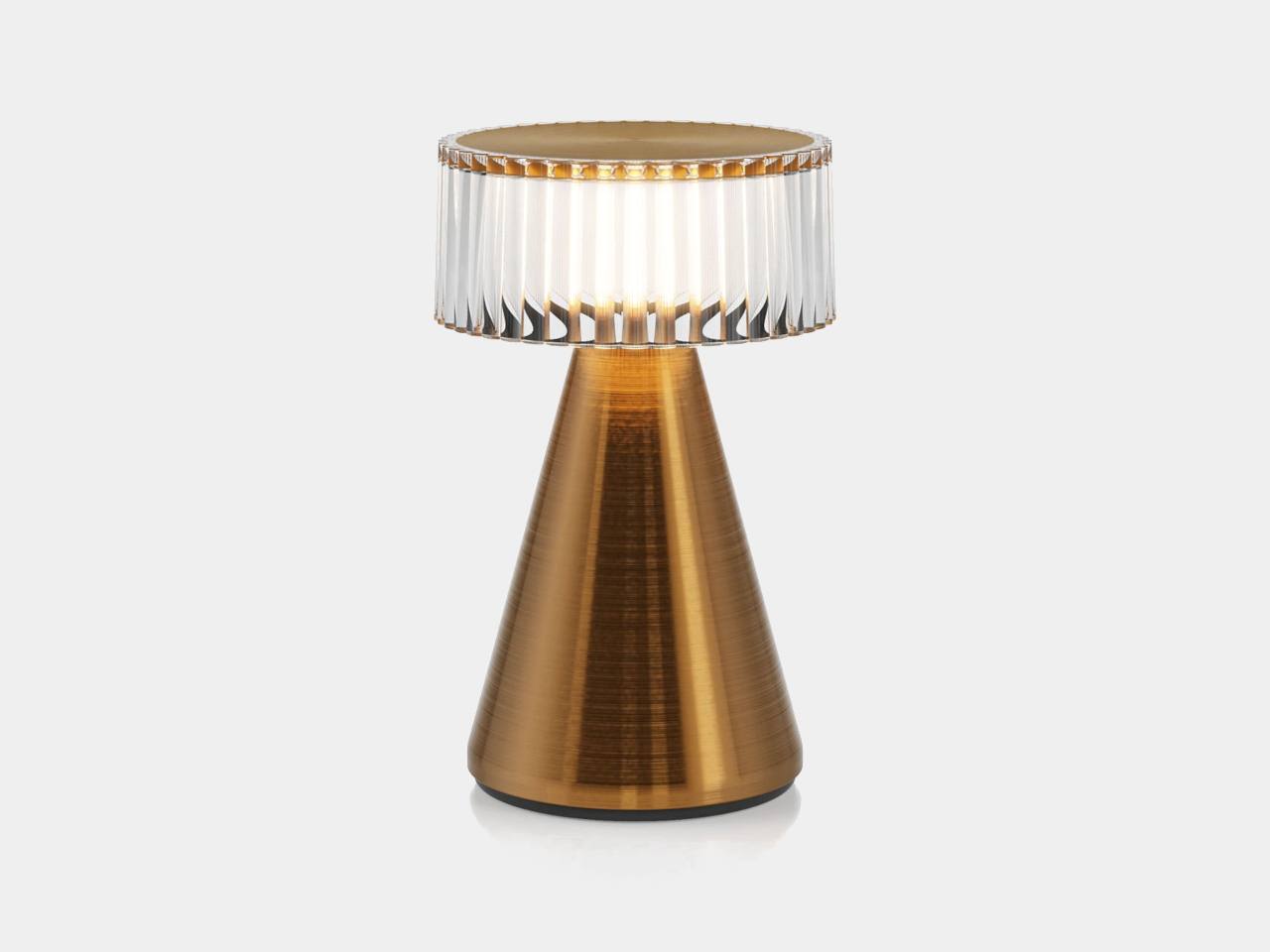
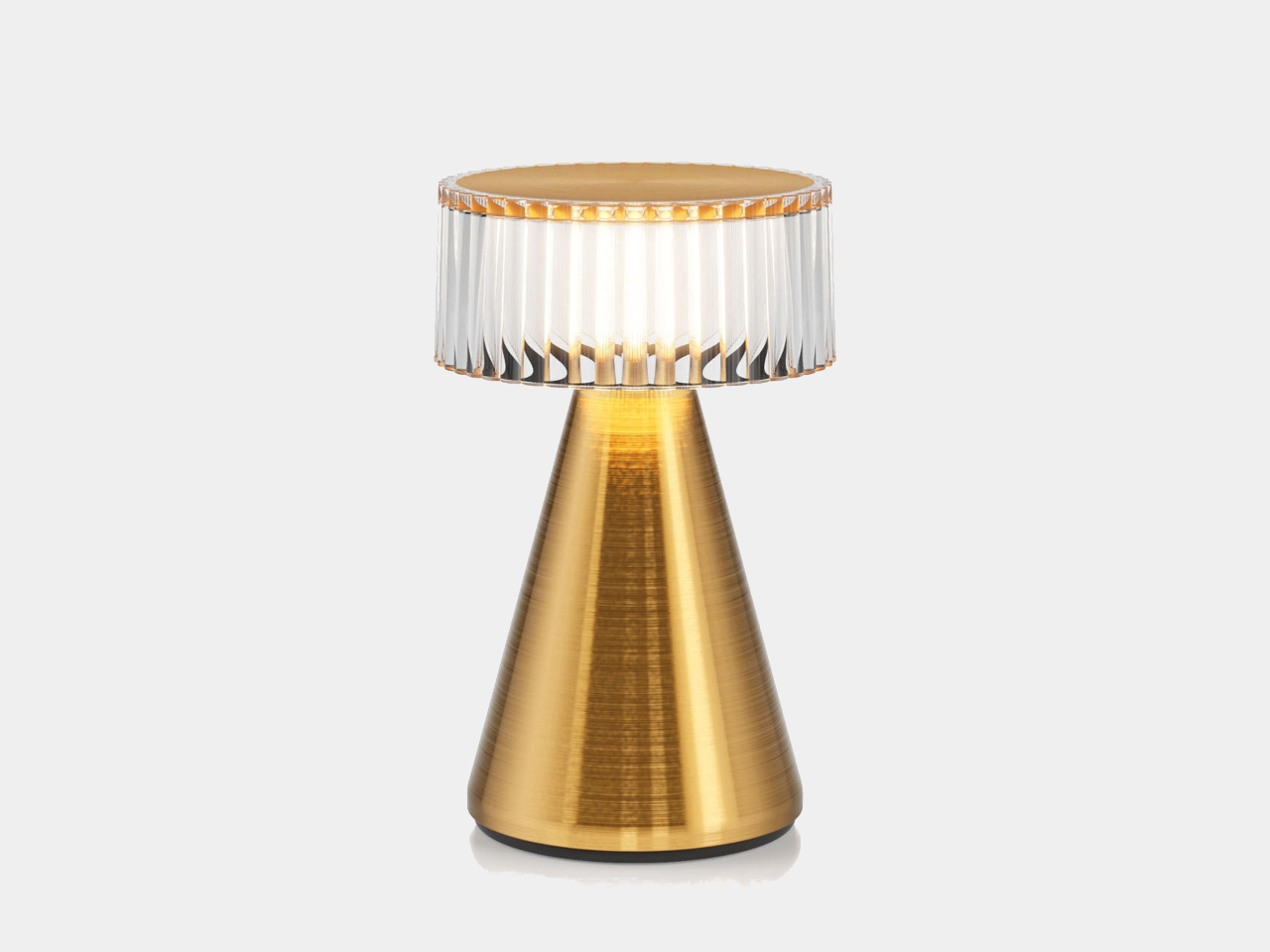
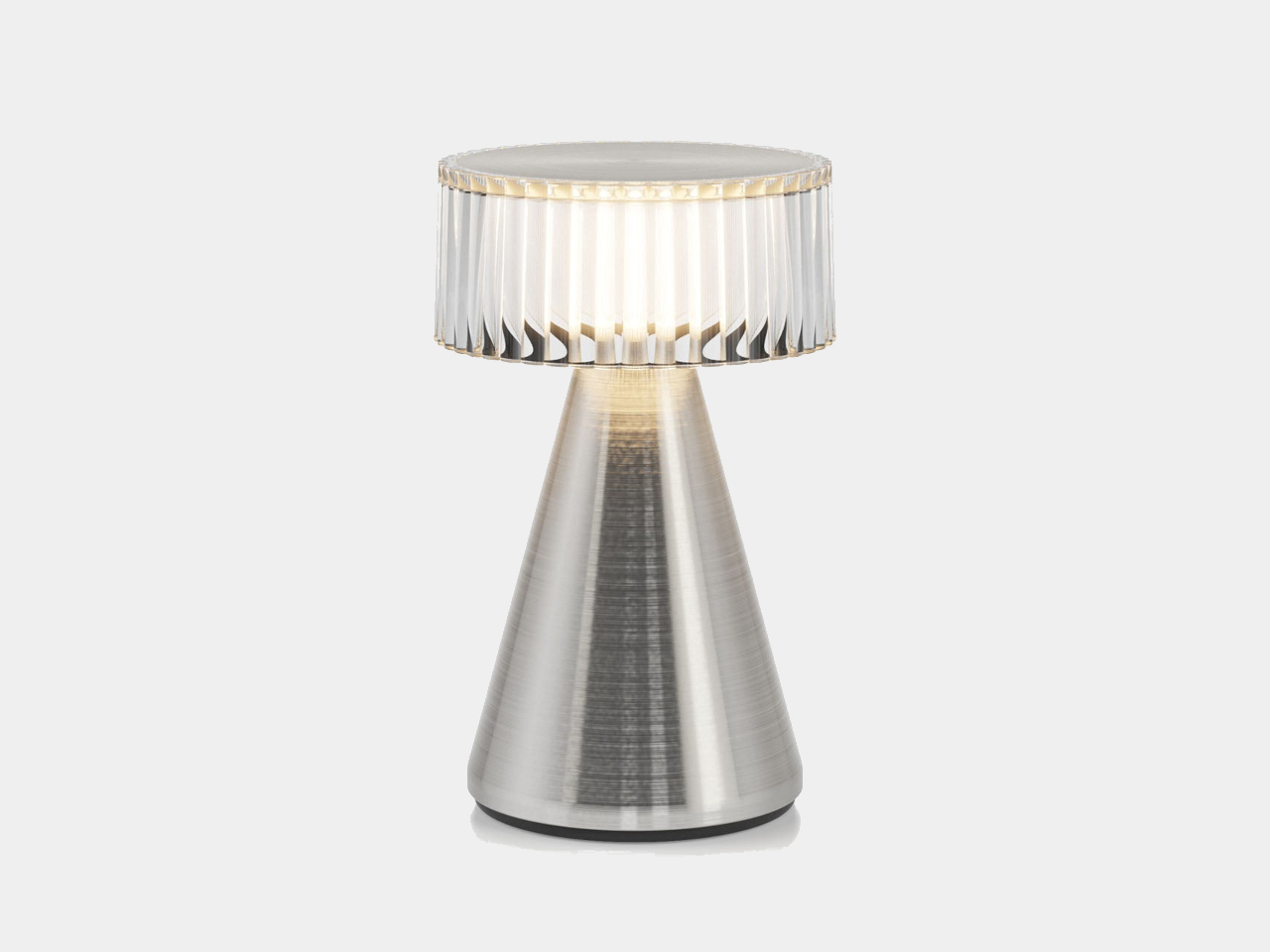
Mini wireless table lamp adds a touch of luxury to indoor and outdoor settings

We all could use some lighting, whether indoors and especially outdoors at night. There is no shortage of lamp designs available for that purpose, and some of them can even be carried around and used outdoors. The majority of the latter, however, tend to take on more rugged aesthetics, as if expecting to always take a beating. It’s rare to see a general-purpose lamp that can be used whether indoors or outdoors and still look like a product that’s been designed with elegance and style in mind. That’s the combination that this small LED lamp is bringing to the table, quite literally, whether that table is inside the hotel lounge, beside the pool, or even a dining table under the starry night sky.

Designers: Peter Ellis, Gabriel Tam (Neoz)

There will always be a place for rugged portable lamps that can rough it out with adventurers and explorers, but those don’t cover the entire range of outdoor uses. What if you want to hold a somber and stylish nighttime get-together outdoors, far from where house lights and lamp posts can reach? You definitely can’t settle for a candlelight dinner, romantic as that might sound, and this petite but bright wireless lamp makes sure you don’t have to keep your guests in the dark.

Named for an Australian coffee known for its small shots and big punches, Piccolo has a similar appeal with its PVD steel conical body and drum-shaped polycarbonate diffuser with a ribbed surface that creates an interesting play of light and shadows through reflection and refraction. With a crystal-like top and a brushed metal body with finishes in Gold, Bronze, and Silver hues, the lamp generates an atmosphere that is elegant and luxurious, even when used outdoors.

With an IP64 rating, the Piccolo lamp doesn’t shy away from accidental spills or Mother Nature’s unpredictable temperament. It is completely wireless as well, running on a replaceable rechargeable battery, so you can put it anywhere you need both illumination and ambiance. The lamp is designed to look great in hospitality venues, outdoor nighttime gatherings, and, of course, anywhere inside your home or room.

Small as it may be, Piccolo has a big heart for the planet. It uses 75% post-consumer recycled plastic for its internal structure, along with more sustainable materials like stainless steel. The battery, LED light source, and even the diffuser are user-replaceable, extending the life of the lamp for years. Portable, weather-resistant, and elegant, Piccolo gives not just light but also a serene and uplifting atmosphere wherever you put it.

The post Mini wireless table lamp adds a touch of luxury to indoor and outdoor settings first appeared on Yanko Design.

The Google Pixel 8a falls to a new record low of $379 for Prime Day

Google's A-series Pixel phones are a great option for those looking to upgrade without spending a ton of money. Now thanks to Prime Day deals, you can get the Pixel 8a for the best price we've seen. It's down to $379, which is $120 off its usual price.

The Pixel 8a is our pick for the best midrange smartphone you can buy right now. We gave it a score of 90 in our review in May. It has some excellent hardware for a phone in this price range, including terrific cameras, a 6.1-inch OLED screen with a 120Hz refresh rate and great battery life (it lasted for 20 and a half hours on our video rundown test).

What’s more, the Pixel 8a runs on the Tensor G3, which is the same chipset found in the Pixel 8 and 8 Pro. As such, it can run the same AI features as the flagship handsets, including Magic Eraser and other camera trickery, web article summaries and narration via Google Assistant, wallpaper generation and faster Face Unlock.

Elsewhere, features like IP67 dust and water resistance are very welcome. On the downside, the bezels are a little thicker than some may like. Qi wireless charging is slow too at a rate of 7.5W. Still, those are minor quibbles for an otherwise great midrange phone.

Follow @EngadgetDeals on Twitter for the latest tech deals and buying advice, and stay tuned to Engadget.com for all of the best tech deals coming out of October Prime Day 2024.

This article originally appeared on Engadget at https://www.engadget.com/the-google-pixel-8a-falls-to-a-new-record-low-of-379-for-prime-day-144717301.html?src=rss