The ID Genève Circular 1 is a stunning timepiece redefining sustainable luxury


The world of luxury watchmaking is evolving, and ID Genève is at the forefront with its Circular 1 Grenat Dial Nisiar Limited Edition watch. This timepiece tells a compelling story—a story of sustainability, innovation, and exquisite design. Backed by Hollywood icon and environmental advocate Leonardo DiCaprio, ID Genève has crafted a watch that uniquely combines elegance with eco-consciousness.

Designer: ID Genève

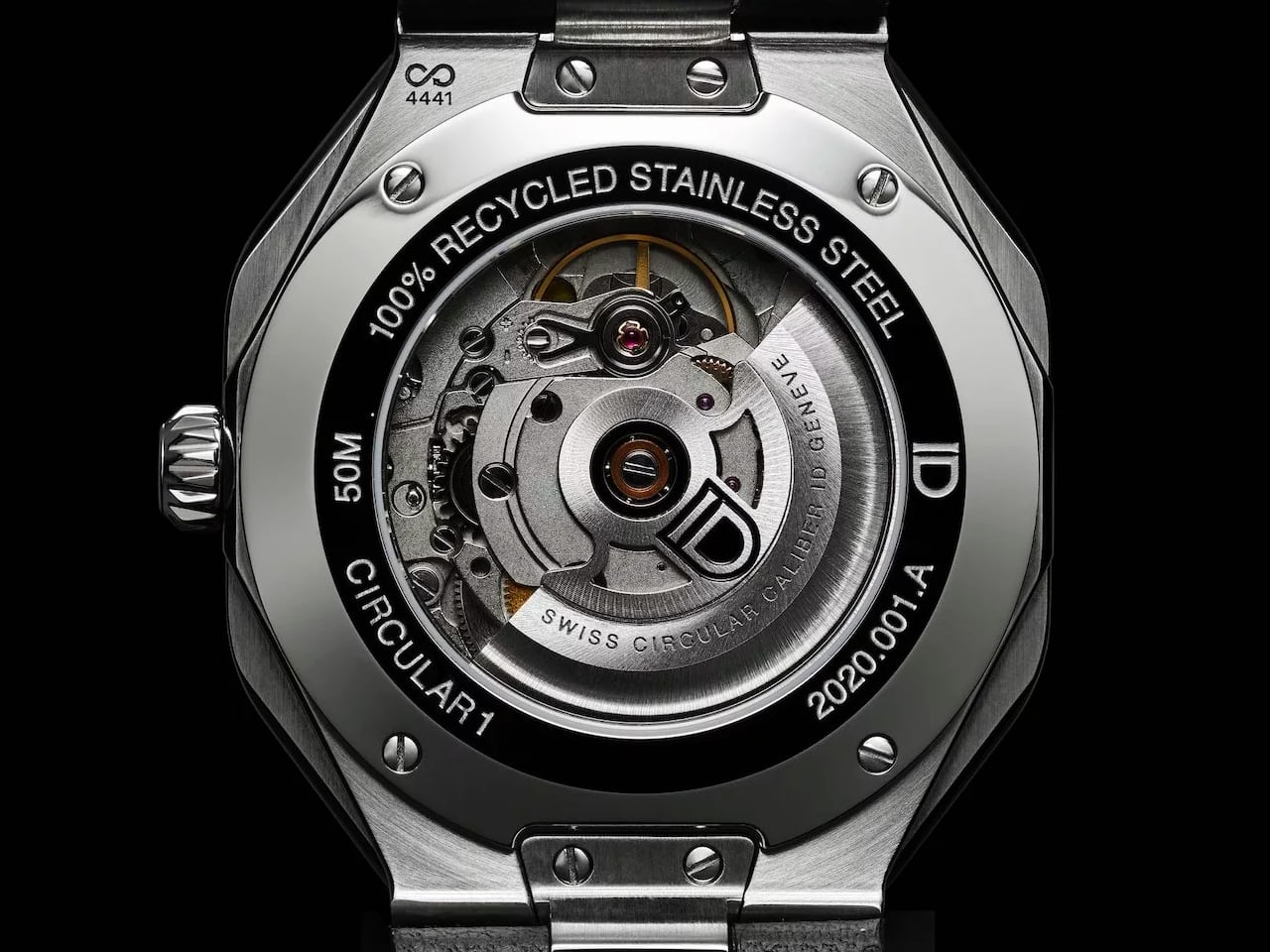
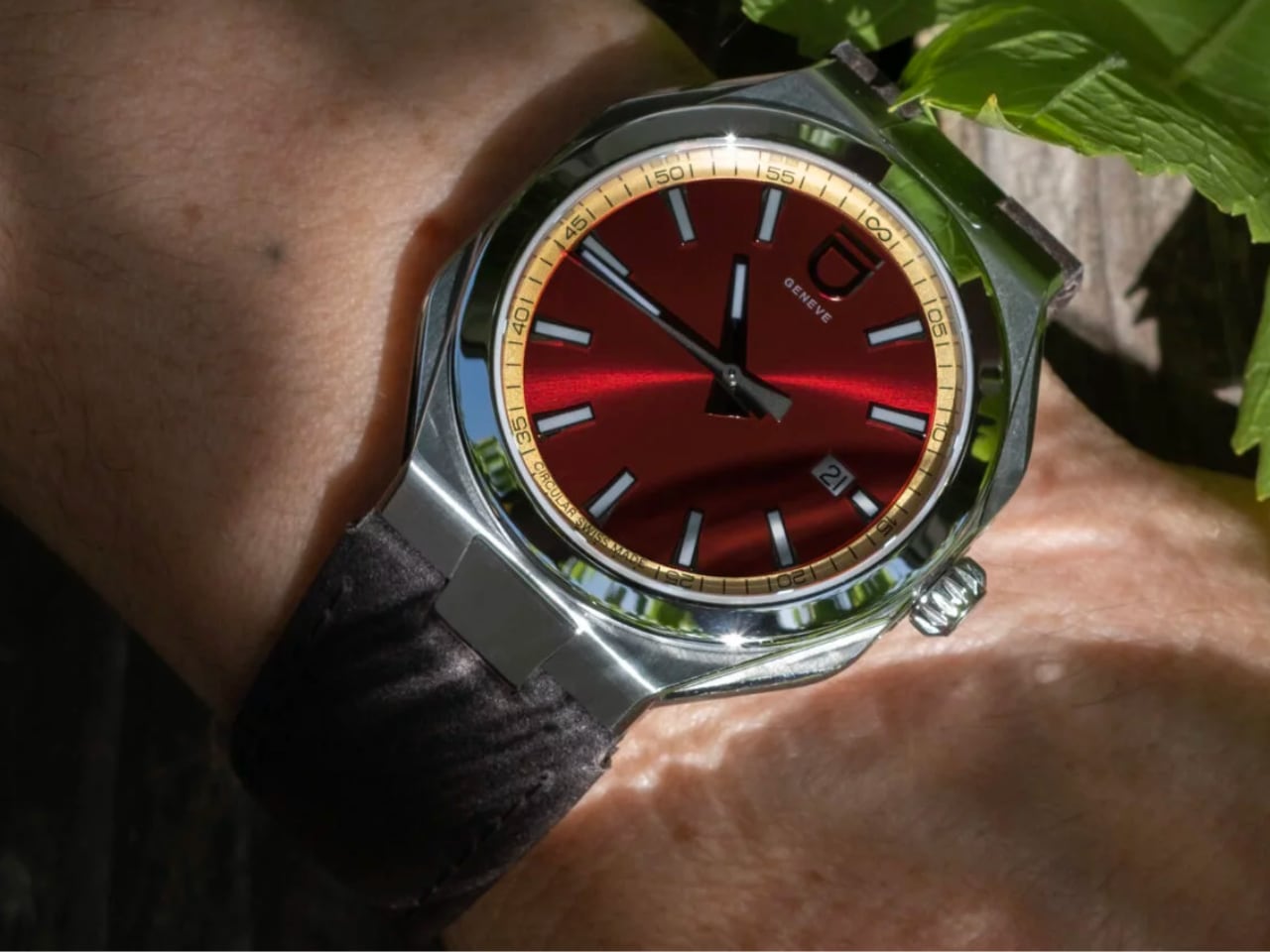
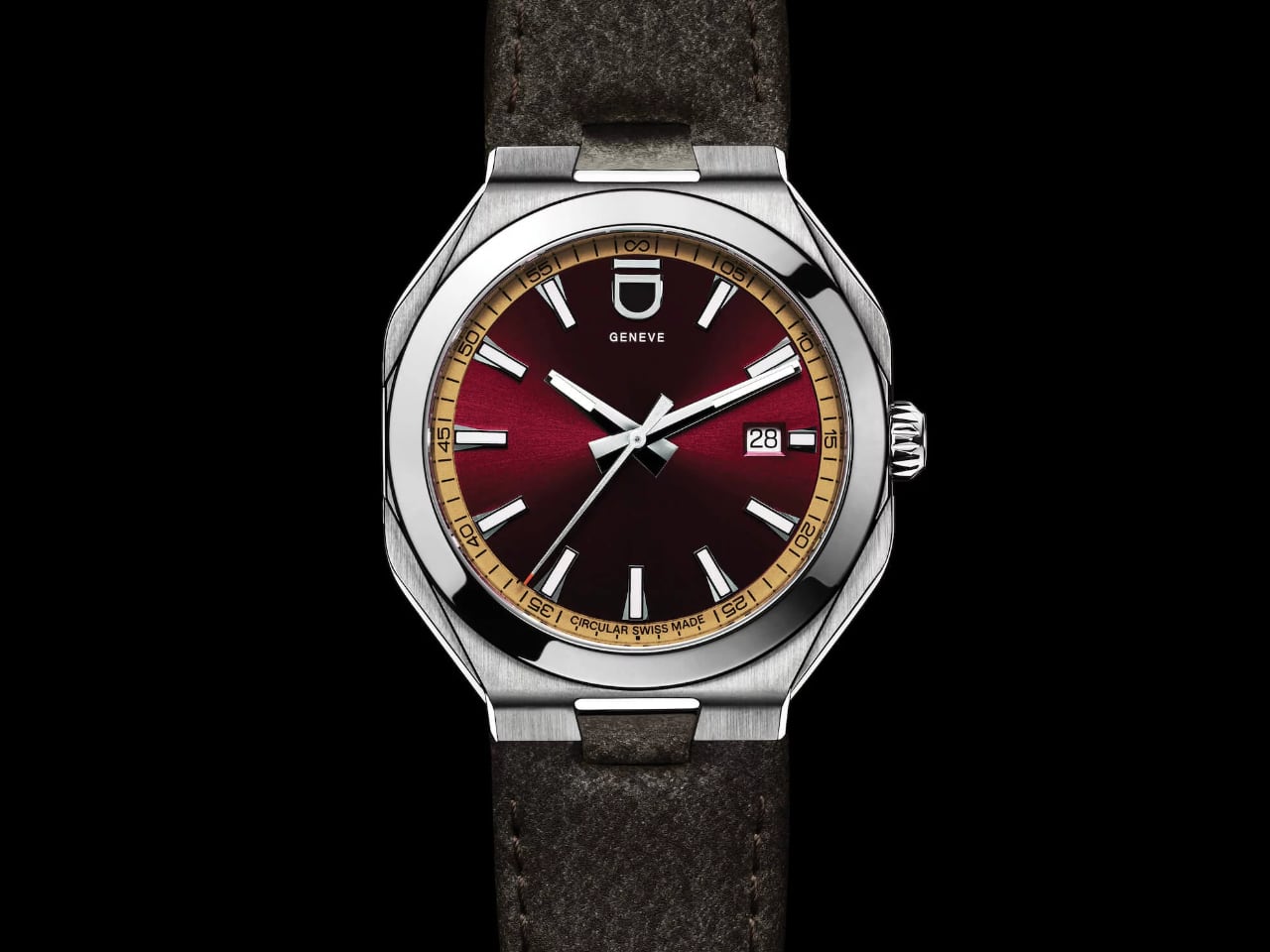
At first glance, the Circular 1 Grenat Dial captivates with its vibrant red sunburst dial, inspired by the rich tones of fine wine. This striking dial is housed in a case crafted entirely from 100% recycled stainless steel, demonstrating that luxury and sustainability coexist beautifully. The 41mm case, polished to a high sheen, offers a substantial yet comfortable fit designed to suit any occasion, whether a casual outing or a formal event.

What sets this watch apart is its aesthetics and commitment to sustainability. The strap, made from Nisiar vegan leather, is derived from grape marc, a byproduct of winemaking. This innovative material composition consists of 75% natural components, offering a luxurious feel without the environmental impact of traditional leather. The deep brown color of the strap comes from tannins extracted from various grape varieties, adding a unique story to the wrist.

Underneath its sophisticated exterior, the Circular 1 Grenat Dial is powered by a refurbished ETA 2824 automatic movement. By choosing to use a movement sourced from unsold stock, ID Genève embraces a circular approach, reducing waste while maintaining precision and reliability. The movement features a 38-hour power reserve and includes hour, minute, second, and date functions, all elegantly displayed on the intricate dial.

Each Circular 1 Grenat Dial element is designed with intention and care, from the 50-meter water-resistant case to the recycled sapphire crystal that protects the dial. These features, combined with local sourcing and environmentally friendly manufacturing processes, highlight ID Genève’s pioneering efforts in sustainable watchmaking.

The Circular 1 Grenat Dial watch is a symbol of change in an industry where fast fashion usually dominates. It defies conventional ideas of luxury by using more environmentally friendly materials and techniques. This watch isn’t just an accessory; it represents certain values and reflects a world that is progressing toward a more sustainable future.

For those seeking a timepiece that embodies style and substance, the ID Genève Circular 1 Grenat Dial Nisiar Limited Edition is an exceptional choice. It tells the time and the story of innovation, sustainability, and the future of luxury watchmaking.

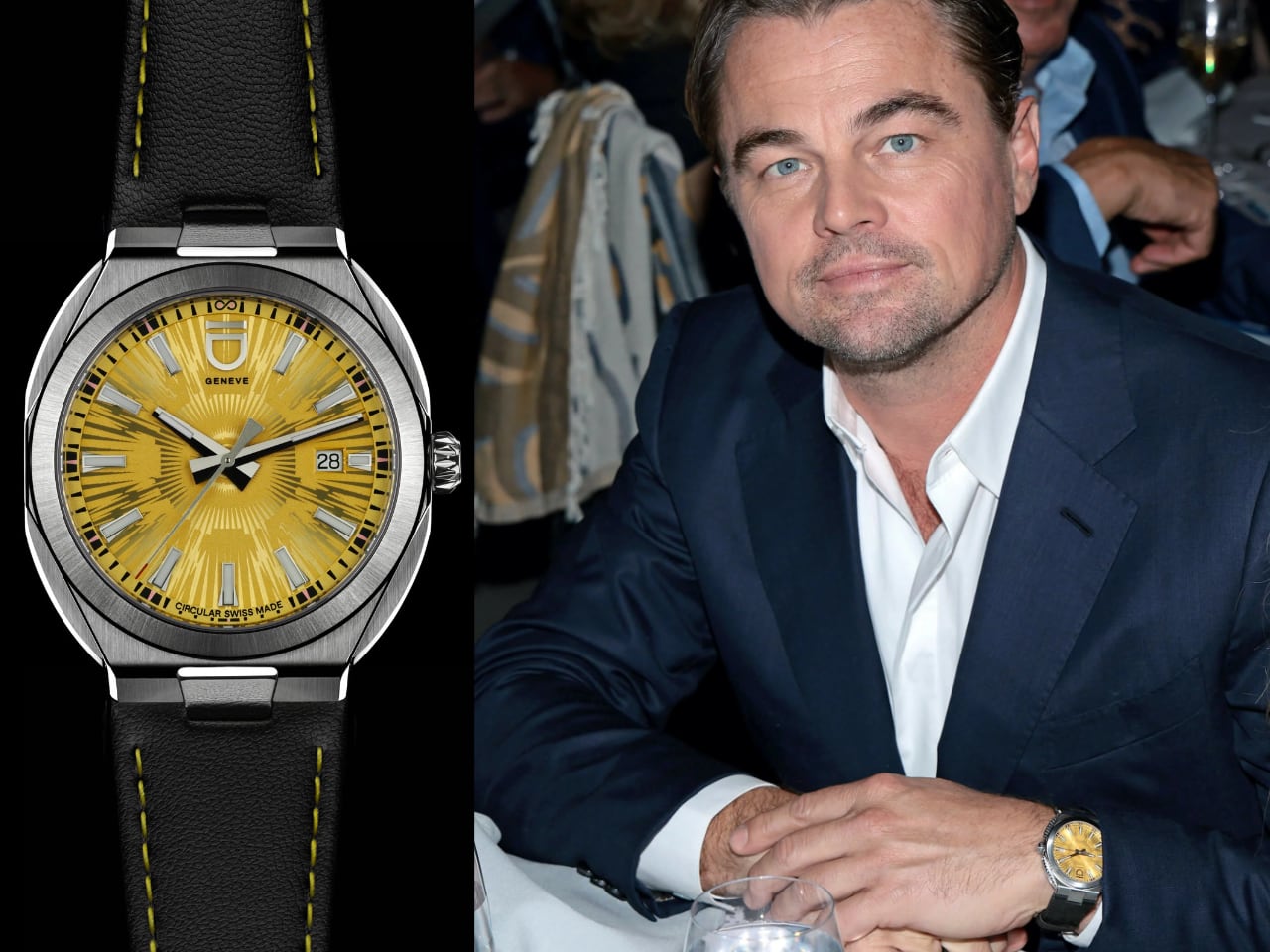
Leonardo DiCaprio wearing the ID Genève Circular S Sun Dial

Leonardo DiCaprio’s involvement in ID Genève spotlights the brand’s dedication to environmental responsibility. His investment signifies a growing interest in sustainable luxury, appealing to a new generation of watch enthusiasts who prioritize ethical consumption. With a limited production run of just 40 pieces, this watch is as exclusive as it is innovative, priced at USD 4,789 (CHF 4,210).

The post The ID Genève Circular 1 is a stunning timepiece redefining sustainable luxury first appeared on Yanko Design.

‘Industry’ tackles the impact of overhyped tech in its ambitious third season

If you miss the colorfully profane world of Succession, a show where most characters would gladly sell their souls for power and money, then you should be watching HBO Max's Industry. While they share some similarities — both come from British creators and follow a cadre of anti-heroic characters into a world of hyperwealth — Industry is even more focused on the inhuman ambition that drives its characters.

While Succession follows a family that's already wealthy and striving to hold onto its relevance, Industry centers on a group of twenty-somethings who are (mostly) not rich and are all desperate to prove themselves at London's renowned investment bank Pierpoint & Co. Breaking with the rampant nepotism of the Roy family, their workplace could charitably be described as meritocratic — who you are doesn't matter as much as the money you bring in — but it's also an obscenely toxic world devoid of morality.

Our gateway to the world of Pierpoint is Harper Stern (Myha'la Herrold, Bodies Bodies Bodies), a genius trader with a dark secret (she never graduated college). As a young black American woman, she stands out from the sea of mostly white British men on the sales floor. Perhaps that's why her New Yorker boss, Eric Tao (Ken Leung, Lost), sees her as a potential protege. Harper works alongside Yasmin (Marisa Abel), the daughter of a wealthy publishing family; Gus, a gay black conservative trader; and Harry (Robert Spearing), the obligatory high achiever from a working-class background.

In season three, premiering on August 11, Game of Thrones' Kit Harrington joins the cast as Henry Muck, the wealthy CEO of Lumi, a beloved green tech energy startup on the verge of an IPO. (Not to be confused with actual companies like the design studio Lumi, the piano learning gadget Lumi, or the dead packaging firm Lumi.) But, like a cross between Theranos, Solyndra and the slew of failed Obama-era green tech startups, Lumi may not entirely live up to its eco-friendly hype. Some banks would have qualms about pushing a problematic company into the stock market, but not Pierpoint — its job is to make money on the IPO, not judge the long term viability of Lumi.

That sort of amoral viewpoint isn't anything new for Pierpoint or its minions on Industry. From the beginning, series creators Mickey Down and Konrad Kay avoided turning the series into a lecture against the investment banking world. Instead, its characters all reflect the selfish philosophy initially laid down by Wall Street's Gordon Gekko: "Greed, for lack of a better word, is good."

Sagar Radia, Myha’la Herrold in Industry season 3
Photo by Simon Ridgway/HBO

While some characters voice their concerns about Lumi, Industry explores the more cynical (and arguably realistic) outcome: Just about everyone finds a way to profit from the company's potential failure — except, of course, for Lumi's customers and early investors.

"We wanted to write about an energy company that had real world stakes that felt like it was scratching the heels a bit of the sort of bigger monopolistic competitors," Down said in an interview on the Engadget Podcast. "And then also we wanted to write about the collapse of a company like that — a company which [has] really been founded to do something really good and what happens when that company goes kaput and leaves a lot of destruction in its wake."

Industry started out as a show focused on interpersonal relationships between a small group of colleagues, their hedonistic night lives and Pierpoint's erosion of their humanity, but now it's scope has expanded to include the wider global economy, Britain's role in propping up failed companies and rival trading outfits.

Myha’la, Harry Lawtey and Marisa Abela in Industry season 3.
Photo by Simon Ridgway/HBO

"When we started off, we were very inexperienced writers," Kay said. "We deliberately wrote about a very sealed off hermetic experience, a very universal one, which is people starting in the workplace at a certain time. [now] The stakes are higher. It's more interested in how the training floor intersects with the wider world, politics, newspapers, media, class."

Beyond the inner-workings of finance and the soapy romantic lives of Industry's characters, the real draw of the show is "watching competent people be good at their jobs," as Down says. It doesn't matter if you don't understand all of the financial jargon the characters are spouting off in the first season. Like a cross between Margin Call and Michael Clayton, what makes Industry truly compelling is seeing smart people prove their brilliance repeatedly in a pressure cooker environment. 

For a show that seemed like a Succession clone early on, Industry has evolved into something dramatically different. Wealth and success isn’t a given for anyone in the show — it’s something they have to earn with blood, sweat and moral compromise.

This article originally appeared on Engadget at https://www.engadget.com/entertainment/tv-movies/industry-tackles-the-impact-of-overhyped-tech-in-its-ambitious-third-season-170032365.html?src=rss

Balatro is getting its first big, free gameplay update in 2025

Balatro, the terrific card game that pushes you to break most of the rules of poker to achieve ever-higher scores, is in line for its first major gameplay update. You'll have to wait until next year for that, but developer LocalThunk promises it will bring "new ideas and strategies to the game." What's more, it will be a free update "as a token of huge appreciation to the game’s brilliant and passionate community."

This is the first of three Balatro announcements/surprises LocalThunk and publisher Playstack are revealing this summer (one of them has to be a mobile version, right?) just after the game reached two million sales. Some players might be a little nervous about the developer tinkering with a stupendously well-balanced title — which is surely going to end up on many people's game of the year lists — but LocalThunk has probably earned most fans' trust at this point given how exquisitely designed and tuned Balatro is already.

Meanwhile, LocalThunk this week doubled down on a promise never to let Balatro be used for gambling purposes. The developer says he's been approached by several parties over the last few months to license the intellectual property, "presumably to make Balatro-themed gambling games like slots or video poker." That's something LocalThunk has firmly opposed though, to the point the developer has made clear in his will that "the Balatro IP may never be sold or licensed to any gambling company/casino."

This article originally appeared on Engadget at https://www.engadget.com/gaming/balatro-is-getting-its-first-big-free-gameplay-update-in-2025-161938348.html?src=rss

The Ring Stick Up Cam is down to its lowest price yet

The Ring Stick Up Cam is on sale for $55 via Amazon. That’s a discount of 45 percent and is the lowest price ever for the well-regarded security camera. Last time it got this low was Prime Day, but that was only available to Prime members. Now anyone can get in on the action.

This is a standard security camera, but it’s anything but bare-bones. It’s easily mountable to just about any surface and can be moved at will. It allows for two-way communication via a proprietary app or an Echo device like the Show. People can use these same methods to check in on the camera feed.

There are two versions of this security cam, and both are available with this sale. The only difference is how they are powered. One uses a removable battery pack and the other plugs into a power source. Obviously, the one with the battery pack (as seen above) is easier to mount in a variety of different locations, as there’s no worrying about a nearby outlet. The plug-in version, however, will never run out of juice.

These cameras will record footage and put it all in the cloud, but only with a Ring Protect Plan subscription. The plans range from $5 to $20 per month. On the downside, the two security cams lack some of the features found with the Pro model, so there’s no radar detection.

Follow @EngadgetDeals on Twitter and subscribe to the Engadget Deals newsletter for the latest tech deals and buying advice.

This article originally appeared on Engadget at https://www.engadget.com/deals/the-ring-stick-up-cam-is-down-to-its-lowest-price-yet-152949573.html?src=rss

Apple’s 9th-gen iPad is on sale for $229 right now

We don't always need the latest and most powerful version of a device, especially when it'll cost more money than an older one that does the trick. If you've been waiting for a good deal on an iPad that can handle the basics, it's worth considering the 9th-generation iPad. A variant with 64GB of storage will run you $229, which is $100 off the regular price. The discount applies to both the silver and space gray colorways.

This model is from 2021 and Apple actually discontinued it in May, so this is effectively a fire sale as the company looks to clear out stock — quite possibly ahead of a new base iPad. This isn't quite the lowest price that this model has dropped to (it dipped to $209 at one point), but it's a decent offer as long as you're not planning on video editing or playing the latest games natively.

The 10.2-inch Retina display should be plenty capable of handling much of your streaming video, web browsing and productivity needs. The iPad should be reasonably zippy as well, thanks to the A13 Bionic chip. You can even use it for sketching if you have the first-gen Apple Pencil.

The front-facing ultra-wide camera supports Apple's Center Stage feature. As such, you should stay in the middle of the frame while you're on FaceTime or other video calls.

One factor worth considering is that this is the last mainline iPad with a Lightning port. So that's worth keeping in mind if you have an iPhone 15 and have been getting rid of your old Lightning cables. And while Apple's still allowing 9th-gen iPad owners to upgrade to iPadOS 18 when it becomes available, the OS updates won't last forever. Still, if you're looking for an iPad on which to catch up on reading, zip through your inbox or watch the latest season of a show you dig, this is a good option.

Follow @EngadgetDeals on Twitter and subscribe to the Engadget Deals newsletter for the latest tech deals and buying advice.

This article originally appeared on Engadget at https://www.engadget.com/deals/apples-9th-gen-ipad-is-on-sale-for-229-right-now-151616014.html?src=rss

Range Rover Sport SV Edition Two Unveiled

Range Rover Sport SV

The Range Rover Sport SV Edition Two is set to redefine the luxury SUV market with its unparalleled blend of performance, design, and innovation. This latest model introduces four carefully curated themes for 2024: Blue Nebula Matte, Ligurian Black Gloss, Marl Grey Gloss, and Sunrise Copper Satin. Each theme has been carefully crafted to enhance […]

The post Range Rover Sport SV Edition Two Unveiled appeared first on Geeky Gadgets.

Vivo V40 Pro Review: Prime Mobile Photography Arrives in a Sleek Package

PROS:


  • Elegant and aesthetic design

  • Powerful quad 50MP camera system

  • Large 5,500mAh battery despite thin profile

  • IP68 rating

CONS:


  • No wireless charging

  • Telephoto camera only supports 2x optical zoom

  • Limited global availability

RATINGS:

AESTHETICS
ERGONOMICS
PERFORMANCE
SUSTAINABILITY / REPAIRABILITY
VALUE FOR MONEY

EDITOR'S QUOTE:

The Vivo V40 Pro builds on the brand's outstanding photography performance to deliver an even more powerful experience in a stylish design.

Cameras have become one of if not the most important aspects of a smartphone these days. Of course, the display is functionally the most critical component, but other than being large and crisp, people tend to gravitate to the best smartphone camera their money can buy. Unfortunately, the best ones are often reserved for the most expensive handsets as well, leaving the majority of consumers, especially the younger generation, dreaming of better days. Vivo’s V series of smartphones has always aimed to make smartphone photography more accessible, and last year’s Vivo V30 Pro definitely put more expensive devices on notice. Can the Vivo V40 Pro top that or has the brand already reached its peak? We take Vivo’s latest and greatest V series phone for a spin to find out.

Designer: Vivo

Aesthetics

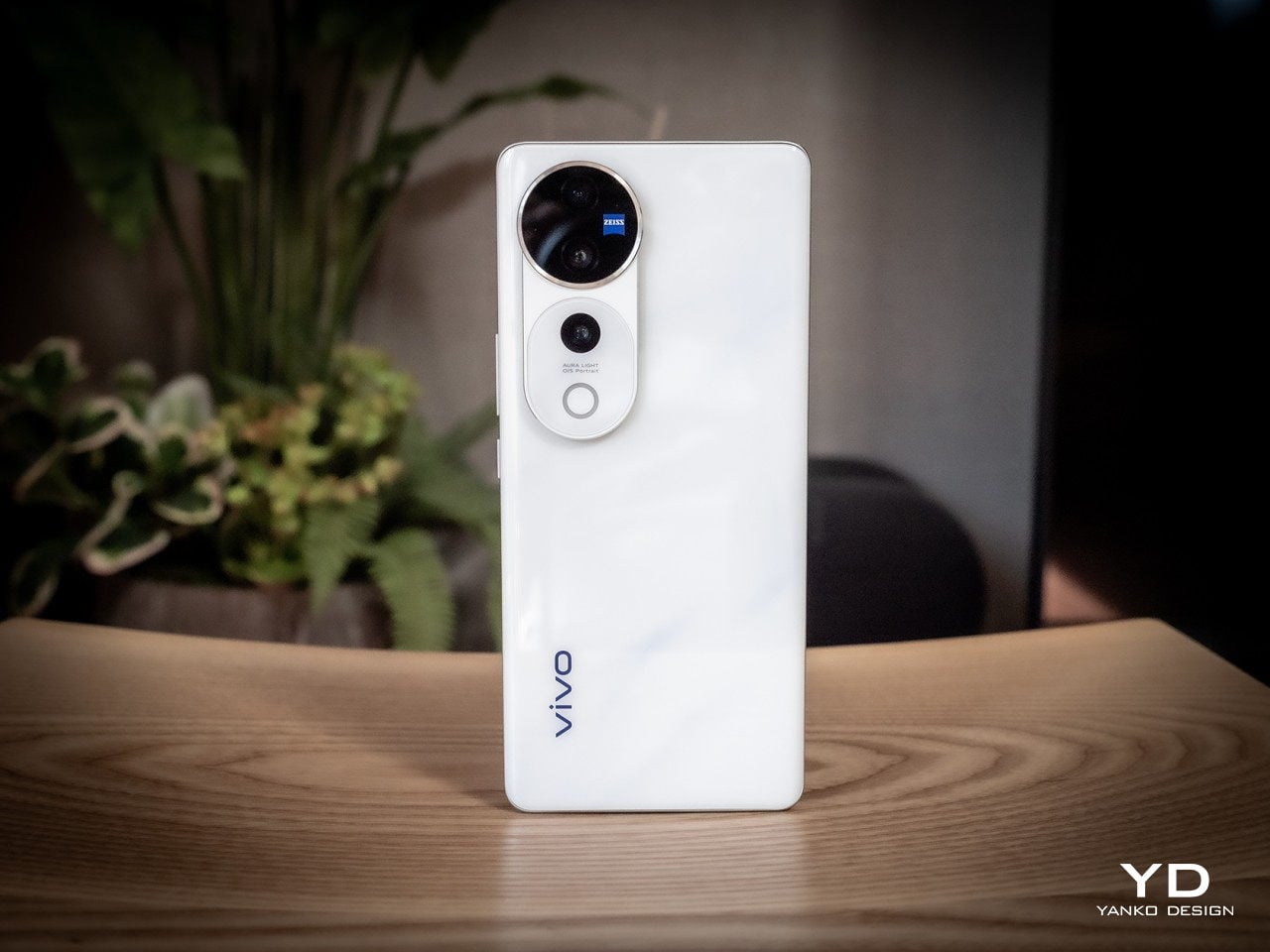
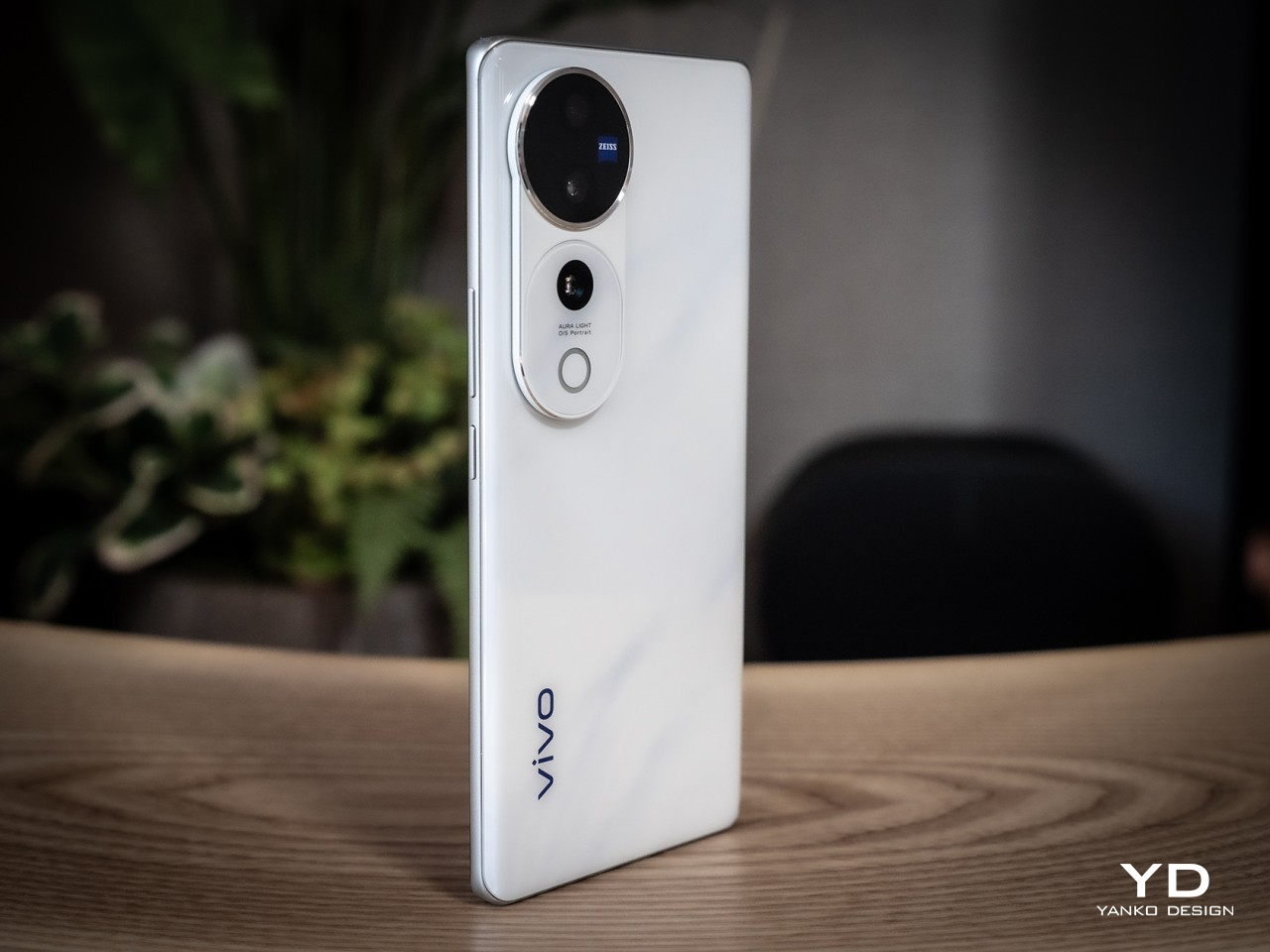
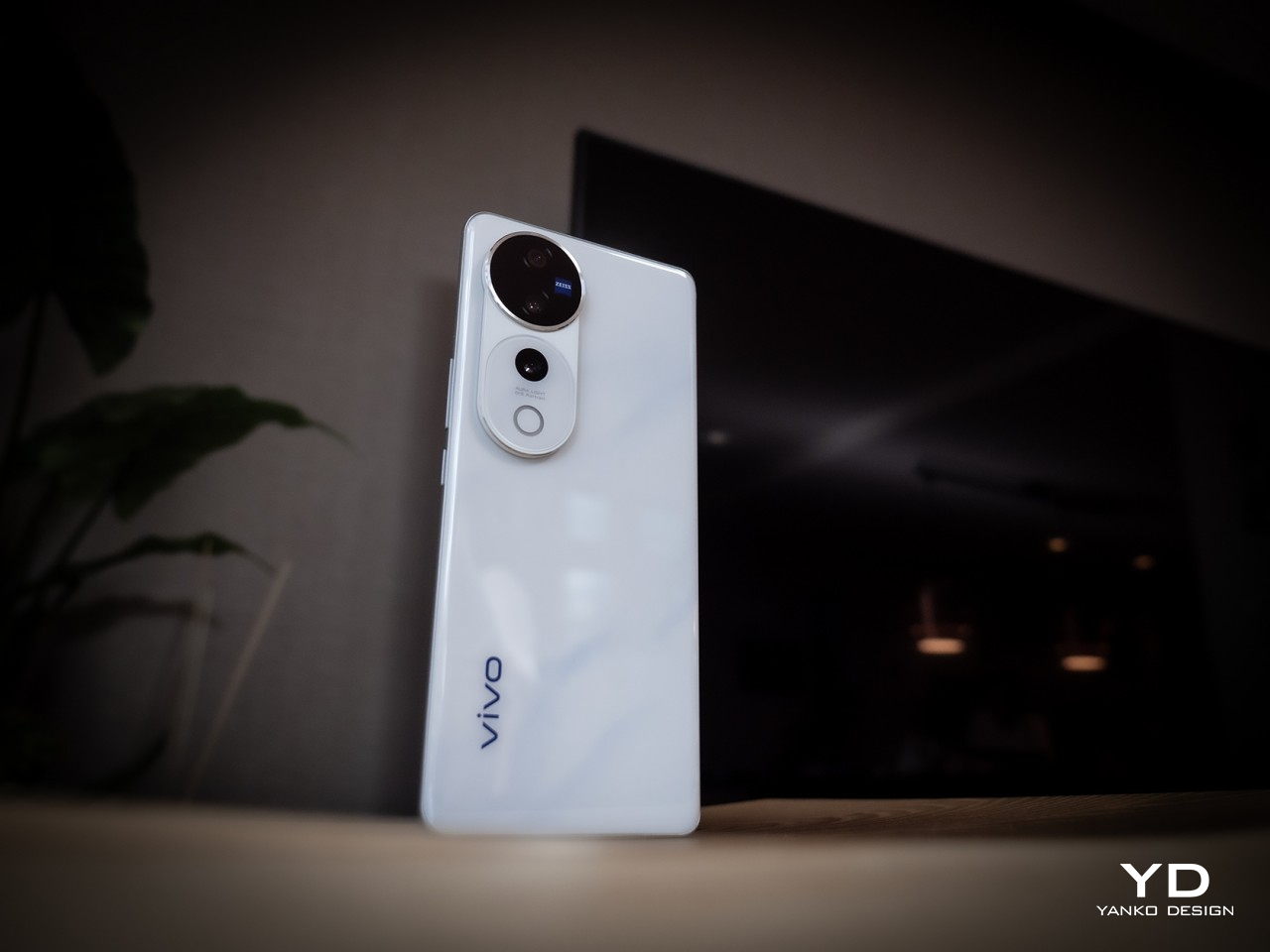
Right off the bat, we can already say that Vivo has outdone itself with the design of the Vivo V40 Pro. Last year’s flagship was already a looker, but it suddenly feels a bit lacking compared to its younger sibling. You still have a sleek appearance, smooth curves, and a thin profile, but the real winner here is the camera design. That Vivo was able to fit three 50MP cameras in such a compact space is already a marvel, but the way it managed to make the design look appealing is a rare feat these days.
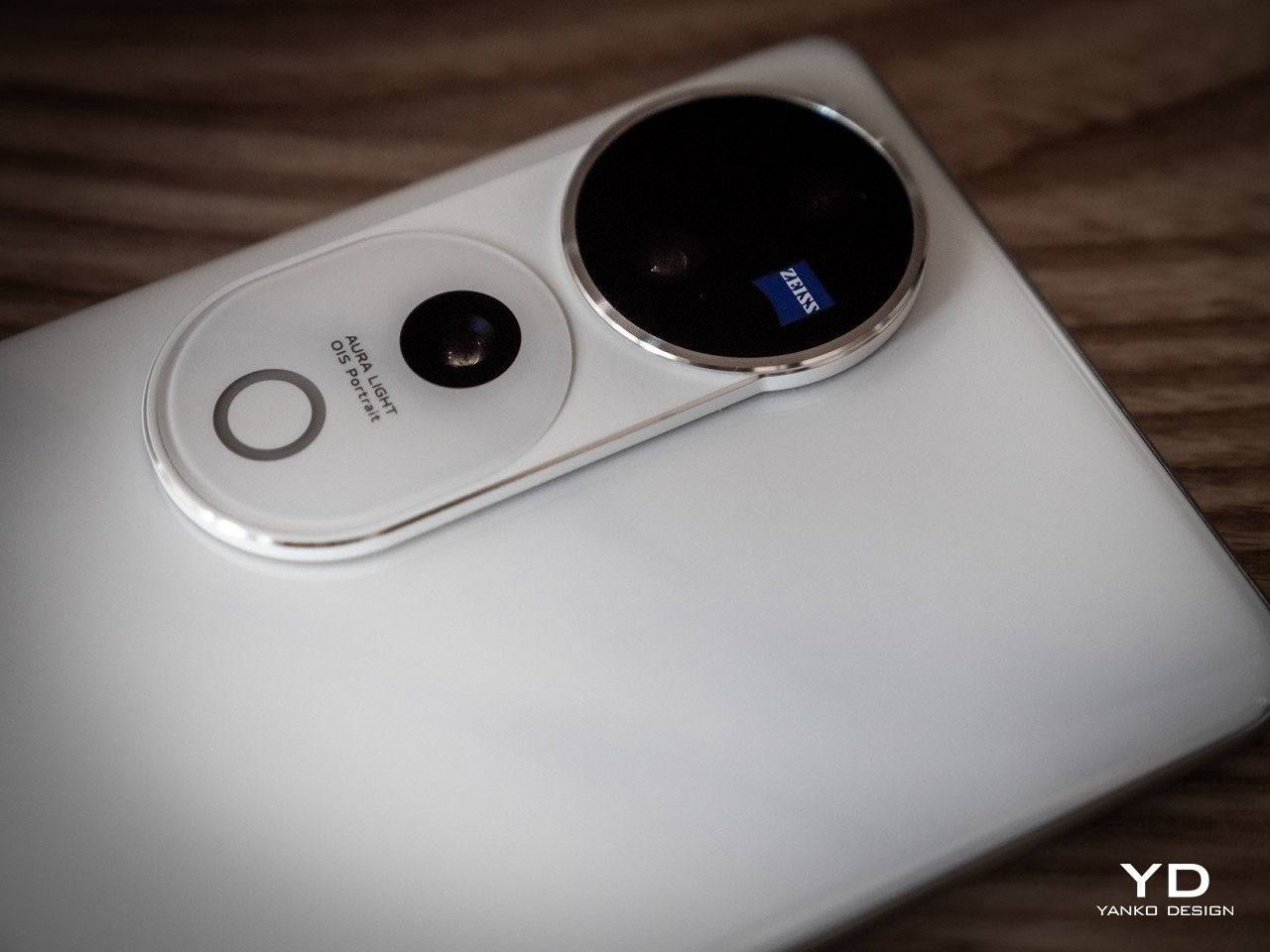
Vivo calls it a “Gemini Ring Design,” which is a fancy term for what looks like a curvy keyhole. Two of the three cameras are enclosed in a circle that sits on top of a pill-shaped elevation. Inside that is another oblong enclosure housing the third camera and the Aura Ring flash. There is a subtle beauty to the play of balance and asymmetry in this design, and it definitely gives the Vivo V40 Pro a unique visual character.

The company didn’t pull punches in the different colors and materials available for both the Vivo V40 and the V40 Pro, and all of them are beautiful in their own way. The Sunglow Peach colorway with its warm hues and dynamic magnetic ink is quite an eye-catcher, and our review unit’s Moonlight White with its pale blue streaks has a soothing and calming effect. Other than the camera bump and the small vivo branding at the bottom, there are no distractions on the back of the phone, allowing you to appreciate the beauty of these designs.
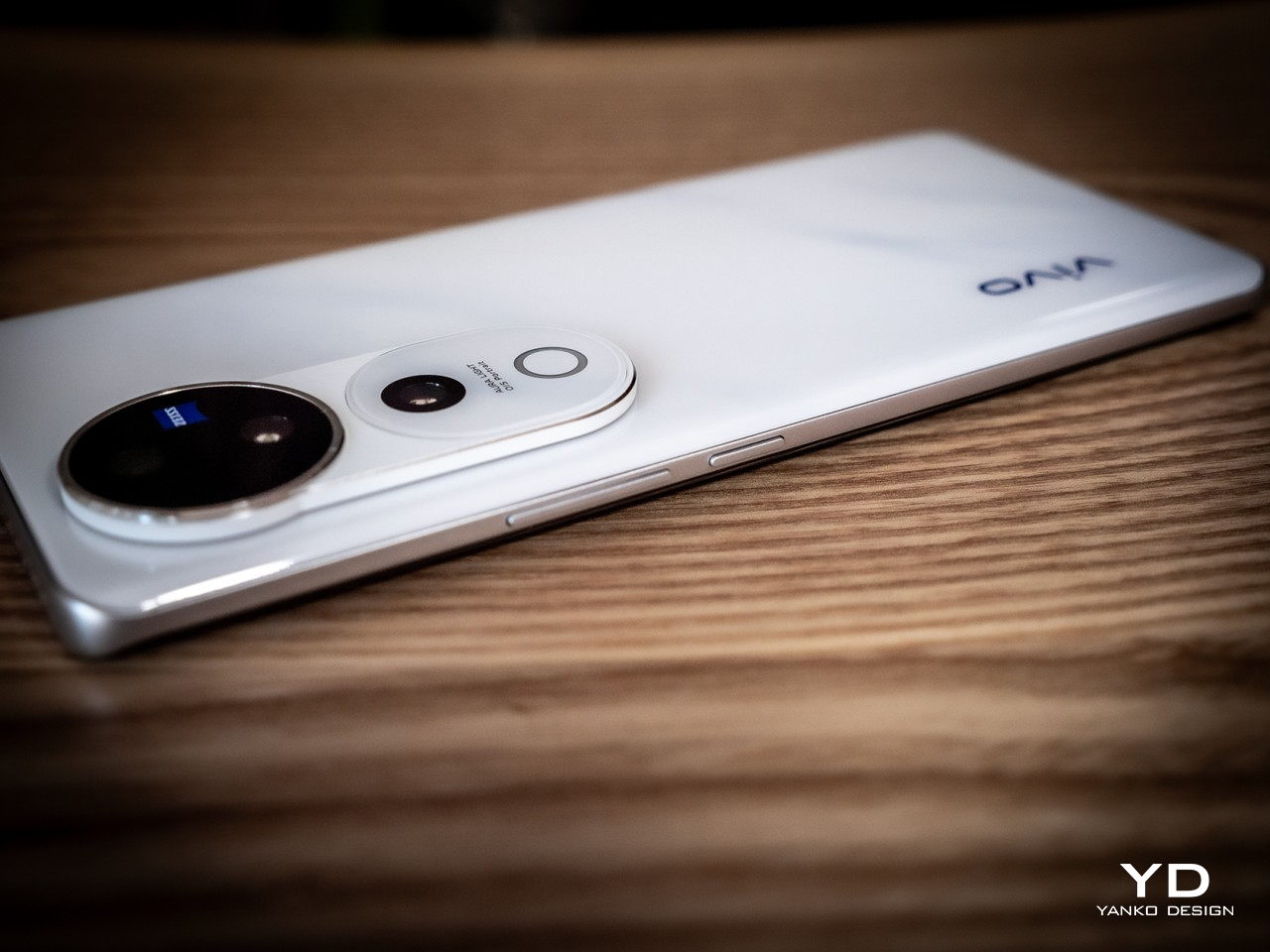
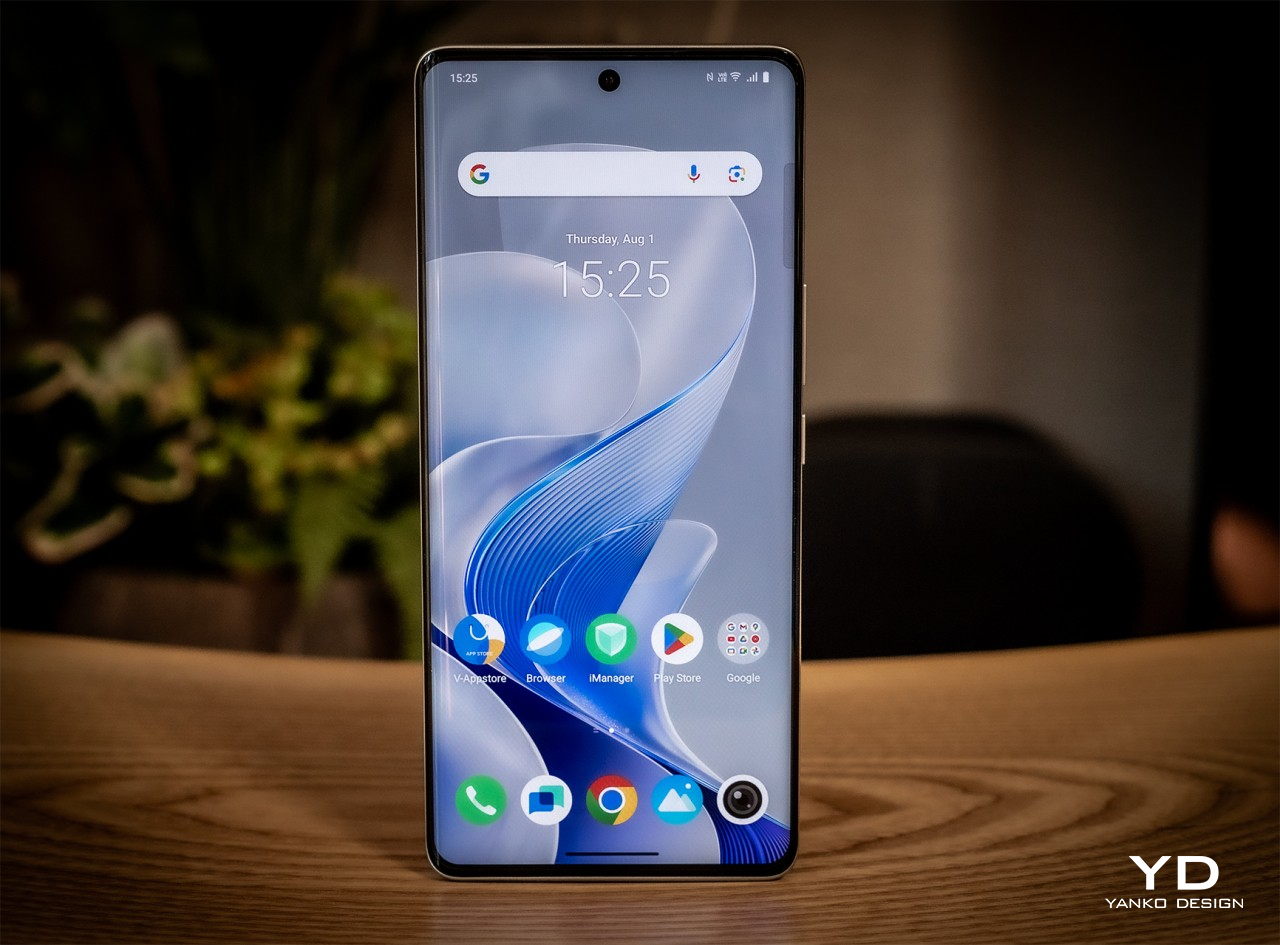
At only 7.58mm, the Vivo V40 Pro is already thin, and the curved edges of both the screen and the back panel make it look even thinner. This could be a divisive decision in 2024, though, with many seeing curved edges as a thing of the past. It definitely still has appeal and it perfectly matches the smoothness of the rest of the phone.

Ergonomics

The Vivo V40 Pro is not a small phone by any means so that thin profile helps offset the size of the device. It’s incredibly light as well at only 192g, especially considering what it packs inside, like a very generous battery. All in all, it’s difficult to hold it up for long periods of time, though the glass material on its back could prove to be slippery for some hands.
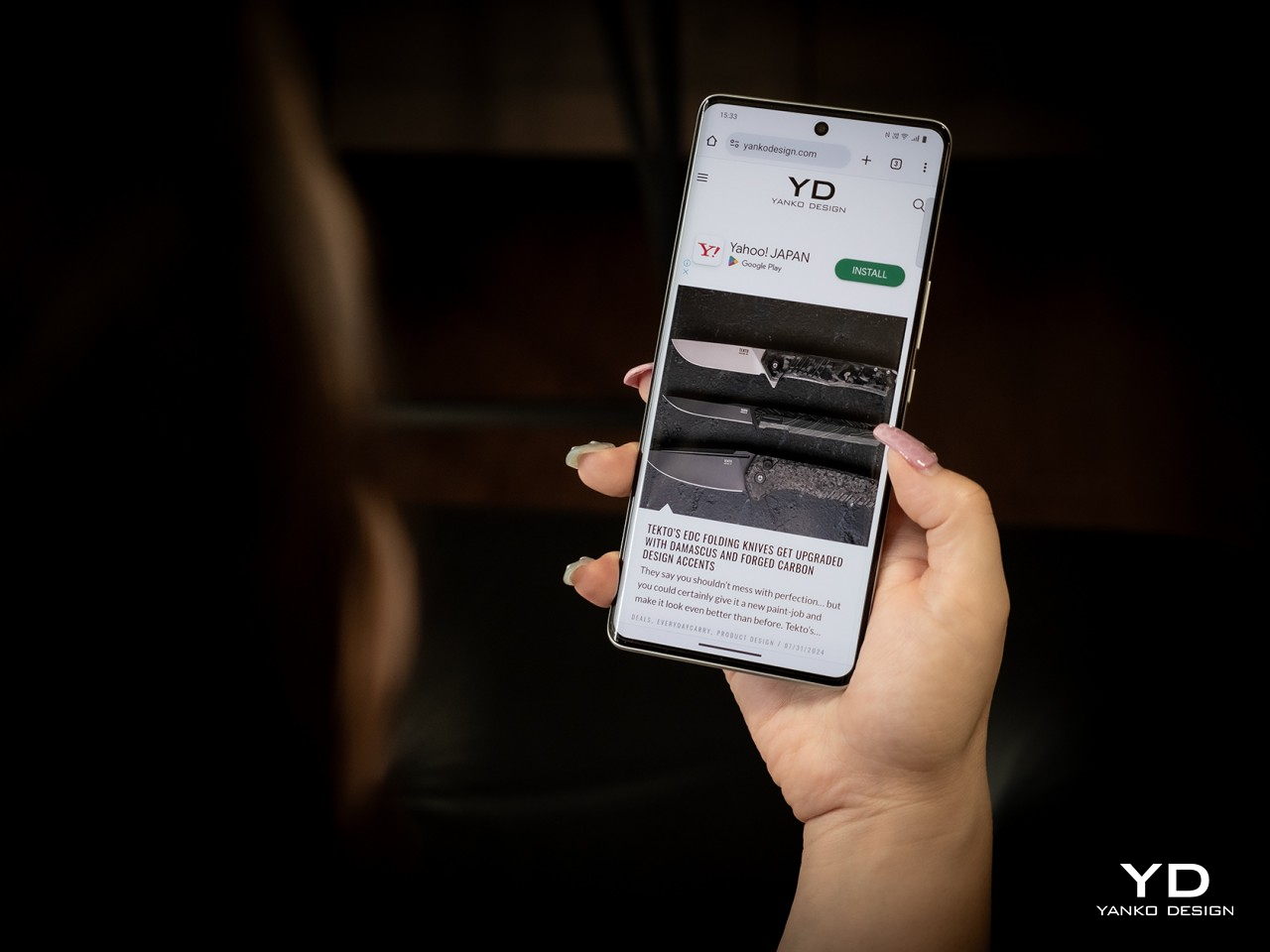
The debate around flat versus curved edges continues here as well. With part of the screen curving off to the sides, there’s always the possibility of accidental touches in those areas. There isn’t much surface area or sharp corners for your hand to grip either, and you might find yourself straining a bit just to hold the phone tight. It’s partly personal preference and partly the shape of your hand, but thankfully Vivo ships a protective case with the phone just in case.

Performance

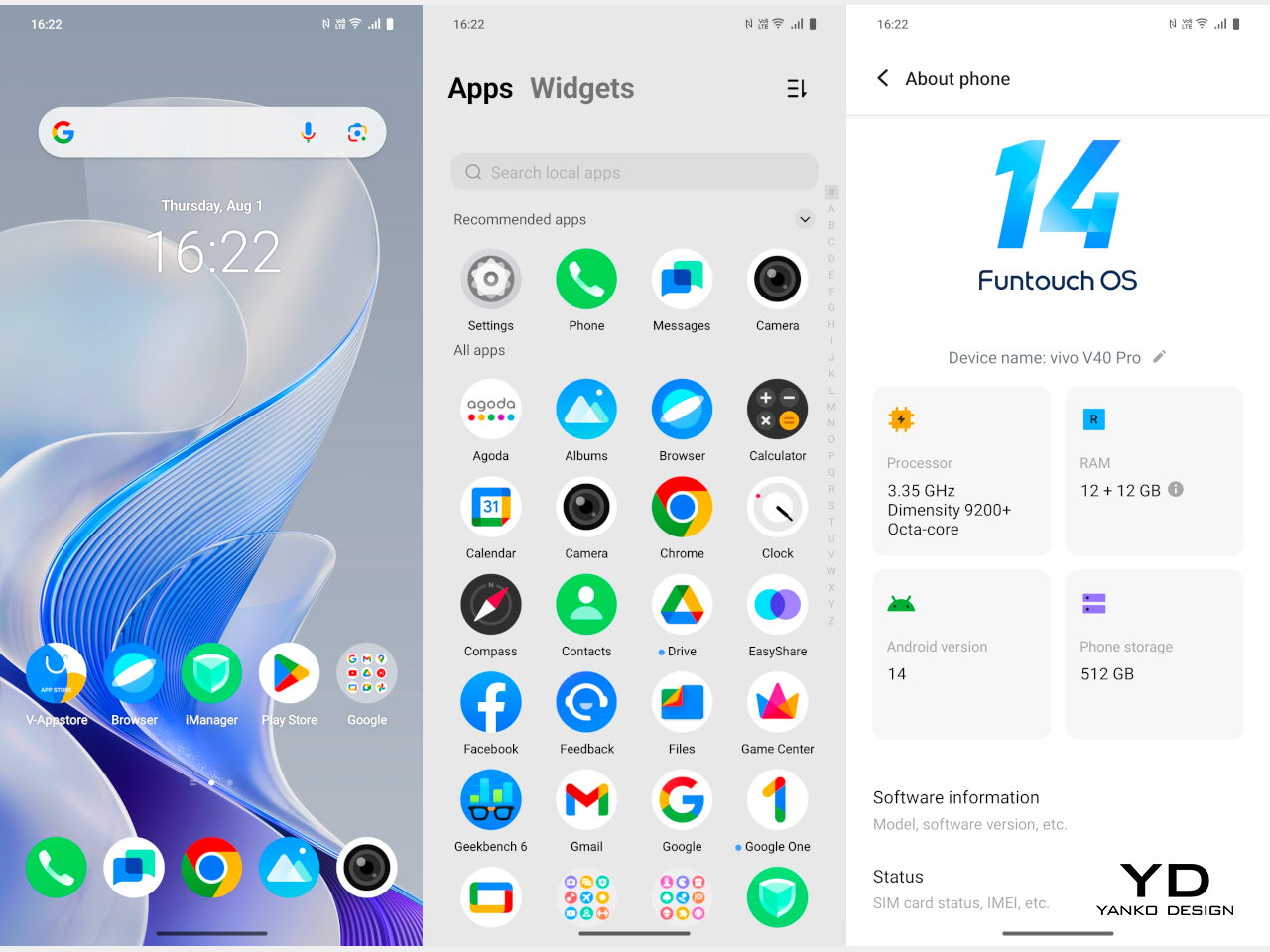
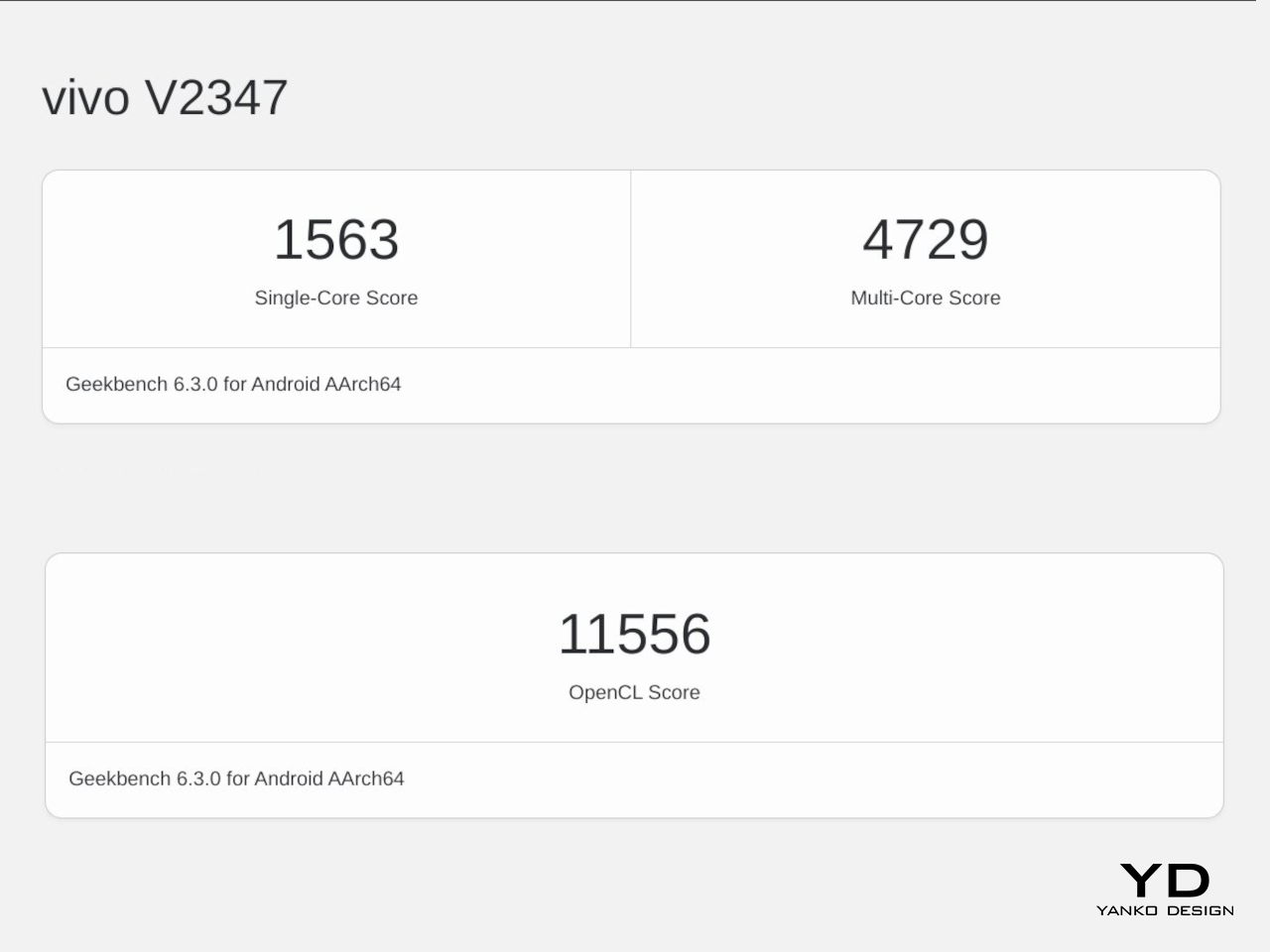
It might not be part of Vivo’s top-tier X series, but the Vivo V40 Pro definitely packs quite a punch, starting with the MediaTek Dimensity 9200+, the chipmaker’s flagship silicon. It’s paired with up to 12GB of RAM, as was the case in our review unit, which can be boosted with another 12GB. That said, it takes some of that from the 512GB internal storage, which isn’t expandable like many phones these days. All in all, the Vivo V40 Pro performs like a champ for any use case, whether it’s social media, watching videos, or playing games. The latter is helped by an Ultra-Large VC Cooling System that keeps the phone running at a stable pace without throttling.
More impressive, however, is the 5,500mAh battery the phone crams inside its thin and light body. It’s definitely one of the largest capacities available in a phone that’s barely 7.6mm thick, allowing it to easily support all your shutterbug adventures. With an 80W charging speed, you can quickly top up to full in around 30 minutes, at least with the right charging brick. Unfortunately, Vivo hasn’t yet decided to put wireless charging on its V series phones, but maybe that will change next year.

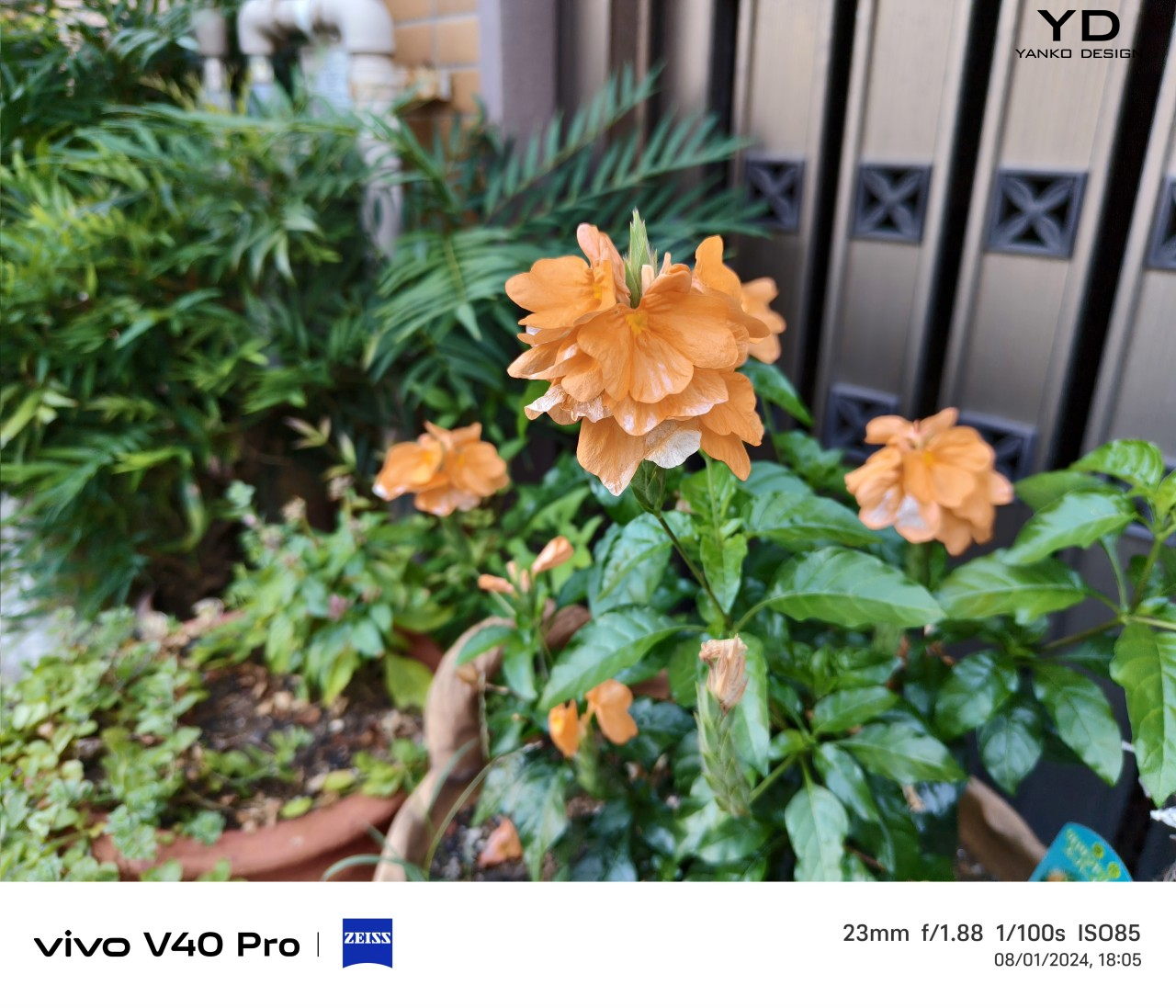
The real stars of the show, however, are the cameras, all of them with 50MP sensors. Yes, that includes the selfie camera with a Samsung ISOCELL JN1 sensor and a wide 92-degree field of view for those “wefies” or “groufies.” If that sounds familiar, then you might have heard of the Vivo V30 Pro last year. In fact, in almost all but one case, it’s nearly the exact same set of 50MP cameras, like the 50MP Sony IMX816 telephoto shooter and the 50MP Samsung JN1 119-degree ultra-wide camera.


What’s different this year is the new 50MP Sony IMX921 with a larger 1/1.56-inch sensor. That means it is able to take in more light information even in darker environments, improving its overall quality. In fact, the entire ensemble is actually commendable in their output, delivering super images bolstered by AI and computational photography. Of course, these cameras have optics tuned by ZEISS, so there’s little surprise there. And one can’t forget Vivo’s signature Aura Light that takes the regular flash and turns it into a mini ring light for softer and more natural lighting. Its most recent incarnation includes Electronic Control Technology that lets you adjust the brightness of the light depending on the distance of the subject.

In essence, the Vivo V40 Pro builds on the success of its predecessor and adds some extra value with upgraded specs and improved software. Unfortunately, it also carries over the flaws, most notably the short optical zoom range of the telephoto camera. It only goes as far as 2x zoom, but Vivo is heavily advertising what it calls “50x ZEISS Ultra HD Zoom,” which is a mouthful that really means software-assisted digital zoom.

Sustainability

Just like the Vivo V30 Pro last year, the brand is sadly silent on any of its efforts in using even a fraction of sustainable materials for this year’s V series flagship. It also hasn’t stopped shipping chargers in its boxes, which is unsurprising since it wants to make sure that its phones use the right 80W charger for the fastest speed they can support. We’re still holding out hope that Vivo will take the lead in this area soon.
That said, it does have some good news when it comes to keeping the Vivo V40 Pro away from the trash for as long as possible. It’s the first in the V series to reach an IP68 rating, ensuring that it’s protected from dust and water which can mean the end for many smartphones. It also advertises a “50-Month Smooth Experience” guarantee that basically says the phone can run for over four years without losing its fluidity and performance. Unfortunately, it doesn’t translate to having four years of updates, and Vivo has made no promises on that matter.

Value

It’s perfectly clear from our time with the Vivo V40 Pro that it delivers everything it promises on paper. The Quad 50MP Camera System it carries over from last year continues the tradition of excellent mobile photography, but this time with a larger 5,500mAh battery that better supports all those photo and video content creation. Even better, the phone comes in a sleek, slim, and light design that makes you feel like you’re holding an art object rather than a cold piece of technology.
In other words, the Vivo V40 Pro would have been perfect if not for the fact that some people might not even be able to get their hands on it. The $560 price tag it carries (converted from Indian figures) isn’t that heavy, but global availability is still undisclosed at the moment. Hopefully, it will fare better than the Vivo V30 Pro which didn’t get a wider distribution that would have spread the word of its amazing camera chops.

Verdict

Smartphones are getting more powerful and so are their cameras. But with this increase in technical performance, designers are often forced to make many compromises to fit all of them inside a product that should still fit our pockets. In that regard, the Vivo V40 Pro is quite a feat, cramming not only four 50MP cameras but a large 5,500mAh battery inside a body that’s as thin and as light as it can be. It’s a beautiful phone with impressive performance and an accessible price point, and it deserves to be made available to more markets this time.
The post Vivo V40 Pro Review: Prime Mobile Photography Arrives in a Sleek Package first appeared on Yanko Design.
New Volkswagen Golf R Starts at £43,320

Volkswagen Golf R

The new Volkswagen Golf R series is set to make a significant impact on the automotive industry, captivating enthusiasts with its exceptional performance and state-of-the-art features. This series, which includes the Golf GTI Clubsport, Golf R, Golf R Estate, and Golf R Black Edition, represents some of the most powerful production cars ever created by […]

The post New Volkswagen Golf R Starts at £43,320 appeared first on Geeky Gadgets.

Stranger Things will make its Broadway debut in March 2025

Starting next year, Stranger Things fans will be able to watch its stage play spin-off on Broadway. The prequel to the popular sci-fi/horror series, Stranger Things: The First Shadow, won two Olivier Awards and several other accolades since it premiered in London's West End in December 2023. Its West End production will run until sometime in 2025, thanks to an extended run, but performances on Broadway will also begin on March 28, 2025. That said, the play will officially open at Marquis Theatre in New York on April 22, 2025. 

The First Shadow is set in 1959, before the events in the Netflix series. Jim/Hop, Joyce and Bob — who was played by Sean Astin — are seniors in the story who all just want to graduate and leave town. "When new student Henry Creel arrives, his family finds that a fresh start isn’t so easy... and the shadows of the past have a very long reach," the play's synopsis reads. It's based on a story by the Duffer Brothers, the creators of Stranger Things who will also serve as the play's creative producers, and will be directed by Tony award winner Stephen Daldry.

Casting for the production hasn't been announced yet, but fans can already sign up to make sure they get early access to pre-sale tickets. Those who sign up on The First Shadow's official website will be able to buy pre-sale tickets first, starting at 11AM on September 13. Everyone else will be able to purchase tickets when they go on sale to the general public a few days later on September 17. 

This article originally appeared on Engadget at https://www.engadget.com/entertainment/streaming/stranger-things-will-make-its-broadway-debut-in-march-2025-140015764.html?src=rss