Dieter Rams-inspired iPhone Standby Mode Dock comes from an alternate timeline

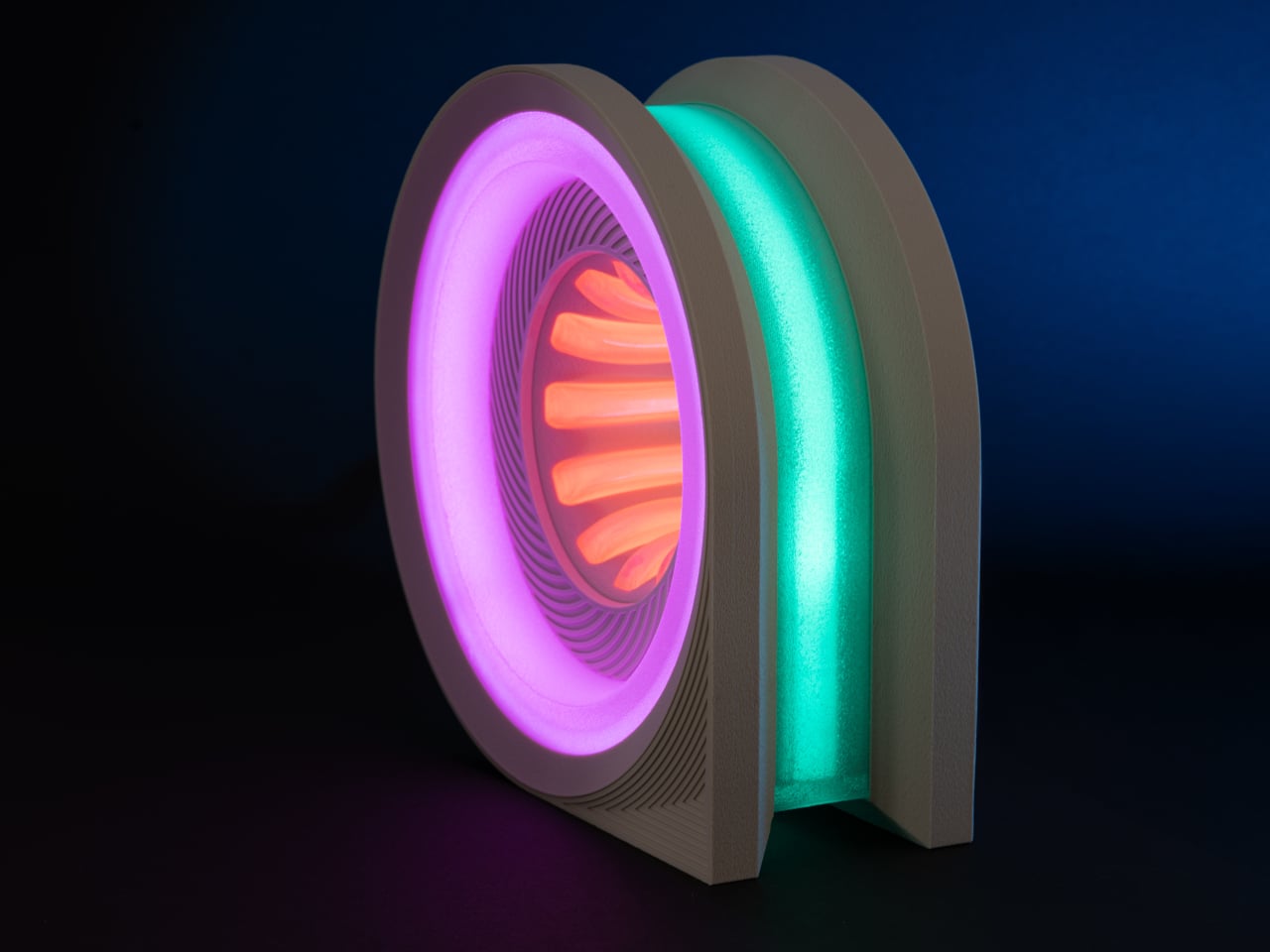
Have you ever wondered what would happen if two people from different time periods or locations met and worked together? Short of breaking the laws of time and space, we can only take a guess based on the works and ideas they left behind, though some “what if” collaborations feel more natural than others. The legendary industrial designer Dieter Rams, for example, has influenced generations of designers, some of whom became legends themselves and even carried on the spirit of his design philosophy. Perhaps nowhere is this association more pronounced than in the Ive-era Apple designs, particularly those that embraced minimalism to their very core. We might not need to imagine what a Rams-Ive collab would look like based on this rather simple yet intriguing iPhone dock that utilizes Standby Mode to become a modern version of the Braun DN 40 alarm clock that Rams designed.

Designer: Scott Yu-Jan x OVERWERK

Although probably best known for his Ten Principles of Good Design, Dieter Rams’ industrial designs not only became Braun products but also served as the inspiration for the likes of the original Apple iPod or the first Sony Walkman. His designs espoused a “less but better” philosophy, a foundation of modern minimalism, and among them was the DN 40 electronic, a funnel-shaped alarm clock that, as you might have guessed, did that and only that. There are dozens of alarm clocks today, of course, including an iPhone if you charge it horizontally to activate Standby Mode.

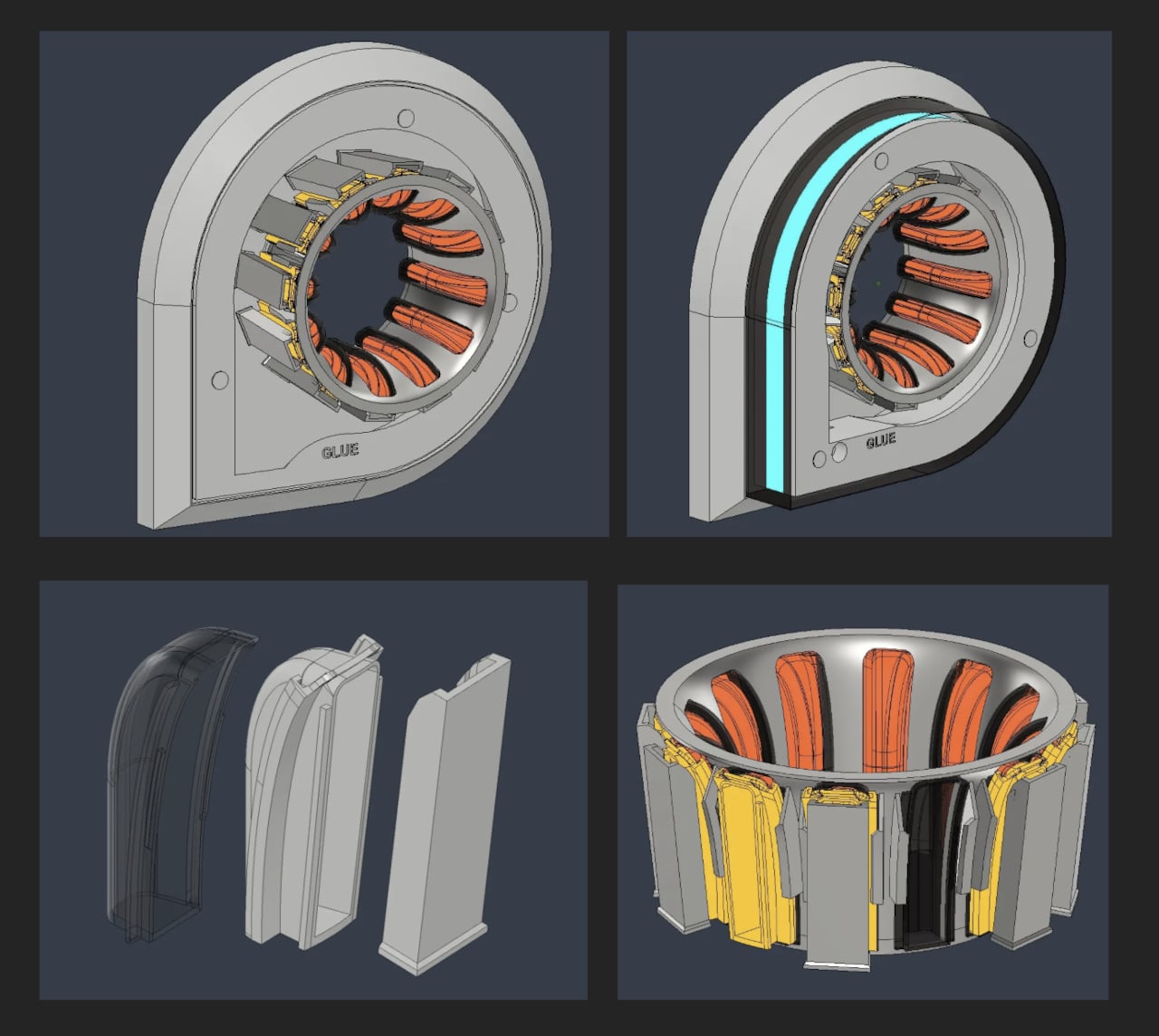
Inspired by this concept, musician OVERWERK created an initial prototype that simply housed a circular iPhone MagSafe charger to hold the phone at a specific angle similar to Rams’ design. It was basic, functional, and a bit cumbersome and wasteful. To take out the iPhone that sits flush inside the body, you have to press on one end of the phone to raise the opposite end and then pry it out. The rest of the clock’s chassis also held no purpose since there were no electronics to put in there as well.

Working together with designer and YouTuber Scott Yu-Jan, the design took an interesting turn and, thus, the iPhone DN 40 Dock was born. Two simple yet crucial changes were made to the original design, including adding an ejection button at the top that pushes the iPhone forward, detaching it from the MagSafe charger. Yu-Jan also added a space for the small Apple Watch MagSafe charger underneath the top cover at the back, allowing you to charge your AirPods on top. As a bonus, charging the AirPods case has a satisfying feeling when you simply put it down on top of the clock and it slides into place thanks to the power of magnets.

The result of this collaboration between two modern-day designers is a design object that feels like a collaboration between Rams and Ive, two designers with great respect for one another but never got the chance to work together. It has the minimalism of the original DN 40 clock but is made even simpler because you only need an iPhone and MagSafe chargers. You do need a 3D printer to make your own, though, and you might need to modify the design since this was made specifically for an iPhone 15 Pro. Fortunately, the design files are freely available so anyone can now have their own Rams-inspired iPhone Alarm Clock by their bed or desk.

The post Dieter Rams-inspired iPhone Standby Mode Dock comes from an alternate timeline first appeared on Yanko Design.
7-foot iPhone 15 Pro Max is the world’s largest iPhone and it runs Android

If Steve Jobs ever knew that YouTube creators would someday run Android on an iPhone and bag a Guinness World Record for it, he probably would have never created an iPhone in the first place. Thankfully there are iPhones – in fact, iPhone 16 lineup is slated for launch today – and we get to see a giant functional replica of the currently top-of-the-line iPhone that measures 6.74 feet tall and weighs roughly 440 pounds.

If you are a DIYer or a tech aficionado there is a slim chance you haven’t heard of Matthew Perks and Arun Maini. The high-profile YouTubers, a.k.a. “DIY Perks” and “Mrwhosetheboss” respectively, have partnered to build a gigantic working replica of an iPhone 15 Pro Max. This humongous iPhone definitely destroys the very idea of a handheld phone, but despite its astounding size, it is immensely functional; which is why it has been adjudged the largest iPhone ever and awarded the official Guinness World Records for the same.

Designers: Arun Maini x Matthew Perks

From the videos about the making and the demonstration of its functionality for the record, I was convinced this is a way more powerful iPhone than Apple would ever make. But the excitement diminished slightly on learning that this Gulliver of iPhones in the Lilliput Island of smartphones runs Android with few tweaks and themed skin to achieve the iPhone appearance and functionality.

Taking nothing away from this highly detailed smartphone build: I’m back and impressed! And why not, this entire thing is built to the tune of $70,000. The construction starts with a massive LG 88-inch LG OLED TV for the touchscreen display, placed inside a specially designed aluminum casing. The hardware inside is no way short of impressive either.

Without going too much into detail, for that you’d enjoy better in the descriptive video above, this big iPhone comes with 128GB of RAM and 4TB of internal storage. The tipple camera array on the back is topped by a 45MP Canon R5 camera, sporting a 28mm lens, and a Sony RX10 Mark 4 to mimic the iPhone 15 Pro Max’s telephoto lens. With the details on the screen and in the body matching that off the inspiration iPhone, the largest iPhone can take impressive photos, recording 8K resolution videos, blast music at 50W, send emails, tap-to-pay for purchases, and even play Flappy Bird that iPhones haven’t been able to download in a decade now.

The post 7-foot iPhone 15 Pro Max is the world’s largest iPhone and it runs Android first appeared on Yanko Design.
DIY modular cyberdeck could be the futuristic computer you can get soon

The popularity of sci-fi and cyberpunk games and films has sparked interest in products with futuristic designs and, unlike movie props, contemporary functionality. From music players to power banks, the cyberpunk theme covers a wide variety of designs, but nowhere is it more evident than in the so-called cyberdecks, basically portable computers that allow users to connect to The Network and do their work from any location. Technically, our smartphones and tablets would qualify as such devices, if not for their sleek, modern, and elegant designs. There’s no shortage of cyberdeck projects today, many of them of the DIY kind, but this upcoming design proves to be quite intriguing thanks to its potential usability and, more importantly, flexibility.

Designer: souscircuit

Cyberdecks come in all shapes and sizes, with some small enough to wear on your wrist like an extra large smartwatch and others no different from electric typewriters of yesteryears. Their unifying characteristic is the fusion of grungy metalwork and futuristic technology, something that’s harder to pull off in reality than in fiction. Of course, no major brand will invest in such a niche product category, which leaves plenty of room for modders, makers, and creatives to do what larger corporations won’t.

Pilet, a.k.a. Project Consolo, is one such attempt that actually emphasizes usable functionality more than just fancy visuals. It is technically a regular 7-inch tablet enclosed in a cyberpunk-themed chassis, powered by a Raspberry Pi 5 and running a touch-friendly flavor of Linux. It even has two 8,000mAh battery packs, which explains the size of the “tablet” and gives it a 7-hour uptime. Pretty low compared to a smartphone but not for what is practically a miniature computer.

What really makes Pilet interesting, however, is its modular design. While it is already usable using touch gestures, you can also connect a keyboard using the slot at the bottom of the box, which holds the keyboard module in place. In theory, you could also attach a camera, a gamepad, or other peripherals via USB or Bluetooth, very much the same technologies supported by the Raspberry Pi.

Pilet is still a work in progress, so its external design could still change before its official release. Its final form, however, could come as a DIY kit that others can assemble on their own, probably with a bit of effort to make them get a feel of that cyberpunk hacker spirit.

The post DIY modular cyberdeck could be the futuristic computer you can get soon first appeared on Yanko Design.
DIY tiny Windows XP PC is an extreme nostalgia trip

Although the craze for old “retro” designs has gripped many industries, it has taken a rather odd direction in the computing and gaming worlds. More than just recreating the designs and experiences of the past, many retro computers or consoles also strangely decided to shrink those products down to sometimes unusable sizes. Though manufacturers like Nintendo have jumped on that bandwagon, the biggest push comes from makers and modders who now have a wide arsenal of tools available at their disposal, giving them the freedom to create or recreate almost any design imaginable. This painstaking DIY project, for example, tries to bring back the iconic beige computer boxes of the 90s in a way that’s almost usable, at least if you can manage squinting at a 4-inch screen.

Designer: Salim Benbouziyane

The PCs of the 90s and early 2000s aren’t really the epitome of inspired industrial design, which is why their rival Macs became the choice of designers, creators, and design-conscious users. Nonetheless, these geometric boxes were also the pinnacle of computing technology of that period, earning them their place not only in offices and homes but also in iconography. There are also quite a number of fond memories attached to these machines, which some more skilled craftsmen are now using to turn some of that nostalgia into a working PC, albeit a miniature one.

Patterned after one of the more common designs of Dell PCs, this tiny retro computer revives the spirit if not the function of those 90s computers. It’s pretty much a box-like CRT monitor sitting on top of another horizontal box which was the convention for desktop computers at that time. The attention to detail is pretty impressive, from the carved DELL branding to tiny “Intel Inside” and Windows decals.

It’s a completely functional computer, though not all represented features actually work. The floppy disk drives, for example, are naturally too small for any disk, but they happen to be the right side to let a micro SD card through. There are LED lights to indicate power and mimic the flickering “hard drive spinning” activity. On the software side, it convincingly mimics the Windows XP look and feel, but it’s actually a flavor of Linux designed for the Raspberry Pi that’s running inside. And, of course, it can run DOOM, just like any self-respecting computer.

As impressive as this intricate recreation might be, it is also one that is a true labor of love. It requires a lot of 3D printing, custom soldering, and fiddling with electronics, so it’s not something that just about anyone can do on their own. Fortunately, the instructions and materials for this project are all listed and available for anyone to see, reliving the spirit of openness and exploration that was also alive during that period.

The post DIY tiny Windows XP PC is an extreme nostalgia trip first appeared on Yanko Design.
DIY tiny Windows XP PC is an extreme nostalgia trip

Although the craze for old “retro” designs has gripped many industries, it has taken a rather odd direction in the computing and gaming worlds. More than just recreating the designs and experiences of the past, many retro computers or consoles also strangely decided to shrink those products down to sometimes unusable sizes. Though manufacturers like Nintendo have jumped on that bandwagon, the biggest push comes from makers and modders who now have a wide arsenal of tools available at their disposal, giving them the freedom to create or recreate almost any design imaginable. This painstaking DIY project, for example, tries to bring back the iconic beige computer boxes of the 90s in a way that’s almost usable, at least if you can manage squinting at a 4-inch screen.

Designer: Salim Benbouziyane

The PCs of the 90s and early 2000s aren’t really the epitome of inspired industrial design, which is why their rival Macs became the choice of designers, creators, and design-conscious users. Nonetheless, these geometric boxes were also the pinnacle of computing technology of that period, earning them their place not only in offices and homes but also in iconography. There are also quite a number of fond memories attached to these machines, which some more skilled craftsmen are now using to turn some of that nostalgia into a working PC, albeit a miniature one.

Patterned after one of the more common designs of Dell PCs, this tiny retro computer revives the spirit if not the function of those 90s computers. It’s pretty much a box-like CRT monitor sitting on top of another horizontal box which was the convention for desktop computers at that time. The attention to detail is pretty impressive, from the carved DELL branding to tiny “Intel Inside” and Windows decals.

It’s a completely functional computer, though not all represented features actually work. The floppy disk drives, for example, are naturally too small for any disk, but they happen to be the right side to let a micro SD card through. There are LED lights to indicate power and mimic the flickering “hard drive spinning” activity. On the software side, it convincingly mimics the Windows XP look and feel, but it’s actually a flavor of Linux designed for the Raspberry Pi that’s running inside. And, of course, it can run DOOM, just like any self-respecting computer.

As impressive as this intricate recreation might be, it is also one that is a true labor of love. It requires a lot of 3D printing, custom soldering, and fiddling with electronics, so it’s not something that just about anyone can do on their own. Fortunately, the instructions and materials for this project are all listed and available for anyone to see, reliving the spirit of openness and exploration that was also alive during that period.

The post DIY tiny Windows XP PC is an extreme nostalgia trip first appeared on Yanko Design.
Super dad hand-crafts a working Apple Car concept out of wood for his son

The dream of the electric Apple Car has vanished after much speculation, and finally the painful official closing of the Project Titan by the Cupertino-giant after a decade of R&D. While millions were invested in the exciting project, Apple ditched the adventurous plan this year.

However, ND Woodworking Art, the YouTube DIY channel by Trương Văn Đạo, a Vietnamese craftsman has his version that suggests Apple should have gone ahead with the venture. The skilled dad has created some of the most amazing wooden cars for his kids, and this time around he has bowled me over with the Apple iCar. His son has to be one of the luckiest kids on the planet, and perhaps the only one to own a functional Apple Car. Even though it’s a custom DIY with no association with the consumer electronics giant, the final finishes of the electric car are stunning.

Design: ND Woodworking Art

The design of the aerodynamic-looking iCar starts with assembling the metal frame structure on which the specially cut wooden panels sit one plank at a time. The intricacy of the handmade design doesn’t end there as Trương fine-tunes the look beyond anyone’s imagination or crafting plans. The process involves a lot of detailing and intricate work. He first sands the wooden surface for the ideal finish that’s complementary to a supercar’s bodywork. Then comes a layer of coating for the glossy look.

For the steering wheel, seats and other consoles he uses a darker tone of wood to contrast the light finish on the outside.  To create a faux dashboard and infotainment system he puts a tinted fiberglass on Apple iOS-like interface. He doesn’t shy away from installing tinted fiberglass panels for the windshield and windows as well. Lastly, He meticulously crafts the Apple logos from dark wood, both for the front and back, and the wheel rims. For the headlights, taillights and ambient lighting on the windows, Trương uses LED lighting strips.

The final creation is simply breathtaking even though it is in an electric toy car powered by an electric motor on the rear. Seeing it drive on the local roads is more than just satisfying and dads should derive inspiration from this man for his effort and skill!

The post Super dad hand-crafts a working Apple Car concept out of wood for his son first appeared on Yanko Design.
This electric monowheel is surprisingly easy to maneuver and packs a good amount of torque

Creating extreme stuff from junk is a special skill that YouTube channel ‘Make It Extreme’ possesses. Their Monotrack bike made from a single recycled car tire was something of a shocker and they’ve upped the ante with another custom build. Called the Electric Monowheel this is a Herculine version that positions the rider inside the wheel.

The obvious challenge in making this big wheel was actually creating a perfectly round wheel measuring 9.1 inches in diameter. Due to the large shape, the metallic wheel acts as a base for the rubber tires salvaged out of a motorcycle and go-kart. These three recycled tires are connected to make the final giant wheel.

Designer: Make It Extreme

The chassis of this unique ride is the centric circle that stays stable even when the outside wheel is in motion. The trick here is to attach three rollers and a plastic encasing on which the wheel spins. To put it simply, just take for reference a hamster wheel. The power for this monowheel is derived from a go-kart’s electric motors attached to the tire. This explains the use of go-kart tires that are non-slip and provide transmission to the wheels without any wheel spin. The steering input is translated instantly to the movement of the wheel and so is the throttle input via the two controllers.

The current build has a better torque of the electromotion that is attributed to the faster-reacting motor. This is a major improvement over the earlier version. According to the makers, the vehicle feels very amazing to drive even though it is a bit dangerous if you don’t know how to handle it. There’s some good news for DIYers who are interested in this project as Make It Extreme is in the process of preparing the detailed plans of the monowheel motorcycle. That means you’ll have all the groundwork served on the platter for you to build on.

The post This electric monowheel is surprisingly easy to maneuver and packs a good amount of torque first appeared on Yanko Design.
This Wheel-less Bicycle replaces the Rubber Tire with multiple Sandals and the results are… surprising

Sergii Gordieiev is well known for his unique creations, showcasing his DIYs on the YouTube channel ‘The Q’ for people who love things out of the box. The wheel-less bicycle and square-wheeled ride are the prime examples. His love for customizing an ordinary bicycle is not going to fade away soon, as the slipper bicycle proves it all right.

As weird as it sounds, wait until you see the full video transcript. Sergii manages to slap the tarmac with this unusual ride one slipper at a time and that trippy sound is so irritatingly addictive. Everything apart, the level of detail and the amount of creative intent that the DIYer brings to each of his DIYs is worth appreciating. What next is he going to do with a bicycle is anybody’s guess, but for now, enjoy this one.

Designer: Sergii Gordieiev

On first look, it seems the slippers will wear out from all the spanking on the road but there are 14 metal cutouts to take all the weight and contact force when the bicycle is paddled forward. These metal cutouts become the base for an outrageous-looking set of wheels for an adult bike. Both the wheel frames are designed from scratch with meticulous cutting and molding of the metal. Thereafter the wheels are attached to the bicycle frame.

The final step involves sliding on the rubber slippers onto each of these metal struts. Sergii fits each of the wheels with 12 yellow slippers and two black slippers to create a contrasting look when the wheels turn. The best thing about his creations is that no matter how much non-functional the bikes look, they glide on the road beyond anyone’s expectations. This one is no different as he takes a casual ride in the park to onlookers’ amazement.


The post This Wheel-less Bicycle replaces the Rubber Tire with multiple Sandals and the results are… surprising first appeared on Yanko Design.
Creative woodworking dad turn AI-renders into a timeless wooden car for his son

Truong Van Dao of ND Woodworking is one of the most creative and loving dads you’ll ever meet. His tenacity for making wooden cars that are second to none speaks a lot of his passion. The Rolls-Royce Boat Tail brought to life in his wood workshop was one of the coolest gifts a father can give his toddler son. As my fellow editor rightly said in that article, the creation is undoubtedly “more valuable than a $28 million car can ever be!”

Now the super dad has created a unique wooden car right out of some sci-fi series plot. The idea initially generated from AI took shape as a real-life vehicle that is second to none. To me, this seems like the machine from the acclaimed novel Time Machine by H.G. Wells. The most amazing thing is the wooden vehicle’s attention to detail in design, and I’m completely in awe just looking at the thing.

Design: ND Woodworking Art

The inside of the big cogwheels makes up the cockpit section for the driver to maneuver this crazy looking four wheeler. The front wheels are the normal size, but real wheels even smaller, are given the appearance of big chunky wheels with design ingenuity. Functional mechanical parts are exposed making the DIY even more intricate. The initial phase involved creating the chassis out of a metal frame and then building the intricate woodwork for it. Mind you it took a lot of time to carve each section with hand, carving the wheels, mechanical levers and the curvaceous body. The power comes from the four onboard batteries with good torque to pull the thing forward. Top speed is kept very limited since Truong’s son will be driving this crazy contraption.

Every little detail is taken care of by the talented woodworking dad, right from the seating compartment, gearbox and input pedals to the cog-driven lever mechanism, taillights and concealing away the rear wheels. The snail-shell-like cockpit of the four-wheeler has neon lights to add an element of sci-fi. No matter where this vehicle goes – be it in the dark or broad daylight – it is going to catch eyeballs and garner appreciation from everyone simply because of the amount of effort and creativity put into the making.

The post Creative woodworking dad turn AI-renders into a timeless wooden car for his son first appeared on Yanko Design.
Creative woodworking dad turn AI-renders into a timeless wooden car for his son

Truong Van Dao of ND Woodworking is one of the most creative and loving dads you’ll ever meet. His tenacity for making wooden cars that are second to none speaks a lot of his passion. The Rolls-Royce Boat Tail brought to life in his wood workshop was one of the coolest gifts a father can give his toddler son. As my fellow editor rightly said in that article, the creation is undoubtedly “more valuable than a $28 million car can ever be!”


Now the super dad has created a unique wooden car right out of some sci-fi series plot. The idea initially generated from AI took shape as a real-life vehicle that is second to none. To me, this seems like the machine from the acclaimed novel Time Machine by H.G. Wells. The most amazing thing is the wooden vehicle’s attention to detail in design, and I’m completely in awe just looking at the thing.

Design: ND Woodworking Art

The inside of the big cogwheels makes up the cockpit section for the driver to maneuver this crazy looking four wheeler. The front wheels are the normal size, but real wheels even smaller, are given the appearance of big chunky wheels with design ingenuity. Functional mechanical parts are exposed making the DIY even more intricate. The initial phase involved creating the chassis out of a metal frame and then building the intricate woodwork for it. Mind you it took a lot of time to carve each section with hand, carving the wheels, mechanical levers and the curvaceous body. The power comes from the four onboard batteries with good torque to pull the thing forward. Top speed is kept very limited since Truong’s son will be driving this crazy contraption.

Every little detail is taken care of by the talented woodworking dad, right from the seating compartment, gearbox and input pedals to the cog-driven lever mechanism, taillights and concealing away the rear wheels. The snail-shell-like cockpit of the four-wheeler has neon lights to add an element of sci-fi. No matter where this vehicle goes – be it in the dark or broad daylight – it is going to catch eyeballs and garner appreciation from everyone simply because of the amount of effort and creativity put into the making.

The post Creative woodworking dad turn AI-renders into a timeless wooden car for his son first appeared on Yanko Design.