Five years after Jony Ive left Apple, and two years after Apple killed Project Titan, we finally know what the Apple Car’s interior *could* have looked like. It just happens to have a prancing horse on the steering wheel instead of a bitten apple.
The Ferrari Luce, revealed last week in San Francisco, is a transplant of Apple’s design language into automotive form. Everything about this interior, from the E-ink key fob to the OLED dials to the obsessive material purity, carries the unmistakable signature of Apple’s design peak from 2015 to 2019, when Ive still occupied his Cupertino office and the car project remained alive.
The Apple DNA is Everywhere
Walk through the components and the Apple DNA becomes impossible to ignore. The key fob magnetically docks into the center console and changes color via E-ink display. This is MagSafe technology meets Apple Watch complications, translated into a car key. The center screen features an analog clock that transforms into a chronograph and compass with the press of two buttons. Pull up any image of Apple Watch faces and the interaction model is identical.
The toggle switches and knobs scattered throughout the cabin represent the physical interface philosophy Ive has been refining since the original iMac. The Digital Crown on the Apple Watch, the mute switch on the iPhone, the volume controls on the HomePod. These are the same careful considerations about how humans interact with objects through touch and rotation. The OLED binnacle behind the steering wheel uses a parallax effect to create depth perception, the same technology that made the iPhone X’s face recognition possible, now applied to gauge clusters.
Then there’s the material palette: recycled aluminum with a microscopic anodized texture, Corning glass surfaces, leather in muted tan. This is the 2017 iPhone X material story. This is the unibody MacBook recipe. This is every premium Apple product from the past decade, reassembled into automotive architecture.
Wait, Is This the Same Jony Ive?
Consider what Ive said at the reveal: “It’s bizarre and lazy to assume the interface should be digital if the power source is electric.”
This is the man who killed the headphone jack. Who removed every port from the MacBook. Who spent twenty years eliminating physical buttons, physical connections, physical everything. And now he’s arguing that physical controls matter? That tactility is essential? That you can’t just solve everything with a touchscreen?
Maybe the context really does change everything. A phone lives in your pocket. You can look at it. A car moves at 200 kilometers per hour. Looking away kills people. Or maybe Ive has simply evolved. Perhaps LoveFrom represents a different philosophy than Apple did, one less concerned with relentless minimalism and more interested in appropriate solutions. Or perhaps this is who Ive always was, and Apple’s commercial pressures pushed him toward deletion when his instincts wanted refinement.
The Luce interior suggests that physical interfaces weren’t the enemy. Bad physical interfaces were. Give Ive the freedom to perfect a toggle switch, to make a dial that clicks with precision, to create a button that feels inevitable, and he’ll choose physical every time. The question is whether we’re seeing growth or contradiction.
The Timeline is ‘Interesting’
Apple started Project Titan in 2014. By 2016, Ive had become increasingly involved as the project shifted from full autonomy toward driver-focused experiences. He left Apple in 2019 but reportedly continued consulting on the car. In 2024, Apple abandoned the project entirely. During those years, Bloomberg reported that the Apple Car was supposed to feature premium materials, minimalist interiors, physical controls prioritized over touchscreens, and a “living room on wheels” concept.
Here’s what actually happened: Ive leaves Apple in 2019 and forms LoveFrom. Two years later, in 2021, Ferrari announces the partnership. That means conversations started immediately after his departure, possibly before. Ive spent a decade developing car interior concepts at a company with unlimited resources. Then he got to actually build one at a different company with unlimited resources and, crucially, manufacturing capability that Apple never developed.
My guess is Ferrari didn’t hire LoveFrom for an overhaul. They hired them for battle-tested thinking that never shipped.
Why Ferrari Said Yes
From Ferrari’s perspective, the logic is clear. They’ve never built an electric vehicle. Their customer base is deeply skeptical of electrification. They need to signal that the Luce represents something genuinely different, something beyond an electrified 296 GTB. So they hire the two most famous industrial designers on Earth, who happen to have spent years thinking about this exact problem at a different technology giant.
It’s outsourcing credibility as much as design. When people inevitably say “that doesn’t look like a Ferrari,” Ferrari can point to LoveFrom and say “well, exactly.” They’ve purchased permission to break from tradition by hiring people with no Ferrari tradition to break from. The prancing horse gives LoveFrom legitimacy in automotive circles. LoveFrom gives Ferrari legitimacy in technology circles. It’s a perfect exchange.
But the question remains: did Ferrari want Ive’s vision, or did they want Ive’s brand? Because what they received feels unmistakably like Apple-thinking while wearing a Ferrari cap.
The May Reveal Will Answer Everything
The real test arrives in May when Ferrari reveals the exterior. Right now we’ve only seen the interior, which is LoveFrom’s natural domain: screens, materials, ergonomics, spatial relationships. The exterior is different. It has to work in a Maranello showroom next to a 12Cilindri and an SF90. It has to look fast while standing still. It has to carry seventy-nine years of design language forward into an electric future.
Can Ive do that? Has he ever designed anything with that kind of visual aggression? His career has been defined by approachability, by objects that invite touch, by forms that recede rather than announce themselves. Ferraris don’t recede. They dominate spaces. They demand attention. If the exterior looks like an Apple product in May, then this really could be what the Apple Car might have become. If it looks genuinely Ferrari, then maybe LoveFrom understands they serve the brand rather than the reverse.
What This Tells Us About the Car That Never Was
The Luce interior reveals something bittersweet about the Apple Car that never was. This is the closest we’ll get to seeing what that vision might have looked like. But it also proves why Apple was probably right to kill the project. It took Ferrari, a company with seventy-nine years of automotive manufacturing experience, five years and presumably nine figures to turn Ive’s concepts into reality. And they still don’t know if customers will accept it. Imagine Apple attempting this from scratch, competing with Tesla on price, managing recalls and service networks and dealer relationships.
The Luce interior is stunning. It’s also a monument to why the Apple Car would have most likely been an operational nightmare, given that Apple isn’t an automotive company.
The irony is perfect: Jony Ive finally got to build his car. He just needed Ferrari to do the hard part.
Aluminum dents. That is the trade you accept with most “premium” luggage. The grooves look great in the lounge, then a few trips later you are quietly cataloguing every new crease and corner hit. You can baby it, you can wince every time it goes into an overhead bin, but eventually the shell starts to look tired. Premium luggage, economy behavior.
Titanium changes the terms of that deal. AERIONN Forma treats aluminum the way iPhone Pro treats the regular iPhone: same category, different league. Apple moves the Pro models to titanium because it signals intent and performance in one move. Forma does the same. It uses certified Grade 1 titanium for the shell, formed as a single continuous body, so the case flexes under impact and returns to shape instead of locking in dents. It is the “Pro” material choice for people who live in airports and prefer their luggage to age, not degrade.
There’s a specific moment frequent travelers recognize. You’ve got lounge access, priority boarding, a seat that actually reclines, and you’re pulling luggage designed to be replaced in a few years. First class isn’t just a ticket, it’s a standard. AERIONN Forma was designed for travelers who understand that distinction. The Milanese design shows restraint where most luggage shows decoration. Clean architectural lines, a matte brushed titanium surface that resists fingerprints and develops subtle patina over time. The kind of wear that looks earned rather than abused. Leather-wrapped handles add warmth without competing for attention. This case looks like it belongs in the first-class cabin, carried by someone who travels often enough to know visible damage shouldn’t be part of the premium experience.
Apple uses aluminum for the standard iPhone. The Pro models get titanium. Same exact decision tree applies here. Titanium signals intent. It’s a more precious material than aluminum, harder to source, more expensive to work with, and significantly more durable under real-world stress. Grade 1 commercially pure titanium meets ASTM B265-15 certification standards, with tensile strength in the 290 to 310 MPa range, significantly higher than aluminum alloys used in luxury luggage. The shell has undergone thousands of repeated drop tests, bending tests, ultrasonic inspection, and dimensional verification. The testing isn’t about proving indestructibility, it’s about ensuring resilience under conditions where aluminum would show permanent damage. Titanium flexes to absorb impact, and only shows signs of wear and tear with rough use. Aluminum dents easy… and it stays dented.
The single continuous shell construction eliminates seams and structural weak points. Despite using industrial-grade material, the case weighs 4kg with weight distributed evenly across the entire structure. Lift it into an overhead bin and the weight doesn’t fight you. Roll it through a terminal and it tracks cleanly without pull or wobble. That movement comes from the AIRMOVE dual spinner wheels, engineered for low drag and quiet operation. No rattle, no vibration, just smooth motion that keeps pace instead of slowing you down. The multi-stage telescopic handle extends smoothly and locks firmly, with leather-wrapped touchpoints that feel substantial. Good luggage disappears during travel, requiring no conscious effort to manage.
Security is handled without zippers, which remain the most common failure point in luggage. A precision TSA latch system sits flush with the titanium shell, allowing inspections without damage while removing fabric, teeth, and stress points entirely. It’s invisible when closed, dependable when needed. Metal latches integrated into aerospace-grade titanium don’t have the failure modes that plague zipper-based systems. The TSA-approved combination lock integrates directly into the shell. No exposed mechanisms, no added bulk, no interruption to the clean form. This approach to security makes the case look refined while actually being more secure than conventional designs.
The matte brushed titanium surface does something interesting over time. It develops a natural patina that reflects use without looking damaged. Fingerprints don’t show. Minor contact marks blend into the finish rather than standing out. After years of travel, the surface tells a story without looking beaten up. This separates objects you keep from objects you replace. Titanium naturally resists corrosion, so the shell maintains structural integrity without protective coatings or finishes that eventually wear through. Temperature extremes don’t compromise strength. A precision-fit silicone seal keeps water out, protecting belongings from rain and splashes during transit. The case is designed to be used repeatedly and to look better for it.
The interior uses a dual-compartment layout that keeps packing organized from departure to arrival. Compression straps on one side secure clothing and minimize wrinkles. A full divider panel on the other side contains shoes, toiletries, and essentials. Integrated pockets hold smaller items so you’re not digging through layers to find what you need. The durable nylon lining wipes clean easily and holds shape after repeated use. Nothing flashy, nothing wasted. Dimensions are 55 x 36 x 23 cm, fitting standard airline carry-on requirements while offering 38L capacity. The layout supports efficient packing and easy access, which matters when you’re moving through multiple cities in compressed timeframes.
For EDC enthusiasts and design-focused travelers, durability is status. Knowing your carry-on can handle abuse that would destroy conventional luggage is the quiet flex. Soft-shell Samsonite is lighter, cheaper, and never dents because it’s designed for economy class standards. It won’t be noticed from ten feet away and it won’t give you the VIP feeling that comes with carrying something genuinely exceptional. Titanium luggage exists in a different category entirely. It’s luggage meant to last decades, not seasons. The buy-once philosophy changes the economics. A $1,500 aluminum case that needs replacement after five years costs more over time than a $1,799 titanium case that lasts twenty years. Longevity becomes luxury when the alternative is planned obsolescence.
AERIONN Forma is currently available with Super Early Bird pricing at $499, Early Bird at $699, and a two-pack bundle at $975. Standard retail pricing is $1,799. Shipping begins July 2026, with fulfillment handled globally. Aluminum carry-ons from established luxury brands typically range from $1,200 to $1,700 depending on size and features. Titanium luggage rarely appears in this segment, and when it does, pricing usually exceeds $2,000. Early pricing positions aerospace-grade materials as accessible for travelers who recognize that upfront cost matters less than total cost of ownership. This case represents a shift in how premium luggage gets engineered and priced.
Modern luxury automotive design has developed a visual shorthand. Horizontal LED treatments. Fastback silhouettes. Minimalist interiors dominated by screens and ambient lighting. The AC Luxury GT by Alex Casabo takes this established vocabulary and speaks it fluently, proving that working within constraints doesn’t mean sacrificing identity.
The car presents a masterclass in thematic consistency. Those layered horizontal light bars don’t just appear on the front fascia and disappear. They inform the wheel design, echo in the rear lighting, and establish a rhythmic visual language that unifies the entire form. It’s the kind of disciplined approach that separates thoughtful design from hasty pastiche. Rendered in both sterile studio environments and glamorous European backdrops, the AC Luxury GT maintains its composure. Some concepts need drama to convince you. This one relies on refinement.
Designer: Alex Casabo
The front end borrows heavily from Lincoln’s recent concept work, particularly that Star concept’s grille treatment where horizontal lines create sculptural depth. But where Lincoln went full theatrical with their execution, Casabo dials it back just enough to feel plausible for 2027 production. The striated LED treatment works because it’s geometric without being fussy, creating genuine visual interest through light and shadow play rather than relying on complex surface modeling. Stand this next to a Hyundai Ioniq 5 and you’ll spot the parametric pixel influence immediately, but the AC Luxury GT translates that Korean confidence into something that reads distinctly more Western luxury.
The wheels, however, are pure concept car audacity. Illuminated elements integrated into the spokes, geometric cutouts that would make any aerodynamicist nervous, and proportions that suggest this thing rolls on 22s minimum. They’re completely impractical for production and utterly perfect for their intended purpose. The “AC” logo on the steering wheel appears on the wheel centers too, maintaining brand consistency in a way that feels intentional rather than slapped on. You can almost hear the tire noise those open spoke designs would generate at highway speeds, but that’s tomorrow’s problem.
The fastback roofline creates a silhouette that splits the difference between grand tourer and luxury sedan. There’s cab-forward proportions here that suggest electric skateboard platform packaging, which makes sense given the visual language Casabo is working within. The rear haunches have just enough muscle to suggest performance credentials without veering into Dodge Challenger testosterone territory. Surface transitions are smooth, almost organic, letting the form speak through curvature rather than aggressive character lines. It’s a very 2020s approach to surfacing, this idea that restraint signals confidence.
That rear lighting treatment deserves its own discussion. Full-width taillight bars have become the luxury car equivalent of a required signature, but the horizontal striations here give it actual depth and texture. The way light filters through those layers creates genuine visual complexity, transforming what could have been a generic LED strip into something with presence. Below it, that carbon fiber diffuser and quad exhaust setup (probably fake on an EV, but we’ll suspend disbelief) provides the performance visual cues that the rest of the design deliberately avoids. It’s the mullet principle applied to automotive design: serene luxury up top, track-ready aggression below.
The interior (or whatever we can see of it) follows the playbook established by Lucid and Mercedes with their EQ lineup. Horizontal dashboard architecture, integrated screen real estate that flows into the IP rather than bolting on as an afterthought, light materials that suggest Scandinavian serenity over German precision. The steering wheel is refreshingly simple, avoiding the temptation to festoon it with capacitive buttons and haptic zones. Sometimes a wheel should just be a wheel. What’s interesting is how the exterior’s horizontal theme continues inside through that dashboard treatment, maintaining design language consistency in a way that many concepts forget about entirely.
Casabo created this as an exploration of AI tools in the design workflow, using Midjourney, Vizcom, and Photoshop to iterate rapidly on forms and contexts. It shows. The quality of these renders, the variety of lighting conditions and environments, the speed at which a designer can now visualize ideas across multiple scenarios, that’s the real story here. The AC Luxury GT works as a design exercise precisely because the tools allowed for the kind of rapid refinement that traditionally required weeks of studio time.
Modern luxury automotive design has developed a visual shorthand. Horizontal LED treatments. Fastback silhouettes. Minimalist interiors dominated by screens and ambient lighting. The AC Luxury GT by Alex Casabo takes this established vocabulary and speaks it fluently, proving that working within constraints doesn’t mean sacrificing identity.
The car presents a masterclass in thematic consistency. Those layered horizontal light bars don’t just appear on the front fascia and disappear. They inform the wheel design, echo in the rear lighting, and establish a rhythmic visual language that unifies the entire form. It’s the kind of disciplined approach that separates thoughtful design from hasty pastiche. Rendered in both sterile studio environments and glamorous European backdrops, the AC Luxury GT maintains its composure. Some concepts need drama to convince you. This one relies on refinement.
Designer: Alex Casabo
The front end borrows heavily from Lincoln’s recent concept work, particularly that Star concept’s grille treatment where horizontal lines create sculptural depth. But where Lincoln went full theatrical with their execution, Casabo dials it back just enough to feel plausible for 2027 production. The striated LED treatment works because it’s geometric without being fussy, creating genuine visual interest through light and shadow play rather than relying on complex surface modeling. Stand this next to a Hyundai Ioniq 5 and you’ll spot the parametric pixel influence immediately, but the AC Luxury GT translates that Korean confidence into something that reads distinctly more Western luxury.
The wheels, however, are pure concept car audacity. Illuminated elements integrated into the spokes, geometric cutouts that would make any aerodynamicist nervous, and proportions that suggest this thing rolls on 22s minimum. They’re completely impractical for production and utterly perfect for their intended purpose. The “AC” logo on the steering wheel appears on the wheel centers too, maintaining brand consistency in a way that feels intentional rather than slapped on. You can almost hear the tire noise those open spoke designs would generate at highway speeds, but that’s tomorrow’s problem.
The fastback roofline creates a silhouette that splits the difference between grand tourer and luxury sedan. There’s cab-forward proportions here that suggest electric skateboard platform packaging, which makes sense given the visual language Casabo is working within. The rear haunches have just enough muscle to suggest performance credentials without veering into Dodge Challenger testosterone territory. Surface transitions are smooth, almost organic, letting the form speak through curvature rather than aggressive character lines. It’s a very 2020s approach to surfacing, this idea that restraint signals confidence.
That rear lighting treatment deserves its own discussion. Full-width taillight bars have become the luxury car equivalent of a required signature, but the horizontal striations here give it actual depth and texture. The way light filters through those layers creates genuine visual complexity, transforming what could have been a generic LED strip into something with presence. Below it, that carbon fiber diffuser and quad exhaust setup (probably fake on an EV, but we’ll suspend disbelief) provides the performance visual cues that the rest of the design deliberately avoids. It’s the mullet principle applied to automotive design: serene luxury up top, track-ready aggression below.
The interior (or whatever we can see of it) follows the playbook established by Lucid and Mercedes with their EQ lineup. Horizontal dashboard architecture, integrated screen real estate that flows into the IP rather than bolting on as an afterthought, light materials that suggest Scandinavian serenity over German precision. The steering wheel is refreshingly simple, avoiding the temptation to festoon it with capacitive buttons and haptic zones. Sometimes a wheel should just be a wheel. What’s interesting is how the exterior’s horizontal theme continues inside through that dashboard treatment, maintaining design language consistency in a way that many concepts forget about entirely.
Casabo created this as an exploration of AI tools in the design workflow, using Midjourney, Vizcom, and Photoshop to iterate rapidly on forms and contexts. It shows. The quality of these renders, the variety of lighting conditions and environments, the speed at which a designer can now visualize ideas across multiple scenarios, that’s the real story here. The AC Luxury GT works as a design exercise precisely because the tools allowed for the kind of rapid refinement that traditionally required weeks of studio time.
Japanese design has spent centuries perfecting the balance between restraint and richness. These seven gifts embody that philosophy, where every material choice and geometric decision carries intention. From transparent polycarbonate that frames music like sculpture to hand-planted bristles that honor century-old brush-making techniques, each piece reflects the considered craftsmanship that typically commands luxury prices. The precision is palpable, the materials exceptional, yet the cost remains accessible.
Valentine’s Day presents the perfect occasion to invest in objects that honor both form and function. These aren’t disposable gestures wrapped in red paper. They’re thoughtfully engineered pieces that reveal their quality through daily interaction. Whether it’s the satisfying weight of meteorite-tipped metal in hand or the quiet elegance of brass flames reflecting across polished surfaces, these gifts communicate value without shouting price tags. They look like they belong in design museum gift shops. They cost like they belong in your cart.
1. StillFrame Headphones
The StillFrame headphones reject the maximalist approach most audio brands take with aggressive curves and ostentatious branding. Instead, their geometry pulls directly from 1980s CD jewel cases, those square transparent housings that once protected physical music. The silhouette sits somewhere between over-ear bulk and in-ear invisibility, creating a deliberate middle ground that feels like a deliberate middle ground. At 103 grams, they register as barely there on your head, yet the 40mm drivers inside deliver the kind of spatial audio typically reserved for studio monitoring headphones that cost three times more.
The transparent aesthetic works because it’s structural, not decorative. You can see the internal architecture, the way components nest together with mechanical precision. Noise cancellation toggles to transparency mode depending on whether you need isolation or awareness, adapting to your environment without requiring menu diving. Twenty-four hours of battery life means you’re not tethered to charging rituals. The entire package feels like something designed by people who understand that luxury isn’t about excess. It’s about eliminating everything unnecessary until only the essential remains.
The 103-gram weight makes all-day wear genuinely comfortable without pressure points.
Transparent construction shows rather than hides the engineering quality.
Wide soundstage creates spatial separation that cheaper headphones collapse into mono mush.
Twenty-four-hour battery life eliminates the anxiety of mid-day charging.
What We Dislike
The minimalist aesthetic won’t satisfy people who want flashy brand recognition.
Lack of a carrying case means you’ll need to source your own protection for travel.
2. Levitating Pen 2.0: Cosmic Meteorite Edition
Levitation technology has existed for years in desk toys and Bluetooth speakers, but applying it to a functional writing instrument required actual engineering restraint. The Levitating Pen 2.0 suspends at a precise 23.5-degree angle, creating the illusion of defying physics while remaining stable enough to grab without knocking over. The real story lives in the tip: a genuine Muonionalusta meteorite, a material older than Earth by 20 million years. That’s not marketing poetry. That’s verifiable cosmic debris transformed into a functional writing point through precision machining.
The spacecraft-inspired silhouette nods to USS Enterprise proportions without crossing into kitsch territory. The pen writes like any quality ballpoint when lifted from its magnetic cradle, but returns to its floating position with satisfying precision. It functions as a functional fidget object, a conversation piece, and a legitimate writing tool simultaneously. The meteorite tip catches light differently than standard metal, creating subtle texture variations that reveal themselves over time. For anyone who appreciates objects that merge form and cosmic accident, this pen justifies its desk real estate.
A genuine meteorite tip provides a tangible connection to materials older than our planet.
Twenty-three point five degree levitation angle creates a stable suspension without wobbling.
Spacecraft silhouette balances retro-futurism without feeling costume-y.
A functional writing instrument that also serves as a kinetic desk sculpture.
What We Dislike
Magnetic base requires dedicated desk space that smaller workstations may not accommodate.
The meteorite tip, while stunning, doesn’t write differently from high-quality standard metal.
3. ClearFrame CD Player
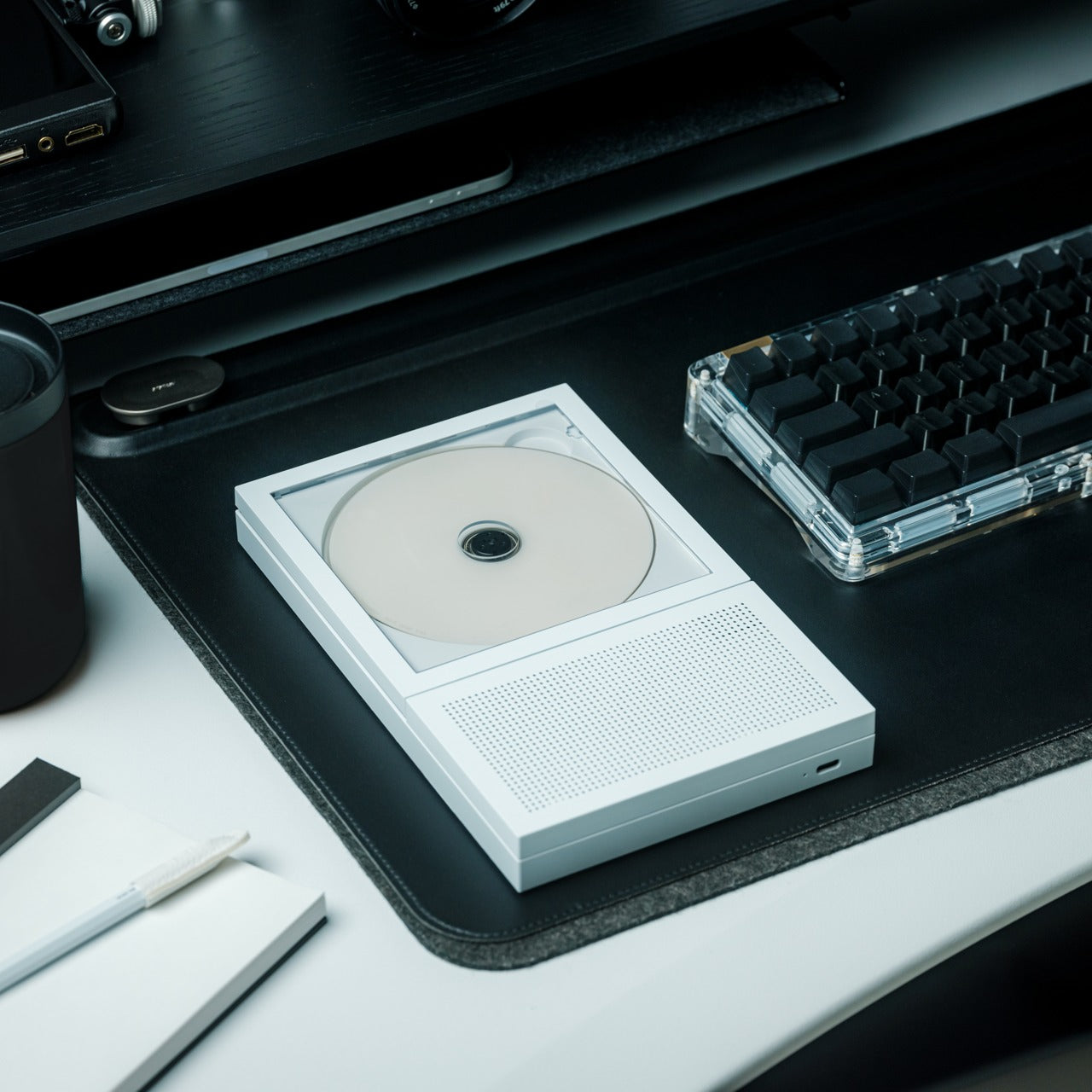
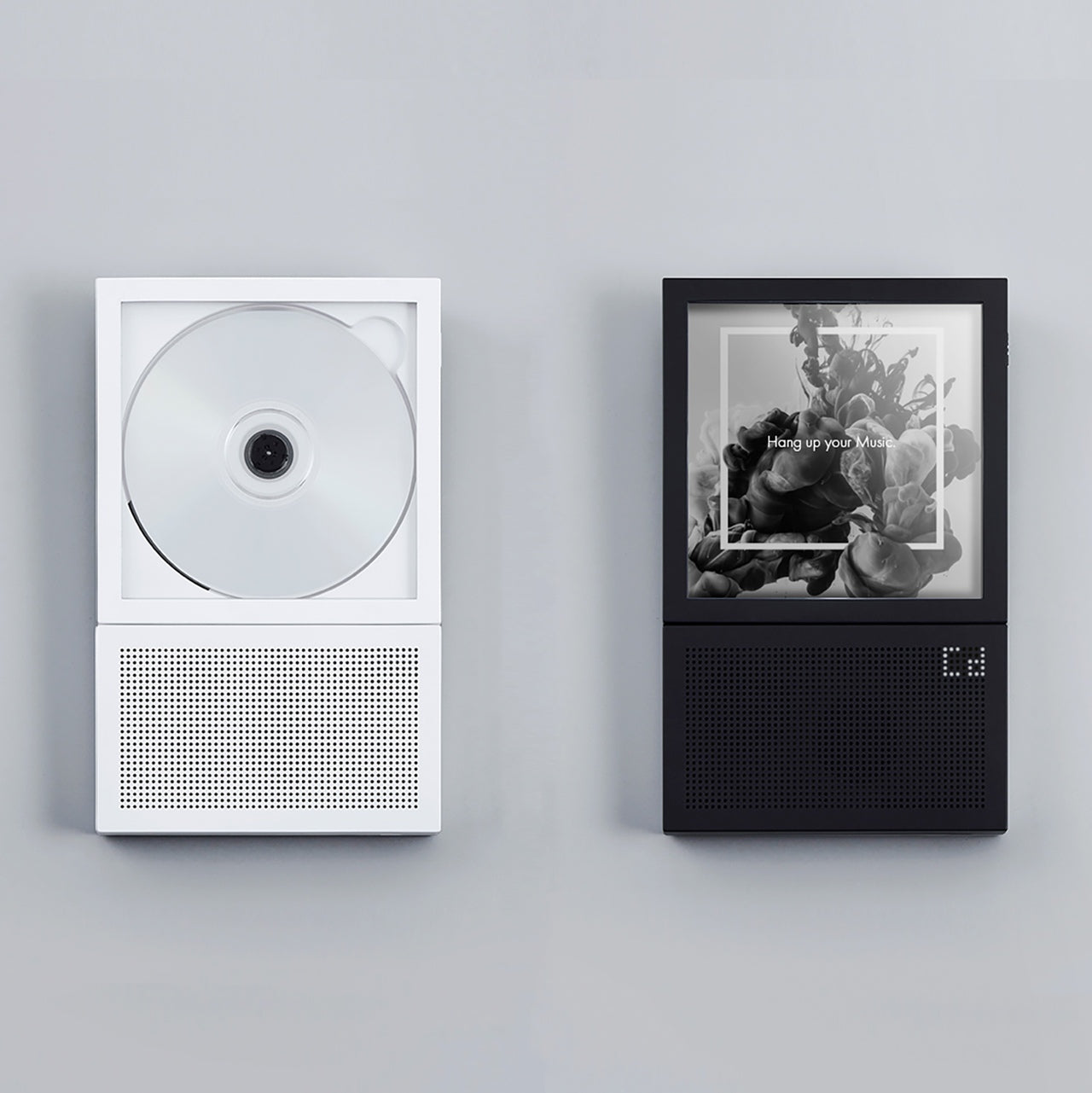
Physical media never truly disappeared. It just got shoved into closets and forgotten behind streaming convenience. The ClearFrame CD Player resurrects the ritual of album playback through transparent polycarbonate construction that frames both the disc and album artwork simultaneously. The exposed black circuit board isn’t hidden behind opaque plastic. It sits visible, turning electronic components into part of the aesthetic language. The square silhouette mimics CD jewel case proportions, creating visual continuity between the medium and the player.
Bluetooth 5.1 connectivity means you’re not locked into wired speaker limitations, while the seven-hour rechargeable battery enables portability that traditional CD players never offered. Wall-mounting capability transforms it into functional art that displays your current listening choice like a gallery piece. Multiple playback modes, including repeat, shuffle, and single-track loop, accommodate different listening intentions. The entire experience slows down music consumption in the best way, forcing deliberate album selection instead of algorithmic autopilot. It’s a rejection of playlist culture disguised as consumer electronics.
Transparent polycarbonate construction turns internal circuitry into a visible design element.
Wall-mounting capability transforms music playback into a spatial art display.
Seven-hour battery life provides true portability without cord tethering.
Square silhouette creates visual harmony with CD jewel case proportions.
What We Dislike
Limited to CD format means no vinyl, cassette, or other physical media playback.
Exposed circuitry, while beautiful, lacks the protective housing of traditional players.
4. AromaCraft Clothes Brush
The Miyakawa Hake Brush Workshop has spent over a century perfecting bristle placement using the traditional Tsubokiri method, where individual boar hairs get hand-planted into wooden handles with painstaking precision. This technique prevents shedding and extends brush lifespan far beyond mass-produced alternatives. The AromaCraft takes that heritage craftsmanship and adds aromatic paper inserts that hold essential oils, transforming garment maintenance into a sensory experience. Each brushstroke doesn’t just remove dust and pollen. It deposits a subtle fragrance that refreshes fabric without overwhelming.
White boar bristles provide the ideal firmness-to-flexibility ratio for lifting debris from fabric weave without damaging delicate fibers. The walnut wood handle receives a shea butter finish that develops patina over time, aging gracefully rather than deteriorating. The entire object feels substantial in hand, communicating quality through weight and balance. For anyone who appreciates Japanese devotion to perfecting everyday rituals, this brush represents garment care elevated to meditative practice. It’s the kind of object that gets better with use, developing character while maintaining function.
Hand-planted bristles using the century-old Tsubokiri technique prevent shedding and extend lifespan.
Aromatic paper insert system allows customizable scent profiles with essential oils.
White boar bristles provide optimal cleaning without fabric damage.
Walnut handle with shea butter finish develops beautiful patina over the years.
What We Dislike
Regular aromatic paper replacement adds ongoing cost beyond the initial purchase.
Requires manual brushing technique learning for optimal dust and pollen removal.
5. Harmony Flame Lamp
Real fire indoors typically requires complex ventilation, safety protocols, and permanent installation. The Harmony Flame Lamp bypasses all that friction by using bioethanol fuel that burns clean, odorless, and smokeless. The brass construction gets hand-crafted using the same metalworking techniques that musical instrument makers employ for tubas and French horns. That’s not arbitrary. Musical instrument brass requires precise acoustical properties and structural integrity that translate beautifully to flame containment. The polished surface catches and reflects firelight, creating dynamic shadows that shift with flame movement.
Bioethanol burns at lower temperatures than wood or propane, making it genuinely safe for tabletop use without requiring permanent fixtures. The brass box design contains flames while allowing full visibility of the fire’s movement and light play. No installation means you can move it from the dining table to the patio to the bedroom, depending on where you want ambient warmth and illumination. The entire experience feels ritualistic in the way lighting candles does, but with more substantial presence and longer burn time. For anyone seeking atmosphere without artificial LED fakery, this lamp delivers authentic fire with modern safety.
Bioethanol fuel requires ongoing purchase and isn’t as universally available as standard fuels.
Open flame, while safer than traditional fire, still requires basic fire safety awareness.
6. All-in-One Grill
Outdoor cooking usually means hauling multiple pieces of equipment for different cooking methods. The All-in-One Grill consolidates barbecuing, frying, grilling, steaming, smoking, and stewing into modular components that stack and separate based on what you’re cooking. Each module serves a specific function but shares a universal footprint that maintains stability when stacked. There’s even a dedicated bottle warmer module that holds containers upright, perfect for mulled wine or keeping sauces at serving temperature. The tabletop size means you’re not committed to permanent patio installation or dealing with full-sized grill storage.
The modular approach makes cleanup dramatically easier than traditional grills, where grease and debris accumulate in hard-to-reach crevices. Each component separates for individual washing, then reassembles without tools or complicated mechanisms. The compact footprint works on apartment balconies, small patios, or even indoor tables when using the non-flame cooking methods. For anyone who wants outdoor cooking flexibility without equipment sprawl, this grill delivers restaurant-range versatility in a package small enough to store in a closet. It’s the kind of design that makes you wonder why all grills aren’t built this way.
Modular components enable six different cooking methods from a single base system.
Compact tabletop size works on balconies and small outdoor spaces.
Individual modules are separate for easier cleaning than traditional grill designs.
Bottle warmer module keeps beverages and sauces at optimal serving temperature.
What We Dislike
Smaller cooking surface limits capacity for large group gatherings.
The modular system requires storage space for multiple components when not in use.
7. Invisible Shoehorn
Long shoehorns solve the ergonomic problem of putting on shoes without bending over, but they typically look medical or utilitarian. The Invisible Shoehorn uses transparent acrylic and polished stainless steel to create a tool that reads as a sculptural object when mounted on its stand. The long steel body provides the leverage and length needed to slip shoes on without back strain, while the mirror-polish finish prevents sock snags and stocking tears that cheaper shoehorns cause. When mounted vertically on its transparent stand, the entire assembly looks more like minimalist art than a functional footwear tool.
The transparent stand creates the illusion that the shoehorn floats, letting it disappear into backgrounds rather than announcing its presence. The stainless steel construction ensures it won’t bend or deform over time like plastic alternatives. For anyone with mobility limitations or those who simply value not destroying socks every morning, this shoehorn transforms a mundane necessity into an object worth displaying. It’s the rare household tool that improves both function and aesthetics, solving a real problem while looking like it belongs in a design catalog.
Transparent stand creates a floating illusion that minimizes visual footprint.
Long stainless steel body eliminates back strain during shoe wearing.
Mirror-polish finish prevents sock snags and stocking damage.
Sculptural aesthetic turns a functional tool into a displayable object.
What We Dislike
Requires dedicated floor space near the entryway that smaller homes may lack.
Stainless steel, while durable, shows fingerprints that require occasional wiping.
Smart Luxury for Valentine’s Day
These seven gifts prove that Japanese design philosophy—where restraint meets meticulous craftsmanship—creates objects that feel more expensive than their price tags suggest. Each piece demonstrates how material choice, manufacturing technique, and geometric consideration combine to communicate value. The bioethanol lamp uses brass. The clothes brush employs century-old bristle placement methods. The headphones weigh 103 grams because every unnecessary element was eliminated. This isn’t luxury through excess. It’s luxury through precision and intentionality that reveals itself slowly.
Choosing Valentine’s gifts based on design integrity rather than brand recognition shifts the conversation from spending to investing. These objects improve with use, develop patina, and maintain relevance beyond trend cycles. The CD player will still spin discs when streaming services change algorithms. The shoehorn will protect backs and socks for decades. The levitating pen combines cosmic debris with a practical function that doesn’t expire. When you gift something that honors both form and utility while respecting Japanese craft traditions, you’re not just presenting an object. You’re offering a daily ritual that compounds value through repeated interaction.
Romanian audio craftsmen Meze Audio have built their reputation on a simple philosophy: headphones should be as beautiful to look at as they are to listen to. The 99 Classics proved this formula with their vintage-inspired warmth, while the Liric pushed boundaries with planar magnetic technology. Now, the Strada arrives as something different: a closed-back dynamic that feels less like a nostalgic throwback and more like a confident step forward.
At $799, the Strada occupies that fascinating middle ground where serious audio performance meets daily practicality. The hand-crafted Macassar ebony earcups remain unmistakably Meze, but the deep metallic green magnesium frame signals a design evolution. This is Meze refining their aesthetic without abandoning their roots, creating a closed-back headphone that promises isolation and intimacy without sacrificing their signature approach to build quality and musicality.
Designer: Meze Audio
Those 50mm dynamic drivers pull from the 109 Pro’s DNA but get retuned specifically for closed-back acoustics. Frequency response spans 5Hz to 30kHz, which sounds impressive until you remember that what matters is how flat or colored that response curve actually is. Sensitivity hits 111 dB SPL/mW at 1kHz with 40Ω impedance, meaning your phone will drive these adequately but they’ll really open up with proper amplification. Meze claims a tonal balance that leans slightly warm with controlled bass emphasis, neutral mids, and extended treble that avoids the typical closed-back veil. Translation: they want you listening to music, not hunting for detail.
That carbon fiber-reinforced cellulose dome keeps the diaphragm light while maintaining stiffness for clarity in the upper registers. The semicrystalline polymer torus surrounding the dome gets coated with beryllium via physical vapor deposition, which increases rigidity without adding mass. Precision-cut grooves at 45.5-degree angles across the torus help control resonance, while a copper-zinc alloy stabilizer ring dampens unwanted vibrations. These aren’t revolutionary techniques but they’re expensive ones, the kind of iterative refinement that separates competent drivers from excellent ones. You’re paying for obsessive attention to mechanical behavior at frequencies most people can’t even hear.
The magnetic ear pad system solves a problem most manufacturers ignore. Ear pads wear out. They compress, they accumulate oils and sweat, they eventually need replacement. Traditional attachment methods range from annoying clips to outright glued-on disasters that require heat guns and prayers. Meze’s magnetic mounting creates a perfect acoustic seal while making pad swaps completely tool-free. This ties directly into their sustainability pitch, which feels genuine rather than performative given their history of fully serviceable designs. Every component here can be replaced individually. The headband padding, the frame sliders, the cables, even those gorgeous ebony cups. You’re buying something meant to be repaired rather than discarded.
Each pair carries unique grain patterns, the tiger-stripe figuring that makes this particular hardwood so prized in furniture and musical instruments. Beyond aesthetics, the density and internal structure provide acoustic benefits. Wood naturally dampens certain resonances while allowing others to breathe, creating a different sonic character than plastic or metal enclosures. Whether you can actually hear this difference remains a subject of fierce debate in audiophile circles, but the material choice signals intent. Meze wants these to feel like heirloom objects, something you hand down rather than upgrade away from.
The metallic green finish represents the most visible departure from Meze’s typical palette. Their previous models leaned heavily into warm metallics: the gold and walnut of the 99 Classics, the bronze accents across their lineup, the copper hardware that became a signature detail. This cooler, more contemporary green suggests a brand aging gracefully, shedding some retro affectation without losing craft. The multi-layer paint process adds depth to the magnesium frame, giving it a subtle metallic sheen that catches light differently depending on angle. It’s restrained in a way that premium consumer electronics rarely manage, avoiding both the sterile minimalism of pro audio gear and the gamer-aesthetic excess that plagues too many “premium” headphones.
The competitive landscape at $799 gets brutal. Focal’s closed-backs bring French tuning philosophies and beryllium tweeters. Sennheiser offers German engineering precision and decades of refinement. Dan Clark Audio delivers cutting-edge planar technology with acoustic metamaterials. Meze’s pitch sidesteps the technology arms race entirely. They’re selling craftsmanship, serviceability, and a specific vision of what premium headphones should feel like to own and use daily. Whether that resonates depends entirely on what you value. If replaceable drivers and hand-painted frames matter less than the latest acoustic innovations, look elsewhere. But if you want something that feels built rather than manufactured, something designed to age beautifully rather than obsolete quickly, the Strada makes its case clearly.
In 2005, Bugatti unleashed a machine so audacious that even today it commands respect. The Veyron arrived with 1,000 horsepower, four turbochargers, and a top speed that left competitors speechless. Two decades later, one collector decided that anniversary celebrations and museum pieces weren’t enough tribute for such a revolutionary achievement.
The result is the F.K.P. Hommage, a one-off hypercar that channels the Veyron’s iconic silhouette while hiding Chiron Super Sport mechanicals beneath its red and black bodywork. Named for Ferdinand Karl Piëch, the Volkswagen Group patriarch who championed the original project, this creation incorporates design elements from an abandoned Veyron facelift that never reached production. It’s automotive archaeology meeting cutting-edge engineering, wrapped in a package that costs north of €10 million.
Designer: Bugatti
This is the second car from Bugatti’s Programme Solitaire, their bespoke division that handles exactly two ultra-custom builds per year. The first was the Brouillard, which took the Mistral roadster platform and wrapped it in equestrian-inspired design language. The F.K.P. Hommage takes a different approach entirely. It asks a simple question: what if Bugatti had kept refining the Veyron on the Chiron’s platform instead of replacing it? Chief designer Frank Heyl actually had sketches for a Veyron facelift back in 2008, concepts that never materialized because Piëch wanted something more radical. Those sketches became the foundation for this car. The headlights, those hollowed-out “light tunnel” taillights, even the adjusted proportions all stem from that unrealized project.
The exterior proportions mirror the original Veyron almost exactly, though it sits about an inch and a half wider. Every single body panel was designed specifically for this car. Nothing got copy-pasted from the parts bin. The horseshoe grille stands more upright now, three-dimensional and aggressive in ways the original never attempted. Those L-shaped LED headlights give the front end what Heyl calls a “concentrated stare,” which sounds like marketing speak until you actually look at the thing head-on. The side intakes got tightened up, the twin roof intakes lean forward more dramatically, and the rear diffuser flares outward at sharper angles. The taillights grew slightly larger on the outboard sections, creating better visual balance. Even the fuel filler got repositioned for better aerodynamic flow.
The red and black scheme matches the first production Veyron from 2005, but Bugatti couldn’t just spray it red and call it done. The base is actually silver, with red pigment incorporated into the clearcoat to create depth and luminosity that straight red paint never achieves. It’s the kind of obsessive detail that adds weeks to the build process and thousands to the cost, which matters zero percent when your budget already exceeds €10 million.
Then you open the door and realize the exterior was just foreplay. The cabin blends Chiron architecture with Veyron soul, keeping the newer car’s instrument cluster while introducing a completely redesigned steering wheel and a wider center console. That console gets machined from a single block of aluminum, which sounds impressive until you remember they’re putting a $200,000 Audemars Piguet Royal Oak Tourbillon inside it. The 43mm watch sits in a rotating mount that serves double duty. It hides the timepiece when the car’s off, protecting it from opportunistic smash-and-grab artists, and it spins the watch several times per hour to keep the automatic movement wound. No mechanical connection to the car, just a motorized gondola doing its thing on a timer.
The seats wear custom couture fabrics woven by a Parisian textile house, because apparently Italian leather alone doesn’t sufficiently communicate exclusivity. Piëch’s signature gets stitched into each headrest, with his initials and birthday embossed into the leather by your right knee. These details matter in the rarefied world of eight-figure automotive commissions, where differentiation comes down to whose signature adorns your headrest.
Under that engine cover sits the Chiron Super Sport’s 1,578-horsepower W16, complete with upgraded cooling, enhanced intercoolers, and a reinforced gearbox. The wheels measure 20 inches up front and 21 inches out back, significantly larger than the Veyron’s original 18/20 setup but necessary to accommodate modern Michelin rubber and the massive brake calipers hiding behind those spokes. The owner reportedly already possesses a matching Veyron, which means they’ll soon park both side by side and spend entirely too much time explaining the differences to confused onlookers.
The F.K.P. Hommage debuts at Rétromobile Paris before embarking on the typical hypercar show circuit, hitting Monaco, Pebble Beach, and whatever other gatherings attract people wealthy enough to consider €10 million reasonable for a car. Delivery happens in 2027, giving Bugatti’s craftspeople enough time to obsess over every stitch and surface. By then, the W16 engine will be completely retired from production, making this one of the final expressions of Piëch’s original vision before Bugatti transitions to the V16 hybrid powertrain in the Tourbillon.
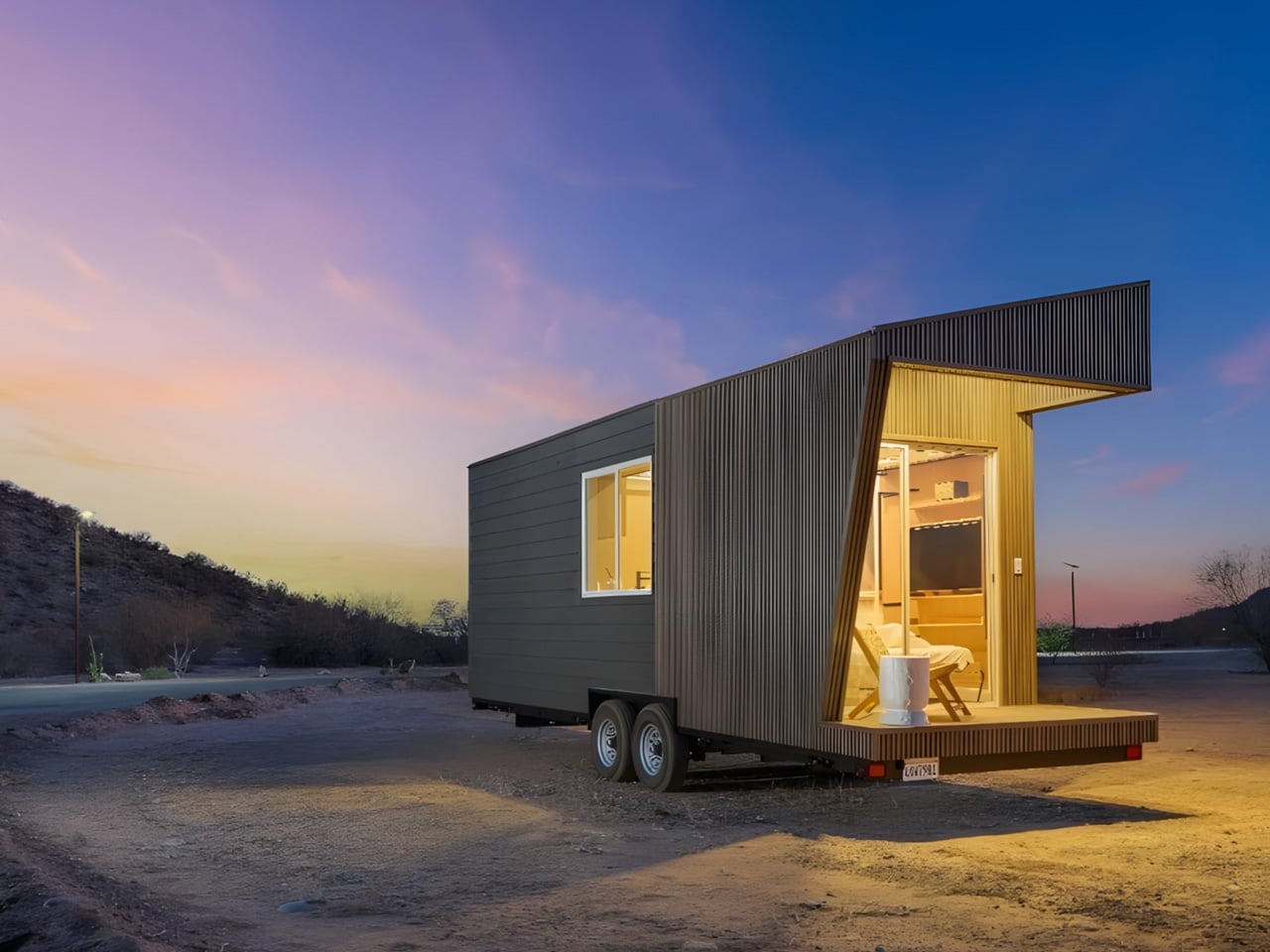
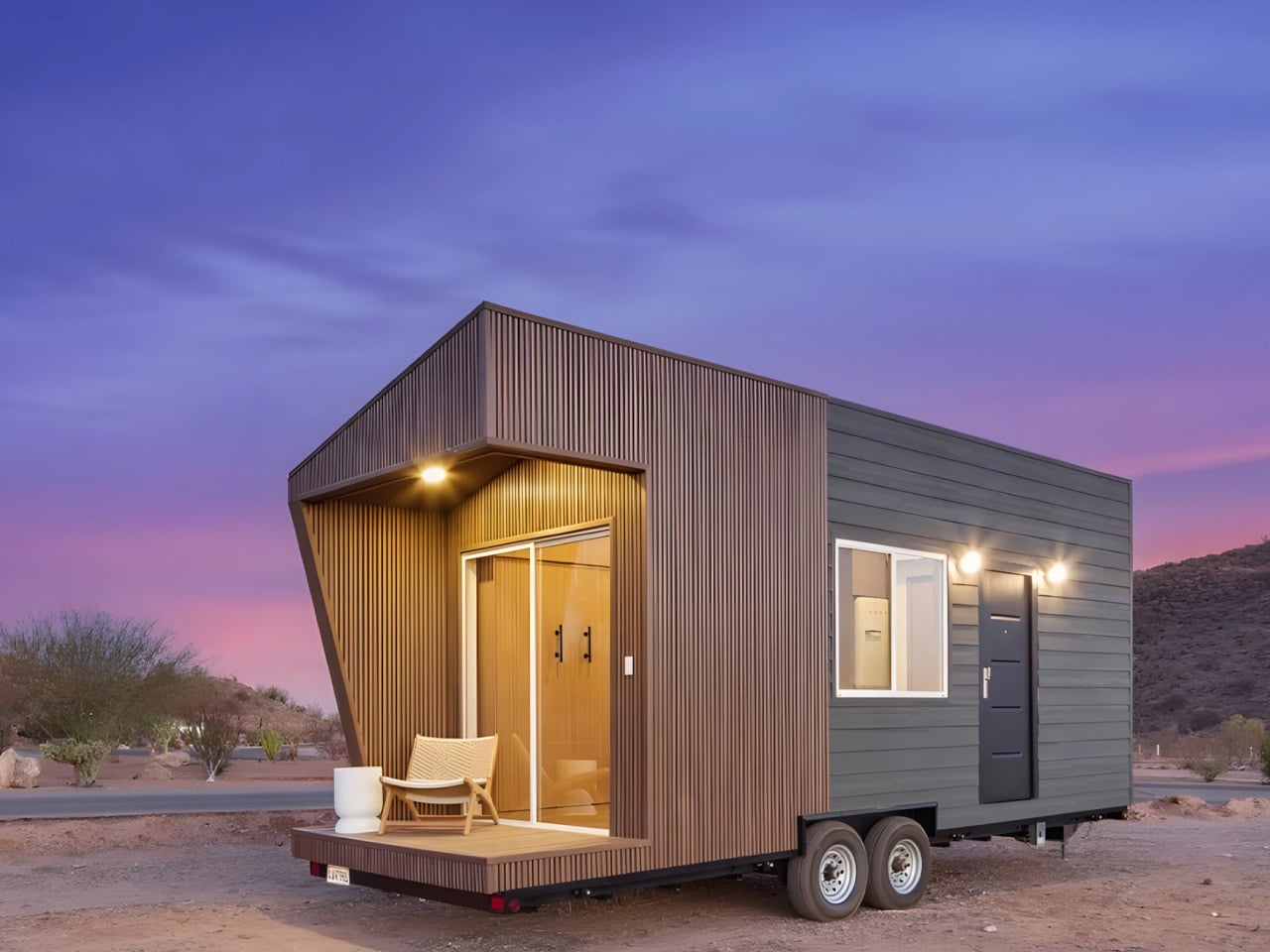
Living small is often romanticized as a sun-drenched, coastal fantasy or a nomadic life on the road, but tiny houses are increasingly proving their worth in far harsher environments. One of the latest examples is a luxurious new model from Tru Form Tiny, designed specifically to handle brutal winters without compromising on comfort or aesthetics.
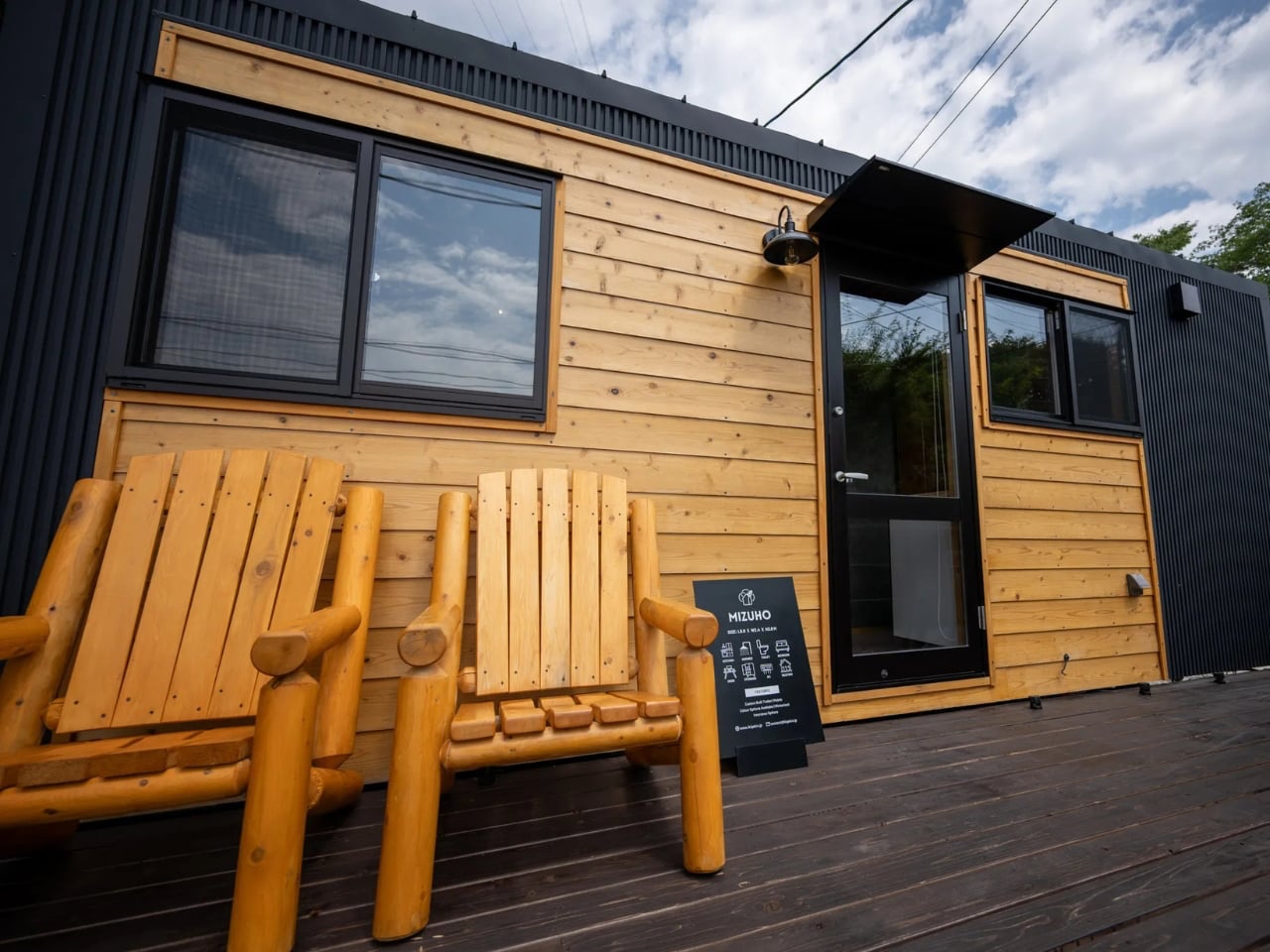
Set on a quad-axle trailer, this 36 ft (11 m) tiny house sits firmly in the full-time-living category. Its proportions feel generous rather than cramped, and the exterior treatment reinforces that impression. Vinyl siding is paired with warm cedar accents, while a standing-seam metal roof hints at durability and low maintenance. The overall look is more contemporary cabin than makeshift shelter, which feels appropriate given its intended home: the icy winters of Colorado.
Cold-climate performance was a driving force behind the design. Tru Form Tiny has wrapped the structure in high-R-value insulation and fitted energy-efficient Low-E windows to reduce heat loss and solar gain. Heating is handled by a high-efficiency mini-split system engineered for subfreezing temperatures, with a wood stove rough-in ready for those truly punishing cold snaps. A tankless hot water system and utility setup tailored for off-grid flexibility round out the resilience-focused specification, making this tiny home feel more like a compact alpine lodge than a seasonal camper.
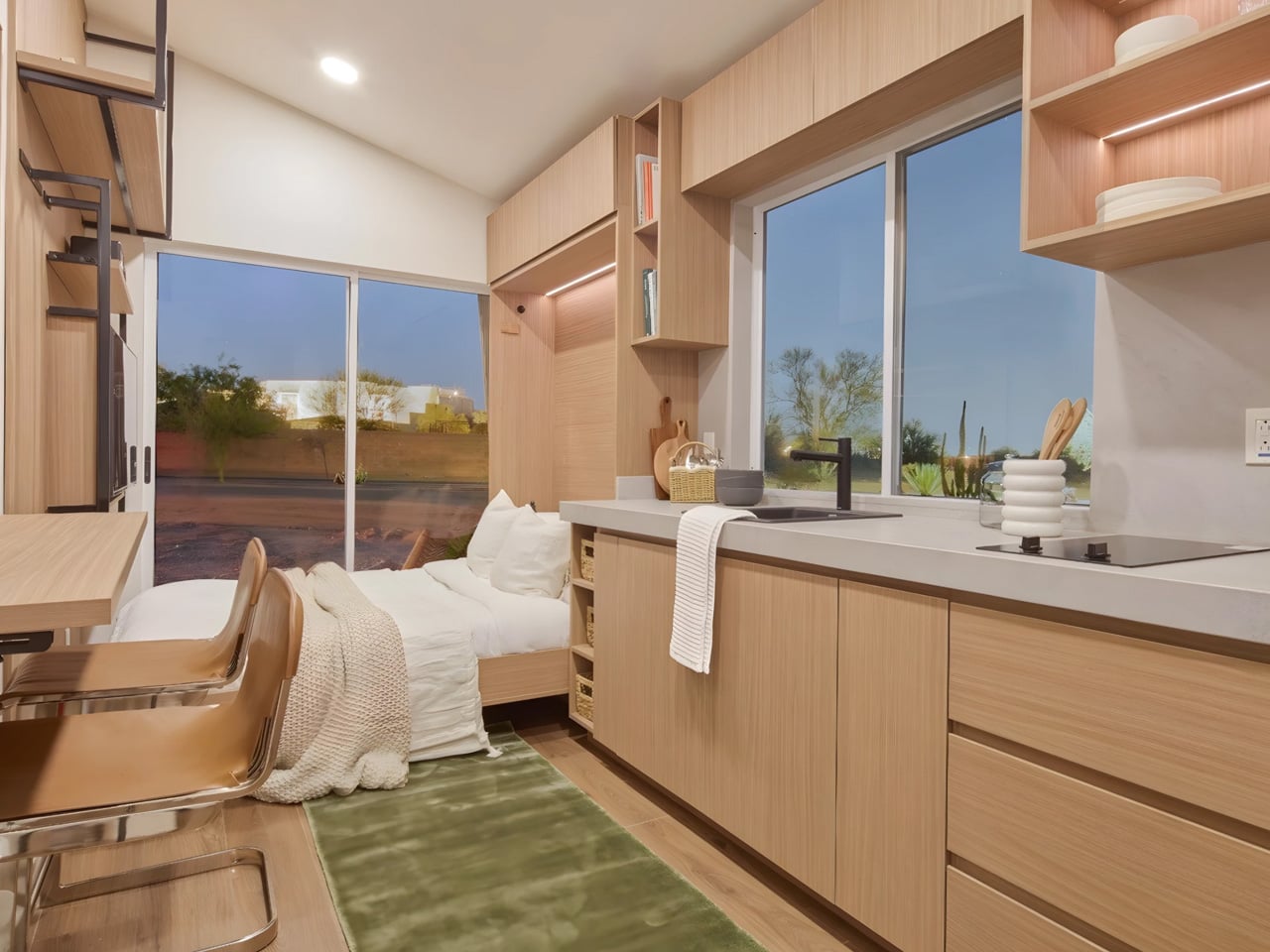
Inside, large trifold glass doors open into a surprisingly expansive living area. The high ceiling and generous glazing create a sense of volume and light that belies the footprint. A sofa, chair, and table form a comfortable lounge zone, anchored by the mini-split for everyday climate control and the option of a wood-burning stove when the weather turns severe. It’s a space that feels equally suited to curling up with a book on a snow day or hosting a small gathering.
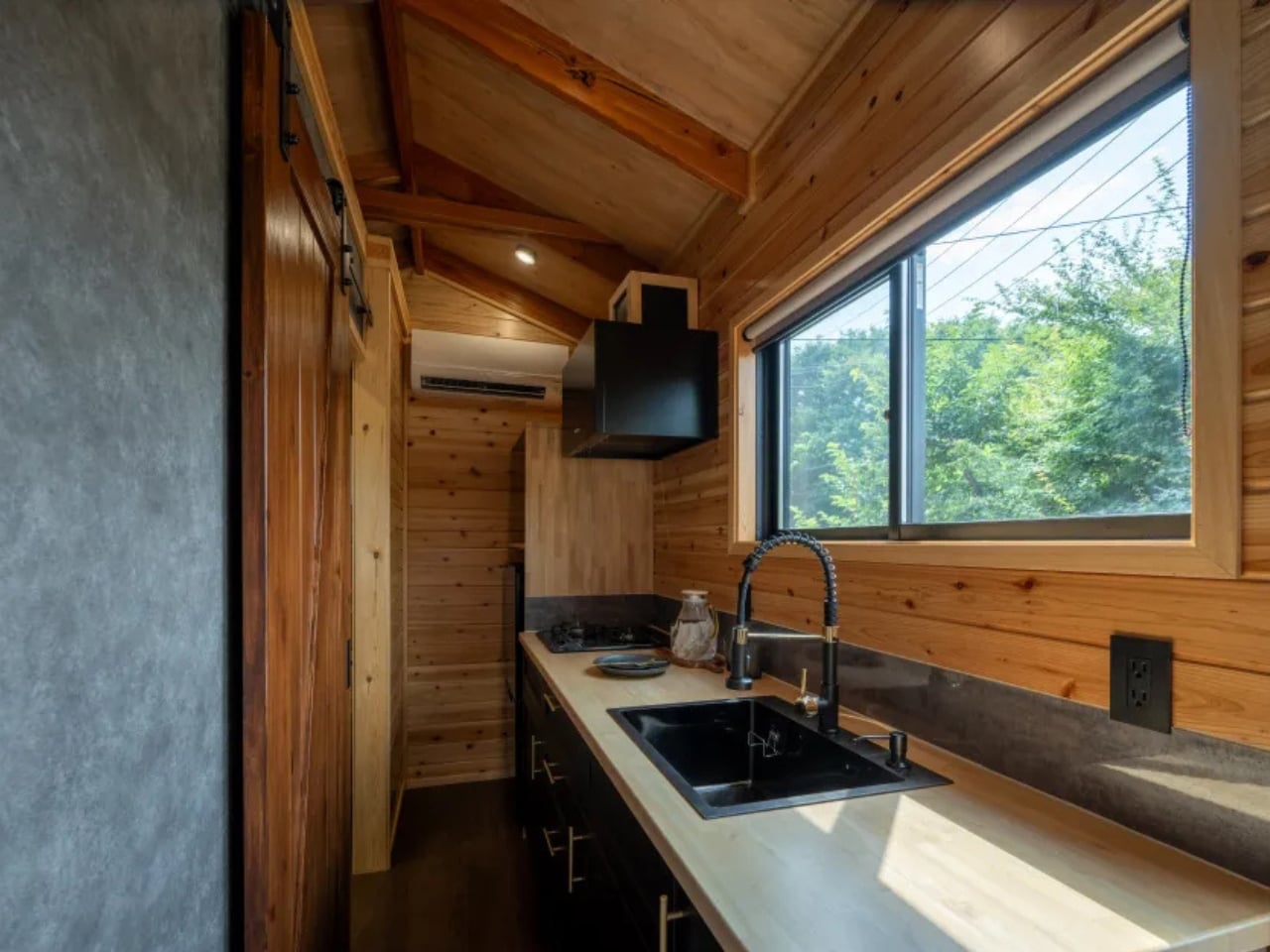
The kitchen continues the theme of full-size living in a small envelope. Running along one side of the home, it features a steel sink, four-burner propane stove with oven, microwave, dishwasher, and a fridge/freezer, all framed by ample counter space and cabinetry. A dining table subtly defines the transition between the kitchen and living area, reinforcing the sense of distinct yet connected zones.
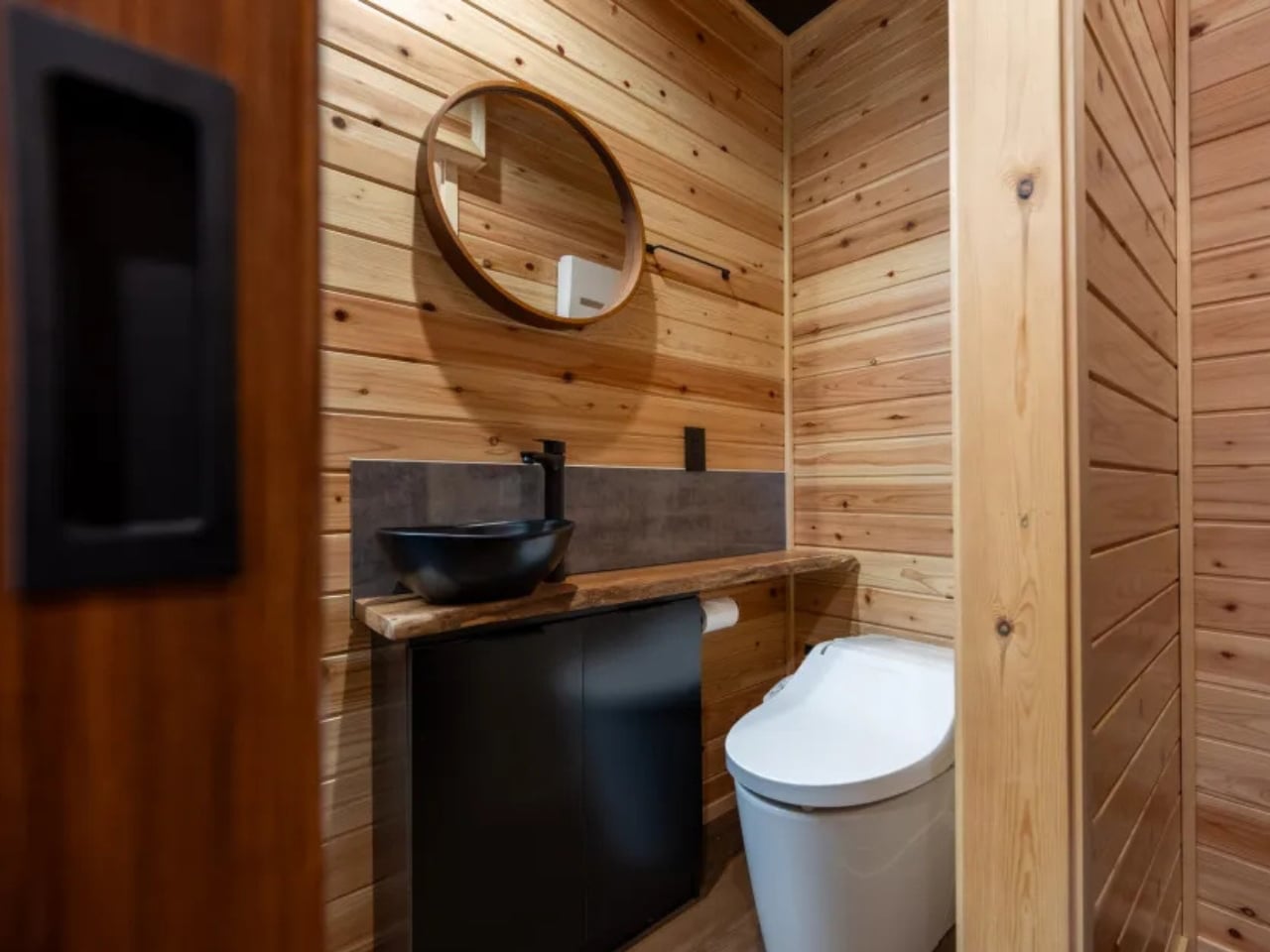
On the opposite side of the house, the bathroom feels unusually generous for a tiny home. A glass-enclosed shower, composting toilet, vanity sink, and extensive storage create a practical, everyday space rather than a compromise. A separate washing machine and dryer underscore the home’s suitability for long-term, off-grid or semi-off-grid living in remote, snowy locations.
Originally planned as a main-floor feature, the bedroom was ultimately relocated to the loft to free up valuable ground-floor space. Accessed via a storage-integrated staircase, the loft offers a low-ceilinged but comfortable retreat with a double bed, entertainment center, and TV. It’s a compact sanctuary that completes a layout clearly focused on real-world livability in extreme conditions, proving that tiny houses can be both climate-resilient and quietly luxurious.
Luxury car brands moving into real estate isn’t exactly new anymore. Porsche kicked things off with its Design Tower Miami in 2017, followed by Aston Martin’s 66-story sail-shaped tower that opened in Miami in May 2024, and Bentley Residences expected to complete in 2026. Bugatti and Pagani both have projects underway in Miami and Dubai. But Mercedes-Benz and Binghatti just took it to another level with their newly launched Binghatti City project in Dubai. Instead of stopping at a single branded tower like most automotive companies do, they’re building an entire 10-million-square-foot district with 12 residential skyscrapers containing 13,000 apartments. The $8.2 billion development centers around a 341-meter tower called Vision Iconic, surrounded by 11 progressively shorter towers creating this cascading skyline in the Meydan area. This is their second collaboration after a 65-floor Mercedes tower in Downtown Dubai that’s nearly complete, proving the concept works well enough to scale up dramatically.
The architecture pulls heavily from Mercedes design DNA, incorporating elements like their signature grille pattern into horizontal podiums, plus generous use of chrome and silver accents throughout. Each tower carries the name of a Mercedes concept vehicle, and apartments feature the brand’s Sensual Purity design philosophy with black and silver palettes accented by wood and leather. They’re not just building housing though. The masterplan includes cultural districts, retail spaces, parks, mobility hubs, sports facilities and dining venues, essentially creating a walkable branded ecosystem. Units start at $435,600 for studios and top out around $5 million for three-bedrooms. Timeline calls for completion in three and a half years from the January 14, 2026 launch.
Designer: Binghatti for Mercedes-Benz
The luxe pricing structure here tells you everything about who Mercedes thinks will actually live in this thing. Studios at $435,600 might sound almost reasonable by Dubai standards until you remember that’s the entry point for literally the smallest unit available. One-bedroom units jump to $2.6 million, two-bedrooms hit $3 million, and three-bedrooms start at $5 million. They’re casting a wide net, sure, but even the “affordable” end of this spectrum requires the kind of disposable income that makes luxury car ownership look like a casual purchase decision. The real question is whether 13,000 apartments worth of wealthy people exist in Dubai’s orbit who specifically want to live in a Mercedes-branded environment. That’s a lot of units to fill, even in a city that treats superlatives like a competitive sport.
The design philosophy they keep mentioning, Sensual Purity, sounds like the kind of corporate branding speak that emerges from late-night brainstorming sessions, but it does translate into some specific material choices. Black and silver form the base palette because of course they do, you can’t have a Mercedes-branded space without channeling the aesthetic of a C-Class interior. The wood and leather accents are presumably there to soften all that chrome and convince people this is a home rather than an extremely expensive showroom. Each tower named after a concept car like Vision One-Eleven or Vision AVTR adds another layer of brand immersion that either sounds incredibly cool or slightly dystopian depending on your tolerance for corporate aesthetics in residential spaces.
The amenities list reads like someone took every luxury condo marketing brochure from the past decade and merged them into one. E-sport lounges, ballrooms, event halls, sporting clubs, water pools, fitness facilities, picnic groves. They’re promising this self-contained urban ecosystem where you theoretically never need to leave, which raises interesting questions about what happens when your entire residential community is tied to a single brand identity. Do you start identifying as a Mercedes person in ways that go beyond car ownership? Does living in Mercedes-Benz Places Binghatti City become part of your personal brand? These are the kinds of questions that sound absurd until you remember people absolutely do this with Apple products and Patagonia vests.
Binghatti’s track record with branded developments gives this project more credibility than if some random developer tried pulling it off. They’re simultaneously working on Bugatti residences and have that Jacob & Co collaboration, so they’ve figured out the formula for translating automotive brand language into architectural form. The three-and-a-half-year timeline feels optimistic but not wildly unrealistic for Dubai’s construction pace. Whether the market can actually absorb 13,000 Mercedes-branded units in Meydan while their first tower in Downtown Dubai is still finding buyers remains the real test of whether this brand extension strategy works at city scale or if they’ve dramatically overestimated the overlap between car enthusiasts and people who want their entire living environment wrapped in automotive branding.
Retail and hospitality design is one of those rare territories where architecture gets to perform on multiple levels at once. It is not just about function or spectacle, but about storytelling, how materials, light, circulation, and atmosphere come together to momentarily detach visitors from the outside world and immerse them in a carefully choreographed experience. The newly opened Maison Louis Vuitton Sanlitun in Beijing is a compelling example of this ambition realized at an urban scale.
Designed by Jun Aoki for Louis Vuitton, the flagship is located in Beijing’s energetic Sanlitun district. The building brings together retail, hospitality, and exhibition spaces within a single vertically organized envelope, offering an experience that unfolds floor by floor rather than spreading outward. In doing so, it rethinks what a luxury flagship can be in one of the city’s most intense commercial neighborhoods.
The project continues Jun Aoki’s long-standing collaboration with the House, following earlier Louis Vuitton buildings in Tokyo and Osaka. In Beijing, however, his approach feels particularly attuned to context. Rather than competing with Sanlitun’s visual noise, the building introduces a sense of material depth and calibrated transparency. The architecture does not shout; it subtly absorbs and refracts the city around it.
The most striking element is the facade. Drawing inspiration from Taihu stones, scholars’ rocks historically associated with classical Chinese gardens, Aoki translates their eroded, organic character into an outer skin of hand-curved glass panels. Each panel is individually shaped, creating irregular contours and a layered surface that reads differently as daylight shifts. The glass possesses translucent and dichroic qualities, producing chromatic changes that respond to sun angle, weather, and movement. From close range, the facade feels tactile and sculptural; from across the block, reflections stretch and compress, giving the building a constantly changing presence.
Behind this expressive outer layer sits a secondary envelope that handles thermal performance and weather protection. This dual-skin strategy allows the facade to operate simultaneously as cultural reference, environmental filter, and urban interface, an architectural device that balances symbolism with performance.
Inside, visitors enter directly into a central atrium that rises through three levels and organizes the Women’s collections. Daylight filters through the glass facade into this vertical void, animating floors, balustrades, and circulation cores. Retail programs are distributed across four levels, housing Women’s and Men’s Leather Goods, Ready-To-Wear, Shoes, Jewelry, Accessories, Perfumes, and Beauty. Movement remains clear and legible, with escalators and stairs positioned to preserve long sightlines through the atrium and back toward the city. More private client lounges are tucked into quieter zones, defined through subtle shifts in material and lighting rather than overt separation.
A distinct tonal shift occurs on the third floor, where the Louis Vuitton Home collection is presented. Furniture, textiles, and tableware by designers such as Patricia Urquiola and Cristian Mohaded are displayed in rooms scaled closer to domestic interiors, with softer finishes and calmer light, allowing the objects to breathe.
At the top, Le Café Louis Vuitton crowns the building, the brand’s first café in Beijing. Arrival begins with a mirrored vestibule that multiplies reflections before opening into a flowing dining space. The bar references the proportions and layered construction of Louis Vuitton trunks, while a terrace runs along the facade, partially screened by the glass skin and offering views across Sanlitun and the surrounding city.
By combining retail and hospitality within a single architectural envelope, Maison Louis Vuitton Sanlitun demonstrates how experiential design can transcend shopping alone. Through material storytelling, spatial sequencing, and a sensitive response to context, the building creates an immersive world, one that briefly pulls visitors away from Beijing’s relentless pace and invites them into a more deliberate, crafted experience.