Honda’s EV Outlier Concept Looks Like It Was Poured From Liquid Chrome

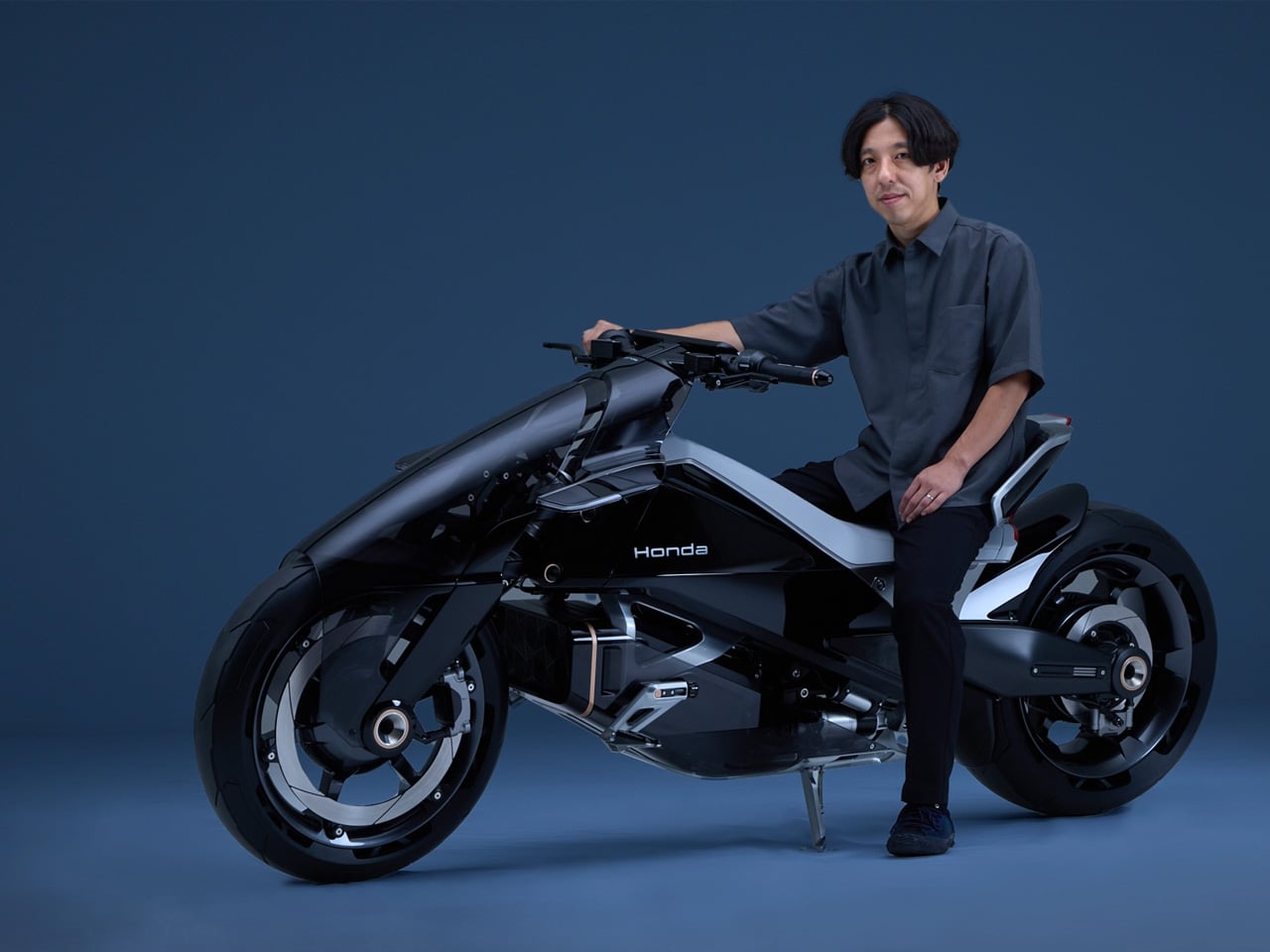
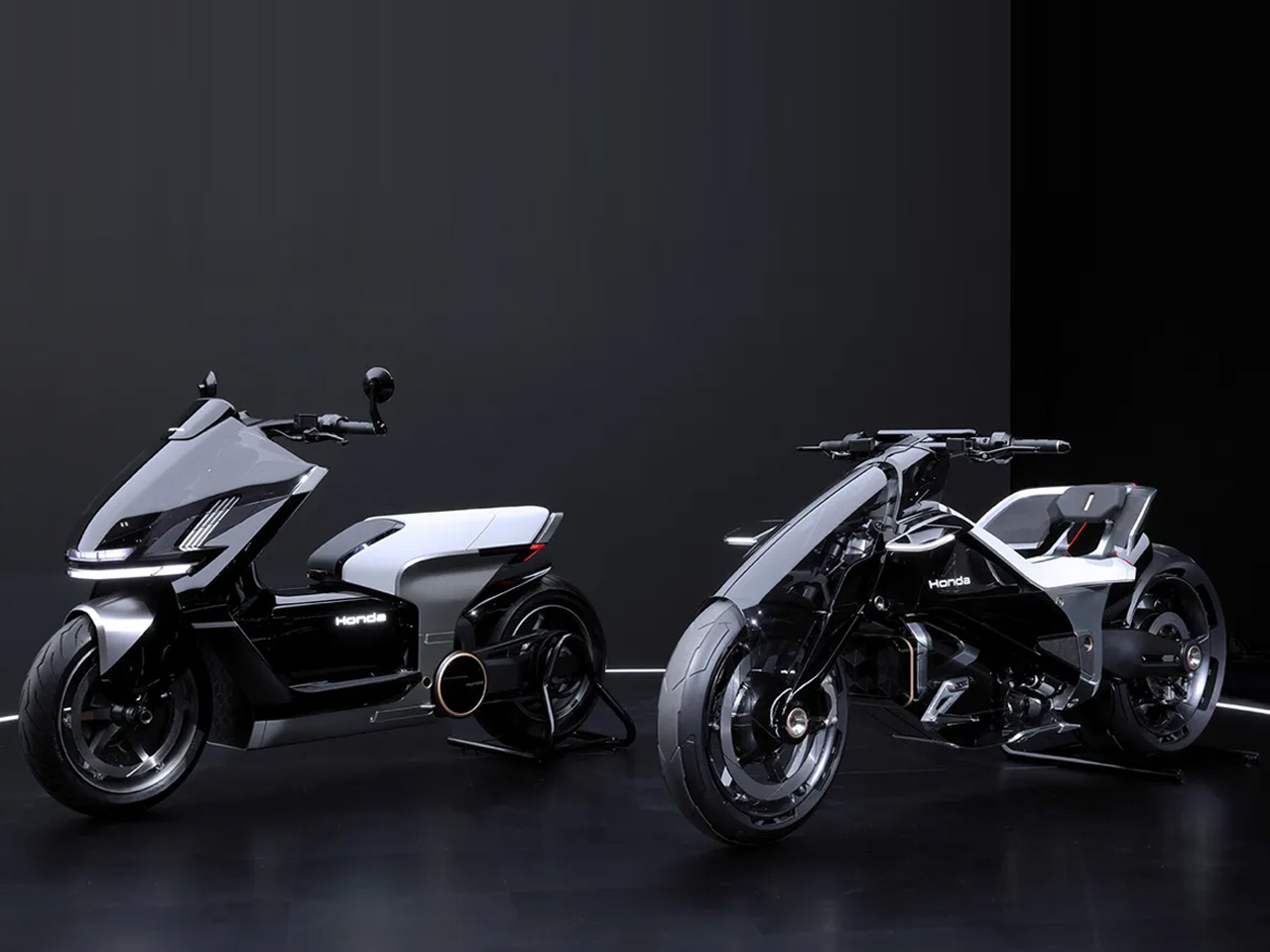
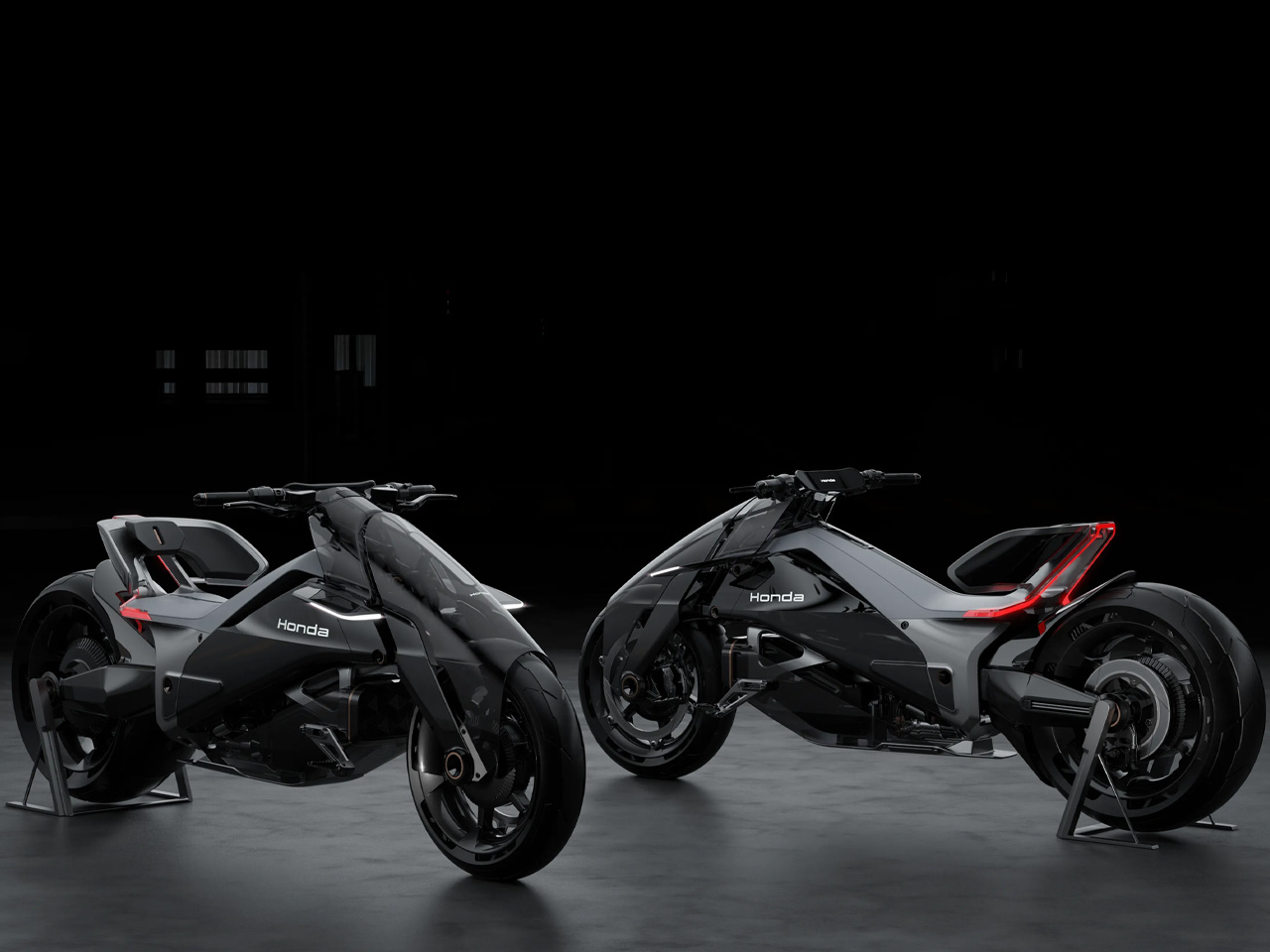
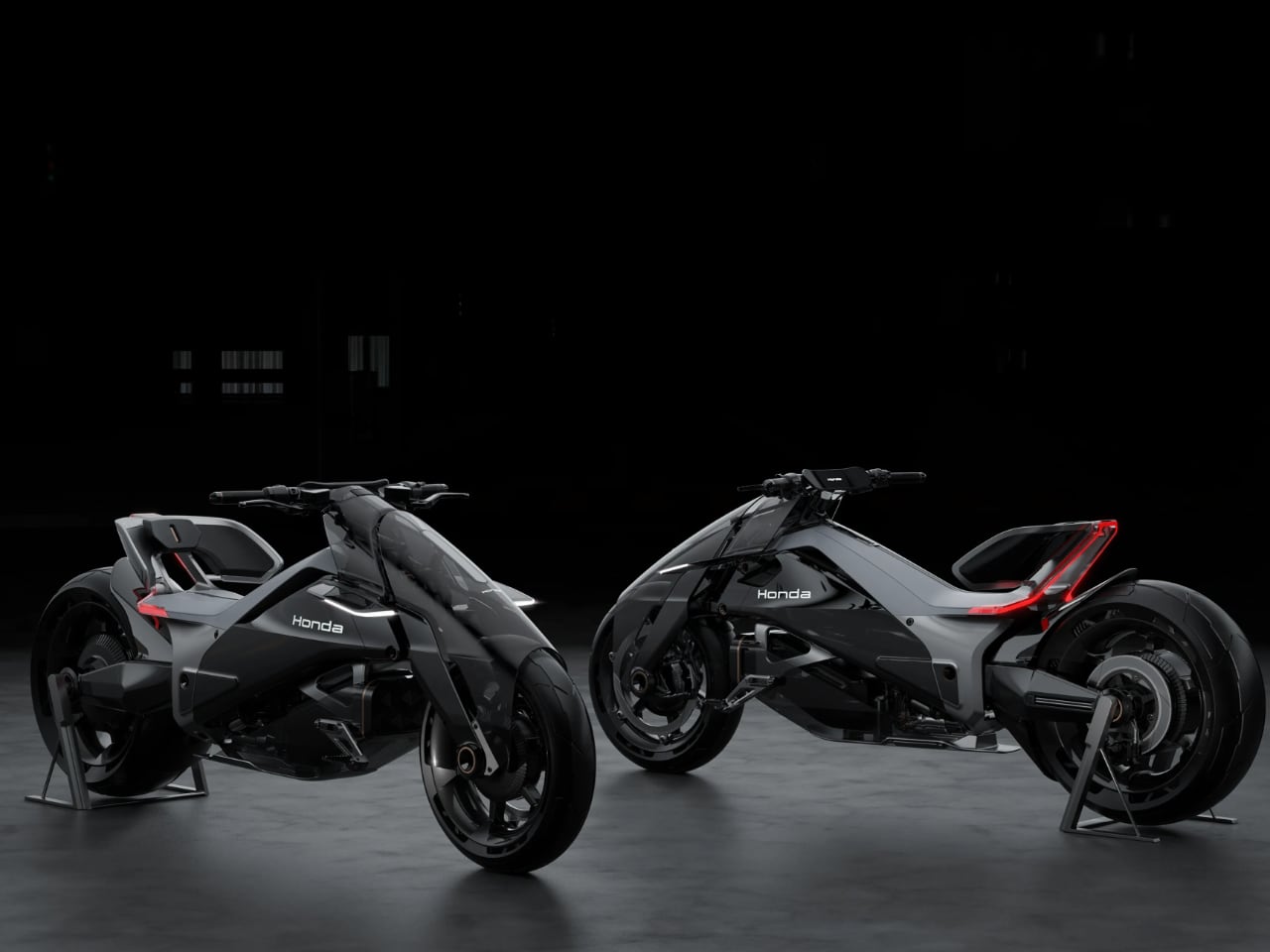
At the 2025 Japan Mobility Show, Honda unveiled something that makes every other electric motorcycle look like it’s wearing a costume. The EV Outlier Concept reimagines what happens when you stop thinking about motorcycles as machines you sit on top of, and start thinking about them as machines you become part of.
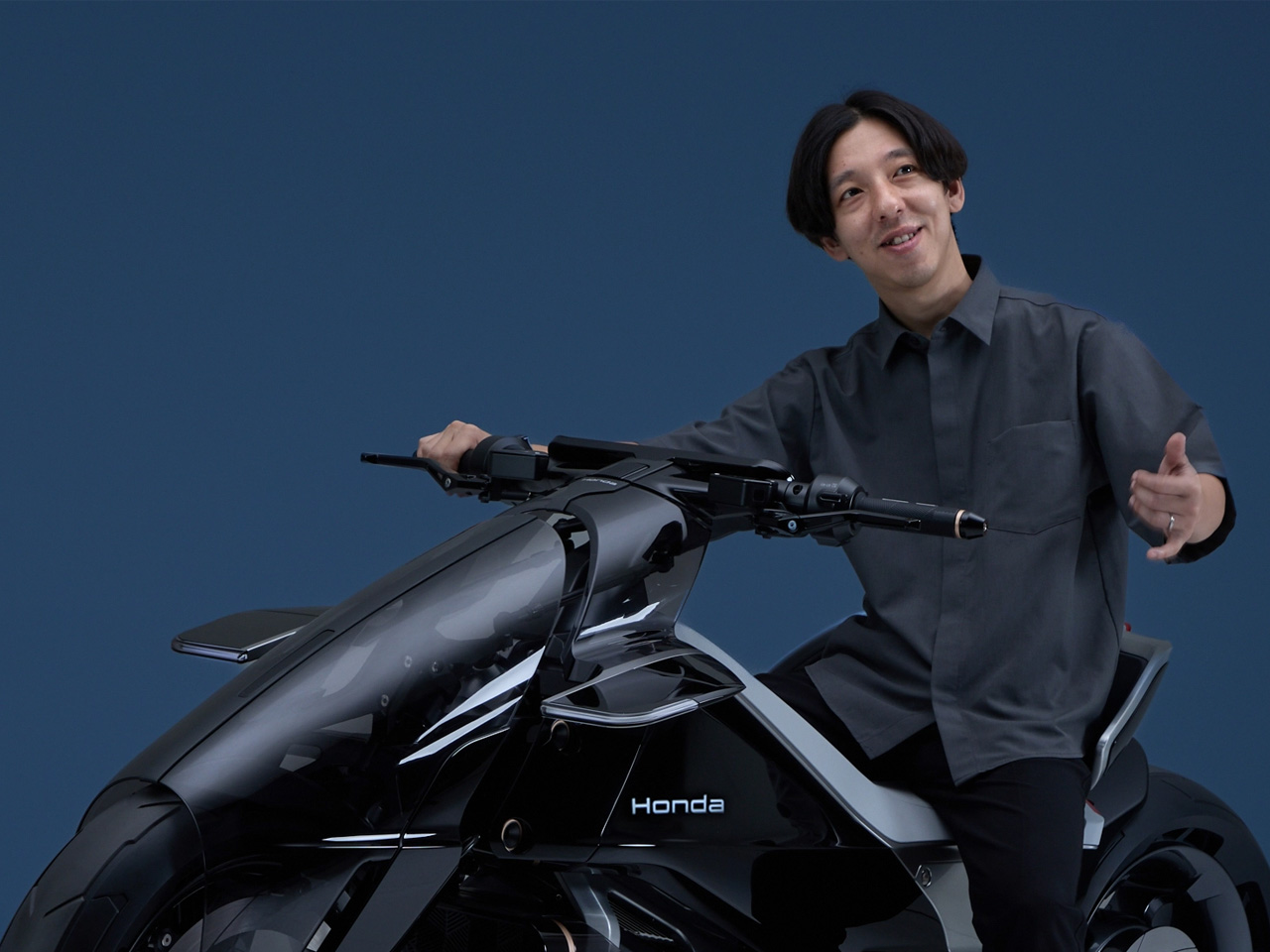
Designer: Yuya Tsutsumi

Designer Yuya Tsutsumi built the Outlier around what Honda calls “Gliding and Ecstasy” – two contrasting riding sensations that could only exist in an electric motorcycle. “Gliding represents a riding feel with a sense of gliding, leveraging the uniquely smooth power delivery and quietness of an EV,” Tsutsumi explains. “Ecstasy is an emotional riding sensation resulting from the instant responsiveness, acceleration, and immense torque only possible with motor drive.”

These opposing experiences, combined with the ultra-low riding position, form the three pillars driving every design decision on this bike.
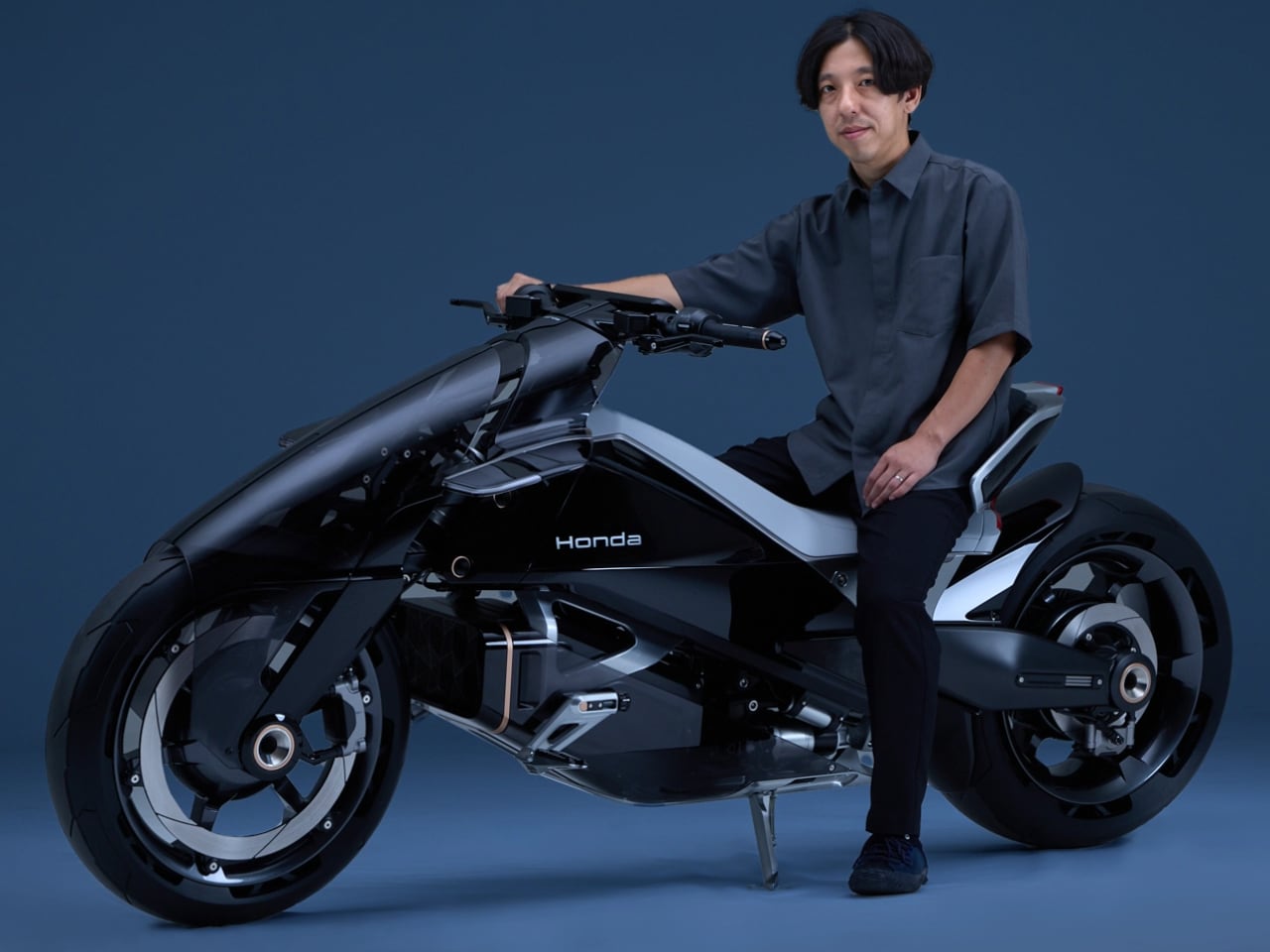
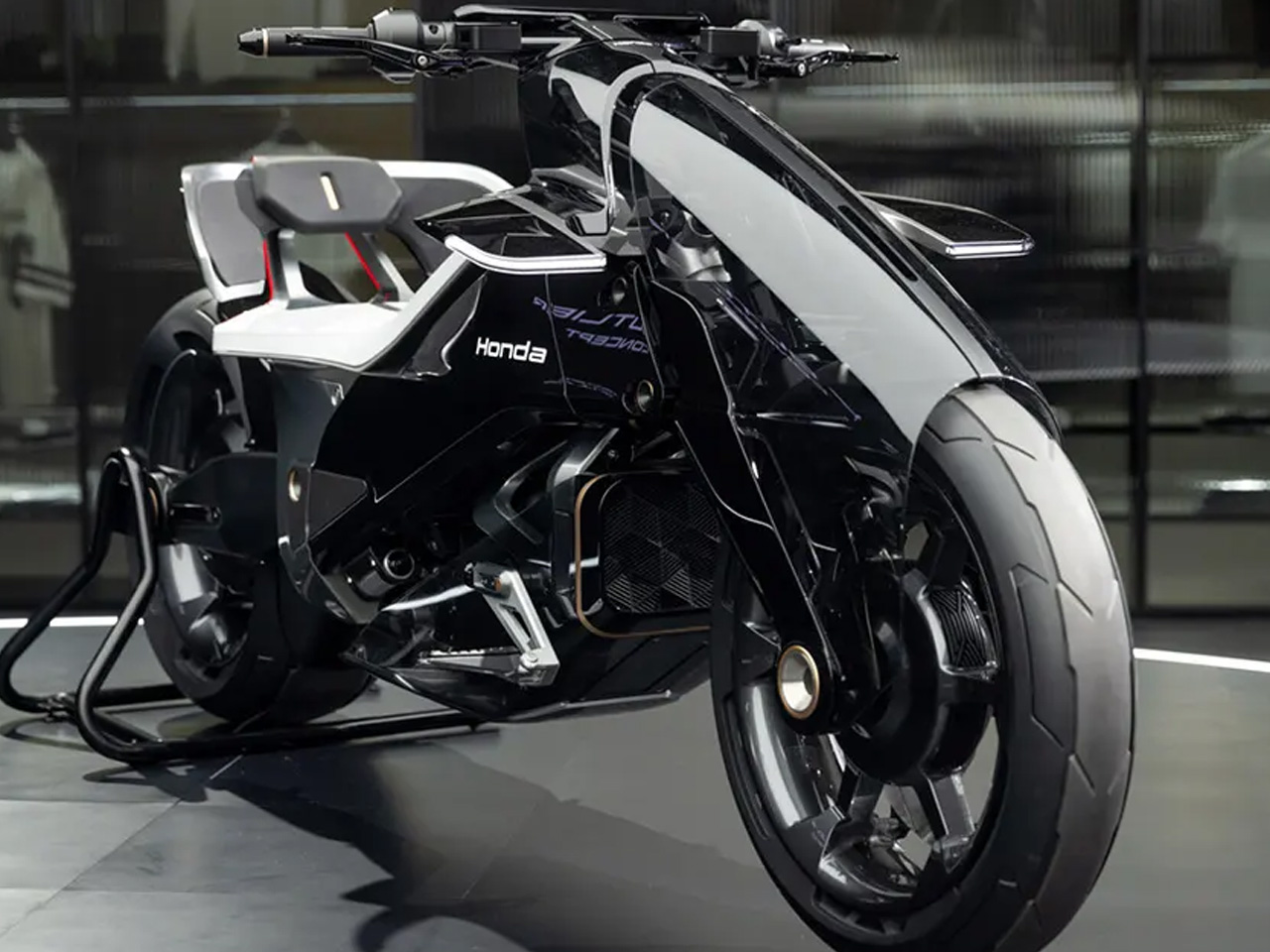
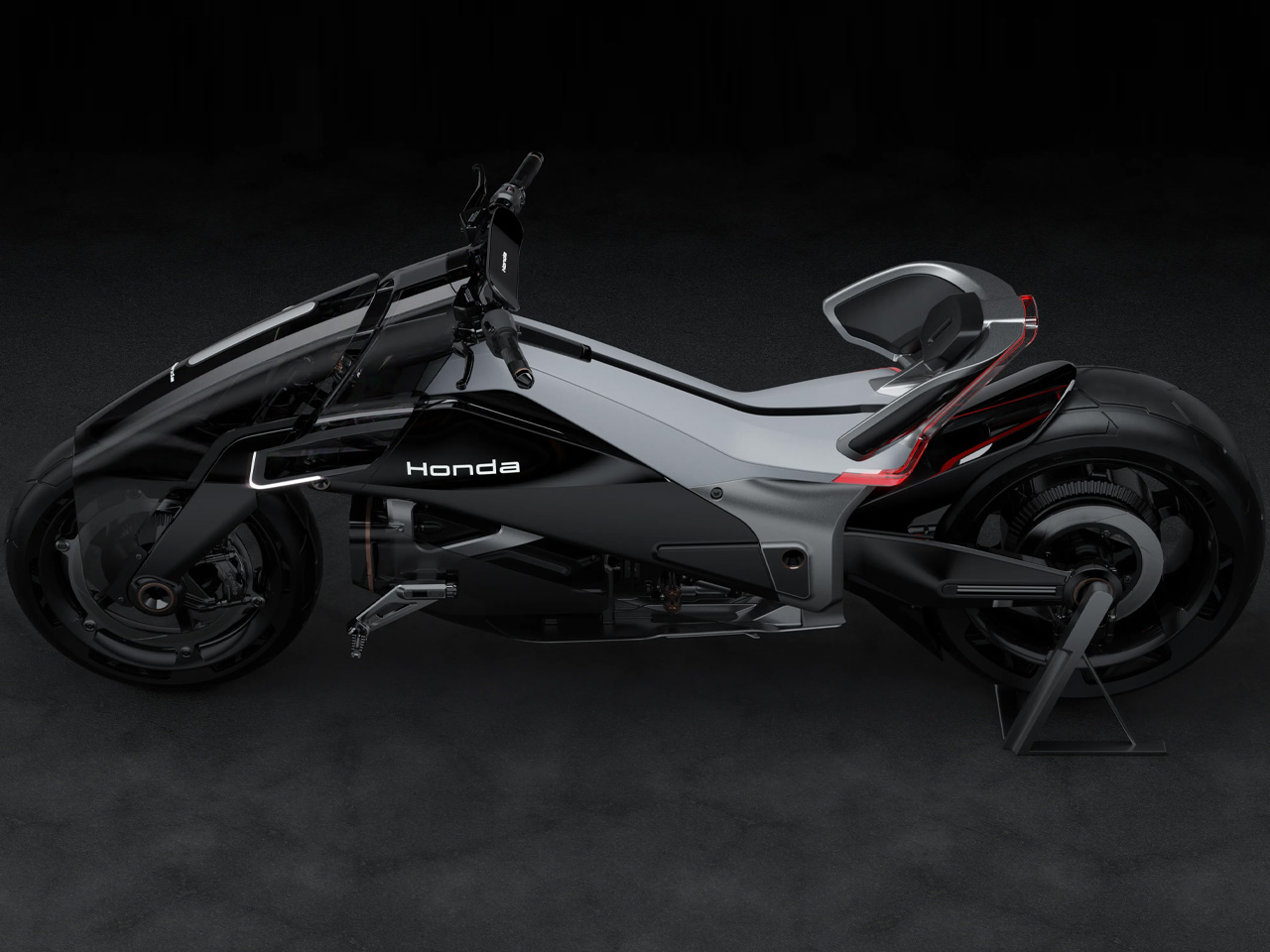
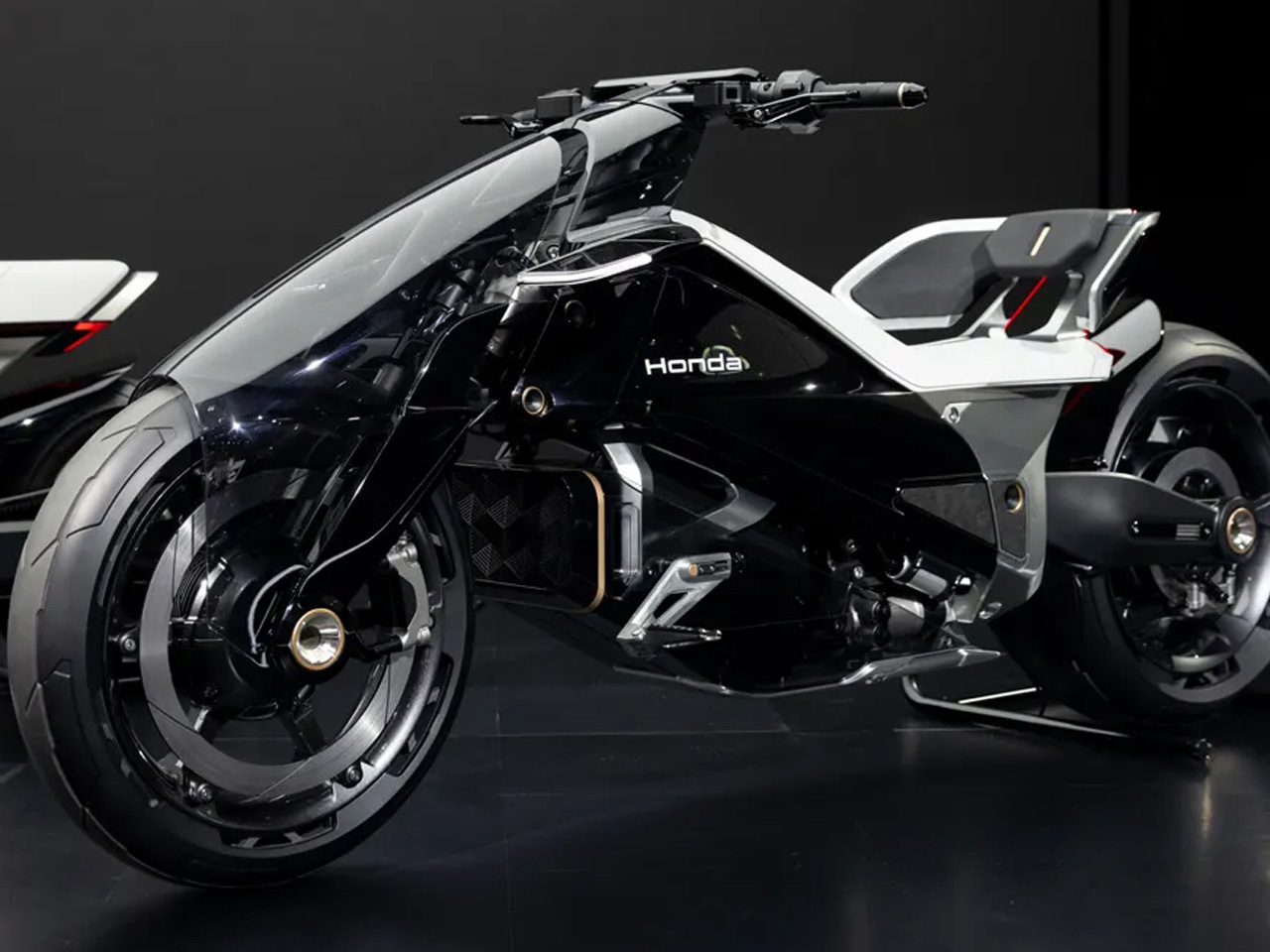
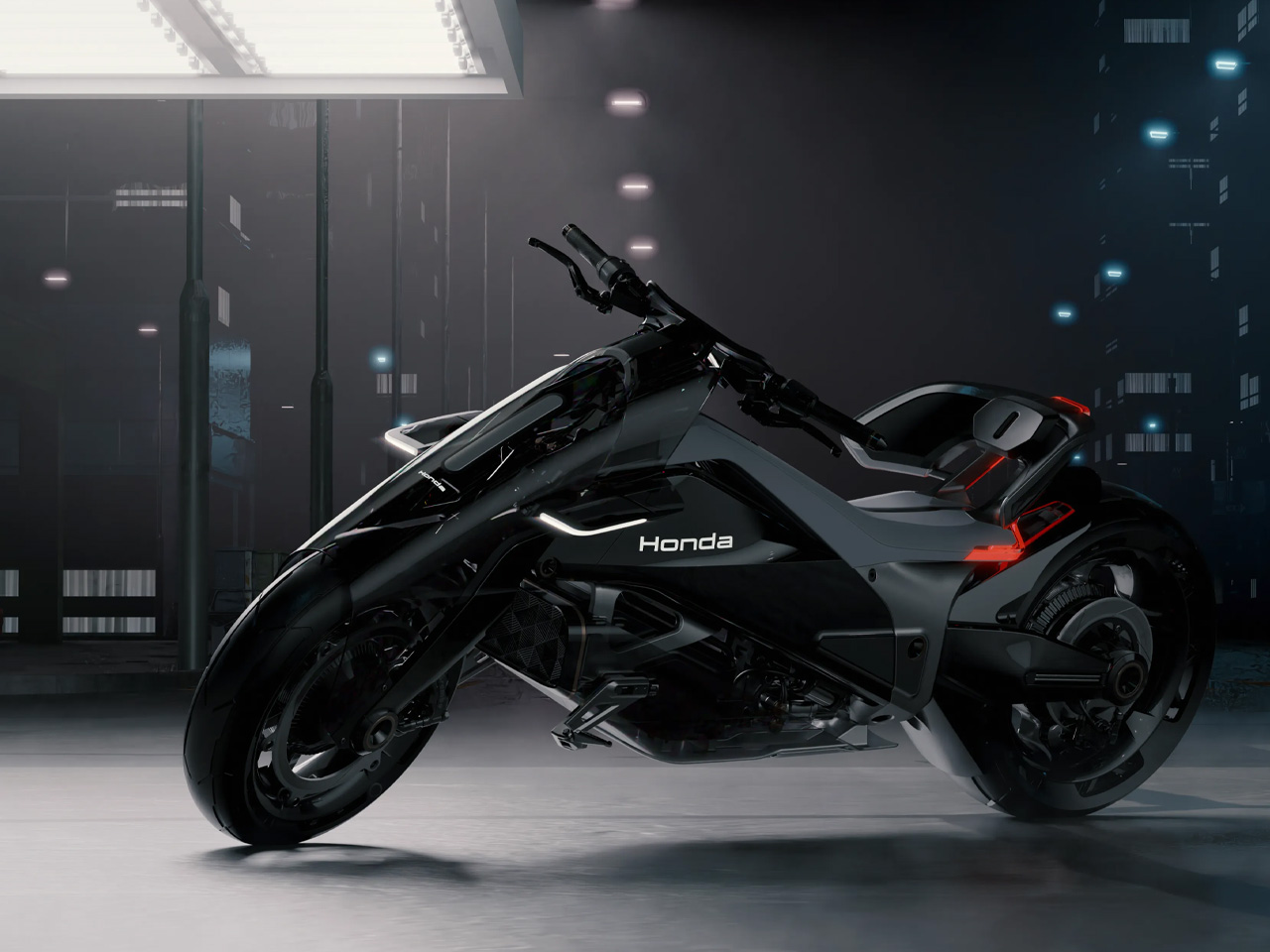
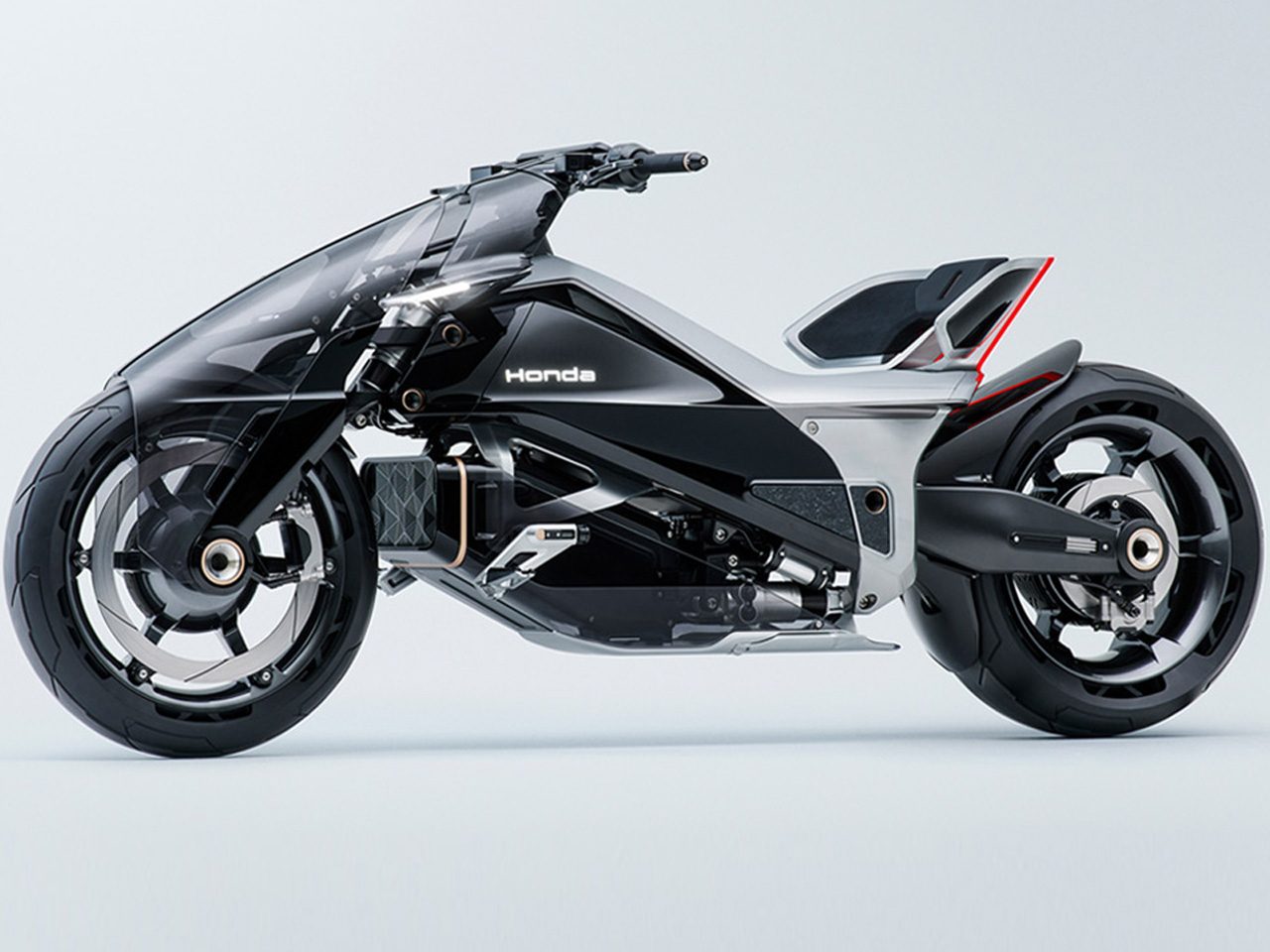
Tsutsumi calls it “Precision of Intrinsic Design.” Strip away the philosophy speak and here’s what that means: every curve exists because of what’s underneath. The battery sits in the center, visible through smoked transparent panels. Electronic components separate with surgical clarity. Nothing hides. Everything reveals itself.

This transparency invites you to understand how electric motorcycles actually work. You see the battery. You see where components live. You understand the architecture at a glance. When you can see how something works, you develop a different relationship with it. The engineering becomes part of the experience instead of something hidden behind plastic fairings.

Form That Flows Instead of Attacks

Most motorcycles have faces that glare at you. Sharp angles. Predatory headlight eyes. The traditional motorcycle front end declares dominance over the road.
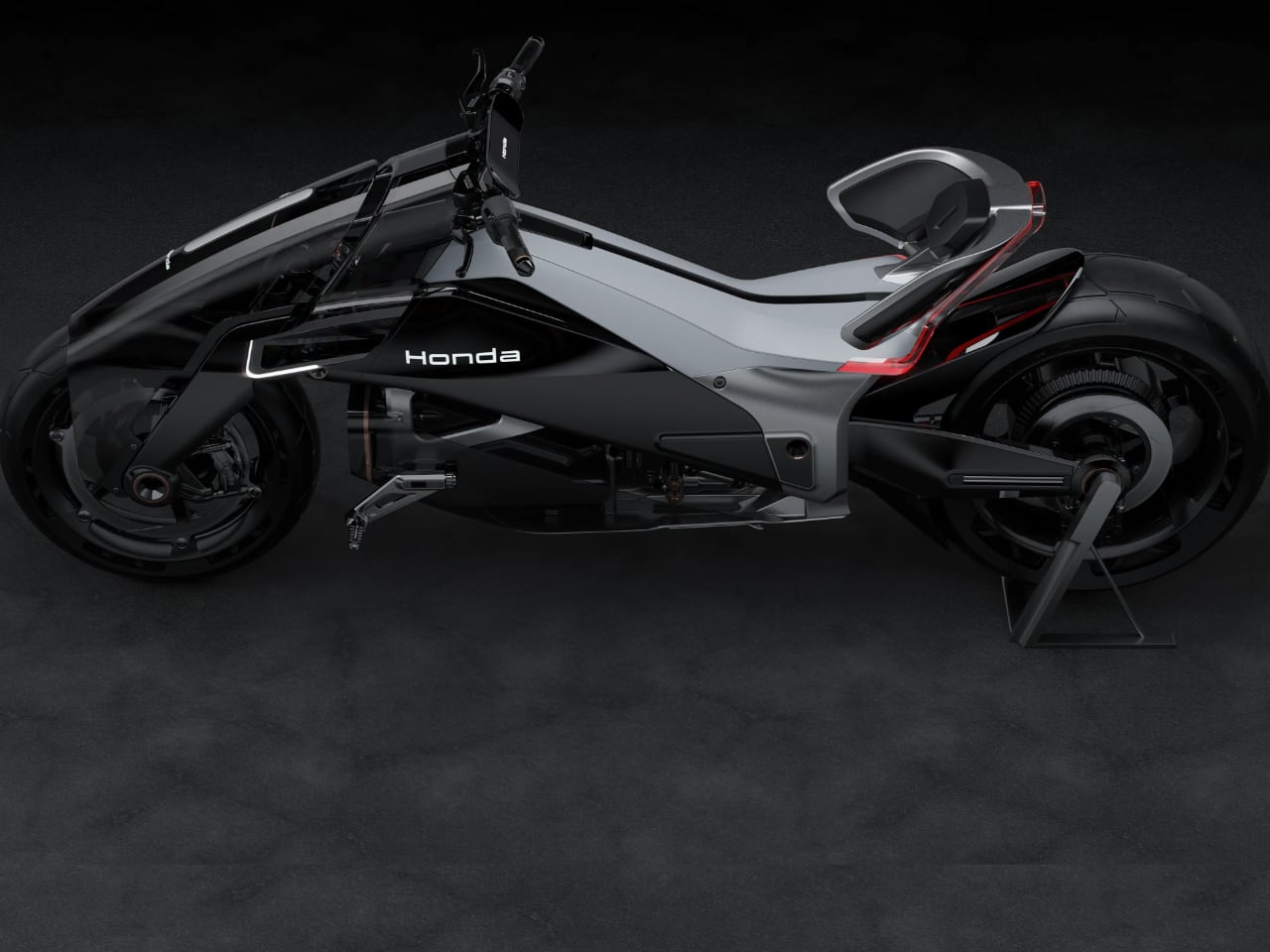
It’s aggressive design language inherited from decades of combustion engine packaging requirements that no longer exist. The Outlier rejects all of that.

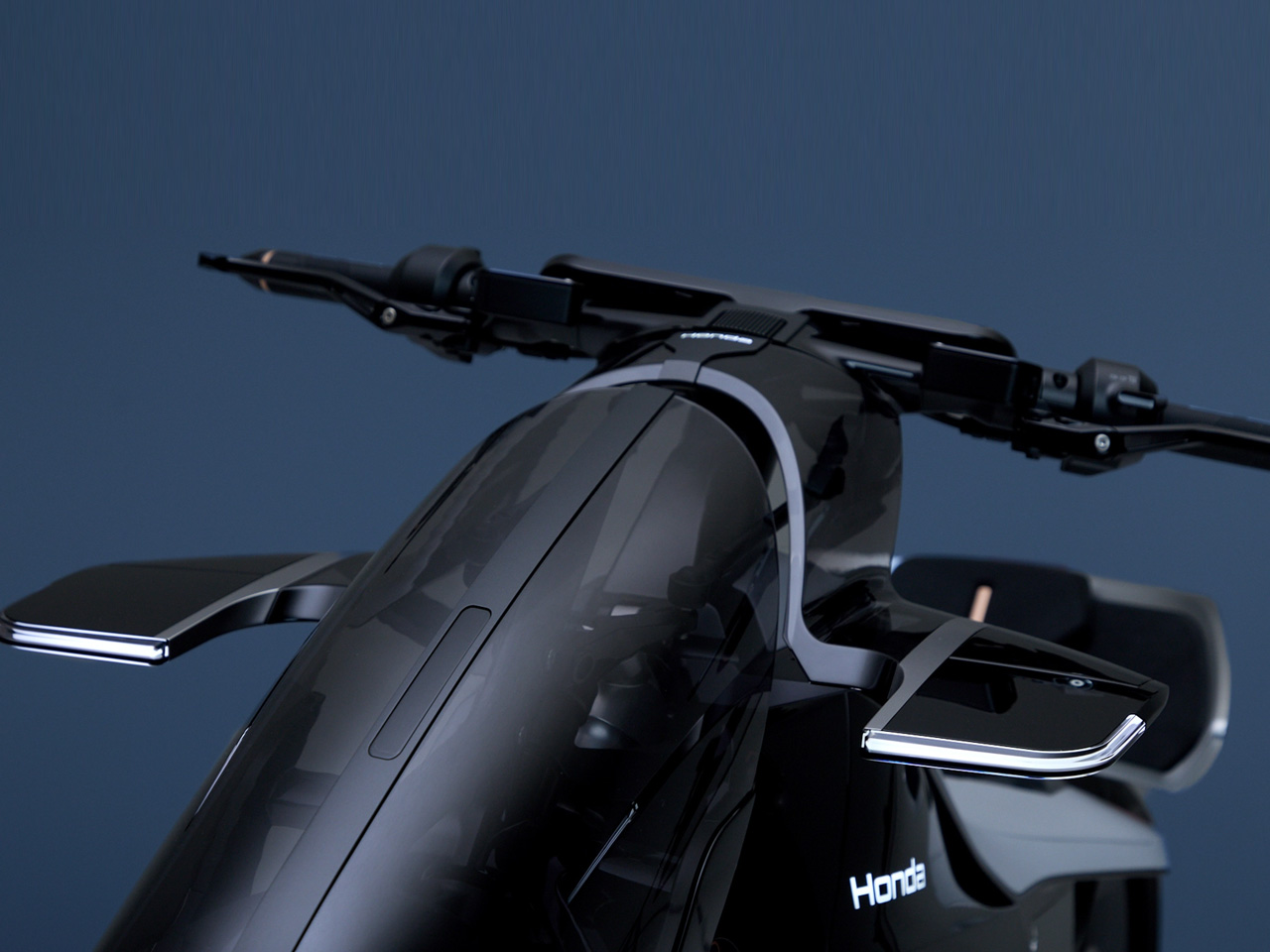
The flowing hood curves over the front like liquid metal frozen mid-pour. It hovers. It glides. Look at how it catches light in those product shots and you’ll see what I mean: this bike looks less like it wants to attack the road and more like it wants to dance across it. The answer is this flowing, organic form that feels more alive than mechanical.
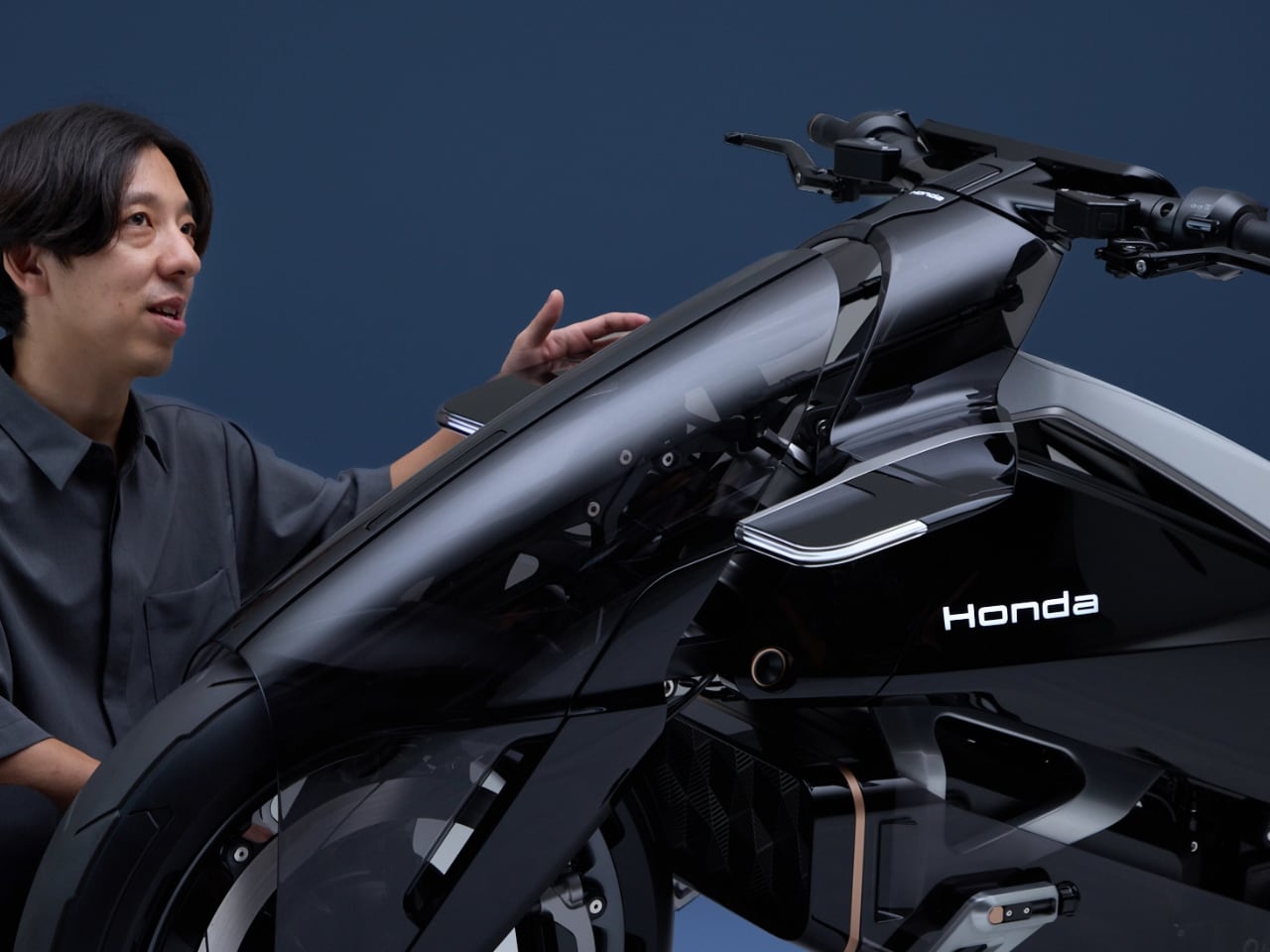
The lightweight mix of metal and plastic creates a structure that looks simultaneously solid and ethereal. Substantial but not heavy. Technical but not cold. The frame uses metal for structural integrity. Body panels use plastic for flexibility and those transparent sections. Everything gets optimized for its specific purpose, creating a bike that feels more like sculpture than machinery.

The smoked transparent panels serve a dual purpose: they create that ethereal aesthetic while letting you see exactly how the bike is constructed. You understand the architecture at a glance. The battery placement. The component separation. The structural logic.

This visual honesty creates a different relationship with the machine.

The Seated Experience Changes Everything

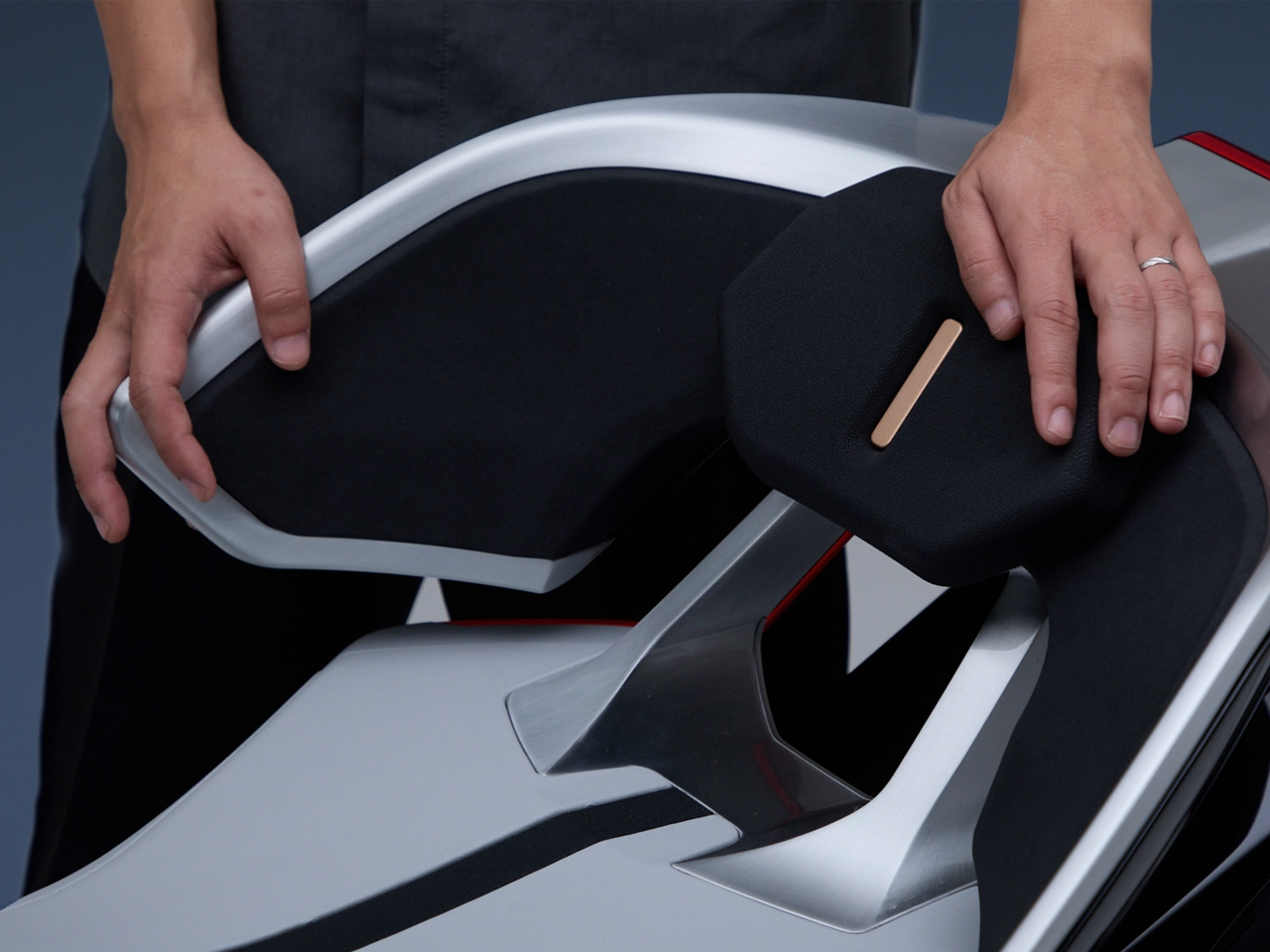
The bucket-style seat merges with what used to be the engine panel, dropping the rider remarkably low. But Honda engineered this backrest for more than comfort.
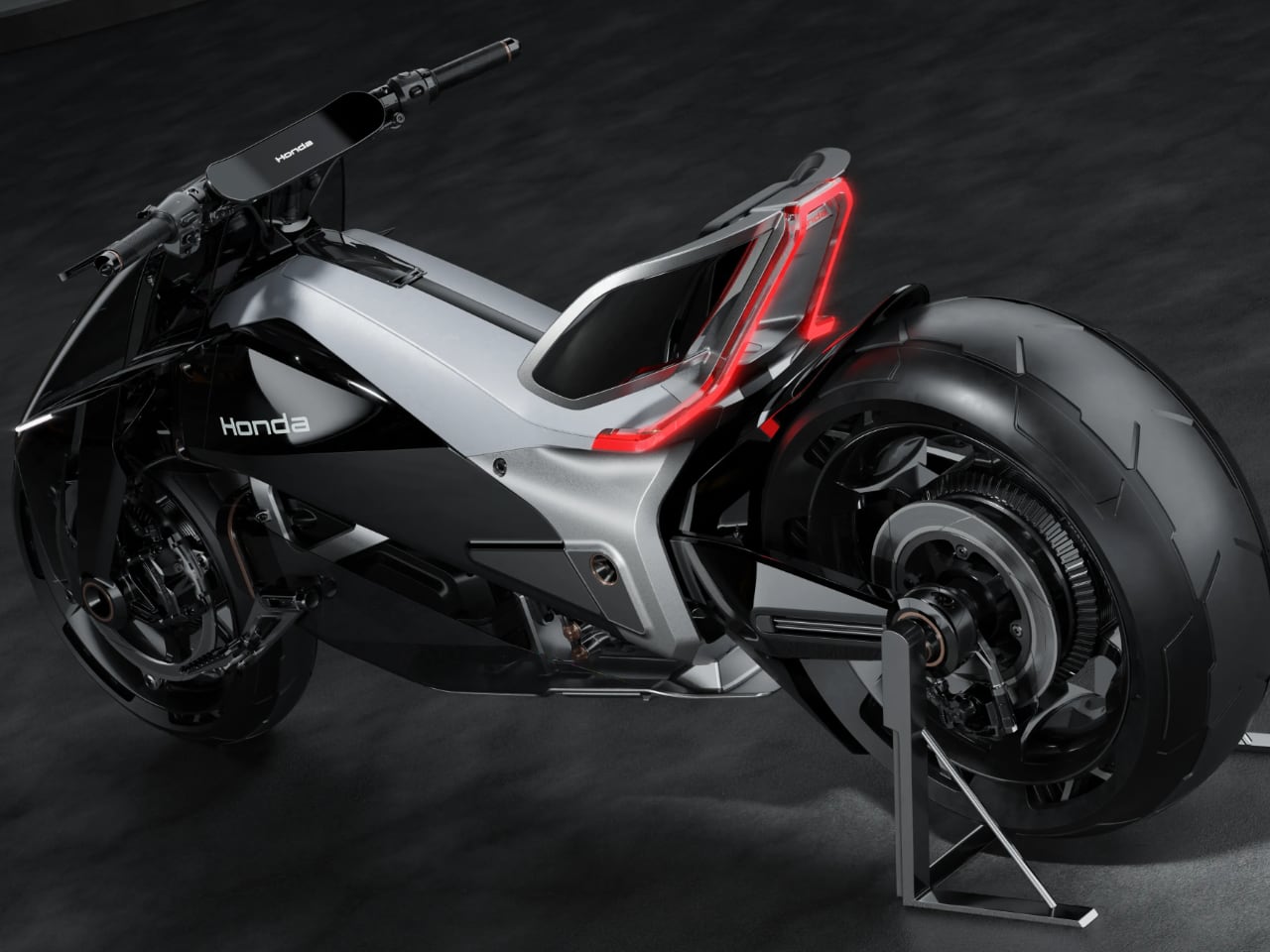
“This backrest not only absorbs the massive acceleration of the motor drive but also enables a new handling sensation where the rider pivots through corners using their hips as an axis,” Tsutsumi notes.

You’re not just sitting lower – you’re controlling the bike through an entirely different kinematic relationship. It delivers a riding sensation unlike any existing motorcycle, evoking both surprise and excitement. The horizontal suspension system enables this ultra-low positioning while maintaining full travel and control. A singular frame connects the front assembly to the seat, eliminating unnecessary structure.
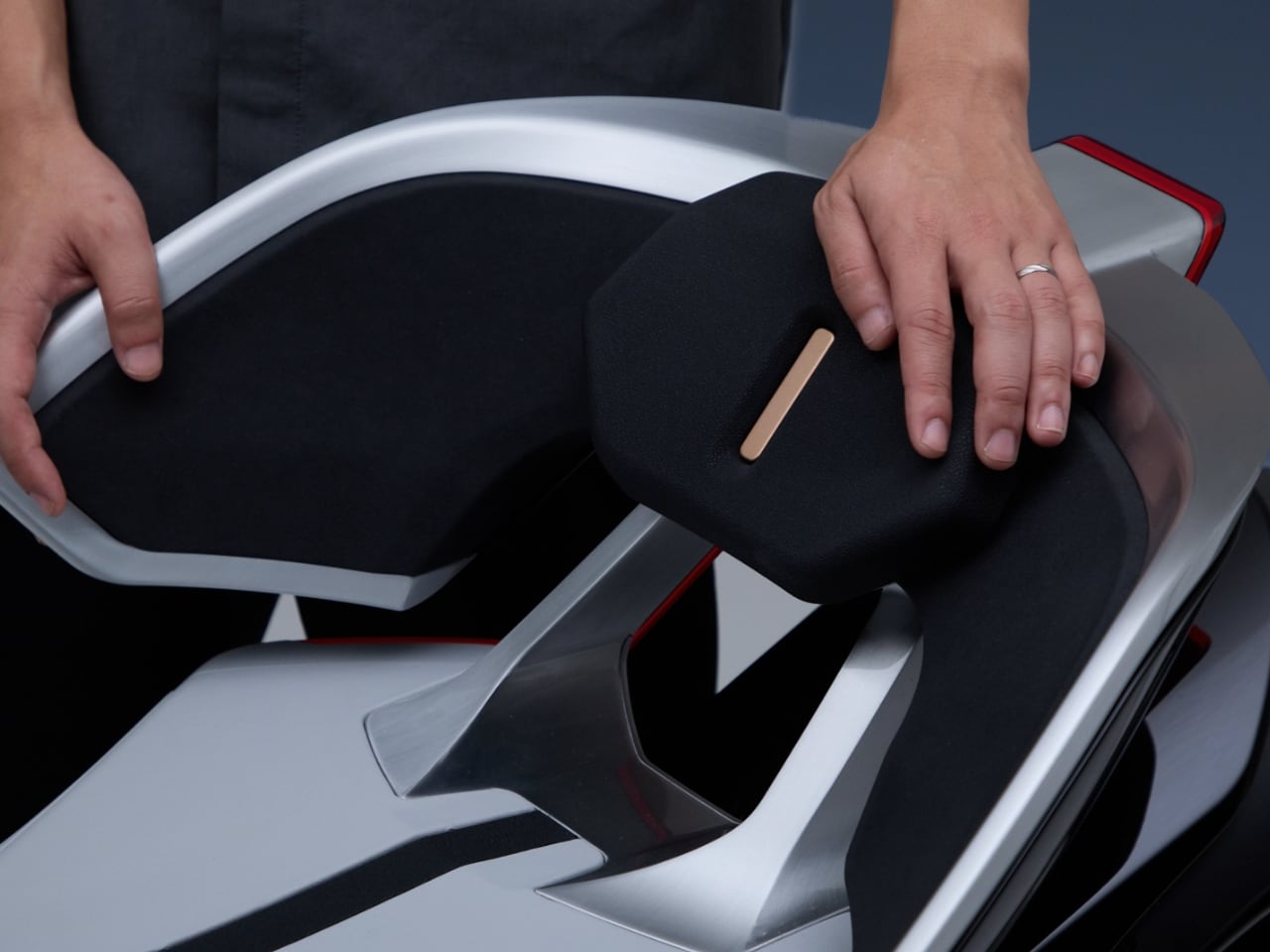
You sit closer to the pavement. Your center of gravity drops. The bike feels planted and stable without sacrificing agility.

Most motorcycles compromise: you either get low and sacrifice suspension performance, or you get proper suspension and sit higher. The Outlier’s engineering eliminates that compromise entirely.
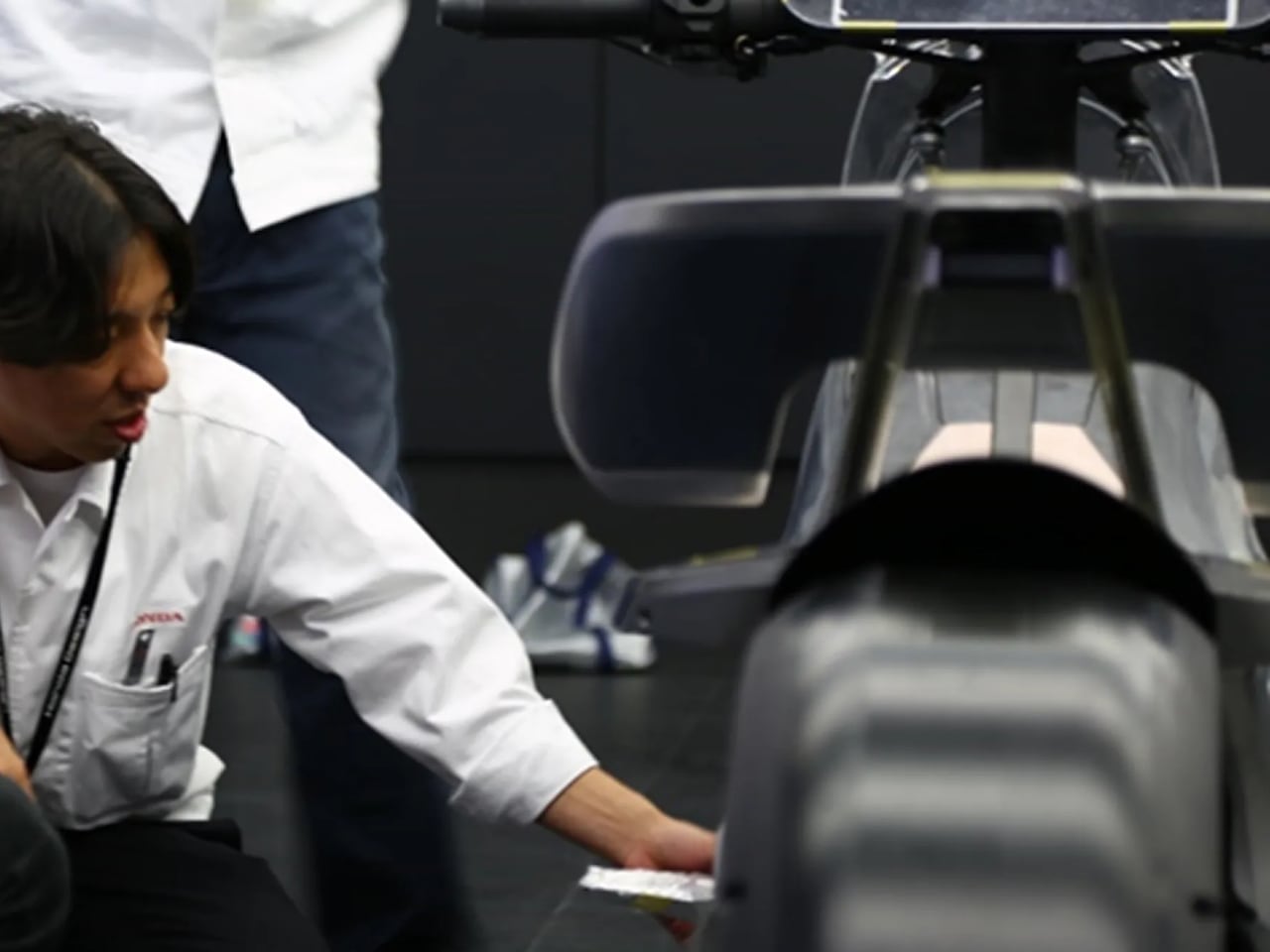
When your seating position drops this low, the visual experience changes. The horizon line shifts. Objects approach differently. Your peripheral vision processes motion at new angles. These aren’t subtle changes. They fundamentally alter how riding feels, turning every corner into a new sensory experience and every straightaway into a different relationship with velocity.

In-Wheel Motors Rewrite the Physics

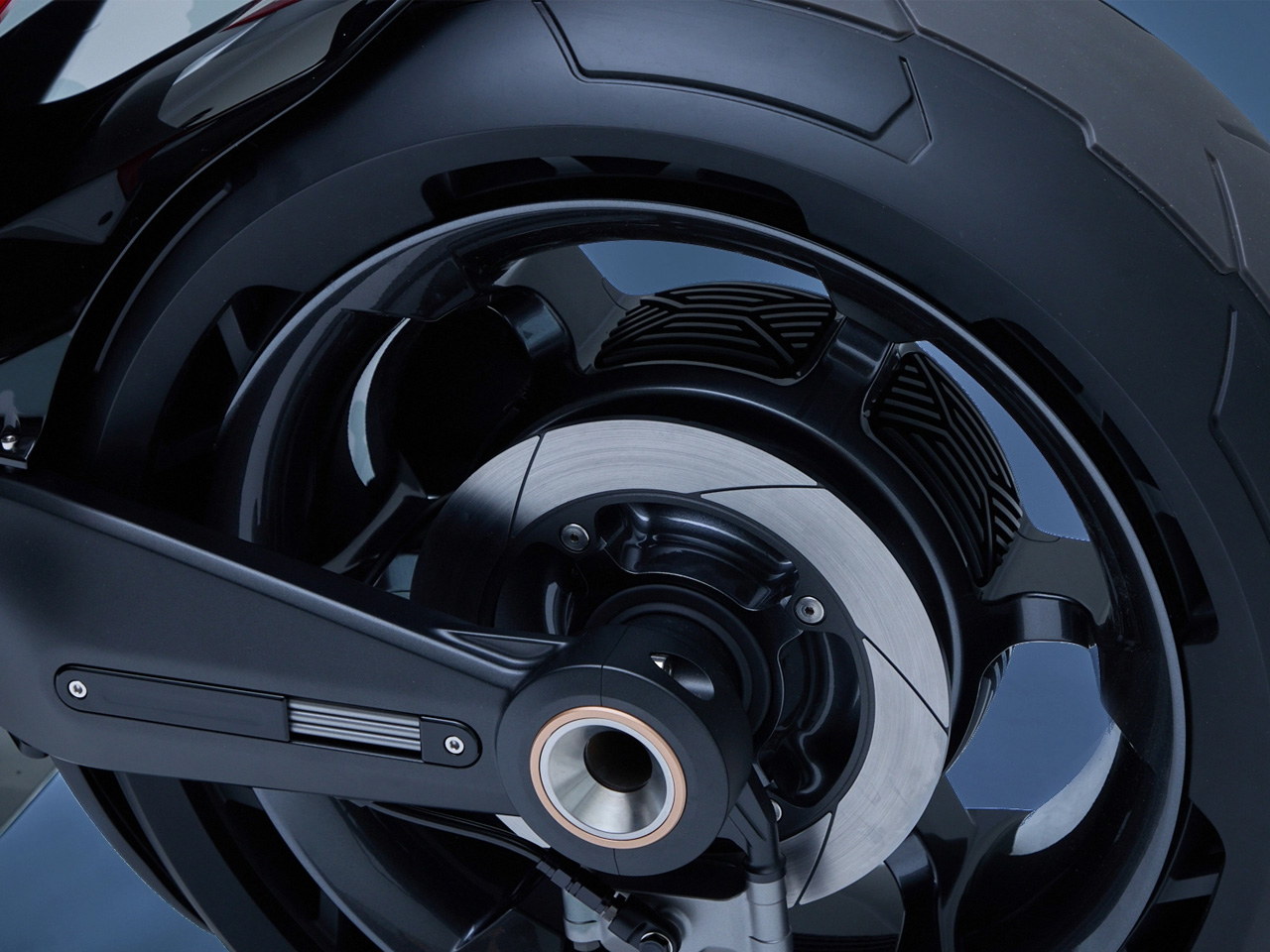
The motors live inside the wheels themselves.

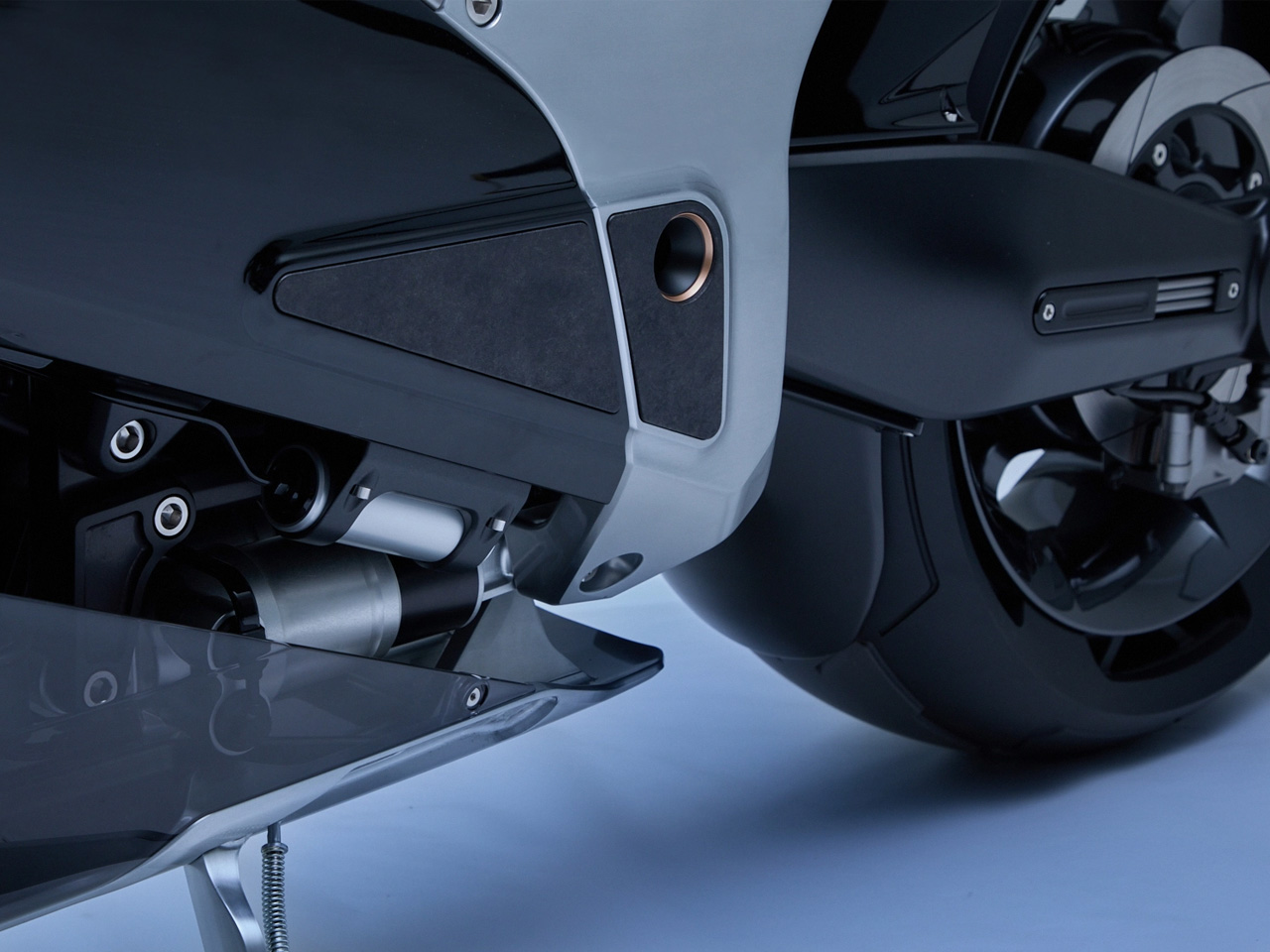
Front and rear, the power delivery happens at the contact patch instead of transferring through chains, belts, or shafts. This fundamental architecture change eliminates mechanical loss between power source and road contact. Every watt generated goes directly to moving you forward. Independent control of front and rear torque delivery enables handling dynamics impossible with traditional powertrains.
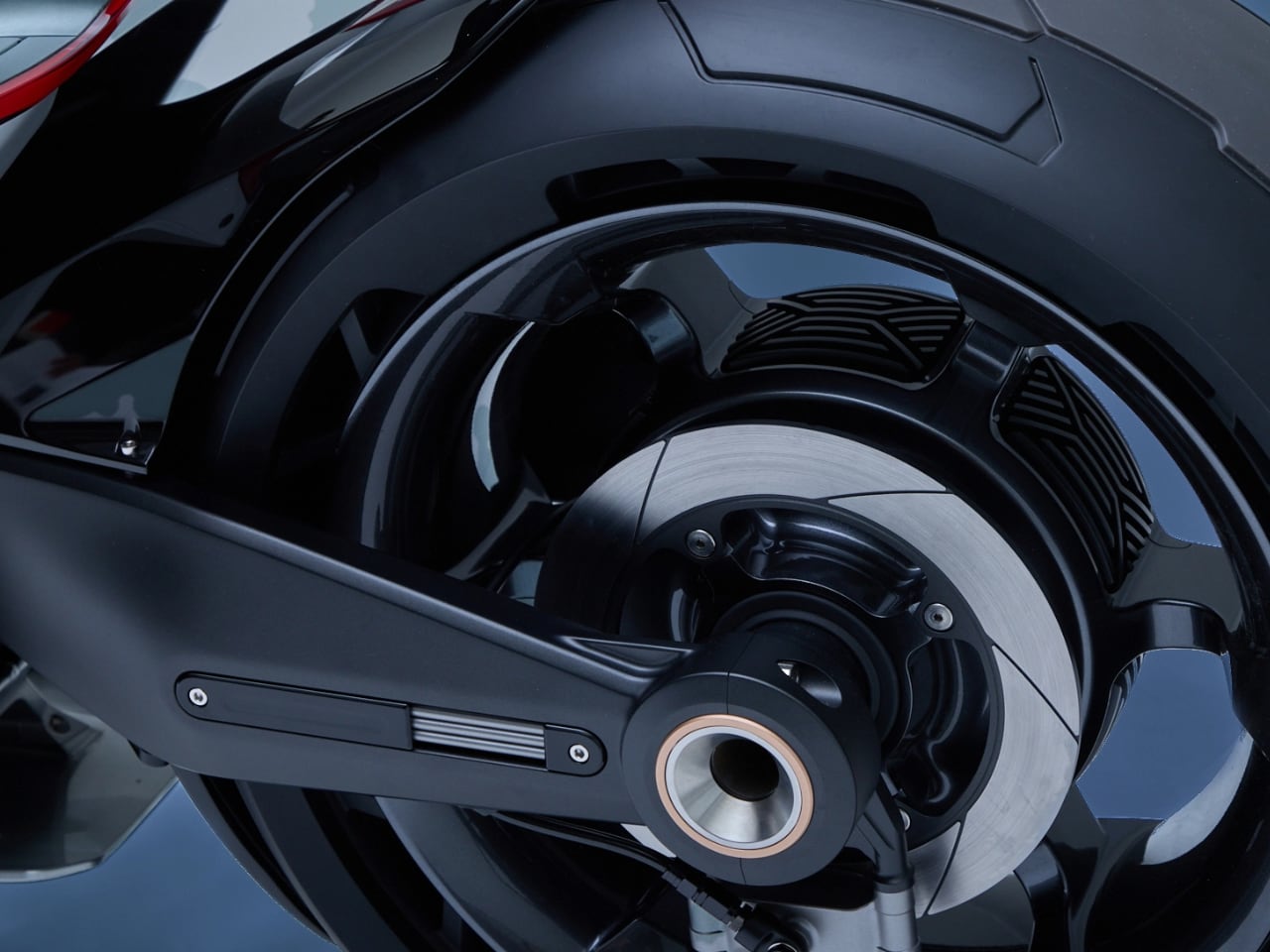
The system can redistribute power between wheels in real time based on traction, lean angle, and rider input. You get the kind of intelligent power delivery that would require impossibly complex mechanical systems on a traditional bike. Here, it’s just software controlling two motors.

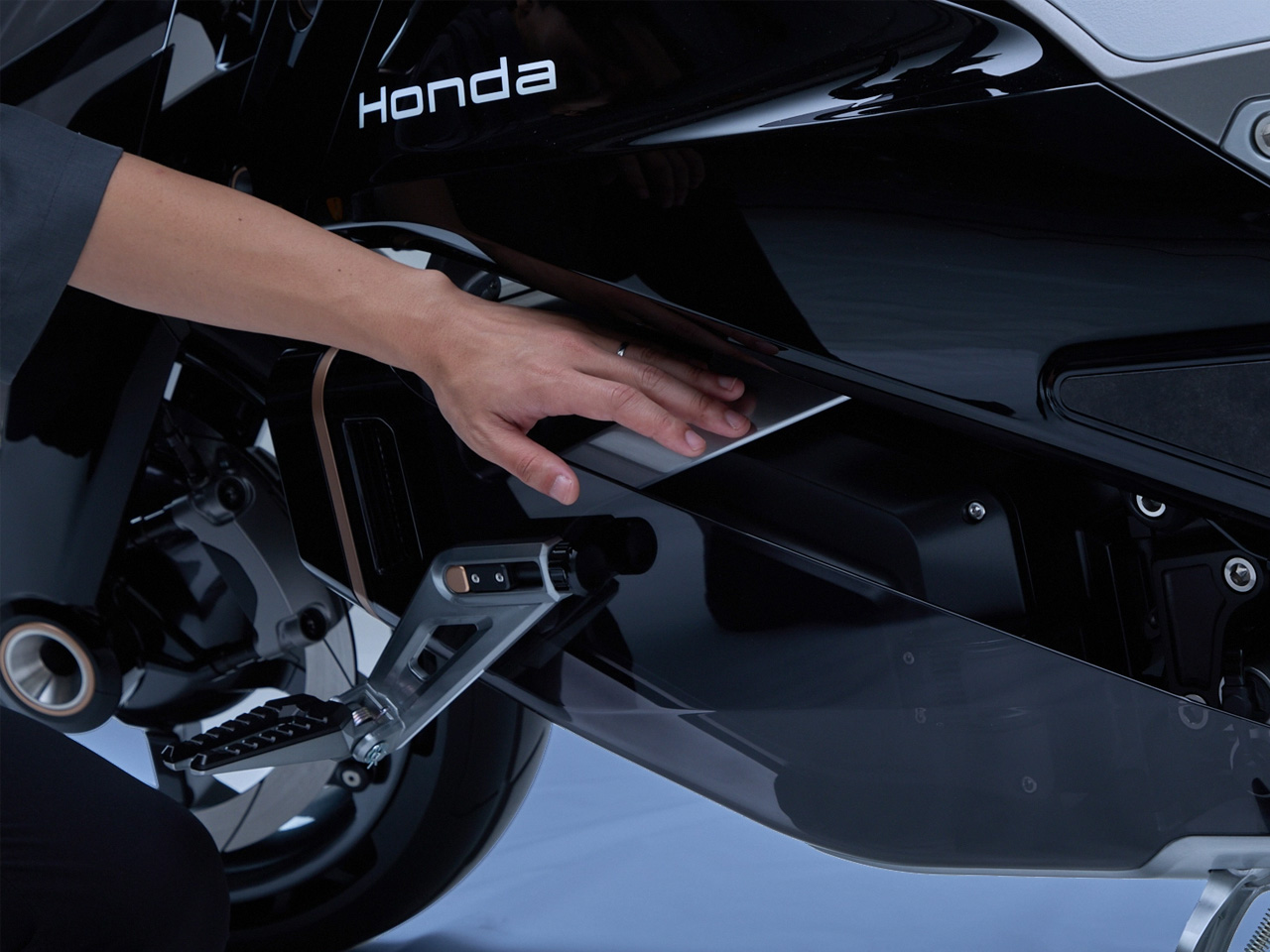
Clearing the entire center section of the bike opens up possibilities beyond just battery placement. That centrally-located battery pack creates ideal weight distribution without compromising ground clearance or aesthetics. The modular body components break apart for maintenance and upgrades. Want to upgrade the battery pack when better cells become available? The modular design accommodates that. Need to service or replace a motor? Pull the wheel assembly.
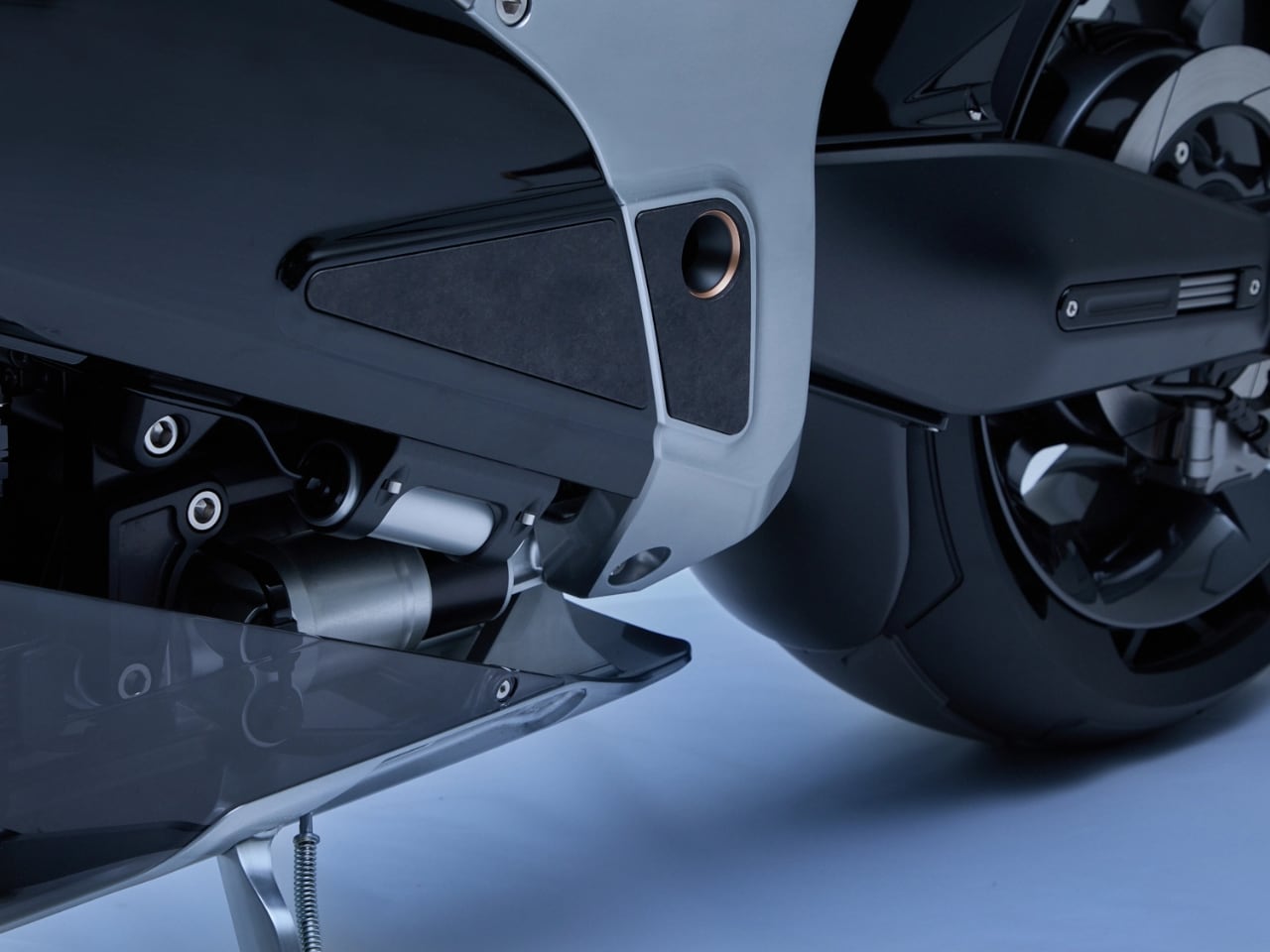
Honda designed this as a platform for flexible development, not a static concept frozen in show car amber. Honda is testing ideas that could fundamentally change how production electric motorcycles get designed, maintained, and upgraded over their lifespans.

The Digital Interface Eliminates Physical Compromises

Traditional motorcycle mirrors stick out like ears. They catch wind. They vibrate. They show you a blurry approximation of what’s behind you.
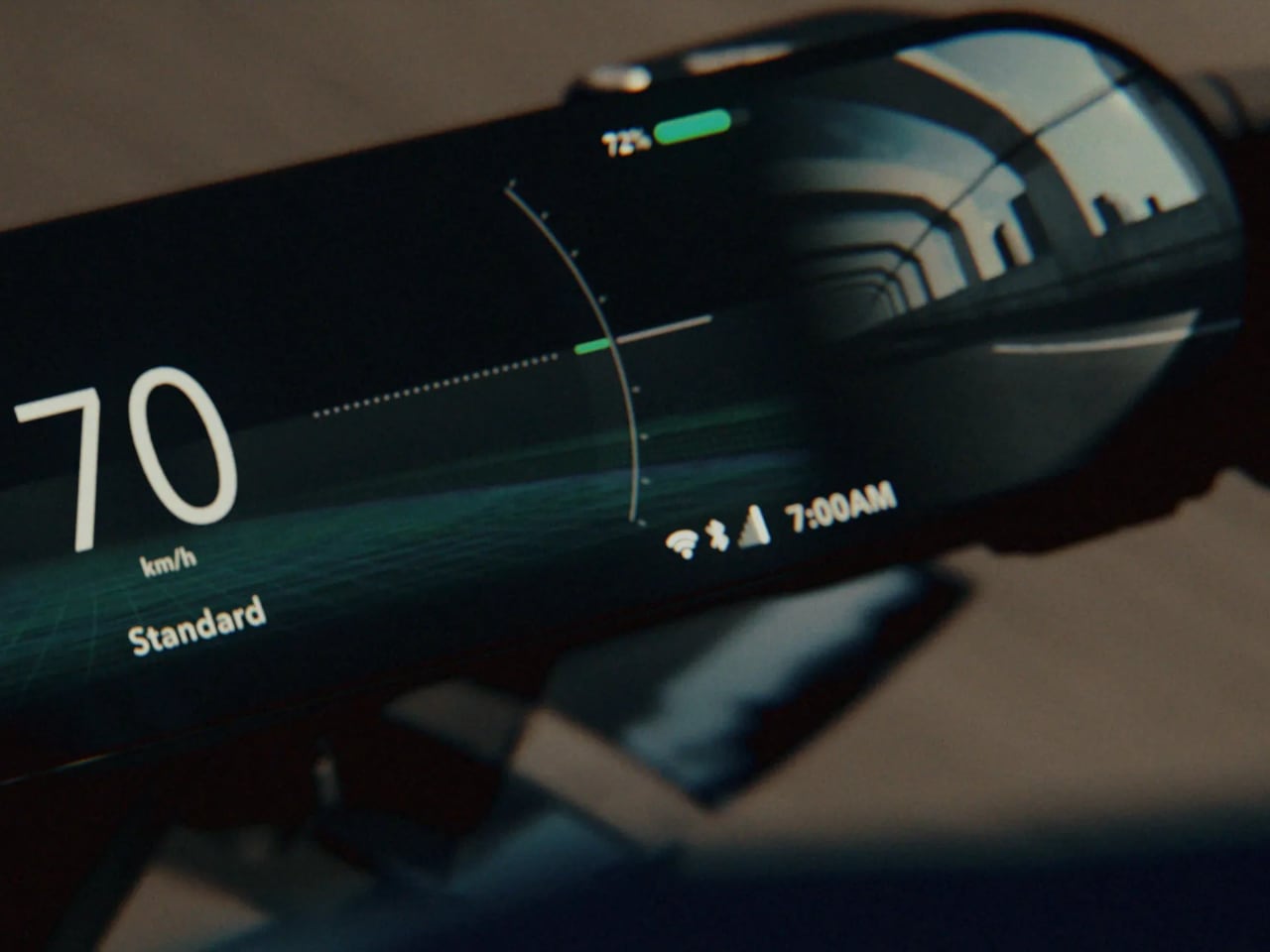
The Outlier uses cameras instead, feeding two digital displays with more information than mirrors could ever provide. That thin, wide digital meter replaces side mirrors entirely. The main screen shows speed and essential data. The sub-screen tracks torque delivery, weight balance, and real-time power distribution between front and rear motors.

When you switch riding modes, the lower display shows real-time changes in the drive status and output characteristics of the front and rear motors, letting you experience the distinctive character of electric propulsion. The GUI displays lean angle in real time, shows front and rear wheel movement based on road conditions, and adjusts torque distribution accordingly.

Honda envisions this connecting to riders’ personal data, adapting control systems to individual skill levels and even suggesting destinations based on your schedule and preferences. It’s ambient intelligence applied to motorcycle riding.
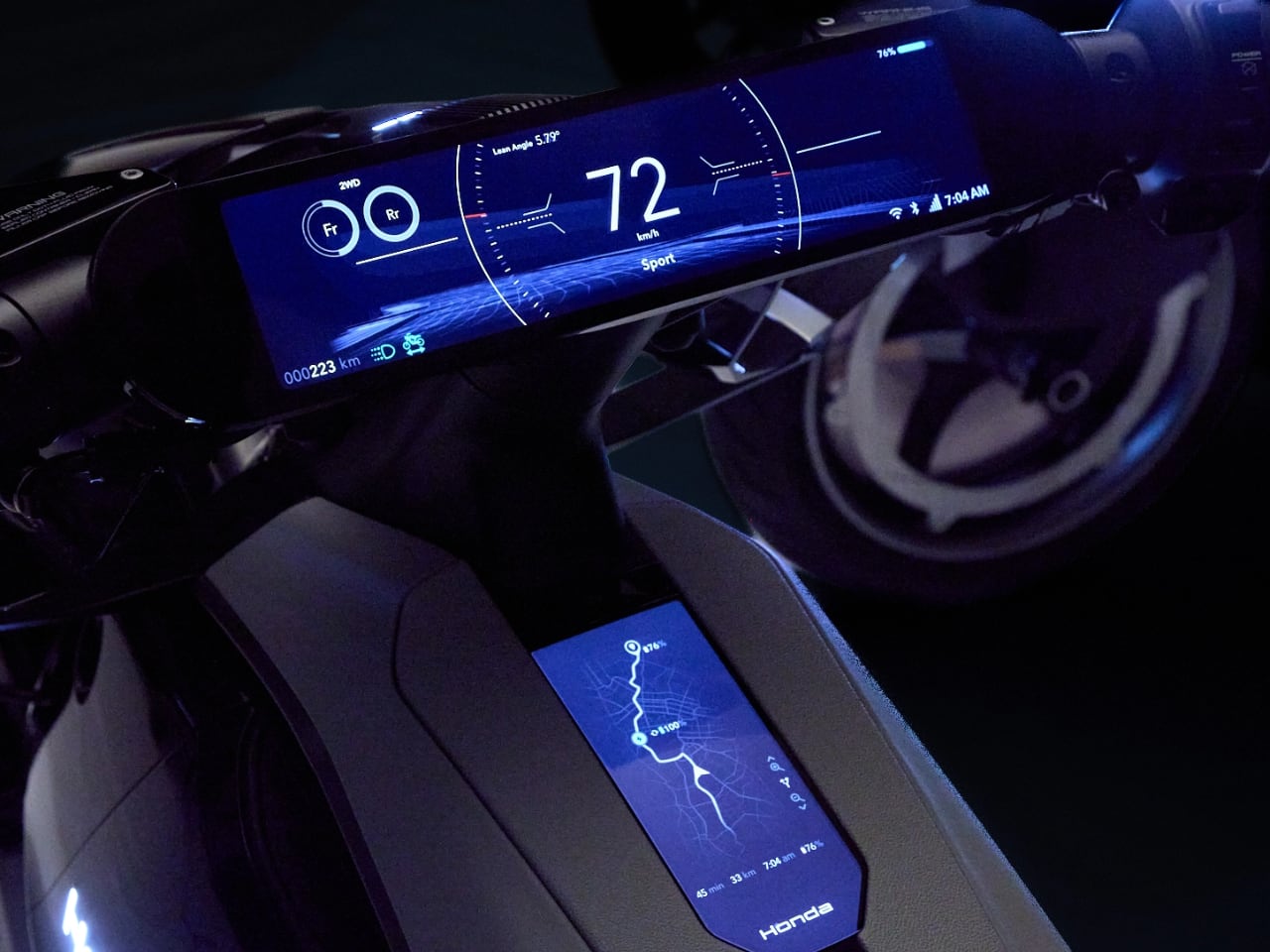
The system shows you how the bike thinks and responds to your inputs. You see the torque split. You see the weight transfer. You understand what the machine is doing in real time.

This represents the shift from mechanical feedback to digital augmentation. Traditional motorcycles communicate through vibration, sound, and physical sensation. Electric motorcycles eliminate most of that analog feedback. The Outlier replaces it with visual information that gives you even more insight into what’s happening.

Some riders will hate this. Others will embrace it as evolution.

But you can’t argue with the data density: those screens tell you more about the bike’s behavior than any traditional instrument cluster ever could. The camera feeds provide clearer rear vision than mirrors, especially in rain or at night when traditional mirrors become nearly useless.

The digital meter displays adapt to riding conditions. Bright sunlight triggers high-contrast modes. Night riding shifts to subdued displays that don’t destroy your vision. Track mode emphasizes performance data. City mode prioritizes navigation and traffic awareness. The interface learns from your riding patterns and surfaces relevant information based on context. This kind of intelligent adaptation would be impossible with mechanical instruments.

What This Actually Means

Honda isn’t putting this into production tomorrow.

The EV Outlier serves as a testbed to explore ideas that might show up in future production models. In-wheel motors. Transparent body panels. Ultra-low seating positions. Camera-based vision systems. Modular construction for easy updates. Some of these ideas will make it to showroom floors. Others will evolve into different solutions.

The concept exists to question what becomes possible when you stop trying to make electric motorcycles look and feel like traditional motorcycles.
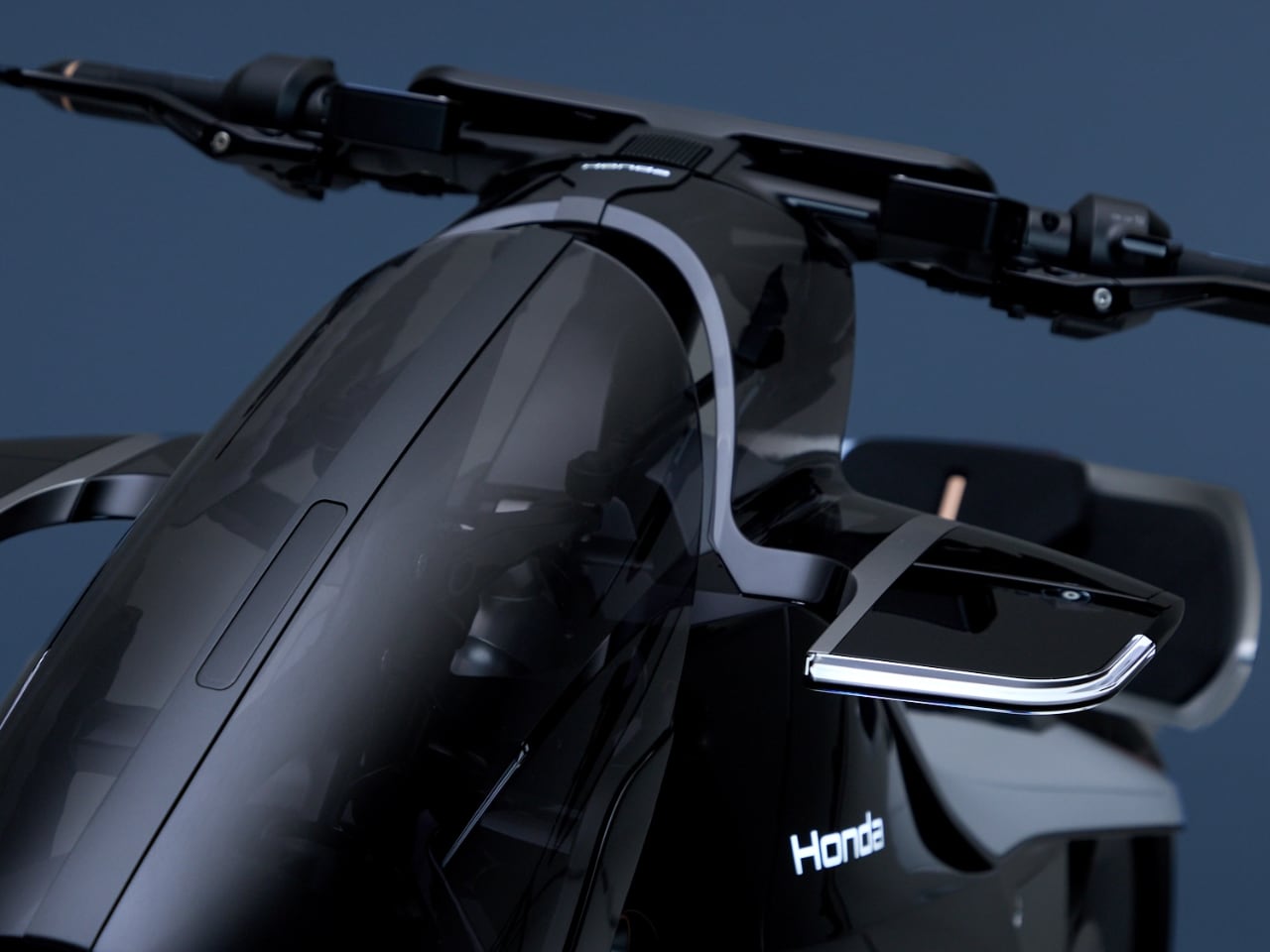
Most electric motorcycles take existing designs and adapt them for electric powertrains. They preserve the visual language of combustion engines even when those visual cues no longer correspond to physical requirements. You get bikes with fake tanks covering batteries and motors positioned where engines used to live, even though that placement no longer serves any functional purpose.

Honda took a different approach: what if we designed an electric motorcycle from first principles?

Tsutsumi acknowledges the challenge: “For ICE models, there has long been an established theory of beautiful proportions backed by years of motorcycle design experience. The EV Outlier Concept deliberately breaks away from that convention.”

Breaking those proportions wasn’t reckless experimentation – it was necessary to make the unique characteristics of an EV more appealing. The team repeatedly verified the balance of wheelbase and height, exploring new proportions that make electric advantages visible and visceral.

The design process itself reflects this willingness to break conventions. “This project involved not only motorcycle designers in Japan, but also designers from the Power Products division and overseas design members,” Tsutsumi explains. “Centering on the theme ‘What value can only be realized through electrification?’, we thoroughly embraced a Waigaya approach, freely exchanging opinions.”
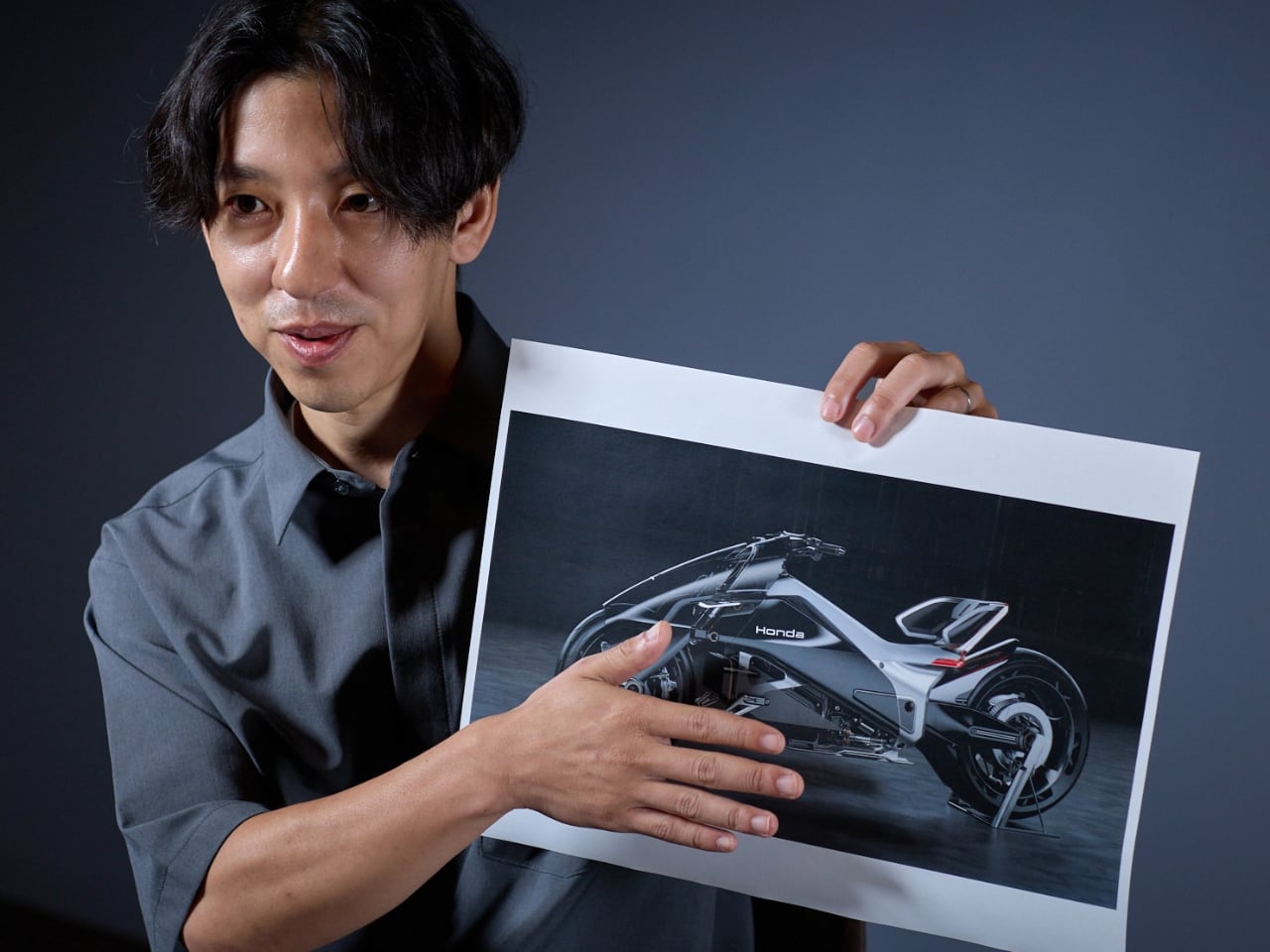
That cross-functional collaboration – bringing together motorcycle designers, power products engineers, and international perspectives – created a development process unlike typical mass production cycles.

What would it look like if we let the technology dictate the form instead of forcing new technology into old shapes?
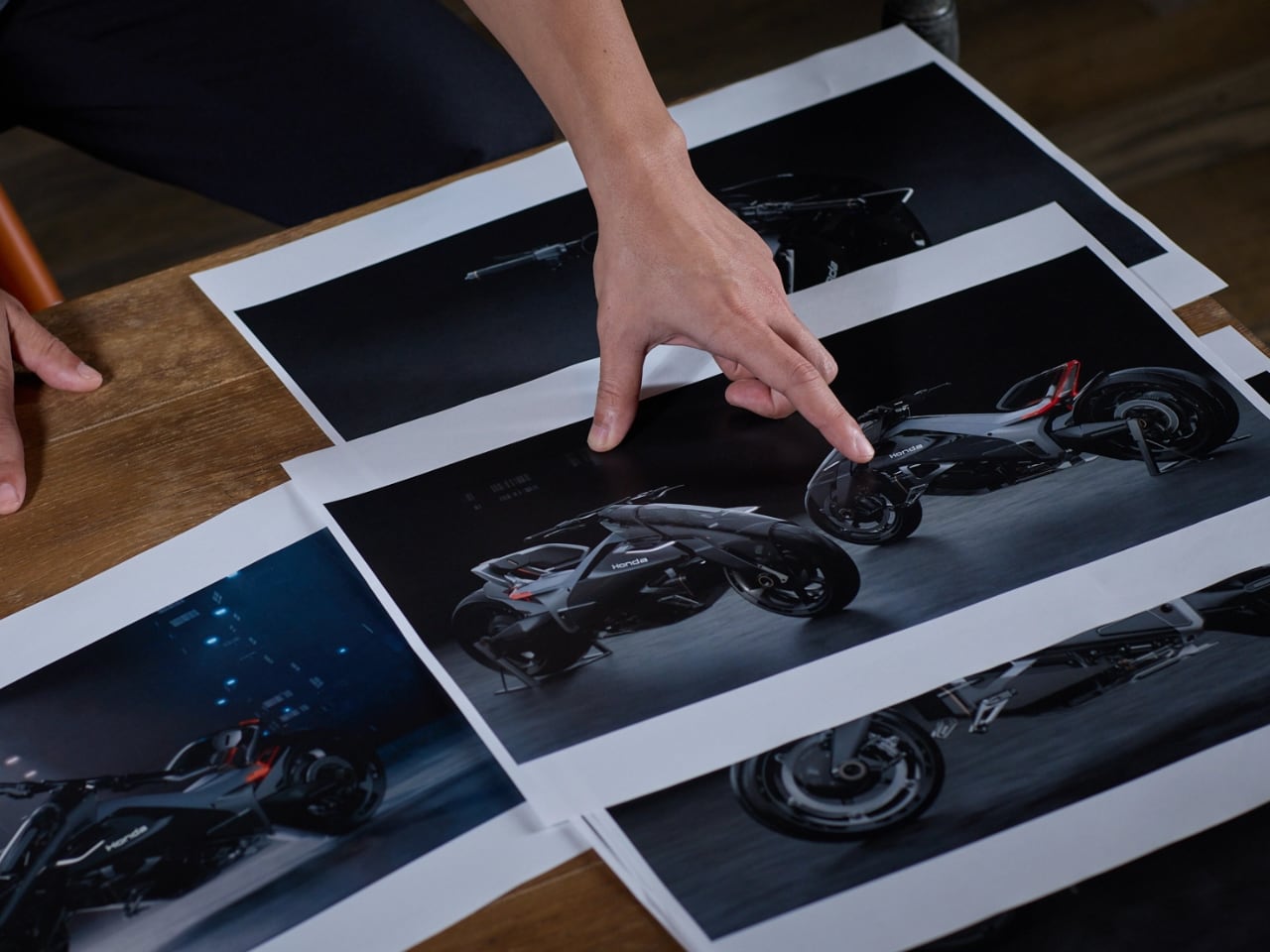
The answer flows and curves and reveals its inner workings through transparent panels. It sits low and positions the rider closer to the sensation of speed. It eliminates traditional components like mirrors and visible motors in favor of integrated cameras and in-wheel power delivery.

Whether you love this design or hate it, you can’t ignore what it represents.

Honda is asking what motorcycles become when you stop making them look like motorcycles. That willingness to start fresh, to build from first principles rather than adapt old templates, is what makes the Outlier concept genuinely significant beyond its show car aesthetics.

The post Honda’s EV Outlier Concept Looks Like It Was Poured From Liquid Chrome first appeared on Yanko Design.
Toyota Tacoma H2-Overlander wins hearts by running on hydrogen and making its own water

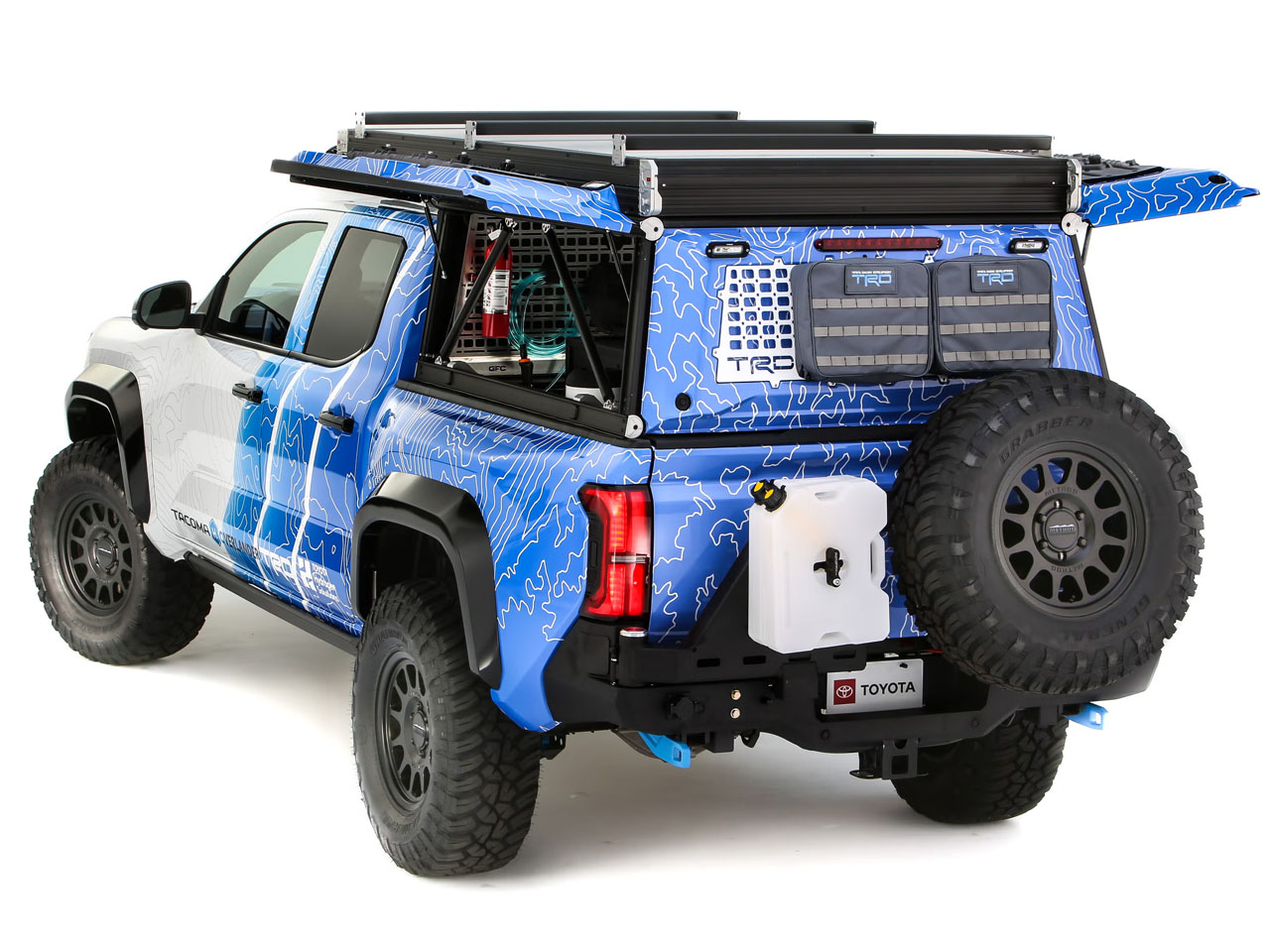
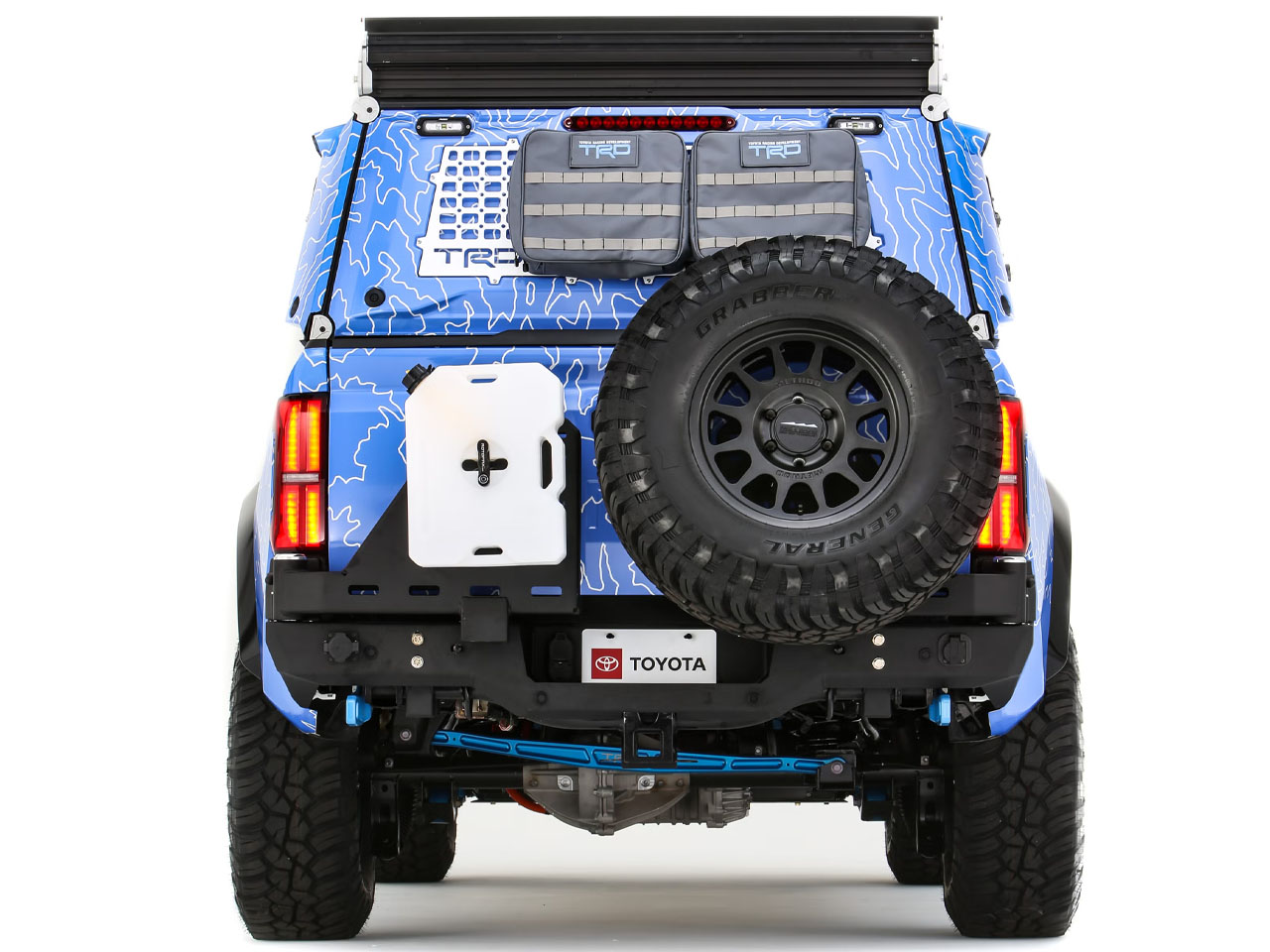
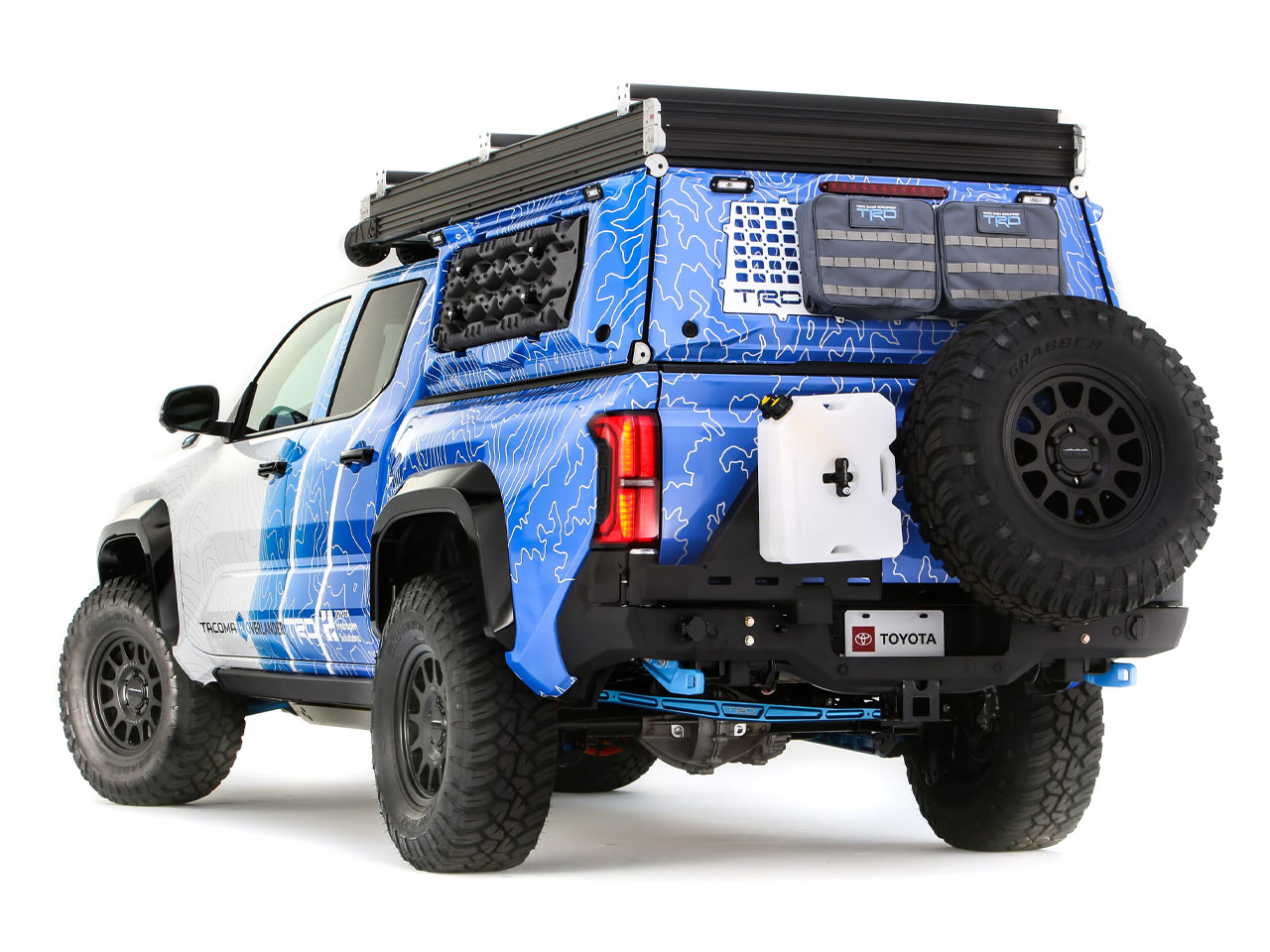
An ultimate overlanding rig has its own perks: goes anywhere, even where roads disappear; lets you camp under the starriest skies; and provides the comfort of a home on wheels. However, when it comes to the environment, overlanding vehicles are major gas guzzlers, leaving behind emissions that pollute even the cleanest of places. To address this, Toyota has taken a step in the right direction: it has prepared the Toyota Tacoma H2-Overlander concept, which is winning hearts not for its looks, but for its ability to breathe hydrogen and exhale water.

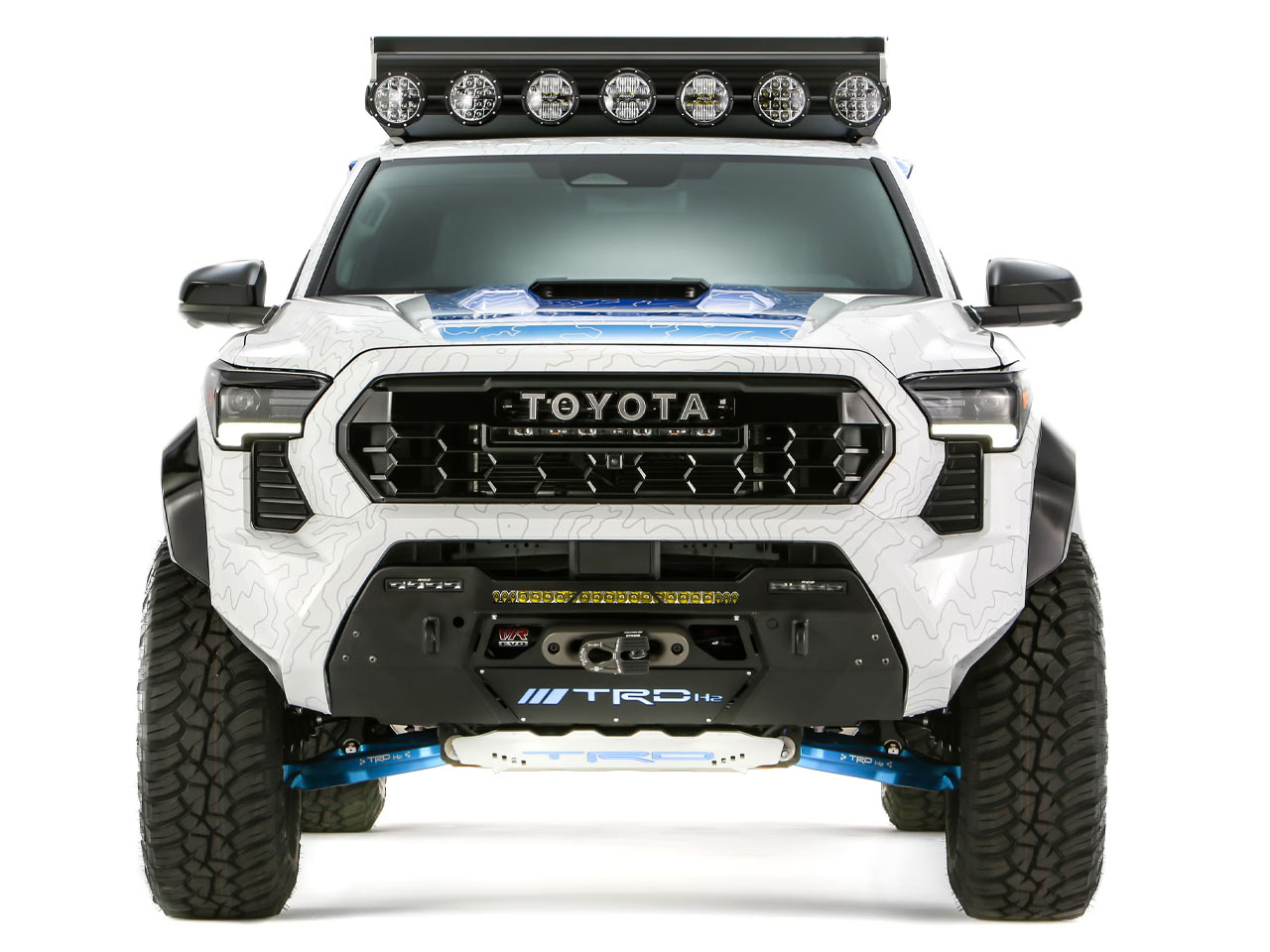
The concept vehicle is a badass overlanding rig with 547 horsepower that’s set to take you distances with its hydrogen fuel cell and battery electric powertrain, which leaves only water as tailpipe emissions. It’s perhaps this hydrogen fuel-cell technology that earns the concept its H2 moniker, with which it is going to debut at the SEMA show at the Las Vegas Convention Center between November 4 and 7.

Designer: Toyota

Tacoma H2-Overlander is a result of the technical expertise of Toyota Motor North America R&D (TMNA R&D), and is built by the Toyota Racing Development (TRD) engineering teams in California and North Carolina. The concept, based on the mid-size Tacoma pickup platform, is engineered especially for the SEMA show to showcase the viable potential of hydrogen fuel cells and their possible use case in an extreme adventure vehicle.

Toyota’s latest hydrogen fuel-cell propulsion system replaces the internal‐combustion engine or traditional battery-electric drivetrain in the Tacoma H2-Overlander that runs on compressed liquid hydrogen to power the 24.9 kWh lithium-ion battery and its 547-horsepower dual electric motor. The resultant output of the exhaust is pure water, and unlike the traditional battery, the liquid hydrogen tank takes far less time to refill. It can, Toyota affirms, be refilled in minutes like the conventional gas tanks.

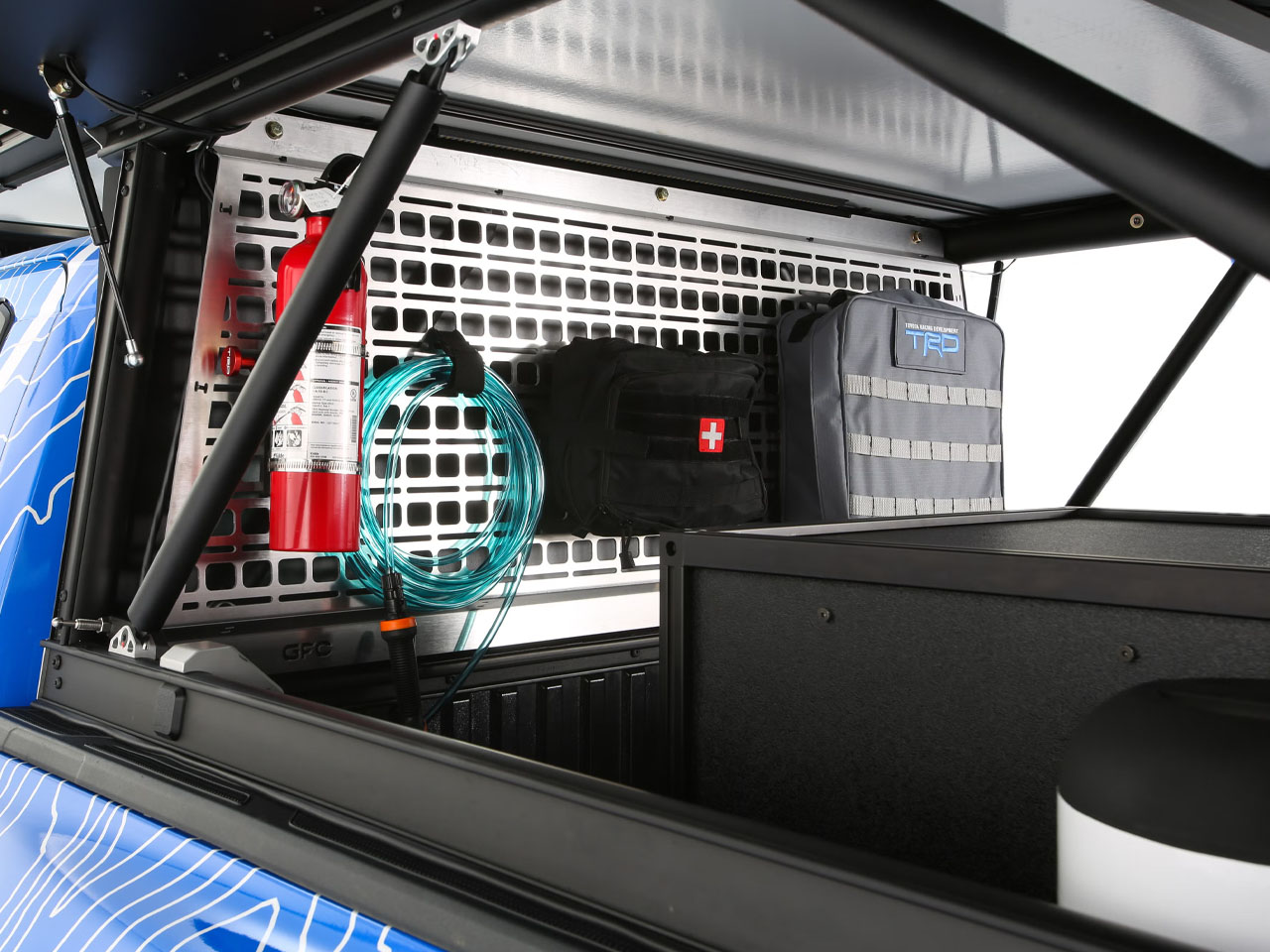
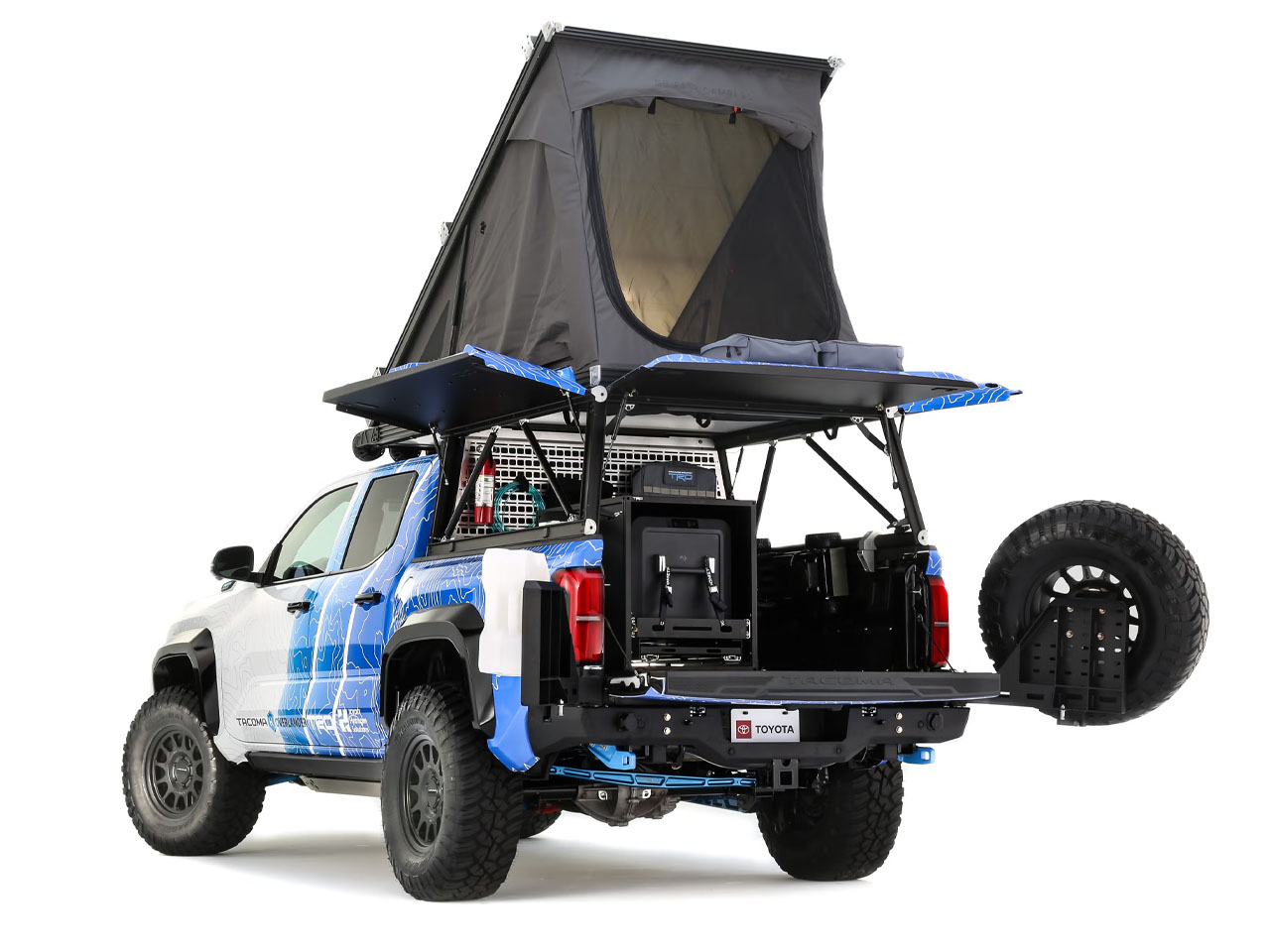
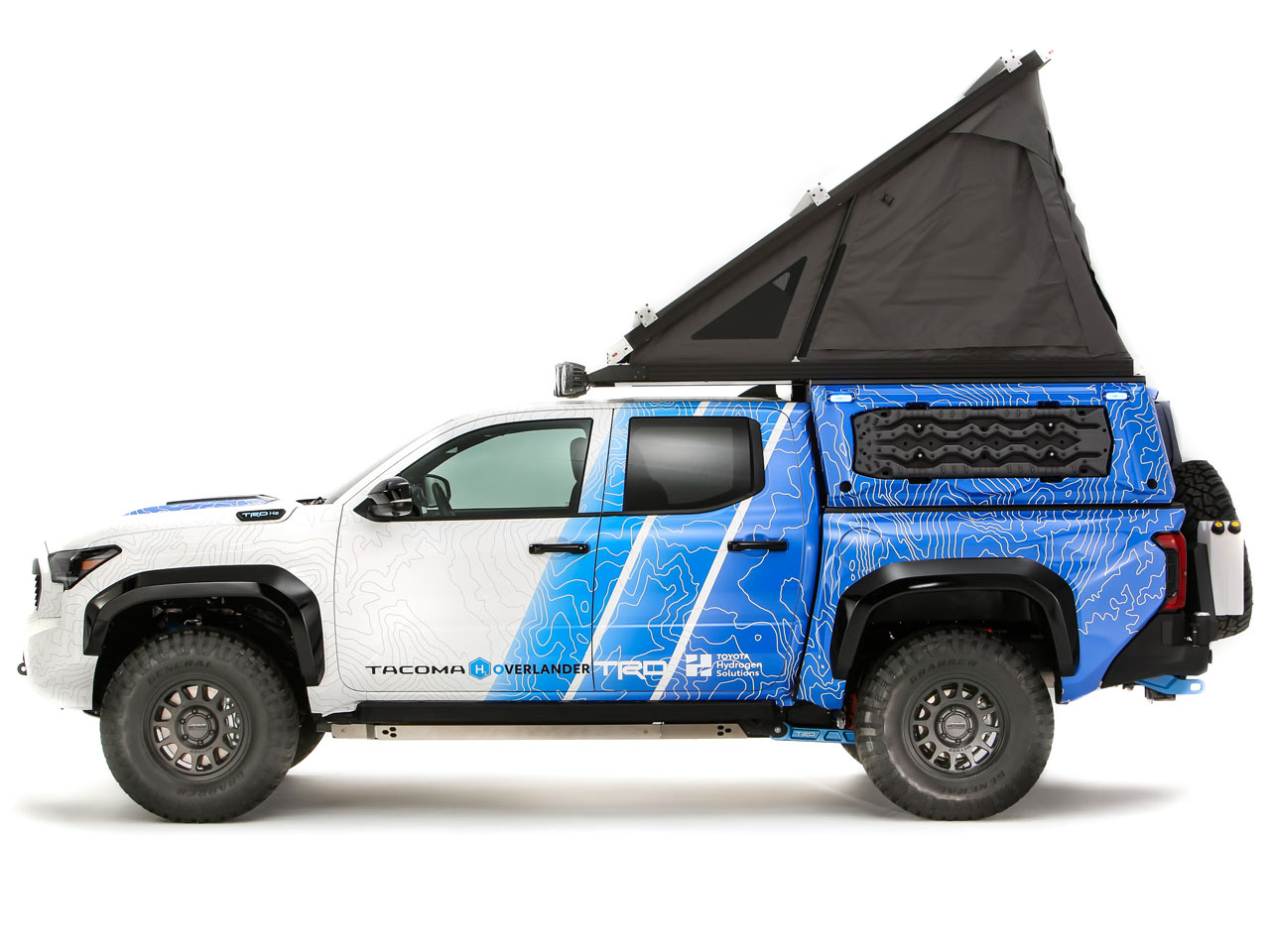
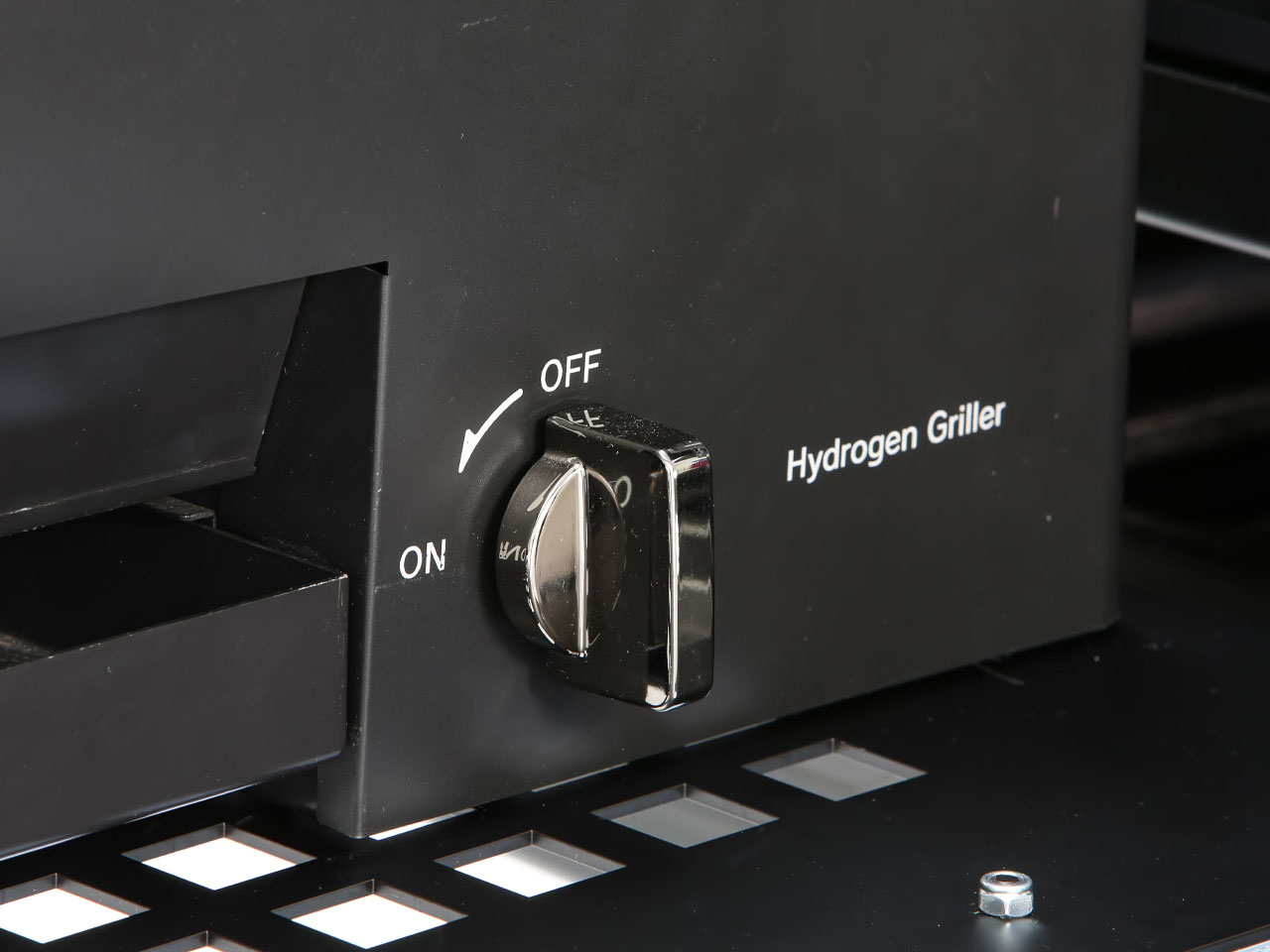
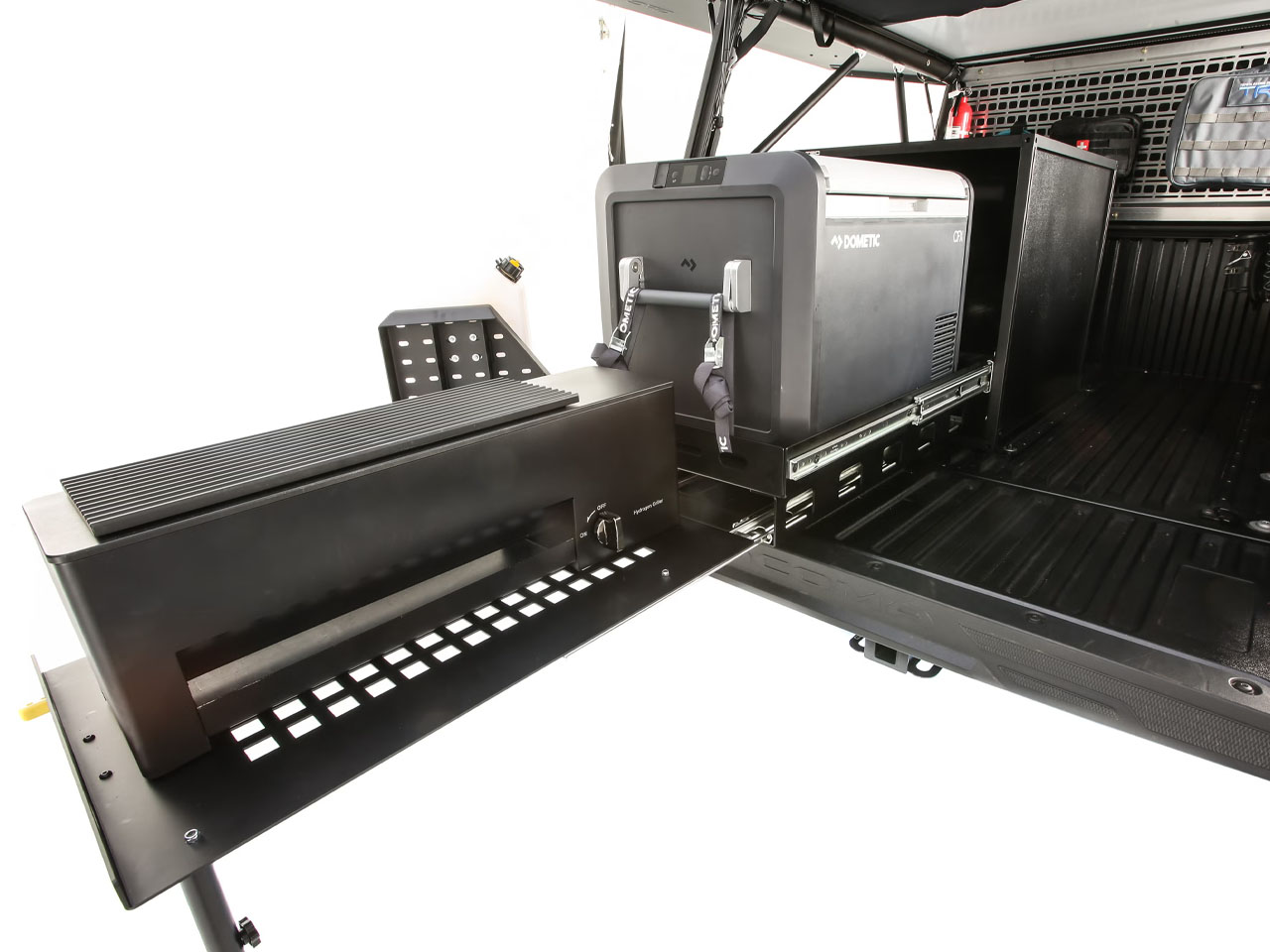
Like you’d imagine, Toyota isn’t calling the Tacoma H2 an overlanding rig, just for the sake of it. It actually is designed with its own rooftop pop-up tent made from lightweight carbon fiber panels. The details about the configuration of the rooftop tent are scanty at the moment, but we learn that it has a bed, a mini fridge, and a gas grill, running on the same hydrogen powering the vehicle itself. The ride flaunts a splendid lightbar and a heavy-duty winch. But what’s really interesting about the concept Overlander is that it is an exhaust water recovery system. This essentially collects the water vapors released by the tailpipe (produced by hydrogen fuel cell combustion), and then fills it to be used by the occupants at camp.

The Toyota Tacoma H2-Overlander is provided with custom 17-inch wheels wrapped in 35-inch all-terrain tires. The rig offers up to 300 miles of range on a full hydrogen tank, which can be refilled in under five minutes. According to the press information, the overlander comes with two NEMA 14-50 outlets on the bedside, which can be used to recharge up to two EVs simultaneously or even power a home with up to 15 kilowatts of output.

The post Toyota Tacoma H2-Overlander wins hearts by running on hydrogen and making its own water first appeared on Yanko Design.

Lexus LS Goes Bold: Three Radical Concepts Redefine Luxury Space

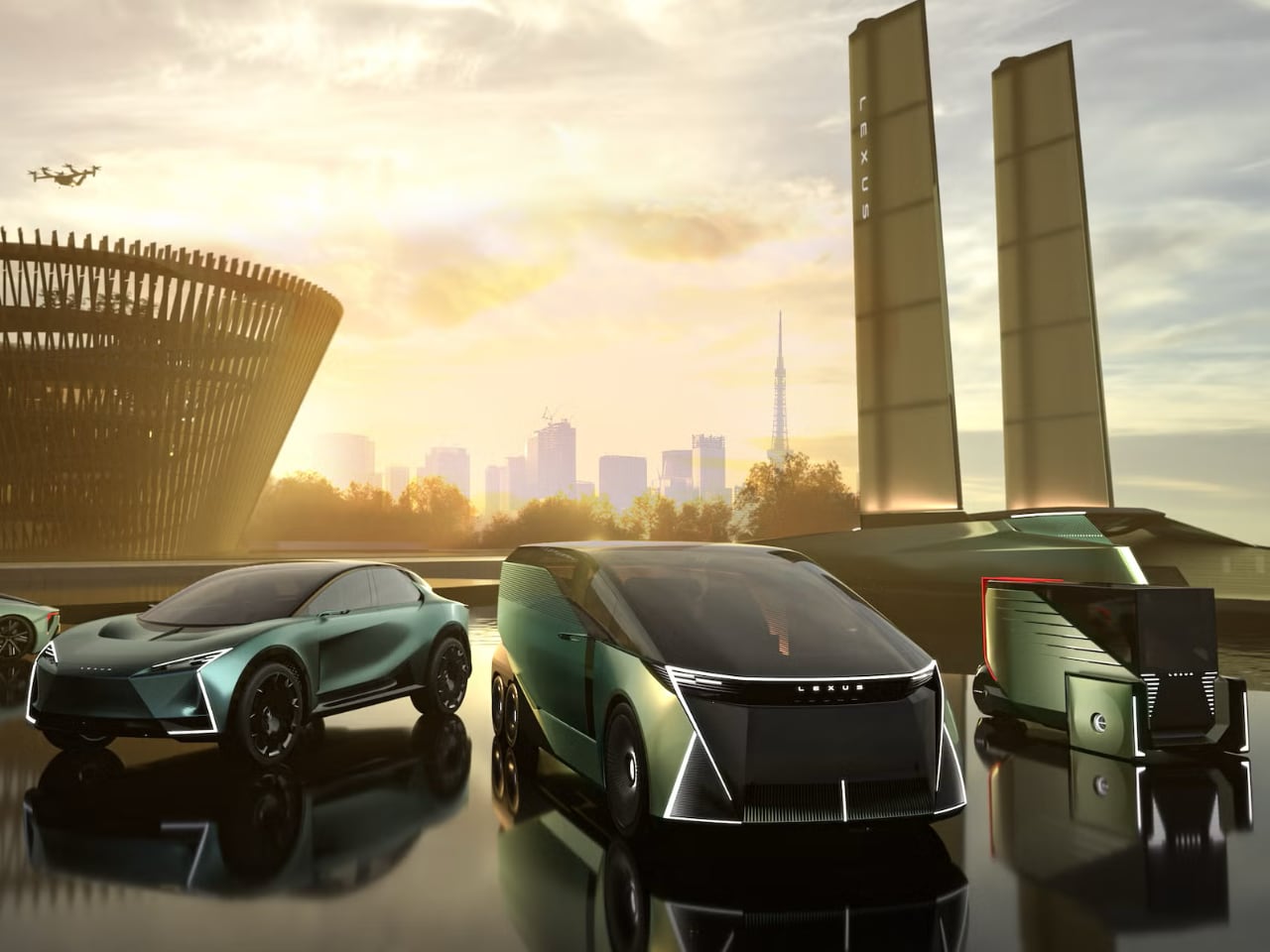
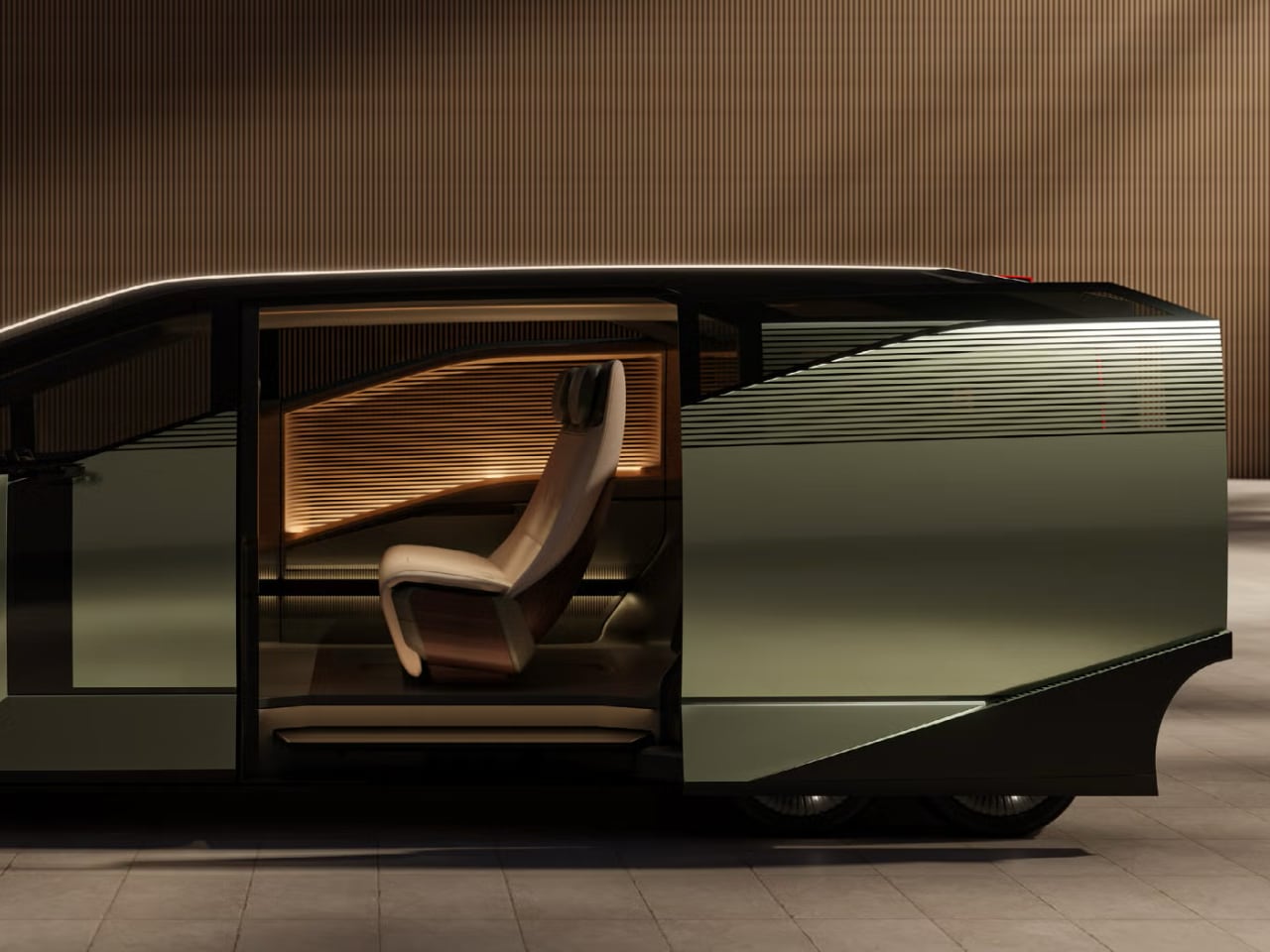
When Lexus rolled three radically different concepts onto the floor of the 2025 Japan Mobility Show, each wearing the LS badge, the message was clear: the future of luxury isn’t about four doors and a trunk anymore. A six-wheeled van with a convertible day bed in the third row. A single-seat autonomous pod that looks like it escaped from Minority Report. An SUV coupe that might actually see production. These are Lexus’s answers to a market that no longer wants what the LS was built to be.

Designer: Lexus

The context makes the radical pivot necessary. Much like Taylor Swift, the Lexus LS was born in 1989 and went on to redefine its category, but unlike the pop icon, the luxury sedan’s star has dimmed considerably in recent years. The brand sold fewer than 3,000 units annually in the US for the past three years, losing market share even against rivals facing the same headwinds. In September, Lexus announced a “final year tribute” for the existing fifth-generation car, effectively confirming what industry watchers already knew. The sedan era is ending, but the LS name still carries tremendous cachet and brand value as the badge that launched Lexus itself.

Rather than let that heritage fade, Lexus chose to reimagine what “LS” could mean. The three concepts presented in Tokyo replace “Luxury Sedan” with “Luxury Space,” each interpreting that brief in dramatically different ways.

The Six-Wheeled Van That Dares to Dream

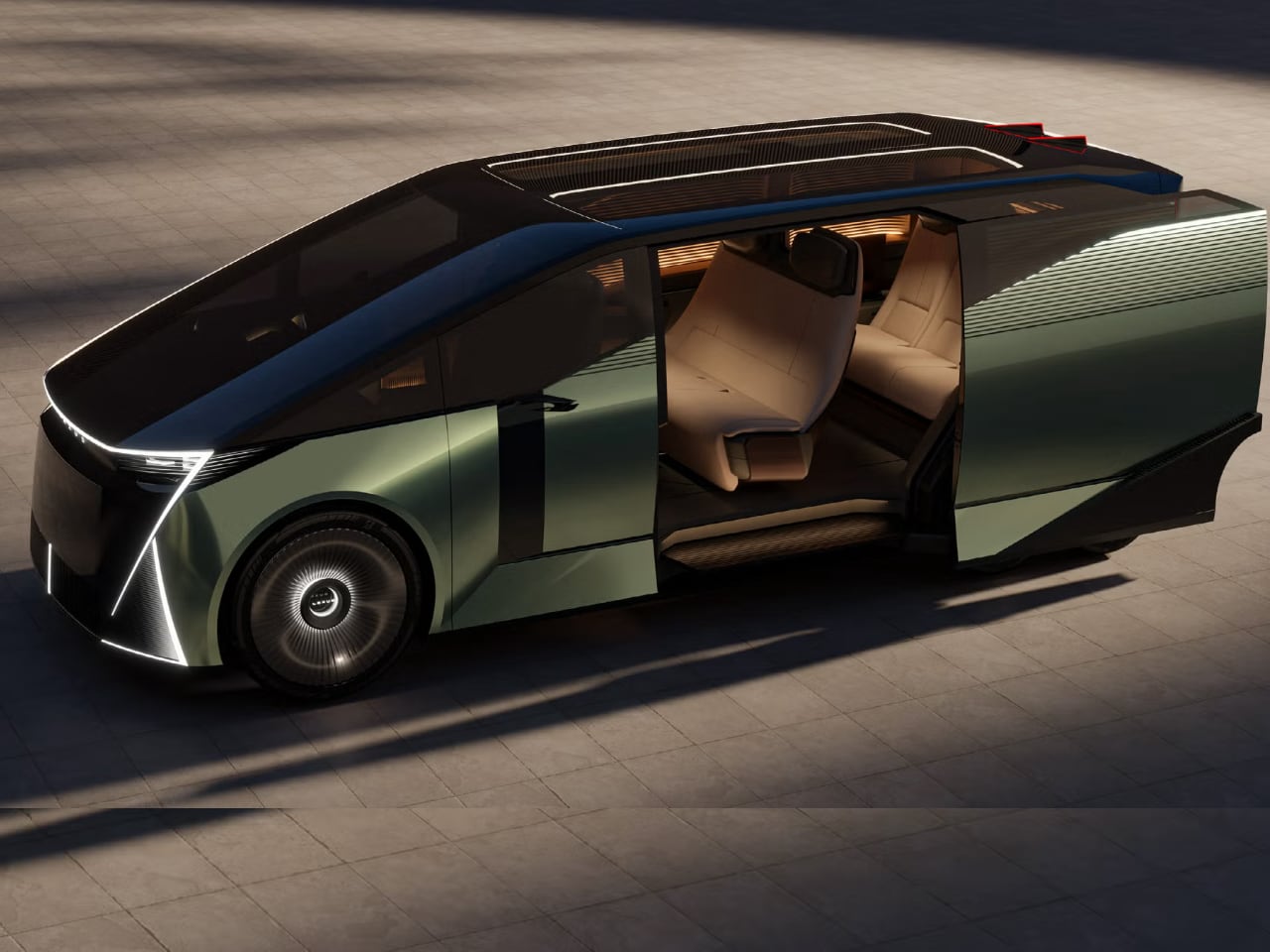
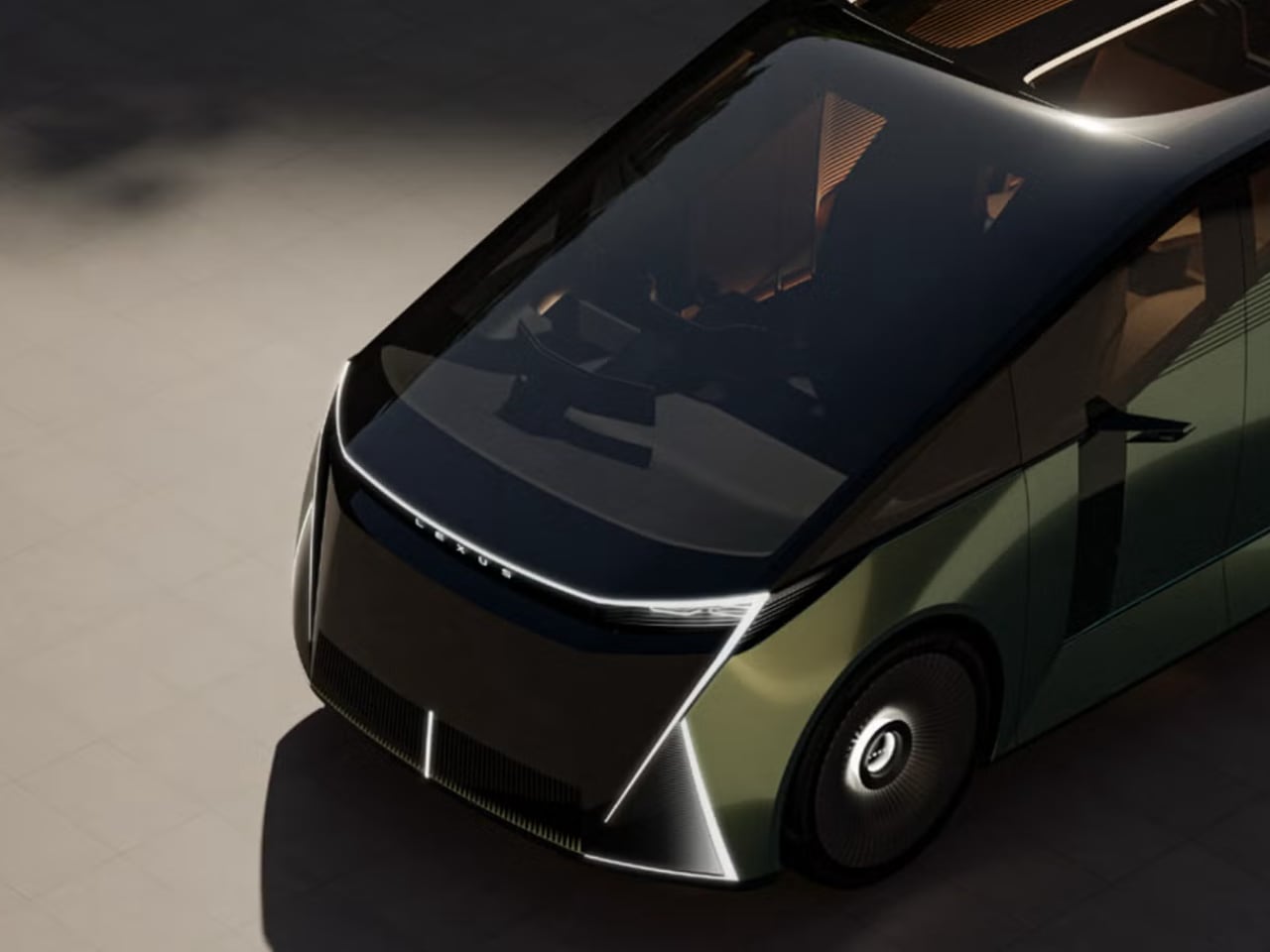
The LS Concept, revealed via teaser images a couple weeks before the show, represents the most audacious reinvention of the luxury minivan formula yet attempted. This isn’t a tarted-up people mover with captain’s chairs and a nicer badge. This is a six-wheeled statement piece that looks more like a land yacht than a family hauler, with proportions that dwarf the luxury minivans currently popular in markets like China.

Much of that impact comes from the wheel configuration itself. Four smaller wheels cluster at the rear while two larger ones handle steering duties up front, creating what observers have called a “backwards Tyrell P34 look.” It’s probably the only time a Lexus van will be compared to a 1970s Formula 1 car, but the reference fits. The wheel arrangement does more than look interesting. The additional rear wheels potentially distribute weight more effectively across the long wheelbase required for three comfortable rows, while the larger front wheels maintain steering precision and road presence.

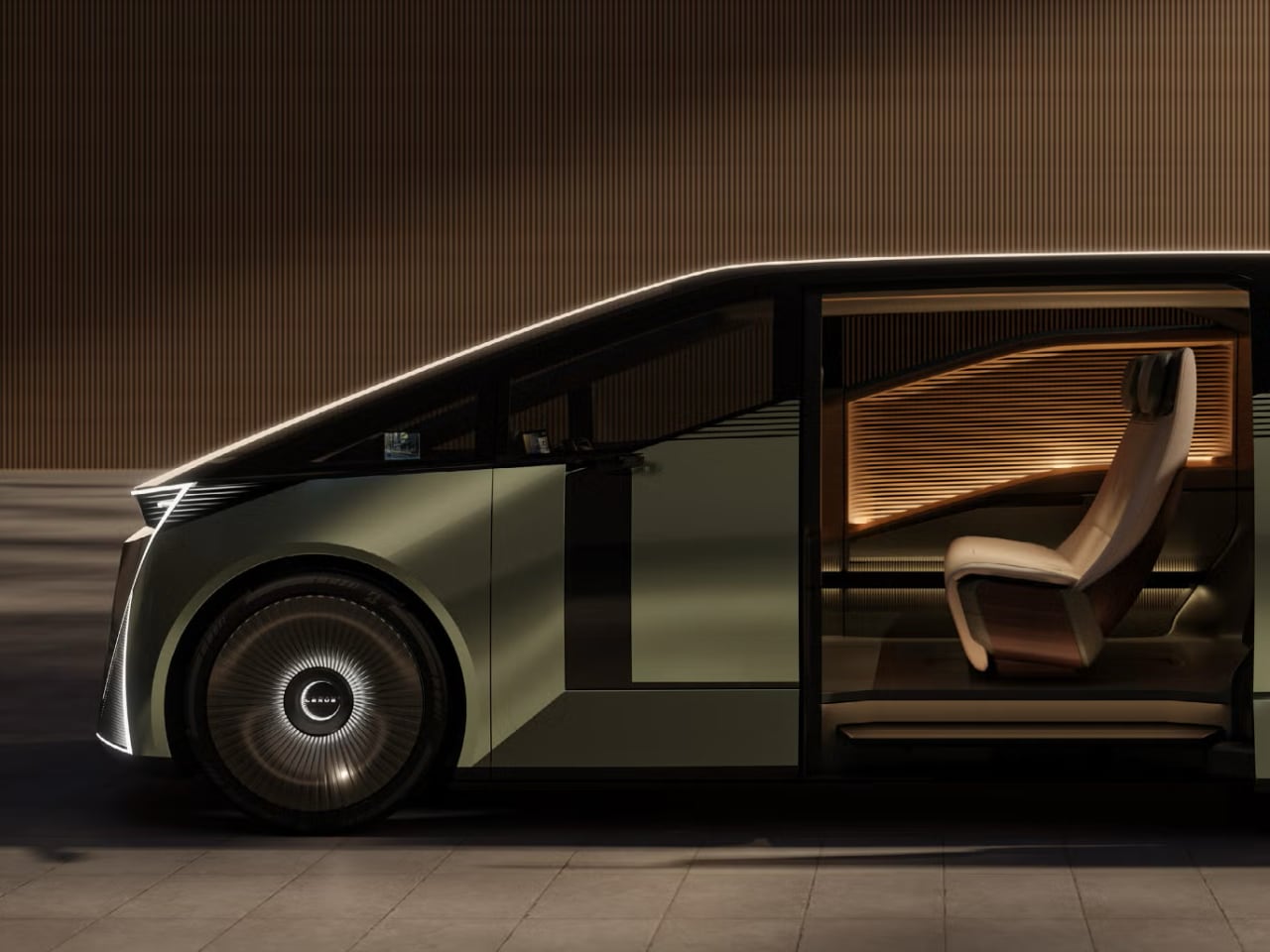
The exposed wheel arches feature chrome or polished metal trim that catches light and emphasizes the mechanical complexity underneath, celebrating the engineering rather than hiding it behind body panels. Sharp character lines run the length of the vehicle’s flanks, creating distinct upper and lower volumes. The greenhouse sits atop a substantial lower body, with blacked-out pillars creating a floating roof effect that’s become common in luxury vehicles but feels fresher here thanks to the unconventional proportions. The front fascia maintains Lexus’s spindle grille signature but stretches it horizontally rather than vertically, creating a wider, more planted stance that suits the van’s substantial dimensions. LED lighting elements integrate into the bodywork with minimal interruption, suggesting a future where lighting becomes part of the surface rather than discrete components bolted to the structure.

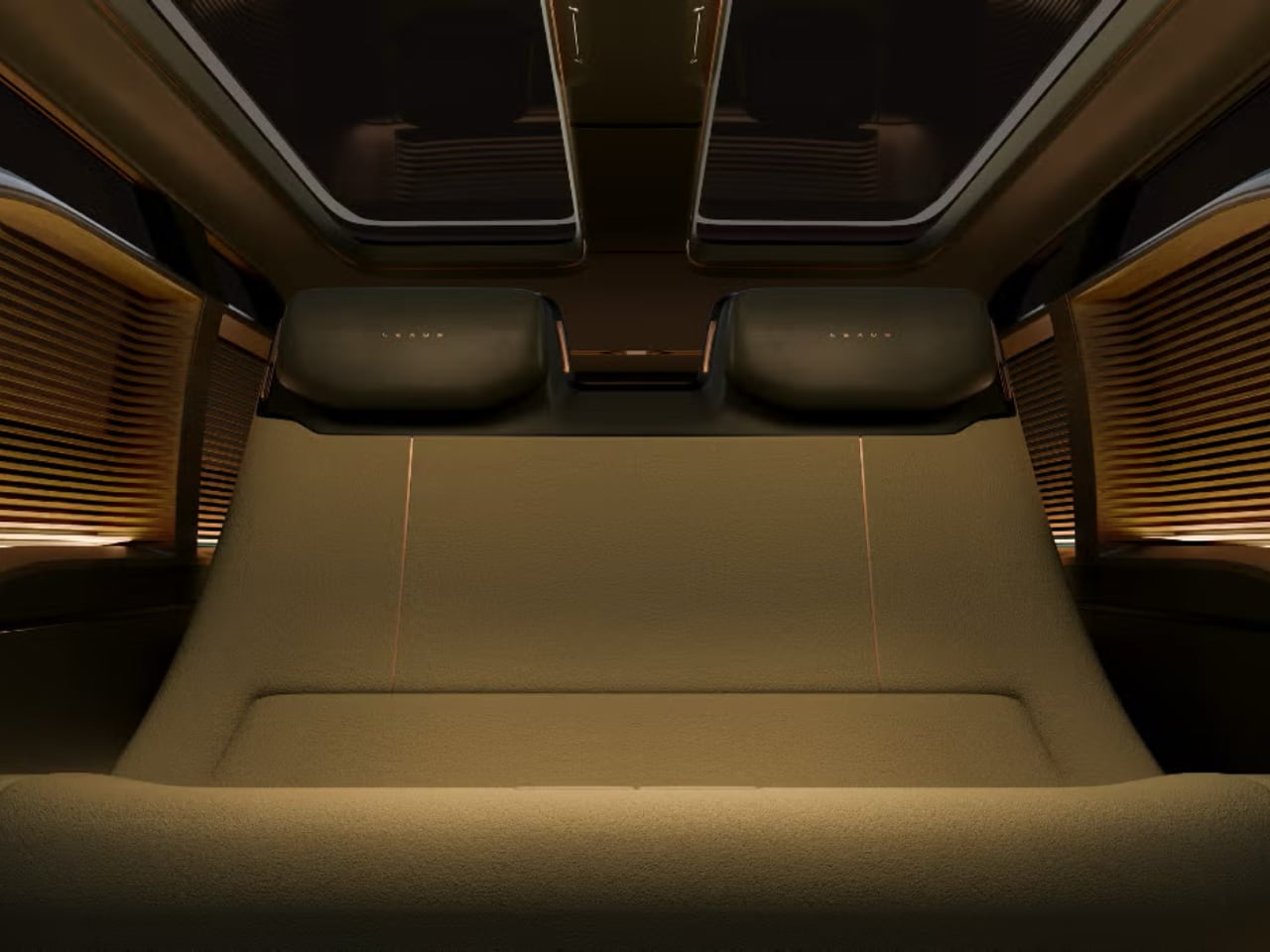
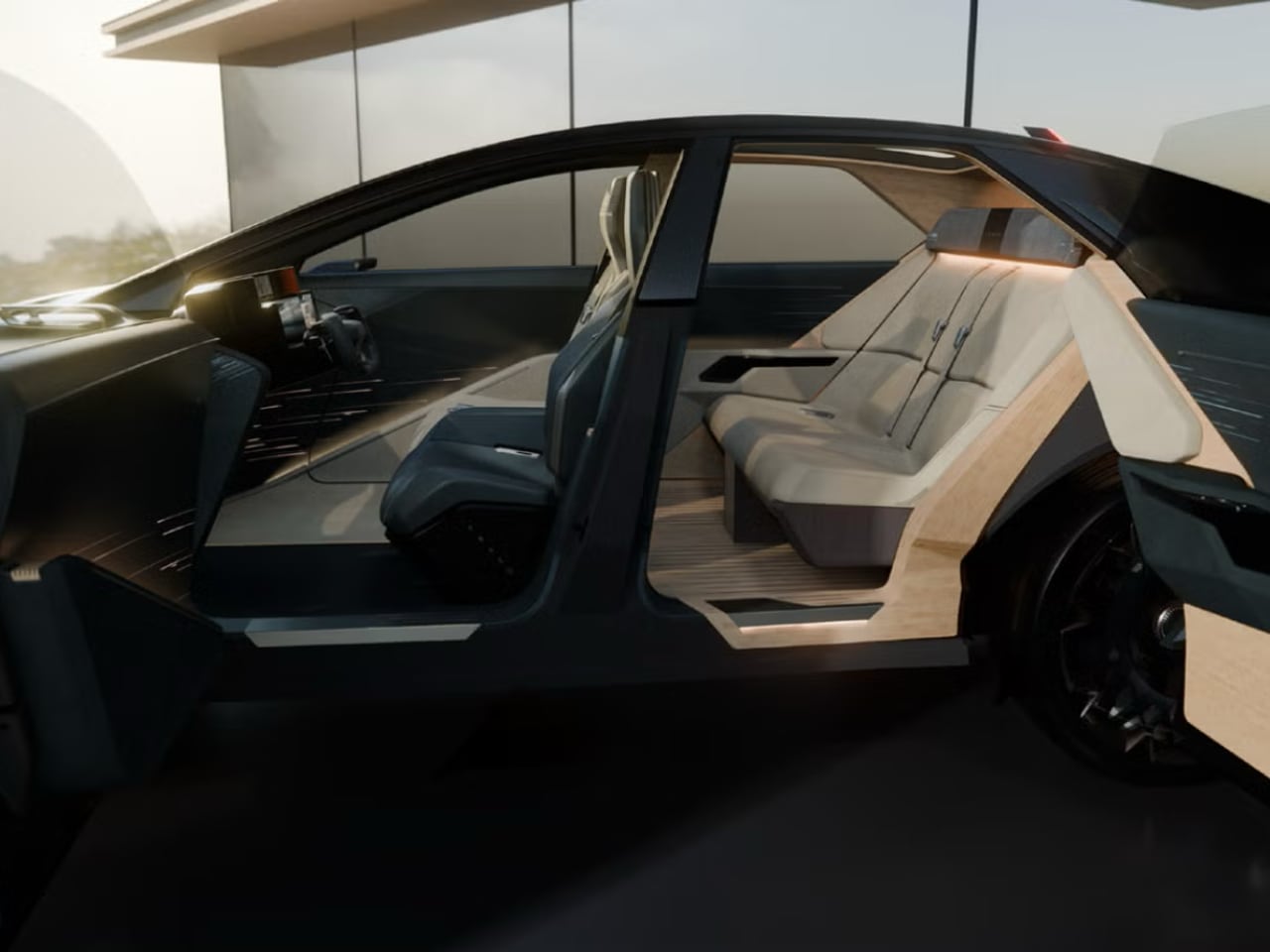
Inside, the LS Concept seats six across three rows, with the first row offering a somewhat bench-like layout while the second and third rows feature individual thrones upholstered in what appears to be premium materials. The interior demonstrates a deliberate progression from functional to luxurious as passengers move rearward, with the driver zone maintaining traditional automotive ergonomics while the rear rows transition into lounge-style seating that prioritizes comfort over conventional automotive packaging. The material palette appears to blend warm earth tones in the seating surfaces with cooler metallic accents on structural elements, creating separation between soft touch points and hard architecture.

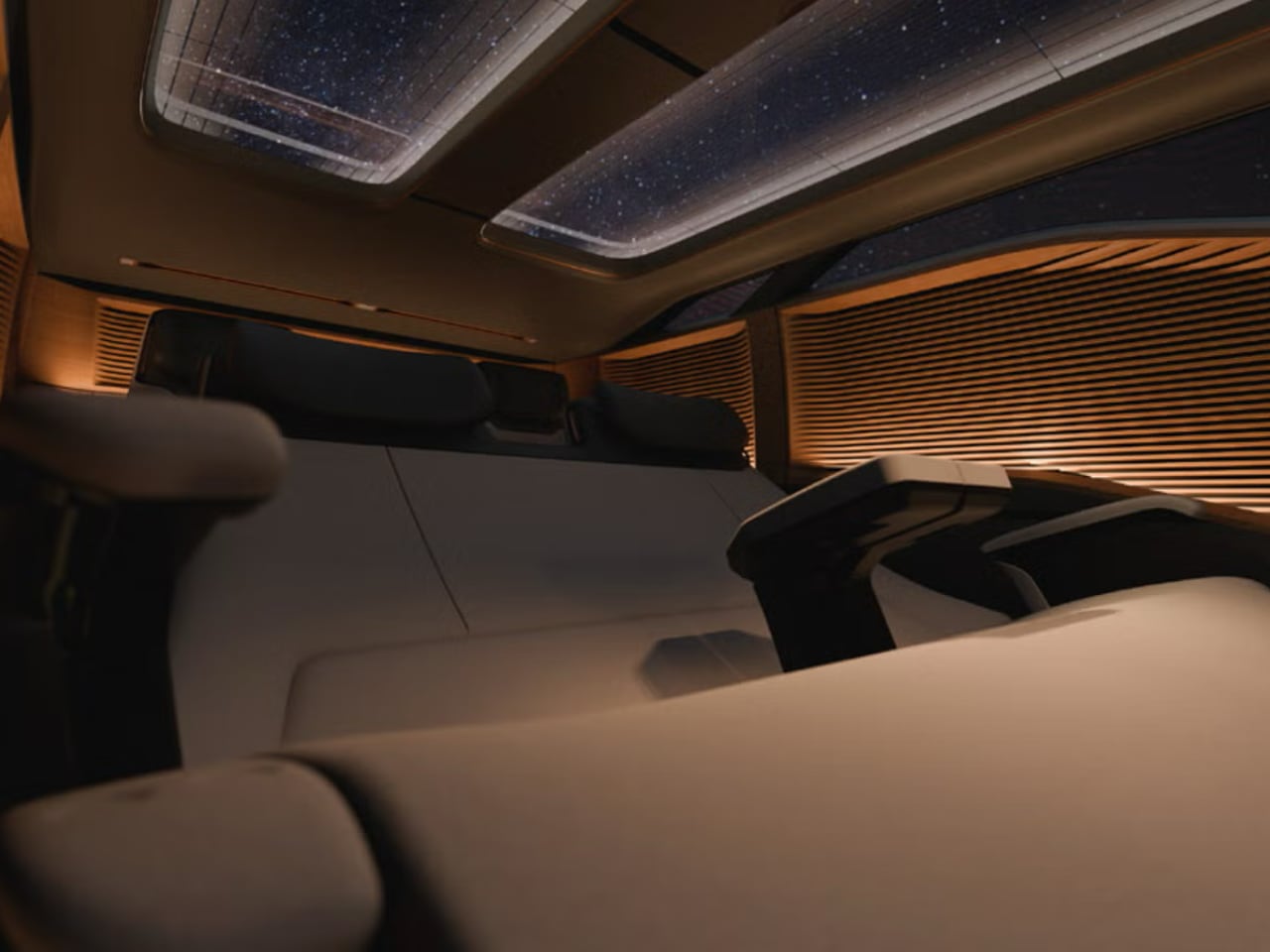
The third row takes the concept furthest, with armrests that detach to allow the seats to convert into a reclining day bed configuration. The leg rest extends while the seat backs transition closer to flat, creating a genuine rest space rather than the token reclining function found in conventional three-row vehicles. This transformation suggests Lexus studied yacht interiors and private aviation more than automotive precedents, prioritizing the ability to fully relax during extended travel over maximizing passenger count.


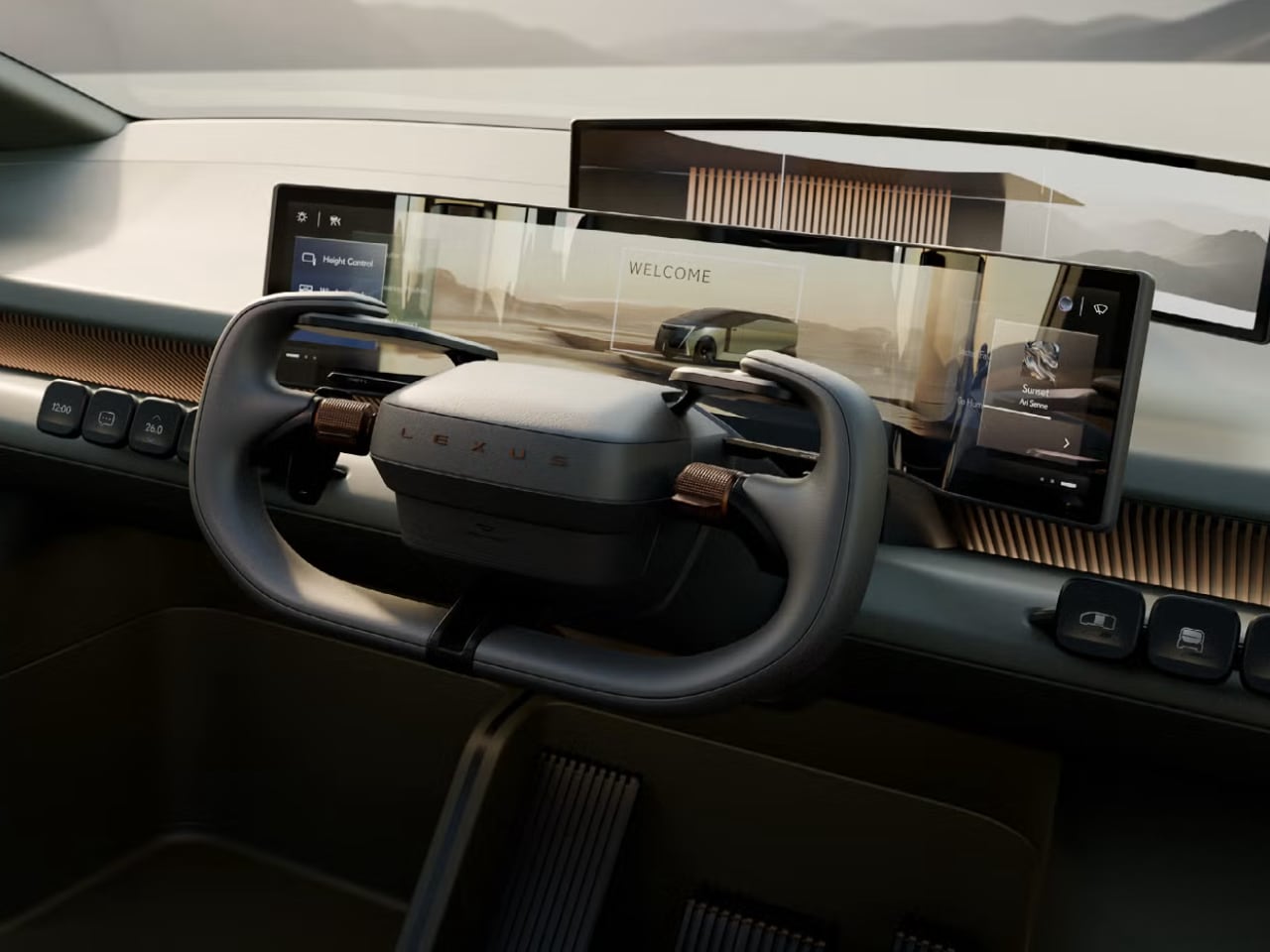
The lighting design throughout the cabin uses vertical striping patterns that echo traditional Japanese shoji screens, with illuminated surfaces creating ambient glow rather than point-source lighting. These vertical elements repeat on the exterior as well, establishing a consistent design language that bridges interior and exterior spaces. The dashboard features nested screens in a layered configuration that suggests depth rather than the typical flat panel array, with physical controls integrated around the displays rather than banished to capacitive touch zones. Despite the futuristic styling, this isn’t an autonomous fantasy. The LS Concept features a proper steering wheel flanked by a pair of screens and a pleasing number of actual physical buttons, suggesting Lexus envisions this as something a human would actually drive.

The Micro: When Personal Mobility Gets Absurdly Personal

If the six-wheeled van represents luxury maximalism, the LS Micro swings to the opposite extreme. This single-seat autonomous vehicle exists as pure concept exploration, the kind of mobility solution that automakers love to sketch but rarely build.

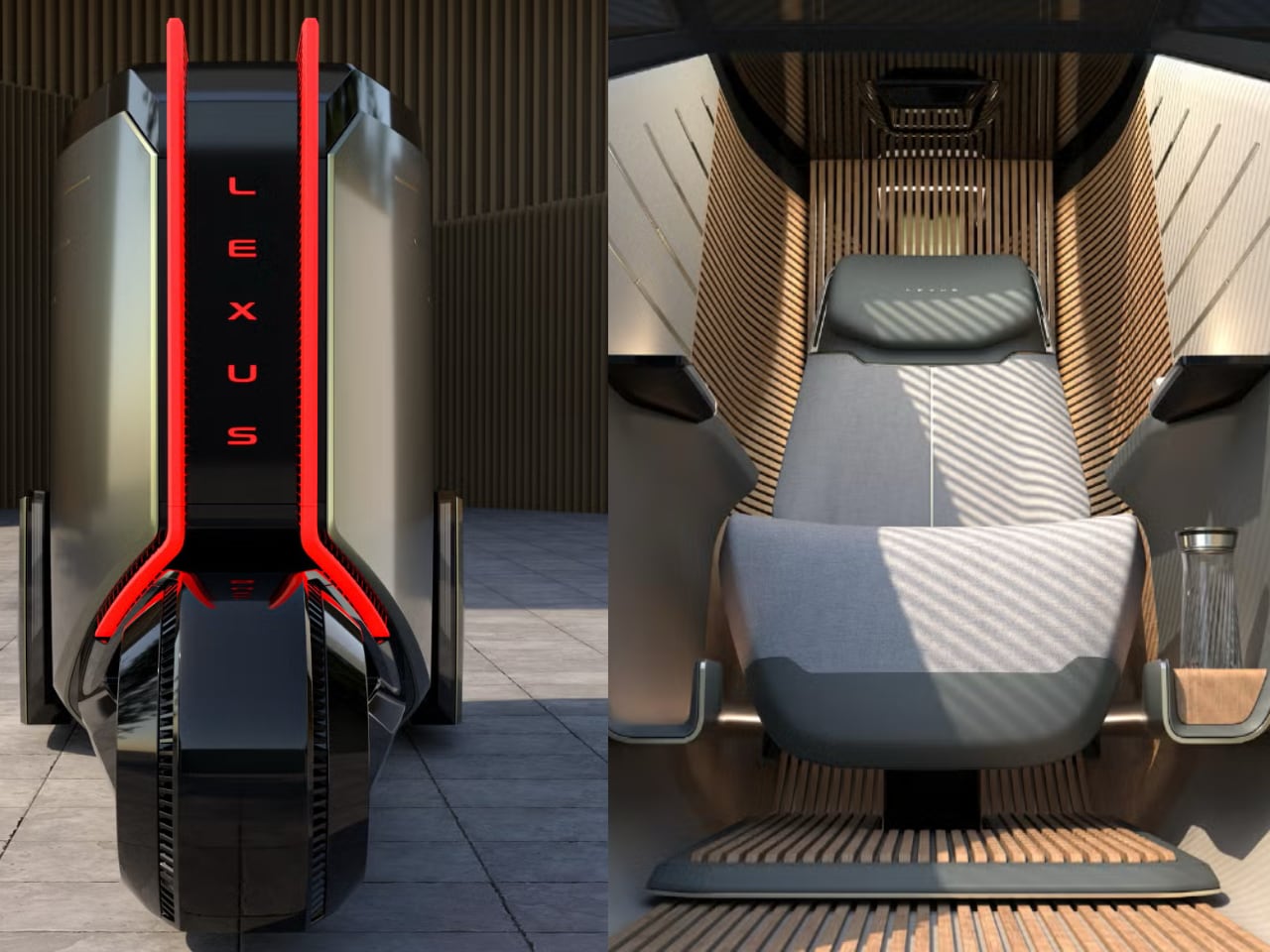
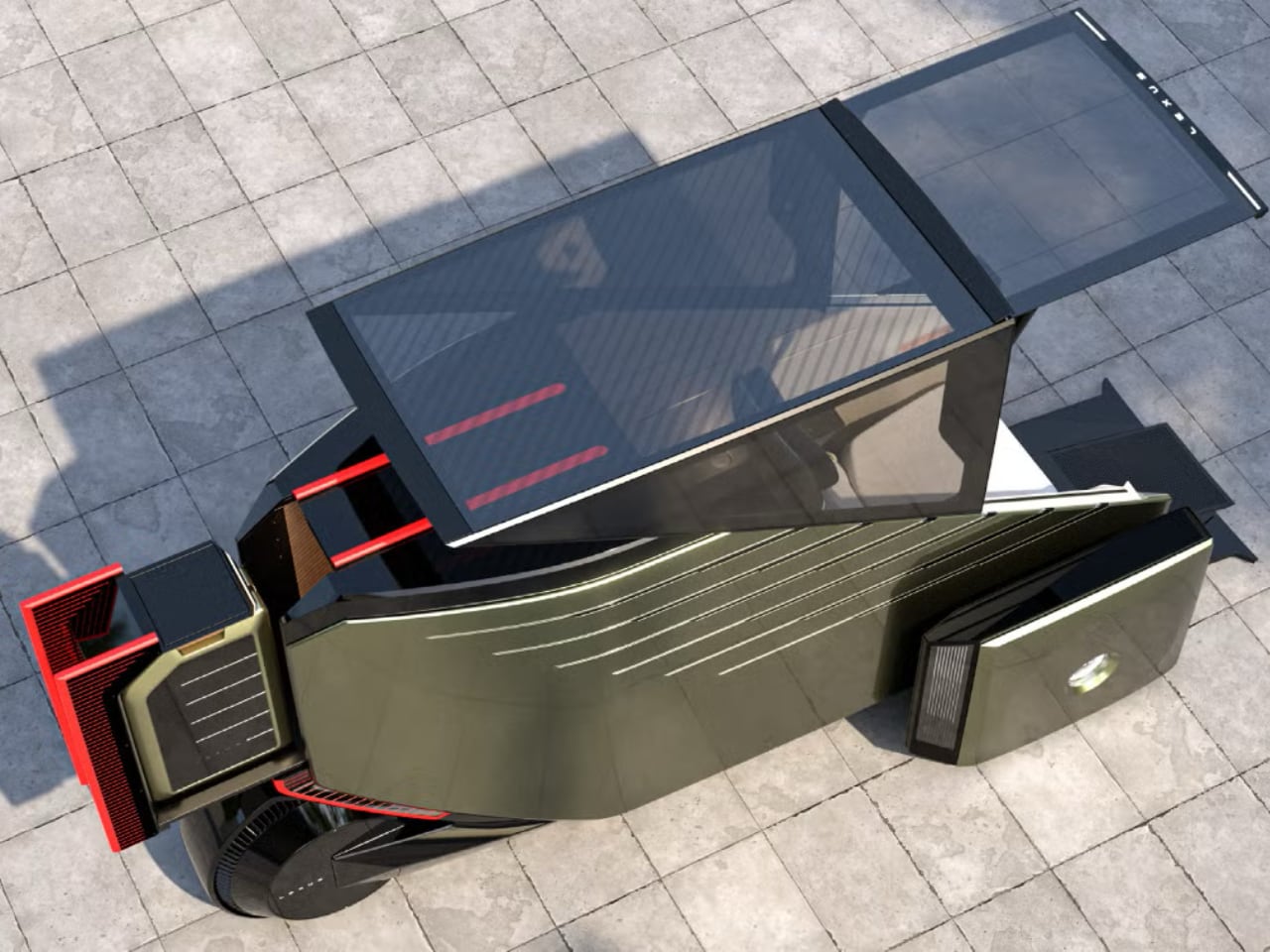
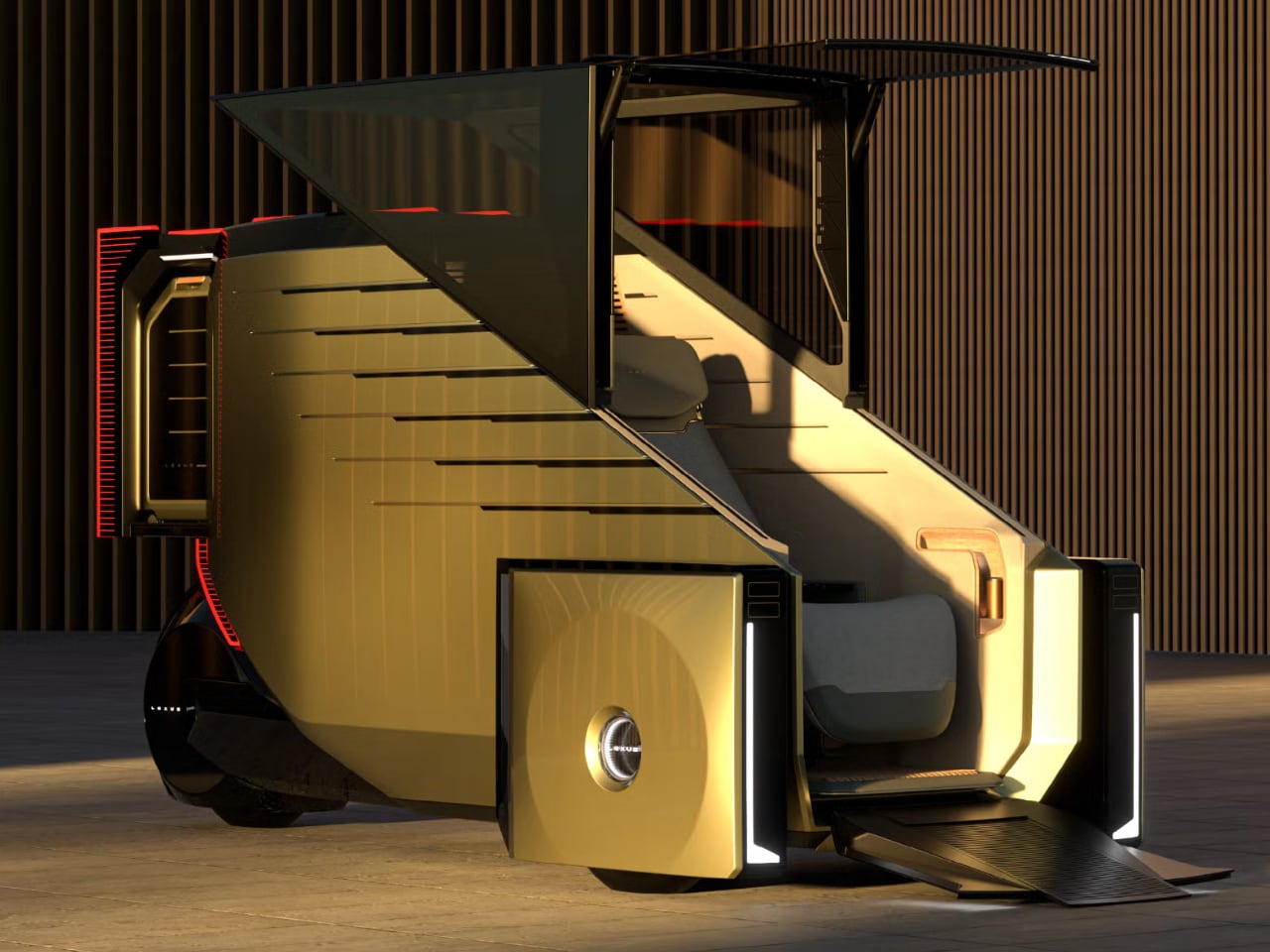
The Micro appears to run on three wheels based on the revealed images, with a vertically oriented battery pack or cargo compartment mounted along its spine that can slide out for easy access. This central spine element serves as both functional storage and visual anchor, creating a clear organizational logic for the compact vehicle’s interior packaging. The exterior surfaces flow in continuous curves broken only by minimal character lines, with the transparent canopy creating an almost bubble-like greenhouse that maximizes interior volume perception while maintaining a compact exterior footprint.

The seating position looks genuinely comfortable rather than compromised, with a warm cocoon-like environment and touchpad controls integrated into both armrests in a configuration that recalls Captain Picard’s chair on the bridge of the Enterprise. The seat itself appears to wrap around the occupant in a 270-degree embrace, with padding that extends beyond typical automotive bolstering to create a genuine relaxation space rather than just transportation seating. Lexus even managed to fit multiple cupholders into the compact package, a luxury amenity not afforded to Galaxy-Class starship captains. The material treatment suggests a mix of technical fabrics and soft leather, with the touchpad controls finished in what appears to be brushed metal or high-quality plastic that maintains tactile feedback despite the digital interface underneath.

The color palette inside the Micro stays deliberately neutral, with warm beiges and soft grays dominating to create a calming environment rather than the typical concept car explosion of saturated hues. Ambient lighting appears integrated into the structural ribs of the canopy, washing the interior with indirect illumination that changes the space’s mood without creating harsh shadows or glare. The exterior styling leans heavily into sci-fi territory, with smooth surfaces and minimal details that wouldn’t look out of place in Minority Report, though given that film is now set just 29 years in the future, perhaps that’s less of a compliment than it once was.

Lexus describes the Micro as “micro-mobility that allows you to move freely in small streets and alleys of cities” and “a relaxing space for a new value of private travel experience.” That use case suggests ride-hailing services in dense urban environments rather than personal ownership. Given the autonomous technology requirements and the narrow market appeal, both scenarios remain theoretical for the foreseeable future. The Micro’s compact dimensions and autonomous capabilities could theoretically allow it to access areas traditional vehicles cannot, from pedestrian-friendly zones to narrow historic district streets. The single-seat configuration eliminates the social dynamics and scheduling compromises inherent in shared mobility, offering a middle ground between private car ownership and riding in someone else’s vehicle.

The Coupe: The One That Might Actually Happen

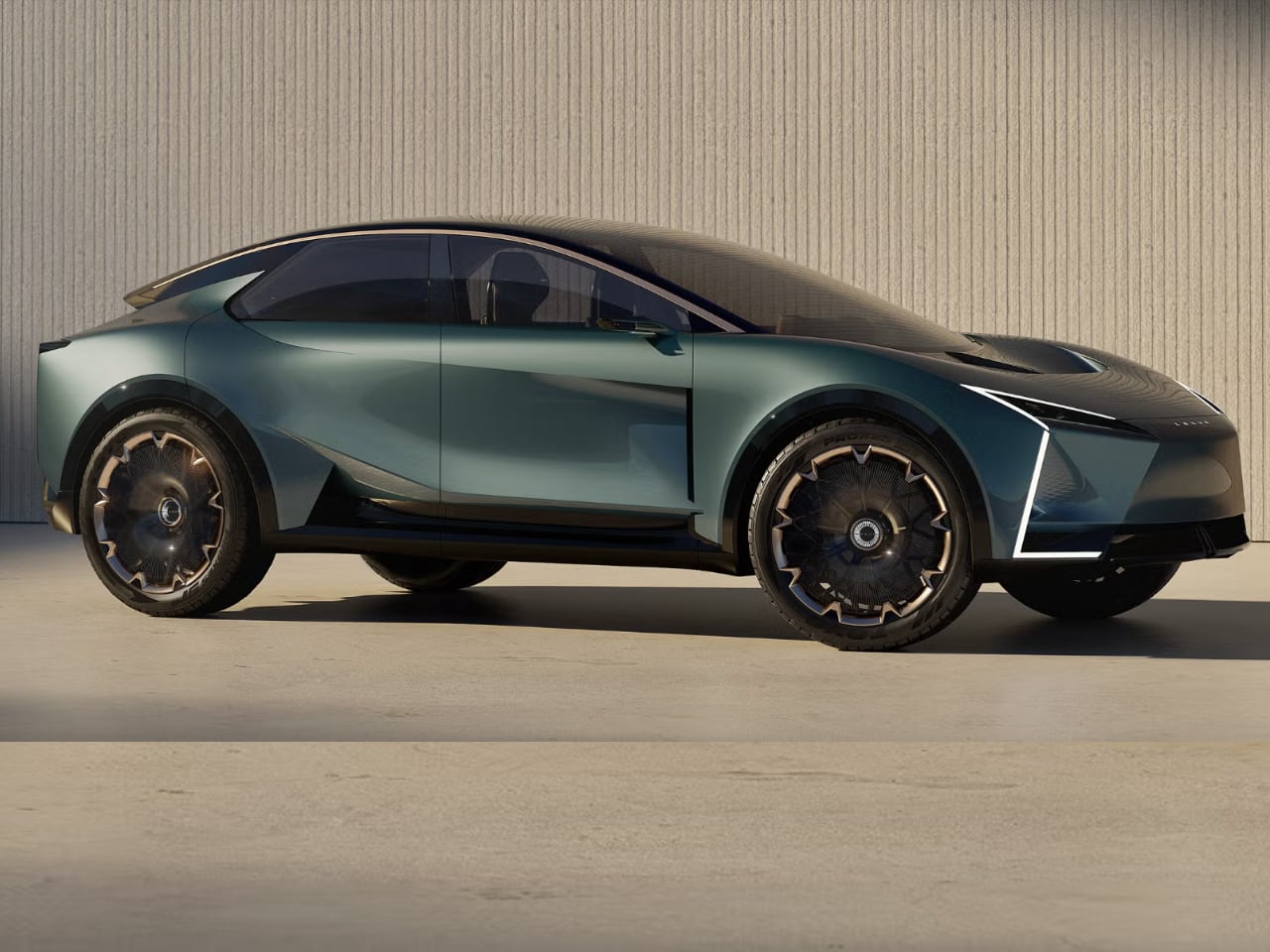
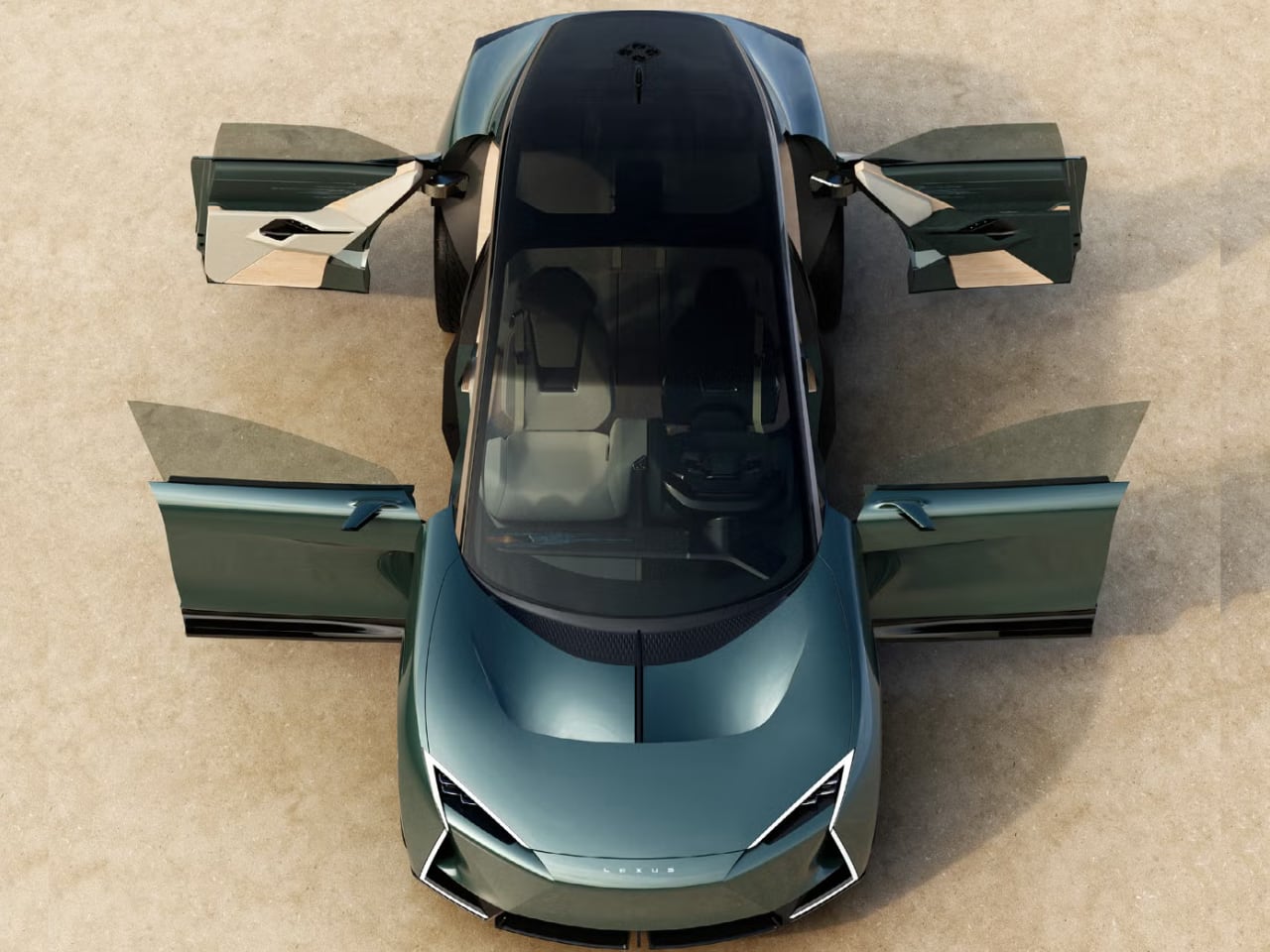
Of the three concepts, the LS Coupe stands the best chance of reaching production. Industry watchers have speculated for more than half a decade that the fifth-generation LS’s successor would take the form of a high-end crossover rather than another traditional sedan, and this concept bears all the hallmarks of that rumored vehicle.

The design melds the elevated seating position and easy entry of an SUV with the flowing roofline and proportions of a sedan, complete with a trunk rather than a hatchback opening, though Lexus describes it more as an extending shelf than a conventional cargo area. Four doors provide access to what appears configured as a four-seat interior, though the rear bench looks like it could accommodate a third passenger without much compromise. In a premium touch reminiscent of Rolls-Royce, the rear doors open backwards for easier entry and exit.

The interior continues design themes Lexus explored in the Sport Concept coupe revealed the same day, with a colorway divided between the driver and passenger areas to create distinct zones within the cabin. The driver side appears finished in darker, more focused tones that emphasize the task of driving, while the passenger side transitions to lighter, more relaxed materials that signal the leisure aspect of luxury travel. This asymmetric approach represents a departure from the typical automotive interior that treats both front occupants identically, acknowledging that driver and passenger have fundamentally different relationships with the vehicle.

The seating surfaces showcase what appears to be a combination of perforated leather in high-wear zones and smooth textile panels in areas that benefit from stretch and comfort. The perforation pattern isn’t just functional ventilation but creates a geometric texture that catches light differently depending on viewing angle, adding visual interest without relying on contrasting stitching or piping. The rear seats maintain the same material approach but appear to offer more adjustment range and cushion depth, confirming this vehicle prioritizes rear passenger comfort despite its four-seat configuration.

Nested instrument panel screens sit in front of a yoke-style steering control rather than a traditional wheel. The screen configuration potentially hints at a future instrument and infotainment layout designed to rival BMW’s Neue Klasse digital interface approach, though production versions typically dial back the concept car ambition. The layering of these displays creates a sense of depth behind the yoke, with primary driving information appearing to float in the foreground while navigation and vehicle status occupy background layers. Physical controls appear concentrated on the center console and steering yoke spokes, maintaining tactile interfaces for frequently used functions rather than forcing everything through touchscreen menus.

The exterior proportions demonstrate careful attention to the balance between SUV utility and sedan elegance. The roofline starts its descent behind the B-pillar, creating a fastback silhouette that maintains rear headroom while achieving a lower drag coefficient than a traditional SUV profile. The rear haunches swell slightly outward from the cabin, muscular shoulders that suggest performance capability without resorting to aggressive body cladding or fake vents. The wheel arches appear sculpted into the body rather than applied as separate elements, creating a cohesive surface that flows from front to rear without interruption. The strongest indicator of production intent comes from an observation about what the concepts include rather than what they promise. The LS Coupe features visible seatbelts in all the marketing imagery and show floor presentations, a detail neither the six-wheeled van nor the autonomous Micro show.

What Luxury Space Actually Means

These three concepts reveal Lexus’s challenge and opportunity in equal measure. The LS name carries enough brand equity to justify continuation, but the original brief no longer works in a market that has decisively moved away from large luxury sedans.

By reinterpreting the badge as “Luxury Space” rather than “Luxury Sedan,” Lexus creates room to explore what premium personal mobility could mean across multiple form factors and use cases. The six-wheeled van targets the ultra-luxury multi-passenger market that traditional minivans never quite captured, the Micro explores personal urban mobility as a premium experience, and the Coupe directly addresses the luxury crossover segment that has cannibalized sedan sales industry-wide. Whether any of these concepts reach production remains uncertain, but the LS Coupe’s seatbelts and rumors of a high-end crossover successor suggest at least one interpretation of “Luxury Space” will make it to dealerships.

Each concept also reflects different regional market priorities. The six-wheeled van speaks directly to Asian luxury markets where chauffeur-driven vehicles remain popular and rear passenger comfort takes priority over driver engagement. The Chinese market in particular has embraced luxury MPVs in ways Western markets never did, with vehicles like the Mercedes V-Class and Lexus LM commanding premium prices and generating substantial sales volumes. The Micro addresses urban mobility challenges most acute in dense Asian and European cities where parking costs remain prohibitive and congestion pricing schemes make large vehicles increasingly expensive to operate. The Coupe takes the safest bet by pursuing the luxury crossover segment that currently dominates premium vehicle sales globally.

Every luxury brand from Bentley to Rolls-Royce now offers or plans to offer a high-riding crossover, recognizing that buyers want elevated seating positions and practical cargo space more than they want low-slung driving dynamics. The LS Coupe’s sedan-influenced proportions and trunk configuration position it as a more sophisticated alternative to the increasingly common luxury SUV, offering crossover practicality without abandoning the design language that made Lexus sedans distinctive. For a nameplate that once redefined luxury sedans, this evolution from four doors to multiple futures seems fitting.

The post Lexus LS Goes Bold: Three Radical Concepts Redefine Luxury Space first appeared on Yanko Design.

Toyota unveils Kayoibako-K micro camper van concept that can be used as self-driving mobile storefront

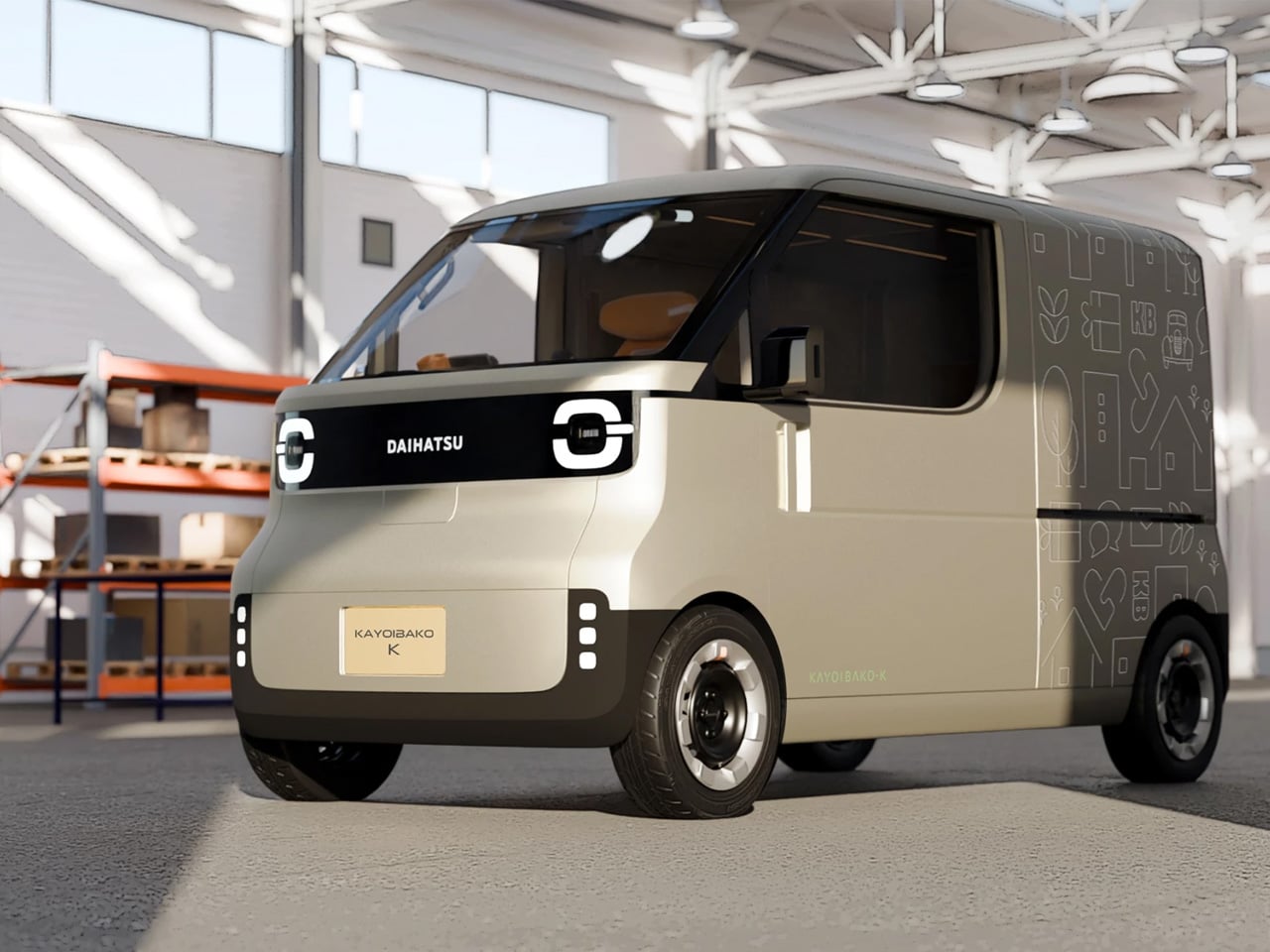
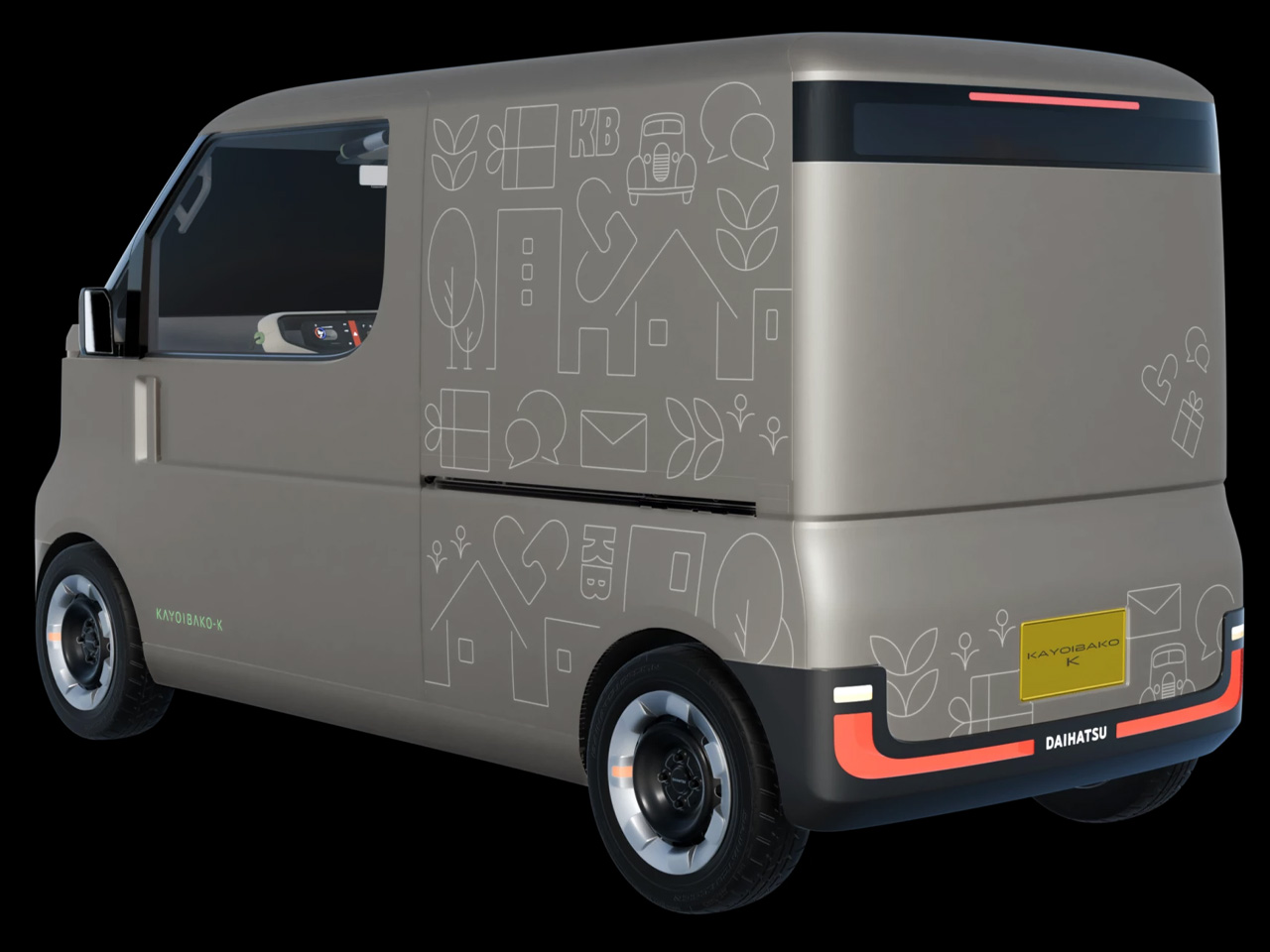
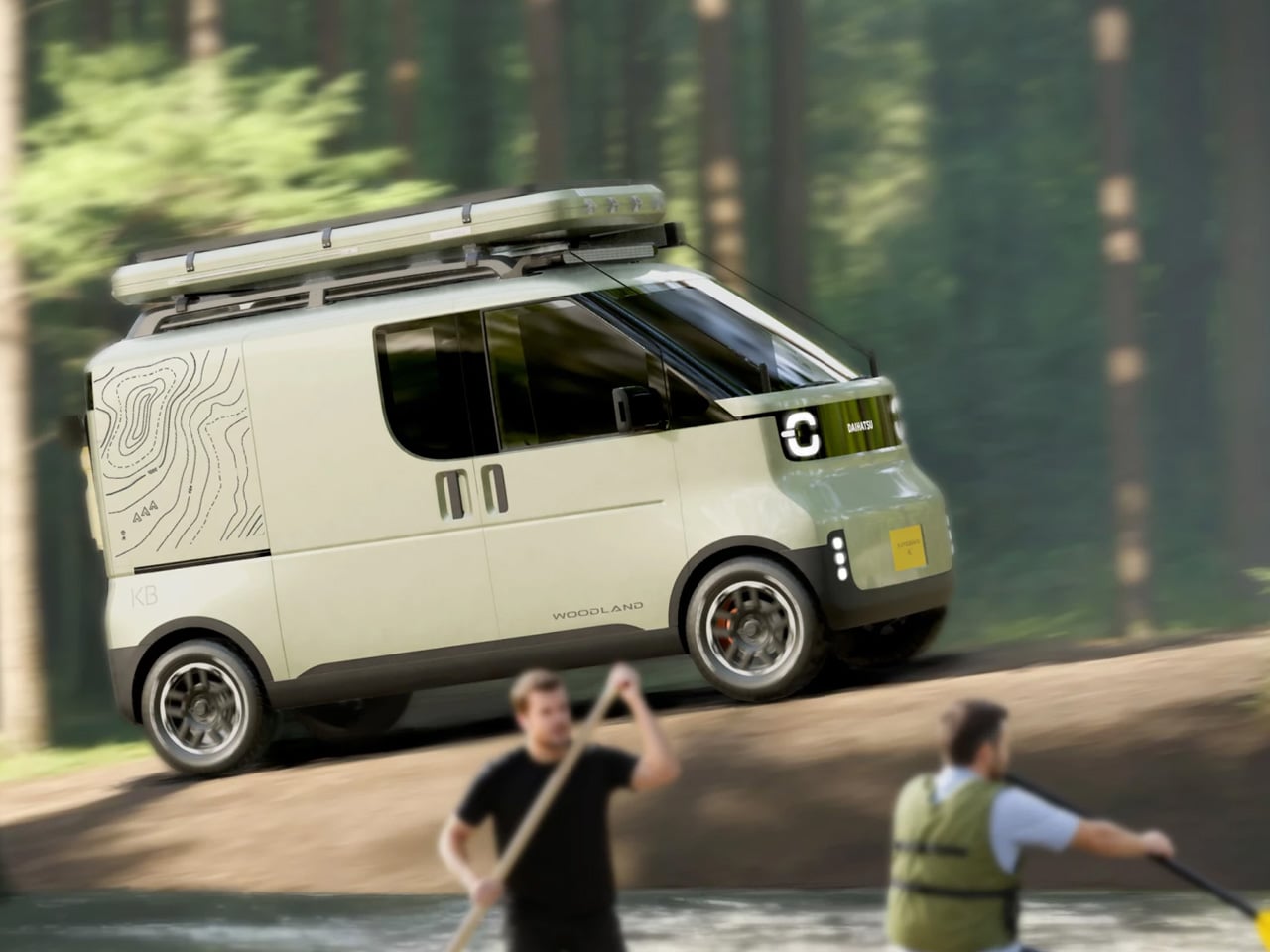
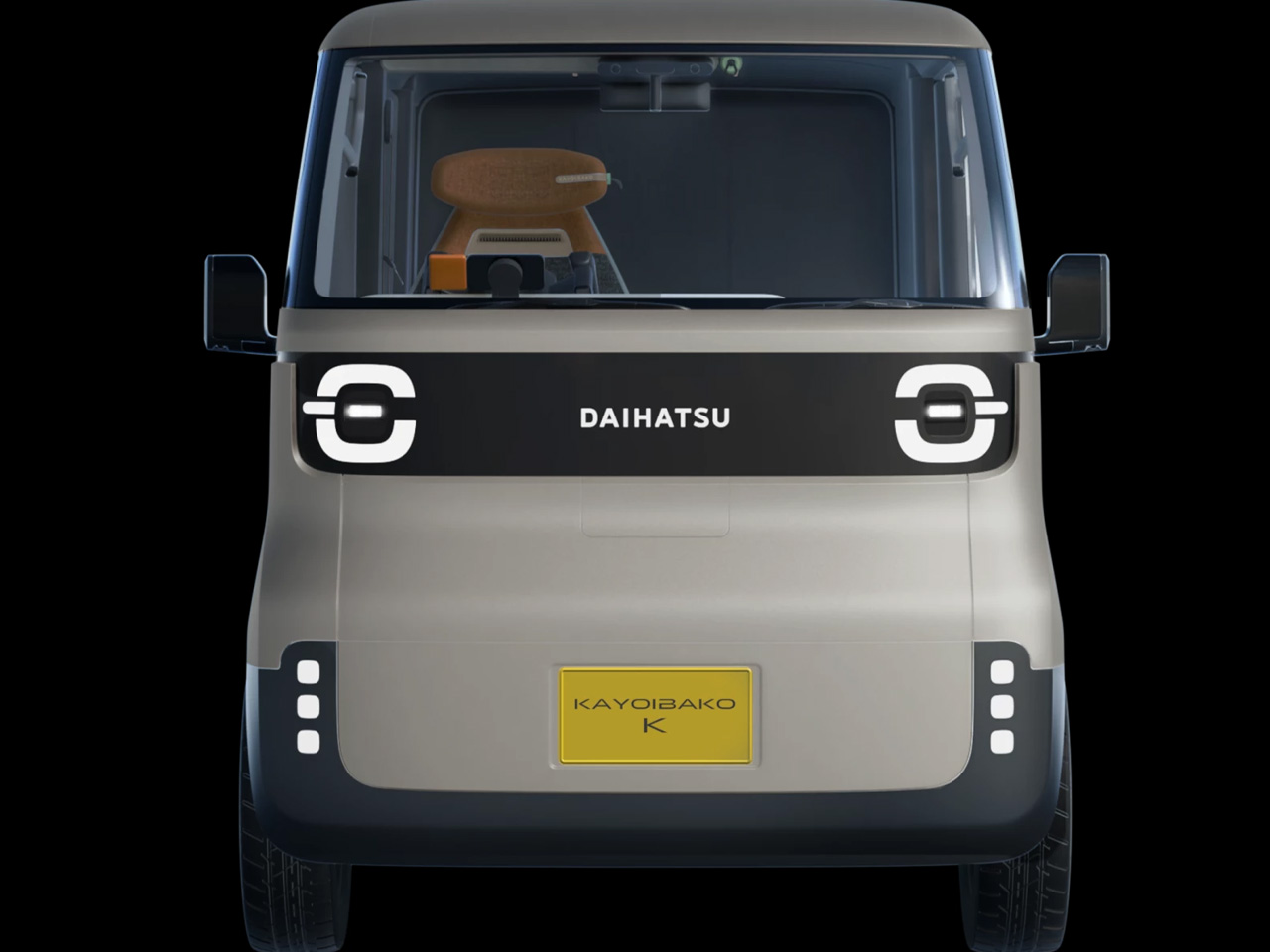
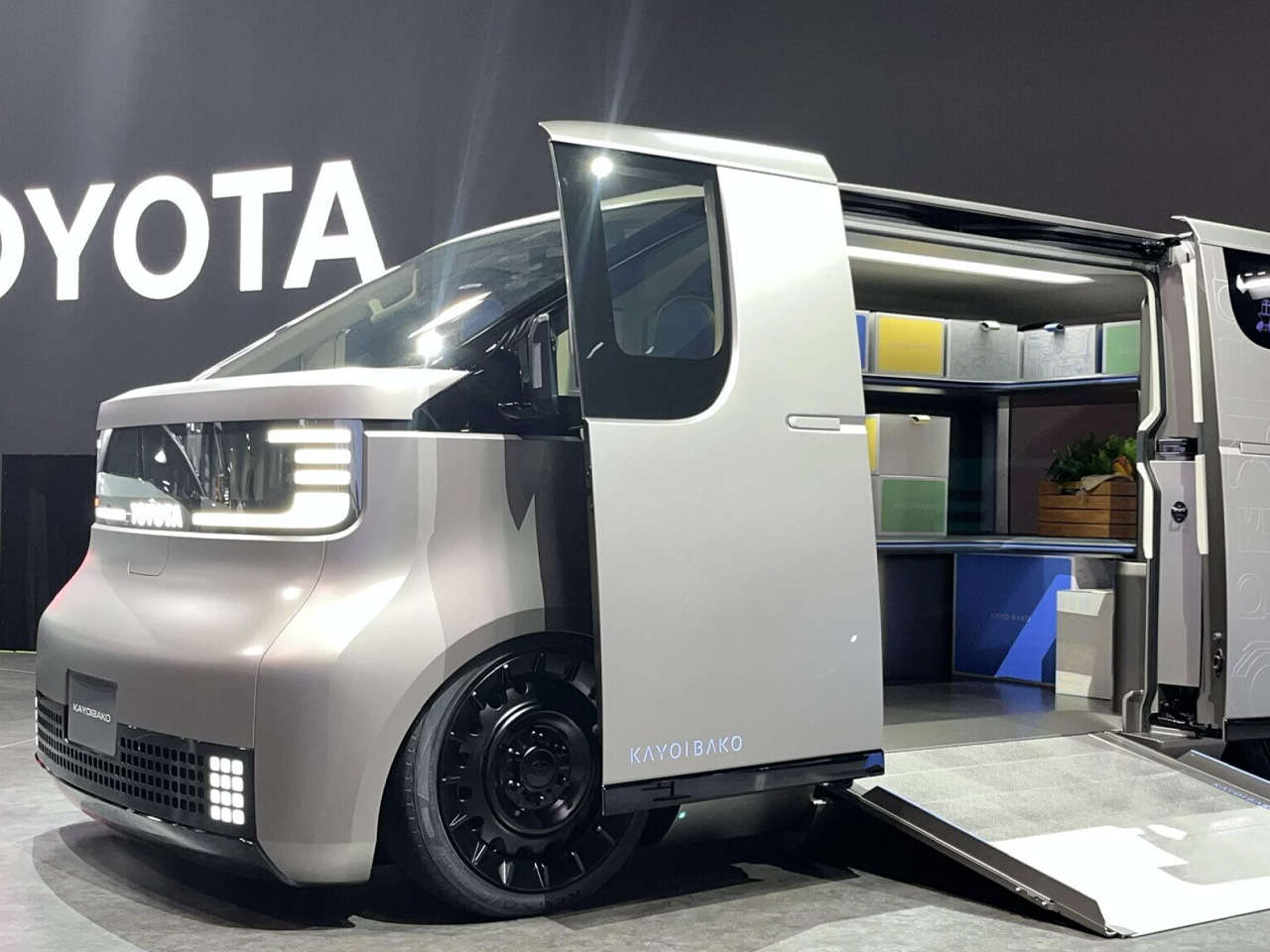
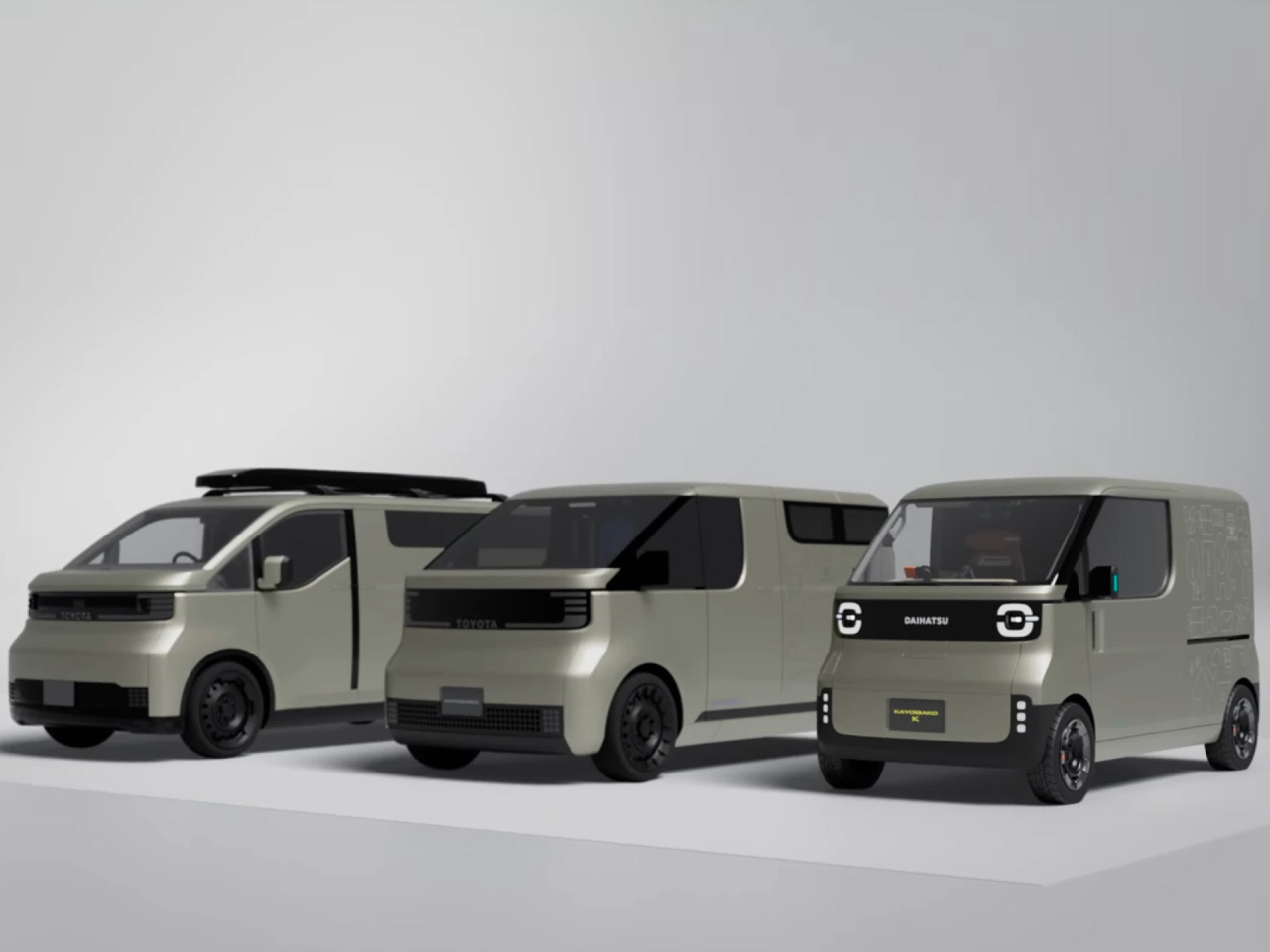
Daihatsu recently took to the Japan Mobility Show to showcase some of the fascinating vehicles it’s building in the small segment. Personally speaking, small cars are incredibly difficult to pull off with all the features and functionalities, let alone the idea of stuffing them with features to fit the camper segment. But that’s what Daihatsu continues to take up as a challenge for itself, which is evident in the showcase of the Toyota Daihatsu Kayoibako-K concept.

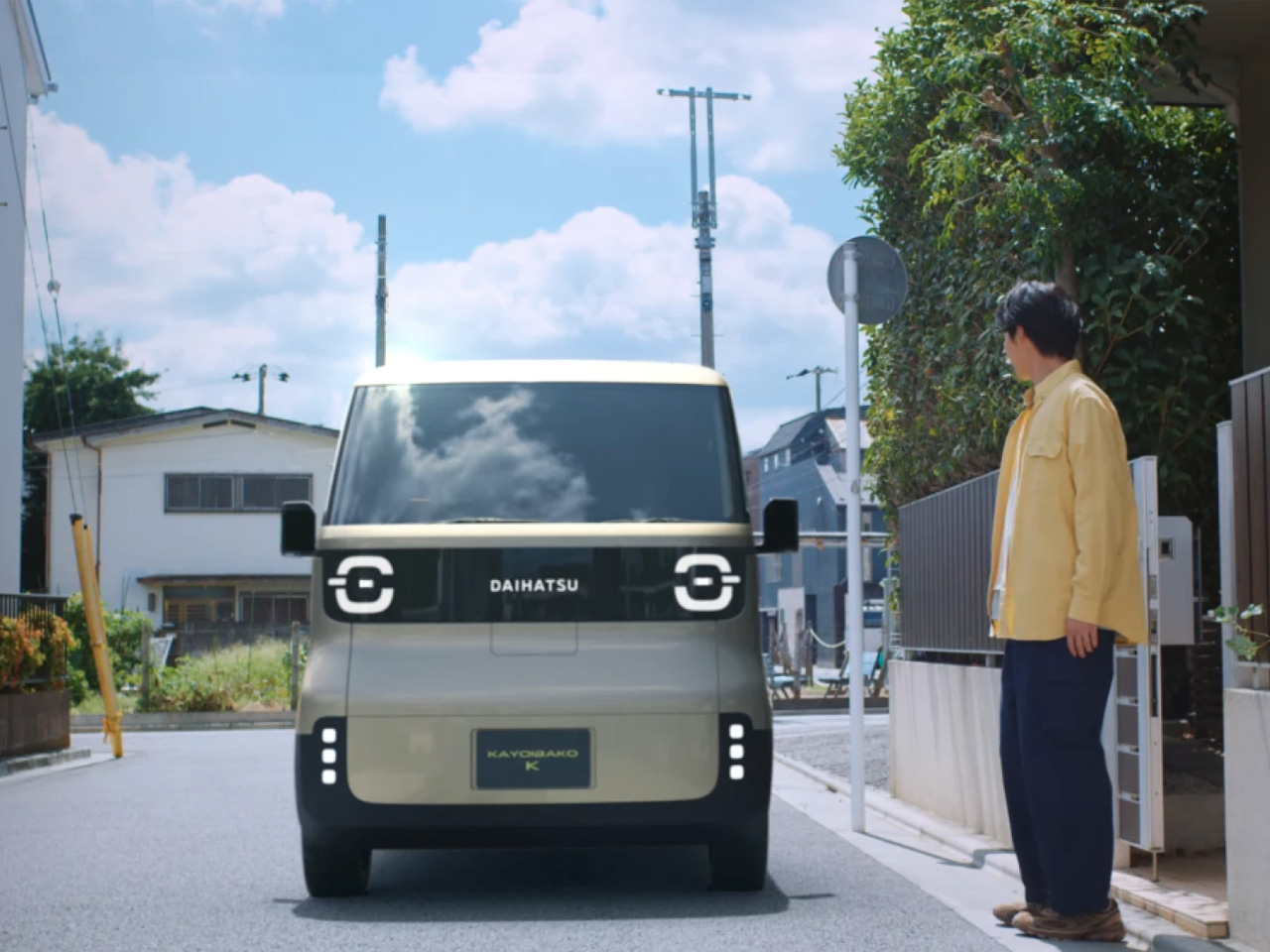
The adorable micro-transporter is showcased in various possible variants, including a camper van, a small family hauler, and as a self-driving adventurer and mobile delivery van. While the concept vehicle is not fully autonomous, the Kayoibako-K concept has been depicted in promotional videos as navigating itself to the driver’s doorsteps, driving autonomously on specific routes, or returning autonomously to its parking spot after a long day of work.

Designer: Daihatsu

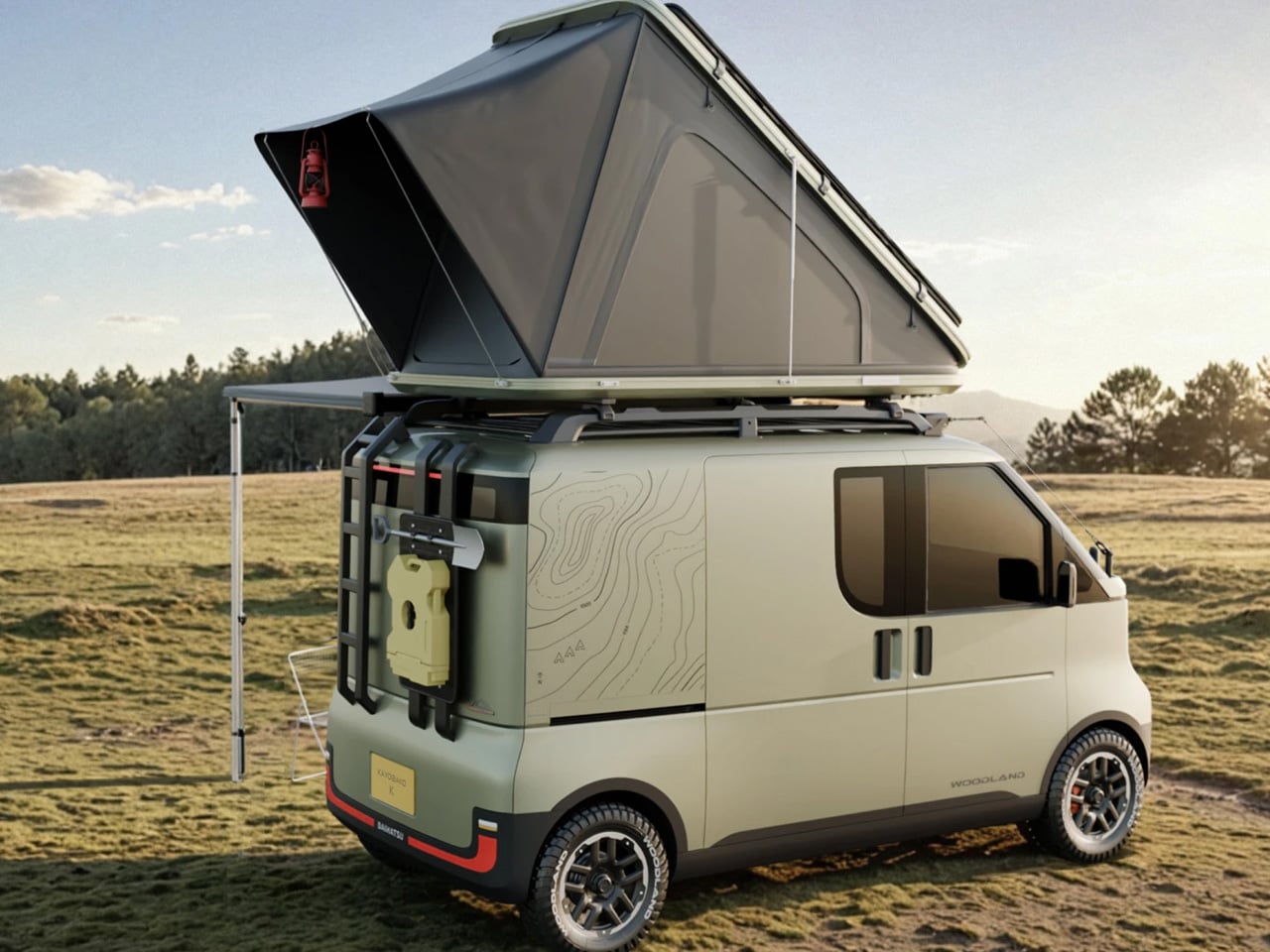
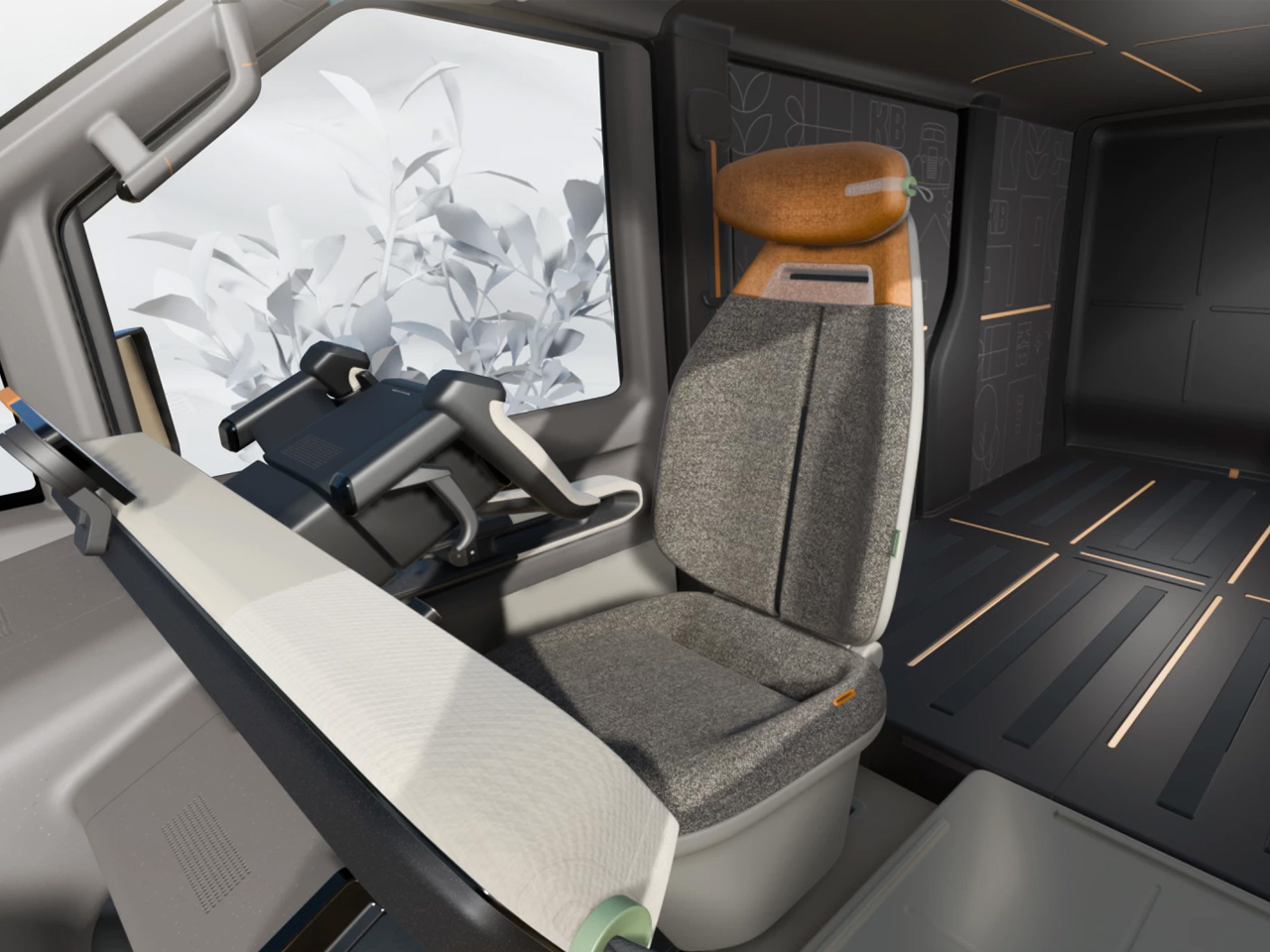
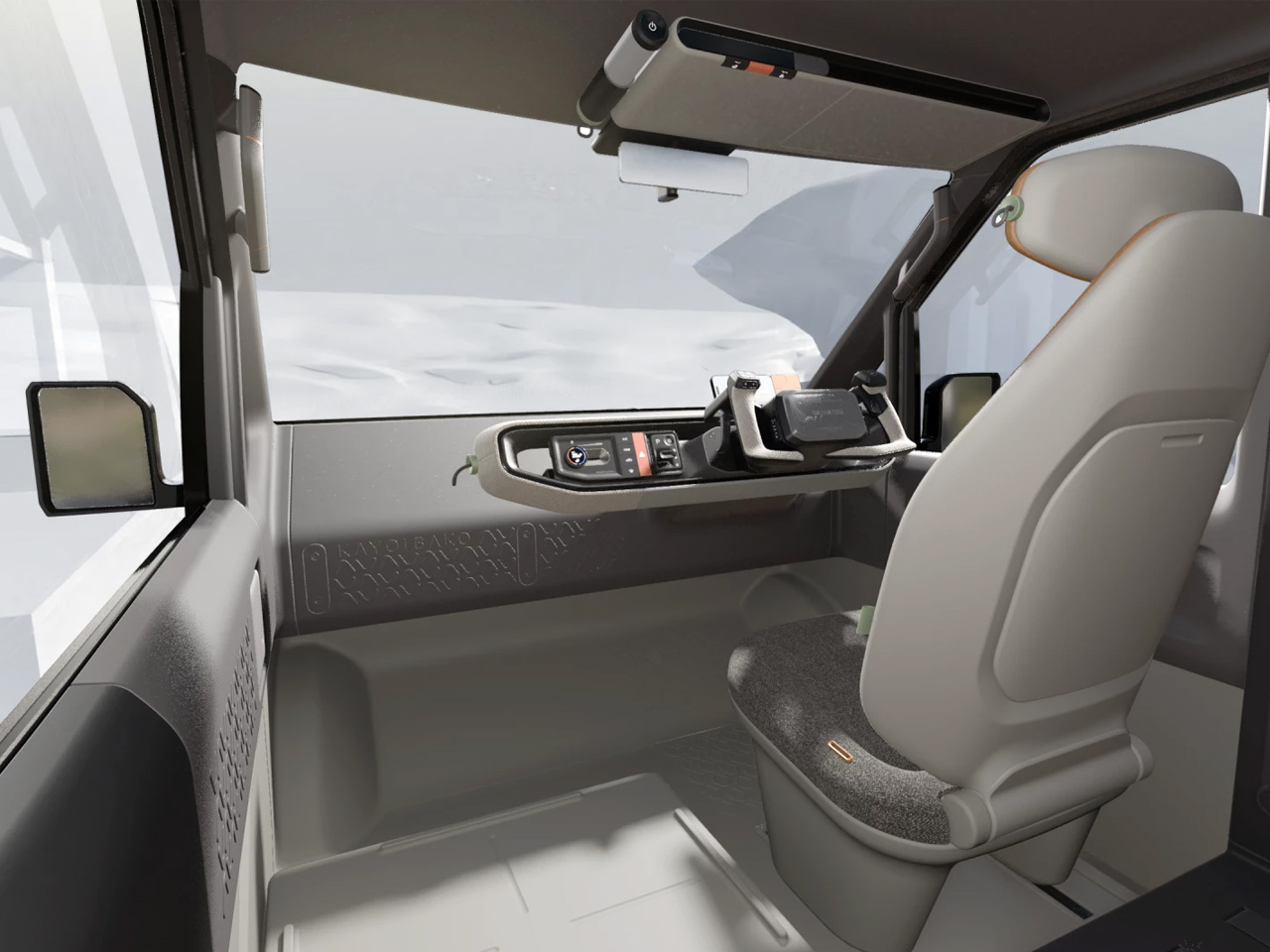
Even though, for those who have been following Toyota’s vision of the micro-van, there wouldn’t be much to distinguish between the Kayoibako-K and the original Kayoibako concept the company showcased at the Japan Mobility Show, two years back in 2023, but the adorable micro-camper is skimmed down in size further to be more adaptable to city roads. Kayoibako is a name Toyota has picked from the name deriving from shipping containers in Japanese, which rely on modular interiors to haul different types of cargo. On similar lines, the Kayoibako-K is a compact concept van and mini-camper, is basically a single vehicle (a platform) that features interchangeable interiors for versatility and enhanced scope of use.

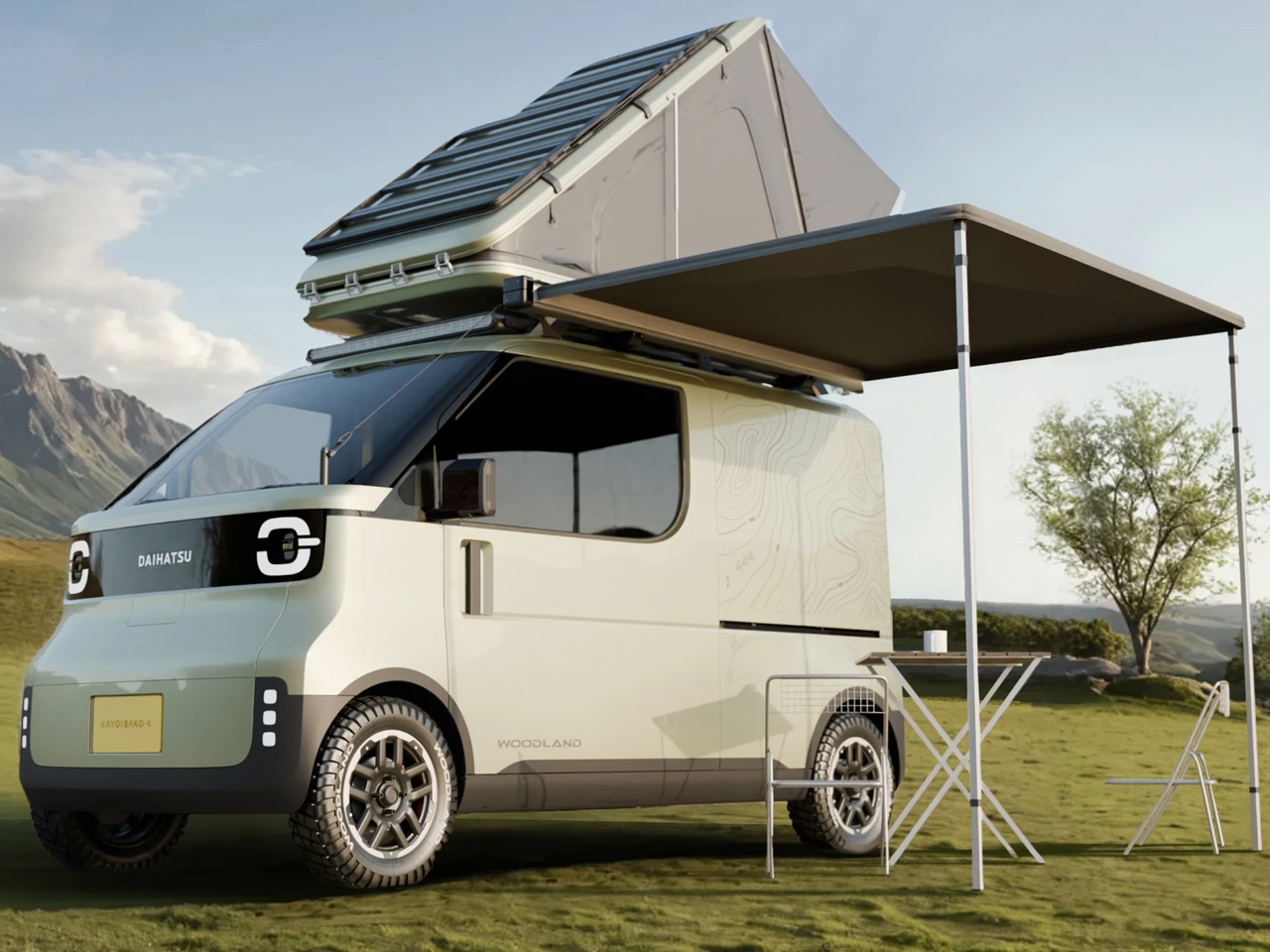
According to the press information received, Kayoibako-K van measures almost 3,395mm, 1,475 mm wide, and 1,475 mm high. It can accommodate 4 people, and is designed to pull off everything from last-mile deliveries in local communities to camping beyond the cityscapes, in of course what is the smallest mini vehicle form factor ever in the mini vehicle-sized commercial vehicles. In the camper version, this little vehicle puts on a roof tent accessible by a ladder, and off-road tires for traveling some unpaved roads on the way to the campsite.

Even though camping has its versatile functionality, the Kayoibako-K is primarily conceptualized with a large rear cabin for delivering packages. The van can work as a mobile storefront, used to carry tools, and even be used, if you may, as a cab to transport elderly passengers in an urban road setting. However, it’s the camper van feature of the Kayoibako-K that impresses me. The van is shown to feature a two-person rooftop tent, and can also be used to haul your gear, including a kayak, to the beach. There is no word on when or if the concept micro camper van will hit the market, but if and when it does, it will definitely slay the onlooker with its graphic detailing and blinky-like headlamps.

The post Toyota unveils Kayoibako-K micro camper van concept that can be used as self-driving mobile storefront first appeared on Yanko Design.

Forget the e-tron GT; This Is the Electric Audi We Really Want To See

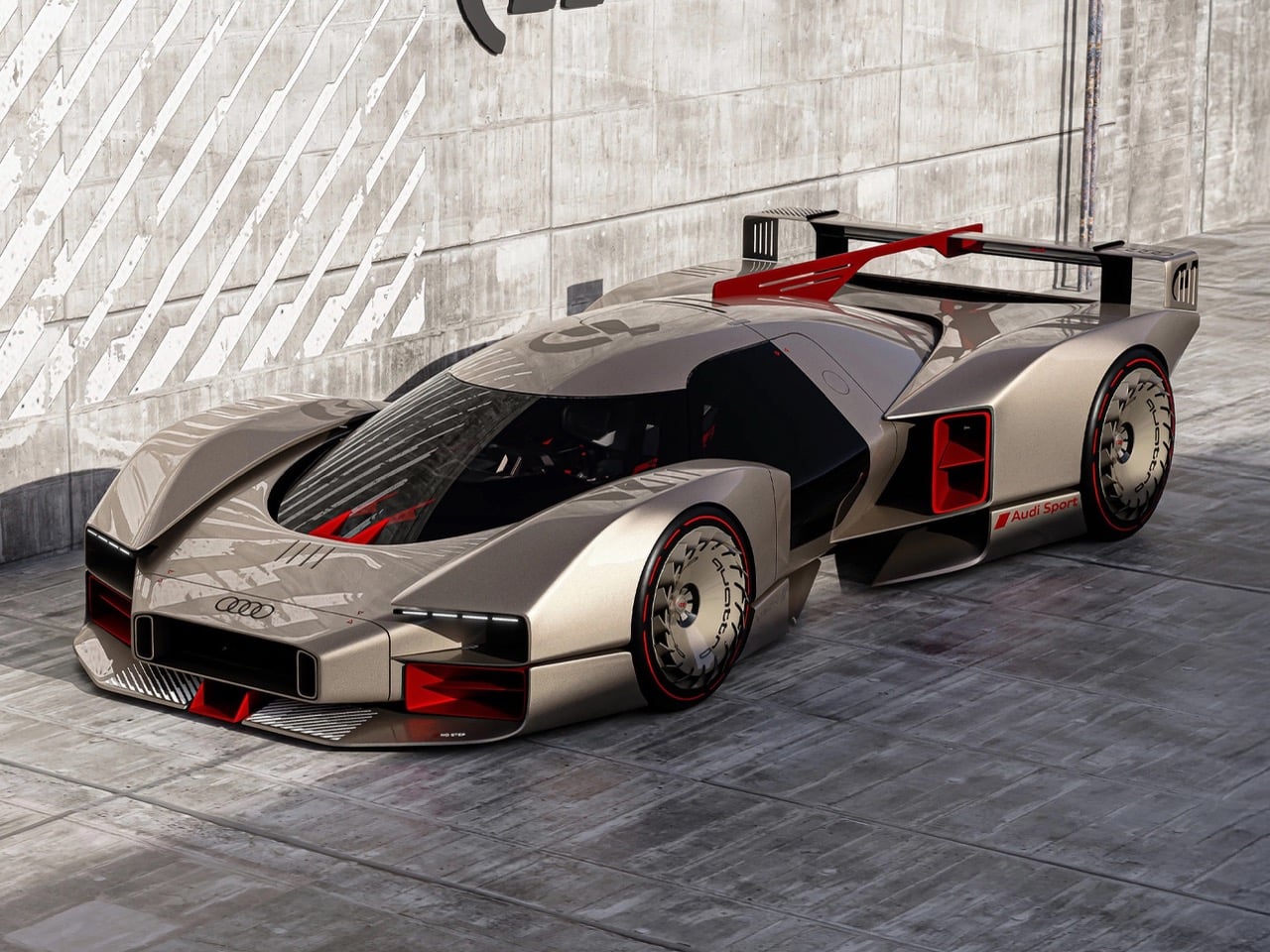
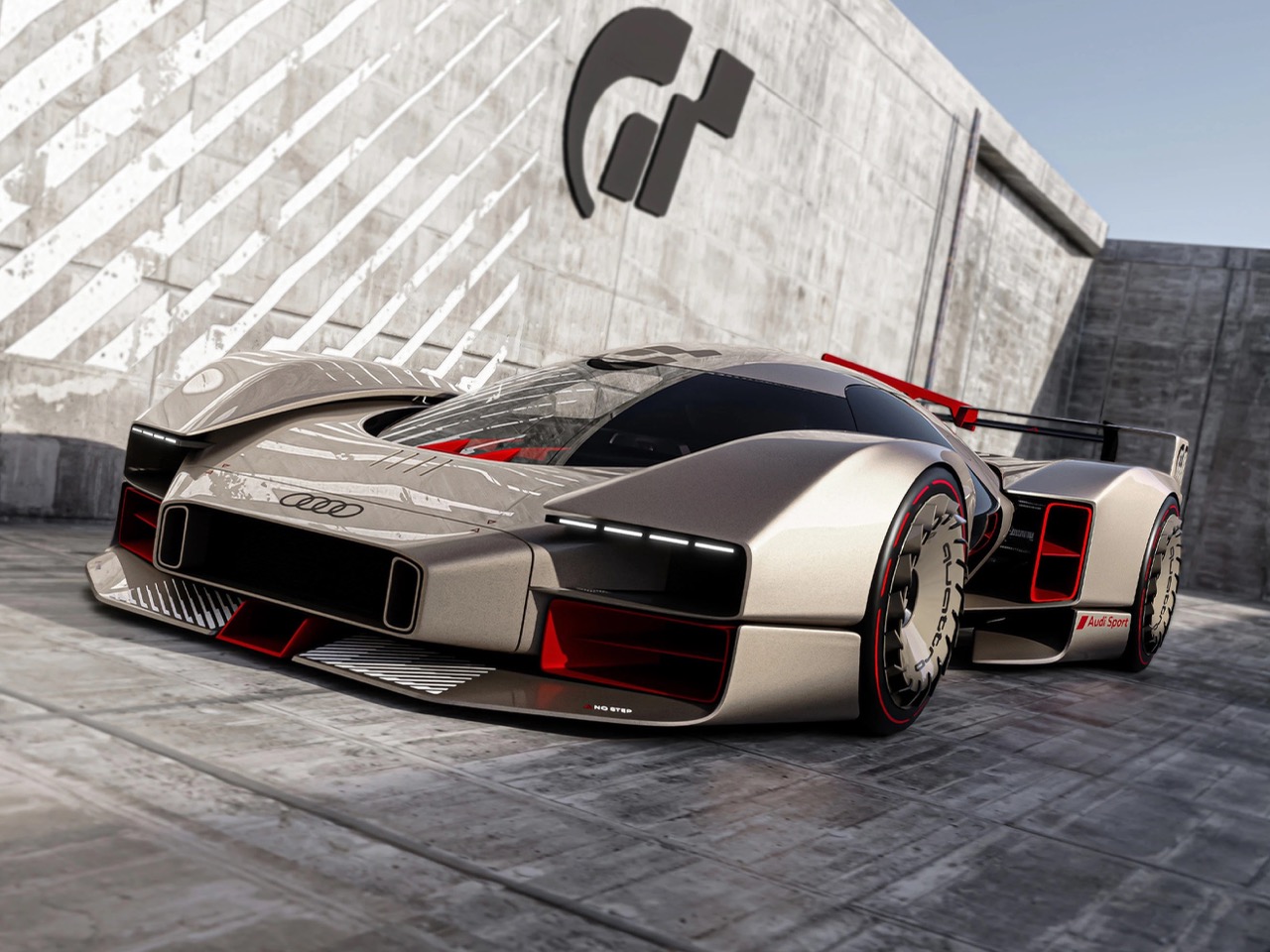
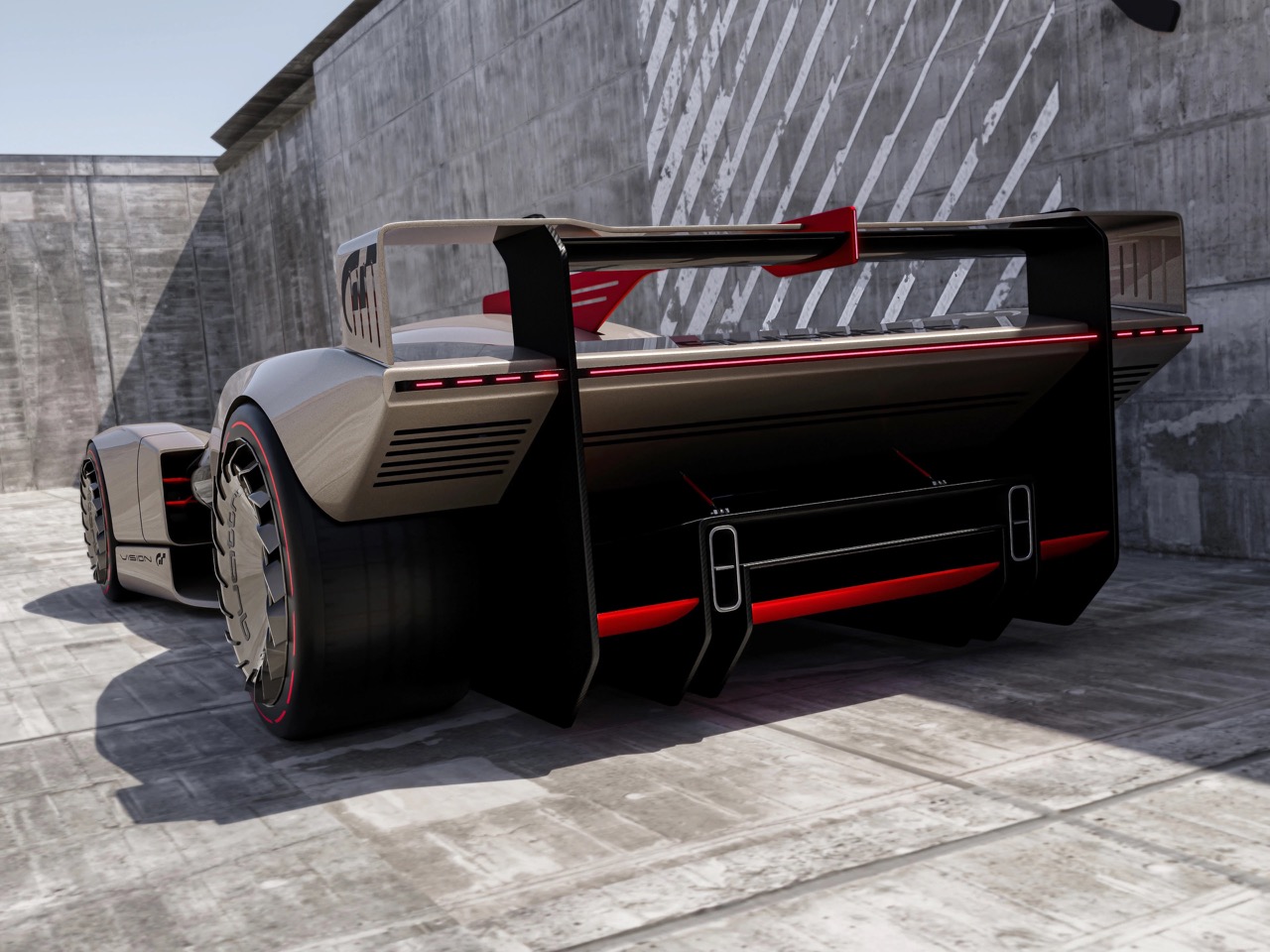
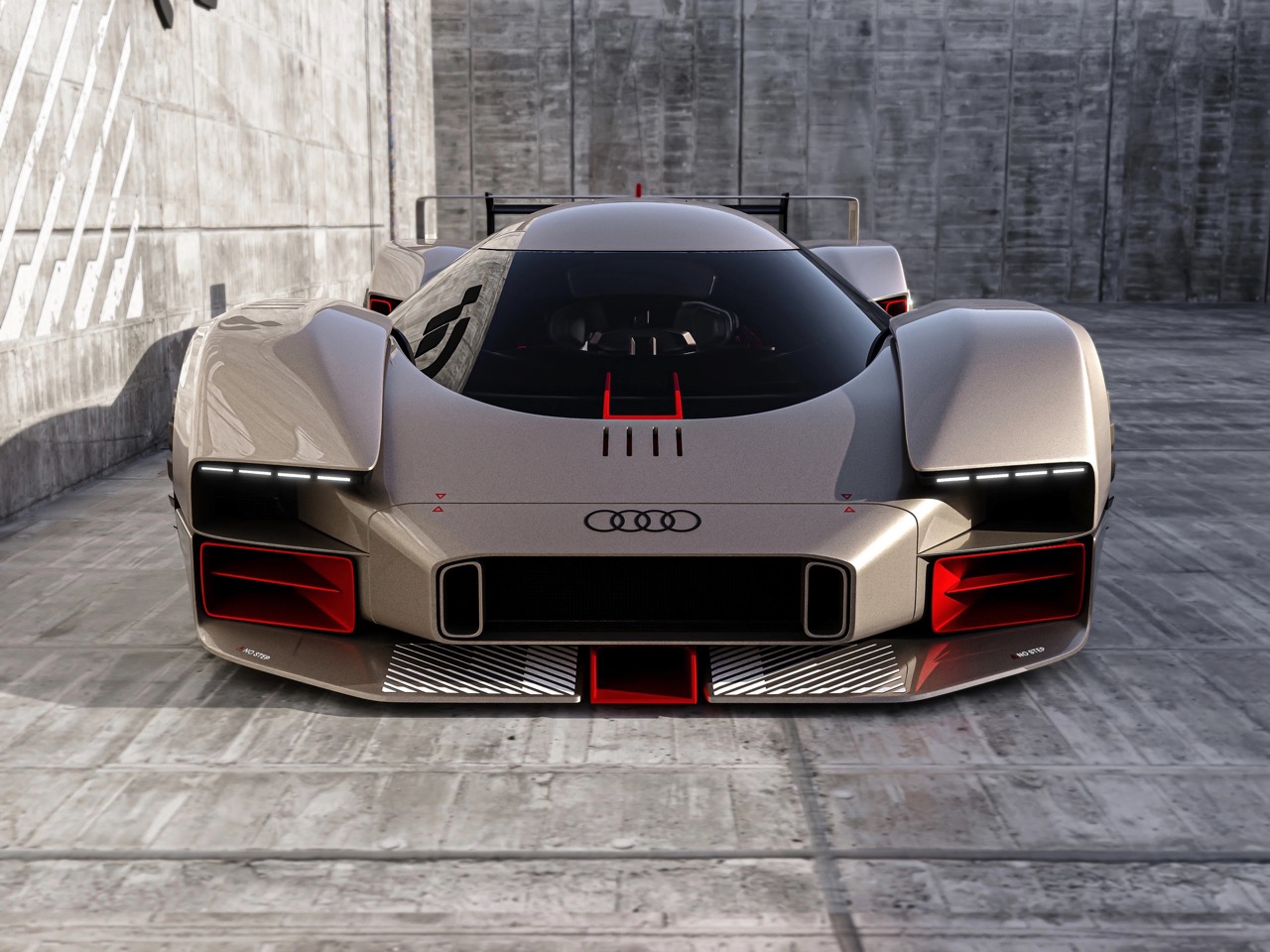
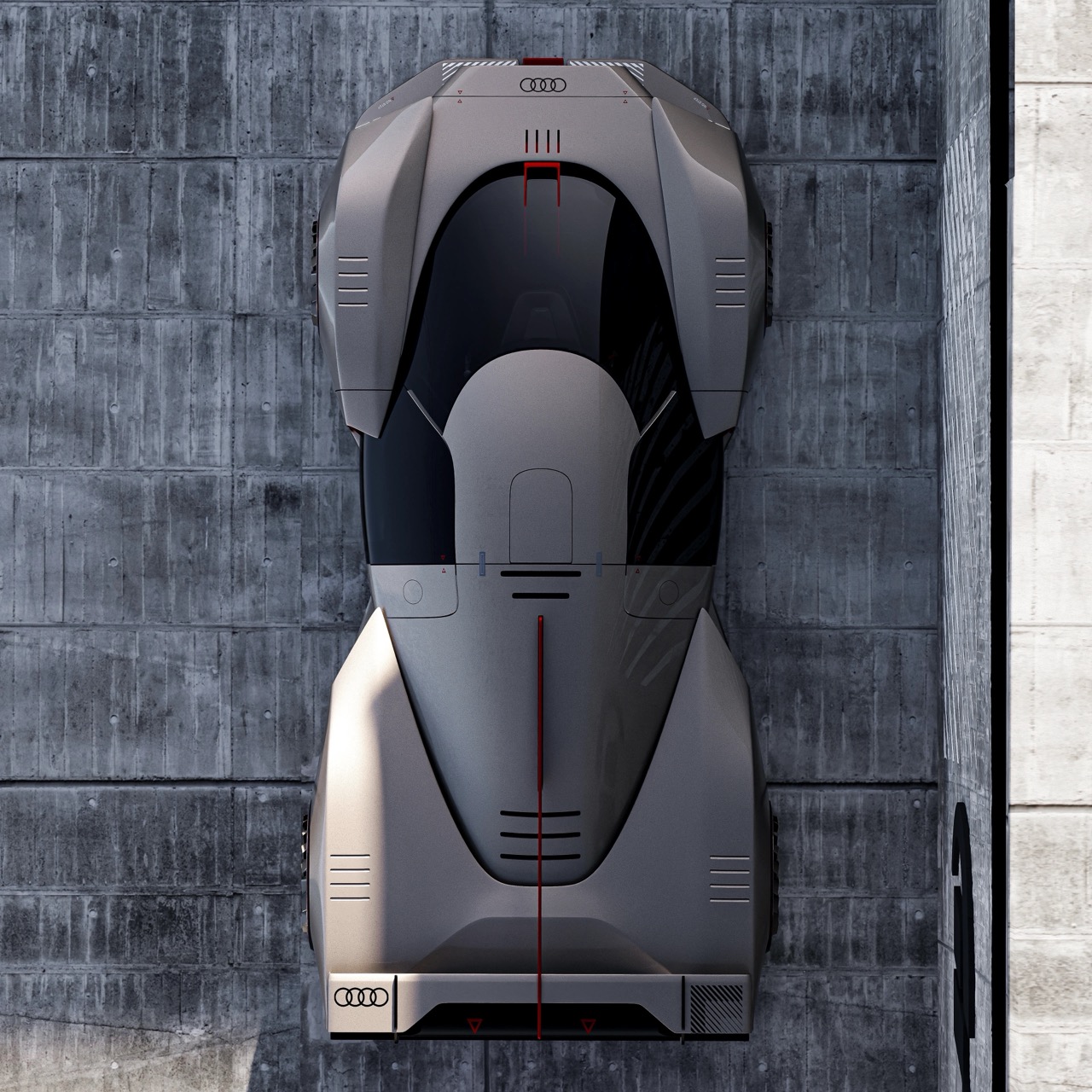
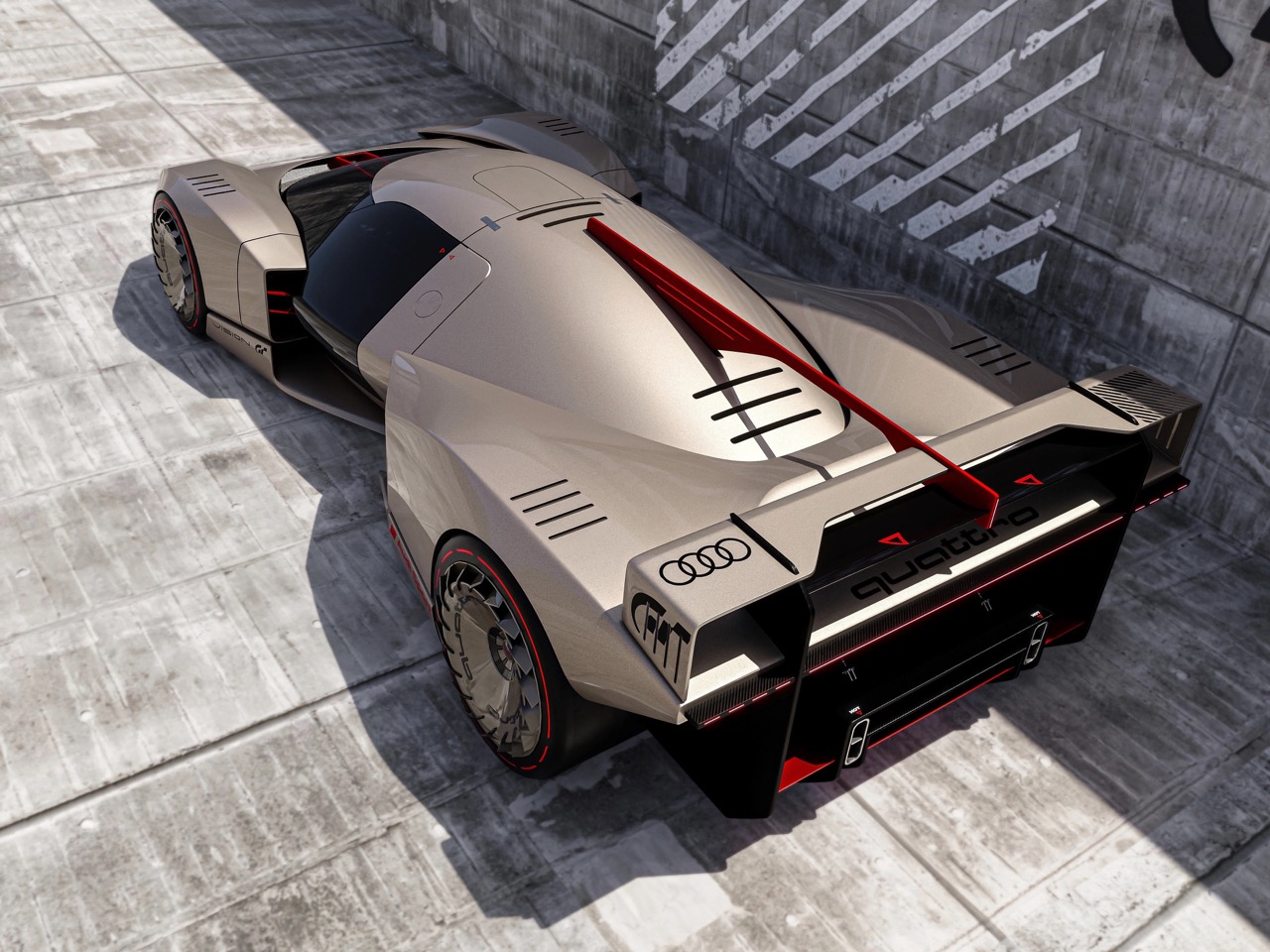
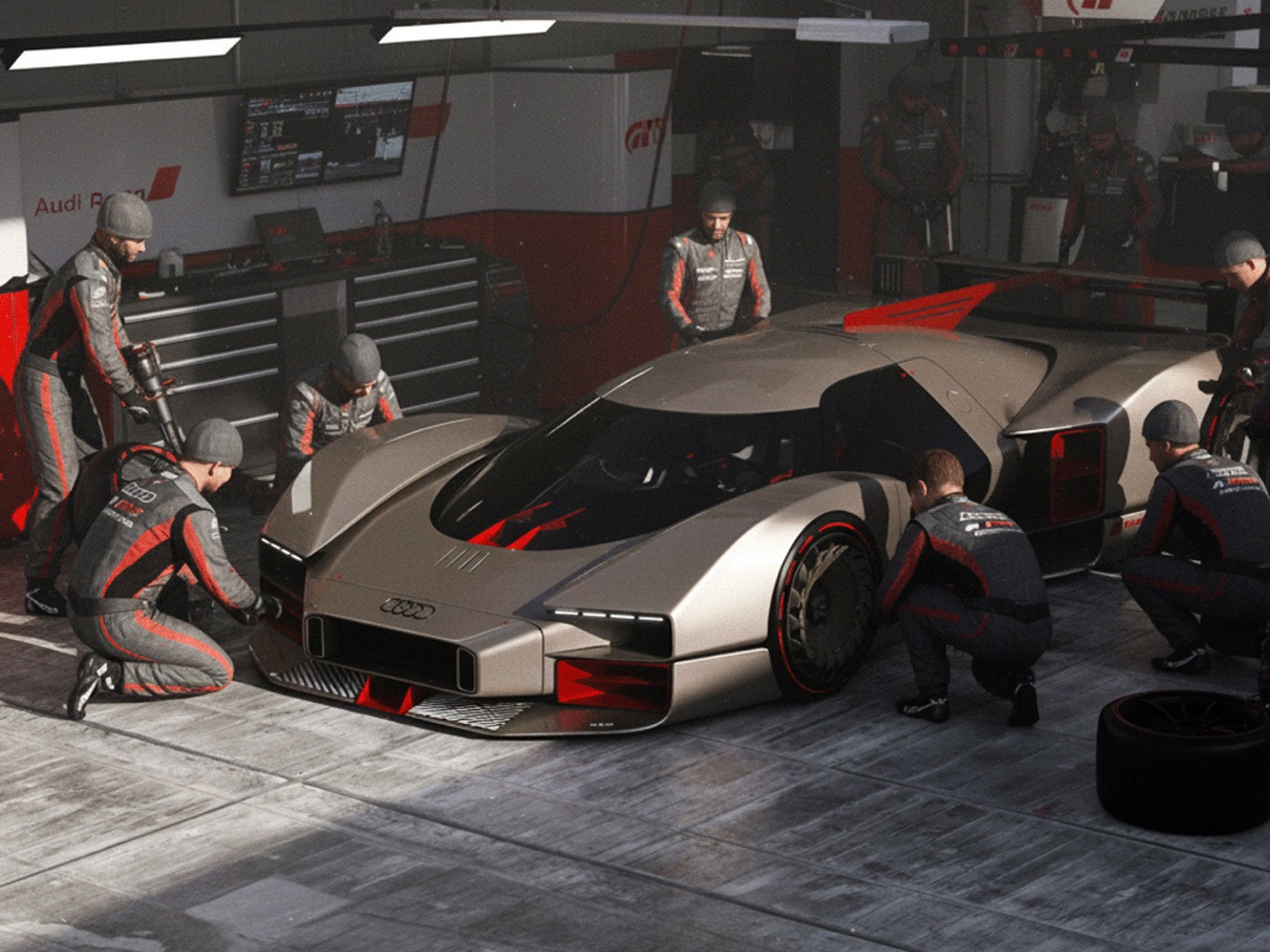
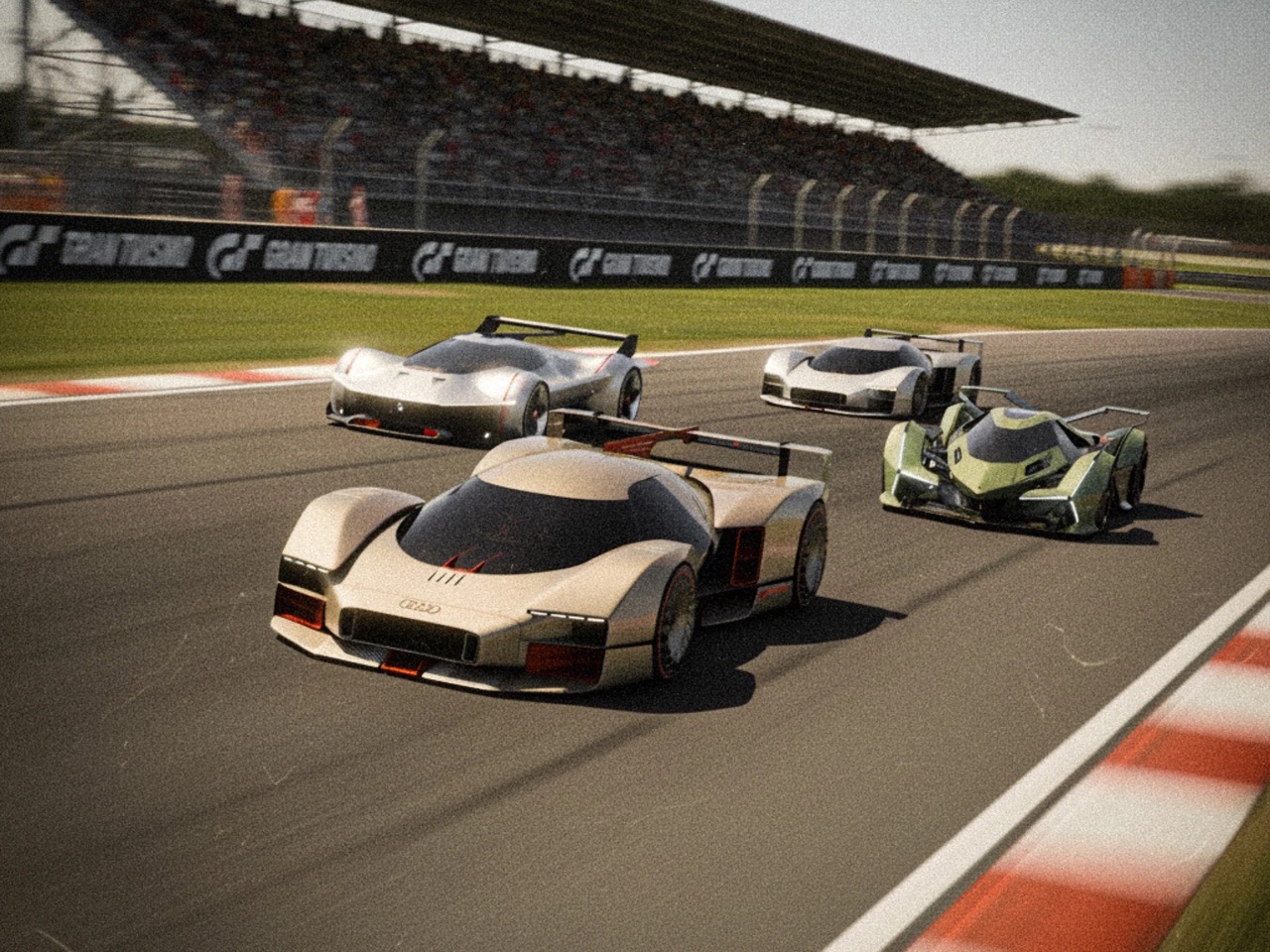
What happens when one of Germany’s most storied automakers goes off script and jumps headlong into the future? The answer is the Audi 20quattro Vision GT: a concept racer that looks as if it’s escaped from a sci-fi film and landed straight into the world of Gran Turismo. More than just a design study, it’s a bold experiment that explores how Audi’s DNA translates into a world where the only limits are those of imagination.

Now, before you start searching for this in the latest Gran Turismo update, it’s crucial to know that this isn’t an official release from Ingolstadt. This stunning piece of digital sculpture is the work of independent designer Gabriel Naretto, a personal project that serves as a powerful “what if” scenario. He’s taken the core tenets of Audi’s design philosophy and motorsport heritage, plugged them into an amplifier, and cranked the volume to eleven. The result is something that feels authentically Audi, yet completely untethered from the constraints of reality, a digital ghost of a race car we all wish was real.

Designer: Gabriel Naretto

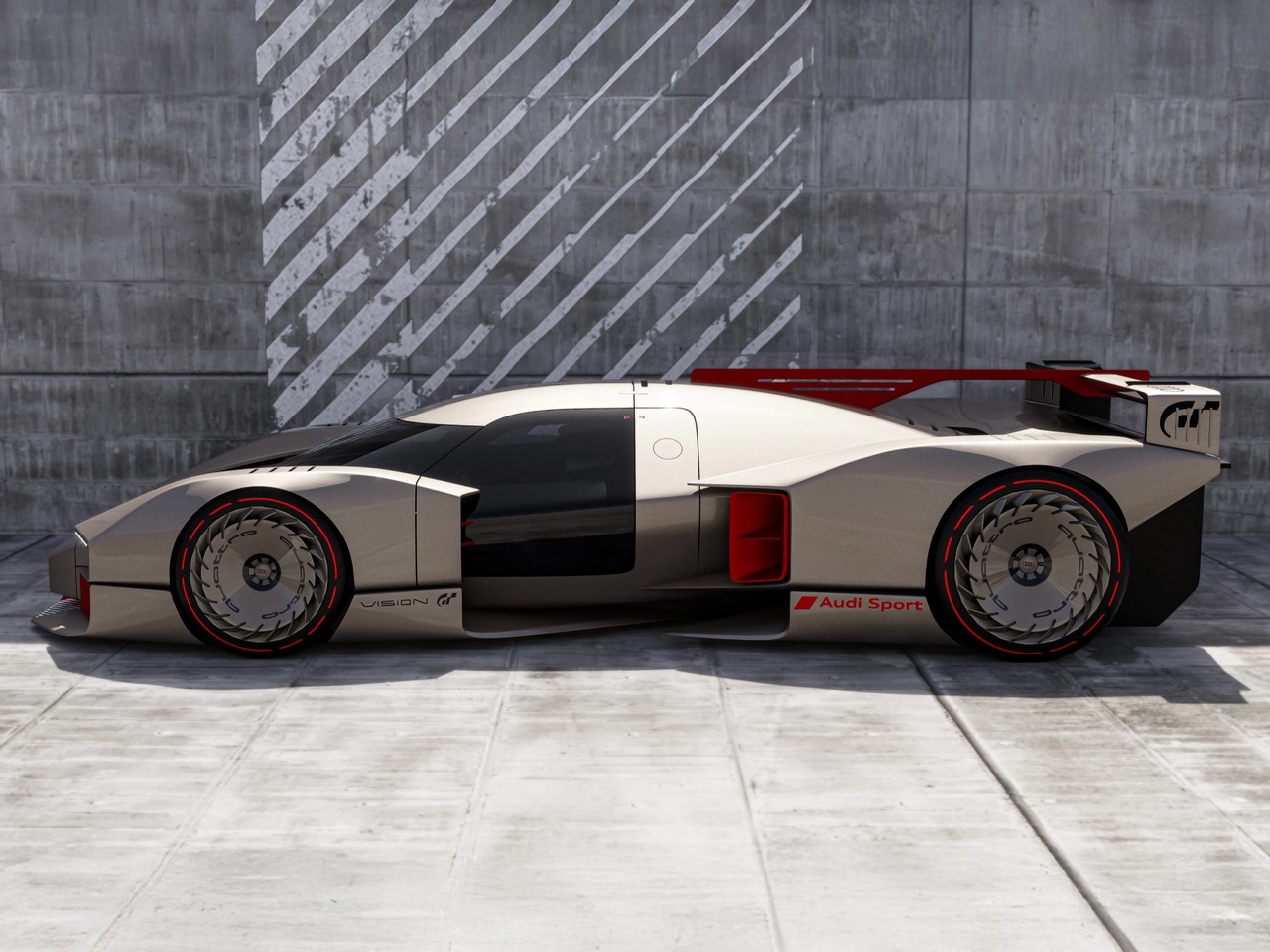
The car’s form language is an exercise in geometric aggression, a clear evolution of the sharp, technical lines championed by Audi’s current design chief, Marc Lichte. Naretto has stripped away any hint of superfluous curvature, leaving behind a surface composed of taut, flat planes and brutally sharp creases that look like they were carved from a single block of metal. Its low, impossibly wide stance and cab-forward canopy are direct descendants of modern Le Mans prototypes, particularly Audi’s own R18 e-tron. This machine is designed to look like it’s slicing through the air even when standing still, a pure expression of aerodynamic intent.

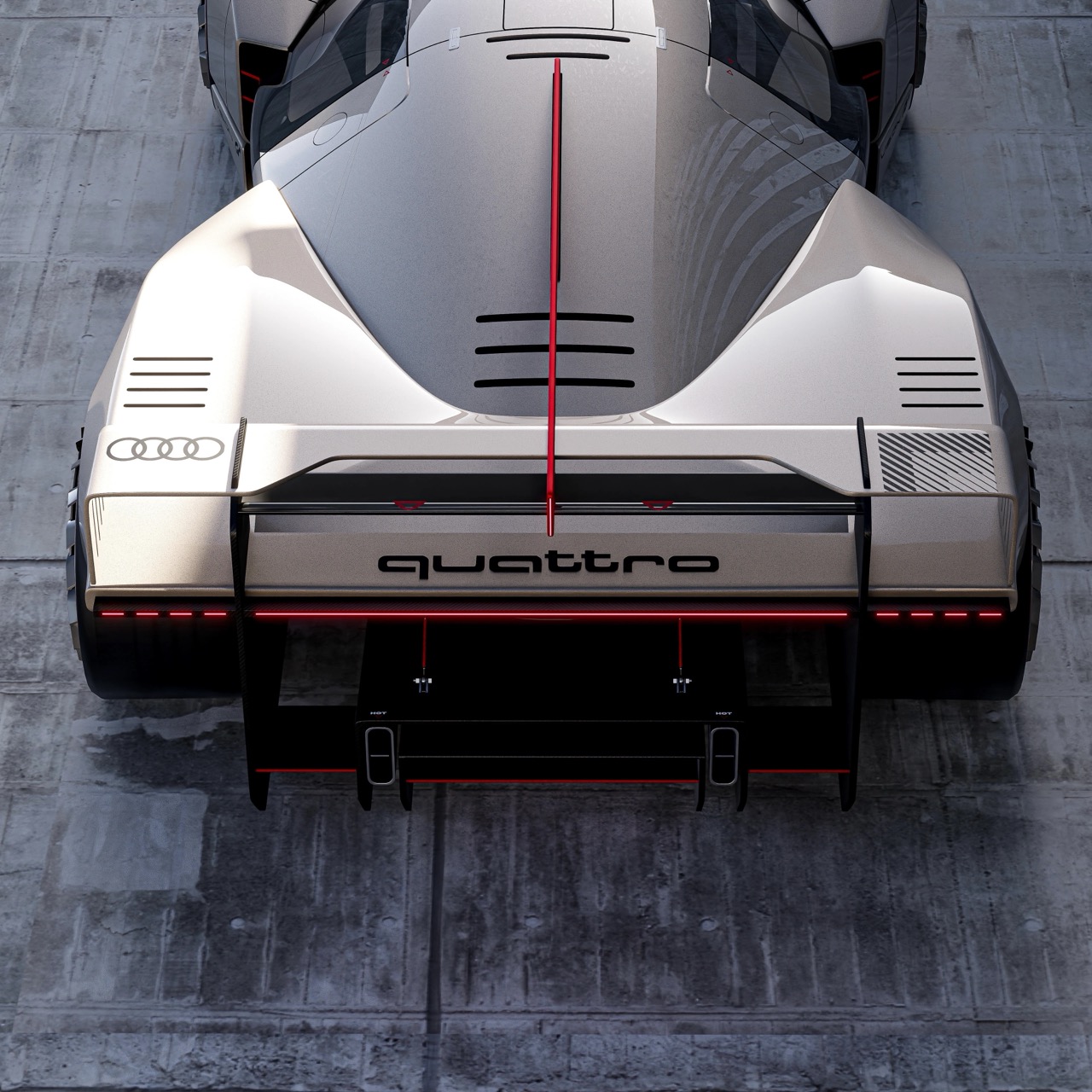
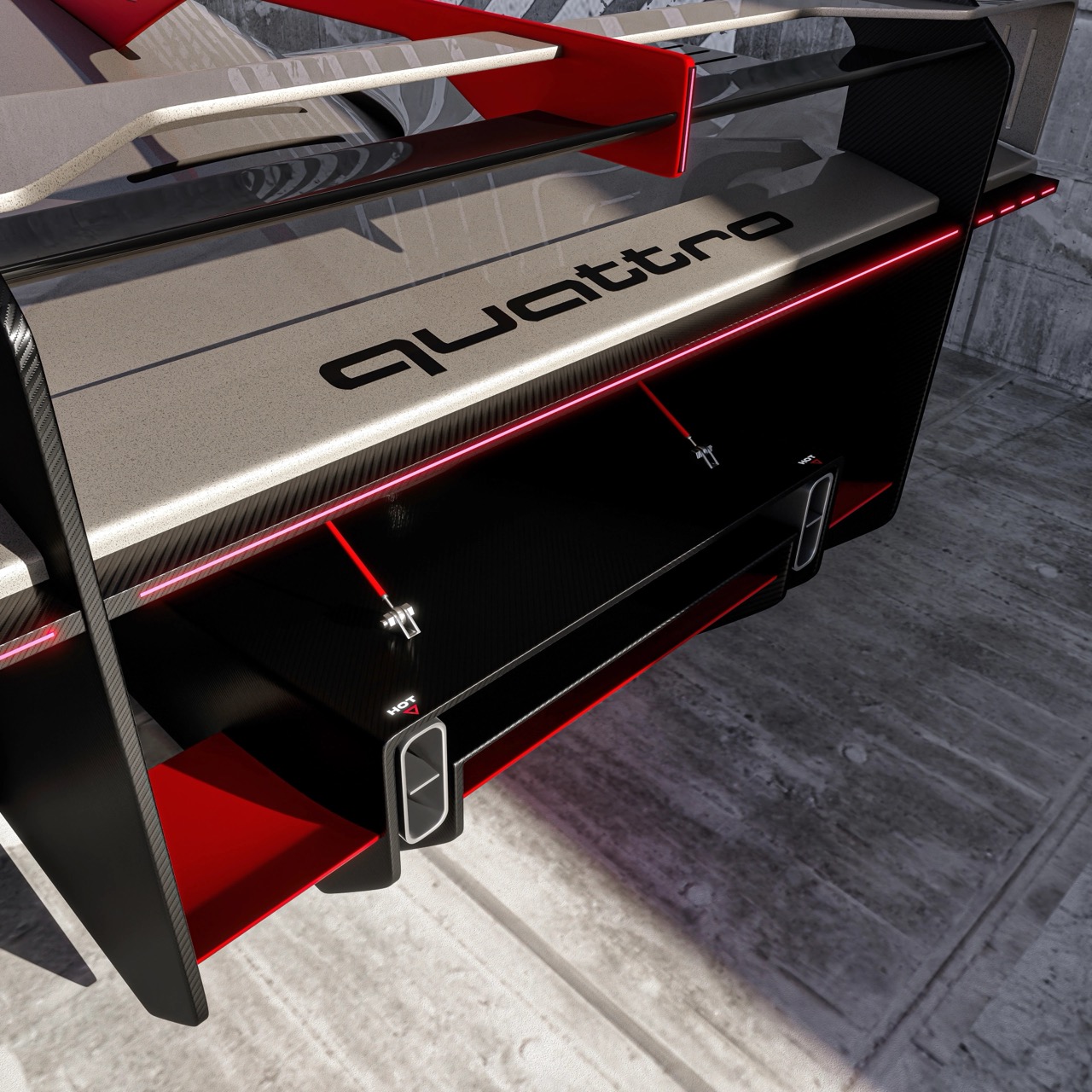
Naretto clearly spent as much time thinking about airflow as he did about aesthetics. The entire body is a functional aerodynamic device, from the massive front splitter that channels air under the car to the multi-layered rear wing and colossal rear diffuser. The deep venturi tunnels running along the sides are designed to generate immense downforce, effectively sucking the car onto the pavement at speed. Even the enclosed wheel designs, with their turbine-like fins, suggest a meticulous focus on managing turbulent air and cooling the brakes. Every vent, every winglet, every cutout serves a purpose, giving the design a layer of engineering credibility that makes the fantasy feel plausible.

That “quattro” badge on the rear isn’t just for show, either. The entire concept is a hat tip to Audi’s most mythic era: the Group B rally monsters of the 1980s. You can see the DNA of the original Sport Quattro S1 E2 in the squared-off, box-flare wheel arches and the car’s overall defiant posture. Naretto has masterfully translated that iconic, almost brutish functionality into a futuristic context. It evokes a feeling of raw, untamed power, a reminder that before Audi became known for sophisticated luxury sedans, it built all-wheel-drive terrors that dominated the world’s most dangerous rally stages.

This is where the “Vision Gran Turismo” moniker becomes so fitting, even unofficially. Digital platforms are the perfect canvas for such an uncompromising vision, free from the pesky realities of production costs, safety regulations, and pedestrian impact standards. One can only speculate on the powertrain, but a concept this forward-thinking screams all-electric. Imagine a quad-motor setup, one for each wheel, delivering instantaneous torque vectoring and a combined output somewhere north of 1,200 horsepower. In the virtual world, such figures are not just possible; they are expected, and Naretto’s design provides the perfect shell for that kind of imaginary performance.

Of course, a machine that looks this fast needs some theoretical firepower to back it up. While Naretto hasn’t published a spec sheet, one can imagine a fully electric powertrain in line with Audi’s e-tron direction. A quad-motor setup, one for each wheel, would be the only logical choice for a vehicle bearing the quattro name in the 2040s. We could be talking about a combined output of over 1,400 horsepower and an instantaneous torque vectoring system so advanced it would make current systems feel archaic. Not that such specs exist, but why stop dreaming, right?

The post Forget the e-tron GT; This Is the Electric Audi We Really Want To See first appeared on Yanko Design.
Honda EV Outlier Concept marks the electrified future of the brand

Honda has just teased a glimpse of the future of the brand’s two-wheeler electric vision at the Japan Mobility Show. The future-forward ride showcased at the auto show evokes typical Akira vibes with a long-slung profile and was most likely inspired by the 80s anime movie.

Dubbed the EV Outlier Concept, the motorcycle is a sneak peek into the brand’s gradual detour from internal-combustion heritage. Its most striking feature is the installation of electric motors directly in the front and rear wheels, eliminating the conventional chain or belt drive and enabling truly free packaging around the chassis. By placing the propulsion at the wheels, Honda frees up space in the frame for batteries and centralizes weight for improved balance.

Designer: Honda

From the styling perspective, the concept is both minimalist and arresting. Honda describes key design cues as “Gliding, Ecstasy and Low.” Gliding refers to the smooth, quiet roll of an EV; ecstasy to the instant-on torque and responsiveness of electric drive; and low to the dramatically lowered seat and rider eye-line that give a new posture and presence. The front fascia features a continuous LED light band, the tail is tightly integrated into the form, and foot-pegs are set further forward than typical road bikes to establish a relaxed yet futuristic riding stance.

Mechanically, the EV Outlier Concept also deviates from the norm: at the front, instead of conventional telescopic forks, it uses a double-wishbone arrangement; at the rear, a low-mounted mono-shock linkage further centralizes mass. The open-center frame design offers structural freedom and better packaging of the battery pack, while the in-wheel motor layout allows Honda to adjust torque distribution between front and rear, supporting an all-wheel drive possibility.

However, Honda has not yet released detailed technical specifications such as battery capacity, motor output, range, or pricing. This is a concept designed to explore future design and engineering directions rather than an imminent production model. The company emphasizes that this vehicle is aligned with its broader goal of achieving full carbon-neutral products and operations by 2050.

The EV Outlier brings together design daring and engineering boldness: a low-slung, mono-spine form that feels part sci-fi, part high-performance machine; in-wheel motors that break the chain drive tradition; torque vectoring capability; and a riding experience re-imagined for electric propulsion. More than anything else,  the bike looks absolutely gorgeous.


The post Honda EV Outlier Concept marks the electrified future of the brand first appeared on Yanko Design.
7 Best Adventure Rigs Of October 2025 Conquering Fall’s Toughest Trails

The call of the wild grows stronger as autumn paints landscapes in brilliant hues, beckoning outdoor enthusiasts to venture beyond familiar territories. This fall presents exceptional opportunities for adventure seekers to explore remote destinations with cutting-edge recreational vehicles designed to handle diverse terrains and weather conditions. From massive fifth wheels that accommodate entire groups to nimble pop-up trailers perfect for solo expeditions, today’s adventure-ready automotives blend rugged capability with modern comfort.

The evolution of outdoor recreation vehicles has reached new heights, offering solutions for every type of adventurer. Whether you’re planning extended expeditions through challenging backcountry or seeking comfortable basecamp setups for weekend getaways, these seven exceptional designs represent the pinnacle of adventure-ready engineering. Each vehicle addresses specific outdoor needs while maintaining the reliability and durability required for serious exploration.

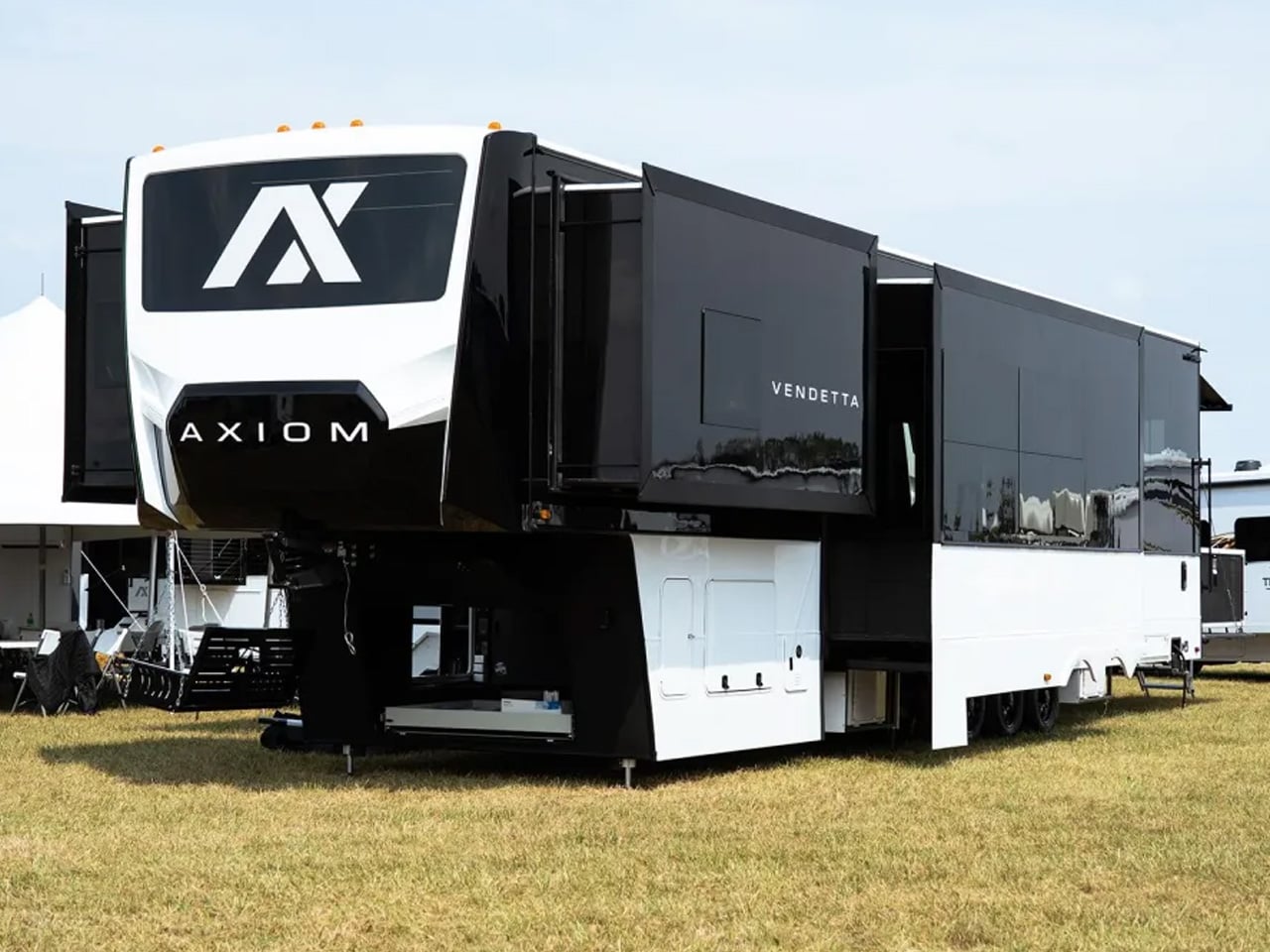
1. Axiom RV Vendetta

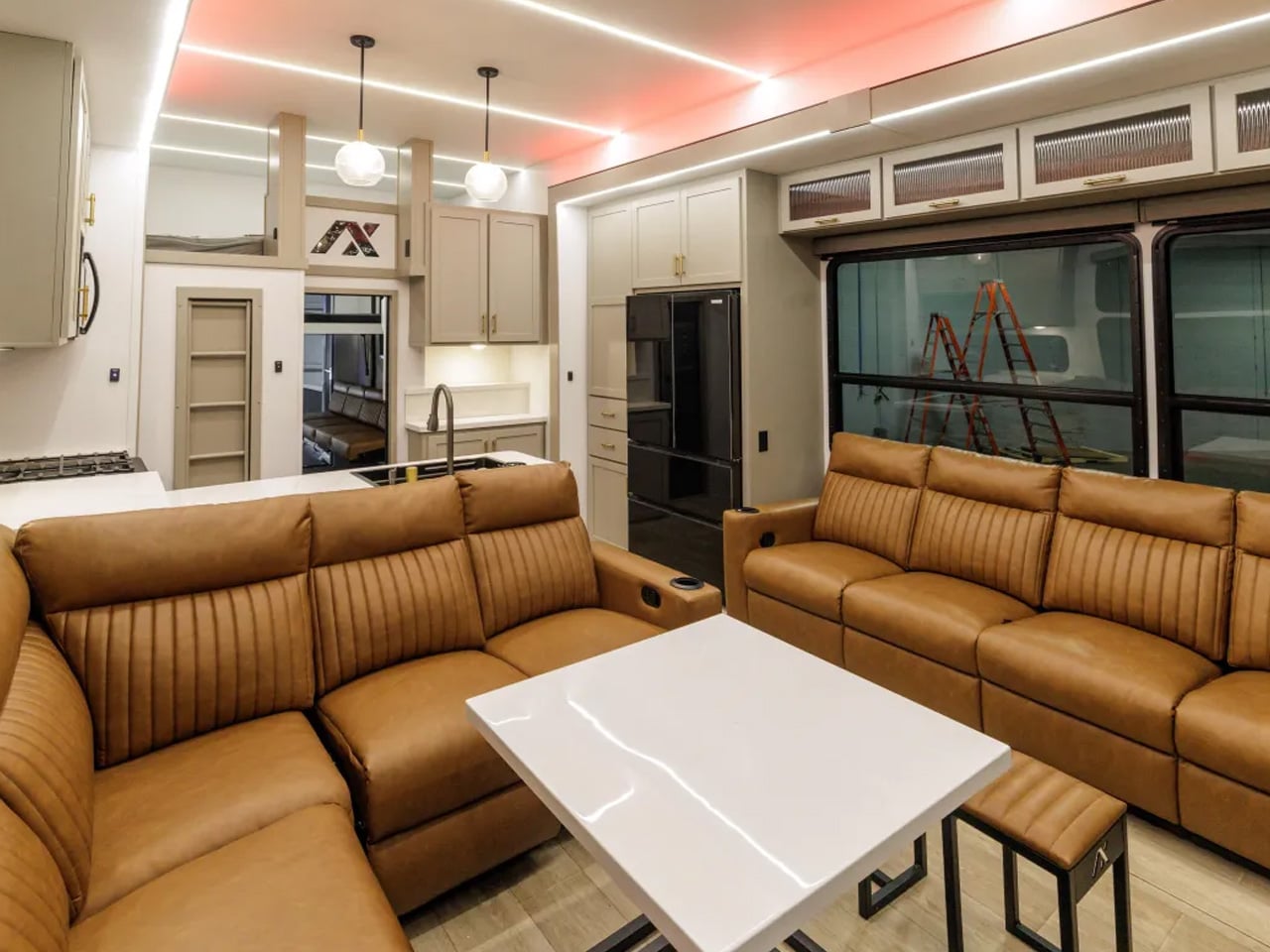
The toy hauler market traditionally caters to rugged couples seeking remote adventures, but the Vendetta breaks convention by targeting larger groups without sacrificing luxury. Axiom RV founders, three industry veterans, designed this mammoth 47-foot fifth wheeler to accommodate football teams planning group camping experiences. The Vendetta transforms group outdoor adventures from cramped compromises into spacious celebrations of wilderness exploration.

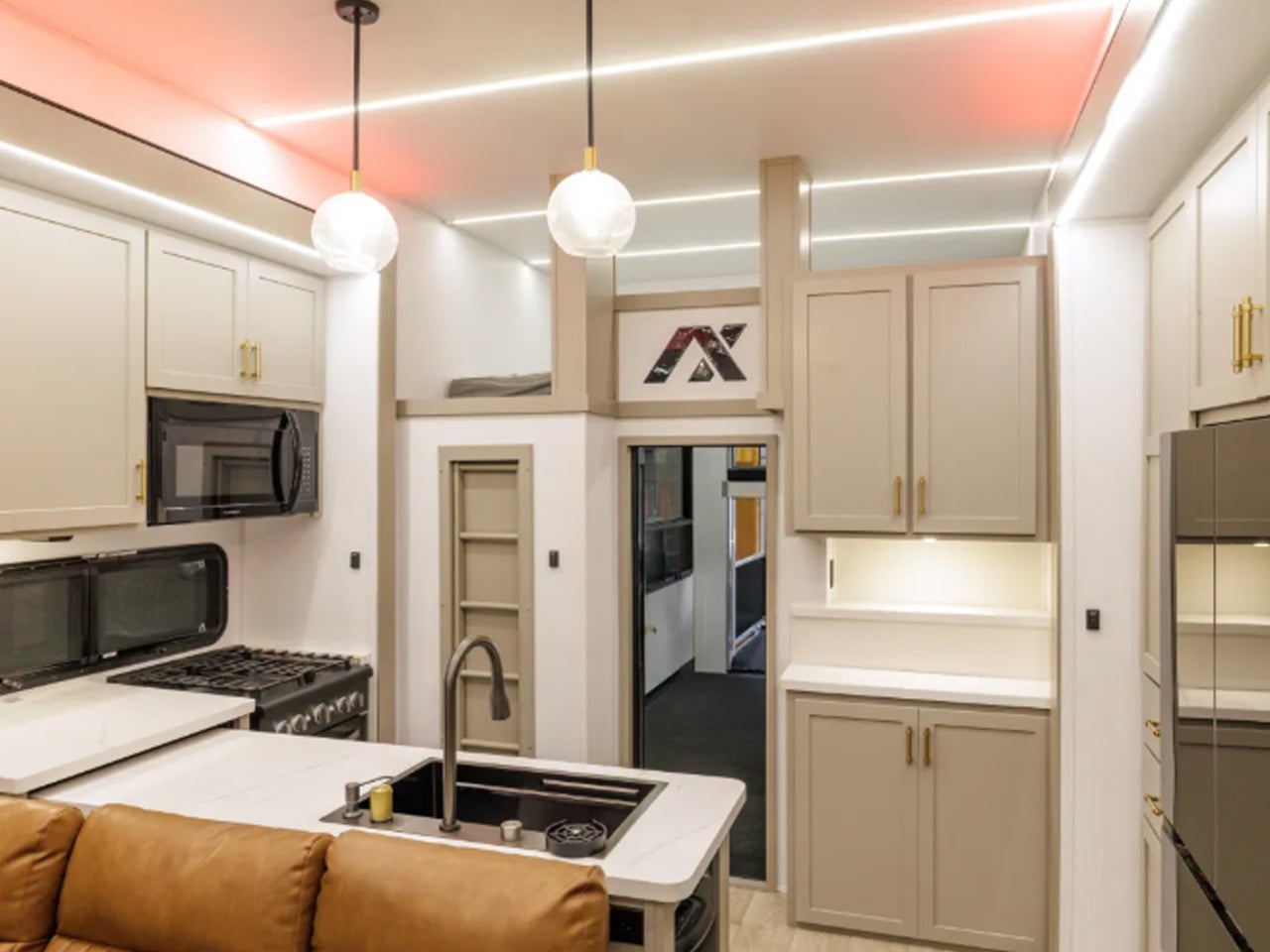
Built on a triple-axel trailer foundation, this 22,000-pound behemoth redefines extravagant camping with residential-style amenities that sleep twelve people comfortably. The substantial real estate ensures groups never feel cramped during extended outdoor stays. While ground clearance limits serious off-road capability, the Vendetta excels as a luxurious base camp for adventure groups who prioritize comfort over navigating extreme terrain.

What we like

  • Sleeps 12 people with residential-style comfort and space.
  • Massive storage capacity for extensive group gear and supplies.

What we dislike

  • Limited ground clearance restricts off-road adventure potential.
  • Requires a heavy-duty towing vehicle and an experienced driver.

2. Two Track Campers ActionCamper X4

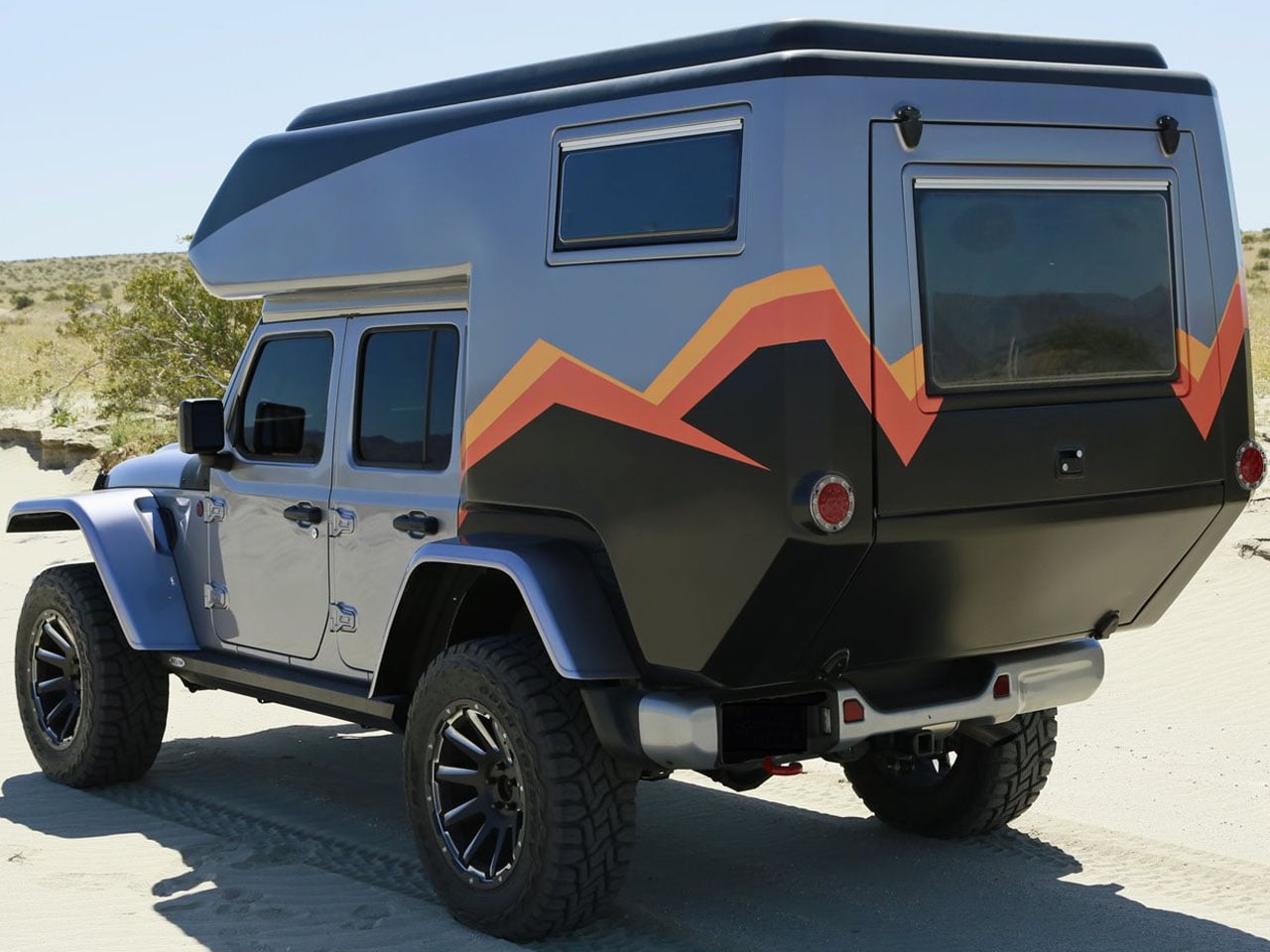
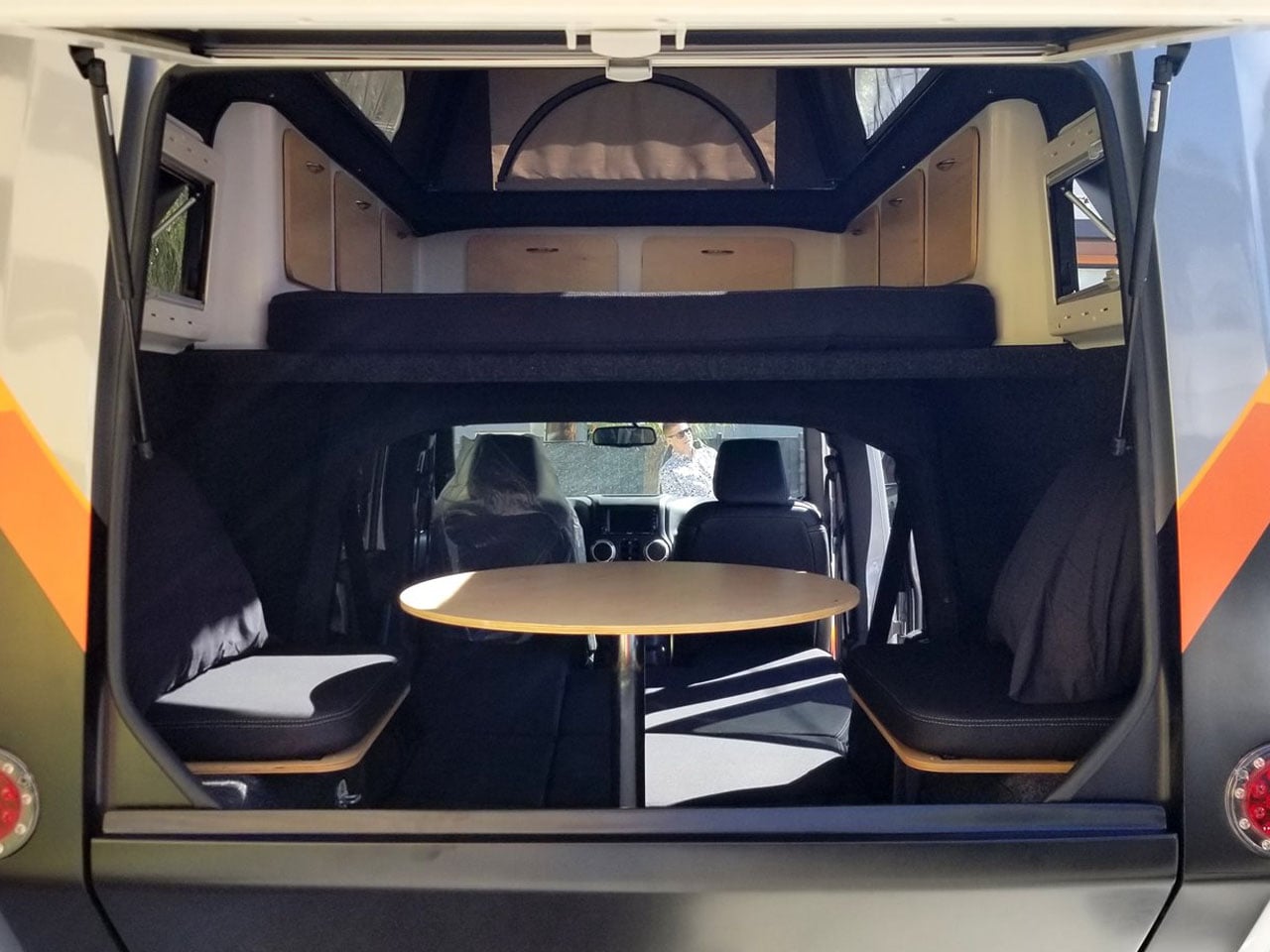
The Jeep Wrangler earns its reputation as the perfect foundation for serious off-road camping adventures, transforming into a fully capable motorhome through Two Track Campers’ innovative approach. This wedge-style rooftop sleeper builds upon the discontinued Action Camper design, creating a collaborative masterpiece between Colorado Camper Van and Jeep industry veteran Luke Burgess. The ActionCamper X4 targets overlanding enthusiasts, extended expedition planners, and weekend adventure seekers.

Designed specifically for JK and JL Jeep Wrangler Unlimited models, this custom-built camper replaces factory hard tops with adventure-ready accommodations. The transformation enables access to remote locations via two-track roads that challenge conventional recreational vehicles. Built for serious off-road capability, the ActionCamper X4 maintains the Wrangler’s legendary terrain-conquering abilities while adding essential camping infrastructure for extended wilderness stays.

What we like

  • Maintains Jeep Wrangler’s exceptional off-road capabilities.
  • Accessing remote locations is impossible for larger RVs.

What we dislike

  • Limited interior space compared to traditional campers.
  • Weather protection depends entirely on the camper shell’s integrity.

3. Mammoth Overland WLY Trailer

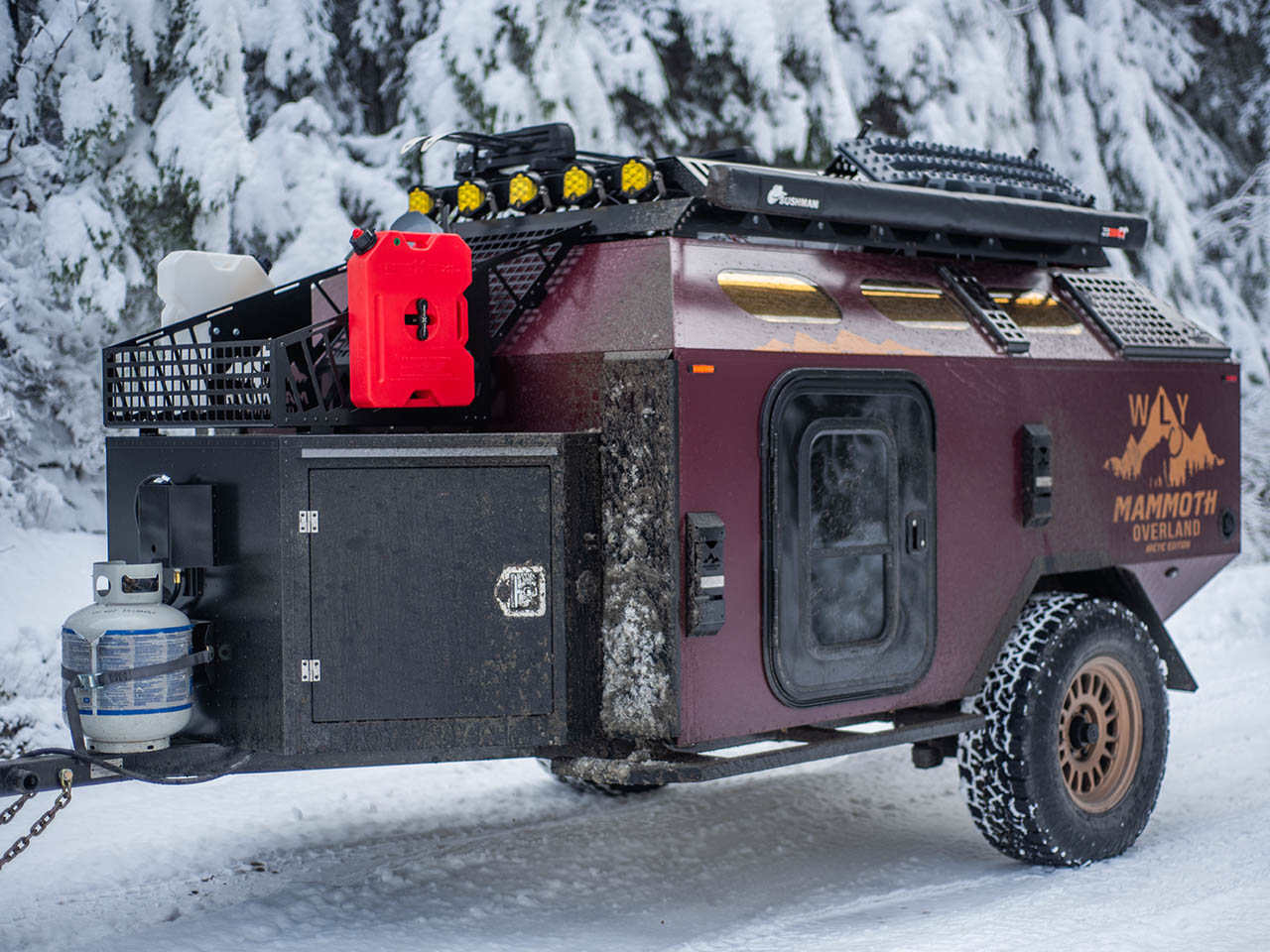
Winter camping enthusiasts finally have a dedicated solution with the Mammoth Overland WLY trailer, engineered specifically for sub-zero adventures where conventional campers surrender to harsh conditions. Retailing for $56,900 with second-quarter 2025 delivery, this build-to-order trailer earned its “Wooly” nickname from comprehensive wool insulation covering all interior walls. The specialized construction enables comfortable camping in temperatures reaching -20 °F while maintaining cozy interiors at elevations up to 8,694 feet.

The centerpiece 11,500-BTU/hour Truma VarioHeat system maintains comfortable temperatures in spaces up to 600 square feet, ensuring reliable warmth during extreme weather conditions. Advanced insulation technology creates a thermal barrier that transforms winter camping from endurance challenges into comfortable adventures. The WLY represents a significant advancement for cold-weather outdoor enthusiasts who refuse to hibernate during winter months.

What we like

  • Exceptional cold-weather performance down to -20°F.
  • High-altitude capability up to 8,694 feet in elevation.

What we dislike

  • Higher price points limit accessibility for budget-conscious campers.
  • Build-to-order model creates extended waiting periods.

4. Coachmen RVEX Electric Class B

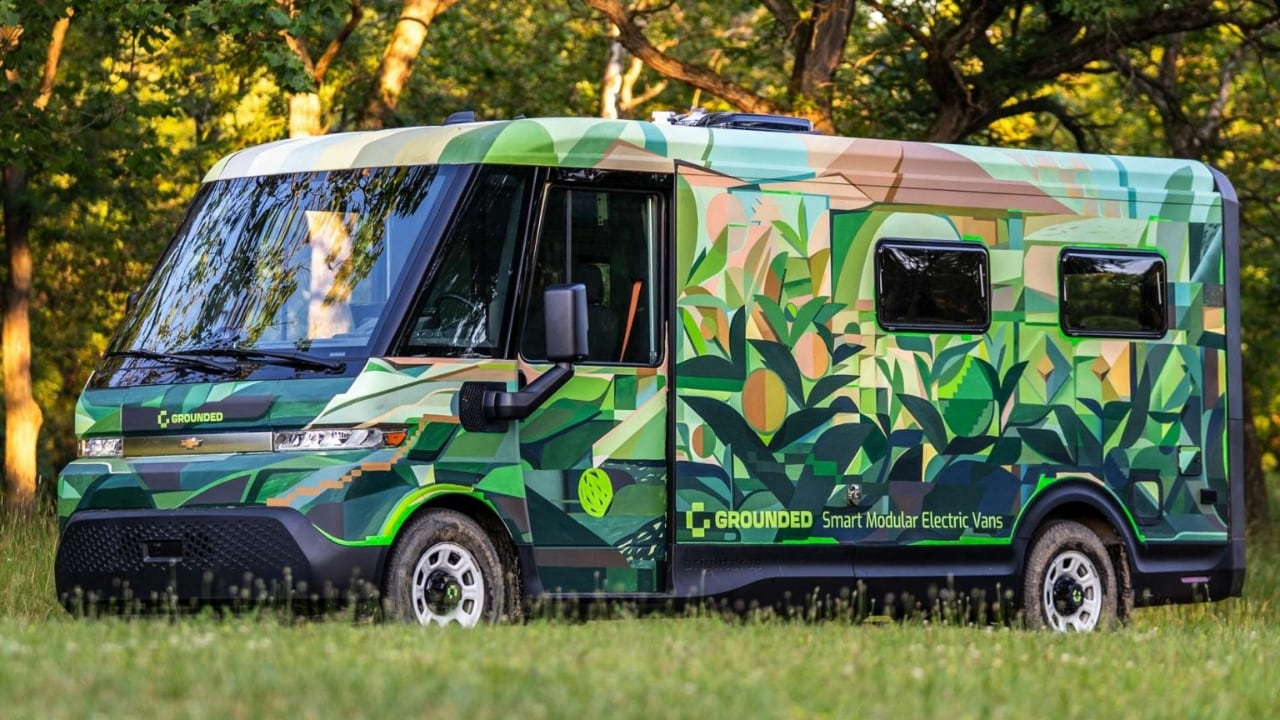
Electric vehicle technology finally reaches adventure-ready recreational vehicles through Coachmen’s groundbreaking RVEX, built on GM’s BrightDrop delivery platform with a targeted $150,000 MSRP. The 270-mile range estimate makes electric van life accessible to environmentally conscious adventurers who previously found full EV conversions prohibitively expensive. Coachmen achieved competitive pricing through innovative partnerships with Genesis Products, incorporating lightweight materials that reduce cabinet weight by 45 percent while saving approximately 290 pounds overall.

The substantial weight reduction directly benefits range and performance, crucial factors for adventure-ready electric vehicles navigating diverse terrains and elevations. Unlike competitors like Grounded’s G3, with pricing from $165,000 to $200,000, the RVEX democratizes electric adventure travel without compromising essential functionality. The BrightDrop 600 chassis provides a robust foundation while maintaining eco-friendly credentials that align with modern outdoor ethics.

What we like

  • Zero emissions align with environmental stewardship values.
  • Lower operating costs compared to fuel-powered alternatives.

What we dislike

  • Limited charging infrastructure in remote adventure locations.
  • Range anxiety during extended backcountry expeditions.

5. Bürstner Habiton Modular Camper Van

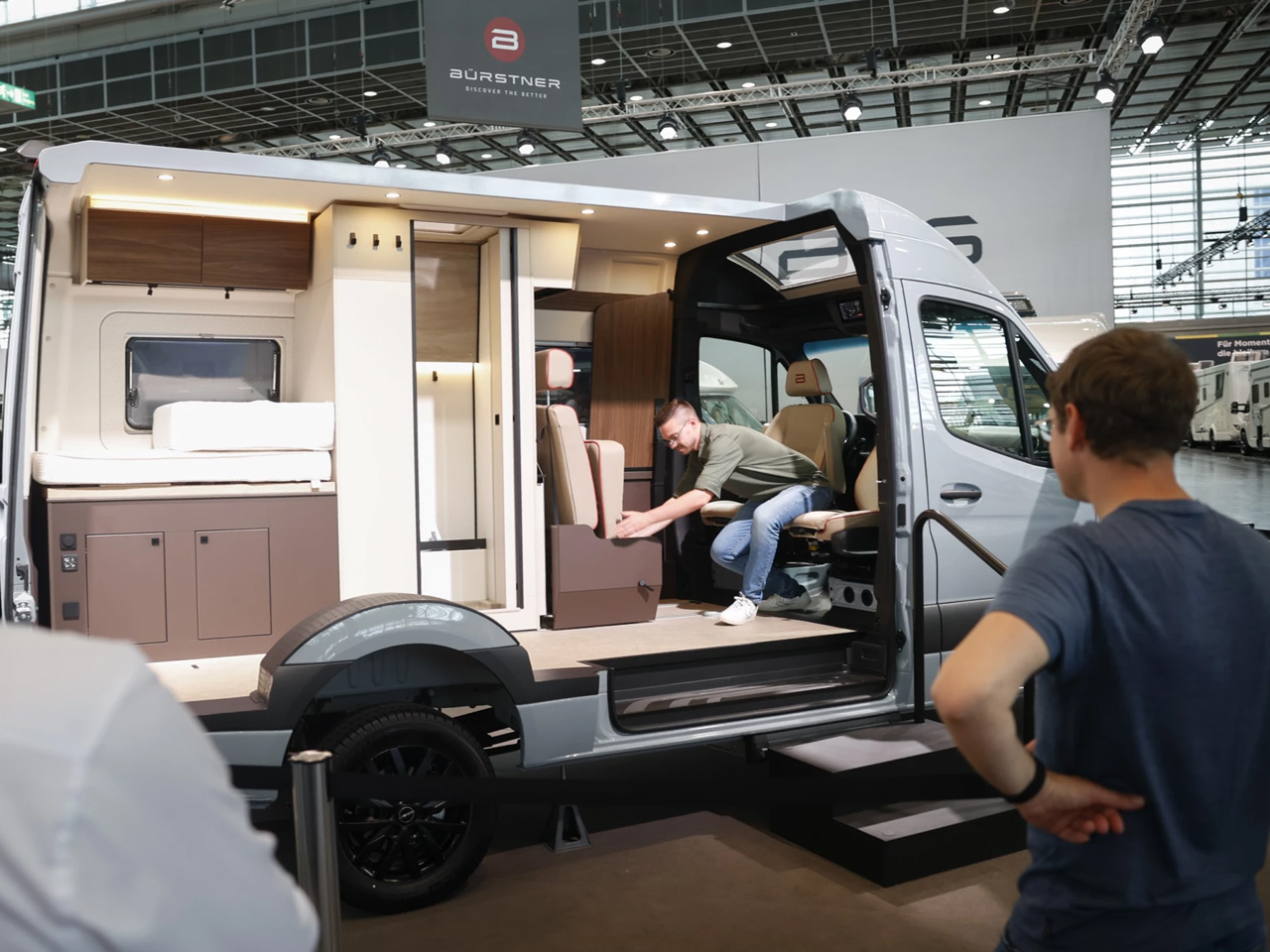
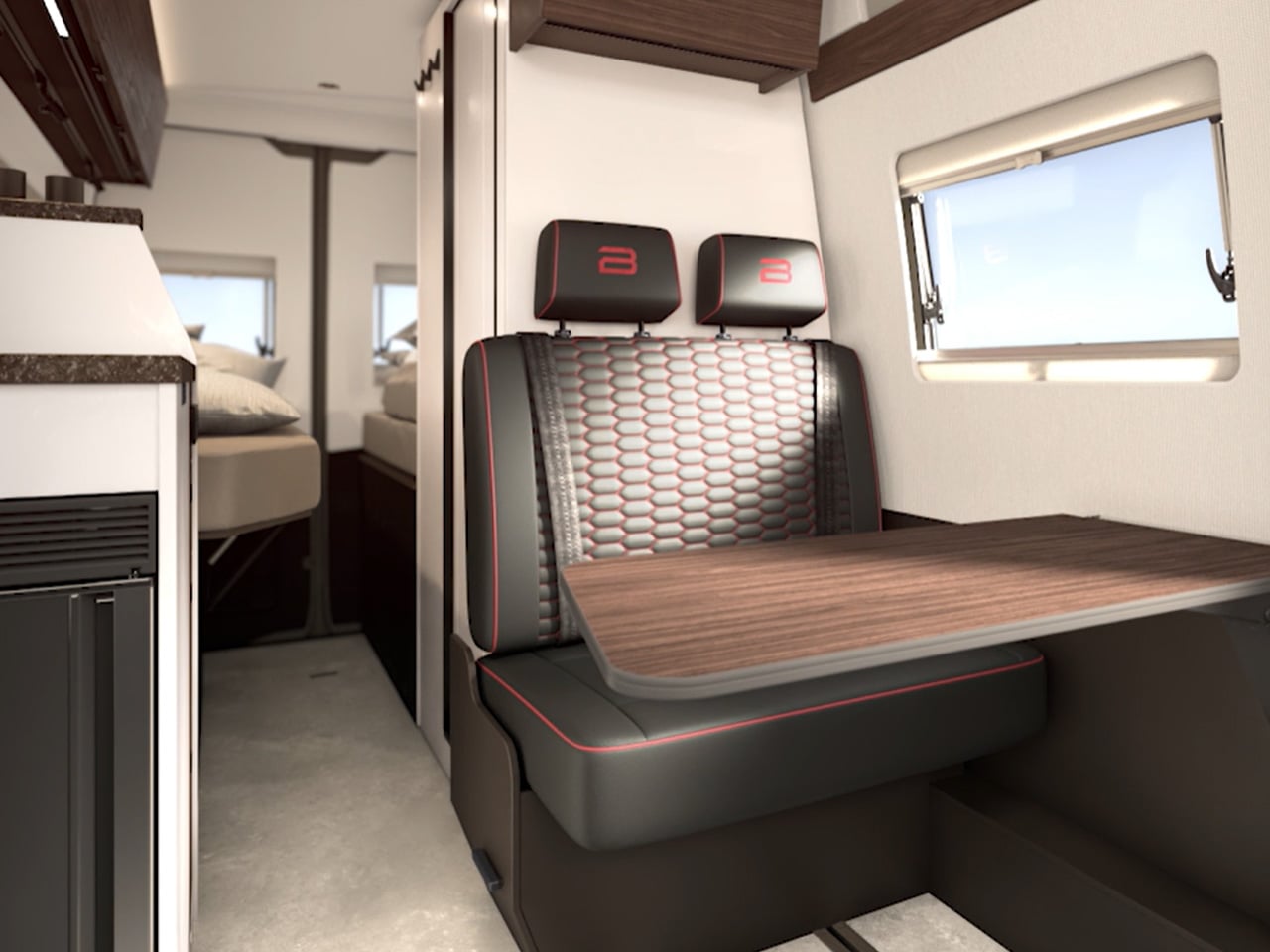
German engineering excellence shines through Bürstner’s innovative Habiton, built on Mercedes-Benz Sprinter foundations with revolutionary sliding bathroom and collapsible dinette systems. The modular design maximizes every inch of the short-wheelbase 593-cm chassis, creating genuine living comfort for four people within under six meters total length. Embedded rails enable the sliding bathroom to move forward toward the cabin, creating space for longitudinal folding beds to extend fully for comfortable sleeping.

The Habiton features two full-length single beds in the rear with optional pop-up roof accommodations for additional sleeping capacity. This thoughtful space optimization transforms compact dimensions into surprisingly livable quarters without sacrificing essential amenities. The modular concept allows occupants to reconfigure interior layouts based on immediate needs, whether prioritizing dining space during meals or maximizing sleeping arrangements during rest periods.

What we like

  • Innovative modular design maximizes limited interior space.
  • Mercedes-Benz reliability and performance foundation.

What we dislike

  • Complex moving components may require frequent maintenance.
  • Compact dimensions limit gear storage for extended adventures.

6. Arkto Campers C10 Pop-Up Travel Trailer

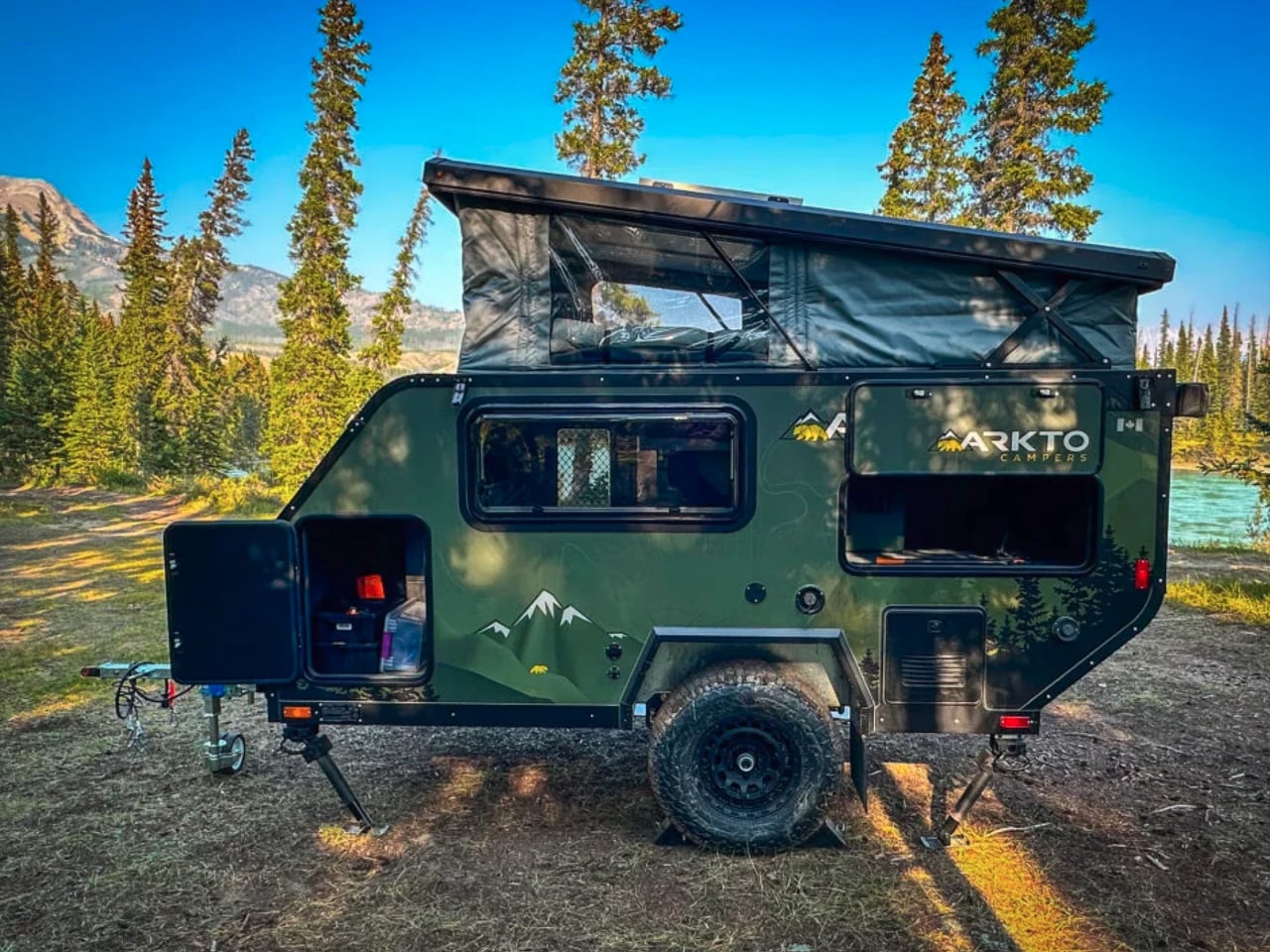
Composite construction dominates Arkto Campers’ design philosophy, creating the lightweight yet durable C10 pop-up travel trailer that avoids traditional wood materials entirely. Measuring 16.5 feet, this compact adventure trailer accommodates couples comfortably while maintaining impressive towing versatility across various vehicle platforms. The composite sandwich panel body receives structural reinforcement through strategically placed aluminum tubes at critical stress points, ensuring durability without excessive weight that burdens tow vehicles on challenging terrain.

The hot-dipped galvanized steel chassis provides corrosion resistance essential for adventures in harsh environments, while laser-cut and powder-coated aluminum cabinetry maintains long-term functionality. With 71 cubic feet of integrated storage volume and 1,850 pounds of payload capacity, the C10 never forces gear compromises during hunting expeditions or extended camping adventures. The pop-up design creates surprising interior height while maintaining aerodynamic towing characteristics on highways and backcountry roads.

What we like

  • Lightweight composite construction enables diverse towing options.
  • Impressive storage capacity for compact overall dimensions.

What we dislike

  • The pop-up mechanism adds complexity compared to hard-sided trailers.
  • Limited weather protection during setup and breakdown.

7. Volkswagen Grand California

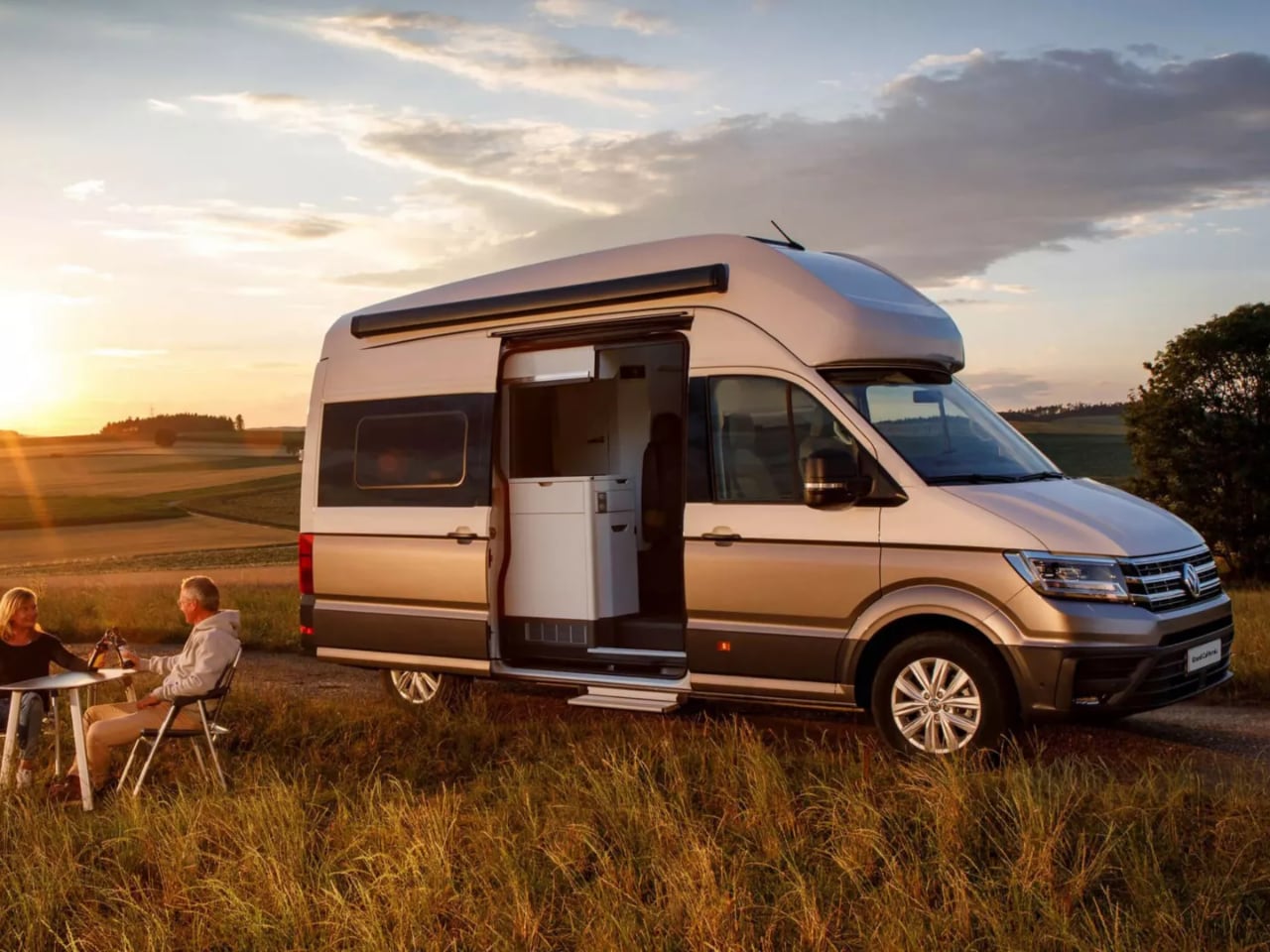
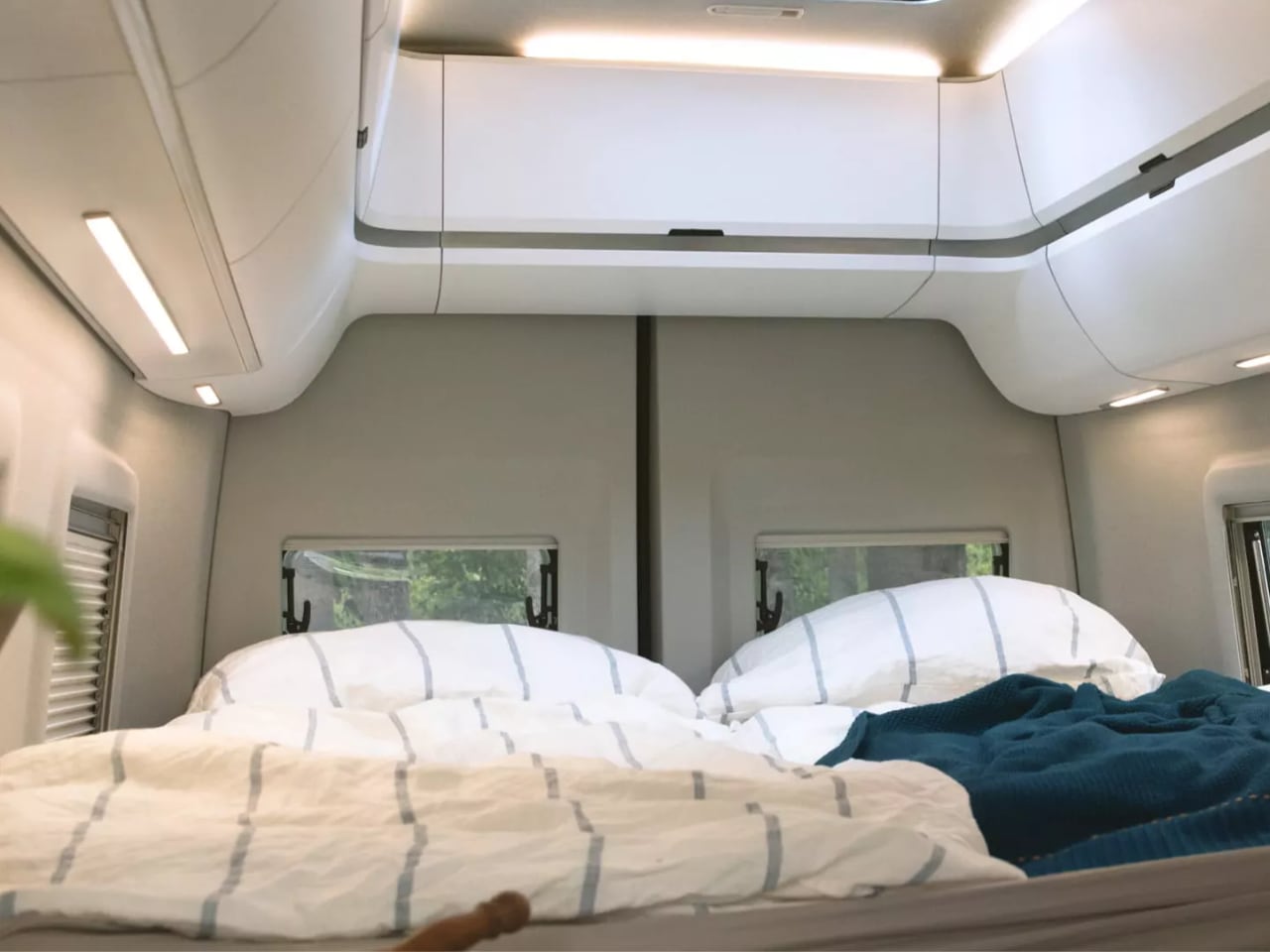
Space optimization reaches architectural levels within the Grand California’s interior, creating genuine livability that surpasses Manhattan apartment efficiency standards. Unlike traditional campers requiring constant furniture rearrangement, this vehicle establishes clear activity zones with intentional layouts that feel purposeful rather than apologetic. The design prioritizes functionality without sacrificing comfort, creating environments where extended adventures feel sustainable rather than endurance challenges requiring frequent escapes to hotels.

The standout wet bathroom represents luxury camping evolution, featuring a separate wet room with a proper shower, toilet, and space-saving fold-out wash basin. Motion sensor lighting activates automatically while proper skylight ventilation maintains freshness during extended use. Integrated shelving accommodates full-sized toiletries rather than travel-sized compromises, eliminating the plastic portable toilet experiences that haunt camping nightmares. This attention to essential comfort details transforms outdoor adventures from survival exercises into rejuvenating escapes.

What we like

  • Separate wet bathroom with proper shower facilities.
  • Optimized interior layout maximizes livable space.

What we dislike

  • Premium pricing limits accessibility for budget-conscious adventurers.
  • European sizing may challenge North American camping infrastructure.

Choosing Your Perfect Adventure Partner

This fall’s outdoor adventures demand vehicles capable of handling diverse challenges while maintaining essential comfort levels. Each design addresses specific adventure styles, from the Vendetta’s group-focused luxury to the ActionCamper X4’s extreme terrain capability. Modern adventure vehicles blend rugged reliability with thoughtful amenities, ensuring outdoor enthusiasts can pursue ambitious expeditions without sacrificing fundamental comforts.

The evolution toward specialized adventure vehicles reflects growing outdoor recreation sophistication, where enthusiasts demand equipment matching their ambitious goals. Whether pursuing remote hunting expeditions, extended overlanding journeys, or comfortable family camping experiences, these seven vehicles represent the current pinnacle of adventure-ready automotive design. Choose based on your specific adventure requirements, and prepare for unforgettable fall explorations.

The post 7 Best Adventure Rigs Of October 2025 Conquering Fall’s Toughest Trails first appeared on Yanko Design.
12 Recalls in 2 Years: The Tesla Cybertruck Is Breaking Records For All The Wrong Reasons

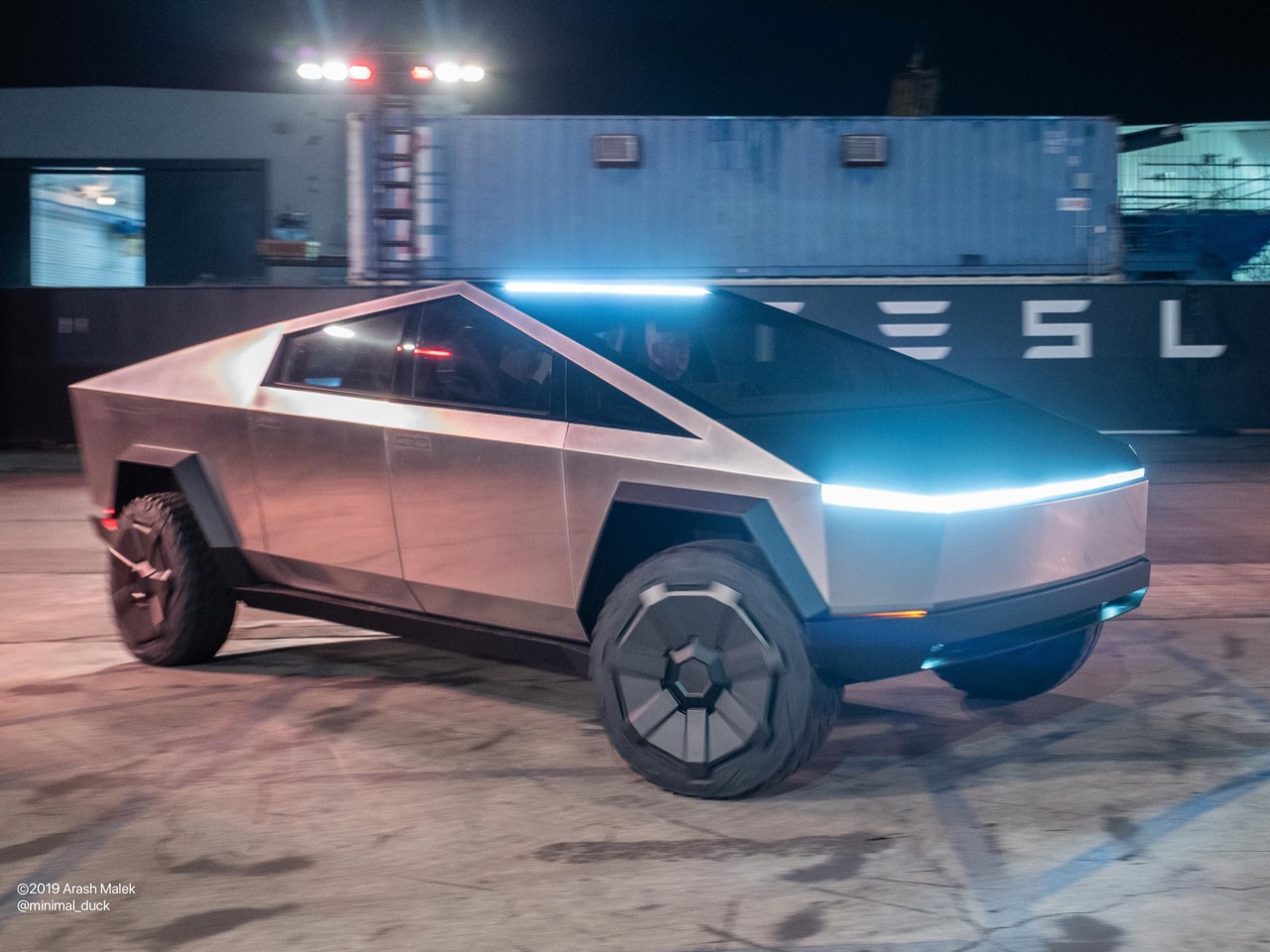
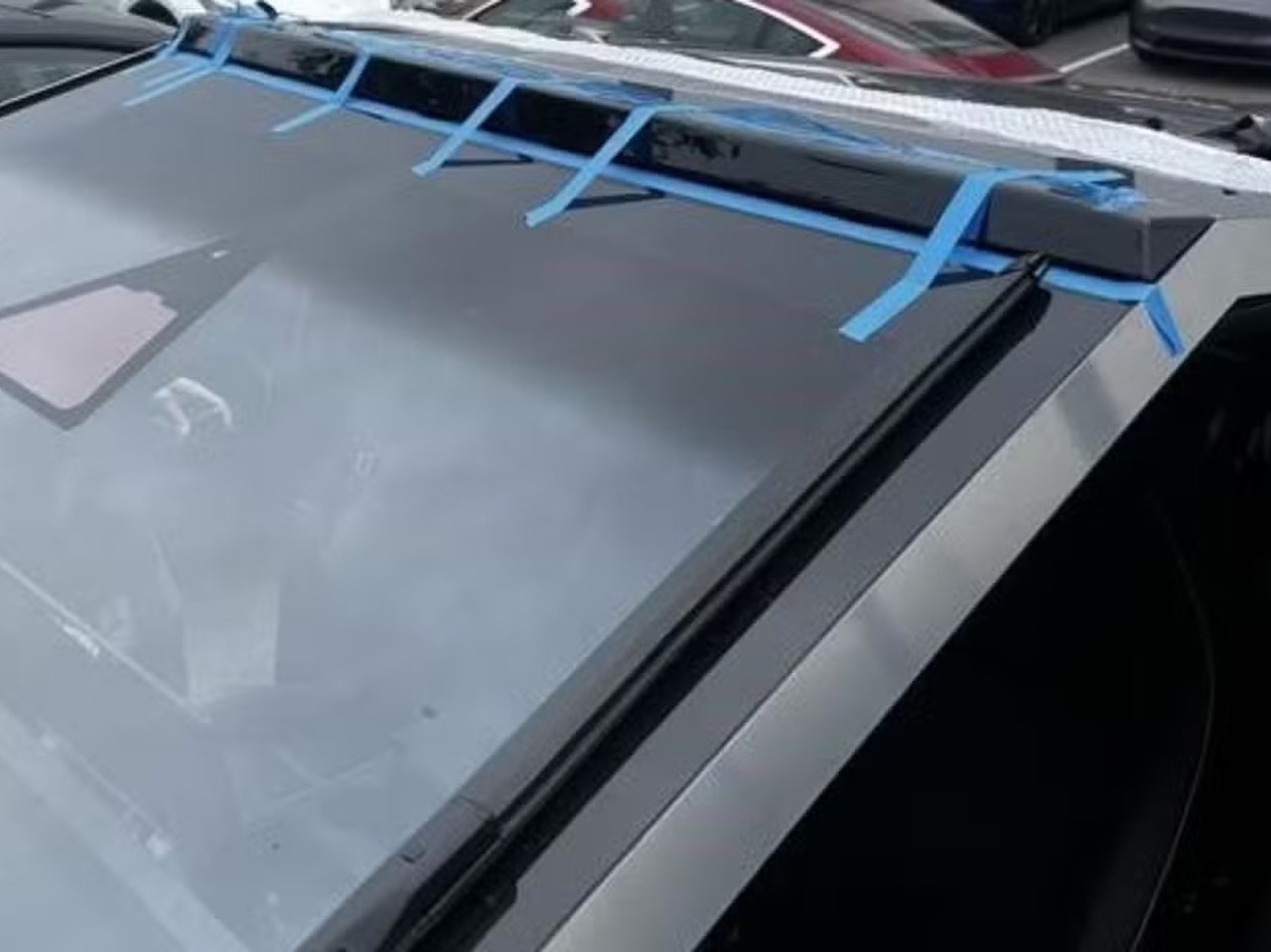
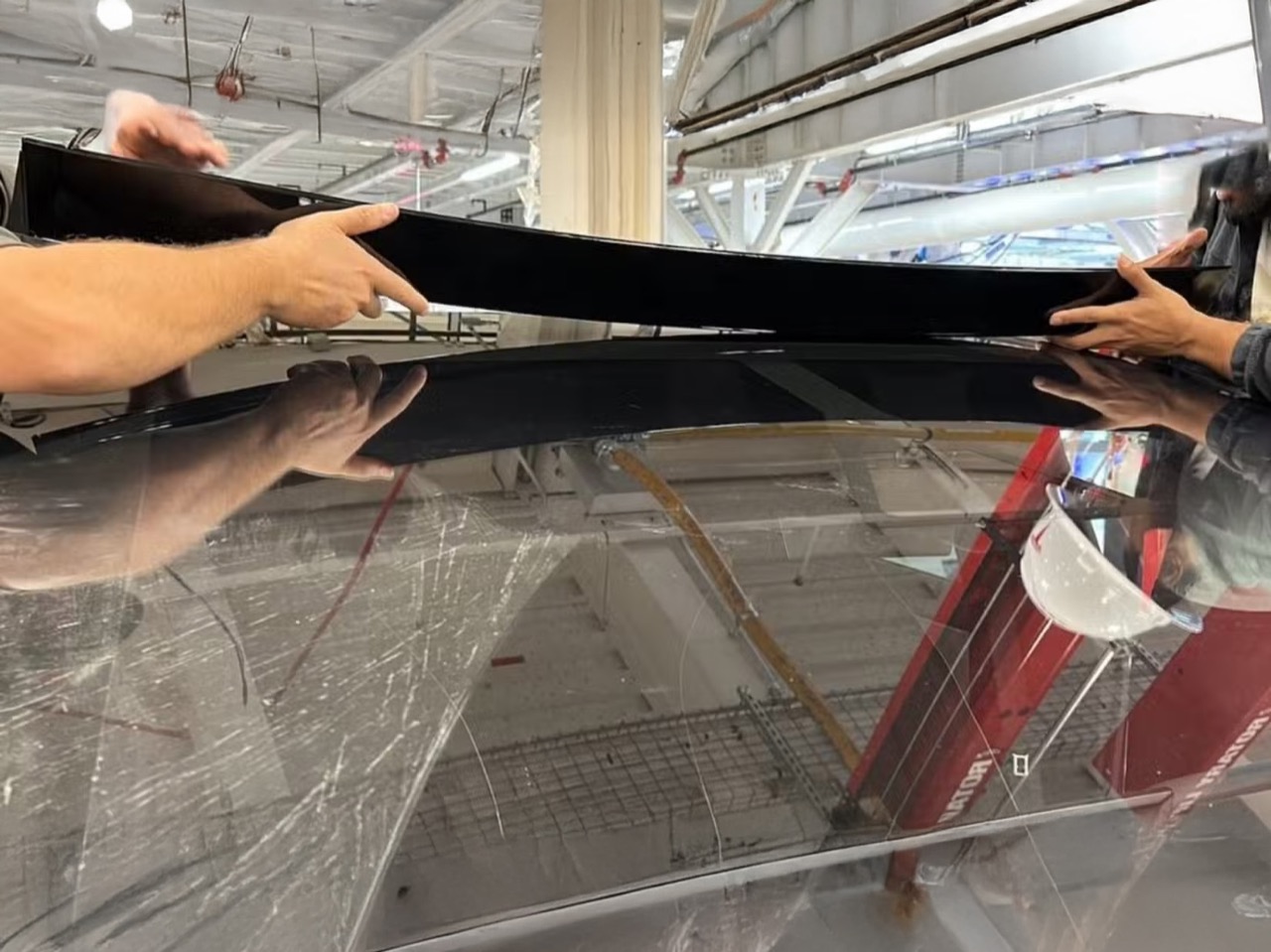
The most I’ve ever heard of a car being recalled is probably 2014 Jeep Cherokee, or the 2021 Chevy Silverado. Both cars (if I’m not mistaken), were famous for hitting as many as 7-9 recalls, but Tesla‘s Cybertruck is cruising past that number with its 12th recall since the car began rolling out to customers in November 2023. Issued just today, this latest round of recalls affects 6,197 vehicles, about 10 percent of all Cybertrucks sold. The problem? A Light Bar accessory that sits on the top of the car. Although optional, the National Highway Traffic Safety Administration is warning drivers that this off-road accessory (officially sold by Tesla) could detach and fall off, creating a road hazard for other drivers. The culprit? Weak glue.

I have to preface that a recall doesn’t imply a car is ‘bad’, it usually involves points of failures that can make driving dangerous if unchecked. Some of them are fairly benign, like this past week’s recall because the headlights were 20% too bright according to regulations (this got fixed with a mere software patch), but others are absolutely lethal, like the Cybertruck’s accelerator pedal getting stuck, which could turn your car into a speeding metallic meteor, threatening not just your life, but also the lives of others around you.

Designer: Tesla

That being said, 12 recalls is certainly worth noticing. In just under 2 years, the Cybertruck’s faced problems with the motor controlling the windshield wiper, the exterior stainless steel sheet literally peeling off because of weak glue, errors within the Tire Pressure Monitoring System, software and firmware issues, interior trim parts affecting the accelerator pedal, the headlights being too bright, the light bar accessory having faulty lighting, and even the bar itself not being glued on properly. Apart from the countless recalls, the Cybertruck’s also been plagued by problems like rust accumulating on its exterior panels. With its over-a-trillion-dollar valuation, you don’t expect the EV pioneer to operate with these ‘startup growth pains’.

That being said, Tesla will inspect the accessory and will either install an additional mechanical attachment or replace the old light bar with a new one using tape to adhere it to the windshield along with the necessary mechanical attachment, free of charge, according to the NHTSA. Owners should receive a mailed notification about the recall sometime after December 26.

The post 12 Recalls in 2 Years: The Tesla Cybertruck Is Breaking Records For All The Wrong Reasons first appeared on Yanko Design.

Toyota Announces World’s First Self-Driving EV For Children

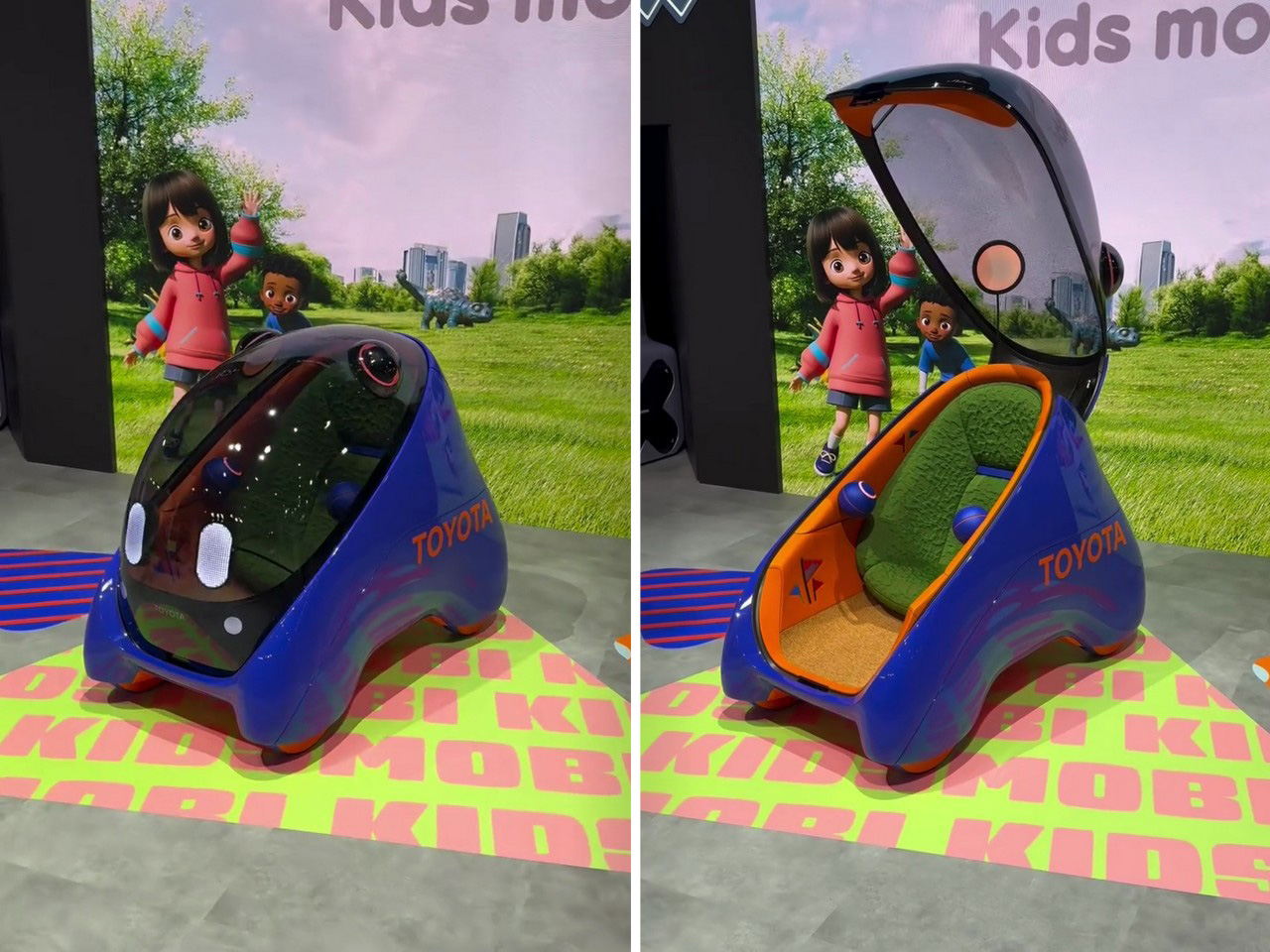
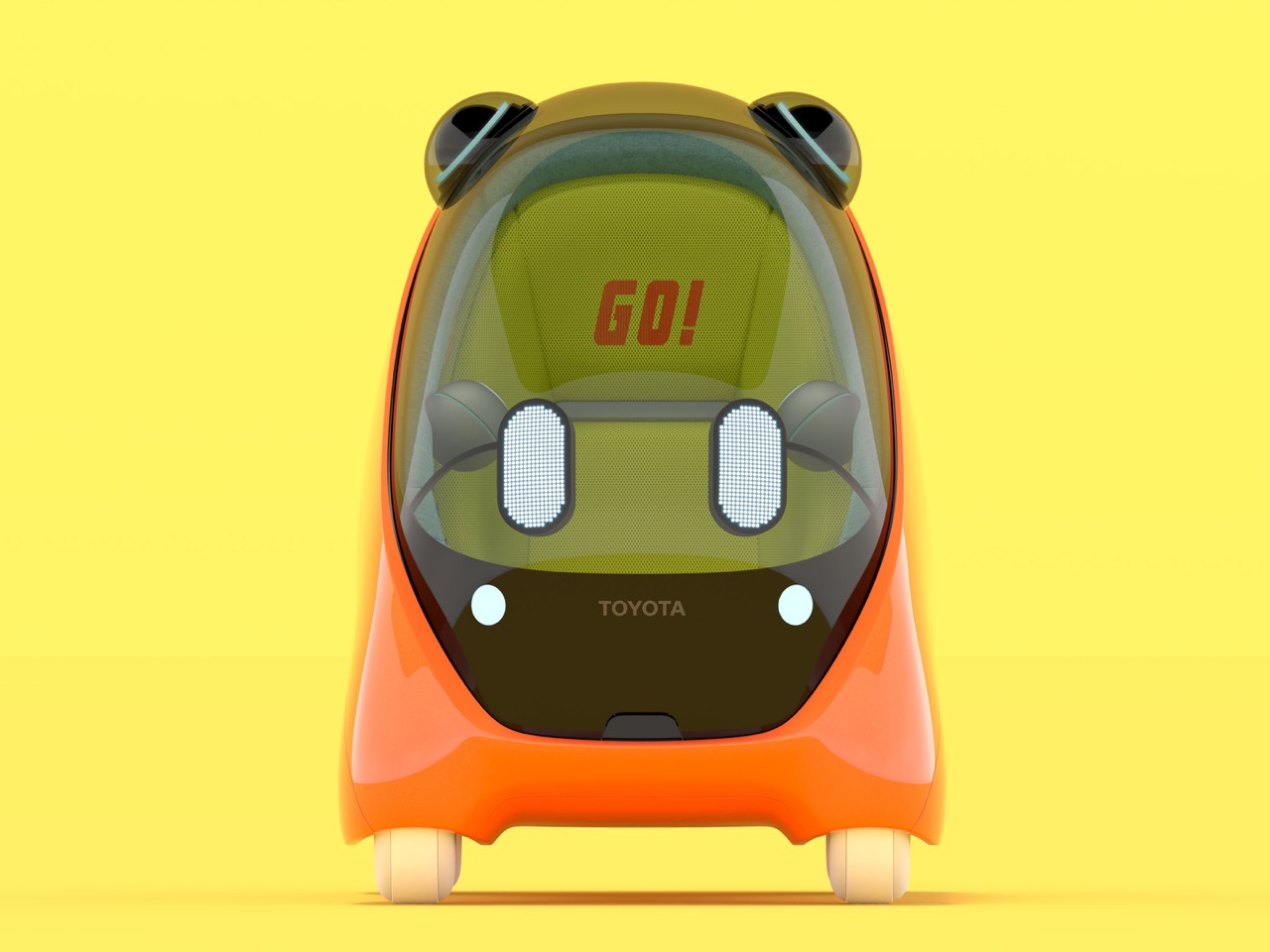
Would you trust AI to drive your child across town without you? Toyota is betting some parents will. At the Japan Mobility Show 2025, the automotive giant introduced Mobi, a fully autonomous electric bubble car that transports children on their own, with no adult supervision required. The pint-sized vehicle relies entirely on AI for navigation and safety, marking a radical departure from traditional ideas about child transportation.

This is the kind of concept that makes you simultaneously excited about the future and somewhat uncomfortable about it. The Mobi sits on display at the show between October 30th and November 9th, looking like someone crossbred a Pixar character with actual transportation infrastructure. And honestly, that seems intentional. Toyota positioned this as part of their “Mobility for All” project, which sounds noble until you realize they’re proposing to put elementary schoolers in autonomous pods and send them off into traffic.

Designer: Toyota

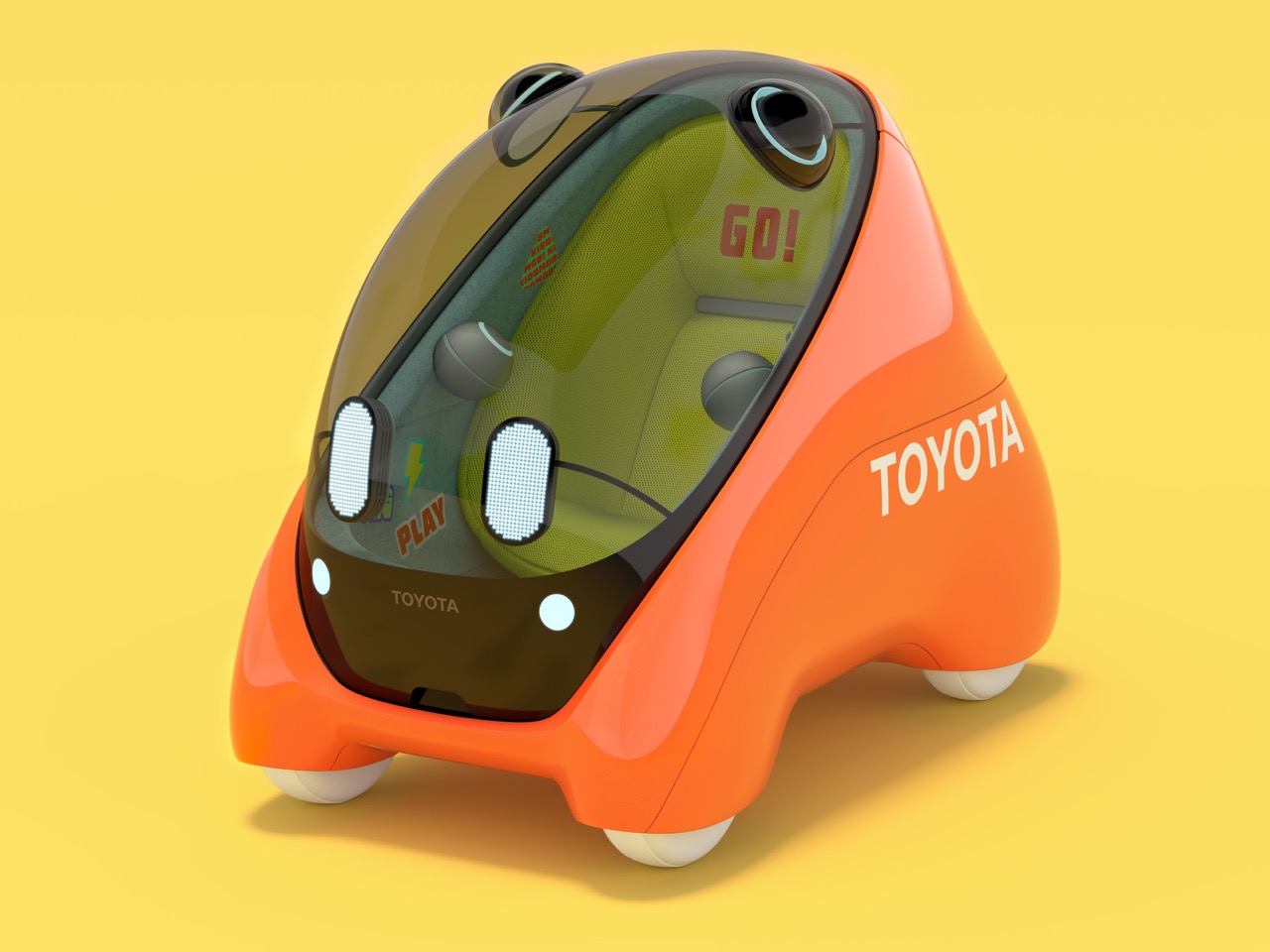
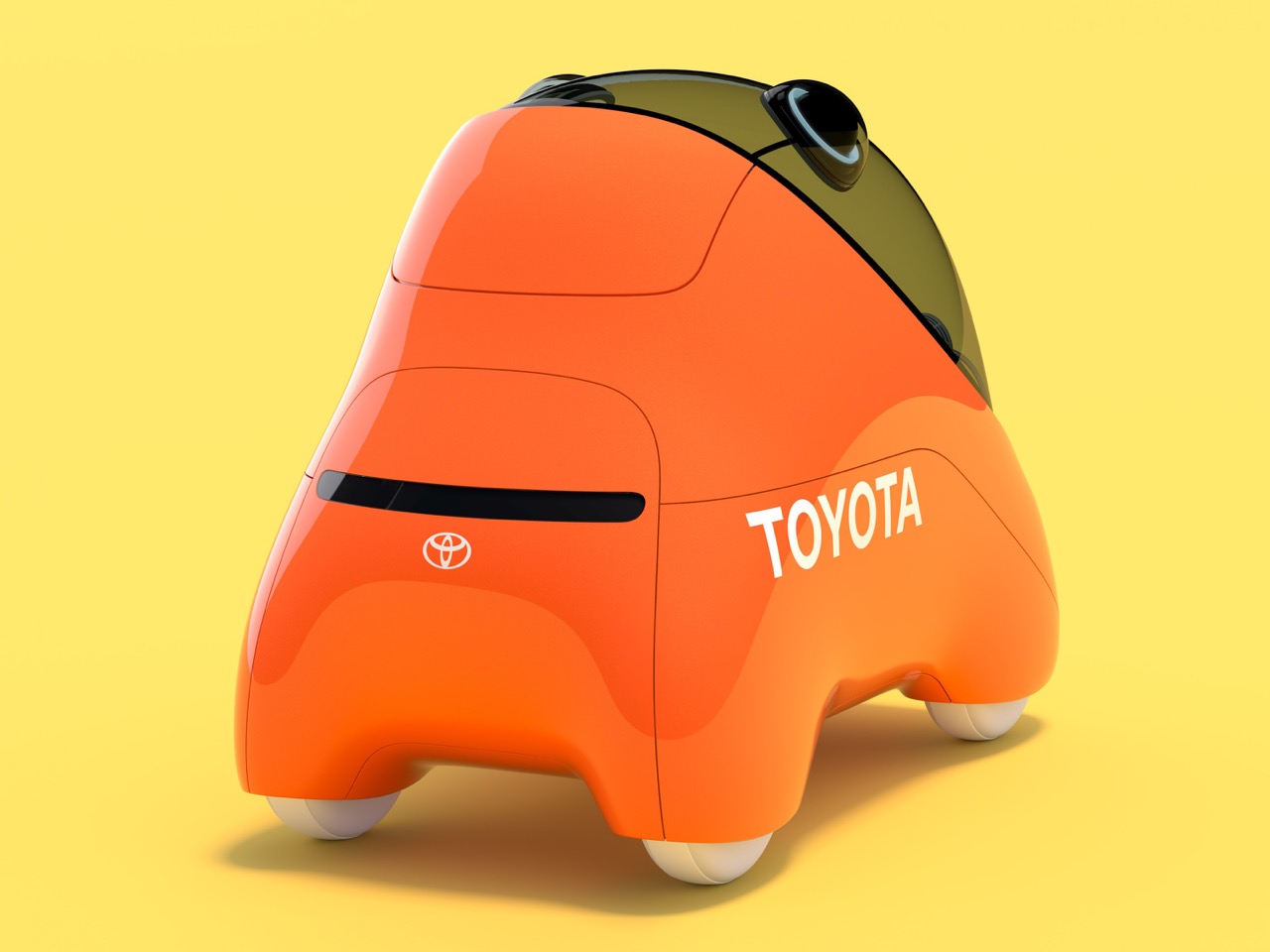
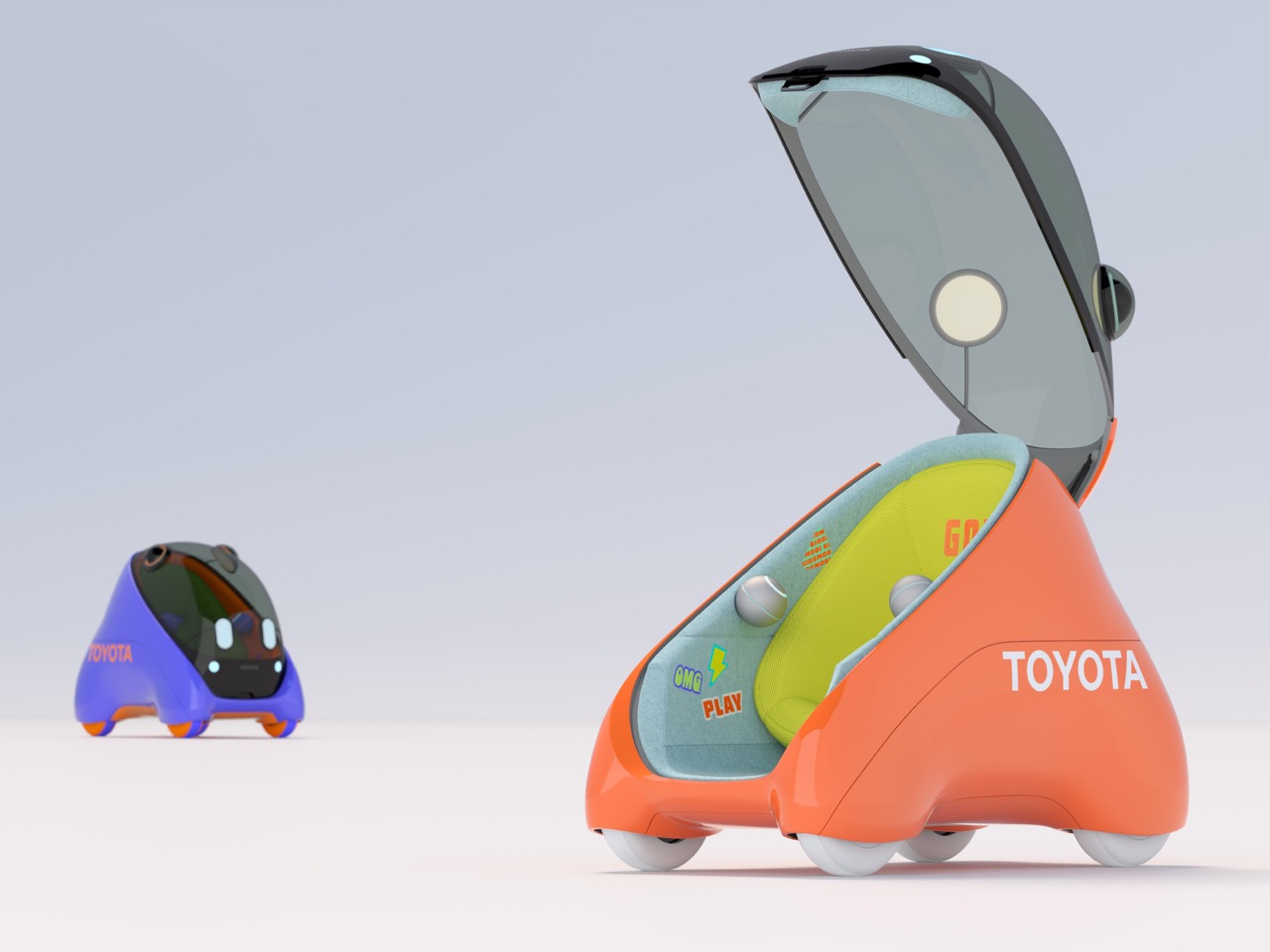
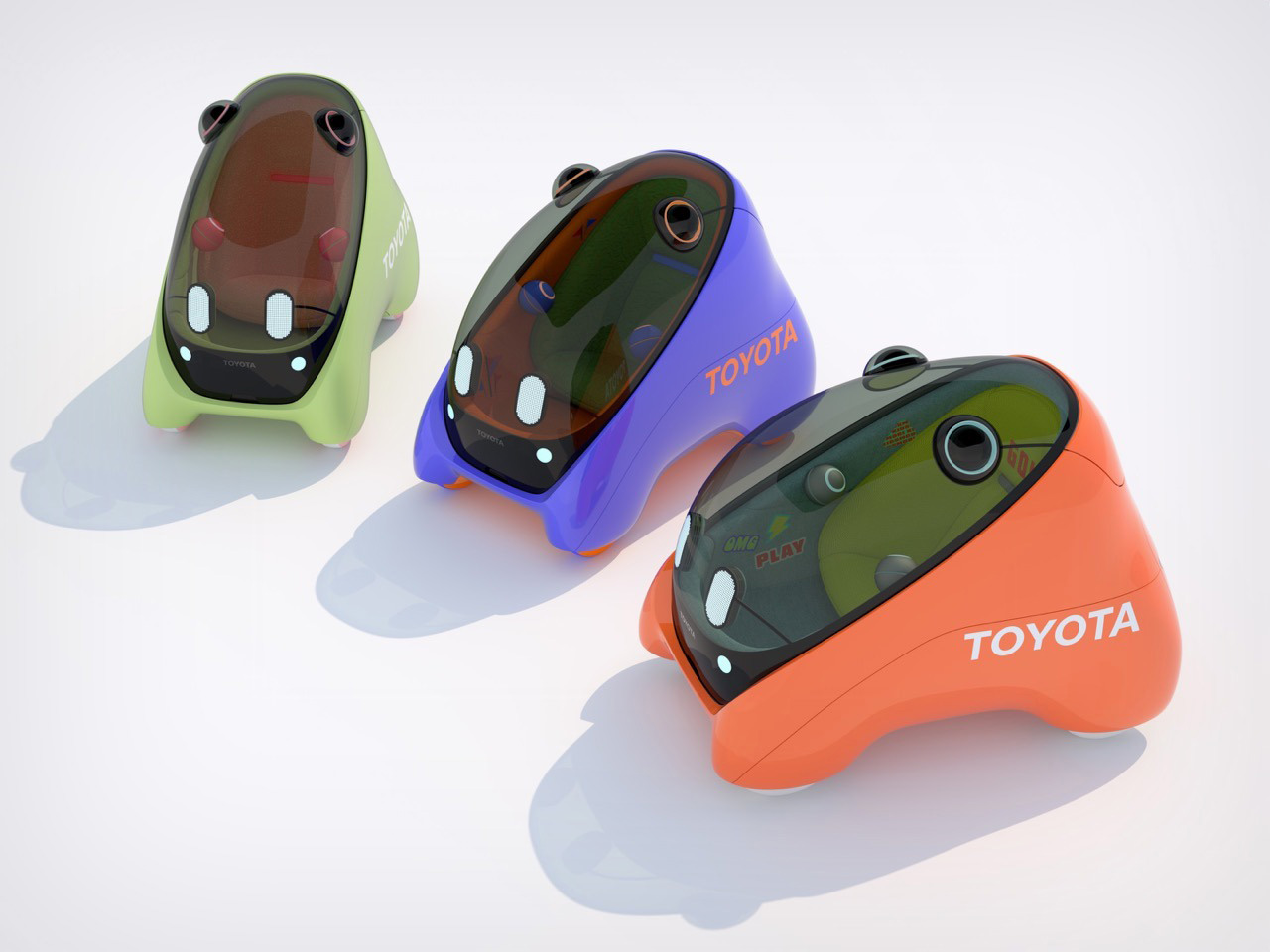
The design language here is fascinating because it has to do something incredibly difficult: make a vehicle feel safe enough for parents to trust while simultaneously feeling fun enough that kids actually want to use it. That bubble canopy swings upward like a gullwing door, revealing a single seat covered in fuzzy material that looks lifted straight from a particularly cozy bean bag chair. The exterior comes in aggressively cheerful colorways, lime green with black accents or blue-purple with orange trim, both loud enough to make sure nobody’s running this thing over in a parking lot. And then there are the LED eyes at the front, two circular lights that blink and animate to give the vehicle an almost sentient personality. It’s cute bordering on manipulative, which is probably exactly the emotional response Toyota wants from both kids and their hesitant parents. Up top, two ‘ears’ serve as the car’s advanced sensor array, allowing the EV to be spatially aware as it transports its tiny passenger around.

The AI system does all the heavy lifting here. Direction, speed, traffic navigation, obstacle detection, it’s all handled by the onboard intelligence while the kid just sits there like a particularly small passenger on the world’s shortest Uber ride. Toyota has equipped the Mobi with an AI assistant called UX Friend, which is either a stroke of genius or the beginning of a Black Mirror episode depending on your tolerance for letting algorithms raise your children. This virtual companion talks to kids throughout the journey, gives them instructions on how to “drive” the autonomous pod (which is really just letting them feel involved), and presumably keeps them entertained so they don’t try to open the door mid-trip. The system uses sensors and cameras positioned around the vehicle to detect motion and obstacles, creating a protective bubble of awareness that theoretically keeps the child safe from the chaos of real-world traffic.

The specs are still murky because Toyota hasn’t released the full technical breakdown yet. What we know is the outer shell likely uses lightweight plastic or composite materials to keep the weight down and the safety up. The vehicle is almost comically small, with a footprint that makes a Smart car look like an SUV. Single occupancy only, which makes sense given the target demographic isn’t carpooling to corporate meetings. The interior is deliberately spacious enough for a child to sit comfortably without feeling claustrophobic, and that textured seat material isn’t just aesthetic, it’s tactical design meant to make the space feel less like a vehicle and more like a safe cocoon. Toyota knows that if kids associate this thing with discomfort or fear, the whole concept dies on arrival.

Here’s where it gets interesting though. This isn’t a production vehicle, it’s a concept with a working prototype, and Toyota has been notably silent about when or if they plan to conduct real-world road tests with actual children inside. That’s a massive gap between “look at this cool thing we built” and “you can actually use this to send your kid to soccer practice.” The regulatory hurdles alone are staggering. What jurisdiction is going to greenlight unsupervised minors in autonomous vehicles? What happens when the AI encounters an edge case it wasn’t trained for? Who’s liable when something inevitably goes wrong? Toyota is playing in a sandbox that doesn’t have rules yet, and while that’s exciting from an innovation standpoint, it’s also deeply complicated from a practical one. The Mobi might be a genuine glimpse at future mobility, or it might be an elaborate design exercise that never leaves the auto show circuit. Only time will tell…

The post Toyota Announces World’s First Self-Driving EV For Children first appeared on Yanko Design.
S4 Honcho is a power-packed electric bike for city commutes and off-road excursions

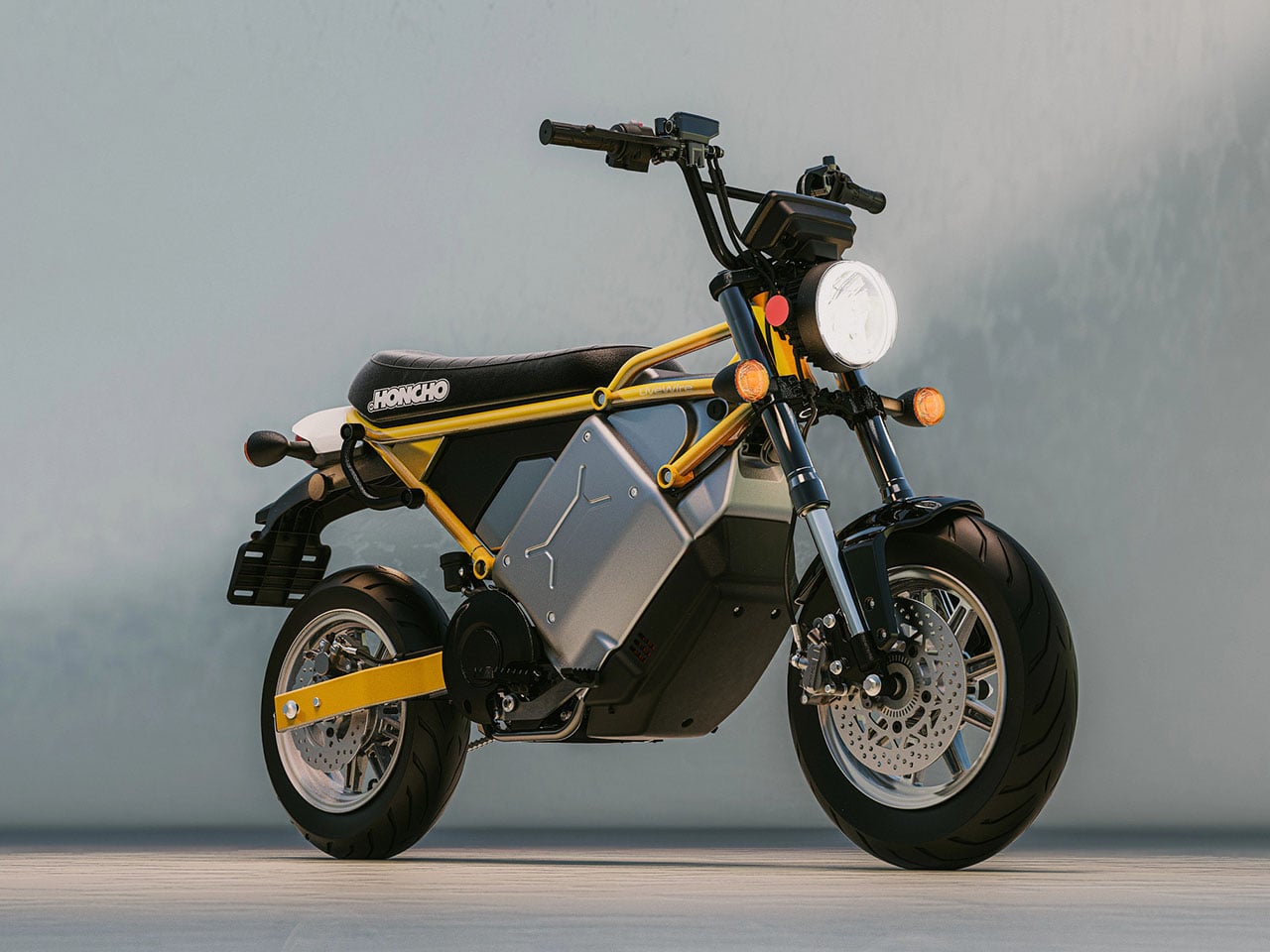
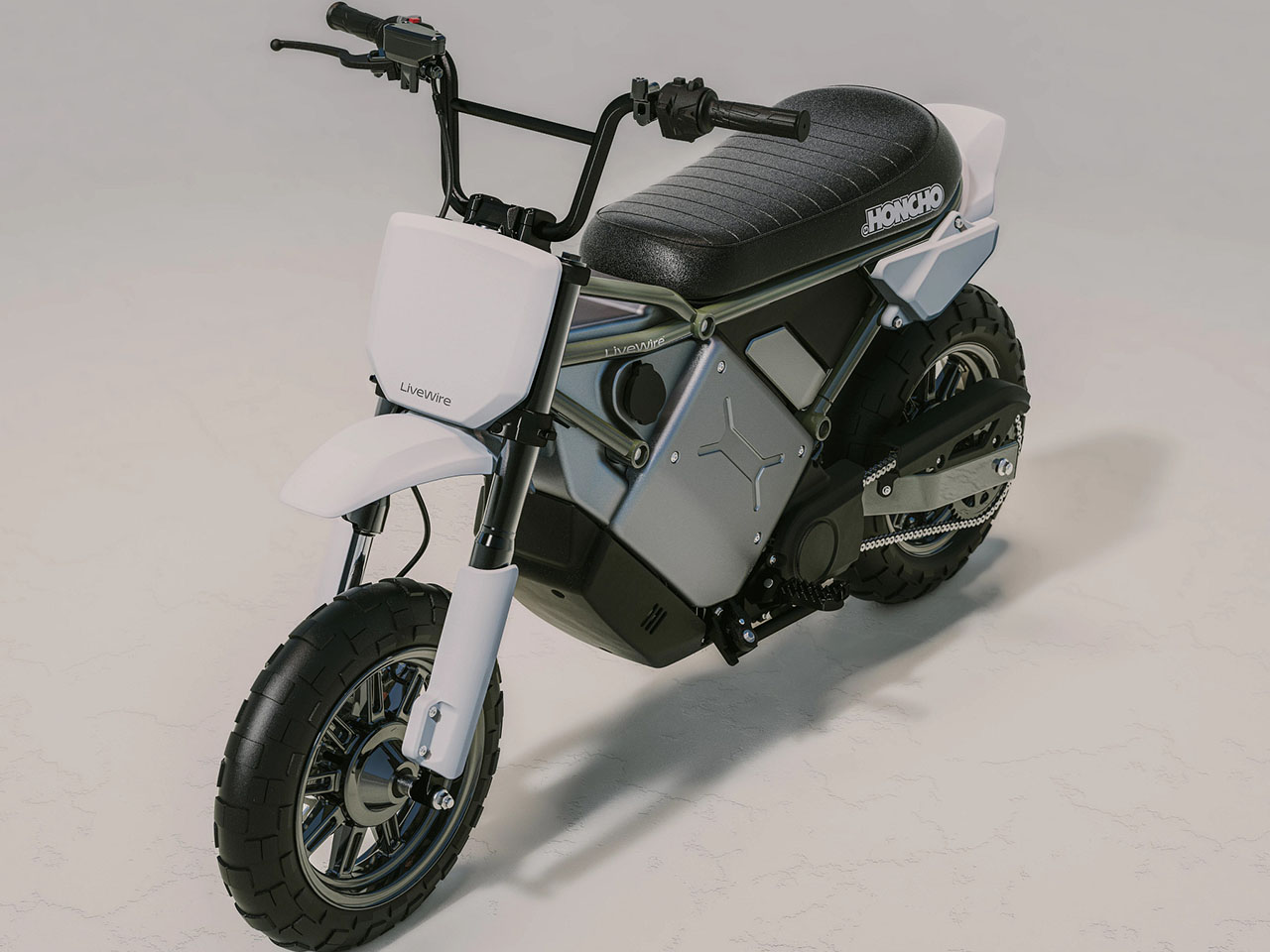
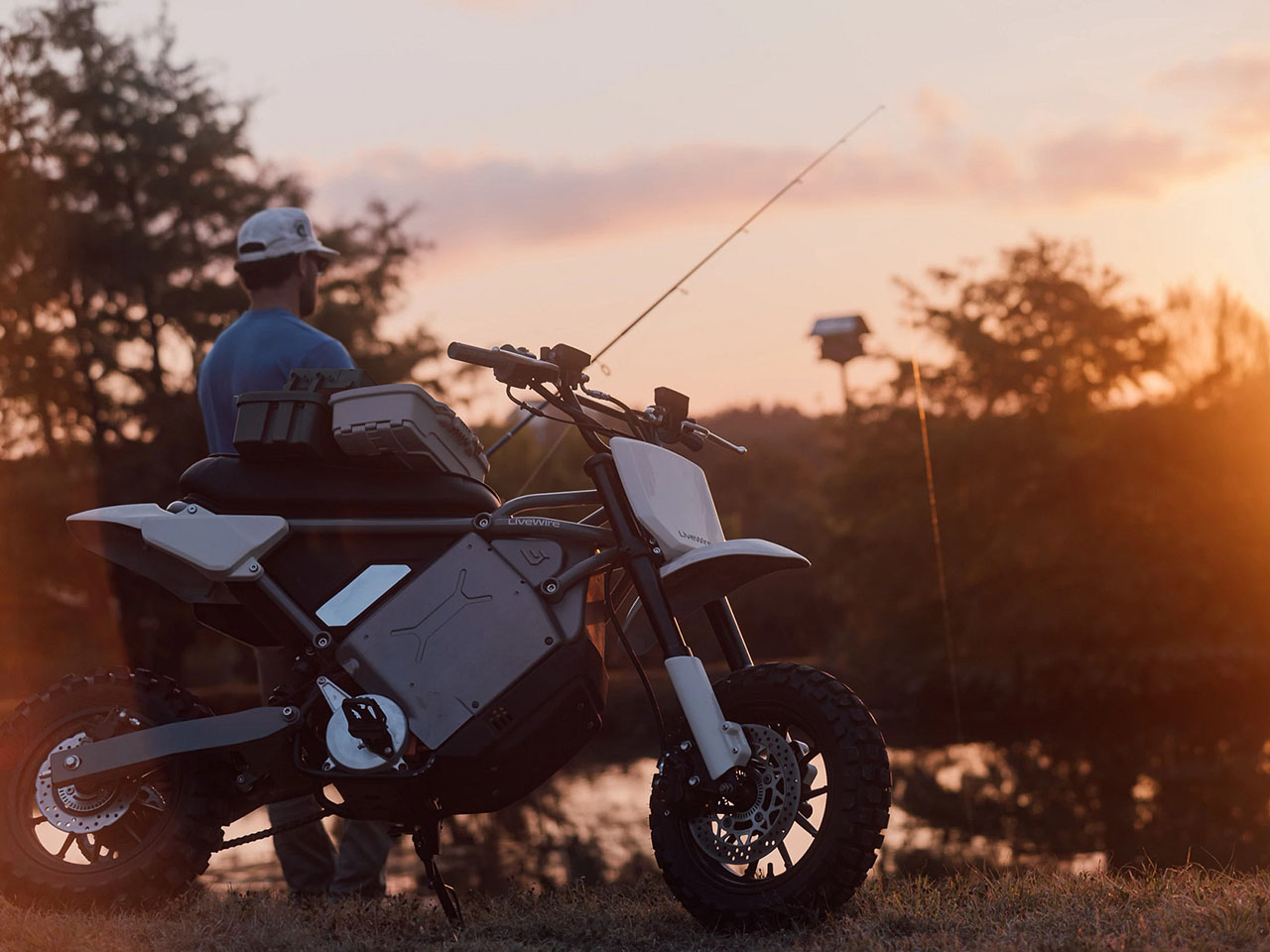
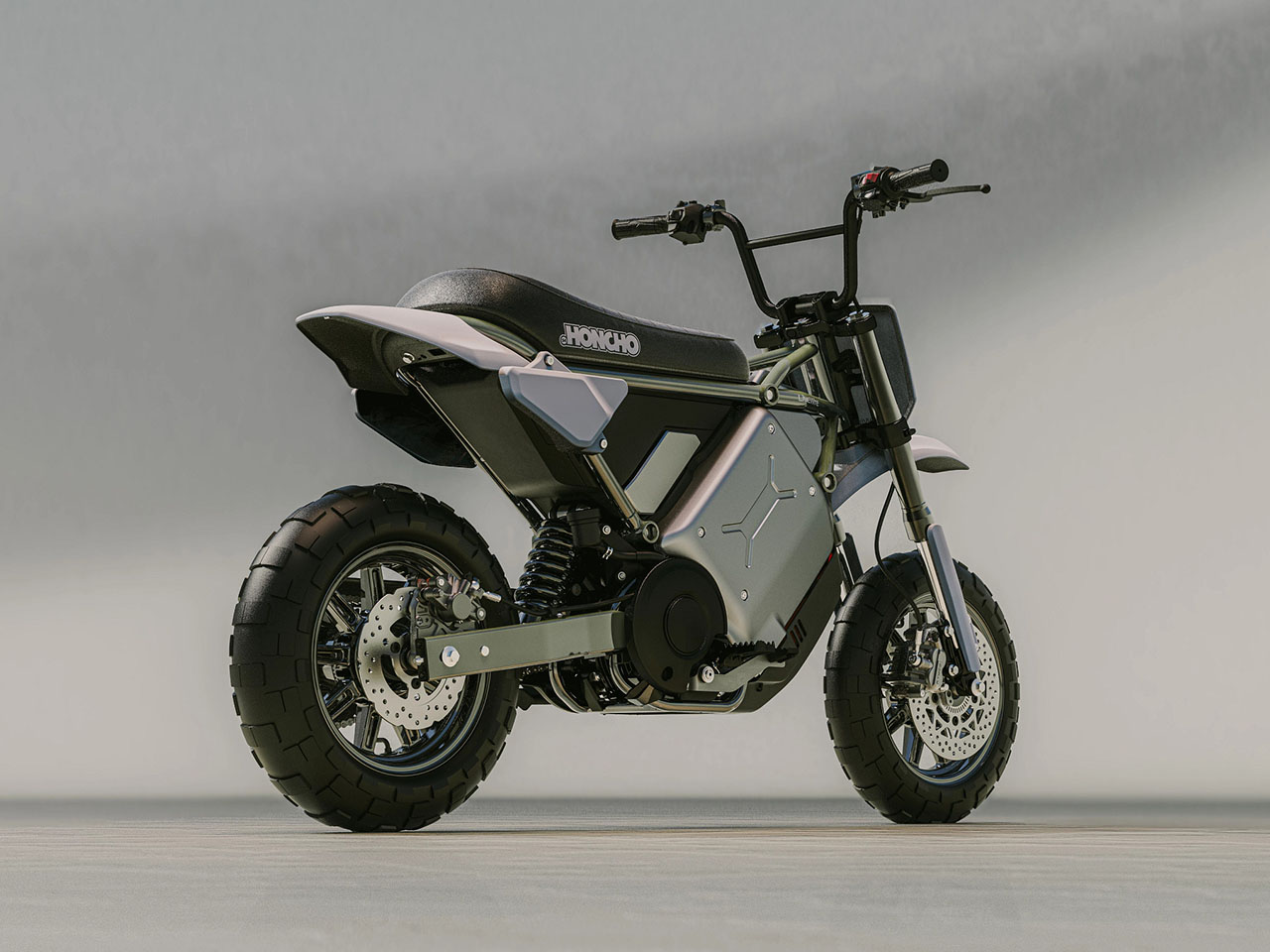
LiveWire, the electric-motorcycle arm of Harley‑Davidson, has unveiled its upcoming S4 Honcho mini moto as a striking departure from the usual large-format electric bikes. Designed to fit into urban commutes and light off-road excursions, the S4 Honcho is set to launch in spring 2026 in two versions: a street-legal “Street” model and an off-road “Trail” variant.

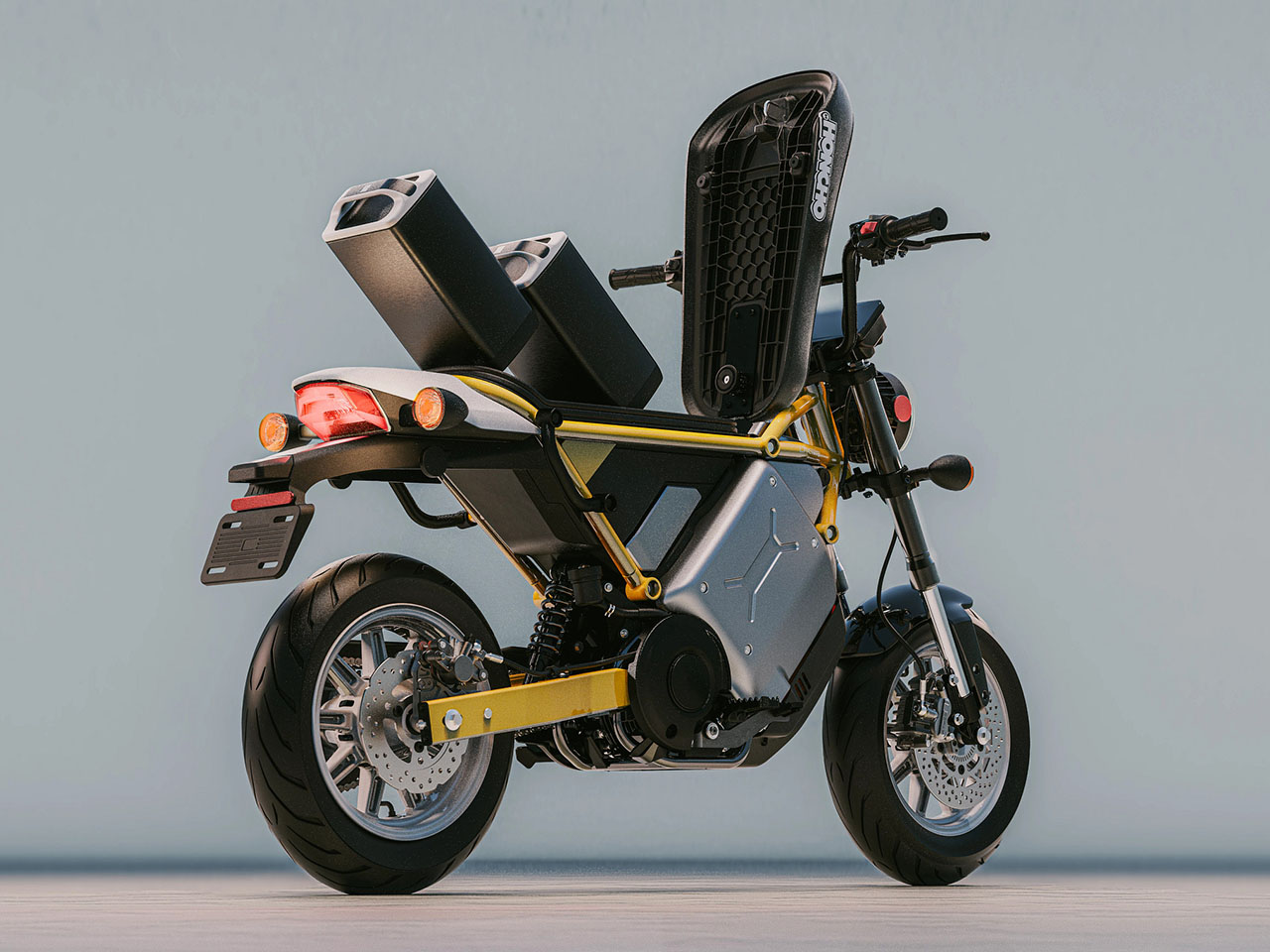
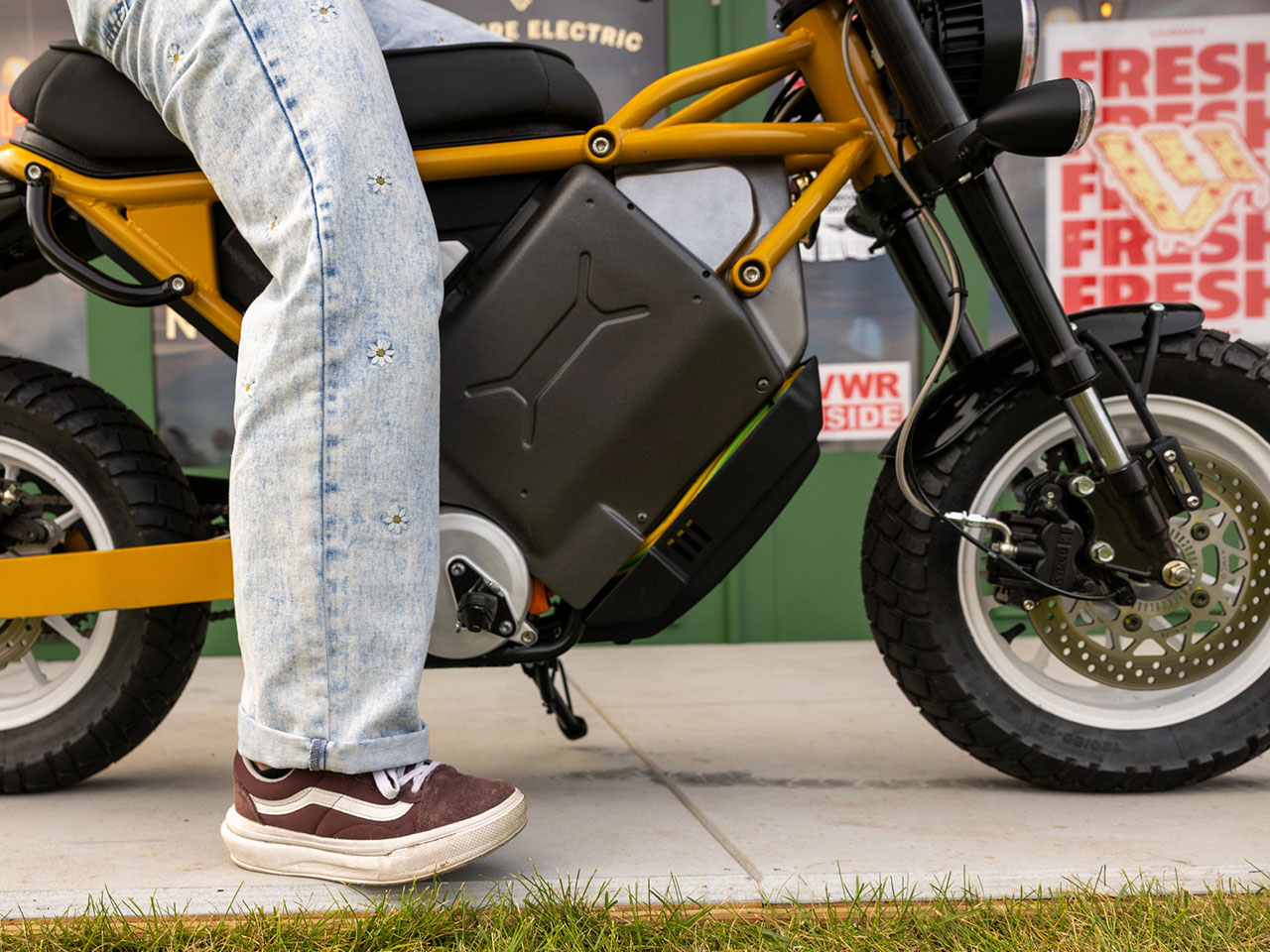
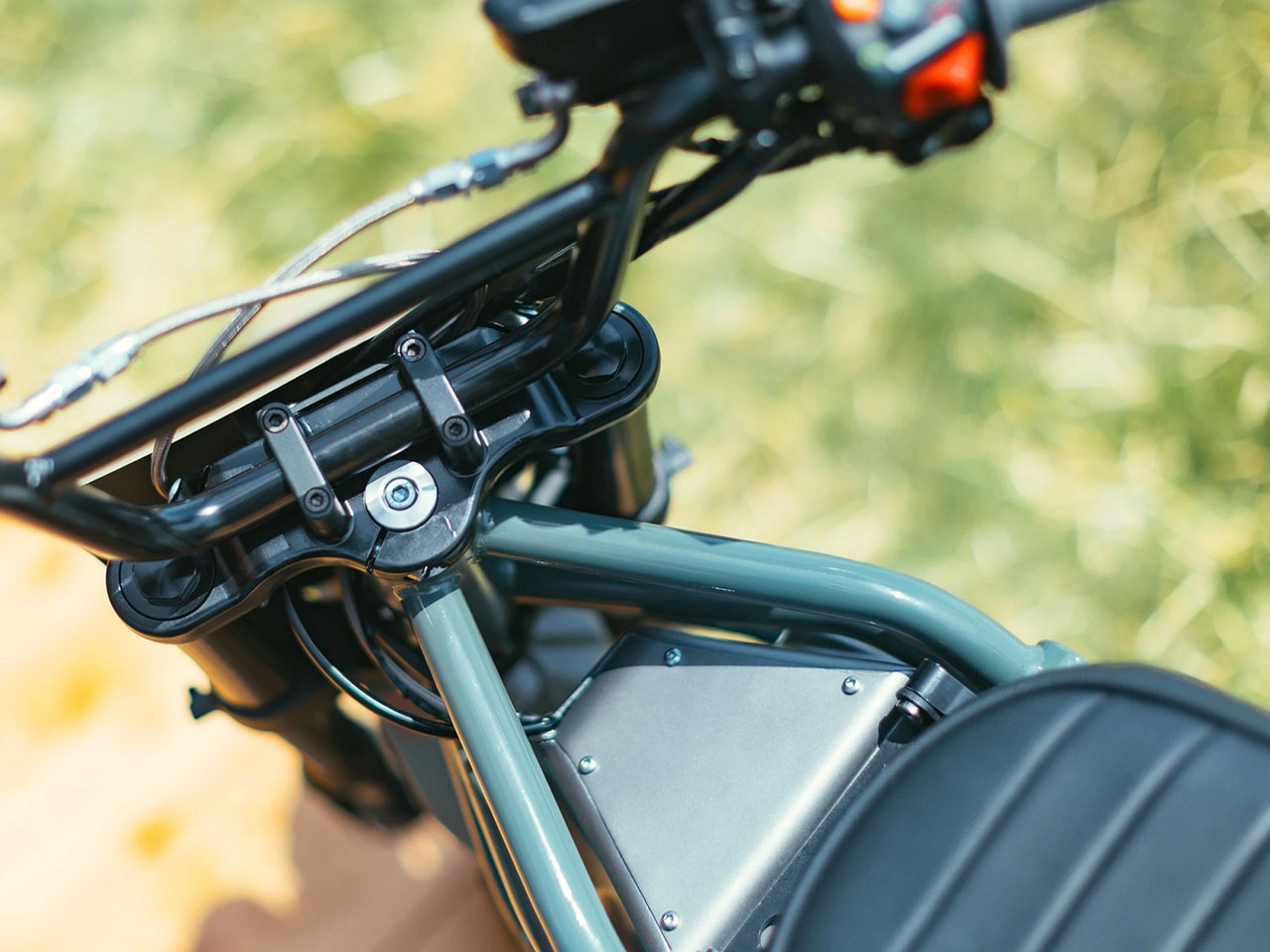
The idea behind the S4 Honcho is to make electric motorcycling more accessible. It is sized and rated to match a 125-cc equivalent class in Europe and the UK, while in the U.S., it aligns with the M license threshold. That means a lightweight profile, intuitive performance, and a swappable-battery platform. The design uses a tubular frame with the removable battery pack mounted beneath, and the electric motor driving the rear wheel via a chain.
Designer: LiveWire

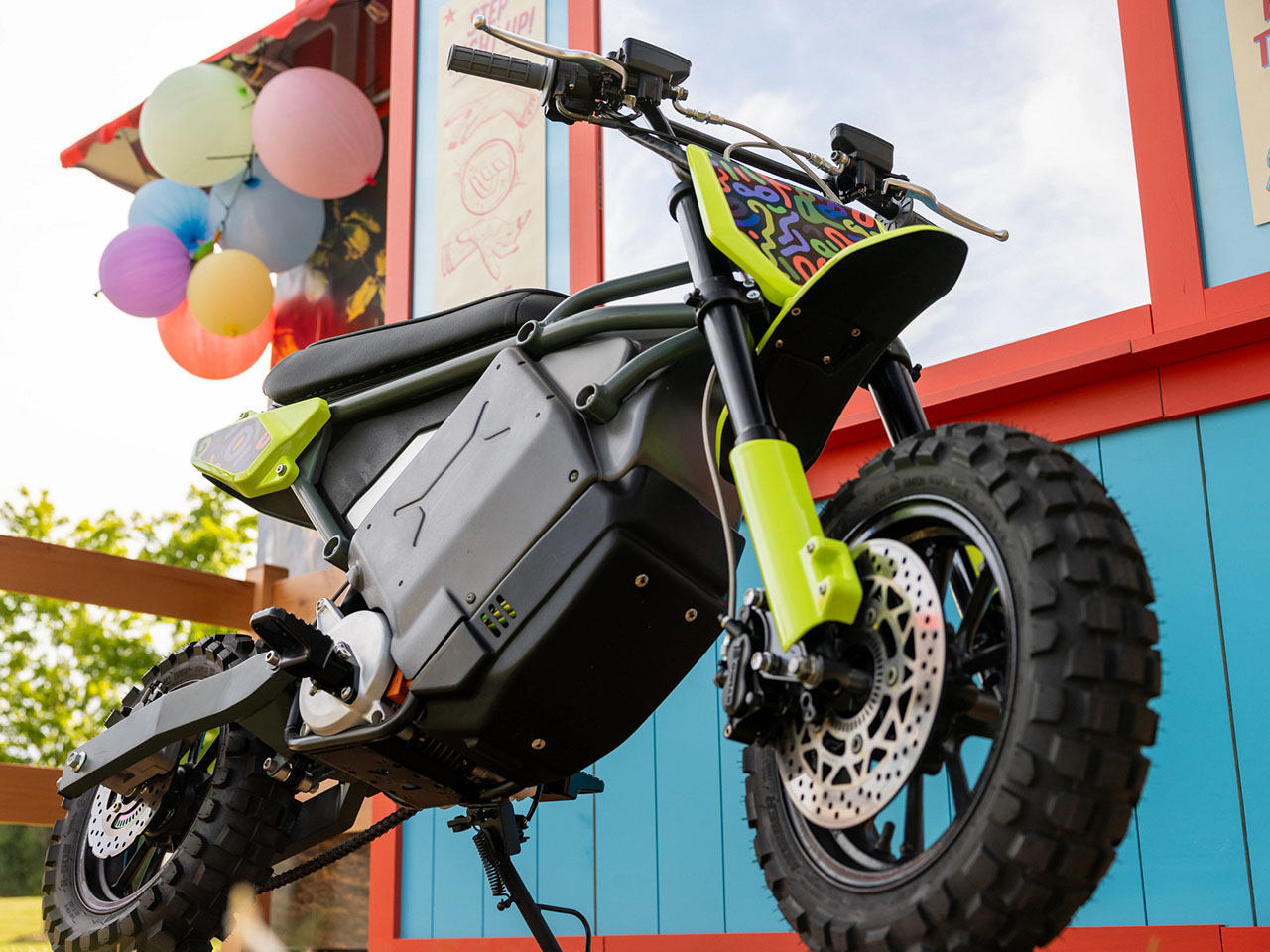
Beyond the dimensions and licensing implications, the S4 Honcho stands out for its adaptability. The Street version is equipped with full lighting, indicators, road tires, and a TFT display. The Trail version omits street-legal lighting, features knobbly tires, extends suspension travel, and increases ground clearance for off-road use. Both models reportedly include a combined braking system (CBS) rather than a traditional foot-brake lever.

Performance details remain light, but LiveWire has indicated that the S4 Honcho delivers brisk acceleration from 0 to 30 mph in about 3 seconds, matching the company’s prior figures for its small-format prototype. While exact power, torque, or range figures are not yet confirmed, early reporting suggests it will occupy a different market niche than higher-powered models such as the LiveWire ONE.

The swappable battery architecture is concealed under the seat that lifts to allow double-cell battery removal, enabling quick swap or convenient charging. For riders in cities or exploring light trails, this translates into flexibility and minimal downtime.

From a design and brand angle, the S4 Honcho signals LiveWire’s push into a broader rider base dominated by young riders, urban dwellers, adventure-light commuters and those seeking an electric bike with attitude but manageable scale and licensing. The dual‐variant approach ensures the brand appeals to both paved riders and those willing to stray off-road.

In terms of timing and availability, official production is slated for spring 2026, with the public debut likely at the 2025 EICMA show. Pricing has not yet been confirmed. The electric bike’s compact, dual-variant credentials reimagine what an accessible e-motorcycle can be.  combining city-friendly sizing, off-road capability, swappable battery convenience, and the electric-first architecture of LiveWire’s heritage. For riders seeking flexibility, fun, and ease of entry into electric two-wheels, this model is worth keeping an eye on.


The post S4 Honcho is a power-packed electric bike for city commutes and off-road excursions first appeared on Yanko Design.