In today’s digital landscape, having a captivating website is essential for businesses and individuals alike. However, the thought of creating a professional 3D website from scratch can be daunting, especially for those without coding experience. Fortunately, with the advent of no-code development tools, building impressive 3D websites is now accessible to everyone. The video below […]
I swear these pocket knives keep getting smaller and smaller, but remain just as fascinating and sharp.
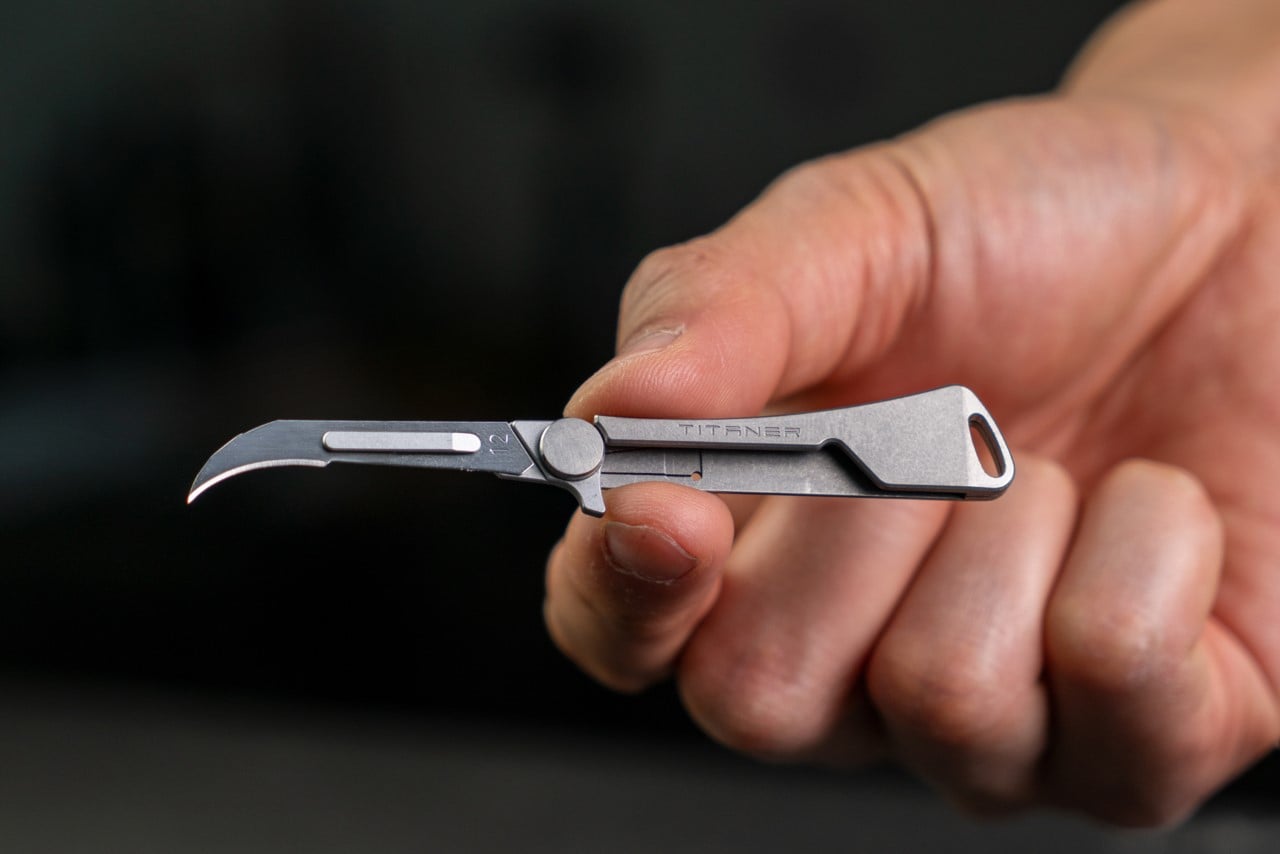
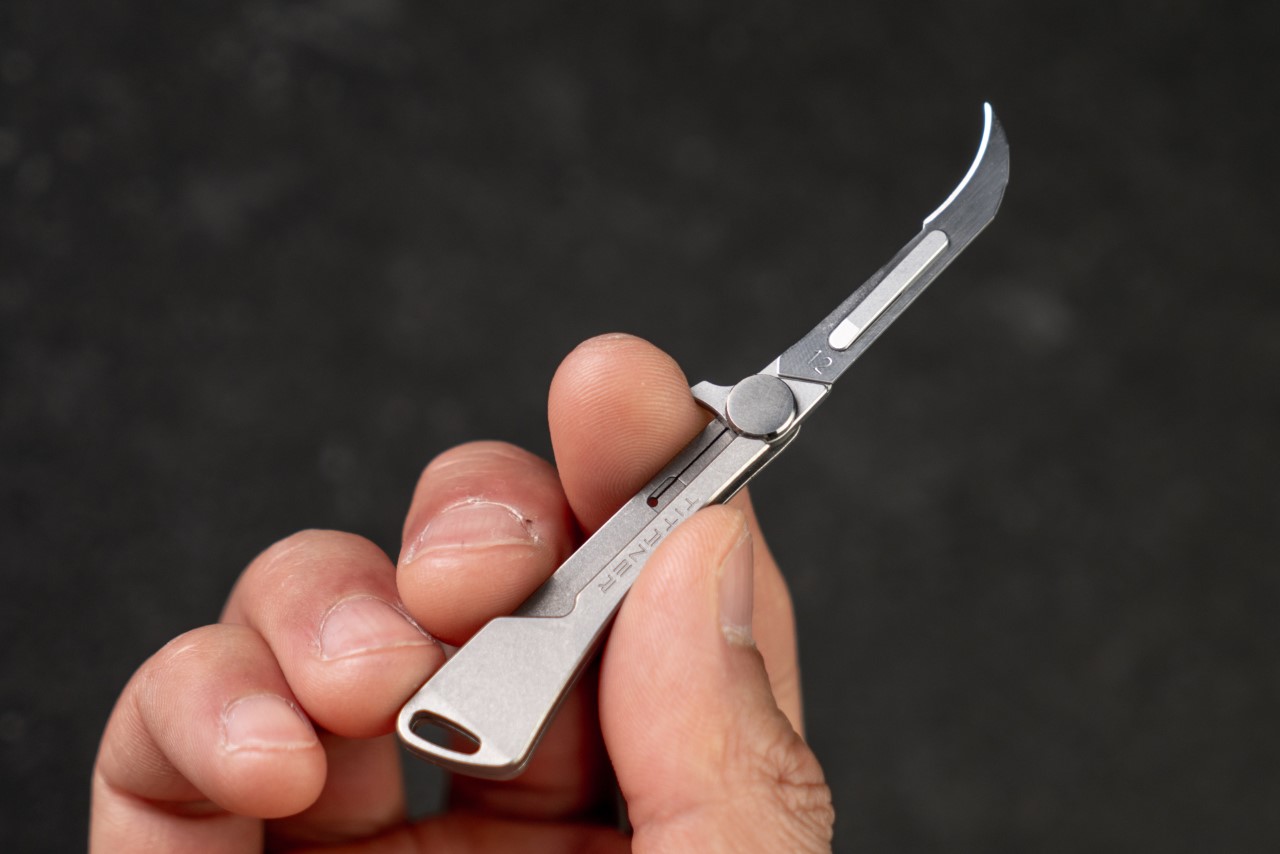
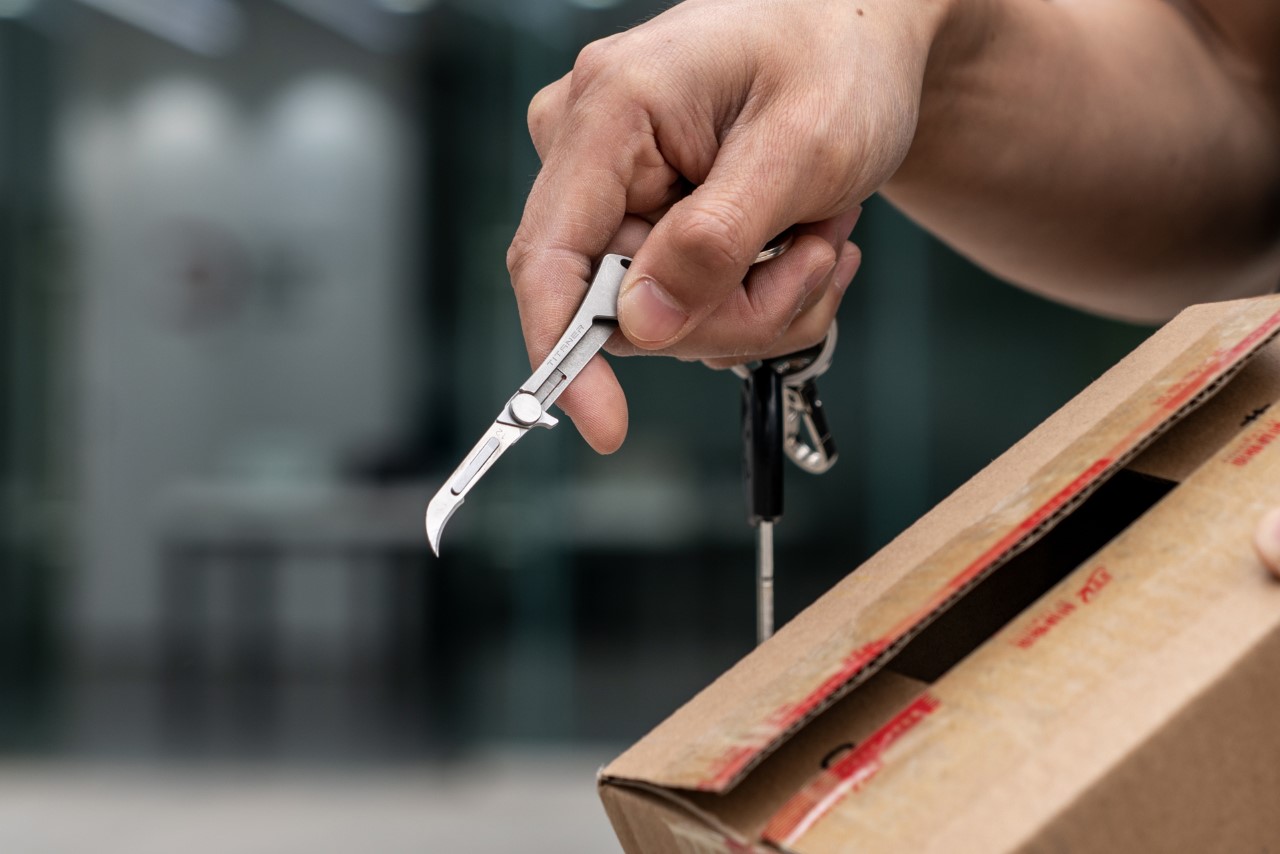
Meet the Tiflex, a knife so tiny you could hold it using just two fingers. Designed to be compact enough to fit on your keychain, the Tiflex is a petite little knife that shouldn’t be underestimated. It packs a titanium body and houses a scalpel blade on the front, known for its deceptive sharpness. If you’ve ever used an Xacto Knife, imagine having the same kind of blade in a form factor small enough for you to carry safely with you and use for everything from opening boxes to cutting ropes and even self-defense.
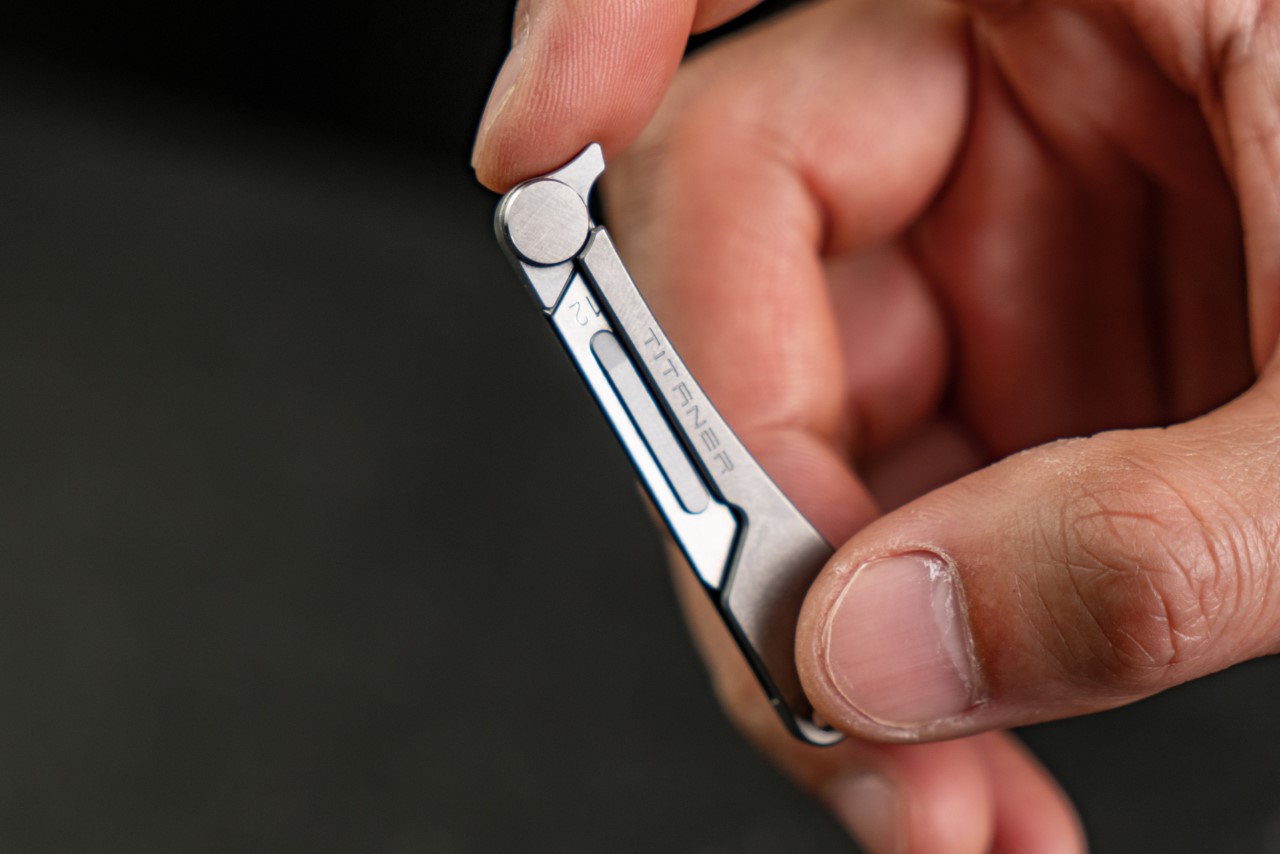
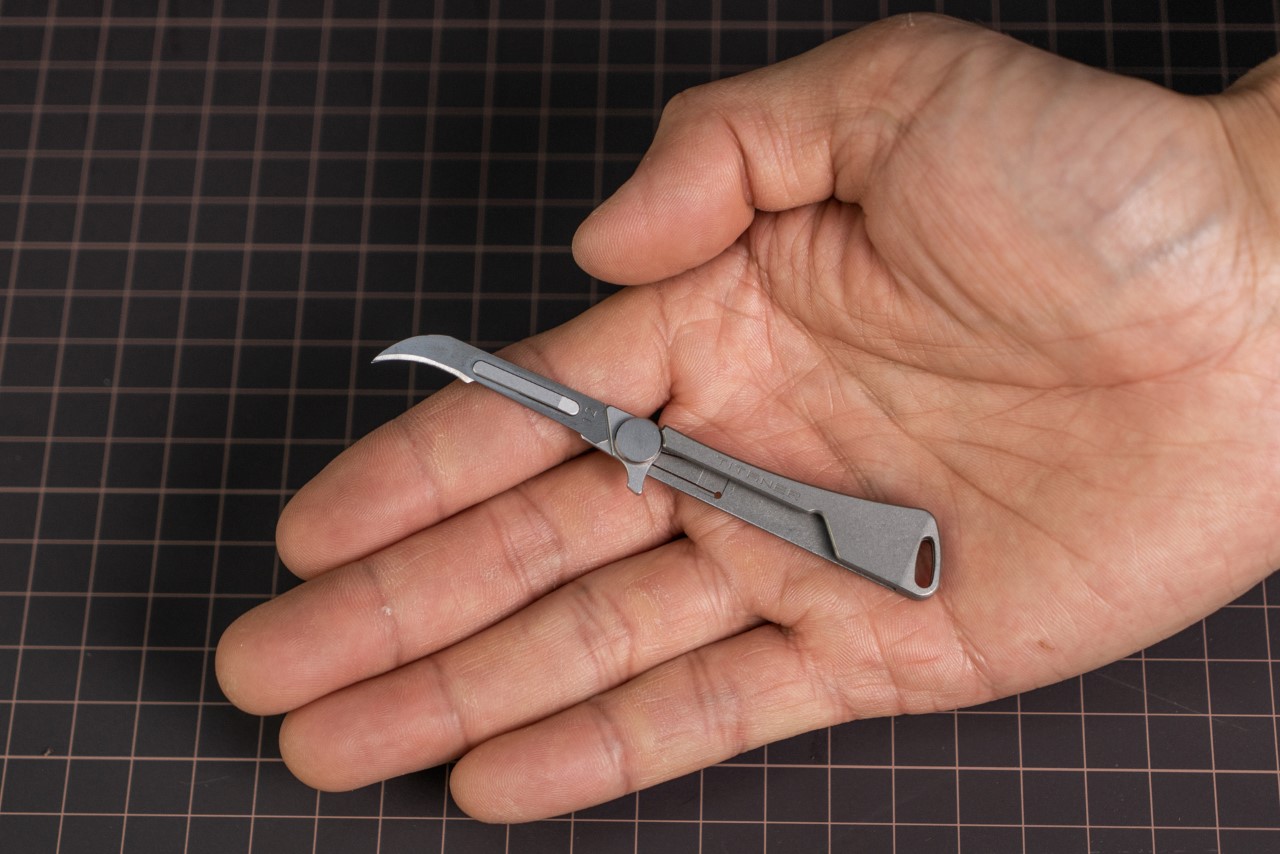
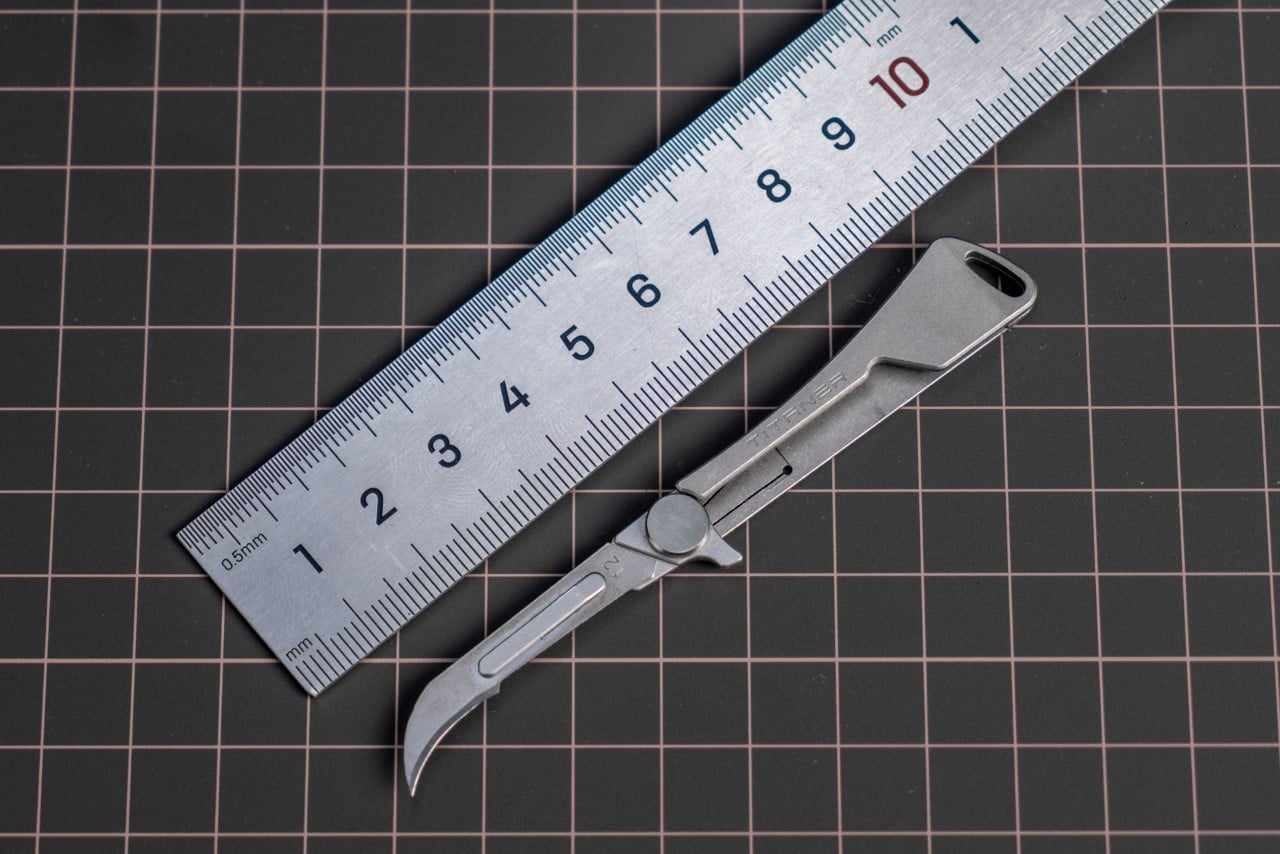
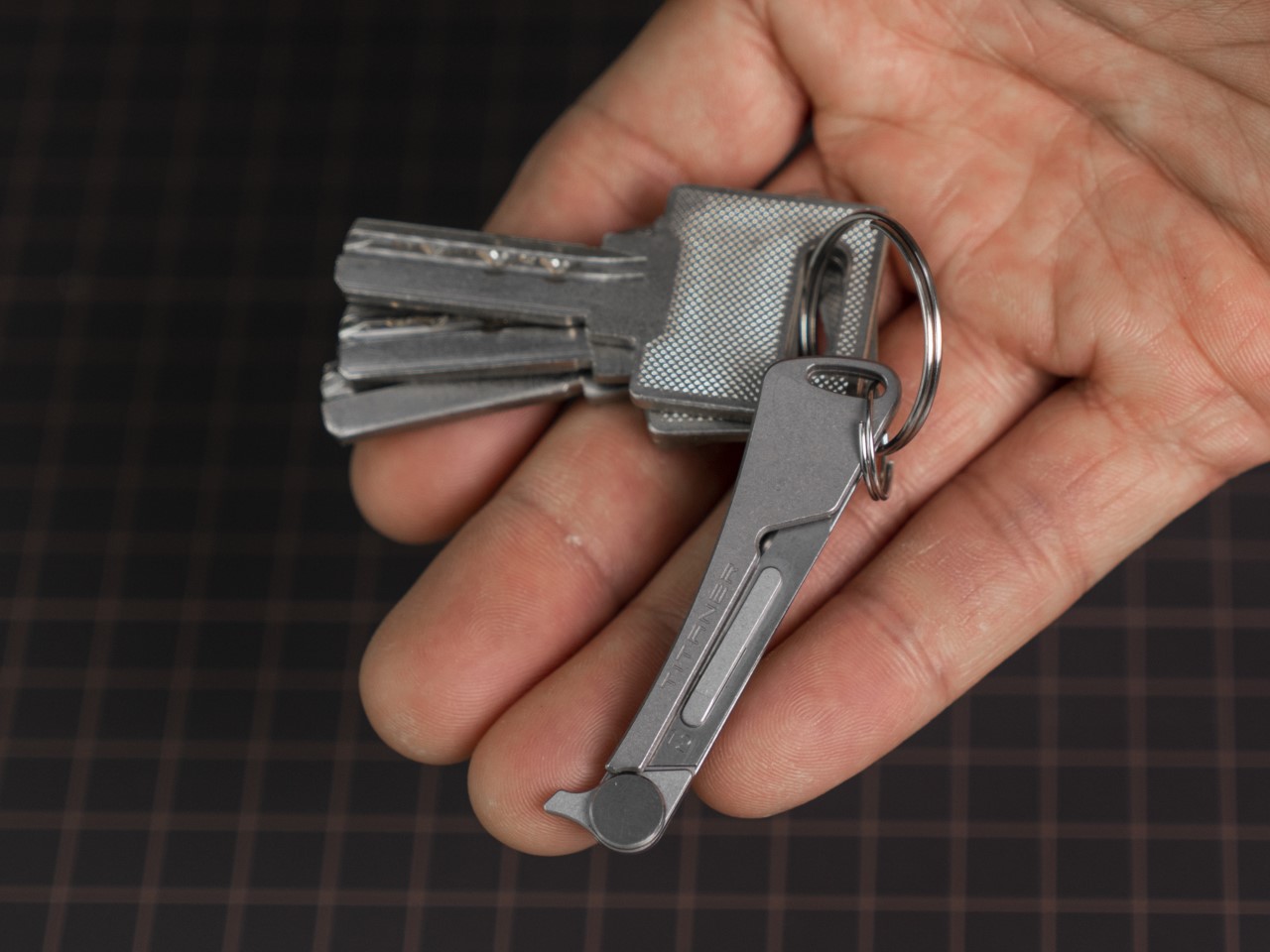
Measuring a little more than 2 inches when closed, the Tiflex might be tiny, but it’s still rather immaculately designed. It comes with a flipper that makes one-hand opening easy – the flipper even acts as a finger rest to prevent your index finger from ever accidentally touching the blade’s edge – and even has a frame lock that prevents the blade from shutting while in use. All this packs itself in a design small enough that even your house keys look larger in comparison. Now you’re probably worrying about ergonomics.
The problem with small knives is that they have small handles, which can be annoying to hold, but that’s where the Tiflex achieves a pretty good balance. The knife’s handle is 2.1 inches, and along with the blade, the knife measures 3.7 inches from tip to base. Even for that small size, the Tiflex is fairly handy to hold and use. Sure, you can’t measure it against much larger, more ergonomic knives, but the Tiflex offers convenience instead, with its compact form factor. The knife is perfect for outdoor use, craft, EDC-adjacent activities, or even for self-defense. The sharp scalpel blade plays its role wonderfully in that regard, giving you a knife that feels effortless to use.
The scalpel blade, often made with either high-carbon steel or hardened tempered stainless steel, is known for its versatility. You can use the Tiflex to cut paper, leather, plastic ties, ropes, or even seatbelts. The sharp edge can carve wood too, and that hook shape comes in handy for piercing or clawing. Hold the knife upside down like you would a karambit (with the blade emerging from the base of your grip) and it’s perfect for self-defense too, allowing you to potentially get out of a messy situation quickly.
The entire knife is made out of just 5 parts, including the blade. The handle, hinge, and blade holder are all machined from solid titanium, making the overall knife extremely light at just 6.6 grams or 0.2 ounces, but still rather durable. The knife is impervious to damage, is waterproof, corrosion-proof, and can last decades. However, the blade won’t, but that’s why the Tiflex comes with a replaceable blade design.
The clever frame lock ensures the knife’s blade stays in its open position while you use it
The replaceable blade format is great for the Tiflex for a bunch of reasons. Sharpening knives is an art that not many people have the skill or patience for, and sharpening a tiny knife like the Tiflex can be even more of a challenge. Scalpel blades come in a variety of shapes and you can buy them in bulk, replacing the Tiflex’s blade whenever it gets dull, or if you want to swap out its hook shape for something a little different. There are quite a few blade designs to choose from, and they’re all compatible with the Tiflex. All you need to do is take the old blade out and pop a new one in and it locks in place. This ensures you can use the Tiflex for years just by replacing the blade every few months, and it also means the Tiflex is inherently TSA-friendly and flight-safe, because you can simply ditch the blade and carry the rest of the knife with you on board.
The chances of you accidentally carrying your Tiflex on board a plane are pretty high because of just how ludicrously little it is. It’s designed to be attached to your keychain and forgotten about until you need a knife. That’s honestly the best kind of knife – one that’s there when you need it and gone when you don’t. Designed by the folks at Titaner, the Tiflex comes in both right-handed as well as left-handed variants, so you can choose the style of knife based on your dominant hand. The knife is originally priced at $65, but backers can grab the Tiflex at a special discounted price of $42, with 10 scalpel blades included, and global shipping starting July 2024.
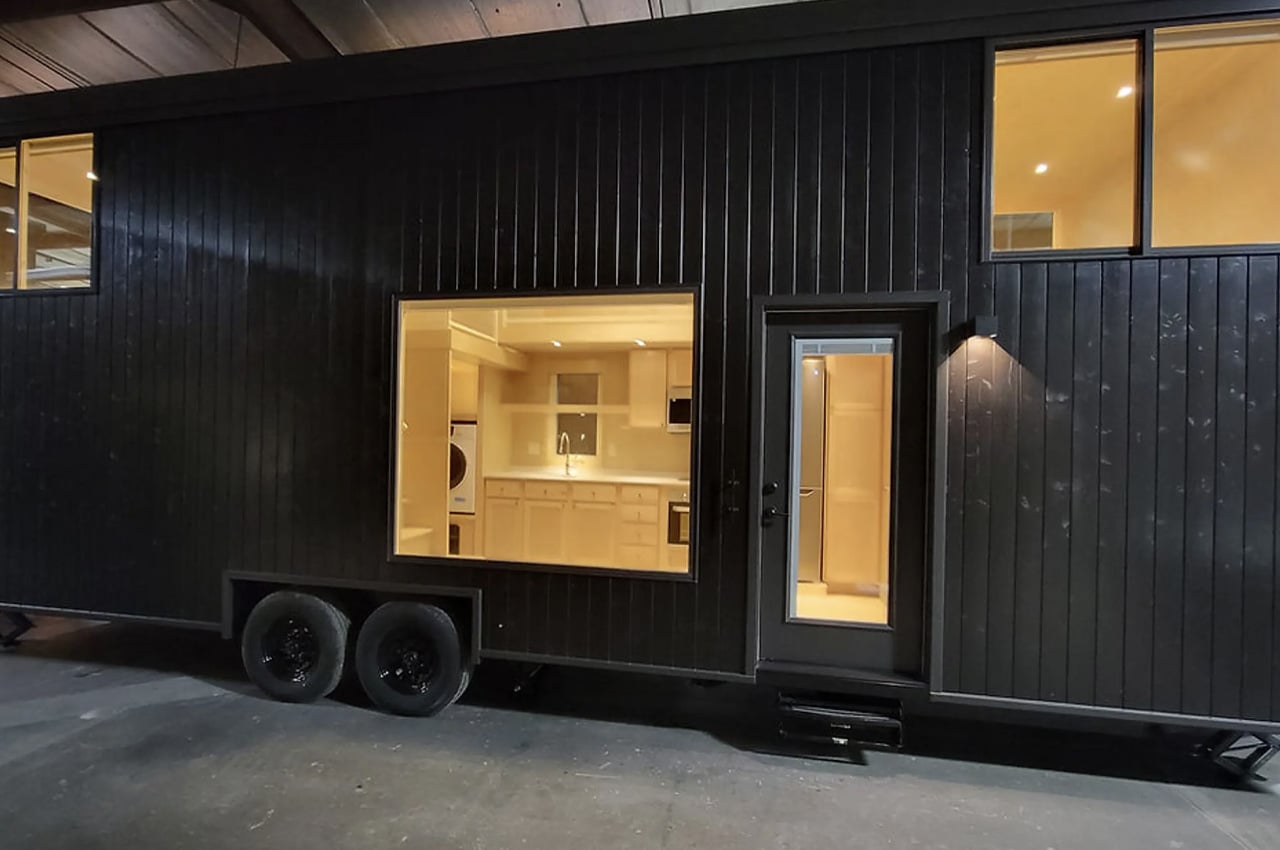
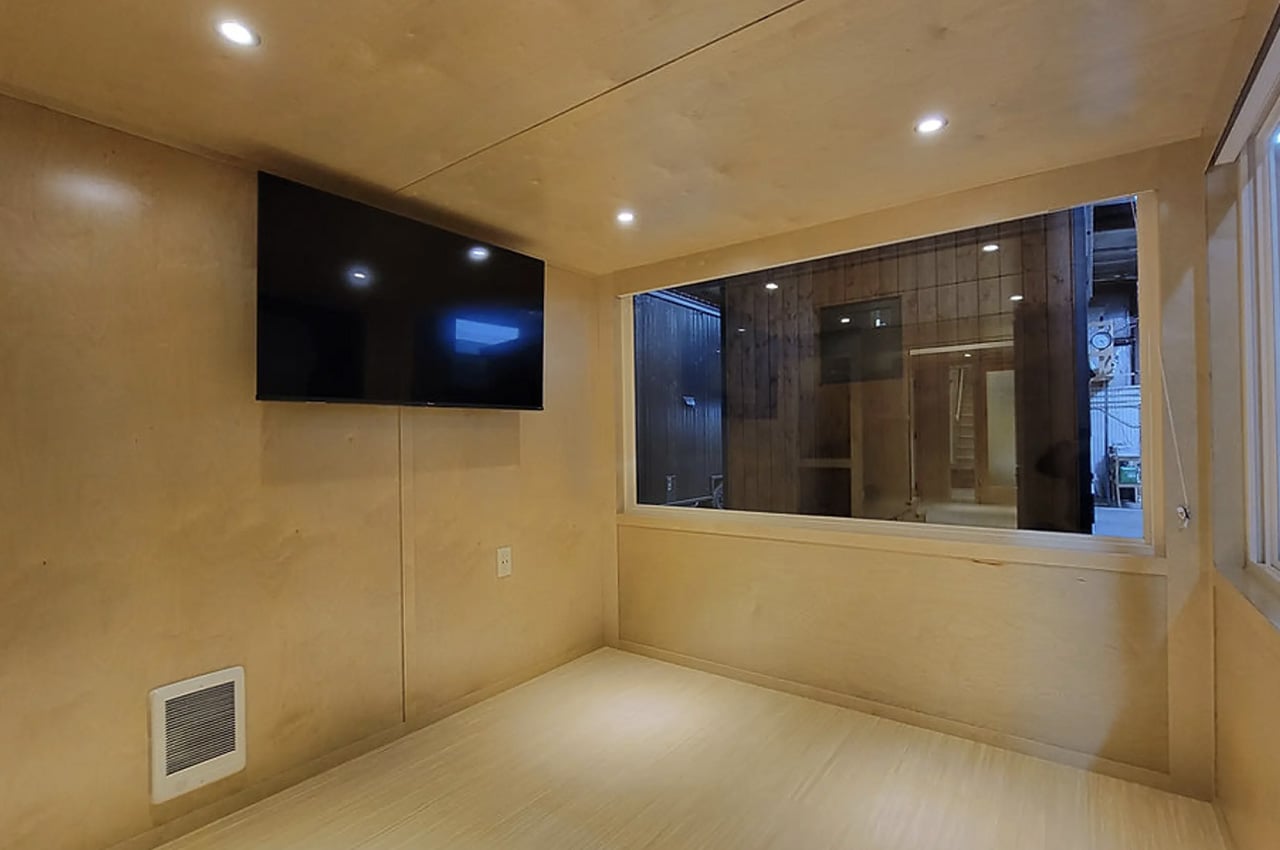
When it comes to tiny homes, Escape has established its dominance and expertise, and it tends to recreate various variations of its popular and most-loved models. Recently, it created the eONE XL – a rejuvenated take on its One and One XL model. The eONE XL is designed to be a more spacious, free-flowing, and light-filled home in comparison to its predecessors. Based on a double-axle trailer, the eONE XL has a distinguished Japanese-style charred wood exterior, which helps to protect the wood from decay and bugs. It features a length of 30 feet and a width of 8.6 feet, the same as the One XL. But there are a lot of other differences, ensuring that the eONE XL offers an upgraded micr0-living experience.
The eONE XL consists of large windows, which allow natural light to stream in freely throughout the day. This creates an interior that is quite light-filled and warm. As the ‘e’ in its name signifies, the home includes all-electric appliances. Besides these additional benefits, the home also offers more storage space and floor space. As you enter the home, you are welcomed by a spacious and well-designed kitchen. It is quite well-equipped for a tiny home. It contains a pantry storage area, fridge/freezer, microwave, an induction cooktop, electric oven, and sink. The kitchen also includes generous cabinetry and a washer/dryer.
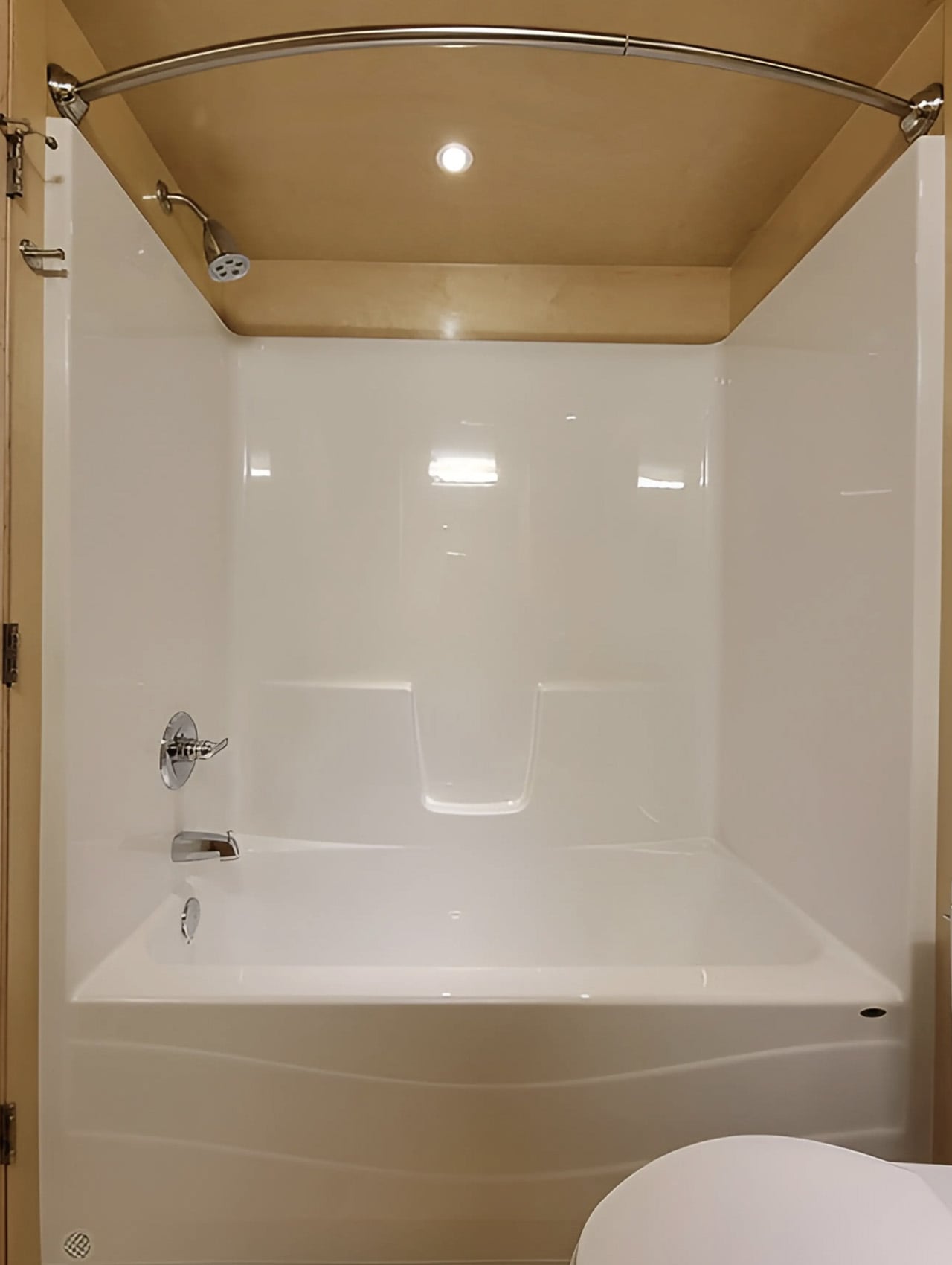
The living room is located next to the kitchen, and it seems to be quite spacious. The images don’t show any furniture in the living room though. The bathroom is placed on the opposite end of the home, and it features a flushing toilet, a sink with storage space, as well as a shower and a bathtub – which is something we never get to see in tiny homes. How cool!
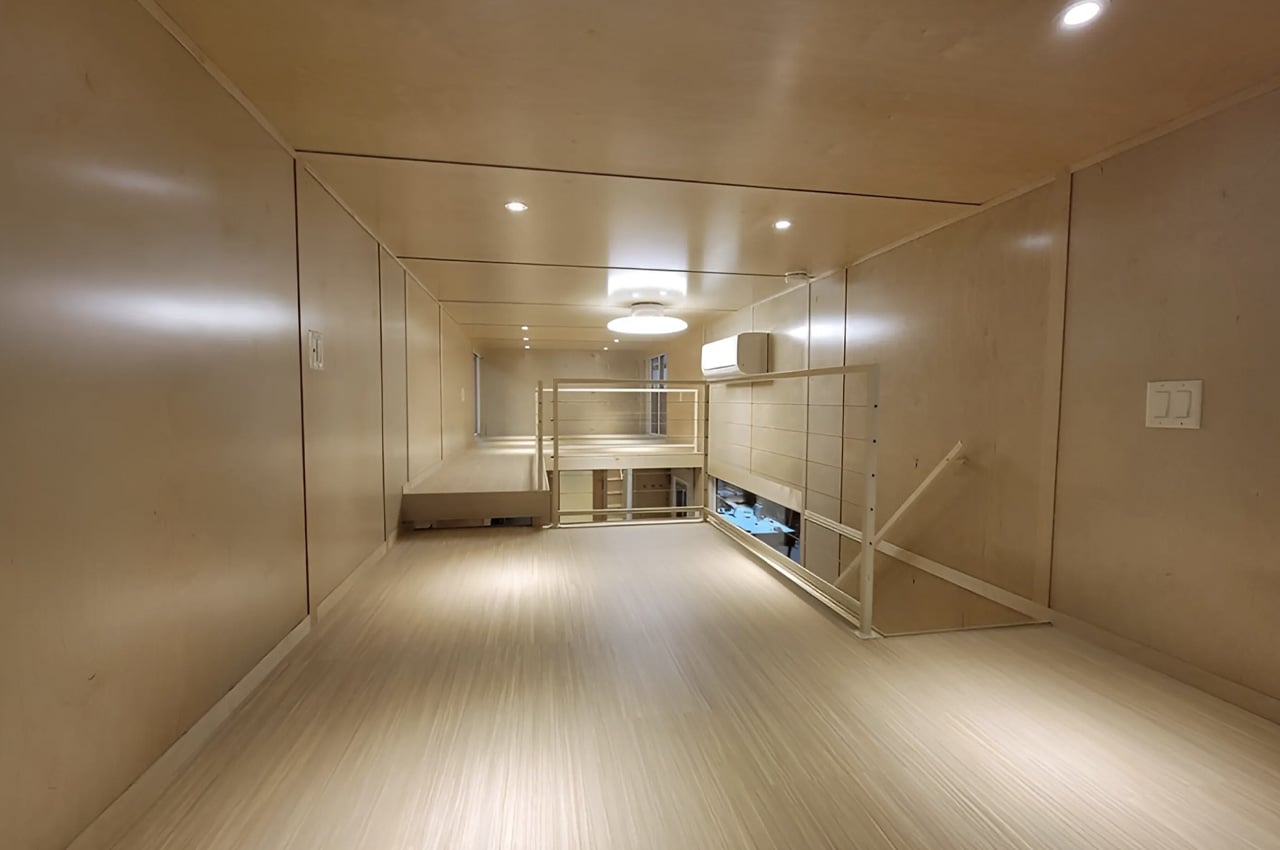
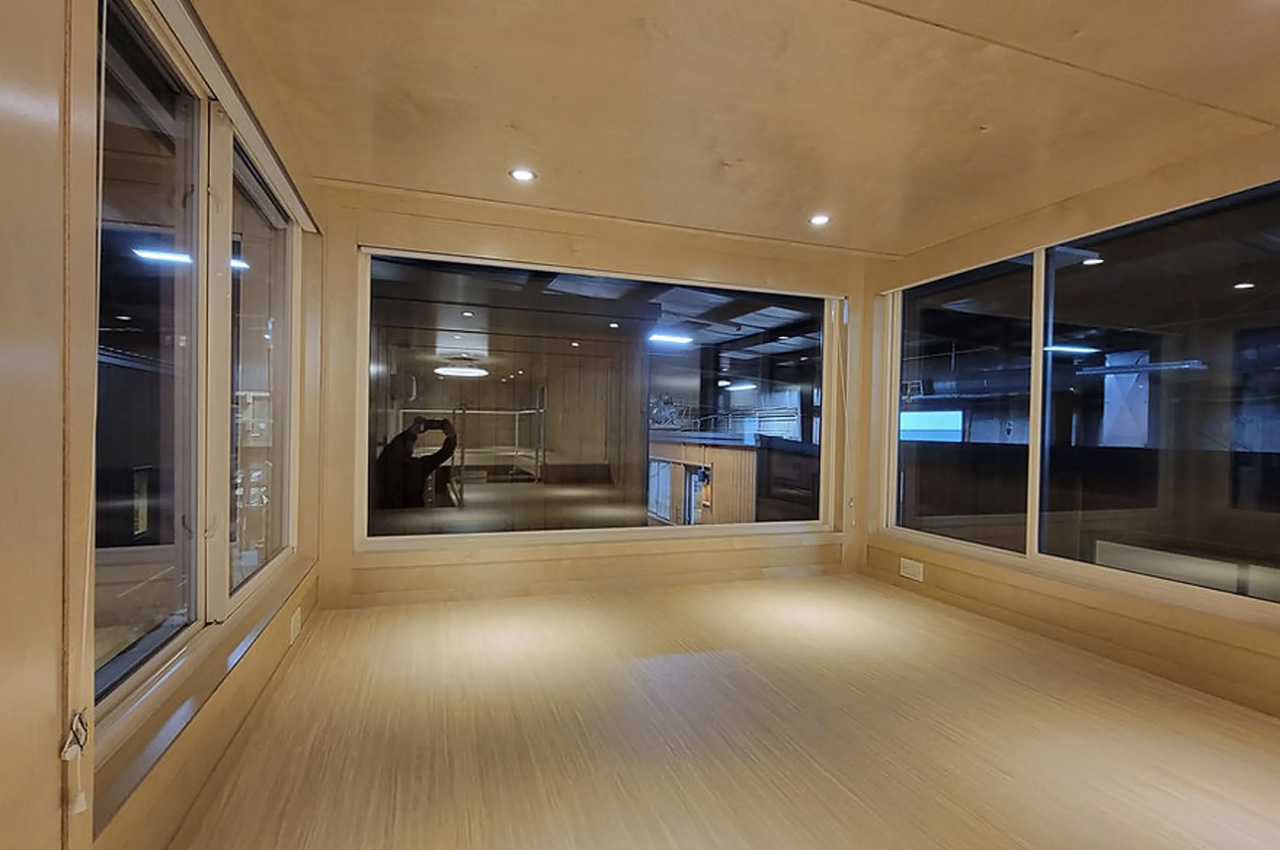
The eONE XL tiny home includes two bedrooms, both of which are placed upstairs, and are quite spacious. You can access the master bedroom via a storage-integrated staircase. The staircase is equipped with large windows, offering views as you climb up to the bedrooms. You can enter the second bedroom via a gangway, although this room could also be utilized as a home office.
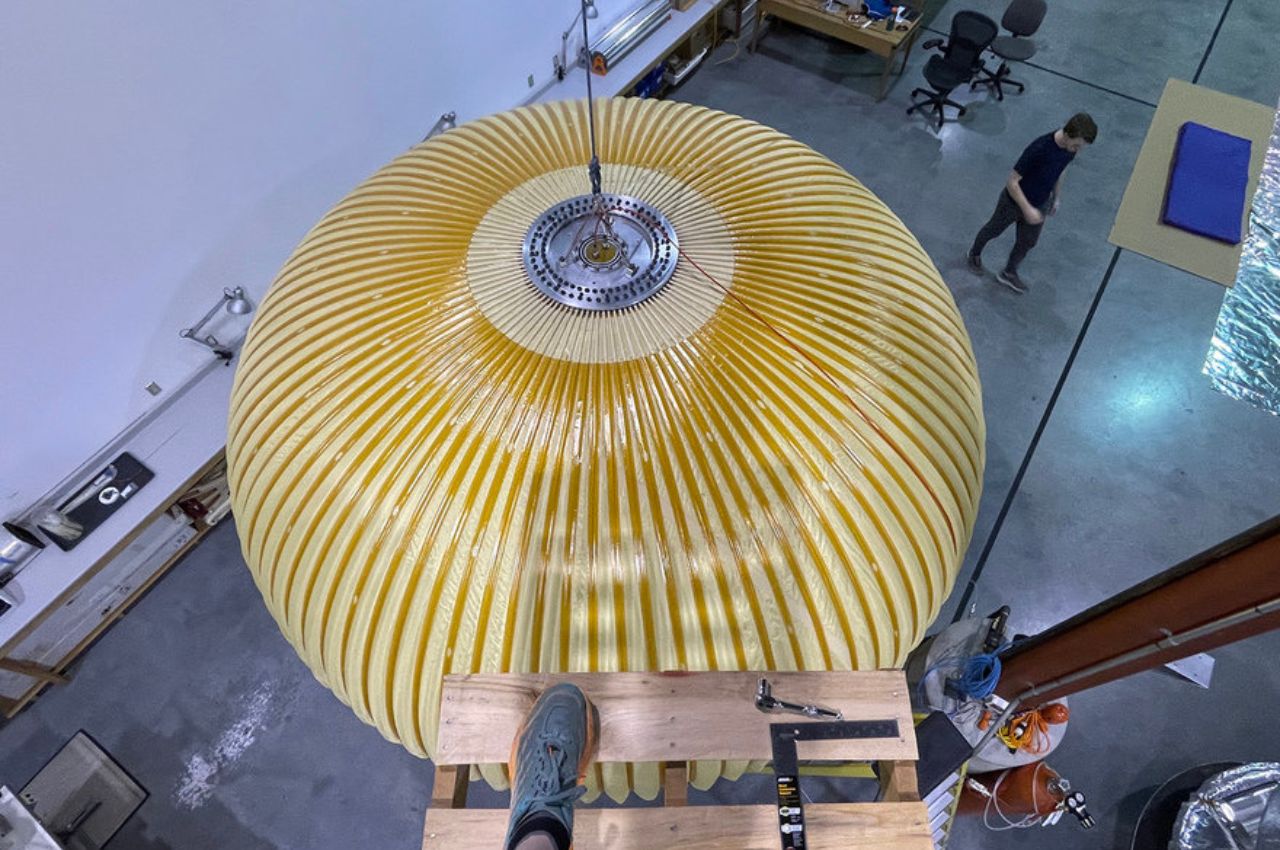
Isn’t it ironic when we say space is infinite, yet it has the same housing problem we face on Earth of not having enough room? The challenge for builders of space habitats is not the vastness of space itself but the constraints of shipping capacity. Despite the increased frequency and reduced cost of rocket launches, the amount of building material that can be sent into orbit remains limited. The International Space Station (ISS), for example, required over 40 flights and cost more than $100 billion to construct. In contrast, Max Space is giving more in less! A bargain that can never go wrong. It is a company revolutionizing space habitation by offering equivalent cubic volume to the ISS for just $200 million, including launch, slashing costs by over a hundred-fold.
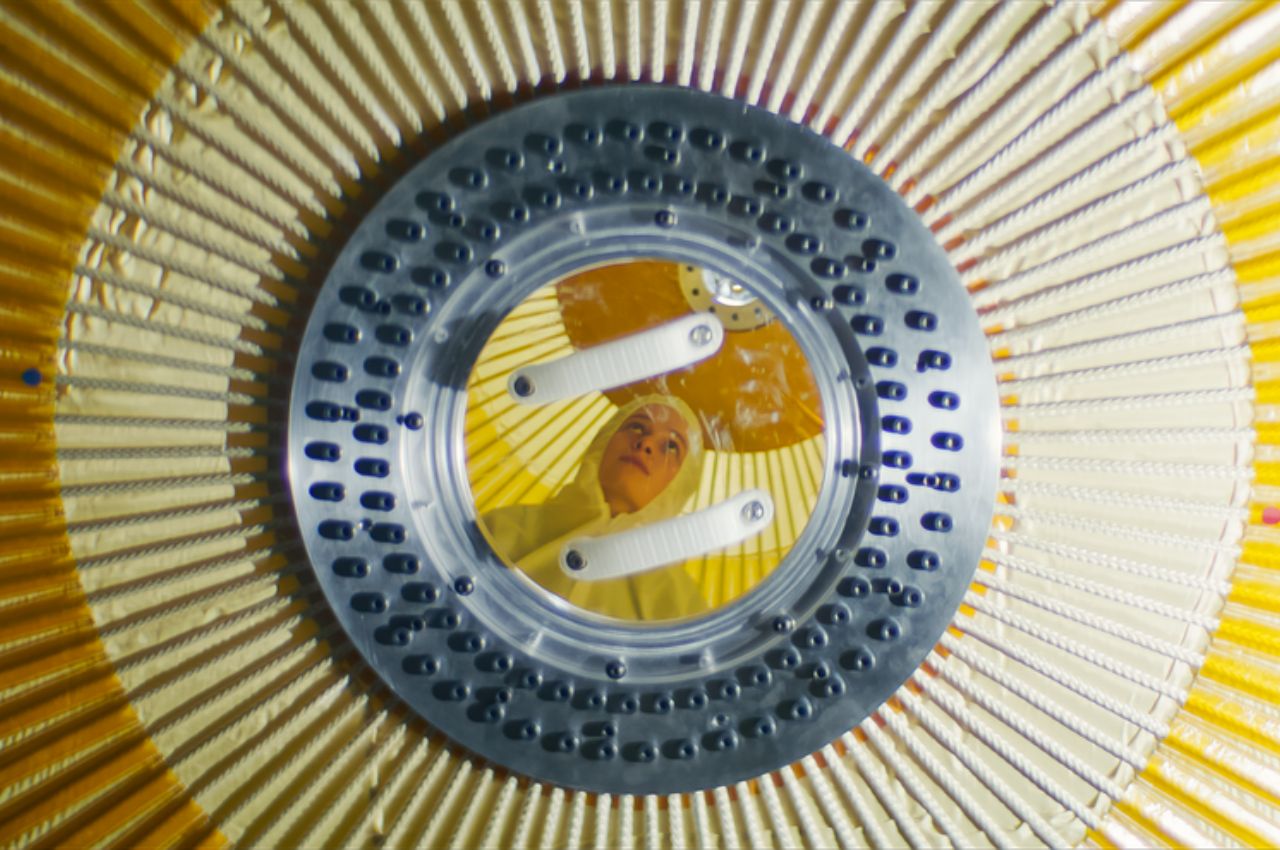
Max Space was founded by Maxim de Jong, a pioneer in “soft system space architecture.” De Jong is globally recognized as the foremost expert in utilizing expandable materials for space. His early designs, Genesis I and Genesis II, have been orbiting Earth since 2006 and 2007. Max Space’s approach is distinguished by its use of ‘isotensoid’ architecture. This innovative design ensures that every structural fiber remains unencumbered, allowing it to assume an ideal geometry for optimal load-bearing capability. This results in the lowest possible mass and cost while offering unsurpassed predictability and unlimited scalability.
A significant advantage of Max Space’s inflatable modules is their enhanced resilience against space debris. Unlike traditional hard modules made of aluminum and titanium, Max Space’s expandable modules feature a multi-layered system of fiber-based ballistic shielding. This design provides greater resilience, making the material safer and stronger.
The Max Space 20, the company’s initial module, provides 20 cubic meters (706 cubic feet) of interior space. Though smaller than the ISS’s habitable volume of 388 cubic meters (13,696 cubic feet), it marks a significant step towards larger structures. The company plans to launch the Max Space 20 units in 2026, followed by the Max Space 100 and Max Space 1000 within the next four years. The Max Space 1000 will dwarf the ISS in volume, illustrating the company’s commitment to scalability.
“More volume, less cost” is Max Space’s motto. Their first expandable module, scheduled to launch on a SpaceX rideshare mission in 2025, will be compacted into two cubic meters for launch and expand to 20 cubic meters after deployment. This will make it the largest expandable module flown to date. Aaron Kemmer, co-founder and CEO of Max Space, drew on his experience at Made In Space, a company that developed 3-D printers for the ISS, to address the volume bottleneck in space habitats. His vision is to overcome the limitations of confined space, which often hinder meaningful projects.
Max Space’s expandable module technology builds on the legacy of Bigelow Aerospace’s Genesis 1 and 2 and BEAM. However, Max Space’s approach differs significantly. Instead of a bi-directional “basket weave” fabric structure, which distributes load unpredictably, Max Space employs a technology that distributes loads in one direction. This ultra-high-performance vessel, a serendipitous discovery by de Jong, ensures more precise safety margins and scalability. Tests have shown that the modules can burst at pressures within 10% of predicted levels, demonstrating excellent predictability.
Recently, Max Space showcased a test version of the Max Space 20 module at the MARS Conference, hosted by Jeff Bezos. The company is now developing a flight version with enhanced debris shielding. The scalability of this design will enable Max Space to quickly advance to modules with volumes of 100 to 1,000 cubic meters, equivalent to the entire ISS volume, at a fraction of the cost.
Max Space does not intend to build its own space station but aims to supply modules to other commercial space station developers, including those involved in NASA’s Commercial Low Earth Orbit Development (CLD) program. The company remains focused on its core technology, contracting out other elements like power, propulsion, and life support systems.
Having raised a “sub-$10 million” seed round, Max Space is developing its first module and preparing for its rideshare launch. With a small team of less than a dozen employees, the company is committed to scaling up efficiently and cost-effectively.
Future commercial space stations are a prime application for Max Space’s modules. Aaron Kemmer emphasized the potential for these space habitats to revolutionize fields such as in-space manufacturing, biosciences, and pharmaceuticals by providing affordable and scalable solutions. Initially, the modules may serve government agencies as in-space propellant depots or storage facilities, with the company prioritizing the demonstration of safety and functionality before accommodating human habitation.
The potential applications for Max Space’s habitats are vast, ranging from orbiting research and manufacturing facilities to lunar surface installations. Imaginative possibilities include space tourism and zero-G sports. Additionally, these habitats could enable nations without a domestic space program to establish an orbital presence, significantly broadening global participation in space exploration and utilization.
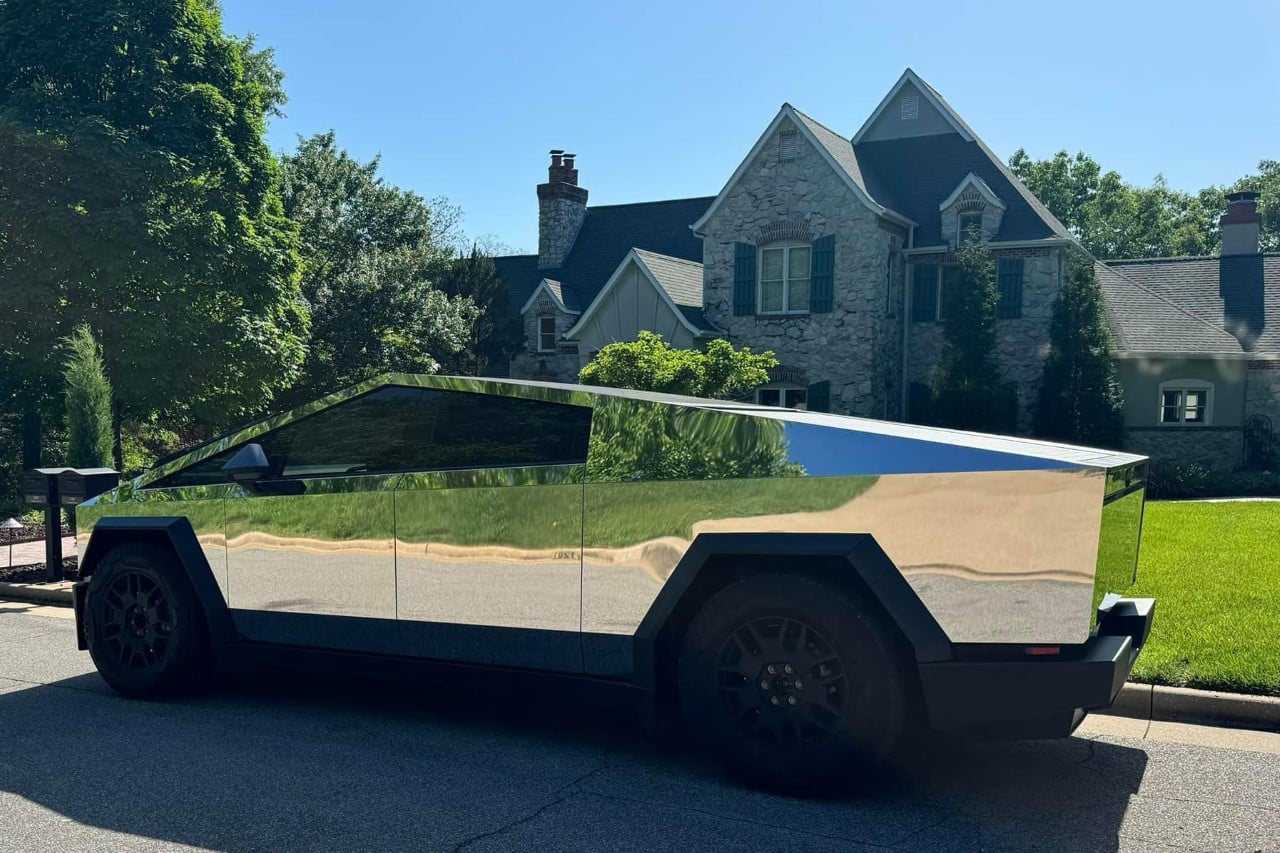
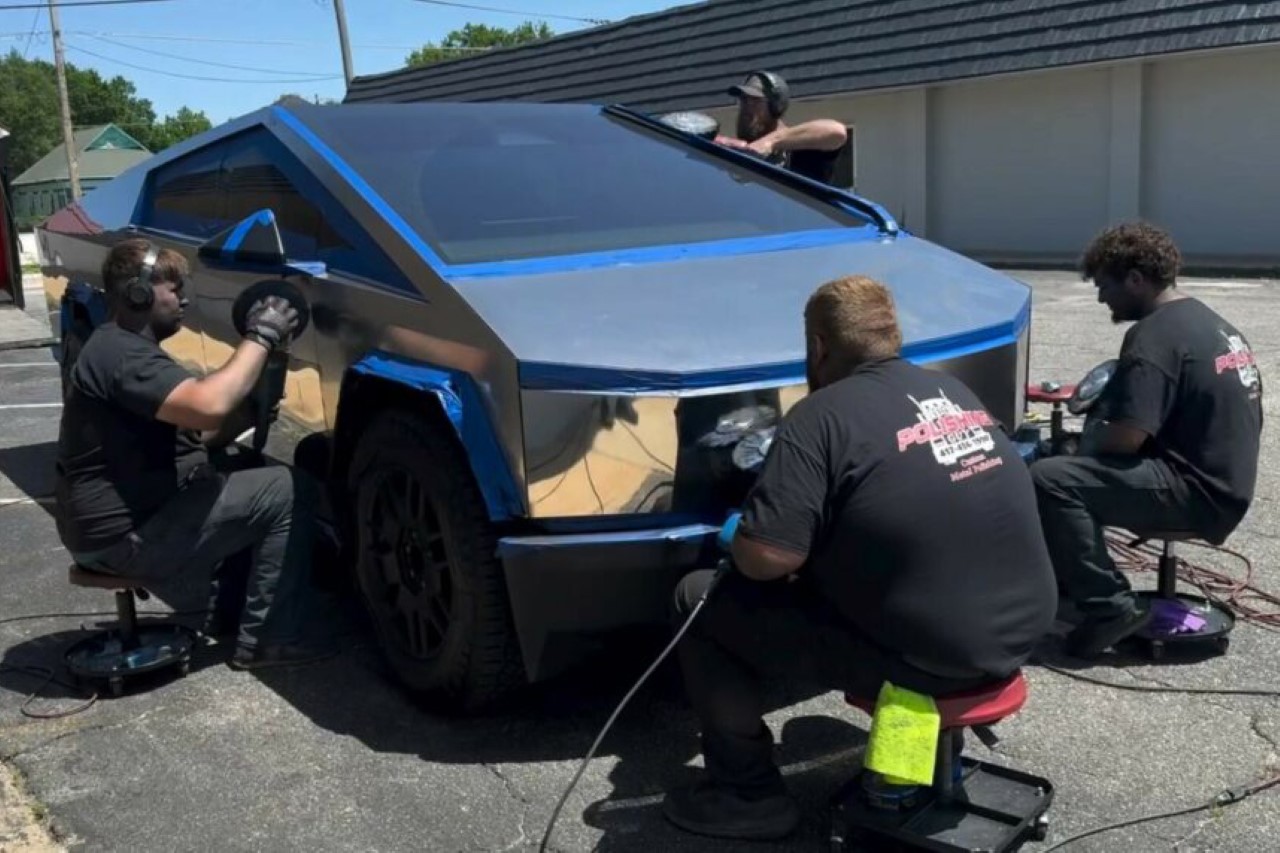
The internet is littered with videos of children (and even adults) running headfirst into mirrors at those carnival mirror-maze-rooms. Imagine a mirror moving at breakneck speeds with the ability to completely obliterate you to pieces because you didn’t see (or hear) it driving towards you. The Tesla Cybertruck was already termed a death-machine on wheels, and now someone’s taken things to the extreme by giving it a thorough polishing, turning it into a literal ‘murder-mirror’. Here’s why this is such a terrible idea, why it’s dangerous even for other riders, and why it might potentially even be illegal in certain countries.
Designer: Tyson Garvin
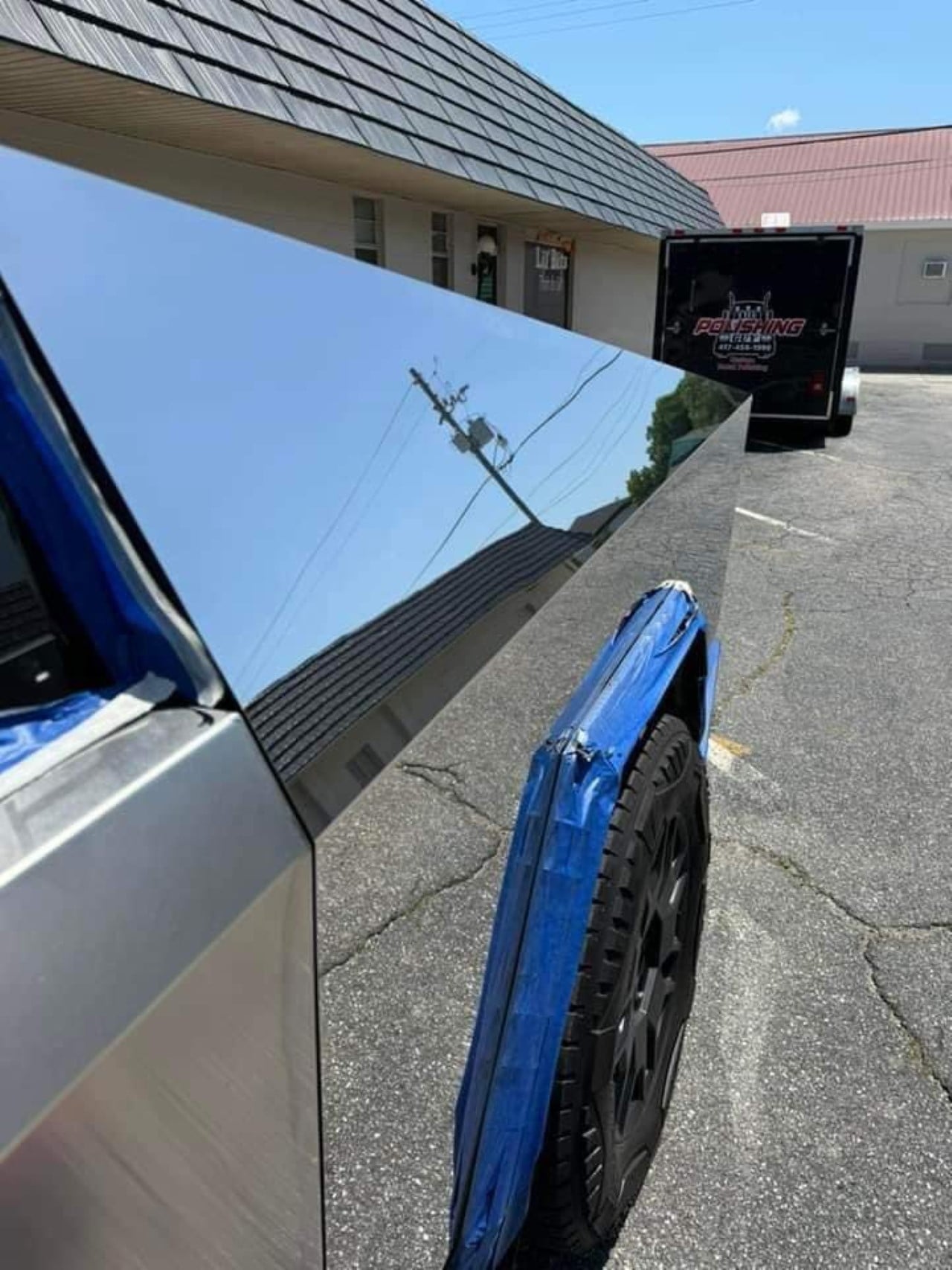
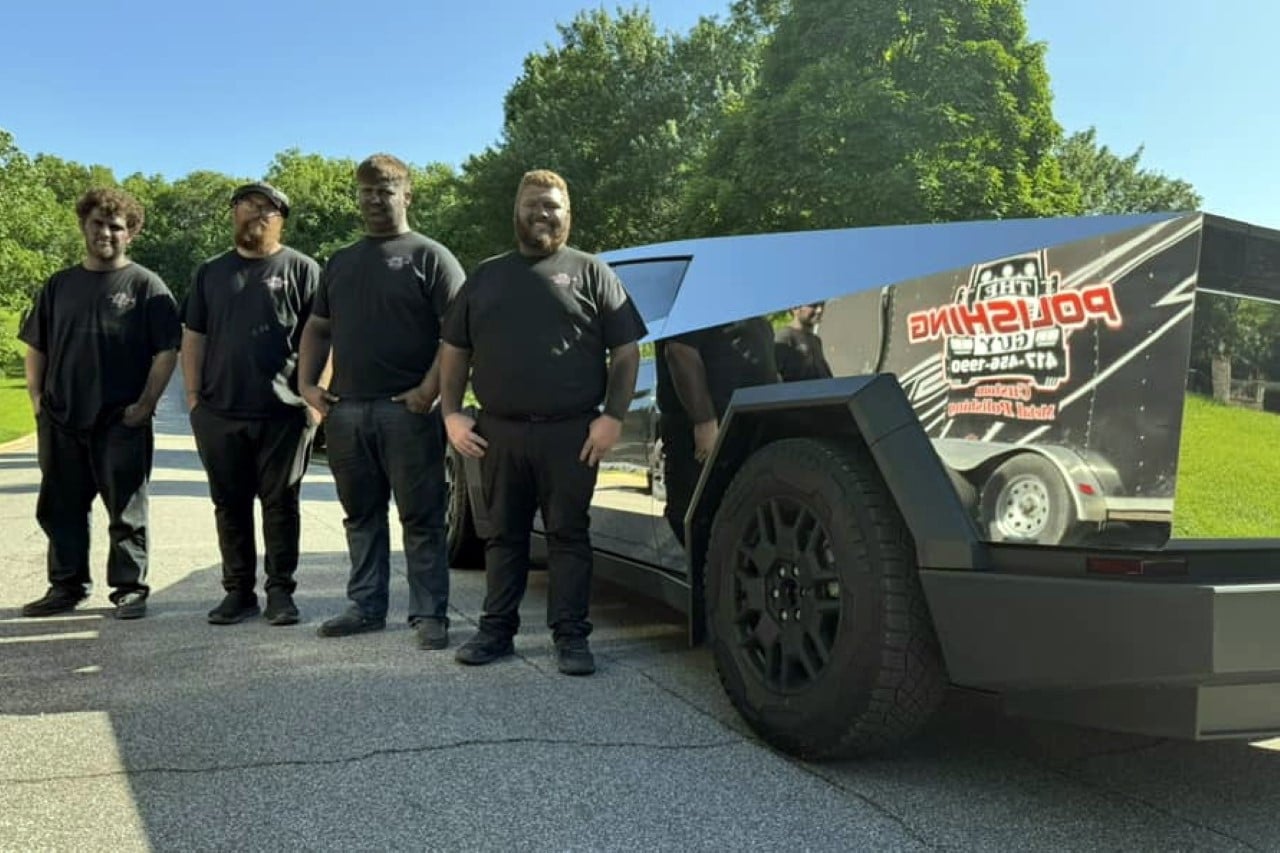
This particular project comes from Tyson Garvin, who shared the project on Twitter (also known as X.com) complete with a video of the process. It took about a week and four people total to polish every metal surface of the truck’s exterior, resulting in a finish so glossy it practically looks like a vinyl wrap. However, that’s just extremely buffed and waxed metal, which reflects everything around it. In theory, the Cybertruck looks awesome, practically, though, this might just be more dangerous on the roads than your regular Cybertruck.
We humans detect objects by assigning color and depth to them as we move around. It’s easy to identify a mirror when it’s in an ornate or a defined frame, or if it has specs of dirt on it. Otherwise, it can be difficult to spot a mirror or a pane of glass, which is why sometimes people walk right into well-polished glass doors, or sometimes fall through an open door because they thought there was glass there. The same thing applies with cars on the road. When you’re a pedestrian, you need to be hyper-aware of everything around you. Your mind pays attention to objects, people, sounds, lights, everything while you make a decision to cross a road. Ambulances and police cars have lights for a reason, to make them extra visible, school buses are yellow so that you see them from a distance, so are red fire trucks. When you’ve got something as mirror-finished as a mirror-finish Cybertruck hurtling down the road, chances are your mind will ignore it because it reflects stuff around it, blending in instead of being more visible. Especially if it’s making a turn, you’re less likely to notice it out of the corner of your eye because you don’t perceive a block of color in your periphery. This is terrible for other cars too, as they may not notice you while driving, or while approaching a crossing. The onus is then on the Cybertruck driver to be hyper-vigilant – and I may not speak for you but I don’t put my life in the hands of people who drive Cybertrucks.
In fact, chrome wraps or finishes are outlawed in certain countries like Australia and New Zealand (you can’t register your car if it has a chrome finish) for this exact reason. These countries (especially New Zealand) have lower population levels, and emptier roads, prompting you to drive faster – this dramatically decreases your reaction time with such vehicles, increasing chances of a collision.
The problem doesn’t end there, a mirror-finish car can sometimes blind people because of glare. Imagine driving on a sunny day, and a massive mirror flashes sunlight in your eye, causing you to temporarily lose control of your vehicle. Chrome-finish vehicles can be quite a nuisance during the day, or even at night when headlights bounce right off the body, hitting your eye. Even if the Cybertruck remains parked in a driveway, it could potentially shoot glare right into your eye, creating a moment of temporary blindness that can lead to a disaster.
Finally, and this is just for the truck owner – Tesla spent months (if not years) developing a coating to prevent the Cybertruck from getting rusted (turns out it still might be able to), so polishing the Cybertruck’s matte surface without ensuring you give it a protective coating might just cause your Cybertruck to rust more than others. How this mirror-finish Cybertruck ages is truly something we’ll have to see with time, but I honestly do feel scared for the people who may be around this vehicle, and hope they have much better peripheral vision and situational awareness than most.
When you think of the 20-year-old social network that is Facebook, its popularity among “young adults” is probably not what comes to mind. Naturally, Meta wants to change that and the company is once again telling the world it intends to reorient its platform in order to appeal to that demographic.
In an update from Tom Alison, who heads up the Facebook app for Meta, he says that the service is shifting to reflect an “increased focus on young adults” compared with other users. “Facebook is still for everyone, but in order to build for the next generation of social media consumers, we’ve made significant changes with young adults in mind,” he wrote.
If any of this sounds familiar, it’s because Meta executives have been trying to win over “young adults” for years in an effort to better compete with TikTok. Mark Zuckerberg said almost three years ago that he wanted to make young adults the company’s “North Star.” And Alison and Zuckerberg have both been talking about the Facebook app’s pivot to a discovery-focused feed rather than one based on users’ connections.
That shift is now well underway. Alison said that the company’s AI advancements have already improved recommendations for Reels and feed, and that “advanced recommendations technology will power more products” over the next year. He added that private sharing among users is also on the rise, with more users sharing video (though no word on the once-rumored plan to bring messaging back into the main app).
Notably, Alison’s note makes no mention of the “metaverse,” which Zuckerberg also once saw as a central part of the company’s future. Instead, he says that “leaning into new product capabilities enabled by AI” is a significant goal, along with luring younger users. That’s also not surprising, given that Meta and Zuckerberg have recently tried to rebrand some of the company’s metaverse ambitions as AI advancements.
But it’s also not clear how successful Meta will be in its efforts to win over young adults. Though Alison says Facebook has seen “five quarters of healthy growth in young adult app usage in the US and Canada,” with 40 million young adult daily active users, that’s still a relatively small percentage of the 205 million daily US Facebook users the company reported in February, the last time it would break out user numbers for the app.
This article originally appeared on Engadget at https://www.engadget.com/meta-says-the-future-of-facebook-is-young-adults-again-203500866.html?src=rss
There are two types of book readers – ones who read during the day and those who snuggle up in bed at night with a book. While the day readers get plenty of natural light, night readers sometimes struggle to find the right lumens that won’t strain their eyes and disturb the light sleeper sharing the bed while they lose themselves in the power of the written words. Numerous companies have come up with creative solutions to both these problems with night lights.
A good reading light defines your reading time; either you can enjoy a physical book or have to open up a Kindle, which will strain the eyes. There are plenty of night lights such as the Glocusent LED neck reading light or Vekkia Dual Heads Rechargeable book light that come with high recommendations, but they fall short when compared to the AwesomePre book light, which has an innovative design allowing a window into your book after dark.
Created for the LED technology development startup MemsLux, the AwesomePre is made to create an emotional connection between the reader and the story after the sun goes down. Shaped as a large window that can be placed on the page you are reading, the device uses MemsLux’s LED technology to emit comfortable light wavelength to give a private reading experience. It would be like gazing into your favorite escape world through a portal. Alas! You cannot magically cross it.
The main body has a ‘magic lighting plate’ made with a semiconductor process and contains barely visible micro-sized light emission patterns. The sophisticated design of the night light eliminates unnecessary clutter such as cords which works best for people who often toss and turn while reading. It also helps minimize clutter and distractions while you are immersed in a book. The slender frame of the device allows easy portability so you can stash the light in your bag and take it on your sleepovers or vacations.
It features control panels on the main body attached to the frame where the reader can adjust the light to their liking. The chargeable device can be used as a handheld light or placed atop the book. It can serve as a mood light when connected to the charging dock.
This reading light is particularly beneficial for people who like to read late into the night and do not want to disturb anyone in the room. Unlike its counterparts on the market, the accessory allows uniform light distribution on the page being read, so you don’t have to adjust it as you near the bottom or squint. The only downside we can think of is the lack of ergonomic comfort for readers who fancy reading in a laid-back position. Other than this, the accessory is a must-have for bookworms.
The Tribeca Film Festival will debut five short films made by AI, as detailed by The Hollywood Reporter. The shorts will use OpenAI’s Sora model, which transforms text inputs into create video clips. This is the first time this type of technology will take center stage at the long-running film festival.
“Tribeca is rooted in the foundational belief that storytelling inspires change. Humans need stories to thrive and make sense of our wonderful and broken world,” said co-founder and CEO of Tribeca Enterprises Jane Rosenthal. Who better to chronicle our wonderful and broken world than some lines of code owned by a company that just dissolved its dedicated safety team to let CEO Sam Altman and other board members self-police everything?
The unnamed filmmakers were all given access to the Sora model, which isn’t yet available to the public, though they have to follow the terms of the agreements negotiated during the recent strikes as they pertain to AI. OpenAI’s COO, Brad Lightcap, says the feedback provided by these filmmakers will be used to “make Sora a better tool for all creatives.”
Introducing Sora, our text-to-video model.
Sora can create videos of up to 60 seconds featuring highly detailed scenes, complex camera motion, and multiple characters with vibrant emotions. https://t.co/7j2JN27M3W
When we last covered Sora, it could only handle 60 seconds of video from a single prompt. If that’s still the case, these short films will make Quibi shows look like a Ken Burns documentary. The software also struggles with cause and effect and, well, that’s basically what a story is. However, all of these limitations come from the ancient days of February, and this tech tends to move quickly. Also, I assume there’s no rule against using prompts to create single scenes, which the filmmaker can string together to make a story.
We don’t have that long to find out if cold technology can accurately peer into our warm human hearts. The shorts will screen on June 15 and there’s a conversation with the various filmmakers immediately following the debut.
This follows a spate of agreements between OpenAI and various media companies. Vox Media, The Atlantic, News Corp, Dotdash Meredith and even Reddit have all struck deals with OpenAI to let the company train its models on their content. Meanwhile, Meta and Google are looking for similar partnerships with Hollywood film studios to train its models. It looks like we are going to get this “AI creates everything” future, whether we want it or not.
This article originally appeared on Engadget at https://www.engadget.com/the-tribeca-film-festival-will-debut-a-bunch-of-short-films-made-by-ai-181534064.html?src=rss