Deals: The All-in-One AdGuard Bundle: 5-Year Subscription

adguard

Have you ever wished you could access your favorite content from anywhere in the world, without worrying about geographical restrictions? Or perhaps you’re concerned about your online privacy and data security? If so, the AdGuard VPN is the perfect solution for you. This virtual private network is designed to ensure your online privacy and data […]

The post Deals: The All-in-One AdGuard Bundle: 5-Year Subscription appeared first on Geeky Gadgets.

Posted in Uncategorized | Tagged

This $144 battle rope boasts a clever ‘ropeless’ compact design for small homes and anywhere workouts

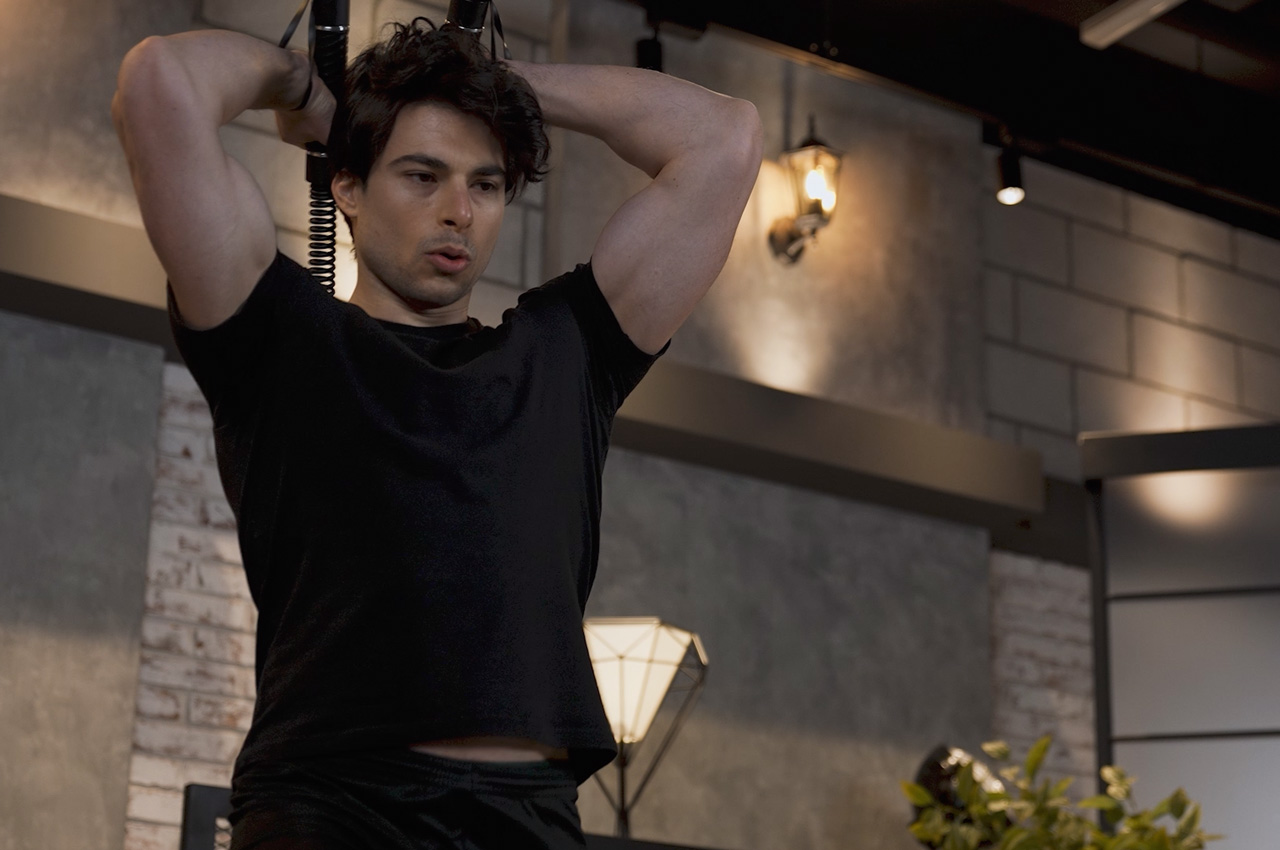
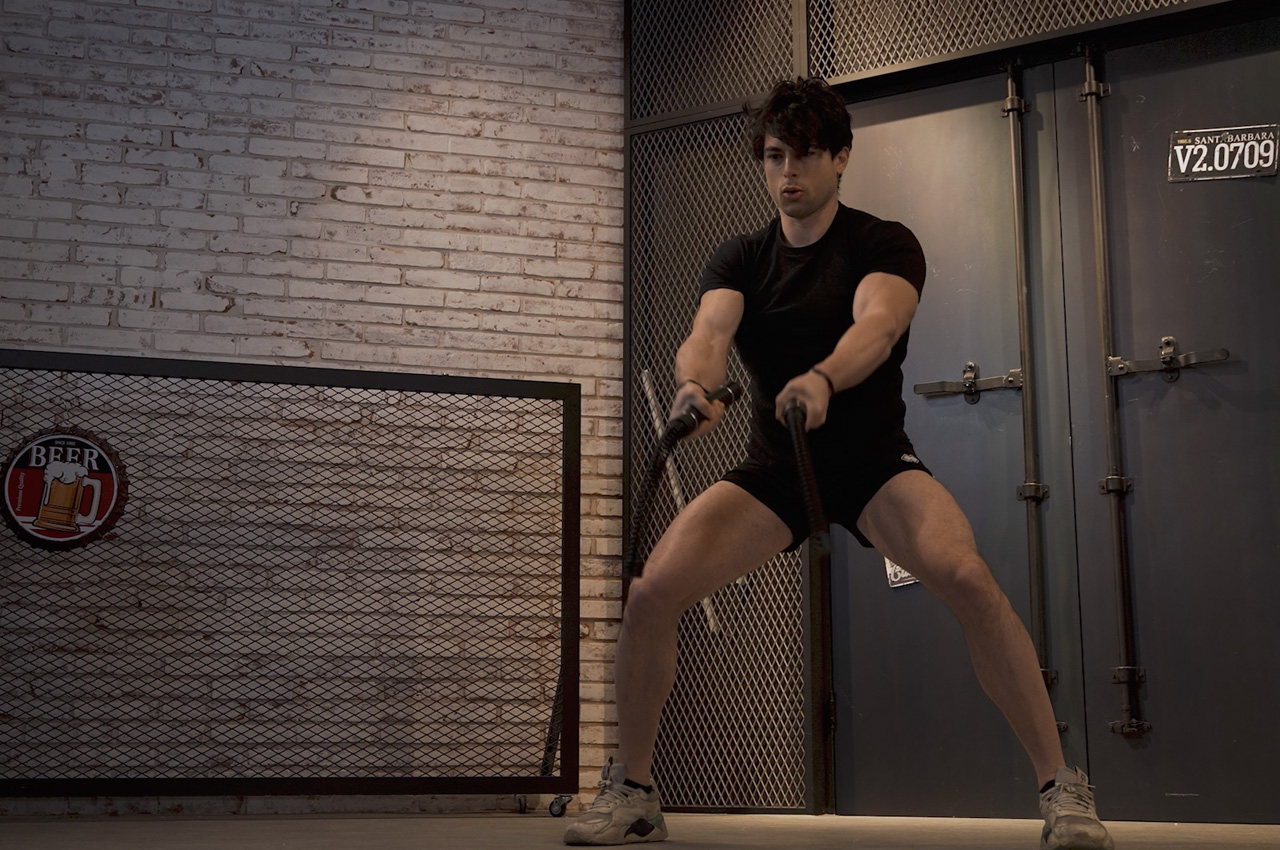
Whether you set up a home gym or have a gold membership at the fitness center down the street, you can always have a reason to skip the workout. But if you are among those who can skip a beat but not a session with the battle ropes; you would need the Z-Rope! A ropeless battle rope solution without the installation challenges, noise problems, and accessibility restrictions.

We come by hundreds of CrossFit accessories that vouch by their heart to assist you with full-body workout anywhere, any time. The new Z-Rope differs from them at the usability and functionality level. It’s highly portable, lightweight, and is an accessory that would let you indulge in high-intensity training in pin-drop silence. Just mind your breath, grunting, and foots taps, please!

Designer: Zest Up 

Click Here to Buy Now: $144 $180 (20% off) Hurry! Only 5 Days Left. Raised over $315,000.

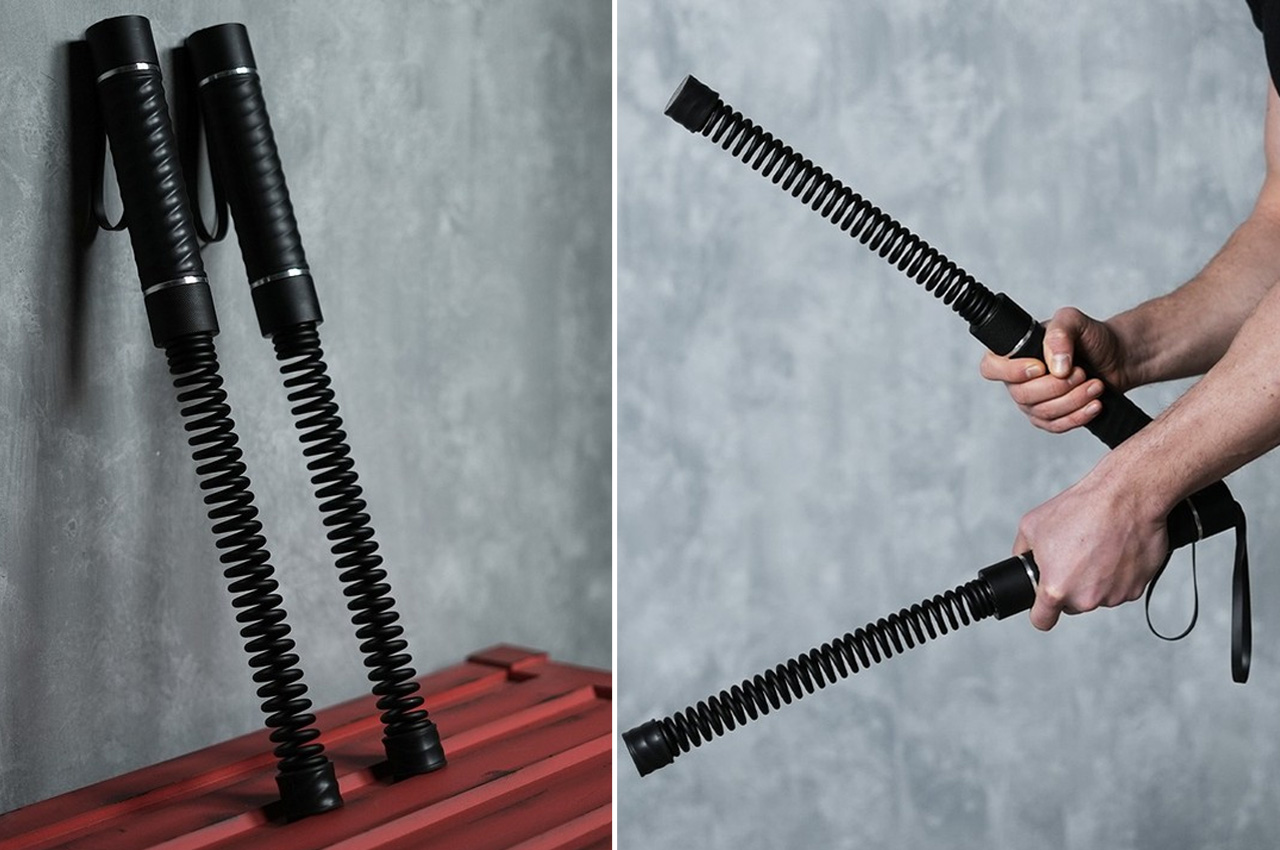
It’s not easy to make space for fitness equipment in your apartment or carry all the routine accessories when you’re traveling for work or leisure. In either case you are deprived of choices and/or either have to settle for less or go without exercise. Z-Rope steps up as a solution worth considering for two reasons: it is a ropeless battle rope that fits conveniently in your backpack (measures 19×1.5 inches and weighs less than 2 pounds), and can let you workout like you would with battle ropes – without disruptive noises, furniture damage, or potential setup costs – at the convenience of the home or wherever your life takes you.

The Z-Rope is thus tailored for small spaces and gym enthusiasts who travel and find it difficult to get gyms with battle ropes in their locality. It enables the user to not only reap the benefits of battle rope workout, but the makers say, it can help them with 13+ workouts, including cardio and strength training at personal convenience. The full-power training with the ropeless battle rope can help, “effectively in building muscle, stamina, and endurance,” the makers note. For reference, 10 minutes of intense workout with the Z-Rope can provide cardiovascular benefits equivalent to an hour of tennis or 2 hours of running.

As for the design; the baton-like Z-Rope is highly durable. A pair features comfortable EVA foam handles attached to elastic springs. This design – without the ropes – mimics the wave movement of traditional battle ropes – operating almost noiselessly, so that you can exercise freely at home or in your hotel room late at night or in the early hours of the day. Like with the traditional battle ropes, the Z-Rope has been tested to not only help users with the strength training of arms and upper body, it also assists in toning the core muscles and provides strength and substance to the lower body through consistent use.

The Z-Rope is perfect for on-the-go workouts but also for compact homes where storing gym equipment becomes a bit of a hassle. Measuring just 19 inches long and weighing 900 grams (1.9 pounds), the Z-Rope unlocks a healthy lifestyle without the size, price, and commitment of a Peloton. The Z-Rope starts at just $144 and begins shipping as soon as May 2024.

Click Here to Buy Now: $144 $180 (20% off) Hurry! Only 5 Days Left. Raised over $315,000.

The post This $144 battle rope boasts a clever ‘ropeless’ compact design for small homes and anywhere workouts first appeared on Yanko Design.

Minimaliste’s Latest Tiny Home Gets A Size Upgrade For A More Luxurious Micro-Living Experience

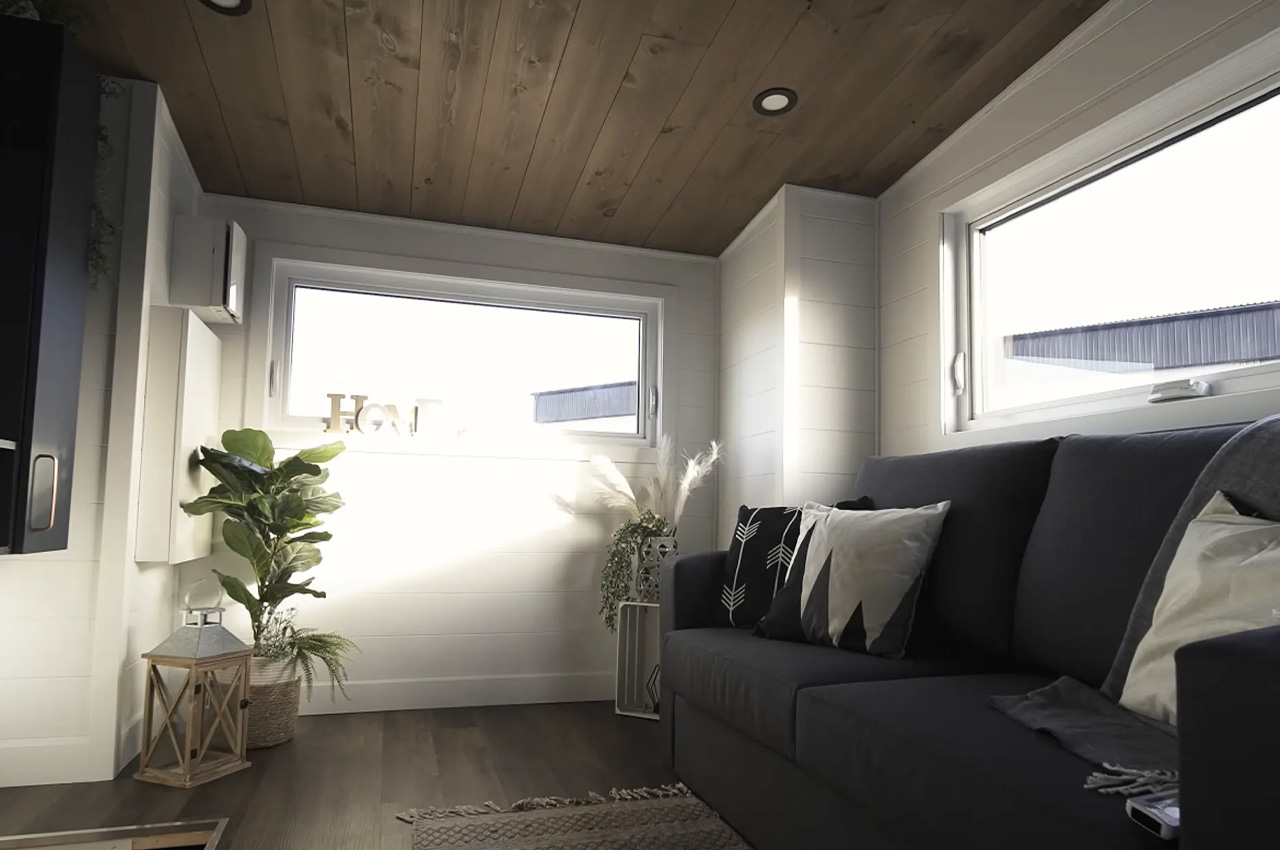
Designed by Canada’s Minimaliste, the Noyer models provide micro-living in a luxurious tiny home setting. The Noyer and Noyer XL are designed to deal with all kinds of weather conditions, including extreme hot and cold. Minimaliste has now introduced a new innovation of the Noyer line – a new and improved and bigger tiny home amped with loads of storage space, as well as a comfy and spacious apartment-style layout.

Designer: Minimaliste 

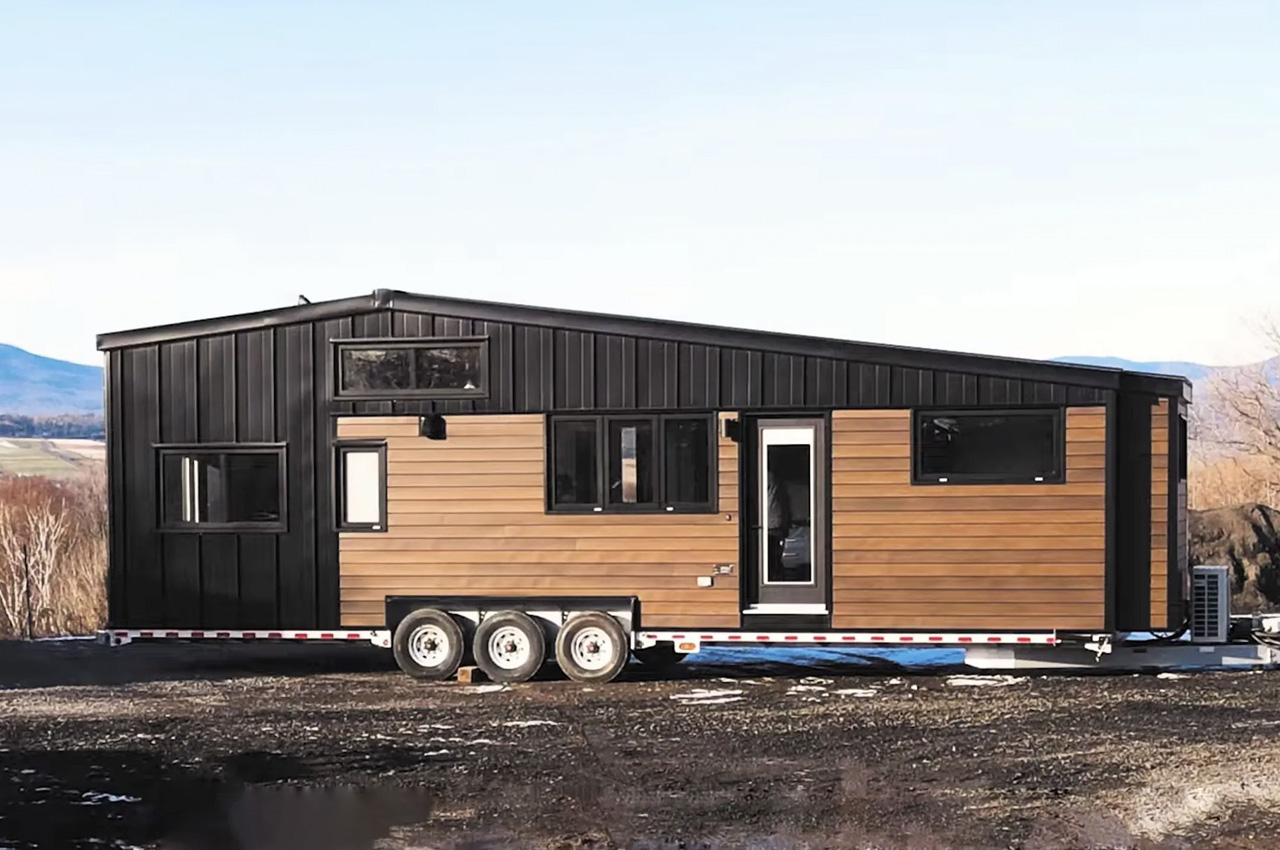
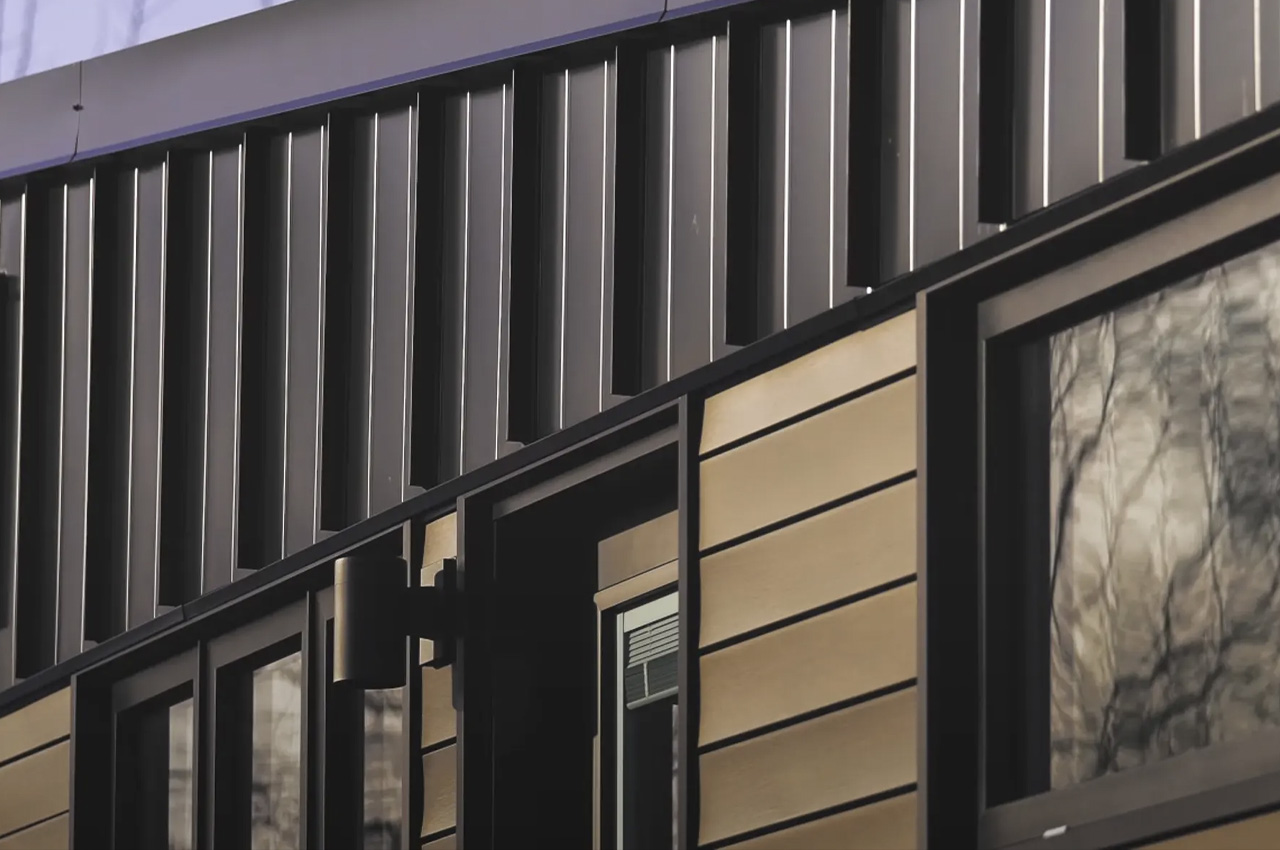
Featuring a length of 38.5 feet, the 2024 Noyer XL has an increased length of 3.5 feet over the previous Noyer XL. Now, this isn’t a massive change, but when it comes to tiny homes, even the smallest of space makes a difference. The home also has a width of 10.5 feet, which means it needs a permit to be towed on the road, allowing you to lose some flexibility, but helping you achieve a more spacious interior in comparison to typical tiny homes. The exterior of the home has a finish of horizontal cedar and vertical steel and is founded on a triple-axle trailer.

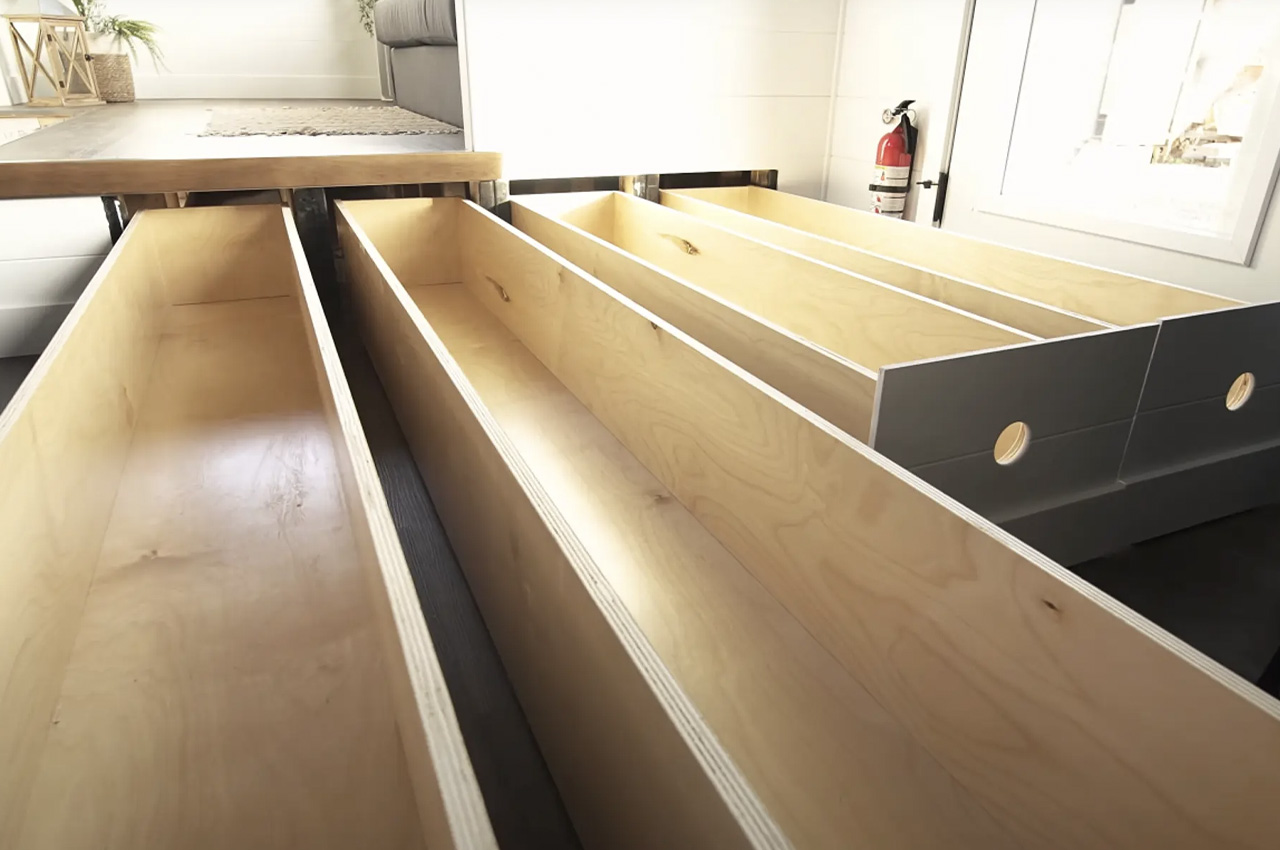
The entrance of the home leads you to the kitchen with the living room located to the right. The home includes a raised floor which forms a rather functional underfloor storage area that can be extended into long drawers. Storage is something that isn’t easily available in most tiny homes, hence Minimaliste’s efforts to install these little nooks and storage sections are quite commendable. The living room includes a sofa and more seating, and an entertainment center.

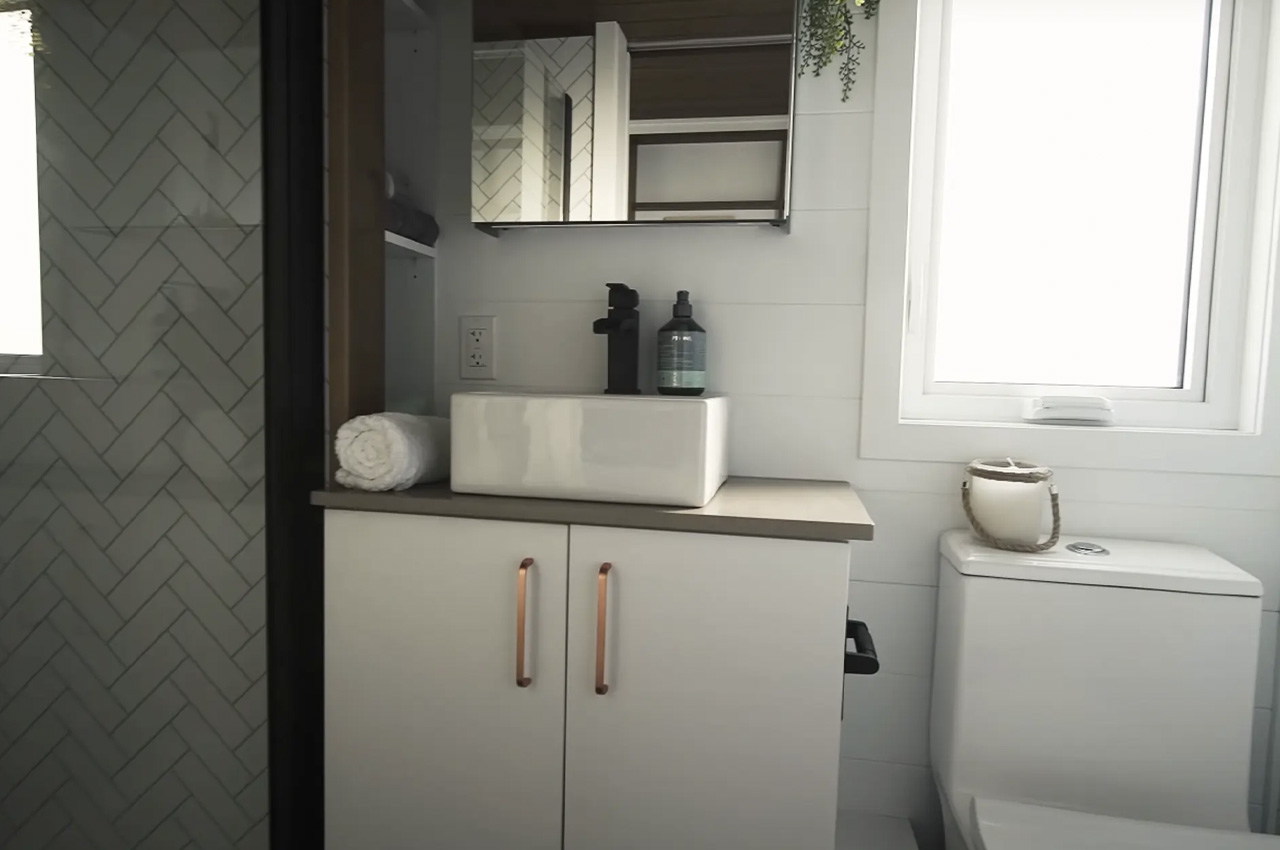
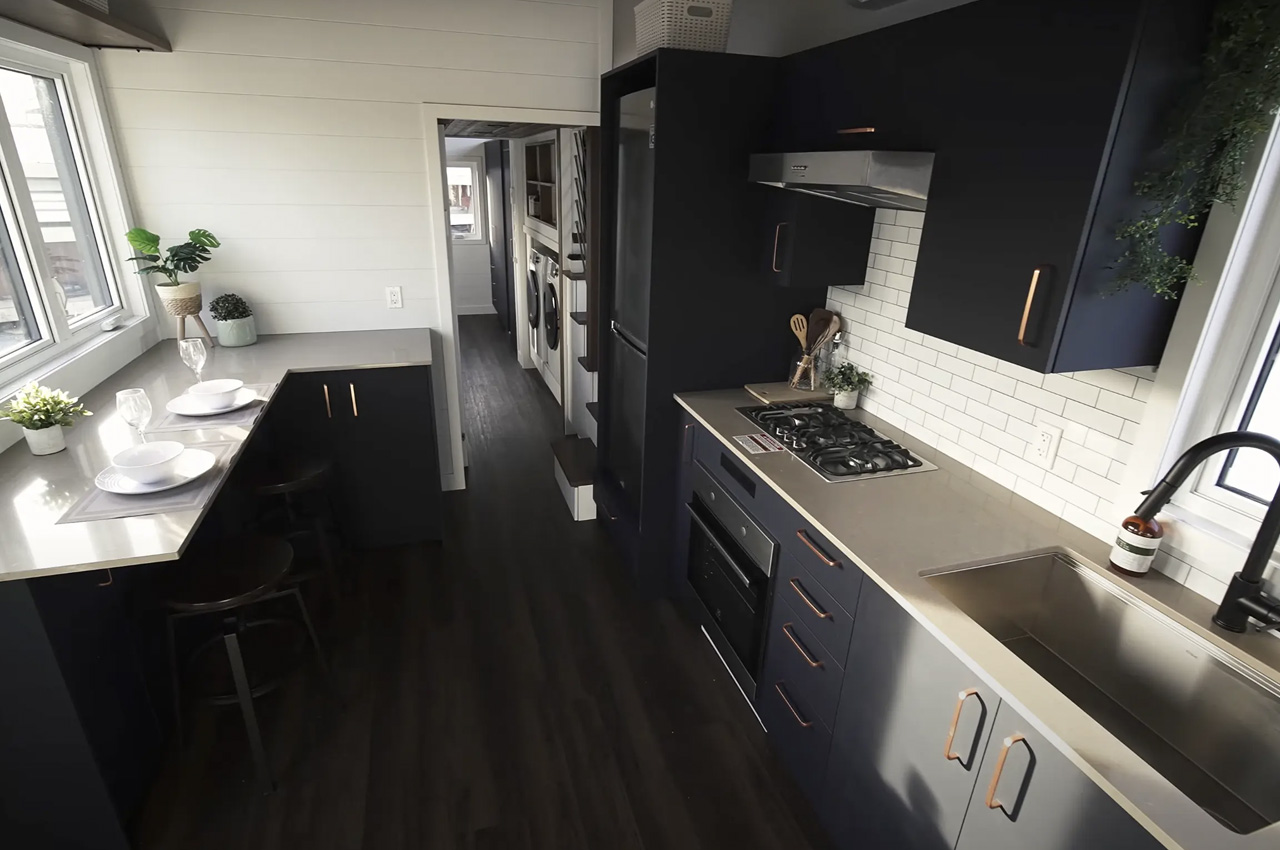
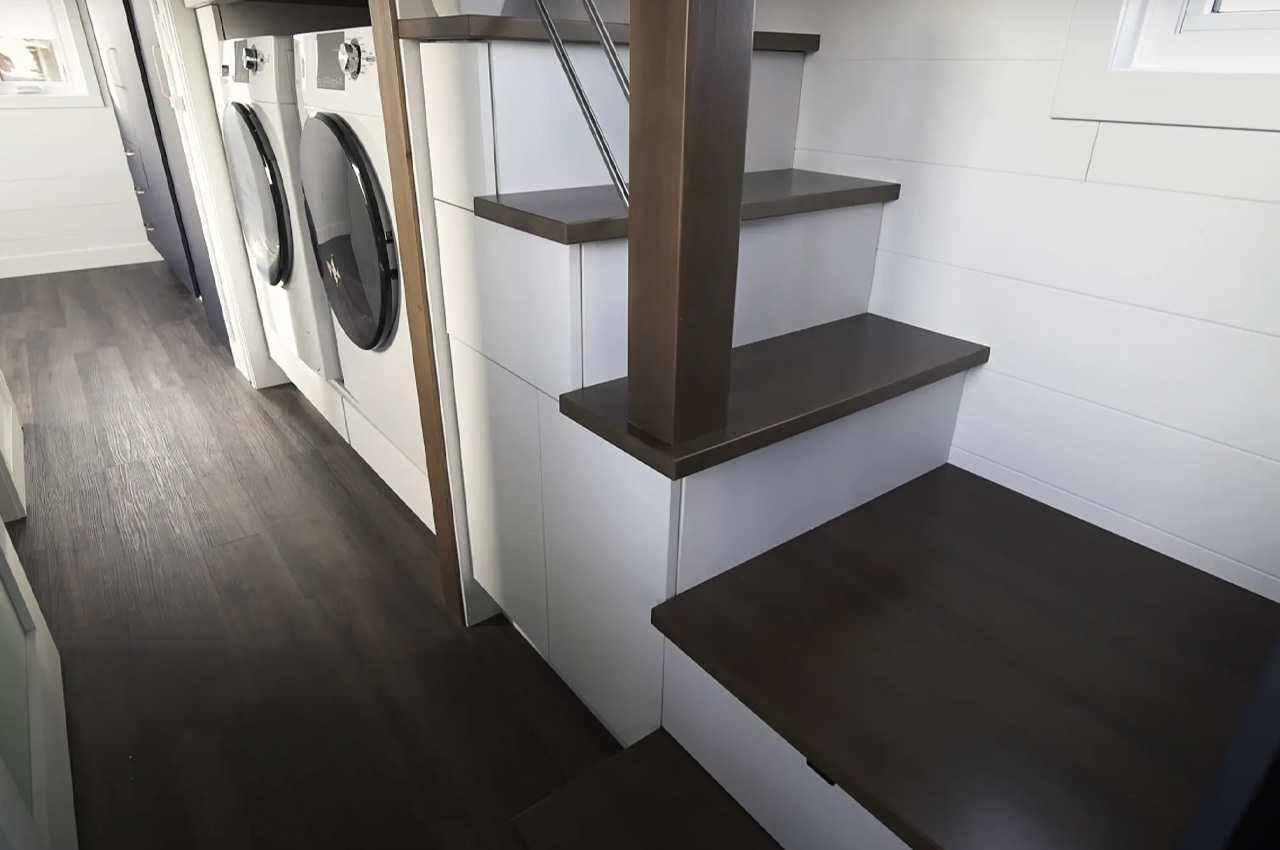
The kitchen seems quite spacious and well-designed. It includes more storage space, a fridge/freezer, a sink, an oven, and a propane-powered stove. The space also includes a dedicated breakfast bar-style dining area with cozy stool seating. The kitchen is connected to the hallway, which includes a separate washing machine as well as a dryer. It also includes access to the bathroom as well as some convenient shelving. The bathroom is like most bathrooms found in typical tiny homes, and it includes a flushing toilet, shower, and a vanity sink unit.

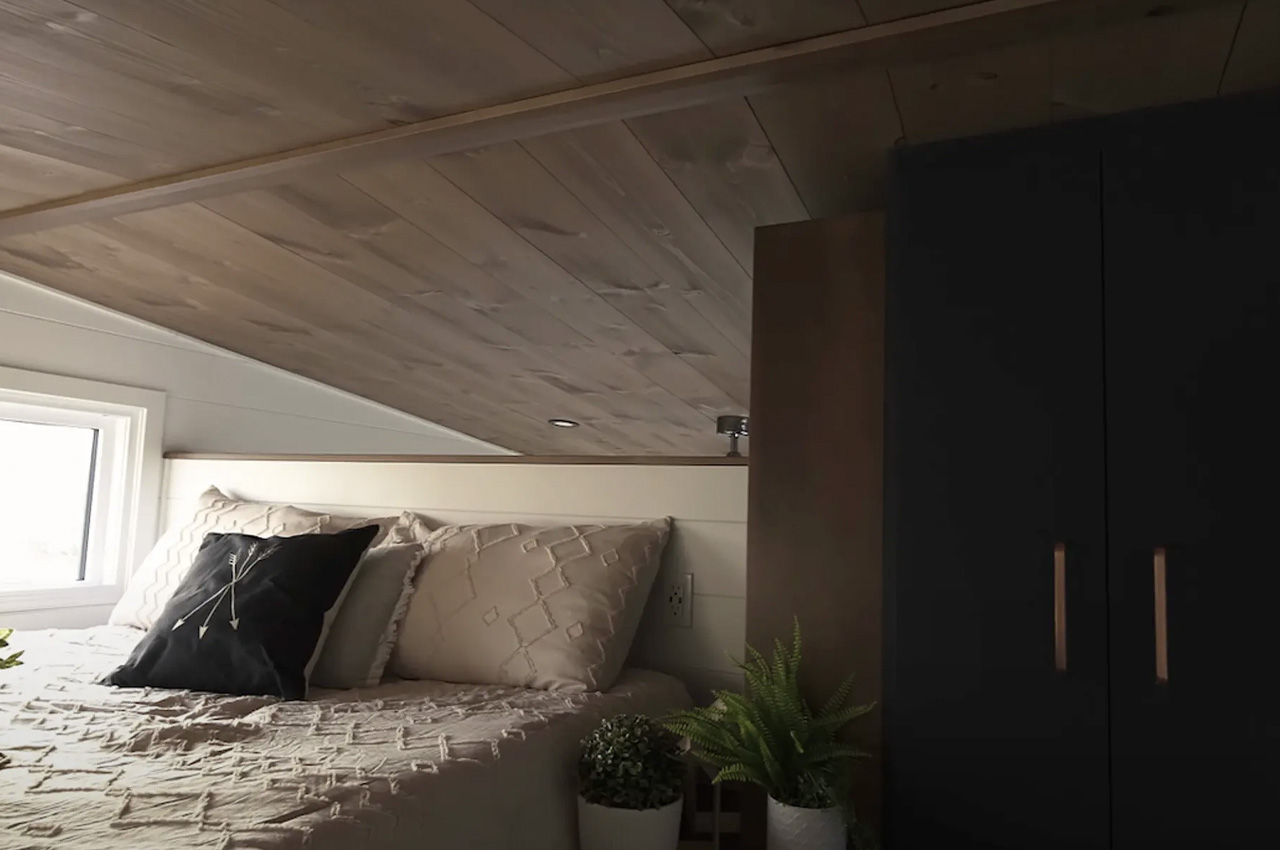
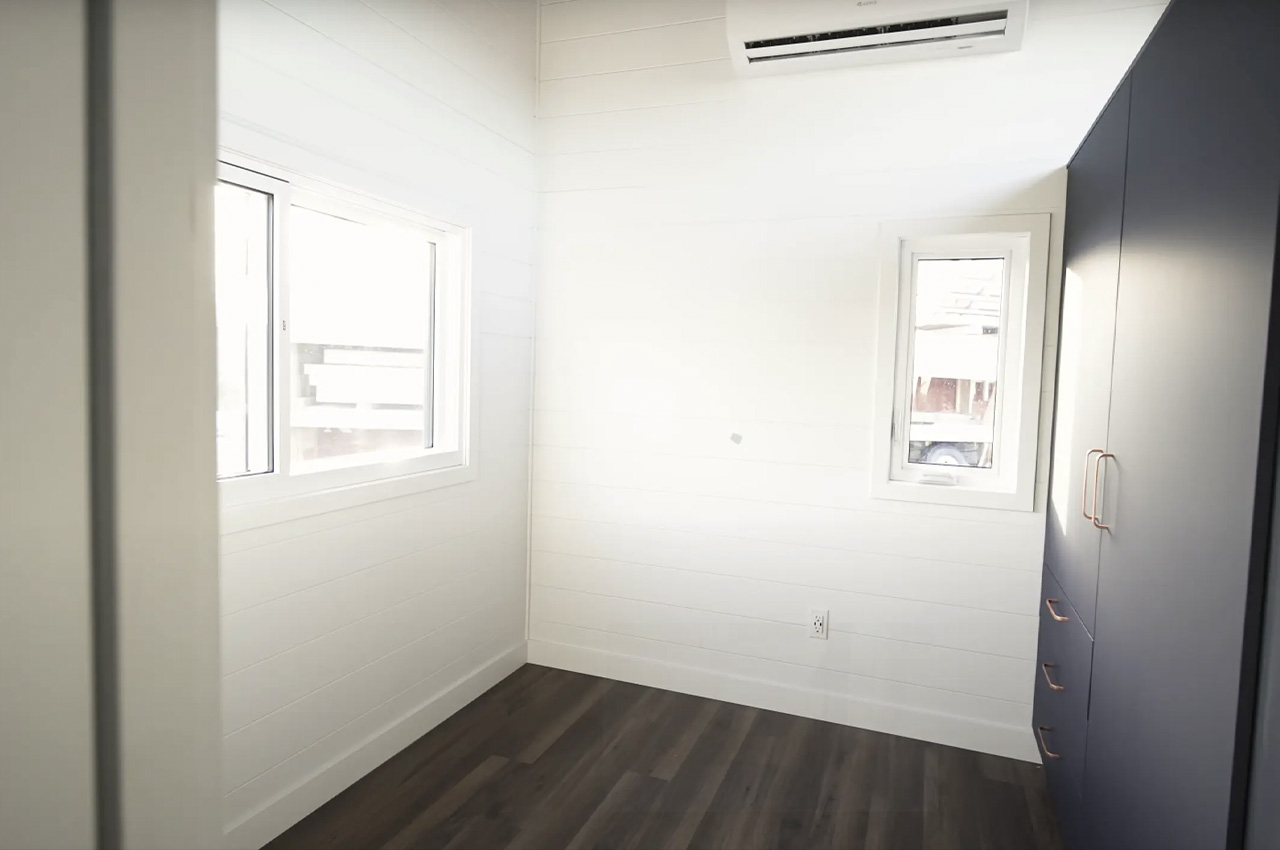
The home includes two bedrooms – the downstairs one, and the upstairs one. The downstairs bedroom has ample headroom so you can place a double bed or even a bunk bed. It also has a massive wardrobe. The upstairs bedroom can be accessed via a storage-integrated staircase and is like most traditional loft-style tiny home bedrooms.

The post Minimaliste’s Latest Tiny Home Gets A Size Upgrade For A More Luxurious Micro-Living Experience first appeared on Yanko Design.

Kartell Reimagines Iconic Chairs In Barbie Pink At 2024 Milan Design Week

The recent collaboration between Kartell, the distinguished Italian furniture brand, and Mattel, the creative force behind Barbie, has resulted in an extraordinary collection of chairs that blurs the boundaries between furniture and art. Unveiled at Milan Design Week 2024, this partnership represents a significant milestone in design history, as it merges Kartell’s Philippe Starck-designed chairs with the timeless charm of Barbie.

Designer: Philippe Starck

Barbie’s enduring influence as a cultural icon cannot be overstated. From her origins as a children’s toy in 1959 to her recent portrayal in a live-action film, Barbie has continually evolved, captivating audiences worldwide and transcending her toy origins to become a symbol of empowerment and aspiration. Last year’s release of the Barbie movie further underscored her cultural significance, reshaping perceptions and highlighting her relevance across different age groups.
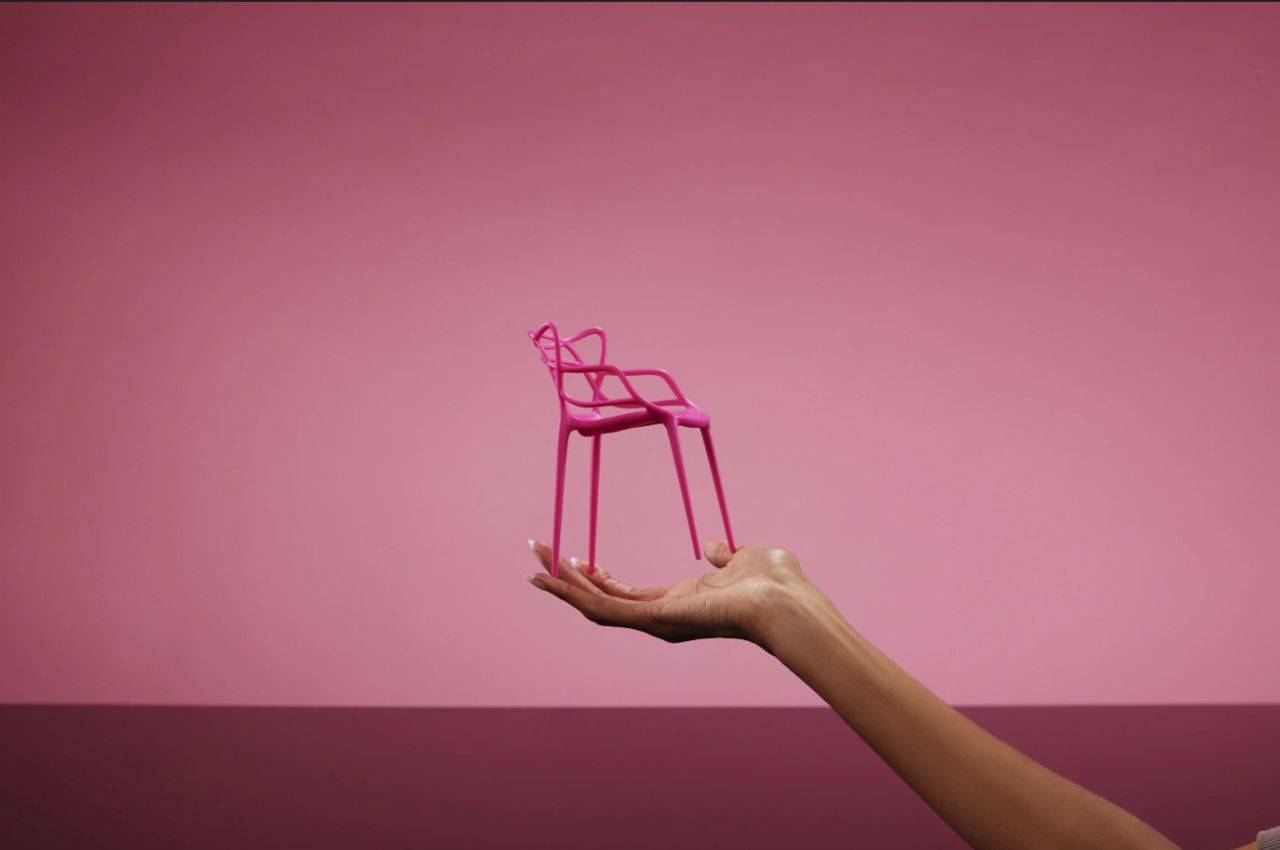
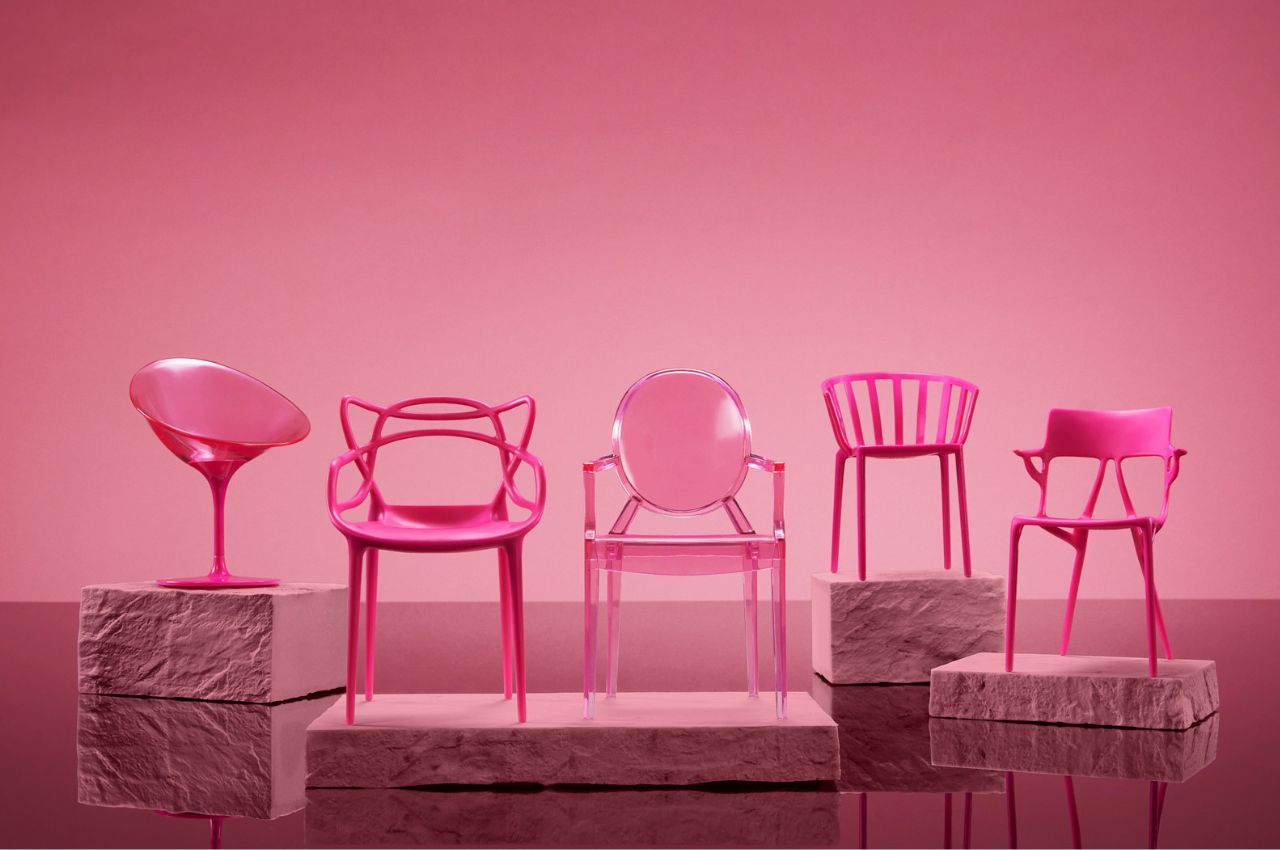
In response to Barbie’s multifaceted influence, Kartell and Mattel Creations embarked on an innovative partnership. Reimagining five of Kartell’s iconic chairs through a Barbie-inspired lens, the collection breathes new life into Philippe Starck’s designs, infusing them with Barbie’s signature style and charm.

The chairs, including the ‘Venice’, ‘Louis Ghost’, ‘Masters’, ‘Ero|S|’, and ‘AI’, have been meticulously recreated in both human and doll sizes, symbolizing Barbie’s 65-year legacy of inspiring imagination and creativity. Each chair, bathed in Pantone 219 C – the iconic Barbie Pink hue – is crafted from recycled plastic, highlighting the brand’s commitment to sustainability.
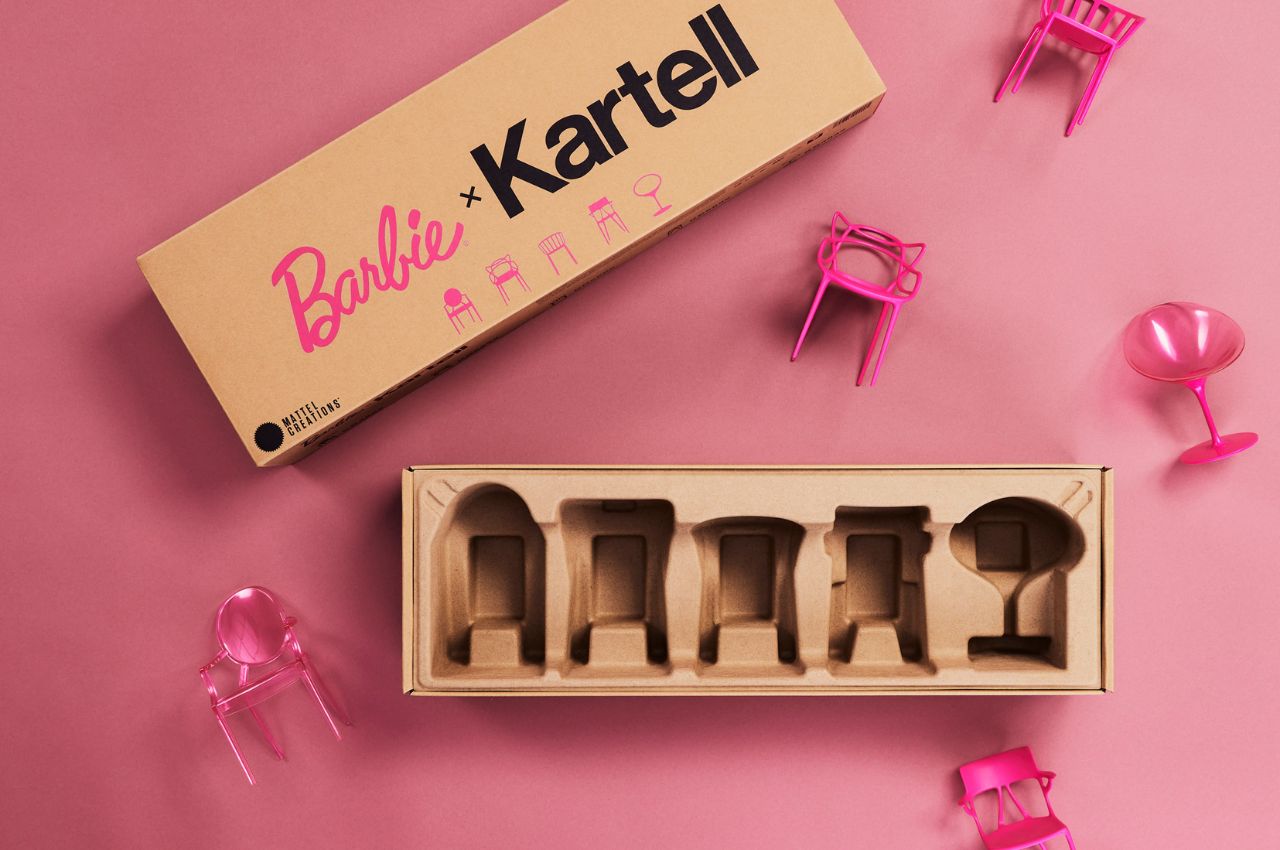
The genesis of this collaboration lies in Barbie’s ability to reinvent herself and resonate with audiences across generations. By transforming Kartell’s chairs into vibrant pink masterpieces, the collection pays homage to Barbie’s legacy of creativity and imagination. Crafted from recycled plastic and incorporating innovative materials such as bamboo, each chair embodies Barbie’s Dreamhouse aesthetic while also prioritizing sustainability—a testament to both brands’ commitment to environmental responsibility.


The debut of this remarkable collection at Milan Design Week captivated attendees, transporting them into a world where toys seamlessly merge with art. Displayed against the backdrop of Condé Nast’s Vogue Closet exhibition, the chairs became more than just functional pieces—they became cultural artifacts, inviting viewers to reconsider the boundaries between fantasy and reality.
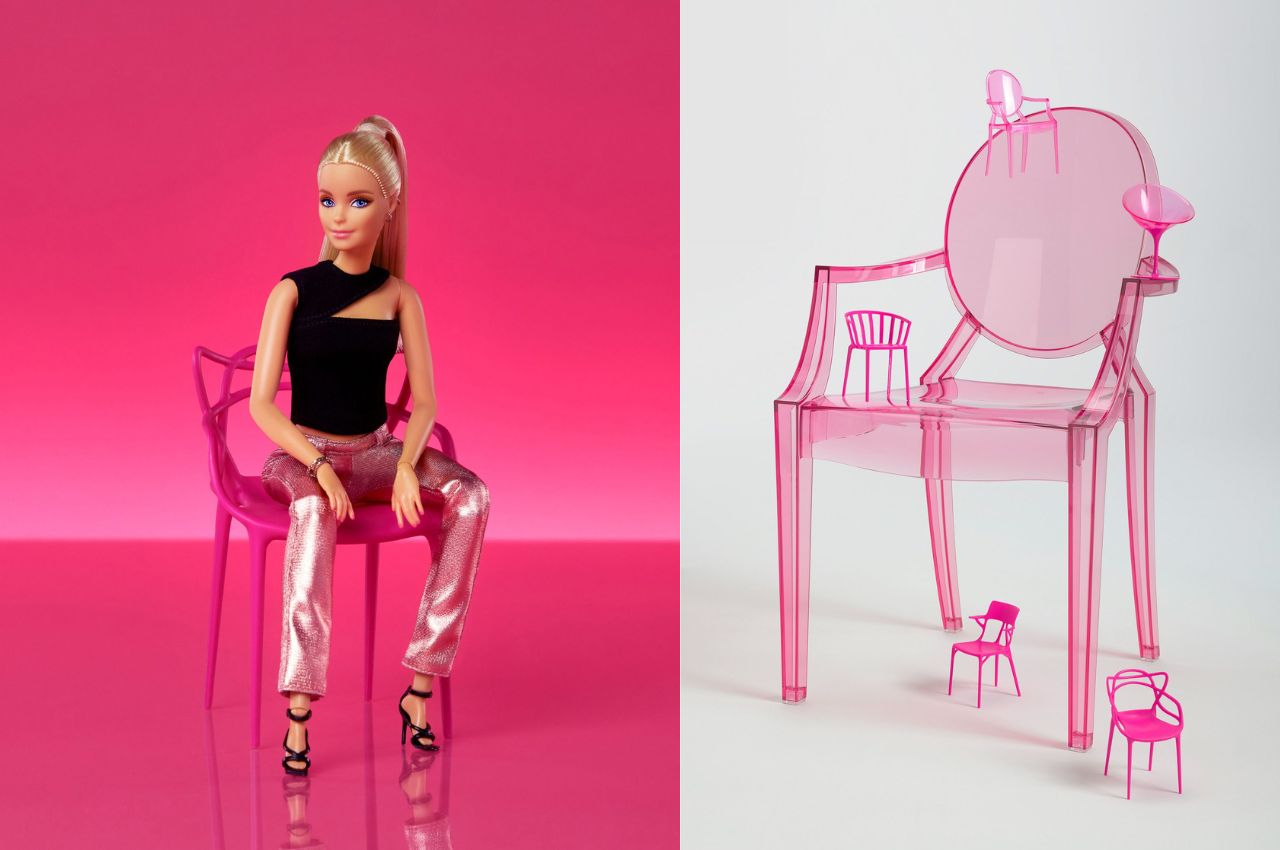
In the words of Kartell, this collaboration represents a fusion “where toys become art, and art becomes toys.” By marrying Starck’s timeless designs with Barbie’s enduring allure, the Kartell x Barbie collection not only celebrates nostalgia but also invites us to embrace the power of creativity and imagination—a testament to the transformative potential of collaboration in the world of design.
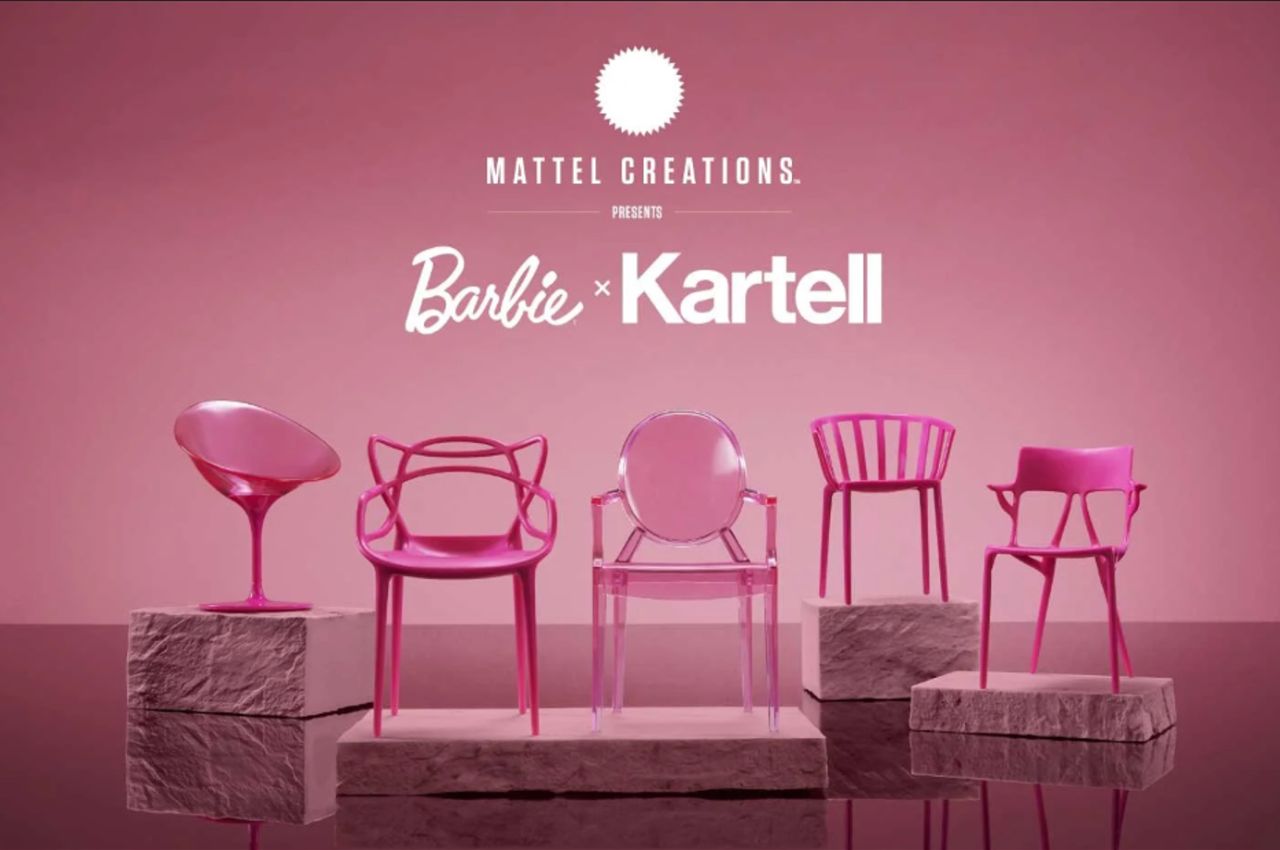
The post Kartell Reimagines Iconic Chairs In Barbie Pink At 2024 Milan Design Week first appeared on Yanko Design.

MG EXE181 electric hypercar has an insanely low drag coefficient to hunt down speed records

MG Motor has again got its sights set on land speed records, and move beyond the sports car arena. The British marque owned by the Shanghai-based SAIC Motor, has revealed the first teaser look of the EXE181 hypercar concept that will make its maiden appearance at the Auto China 2024.

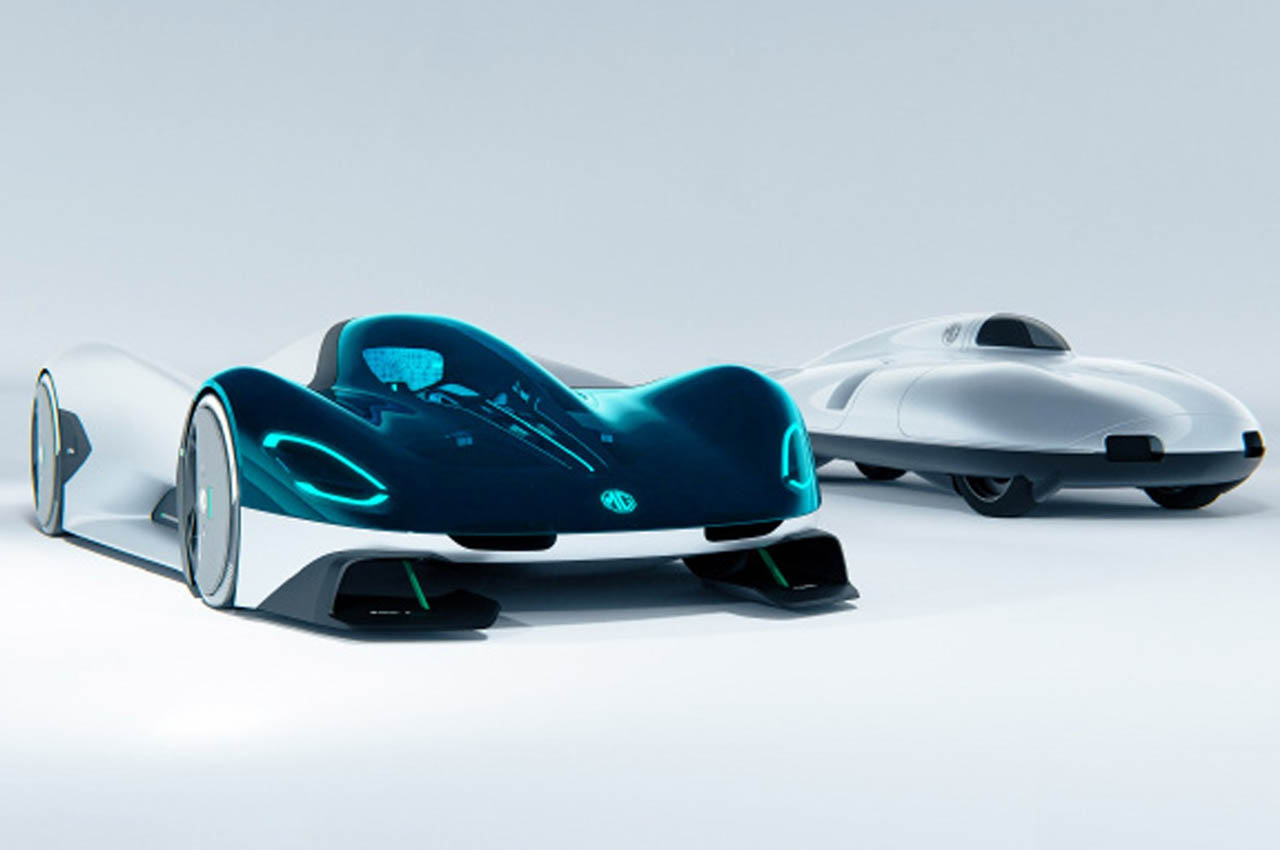
The sleek hypercar has a balanced futuristic design fused with the inspirational record-setting racers from the 1950s. In fact, the sleek hypercar draws inspiration from the experimental car by MG dubbed EX181. The UFO-like aerodynamic classic racer was powered by a 1.5-liter twin-cam engine that produced 300 hp and had its crosshair set on the land speed record of that time. The dome-shaped vehicle eventually broke it in October 1959, clocking 254.91 mph top speed at the Bonneville Salt Flats

Designer: Saic Design

The new iteration of the classic record breaker has its name and the teardrop shape in common but other dynamics have drastically changed. This hypercar is more stylized for the year 2024 and is propelled by an electric drivetrain. The smooth elongated shape doesn’t look out of place and ends as a longtail when viewed from the side profile. The ride height is just a few millimeters from the ground, suggesting its racing DNA. Both the longtail design and the low ride height lend the hypercar an unbelievably low drag coefficient of 0.81.

There’s no word on the technical specifications of the hypercar but we believe it’s going to churn out 1,000 hp with ease. The only thing we know so far from MG’s official release is that the EXE181 will go from zero to 62 mph in a mere 1.9 seconds. That would make this hypercar the fastest off-the-line car on the planet. Top speed figures have also been kept in the dark so far, but we can expect it to at least break the 254.91 mph barrier set by its inspiration.

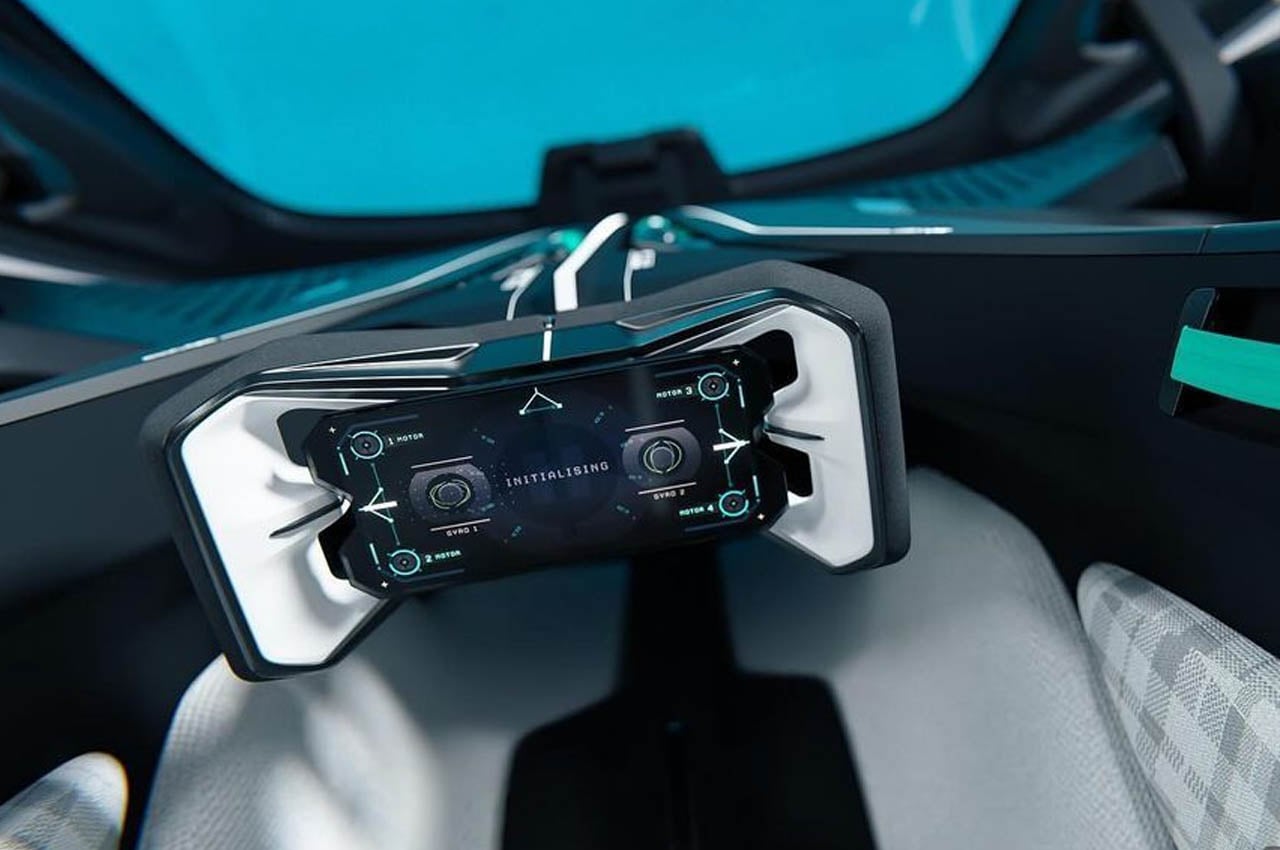
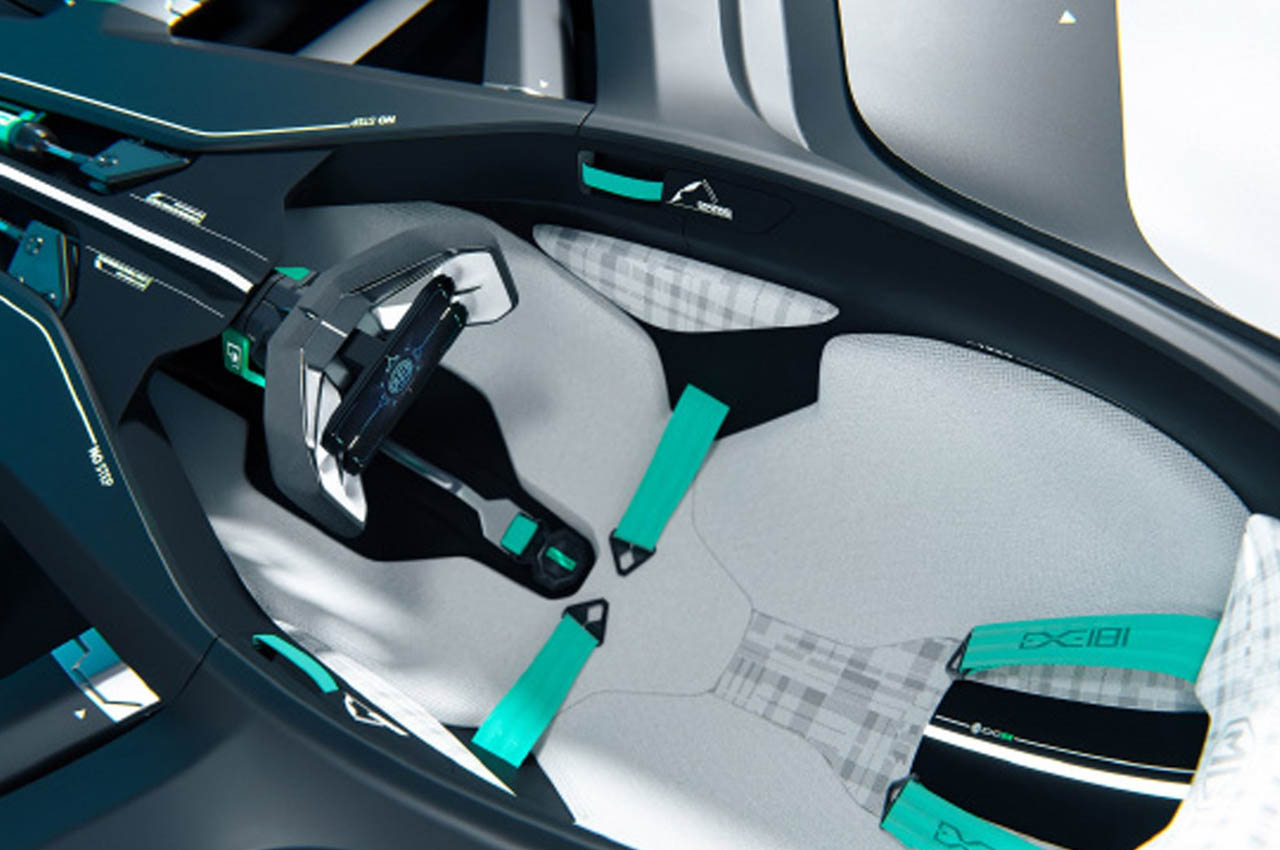
Such is the optimization of the vehicle that it supersedes the likes of Volkswagen XL1 and McLaren Speedtail having a drag coefficient of 0.199 and 0.278 respectively. The single-seater arrangement instantly puts one in the zone for competitive racing. There’s a yoke-style steering wheel and a touchscreen display to show all the HUD elements.

Don’t expect the MG EXE181 hypercar to hit the production lines anytime soon. Although, do expect to see this good-looking concept emerge as a prototype at the Beijing Motor Show 2024.

The post MG EXE181 electric hypercar has an insanely low drag coefficient to hunt down speed records first appeared on Yanko Design.

These vases were (almost) completely designed and made by algorithms and machines

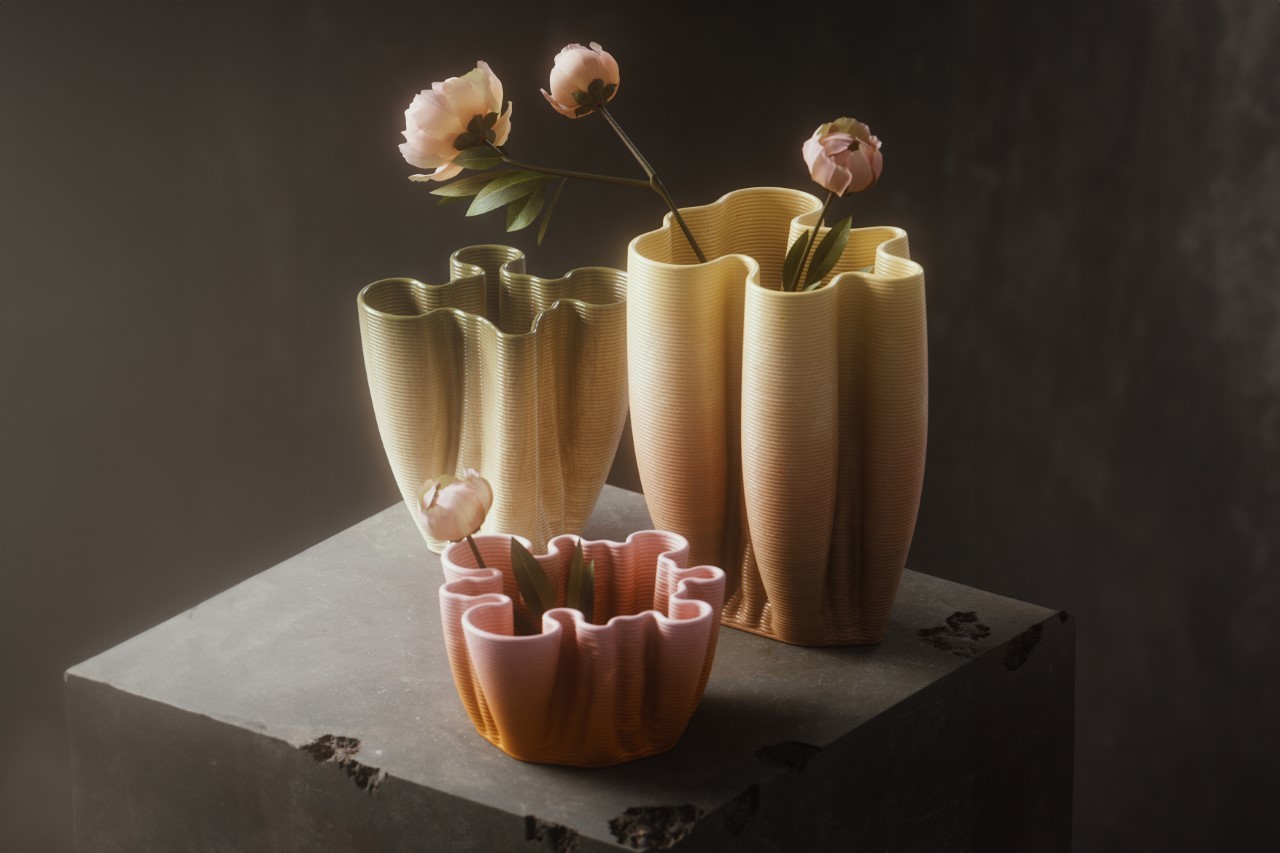
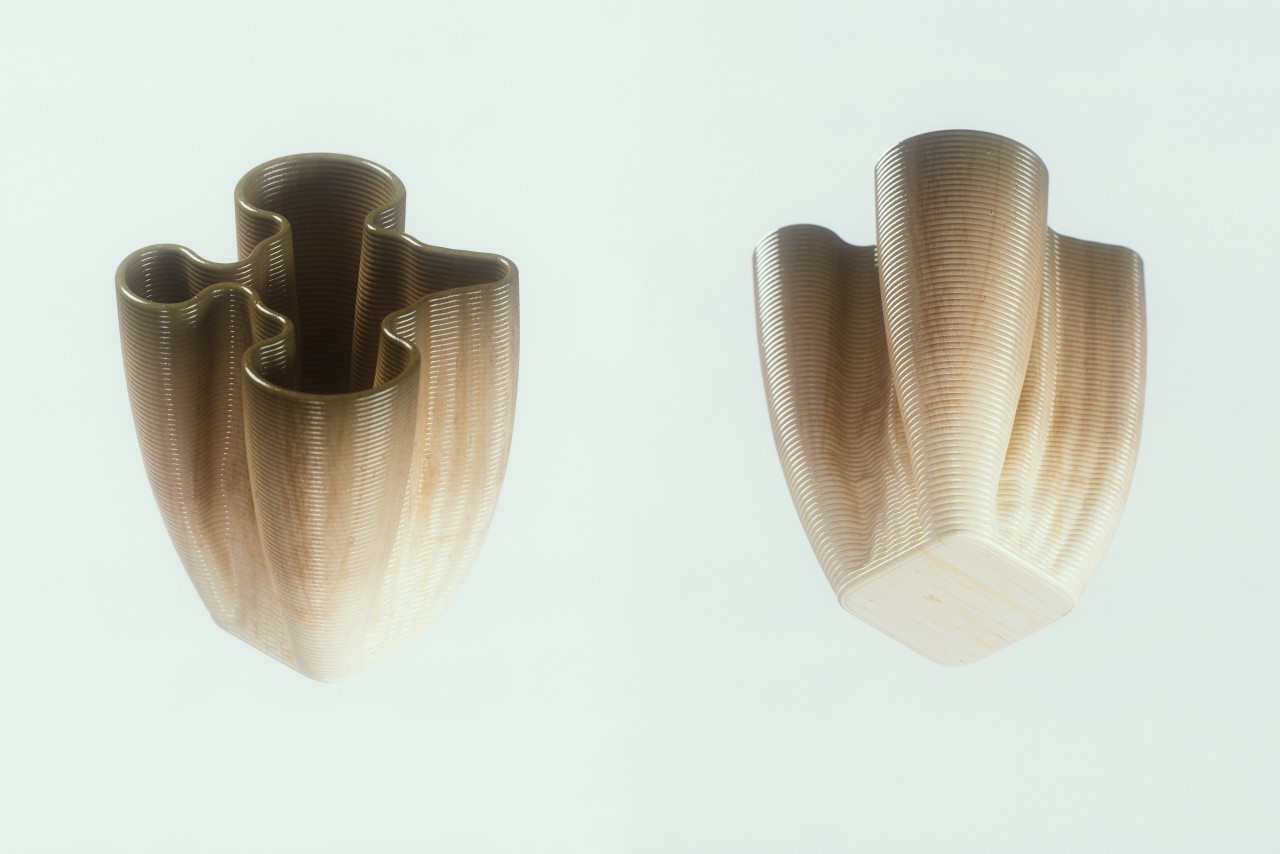
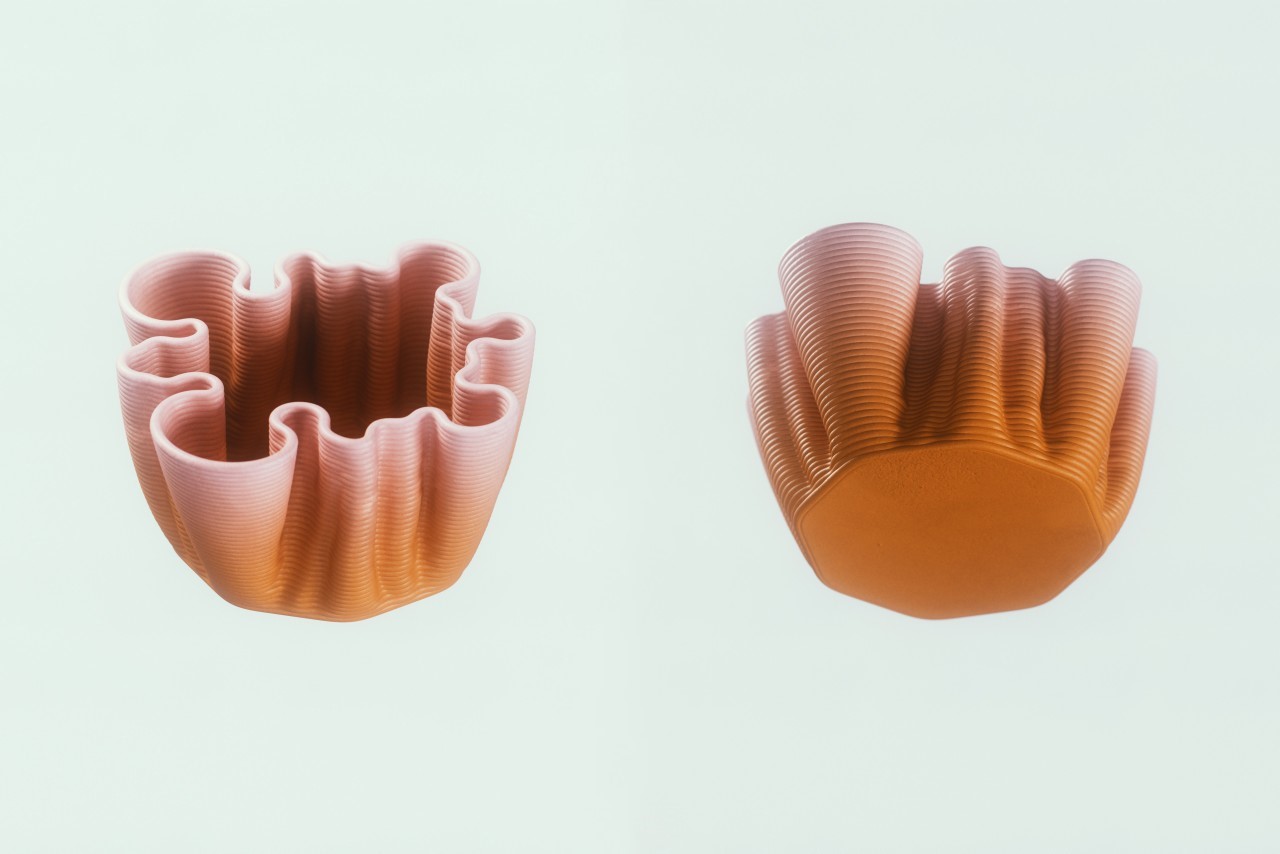
From the conceptualization to the actual production, the Differential Growth Vases hardly had any significant human intervention. The vase shape was determined by a differential growth algorithm, while a 3D printer manufactured the vase. Although designer Tim Zarki orchestrated the project and came up with the very idea in the first place, the machines pretty much took over the execution of both the concept and fabrication phases, displaying two things – AI-based creativity, and the ability to have humans step away from creative roles with a fair amount of success.

Designer: Tim Zarki

Differential growth might sound like a fancy term, but it’s a way of explaining how cells multiply. The process can be understood through a series of rules that are repeatedly applied to points in space (called nodes) connected into chains by lines (edges) to form paths. In short, the cells adopt a pattern (based on their DNA) and create within that particular pattern, resulting in growth that follows a template set by previous cells. You can see this in how plant branches grow, how cells expand, how rivers meander, etc. Zarki put the same sort of algorithm to the test with the vases, setting a base shape and having the algorithm expand it. The result is nothing like any pottery you’ll ever see…

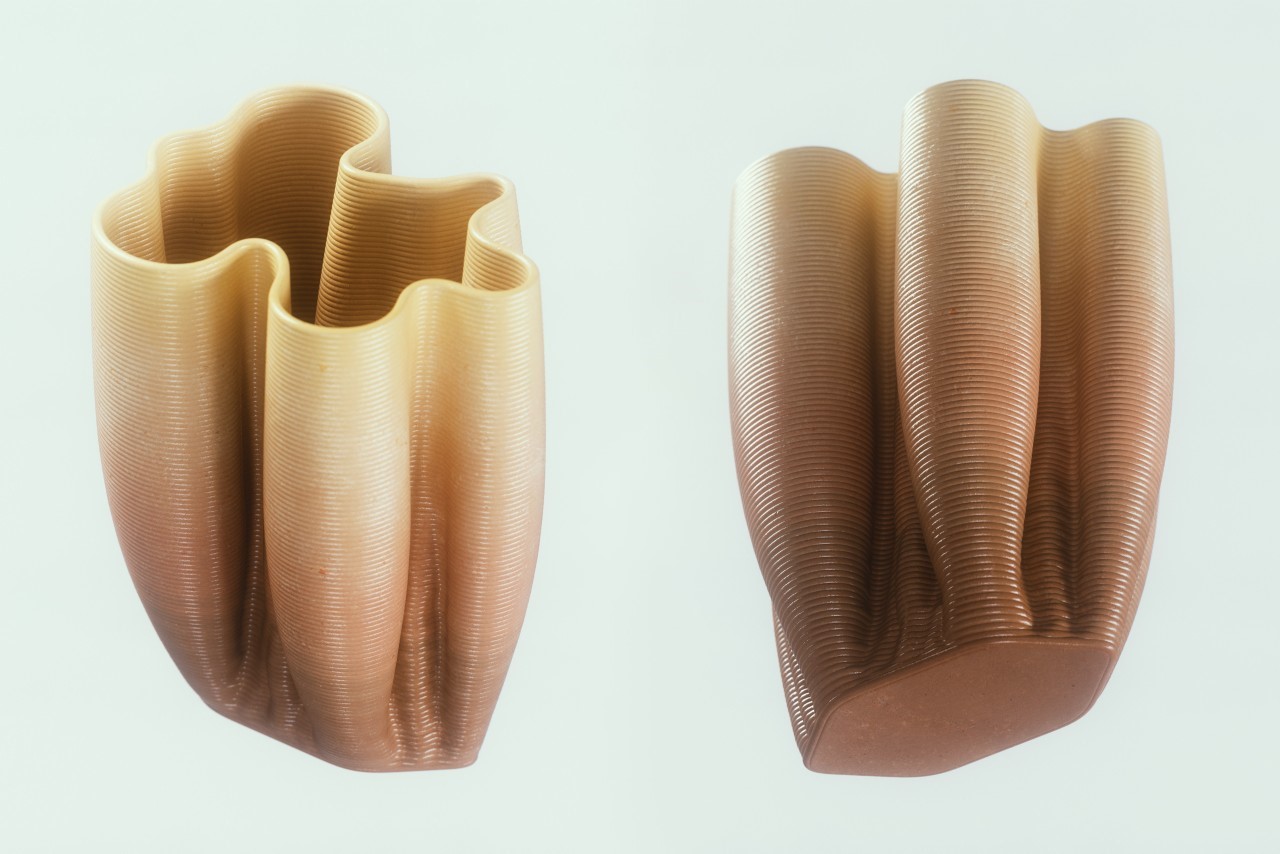
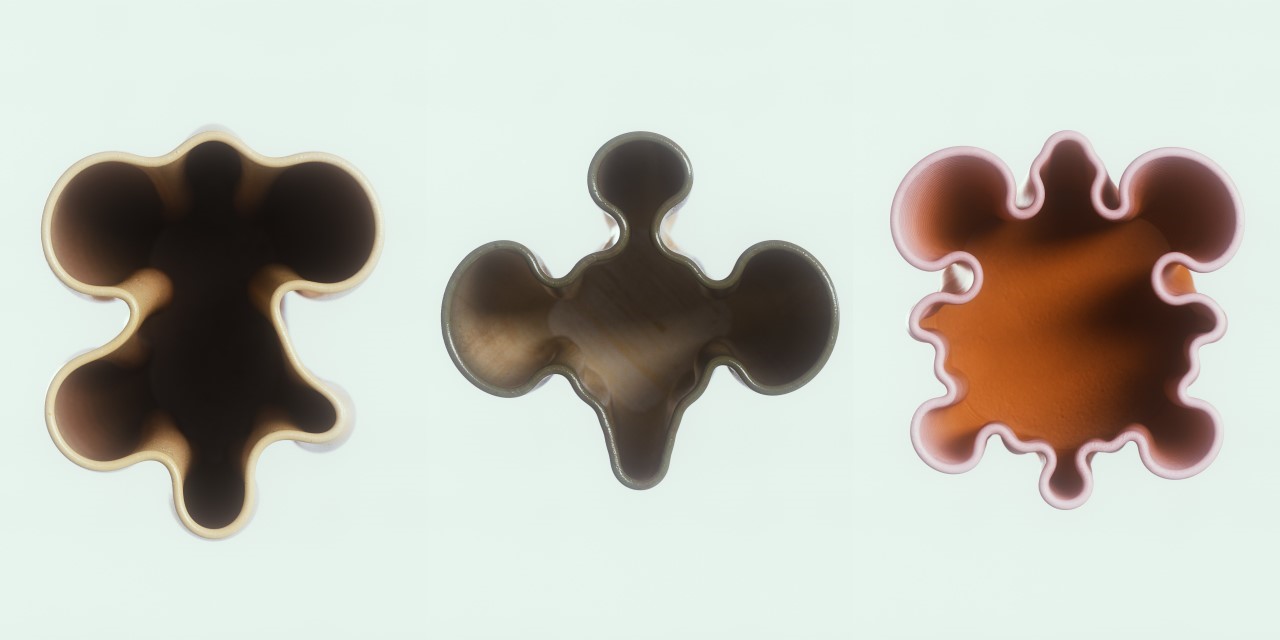
While most vases are created using a potter’s wheel, resulting in a rotationally symmetrical design, these vases have undulating designs created by the algorithm. The best way to understand how the algorithm works is to look at the shape of the base of the vase, and the final shape at the top. The vase’s vertical growth shows the transition between these two shapes, helping you understand how the algorithm works. There’s never a set final pattern, as the algorithm creates something new each time. This means each vase ends up looking unique. Zarki experimented with three overall designs, although the possibilities are quite literally endless, much like how no two plants grow the exact same way, or no two fingerprints look the same.

The final forms were then fed into a slicer software, that helps prepare them for 3D printing. The slicer creates a path that the printer’s nozzle has to follow, and once ready, the printer gets to work, slowly, but steadily printing the vase. As is evident, this entire process is nothing like the current conventional pottery methods, but with this project, Zarki hopes to challenge convention. By eliminating standard processes, and to quite an extent the human too, these vases show how oddly appealing a world would be to live in if AI designed more… obviously with humans playing a final role in determining whether the design is aesthetic or not!

The post These vases were (almost) completely designed and made by algorithms and machines first appeared on Yanko Design.

An iPad version of the Delta game emulator is officially on the way

The popular Nintendo emulator, Delta, that arrived on the App Store for iPhone to much fanfare a few weeks ago is now getting a version that’s optimized for the iPad. Developer Riley Testut shared an update on Threads this weekend revealing that an iPad app has been in the works, and is now being prioritized since Apple changed its tune on game emulators. The iPad app is “near completion,” and subscribers to Testut’s Patreon can get it now through the AltStore, an alternative marketplace the developer created a few years back for sideloading iOS and iPadOS apps. Otherwise, you can wait a little while for it to come with Delta’s next big update, version 1.6.

In the post, Testut also shared a little preview of how it'll run on iPad. Delta was released as the successor to Testut’s Game Boy Advance emulator, GBA4iOS, and supports a slew of other Nintendo systems, including NES, SNES, N64, and DS. It shouldn’t be long before the iPad version is finished — Testut wrote that the team just needs to “finish up controller skins [and] fix some last bugs.” They’re also working on device-to-device multiplayer, Testut wrote (but that’s still a couple of items down on the checklist). And, as an added treat, he said a SEGA Genesis emulator is on the way too. That’s still in beta, but will become available “soon-ish.”

This article originally appeared on Engadget at https://www.engadget.com/an-ipad-version-of-the-delta-game-emulator-is-officially-on-the-way-184945398.html?src=rss

Apple’s OLED iPad Pro may come packing an M4 chip and an emphasis on AI

Apple’s “Let Loose” iPad event is just over a week away, and the rumors in the leadup are starting to get interesting. According to Bloomberg’s Mark Gurman, the much-anticipated OLED iPad Pro may arrive not with the new M3 chip as we’ve all been expecting, but the next-gen M4 instead. In the Power On newsletter on Sunday, Gurman wrote that he’s “hearing there is a strong possibility” that this will be the case. And, he says it’ll herald Apple’s official entry into AI.

“I believe Apple will position the tablet as its first truly AI-powered device — and that it will tout each new product from then on as an AI device,” Gurman wrote. Doing it this way for the May 7 event would set the stage for Apple to go all-in on AI at its Worldwide Developers Conference (WWDC) in June. This all builds on Gurman’s previous reports that Apple has been in talks with OpenAI and Google to potentially tap their AI tech for new features with iOS 18.

The “Let Loose” product showcase is also expected to bring updates to the iPad Air and iPad accessories like the Magic Keyboard and Apple Pencil. According to Gurman, the upcoming Apple Pencil may introduce haptic feedback.

This article originally appeared on Engadget at https://www.engadget.com/apples-oled-ipad-pro-may-come-packing-an-m4-chip-and-an-emphasis-on-ai-154509441.html?src=rss