How to sideload apps onto Android Auto
There's a way to display any app on Android Auto, but it does present concerns about safety and reliability.
An accessory dwelling unit forces a kind of honesty most homes never require. Every object either earns its spot within days, or it becomes clutter nobody chose. Four hundred square feet leaves no room for anything that does only one job, so the objects that make it into an ADU need to work harder than furniture ever had in a house with room to spare. That pressure produces better design, not worse living.
We chose these five picks because each replaces more than one ordinary object with a single, considered choice. None of them try to shrink themselves to fit a small footprint. Instead, they consolidate, clearing counters, corners, and floor space that a compact home cannot spare. That consolidation is the real trick behind an ADU that lives twice its actual size, and it starts with getting sleep, sound, waste, space, and light right.
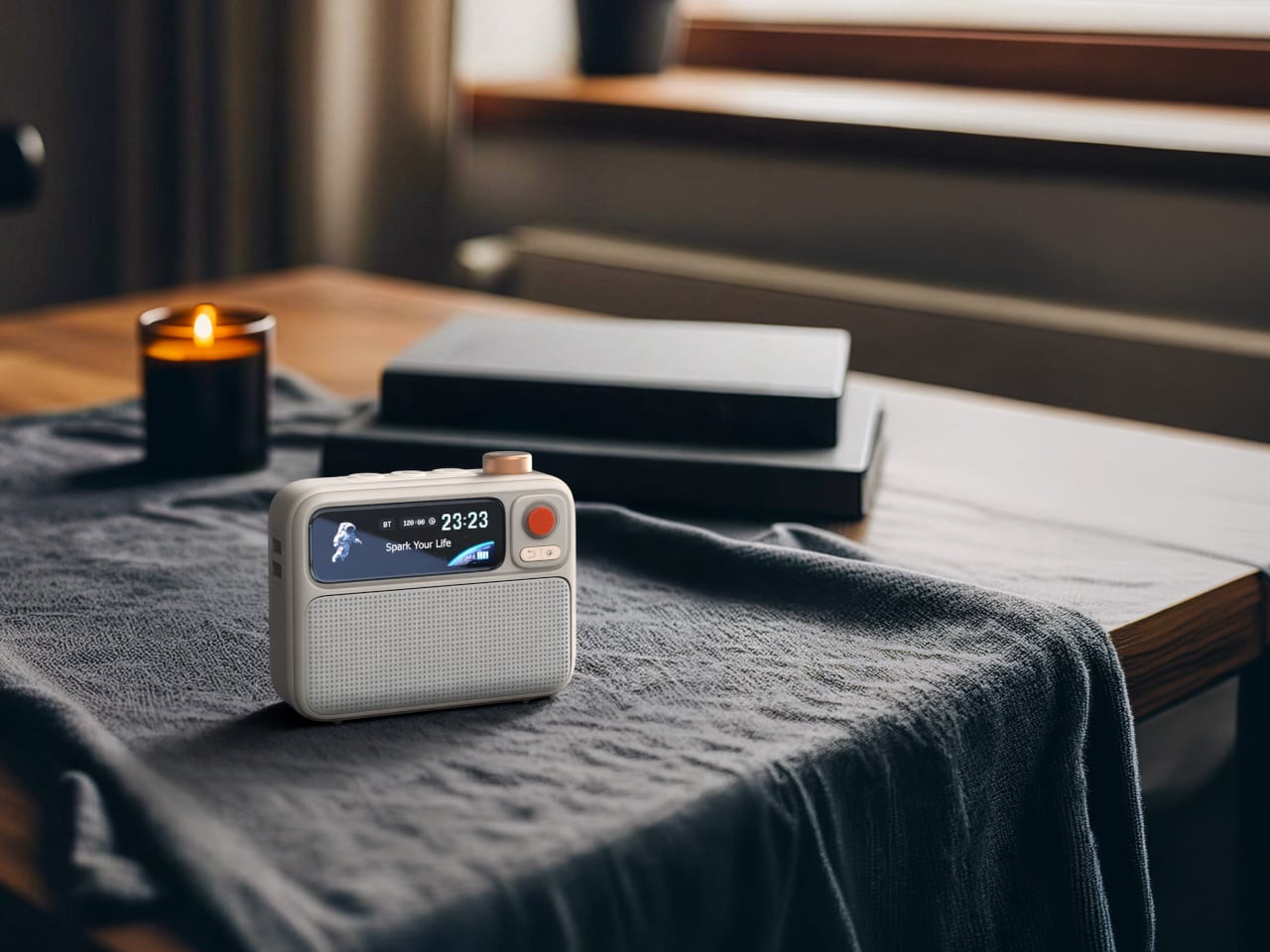
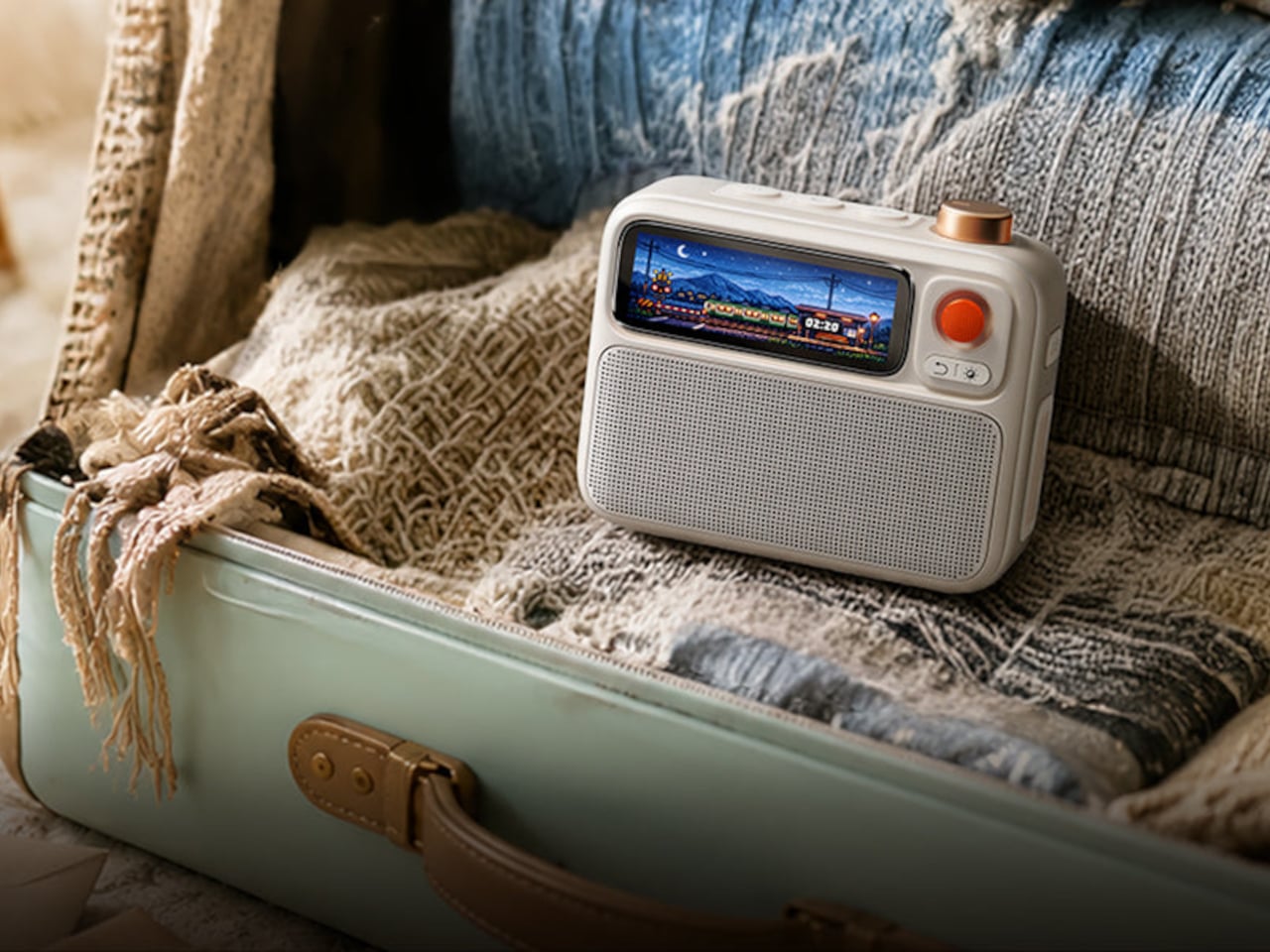
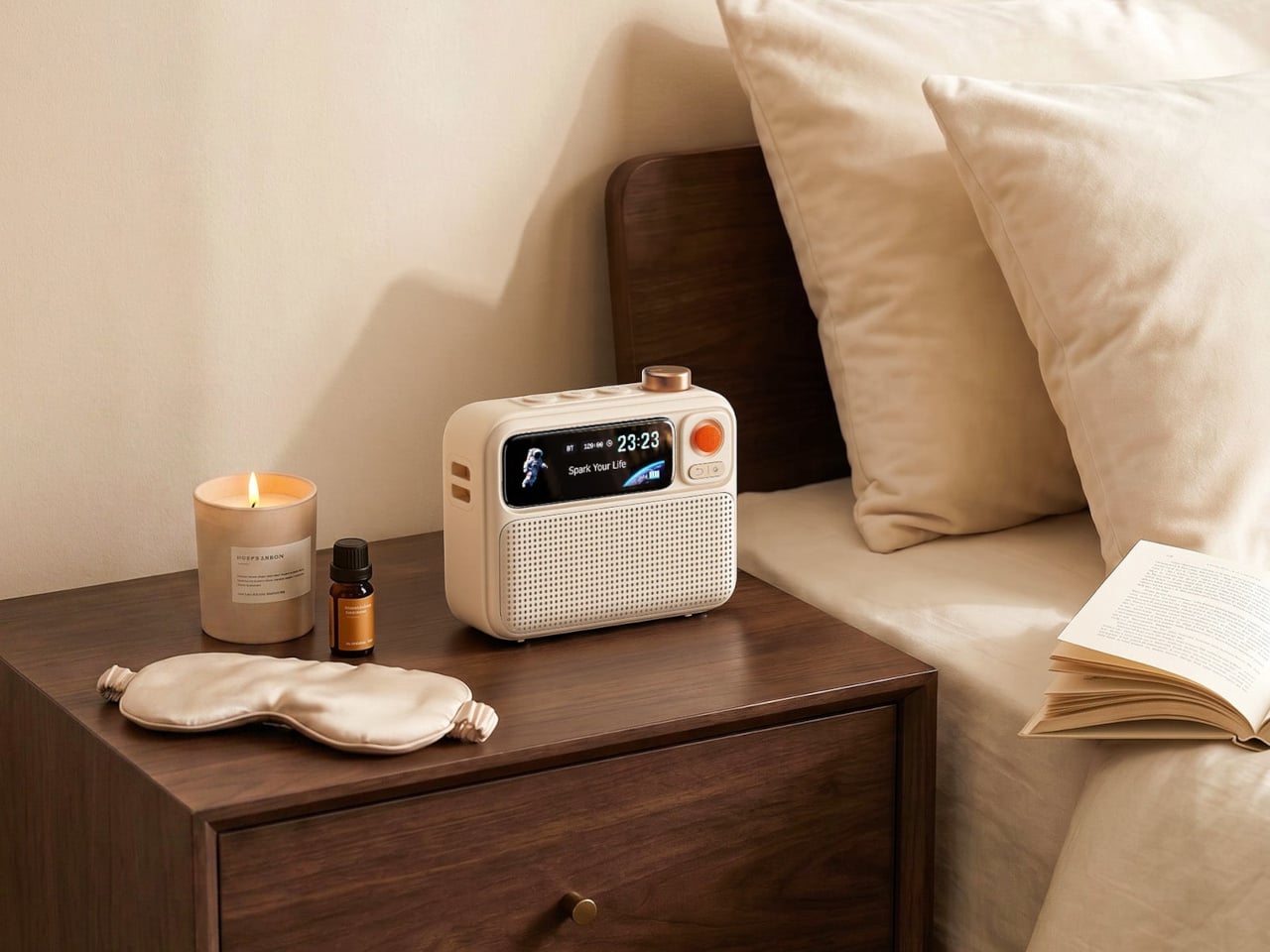
A nightstand in a compact ADU usually ends up carrying a phone charger, a white noise machine, and a separate alarm clock, each one stealing inches a small bedroom cannot spare. The FlowToo folds all three into a single rounded unit roughly the size of a coffee mug, running a genuine 10W amplifier and 45mm driver rather than the thin courtesy speaker most alarm clocks settle for. For you, that means one purchase clears an entire corner of your nightstand instead of three.
The 2.26-inch display cycles through clock faces, music visualizers, and sleep animations, while the wake system builds gradually with rising light and natural sound instead of a jarring tone. In a home where the bedroom and living area often share the same open air, consolidating that whole routine into one $99.99 object changes how the first minutes of your morning actually feel. More than 90 built-in soundscapes mean the same unit that wakes you can also help you fall asleep the night before.
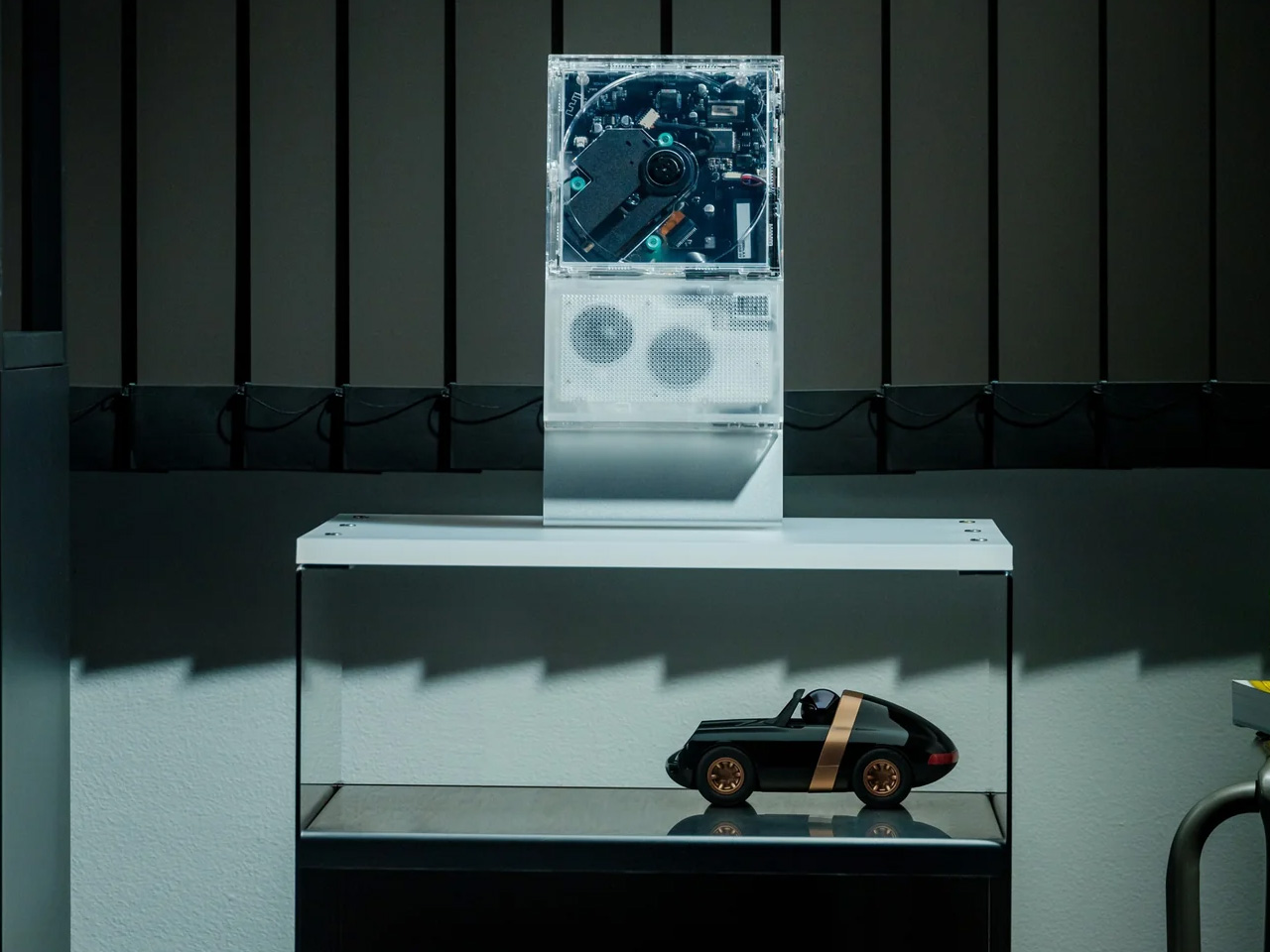
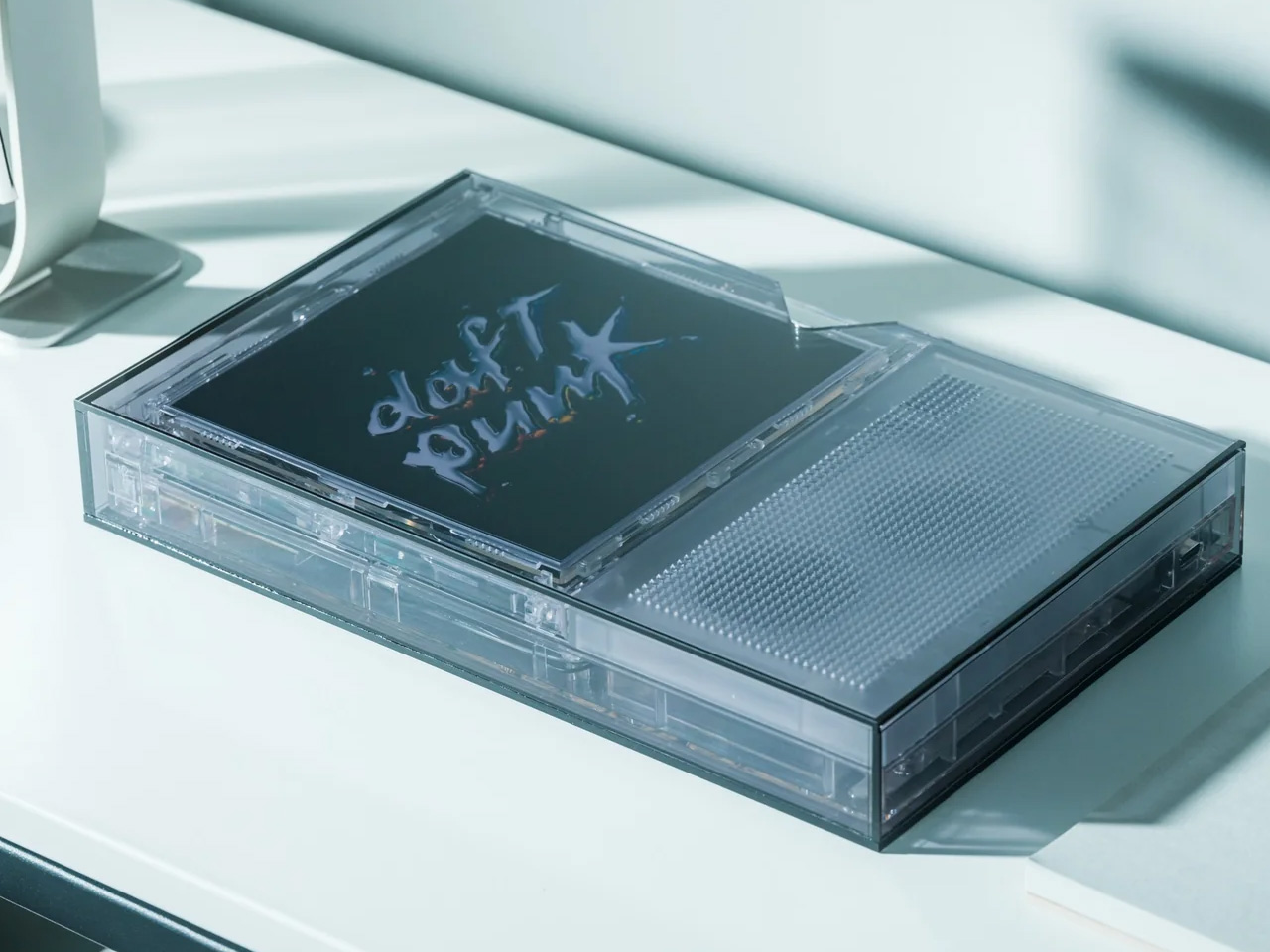
Most audio gear tries to disappear into a room, quietly doing its job somewhere out of sight. The ClearFrame does the opposite, putting its transparent body and spinning disc on full display, which matters in a small space where every object carries visual weight. Slide your album art into the lyric card tray, and it becomes shelf art between plays, or leave it out and let the mechanism itself be the decoration. For you, one object now does the job of both a stereo and a piece of art.
The newer speaker version solves the one real limitation of the original by building a 40mm driver directly into the frame, so there is no separate Bluetooth speaker competing for counter space. At just over a pound and the size of a hardcover book, it moves easily from a shelf to a nightstand, giving you three ways to listen depending on what the room and the moment allow. That kind of flexibility matters more in 400 square feet than it ever would in a house with a dedicated media room.
Click Here to Buy Now: $240.00
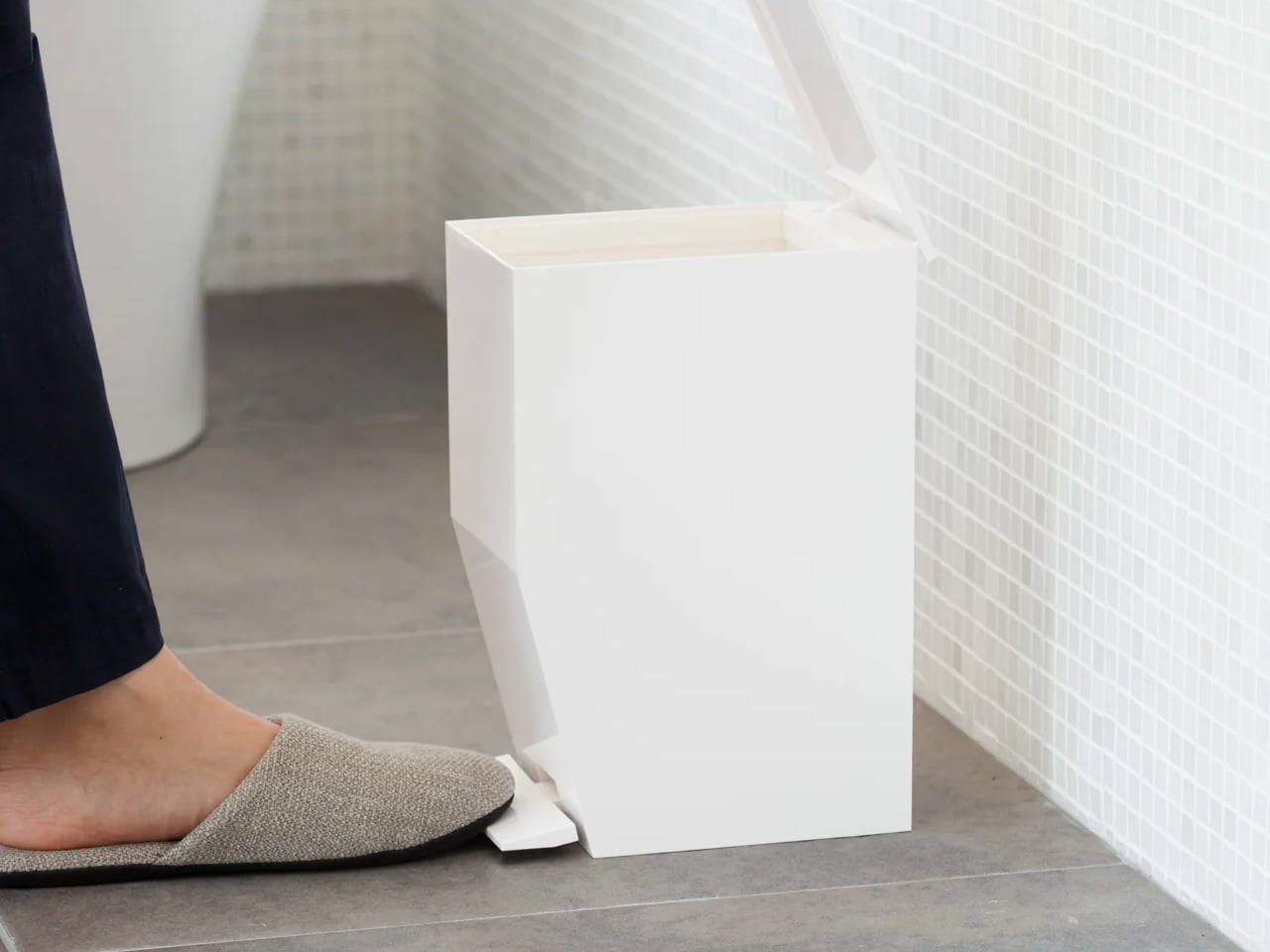
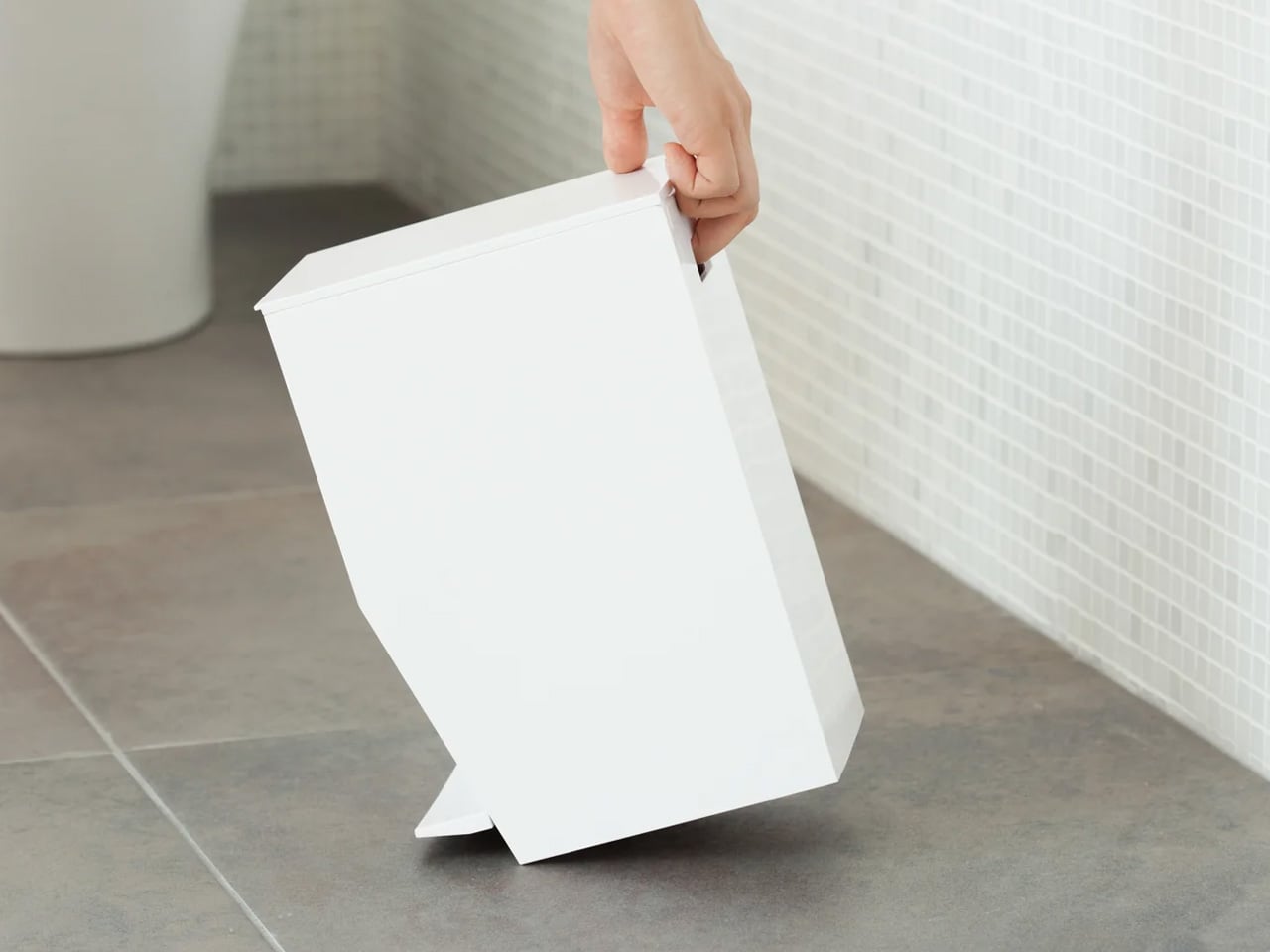
A trash can rarely gets design attention because it rarely needs any, except in an ADU, where it sits in full view beside the toilet or under a counter with nowhere to hide. This one solves that with a step-open lid that keeps your hands off the surface entirely and a one-gallon footprint slim enough to fit corners most bins would refuse. For you, that means the least glamorous object in the room stops looking like an afterthought and starts looking chosen.
An inner ring holds the liner in place without visible plastic showing at the rim, so even a mundane daily task feels considered rather than accumulated. A built-in handle at the back makes emptying it a single motion, and the matte resin body in white or black matches almost any interior without asking the room to accommodate it. In a floor plan with no spare inches to negotiate, that quiet consistency between form and function is worth more than it sounds.
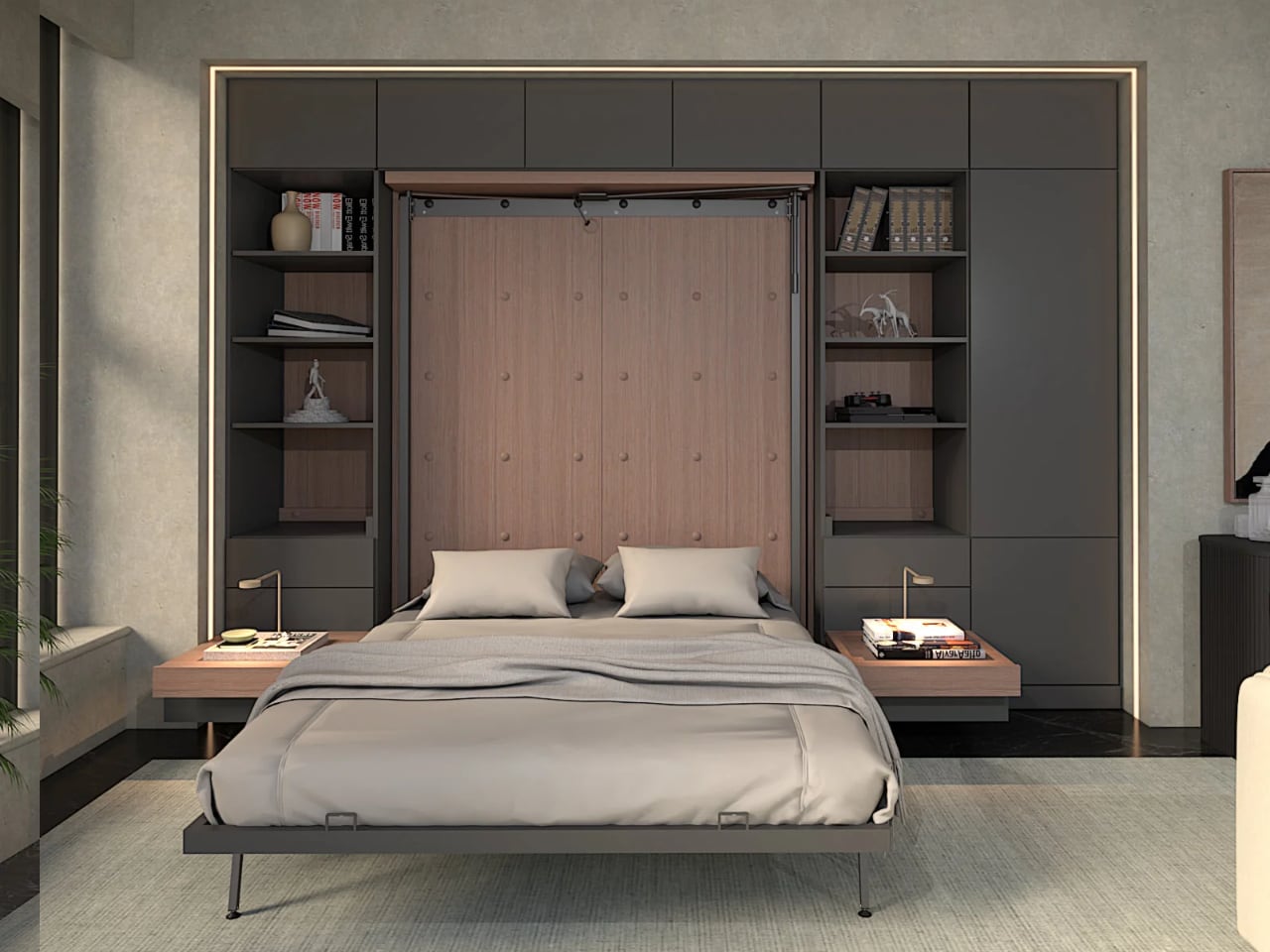
Nothing on this list reclaims more square footage than a bed that vanishes into the wall, and the Expanse Inverse solves the one complaint that has followed Murphy beds for decades. Instead of mounting near the ceiling and demanding a wall completely free of windows or art, it mounts at headboard height, which means it can go almost anywhere in your ADU without dictating the rest of the layout around it. For you, that means the room you sleep in tonight can become the room you work or host in tomorrow.
Left down, it reads as a normal wood bed rather than a folding mechanism trying to hide itself, and it fits a queen mattress up to 11 inches thick with five years of coverage on the hardware. Two people can install it in about five hours, and once it is mounted, the same 400 square feet that held a bedroom in the morning holds a living room by afternoon. That single transformation does more for how a small home feels than almost anything else you could buy.
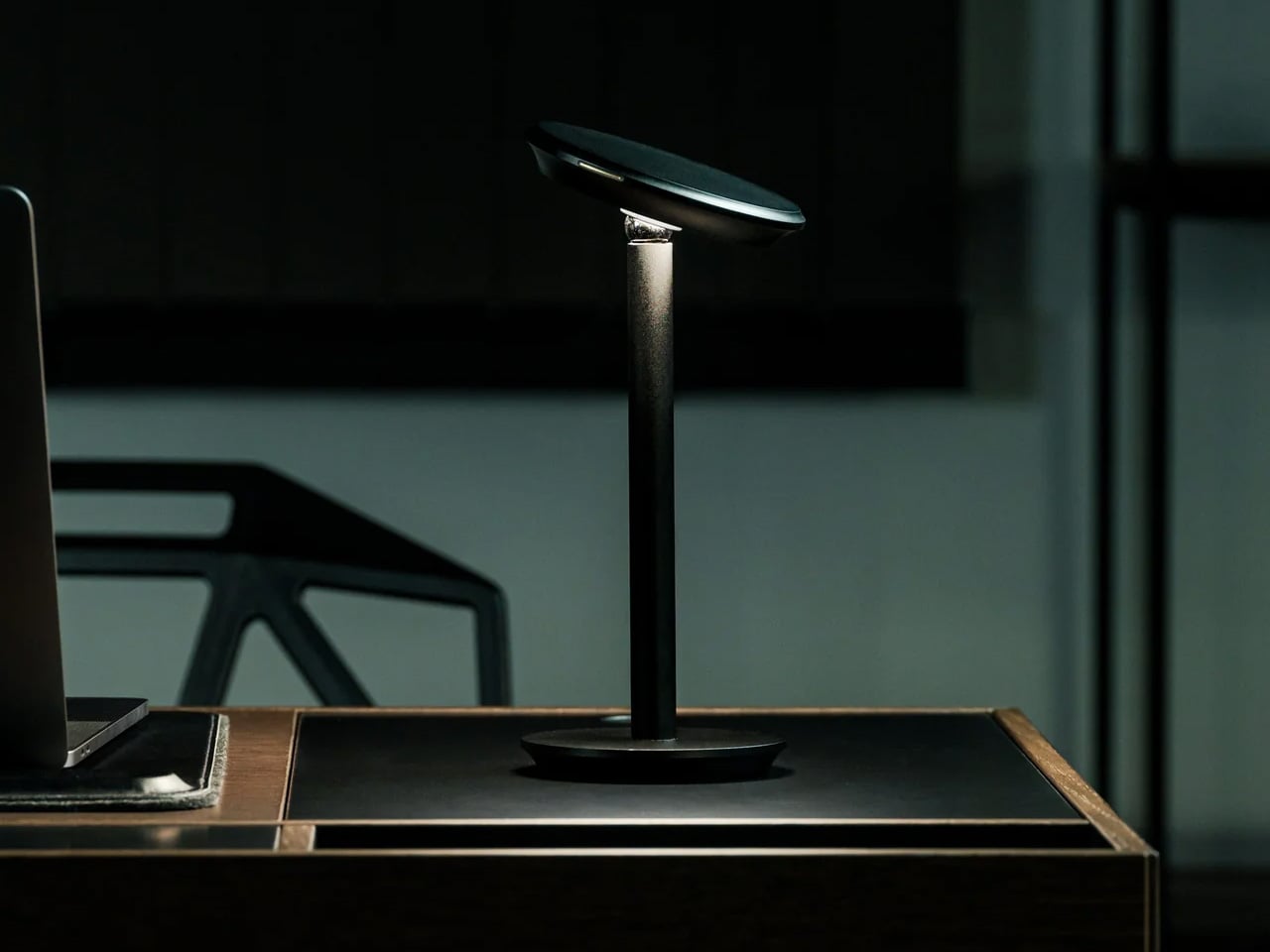
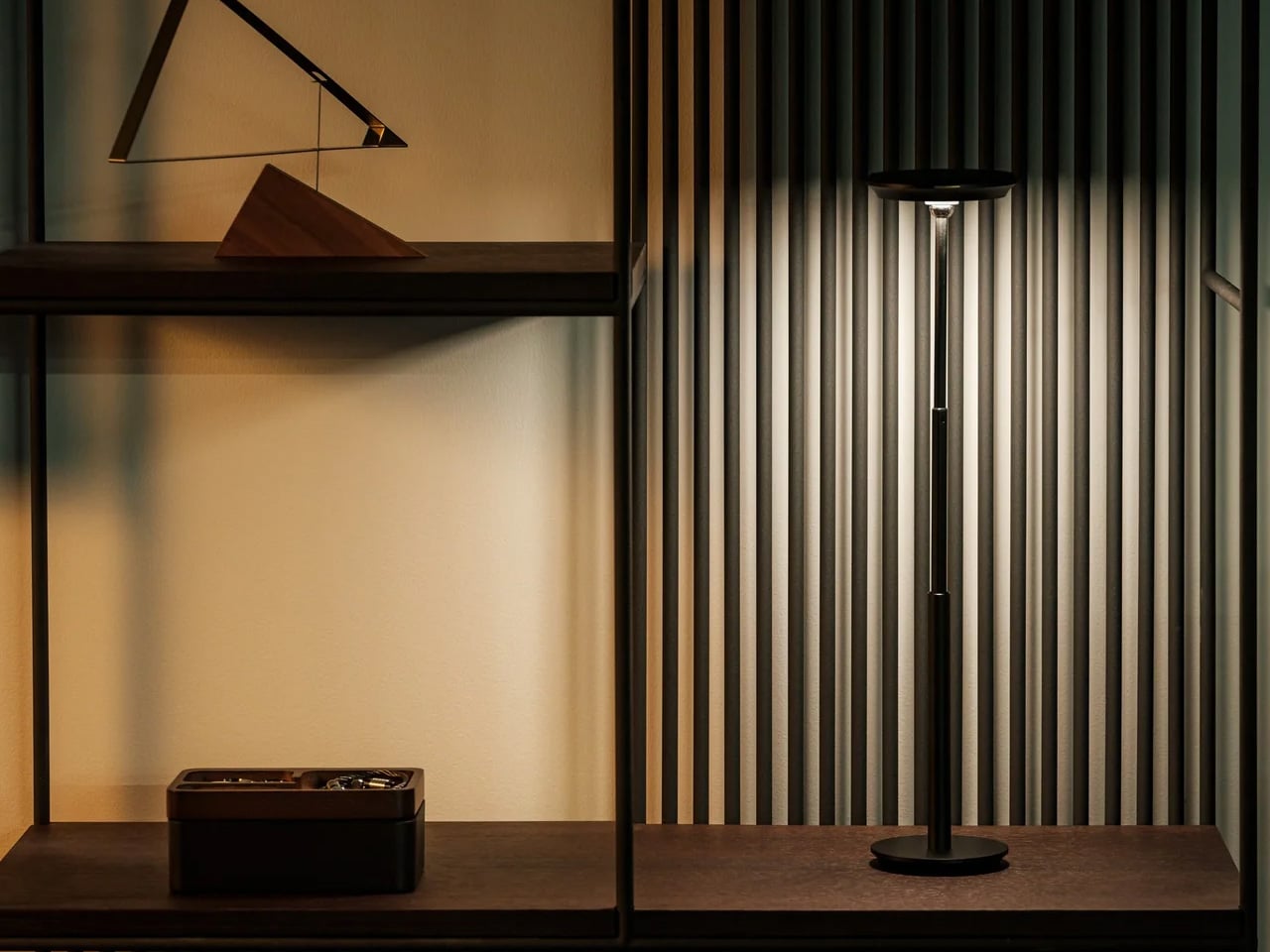
Koki Sato built this lamp around a simple observation that most lighting ignores: the kind of light you need shifts constantly through the day, while almost no fixture adjusts with it. The column extends from 8.9 to 19.7 inches with no fixed stops, and a magnetic ball joint head swivels freely without ever moving the base. For you, that means one lamp does the job that would normally require two or three fixed fixtures scattered around a corner that has to serve as a reading nook, desk, and dinner table depending on the hour.
Because it runs cordless on a battery lasting up to 70 hours at low brightness, you are never chasing an outlet or routing a cable across a room that cannot spare the visual clutter. A single touch shifts the color temperature from a cool 4000K down to a warm 2500K, and the magnetic head detaches entirely to become its own portable light when the evening moves somewhere else. In a small home, that kind of range removes the need for a whole shelf of separate lamps.
Click Here to Buy Now: $325.00
None of these five accessories try to make an ADU feel bigger through illusion or clever paint tricks. Each one works by removing something the room used to need three or four separate objects to accomplish, and that reduction is what actually changes how the square footage feels day to day. A considered nightstand, a display-worthy CD player, a trash can that disappears into its corner, a bed that gives back the whole floor, and a lamp that replaces the rest.
Put together, they cover sleep, sound, waste, space, and light, the five biggest demands a compact home makes of its owner. None of them ask the room to compromise on style to earn its function, and none of them were included because they simply fit the theme. Four hundred square feet starts to live like a thousand the moment every object inside it is doing real work, and that is exactly what this list was built to prove.
The post 5 ADU Accessories That Make 400 Square Feet Feel Like 1,000 first appeared on Yanko Design.


Somewhere out there is a bingo card of jobs AI would come for, and I guarantee nobody had masseuse on it. AI has already eaten its way through a scary chunk of the low-level workforce, copywriting, junior coding, customer support scripts, even the guy behind the wheel in some cities now. But there was always this quiet assumption that a good deep tissue rubdown needed actual human hands, actual human judgment, someone who could feel where the knot was and adjust on the fly. That felt safe. Untouchable, even. Then I walked into Bodyfriend’s booth at IFA 2026, sat down in a chair, and casually talked my way into the best massage of the show. Apparently the human-to-human touch job just got automated too.
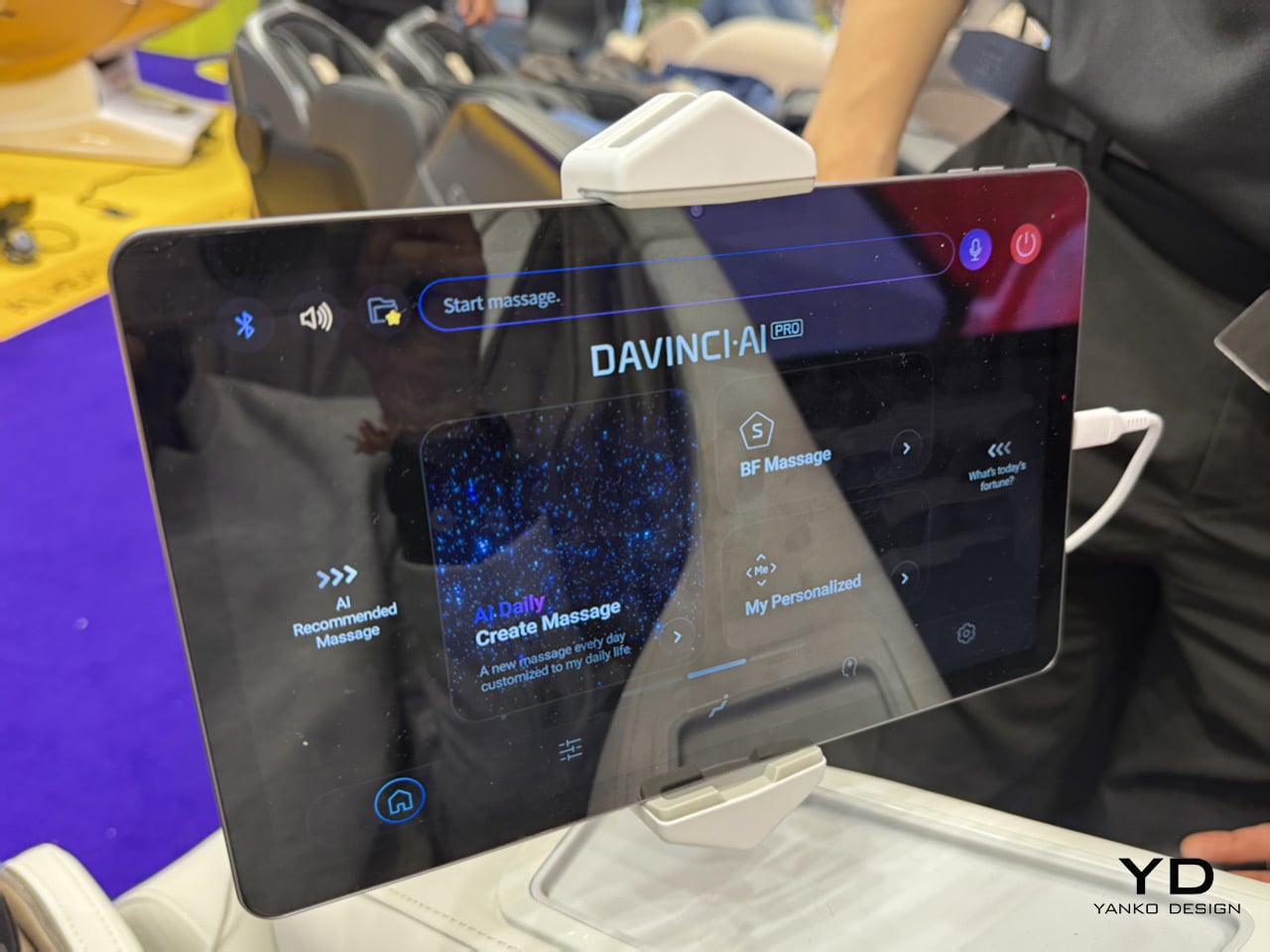
The chair was Bodyfriend’s DaVinci AI, running the same generative AI Bodyfriend had just unleashed in Seoul days before IFA, badged DaVinci AI Pro. Instead of picking from a shelf of presets, it listens to plain language and builds a massage from scratch, mixing 134 basic blocks across body zones, pressure, and duration. Bodyfriend puts the theoretical combinations in the trillions, and having felt the difference, I believe the math. A PPG sensor in the hand massager also reads heart rate, heart rate variability, and blood oxygen in real time, so the chair responds to your actual state, not just your words. I did not know any of this walking in. I just knew I was tired, sore, and willing to talk to a chair like it owed me something.
Designer: Bodyfriend
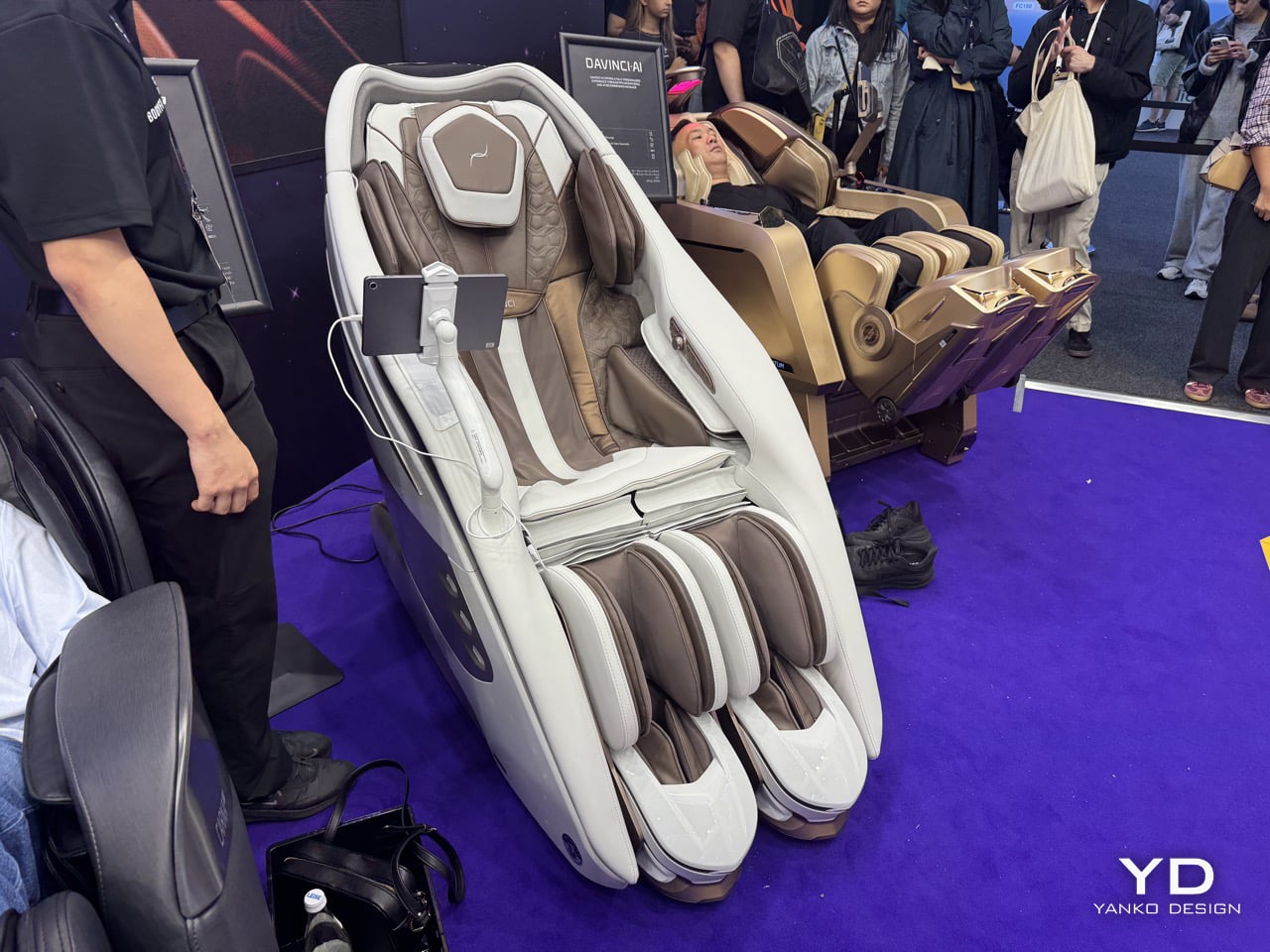
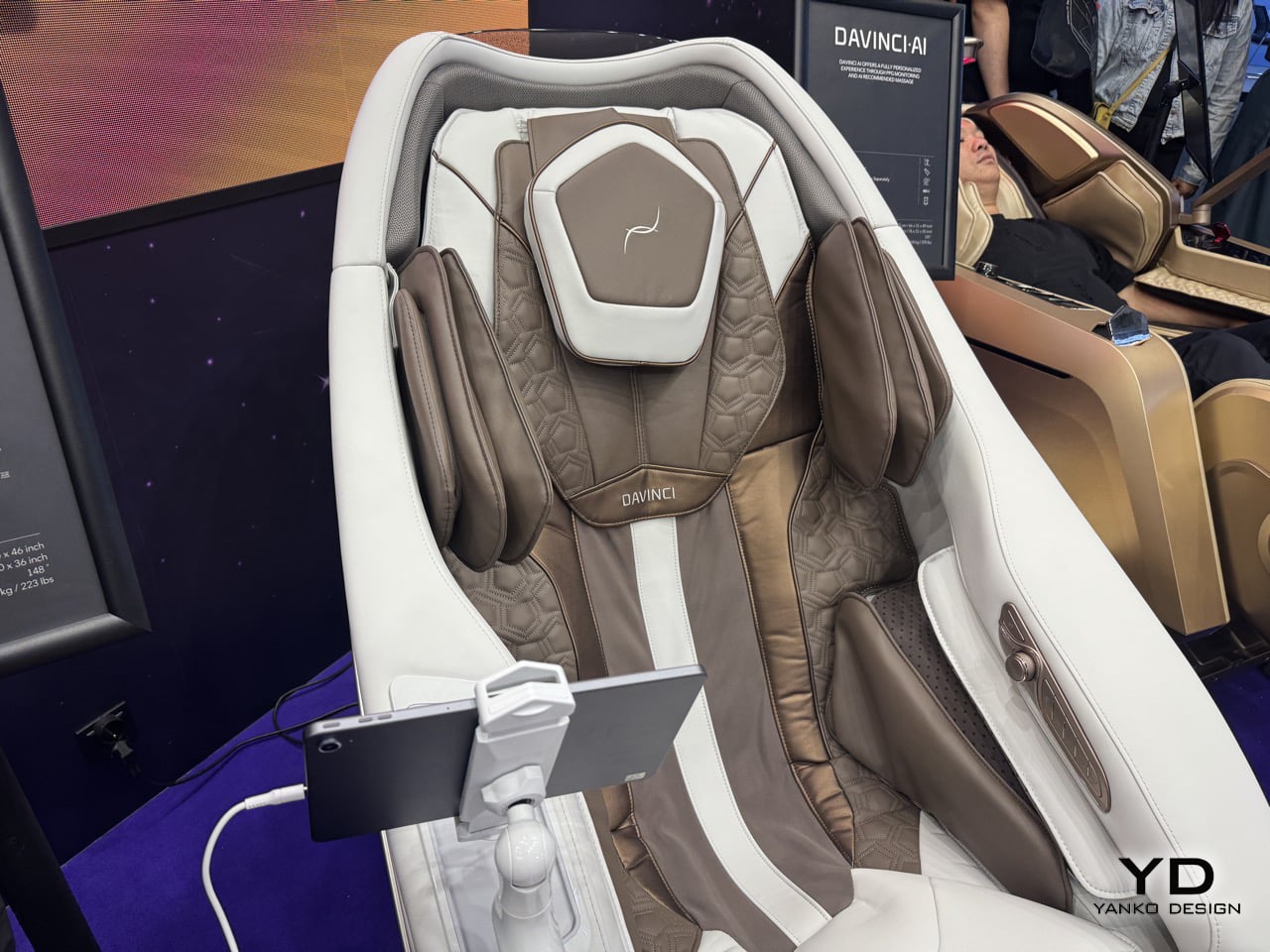
I had clocked around 15,000 steps that day, running on trade show coffee and basically nothing else, and my feet and shoulders had reached the point of open rebellion. I sat down, and instead of hunting for a remote, I just talked to the tablet mounted on the armrest. “Hey Buddy,” I said, “give me a strong foot massage, and also help relieve tension in my neck and shoulders.” Within about a minute it had built something specifically for that, working my feet, shoulders, and spine while leaving my hands completely alone, because I never asked for them. When I got a flicker of FOMO and asked it to include a hand massage too, it recalibrated on the spot rather than restarting from zero. Talking to it felt closer to briefing a person than operating a machine.
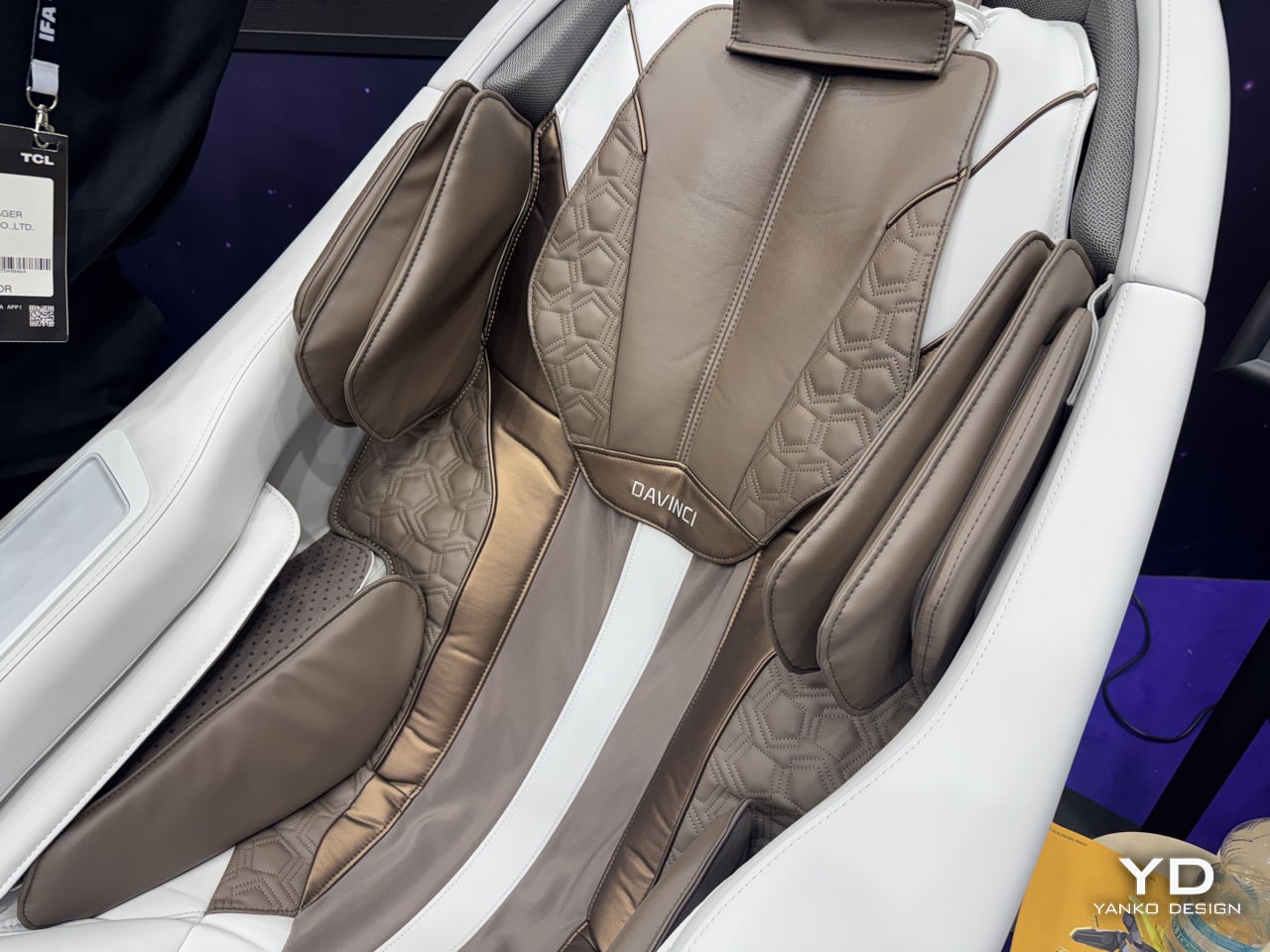
The DaVinci name carries some real design pedigree behind it. Bodyfriend’s earlier DaVinci models were developed with Italdesign, the Turin studio behind decades of concept and production cars for names like Lamborghini and Bugatti, and that automotive language shows up in the chair’s sculpted shell and the confidence of its proportions. This year’s leap is less about the shell and entirely about what is happening inside it. Where the original DaVinci used bioelectrical impedance analysis to profile your body composition, the AI Pro generation swaps that for conversational intelligence, a shift from measuring you passively to actually listening to you. It is the difference between a chair that studies your body and one that takes instructions from it.
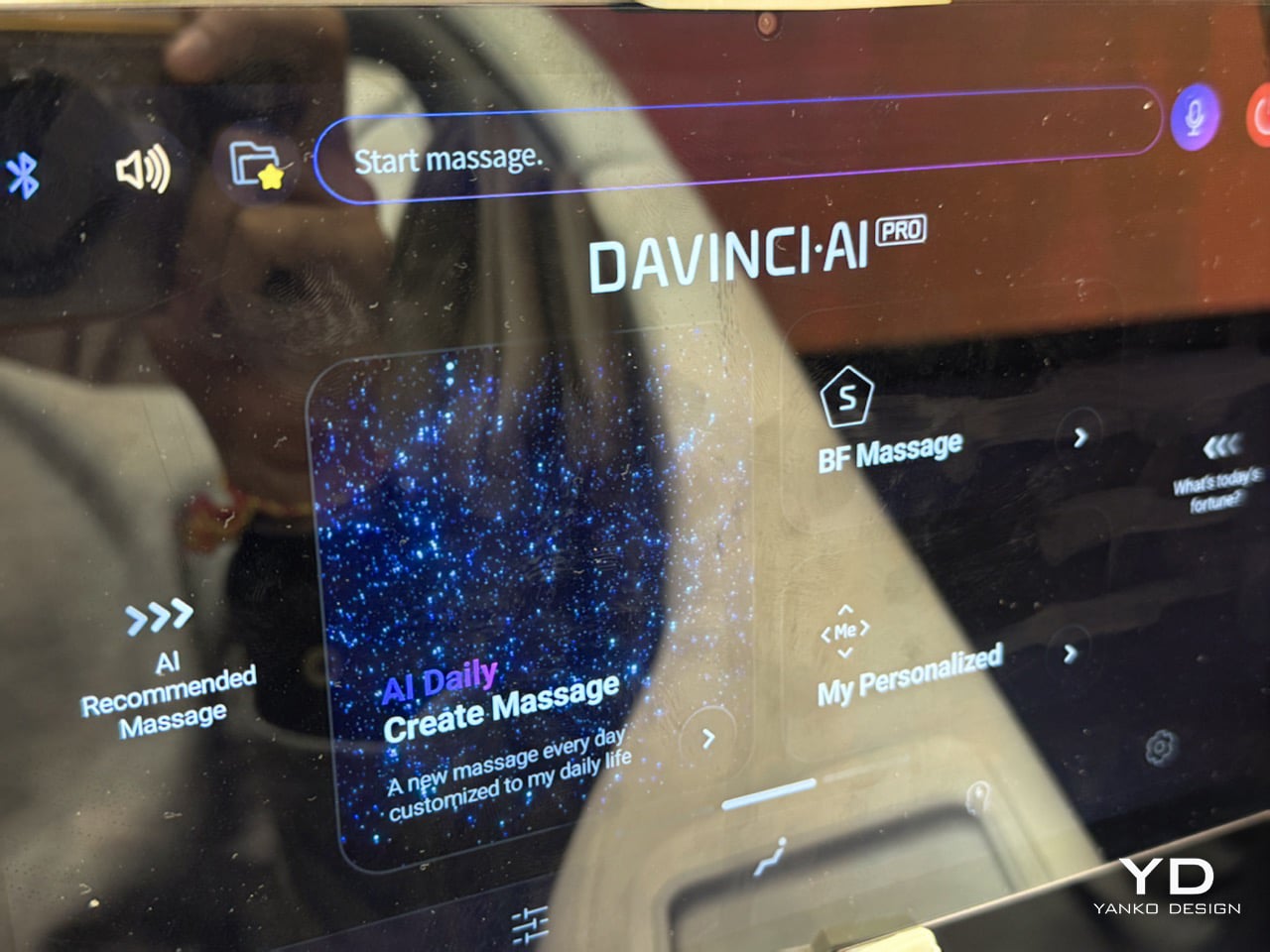
Bodyfriend’s booth this year also carried the 733, a wearable healthcare robot that took home an IFA Innovation Award honor for independently guiding your arms and legs through stretching and standing assistance, proof this is a company betting hard on robotics well beyond the living room recliner. Against that backdrop, DaVinci AI reads less like a gimmick and more like the company’s flagship idea about where home wellness tech goes next. We covered Bodyfriend’s Quantum robotic chair at IFA 2024 and called it a bodygasm in leather and Bang & Olufsen sound. DaVinci AI trades some of that theater for something quieter and arguably bigger: a chair that finally understands what you are asking for, in your own words, on the first try.


The post An AI Gave Me A Full-Body Massage: Hands-on with DaVinci AI Pro Massage Chair at IFA 2026 first appeared on Yanko Design.

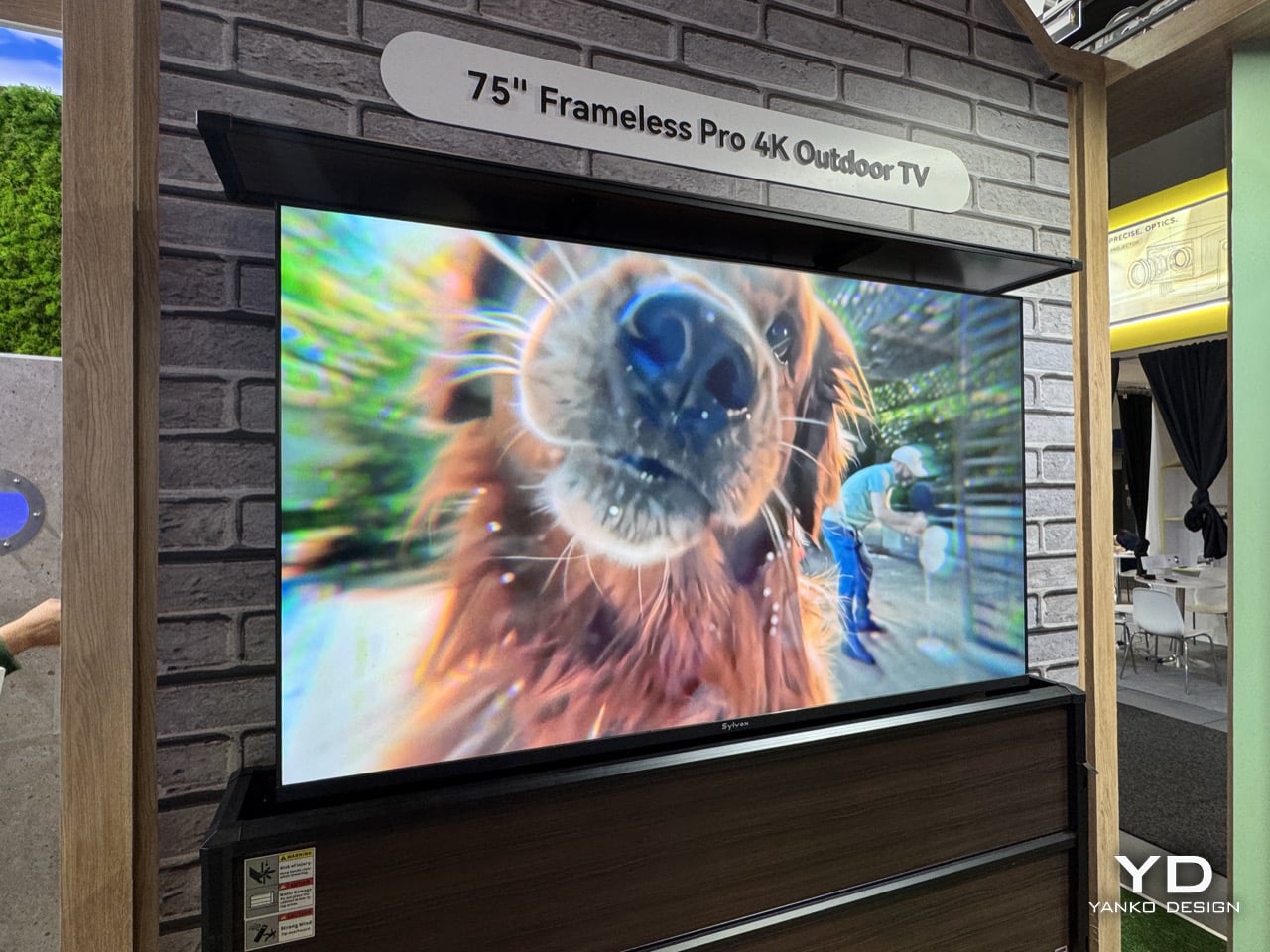
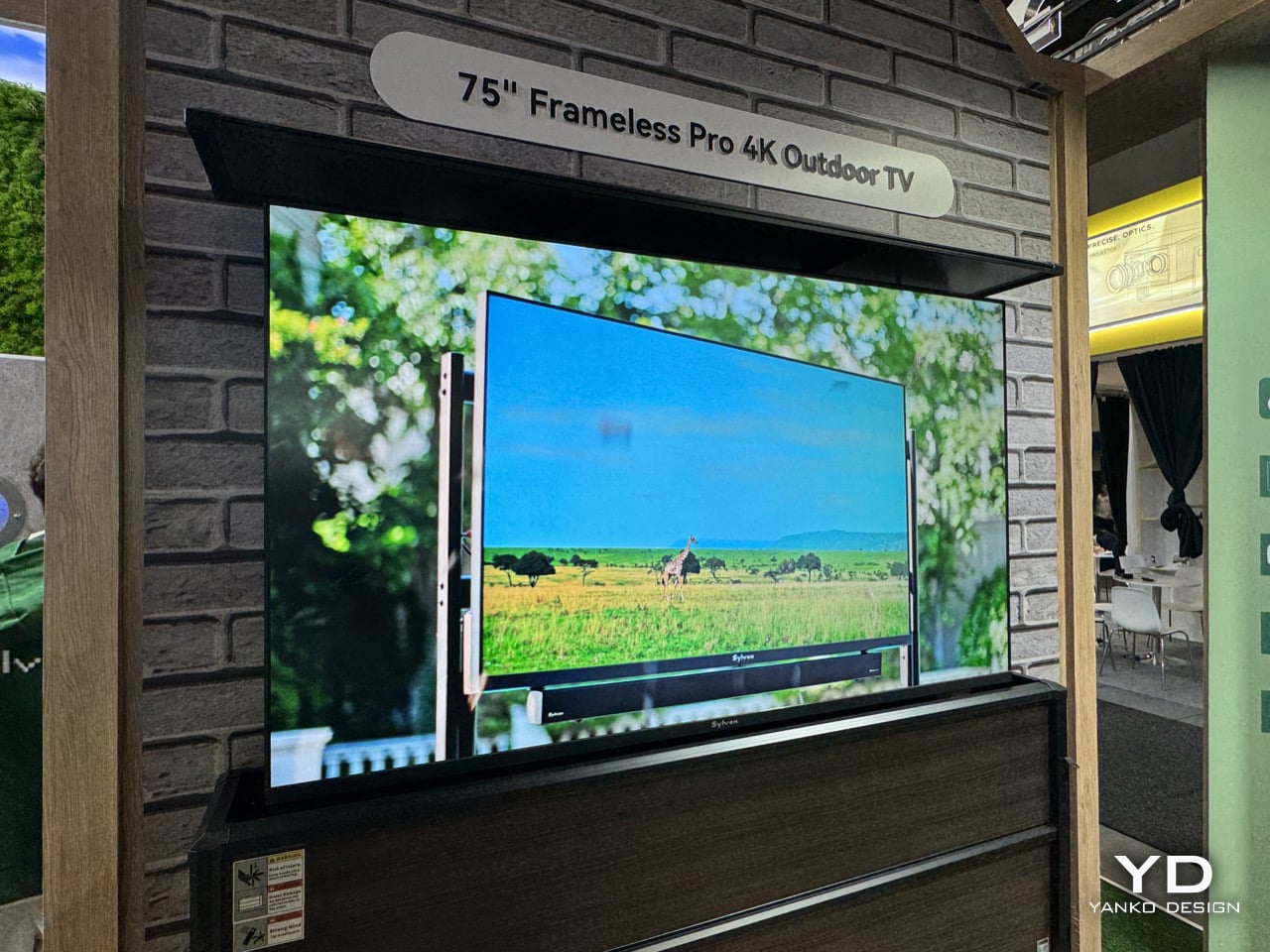
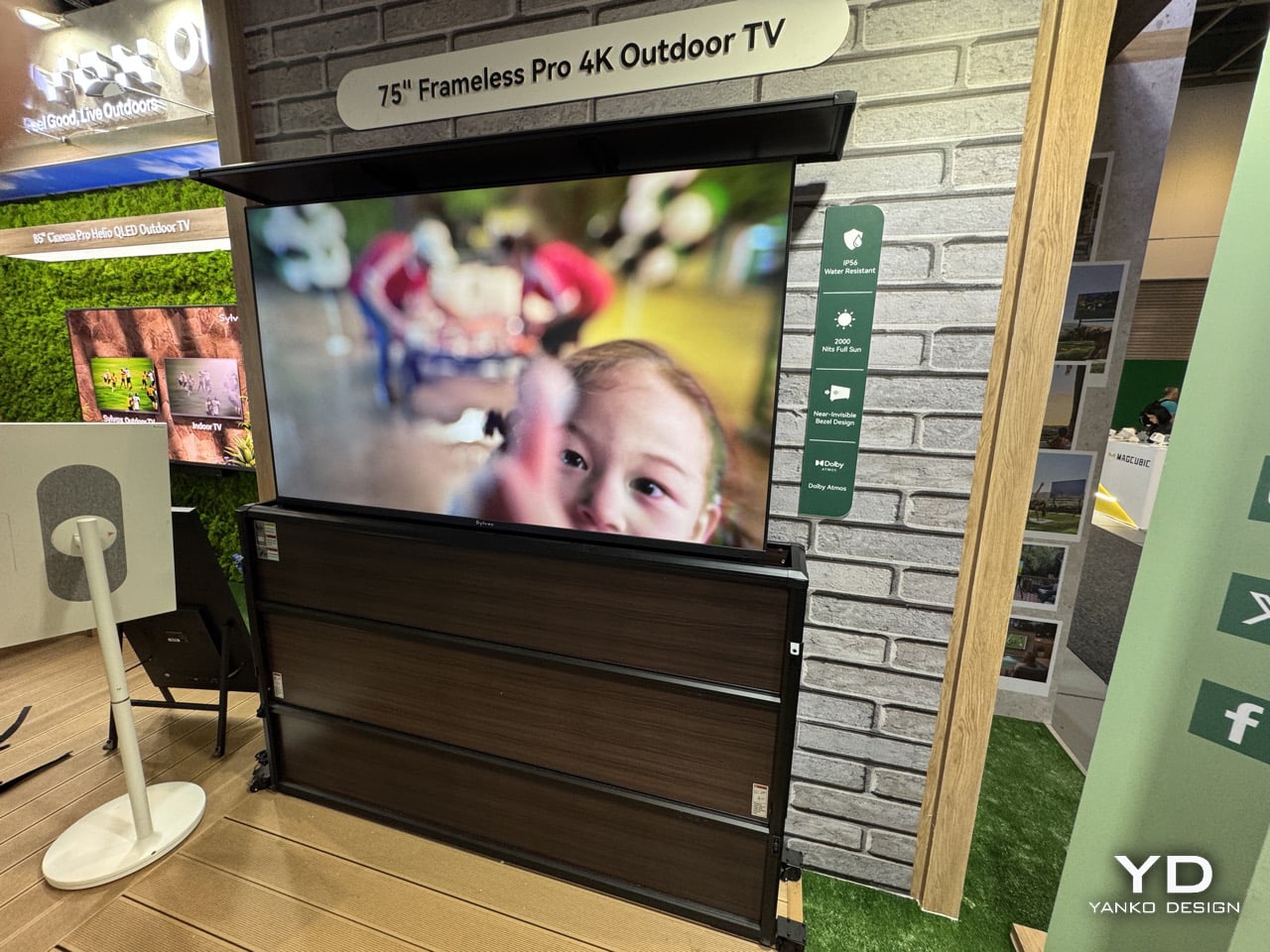
An outdoor TV isn’t really judged by its screen, it’s judged by everything protecting the screen. Sunlight readability, a sealed chassis, and an operating range that survives both August and January are what separate a patio television from a regular one dragged outside against its will. Sylvox showed up at IFA Berlin this week leaning into that definition, then added a twist the category rarely bothers with, the Frameless Pro 2026, a 75 inch 4K set with 2000 nits, an IP56 rating, and a bezel trimmed down by 90 percent. The obvious question is whether shaving the frame down actually changes what an outdoor TV is, or just what it looks like. Either way, it’s the most interesting thing on Sylvox’s stand that isn’t running on a hand crank.
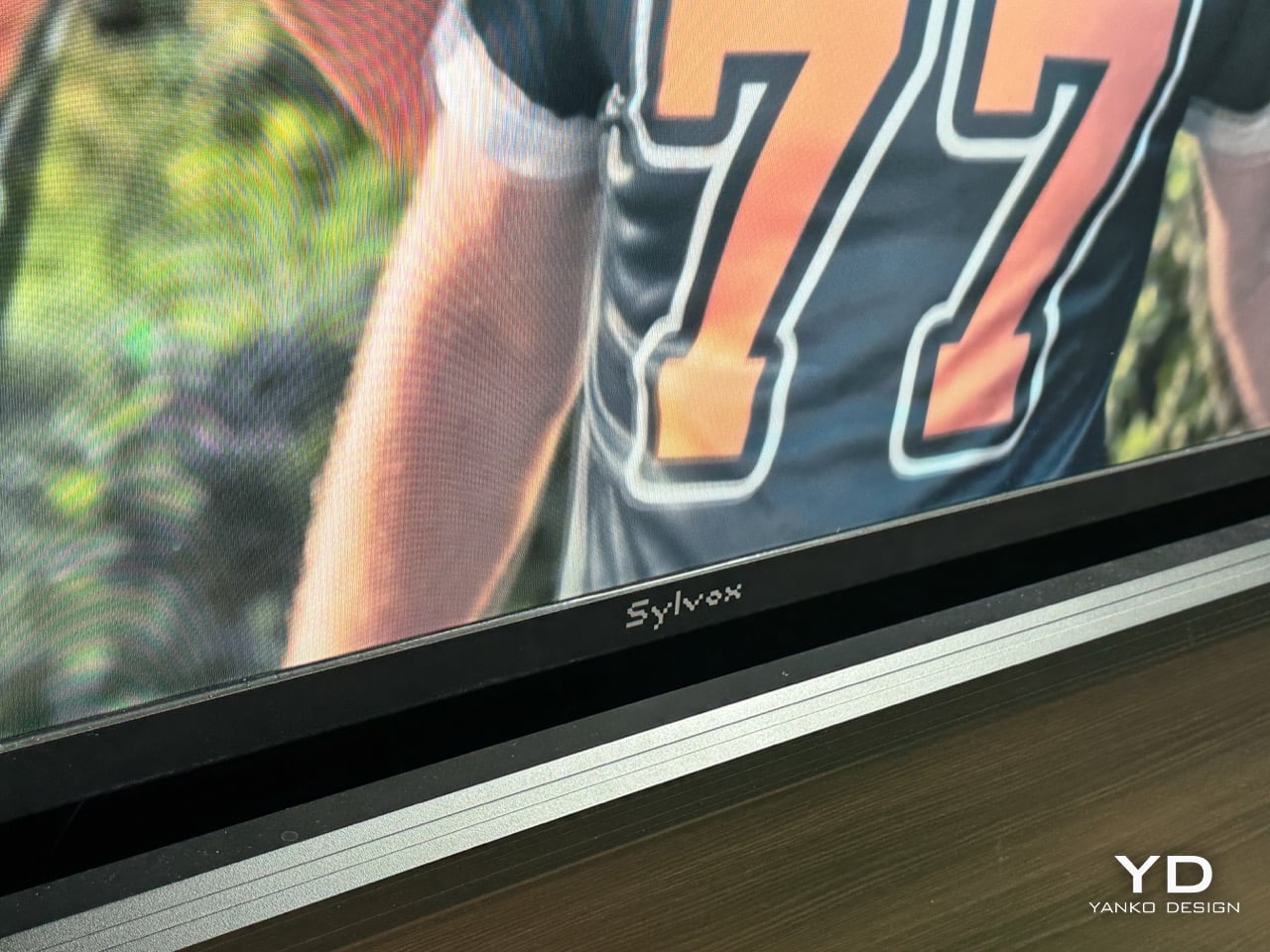
Bezels exist for a reason on any screen meant to survive weather, they’re where the gaskets, sealing, and wiring actually live, so trimming one down is a real engineering problem, not just styling. Sylvox says the Frameless Pro hits a 95 percent screen to body ratio while still holding IP56 and a range from negative 22 to 122 Fahrenheit. It wasn’t the only bezel story at IFA this year, Tecno showed a concept phone with a claimed 0mm bezel a few halls over, only for early testers to find a raised metal lip still doing the bezel’s job along one edge. That’s usually how these claims go, the border doesn’t disappear, it just moves somewhere less obvious.
Brand: Sylvox
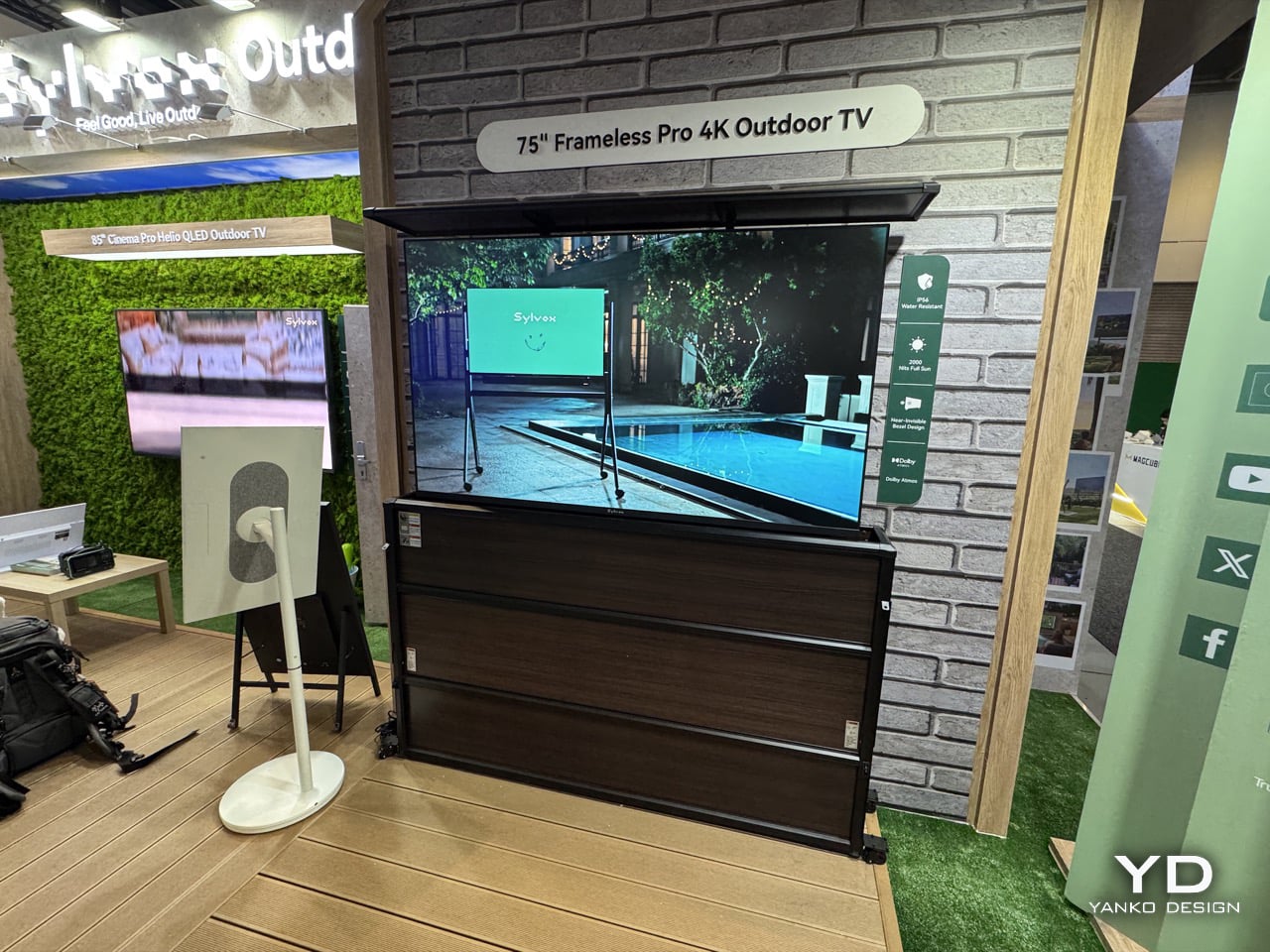
An IP56 rating means dust can’t meaningfully get in and water thrown at the case from any angle won’t get through, which matters since most indoor TVs would die from a humid August afternoon. Brightness works the same way, 2000 nits is a requirement more than a flex, since anything dimmer washes out in direct sun, and Sylvox’s own Cinema Pro, last year’s IFA Innovation Award winner, pushes past that to 3500 and 5000 nits. The bezel claim is separate from all this. The spec sheet lists a 90 percent thinner bezel and 95 percent screen to body ratio, both about the visible border around the glass, not the television’s overall size. The unit is still 3.41 inches deep, since that depth now holds the sealing and wiring a fat frame used to carry.
Sylvox wasn’t the only brand playing this game in Berlin. Tecno debuted its Next-Gen Bezelless Concept Phone a few halls over, claiming a true 0mm display border through internal stacking and an inverted rear panel. Hands on reports found a raised metal frame still sitting above the screen, catching thumbs on swipes. Same pattern as the TV, a border hidden rather than eliminated, moved into the structure instead of removed from it. Two products, same trick, same asterisk, which is a better story than either press release admits.
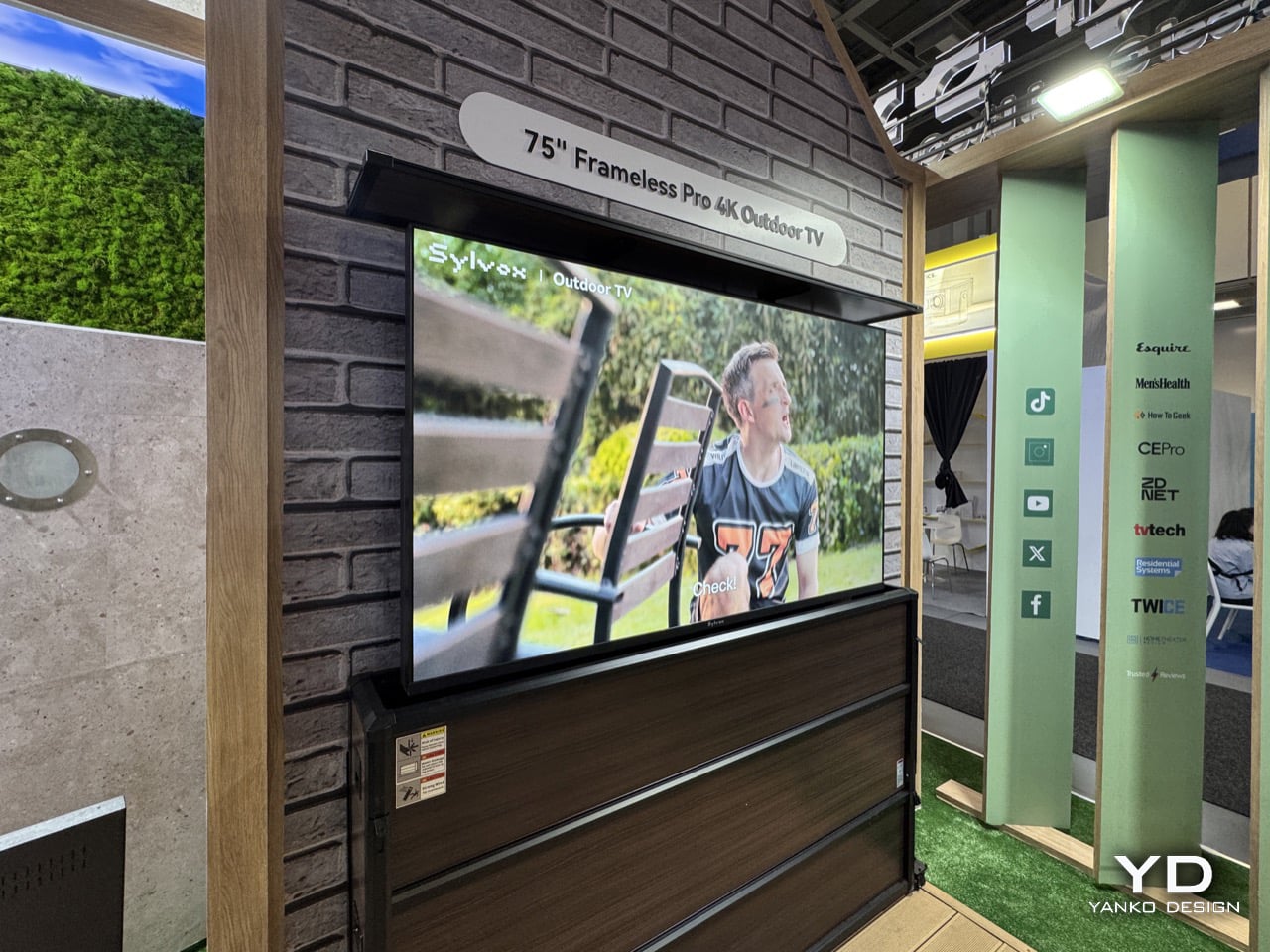
At $5,299, the 75 inch Frameless Pro looks steep next to a similarly sized living room TV, but that number needs context most spec roundups skip. Anyone shopping for a 75 inch outdoor television already owns a backyard big enough to justify one, and at that point $5,299 reads less like a barrier and more like a rounding error on the pool or pergola it’s about to sit next to. Against Samsung’s Terrace and SunBrite’s Veranda, both of which still treat a thick edge as part of the design language, the Frameless Pro is a serious entry, though it deserves a more honest word than frameless, since the frame didn’t disappear, it just stopped being the first thing you notice. Sylvox’s booth also had a hand crank emergency TV in development nearby, likely the stranger story out of Berlin. For now, the Frameless Pro is a good looking outdoor TV wearing a name that oversells its own trick, aimed at people for whom that oversell was never going to matter.
The post Sylvox Made A Bezel-less 75″ Outdoor TV That Plays 4K Movies In Rain, Sun, and Snow: Hands-on at IFA 2026 first appeared on Yanko Design.