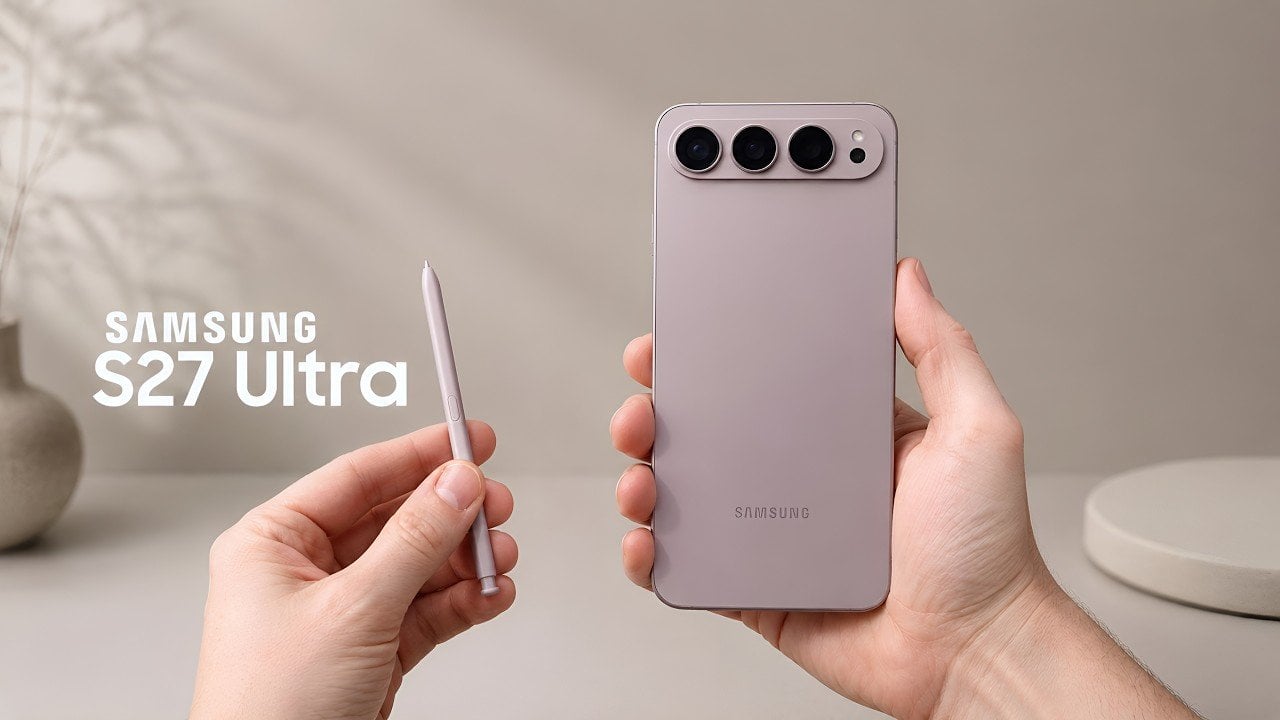
Massive Samsung Galaxy S27 Ultra Camera Upgrade Just Leaked

Massive Samsung Galaxy S27 Ultra Camera Upgrade Just Leaked Close-up of the expected Galaxy S27 Pro and Ultra camera arrays.

The highly anticipated Samsung Galaxy S27 series is already generating considerable excitement, particularly for its new advancements in camera technology. Leaks and rumors suggest that the Pro and Ultra models will introduce significant upgrades, including high-resolution sensors, enhanced zoom capabilities, and improved ultra-wide lenses. With a launch expected in Q1 2027, Samsung is poised to […]

The post Massive Samsung Galaxy S27 Ultra Camera Upgrade Just Leaked appeared first on Geeky Gadgets.

Posted in Uncategorized

Walk Up. It Unlocks: GHome Smart Introduces a 3D Face Recognition Smart Lock for Hands-Free Home Entry

Walk Up. It Unlocks: GHome Smart Introduces a 3D Face Recognition Smart Lock for Hands-Free Home Entry GHome KD10F

KD10F turns front-door access into a walk-up recognition experience, with local biometric storage and Kickstarter pre-launch access now open. Imagine walking up to your front door after a long day — coffee and groceries in one hand, a package tucked under the other arm, and a phone call still going. No keys. No passcode. No […]

The post Walk Up. It Unlocks: GHome Smart Introduces a 3D Face Recognition Smart Lock for Hands-Free Home Entry appeared first on Geeky Gadgets.

Posted in Uncategorized

Gen Z Is Buying Old iPods to Quit Spotify. Fiio’s $50 Hi-Fi MP3 Player Does It Better.

I tried to listen to an album last week. The whole thing, start to finish, like a functioning adult in the 90s. I made it four tracks before a Slack ping, a WhatsApp text, and a push notification from Hinge. By track six I was scrolling through IG. I started with conscientiously listening to an album, and I ended up in a rabbit hole on social media while the music played in the background. My phone is a magnificent piece of engineering that is somehow terrible at the one job I keep handing it.

Plenty of people figured this out before I did, and their fix was buying a discontinued Apple product from a stranger online. TikTok has north of 100,000 posts tagged for iPods, refurbished sales have grown as much as 15% a year since Apple killed the line in 2022, and some kids are using them to smuggle music past school phone bans, which is the most resourceful thing I’ve heard all year. The FiiO Snowsky Echo Nano is that same instinct, available new, for $49.99, with a DAC chip nobody was putting in fifty dollar hardware five years ago.

Designer: FiiO (Snowsky)

Click Here to Buy Now

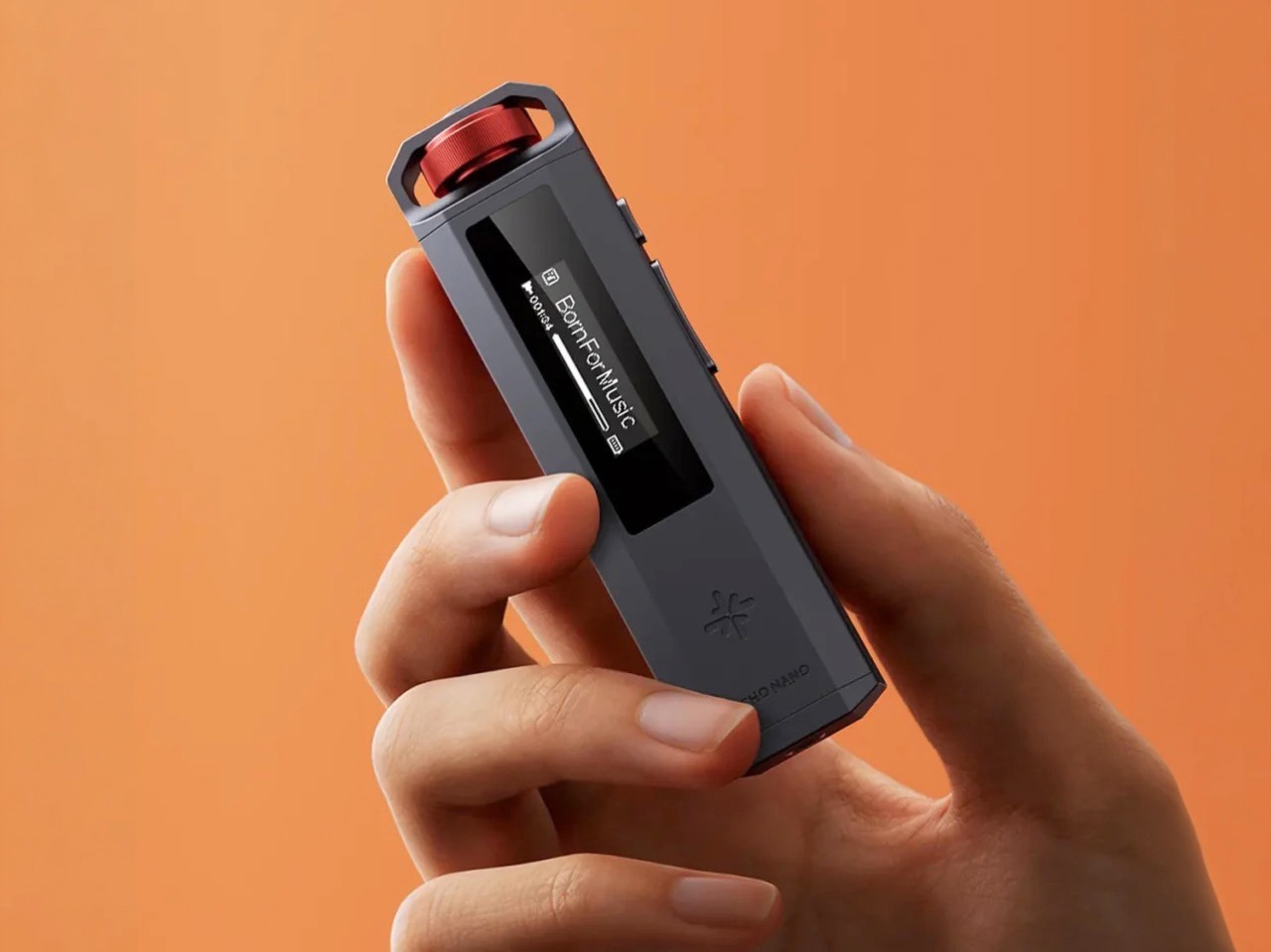
Kathryn Jezer-Morton coined the term “friction-maxxing” in a January essay for The Cut, and it went viral quickly enough to earn her a Wikipedia page inside six weeks. Her argument is that tech spent fifteen years making life easier, providing every song, every movie, every TV show episode at your fingertips for a simple (but steadily increasing) subscription fee. No looking for CDs, no scrolling through files, no visiting sketchy websites to download MP3s It was a simpler alternative, it killed torrenting for a vast population overnight… but Gen Z’s had enough. Friction-maxxing means picking the annoying option on purpose, and the Echo Nano is that philosophy machined out of aluminum. You load your own files. You turn a physical dial. You stare at a 0.91-inch monochrome OLED physically incapable of showing you album art,leave alone a notification. The screen’s poverty is the whole product.

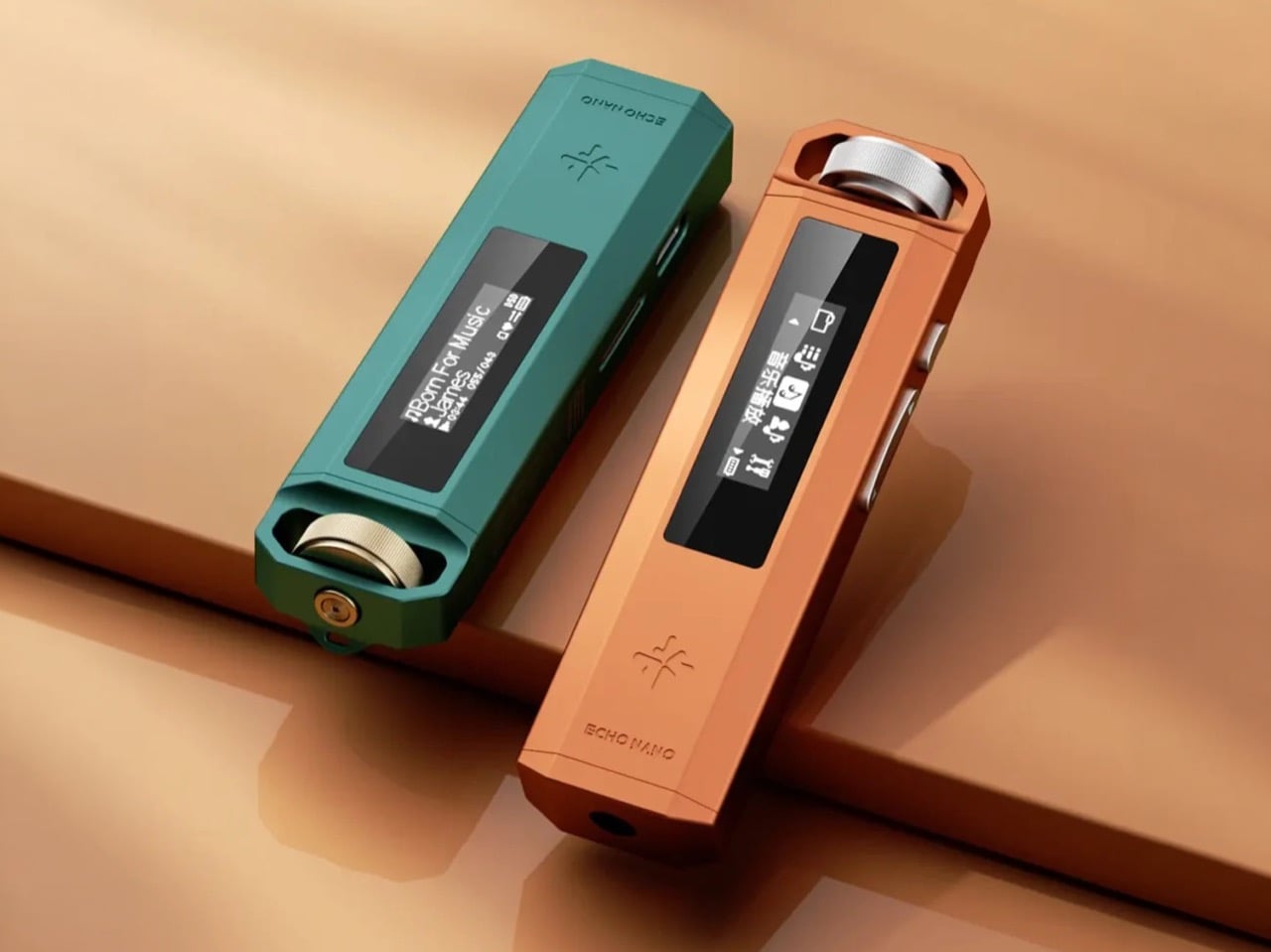
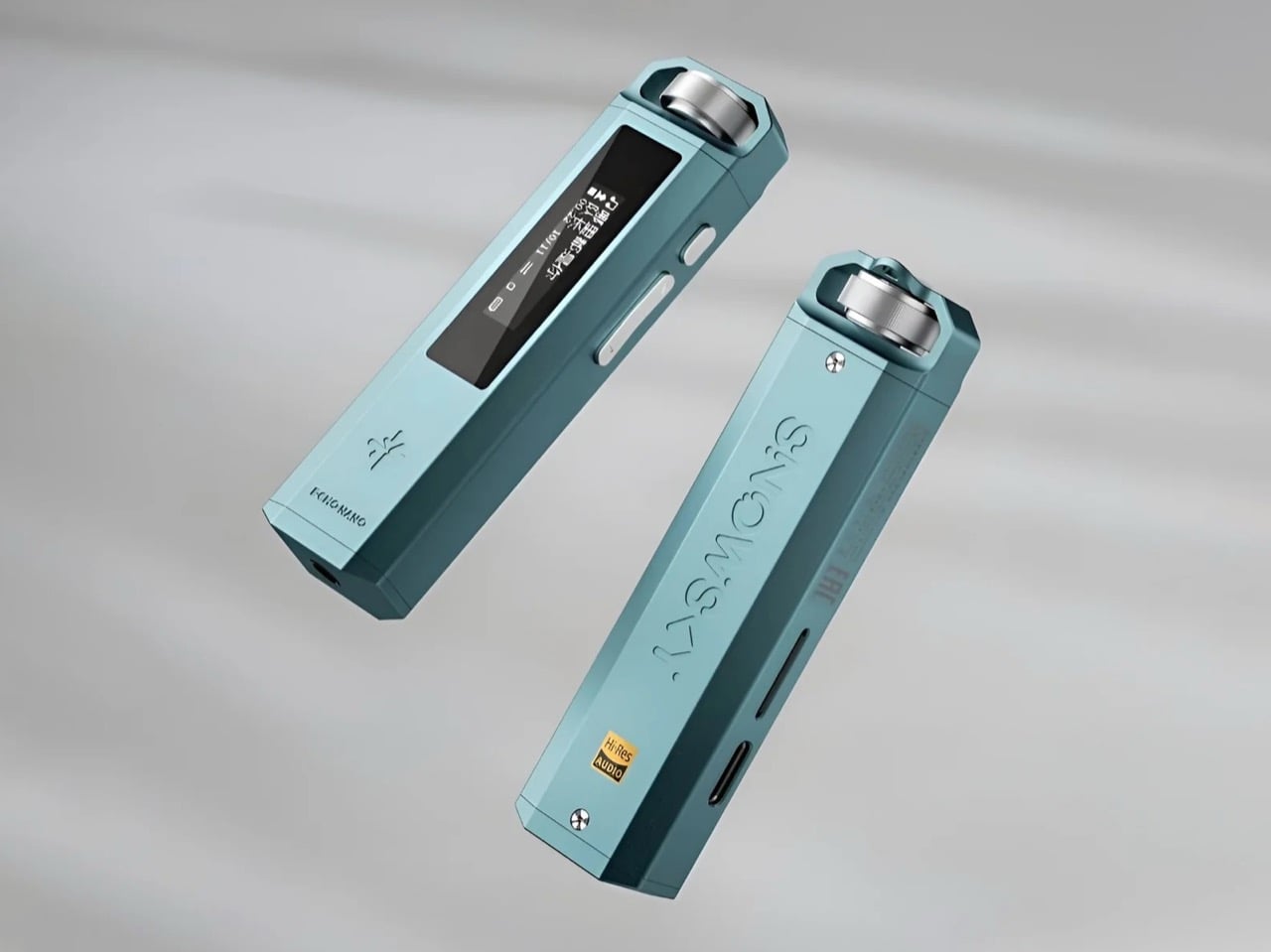
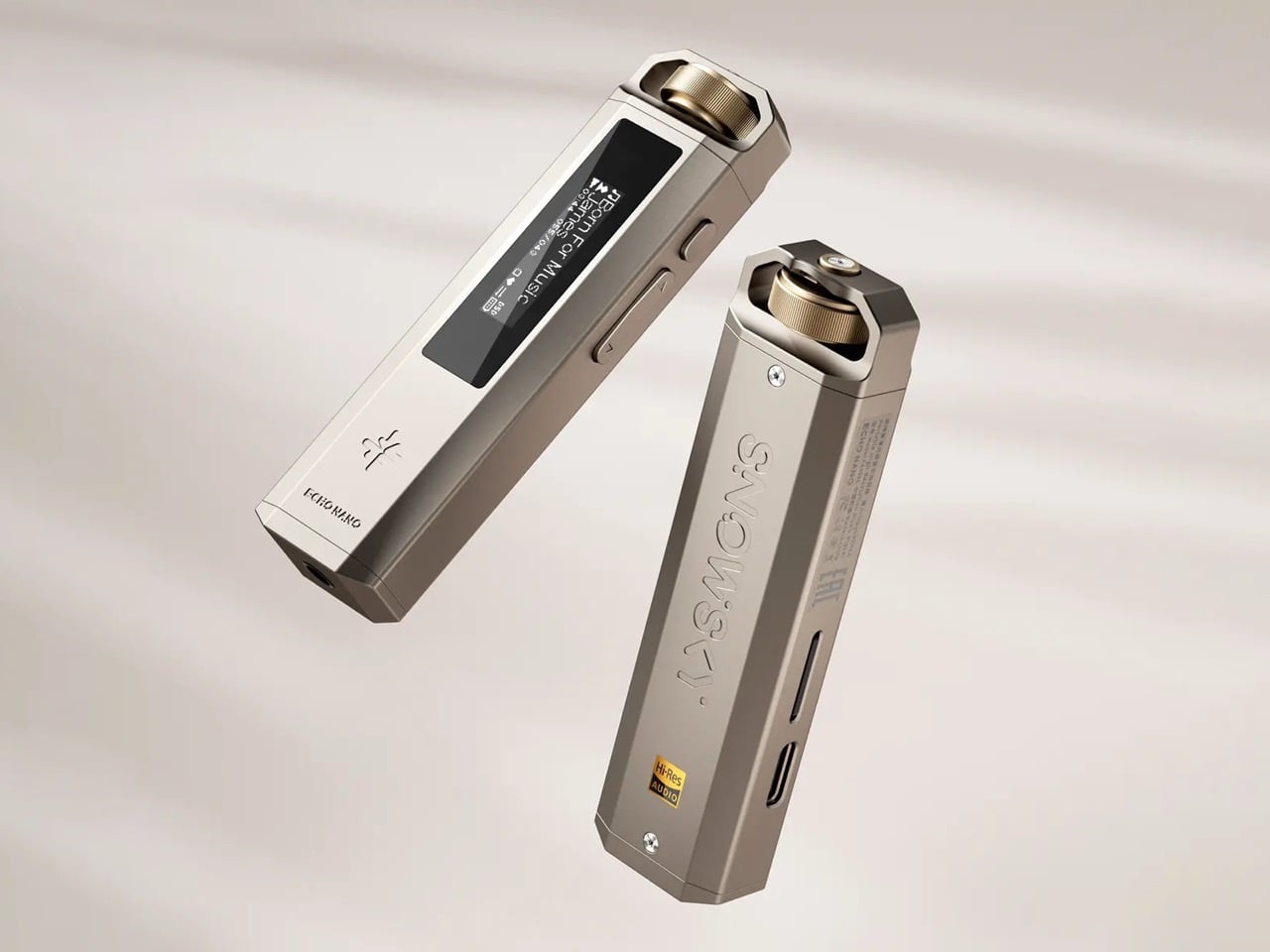
Everyone will call this an iPod, which is kind of understandable and also kind of wrong. The proportions are a vertical stick with a hexagonal cross section and a lanyard bracket built into the top like a tiny roll cage, which is Sony Network Walkman DNA rather than Cupertino’s. Apple built a rectangle for your palm, Sony built something you wore around your neck, and FiiO clearly went shopping in the second closet. The knurled anodized dial handles power, volume, screen, and playback with one thumb, sitting as the only piece of jewelry on an otherwise stern slab of CNC’d aluminum-magnesium alloy. Visible screws at both ends read as a small political statement about whether objects should open. Seven colorways, including a coral and a teal, are the one honest Apple quotation, straight off the iPod Mini.

The 360mAh battery delivers around seven hours, and Reddit’s verdict on that figure has been a collective ‘meh’. Seven hours covers a commute and a workday rather than a weekend, and you will top it up more often than something this small should demand. Weigh that against $49.99 and what the money actually buys, because Spotify and Apple Music run roughly $12 a month, which is $144 a year, indefinitely, for a library you never own. An independent CS43131 DAC, DSD256 hardware decoding, and a dedicated audio-grade crystal oscillator would have meant flagship spending half a decade ago. Storage climbs to 256GB via microSD, and there’s a 3.5mm jack, which at this point qualifies as hospitality.

A used iPod Classic on eBay runs about eighty dollars for a fifteen-year-old machine with a spinning hard drive and a battery on its farewell tour, with higher-capacity units sailing past $150. The Echo Nano costs less, arrives new, charges over USB-C, and does the same single job with better silicon. It also works as a USB DAC for your phone or laptop, a funny hedge for a device sold on escaping your phone, and probably an accurate read of how anyone actually lives. Nobody is abandoning the smartphone. They’re carving out one protected activity and building a small aluminum fence around it, and fifty dollars is exactly the right price for a fence you’re allowed to walk away from.

Click Here to Buy Now

The post Gen Z Is Buying Old iPods to Quit Spotify. Fiio’s $50 Hi-Fi MP3 Player Does It Better. first appeared on Yanko Design.

LEGO built a working Donkey Kong arcade game that lets you throw barrels at Super Mario

In 1982, Universal Studios looked at Donkey Kong, saw King Kong, and sent lawyers. Standard shakedown stuff, and most companies would have folded and paid up. Nintendo’s counsel Howard Lincoln did some digging instead and found that Universal had previously argued in court that King Kong was public domain, because it suited them at the time. The judge was not amused. Nintendo won, collected damages, and Lincoln eventually ended up running Nintendo of America. A cartoon ape throwing barrels down some girders survived a copyright fight against a Hollywood studio and helped bankroll a company that now sells more hardware than most of Hollywood sells tickets.

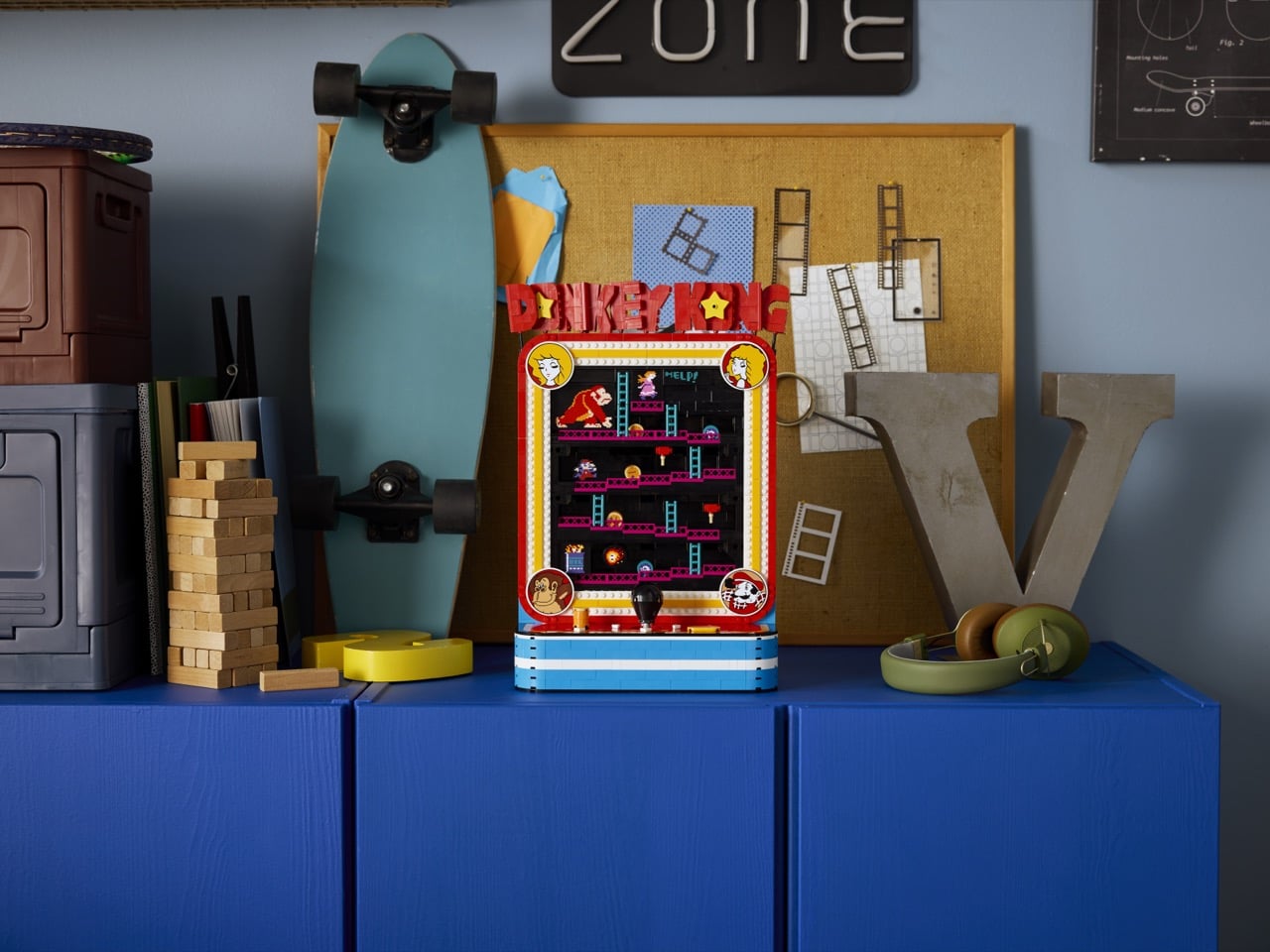
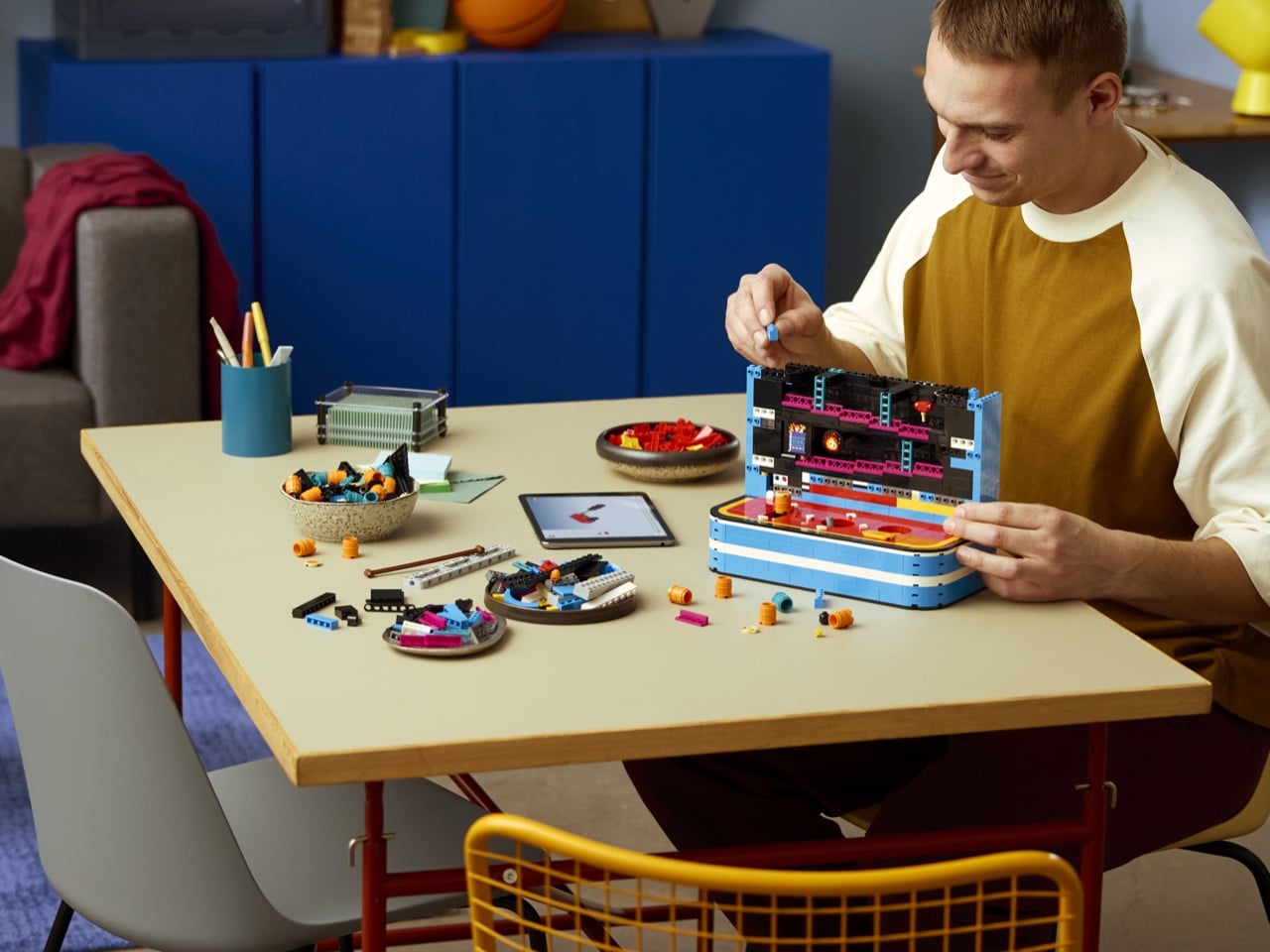
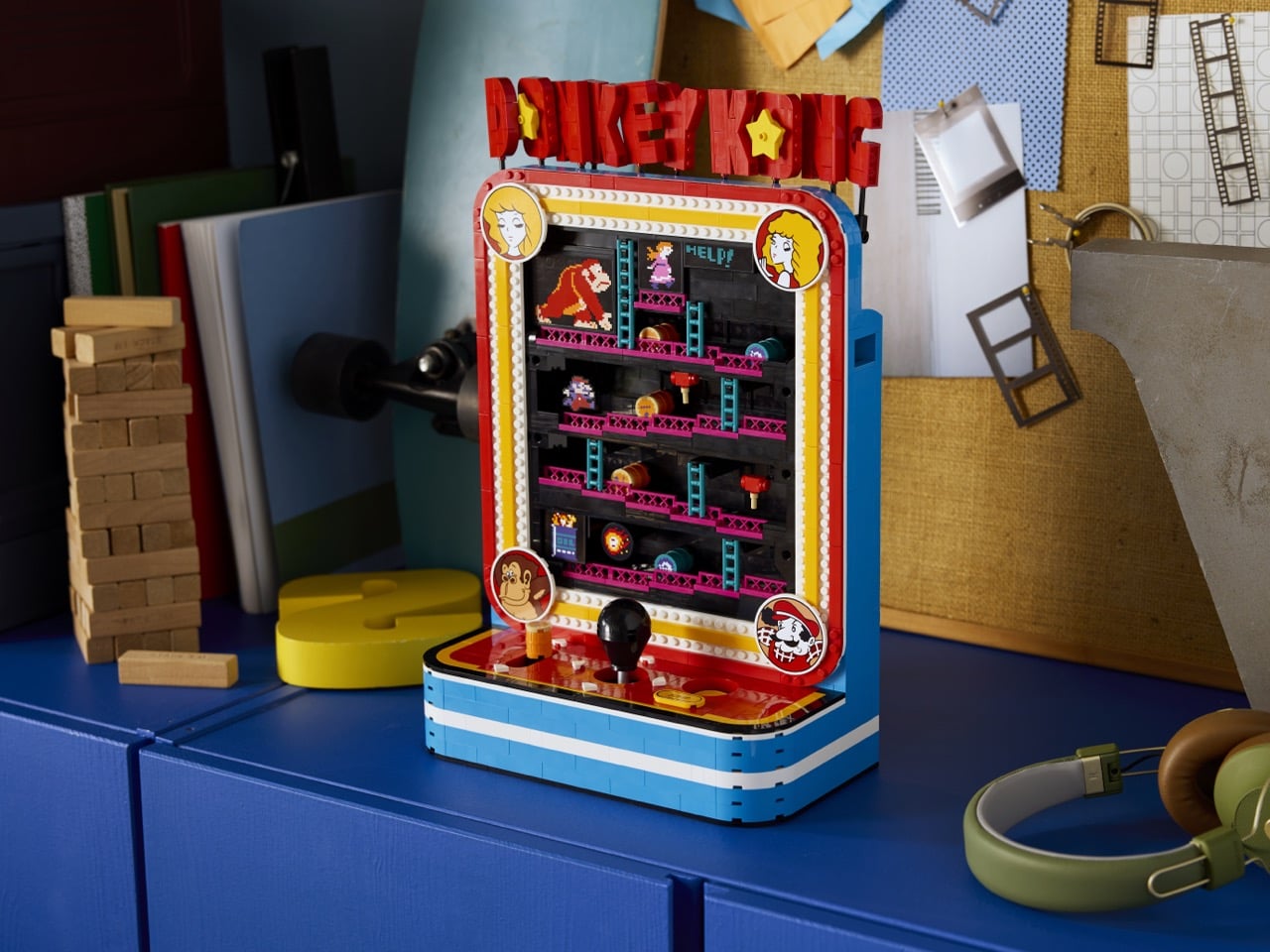
That ape finally gets his LEGO moment with the Donkey Kong Arcade (72051), a 1,367-piece brick cabinet standing 39 cm tall, 27 cm wide, and 15 cm deep. It’s slightly strange that LEGO got to the NES, a Pac-Man cabinet, and a pinball table before touching the game that saved Nintendo from a warehouse full of unsold Radar Scope machines, but here we are. Pull the lever and one of 21 barrels drops into play, rolls down the girders, and loops back around underneath for another run. No motors, no app, no sound. Purely mechanical, in the best possible way.

Designer: LEGO

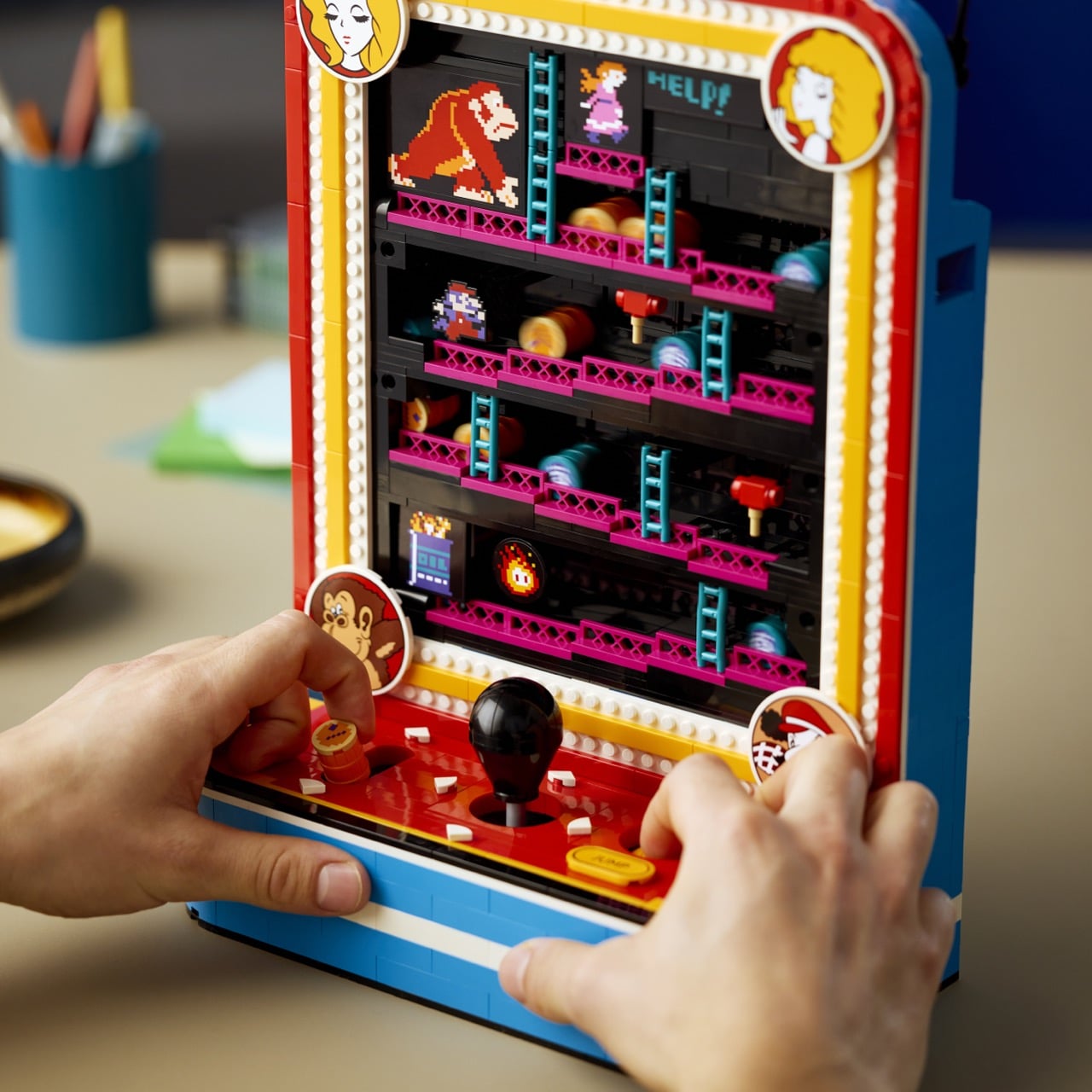
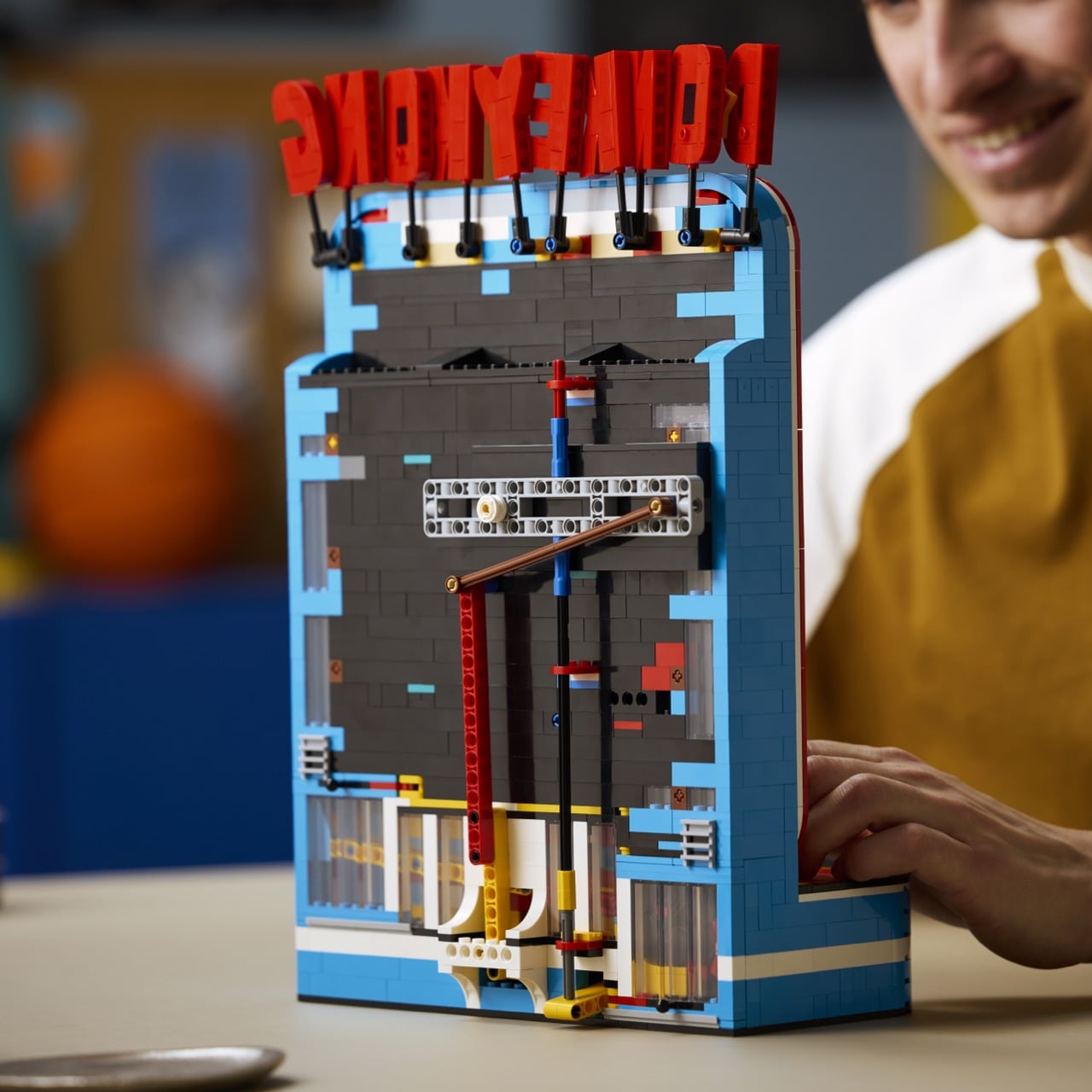
The screen is the showpiece and it’s built as flat pixel art, something that rectangularLEGO bricks do pretty well. Donkey Kong himself occupies the top left in that unmistakable stack of red-brown studs, Lady stands on the highest girder next to a tiled HELP! sign, and Jumpman sits a few floors below in his blue and red. The girders are magenta, the ladders are teal, and the hammers sit waiting on their little pedestals exactly where muscle memory expects them. There’s an oil drum with a flame sprouting out of it, four circular character portraits at the corners of the bezel, and a marquee where every letter of DONKEY KONG hangs off its own individual bar element. That last detail is the sort of thing you only notice from behind, and it’s a lovely bit of overengineering for what is essentially a sign.

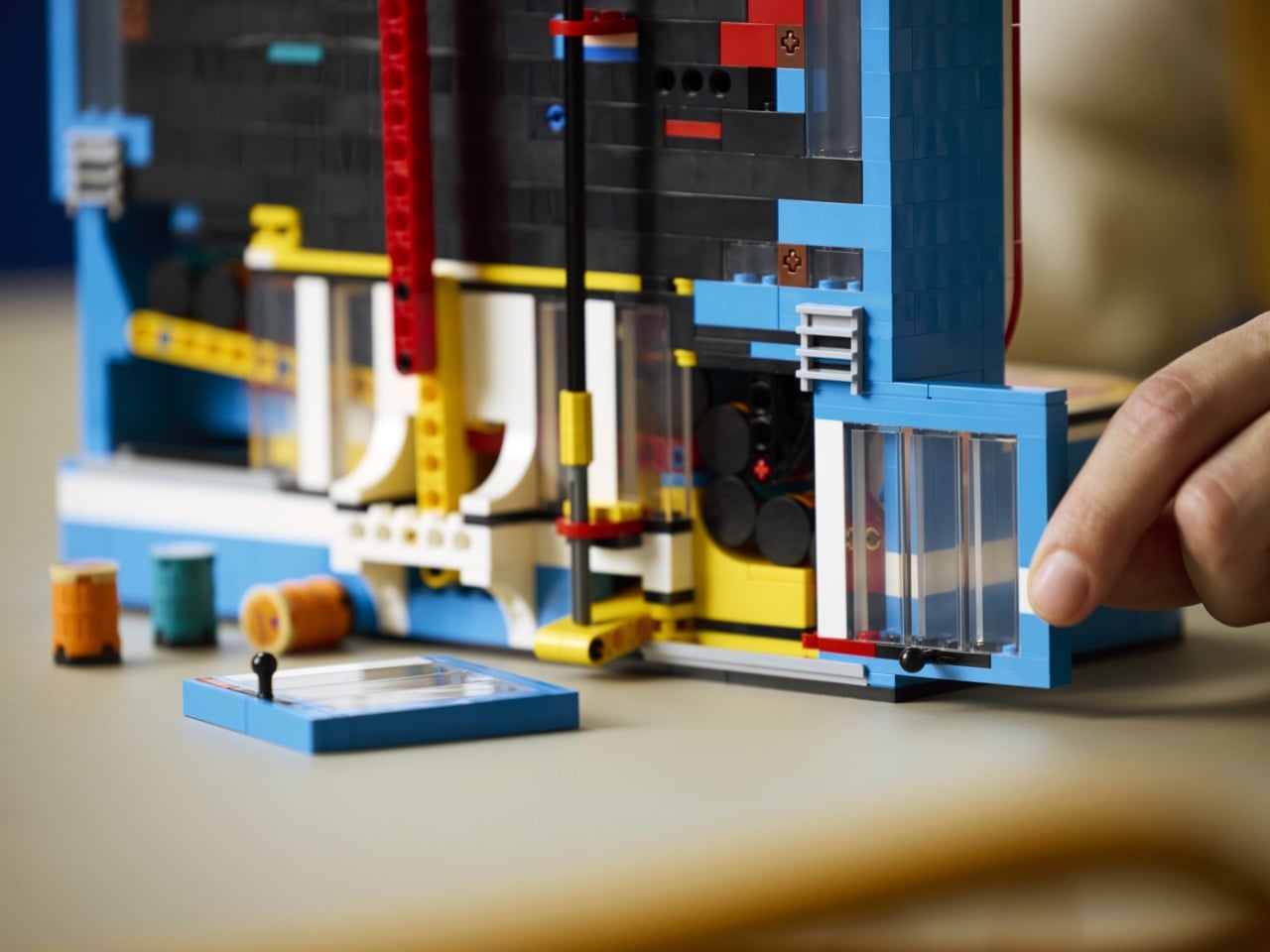
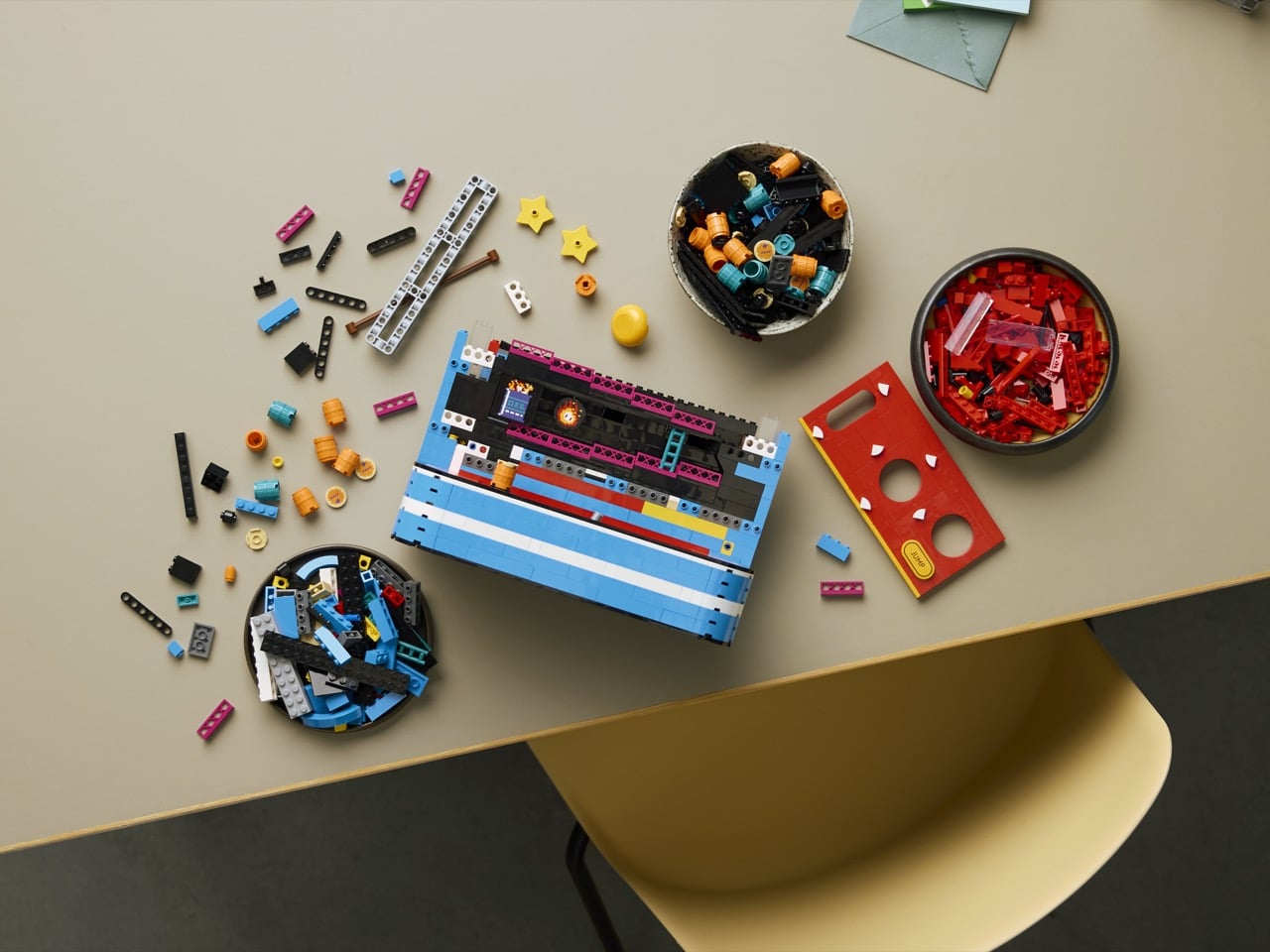
LEGO left the back completely open, which I personally love. Flip the cabinet around and you get the whole mechanism laid bare: Technic linkages, axles, a long lever arm running the height of the build, and transparent chutes at the base where the barrels queue up for their return trip. It reads like an open watch movement, and it does the thing good mechanical design always does, which is make you understand how it works just by looking at it. You load barrels into a slot on the control deck, the lever meters them out one at a time, gravity handles the rest, and the loop feeds them back. For a set that could easily have been a static wall piece, somebody in Billund clearly fought to keep it playable.

The controls are real controls too. The joystick shifts Jumpman along his girder and the yellow button makes him hop, which means you can genuinely attempt to dodge a barrel and genuinely fail. Purists will note that the cabinet itself is boxier than the 1981 original, with a flat screen where the real thing had a curved CRT and an angled control panel, so don’t expect a scale-accurate replica of the machine that ate your quarters. It’s an interpretation, and the blue and white striped base sells it well enough.

Worth flagging that this lands under LEGO Super Mario rather than Icons, where the Pac-Man cabinet and the Pinball Machine both live. Small thing, but it tells you LEGO is treating Donkey Kong as Mario canon rather than arcade history, which is arguably backwards given who came first.

The Donkey Kong Arcade (72051) is up for pre-order at $199.99 with shipping from August 1, limited to three per household, and it nets you 1,300 LEGO Insiders points if you’re collecting those. LEGO’s own product page can’t decide whether it’s 1,367 or 1,371 pieces, so pick whichever number you prefer at parties. The one thing missing is sound. Give me a brick-built clicker that fires off that opening stomp, or even just a light behind the marquee, and this goes from very good to genuinely unbeatable.

The post LEGO built a working Donkey Kong arcade game that lets you throw barrels at Super Mario first appeared on Yanko Design.

Escape’s eBoho Go Proves You Don’t Need Much Space to Live Well

There’s a certain kind of freedom that comes with owning less. Escape’s eBoho Go leans into that idea with zero apology — a 16-foot, all-electric tiny home that packs a kitchen, bathroom, queen bed, and a surprising amount of breathing room into just 152 square feet. It starts at $39,440, and a production unit is currently available for $45,440. For context, that’s less than some high-end camping trailers, and considerably more livable than any of them.

The eBoho Go rides on a single-axle trailer, making it one of the more portable tiny homes on the market. Escape clads the exterior in engineered wood siding and wraps it in large glazed panels that pull daylight deep into the interior. From outside, it reads as the smaller sibling of Escape’s premium N2 model — the same clean design language, just distilled down to its essentials. An all-steel roof caps the structure, giving it an architectural finish that most homes in this price range don’t deliver.

Designer: Escape

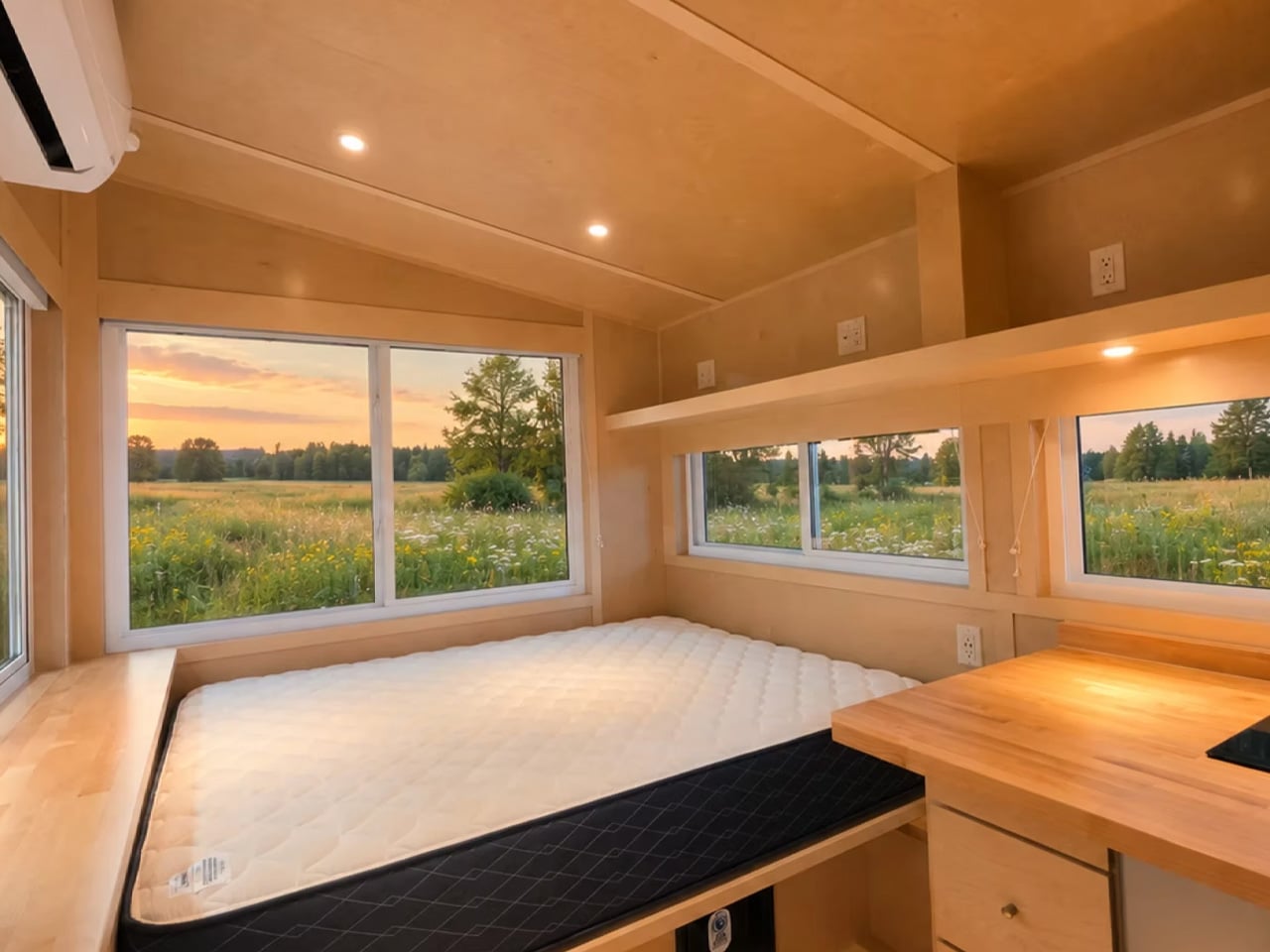
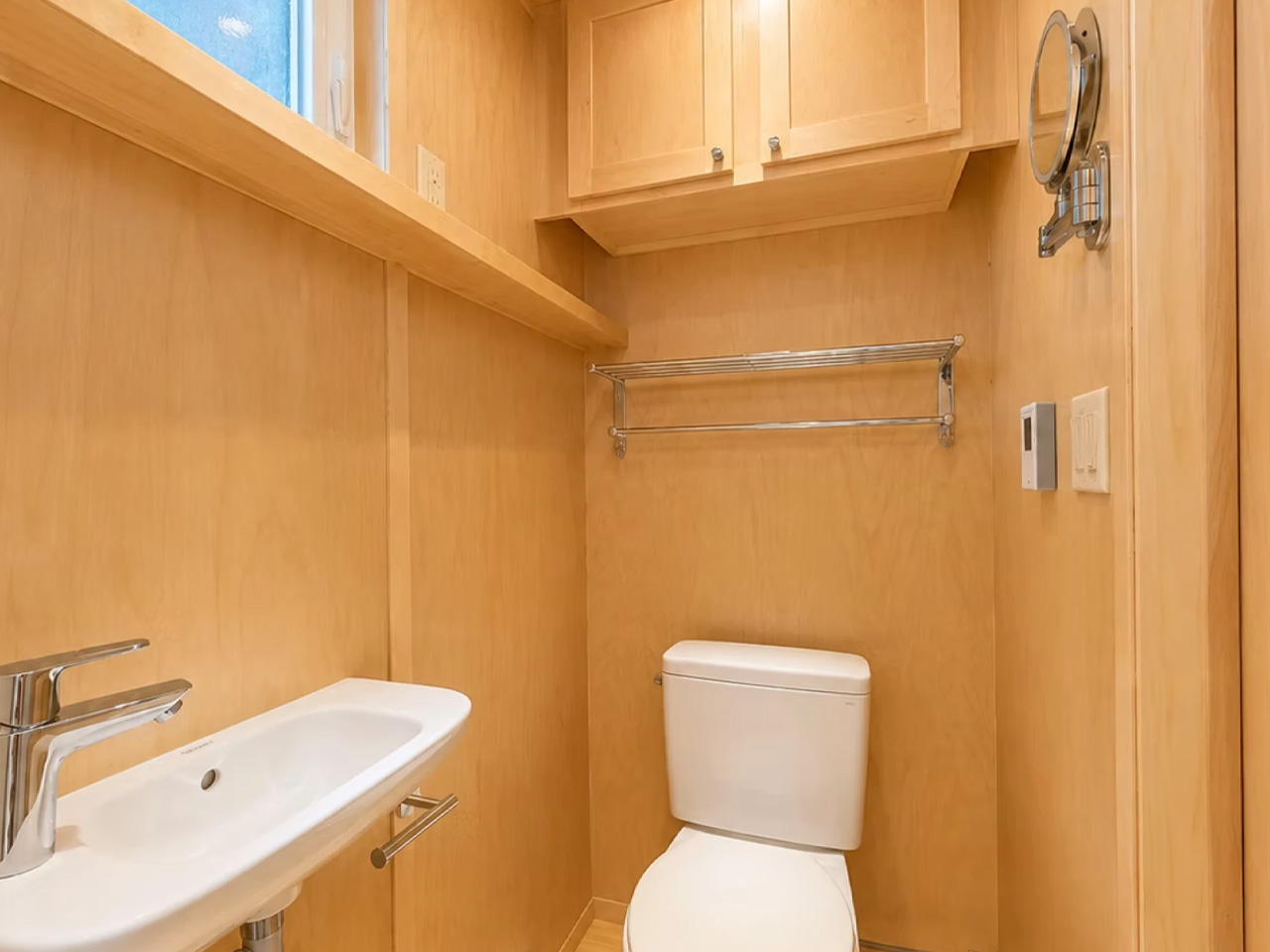
Inside, everything is finished in sealed birch — warm, tactile, and easy to maintain. The layout is a single floor, which is the right call for a home this compact. A dedicated living room would have been a compromise too far. Instead, the sleeping area earns its real estate twice over: the queen-sized bed anchors the space during the night and functions as the primary seating during the day, framed by multiple opening windows and integrated storage underneath and alongside. A mini-split AC unit handles climate control, and it’s more than sufficient for a footprint this size.

The kitchen is compact but complete. An induction cooktop, fridge/freezer, sink, and butcher block countertops sit along one wall, fronted by solid cabinetry. It won’t host dinner parties, but it handles daily life without friction. The bathroom, behind a wooden door, punches above its weight — walk-in shower, flushing toilet, vanity sink, heater, and a towel rack. Storage is tucked in wherever the geometry allows.

What makes the eBoho Go genuinely interesting isn’t just the footprint or the price. It’s that Escape built it as a real production unit — not a concept, not a preorder — powered entirely by electricity. The brand calls the lineup eESCAPE, and the Go is the entry point. As a rental unit, a guest house, or a private office dropped at the edge of a property, it makes a compelling case. Escape delivers nationwide, with costs depending on location.

At 152 square feet, it won’t suit everyone. But for those who’ve been waiting for a well-designed, genuinely affordable entry into the tiny home space, the eBoho Go might be the most honest answer yet.

The post Escape’s eBoho Go Proves You Don’t Need Much Space to Live Well first appeared on Yanko Design.

This Tea Takeaway Cup Fixes The Bitter Oversteeped Tea Problem Beautifully

Most people who drink tea on the go will admit, at some point, that they’ve committed the great tea crime: leaving the bag in too long. You meant to pull it out at three minutes. You got distracted by a notification, a phone call, someone asking you a question mid-sip. By the time you remember, the damage is done.

The cup is now a bitter, tannic situation you’re going to drink anyway because you paid for it and you’re already running late. Designer Elwin Kang clearly understood this particular brand of morning failure, because his concept packaging, Dot to Dot, is essentially a solution built around the most human of habits: forgetting.

Designer: Elwin KANG

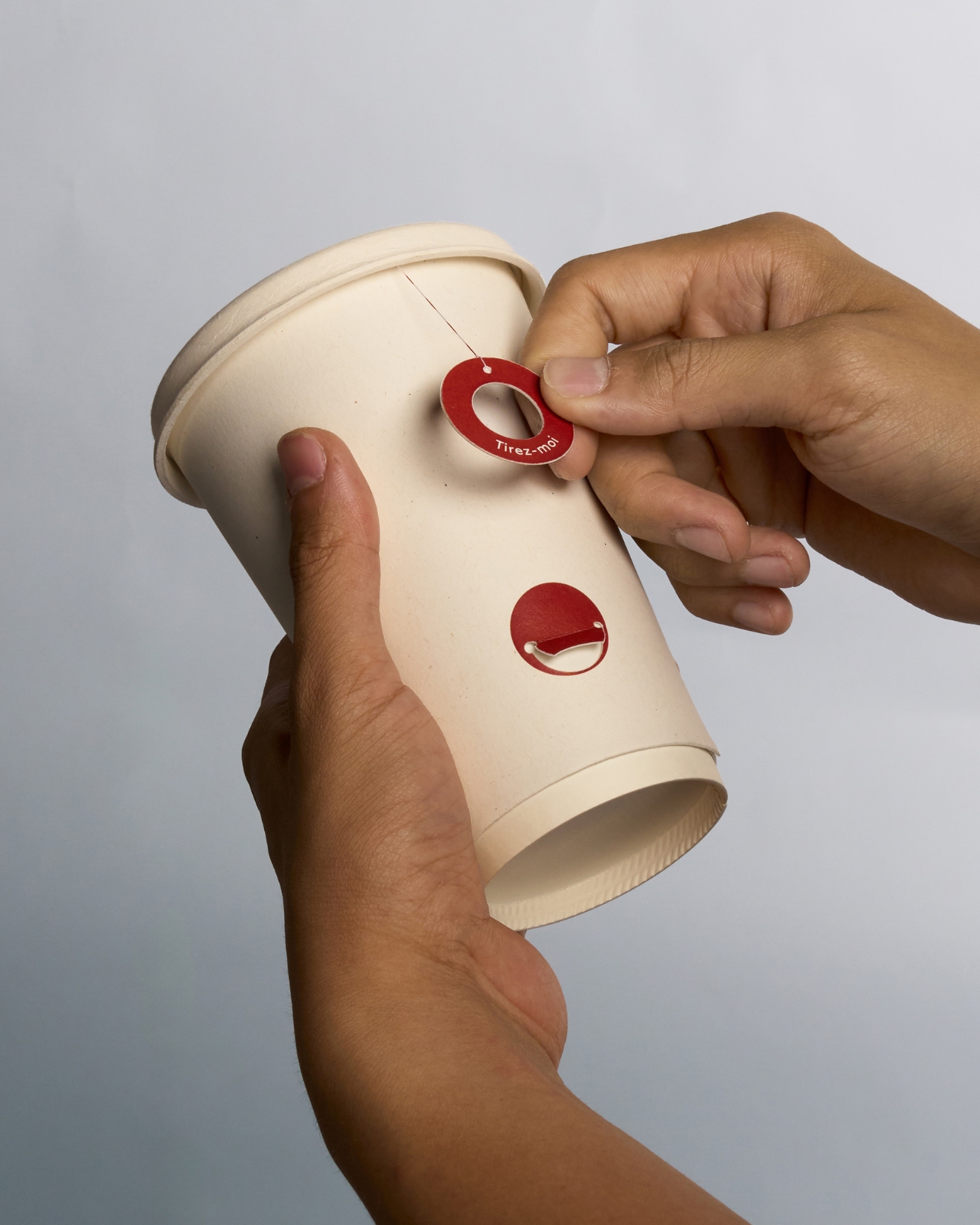
The concept is for a takeaway tea cup that integrates the tea bag, lid, string, and label into a single, choreographed interaction. Before the lid goes on, the barista or café staff writes the recommended finishing time directly onto it by hand. That’s the first clever move. It’s not an app notification or a timer you have to remember to set yourself. It’s just a time, handwritten and staring back at you from the top of the cup, the way a sticky note from a friend might. Hard to ignore. Easy to act on.

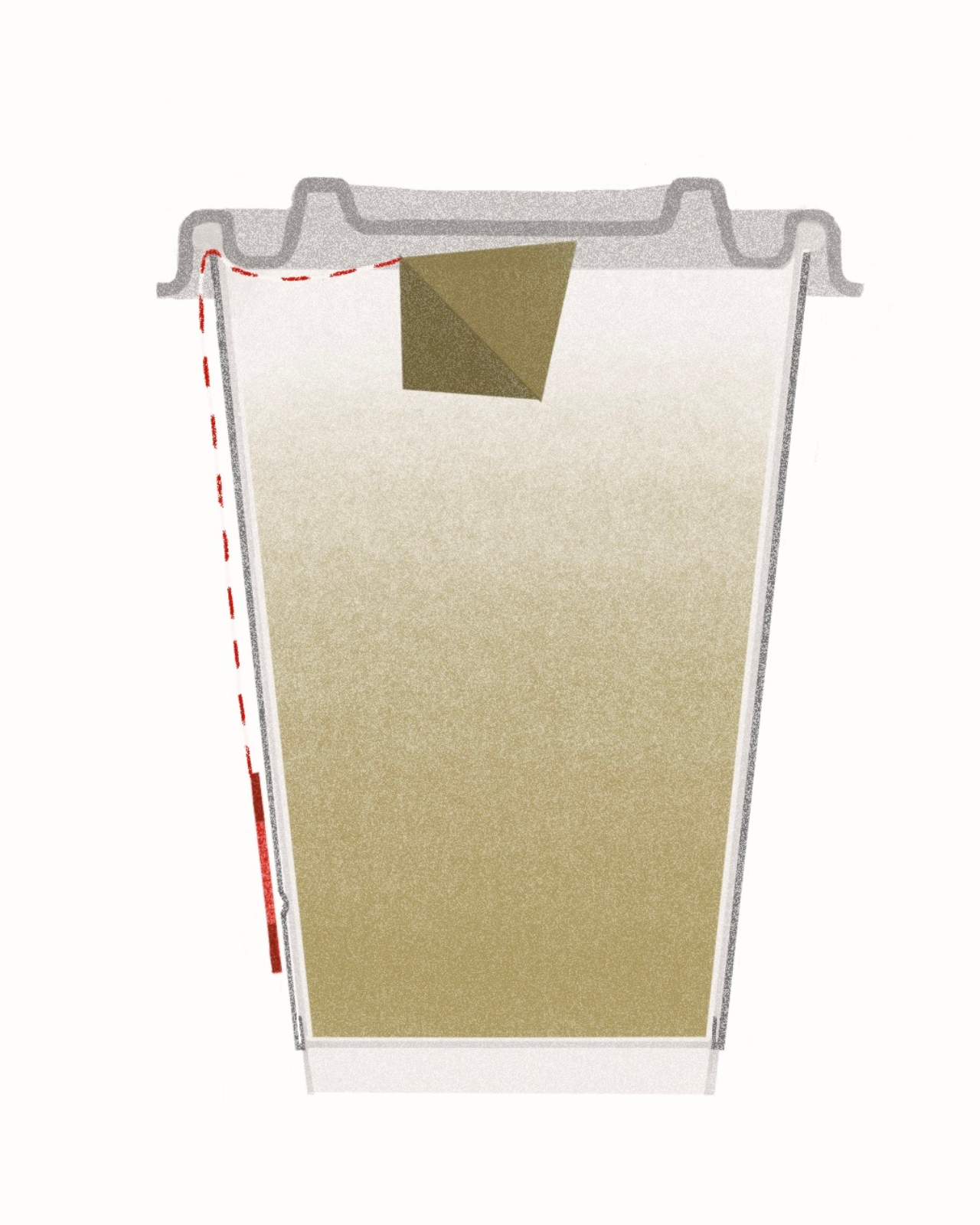
When that time arrives, you pull the circular label downward. The label is red, small, and stamped with a gentle instruction. Pulling it lifts the tea bag out of the water and suspends it just beneath the lid, stopping the infusion without you needing to fish the bag out with your fingers, find a bin, or carry it loose in your hand while you navigate a crosswalk. The used bag stays sealed inside the cup for the entire journey. Contained. Out of the way. Done.
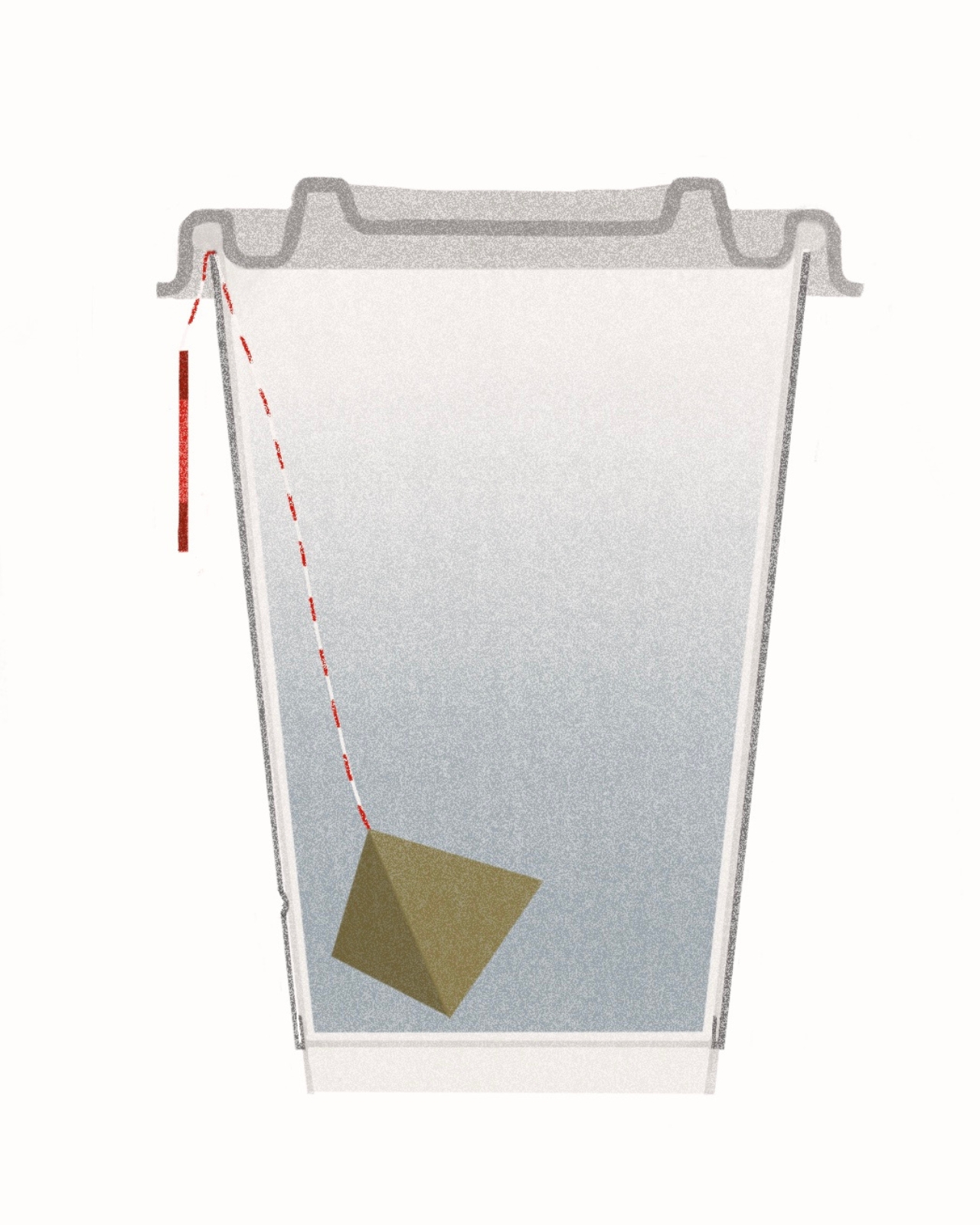
What makes the interaction satisfying, beyond the practical side of things, is the visual logic underneath it. The label is a circle with a hole in the center, like a ring or a small donut. The attachment point on the side of the cup is a solid filled circle. When you press the label onto the attachment point, ring over dot, the two shapes complete each other. A circle becomes whole. Dot to Dot. The name isn’t just clever wordplay; it’s the actual gesture, expressed in form.
That kind of layered meaning is rare in packaging design, which tends to treat function and aesthetics as separate departments. Kang made them the same conversation, and that’s worth pausing on. Most packaging either looks good or works well. This concept does both, without the two qualities cancelling each other out.

I’ll be honest: Dot to Dot hits that particular nerve that good design tends to hit, the sense that the solution was obvious in retrospect but nobody had quite articulated it yet. Over-steeped takeaway tea is such a common, low-stakes frustration that most of us have simply accepted it as an unavoidable condition of the modern commute. Kang treats it as a problem worth solving, which is a design choice in itself. Not every brief begins with a grand crisis. Sometimes it starts with a too-bitter cup of Earl Grey on the way to the office.
There’s also a quieter argument embedded in the concept about slowing down within an otherwise rushed context. You’re still getting your tea to go. You’re still multitasking. But the design builds in a small moment of attention, one pull, one click, one completed circle, that gently asks you to be briefly present with what you’re drinking. That’s a surprisingly generous thing for a disposable cup to offer.

Whether Dot to Dot ever moves from concept to commercial production is another matter entirely, and the distance between a beautiful prototype and an actual supply chain is rarely short. But as a piece of design thinking, it earns its place. It’s specific, it’s human, and it leaves you wondering why every takeaway tea cup hasn’t worked this way all along.

The post This Tea Takeaway Cup Fixes The Bitter Oversteeped Tea Problem Beautifully first appeared on Yanko Design.

LEGO Koenigsegg weighs 480 kg more than the real car and hits 70mph

Three hundred twenty-seven thousand, nine hundred and six pieces. Every single one placed by a human hand, pressed into position by a human thumb, across 391 days and more than 9,400 hours of work. No robots, no automated assembly, no laser guided anything. Just people in a room in Denmark, snapping plastic together for over a year.

Here’s the part that should get your attention: they developed this exactly like a real car. Not “we glued bricks to a go-kart and hoped.” They ran it through aero stability testing to confirm the plastic skin would stay attached at speed, which matters a lot when your body panels are held on by nothing but clutch power. They loaded the suspension. They tested brakes. Things failed, because 327,906 individual connections give you a lot of places to fail, and each time the crew dragged it back, hunted down the weak point, reinforced it, and went out for another run. Trial and error, the oldest engineering method there is, applied to a toy. What came out the far end of that process was a LEGO car that will do 70 mph, which is a sentence I did not expect to write today.

Designer: The LEGO Group

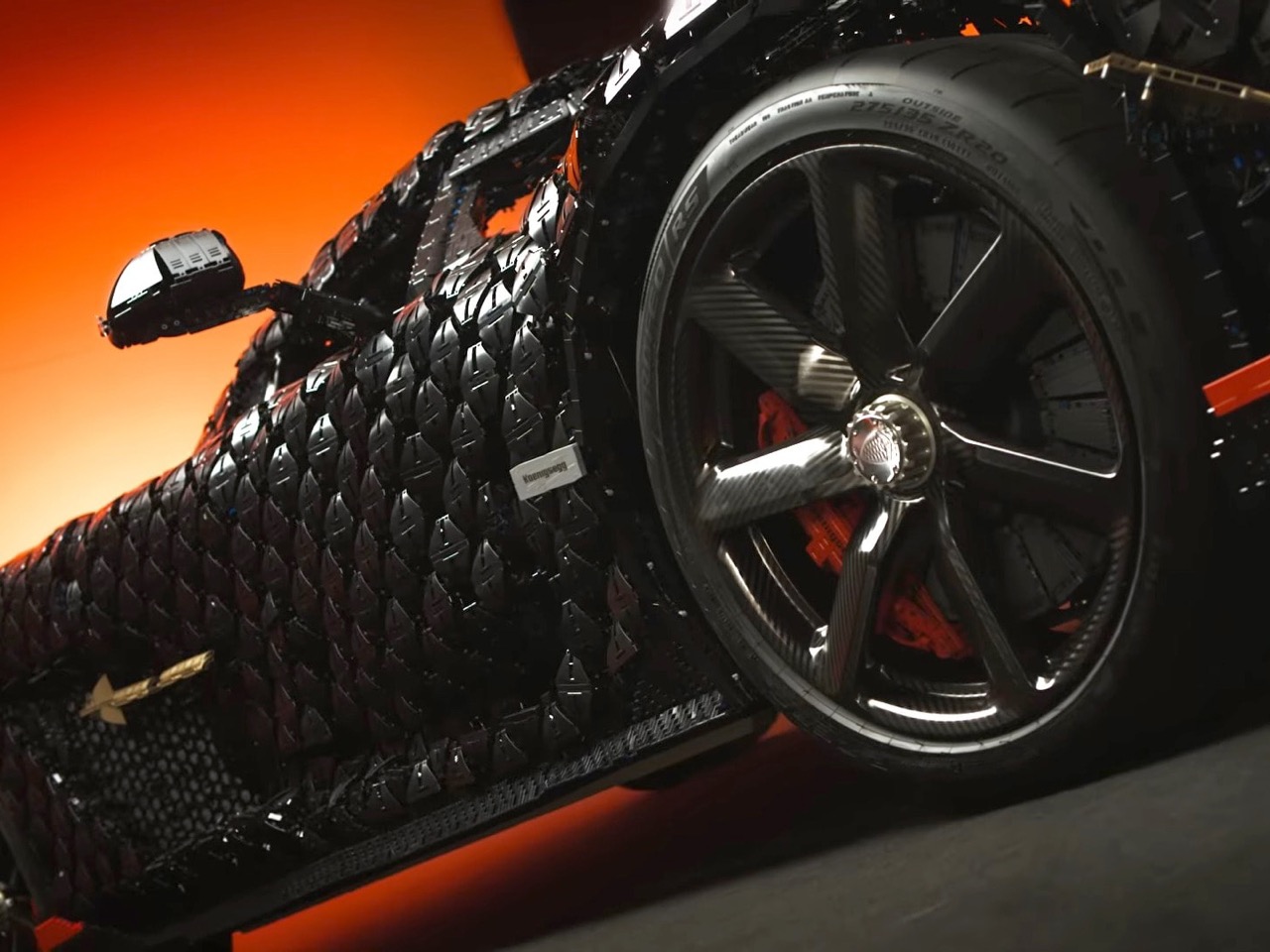
Thousands of small angular panels overlap in shingled rows across the nose, fenders and flanks, like scales on a very expensive fish, each one tilted slightly relative to its neighbor. A Koenigsegg’s surfacing is all compound curvature, the kind of double-bent carbon fiber that LEGO’s rectilinear system has no vocabulary for, so the team approximated it through faceted repetition instead. Step back and the eye reads a continuous curve. Step in and you can see the staircase. It’s the same trick LEGO’s sculpture teams use on large brick-built figures, and the only honest way to render an organic form in a system built on right angles.

Press one button on a Regera and the doors, front hood and rear clamshell all swing open at once, hydraulically, in perfect sync. Koenigsegg calls it Ghost Mode, and it exists for no reason beyond showing off the engineering underneath. The LEGO car does the same thing, automated, on 1,800 kilograms of plastic, with the dihedral synchro-helix doors rotating up and outward while the rear clam lifts behind them. That mass figure is the joke of the entire project. Christian von Koenigsegg built his reputation on drilling holes in bolts to save grams, and the real Sadair’s Spear comes in at 1,320 kg dry. The replica outweighs it by 480 kg, of which 400 kg is Technic elements alone. He engineered a 1,625-horsepower hypercar lighter than its own toy.

Markus Lundh ran the real Sadair’s Spear up the Goodwood hill in 47.14 seconds in July 2025 for a record that still stands, so LEGO handed him the brick version and pointed him down it instead, threading between the flint walls in the wrong direction. It hit 111 kph, more than double the previous LEGO big build record of 50 kph. Lundh got out and described it as incredibly smooth, said the brakes, steering and suspension all behaved, and admitted it reminded him of driving an actual Koenigsegg. He said this after sitting in an orange and black plastic cabin held together by the same clutch power that betrayed us all when the roof caved in on our childhood spaceships.

The 1:8 scale Technic set arrives at 4,104 pieces as the sixth entry in the Ultimate Car Concept Series, following the Porsche 911 GT3 RS, Bugatti Chiron, Lamborghini Sián, Ferrari Daytona SP3 and McLaren P1. It carries a working V8 piston engine, a nine speed sequential gearbox with a rotating gear indicator disc, Triplex suspension front and rear, and a manual Ghost Mode that raises the clam, doors and hood together. Twenty years of Technic supercar sets have been building toward this level of mechanical honesty. Watch your step in the pits, though. A stray piece from this one would be a nightmare to step on.

The post LEGO Koenigsegg weighs 480 kg more than the real car and hits 70mph first appeared on Yanko Design.