Top 10 Automotive-Inspired LEGO Builds That Will Have Automobile + LEGO Aficionados Drooling

Building LEGOs was something I loved as a child. I could spend hours putting together intricate and mesmerizing LEGO builds, that did have the potential to fall apart in mere seconds. However, LEGO is no longer simply considered child’s play. Masterbuilders and creators spend days and weeks building precise and astounding LEGO creations that will truly blow your mind away. And, this collection of LEGO designs is dedicated to automotives! We’ve put together a collection of exquisite and finely detailed LEGO builds inspired by cars and bikes. These creations will have motorcar aficionados drooling at the mouth!

1. LEGO Yamaha MT-10 SP
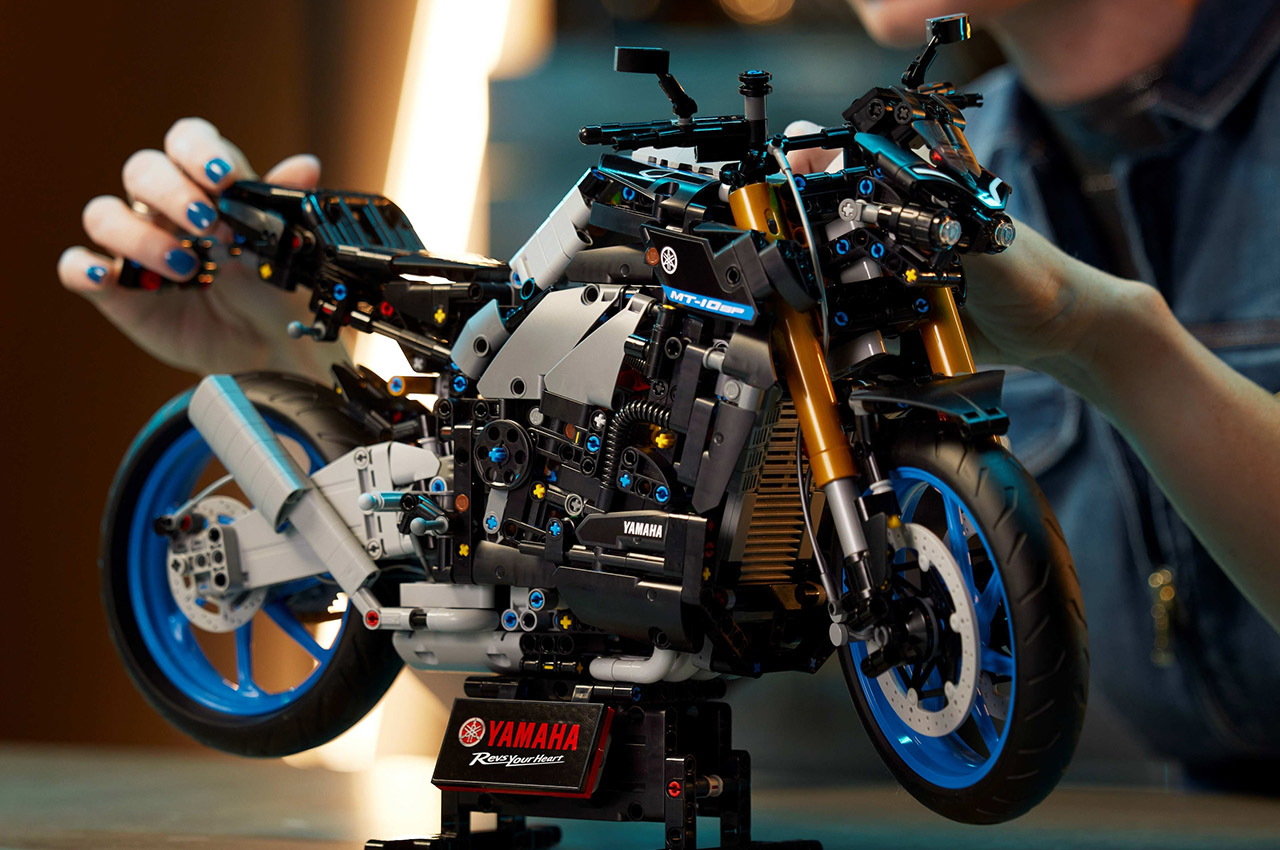
This LEGO Yamaha MT-10 SP is put together with the same attention to detail as all Technic creations usually possess. As you put it together, piece by piece, you are overcome by an extreme sense of satisfaction. It is equipped with realistic function and movement of a chain drive, 3-speed transmission, 4-cylinder engine, working steering, as well as front and rear suspension. These little features are like a cherry on the icing, adding more realism to an already excellent LEGO build.

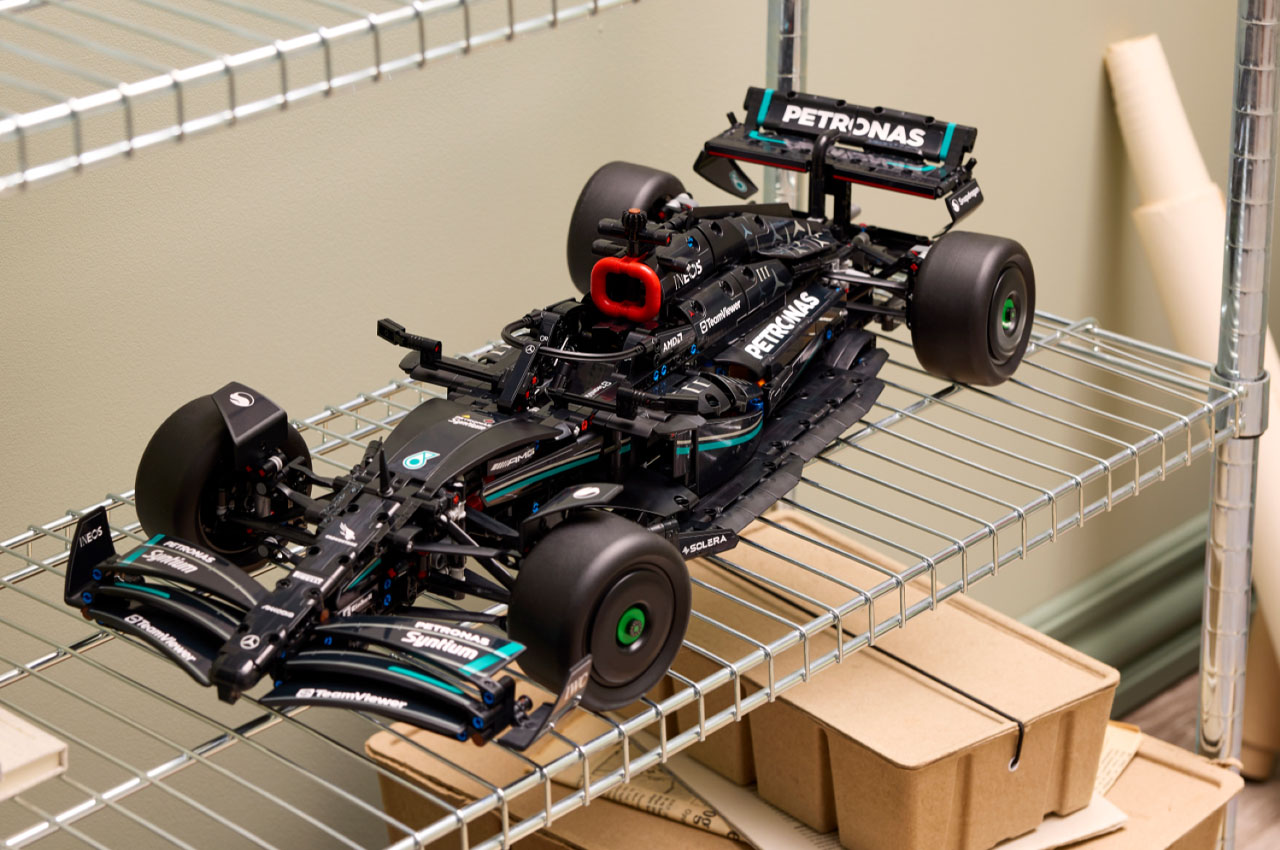
2. LEGO Mercedes-AMG F1 W14 Performance Set

This LEGO Mercedes-AMG F1 W14 Performance Set is the latest addition to LEGO Technic’s collection of motorsports replicas. It is a 1/8 scale model that you can build piece by piece using the 1642 individual LEGO bricks, in turn creating a LEGO build that is 13 cm tall, 63 cm long, and 26 cm wide. It has a stark black color, to ensure the carbon parts don’t get painted, which in turn reduces that tiny amount of weight. The exquisite F1 car is crafted with extreme attention to detail.
3. LEGO Batmobile

TaeYang Lee designed a Batmobile inspired by the movie’s insane rollercoaster plot! He discovered Mecabricks, a LEGO modeling tool, and used it to create this super cool build. Much like the on-screen Batmobile, this mesmerizing creation is also set in a dark gloomy world, which adds layers of depth and darkness to the automotive’s sinister character. It features a matte black color, toughened wheel rims, and a reinforced bumper build for the kill.

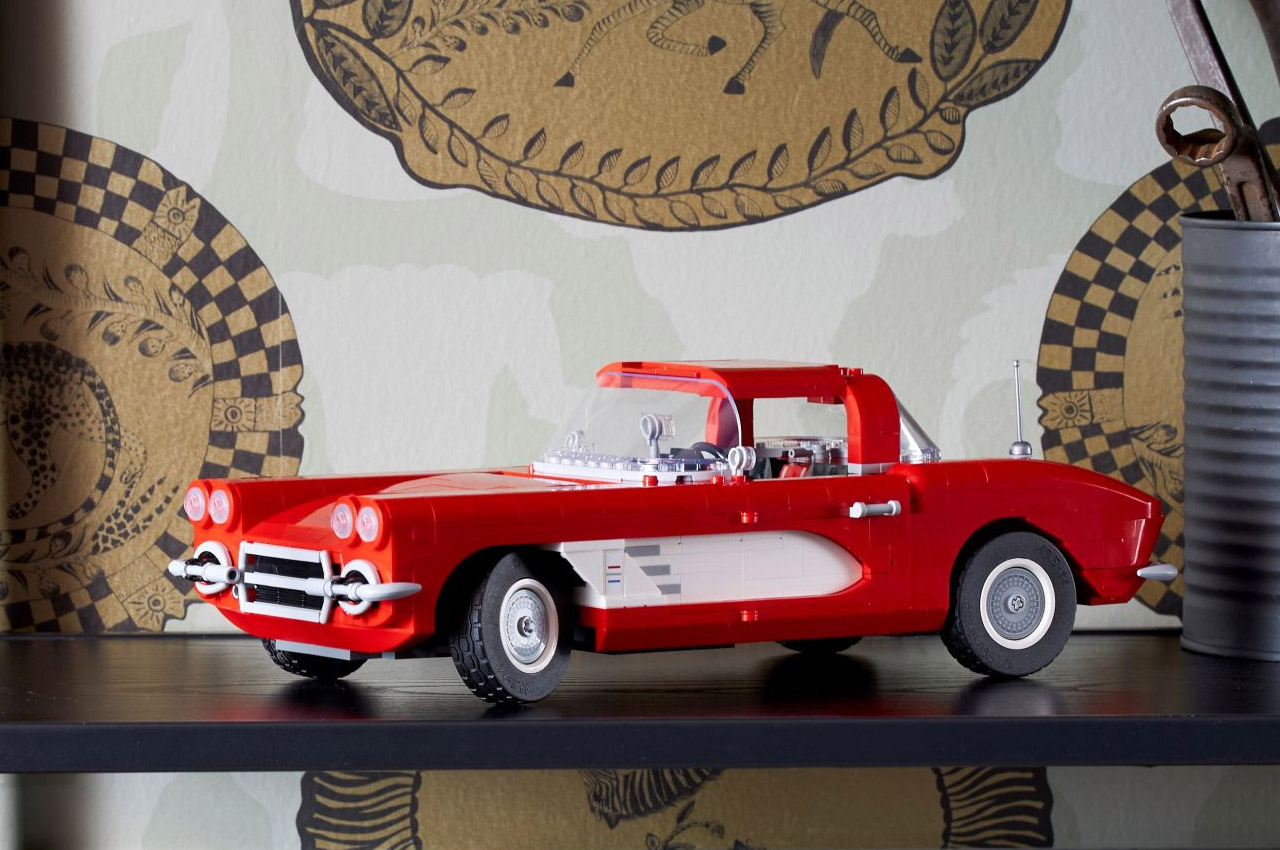
4. 10321 Corvette LEGO Icons Set

This adorable little 10321 Corvette LEGO Icons set pays tribute to the first-ever Vette which rolled out on June 30, 1953. It has a beautiful build accentuated with a bright red exterior, which perfectly displays the original key details of the real version. These little details include the hard or open-top configuration, opening hood, and the truck that accommodates the V8 engine replica with a spinning radiator fan.

5. LEGO McLaren F1 MP4 Ayrton Senna
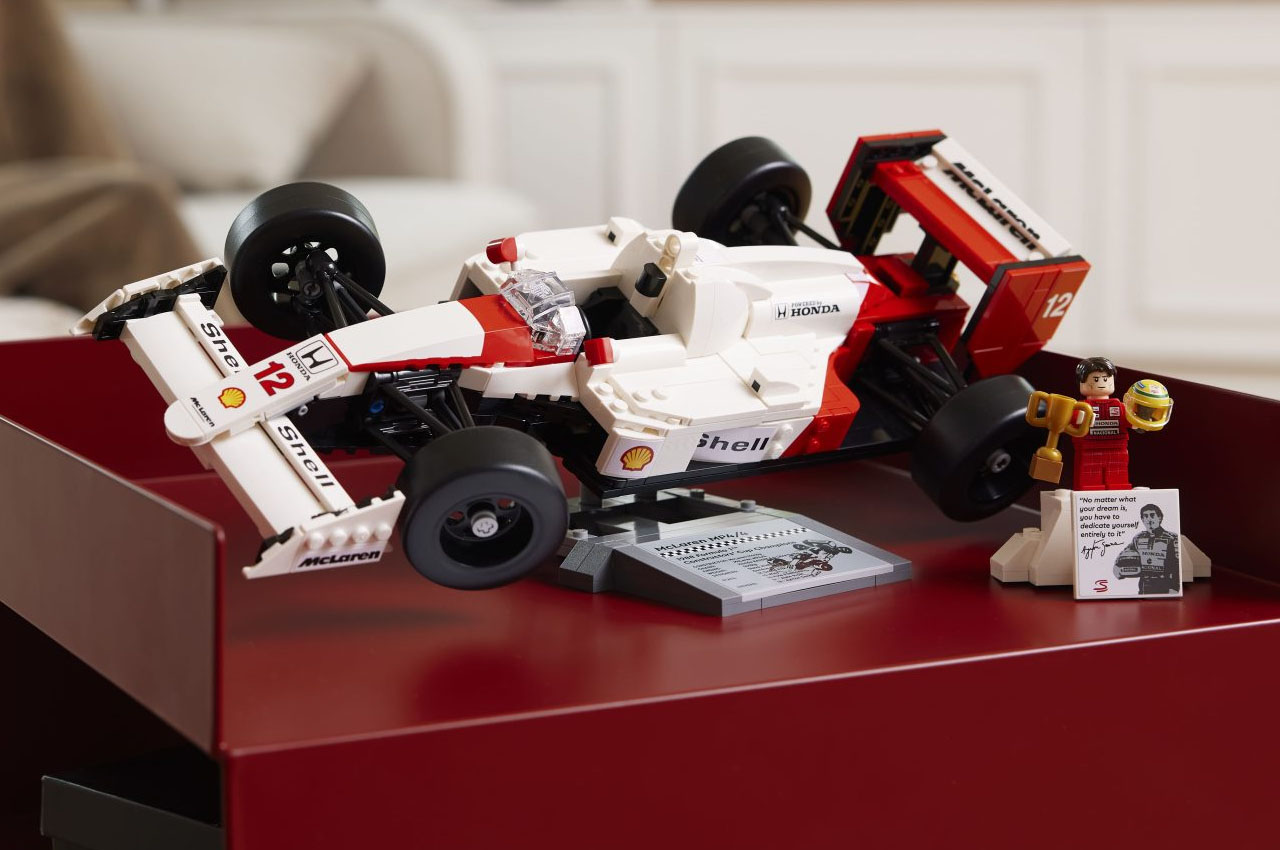
LEGO Speed Champions and Technic lineup added a LEGO build in the form of the McLaren F1 MP4 Ayrton Senna in a beautiful tribute to Ayrton Senna – an undisputed legend of motor racing. This wonderful set includes 693 pieces, and it features a Senna minifigure on a podium, holding the winner’s trophy with a plate engraved with the photo and quote, with the Mclaren next to him in power mode.

6. LEGO Back To The Future Time Machine
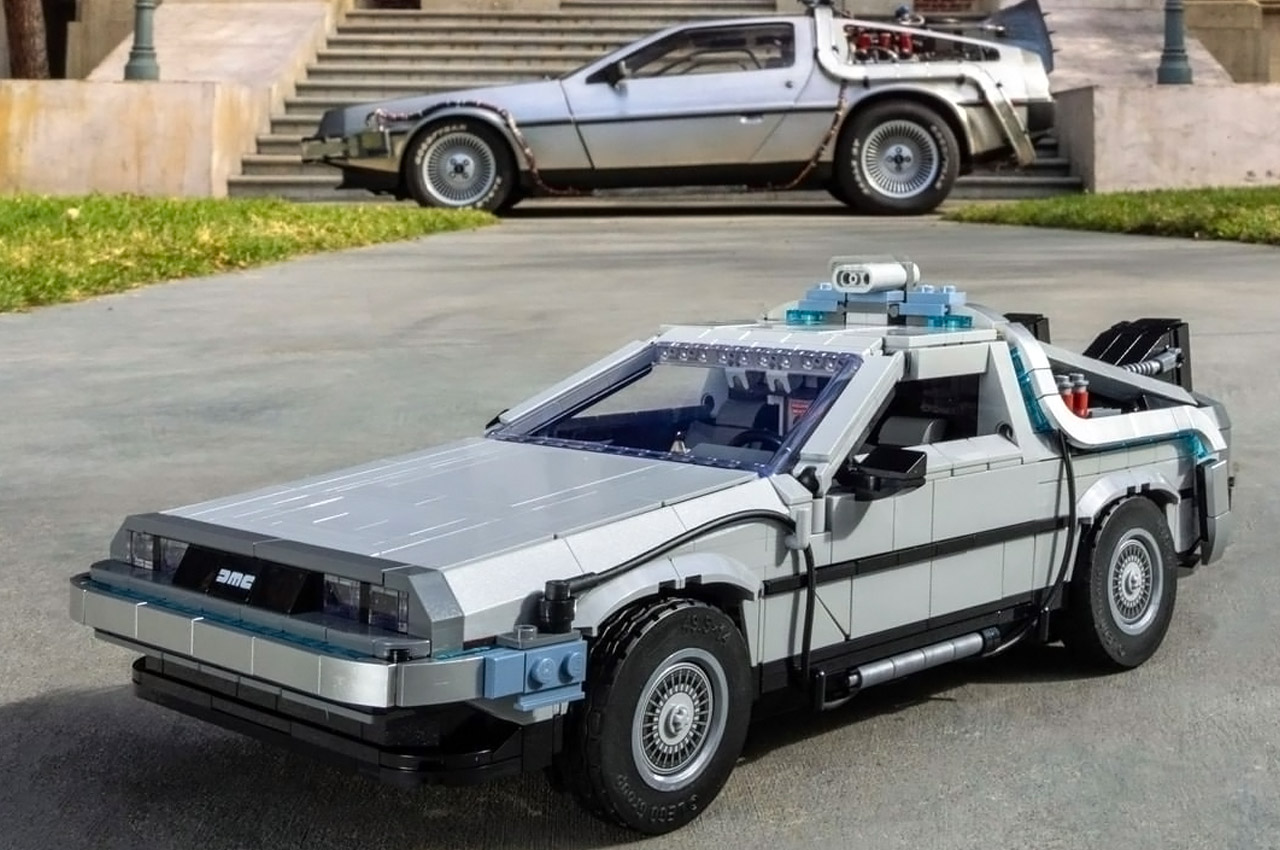
The LEGO Back to the Future Time Machine is improved, detailed, and better than ever! The jazzed-up build features a Flux Capacitor light brick, gull-wing doors, and printed dashboard dates. You can add the different equipment from the different parts of the movie – including the lightning rod from the first film, and the hood-mounted circuit from Part III.

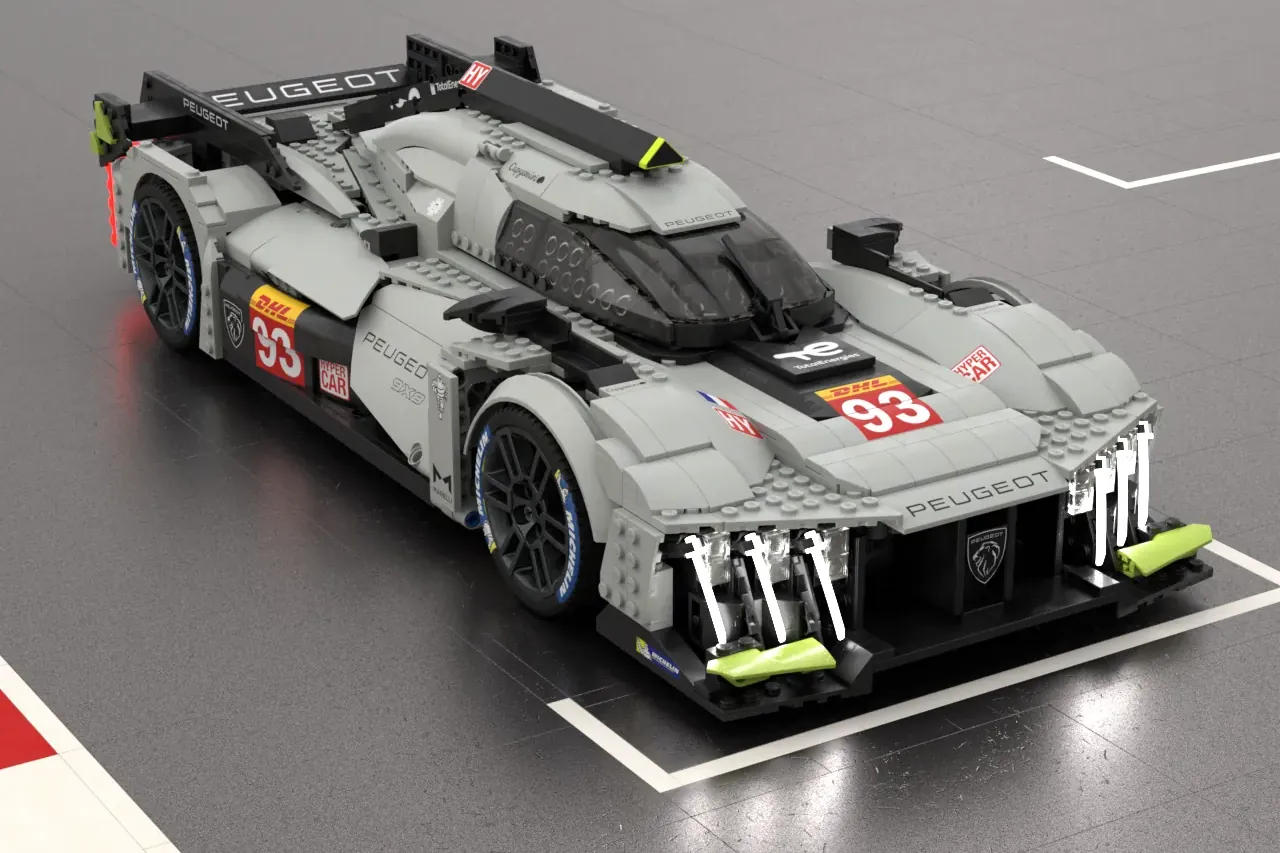
7. LEGO Peugeot 9X8
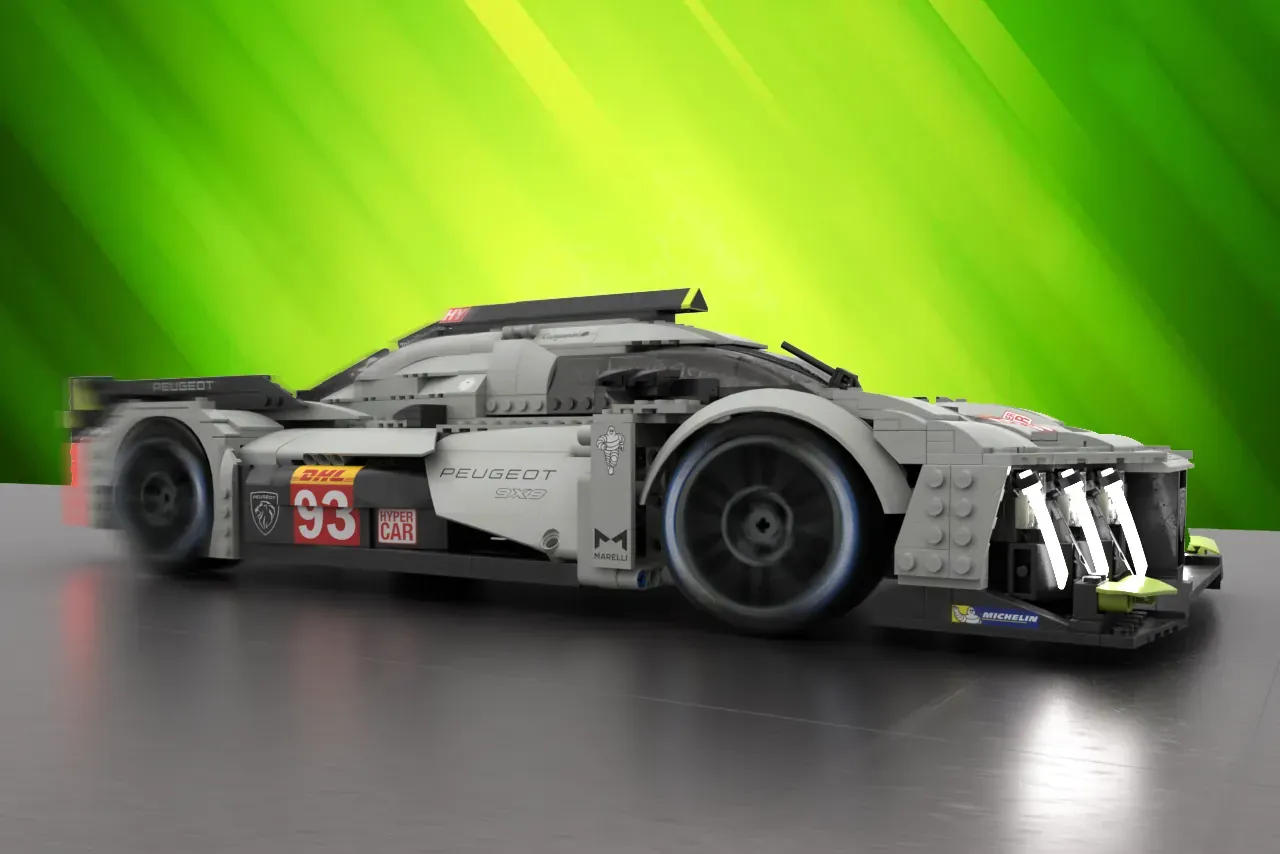
LEGO builder Brick-A-Brac paid tribute to Peugeot’s 9X8, and returned to the FIA World Endurance Championship with his own LEGO build of the 9X8 supercar. The creation is made from 1320 parts, and it measures 20 inches long. It features an extraordinary amount of detail, including all the branded graphics on the car’s body. The build features a sleek design, impressive size, and immense attention to detail, making it a rare GEM that LEGO + car enthusiasts will love!

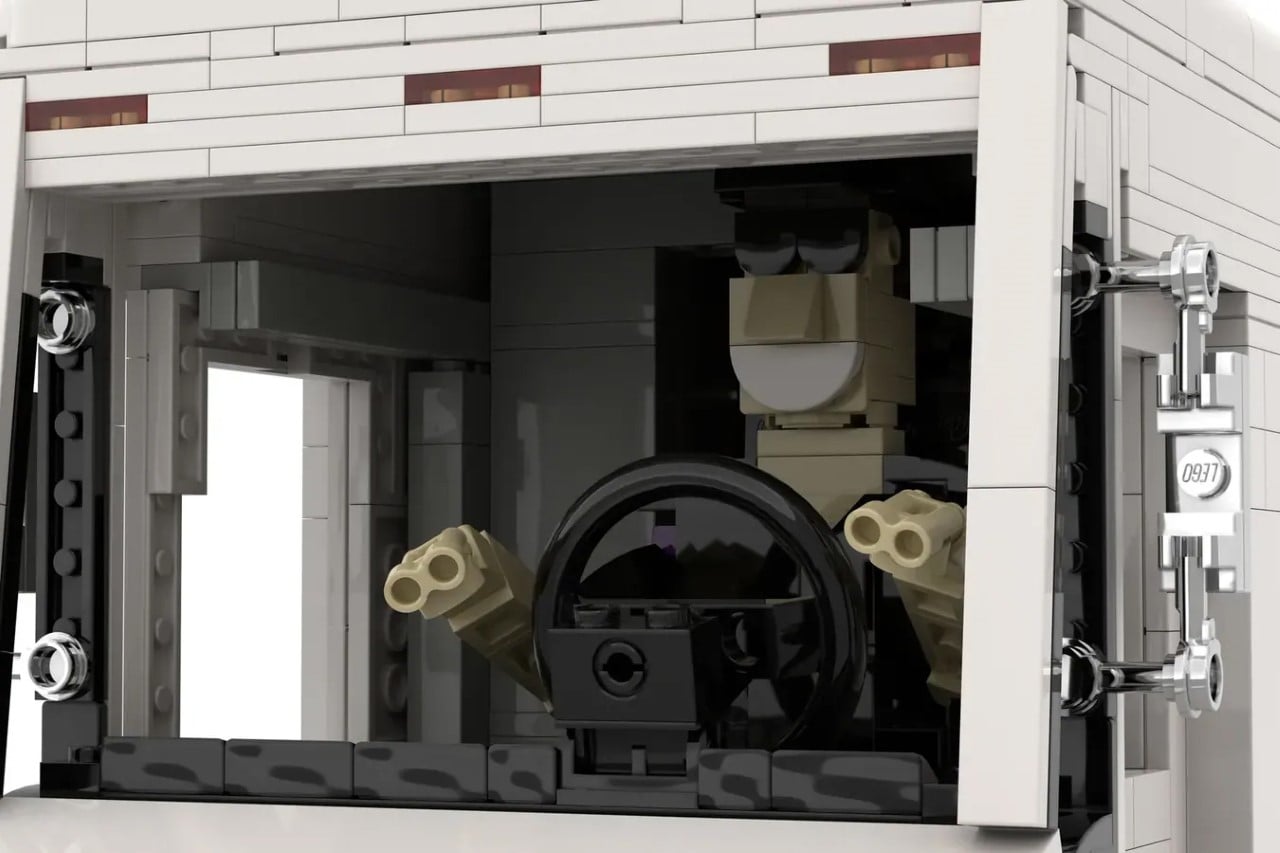
8. LEGO FedEx Iconic Truck

LEGO fan David Clavijo designed FedEx’s iconic truck using LEGO bricks in celebration of FedEx’s 50th anniversary. The company boasts an inspiring workforce of over 500,000 employees, a fleet of 700+ aircraft, and 200,000 vehicles. This unique build pays tribute to the company! The truck is covered in white, with the FedEx logo on the front, and the side. It even features a diamond-shaped DOT hazardous chemicals flip sign on the front.

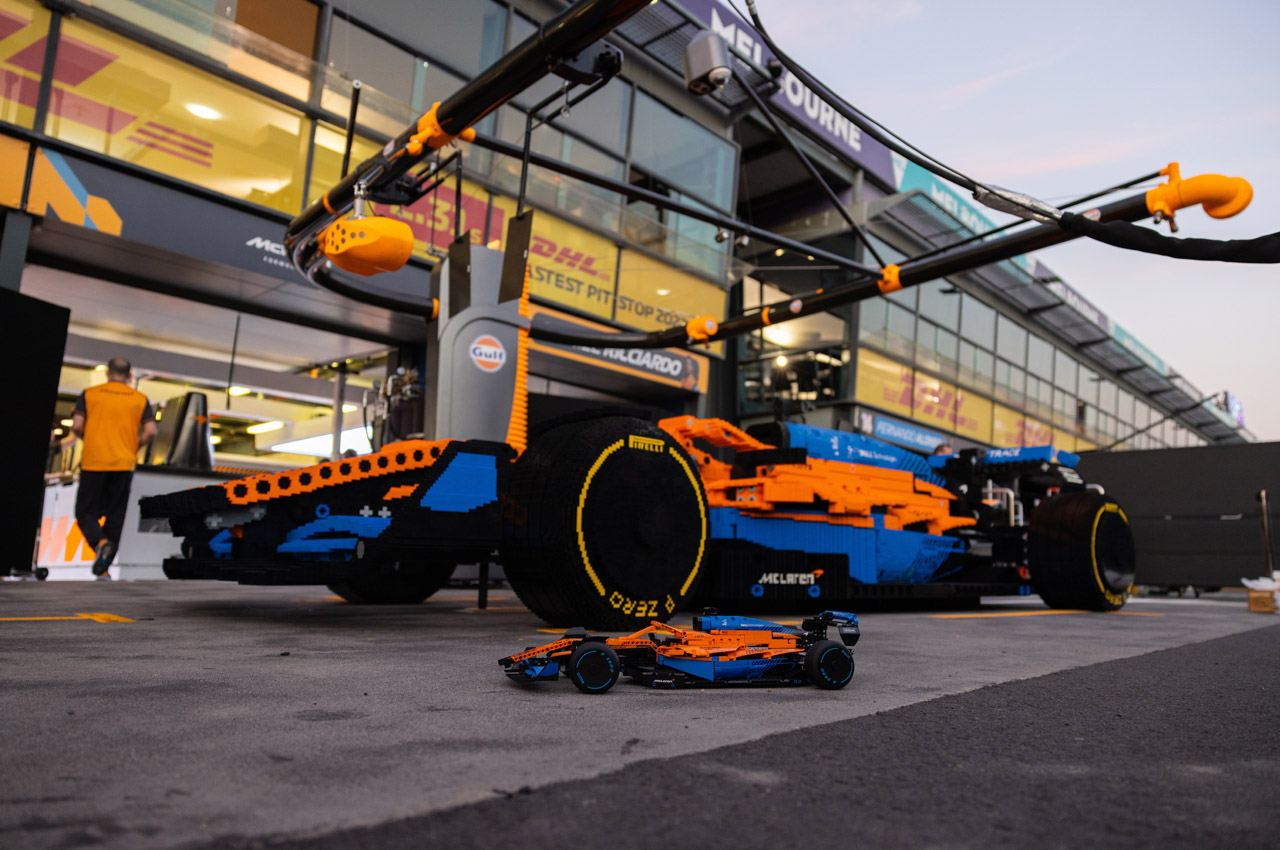
9. LEGO McLaren F1 Car
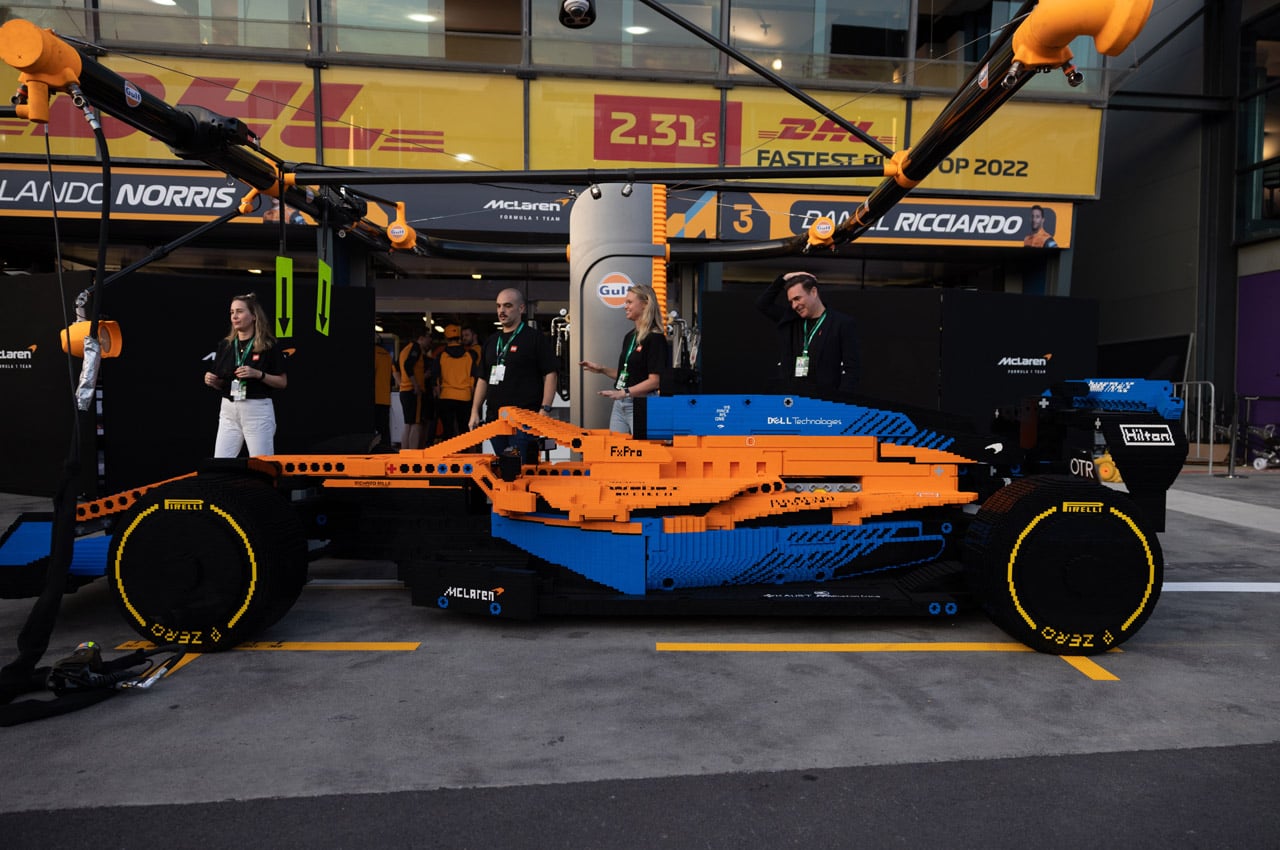
This LEGO replica of the 2021 season Formula-1 car is truly jaw-dropping! It is nine times the size of the collectible LEGO version which was a massive hit. But, the 1:1 LEGO variant is at a completely different level altogether. A lot of time and effort was put into creating, precisely 1893 man-hours of putting together 288,135 LEGO bricks, to build this 5.7-meter-long, 2.4-meter-wide structure.

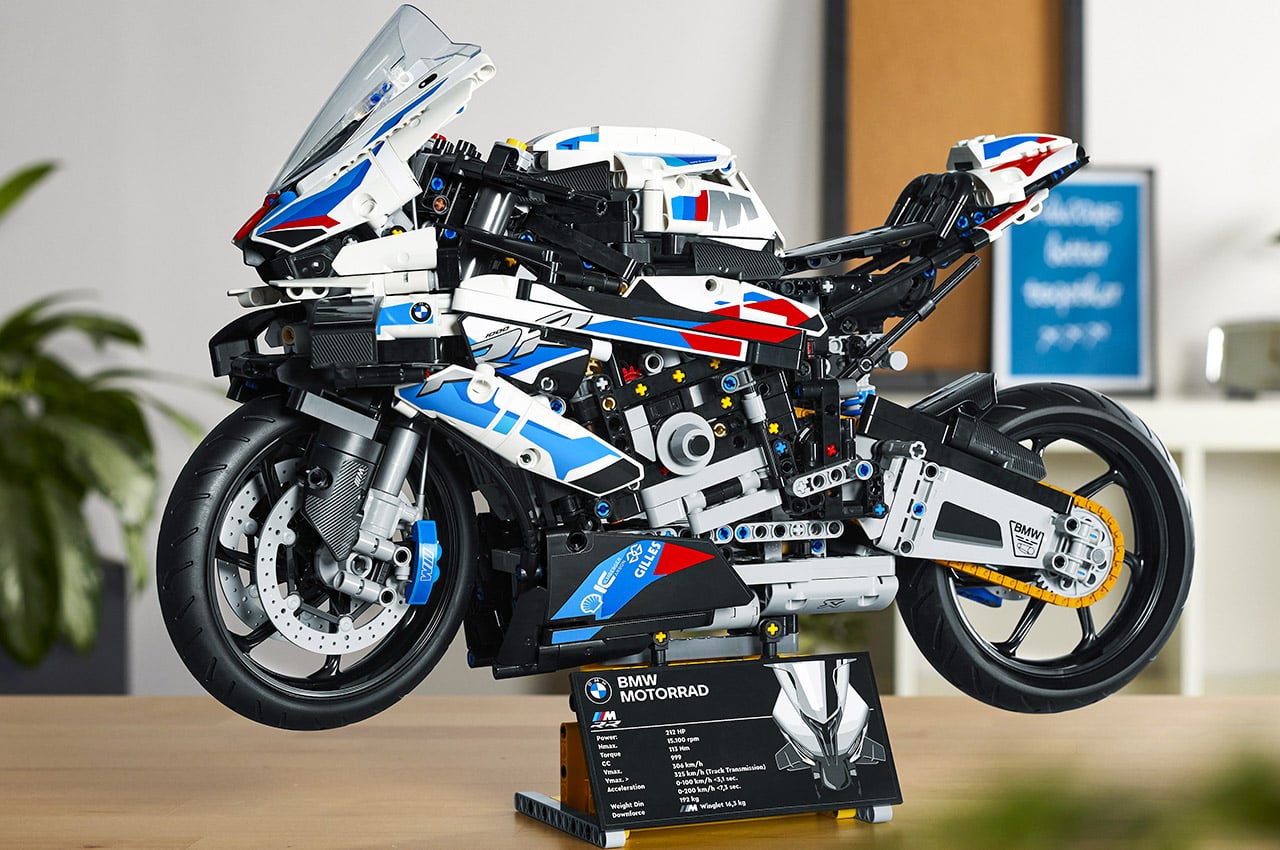
10. The LEGO M 1000 RR

This LEGO interpretation of the M 1000 RR measures under 18 inches long and is 10 inches tall. It is made using 1920 individual LEGO pieces, which makes it a satisfying exercise of putting it together! It is one of the largest ever bike sets, and it is a must-have for model building and bike aficionados since the realism is mirrored. It features functional intricate components, including the 4 piston engine, a three-speed gearbox, an upside fork with the rear swingarm suspension, and the dashboard with the three display options.

The post Top 10 Automotive-Inspired LEGO Builds That Will Have Automobile + LEGO Aficionados Drooling first appeared on Yanko Design.
Could a Luxury Car Brand like Audi get into Fitness Equipment?

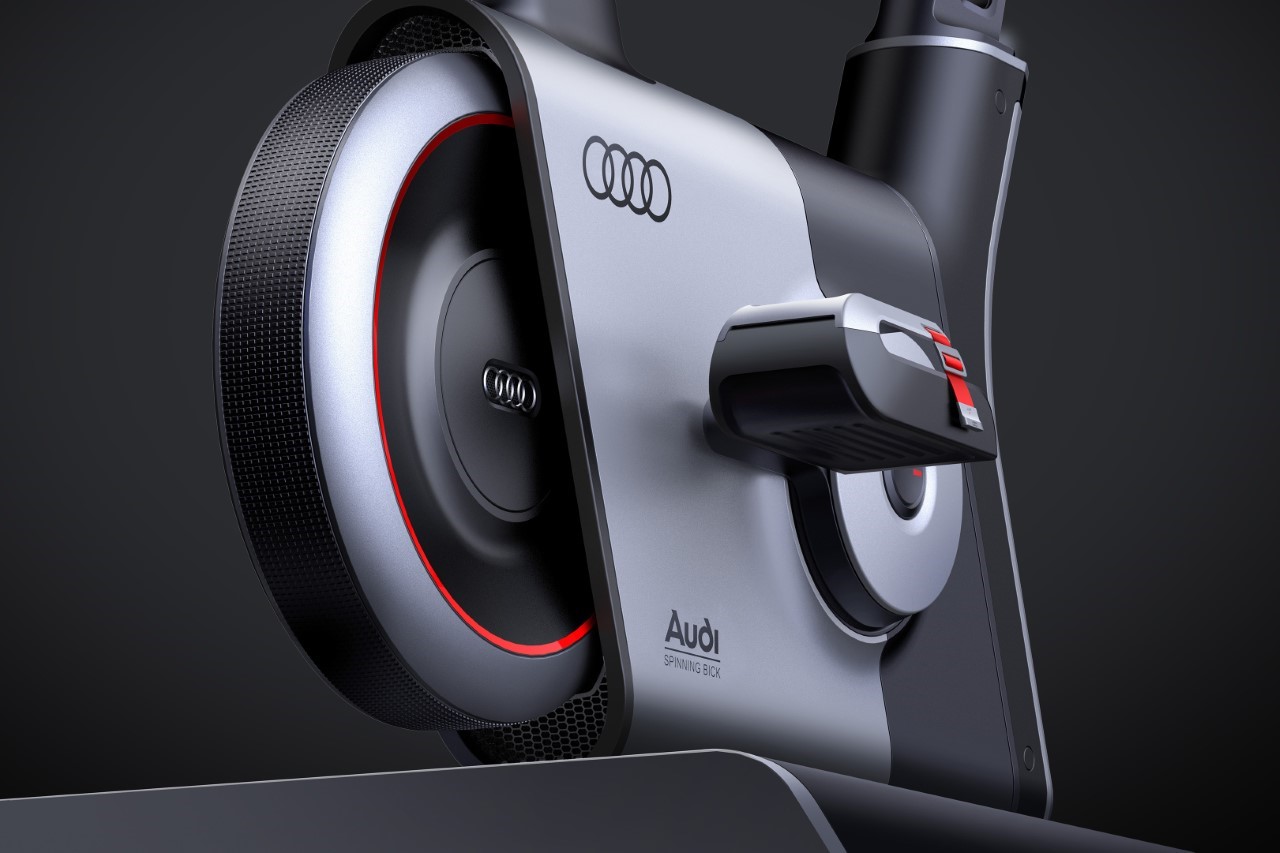
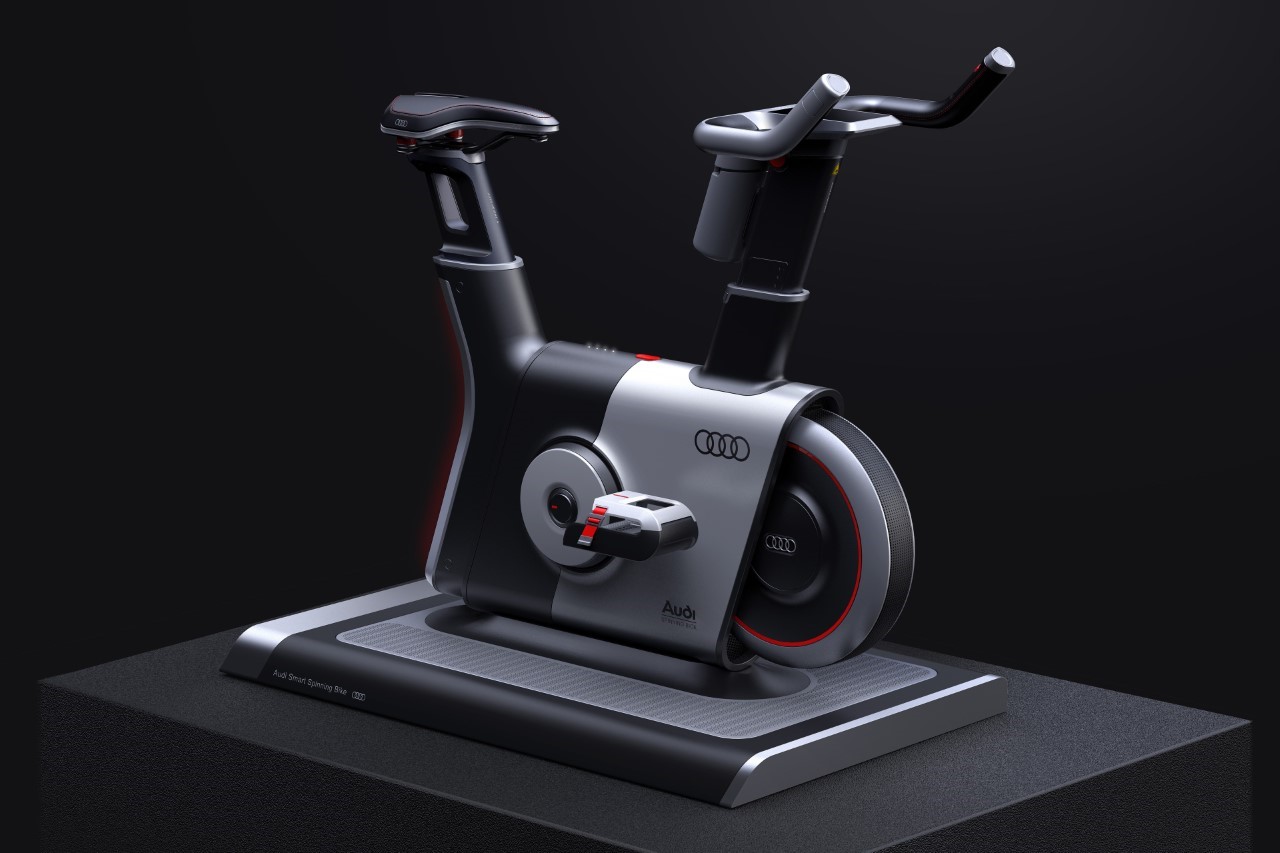
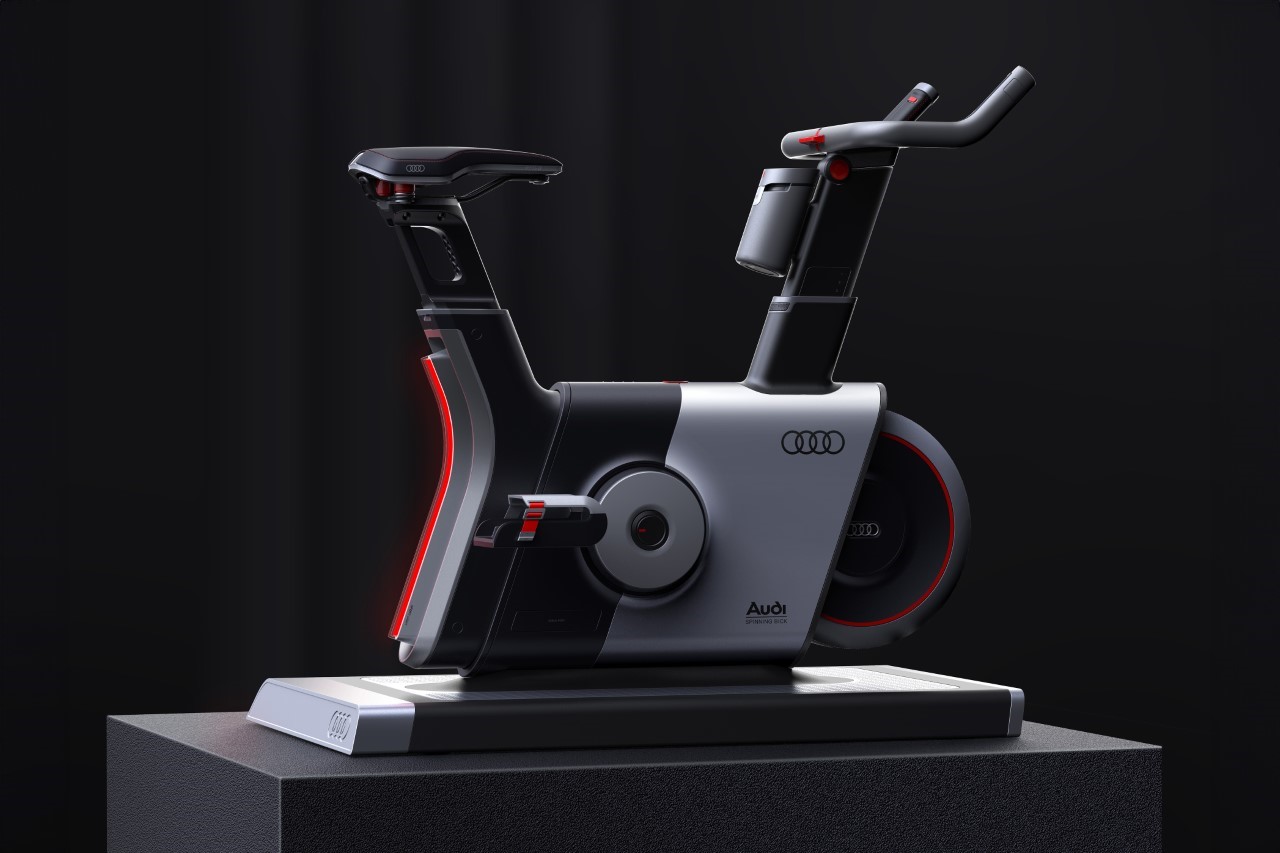
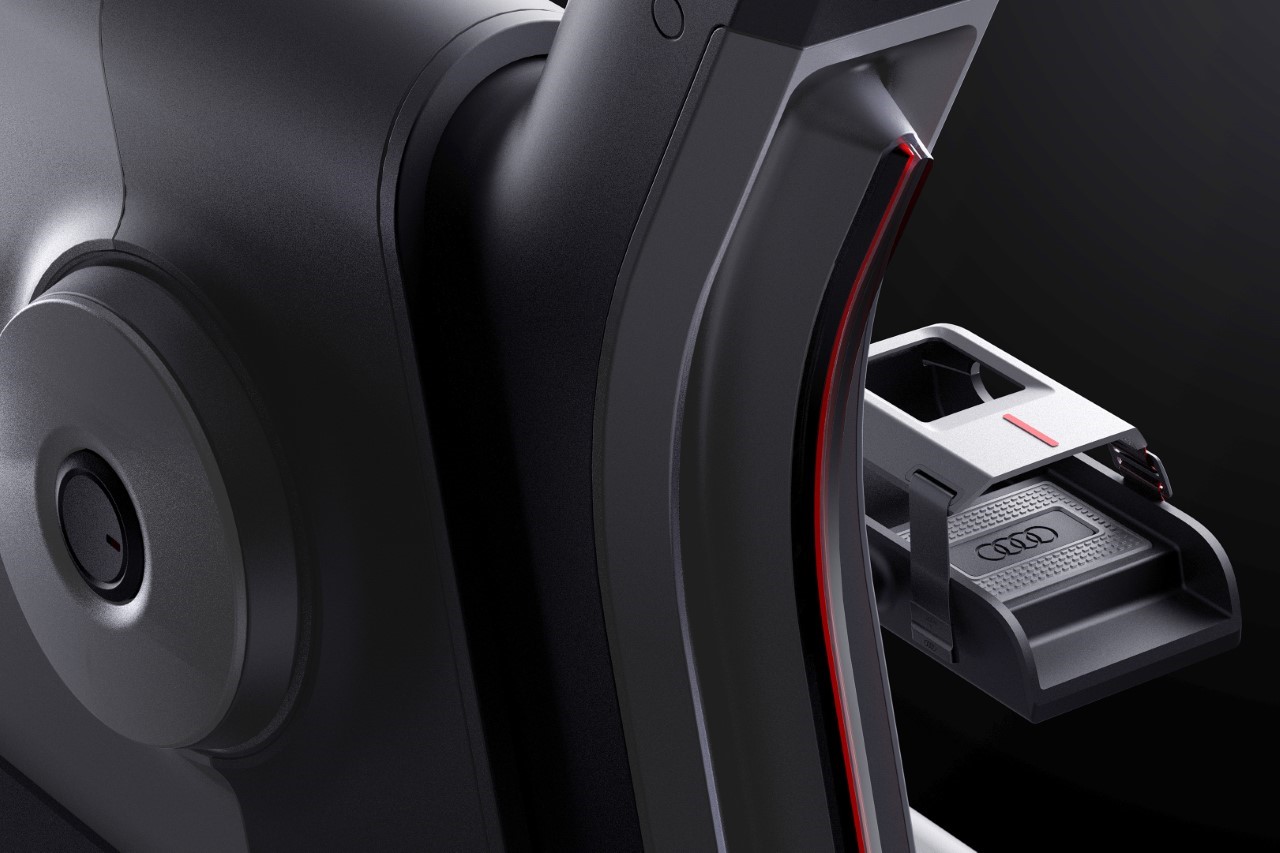
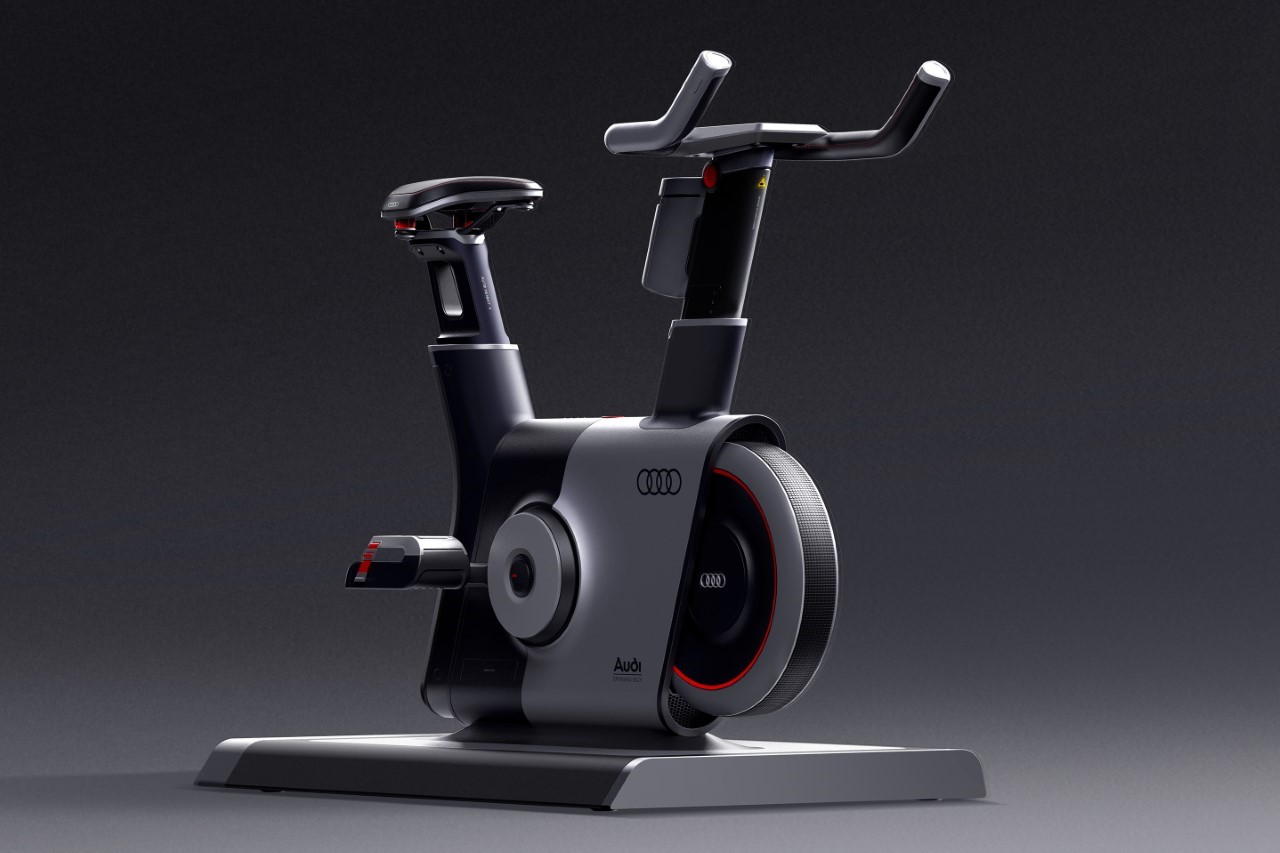
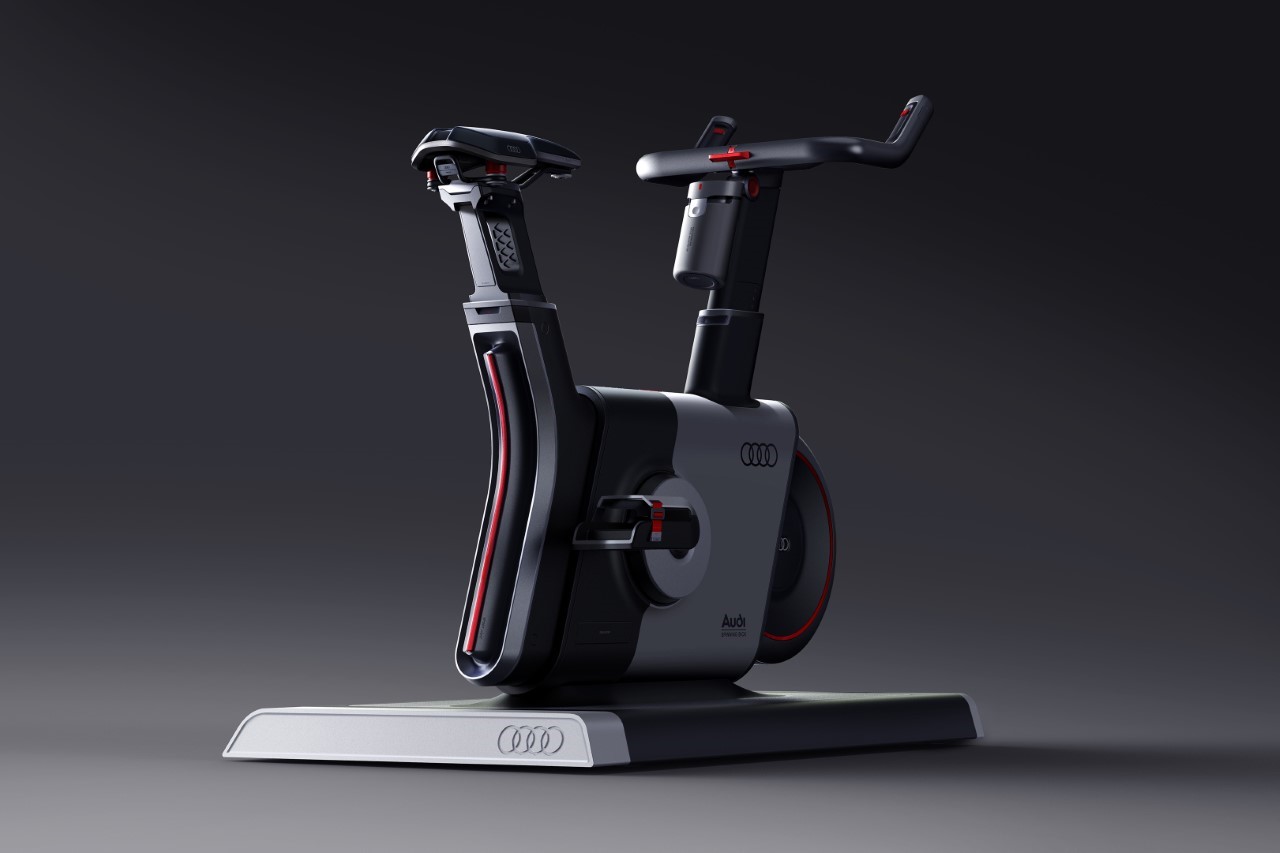
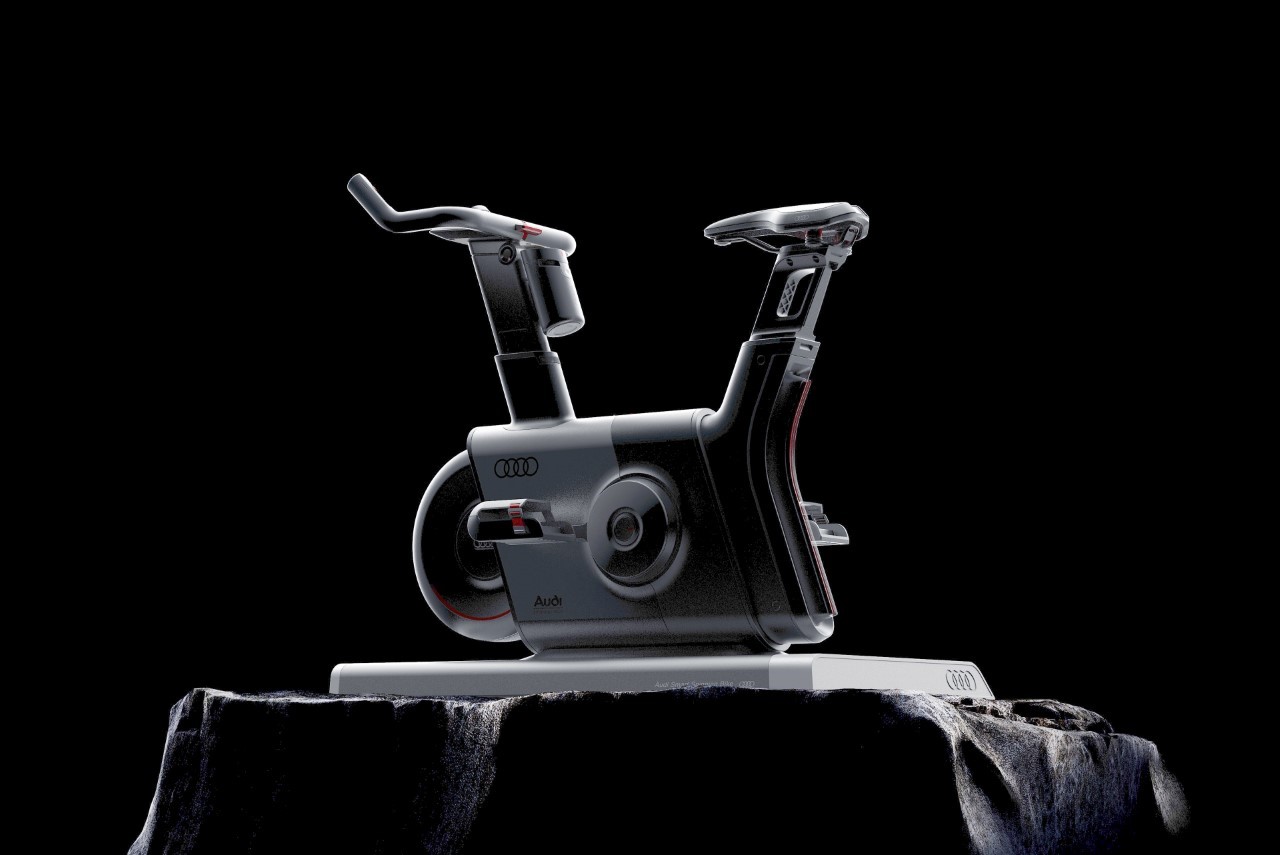
Luxury car brands don’t sell transportation… they sell a lifestyle, so what if you carried that idea to any other category? Designer Qingsheng Meng asked themself the same question, wondering what would happen if you took a luxury car brand like Audi’s DNA and applied it to another category, for example, exercise equipment. Sure, it sounds odd on the face of it, but Bose makes speakers and truck seats. Yamaha makes motorcycles and pianos… so why couldn’t Audi make a stationary exercise bike? After all, the company already builds electric bicycles, so the transition seems like a natural one. Meet the Audi Smart Spinning Bike, an exercise bike built with Audi’s luxury automotive DNA. After all, luxury car brands sell a lifestyle – why not a healthy one?

Designer: Qingsheng Meng

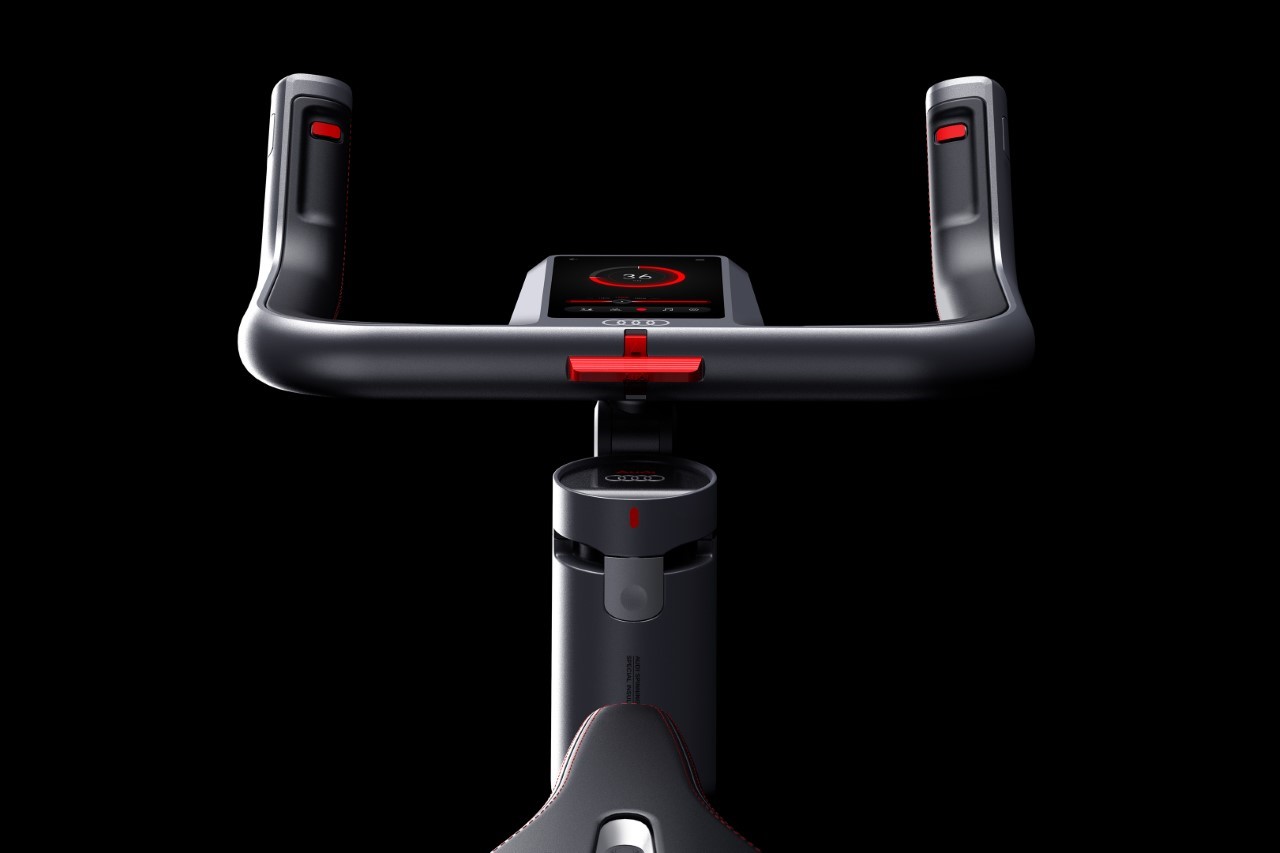
The Audi Smart Spinning Bike concept carries the company’s automotive aesthetic to home workout equipment. This translates to clean surfaces, chiseled forms, a forward-leaning stance that indicates speed, and a gorgeous matte black and silver colorway that adds to the bike’s appeal. “Different from traditional spinning bikes, this product intelligentizes traditional spinning bikes,” says Meng, the China-based designer responsible for the Audi Smart Spinning Bike concept. “At the same time, it uses simple styling techniques to draw lessons from Audi’s design language, emphasizing Audi’s intelligent and simple brand attributes, and is in line with the market.”

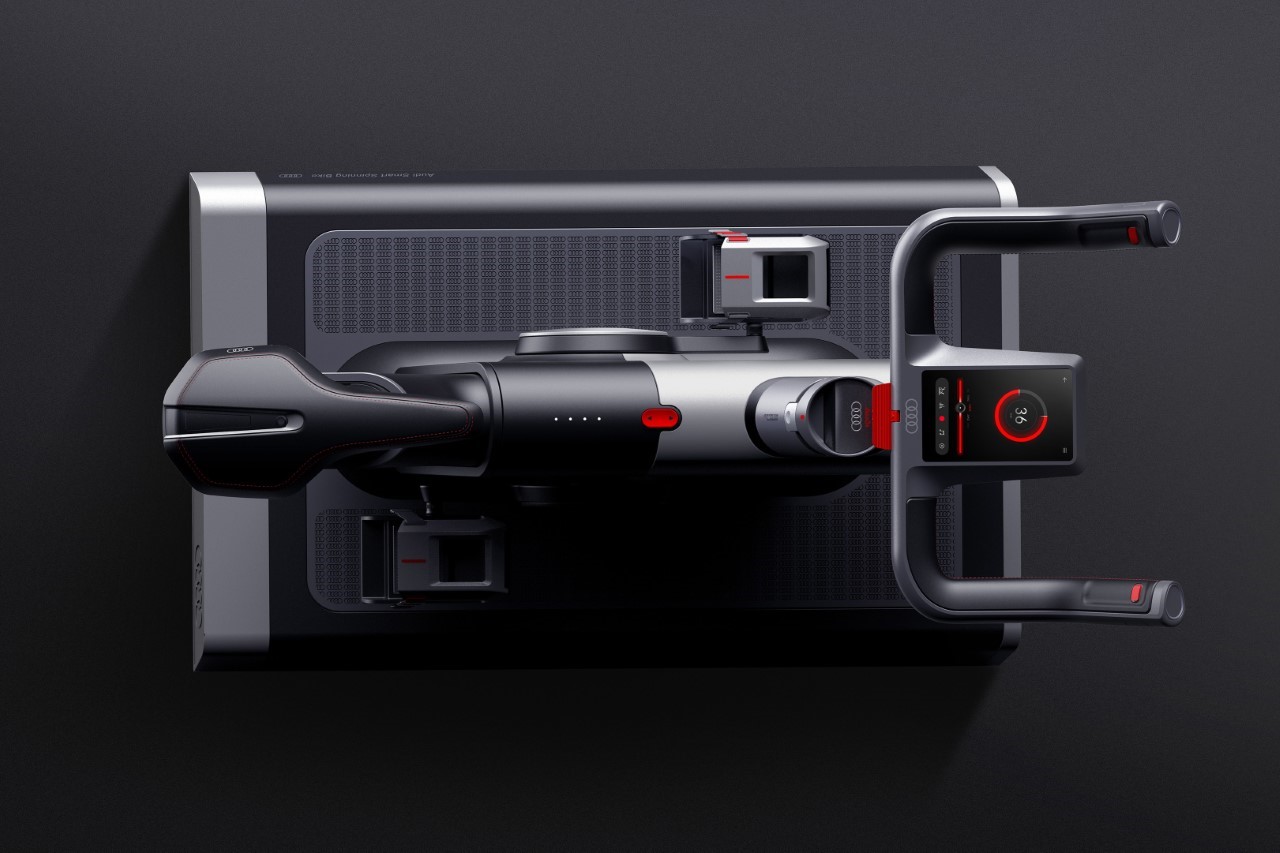
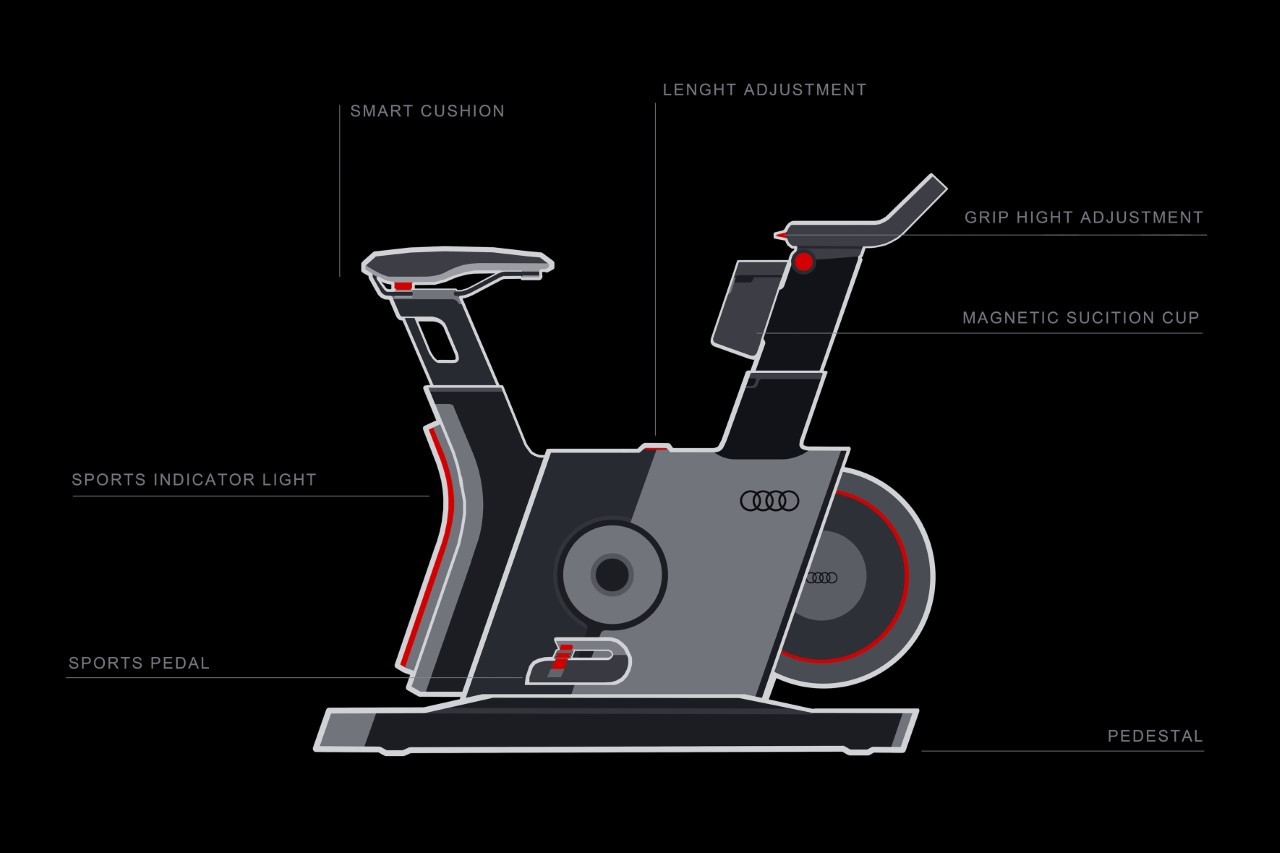
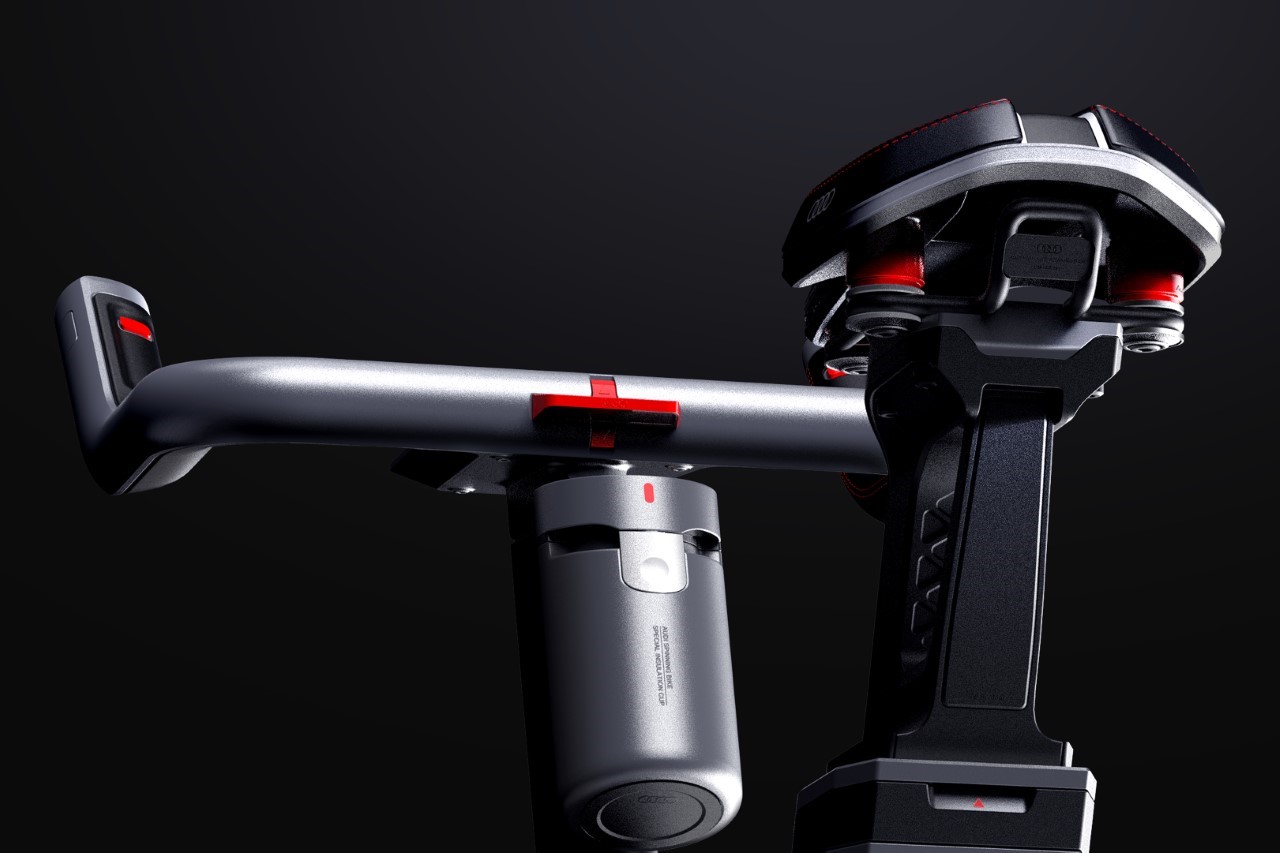
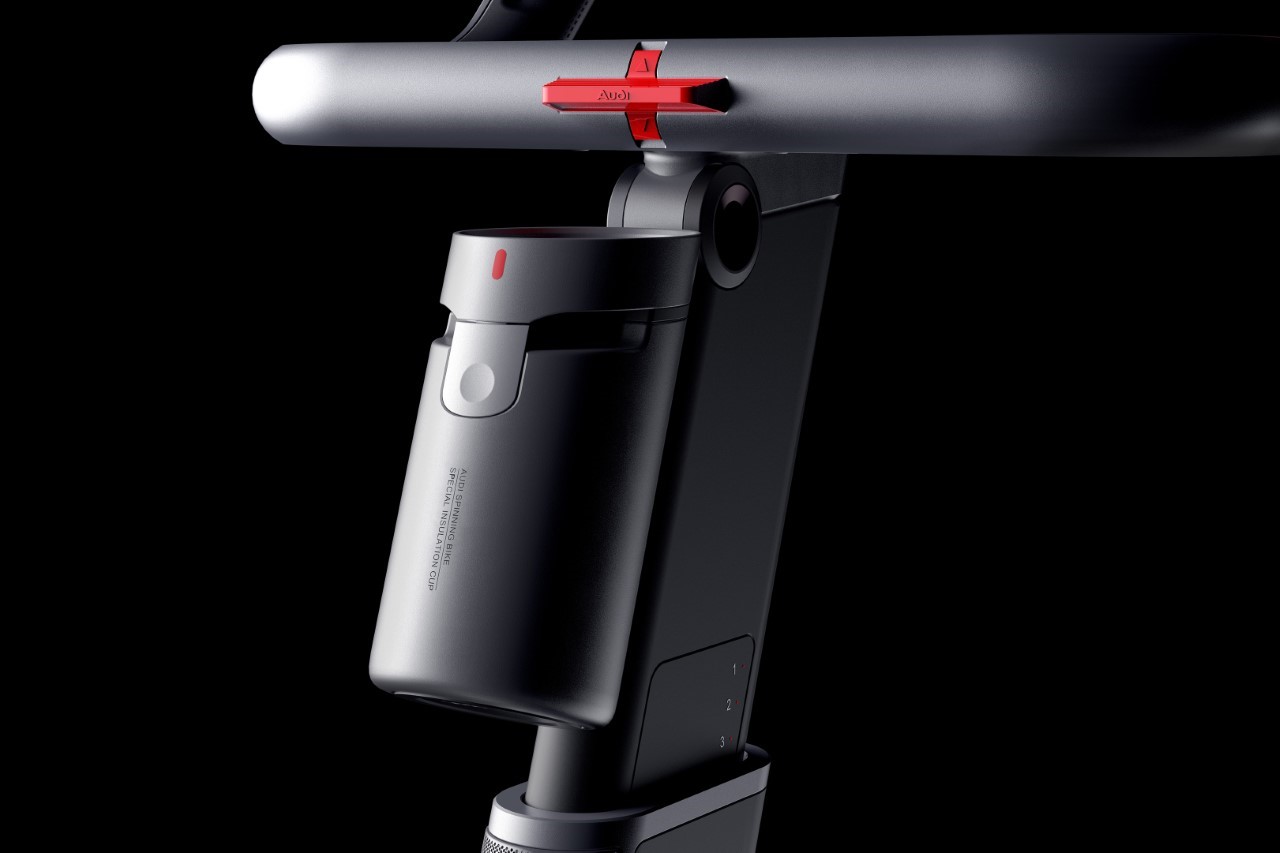
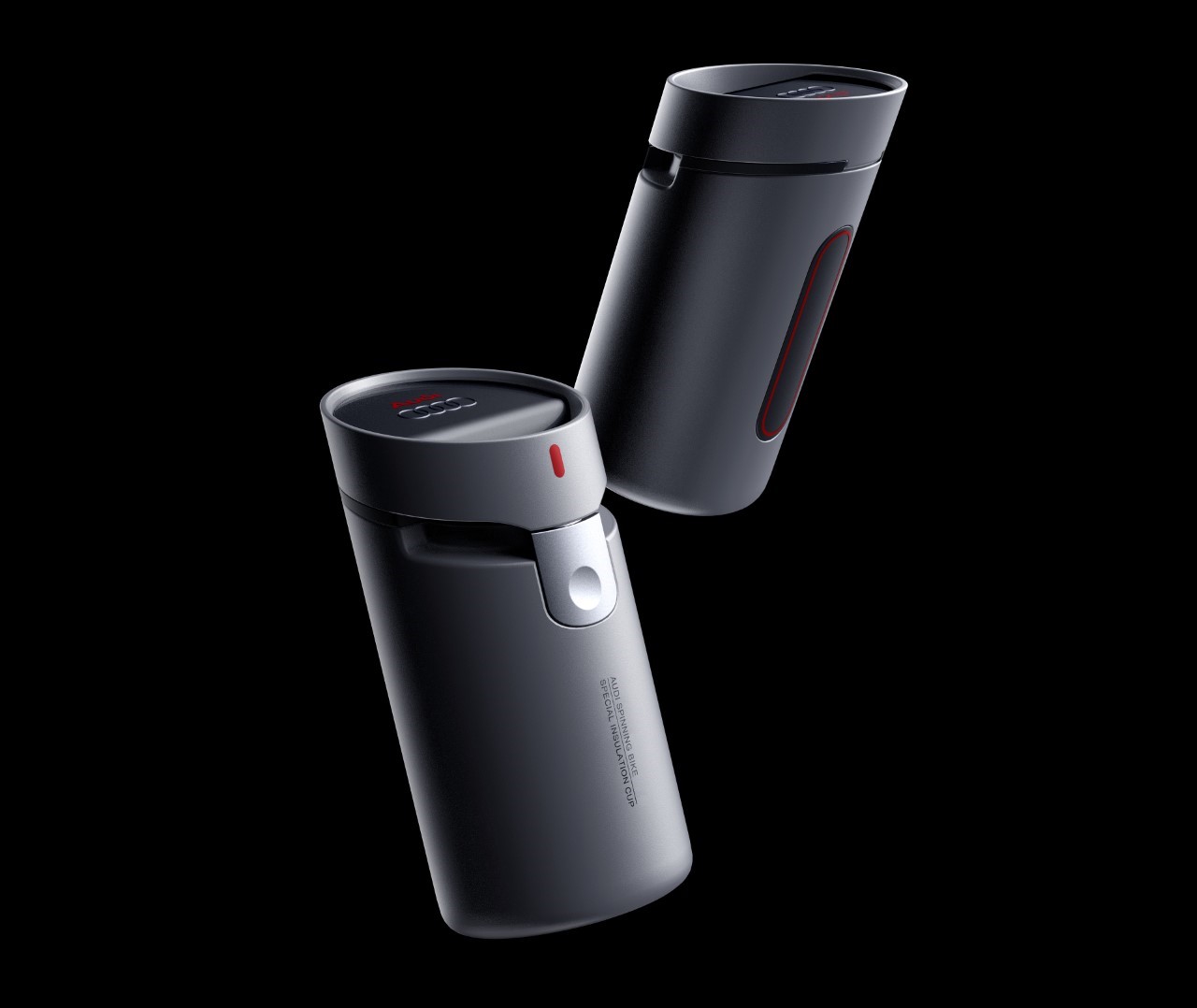
The spin-bike is different from Peloton or any of the other stationary bikes you’d otherwise see. It looks different, feels much more advanced, and comes with features that set it in a class apart. The bike sports an adjustable frame, that lets you manipulate the seat distance, height, or even handlebar heights with the simple push of a button. A dashboard gives you a comprehensive breakdown of your workout, and the energy that you put into the exercise doesn’t go to waste. It charges the e-bike as well as a detachable power bank that sits underneath the dashboard, giving you actual battery power that you can then use to charge your smartphone or other devices around the house.

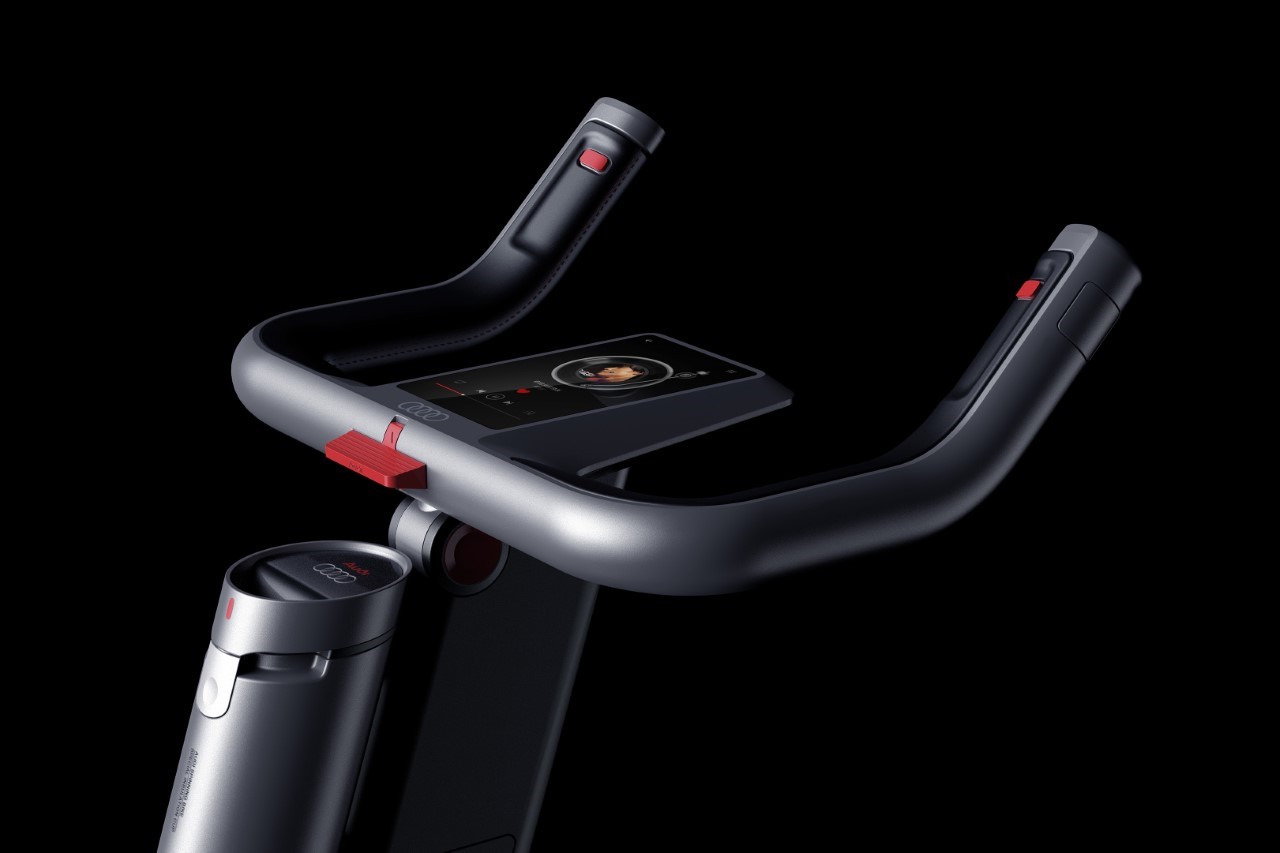
The handlebars facilitate a sturdy grip while cycling, and a touchscreen LCD dashboard lets you brows through your workout stats, giving you a comprehensive breakdown of how long you cycled, how many calories you burned, your cadence, cardio, etc. The dashboard also lets you choose difficulty settings before each workout. Meanwhile, your exercise doesn’t go in vain – the muscular energy you exert during cycling gets converted into kinetic energy, which then gets stored as electrical energy in a battery pack attached to the base of the handlebars.

With the ability to hold as many as two battery packs, the Audi Smart Spinning Bike gives you impetus to exercise, also allowing you to measure your workout in a unique way. You can compare a single exercise session to literal milli-amp hours, understanding how much physical exertion you’d need to charge your entire smartphone from 0 to 100! Sounds fun, doesn’t it??

It’s precisely that fun that helps the Audi Smart Spinning Bike stand apart from other stationery bikes, that just provide you with ‘exercise’. Quite like how Audi cars are fun to ride and immerse you in the luxurious thrill of style and speed, the spin bike helps elevate your workout to another level, giving you the kind of workout you could only experience from a state-of-the-art bike designed by one of the world’s leading automotive marques!

The post Could a Luxury Car Brand like Audi get into Fitness Equipment? first appeared on Yanko Design.
Cubicle-like urban car concept envisions commuting havens of the future

Everyone travels, whether alone or with others, for work, school, or even leisure. Not everyone, however, enjoys traveling in the same way, especially those who prefer some quiet, solitary time during commutes. Unfortunately, most of the self-driving vehicle concepts seem to focus on turning cars into social spaces, practically removing boundaries between passengers. That’s probably fine for families and friends on their way to a vacation destination, but some people going to and from the office might prefer a bit of quiet downtime on the road. In contrast, this forward-looking design offers an alternative experience, one that envelopes the passenger in their own private space, and it seems to take inspiration from one of the most isolating designs man has ever made: the office cubicle.

Designer: Chloe Gao

The idea of self-driving cars is for people to spare themselves the drudgery and exhaustion of driving so that they can spend more time on more important things. For some people, that might be making connections with other people in the vehicle, but others might prefer some “me time” instead. It’s for these people, especially the “Gen Z” group who value independence and personal immersion, that this urban commuting concept was designed.

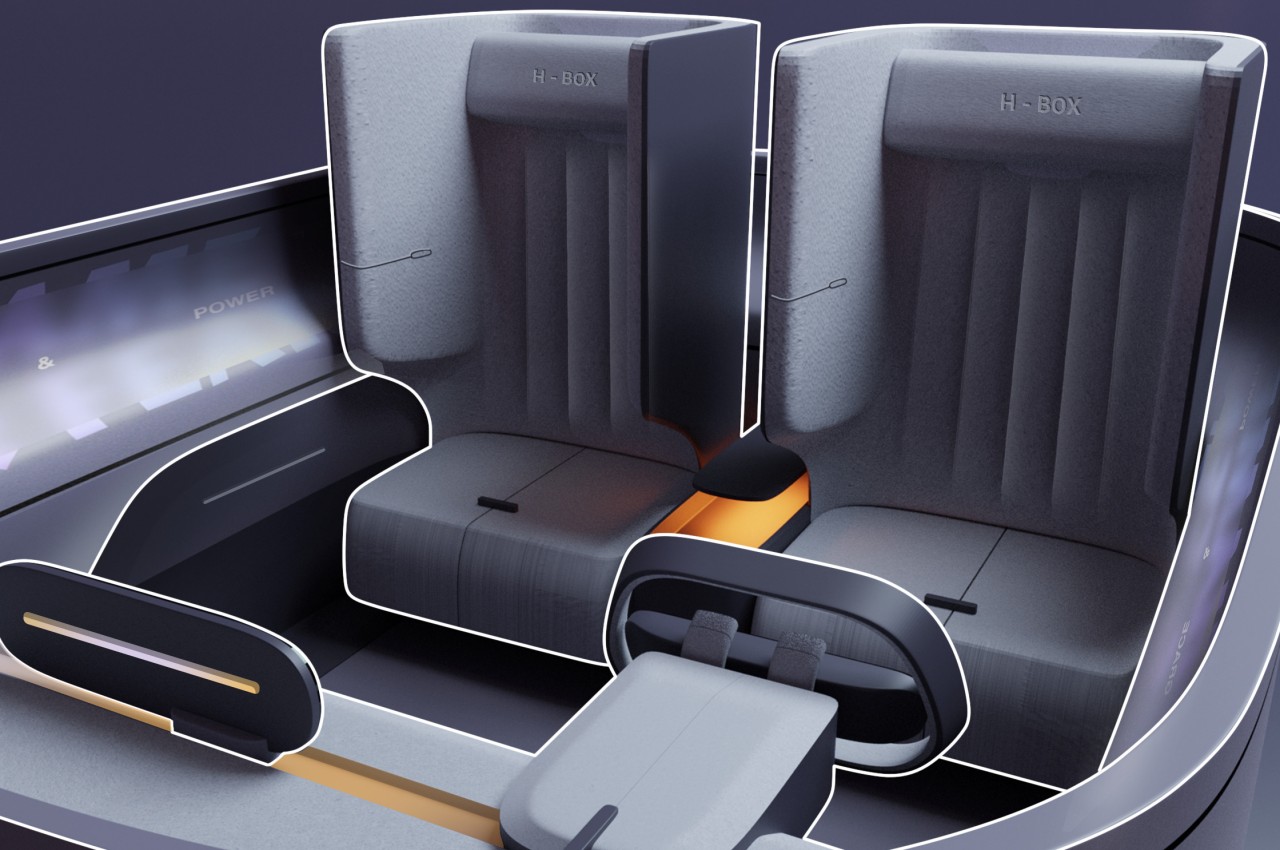
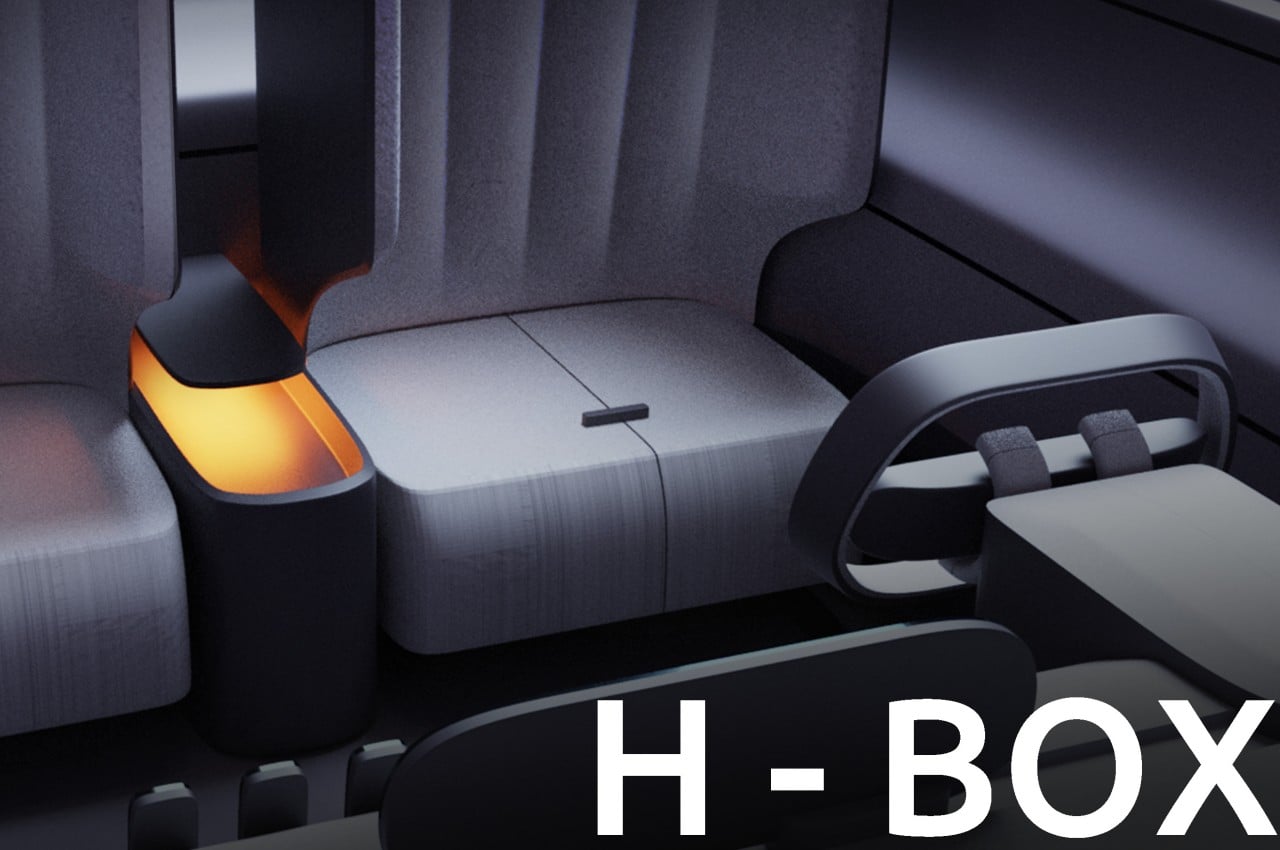
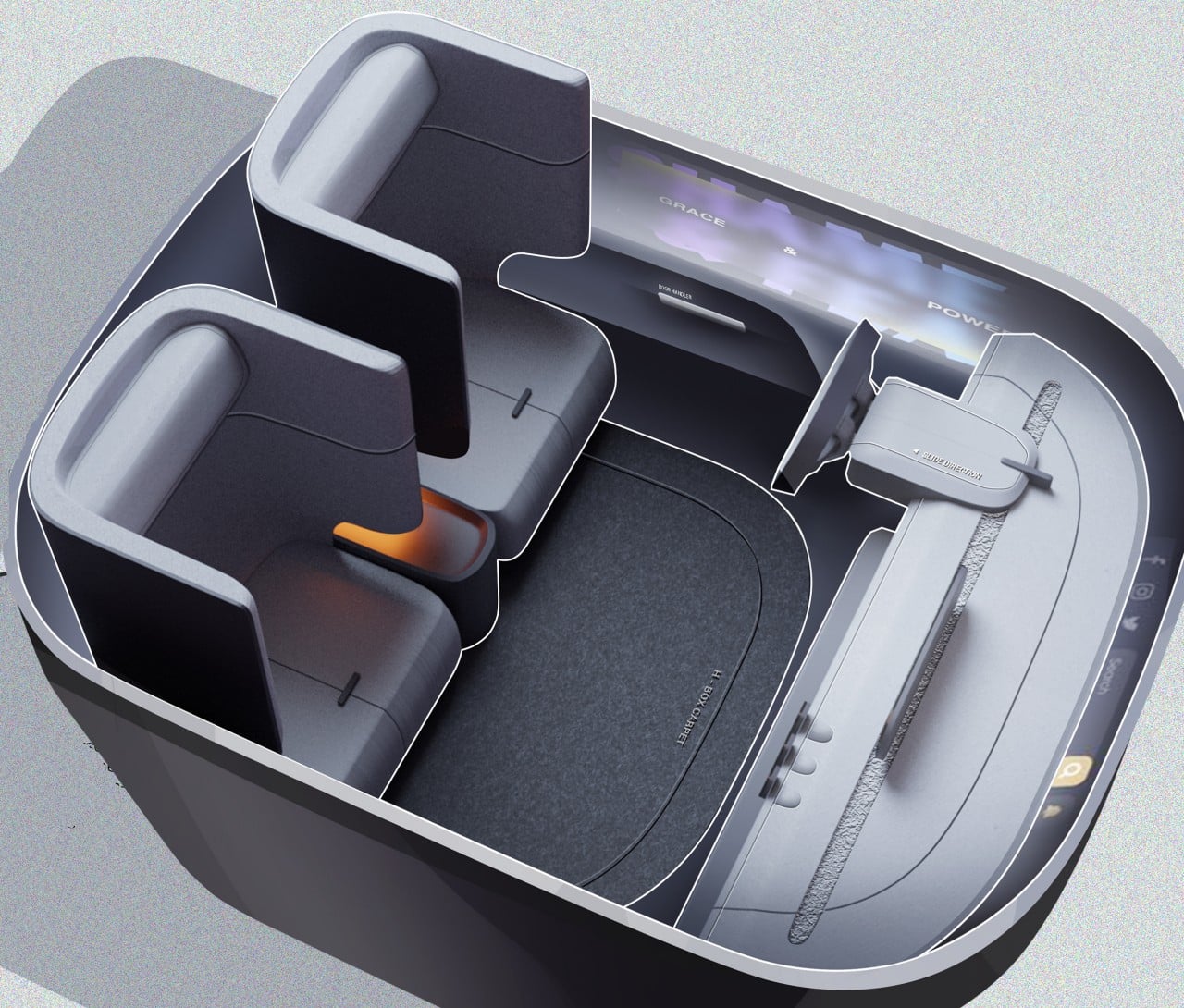
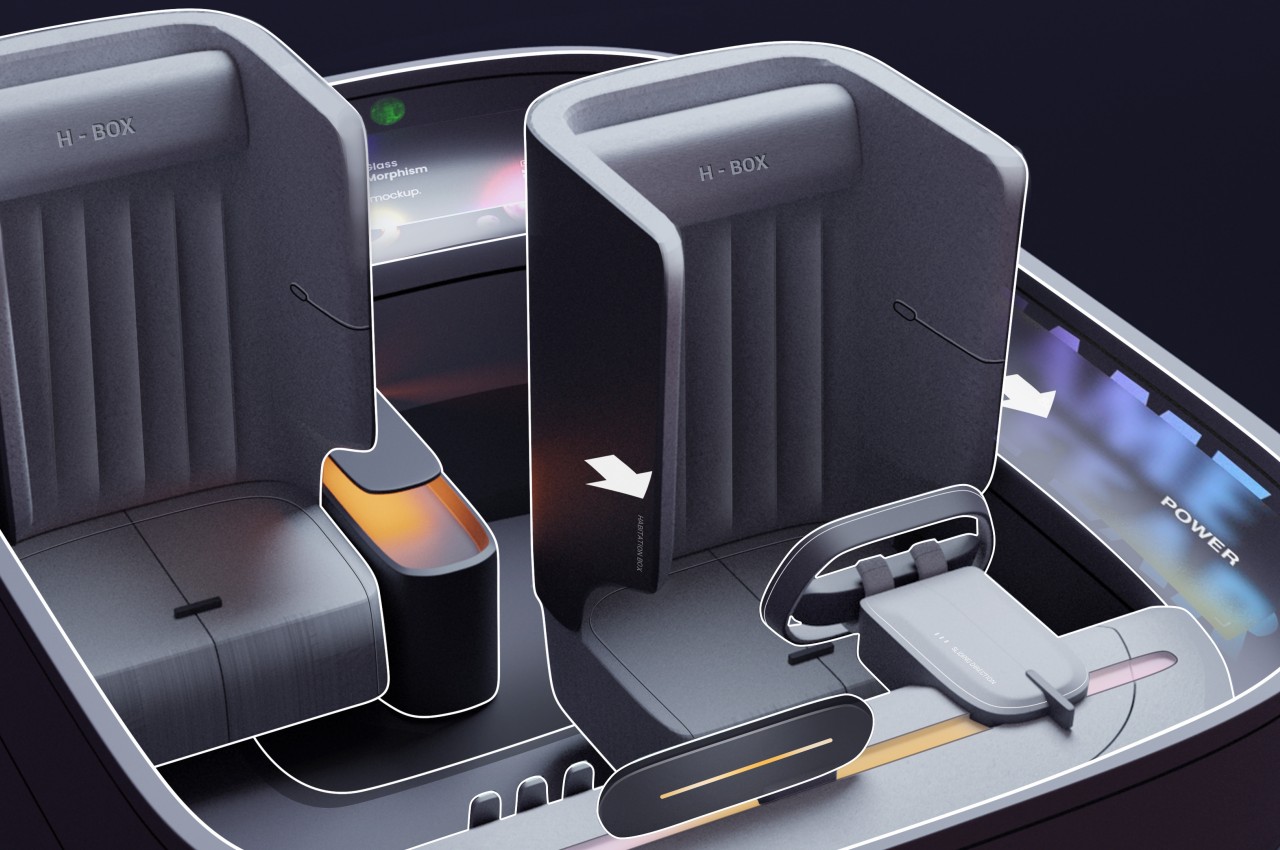
As its name suggests, the H-BOX concept turns the car into a box-like machine, and the two-seater model the chairs set to the back of the cabin. Unlike most self-driving automobile concepts, however, this seems to still pay heed to the need for manual control from time to time, so the “driver’s seat” can slide forward to take hold of the futuristic steering well if needed. That further widens the separation between the two seats, which might be a preferred configuration for two people who really want to be immersed in their own little corners.

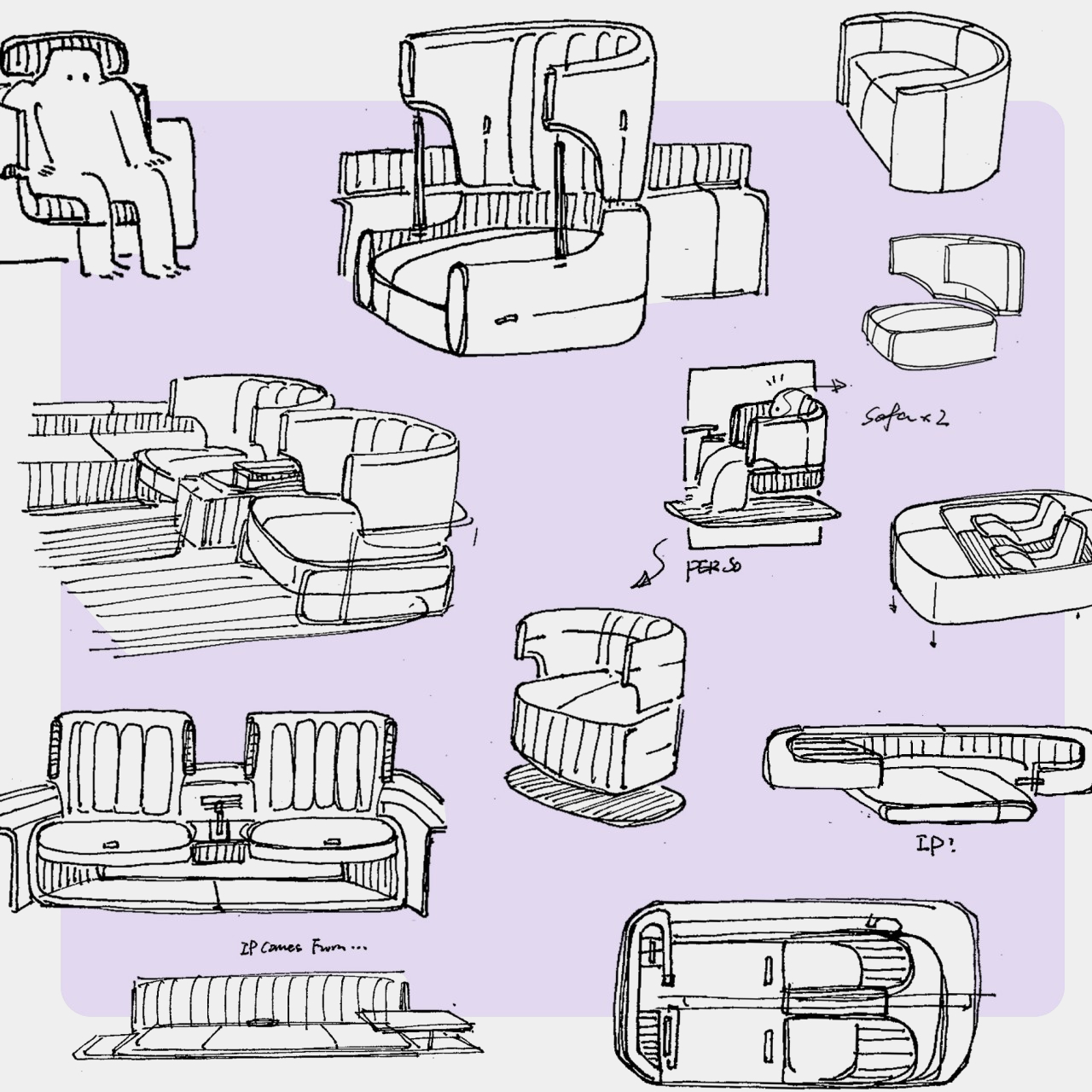
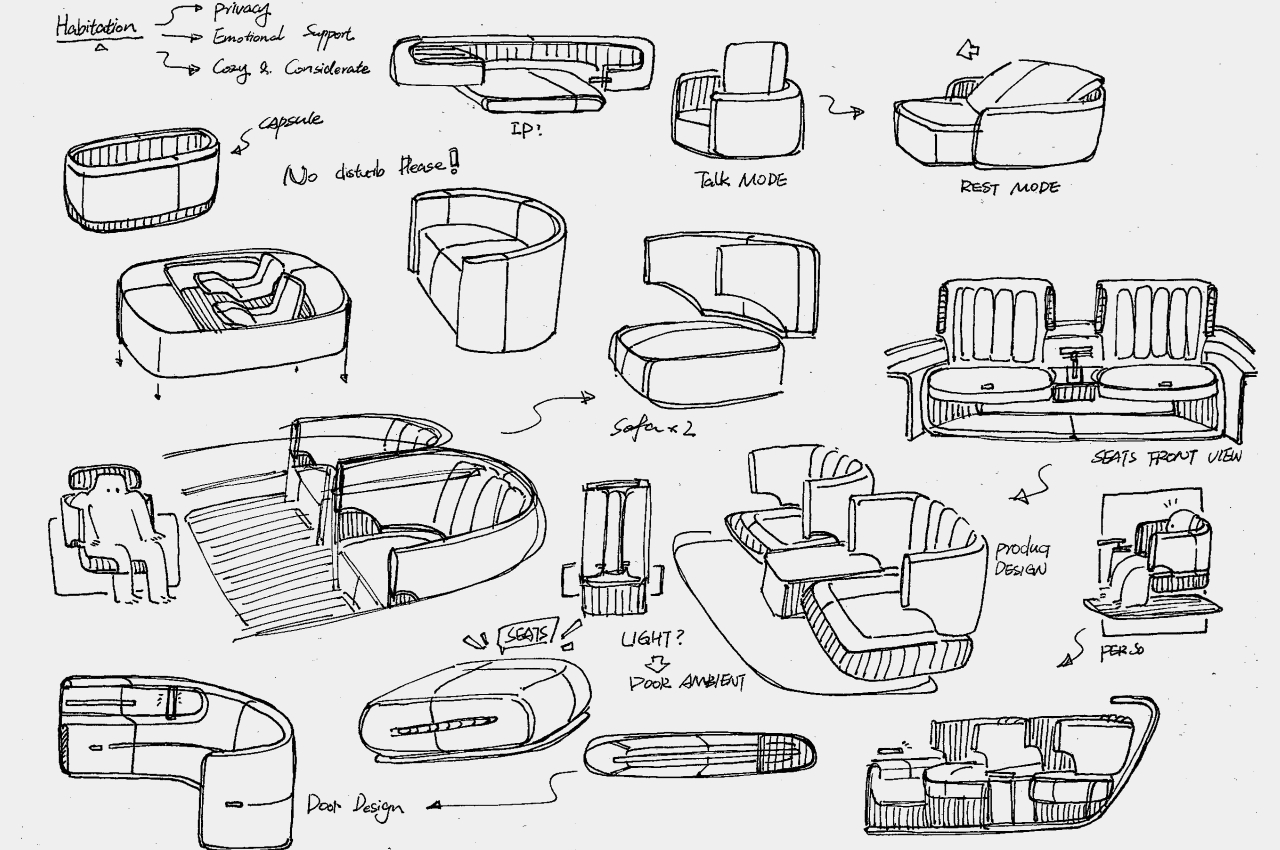
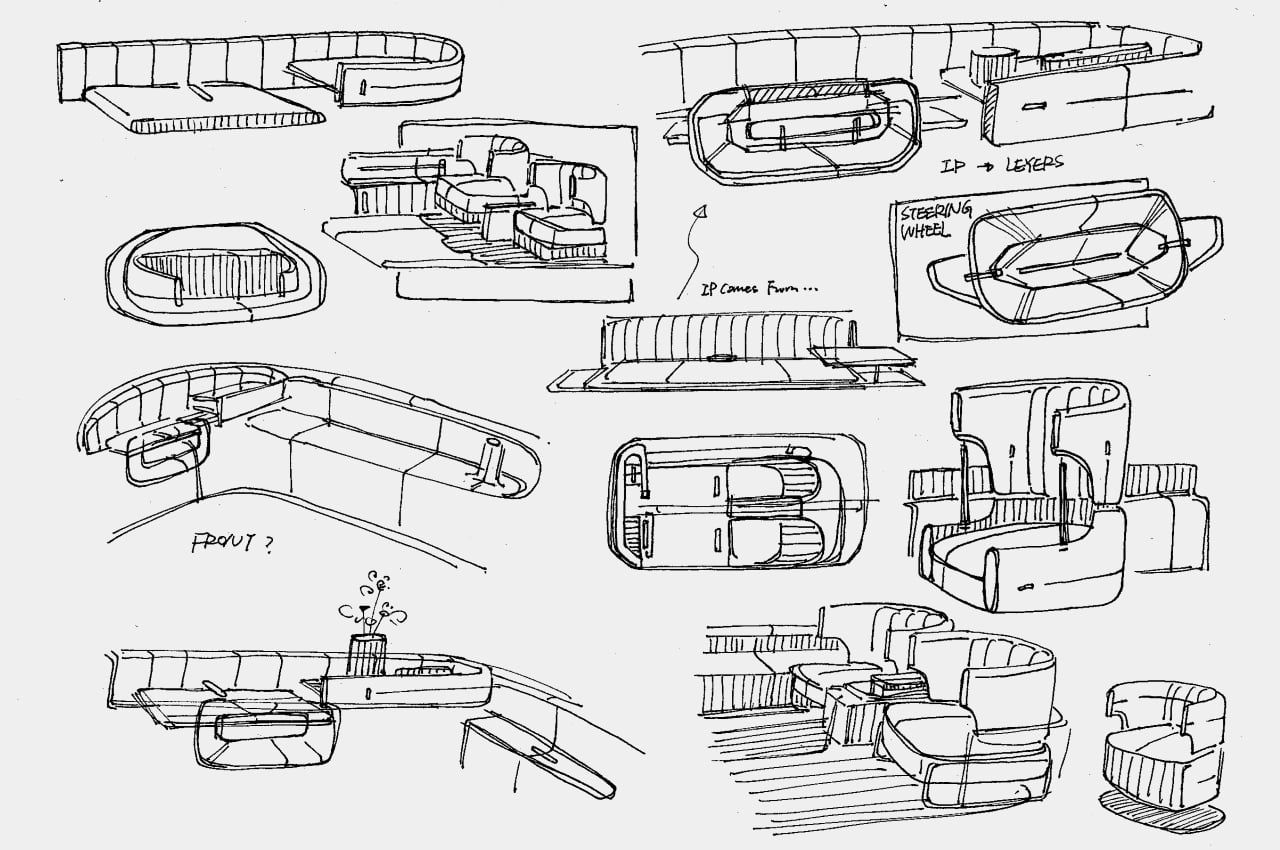
What makes the H-BOX distinctive, however, are the seats themselves. Where most designs would feature reclining seats that seem to offer the ultimate comfort, these surround the passenger from almost all sides except the front. In other words, it boxes them in, shielding them from the other person in the vehicle while still giving them a clear view of their surroundings. Admittedly, it doesn’t look like the most comfortable design, though it wouldn’t be impossible to have the seat move forward and the backrest lean backward for that same reclining effect.

Then again, the purpose of this self-driving vehicle is to quickly get commuters to their destinations with minimum fuss and perhaps minimum interactions. At the same time, however, the interior of the vehicle still offers a convenient and advanced experience complete with a display that wraps around the interior of the cabin. It does seem to cater to a very niche audience, a generation that might no longer even be around by the time self-driving cars fully take root, but it could offer a more solitary experience for people who prefer to travel in peace and quiet.

The post Cubicle-like urban car concept envisions commuting havens of the future first appeared on Yanko Design.

Top 10 Camping Automotives That Are The Ultimate Companions On Your Outdoor Adventures

After a tiring week at work, with the weekend joyfully looming ahead of me, I often find myself fantasizing about a short sweet getaway! Just a few days away from my hectic life, and this hectic world, in a bubble of my own, where all my worries are nowhere to be seen. And I do think Camping is a plausible plan! There’s nothing more comforting or exciting than lounging about in a cozy camper while you explore the countryside. You never feel out of place, because these little campers manage to feel like a home on wheels. Fill it up with your dear belongings, and it’s your home away from home. Not to mention the camper designs today are super innovative and inventive! From a VW ID Buzz electric camper to a tiny Japanese all-aluminum camper – these resourceful campers manage to cater to almost all of our needs, solving various problems, and turning our camping experience into a fulfilling and comfortable one.

1. Wilderness Vans Range Slide-In Truck Campers

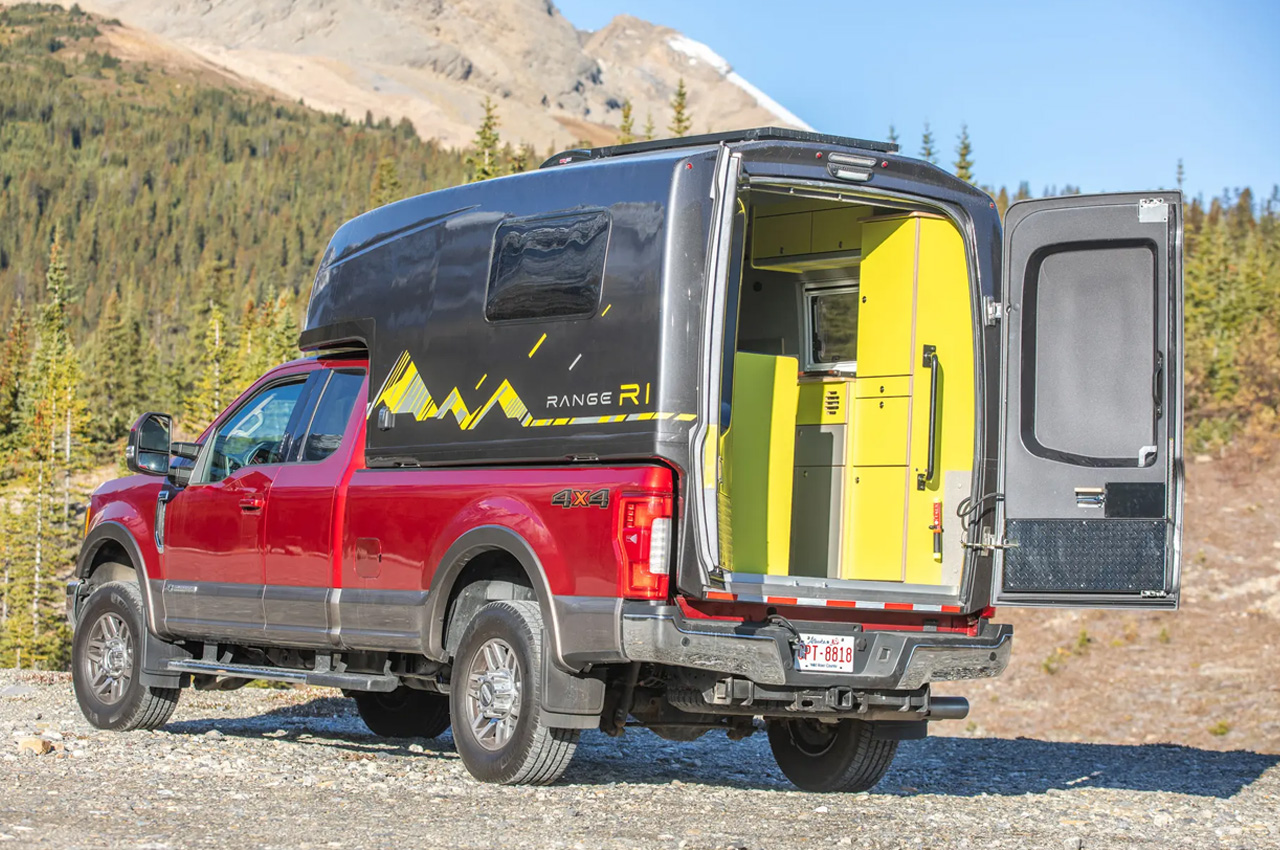
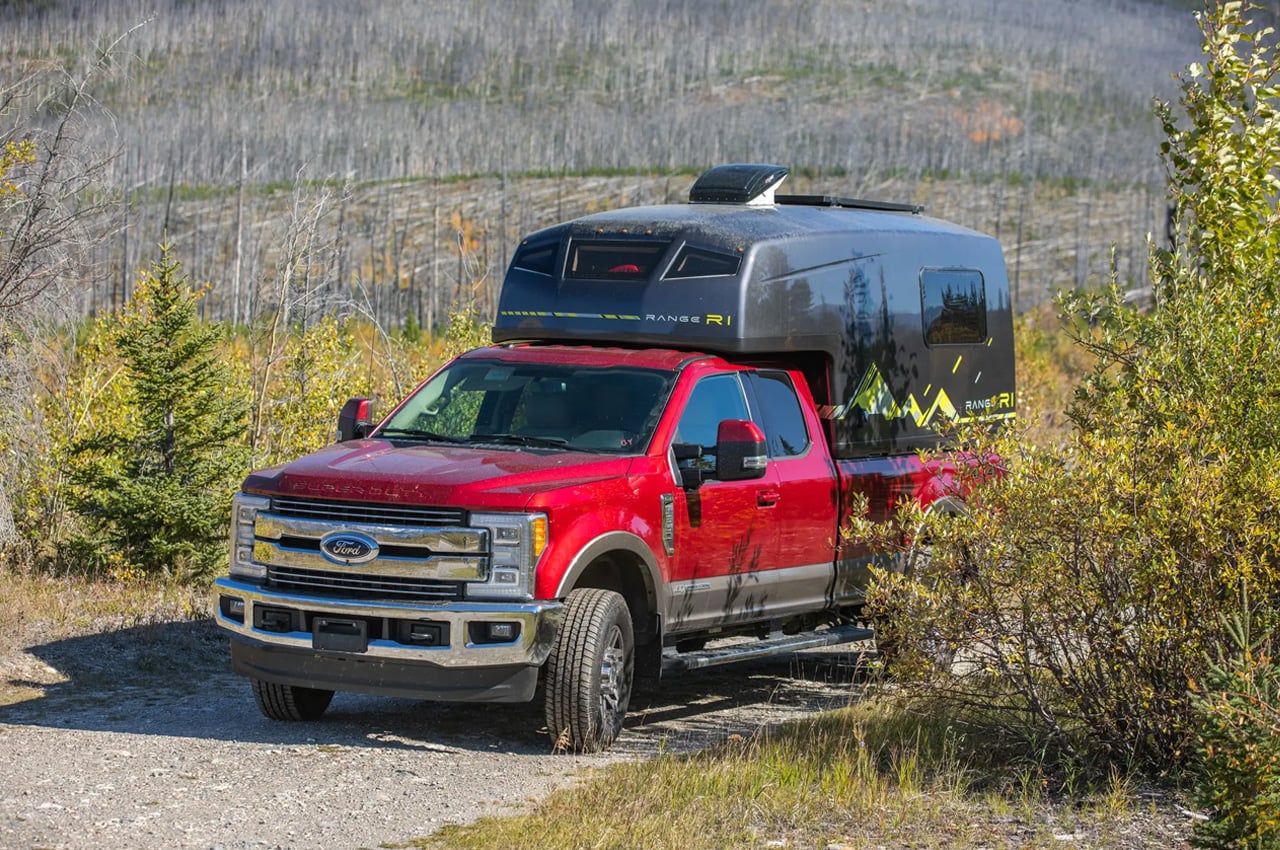
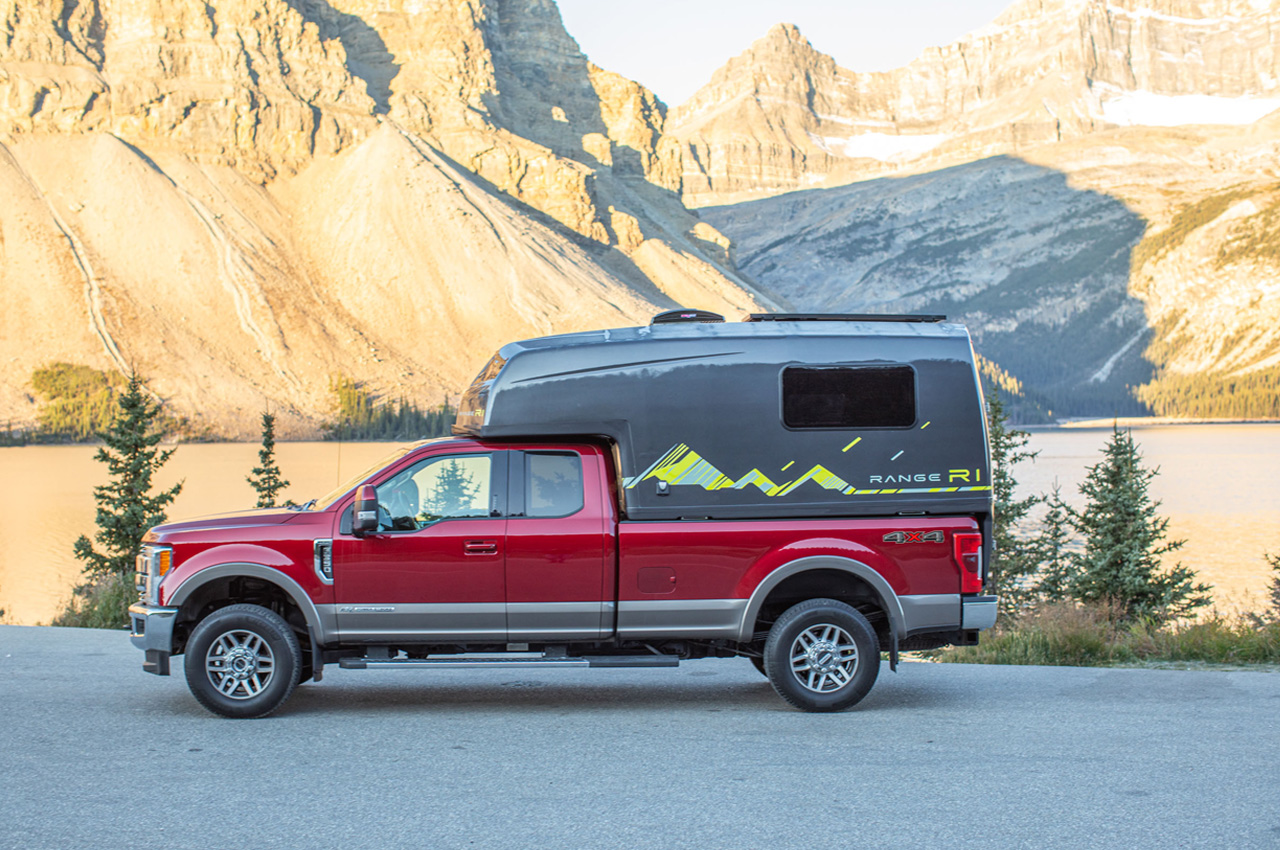
Meet the Wilderness Vans Range slide-in campers – the R1 and R2! These campers are designed for all-year-round off-grid camping, and they’re quite spacious with loads of amenities onboard. They feature multiple windows and skylights, which provide a consistent flow of natural light and fresh air, maintaining a pleasant and free-flowing interior.

Why is it noteworthy?

The Range campers are completely insulated for all weather usage. They’re equipped with natural fiber and wool installation in the ceiling and walls, as well as cushioned wood layering with cell foam which makes the interiors warm during winter, and cool during the summer season.

What we like

  • Features storage options everywhere
  • Equipped with a 200-watt solar charging station to provide power in off-grid locations

What we dislike

  • The headroom on the bed is quite limited since there is no pop-up option

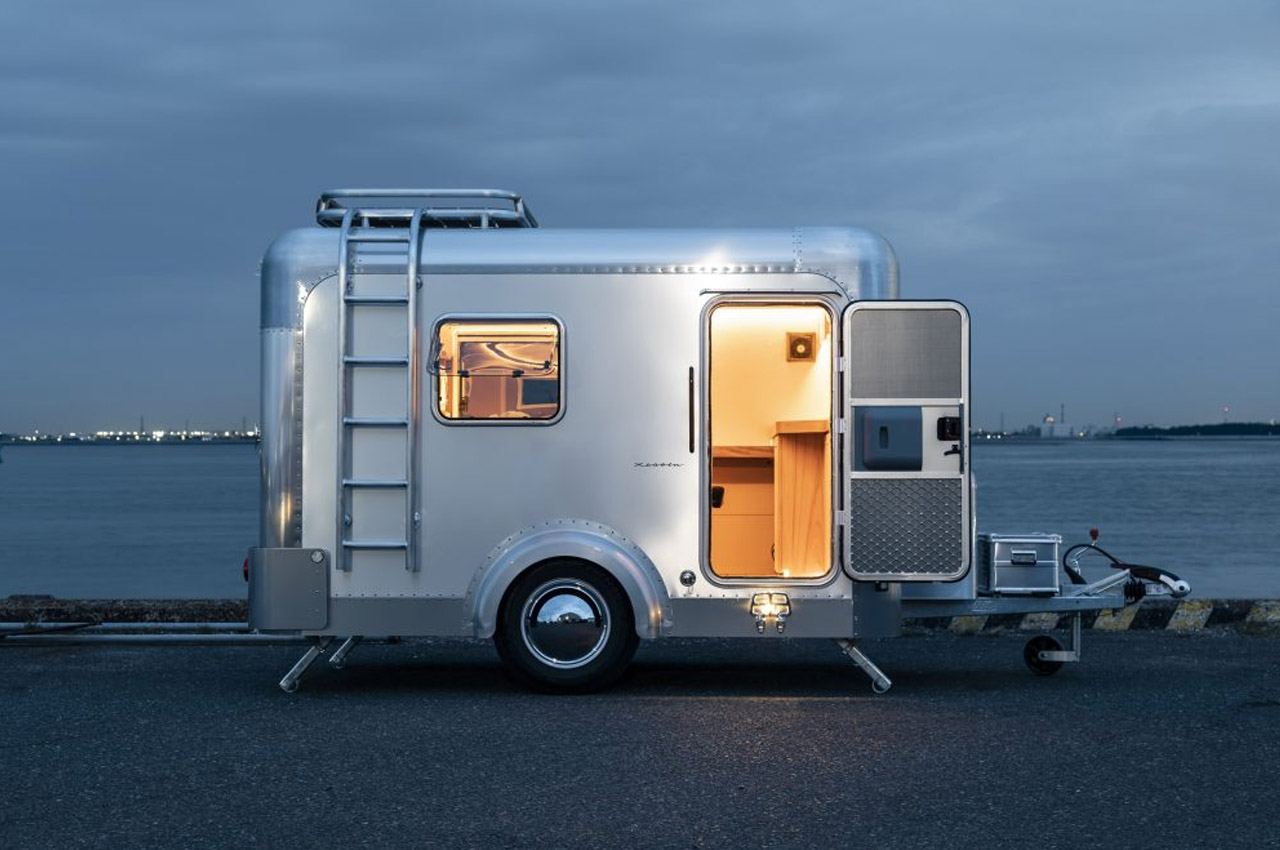
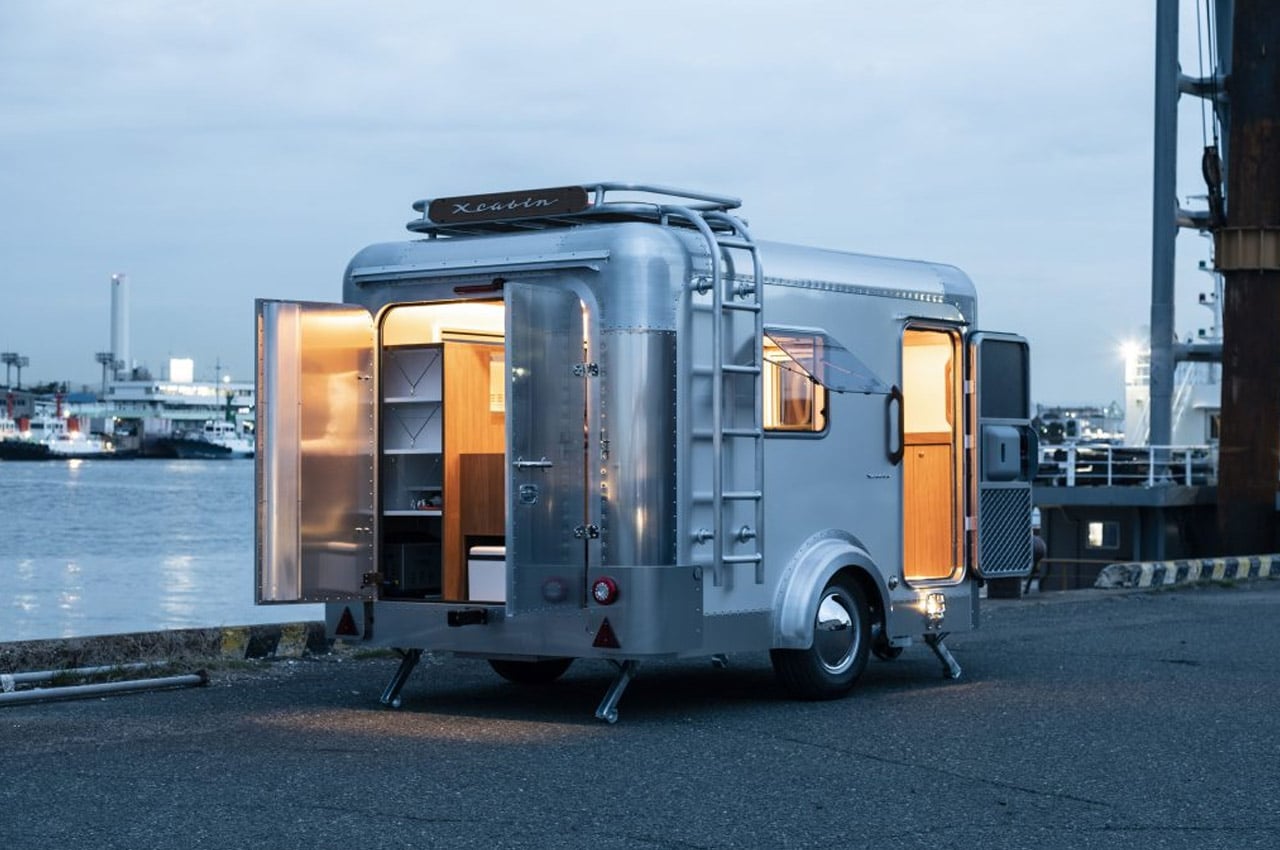
2. X-Cabin 300

Dubbed the X-Cabin 300, this lightweight and all-aluminum camping trailer by the Japanese startup X Cabin is everything you could want in a trailer. It is designed to completely transform and revamp your outdoor adventures by providing you with an innovative and sleek automotive with high-efficiency features.

Why is it noteworthy?

When you first catch a glimpse of the X-Cabin 300 you are attracted by its glistening riveted aluminum exterior and classic rounded corners, which instantly remind you of the Airstream trailers. However, the X-Cabin 300 is distinguished from them with a plain and boxier design, equipped with a high-efficiency floor plan that makes optimal use of the floor plan.

What we like

  • The X-Cabin 300 has a solid foundation with a steel chassis made by the renowned German manufacturer AL-KO

What we dislike

  • Hefty price tag, which isn’t preferred by everyone

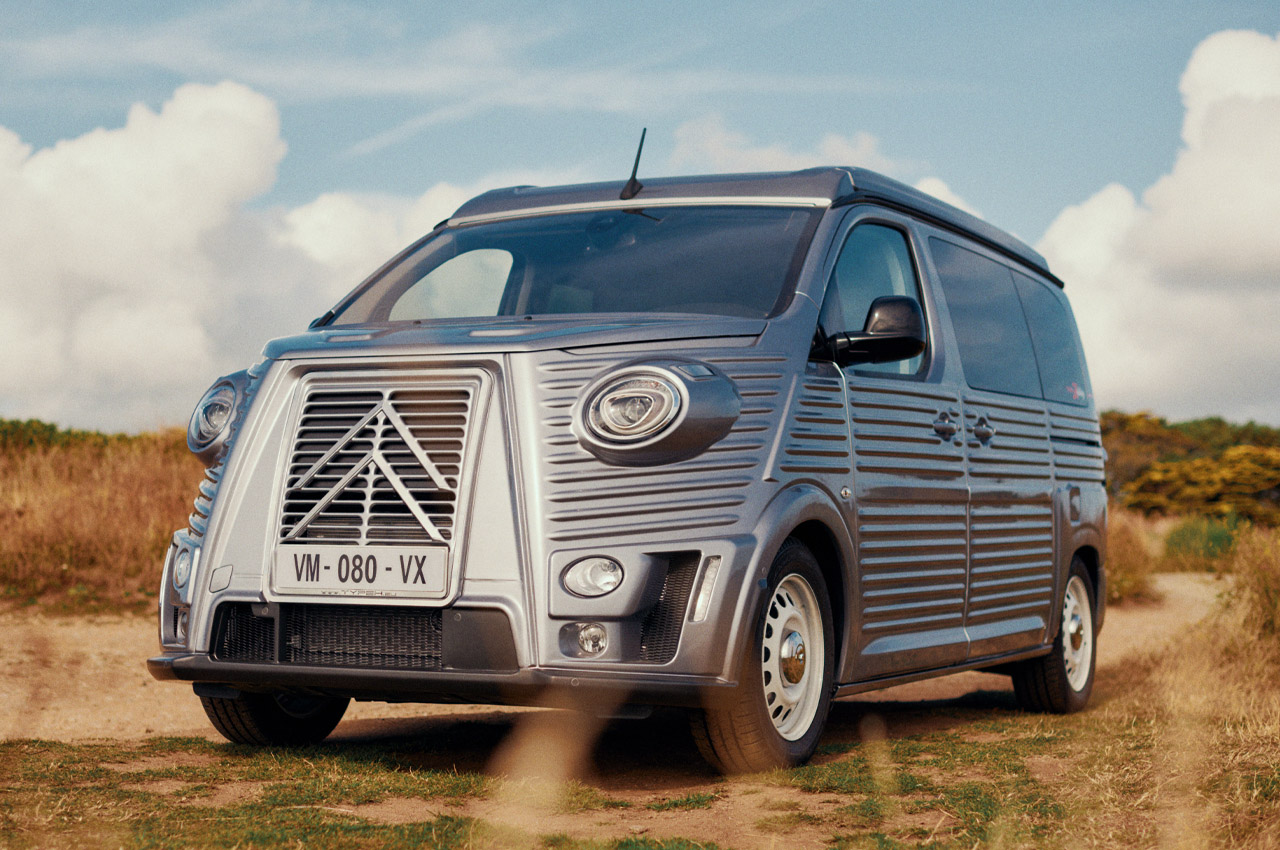
3. Citroën Type Holidays

Named the Citroën Type Holidays, this camper van is a beautiful tribute to the iconic Type H, which dynamically pushes the boundaries of alternative travel. This stunning masterpiece is inspired by the versatile Citroën SpaceTourer, and it is designed to offer complete comfort and loads of clever features that will be loved by travelers.

Why is it noteworthy?

This camper van features a retro exterior and interior that are designed to turn heads. The Type Holidays teaser displays a beautiful blend of modernity and heritage with its grey color, which is an ode to the Type H.

What we like

  • The two-row bench converts into a bed at night, and can also be removed to create storage space. The camper has smart space-saving features

What we dislike

  • The amenities are quite basic, and some people may want and expect more

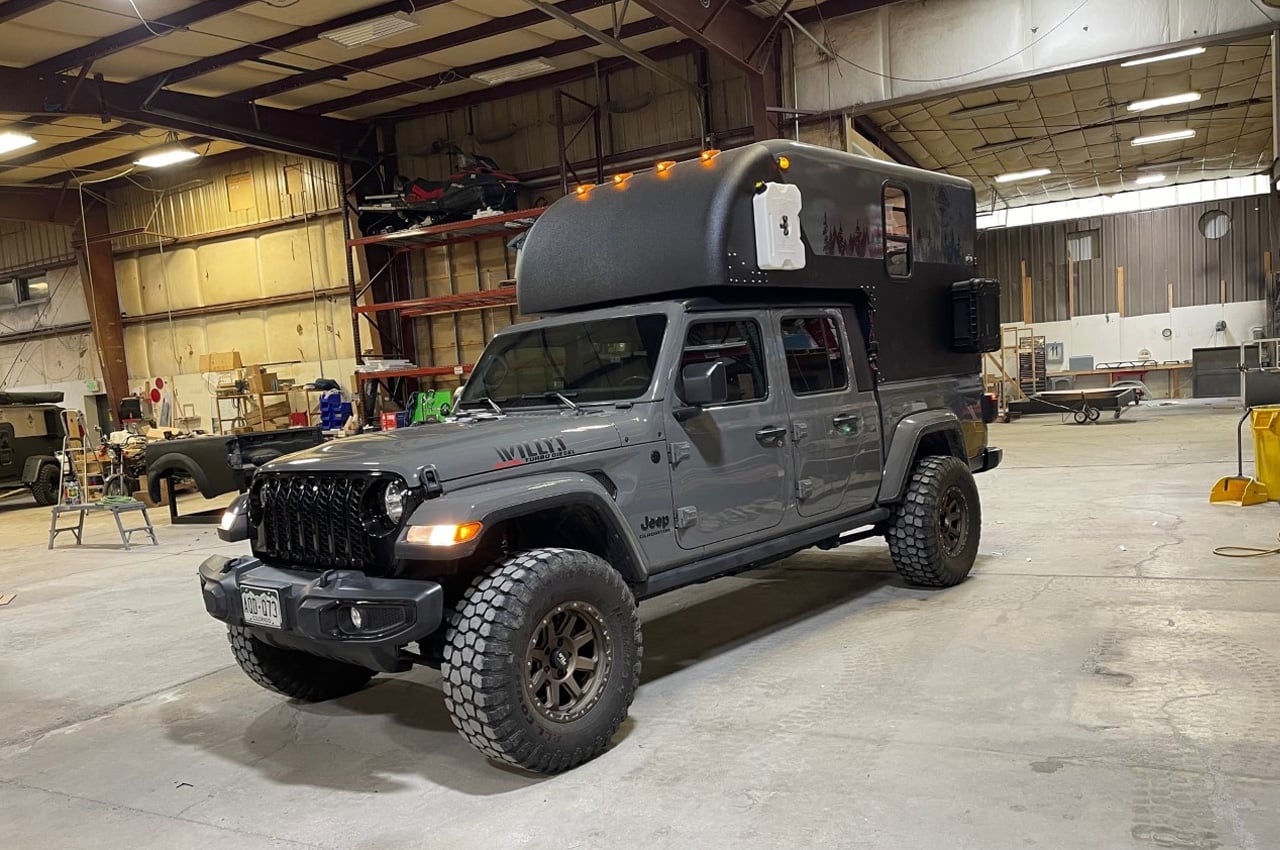
4. Ultralite TB50

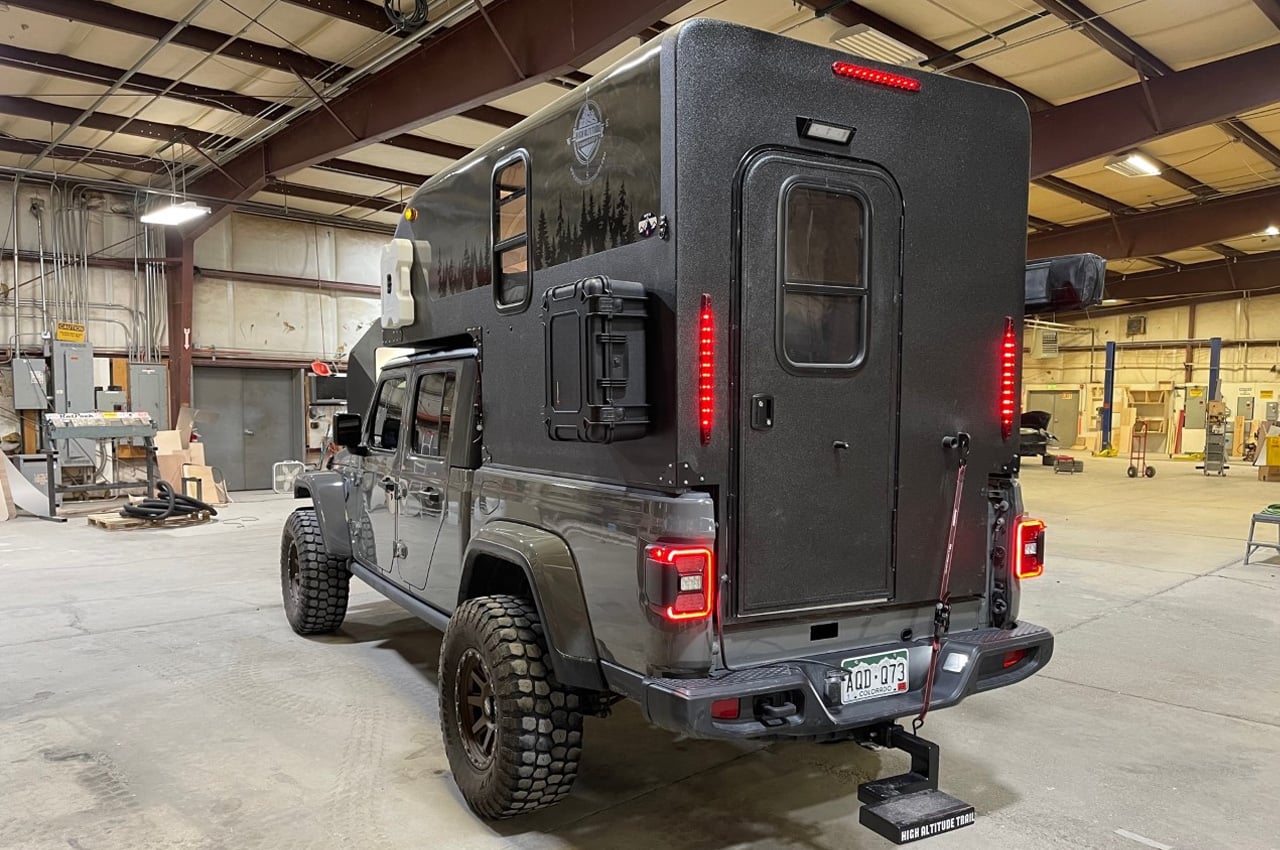
Named the Ultralite TB50, this camper takes a different route from the familiar pop-top designs. It features a single-piece composite truck bed camper shell that challenges norms and elevates truck camping to a whole new level. It has a fixed roof, four hard walls, and a floor resting above the truck bed.

Why is it noteworthy?

The Ultralite TB50 is a much better option than the flimsy tent fabrics. It features foam-insulated hard-walls, to offer protection from the elements with sacrificing the fun and thrill of being on the back of your truck through the night.

What we like

  • Provides a canvas to build  your dream camping setup with the Ultralite TB50

What we dislike

5. Earth Camper

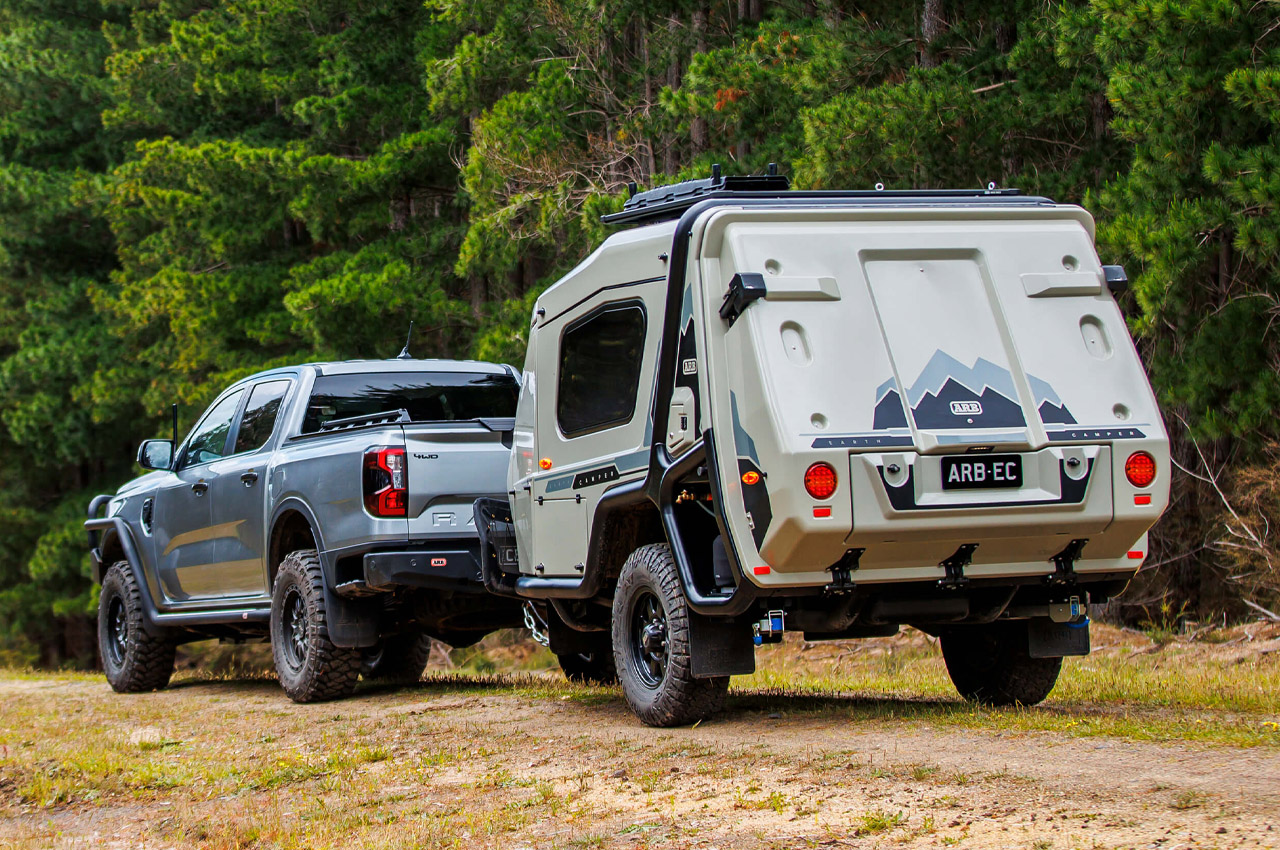
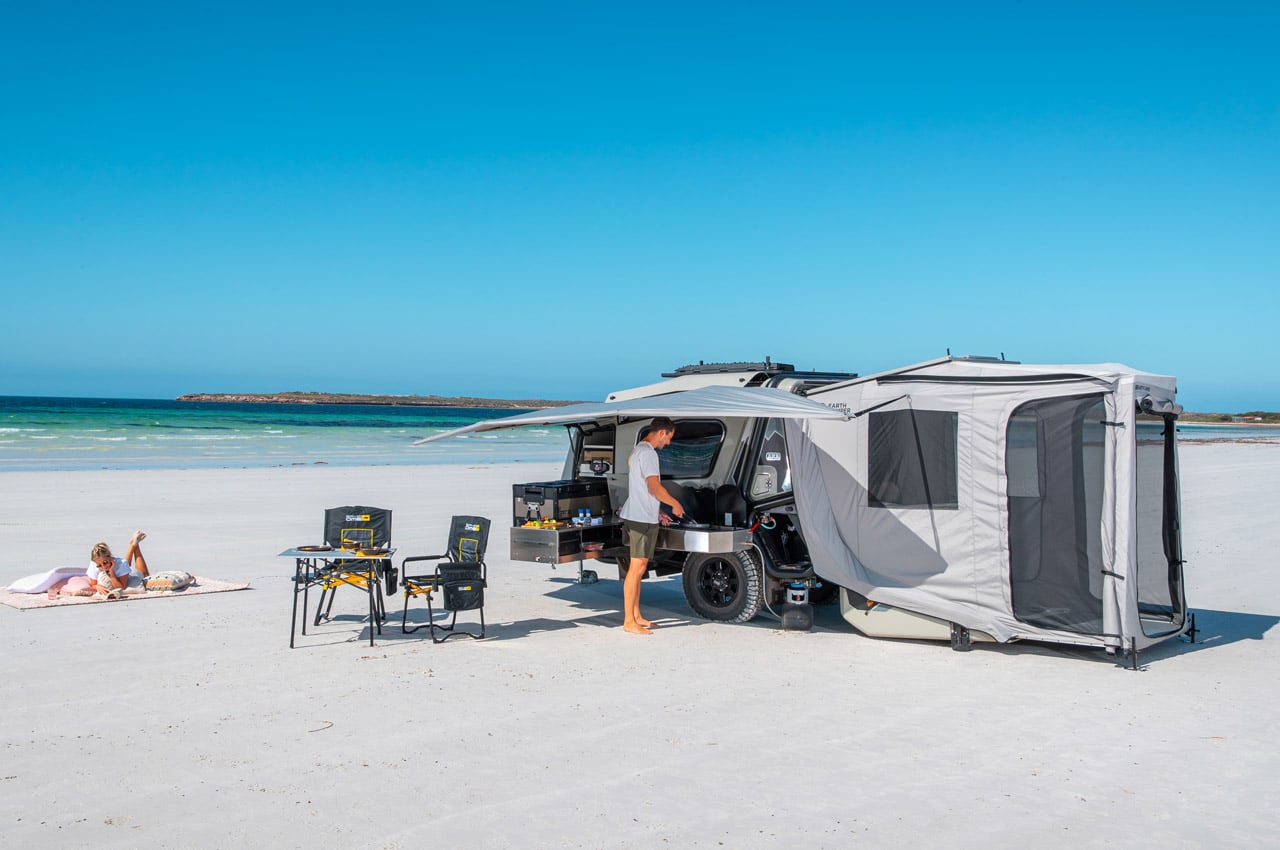
Dubbed the Earth Camper, this camper by ARB is designed to accompany and support adventures with their nomadic lives and off-road expeditions. Equipped with long-travel independent suspension, and all-terrain tires, the camper lets adventurers deal with and handle all kinds of terrains.

Why is it noteworthy?

The gray gel-coated fiberglass-reinforced plastic shell of the Earth Camper, inside a one-piece exoskeleton shell, ensures durability and longevity, while 25 mm thick walls offer exceptional temperature and noise control.

What we like

  • Equipped with 120W roof-mounted solar panels
  • It is designed to cater to all your off-grid needs and requirements

What we dislike

  • Hefty price tag, which may not be preferred by most people
  • It is only available in Australia, so limited availability

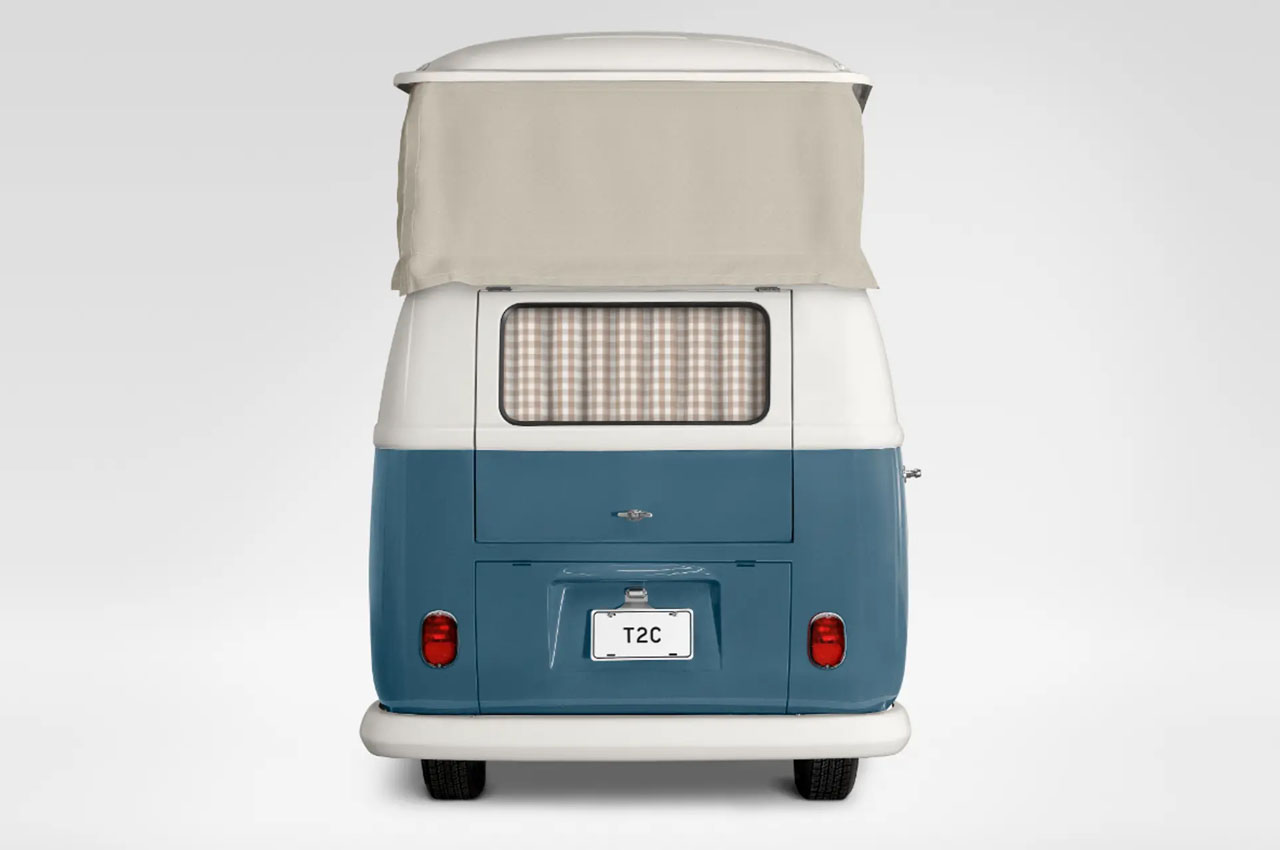
6. T2.3

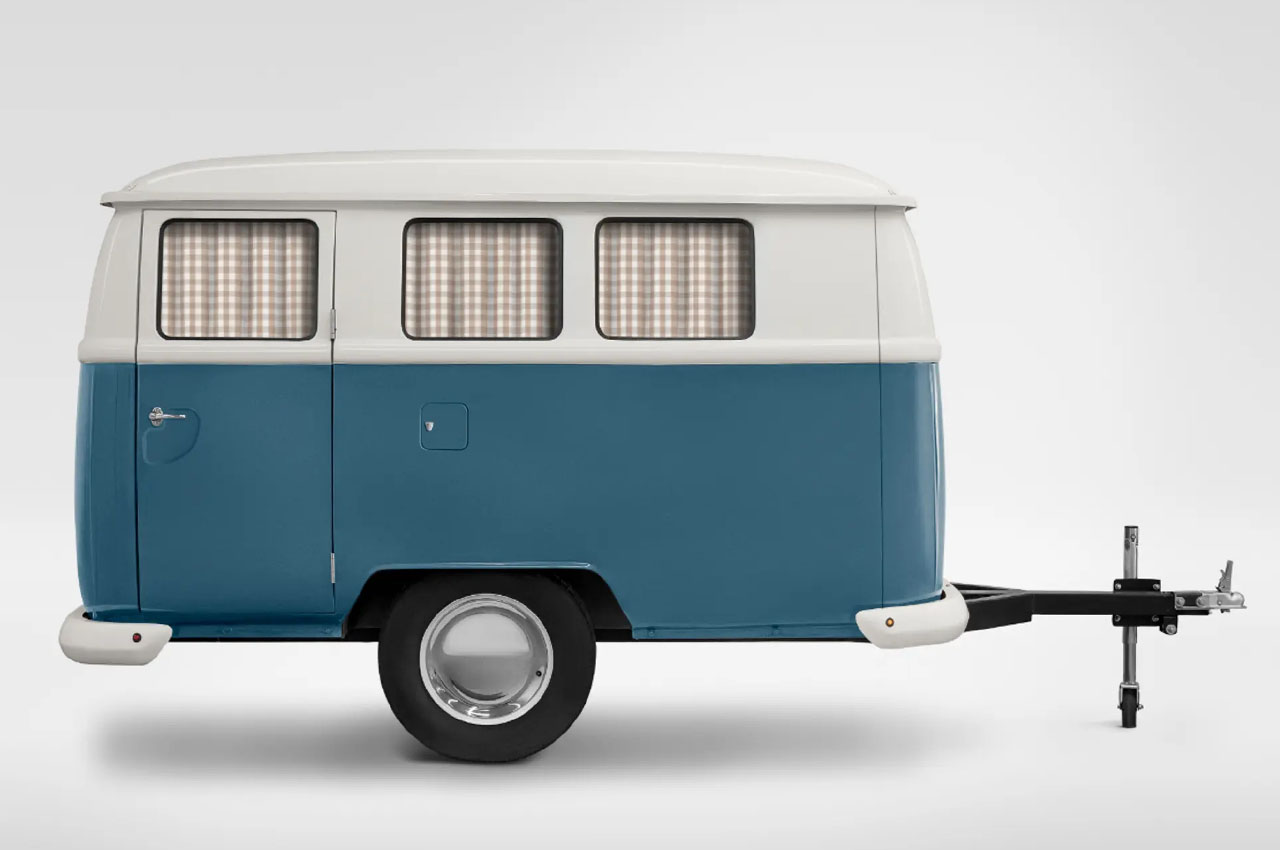
Hearth Gardella and Ryan Schassen designed a VW-themed pop-up camping trailer from aircraft steel construction in a compact form factor that is quite swift to build. It functions as a sizable inroad, and has a “lightweight, affordable, and timeless design.” It is available in three different variants with one classic pop-up roof which elevates the internal standing headroom to 6 feet 4 inches.

Why is it noteworthy?

Named the T2.3, the camper is inspired by the 1940s Volkswagen bus, and it features aero-grade steel panels. This ensures that the camper is lightweight and durable! Since it is equipped with steel panels, the camper and its pop-up roof are faster to produce, and also quite easy to tow behind a compact electric vehicle.

What we like

  • VW-inspired aesthetics
  • Features a pop-up roof

What we dislike

  • Only one of the three models features a kitchenette

7. The Habiton

Named the Habiton, this mini camper is an excellent option for singles and couples who want to take up a life on the go. The camper has a sleek design, and is an innovative modular concept that will offer you the comfy and cozy feeling of being at home when you’re on the road!

Why is it noteworthy?

At the heart of the Habiton allure is its commitment to the “Travel small, live large” philosophy of Bürstner. This micro camper features an inflatable roof tent, seamlessly integrated into the vehicle’s silhouette, adding a touch of whimsy and practicality.

What we like

  • You can effortlessly park it in multi-story car parks
  • Cleverly uses space

What we dislike

  • Being situated above the vehicle, it may be difficult for older people to enter/exit the camper

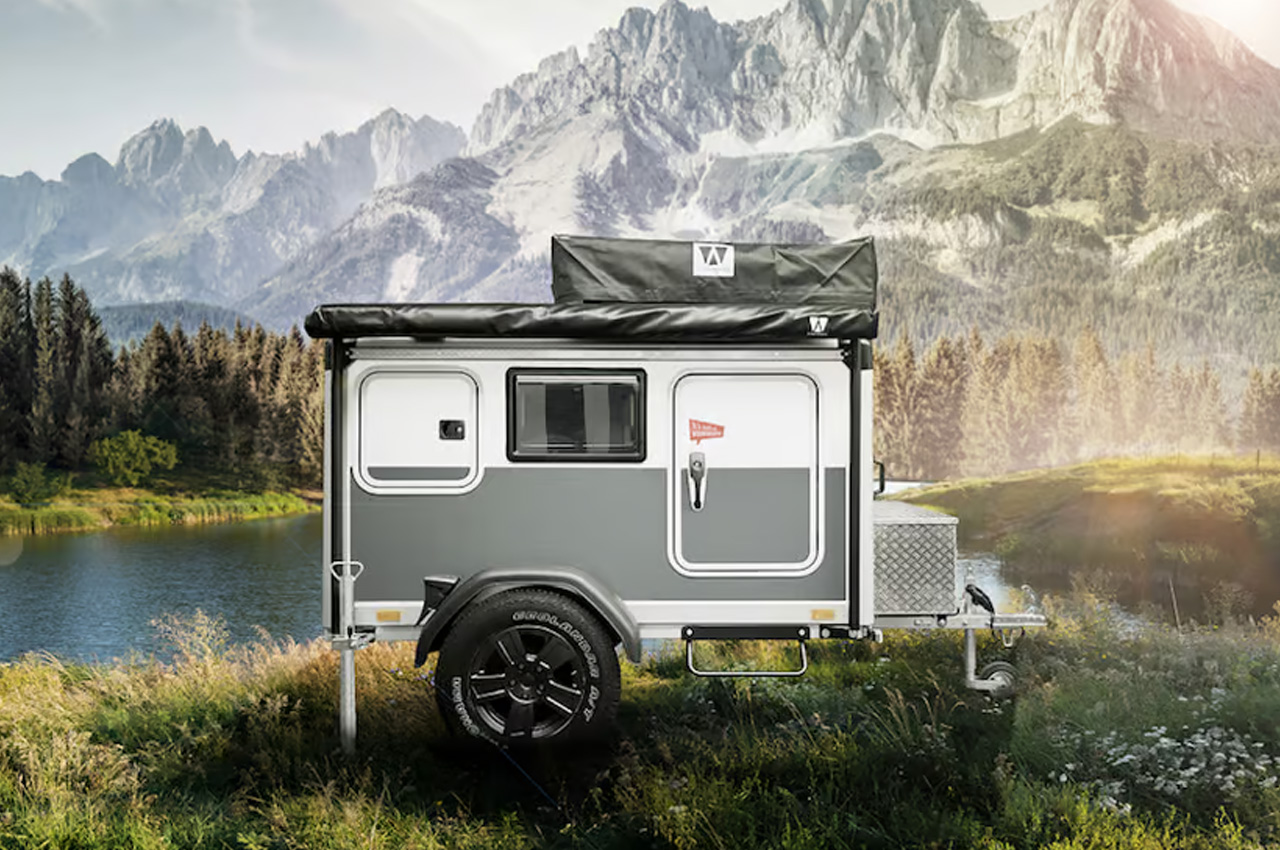
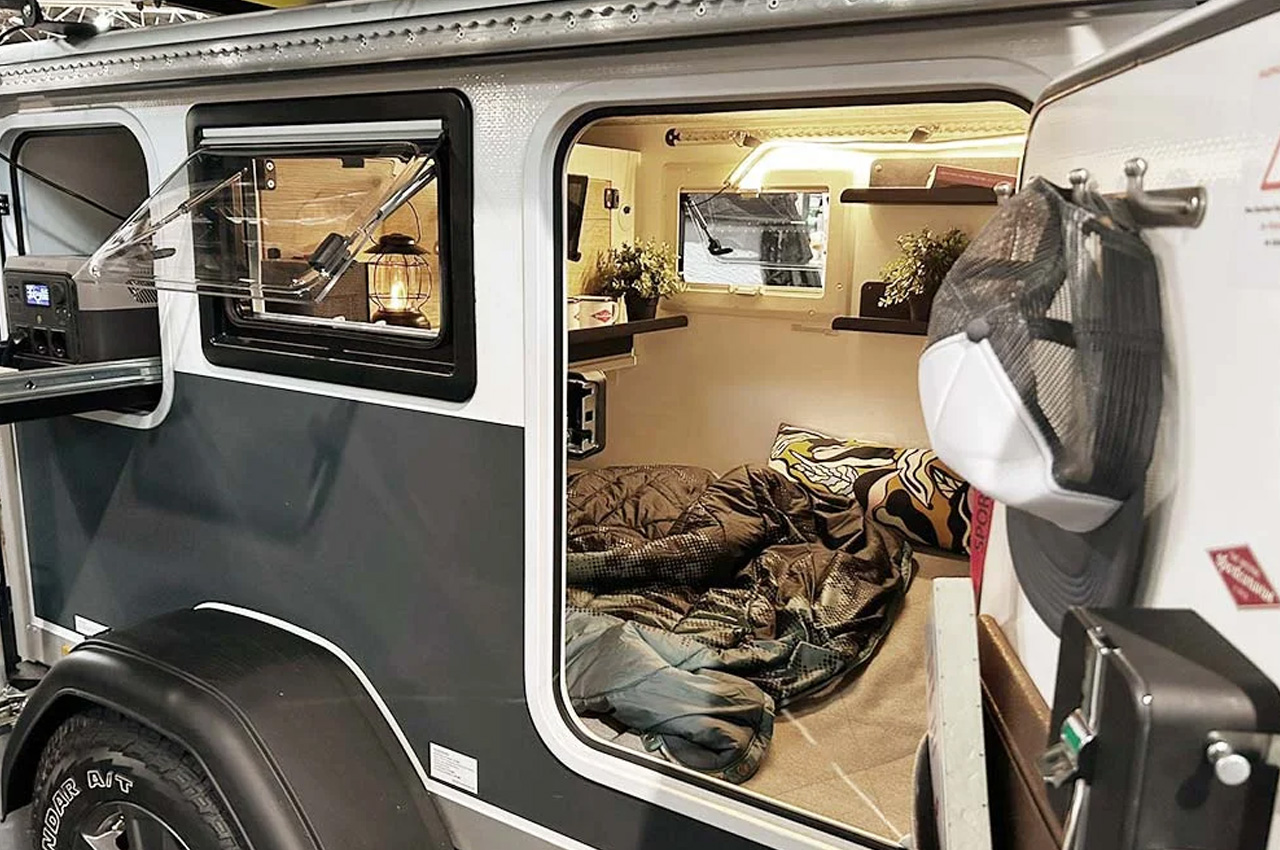
8. Cube 1

Designed by the master crafters at the German outfit Sportcaravan, the Cube 1 is one of the tiniest trailers out there. The Cube 1 features a 320-odd kg body, and although it may not be super small, it is tiny and compact enough to be accommodated in a standard garage or an underground car park.

Why is it noteworthy?

Measuring just 10.5 feet in length and 5.4 feet in height, the Cube 1 pushes the boundaries of conventional micro-caravans and establishes new standards with its tiny dimensions and ease of usability. The Cube 1 “requires a trailer license and can easily be towed by a small car or an electric vehicle.”

What we like

  • Compact and comfy trailer design
  • Features an  optional roof tent that builds space in the compact body

What we dislike

  • The trailer size may be too tiny for some

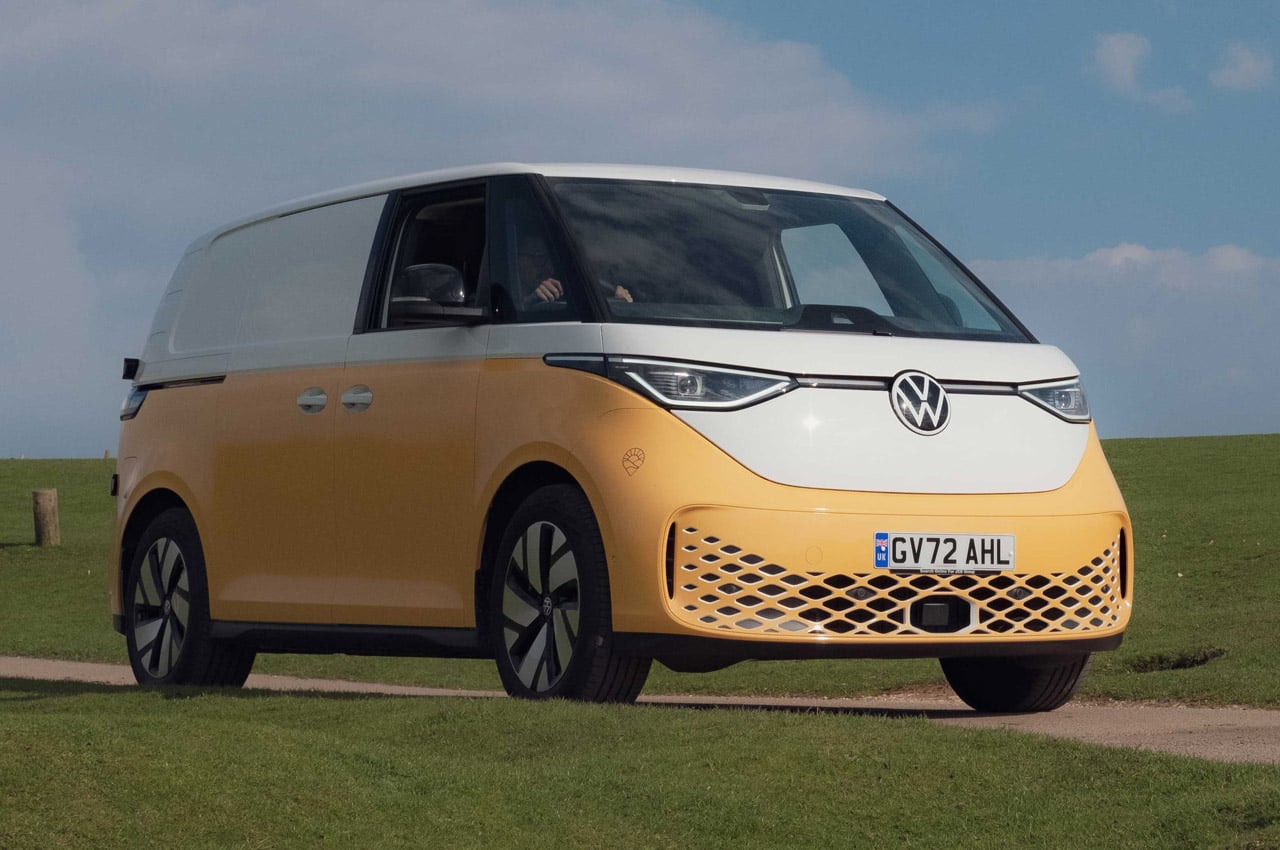
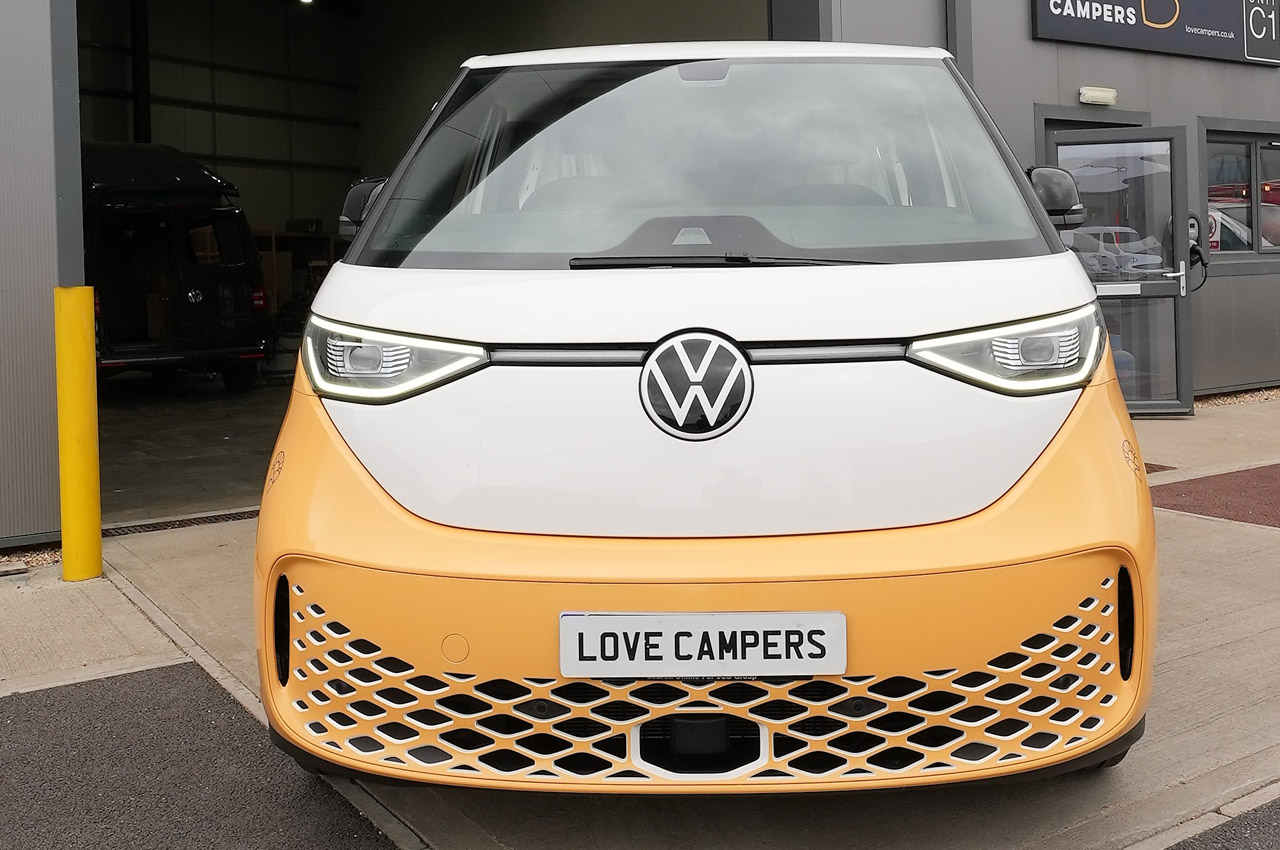
9. Love Campers VW ID. Buzz Camper Van

Meet this wonderful collaboration between Love Campers and Wild Drive. Called the Love Campers VW ID. Buzz camper van, this fun and whimsical camper features a lime yellow and bright white dual-tone exterior, as well as a matching interior. It can be rented in the UK!

Why is it noteworthy?

The interior has been created to maximize the space available. A sofa subtly slides out, converting into a double bed, while the kitchen area contains a sink with a foldaway faucet and an induction hob.

What we like

  • It is a sustainable automotive intended for couples and solo traveler

What we dislike

  • The camper only features a portable toilet, which isn’t a comfy option for everyone

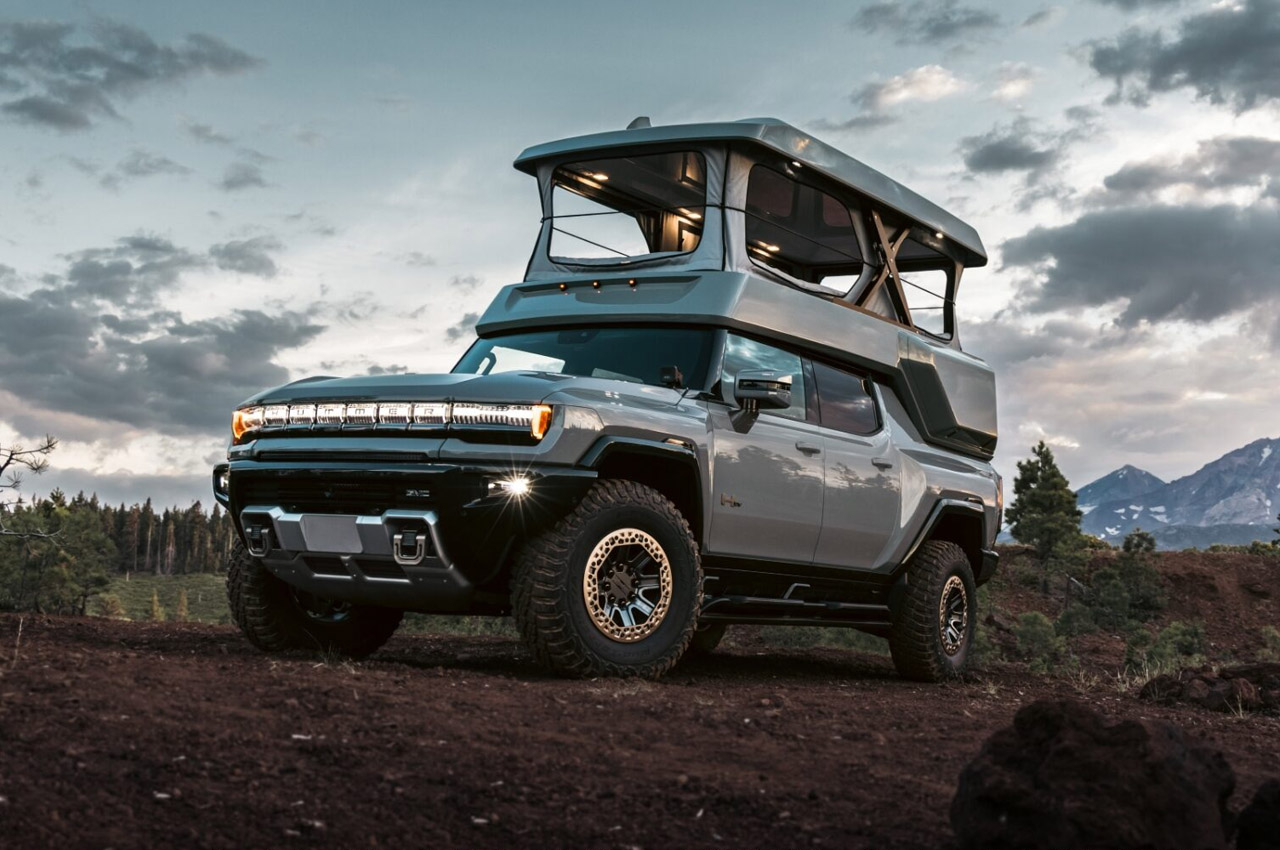
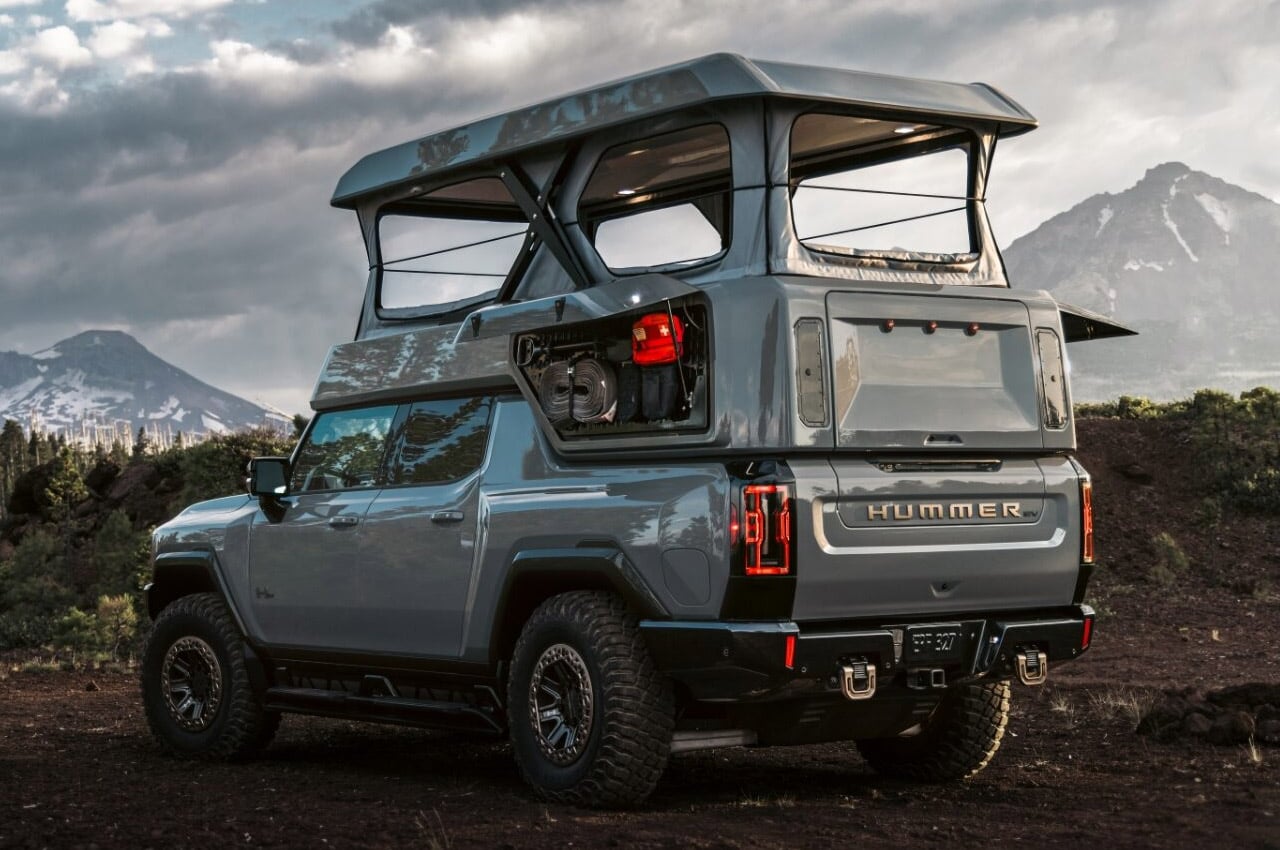
10. The GMC Hummer EV EarthCruiser Upfit

Meet the GMC Hummer EV EarthCruiser Upfit, designed by EarthCruiser and Hummer. The powerful car combines the raw power of an all-electric Hummer pickup with the comfort and coziness of an EarthCruiser truck camper!

Why is it noteworthy?

As you step into the camper, you are welcomed by 80 inches of headroom space at the entry, and 76 inches as you enter the hallway. You also get a tri-layered pop-up roof, which adds a feeling of spaciousness to the camper, creating a comfy atmosphere within.

What we like

  • Equipped with a 650W solar system and a convenient flat-pack toilet as well

What we dislike

  • There do not seem to be any options for customization

The post Top 10 Camping Automotives That Are The Ultimate Companions On Your Outdoor Adventures first appeared on Yanko Design.
Koenigsegg Envera portable EV charger sets new precedence for convenience, versatility and luxury

The number of electric cars on the roads is increasing exponentially, and so is the need for charging stations required for them. Options for personal charging stations that can be installed in your garage are also rising. Not only the conventional manufacturers, but the supercar makers also have the transition to electric vehicles as their long-term agenda. Mercedes Vision EQXX Concept, Maserati GranTurismo Folgore, Ariel Hipercar, and of course the Tesla Roadster are some good examples.

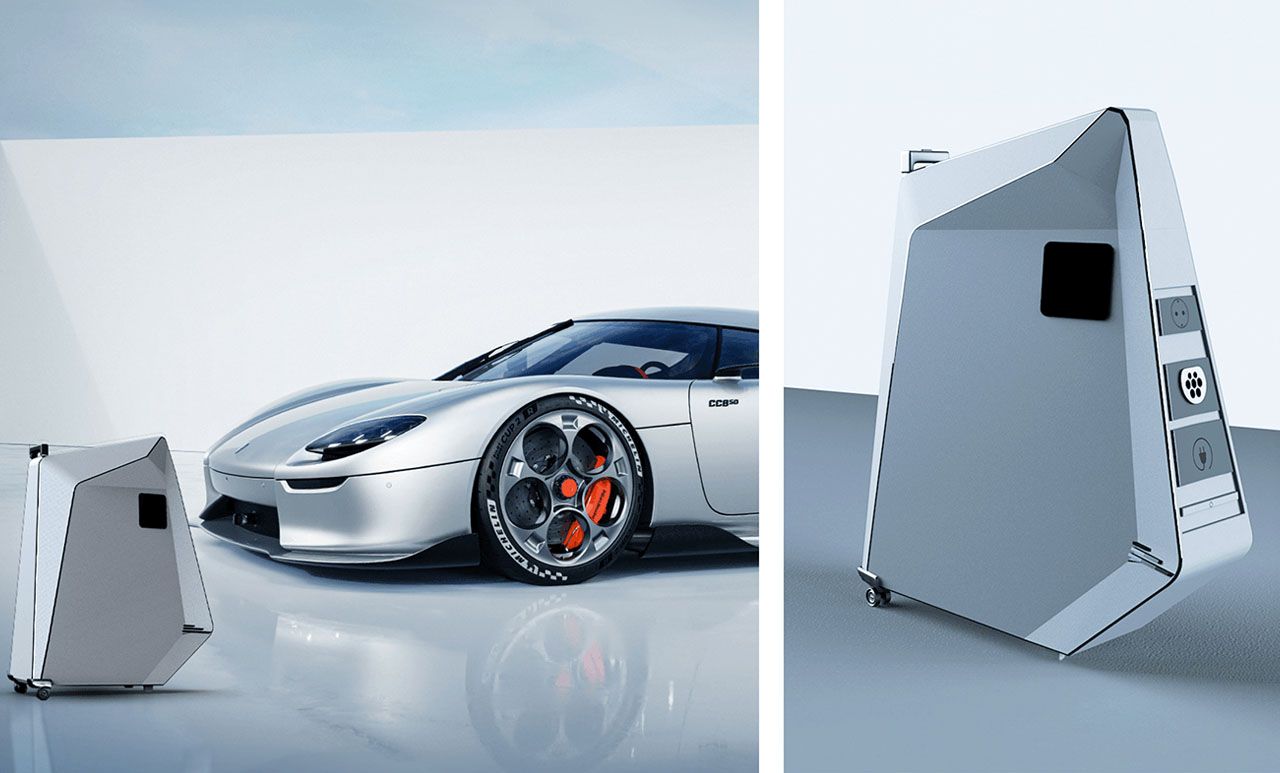
Along the same lines, a pair of designers have proposed a portable battery charging station for the Koenigsegg brand known for its high-performance vehicles. The reason is, to enhance the whole experience of buying an electric supercar and the premium experience of plugging it into a portable charger.

Designer: Aditi Aagrwal and Harsh Ambarkar

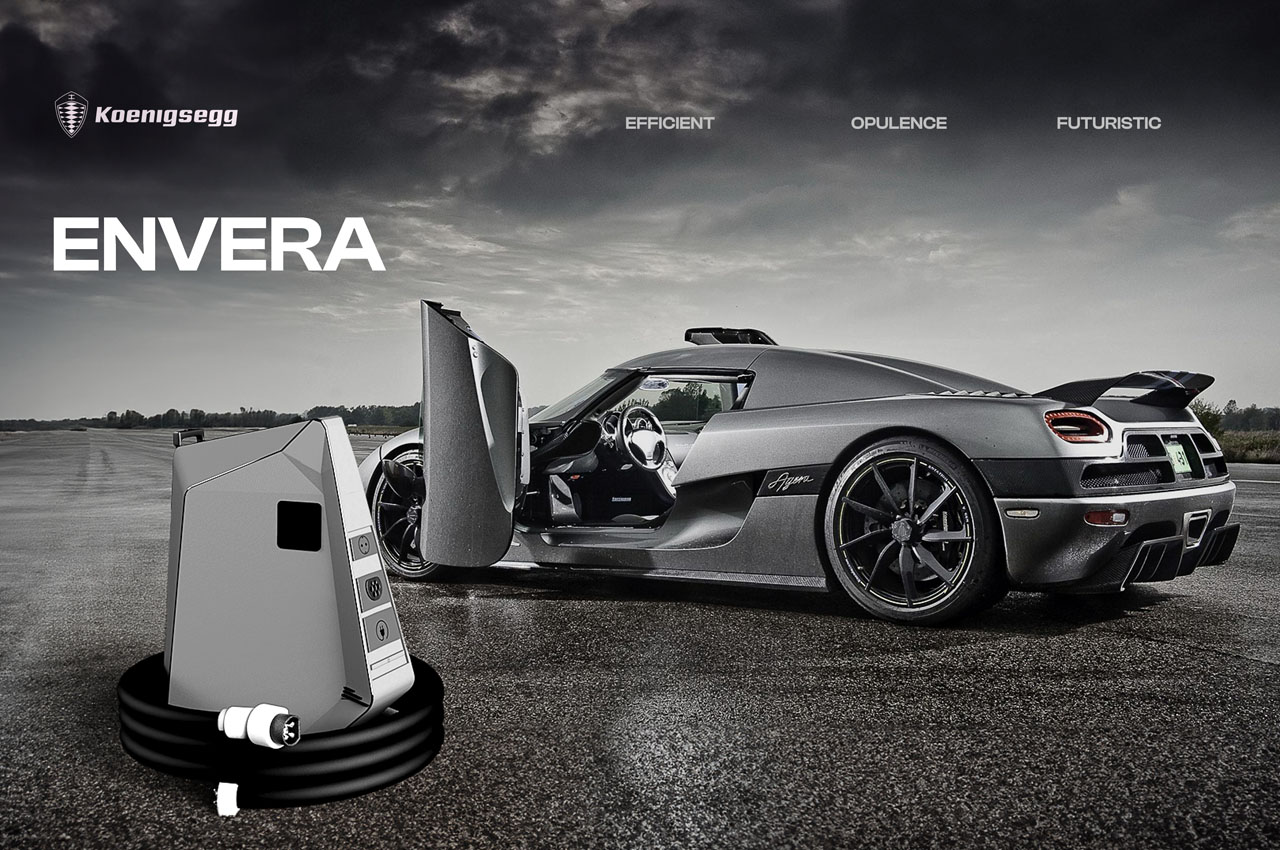
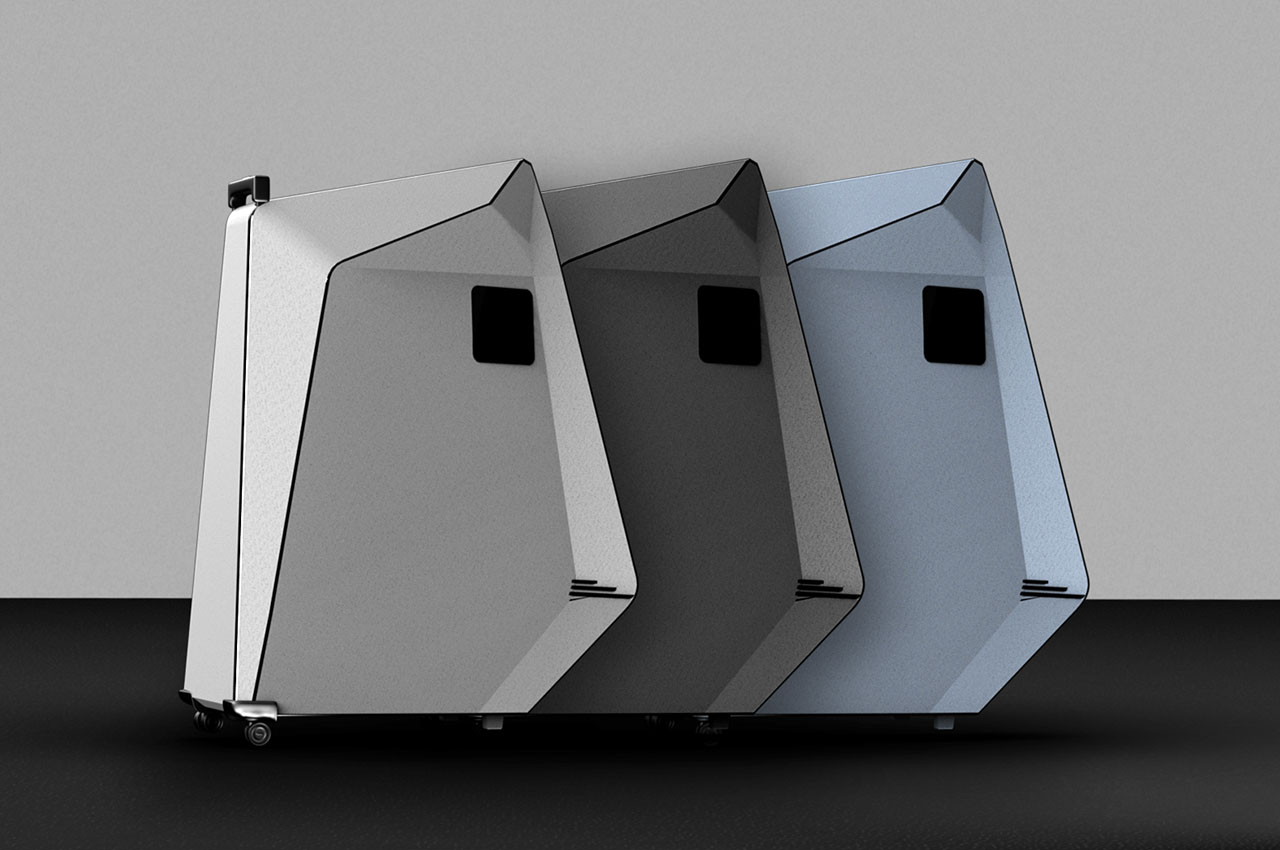
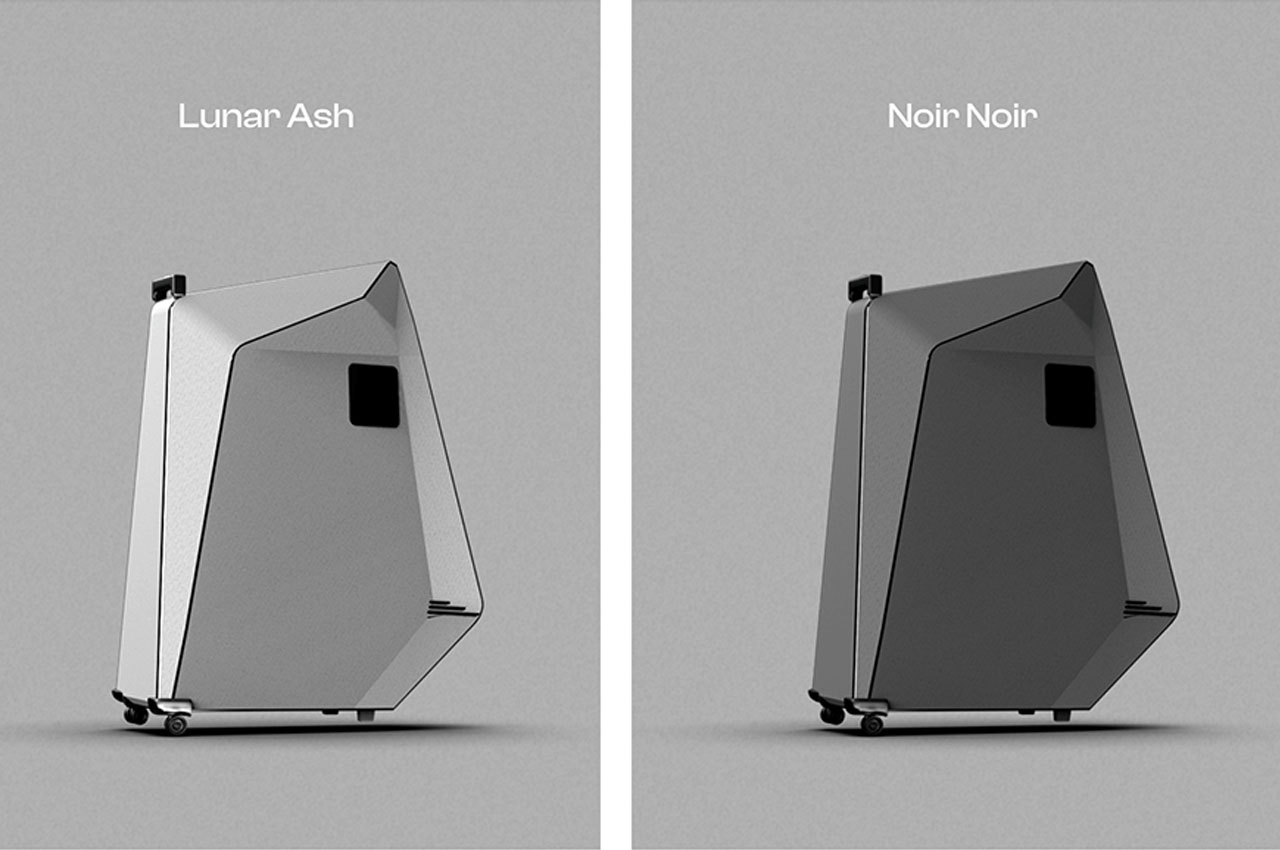
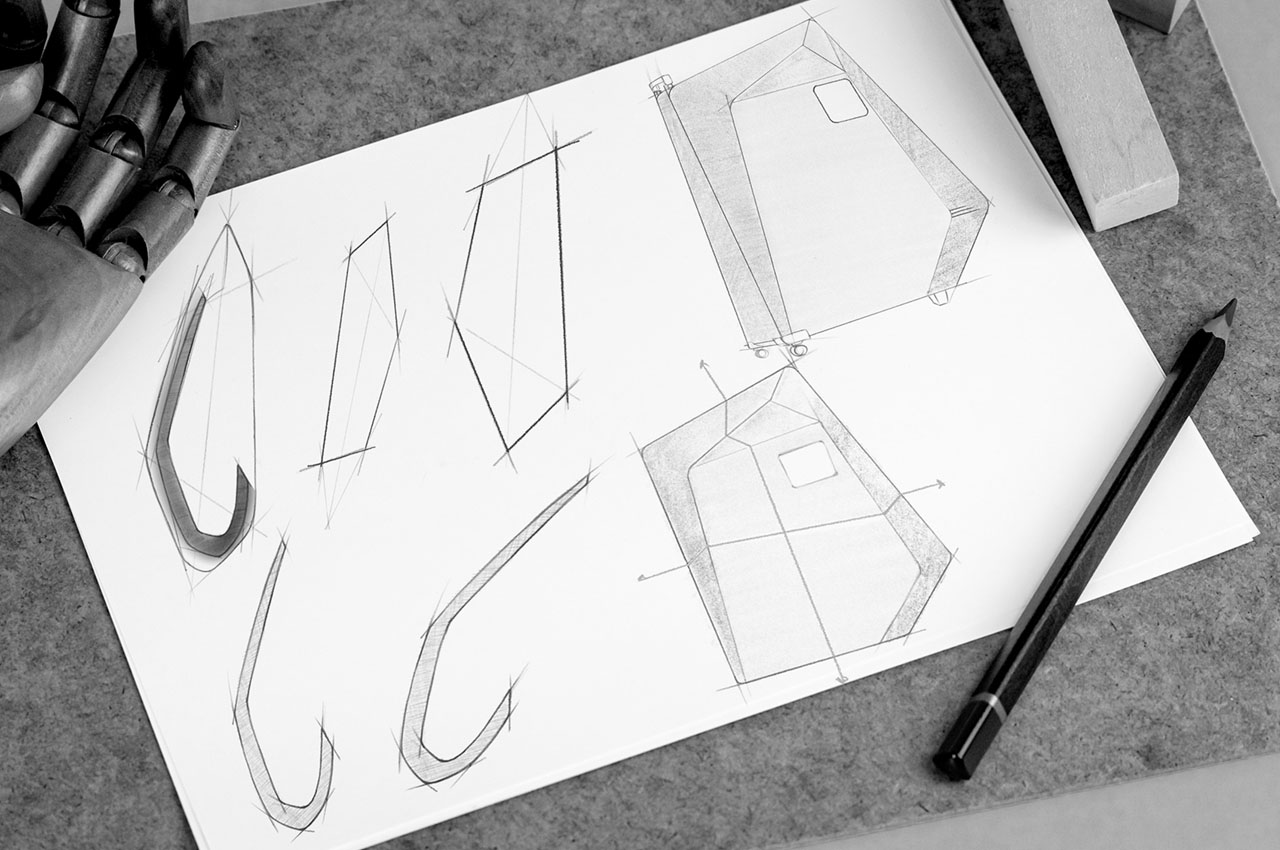
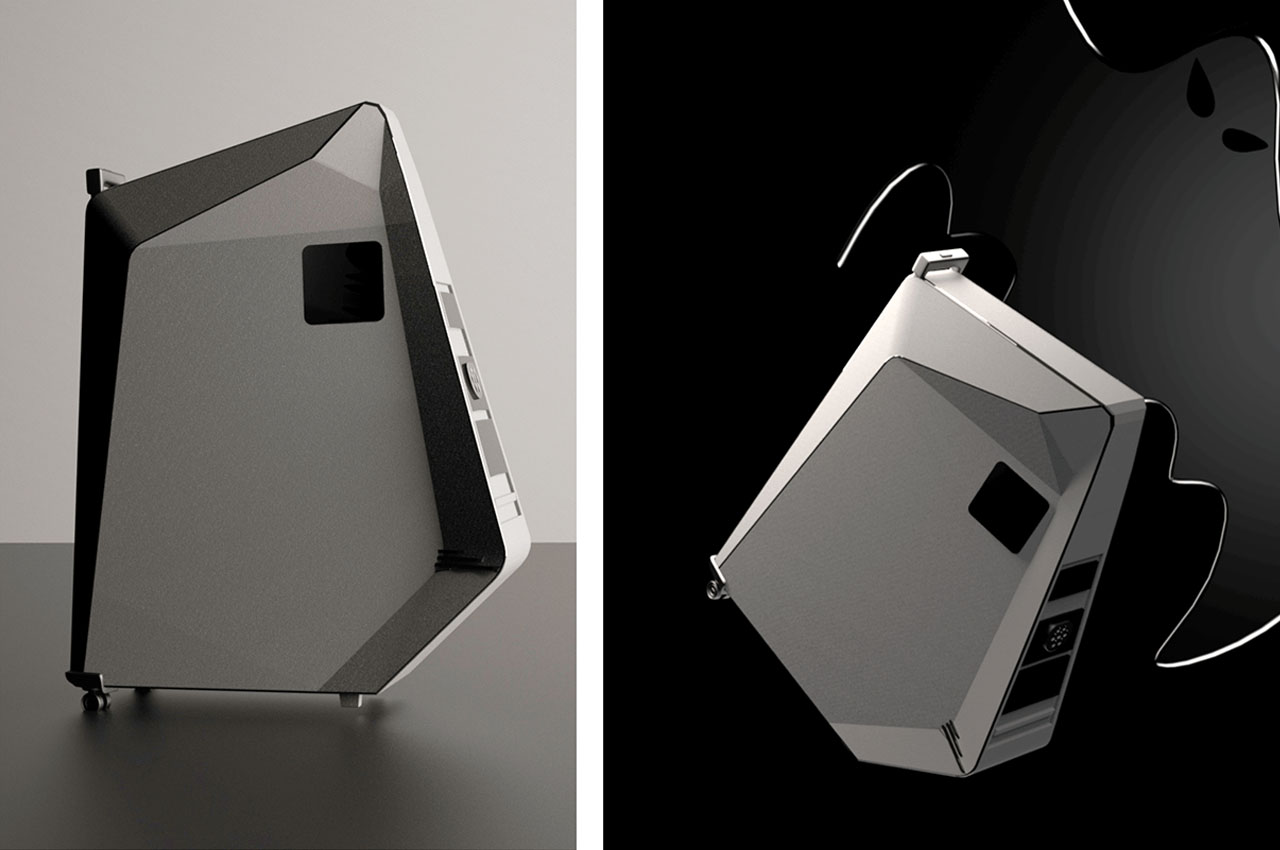
Just like the Koenigsegg brand known for its groundbreaking engineering innovations like the Direct Drive transmission and Freevalve engine technology, this concept charger also boasts innovative features including dihedral synchro-helix doors. The use of advanced materials like aerospace-grade alloys and carbon fiber further adds to the exclusivity. The form is important to make it distinct from other similar products, hence the aggressive design honed by the sleek and aerodynamic lines.

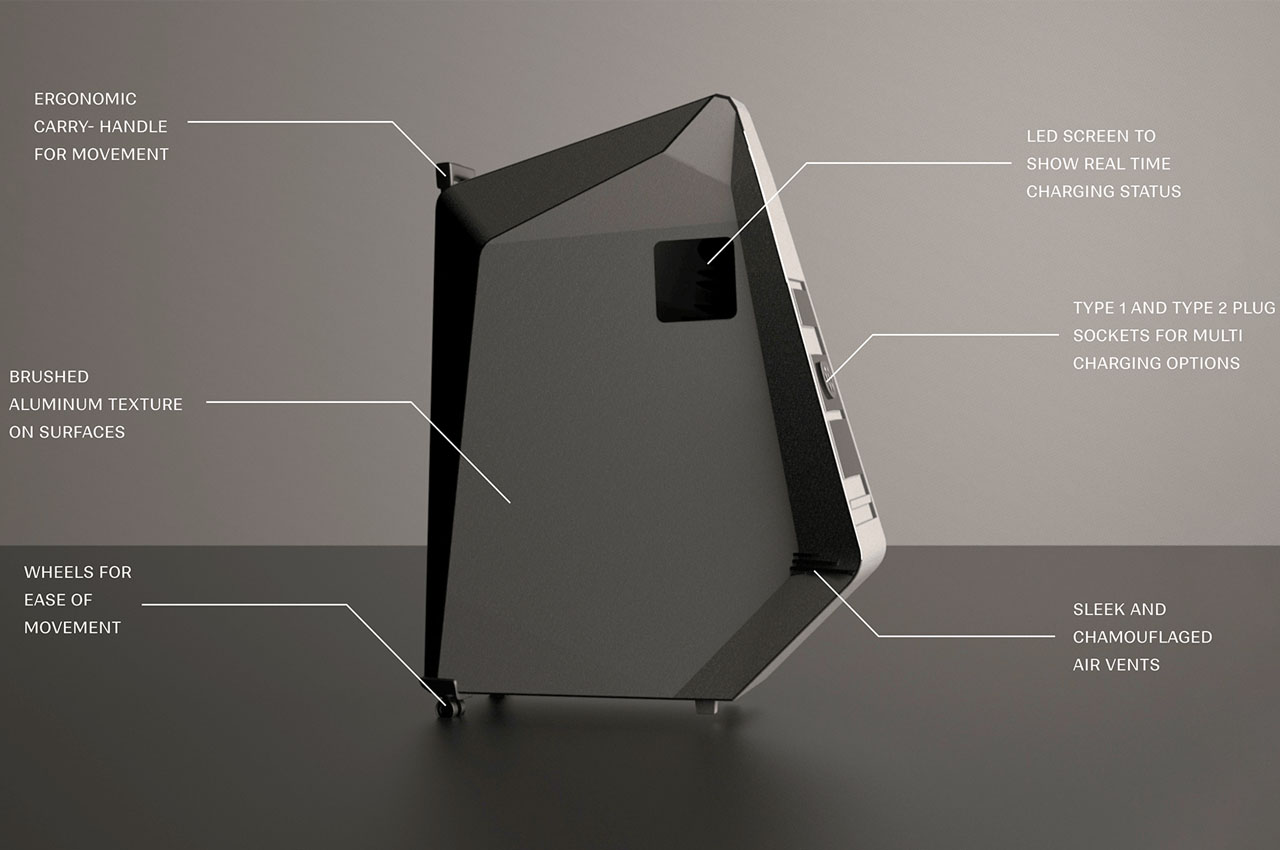
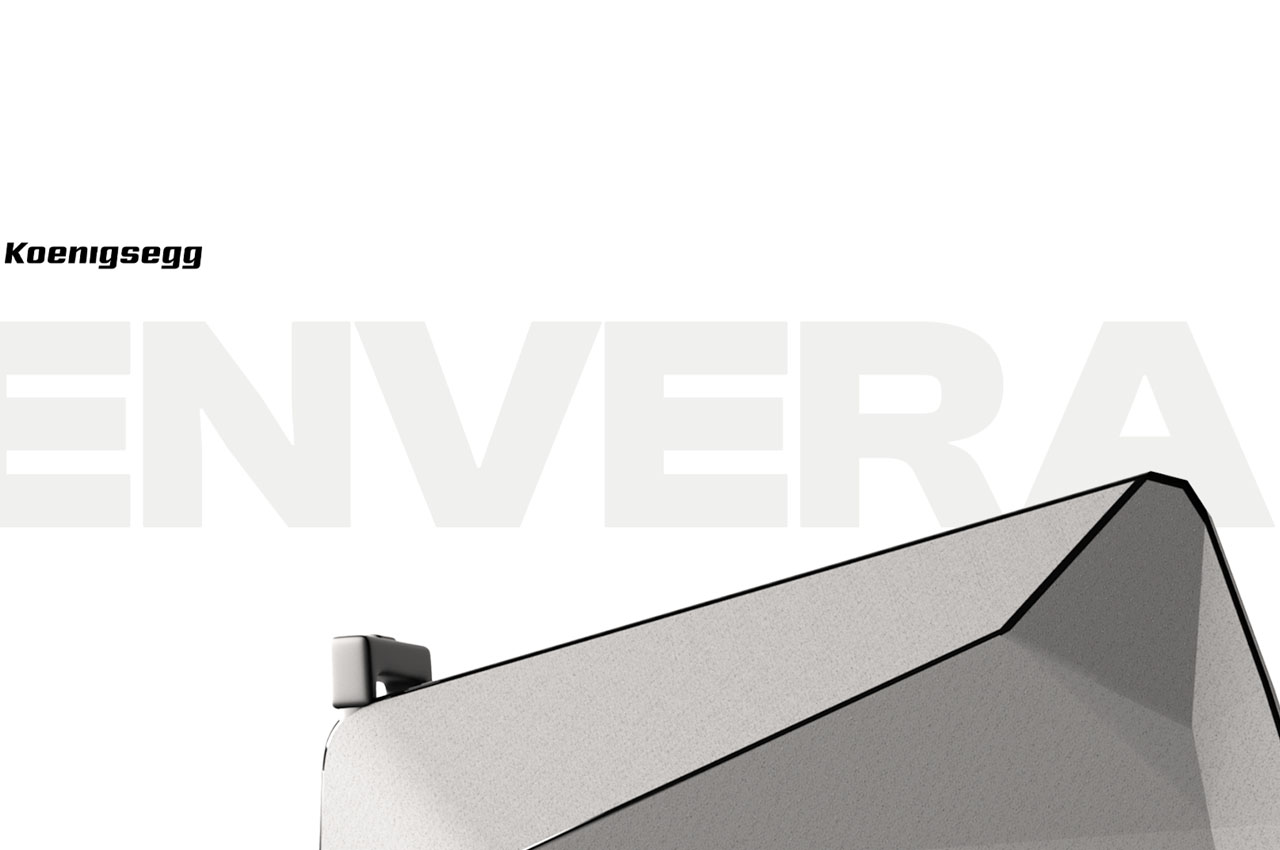
Dubbed the Envera, this portable EV charger is tailor-made for on-the-go charging of your power-hungry hypercar or supercar. Capable of supplying 7.2 kW of power it supports Level 2 charging with voltage compatibility from 100 – 400 volts AC. It has Type 1 and Type 2 AC charging ports too and an optional DC rapid charging adaptor. The designer is also mindful of safety, hence the inclusion of overcurrent, over-voltage, short circuit and ground fault protection. In case the charger overheats, there is an automated shutdown in place.

The sleek body of the charger is inspired by the Koenigsegg Agera, and is not limited to just charging this speed beast. It can charge any other Koenigsegg supercar, or any other electric car from other brands. It is built from an IP65-rated shell for premium protection against wear and tear with the ability to operate in temperatures from -20 Degrees Celsius to 50 Degrees Celsius. To make charging the least of the hassles, it comes with a 20-foot flexible charging cable. Just like other portable chargers, this one gets an LCD to show the real-time charging status and diagnostics.

Truly, the Koenigsegg Envera sets new standards for portable EV chargers, giving us a glimpse of how cool the future is going to be. Of course, the unparalleled convenience, versatility of use, and luxury quotient of using a premium brand’s product will always be there.

The post Koenigsegg Envera portable EV charger sets new precedence for convenience, versatility and luxury first appeared on Yanko Design.
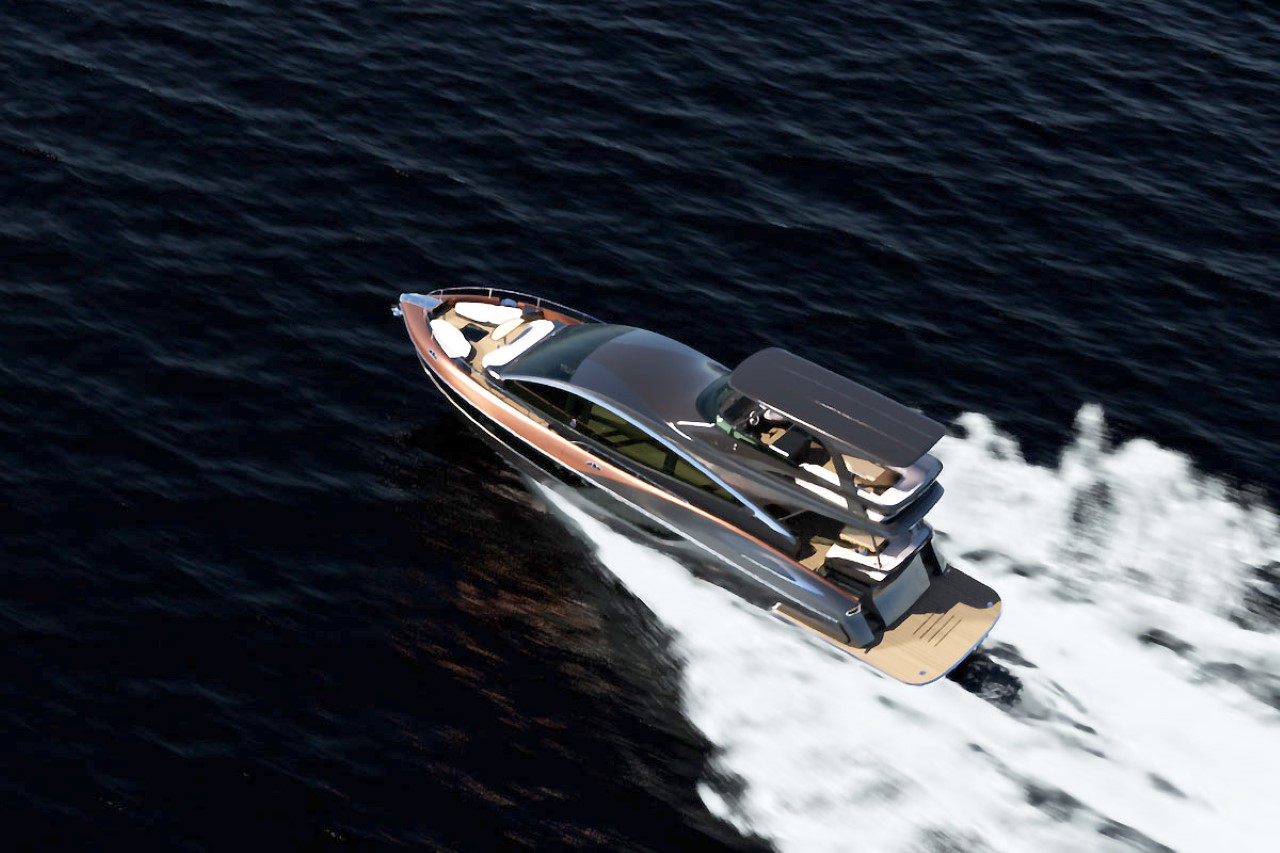
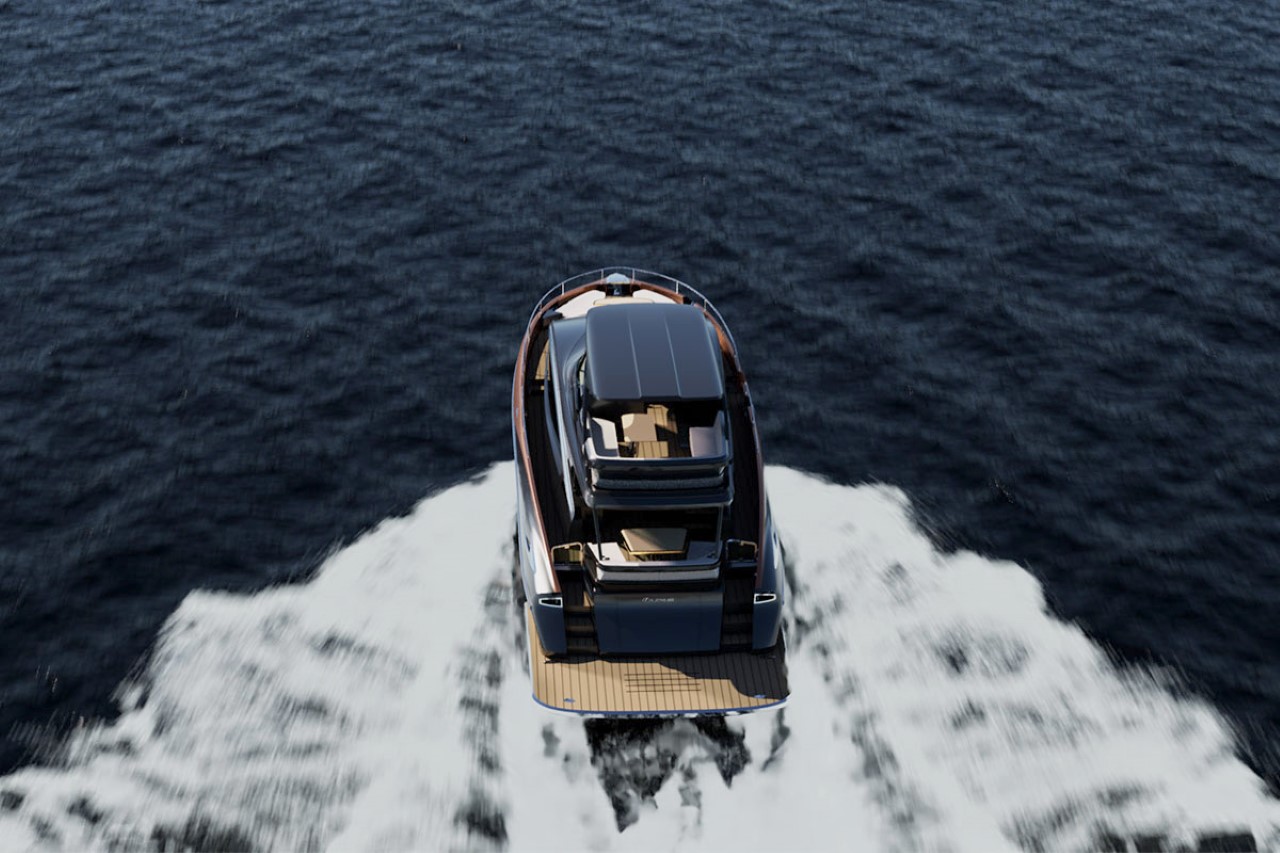
Lexus Brings Its Brand Of Luxury To The Seas With The LY 680 Yacht

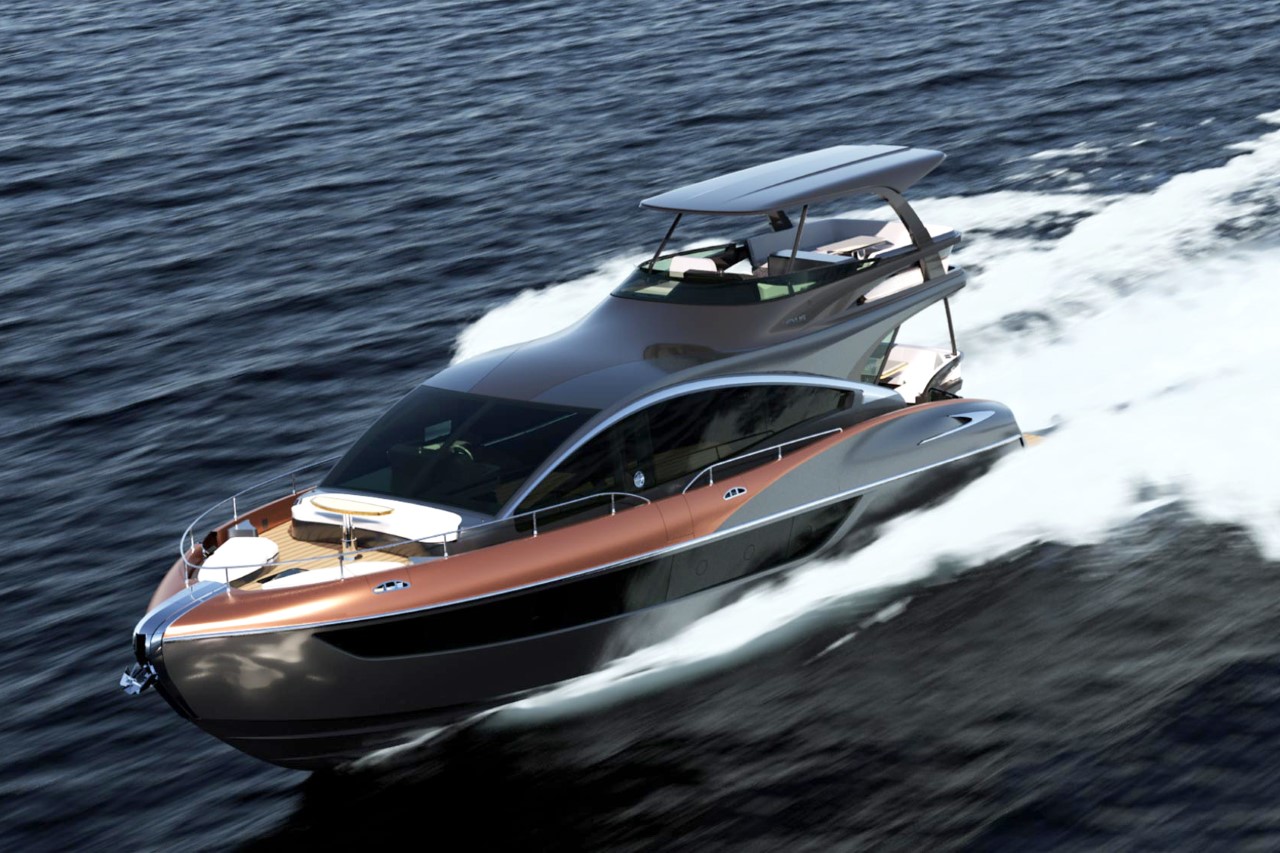
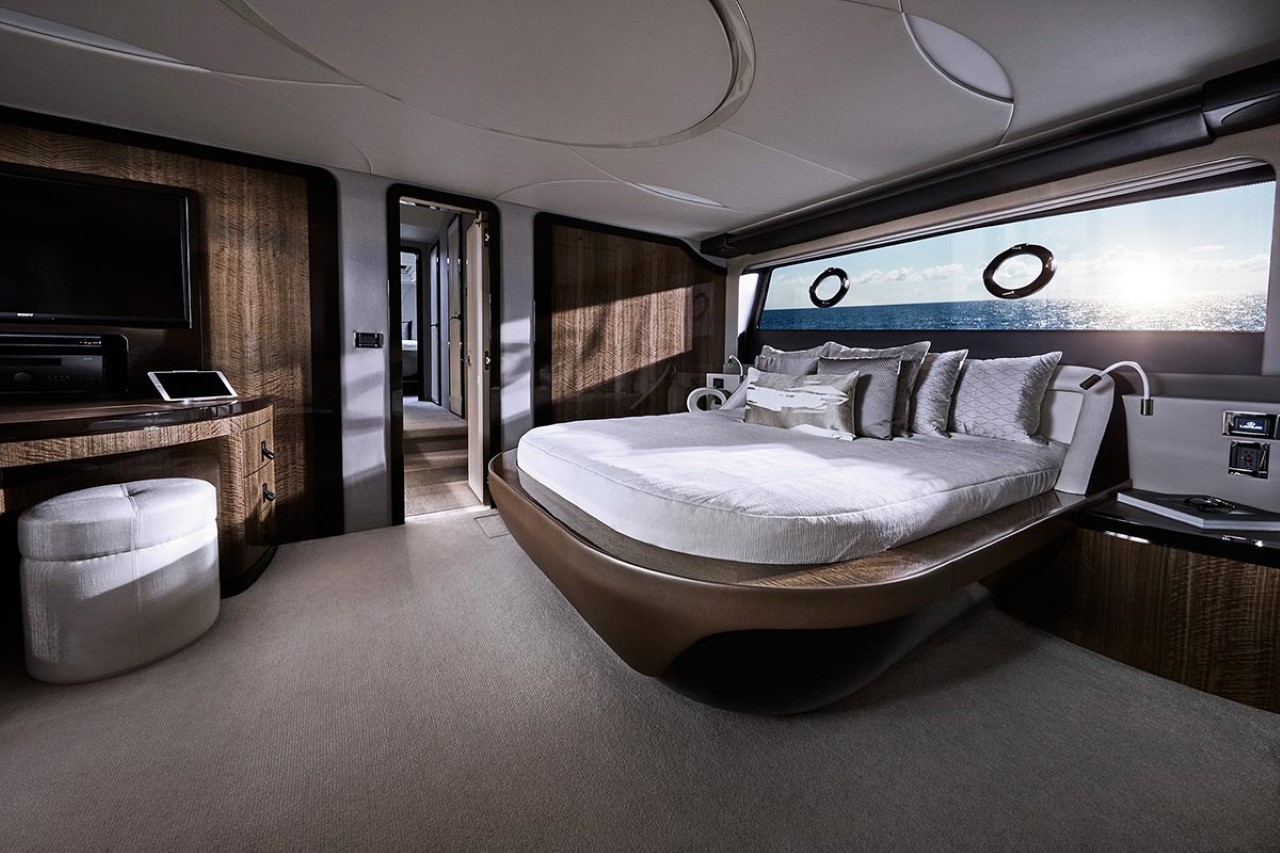
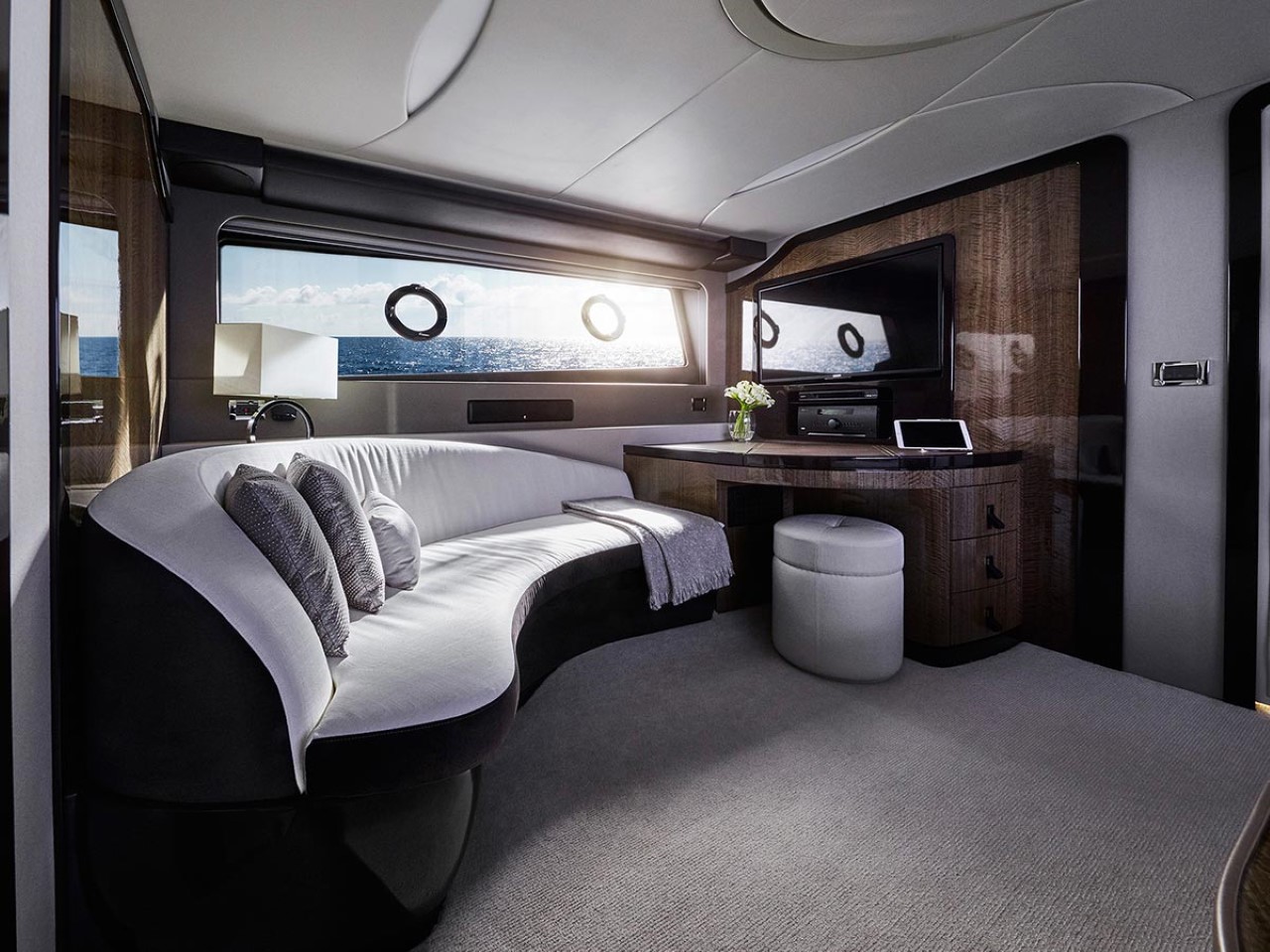
Looks like automobiles are yesterday’s news because Lexus is making waves (literally) in the world of luxury yachts with its newly unveiled luxury yacht – the LY 680. This new vessel builds upon the success of its predecessor, the LY 650, offering even more space and innovative features for those seeking the ultimate in on-water relaxation and entertainment.

Designer: Lexus

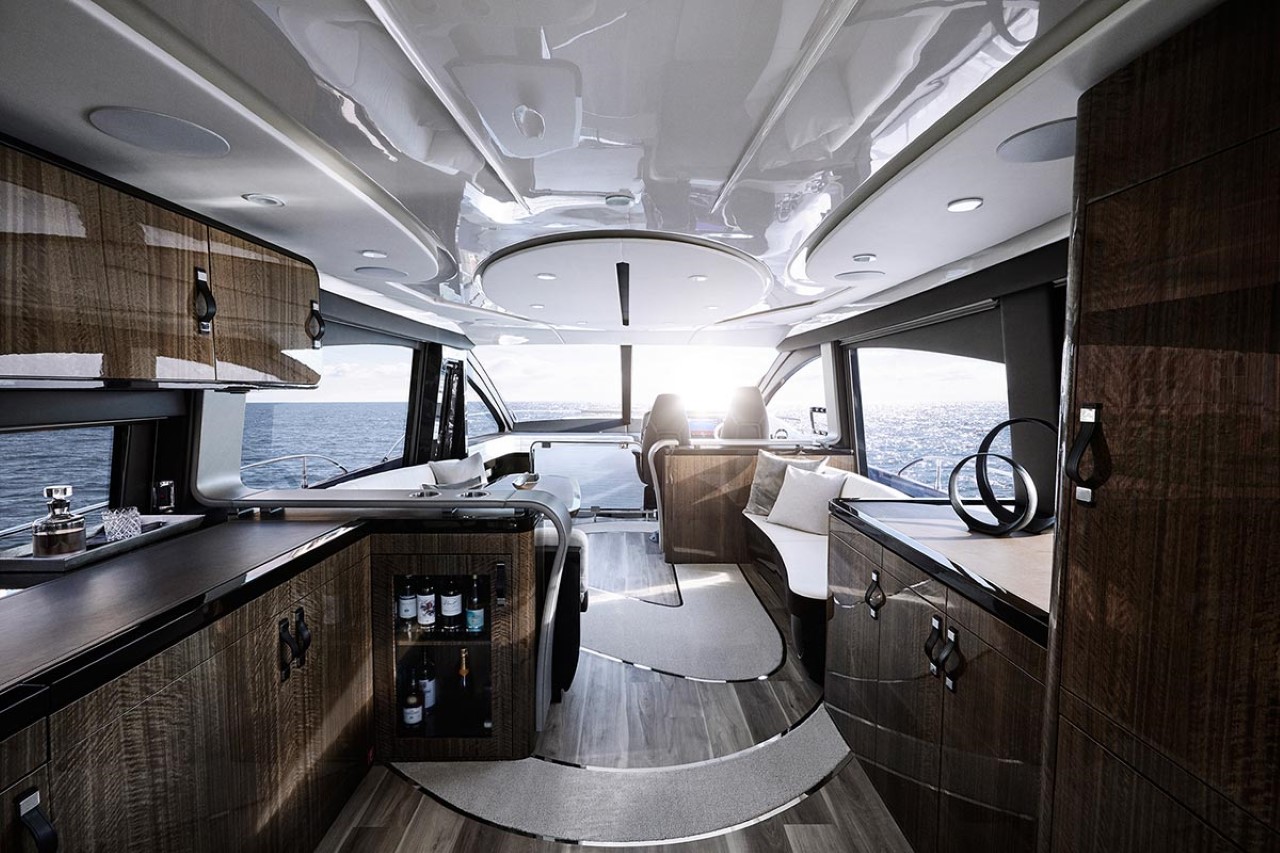
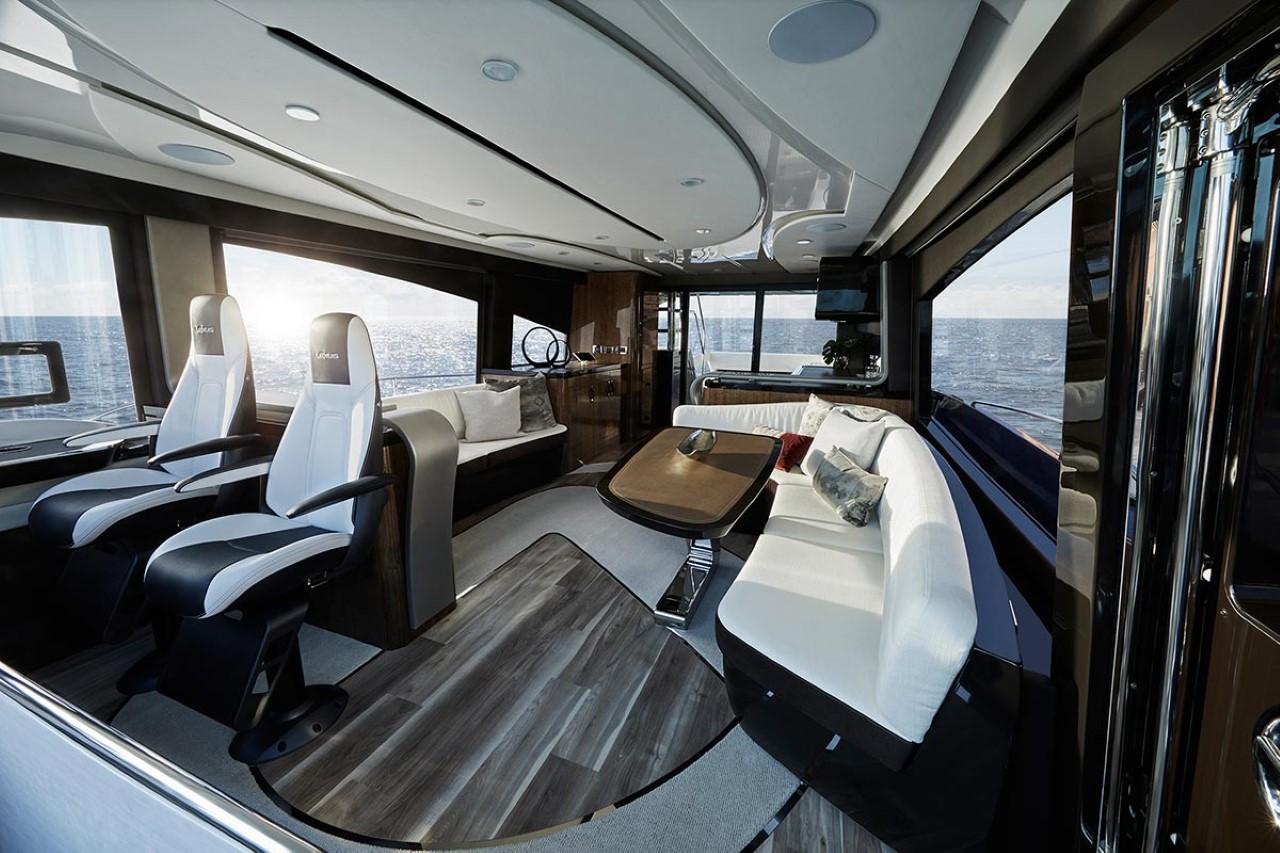
The LY 680 embodies Lexus’s “Crafted” design philosophy, seamlessly blending exquisite aesthetics with cutting-edge technology. Built by the Horizon Group, a leader in crafting exceptional yachts, the LY 680 promises to be a luxurious sanctuary at sea. Think unparalleled comfort, signature Lexus performance, and a design language that echoes the brand’s renowned attention to detail.

One of the most striking enhancements is the expanded flybridge. Stretching over a meter and a half longer than the previous model, this space now boasts a spacious lounge sofa – perfect for lounging under the sun with a cool drink. But that’s not all. Imagine whipping up delicious meals for your guests on the integrated barbecue grill, all while taking in the breathtaking ocean views. For those who crave adventure on the water, the swimming platform has also been significantly extended by 700 millimeters. This translates to more space for launching water toys like jet skis or paddleboards, or simply relaxing closer to the water’s edge.

Twin Volvo Penta IPS engines, available in two configurations, ensure the yacht handles beautifully. Expect stable maneuvering, a smooth ride, and remarkably quiet operation – all contributing to a truly luxurious experience at sea. No matter the conditions, the LY 680 promises to deliver a comfortable and enjoyable journey.

Clocking in at over 20 meters in length and nearly 6 meters wide, the LY 680 offers ample space for up to 15 passengers. Three luxurious cabins provide comfortable sleeping arrangements for six guests, making this yacht ideal for extended getaways with family and friends, or spontaneous weekend escapes. Imagine waking up to the gentle rocking of the waves and the sound of the ocean breeze – pure bliss.

Lexus has partnered with the Horizon Group, renowned for their advanced yacht-building expertise, to create the LY 680. This luxurious yacht, available for order in Japan through Toyota Marine starting March 21, 2024, promises to be a haven at sea. Deliveries are expected by spring 2026.

The post Lexus Brings Its Brand Of Luxury To The Seas With The LY 680 Yacht first appeared on Yanko Design.
Kimberley Kampers introduces rugged Kube camping trailer built for off-road expeditions in luxury

We love introducing the Yanko community with campers that are built for downsized living on the road without compromising basic comforts and security. If luxury is also on offer it’s the cake with a red cherry on top when it comes to exploring unknown terrain. Kimberley Kampers has been doing this for the last three decades in the land down under, satisfying adventurers with their family-size camping trailers that look way ahead of their time.

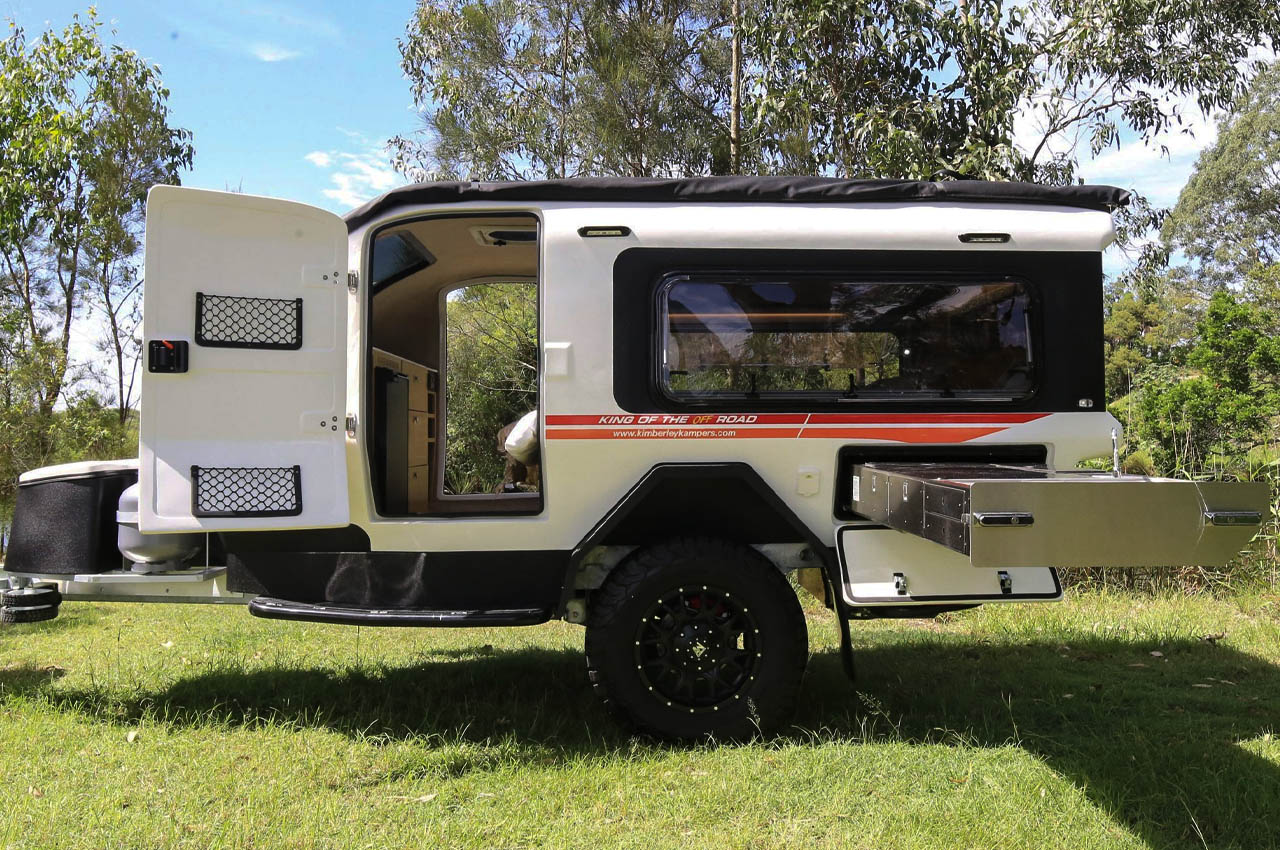
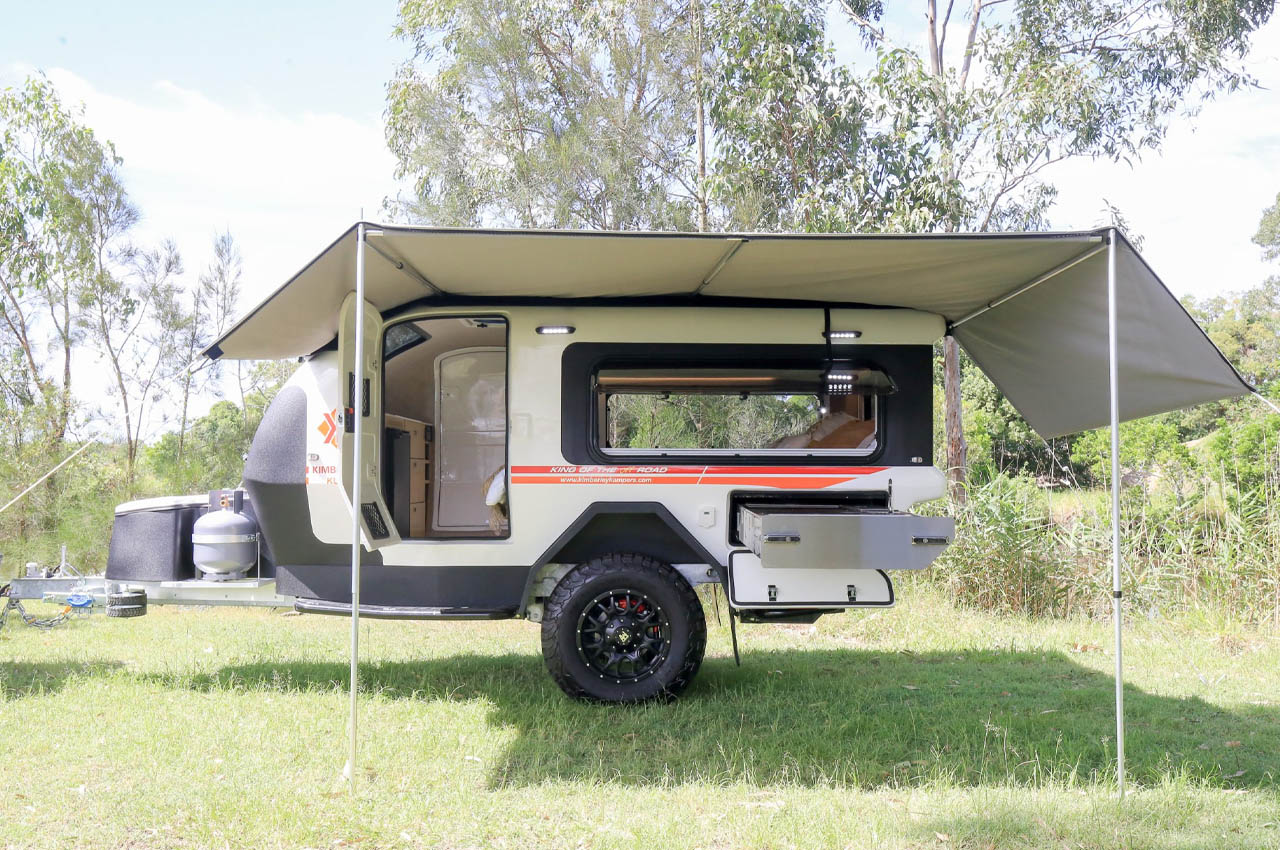
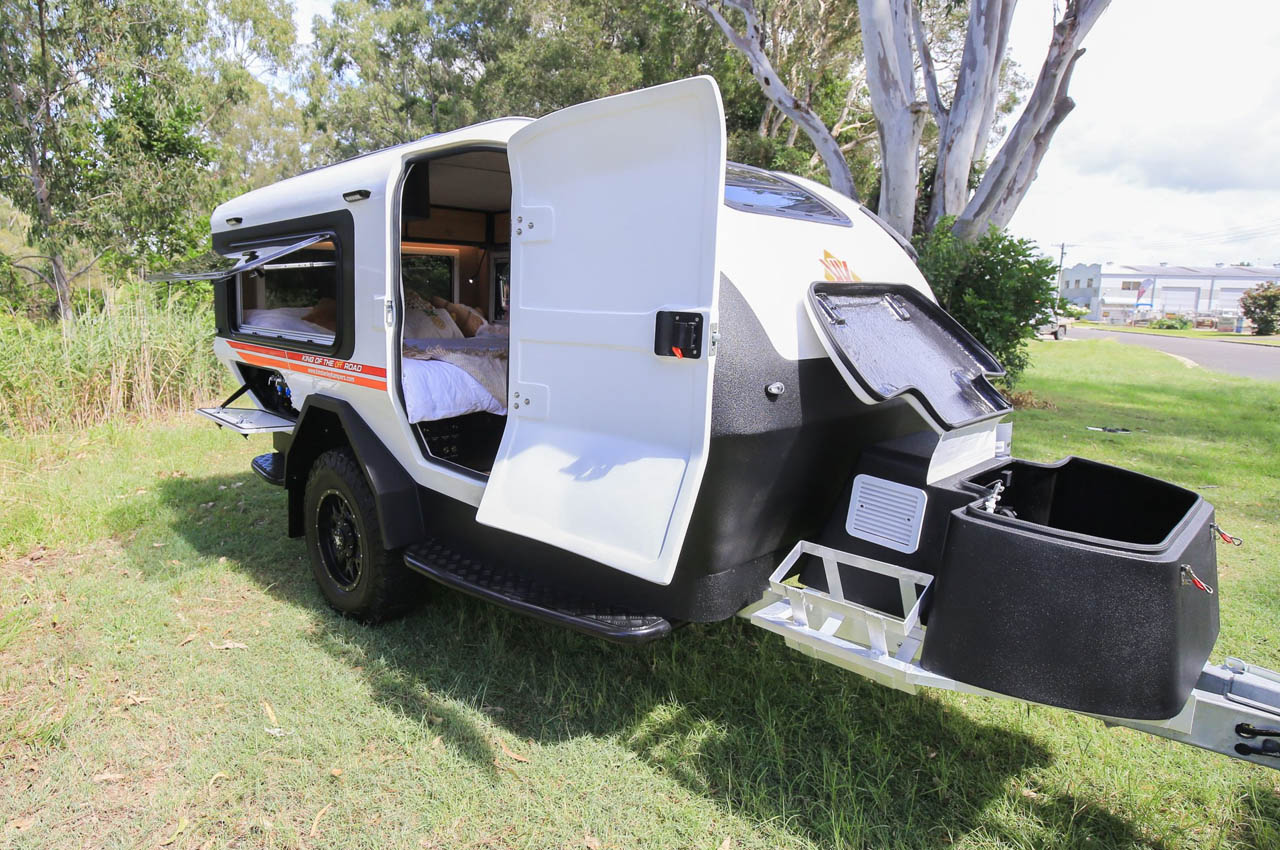
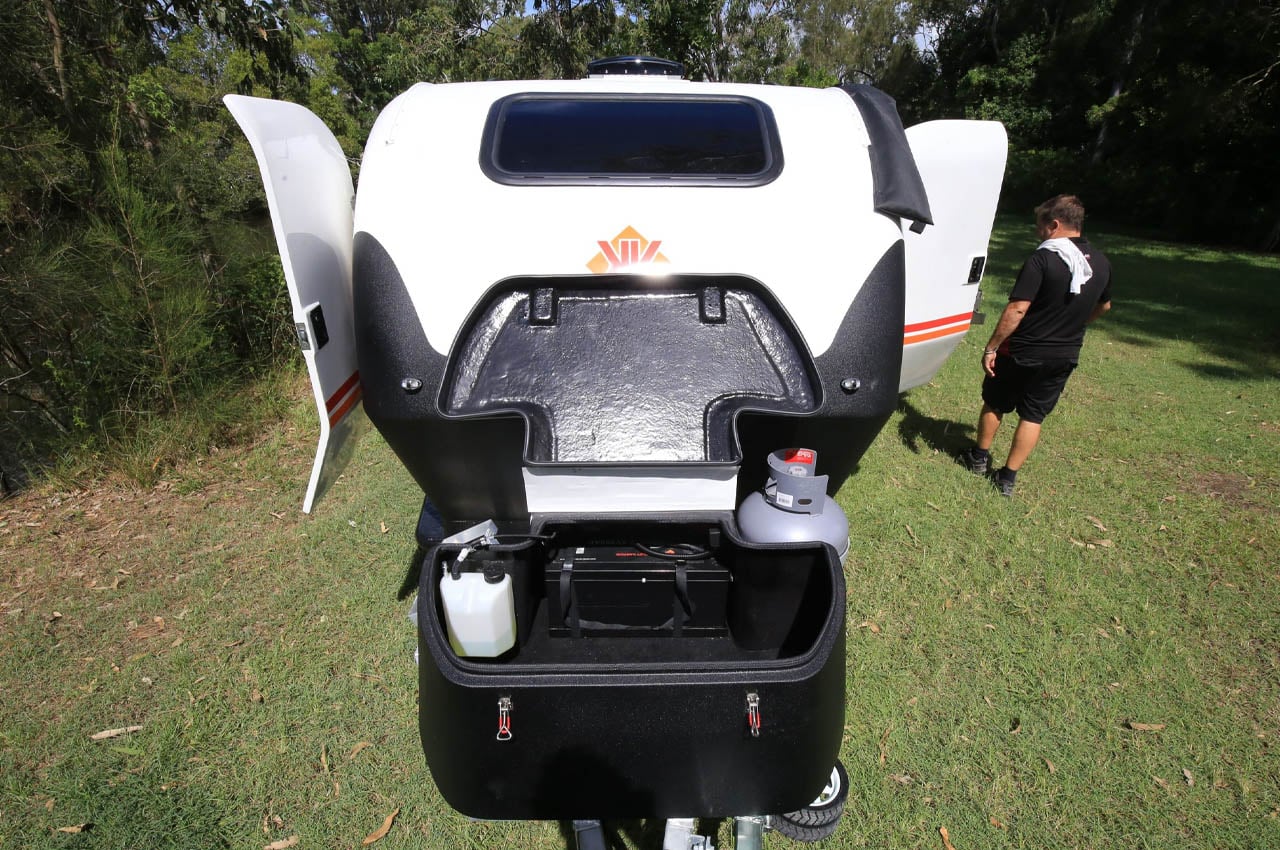
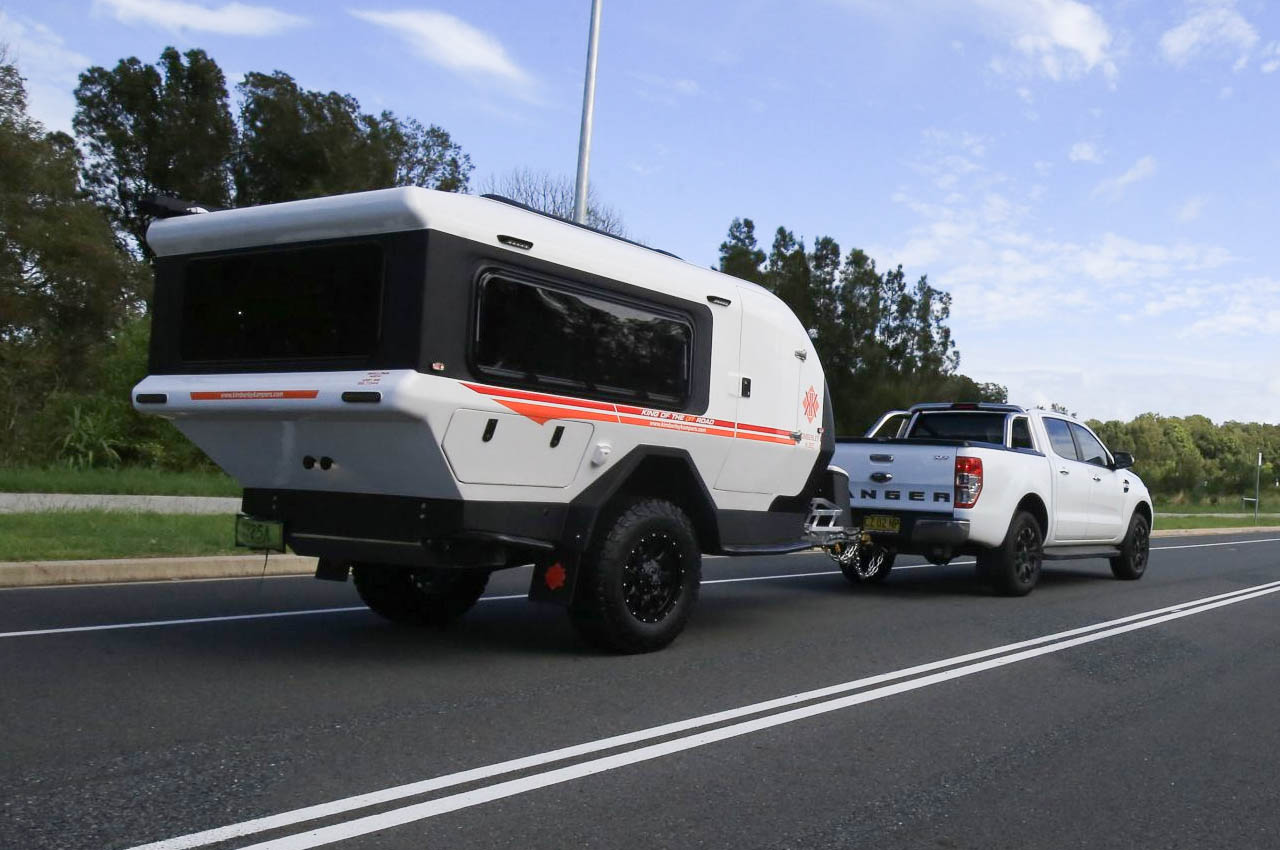
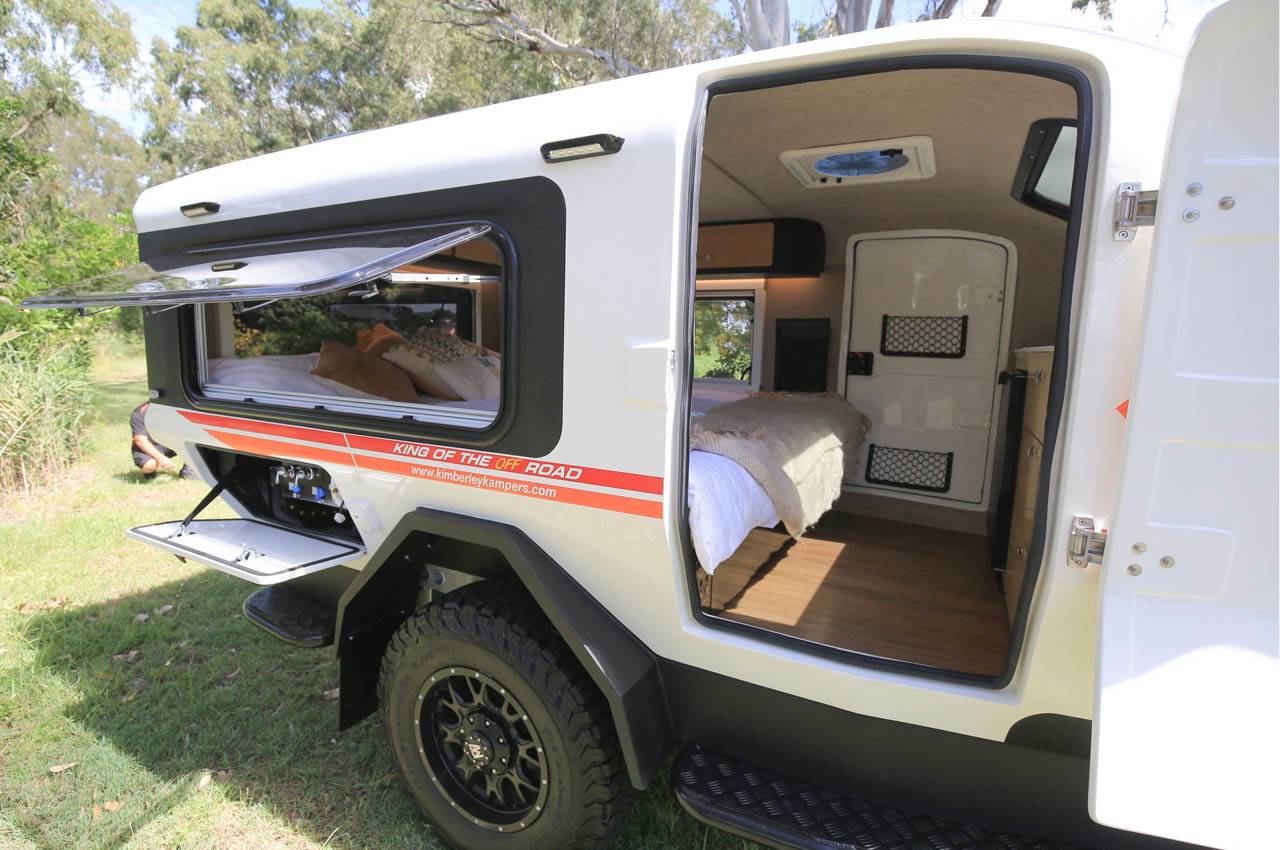
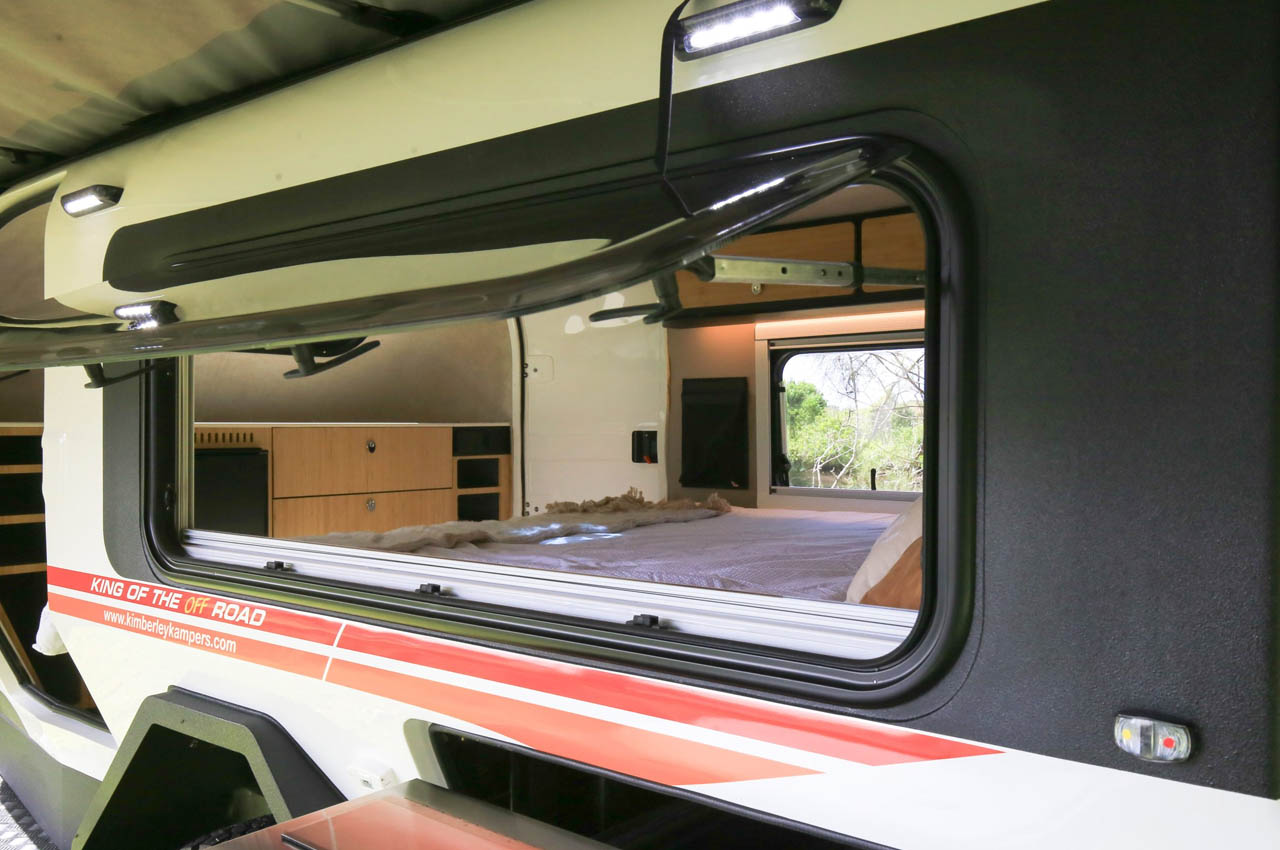
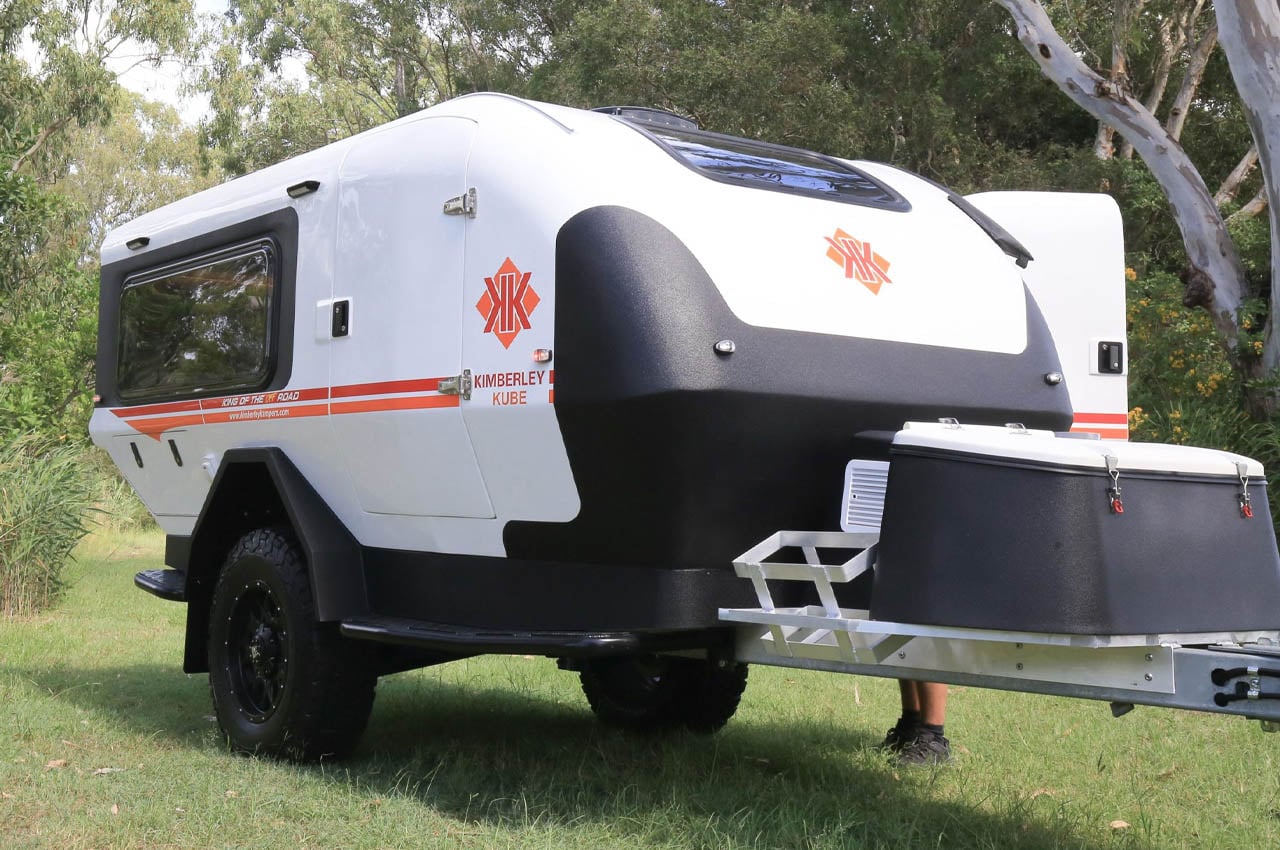
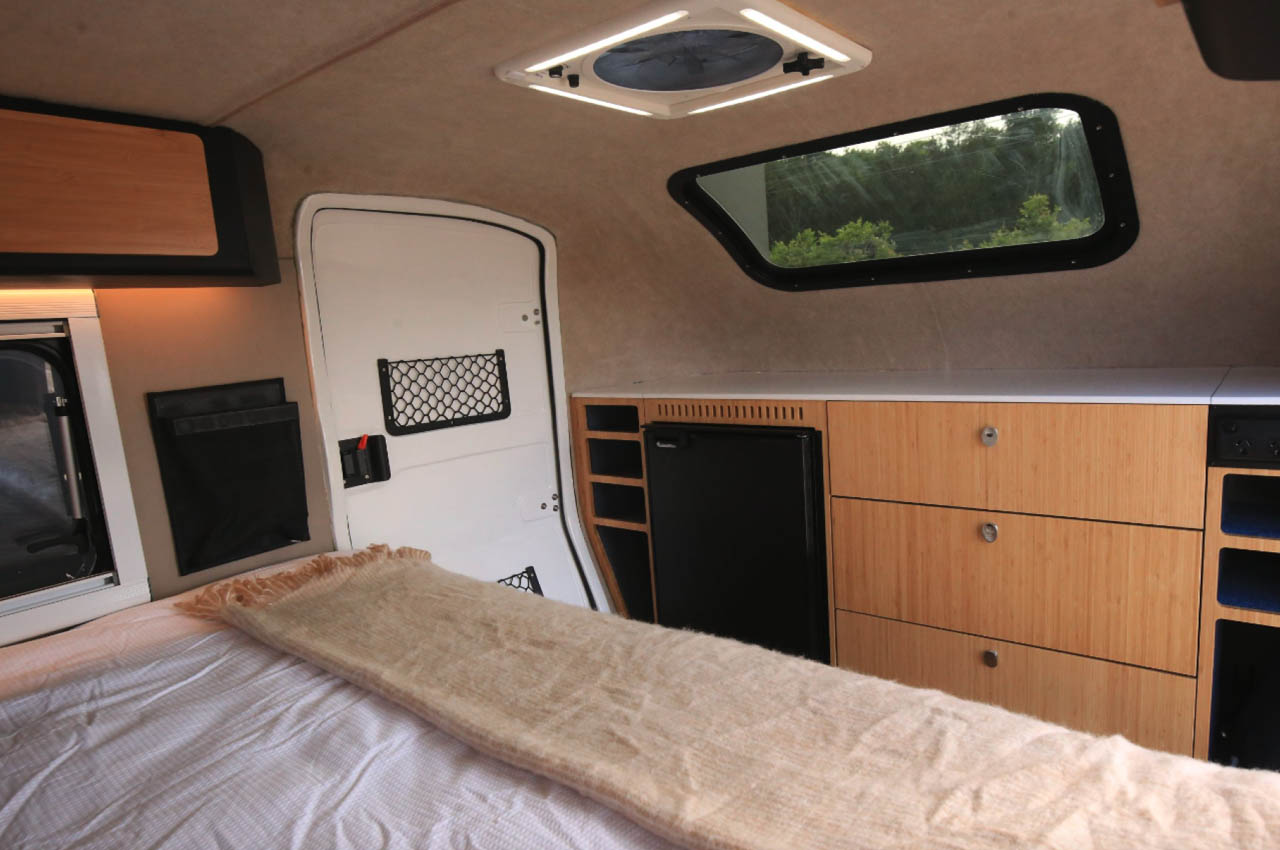
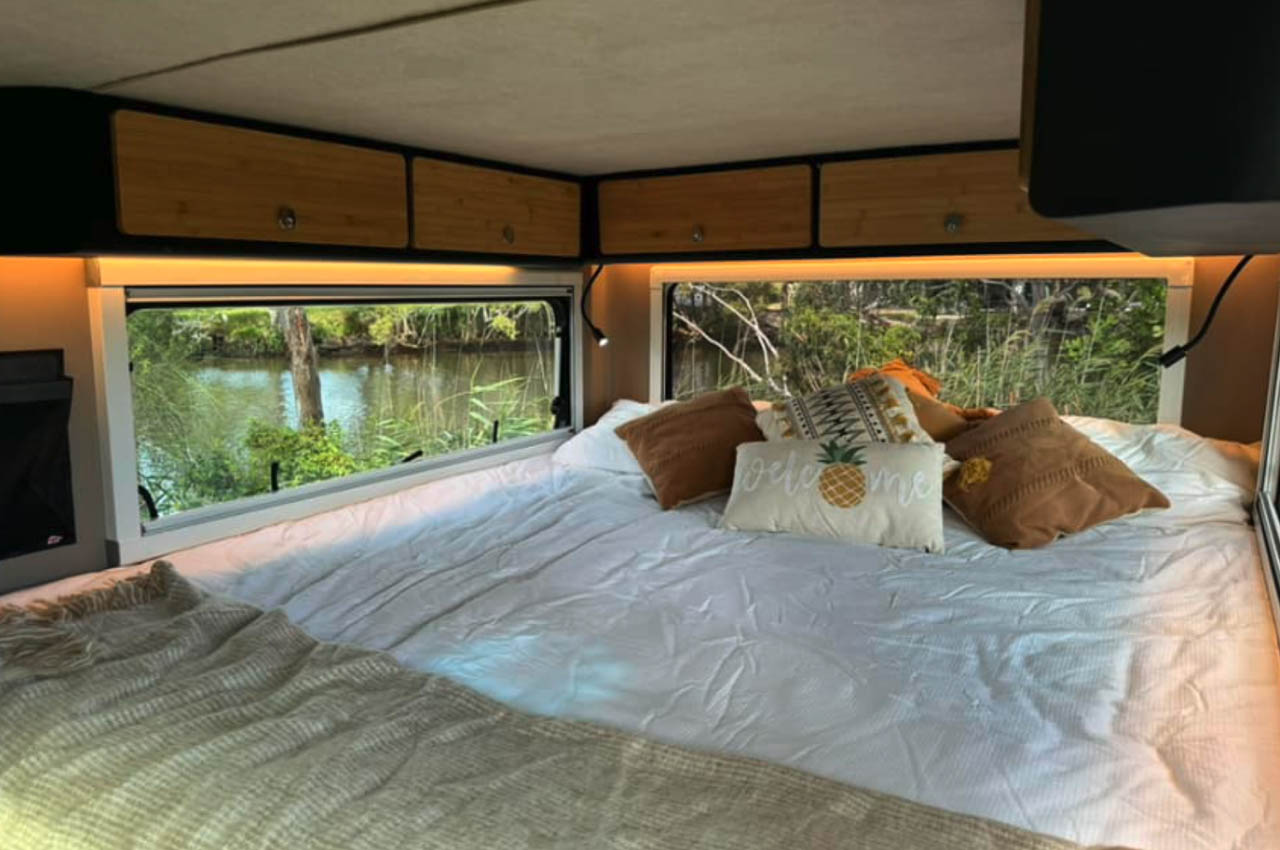
Now, the Australian company has introduced the Kube, an off-road capable teardrop camper boasting a luxurious quotient for two people. It comes with an expandable pull-out kitchen, compact refrigerator, king-size bed and a chassis protected by underpinnings. Looking more like a concept design, the camper is available to buy for a starting price tag of $44,675.

Designer: Kimberley Kampers

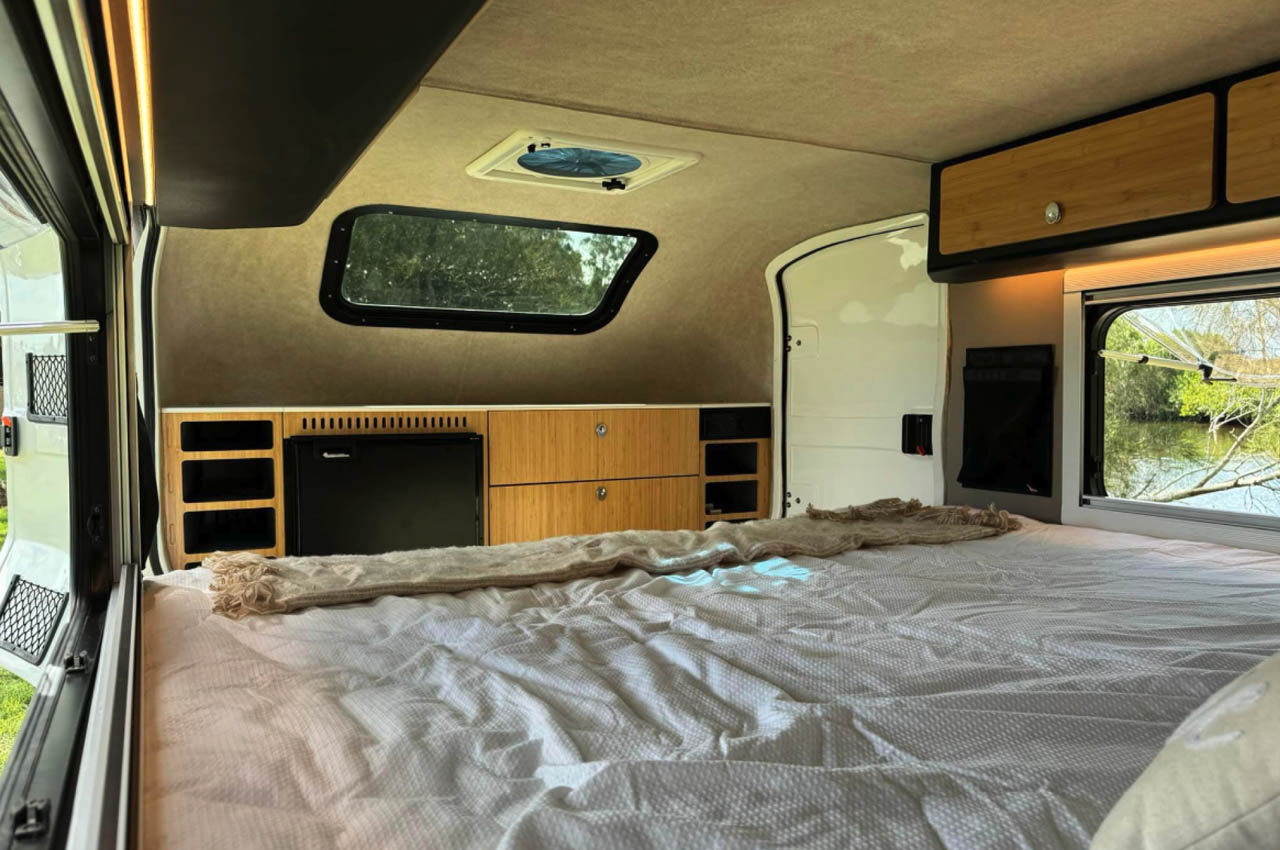
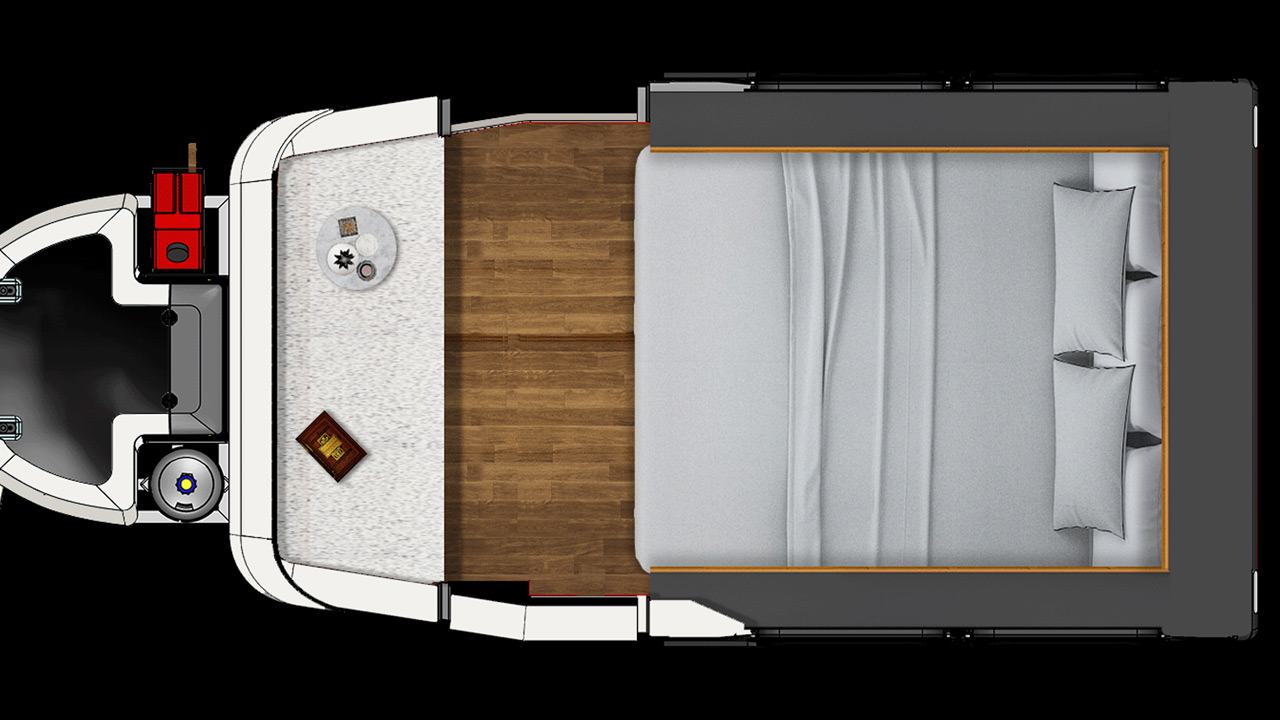
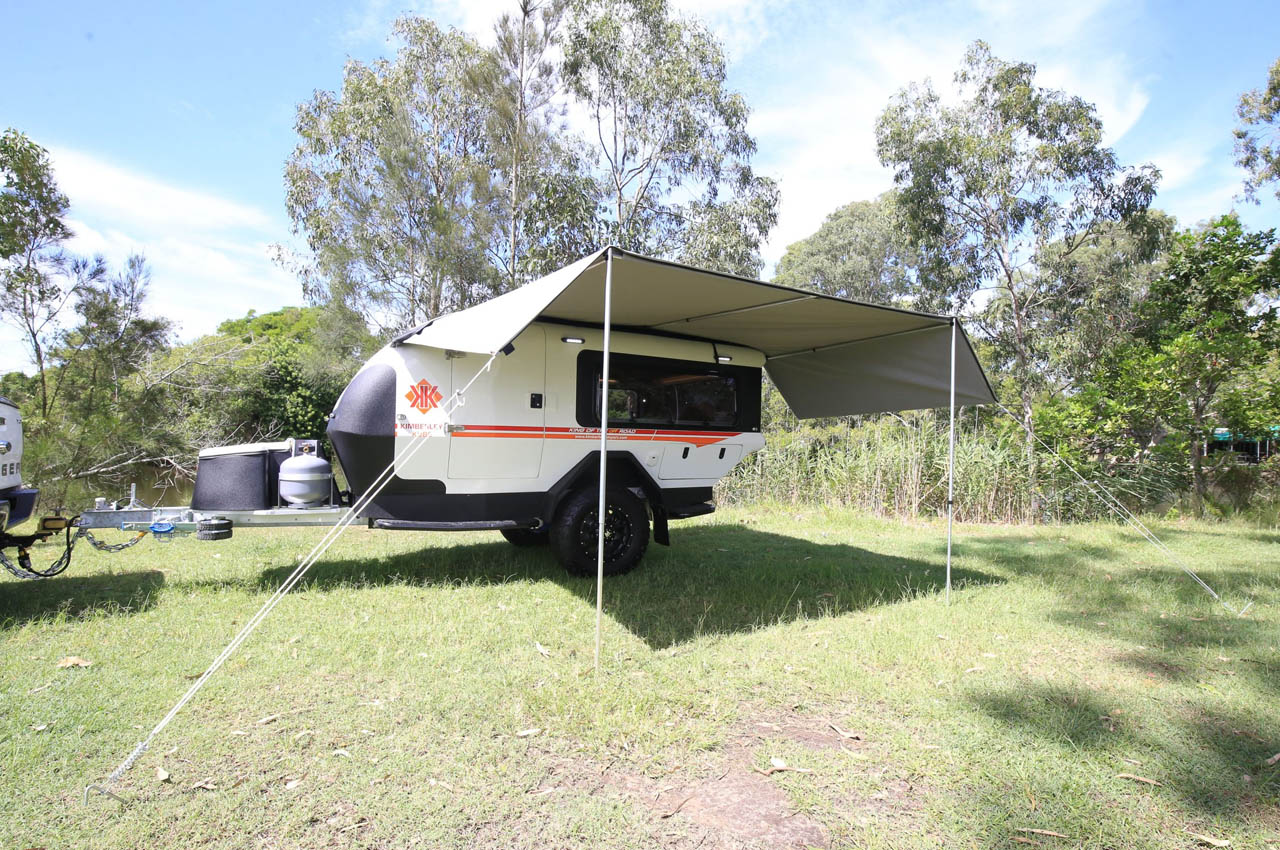
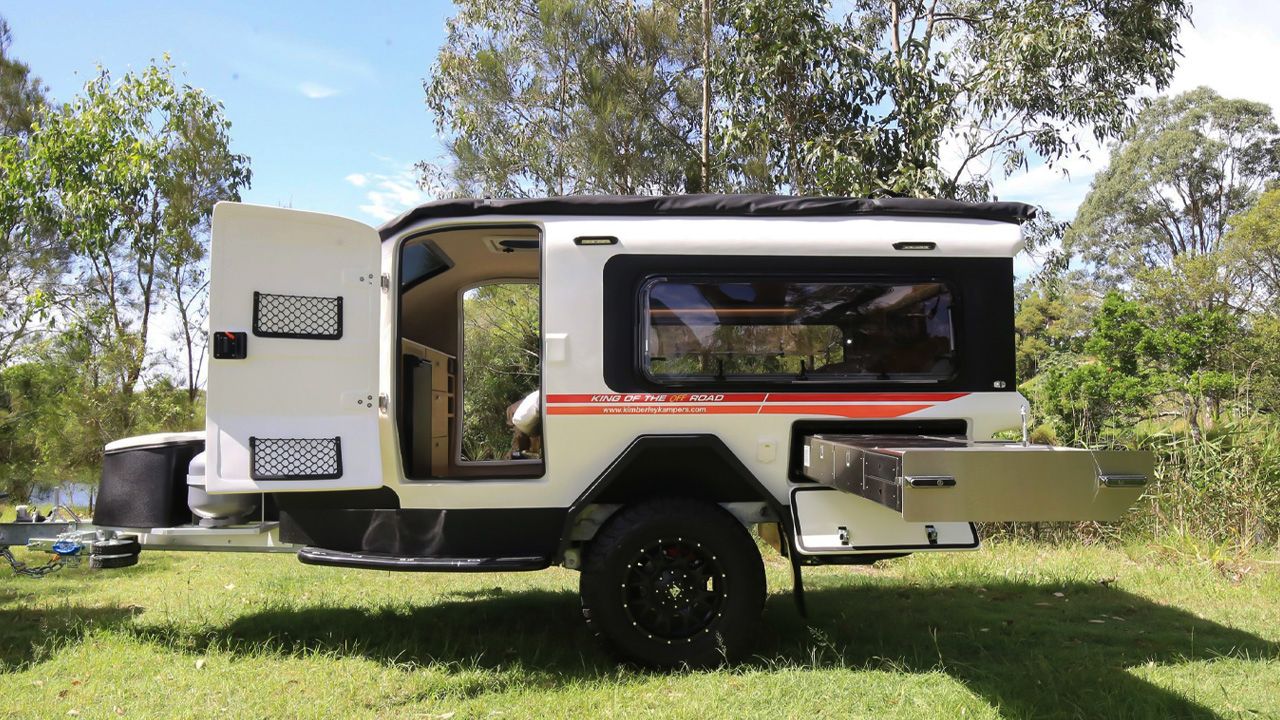
The company calls it the Kube, but it is more rectangular-shaped than its namesake.  It has a round-nosed front for a spacious two-person layout, a flat roofline, and a vertical rear to comply with the size compliances. The 5.2-meter-long camper trailer is at its core a blend of Kruiser line’s smooth composite construction and the DNA of the closed Karavan model. Owners can tag this teardrop camper to their high-performance vehicles and head confidently to any inhospitable terrain. The absence of a tailgate galley means you have more interior space to fit a large bed. An overhead skylight and large windows on all sides give the owners 270-degree views when parked for the day.

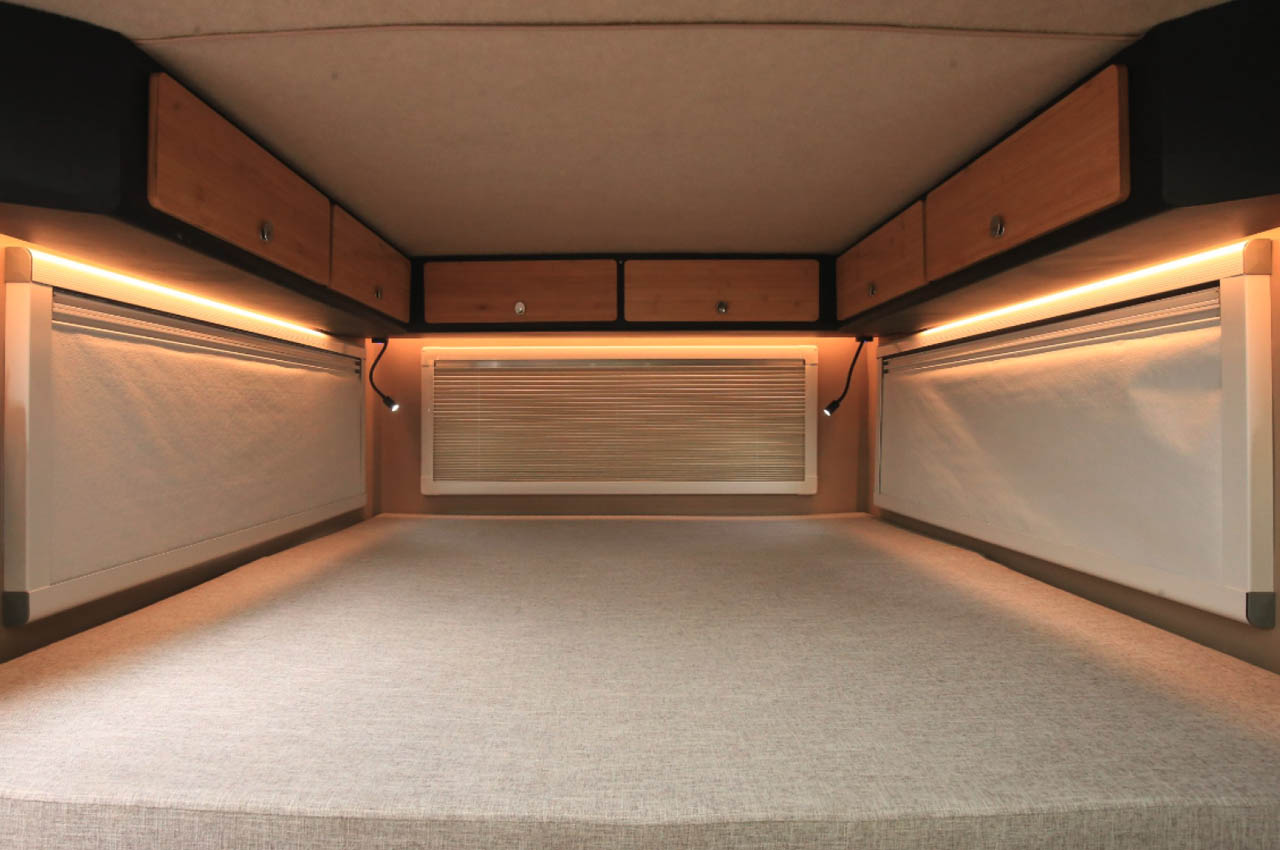
As I said, luxury is not dry in here with a front cabin having a full-width console loaded with a mini bar, cubbies, drawers, top shelf surface, and a 85-L freezer. Standing upright for getting dressed/undressed is not a problem either, thanks to the floor space between the bed and console. Extra storage space is provided in the form of overhead cabinets wrapping around the bed section. There’s also space in the drawer below the bed foot.

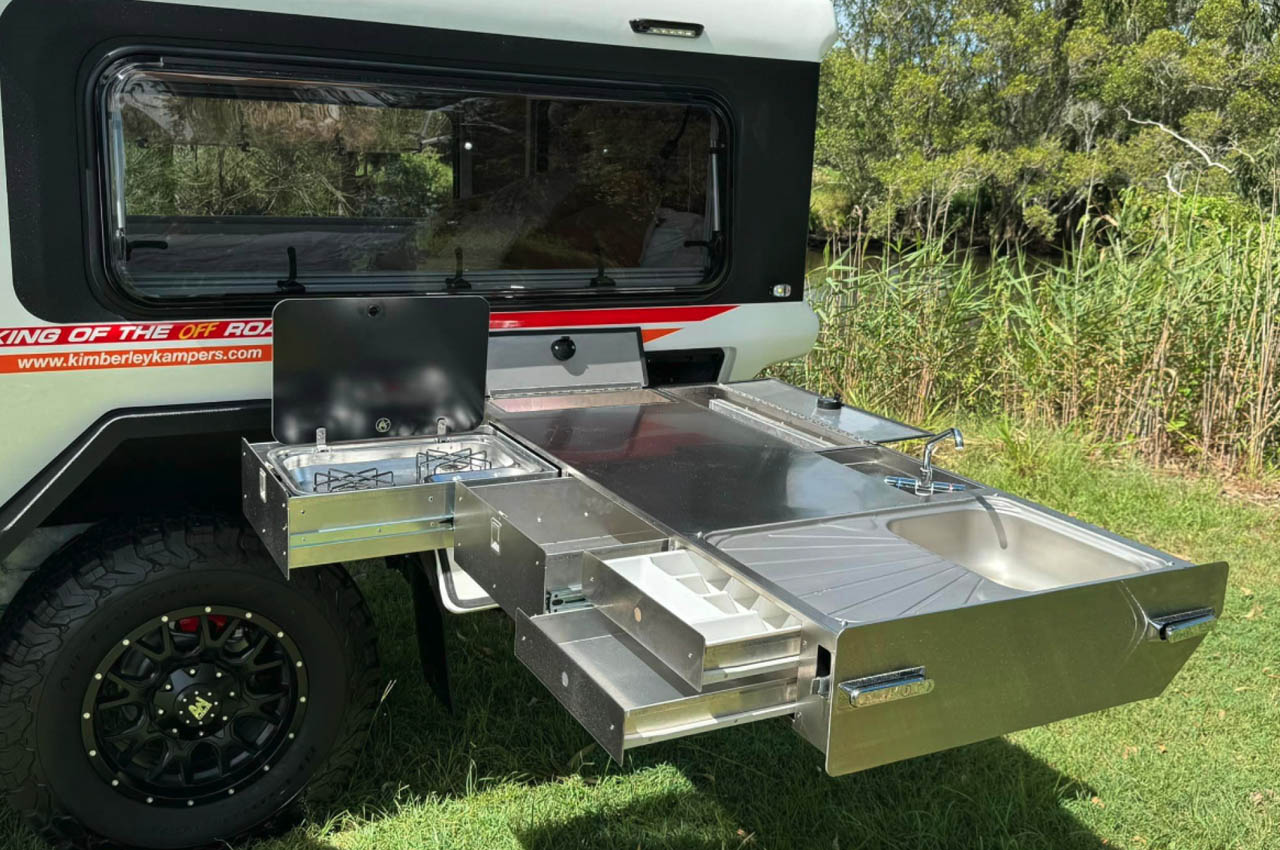
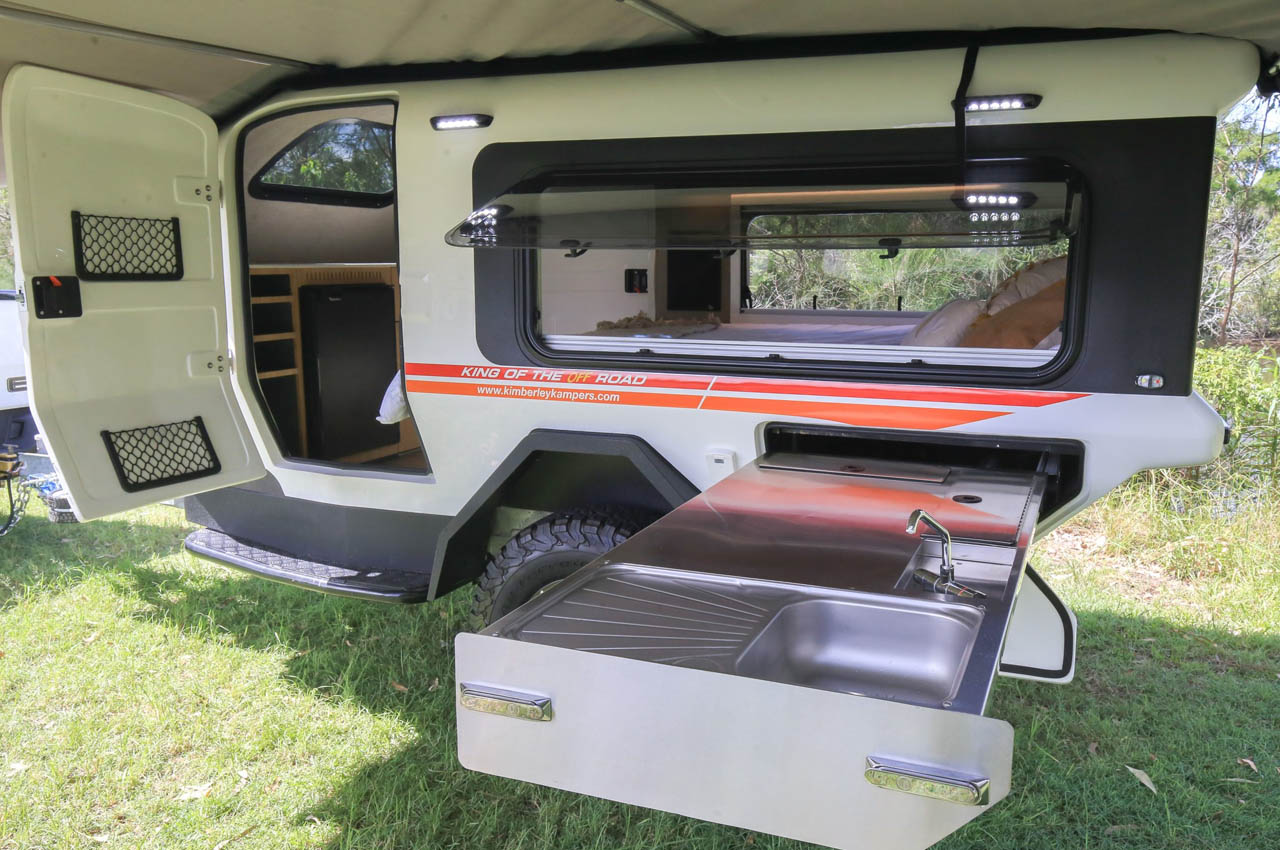
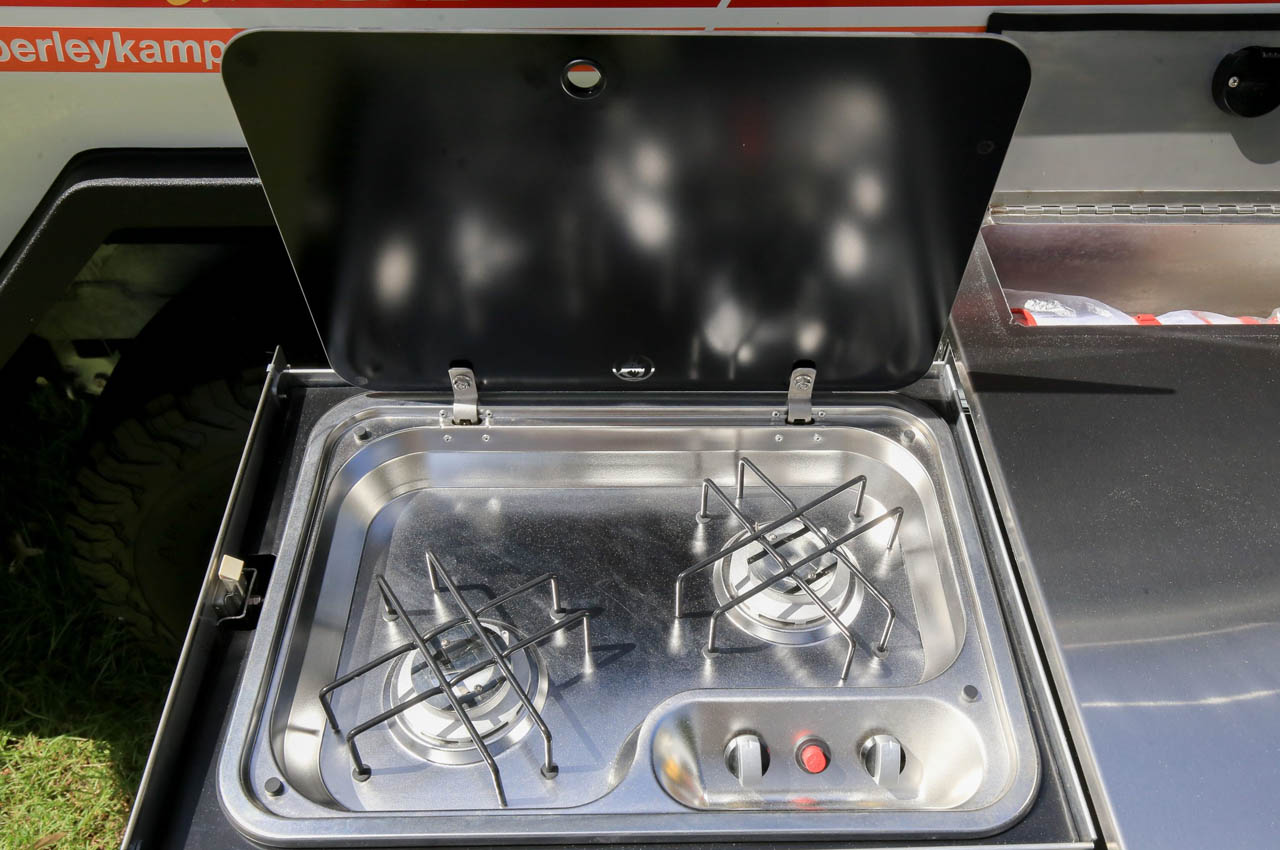
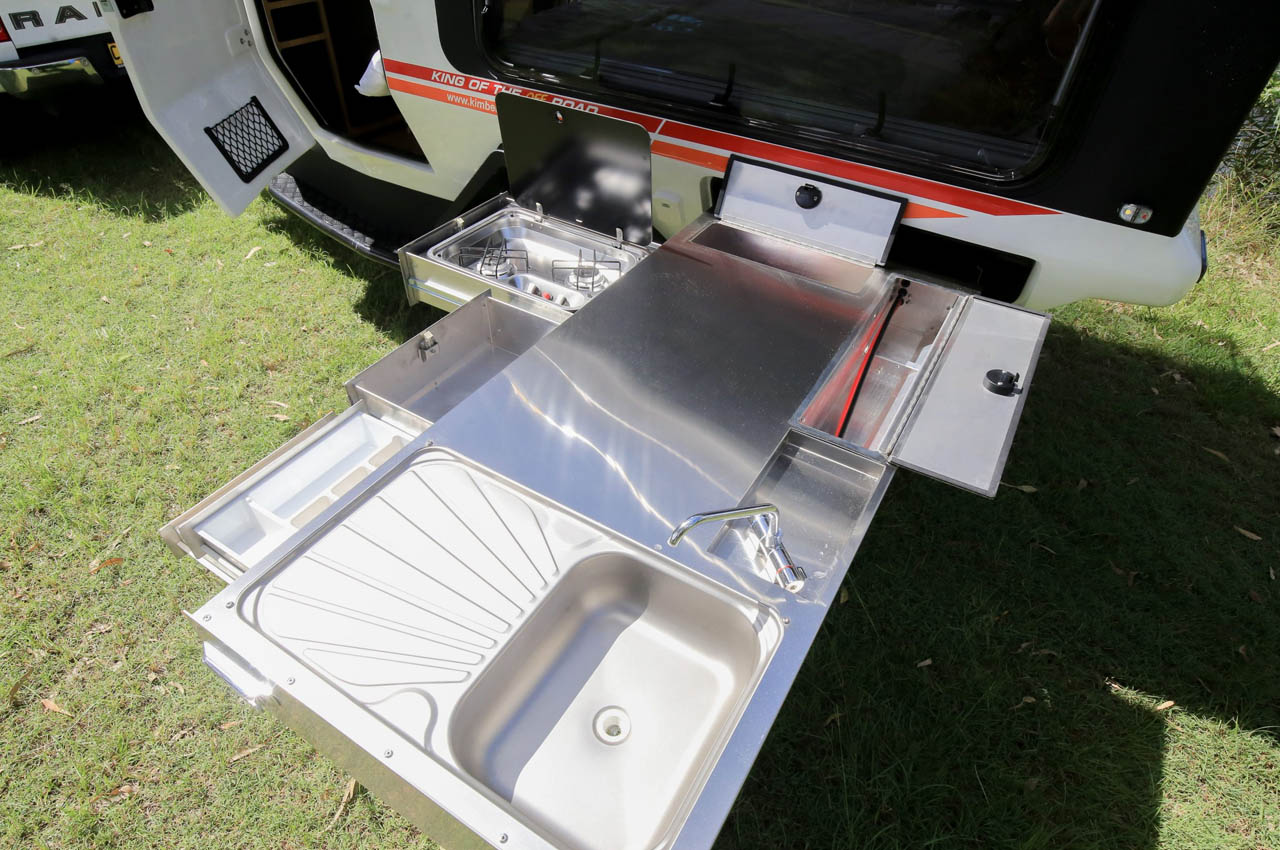
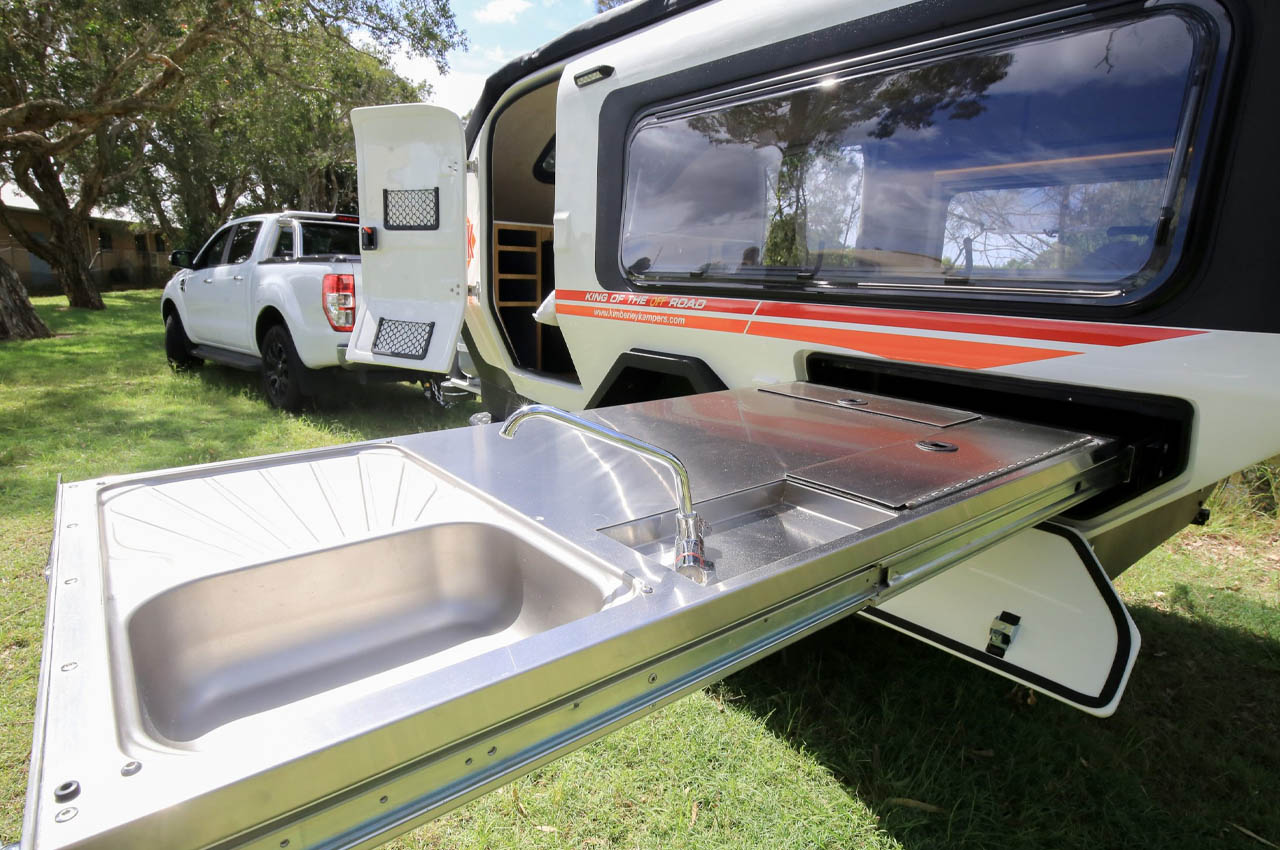
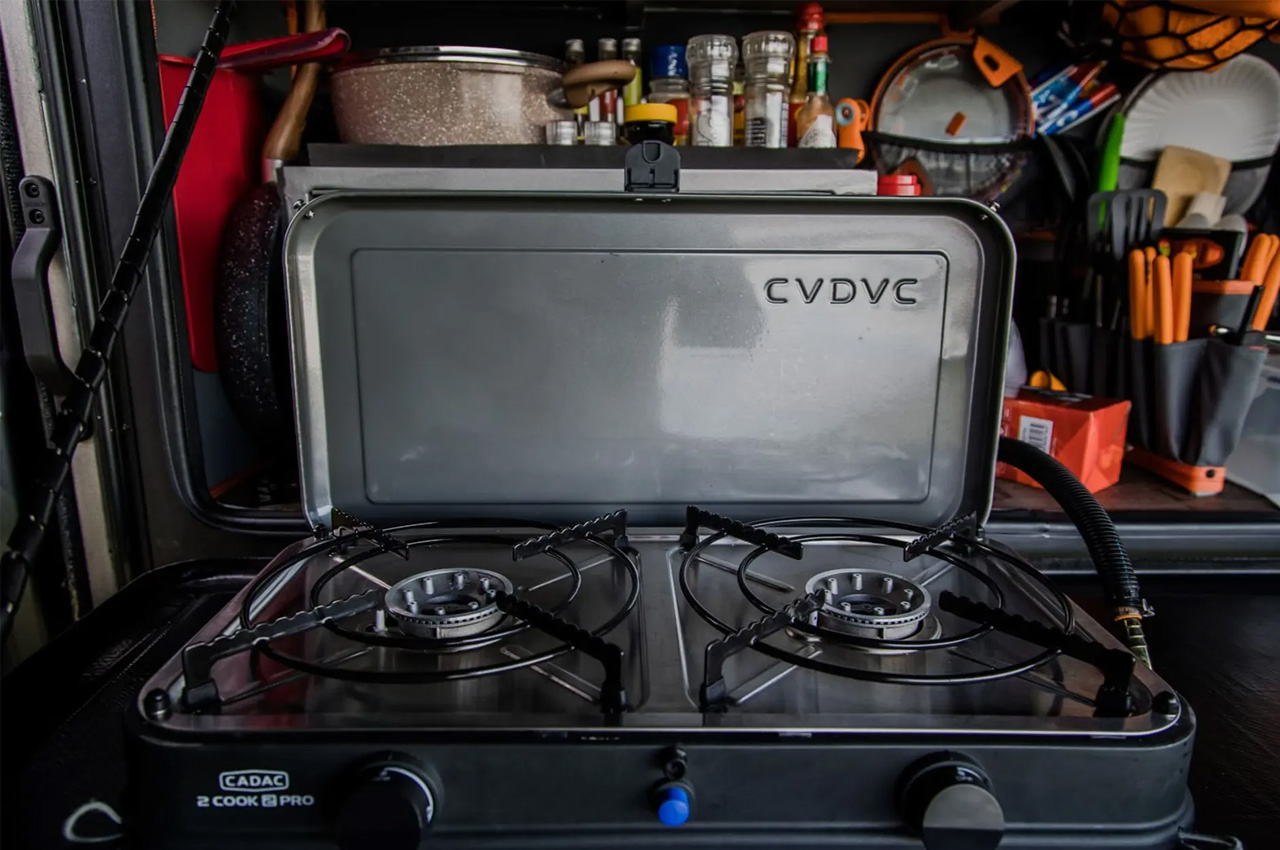
Behind this section is the concealed slide-out kitchen that can be pulled out of the left rear corner. The sturdy stainless steel unit opens up in multiple directions to reveal the storage drawers, sink, dual-burner stove, compartments and prep area. Buyers can also opt for the stainless steel table that can be hooked to the kitchen unit. This whole section is positioned under the awning to dine in the shade if the sun is beating down or inclement weather conditions prevail.

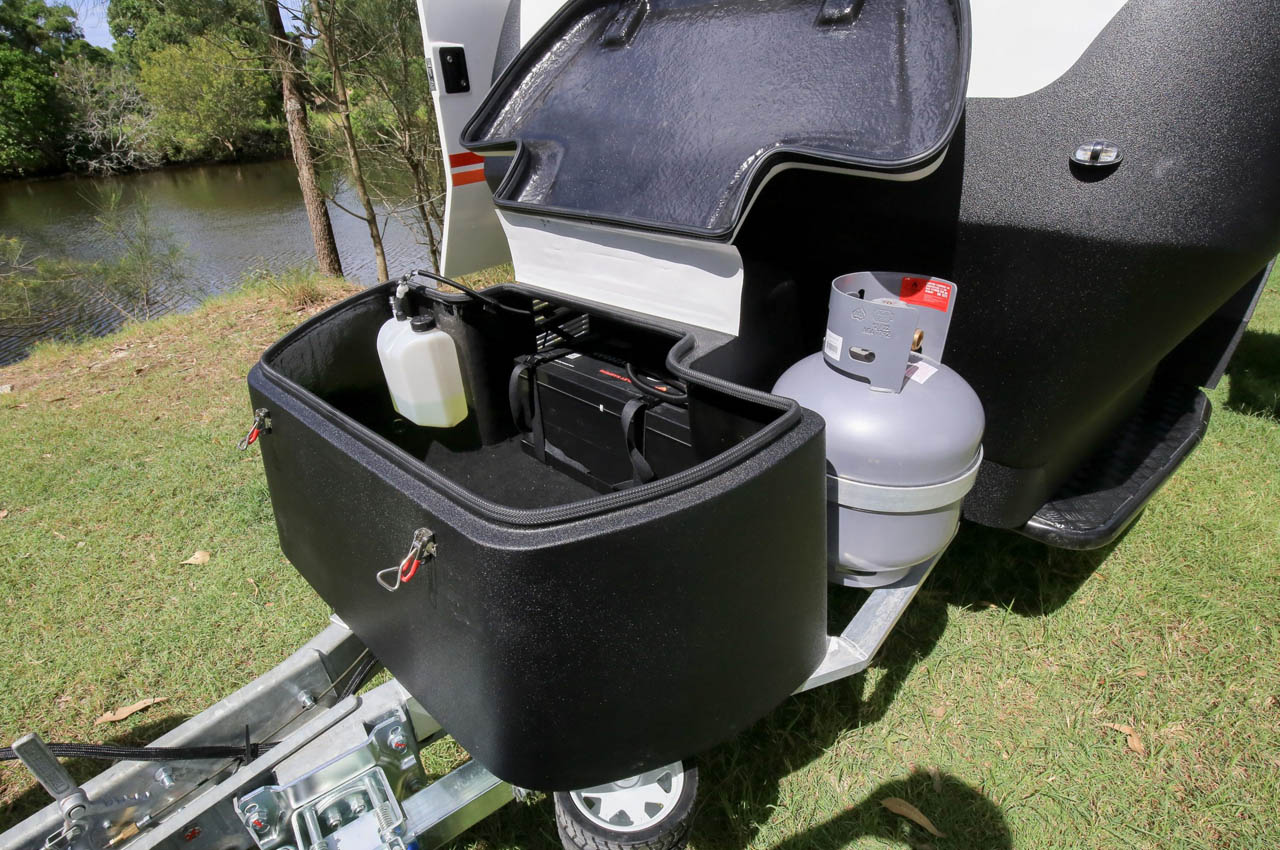
The kitchen setup comes with a faucet fed by cold water and hot water from a Webasto diesel water heater. This very system feeds the shower too and users can opt for the shower/toilet tent as well. Essential fittings include a 200-Ah lithium battery, 120-L fresh water tank, and a 450-L UniPod front storage box. Optional fittings like the 70-L secondary fresh tank, heating, air conditioning, solar charging, and satellite internet prep can also fitted.

For now, Kimberley Kampers will be selling the Kube camping trailer in the country with plans to sell it in the US as well. They’ve now revealed any details but considering they have US distribution in place for other models, the Kube should be coming any time soon.


The post Kimberley Kampers introduces rugged Kube camping trailer built for off-road expeditions in luxury first appeared on Yanko Design.
Eye-popping Pagani Huayra R racing simulator matches the real thing in every little detail

Sim racing is the best way to showcase your racing or gaming skills if you didn’t make the cut to the big league. Serious gamers always want to invest in a racing simulator that takes them one step closer to intense wheel-to-wheel action. Depending on what’s the final budget, these rigs can be anything from a desk-mounted setup costing $300, a chassis for a few thousand, or a full-blown motion simulator costing $50,000 upwards.

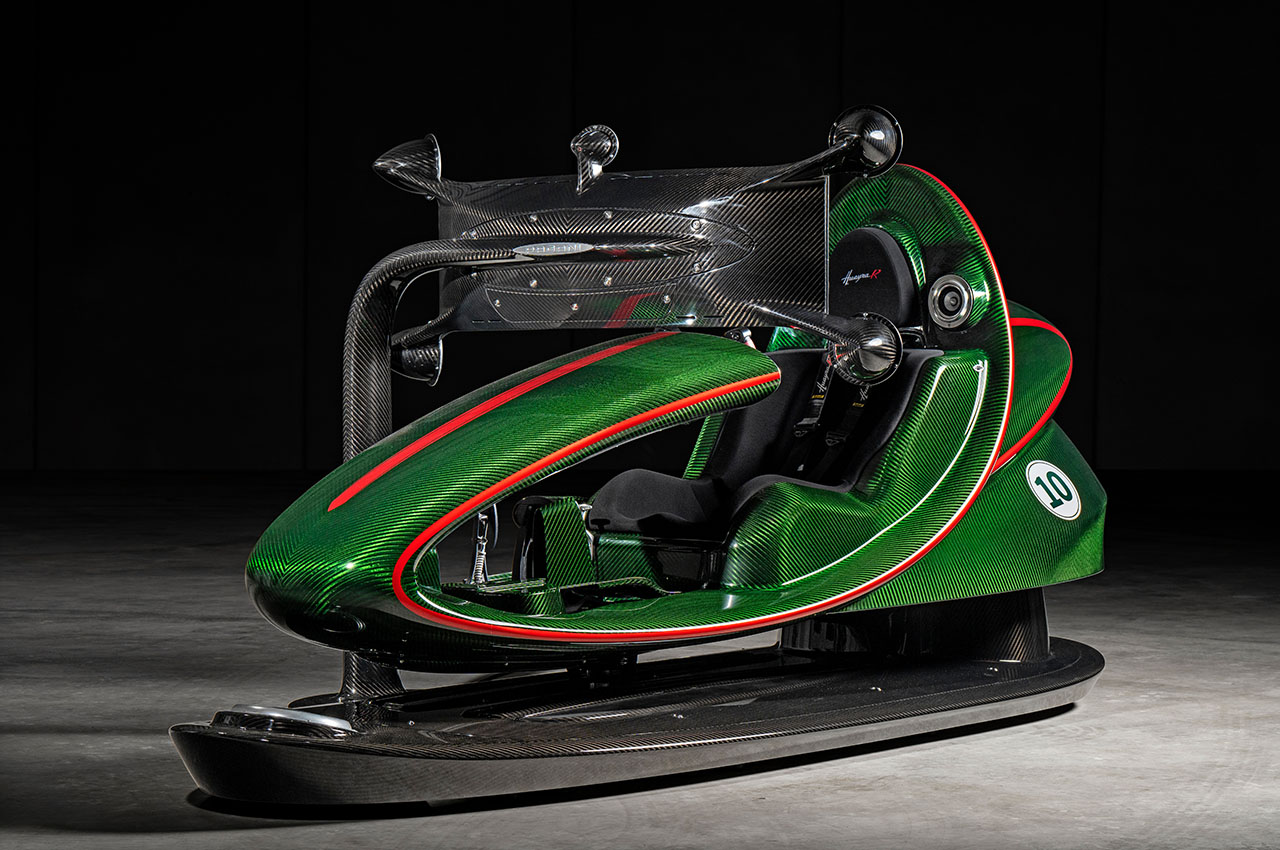
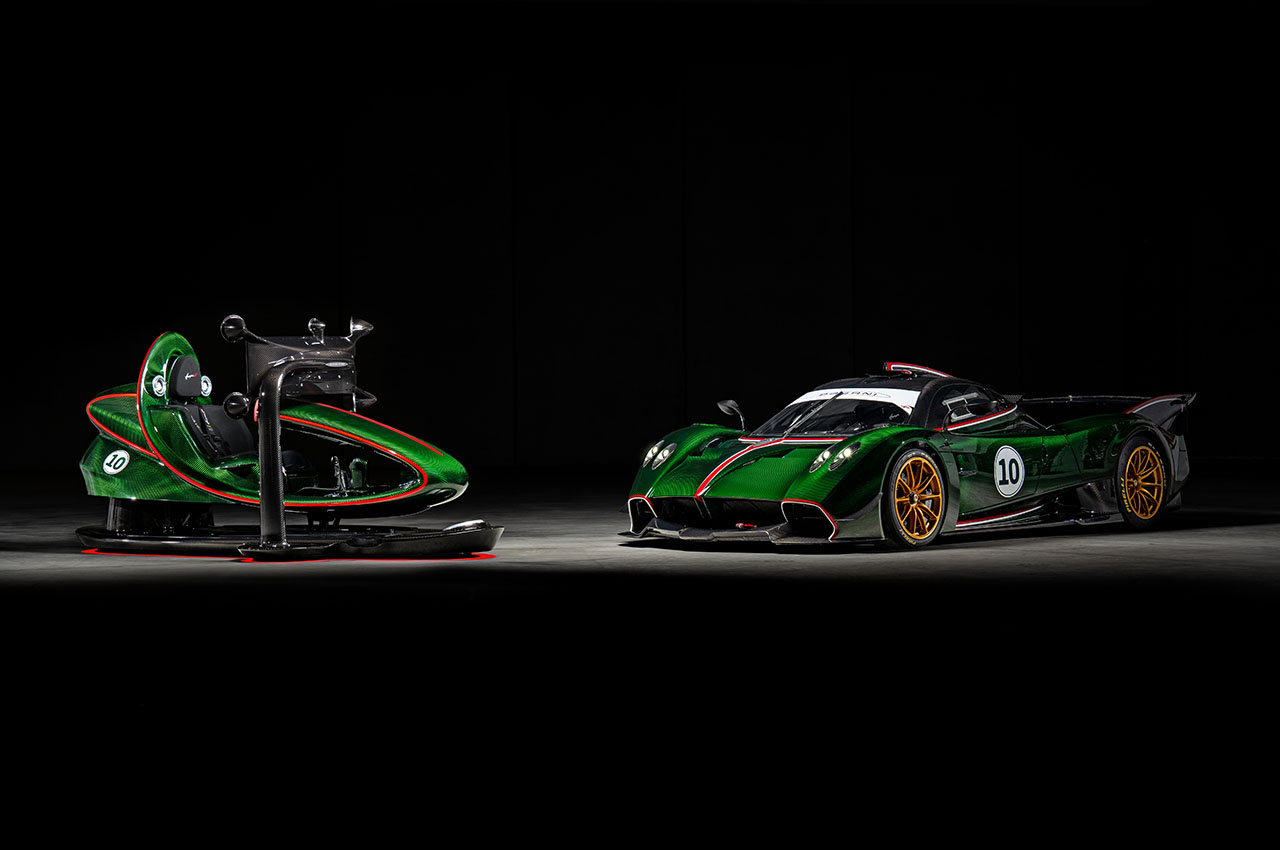
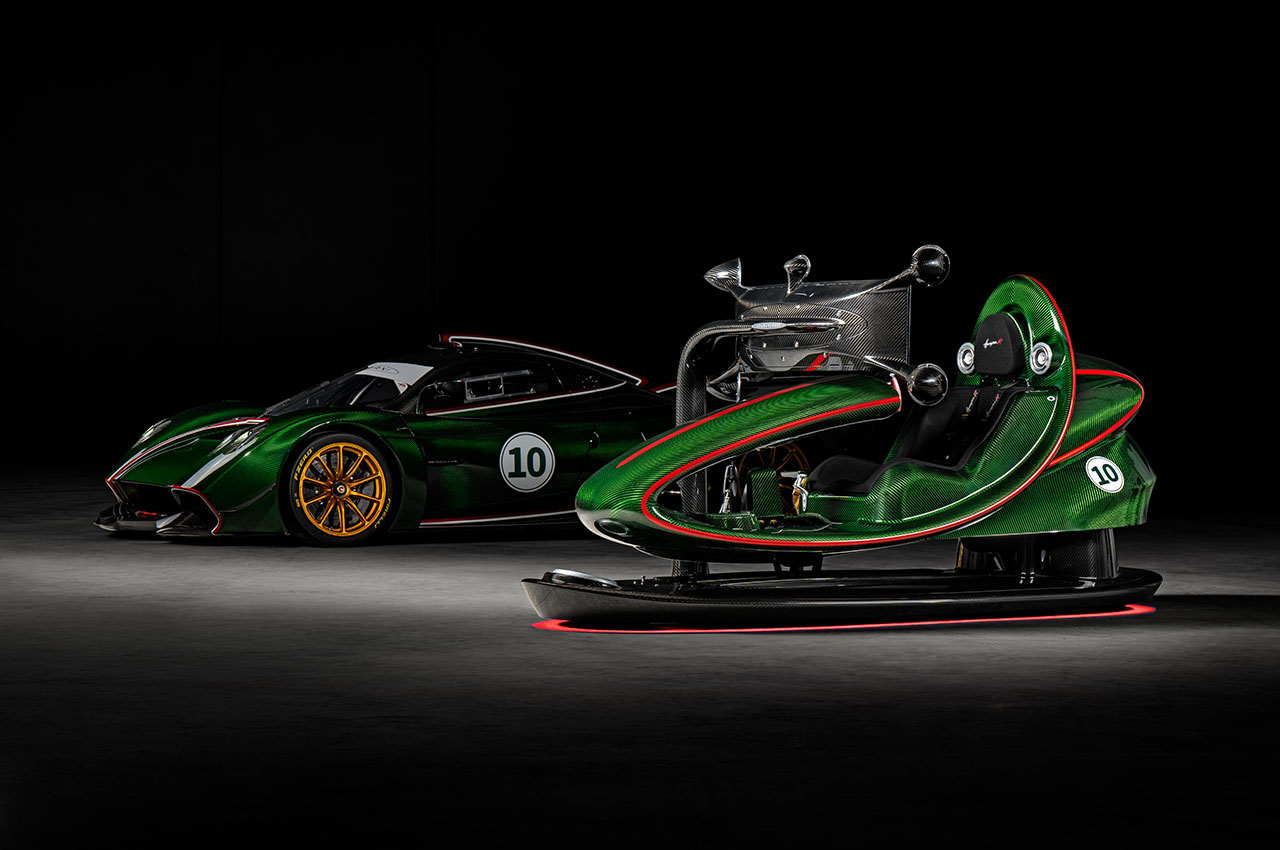
If you’ve got a stack of money to spare you can go to another level though, with a sim rig that professional racers opt for. Along the same lines, Pagani has unveiled their Huayra R Driving Simulator which is designed in collaboration with Racing Unleashed, who are known for building some of the best high-end racing simulators out there.

Designer: Pagani and Racing Unleashed

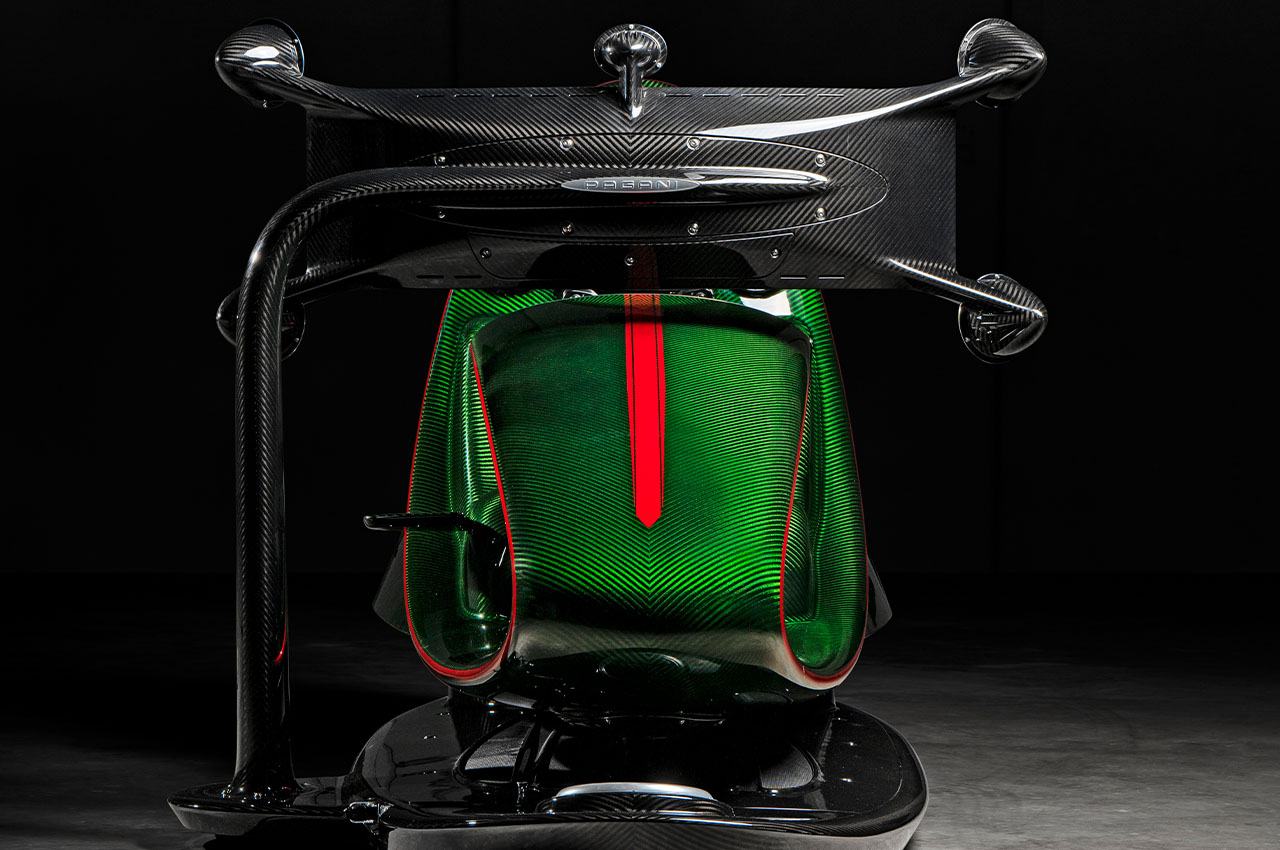
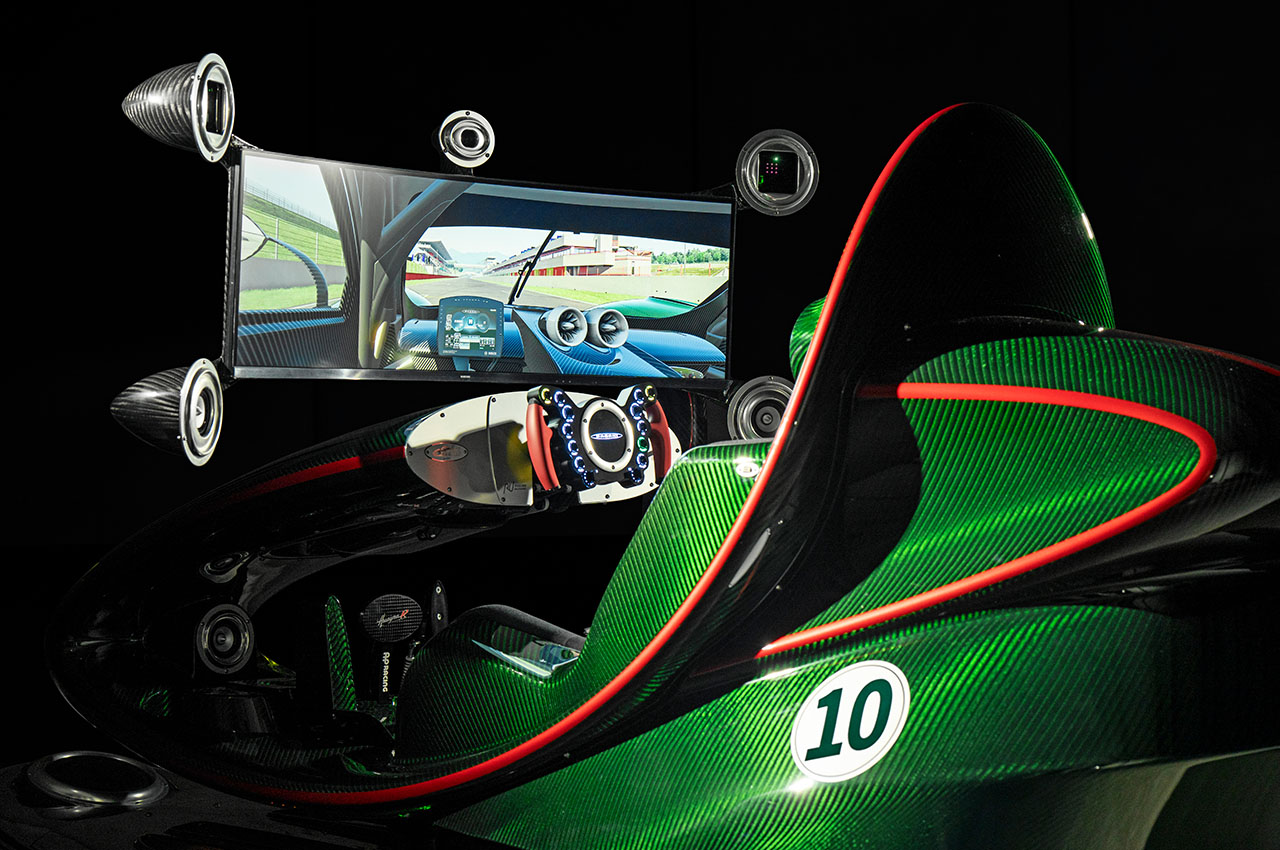
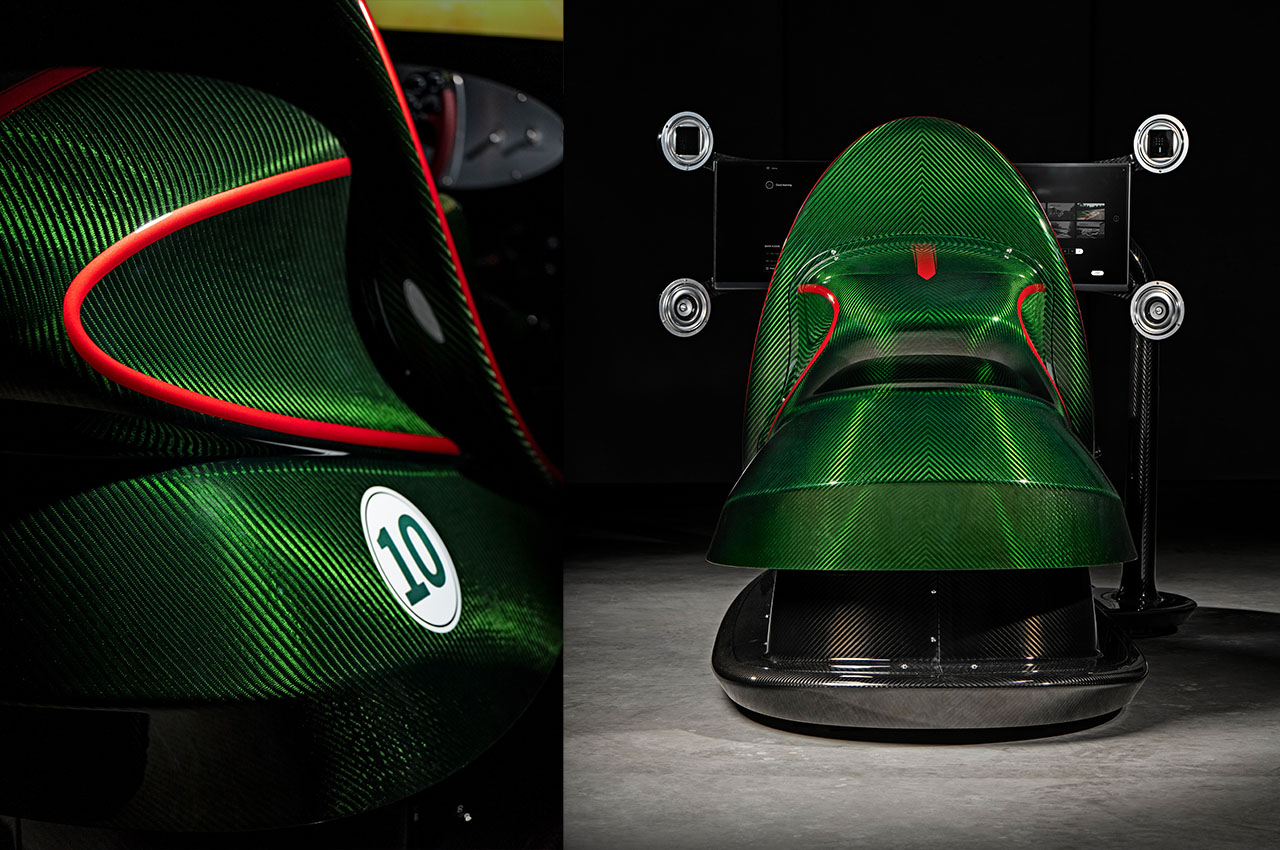
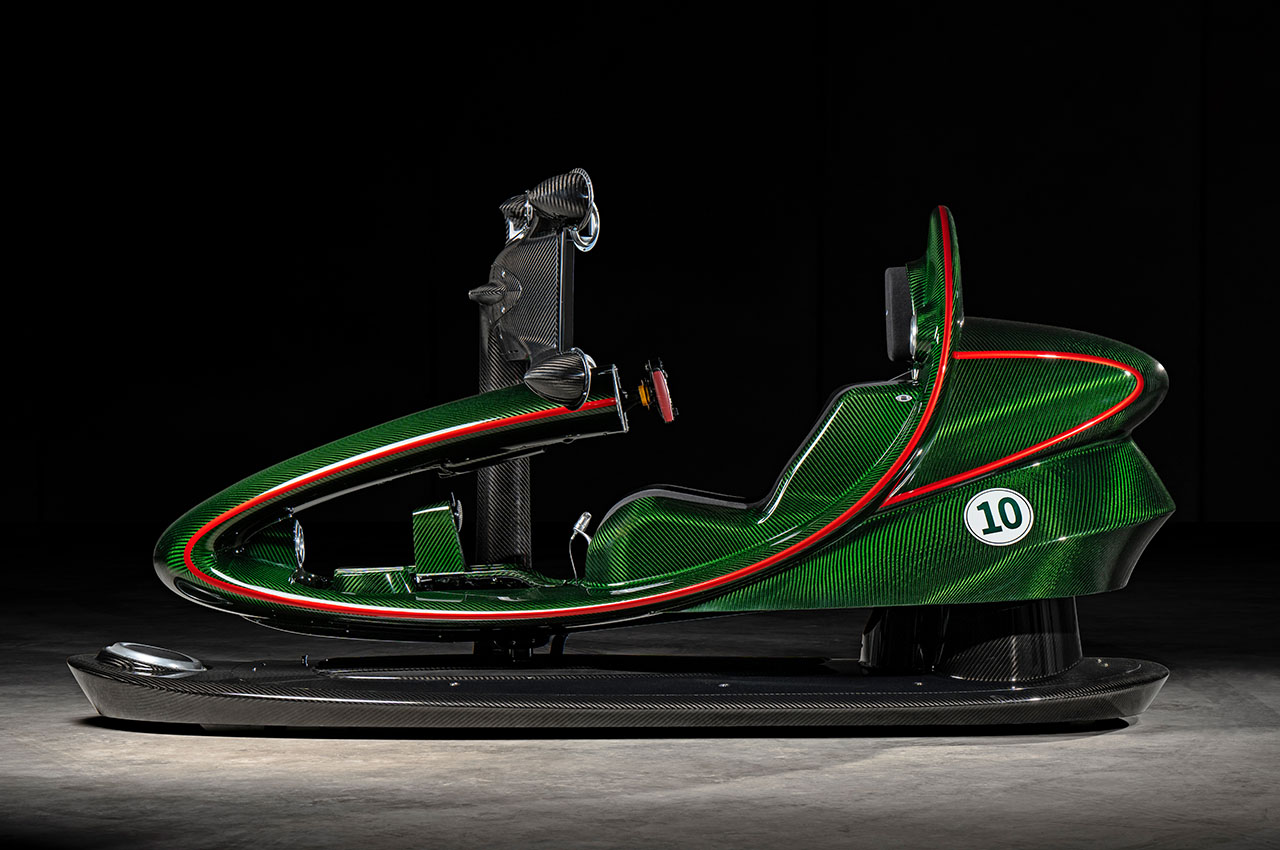
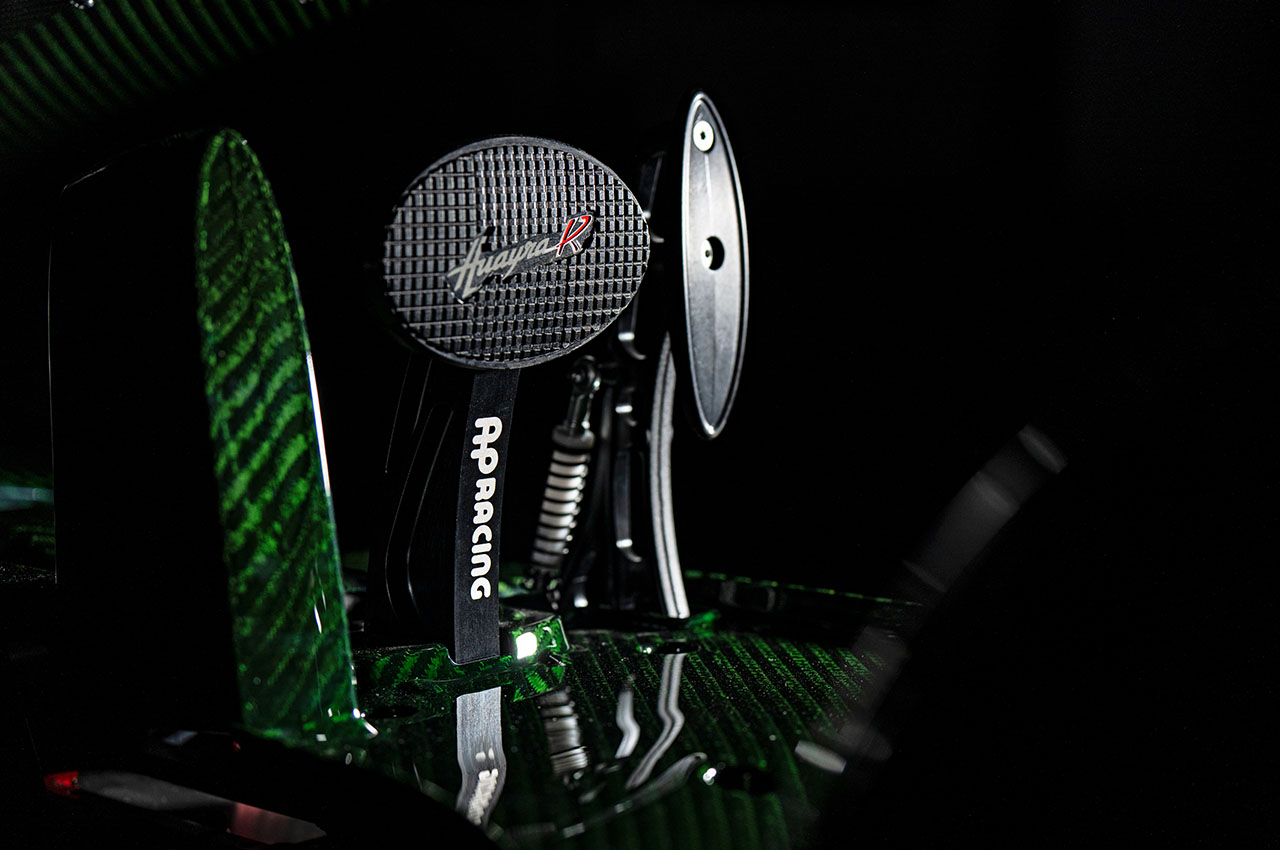
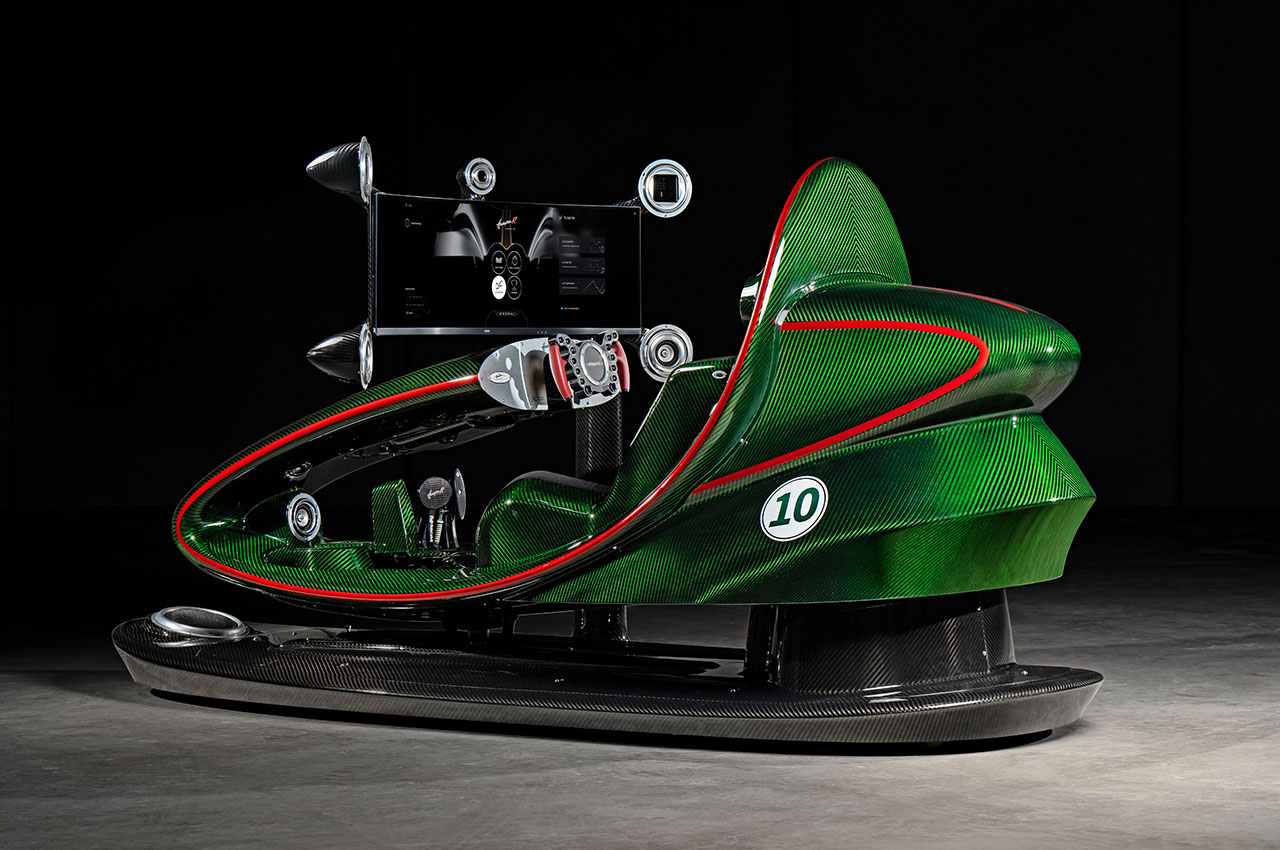
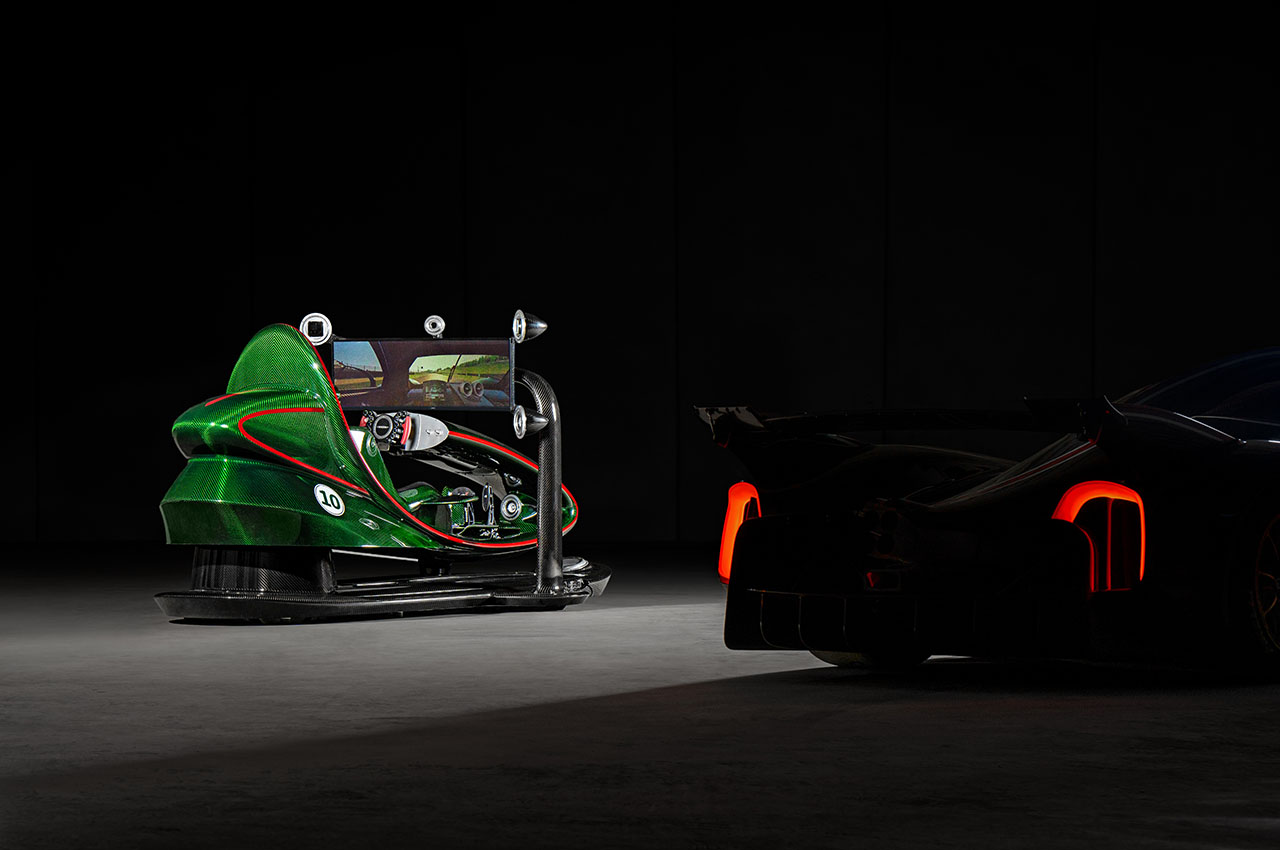
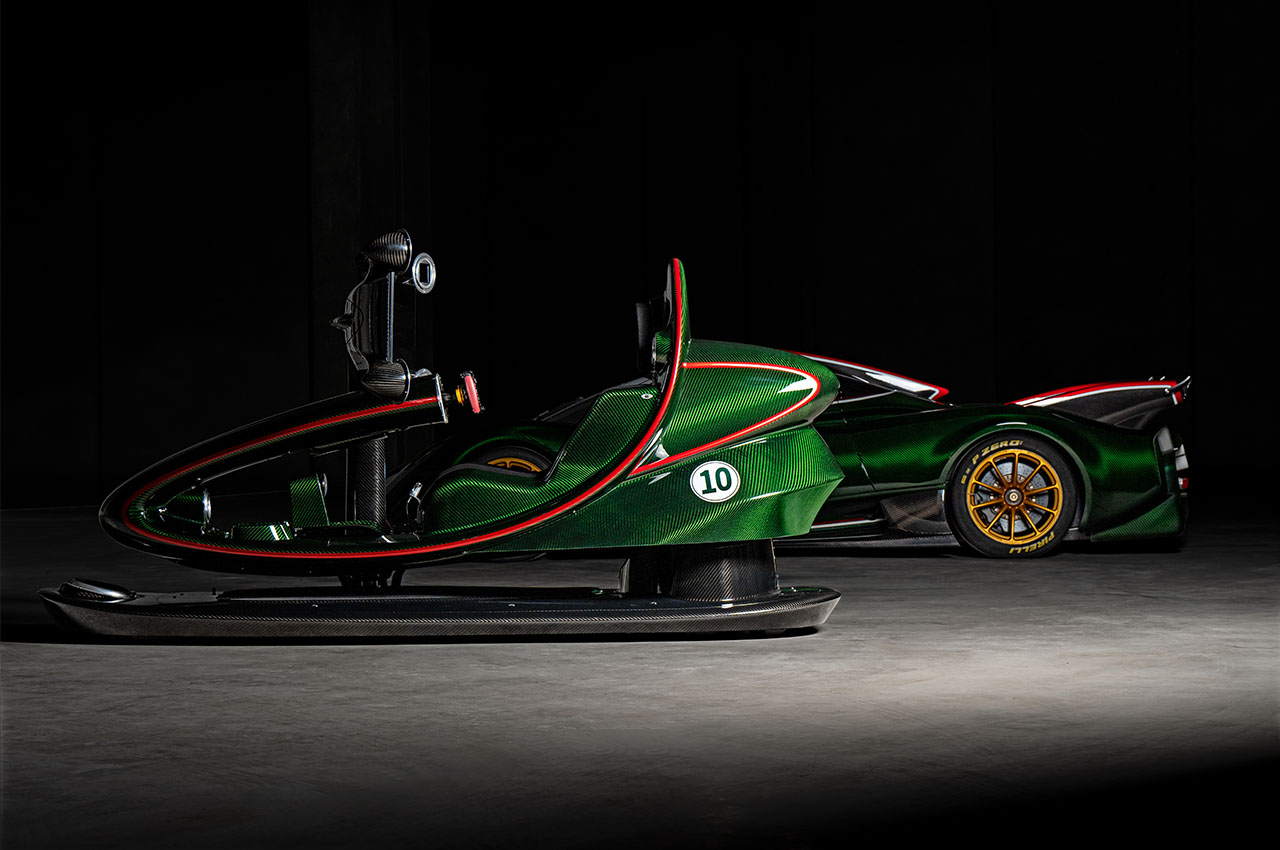
Attention to detail is the key in this racing sim as it took more than a year to finalize the creation process. This racing simulator crafted at Pagani’s facilities is made out of a single piece of aluminum and adorns carbon fiber used in the original Huayra R supercar. The car’s dynamics right from aerodynamics and handling to the sound of the naturally aspirated V12 engine are replicated to millimeter precision. The seat belts, pedals, seats and steering wheel are identical to the ones on the real car.  Wait there’s more… it also has air vents to release the brake and engine heat, making it one hell of a racing sim!

According to Franco Morsino, Vehicle Dynamics Lead at Pagani, “Our goal was to transcend the traditional boundaries of virtual driving, offering an unparalleled level of realism and immersion. This simulator is not just about the experience but also serves as a piece of art, reflecting the unique essence of Pagani’s design philosophy.” Pagini will only offer this racing sim to Pagani owners to test and compete with their powerful machines on FIA tracks in virtual reality. Taking realism to the next level, the sim can also be run in conjunction with a VR headset. Otherwise, the racer/gamer can opt to race on the single curved ultra-wide Samsung G9 monitor. Apart from the Huayra R, the simulator also gets the custom physics-focused version of the Assetto Corsa.

Pagani has not revealed any details about the pricing but given its level of realism and design uniqueness, it should very well run into a $100,000 (or more) price tag. On the hind side that’s way less than the track-only Pagani Huayra R costing $3 million.

The post Eye-popping Pagani Huayra R racing simulator matches the real thing in every little detail first appeared on Yanko Design.
Land Cruiser-based Infanta 4×4 Inkunzi camper takes off-roading fun to the extreme

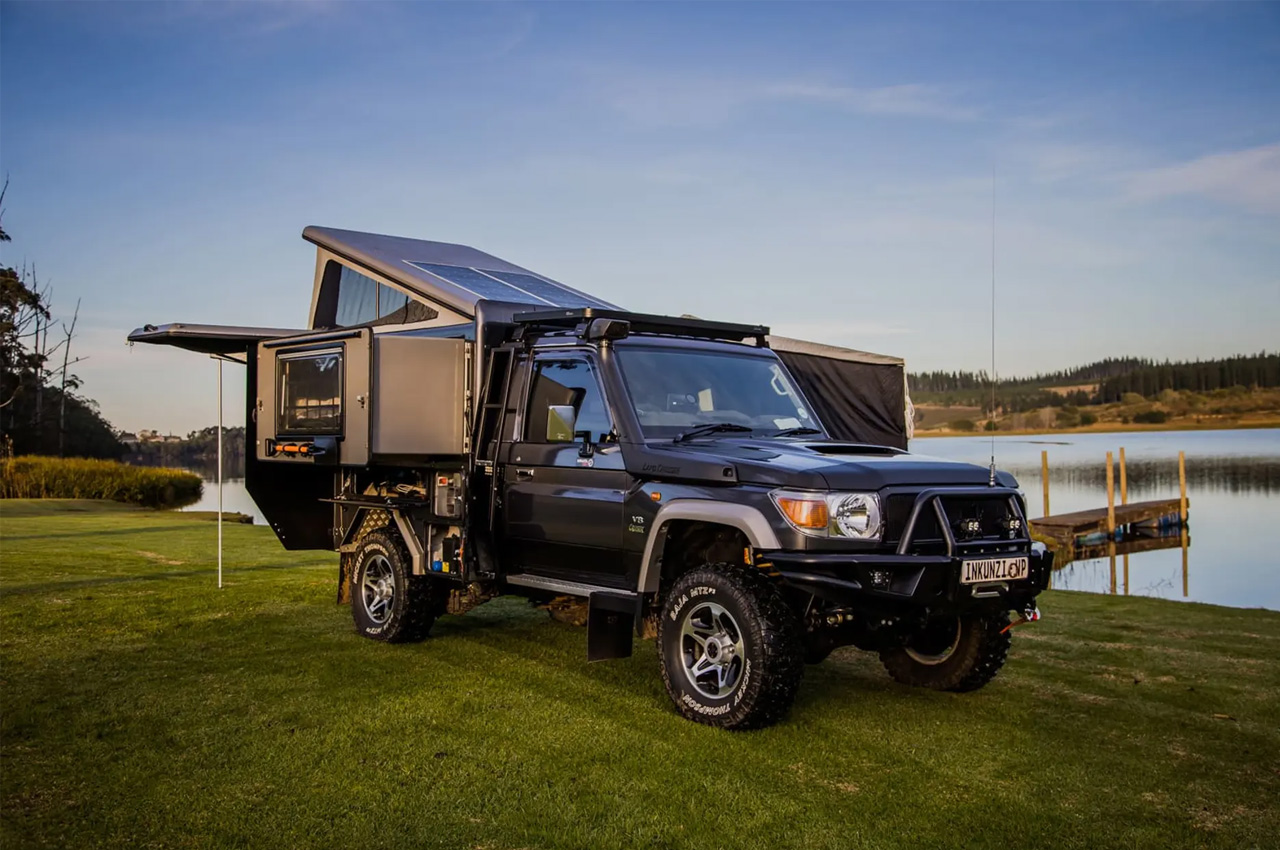
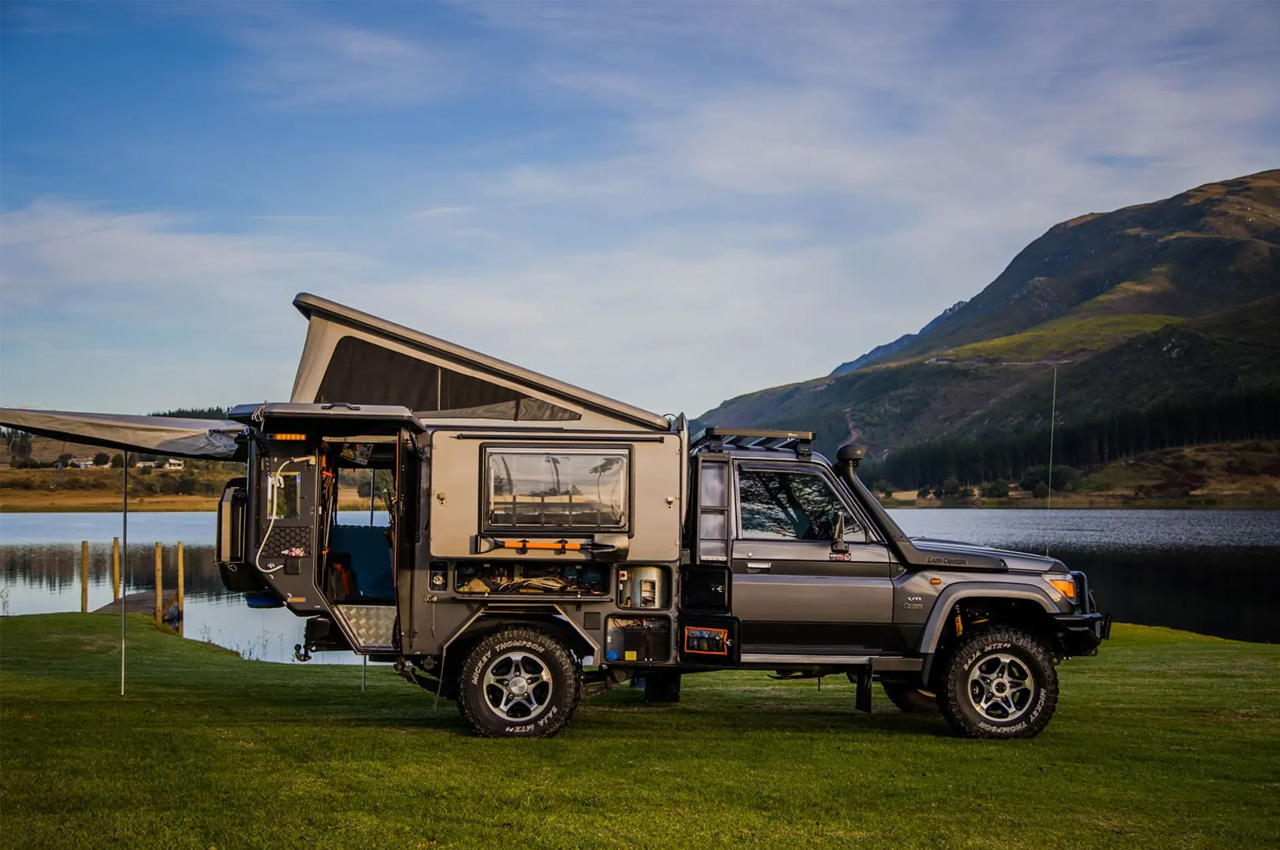
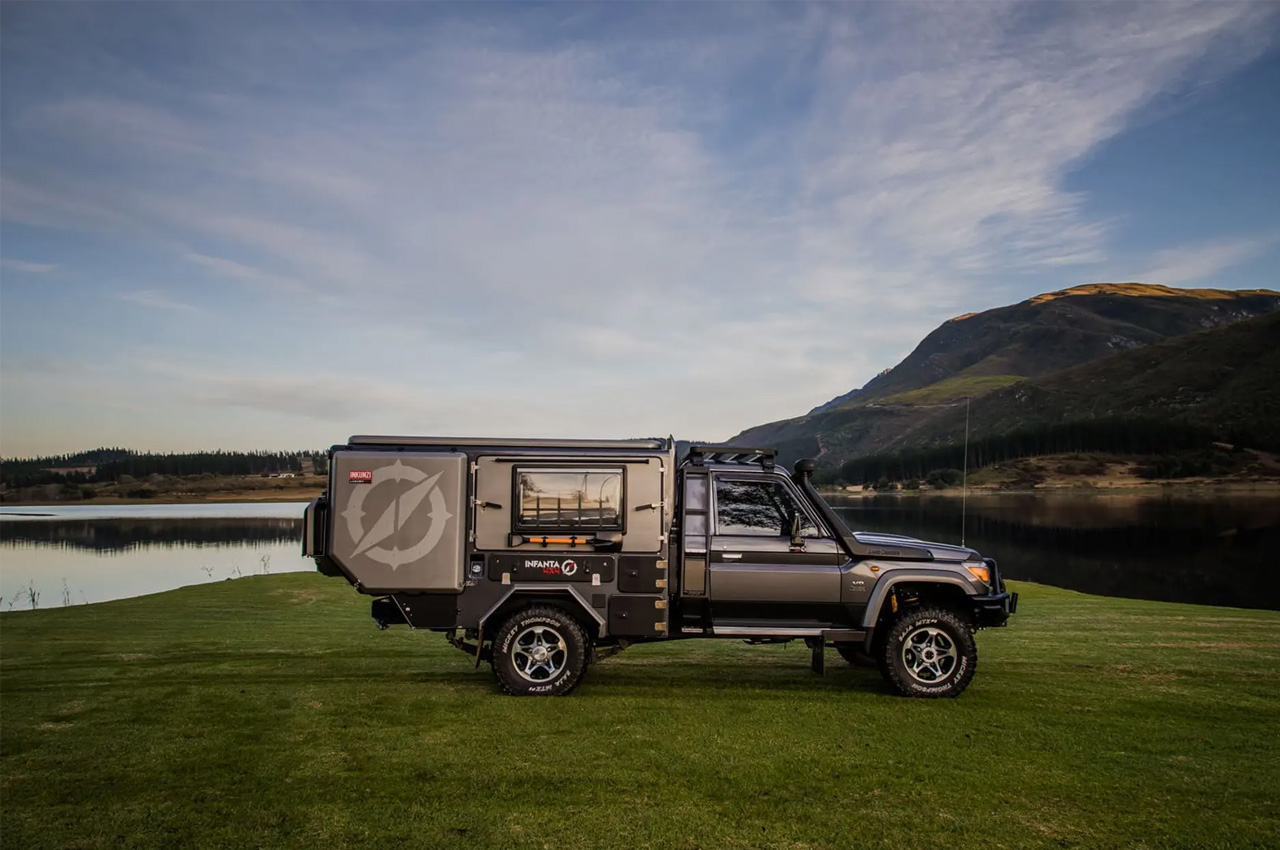
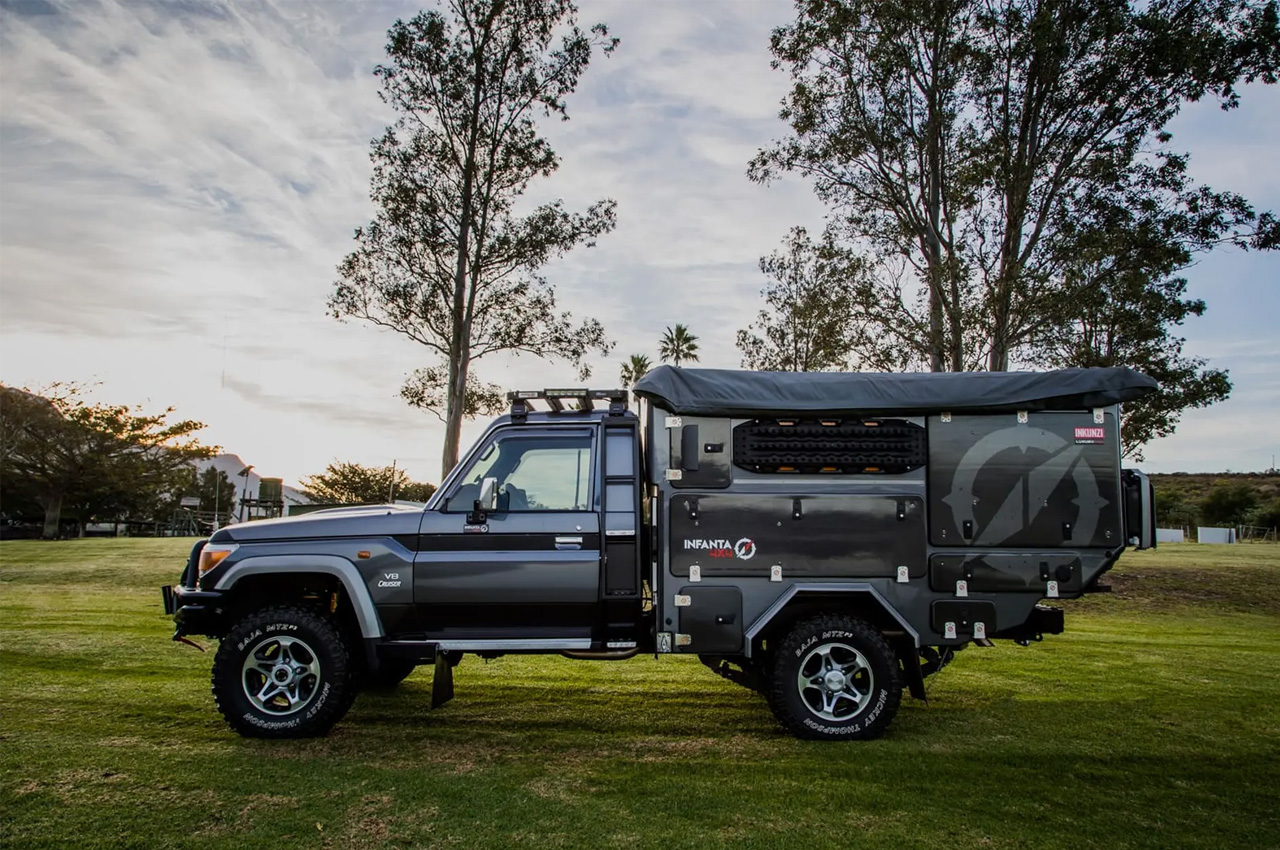
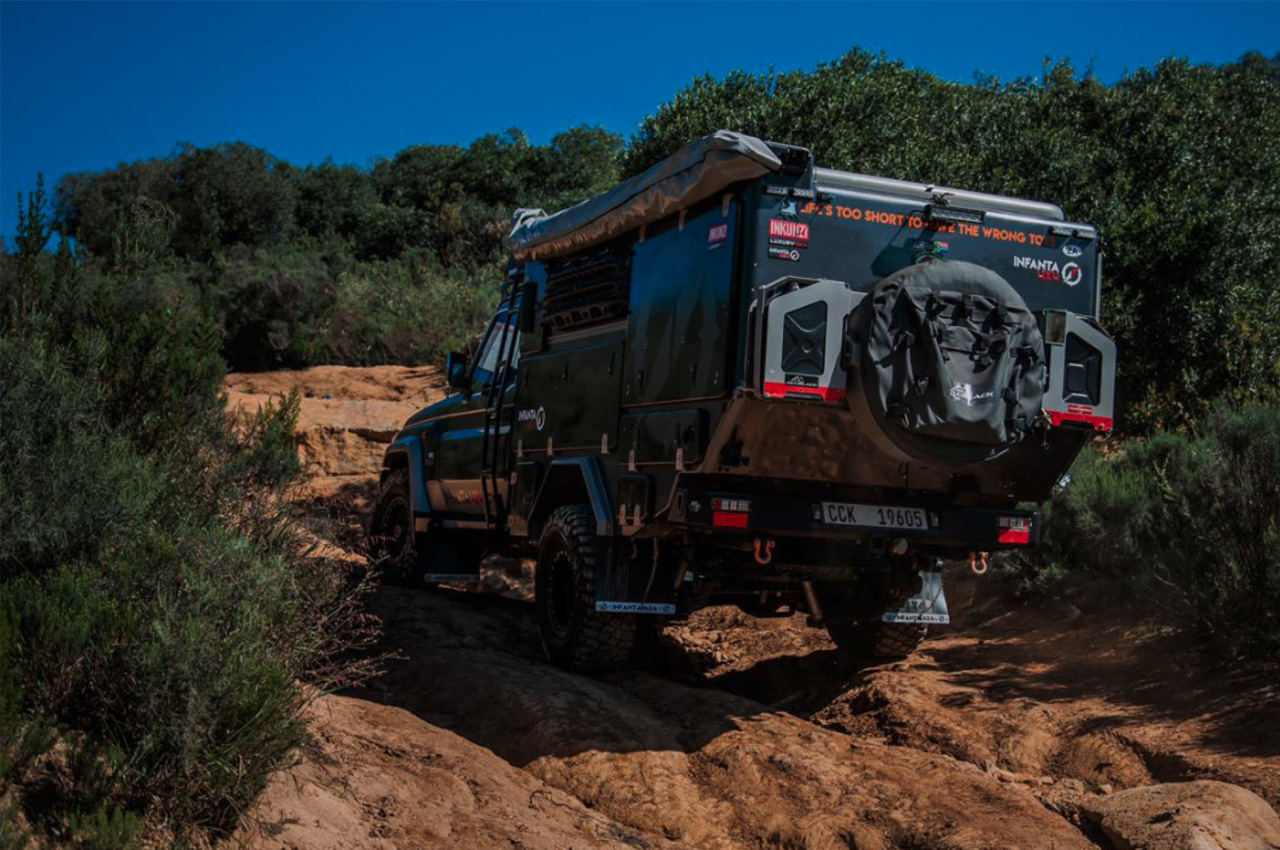
Based on the Toyota Land Cruiser chassis, the Infanta 4×4 Inkunzi camper is a South African camper cruiser designed for off-grid living with an impressive design to showcase. It looks like a random ride on the unbeaten paths when closed, but the moment you open its wings (slides and pullouts) you have a camper most delightful to see and use.

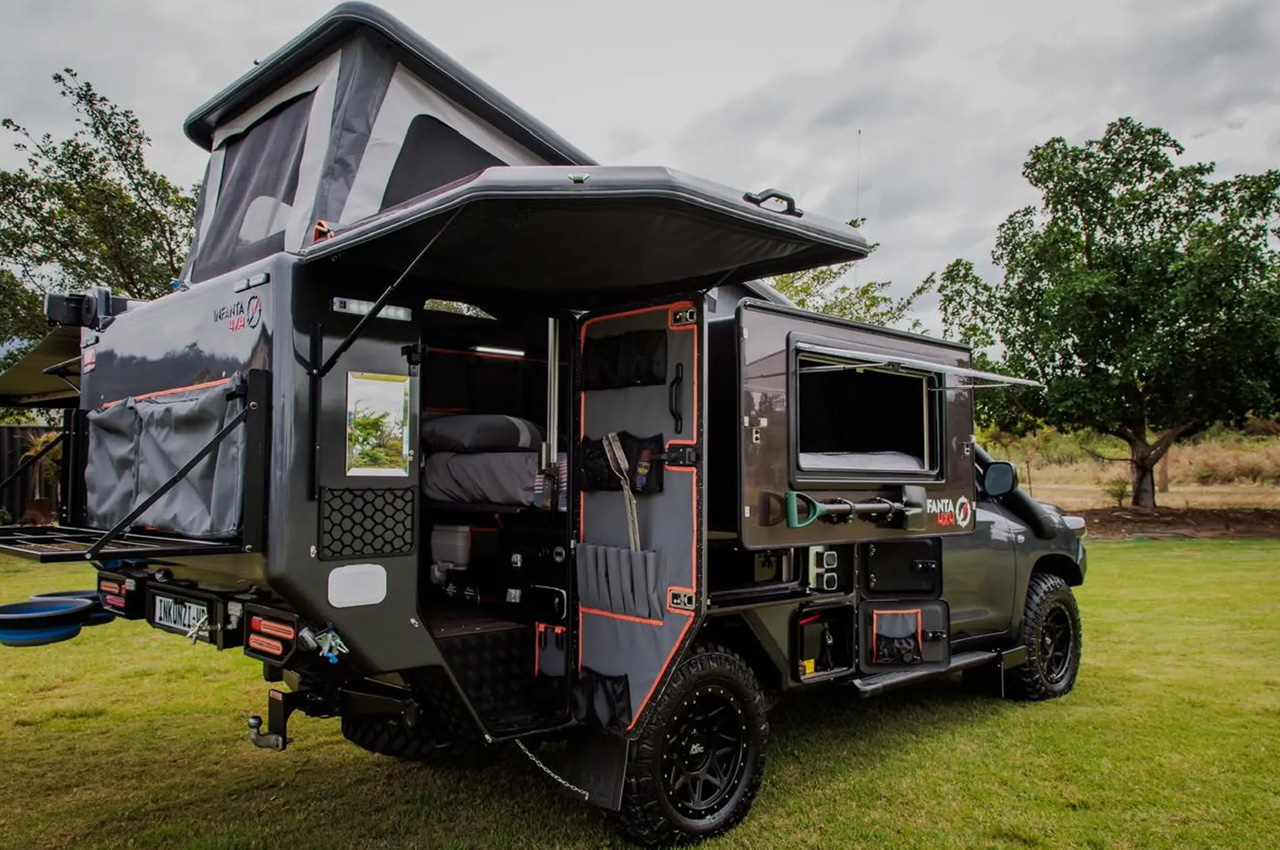
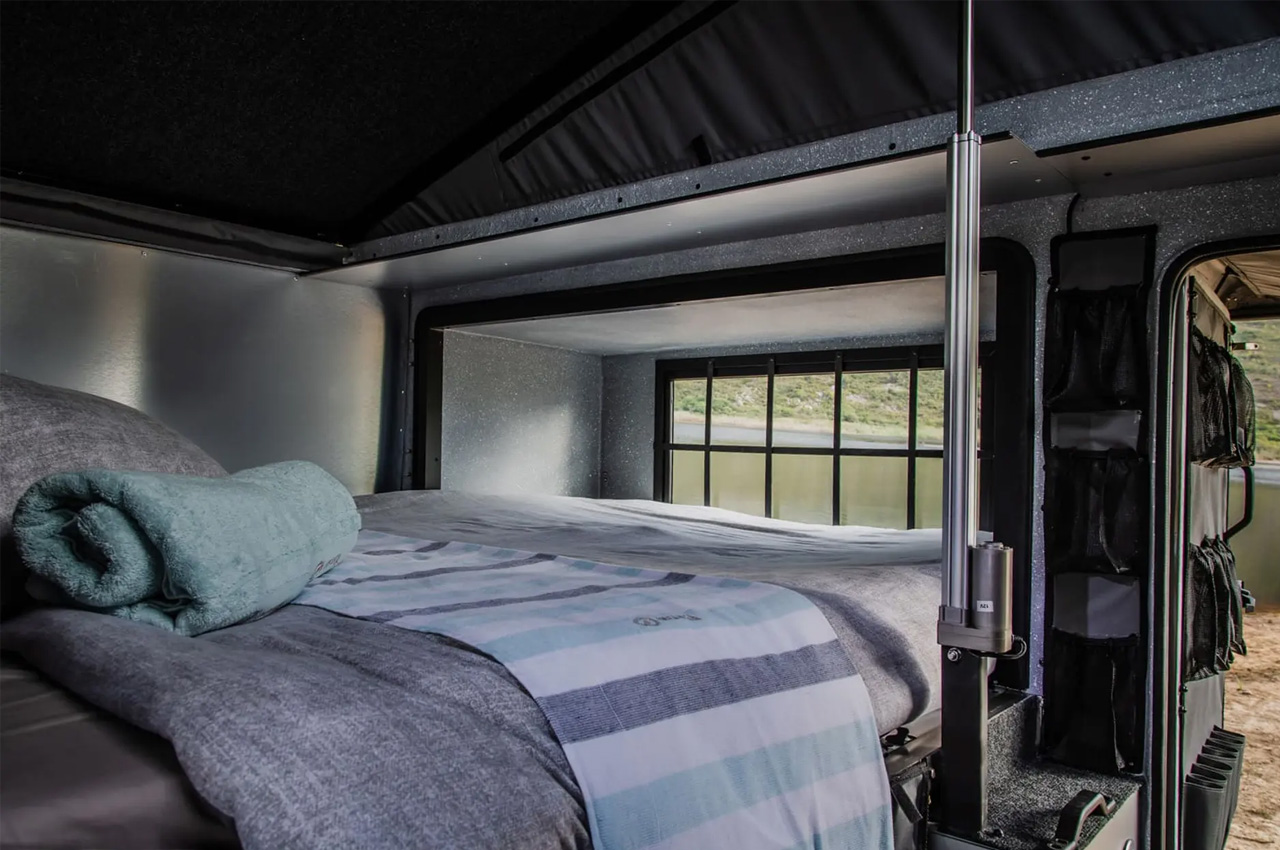
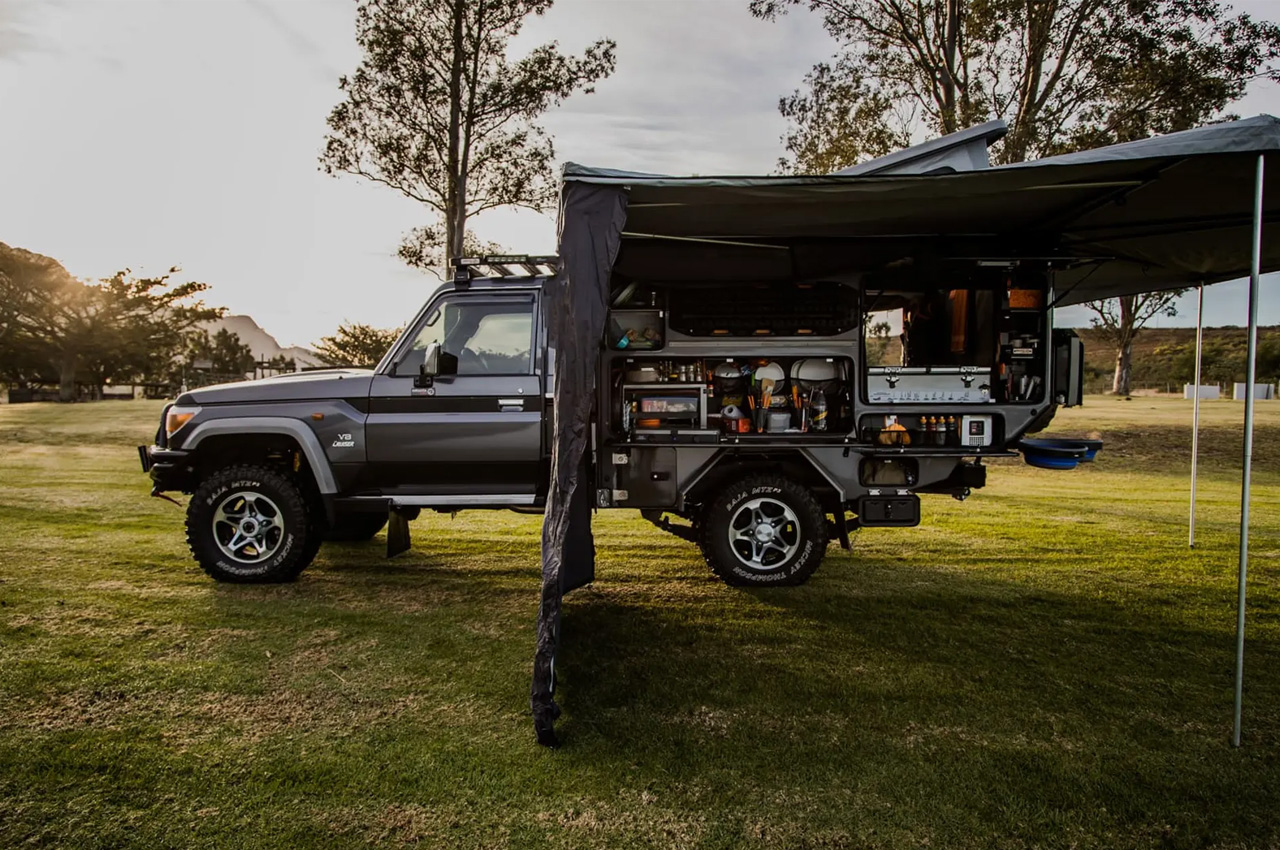
For the love of adventurers at the park or campsite, the Inkunzi, which translates to bull in Zolo, is fitted with an electric pop-up roof and has big windows in canvas covers to keep the interior both airy and fresh. The roof lifts at the push of a button, while the passenger side of the camper has five hatches, one of which houses the kitchen and the other the bed.

Designer: Infanta 4X4

The Infanta 4×4 Inkunzi camper cruiser is designed to share the “same personality traits of a bull,” from where it gets its name. “Stubborn, strong-willed” in equal measures; the camper, molded from composite aerospace pre-impregnated fiber, weighs 644 kg when packed with all the accessories, and has a body measuring 9.8-foot-long. With all the versatile sliding and folding antics, the Inkunzi is effortless to setup, and takes only two minutes

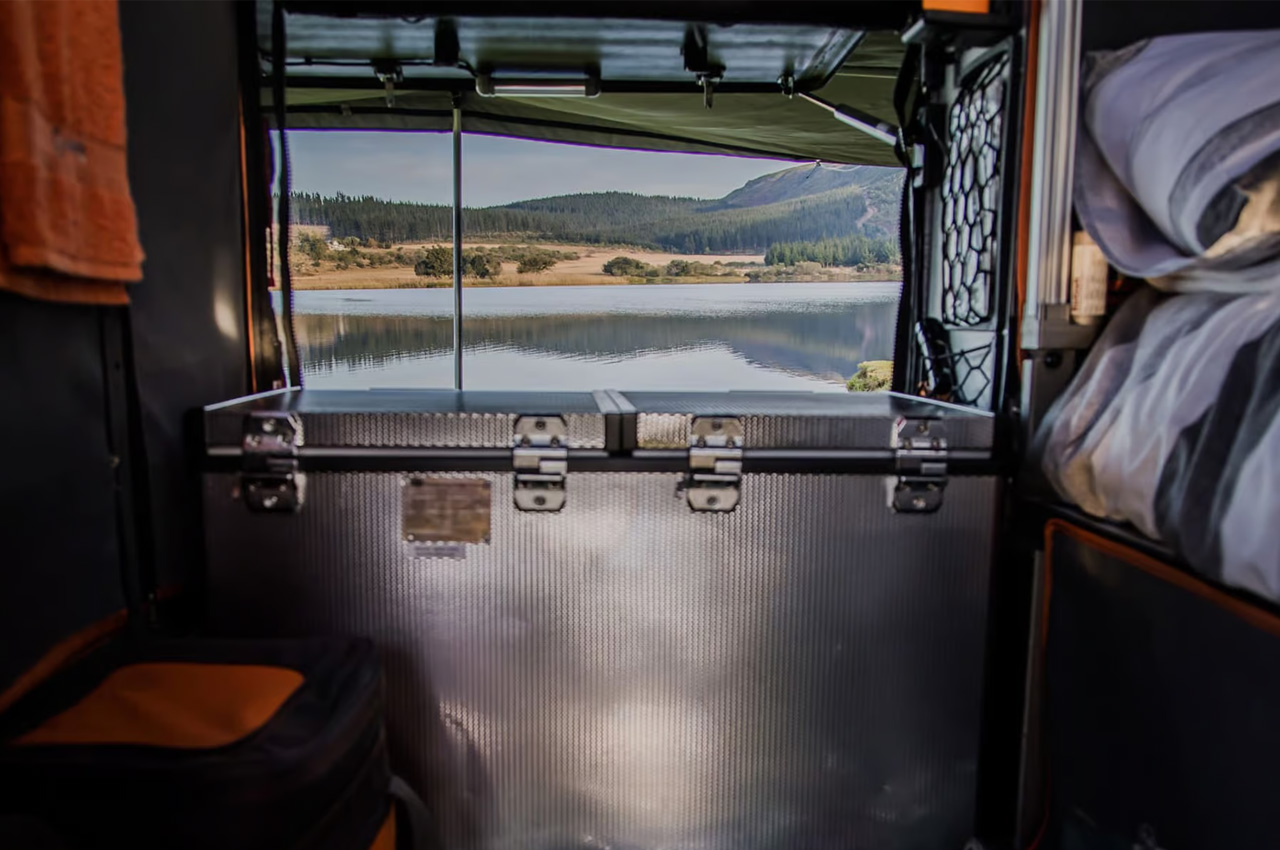
The space within the camper is more focused on space utilization while all the things like the shower, kitchen and even the bedroom are designed to open outwards. The bed is placed in the front bedroom cabin that slides out from the main body and is provided with a headboard and storage cubies. Infanta uses the standing height space on the entry for dressing, while its slide-out kitchen on the passenger side spans almost the entire length of the camper.

Situated directly behind the cabin area, the fold-down kitchen has a two-stove burner, dishware, cookware, and utensils. Other kitchen compartments feature a 90-L fridge, shelves for storage, a collapsible basin, and a second worktop. An outdoor shower enclosed by drop-down curtains draws water from an onboard 120-L water tank connected to a 220V water heater.

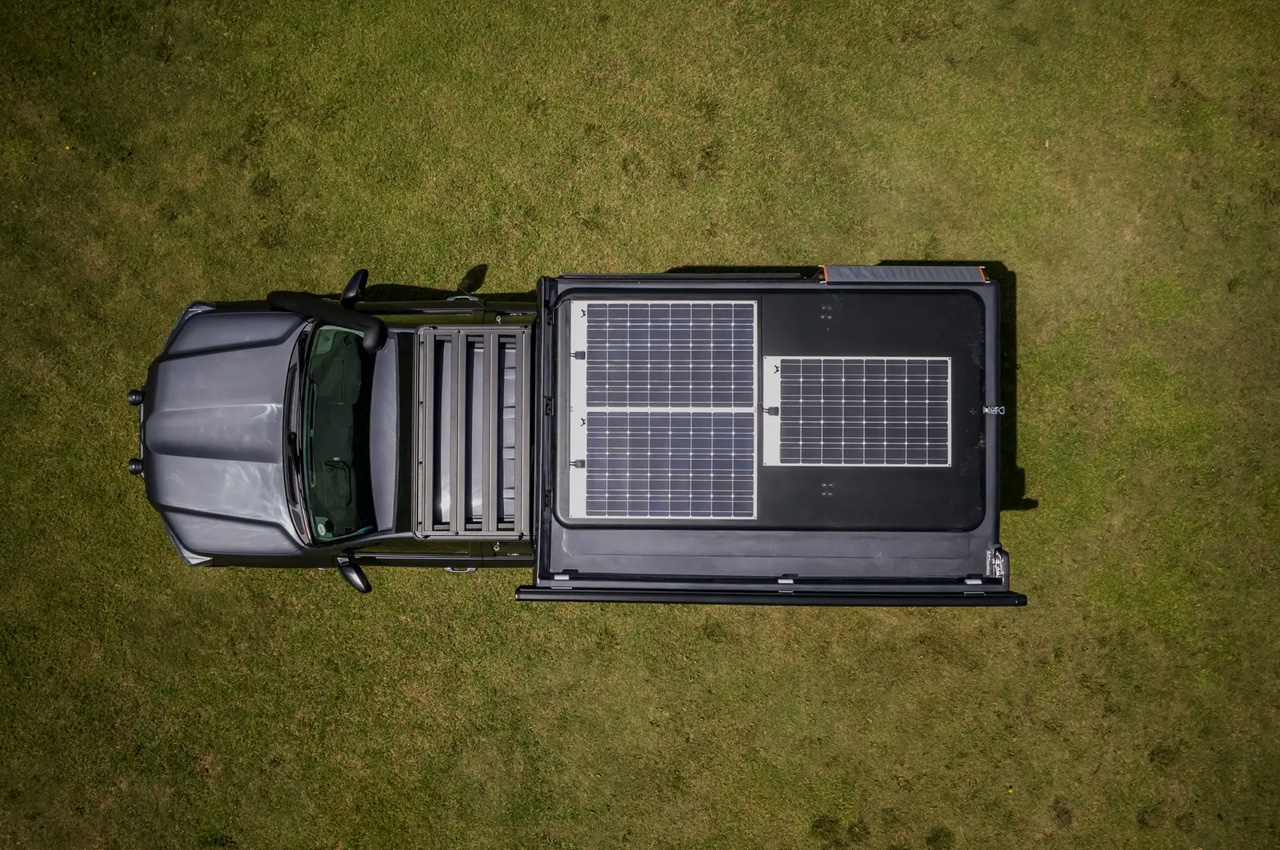
Since the stout Inkunzi is made for off-roading, it comes with a 105-Ah battery, Victron charger and battery monitor, and an option to include an inverter and solar panels. The camper starts at R524 000, roughly $28,000 (without the truck), and has the option to add a 270-degree awning for additional usable outdoor space.

The post Land Cruiser-based Infanta 4×4 Inkunzi camper takes off-roading fun to the extreme first appeared on Yanko Design.
Self-driving car concept is a hotel-like sleeping pod on wheels

Autonomous vehicles are still a somewhat controversial topic these days, but even detractors and critics will begrudgingly admit that it is the inevitable future. Given a foolproof and safe implementation, it opens up plenty of opportunities for people to do more during their travels, especially over very long distances. They can be more productive with work, spend more quality time with family, or simply get a good night’s sleep in transit. The latter isn’t exactly comfortable to do with today’s car designs, but that’s only if you don’t let go of current conventions and limitations. This design concept for a mobile sleeping pod, in contrast, pulls out all the stops and demonstrates what’s possible with the right technologies, the right design, and especially the right shape.

Designer: Peter Stulz

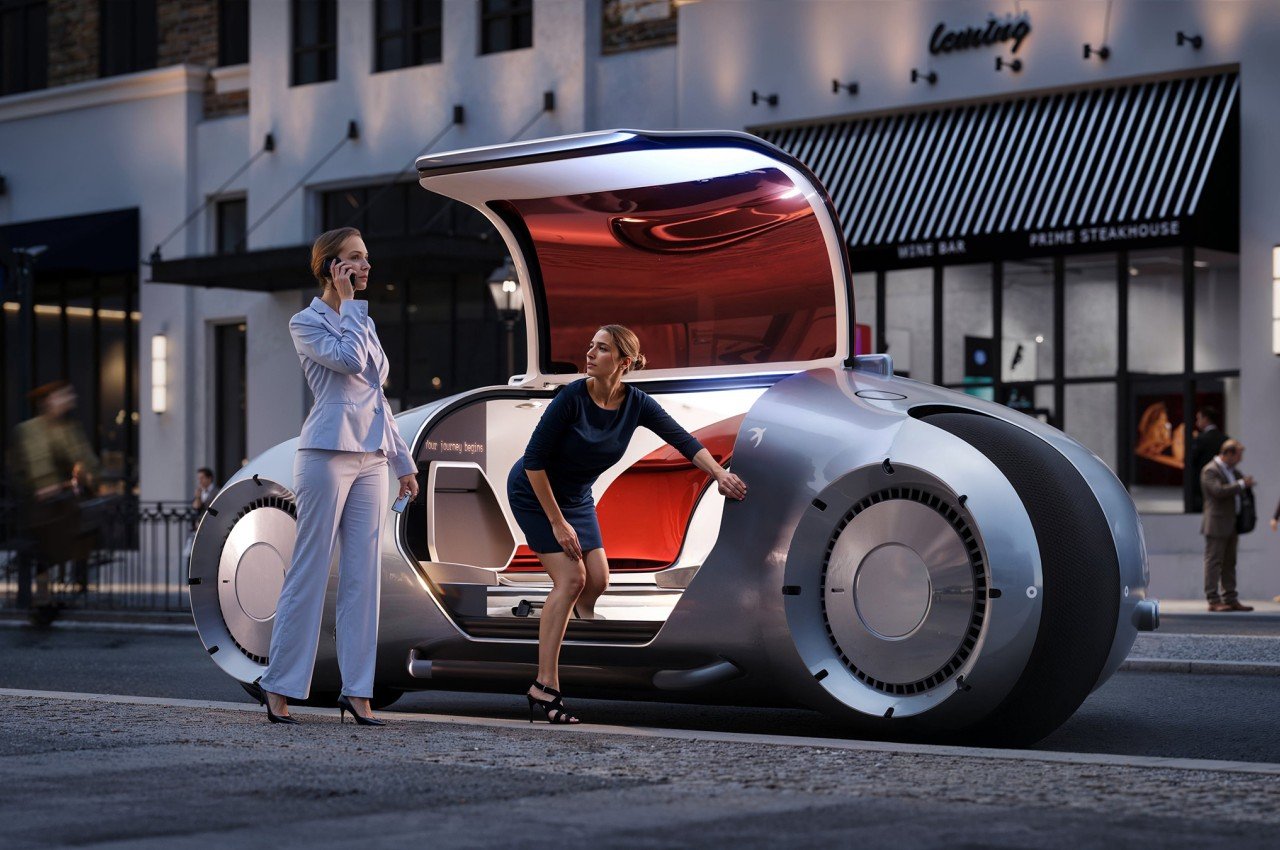
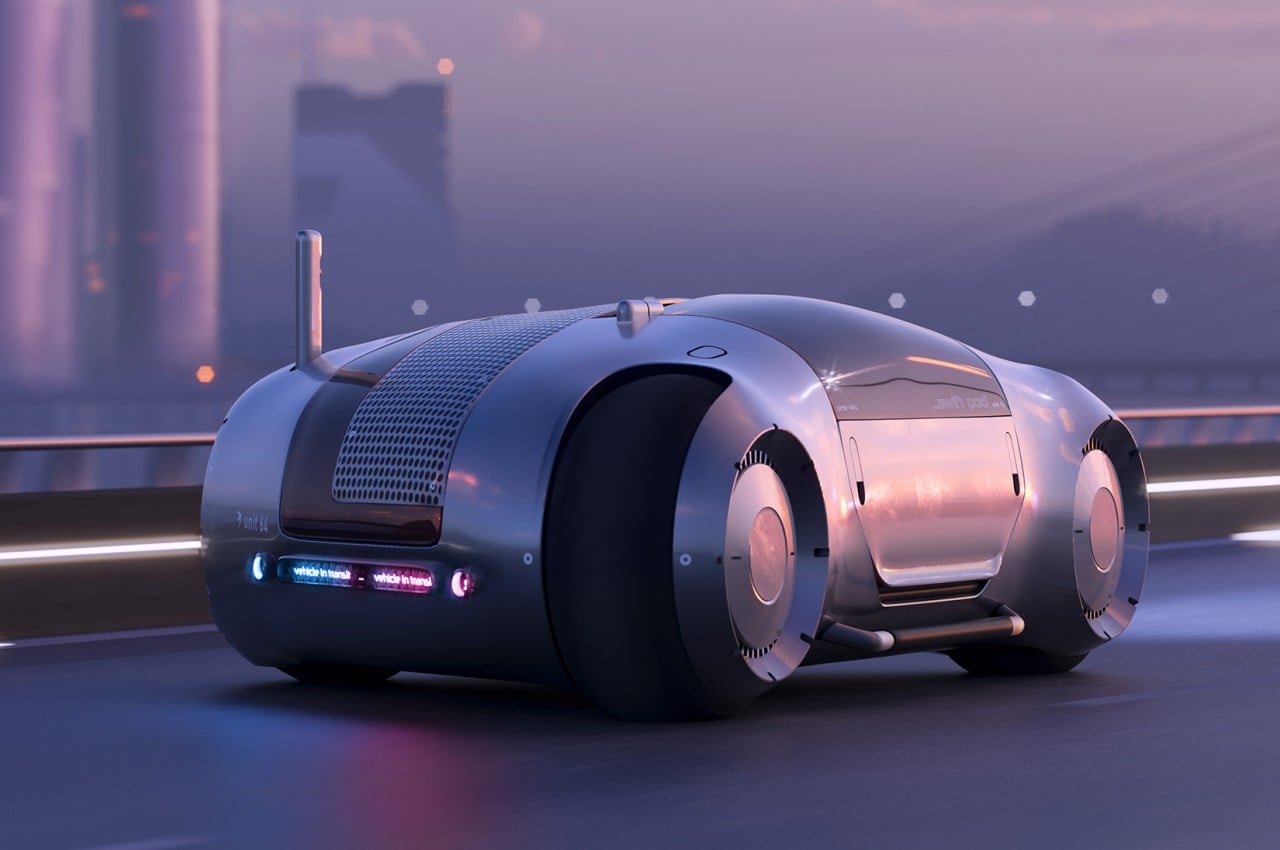
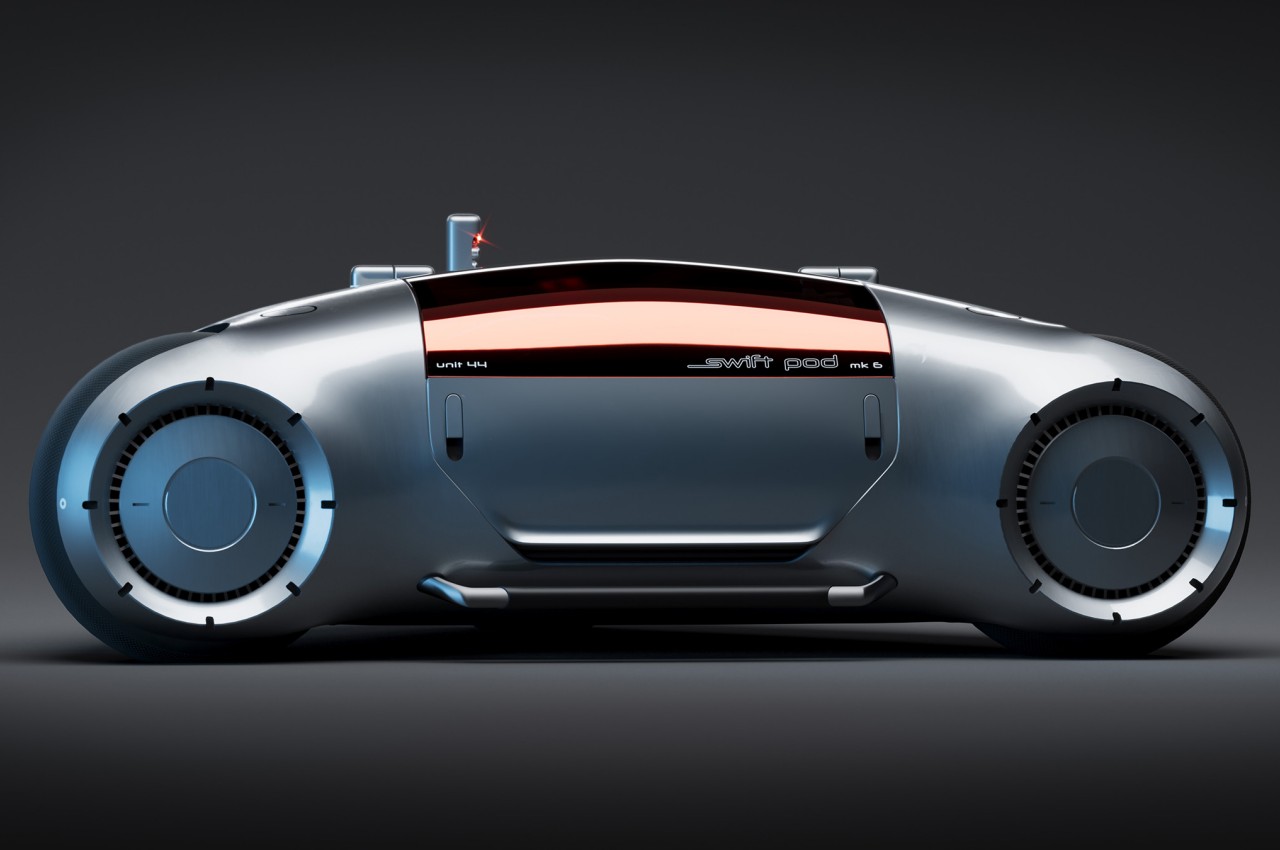
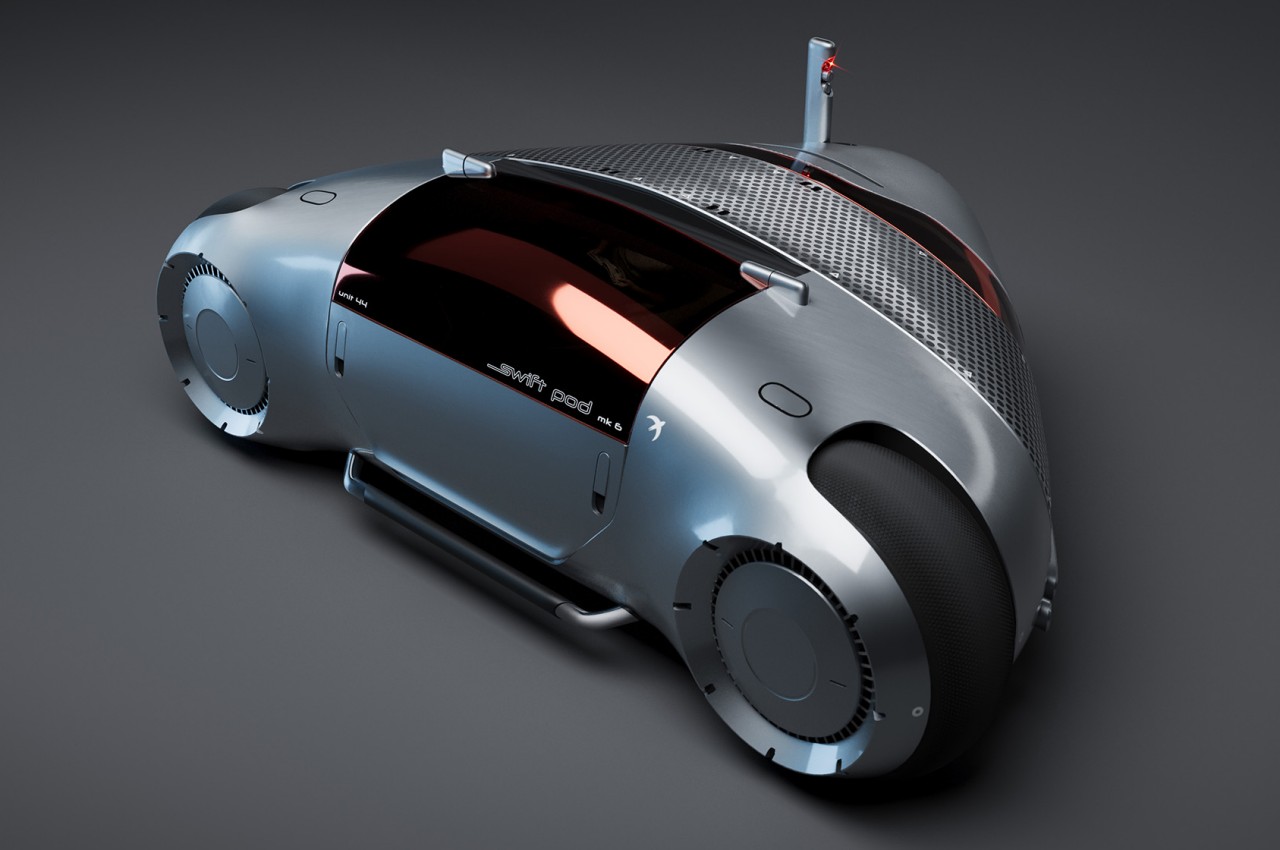
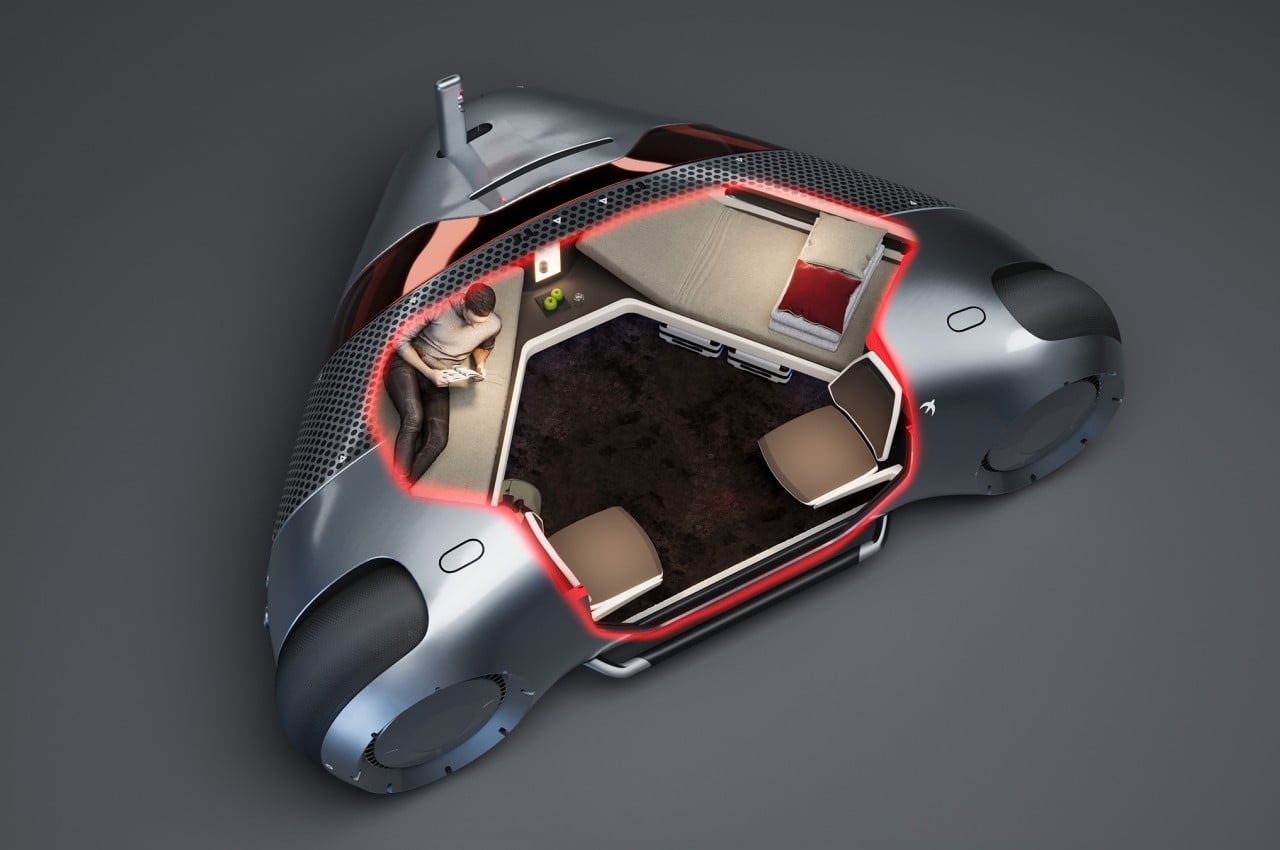
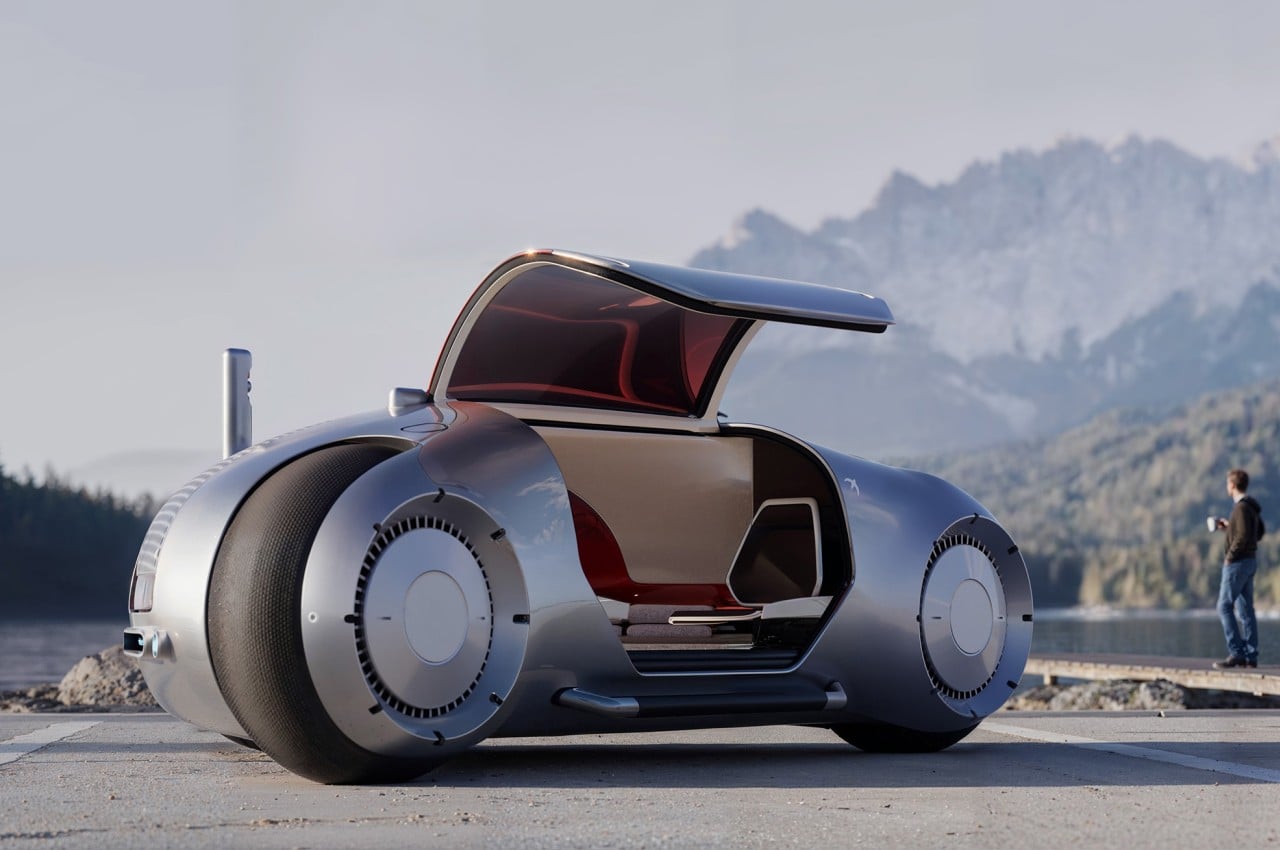
When viewed from its profile, the Swift Pod looks more like a gigantic motorcycle, a vehicle that stands on two wheels only. It’s definitely not your regular motorbike, even disregarding the significantly larger size, because it looks more like a cross between a bike and a car from the way it has a cabin instead of just a seat. When viewed from the top, however, the vehicle is revealed to actually run on three wheels, forming an odd triangle shape instead of a typical box you’d expect from cars.

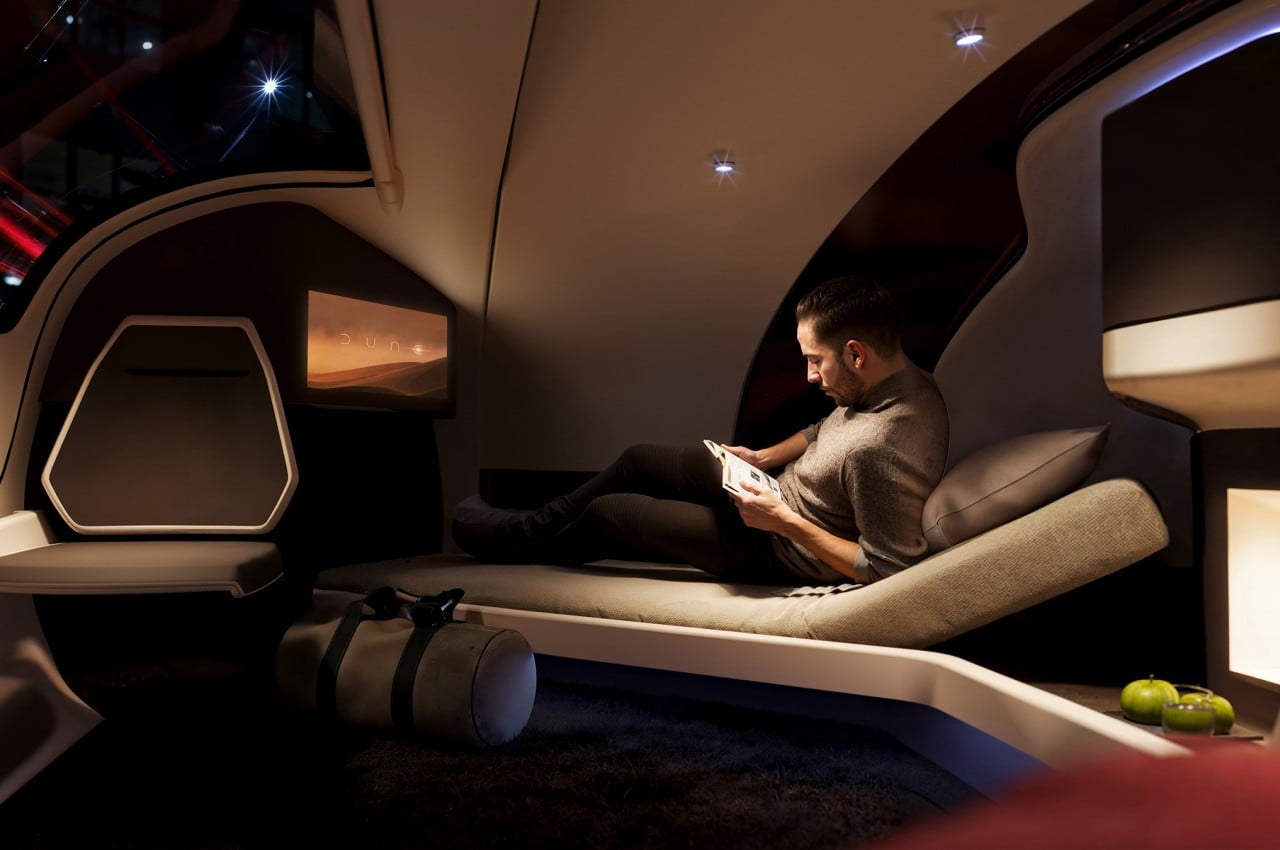
The choice of the shape isn’t for appearance’s sake, though, but was made to maximize available space inside while minimizing the vehicle’s size. After all, the Swift Pod is designed to have two adult-sized beds inside, one on each side of the triangle, in addition to two chairs, amenities, and, of course, the vehicle’s actual hardware and components. The concept, after all, is for a mode of transportation that will let you sleep through your journey, at least if you want to. There’s plenty of space for two people to do anything, including working if necessary.

The concept was inspired by how some people are able to get a decent amount of sleep on trains and planes, and that’s without a comfortable bed or other conveniences. With Swift Pod, you not only have a comfortable place to recline but also an entertainment system, snacks and beverages, and plenty of storage for your belongings. What it doesn’t have room for is a human or physical driver.

The Swift Pod concept only works if autonomous driving has reached a point where one can really entrust their safety to these invisible drivers. The design envisions an extremely smart self-driving vehicle that, after booking a ride like a taxi, would be able to determine the best path toward your destination and navigate the roads safely. While the default is to simply go from point A to point B in one go, the system also has room for stop-over breaks where you can get off, eat some heavier meals, and freshen up before you take the next leg of your journey in the comfort of a bed.

The post Self-driving car concept is a hotel-like sleeping pod on wheels first appeared on Yanko Design.