
Sonos brings tab navigation, speaker sorting and more to its app
Sonos has added some handy quality-of-life updates to its mobile app.
The nightstand is one of the most underestimated surfaces in any home. It accumulates cables, three chargers doing the job of one, a lamp chosen in five minutes, and a rotating cast of objects that never formally earned their place. Most people accept this as normal. The result is a space that begins every evening and ends every morning with the kind of visual noise that makes a room feel smaller and less intentional than it actually is.
The five products below were chosen because each one solves a specific nightstand problem without introducing three new ones. None of them overlap in function. Start with the one that addresses your most pressing problem first, and the case for the next one tends to become clear in about a week.
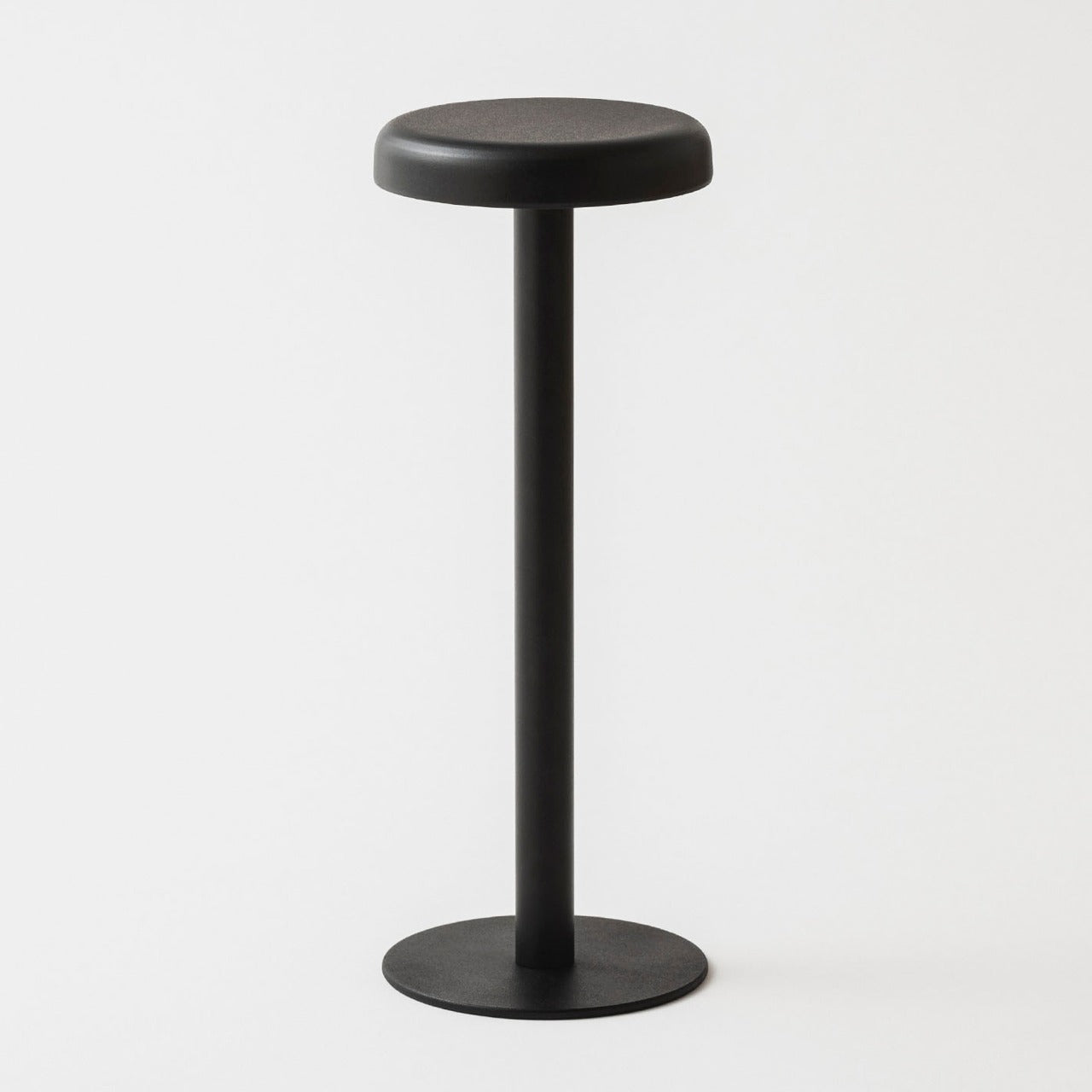
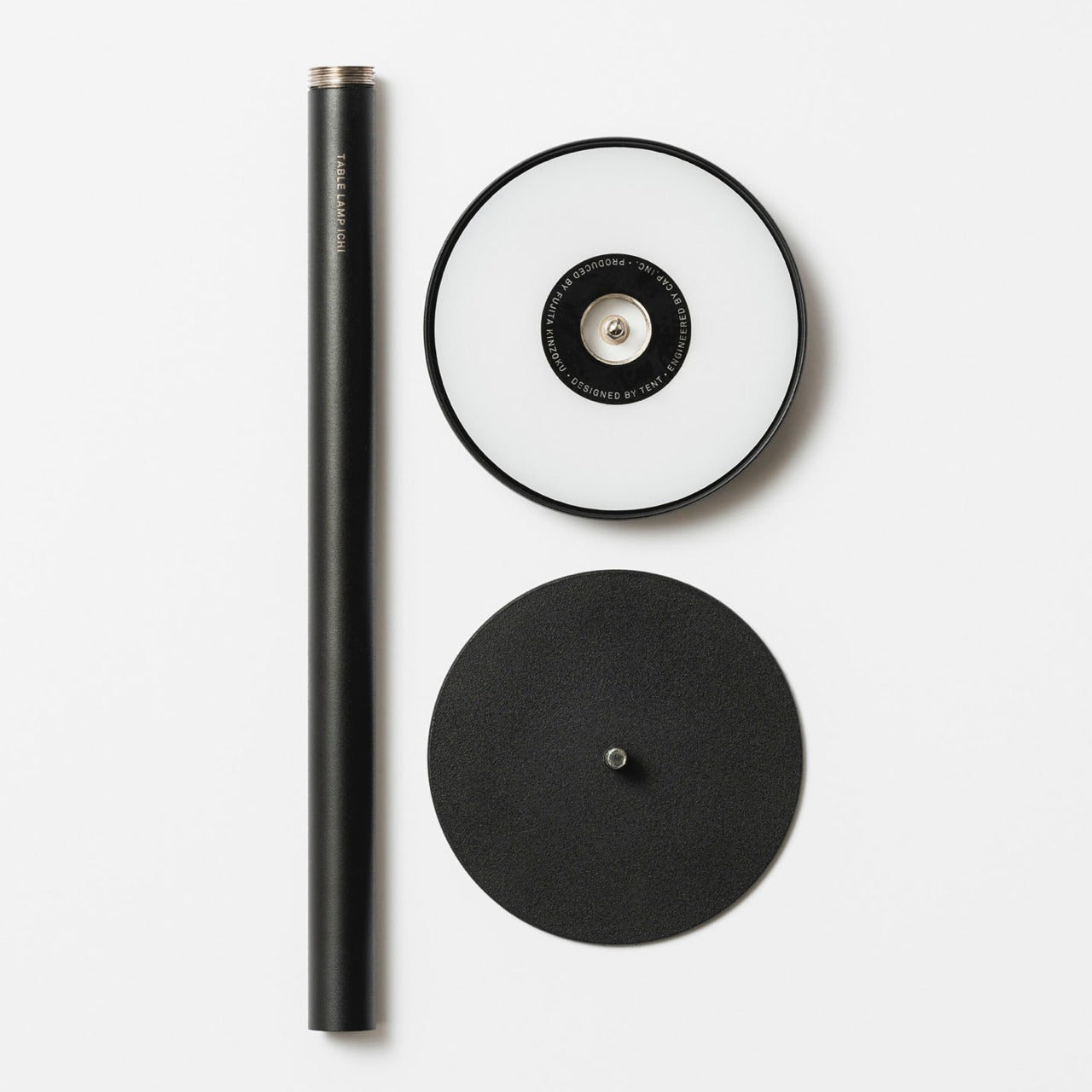
Most nightstand lamps are compromises. The color temperature drifts toward clinical white at exactly the wrong hour, the base requires an outlet placement that dictates where everything else goes, or the design was selected in poor lighting at a furniture store and has been quietly resented ever since. The Anywhere-Use Lamp removes most of those friction points from the equation. Available in black, white, and a new Industrial edition, it is a portable, cord-free table lamp with a clean minimalist silhouette and a warm, contained glow that changes the character of a bedroom after the main lights go off.
Ambient light quality at bedtime is one of the most underrated variables in how quickly a bedroom shifts from a room you happen to be in to a place that actually invites rest. Warm, directionless light at eye level, rather than overhead, does a significant portion of that work without requiring any configuration. There is no companion app, no color temperature slider, and no smart home integration to set up. The Anywhere-Use Lamp delivers exactly the quality of light a nightstand surface deserves.
Click Here to Buy Now: $149.00
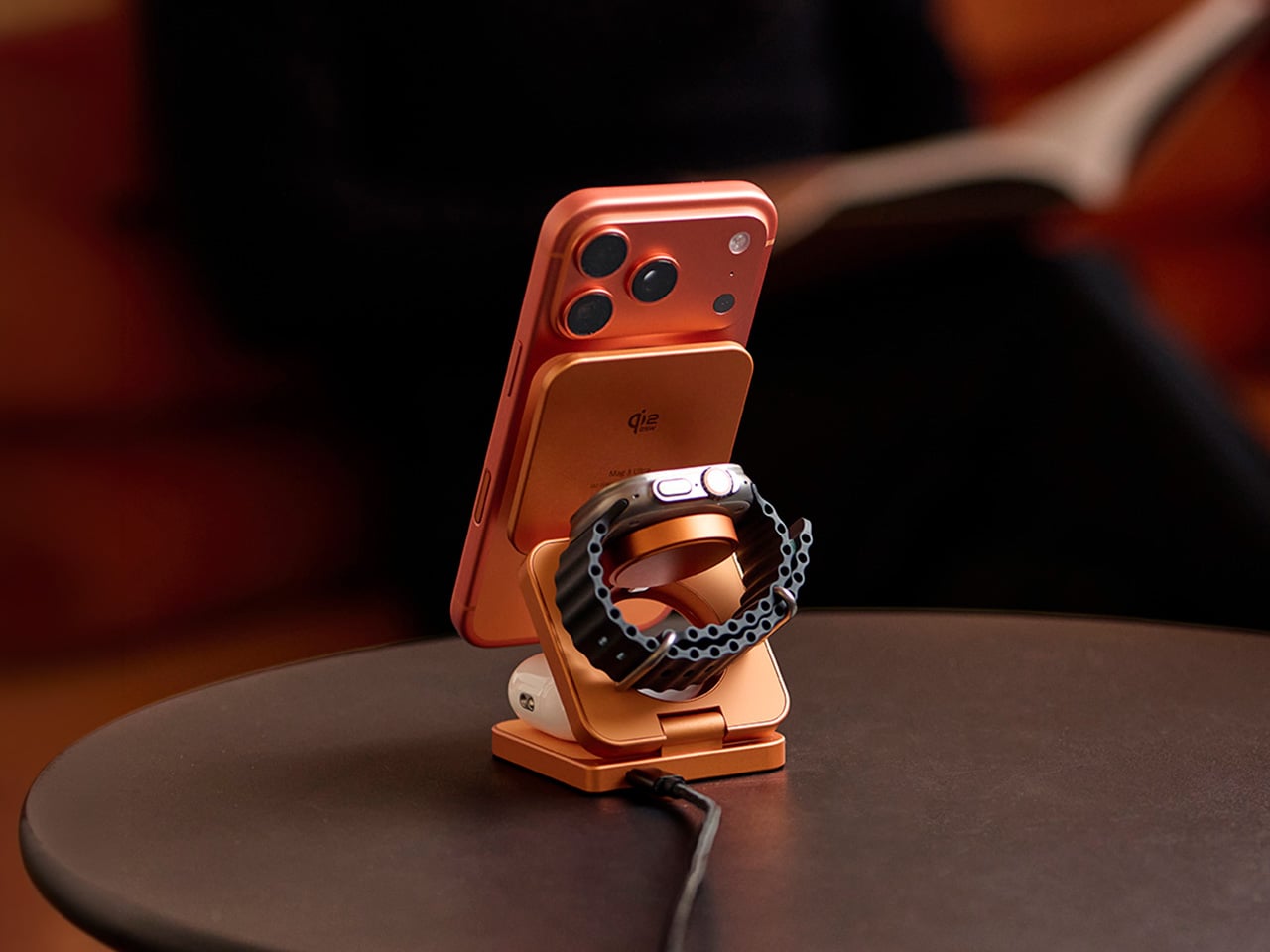
The Mag 3 Ultra addresses the charging problem Apple created and never solved. When Apple canceled AirPower in 2019, it left iPhone users managing three separate charging solutions on one surface: a MagSafe puck for the phone, a dongle for the Watch, and a Qi pad for the AirPods. This aluminum alloy dock collapses all three into a single folding station that snaps into position magnetically and arrives in a copper-orange colorway that reads more like a considered desk object than a utility accessory hiding under a lamp.
The engineering detail that separates it from most competitors is the elevated phone pad, which keeps the iPhone camera module completely clear of the stand body so the phone sits flush and upright without an awkward tilt. With Qi2 support and up to 25W magnetic fast charging, the Mag 3 Ultra handles all three devices simultaneously without any of them competing for priority. StandBy mode works properly through the night. Foreign Object Detection protects both the dock and whatever else lands on the surface. A three-year warranty backs a product designed to stay in one place permanently.
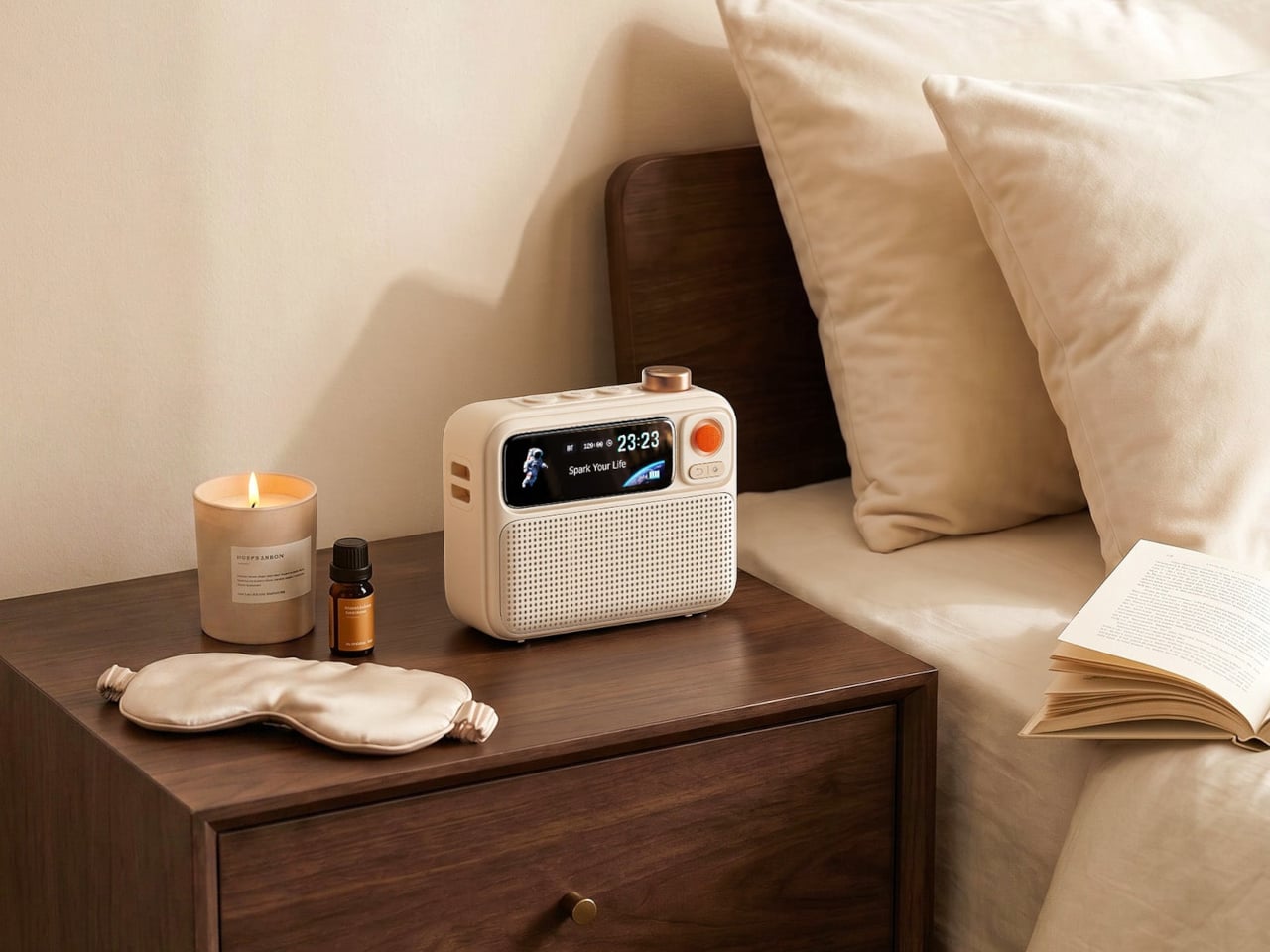
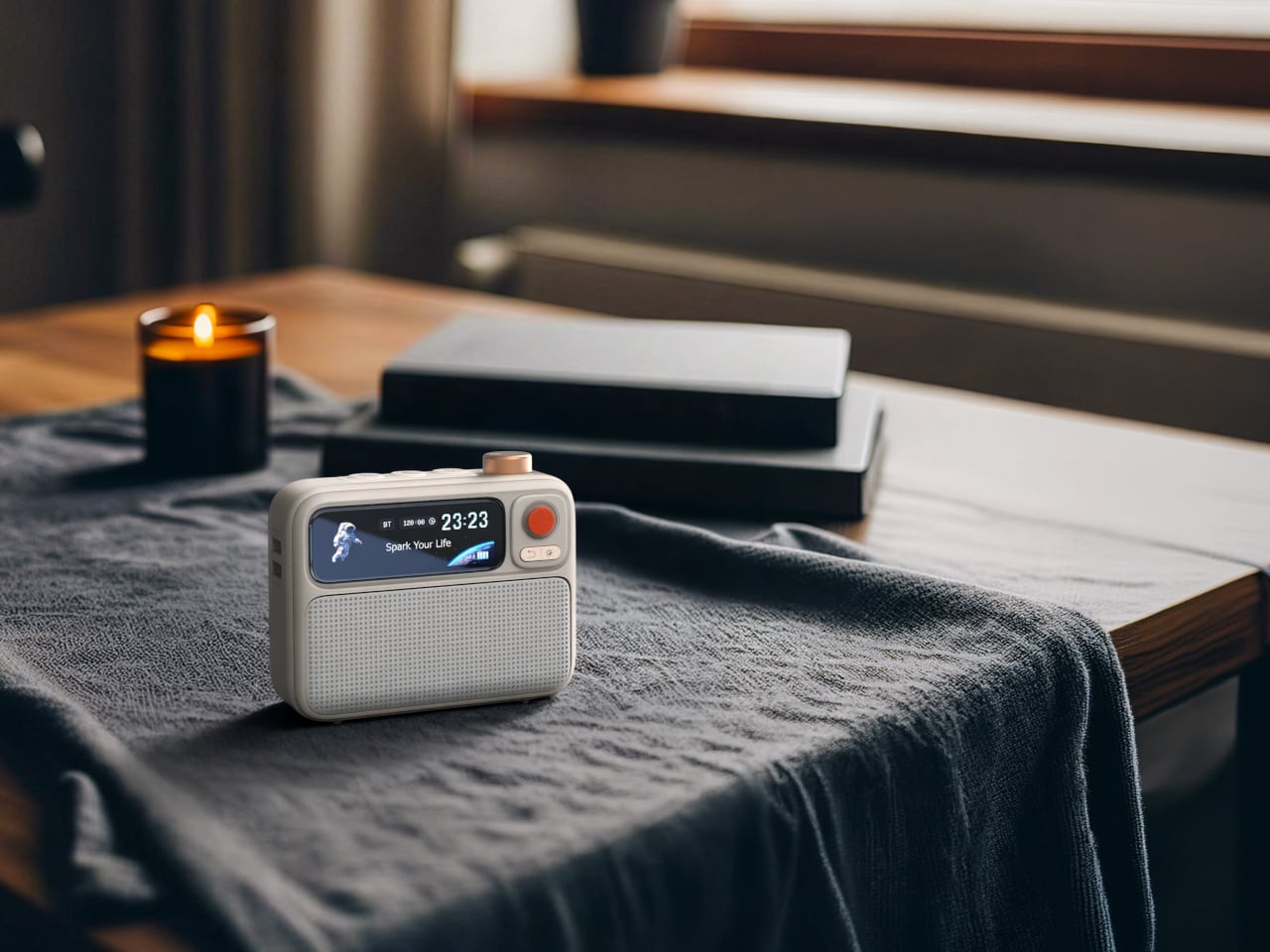
Three devices disappear from the nightstand for under a hundred dollars. The Divoom FlowToo combines a Bluetooth speaker, white noise machine, and alarm clock in a single compact unit, and handles each of those functions with more care than most products that attempt the combination. Its 10W amplifier and 45mm full-range driver are genuine audio hardware, not the obligatory speaker feature most alarm clocks bolt on as an afterthought. More than 90 built-in sounds cover the most-used sleep and focus categories, and the Divoom app keeps alarm scheduling and sound selection manageable from your phone without requiring physical interaction in the dark.
The 2.26-inch smart display does more than show the time. It runs multiple clock face designs, music visualizers that respond to whatever is playing, sleep scene animations, and a mood lighting mode that shifts the character of the room across the evening. The wake system layers natural sounds and soft light simultaneously, so the morning alarm builds gradually rather than firing at full volume from silence. It comes in black and white, both clean enough to sit beside almost any existing bedroom setup without visual conflict. For a first nightstand upgrade, this is the most efficient starting point.
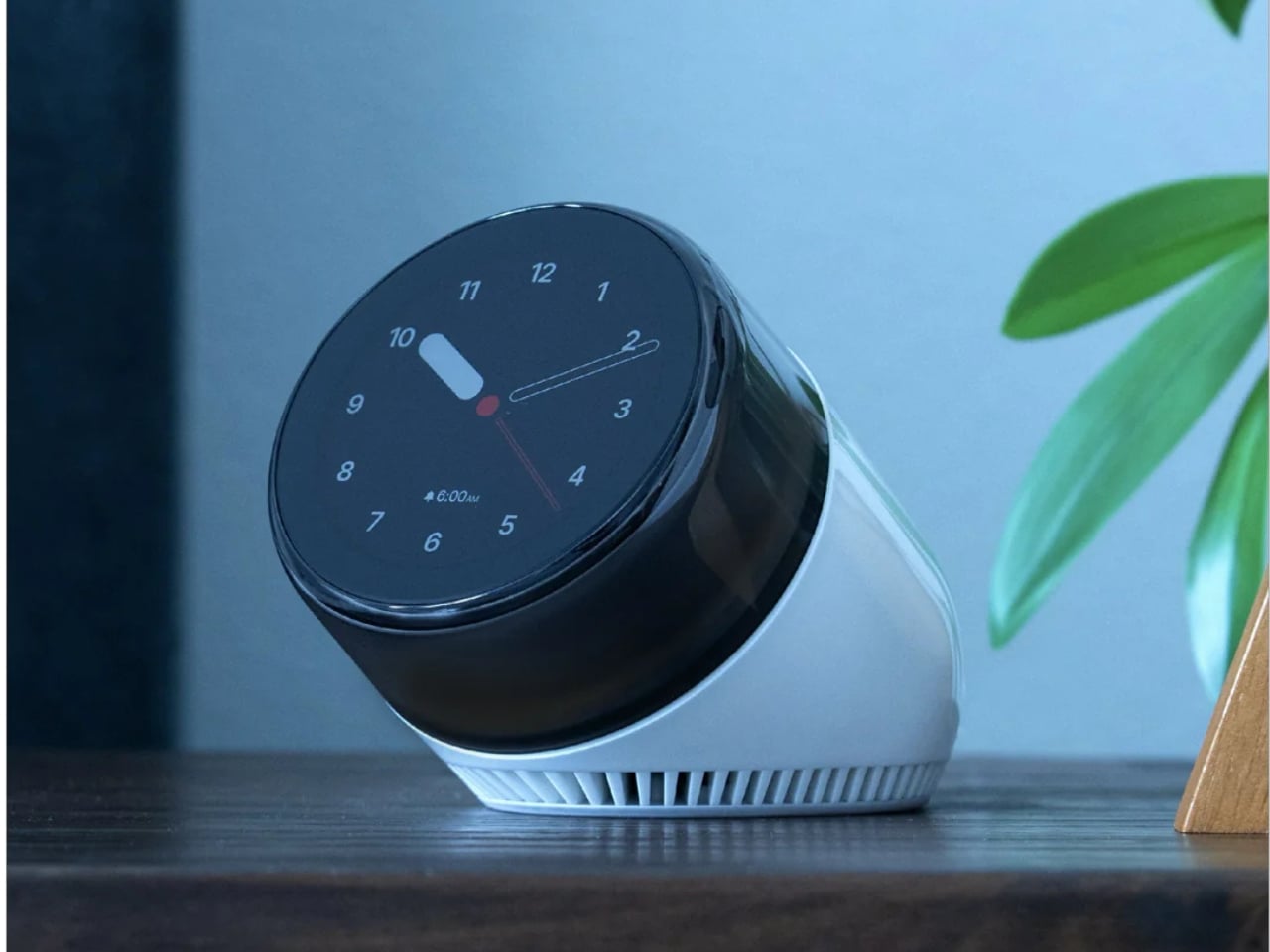
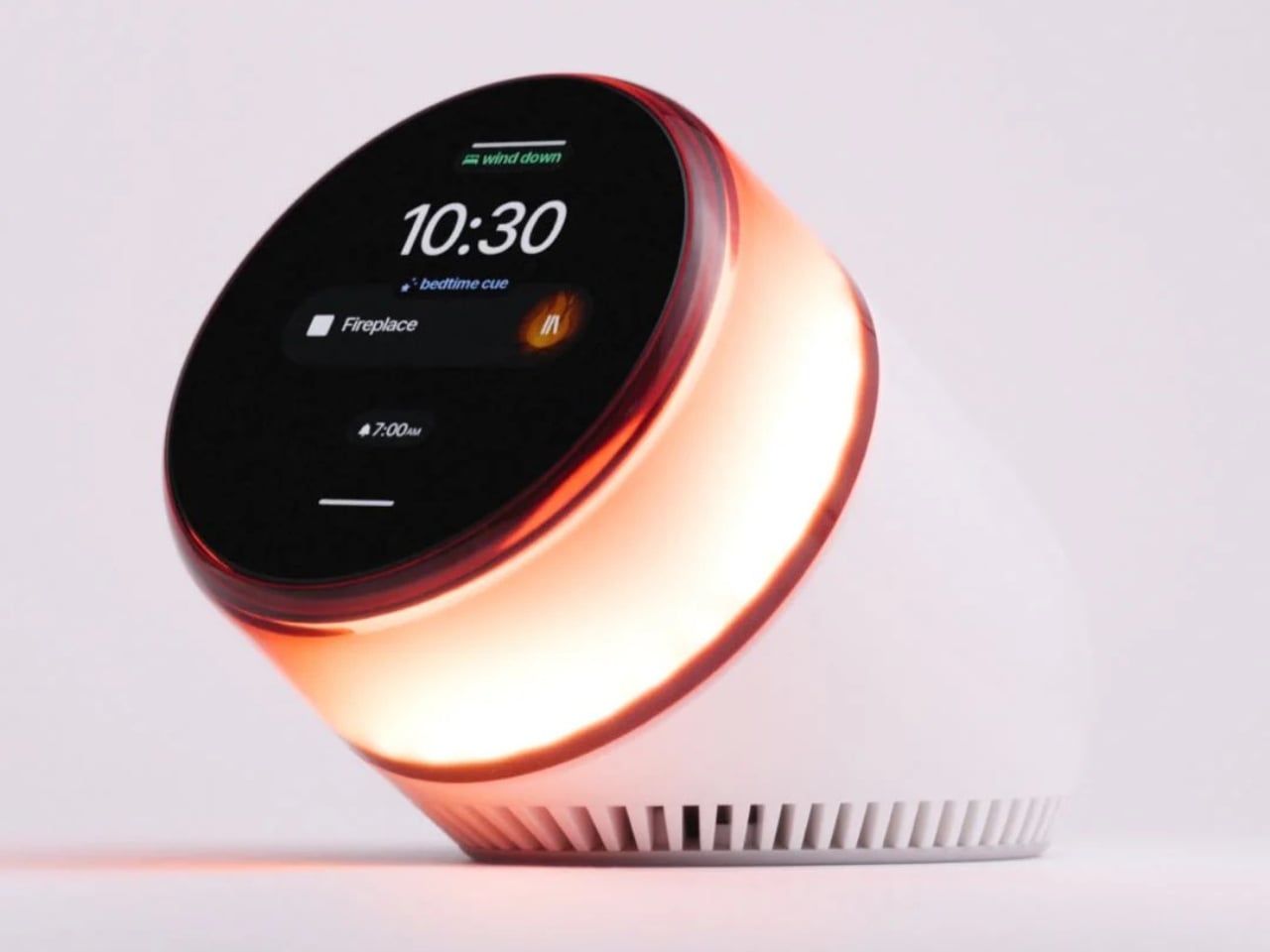
Dreamie is built around one design argument: the phone does not belong beside the bed. Ambient’s founder Adrian Canoso, who brings an industrial design and audio engineering background to the company, built Dreamie to consolidate every legitimate reason a phone lives on a nightstand — alarm, ambient sound, light, podcasts, simulated sunrise — into a single device that offers none of the reasons phones keep people awake. There are no notifications, no feeds, no accounts, and no subscription fee. The Calm Tech Institute awarded it their highest certification, a signal that carries real weight in a category full of vague wellness claims.
The 50mm speaker with a 360-degree grille diffuses sound into the room rather than projecting it forward, creating an ambient quality that wraps the space during wind-down. A hidden volume dial and a touch strip for lamp brightness handle all physical interaction without requiring a menu or a screen tap. All sensor data stays on-device. Contactless sleep tracking arrives as a free over-the-air update later this year. At $249.99, the value case is most honest when compared to a wearable you already charge every night: Dreamie costs about the same, stays on the nightstand, and keeps the phone across the room where it belongs.

The 3-in-1 Luminous Mirror Diffuser follows this design philosophy — an object that earns permanent placement by doing several things with uncommon care, rather than one thing with a list of compromises attached. The oval anodized aluminum body houses three genuinely distinct functions: a customizable lamp, a 360-degree rotatable mirror, and a patented aroma plate that uses aluminum matrix technology to gently diffuse fragrance from a few drops of essential oil. None of the three feels like an afterthought added to justify a price point.
The lighting system moves between three color temperatures — 2400K warm amber for wind-down, 3800–3250K neutral for calm focus, and 6000K daylight clarity for precision — across four brightness levels, which makes it the one lamp on this list that adapts to both ends of the evening. A wireless charging pad integrated into the base handles device power without adding a cable to the surface. The mirror eliminates the separate grooming mirror that occupies nightstand real estate in most bedrooms. And the aroma diffuser, with its washable aroma plate and temperature-controlled heating, replaces a plug-in ultrasonic unit with something that requires no water tank, no misting, and no countertop clutter.
Click Here to Buy Now: $800.00
The nightstand is the last surface you interact with before sleep and the first thing you look at when you wake up. What lives there shapes both experiences more than most people give credit for. Each product here earns its place by solving something specific: warm light that belongs in the space, three devices charging cleanly, a room filled with gradual sound, a phone that stays across the room where it always should have been, and a single object that handles light, scent, and reflection with equal care.
The best nightstand setups are not minimal out of discipline. They are minimal because every object on the surface was actually chosen. None of these five products overlap in function, and none requires the others to justify its place. Start with the one that solves the most visible problem on your nightstand today, and the argument for the next one tends to present itself without much effort.
The post 5 Best Nightstand Gadgets That Turn Your Bedroom Into the Setup You Actually Want first appeared on Yanko Design.


PC gaming has never had a proper physical media equivalent. Console players have always had something tangible to hold and shelve, a disc or cartridge that represents one specific game. On PC, games live in a library on a platform that’s only yours as long as the platform stays up. It’s convenient, but a lot of PC gamers quietly miss the ritual of picking something physical off a shelf.
A post on Reddit recently took a direct swing at that gap. A gamer picked up a handful of secondhand 2.5-inch SATA SSDs, each 128 GB and priced at around €7 ($8) a piece, and built a cartridge system for Steam. Each drive holds a single game alongside a script that auto-navigates Steam to that game’s page once the drive is plugged in. Auto-launching the game directly is also possible.
Designer: Jibril-sama (images courtesy of Tom’s Hardware)
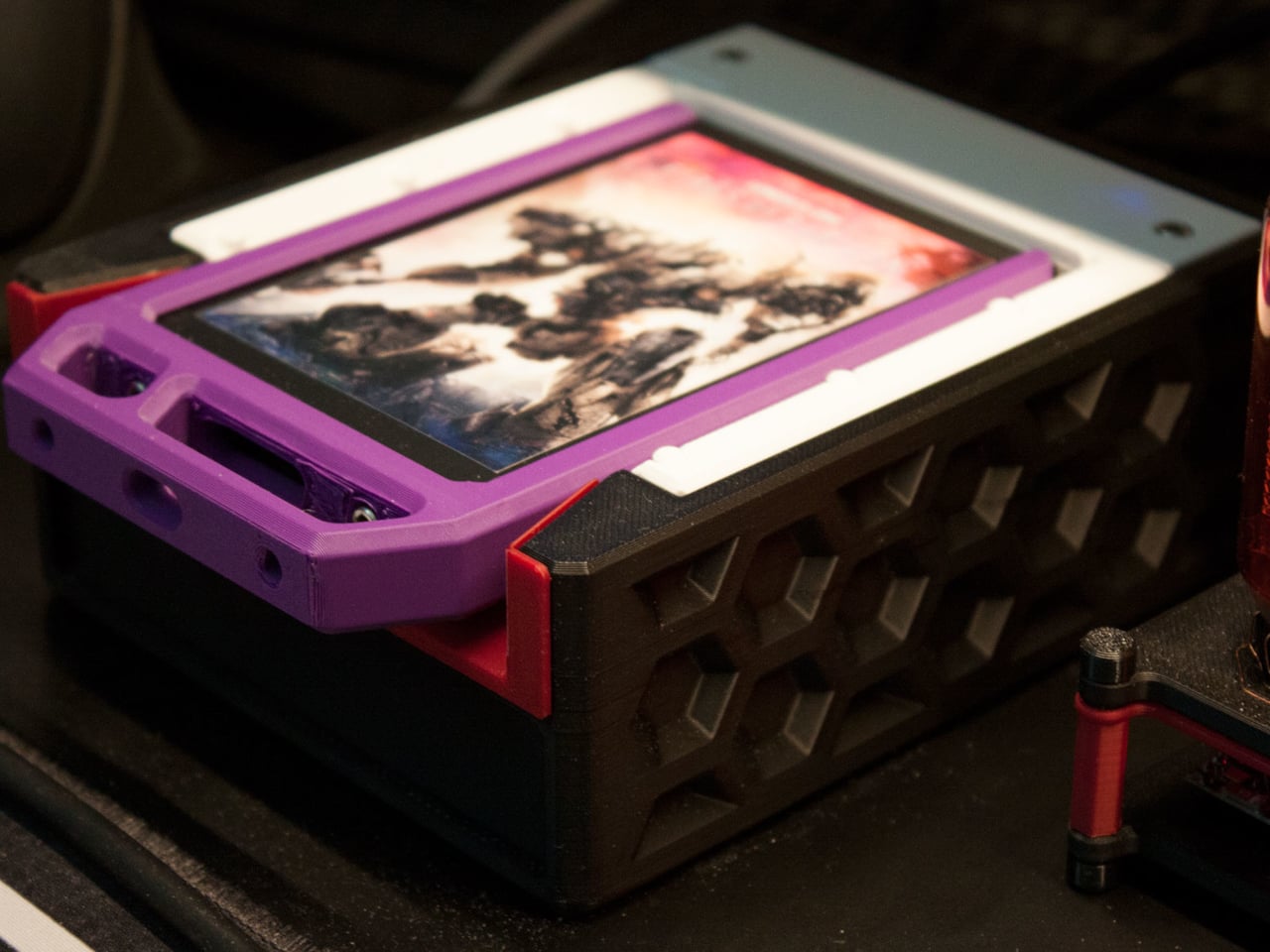
What really sells the effect is the presentation. Rather than leaving the drives as bare hardware with labels stuck on, each SSD sits inside a colorful protective case with custom game art on the cover. The result looks genuinely like a cartridge collection, not a pile of storage drives. It’s the kind of detail that makes the idea land visually rather than just functioning as a clever technical trick.
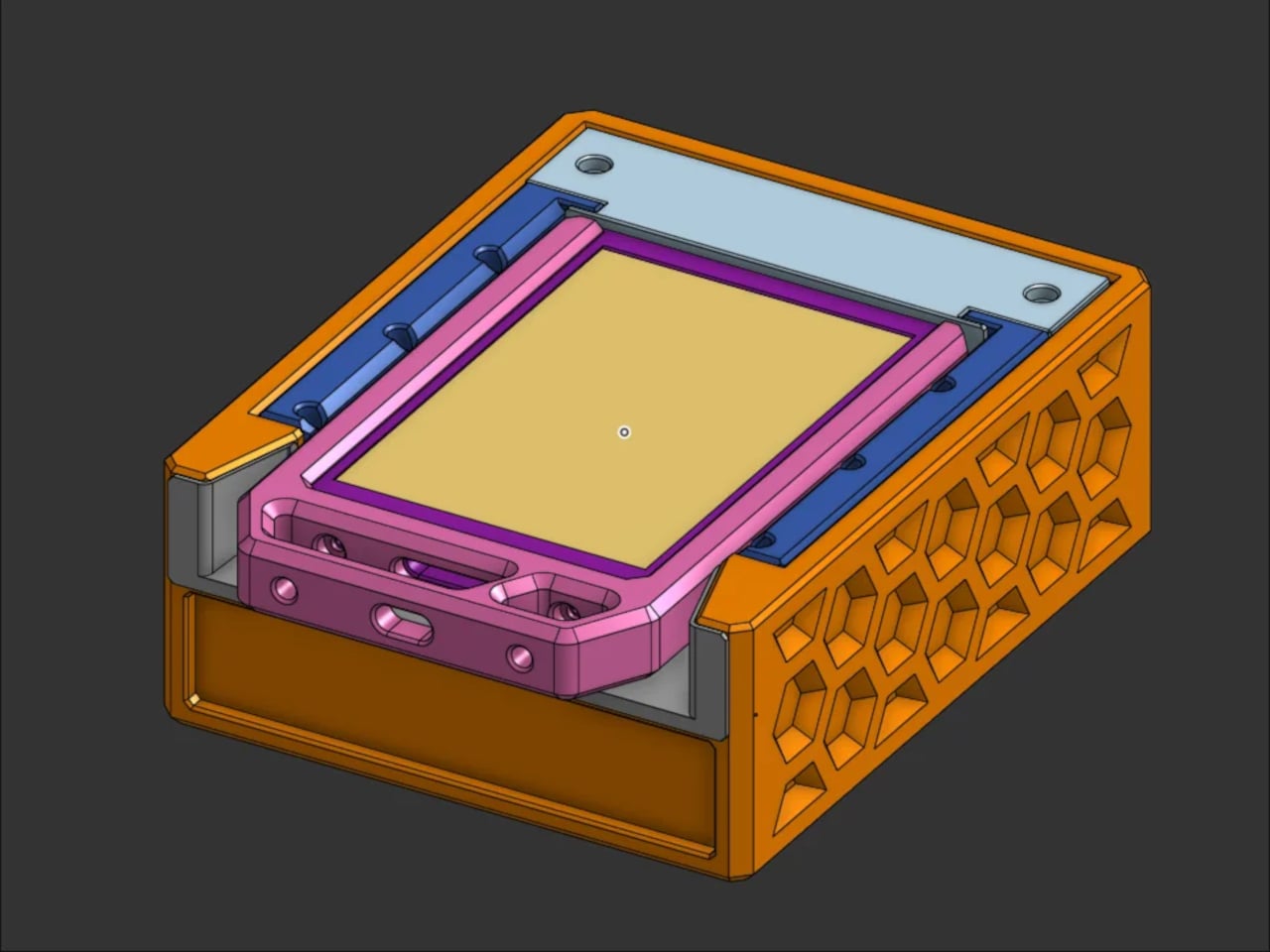
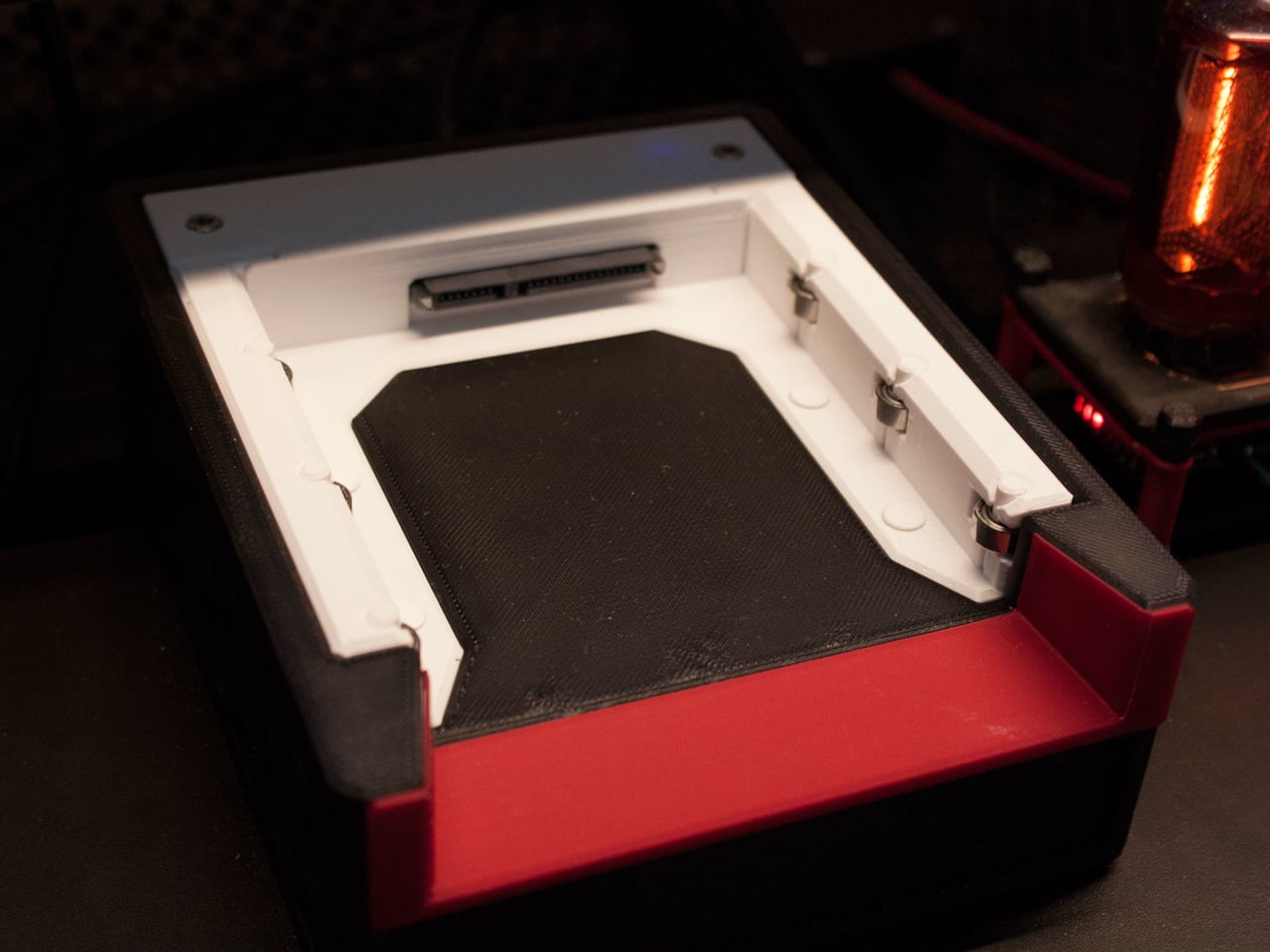
The system runs on Linux. When an SSD is plugged into a SATA dock connected to the PC, a udev rule detects the mount event and triggers a systemd daemon, which finds the script on the drive and executes it. Valve’s Steam URL Protocol handles navigating to the game’s page or launching it. The hardware side requires nothing more unusual than a standard SATA dock.
There are genuine practical limits. Steam still needs to be installed, and the game needs to be in your library, so this isn’t a workaround for ownership or a way to share games. Updates are the bigger friction point, since multi-gigabyte patches push regularly even to older titles. The creator’s approach is to keep cartridges for games worth replaying occasionally rather than live-service titles that need constant updating.
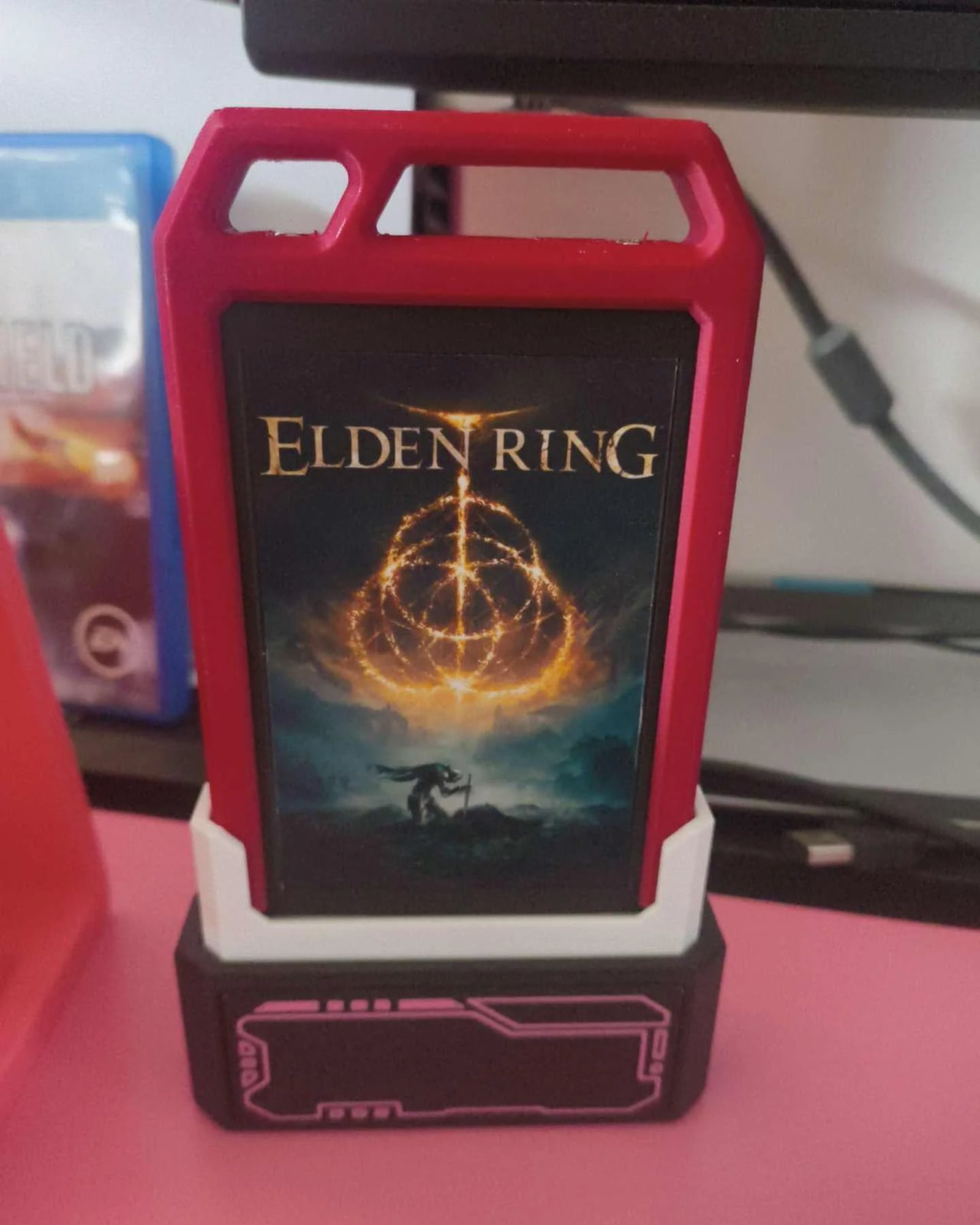
The reaction ran heavily nostalgic, with comparisons to NES cartridges, Switch game cards, and the general ritual of pulling a game off a shelf. Some commenters want the system extended to GOG libraries. Others are already planning their own versions, with several suggesting 3D-printed cartridge shells to push the aesthetic even further.
What the project surfaces is how much the ritual of physical media matters, separate from convenience or ownership. These drives don’t give you anything you couldn’t already get by clicking a game in your Steam library. The Linux requirement narrows who can replicate it directly, but at €7 ($8) per drive, the cost to build a collection of ten or fifteen games is still less than a single new release.

The post The $8 Steam Cartridge Every PC Gamer Has Always Wanted first appeared on Yanko Design.

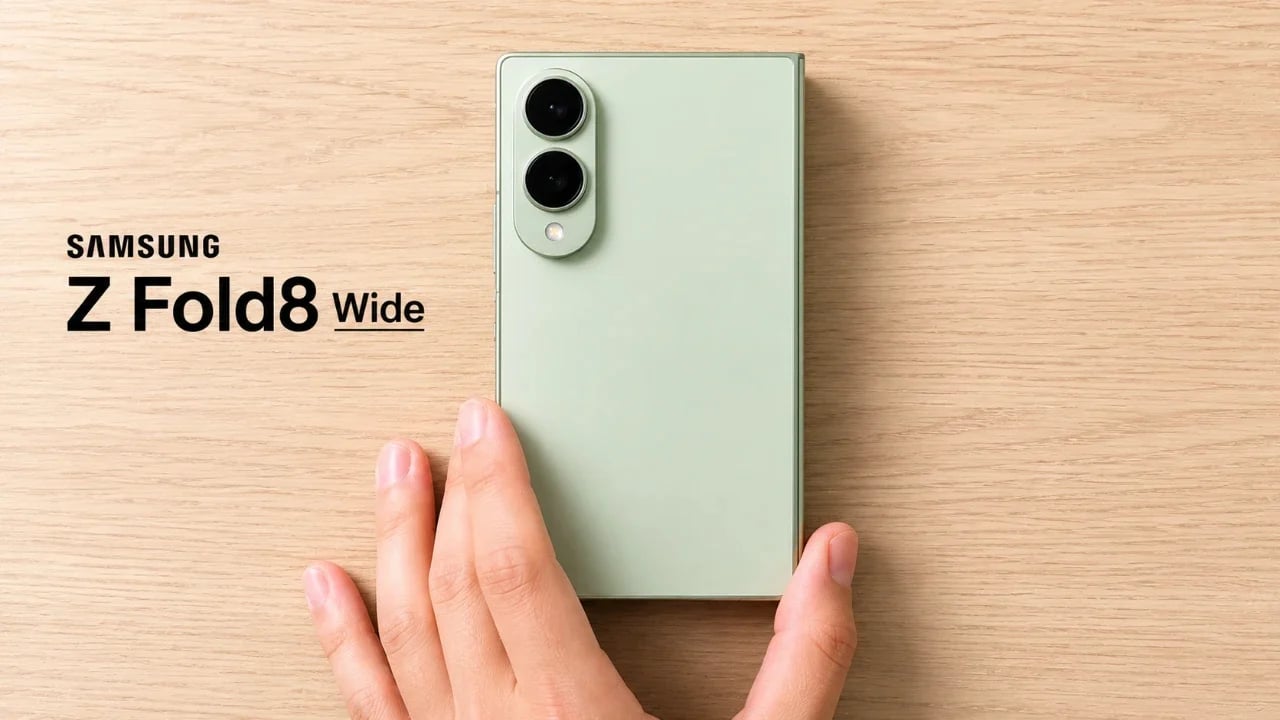
Samsung’s Galaxy Z Fold 8 Wide is positioned to redefine the foldable smartphone landscape. With its wider design, enhanced durability, and significant advancements in display technology and performance, this device is a testament to Samsung’s commitment to innovation. Scheduled for an official unveiling on July 22, 2026, the Z Fold 8 Wide promises to […]
The post Samsung Galaxy Z Fold 8 WIDE: Specs, Price, and Release Date Leaked! appeared first on Geeky Gadgets.

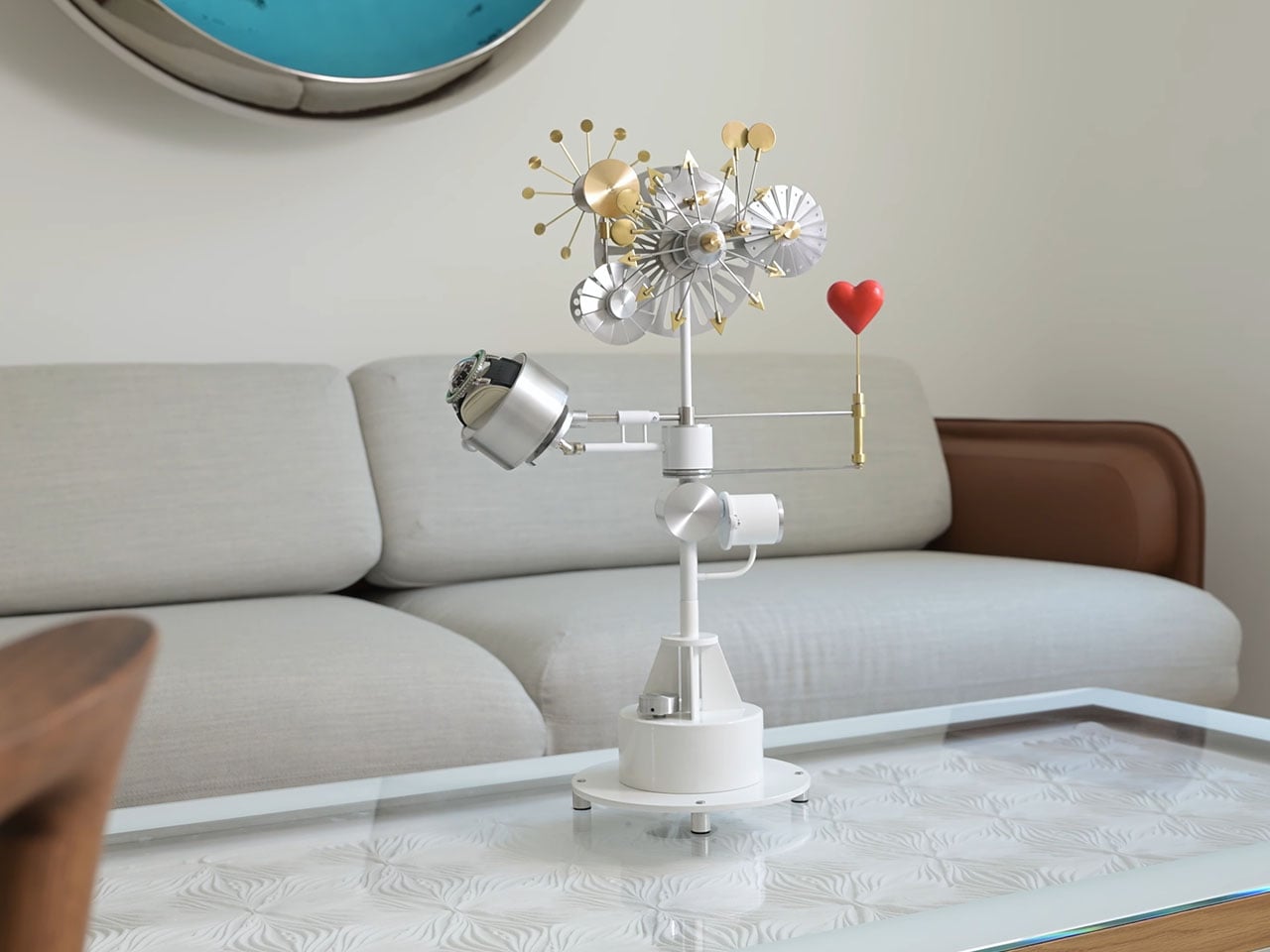
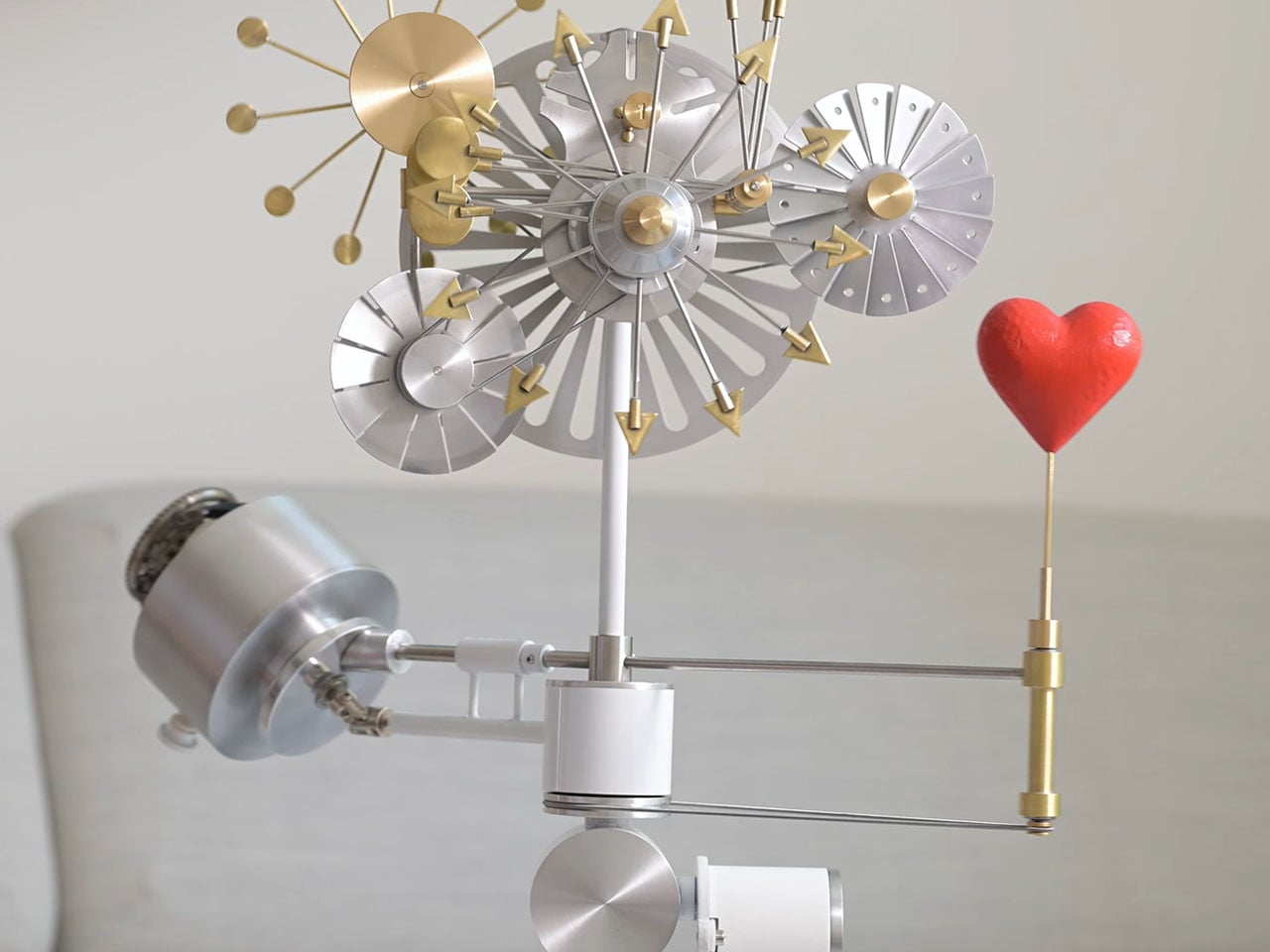
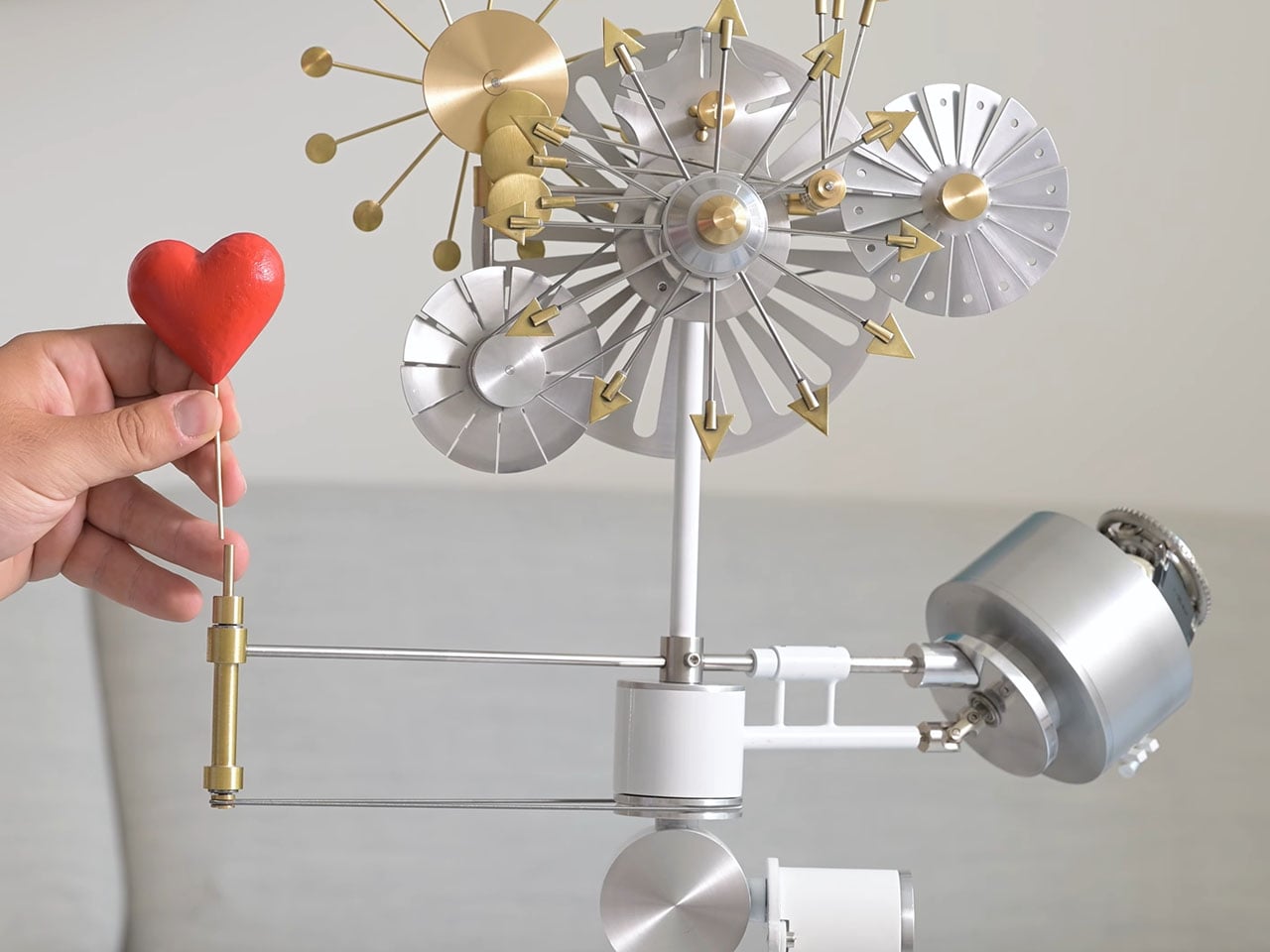
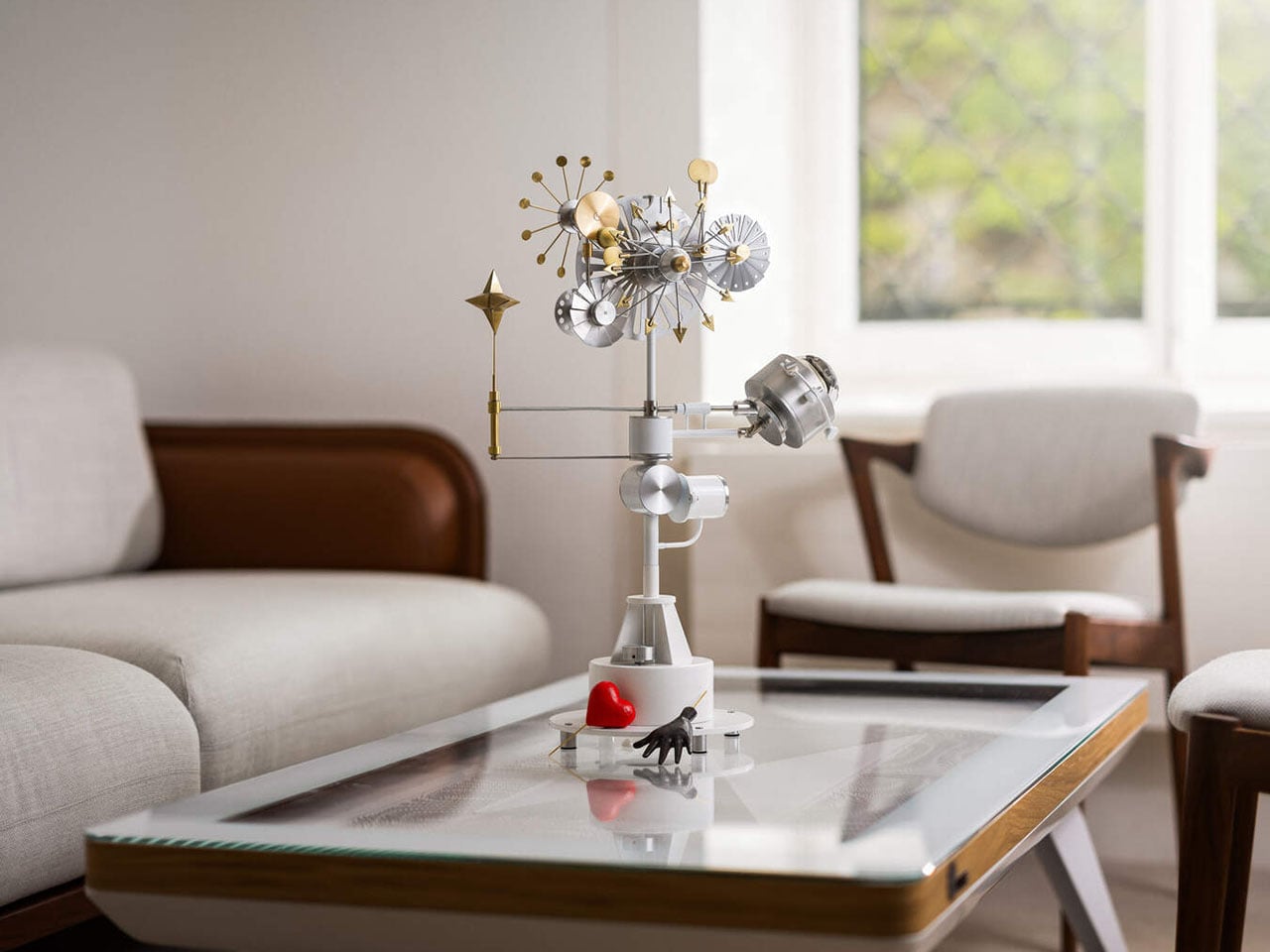
The 15th anniversary celebration of the M.A.D.Gallery, MB&F’s network of spaces dedicated to “Mechanical Art Devices,” was kicked off with the first commemorative ML15 Helios earlier this year. The 9kg sculptural lamp made from 120 handmade parts by Berlin-based artist Frank Buchwald is now followed by Solar Orbiter, a 60-centimeter-tall kinetic sculpture that doubles as a silent watch winder.
Solar Orbiter watch winder is made by prominent British kinetic artist and designer Martin Smith through Laikingland, his design house, co-founded with engineer friend Nick Regan. The sculptural watch winder’s design is inspired by the 1957 Eames Solar Do-Nothing Machine, which showcased one of the first uses of solar electricity to power an aluminum toy in random dance.
Designer: Laikingland x MB&F
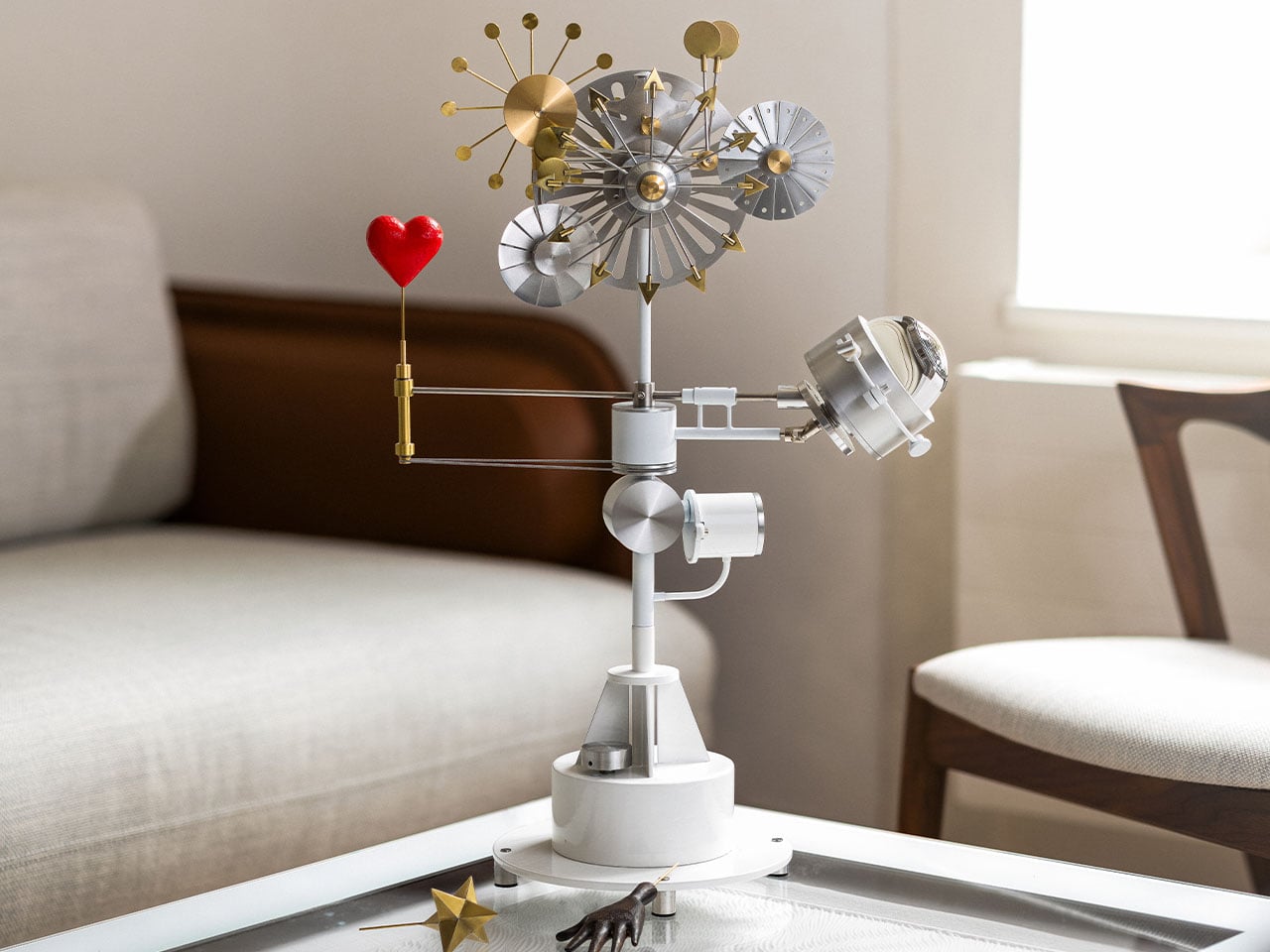
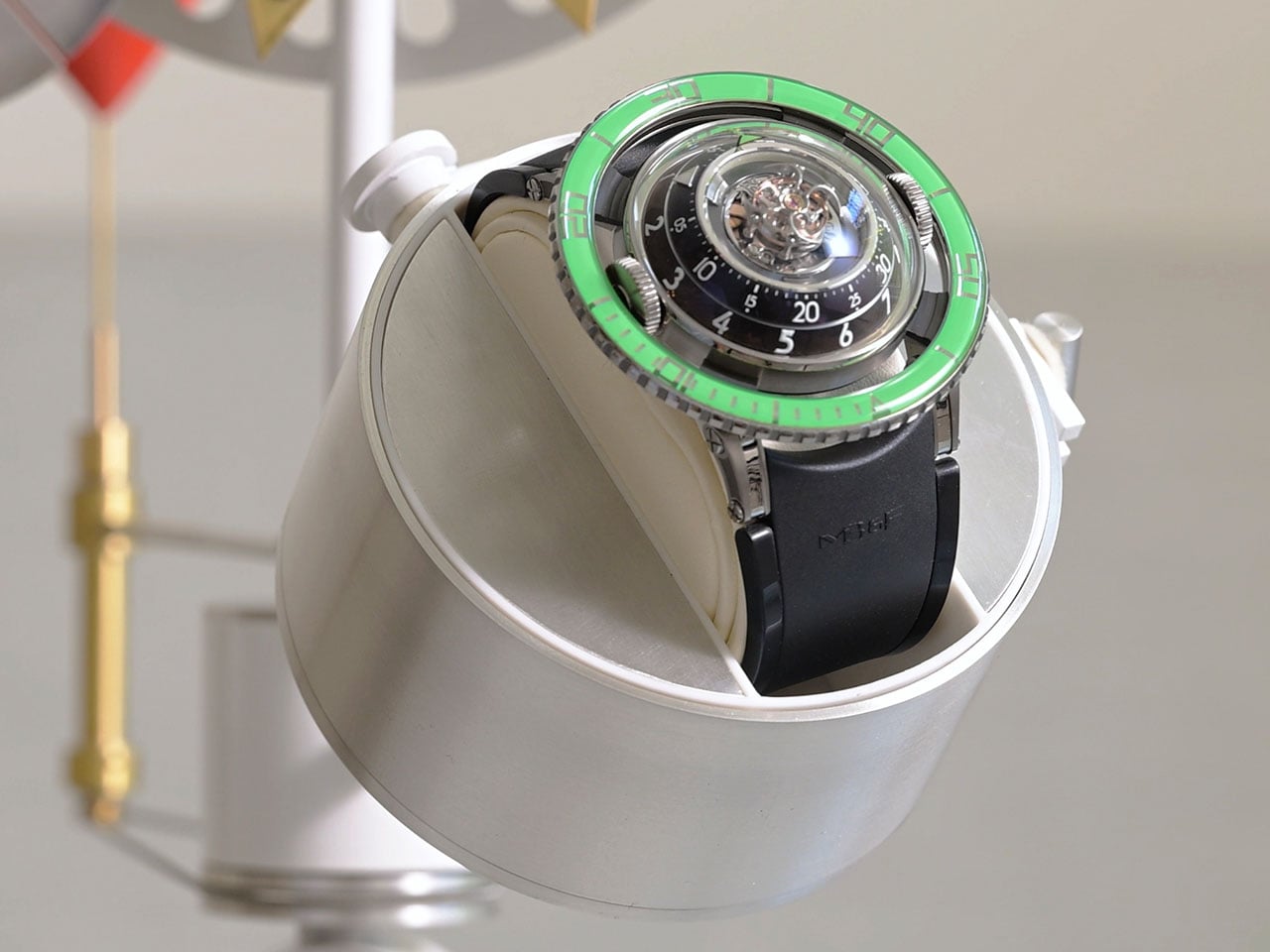
The Solar Orbiter is not an experimental toy; it is designed to be a conversation starter in Smith’s own studio in West Yorkshire. A device enticing enough to sit in the middle of your living room or office and make some heads turn. Instead of showcasing the application of solar power, this marries kinetic sculpture with high-end watchmaking to commemorate the long-term association between MB&F founder Maximilian Büsser, Martin Smith, and his company Laikingland.
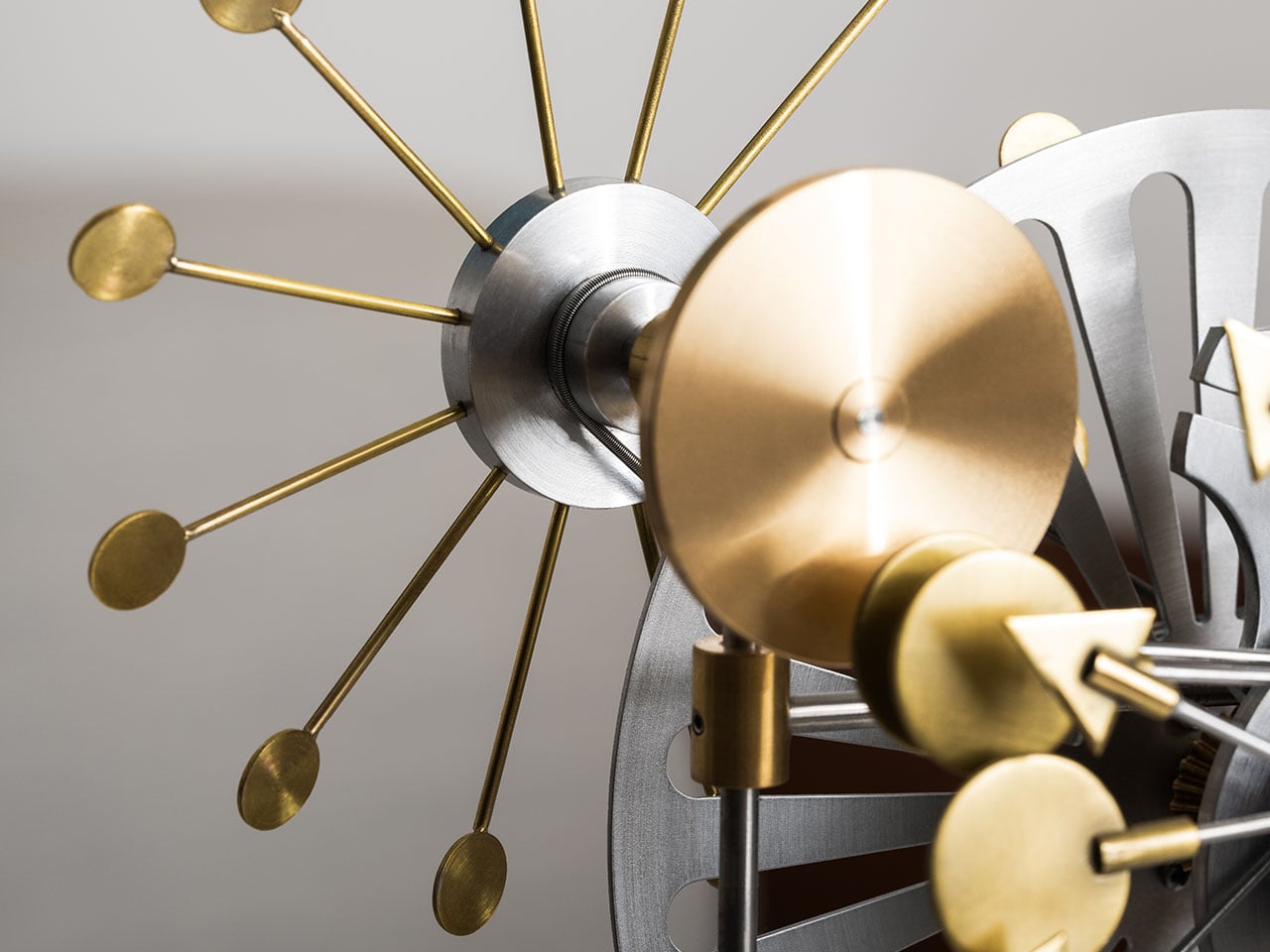
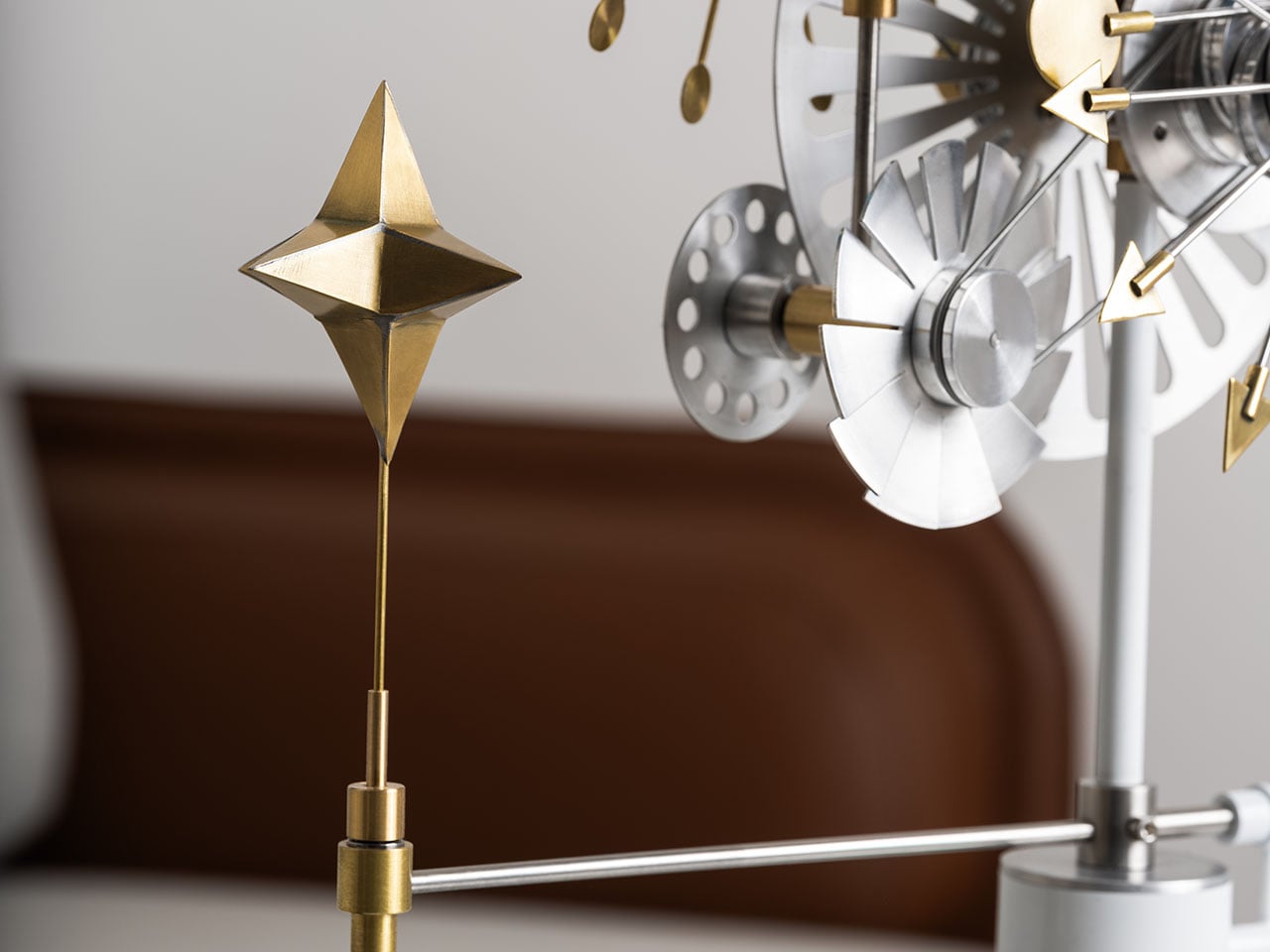
As is the norm with Martin Smith creations – case in point, the applause machine – viewers become part of the Solar Orbital through physical and visual interaction. The highly sophisticated, limited-edition kinetic sculpture is handmade from nearly 300 gear trains and moving limbs that are set into motion by human interaction.

Turning a physical knob onboard puts the otherwise abstract Orbiter into a kinetic performance with a watch at the epicenter. Each element used in the construction of the Smith’s Solar Orbiter is either made from steel, aluminum, brass, or carved from wood. From what we know, Smith generally produces almost all the components used in his creations himself, using traditional equipment; we are presuming the same is the case with this sculptural watch winder.
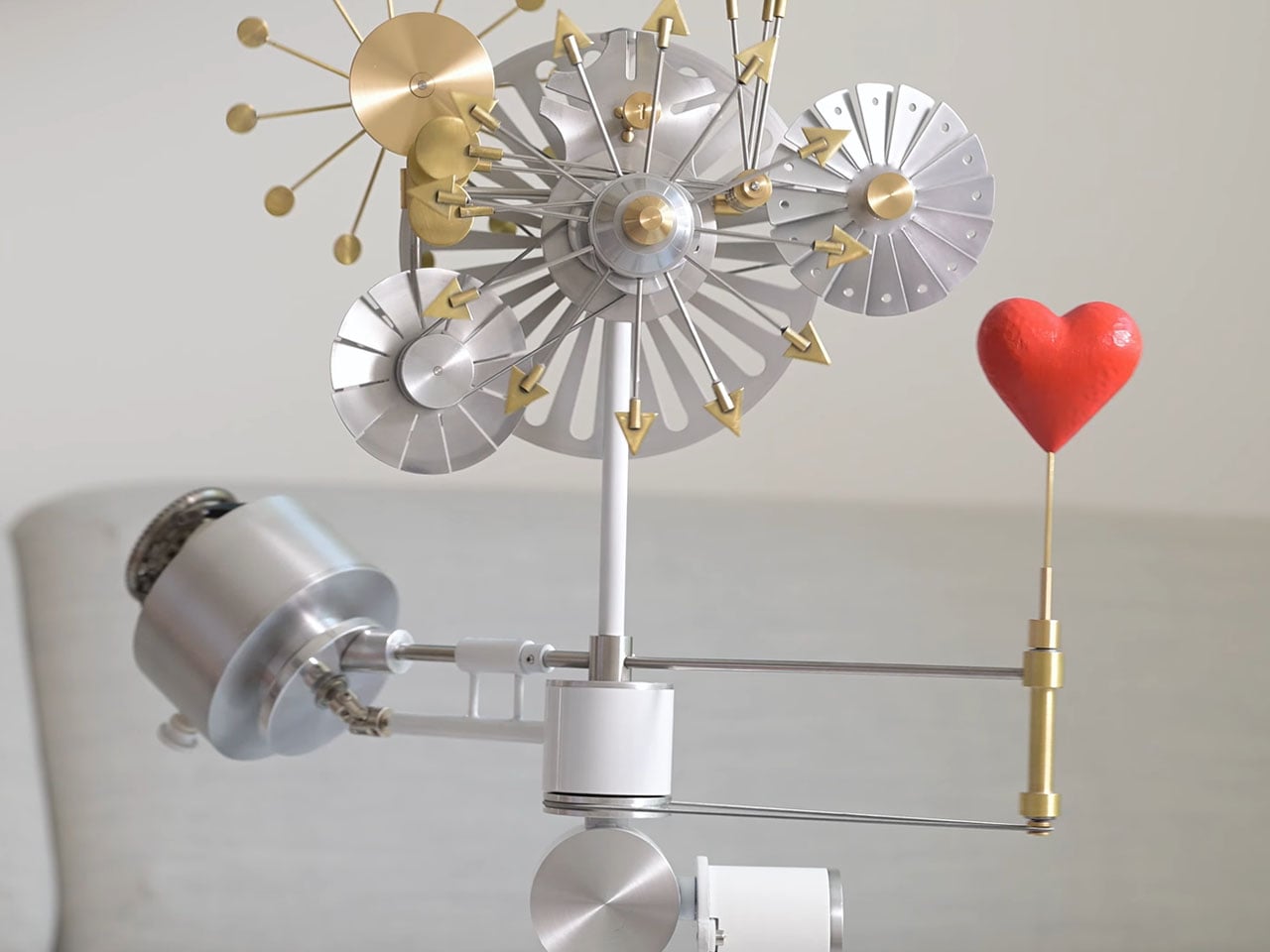

There is no definite information to validate the same at this point, but the intricate details of the winder, which Smith describes as “chaotic, mesmerizing, sophisticated in its construction, and a bit quirky,” are worth appreciating nonetheless. The exclusivity of this creation is maintained by its limited-edition availability. Priced at CHF 9,900 (approximately $12,000), the watch winder’s production is strictly limited to just 10 pieces worldwide.
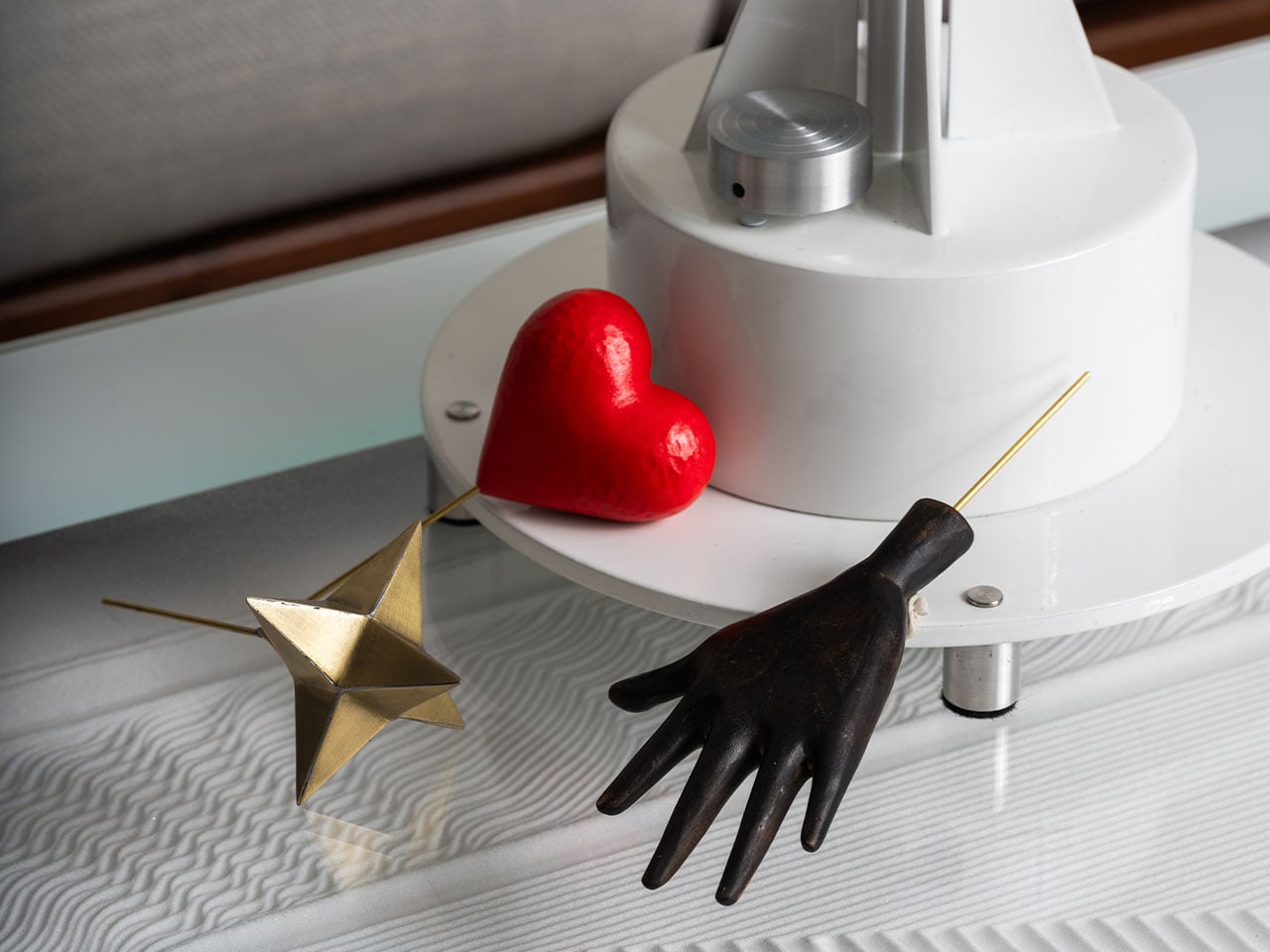
For collectors who like to tinker with just about everything to personalize it to their requirements, the Solar Orbiter allows swapping out different kinetic elements – including a hand, a heart, and a star – sitting at the top of this watch winder. If you happen to order one of these kinetic watch winders, Martin Smith will ship it your way inside a bespoke wooden crate, personalized with screen printing, and an A2 Certificate of Authenticity signed and hand-numbered by the artist himself.


The post Martin Smith creates sculptural watch winder to mark MB&F M.A.D. Gallery’s 15th anniversary first appeared on Yanko Design.