The Mysa 200 Is The Tiny Cabin That Makes Simplicity Look This Good

Most tiny houses compete on how much they can cram into a small footprint, with fold-out tables, lofted beds, and hidden compartments behind every surface. The Mysa 200, built by Utah-based Irontown Modular, goes the other direction entirely, delivering a compact, single-level dwelling that trades clever gimmicks for genuine livability.

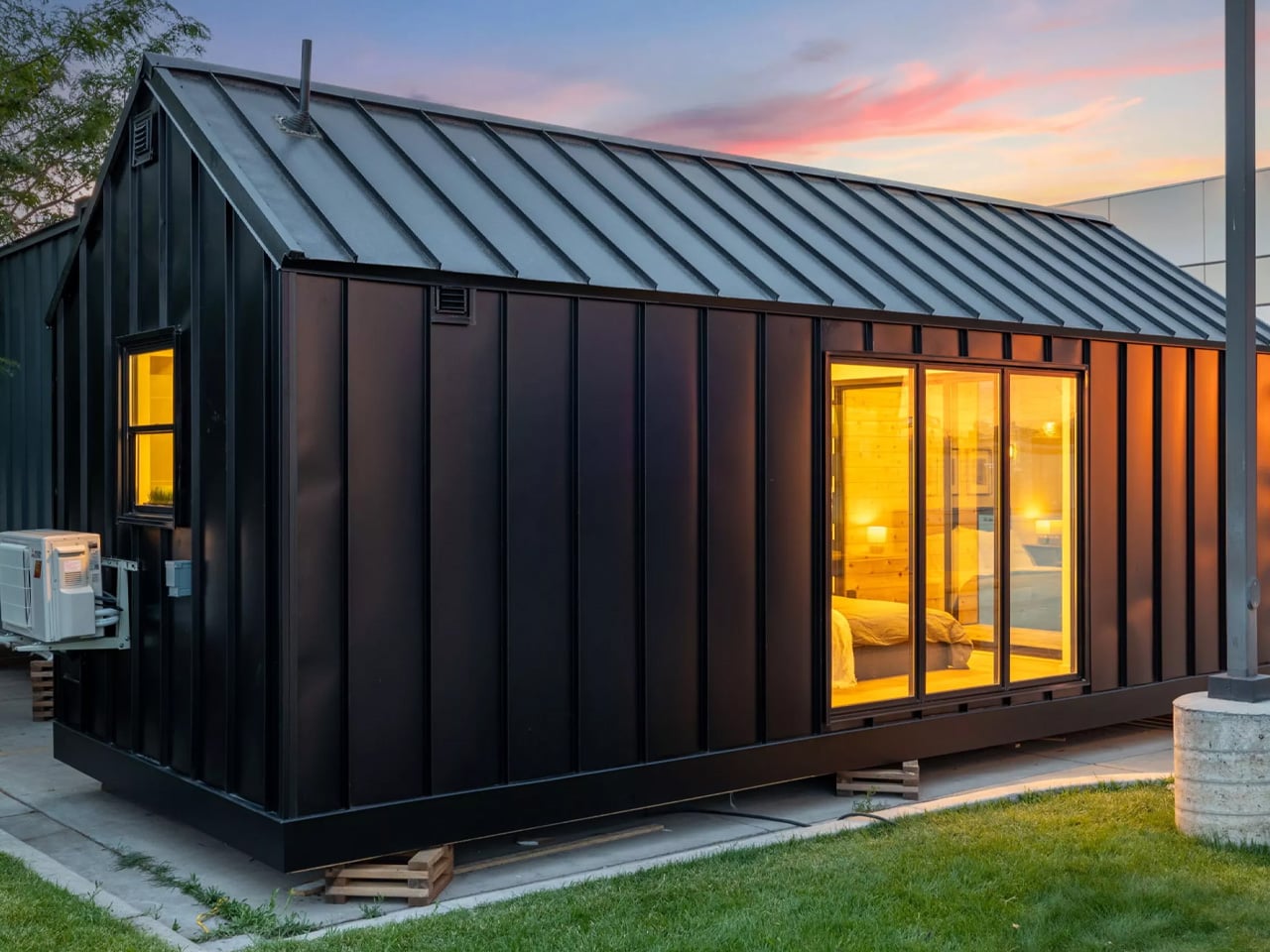
Named after the Swedish word for “cozy,” the Mysa 200 reads more like a small cabin than a typical tiny house. At 20 ft long and 10 ft wide, it’s noticeably broader than the standard 8.5-ft width most tiny houses stick to to remain towable. That extra foot and a half might not sound like much on paper, but inside, it transforms the space from corridor-like to something that actually feels like a room you’d want to spend time in. Because it isn’t built on a trailer, the home requires a truck and crane for delivery, making it better suited as a permanent or semi-permanent structure like a vacation retreat, backyard guesthouse, or weekend getaway tucked into a wooded lot.

Designer: Irontown Modular

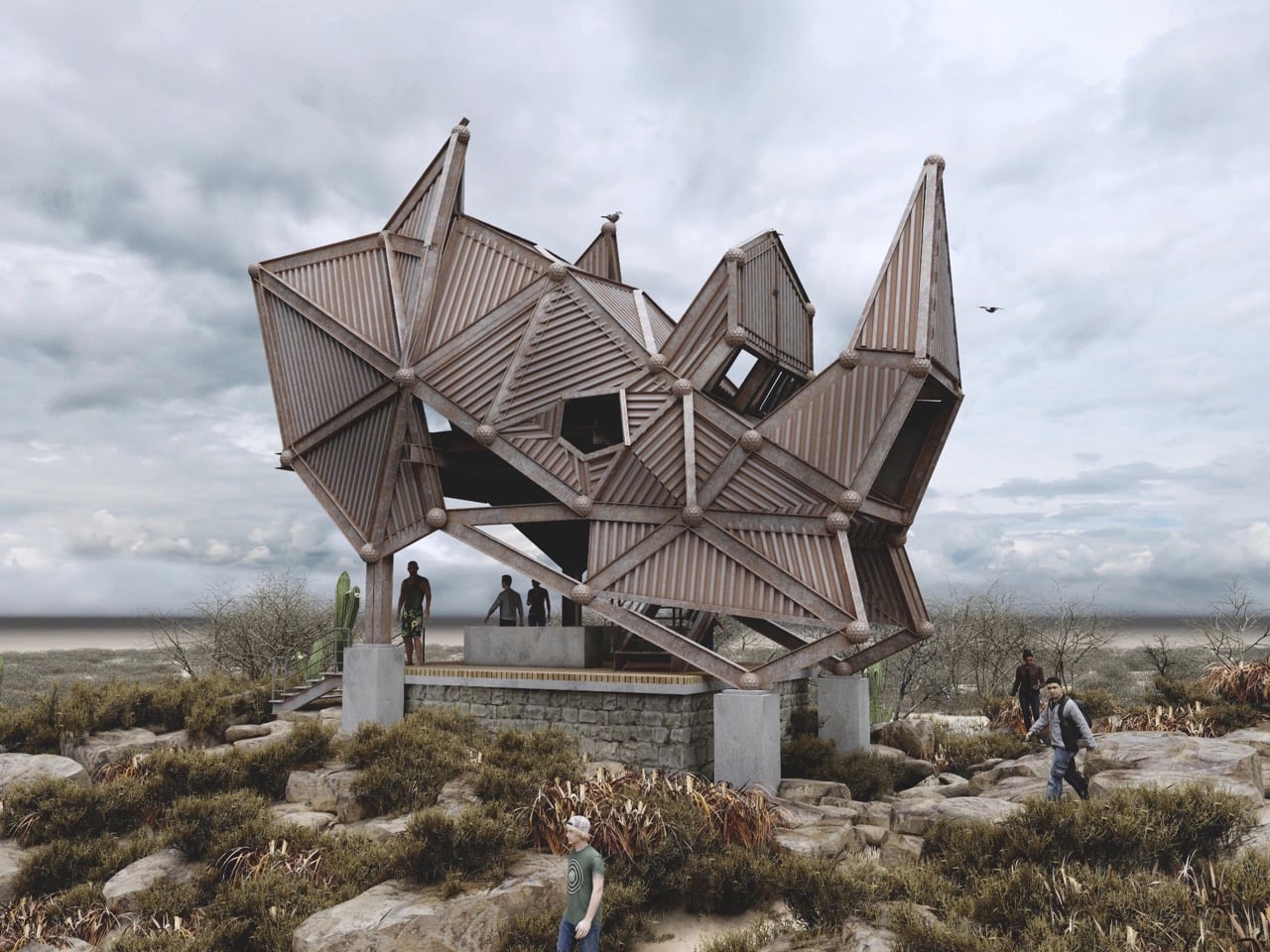
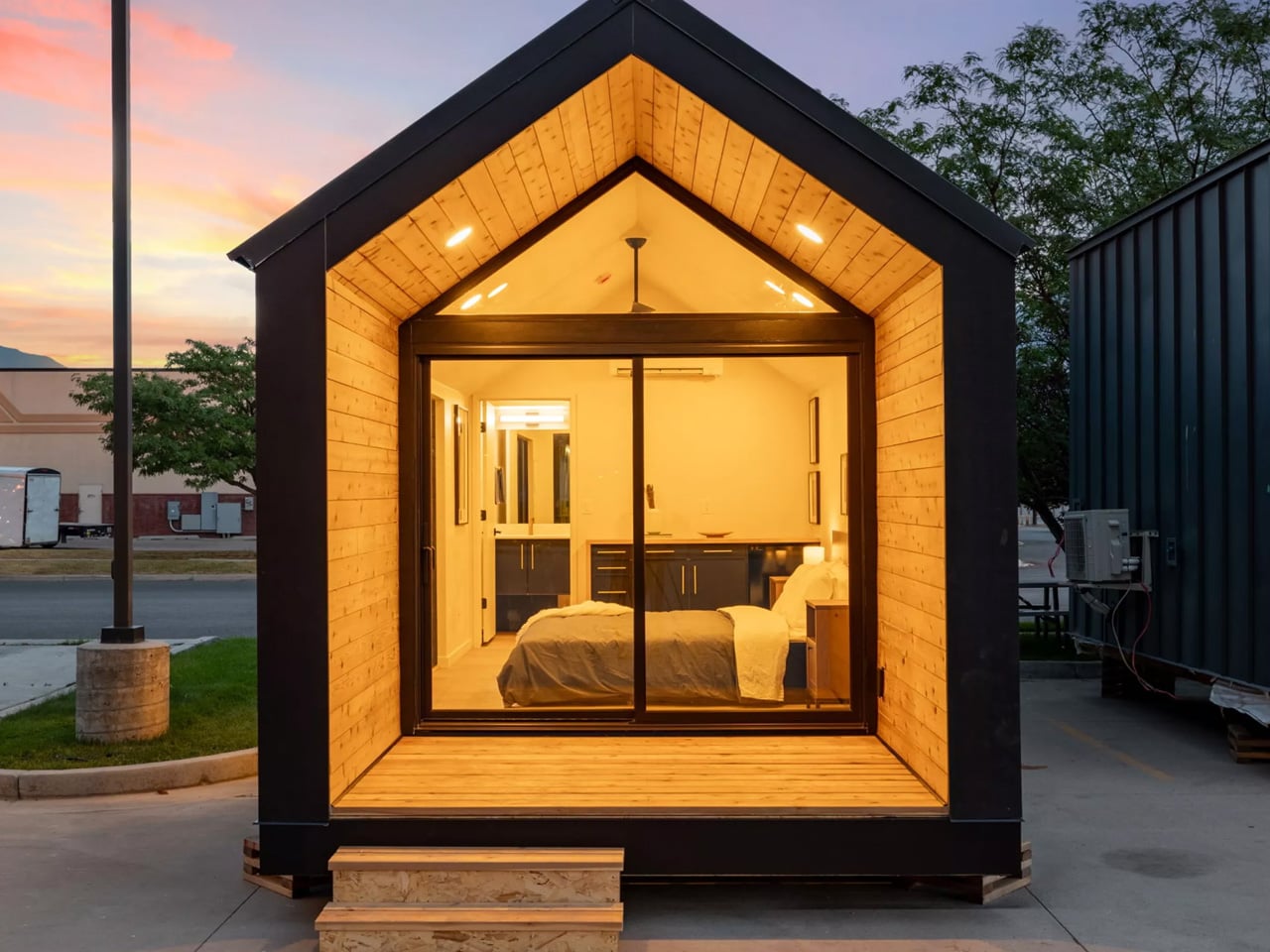
The exterior pairs metal and wood finishes, giving it a modern rustic look that would blend comfortably into most rural or semi-rural settings. An optional porch extends the living space outdoors, and generous windows pull natural light deep into the interior. Step inside the 200-sq-ft floor plan and the restraint becomes immediately apparent. Irontown Modular hasn’t attempted to squeeze a full household into this footprint.

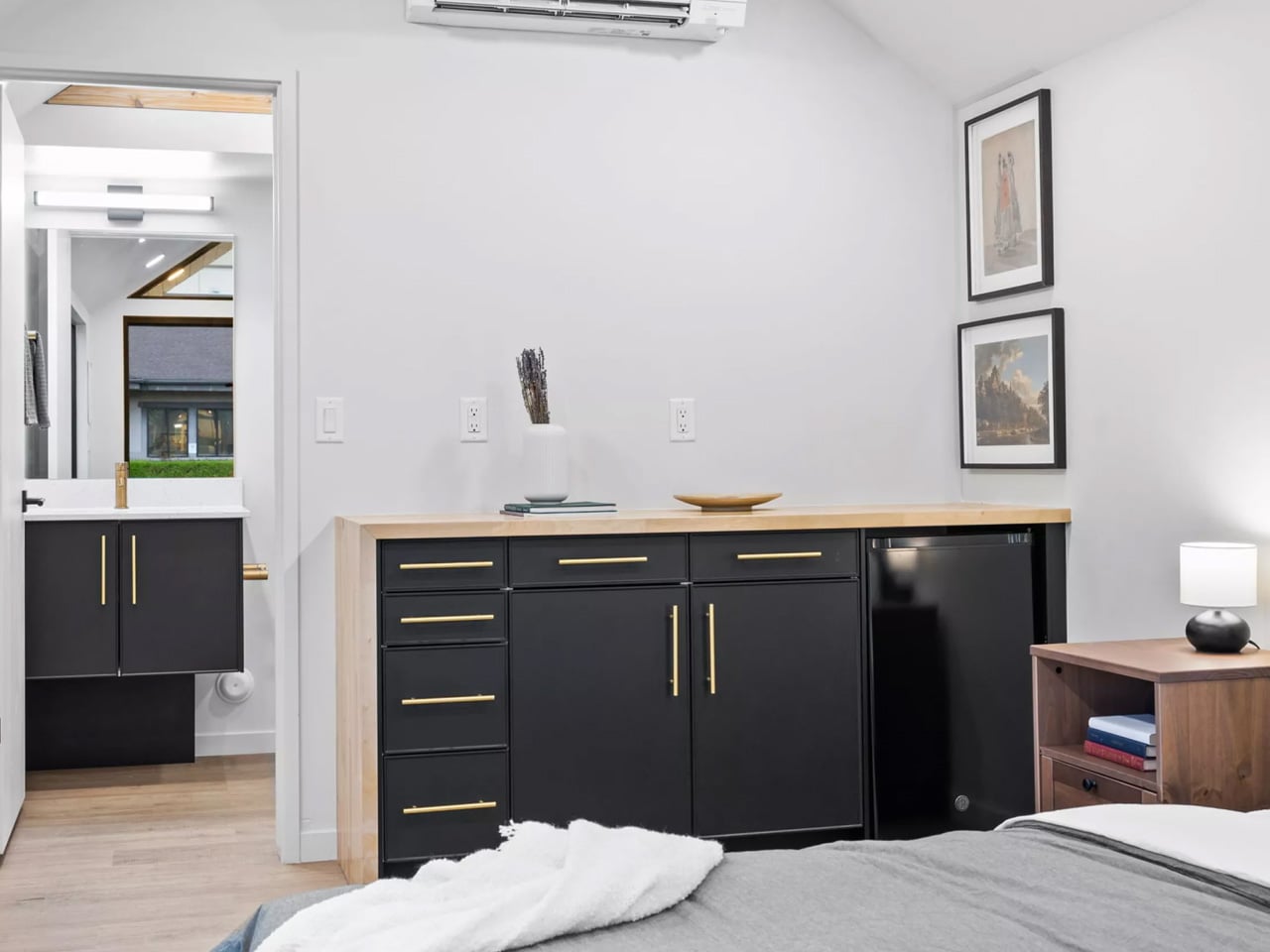
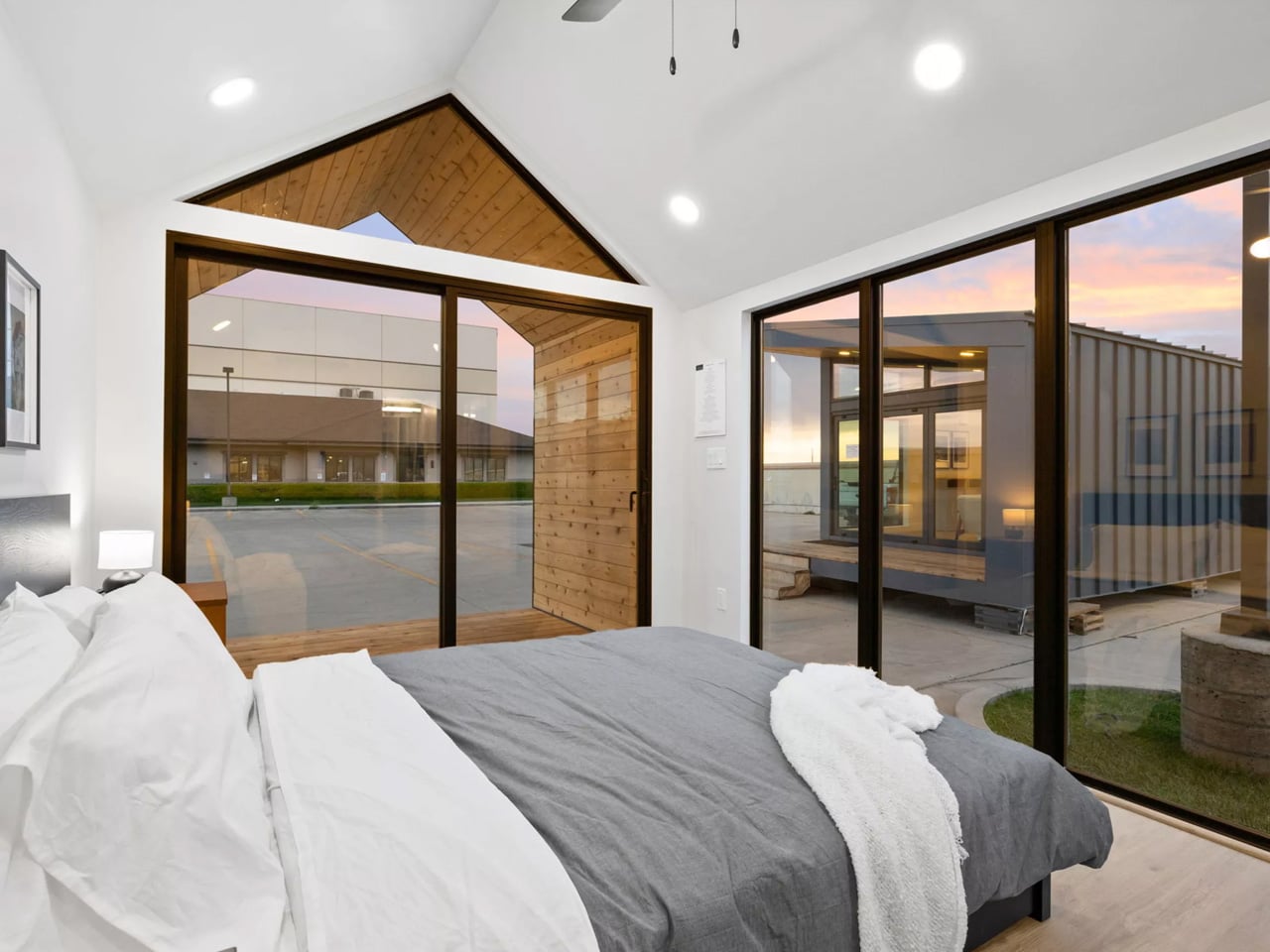
The bulk of the space serves as a combined living and sleeping area anchored by a large double bed that doubles as a general lounging spot. A dry bar with built-in storage and a fridge sits nearby, though buyers can opt for a proper kitchenette if they prefer. Climate control comes courtesy of a mini-split air-conditioning unit paired with a ceiling fan.

The bathroom punches above its weight class. A full-width glass-enclosed shower, vanity sink, and flushing toilet give it a sense of completeness that many tiny houses at this size struggle to achieve. Pricing starts at $50,700, which positions the Mysa 200 at the more accessible end of the tiny house market.

Buyers can customize exterior materials, adjust the interior layout, and add a porch extension. Delivery details aren’t listed, so interested buyers will need to contact Irontown Modular directly. In a category that often rewards complexity, the Mysa 200 makes a quiet case for doing less and doing it well.

The post The Mysa 200 Is The Tiny Cabin That Makes Simplicity Look This Good first appeared on Yanko Design.

Old Clothes Never Die, They Just Become Flower Pots

Most of us have a box. Or a bag, or a corner of the closet where clothes go to wait for a fate we haven’t quite settled on yet. Not trash, not donation, just quietly pushed aside. The jeans that stopped fitting but once made you feel unstoppable. The sweater that pilled after three washes but somehow survived four more years. Parting with clothes is harder than it sounds, and the fashion industry has largely treated that emotional gap as a non-problem.

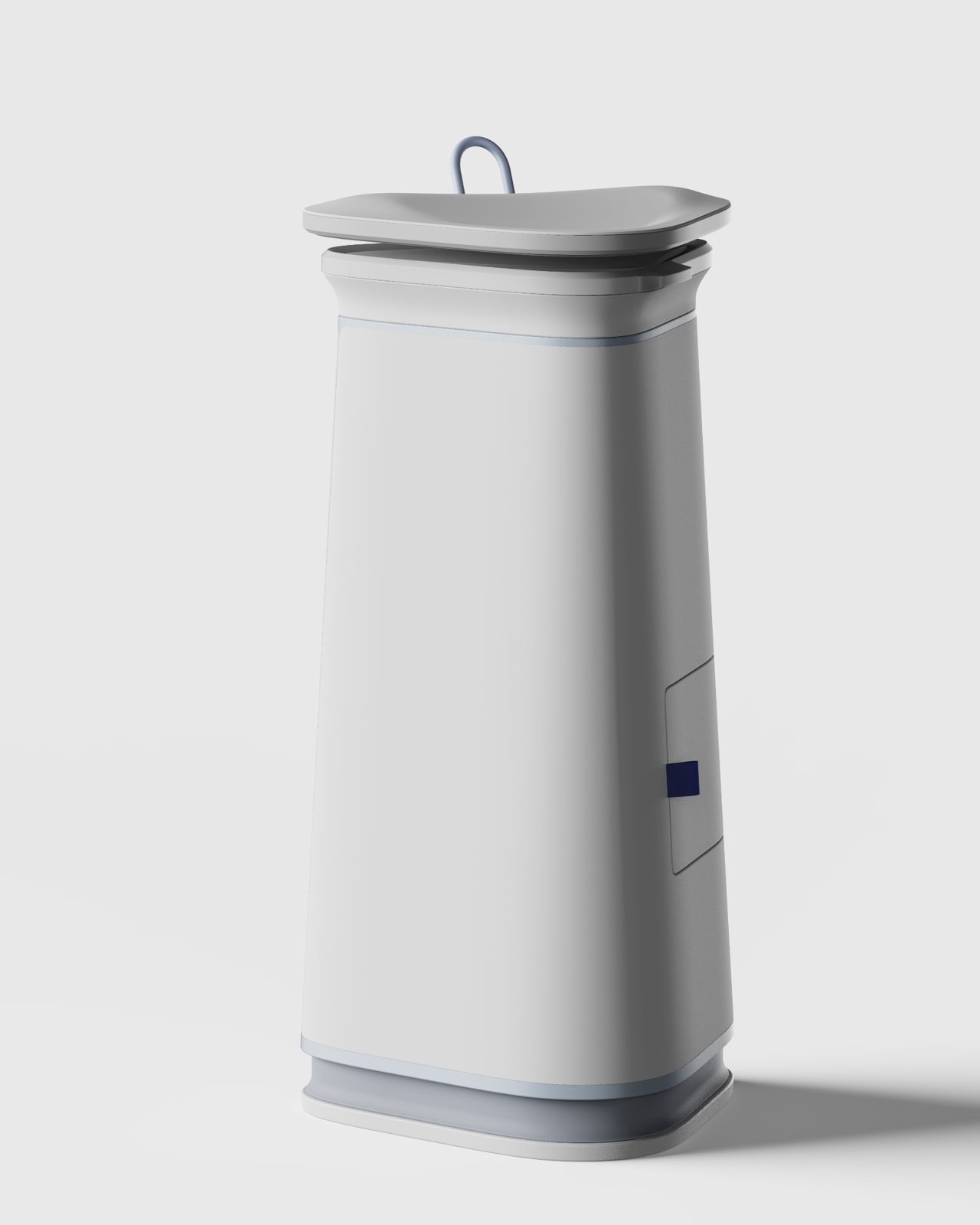
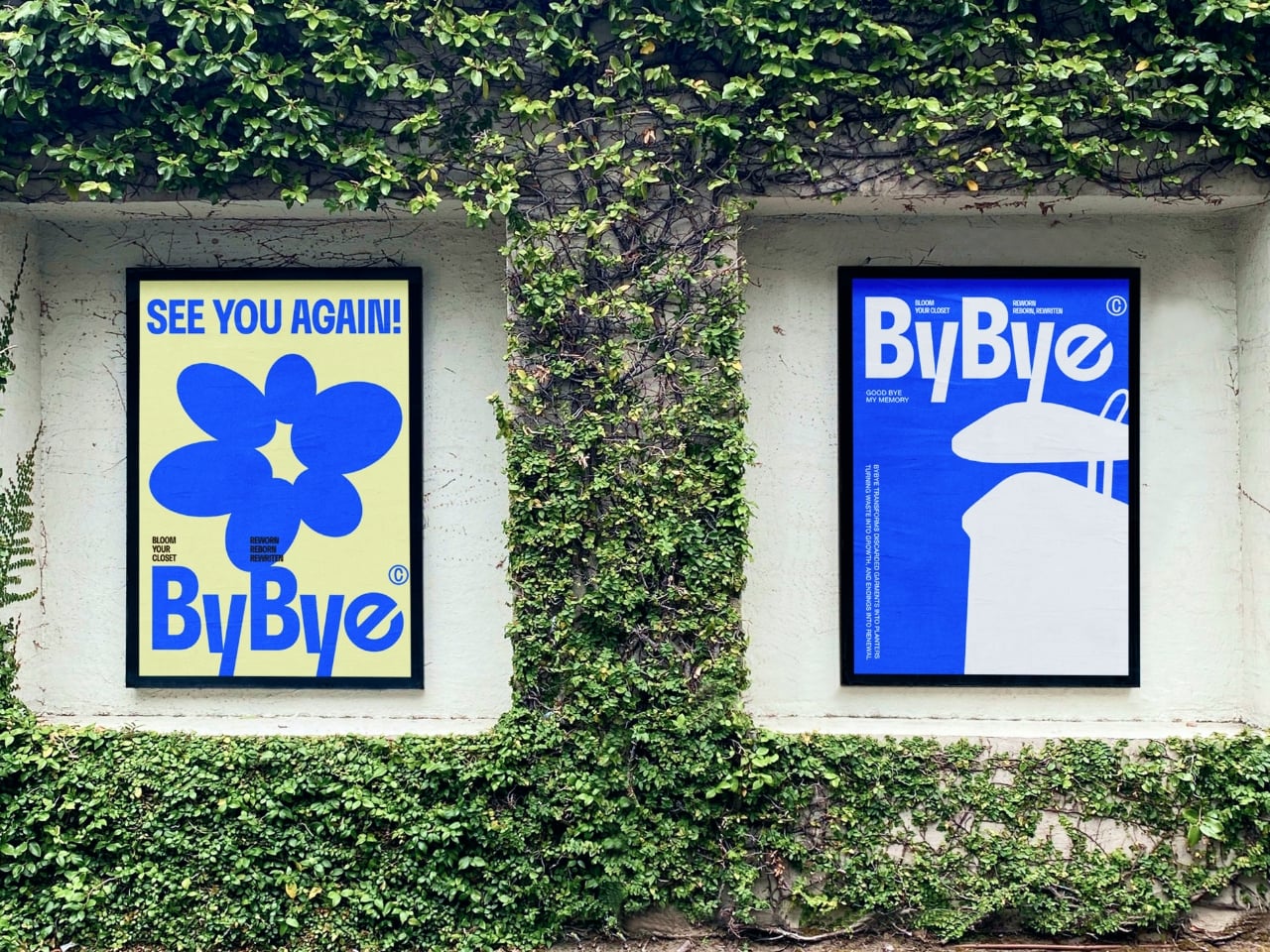
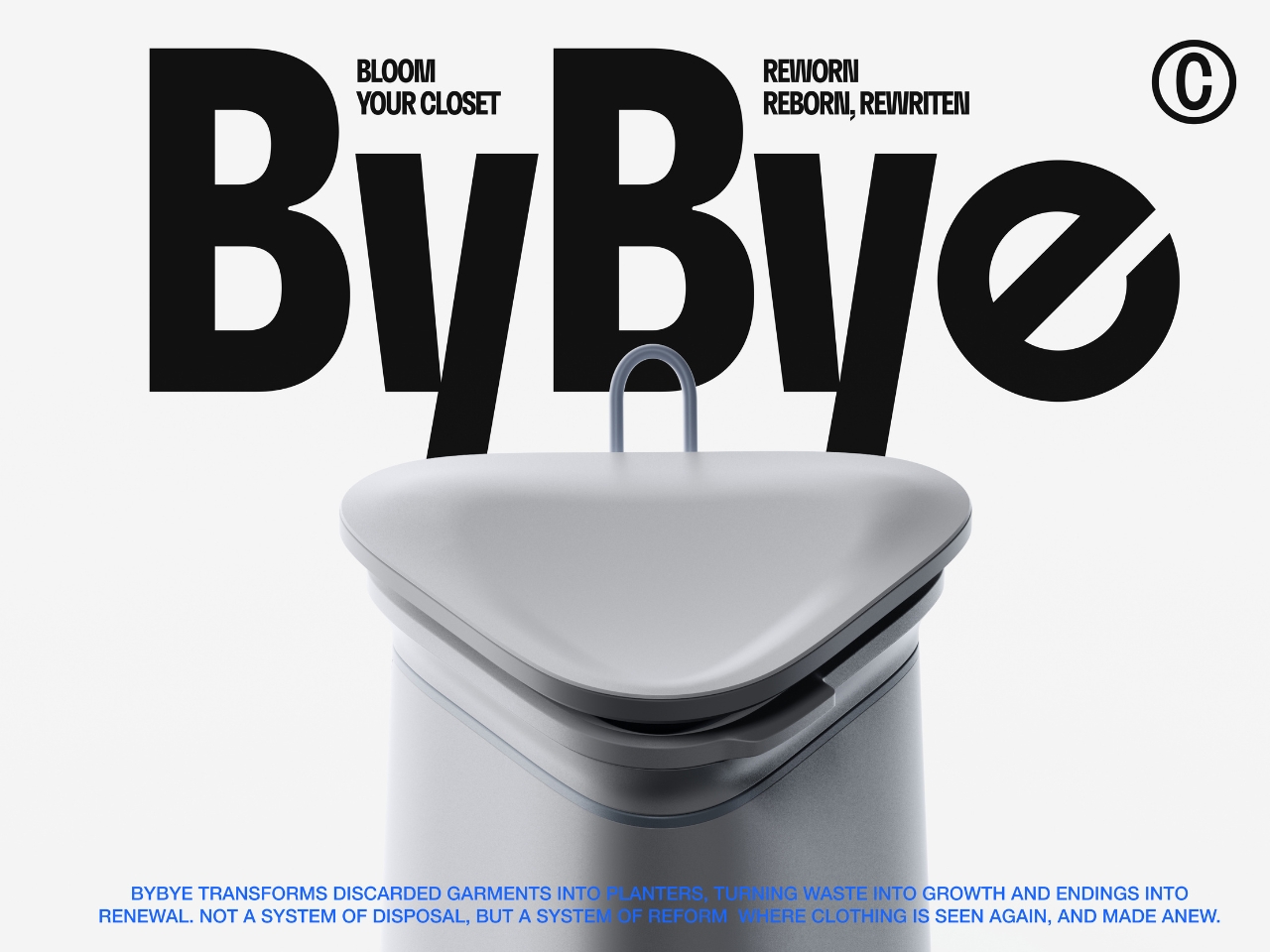
ByBye, a concept designed by Gyeong Wook Kim, Sooa Kim, Gayeon Kim, and Mingyeong Shin, disagrees with that approach in the most literal way possible. It’s a countertop-sized machine that takes your worn and discarded garments and transforms them, through a process of grinding, compression, and heat, into flower pots. Real, usable, actually beautiful flower pots.

Designers: Gyeong Wook Kim, Sooa Kim, Gayeon Kim, Mingyeong Shin

Create your own Aesthetic Render: Download KeyShot Studio Right Now!

I want to sit with that idea for a second, because it’s a genuinely clever reframe of the problem. The designers describe ByBye not as a disposal system but as a “system of reform.” That language matters. When we throw clothes away, the garments disappear. When we donate, we hand off the moral weight to someone else. But ByBye asks you to stay present for the transformation and gives you something physical to show for it.

The mechanics are straightforward but impressively considered. You feed garments into the top opening, which uses a sliding rail mechanism to regulate input and automatically closes once the designated weight is reached. Inside, a shredder breaks the fabric down into fine particles. Those particles are then fed into a flower pot mold, compressed by a pressing plate, and hardened through high-temperature treatment. The finished pots rise up from the molding mechanism. The whole process takes about ten minutes per piece, and a companion app tracks fabric weight, the number of pots produced, and total production time.

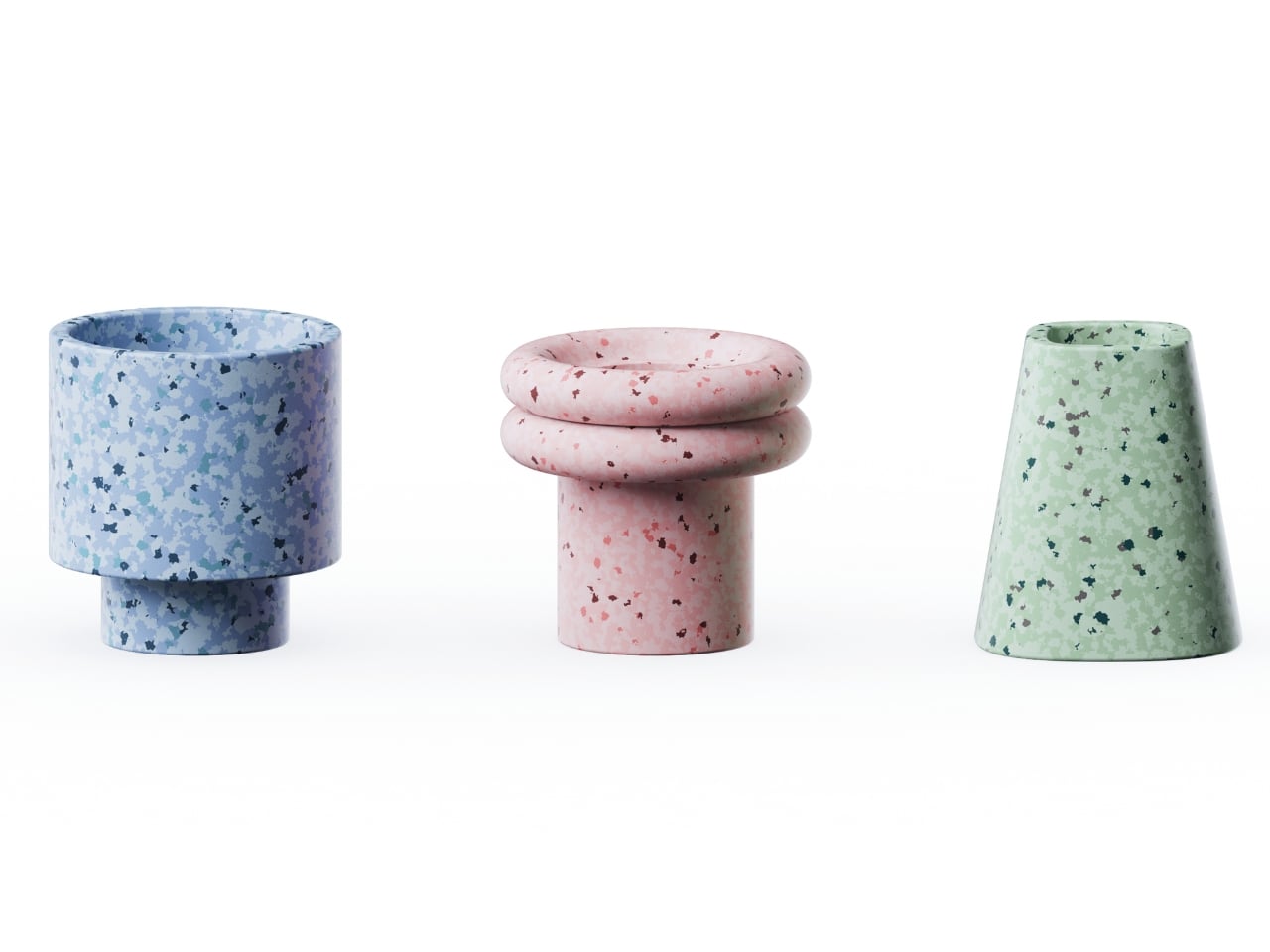
What comes out of the machine is genuinely surprising. The pots carry a terrazzo-like texture from the mixed fibers, soft and speckled in muted blues, pinks, and greens depending on the fabric input. They look like something you’d find at a design fair, not something born from a pile of worn-out t-shirts. That aesthetic outcome feels important to the whole concept. If the result were dull or utilitarian, the emotional payoff wouldn’t land. Instead, you end up with an object that holds some trace of the original garment, and then holds a plant on top of that.

The project raises questions I keep turning over. Can the machine handle all fabric types, including synthetic blends that behave very differently under heat and compression? What’s the upper limit on pot durability when working with processed textiles? These feel like the natural next steps for a concept this promising, and I genuinely hope the team is pushing toward them.

What ByBye gets absolutely right is the emotional architecture of the experience. The name alone, a gentle play on “bye bye” and “by” as in made by, signals that this isn’t designed to make you feel guilty about your wardrobe. The copy throughout the project, “Hello? Nice to Wear You,” “Let Your Clothes Begin Again,” reads more like an invitation than an environmental lecture. That tone is rare in sustainable design, which has a tendency to lead with shame rather than possibility.

The designers put it plainly in their project statement: “Not a system of disposal, but a system of reform where clothing is seen again, and made anew.” That’s a design philosophy worth paying attention to. Fashion produces staggering amounts of textile waste every year, and while no home appliance is going to fix that alone, concepts like ByBye shift the conversation in a useful direction. They make the ending feel less like a loss and more like a beginning. Parting with clothes is still going to feel like something. But now it might feel like planting something too.

The post Old Clothes Never Die, They Just Become Flower Pots first appeared on Yanko Design.
This web app lets you ‘channel surf’ YouTube like a ’90s kid watching cable

Many of us remember the halcyon days of being a kid in the ‘90s, spending a weekend afternoon with remote control in hand and a seemingly endless well of stuff to watch on TV. Now you can relive the experience thanks to the appropriately named Channel Surfer web app. It's essentially a YouTube discovery tool that surfaces interesting videos, but presented in a retro homage to the cable channel screen. 

Channel Surfer is the work of developer Steven Irby. He has 40 channels on the app right now, mostly grouping content by theme. There are channels for typical cable fare like news and sports, but also music, movies and a number of more tailored tech subjects like AI, gaming, gadgets and space. 

"I built Channel Surfer because I’m tired of the algorithms and indecision fatigue," he told TechCrunch, which is where we discovered the app. "I miss channel surfing and not having to decide what to watch. I want to just sit and tune into what’s on and not think about what to watch next."

It seems Irby isn't alone, because he posted on X that the number of views he's getting for Channel Surfer already broke 10,000 on its first day.

This article originally appeared on Engadget at https://www.engadget.com/entertainment/youtube/this-web-app-lets-you-channel-surf-youtube-like-a-90s-kid-watching-cable-220651107.html?src=rss

Teamsters urge DOJ to block Paramount’s Warner Bros. merger

The International Brotherhood of Teamsters, the union that covers warehouse workers, drivers and a diverse collection of other laborers, has come out against Paramount Skydance's merger with Warner Bros. Discovery. In a press release, the Teamsters announced that it has submitted a report to the US Department of Justice's Antitrust Division outlining its concerns about the impact of the deal, and is urging the DOJ to intervene in the merger.

"This merger threatens the livelihoods of the very workers who built these studios into industry giants," Teamsters General President Sean M. O’Brien said in a statement. "We've seen what happens when corporations consolidate power: jobs disappear, production leaves American communities and workers pay the price. The DOJ has a responsibility to stop deals that eliminate competition and harm working families. Unless Paramount and Warner Bros. can guarantee enforceable protections for domestic production and labor standards, this merger can’t be allowed to move forward."

The Teamsters are primarily concerned with how merging the two companies will consolidate power, and eliminate jobs in the process. "Previous mergers have a well-documented track record of harming workers — Disney’s 2019 acquisition of 20th Century Fox resulted in eliminated production units, significant job losses and canceled projects," the union says. Motion Picture Teamsters, the division of the union concentrated in Hollywood that transports the equipment, props and crew members that make productions possible, stand to be most impacted. 

The high likelihood the merger impacts competition in the market is why the Teamsters expect the DOJ to step in, or in the case Paramount and Warner Bros. aren't able to provide "enforceable commitments to increasing and maintaining domestic production, strong labor standards and guarantees against layoffs and erosion of union jobs," block the deal entirely.

Engadget has asked the Teamsters union what it plans to do if the Department of Justice doesn't intervene. We'll update this article if we hear back.

If it's allowed to eat Warner Bros., Paramount Skydance has committed to producing 30 theatrical films annually, evenly split across the two studios’ slates. The larger issue is that the company's offer to acquire the studio is predicated on the idea it will quickly pass the muster of government regulators. Paramount Skydance CEO David Ellison is the son of Oracle co-founder Larry Ellison, who's known to have close ties with President Donald Trump, and has already benefited from favorable treatment from the administration. There's a real possibility that Paramount's new merger could similarly sail through, regardless of the Teamsters' concerns.

This article originally appeared on Engadget at https://www.engadget.com/entertainment/teamsters-urge-doj-to-block-paramounts-warner-bros-merger-215115721.html?src=rss

X could be breaching US sanctions on Iran, watchdog warns

The newly verified X account for Iran's supreme leader could be putting the company on the wrong side of US sanctions, according to a watchdog group. The Tech Transparency Project, which last month published a report on X granting premium perks to sanctioned officials in Iran, now says that the verified account for the country's new leader raises fresh questions about the issue. 

The TTP notes that the X account for Iran's new supreme leader, Mojtaba Khamenei, appears to be paying for an X premium subscription despite being on the US government's list of sanctioned individuals since 2019. As the group points out, the Iran-based account was created this month and currently bears a blue checkmark, which typically indicates the account holder is paying for a subscription. 

The account belonging to Mojtaba Khamenei has been boosted by other state-linked accounts in Iran, including the one that previously belonged to Khamenei's father. That account has had a gray checkmark, which indicates it belongs to a verified government official. Verified accounts on X are rewarded with extra visibility on the platform, along with other perks. The younger Khamenei's verified account has already gained more than 20,000 new followers in the hours since TTP first posted about it. 

"The new Supreme Leader's account is just the latest account for a sanctioned entity apparently paying X for premium services," TTP director Katie Paul said in a statement to Engadget. "TTP has identified dozens of accounts, many linked to designated terrorists, that subscribed to X premium over the past three years. What's more concerning than the blatant disregard for U.S. sanctions law is the fact that Musk's companies have a contract with the Pentagon while X is actively profiting from U.S. adversaries."

As Paul notes, this isn't the first time TTP has raised questions about whether X is running afoul of US sanctions via its premium service. In 2024, the group published a report noting that X was accepting paid verification from more than two dozen sanctioned individuals and groups. The company said at the time that it had a "a robust and secure approach in place for our monetization features." 

X didn't respond to a request for comment. But in the hours after Engadget reached out about Khamenei’s account, the blue checkmark was removed. The company also removed blue checks from a handful of Iran-based accounts flagged by TTP last month following reporting from Wired.

Update, March 13, 2026, 9:08AM PT: This story was updated to reflect changes made to Khamenei’s account following publication.

This article originally appeared on Engadget at https://www.engadget.com/social-media/x-could-be-breaching-us-sanctions-on-iran-watchdog-warns-213550284.html?src=rss

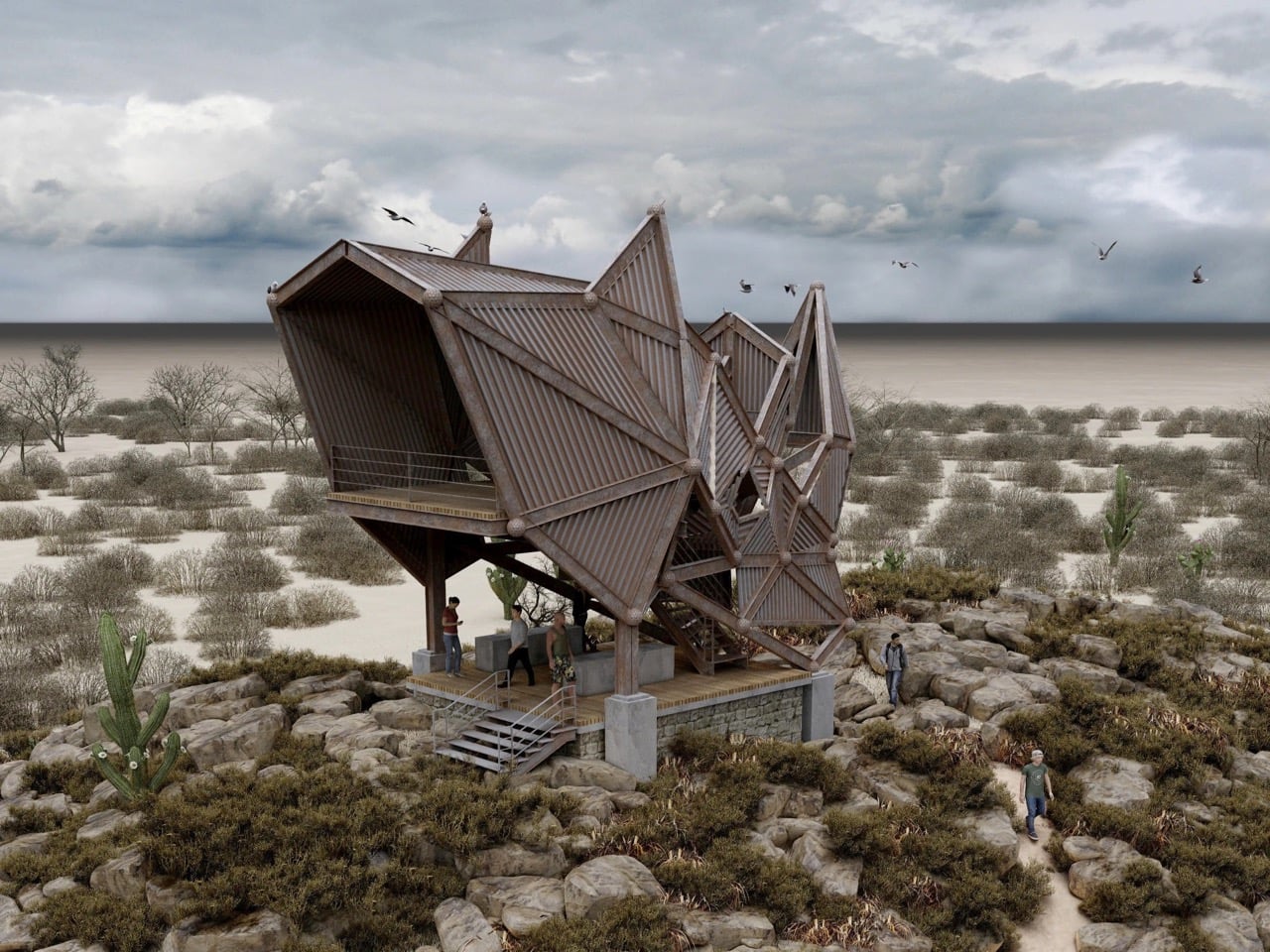
This Bio-mimicking Safari Deck Is Designed to Look Exactly Like a Rhino

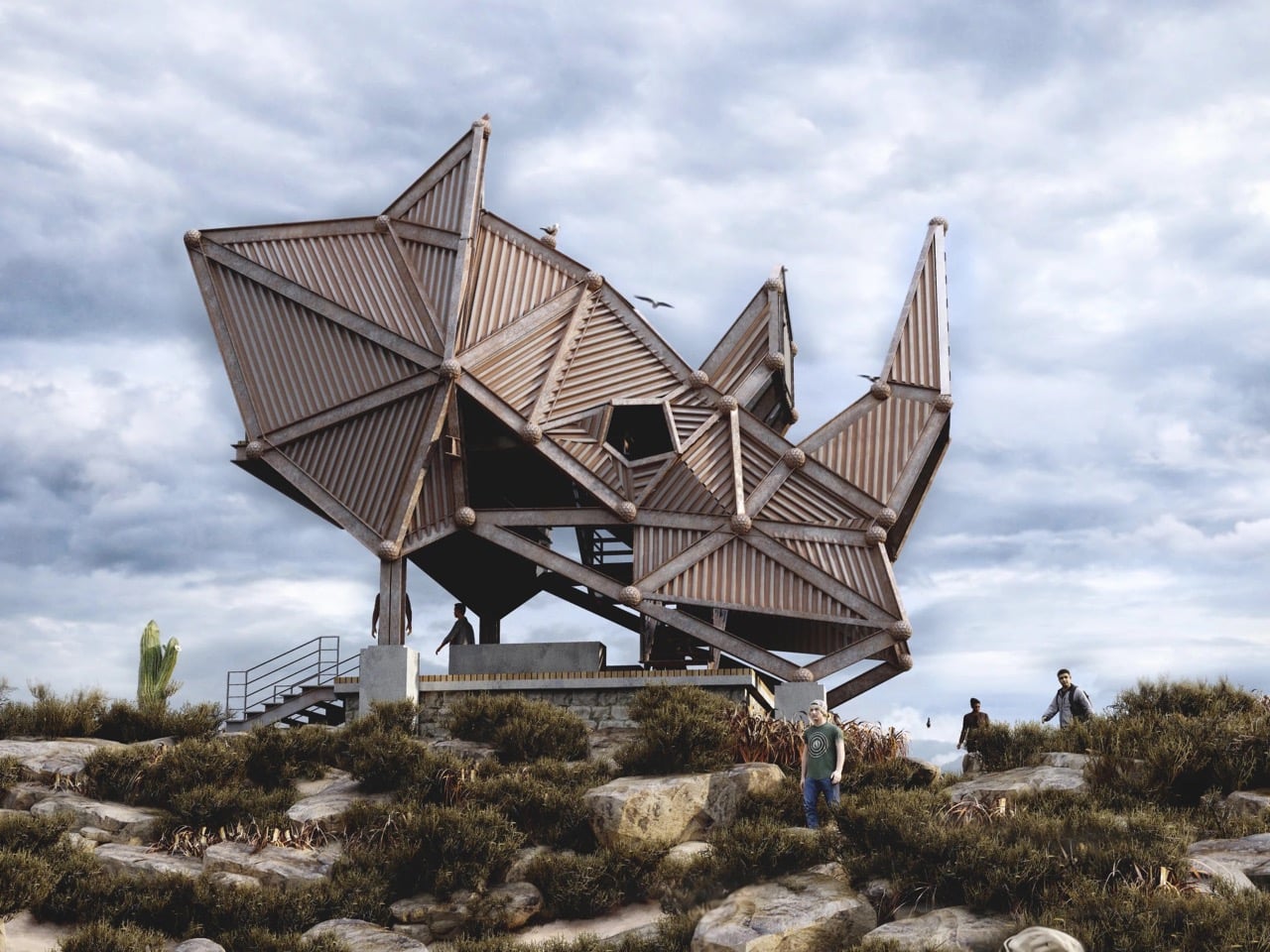
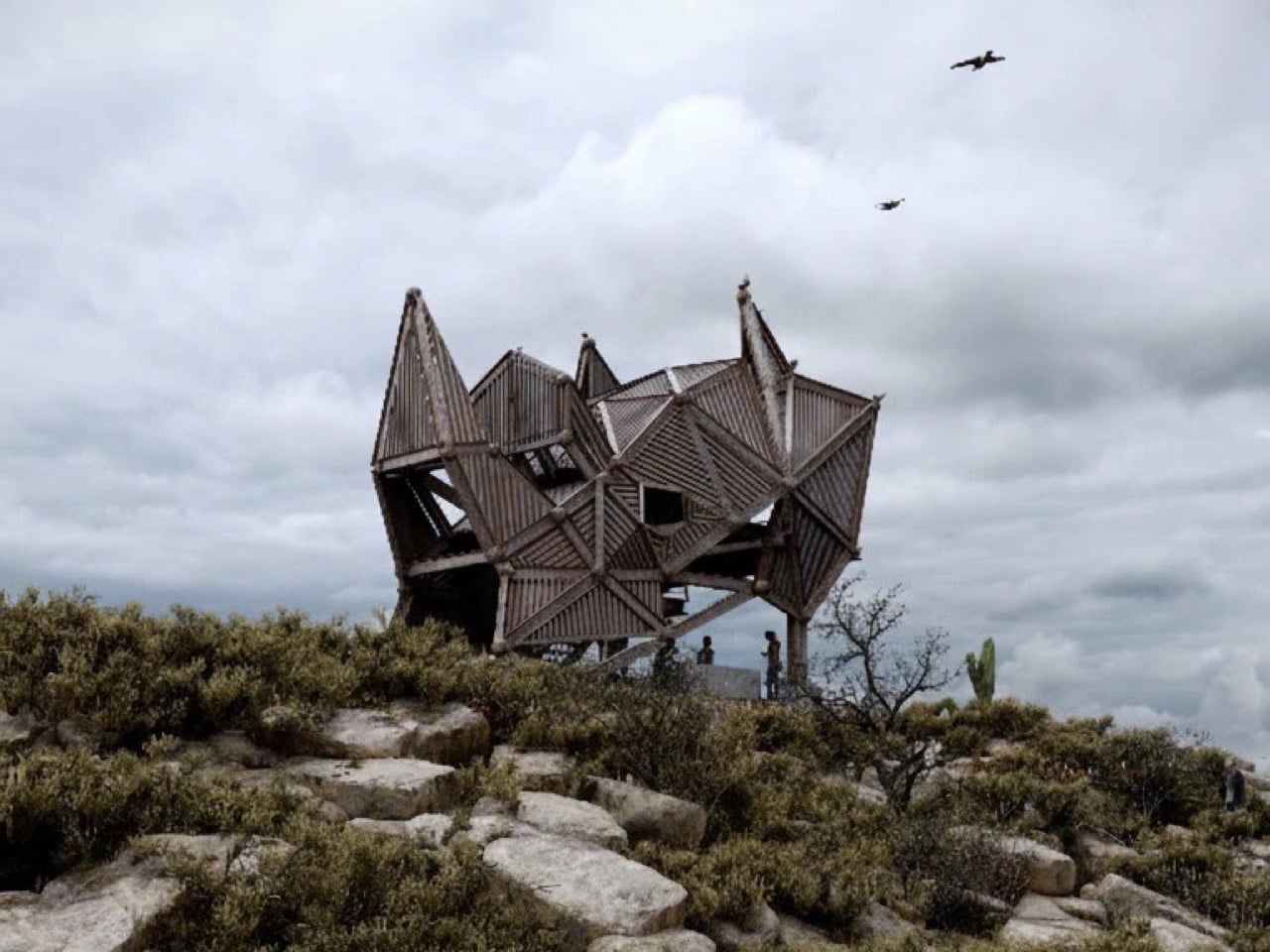
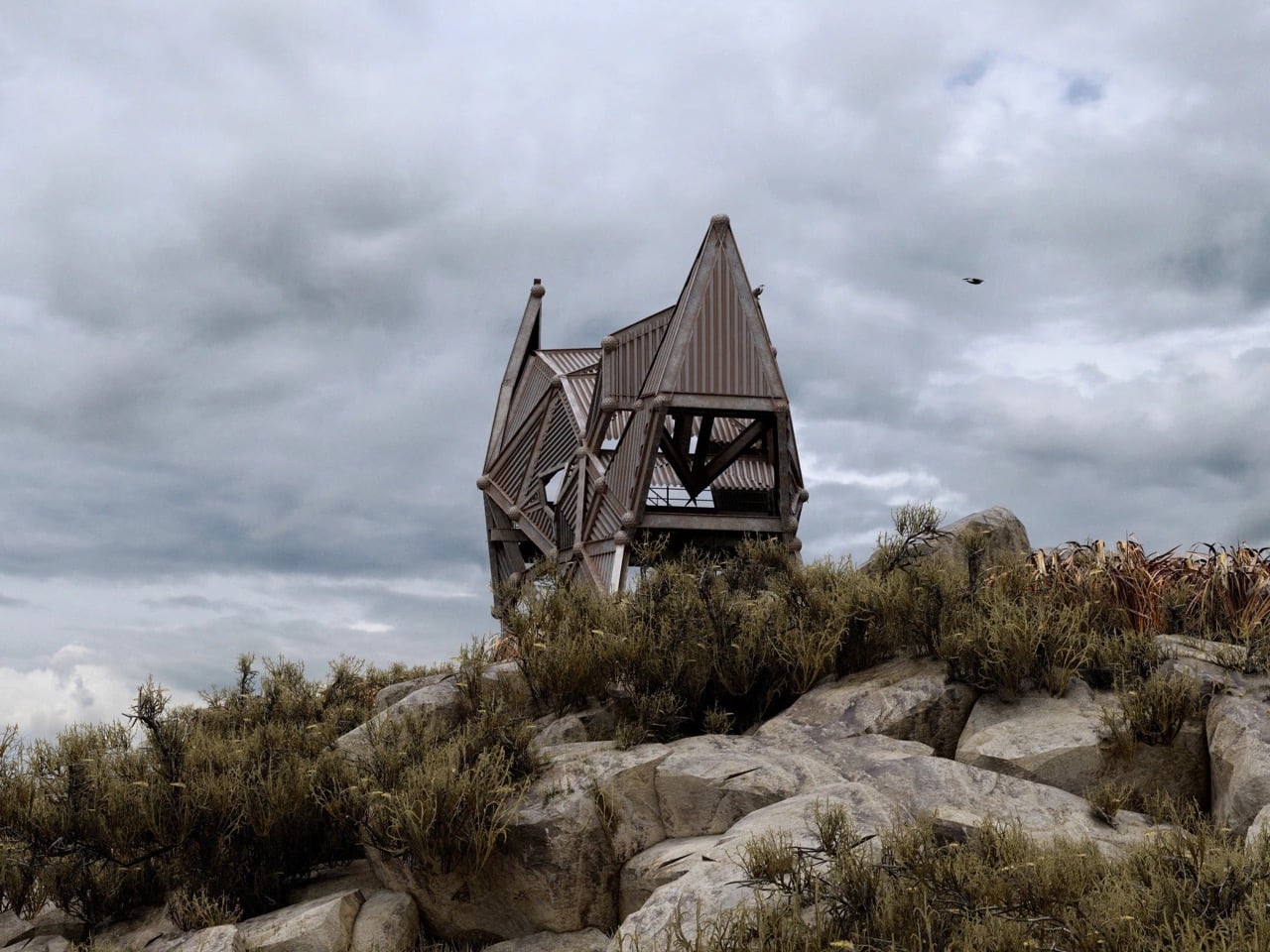
Sri Lankan designer Thilina Liyanage has built a recognizable portfolio around one core idea: that architecture in wild spaces should speak the language of those spaces. His previous concepts have drawn from bird forms, insect geometries, and the angular logic of animal skeletons, earning him a following among readers who track biomimetic architecture with the same enthusiasm others reserve for gadgets. His latest, the Rhino Safari Deck, takes that approach to one of its most literal and structurally ambitious expressions yet. Rendered under overcast skies above a scrubby, semi-arid landscape scattered with cacti and boulders, the structure earns its name in full. From a distance, you are looking at a rhino. The silhouette is unmistakable: a squat, armored mass with a pronounced horn erupting from the roofline, flanked by secondary angular spires that read as ears, the whole thing hunched forward on its platform like the animal mid-charge.

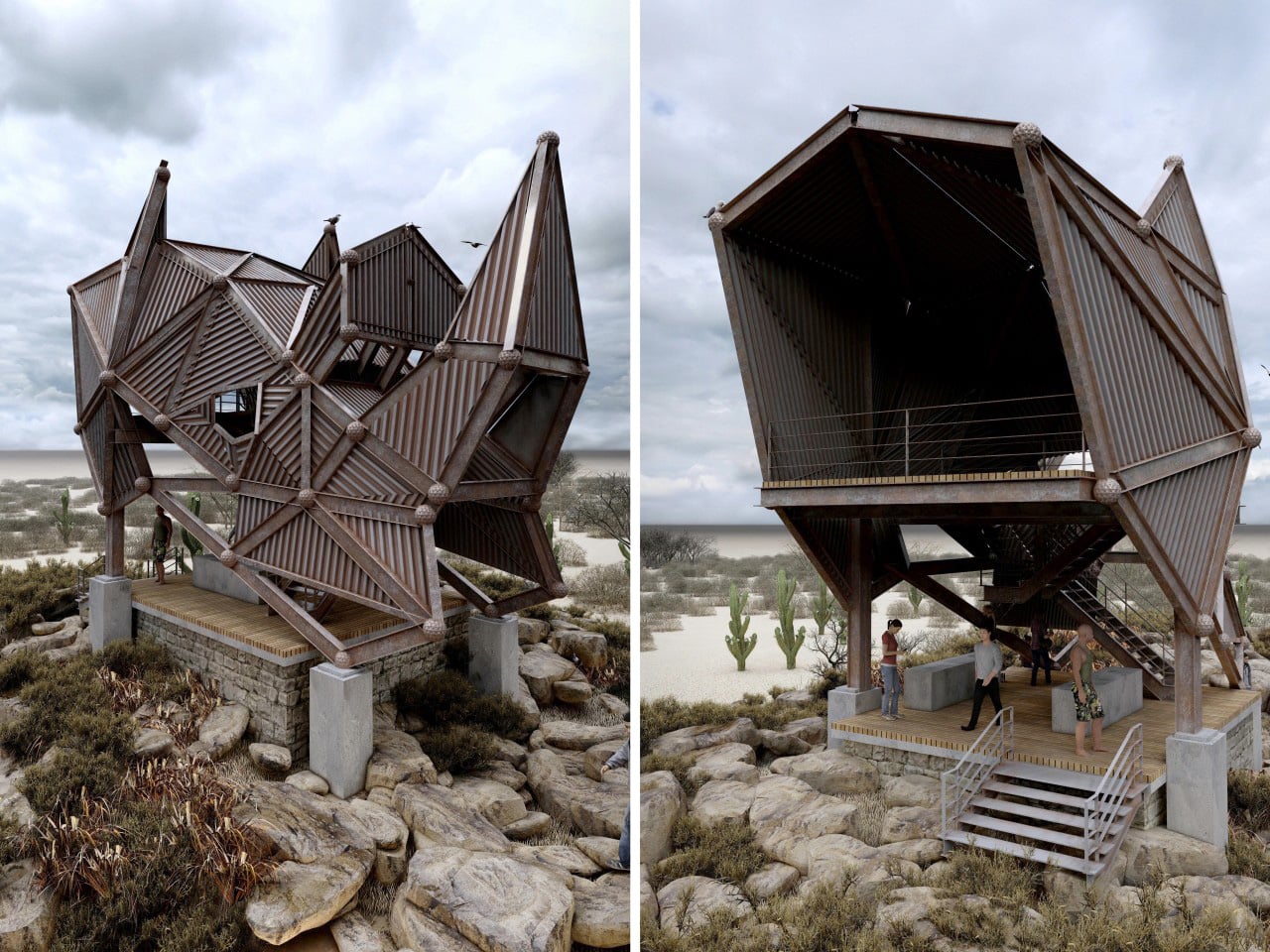
Liyanage named the project “Kifaru Point,” using the Swahili word for rhino, which sets the geographic and tonal intention clearly. The structure is conceived as a wildlife observation deck, elevated above the terrain on a concrete plinth with a timber-decked lower platform that wraps around the base. A set of steel-railed stairs leads visitors up from the rocky ground level, and the shaded gathering area beneath the main structure provides a transition space before the ascent continues to the upper observation level. The interior views glimpsed in the renders show open, framed apertures that funnel sightlines out across the flat scrubland below, the kind of panoramic sweep that makes the elevated position feel earned rather than arbitrary. As a piece of safari infrastructure, Kifaru Point is doing something most viewing platforms do not bother attempting: it turns the act of looking at animals into an architectural experience that is itself worth looking at.

Designer: Thilina Liyanage

The entire form is built from triangulated steel frames, with each panel clad in ribbed, corrugated steel slats that create a warm, striated texture across the facets. Spherical steel nodes connect the struts at every junction, giving the whole skeleton a Meccano-meets-brutalism quality that suits the rugged setting perfectly. There is no smooth surface anywhere on this building. Every plane is either angled, folded, or interrupted, and the aggregate effect genuinely reads as armored hide from the outside while remaining open and structurally legible from within. The corrugated steel and timber combination ages well in outdoor conditions, which matters for a structure intended to sit in a landscape indefinitely rather than perform at an exhibition and disappear.

What Liyanage is clearly working through in this series is the question of how a building earns its place in a landscape. The typical eco-lodge answer involves receding into the environment through natural materials and muted palettes, becoming invisible by design. Kifaru Point goes the opposite direction: it announces itself as a landmark, a destination, something you orient toward from across the plain. The rhino reference gives it a totemic presence that goes beyond novelty. Rhinos are ancient, armored, and critically endangered, and a safari deck that reads visually as one of those animals is making an argument about the relationship between the people who come to observe wildlife and the wildlife itself. Biomimetic architecture has a long tradition of borrowing animal logic for structural efficiency, but borrowing it for symbolic weight, for the purpose of rhino conservation awareness built into a building’s silhouette, is a less common move and a more interesting one.

The rendered setting positions Kifaru Point among desert shrubs and saguaro-like cacti, suggesting a location somewhere in southern or eastern Africa, though the landscape has a looseness that keeps the concept legible across multiple possible sites. The palette of weathered steel and warm timber sits comfortably against the muted greens and grays of the terrain, and the overcast sky in most of Thilina Liyanage’s renders gives the structure a moody weight that a blue-sky backdrop would have undercut entirely. He knows how to light his visualizations for atmosphere, and that skill is doing real work here, making a conceptual project feel like a building that already exists and is already waiting for visitors to climb its stairs and look out across the plain at whatever is moving in the distance.

The post This Bio-mimicking Safari Deck Is Designed to Look Exactly Like a Rhino first appeared on Yanko Design.
Adobe CEO Shantanu Narayen plans to step down after 18 years

Adobe's long-time CEO has shared that he plans to step down. Shantanu Narayen has been the chief exec at the tech company for 18 years, a tenure where he led Adobe in the major shift to become a software-as-a-service provider. The exact timeline for his exit is still up in the air, as Narayen will depart when the board of directors names his successor. He will remain on the board as its chair after leaving the CEO post. 

While Adobe was not the first to take the SaaS route, it was one of the first major tech operations to do so. Software such as Photoshop, Illustrator, Premiere and Lightroom from the brand have been mainstays in creative fields for years, so the launch of the Creative Suite subscription, which is now called Creative Cloud, was a pretty revolutionary change for its customers. 

In an memo to employees, Narayen reflected on his nearly two decades at the helm. Adobe has grown from about 3,000 employees to more than 30,000, while its financial performance has leapt, revenue skyrocketing from less than $1 billion to more than $25 billion. He also looked toward the future and the seemingly-inevitable presence of artificial intelligence. 

"The next era of creativity is being written right now — shaped by AI, by new workflows and by entirely new forms of expression," he wrote. "Adobe has never waited for the future to arrive. We’ve anticipated it. We’ve built it. And we’ve led it. What gives me the greatest confidence isn’t just our technology — it’s our people. Your ingenuity, resilience and commitment to customers are what will define this moment."

This article originally appeared on Engadget at https://www.engadget.com/big-tech/adobe-ceo-shantanu-narayen-plans-to-step-down-after-18-years-212705623.html?src=rss

NASA will try its Artemis II launch again in early April

NASA will soon give it another go on April Fools' Day. On Thursday, NASA said it's targeting April 1 at 6:24 PM ET for the Artemis II mission's next launch attempt.

In case that date doesn't pan out, NASA added April 2 at 7:22 PM as a secondary launch opportunity. If necessary, the agency foresees several more openings between April 1 and 6 to get the Orion rocket into space. "Within those six days between the first and the sixth, we can't always turn around every day for an attempt," NASA acting associate administrator Lori Glaze said at a press conference. "We would anticipate […] about four opportunities within that six-day period."

In preparation, NASA is targeting March 19 (a week from today) to roll Artemis II back out to the launch pad. However, it warned that further setbacks could occur. "While I am comfortable and the agency is comfortable with targeting April 1 as our first opportunity, just keep in mind we still have work to go," Glaze said. "There are still things that need to be done within the [Vehicle Assembly Building] and out at the pad. As always, we'll be guided by what the hardware is telling us, and we will launch when we're ready."

Lori Glaze, acting associate administrator, Exploration Systems Development Mission Directorate looks on as John Honeycutt, the Artemis II Mission Management Team chair smiles before answering a question about the flight readiness review of the Artemis II rocket components at the Kennedy Space Center in Cape Canaveral, Florida, on March 12, 2026. NASA rolled the massive Space Launch System rocket and Orion spacecraft back to the Vehicle Assembly Building from Launch Pad 39B on February 25 to troublshoot problems encountered during a wet dress rehearsal. NASA engineers and technicians will effect repairs and replace numerous flight batteries prior to sending four astronauts to the moon for the first time in more than 50 years. Artemis II is scheduled to launch in April. (Photo by Gregg Newton / AFP via Getty Images)
Lori Glaze, acting associate administrator, and John Honeycutt, Artemis II Mission Management Team chair (Photo by Gregg Newton / AFP via Getty Images)
GREGG NEWTON via Getty Images

Artemis II is set to be NASA's first crewed lunar mission since the early 1970s. The 10-day mission will carry four astronauts around the Moon and back to the Earth. It's set to be the first crewed mission of the Orion spacecraft, and an important step toward the ultimate goal of a Moon landing.

Initially targeted for early February, the launch was pushed back to March after several issues arose during a wet dress rehearsal. Then, 18 days later, it was delayed again (and moved off the launch pad) when NASA discovered a helium flow blockage in the rocket's upper stage. And it’s all happening against the backdrop of Administrator Jared Isaacman’s overhaul of the Artemis program, which includes postponing a scheduled Moon landing until 2028.

This article originally appeared on Engadget at https://www.engadget.com/science/space/nasa-will-try-its-artemis-ii-launch-again-in-early-april-205714288.html?src=rss

Bethesda Made a Real Pip-Boy Wearable for $299 and It Even Has a Radiation Detector

Seventeen years of Fallout fans walking around with a fictional computer strapped to their arm in their heads, and The Wand Company has finally made the thing real. This is the Pip-Boy 3000 replica, built from the original in-game 3D geometry of the wrist-worn personal information processor from Fallout 3 and Fallout: New Vegas, and it is a fully functional, wearable, 724-gram argument that some obsessions are worth indulging. The Wand Company has form here, having already produced the Pip-Boy 3000 Mk V replica based on the Amazon TV series prop, but this is the one Fallout 3 and New Vegas players have actually been waiting for since 2008.

The front casing is die-cast metal, the body is injection-moulded ABS, and the cuff is memory foam with an included spacer bar that adds 22mm of circumference for larger arms. The 4-inch IPS LCD screen displays nearly all of the in-game content from both titles, and you can toggle between the classic green UI from Fallout 3 and the amber one from New Vegas. Hundreds of menus are navigable using the scroll wheels and dials on the body, the screen mimics a vintage CRT display with glitch effects and scanlines baked in, and you can temporarily fix those glitches by smacking the device because there is, naturally, an accelerometer inside. The whole package weighs about as much as a large can of soup, which will become noticeable roughly forty-five minutes into wearing it at a convention.

Designer: The Wand Company

There is also a playable version of Atomic Command, the in-game holotape minigame, marking the first time anyone has defended fictional American landmarks from nuclear missiles on their actual wrist. The flashlight at the rear, headphone jack, and alarm clock mode are all present and accounted for. The radiation detector deserves a special mention: rather than measuring the ionizing kind that would actually matter in a wasteland scenario, it picks up radiation from FM radio broadcasts, displaying readings on the Geiger counter screen with full sound effects. The replica can also function as a working FM radio, which makes it possibly the most elaborately housed FM tuner ever manufactured. This is either a charming bit of in-universe worldbuilding or a tremendous cop-out, depending entirely on how generous you are feeling about the whole thing.

When you are not wearing it, the replica sits on a solid machined aluminum display stand that locks into four slots on the lower front of the device. The stand is also where the alarm clock function comes into its own, with the Pip-Boy propped upright on a desk or nightstand doing its best impression of the world’s most expensive bedside clock. The Wand Company says Bethesda staff saw the prototype and were left speechless, which tracks, because the level of content depth here, over 2,200 menu entries pulled directly from both games, goes considerably further than anyone needed to go for a collectible.

Preorders are live now at the Bethesda Gear Store for $299.99, with shipping expected as early as June 2026. Bethesda is restricting it to one item per order. International buyers can order through the Bethesda Gear Store International. It is rated for ages 14 and up, which seems optimistic.

The post Bethesda Made a Real Pip-Boy Wearable for $299 and It Even Has a Radiation Detector first appeared on Yanko Design.

RAMaggedon not expected to ease this year as IDC cuts 2026 PC market forecast again

We've been seeing all sorts of warnings about how RAMaggedon is nigh. The latest horseman signalling a disaster is the International Data Corporation, which had already cautioned that things were looking bad at the end of 2025. Today, the organization further cut its forecasts for the PC market in 2026, anticipating that global shipments would fall 11.6 percent. The previous report projected that this year would see a falloff of up to 8.9 percent due to ongoing memory shortages. And the new figure was set before the escalation of conflicts in Iran and across the Middle East, which could further deflate computing and other industries. 

"Memory shortages will persist well into 2027," Jitesh Ubrani, research manager for IDC’s Worldwide Mobile Device Trackers, said in the latest forecast. "While we anticipate some easing of prices beginning in 2028, the market is unlikely to return to the pricing levels seen in 2025."

This market report echoes price changes and official statements from all corners of the tech and computing sector. So far this year, we've already seen surging memory costs impacting HP, Samsung, Valve and Framework. Don't be surprised if many other major players follow suit.

This article originally appeared on Engadget at https://www.engadget.com/computing/ramaggedon-not-expected-to-ease-this-year-as-idc-cuts-2026-pc-market-forecast-again-200000498.html?src=rss