COPPA 2.0 passes the Senate again, unanimously this time

Today the US Senate unanimously passed proposed legislation known as COPPA 2.0. This measure, fully named the Children and Teens’ Online Privacy Protection Act, aims to create new protections for younger users online, such as blocking platforms from collecting their personal data without consent. 

COPPA 2.0 is a modernized take on the Children’s Online Privacy Protection Act of 1998, attempting to address recent changes in common online activities, like targeted advertising, that could prove harmful to minors. Lawmakers have made several attempts to get this bipartisan bill through. While it has made varying amounts of headway in the Senate, none of the COPPA 2.0 bills to date have gotten past the House of Representatives. Industry groups such as NetChoice have previously opposed COPPA 2.0 and other measures around minors' online activity such as KOSA, the Kids Online Safety Act. NetChoice members include Google, YouTube, Meta, Reddit, Discord, TikTok and X. Google specifically has since changed its stance to support COPPA 2.0, however.

"This bill expands the current law protecting our kids online to ensure companies cannot collect personal information from anyone under the age of 17," Senate Democratic Leader Chuck Schumer (D-NY) said in a statement about the latest result. "This is a big step forward for protecting our kids. We hope the House can join us. They haven’t thus far."

However, there has been a bigger push both domestically and internationally toward restrictions on when and how younger people engage online. Several states — Utah, California and Washington to name a few — have enacted laws requiring some level of age verification, either to access mature content online or to use social media apps at all. Many of these efforts have raised concerns about privacy regarding where and how people's personal information is stored and protected. COPPA 2.0 might wind up benefitting from the privacy debates since it emphasizes giving teens and parents ways to protect themselves from having their data used against them rather than asking adults to give up data in order to use the internet as usual.

Update, March 6 2026, 11:38AM ET: Article updated with additional context on Google.

This article originally appeared on Engadget at https://www.engadget.com/big-tech/coppa-20-passes-the-senate-again-unanimously-this-time-215044656.html?src=rss
Nothing Phone 4a Pro: Metal Build, Glyph Matrix, and a Price That Actually Makes Sense


The ink on Barcelona was barely dry when Nothing pulled everyone back to London. The Phone (4a) had its big MWC moment just days ago, where journalists and the public got their hands on it, took the obligatory photos, and filed their takes. And then Nothing said: actually, we have another one. The Phone (4a) Pro launched today at Central Saint Martins, the world-famous College of Art and Fashion in London’s Kings Cross, a deliberately art-coded venue for a brand that has always treated its phones as objects as much as devices. This is how Nothing operates in 2026, staggered drops fired in rapid succession to keep the conversation alive, and the strategy is working.

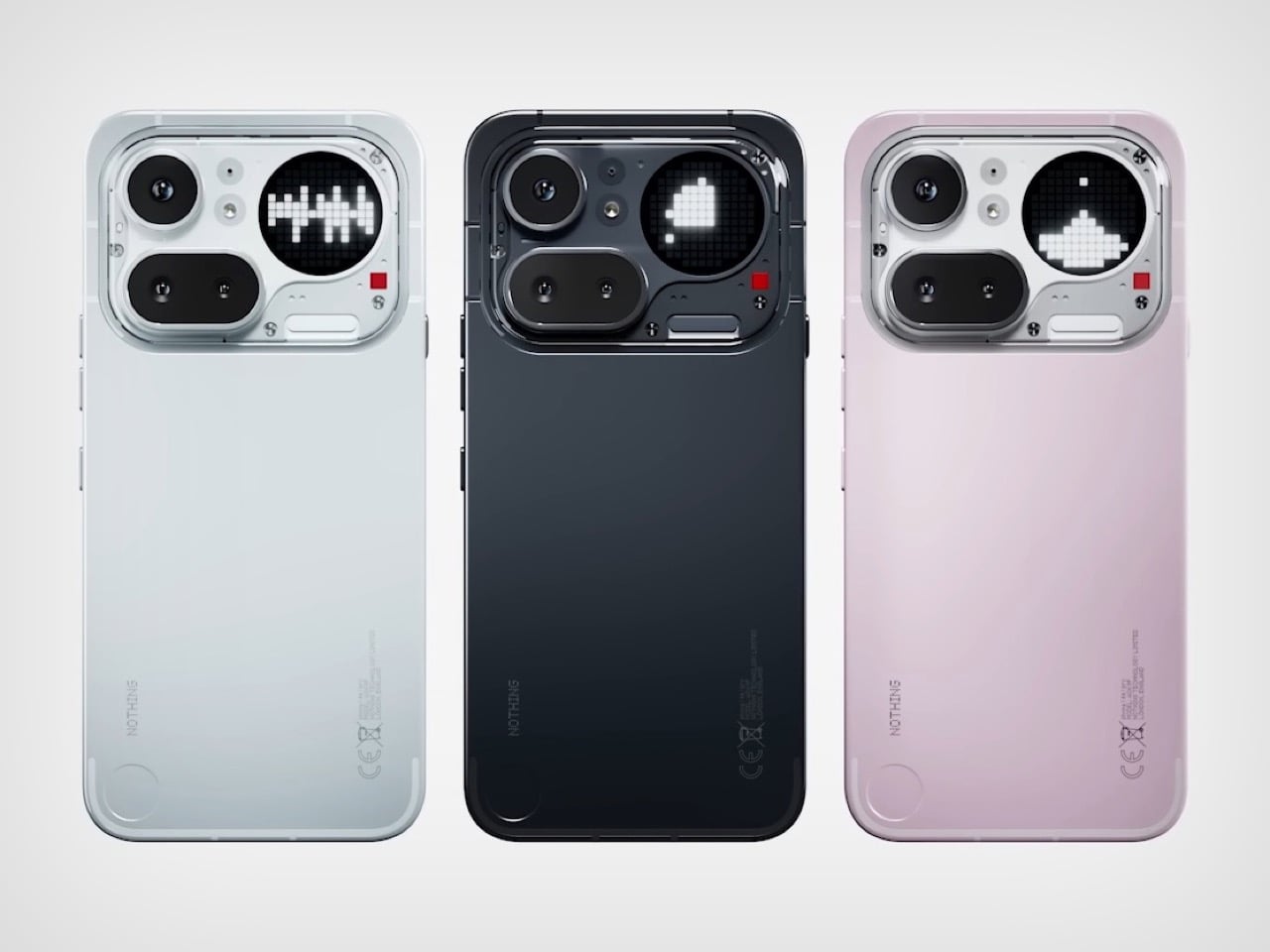
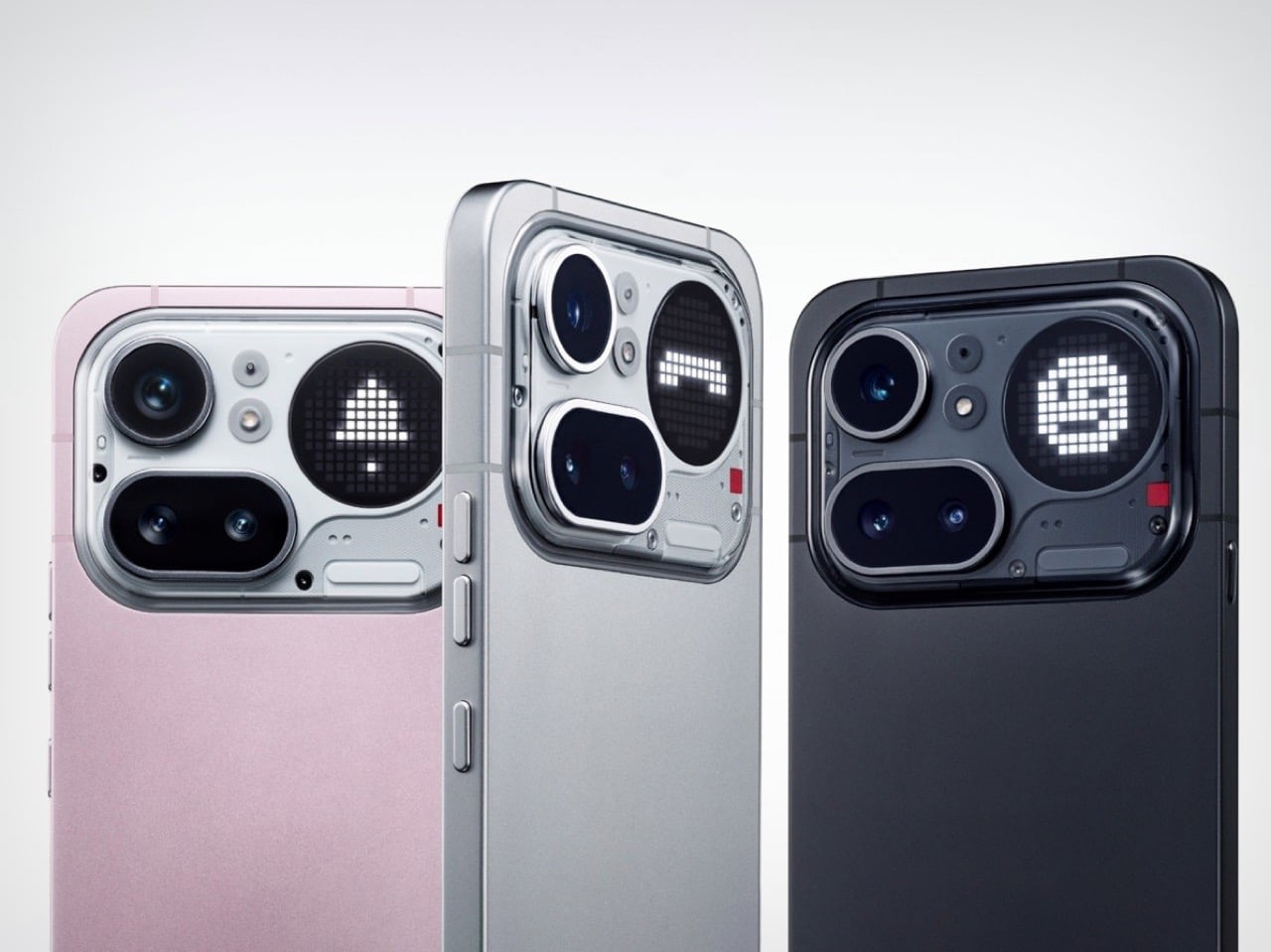
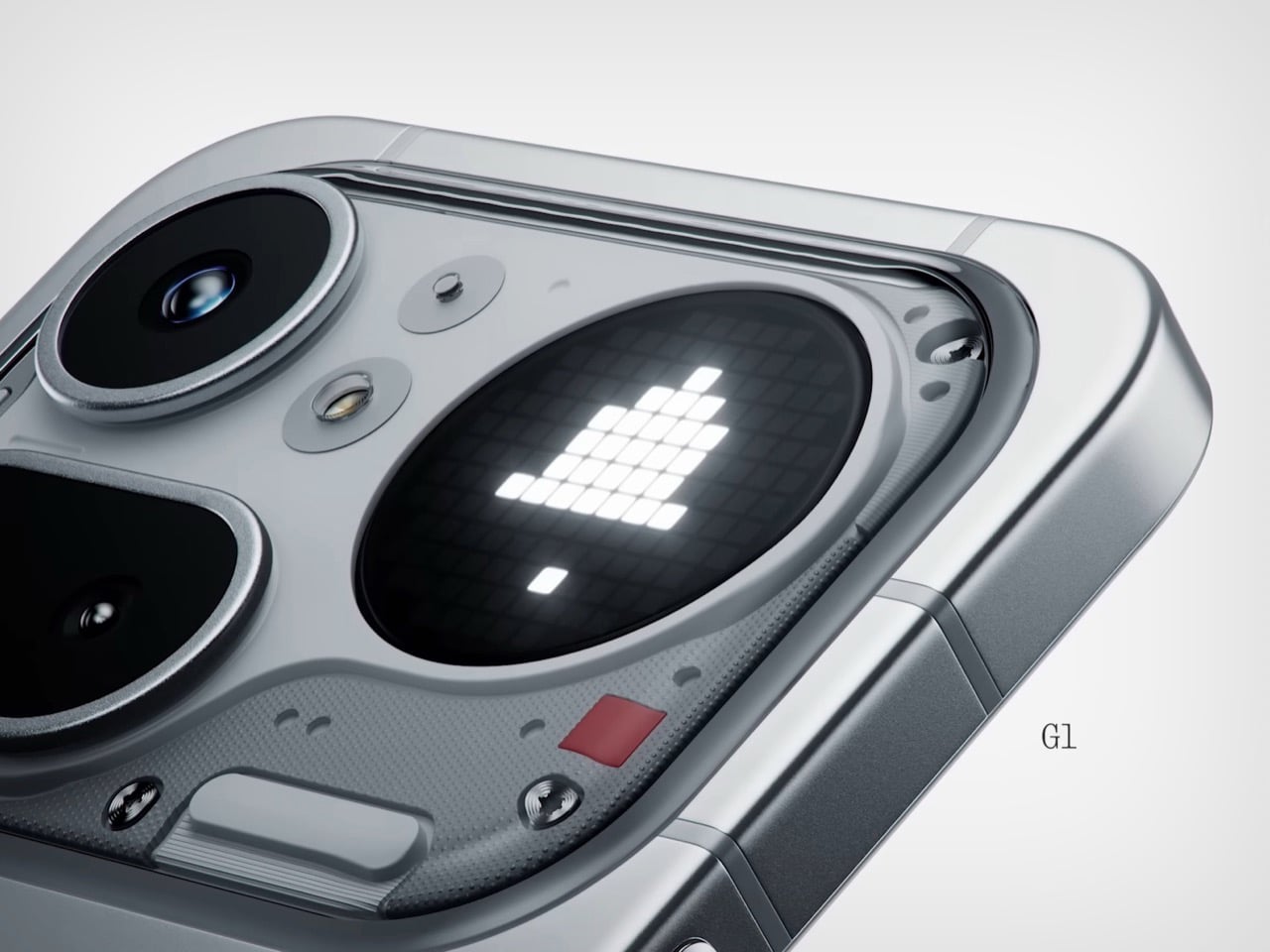
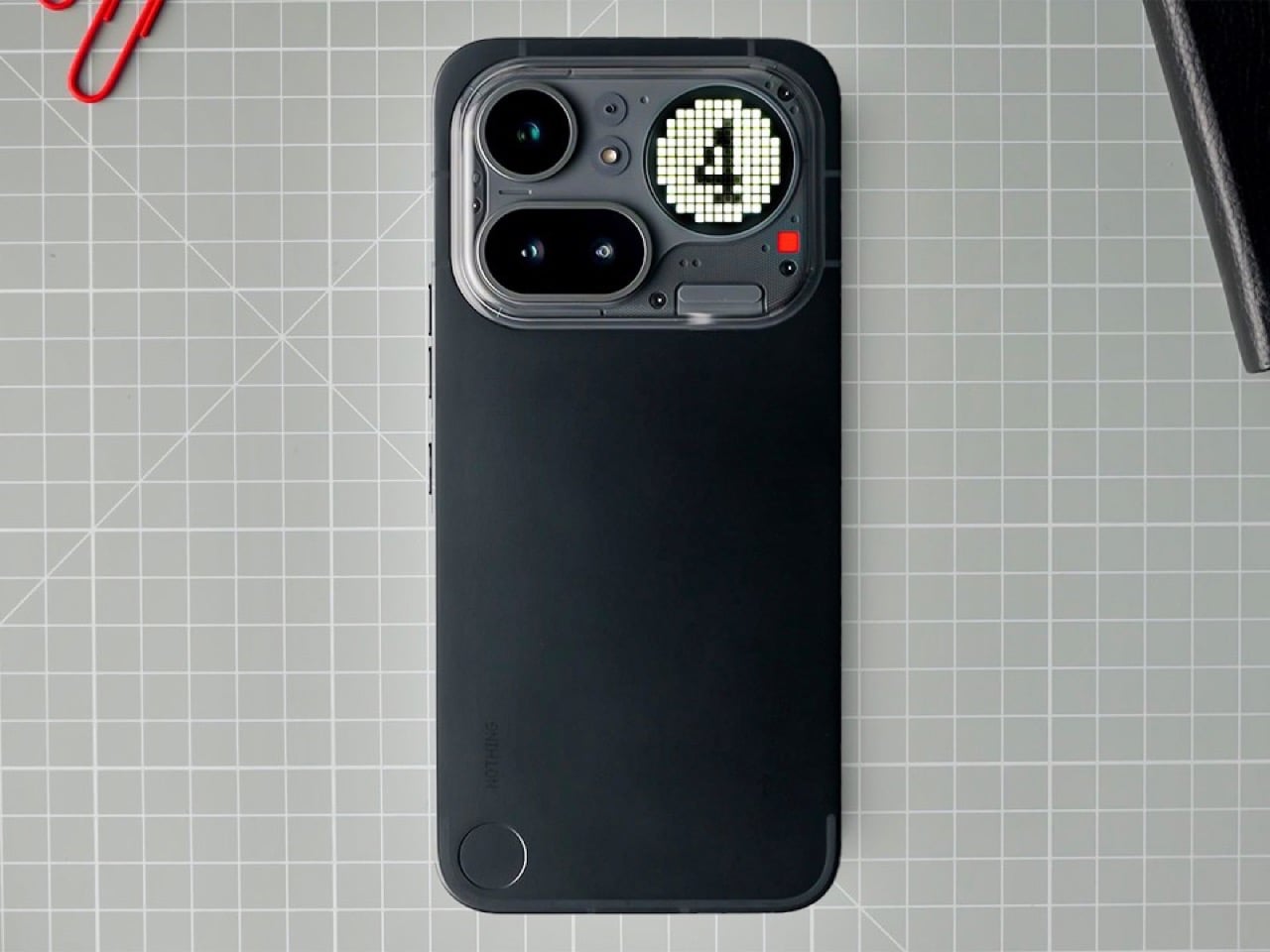
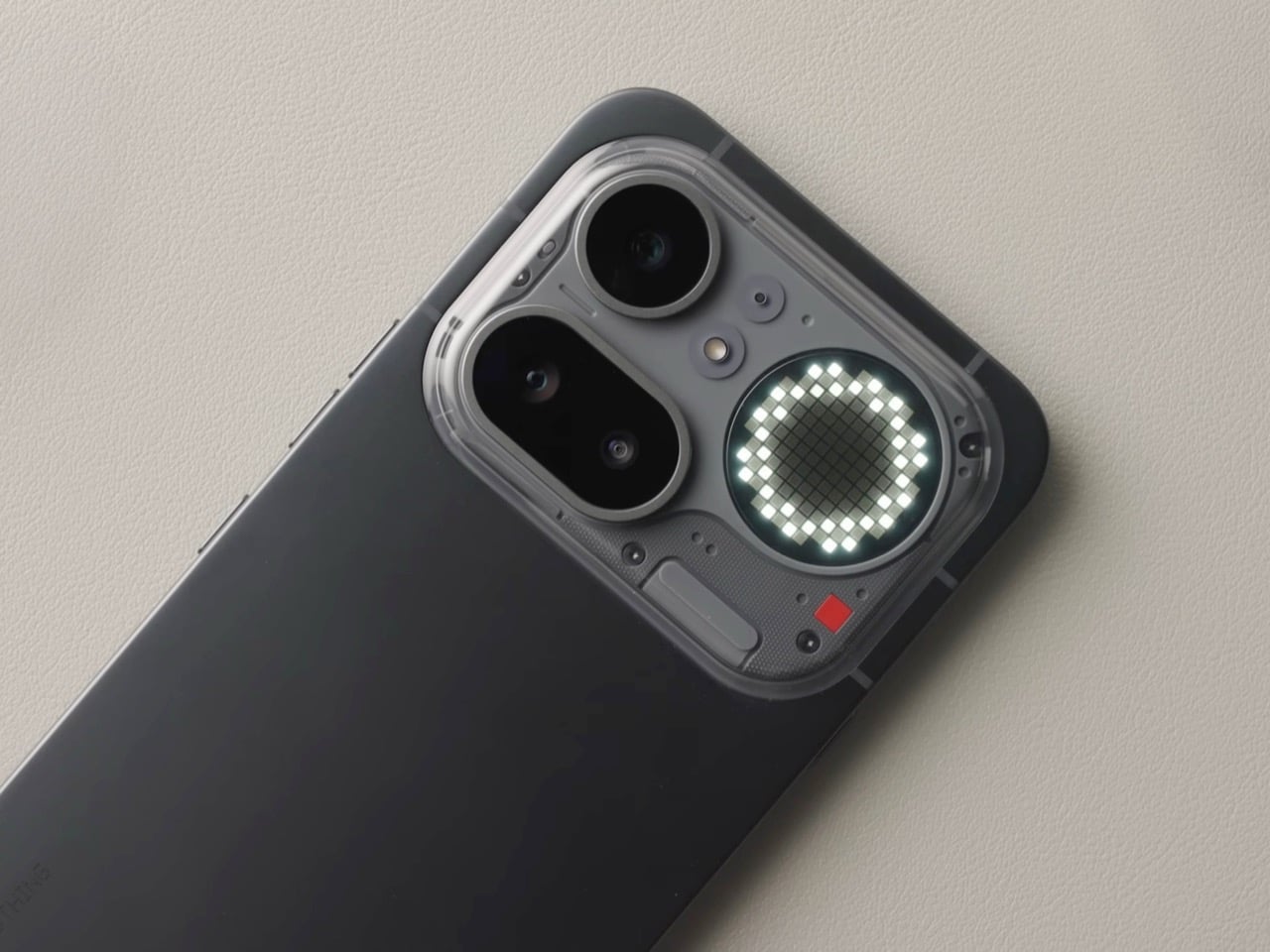
The reason the Pro matters so much this year comes down to a decision Carl Pei made at the start of 2026: Nothing will not launch a flagship phone this year. That puts the Phone (4a) Pro in the role the Phone (3) would have occupied, as the design halo, the statement piece, the device that earns a second look across a dinner table. And so the Glyph Matrix returns. When we covered the Phone (3), the Matrix was the headline, a circular LED array in the top-right corner of the rear panel that could display pixel-style animations, timer readouts, caller signatures, and even a spin-the-bottle mini-game. It was the kind of feature that made you rethink what a phone’s back panel could do. The (4a) Pro’s version runs 137 LEDs against the Phone (3)’s 489. On paper that sounds like a step back. In practice, the circle is 57% larger and the LEDs are twice as bright at 3,000 nits, making for a more visible, punchy display even if the pixel resolution is reduced. The tradeoff is real but not as simple as the numbers suggest.

Designer: Nothing

Compare the (4a) Pro’s rear panel to the (3a) Pro’s and you feel the difference before you can articulate it. We wrote about the (3a) Pro’s camera arrangement at the time, and the word we used was chaos: lenses placed asymmetrically, Glyph LEDs ringing a circular module like someone got excited and kept adding things. The (3a) Pro took cameras arranged asymmetrically with Glyph LEDs around the circular camera module. The (4a) Pro looks like that design went away, thought about what it was doing, and came back with some self-control. The cameras and Glyph system now sit inside a raised transparent plateau, three lenses in a proportional, structured arrangement with the Matrix at the top-left and the red recording indicator tucked below it. Nothing is pushing back on the plateau comparison, but the composure of the layout is undeniable. This is what a camera array looks like when the brief is restraint rather than personality, and it turns out restraint suits Nothing rather well.

That same shift in attitude shows up in the build. The (4a) Pro drops the plastic frame and goes metal unibody at 7.95mm, which is directly relevant to something we flagged in our (4a) coverage: the blue colorway looked cheap against a plastic frame, the color promising something the material could not back up. That tension is gone on the Pro. A metal chassis earns the Silver colorway, gives the Pink something to push against, and makes the whole thing feel like a considered object rather than an aspirational one. The IP65 rating arrives alongside it, with a non-standard but still real claim of 25cm submersion for 20 minutes. The chipset steps up properly too: the Snapdragon 7 Gen 4 brings a 27% CPU uplift, 30% better GPU performance, and a 65% jump in AI processing over the 7s Gen 3 that powered the (3a) Pro. The standard (4a) gets the 7s Gen 4, technically a newer chip but only a 7% performance improvement over the outgoing model. The meaningful generational gains live in the Pro.

On the camera side, the Pro runs Sony’s Lytia 700C, a 50MP 1/1.56-inch main sensor with OIS, alongside a periscope telephoto using a Samsung JN5 50MP sensor at 3.5x optical zoom, extendable to 7x with in-sensor cropping. The system supports 4K Ultra XDR recording, comparable to Dolby Vision, with up to 140x hybrid zoom. The display is a 6.83-inch AMOLED at 144Hz, 1.5K resolution. The Pro comes in Black, Silver, and Pink, while the (4a) ships in Black, Blue, Pink, and White. Both run Nothing OS 4.1 on Android 16, with three OS updates and six years of security patches committed.

Pre-orders for the (4a) open today with sales from March 13, while the (4a) Pro takes pre-orders from March 13 with open sales on March 27. UK pricing is £349 and £499 respectively. Holding the launch at Central Saint Martins was not a neutral decision: it is one of the most culturally loaded art schools on the planet, and Nothing knows exactly what it is saying by being there. Two phones, one week, one city. Nothing is playing the long game with a short runway.

The post Nothing Phone 4a Pro: Metal Build, Glyph Matrix, and a Price That Actually Makes Sense first appeared on Yanko Design.

Amazon.com is on the mend after experiencing technical issues

Amazon's website appears to be stabilizing after experiencing technical issues that kept users from logging in and prevented prices from displaying correctly. DownDetector reported a spike of outage reports around 2PM ET, but as of 5:56PM ET, user complaints have fallen significantly.

The Amazon.com homepage currently loads, and Engadgets staff have been able to load product pages and view prices without any problems. During the peak of the site’s issues, neither were loading consistently, and clicking through in some cases showed an error page with text that says "Sorry, something went wrong on our end." Users also reported being unable to log into their accounts.

“We're sorry that some customers may be experiencing issues while shopping,” Amazon said in a statement to Engadget. “We appreciate customers’ patience as we work to resolve the issue." The company shared a similar sentiment with customers on X, confirming that it’s aware there’s a problem and acknowledging that its working on a fix. Amazon has yet to confirm whether the issue is fully resolved.

As a cloud provider through its Amazon Web Services (AWS) business, Amazon has experienced its fair share of outages, including one in October 2025 that took out services like Snapchat and Amazon's own Alexa voice assistant for hours. The company's website experiencing issues without a larger AWS outage seems a bit more unusual, and might suggest the problem lies outside of its cloud infrastructure.

Update, March 5, 5:56PM ET: Updated article to reflect improved performance on Amazon.com.

This article originally appeared on Engadget at https://www.engadget.com/big-tech/amazoncom-is-on-the-mend-after-experiencing-technical-issues-211430657.html?src=rss

Xbox CEO confirms next-gen ‘Project Helix’ console will play PC games

Xbox CEO Asha Sharma is gearing up to spill the beans on Microsoft’s next-generation console. In a post on X today, she revealed that the system is codenamed “Project Helix.” Confirming previous rumors, she says it will “lead in performance” and play both console and PC games. Sharma also notes that she’ll be discussing the system at GDC next week with partners and developers.

The next-gen console tease follows Sharma’s appointment as Xbox CEO a few weeks ago, after former Xbox head Phil Spencer stepped down. Last year, it was clear that things were rocky for Microsoft’s storied gaming brand, and the executive shakeup certainly didn’t help much. But it’ll be interesting to hear more details about Project Helix at GDC — is it simply a PC masquerading as a console? What sort of performance benchmarks is Microsoft trying to reach, and will we get any hints about hardware?

For the first time, in a long time, there’s something intriguing happening in the land of Xbox. Much like the first Xbox, Microsoft could end up cutting this generation short to quickly prep a successor. And if the rumors about a PlayStation 6 delay end up being true, it could give Microsoft a few years with new hardware ahead of Sony.

This article originally appeared on Engadget at https://www.engadget.com/gaming/xbox/xbox-ceo-confirms-next-gen-project-helix-console-will-play-pc-games-204654357.html?src=rss

How to watch Frost Fatales 2026, kicking off on March 8

It feels like we could all use a little (or a large) boost of joy and optimism right now, so it's a perfect coincidence that a Games Done Quick event is on the horizon. Frost Fatales 2026 is running from March 8 through March 14. This week-long livestream will be raising money for the National Women's Law Center, a nonprofit working toward gender justice for women and girls. 

GDQ events have been branching out with more ways to tune in for the speedrunning fun. Frost Fatales 2026 will be a streaming on the GDQ Twitch channel as usual, but the organization is also now broadcasting on YouTube, and you can watch the live feed there next week as well. Each day’s pre-show kicks off at 12:30PM ET.

Frost Fatales is the winter charity event from the Frame Fatales, a community for women and femmes in speedrunning that operates under the GDQ banner. The group has raised more than $1 million for philanthropic organizations since its first event in 2019. 

The schedule for next week has a mix of speedrun standards (think Super Mario 64 and Super Metroid) alongside and newer releases, plus some more offbeat categories that promise to be a highly entertaining watch. The event kicks off on Sunday with western flair in Red Dead Redemption 2. Horror fans have a good selection on Tuesday night with Silent Hill f, Resident Evil 3 (2020) and Resident Evil Village. The Kirby Air Riders run on Friday night will highlight a bunch of community members for max wholesome vibes. Peak, a notable new game from 2025, is already getting speedruns, which you can watch Saturday afternoon before a bingo race of recent indie hit UFO 50 in the evening and the final run of Titanfall 2 to close the event. Fatales events aren't a 24/7 affair like Awesome and Summer Games Done Quick, so be sure to check the schedule for all the highlights.

Or, if you simply can’t wait until Sunday to dive into some great speedruns, Games Done Quick recently launched GDQ TV. This dedicated Twitch channel is always on and highlights some notable moments and runs from the entirety of the GDQ archive.

This article originally appeared on Engadget at https://www.engadget.com/gaming/how-to-watch-frost-fatales-2026-kicking-off-on-march-8-201826864.html?src=rss

Dreamie Built a $250 Alarm Clock to Replace Your Nightstand Phone

I keep my phone on my nightstand. You probably do too. According to the American Academy of Sleep Medicine, about 87% of us do, and I’d bet the other 13% are lying. It’s become such a reflexive part of the bedtime ritual that most of us don’t even question it anymore. The phone is the alarm clock, the white noise machine, the podcast player, the ambient light, and unfortunately, the portal to one more scroll through social media at 11:47 PM when you swore you’d be asleep by 11.

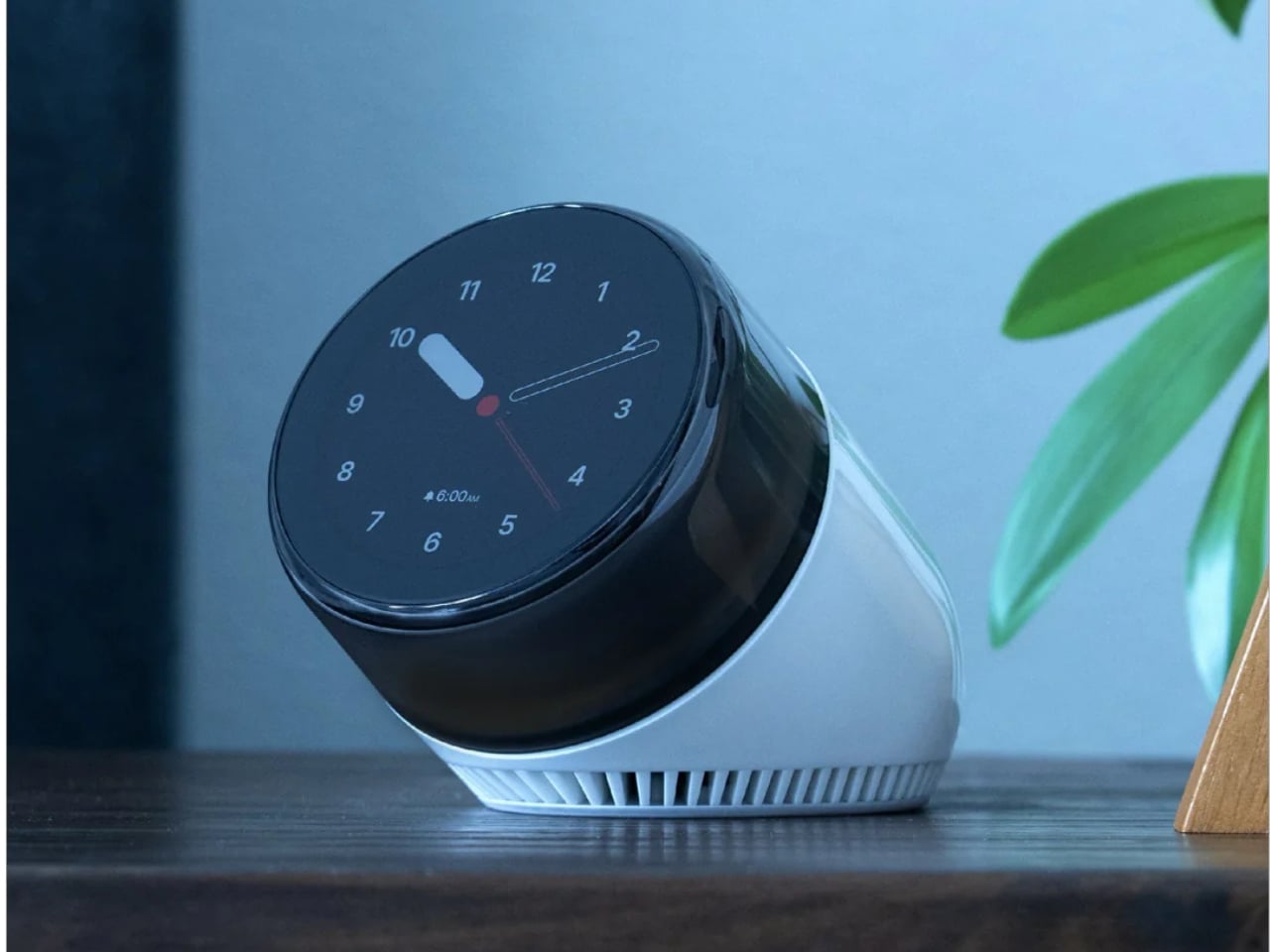
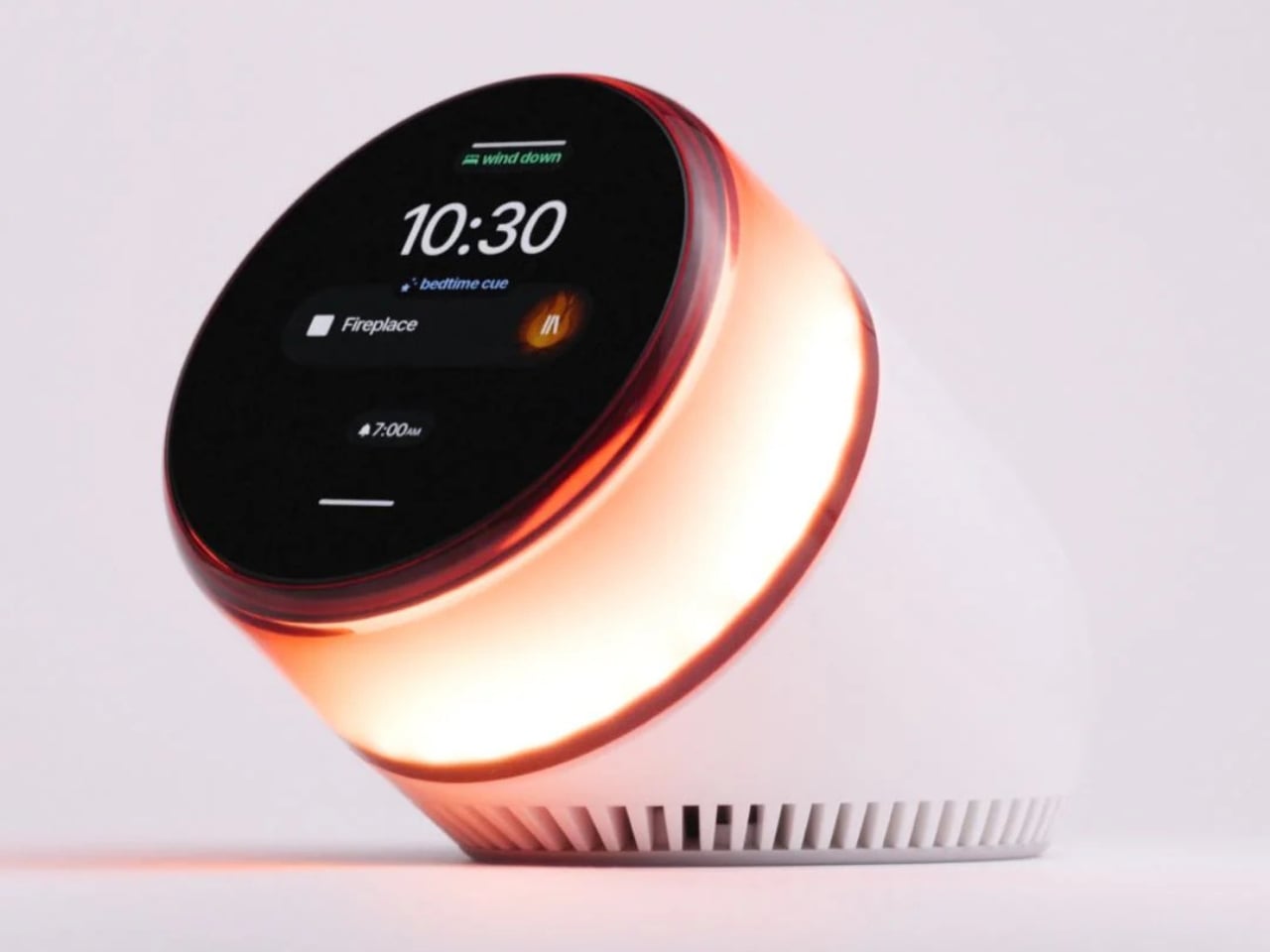
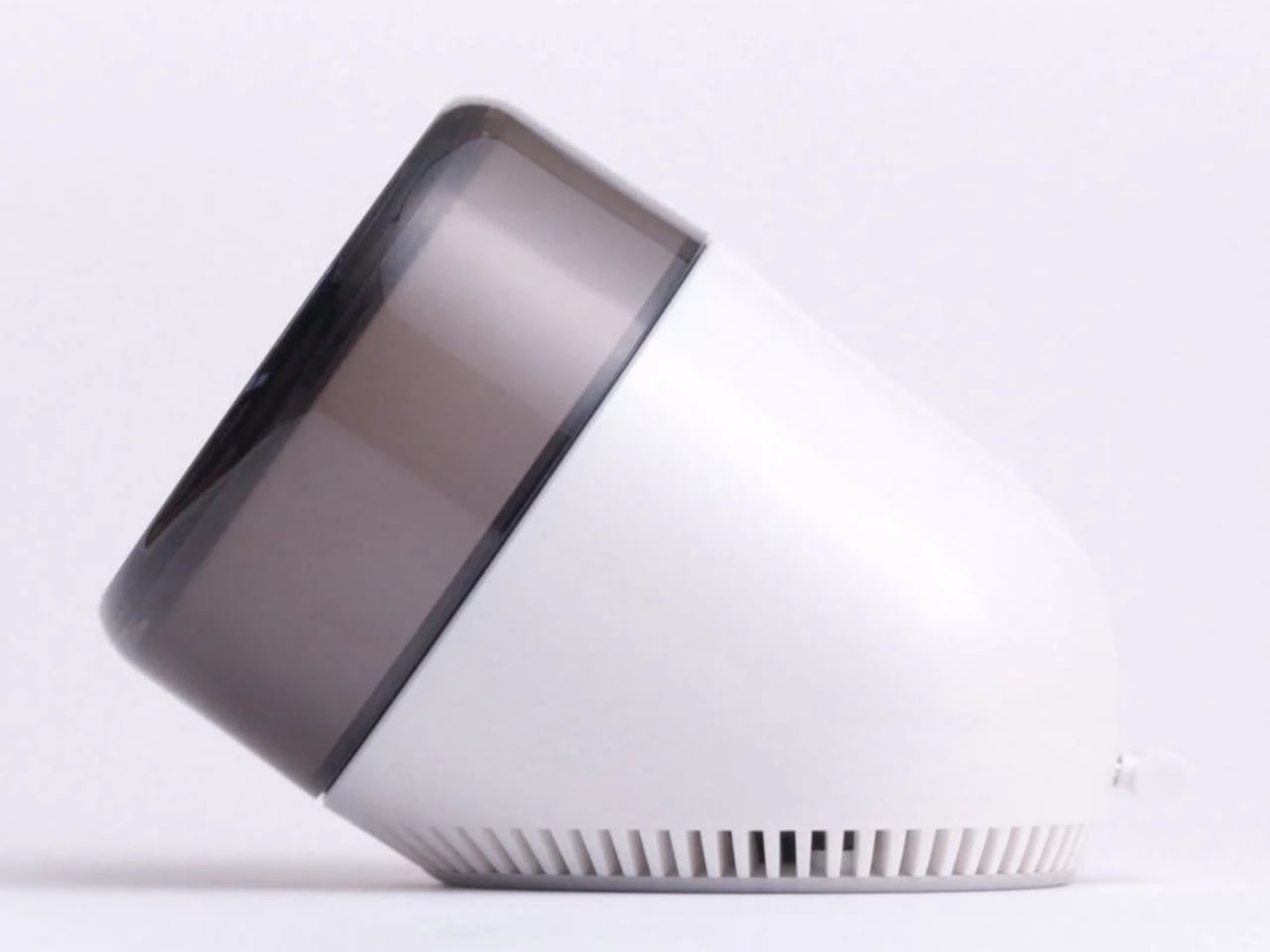
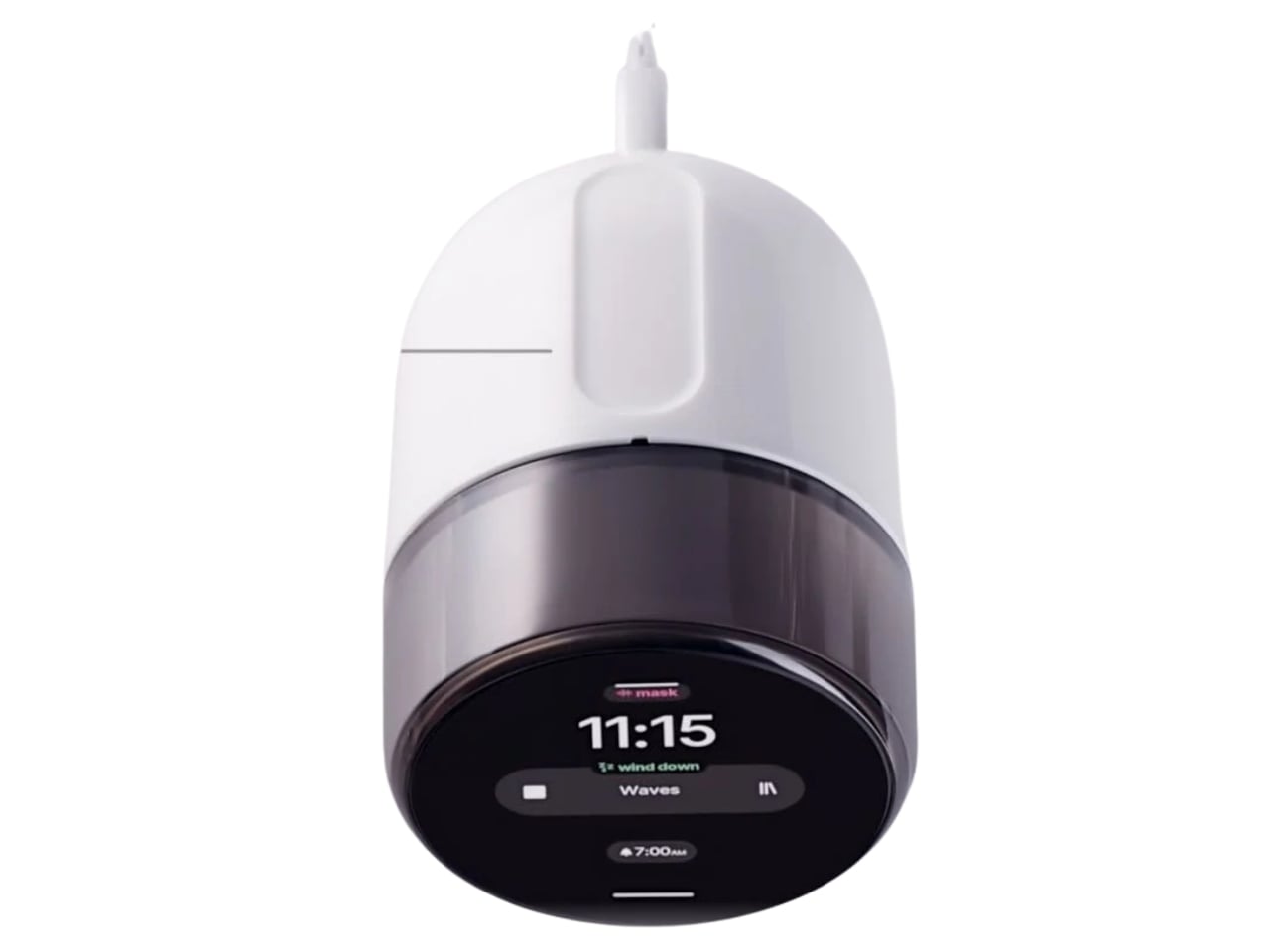
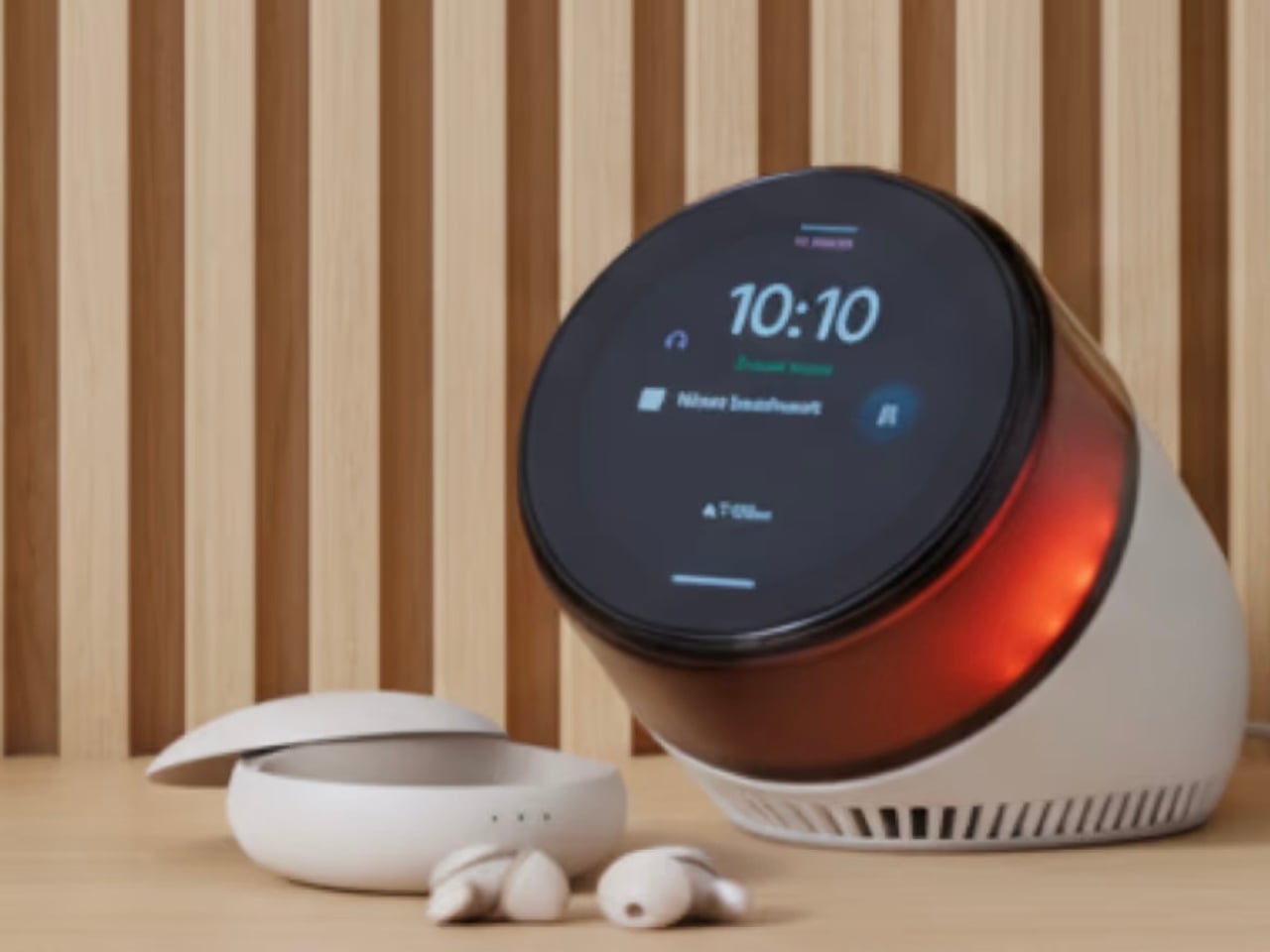
This is the problem that Ambient, a Boston-based company, built Dreamie to solve. At $249.99, it’s a compact bedside sleep companion that consolidates alarms, soundscapes, ambient lighting, a podcast player, and a simulated sunrise into a single, quietly opinionated little device. The pitch is straightforward: put your phone across the room and let Dreamie handle the bedside duties instead.

Designer: Ambient

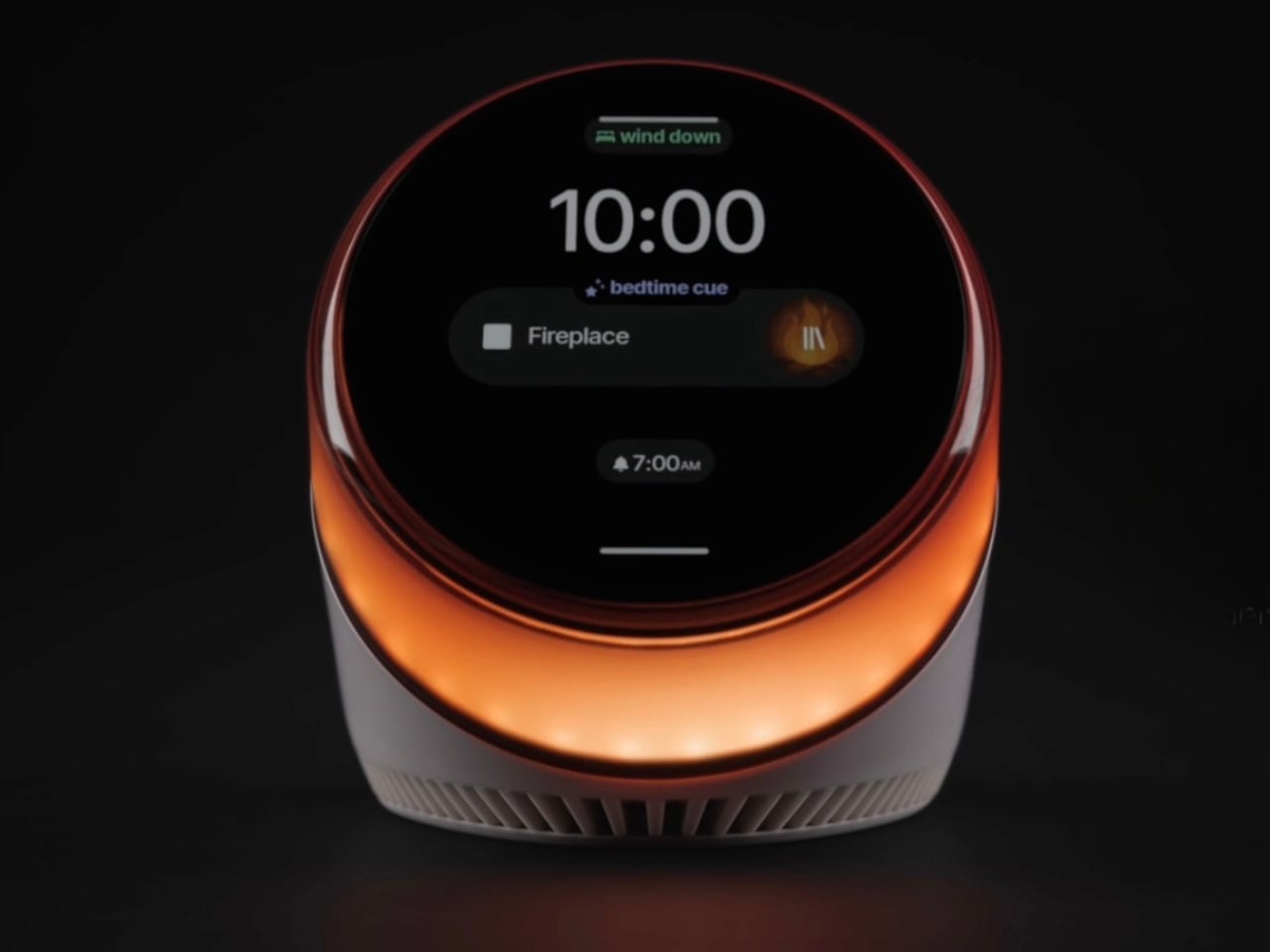
What I find most interesting about Dreamie isn’t really the feature set, though it’s genuinely well-considered. It’s the philosophy behind the product. The design team, led by founder Adrian Canoso, who comes from an industrial design and audio engineering background, seems to have started from a simple question: what if we made a device that was good enough to replace the phone at night, but deliberately too limited to become another source of distraction? The touchscreen dims to near-black. There’s a redshift mode to kill blue light. No feeds, no notifications, no video. You can even hide the clock display entirely. The whole thing is designed around the idea that a bedroom device should help you disengage, not re-engage.

The physical design reflects that restraint. Dreamie is a truncated pill shape with a circular touchscreen, and it’s smaller than most sunrise alarm clocks on the market. A hidden dial around the display controls volume with satisfying resistance, and a touch strip along the top adjusts the lamp brightness. Early reviewers from Engadget and Athletech News have praised how intuitive these tactile controls feel, especially when you’re half-asleep and fumbling at 2 AM. The Calm Tech Institute, a group that evaluates products based on how well they respect human attention, awarded Dreamie their highest certification, with one evaluator describing the device as friendly to use, almost like interacting with a small creature.

Underneath the minimalist exterior, Dreamie packs a 50mm speaker with a 360-degree grille that diffuses sound outward rather than directing it at you like a beam. The effect, according to those who’ve tested it, is an immersive ambient quality that wraps around you rather than projecting at you. The built-in library includes brown, pink, and green noise masks, guided wind-down content, and environmental soundscapes ranging from storms to aurora borealis visualizations with accompanying RGB lighting from its 120-element LED array. Bluetooth headphone support means couples can use it without one person’s rain sounds keeping the other awake.

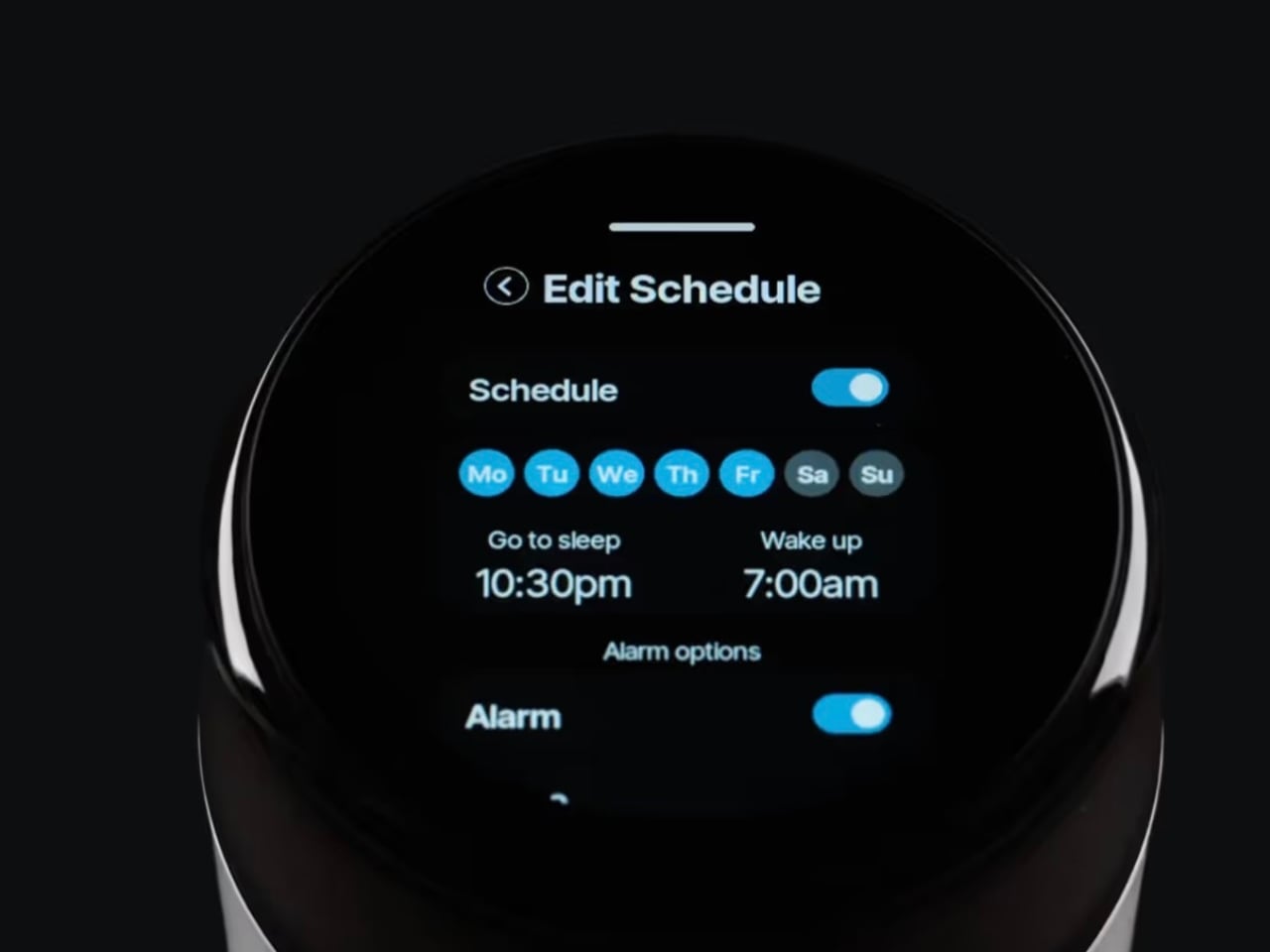
But here’s where Dreamie makes its most interesting bet: no app, no account, no subscription. Everything runs on-device. Setup happens entirely on the touchscreen. All sensor data, including the contactless sleep tracking coming later this year, stays local and encrypted. You never enter a name or email. In an era where every smart home product seems engineered to harvest your data and lock you into a monthly fee, Dreamie’s business model feels almost contrarian. You pay once, and the device gets better through free over-the-air updates.

I think what makes Dreamie worth watching isn’t just that it’s a nice piece of hardware, because it is. It’s that it represents a growing counter-movement in consumer tech, one that asks whether our devices could do less on purpose, and whether that subtraction might actually be the feature. The sleep tech category has been dominated by wearables that track your metrics and apps that gamify your rest. Dreamie doesn’t want to quantify your sleep so much as it wants to create the conditions for better sleep to happen naturally.

Is $250 a lot for what is, at its core, an alarm clock? Sure. But it’s also less than most people spend on a smartwatch they’ll wear to bed, and it doesn’t require a subscription to keep working. For anyone who has ever told themselves they’d stop scrolling at 10 PM and found themselves deep in a Reddit thread at midnight, Dreamie offers something genuinely appealing: a reason to leave the phone behind.

The post Dreamie Built a $250 Alarm Clock to Replace Your Nightstand Phone first appeared on Yanko Design.

Roku is launching a trivia game called… Roklue?

Who needs Half-Life 3 or Beyond Good & Evil 2? Roku, in an attempt to gamify content discovery on its platform, has cooked up a gaming announcement for the ages. Behold: Roklue. Yes, that's a real name that someone with a job title and (likely high) salary came up with.

Roklue (shudder) will quiz players on "the movies and TV shows that everyone is talking about," along with classic "beloved favorites." When it references a movie or show, it will provide a link for you to tune in on your device. The initial version is an Oscar season tie-in ("Roklue: Awards Season") that debuts on Saturday. This inaugural version is produced by B17 Entertainment, a Sony-owned company.

Roku says it will rotate thematic content throughout the year. Variety reports that those will center around music festivals, the Emmys and holidays.

Apart from that name, which should come with a gag-reflex warning, Roklue sounds harmless enough. You play a trivia game to find new stuff to stream; Roku grows its engagement. Win-win. But with corporate schemes like this, it's always worth wondering where further monetization might eventually come into play. Think something like linking to series on platforms you don't yet subscribe to. (Hello, kickback.)

On March 7, you'll find the free Roklue (ick) game on your Roku home screen, no download required.

This article originally appeared on Engadget at https://www.engadget.com/entertainment/streaming/roku-is-launching-a-trivia-game-called-roklue-190000386.html?src=rss

Netflix just bought an AI startup founded by Ben Affleck

Netflix has acquired an AI filmmaking startup called InterPositive, according to a report by Variety. This is a company that was founded by actor Ben Affleck back in 2022. Don't worry if you haven't heard of it. Affleck has been operating the company in stealth mode for the past few years, so this is pretty much it's big coming-out party.

The terms of the acquisition haven't been disclosed, but Affleck will remain on as a senior advisor to Netflix. Additionally, the entire staff will be absorbed into the streaming platform.

Affleck says he started the company after "observing the early rise of AI in production" and realizing how the "models came up short." The company makes tools that generate AI models based on an existing production's dailies. This lets filmmakers use the model in the post-production process to do stuff like mix and color, relight shots and add visual effects.

Affleck adds that this tech is "not about text-prompting or generating something from nothing." Netflix says the company will keep "filmmakers at the center of the process." The company recently used generative AI tools to whip up a VFX shot in a show called The Eternaut. It's also been using AI to make ads more intrusive. We'll have to wait and see if creators do indeed remain at the center of things. Netflix will offer access to InterPositive's tech to creative partners but has no plans to sell it commercially.

To Affleck's credit, he seems to have a nuanced understanding of modern AI tools. "We also need to preserve what makes storytelling human, which is judgment," he said. "The kind that takes decades to build, experience to hone and that only people can have. I knew I had a responsibility to my peers and our industry, to protect the power of human creativity and the people behind it." However, it's worth reiterating that the company is no longer in Affleck's hands, as he is now just an advisor.

This article originally appeared on Engadget at https://www.engadget.com/ai/netflix-just-bought-an-ai-startup-founded-by-ben-affleck-184536640.html?src=rss

Meta hit with a class action lawsuit over smart glasses’ privacy claims

Meta is facing a class action lawsuit for false advertising related to its AI glasses following reports about the company's use of human contractors to review footage captured from users' glasses. The lawsuit, filed Wednesday in federal court in San Francisco, alleges that Meta's claims about the devices' privacy features have misled users. 

The lawsuit comes after a Swedish newspaper reported that subcontractors in Kenya have raised concerns about viewing footage recorded via Ray-Ban Meta glasses. According to Svenska Dagbladet, workers have reported witnessing "intimate" material, including bathroom visits, sexual encounters and other private details as part of their job labeling objects in videos captured on users' smart glasses.

"This nationwide class action seeks to hold Meta responsible for its affirmatively false advertising and failure to disclose the true nature of surveillance and its connection to the company’s AI data collection pipeline," the lawsuit, filed by Clarkson Law Firm, states. The filing names two individuals who live in California and New Jersey who purchased Meta's smart glasses. It says that both "relied" on Meta's marketing claims about the glasses' privacy protecting features and that they would not have purchased them if they knew about the company's use of contractors. The lawsuit seeks monetary damages and injunctive relief.

A spokesperson for Meta confirmed to Engadget that data from its smart glasses can be shared with human contractors in some cases. The company declined to comment on the claims in the lawsuit.

"Ray-Ban Meta glasses help you use AI, hands free, to answer questions about the world around you," the spokesperson said. "Unless users choose to share media they've captured with Meta or others, that media stays on the user's device. When people share content with Meta AI, we sometimes use contractors to review this data for the purpose of improving people's experience, as many other companies do. We take steps to filter this data to protect people's privacy and to help prevent identifying information from being reviewed."

What the company doesn't explicitly say there is that there is no way to use the smart glasses' "multimodal" features without sharing the captures of your surroundings with the company. As I noted in my review of the second-generation Ray-Ban Meta smart glasses last year: "images of your surroundings processed for the glasses' multimodal features like Live AI can be used for training purposes (these images aren't saved to your device's camera roll)." 

So while Meta claims that users' own recordings are kept private, footage that is captured but not stored locally for users — like video when Live AI is in use — can be sent to contractors who help train the company's AI models. Meta's privacy policy doesn't specifically mention the use of human contractors, though it states that such data can be used for training purposes. 

"The undisclosed human review pipeline renders the Meta AI Glasses’ privacy features materially misleading, transforms the product from a personal device into a surveillance conduit, and exposes consumers to unreasonable risks of dignitary harm, emotional distress, stalking, extortion, identity theft, and reputational injury," the lawsuit says. "Indeed, Meta employees and contractors have described viewing credit card numbers, nudity, sexual activity, and identifiable faces in the footage they reviewed, and reported that Meta’s purported anonymization safeguards do not reliably function."

This article originally appeared on Engadget at https://www.engadget.com/social-media/meta-hit-with-a-class-action-lawsuit-over-smart-glasses-privacy-claims-182846817.html?src=rss

IKEA Built A $4 Stick-On Light That Lasts 6 Months

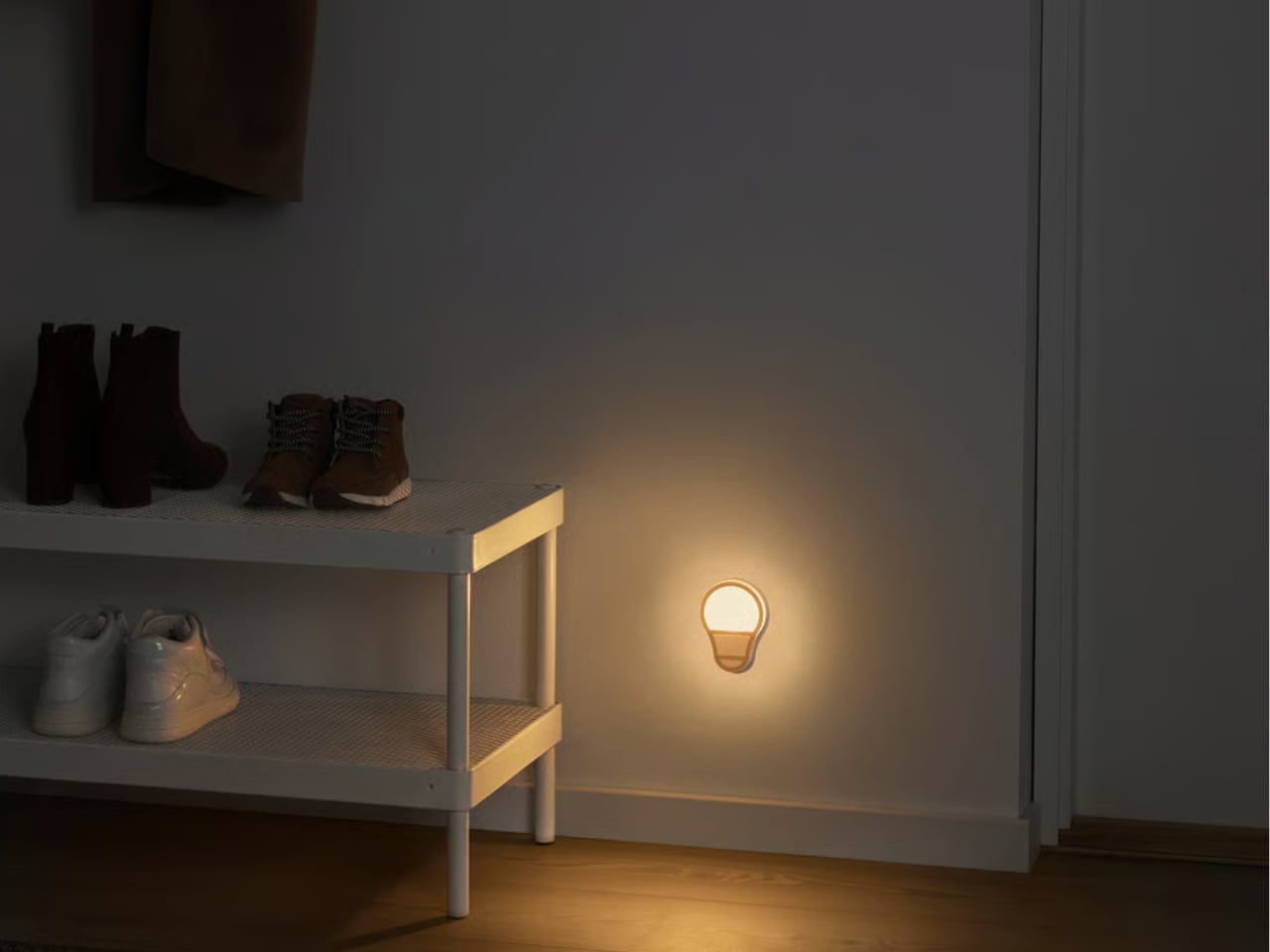
IKEA has always had a knack for making you feel clever. You walk into the store needing a bookshelf, and you leave with a bag full of small, inexpensive things you didn’t know existed but now can’t imagine living without. The ANKARLÄGG is exactly that kind of product. It’s a battery-operated LED nightlight shaped like a lightbulb, it sticks to any surface, and it costs about as much as a nice sandwich. On paper, it barely qualifies as news. In practice, it’s one of those quiet little design wins that remind you why IKEA remains so good at what it does.

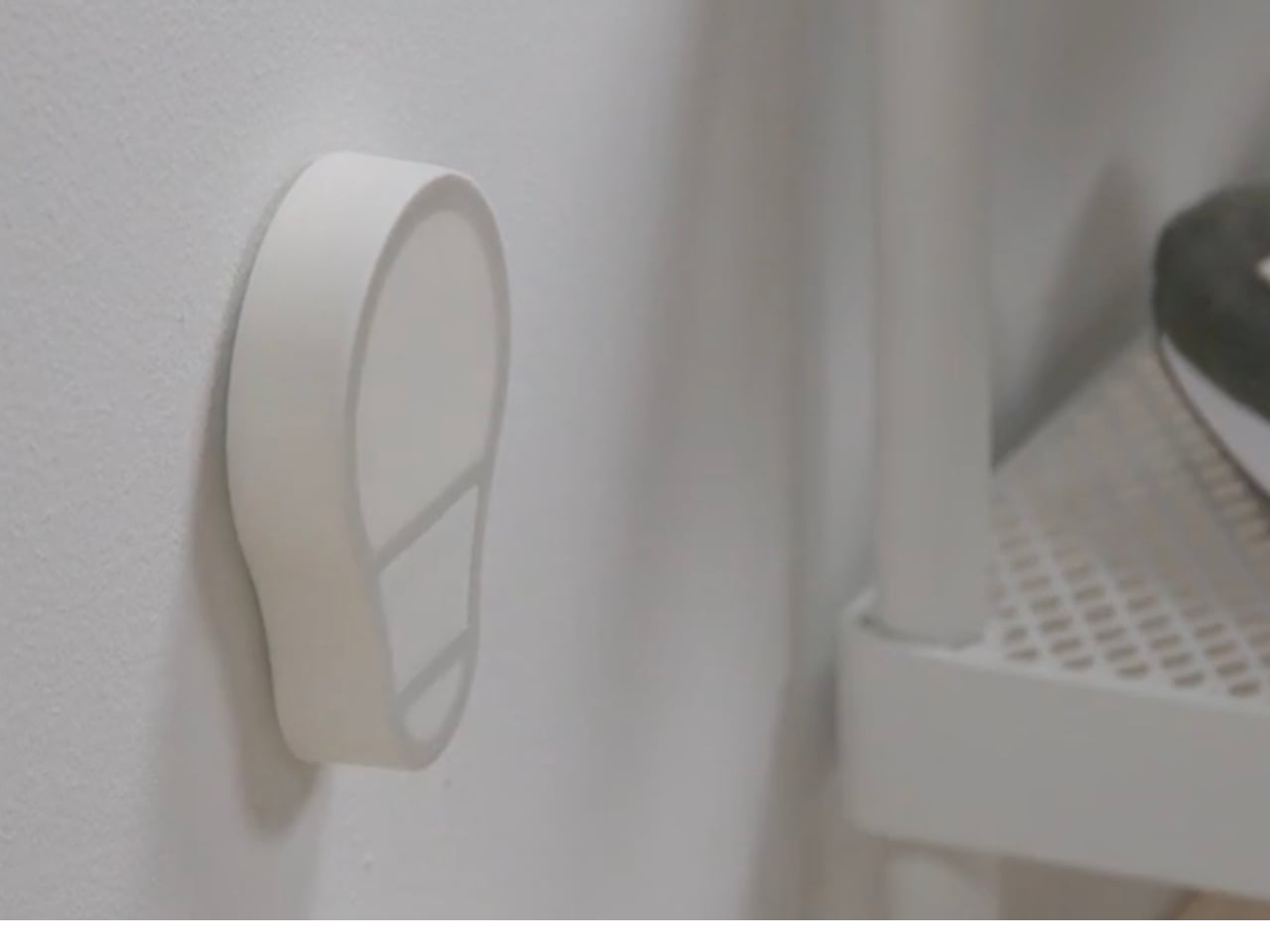
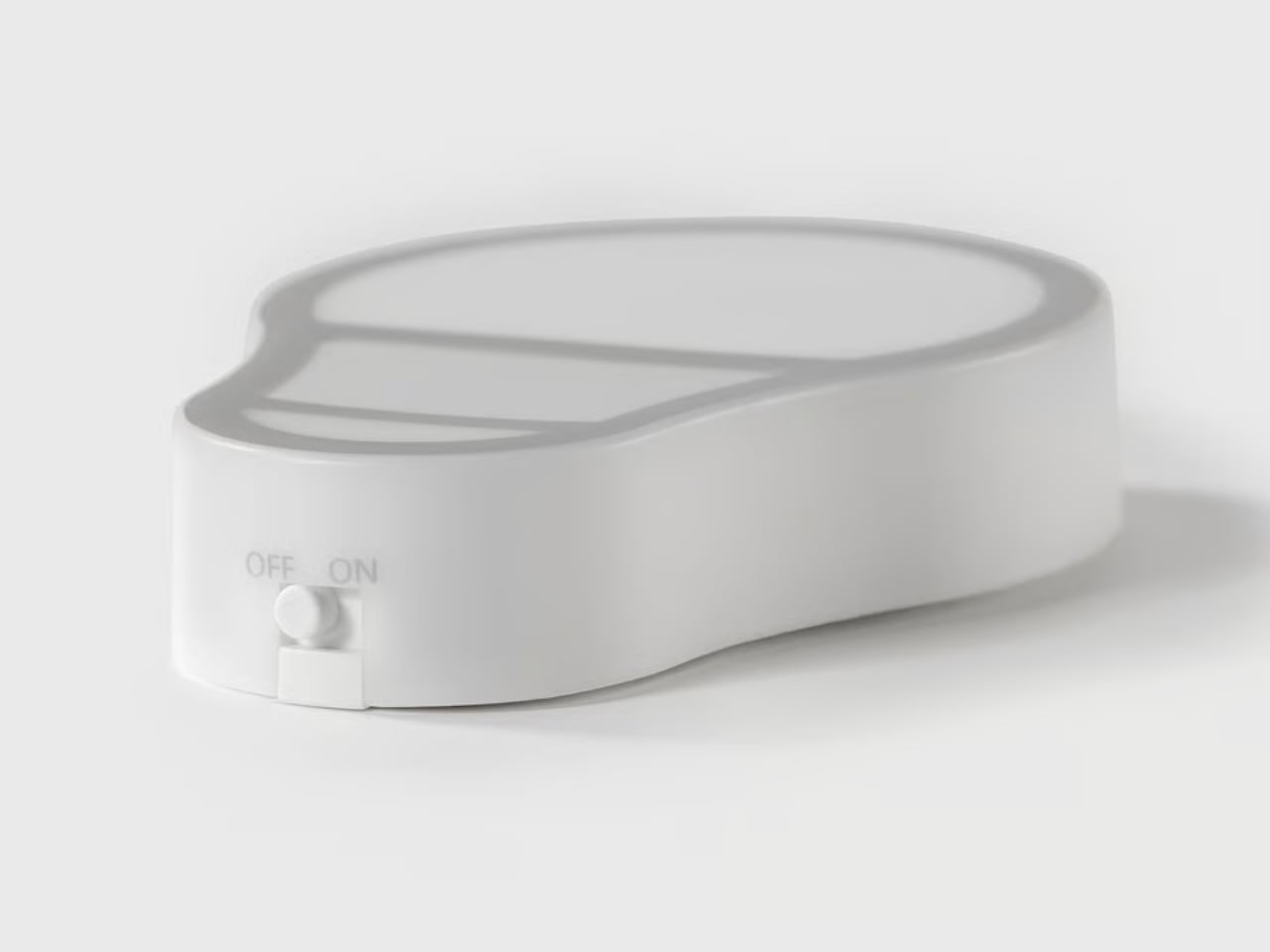
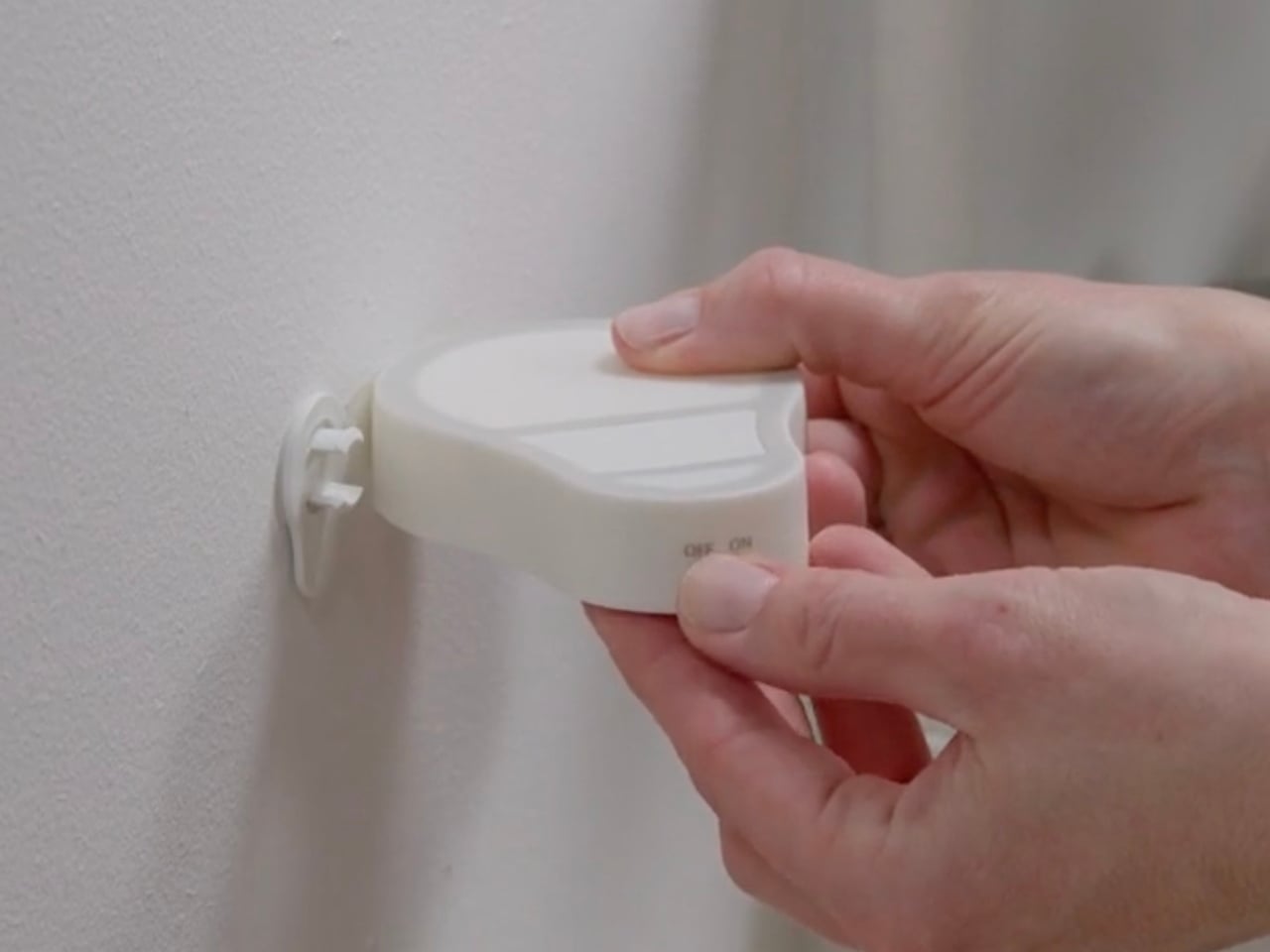
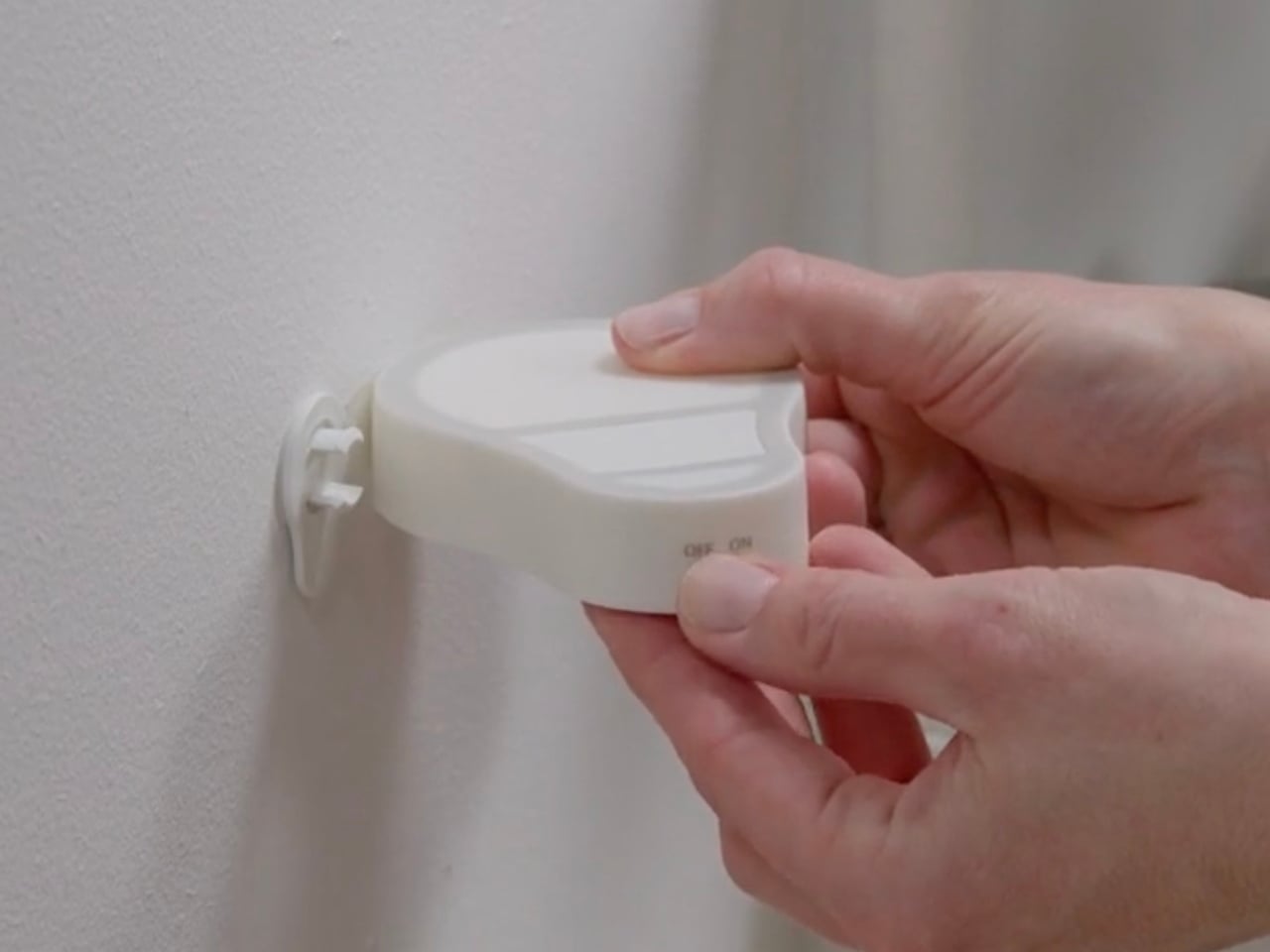
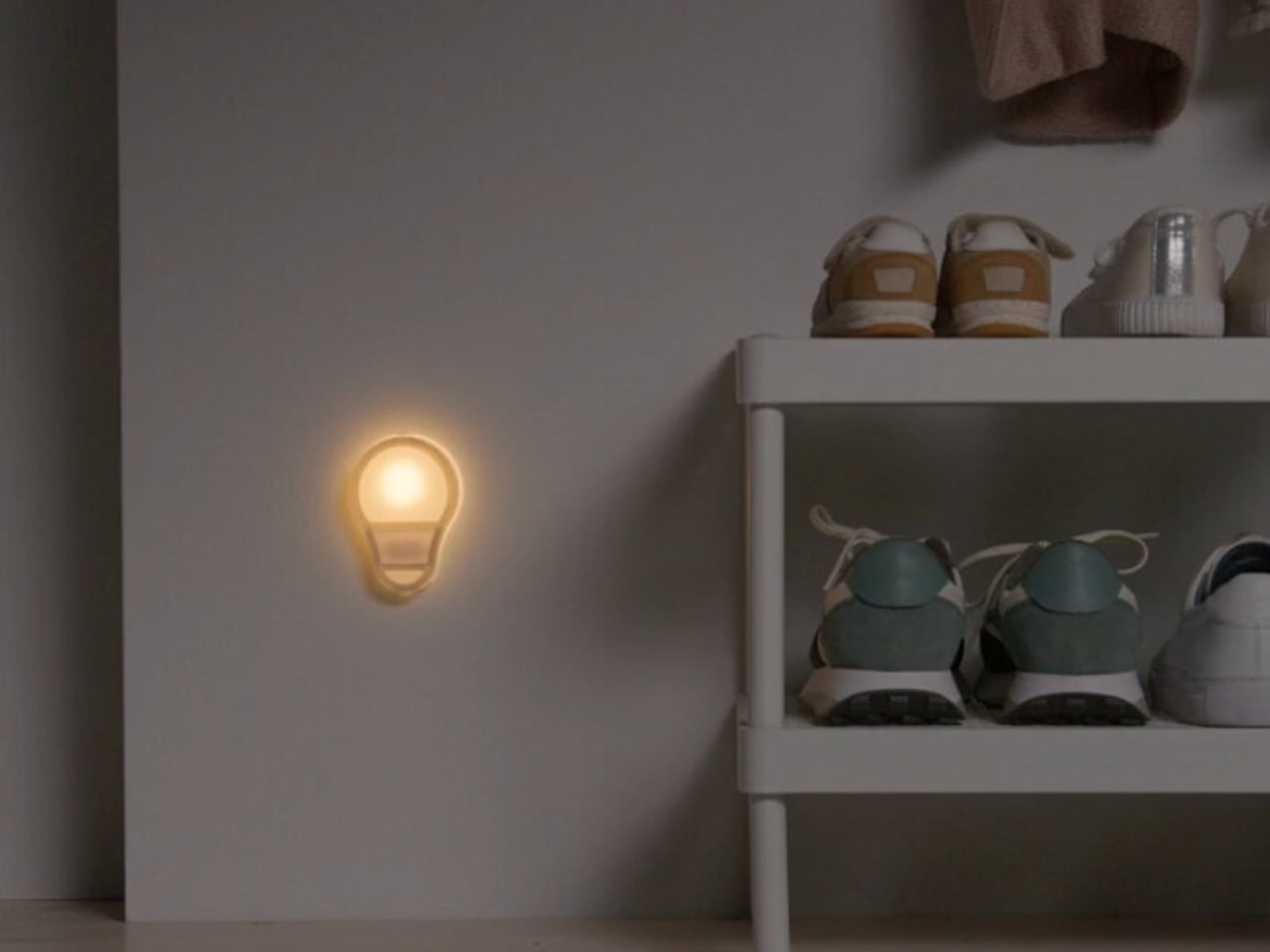
Designed by Bruno Adrien Aguirre, the ANKARLÄGG is a motion-sensing nightlight that runs on two AAA batteries. No cords, no plugs, no electrician. You peel the backing off a double-sided adhesive pad, press the light against a wall, and you’re done. When someone walks within three meters of it in a dark room, it switches on. Thirty seconds later, with no further movement detected, it turns itself off. During the day, even if you’re dancing in front of it, it stays dark. The batteries last about six months under regular use, which IKEA defines as roughly ten activations per day.

Designer: IKEA

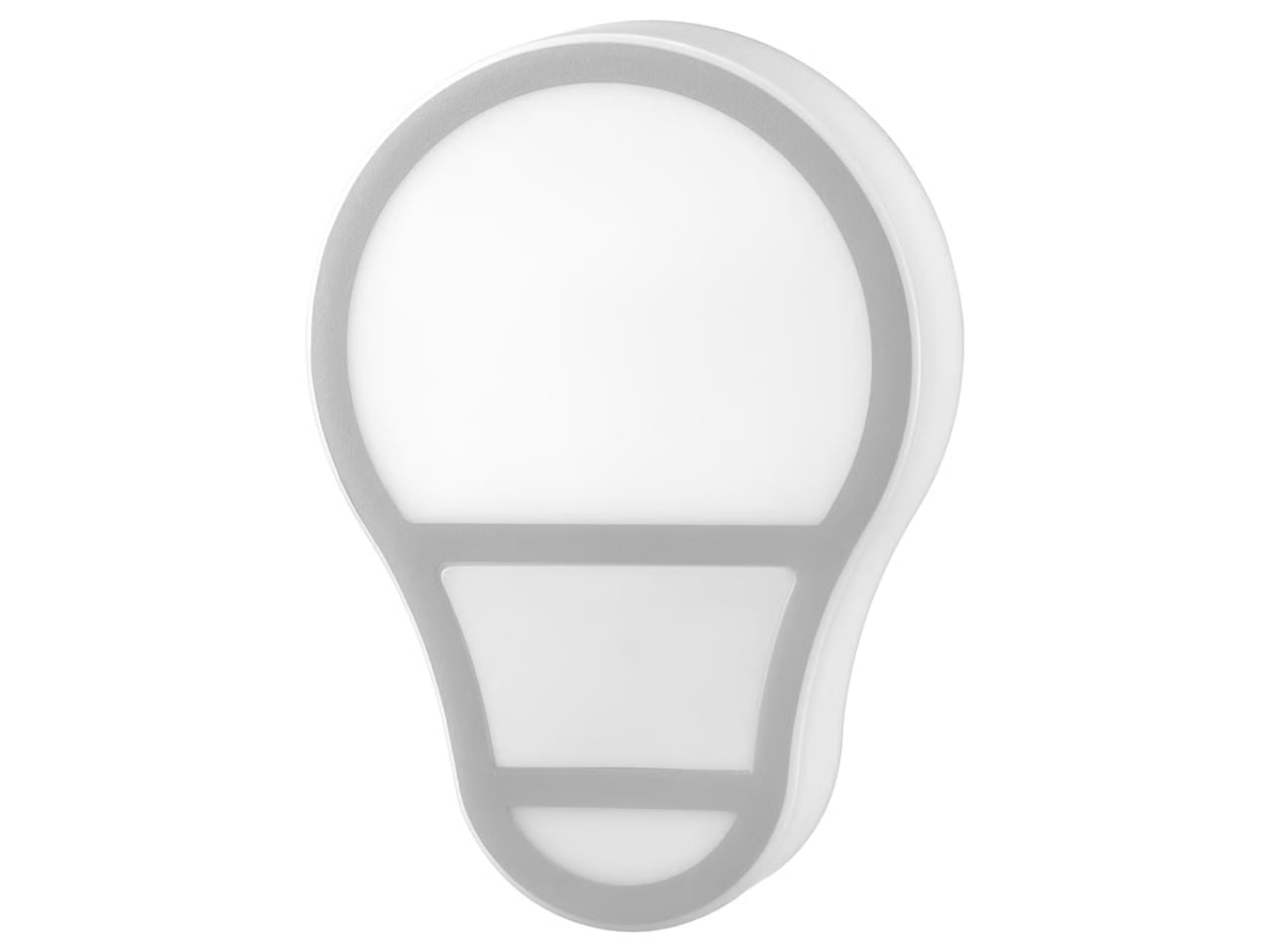
The shape is what gets me. The ANKARLÄGG looks like an outline of a classic lightbulb, almost like a cartoon sketch brought into three dimensions. It’s not trying to be invisible or blend into your wall. It’s a little wink, a product that acknowledges what it is by wearing the silhouette of the thing it’s replacing. The base is made from polycarbonate plastic, which gives it durability, while the frosted cover made from polypropylene helps diffuse the light into something soft and even. At 105 millimeters tall and 75 millimeters wide, it’s about the size of a pear. The whole unit weighs 80 grams, which is nothing.

I think the reason this kind of product resonates is that it solves a problem most of us have just learned to accept. We stumble down dark hallways at 2 a.m., we fumble around the inside of closets, we guide ourselves along stairways by muscle memory. We’ve been doing it forever, so we don’t really think of it as a problem. But then someone puts a tiny stick-on light in front of you that costs 39 Swedish kronor, and suddenly you realize how unnecessary all that fumbling was. Good design often works that way. It doesn’t announce itself with drama. It just quietly removes a friction you’d stopped noticing.

What I appreciate about the ANKARLÄGG is that it doesn’t try to be smart in the way tech companies define smart. It doesn’t connect to Wi-Fi. It doesn’t need an app. It doesn’t want to join your ecosystem. It uses a basic infrared sensor to detect motion and an ambient light sensor to know when it’s dark. That’s the entire feature set. In an era when even toothbrushes want to sync with your phone, the restraint here feels genuinely refreshing. It’s a product that knows exactly what it needs to do and does nothing more.

The installation simplicity is worth emphasizing too. IKEA products are famous for their assembly instructions, those wordless cartoon manuals that have spawned a thousand jokes. But the ANKARLÄGG barely needs instructions at all. Pop in two AAA batteries, stick it on a wall. That’s the whole process. You could explain it to a child. You could explain it to someone who has never installed anything in their life. This kind of radical simplicity is hard to achieve. It takes real discipline to resist adding features, modes, brightness settings, or app connectivity. Somebody had to say no to a lot of ideas to keep this product this clean.

The ANKARLÄGG is available now in selected IKEA stores and online. It’s a minor product in the grand scheme of the catalog, tucked somewhere between wall lamps and LED strips. But sometimes the minor products are the ones that tell you the most about a company’s design philosophy. IKEA still believes that useful, well-designed objects should be affordable and uncomplicated. The ANKARLÄGG is a small, glowing proof of that belief, shaped like the most universal symbol of a good idea.

The post IKEA Built A $4 Stick-On Light That Lasts 6 Months first appeared on Yanko Design.