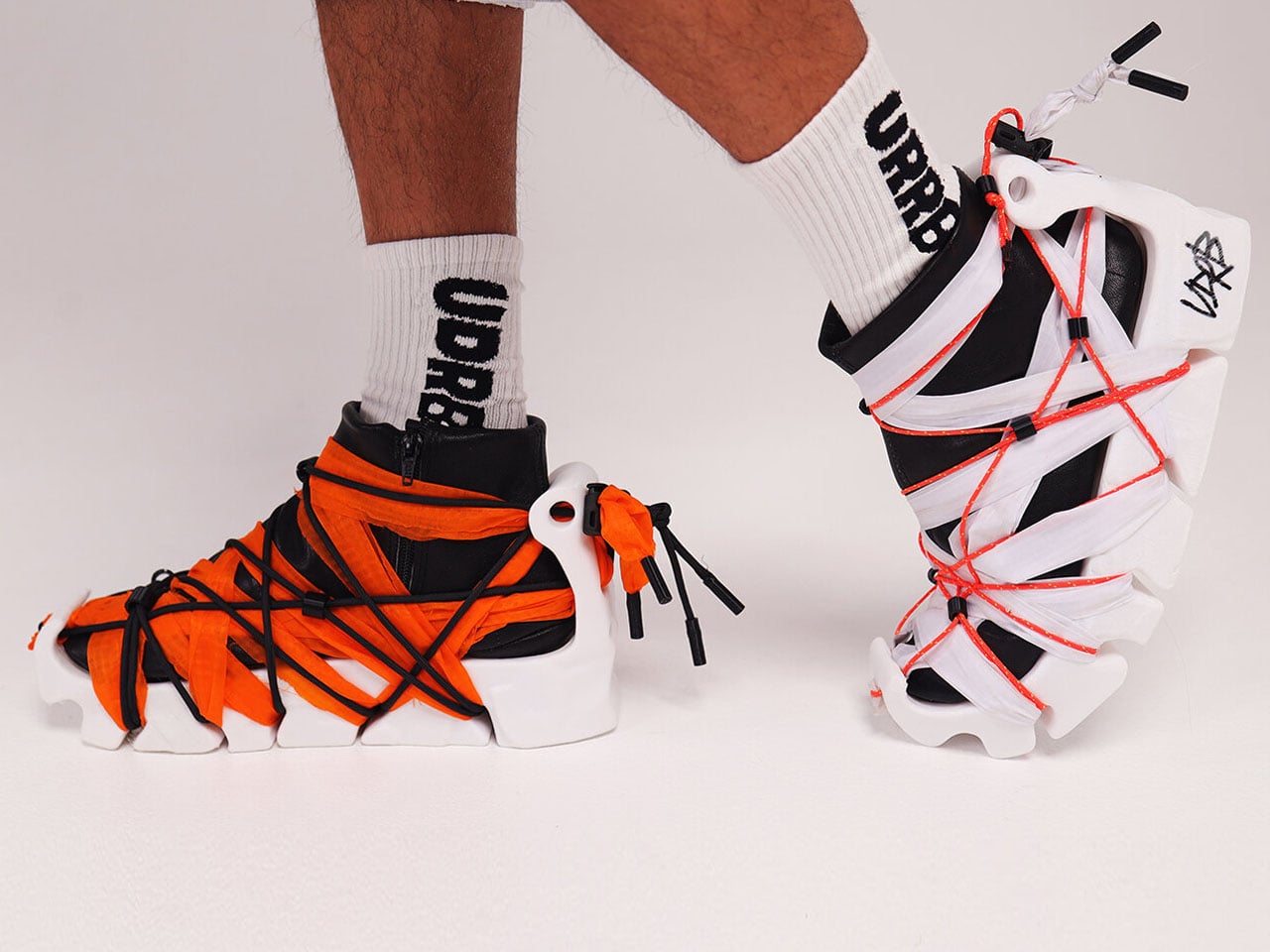
This 3D-printed modular sneaker ditches glue for repairable design inspired by Asian craftsmanship

Sneakers have become more advanced than ever in terms of performance and comfort, yet their construction has barely changed. Most are assembled with permanent adhesives that bind together layers of fabric, foam, rubber, and plastic into a single unit. While this creates durable footwear, it also makes repairs nearly impossible. A worn-out sole or damaged upper often signals the end of a shoe’s life, regardless of the condition of its remaining parts. Designer Daniyar Uderbekov believes there is a better way, creating a pair of sneakers that embraces repairability from the very beginning instead of treating it as an afterthought.

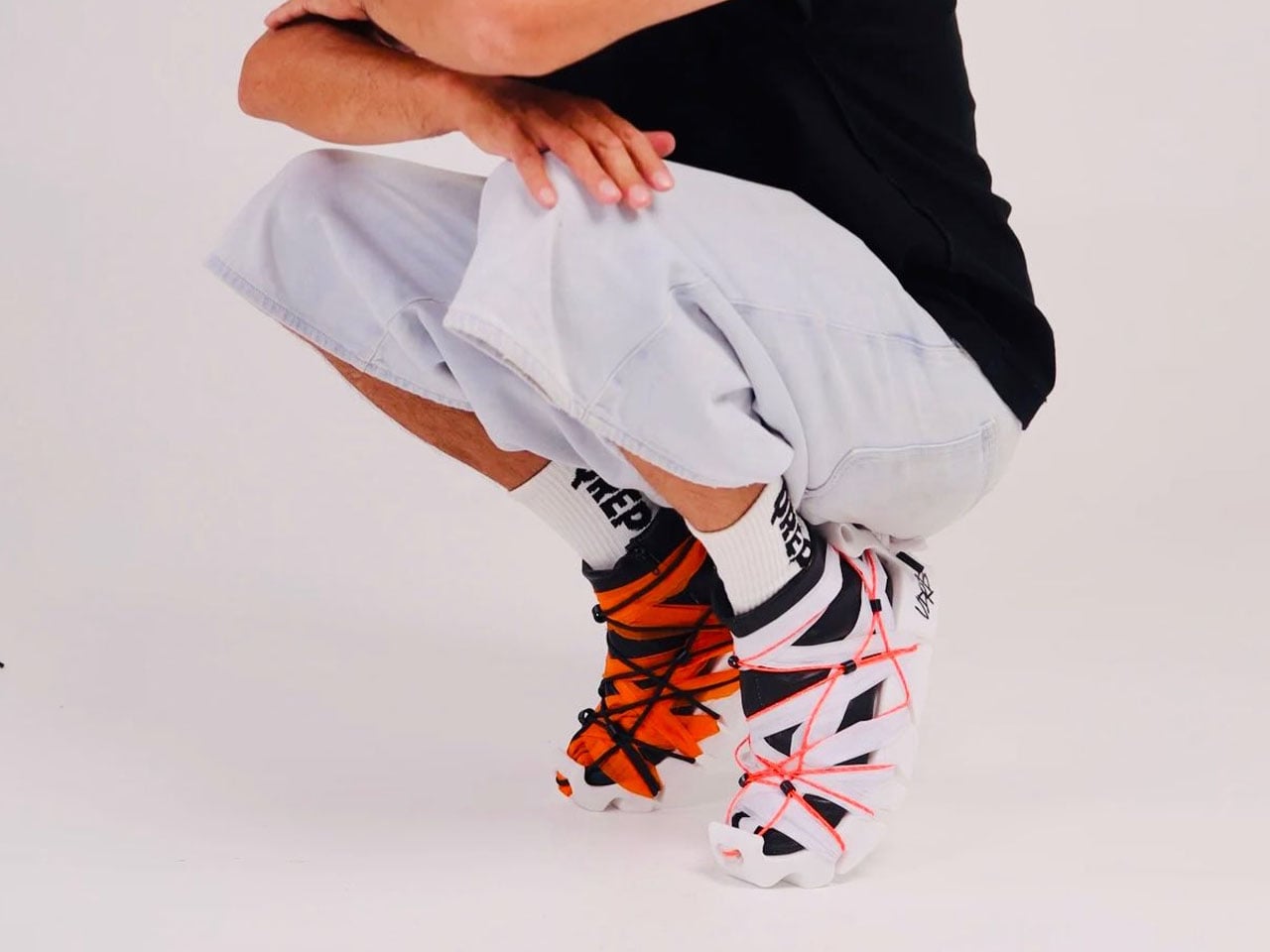
Called UDBR, the modular footwear improves on the earlier sneaker concept by the designer. Rather than relying on glue to hold everything together, the design borrows assembly techniques from traditional Central Asian footwear, specifically the Makhsi and Ichigi. These handcrafted shoes were designed around individual components that could be assembled, maintained, and replaced with relative ease. The idea feels surprisingly relevant in an era increasingly focused on sustainability and product longevity.

Designer: Daniyar Uderbekov
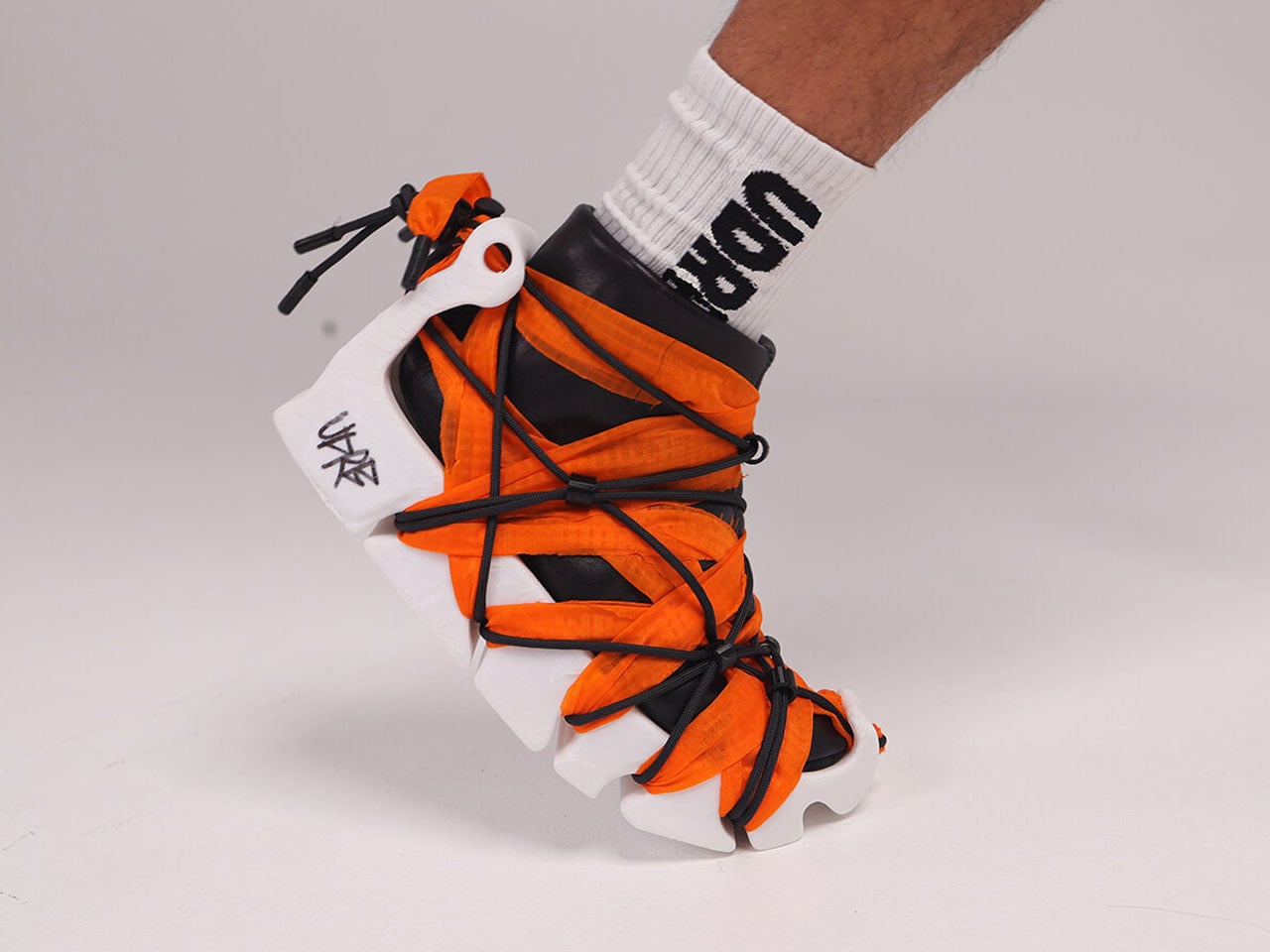
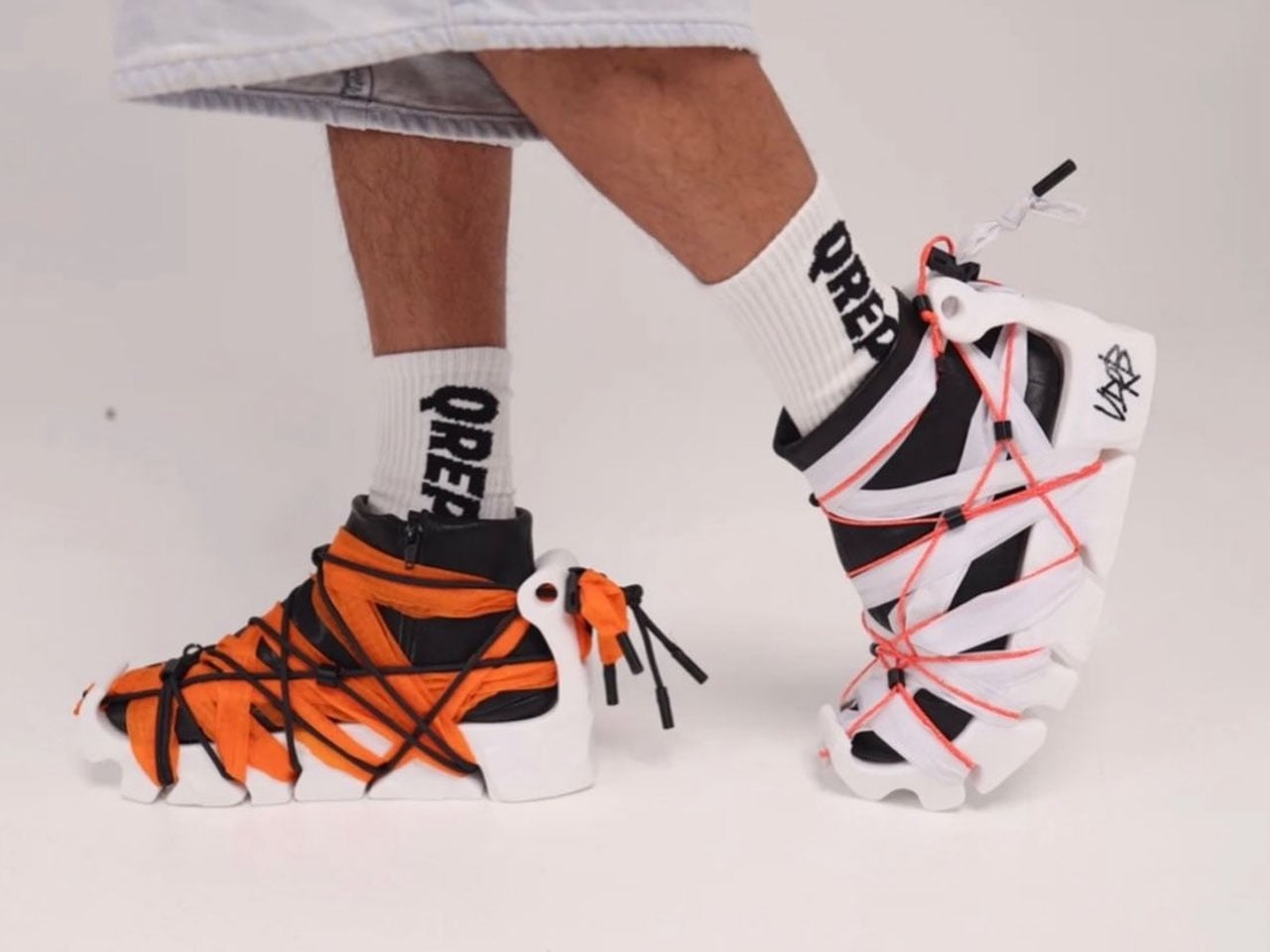
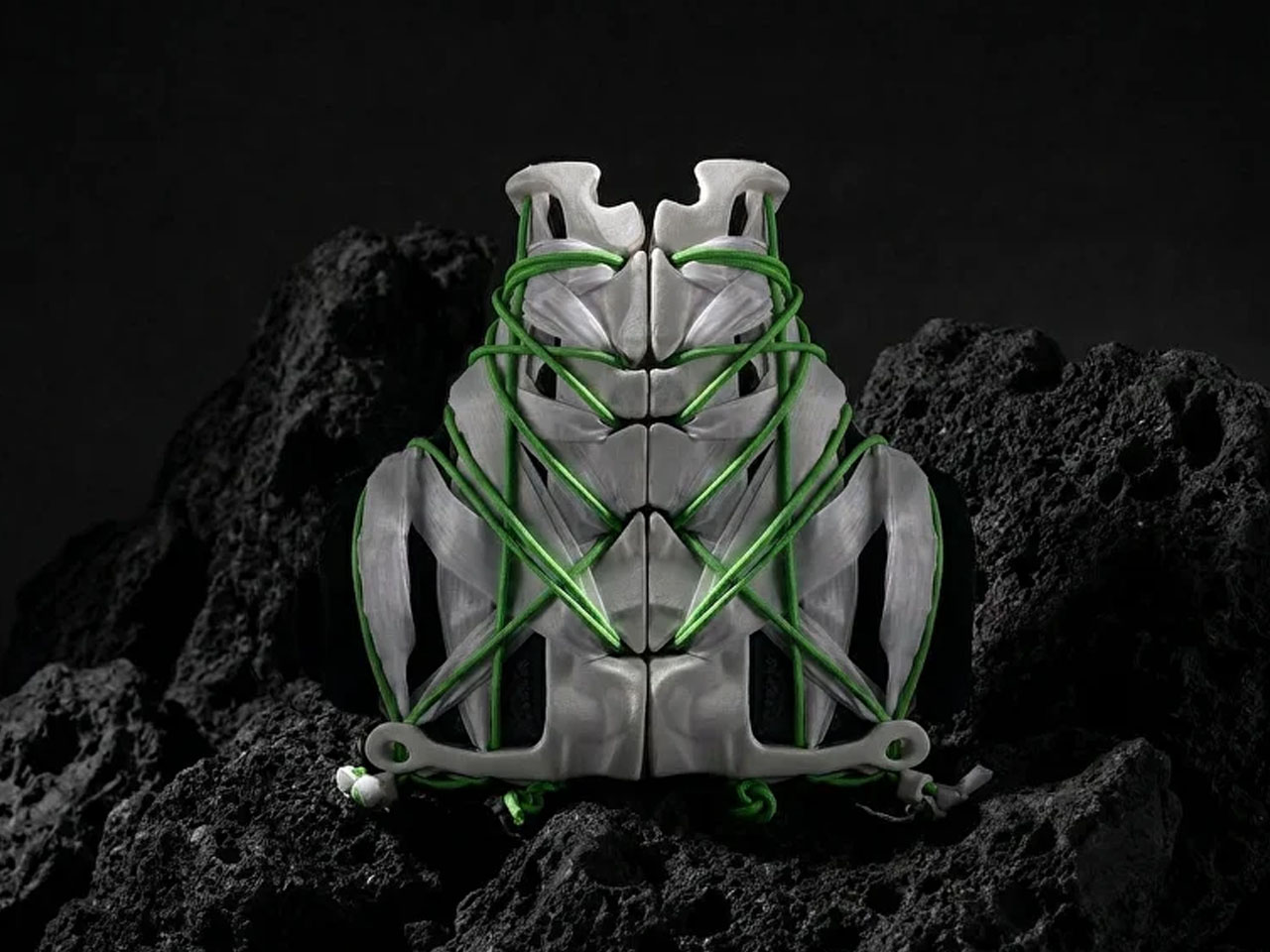
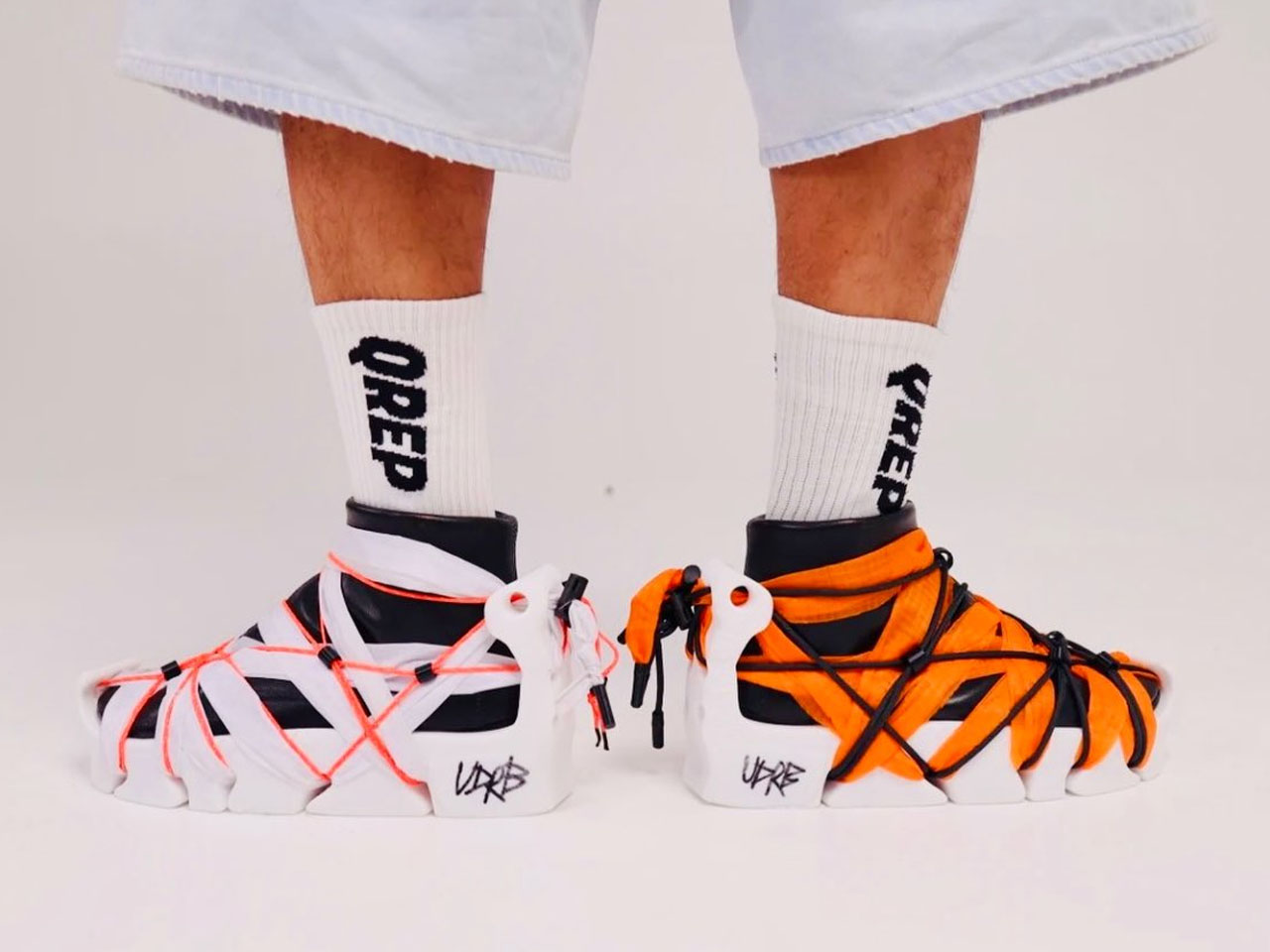
The sneaker is built around just three primary elements: a 3D-printed TPU sole, a leather sock-like inner boot, and a rope-based fastening system that locks the entire structure together. Every component has a defined purpose and can be separated without damaging the others, allowing the shoe to be fully disassembled whenever maintenance is required. Instead of discarding an entire pair because of a single worn component, users can simply replace the part that has reached the end of its lifespan.
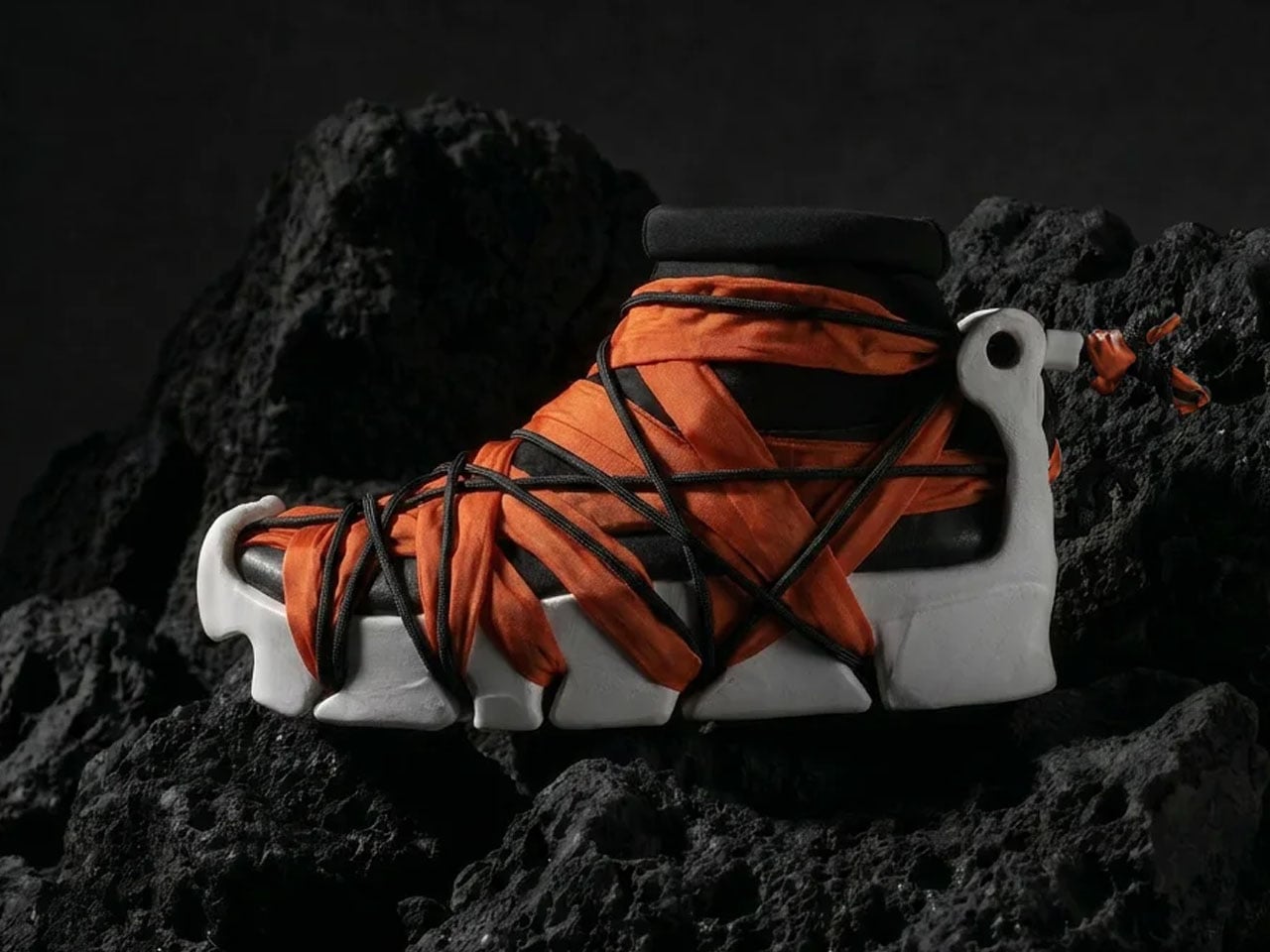
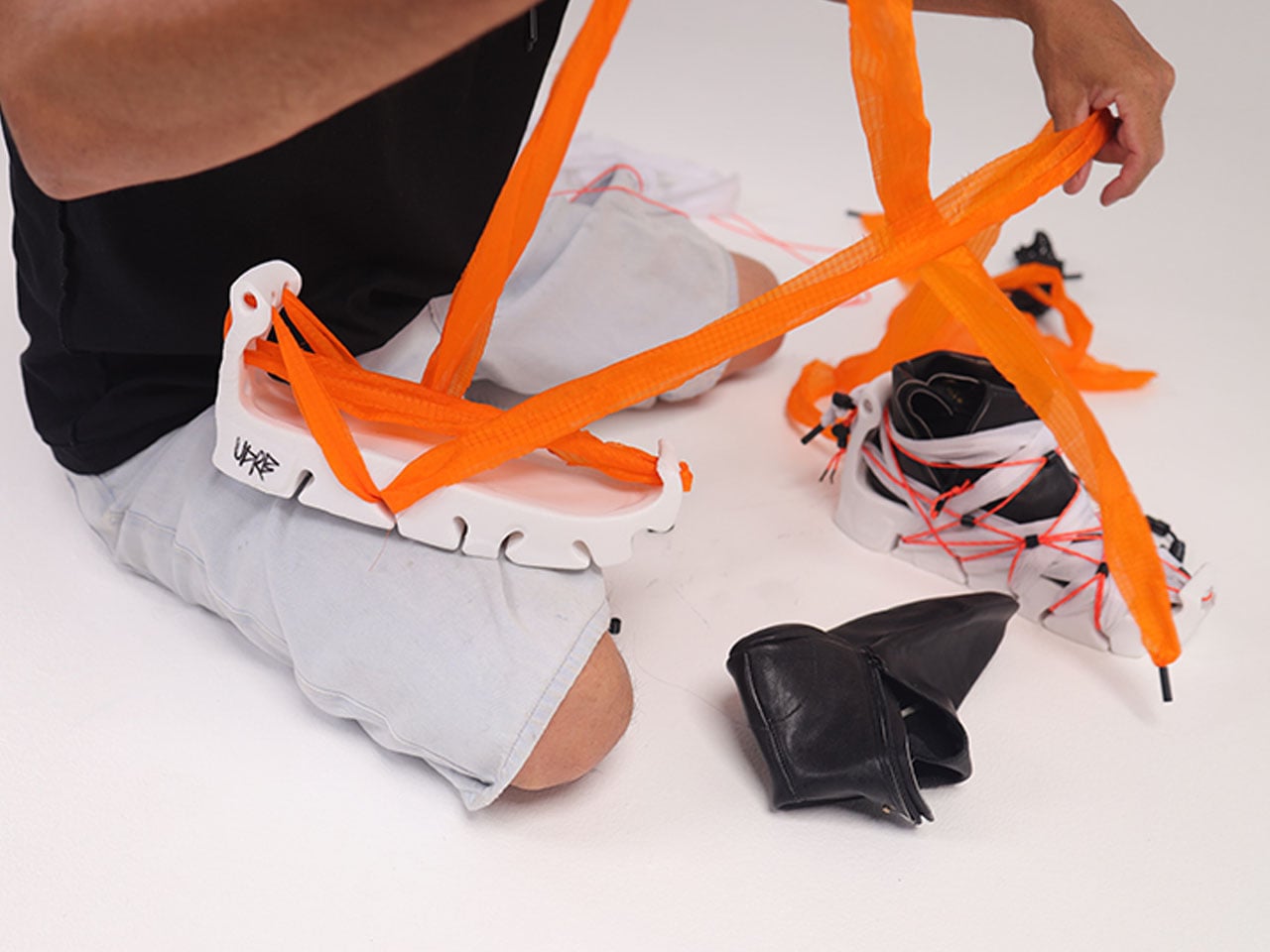
At the core of the idea is the updated 3D-printed thermoplastic polyurethane sole, designed to deliver cushioning and flexibility comparable to conventional sneaker soles. If years of use eventually cause the sole to lose its resilience or develop cracks, it can be reproduced using recyclable TPU through 3D printing, extending the product’s usable life while reducing unnecessary waste. The approach shifts the focus from replacement to renewal, offering a practical example of circular product design.
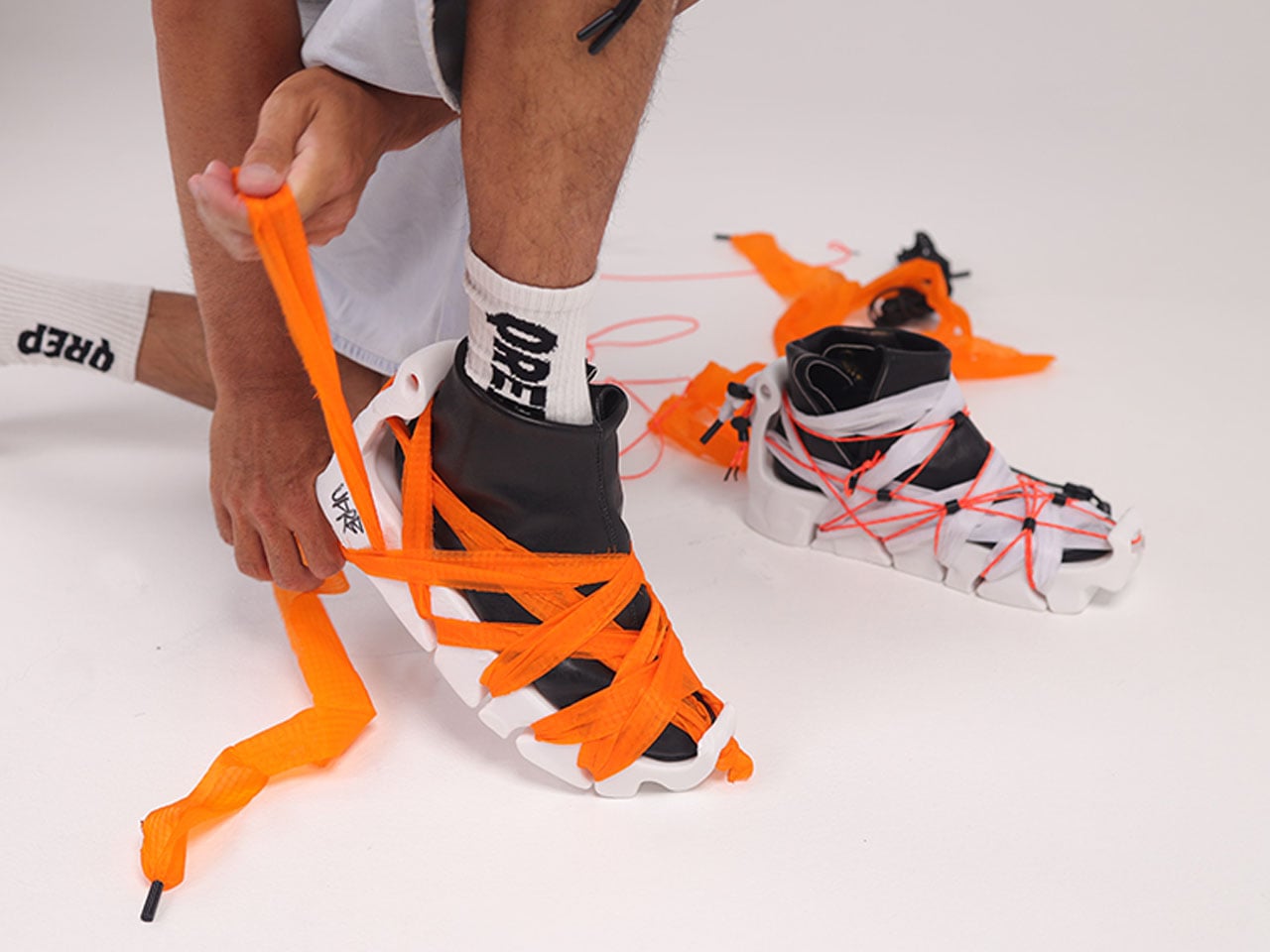
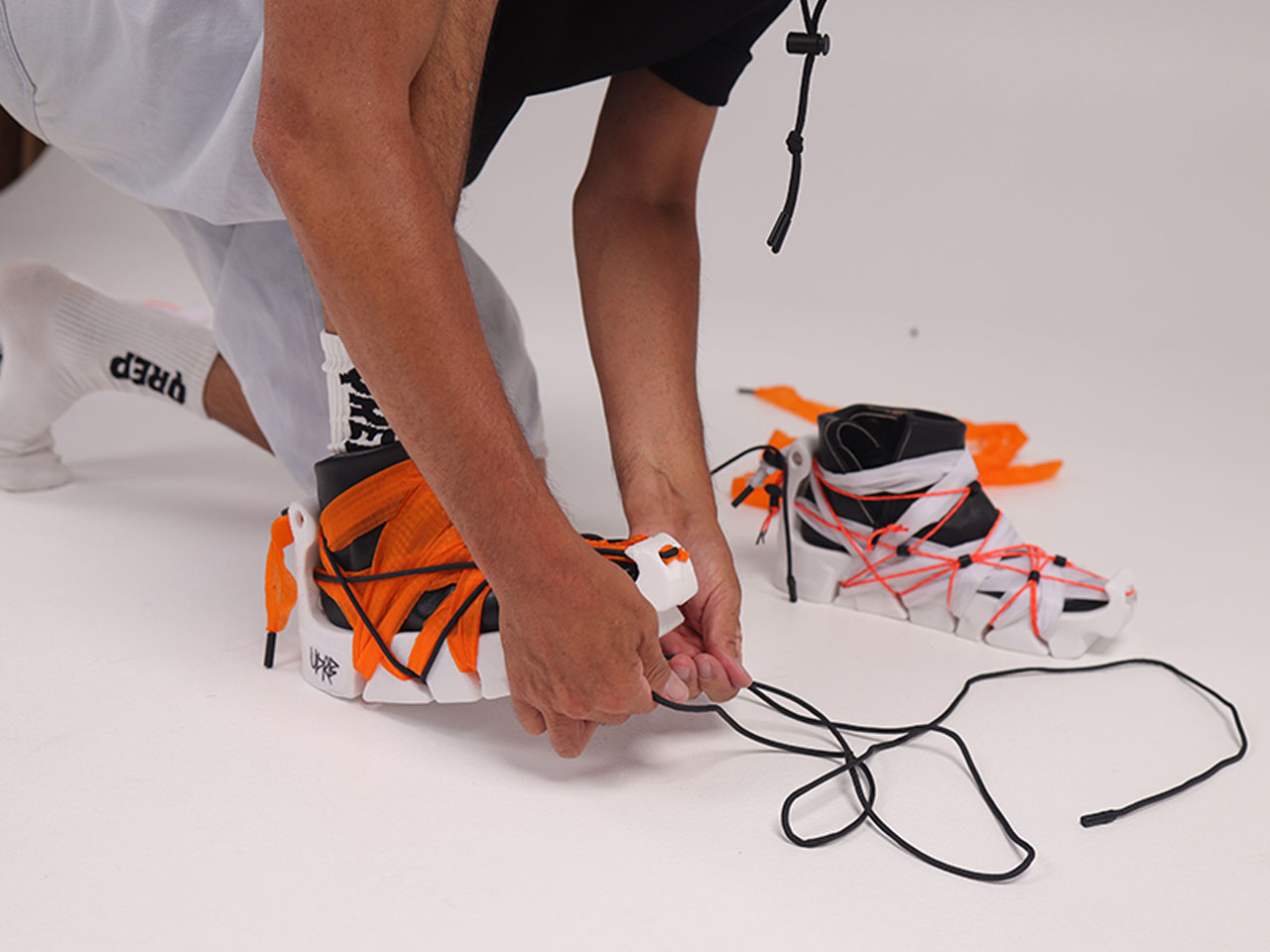
Complementing the sole is a leather inner boot inspired by traditional footwear, wrapping the foot in a soft, sock-like structure that prioritizes comfort while maintaining a handcrafted character. Holding everything together is an intricate rope lacing system that does more than create visual appeal. It eliminates the need for adhesives entirely while allowing the wearer to tighten, loosen, or completely separate the components with minimal effort. The exposed fastening becomes both a functional engineering solution and a defining aesthetic feature.
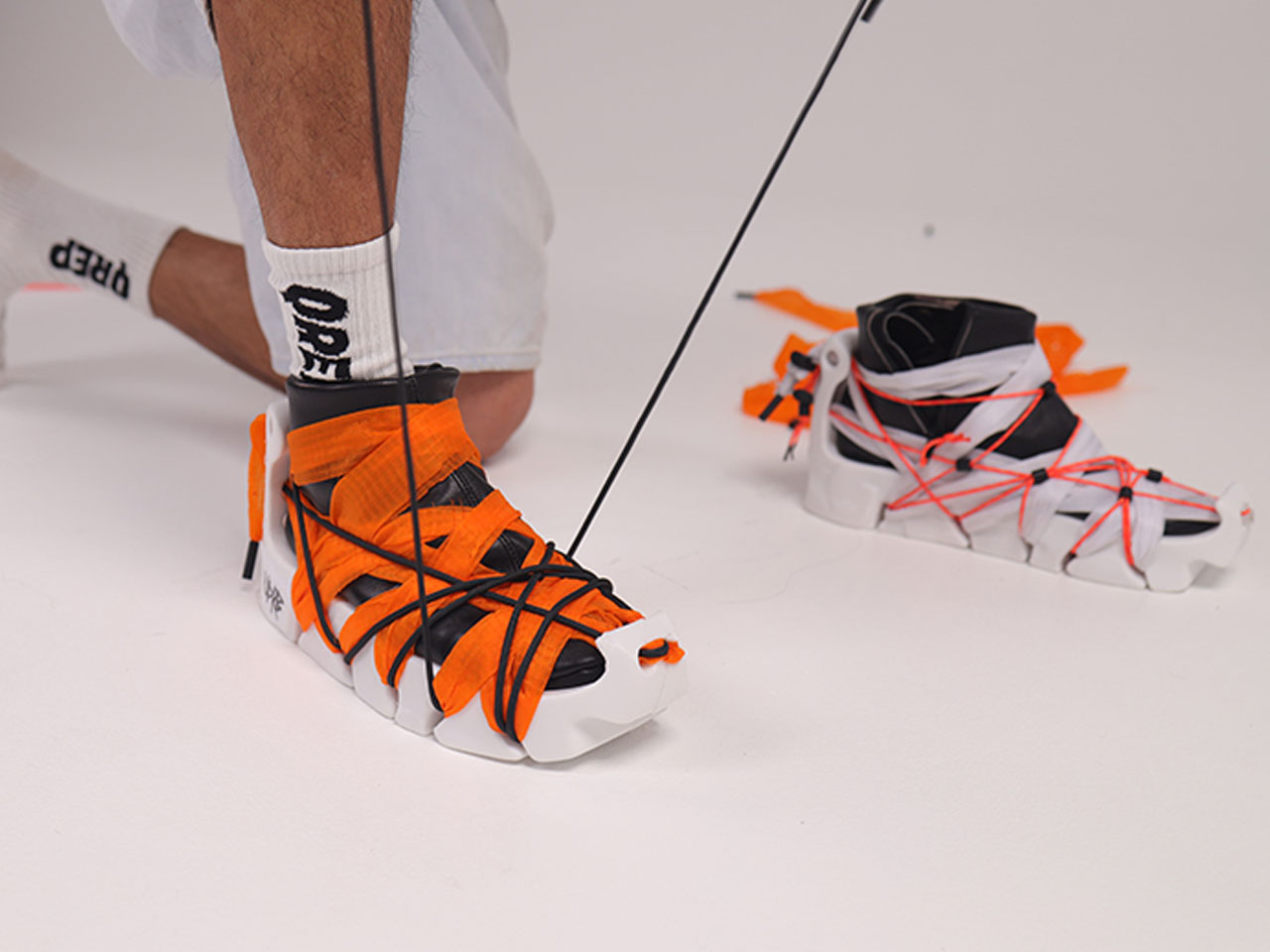
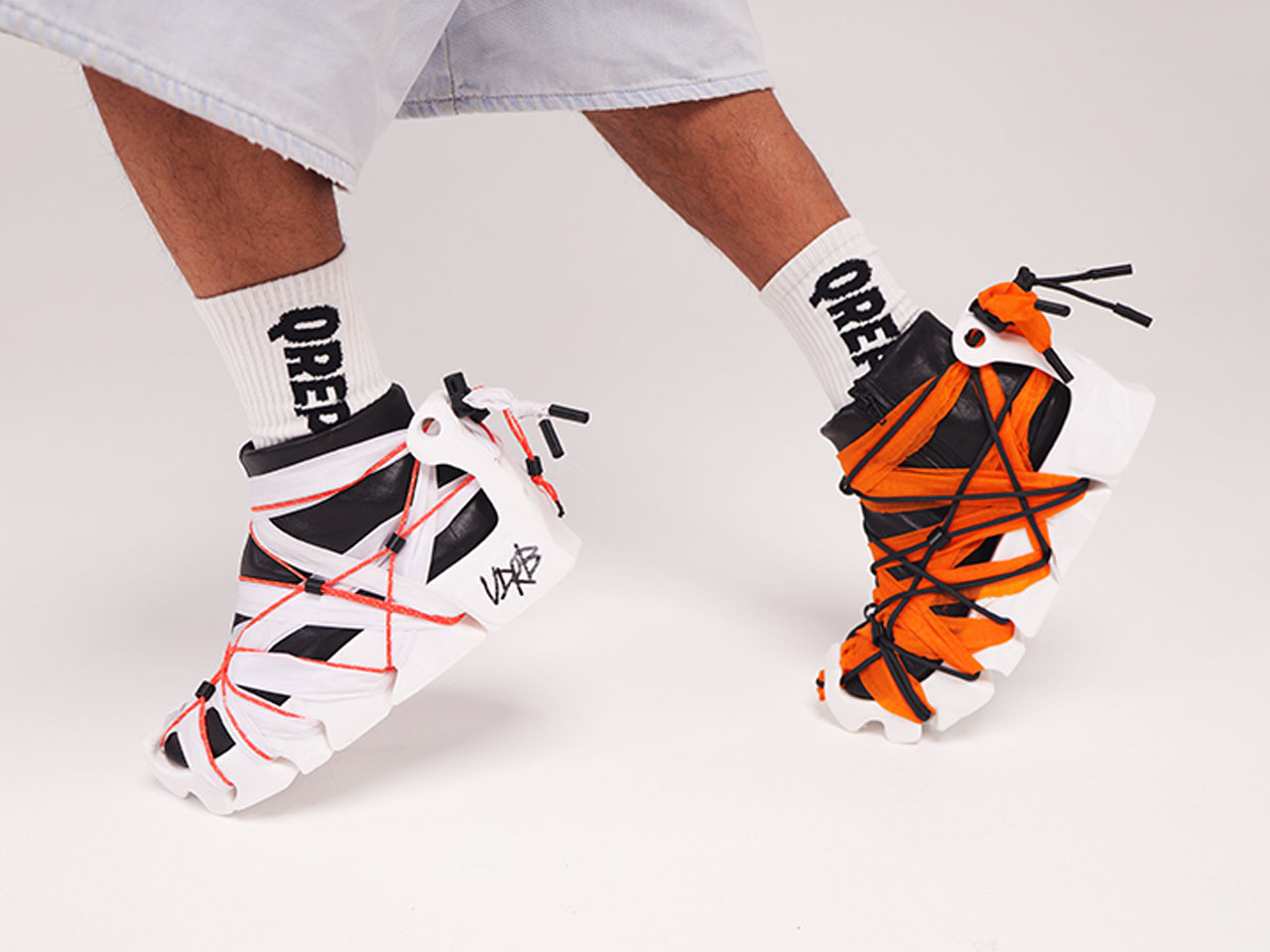
What makes UDBR particularly compelling is how naturally it blends old and new. Advanced 3D printing supplies precision, customization, and recyclable materials, while traditional construction principles provide a blueprint for repairability that modern sneakers have largely abandoned.
The post This 3D-printed modular sneaker ditches glue for repairable design inspired by Asian craftsmanship first appeared on Yanko Design.

This air-conditioned formal shirt keeps you cool during heated board meetings

Let’s face it, global warming is real, and it’s already affecting millions worldwide. Japan is also bearing the brunt of hot summer days, prompting manufacturers to come up with innovative ways of cooling down in the peak heat. There are personal fans to direct chilled air at the most sensitive neck areas that cool down the whole body, or the more radical solutions like the human refrigerator to walk into and have the next-generation cooling effect.

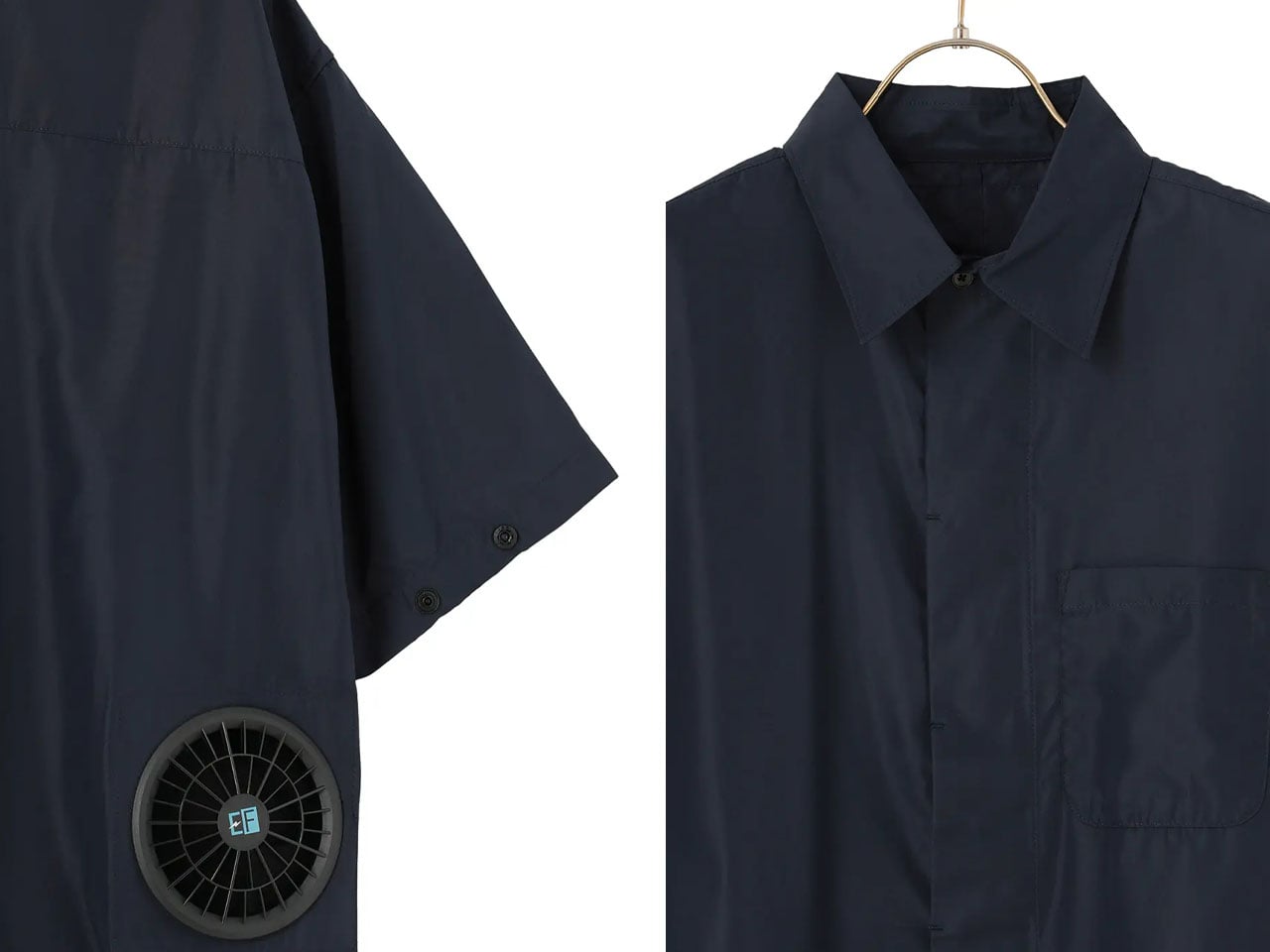
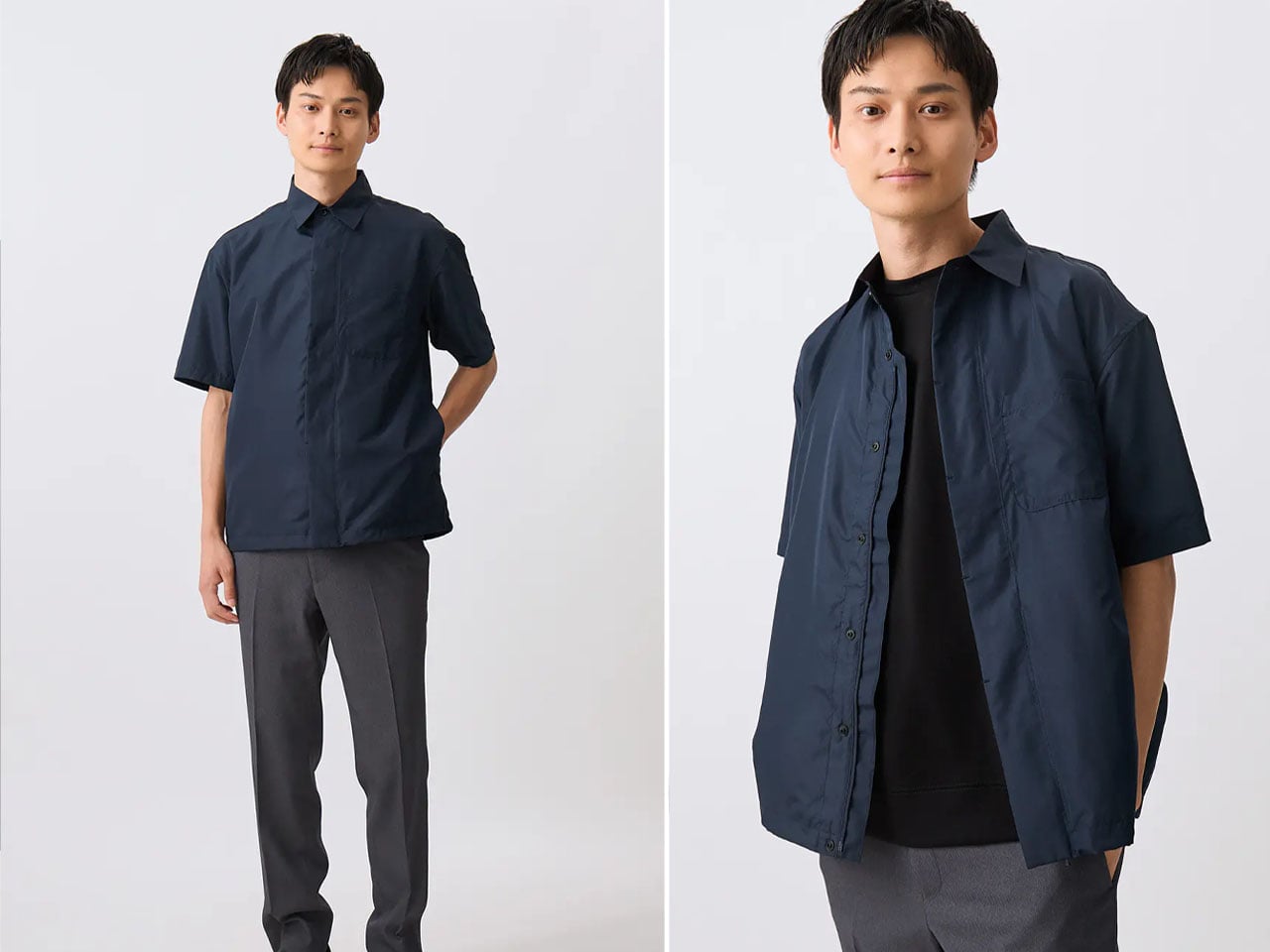
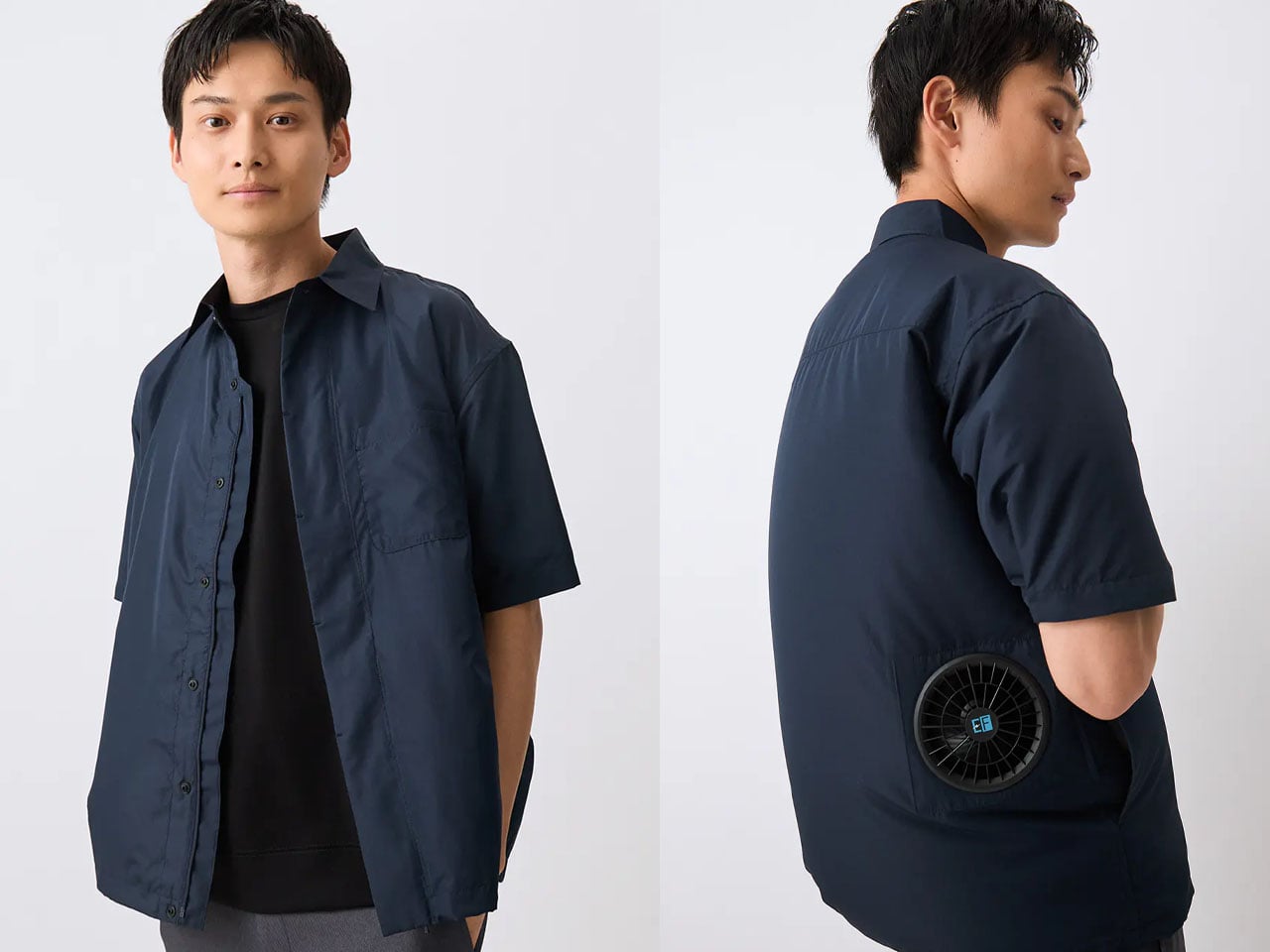
We’ve come across another interesting personal cooling solution that comes from the land of the rising Sun, and is equally out of the box for everyday use. The solution takes the popular Yofuku no Aoyama formal attire and outfits it with fans to provide active cooling to settle down the extreme heat build-up on hot days. Called the Kuchofuku Air-Conditioned Short Sleeve Work Shirt, the attire developed in collaboration with fan-equipped fashion maker FZN is meant for people exposed to extreme daytime heat.

Designer: Yofuku no Aoyama

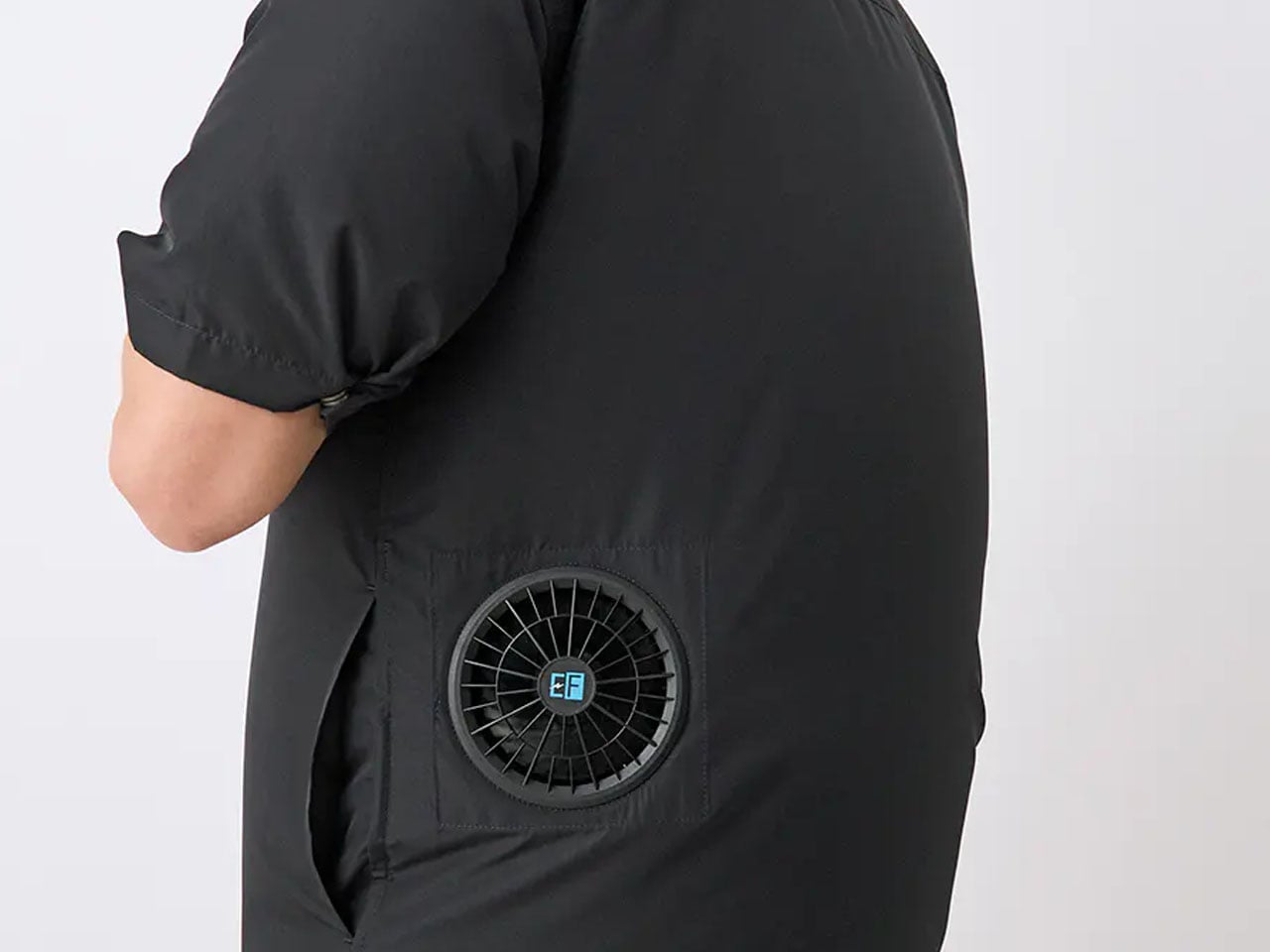
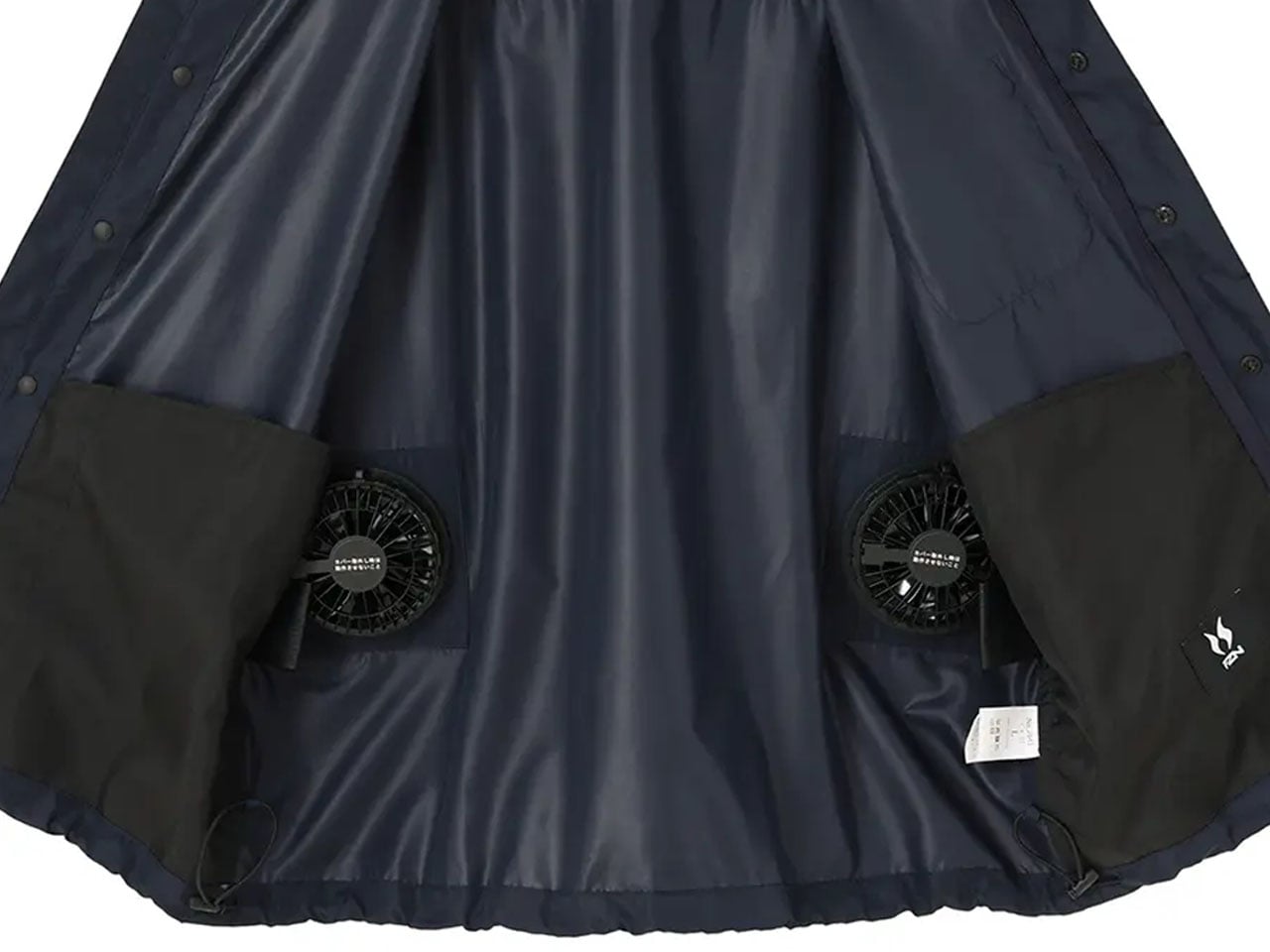
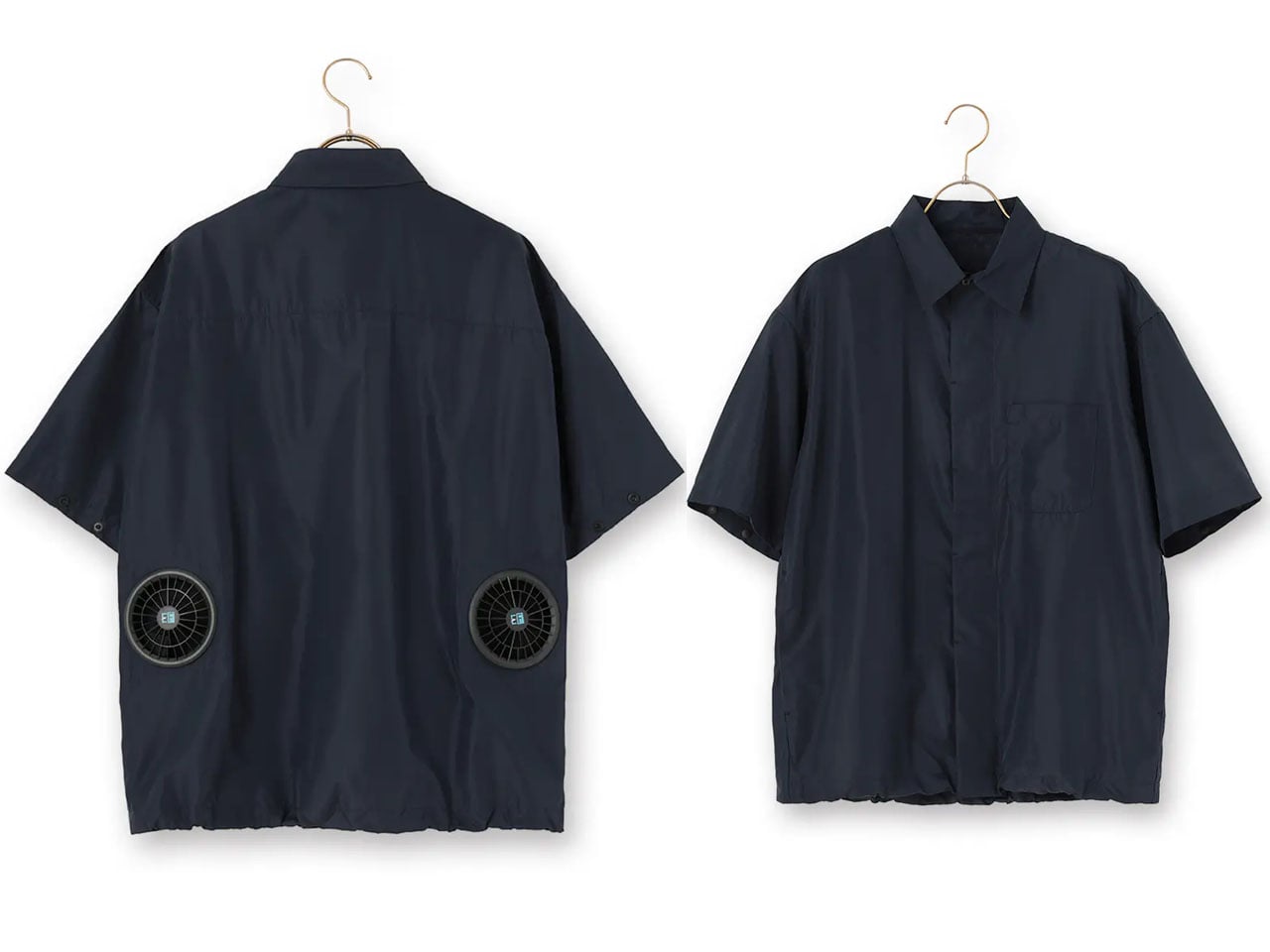
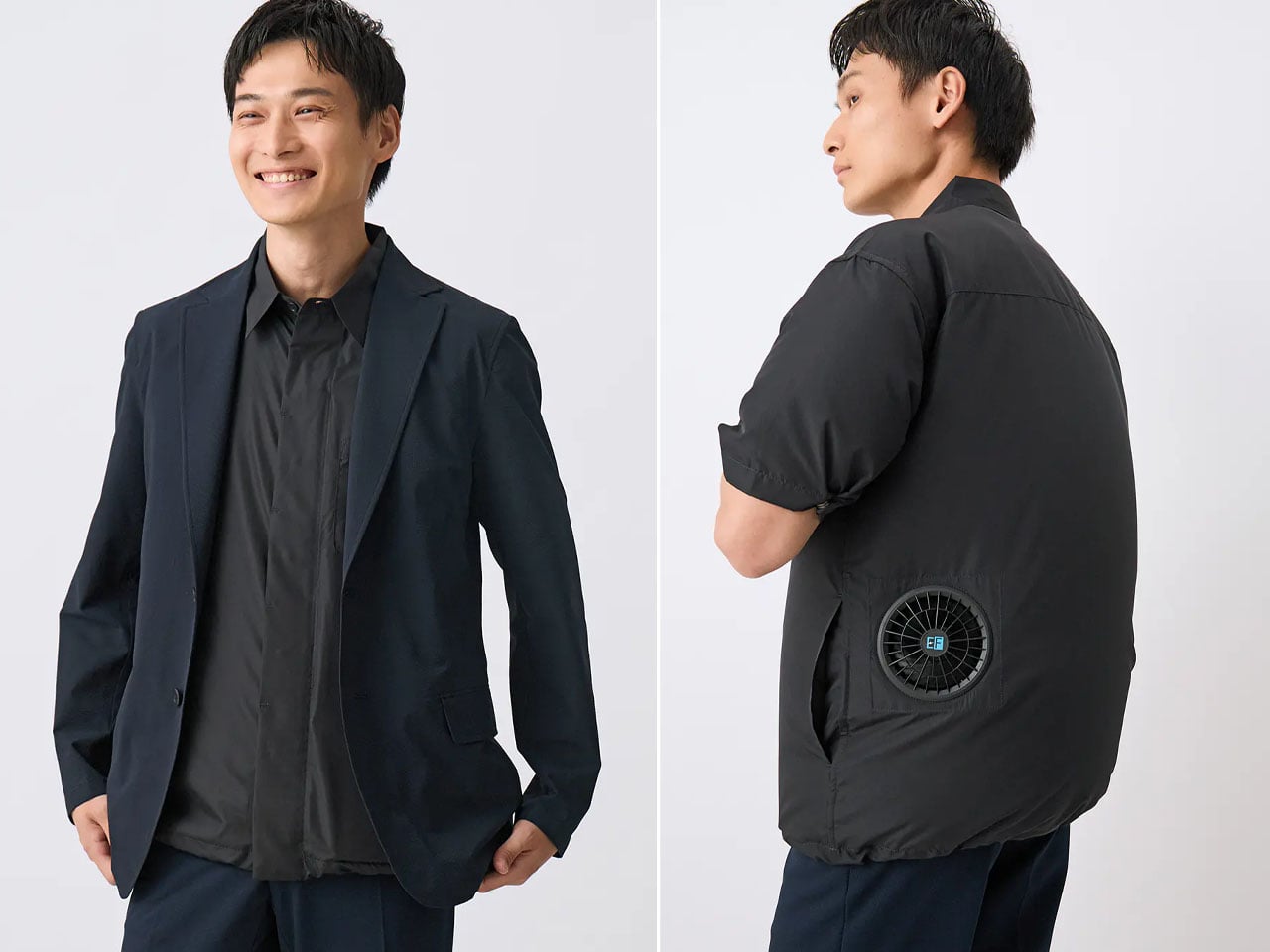
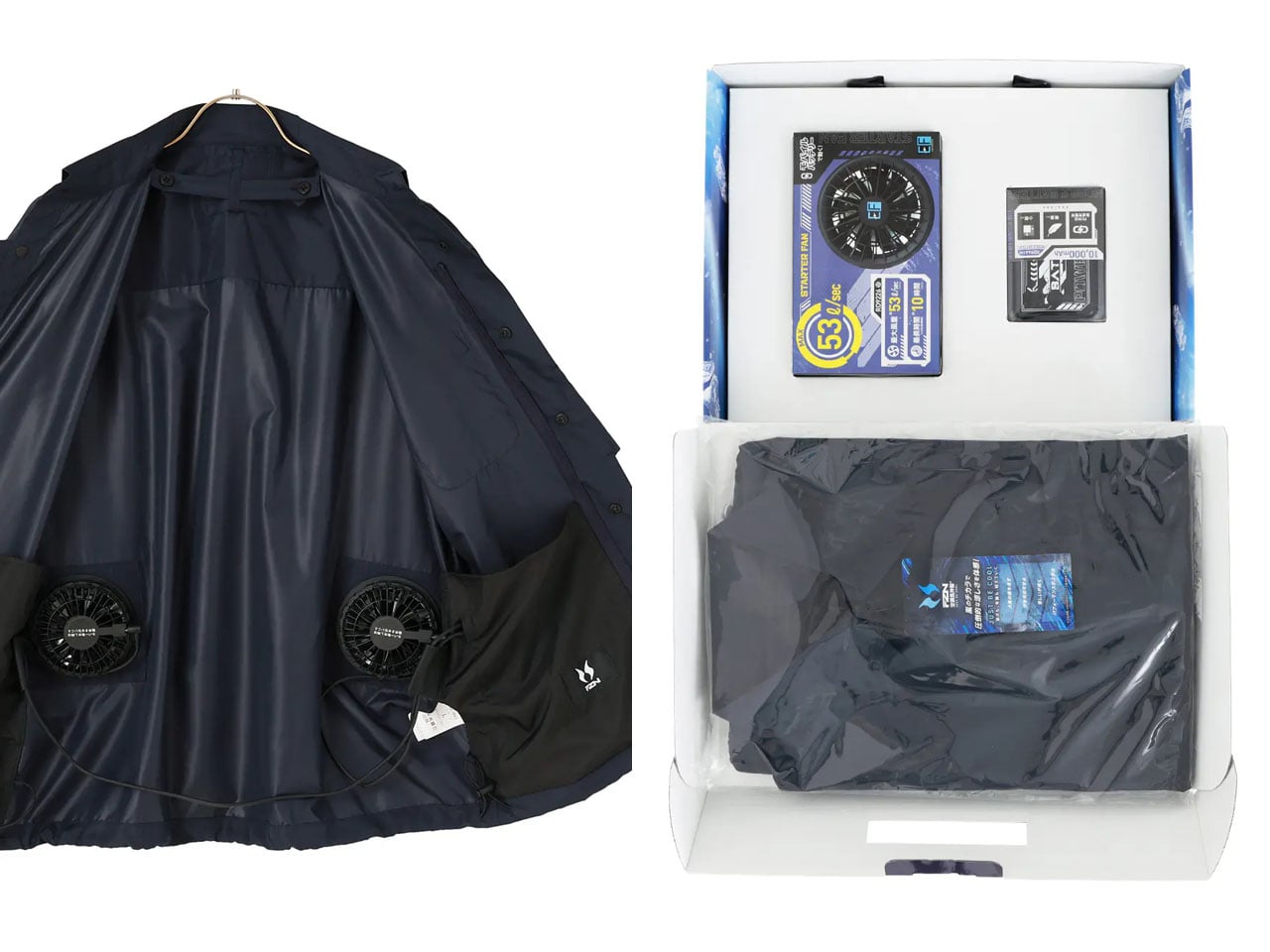
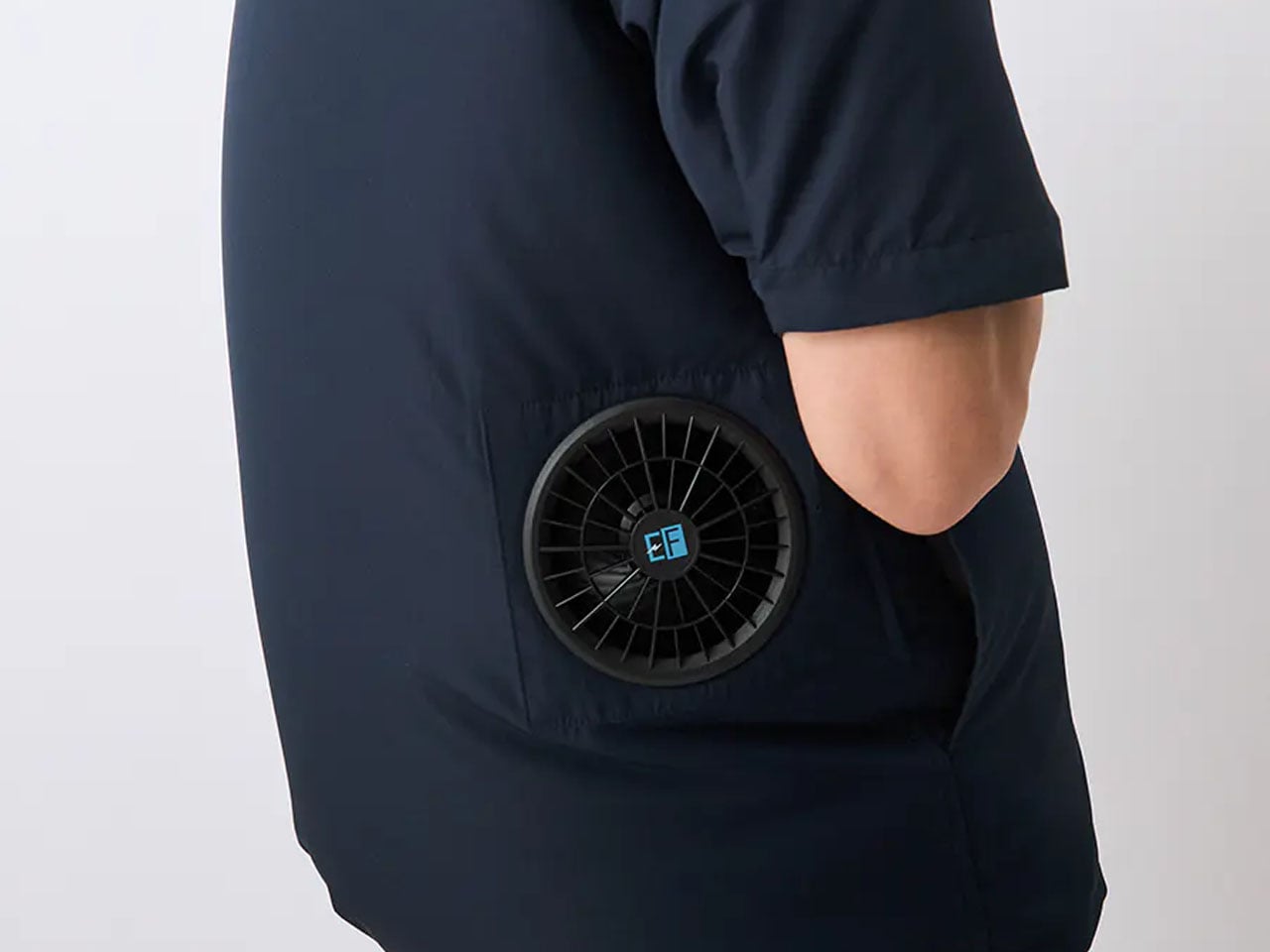
If you are in Japan, Yofuku no Aoyama is a household name when you need to be dressed for important events or meetings with clients. They’ve got the idea to keep you well dressed all day long without any uncomfortable feeling triggered by the lack of proper cooling outdoors. This seemingly normal button-up shirt has the understated summer business look, but on the inside, it comes loaded with two active cooling fans. Who could have thought of that? Although it does look a little bulged up on the sides, which can make you seem slightly fatty on the sides. That’s because of the wearable cooling fan system taking up the space, and the fans engaged during use.

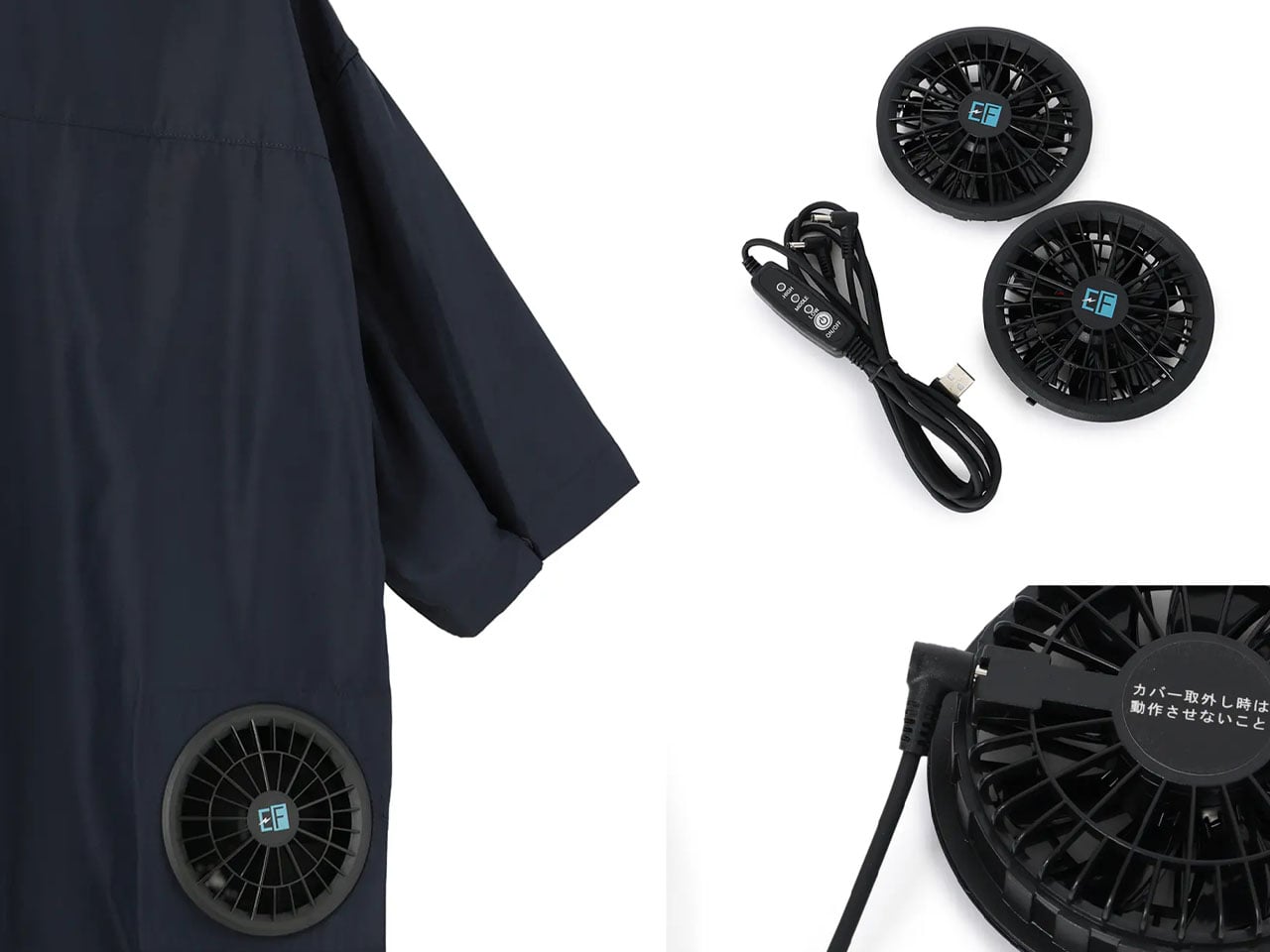
The fans have three operating settings: direct cool air inwards, keeping the wearer comfortable when the Sun is beating down hard. Although not as foolproof as the human cooling refrigerator mentioned earlier, this one does provide temporary relief. At the highest settings, it can stretch for around 3.5 hours, while at the lowest operation mode the wearer can enjoy cool air for around 10 hours. We’ve seen such solutions in the past coming from Japan, mostly targeted for field workers, but they are mostly gear and nothing like apparel. This one changes the outlook, as it is a blue-collar uniform disguised as a cool-down solution for more formal business settings.

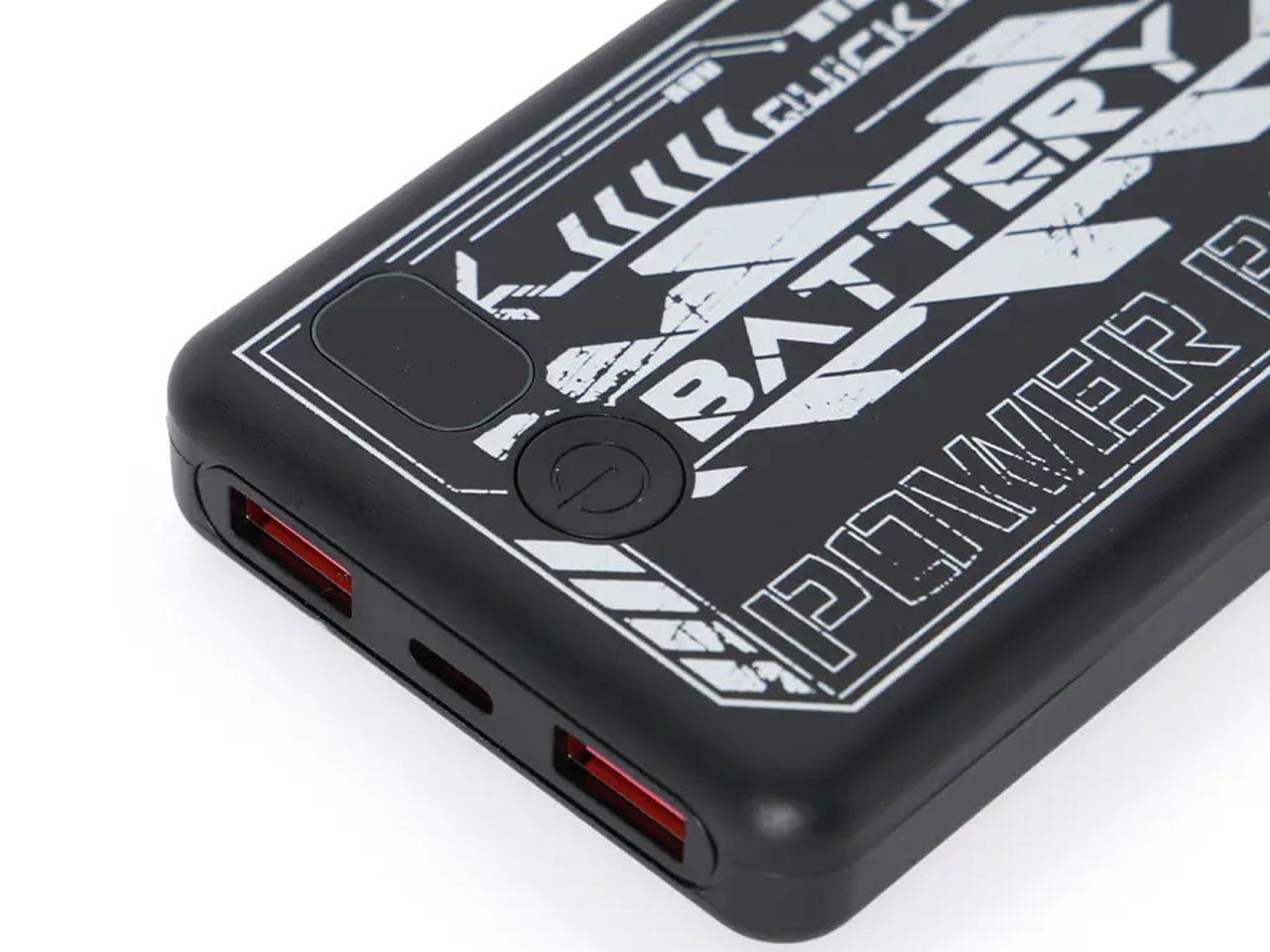
From the front, the Kuchofuku Air-Conditioned Short Sleeve Work Shirt doesn’t give away the innards, but from the back, the fans can be visible. That means you’ll either have to mask it with some blazer, or not expose to onlookers from the side profile. You’ll also have to be mindful of the 95 grams added weight of each of the fans, and the 165 grams rechargeable battery pack. I hope the weight distribution is done better on this formal shirt; it’ll feel like carrying a sizeable phone or battery bank.

The short-sleeved shirt meant to be worn hustling for a day’s meetings from one location to the other is available in blue or gray colors, in medium, large, or XL sizes. It can be bought right away from the Yofuku no Aoyama stores or the company’s online shop for 17,490 yen (approximately $111).

The post This air-conditioned formal shirt keeps you cool during heated board meetings first appeared on Yanko Design.
A $150 Portable Espresso Machine That Heats Its Own Water in 135 Seconds

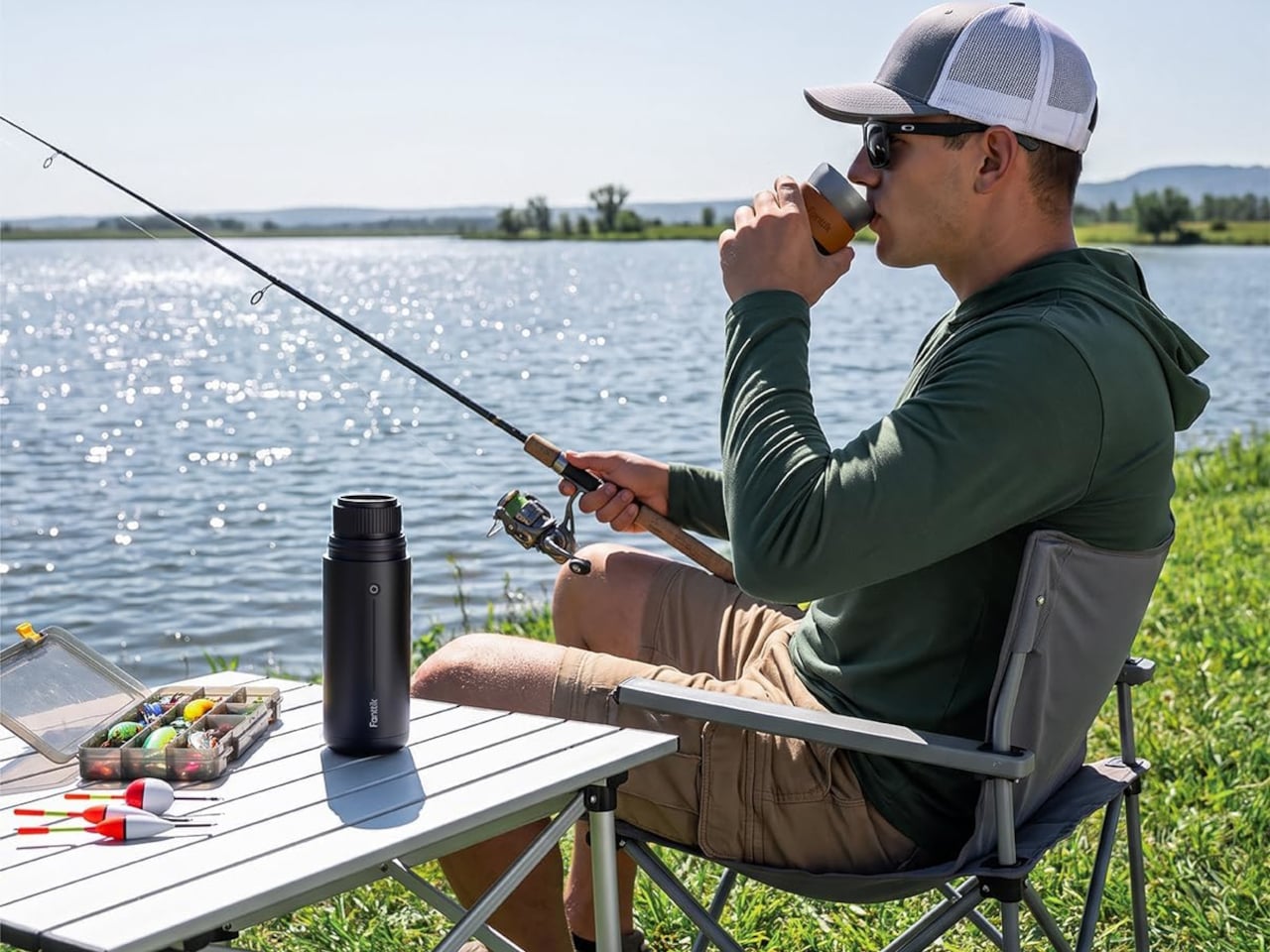
Good coffee and travel have never really gotten along. At the hotel, there’s that sad drip machine on the counter producing something closer to warm brown water than an actual espresso. At the campsite, it’s instant granules and lukewarm hope. Even for commuters, the office coffee situation rarely inspires confidence. The demand for a proper cup of espresso away from home has always been real; the solutions, less so.

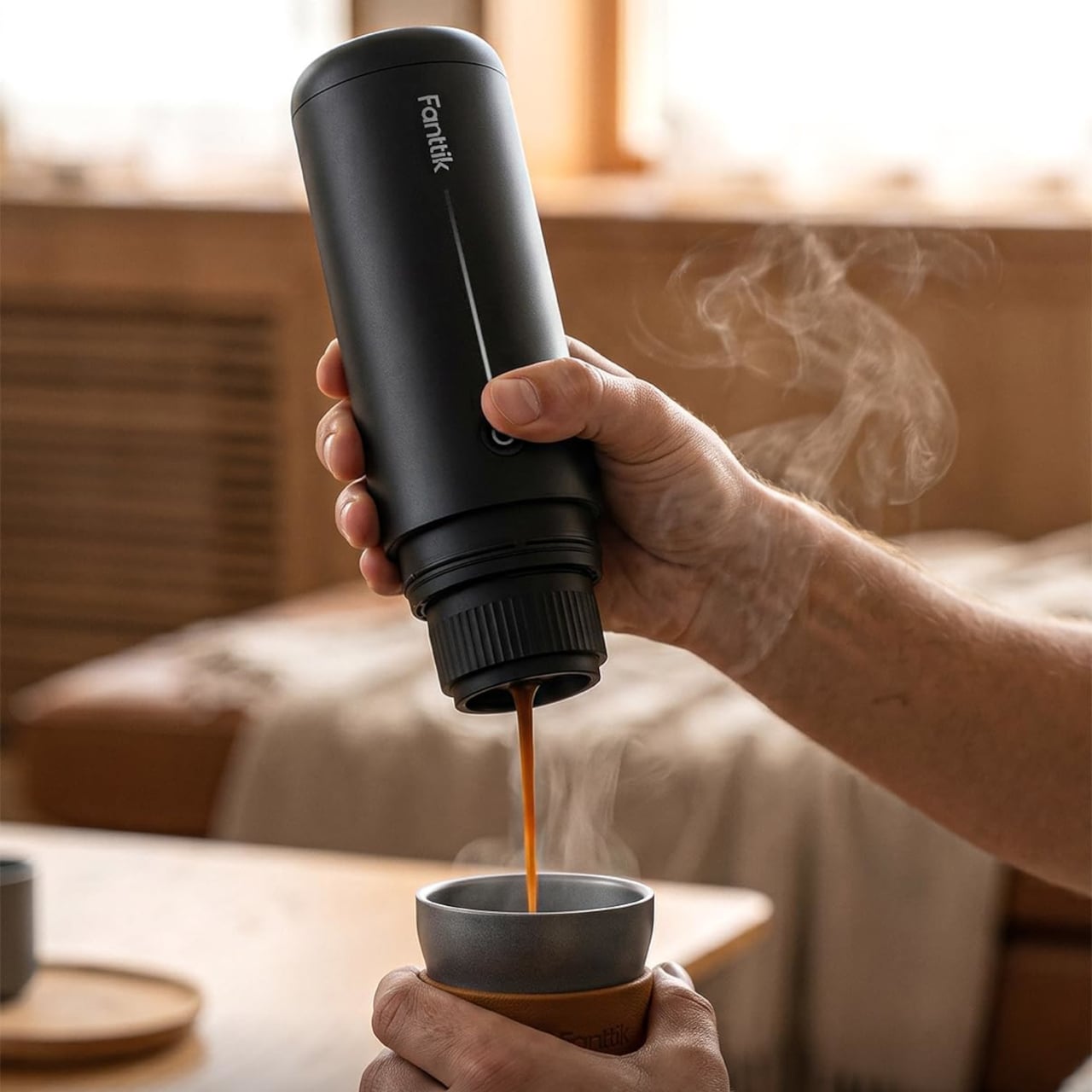
Fanttik’s Cafein 11 is the kind of portable coffee machine that takes that problem seriously. Rather than asking you to pack a separate kettle or hunt for an outlet, it handles heating, pressure, and extraction entirely on its own, running off a built-in rechargeable battery. Fanttik, a brand behind over 40 product design awards, including multiple iF Design Awards, didn’t approach this as a novelty gadget.

Designer: Fanttik

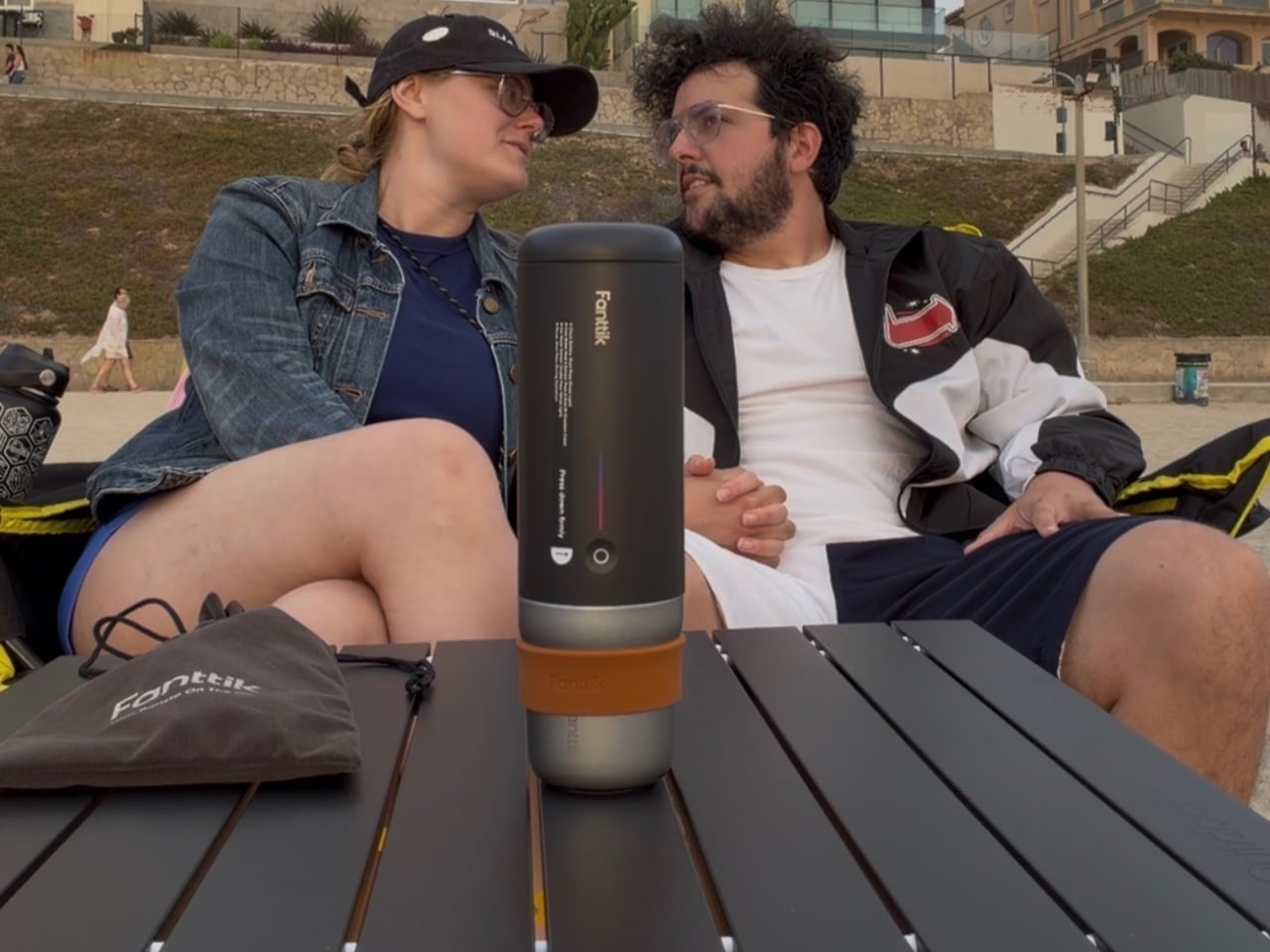
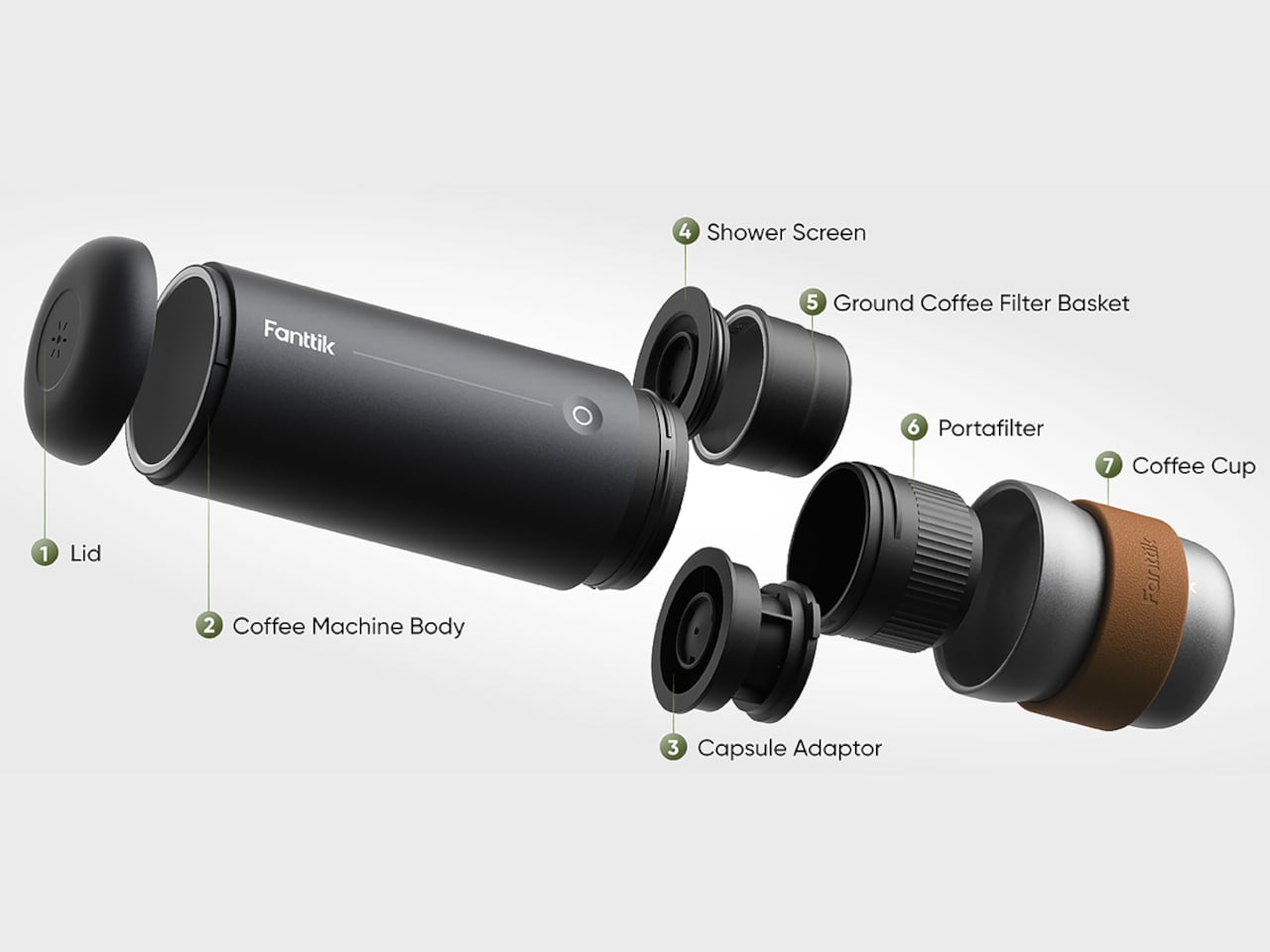
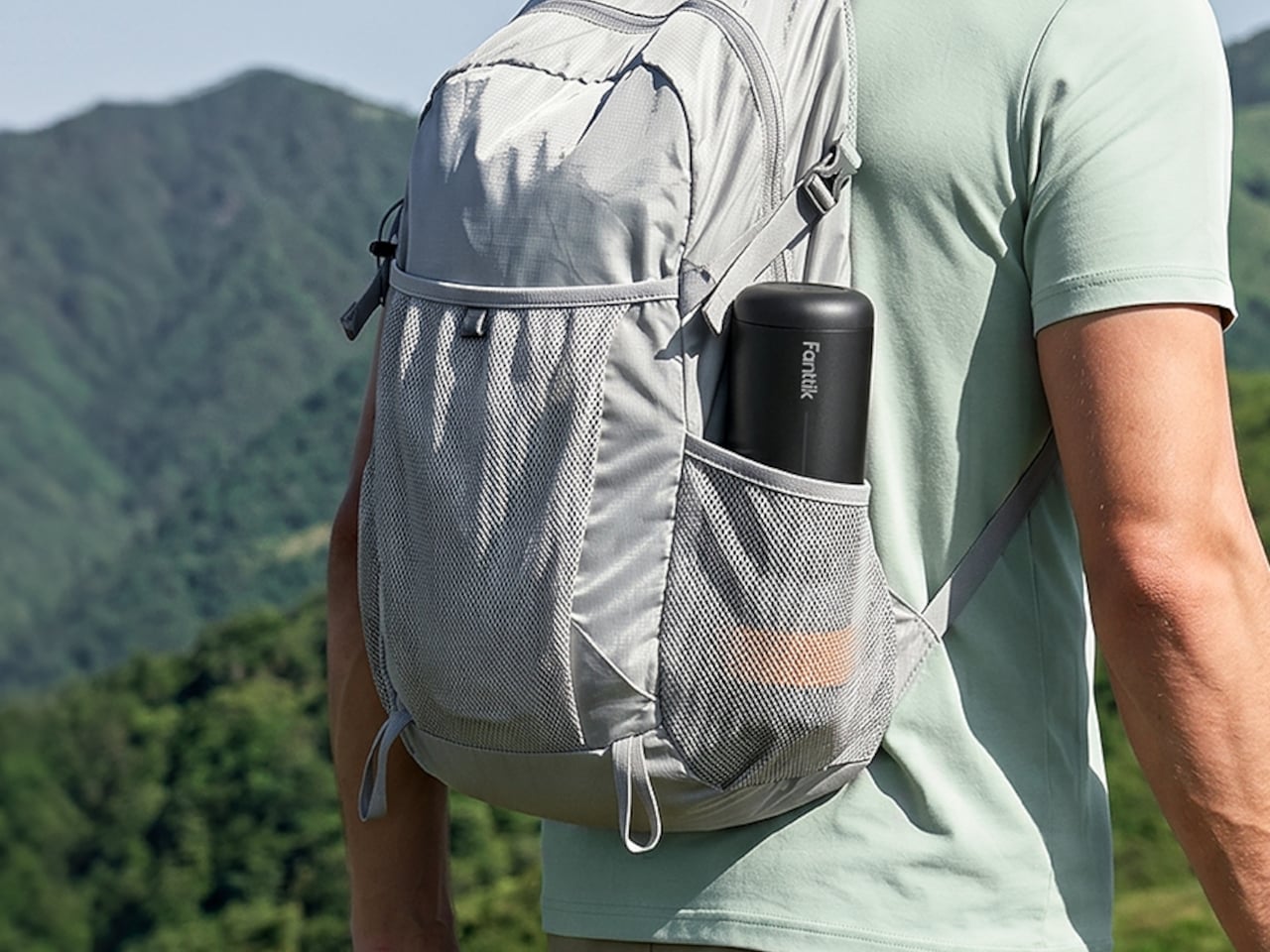
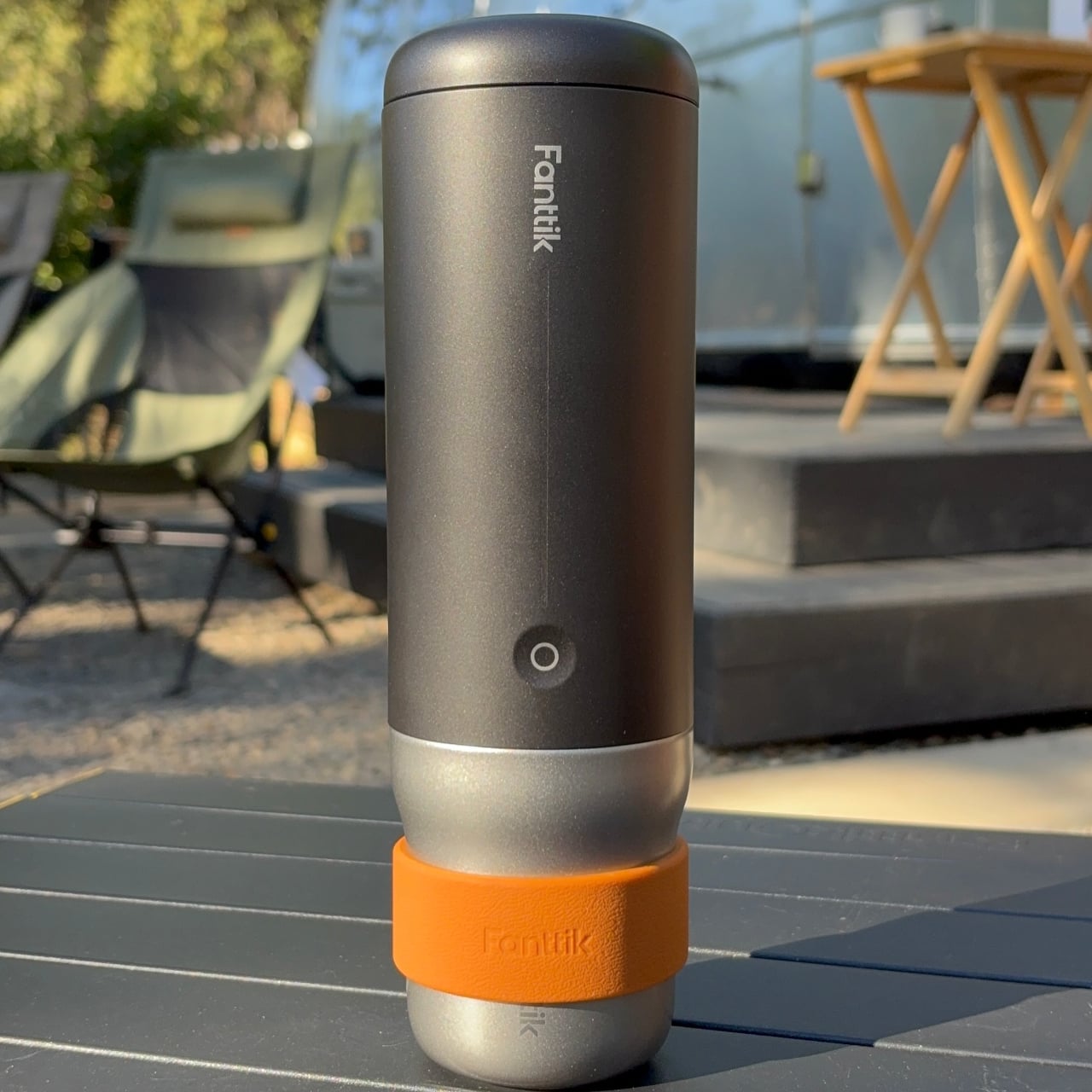
Weighing 825g, the Cafein 11 sits comfortably in the same mental category as a travel thermos, which makes packing it feel like a non-decision. It’s built from food-grade stainless steel, which keeps it durable and easy to clean, and its cylindrical silhouette slips neatly into a backpack without fuss. The machine doesn’t look or feel like a compromise, and that’s actually a harder design goal to hit than it sounds.

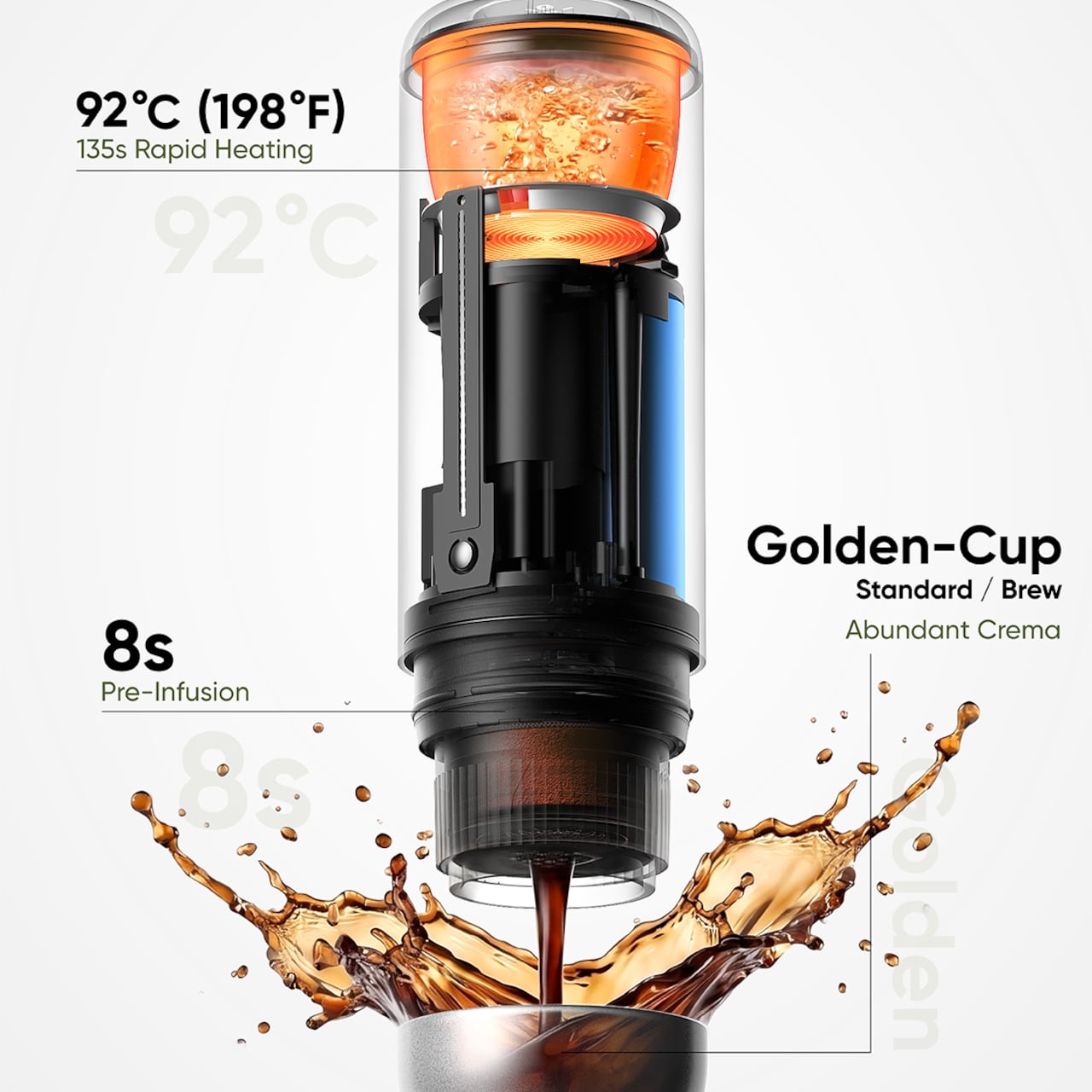
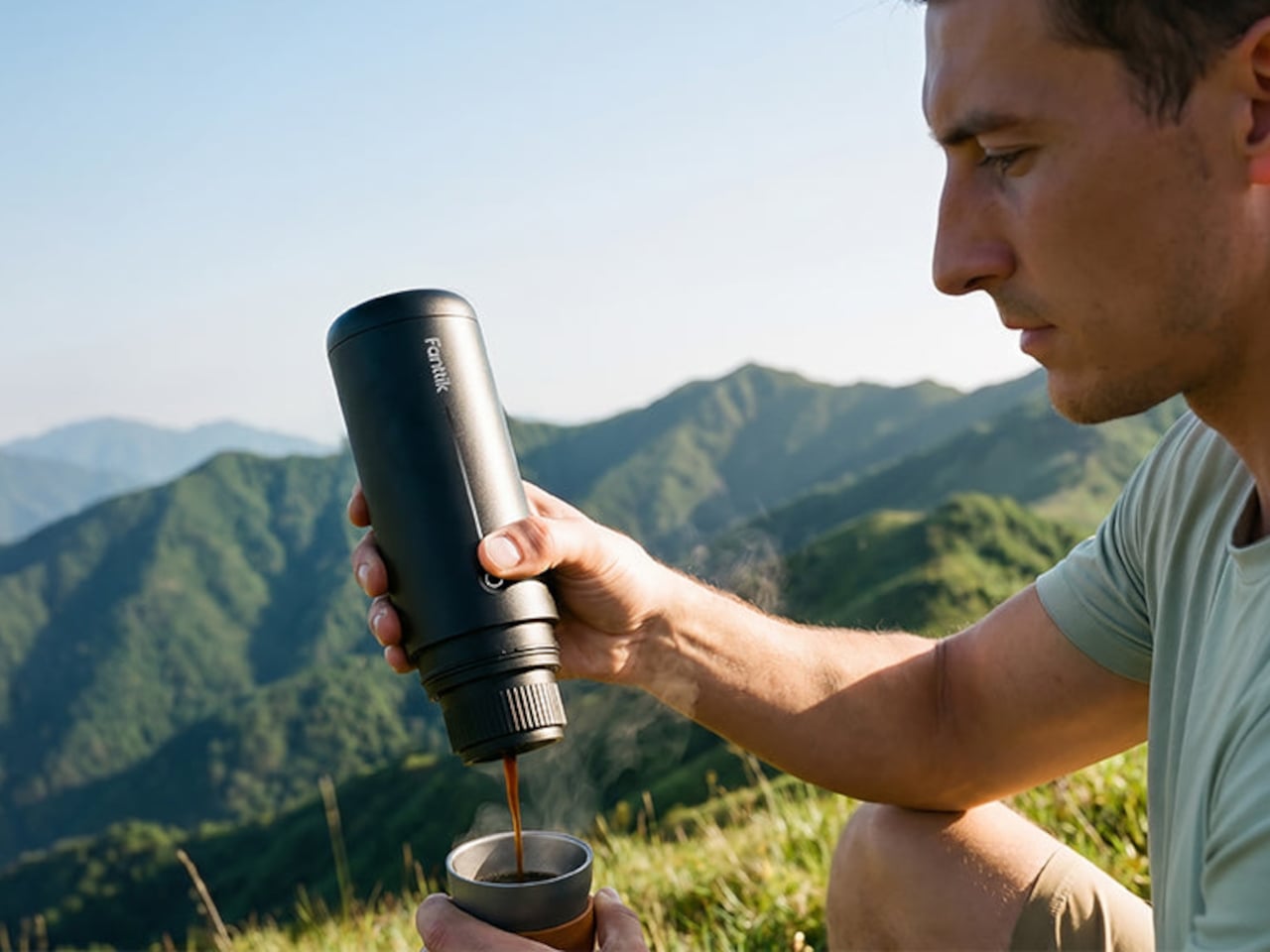
The most meaningful thing the Cafein 11 does is heat its own water. That might sound basic, but it’s the feature that separates a genuinely portable espresso machine from one that’s merely small. From room temperature, it reaches brewing heat in about 135 seconds, meaning a proper shot is ready before a campsite morning gets going, or before the next highway stretch begins. No kettle required.

On the extraction side, the Cafein 11 operates at 20 bar of pressure and runs an 8-second pre-infusion cycle before the main brew begins. Pre-infusion saturates the grounds before full pressure is applied, which generally leads to a more even extraction and a richer cup. It’s a detail that suggests Fanttik was thinking as much about what ends up in the cup as about how compact the machine could be.

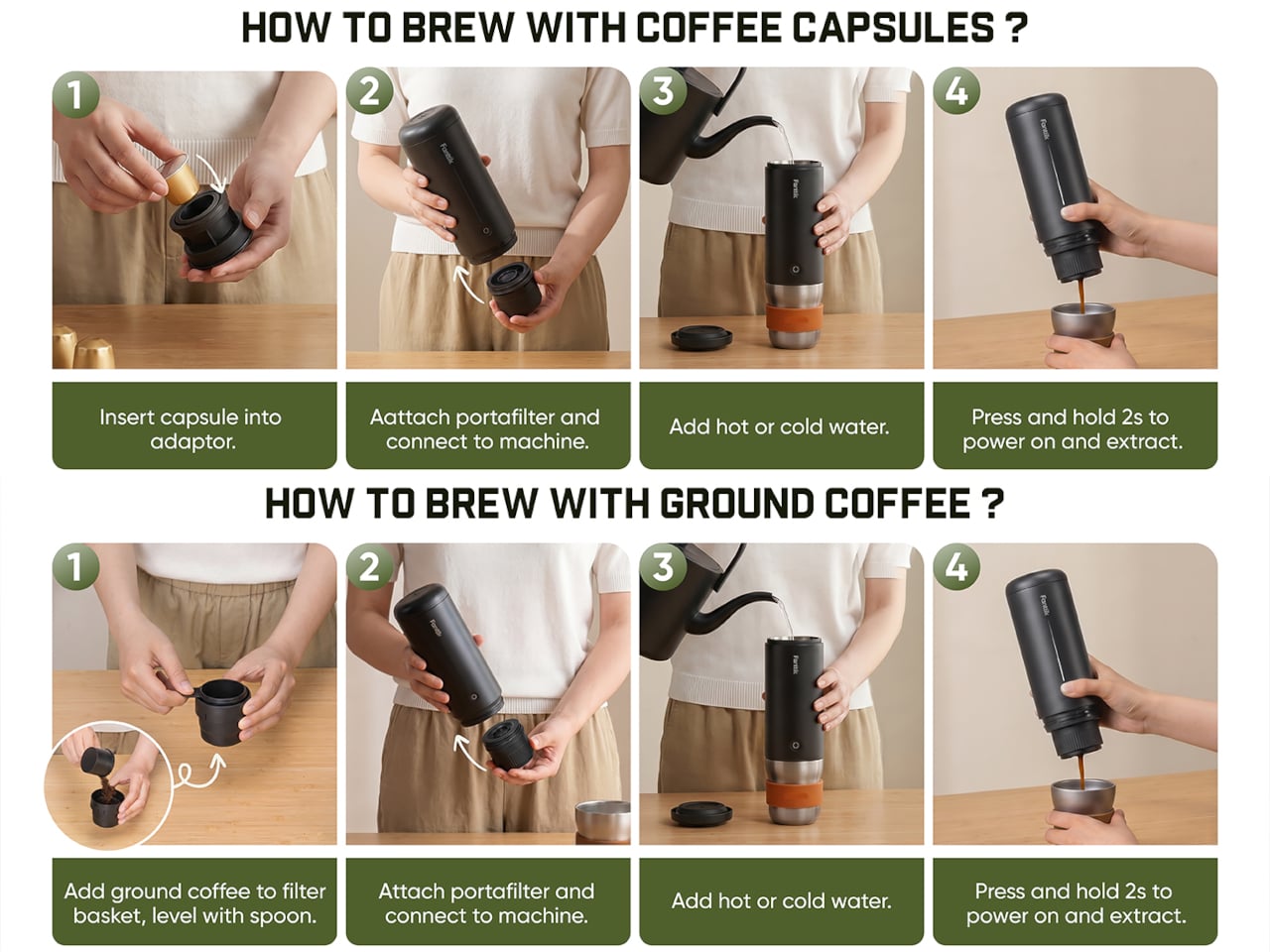
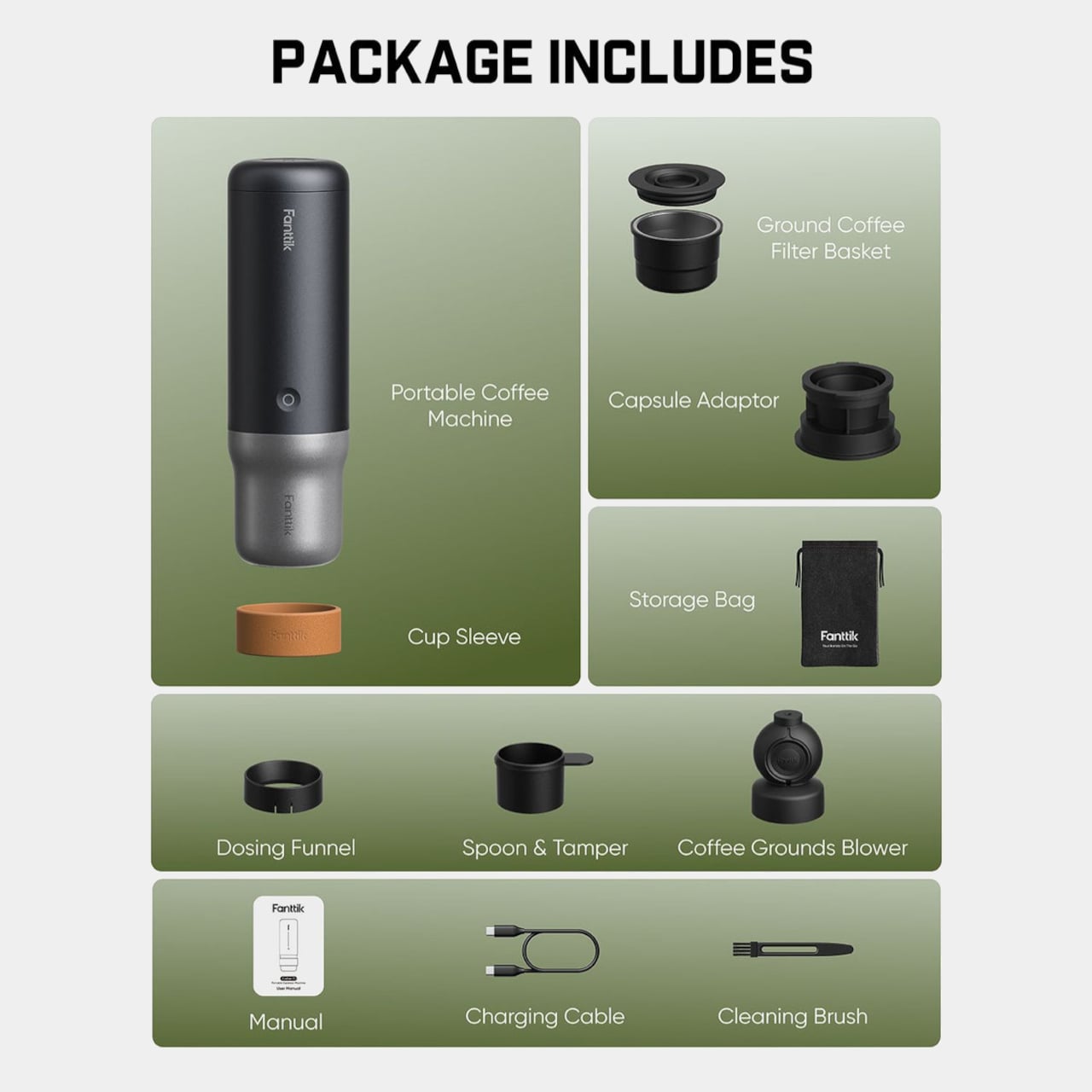
What also helps is that the Cafein 11 works with both capsules and ground coffee. On a rushed office morning, a capsule is in and out in seconds with no measuring or cleanup required. On a slower weekend trip, freshly ground beans are equally welcome. Either way, the machine adapts to how you feel rather than asking you to commit to one kind of coffee ritual.

Charging works through USB-C, which sounds like a small detail but matters more in practice than you’d think. There’s no proprietary cable to track down or forget at home, since the cord you’re already using for your phone or laptop does the job. A triple 4,500 mAh battery configuration handles multiple shots per charge, so the machine doesn’t run out of steam faster than the average traveler’s patience does.

At $149.99, the Cafein 11 isn’t the cheapest addition to a bag, but the math shifts when you consider what it replaces: hunting for a decent café in unfamiliar places, hotel drip machines that have seen better days, and the persistent compromise between going somewhere and having a good espresso while you’re there. It’s the kind of thing you don’t realize you want until you’re somewhere without a decent cup.

The post A $150 Portable Espresso Machine That Heats Its Own Water in 135 Seconds first appeared on Yanko Design.