5 Best Bedroom Gadgets for Men in 2026 That Actually Earn Their Space on Your Nightstand

The average nightstand is a collection of individual decisions made at different points of frustration. An alarm clock here, a white noise machine there, a lamp chosen because it was on sale. None of it was designed to work together. Most of it arrived one problem at a time, and collectively it creates a surface that looks more like a staging area than something assembled with any actual intention.

The five products below approach that surface differently. Each earns its place because it occupies a lane the others don’t: sound and wake, passive amplification, sleep tracking, scent, and air quality. None are trying to do everything. They’re each doing one thing well enough that you’d miss it if it weren’t there, which is the only real standard worth applying to anything that gets permanent real estate beside your bed.

1. Divoom FlowToo
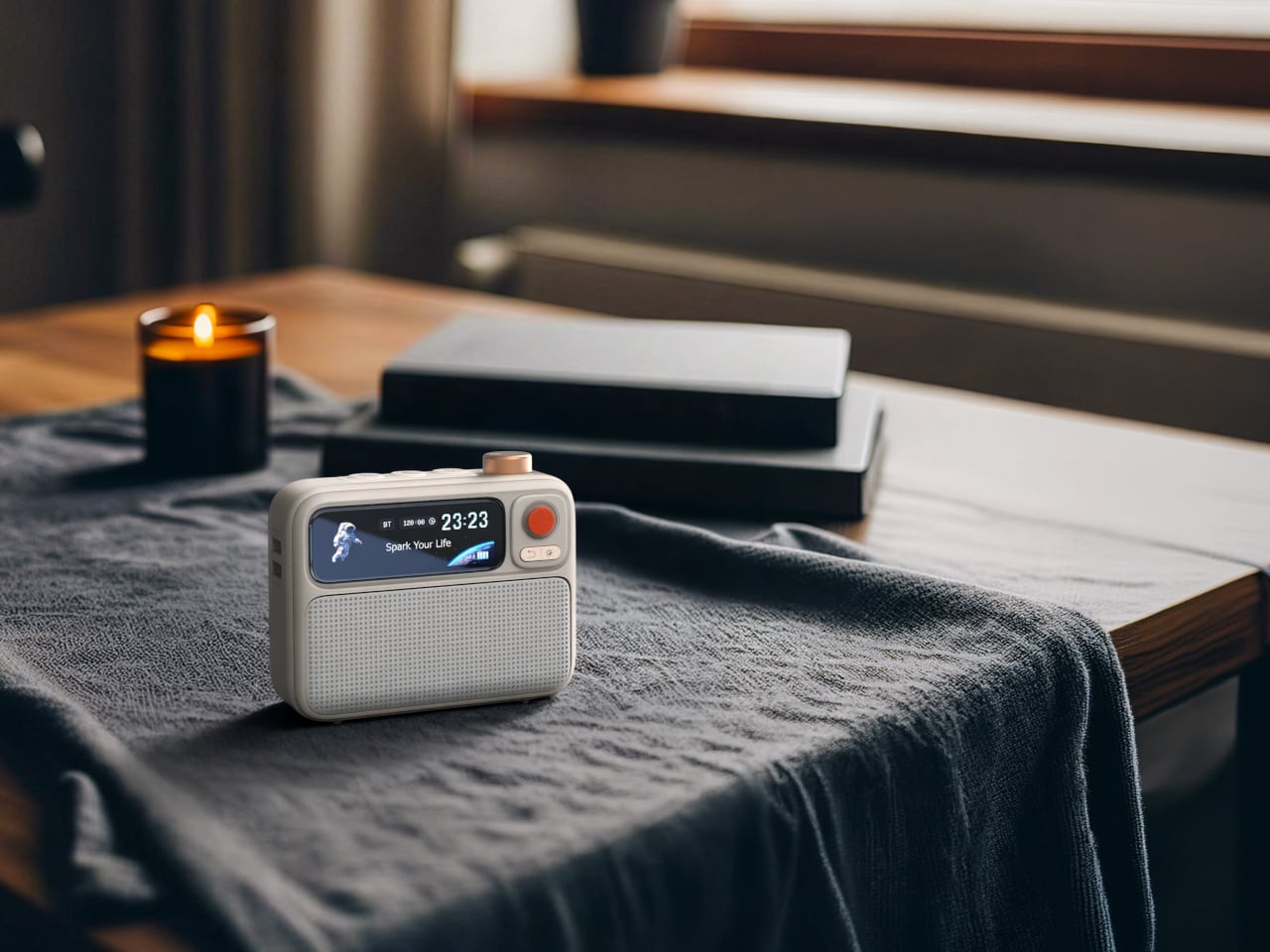
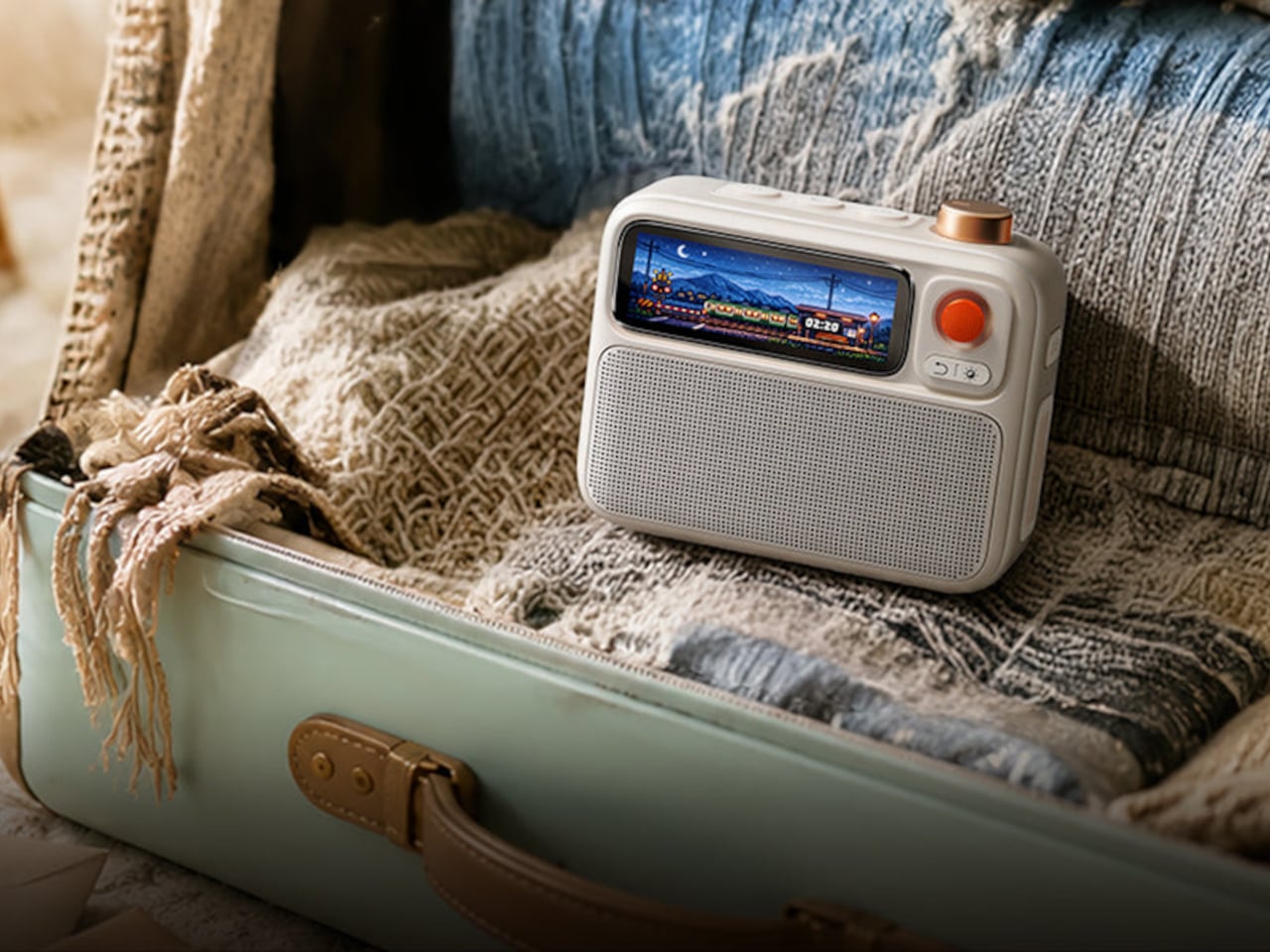
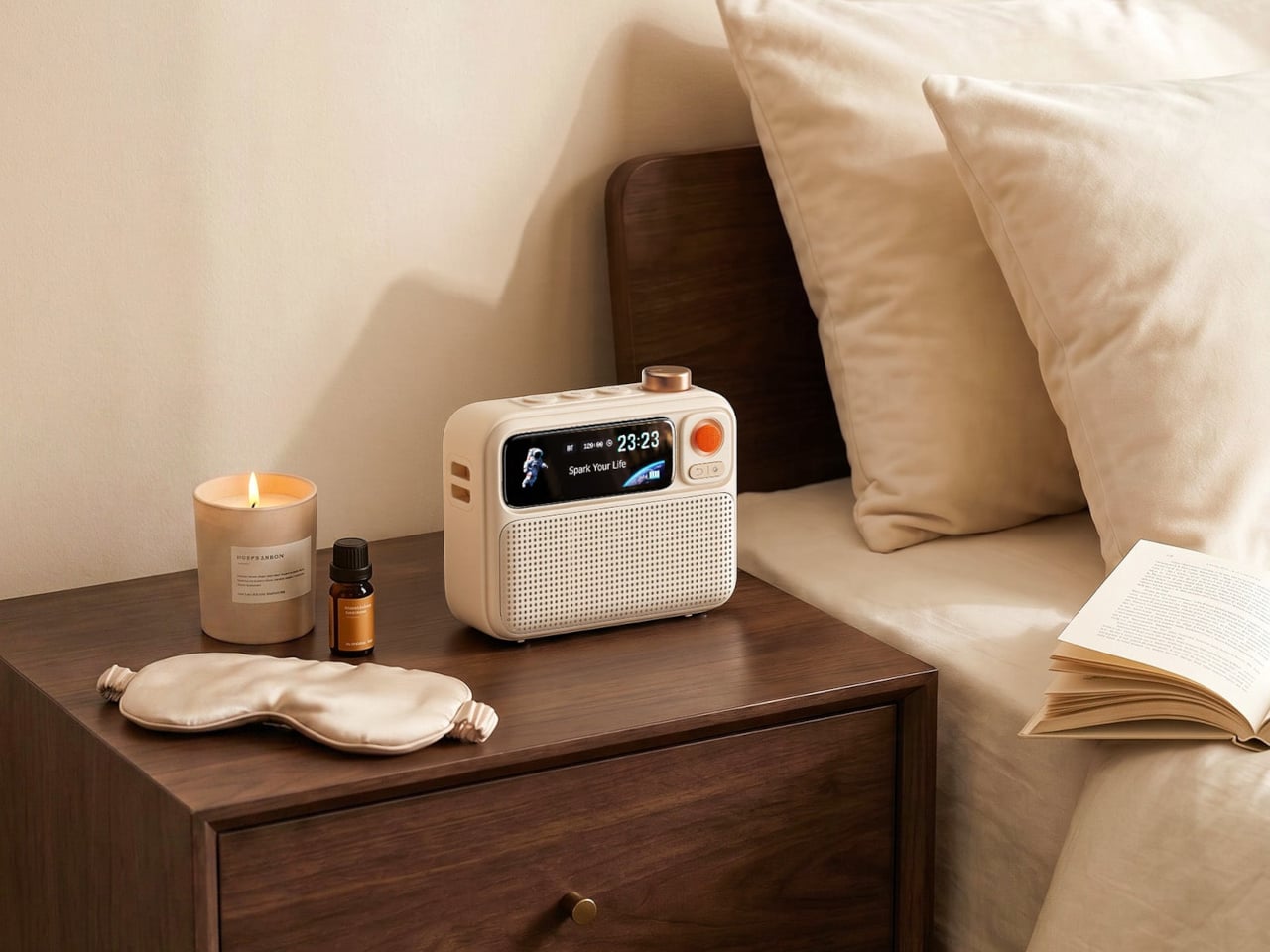
The FlowToo makes the clearest case of any product here for what a modern nightstand gadget should do: replace three things you already own without compromising on any of them. It’s a Bluetooth speaker, a white noise machine, and an alarm clock occupying the footprint of one compact device. At $99.99, it costs less than most dedicated alarm clocks at the category’s upper end, and brings a 10W amplifier and 45mm full-range driver to the audio side of that equation.

The more than 90 built-in sounds cover what people actually reach for at night, from rain and ocean ambience to forest tones and beyond. The 2.26-inch display cycles through clock faces, music visualizers, and sleep scene animations that shift the room’s atmosphere without demanding much attention. The Divoom app handles alarm setting and sound selection from your phone, keeping the device simple to operate without buttons nobody remembers how to press. Waking up gets the same consideration: natural sounds grow gradually louder alongside a gentle light, which makes a real difference to how the morning starts.

What we like:

  • The 3-in-1 consolidation is genuine and not a compromise; the speaker, white noise, and alarm functions each stand on their own merits
  • The gradual light-and-sound wake replaces a jarring alarm without requiring any meaningful setup

What we dislike:

  • The 2.26-inch display may feel small for anyone who wants a clock face readable from across the room
  • Full functionality depends on the Divoom app, which adds a layer of dependency a simple alarm clock never carries

2. Battery-Free Amplifying iSpeakers

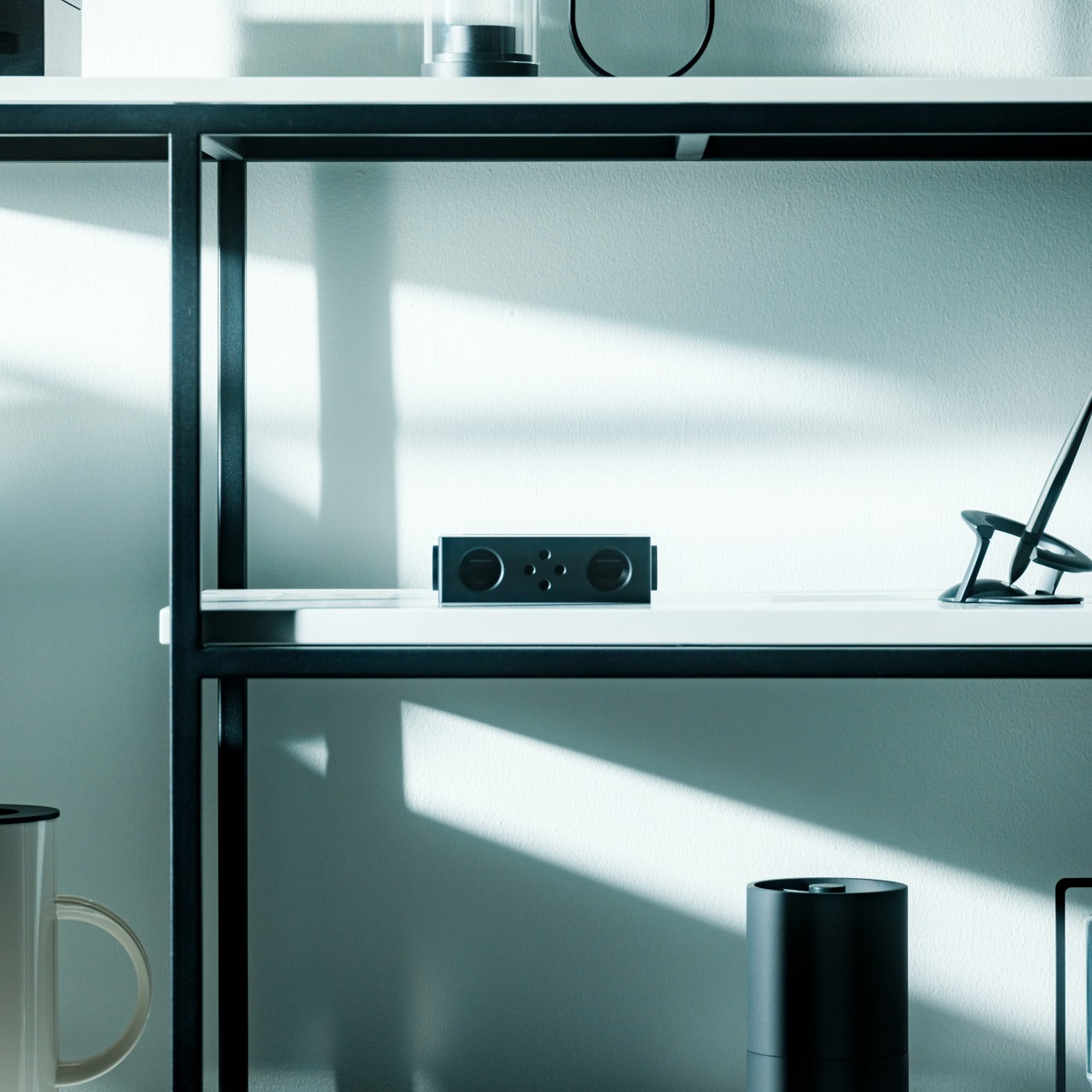
There’s a particular appeal to a speaker that requires no power at all. The iSpeakers amplify passively, using the acoustic properties of their form to direct and increase sound from your device without drawing from a battery or a wall socket. On a nightstand already populated with cables and devices competing for outlets, removing one power dependency entirely is its own design achievement. No setup, no Bluetooth pairing ritual, and no depleted battery to discover at the worst possible moment.

The design sits in a category that gets dismissed as novelty, which undersells what a well-executed passive speaker actually does. Amplification through acoustic shaping rather than electronics produces a warmer, more direct sound character than most powered options at a comparable price, and the absence of digital circuitry keeps the listening experience honest. For bedside use, where the goal is quiet background audio rather than filling a room with volume, the passive approach turns out to be exactly appropriate to the context.

Click Here to Buy Now: $179.00

What we like:

  • No battery and no power source means one fewer cable on the nightstand, which is precisely the kind of problem a bedroom gadget should be solving
  • Passive amplification produces a naturally warm sound that suits quiet, close-range listening well

What we dislike:

  • The volume ceiling is set by acoustic design rather than adjustable electronics, so louder listening simply isn’t on the table
  • Sound quality is device-dependent; the iSpeakers work with whatever your phone’s driver gives them

3. Sleepal

The most honest criticism of sleep tracking wearables is that they make you physically aware of your body at the one moment you most need to forget it. Sleepal sidesteps that problem entirely by building 60 GHz millimeter-wave radar into a bedside lamp, detecting chest micro-movements at 0.1mm precision without any contact. You set it up once, and after that it just works. No ring to charge, no watch to put on, nothing to adjust before getting into bed.

Behind the lamp form sits a sleep AI model trained on nearly 100 million parameters and a clinical database built alongside polysomnography testing at multiple hospitals. That foundation makes the sleep-stage reporting more accurate than most mainstream wearables, according to Sleepal’s own clinical comparisons. The smart alarm avoids deep sleep and REM to find a more natural exit point each morning, and built-in breathing guidance and relaxation audio give you practical tools to wind down before the tracking even begins.

What we like:

  • Contactless tracking removes the physical awareness that most wearables introduce into the very activity they’re trying to measure
  • The clinical foundation behind the accuracy claims is grounded in actual polysomnography data, not just product marketing

What we dislike:

  • The lamp design is primarily functional; it won’t anchor a nightstand aesthetically the way a more considered light object would

4. Zenflow Personal Aroma Diffuser

Scent is the most underrepresented variable in the average bedroom setup, which is interesting given how consistently it appears in the research around sleep and relaxation. Lavender, eucalyptus, and cedarwood all have documented effects on cortisol and the body’s wind-down response. The Zenflow is a personal aroma diffuser, sized and designed for immediate proximity rather than filling a room from across it. That distinction matters on a nightstand: you want the effect close and controlled, not ambient and accidental.

The personal scale is worth dwelling on. A full-room diffuser runs until you remember to turn it off and commits the whole space to one fragrance whether you’re in it or not. A personal diffuser concentrates the experience where you actually are, giving you the benefit without that trade-off. The Zenflow is built for that specific use case, sized to sit cleanly among other nightstand objects rather than requiring its own dedicated space or any special accommodation around it.

Click Here to Buy Now: $170.00

What we like:

  • Placing the diffuser at nightstand level makes consistent nightly use far more likely than a diffuser sitting on a shelf across the room
  • The personal scale keeps the scent effect targeted and easy to control

What we dislike:

  • The benefit is highly individual and depends entirely on which oils or scents you choose to use with it
  • Personal diffusers require regular refilling, which is a simple maintenance rhythm but still an ongoing one

5. Airthings Renew
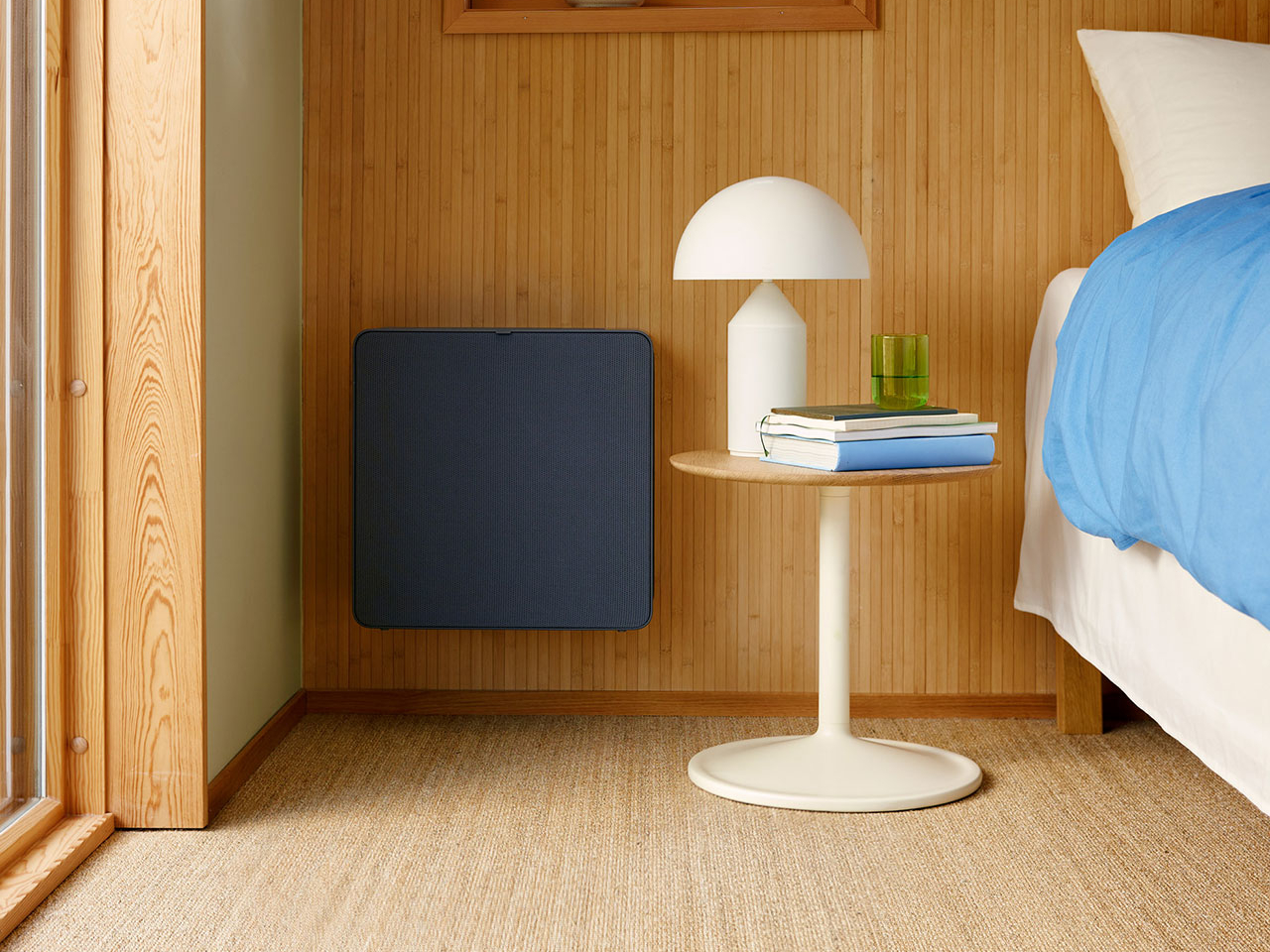
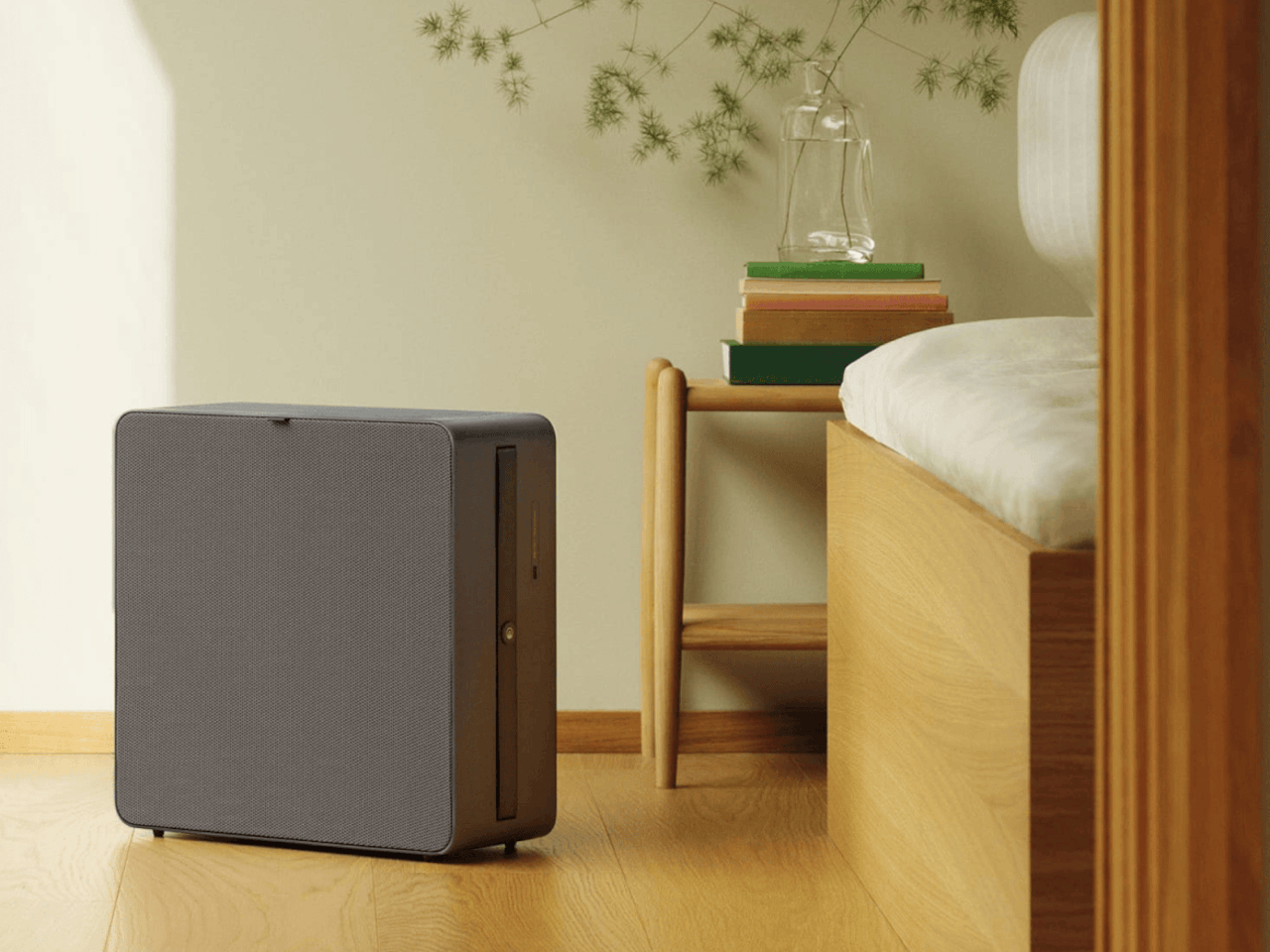
Air quality is the nightstand variable almost nobody thinks about until it becomes a problem. Most bedrooms have minimal airflow overnight with doors closed, and the particulate matter and volatile organic compounds that accumulate in enclosed spaces have a measurable impact on sleep depth. The Airthings Renew handles four-stage filtration, ending with a HEPA-13 filter that removes 99.97 percent of particles down to 0.3 microns, while a real-time laser particulate sensor adjusts filtration intensity automatically through the night.

What separates the Renew from a standard bedroom air purifier is the design language. Inspired by Nordic interiors, it arrives in muted charcoal with soft corners, a matte finish, and a fabric exterior that reads more like furniture upholstery than plastic housing. A Silent mode keeps it inaudible through the night, and the form works vertically or horizontally depending on available space. For anyone already in the Airthings ecosystem, the app ties home-wide air quality data into a single picture alongside everything else the system monitors.

What we like:

  • HEPA-13 filtration with a real-time particulate sensor makes the air quality benefit substantive rather than decorative
  • The Nordic design language means it can live beside a bed or on a low shelf without reading as a utility appliance that wandered in from another room

What we dislike:

  • The Renew is a floor or low-shelf unit rather than a true nightstand object; the air quality benefit reaches the bed, but the device itself won’t sit on one
  • The washable pre-filters require periodic cleaning that most people will keep up with initially and quietly stop doing

The Only Standard That Matters Beside Your Bed

These five products together cover the full environmental picture of a bedroom designed for rest: the sound you go to sleep to, the passive audio you keep nearby, the sleep being tracked without your involvement, the scent that marks the shift into rest, and the air moving through the space while everything else does its job. Each earns its place. None are asking you to reorganize your life to accommodate them.

The nightstand test is simple: remove something and notice whether the absence registers the next morning. These five all pass. The FlowToo at $99.99 anchors the list because it does the most and occupies the least. The rest fill in the picture around it, and together they make the case that a well-edited nightstand isn’t about owning fewer things. It’s about being more deliberate with what earns a permanent spot beside the bed.

The post 5 Best Bedroom Gadgets for Men in 2026 That Actually Earn Their Space on Your Nightstand first appeared on Yanko Design.
5 Best Off-Grid Essentials Every Nomad Needs in July 2026

Going off-grid used to mean a specific kind of bargain. You traded reliability for freedom, comfort for silence, and convenience for open space. That trade felt reasonable for a long weekend and increasingly difficult to justify for anything longer. The gear didn’t match the ambition. People who wanted to live this way, genuinely and for extended periods, were left assembling systems that weren’t built to work together and hoping the result held.

In 2026, that bargain no longer applies. A small number of products have quietly redefined what off-grid living can actually look like, and none of them ask you to accept a trade you’d regret by the third day. The five here represent a complete kit. From the base you sleep in to the water you drink to the wrist you wear when your phone goes silent, this is how you leave the grid and mean it.

1. Aboard T4 Electric Travel Trailer

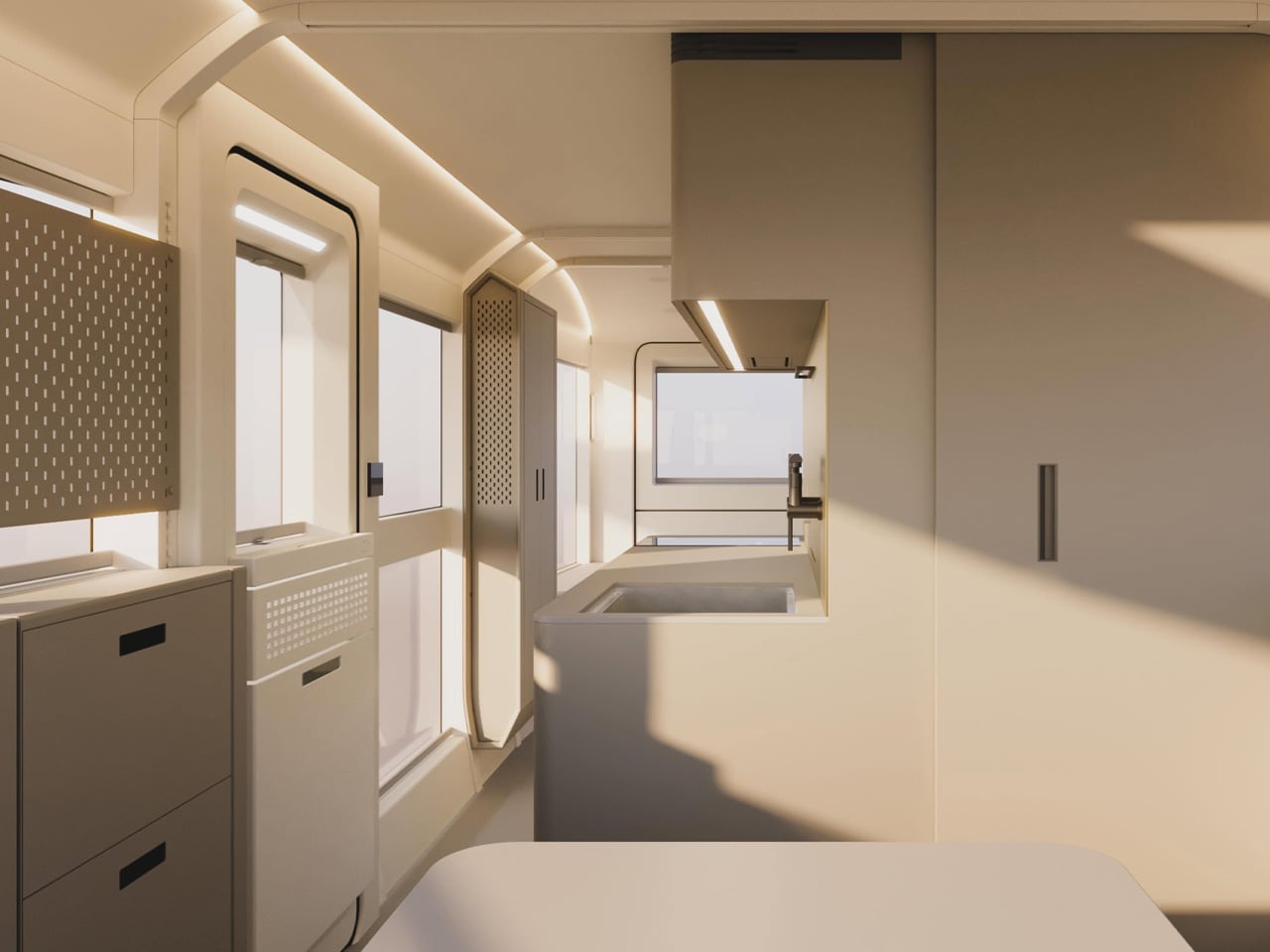
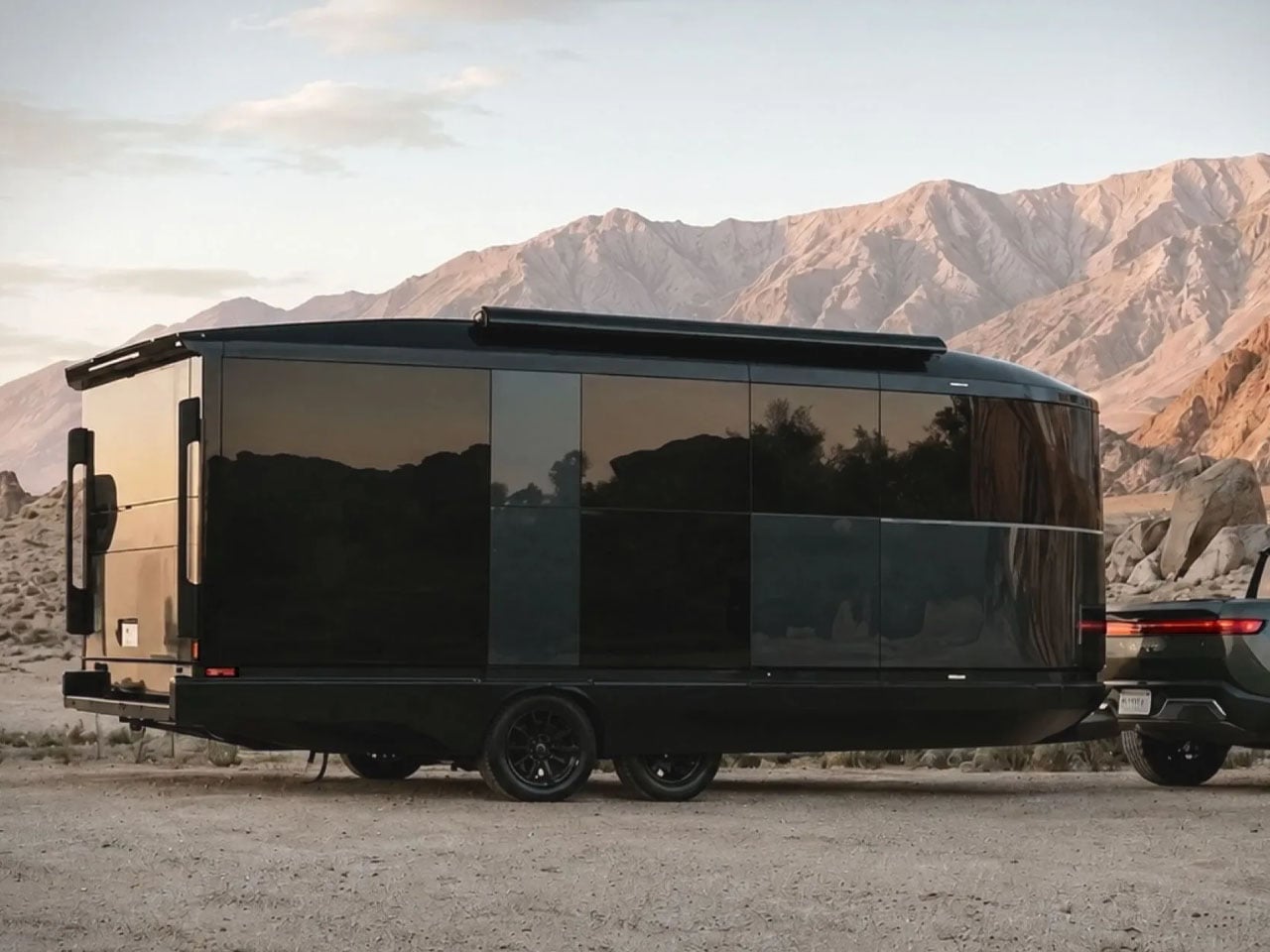
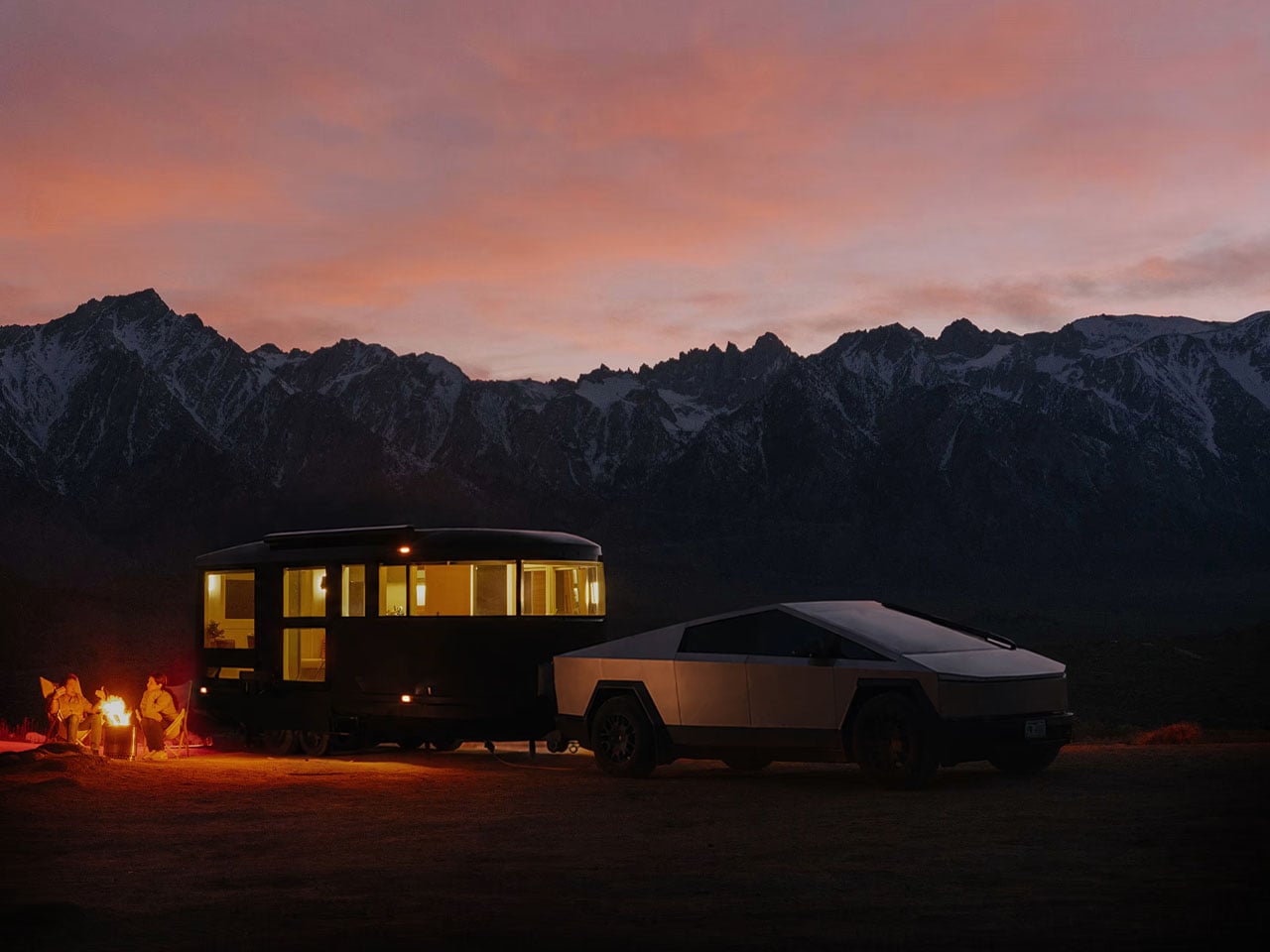
The Aboard T4 is the most capable piece of mobile living infrastructure available at a consumer level. Developed by California-based Aboard RV, it is a 24-foot self-propelled travel trailer built around a hybrid electric drivetrain with more than 200kWh of onboard power. A 41kWh LFP battery handles the daily load. At the same time, a 60kW range-extending generator recharges in under 30 minutes, stretching off-grid capability well beyond a long weekend without requiring any active energy management on your part.

What separates the T4 from anything else in its category is how completely it covers the stack of problems extended off-grid living creates. A 52-gallon fresh water tank, a 35-gallon grey water tank, and a 30-gallon black water tank manage water independently. An induction cooktop, refrigerator, and microwave give the kitchen real function. Two convertible lounges sleep four, a bathroom doubles as a mudroom with two separate entries, and 270-degree panoramic glazing brings the landscape into the interior without asking you to step outside to see it.

What we like

  • 200kWh+ onboard power with a range-extending generator that recharges in under 30 minutes
  • Fully integrated three-tank water system handles fresh supply and waste without any external hookup

What we dislike

  • $80,000 starting price places this well outside casual off-grid use
  • No confirmed release date, with reservations open now via a $100 fully refundable deposit

2. Airflow 8-Panel Fire Pit

A fire at the end of a day off-grid is not optional. It is the thing the day builds toward. The Airflow 8-Panel Fire Pit from Sanyo Works takes that seriously. Holes at the base of each panel channel primary airflow upward through double-walled cavities, triggering a secondary burn that produces a cleaner and more efficient fire than a conventional ring. The result is minimal smoke and a flame that sustains itself with less wood, which means you sit closer and stay out longer.

The eight removable panels give you control that fixed fire pits never offer. Opening or closing sections adjusts how the combustion chamber breathes, letting you dial intensity up or down without constant attention. Sanyo Works brings deep metal processing expertise to this design, and the precision of the airflow mechanics reflects that background in every use rather than in any surface flourish. For a product in a category full of objects that warp and degrade after a season, the Airflow is built to earn its place as permanent kit rather than a single-summer purchase.

Click Here to Buy Now: $325.00

What we like

  • Secondary combustion system produces minimal smoke for a noticeably cleaner and more efficient burn
  • Adjustable 8-panel design gives real control over fire intensity without constant management

What we dislike

  • Eight individual panels mean more components to account for when packing down at the end of a trip
  • Wood-only combustion with no gas compatibility

3. GoSun Flow Solar Water Purifier

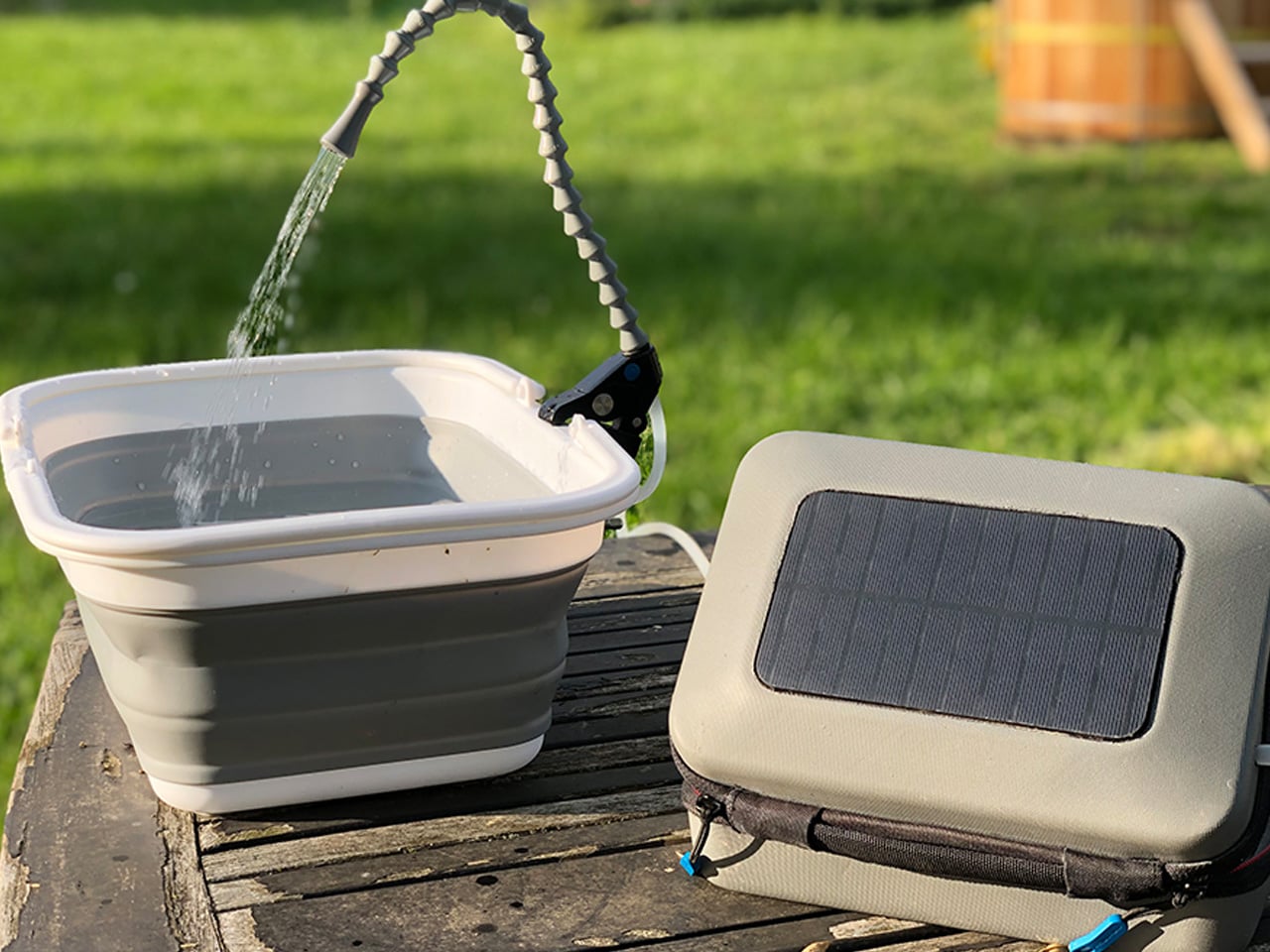
The T4 carries 52 gallons of fresh water, which handles the first stretch of serious off-grid living without a second thought. Extended stays ask for more. The GoSun Flow is a solar-powered water purifier and pump that compresses into a backpack and turns any freshwater source into potable water at one liter per minute, eliminating 99.99 percent of pathogens through a three-stage filtration system. A flexible faucet clamps to branches, tables, or tailgates, turning a stream bank or a riverside clearing into a fully functioning water station.

The detail that changes the conversation entirely is the solar-heated shower. After the integrated solar panel charges the pump’s power bank, the GoSun Flow delivers warm water from whatever source you fed it. On a multi-day off-grid stay, that is not a comfort feature. It is the difference between feeling like you chose this life and merely tolerating it. The filter manages up to 1,000 liters before replacement, USB power covers days when solar input is limited, and the entire system packs back into the bag you arrived with.

What we like

  • Three-stage filtration eliminates 99.99% of pathogens at one litre per minute from virtually any freshwater source
  • Solar-heated shower capability from a system compact enough to carry in a standard backpack

What we dislike

  • Cannot process saltwater, which limits utility at coastal campsites
  • Multiple components mean more parts to track and potentially leave behind in the field

4. Blackout Beam Tactical Flashlight

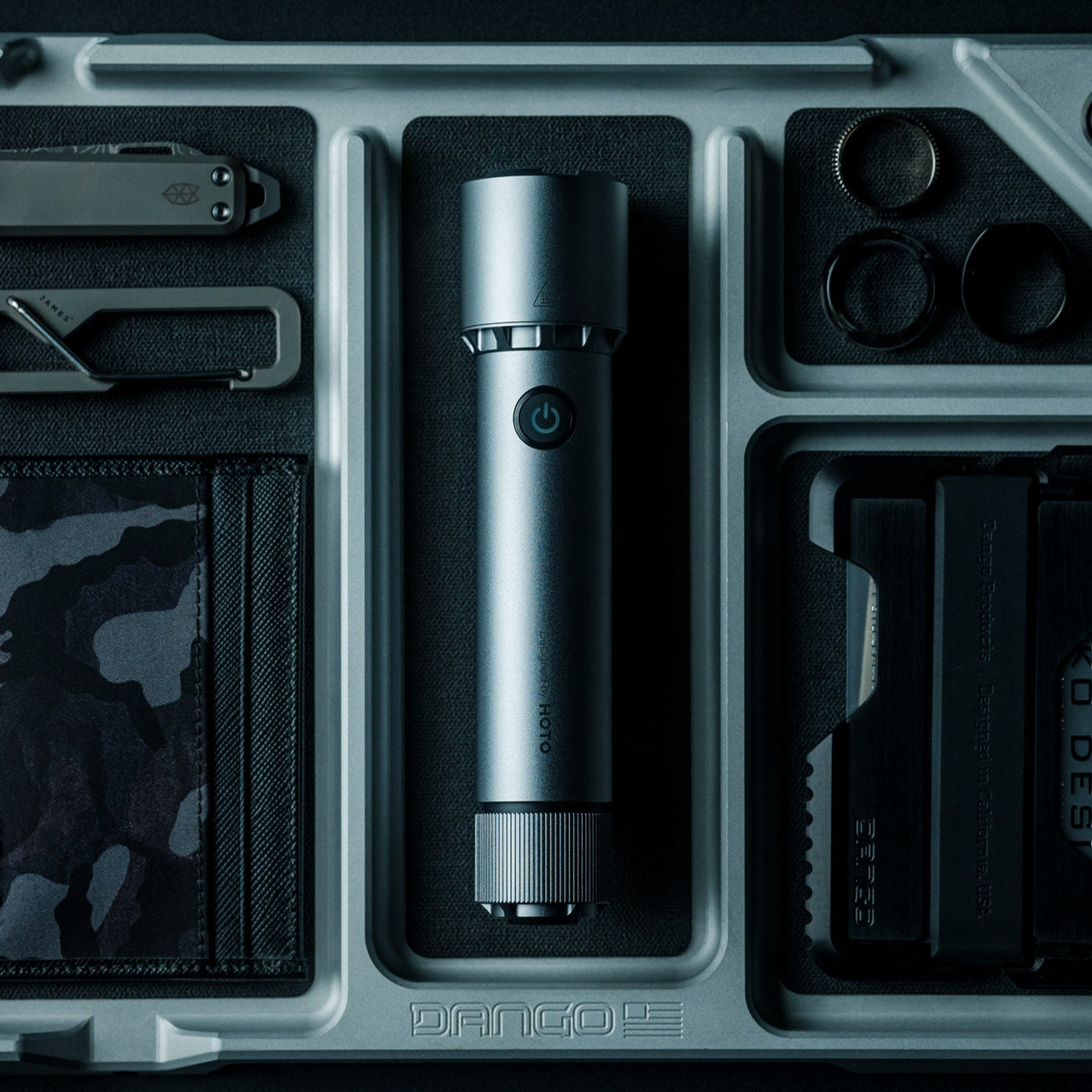
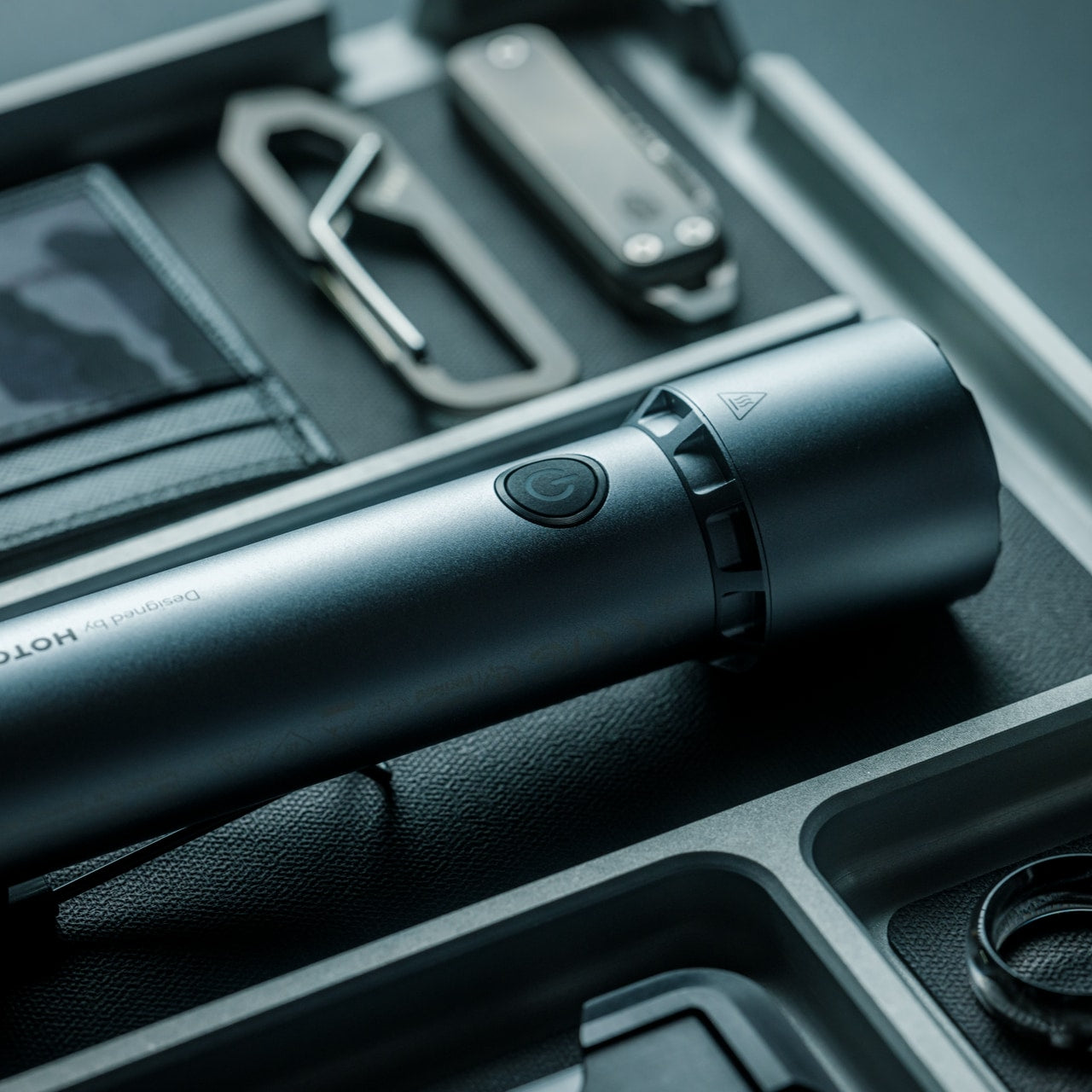
Darkness at a remote campsite is a different quality of dark than anything urban life prepares you for. The Blackout Beam handles that gap with 2,300 lumens of output, a 300-meter beam throw, and a 0.2-second response time that puts light in your hand before your eyes have finished adjusting to reaching for it. The aluminum body carries an IP68 rating for complete water and dust resistance. In a wildlife encounter, a navigation situation after sundown, or a power failure inside the T4, the speed of that response matters more than the lumen count.

What separates the Blackout Beam from a high-output flashlight you’d pick up at a hardware store is the combination of instant response and a design language that earns daily carry well before any emergency arrives. It fits cleanly in a jacket pocket, sits without drama on a surface inside the T4’s interior, and reads as a considered object rather than declared emergency equipment. Off-grid gear that actually gets packed is gear that doesn’t announce its purpose before it’s needed. The Blackout Beam earns that carry without making any demands.

Click Here to Buy Now: $90.00

What we like

  • 2,300-lumen output with a 300-meter beam reach and 0.2-second response built for real outdoor conditions
  • IP68-rated aluminum body handles water, dust, and impact without any concession to portability

What we dislike

  • Maximum lumen output draws battery faster during extended use
  • Tactical aesthetic doesn’t integrate seamlessly into every EDC or interior setup

5. O-Boy Satellite Smartwatch

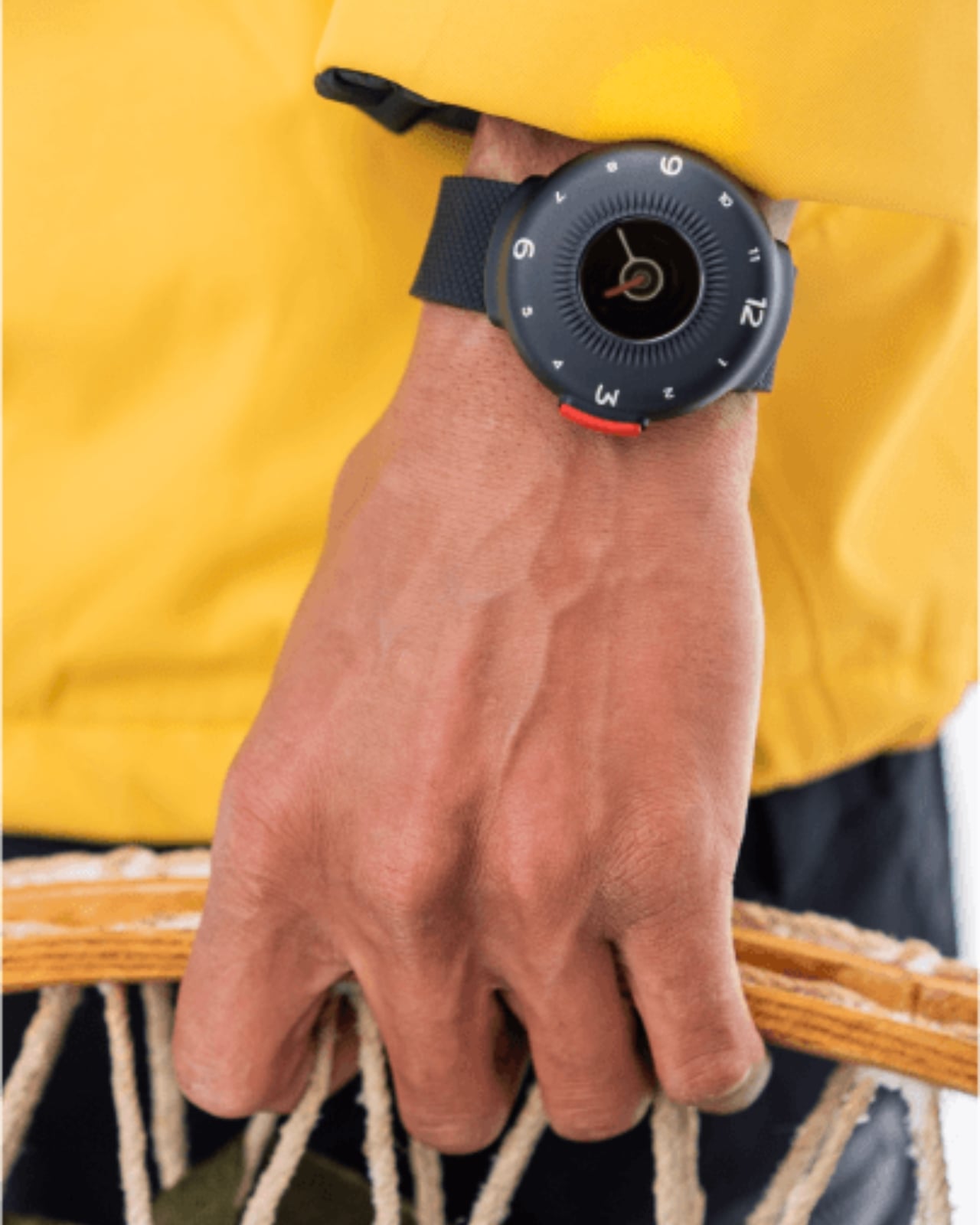
Everything else on this list extends how long you can stay off-grid and how well you live while you’re there. The O-Boy addresses the one scenario none of the others touch. Developed by Brussels-based studio Futurewave, it is a satellite-connected smartwatch built for environments where mobile networks simply do not reach. In those places- mountains, open water, remote work sites- it transmits an emergency alert directly via satellite regardless of what infrastructure exists beneath your feet. No carrier plan covers this. O-Boy does.

What Futurewave got right beyond the technology is the design brief. O-Boy does not read as tactical or survival-coded. It does not look like something that belongs exclusively to alpinists or emergency response professionals. It looks like something a person who spends real time in remote environments would wear on an ordinary day, which is the only design decision that makes its safety layer genuinely accessible. The people who most need satellite-backed coverage are not always those who identify with extreme sport. O-Boy is built for anyone who travels further than their phone can follow them.

What we like

  • Satellite connectivity transmits emergency alerts from locations with zero mobile network coverage
  • Utilitarian design reads as wearable well beyond strictly tactical or adventure-specific contexts

What we dislike

  • Satellite communication functionality typically requires an ongoing subscription service
  • Smartwatch form factor means battery management becomes a daily consideration in the field

The Grid Was Always Optional

These five cover the full range of what off-grid living actually asks of you. The T4 provides the foundation. The GoSun Flow extends it to wherever fresh water runs. The Airflow firepit anchors the evening. The Blackout Beam handles the dark. The O-Boy covers the distance your phone cannot. Each product solves a specific problem this life has always created, with enough design intelligence that the solution feels like an upgrade rather than a workaround.

That is the shift that defines where off-grid living stands in 2026. The gear has finally caught up to the ambition. Staying further out, for longer, without giving anything meaningful up is no longer a matter of tolerance or planning around known deficiencies. It is a matter of choosing the right five things. The grid was always optional. These are the five that make leaving it feel like the obvious call.

The post 5 Best Off-Grid Essentials Every Nomad Needs in July 2026 first appeared on Yanko Design.
This 341-Square-Foot Tiny Home Proves You Don’t Need More Space — Just Smarter Space

Most tiny homes ask you to forgive something. The Amelia doesn’t. It speaks that language fluently — treating constraint as a design language rather than something to apologize for.

Stretching 26 feet long and 8.5 feet wide, the Amelia sits on a double-axle trailer and clocks in at 341 square feet of living space. It wears white board-and-batten siding with a maintenance-free steel base and a snap-lock metal roof — clean, unfussy, built to hold up wherever you put it. The kind of exterior that looks deliberate rather than compromised.

Designer: Teacup Tiny Homes

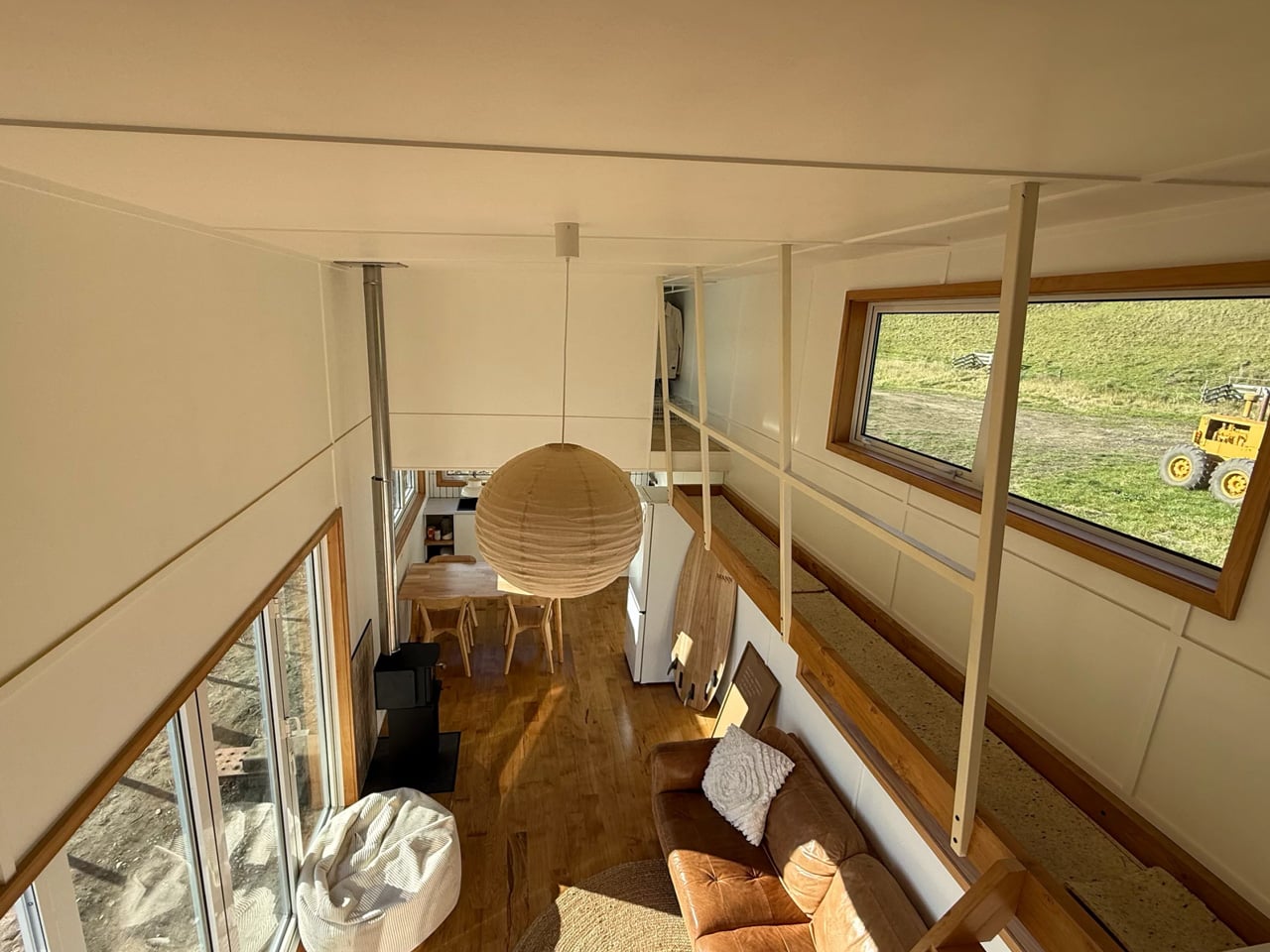
Step inside and the first thing you notice is the light. Generous dual-pane, low-E windows fill the living room with natural brightness, and the layout feels considered rather than cramped. There’s room for a full sofa — a sofa bed is available as an upgrade — alongside a large storage unit. A propane-powered underfloor heating system keeps the ground level comfortable year-round, complemented by a mini-split air conditioning unit and a Lunos heat recovery ventilator for air quality. The Amelia was built for Canadian winters, and it shows.

The kitchen sits just past the living area and does not ask you to compromise. A white apron-front farmhouse sink anchors the space, joined by a four-burner Furrion propane range, an oven, a fridge-freezer, a stainless over-the-range microwave, and a large pull-out pantry. Waterfall-edge marble-like countertops run along the perimeter, with an eating bar doubling as a workstation. Every detail, from the soft-close cabinet doors to the black Kohler pull-down faucet, feels chosen rather than settled for. It is the kind of kitchen that makes cooking feel like something worth doing.

A sliding door connects the kitchen to the bathroom — a thoughtful detail that keeps the living zone open. Inside, a 30×30 stand-up shower with easy-clean fiberglass walls, a custom vanity with a rectangular vessel sink, and an oversized round medicine cabinet handle the essentials without feeling like a compromise. There is also a laundry rough-in for those who want to add machines later.

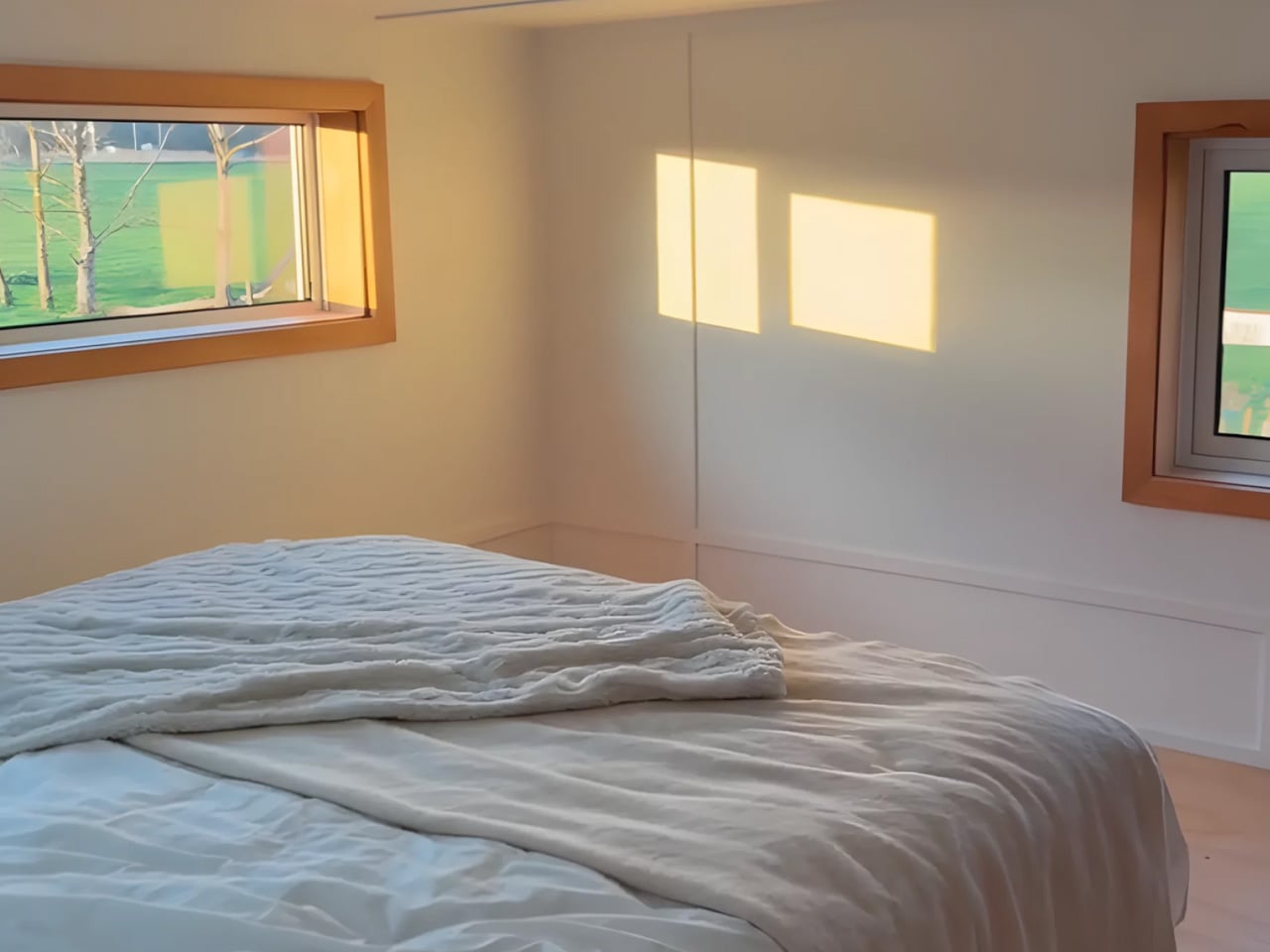
Two loft bedrooms occupy the upper level. The main loft, positioned over the kitchen, fits a king-size bed behind a slatted privacy wall. The secondary loft, accessed by a removable wooden ladder above the living room, handles a queen or king with room to spare. A storage-integrated staircase is available as an upgrade and is worth it for full-time living.

The Amelia starts at roughly US$102,000 and is available for delivery across the United States and Canada. Teacup Tiny Homes, a 100% female-owned Alberta-based builder operating since 2016, offers significant customization across layouts, materials, and finishes. For a home this size, it carries a lot of conviction.

The post This 341-Square-Foot Tiny Home Proves You Don’t Need More Space — Just Smarter Space first appeared on Yanko Design.

This New Museum in Shenzhen Looks Like a Piece of Landscape That Was Always There

It took six years from competition win to opening day, but the Shenzhen Natural History Museum was always going to be worth the wait. Designed by the 3XN, B+H Architects, and Zhubo Design consortium, the 105,300-square-metre building opened to the public on July 28, 2026, beside Yanzi Lake in the city’s Pingshan District. It is the largest natural history museum in South China and one of the most architecturally ambitious public buildings completed anywhere in the world this year.

The design has a name, “Delta,” and it earns it. Rather than arriving as a monument on a plinth, the building rises from its river-delta setting as a continuous terrain of sloping roofs, planted terraces, and granite-clad surfaces that seem to have been worn into shape by water and time. The façade reads like a cliff face, its carved openings hinting at the galleries within. From a distance, the silhouette folds into the surrounding hills as naturally as it folds into the brief.

Designer: 3XN, B+H Architects & Zhubo Design

Kim Herforth Nielsen, founder of 3XN, framed the ambition plainly: “Nothing in nature is square. Nature is amorphous, dynamic, and always in formation. From the beginning, the ambition was to create not a building, but a piece of landscape that had always been there.” That idea holds all the way to completion. Internally, five cone-shaped volumes organize the museum’s principal exhibition halls, and moving between them feels less like navigating a floor plan and more like moving through a cave system, with atria, terraces, and framed views appearing and dissolving as you go.

Across eight themed exhibition halls, visitors trace 4.6 billion years of Earth’s history, from the origins of the universe through to the specific ecosystems of southern China. Exhibition designers Atelier Brückner and Museum Studio worked alongside the architects to integrate specimens, large-scale installations, and cinematic media with the curved cone geometries, turning the galleries into environments rather than rooms.

The roof is as considered as anything inside. B+H, who served as lead consultant, executive architect, and landscape architect, designed a walkable park that extends the surrounding ground plane up and over the building, connecting the museum to Yanzi Lake and the region’s wider network of rivers and wetlands. Viewing terraces, planted thematic zones, and gathering spaces make it a civic destination in its own right, one that functions on a Tuesday morning just as well as a Saturday afternoon.

The museum is part of Shenzhen’s “Ten Cultural Facilities of the New Era,” a city-wide infrastructure investment that has quietly been reshaping one of the world’s most dynamic urban environments. The Natural History Museum is the most visually compelling of the lot, and the one most likely to be remembered.

The post This New Museum in Shenzhen Looks Like a Piece of Landscape That Was Always There first appeared on Yanko Design.
The 5 Best Pet-Friendly Designs of July 2026

Pet design has spent years stuck in a holding pattern, functional at best, forgettable at worst. The objects built around our animals have rarely been held to the same standard as everything else in a considered home. That’s beginning to change. A new generation of designers is approaching pet products the same way they approach anything else, asking harder questions about form, material, and what the thing is actually trying to do.

What unites these five is a refusal of the usual trade-off. You shouldn’t have to choose between a home that looks intentional and a home that works for your animal. The best pet products start from that premise and find solutions that serve both sides with the same formal intelligence you’d expect from any well-considered object. When a product stops being something you manage around, it becomes something you’re genuinely glad to have.

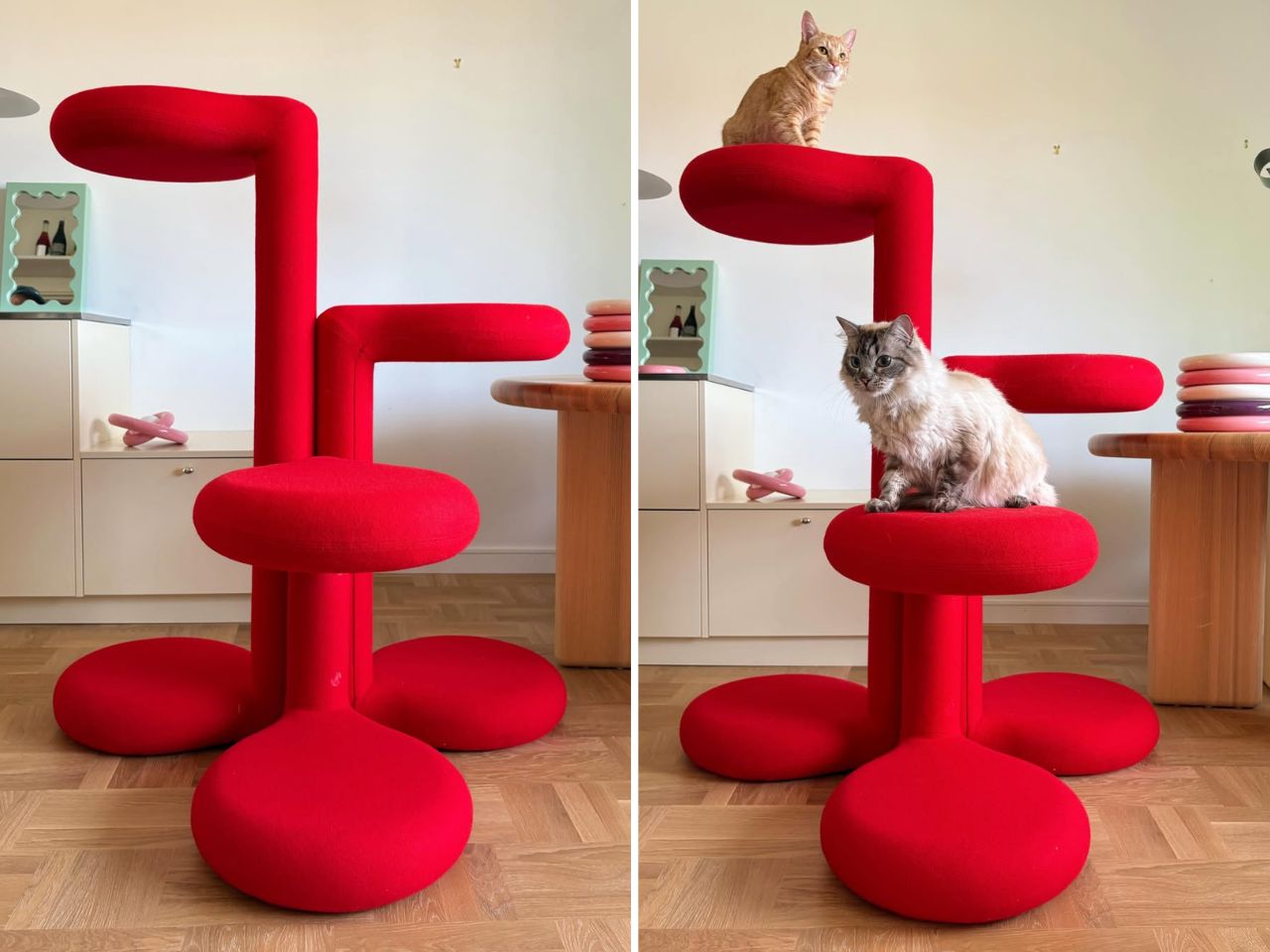
1. Chunky Cat Tree

Gustaf Westman has spent his career making objects that stop you mid-room. The Swedish designer’s signature vocabulary, rounded forms, chalky pastels, and a cheerful materiality that makes things feel considered without feeling serious, translates to cat furniture with surprising ease. His pieces don’t ask to be hidden. They ask to be placed. A climbing structure in the Westman language becomes something you actually want in your living room, which is a genuinely rare thing to say about anything designed for a cat.

For cat owners who have spent years tolerating carpet-covered towers tucked behind sofas, this is the product that changes the terms. You stop hiding the furniture and start displaying it, and that shift benefits the cat as much as the room. A well-placed, structurally interesting object is exactly what a cat will engage with rather than ignore. The benefit for you is a home where the animal’s things no longer undercut everything else you’ve worked to make look good.

What we like

  • Westman’s palette and rounded forms integrate into a styled interior rather than competing with it
  • Treats cat furniture as a genuine design object worthy of deliberate placement

What we dislike

  • The distinctive aesthetic is specific enough that it won’t suit every interior equally
  • Pricing and availability may limit access for most cat owners

2. Gaenim Cap

There is a specific kind of design satisfaction reserved for solutions so obvious you wonder why they took this long. A bottle cap that converts any standard water bottle into a pet drinking vessel is exactly that. Thread it onto a bottle you’re already carrying, tilt, and a small reservoir fills for your dog or cat to drink from. At $9, the price becomes part of the argument. This earns its place not through complexity but through the sheer clarity of the idea.

What makes it interesting from a design perspective is what it doesn’t do. It doesn’t add bulk, require charging, or introduce a new object into your bag. It simply replaces the cap on something you’re already carrying. For anyone who walks their dog, hikes, or travels with animals, this is the kind of thinking that makes a product genuinely useful rather than just thoughtfully packaged. The solution is in the reduction, and that’s exactly how it should be.

What we like

  • Replaces an existing object rather than adding a new one to your kit
  • The $9 price makes it genuinely accessible without compromising the design logic

What we dislike

  • Works best with standard bottle threads; compatibility may vary across certain brands
  • The bottle determines the reservoir size, so larger dogs may need multiple refills on longer walks

3. GlocalMe Pet Phone

The conceptual leap here is significant. Rather than building pet monitoring features into a companion app or a smartwatch extension, this device treats pet care as a dedicated platform in its own right. A smartphone-like form factor designed exclusively around tracking, monitoring, and caring for your animal brings a level of focus that tacked-on app features cannot match. Health metrics, location, behavioral patterns: it consolidates what would otherwise be scattered across multiple apps into a single, considered object.

The design argument is also about the owner’s relationship with the device itself. When your animal’s care lives in its own dedicated interface rather than competing with your notifications and social feed, the interaction changes. You’re not checking on your pet between emails. You’re engaging with something purpose-built, which makes the monitoring feel intentional rather than incidental. For a generation of pet owners who treat their animals as dependents, that distinction is exactly the kind of thinking that earns product loyalty.

What we like

  • Consolidates pet health tracking, location, and care into a single dedicated device
  • The purpose-built interface makes monitoring feel intentional rather than an afterthought

What we dislike

  • A dedicated device means another screen to charge and update alongside your existing tech
  • Works best for single-pet households; multi-pet scenarios add layers of complexity

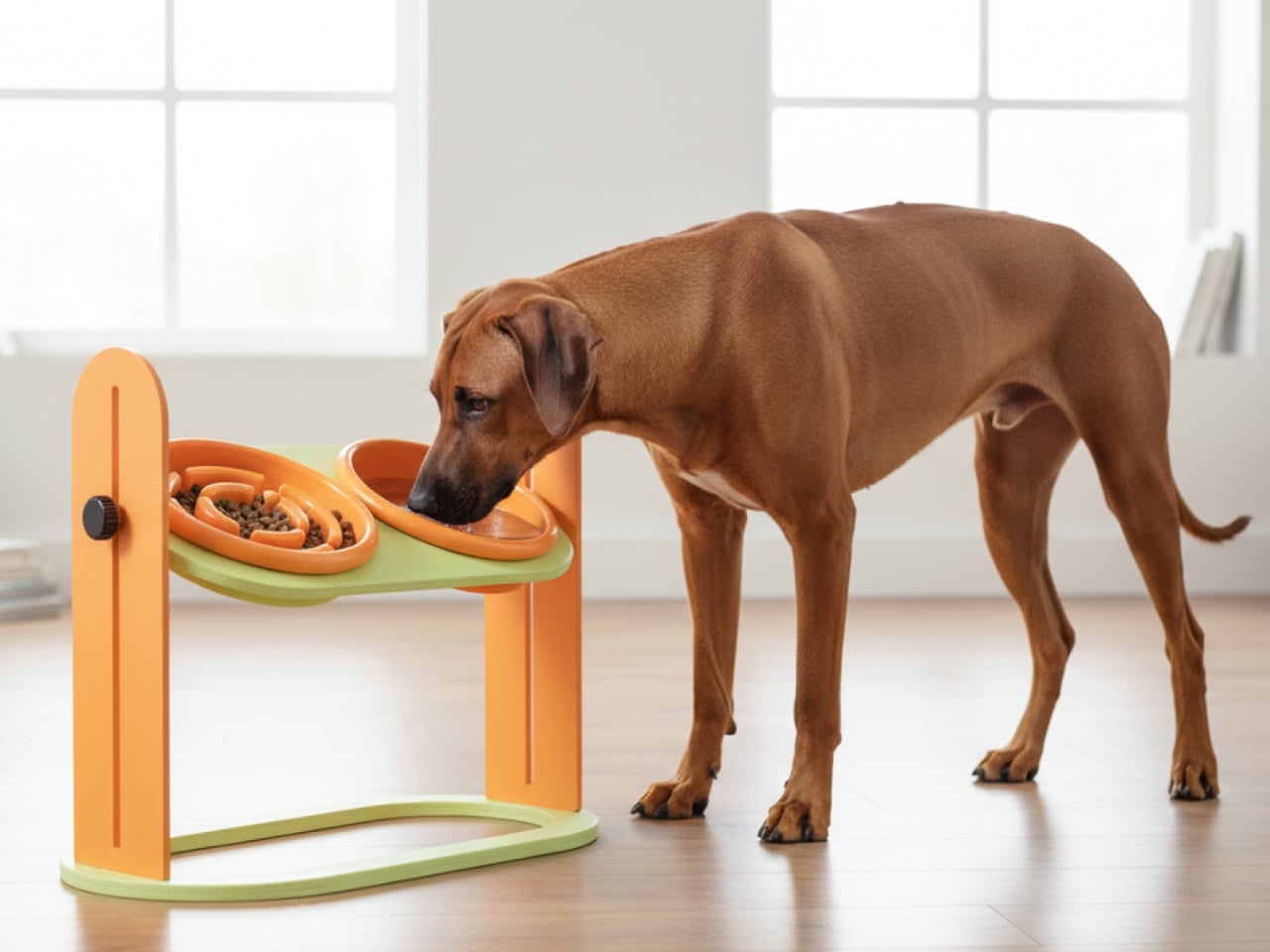
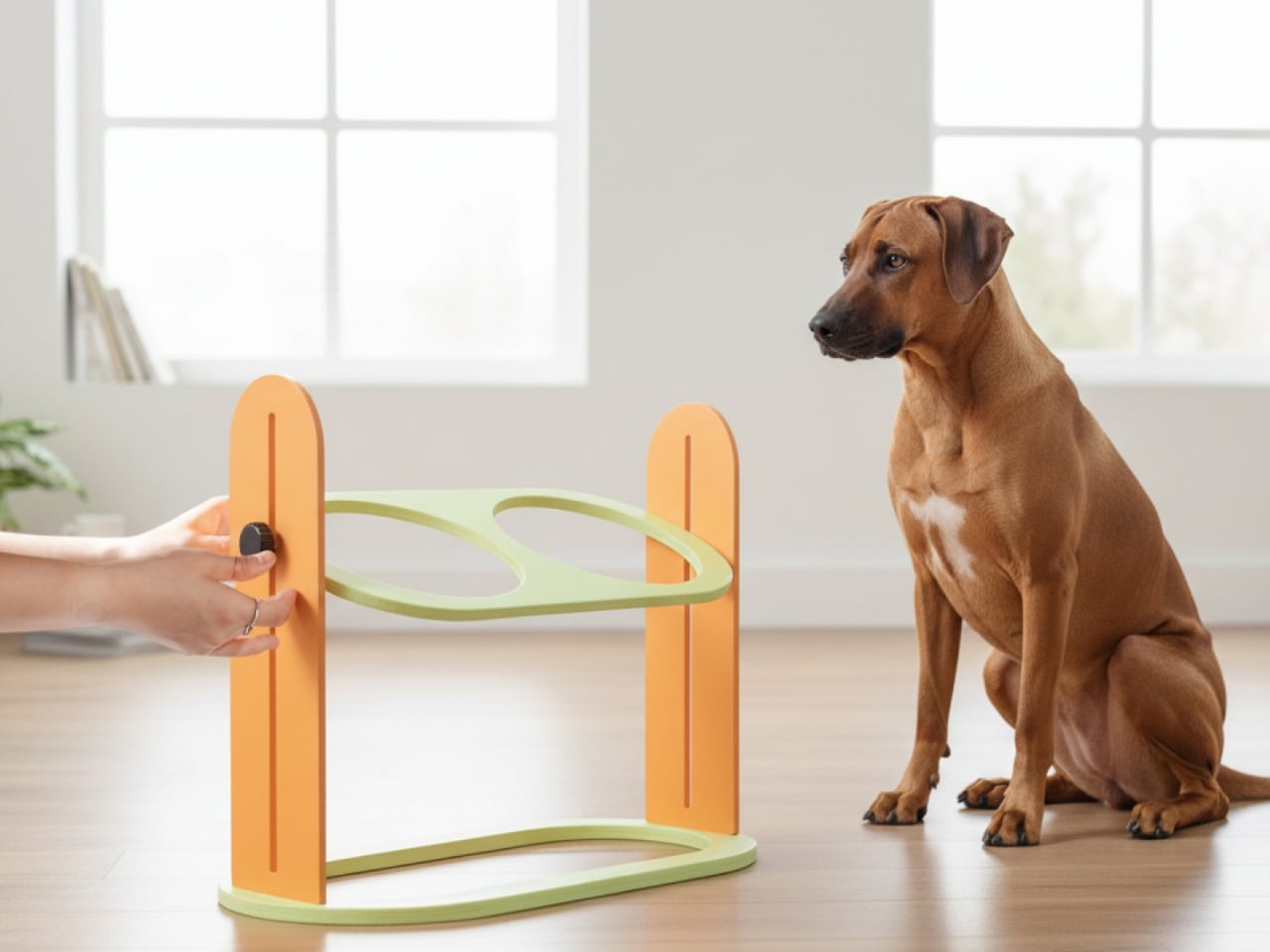
4. Sloddy

The standard dog bowl is one of the least examined objects in the home, a container that does one thing without much thought about whether that one thing could be done better. This bowl challenges that premise by introducing cognitive engagement into the feeding ritual. Your dog has to work for the food, navigating a surface designed to slow eating and stimulate problem-solving. In doing so, it addresses bloat, anxiety, and boredom simultaneously, three things most feeding bowls pretend don’t exist.

What distinguishes this from the broader category of puzzle feeders is the formal attention paid to the object itself. The bowl reads as a considered piece of kitchenware, not a brightly colored plastic insert you’d move before guests arrived. That balance between function and form is what elevates it. The dog gets the mental engagement it needs. You get something worth leaving on the kitchen floor without it making the space feel like a pet supply store.

What we like

  • Addresses slow feeding and mental stimulation without resorting to toy-like aesthetics
  • Considered enough in its design language to leave out on the kitchen floor between meals

What we dislike

  • The puzzle surface may frustrate smaller breeds or dogs with flat faces
  • Cleaning the channels takes noticeably more effort than a standard bowl

5. PawStairs

Pet stairs are a product most owners know they need and spend years avoiding because the available options are genuinely difficult to look at. This modular version in wood finishes solves the aesthetic problem without sacrificing the functional argument. The stairs configure to different heights depending on the furniture they’re serving, so a single product adapts to the sofa or the bed. The wood finish does the visual heavy lifting, making it read as furniture rather than a concession to the animal.

There is also a welfare argument embedded in the design. Older dogs and cats with joint problems need assistance reaching elevated furniture, but the typical foam-and-fabric ramp is something you’d move to a cupboard before guests arrived. A product that stays out because it belongs there is one that actually gets used consistently, and that’s the only way it helps. The modularity matters too: as the animal ages and its needs shift, the configuration can grow with them.

What we like

  • The modular system adapts to different furniture heights rather than locking you into one configuration
  • Wood finishes integrate with real interior design rather than working against it

What we dislike

  • Modularity means multiple components to store when not in use
  • Wood surfaces may require added grip strips for older pets with limited mobility

Good Design Doesn’t Stop at the Pet Aisle

The design of pet products has operated with low expectations for too long. These five make the case that the category is capable of the same rigor applied to any other consumer object. When a designer gives genuine attention to a scratching post, a bottle cap, or a feeding bowl, the result isn’t just more attractive. It’s more useful, more consistently used, and genuinely better for the animal. That equation holds regardless of the category.

What’s encouraging is the range. These are not luxury objects for a niche market of design obsessives with cats. A $9 bottle cap sits in the same list as a piece by one of Sweden’s most recognizable designers because both were made with the same underlying intention: to solve a real problem without making the room worse in the process. More of that thinking, across more of the category, is exactly what pet products have been waiting for.

The post The 5 Best Pet-Friendly Designs of July 2026 first appeared on Yanko Design.
The 5 Best Camping Gear of July 2026

Summer is the most unforgiving season to find out your gear isn’t up to the job. The heat is relentless, the trails are at peak capacity, and every extra ounce you’re carrying becomes personal by mile three. The best camping products aren’t the ones with the longest feature lists – they’re the ones that solve a real problem, disappear into your pack, and earn their spot back every single trip. These five picks do exactly that.

July 2026 has been a quietly strong month for outdoor gear worth paying attention to. None of these products are flashy for the sake of it. They’re well-reasoned objects designed by people who clearly spend time outside – a five-function flashlight that costs less than dinner, a grill plate that packs flat as a paperback, a fire pit stand that respects the ground beneath it. Together they cover a surprising spread of camp needs without turning your bag into dead weight.

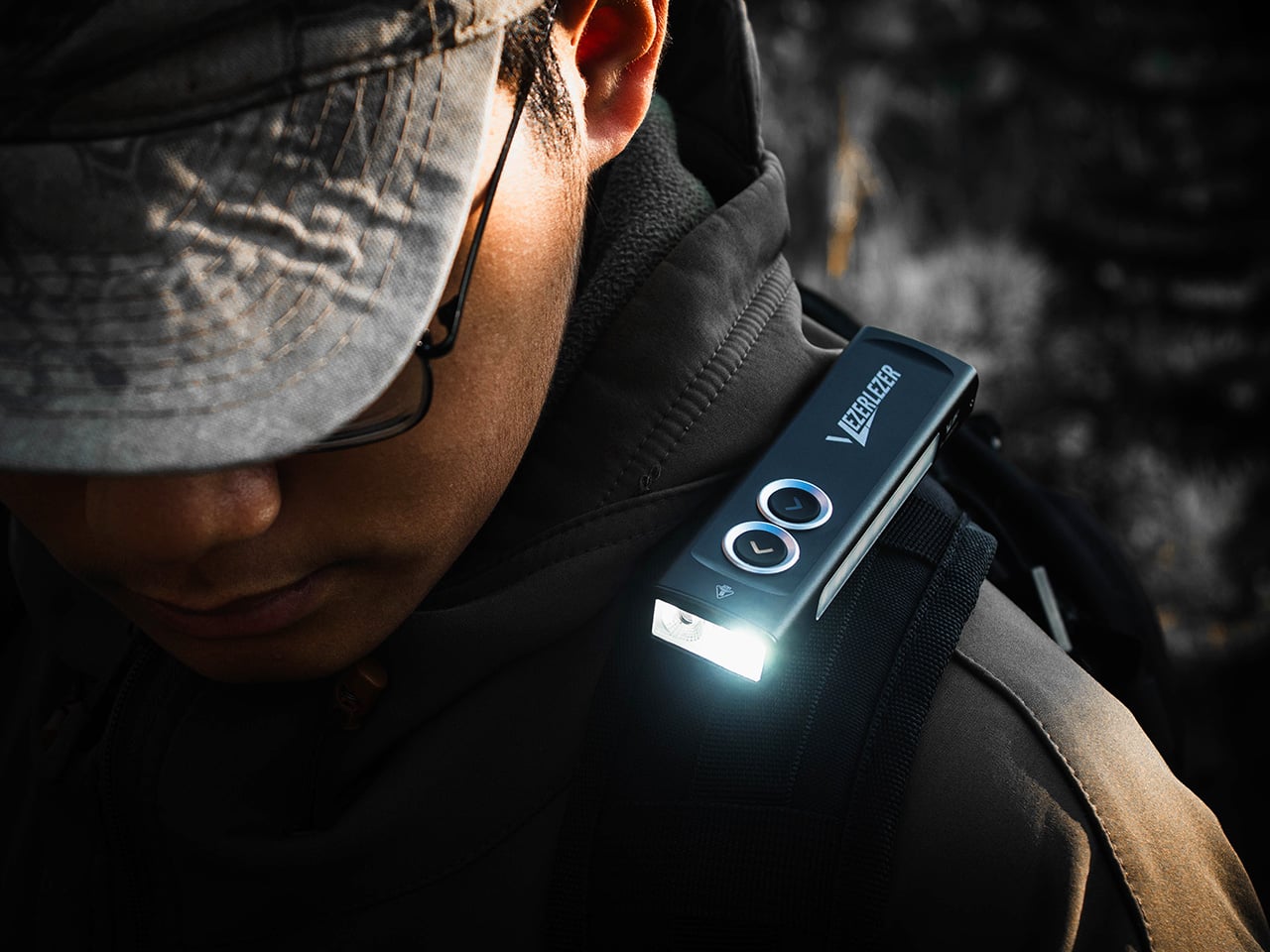
1. 5-in-1 EDC Flashlight

Person in a cap and dark jacket with a small rectangular device clipped to their shoulder strap, emitting a bright light at the bottom.

Archer wearing a cap with a mounted headlamp, drawing a bowstring in a dim forest light.

For under $20, this flashlight does something most multi-tools twice its price fail to manage -it stays genuinely useful across completely different situations. The 1,300-lumen main beam is bright enough to light a campsite perimeter, navigate a midnight trail, or serve as a serious deterrent in an unexpected encounter. The UV mode is quietly one of the most underrated additions in any outdoor tool: scorpion detection in arid terrain, stain checks in a tent, and quick gear inspections that a standard beam simply can’t offer. Five functions, one body, one price point that removes every excuse not to carry it.

What really sets this apart from the sea of budget flashlights is the green laser. Whether you’re pointing out trail features in low light, doing a clear-sky star trace with a group, or signaling across a campsite, the laser gives the tool a second personality that standard lights don’t have. It lives comfortably on a keychain or clipped to a carabiner, which means it’s the kind of EDC piece that becomes automatic – you stop thinking about it and just always have it. At this price, losing it stings far less than losing a $90 flashlight, which matters more than people admit.

What we like:

  • 1,300-lumen output is genuinely strong for the price category
  • UV mode adds practical utility well beyond standard lighting

What we dislike:

  • Five modes cycled through a single interface takes a learning curve in the dark
  • Long-term durability at this price point is worth watching over a full season

2. Portable Fire Pit Stand

A fire pit stand sounds like a camping luxury until you’re on a site that specifically prohibits ground fires – a dry meadow, a wooden deck platform, a national park with strict leave-no-trace rules. This portable stand elevates your fire off the surface below it, protecting the ground from direct heat damage and keeping ash contained in a way that a loose ring of rocks never quite achieves. It also makes the whole camp setup look considered rather than improvised, which counts for more than it sounds when you’re spending three nights in the same spot.

The portability design is what makes this more than a base-camp accessory. It folds or collapses into a compact carry form that works for car camping and overlanding without demanding dedicated storage. Setting it up is fast, and the elevated position actually improves the fire’s performance – air circulation underneath the fuel means a cleaner, more consistent burn through the night rather than the smothered, smoky result of a fire sitting directly on compacted ground. For anyone who builds a fire as part of the ritual of camping rather than just a heat source, this stand makes that ritual a lot more intentional.

Click Here to Buy Now: $119.00

What we like:

  • Elevates fire off the ground, meeting leave-no-trace standards on most sites
  • Improved airflow beneath the fire produces a cleaner, more consistent burn

What we dislike:

  • Adds weight that dedicated ultralight backpackers will feel over a long carry
  • Works best with manageable fuel sizes; very large logs can be awkward to balance

3. The Chopsticks Maker

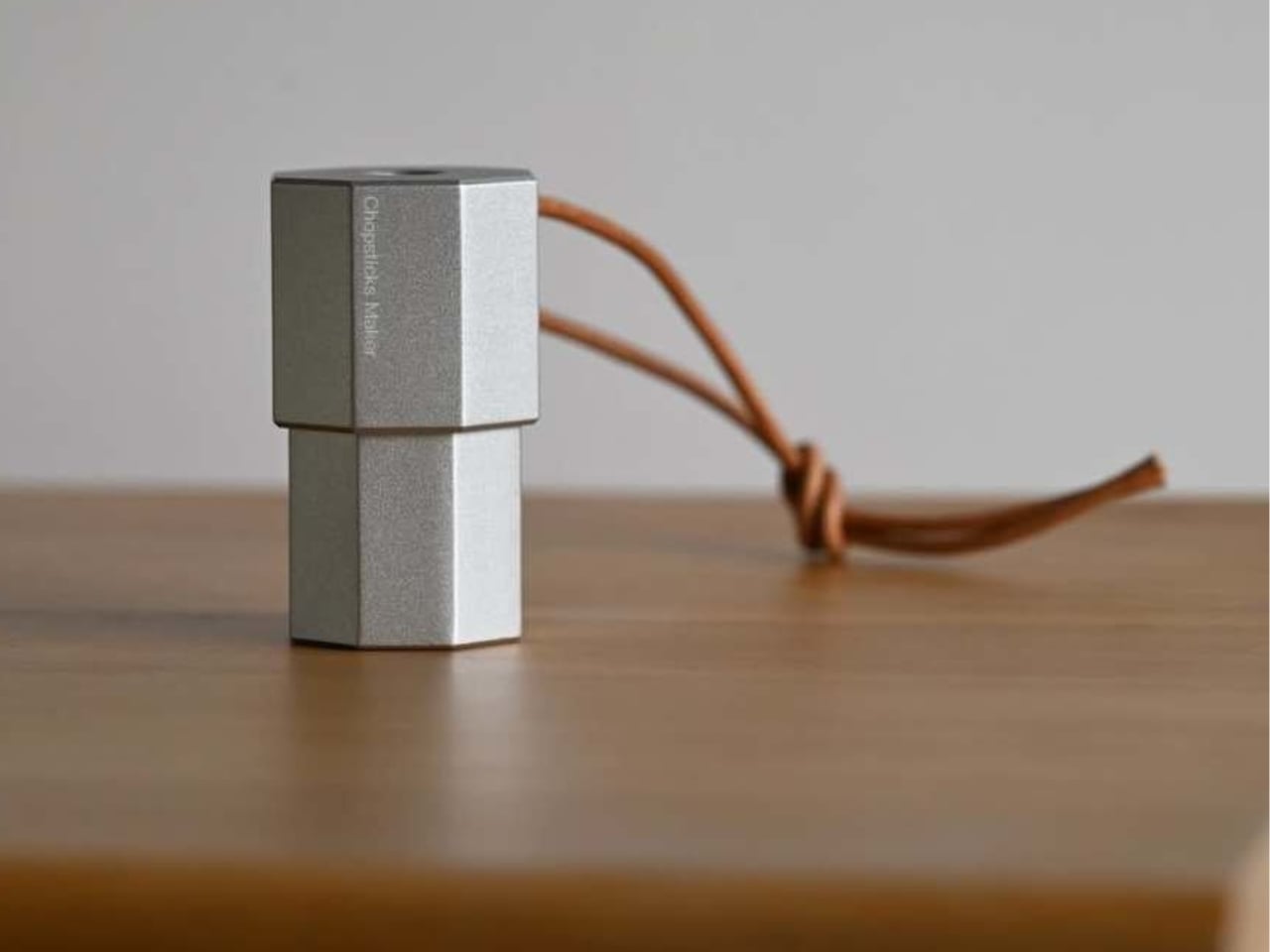
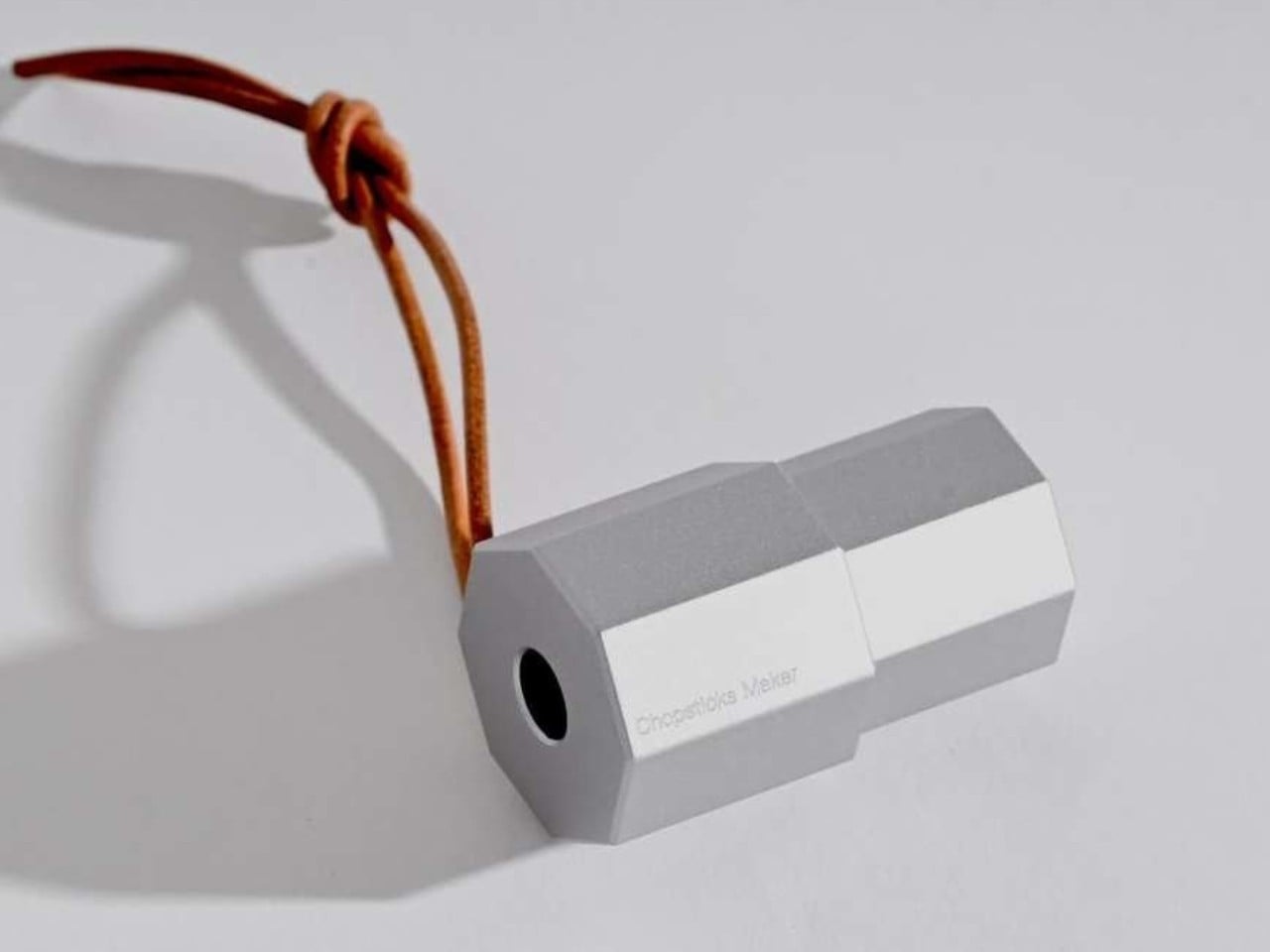
The best camp tools are the ones where the form has been interrogated as hard as the function, and this cutlery set is a clear example of that principle at work. Drawn from the geometry of a pencil sharpener, the design nests every component inward in a compact, cylindrical body that takes up less space than a granola bar and doesn’t produce the loose-rattling frustration of a roll-up pouch at the bottom of a bag. It’s the kind of solution that makes you wonder why camp cutlery looked like it did for so long – the problem wasn’t hard, it just needed someone to think about it differently.

Beyond the cleverness of the form, this is a practical piece of kit that pays off most at the end of a long trail day when patience for fiddly gear is essentially zero. The nesting mechanism keeps everything secured during transport, so there’s no digging for a stray fork or knife at dinnertime. For solo campers and minimalist packers in particular, this delivers the full utensil experience without the footprint or the assembly drama. It’s also the kind of object that earns quiet admiration at a campsite – a small, well-made thing that communicates that you’ve thought about your gear rather than just grabbed it.

What we like:

  • Pencil-sharpener nesting form is genuinely space-efficient and well-reasoned
  • Secure internal assembly means no loose components rattling around in a pack

What we dislike:

  • Reassembling cleanly takes some practice in the first few uses
  • Best suited for solo use; group trips would require multiples

4. Compact Modular Grill Plate

Most camp grill solutions force you into a choice between portability and an actual usable cooking surface. This modular plate refuses that trade-off. It packs flat, assembles fast, and gives you a legitimate grilling surface over an open fire or camp stove without demanding a dedicated stuff sack or adding meaningful weight to the load. Anyone who has tried to cook a piece of fish or a proper piece of chicken on a wobbly, undersized grate understands immediately what a well-designed flat grill plate changes about the whole experience.

The modular configuration is what makes this more versatile than a single-use accessory. It adapts across different heat sources and cooking setups, which matters on trips where the terrain and conditions aren’t always cooperative. Cleanup is also more straightforward than a traditional grate – the flat surface doesn’t trap debris in the same way, and a flat piece of steel is simply easier to wipe down or rinse in the field. For anyone who treats camp cooking as something more than fuel intake, this plate raises the standard of what’s achievable without a kitchen, and it does it without adding the kind of bulk that makes you leave things behind.

Click Here to Buy Now: $100.00

What we like:

  • Flat pack profile adds minimal bulk and fits naturally into a camp kitchen kit
  • Modular design adapts to open fire and stove setups with equal ease

What we dislike:

  • Cooking surface area may feel limited when cooking for more than two people
  • Requires a stable heat source; uneven ground setups need more care

5. Flextail Tiny Pump 2X

Anyone who camps on an inflatable sleeping pad knows the specific indignity of inflating it by mouth – it takes longer than it should, leaves you lightheaded, and is a particularly poor way to start an evening outdoors. The Flextail Tiny Pump 2X is about the size of a thick marker, rechargeable via USB-C, and moves enough air to inflate a full sleeping pad efficiently without any of that effort. It is genuinely one of those products that feels disproportionately capable given how small it is, and once it’s in your kit, it’s the kind of thing you stop leaving behind.

Where the 2X specifically earns its designation is in the reversal to vacuum mode. Packing down an air mattress or inflatable camp pillow by hand is slow, incomplete, and eats into your morning breakdown time – which is real time when you’re trying to make miles before it gets hot. In deflation mode, the pump draws air out and compresses your inflatables faster and tighter than manual effort allows, which translates directly into better overall pack compression. For anyone who values a fast, tidy morning strike as much as a comfortable setup the night before, this small pump genuinely changes how the rhythm of a trip feels from first light.

What we like:

  • Dual inflate and deflate functionality in a USB-C rechargeable, pocket-sized form
  • Vacuum mode compresses inflatables significantly tighter than manual packing

What we dislike:

  • Battery capacity is best matched to smaller inflatables; large mattresses may need a recharge mid-session
  • The compact size makes it easy to misplace inside a busy gear bag

Gear That Earns Its Place Every Trip

None of these five products are trying to do everything at once – and that’s exactly what makes them worth adding to a July kit. The best camp gear in 2026 is defined by restraint: a tool that does its specific job better than anything else its size, then gets out of the way. That’s a harder design brief than it sounds, and each of these picks meets it cleanly. They don’t ask for more space or attention than they deserve, which is the quietest compliment you can pay a piece of outdoor gear.

The through-line across all five is an understanding that the field is not the place to figure out your gear. The flashlight needs to be second nature at 2 a.m. The grill plate needs to be set up before your fire burns down. The pump needs to be in your hand before your patience runs out. These products were designed with that understanding built in, which is why they belong in a real pack rather than a product photography setup.

The post The 5 Best Camping Gear of July 2026 first appeared on Yanko Design.
This Tiny Home on a Trailer Has a Rooftop Terrace and Sleeps Five People

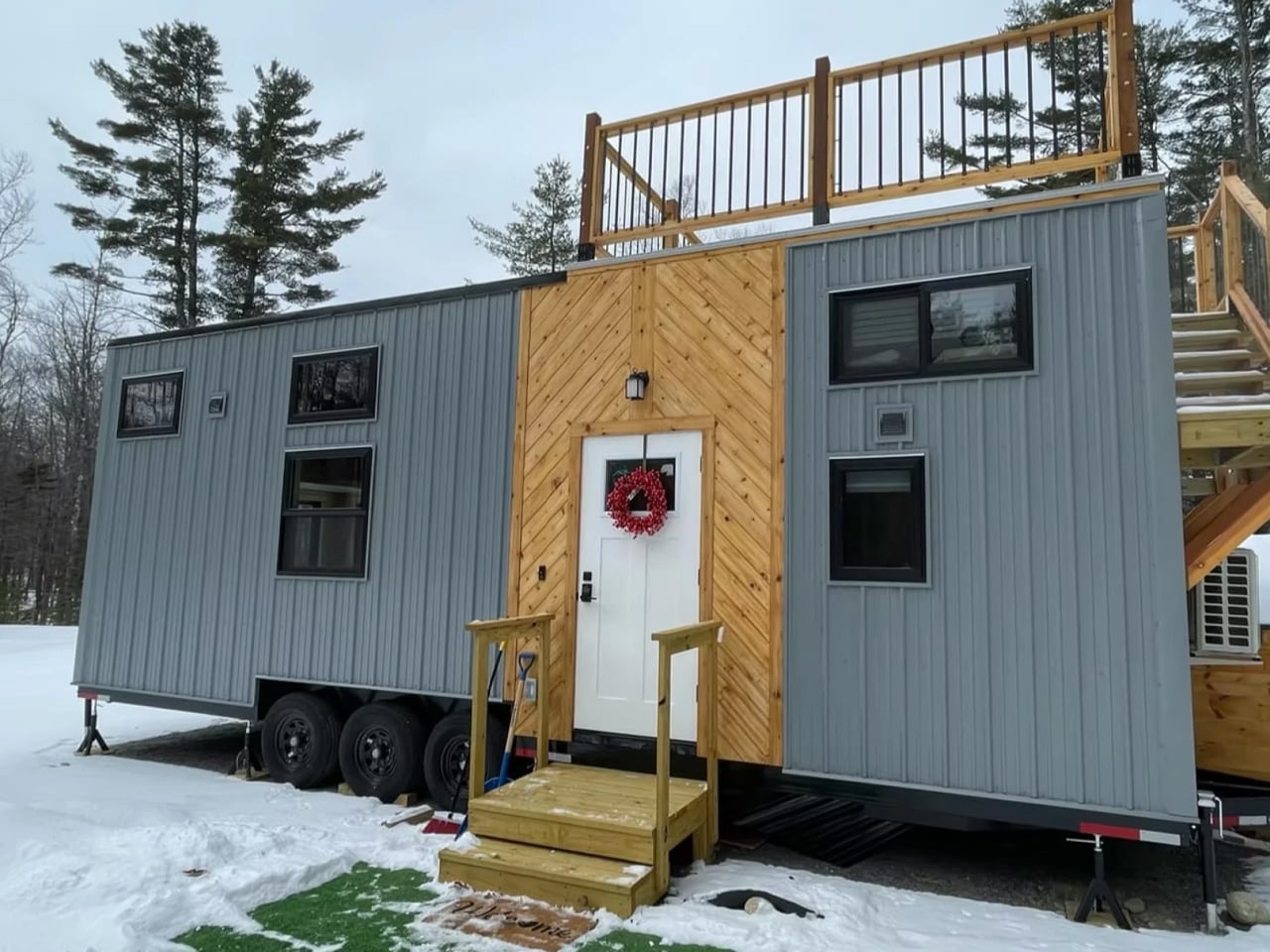
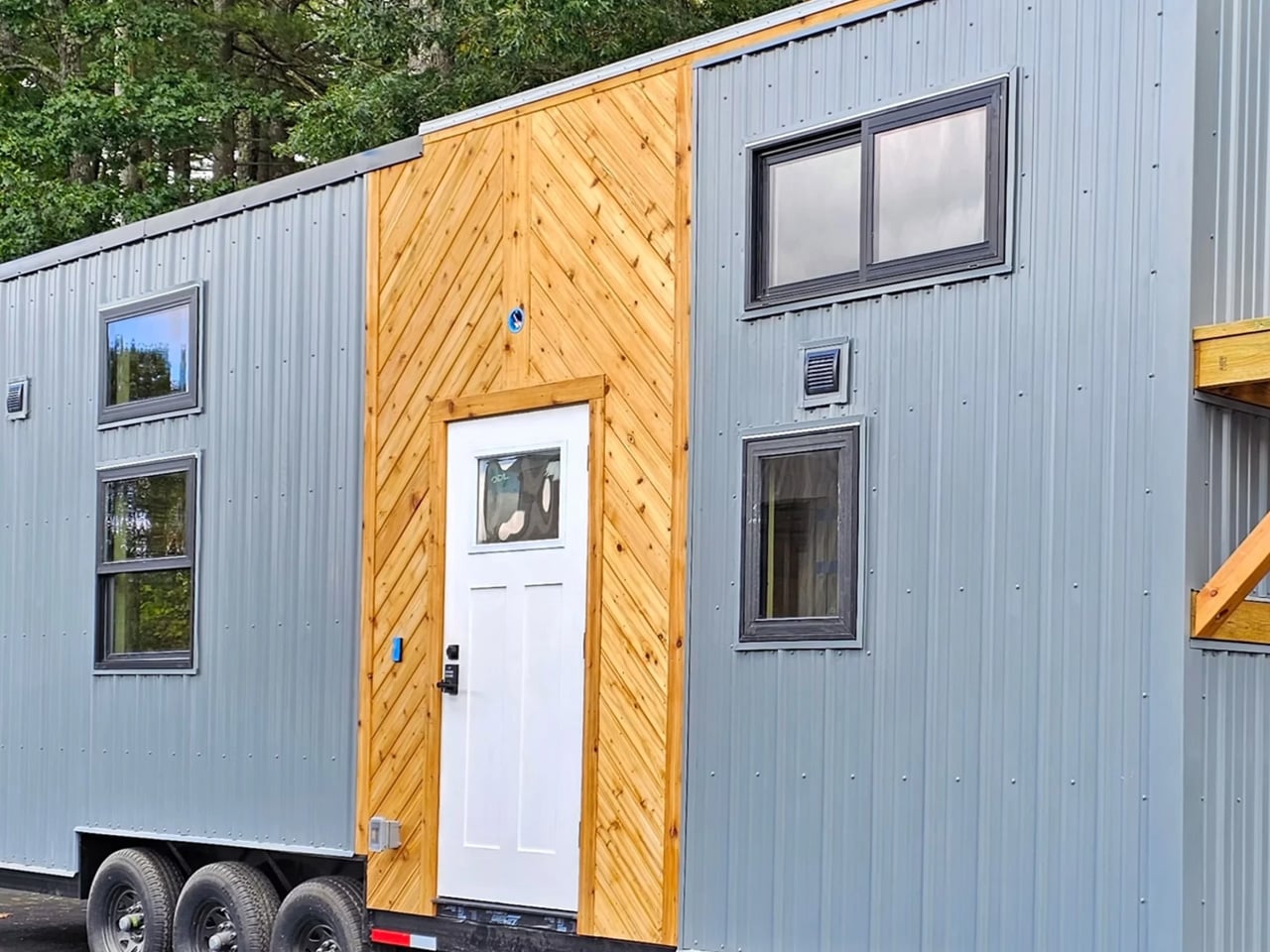
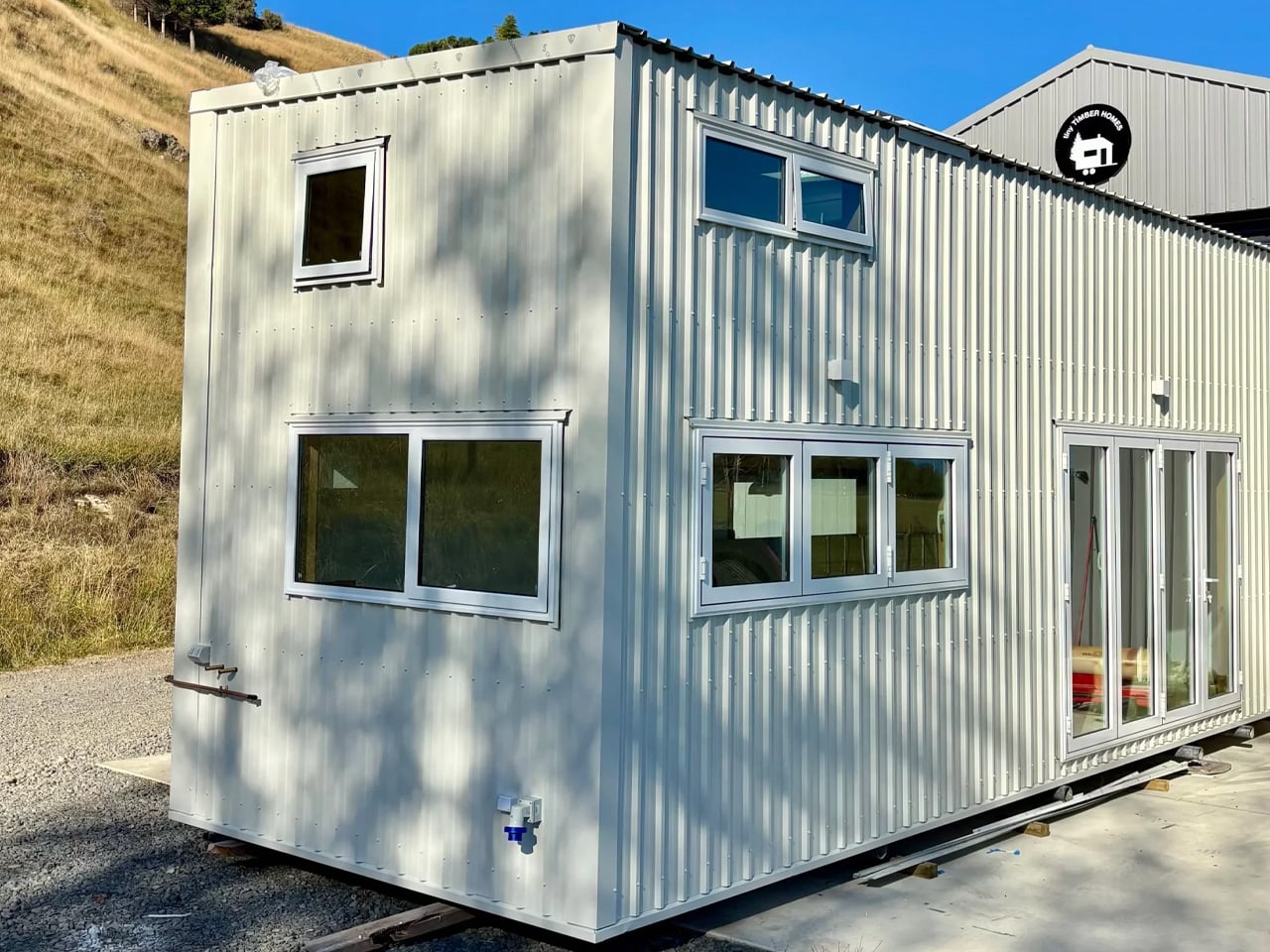
Most tiny homes ask you to give something up. The White Pine, by Backcountry Tiny Homes, is more interested in what it can give back. At 30 feet long and 10 feet wide, it runs wider than a standard tiny house model, and that extra foot of breathing room changes the experience considerably. The interior feels less like a clever puzzle and more like a small apartment — one that happens to sit on a triple-axle trailer and come with a rooftop terrace.

That terrace is the first thing worth discussing because it reframes the whole floor plan. Reached from outside via detachable stairs, it converts what would otherwise be dead roof space into a genuine outdoor living area. In a home of this size, an additional hangout space above the treeline isn’t a luxury detail. It’s a meaningful expansion of the livable footprint, and it gives the White Pine a vertical dimension that most tiny houses don’t bother to explore.

Designer: Backcountry Tiny Homes

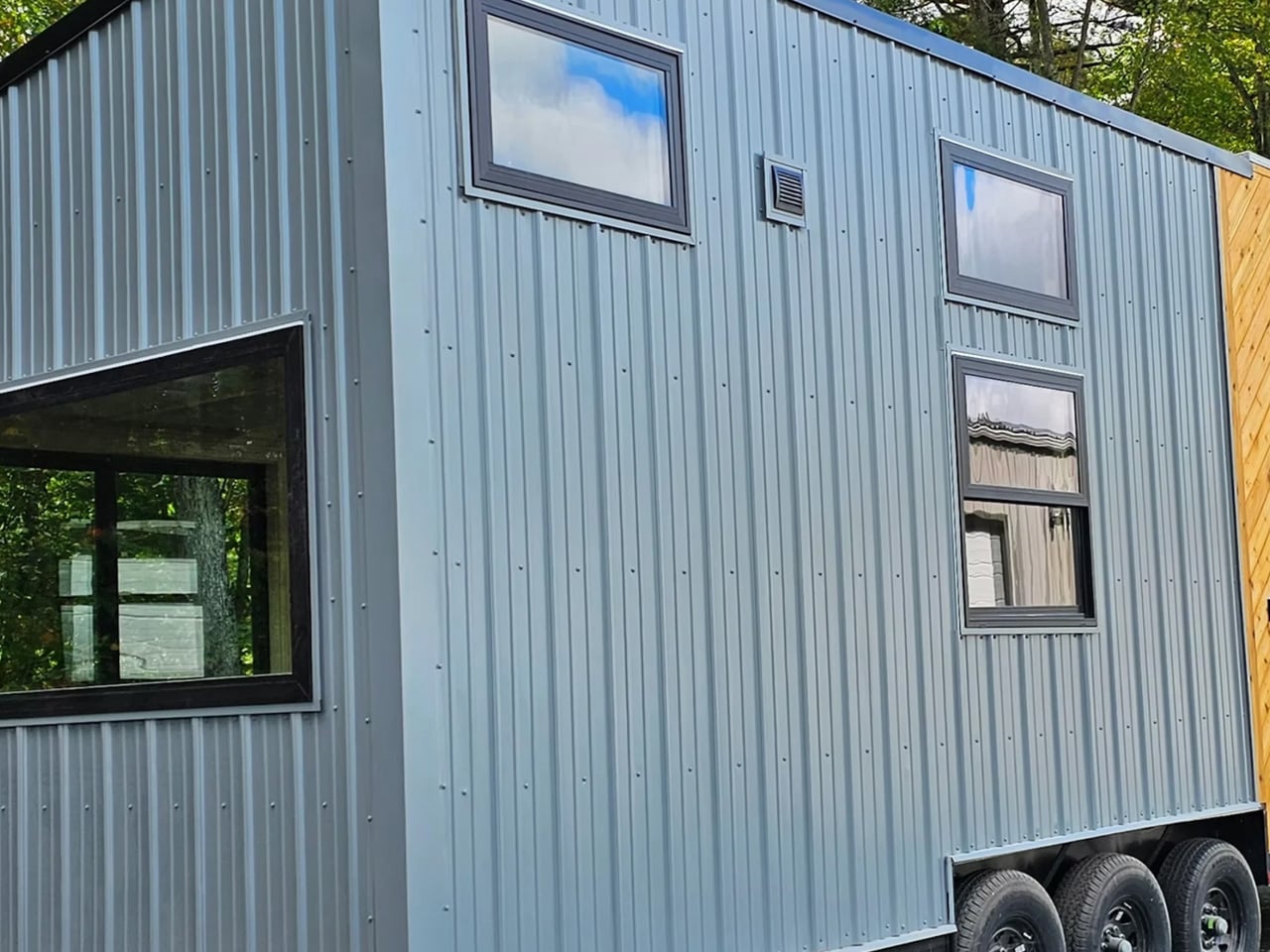
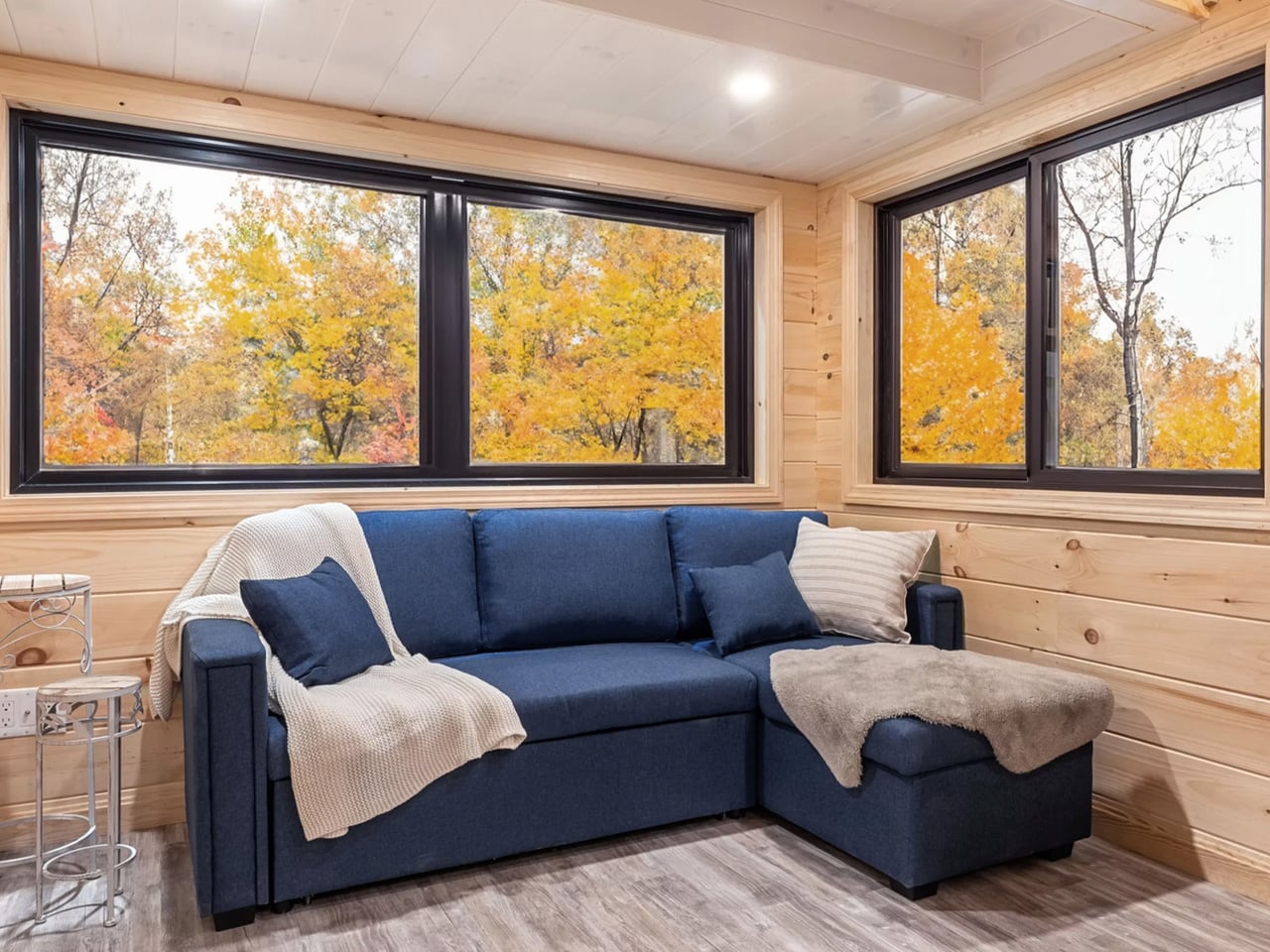
The exterior pairs cedar tongue-and-groove cladding with metal paneling, a combination that reads as considered rather than rustic. Inside, the same tongue-and-groove logic continues in pine, with whitewashed ceilings and vinyl flooring throughout. The material palette is warm without being precious, the kind of finish that ages gracefully and photographs well without demanding too much maintenance.

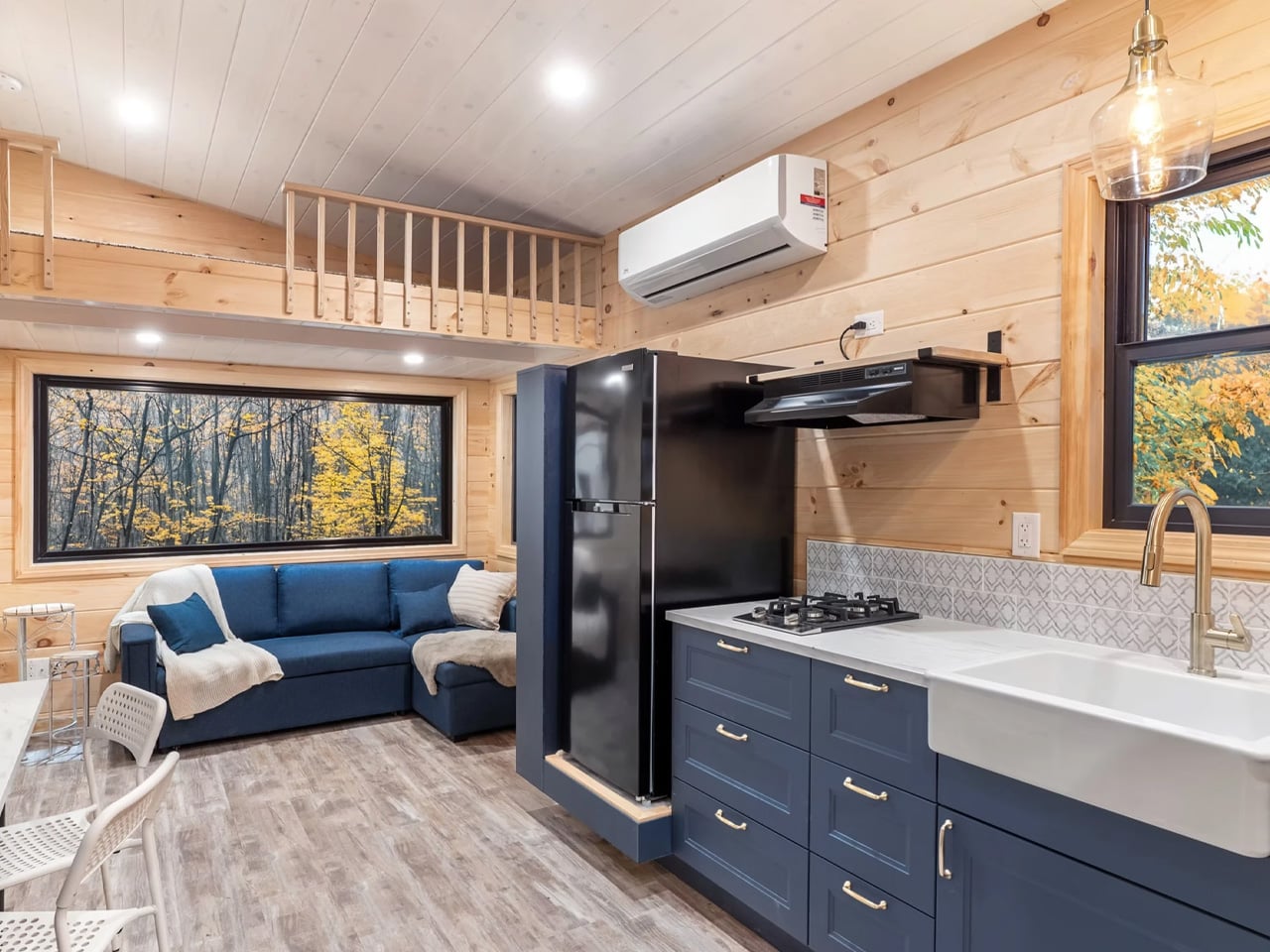
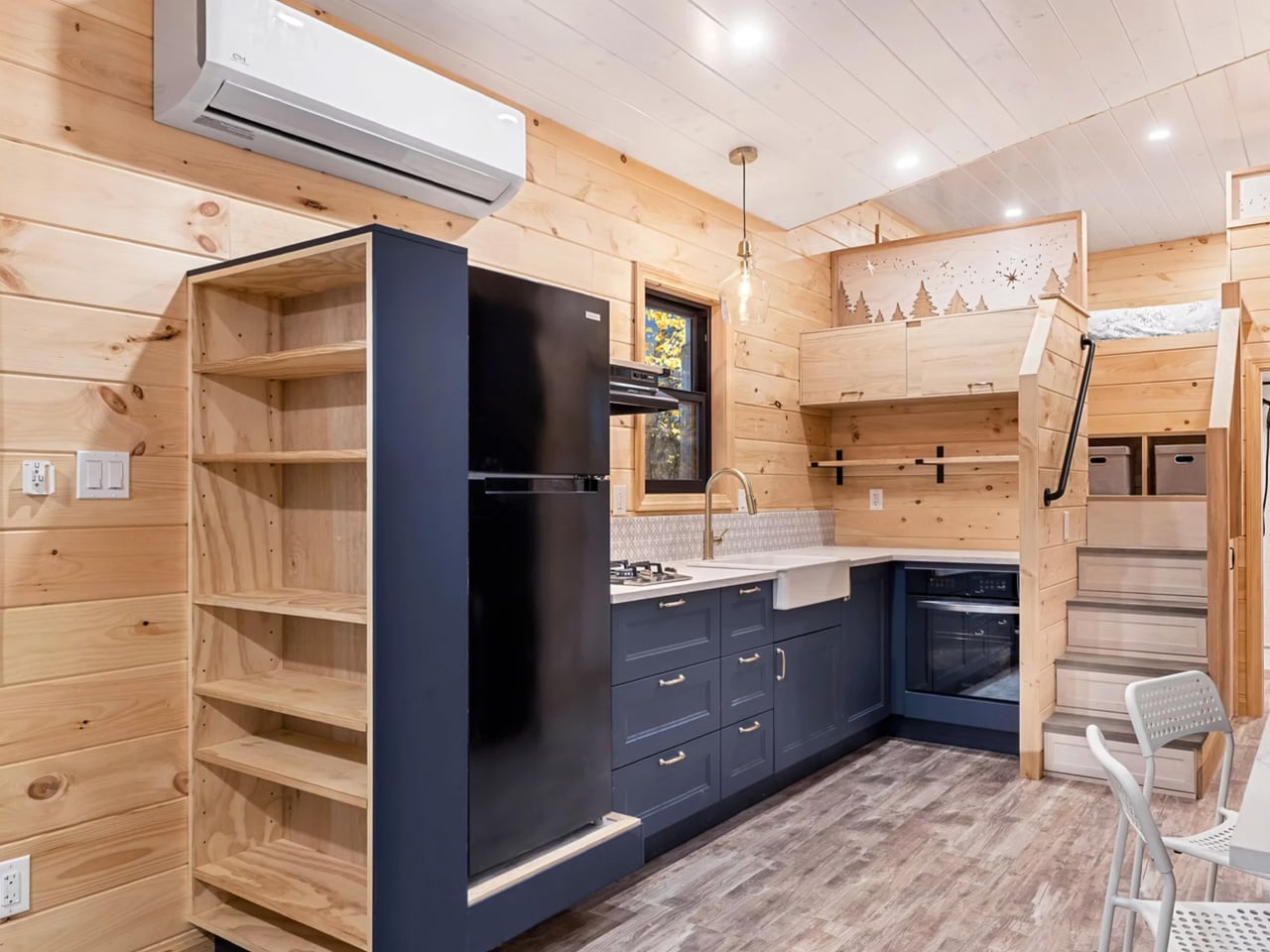
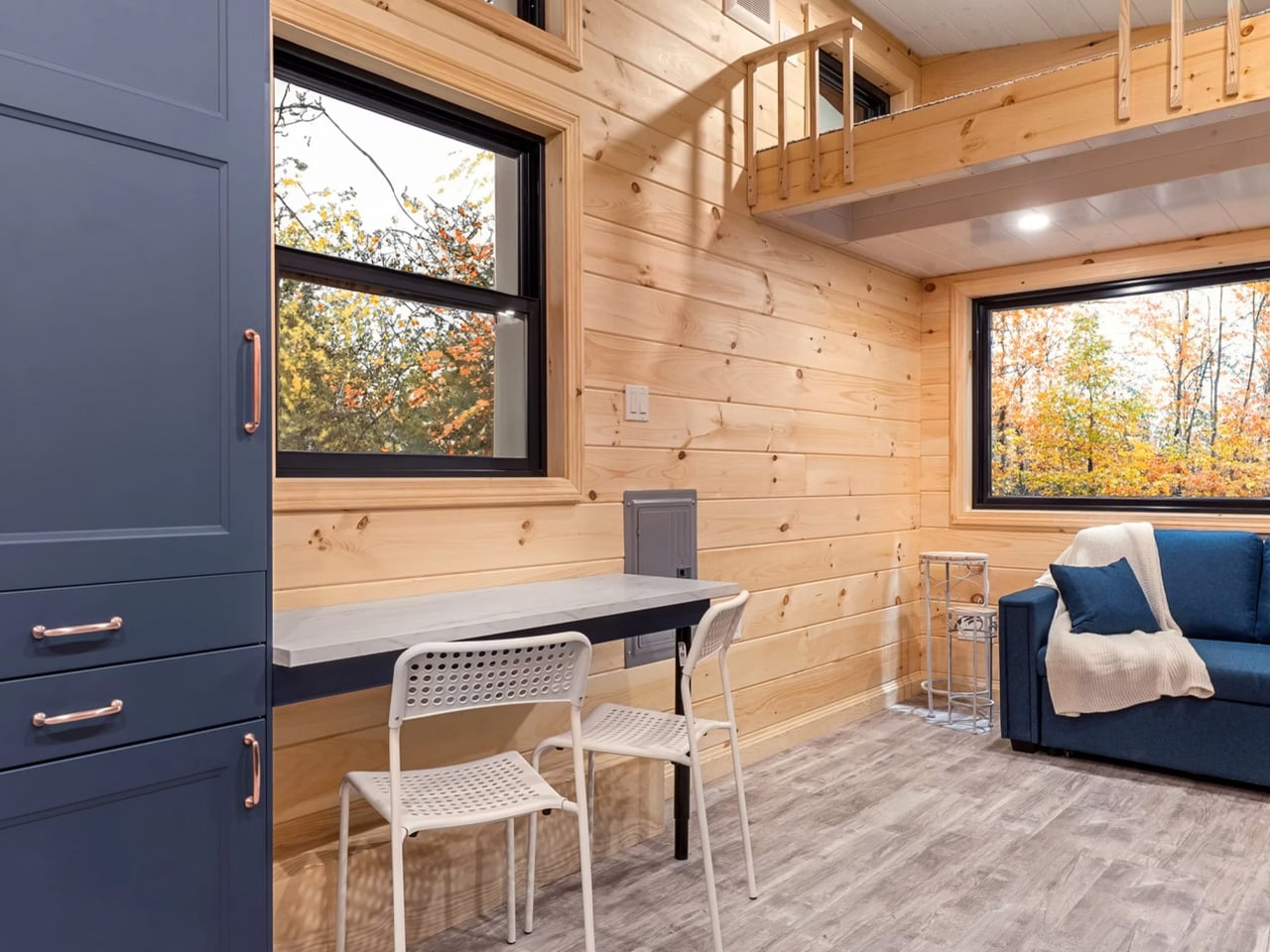
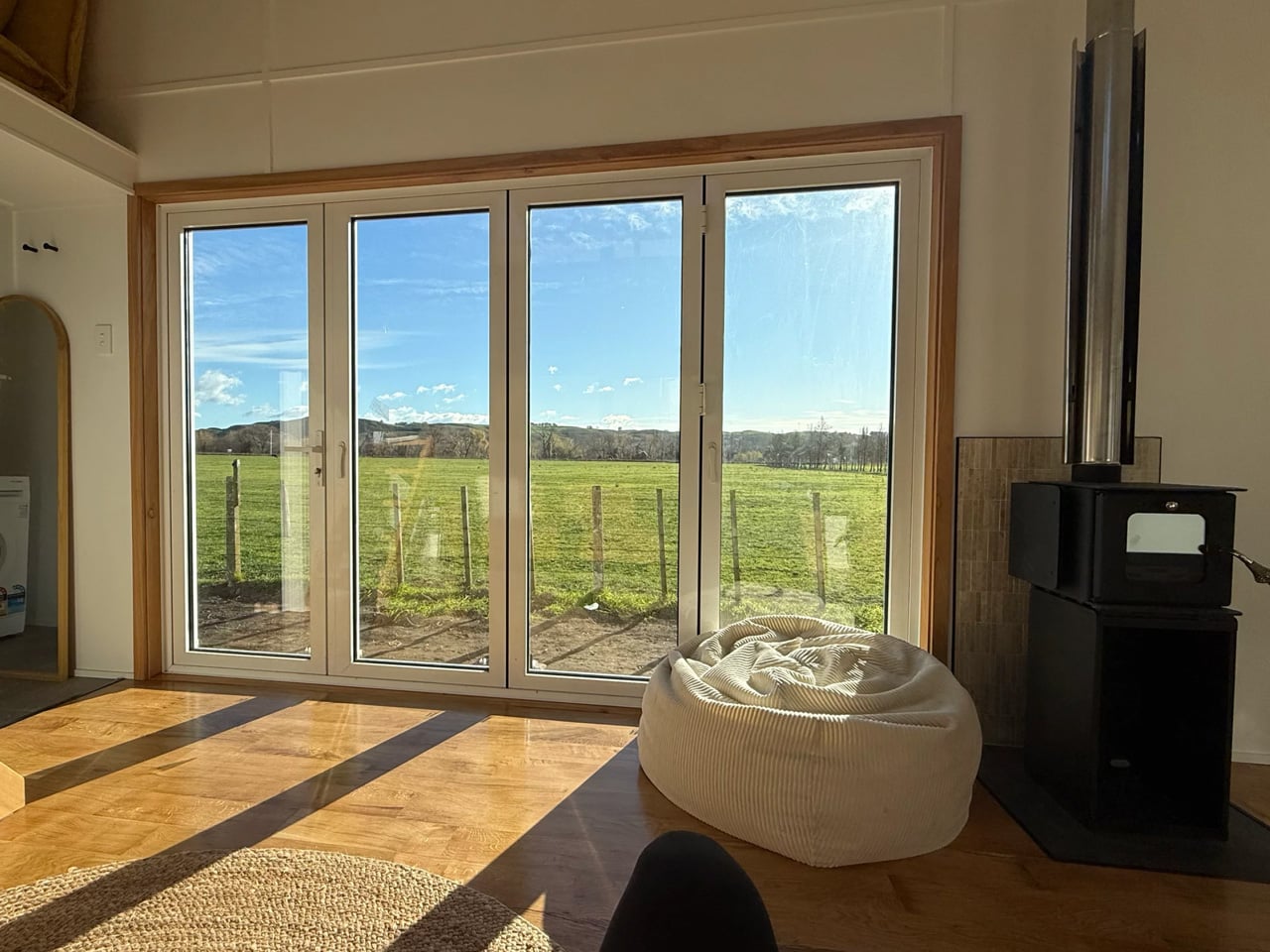
The layout is organized around a generous open living area anchored by a sofa bed, a coffee table, and a dining table for two. The glazing here is generous enough that the room doesn’t feel compressed. The adjacent kitchen is more capable than its footprint suggests — a farmhouse sink, a two-burner propane stove, an oven, a fridge/freezer, and a surprising amount of cabinet and shelf storage that makes daily living genuinely workable rather than merely possible.

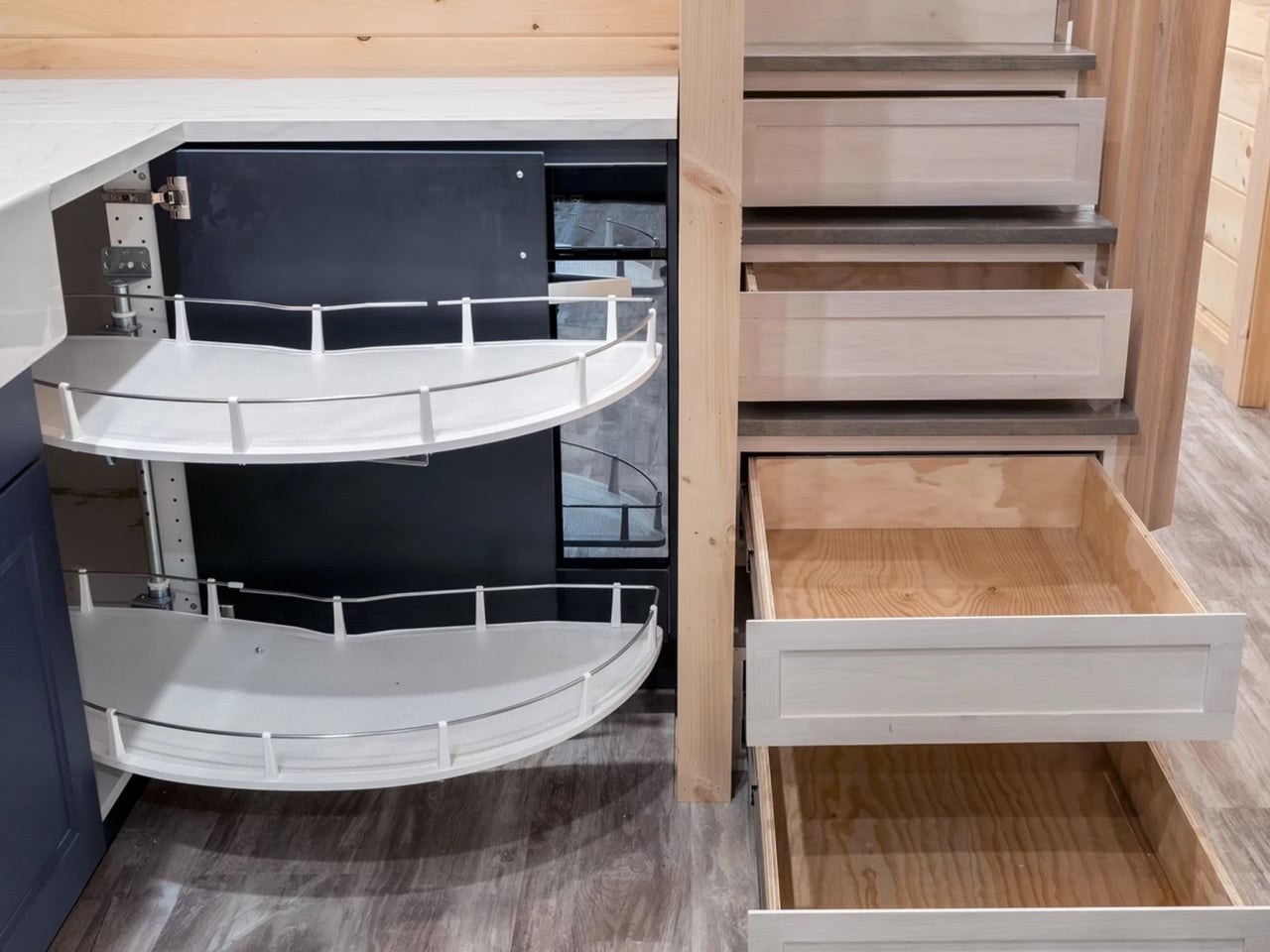
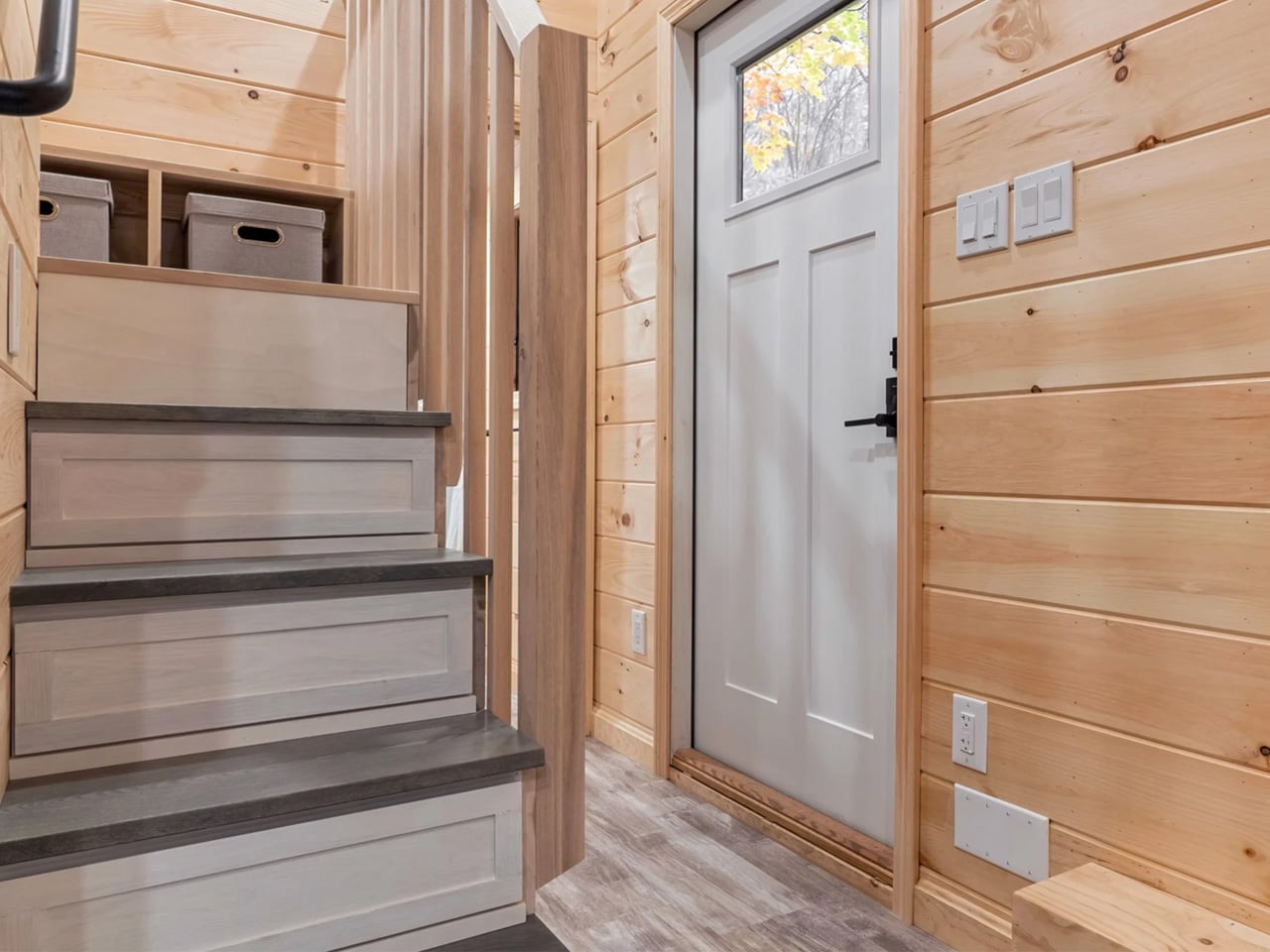
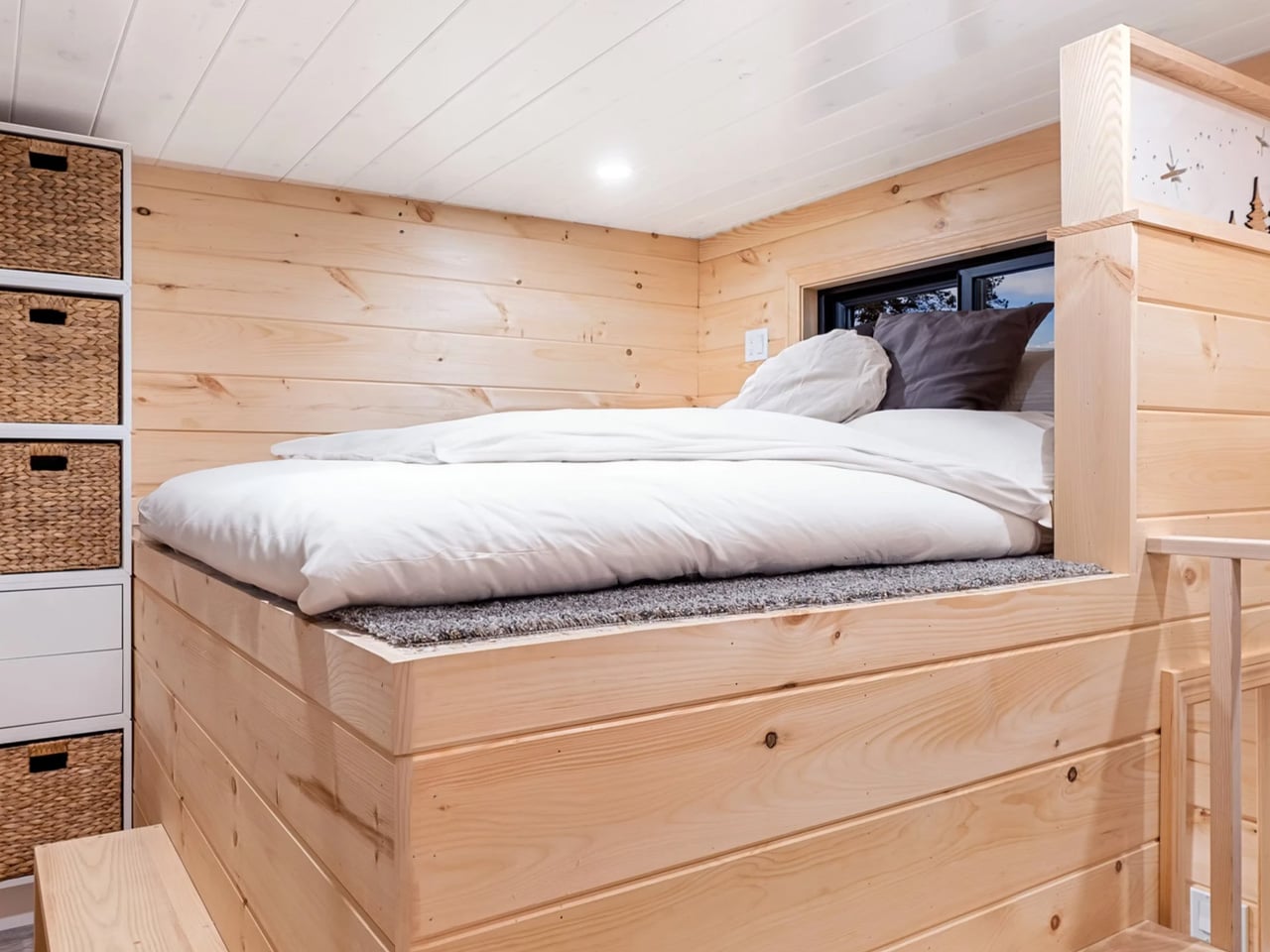
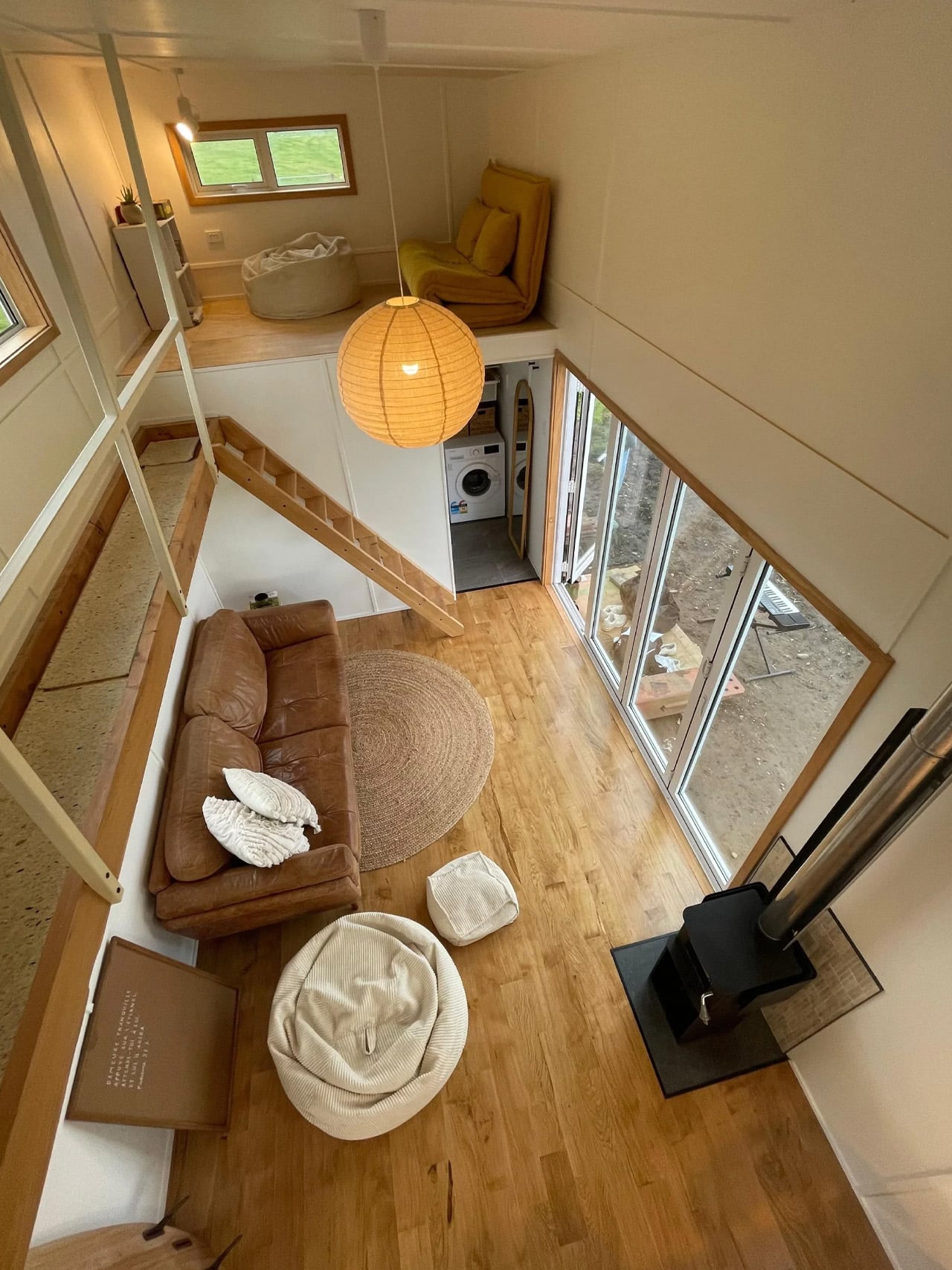
Sleeping capacity is one of the White Pine’s more impressive claims. The master bedroom, accessed via a storage-integrated staircase from the kitchen, sits on a lowered platform that allows full standing height — a detail that sounds minor until you’ve crouched in a tiny home loft at 7 a.m. It fits a queen bed and carries a decorative forest-scene divider that lends the space some character. A second loft over the living room, reached by a removable ladder, sleeps one adult or doubles as storage. The sofa bed handles two more guests, bringing the theoretical total to five.

The White Pine is currently available in three configurations: a shell at $74,280, unfurnished at $132,610, or fully furnished and turnkey at $140,010. Backcountry Tiny Homes offers delivery across the US and internationally. The extra width does require a transport permit, which adds a logistical step, but for a home that genuinely lives larger than its dimensions suggest, it’s a reasonable trade.

The post This Tiny Home on a Trailer Has a Rooftop Terrace and Sleeps Five People first appeared on Yanko Design.
The 5 Best Tiny Homes of July 2026

Tiny home design has spent years wrestling with the same stubborn question: how small can you go before the space starts working against you? In 2026, the most compelling builders are no longer running from that question. They’re making it irrelevant, designing structures with enough spatial intelligence that the footprint becomes almost secondary to the experience of living inside them. Smarter layouts, wider trailers, and deliberate material choices are redefining what small-scale architecture can actually deliver.

This month’s five standout designs span continents and building philosophies. Some are road-towable, built for people who want the freedom to pick up and move. Others are modular and permanently placed, trading mobility for architectural depth. What connects them is an honest reckoning with what compact living actually demands, and a commitment to meeting those demands without pretending the constraints don’t exist. These are the tiny homes that made the most compelling case for going small in July 2026.

1. Coolangatta 8.4

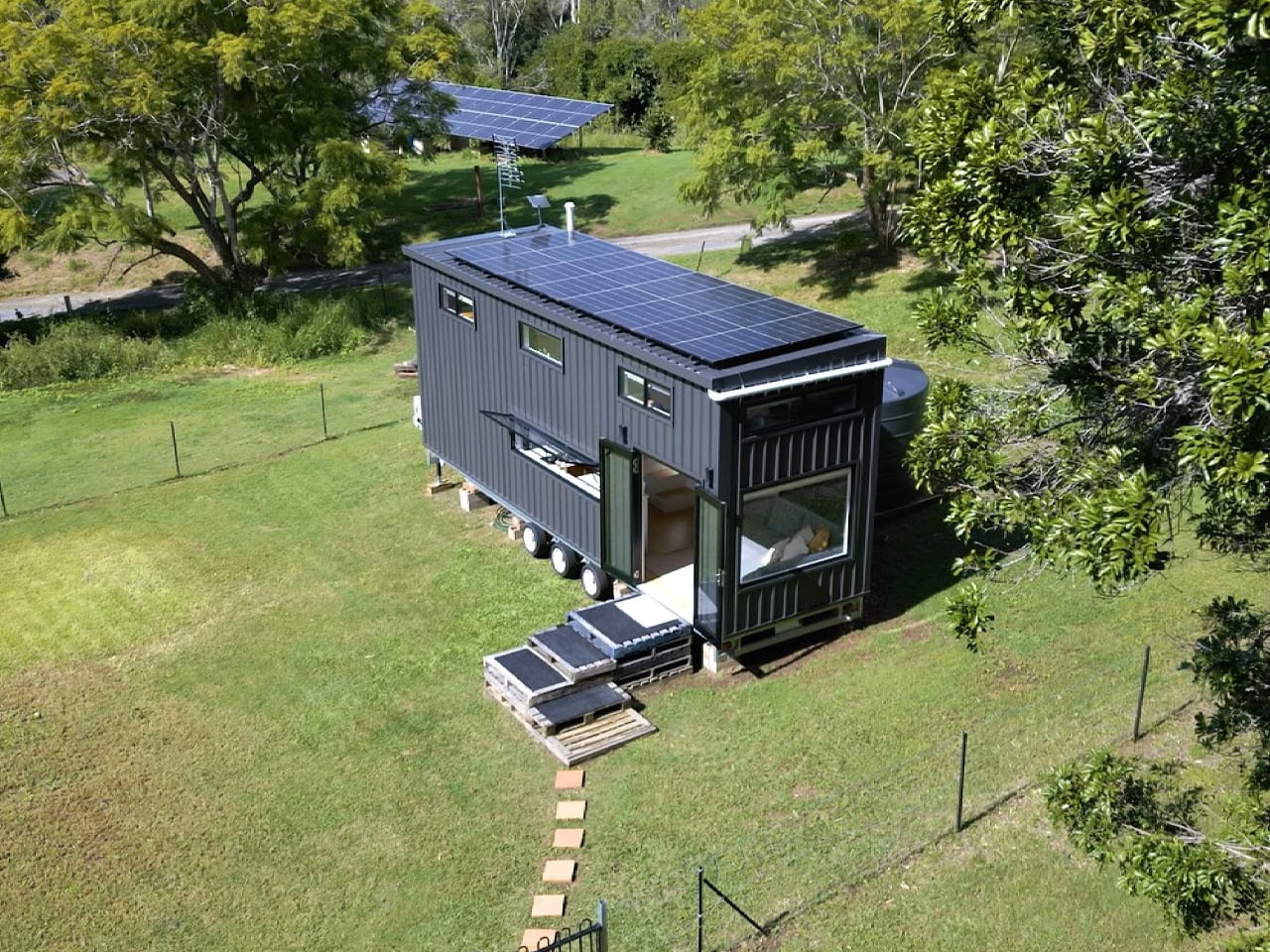
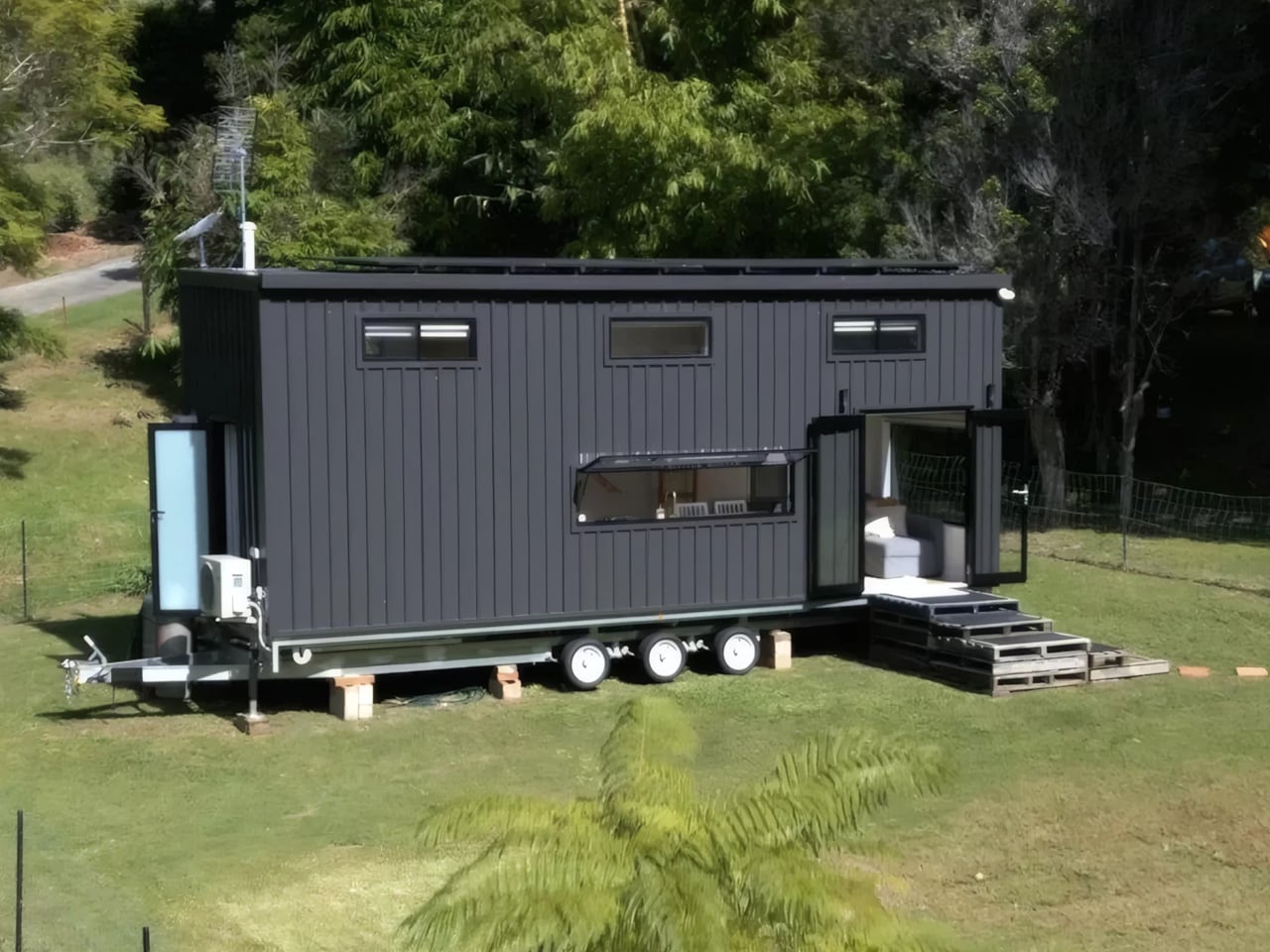
The Coolangatta 8.4 from Gold Coast-based Removed Tiny Homes takes its name from its footprint: 8.4 meters, or 27.5 feet, mounted on a triple-axle trailer. The exterior wraps in monument Colorbond steel cladding softened with natural texture accents, landing somewhere between coastal restraint and contemporary edge. Clean rooflines and a tight material palette give it the kind of presence that reads well in late afternoon light, not demanding attention, simply having it. It’s the exterior of a home that’s been genuinely thought through, not styled.

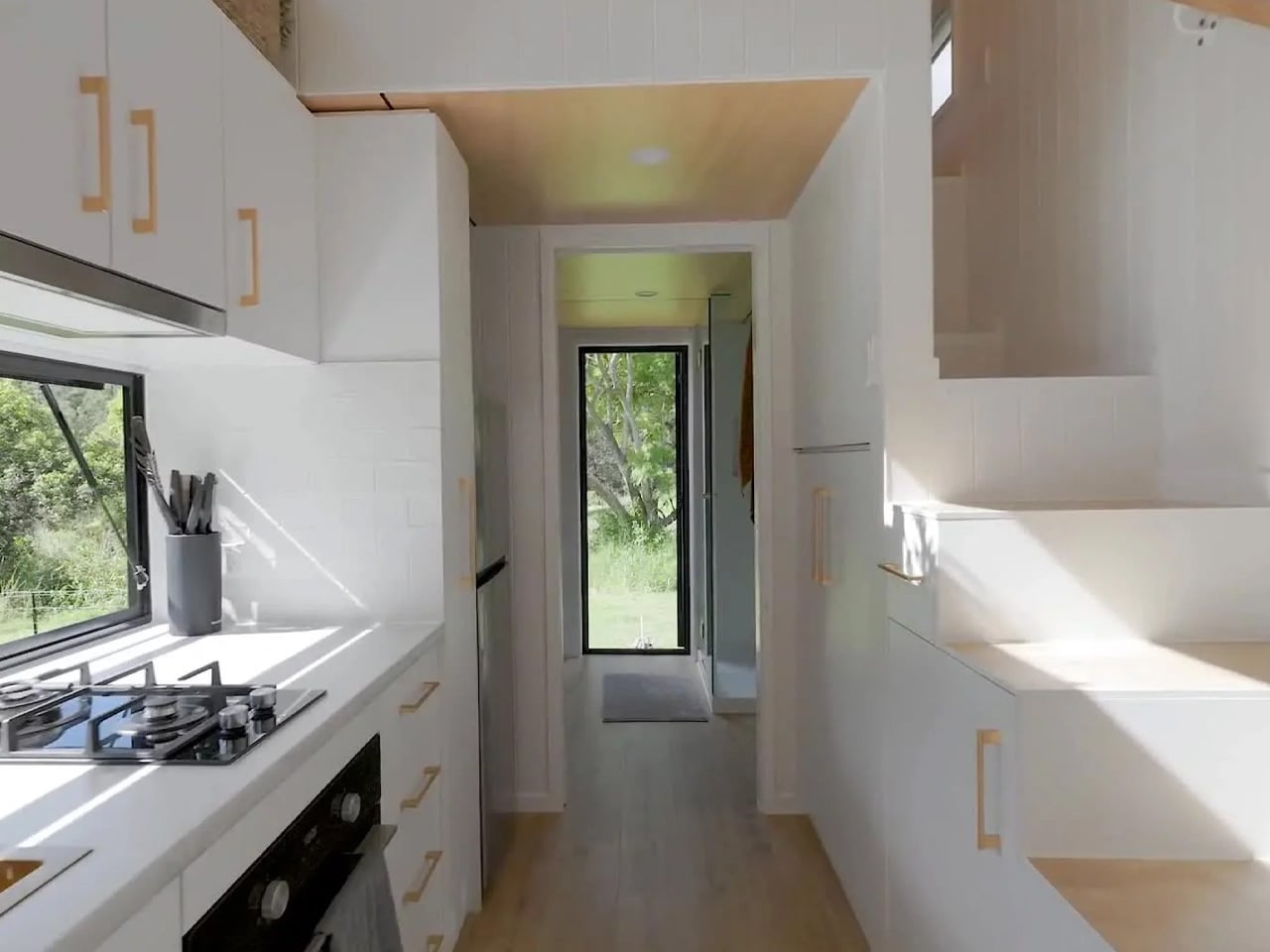
Inside, generous glazing fills the space with natural light in a way floor area alone never could. A kitchen with a breakfast bar anchors the main living zone, and storage is embedded throughout the architecture rather than applied on top. What sets the Coolangatta 8.4 genuinely apart is the second loft, floating above the living space and adapting as a workspace, a guest room, or a second bedroom depending on the day. That programmatic range is rare at this size, and for anyone planning to live in this full-time, it fundamentally shapes how the home can be used across different seasons and different circumstances.

What we like:

  • Two functional lofts multiply how the home can be used without adding a single square metre to the footprint
  • The custom build process is designed around how individual clients actually plan to live, not a catalogue selection

What we dislike:

  • Pricing isn’t publicly listed and requires direct contact with Removed Tiny Homes
  • A triple-axle trailer demands a tow vehicle rated for the additional weight and configuration

2. Mini House 300 x 600

Poland’s Mini Domy has refined the tiny home formula across several designs, and the Mini House 300 x 600 is their most focused offering yet. At 247.5 square feet on a double-axle trailer measuring 20 feet long and 9.8 feet wide, the defining decision here is the extra width. Most tiny homes are corridor-thin by necessity, which creates a permanent spatial negotiation between two people sharing the same compact floor plan. The 300 x 600 sidesteps that problem entirely, and the difference registers the moment you step inside. The exterior pairs metal cladding with timber accents, reading closer to a European cabin than anything trailer-park adjacent.

Inside, white-painted tongue-and-groove paneling keeps the space light and warm without relying on visual tricks. The open plan places the living room and kitchen side by side, the kitchen fitted with an induction cooktop, sink, and considered cabinetry. A wooden barn-style sliding door leads to a bathroom with a glass-enclosed shower, sink, and flushing toilet. The storage-integrated staircase is the most precise detail in the whole design, with each step earning its footprint by doubling as storage. The loft bedroom fits a double bed comfortably with built-in cabinetry along both sides. For couples ready to simplify without giving up livability, the 300 x 600 makes its case quietly and convincingly.

What we like:

  • The 9.8-foot width creates genuine interior breathing room that serves two-person living without compromise
  • The storage-integrated staircase is a textbook example of small-space architectural thinking applied precisely

What we dislike:

  • The extra width requires a towing permit on public roads, which adds a logistical layer to any relocation
  • Pricing is not publicly available and must be requested directly from Mini Domy

3. Gerês

Named after one of Portugal’s most striking national parks, the Gerês is Casagaea’s most ambitious tiny home to date. Built on a double-axle trailer stretching 7.8 meters (25.7 feet), it covers 30 square meters (322 square feet) of interior space and arrives clad in engineered wood that ages into its surroundings rather than fighting them. A small storage box sits near the tow hitch, and it’s the kind of practical detail that tells you this design came from people who thought carefully about how the home actually gets used every day, not just how it photographs from the outside.

The open-plan kitchen and living area forms the heart of the interior, with a breakfast bar seating two acting as a social anchor in the compact floor plan. The real story is the sleeping capacity: the Gerês sleeps up to six adults across two bedrooms, with the living area capable of accommodating two more when needed. For you, that kind of flexibility is genuinely unusual in a structure this road-ready. Whether you’re hosting family on a rural plot, building a short-term rental with real design credibility, or wanting a home you can take with you, the Gerês covers that full range without any space feeling like a sacrifice. Optional off-grid upgrades extend placement well beyond conventional infrastructure.

What we like:

  • Sleeping capacity of six in a 322-square-foot, road-towable structure is a rare achievement in spatial planning
  • Engineered wood cladding integrates naturally into most outdoor and rural landscape contexts

What we dislike:

  • Interior specification detail is limited in available documentation and requires direct inquiry with Casagaea
  • The 25.7-foot footprint carries significant occupancy expectations for a build of its length

4. Cascade Max

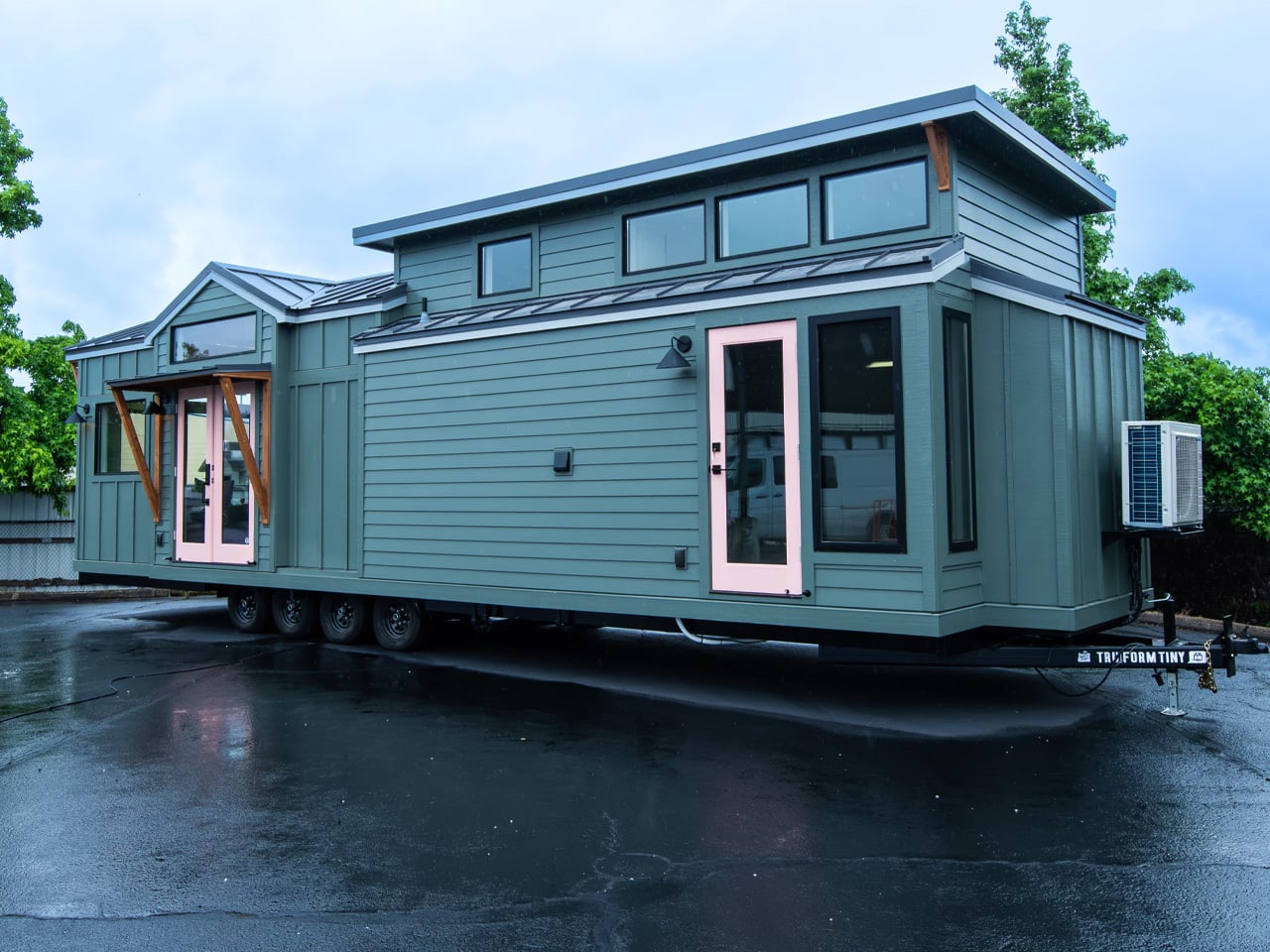
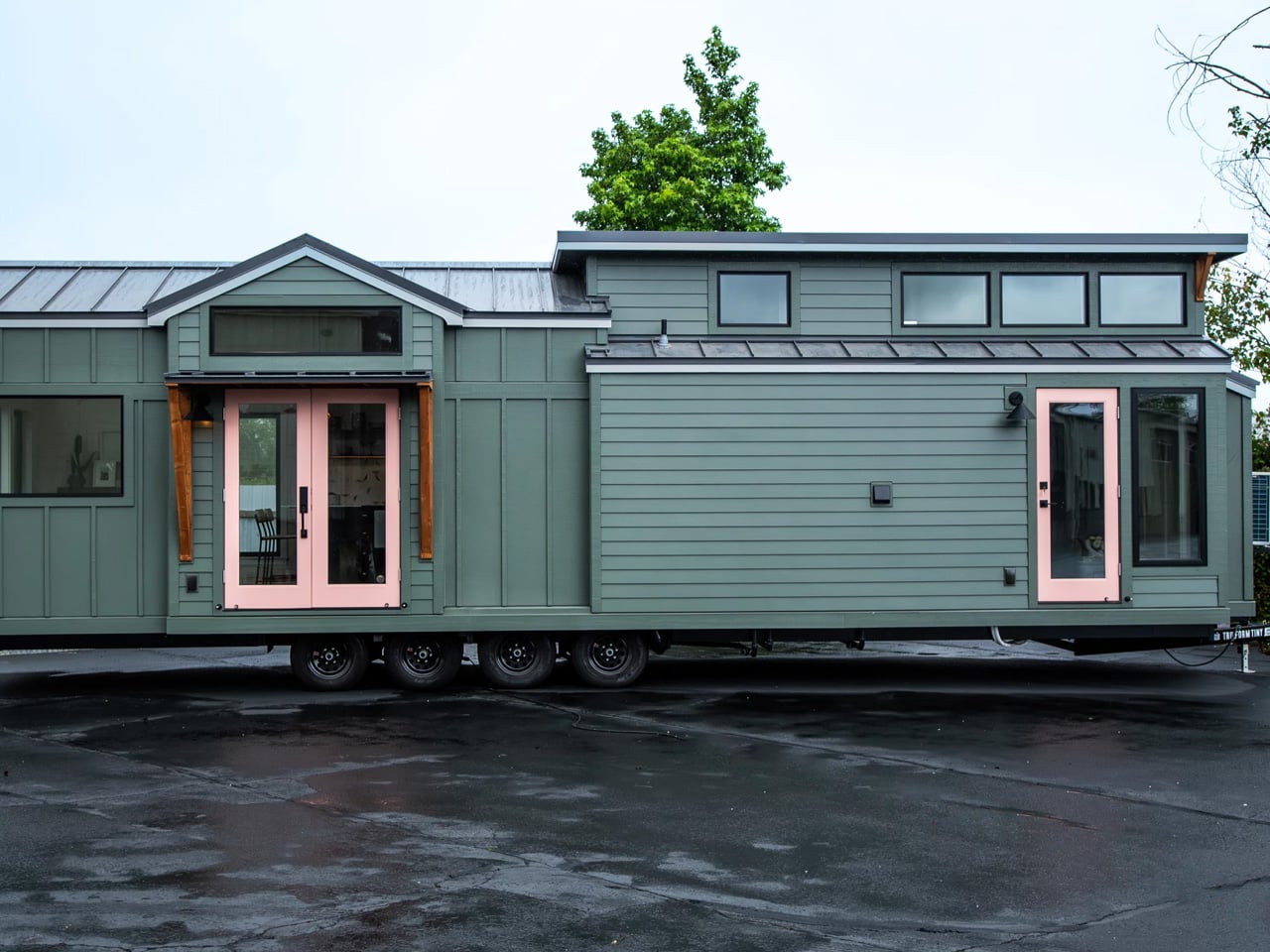
Starting at $198,900, the Cascade Max is Oregon-based Tru Form Tiny’s most celebrated design, and the reputation it’s built among full-time tiny home residents is straightforward to understand. At just under 400 square feet across a 38-by-10.5-foot single-level floor plan, it approaches compact living from the opposite end of the minimalism spectrum. Eleven-foot vaulted ceilings do most of the spatial heavy lifting, pulling the eye upward and producing a sense of volume that reads more like a well-considered loft apartment than a structure on wheels. This is a home that doesn’t ask you to romanticize its constraints.

The kitchen arrives with quartz countertops, a custom tile backsplash, open shelving, and bar seating, details built for people who actually use kitchens rather than endure them. The bedroom accommodates a king-sized bed, dual closets, and a storage headboard with built-in shelving and wall sconces, nothing squeezed and nothing compromised. The bathroom is the most cleverly resolved space in the build: a walk-through layout makes it significantly roomier than any standard tiny home bathroom, fitted with a freestanding tub, glass-enclosed shower, Delta faucets, and a stacking washer and dryer. For you, the Cascade Max is the design that proves stepping down in square footage doesn’t require stepping down in quality. Real people live in these full-time, and the floor plan makes that entirely believable.

What we like:

  • Eleven-foot vaulted ceilings generate genuine volume that overrides the modest footprint completely
  • The walk-through bathroom with a freestanding tub and stacking washer-dryer is an unexpected level of finish at this scale

What we dislike:

  • At $198,900 as a starting price, it sits firmly at the higher end of the tiny home market
  • As a park model, it isn’t road-towable in the traditional sense and requires advance site planning

5. Lucia

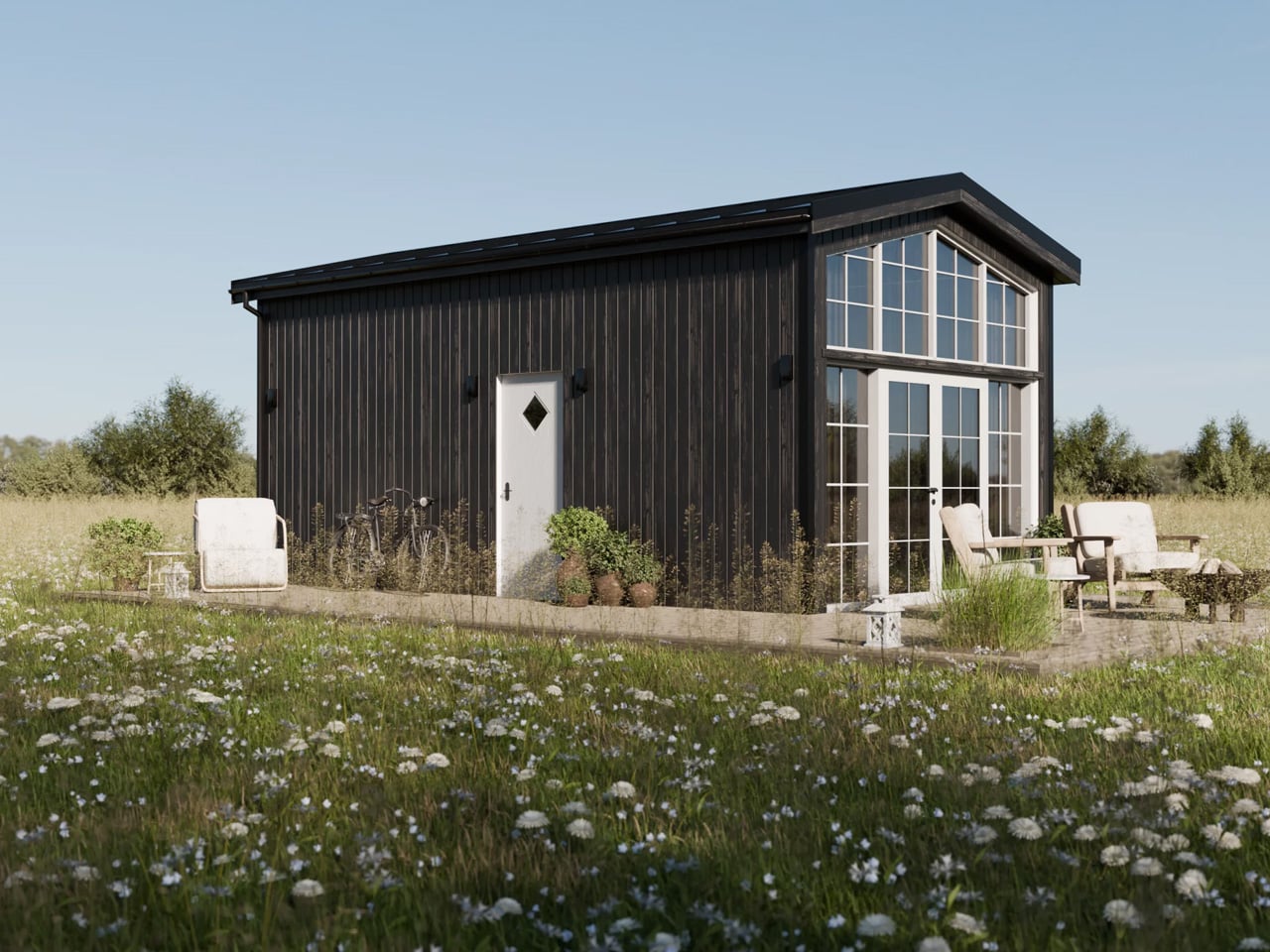
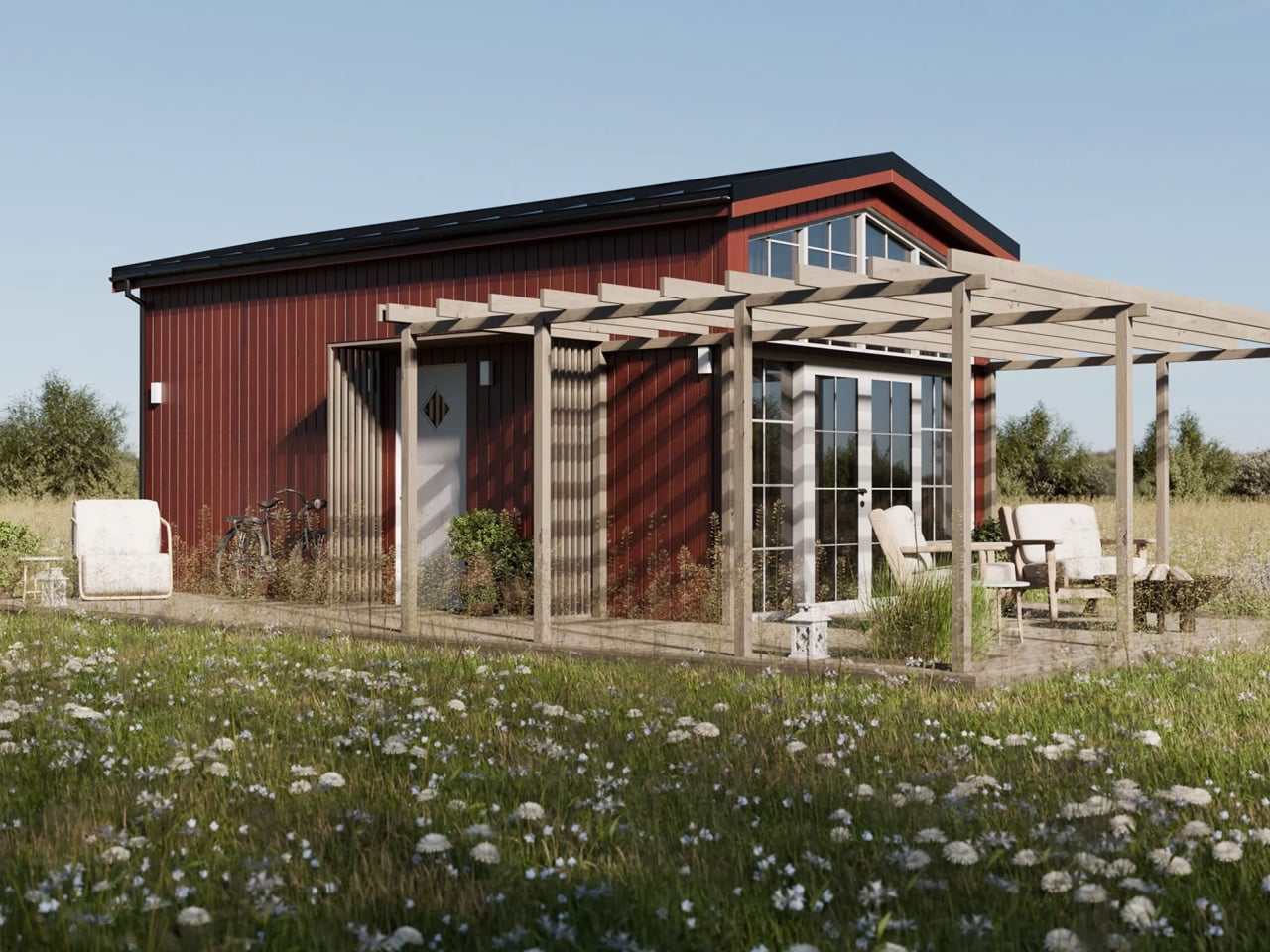
Scandinavian tiny home builder Vagabond Haven takes a different position in the category with the Lucia: a modular, architect-designed structure placed on a permanent foundation and built to handle year-round Nordic conditions. At 39 square meters across a 7.5-meter frame, it makes a deliberate trade, exchanging road mobility for architectural depth. Clad in spruce or engineered wood siding with a clean metal roof, it’s available in a range of color options, the deep black exterior and natural wood tone being the most visually striking. A large glass façade opens up the entire front face of the home, pulling light deep into the ground floor and establishing a relationship with the surrounding landscape that most compact structures simply never achieve.

Inside, the ground floor holds a full kitchen, a living area, and a dedicated home office with a built-in desk and integrated storage. That last detail is what separates the Lucia from nearly everything else in its size bracket. Building a functional workspace into a 39-square-meter floor plan is a meaningful design decision rather than a gesture, and for you, it means a home that supports the actual shape of your working week rather than asking you to improvise around it. The loft bedroom, accessed by a staircase that doubles as storage throughout, fits a double bed comfortably alongside built-in cabinetry. Starting at $97,000, the Lucia makes a quiet but persuasive case that thoughtful design at this scale can outperform thoughtless design at twice the size.

What we like:

  • A dedicated home office with built-in desk makes the Lucia one of the most work-ready compact homes currently available
  • Scandinavian construction standards using eco-friendly materials deliver long-term structural and material durability

What we dislike:

  • A fixed permanent foundation means no mobility once the home is installed and placed on site
  • Loft ceilings run low in the bedroom area, which may feel restrictive for taller residents

The Best Tiny Homes Don’t Ask You to Settle — They Ask You to Reconsider

Across five countries and five different building philosophies, these designs share something worth sitting with. The best tiny homes of 2026 are not defined by what they’ve stripped away. They’re defined by how carefully their designers thought about what to keep: a second loft, an extra 20 centimeters of trailer width, a real workspace embedded into 39 square meters. The details that look minor on a floor plan become the entire texture of daily life once you’re actually living inside them.

The tiny home category is no longer asking people to settle. It’s asking people to reconsider. A well-designed 247-square-foot home outperforms a thoughtlessly planned space twice its size across the dimensions that shape how you feel in your own home each day: morning light, storage intelligence, material honesty, and the quiet satisfaction of knowing every element of your environment was chosen with purpose. These five designs, from Portugal to Scandinavia to the Pacific Northwest, make that argument convincingly.

The post The 5 Best Tiny Homes of July 2026 first appeared on Yanko Design.
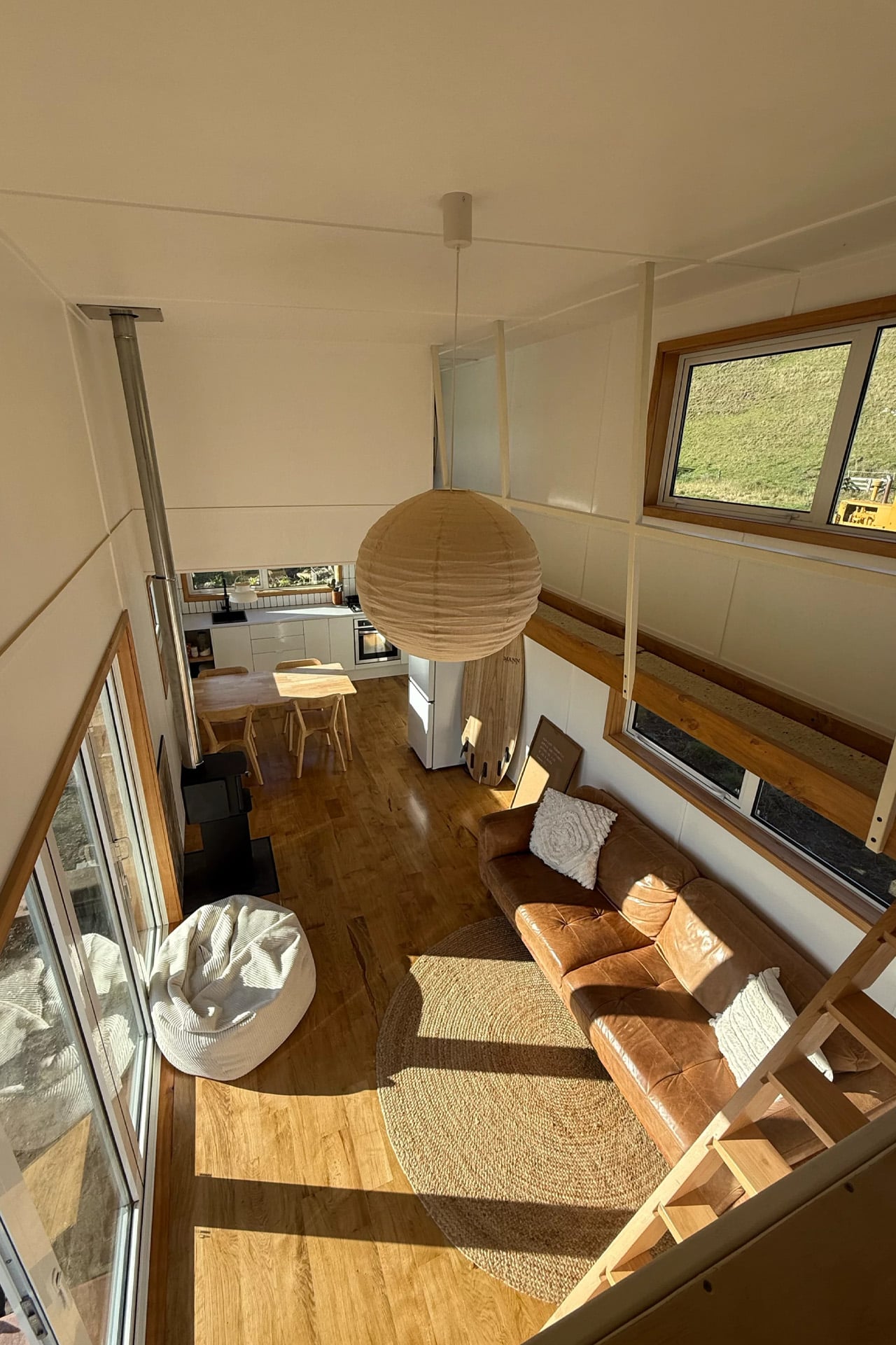
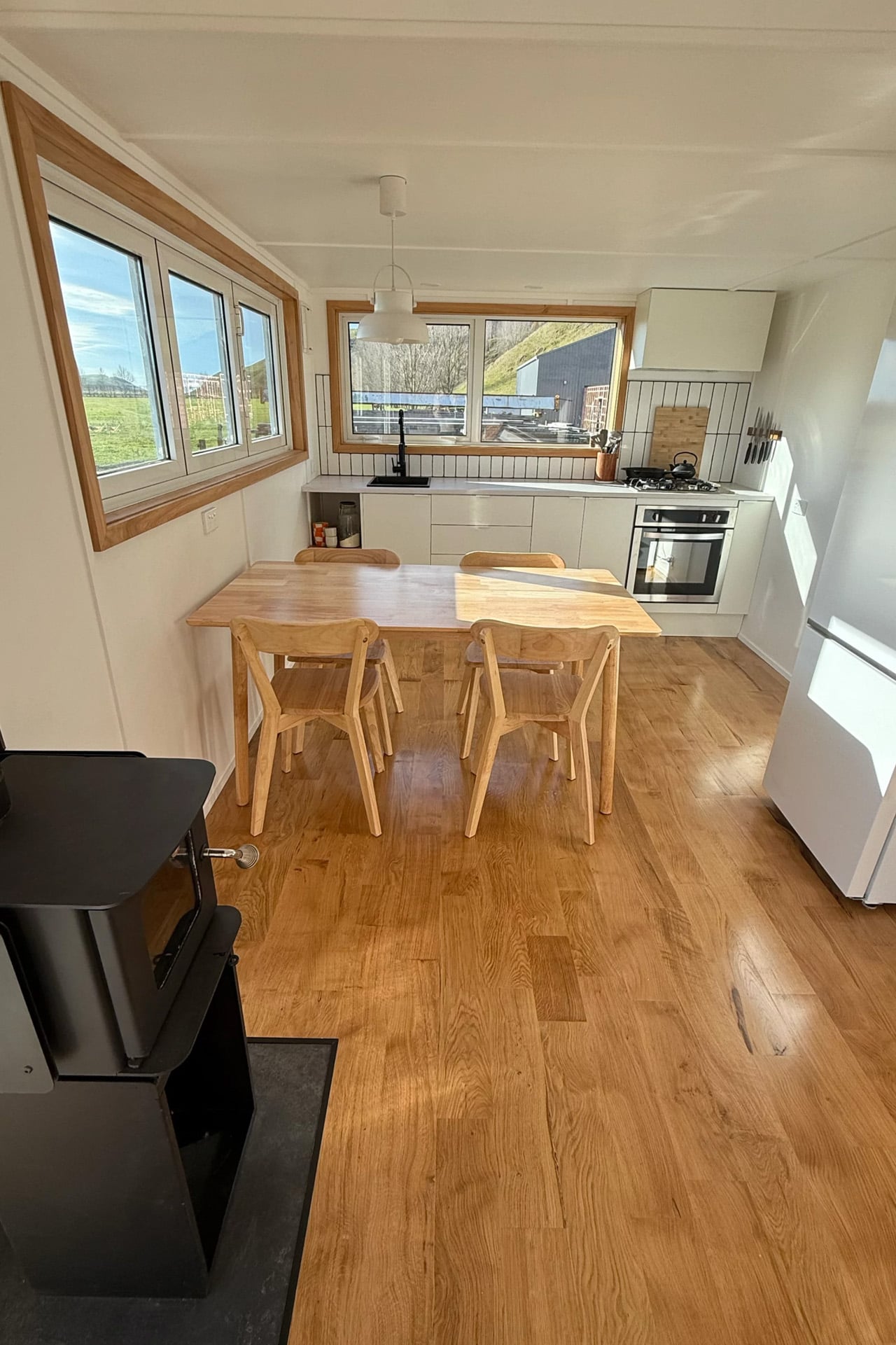
This 360-Square-Foot Cedar Ridge Tiny Home Feels Like a Full Farmhouse on Wheels

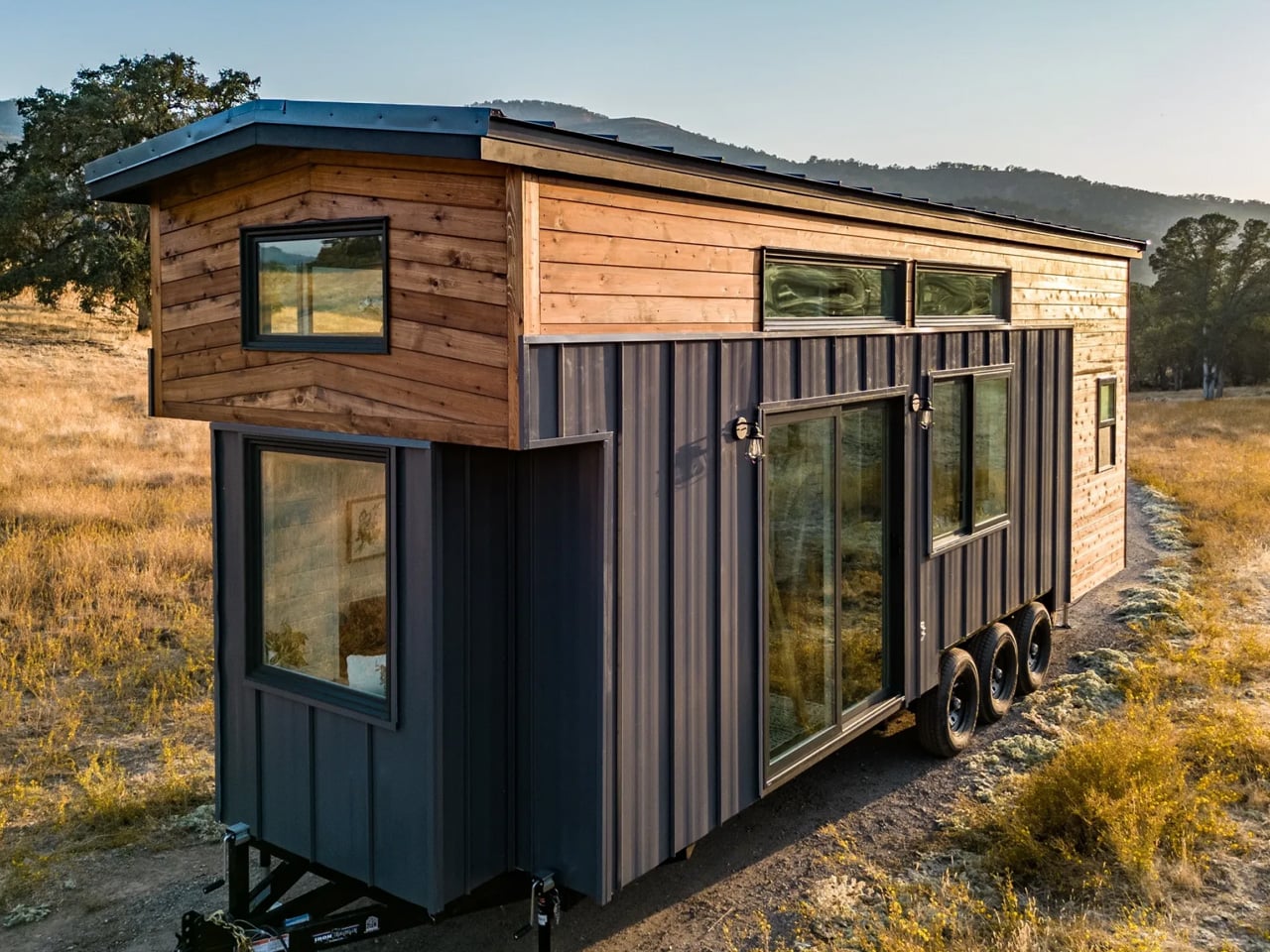
Most tiny homes ask you to compromise. The Cedar Ridge by JT Collective Tiny Homes doesn’t feel like one of them — a 360-square-foot house on wheels that trades the usual sense of sacrifice for something that genuinely feels considered. Built on an 8.5′ x 30′ triple-axle trailer with brakes and pier jacks for stability, it’s designed to move when you need it to and settle when you don’t.

The exterior makes the first case. Cedar cladding runs alongside dark grey metal accents, giving the home a rugged, farmhouse-inflected look that holds up in nearly any landscape. Large front and upper windows pull natural light deep into the interior, and two entry points — a single glass door and wider sliding glass doors — keep things airy without compromising the insulated envelope. The dual-pane, tempered windows are built for longevity, not just aesthetics.

Designer: JT Collective Tiny Homes

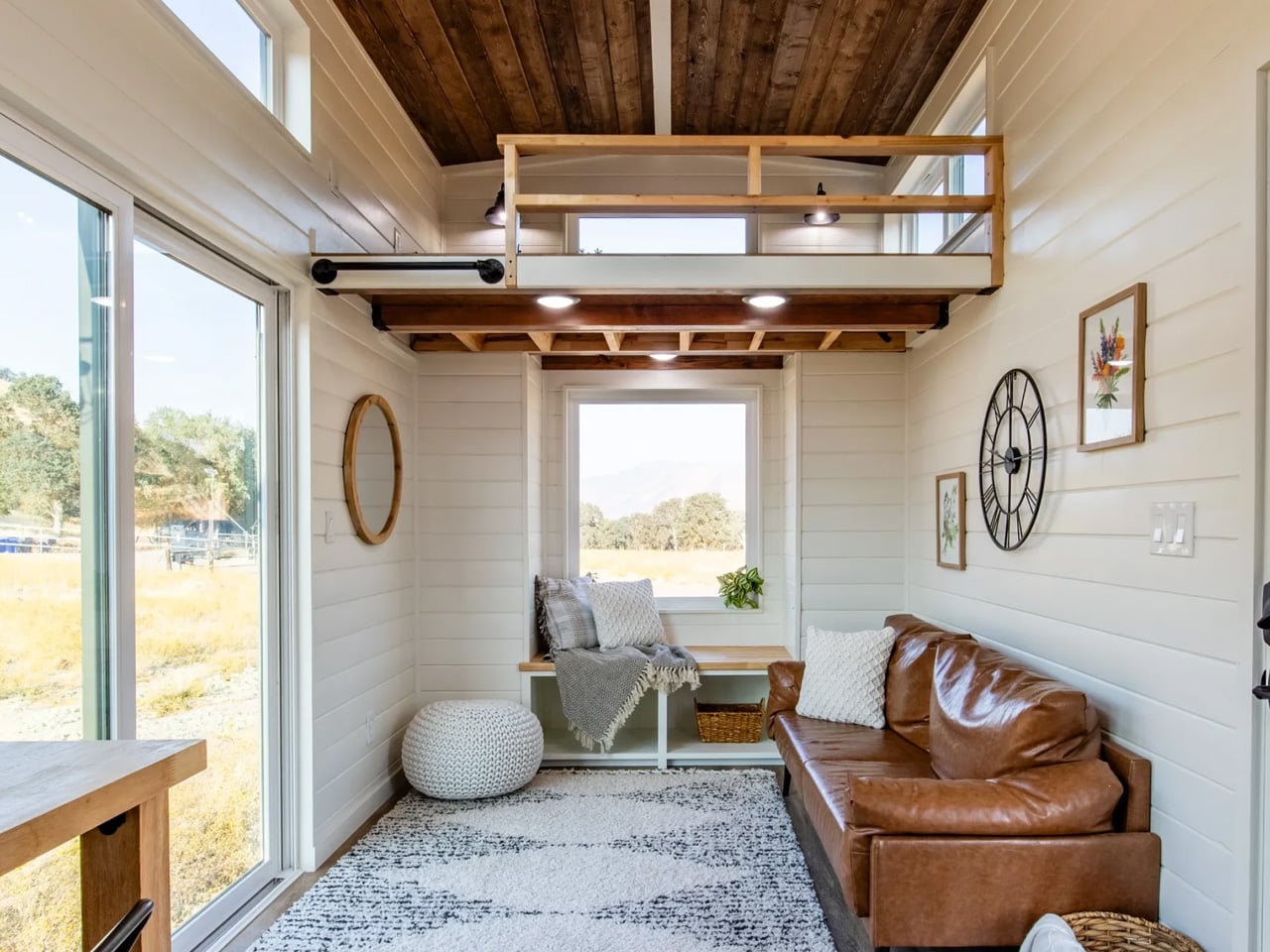
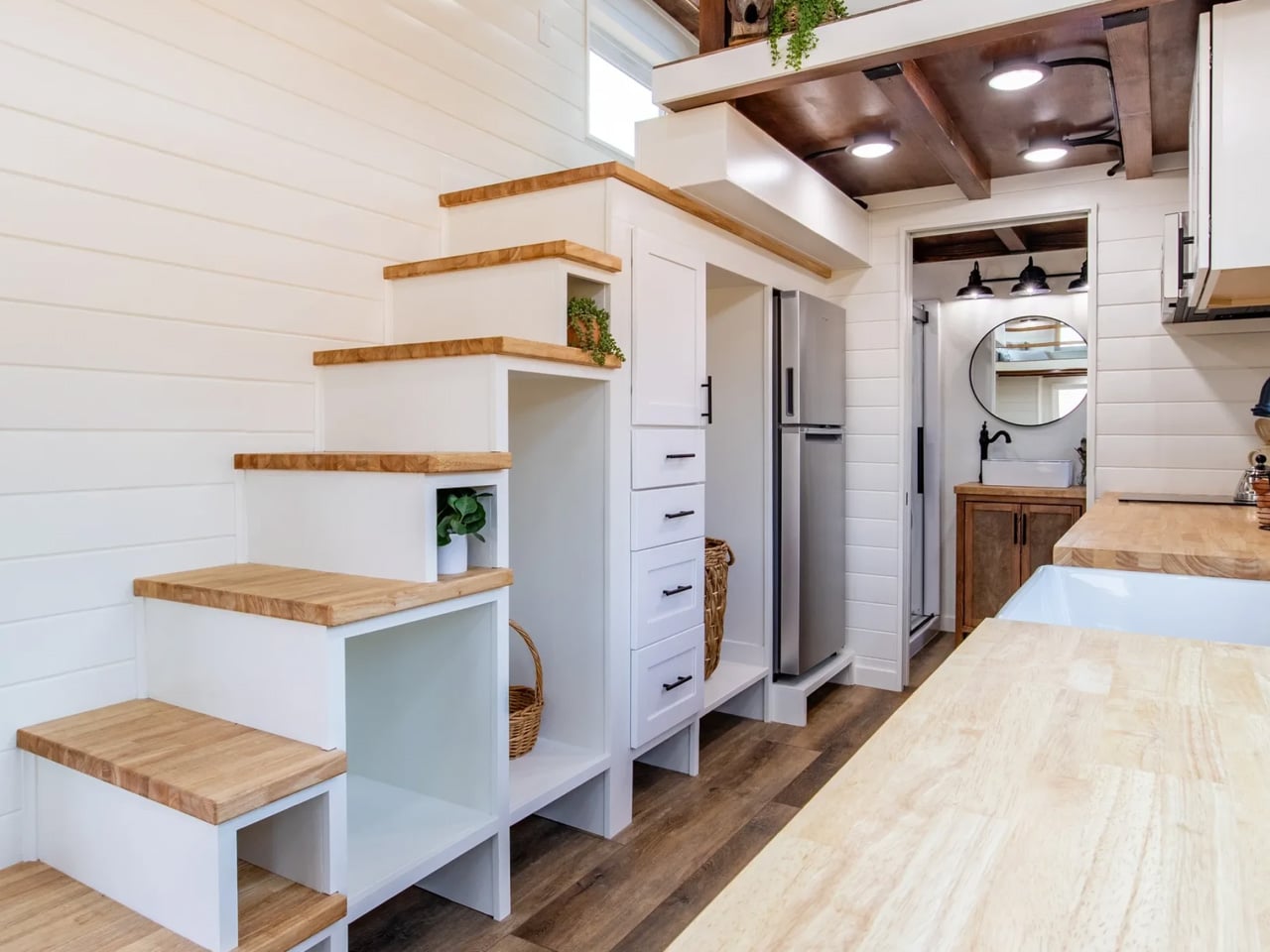
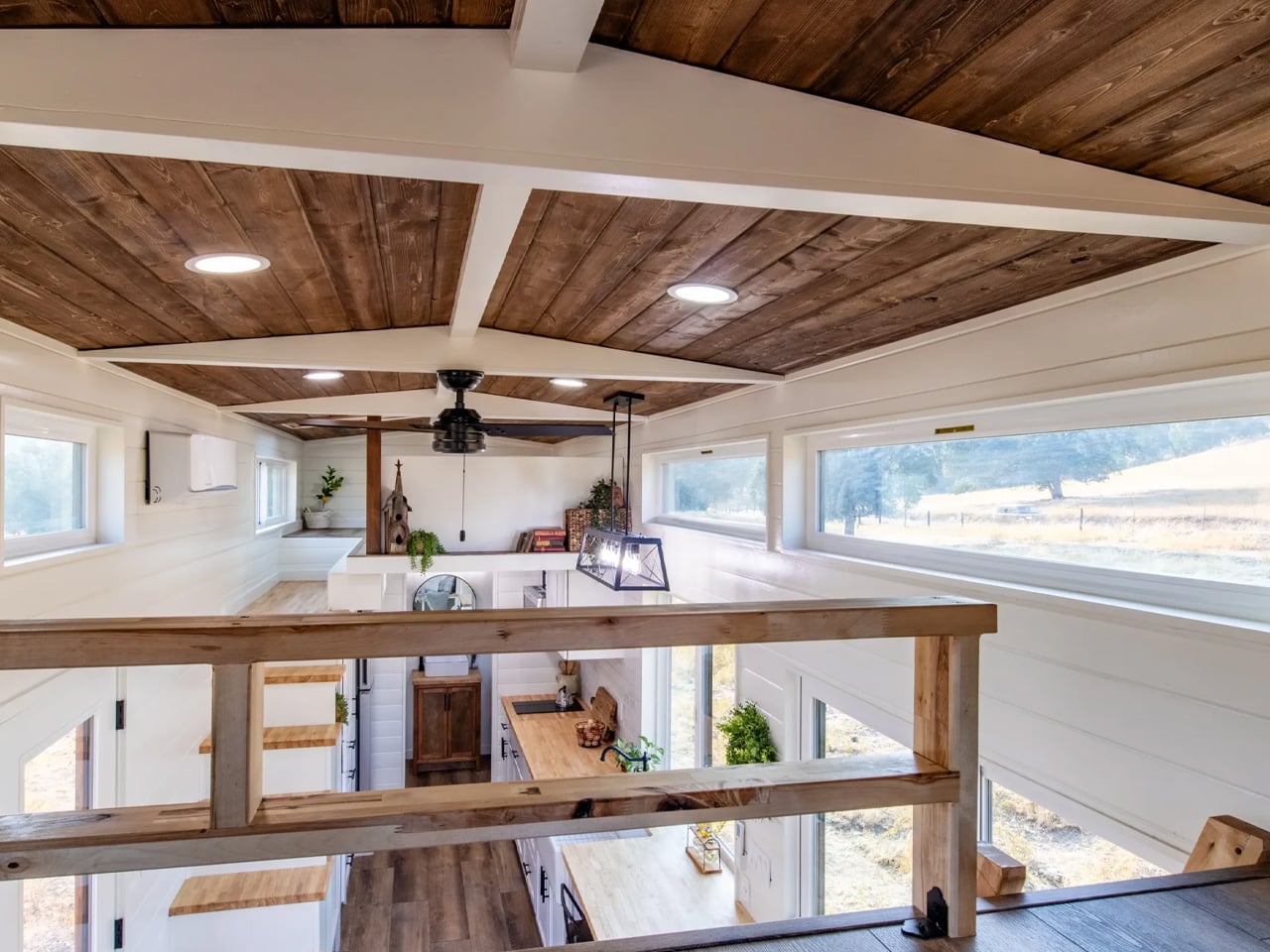
Step inside and the 360 square feet feel surprisingly open. White shiplap paneling, exposed timber beams, and warm wooden accents run throughout, and the living room anchors the space with a cozy window seat with built-in storage — a detail you rarely find at this scale. A ceiling fan and a wall-mounted mini-split handle the climate year-round. Nothing about the layout feels pinched.

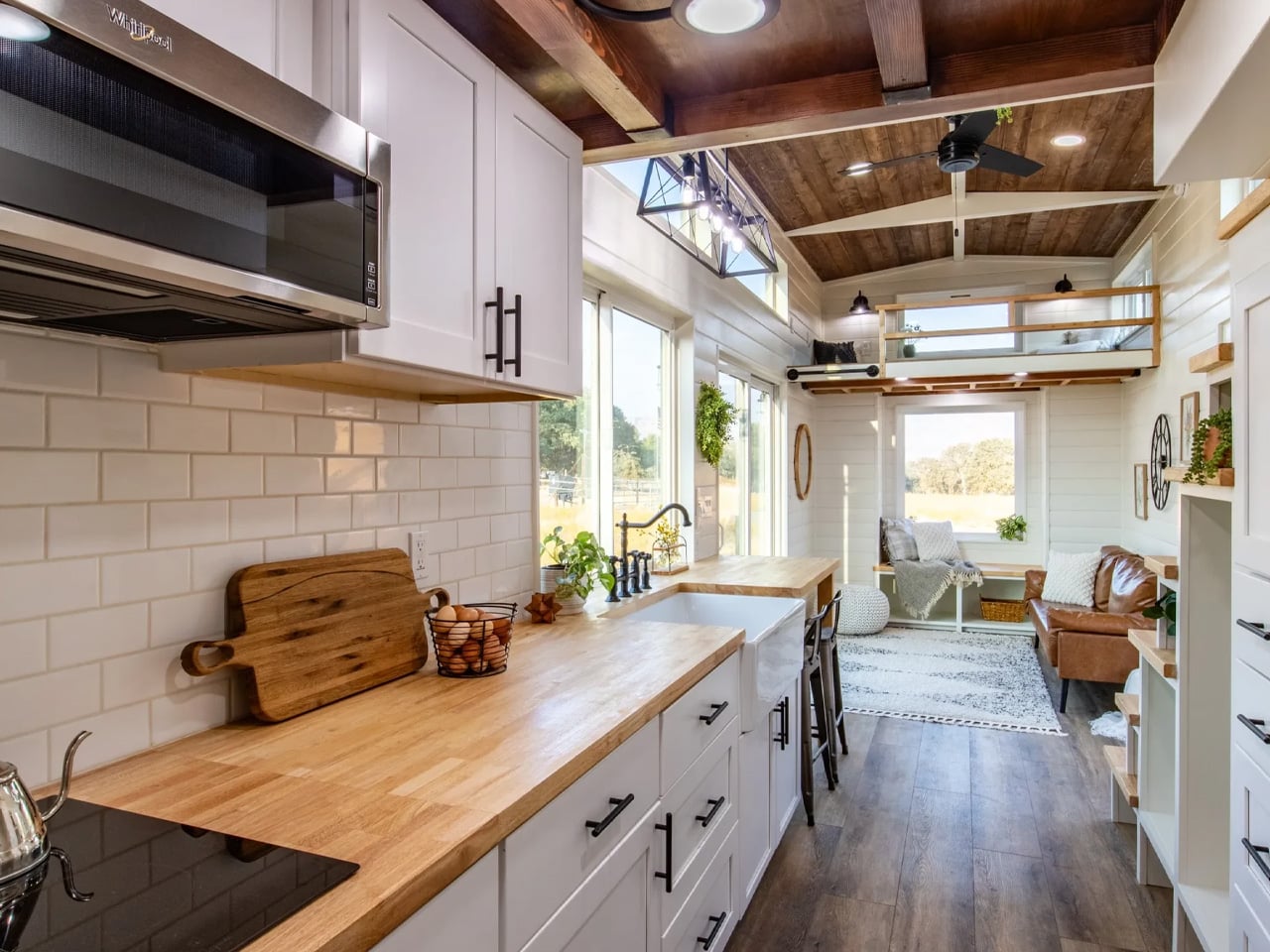
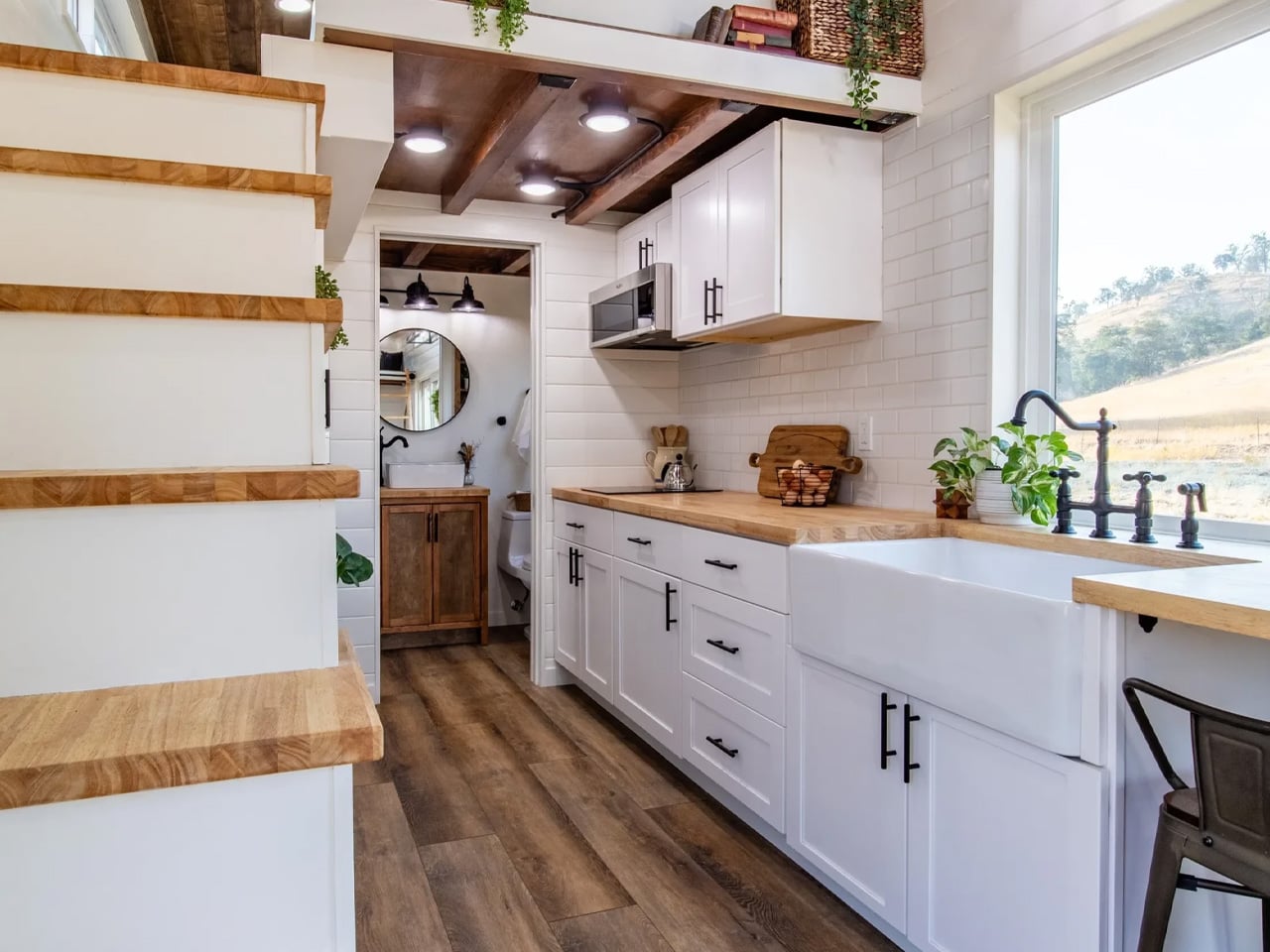
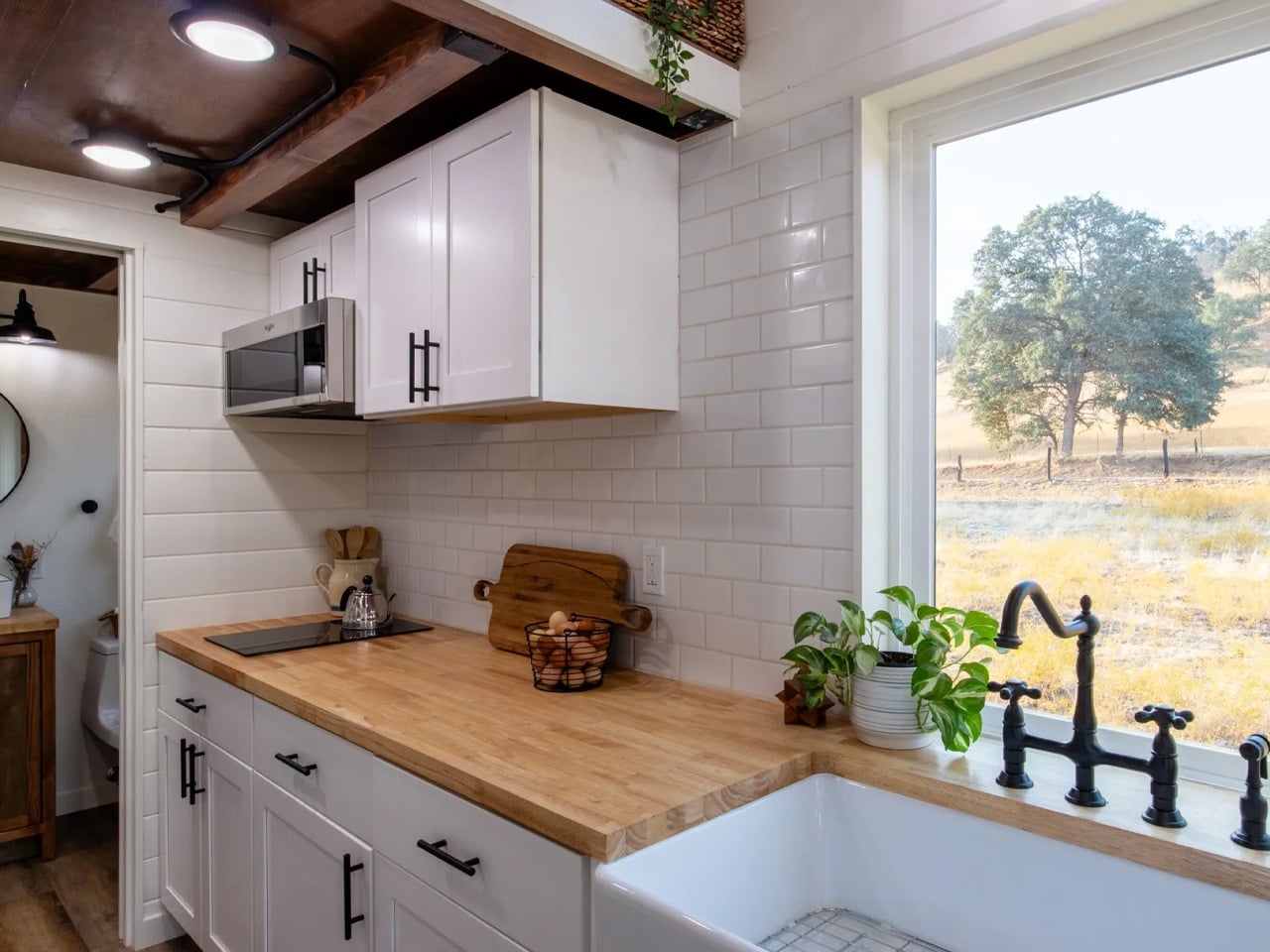
The kitchen is where JT Collective puts in serious design work. A farmhouse apron sink sits against a butcher block countertop, and buyers can choose between an induction cooktop or a propane oven configuration. A top-freezer fridge and low-profile microwave handle the practical side, while a breakfast bar for two turns the space into something worth lingering in. The staircase leading to the main loft doubles as storage, with drawers, nooks, and cupboards built into every riser — one of those quietly brilliant space solutions that defines a well-designed tiny home.

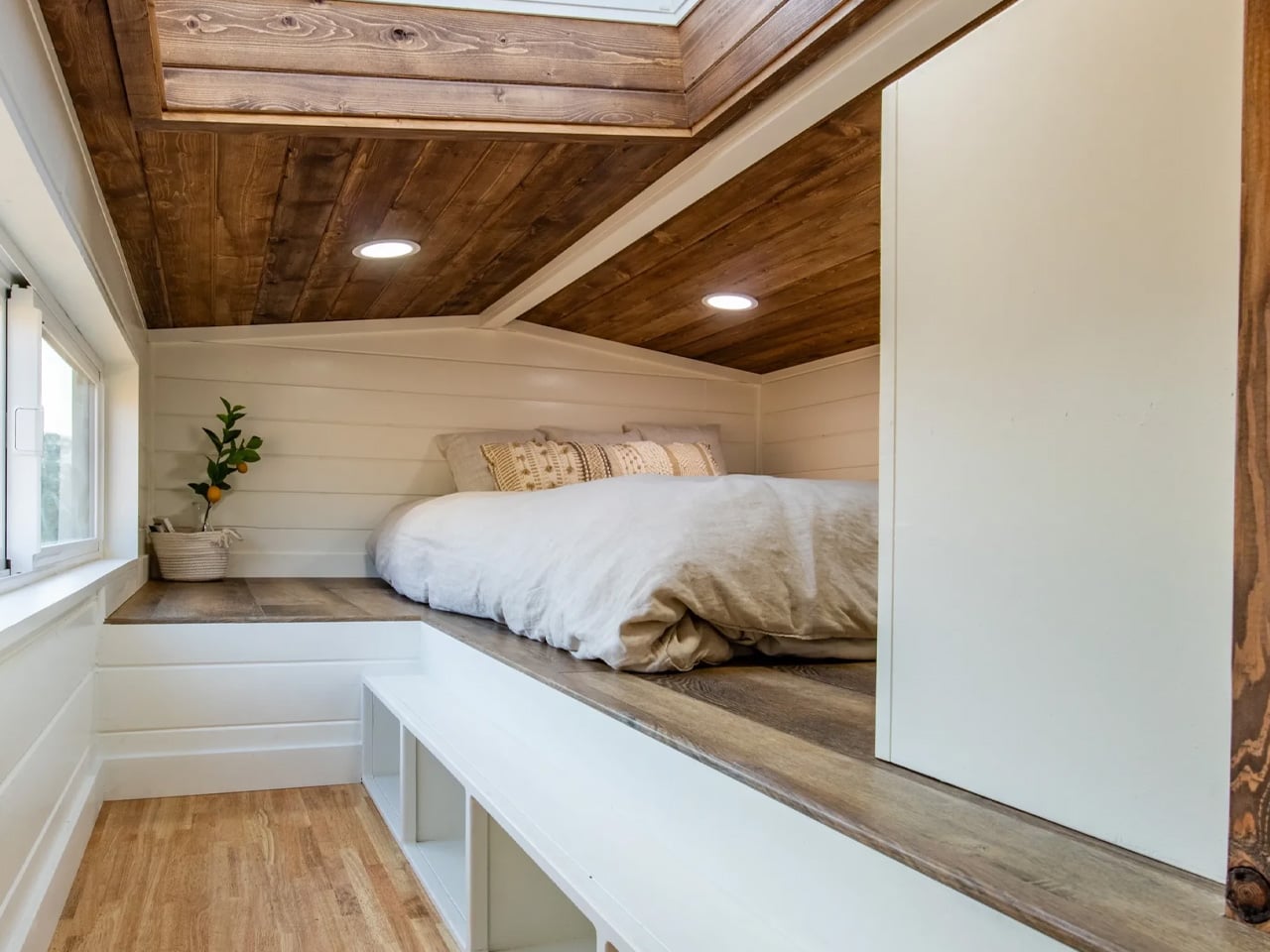
The main sleeping loft spans roughly 80 square feet and includes a lowered standing platform that makes getting dressed in the morning less of an acrobatic event, plus a skylight overhead. A secondary loft — accessed by a removable ladder that tucks neatly into the ceiling when not in use — works as a second bedroom or a casual retreat. The bathroom below features a glass-enclosed shower, a custom vanity, and two inset wall niches for storage.

Hookups include a 50-amp RV plug, potable water spigot, and city sewer or septic connections, making it fully functional on a prepared site. The Cedar Ridge starts at $124,000. An XL version with nearly 500 square feet is also available for those who need a little more room to breathe.

The post This 360-Square-Foot Cedar Ridge Tiny Home Feels Like a Full Farmhouse on Wheels first appeared on Yanko Design.
The 5 Best RVs & Motorhomes of July 2026

The RV market has never asked more interesting questions of itself. Whether you are planning your first camping trip or refining years of experience on the road, 2026 is delivering some of the most considered mobile homes the industry has produced. From a $64,000 entry-level trailer built to make the lifestyle genuinely reachable, to six-figure touring coaches that rival boutique hotels in finish and detail, the conversation around what a motorhome can be has shifted significantly.

This roundup spans a wide price bracket and an equally wide range of design philosophies. Some of these are built for couples chasing quiet weekends. Others are built for people who refuse to leave their mountain bikes or surfboards at home. One is still a concept, but an important one. What links all five is a commitment to design that goes beyond the floor plan and asks bigger questions about how we want to travel.

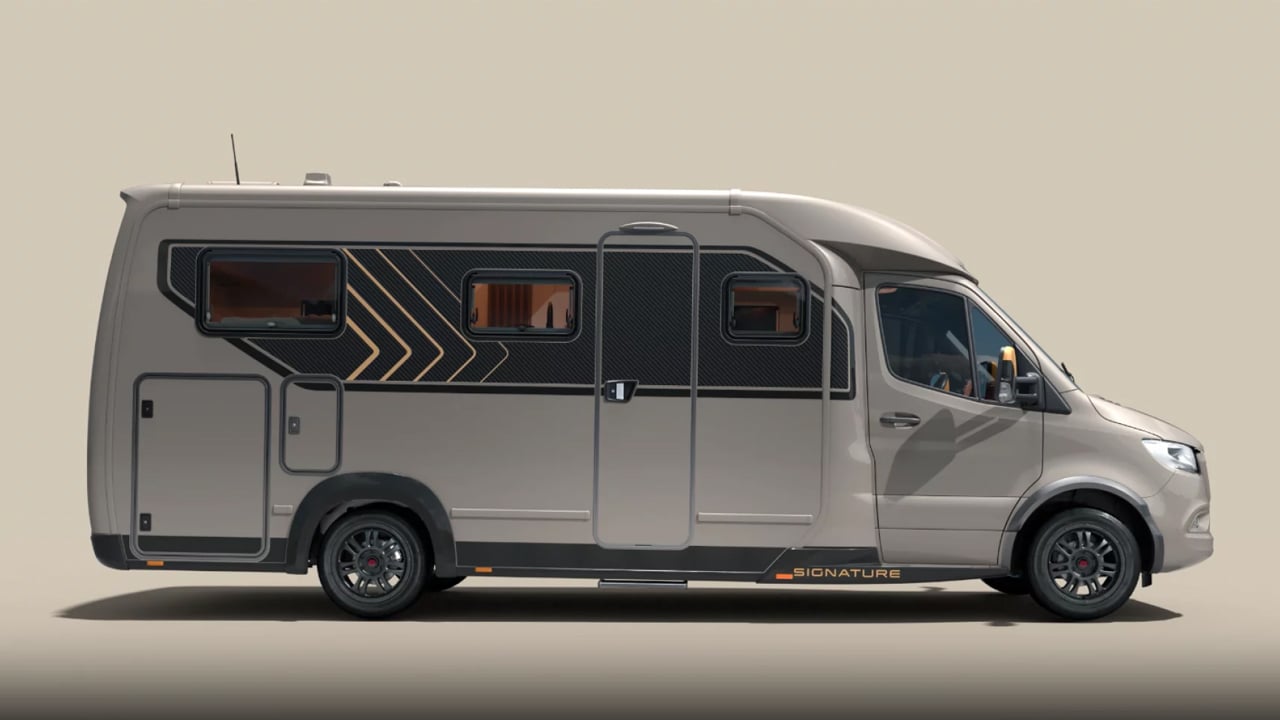
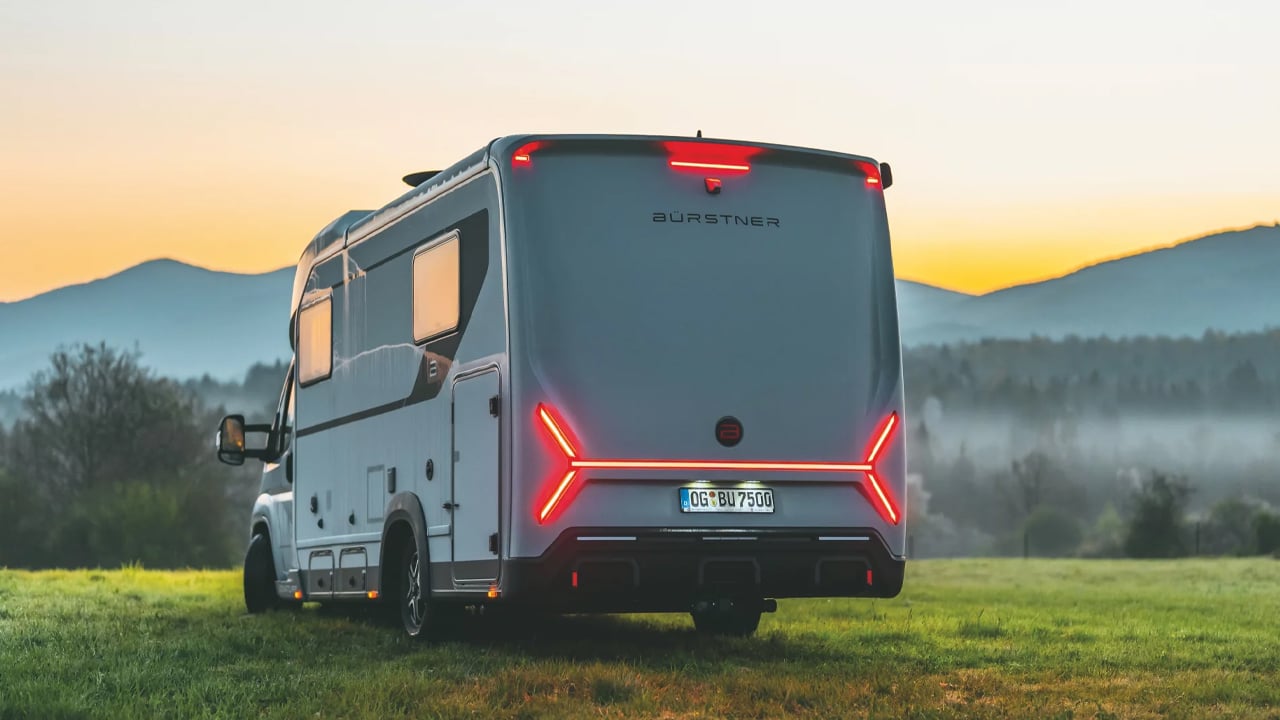
1. Bürstner Signature SMT

Germany’s Bürstner has spent years building some of the most carefully engineered compact motorhomes on the market, and the Signature SMT is their most resolved model yet. Built on a Mercedes-Benz Sprinter chassis and finished in fiberglass for a lightweight, durable shell, it leads with modularity. A privacy shutter between the kitchen and the rear bedroom means the space can be configured for a couple or adapted to host guests without sacrificing the feeling of a private retreat at the back.

For you, the Signature’s real strength is in what disappears. The drop-down double bed folds into the ceiling completely when not in use, returning the front lounge to full functionality. The retractable kitchen shelf doubles as a divider wall when raised. The bathroom’s sliding front wall retracts to free up the shower space. These are not gimmicks. They are genuine solutions to the tension between space and privacy that most motorhomes never quite resolve. Pricing starts at approximately $107,000 for the 735cm base model.

What we like:

  • The retractable shelf that doubles as a bedroom privacy wall is one of the cleverest interior details in its class
  • The raised roofline at the front gives the drop-down bed a genuinely comfortable clearance that most vans cannot match

What we dislike:

  • European pricing and limited US dealer networks make purchasing and servicing more complicated for American buyers
  • The modular interior requires occupants to actively manage transitions between configurations throughout the day

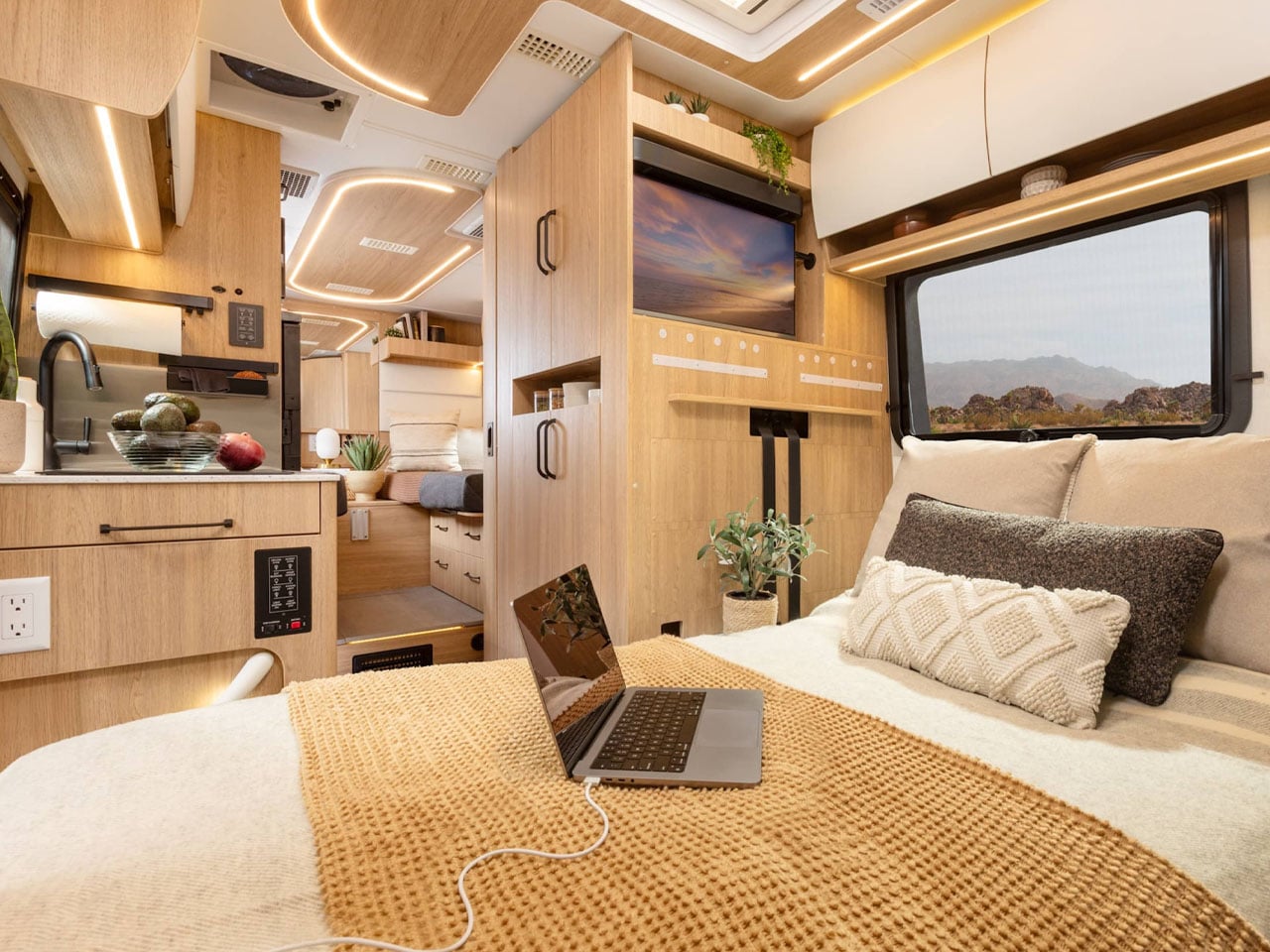
2. Leisure Travel Vans Unity TBX

The Unity TBX is what happens when a luxury motorhome builder takes the idea of an adventure garage seriously. Built on a Mercedes-Benz Sprinter 3500, the 25-foot Canadian-made coach puts a 1,727-liter pass-through cabinet at the center of its design identity. That is not a storage afterthought. It is a decision that fundamentally changes what a motorhome can carry. Mountain bikes, surfboards, skis, fishing gear: it all fits, with 12- and 120-V outlets inside to charge electric bikes on the move.

For you, the TBX means you no longer have to choose between comfort and the gear that makes your adventures worth having. The interior sleeps four, with a convertible front lounge, twin beds in the rear, and a full kitchen featuring dual-burner induction, a compressor fridge, and a pull-out pantry. A 270-Ah lithium battery, 400 watts of solar, and AWD capability make this genuinely capable across all seasons. Starting at $237,000, it demands serious commitment, but it delivers a serious machine.

What we like:

  • The 1,727-liter pass-through garage is genuinely functional and not a marketing add-on
  • All-wheel-drive capability and four-season climate systems make it a credible year-round vehicle

What we dislike:

  • The $237,000 starting price, rising to $245,000 for AWD, puts it well out of reach for most buyers
  • At 25 feet, navigating tighter campgrounds and urban environments will require patience

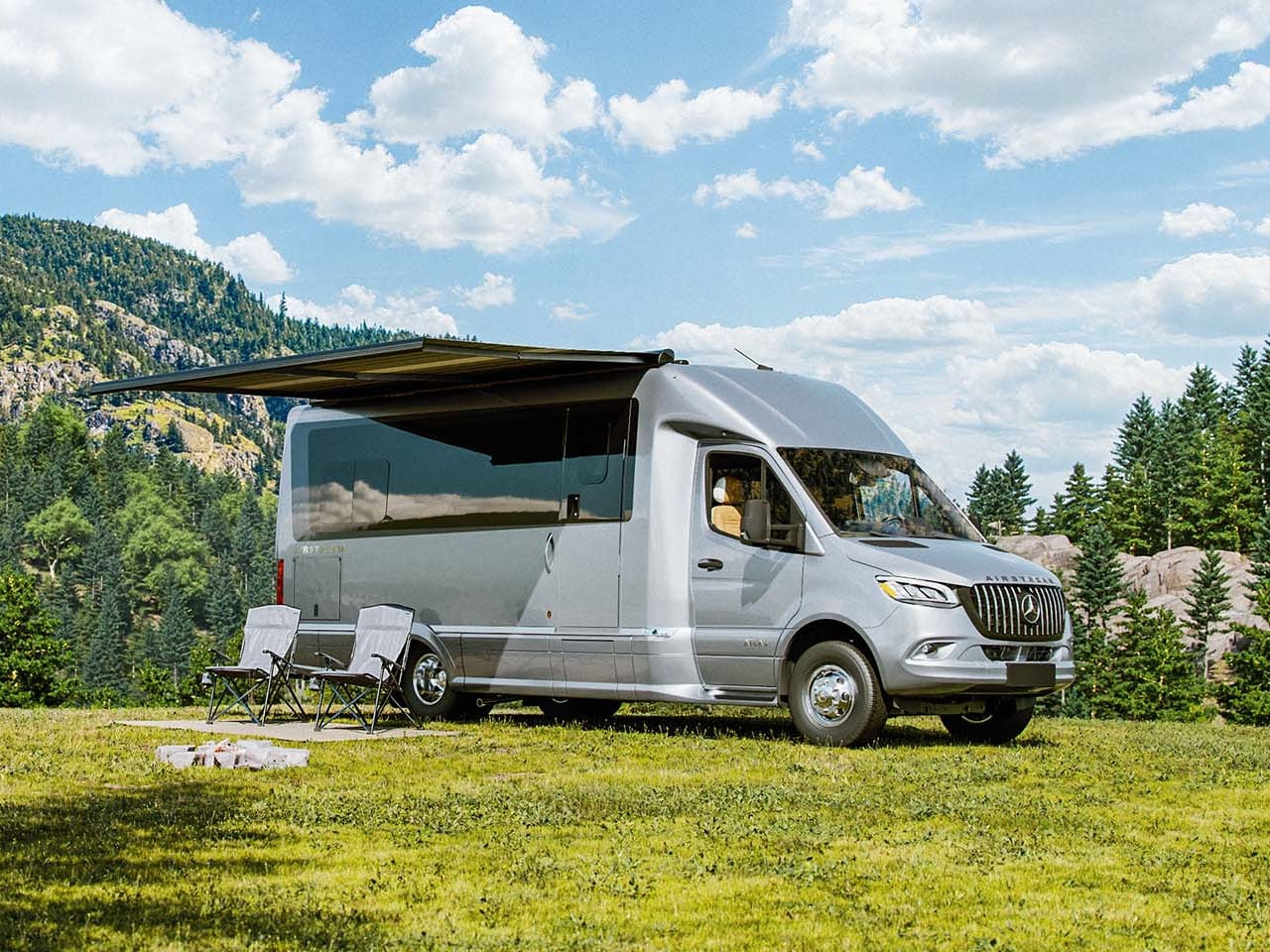
3. Airstream Atlas 25RT

Airstream has a long history of making things feel more refined than their footprint has any right to suggest, and the Atlas 25RT applies that instinct to the Class B+ motorhome. At 25 feet, riding on a Mercedes-Benz platform, this is a touring coach designed for two people who want everything in one compact form: a proper galley, a split dry bath with a separate shower and toilet area, a twin bed layout in the rear, and a pass-through garage for outdoor gear.

What makes the Atlas 25RT feel genuinely suited to longer trips is the Garmin multiplex system, which centralizes lighting, climate, and onboard functions into a single interface. For you, that means less time managing controls and more time at the destination. The JBL stereo system with four speakers and a subwoofer makes evenings inside feel considered rather than compromised. At $290,000, it sits at the top of the Class B+ segment, but the Mercedes running gear and Airstream build quality justify the positioning.

What we like:

  • The induction cooktop that stores in a drawer is a genuinely smart use of limited surface area
  • The Garmin multiplex system simplifies onboard living in a way that makes a real difference over extended trips

What we dislike:

  • A single floor plan with no alternatives limits flexibility for buyers with different space requirements
  • Designed strictly for two, meaning families or groups looking for adaptability will need to look elsewhere

4. HYTTE by RE:BURO

HYTTE is still a concept, but it is the kind of concept that asks better questions than most production vehicles bother to answer. Designed by RE:BURO, a studio describing itself as a bureau of technical aesthetics, the name draws from the Scandinavian tradition of the hytte, a simple countryside cabin. The exterior is dark, barrel-shaped, and compact, with a signature octagonal face framed by a red LED ring. It reads less like a motorhome and more like a piece of land architecture that happens to move.

What makes HYTTE worth taking seriously is the interior logic. An electric heater styled as a modern fireplace anchors the space psychologically, signaling rest in a way that no storage solution ever could. The modular chassis uses clamp-like grippers to bind the living compartment, allowing adaptation across different configurations. There are dedicated spaces for houseplants and pets, small details that reveal a design team thinking about how people actually inhabit a space. For you, HYTTE represents what the motorhome could look like with genuine architectural ambition applied from scratch.

What we like:

  • The fireplace-style electric heater is an original way to define the emotional character of a mobile interior
  • The modular chassis concept suggests a platform that could adapt to multiple configurations beyond a single fixed layout

What we dislike:

  • HYTTE remains a concept with no confirmed production timeline or pricing, making it an inspiration rather than an actual purchase
  • The compact barrel form may limit interior volume compared to more conventional motorhome layouts of similar overall length

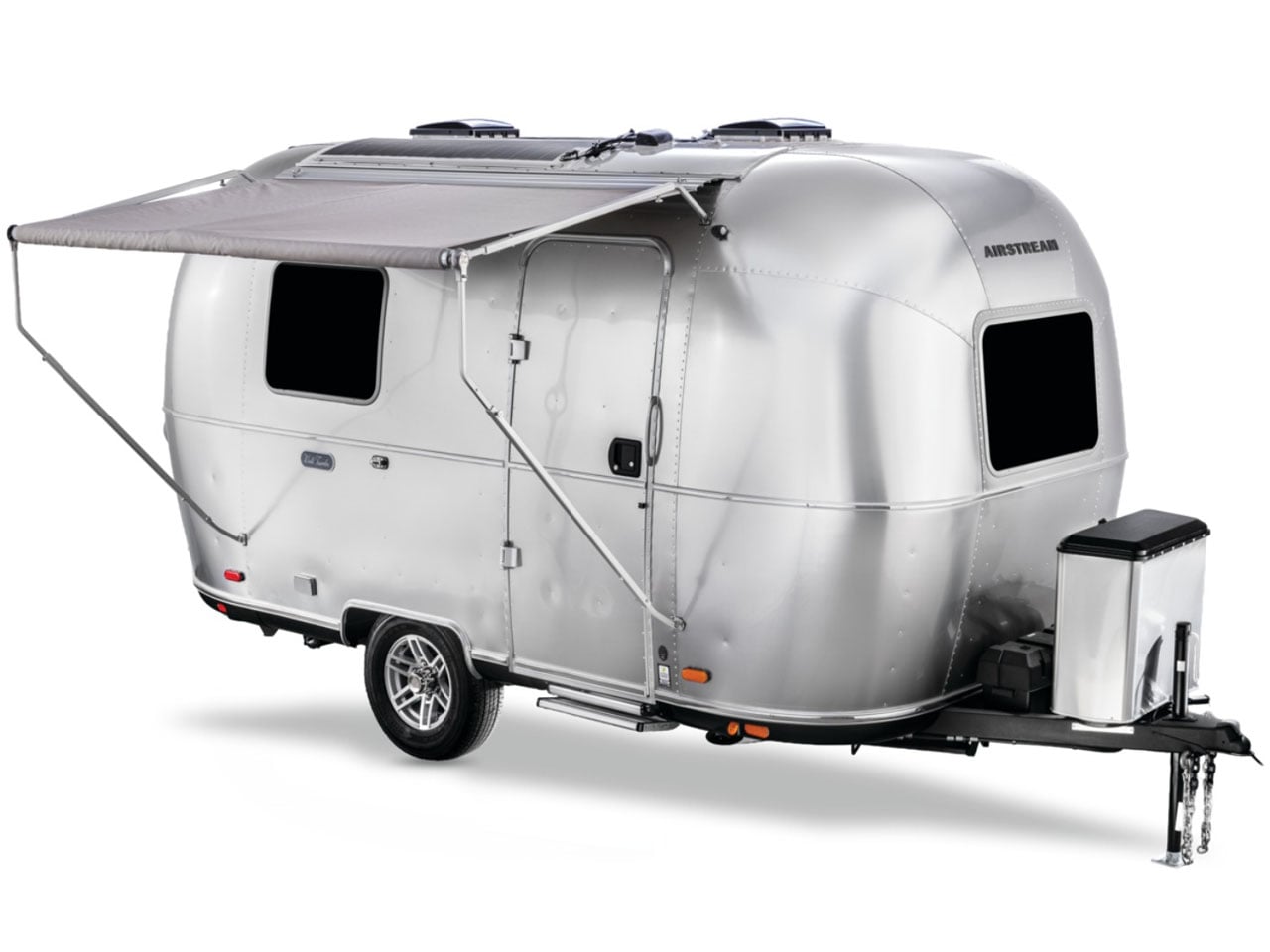
5. Airstream World Traveler 17RB

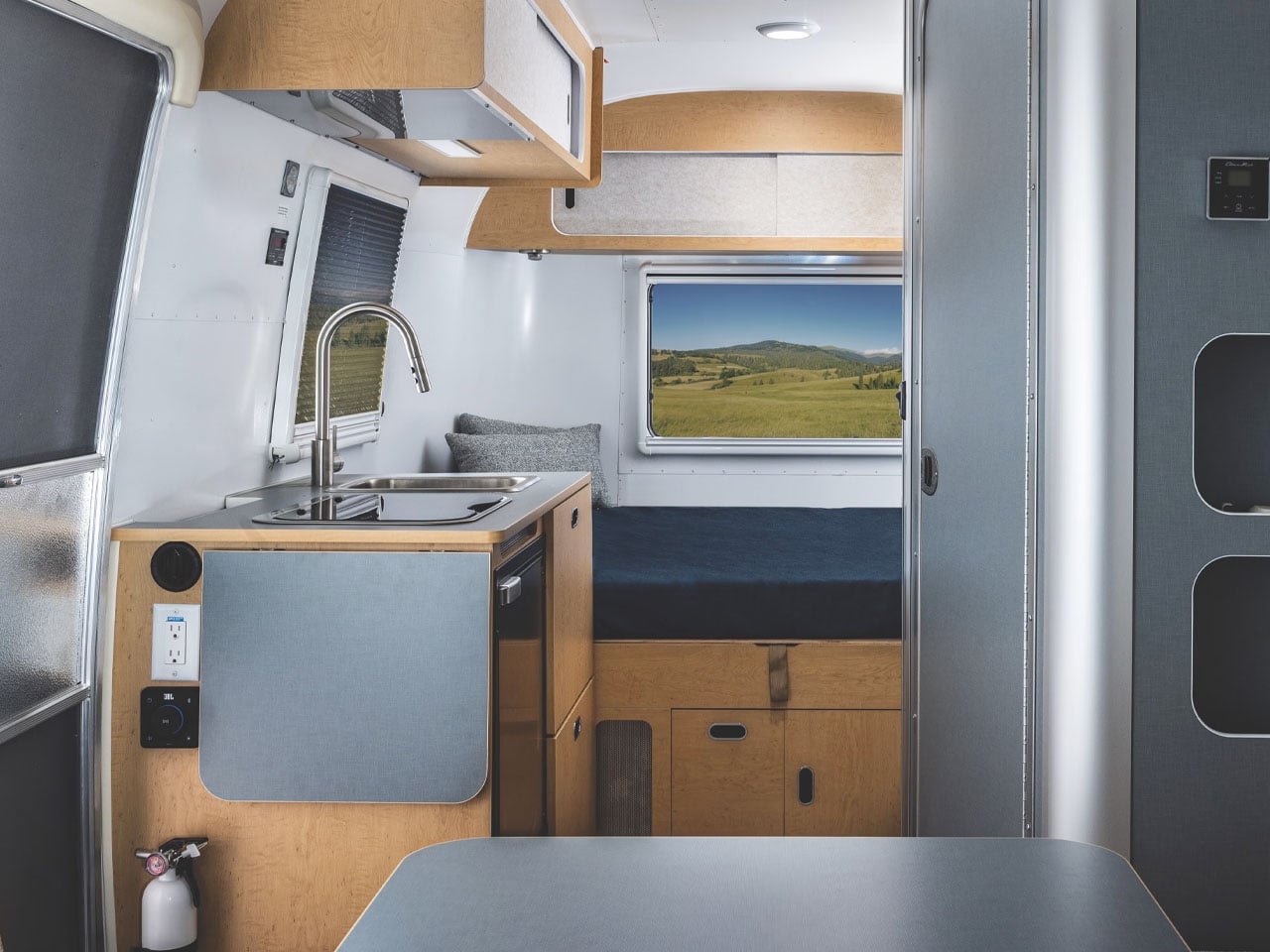
At $64,400, the World Traveler 17RB is the most accessible Airstream the brand has ever produced, undercutting the previous entry-level Bambi by $4,500. At 17 feet, it is lightweight enough to be towed by an SUV or a compact truck like the Toyota Tacoma or Ford Maverick, which immediately broadens who can realistically own one. The signature riveted aluminum shell is preserved on the outside, maintaining the Airstream identity even as the interior reflects the decisions made to hit the price point.

For you, the 17RB is a genuine entry point to a style of travel that usually costs considerably more. The Scandinavian-inspired interior keeps things clean with white aluminum walls and a choice of upholstery, while the extendable countertop and convertible dinette make the space work above its size. A 24-inch Smart TV, JBL audio, and Truma heating are included as standard. An optional 200W solar panel and 2.5 kWh lithium battery extend its capability into off-grid territory without needing a full electrical overhaul.

What we like:

  • The most affordable Airstream ever made, without sacrificing the brand’s signature exterior design language
  • A 3,500 lb GVWR makes it compatible with a wide range of tow vehicles most buyers already own

What we dislike:

  • Smaller rectangular windows replace the wrap-around glass found on pricier models, which is the most visible cost-saving trade-off on the exterior
  • The 2.1 cubic foot refrigerator is genuinely limited for anything beyond a short weekend trip


The Best RVs Ask More of Themselves

What the strongest RV designs of 2026 share is a refusal to treat the motorhome as a compromise. The Leisure Travel Vans and Airstream flagships push toward a level of finish that genuinely challenges what a home on wheels can offer. The Bürstner takes modularity seriously. The World Traveler 17RB makes the lifestyle reachable. HYTTE imagines what becomes possible when someone applies real architectural thinking to the category from the ground up.

Whether you are working with a $64,000 budget or closer to $290,000, the common thread running through all five is that design decisions make the difference. The cleverest storage, the most considered material choices, the layouts that genuinely account for how people move and rest in a small space: those are the things that separate a motorhome you simply tolerate from one you actually want to be inside.

The post The 5 Best RVs & Motorhomes of July 2026 first appeared on Yanko Design.