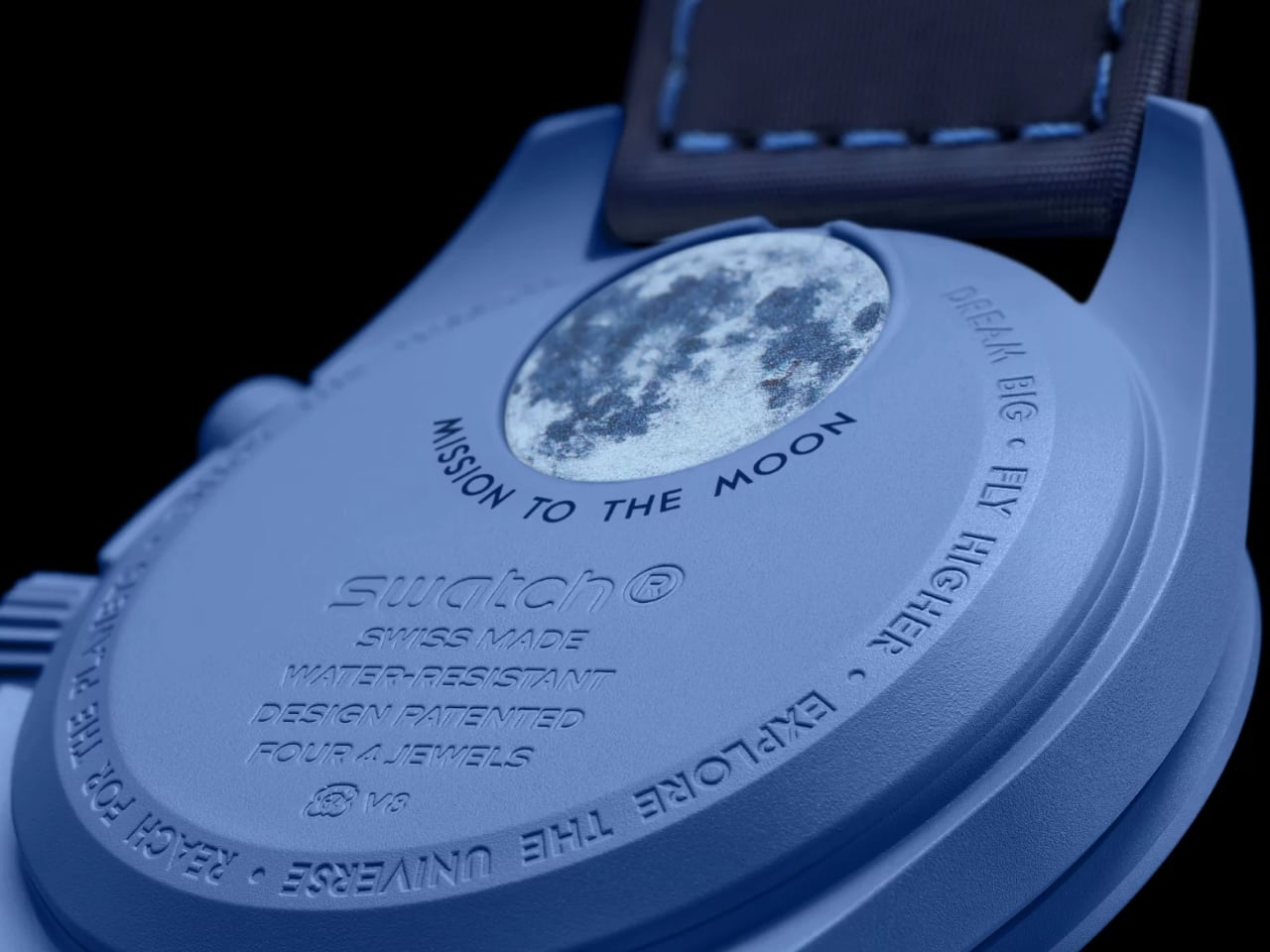
Celebrate the Rare Blue Moon with Omega x Swatch Limited Edition Watch

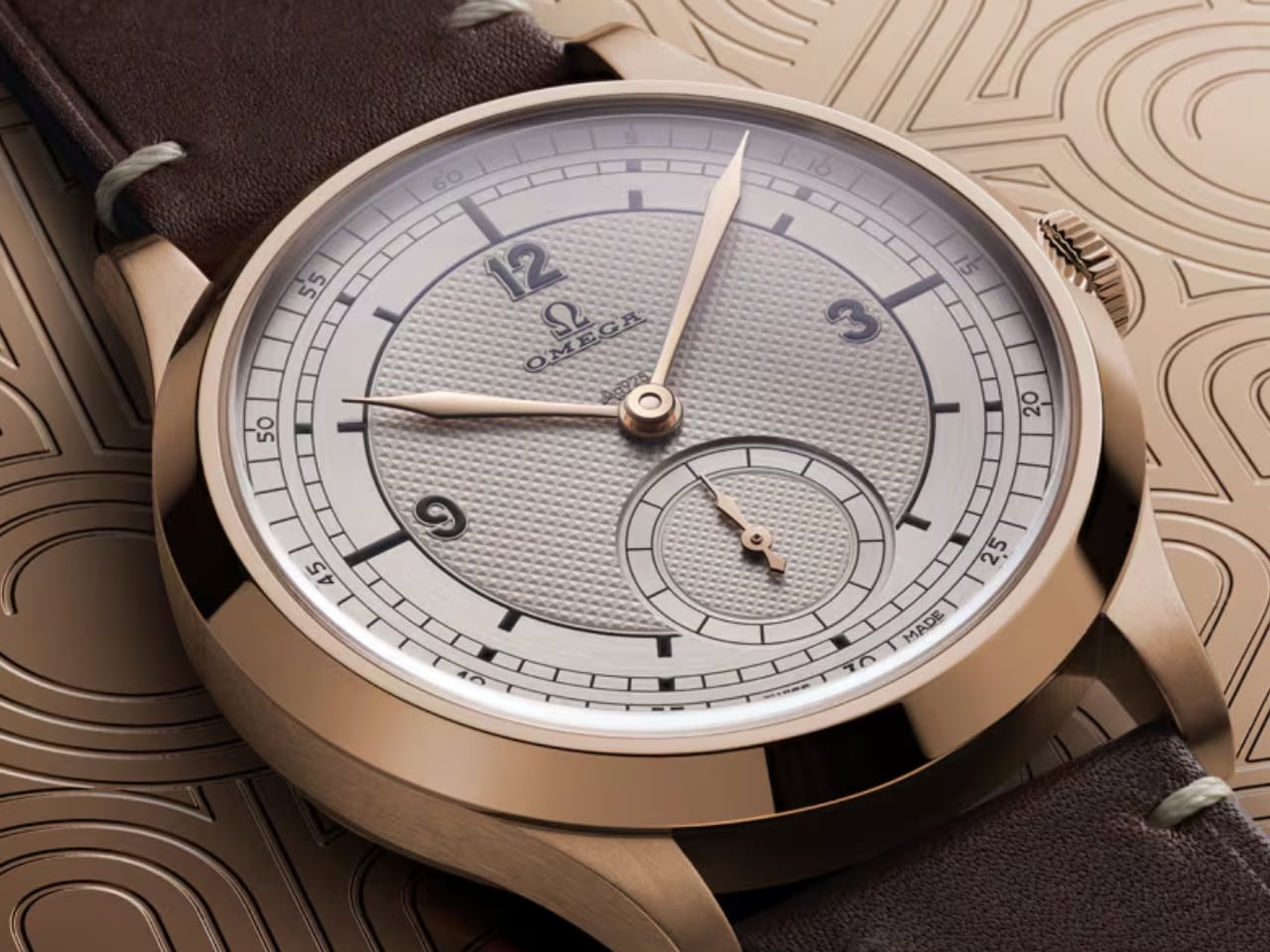
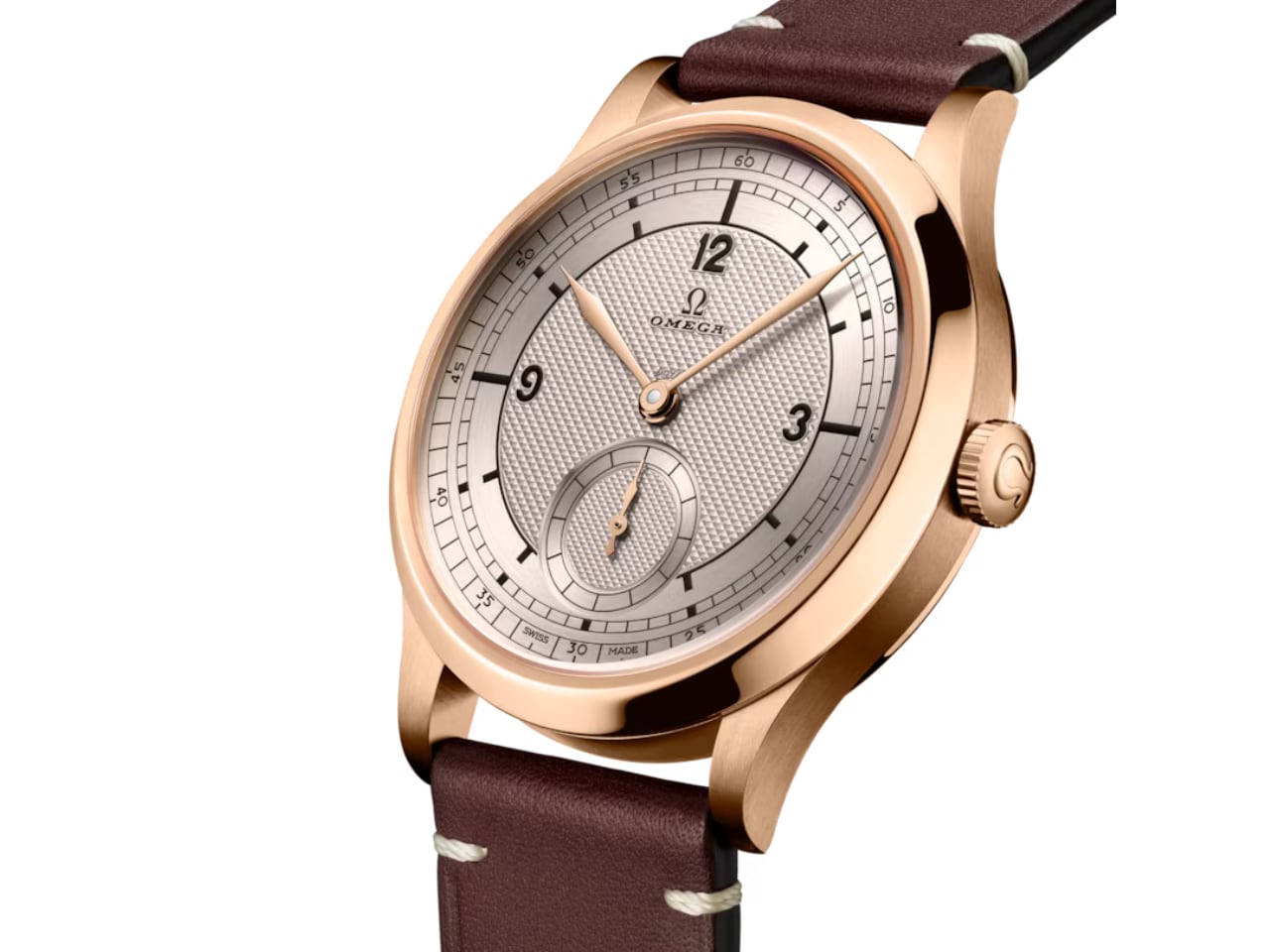
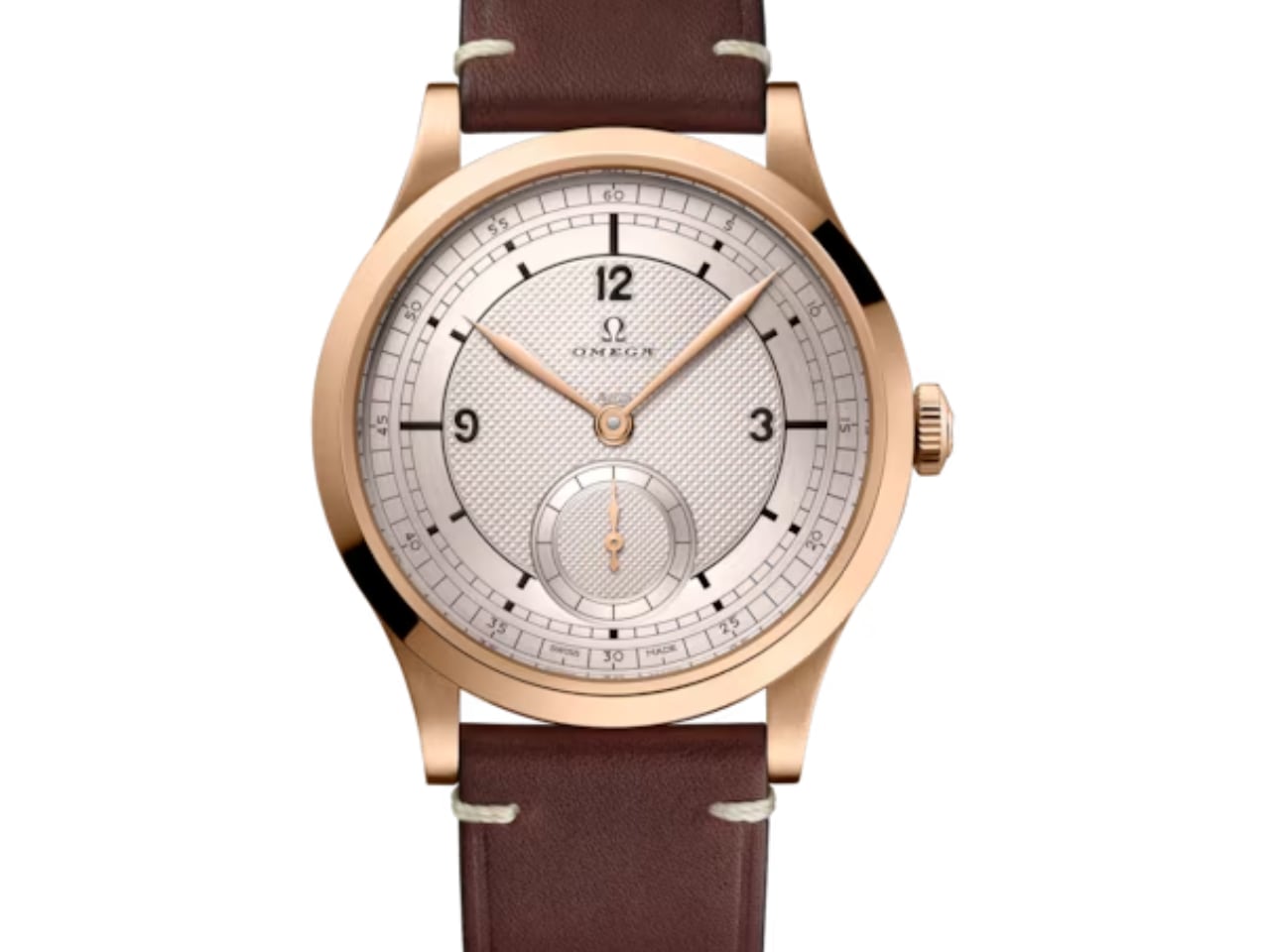
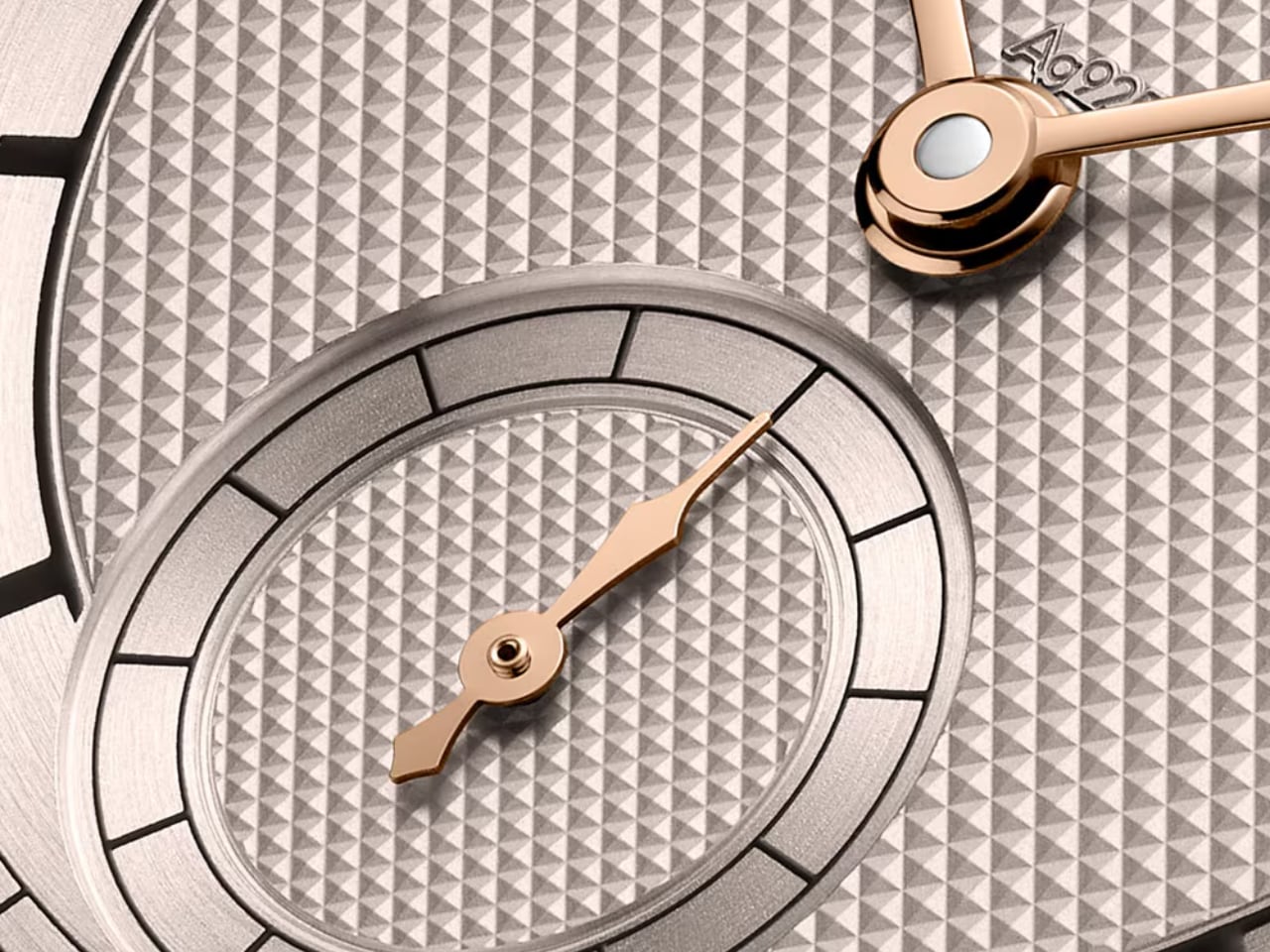
Welcome to Wrist Watch Wednesday, where we dive deep into the latest and most captivating timepieces in the world of horology. Today, we explore the Omega x Swatch collaboration, MISSION TO THE SUPER BLUE MOONPHASE, a chronograph that marks the rare blue moon of August 19, 2024. This watch celebrates the summer season and a rare astronomical event, encapsulated in a design that seamlessly merges both brands’ expertise.

Designer: Omega + Swatch

MISSION TO THE SUPER BLUE MOONPHASE

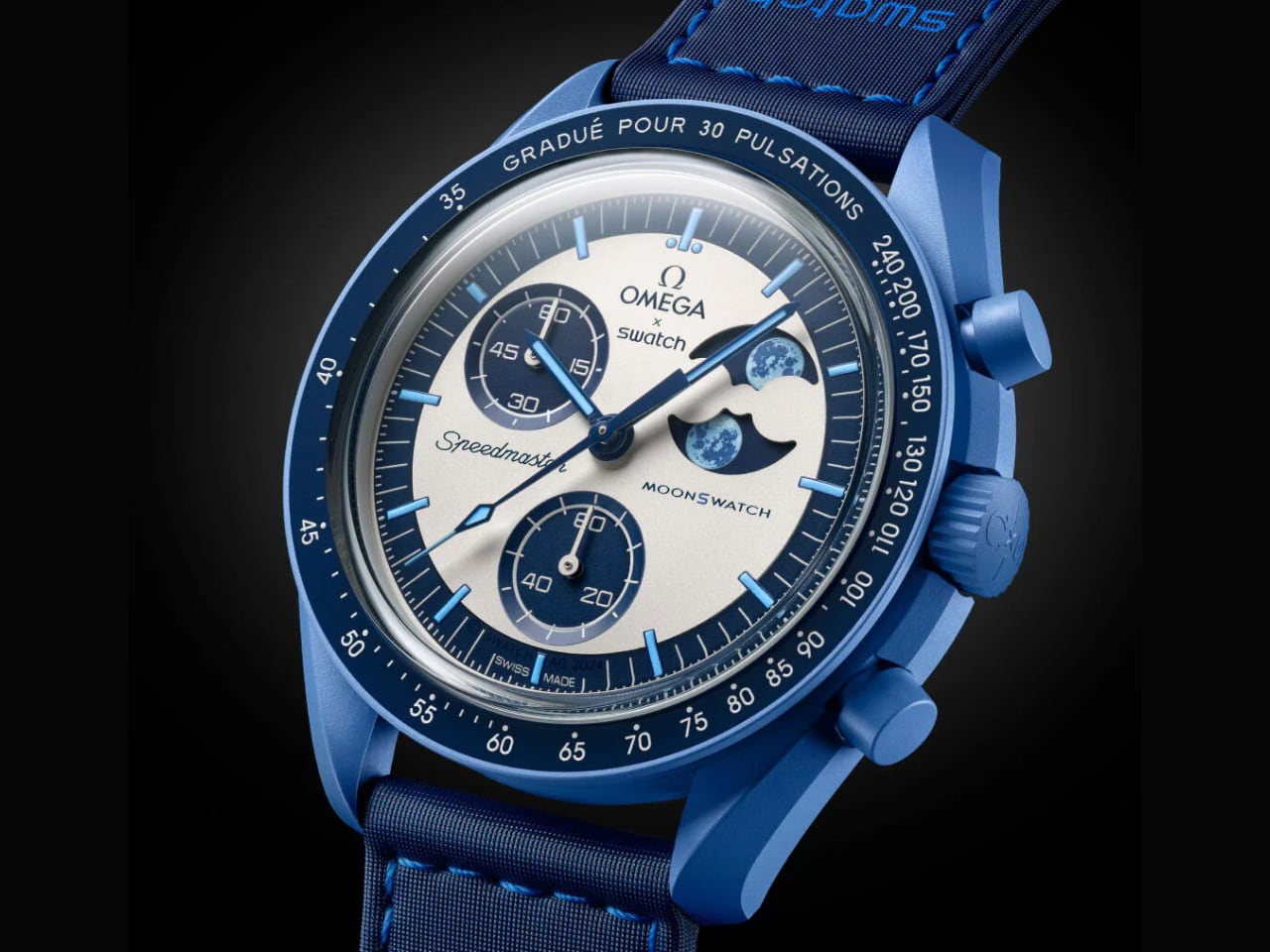
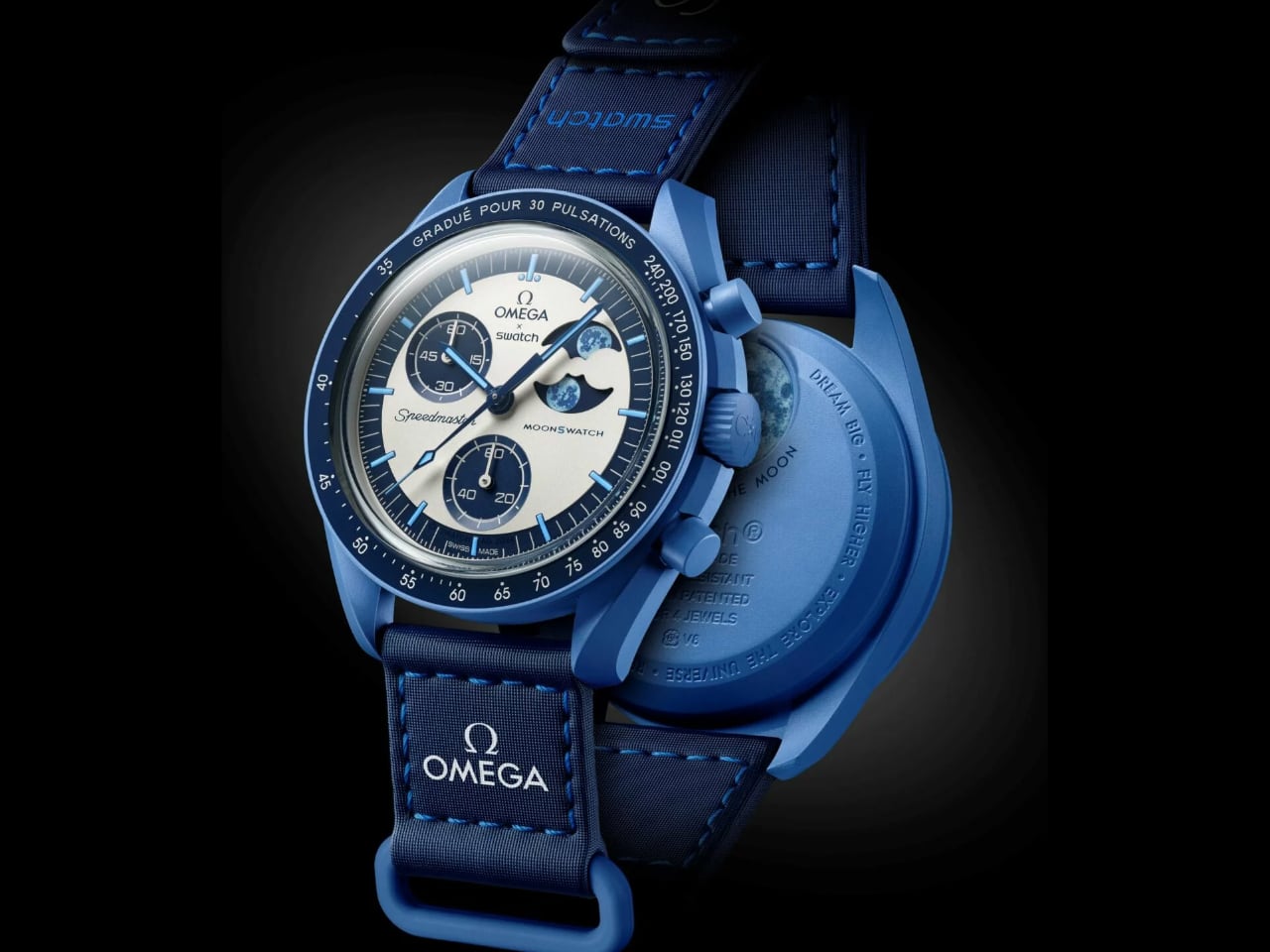
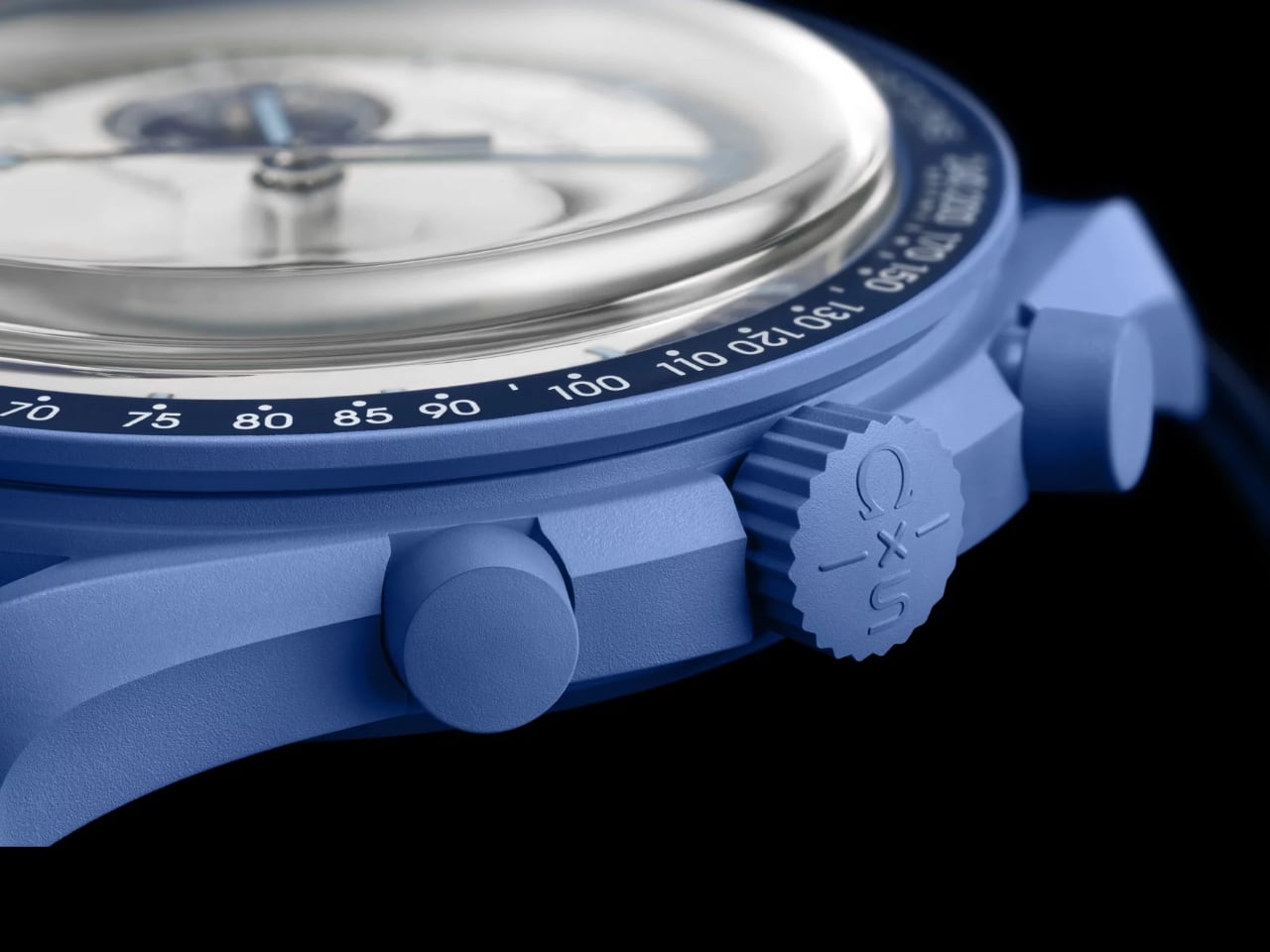
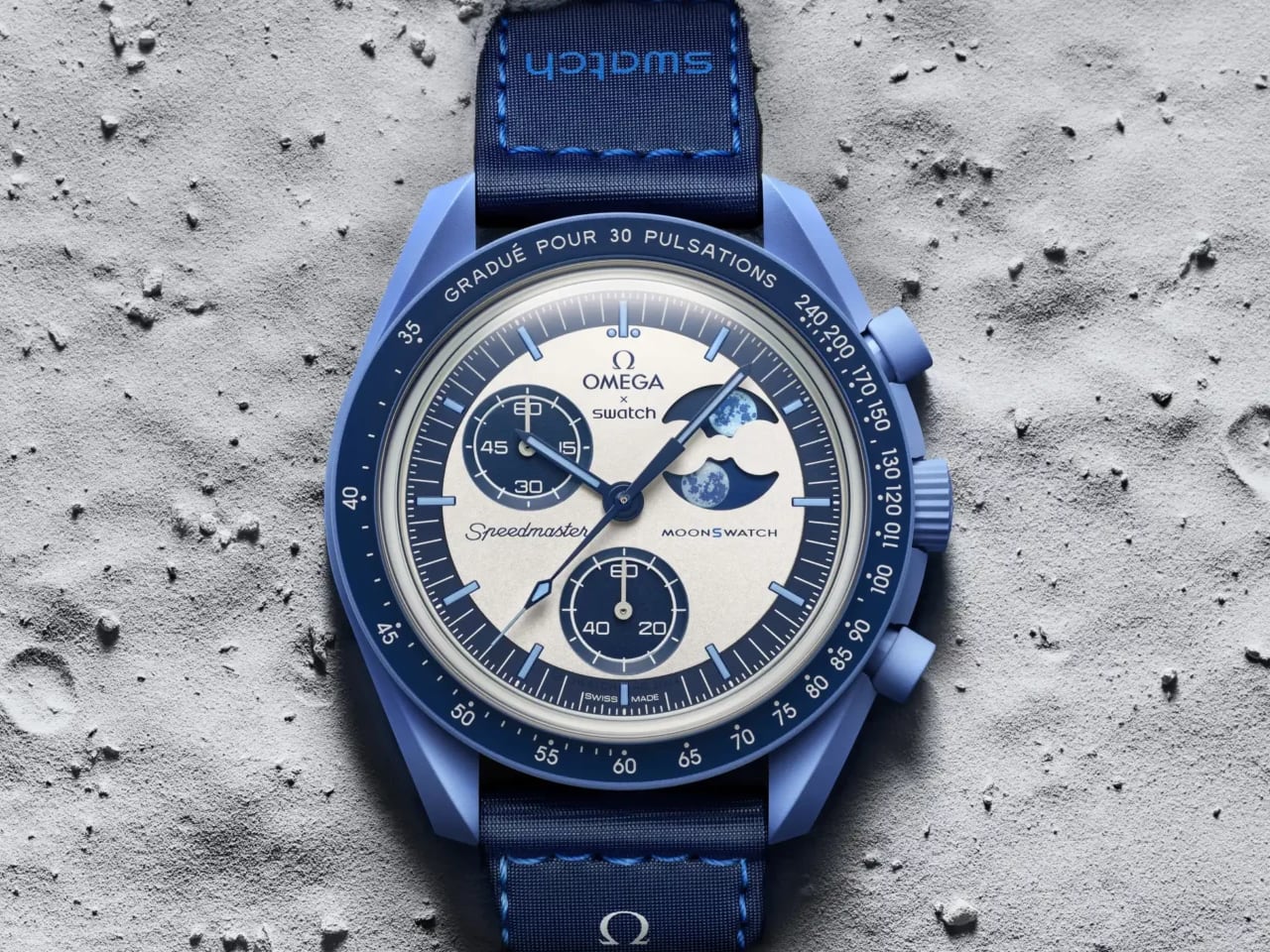
The watch boasts a striking blue Bioceramic case, crown, and pushers, creating a sleek and modern aesthetic that is sure to captivate. The blue VELCRO strap, adorned with light blue topstitching and a blue Bioceramic attachment loop, perfectly complements the case, ensuring a cohesive and comfortable fit.

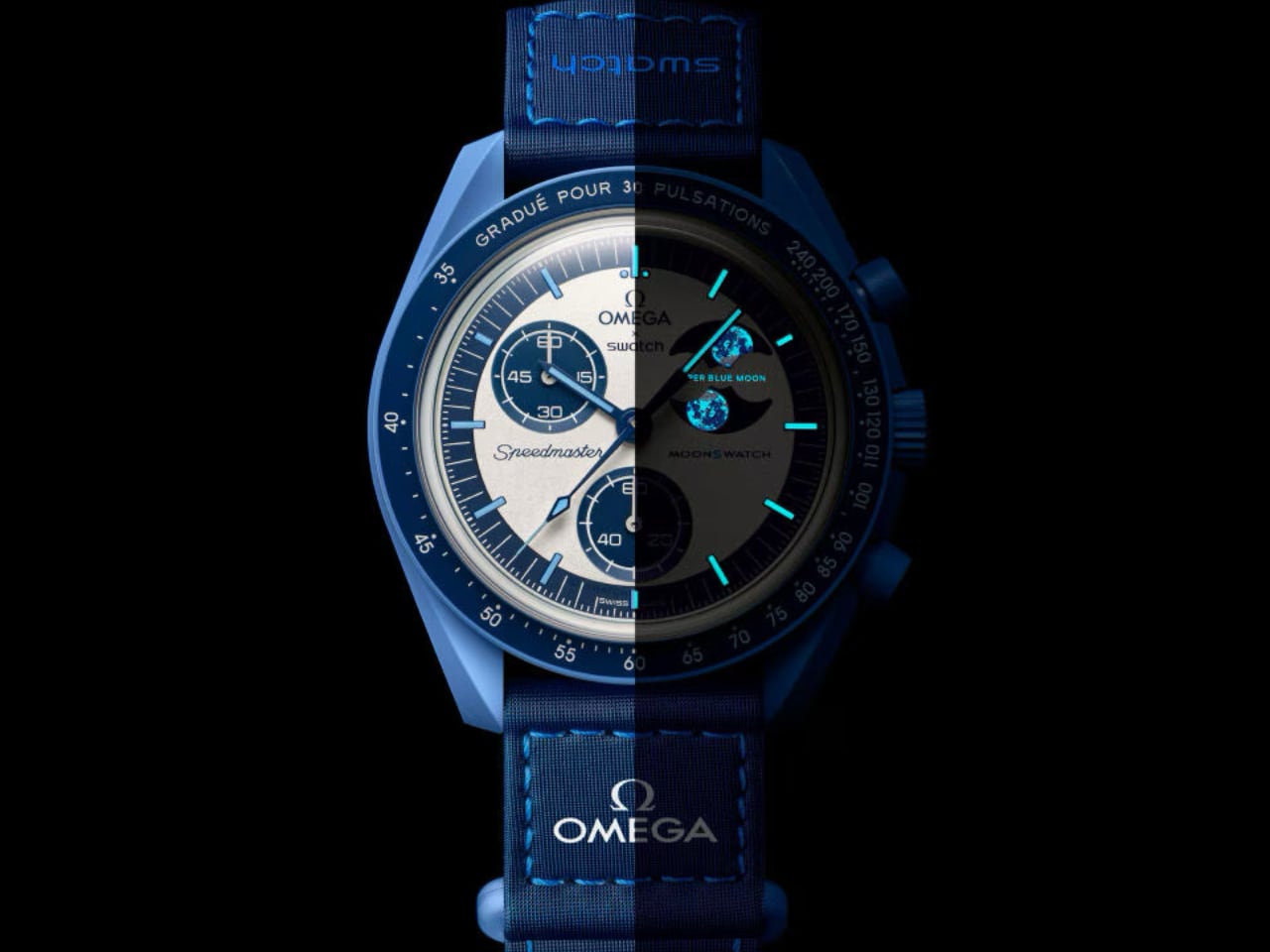
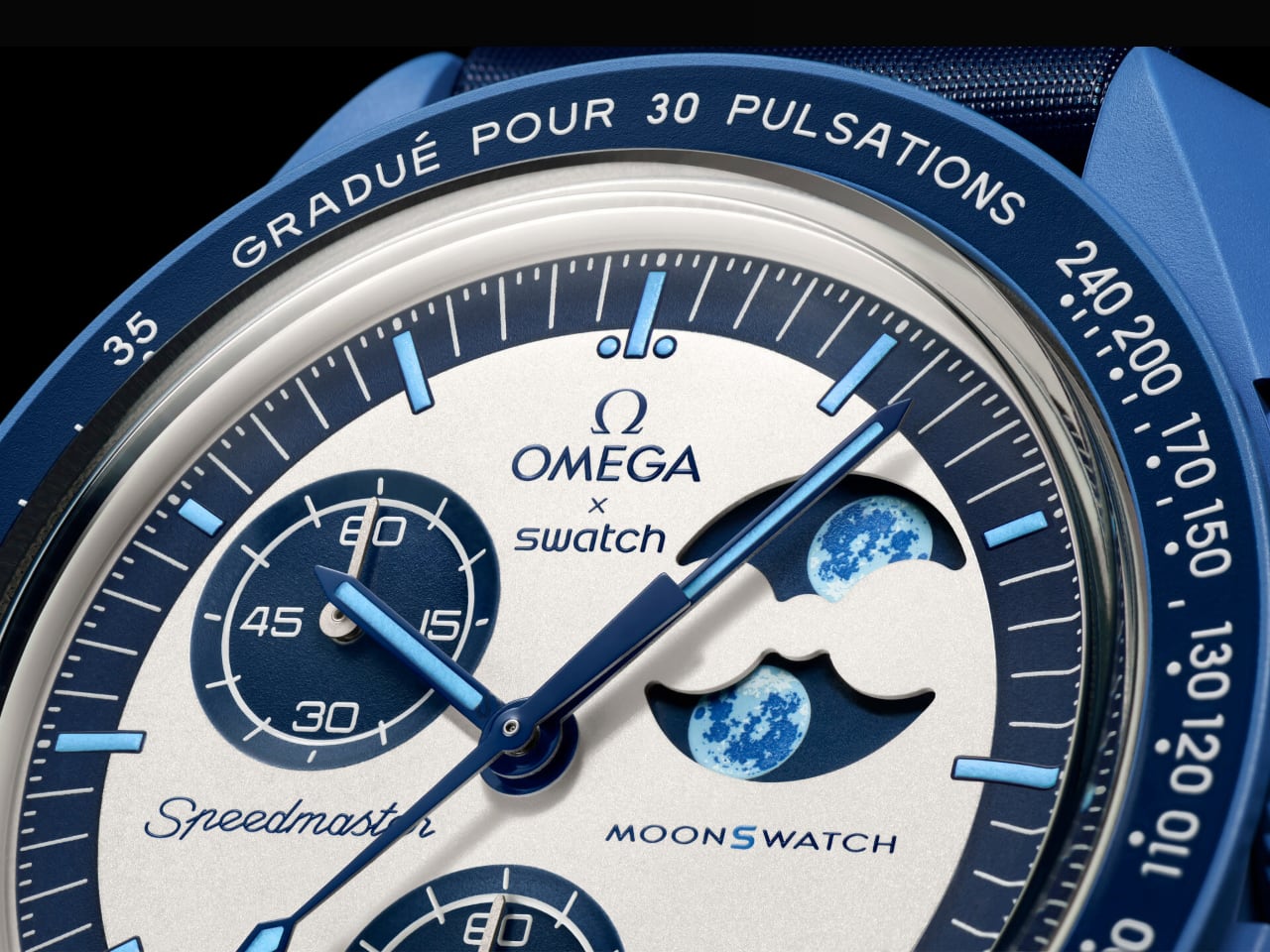
The dial is the centerpiece of this watch, showcasing a blue and silver opaline panda design. The silver opaline background is clean and sophisticated, while the contrasting blue subdials add a dynamic visual element. The blue hour markers are meticulously applied for precision, making them easily readable. Both the hour and minute hands are blue and coated with Grade A Super-LumiNova®, ensuring they glow brightly in low light. The chronograph seconds hand shares this luminescent coating, guaranteeing legibility in any condition.

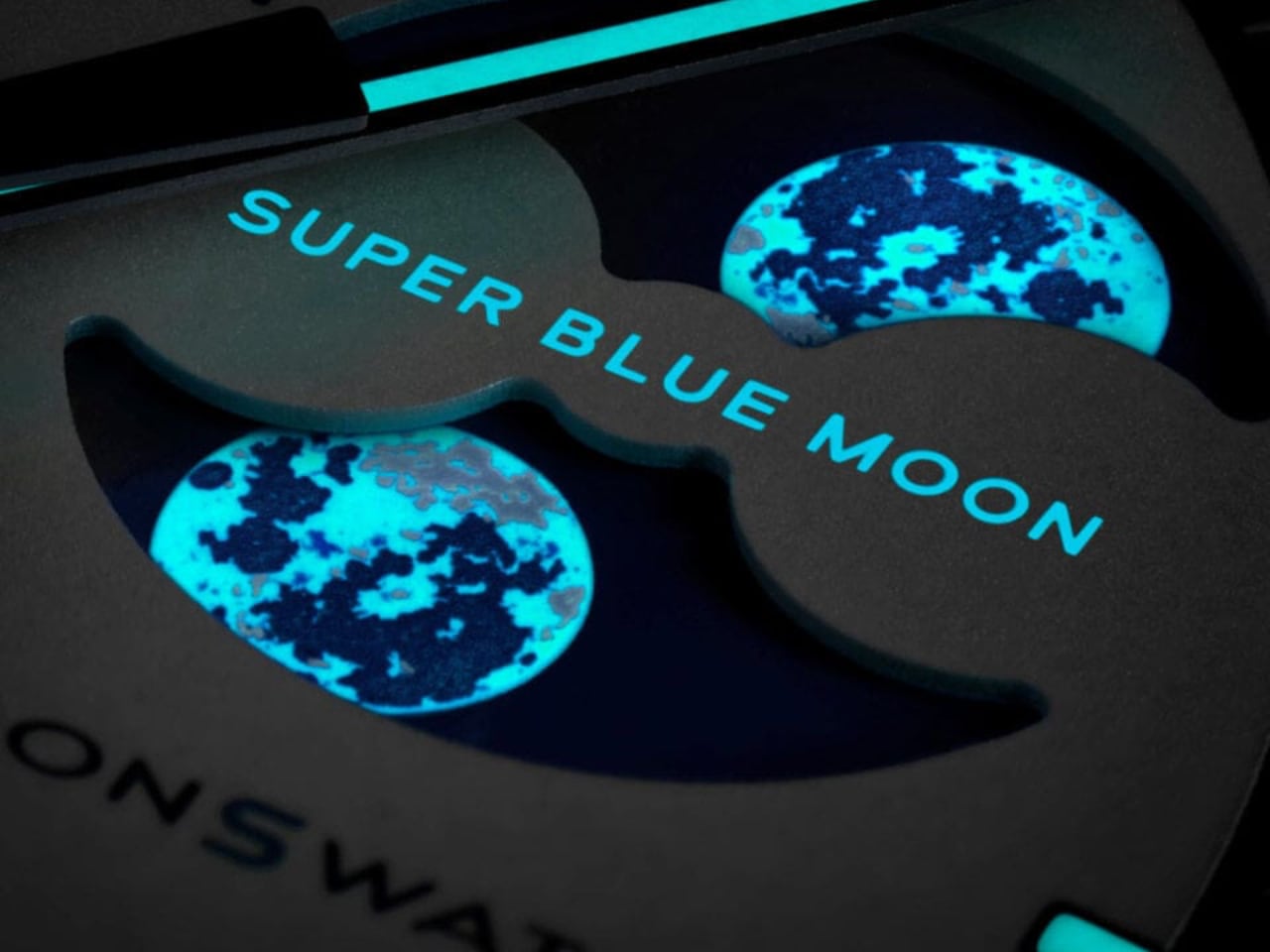
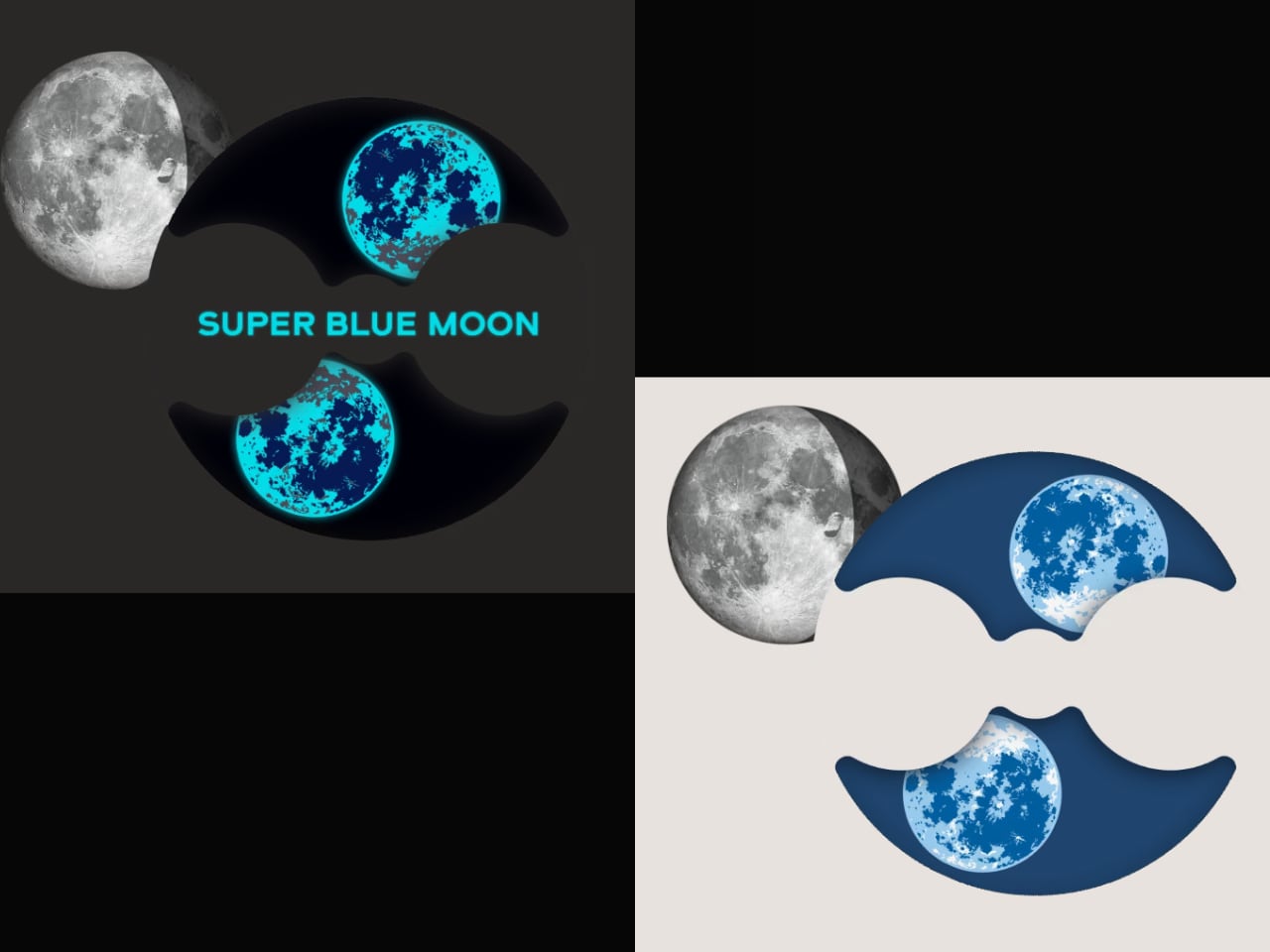
This dial’s unique and poetic feature is the moon phase indicator at the 2 o’clock position. This subdial features two large blue moons on a dark blue disc, which rotates to display the moon’s different phases. Under UV light, hidden details in various shades of blue emerge on the moon phase mask and disc, adding a delightful visual surprise. This hidden moon design echoes the battery cover, linking the front and back aesthetics.

The blue Bioceramic bezel around the dial includes a white pulsometer scale, a practical tool historically used by medical professionals to measure heart rates. This pulsometer enhances both the watch’s functionality and its unique character.

The dial is protected by box-shaped bio-sourced glass, known for its durability and clarity. The center of this glass is etched with an “S” for Swatch, a subtle brand signature. The dial’s outer ring features a finely crafted circular pattern that beautifully catches light, adding depth and texture to the design. Recessed subdials contribute to the multi-layered appearance of the dial, ensuring that every element is functional and visually appealing. The sharp, smooth lugs integrate seamlessly with the case, and the Bioceramic material provides a unique tactile feel.

This exclusive model is available for purchase only from August 1 to August 19, 2024, starting from 5 pm at selected Swatch points of sale worldwide. The limited availability reflects the rarity of the blue moon that inspired this watch. The phrase ‘once in a blue moon’ is often used to describe something that happens very rarely, and this watch truly embodies that sentiment. Remember, it’s not often you get the chance to own something this special—truly a ‘once in a blue moon’ opportunity!

The specifications of the MISSION TO THE SUPER BLUE MOON PHASE include:
– Case Material: Blue Bioceramic
– Case diameter: 42.00 mm
– Case thickness: 13.75 mm
– Lug-to-lug distance: 47.30 mm
– Movement: Quartz chronograph with moon phase indicator
– Water resistance: 3 bar
– Strap: Blue VELCRO with light blue topstitching and a blue Bioceramic attachment loop

This collaboration between Omega and Swatch brings together the best of both brands, creating an aesthetically pleasing and highly functional watch. The moon phase indicator, pulsometer scale, and luminescent hands all contribute to a design that captures the beauty of a rare astronomical event. The MISSION TO THE SUPER BLUE MOONPHASE is not just a timepiece; it’s a collector’s item that embodies the essence of a once-in-a-lifetime celestial phenomenon, making it a must-have for watch enthusiasts and collectors alike.

The post Celebrate the Rare Blue Moon with Omega x Swatch Limited Edition Watch first appeared on Yanko Design.
Retrofuture Revelations from Japan: A Journey Through Time and Imagination

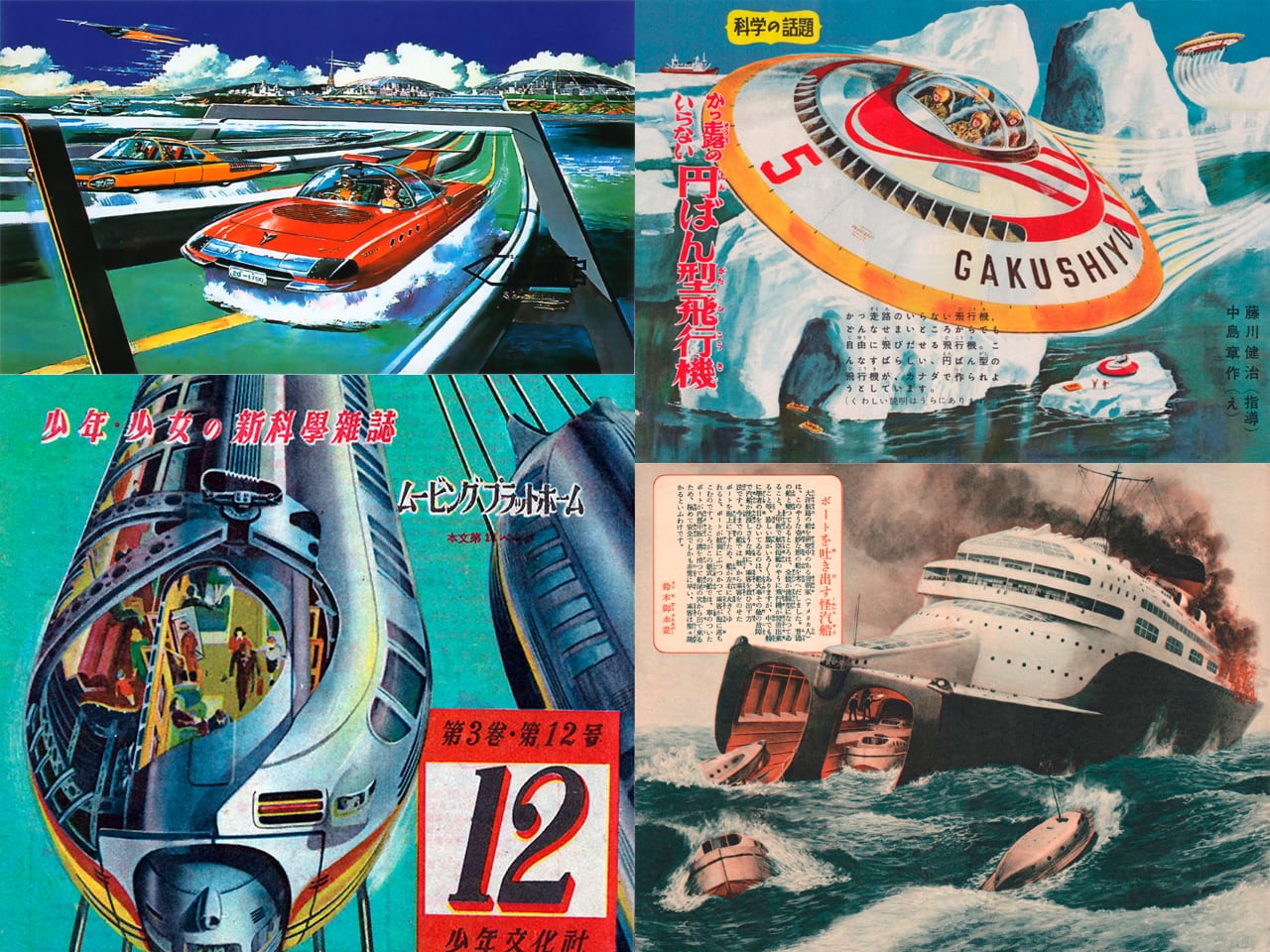
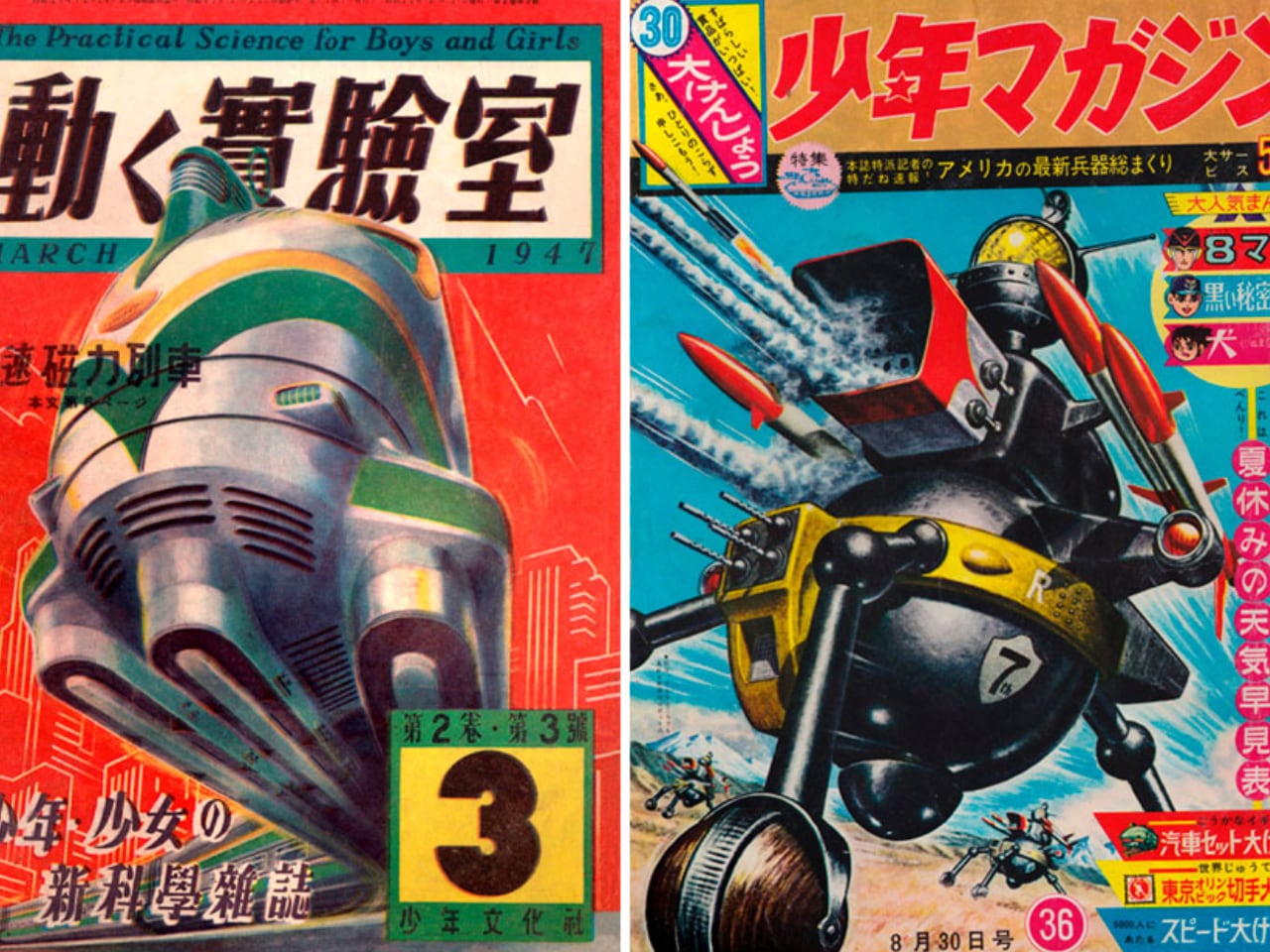
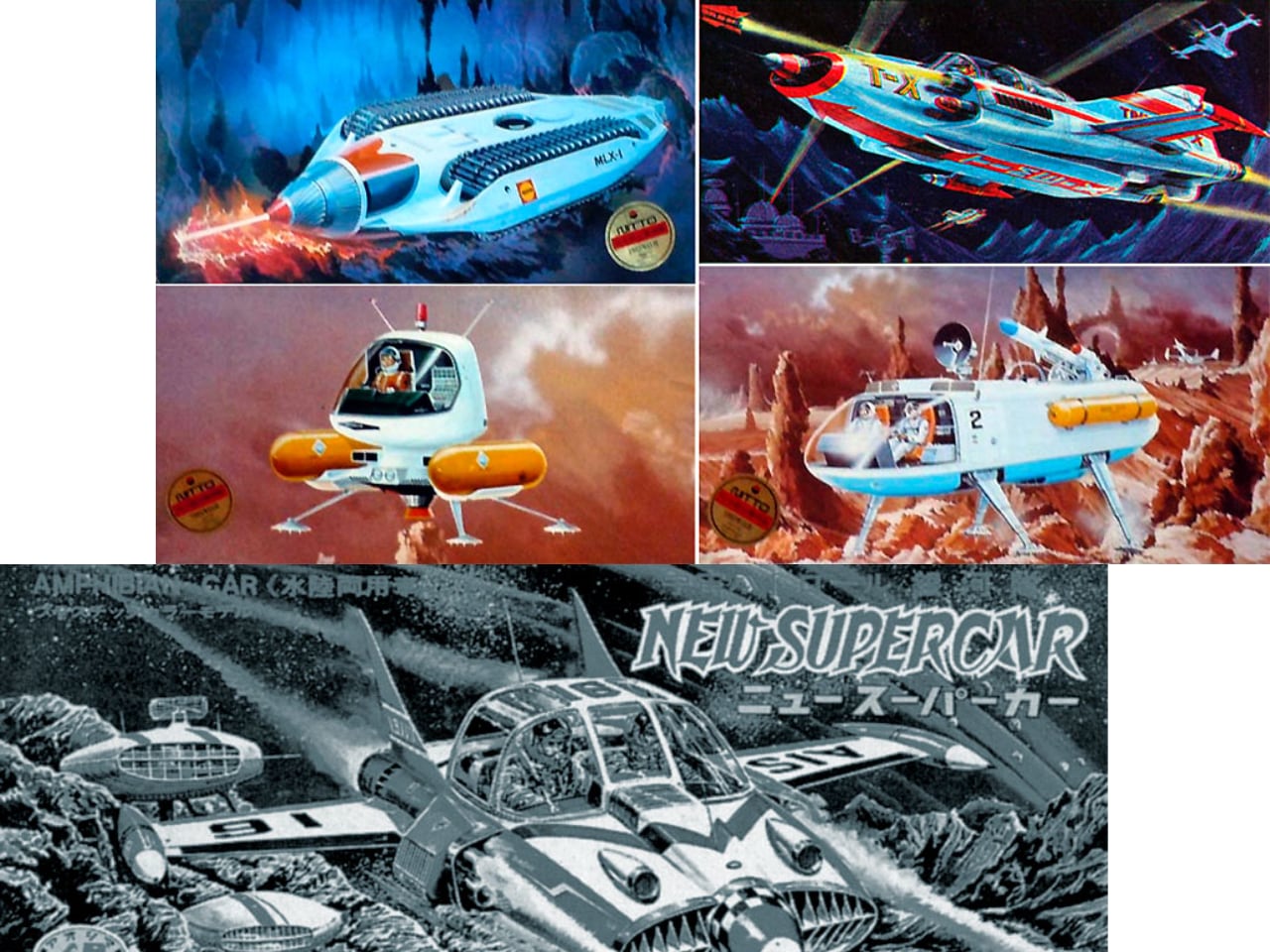
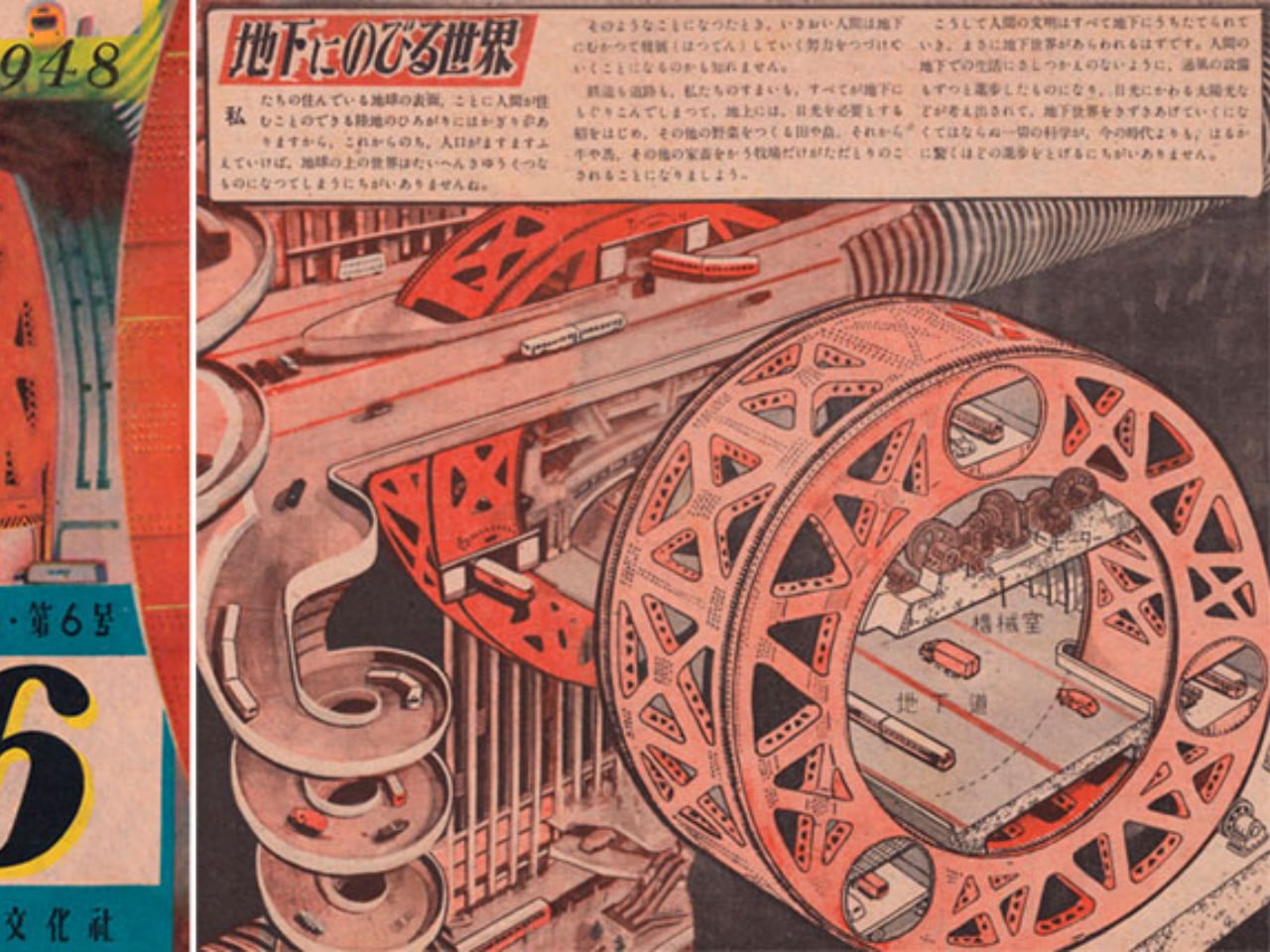
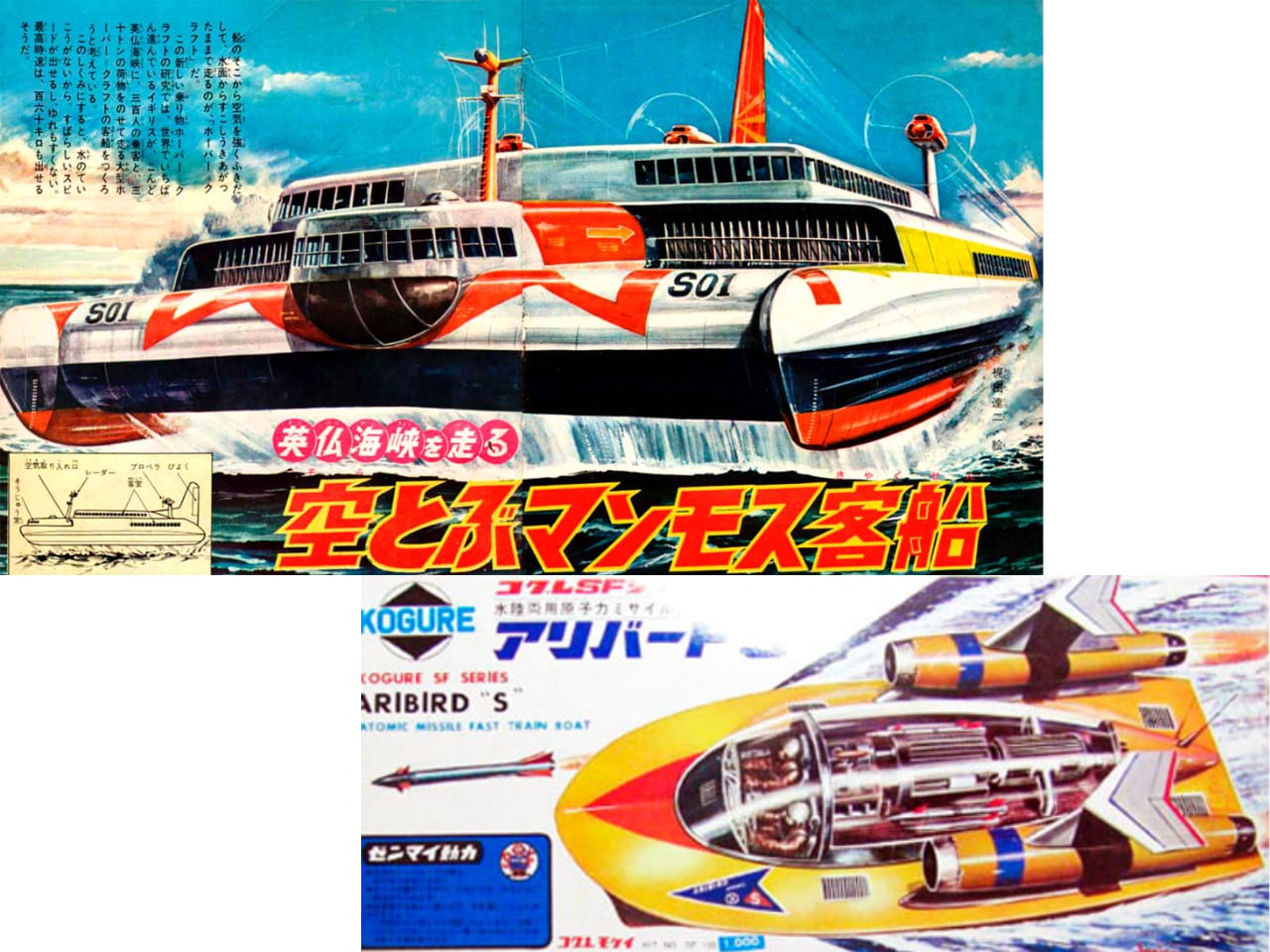
Retrofuturism, a captivating blend of past visions and future possibilities, has long fascinated the human imagination. It represents a unique genre where artists and designers, with their ingenuity, envision what the future might look like from the perspective of their own time. This concept shines brightly in the extraordinary illustrations from Japan between the 1930s and 1960s, a period rich in creativity and innovation. These illustrations are images and windows into a world of unlimited dreams and super-charged imagination.

Via Dark Roasted Blend

Human-Powered Flying Machine

The human-powered flying machine is a captivating vision of eco-friendly personal transportation. This design leverages human energy for flight, merging the simplicity of a bicycle with the exhilaration of flight. The Japanese text in the illustration reads, “空を駆ける夢の自転車” (A dream bicycle that runs in the sky). This phrase captures the essence of a time when the sky was not the limit but the beginning of endless possibilities. The machine’s sleek, aerodynamic form suggests a lightweight construction essential for actualizing such a concept.

In today’s world, advancements in lightweight materials, battery technology, and AI-assisted flight controls bring this dream to reality. Innovations like the eVTOL (electric vertical takeoff and landing) aircraft and drone technology reflect this vision. The focus on sustainability and individual mobility aligns well with current trends in transportation innovation. This concept’s emphasis on human power also highlights a growing interest in reducing carbon footprints, making this design a likely candidate for future development.

Versatile Ground Vehicles

The ground vehicles featured in these retrofuture illustrations showcase the imaginative engineering of that era. The Japanese text describes them as “どんな道も走破する万能車” (All-purpose vehicles that conquer any road). This encapsulates a vision of vehicles that can navigate any terrain, from rugged mountains to smooth highways, with practicality and ease. The robust and rugged designs focus on durability and adaptability, essential traits for exploration and practical use.

Modern advancements in autonomous driving technology, AI-driven navigation systems, and robotics make such versatile vehicles a reality. Companies are developing all-terrain vehicles equipped with sophisticated sensors and AI to handle various environments autonomously. These innovations are revolutionizing industries like construction and exploration and have potential applications in everyday commuting, especially in remote or challenging terrains. These designs’ blend of functionality and futuristic aesthetics points to a future where versatility and technology are seamlessly integrated.

Space Station Platforms

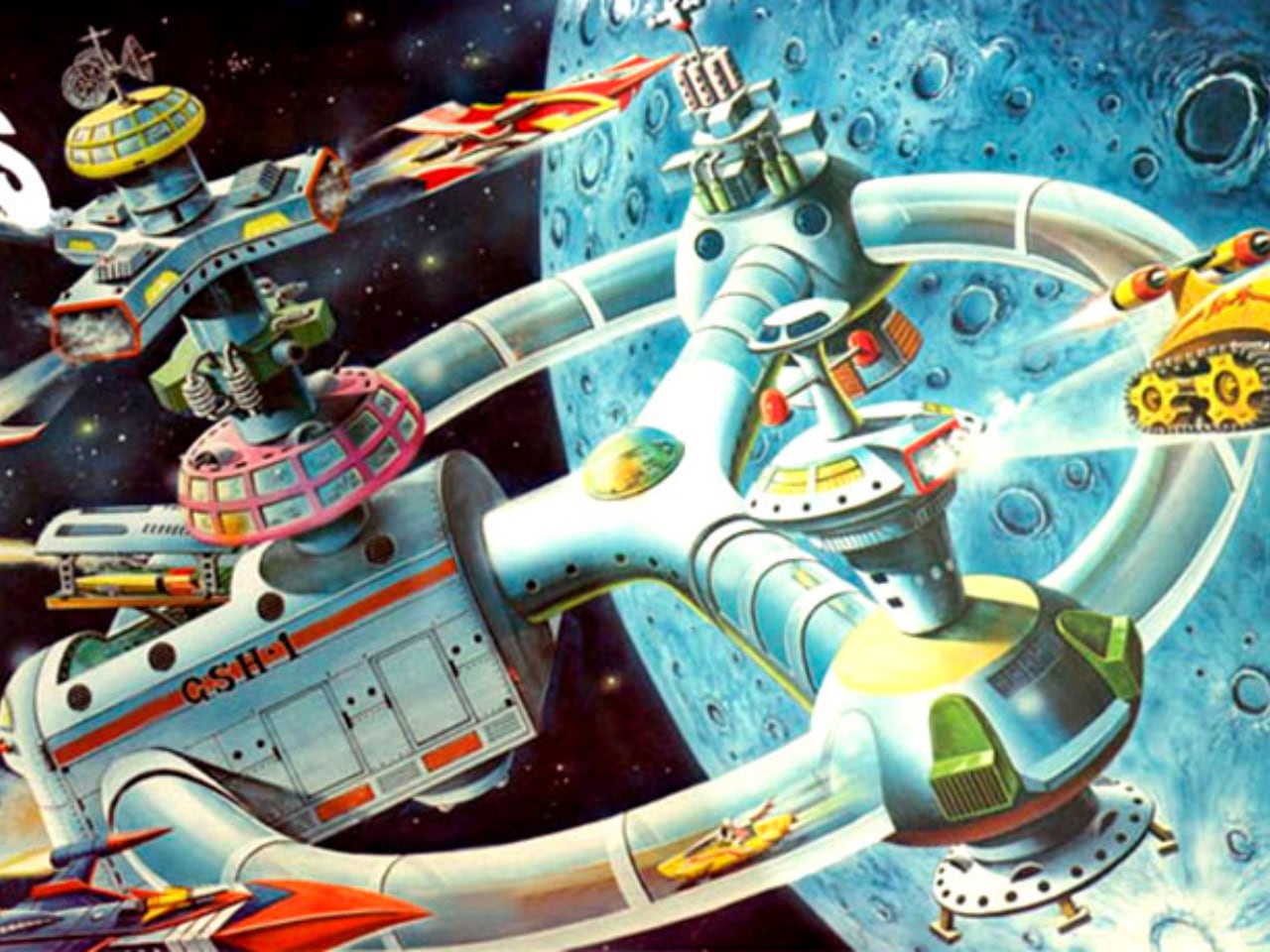
One of the most inspiring elements of retrofuturism is the vision of space station platforms as self-sustaining habitats. The Japanese text “宇宙に浮かぶ未来の都市” (Future cities floating in space) suggests a future where humanity has extended its reach far beyond Earth. These illustrations depict vast, intricate structures designed to house human life, showcasing a blend of advanced technology and architectural innovation. The idea of living in space, with self-sustaining ecosystems and AI-managed operations, reflects an ambitious and forward-thinking outlook.

Today, this vision is inching closer to reality with the International Space Station (ISS) and planned lunar and Martian colonies. AI and robotics play crucial roles in maintaining these habitats, ensuring safety, and optimizing resource management. These advancements are paving the way for long-term human presence in space. The concept of space station platforms represents not just a technological leap but a monumental step in human evolution, opening new frontiers and possibilities for future generations.

Sleek Futuristic Watercraft and Weaponry

The sleek futuristic watercraft and weaponry illustrated in these retrofuture visions highlight a perfect fusion of aquatic design and advanced technology. One notable design is the “Aribird S,” described in the Japanese text as “水中を駆ける未来の船” (A future boat that runs underwater). This phrase captures the essence of an era that dreamed of high-tech performance and adventure seamlessly integrated into everyday life, with an aesthetic appeal that intrigues the viewer. These designs’ vibrant colors and dynamic forms reflect an aesthetic that values functionality and visual appeal.

These watercraft are envisioned with advanced propulsion systems and streamlined bodies, capable of high-speed travel and maneuverability. In today’s world, innovations in maritime technology are beginning to mirror these designs. Concepts like hydrofoils, autonomous underwater vehicles, and advanced naval vessels are becoming more common. These illustrations’ emphasis on sleek, aerodynamic shapes and cutting-edge technology indicates a future where high-tech performance and adventure are the norm.

“Mighty Patrol” Car

The “Mighty Patrol” car presents a vision of futuristic law enforcement that combines sleek design with advanced communication systems. The Japanese text refers to it as “未来のパトロールカー” (Future patrol car), suggesting a high-tech vehicle designed for efficiency and speed. The streamlined body, advanced lighting systems, and integrated communication technology reflect an era that envisioned law enforcement as a blend of technology and efficiency.

Integrating AI, drones, and advanced surveillance systems will likely make such vehicles a reality as technology evolves. Modern police vehicles incorporate some of these elements, with AI-driven data analysis, real-time communication networks, and enhanced mobility features. The “Mighty Patrol” car embodies the future of policing, where technology plays a central role in maintaining order and safety, improving the effectiveness of law enforcement agencies.

Advanced Fighter Jets and Space Vehicles

The depiction of advanced fighter jets and space vehicles in retrofuture illustrations showcases a future of aerial and space combat marked by speed, agility, and advanced weaponry. The Japanese text “空を支配する未来の戦闘機” (Future fighter jets that dominate the sky) reflects an ambition to achieve superiority in both air and space. Sleek, aerodynamic shapes, advanced propulsion systems, and futuristic weaponry characterize these vehicles.

With advancements in aerospace engineering, AI, and unmanned aerial vehicles (UAVs), these designs are nearly becoming a reality. Modern fighter jets incorporate AI for enhanced decision-making, stealth technology, and advanced weapons systems. Similarly, space vehicles designed for defense and exploration are becoming more sophisticated. These illustrations’ relentless pursuit of technological superiority highlights a future where control of the skies and space is paramount.

Amphibious Vehicles

The amphibious vehicles, blending automotive and nautical design, offer a glimpse into the future of versatile transportation. These vehicles are depicted as capable of traversing both land and water, reflecting a vision of seamless transition between different terrains. The Japanese text, “陸と水を行き来する万能車” (All-purpose vehicle that moves between land and water), captures the innovative spirit of these designs.

In modern times, the development of multi-terrain vehicles and amphibious transport solutions is gaining momentum. Concepts such as amphibious cars, boats with wheels, and versatile rescue vehicles are becoming more practical with materials and propulsion technology advancements. The sleek designs and robust capabilities of these retrofuture vehicles suggest a future where transportation is as adaptable as it is innovative, addressing the needs of diverse environments.

Circular Cities and Underground Worlds

These illustrations’ circular cities and underground worlds represent a visionary approach to urban planning. The Japanese text, “地下に広がる未来の都市” (Future cities expanding underground), suggests a rethinking of how space is utilized in urban environments. These designs feature vertical integration, subterranean spaces, and advanced transport systems, reflecting an ambition to create efficient and sustainable living spaces.

With increasing interest in sustainable and efficient use of space, concepts like vertical integration and underground cities are gaining traction. Modern urban planning explores the potential of building downwards and upwards to maximize space use, reduce environmental impact, and enhance livability. The futuristic architecture and integrated transport systems in these illustrations reflect a holistic approach to city living, where innovation addresses the challenges of urbanization.

Flying Saucers

The depiction of flying saucers, such as the “Gakushiyu,” captures the imagination with its promise of advanced air travel. The Japanese text reads, “空飛ぶ円盤” (Flying saucer), evoking images of sleek, circular aircraft capable of vertical takeoff and landing. This vision reflects an era that dreamed of conquering the skies with revolutionary designs.

While the exact design of these flying saucers may differ, the concept of vertical takeoff and landing (VTOL) aircraft is becoming a reality with developments in drone technology and electric vertical takeoff and landing (eVTOL) aircraft. Companies invest heavily in urban air mobility solutions, envisioning a future where flying cars and air taxis become commonplace. These flying machines highlight the future of urban air mobility, where the sky is no longer the limit but a new frontier for innovation.

Multi-Wheeled Explorer Vehicle

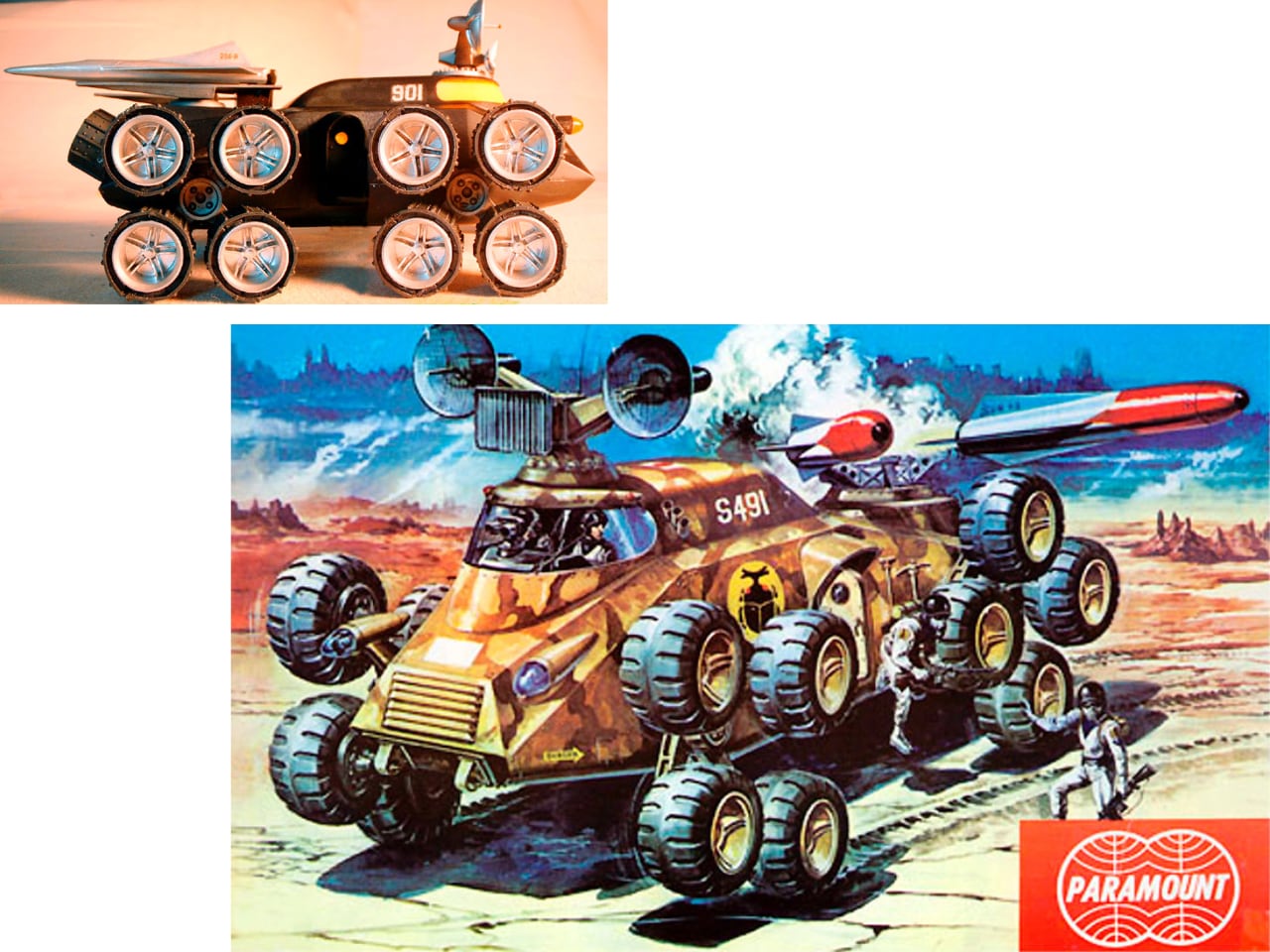
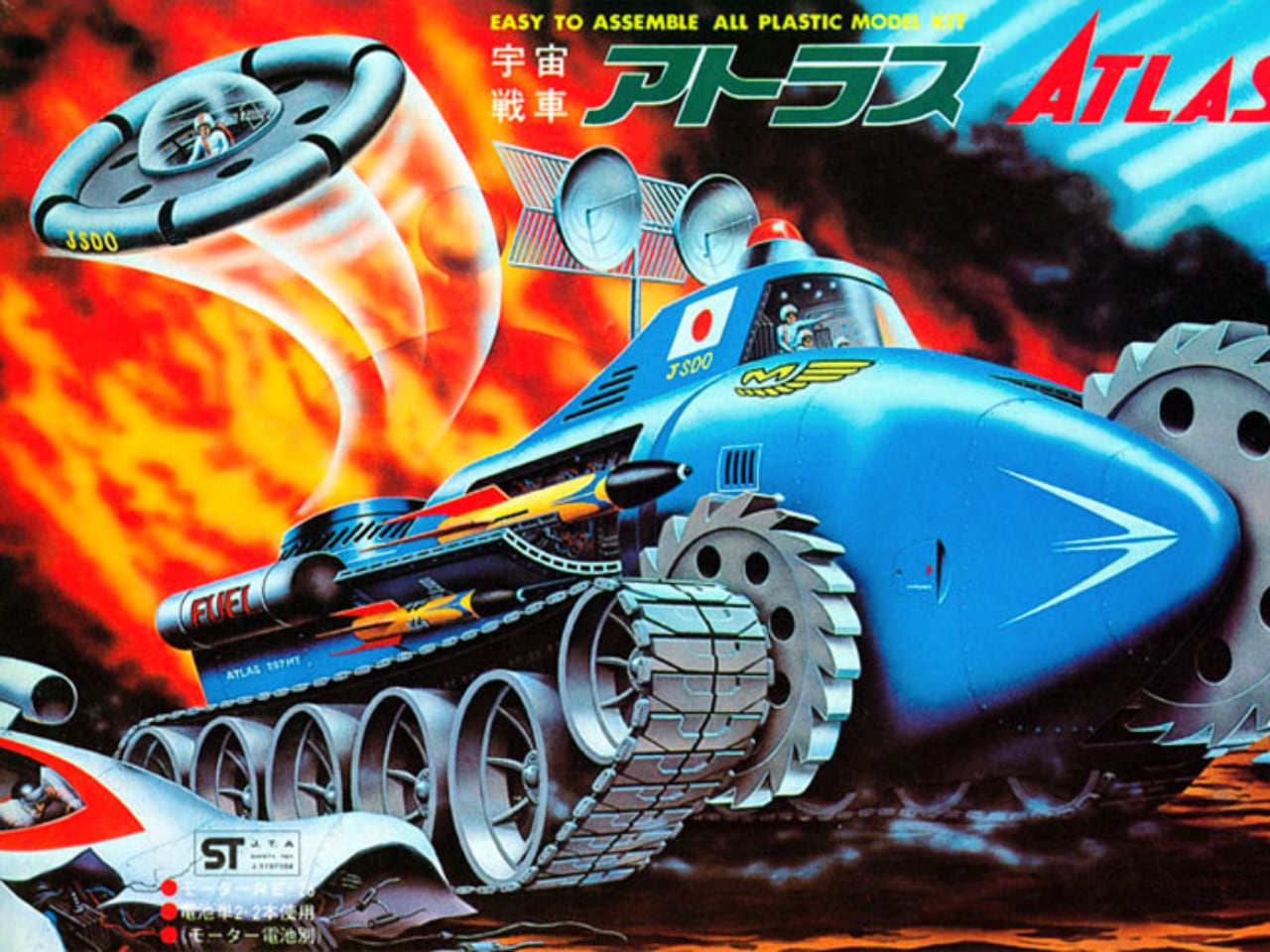
With its robust design and versatile capabilities, the multi-wheeled explorer vehicle is a vision of future exploration vehicles. The Japanese text describes it as “探検用の多輪車” (Multi-wheeled vehicle for exploration), indicating a design built for navigating diverse and challenging terrains. The vehicle’s numerous wheels and durable construction suggest a shape that reflects advanced engineering, while including multiple rockets hints at the vehicle’s formidable combat capabilities. This illustration captures the thrill and intensity of air combat, inspiring visions of high-stakes dogfights in the skies.

The Amphibious Supercar: Versatility Redefined

With its sleek, futuristic design, the amphibious supercar showcases a vehicle capable of traversing land and water. This concept blends the luxury and speed of a sports car with the adaptability of an amphibious vehicle. With its bold lines and dynamic composition, the illustration highlights the car’s ability to transition between terrains seamlessly. The vibrant colors and detailed rendering emphasize the vehicle’s innovative features, symbolizing versatility and cutting-edge technology.

The Quirky Dinosaur Transport

We’ll end with this image featuring a quirky yet functional dinosaur-shaped transport vehicle. With its playful exterior and practical interior, this design combines imagination with utility. The vehicle’s dinosaur form, complete with a drill in its mouth and a cockpit for passengers, suggests a future where transport is efficient but also fun and engaging. The whimsical design and detailed features make this vehicle memorable, reflecting a future where creativity and practicality go hand in hand.

More to come…

The continued exploration of these retrofuture illustrations from Japan offers a captivating glimpse into the boundless creativity and imagination of the past. Though conceived decades ago, these visions still inspire us today, reminding us of the endless possibilities. Stay tuned as we delve further into the world of the retrofuture, uncovering more hidden gems and fantastical designs that shaped the dreams of yesteryear.

The post Retrofuture Revelations from Japan: A Journey Through Time and Imagination first appeared on Yanko Design.
The Future of Apple design language: iPhone 17 Slim and the Shift Towards Ultra-Thin Devices

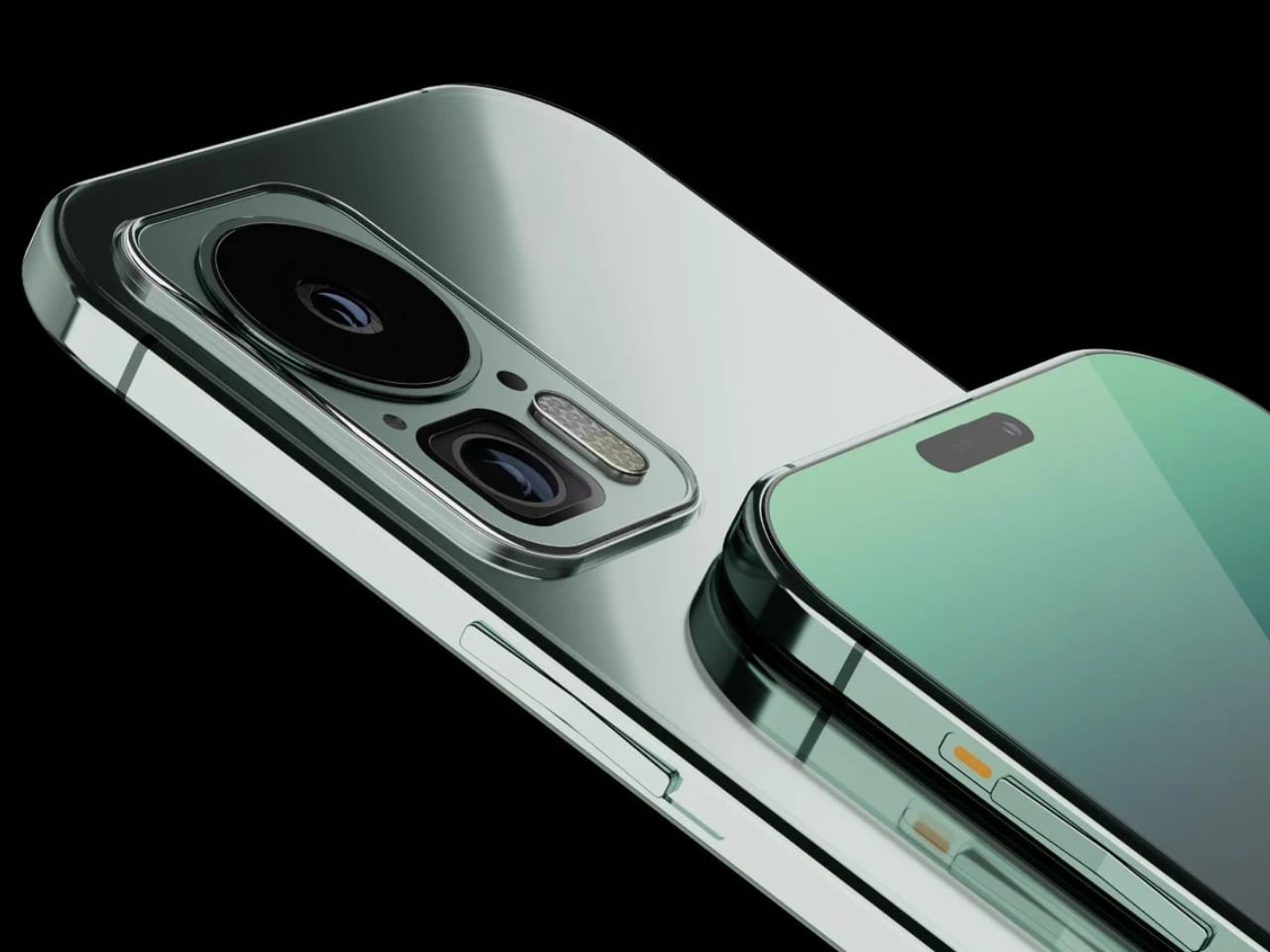
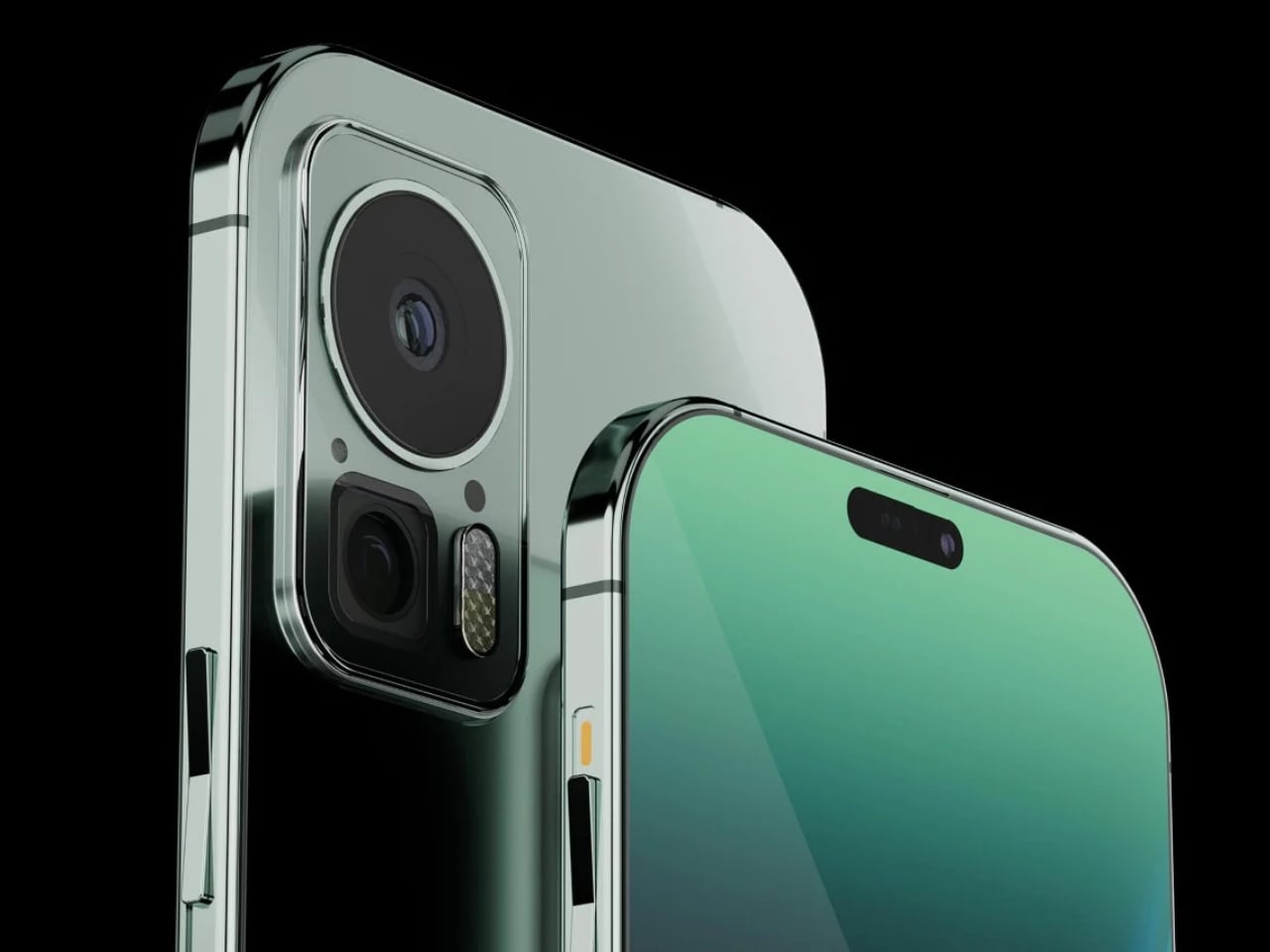
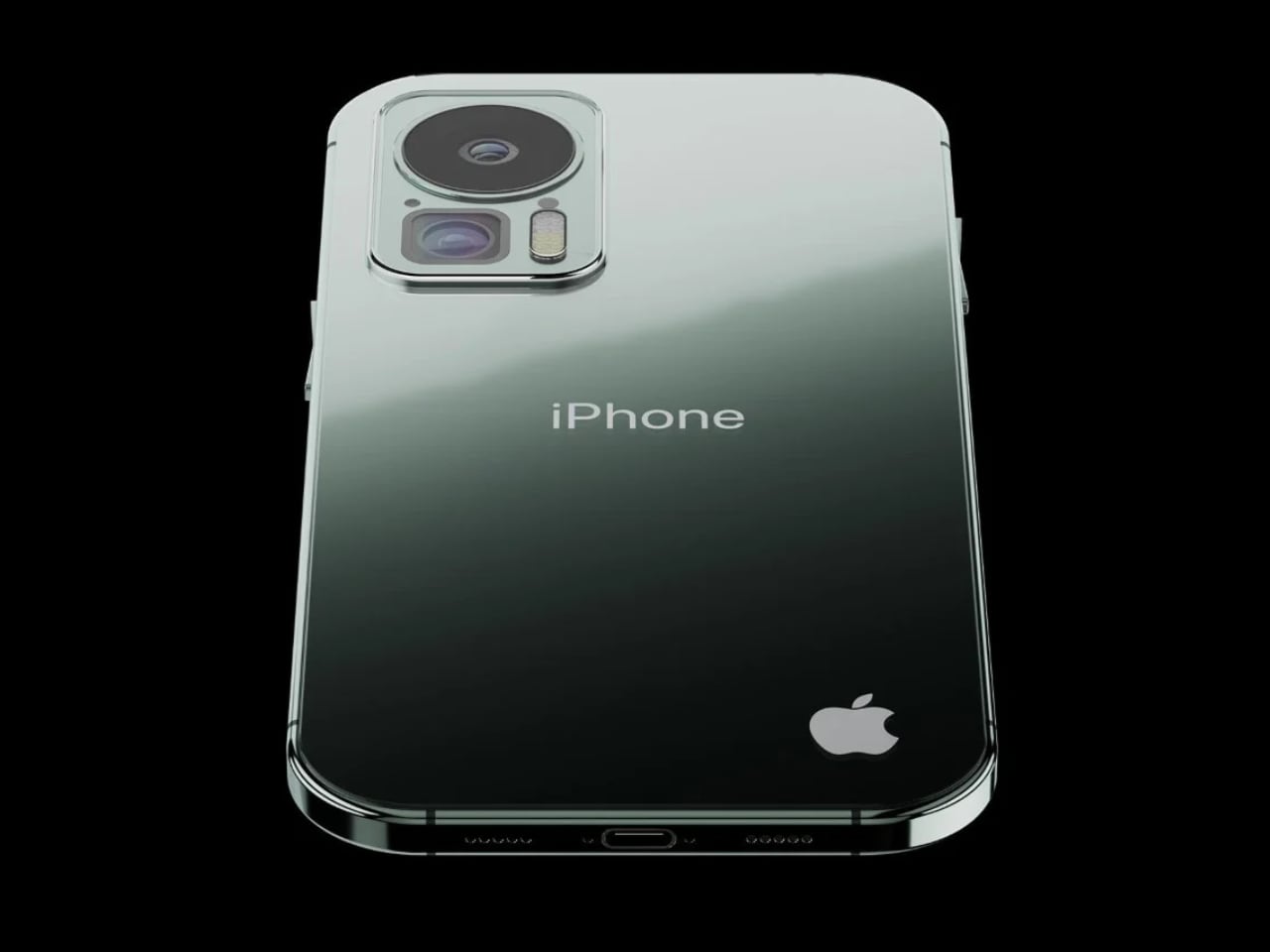
Rumors are swirling that Apple might be dropping its “Plus” iPhone models, starting with the iPhone 17, potentially replacing them with a more premium offering. Over the years, the appeal of the “Plus” models has waned as standard, and Pro models have become more capable. The latest leaks suggest Apple is set to introduce a new “Slim” iPhone to fill this gap, a move that could revolutionize the future of Apple’s products and excite tech enthusiasts.

Designer: Apple

Remember that iconic moment when Steve Jobs wowed the world by pulling the MacBook Air out of a manila envelope? Could Apple be gearing up for another “MacBook Air moment” with the iPhone 17 Slim? If the rumors are true, we might witness a similarly groundbreaking reveal that redefines expectations for smartphone design and performance.

On July 20, details emerged on Weibo indicating that the iPhone 17 line-up will not include a Plus model. Instead, Apple is reportedly planning to launch an “iPhone 17 Slim,” set to become the most premium model in the line-up, much like the Apple Watch Ultra. This new model will take design cues from the ultra-thin iPad Pro M4, launched in May.

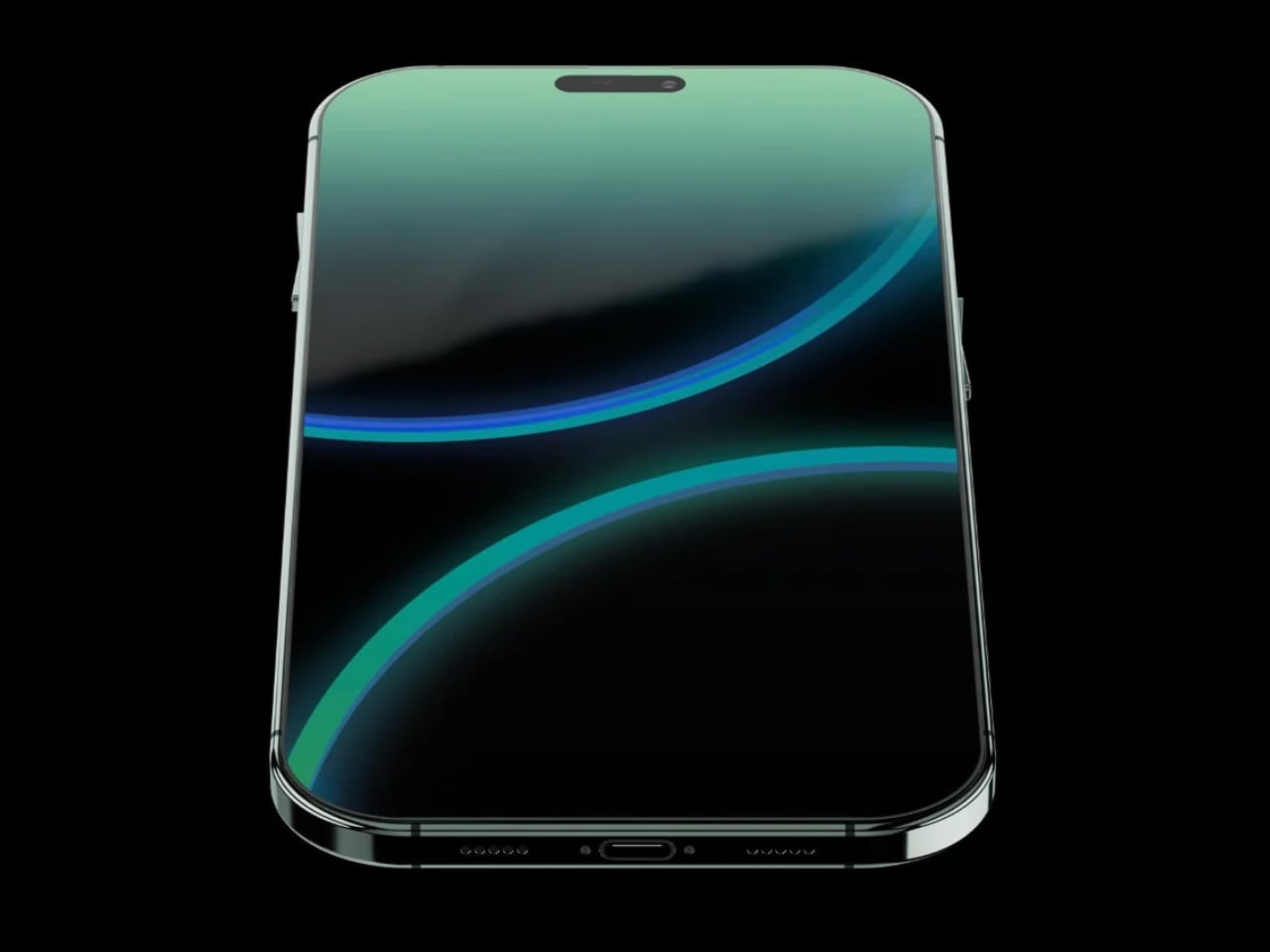
iPhone Concept

The iPhone 17 Slim is rumored to be significantly thinner than its predecessors and other models in the line-up. It is also said to feature an LTPO display with a 120Hz refresh rate, a feature currently exclusive to Pro models. This shift means every iPhone 17, from the base model to the Pro Max, will offer ProMotion technology.

Speculation also suggests that the iPhone 17 series will be powered by Apple’s A19 and A19 Pro processors. The iPhone 17 Slim will likely include the A19 Pro, making it the most advanced and expensive model in the range. Rumors suggest a starting price of $1,299, making it pricier than the current iPhone 15 Pro Max. However, the potential of the iPhone 17 Slim to meet and exceed consumer expectations in terms of performance and design is reassuring.

Here’s a look at the potential iPhone 17 line-up:

  • iPhone 17: $799, A19 processor, 6.27-inch LTPO (ProMotion) display, 8GB of RAM
  • iPhone 17 Pro: $1,099, A19 Pro processor, 6.27-inch LTPO (ProMotion) display, 12GB of RAM
  • iPhone 17 Pro Max: $1,199, A19 Pro processor, 6.86-inch LTPO (ProMotion) display, 12GB of RAM
  • iPhone 17 Slim: $1,299, A19 Pro processor, 6.65-inch LTPO (ProMotion) display, 12GB of RAM

Apple’s push towards thinner designs extends beyond the iPhone. The company is rumored to work on slimmer versions of all its main products, including MacBooks and Apple Watches. This ambition presents significant challenges, particularly regarding battery life and durability. A thinner design often means a smaller battery, which could compromise battery life. Ensuring the iPhone 17 Slim has comparable or superior battery performance to existing Pro Max models will be crucial.

Interestingly, with the development of the M4 and potentially M5 chips, these processors are expected to be much more efficient by the time the iPhone 17 is released. This efficiency could allow Apple to use a smaller battery while retaining the same battery life as current models. While battery capacity is a significant factor, I would much rather have a faster wired and wireless charging rate to top off as needed quickly.

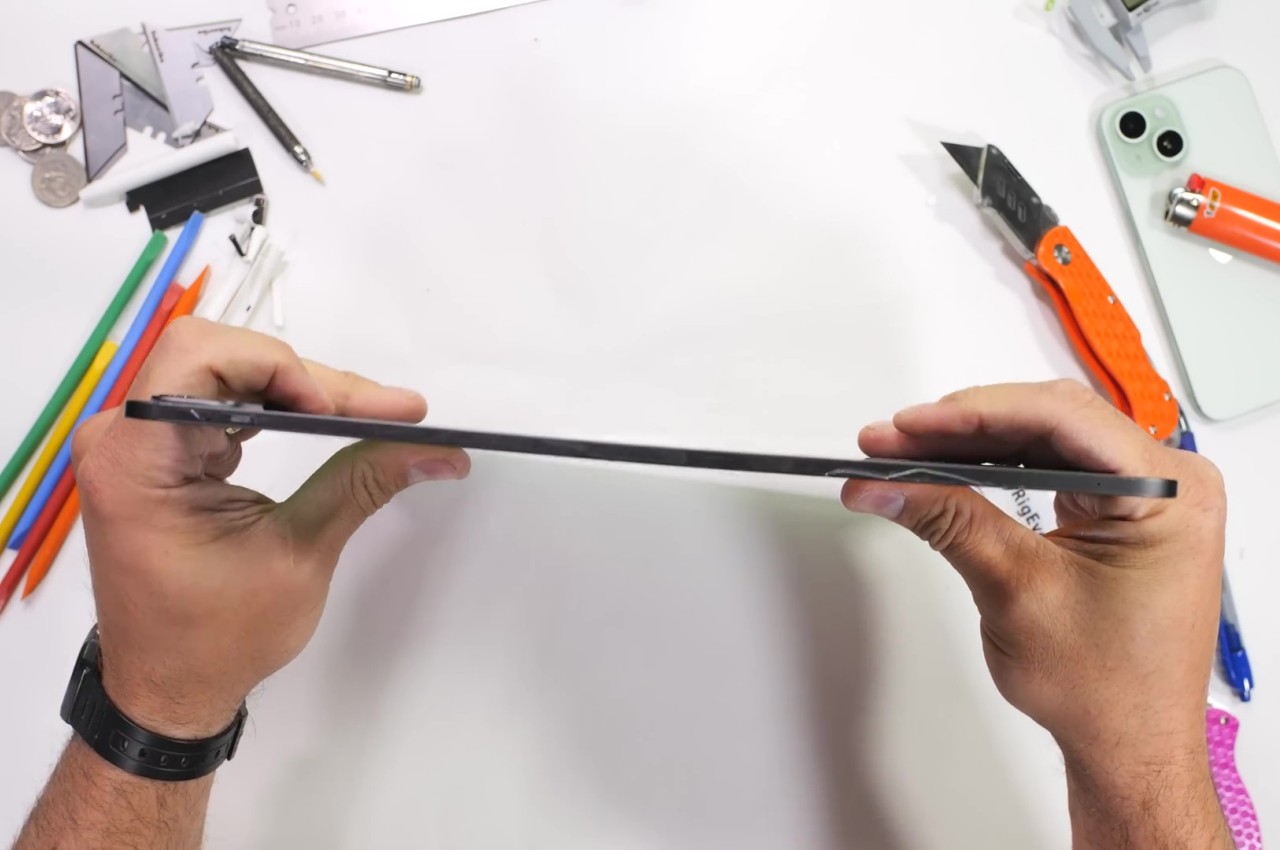
The design elements of the iPad Pro M4 are noteworthy, with its skinny profile and raw processing power setting a new standard for Apple’s devices. Imagine the iPhone 17 Slim adopting this same level of thinness combined with the A19 Pro processor. This would not only deliver a powerhouse device with exceptional performance and a gorgeous display but also set a new benchmark for smartphone design in the tech industry. Additionally, thinner devices can be more susceptible to bending and other durability issues, making robust design and engineering essential. However, Apple seems to have resolved this issue with the iPad Pro M4, giving confidence that the iPhone 17 Slim will be both durable and sleek—hallelujah!

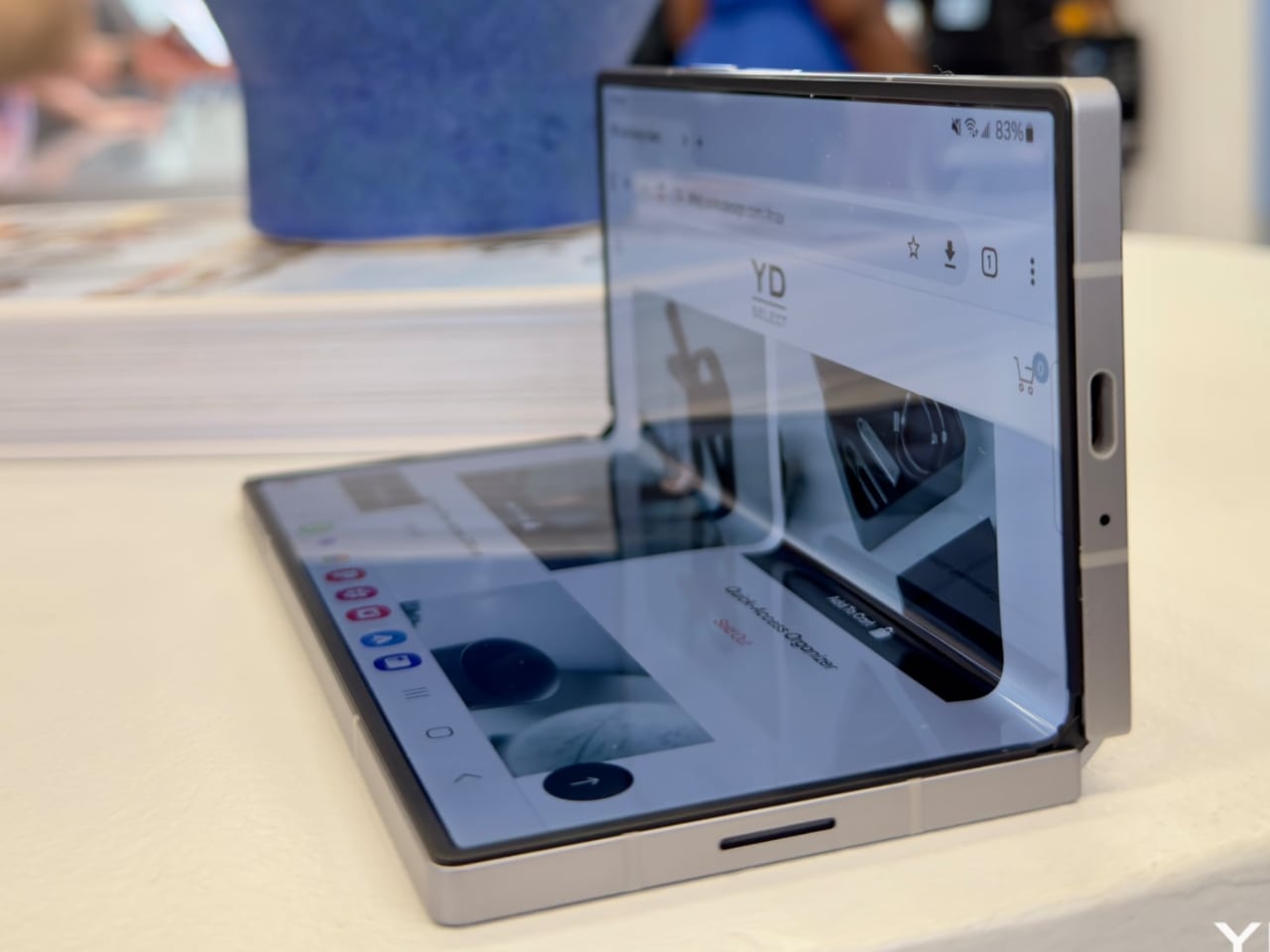
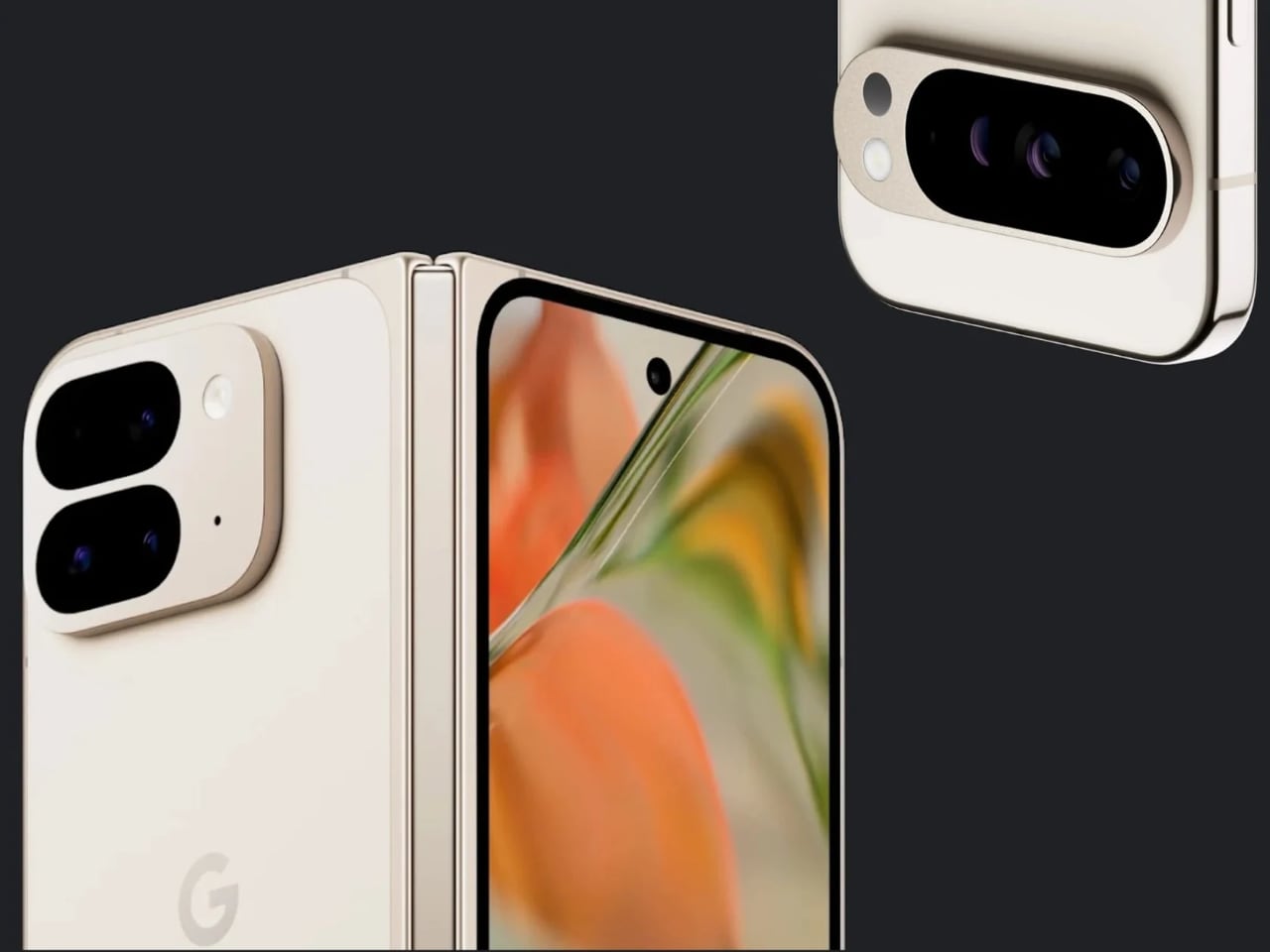
Interestingly, recent leaks about the Pixel 9 Pro and the newly released Galaxy Fold6 and Flip6 show a trend towards flat edges, similar to the iPhone 15 Pro and Max. This design trend across brands highlights the industry’s move towards sleek, flat-edged devices. The Pixel 9 Pro will feature a refined design focusing on high-end performance. At the same time, the Galaxy Fold6 and Flip6 continue to innovate in the foldable phone market, combining cutting-edge technology with stylish designs.

Samsung Galaxy Fold6

Pixel 9 Pro Fold

The iPhone 17 Slim’s anticipated ultra-thin design would fit right into this trend, offering a visually stunning and powerful device that appeals to users looking for the best form and function. The ultra-thin design not only enhances the device’s aesthetics but also makes it more portable and comfortable to use, thereby enhancing the overall user experience.

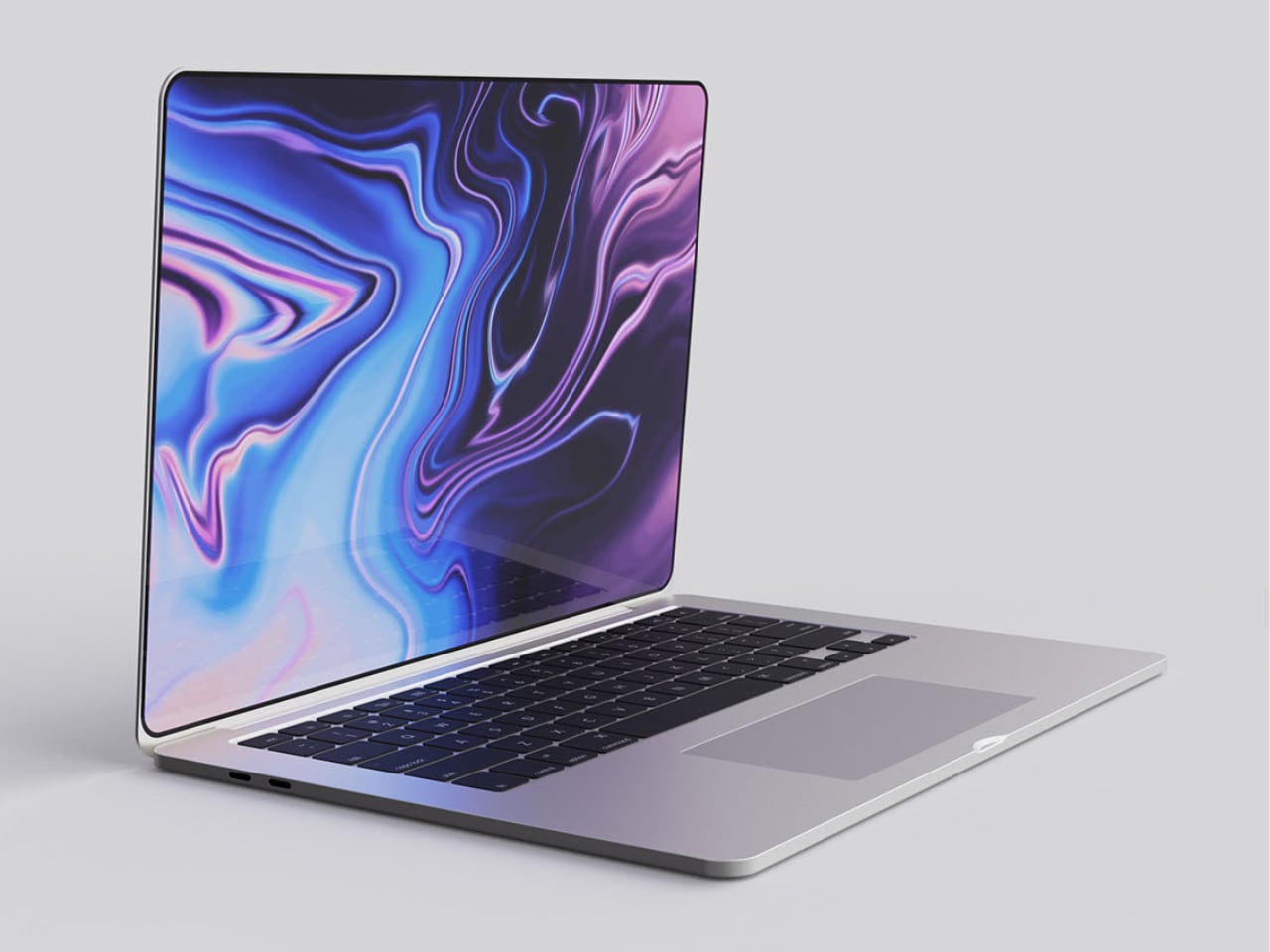
Apple’s ultra-thin tech game plan doesn’t stop at the iPhone. The upcoming MacBooks and Apple Watches are also expected to feature thinner designs, making them more portable and stylish while maintaining high performance. The challenge will be to balance this thinness with functionality, ensuring that battery life and durability are not compromised.

MacBook Concept

With the iPhone 16 around the corner, are these early iPhone 17 leaks compelling enough to keep you holding on to your current device for another cycle? The promise of the iPhone 17 Slim, with its ultra-thin design, powerful A19 Pro processor, and stunning LTPO display, could be worth the wait. As Apple continues to innovate, we can expect these design principles to set new industry technology and design standards, inspiring the tech industry and consumers alike.

The post The Future of Apple design language: iPhone 17 Slim and the Shift Towards Ultra-Thin Devices first appeared on Yanko Design.
Onitsuka Tiger Mexico 66 Deluxe: Artistry and Craftsmanship in Every Step


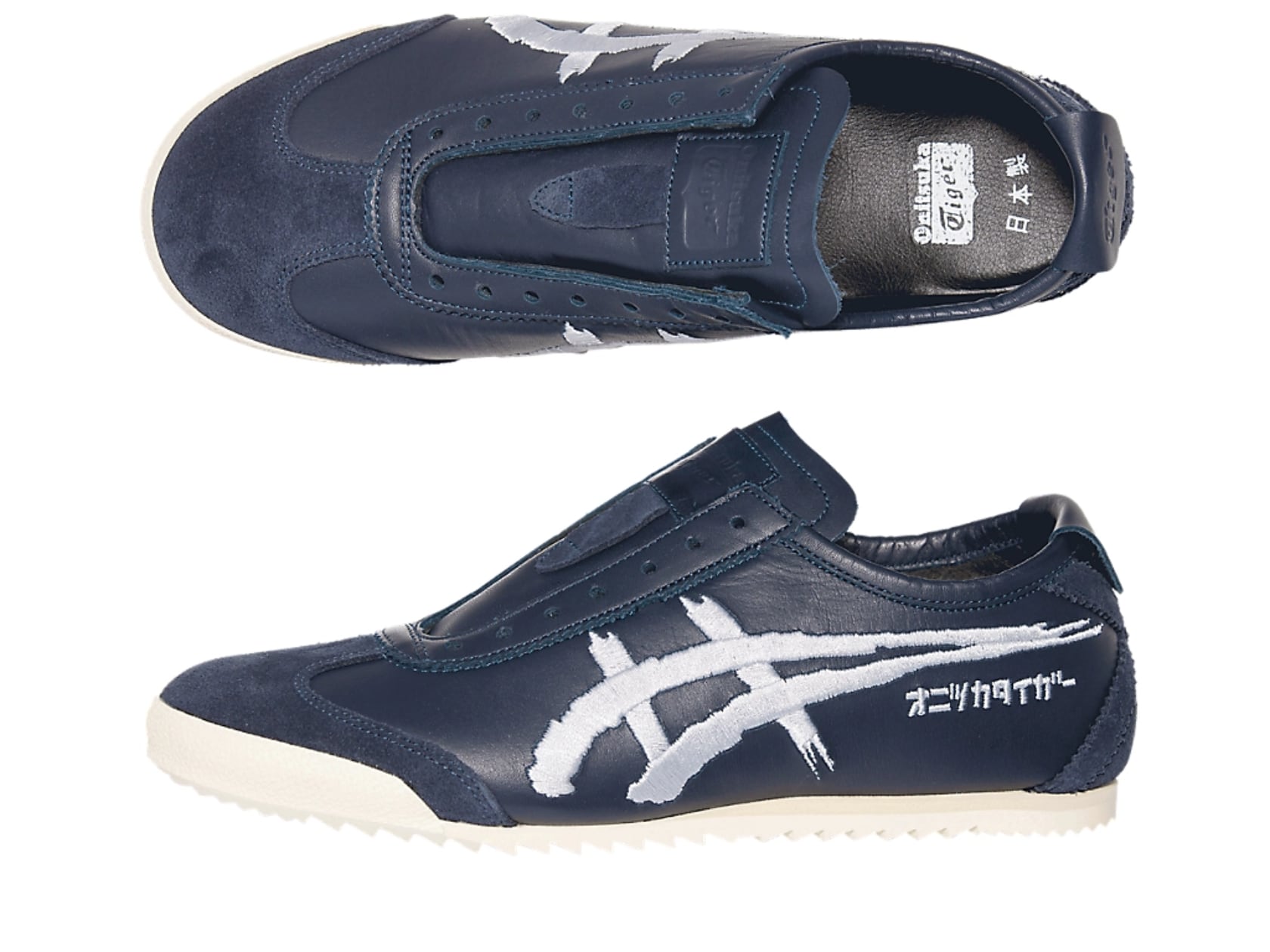
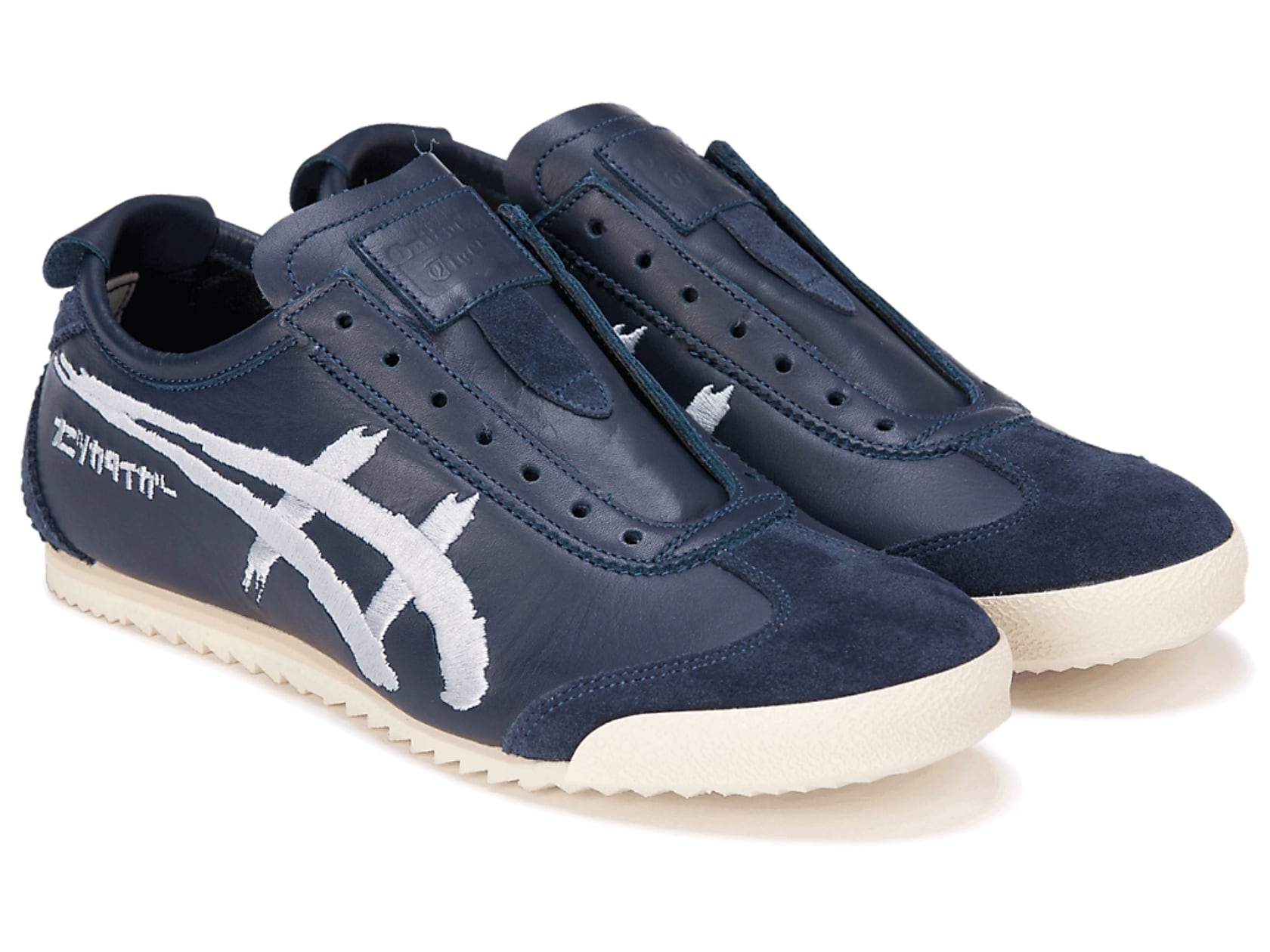
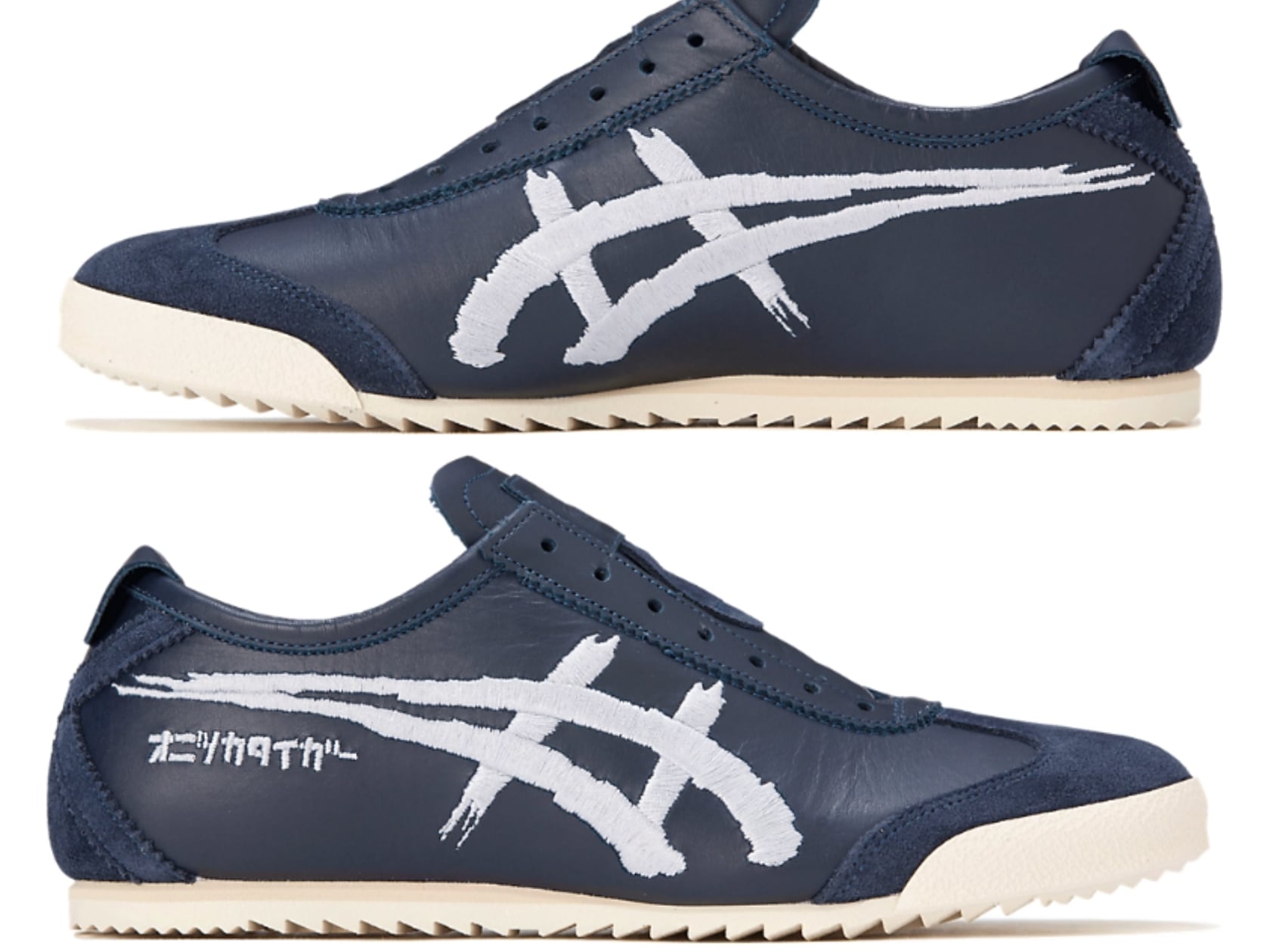
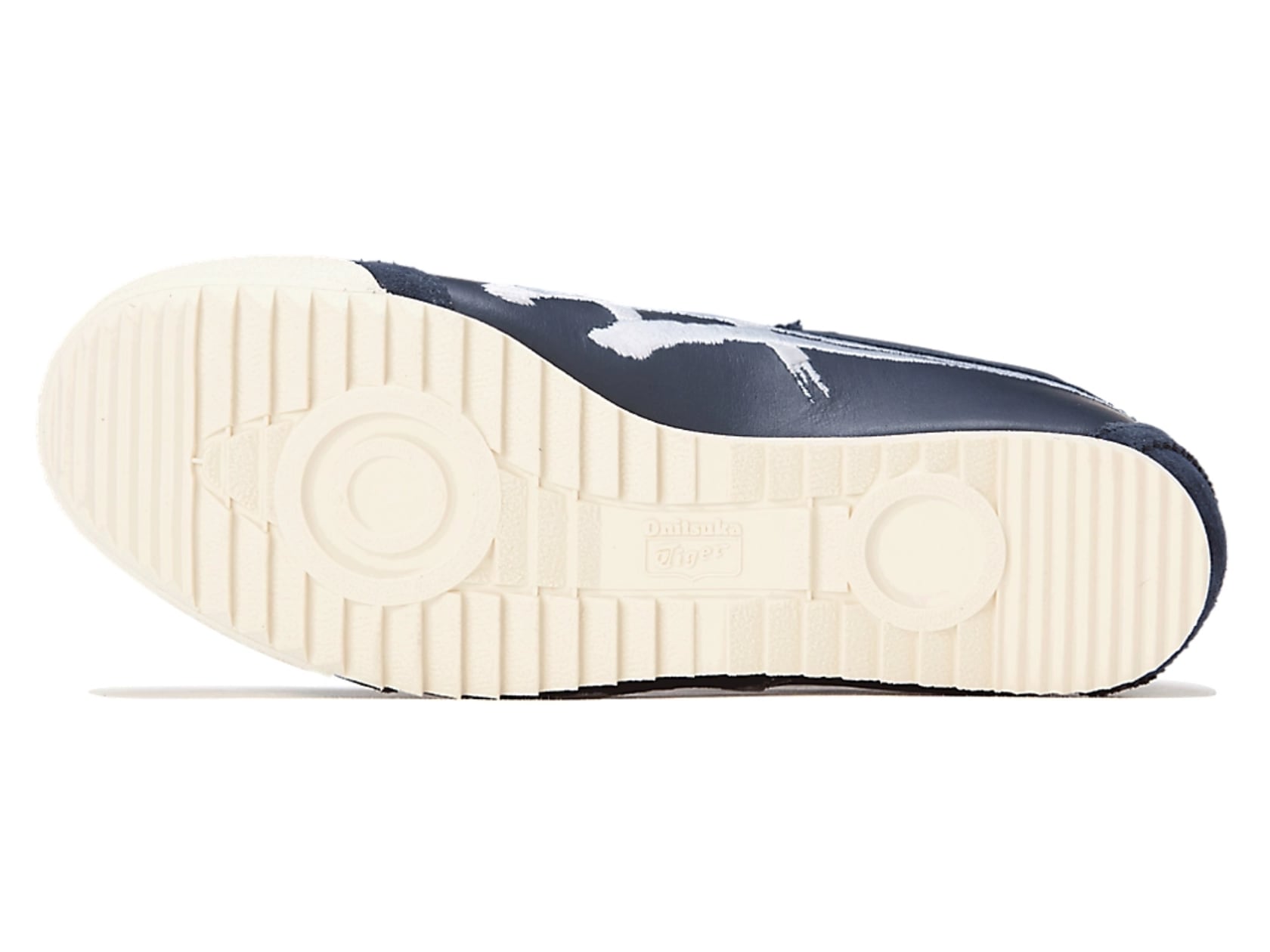
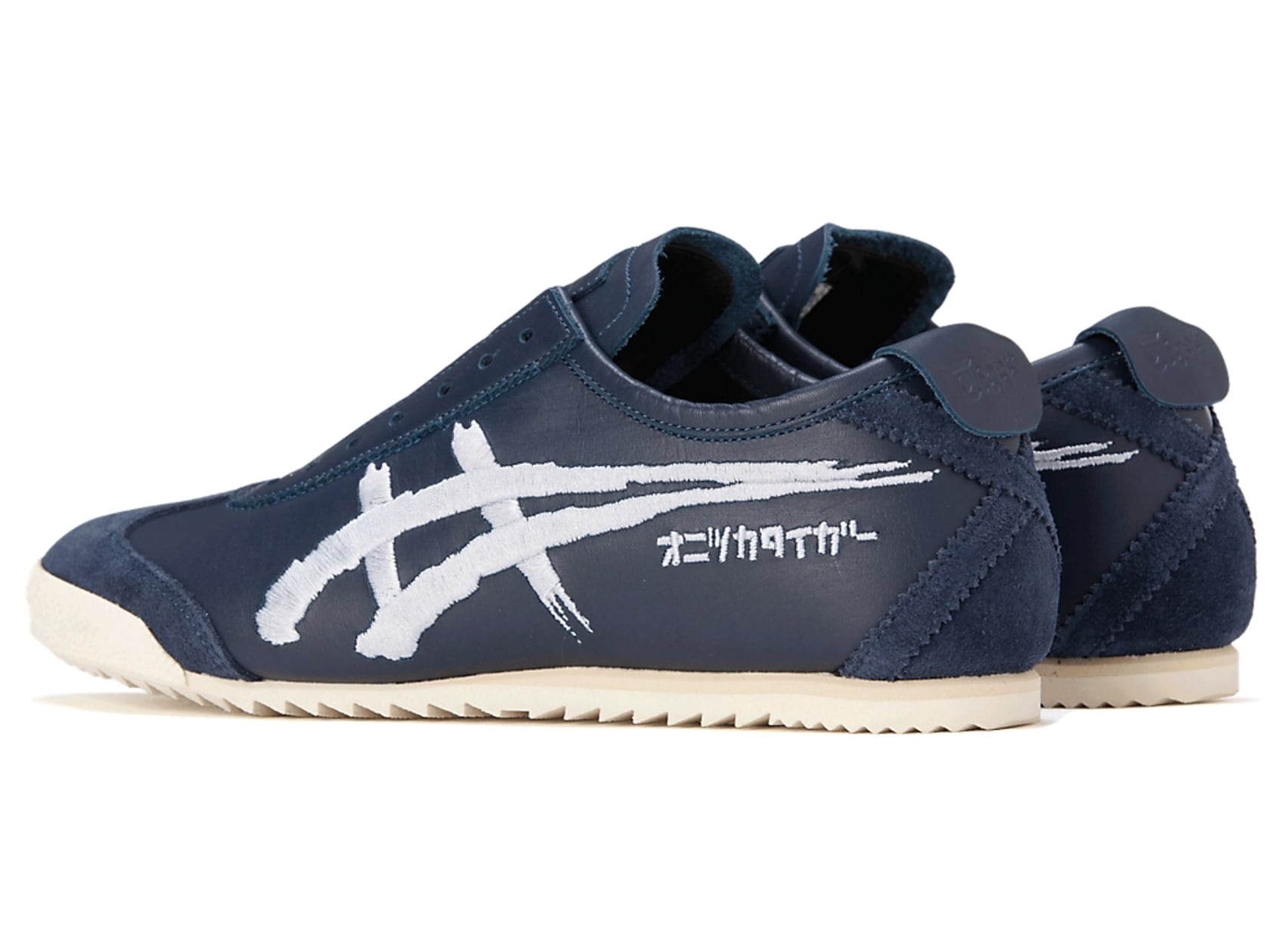
The Onitsuka Tiger Mexico 66 Deluxe combines traditional craftsmanship with modern design to create a unique and stylish sneaker. The first thing you notice about these shoes is the embroidered stripes that resemble brush strokes, giving them an artistic flair. This detail adds a tactile depth and visual interest that sets them apart. The deep navy color, called Peacoat, paired with Pure Silver accents, offers a sophisticated yet versatile look. Made from natural leather, these shoes provide durability and comfort. Adding to their charm, the Katakana script on the side spells out “オニツカタイガー” (Onitsuka Tiger), highlighting the brand’s Japanese heritage and giving the shoes a unique cultural touch.

Designer: Onitsuka

MEXICO SLIP-ON DELUXE: カラーPEACOAT/PURE SILVER

The embroidery on the stripes goes beyond decoration, showcasing the meticulous craftsmanship involved. The brush stroke effect captures the look of traditional Japanese calligraphy, with intricate details that mimic the flow and texture of ink. This artistic element transforms the sneakers into wearable art. The combination of smooth and frayed edges in the embroidery adds an authentic feel as if each stripe was painted by hand.

The color scheme of these shoes is striking yet subtle, making them suitable for various styles and occasions. The Peacoat navy provides a rich, deep base, while the Pure Silver accents add a touch of elegance. This versatile color combination ensures that the Mexico 66 Deluxe can be paired with both casual and more polished outfits, making them a great addition to any wardrobe.

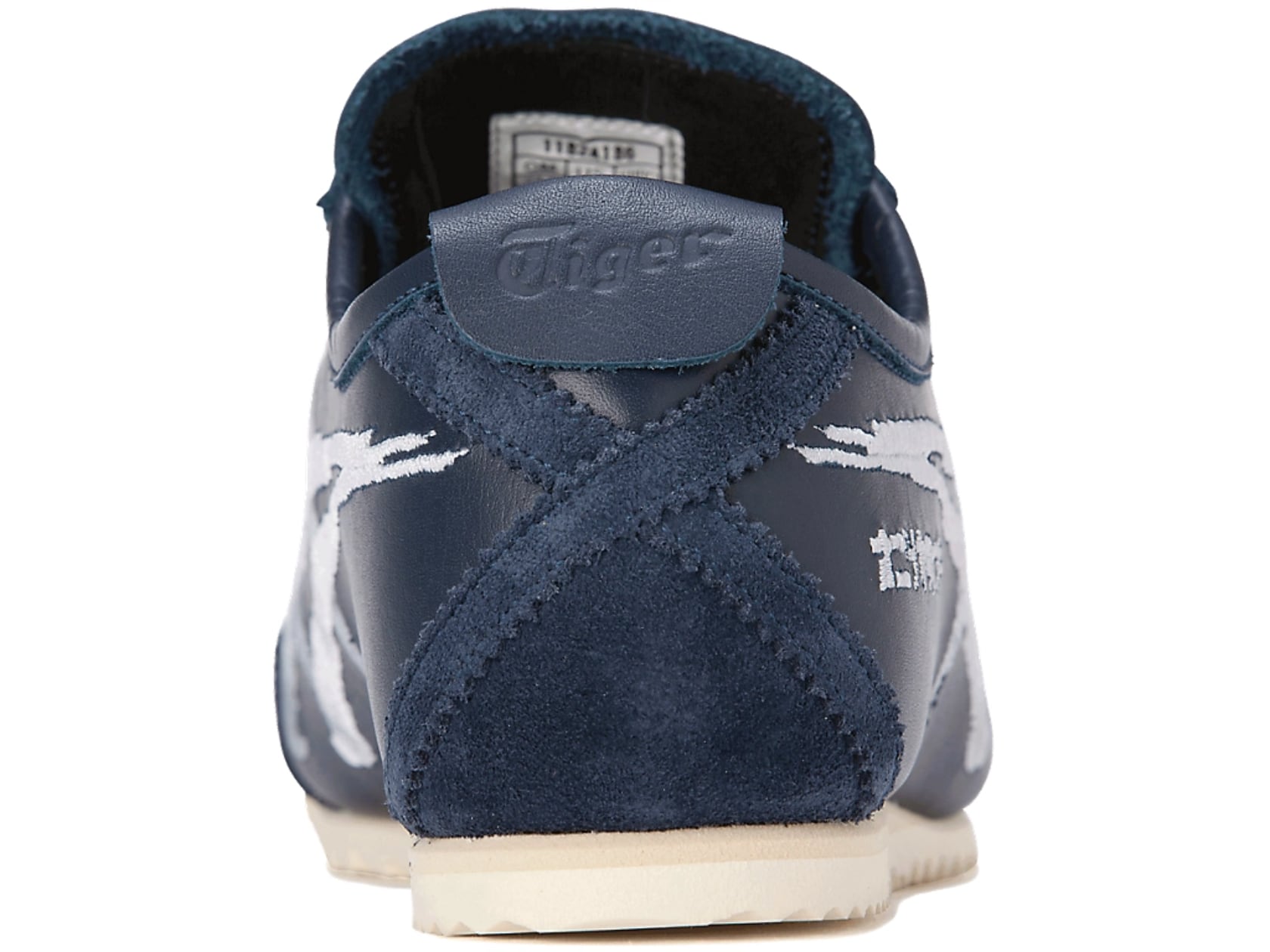
The upper part of the Mexico 66 Deluxe is crafted from high-quality natural leather, offering a premium feel and exceptional durability. The rubber outsole ensures good traction and comfort, making these shoes practical for everyday wear. The attention to detail in the materials and construction reflects the high standards of Japanese manufacturing, a hallmark of the “NIPPON MADE” series.

Wearing these shoes feels like a unique experience every time. The soft leather molds to your feet, enhancing comfort with each wear. They are perfect for all-day wear, whether you’re running errands or attending a casual event. The shoes’ premium materials and craftsmanship ensure they remain comfortable and stylish, even after long periods of use.

One of my favorite features is how these shoes look and feel great. The embroidered stripes and elegant color scheme make them pop or blend in depending on the setting. They’ve become my go-to choice for casual outings and more refined gatherings.

I’ve put these shoes through their paces, and they have held up remarkably well. Whether walking through city streets or taking on light outdoor activities, the Mexico 66 Deluxe has proven durable and reliable. The rubber outsole provides excellent grip, making it versatile enough to handle different environments.

The Katakana script on the side is a subtle yet impactful detail that adds to the shoes’ unique appeal. It emphasizes the brand’s Japanese roots, giving the shoes an authentic and distinctive character you won’t find in other sneakers.

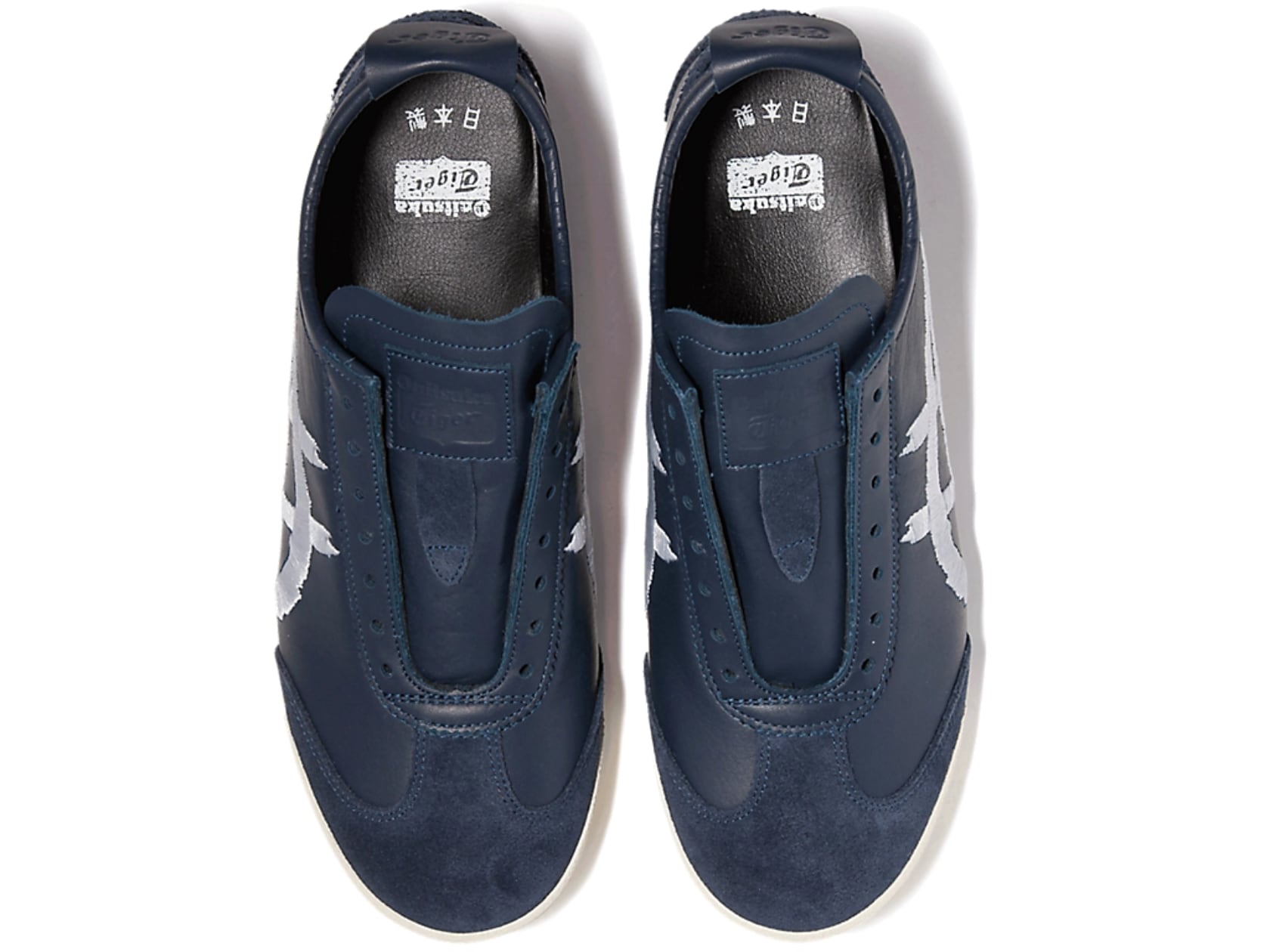
Another feature of these shoes is that they use two shades of leather. The combination of smooth leather and suede adds a rich texture and depth to the design. The smooth leather provides a sleek, polished look, while the suede adds a touch of sophistication and warmth. This mix of materials enhances the visual appeal and contributes to the overall comfort and fit of the shoes.

A striking aspect of the Mexico 66 Deluxe is its laceless design, which I’m a big fan of. This feature adds to the sleek look and makes the shoes easy to slip on and off. However, it’s important to note that these shoes are designed and made for the Japanese market, which means they might run small. If you’re considering buying a pair, it’s advisable to go a size up, especially if you plan on wearing them with socks.

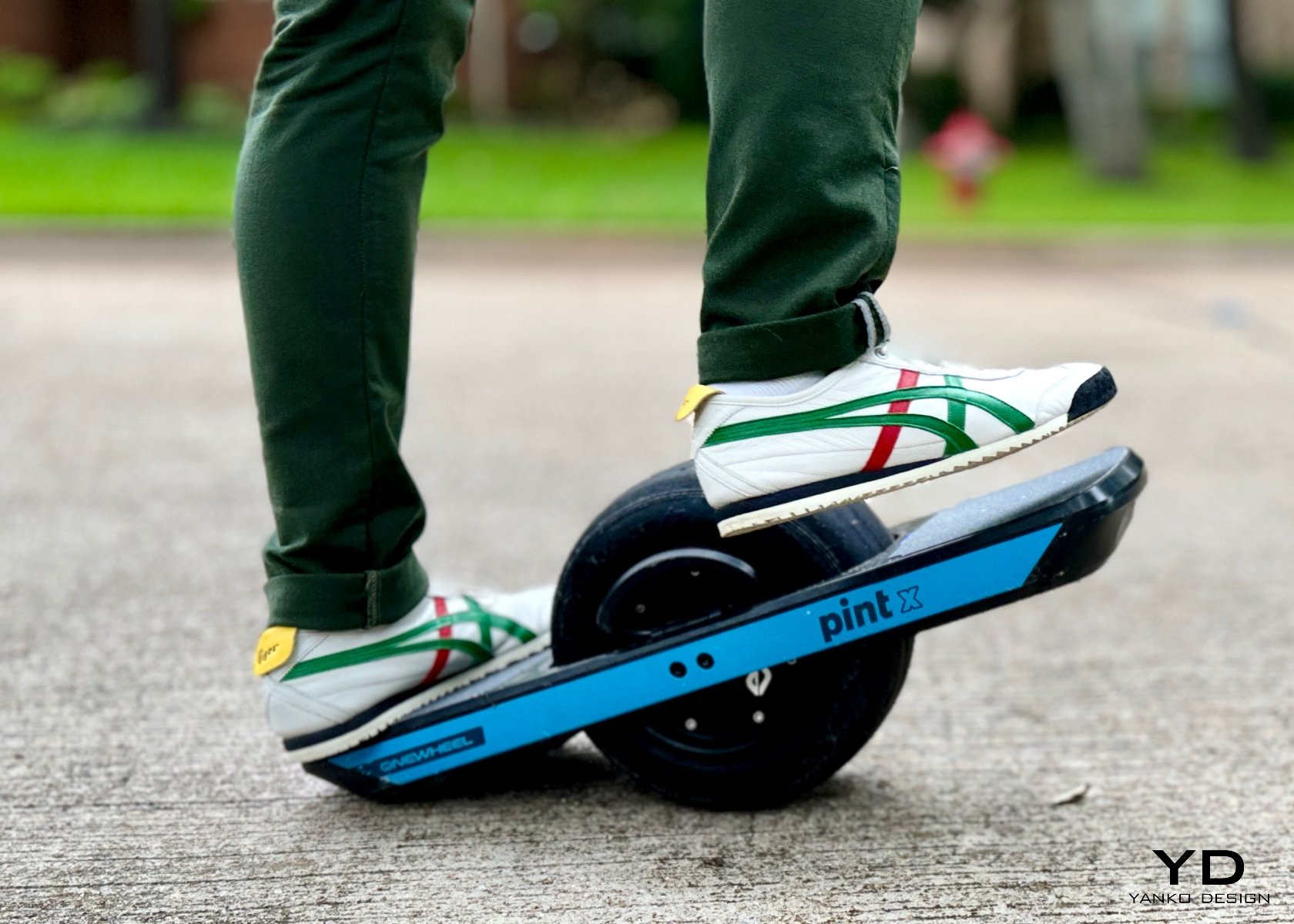
Onitsuka Tiger MEXICO 66 SD: ColorsBIRCH/GREEN

Overall, the Onitsuka Tiger Mexico 66 Deluxe offers a perfect blend of art, culture, and craftsmanship. The unique design elements, high-quality materials, and cultural touches make these sneakers a standout choice for anyone looking to add a bit of artistic flair to their footwear collection. Whether you’re a fan of Japanese culture or simply appreciate well-crafted shoes, the Mexico 66 Deluxe is an excellent choice.

The post Onitsuka Tiger Mexico 66 Deluxe: Artistry and Craftsmanship in Every Step first appeared on Yanko Design.
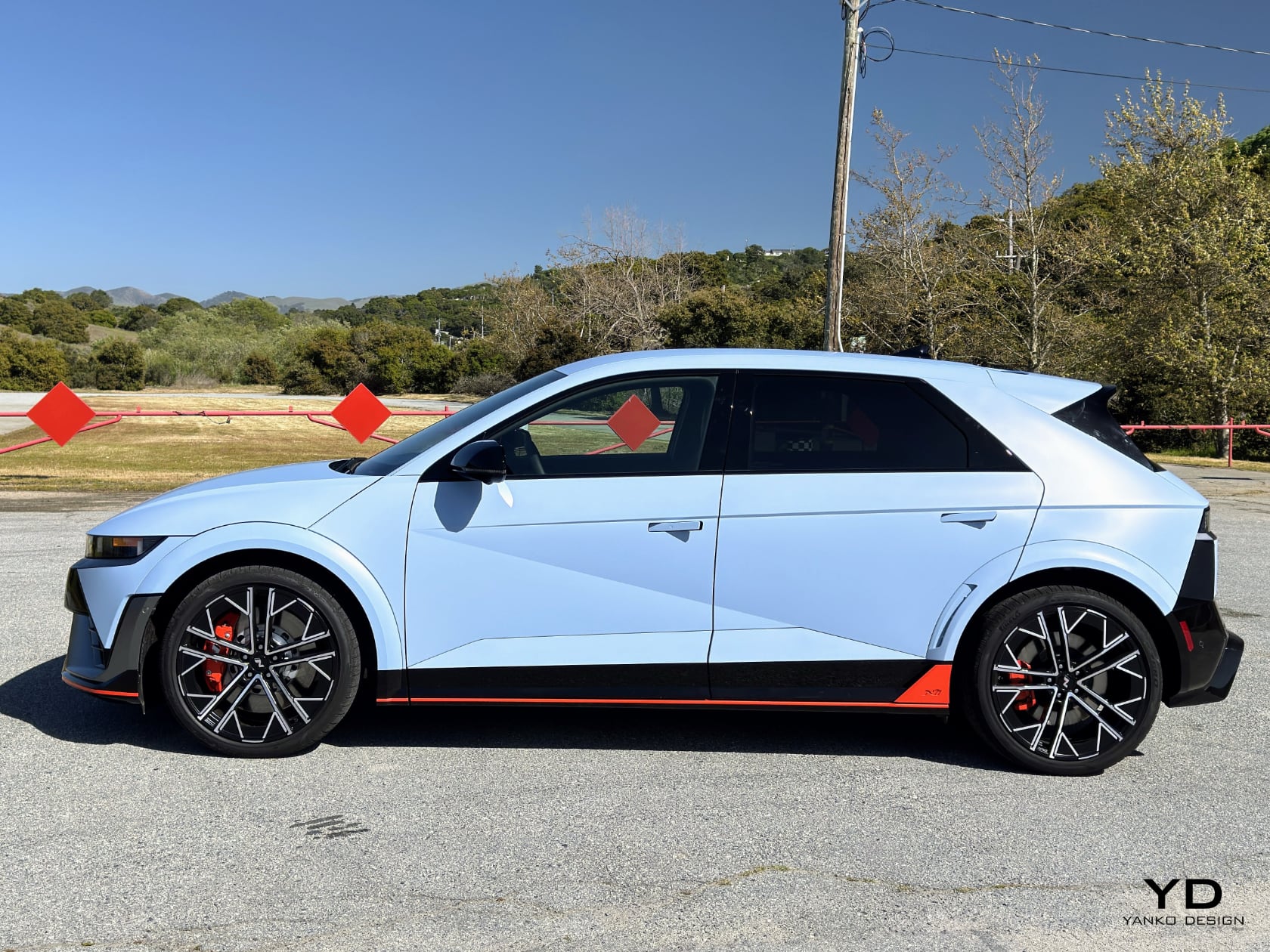
Hyundai Ioniq 5 N First Drive Review: The Ultimate Blend of Performance and Style

Welcome to Mobile Monday! Today, we’re shifting gears to explore a larger “mobile” experience—one on the road rather than in our hands. We’re diving into the world of high-performance electric vehicles with Hyundai’s Ioniq 5 N. This car seamlessly merges high performance with everyday practicality, setting a new benchmark for electric vehicles. It shines on the racetrack and excels in daily use, making it a standout in the electric vehicle market. Its design reflects a bold, forward-thinking approach, combining cutting-edge technology with sleek, modern aesthetics. Integrating advanced driver-assistance systems and customizable driving modes ensures that the Ioniq 5 N can adapt to various driving conditions, offering a versatile experience. Moreover, Hyundai’s commitment to sustainability and performance is evident in every aspect of this vehicle, from its powerful electric motors to its aerodynamic design features.

Designer: Hyundai

Exterior and Interior Design

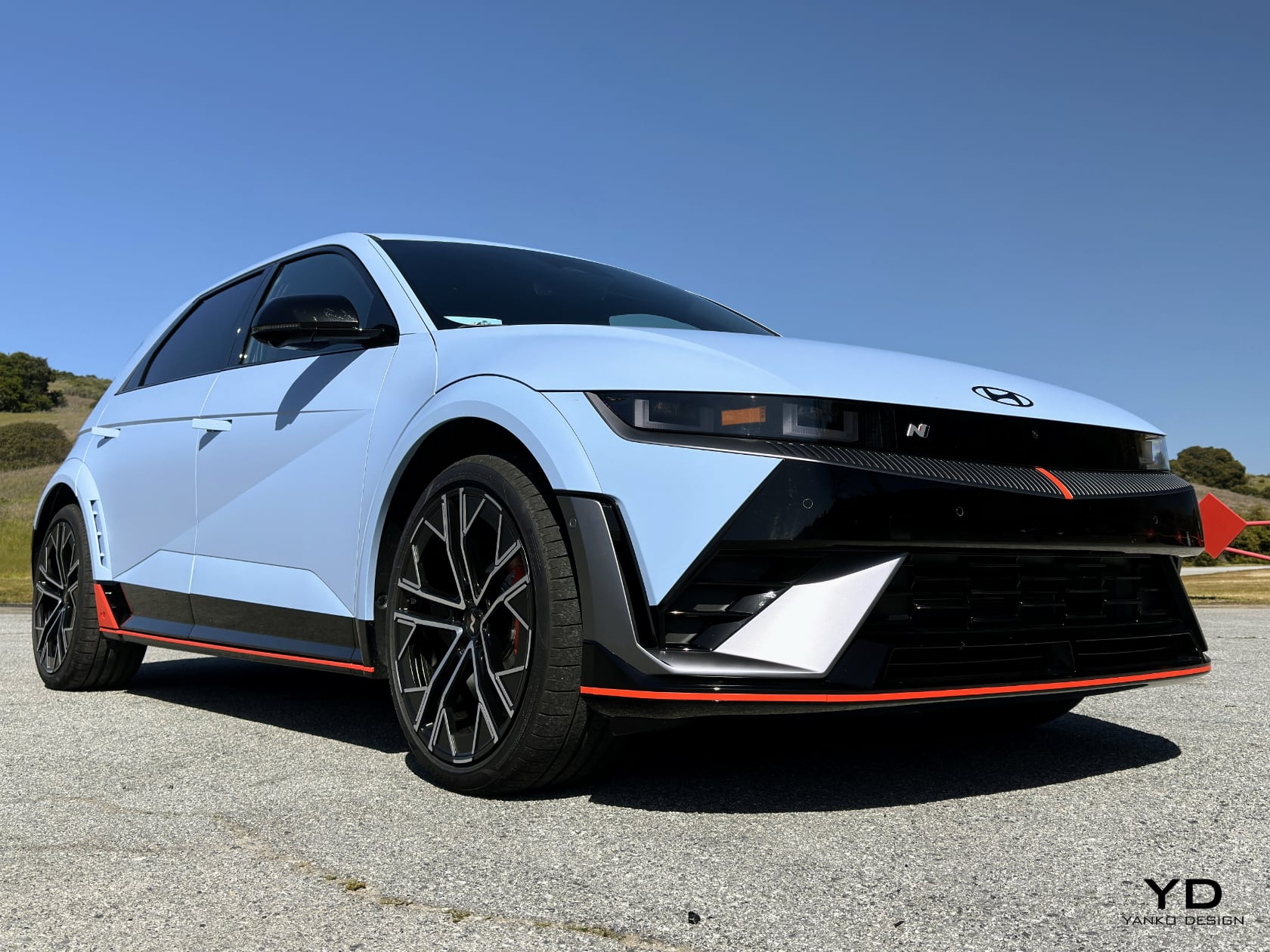
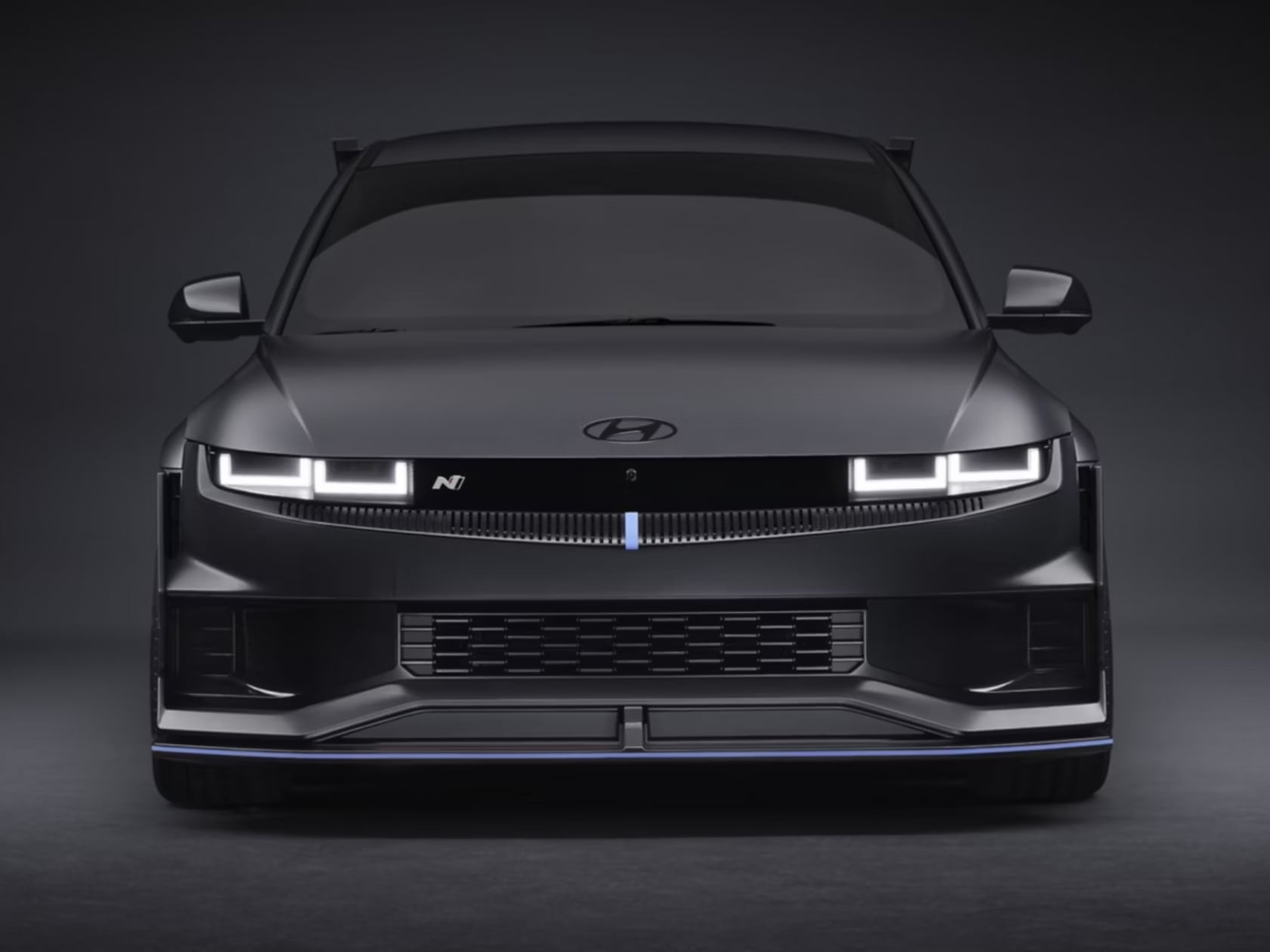
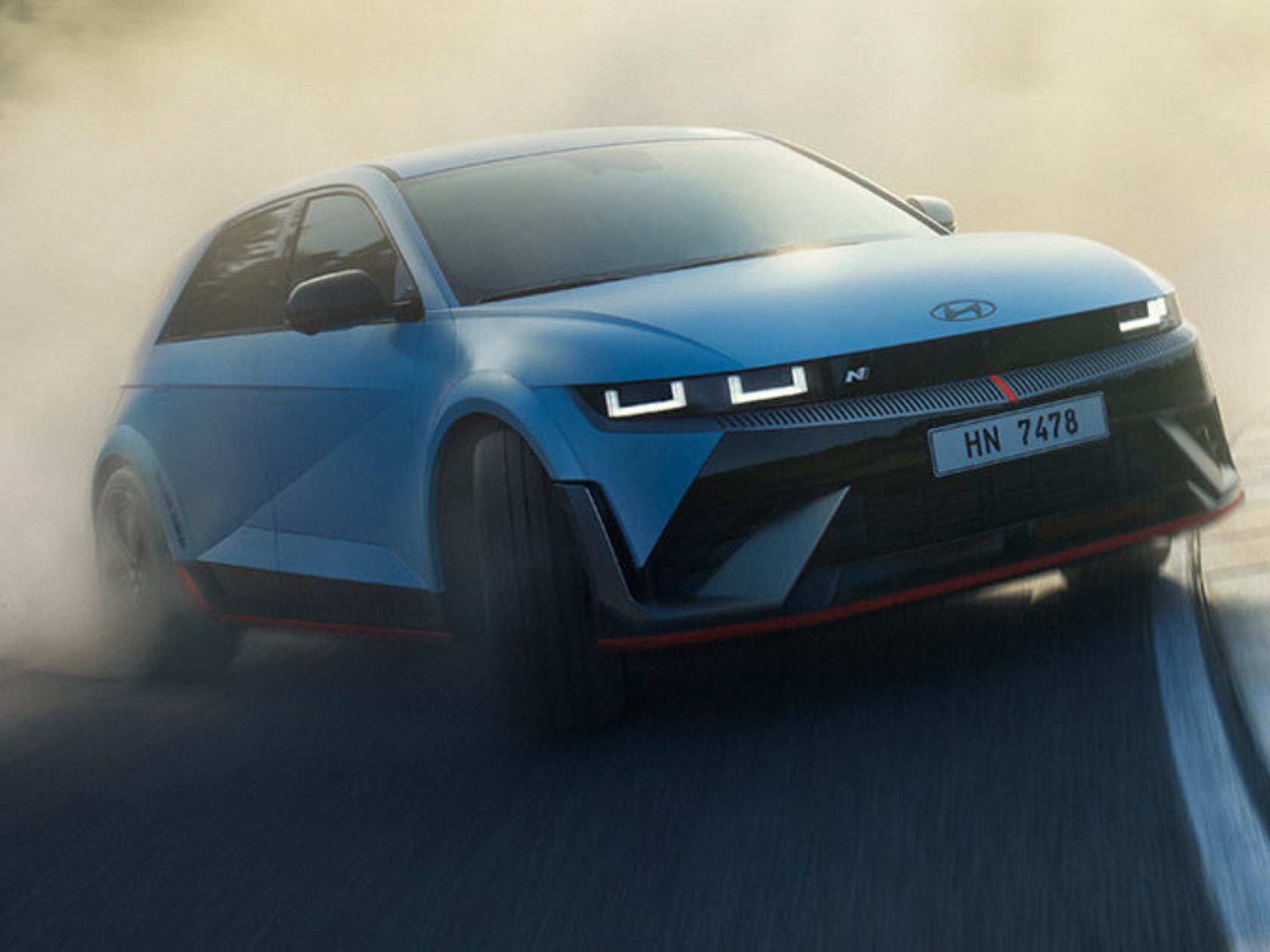
Hyundai IONIQ 5 N

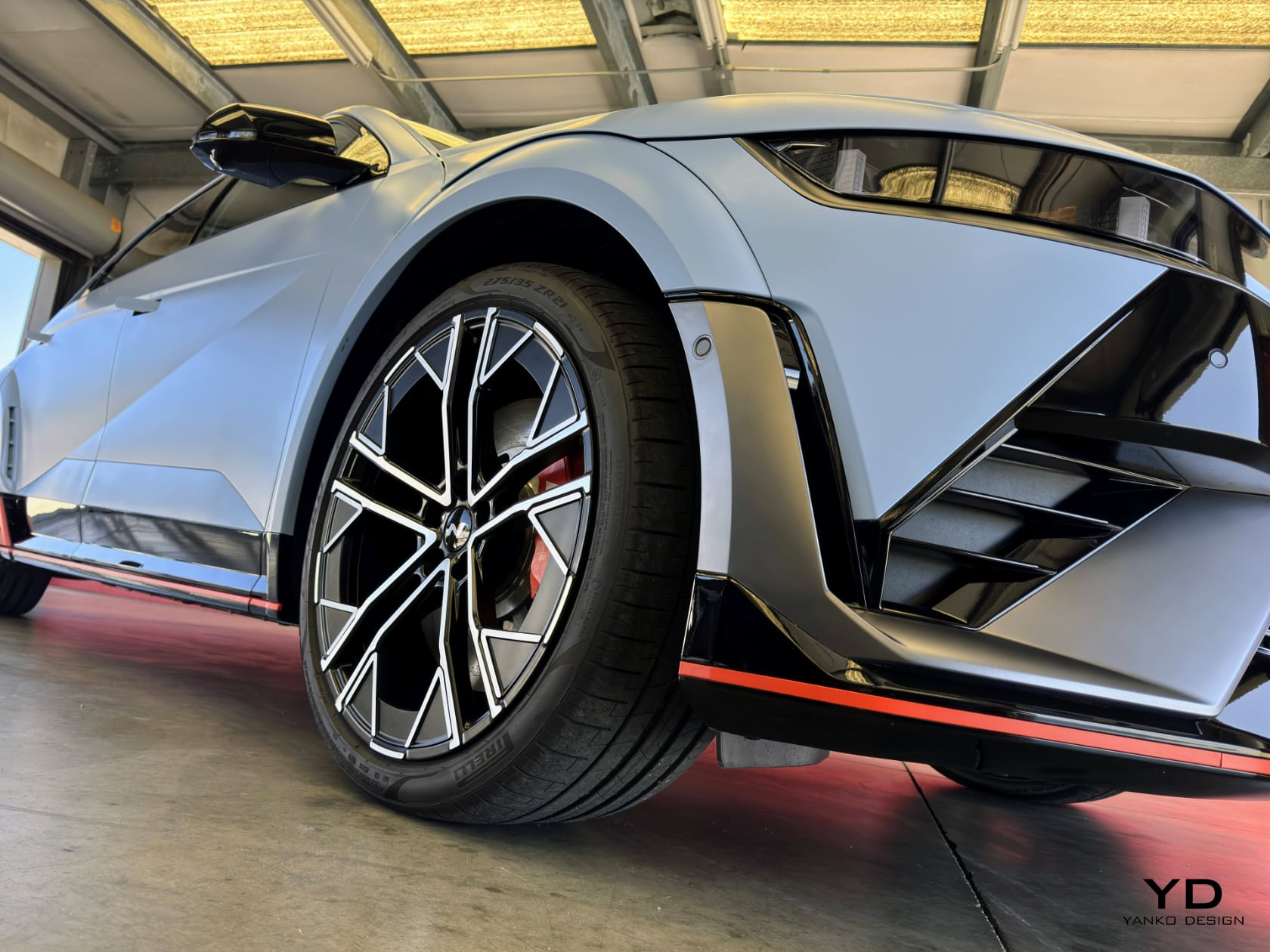
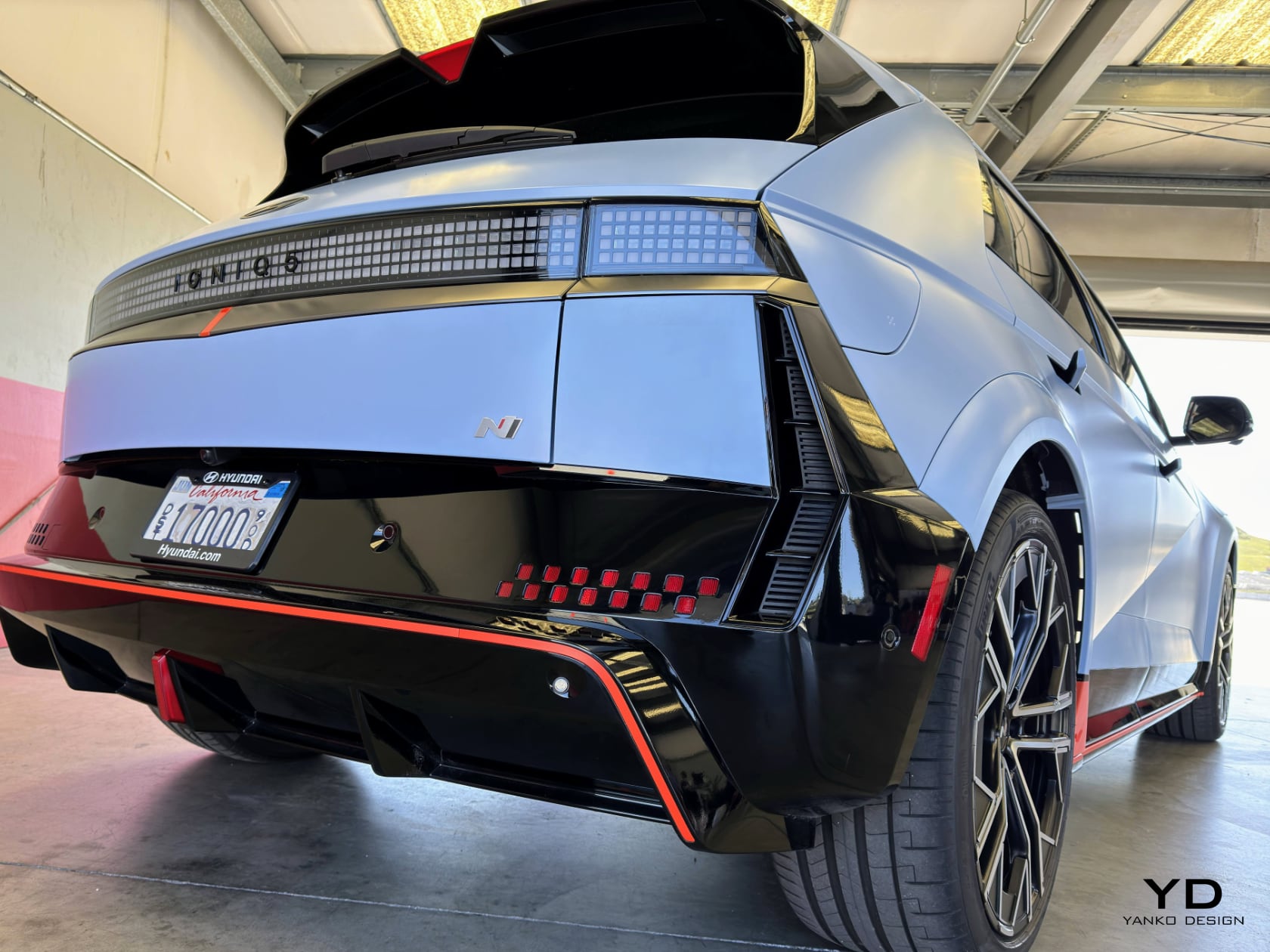
The Ioniq 5 N boasts a sleek, aggressive design that combines style and functionality. Its bold, open front grille enhances cooling, while active air flaps and air curtains improve aerodynamics. The car’s wider stance, complemented by pronounced fender flares, houses larger 21-inch forged wheels with 275mm tires, offering superior grip and stability. A larger rear spoiler and rear diffuser enhance the vehicle’s sporty look and contribute to its aerodynamic efficiency. Small touches like dark emblems and a luminous orange strip add to its striking appearance.

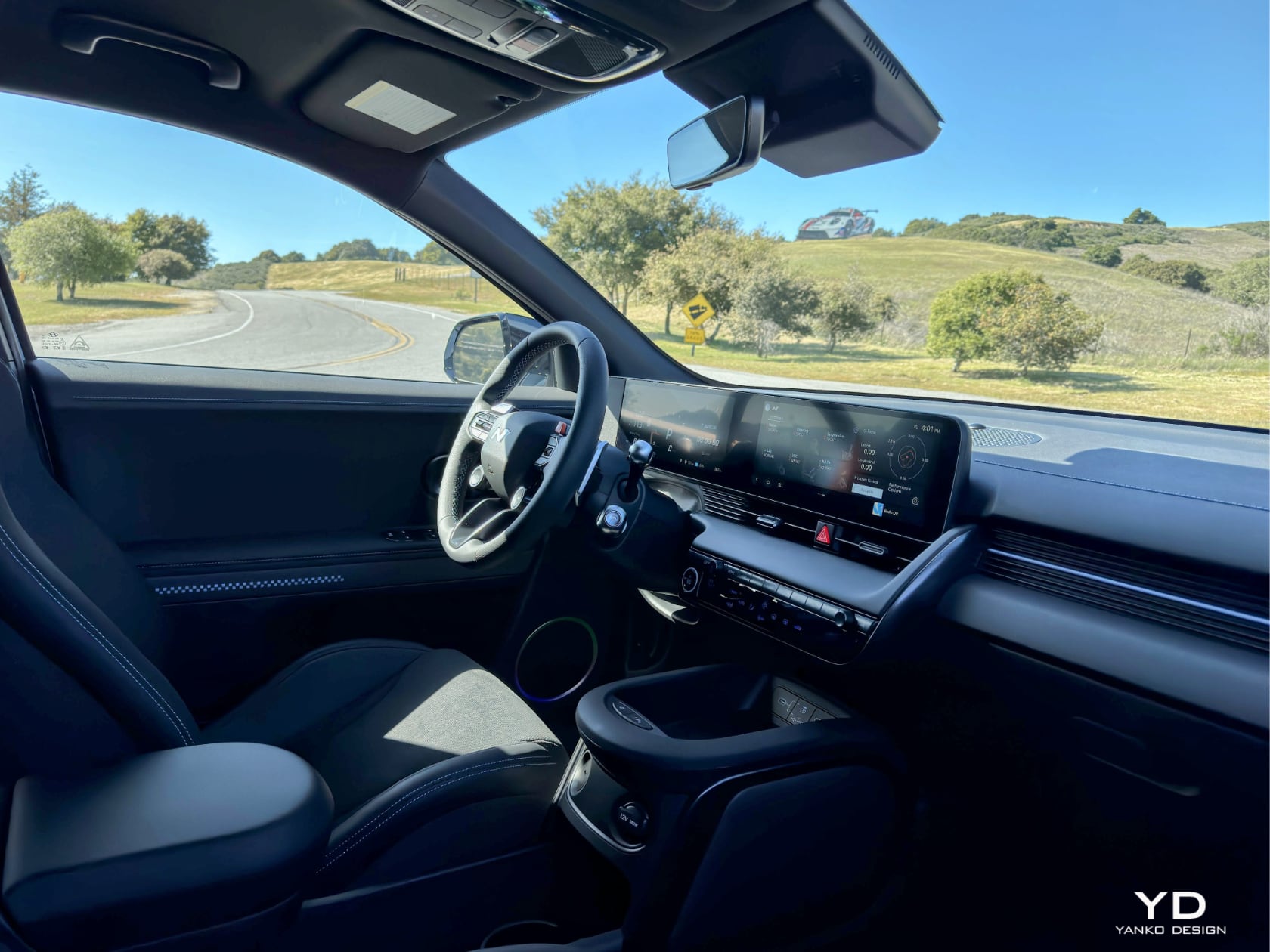
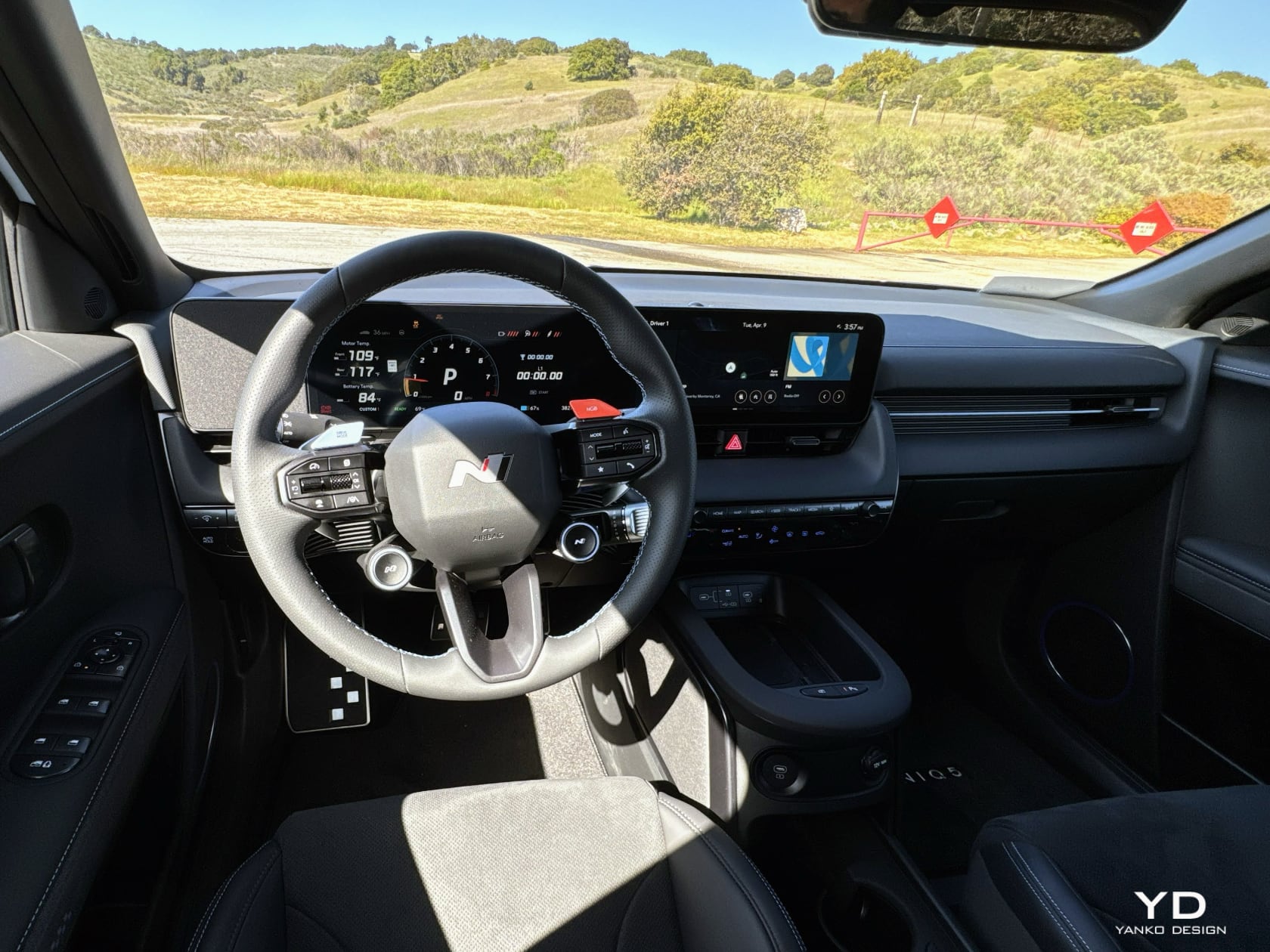
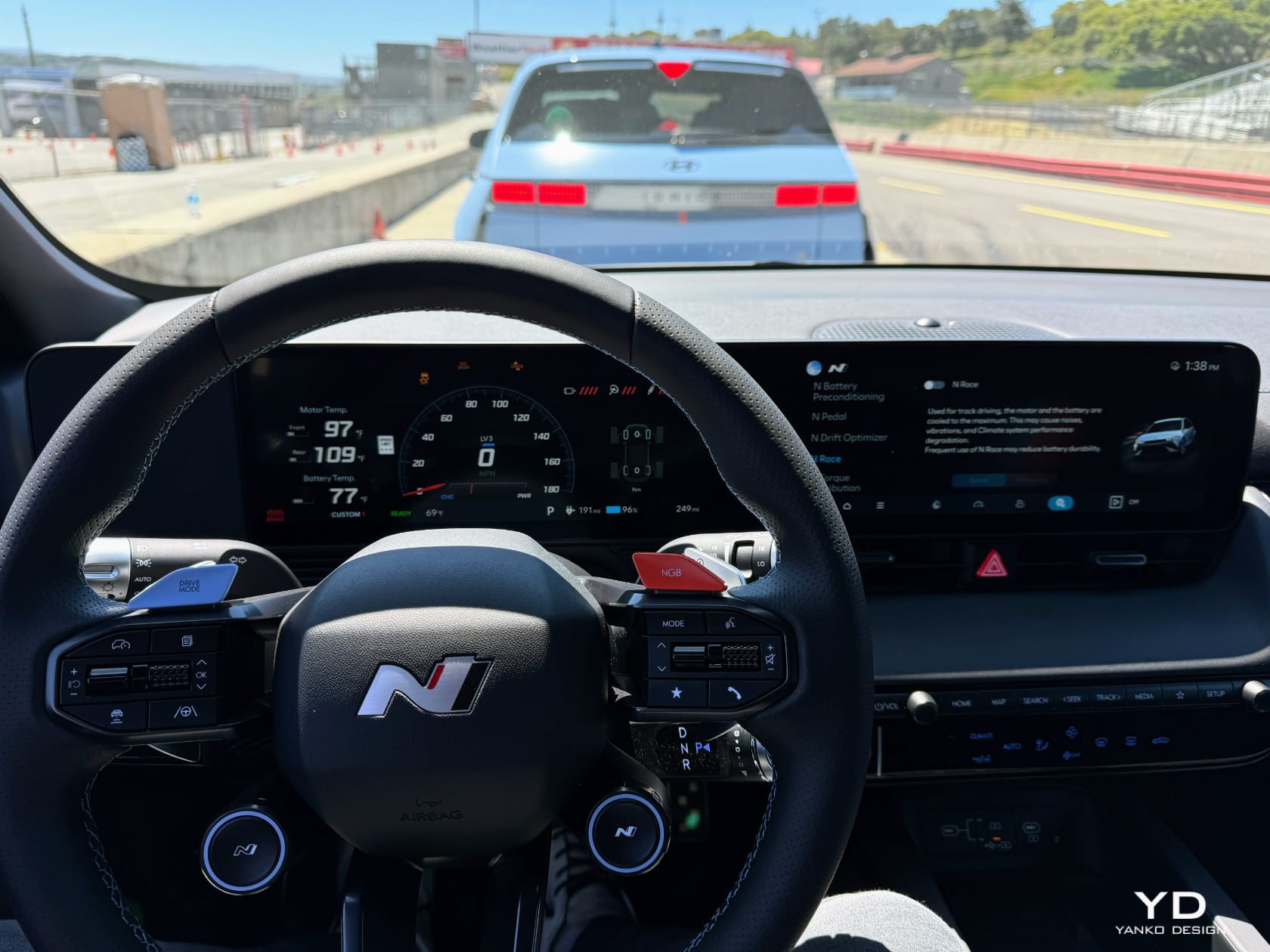
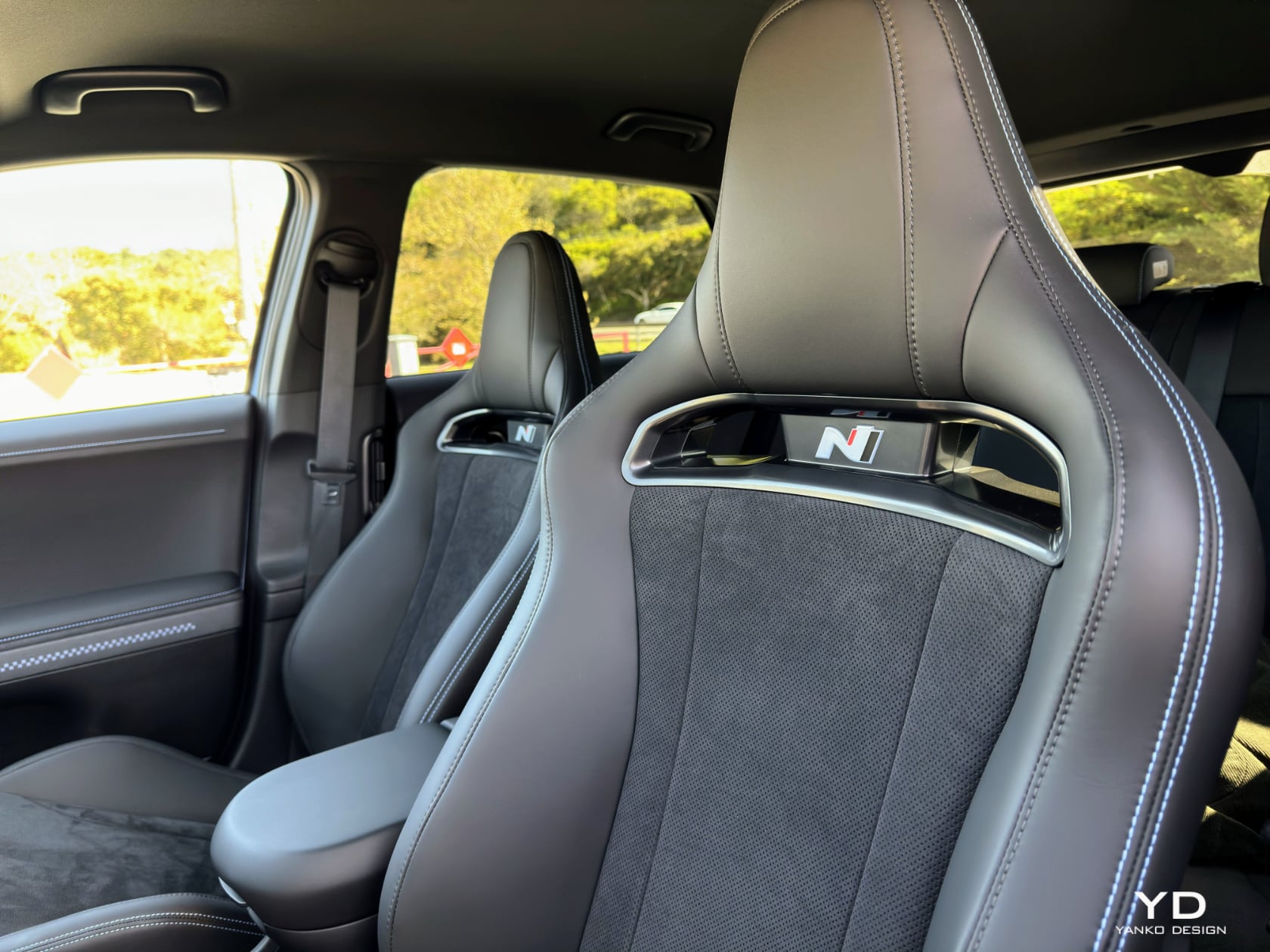
Inside, the Ioniq 5 N features a driver-focused layout with high-quality materials. The specially designed steering wheel includes four focused buttons, such as a boost button and customizable settings, allowing drivers to tailor the vehicle’s performance. The bucket seats provide excellent support and sit lower than the standard Ioniq, bringing the driver closer to the road for a more immersive experience. The pedal layout is optimized for performance, with larger brake and footrest pedals for better control.

The interior also includes a fixed center console with ample padding for added support during dynamic driving. This layout combines practicality and comfort, featuring advanced technology with a sporty feel. The digital cockpit provides all necessary information at a glance, ensuring the driver remains focused on the road.

Performance and Customization

Customization is a key feature of the Ioniq 5 N. The vehicle offers various driving modes, allowing drivers to adjust settings like torque distribution and regenerative braking and even simulate gear shifts with the N e-shift feature. These modes enhance the driving experience, providing a tailored feel for different driving conditions. The N e-shift, in particular, mimics the sensation of gear shifting, adding a visceral element to the electric driving experience.

The integration of motorsports DNA into production cars is emphasized, bringing the excitement of motorsports to everyday driving. The Ioniq 5 N exemplifies this synergy, bringing the excitement of motorsports to everyday driving. The electrification of the N models introduces the Ioniq 5 N as the first electrified N model designed to set new standards for high-performance EVs. The three pillars of the N brand—cornering ability, racetrack capability, and everyday sports car usability—are embodied in the Ioniq 5 N, offering an exhilarating driving experience while maintaining practicality and efficiency.

With 601 horsepower and an additional boost mode, the Ioniq 5 N is the most powerful Hyundai ever produced. Extensive design and engineering efforts emphasize precision and optimization for everyday driving and track performance. Design elements such as the steering wheel with dedicated mode buttons, bucket seats, and enhanced pedal layout are all designed to provide a thrilling driving experience.

Comparing the Ioniq 5 N and Ioniq 5 N NPX1

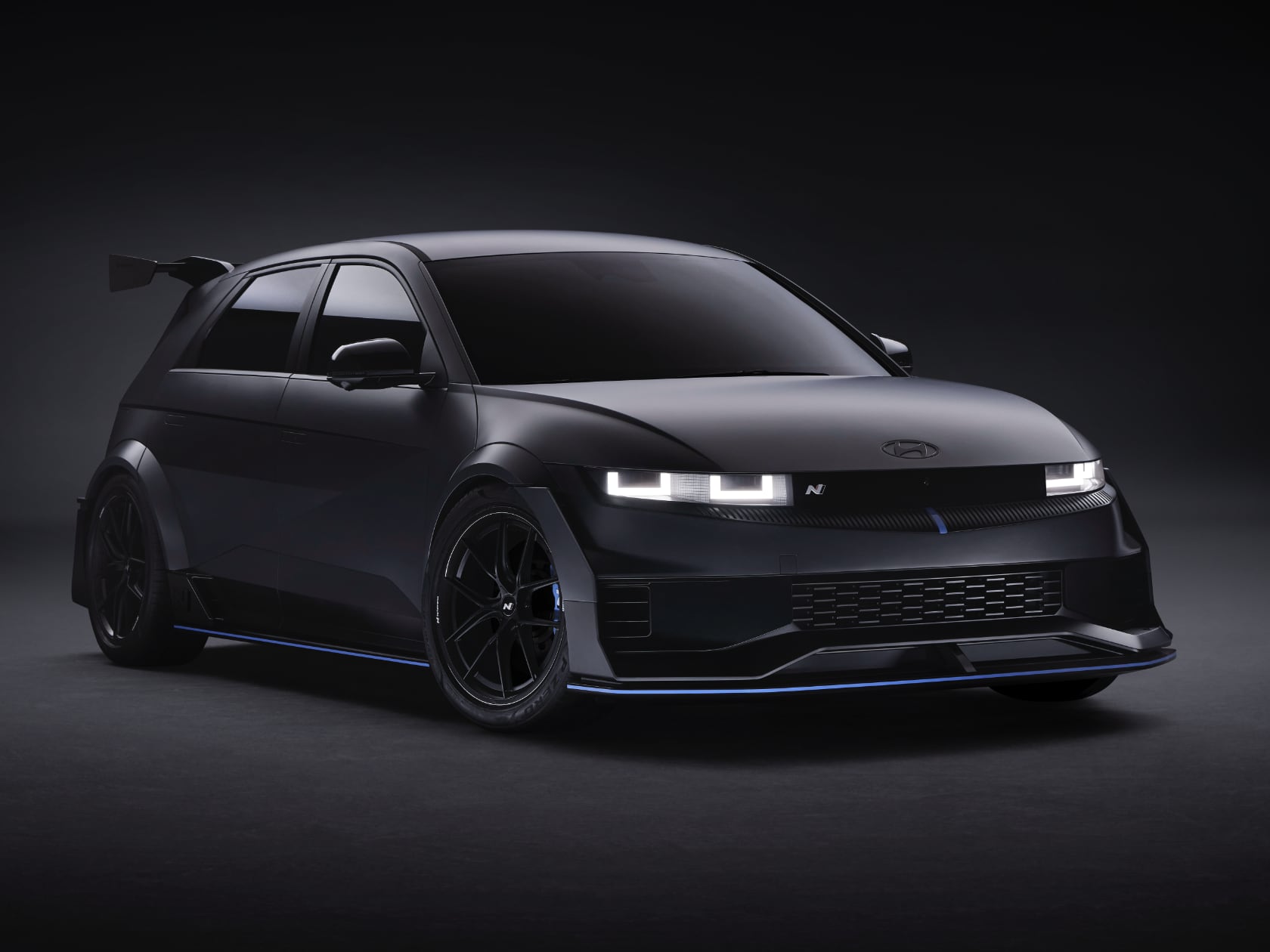
The unveiling of Hyundai’s Ioniq 5 N NPX1 concept at the Tokyo Auto Salon 2024 marks another significant leap in the evolution of high-performance electric vehicles. Based on the Ioniq 5 N, this concept showcases an array of N-specific enhancements designed to push the boundaries of performance and design.

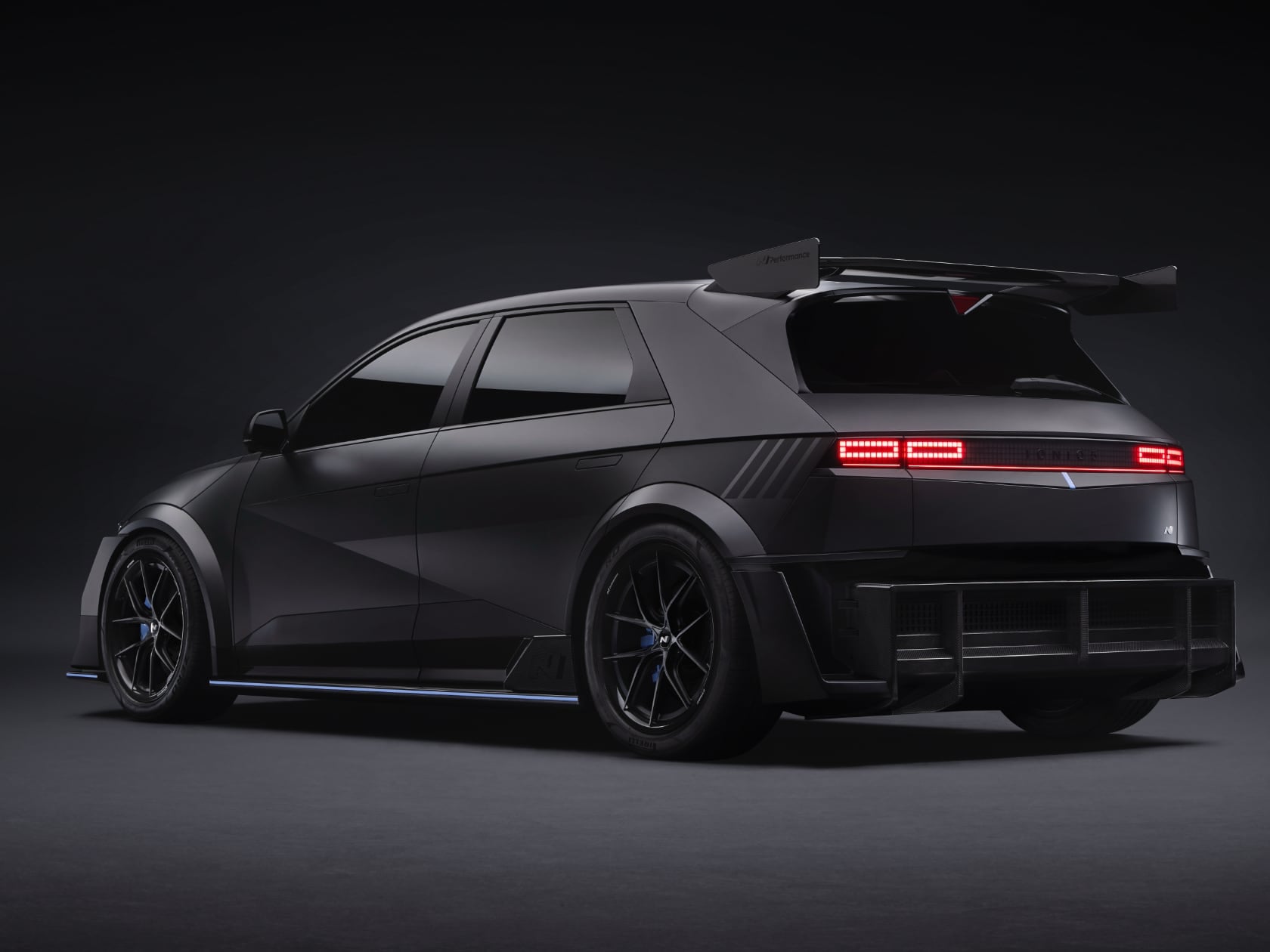
IONIQ 5 N NPX1

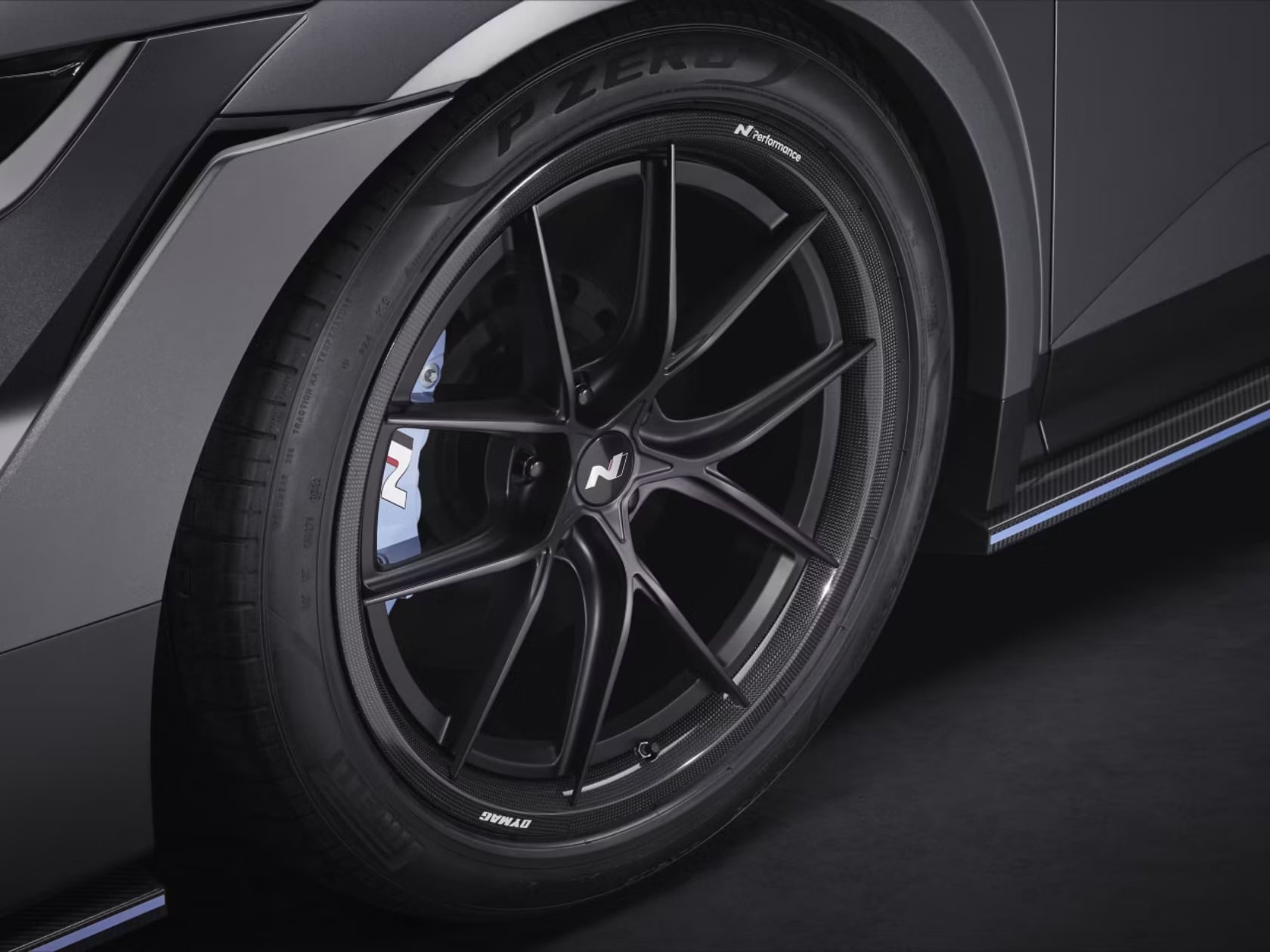
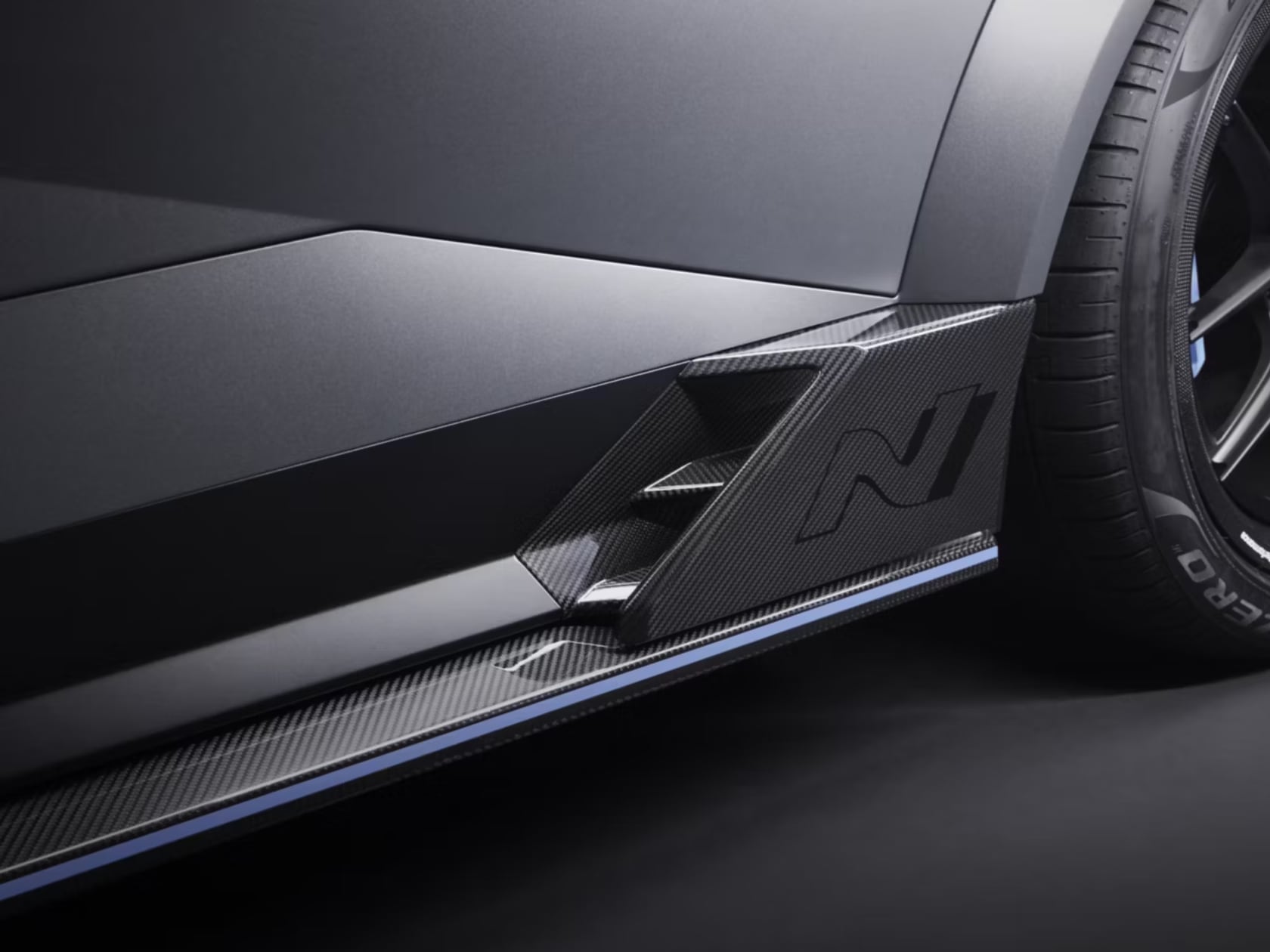
Externally, the Ioniq 5 N NPX1 features carbon fiber components, including a front splitter, side skirts, rear diffuser, and a prominent rear wing spoiler. These elements enhance the vehicle’s aggressive aesthetics and contribute to improved aerodynamics and reduced weight. The concept’s lightweight hybrid carbon wheels further reduce unsprung mass, improving handling and acceleration. The high-performance brake pads and down springs enhance braking efficiency and driving dynamics.

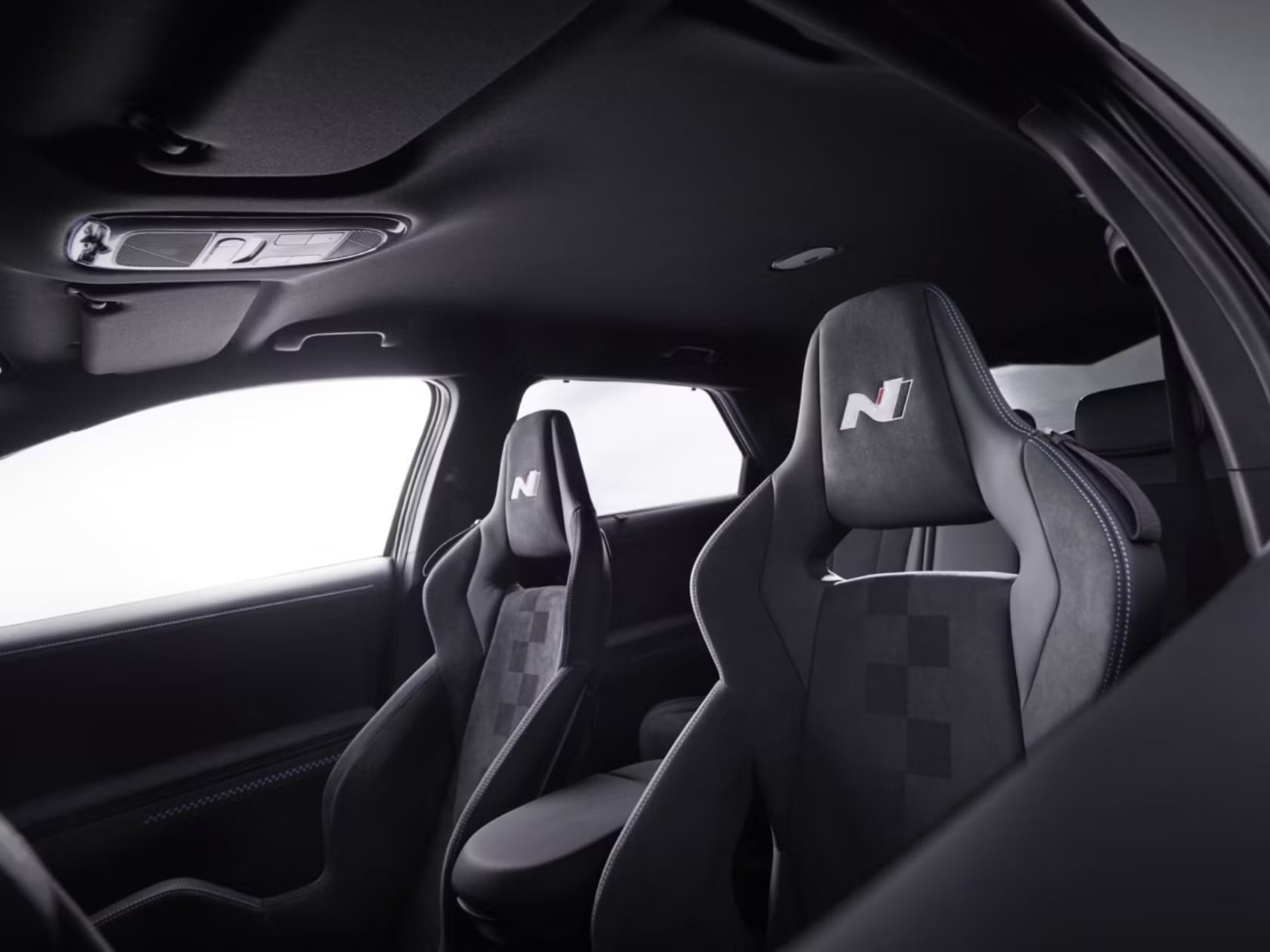
Inside, the NPX1 concept continues its high-performance theme with luxurious Alcantara material, providing a premium feel and improved grip for the driver. The steering wheel, a central control hub, features dedicated buttons for customized performance settings, allowing drivers to tailor their driving experience.

IONIQ 5 N NPX1 Interior

Comparing the Ioniq 5 N and the Ioniq 5 N NPX1 reveals striking similarities and notable advancements. Both models share the same underlying platform and high-performance ethos. However, the NPX1 elevates this foundation with exclusive N Performance Parts that will soon be available for purchase. Using real carbon fiber and hybrid materials in the NPX1 emphasizes Hyundai’s commitment to innovation and performance.

While already a high-performance vehicle, the Ioniq 5 N is designed for everyday usability. It offers a refined interior with practical features like advanced driver-assistance systems and Hyundai Pay for seamless transactions. The NPX1, however, is a more focused iteration designed to showcase the future of N Performance enhancements. It incorporates race-inspired components that not only improve performance but also offer a preview of what customers can expect from Hyundai’s tuning parts in the near future.

Both vehicles emphasize a balance between performance and practicality. The Ioniq 5 N provides the thrill of a sports car while remaining practical for daily use. Its adjustable driving modes and high-performance features make it versatile for different driving conditions. The NPX1, on the other hand, is a showcase of potential, pushing the envelope of what an electric vehicle can achieve with the right enhancements.

The NPX1’s carbon fiber additions are more than just aesthetic. The front splitter, side skirts, rear diffuser, and rear wing spoiler all play crucial roles in improving the car’s aerodynamic profile and reducing weight. These enhancements ensure that the NPX1 looks the part and performs at the highest level. The lightweight hybrid carbon wheels are a significant upgrade, offering better performance and efficiency.

The NPX1’s interior enhancements, with its use of Alcantara and metal accents, provide a more immersive and luxurious driving experience. These materials are not just about looks; they also contribute to the overall driving dynamics by offering better grip and comfort. The metal door scuffs add a layer of durability, ensuring that the interior can withstand the rigors of high-performance driving.

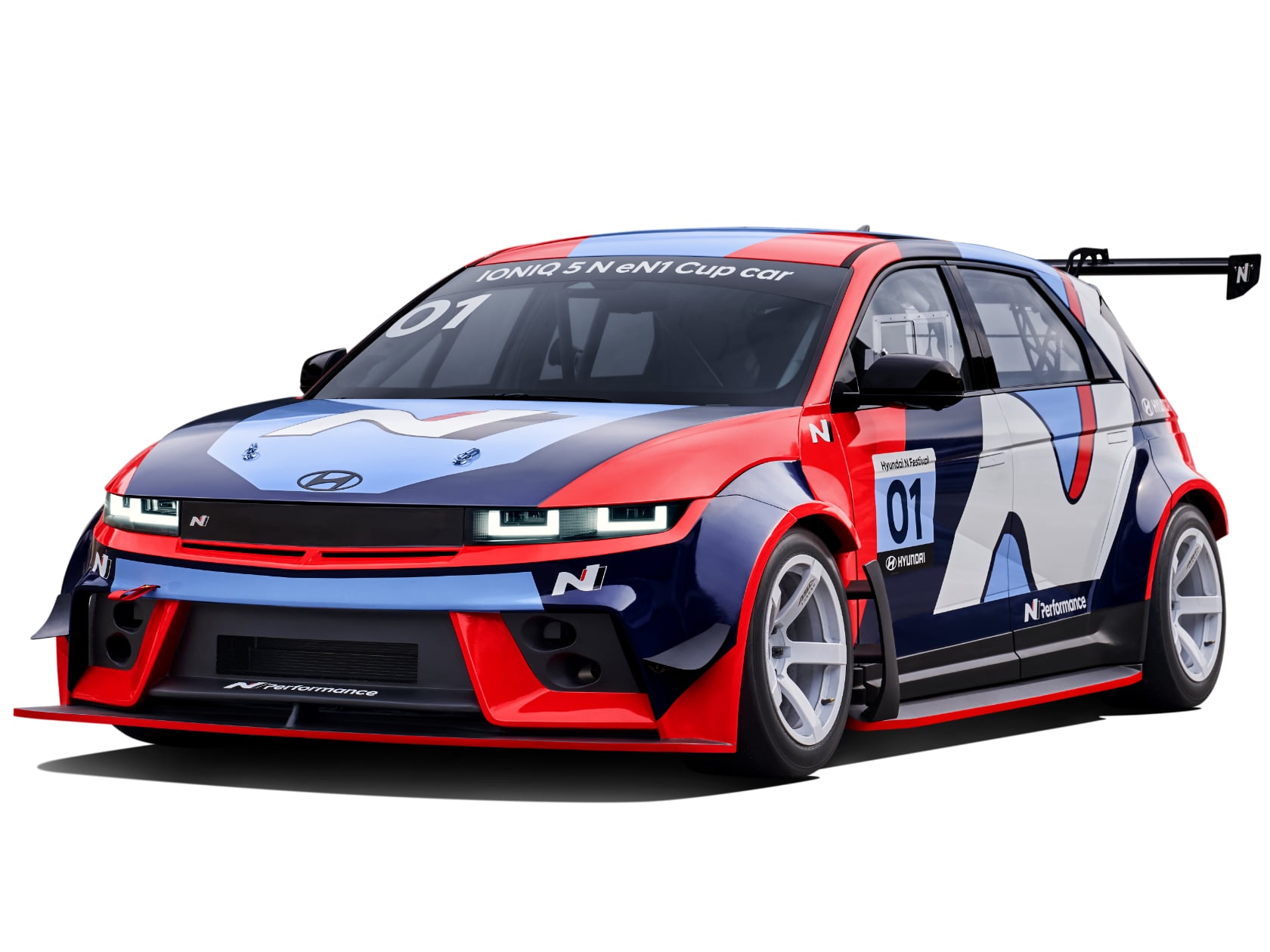
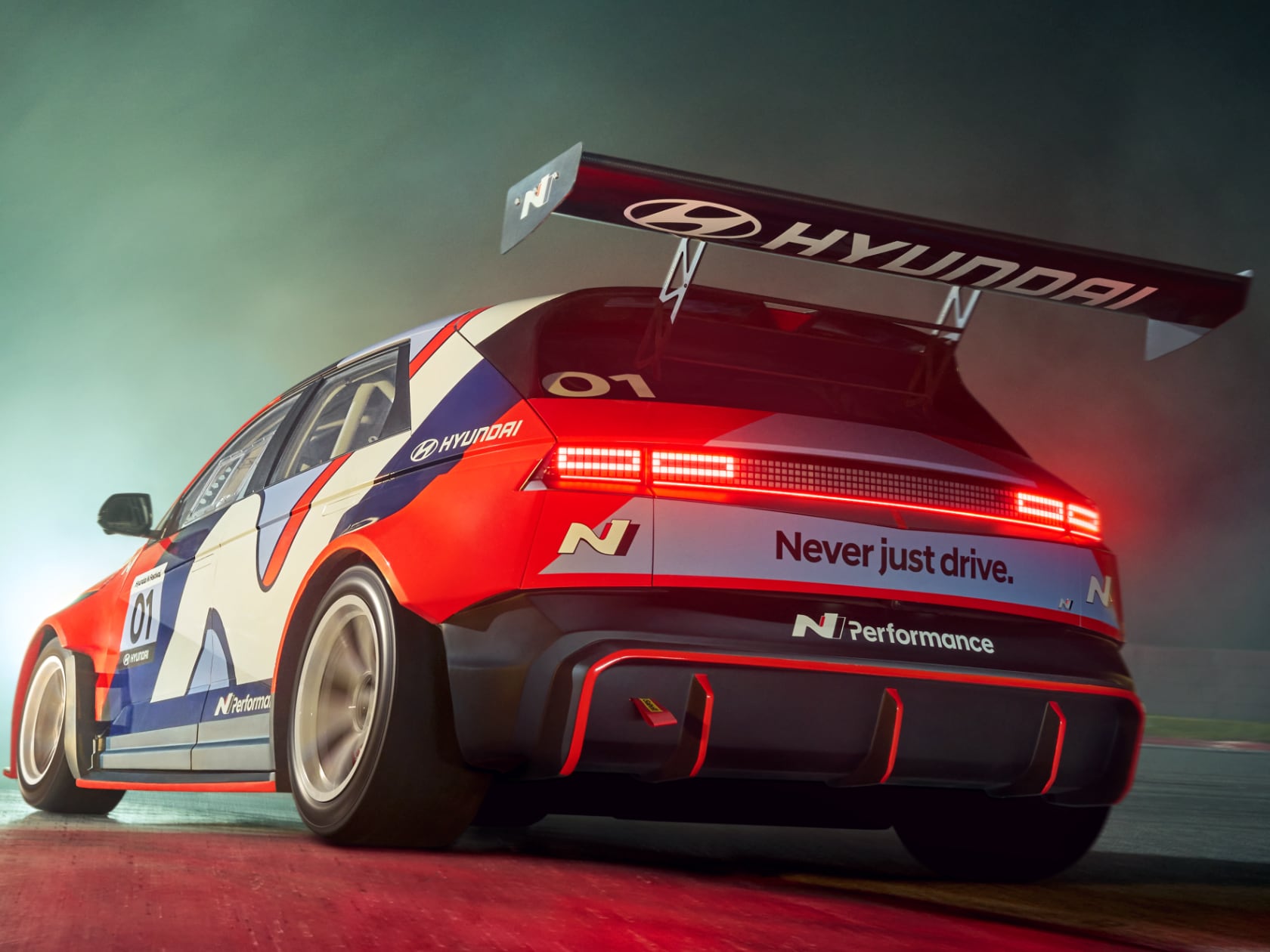
Ioniq 5 N eN1 Cup Car

Ioniq 5 N eN1 Cup Car

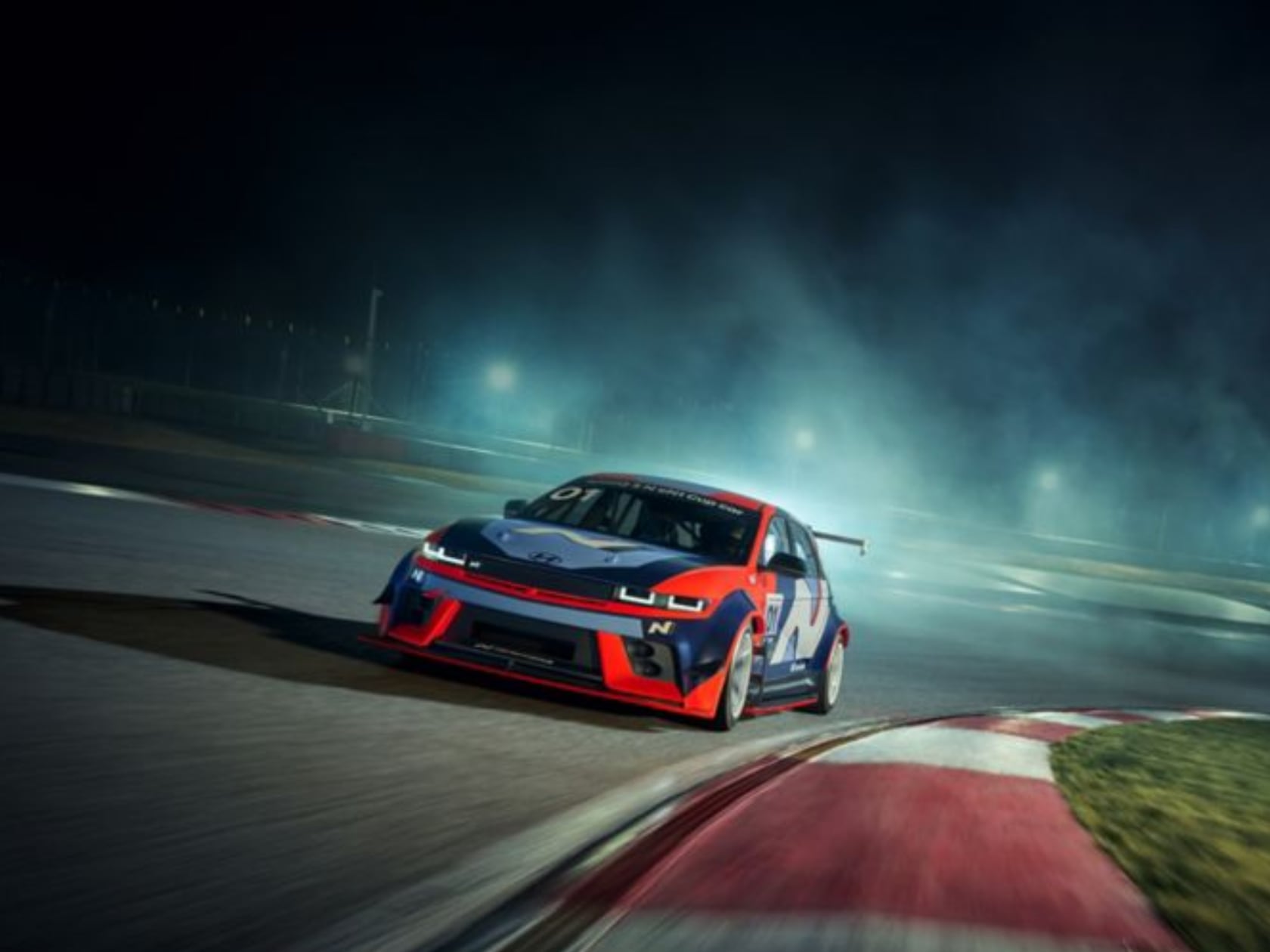
The introduction of the Ioniq 5 N eN1 Cup car marked a significant milestone. This dedicated race car, developed for the eN1 Cup series, demonstrates Hyundai’s commitment to pushing the boundaries of electric motorsports. The car features numerous technical enhancements and modifications for racing, maintaining the core EV system while optimizing for performance. This connection between motorsports and production vehicles underscores the N brand’s focus on delivering youthful excitement and high performance.

Ioniq 5 N eN1 Cup Car

Externally, the Ioniq 5 N eN1 Cup car includes a wide-body kit and a prominent rear wing to improve aerodynamics and downforce on the track. The interior has essential racing components such as a multi-point roll cage, a bucket seat, and a six-point safety harness for maximum driver safety.

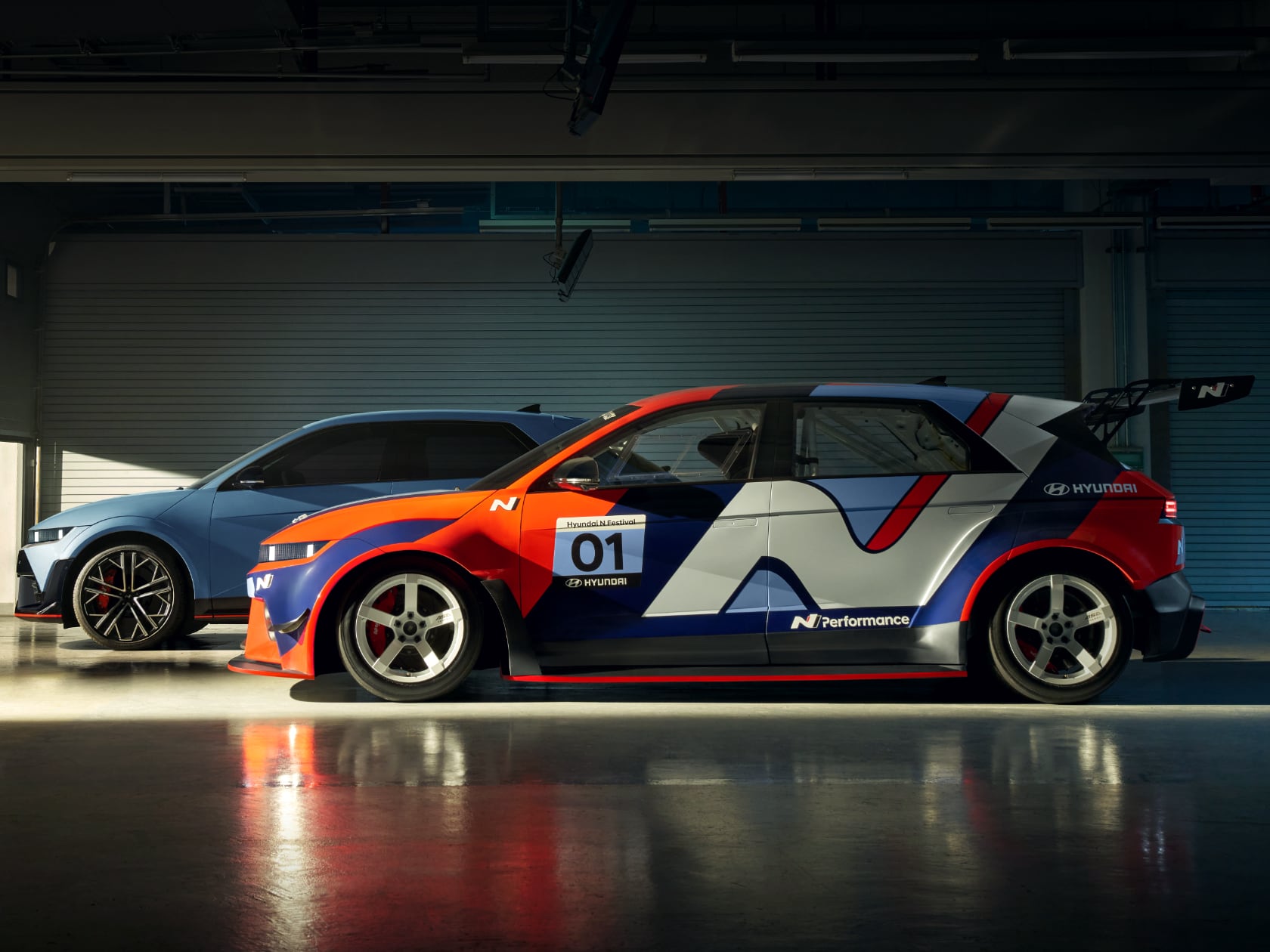
Ioniq 5 N eN1 Cup Car and 5 N

The Ioniq 5 N and the Ioniq 5 N eN1 Cup car offer high-performance driving experiences but cater to different driving aspects. The Ioniq 5 N is perfect for those who want a powerful, sporty car that they can drive daily, featuring a luxurious interior and advanced technology. However, the Ioniq 5 N eN1 Cup car is tailored for the racetrack, offering uncompromising performance and safety features designed to meet the demands of competitive racing.

Driving Experience

Driving the Hyundai Ioniq 5 N is a thrilling experience that seamlessly blends high performance with everyday usability. Whether carving through corners on a racetrack, enjoying the dynamic handling on a winding road, or simply commuting to work, the Ioniq 5 N delivers an engaging and versatile driving experience that sets a new standard for electric vehicles.

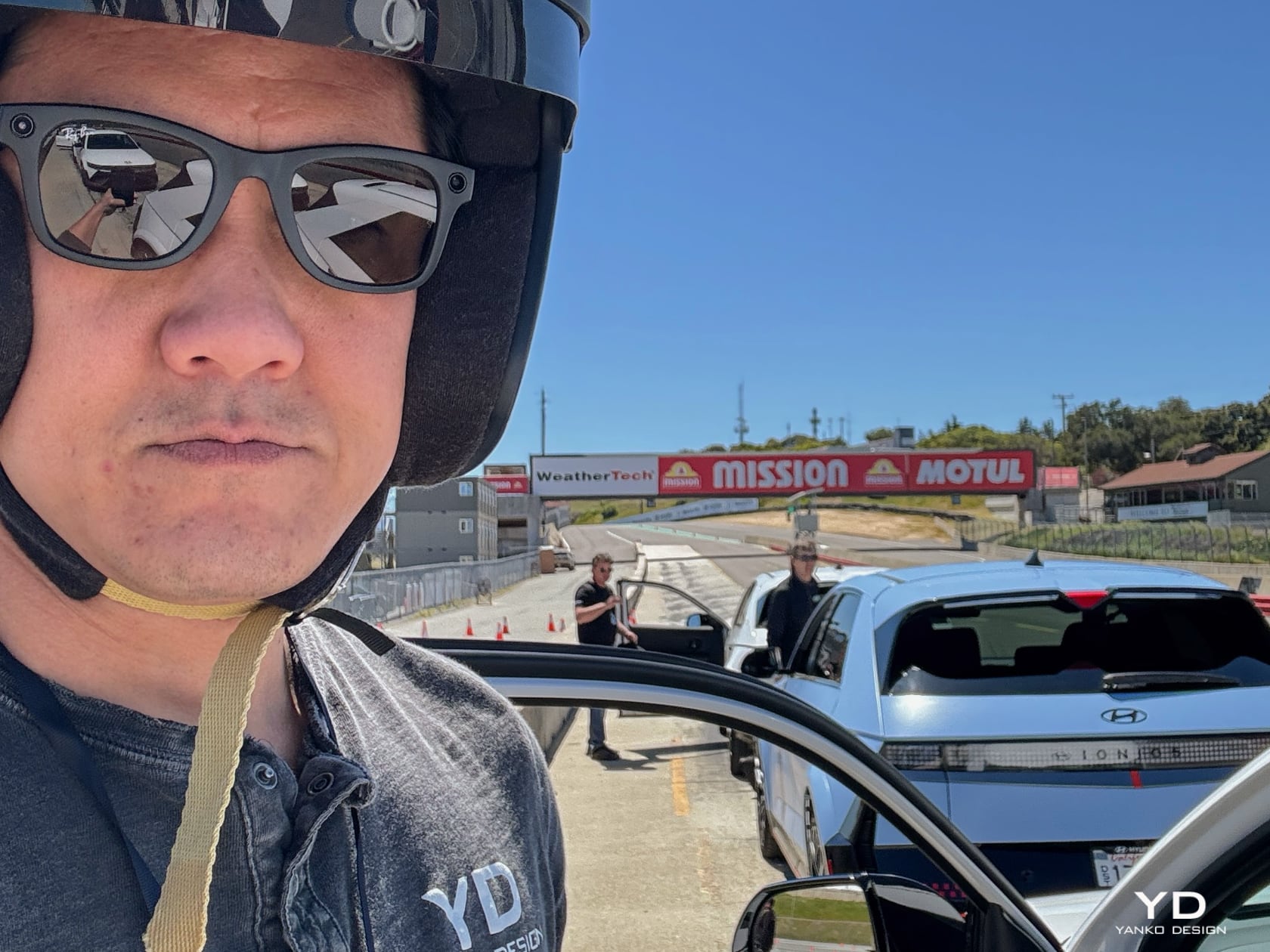
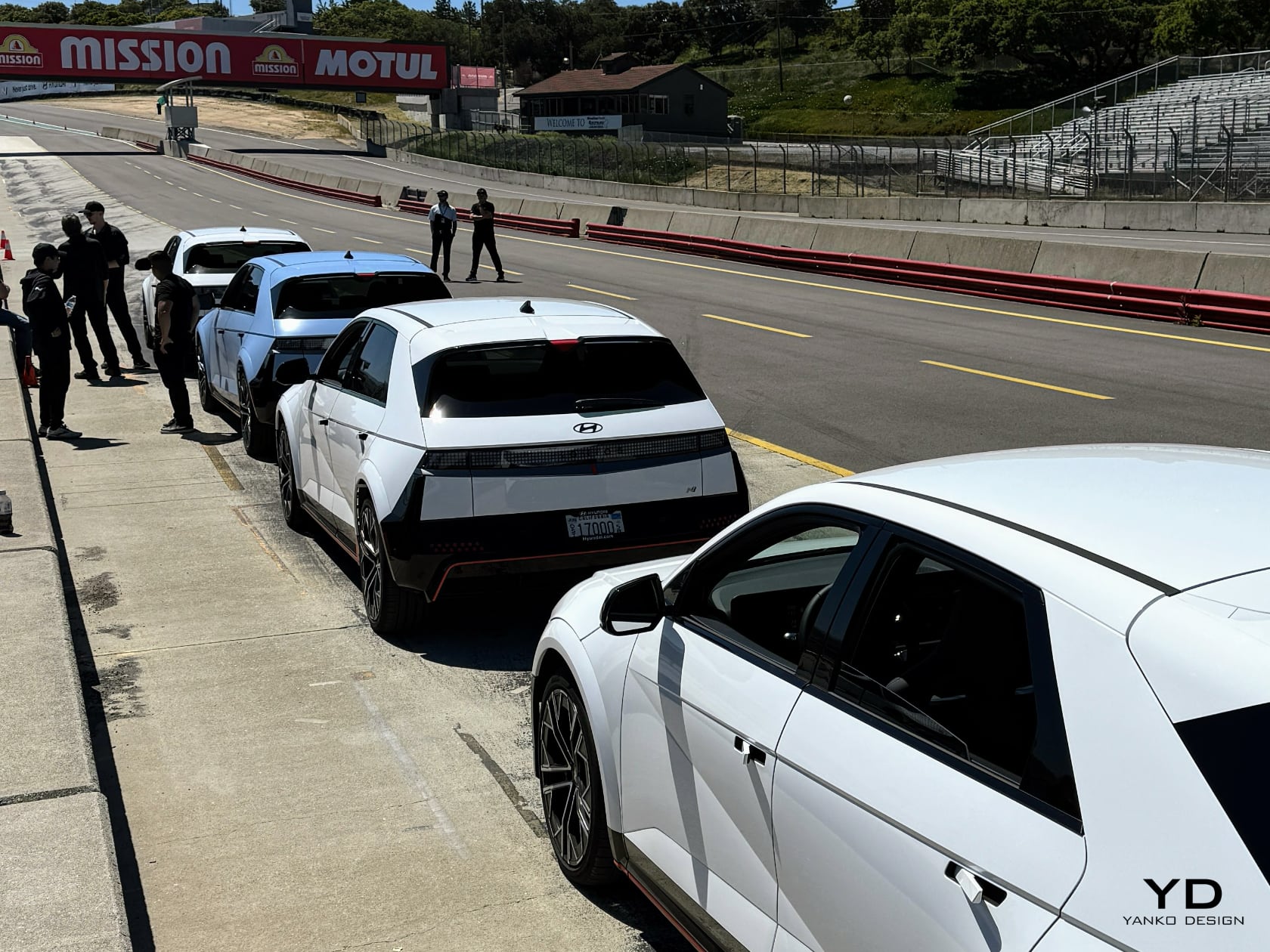
Driving the Ioniq 5 N at WeatherTech Raceway Laguna Seca

The opportunity to drive it at WeatherTech Raceway Laguna Seca highlighted its capabilities and left a lasting impression. On the track, the Ioniq 5 N proved to be a formidable contender. The moment you hit the accelerator, the 601 horsepower and the additional boost mode propel you forward with an astonishing burst of speed. The electric motors deliver instant torque, making acceleration seamless and thrilling. With its two-way adjustable dampers, the vehicle’s advanced suspension system ensures that it remains planted even at high speeds. The larger 21-inch wheels with 275mm tires provide exceptional grip, allowing you to tackle the track’s notorious turns confidently.

Driving the Ioniq 5 N at WeatherTech Raceway Laguna Seca, I was impressed by its stability and precision. The car’s braking system truly shined on the track. The 4-piston 400 mm front brakes and 1-piston 360 mm rear brakes offered powerful stopping power, essential for high-speed driving. The regenerative braking system recovered energy and provided deceleration that enhanced control during aggressive driving. The N e-shift feature added an extra layer of engagement, simulating gear shifts and giving a visceral feel that is often missing in electric vehicles.

The Ioniq 5 N truly earns its “corner rascal” nickname. The all-wheel-drive system can be adjusted to distribute torque almost entirely to the rear wheels, making the car feel nimble and agile. The electronic limited-slip differential and the precise steering response allow you to navigate tight corners easily. The car feels incredibly balanced, and the weight distribution is optimized to enhance cornering stability.

Pedal response is another highlight. The car’s three-level adjustable regenerative braking allows for fine-tuning off-throttle behavior, enhancing weight transfer and improving turn-in. Whether on a winding mountain road or a technical racetrack, the Ioniq 5 N delivers a dynamic and engaging driving experience that makes every twist and turn a joy to navigate. On the legendary Corkscrew at Laguna Seca, the Ioniq 5 N maintained its composure, demonstrating exceptional handling and balance.

Despite its high-performance capabilities, the Ioniq 5 N remains practical and comfortable for daily driving. The interior blends sporty and luxurious elements, featuring high-quality materials and advanced technology. The bucket seats provide excellent support for spirited driving while remaining comfortable for longer journeys. The adjustable driving modes allow you to switch from a sporty setup to a more relaxed one, perfect for city commuting or highway cruising.

Advanced driver-assistance systems ensure safety and convenience, while features like Hyundai Pay and wireless Apple CarPlay enhance the user experience. The Ioniq 5 N’s fast-charging capability, which allows the battery to go from 10% to 80% in just 18 minutes, makes it practical for daily use, minimizing downtime and keeping you on the move.

Driving the Hyundai Ioniq 5 N is a thrilling experience that seamlessly blends high performance with everyday usability. Whether carving through corners on a racetrack, enjoying the dynamic handling on a winding road, or simply commuting to work, the Ioniq 5 N delivers an engaging and versatile driving experience that sets a new standard for electric vehicles. The opportunity to drive it at WeatherTech Raceway Laguna Seca highlighted its capabilities and left a lasting impression, showcasing Hyundai’s dedication to innovation and performance.

The post Hyundai Ioniq 5 N First Drive Review: The Ultimate Blend of Performance and Style first appeared on Yanko Design.
On vs Adidas: A Deep Dive into Laceless Sports Shoe Technologies

It’s impressive that many major brands have tried to create the perfect laceless sports shoe. While they’ve made significant strides, many have struggled with weight reduction in a world where weight reduction is highly sought after unless you’re a sumo wrestler or a defensive linebacker. Everything from phones, tablets, bags, and everyday carry items like multi-functional tools use advanced high-tech carbon fiber materials. So, why haven’t brands like Adidas focused more on shedding weight in their shoes? Let’s explore the approaches of On and Adidas in creating laceless sports shoes.


Designer: ON

Designer: Adidas

Comparing On Cloudboom Strike LS with Adidas’ Laceless Shoes

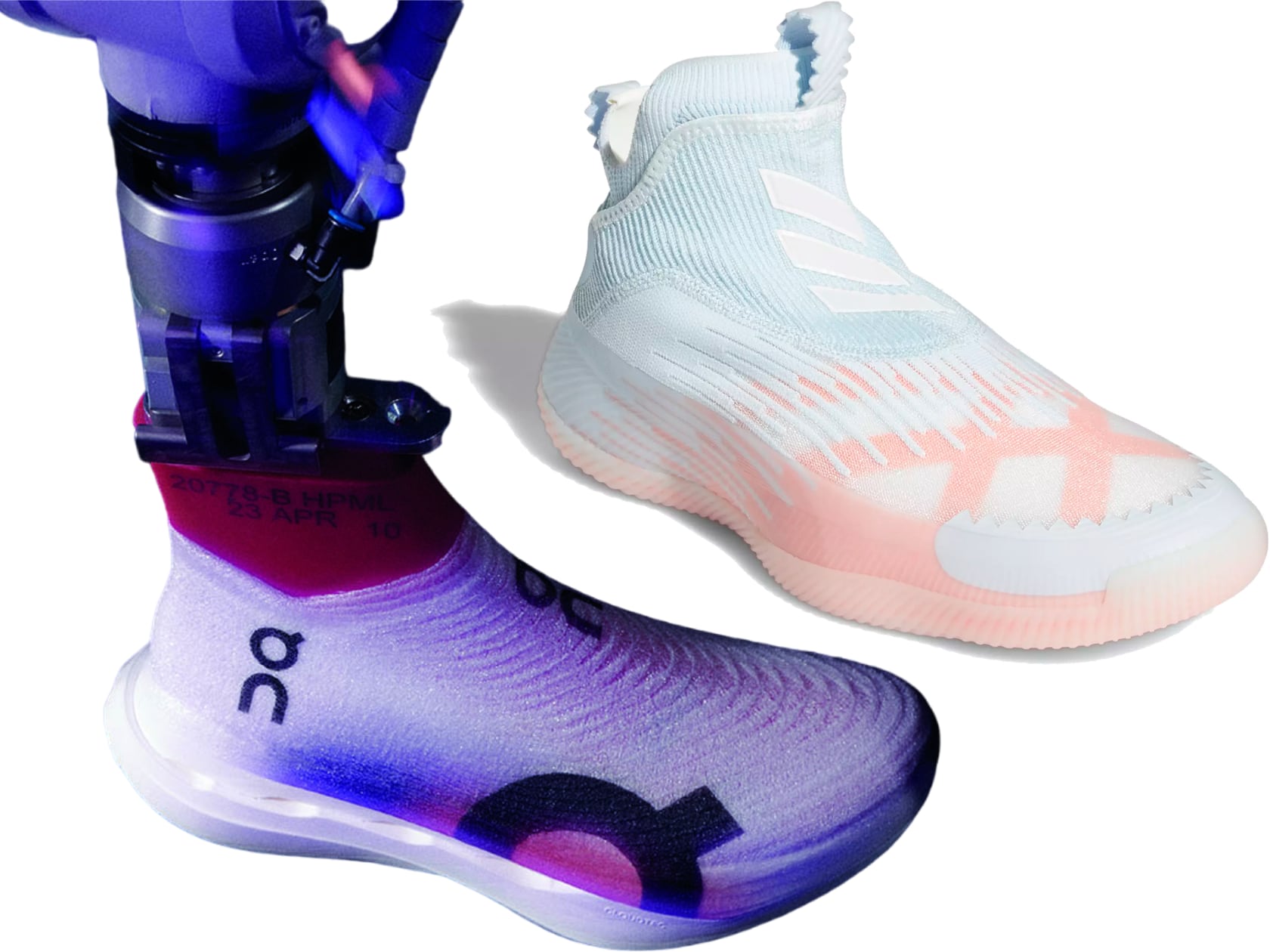
On has achieved a groundbreaking reduction in weight with its Cloudboom Strike LS. In contrast, Adidas has also made strides in laceless footwear but faces different challenges. Adidas’ N3XT L3V3L and other laceless models have focused on eliminating traditional components to improve fit and performance. However, these shoes have struggled with weight issues, making them less appealing for athletes seeking ultra-lightweight options.

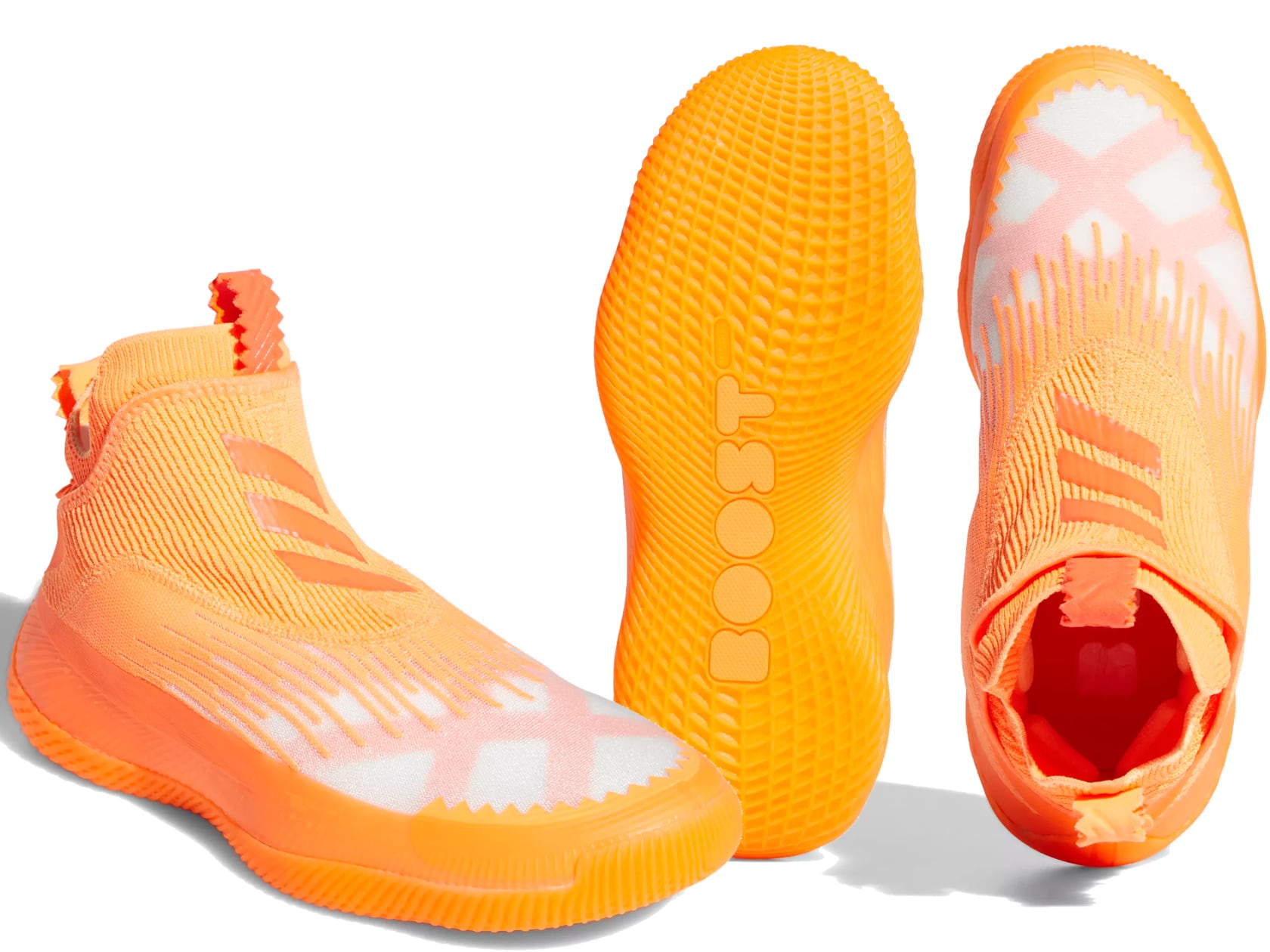
Adidas N3XT L3V3L Futurenatural

Adidas’ N3XT L3V3L shoes feature a laceless design utilizing Primeknit and ForgeFiber technology to provide a snug fit. The Primeknit material offers flexibility and breathability, while ForgeFiber adds strength and support through strategically placed stitching. Despite these innovations, the shoes still face criticism for being relatively heavy compared to competitors like the Cloudboom Strike LS.

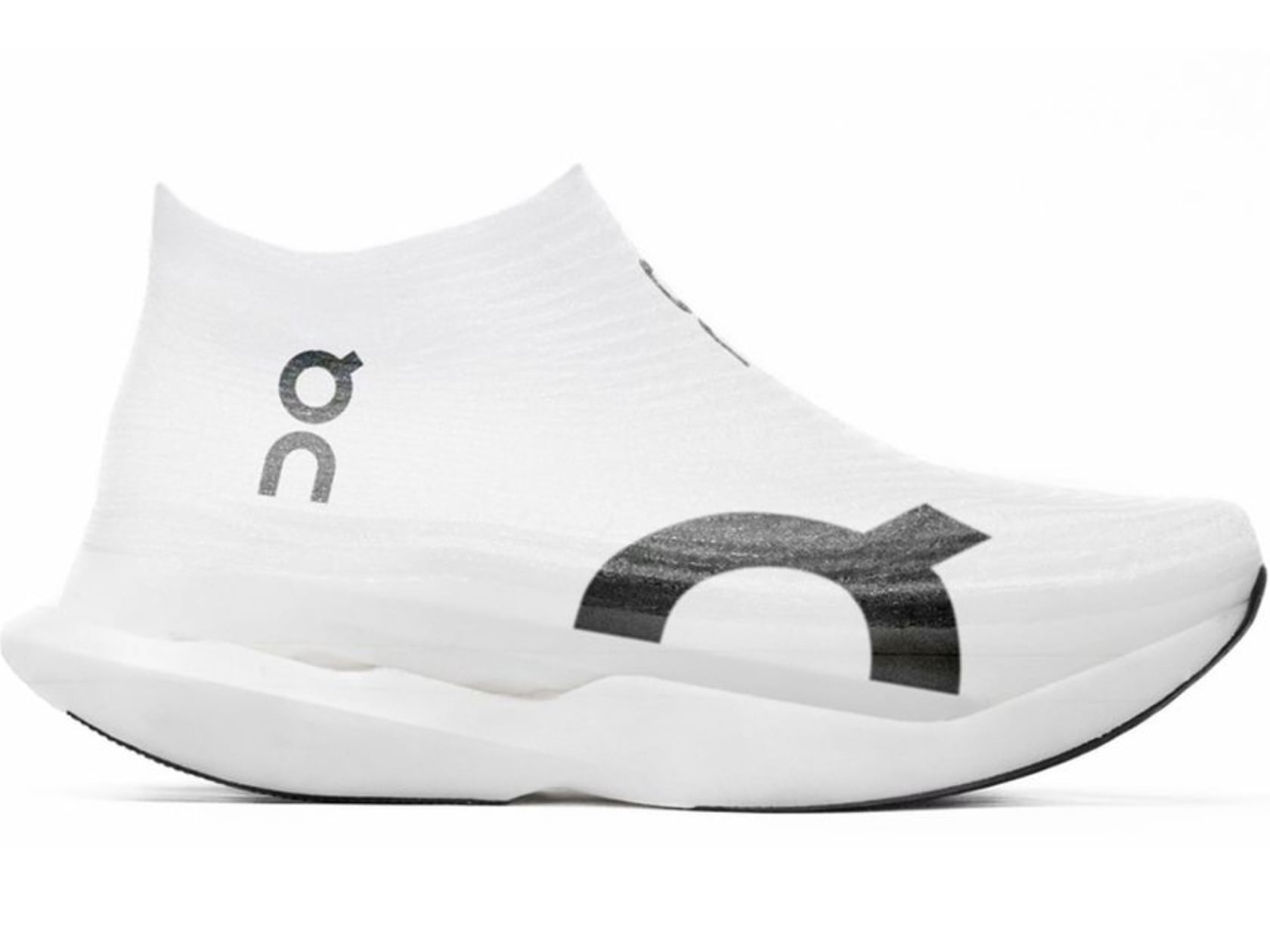
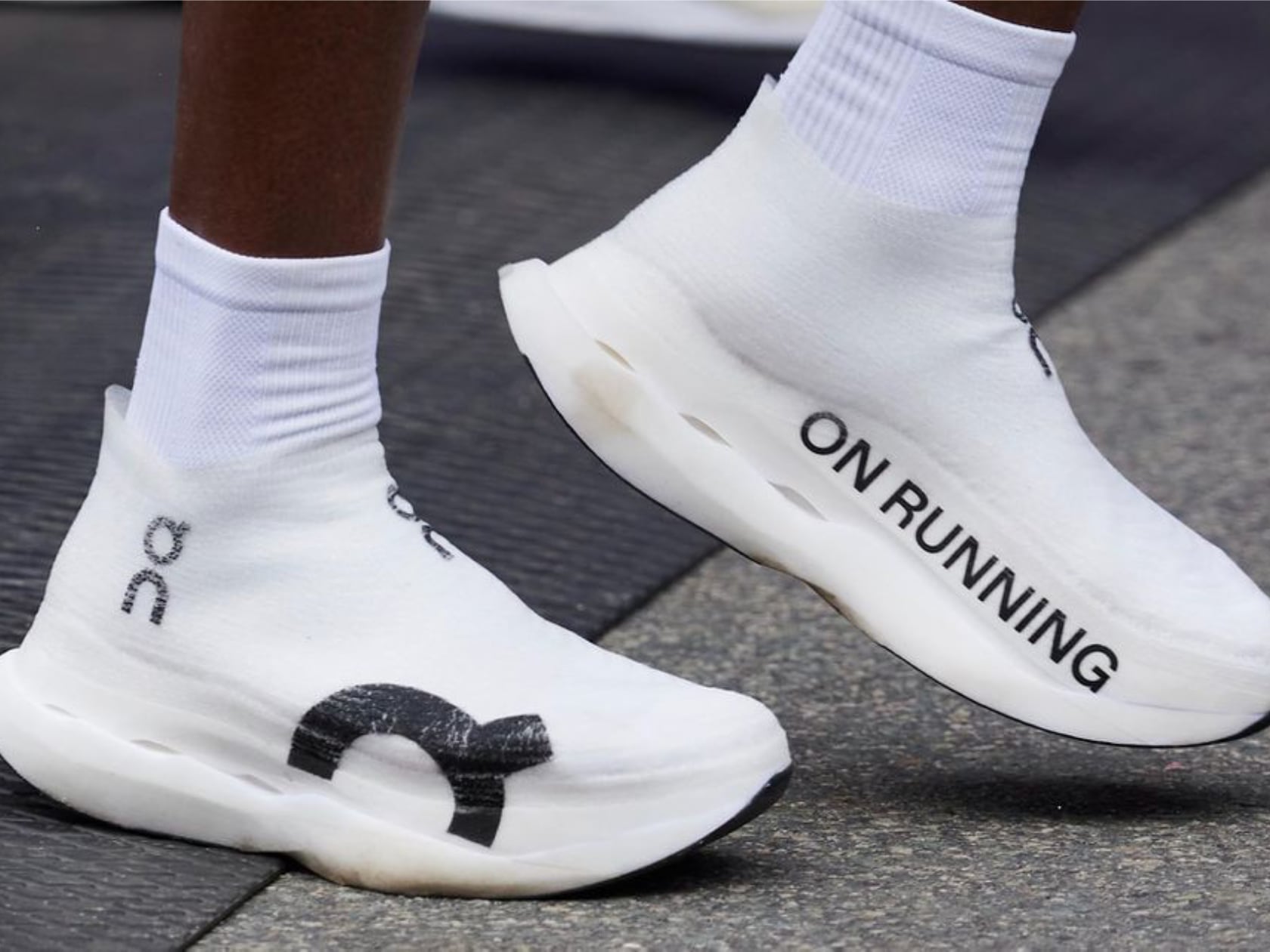
ON Cloudboom Strike LS

Adidas has invested years into developing laceless technology to create a seamless and secure fit for athletes. The Primeknit upper is designed to conform to the foot’s shape, providing a sock-like fit. However, the added weight of the materials and the complexity of the construction process have made it challenging to achieve the same lightweight performance as On’s Cloudboom Strike LS.

The Cloudboom Strike LS, with its LightSpray technology, offers a significant advantage in weight reduction. The thermoplastic material used in the shoe’s construction is lightweight yet durable, providing a snug fit without adding unnecessary bulk. This contrasts with Adidas’ approach, where the combination of Primeknit and ForgeFiber, while effective in fit and support, adds extra weight.

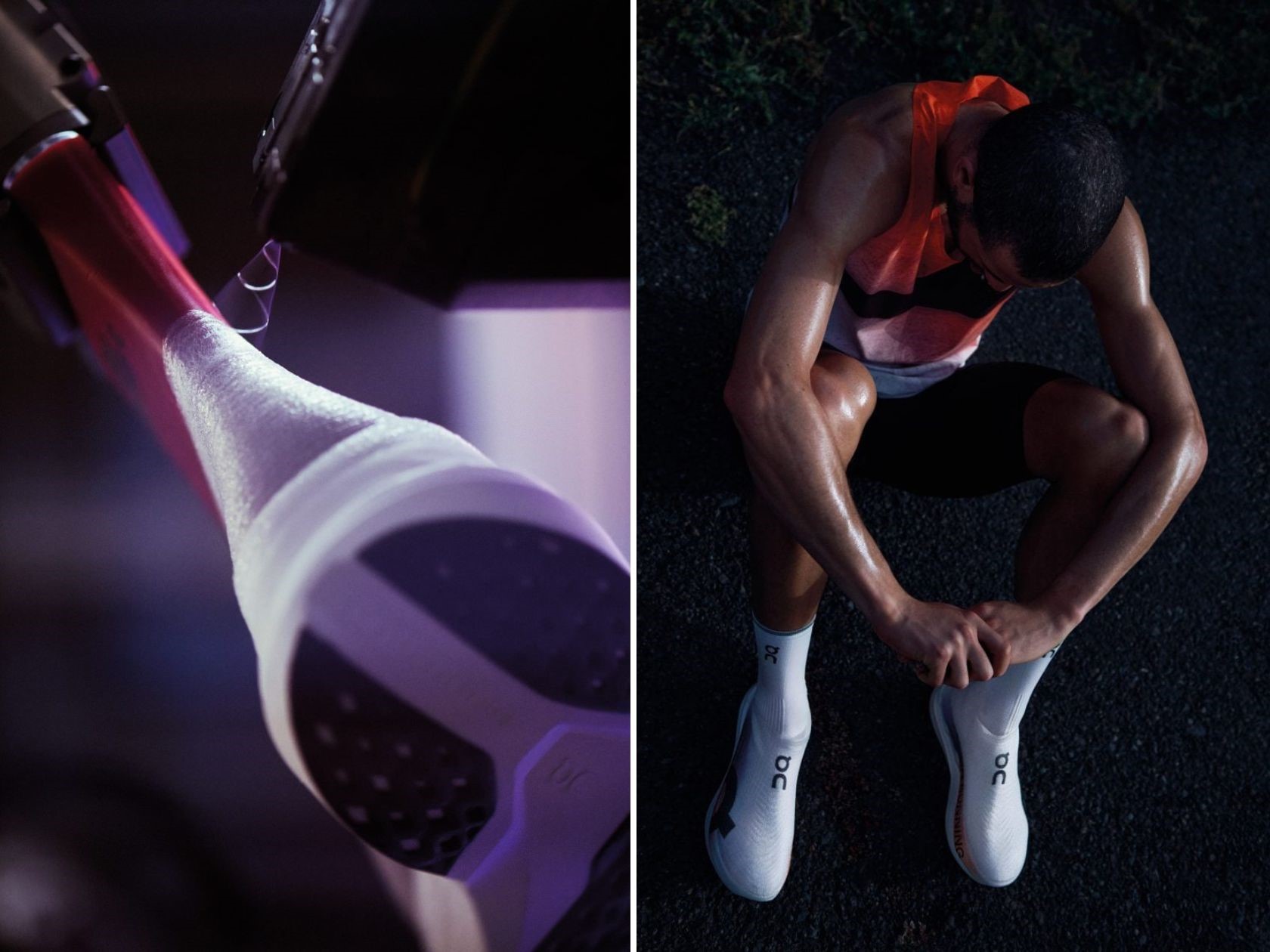
LightSpray™

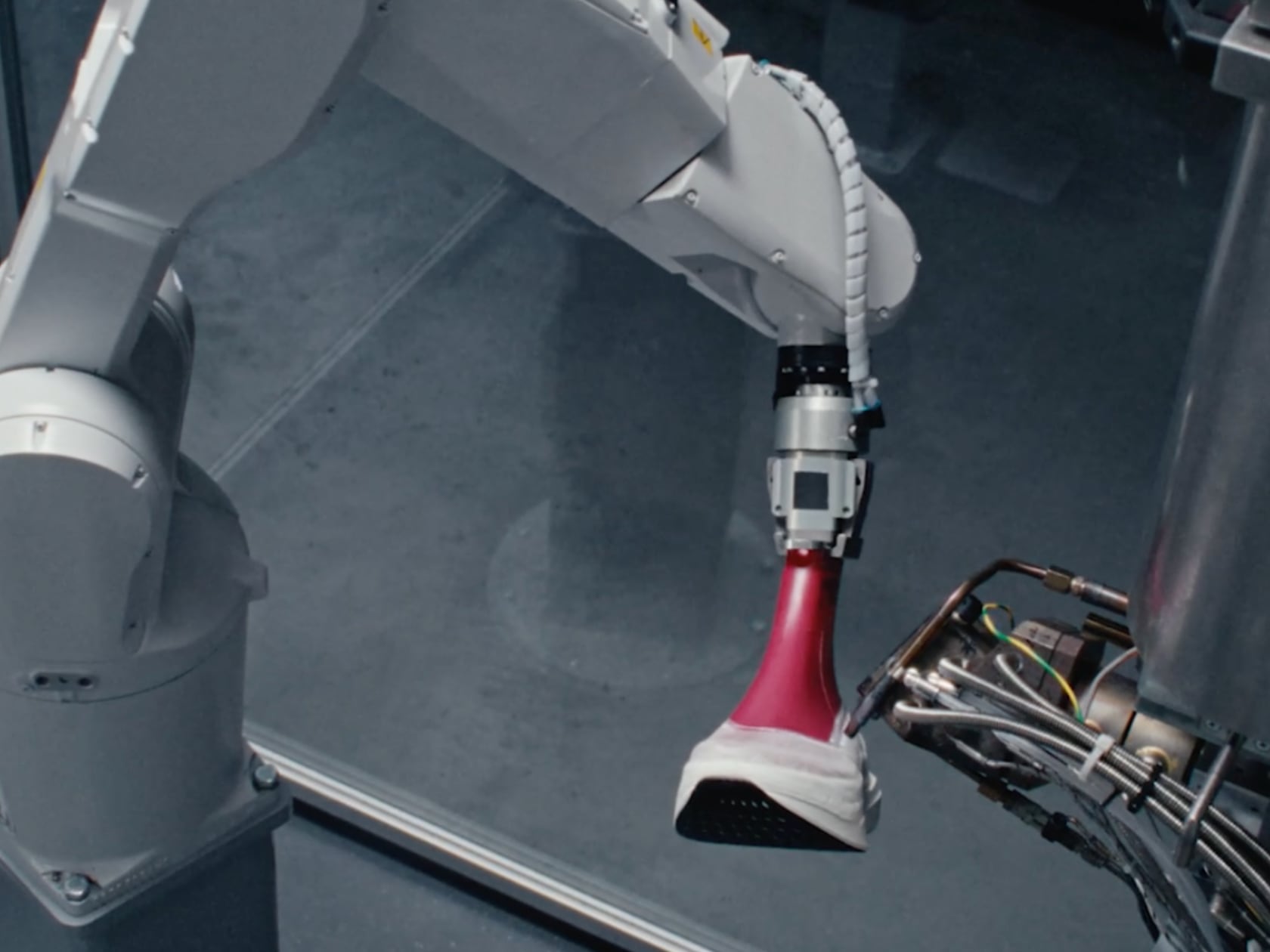
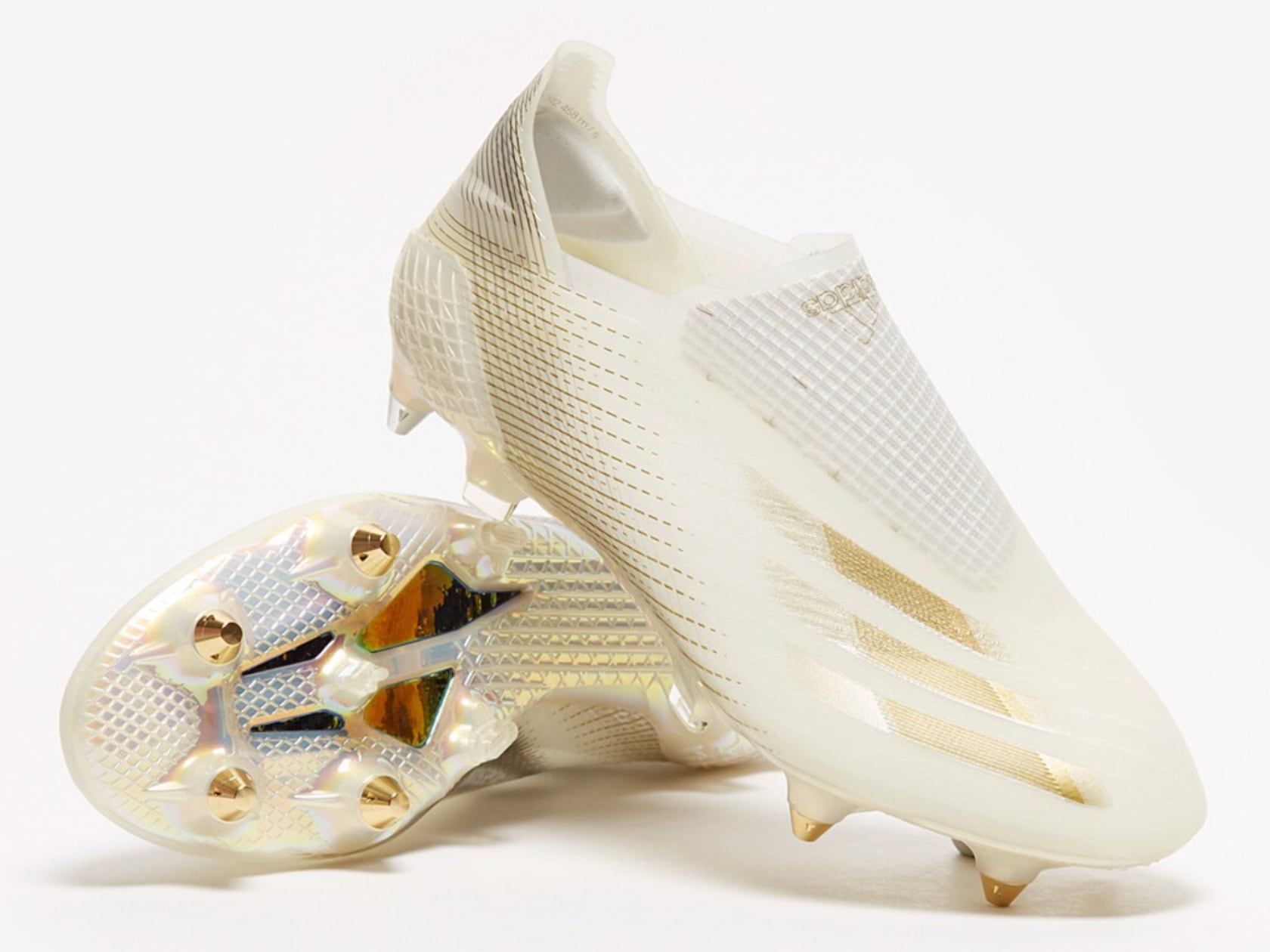
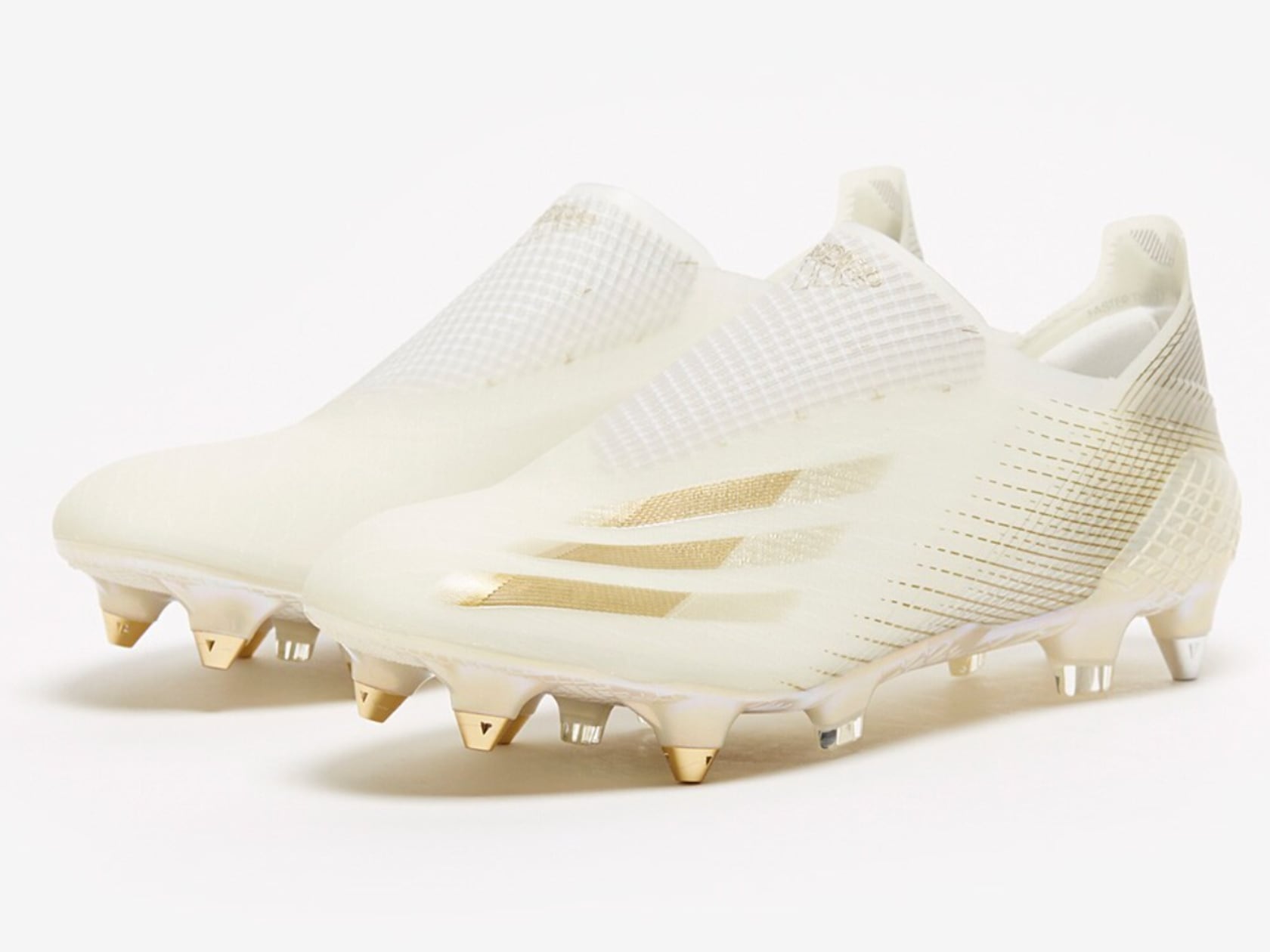
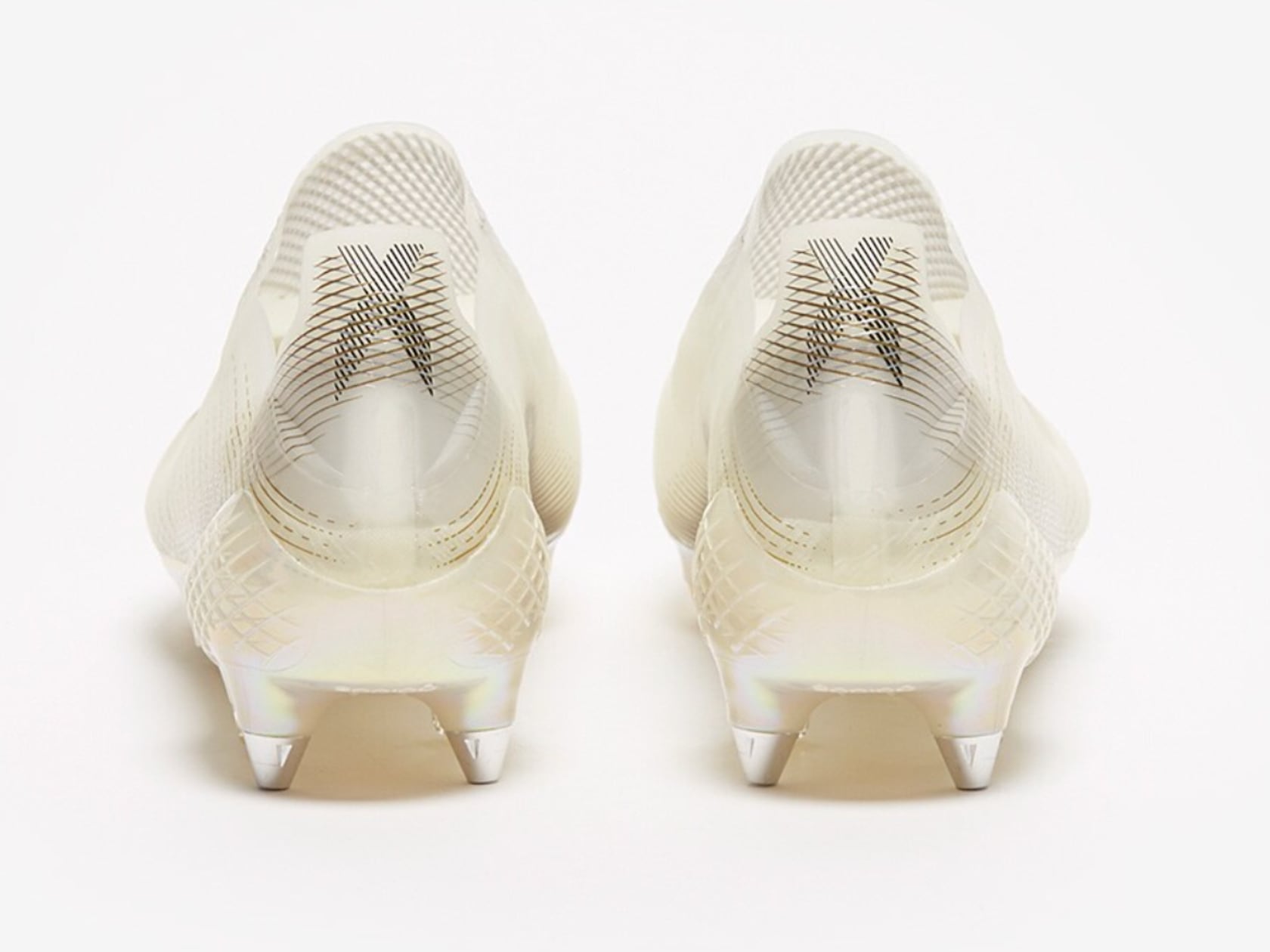
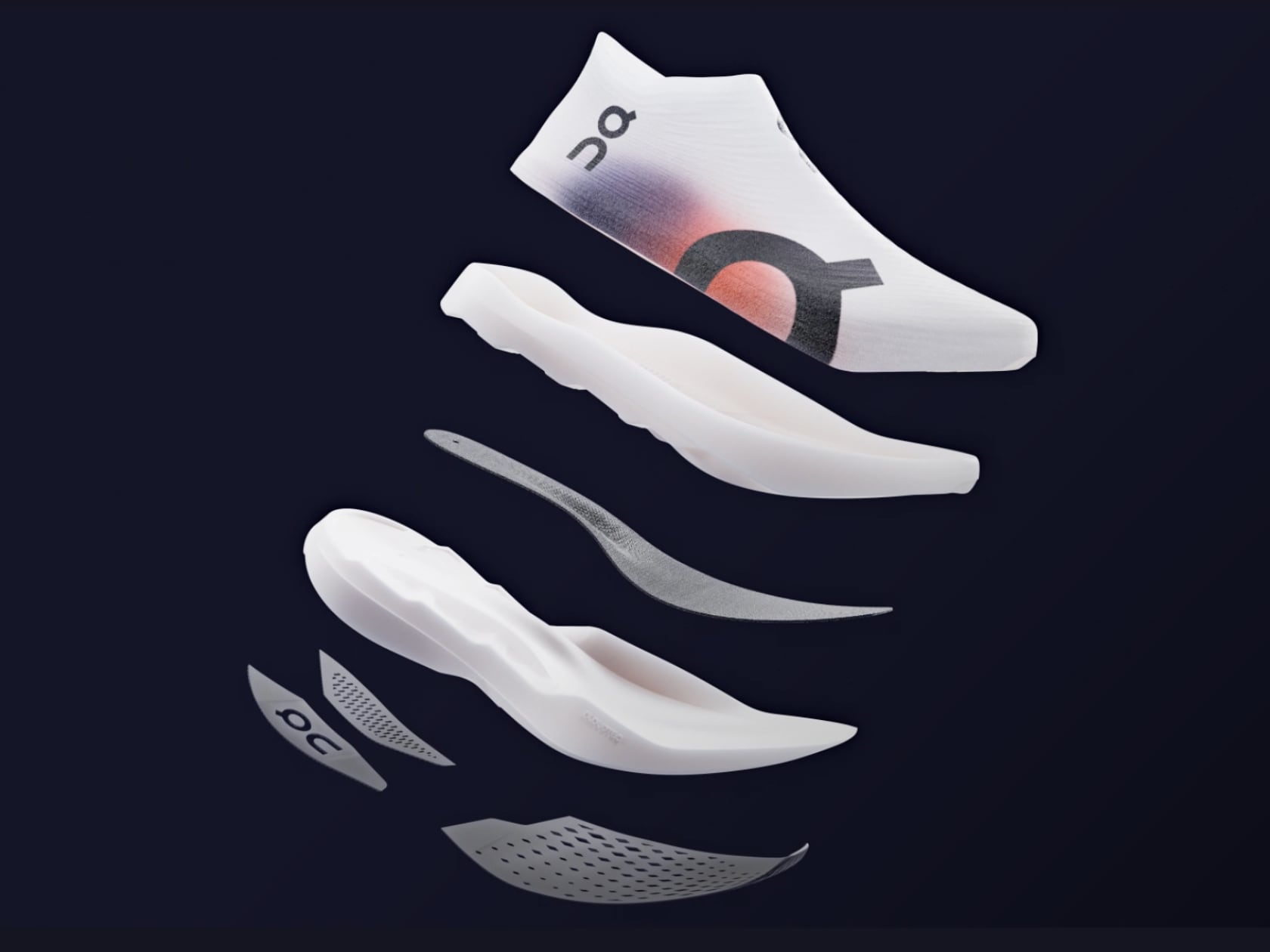
The robotic application of LightSpray material allows On to create a precise and seamless upper, eliminating the need for additional components that can add weight. This streamlined construction produces a lighter shoe that enhances performance, particularly in long-distance running. The Cloudboom Strike LS weighs 170 grams (approximately 6 ounces) for a men’s size 8.5, while the Adidas N3XT L3V3L weighs around 454 grams (16 ounces). The Adidas X Ghosted+ football shoes weigh approximately 189 grams (6.7 ounces).

Adidas X Ghosted+ football shoes

The Spark of Genius that Led to LightSpray Technology

The Cloudboom Strike LS story began with a serendipitous moment and a burst of creativity. Yohannes, a key player in this tale, had the innovative idea of using a hot glue gun to create intricate, spider web-like structures. This simple yet brilliant concept evolved into employing a robotic arm to spray a thermoplastic material called LightSpray onto a shoe form, crafting a seamless, sock-like upper. The inspiration for this technology struck during a Halloween event, where a video showcased using a hot glue gun to create detailed spider web designs. This sparked the idea of rapidly creating textiles on complex shapes, with a shoe being the perfect candidate to test this novel method.

The development of the Cloudboom Strike LS was a journey filled with trial and error. What began as a simple idea evolved into a complex project requiring the collaborative efforts of designers, engineers, and various other experts. The team had to automate the process to turn this concept into reality. They programmed a robot to move the nozzle and spray the material, requiring meticulous calibration to ensure precise application. After a year of dedication and refinement, the project gained more resources and became a priority within On’s innovation department.

Design and LightSpray Technology

Its spray-on construction process characterizes the Cloudboom Strike LS. The shoe’s upper is made from LightSpray, a thermoplastic material applied using a robotic arm. This process creates a seamless, sock-like structure that eliminates the need for traditional components like laces and heel caps. The design is minimalistic and aerodynamic, emphasizing the shoe’s lightweight nature.

Thermoplastic materials are versatile plastics that become moldable upon heating and solidify upon cooling. In running shoes, thermoplastic materials such as thermoplastic polyurethane (TPU) and thermoplastic elastomer (TPE) are often used for their durability, flexibility, and ability to be recycled. These materials help improve running shoes’ fit, comfort, and performance by providing support and responsiveness. The robotic arm applies the thermoplastic filament precisely, ensuring an even and seamless construction that enhances the shoe’s structural integrity. Robotic technology ensures consistent quality and efficiency, allowing a rapid production time of just three minutes per pair. This innovation significantly reduces production time and waste, aligning with On’s commitment to sustainability.

Developing the Cloudboom Strike LS required extensive prototyping. The team went through thousands of prototypes, making minor adjustments each time to perfect the design. This rigorous process ensured that every aspect of the shoe, from fit to performance, met the highest standards. The ability to quickly produce and test new prototypes was a game-changer, allowing the team to innovate rapidly. The process involved programming the helix shape of the LightSpray material to ensure it fits perfectly around the foot. The team faced numerous challenges, such as determining how much material to use and where to apply it for optimal comfort and support. Each prototype was tested rigorously to ensure it met the needs of top athletes.

Fit, Comfort, and Performance Advantages

One of the critical features of the Cloudboom Strike LS is its remarkable comfort. The shoe is incredibly lightweight, with a men’s U.S. size 8.5 weighing just 170 grams. This makes it lighter than many other running shoes, helping you feel faster and more agile. The seamless design provides a more adaptable fit, allowing for greater freedom of movement. The shoe molds to your foot without laces, providing comfort and stability. This close fit can improve your performance by ensuring the shoe moves flawlessly with your foot.

Kenyan runner Hellen Obiri, who wore a prototype of the Cloudboom Strike LS to victory at the Boston Marathon, highlights the shoe’s high-performance capabilities and comfort. Her success demonstrates the shoe’s potential to enhance athletic performance at the highest levels.

The Cloudboom Strike LS is designed to give athletes a competitive edge. The midsole combines responsive foam rubber with a carbon-fiber plate. This combination provides cushioning and propulsion, ensuring each step feels springy and efficient. The shoe supports efficient energy transfer, which is crucial for long-distance running. The Helion Hyper Foam midsole is a key feature of the Cloudboom Strike LS. This responsive foam, combined with a carbon-fiber plate, provides cushioning and propulsion, enhancing energy transfer with each step. The midsole’s design is crucial for long-distance running, offering comfort and performance. The shoe’s 39mm stack height and 4mm drop contribute to stability and support during competitive running.

Sustainability

On is committed to sustainability, and the Cloudboom Strike LS reflects this dedication. The production process minimizes waste and uses fewer materials. The thermoplastic filament used in the shoe’s construction can be melted down and reused, further reducing environmental impact. The quick production time, only three minutes, means that athletes could potentially have customized shoes made on the spot, tailored to specific race conditions. This adaptability is particularly beneficial for athletes who compete in various environments, ensuring their footwear is continually optimized for performance.

Adidas, too, has made significant strides in sustainability. The brand has committed to achieving climate neutrality across its operations by 2050, with intermediate goals such as reducing greenhouse gas emissions by 30% across its value chain by 2030 and ensuring 90% of its products are sustainable by 2025. Adidas collaborates with partners like Parley for the Oceans. It engages in circular initiatives such as the “Made to be Remade” product line, which involves recycling worn-out products into new ones—Adidas’ FUTURECRAFT.FOOTPRINT, developed in collaboration with Allbirds, boasts one of the lowest carbon footprints in the industry, demonstrating the brand’s commitment to environmental responsibility.

Real-World Success and Future Prospects

The Cloudboom Strike LS has already proven its value in high-stakes competitions. Hellen Obiri’s success at the Boston Marathon provides real-world evidence of the shoe’s benefits. These shoes’ success in top competitions makes them a trusted choice for other competitive athletes.

It aims to make these advancements accessible to a broader audience. Plans to release the Cloudboom Strike LS to consumers later this year indicate the brand’s commitment to bringing cutting-edge technology to everyday athletes.

Your Thoughts

We’ve seen how the Cloudboom Strike LS combines innovative design, comfort, performance, and sustainability. The sleek and seamless upper, created from LightSpray, eliminates traditional components like laces and heel caps, providing a glove-like fit. Robotic technology ensures a precise and efficient production process, while the Helion Hyper Foam midsole enhances cushioning and energy return.

As we look forward to its consumer release, we’d love to hear your thoughts. Does the idea of a spray-on sneaker with a seamless fit appeal to you? The technology behind the shoe offers a unique advantage by ensuring the upper fits snugly and comfortably around your foot, potentially improving performance and reducing the risk of blisters. How important is sustainability when choosing your running gear? On’s commitment to using recyclable materials and minimizing waste aligns with growing environmental concerns in sportswear.

The post On vs Adidas: A Deep Dive into Laceless Sports Shoe Technologies first appeared on Yanko Design.
Google’s Official ‘Made by Google’ Event on August 13: Here’s What the Pixel 9 Pro and Fold Look Like

With Google officially announcing the “Made by Google” event on Aug. 13, excitement is high for the new Pixel lineup. This year, Google is shaking things up by revealing the Pixel 9 and 9 Pro series earlier than usual, likely aiming to capture attention before the expected iPhone 16 launch in September.

Designer: Google

In addition to the Pixel 9 Pro, Google is also unveiling the Pixel 9 Pro Fold, accompanied by a Gemini-linked teaser video. While leaks have provided glimpses of these devices, Google’s announcement finally puts to rest any speculation about their appearance and names. The teaser video highlights the double-stacked lenses on the rear camera module and the exterior screen and hinge design.

The Pixel 9 Pro Fold marks a noticeable change from its predecessor. It adopts a taller and narrower profile than the original’s short and wide passport-style form factor. This new design aligns more closely with devices like the OnePlus Open, offering a larger, more practical outer display that enhances usability.

One of the most striking changes is removing Google’s signature camera bar. The first-generation Pixel Fold featured a prominent, elongated camera bar, while the Pixel 9 Pro Fold opted for a new, more streamlined camera housing. This redesign provides a cleaner aesthetic and ensures the phone remains stable when laid flat.

Examining the new model’s inner display, there’s still a noticeable crease, although it appears less prominent. The screen ratio has shifted to a taller and narrower format, with slimmer bezels for a more modern look. However, this change includes an inner camera cutout on the upper-left part of the display instead of being part of the bezel, which might not please everyone.

The first-generation Pixel Fold’s short and wide design made it a great one-handed device despite its weight. However, its cover screen was often too wide to comfortably hold for extended periods. In contrast, the new Pixel 9 Pro Fold’s taller form factor should enhance ease of use and portability.

A potential concern with the new model is its slightly smaller battery capacity of 4,560mAh compared to the first Fold’s 4,727mAh. Given that the original wasn’t known for its battery longevity, this reduction might raise some concerns. However, Google’s latest Tensor processor promises efficiency gains that could help mitigate this issue.

Alongside these design changes, the Pixel 9 Pro Fold has a new 45-watt USB-C charger. This new charger, which sports a more rounded design than its predecessors, is part of Google’s effort to improve charging speeds and overall user convenience.

Having used the first-generation Pixel Fold extensively, I can attest to its decent quality despite its drawbacks, such as dim screen brightness, subpar speakers, and limited app optimization. With the Pixel 9 Pro Fold, Google can address these issues and deliver a more refined and competitive product.

The Google Pixel 9 Pro Fold represents a significant step forward in design and functionality. By transitioning from the unique but bulky passport form factor to a more practical and user-friendly design, Google is making strides to compete more effectively in the foldable phone market. We’ll have to wait and see how Google plans to structure the pricing this time, but here’s hoping the new model looks impressive and delivers on performance and user experience.

The post Google’s Official ‘Made by Google’ Event on August 13: Here’s What the Pixel 9 Pro and Fold Look Like first appeared on Yanko Design.

Unveiling Kia PV5 and PV7: The Future of Electric Urban Mobility and Logistics

Kia’s unveiling of the Concept PV5 and PV7 marks a major milestone in electric vehicle development, targeting a 2025 release. These models blend modern aesthetics with practical design, catering to diverse urban transport and logistics needs. The PV5 and PV7 are designed with both scalability and versatility in mind, making them perfect for various business applications, from passenger transportation to cargo delivery.

Designer: KIA

The PV5’s exterior features sleek, aerodynamic lines and a striking two-tone color scheme that conveys a futuristic and professional look. Large, seamless windows enhance visibility and contribute to the high-tech aesthetic, while the minimalist front design with integrated LED headlights adds a touch of sophistication. The vehicle is available in three body types: Basic (Passenger), Van (Delivery), and Chassis Cab, providing flexibility for businesses that require different configurations. The Basic model prioritizes comfort and space, featuring wide double doors and a flat floor to maximize interior room. It is ideal for urban passenger transport, including taxis and ride-sharing services.

KIA Concept PV5-R

Inside, the PV5 offers a spacious and innovative environment. Ergonomic seats can be configured in multiple ways to meet various needs, and they fold flat to provide additional storage space when necessary. The minimalist dashboard has a digital display that integrates all essential functions, offering the driver a streamlined and efficient interface. Sustainable materials used throughout the interior contribute to a luxurious feel and reflect Kia’s commitment to eco-friendly design. The large touchscreen display in the center console ensures easy access to navigation, entertainment, and vehicle settings, enhancing the connected driving experience. The flat floor design of the electric platform further enhances versatility and space efficiency, making it easier for passengers with mobility issues or those carrying heavy cargo to enter and exit the vehicle.

Kia Concept PV5 Basic (Passenger)

The PV5’s Van (Delivery) model is tailored for the transportation of small and medium-sized cargo, featuring ample storage space and wide rear doors for easy access. This model is particularly suited for service industries and delivery businesses, offering a reliable and efficient solution for urban logistics. The Chassis Cab variant offers maximum flexibility, allowing businesses to customize the vehicle for specific needs, such as mobile workshops or specialized service vehicles.

The PV7, a larger sibling in Kia’s PBV lineup, extends these innovations with greater cargo space and advanced features tailored for more extensive transport needs. Both models reflect Kia’s dedication to pushing the boundaries of electric vehicle design, offering practical solutions for various commercial uses. The PV7 builds on the versatility of the PV5, providing more room and possibly additional configurations to meet diverse business demands.

Kia Concept PV5 Van Interior

Kia Concept PV7 is Kia’s second PBV and boasts the largest cargo space in the lineup.

Kia’s PV5 and PV7 concepts also hint at future advancements with the planned PV5-R model, incorporating autonomous driving technology. This innovation promises to enhance the appeal of PV5 and PV7 across various industries, offering a modern and efficient solution for urban mobility.

Kia Concept PV5 Basic (Passenger) is a perfect solution for urban passenger transportation such as taxis, ride hailing/sharing, and vehicles for people with disabilities.

Overall, Kia’s PV5 and PV7 concepts represent a significant step forward in the electric vehicle market. Their versatile designs, scalability, and focus on passenger comfort and cargo space position them to meet the diverse needs of businesses and individuals. The anticipated 2025 release marks an exciting milestone for Kia as it continues to innovate and lead in the electric vehicle sector.

Kia Concept PV7 Cargo Delivery & Multi Van


The post Unveiling Kia PV5 and PV7: The Future of Electric Urban Mobility and Logistics first appeared on Yanko Design.
From Orwellian Dystopia to Apple Watch Ultra: Apple’s Journey to watchOS 11 Public Beta

Once upon a Super Bowl Sunday in 1984, Apple unveiled an ad that changed the world. Directed by Ridley Scott, the commercial broke new ground in marketing and technology. As the heroine dashed through a drab, Orwellian world, hurling a hammer to shatter the oppressive image on the screen, viewers were left breathless. The message was clear: the Apple Macintosh was here to break the chains of conformity and ignite the flames of innovation. Forty years later, where is Apple now? The legacy of that revolutionary spirit lives on, not just in Apple’s computers, but right on our wrists.

Designer: Apple
Designer: Seiko

Fast-forward to today and the legacy of that revolutionary spirit lives on, not just in Apple’s computers but right on our wrists. Enter the Apple Watch Ultra, a device embodying the essence of forward-thinking technology. But before we dive into the modern marvel, let’s take a nostalgic trip back to another wrist-worn wonder from the same era: the Seiko UC-2000.

The Seiko UC-2000: A Wrist Revolution in 1984

In the same iconic year of 1984, Seiko wasn’t content with just making elegant timepieces. They dared to dream of a wristwatch that could do so much more. Introducing the Seiko UC-2000, a watch that doubled as a personal computer. This gadget had a rectangular LCD screen and a series of buttons and could be paired with a keyboard docking station to perform tasks that were nothing short of magical for its time.

Seiko UC-2000

Imagine programming in BASIC, storing contacts, and managing your schedule, all from a device strapped to your wrist. The UC-2000 was ahead of its time, a pioneering effort in wearable tech. Its design included distinctive orange buttons, adding to its unique appearance and functionality.

Seiko UC-2000 + Keyboard dock

Echoes of the Past in the Apple Watch Ultra

Now, let’s warp back to the present and unwrap the magic of the Apple Watch Ultra. Sleek, sophisticated, and packed with features, it’s everything the Seiko UC-2000 aimed to be and more. The Apple Watch Ultra sports a vibrant OLED display, sophisticated health monitoring tools, navigation aids, and seamless connectivity with the Apple ecosystem. It’s like having a mini-supercomputer on your wrist.

Apple Watch Ultra

But here’s the kicker: look closely at the design. Notice anything familiar? The Apple Watch Ultra features an orange ring and a striking orange button on the left. This design choice echoes the legacy of wearable tech pioneers like the Seiko UC-2000.

Source: oldcrap.org Seiko UC-2000

Even more striking is the resemblance in the link bracelet design. The Apple Link Bracelet closely mirrors the design of the Seiko UC-2000’s band, with its sleek, segmented links and metallic finish. Both bracelets emphasize a modern, streamlined look, showcasing how timeless design elements continue to influence new generations of technology. Four decades later, the spirit of those early innovations lives on, influencing and inspiring new generations of technology.

Source: oldcrap.org Seiko UC-2000

Link Bracelet for Apple Watch Ultra 49mm Metal Band

The shape of the watches themselves holds a remarkable resemblance. The Seiko UC-2000 and the Apple Watch Ultra feature a rectangular face with rounded edges, a design that enhances aesthetics and functionality. This shape provides a broad, clear display area while maintaining a comfortable fit on the wrist. The Apple Watch Ultra, with its rounded corners and sleek profile, seems like a modern interpretation of the Seiko UC-2000’s design ethos. This continuity in design highlights how certain principles of form and function remain relevant and influential across decades.

Apple Watch Ultra 2

Seiko UC-2000

Bridging Four Decades of Innovation

The journey from Apple’s iconic 1984 ad to the cutting-edge Apple Watch Ultra is a tale of relentless innovation. Apple’s commercial heralded a new era of computing. Similarly, the Seiko UC-2000 took a bold step into the future of wearable technology.

Source: Reddit

Today, as we glance at our Apple Watch Ultras, it’s fascinating to see how far we’ve come. From the pioneering days of the Seiko UC-2000, with its orange buttons and chunky design, to the sleek, multifunctional marvels on our wrists now, it’s clear that the spirit of innovation and rebellion against the ordinary has always been the driving force. From its early days to now, the Apple Watch has evolved into a market leader, becoming the number one selling watch in the world. It’s incredible to see how far we’ve come.

This journey of innovation is mirrored in Apple’s other groundbreaking products. From the revolutionary iPhone and iPad, which redefined how we communicate and consume media, to the Vision Pro, which promises to revolutionize augmented reality. The MacBook and iMac continue to set standards in computing performance and design, illustrating Apple’s dedication to pushing the boundaries of technology across all its product lines.

Apple WWDC 2024: A Theatrical Return to Roots

In 2024, Apple brought back the daring and eye-popping theatricality reminiscent of its 1984 ad. Senior Vice President of Software Engineering Craig Federighi kicked off the event at the Worldwide Developers Conference by parachuting down into the Apple headquarters. This dramatic entrance harkened back to Apple’s roots, showcasing its commitment to breaking the mold and captivating its audience.

watchOS Public Beta: New Features to Love

watchOS 11 Public Beta

Building on this legacy of innovation, Apple has released the public beta for watchOS 11, packed with features that promise to enhance the user experience significantly. The Vitals app offers users a comprehensive view of their overnight health metrics. By wearing your watch to sleep, you can monitor heart rate, respiratory rate, wrist temperature, blood oxygen levels, and sleep duration. The Vitals app helps establish a typical range for each metric, providing notifications if multiple metrics fall outside this range, with context on possible factors like medications or illness. While traveling in Japan, I became ill, and the Vitals app flagged my vitals as being out of range. It was helpful to see the metrics.

watchOS 11 Vitals

Training Load is another exciting feature, helping athletes see how workout intensity impacts their bodies over time. This tool lets users make informed decisions about their training schedules, especially when preparing for significant events. Enhanced GPS positioning for more workouts and custom workouts for pool swims are also noteworthy additions, providing users with more precise and personalized fitness tracking.

watchOS 11 Training Load

The Photos Face has been redesigned and powered by machine learning to curate the best images from your library for display on your watch. The Cycle Tracking app now includes features tailored for pregnancy, offering gestational age tracking and health recommendations.

watchOS 11 Photos Face

watchOS 11 Cycle Tracking

Smart Stack has become more intelligent, displaying widgets automatically based on time, location, and other factors. Live Activities are supported, and new widgets include severe weather alerts, Training Load, and Photos.

watchOS 11 Smart Stack

With the new Check-In feature, users can notify friends or loved ones when they arrive at a destination, providing peace of mind. Enhanced GPS positioning, custom pool swim workouts, and a new effort tracking metric for workouts round out the impressive list of new features in watchOS 11.

watchOS 11 Check In

Apple’s ability to captivate and innovate remains as strong as ever, from the bold declaration of the 1984 ad to the thrilling presentations of WWDC 2024. As a 50-year-old tech journalist covering technology for the last three decades, it’s been such a pleasure to have experienced each stage of innovation. I’m excited to see what Apple Intelligence has in store for us over the next few decades.

For those eager to explore the future of wearable technology, try the public beta. However, be cautious—once installed, you cannot roll back to the previous version without shipping the watch to Apple for service. For more detailed information on watchOS 11 features, visit the Apple watchOS 11 preview page.

The post From Orwellian Dystopia to Apple Watch Ultra: Apple’s Journey to watchOS 11 Public Beta first appeared on Yanko Design.
Google Pixel 9 Pro Fold: A Worthy Redesign or a Step Back?

The upcoming Google Pixel 9 Pro Fold is already generating buzz, and the latest images from Taiwan’s National Communications Commission offer a compelling look at what we can expect. This second-generation foldable represents a departure from its predecessor, embracing a new design philosophy while addressing some of the previous model’s shortcomings.

Designer: Google

First and foremost, the Pixel 9 Pro Fold ditches the original’s short and wide passport-style form factor. The new model adopts a taller and narrower profile, bringing it more in line with devices like the OnePlus Open. This change offers a larger, more practical outer display, making the phone easier to handle and use. The increased screen real estate is a welcome improvement, even though it means saying goodbye to the unique shape that made the first Pixel Fold stand out from competitors like Samsung’s Galaxy Fold.

Google Pixel Fold

One of the most notable changes is removing Google’s signature camera bar. The first-generation Pixel Fold featured a prominent, elongated camera bar that added a distinctive look and functionality. The Pixel 9 Pro Fold opts for a new camera housing design, which is substantial enough to prevent the phone from wobbling when laid flat. This redesign offers a cleaner and more streamlined aesthetic, although it loses some of the original’s unique charm.

Google Pixel 9 Pro Fold via Taiwan’s National Communications Commission (NCC)

Google Pixel Fold

Looking at the new model’s inner display, there’s still a noticeable crease, though it appears less prominent than before. The screen ratio has shifted, becoming taller and narrower, and the bezels have been slimmed down, giving the device a more modern look. However, this design shift comes with a trade-off: the inner camera is now a cutout on the upper-left part of the display rather than being part of the bezel. This change means the screen is no longer uninterrupted, which might disappoint fans of the original design.
Google Pixel 9 Pro Fold via Taiwan’s National Communications Commission (NCC)

Despite its weight, the first-generation Pixel Fold’s short and wide design made it a great one-handed device. Although its cover screen was larger on paper, it was often too wide to hold comfortably for extended periods. In contrast, the new Pixel 9 Pro Fold’s taller form factor should make it easier to use and carry around, enhancing the overall user experience.

Google Pixel Fold

A concern with the new model is its slightly smaller battery capacity of 4,560 mAh, down from the first Fold’s 4,727 mAh. Given that the original wasn’t known for its battery longevity, this reduction might raise some eyebrows. However, Google’s latest Tensor processor promises efficiency gains that could help mitigate this issue.

Alongside these design changes, the Pixel 9 Pro Fold has a new 45-watt USB-C charger. This new charger, which sports a more rounded design than its predecessors, is part of Google’s push to improve charging speeds and overall user convenience.

Google Pixel 9 Pro Fold charger via Taiwan’s National Communications Commission (NCC)

As someone who has used the first-generation Pixel Fold extensively, I can say that it has a unique quality that the new model hopes to build upon. The first Fold had its share of drawbacks, from dim screen brightness compared to newer models to subpar speakers and limited app optimization. With the Pixel 9 Pro Fold, Google can address these issues and deliver a more refined and competitive product.

Google Pixel Fold

The Google Pixel 9 Pro Fold represents a significant evolution in design and functionality. By moving away from the unique but bulky passport form factor to a more practical and user-friendly design, Google is making strides to compete more effectively in the foldable phone market. Here’s hoping that the new model not only looks the part but also delivers on performance and user experience, even if it does come with a price tag north of $2,000.

The post Google Pixel 9 Pro Fold: A Worthy Redesign or a Step Back? first appeared on Yanko Design.