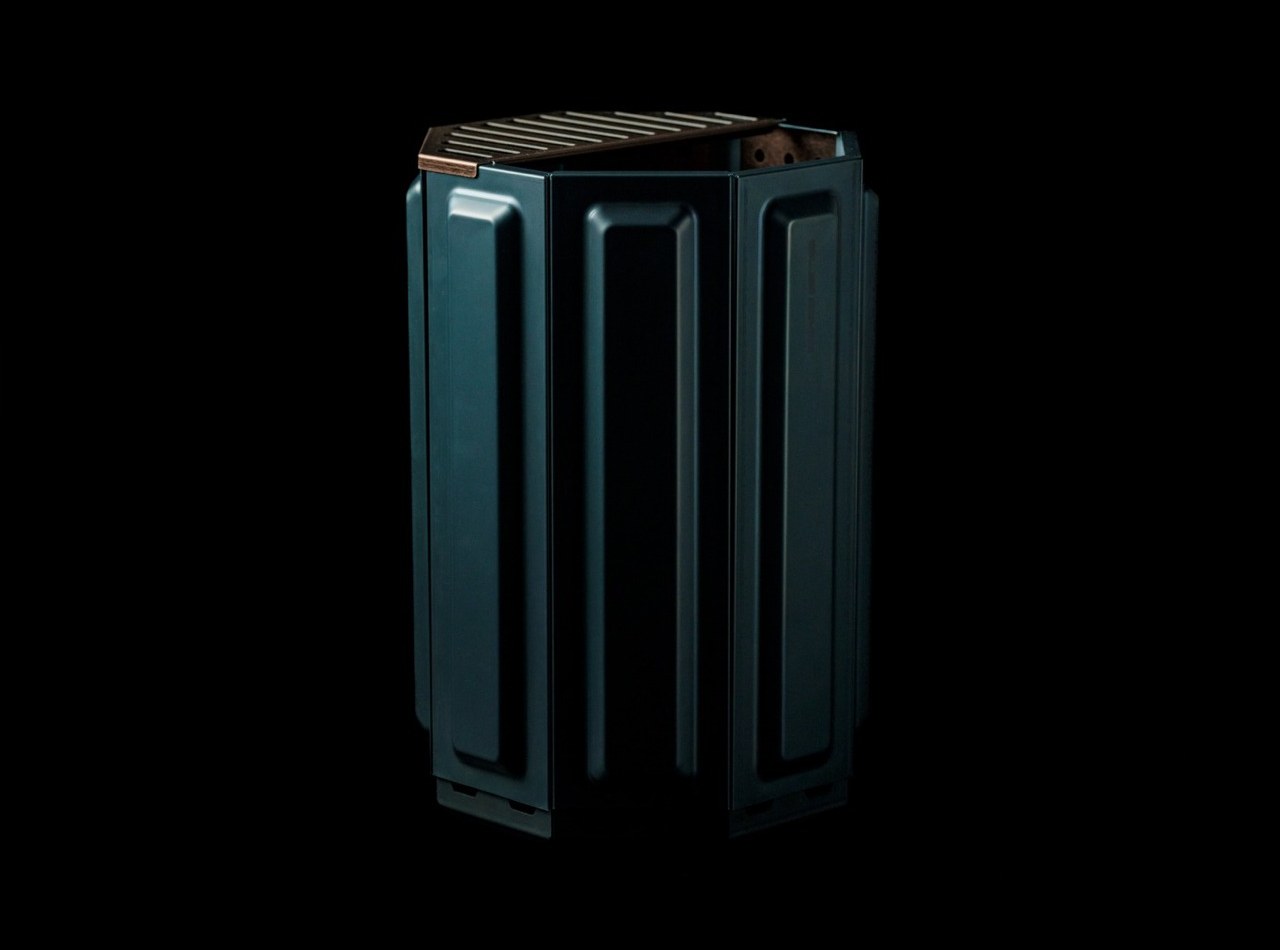
Innovative 8-panel Fire Pit design is sure to warm up every outdoor experience

It’s said that the superiority of the human race can be linked to one event – the discovery and control of fire. Ever since apes figured out how to ignite flames, it put them on a trajectory completely different from the rest of the animal kingdom. Fire became a weapon, fire became shelter, fire became protection, and eventually it helped us cook food in ways that no other animal ever could. Humans and fire have shared a destiny for hundreds and thousands of years, and the UM 8-Panel Fire Pit cherishes that by allowing humans more control over how they ignite outdoor fires. Crafted with a unique, modular 8-panel design, the UM Fire Pit is a portable sheet-metal beauty that can be used as a warming, radiating campfire on a cold winter day, or as a high-temperature grilling pit for quickly searing meats for an incredibly fulfilling rustic meal.

Designer: UM Design

Click Here to Buy Now: $225 $299 (25% off). Hurry, only 1/5 left!

Designed to be intuitive to set up and easy to use, the UM Fire Pit is the perfect lightweight fire-building apparatus for seasoned outdoor-lovers who want to build effective campfires without all the hassle involved. The sheet metal design contains the cinder within, keeping the fire relatively enclosed while also collecting ashes and embers that fall. Moreover, a unique secondary airflow channel built into the pit’s design helps boost air circulation, allowing your wood to burn more effectively without any smoke. When all’s said and done, the fire pit disassembles into its different parts that can be stored in a special carrying case, making it easy to travel with.

Unlike most fire pits that are designed to be permanent outdoor fixtures, the UM Fire Pit is a portable device that fits into a case the size of a laptop bag. When you need to set the pit up, it takes just under a minute as you place the base on a flat horizontal surface before plugging the 8 panels in. The sheet-metal design keeps the entire fire-pit extremely light but still durable, stable, and highly heat resistant. The fire pit can be assembled in one of many ways – with all 8 panels creating an octagonal heat-chamber for grilling, or with as few as 3-4 panels in an arc to help radiate warmth while allowing you to admire the fire, or with as many panels you want in any configuration to create a balance between heat and flame visibility.

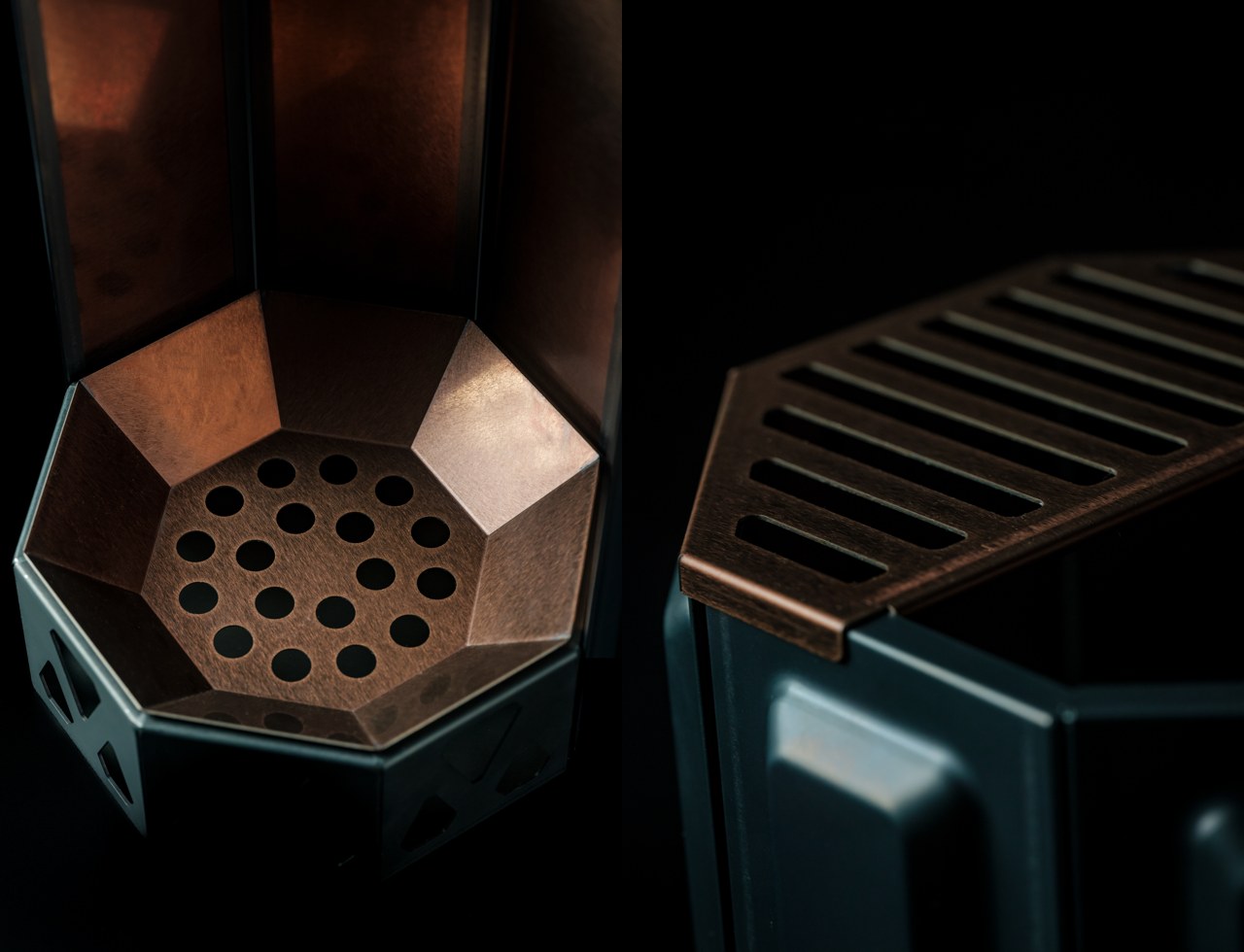
Firewood fits right inside the pit, with the option to add as time passes by, while ashes from the burning cinders gather in a tray at the base which can easily be cleaned once the fire dies down and the pit is cool to the touch. However, while the fire is still roaring, the UM Fire Pit’s grilling plate accessory can be mounted on top of the vertical panels, turning your cozy campfire into the best kitchen the outdoors can provide.

The UM Fire Pit’s ingenious design can be credited to Japanese simplicity and craftsmanship. The entire pit is built from start to finish in Japan, and comes crafted from precisely laser-cut and bent sheets of metal. The base is formed and then welded shut to close any seams that may cause ash to leak through, while each of the vertical panels plug right into a series of cutouts designed to bring the pit together. The vertical panels come with a unique hollow design and a set of holes at the bottom as well as the top. The purpose of these holes is to cleverly channel the air in a way that burns the fire more efficiently.

More oxygen means more fire, simply put. The UM Fire Pit’s design helps provide ‘secondary’ combustion by adding more air into the mix. When all 8 panels are assembled, air gets circulated within the pit’s octagonal design, helping the wood burn. However, air at the bottom also gets channeled into the hollow panels, where they rise up due to heat and make their way out from the holes above. This air helps the wood burn more efficiently, creating extra heat while eliminating smoke that’s caused by incomplete combustion. The result is a better fire, not just for your lungs but also for your food, as the UM Fire Pit reaches higher temperatures than your regular campfire, allowing you to cook food faster than before.

The fire pit’s modular design gives you the power to build exactly the pit you’re looking for. Assemble 4 panels in a continuous arc and you have a directional campfire that radiates heat in a 180° span while allowing you to admire the fire burning within the pit. Want to channel the heat further? Add more panels, concentrating the radiation in a smaller area while also allowing the fire to burn hotter. Add more panels to build a grilling pit, or remove selective panels to make it easier to add logs from the side.

The UM Fire Pit comes crafted from iron sheets, and that black outer finish is actually the result of a unique mill scale coating process that’s produced by heating the iron at a certain temperature for a specific amount of time. This rustic black finish outlasts any paint or color coating, growing richer and deeper with time. Meanwhile, the pit’s panels and base have an inner lining of stainless steel that turns bronze when exposed to high heat as the fire creates an oxide layer on it. This gradually patinas with time, becoming unique to each user and their fire-pit usage style. Although the pit’s parts are crafted to be resistant to rust, the makers recommend wiping off moisture to keep the parts as good as new, and applying a thin layer of oil to help prevent rust build-up, quite like you would with cast iron cookware.

Each UM Fire Pit comes crafted in Japan at Sanyo Works Co., Ltd. – a metalwork plant that’s been operational since 1953, with extensive experience in fabricating metal parts and products. The pit’s simple yet robust design is crafted to last a lifetime, and each put comes with its own carrying bag that lets you travel with your portable fire pit anywhere, whether it’s the backyard, the poolside, or a camping trail. The UM Fire Pit starts at a discounted $225 and ships globally starting Jan 2024… although here’s the kicker, the first 5 backers will get their UM Fire Pit right before Christmas, making for a great gift, or for that s’mores and caroling-by-the-fireside session!

Click Here to Buy Now: $225 $299 (25% off). Hurry, only 1/5 left!

The post Innovative 8-panel Fire Pit design is sure to warm up every outdoor experience first appeared on Yanko Design.


IBM suspends advertising on X after its ads were placed next to pro-Nazi content

IBM is pulling back from X after its ads were placed alongside pro-Nazi content on the platform. The company says it has suspended all ads from the network after nonprofit watchdog group Media Matters reported that it found ads for IBM and several other tech giants next to pro-Nazi memes and other posts promoting Hitler.

“IBM has zero tolerance for hate speech and discrimination and we have immediately suspended all advertising on X while we investigate this entirely unacceptable situation,” the company said in a statement. Comcast, whose ads were also highlighted by Media Matters, told the Financial Times it was looking into the situation.

An executive at X told Engadget that the posts identified by Media Matters will “no longer be monetizable” and will appear with “sensitive media” labels that require users to click through a warning in order to view the content. They added that “while we understand it's not an ideal placement for any ad,” the post had only racked up “about 8,000 impressions.”

It’s not clear how many campaigns are affected by IBM’s decision to suspend ads. But another high profile company pulling back from the platform, even temporarily, is another blow to the company’s already battered advertising business.

In a post on X, CEO Linda Yaccarino said that “discrimination by everyone should STOP across the board,” though she didn’t reference IBM or Media Matters’ report directly. “X has also been extremely clear about our efforts to combat antisemitism and discrimination,” she wrote. “There's no place for it anywhere in the world — it's ugly and wrong.”

This article originally appeared on Engadget at https://www.engadget.com/ibm-suspends-advertising-on-x-after-its-ads-were-placed-next-to-pro-nazi-content-234332820.html?src=rss

LEGO Brings Adorable A-Frame Cabin to Life with Amazing Details

An architectural icon from the years 1950 to 1975, the A-Frame cabin still remains one of the most eye-catching and visually memorable home styles. Characterized by an A-shaped design, the frame eschews a ceiling, instead opting for tapering walls that create a unique space to inhabit, with the option of high ceilings or even multi-level living that feels dynamic yet rustic at the same time. This cabin designed in LEGO bricks by LEGO user Norton74, captures the trend of the A-Frame heyday. In ways it also challenges the very nature of the LEGO Brick, which was itself designed to make traditional cuboidal structures back when it was invented in the 1930s.

Designer: Norton74

The beauty of Norton74’s A-Frame cabin is just how remarkably real it is. Whether observed from the outside or even its immaculately detailed insides, every corner of this build has something new to reveal. The cabin itself sits on a stone brick plinth, with colorful larch trees in the background. It’s mildly decrepit, with crooked staircases and boarded-up doors, but that adds to its charm.

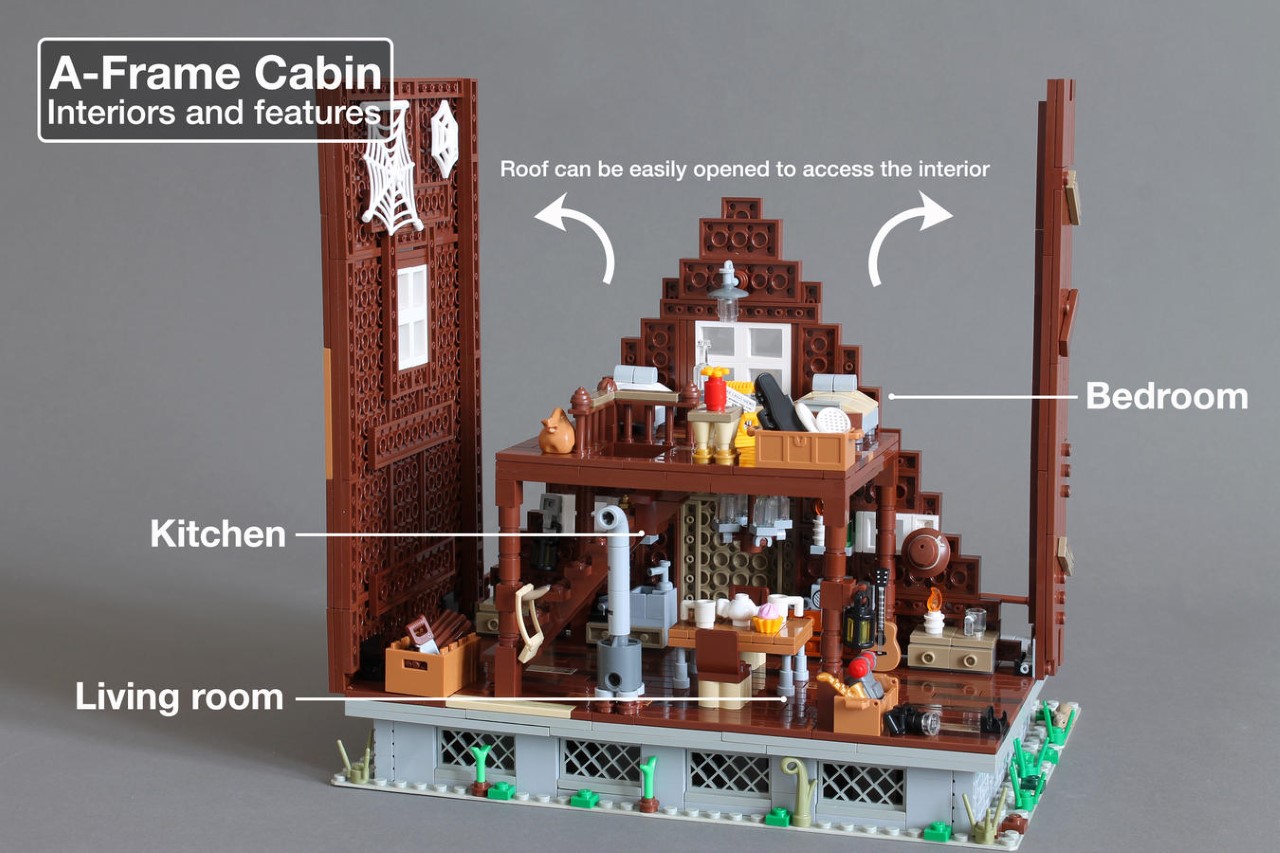
The inside of the cabin shows exactly how charmingly rustic and cozy it is. A multi-level design gives you a recreational area at the bottom (with a fireplace), and a bedroom on the top that features two single beds and even some cobwebs on the wall for that forest charm. To access the insides of the cabin, all you need to do is ‘open’ its slanting walls outwards. Hinges on the bottom of the walls make it easy to access the interiors during play-time, and close it back once you’re done.

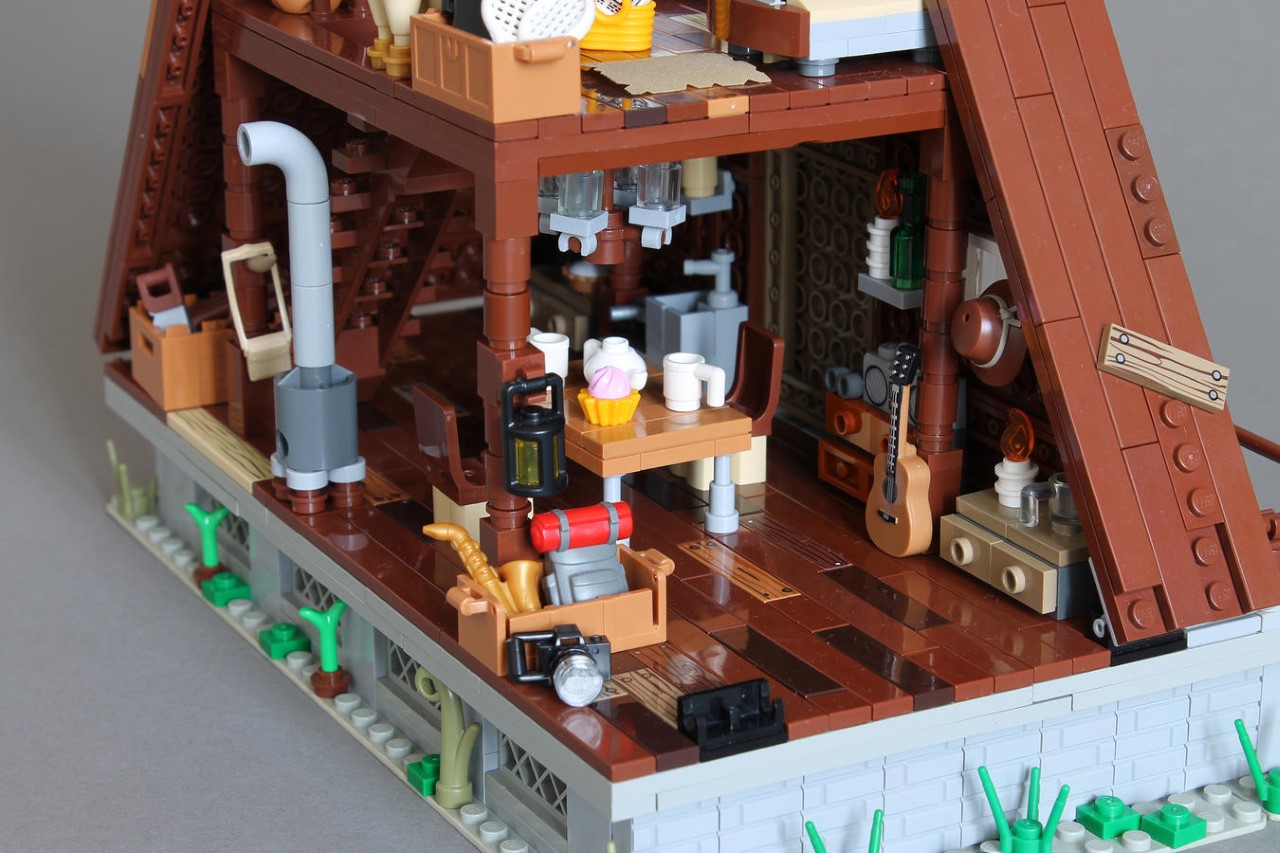
The inside is just filled with all sorts of details, from tools to trinkets, and even a tiny kitchen of sorts with a dining table. Norton74’s rather mindfully used discolored wooden bricks (including even some with shingle detailing) to mimic the variety often found in wooden cabins – especially ones that have been repaired and restored.

There’s even a backstory to Norton74’s cabin design. “Two brothers, Dan and Ethan, burned out on modern working believed that stripping away modern comforts and living more simply in nature would lead to a more spiritually a creatively fulfilling life. They looked for a cabin in the woods and finally found out this old wooden A-Frame Cabin. They fixed it up, and now they live there happily,” he mentions.

Dan and Ethan aren’t the only occupants of the cabin. Aside from the spiders on the first floor, the cabin is also accompanied by chickens, rodents, a skunk, and even a bear lurking around in the back.

Norton74’s LEGO A-Frame Cabin started its journey as a submission on the LEGO Ideas forum, where it received overwhelming support from the LEGO fanbase. Earlier this year, LEGO turned Norton74’s submission into a retail box kit (you can buy the LEGO A-Frame Cabin right now), although the design went through multiple rounds of changes to make it smaller and simpler for younger users to build. If you ask me, I prefer Norton74’s MOC (My Own Creation) overwhelmingly. It’s charmingly crude, has a son-of-the-soil appeal to it, and certainly possesses much more character if you ask me!

The post LEGO Brings Adorable A-Frame Cabin to Life with Amazing Details first appeared on Yanko Design.

Fortnite players can now submit audio clips as evidence when reporting in-game abuse

Epic has introduced a new tool for documenting toxic behavior in Fortnite. Players will now have access to voice reporting, which will continuously record voice chats in 5-minute segments for players to submit as evidence to moderators when reporting bullying and other forms of harassment. For anyone under the age of 18, this feature will automatically be turned on.

Fortnite players who are over 18 will have a bit more say over how voice reporting is applied. In the game’s main settings, they’ll have the option to set it as “Always On,” which would apply to every channel they’re in, or “Off When Possible,” which would disable it in Party Channels with friends as long as everyone’s preferences match.

In what’s likely an effort to quell privacy concerns, Epic says audio clips won’t be kept for long and they’ll only be stored locally on the user’s device unless submitted as evidence. And, in those cases, you’ll have to move fast. As each new recording comes in, the previous will be deleted. “This means only the immediate last five minutes of audio is reportable,” Epic said.

The settings menu in Fortnite showing Voice Reporting preferences
Epic Games

Under normal circumstances, audio clips will be auto-deleted either after 14 days or once action has been taken, the company added. If the accused player appeals the decision within that time, it may be extended for another 14 days. However, Epic says it will hold onto an audio clip as long as necessary if legally required to do so.

The move follows similar action taken by companies like Activision, Microsoft, Sony and others in the recent past as they attempt to clamp down on harmful online behavior. Earlier this year, Xbox introduced a system for submitting 60-second audio clips alongside reports of abuse in voice chats.

This article originally appeared on Engadget at https://www.engadget.com/fortnite-players-can-now-submit-audio-clips-as-evidence-when-reporting-in-game-abuse-220905599.html?src=rss

The Opal Tadpole is an iPod Shuffle-shaped Webcam with a 4K Sensor and AI Features

Webcams are to laptops what stereo systems were to cars in the past. No reputable automaker really gave a damn about how useful or functional their stereo players were, and they were almost always an afterthought to the car’s entire experience. However, with the dawn of the social age, these systems have now transformed into complex infotainment apparatuses that are sometimes the highlight of the car’s entire interior experience. I digress, but the point I’m trying to make is that up until very recently, webcams on laptops, for the lack of a more elegant term, have sucked turds. It’s barely been 2 years since companies (especially Apple) have been focusing more on just making better camera hardware for their laptops. Heck, Apple even introduced a Continuity Camera feature for their Macs that lets you use the iPhone’s main camera instead of the built-in webcam. While this movement towards building better laptop webcams is yet to gather critical mass, it’s spawned a pretty big product category in the form of external webcams, which all promise to be vastly better than the ones baked into your laptop’s hardware.

That’s where the Opal Tadpole Webcam enters the scene, promising to be a game changer. Now in its second iteration, the Tadpole promises great things with some impressive hardware specs combined with a little AI secret sauce.

Designer: Opal

Opal’s first product was launched at the height of the pandemic as the world transitioned to an online-only workplace. As people found themselves spending less time behind cubicles and more time behind crappy laptop webcams, Opal decided to debut the C1 – a promising webcam that fell short on delivering what it promised. To be honest, circumstances played a pretty big role in why the C1 wasn’t as great as it was hyped up to be. The raging pandemic was also causing a pretty ugly supply chain crisis and global chip shortage. Transportation was on a grinding halt, preventing Opal’s fledgling team from actually going to China to oversee production. However, the pandemic is now hopefully completely behind us and Opal’s grown in the time since then – not only in personally but also in how the company executes product development. In that regard, the Tadpole isn’t really the C1’s successor, given that it’s vastly better, packs new features, and is also touts a hefty $175 price tag.

First off, the Tadpole boasts a 4K Sony sensor. That’s right, 4K. In a world where most laptop webcams are stuck in the 720p dark ages, this is a significant leap forward. The video footage does get downsampled to 1080p to keep things light (a 4K stream on a Zoom call isn’t something most internet connections can handle), but Tadpole’s new machine-learning image signal processor promises “DSLR-rivaling quality.” In addition to the resolution, the Tadpole features a moderately wide 90-degree field of view. This wide angle is perfect for capturing more than just your face, helpful for those dynamic presentations, or when you want to show off more of your surroundings. Things, however, don’t stop there. The Tadpole comes equipped with an f/1.8 lens, which means it’s capable of performing admirably in low-light conditions. No more looking like you’re in a witness protection program during late-night video calls. Furthermore, the webcam includes a digital microphone array, designed to pick up your voice clearly while minimizing background noise.

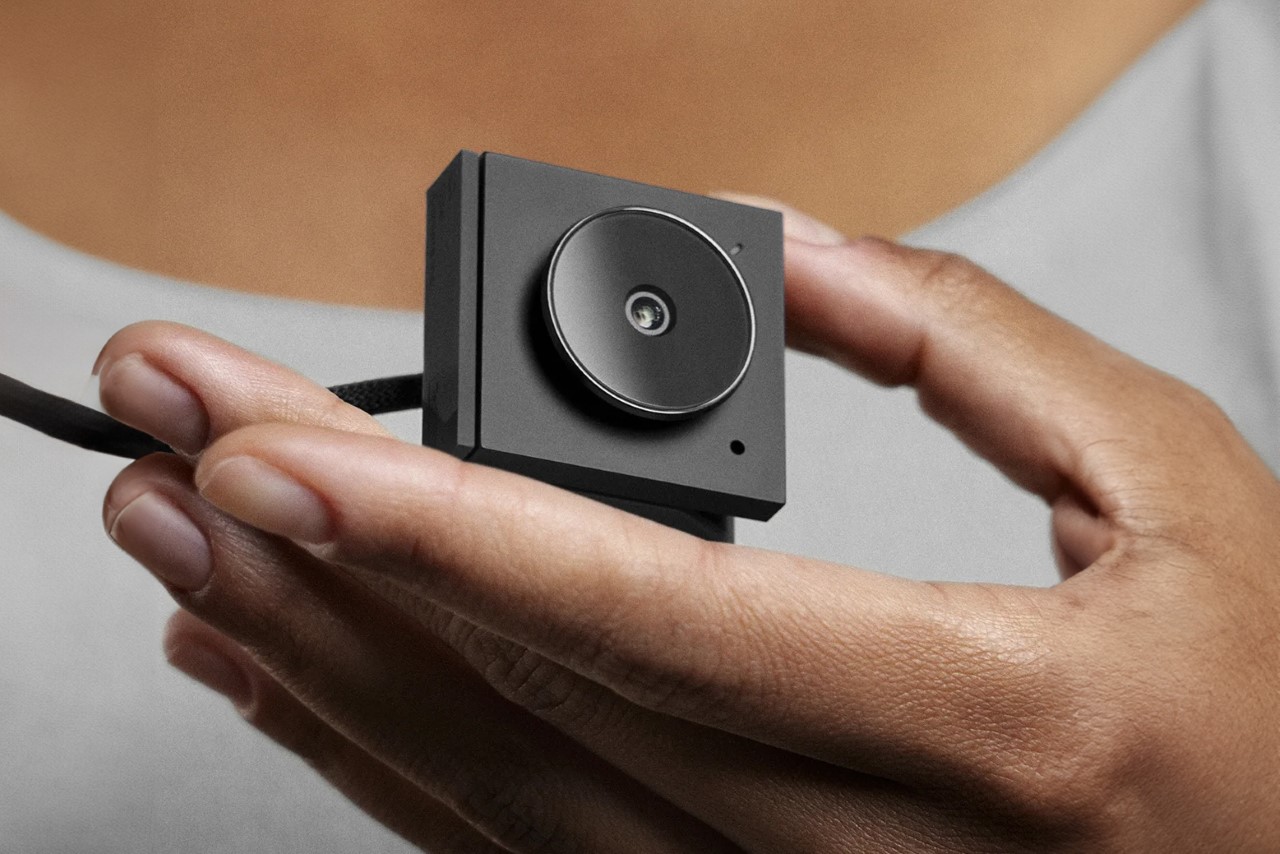
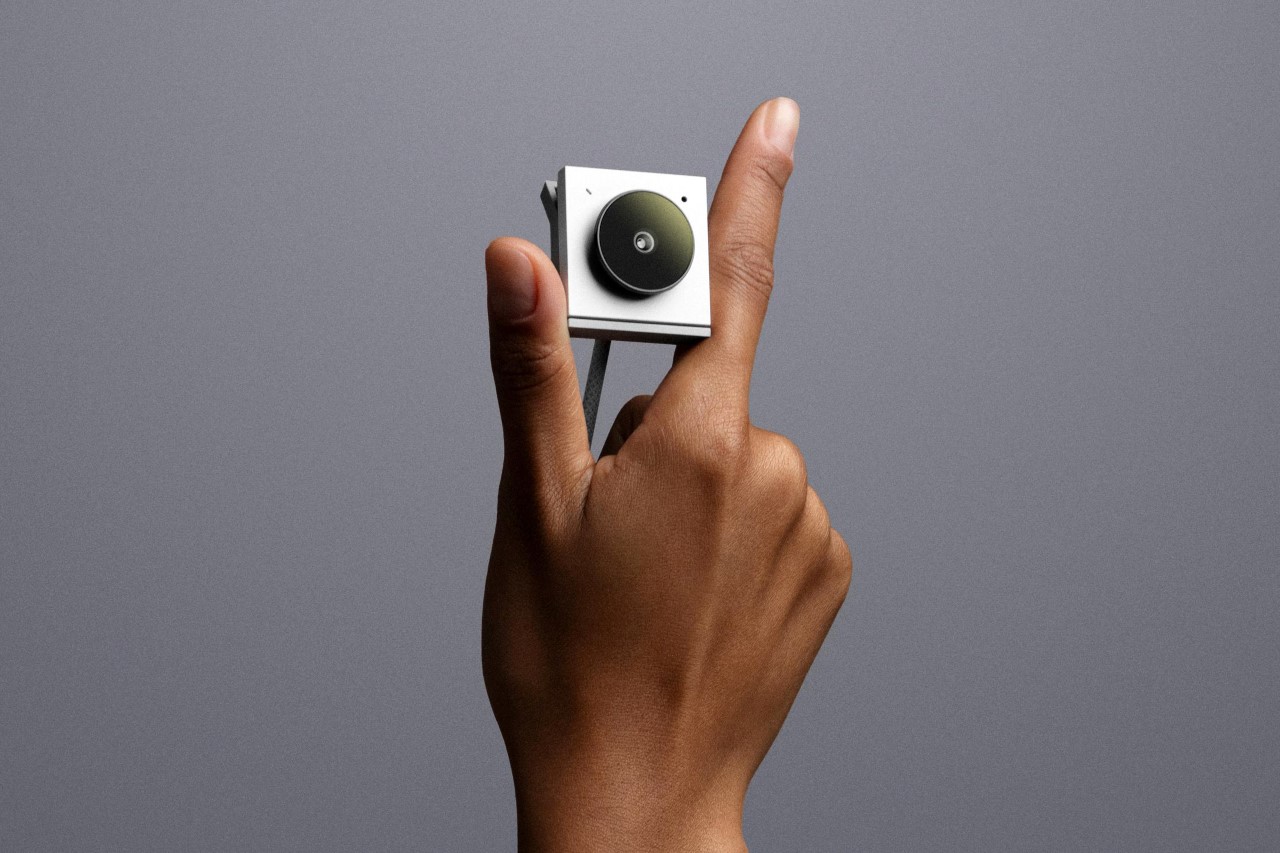
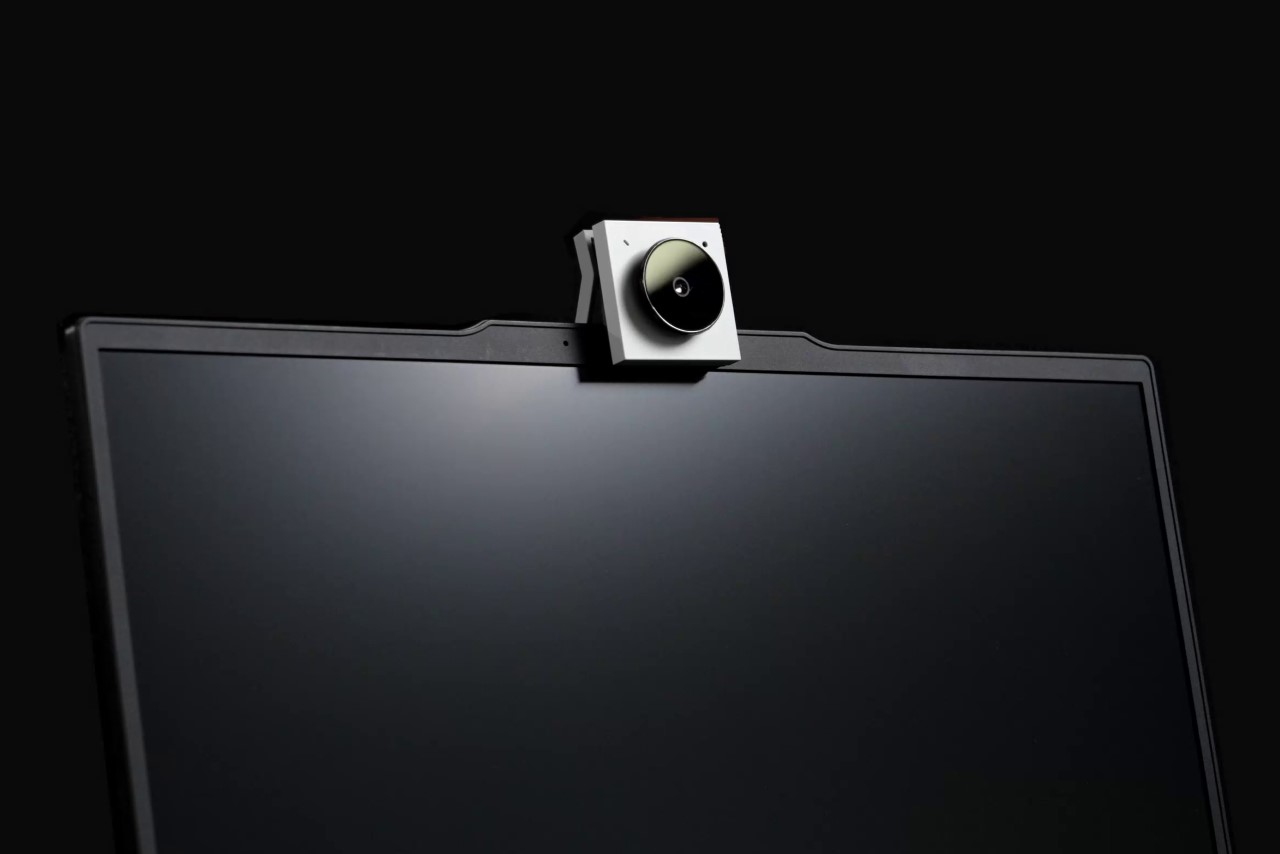
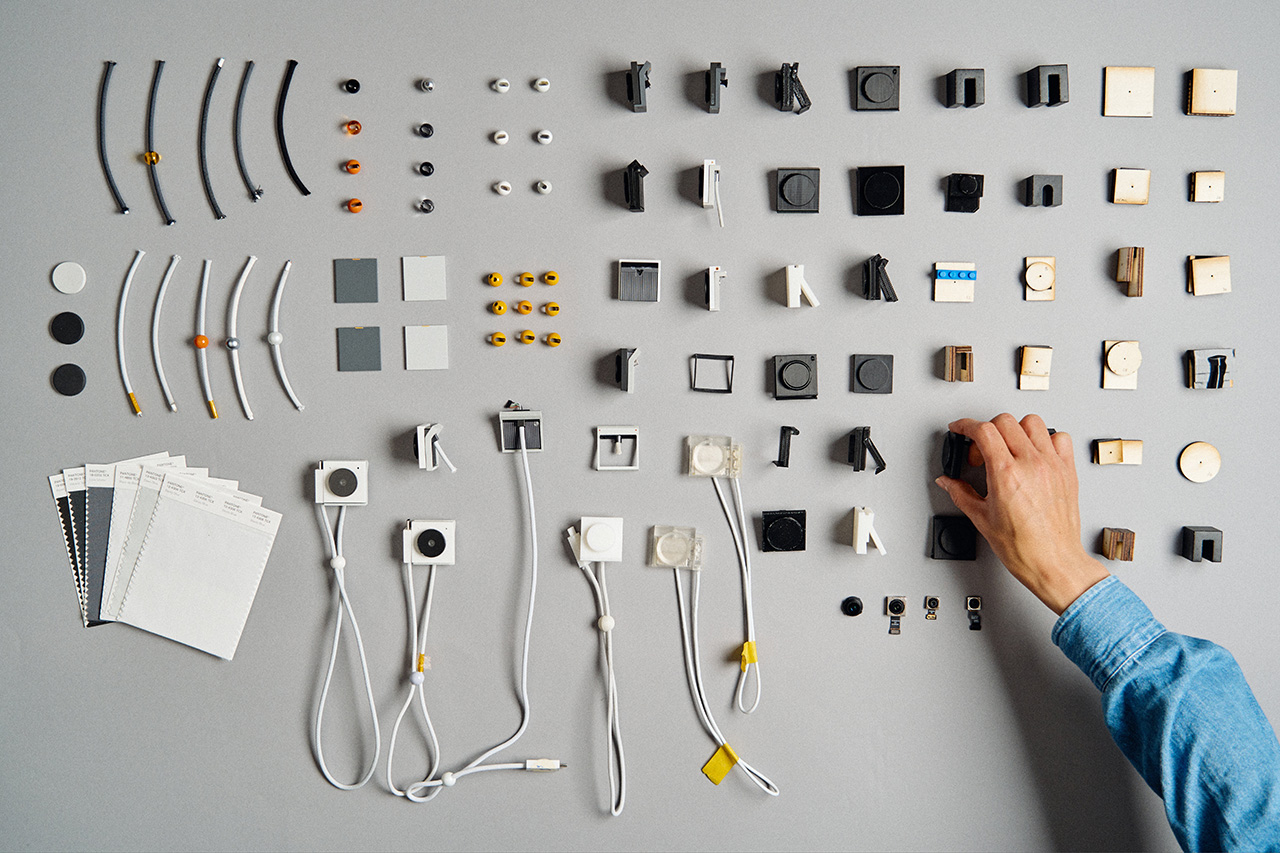
Physically, the Tadpole is compact and elegantly designed. It’s practically the shape and size of a 3rd-Gen iPod Shuffle, with a minimalist design to match. It easily clips onto your laptop or monitor, adding minimal bulk, but doing away with the standard tripod mount that would allow you to attach the Tadpole on places other than a monitor. USB-C connectivity means it’s versatile and can be used with a range of devices, not just your laptop, and the Tadpole’s USB-C port even comes with a touch-sensitive Mute button, allowing you to easily mute yourself on calls without navigating any video-chat interfaces.

What’s more intriguing about the Tadpole is its compatibility. It’s not just a plug-and-play device; it takes advantage of its own software to enhance the user experience. This includes features like auto-framing and AI enhancements, ensuring that you’re always in focus and look your best, even if you just rolled out of bed.

All those features don’t come cheap at all. With an eye-watering $175 price tag, the Tadpole is sits at the higher end of the webcam market, which might be a deterrent for some. But for those who are tired of pixelated video calls and want a top-tier webcam experience, the Tadpole might just be worth the splurge. While it may not be for everyone’s wallet, it’s certainly a step in the right direction for anyone seeking clarity, quality, and a bit of style in their video calls. And who knows, maybe it’ll make those early morning Zoom meetings a tad more bearable. Or at least, you’ll look good while you’re half-asleep, sipping your coffee, pretending to pay attention.

The post The Opal Tadpole is an iPod Shuffle-shaped Webcam with a 4K Sensor and AI Features first appeared on Yanko Design.

Xiaomi SU7 Steals the Spotlight in EV Market amid dwindling ‘Apple Car’ Rumors

It seems like Apple just needs to hint at building something and the tech world practically coalesces towards realizing that vision. Apple had to merely hire YSL’s former boss to create rumors around a fashion-focused wearable and Samsung scrambled to launch their Galaxy Watch. The company hinted at AR/VR being their future and Facebook literally rebranded to Meta to bet on that vision. Now, after years of Apple Car ‘leaks and rumors’, Xiaomi is beating the Cupertino giant to the punch by announcing the SU7, their first EV.

Designer: Xiaomi

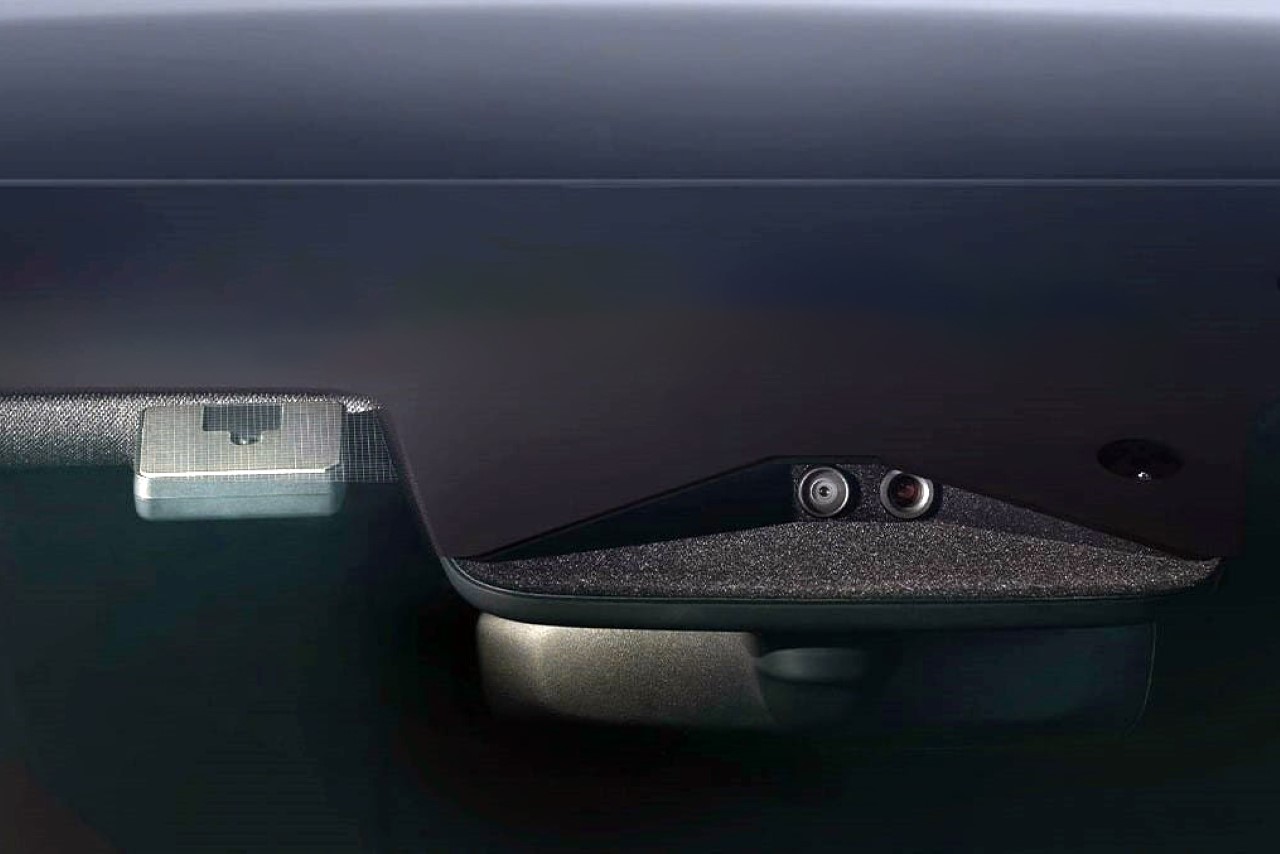
The SU7 hasn’t formally been announced by Xiaomi yet, but images of the car were released to the public by China’s government regulatory agency, accompanied by various technical details of the car’s design and capabilities. This move shouldn’t come as a surprise to keen-eyed folk in the tech world, given that Xiaomi’s actually made electric scooters in the past under its Mijia sub-brand. In fact, it’s been Xiaomi’s endeavor to make practically every product possible, given that their name means ‘little rice’, a call-back to a Buddhist concept of starting small and working your way up to the top.

The recently unveiled SU7 is shaping up to be a formidable entrant in the electric vehicle (EV) market. Although Xiaomi is the brand behind this vehicle, the actual manufacturing will be done by Beijing Automotive Industry Holding Co. (BAIC), a state-owned enterprise in China. This collaboration is a strategic step for Xiaomi, venturing into new territory while leveraging BAIC’s manufacturing expertise.

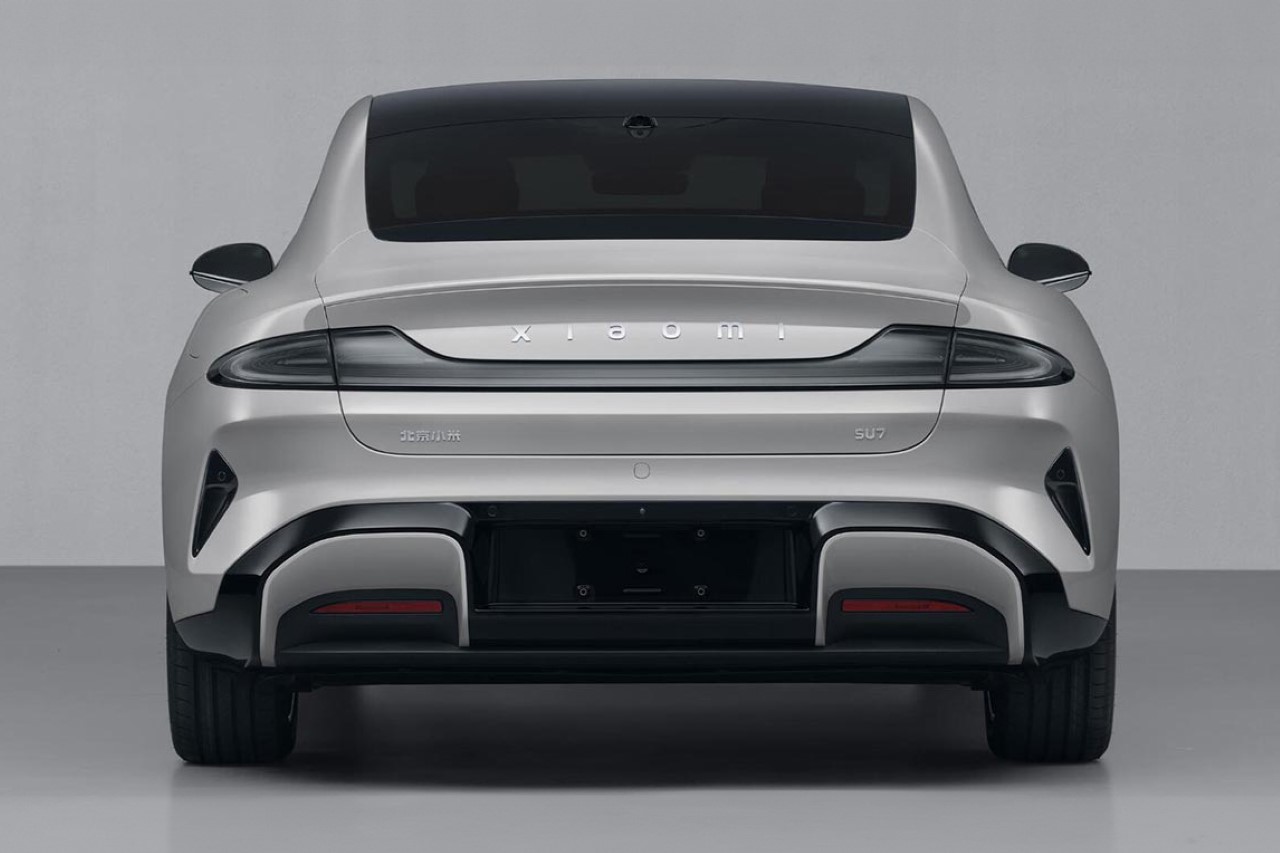
Design-wise, the SU7 is positioned to compete with the likes of the Tesla Model S, featuring a 118″ wheelbase and a fastback roofline, though with a faux-hatch trunk. Its overall length is comparable to the Model S, falling short by less than 30mm, aiming to appeal to the Chinese market’s preference for long-wheelbase luxury sedans​.

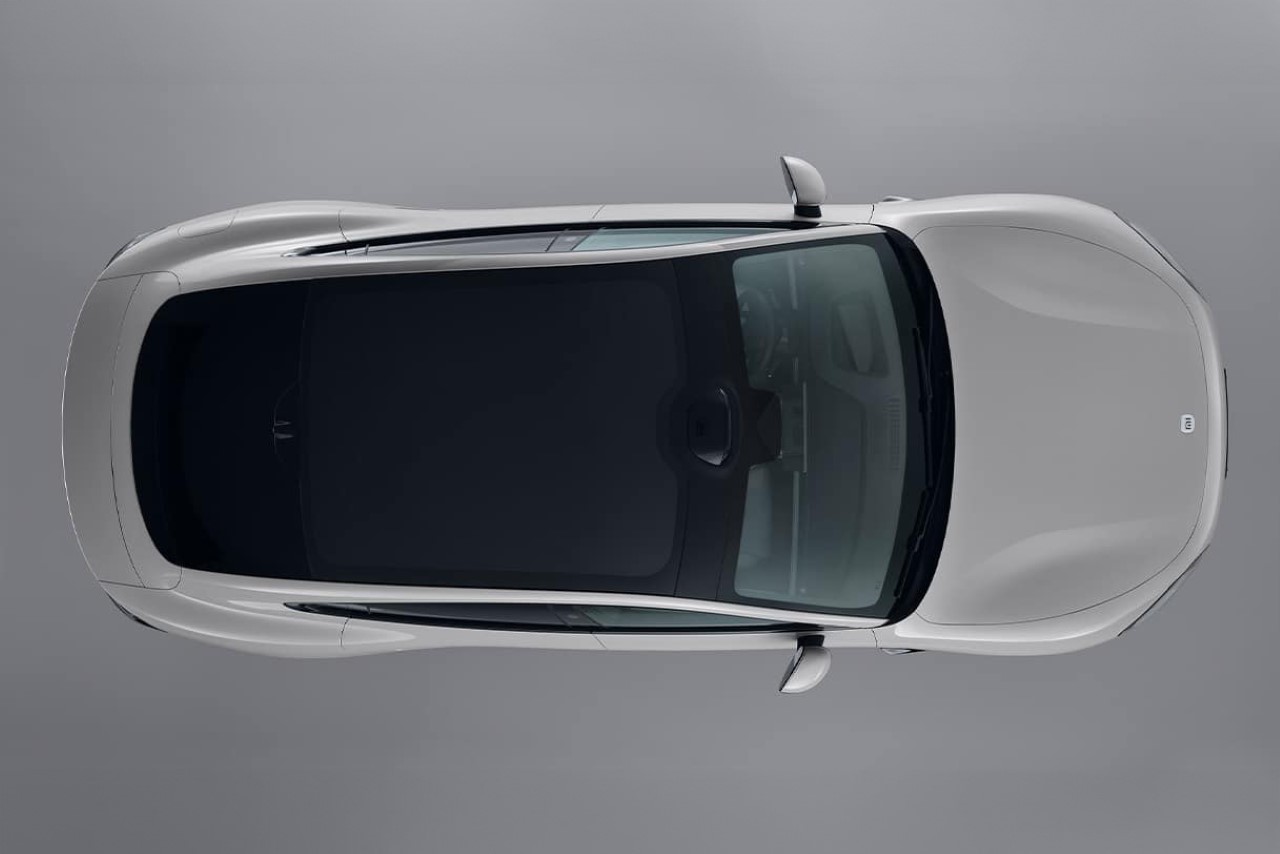
The SU7 will be available in multiple variants, including a single-motor rear-wheel-drive version producing around 295 hp and a dual-motor all-wheel-drive version with an impressive 663 hp. The vehicles differ in weight and battery technology, with the premium model featuring a nickel manganese cobalt (NMC) battery, contrasting with the more affordable variant’s lithium iron phosphate (LFP) battery. The high-end model is also expected to have a 100kWh battery and an 800-Volt architecture. In addition, some models will sport a conspicuous lidar array on the roof, indicating advanced driver assistance and potential autonomy features​.

Xiaomi’s ambition with the SU7 extends beyond just manufacturing a luxury EV. The car is expected to feature Xiaomi-developed in-car software, potentially integrating with its vast ecosystem of gadgets and services. However, the extent of this integration and whether it will be globally applicable or mainly focused on the Chinese market remains to be seen.

Oddly enough, Xiaomi isn’t the first tech company to foray into the EV space. Back in 2020, Sony turned heads by revealing the Mission S, its first automotive concept with self-driving features. While the Mission S, as impressive as it was, was intended to just be a proof of concept, Xiaomi’s SU7 EV will actually see the light of day, following approval from the Chinese government regulatory agency. As for the car’s global availability, it’s uncertain if Xiaomi plans to market the SU7 outside China. The brand has a substantial presence in Asia and Europe, particularly in the value segment, which might not align with the luxury EV market. However, the SU7 could signify a shift in the broader market narrative, influencing other technology companies to explore vehicle manufacturing, especially as the global smartphone market reaches a saturation point.

The post Xiaomi SU7 Steals the Spotlight in EV Market amid dwindling ‘Apple Car’ Rumors first appeared on Yanko Design.

Hackers use a new SEC rule to snitch on the company they infiltrated

A hacking group deployed a surprising tactic after infiltrating a financial software company’s network. They reported the breach to the US Securities and Exchange Commission (SEC).

DataBreaches.net initially reported on the incident, which was conducted by ALPHV / BlackCat, a group known for breaching entities as diverse as MGM Resorts and Reddit. The hackers reportedly infiltrated the servers of fintech company MeridianLink on November 7, stealing company data without encrypting it. However, when the business neglected to negotiate directly, the hackers increased the pressure by filing a report with the SEC.

They did so citing a new rule the SEC passed this summer, which requires companies falling victim to “material cybersecurity incidents” to report them to the agency within four business days.

However, the four-day requirement may not have taken effect yet. At least one official form claims the rule kicked in 90 days after the date of publication in the Federal Register (they appear to have been published on August 4, making that alleged effective date November 2) or December 18. But the Federal Register document says, “With respect to compliance with the incident disclosure requirements in Item 1.05 of Form 8–K and in Form 6–K [the part referring to the four-day requirement], all registrants other than smaller reporting companies must begin complying on December 18, 2023.” Adding to the confusion, Reuters reported in October that the rule takes effect on December 15.

Engadget reached out to the SEC to clarify whether the rule is active yet. We’ll update this article if we hear back.

MeridianLink told BleepingComputer that it quickly worked to contain the threat. “Based on our investigation to date, we have identified no evidence of unauthorized access to our production platforms, and the incident has caused minimal business interruption,” the company wrote. The company says it’s still trying to determine if any consumer personal information was breached, promising to notify affected parties if it was.

Whether the SEC has any teeth (or desire) to do anything about MeridianLink’s failure to report the incident in four business days, the rule could, ironically, serve as a new tool for cyber attackers. Rather than contacting customers or making calls to tighten the grip and pressure companies to comply with their demands, perhaps they can now simply rat them out to Uncle Sam.

This article originally appeared on Engadget at https://www.engadget.com/hackers-use-a-new-sec-rule-to-snitch-on-the-company-they-infiltrated-201242292.html?src=rss

Lucid’s Gravity electric SUV will have a max range of 440 miles

Lucid’s Gravity all-electric SUV has been on our radar for a while now, since originally being introduced back in 2022. Now we have more details, including pricing, availability and those all-important range metrics. First, the bad news. This thing likely won’t ship until 2025, as production doesn’t officially ramp up until late 2024, as reported by Sustainable Mobility Solutions (SAE).

We already knew some details surrounding the EV, including the roomy three-row interior, but now we have range data. Lucid CEO Peter Rawlinson promises a range of at least 440 miles, so it looks like it could inch further than that once the Gravity hits the assembly line. The company has stated in the past that this EV would boast a “greater electric range than any SUV on the market today.”

So let's look at some metrics. According to Kelly Blue Book, the Gravity will easily exceed this promise, as the current top-range EV SUV is the Fisker Ocean, with a max driving range of 350 miles per charge. As a matter of fact, if Lucid’s forthcoming SUV truly gets 440 miles per charge, that’ll place it near the top of the list for any electric vehicle, SUV or not. The only competition will be another Lucid automobile, as the Air Grand Touring sedan gets 516 miles per charge, according to MotorTrend.

Like the Air line, the Gravity is built on a 900-volt electrical architecture that supports DC fast-charging. The company says the forthcoming EV can go from 0 to 60 in 3.5 seconds, via its dual-motor setup, and boasts a payload capacity of 1,500 pounds with the ability to tow a further 6,000 pounds.

Beyond metrics, Lucid also lifted the veil on the interior of the SUV. The Gravity will boast a 34-inch OLED main display and an optional lower display, with multi-tasking available between the two. In other words, you can throw navigation on one screen and the media player on the other. These displays won’t get in the way of the dash cluster and will even offer gaming applications in the future, according to Derek Jenkins, senior vice president of design and brand at Lucid.

The steering wheel includes two touch controllers inspired by the Apple TV remote, as minute thumb movements select items from the infotainment screen and adjust dashboard display elements. Of course, this is a three-row vehicle, so there’s plenty of room for friends and family, if you’re into that kind of thing. It seats up to seven people.

As previously mentioned, the price should be around $80,000, though things could change before these cars hit showrooms in 2025.

This article originally appeared on Engadget at https://www.engadget.com/lucids-gravity-electric-suv-will-have-a-max-range-of-440-miles-193859560.html?src=rss

Amazon’s Echo Show 5 falls to a record low of $40 in a Black Friday deal

The Amazon Echo Show 5 smart display is on sale for $40 as part of an early Black Friday deal. This matches a record low price for the device and represents a savings of more than 50 percent, as the typical MSRP for the display is $90. The sale applies to various colorways, including white, charcoal and blue.

This discount is only for the device itself, so you’ll have to pay extra for accessories like a stand. The Echo Show 5 finds a lot of use as a smart home controller, so Amazon also sells bundles that ship with smart light bulbs, the Blink Mini security camera and an Alexa Emergency Assist subscription.

The Echo Show 5 easily made our list of the best smart displays in 2023 for a number of reasons. The diminutive 5.5-inch screen makes it easy to place just about anywhere in the home and allows it to double as a highly useful alarm clock. The ambient light sensor automatically adjusts the screen’s brightness so you can get some sleep and there’s a handy tap-to-snooze function. There’s even a sunrise alarm feature that slowly brightens the screen.

The smart home controls are handy if you have plenty of installed gadgets throughout the home. The Echo Show 5 is also a decent option for video calling, thanks to the integrated camera system. If the idea of an always-on smart display with a camera makes you feel a bit icky, it ships with a physical cover.

For those who balk at the relatively small 5.5-inch display size, Amazon is also selling the much larger Echo Show 10 for $160 as part of the same Black Friday deal. This represents a savings of $90.

Your Black Friday Shopping Guide: See all of Yahoo’s Black Friday coverage, here. Follow Engadget for Black Friday tech deals. Learn about Black Friday trends on In The Know. Hear from Autoblog’s experts on the best Black Friday deals for your car, garage, and home, and find Black Friday sales to shop on AOL, handpicked just for you.

This article originally appeared on Engadget at https://www.engadget.com/amazons-echo-show-5-falls-to-a-record-low-of-40-in-a-black-friday-deal-183059264.html?src=rss

Amazon will start selling Hyundais through its website next year

Next year, Amazon will let you add a whole ass car to your shopping cart. The company announced today that it will launch vehicle sales in the US next year. The first cars available to purchase will be from Hyundai, as part of an Amazon partnership with the company, but more brands will presumably be added.

Buying a car on Amazon doesn’t seem to be super different from buying pretty much anything else on the website. According to an Amazon blog post, you’ll be able to search for vehicles in your area based on model, trim, color, and features. Once you’ve selected a car, you can choose to pick it up or have it delivered to a local dealership, and then check out using the same standard payment or financing options you normally use on the site. Do Prime members get free shipping? I sure hope so.

Hyundai is also building in Alexa into its cars starting in 2025 as part of its partnership with Amazon. This will let you ask Alexa to not only do the usual Alexa things like playing music and setting timers, but also ask for directions, traffic updates and weather reports, and control the car’s media player and navigation system.

This article originally appeared on Engadget at https://www.engadget.com/amazon-will-start-selling-hyundais-through-its-website-next-year-191128589.html?src=rss