This next-gen Wi-Fi router with a Built-in VPN lets you access the internet without anyone stealing your data

Sure, your phone and laptop have VPNs… but does your smart speaker? Your home camera? Smart doorbell? Baby monitor? It’s easy to think of yourself as protected when your primary device operates on a VPN, but the truth is that our houses are filled with IoT devices that remain vulnerable to brute force because of one weak point of entry – a basic router. The Rio Router aims to change that with a built-in VPN, device allowlisting protocols, guest network features, and the ability to set parental controls from the router itself. Whether it’s a government trying to snoop on you, someone trying to hack you, companies trying to sell your data, or your internet service provider secretly gathering info about you, the Rio Router cuts it all off right at the source. It encrypts information in a way that anonymizes your entire smart home, so you can browse the internet freely, and your smart home gadgets can access the internet without being vulnerable to data theft.

Designer: Rio Router

Click Here to Buy Now: $299 $549 ($250 off). Hurry, only 15/290 left! Raised over $136,000.

Most routers are designed to help you access the internet, but that access can sometimes be a double-edged sword, creating a path for bad-faith actors to access your IoT devices and even the data within them. A simple WiFi password can only do so much, right? That’s why the Rio Router uses a protocol that requires you to personally allowlist any device connecting to your network. Every IoT device gets approved by you, and if there’s any device you don’t approve of trying to connect to your network, it doesn’t get access to your network or to the devices on it. Think of it as a security guard that only allows you into a building if you have the right ID, and turns you away if you don’t.

Even for approved devices accessing the internet through the Rio Router, all data gets encrypted through the router’s built-in VPN. This offers two distinct benefits – for starters, it lets you access the internet and streaming services without any government or geolocation restrictions (yes, that means being able to use TikTok even if it gets banned), but it also encrypts all personal information so that your internet service provider doesn’t get unfettered access to your life… or even corporations like Apple, Google, Microsoft, and Amazon that feed off of information from smart home devices.

Obviously, that level of access does come with its downsides – you want your family to stay safe from potentially dangerous websites. The router allows you to set parental controls for specific devices, preventing your child’s laptop or tablet from being able to access harmful sites, and an integrated DNS and web filtering system provides all-around protection, preventing all devices from accessing malicious sites that could scam/phish you or corrupt your device with ransomware.

Following the security guard analogy from earlier, think of your internet connection as a building with multiple wings/departments. Different employees can only access the wings or departments they are authorized to, and a low-level employee can’t necessarily go snooping in the CEO’s office or through the confidential file room. Similarly, the Rio Router creates dedicated rooms for each category of devices. Your smart kitchen gadgets can’t access or communicate with your bedroom’s smart devices even if they’re on the same network. This technology, known as SecureRoom™, helps create dedicated chambers for different internet devices, so every gadget on the same network doesn’t necessarily have access to all the data on the network. The SecureRoom™ is a brilliant way of ensuring that your gadgets don’t have access to information they don’t have clearance for. Your living room smart speaker doesn’t necessarily know what’s happening in the kitchen, and the baby monitor in the bedroom isn’t vulnerable to being snooped on by your thermostat.

The SecureRoom™ system also allows you to create guest networks for when you have people visiting you at home. No more sharing passwords for the main WiFi network – guests get to access the internet through a SecureRoom™ guest network. Their data stays safe and so does yours – you can approve devices to the SecureRoom™ to ensure that nobody else is accessing the internet, and once your guests leave your house, they’re removed permanently from the network and can only access the internet once you grant them approval.

The Rio Router runs WiFi 6 for fast and reliable connections from every corner of your house and even comes with an iOS/Android app that lets you control the router, set protocols, create SecureRooms™, and grant/deny approvals to external devices. It gives you the liberating taste of what true internet freedom feels like, allowing you to rely on IoT devices without the fear of them spying on you, as well as preventing anyone from hacking into your network or even accessing data they’re not privy to. It also helps that you can now browse international titles on your streaming service so even if The Office leaves Netflix in the USA, it’s still available in some other country!

It’s 2024, and if your internet service provider is giving you a free router with your connection, you’d best not trust it with all your data. After all, if it’s free, you’re the product. The Rio Router starts at $299 and comes with a free app, and VPN service free for 12 months. You can use the Rio to set up as many as 4 different SSIDs (WiFi access points), 8 Rio mesh extenders, and up to 16 SecureRooms™ at a time.

Click Here to Buy Now: $299 $549 ($250 off). Hurry, only 15/290 left! Raised over $136,000.

The post This next-gen Wi-Fi router with a Built-in VPN lets you access the internet without anyone stealing your data first appeared on Yanko Design.


Minimal Metallic Bar Stool Celebrates The Rawness Of Aluminum & A Simple Construction System

Switching out bulky chairs in my home for compact convenient little stools has become my newfound love. Stools deserve to be given way more credit than they get, cause they pack a punch in their small form. Stools are often overlooked, maybe because they occupy minimum space, and aren’t overbearing. But these traits are what make stools so great in my opinion! I mean, they’re compact, and a great space-saving furniture option for our modern homes. They are also super portable. Bar stools are also pretty great, not just for sitting on the bar, but they can be placed in different sections of your home, where they can function as convenient seating solutions while also adding some spunk to your space. And a great bar stool you may want to look at is the Foundation bar stool by Bestcase.

Designer: Bestcase

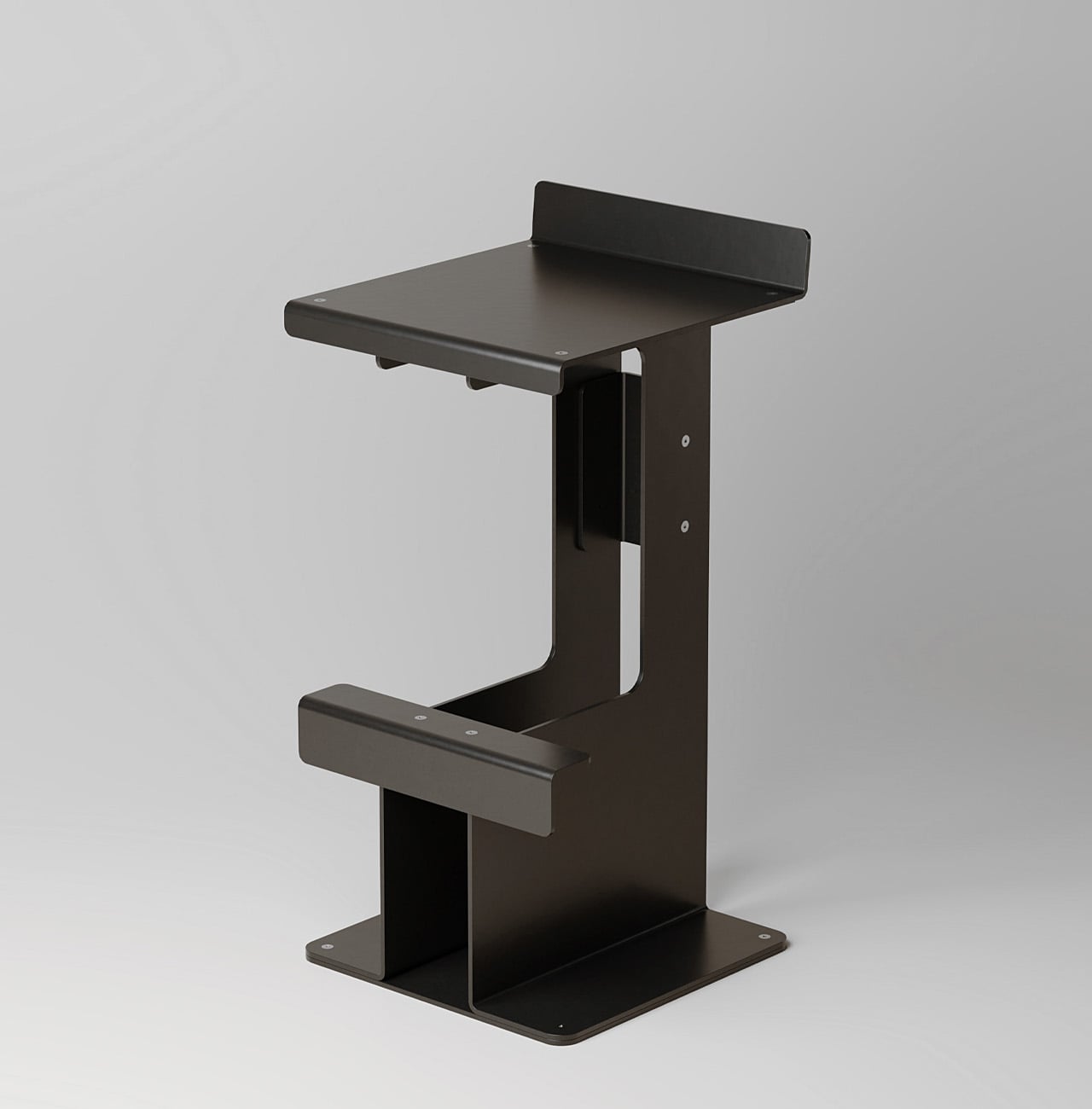
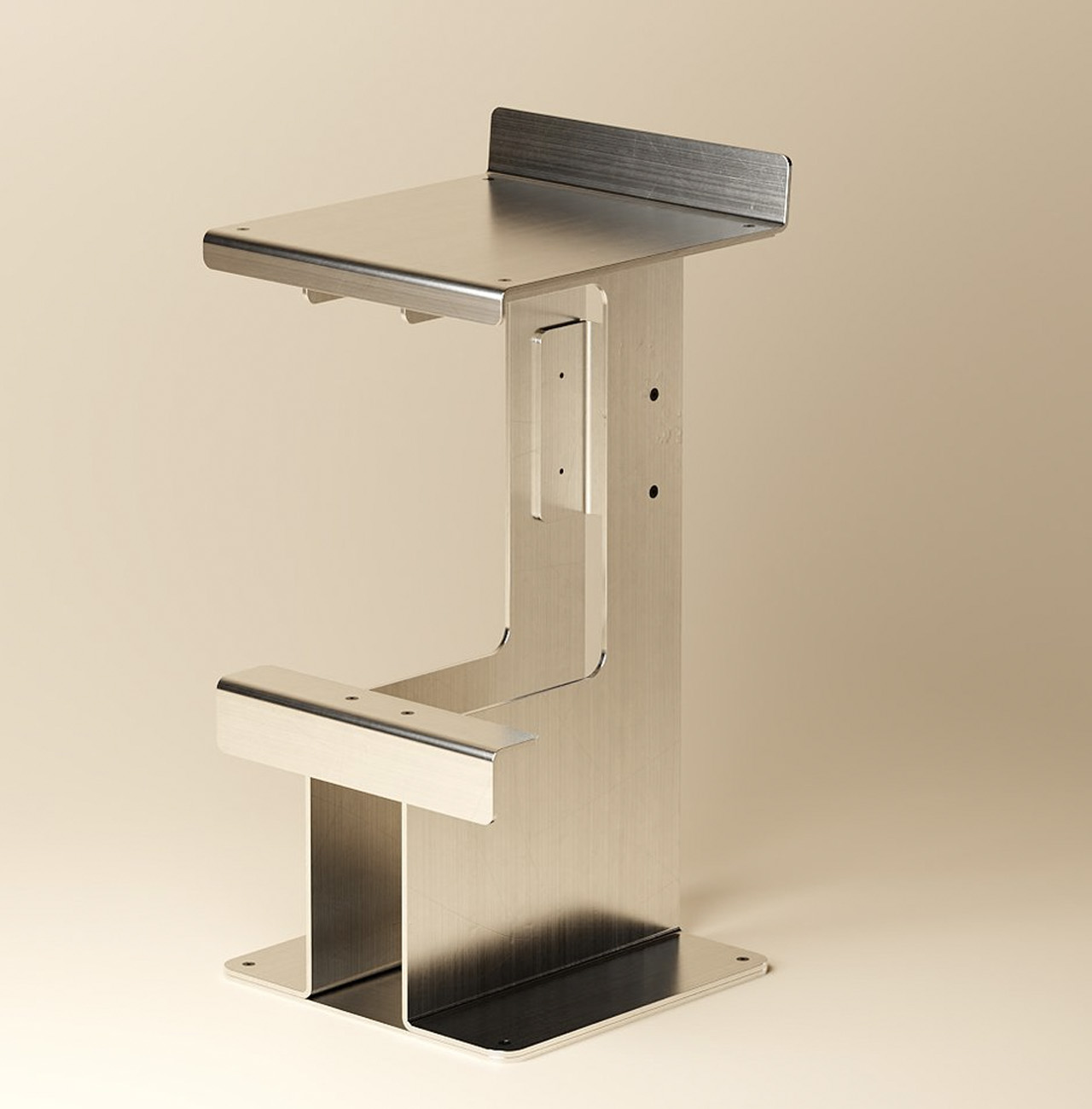
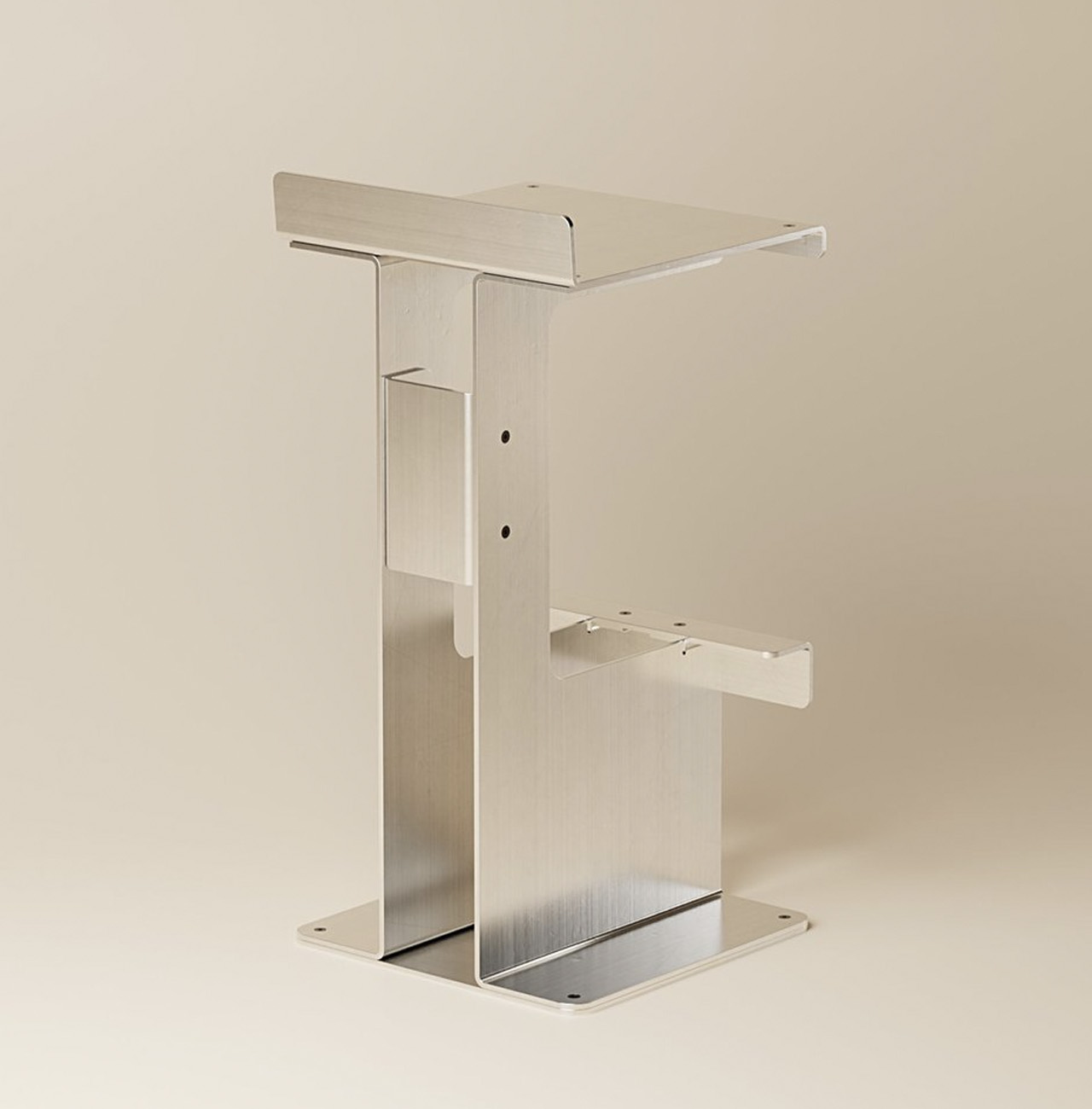
Designed by the American brand Bestcase, the Foundation bar stool is a beautiful celebration of the rawness of aluminum, and the simple manufacturing techniques used to build it. It was designed by Bestcase co-founder Charles Constantine and was unveiled in 2022 as a part of a collection that was crafted from aluminum sheet material.  The minimal and sturdy stool features scaled-up sheets that are bent via a technique that is traditionally utilized to add some structure and solidity to thinner materials. This displays the structural as well as decorative qualities of aluminum, and how it can be durable and strong, while also retaining some aesthetic value.

The Foundation bar stools are equipped with mechanical connections, and a raw satin waxed aluminum finish or a powder-coated color. Bestcases describes the Foundation bar stool as “an exercise in simplicity”, and it quite beautifully celebrates the exceptional material properties of aluminum. The Foundation stool is customizable in depth, width, and height, and its sturdy structure allows seat backs and upholstery to be added to the frame.

The Foundation bar stool showcases a simple construction system, and the rawness and strength of aluminum. It has no additional frills or tassles, and only relies on the structural integrity and choice of the material to elevate the design and allow it to truly shine through.

The post Minimal Metallic Bar Stool Celebrates The Rawness Of Aluminum & A Simple Construction System first appeared on Yanko Design.

The Aptly Named Mi Casita Is A Tiny Home With A Clever Space-Saving Interior

Designed by Modern Tiny Living, the Mi Casita, which quite accurately translates to ‘my little house’, measures around 26 feet, and showcases a clever space-saving interior, jam-packed with nifty features that are typically seen in larger models. The home features a bathroom with a tub, and a downstairs bedroom despite its modest length. It is founded on a triple-axle trailer and is accentuated by fiber cement board siding as finishing, an engineered wood trim, a charcoal-colored steel roof, and a custom cedar door.

Designer: Modern Tiny Living

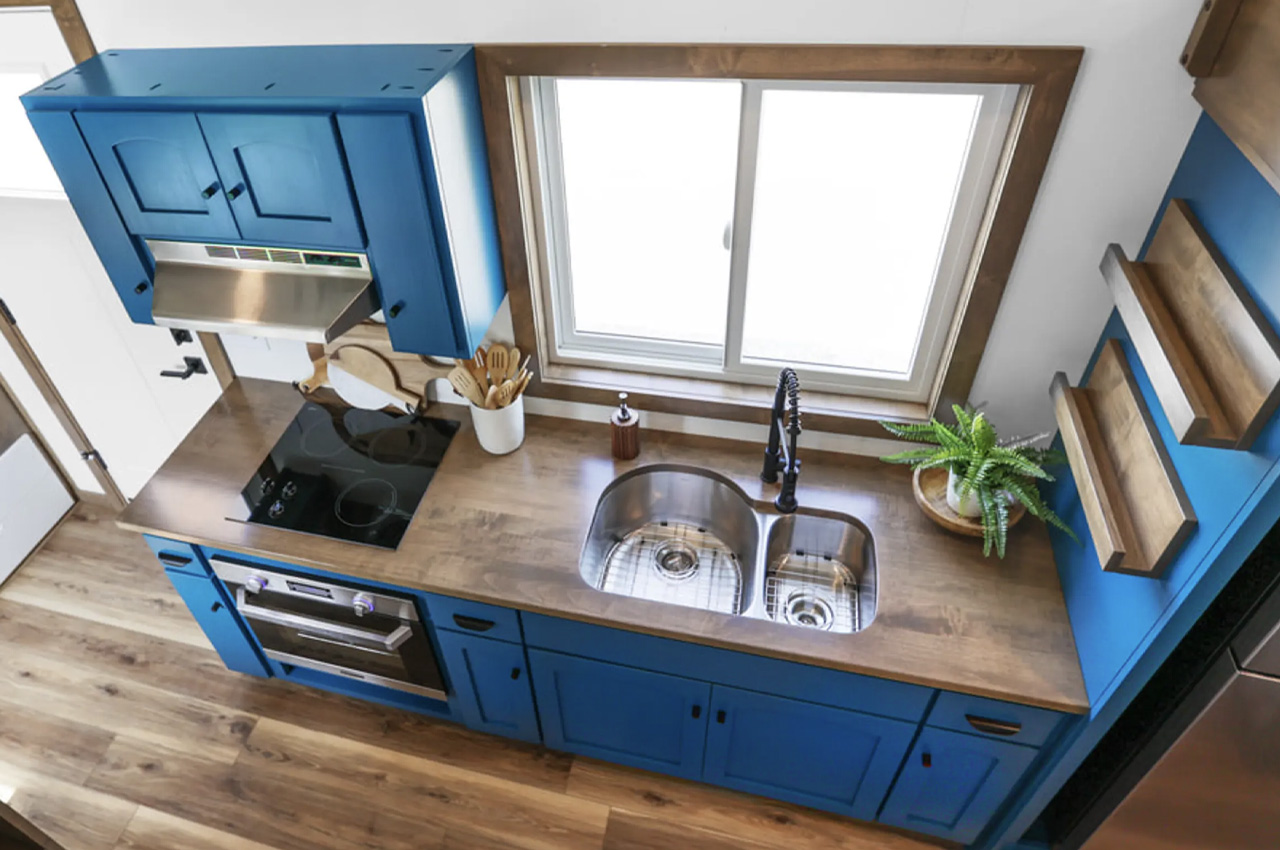
If you put the home into perspective, it is even smaller than Baluchon’s 20 ft Sherpa tiny home, which is its pint-sized model. The interior of the home is quite full and is packed to the brim considering its compact size. As you enter the home, you are welcomed by a kitchen that includes a double sink, fridge/freezer, electric oven, and cooktop, as well as a microwave and custom cabinetry. The kitchen is connected to the living room, which features a small sofa, as well as a dining table. It is a snug and cozy area.

The living room is further connected to the downstairs master bedroom via a sliding door. The bedroom isn’t as big or spacious as compared to other rooms seen in larger homes, but it does have a sufficient amount of headroom. Since it is placed on the ground floor, this means the residents don’t need to go upstairs and position themselves on their knees to get into bed. The downstairs section also includes the bathroom, which is quite well-equipped including a standard flushing toilet, freestanding bathtub and shower, as well as a washer/dryer.

Besides the downstairs master bedroom, Mi Casita also includes a standard loft-style space with a low ceiling and a double bed, which are great for guests. You can access the room via the storage-integrated staircase. Currently, there is no update on the pricing of the tiny home.

The post The Aptly Named Mi Casita Is A Tiny Home With A Clever Space-Saving Interior first appeared on Yanko Design.
The bill that could ban TikTok is barreling ahead

The bill that could lead to a ban of TikTok in the United States appears to be much closer to becoming law. The legislation sailed through the House of Representatives last month, but faced an uncertain future in the Senate due to opposition from a few prominent lawmakers.

But momentum for the “Protecting Americans from Foreign Adversary Controlled Applications Act” seems to once again be growing. The House is set to vote on a package of bills this weekend, which includes a slightly revised version of the TikTok bill. In the latest version of the bill, ByteDance would have up to 12 months to divest TikTok, instead of the six-month period stipulated in the original measure.

That change, as NBC News notes, was apparently key to winning over support from some skeptical members of the Senate, including Sen. Maria Cantwell, chair of the Senate Commerce Committee. So with the House expected to pass the revised bill Saturday — it’s part of a package that also includes aid to Ukraine and Israel — its path forward is starting to look much more certain, with a Senate vote coming “as early as next week,” according to NBC. President Joe Biden has said he would sign the bill if it’s passed by Congress.

If passed into law, TikTok (and potentially other apps "controlled by a foreign adversary" and deemed to be a national security threat) would face a ban in US app stores if it declined to sell to a new owner. TikTok CEO Shou Chew has suggested the company would likely mount a legal challenge to the law.

“It is unfortunate that the House of Representatives is using the cover of important foreign and humanitarian assistance to once again jam through a ban bill that would trample the free speech rights of 170 million Americans, devastate 7 million businesses, and shutter a platform that contributes $24 billion to the U.S. economy, annually,” TikTok said in a statement.

This article originally appeared on Engadget at https://www.engadget.com/the-bill-that-could-ban-tiktok-is-barreling-ahead-230518984.html?src=rss

The bill that could ban TikTok is barreling ahead

The bill that could lead to a ban of TikTok in the United States appears to be much closer to becoming law. The legislation sailed through the House of Representatives last month, but faced an uncertain future in the Senate due to opposition from a few prominent lawmakers.

But momentum for the “Protecting Americans from Foreign Adversary Controlled Applications Act” seems to once again be growing. The House is set to vote on a package of bills this weekend, which includes a slightly revised version of the TikTok bill. In the latest version of the bill, ByteDance would have up to 12 months to divest TikTok, instead of the six-month period stipulated in the original measure.

That change, as NBC News notes, was apparently key to winning over support from some skeptical members of the Senate, including Sen. Maria Cantwell, chair of the Senate Commerce Committee. So with the House expected to pass the revised bill Saturday — it’s part of a package that also includes aid to Ukraine and Israel — its path forward is starting to look much more certain, with a Senate vote coming “as early as next week,” according to NBC. President Joe Biden has said he would sign the bill if it’s passed by Congress.

If passed into law, TikTok (and potentially other apps "controlled by a foreign adversary" and deemed to be a national security threat) would face a ban in US app stores if it declined to sell to a new owner. TikTok CEO Shou Chew has suggested the company would likely mount a legal challenge to the law.

“It is unfortunate that the House of Representatives is using the cover of important foreign and humanitarian assistance to once again jam through a ban bill that would trample the free speech rights of 170 million Americans, devastate 7 million businesses, and shutter a platform that contributes $24 billion to the U.S. economy, annually,” TikTok said in a statement.

This article originally appeared on Engadget at https://www.engadget.com/the-bill-that-could-ban-tiktok-is-barreling-ahead-230518984.html?src=rss

2024 Lamborghini Huracán Sterrato Debuts Exclusive Livery – All-Terrain Luxury Meets Design at Milan Design Week

At Milan Design Week 2024, Lamborghini unveiled the ‘All Terrain’ Ad Personam series for the Huracán Sterrato in a dazzling display that redefined what a super sports car can be. This limited edition series, featuring 12 uniquely designed vehicles, brilliantly reflects the earth’s varied landscapes through sophisticated design and technological advancements.

Designer: Lamborghini’s Ad Personam studio + Centro Stile

Stephan Winkelmann, CEO of Lamborghini, highlighted the Sterrato’s dual nature at the event. He emphasized its capacity as both a performance vehicle and an adventurous explorer, capable of forging new paths with the same ease as it races down a track. The design of the Sterrato, a product of the collaborative genius of Lamborghini’s Ad Personam studio and Centro Stile, embodies this ethos. Each version of the car is painted in a matte camouflage scheme that corresponds to different environments: NEVE (snow), SABBIA (sand), BOSCO (green track), and TERRA (gravel), further accentuated by a matte black finish on the roof, bonnet, and lower body, accented with unique colors, 19” matte black forged rims, and custom caliper colors.

Inside, the Sterrato continues its thematic journey with dark chrome, carbon twill, and Alcantara finishes, enhanced with custom graphics and an Ad Personam plate that reflects the external livery. Mitja Borkert, Head of Design, shared, “The All-Terrain Sterrato is a true Lamborghini in its dynamic abilities and surprises by delivering the unexpected. It’s a joy to drive and ready for any adventure.”

The Milan presentation featured a dramatic stage display with a giant Trompe L’Oeil, created by an Italian artist, setting a perfect backdrop that echoed the power of nature and the promise of adventure.

I must admit, I’m quite envious that Tim Stevens had the opportunity to experience the Sterrato firsthand. In his review, Tim applauded the vehicle for its exceptional all-weather performance, dramatic styling, and the immersive sound of its 5.2-liter V10 engine. Though he pointed out some visibility issues and the absence of ‘Corsa mode,’ the Sterrato was praised for its robust performance across diverse conditions and its distinctive styling that builds on the legacy of the LM002.

He described the interior as maintaining Lamborghini’s luxurious standards with bespoke elements that cater to both comfort and style. The car’s raised suspension and specialized Bridgestone Dueler AT002 tires exemplify its readiness for rugged terrain, while the powerful V10 engine assures a thrilling drive wherever you may roam.

Milan Design Week certainly wouldn’t have felt complete without these gorgeous, beastly performance cars making their mark. And for those now compelled to own one, a quick note: the 12 cars in this special Ad Personam series are already sold out, highlighting the allure and exclusive appeal of the Lamborghini Huracán Sterrato.

The event concluded with the unveiling of the Huracán Sterrato, demonstrating Lamborghini’s commitment to innovating car design and performance and marking an exciting new chapter in its legacy, which continues to challenge automotive conventions by merging aesthetic elegance with superior engineering.

The post 2024 Lamborghini Huracán Sterrato Debuts Exclusive Livery – All-Terrain Luxury Meets Design at Milan Design Week first appeared on Yanko Design.

Netflix is done telling us how many people use Netflix

Netflix will stop disclosing the number of people who signed up for its service, as well as the revenue it generates from each subscriber from next year, the company announced on Thursday. It will focus, instead, on highlighting revenue growth and the amount of time spent on its platform.

“In our early days, when we had little revenue or profit, membership growth was a strong indicator of our future potential,” the company said in a letter to shareholders. “But now we’re generating very substantial profit and free cash flow.”

Netflix revealed that the service added 9.33 million subscribers over the last few months, bringing the total number of paying households worldwide to nearly 270 million. Despite its decision to stop reporting user numbers each quarter, Netflix said that the company will “announce major subscriber milestones as we cross them,” which means we’ll probably hear about it when it crosses 300 million.

Netflix estimates that more than half a billion people around the world watch TV shows and movies through its service, an audience it is now figuring out how to squeeze even more money out of through new pricing tiers, a crackdown on password-sharing, and showing ads. Over the last few years, it has also steadily added games like the Grand Theft Auto trilogy, Hades, Dead Cells, Braid, and more, to its catalog.

Subscriber metrics are an important signal to Wall Street because they show how quickly a company is growing. But Netflix’s move to stop reporting these is something that we’ve seen from other companies before. In February, Meta announced that it would no longer break out the number of daily and monthly Facebook users each quarter but only reveal how many people collectively used Facebook, WhatsApp, Messenger, and Instagram. In 2018, Apple, too, stopped reporting the number of iPhones, iPads, and Macs it sold each quarter, choosing to focus, instead, on how much money it made in each category.

This article originally appeared on Engadget at https://www.engadget.com/netflix-is-done-telling-us-how-many-people-use-netflix-215149971.html?src=rss

Netflix is done telling us how many people use Netflix

Netflix will stop disclosing the number of people who signed up for its service, as well as the revenue it generates from each subscriber from next year, the company announced on Thursday. It will focus, instead, on highlighting revenue growth and the amount of time spent on its platform.

“In our early days, when we had little revenue or profit, membership growth was a strong indicator of our future potential,” the company said in a letter to shareholders. “But now we’re generating very substantial profit and free cash flow.”

Netflix revealed that the service added 9.33 million subscribers over the last few months, bringing the total number of paying households worldwide to nearly 270 million. Despite its decision to stop reporting user numbers each quarter, Netflix said that the company will “announce major subscriber milestones as we cross them,” which means we’ll probably hear about it when it crosses 300 million.

Netflix estimates that more than half a billion people around the world watch TV shows and movies through its service, an audience it is now figuring out how to squeeze even more money out of through new pricing tiers, a crackdown on password-sharing, and showing ads. Over the last few years, it has also steadily added games like the Grand Theft Auto trilogy, Hades, Dead Cells, Braid, and more, to its catalog.

Subscriber metrics are an important signal to Wall Street because they show how quickly a company is growing. But Netflix’s move to stop reporting these is something that we’ve seen from other companies before. In February, Meta announced that it would no longer break out the number of daily and monthly Facebook users each quarter but only reveal how many people collectively used Facebook, WhatsApp, Messenger, and Instagram. In 2018, Apple, too, stopped reporting the number of iPhones, iPads, and Macs it sold each quarter, choosing to focus, instead, on how much money it made in each category.

This article originally appeared on Engadget at https://www.engadget.com/netflix-is-done-telling-us-how-many-people-use-netflix-215149971.html?src=rss

Polestar just beat Tesla by launching their very own Smartphone

Unless China celebrates April Fool’s Day 18 days after the rest of the world, these images circulating on Polestar’s Weibo account hint that the company may be getting into the smartphone game.

Of all the EV companies to tease a smartphone, we probably expected Tesla to be the first. The internet was constantly filled with rumors teasing a Teslaphone (we even covered one of them), but turns out Polestar may have beaten them to the punch. The phone was spotted on the Google Play Console in February and was actually certified for sale in China last year, so this might not be a prank. The Polestar Phone is real, and this is what it looks like.

Designer: Polestar

The Polestar Phone sports an all-white and silver colorway, with clean lines, tight curves, and immaculate surfaces, just like its cars. Coincidentally enough, the clean design can’t entirely be attributed to Polestar – the phone is, in fact, a rebranded version of the Meizu 21 Pro, running a different OS and with Polestar’s branding on the back as well as the sides.

If we need to go off of the Meizu 21 Pro specs, the phone will run on a Snapdragon 8 Gen 3 chipset, and sport a 50 MP main camera, along with a 13 MP ultra-wide-angle shooter, and a telephoto camera with 3x optical zoom and periscope lens. The front will sport an edge-to-edge 2k+ screen with a 21:9 ratio and super-thin 2.2mm bezels.

The phone will apparently run a version of Android called the PoleStarOS – this is where the automotive company expects its expertise to shine through. While nobody will specifically buy a Polestar phone, the OS will offer a compelling reason for Polestar EV owners to make the switch. The phone’s OS will boast tight integration with the Polestar EV ecosystem, demonstrating how the two tech devices can integrate into each other to create a well-rounded user experience for car owners.

Barring a few images and a teaser video, not much is known about the Polestar Phone. However, the device is being primed for an April 24th launch. Who knows, if this works out we might get a Tesla X Smartphone sometime soon?!

The post Polestar just beat Tesla by launching their very own Smartphone first appeared on Yanko Design.

Blizzard takes aim at Overwatch 2 console cheaters

Like many other multiplayer games, Overwatch 2 isn't immune from cheaters. And it's not only an issue on PC, where cheaters use tools like aimbots. Some folks use XIM devices so they can play with a keyboard and mouse (KBM) on consoles. This is against Blizzard's rules, as KBM players typically have an aim advantage over those who use a controller, even though the console versions of the game have features like aim assist. While it's taken some time to get the ball rolling, the developer is finally doing something about the XIM problem.

XIM devices trick consoles into believing that KBM users are playing with a controller. However, in a blog post, Blizzard says it has been able to detect KBM players on consoles over the last few Overwatch 2 seasons. It has found that the cheating problem is more prevalent among higher ranked players. The developers say that use of so-called unapproved peripherals is "very rare" in lower ranks.

During the current season (which started this week), Blizzard will dish out permanent bans to the most extreme users of unapproved peripherals. It will rely on reports from other players and its own data to pinpoint those who are breaking the rules.

Starting in Season 11, which should get underway in June, the developers will tackle the issue at a broader level. The first time a console player is detected using an unapproved device on consoles, they'll be banned from Competitive modes for a week. If they keep using KBM or other unapproved peripherals in casual modes, they'll get a season-long Competitive suspension, only have the option of playing with other KBM users in Quick Play and lose access to aim assist features. It's all in the name of fairness.

There are accessibility concerns here, though, as some folks simply can't play games with a standard controller. Blizzard says that it has done its "utmost to ensure that players with accessibility needs will be less likely to trigger our detection." The developers say they will tailor their enforcement actions so that folks with accessibility needs can still land a sick Earthshatter or keep healing their teammates.

With all that said, Blizzard is looking into adding official KBM support on consoles so folks can play the game that way without negatively impacting controller players. As things stand, console and PC players are separated into separate pools for Competitive play. So to make things fair, Blizzard would need to shuffle console players who want to use a keyboard and mouse into games with other KBM players and no aim assist.

The XIM problem isn't exactly new. The Overwatch 2 developers' colleagues at Activision last year started banning Call of Duty players who spoof input devices (or just messing with them, as usual). Ubisoft and Epic have also targeted XIM users in Rainbow Six: Siege and Fortnite, respectively.

Blizzard is doing more on other fronts to try to keep Overwatch 2 fair and more enjoyable for the majority of players. It's punishing those who leave in the middle of matches more severely and taking a stronger stance on toxicity in voice and text chat.

Meanwhile, there's been a kerfuffle this week related to Overwatch 2 players being banned for using profanity. Those who use slurs or threaten others should obviously face appropriate consequences, but apparently booting out players from a game that has profanity filters for some slightly spicy trash talk is some kind of BS.

This article originally appeared on Engadget at https://www.engadget.com/blizzard-takes-aim-at-overwatch-2-console-cheaters-203923200.html?src=rss