10 Game-Changing iOS 26.2 Features You Need to Try Right Now

10 Game-Changing iOS 26.2 Features You Need to Try Right Now

Apple has officially released iOS 26.2, bringing a range of features designed to enhance usability, personalization, and accessibility across its ecosystem of devices, including iPhones, iPads, Macs, and AirPods. Whether you’re looking to streamline your daily tasks, boost productivity, or elevate your entertainment experience, this update introduces tools that make interacting with your Apple devices […]

The post 10 Game-Changing iOS 26.2 Features You Need to Try Right Now appeared first on Geeky Gadgets.

Posted in Uncategorized

Blueair 2‑in‑1 Pro Purify + Humidify Review: Clean Air, Skin Care in One

PROS:


  • Dual functionality in a single, well-designed form

  • Top-fill design prevents back strain

  • DermaSense skin mode with intelligent humidity control

  • Long-life, machine-washable components

  • Comprehensive hygiene features

CONS:


  • Large and heavy body feels imposing in small spaces

  • Only available in one neutral color

  • Premium price tag

RATINGS:

AESTHETICS
ERGONOMICS
PERFORMANCE
SUSTAINABILITY / REPAIRABILITY
VALUE FOR MONEY

EDITOR'S QUOTE:

The Blueair 2-in-1 Pro Purify + Humidify makes air quality feel like part of your skincare routine, blending serious performance with bedroom-worthy design.
award-icon

Air purifiers and humidifiers usually look like they belong in a hospital supply closet rather than a bedroom. Most are boxy white appliances with visible mist plumes, blinking lights, and a general vibe that says “I am here to solve a problem” rather than “I belong in this space.” Meanwhile, people who care about sleep quality and skin health are starting to realize that the air itself might be part of the routine.

The Blueair 2‑in‑1 Pro Purify + Humidify feels like Blueair finally designed for people who want both functions but refuse to sacrifice aesthetics or simplicity. It is a tall, sculptural tower that combines serious air purification with gentle, invisible humidification and a skin-focused mode that adjusts humidity based on time of day and room temperature, positioned as step zero in a nighttime skincare routine. Let’s dive in to see if it delivers on its promises.

Designer: Blueair x Above

Click Here to Buy Now: $400 $499.99 ($99.99 off, use coupon code “YANKO20”). Hurry, deal ends in 48-hours!

Aesthetics

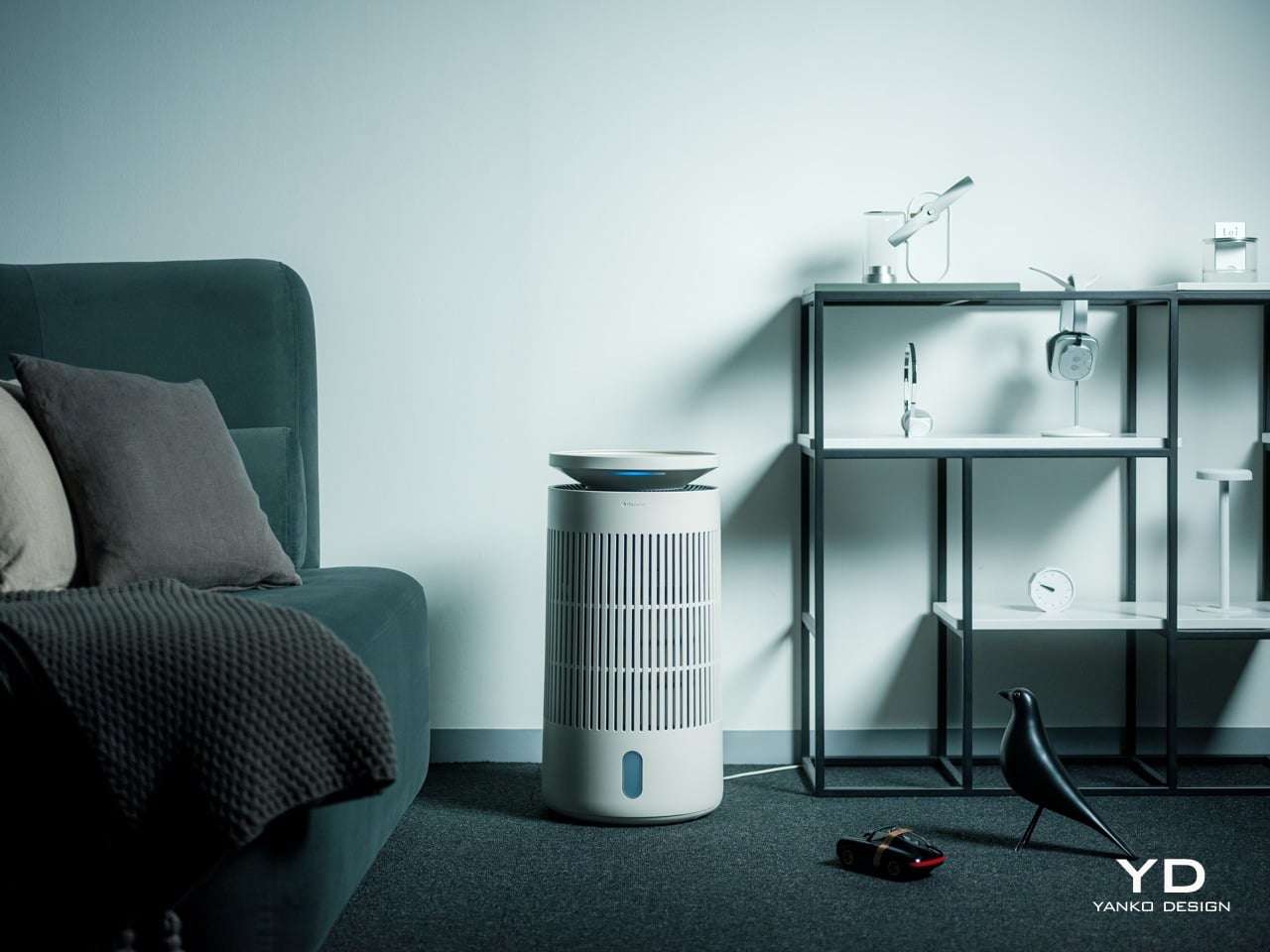
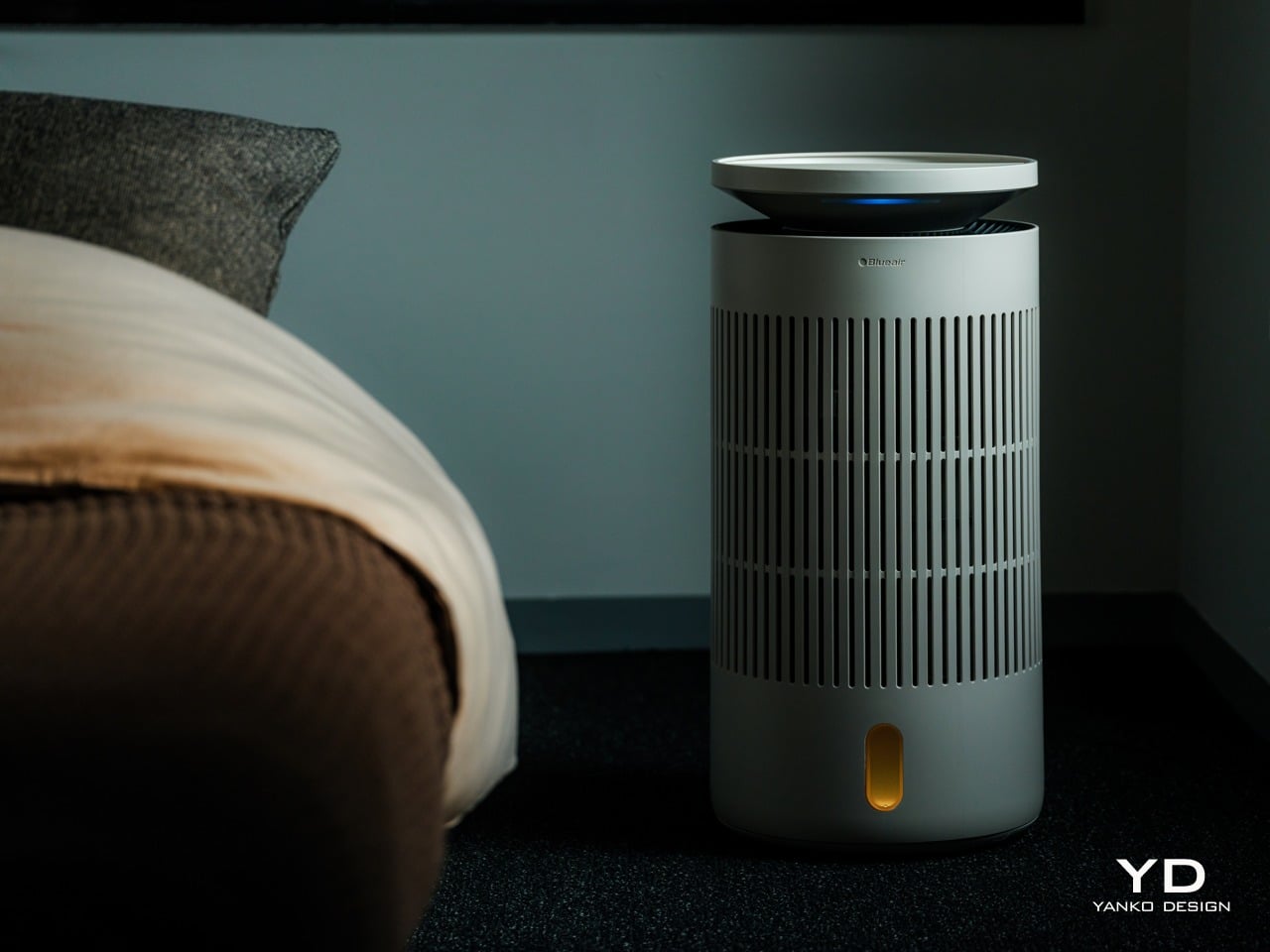
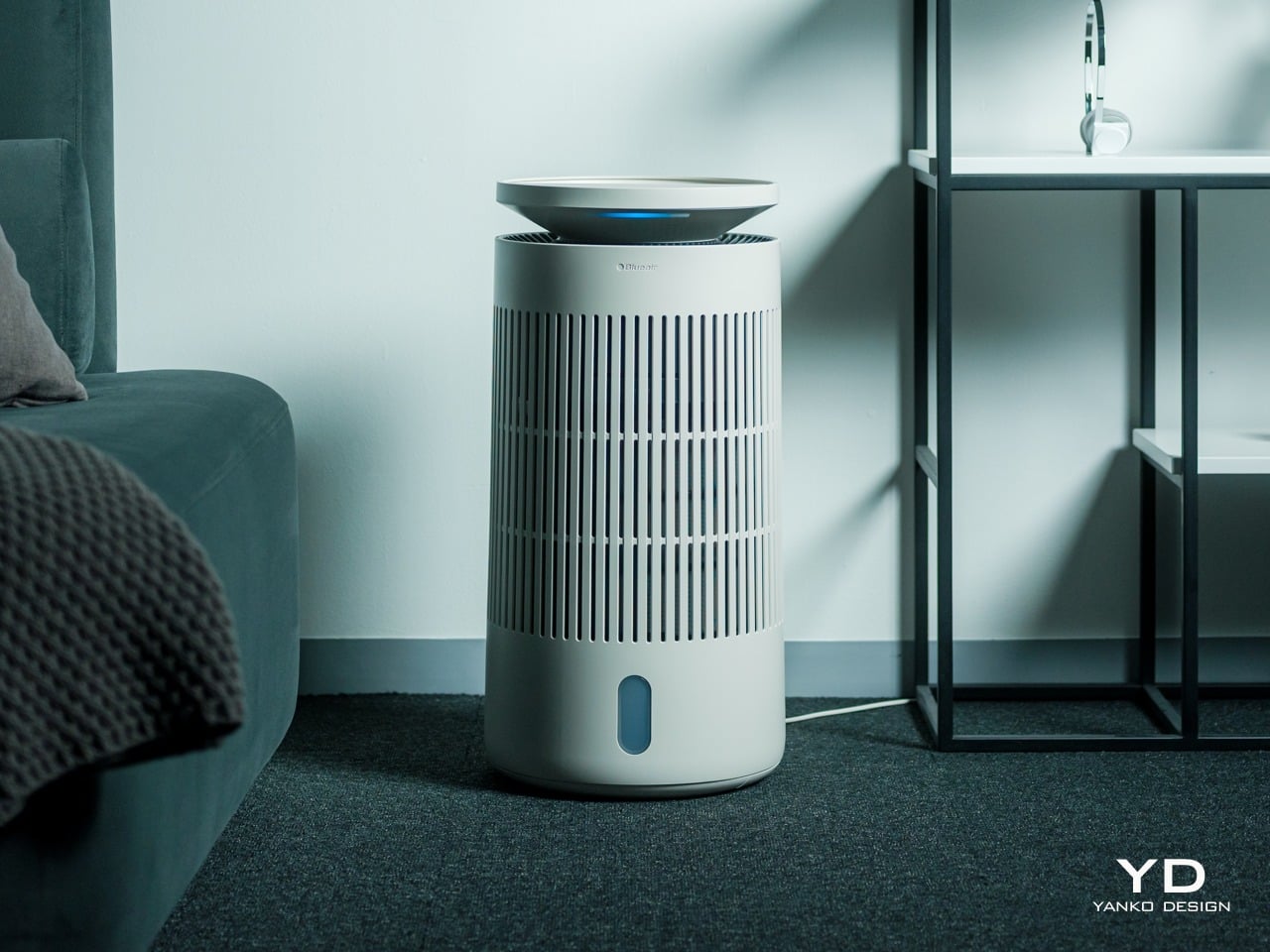
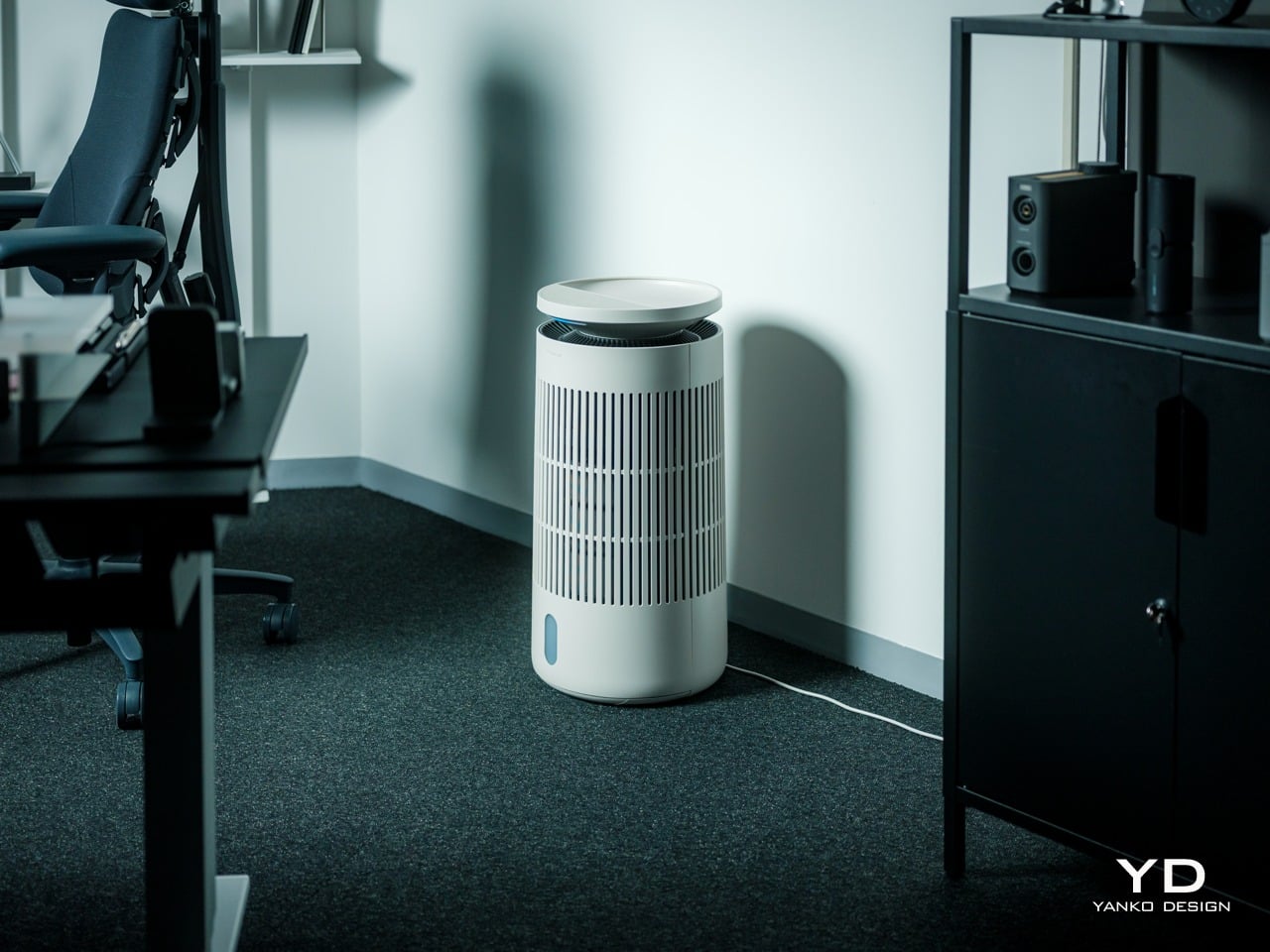
The first thing you notice about the Blueair 2‑in‑1 Pro is that it does not look like an appliance trying to hide. It is a cylindrical tower wrapped in evenly spaced vertical slats, finished in a soft off white that reads somewhere between warm beige and coastal linen, depending on the light. The proportions feel Scandinavian, tall enough to have presence but narrow without crowding the floor.

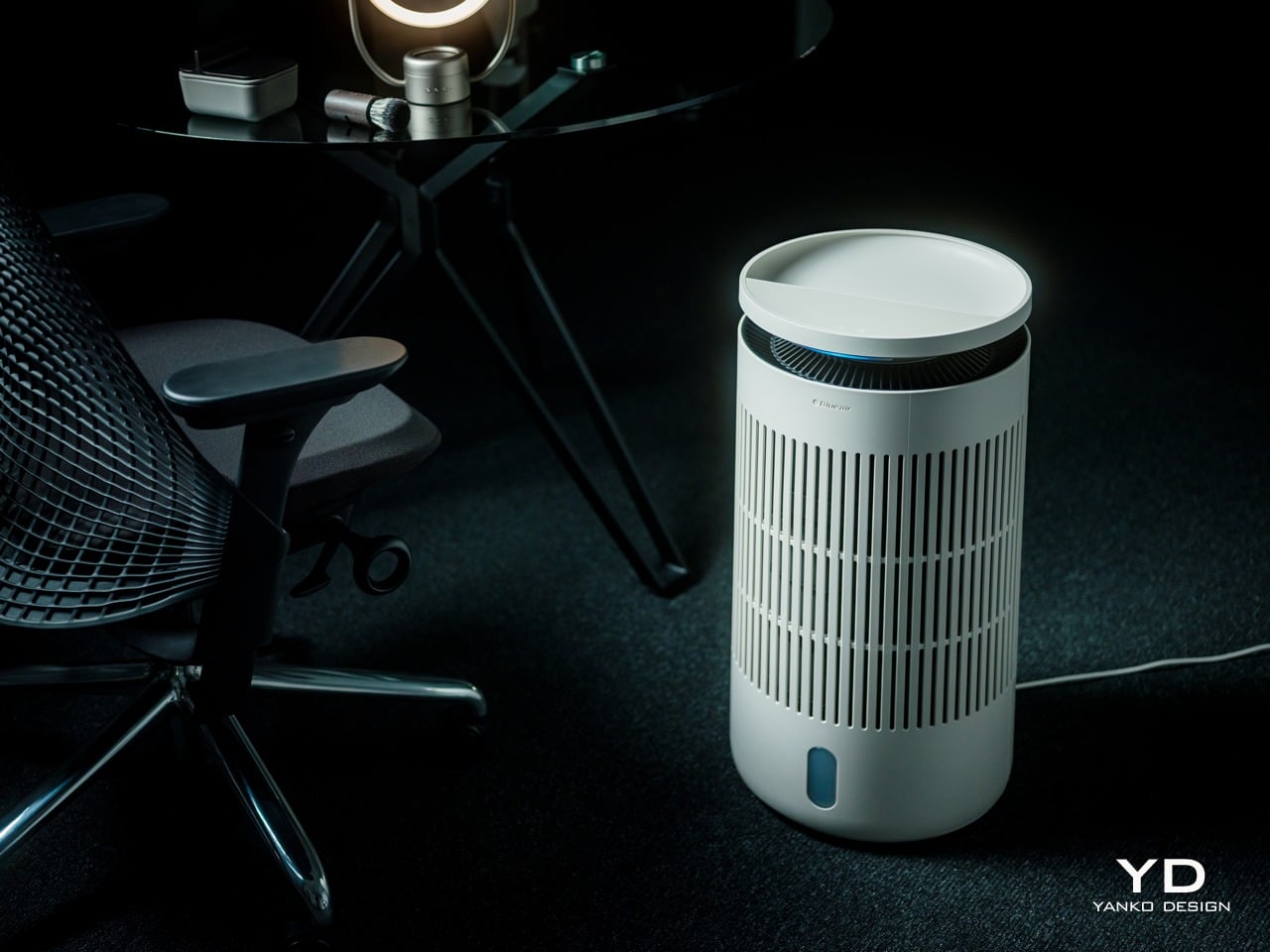
The top disc floats slightly above the body with a subtle gap, and when the device is running, a thin line of blue light glows in that gap, more like a bedside lamp than a status LED. The slats wrap 360 degrees around the body, which gives it a kind of architectural rhythm that works whether you see it from the front or the side.

Near the base, there is a small vertical window that shows the water level and projects mood lighting when enabled in the Blueair app, but it is narrow enough that it does not break the visual flow. The top disc itself is smooth and plate-like, with a matte finish that does not collect fingerprints. The material is still primarily plastic, but it is clearly chosen to feel refined rather than cheap. The matte finish softens reflections and resists the glossy sheen that makes a lot of gadgets look disposable.

The tower looks comfortable in different contexts. In a bedroom next to wood furniture and neutral textiles, it reads as another piece of the interior rather than a piece of tech parked temporarily. In a small office with dark carpet, floating shelves, and a desk chair, it sits in the corner without clashing with the more technical surroundings, which makes it easy to imagine moving between spaces. The sense you get is that someone thought about how this object would age in a room where it runs every night.

Ergonomics

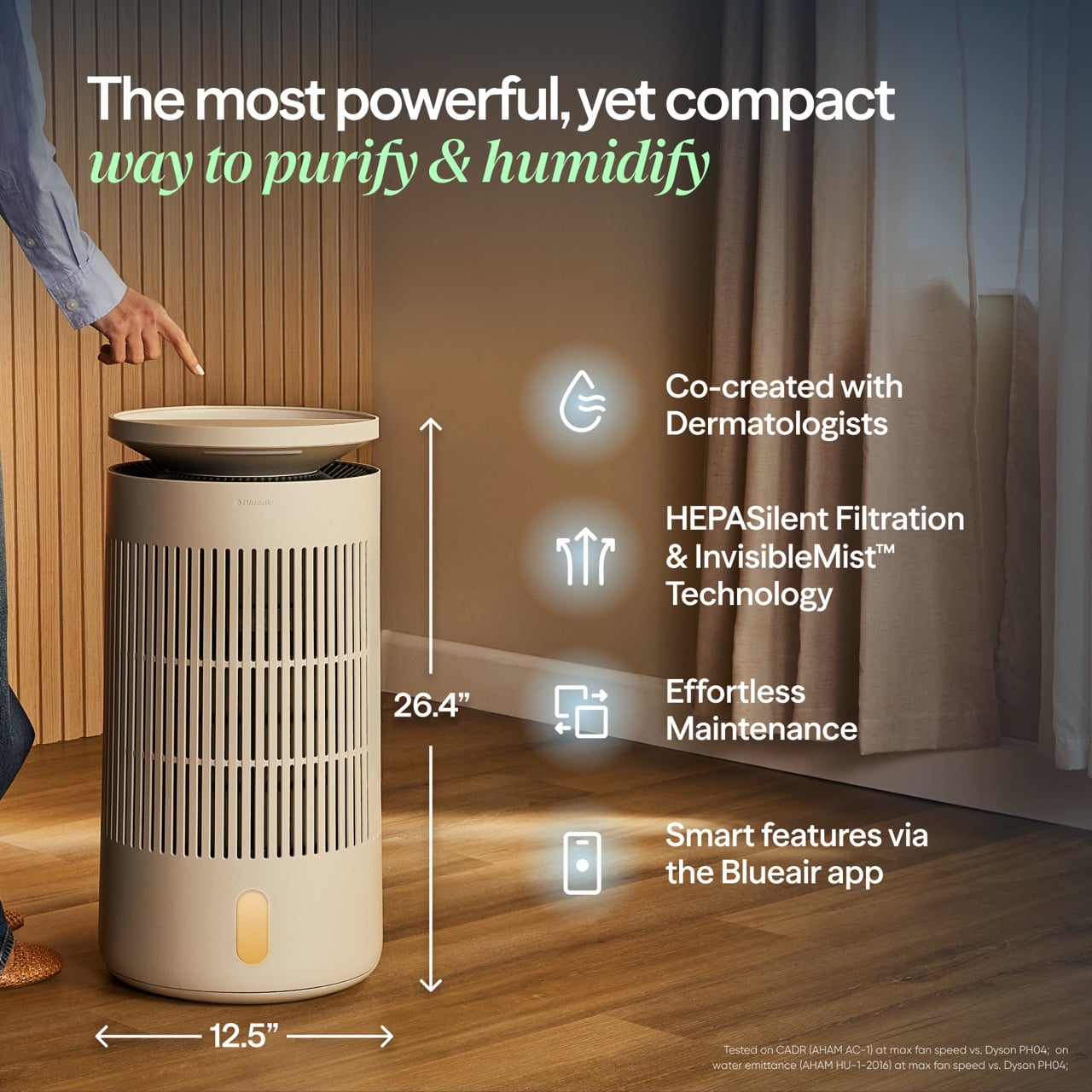
The Blueair 2‑in‑1 Pro is tall enough that you do not need to crouch to reach the controls, which sounds minor until you realize how many bedside devices force you to bend or kneel just to tap a button. The footprint is compact, roughly a foot in diameter, and the weight gives it enough stability that you can brush past it without worrying it will tip.

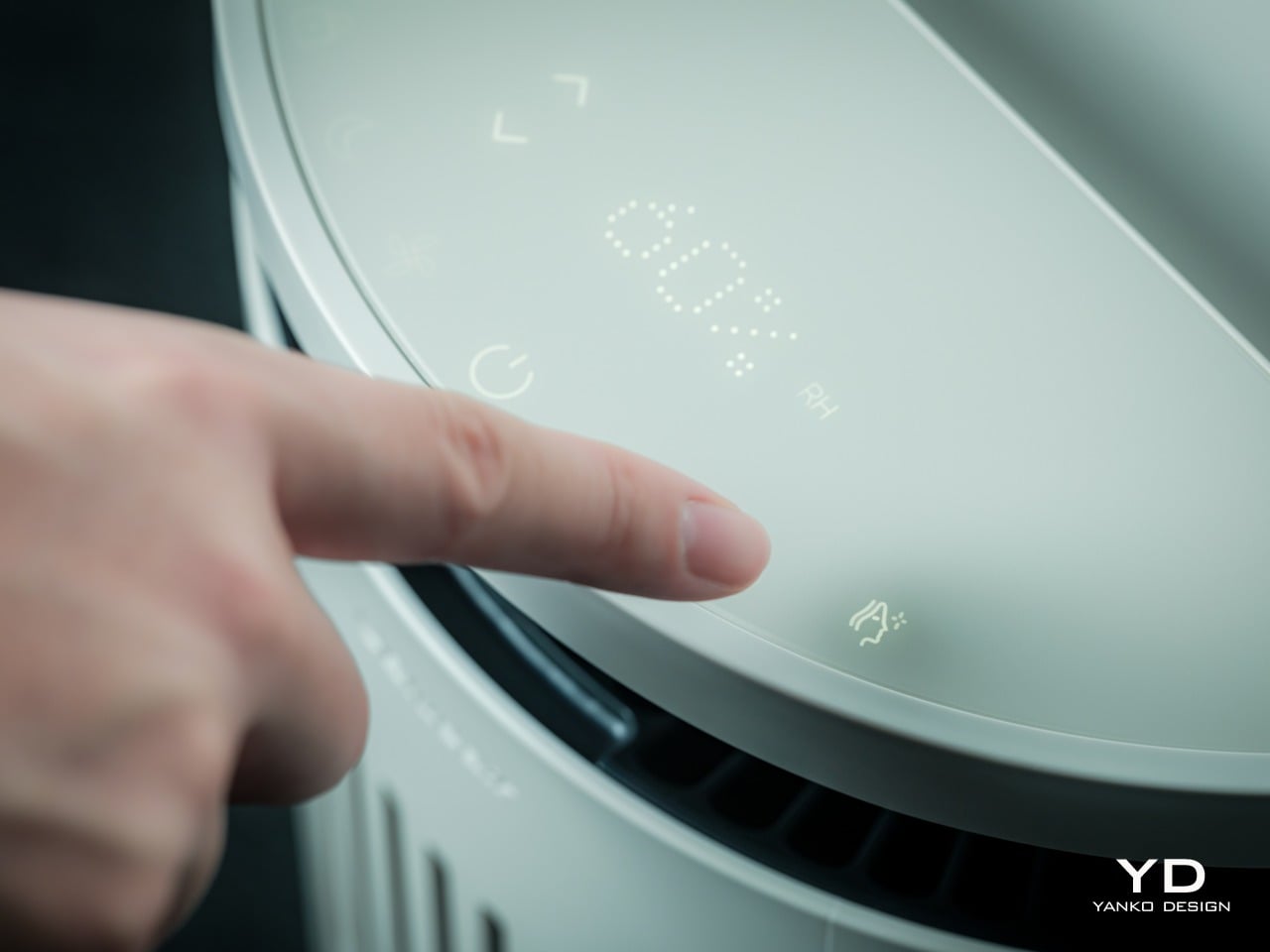
The top surface is where most of the interaction happens. A semi-circular ring houses clearly marked icons for power, fan speed, night mode, humidification toggle, and skin mode, along with indicators for air quality, humidity percentage, and water level. The layout is simple enough that you can understand it at a glance, so switching into auto mode or activating skin mode is a one-tap affair.

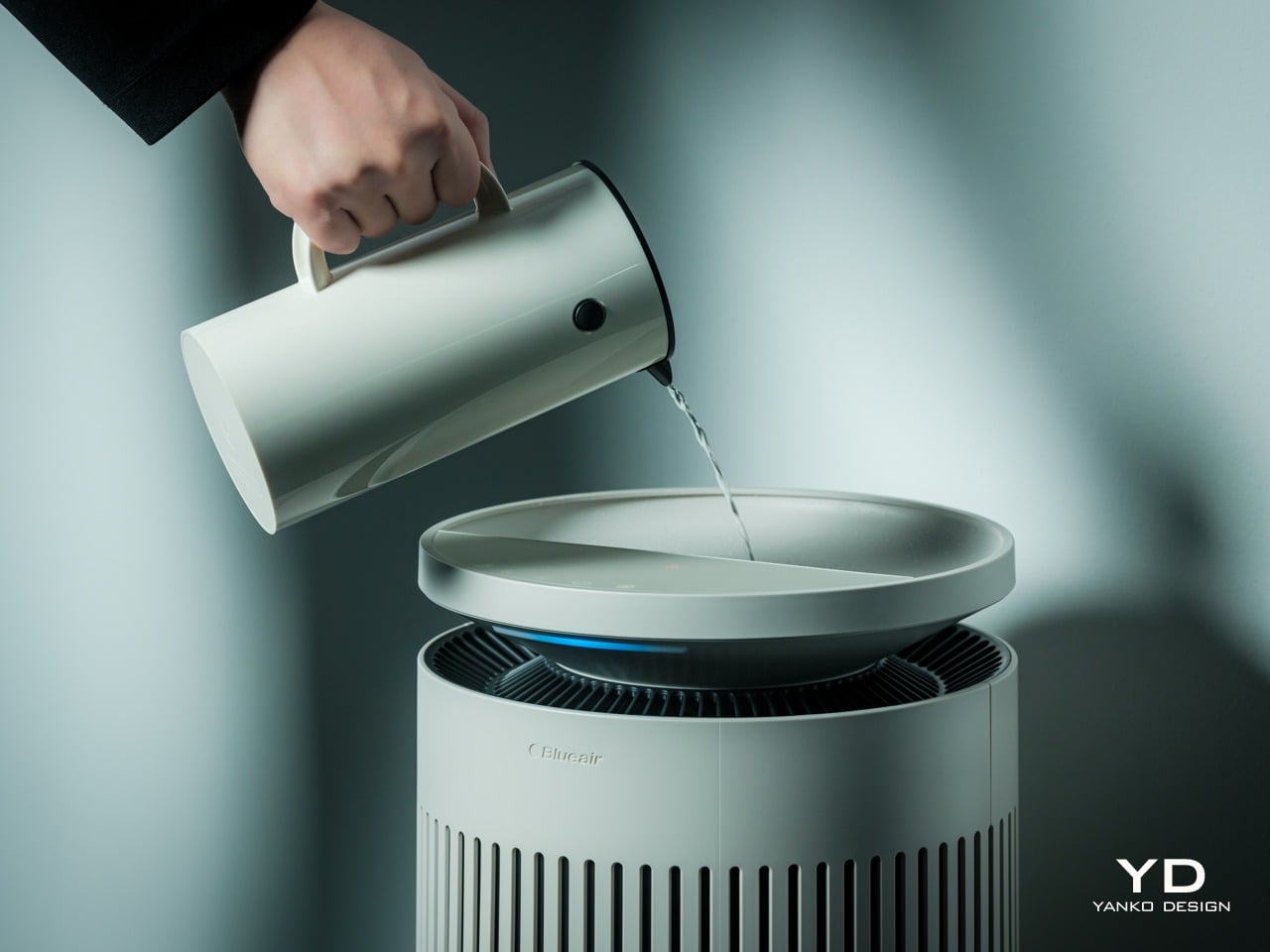
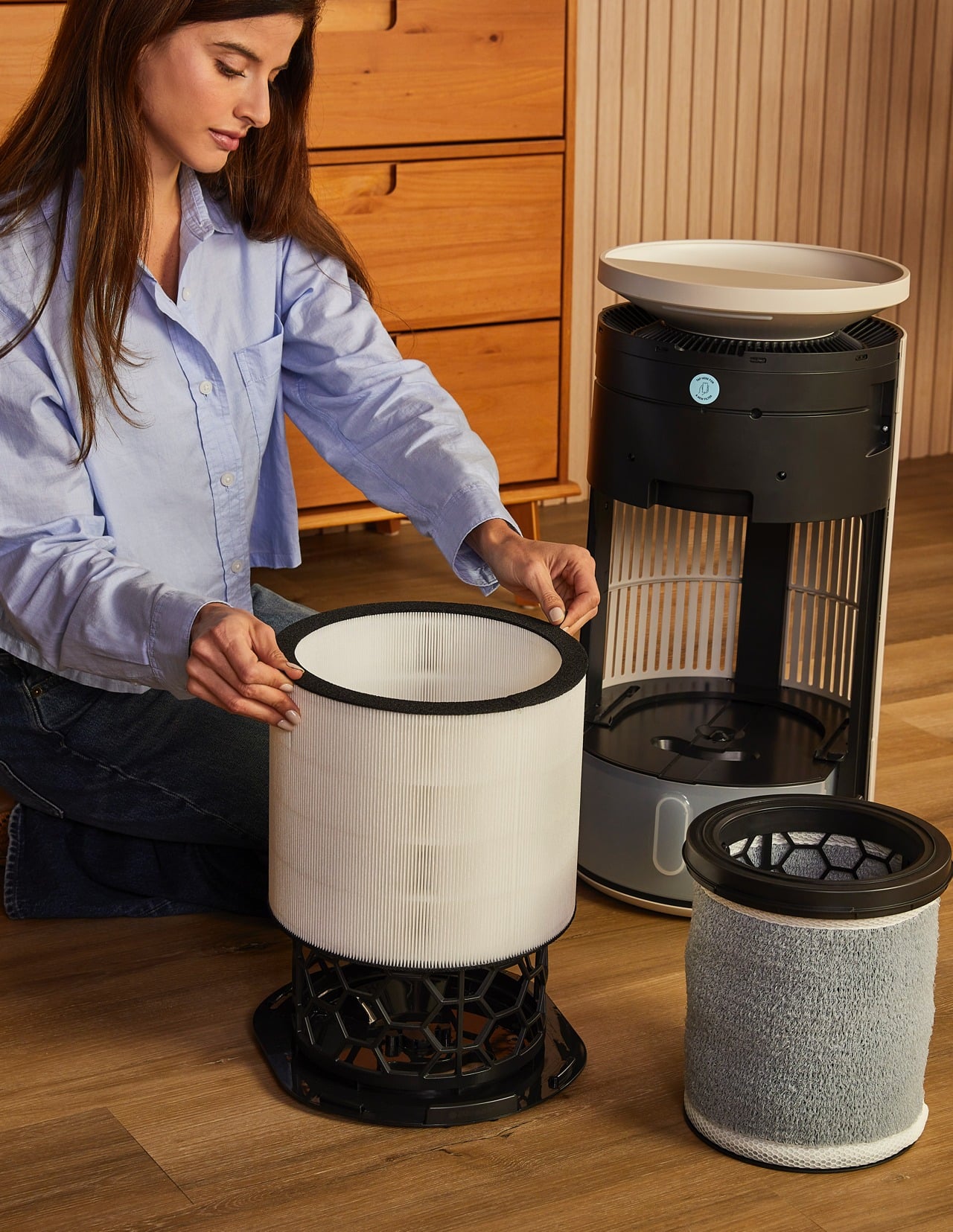
One of the most thoughtful ergonomic details is the top fill design. Most humidifiers require you to lift a heavy tank, carry it to a sink, fill it, then carefully carry it back and slot it into place, which gets old quickly and can be awkward if you have back or shoulder issues. The Blueair 2‑in‑1 Pro lets you simply lift the top disc slightly and pour water directly into the opening from a jug or carafe. The smart water sensor and real-time display remove worries by reminding you when the water level is low and alerting you when the tank is almost full.

It feels as easy as watering a houseplant, and for people who want to avoid bending and lifting, this small design choice makes day-to-day upkeep significantly less annoying. There is still the option to remove the tank entirely and fill it at a sink when you want to add a larger volume at once, but most of the time, the top fill is faster and easier.

Performance

Blueair boasts the 2-in-1 Pro Purify + Humidy as the most powerful of its kind, delivering balanced and superior performance in such a compact package. Compared to a leading competitor, its tests have proved it to offer 3x better purification and 2x cleaner humidification. Although we don’t have labs to verify these numbers, our own day-to-day use proved it to work as advertised.

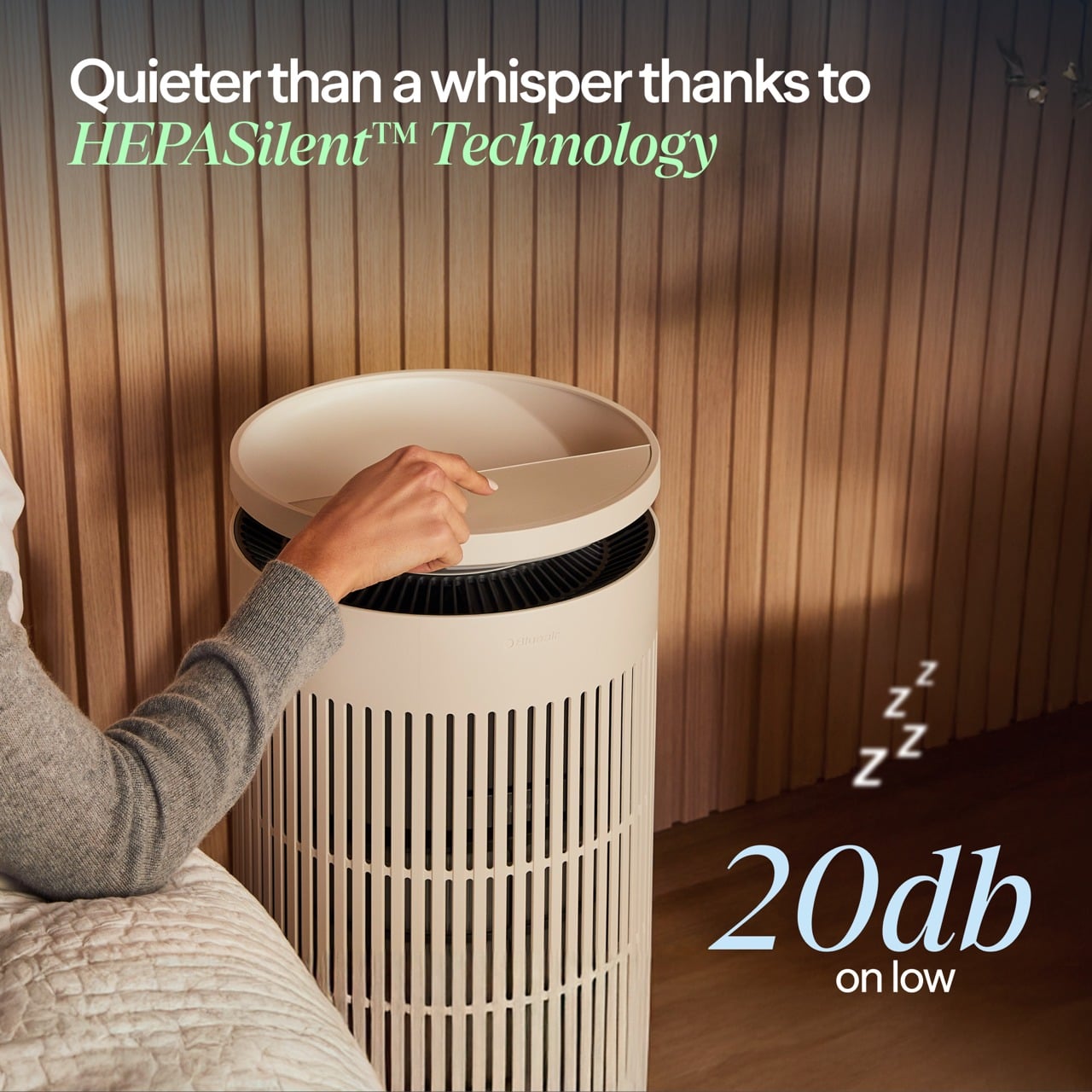
The Blueair 2‑in‑1 Pro is both a capable air purifier and a serious humidifier, which is a harder balance than it sounds. The purification side uses Blueair’s HEPASilent™ technology, which combines mechanical filtration with an electrostatic charge to capture fine airborne particles like dust, pollen, smoke, and volatile organic compounds. The intake and outlet are 360 degrees around the body, so it pulls air from all sides and pushes it back out clean.

The humidification uses evaporative technology that Blueair calls 360° InvisibleMist™. Instead of producing visible fog or mist, it adds moisture to the air in a controlled, gradual way that avoids white dust on furniture and damp spots on nearby surfaces. This matters especially in bedrooms and offices with electronics, books, or wood finishes, where you want comfortable air without worrying about residue or condensation.

The skin and beauty sleep focus is where the device starts to feel like something designed for wellness routines rather than just air quality. The dedicated skin mode keeps humidity in a range dermatologists typically recommend for skin comfort, roughly between 40-60%, and adjusts that target based on room temperature and time of day. At night, when your skin tends to lose more moisture, the device gently raises humidity levels.

In practice, this feels like setting skin mode before bed, going through your normal cleanse and treatment routine, and then falling asleep in a room that feels neither dry nor heavy. You do not wake up with that tight, parched feeling that dry winter air or overheated apartments tend to cause, and your skin does not feel irritated or raw the way it sometimes does when indoor air is harsh.

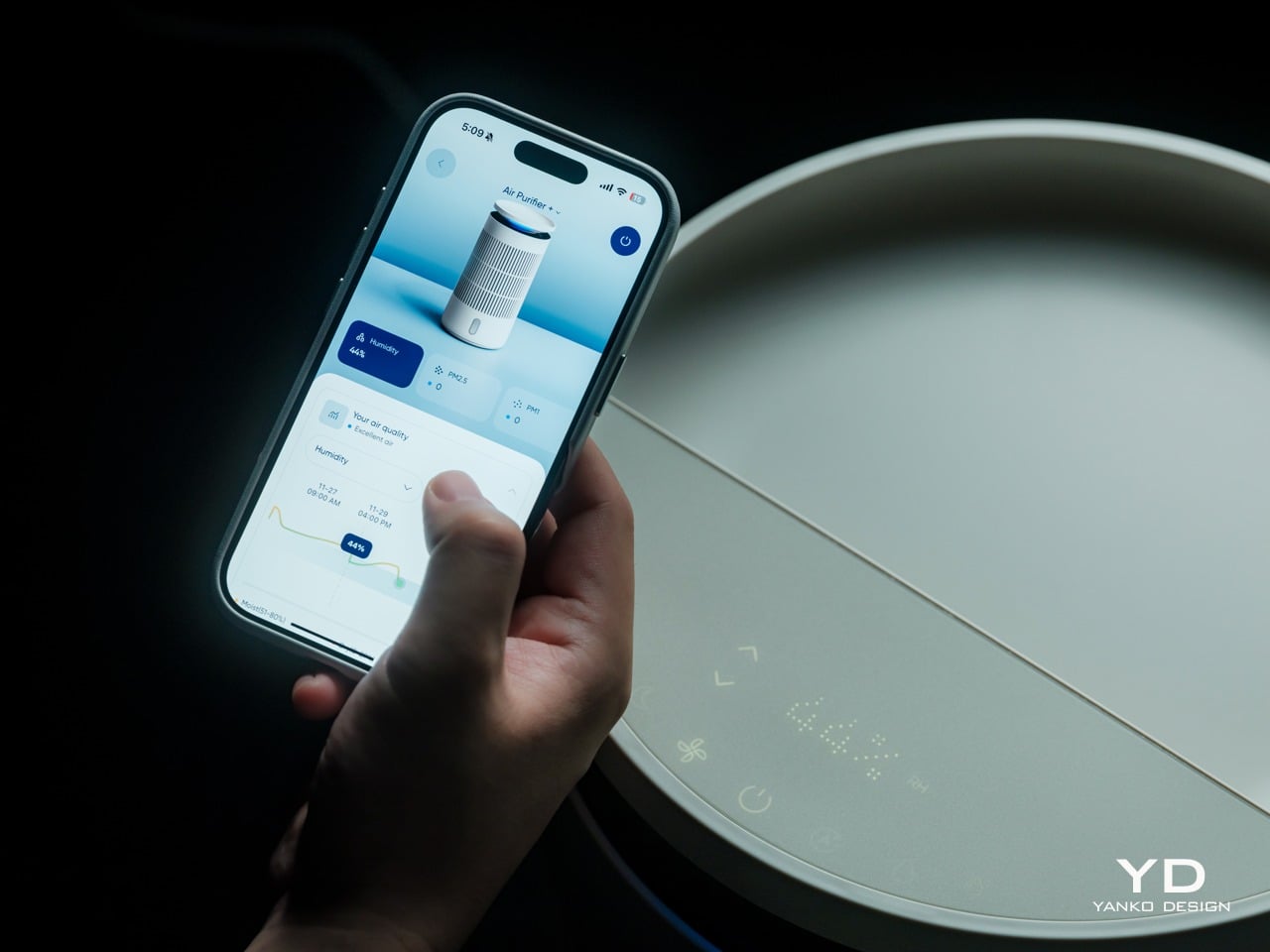
The Blueair app adds another layer of control and insight without being required for basic use. From your phone, you can set target humidity levels, create schedules for when the device runs, adjust display brightness, and choose between three mood lighting settings that turn the top ring into a warm, normal, or bright glow. You can also see air quality and humidity trends over time.

That said, most of the time you can leave it in auto or skin mode and let it manage itself quietly in the background. The app is there when you want precision or automation, but the device does not force you into it for everyday operation, which feels like the right balance for a bedroom appliance.

Noise is surprisingly gentle at lower speeds. In night mode, the sound profile is closer to a soft fan than a mechanical hum, which many people find soothing as a kind of background white noise. Higher speeds are audibly stronger when the device detects poor air quality and ramps up to clear it faster, but the ability to drop back into quiet operation keeps it compatible with light sleepers.

The device also includes several behind-the-scenes hygiene features that keep the humidifier side fresh over time. A built-in UV pump recirculates water to help inhibit bacterial growth, a wick dry mode runs automatically when the tank is empty, or the device goes to standby to prevent musty smells, and a water refresher module made of activated carbon helps absorb minerals and reduce discoloration.

Sustainability

Blueair is a Certified B Corp, which signals that the company has passed third-party audits for social and environmental impact. This does not magically make the device carbon neutral or eliminate its footprint, but it does suggest that longevity, energy use, and materials were part of the design conversation rather than afterthoughts. For a device designed to run every night, that kind of corporate positioning matters.

The 2‑in‑1 Pro is built around long-life, user-replaceable components. Both the air filter and the humidifier wick are rated for up to twelve months of use, which reduces the frequency of replacements and the amount of waste compared to devices that require new cartridges every few weeks. The wick is machine washable, which extends its life even further and keeps it feeling fresh without needing to buy a new one prematurely.

The hygiene features also support sustainability indirectly. A humidifier that stays clean and pleasant to use is less likely to be abandoned in a closet after one winter, which means fewer devices being replaced prematurely. The UV pump, wick dry mode, and water refresher all work together to keep the system feeling fresh, which encourages long-term ownership.

The housing is still primarily plastic, and this is an electrically powered device, so it has an environmental cost. But combining two machines into one does reduce the total number of housings, motors, and power supplies needed compared to buying a purifier and a humidifier separately. For someone who needs both functions, the 2‑in‑1 approach is a more efficient use of materials and space.

Value

The Blueair 2‑in‑1 Pro Purify + Humidify sits firmly in the premium category with its price tag, which is a real investment for a bedroom appliance. That figure makes more sense when you consider that it replaces a standalone purifier, a standalone humidifier, and in some ways a separate wellness gadget, while also adding design intelligence and app control that many basic units lack.

Space is part of the value equation. In bedrooms and small home offices, floor space and visual calm are both precious. Having one well-designed column instead of multiple mismatched boxes reduces clutter, simplifies cable management, and makes the room feel more intentional. For design-minded homeowners, that reduction in visual noise is a real form of value, not aesthetic preference alone.

The skincare and beauty sleep focus adds another dimension to the value story. For people already spending money on serums, moisturizers, and treatments, optimizing the air they sleep in is a logical extension of that investment. The fact that the device can quietly maintain a skin-friendly humidity range while filtering out airborne irritants makes it feel like a wellness tool that supports the rest of your routine.

Verdict

The Blueair 2‑in‑1 Pro Purify + Humidify is a carefully considered column that manages to be a capable purifier, a gentle humidifier, and a sleep-friendly presence without ever looking or feeling like a clinical appliance. It blends into bedrooms and small offices with the kind of visual ease that makes you forget it is technology, and the ergonomic details like top fill refilling and intuitive controls make it easy to live with day to day.

The 2‑in‑1 Pro makes the most sense for people who care about both design and wellness, who want their bedroom or office to feel like a calm, supportive environment, and who appreciate when technology quietly improves their routines without demanding constant attention. For that audience, this feels less like a splurge and more like a thoughtful upgrade to the air they live in every day.

Click Here to Buy Now: $400 $499.99 ($99.99 off, use coupon code “YANKO20”). Hurry, deal ends in 48-hours!

The post Blueair 2‑in‑1 Pro Purify + Humidify Review: Clean Air, Skin Care in One first appeared on Yanko Design.

When Fashion Becomes a Safety Net: The Jacket That’s a Tent

What if your jacket could save your life? Not in the metaphorical sense, but literally. Tokyo-based fashion student Yoon Myat Su Lin has designed something that sounds like it belongs in a sci-fi movie but is rooted in very real human need. It’s called Shelter Wear, and it’s exactly what it sounds like: a wearable garment that transforms into a functional tent.

The concept didn’t come from a design studio brainstorm or a trendy pitch deck. It came from memory and trauma. Yoon experienced an earthquake in Myanmar, where she witnessed people suddenly displaced, left scrambling for safety without any temporary shelter. That image stuck with her. She started thinking differently about what clothing could do, beyond looking cool or expressing identity.

Designer: Yoon Myat Su Lin

What if the thing you’re already wearing could become the thing you desperately need? And that’s where Shelter Wear gets interesting. It challenges the entire idea of what fashion is supposed to be. We’re used to clothes being decorative, seasonal, expressive. But Yoon flips that script. She’s asking: why can’t a garment be infrastructure? Why can’t your outfit double as your emergency kit?

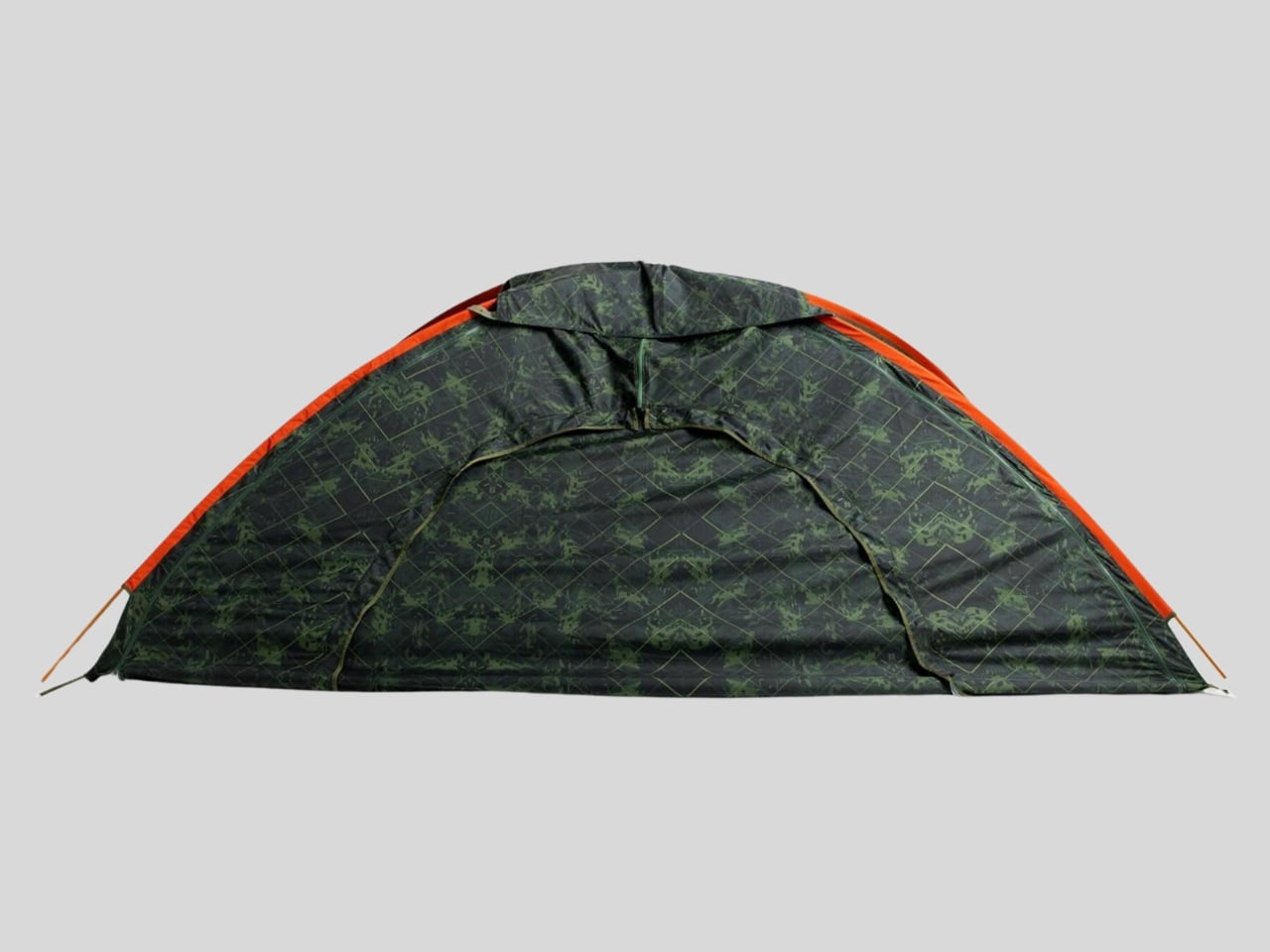
When you first look at Shelter Wear, it reads as a structured, utilitarian vest. Think sleeveless outerwear with a high protective collar and some seriously intentional paneling. It’s got that techwear aesthetic, the kind of thing you’d see on someone who’s into urban exploration or just really likes pockets. But here’s where it gets wild: those sleeves? They’re detachable backpacks. You’re literally wearing your storage.

Then comes the transformation. Unclip a few buckles, unfold the structure, and suddenly you’re inside a triangular tent that expands around your body. It’s not a gimmick or a prototype that barely works in controlled conditions. It’s a legitimate shelter that offers protection when everything else has failed. The tent resembles a wide skirt when worn, blending into the garment’s silhouette until you actually need it.

This isn’t about camping trips or festival fashion. This is crisis design. It’s for the moments when help hasn’t arrived yet, when infrastructure has collapsed, when all you have is what’s on your body. In those first critical hours after a disaster, traditional emergency supplies might be inaccessible. But if you’re already wearing your shelter, you’ve bought yourself time and safety. Yoon drew inspiration from designer Aojie Yang, who also works in the space of functional, transformative fashion. But where some conceptual designs feel distant from real application, Shelter Wear feels grounded. It’s portable without being bulky. It’s practical without sacrificing design integrity. And it makes you rethink the relationship between body and architecture.

Because that’s really what this is about. The body as the first architecture. When buildings fall, when homes are destroyed, your body remains. Shelter Wear treats that body as a moving site of refuge. It’s a radical reframing of what clothing infrastructure can mean in vulnerable communities. The design also won the YKK Special Prize at the 25th YKK Fastening Award, which makes sense when you think about the engineering involved. This isn’t just fabric and good intentions. It’s ripstop materials, strategic folding mechanisms, and fasteners that need to hold up under actual emergency conditions.

But beyond the technical specs, Shelter Wear is a gesture of solidarity. It acknowledges that displacement is real, that climate disasters are increasing, that millions of people worldwide face housing insecurity. Instead of looking away, Yoon designed toward that reality. Does it solve homelessness? No. Will it prevent earthquakes? Obviously not. But it does something equally important: it expands our imagination of what design can do. It proves that fashion students in Tokyo are thinking about Myanmar earthquakes, about refugee crises, about what happens when safety disappears. And they’re making things that might actually help. That’s the power of design when it refuses to just be decorative. When it insists on being useful, urgent, and human.

The post When Fashion Becomes a Safety Net: The Jacket That’s a Tent first appeared on Yanko Design.

Dolby and LG introduce a modular home audio system for CES 2026

LG is teaming up with Dolby for a new collection of speakers that the companies are unveiling ahead of CES 2026. The LG Sound Suite features a modular lineup the H7 soundbar, M7 and M5 wireless surround speakers and the W7 subwoofer. The speakers can be combined in more than two dozen different configurations, from a pair to a full 13.1.7 channel surround sound home theater setup.

The main pitch of the LG Sound Suite is its application of Dolby Atmos FlexConnect. This is the audio brand's tech for optimizing sound from wherever wireless speakers are placed. It's meant to deliver optimal sound even from unusual locations, even when you're limited by outlet locations, furniture placement or other quirks of a room's layout. The collaboration with LG brings FlexConnect to a soundbar for the first time. When the H7 soundbar is used as the lead device, the suite will bring Dolby Atmos FlexConnect audio to any television. In a future software update, LG will also bring support for Dolby Atmos FlexConnect directly to some of its premium TVs, including select 2025 models.

This article originally appeared on Engadget at https://www.engadget.com/audio/speakers/dolby-and-lg-introduce-a-modular-home-audio-system-for-ces-2026-010000126.html?src=rss

This 260-Meter Skyscraper Is Dividing Switzerland’s Most Iconic Alpine Village

The Swiss alpine village of Zermatt has never seen anything quite like this. Heinz Julen, a local hotelier and designer, has unveiled plans for a 260-meter skyscraper that would pierce the sky just 800 meters from the village entrance. The 65-story tower, called Lina Peak, has sparked fierce debate in a community known for its car-free streets and fiercely protected mountain aesthetic. Julen presented his vision to a packed public meeting in mid-November 2025, revealing a structure that would become Switzerland’s tallest building. The tower would rise from a compact 40-by-40-meter footprint on farmland he already owns, sitting at an elevation of 1,500 meters with uninterrupted views of the iconic Matterhorn.

The project addresses a very real problem. Zermatt’s population swells from 6,000 permanent residents to over 40,000 during peak tourism seasons. Property prices have gone stratospheric, vacancy rates hover near zero, and seasonal workers struggle to find anywhere to live. Julen himself faces this challenge annually as a hotel owner, scrambling to house his staff. Employers in the tourism industry consistently struggle to provide affordable accommodation for seasonal workers, as local real estate is prohibitively expensive and vacancies are almost nonexistent.

Designer: Heinz Julen

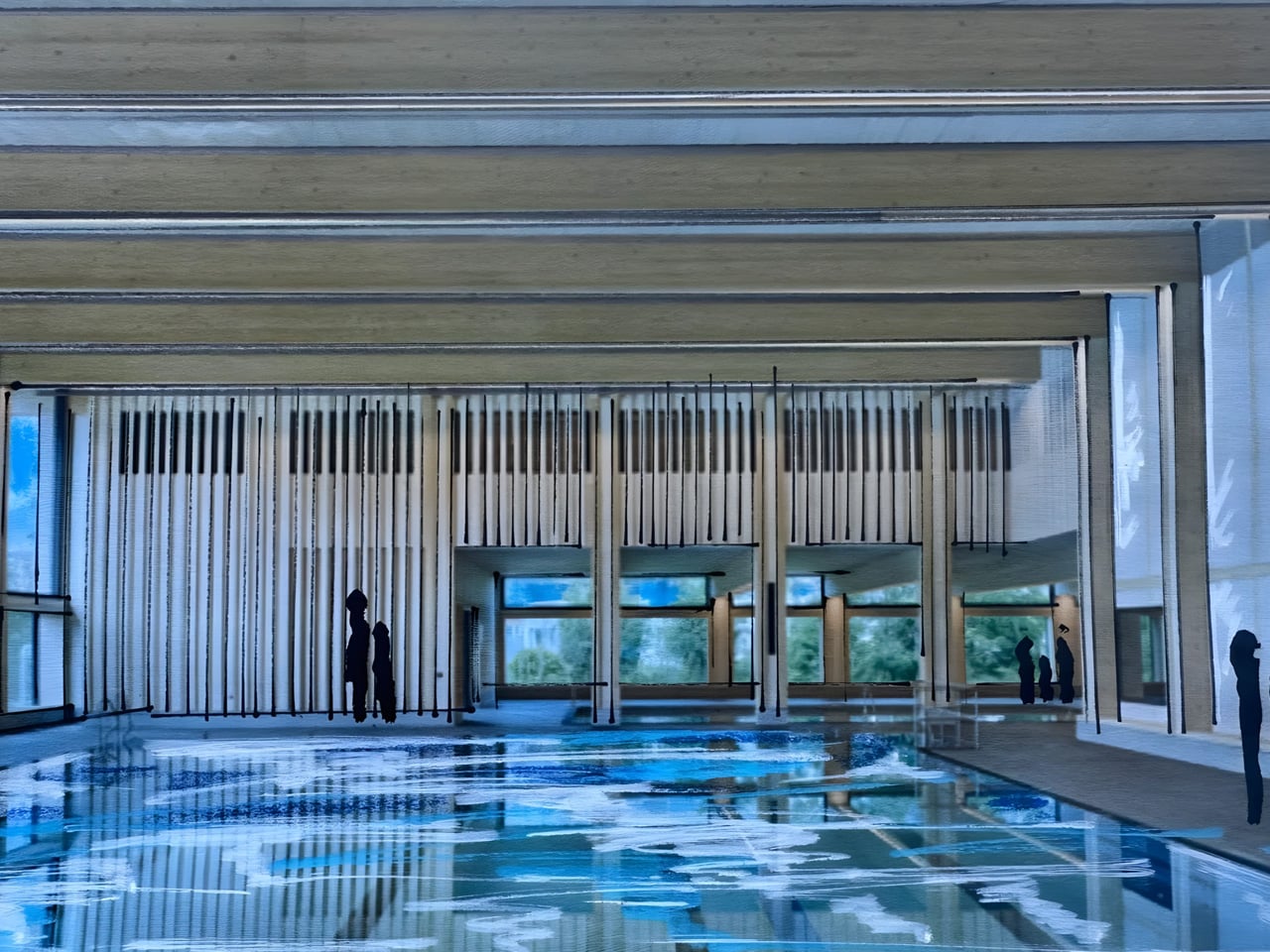
His solution thinks vertically. Floors 2 through 32 would provide affordable housing for locals and seasonal workers, while floors 33 through 62 would contain luxury apartments aimed at wealthy foreign buyers. The ground levels would pack in 1,000 parking spaces, a 2,500-seat concert hall, retail shops, restaurants, a sports center, a swimming pool, and a daycare center. The comprehensive vision transforms what could be a simple residential tower into a multi-functional hub for the entire community.

Julen frames Lina Peak as a “vertical village” that builds up rather than sprawling outward. He argues that compacted construction protects the soil and reduces environmental footprint while giving seasonal workers a fair shot at decent housing. The estimated CHF 500 million project includes price controls designed to prevent speculation, with housing costs expected to rise no faster than two percent annually. From his perspective, concentrating development in one place reduces land occupation and allows better management of local resources.

The controversy centers on whether a towering glass structure belongs in one of Europe’s most picturesque Alpine settings. Zermatt has built its reputation on preserving traditional mountain architecture, and the Matterhorn dominates every postcard. Julen insists the location sits outside direct sightlines from the village or prime viewpoints, claiming it won’t ruin the iconic views. The idea of dropping a skyscraper in the middle of such an open, scenic setting represents a stark departure from everything Zermatt has stood for architecturally.

Critics question whether luxury apartments for foreign buyers truly solve local housing problems or simply fuel further speculation and inflate property values. Past attempts at alpine skyscrapers in Switzerland have failed, including a proposed 381-meter tower at another mountain village that never materialized. Julen has long been known for unconventional designs in the area, and this proposal pushes boundaries further than ever before. Whether Lina Peak will transform Zermatt’s future or remain an ambitious sketch depends on navigating complex planning approvals and winning over a deeply divided community. The vision aims for completion by 2034, though the path forward remains anything but certain.

The post This 260-Meter Skyscraper Is Dividing Switzerland’s Most Iconic Alpine Village first appeared on Yanko Design.

China reportedly has a prototype EUV machine built by ex-ASML employees

A report from Reuters claims that scientists in China have created a prototype of a machine that could eventually be used to produce semiconductor chips capable of powering artificial intelligence. Sources told the publication that a team in Shenzhen completed the prototype of an extreme ultraviolet lithography machine earlier this year and it is allegedly now undergoing testing. The EUV machine was reportedly made by former engineers from Dutch semiconductor supplier ASML. Reuters states that China is targeting production of its own EUV chips beginning in 2028, although other experts have projected 2030 as a more likely date. 

EUV is a supremely complicated bit of technology; we have an explainer below that gets into some of the details. It is at the heart of the chips made by companies such as Intel and TSMC, so any company trying to compete would also need access to EUV. Although the Chinese prototype is not yet making chips, it is reportedly able to generate the extreme ultraviolet light needed for chip manufacturing.

If confirmed, this development would put China in control of tech much sooner than analysts had previously expected. To date, EUV has largely been kept out of reach by Western companies and used as a bargaining chip by the US government. Chinese President Xi Jinping has placed a high priority on the country being able to produce its own semiconductors. "The aim is for China to eventually be able to make advanced chips on machines that are entirely China-made," a source told Reuters. "China wants the United States 100 percent kicked out of its supply chains."

This article originally appeared on Engadget at https://www.engadget.com/big-tech/china-reportedly-has-a-prototype-euv-machine-built-by-ex-asml-employees-235833756.html?src=rss

Volvo XC60 T8 AWD Ultra Review: Scandinavian Calm in a Segment That Prefers to Shout

PROS:


  • Exceptional interior material quality – Nappa leather, open-pore wood, and real aluminum trim create a tactile experience that rivals vehicles costing significantly more

  • 455 hp with 32-35 miles of EV range – Strong plug-in hybrid performance covers daily commutes on electric power while delivering sports sedan acceleration when needed

  • Air suspension delivers outstanding ride comfort – The Ultra's adaptive suspension absorbs road imperfections while maintaining composed handling at highway speeds

  • Timeless Scandinavian design – Clean lines and understated styling will age gracefully, avoiding the dated look that trend-chasing designs often develop

  • Comprehensive standard equipment – Features like premium audio, advanced driver assistance, and the panoramic roof come included where competitors charge extra

CONS:


  • Infotainment requires too many menu taps – Basic functions like odometer readings are buried in the interface, and response times lag behind the best German systems

  • Premium pricing approaches $80k optioned – The T8 Ultra's as-tested price positions it against well-equipped German rivals with stronger brand prestige

RATINGS:

AESTHETICS
ERGONOMICS
PERFORMANCE
SUSTAINABILITY / REPAIRABILITY
VALUE FOR MONEY

EDITOR'S QUOTE:

The XC60 T8 Ultra proves that restraint can be its own form of luxury. In a segment where everyone is shouting, Volvo built something worth listening to.


The luxury compact SUV segment has become an arms race of aggressive styling, oversized grilles, and angular creases that shout for attention. Volvo refuses to participate. The 2026 XC60 T8 AWD Ultra arrives as a deliberate counterpoint, a vehicle that communicates confidence through restraint rather than visual aggression. This is Scandinavian design philosophy made tangible: every surface, every proportion, every material choice serves a purpose beyond mere aesthetics. The result is a plug-in hybrid that feels like a quiet room in a noisy building. Where competitors deploy sharp edges and exaggerated haunches, Volvo deploys calm.

Designer: Volvo

The XC60 occupies an interesting position in automotive design language. It neither chases trends nor ignores them entirely. Instead, it filters contemporary expectations through a distinctly Nordic lens, one that values negative space as much as positive form. The T8 AWD Ultra represents the fullest expression of this philosophy, combining Volvo’s highest specification levels with a powertrain that delivers 455 horsepower while maintaining the ability to commute silently on electric power alone. This duality, performance capability wrapped in visual serenity, defines the vehicle’s character. The tension between these elements creates something more compelling than either would achieve independently.

What makes the XC60 significant from a design perspective extends beyond surface treatment. The vehicle represents a mature interpretation of what luxury means in an era of environmental awareness and digital saturation. Rather than adding complexity, Volvo has systematically removed it.

Exterior Form Language

The XC60’s silhouette reads as a refined two-box shape with short overhangs and an upright tail. This proportion feels deliberately conservative compared to the swooping fastbacks and coupe-like rooflines that dominate the segment. The shoulder line runs cleanly from the Thor’s Hammer headlights to the vertical taillights, creating visual length without dramatic surfacing. Wheels ranging from 20 to 21 inches fill the arches appropriately without overwhelming the body. The overall effect suggests competence rather than performance, substance rather than flash.

Volvo’s signature lighting elements anchor the design. The Thor’s Hammer LED headlights have become as recognizable as BMW’s kidney grilles or Audi’s rings.

The 2026 refresh brings a cleaner grille treatment that echoes the larger XC90, with diagonal bar elements replacing previous iterations. Black internal housings within the headlight assemblies add depth and modernity without requiring additional brightwork. The lower fascia integrates real airflow openings at the corners, avoiding the fake vent epidemic that plagues the segment. Parking sensors and the forward camera system disappear into the design rather than appearing as afterthoughts. The front face communicates premium positioning through execution quality rather than aggressive styling, a distinction that matters as the vehicle ages. Designs that rely on current trends date quickly. Designs that prioritize proportion and finish quality remain relevant longer.
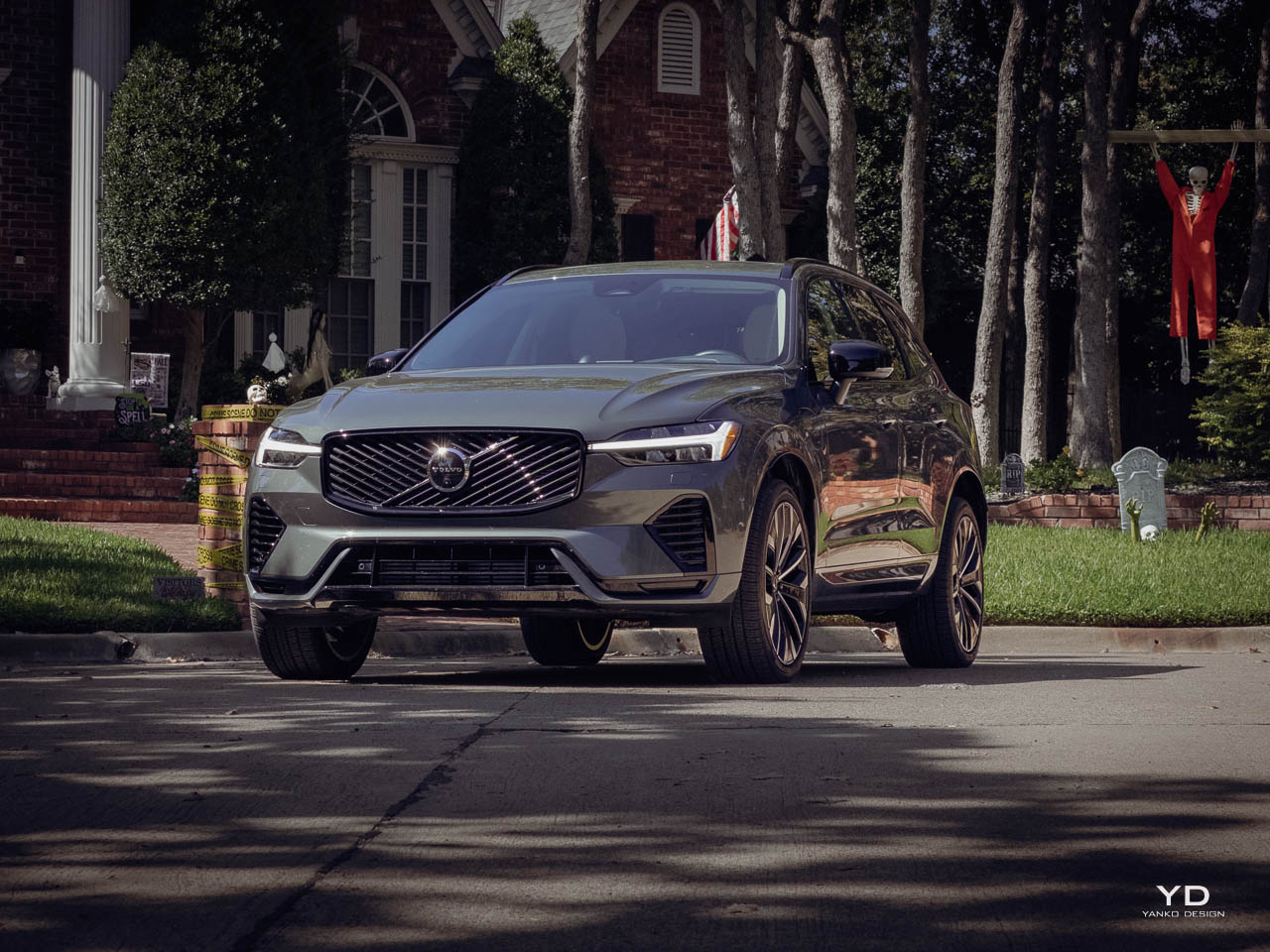
In profile, the XC60 reveals its proportional confidence. The greenhouse maintains a traditional three-box rhythm with proper A, B, and C pillars rather than the floating roof illusions that have become common. Window surrounds in chrome or black depending on specification provide subtle accent without excessive ornamentation. Roof rails sit low and functional. The overall side view could almost be mistaken for a wagon at certain angles, a reference to Volvo’s estate car heritage that feels intentional rather than accidental.

The rear design employs tall, smoked LED taillights that climb the D-pillars in a signature pattern. VOLVO block lettering spans the tailgate cleanly. T8, Recharge, and AWD badging identifies the powertrain without cluttering the surface. A subtle diffuser-style lower bumper treatment with integrated reflectors replaces visible exhaust outlets, acknowledging the plug-in hybrid’s ability to operate without combustion. The paint palette reinforces the design philosophy: Crystal White Metallic, Onyx Black Metallic, Denim Blue, and Vapour Grey. These colors reward close inspection rather than demanding attention from across a parking lot.

Interior Architecture

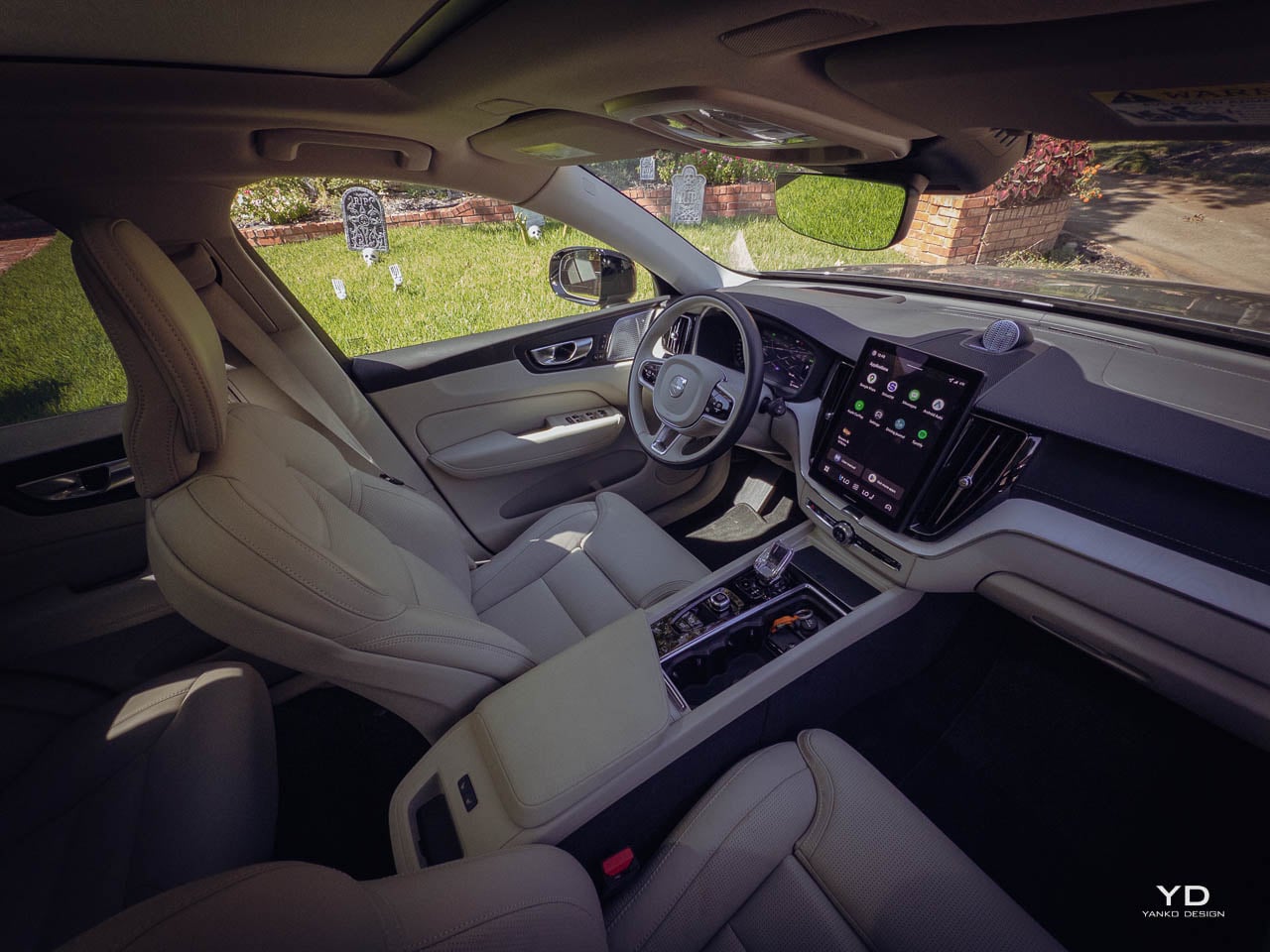
Opening the door reveals the XC60’s primary design statement. Where the exterior whispers, the interior speaks clearly about Volvo’s priorities. The immediate impression is of a cocoon, a space designed for occupants rather than spectators. Surfaces flow horizontally across the dashboard, creating visual width and calm.
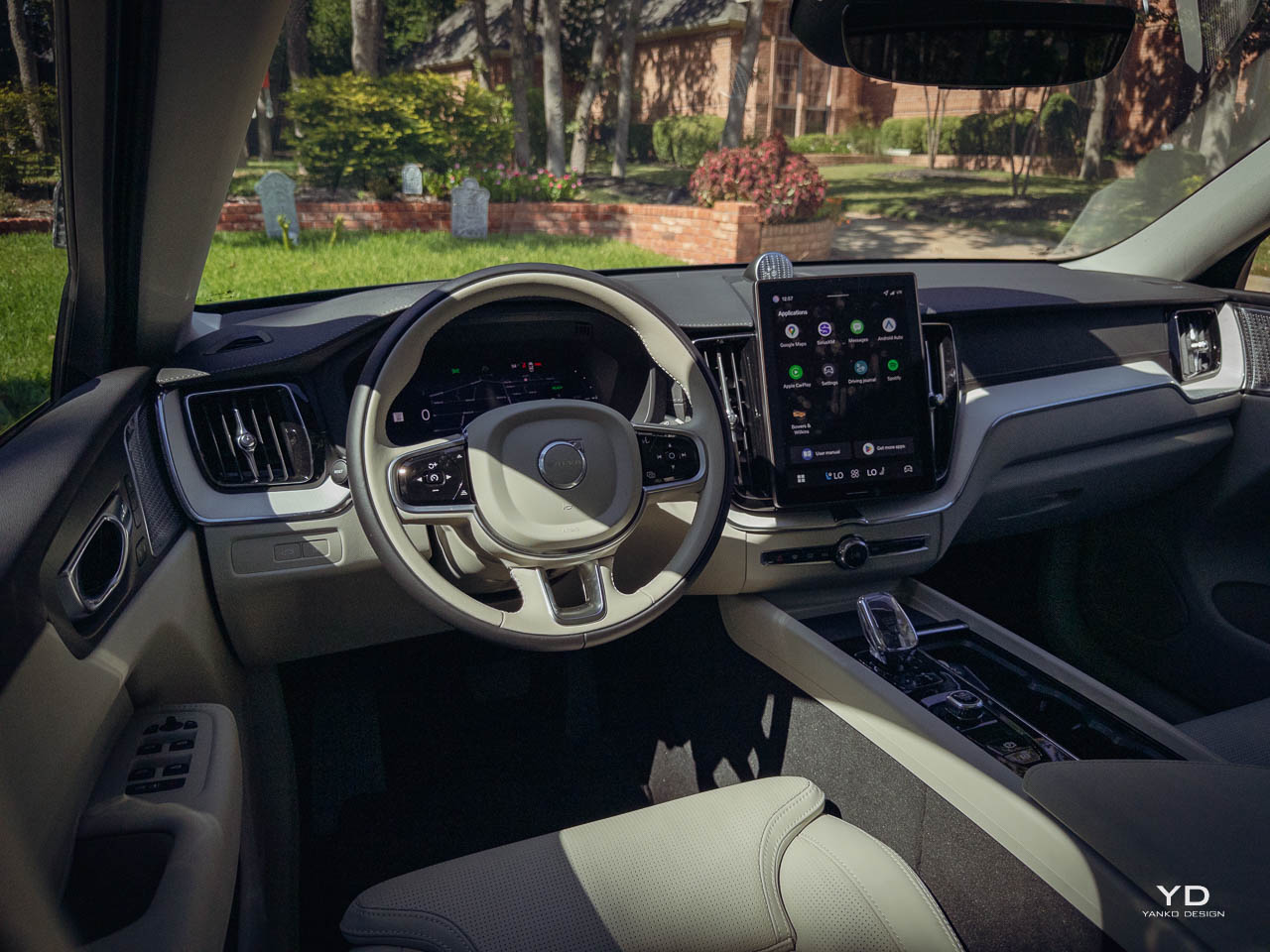
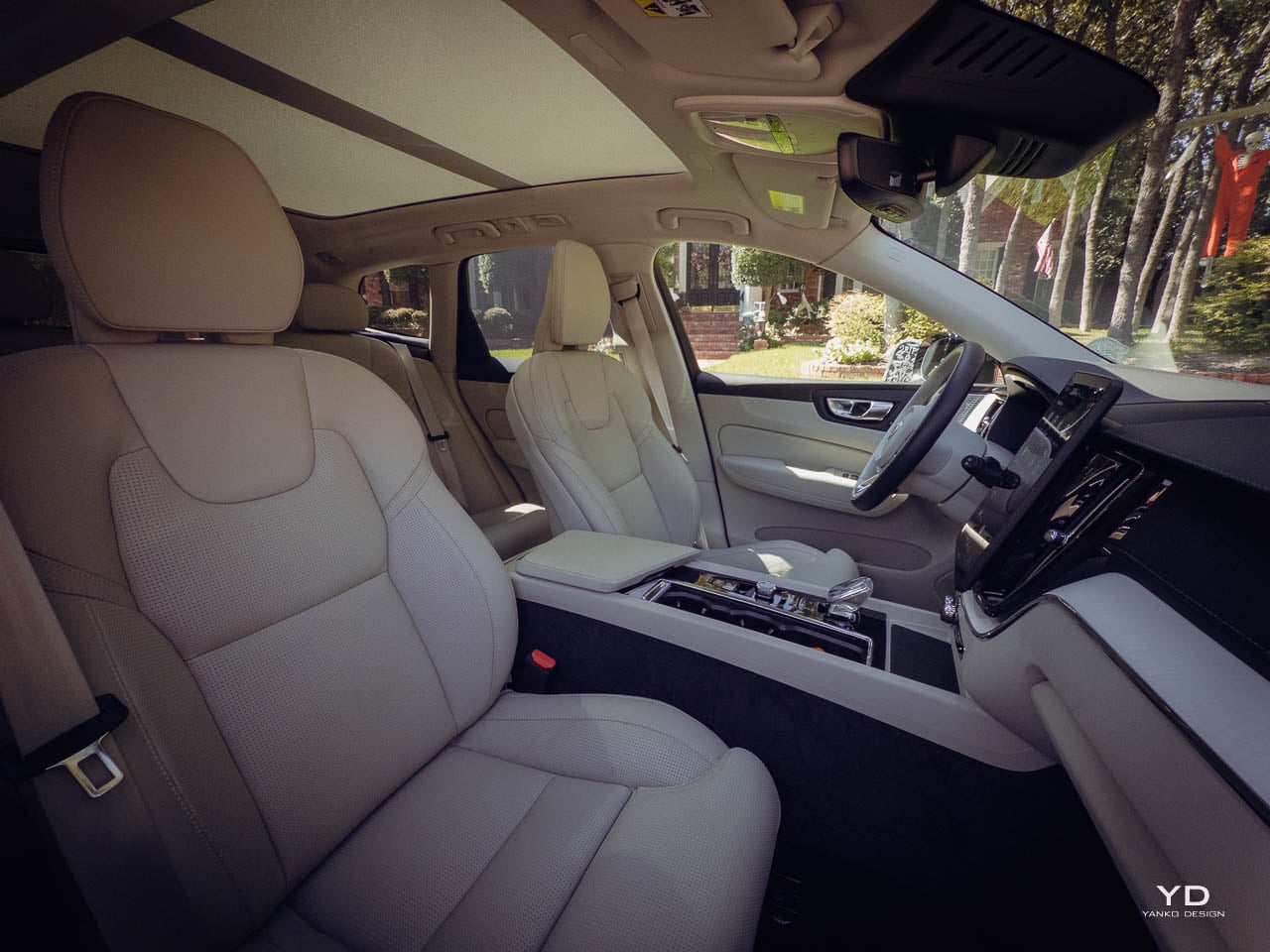
The Ultra trim layers Nappa leather across the seating surfaces with substantial bolstering and careful stitching. Available colorways include Charcoal for those who prefer darker, more enveloping environments and Blond for an airier, more open feel. Both options demonstrate restraint in their application, avoiding the contrasting piping and excessive quilting that some competitors use to signal luxury. Material transitions occur at logical boundaries rather than arbitrary decorative lines. Real open-pore wood, metal mesh, and textured inlays provide tactile variety without visual chaos. The surfaces invite touch rather than discouraging it.
The center console demonstrates Scandinavian minimalism in practice. A portrait-oriented 9-inch touchscreen dominates the interface.

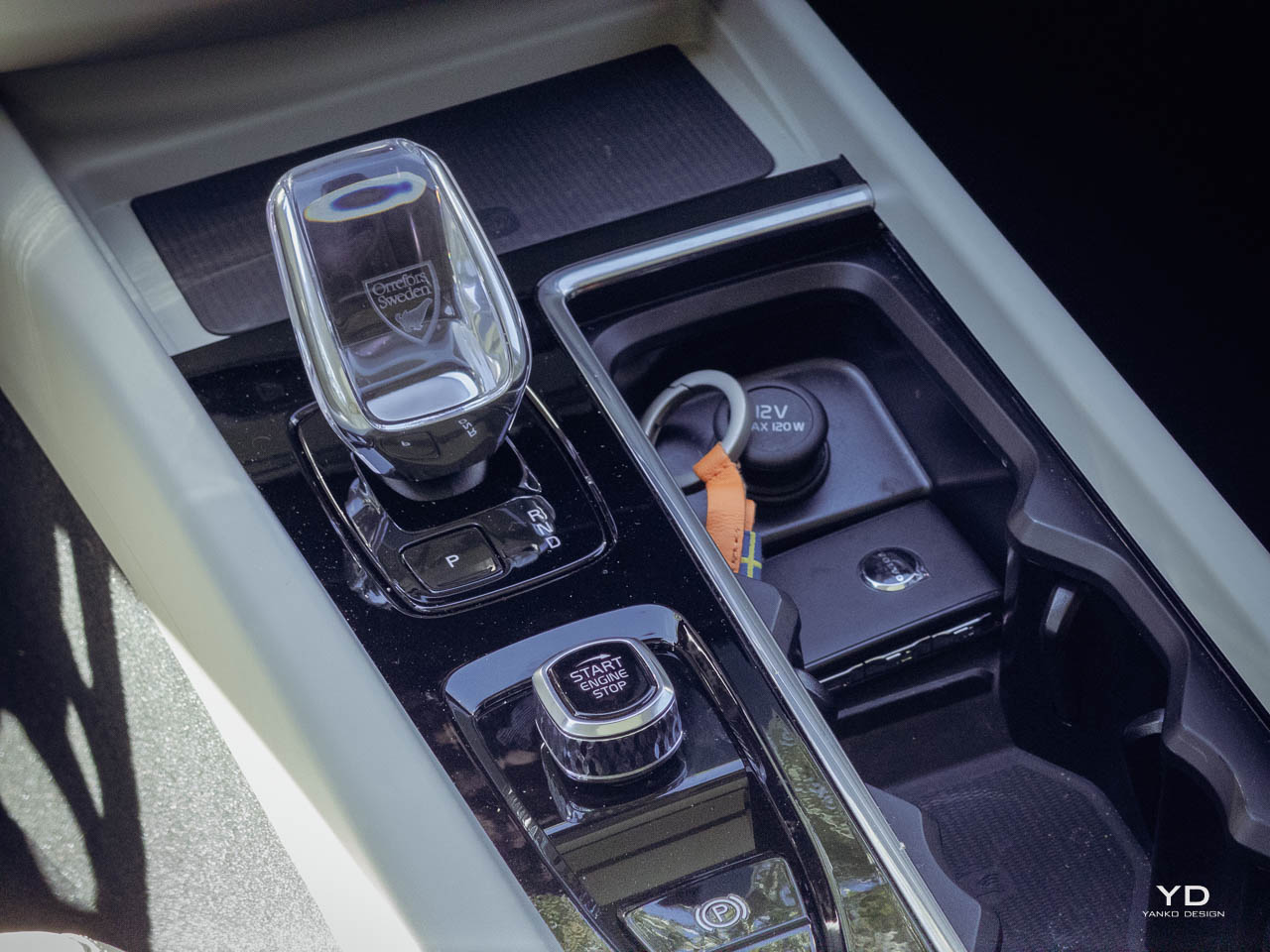
Below it, a small number of physical controls remain for frequently used functions. The volume knob uses a knurled metal finish that rewards tactile interaction. On higher specifications, an Orrefors crystal-style shifter replaces the standard gear selector, introducing a jewelry-like element that catches light without demanding attention. The panoramic moonroof, standard or widely available depending on market, brings natural light into what might otherwise feel cave-like in darker trim configurations. This interplay between enclosed comfort and external connection runs throughout the interior design.
Seating architecture prioritizes long-distance comfort over sports car support. The front seats offer heating, ventilation, and massage functions in Ultra specification, with adjustable lumbar support and thigh extenders for taller occupants. The seats themselves provide substantial cushioning without feeling soft, maintaining shape and support over extended drives. This is furniture designed for hours of use rather than showroom photography. Rear accommodations follow suit with a gently reclined backrest and support that favors two adults comfortably over three-across capacity. The cabin is honest about its size: this is a compact luxury SUV, not a full-size family hauler.
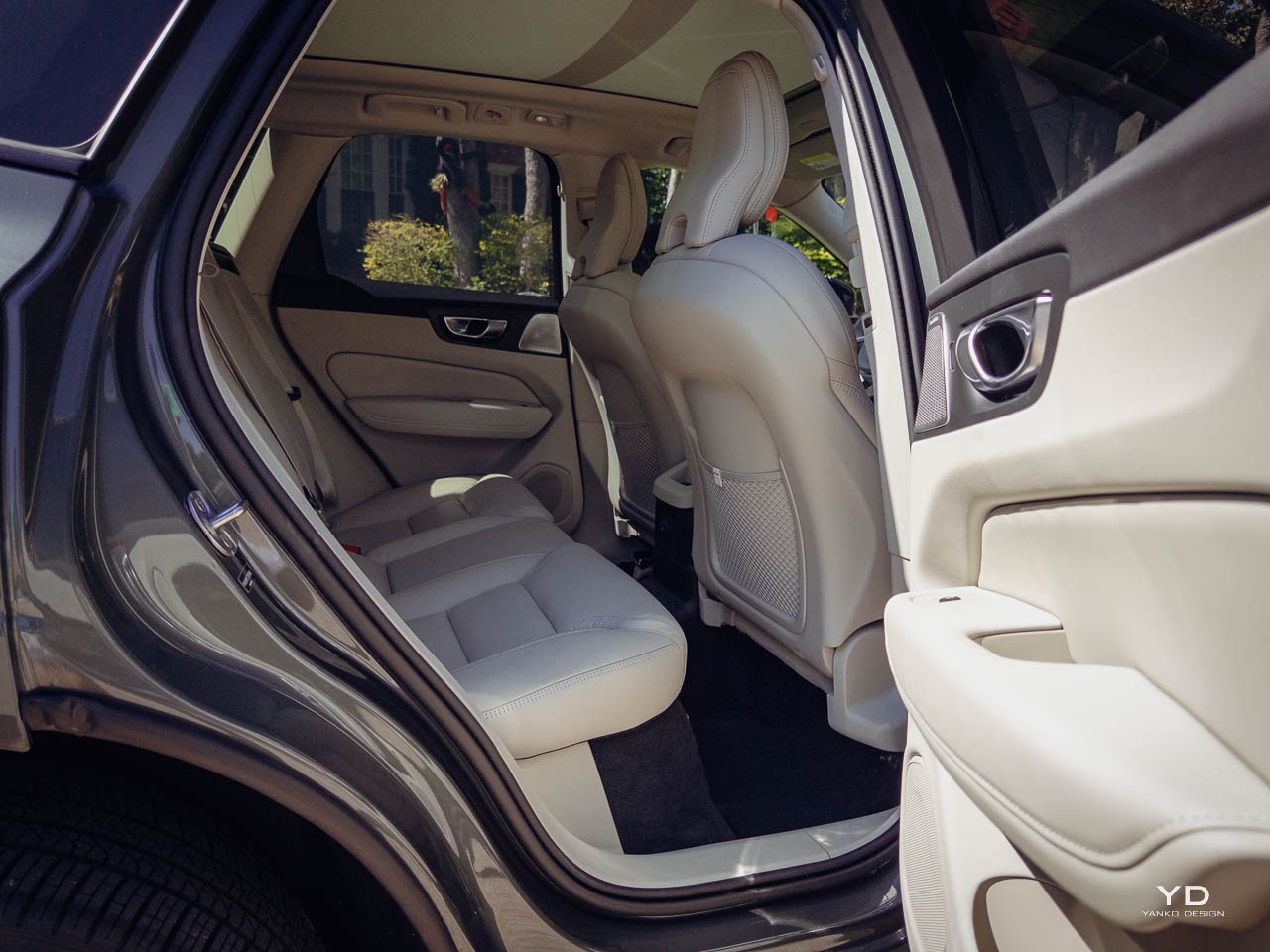
Storage solutions appear throughout the cabin without disrupting the visual calm. A larger-than-previous center console bin holds items out of sight. Cupholders position logically. Door pockets accommodate bottles and smaller items. Bag hooks and nets behind the front seats provide additional organization in some configurations. The cargo area maintains a broad, square opening with practical load floor height. Split-folding rear seats create a flat surface when more capacity is needed. The plug-in hybrid packaging, often a compromise in other vehicles, preserves useful cargo space without major intrusion.
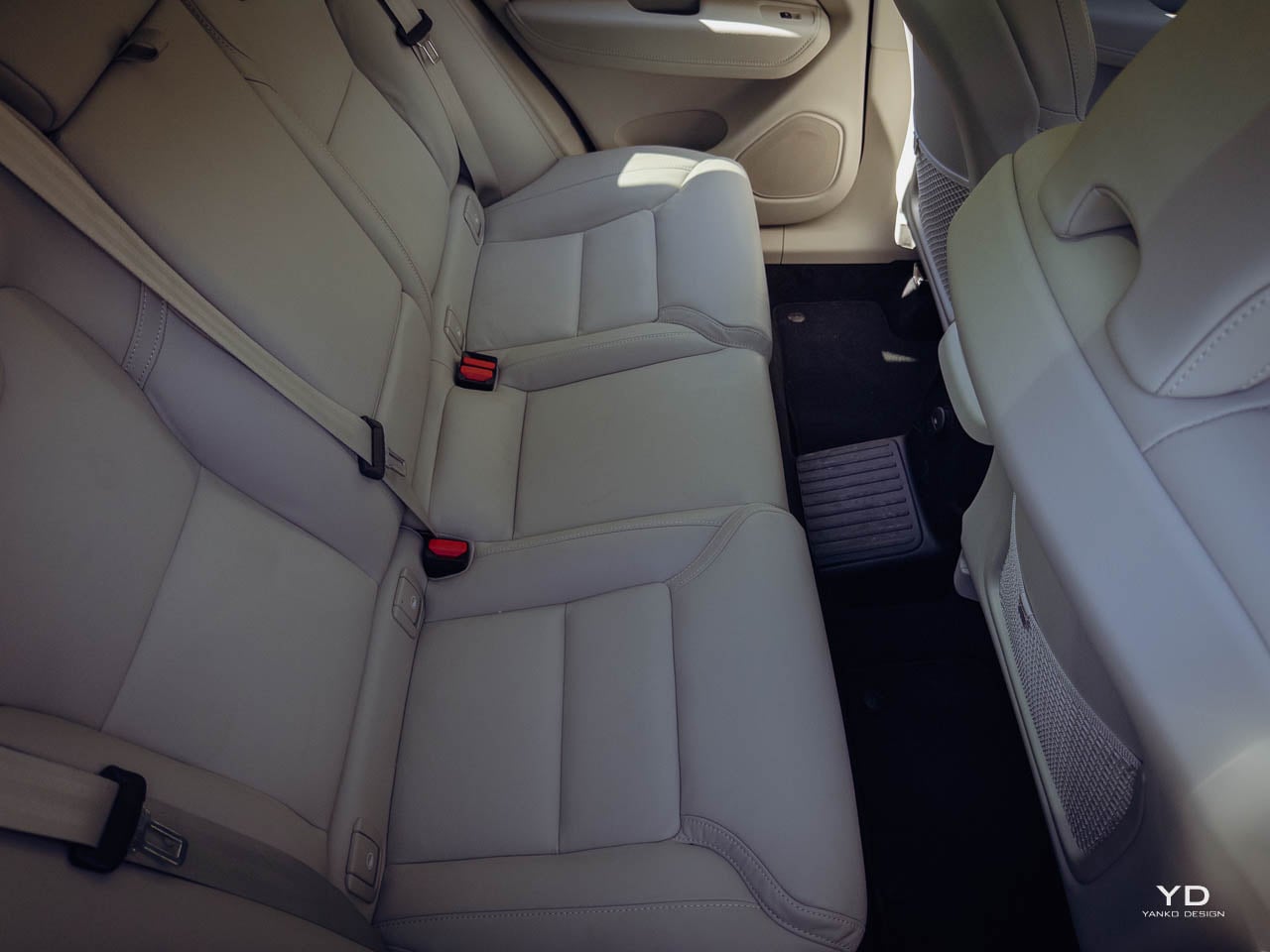
Material Composition

Material selection in the XC60 Ultra reveals Volvo’s understanding of tactile luxury. Soft-touch surfaces cover the dashboard and upper door panels, providing warmth that cold leather cannot. The leather appointments on the seats use proper grain texture rather than the over-processed smoothness that signals synthetic origin. Stitching appears precise and consistent, following design lines rather than merely holding materials together. The contrast between different textures, matte leather, polished metal, open-pore wood, creates visual interest through material honesty rather than applied decoration. Each surface communicates what it is made from without pretense.
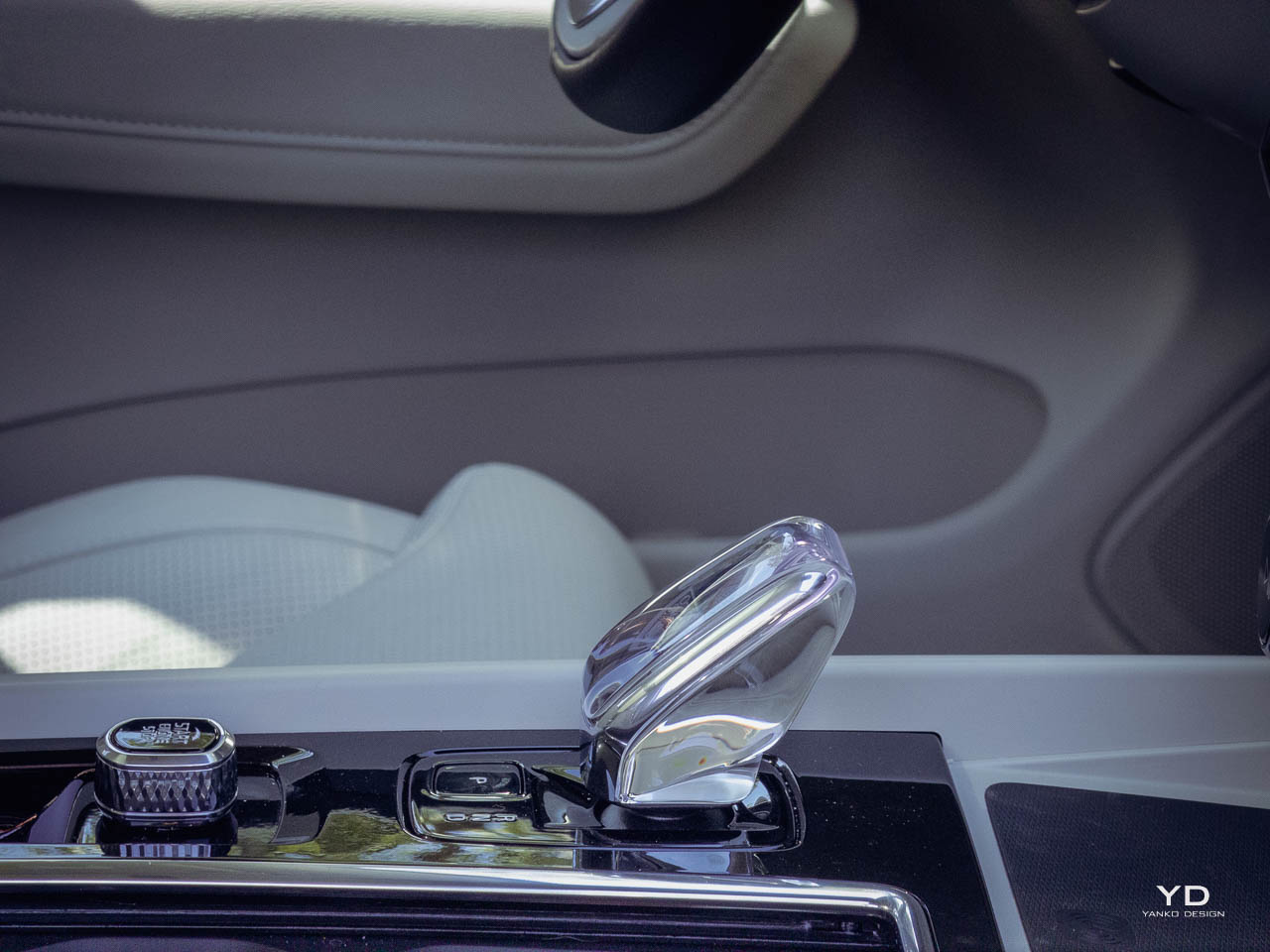
Lower cabin areas use plastics that feel dense and well-fitted rather than hollow and cost-reduced. Panel gaps remain tight and consistent throughout.

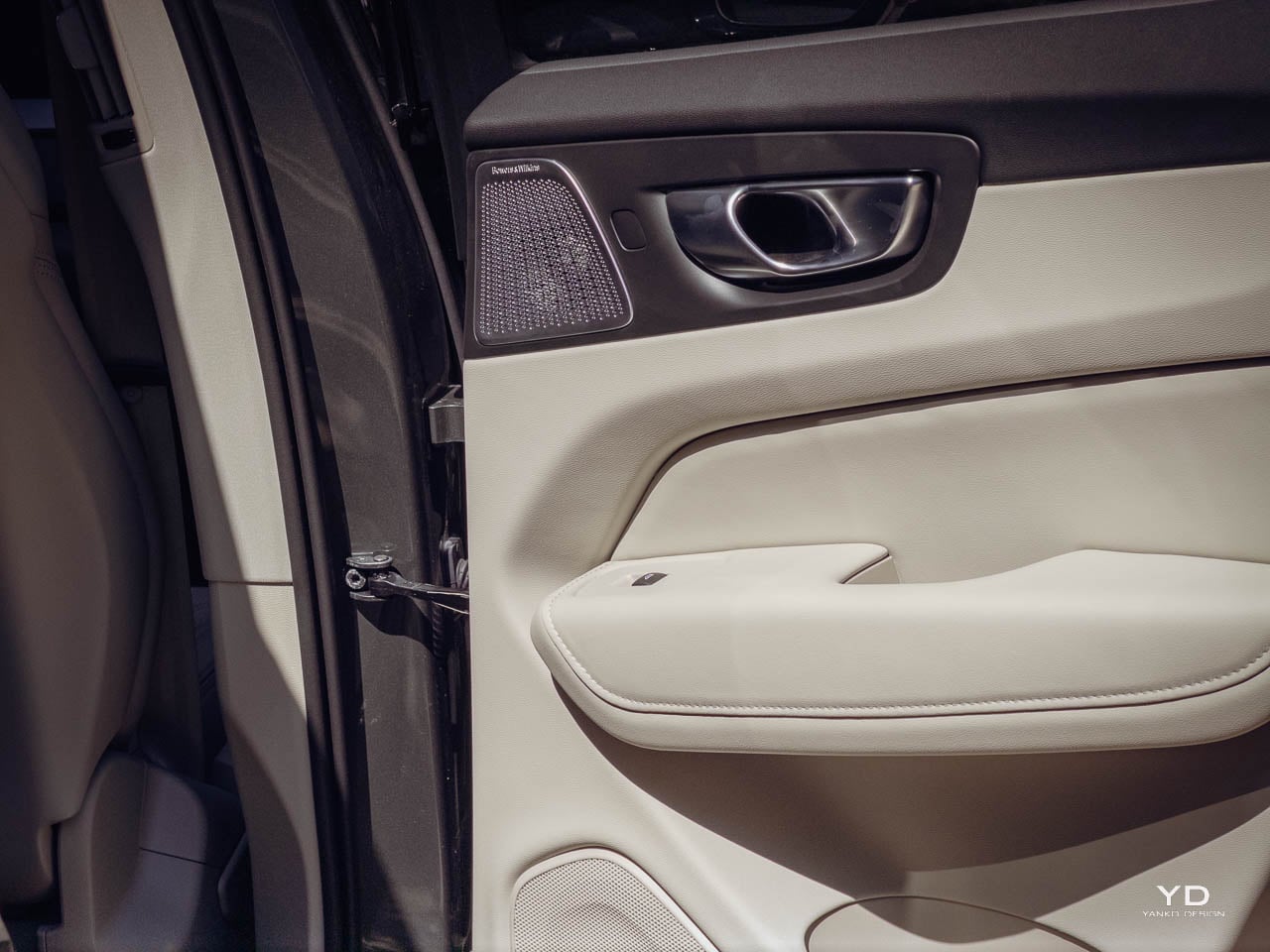
The metal trim elements, appearing on speaker grilles, door handles, and climate control surrounds, use actual aluminum rather than chrome-look plastic. These details matter because they accumulate into an overall impression of quality that either supports or undermines the purchase price. At this specification level, the details support the price consistently. The XC60 Ultra feels expensive because expensive materials have been used in places where human contact occurs.
Volvo’s approach to material selection extends to environmental considerations without compromising luxury perception. Leather alternatives appear in some configurations using recycled materials and more sustainable processing. Wood trim sources from responsible forestry programs. Metal finishes use processes that reduce environmental impact. These choices remain largely invisible to occupants but align with the brand’s stated values and appeal to buyers who consider lifecycle impact alongside immediate tactile experience.

Technology Integration

The XC60 T8 Ultra runs a Google-based infotainment system that represents Volvo’s commitment to simplicity over complexity. Google Assistant provides voice control. Google Maps handles navigation with traffic-aware routing. The Google ecosystem allows app access without requiring phone mirroring, though wireless Apple CarPlay remains available for those who prefer it. The 9-inch portrait touchscreen displays information clearly with quick response to inputs.
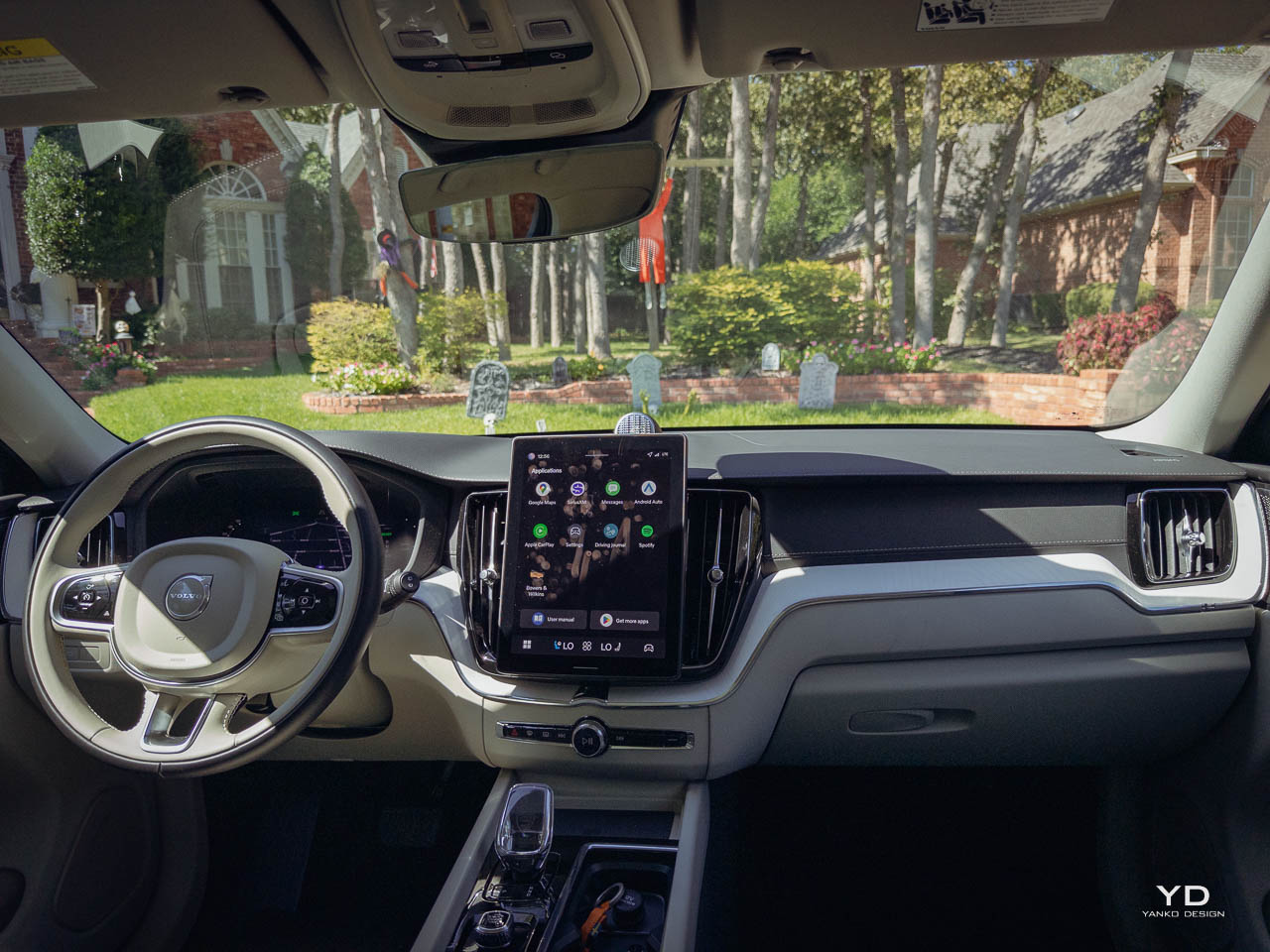
A 12-inch digital instrument cluster ahead of the driver offers configurable views including a large navigation map, trip data, and driver assistance status. Information hierarchy follows logical priorities: speed and essential warnings remain prominent while secondary data occupies peripheral positions. An available head-up display projects key information onto the windshield, reducing the need to look away from the road. The display can read speed limits and traffic signs, overlaying them in the driver’s line of sight. These technologies serve practical purposes rather than existing as specification sheet items. The question Volvo seems to have asked is not “what can we add” but “what should we show.”

Some functions require menu navigation that feels deeper than necessary. Odometer readings and certain vehicle settings live multiple taps into the interface.
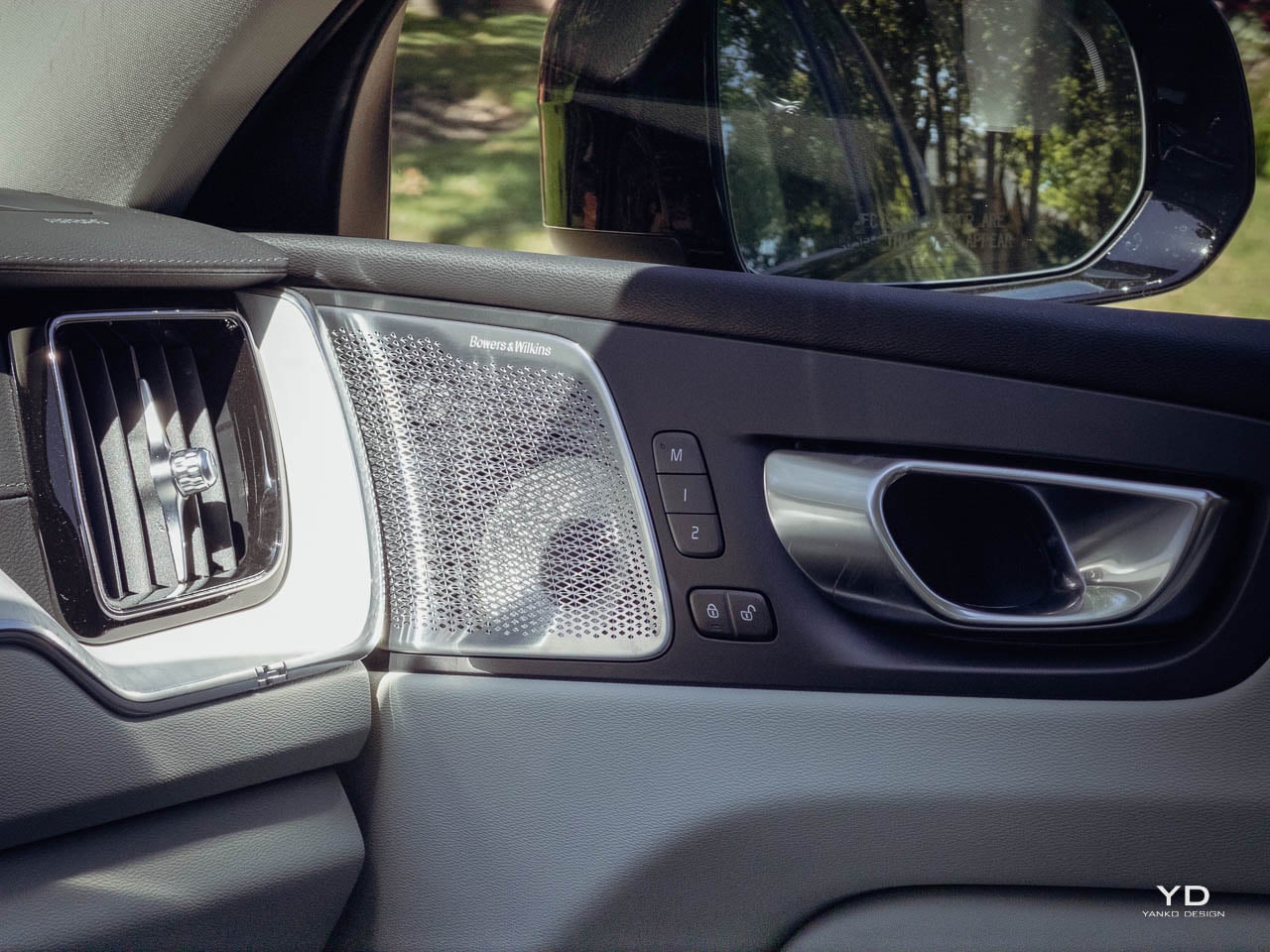
Audio options include Harman Kardon and an available Bowers and Wilkins system depending on package and market. The latter delivers clarity and richness that transforms the cabin into a listening environment worth experiencing. The sound system represents genuine acoustic engineering rather than speaker count marketing. For a vehicle designed around calm and comfort, high-quality audio integration aligns with the overall philosophy. Poor sound reproduction would undermine the cabin’s premium character.
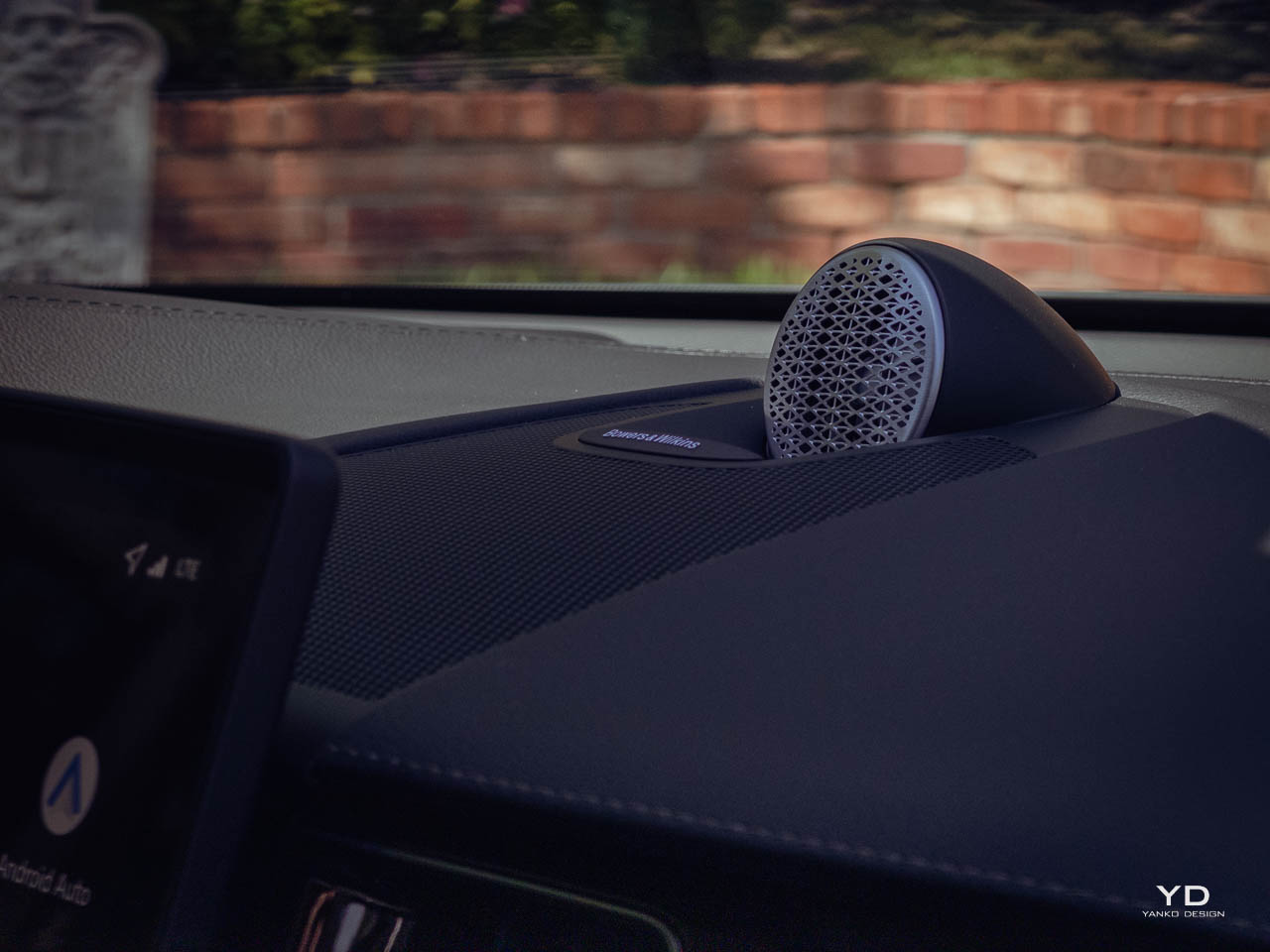
The technology package demonstrates appropriate restraint alongside capability. Rather than introducing features that require user adaptation, Volvo has implemented systems that work in expected ways. Climate controls respond logically. Navigation provides sensible routes. The instrument cluster communicates without confusion. This sounds like a low bar, but the automotive industry regularly introduces interfaces that prioritize novelty over usability. The XC60’s technology feels like it was designed by people who actually use cars rather than by teams seeking differentiation through complexity.

Powertrain Character

The T8 plug-in hybrid powertrain pairs a turbocharged 2.0-liter four-cylinder with an electric motor on the rear axle and a starter-generator between the engine and 8-speed automatic transmission. Combined output reaches approximately 455 horsepower and 523 pound-feet of torque, according to Volvo’s estimates and independent testing. Acceleration to 60 mph arrives in 4.4 to 4.5 seconds, figures that seem incongruous with the vehicle’s reserved styling. This is substantial performance delivered without visual announcement. The vehicle looks calm and moves quickly when requested.

The 18.8 kWh battery provides electric-only range of approximately 32 to 35 miles. This distance covers typical daily commuting for many drivers, allowing pure electric operation for routine trips.

When the battery depletes, combined efficiency settles around 28 mpg. Hybrid operation achieves approximately 63 MPGe. Multiple drive modes, including Hybrid, Pure/EV, Power, and configurable settings, allow drivers to prioritize electric operation, preserve charge for later use, or access maximum combined output. The powertrain flexibility means the XC60 can behave as a quiet urban electric vehicle or a responsive highway cruiser depending on circumstance and driver preference.

The driving experience prioritizes refinement over excitement. Throttle response feels progressive rather than aggressive. The transmission shifts smoothly in normal operation and responds quickly when more power is demanded. The engine remains quiet unless pushed hard, which the vehicle’s character rarely encourages. With the available air suspension on Ultra trim, ride quality emphasizes comfort over sporting sharpness. Body motions stay controlled without feeling harsh. Road imperfections disappear into the suspension rather than transmitting through the structure. Steering provides adequate feedback for confident placement without sporting precision. The XC60 T8 Ultra drives like it looks: composed, capable, and disinclined toward drama.

Daily Reality

Living with the XC60 T8 Ultra reveals strengths that matter more than specification numbers. The cabin’s noise isolation creates a quiet environment at highway speeds, making conversation easy and audio systems worth using. The seats remain comfortable over extended drives, maintaining support without creating pressure points. Climate controls work effectively, and the available air quality monitoring adds practical value in urban environments where exterior air quality varies.
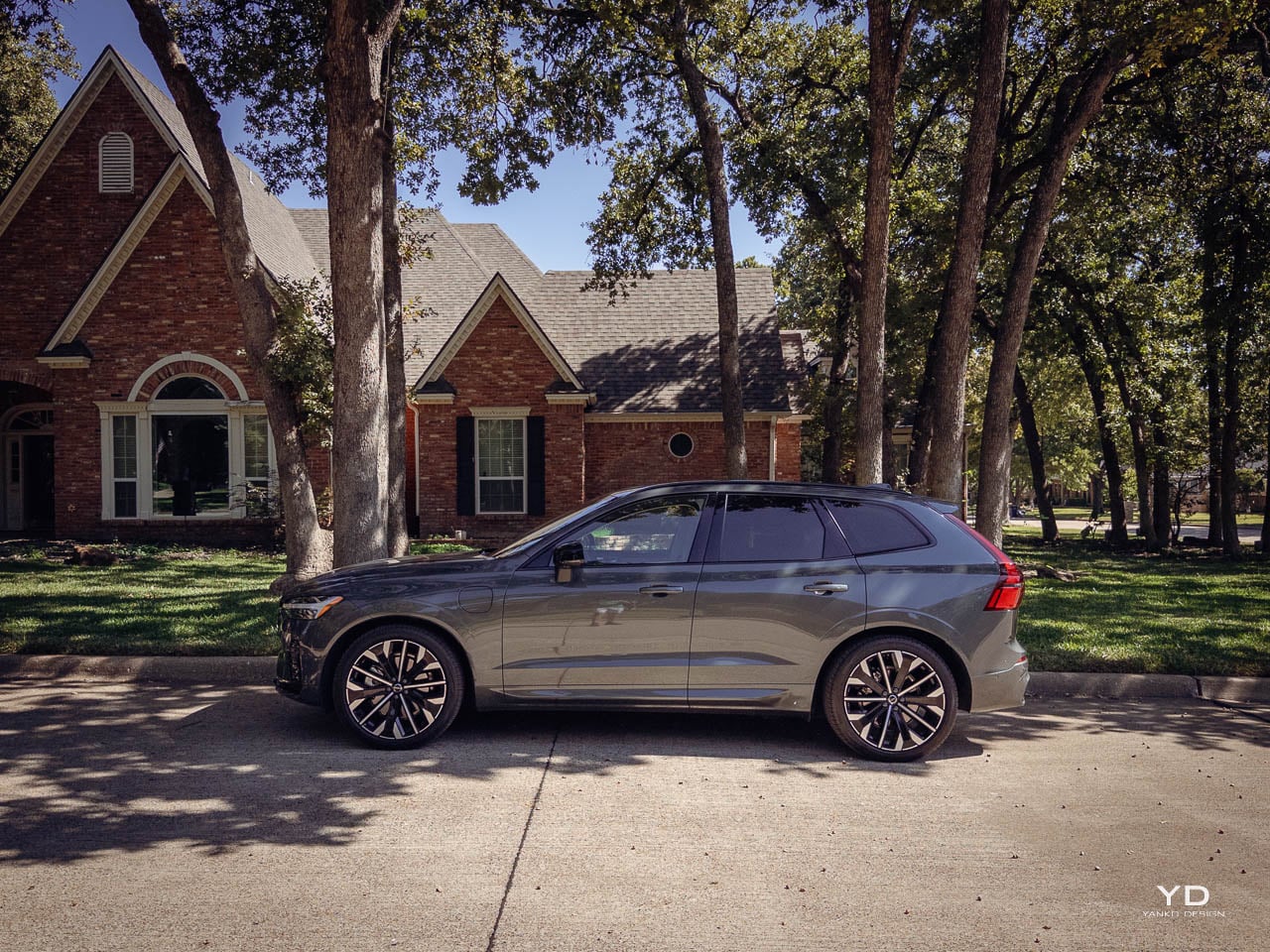
The air suspension’s height adjustment proves useful beyond ride quality. Raising the vehicle provides additional ground clearance for rough roads or driveway approaches.

Lowering it at highway speeds improves aerodynamics and eases entry in low parking structures. The system operates automatically based on conditions, removing the need for driver intervention in most situations. The 360-degree camera system and parking sensors make placing the vehicle in tight spaces manageable despite dimensions that require awareness. The rearview camera displays clearly and inspires confidence during reversing maneuvers.

Some compromises exist within the daily experience. The infotainment system, while functional, lacks the polish of certain German competitors. Response is good but not instant. The interface is logical but not intuitive. This represents adequate execution rather than impressive achievement. Fuel economy, when operating in hybrid mode after battery depletion, requires more frequent stops than three-row crossovers or smaller luxury SUVs. The premium fuel requirement adds cost over regular-grade alternatives. Pricing for the T8 Ultra specification sits in the low to mid 70,000 dollar range before options, with well-equipped examples approaching 80,000 dollars. This positions the XC60 against mid-specification German rivals with established prestige and strong dealer networks.

The vehicle serves specific needs exceptionally well. Commuters with charging access at home or work can operate primarily on electric power, reducing fuel consumption dramatically. Families who prioritize cabin quality over maximum cargo flexibility will appreciate the material choices and seating comfort. Buyers seeking luxury without visual aggression will find the XC60’s restraint appealing rather than disappointing.

Competitive Context

The XC60 T8 Ultra competes against established German plug-in hybrids and traditional luxury crossovers. The BMW X3, Mercedes-Benz GLC, and Audi Q5 offer similar dimensions with different design philosophies. German competitors typically prioritize sharper styling, sportier dynamics, and more tech-forward cabins.

Volvo’s approach differs fundamentally. Where German brands emphasize cockpit-like driver focus with large screen arrays and aggressive surfacing, the XC60 creates a lounge-like environment that serves passengers equally to drivers. Material quality matches or exceeds German alternatives at similar price points. Design vocabulary speaks a different language entirely, one of restraint rather than assertion. The XC60 often offers a modest EV range advantage over many German plug-in rivals, providing practical benefit for drivers who can charge regularly. The power output, approximately 455 horsepower combined, exceeds most segment rivals while the acceleration times remain competitive with dedicated performance variants.
Value within the segment depends on buyer priorities. The XC60 T8 Ultra includes features that cost extra on some competitors: air suspension, premium audio, advanced driver assistance systems. Buyers who value standard equipment over brand prestige may find the Volvo offers more content for comparable money. Those who prioritize established luxury badge recognition or sportier driving dynamics may prefer the German alternatives. The competitive landscape rewards Volvo for differentiation rather than imitation.

The Design Verdict

The 2026 Volvo XC60 T8 AWD Ultra represents a coherent design philosophy executed with consistency and restraint. Every element, from exterior surfacing to interior materials to powertrain calibration, supports the same message: luxury does not require aggression. The vehicle proves that calm confidence communicates premium positioning as effectively as visual drama. This is design maturity applied to the luxury compact SUV segment, a category that often rewards excess over editing.

For buyers who recognize that vehicles shape daily experience through accumulated small interactions, the XC60 offers compelling value. The material quality supports years of use. The technology serves rather than complicates. The powertrain provides capability without demanding attention. The design will age gracefully rather than dating quickly. These qualities matter because vehicles occupy significant portions of our lives and our attention. The XC60 T8 AWD Ultra creates space for calm within transportation. In a segment defined by competition for visual attention, that restraint becomes its own form of statement. Volvo has built a vehicle that trusts its quality to communicate luxury without requiring volume. The execution justifies that trust.

The post Volvo XC60 T8 AWD Ultra Review: Scandinavian Calm in a Segment That Prefers to Shout first appeared on Yanko Design.

A Facebook test makes link-sharing a paid feature for creators

Creators and publishers have long worried about Meta's ability to throttle links to outside content. Now, the company is testing out a new scheme that effectively puts link-sharing behind a paywall for creators on Facebook.

Under the test, a Meta Verified subscription will determine how many links a creator can share another profile per month. According to a screenshot shared by social meda consultant Matt Navarra, creators in the test recently received a notification from Meta informing them that "certain Facebook profiles without Meta Verified, including yours, will be limited to sharing links in 2 organic posts per month."  

Meta is making link sharing pay to play with a new test.

A spokesperson for Meta confirmed the test to Engadget. The test is currently affecting an unspecified number of creators and pages using "professional mode" on Facebook. Publishers aren't affected for now. "This is a limited test to understand whether the ability to publish an increased volume of posts with links adds additional value for Meta Verified subscribers," the spokesperson said.

While Meta seems to be trying to downplay the significance of the test, it's a notable shift for the company. Many creators and businesses rely on Facebook and reducing their ability to send traffic to outside websites could be a significant hit. Many creators are already frustrated that the company puts its better customer service features behind the Meta Verified subscription, which starts at $14.99/month. Making link-sharing a premium feature as well would be even more unpopular.

Have a tip for Karissa? You can reach her by email, on X, Bluesky, Threads, or send a message to @karissabe.51 to chat confidentially on Signal.

This article originally appeared on Engadget at https://www.engadget.com/social-media/a-facebook-test-makes-link-sharing-a-paid-feature-for-creators-224632957.html?src=rss

Astronomers find mysterious lemon-shaped exoplanet with NASA’s Webb telescope

Space is full of unsolved mysteries, and a team using NASA’s James Webb Space Telescope have recently turned up a doozy. "I remember after we got the data down, our collective reaction was 'What the heck is this?' It's extremely different from what we expected," said Peter Gao of the Carnegie Earth and Planets Laboratory in Washington, a co-author on the study.

The researchers found an exoplanet dubbed PSR J2322-2650b that orbits a small, dense star emitting electromagnetic radiation known as a pulsar. They are an example of a black widow system, where a rapidly spinning pulsar is paired with a smaller astronomical body. A black widow duo isn’t unusual, but this pair has sparked questions about how the exoplanet originally formed.

The exoplanet's proximity to the pulsar and its intense gravitational pull have distorted it into an oblong lemon shape. More unusually, PSR J2322-2650b also has a unique atmosphere comprised mostly of helium and carbon. "Instead of finding the normal molecules we expect to see on an exoplanet — like water, methane, and carbon dioxide — we saw molecular carbon," principal investigator Michael Zhang of University of Chicago said. Given its strange atmosphere, the team isn't certain how the exoplanet formed. "It's very hard to imagine how you get this extremely carbon-enriched composition. It seems to rule out every known formation mechanism," Zhang said. For now, we’ll chalk this up as another mystery of the universe.

This article originally appeared on Engadget at https://www.engadget.com/science/space/astronomers-find-mysterious-lemon-shaped-exoplanet-with-nasas-webb-telescope-223722244.html?src=rss