How to cancel Windscribe and get your money back

Windscribe isn't a VPN for everybody, and it's not trying to be. Despite its high-achieving free plan, it didn't quite make my list of the best VPNs, largely due to alienating interface choices and swingy download speeds. Its iconoclastic approach to everything from design to pricing to its online knowledge base will likely win some customers for life and turn others off.

For those in the latter camp, I've written up this guide for cancelling Windscribe. Follow the instructions below to stop Windscribe from auto-renewing, cancel third-party subscriptions, delete your account altogether and get a refund.

The most important thing to know before we start is that Windscribe's money-back guarantee only lasts seven days — if you paid for a subscription, you have to cancel before then to get a refund. It's a tighter period than most VPNs, so be ready to decide fast.

To cancel Windscribe Pro, simply stop your payment method from automatically renewing for the next subscription period. Once you've done this, you can continue using Windscribe Pro until the end of the current period, then you'll be downgraded to the free version. Here are the steps to follow.

  1. In your browser, navigate to windscribe.com. Click the words My Account at the top of the home page.

  2. Scroll down to the billing section. On the subscription line, click the button marked Cancel Subscription.

  3. You'll be taken to a new page. Enter your password in the Your Password field. Below, enter a reason for cancellation (this can be "none" or possibly "suck it," which Windscribe should approve of).

  4. Click the Cancel Subscriptions button at the bottom of the page to end automatic renewal on your account.
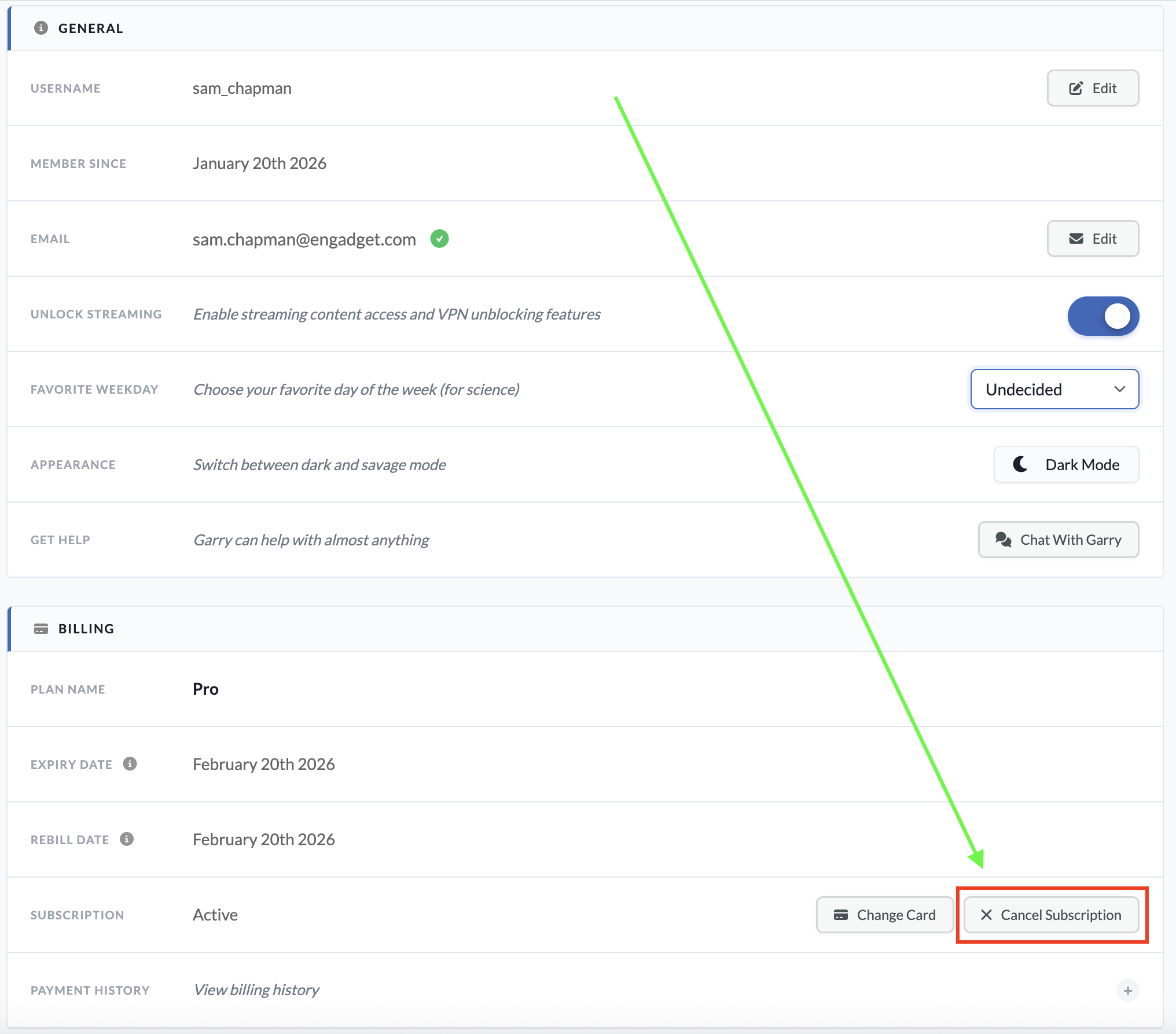
You can reach this page by logging into your account on Windscribe.com.
Sam Chapman for Engadget

If your account also included a static IP subscription, there's no way to cancel that through the usual dashboard. You'll have to submit a support request by asking the Garry chatbot, which can be accessed by clicking the icon at the bottom-right corner of any page on windscribe.com.

When you subscribe to an app through a third party like the Apple App Store or Google Play Store, that same third party also handles cancellations and refunds. Windscribe itself won't be able to do anything for you here.

If you subscribed through Google Play on an Android phone, you can cancel by opening the Google Play Store app and tapping your profile icon at the top-right (a circle with the first letter of your username inside). Tap Payments & Subscriptions in the menu that appears, then subscriptions on the next page. Find your Windscribe subscription, tap it and click Cancel Subscription to end payments.

If you went through the App Store on an Apple device, open the Settings app, then tap on your name at the top of the screen. Tap Subscriptions and scroll down to your Windscribe subscription. Tap it, then tap Cancel Subscription.

If you're certain you want to stop using Windscribe and never start up again, you can scrub your presence from its servers by deleting your account. To do this, go to windscribe.com and click the My Account button in the header bar. Scroll all the way to the bottom and click on the obnoxiously titled Give Up On Privacy button. This will show you the following image.
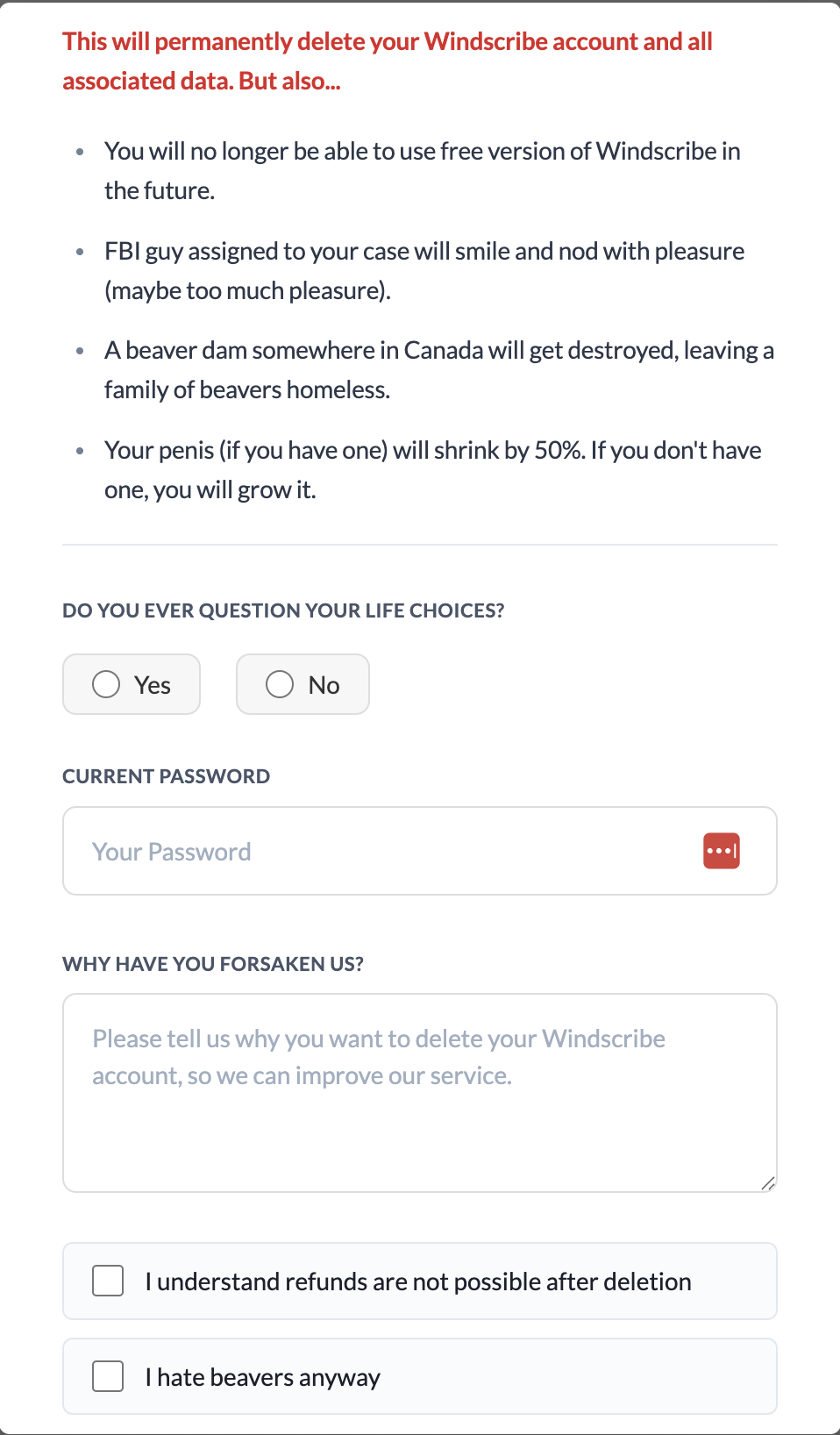
I realize I'm harping on this, but Windscribe gets exceptionally punchable when you try to delete your account.
Sam Chapman for Engadget

You'll have to fight through several attempts at comedy to finish deleting your account. Click Yes or No when asked if you ever question your life choices. Enter your password, write whatever you want as a cancellation reason and check both of the boxes below the text field. The Delete Account button should finally be clickable; do it. Once you've pulled the trigger, you won't be able to use the same email address to sign up for another account.

As I warned above, you can only get a refund from Windscribe for seven days after paying for a subscription. You also cannot get your money back if you've used more than 10GB of data since the start of the payment period. Finally, you can only get refunded on the first payment of each subscription — renewals are not eligible.

If you're within those limits, you can request your money back by starting a conversation with the Garry chatbot. Click the chatbot icon at the bottom-right of the Windscribe website to start a chat. Be warned that you might have to stand firm through several attempts to fix your complaints before you can actually initiate the refund process.

Windscribe is a VPN with a lot of good points. That said, by the time you've waded through a swamp of dick jokes to complete the process, I wouldn't blame you for feeling validated in your decision to get rid of it.

There are plenty of good VPNs that can replace Windscribe. My favorite is Proton VPN, which also has a free plan, though without the ability to select your own server. ExpressVPN is simple and powerful, if a little overpriced, while Surfshark is the fastest VPN overall. If you liked Windscribe for its non-VPN features, NordVPN has the best range of extra perks.

This article originally appeared on Engadget at https://www.engadget.com/cybersecurity/vpn/how-to-cancel-windscribe-and-get-your-money-back-173000785.html?src=rss
This Trolley Stacks and Rotates Like Shipping Containers at a Port

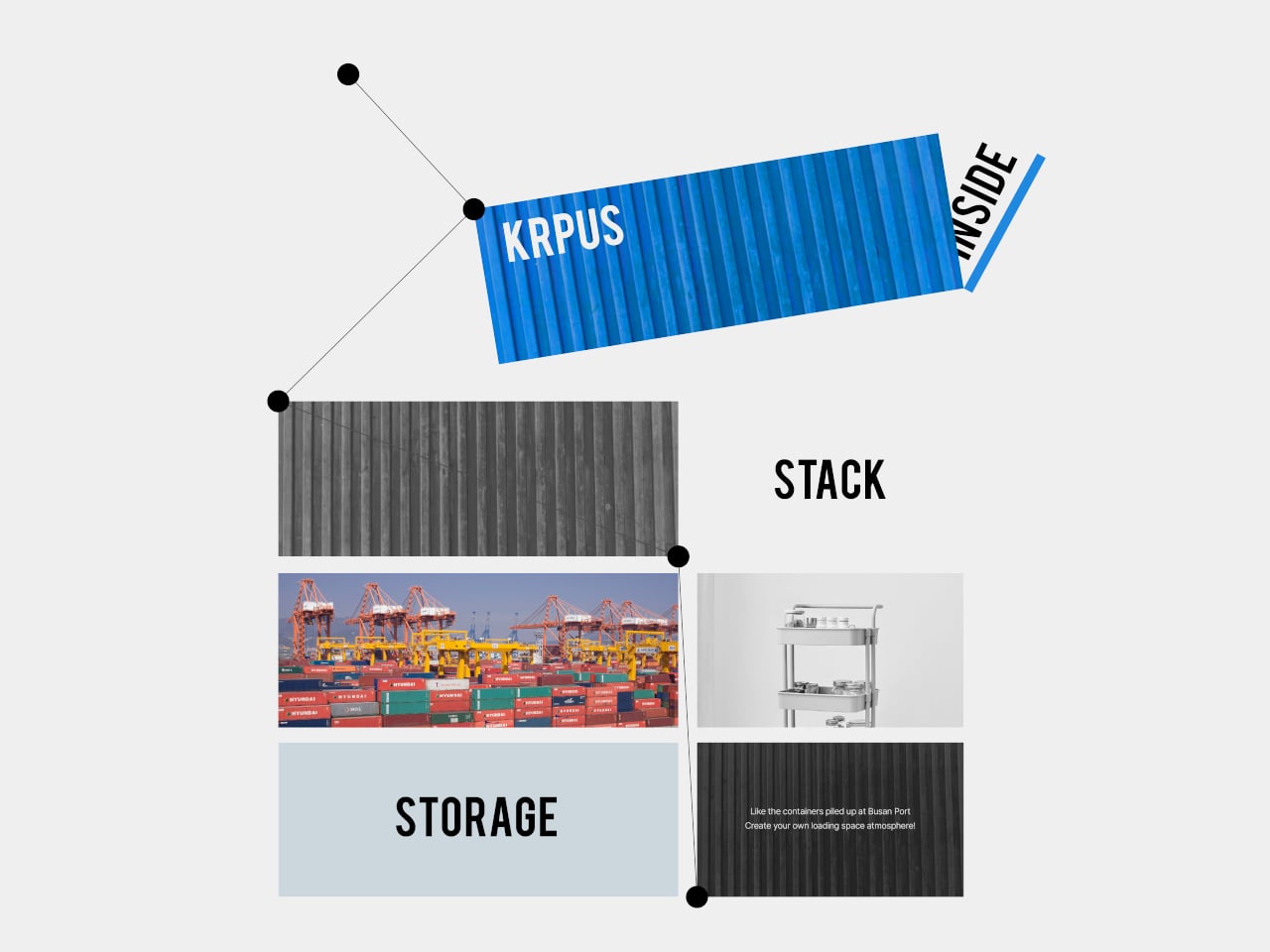
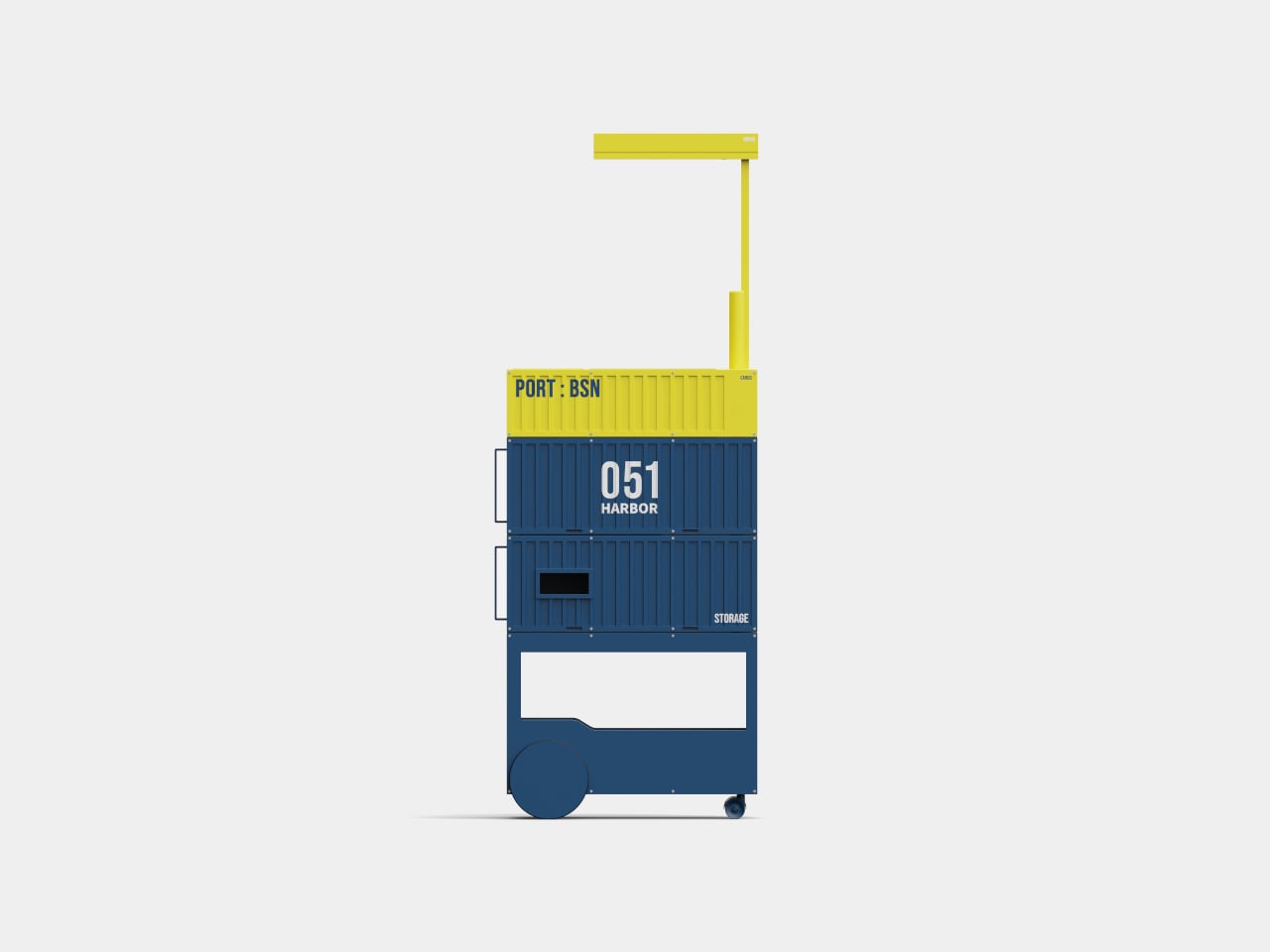
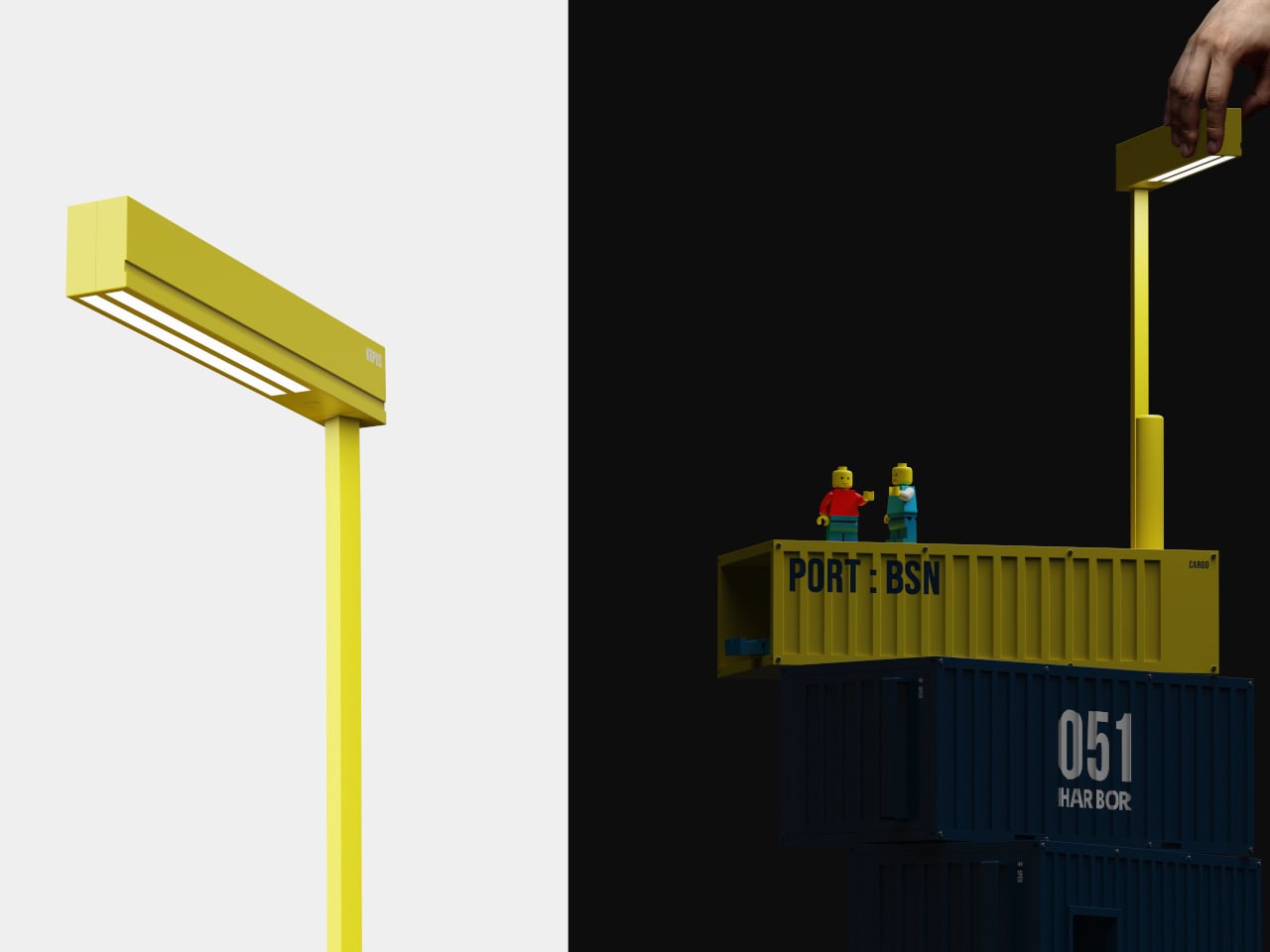
Most storage furniture sits where you put it, fixed shelves and cabinets that do their job but rarely respond to how space changes during a day. Trolleys help with mobility, but they often feel generic, more utility than character. Harbor 051 is a storage trolley that borrows its logic from a place built entirely around movement and stacking, Busan Port, where containers shift and cranes swing in a constant choreography.

Busan’s harbor is where standardized containers are stacked and moved in regular patterns, and where cranes handle goods with a rhythm that becomes its own visual language. Harbor 051 takes that logistical landscape and reinterprets its structure and rhythm into storage furniture, applying the repetition and organized arrangement of containers to the way the trolley is built and used at home, echoing the port’s distinctive sense of flow.

Designers: Ho joong Lee, Ho taek Lee

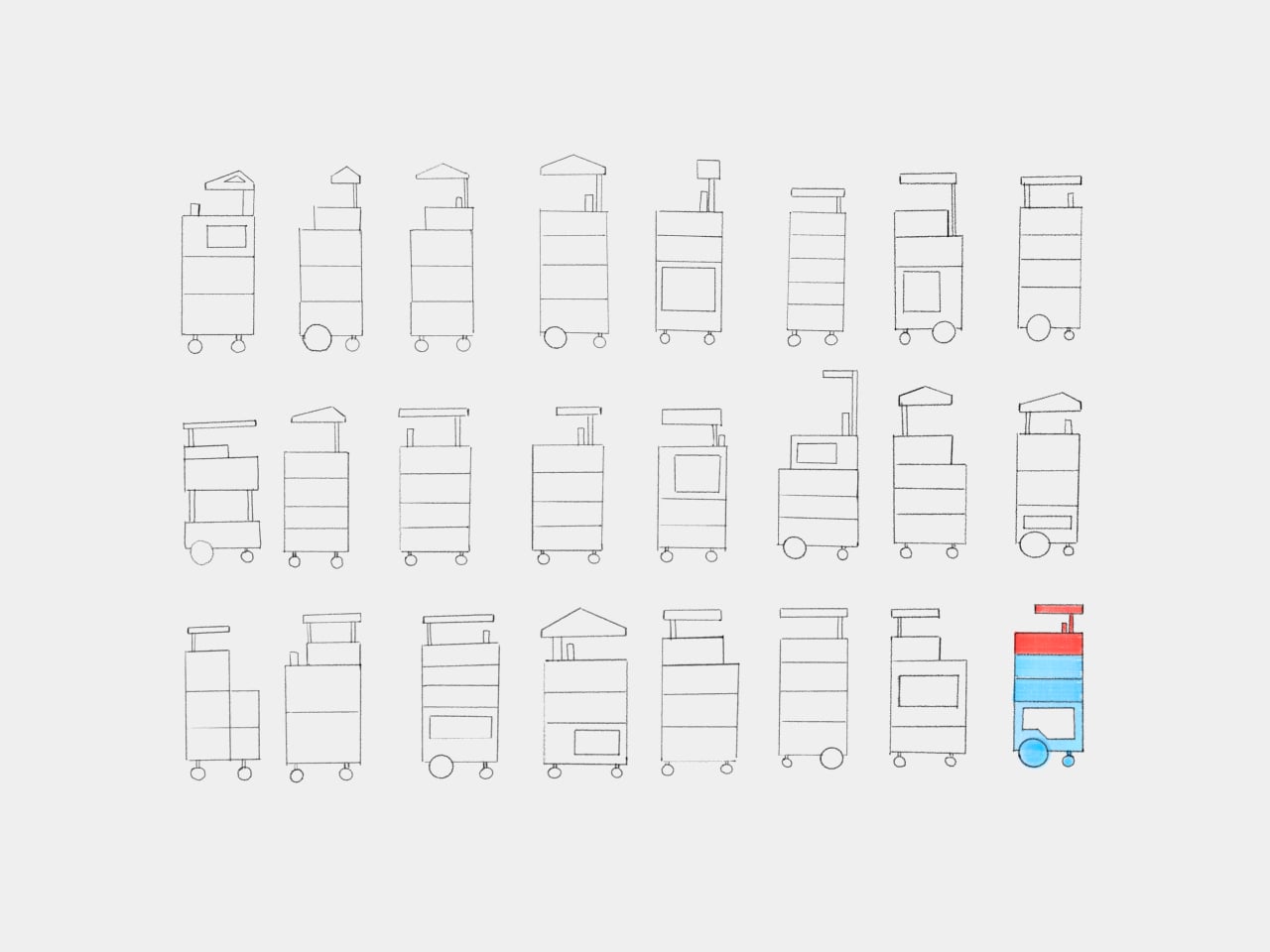
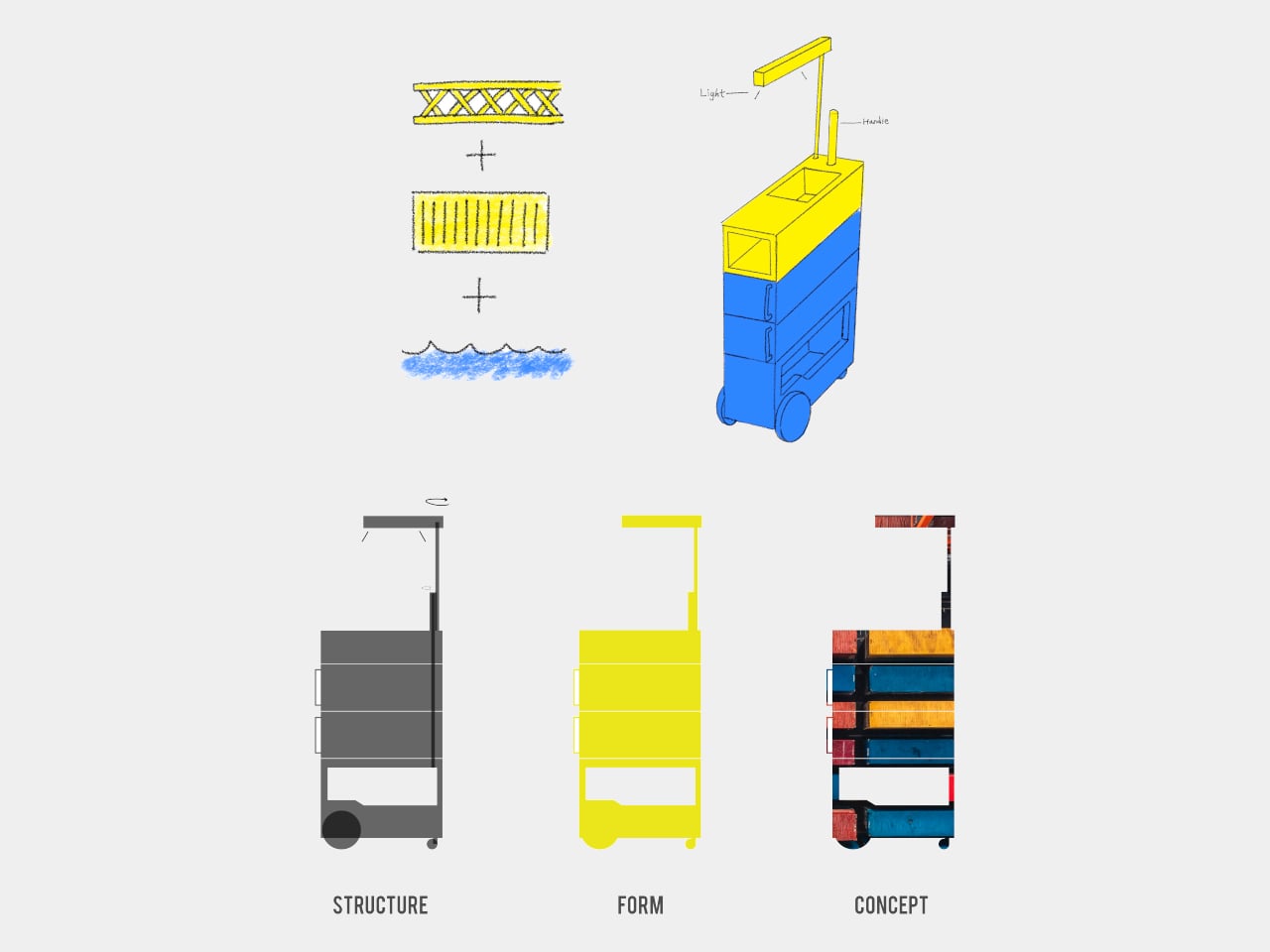
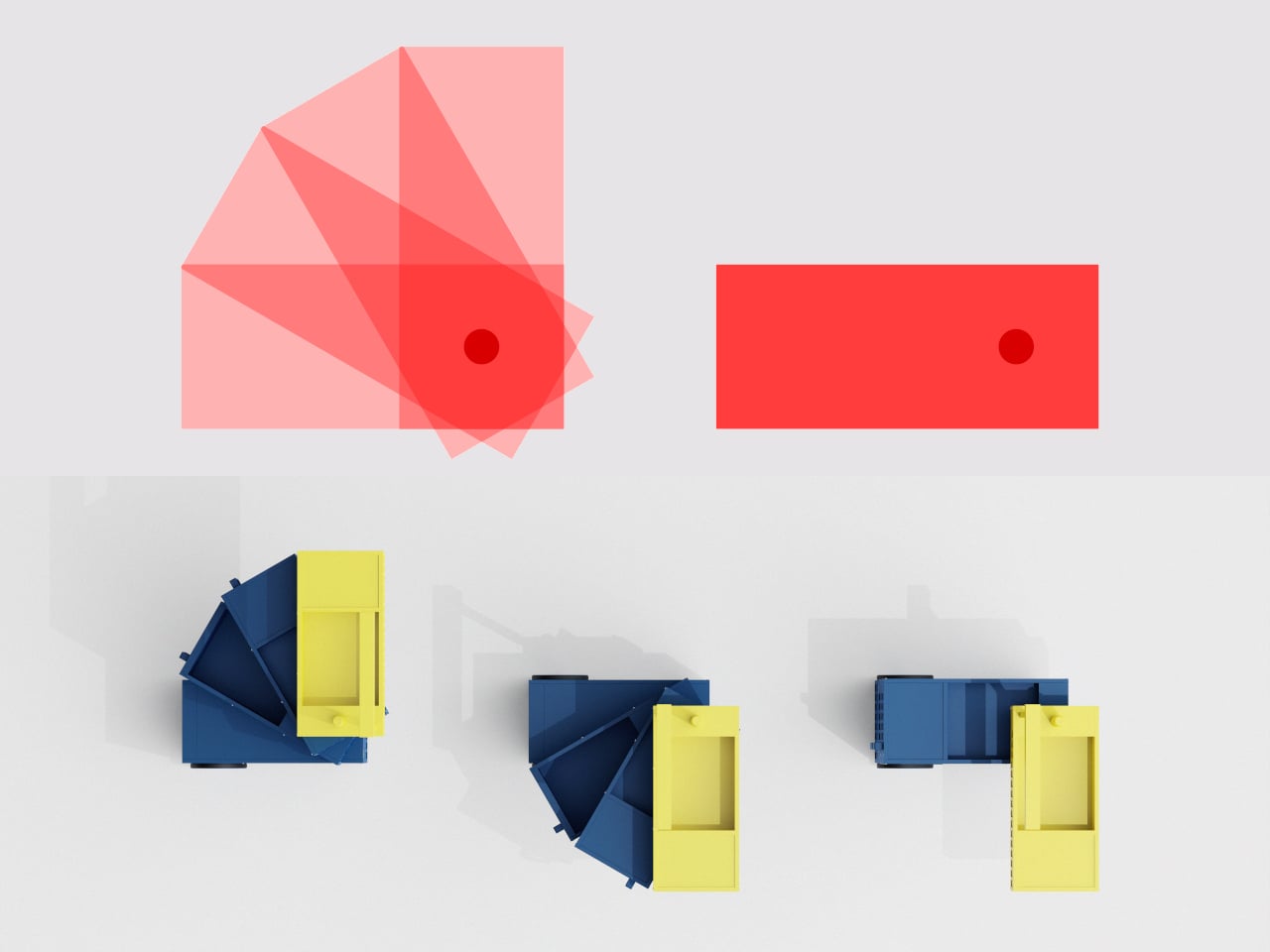
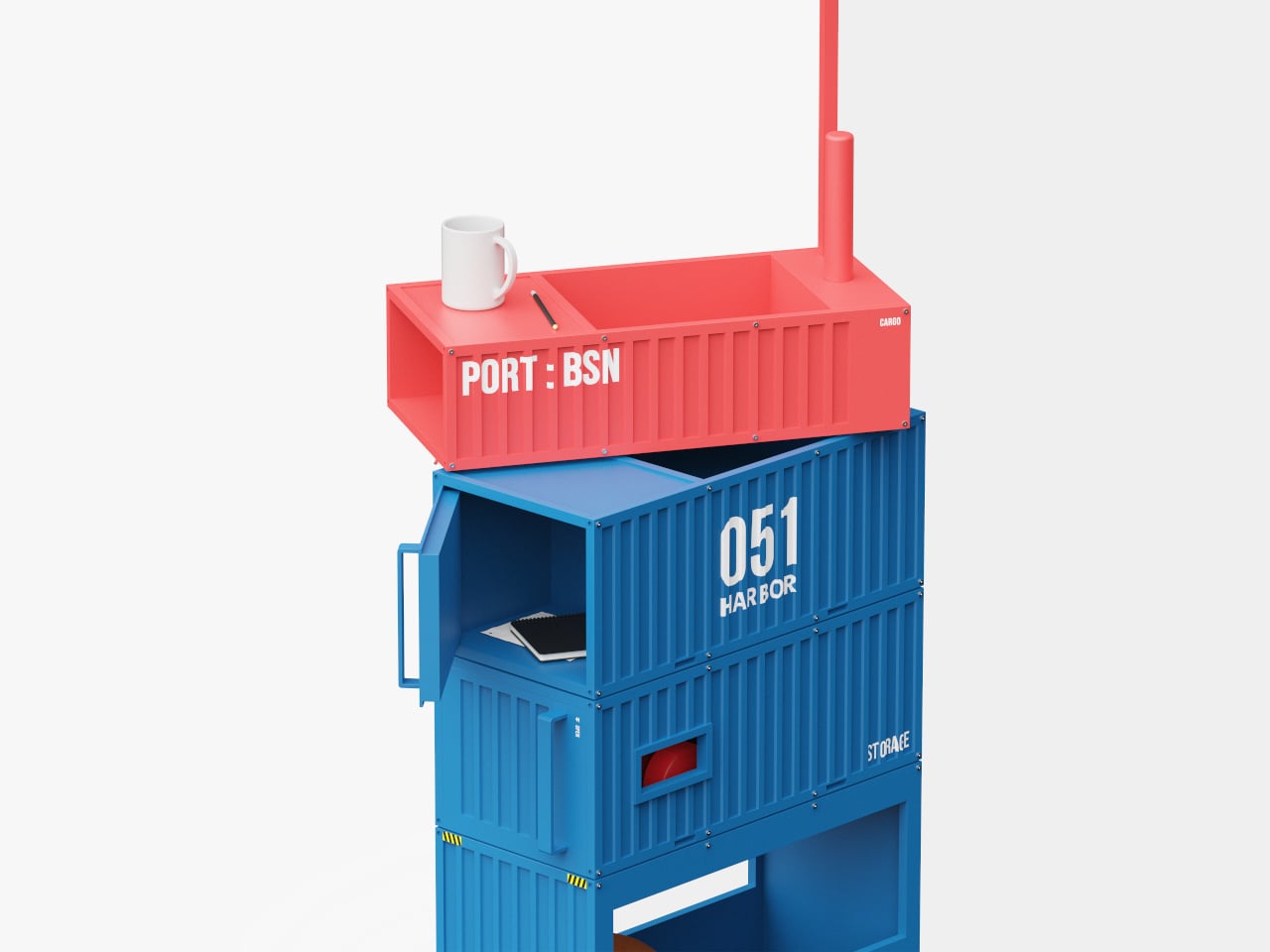
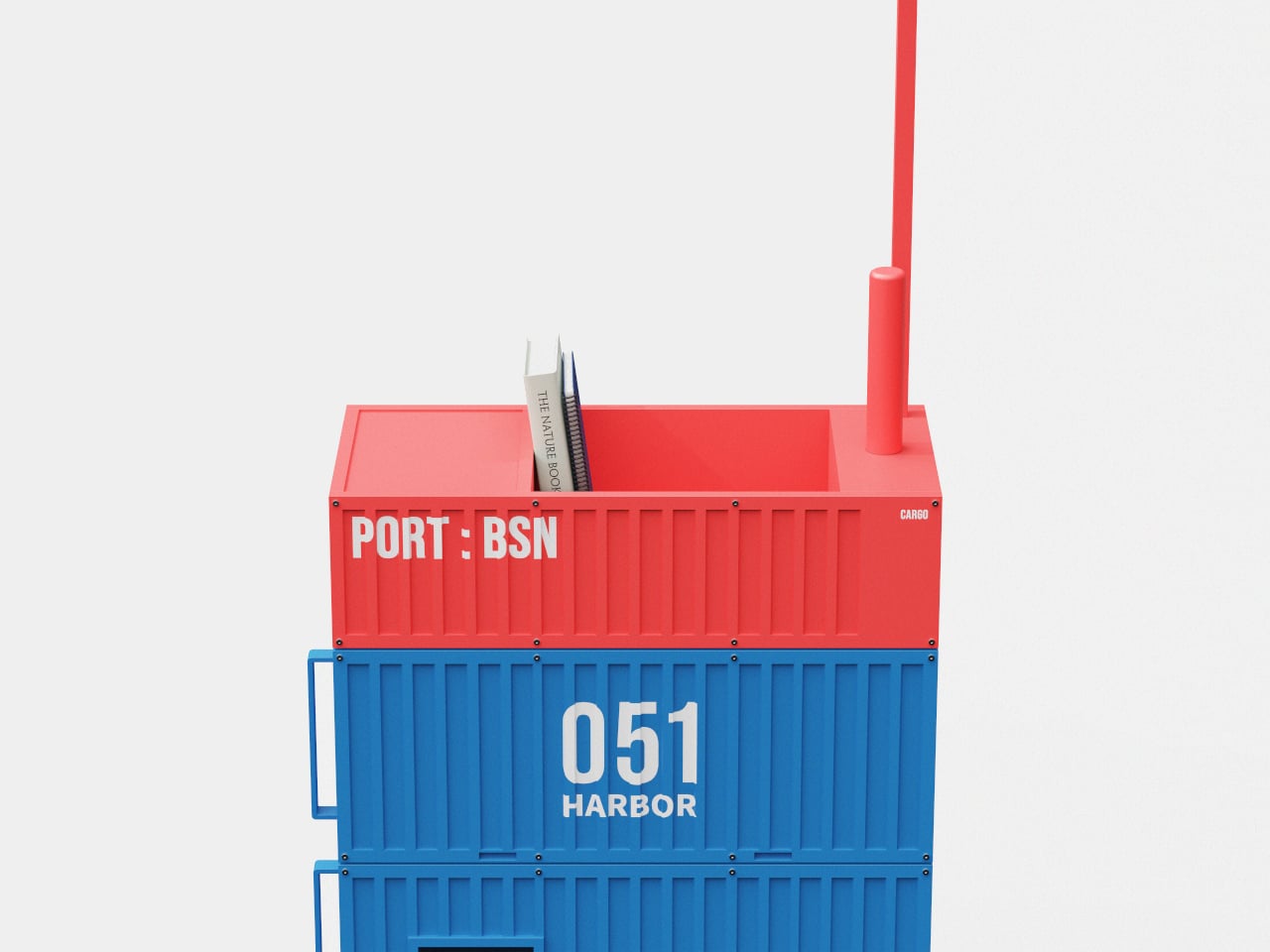
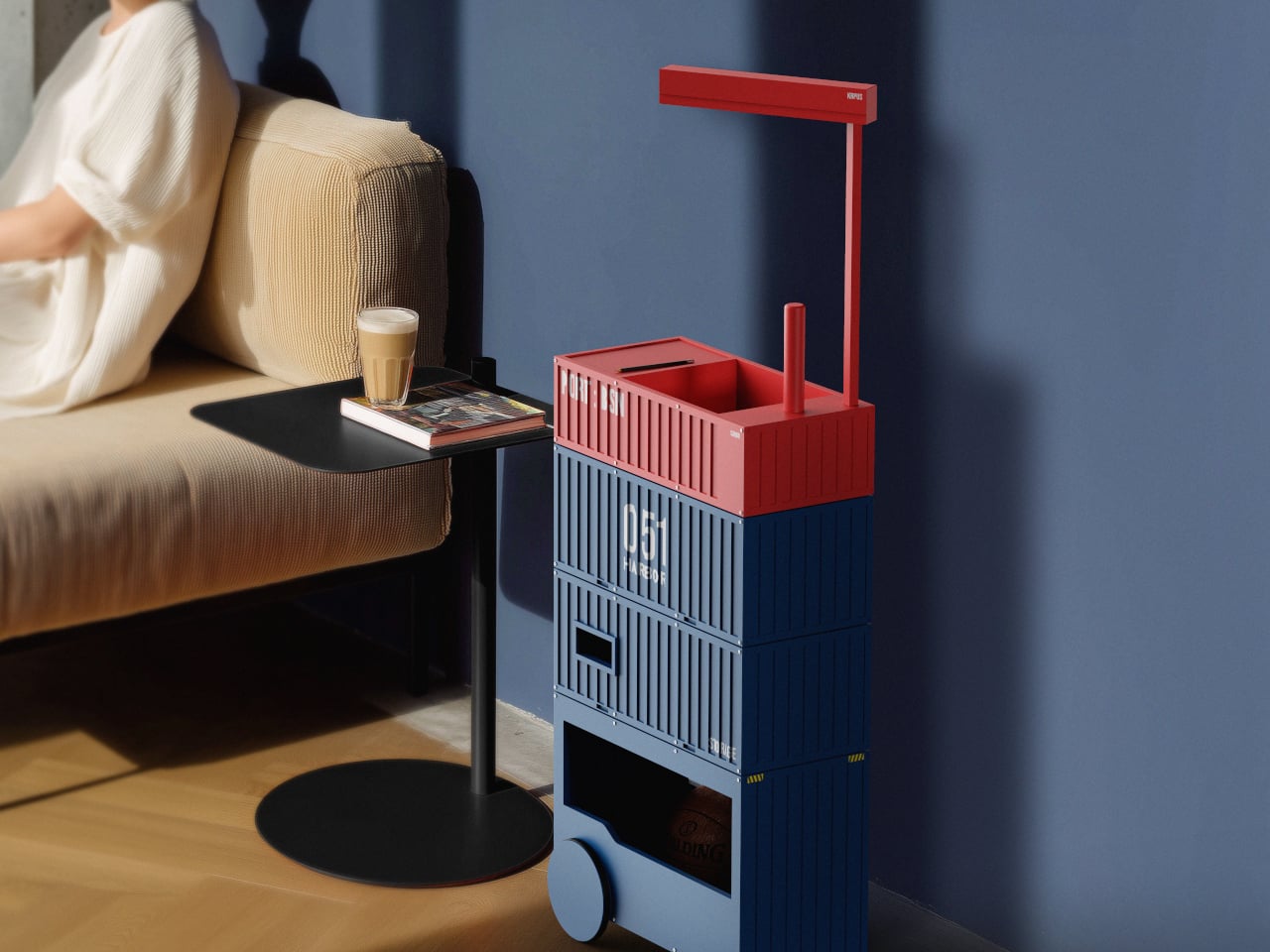
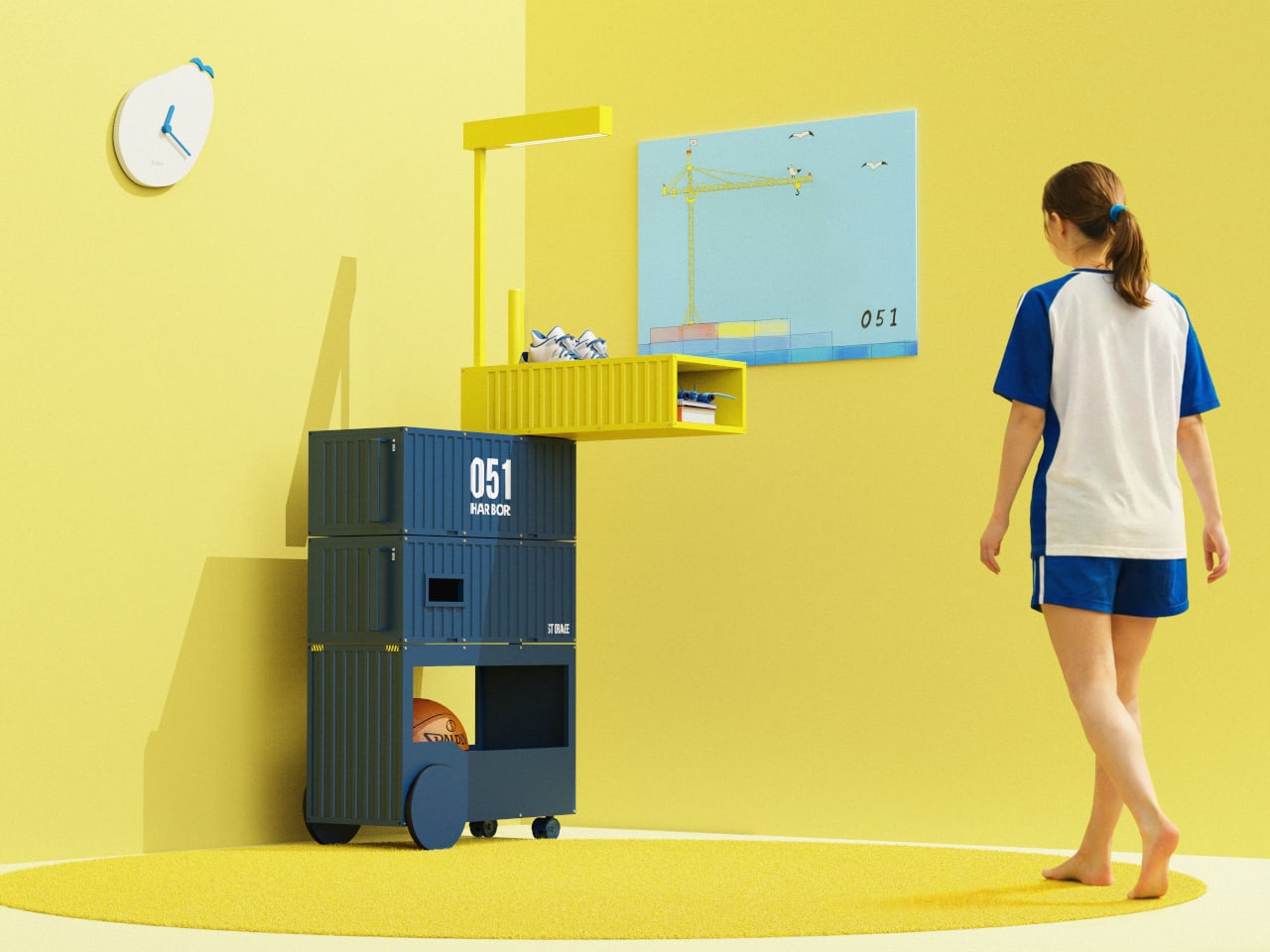
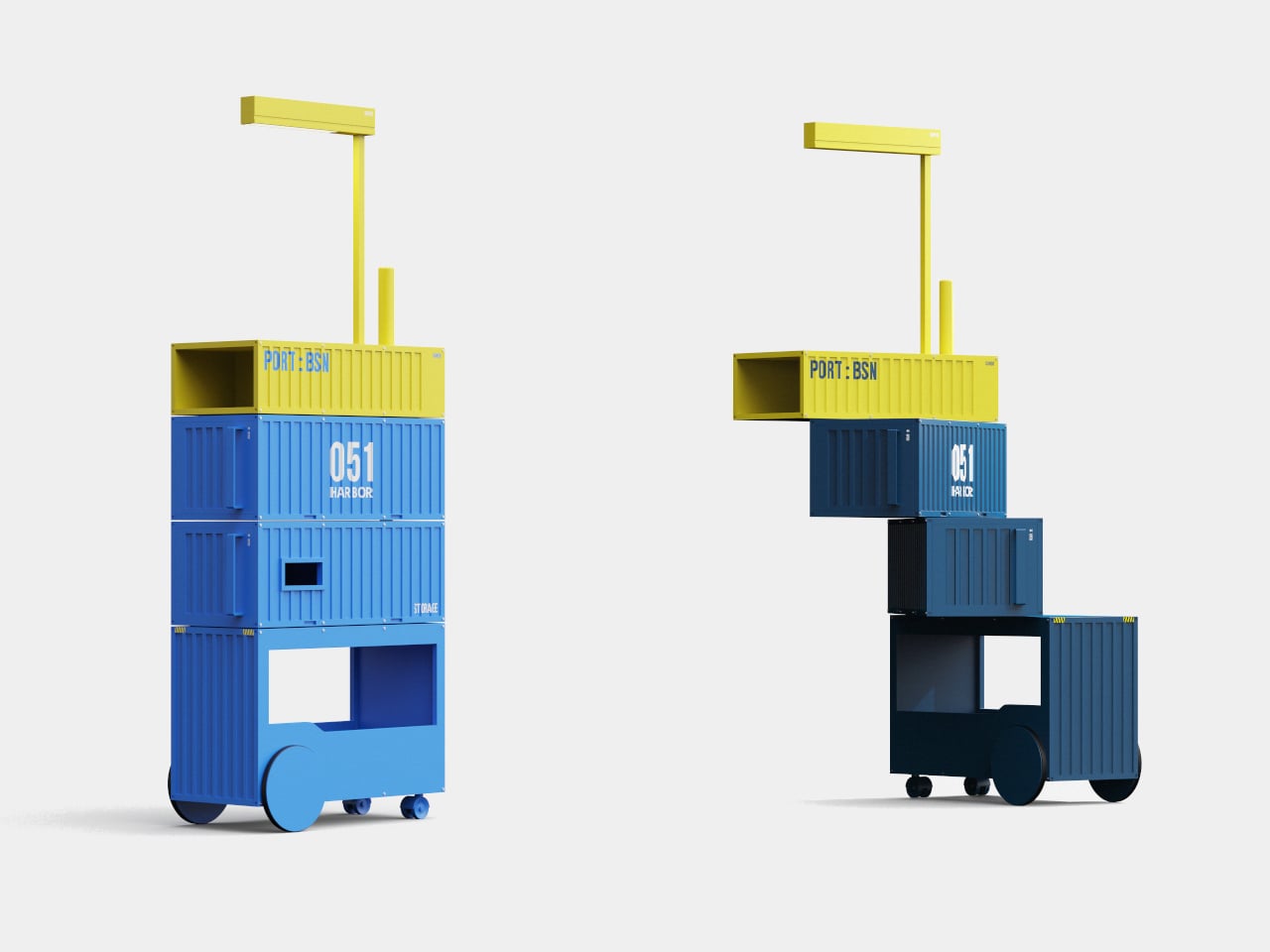
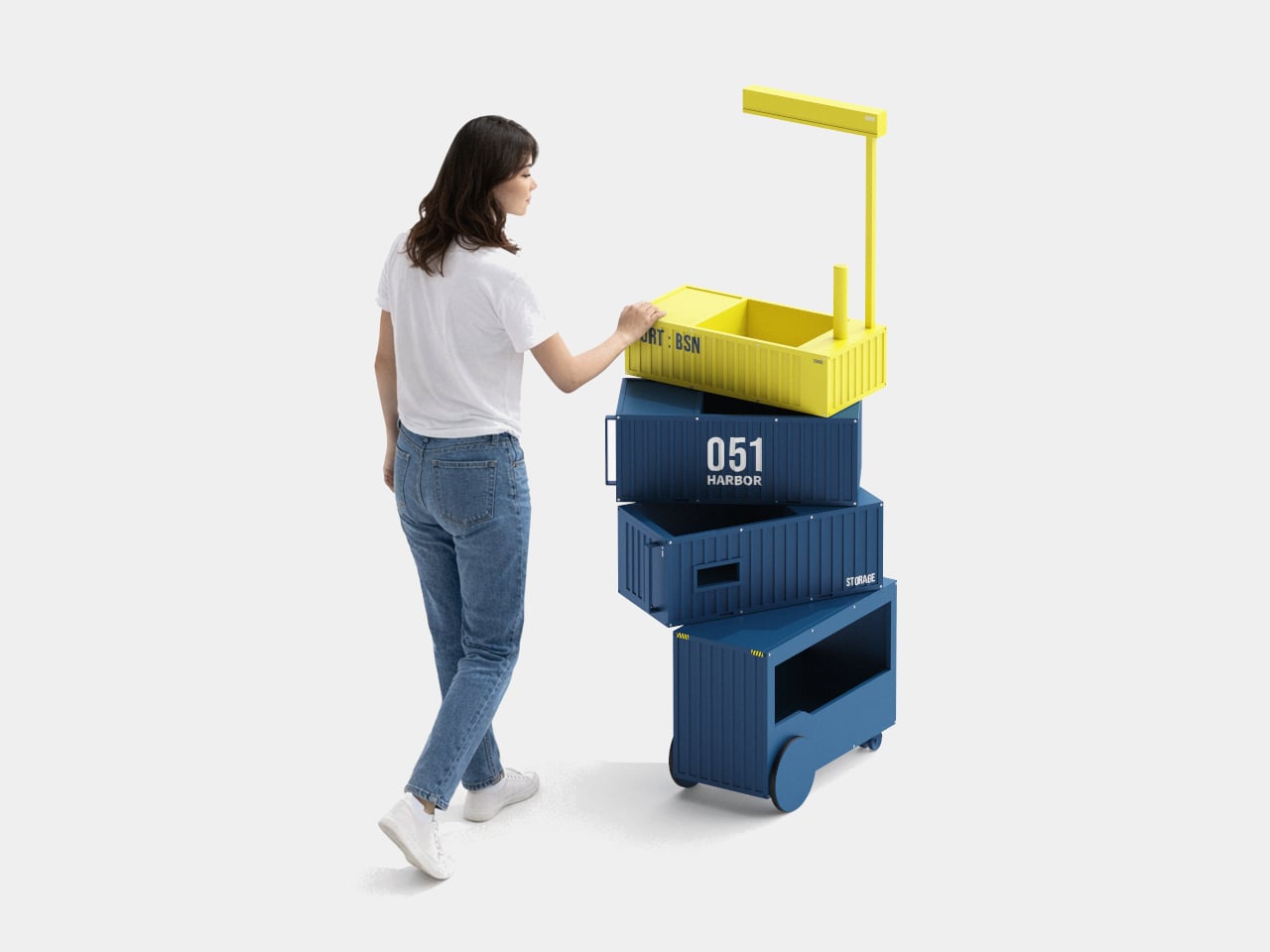
The trolley consists of four container-like boxes stacked on a wheeled base, each able to pivot around a central axis. In a narrow hallway or next to a desk, you keep them aligned as a compact tower. When you settle on the sofa or work at a table, you swing modules out to the side, opening up access to books or supplies without taking over the floor.

A vertical mast rises from the top, capped with a horizontal beam that doubles as a light. It reads like a tiny crane or gantry, giving the trolley a clear front and sense of direction. In a living room, that light becomes a reading lamp or soft ambient glow, while the mast acts as a subtle signpost, a little landmark instead of anonymous storage hiding in a corner.

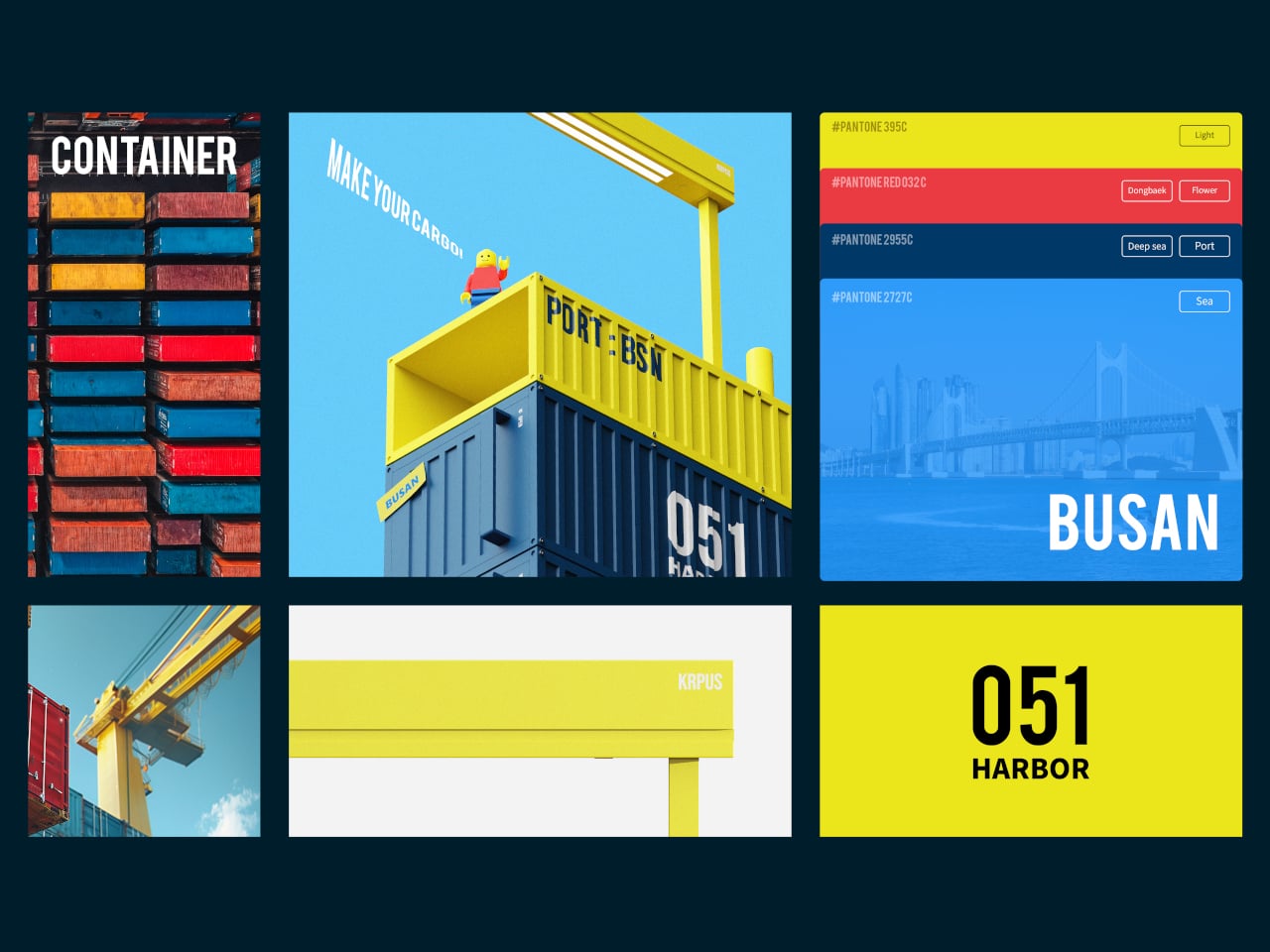
The colors are pulled directly from Busan and its port. Yellow comes from cranes and working equipment, navy and blue from the sea in front of and beyond the harbor, and red from the camellia flower that represents the city. In practice, that means a base of deep blue containers, a bright yellow mast, or a red top module bringing energy into an otherwise neutral space.

Harbor 051 is more than a playful reference. The rotating structure makes storage and placement genuinely flexible, the wheels let it move between rooms, and the integrated light adds another layer of function. It is a small example of how a logistics system’s order and rhythm can become a domestic tool instead of staying at the edge of the city.

Harbor 051 brings a city’s backbone into something you can live with every day. Instead of a generic cart, you get a trolley that feels like a stack of containers paused mid-movement, ready to pivot as your day shifts. Storage does not have to be invisible to be useful; sometimes the most satisfying pieces are the ones that quietly carry a story from outside your window into the room where you spend time.

The post This Trolley Stacks and Rotates Like Shipping Containers at a Port first appeared on Yanko Design.

Razer made a web app version of Synapse

Gaming peripheral company Razer has announced the beta release of Synapse Web, a browser-based version of its desktop software. The web app is intended for quick adjustments when away from home, such as LANs or tournaments, where downloading the full desktop version may not be possible or practical.

At launch, Synapse Web will only support the Razer Huntsman V3 Pro keyboards, though Razer says more devices will be added down the line. Using any Chromium-based browser, users can make quick changes to key settings, apply Chroma RGB quick effects and manage on-board profiles. These profiles can then be viewed, edited and saved directly to the keyboard’s device memory, so the configuration stays consistent when moving between PCs.

The company says the new web-based tool is meant to "complement" Synapse 4, the most recent desktop version, but its appeal may be in providing an alternative altogether. Even a cursory search online will turn up years of complaints that Synapse is riddled with bugs, so fans of the brand may be happy to use a pared-down web app if it means more reliability. Razer says you'll still need the full app for advanced customization and "deeper device integration" like multi-device RGB syncing or game-specific profiles.

This article originally appeared on Engadget at https://www.engadget.com/gaming/pc/razer-made-a-web-app-version-of-synapse-170715465.html?src=rss

MSI’s refreshed Prestige series laptops are now available to buy

The latest lineup of MSI's Prestige laptops is now available to buy. The company unveiled its next-generation business laptop at CES earlier this month, all of them powered by the latest Intel Core Ultra Series 3 processors.

Available in configurations that include up to the Intel Core Ultra 9, the updated Prestige series are equipped with chunky 91Wh batteries and, depending on the model, offer over 30 hours of 1080p video playback. In more real-world terms, if you’re on a work trip and know you won’t always have a power supply to hand, you can trust one of these to get you through a day of heavy multi-tasking.

The new Prestige models are encased in full aluminum and are slimmer than their predecessors. They feature vapor chamber cooling and dual-fan architecture to ensure they stay cool and quiet while you work. If you pick up one of the convertible 2-in-1 Flip models, you can work with a stylus too.

There’s a 2.8K OLED display option for the Prestige 16 and 16 Flip, with support for VRR and DisplayHDR True Black 1000. The Flip 14 keeps the OLED, but the resolution drops to FHD+ and you lose the VRR.

The full lineup is now available in the US, with prices starting at $1,299. 

This article originally appeared on Engadget at https://www.engadget.com/computing/laptops/msis-refreshed-prestige-series-laptops-are-now-available-to-buy-165234479.html?src=rss

Freescape puts side-extending inflatable pop-up roof on a Ford camper van

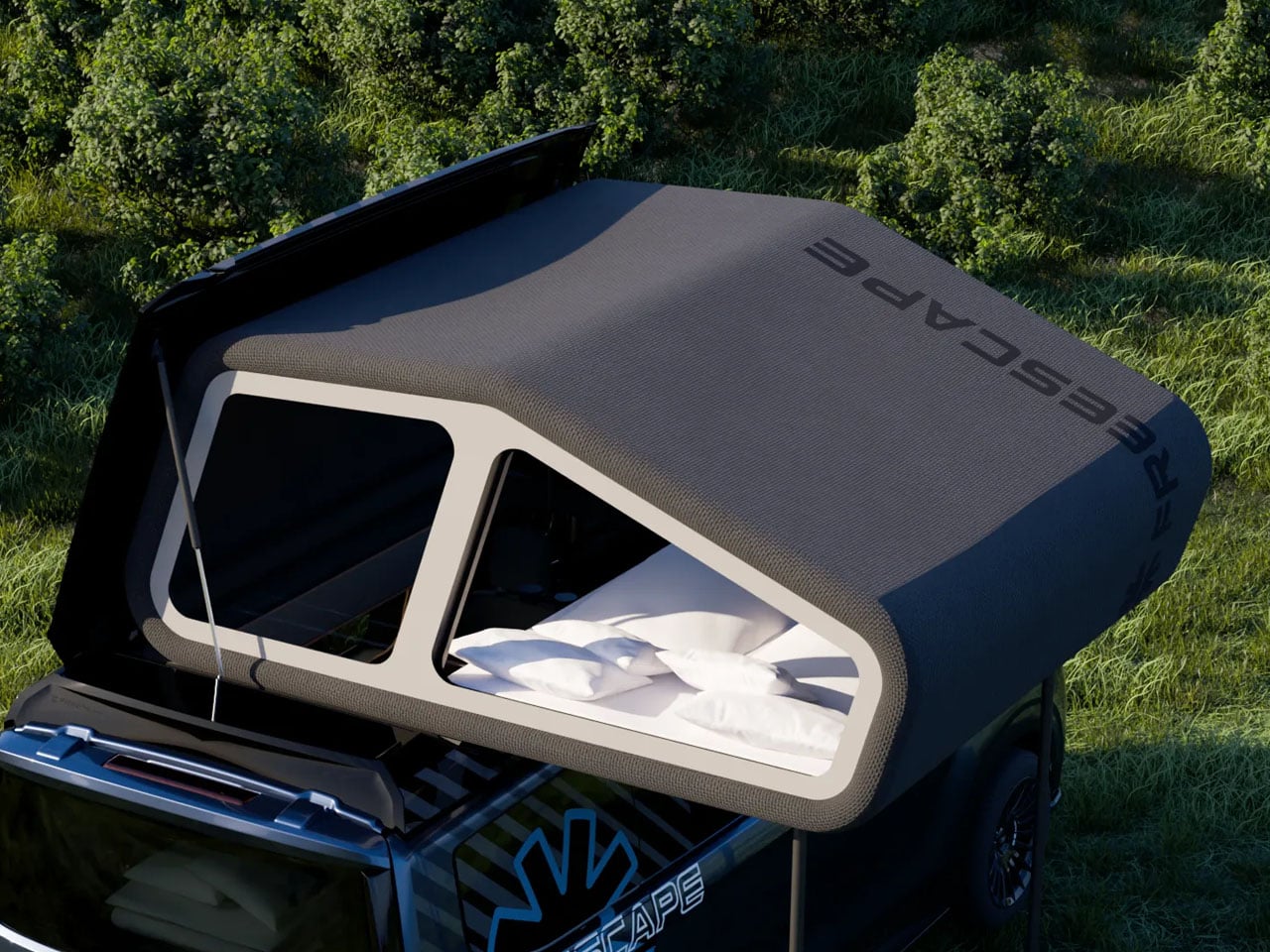
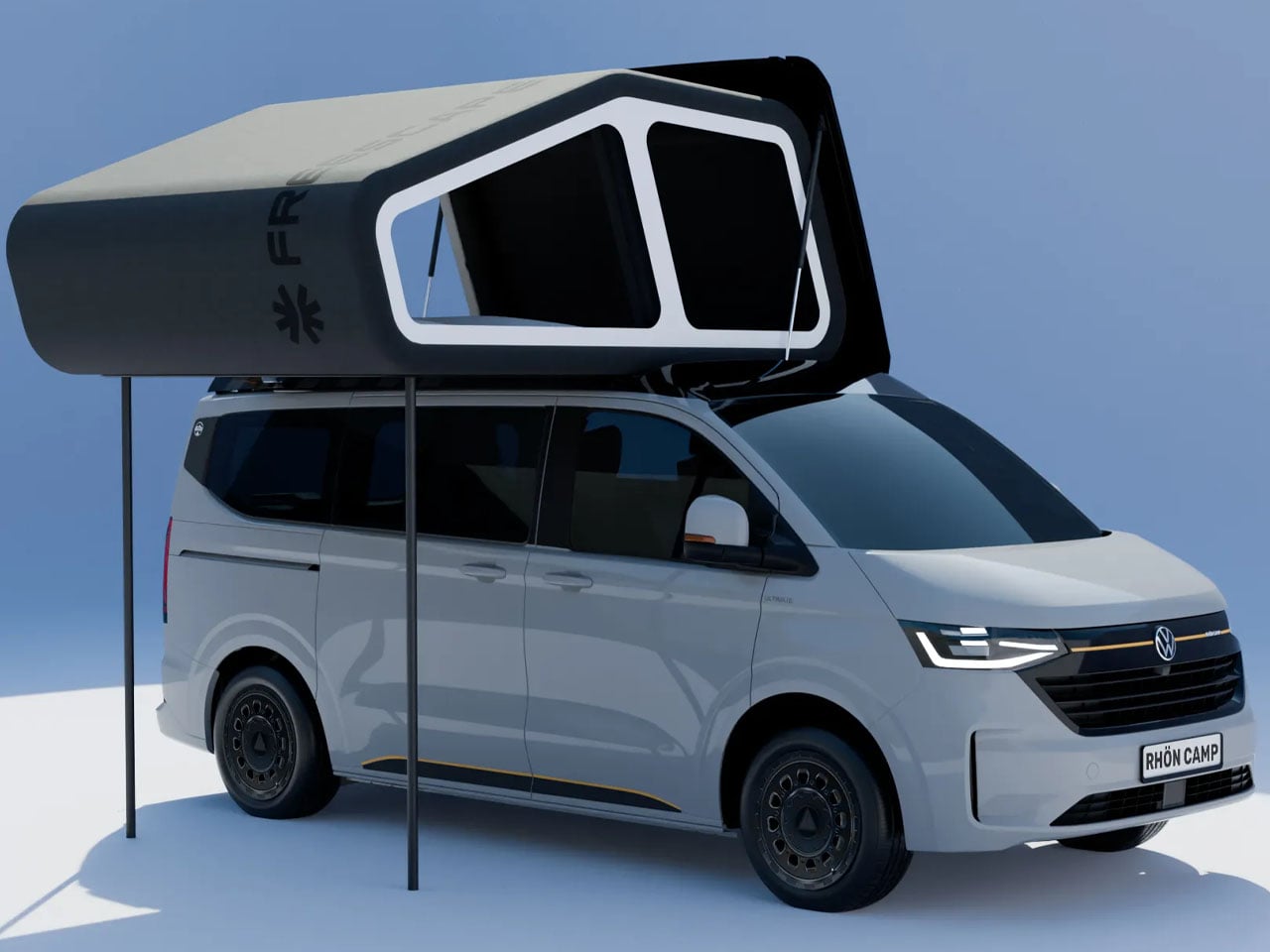
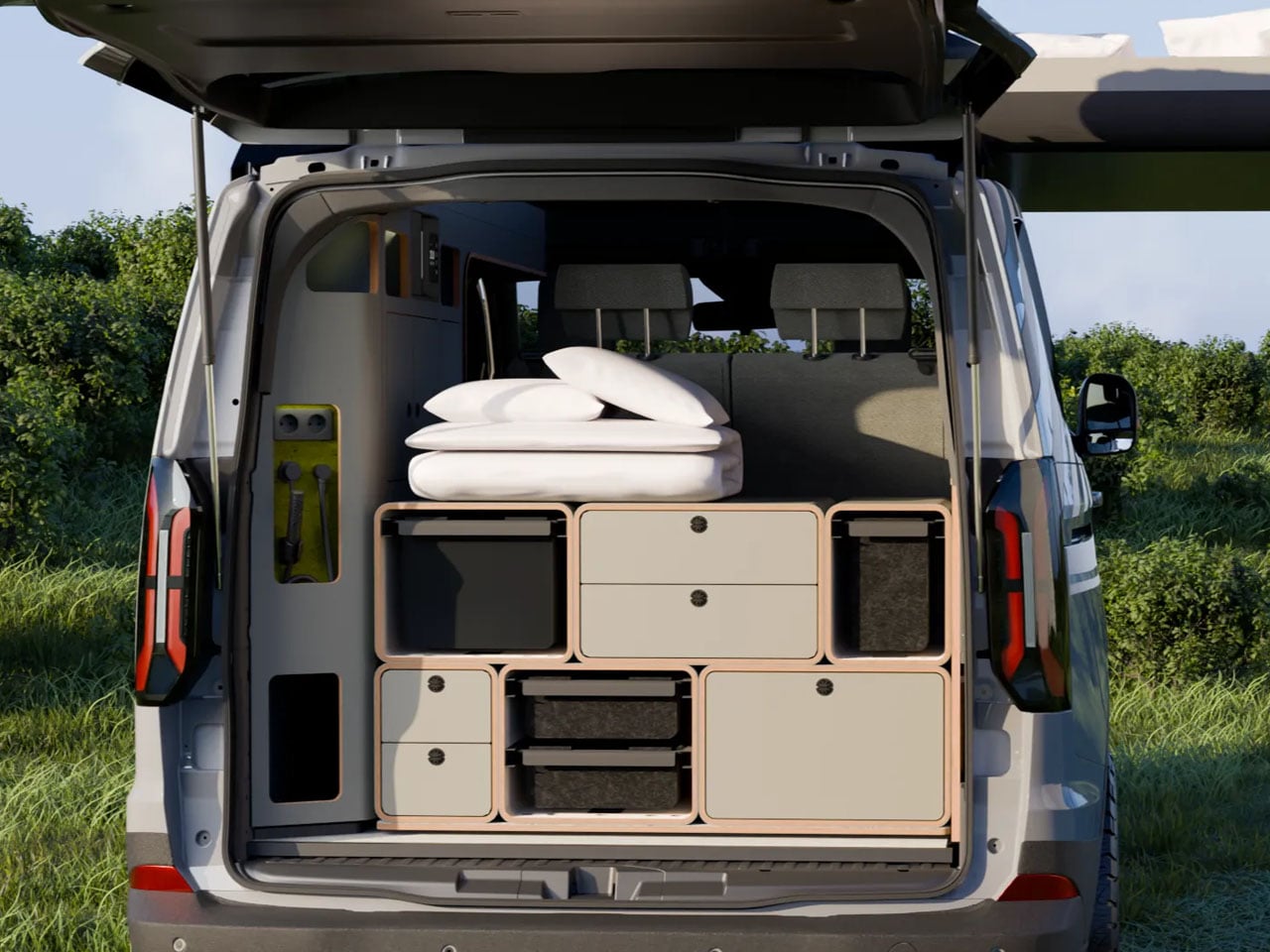
Just a few days ago, we saw a caravan featuring a pretty unique pop-up roof concept. It used an electronically lifting upper shell to double the interior space. The Freescape camper van is another rig that stands out thanks to its innovative pop-up roof system. It features an inflatable rooftop system that expands the vehicle’s interior and creates a comfortable sleeping area in a truly unconventional way.

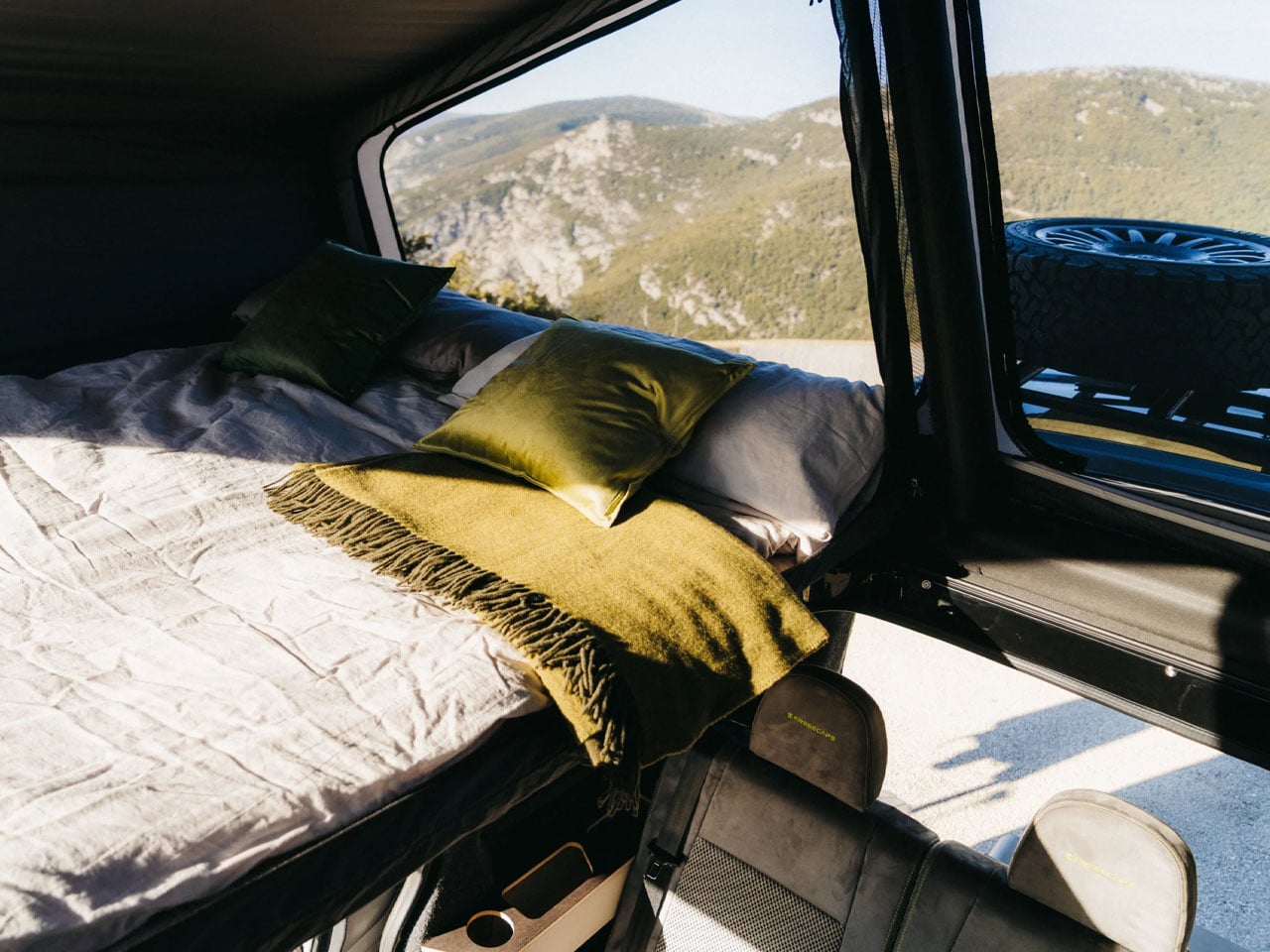
The roof tent swivels to one side, rather than sitting directly above the living area, leaving full headroom inside the van at all times. It is for the first time that such a concept for expanding the camper van living space has surfaced and is making way into a production vehicle. The van features a roof that tilts toward the driver’s side, allowing an inflatable tent inside to create a full sleeping space on the rooftop. It takes almost seven minutes for the entire thing to set up. The retraction is much quicker; more on that later.

Designer: Freescape

The new Freescape camper van has a flexible floor plan, which is also starkly different from ideas we have seen over the past. But, it’s frankly the patented pop-up roof that stands out on this all-wheel drive adventure camper van, which is based on the Ford Tourneo Custom and is configurable for the great outdoors and also for city commuting.

s

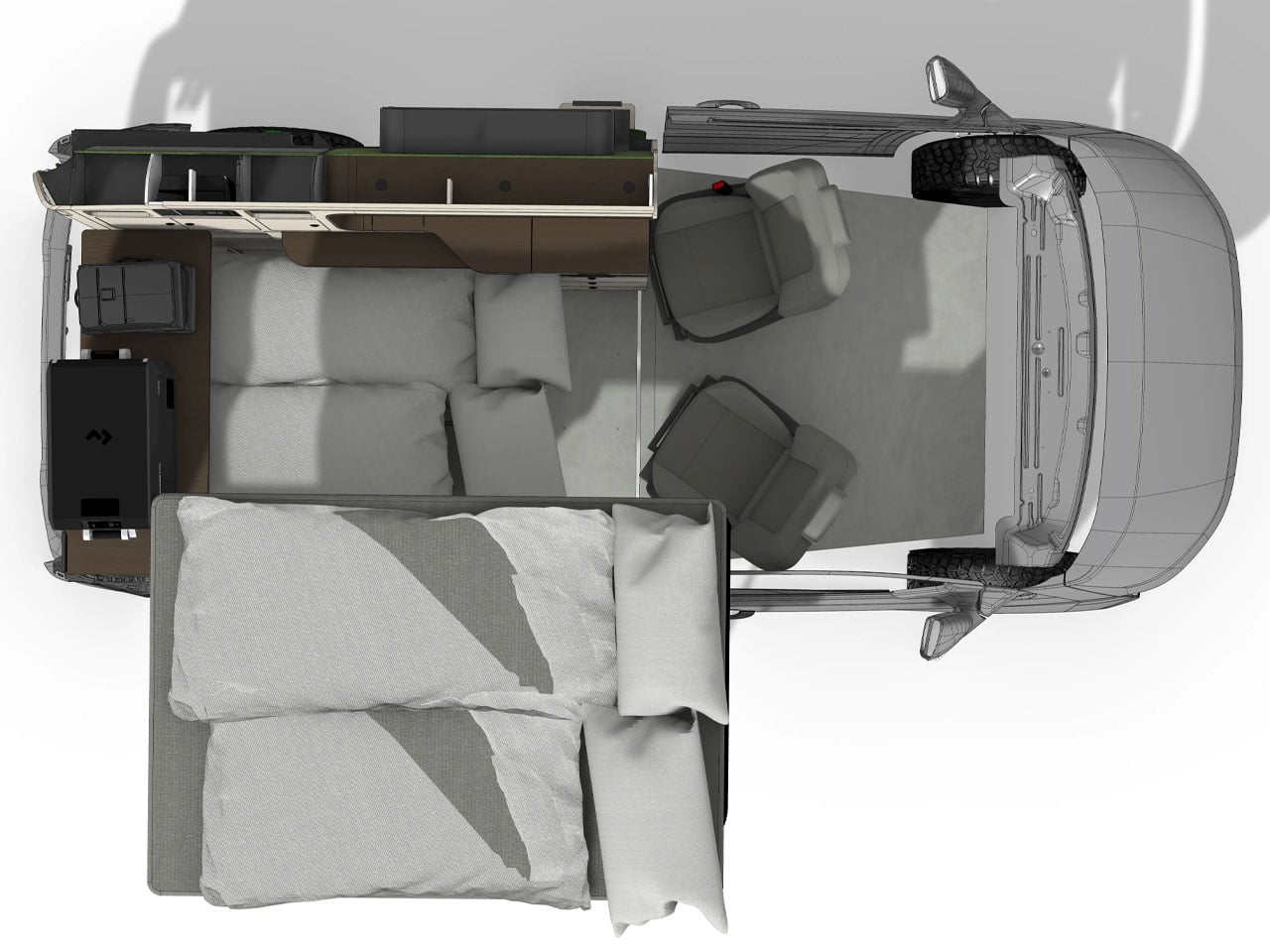
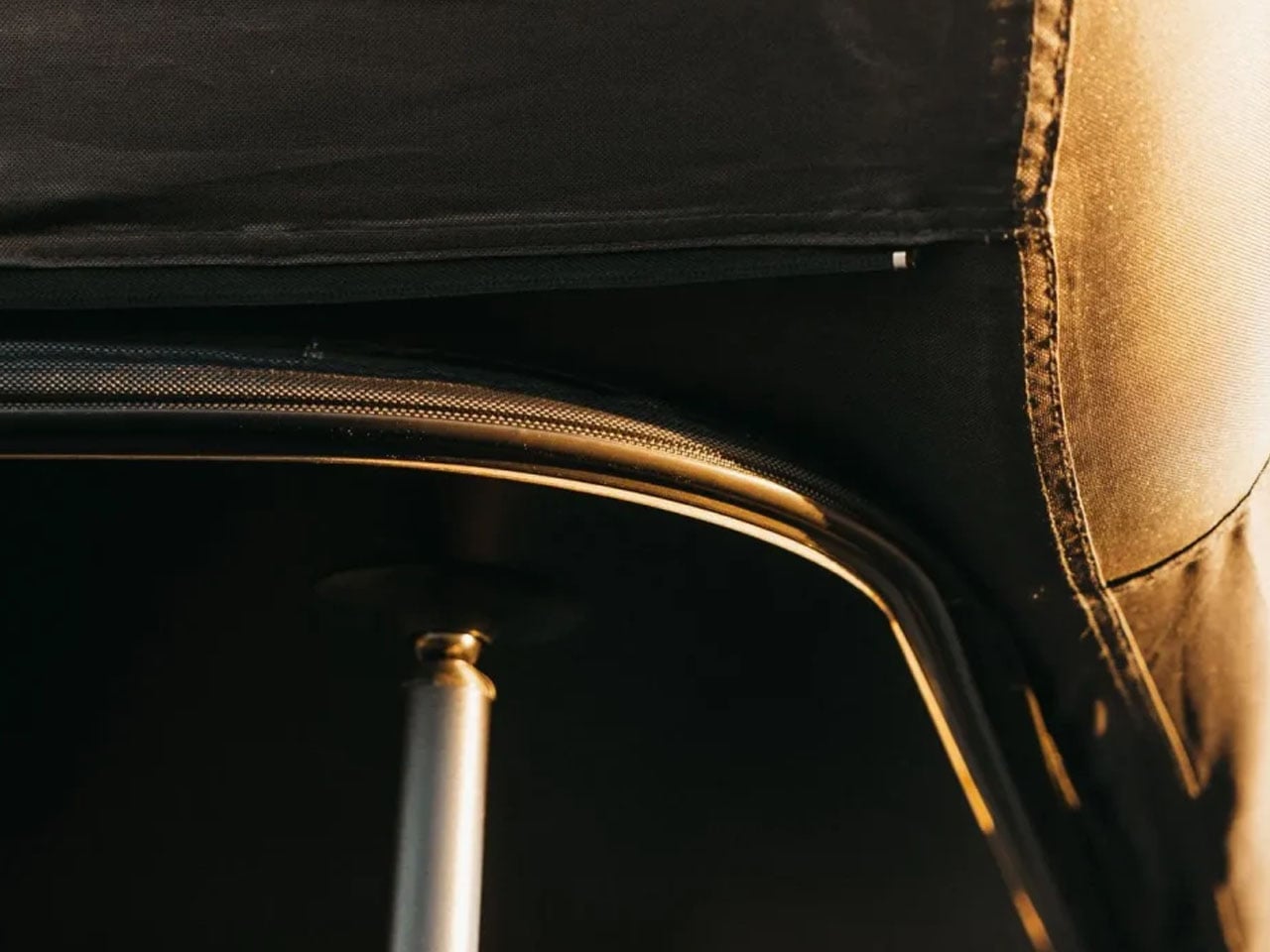
The side-extending pop-up roof of the Freescape camper van leaves the full amount of headroom inside the van while providing a 79 x 55-in double bed to sleep two people comfortably. It is set up on two support poles for stability. The roof-top tent is designed with multiple valves; one, to make the deflation quicker, and two to help prevent complete failure if one valve were to leak. Once deflated, it is easy to fold the tent back inside and close the roof.

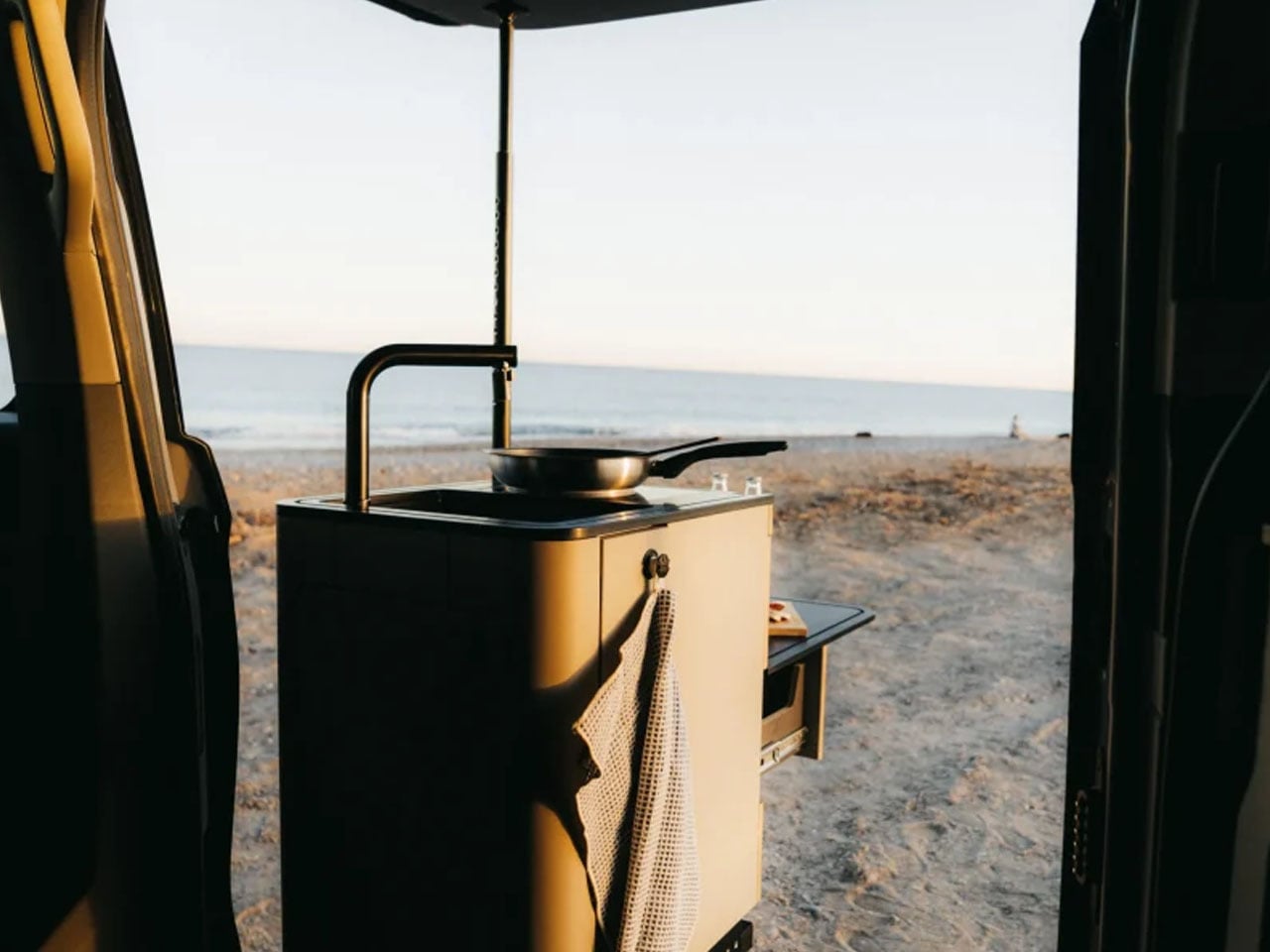
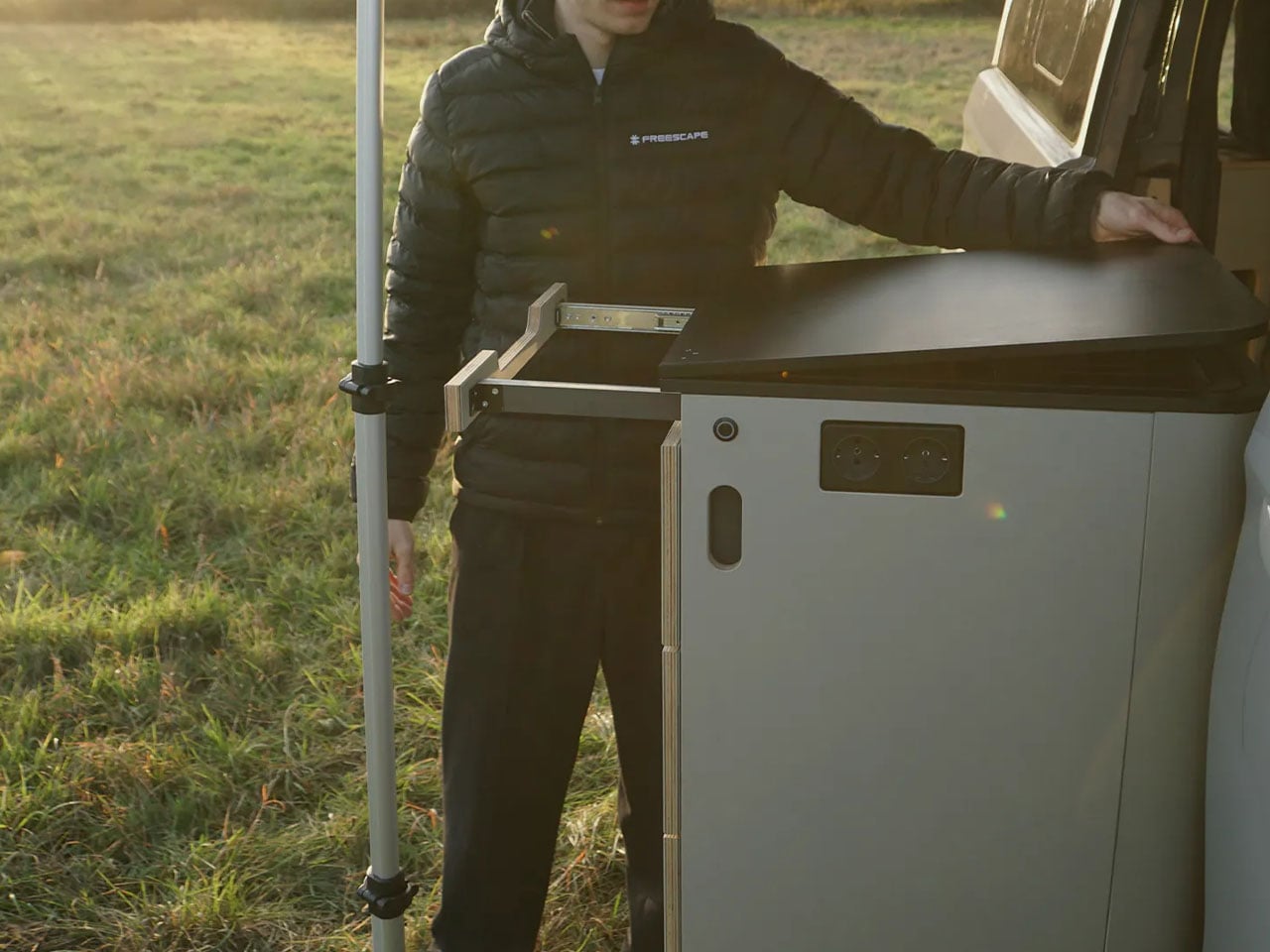
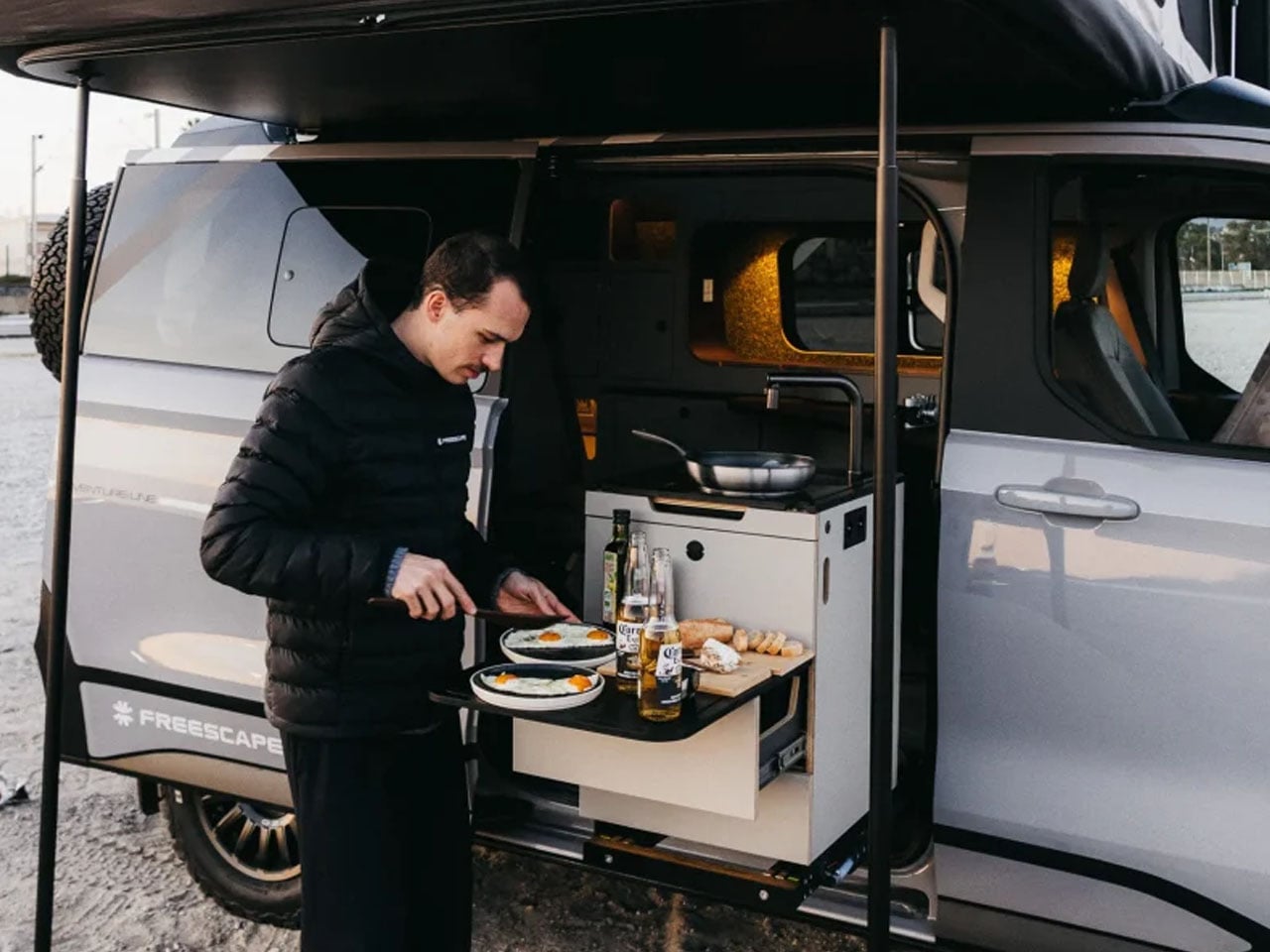
The advantages of a side-expanding roof are manifold. In addition to providing a sleeping space that’s not directly in the van’s roof, hindering the interior headroom, it also functions as an awning, providing shade and weather protection without a separate awning. The camper van has a swivel-out kitchen, which can be aligned below the extended roof awning.

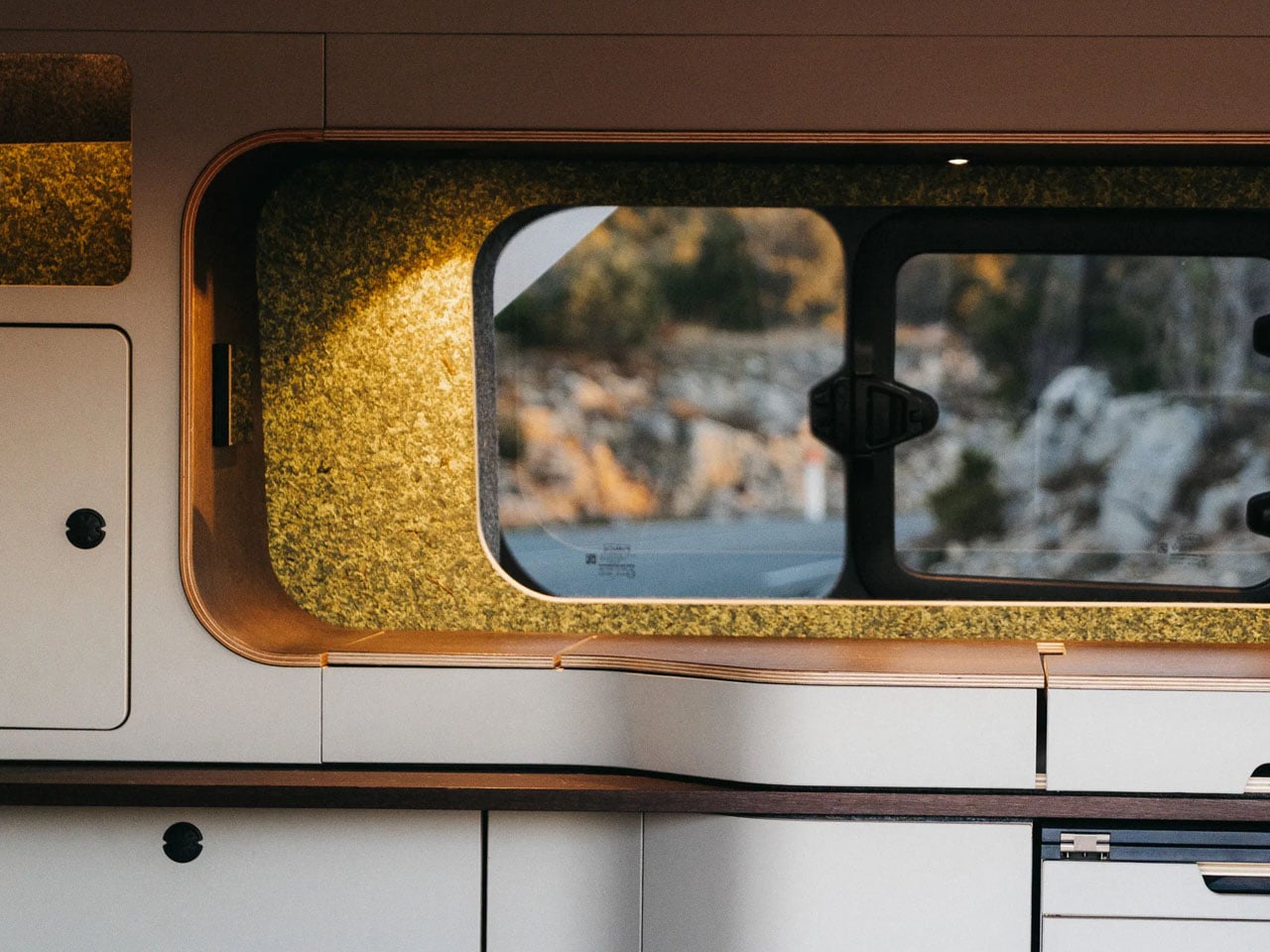
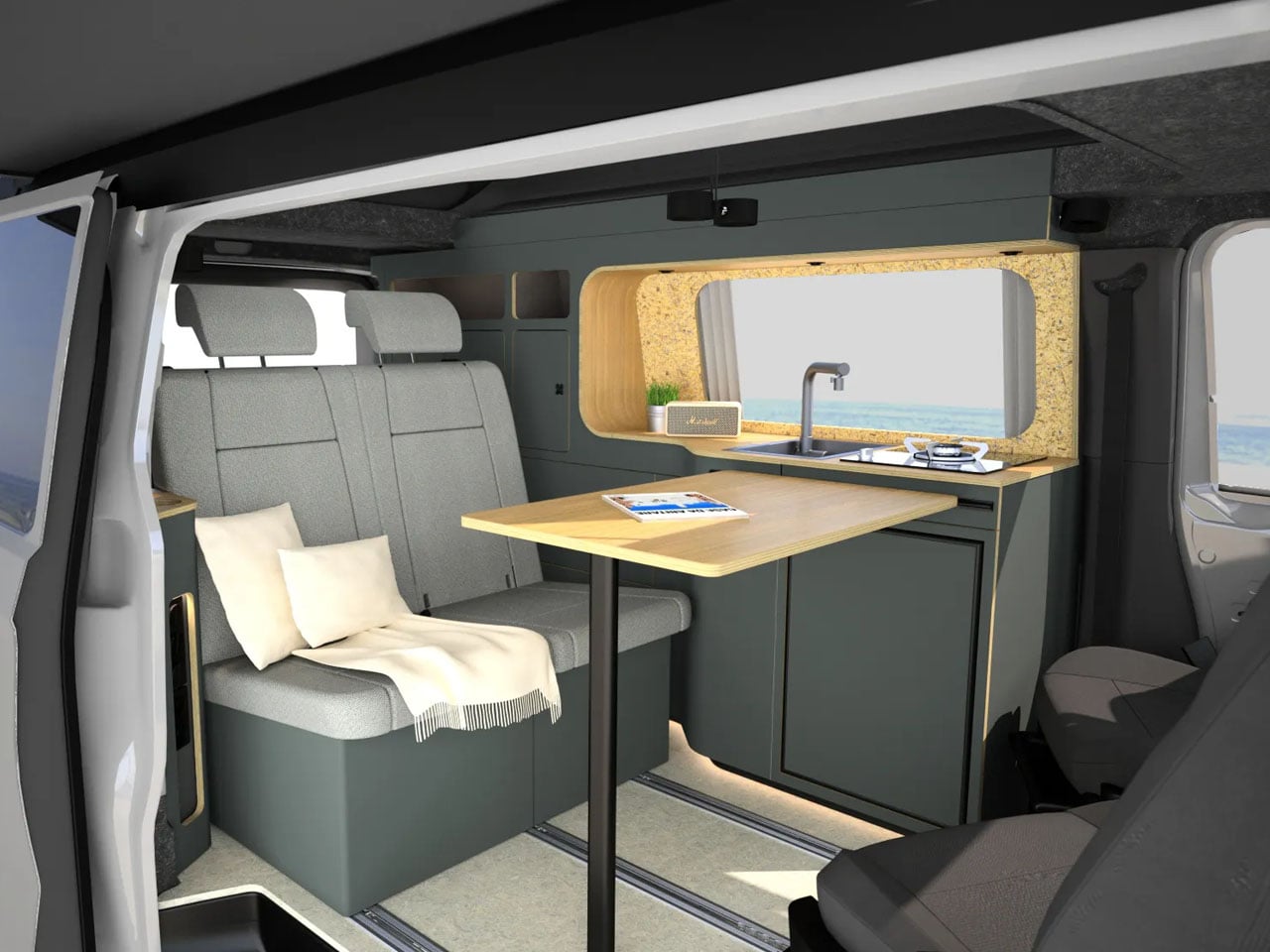
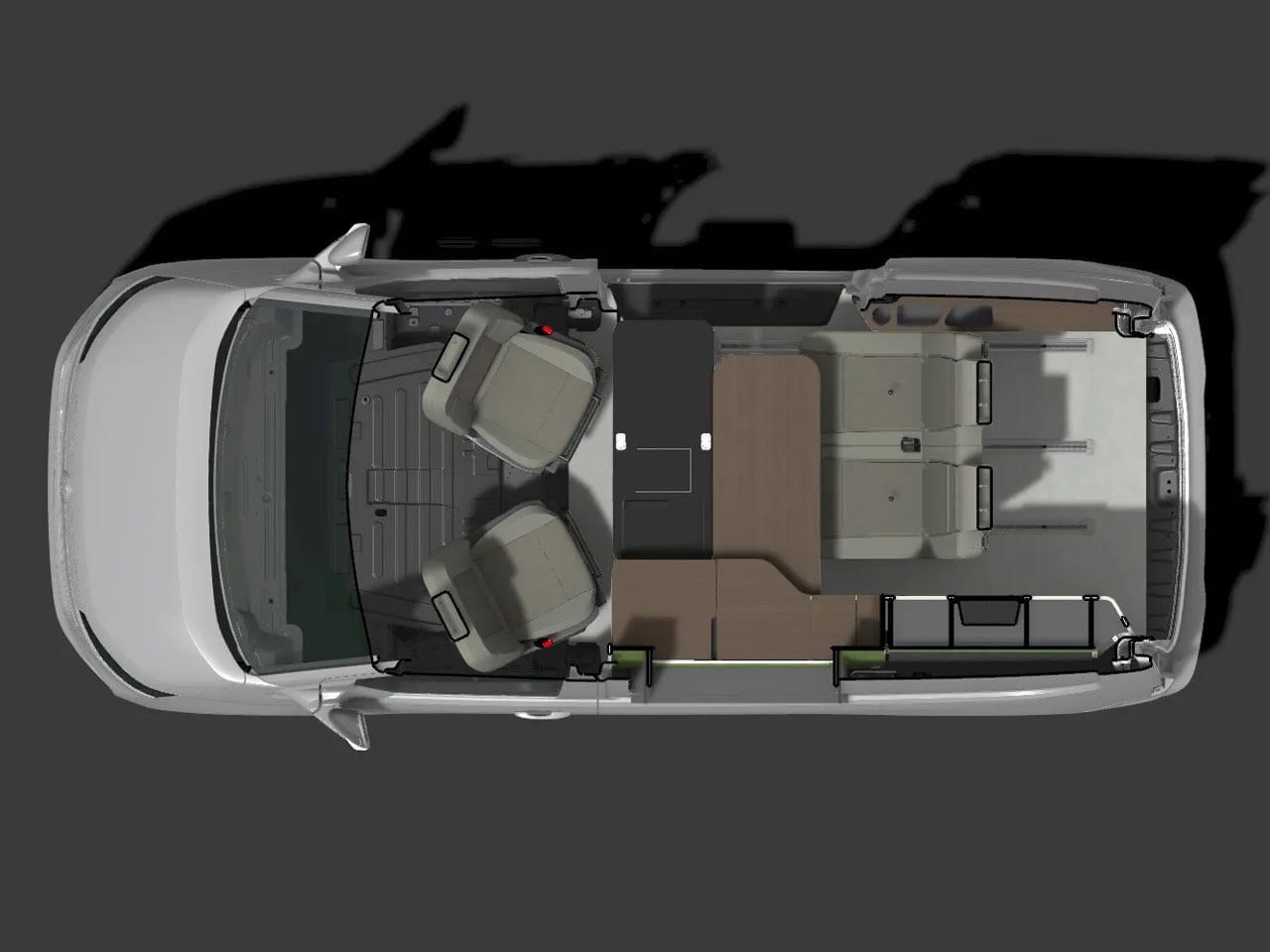
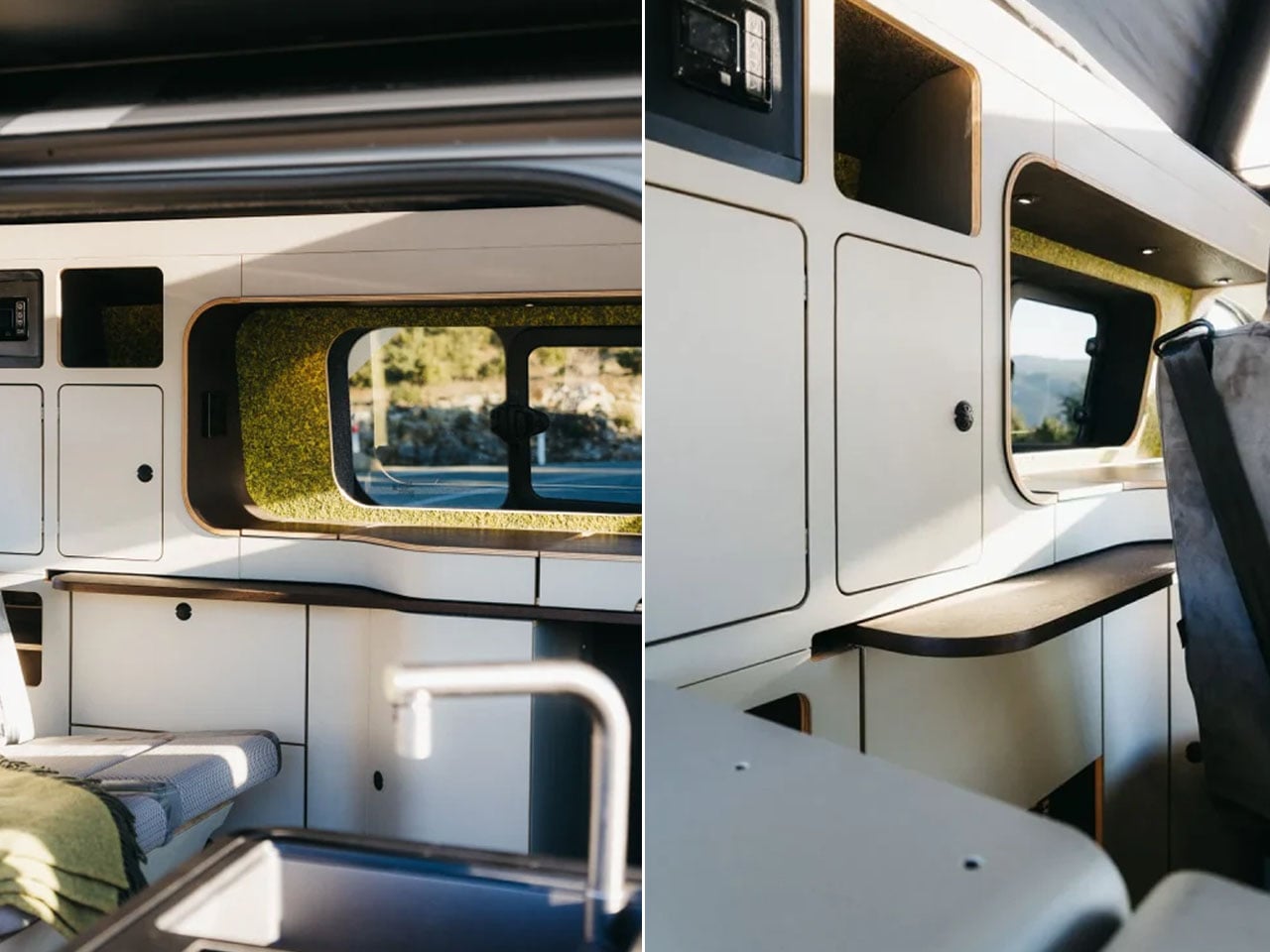
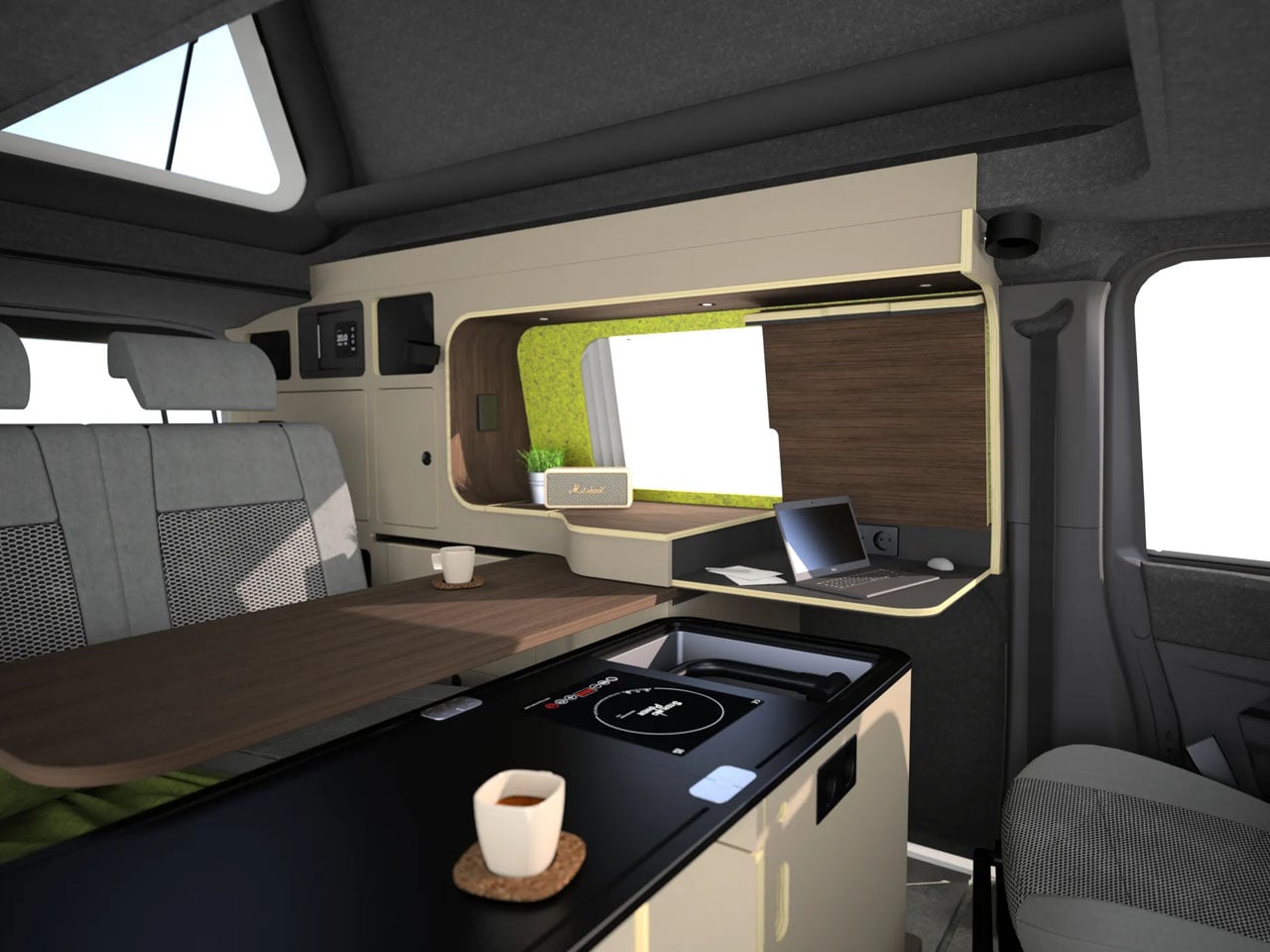
Definitely, Freescape camper van’s inflatable roof is the undeniable difference from the crowd, but the uniqueness of this van doesn’t really stop at the roof. The interior is equally cool. It’s provided with floor rails to move the seats and other hardware around the inside. The seats in the cockpit turn around to face the living area, while those at the back can be lowered to create another bed.

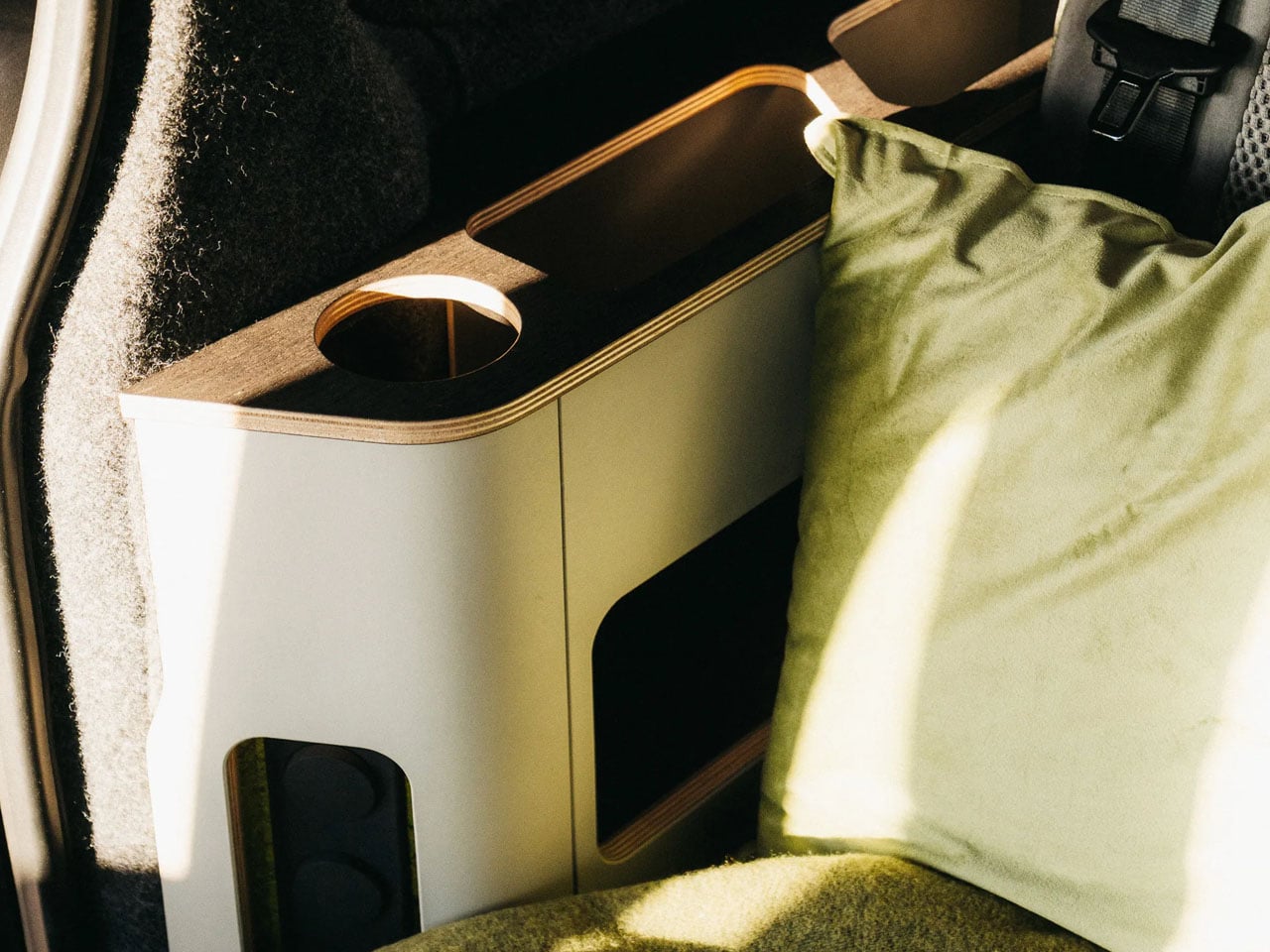
In the middle of the campervan is the multipurpose kitchen block that slides practically around the cabin and even extends out for outdoor cooking. It is provided with an induction cooktop, a worktop extension, and a sink. In addition to this, the sliding swivelling table, which pivots out of the wall, to the middle of the vehicle, functions as a table or work desk.  The camper van may be compact, but it comes with shelf-like modules that stack up in the tailgate area. The removable storage modules can be arranged as required or removed to make space for your sporting gear.

The Freescape is an ideal city commuter is the configuration possibilities inside, but it can also be equipped for off-grid adventures with 340 watts of solar power, a 300-Ah lithium battery, and a 3,000-W inverter. The camper van features a diesel camp heater, portable dry toilet, and a 25-liter fresh water tank, which also connects to an outdoor shower. The demo model for now is based on the Ford Tourneo Custom and costs $79,990. The company aims to provide plans for the Volkswagen Transporter and Caravelle in the near future.

The post Freescape puts side-extending inflatable pop-up roof on a Ford camper van first appeared on Yanko Design.

Scott Pilgrim EX will hit PC and consoles on March 3

Fans of co-op beat-‘em-ups and fictional bass players who kind of suck as human beings might want to mark March 3 on their calendars. That’s when Scott Pilgrim EX is set to hit PS4, PS5, Xbox Series X/S, Xbox One, Nintendo Switch and Steam. 

Developer and publisher Tribute Games announced the release date in a new trailer, which also revealed two more playable characters: Matthew Patel (a member of the League of Evil Exes) and Robot-01, a creation of the Katayanagi Twins. One more fighter will be unveiled in the coming weeks. 

Tribute worked with Scott Pilgrim creator Bryan Lee O’Malley on an original storyline for the game. After Scott’s bandmates in Sex Bob-omb are kidnapped and demons descend on Toronto, Scott and Ramona Flowers set out to save the day with some unexpected allies. Anamanaguchi are making new music for the game, after providing the soundtrack for Scott Pilgrim vs. The World: The Game way back when. 

I’m a fan of Scott Pilgrim vs. The World and I dug Tribute's last two games, Marvel Cosmic Invasion and Teenage Mutant Ninja Turtles: Shredder’s Revenge. So it's safe to say I'll be trying out Scott Pilgrim EX in a few weeks. 

This article originally appeared on Engadget at https://www.engadget.com/gaming/scott-pilgrim-ex-will-hit-pc-and-consoles-on-march-3-160427832.html?src=rss

Super Bowl 2026 TV deals: The best sales we found this week on OLEDs and other smart TVs ahead of kickoff

The big game is one of the few instances now in the US where most people gather around the TV to watch the live event together. While the teams playing in Super Bowl 2026 are the true stars of the show (and Bad Bunny, of course), your TV is a pretty important part of the puzzle of putting together an excellent Super Bowl party. Maybe you’ve been thinking about replacing an aging set, or you’re itching for a full refresh of your home theater setup — either way, you’ll want to try to get a good deal on a new TV. Thankfully, the weeks leading up to the Super Bowl can be a great time to shop for a new TV.

Generally, TV prices steadily decrease after a new model comes out. Some 2026 TV models were announced at CES and are forthcoming things year, making now a good time to look for discounts on 2025 sets. Aside from the holiday shopping season, now is one of the best times of the year to save on a TV. Here, we’ve curated the best Super Bowl TV deals we could find this year, from already affordable sets discounted even further to high-end OLEDs that are hundreds of dollars off.

You can easily find solid 1080p and 4K TV sets within this budget-friendly price range. What you’ll be more limited in is size — most TV deals under $500 we’re seeing right now are on sets up to 55 inches. There are a few 65- and 75-inch models in there, but the pickings are slim.

Roku 24-inch 720p smart TV for $100 (18 percent off)

TCL 40-inch Class S3 1080p smart TV for $150 (21 percent off)

Roku 55-inch 4K smart TV for $248 (29 percent off)

Roku 55-inch Mini LED 4K smart TV for $348 (30 percent off)

TCL 75-inch Class S5 4K smart TV for $480 (26 percent off)

This is where you want to look if you want your new TV to have the richest colors, deepest blacks and excellent contrast performance. Of course, that all comes at steeper prices — it can be difficult to find a good OLED set for less than $1,000, even on sale.

Sony 55-inch Bravia XR8B 4K smart TV for $998 (9 percent off)

Samsung 65-inch Class OLED S95F 4K smart TV for $2,298 (23 percent off)

Sony 77-inch Bravia XR A95L OLED 4K smart TV for $3,498 (30 percent off)

This will likely be the sweet spot for many people when it comes to TV features, performance and price. Good 4K sets are common in this price range, and you’ll also find some Mini LED sets available here as well.

TCL 65-inch Class T7 4K smart TV for $500 (29 percent off)

Hisense 75-inch QD7 Mini-LED 4K smart TV for $548 (16 percent off)

Amazon 65-inch Fire TV Omni Mini LED 4K smart TV for $920 (16 percent off)

TCL 65-inch Class QM8K Mini LED 4K smart TV for $998 (33 percent off)

A good TV is key, but having the right peripherals and accessories to go along with it will complete your home theater setup. Deals we’re tracking right now include discounts on streaming devices, soundbars and projectors.

Sonos big game sale — up to 20 percent off home theater gear: Get the Sonos Beam soundbar for $130 off, the Era 300 speaker for $100 off and more

Roku Streaming Stick HD 2025 for $16 (47 percent off)

Roku Ultra streamer for $78 (22 percent off)

Samsung HW B400F soundbar with built-in subwoofer for $100 (29 percent off)

Anker Nebula Capsule 3 projector for $540 (28 percent off)

Valerion VisionMaster Max 4K projector for $3,999 (20 percent off)

This article originally appeared on Engadget at https://www.engadget.com/deals/super-bowl-2026-tv-deals-the-best-sales-we-found-this-week-on-oleds-and-other-smart-tvs-ahead-of-kickoff-160000654.html?src=rss

Rain, Light, and Lunch: Inside Ubud’s Circular Bamboo Oasis

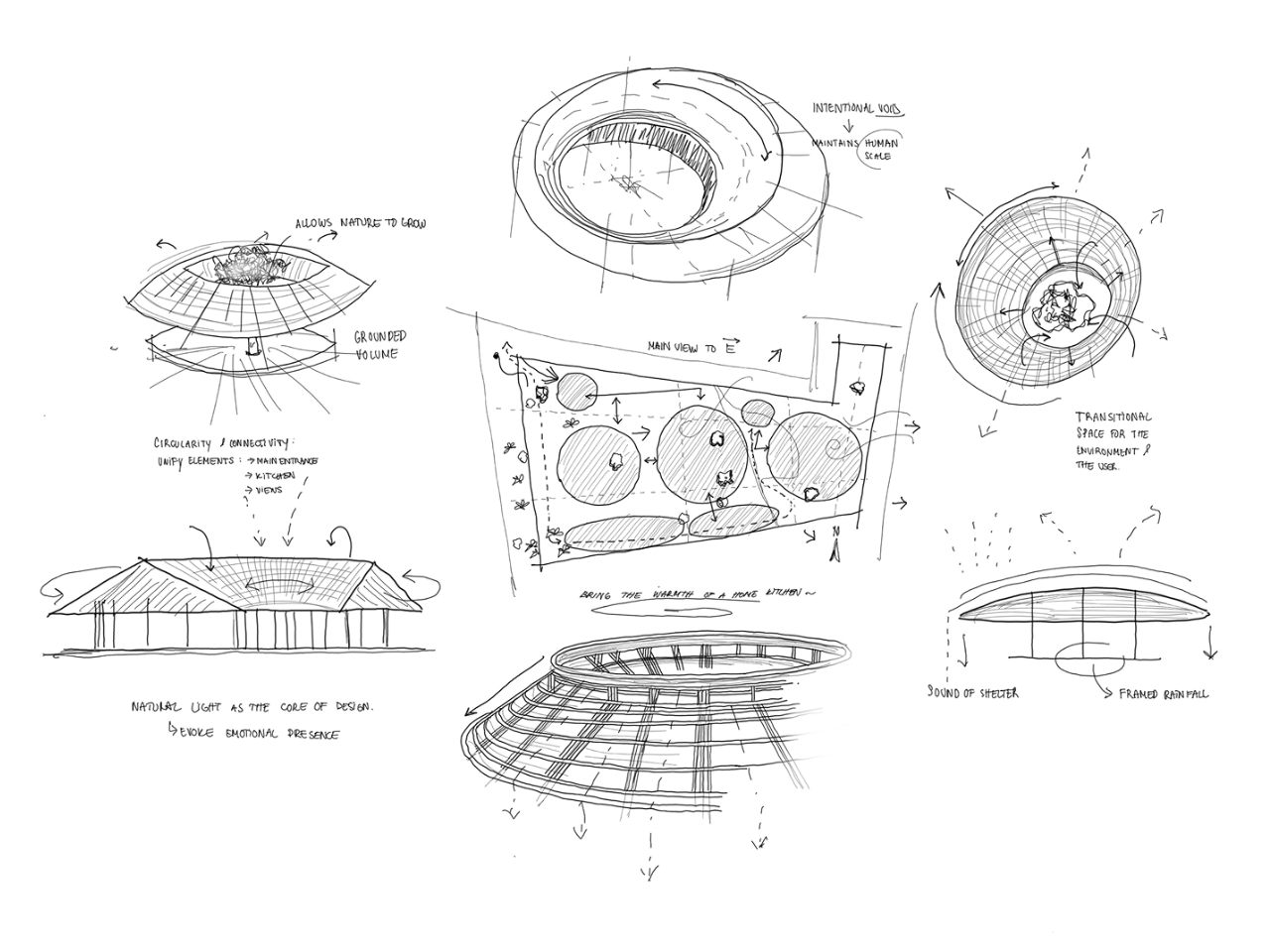
There is a moment at Juna Ubud when you forget whether you’re indoors or out. You’re sitting at your table, the air is soft, the light is filtered, and above you a circular bamboo roof seems to hover, tiered like a rice terrace in the sky. Somewhere overhead, rain is quietly being choreographed.

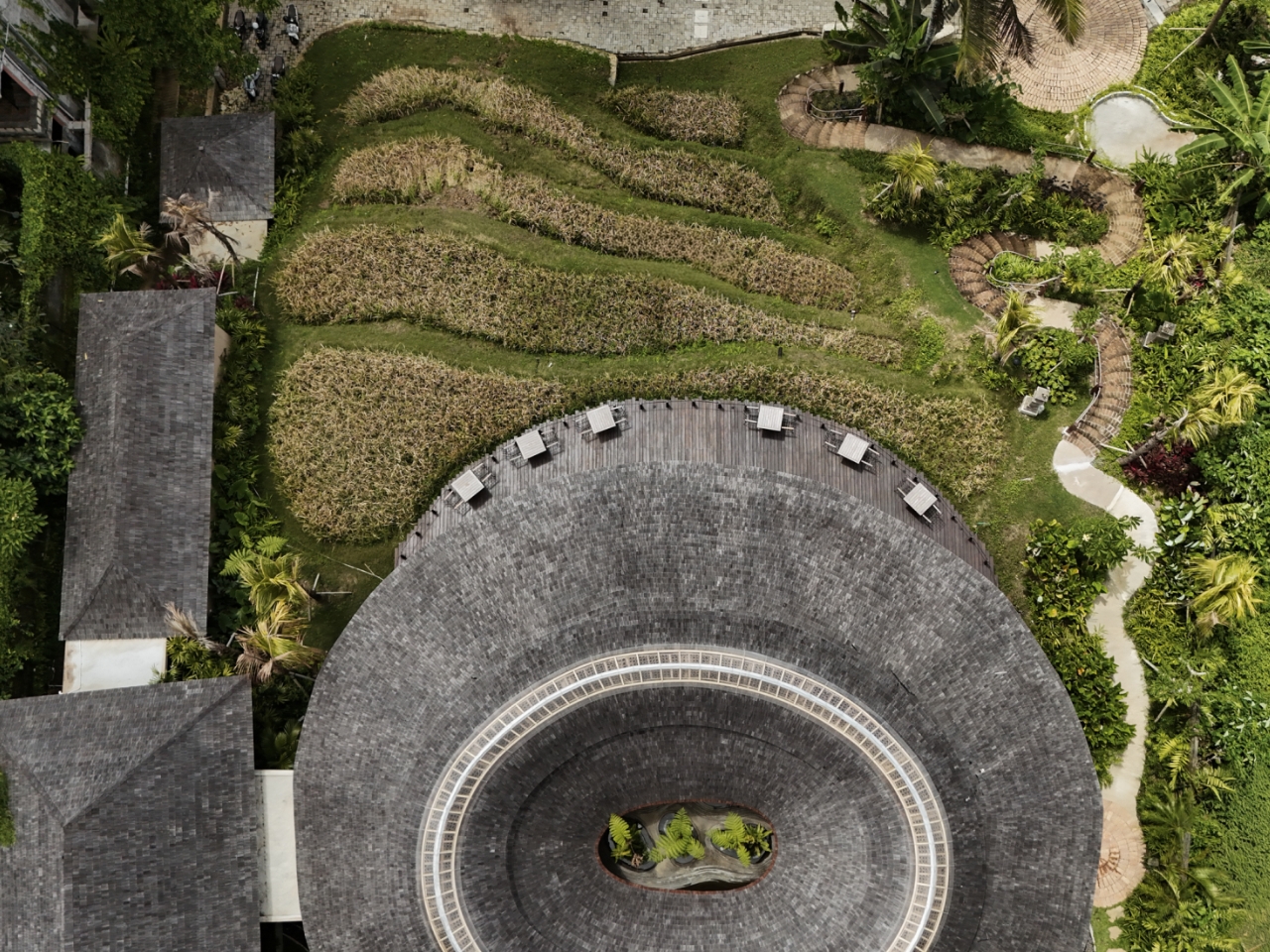
Designed by Pablo Luna Studio, Juna is a Balinese restaurant that treats climate as its main collaborator. The building is essentially a circle, pulled open and layered so light, air, and water can move through it with almost theatrical precision.

Designer: Pablo Luna Studio

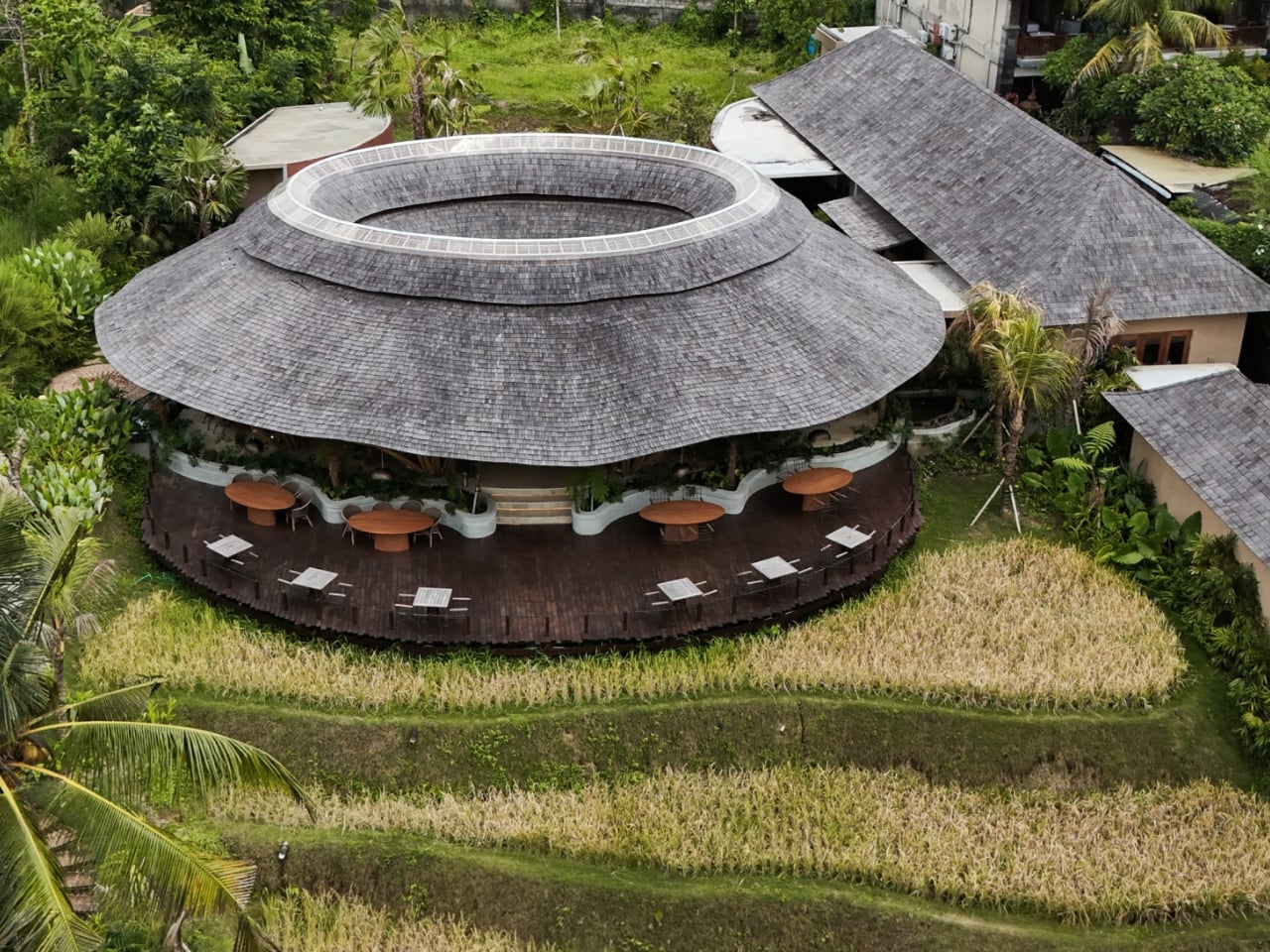
Instead of a heavy roof that just keeps weather out, Juna’s canopy funnels rain toward a central point. The tiers step and vent toward the middle, so water is guided inward while views and breezes stay open at eye level. The effect is part stadium, part shrine, part sci‑fi pavilion. You feel sheltered but not sealed.

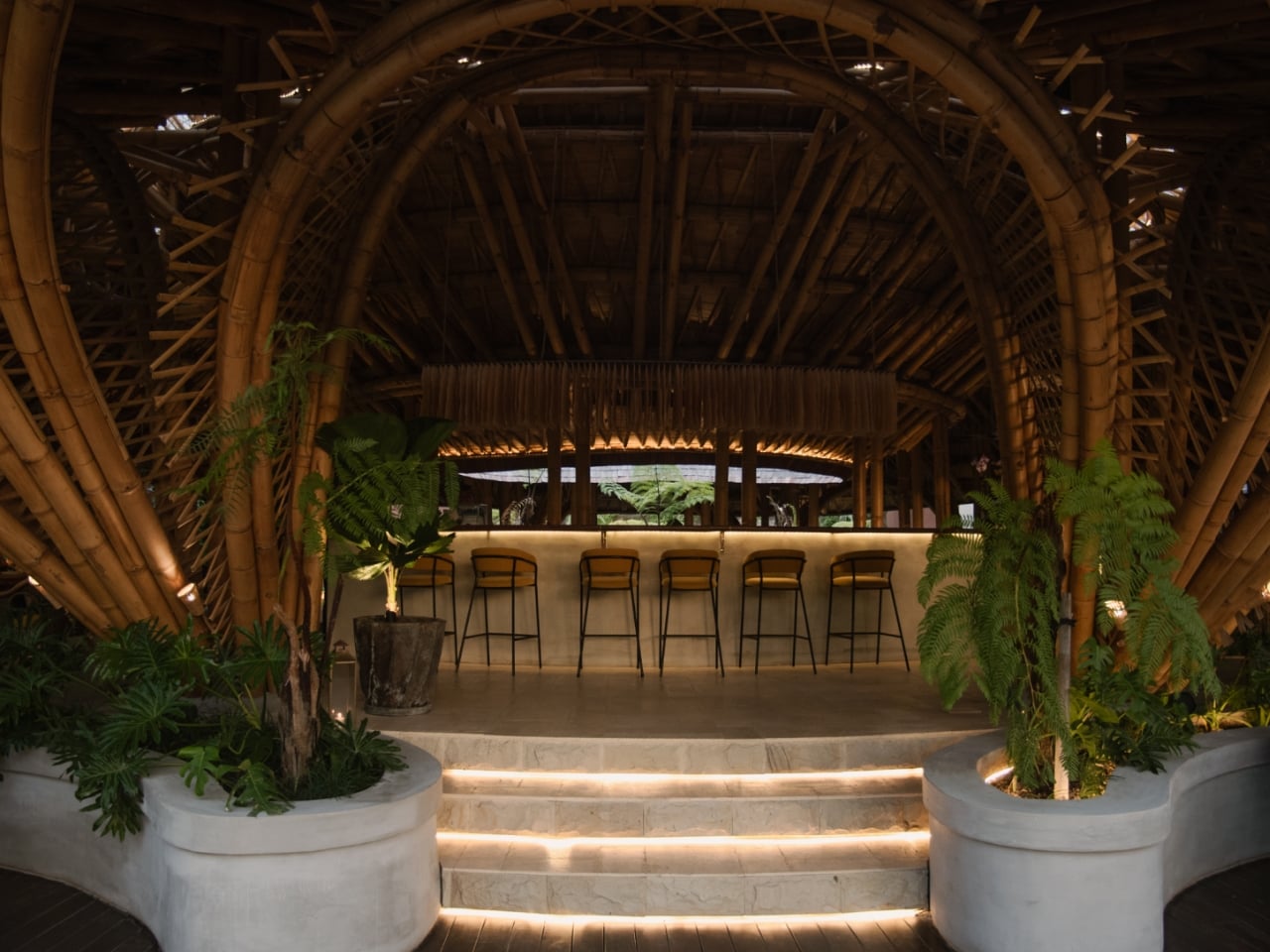
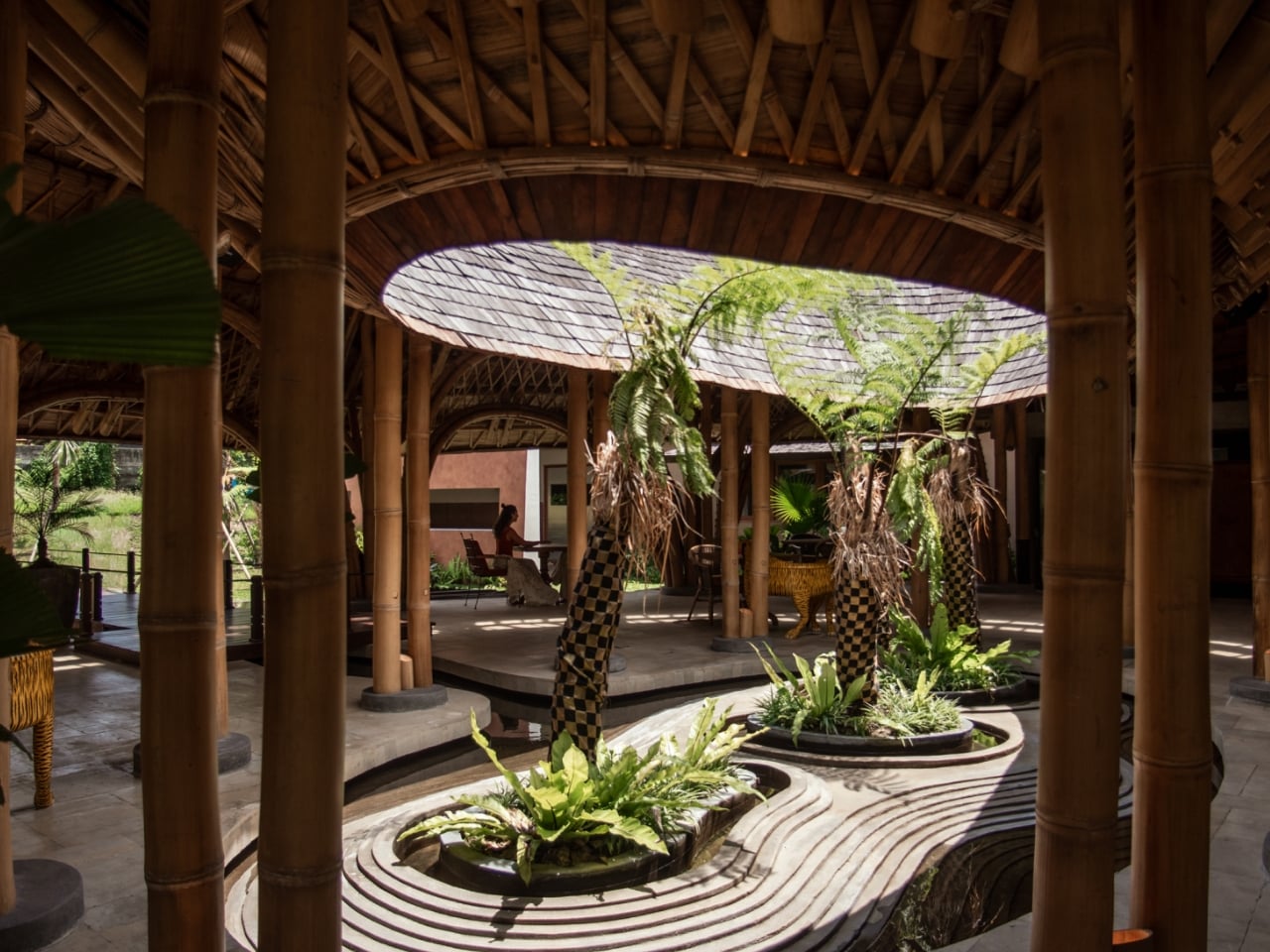
At the core sits a courtyard with a pond and lush planting, the kind of green pocket that makes you slow down whether you meant to or not. This is where that carefully collected rain completes the story, feeding a micro‑landscape that cools the air and mirrors the roof above. It is climate control as choreography: water falls, air flows, light shifts, and the architecture simply sets the stage.

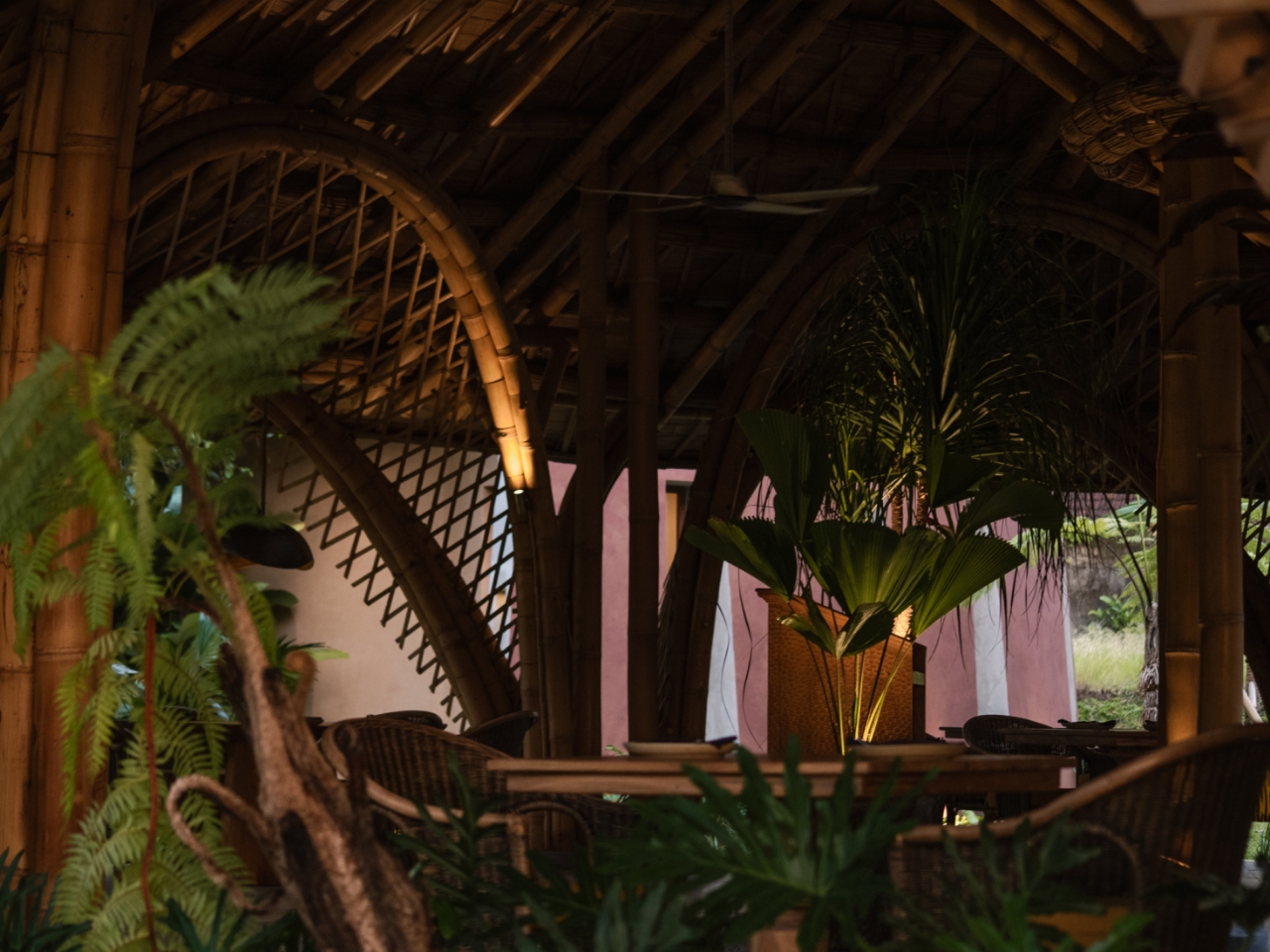
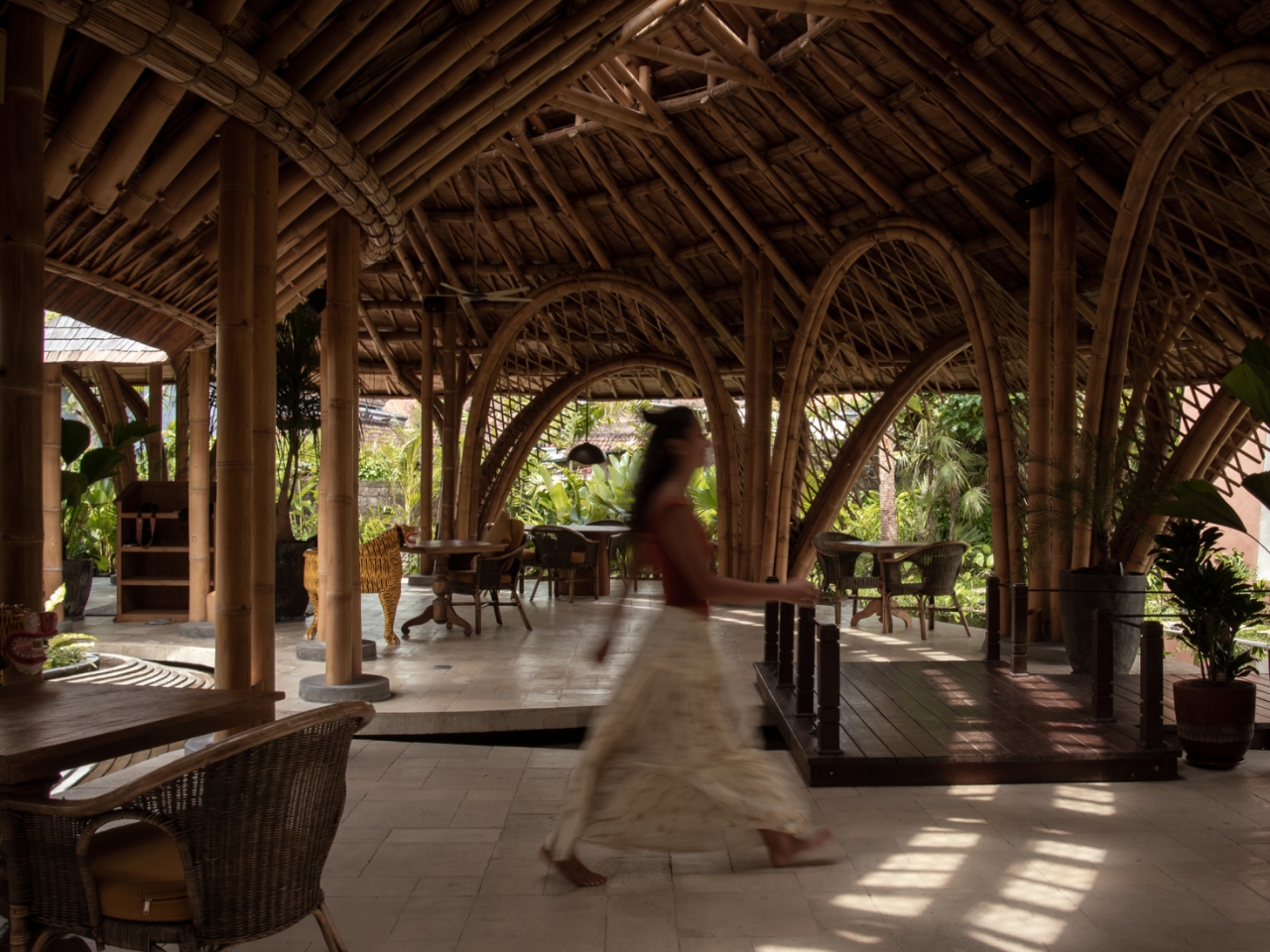
The structure itself is a study in how “natural” can still feel sharply designed. A forest of bamboo arches and A‑frames defines the dining space, but the geometry is crisp, almost graphic. The bamboo isn’t rustic background texture; it behaves like a drawn line, tracing curves, spans, and thresholds. Look closely and you see intricate joinery, where each connection feels both handcrafted and engineered.

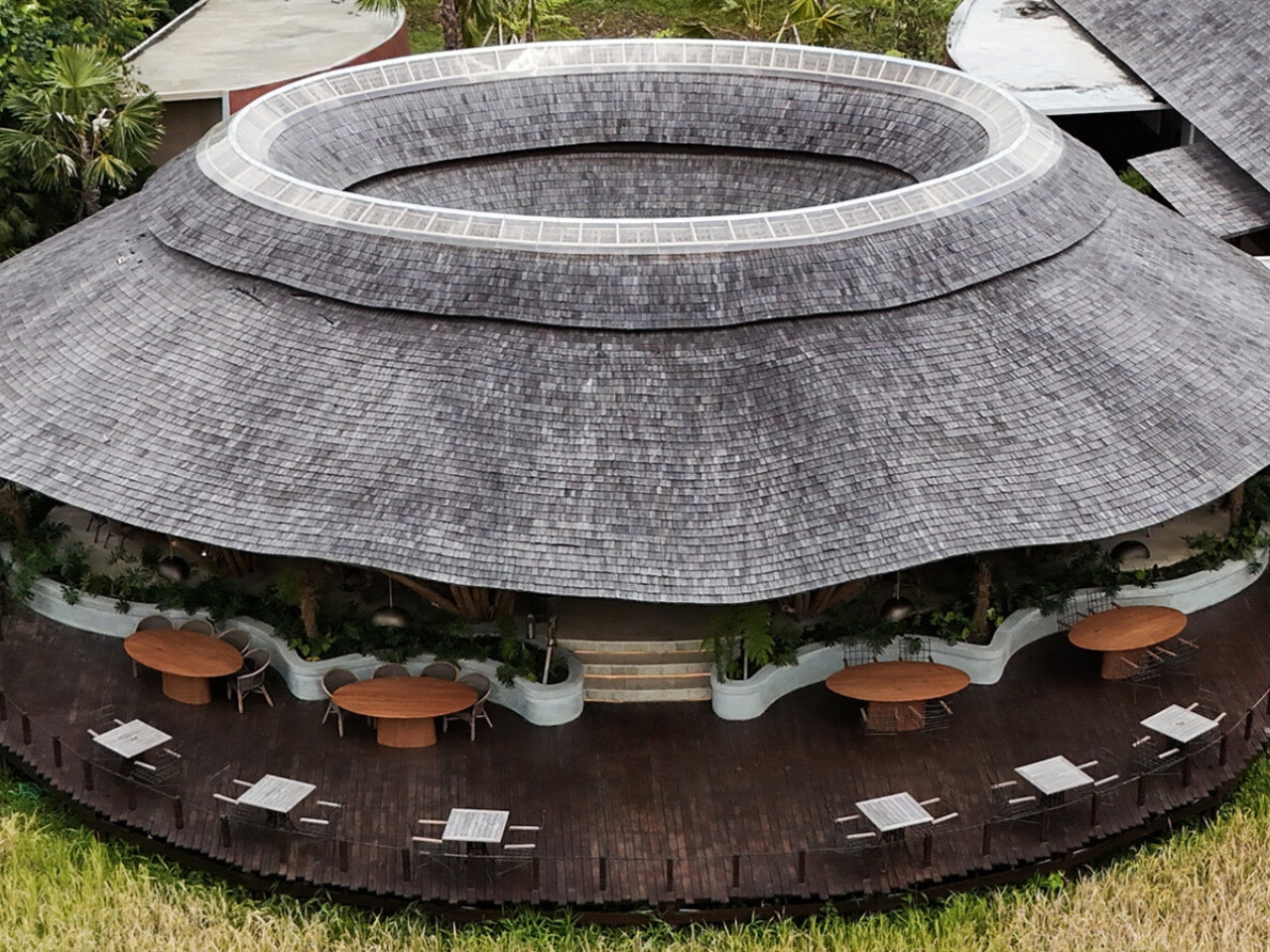
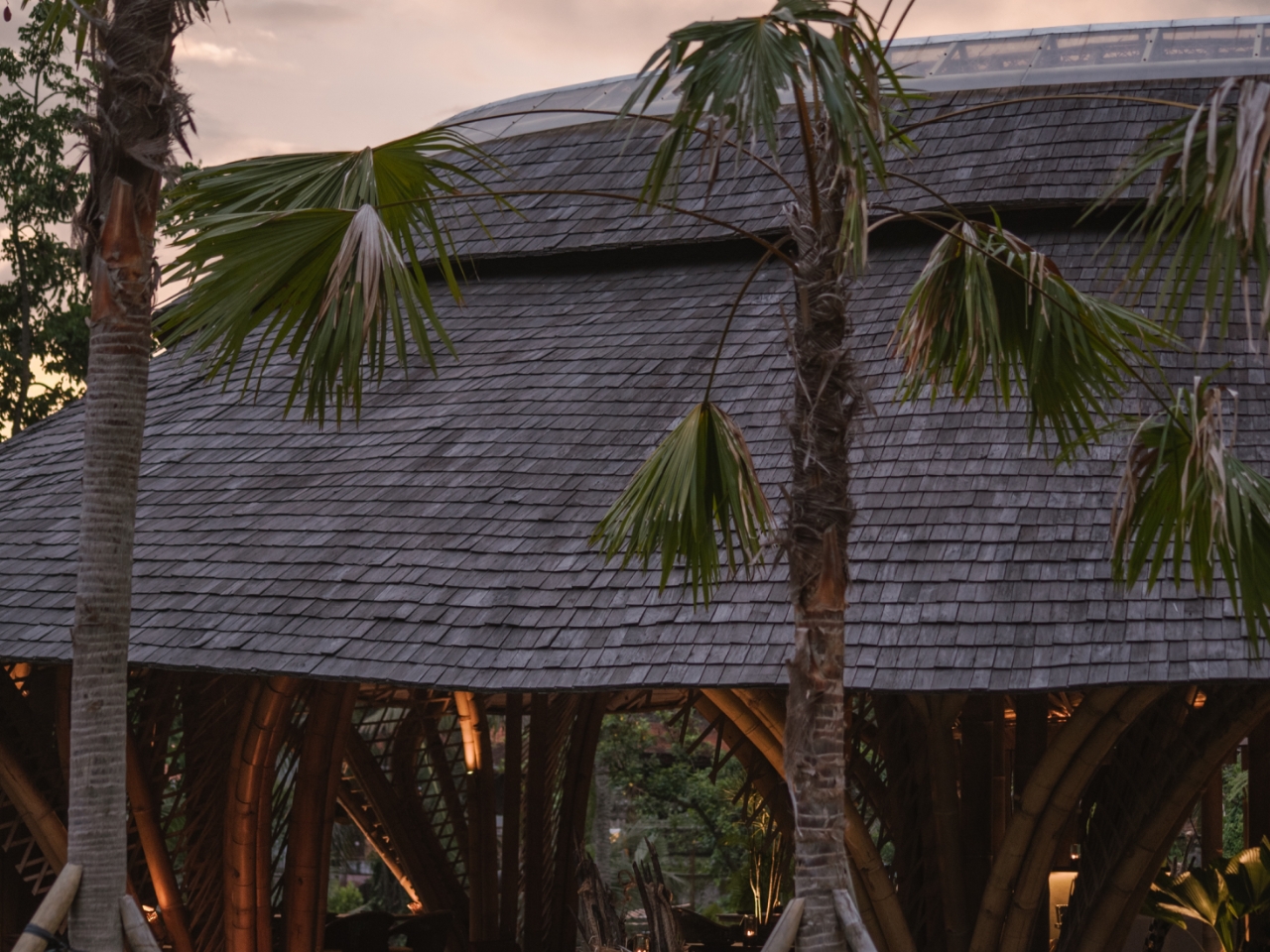
On top of that bamboo skeleton, the roof is finished with ulin wood shingles, crafted by local artisans. The shingles give the whole volume a tactile, scaled surface, like a creature that has grown here over time. Near the center, a skylight made from clear panels sits on a steel frame that has been finished to visually melt into the bamboo, keeping the roof watertight without breaking the illusion of an all‑natural canopy.

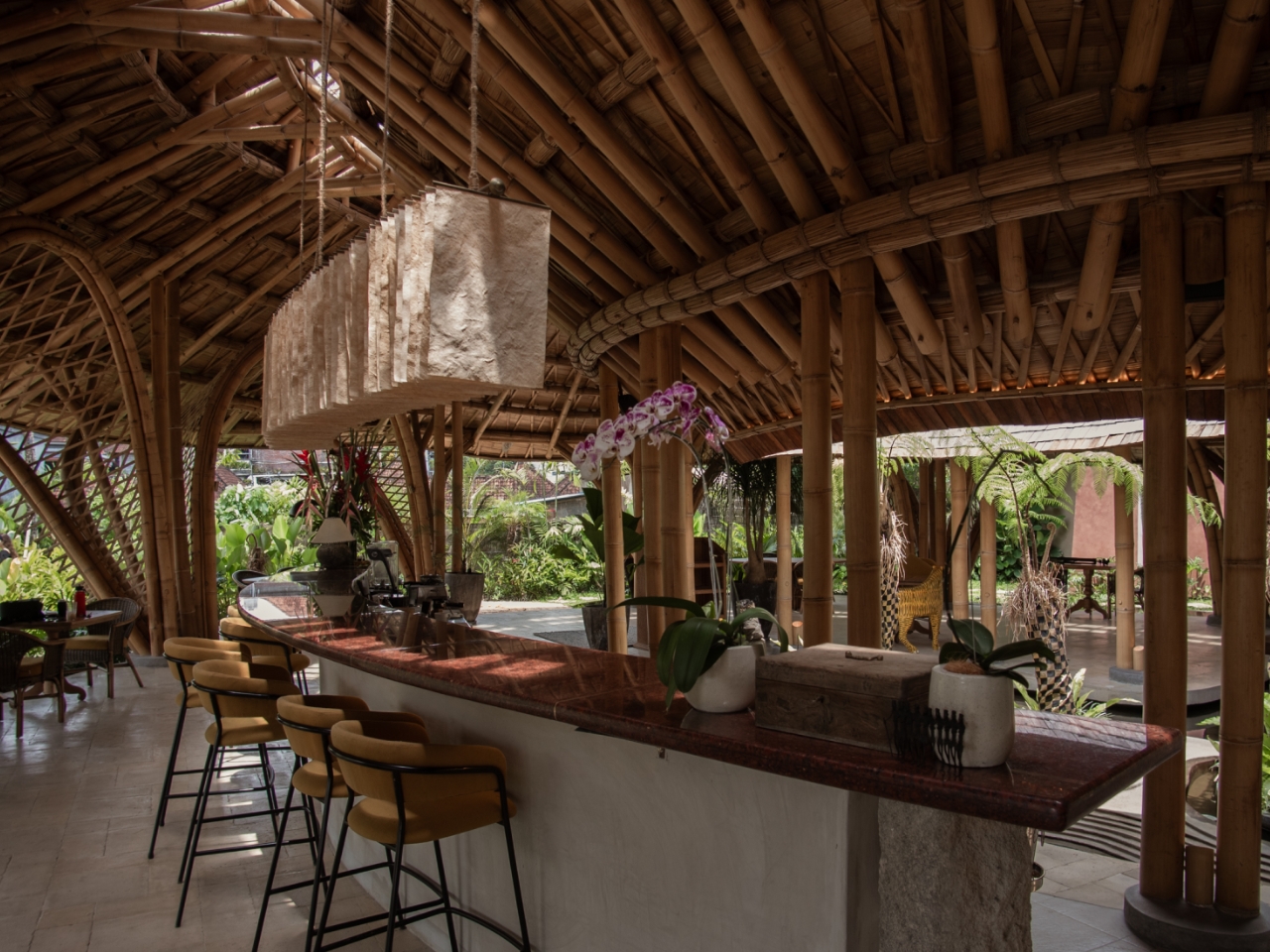
For a restaurant, all of this could have turned into spectacle. Instead, the architecture mostly frames what’s around it. The site is on an elevated stretch of Ubud, with views westward over a river and rice fields. The building doesn’t compete with that; it edits it. Open sides and carefully placed arches direct your sightlines out toward the landscape, so a casual glance from your seat becomes a composed view.

What’s interesting here for anyone into design is how Juna feels like a quiet rebuttal to the glass‑box global aesthetic. This is not a sealed, air‑conditioned capsule that dominates its plot. It rides the existing contours and leans on passive strategies: shade from the broad roof, cross‑ventilation through the open sides, evaporative cooling from the central pond. The “technology” is mostly physics, material intelligence, and local craft.

Yet the project doesn’t romanticize tradition. The hybrid of bamboo, steel, engineered skylight panels, and carefully detailed shingles is a reminder that sustainable architecture today is rarely about going backward. It is about stacking old knowledge and new tools until they click into something that feels both inevitable and fresh. There is also a social scale question that Juna answers with surprising clarity. The circular plan pulls people into a shared field of view, but the layered roof and arches break the space down into more intimate pockets. You’re aware of the room as a whole, yet your table still feels like its own scene. For a restaurant, that balance is gold: collective energy without the food‑court vibe.

Juna fits into a growing fascination with eco‑spectacle spaces, the kinds of venues that show up endlessly in travel reels and architecture feeds. But what makes it more than a backdrop is that the photogenic moves are doing real work. The halo of bamboo, the stepped roof, the reflection of the pond, the dappled light; all of it is performance with purpose, tuned to climate, craft, and comfort. If you’re into design, this is a case study in how a single strong gesture a circle in plan, a ring in section, a crown in elevation can carry an entire project. If you lean more toward tech, it is a reminder that sometimes the smartest system is the one that requires no app, no interface, no instructions. Just gravity, airflow, and a roof that knows what to do when it rains.

The post Rain, Light, and Lunch: Inside Ubud’s Circular Bamboo Oasis first appeared on Yanko Design.

Samsung Confirms: The Galaxy S26 Ultra Will Feature a Built-In Privacy Display

Samsung Confirms: The Galaxy S26 Ultra Will Feature a Built-In Privacy Display

Samsung has officially unveiled a new feature for its upcoming Galaxy S26 Ultra: an integrated privacy display. This advanced technology is designed to safeguard sensitive on-screen content from unauthorized viewing, making sure that only the user can see the display when viewed directly. From side angles, the screen appears obscured, offering a significant enhancement in […]

The post Samsung Confirms: The Galaxy S26 Ultra Will Feature a Built-In Privacy Display appeared first on Geeky Gadgets.

Posted in Uncategorized

Minisforum X1 Lite Challenges Desktops with USB 4 and Radeon 780M

Minisforum X1 Lite Challenges Desktops with USB 4 and Radeon 780M

Is it possible for a budget mini PC to truly deliver on performance, design, and versatility without cutting corners? Below, ETA PRIME breaks down how the Minisforum X1 Lite might just be the answer to that question, positioning itself as a fantastic option in the 2026 mini PC market. With its sleek design, AMD Ryzen […]

The post Minisforum X1 Lite Challenges Desktops with USB 4 and Radeon 780M appeared first on Geeky Gadgets.

Posted in Uncategorized