Senate passes minibus bill funding NASA, rejecting Trump’s proposed cuts

After a tumultuous 2025 that saw it lose around 4,000 employees, NASA finally has an operating budget for 2026, and one that largely preserves its scientific capabilities. On Thursday, the Senate passed an appropriations bill funding NASA, alongside the National Science Foundation and a handful of other federal agencies. 

Going into the appropriations process, the president called for a 24 percent year over year reduction to NASA's total operating budget. As part of that plan, the White House wanted to reduce the Science Mission Directorate's funding by nearly half, a move that would have forced NASA to cancel 55 ongoing and planned missions, including efforts like OSIRIS-APEX. The bill effectively rejects President Trump's plan, reducing NASA's total operating budget by just 1.6 percent year over year to $24.4 billion. 

Per the new appropriations, NASA's science budget will stand at $7.25 billion, 1.1 percent less relative to fiscal 2024, while shuffling the remaining funds to focus on different priorities. For instance, the House and Senate allocated $874 million (+8.7 percent) for the agency's heliophysics work; planetary sciences, which oversees missions like New Horizons, was cut to $2.5 billion (-6.5 percent) compared to 2024. At the same time, NASA's STEM engagement office, which the president proposed eliminating, escaped unscathed with its funding maintained at parity.

"It's almost everything we had been asking for, and it's very encouraging to see a House and Senate run by the president's own party agreeing that we need to keep investing in things like NASA science," says Casey Dreier, chief of policy at the Planetary Society, a nonprofit founded by Carl Sagan that advocates for the exploration and study of space. "It contains very clear and direct language that not only is this funding made available to these projects, but that it will be spent on the initiatives that Congress states."

Lawmakers also rejected Trump's effort to scuttle the Space Launch System after its third flight. NASA's heavy-lift rocket is billions of dollars over budget, but remains — as of now — the only spacecraft ready to ferry astronauts to the Moon. Compared to the rest of NASA, the fate of the SLS was never really in doubt. Senator Ted Cruz (R-TX) secured funding for the rocket as part of Trump's Big Beautiful Bill. "I've been saying for a long time you should never underestimate the political coalition behind the SLS, and I think that was very much validated this year," says Dreier. 

More importantly, it appears the Goddard Space Flight Center will be safe from further damage. Over the summer, the future of the facility, known for its work on projects like the James Webb Space Telescope, was put in jeopardy. By some estimates, the campus has lost a third of its staff due to workforce cuts, and dozens of buildings, including some 100 laboratories, have been shut down by management. One of the casualties was NASA's largest library, which houses irreplaceable documents chronicling the history of the space race. As part of a "consolidation" effort, many of those documents will be thrown out.

Under the appropriations bill, the Senate has directed NASA to “preserve all the technical and scientific world-class capabilities at Goddard.” It has also instructed the agency to ensure employees of the Goddard Institute for Space Studies are able to continue their work with "minimal disruption." The New York-based office, one of America's leading climate labs, was sent into limbo last spring after the Trump administration moved to shut it down

The bill also provides a lifeline for NASA's to bring back samples of Martian dirt collected by the Perseverance rover. Congress has effectively cancelled the official program tied to that ambition, the Mars Sample Return (MSR), but has set aside $110 million for the agency to continue developing technologies for future science missions to the Red Planet. MSR advocates have argued the mission could lead to significant scientific discoveries, but Dreier notes the program was "ripe for cancellation" after it became mired in mismanagement. 

"I worry MSR now has this stink of bloat, excess cost and threat of overruns that are really going to make it challenging to restart this without having a dramatically different approach," says Dreier, adding that deciding what to do with mission will likely be top of mind for the agency's new administrator, Jared Isaacman

The 2026 budget leaves NASA with fewer resources. Even in areas where Congress allocated the same amount of funds as it did in 2024, the agency will need to do more with less due to inflation. Compared to the absolute blood bath that would have been Trump's proposed budget, a marginal funding cut is the best case scenario given the circumstances, but the circumstances remain less than ideal. 

"There will be another presidential budget request coming out in the next couple of months," Dreier said. "They could do this all over again if they wanted to."

In the immediate future, NASA and its employees are at least protected from the potential fallout of another impending government shutdown. Congress has until January 30 to fully fund the federal government, and as of earlier this week, it has yet to find a way forward on appropriations for agencies like the Department of Labor.  

Correction 9:05PM ET: A previous version of this article incorrectly stated Casey Dreier’s surename as Drier. We regret the error.

This article originally appeared on Engadget at https://www.engadget.com/science/space/senate-passes-minibus-bill-funding-nasa-rejecting-trumps-proposed-cuts-231605536.html?src=rss
A $250 billion trade deal will see Taiwan bring more semiconductor production to the US

The US and Taiwan have signed an agreement that will see a multi-billion dollar investment into domestic development of semiconductors and related infrastructure. The US Department of Commerce announced that Taiwanese businesses will make an upfront investment of at least $250 billion into their US production capacity, while Taiwan's government will provide credit guarantees of at least another $250 billion in support of the semiconductor industry and supply chain in the US. 

In exchange, Taiwan will receive a better deal on tariffs. Reciprocal tariffs will be limited to 15 percent, compared with the previous 20 percent rate. Generic pharmaceuticals and their generic ingredients, aircraft components, and unavailable natural resources will be not be subjected to reciprocal tariffs under the arrangement. Taiwanese companies with US production will also see increased import amounts without being charged duties under the Section 232 framework.  

According to reports from CNBC, Taiwan Semiconductor Manufacturing Company (TSNC) is already in position to take advantage of the new trade agreement with further expansion in Arizona. The major Taiwanese chip manufacturer had previously committed to investing $100 billion in its US operations over four years. Commerce Secretary Howard Lutnick told CNBC in an interview that the current US government wants to bring 40 percent of Taiwan's semiconductor supply chain stateside, continuing to use tariffs as an incentive. "If they don’t build in America, the tariff’s likely to be 100 percent,” Lutnick said.

This article originally appeared on Engadget at https://www.engadget.com/computing/a-250-billion-trade-deal-will-see-taiwan-bring-more-semiconductor-production-to-the-us-224326501.html?src=rss

Bluesky’s ‘Live Now’ badge is available to everyone

After testing the feature in a limited beta, Bluesky is making its "Live Now" badge for streamers available for everyone on the social network to try. Live Now is included as part of Bluesky's v1.114 update, alongside "cashtags," a separate type of hashtag for collecting conversations about publicly-traded companies.

Bluesky first started testing its Live Now badge in May 2025 with a limited group of accounts, including the official NBA account. The feature lets Twitch streamers with Bluesky profiles append a Live Now badge to their profile picture that links directly to their livestream. Live Now badges are limited to Twitch links for now, but Bluesky says "support for other streaming platforms may follow" as it learns from the beta. Linking to other social platforms shouldn't be a radical concept, but since Bluesky's competitor X has tried to prevent users from posting links in the past, the company has made it a point of trying to do the opposite.

Cashtags are a similar attempt to appeal to a certain type of veteran X user. Originally a feature of pre-Musk Twitter, cashtags work like a hashtag, marking posts in a way that makes them easy to find in a search or by tapping the cashtag itself. On Bluesky, by typing a dollar sign ($) and the stock abbreviation of a company (AAPL for Apple, for example), you can add a cashtag to your post that links it to other posts using the same cashtag. So far, the cultural makeup of Bluesky hasn't seemed as business-oriented as X, but the feature suggests Bluesky wants the option to be available for anyone who jumps ship.

This article originally appeared on Engadget at https://www.engadget.com/social-media/blueskys-live-now-badge-is-available-to-everyone-223335221.html?src=rss

Louis Vuitton’s Beijing Flagship Turns Retail Into a Vertical, Immersive Journey

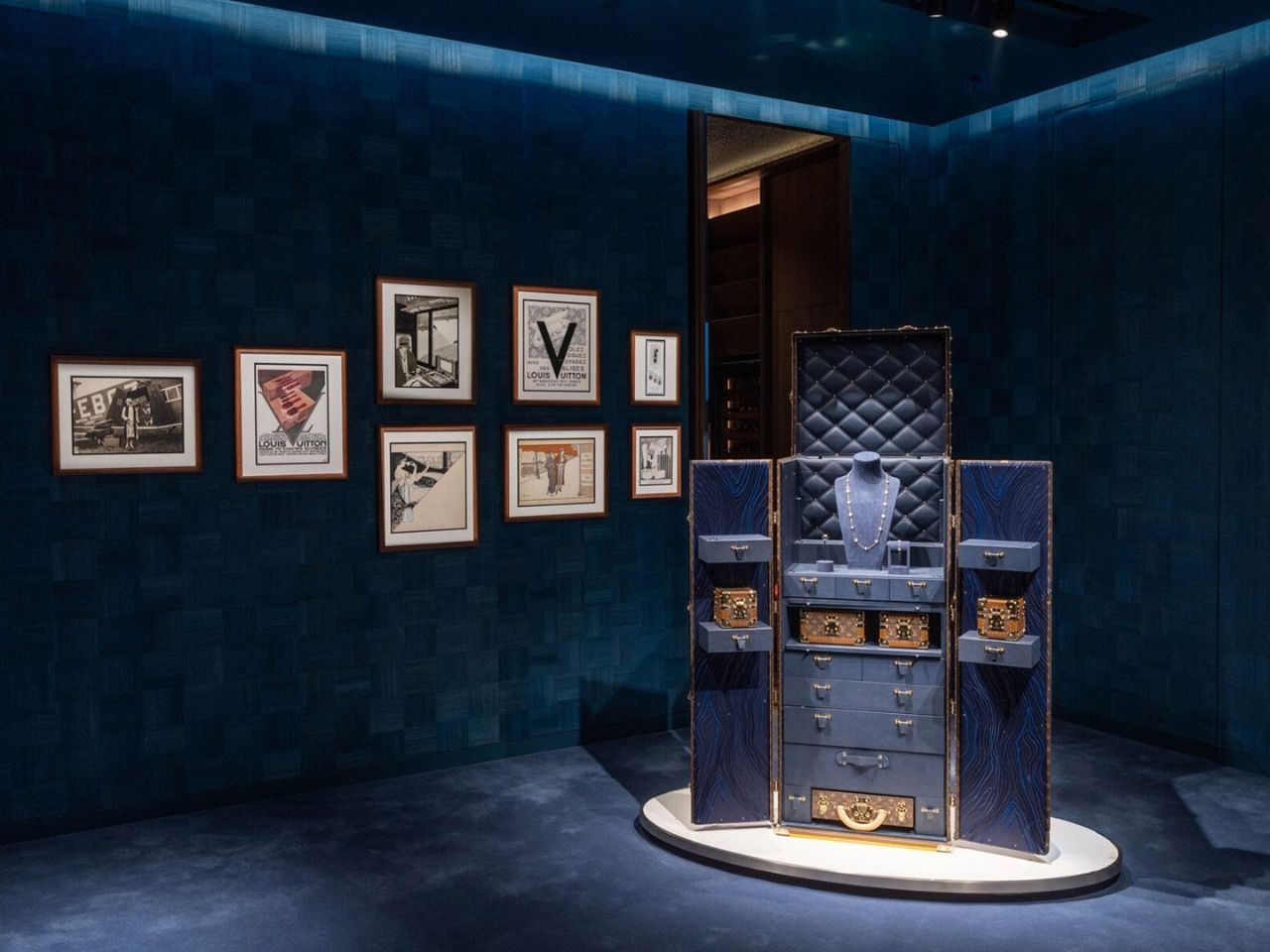
Retail and hospitality design is one of those rare territories where architecture gets to perform on multiple levels at once. It is not just about function or spectacle, but about storytelling, how materials, light, circulation, and atmosphere come together to momentarily detach visitors from the outside world and immerse them in a carefully choreographed experience. The newly opened Maison Louis Vuitton Sanlitun in Beijing is a compelling example of this ambition realized at an urban scale.

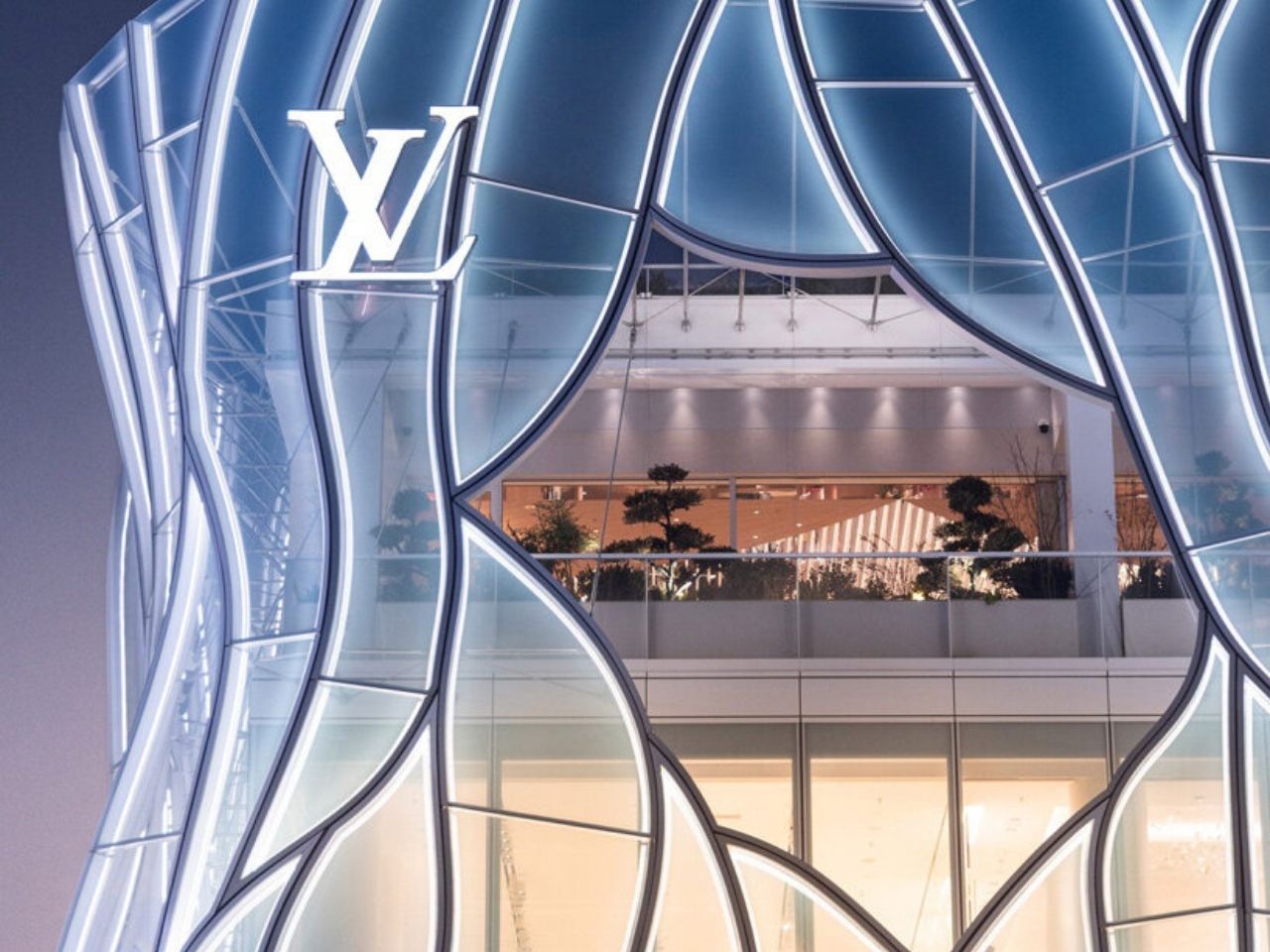
Designed by Jun Aoki for Louis Vuitton, the flagship is located in Beijing’s energetic Sanlitun district. The building brings together retail, hospitality, and exhibition spaces within a single vertically organized envelope, offering an experience that unfolds floor by floor rather than spreading outward. In doing so, it rethinks what a luxury flagship can be in one of the city’s most intense commercial neighborhoods.

Designer: Jun Aoki & Associates

The project continues Jun Aoki’s long-standing collaboration with the House, following earlier Louis Vuitton buildings in Tokyo and Osaka. In Beijing, however, his approach feels particularly attuned to context. Rather than competing with Sanlitun’s visual noise, the building introduces a sense of material depth and calibrated transparency. The architecture does not shout; it subtly absorbs and refracts the city around it.

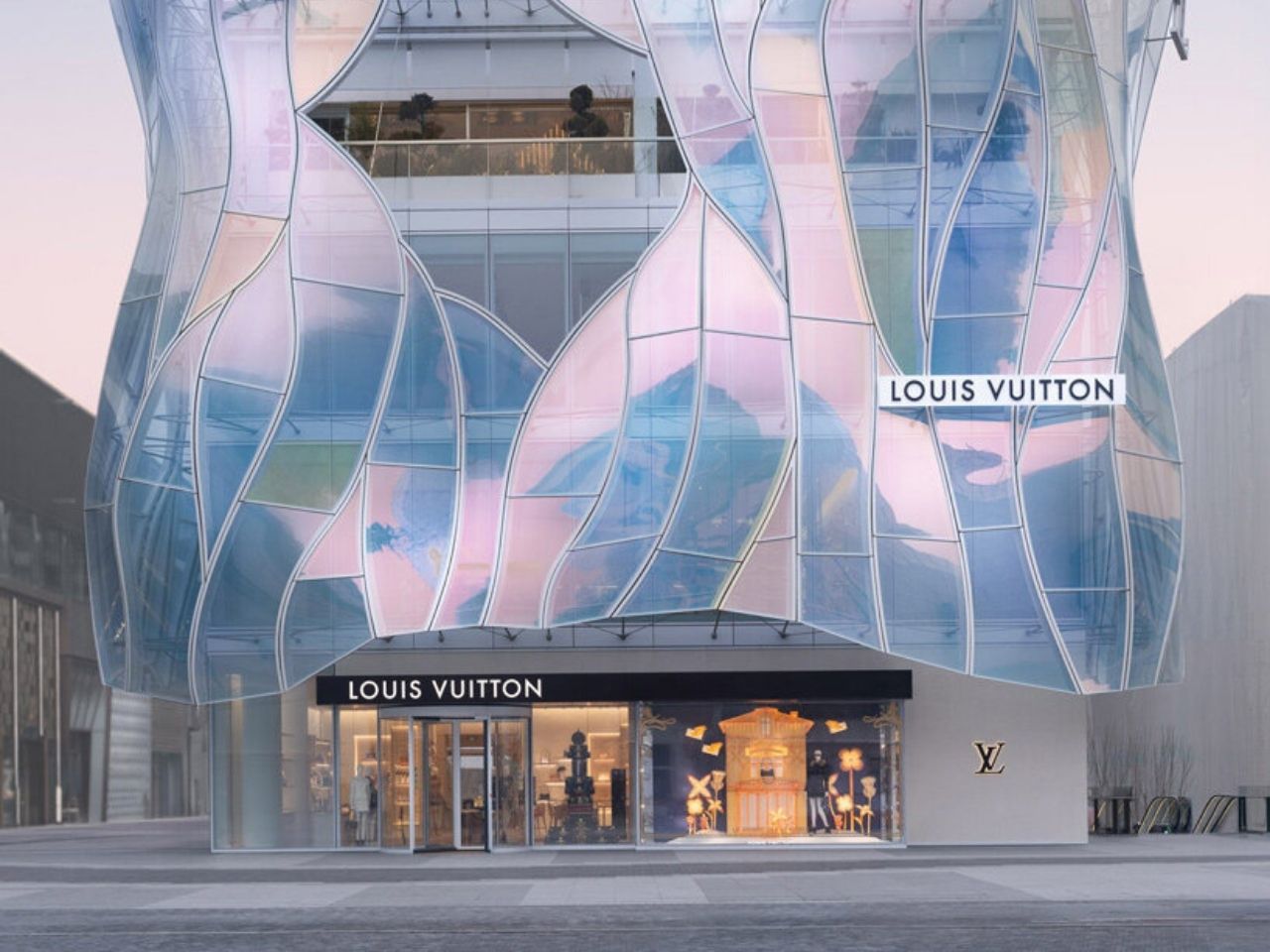
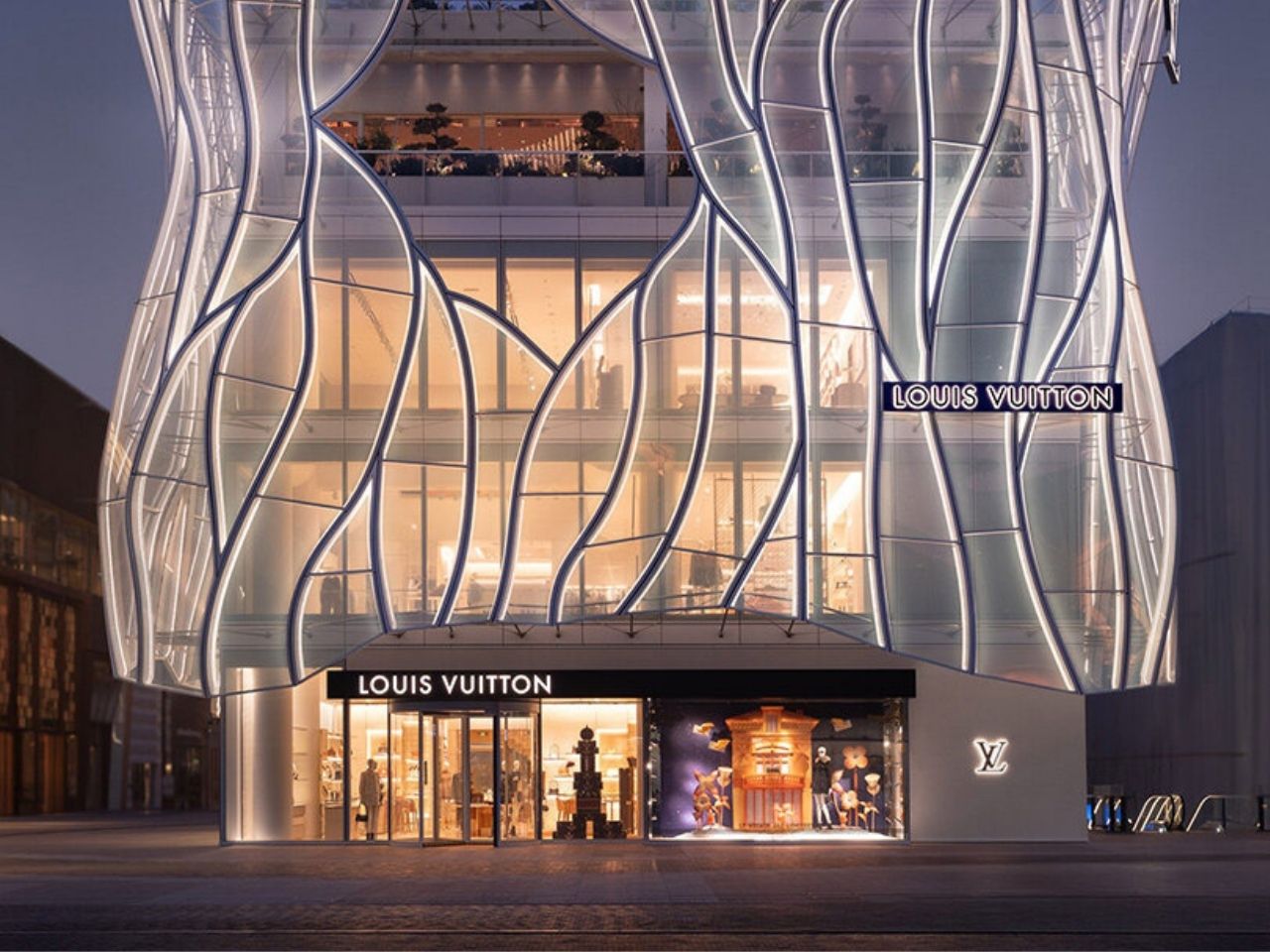
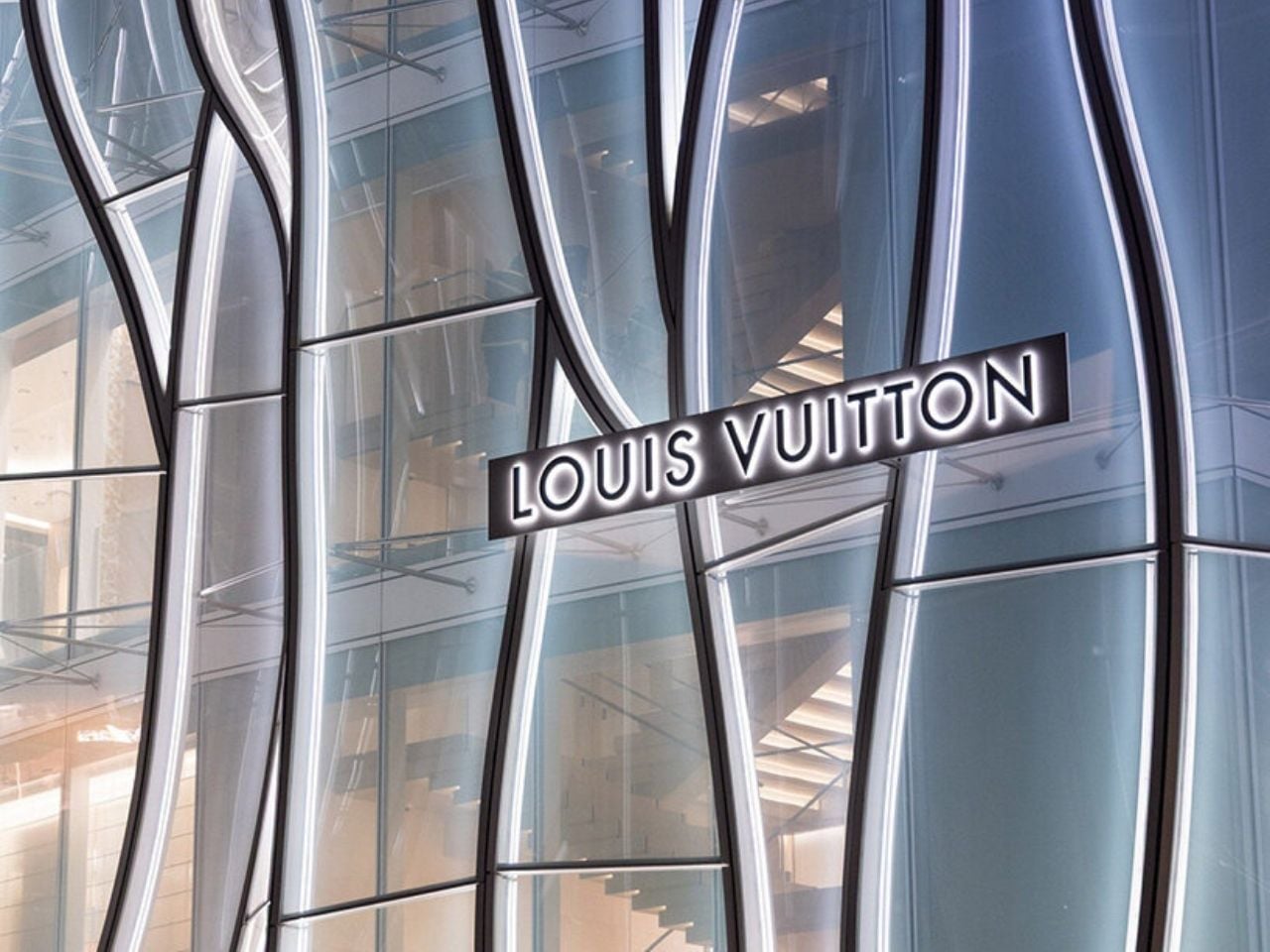
The most striking element is the facade. Drawing inspiration from Taihu stones, scholars’ rocks historically associated with classical Chinese gardens, Aoki translates their eroded, organic character into an outer skin of hand-curved glass panels. Each panel is individually shaped, creating irregular contours and a layered surface that reads differently as daylight shifts. The glass possesses translucent and dichroic qualities, producing chromatic changes that respond to sun angle, weather, and movement. From close range, the facade feels tactile and sculptural; from across the block, reflections stretch and compress, giving the building a constantly changing presence.

Behind this expressive outer layer sits a secondary envelope that handles thermal performance and weather protection. This dual-skin strategy allows the facade to operate simultaneously as cultural reference, environmental filter, and urban interface, an architectural device that balances symbolism with performance.

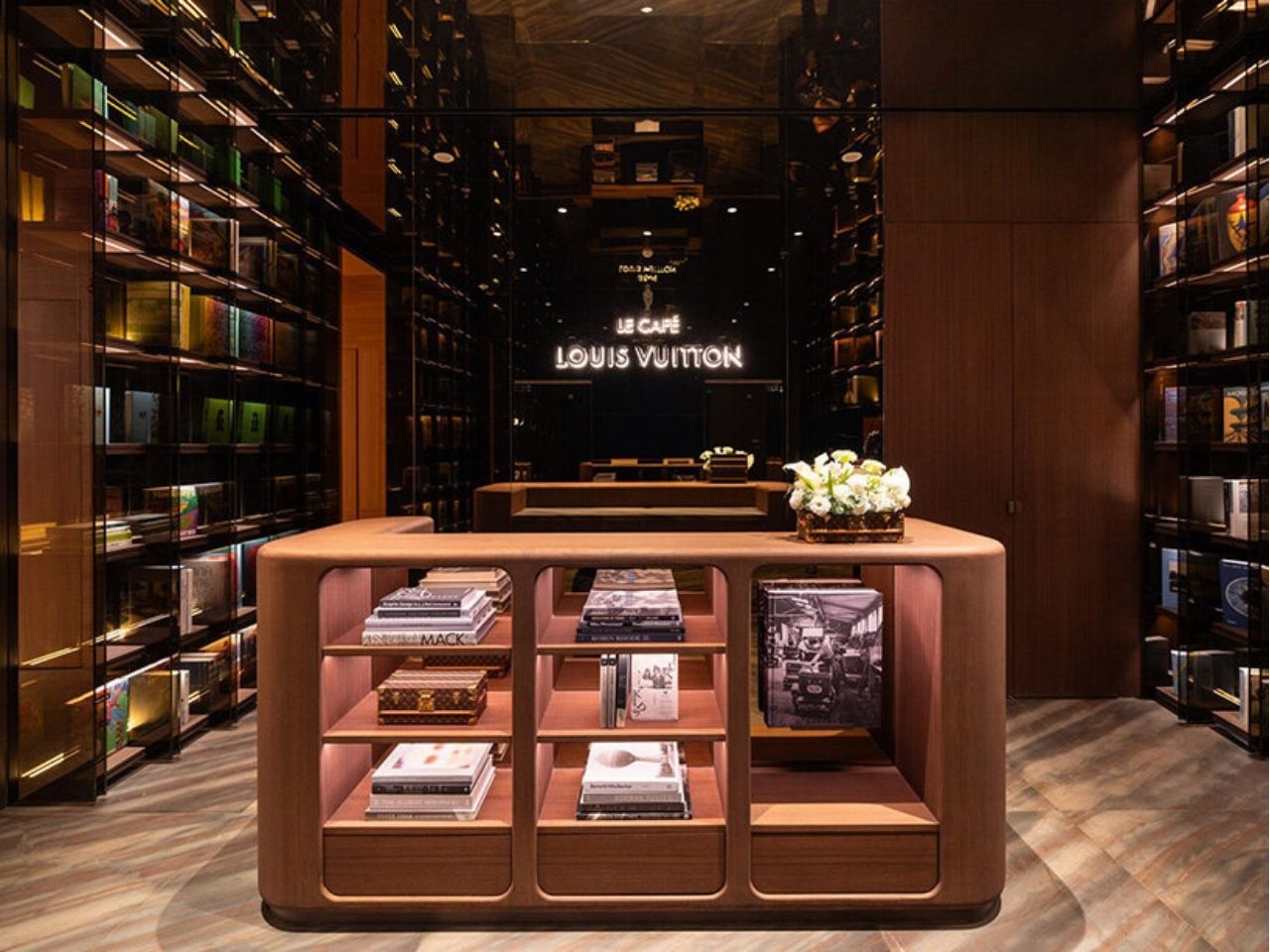
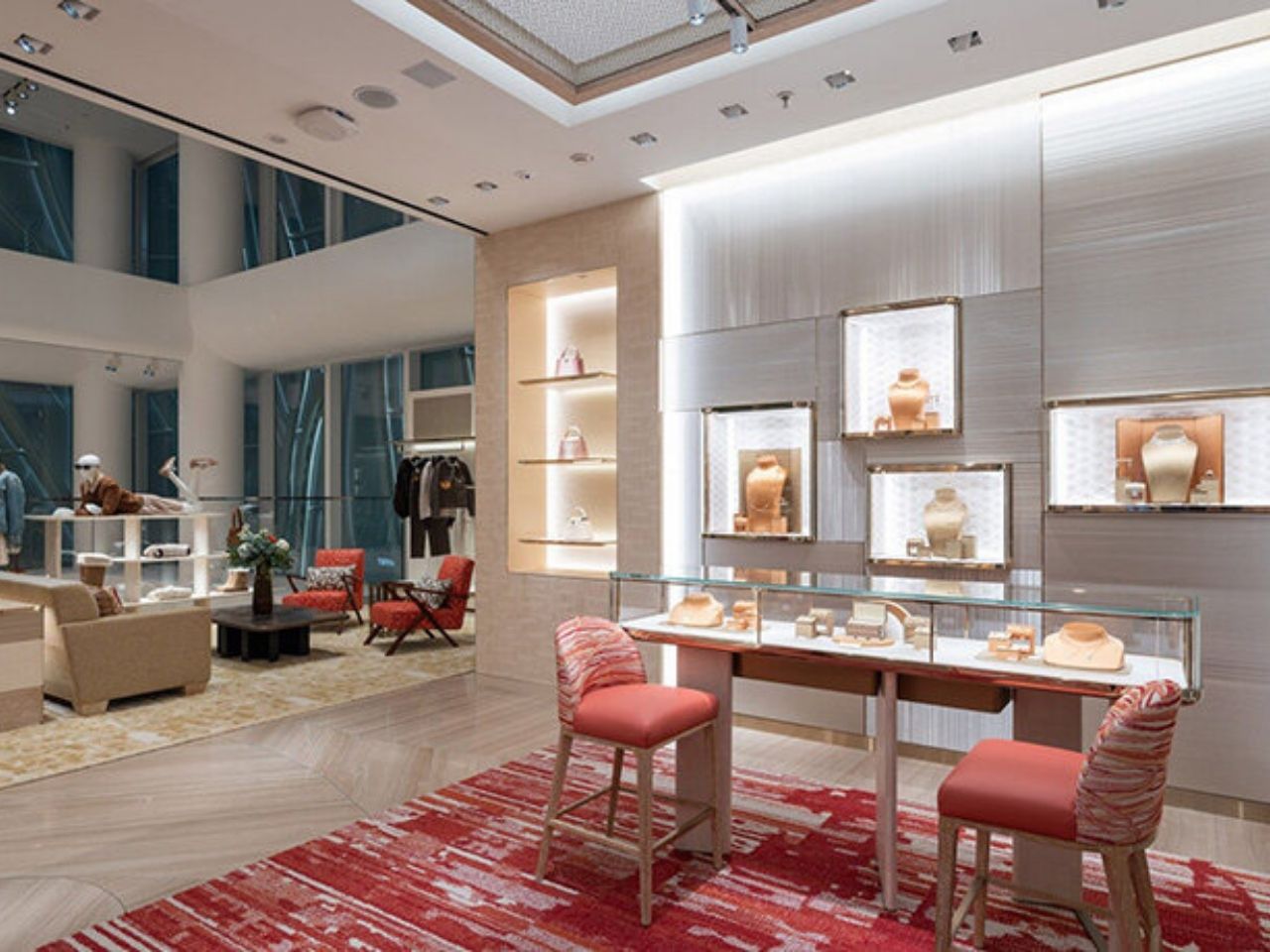
Inside, visitors enter directly into a central atrium that rises through three levels and organizes the Women’s collections. Daylight filters through the glass facade into this vertical void, animating floors, balustrades, and circulation cores. Retail programs are distributed across four levels, housing Women’s and Men’s Leather Goods, Ready-To-Wear, Shoes, Jewelry, Accessories, Perfumes, and Beauty. Movement remains clear and legible, with escalators and stairs positioned to preserve long sightlines through the atrium and back toward the city. More private client lounges are tucked into quieter zones, defined through subtle shifts in material and lighting rather than overt separation.

A distinct tonal shift occurs on the third floor, where the Louis Vuitton Home collection is presented. Furniture, textiles, and tableware by designers such as Patricia Urquiola and Cristian Mohaded are displayed in rooms scaled closer to domestic interiors, with softer finishes and calmer light, allowing the objects to breathe.

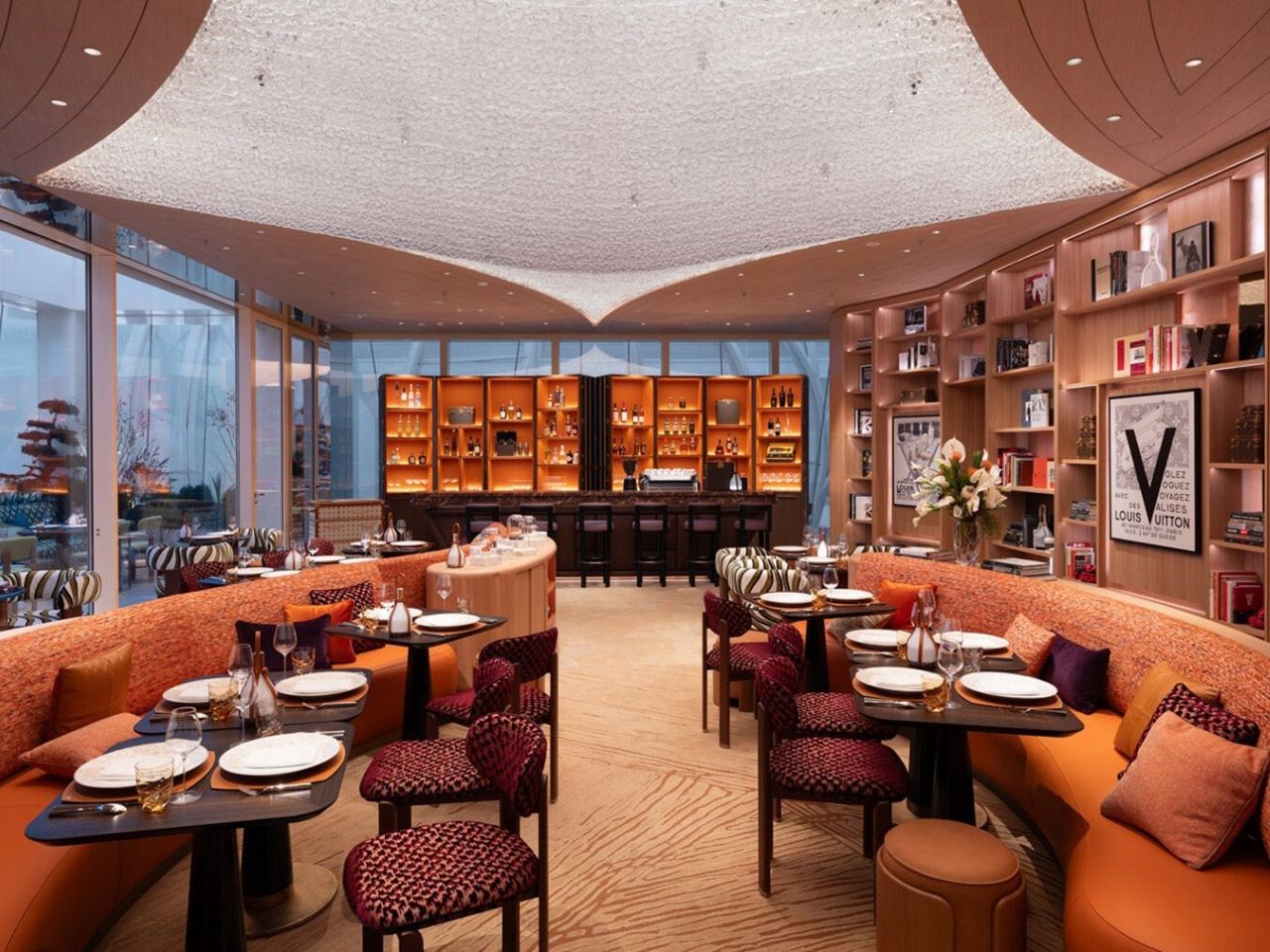
At the top, Le Café Louis Vuitton crowns the building, the brand’s first café in Beijing. Arrival begins with a mirrored vestibule that multiplies reflections before opening into a flowing dining space. The bar references the proportions and layered construction of Louis Vuitton trunks, while a terrace runs along the facade, partially screened by the glass skin and offering views across Sanlitun and the surrounding city.

By combining retail and hospitality within a single architectural envelope, Maison Louis Vuitton Sanlitun demonstrates how experiential design can transcend shopping alone. Through material storytelling, spatial sequencing, and a sensitive response to context, the building creates an immersive world, one that briefly pulls visitors away from Beijing’s relentless pace and invites them into a more deliberate, crafted experience.

The post Louis Vuitton’s Beijing Flagship Turns Retail Into a Vertical, Immersive Journey first appeared on Yanko Design.

Honda enters modular camper market with lightweight, solar-powered trailer

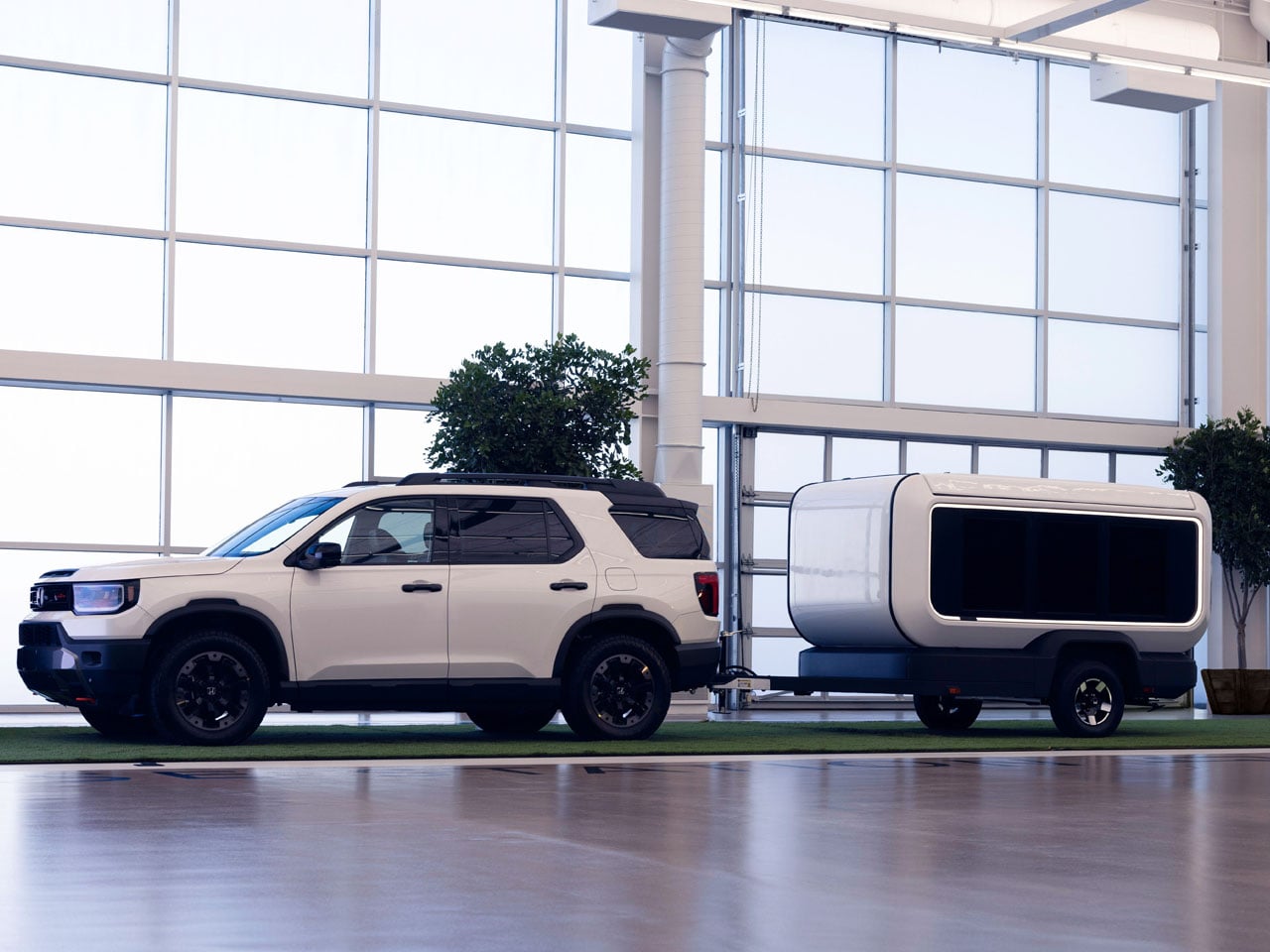
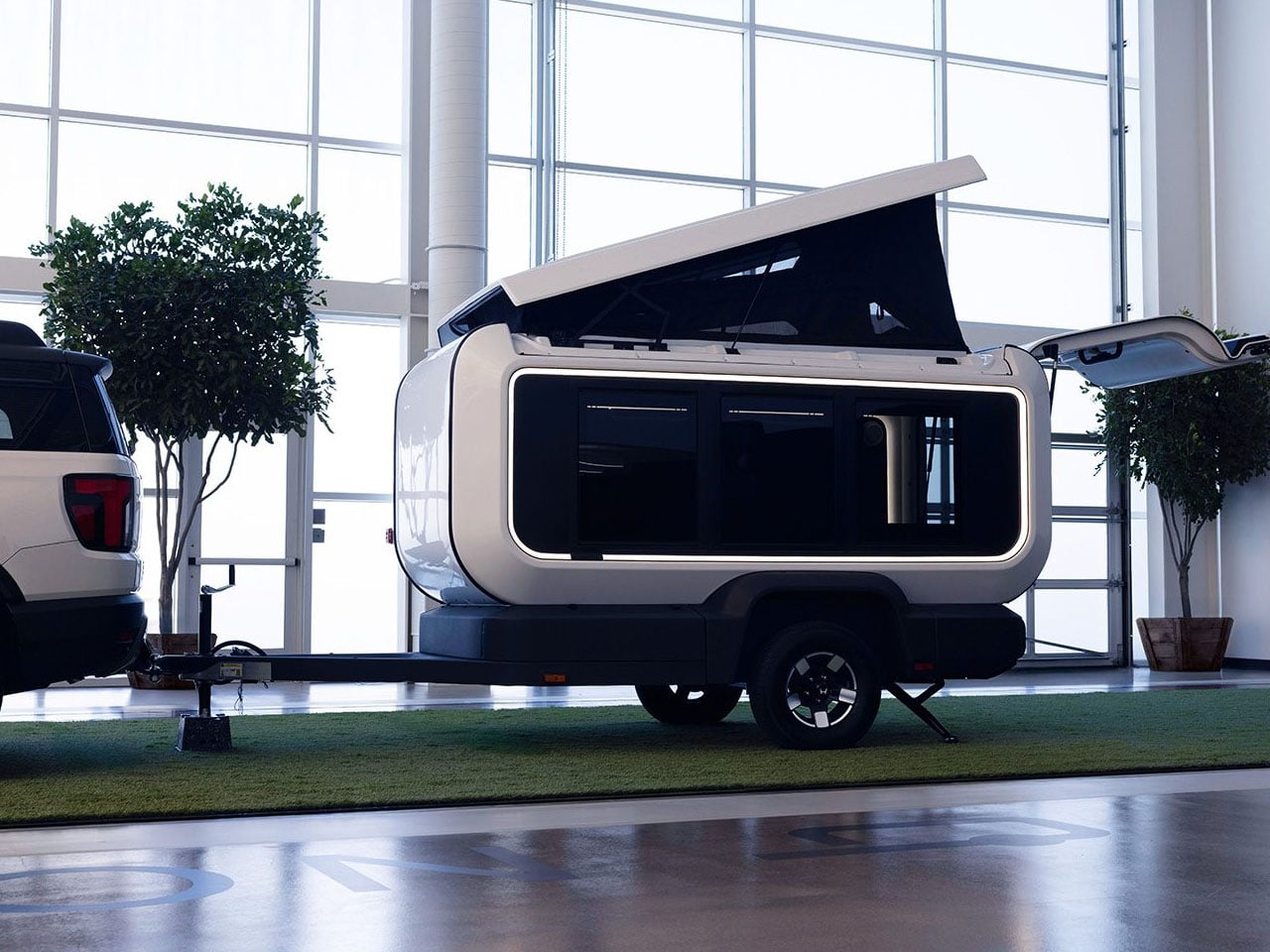
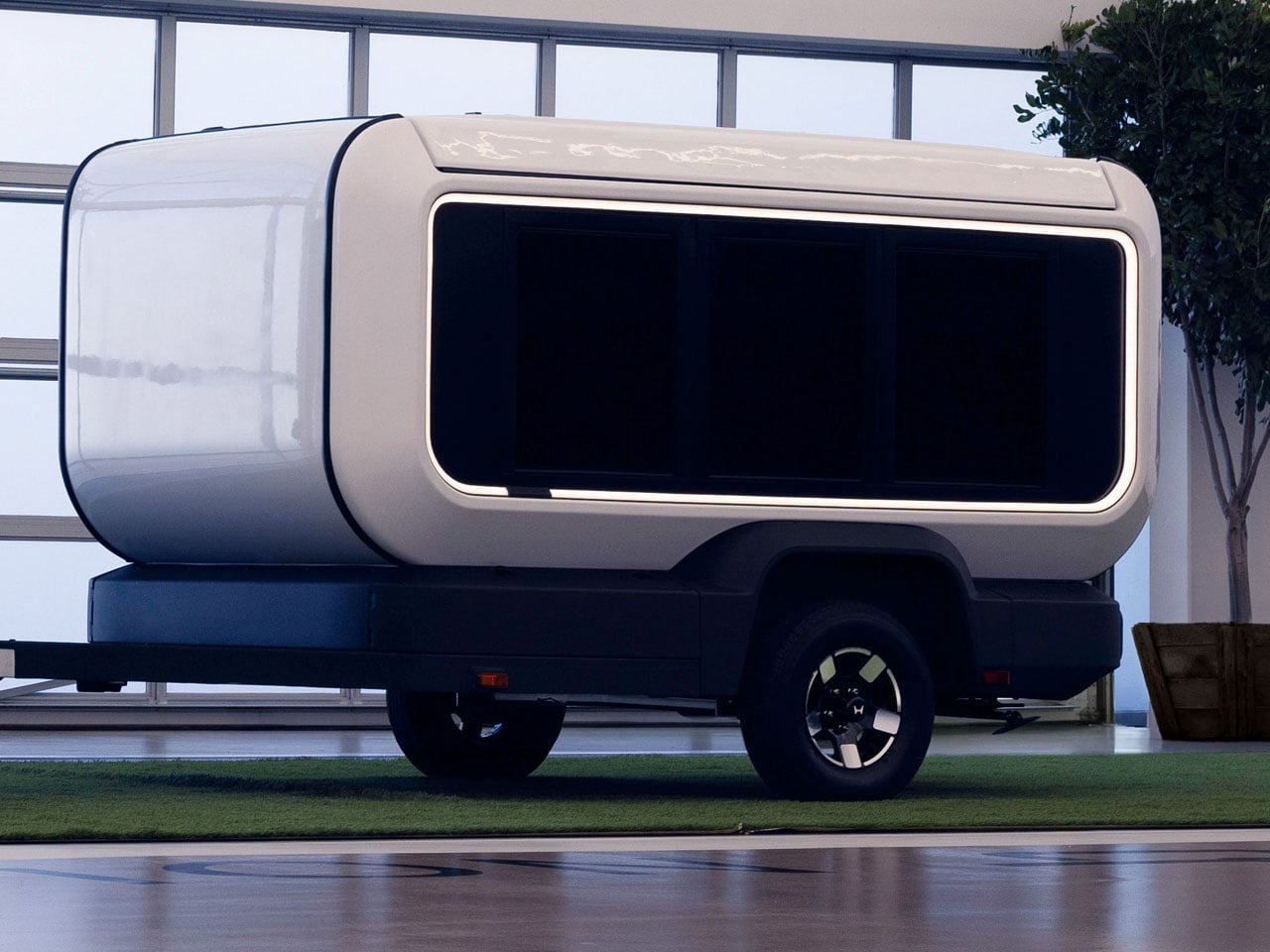
Honda has built capable off-roading and towing vehicles, but the company has not had a trailer to match. The Japanese auto manufacturer is changing that now with its own towable solar-powered trailer. Weighing under 1,500 lbs., the prototype is light enough to be towed by nearly every SUV, crossover, or EV in Honda’s lineup and even outside.

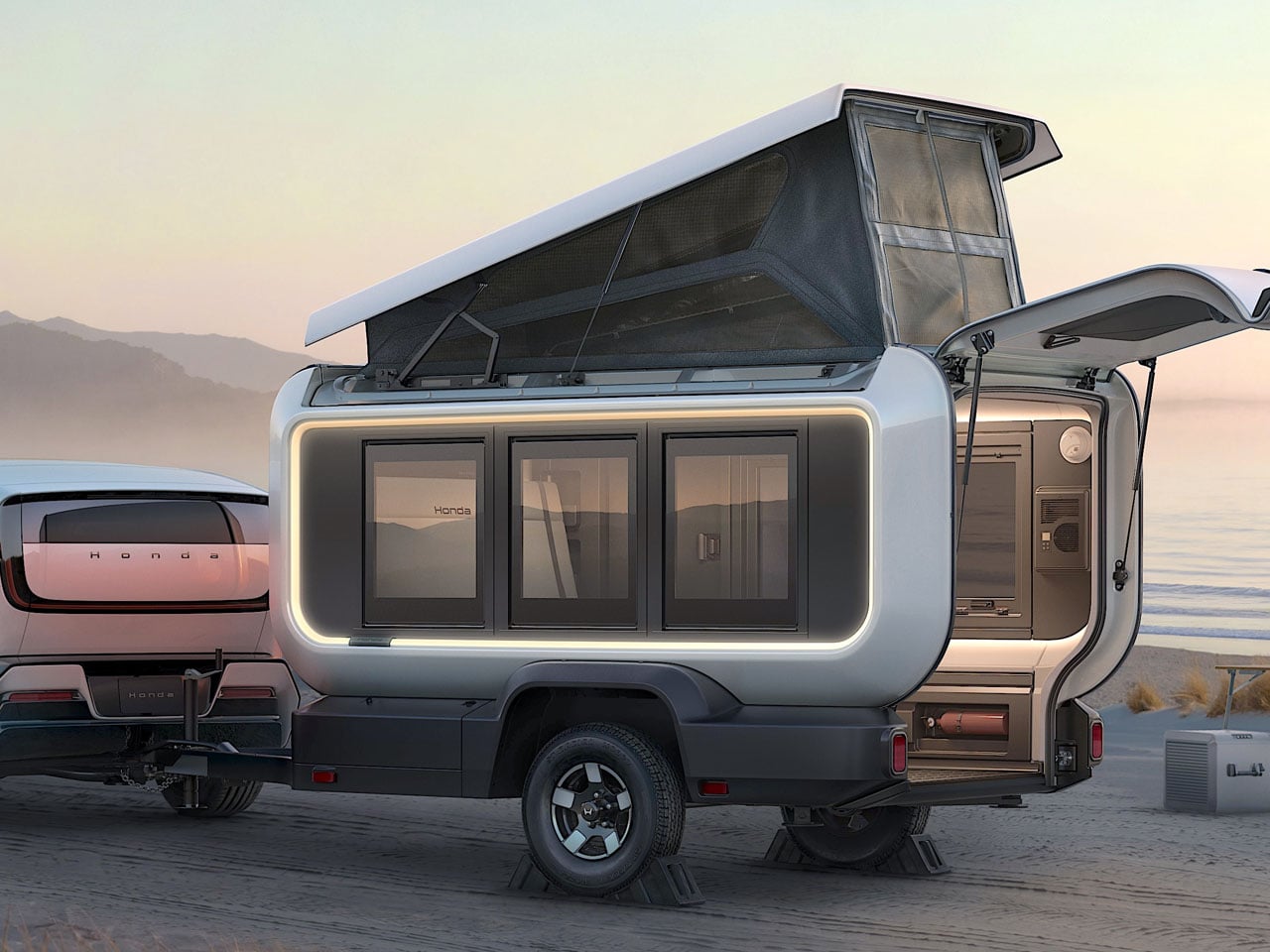
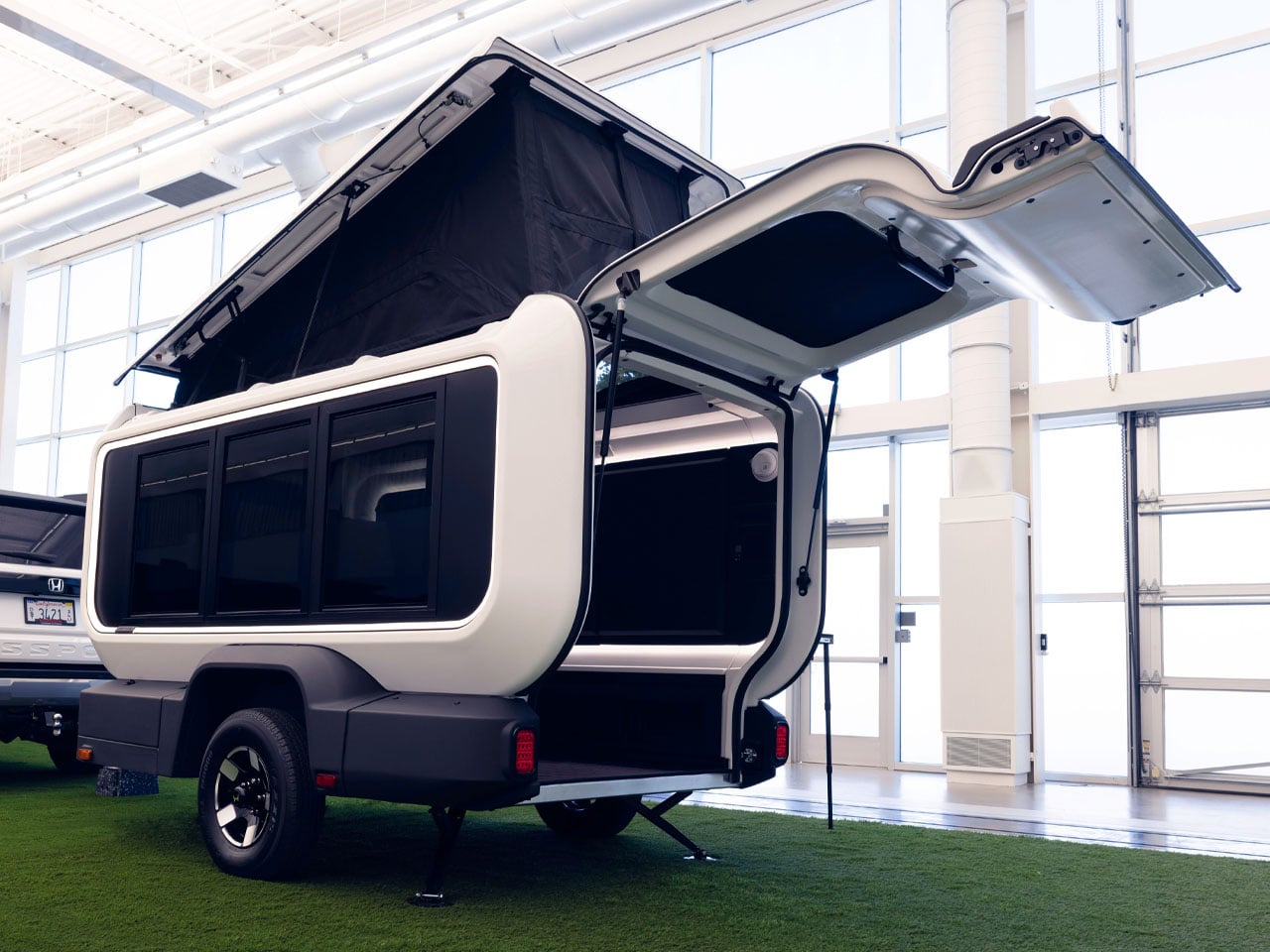
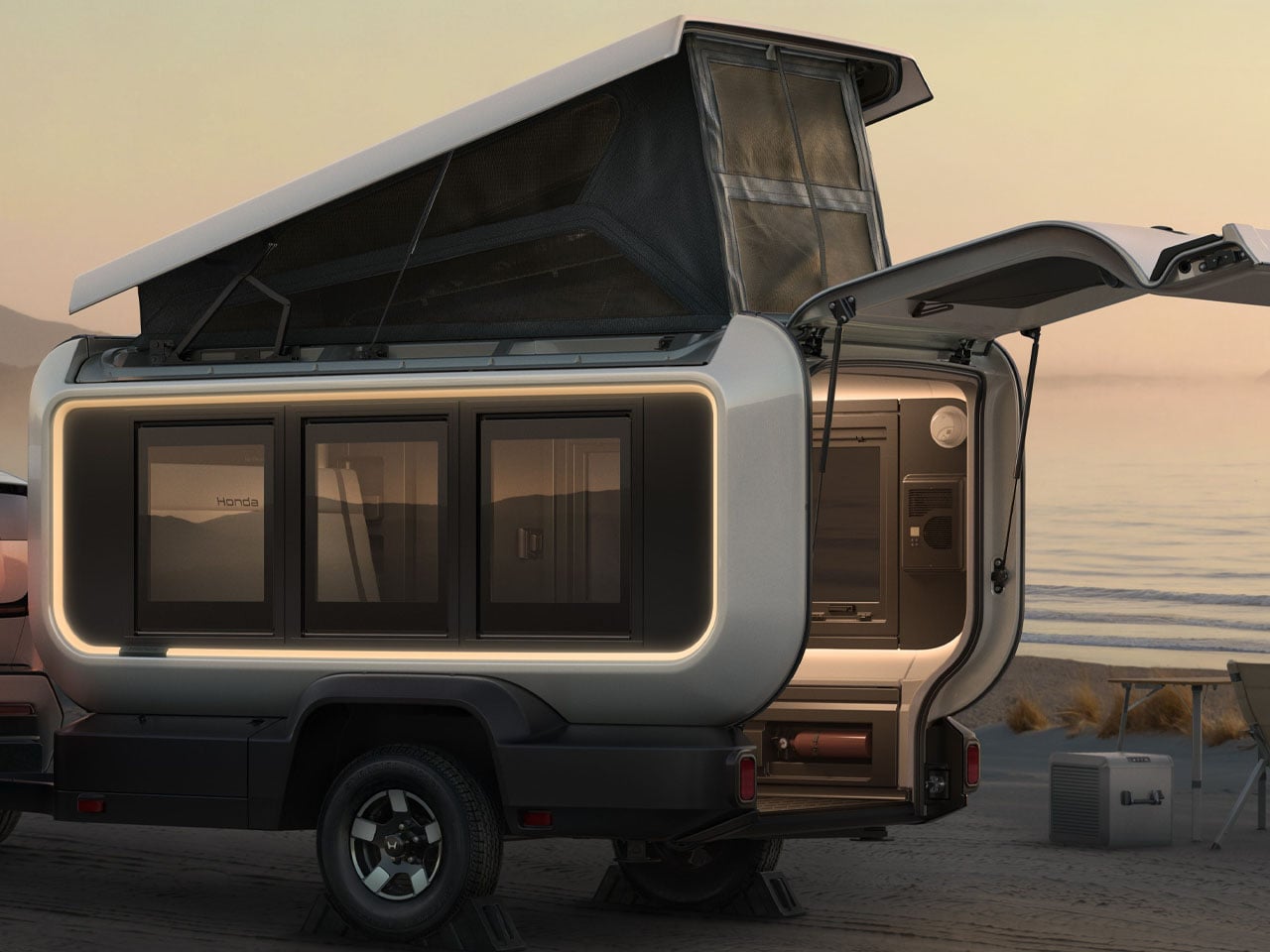
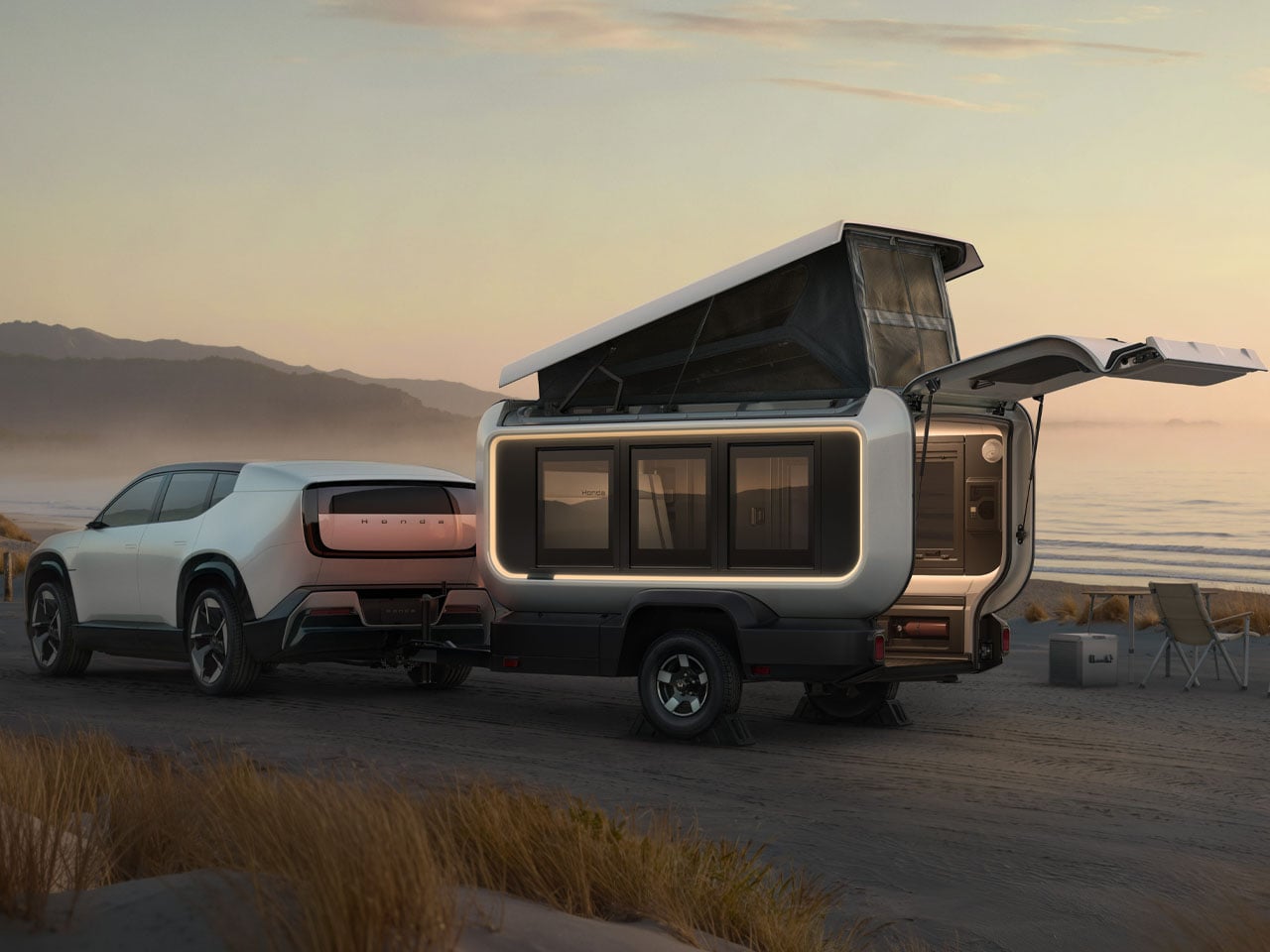
Designed to rattle the ultralight, modular camper market, the Honda trailer is customizable to make family camping more accessible and enjoyable. Dubbed the Honda Base Station, it is built to be spacious, airy and bright with a rear hatch entry, a slide-out side kitchen, and a pop-up roof that increases headroom and also creates space for additional sleeping at the campsite.

Designer: Honda

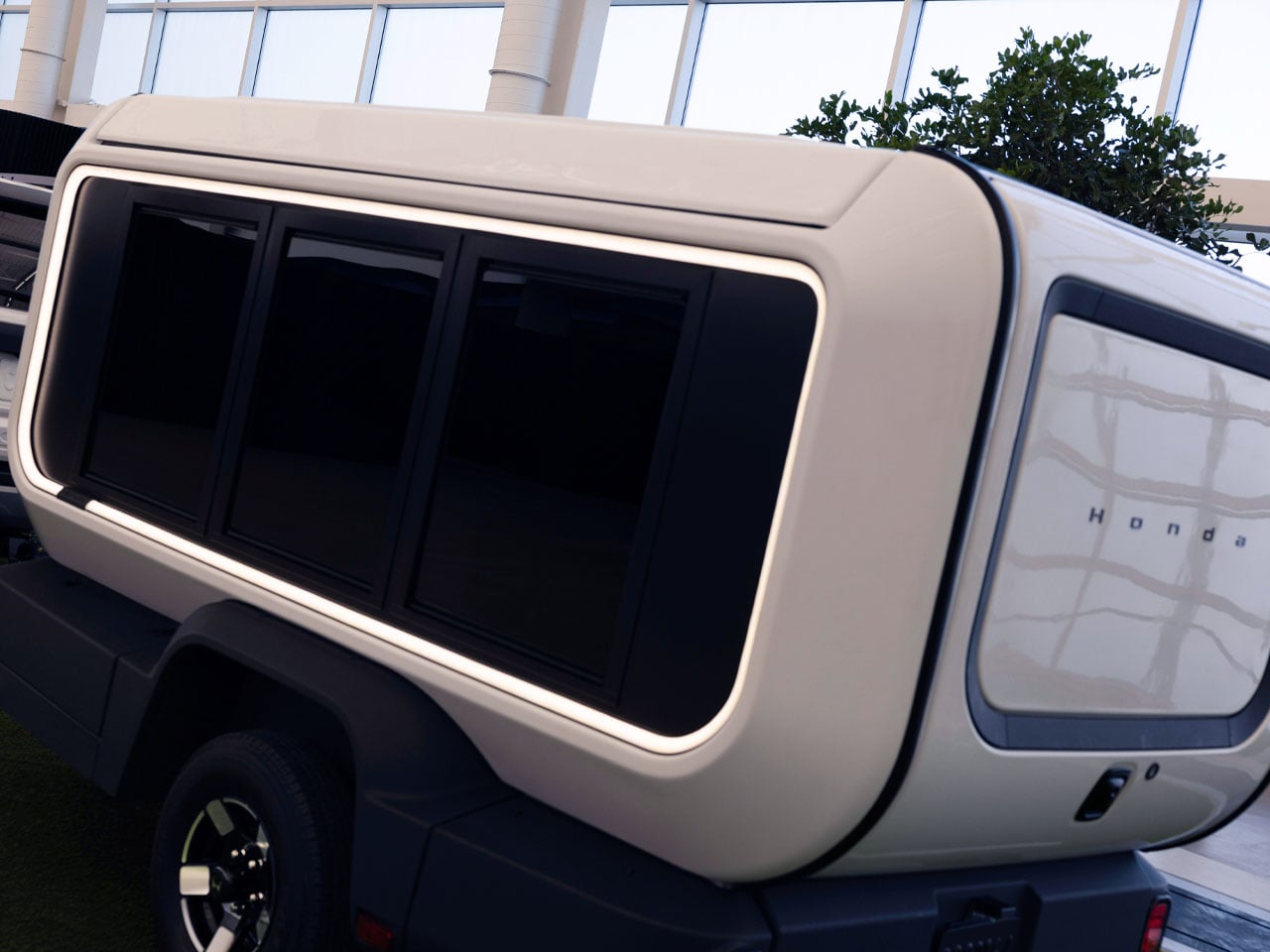
The primary objective behind designing the Base Station is to bring the camper experience to more families. In order to achieve that, Honda has kept the prototype trailer incredibly light, which means it can be towed by a wider range of vehicles, opening its accessibility to a bigger audience. The zero-emission towable Honda trailer features a fiberglass upper shell, which rests on a full aluminum cage, including the chassis.

Courtesy of the tailgate entry, an optional teardrop-style door on the side, and five huge windows around the trailer, the interior is very bright. The Base Station opens up to become spacious and packs power options to make it a capable off-grid camper. On the outside, it doesn’t have anything distinct to show, except for the color-changing LED light strip installed around the trailer’s perimeter. On the inside, it’s a whole new ballgame.

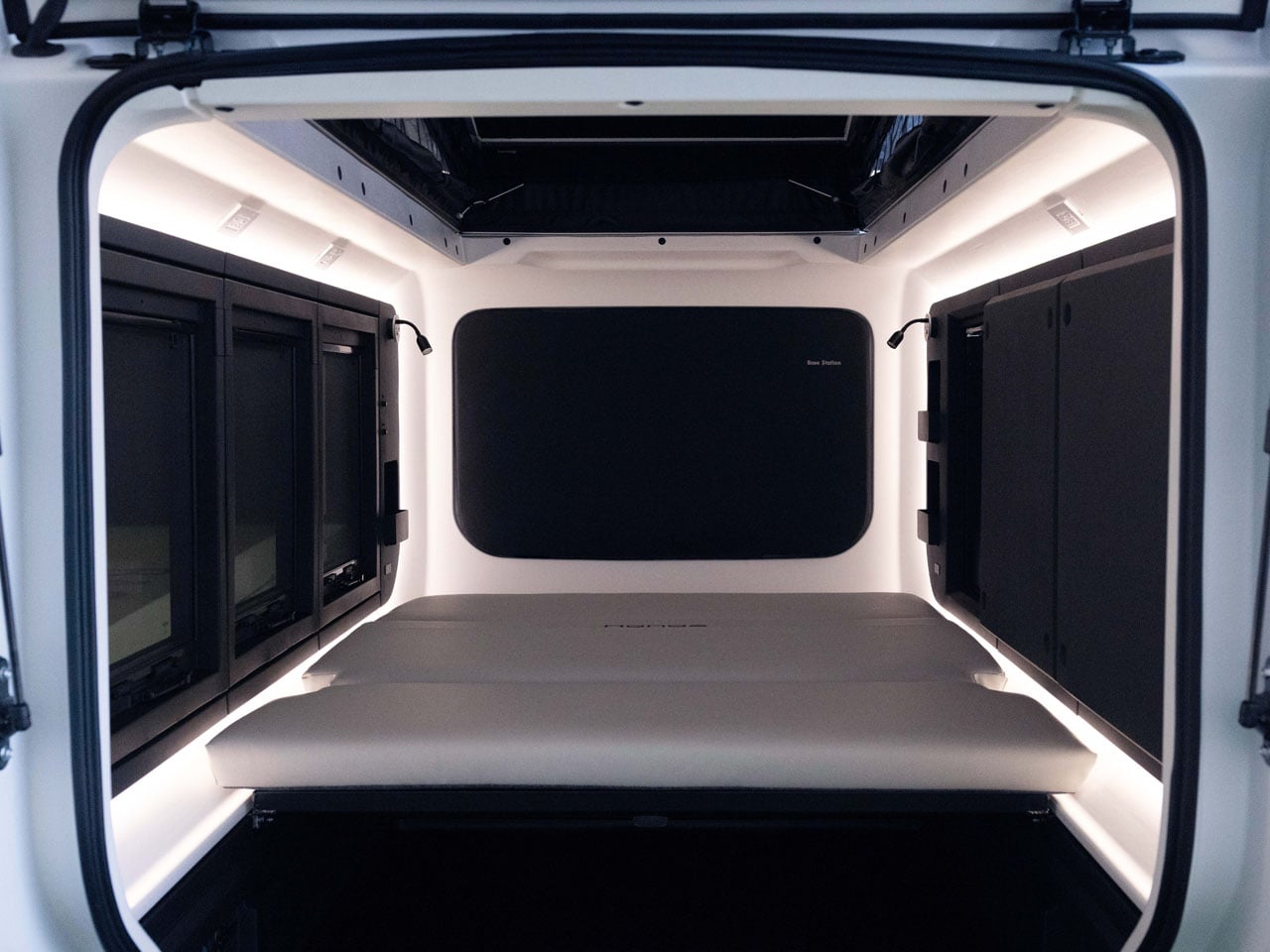
Upon entry you get a low floor, useable for storage and maybe hauling a bike. The queen-size bed on the far end folds down from a futon position to sleep a couple. Modular features allow people to use the Base Station however they want. For instance, the roof can be popped up to create seven feet of stand-up space, or use it for an optional bunk bed. The five windows on the sides can be left as they are or replaced with optional features like a slide-out kitchen, an air conditioner, or an outdoor shower, all while still keeping the overall size of the camper compact enough to fit in an average garage or parking lot.

With the additional sleeping arrangement, Honda affirms, the Base Station should have enough room for a family of four. It is designed for off-grid living; therefore, the camping trailer comes with a lithium battery installed underneath the convertible futon, an inverter for backup, and solar panels to keep the camper and its towing EV powered at all times. All of it can be managed by the Base Station App or onboard touch display indoors, Honda notes.

As mentioned, the Honda Base Station is still a prototype. There is no word on its price and availability timeline as of now, but there is a strong voice within the company that the camper should hit production in the near future.

The post Honda enters modular camper market with lightweight, solar-powered trailer first appeared on Yanko Design.

Amazon’s New World: Aeternum MMO will go offline January 31, 2027

Today, Amazon shared more details about the final chapter of its game New World: Aeternum. The company announced in October that it would wind down support for the MMO, with the Nighthaven season to be its last. New World will be delisted and no longer available for purchase starting today, but the game's servers will not be taken offline until January 31, 2027. People who own the game will be able to continue playing until that date. Nighthaven season will continue through to that end date.

Players who had previously purchased New World: Aeternum will be able to re-download and continue playing up to the shutdown date. In-game currency such as Marks of Fortune will no longer be available to buy starting July 20, 2026, and refunds will not be offered for Marks of Fortune purchases.

This article originally appeared on Engadget at https://www.engadget.com/gaming/amazons-new-world-aeternum-mmo-will-go-offline-january-31-2027-205449407.html?src=rss

Netflix’s expanded Sony deal includes streaming rights to the Legend of Zelda movie

As part of a new agreement, films from Sony Pictures Entertainment will stream on Netflix first, the companies announced via a joint statement. The new deal expands on the exclusive rights Netflix had to Sony films in the US, and means the service will be the first place people will be able to stream upcoming projects like the live-action adaptation of The Legend of Zelda, and a quartet of biopics about The Beatles.

Sony's films will stream worldwide on Netflix in what's called "Pay-1," the first window of availability after a movie's theatrical and VOD releases. As part of the deal, Netflix is also licensing an undisclosed number of films and television shows from the Sony Pictures back catalog to help fill out its library. Netflix says the new arrangement "will roll out gradually" as licensing rights become available throughout the year, with full availability happening sometime in 2029. Neither company shared how long this new setup will last, but did describe the deal as a "multi-year agreement."

Netflix and Sony's partnership has been fruitful so far. Films like Spider-Man: Across the Spider-Verse, Uncharted and Anyone But You have had popular second lives on the streaming service. In the case of KPop Demon Hunters, Netflix was also able to spin a surprise Sony Animation streaming hit into a profitable theatrical run. Netflix will pay Sony north of $7 billion for this new deal, Variety reports — clearly that's worth it to secure the companies’ relationship for another few years.

Netflix has a similar deal with Universal, which has brought other Nintendo adaptations to the streaming service like The Super Mario Bros Movie. Beyond licensing, the company has an even bigger purchase in mind, though: buying Warner Bros. for $82.7 billion. In an effort to prevent the deal from going through, Paramount is now suing Warner Bros. Discovery for ignoring its own competing bid for the company.

This article originally appeared on Engadget at https://www.engadget.com/entertainment/streaming/netflixs-expanded-sony-deal-includes-streaming-rights-to-the-legend-of-zelda-movie-203011384.html?src=rss

Someone Built a Biodegradable 8GB Hard Drive Out of Mushrooms

So here’s a sentence I never thought I’d write: someone made a USB drive out of mushrooms. Well, technically mycelium, the sprawling fungal network that lives underground and occasionally pops up as the mushrooms we eat. But still. We’re talking about storing your family photos, tax documents, and embarrassing early-2000s selfies inside what is essentially cultivated fungus. And somehow, this makes perfect sense.

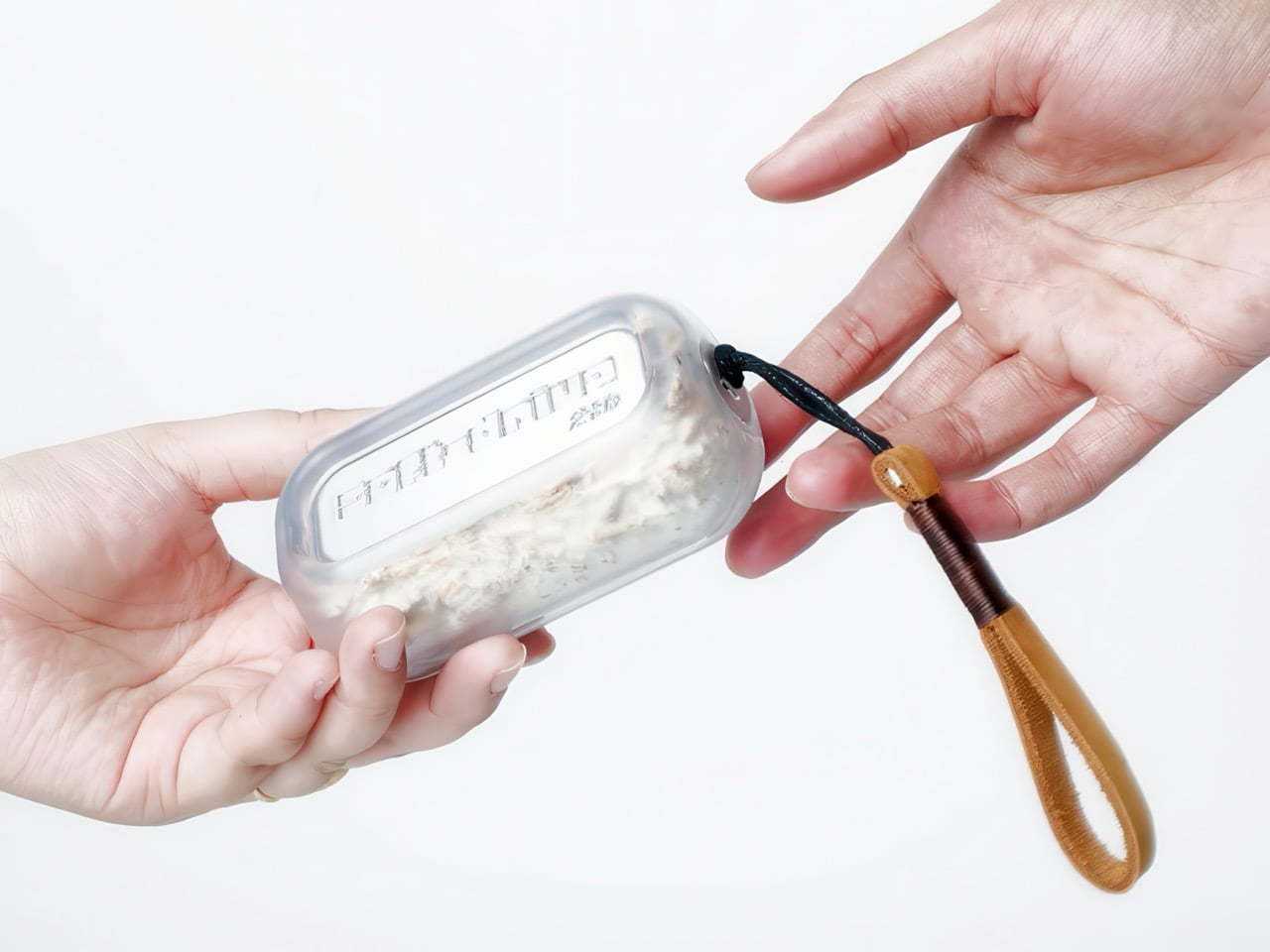
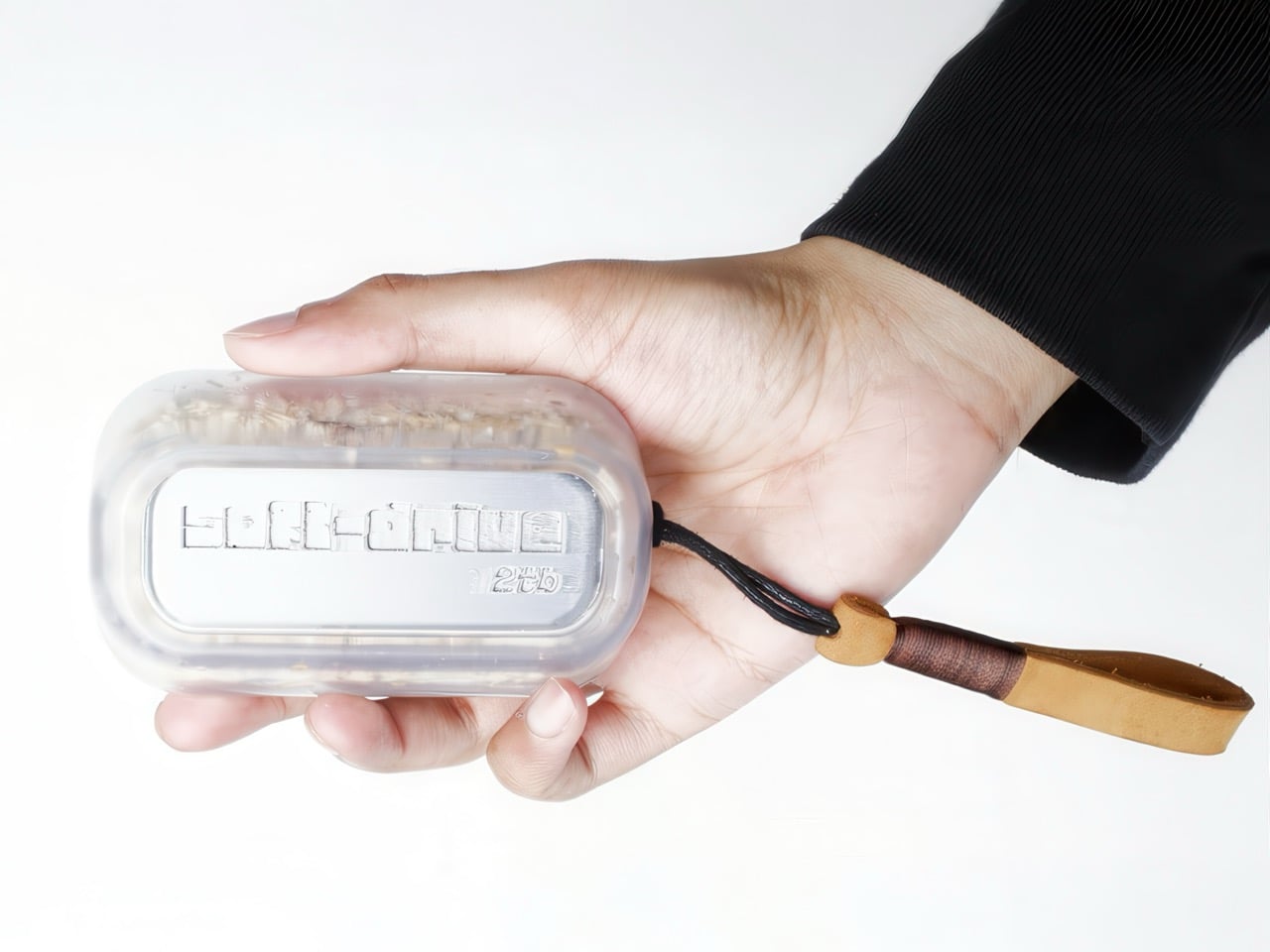
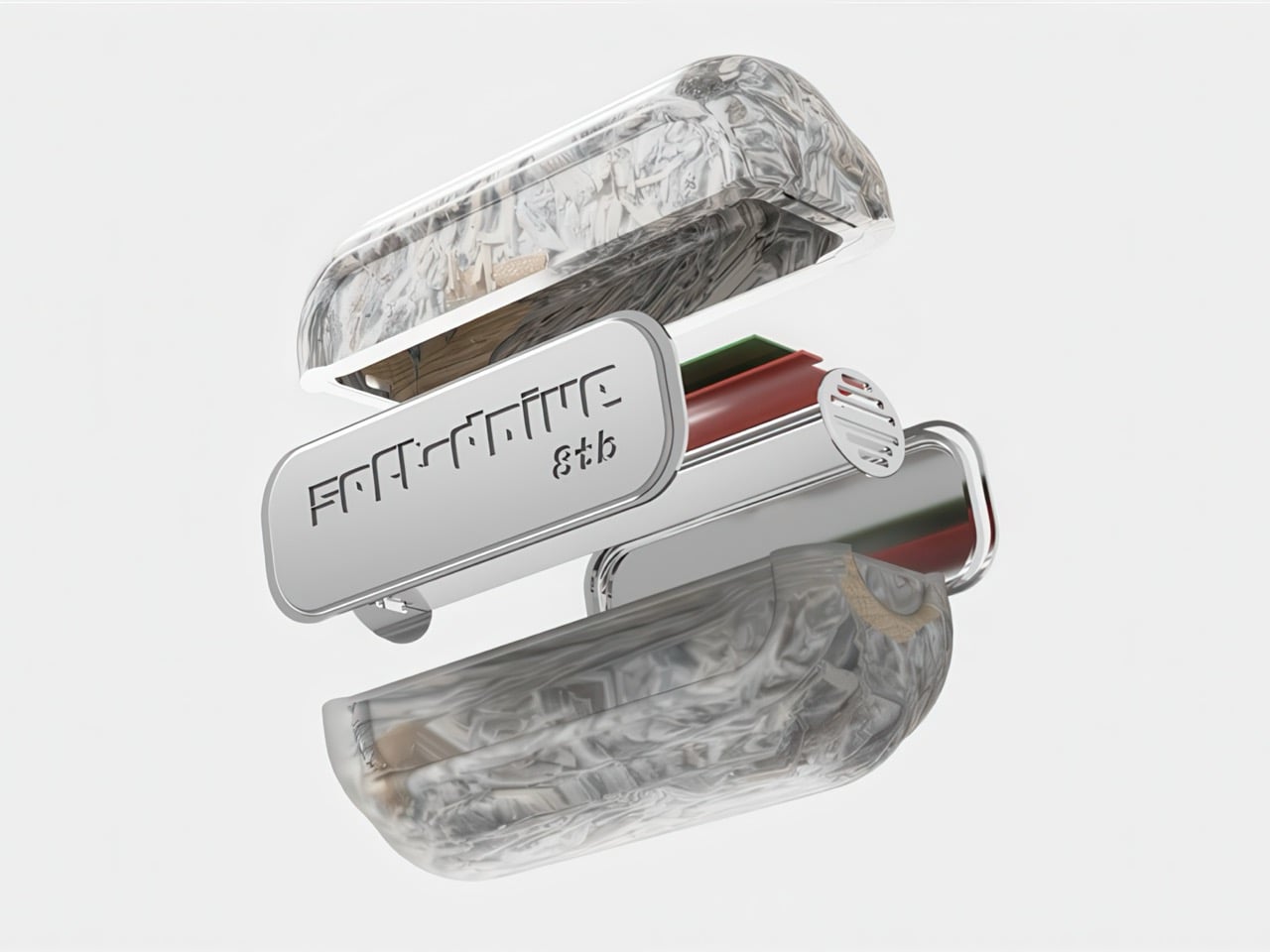
Enter the Soft Drive, which looks less like a tech product and more like something grown in a lab that studies alien artifacts. Designer Sree Krishna Pillarisetti built this portable drive with a shell made from mycelium, the root-like structure of fungi, combined with hemp and bioplastics from waste materials. You can see the fungal fibers through the translucent case, all wispy and organic, protecting the electronics inside. It’s strange and beautiful and deliberately so. The whole thing is designed to make you feel the weight of your data again, to make storage physical and local and weird in a way that makes you reconsider why we ever outsourced our digital memories to faceless corporations in the first place.

Designer: Sree Krishna Pillarisetti

The translucent casing shows off the wispy, organic texture of mycelium mixed with hemp, wrapped around a standard memory card and heat sink. There’s a woven lanyard attached like it’s a charm you’d wear. It holds 8GB, which sounds quaint until you realize that’s exactly the point. This isn’t about competing with cloud storage. It’s about asking why we ever thought it was a good idea to hand over our entire digital lives to massive, energy-guzzling server farms we’ll never see or control.

The name is doing a lot of heavy lifting here, and I’m here for it. “Soft Drive” as the inverse of “hard drive” is chef’s kiss levels of nomenclature. Pillarisetti, who completed this as his MFA thesis at Parsons, built the entire shell from materials sourced from waste streams: mycelium, hemp fibers, and polylactic acid (PLA). The mycelium acts as natural shock absorption, which is clever because dropping your drive has historically been a nightmare scenario. Fungi don’t crack the way plastic does. They compress, absorb impact, and generally behave like they evolved for this, which, in a roundabout way, they kind of did.

And I personally love how deliberately weird this thing looks. Consumer electronics have spent decades trying to disappear, to become these frictionless black mirrors we barely notice. The Soft Drive does the opposite. It foregrounds its materials, makes you aware you’re holding something that grew, that came from a living process. The translucent case means you see everything: the fibrous mycelium texture, the metallic components inside, the fact that this object has layers and history. It’s the anti-iPhone, and I mean that as a compliment. Pillarisetti calls it a “regenerative memory storage device,” which is a fancy way of saying it can eventually break down and return to the earth instead of sitting in a landfill for the next thousand years. The whole concept pushes toward decentralized local networks, physical sharing, data you can hand someone instead of emailing a Dropbox link. It’s romantic in a way tech hasn’t been in years.

The post Someone Built a Biodegradable 8GB Hard Drive Out of Mushrooms first appeared on Yanko Design.

Flaw in 17 Google Fast Pair audio devices could let hackers eavesdrop

Now would be a good time to update all your Bluetooth audio devices. On Thursday, Wired reported on a security flaw in 17 headphone and speaker models that could allow hackers to access your devices, including their microphones. The vulnerability stems from a faulty implementation of Google's one-tap (Fast Pair) protocol.

Security researchers at Belgium's KU Leuven University Computer Security and Industrial Cryptography group, who discovered the security hole, named the flaw WhisperPair. They say a hacker within Bluetooth range would only require the accessory's (easily attainable) device model number and a few seconds.

"You're walking down the street with your headphones on, you're listening to some music. In less than 15 seconds, we can hijack your device," KU Leuven researcher Sayon Duttagupta told Wired. "Which means that I can turn on the microphone and listen to your ambient sound. I can inject audio. I can track your location." The researchers notified Google about WhisperPair in August, and the company has been working with them since then.

Fast Pair is supposed to only allow new connections while the audio device is in pairing mode. (A proper implementation of this would have prevented this flaw.) But a Google spokesperson told Engadget that the vulnerability stemmed from an improper implementation of Fast Pair by some of its hardware partners. This could then allow a hacker's device to pair with your headphones or speaker after it's already paired with your device.

"We appreciate collaborating with security researchers through our Vulnerability Rewards Program, which helps keep our users safe," a Google spokesperson wrote in a statement sent to Engadget. "We worked with these researchers to fix these vulnerabilities, and we have not seen evidence of any exploitation outside of this report's lab setting. As a best security practice, we recommend users check their headphones for the latest firmware updates. We are constantly evaluating and enhancing Fast Pair and Find Hub security."

The researchers created the video below to demonstrate how the flaw works

In an email to Engadget, Google said the steps required to access the device’s microphone or audio are complex and involve multiple stages. The attackers would also need to remain within Bluetooth range. The company added that it provided its OEM partners with recommended fixes in September. Google also updated its Validator certification tool and its certification requirements.

The researchers say that, in some cases, the risk applies even to those who don't use Android phones. For example, if the audio accessory has never been paired with a Google account, a hacker could use WhisperPair to not only pair with the audio device but also link it to their own Google account. They could then use Google's Find Hub tool to track the device's (and therefore your) location.

Google said it rolled out a fix to its Find Hub network to address that particular scenario. However, the researchers told Wired that, within hours of the patch’s rollout, they found a workaround.

The 17 affected devices are made by 10 different companies, all of which received Google Fast Pair certification. They include Sony, Jabra, JBL, Marshall, Xiaomi, Nothing, OnePlus, Soundcore, Logitech and Google. (Google says its affected Pixel Buds are already patched and protected.) The researchers posted a search tool that lets you see if your audio accessories are vulnerable.

In a statement sent to Engadget, OnePlus said it's investigating the issue and "will take appropriate action to protect our users' security and privacy." Marshall said it patched the issue in November and is working with Google to avoid similar issues in the future (see full statement below). We also contacted the other accessory makers and will update this story if we hear back.

The researchers recommend updating your audio devices regularly. However, one of their concerns is that many people will never install the third-party manufacturer's app (required for updates), leaving their devices vulnerable.

The full report from Wired has much more detail and is worth a read.

Update, January 15 2026, 4:04PM ET: “We can confirm that Marshall has issued the necessary firmware updates and security patches to address the headphones potentially affected,” a company representative told Engadget. “These updates have been available since November and have been offered to all users since then. While this is an industry-wide issue, we take it seriously and are working closely with Google to reduce the risk of similar vulnerabilities in the future.”

This article originally appeared on Engadget at https://www.engadget.com/cybersecurity/flaw-in-17-google-fast-pair-audio-devices-could-let-hackers-eavesdrop-194613456.html?src=rss

Amazon is making a Fallout Shelter competition reality TV show

The second season of Amazon's excellent Fallout show is currently airing, but the company is already looking to expand its programming around the popular franchise. Prime Video has greenlit a unscripted reality show titled Fallout Shelter. It will be a ten-episode run with Studio Lambert, the team behind reality projects including Squid Game: The Challenge and The Traitors, as its primary producer. Bethesda Game Studios’ head honcho Todd Howard is attached as an executive producer.

Amazon's description of Fallout Shelter is: "Across a series of escalating challenges, strategic dilemmas and moral crossroads, contestants must prove their ingenuity, teamwork and resilience as they compete for safety, power and ultimately a huge cash prize."

It seems fitting that the producer is the same as Squid Game: The Challenge, where a show critiquing capitalism is turned into a competition about winning money. A reality show sounds like the sort of thing you'd find in a Fallout game side quest accompanied by pointed commentary about greed rather than an activity people of the Wasteland would take seriously. Maybe the new series will be an interesting mix of survival skills and dark humor that feels true to the Fallout ethos. But, and I say this as a big viewer of reality shows, I’m not holding my breath.

The name echos the free-to-play mobile game Bethesda released in 2015. Fallout Shelter lets people build and improve their out Vault-Tec residence, managing the resources for a growing cadre of underground survivors. It seems pretty likely that there will be some type of tie-in between the game and the show, but any details about that might pop up closer to when the program is ready to air. It's currently casting, and no release timeline has been shared.

This article originally appeared on Engadget at https://www.engadget.com/entertainment/tv-movies/amazon-is-making-a-fallout-shelter-competition-reality-tv-show-190151855.html?src=rss