Meta will fund seven new natural gas plants to power its biggest data center yet

Meta will essentially foot the power bill for the $27 billion mega data center it's building in Louisiana. On Friday, the Wall Street Journal reported that the company struck a deal to fund the energy infrastructure needed for the project.

Through a deal with Entergy Louisiana, Meta will fund seven new natural gas power plants, 240 miles of transmission lines and battery energy storage at three locations. The gas plants will have a combined power output of 5,200 megawatts, and the transmission lines will operate at 500 kilovolts.

In addition, the company will help fund up to 2,500 MW of new renewable resources. It also agreed to a memorandum of understanding for future nuclear power development. The 4-million-square-foot Richland Parish, LA, data center will be Meta's biggest yet. It's currently under construction.

The energy deal follows a pledge by tech companies, including Meta, to offset local residents’ rising electricity costs from AI data centers. The companies plan to "build, bring or buy the new generation resources and electricity needed to satisfy their new energy demands, paying the full cost of those resources." However, the pledge lacks a binding agreement or any enforcement mechanisms.

The shift in tone comes in response to growing anger from local communities over the rise of power-hungry, environmentally damaging AI data centers. A December poll found that 60 percent of Americans — including majorities of Democrats, Republicans, and independents — support more AI regulation. Just this week, Sen. Bernie Sanders and Rep. Alexandria Ocasio-Cortez introduced a bill to force a moratorium on data center construction until meaningful regulations are passed.

We could easily file this and similar moves as Big Tech's latest attempt to convince voters and officials that it can be trusted to do right without enforceable regulations. We've seen that movie before.

This article originally appeared on Engadget at https://www.engadget.com/big-tech/meta-will-fund-seven-new-natural-gas-plants-to-power-its-biggest-data-center-yet-201000045.html?src=rss
European Commission confirms data breach

The European Commission has announced that it suffered a cyber attack that affected "cloud infrastructure hosting the Commission's web presence on the Europea.eu platform." While the attack has been contained, Bleeping Computer reports that the threat actor claiming to be behind it was able to take over 350GB of data before the Commission addressed the issue.

"Early findings of our ongoing investigation suggest that data have been taken from [Europa] websites," the European Commission says. "The Commission is duly notifying the Union entities who might have been affected by the incident."

The Commission's investigation is ongoing, and it has yet to disclose how its cloud infrastructure was breached. According to Bleeping Computer, the threat actor was able to access the Europa sites and employee data via one of the Commission's Amazon Web Services accounts. The Commission disclosed a breach that similarly impacted employee data in February.

Both breaches appear to be less severe than the Salt Typhoon hack that impacted US telecommunications companies in 2024. Hackers reportedly gained access to data from the smartphones of members of both the Trump and Harris campaigns, and other government officials. In January 2026, the European Commission introduced a new Cybersecurity Package designed to address similar issues, in part by outlining new ways for EU states to deal with potentially risky companies in their telecom supply chains.

This article originally appeared on Engadget at https://www.engadget.com/cybersecurity/european-commission-confirms-data-breach-200000982.html?src=rss

Crunchyroll is now available as a channel in the Apple TV app

If you're still using Crunchyroll after its AI subtitle fiasco and subsequent price increase, there's a new way to watch. The anime streaming service is now available as a channel in the Apple TV app.

That means you can subscribe and stream your favorite anime titles, all within Apple's video app. No need for the Crunchyroll app or a separate login. (Your Apple account handles your subscription using this method.) 9to5Mac notes that this is the first significant new channel added to the TV app in some time.

Crunchyroll starts at $10 per month, after the platform raised all of its monthly subscription prices by $2 earlier this year. That may be a hard sell for fans frustrated by the platform's direction.

Last year, months after the company president enthused about the potential for AI subtitles, fans noticed something fishy. The German subtitles for Necronomico and the Cosmic Horror Show included one that began with "ChatGPT said…" Crunchyroll pinned the blame on a third-party vendor and promised it would work to "rectify the error."

This article originally appeared on Engadget at https://www.engadget.com/entertainment/streaming/crunchyroll-is-now-available-as-a-channel-in-the-apple-tv-app-182500579.html?src=rss

If you live in Georgia, there’s a new exhibit you can visit celebrating Apple’s 50th anniversary

The Mimms Museum of Technology and Art in Roswell, Georgia is debuting a new exhibit celebrating Apple's 50th anniversary. The exhibit, iNSPIRE: 50 Years of Innovation from Apple, is set to open on April 1, the date the company was founded, and includes "more than 2,000 artifacts across 20,000 square feet, making it the largest public display of Apple products in the world."

iNSPIRE is supposed to offer "a unique look" into Apple, by "highlighting early computers, rare prototypes, original documentation and immersive installations inspired by Apple’s most iconic products and campaigns." Based on photos shared from the exhibit's launch event, that includes displays of every model of key products like the iPod, iPhone and iPad, and an interactive installation that inserts you in the company's iconic iPod ads.

If you're based on the west coast of the US, the Computer History Museum in Mountain View, California is also displaying its own "Apple@50" exhibit, and running what it calls "Mactivations," scheduled demos where you can interact with a reproduction of an original Macintosh.

Apple's own celebrations have included a published letter from CEO Tim Cook ruminating on the company's mission, and live music events at the company's stores, offices and select landmarks around the world.

This article originally appeared on Engadget at https://www.engadget.com/computing/if-you-live-in-georgia-theres-a-new-exhibit-you-can-visit-celebrating-apples-50th-anniversary-180940846.html?src=rss

It looks like we’re finally getting an Ocarina of Time remake

After years of rumors and countless fan-made Unreal Engine tech demos of varying quality, it sounds like we might finally be getting a ground-up remake of The Legend of Zelda: Ocarina of Time.

That’s according to Nintendo insider NatetheHate, who said in the latest edition of his podcast that a remake of the seminal Nintendo 64 game would be coming to Switch 2 in the second half of 2026. The reliable tipster said he doesn’t know whether Nintendo is making a 1:1 remake of the original 3D Zelda entry, or something "that’s a little more free to explore design choices," adding that he was initially reluctant to share the information he’d received in case we ended up getting little more than an HD remaster. But it sounds like this is a more ambitious undertaking than that.

Ocarina of Time has of course been remastered before, with 2011’s The Legend of Zelda: Ocarina of Time 3D for the 3DS generally considered to be the best version of the game you can play today. The original 1998 game is also easily accessible via emulation through Nintendo Switch Online, but a modern remake for Switch 2 does make some sense.

For one, 2026 marks the series’ 40th anniversary, and if you asked every Zelda fan alive what their favorite entry is, you can bet that OoT would feature pretty high in the final rankings. We’re also getting that live-action Zelda movie next year, and Nintendo will no doubt want to make sure audiences have done their homework on the games that inspired it.

Of course, none of this is official, so have those grains of salt at the ready, but NatetheHate did also claim that anyone hoping for a new 3D Mario game to arrive in 2026 is going to be disappointed. That’s more likely to arrive in 2027. In better news, we’re apparently also getting a brand new "classic-style" Star Fox game this summer, which would mark the return of the spacefaring Fox McCloud after a decade spent in Nintendo’s unloved mascot closet.

This rumor seems logical after Nintendo’s surprise announcement that the anthropomorphic red fox is going to feature in The Super Mario Galaxy Movie, which arrives next week. He’s being voiced by Glen Powell, because of course he is.

NatetheHate’s information on all of the above has been corroborated by VGC, which says it lines up with what it's heard from its own sources. And in the case of the Ocarina of Time remake, that recent Lego set suddenly makes a lot of sense.

If indeed we do get the remake of Metacritic’s highest-rated game of all time later this year, physical collectors could have a difficult choice to make, after Nintendo announced that physical versions of first-party Switch 2 games are about to become more expensive than their digital counterparts. This adjusted pricing will come into effect when Yoshi and the Mysterious Book launches on May 21.

This article originally appeared on Engadget at https://www.engadget.com/gaming/nintendo/it-looks-like-were-finally-getting-an-ocarina-of-time-remake-175546356.html?src=rss

The original Hollow Knight just got an update to fix a glitch with a final boss

Team Cherry just fixed a bug with the original Hollow Knight, according to a report by GamesRadar. That game came out a full nine years ago, so it's pretty impressive that the dev team is still cranking out updates.

Spoilers follow, but it's been nine years so whatever. The update involves a glitch regarding an attack from The Radiance, one of the final bosses of the game. At later stages, she tosses out these honing balls of light. These are difficult to avoid on their own, but a glitch made it so the balls of light occasionally lingered in the air after finishing. This added yet another way for the player to take some damage and led to numerous unnecessary deaths.

This has now been fixed. The patch notes say the developers "fixed Radiance's orb attack hitbox lingering slightly longer than intended if the orb expires in the air." This is great news for brand-new players and frustrating news to people who have been trying to avoid those lingering orbs for the better part of a decade. Better late than never, right?

We don't know why the company tackled this particular issue right now. It could be that the success of the long-awaited sequel, Hollow Knight: Silksong, has been driving new players to the original release. It's also possible they just now got around to it. Today's patch includes other stuff, like raising the volume when navigating the inventory and adding more journal notification icons. Team Cherry isn't Ubisoft or Nintendo. It's a relatively small team.

The team has been pumping out updates for Silksong as well. Team Cherry recently added traditional Chinese and German language options, which had become a sticking point for some. It's also busy working on the game's first major DLC expansion, called Sea of Sorrow.

This article originally appeared on Engadget at https://www.engadget.com/gaming/the-original-hollow-knight-just-got-an-update-to-fix-a-glitch-with-a-final-boss-173533993.html?src=rss

This E Ink Wisephone Has No Camera, No App Store, No Social Media

Smartphones have become something of a paradox. The more capable they get, the less in control we feel. Notifications pull us in every direction, social feeds demand constant attention, and app stores offer thousands of things we never asked for. For all the technology packed into these slim glass rectangles, they’ve stopped being tools we use and started being systems we manage.

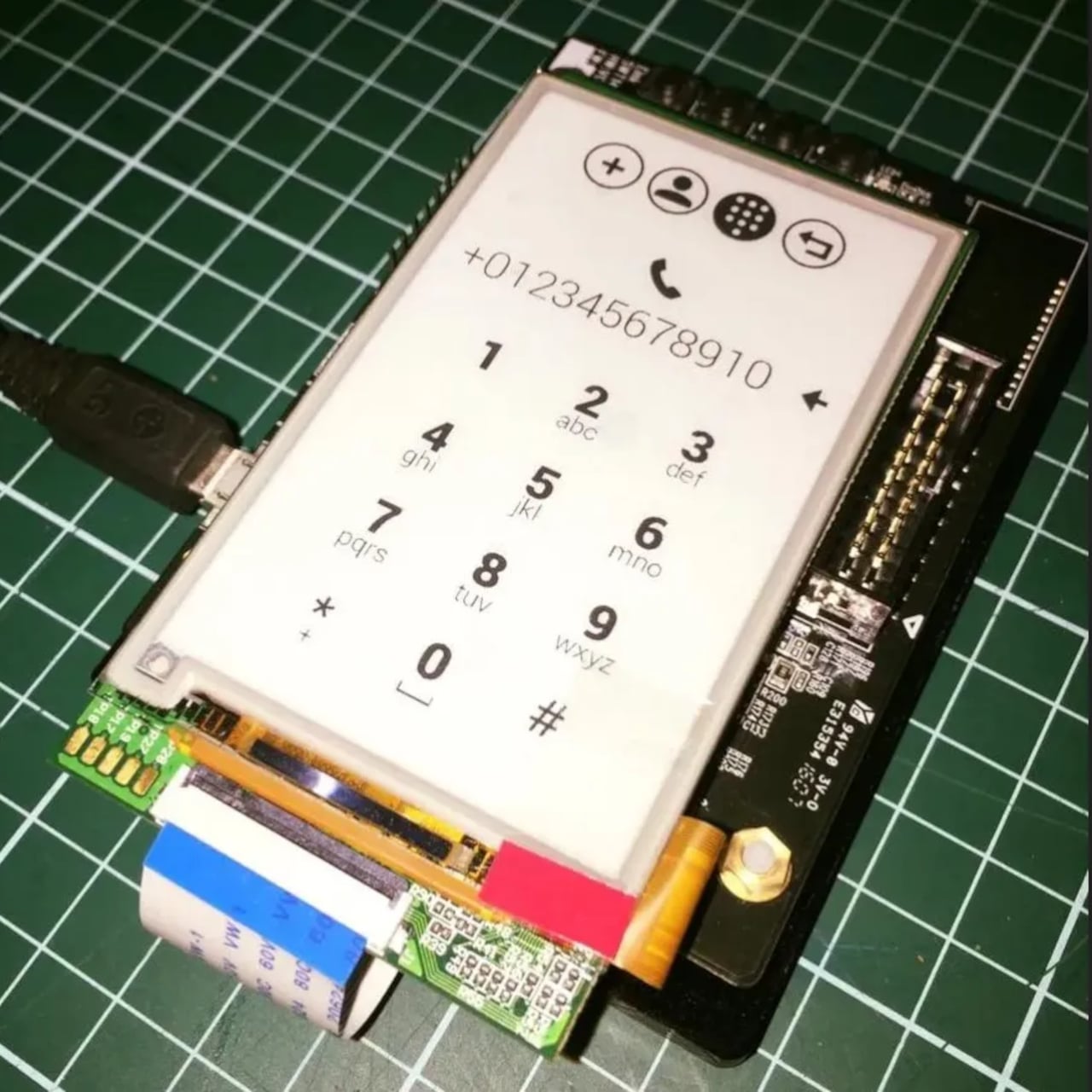
That tension is exactly what Berlin-based architect Marko Lazić sat with one afternoon in 2016, waiting for a friend at a coffee shop with his phone battery nearly dead. He sketched an idea, one that took years to develop but eventually became Offone, a 3D-printed phone with an E Ink display that he calls a “wisephone.” Not a dumbphone, and certainly not a smartphone, but something deliberately in between.

Designer: Marko Lazic

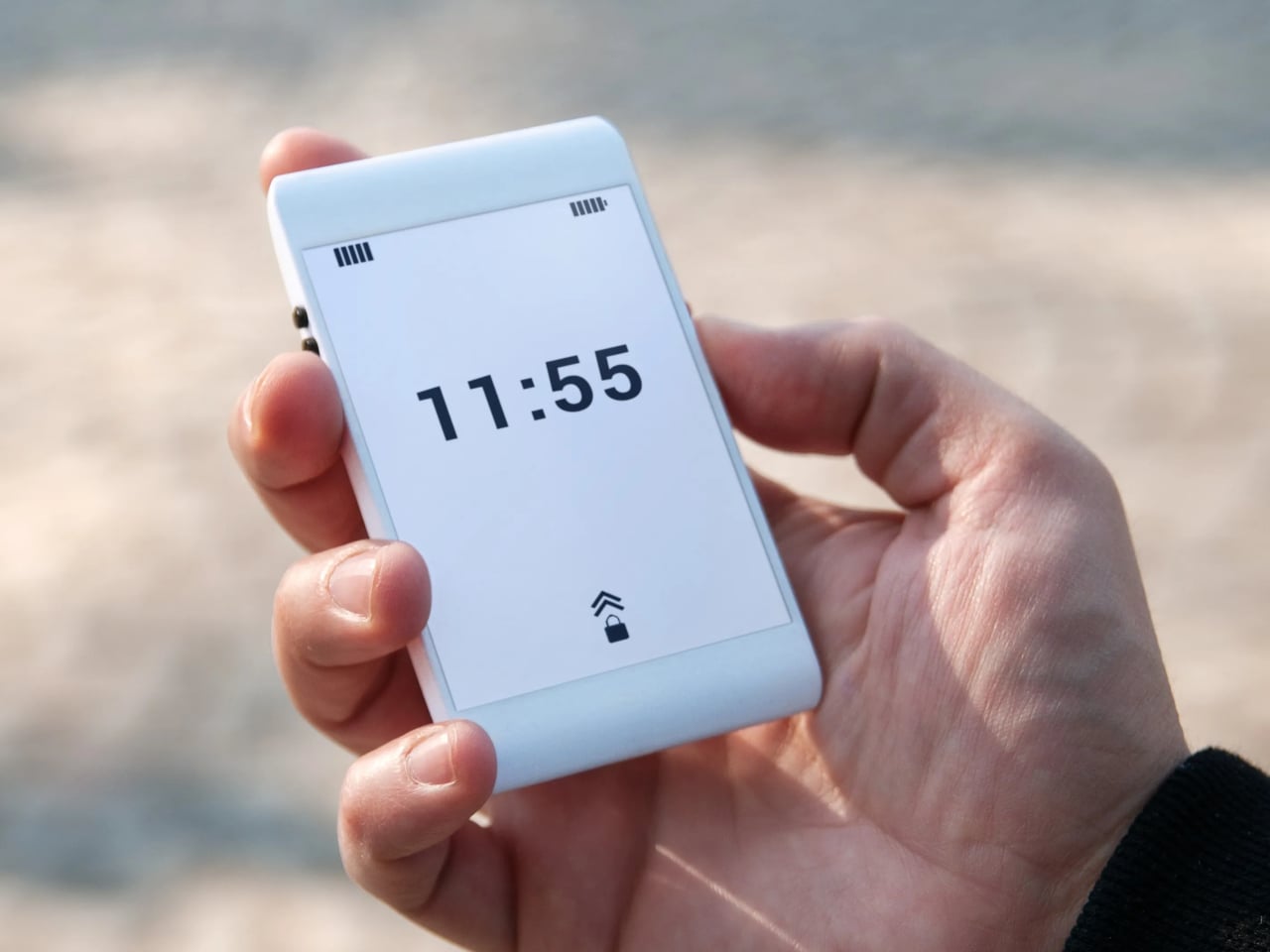
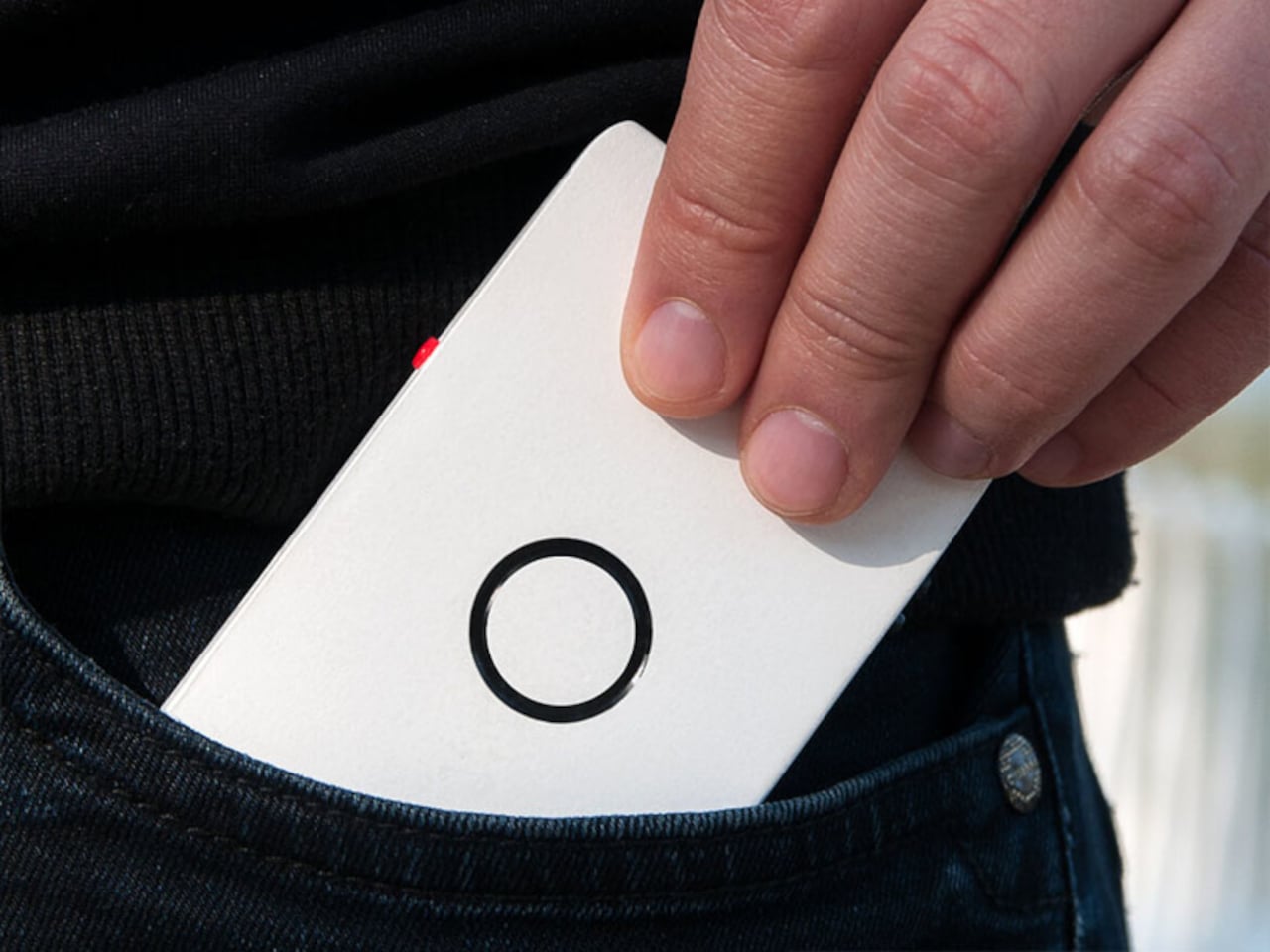
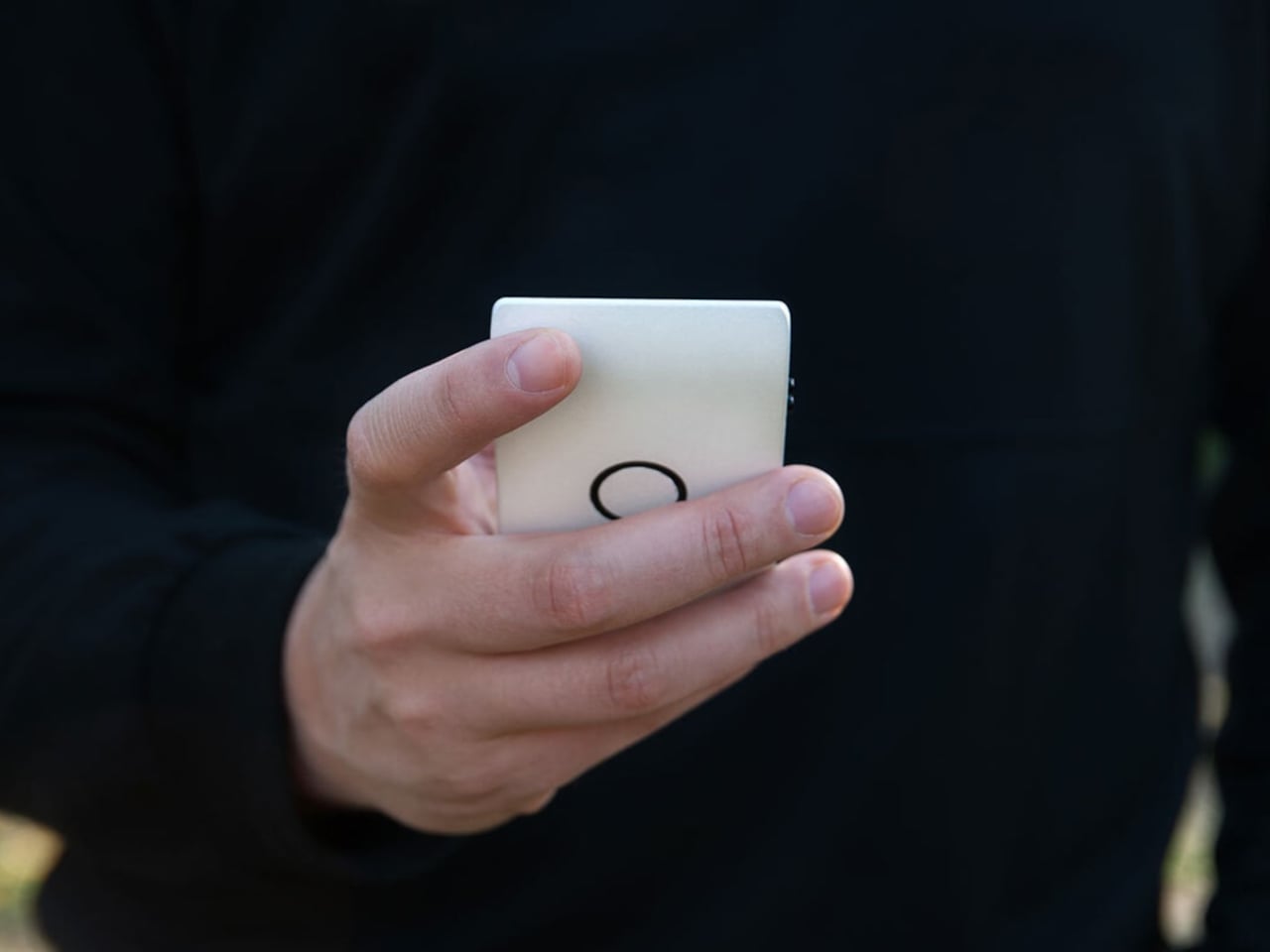
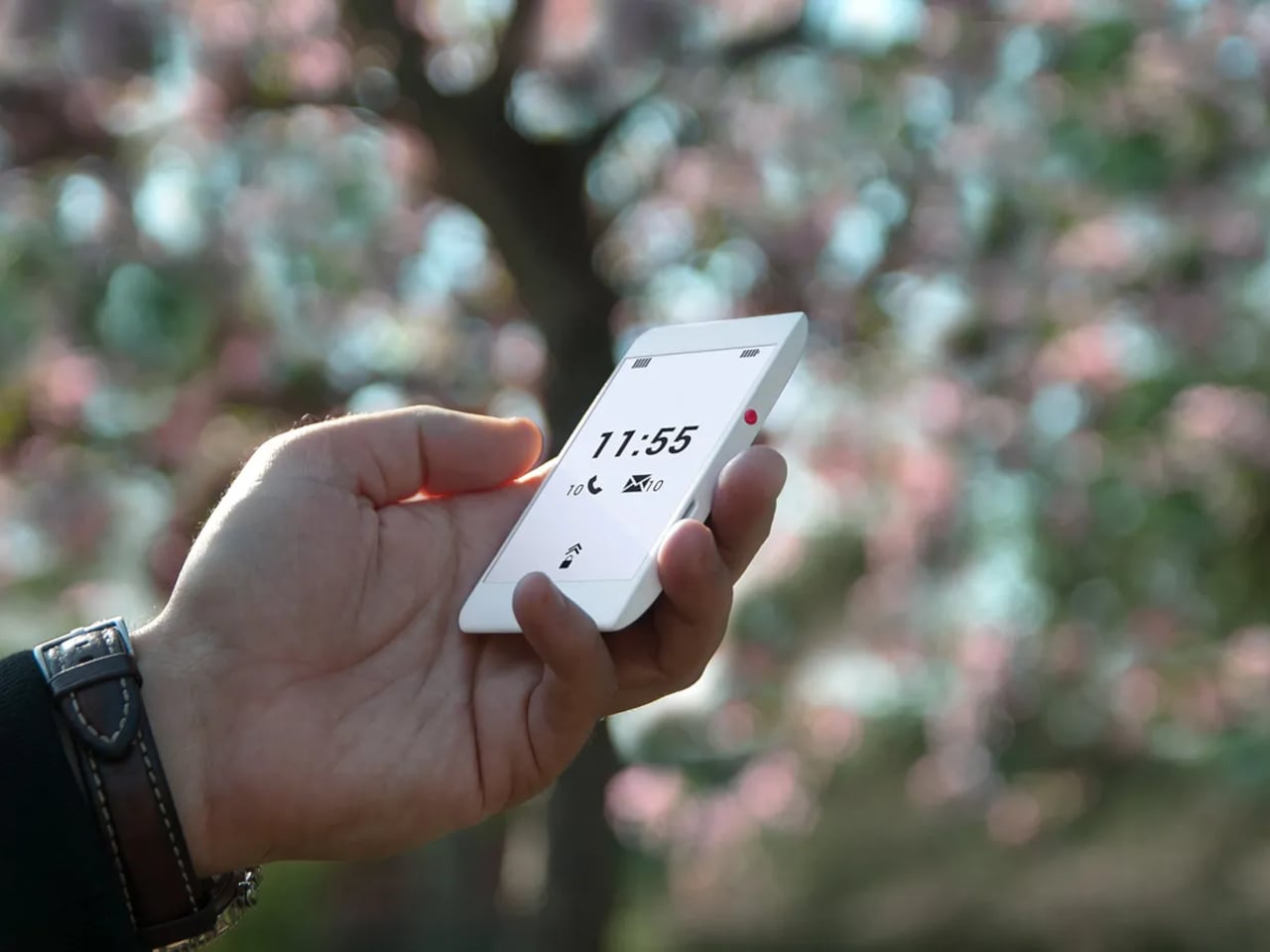
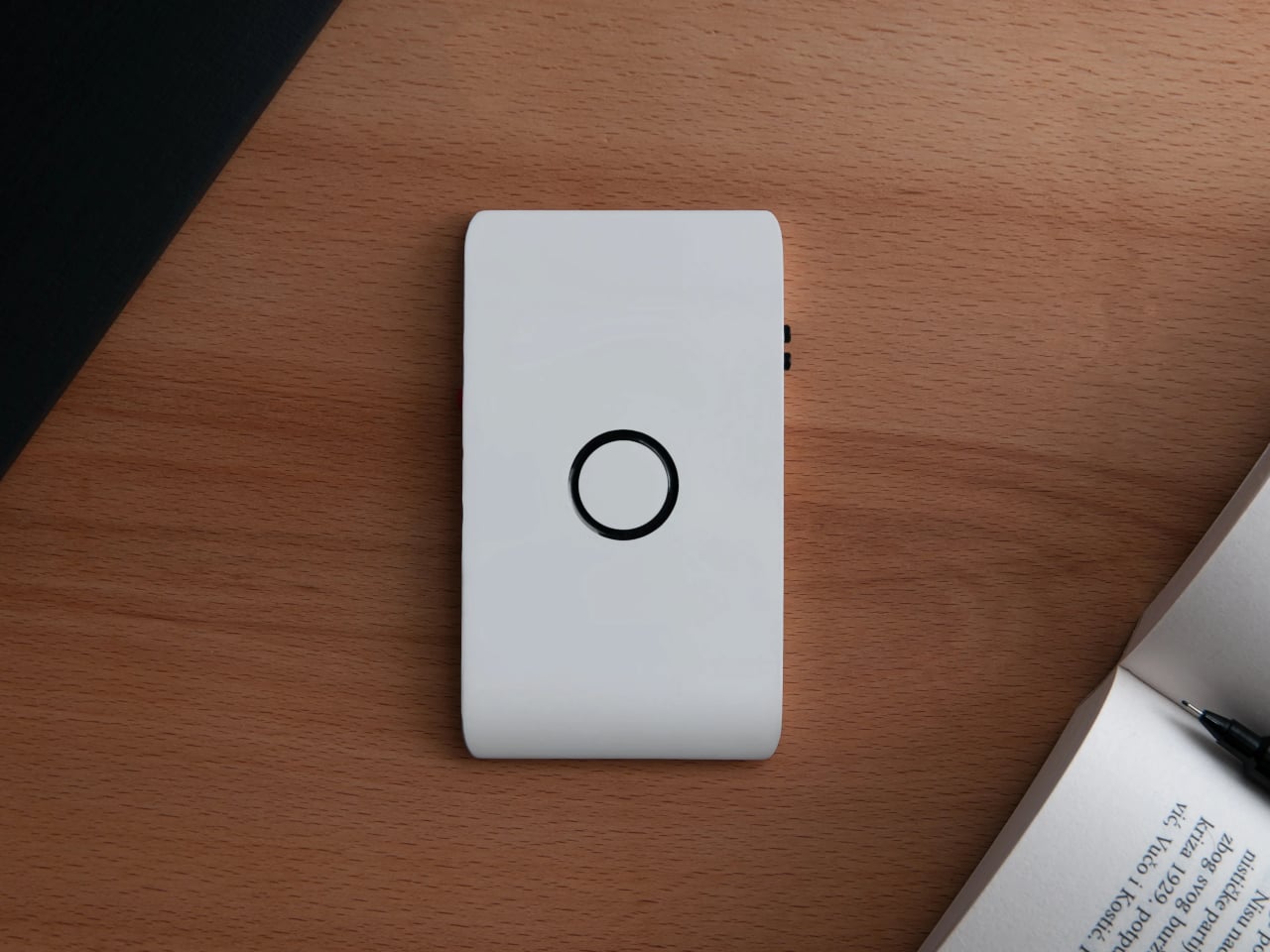
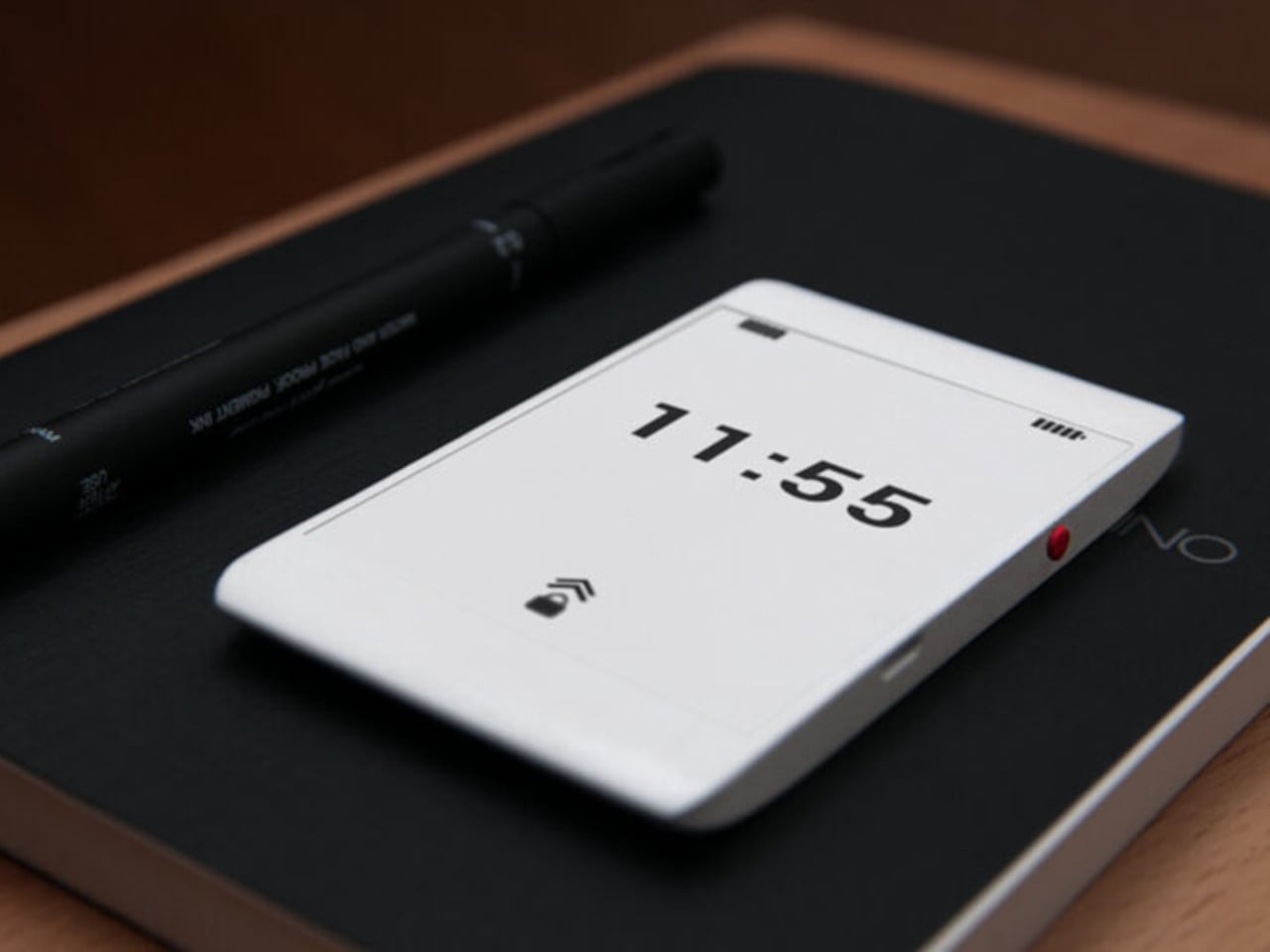
The first thing that catches your attention is how unassuming Offone is. Its 3D-printed body is slim enough to slip into a wallet alongside your cards and fits in the palm without effort. White, monochrome, and clean, the E Ink touchscreen looks more like paper than a display. The side bezels are practically nonexistent, while the top and bottom house the usual earpiece and microphone.

The E Ink display is a practical choice as much as an aesthetic one. It means no screen glare, no blue light, and no eye strain from prolonged use. Reading a text or checking a contact feels like glancing at a printed page. Lazić also considered night use, suggesting optional backlighting so the phone remains usable in the dark without disrupting sleep the way most backlit screens tend to do.

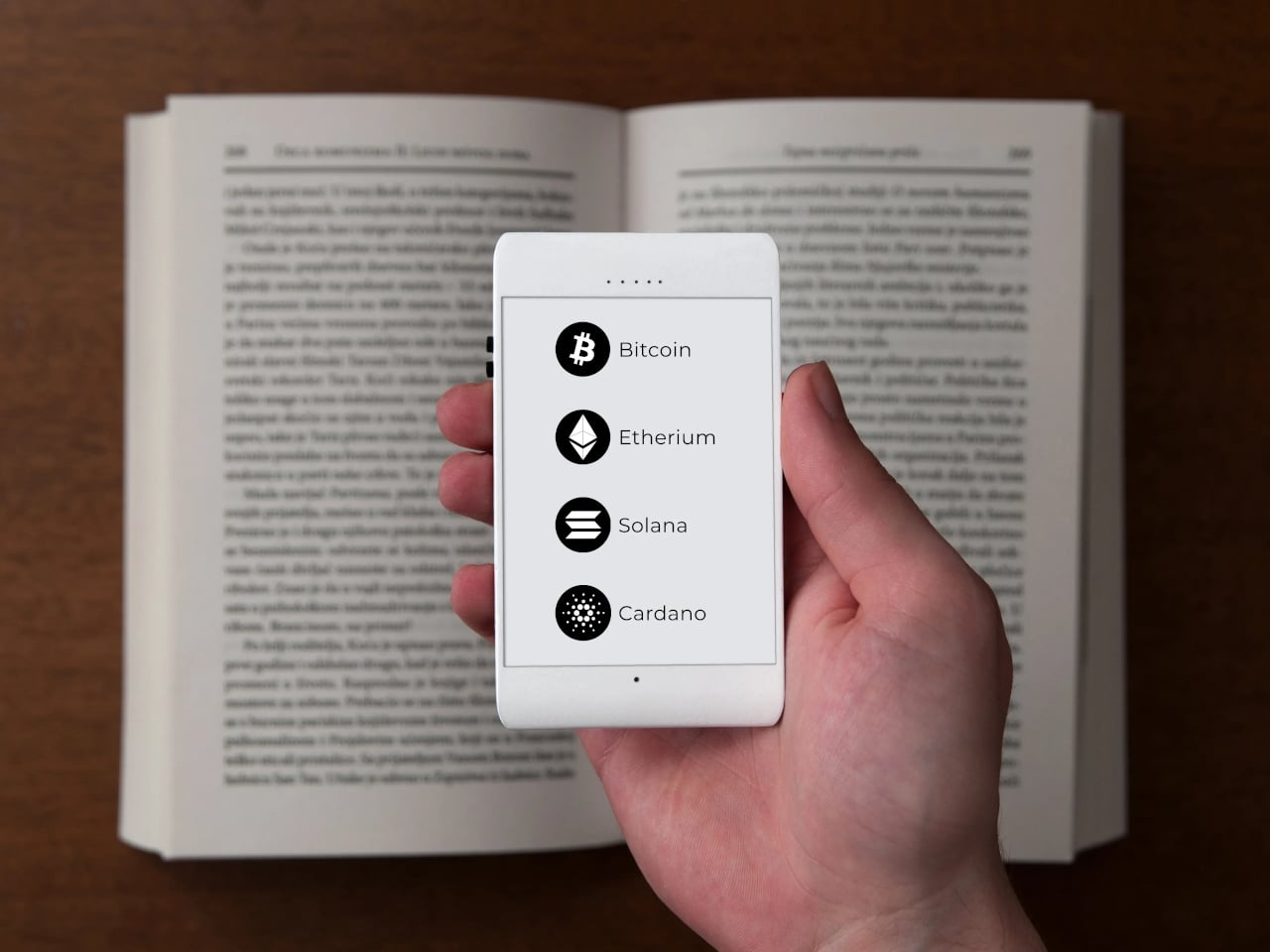
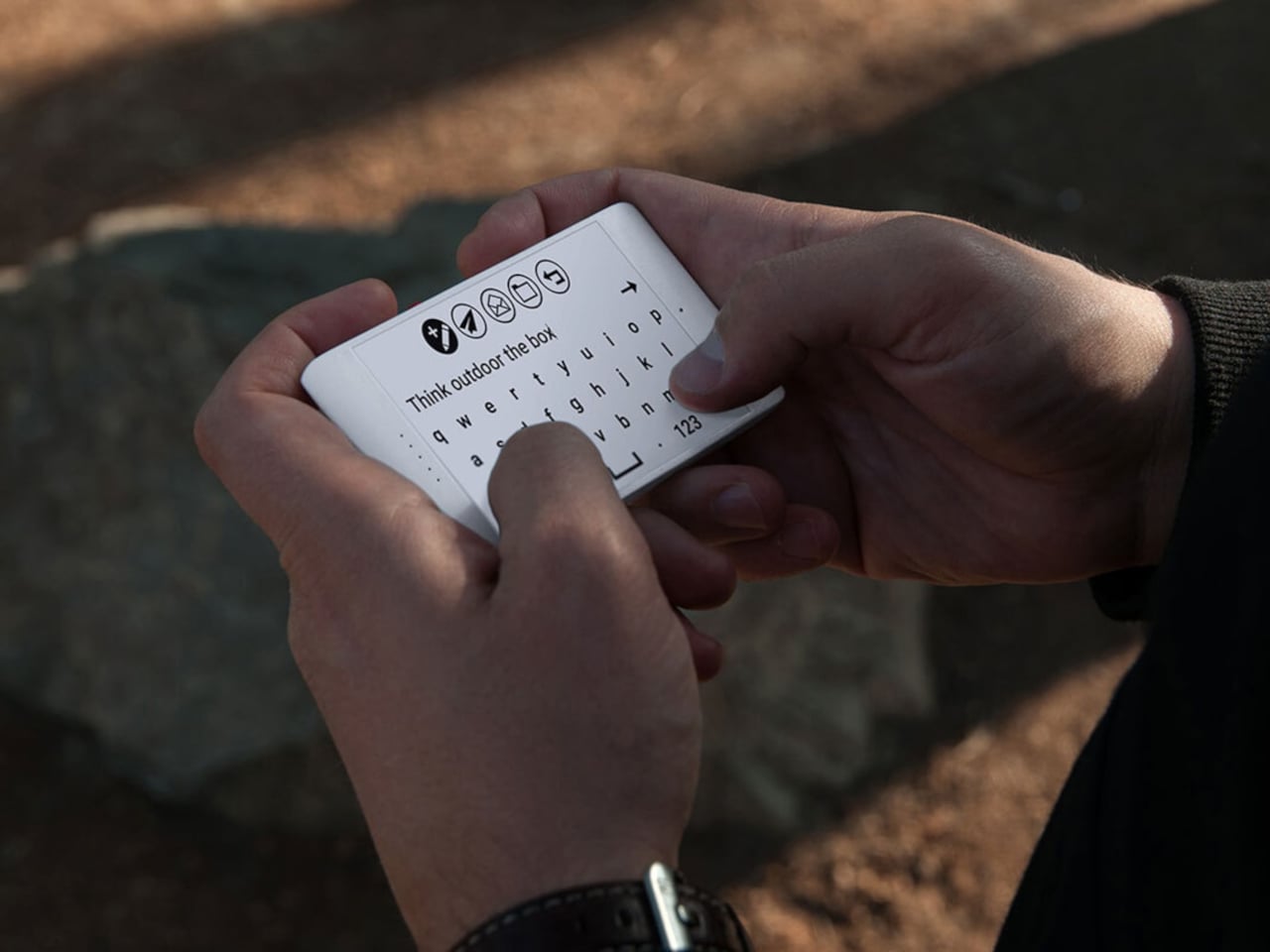
Lazić’s approach to the interface is as intentional as the hardware. Instead of text labels, Offone uses universal symbols to represent its apps, meaning navigating the phone doesn’t require knowing any particular language. It’s a small detail but a telling one, reflecting a philosophy where clarity and accessibility come before convention. The only time you type letters is when writing a message or searching for a contact.

The app selection is just as deliberate. You get calls, SMS, Google Maps, Waze, Uber, and messaging platforms like WhatsApp, but nothing else. No camera, no app store, no social feeds. Imagine getting through a travel day, navigating an unfamiliar city, calling ahead to a hotel, and ordering a ride, all without once falling into the scroll. For frequent travelers and the easily distracted, that’s a meaningful trade-off.

Even the hardware choices are guided by this spirit of restraint. At least one prototype shows no ports at all, meaning charging would be wireless and headphone connectivity handled over Bluetooth. It’s a cleaner device in every sense, free from the usual tangle of cables. The E Ink display also dramatically reduces power consumption, pushing battery life well past what most smartphones manage in a day.

Offone never reached production. Lazić wrote about the startup’s collapse in a 2022 Medium post, pointing to a mix of ambition, poor team choices, and a lack of funding as the reasons it fell apart. Development halted that same year after the team disbanded, leaving it an intriguing concept that was perhaps just a few years ahead of the minimalist phone movement it helped inspire.

The post This E Ink Wisephone Has No Camera, No App Store, No Social Media first appeared on Yanko Design.

CA-T Traps Your Phone Like a Cassette Tape So You Can Actually Focus

The problem with focus apps isn’t that they don’t work. It’s that the thing running them is also running Instagram, YouTube, and every group chat you’ve ever been in. The phone stays in your hand, the timer ticks, and the notifications stack up at the edge of your vision. CA-T is a concept that treats this as a hardware problem rather than a willpower problem, and the solution it proposes is surprisingly literal.

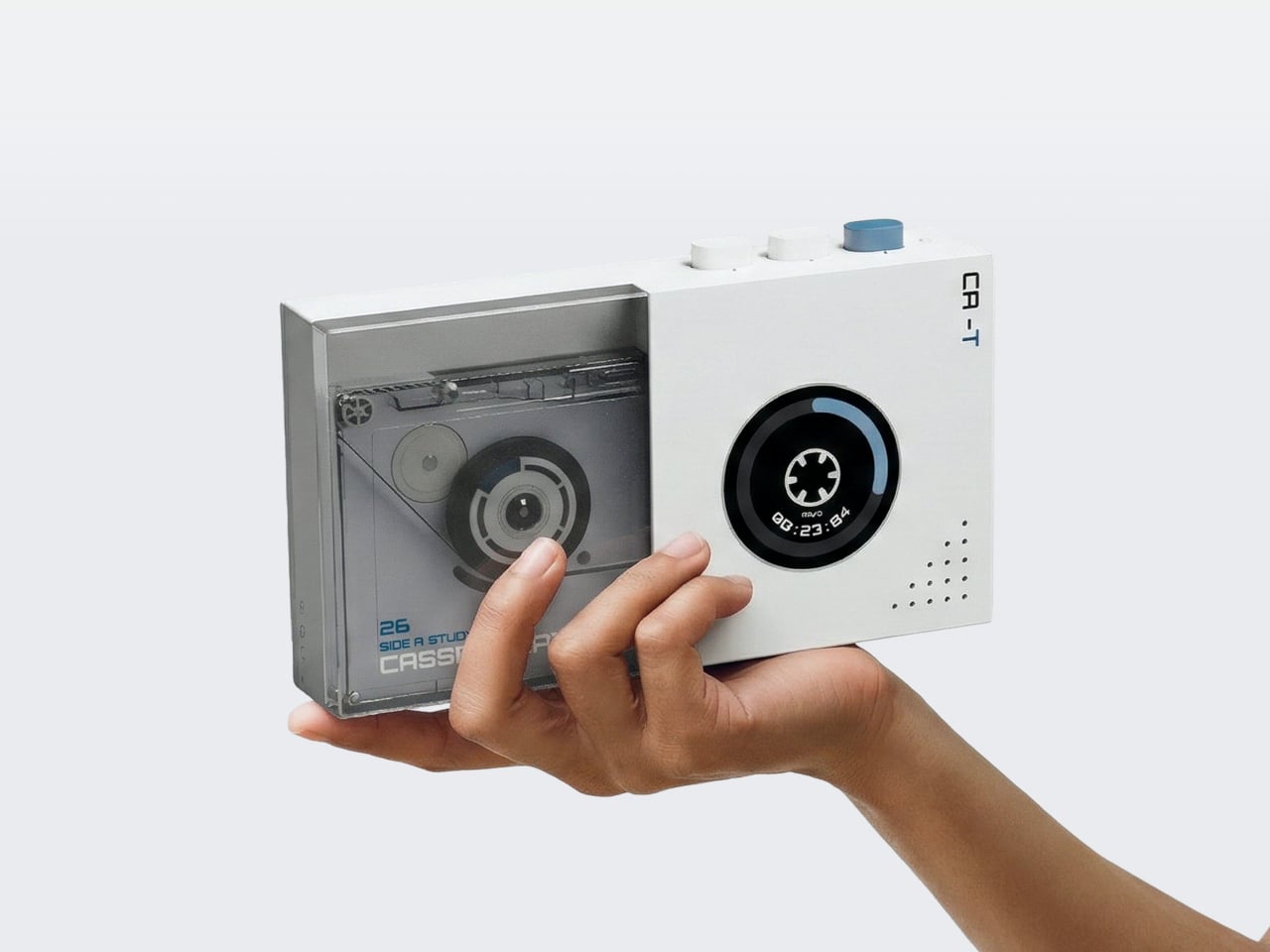
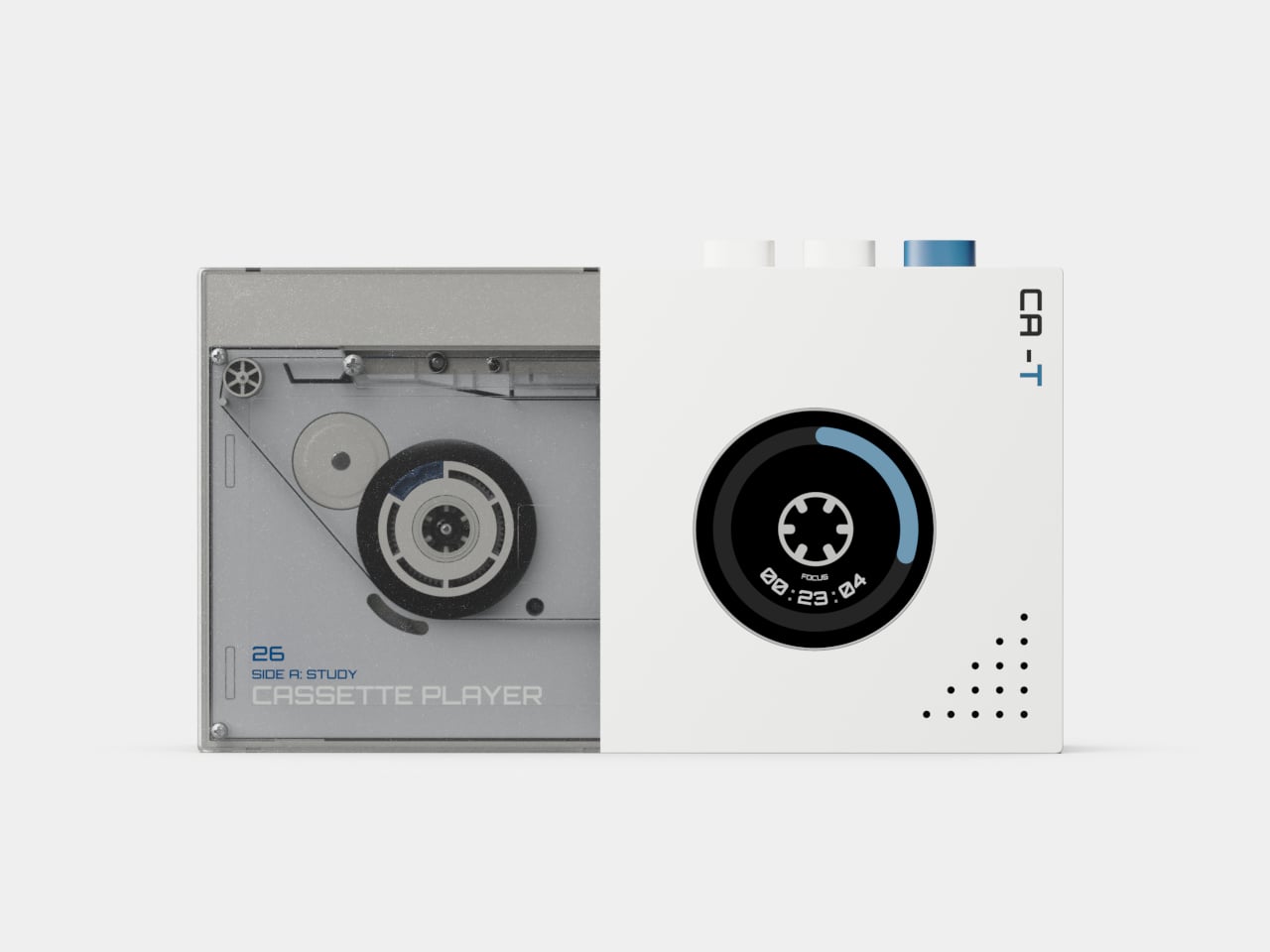
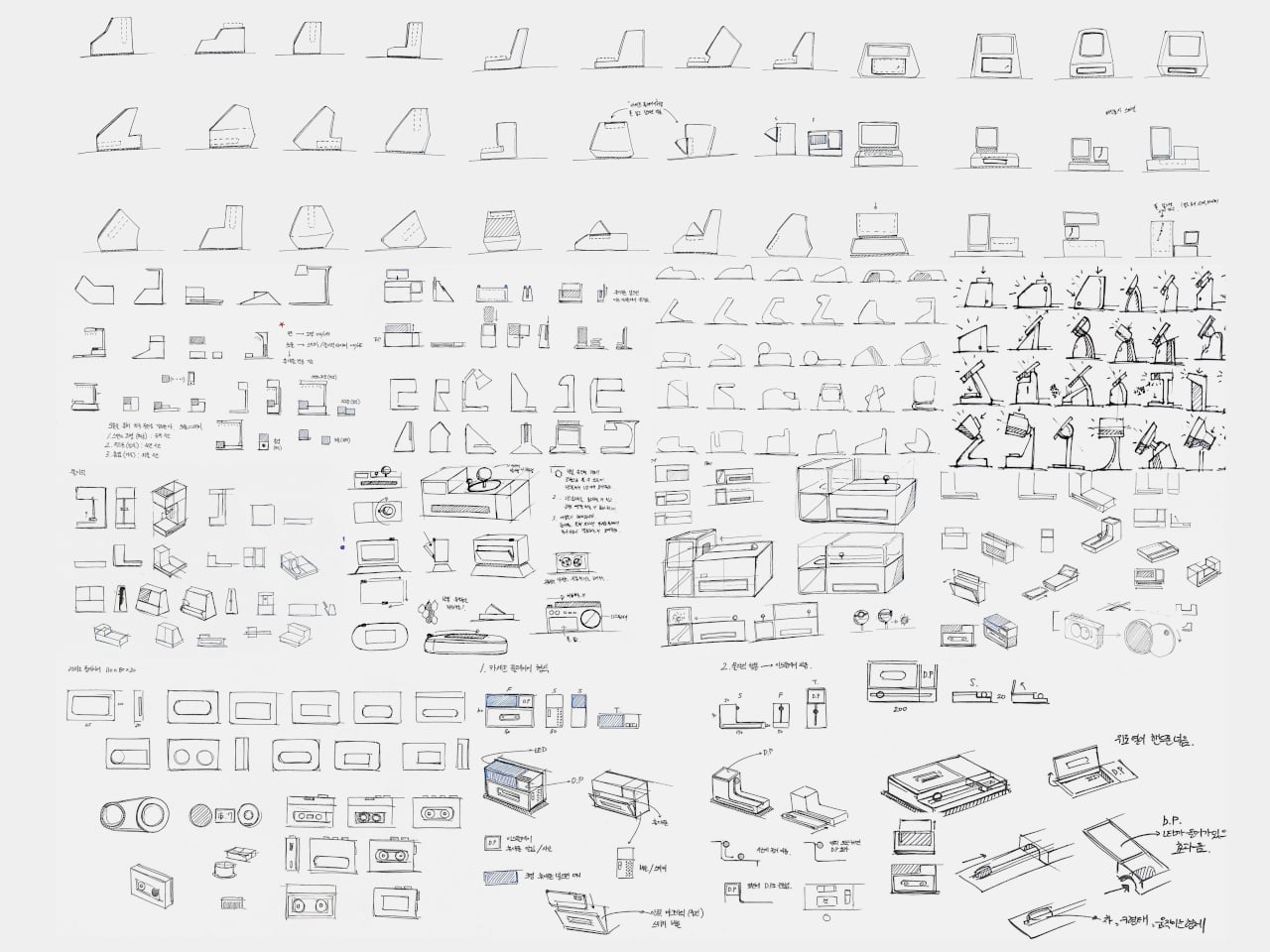
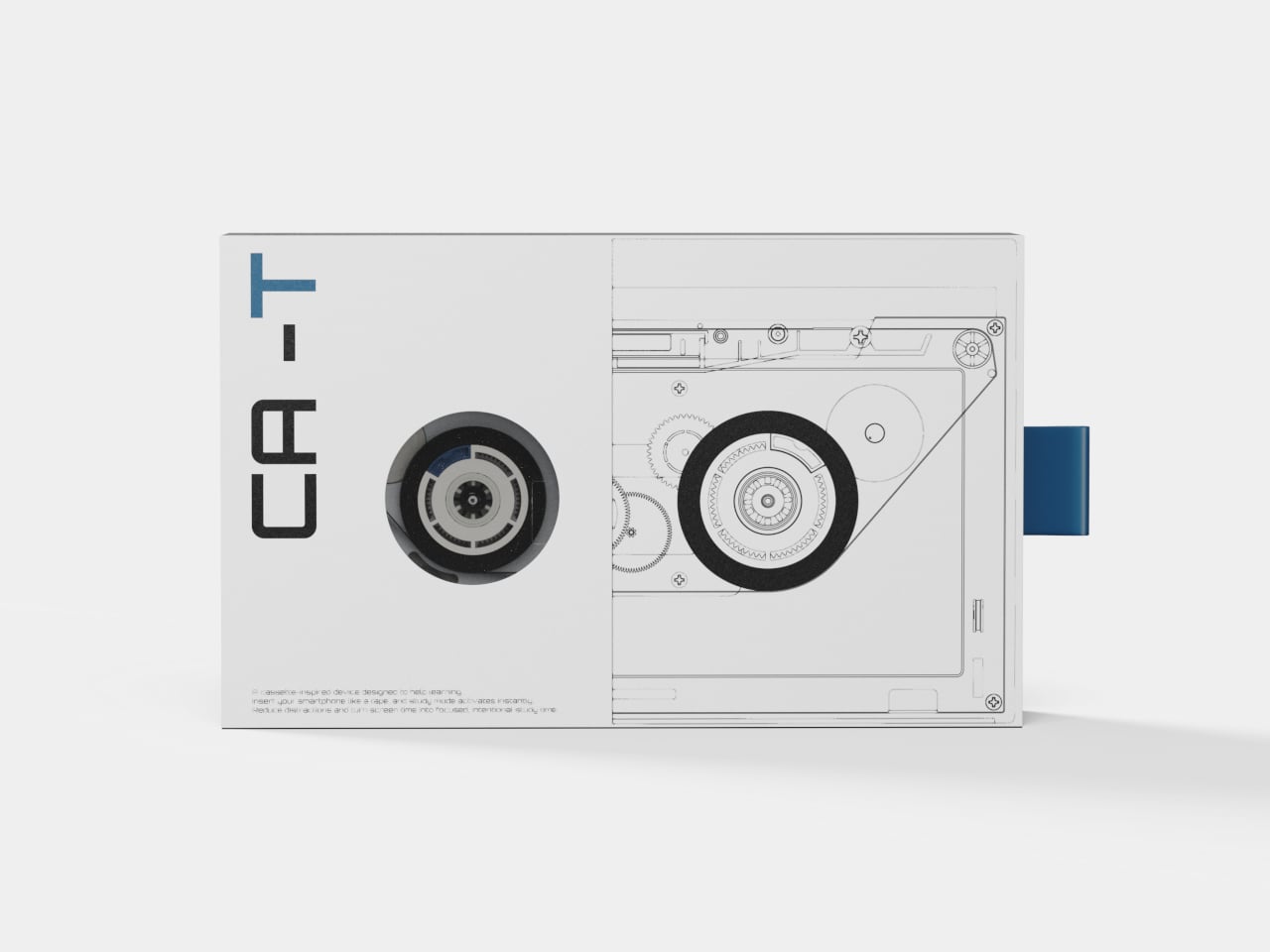
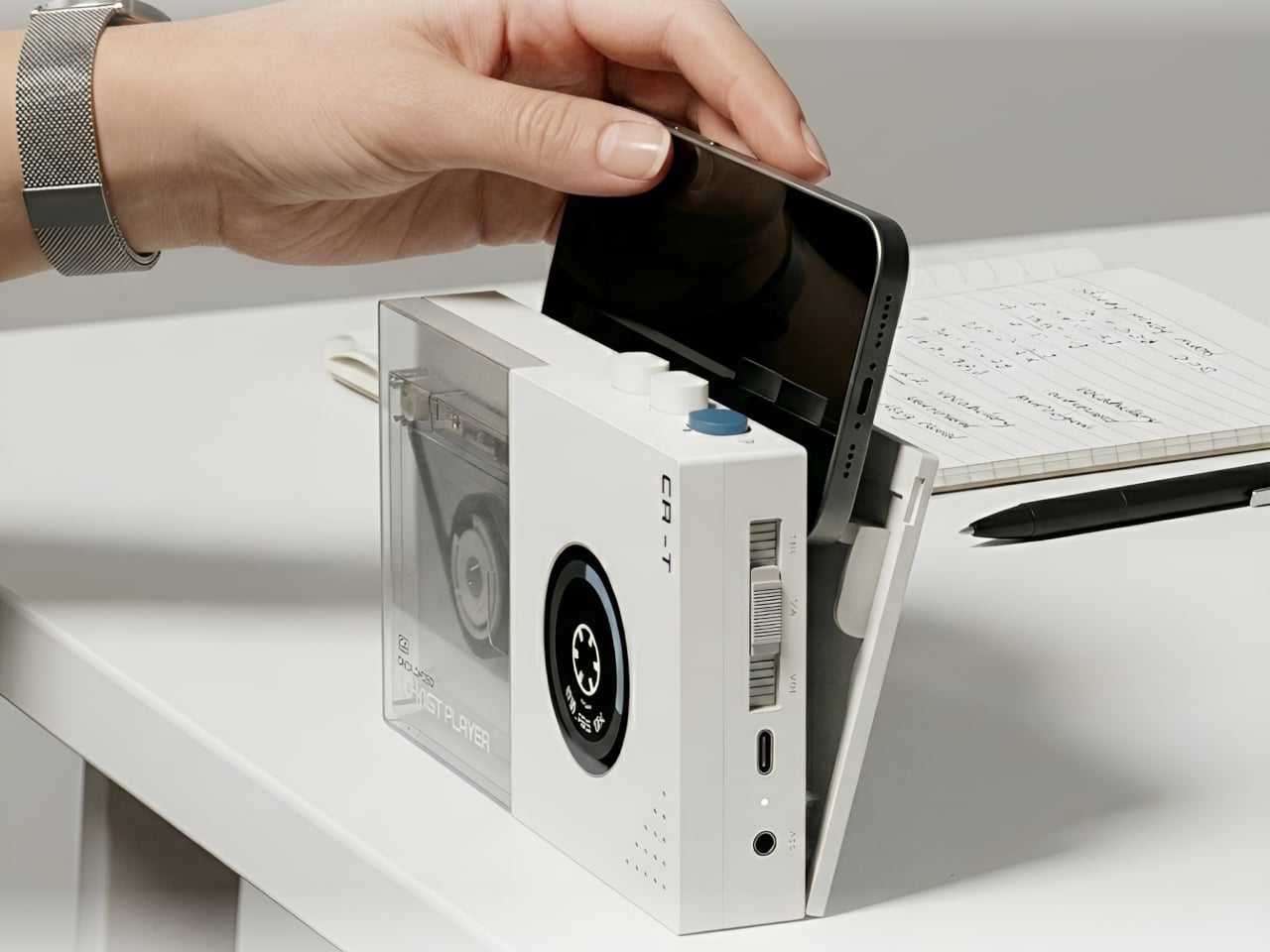
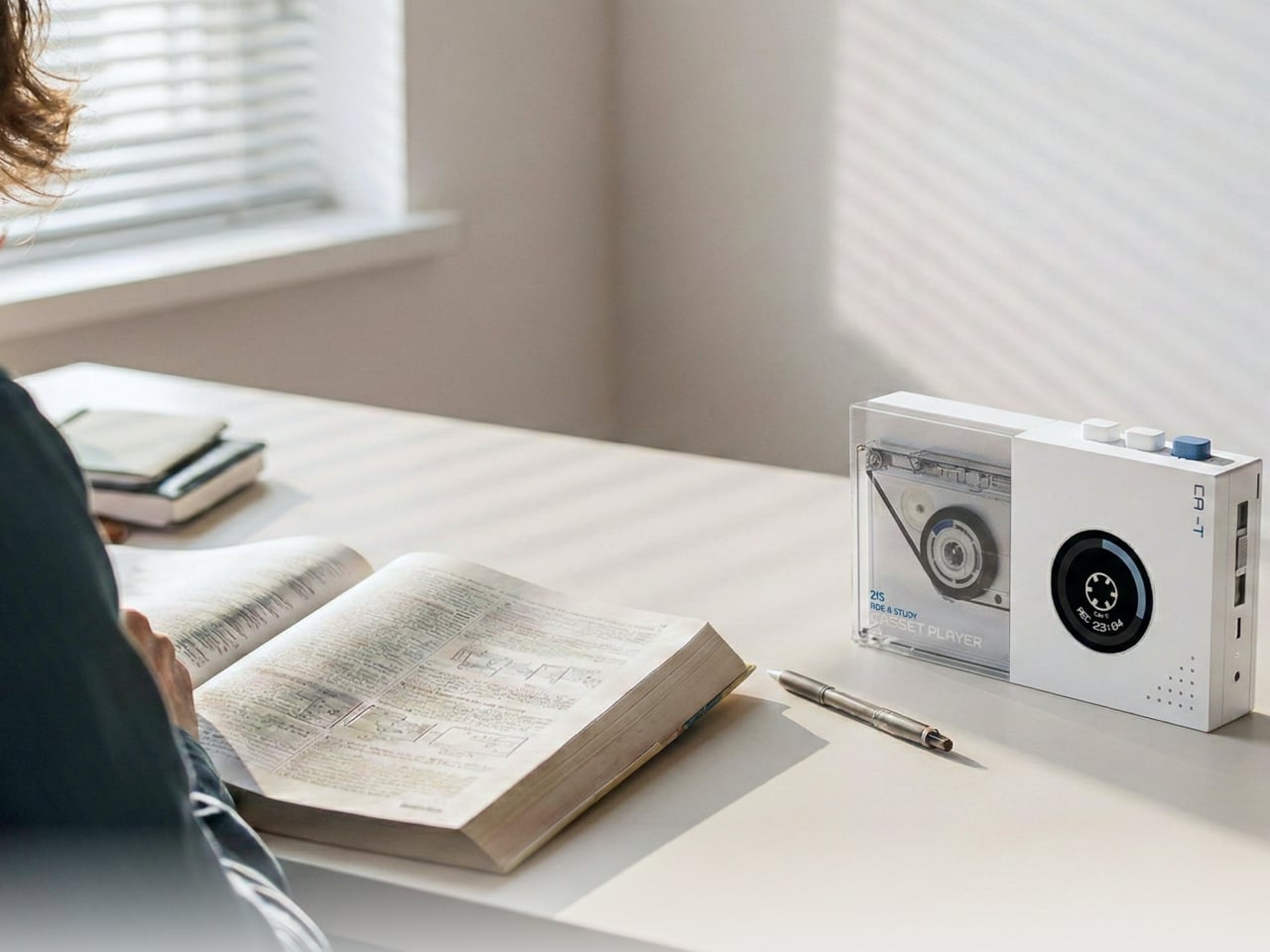
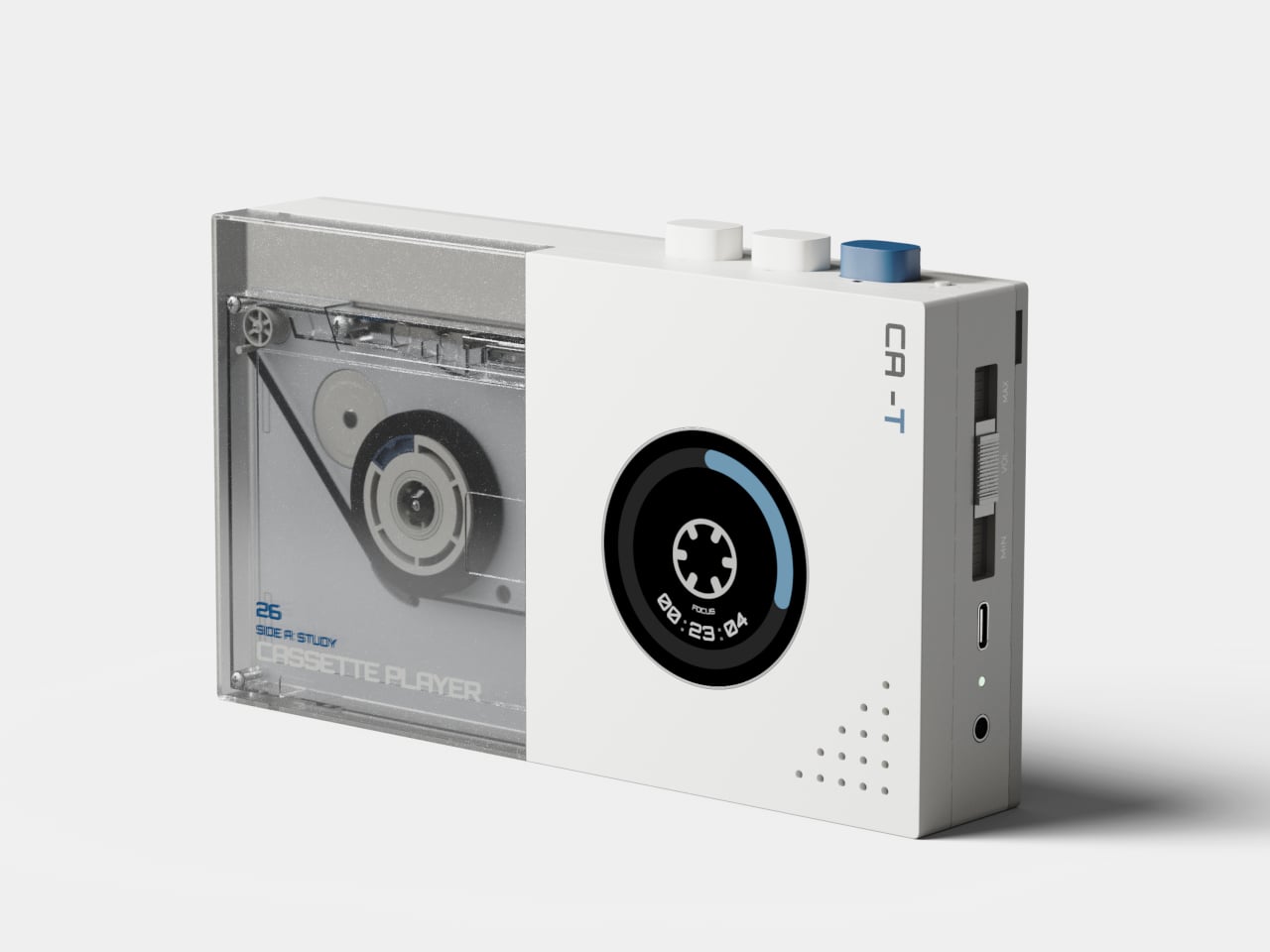
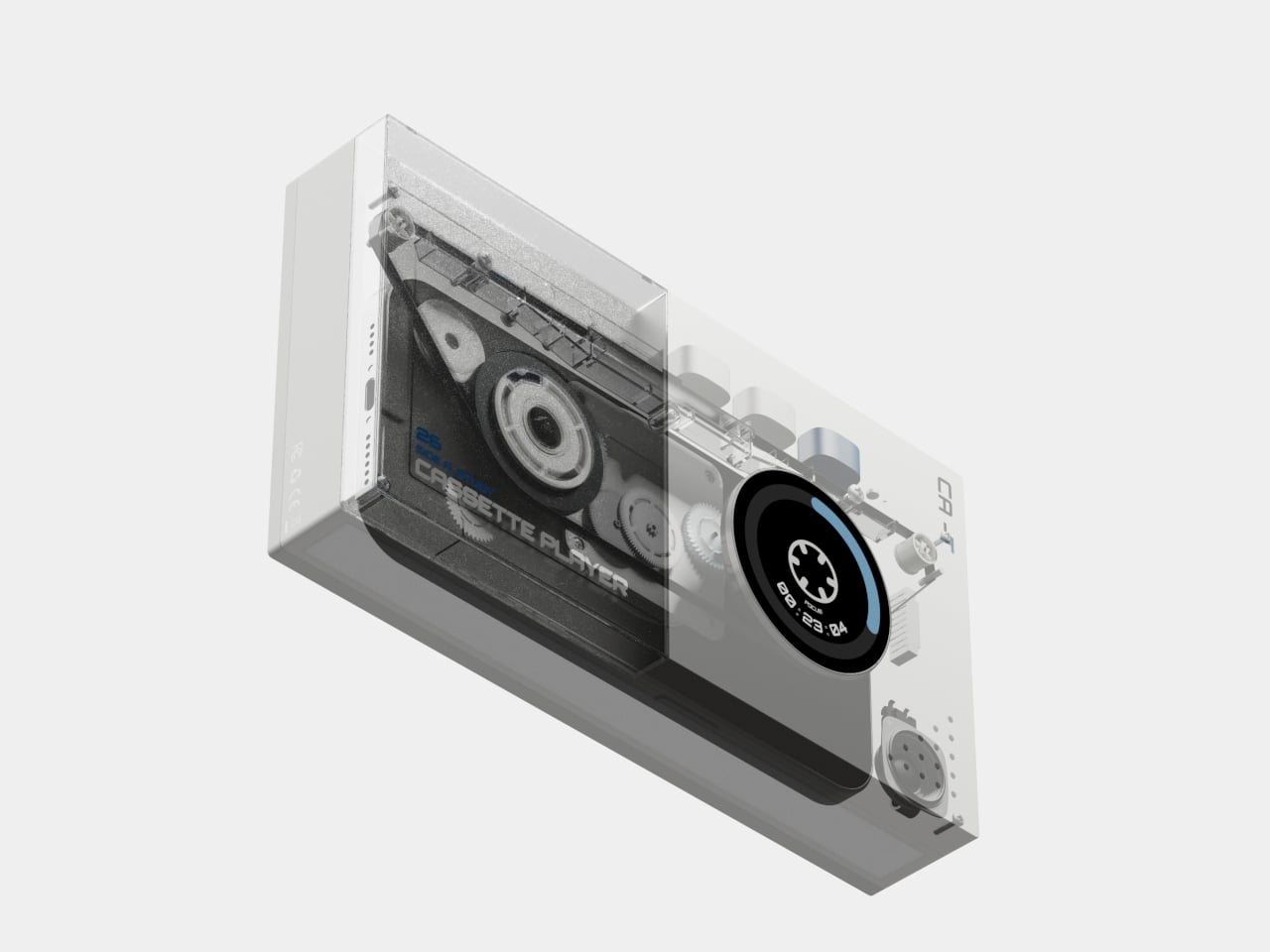
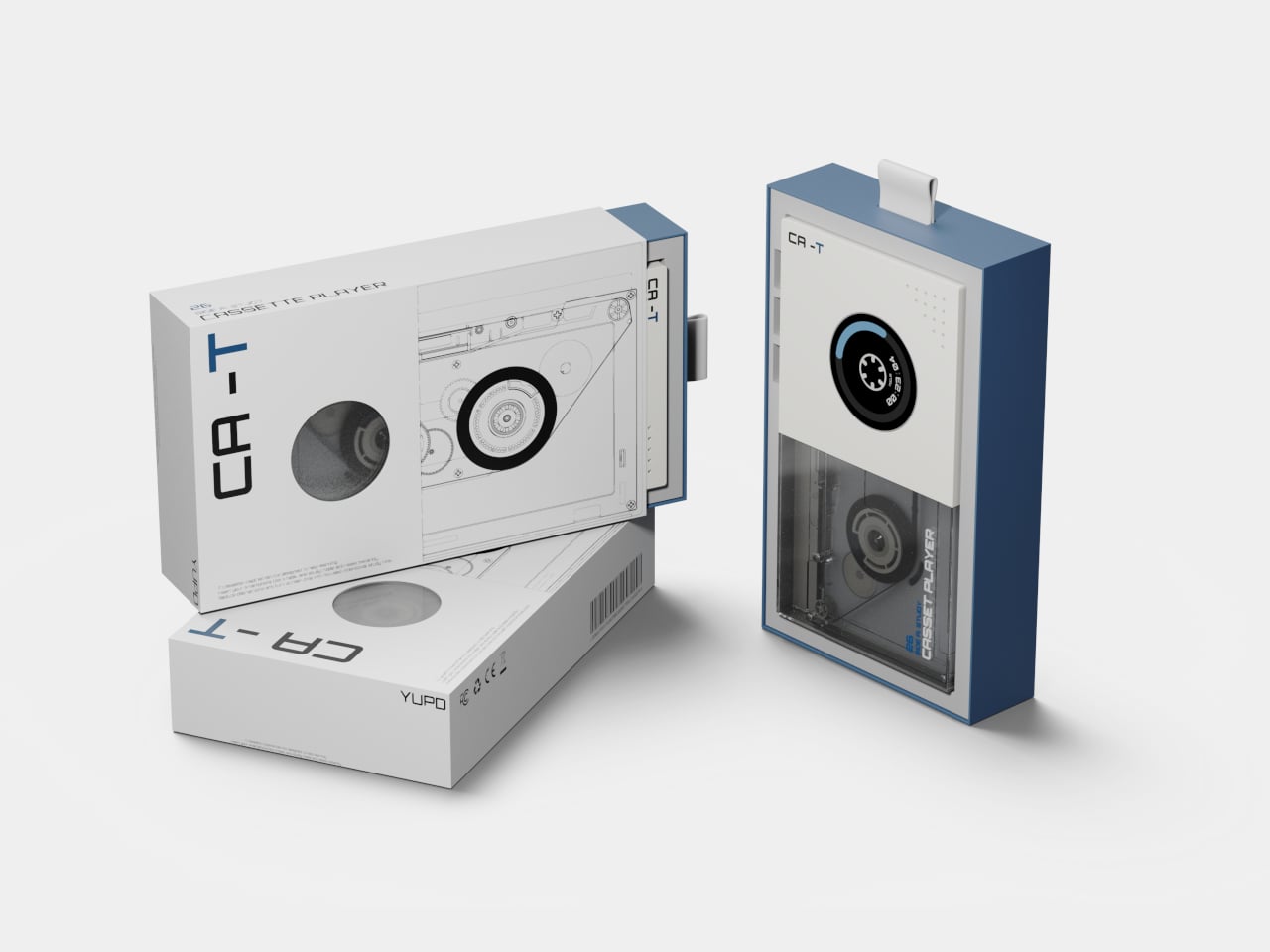
Taking inspiration from an age before smartphones, the CA-T is a compact desktop device shaped like a cassette player. Your smartphone is the tape. Slot it into the bay on top of the device, and the study session starts. The concept’s own framing is direct about this: the mobile phone, once a source of distraction, becomes the condition for activation. The device doesn’t operate at all until the phone is inserted.

Designers: Hyunwoo Jung, Minsu Kang, Yehoon Cho, Yoonchae Kim

Once docked, the phone charges wirelessly while the session runs. The circular display on the front face of the device shows a timer, but with a specific and deliberate framing: it visualizes the accumulation of focus rather than the countdown of remaining time. The reel graphic rotates as the session progresses, showing how much you’ve built up rather than how much you have left. That’s a small but meaningful reframe of what a study timer is supposed to communicate.

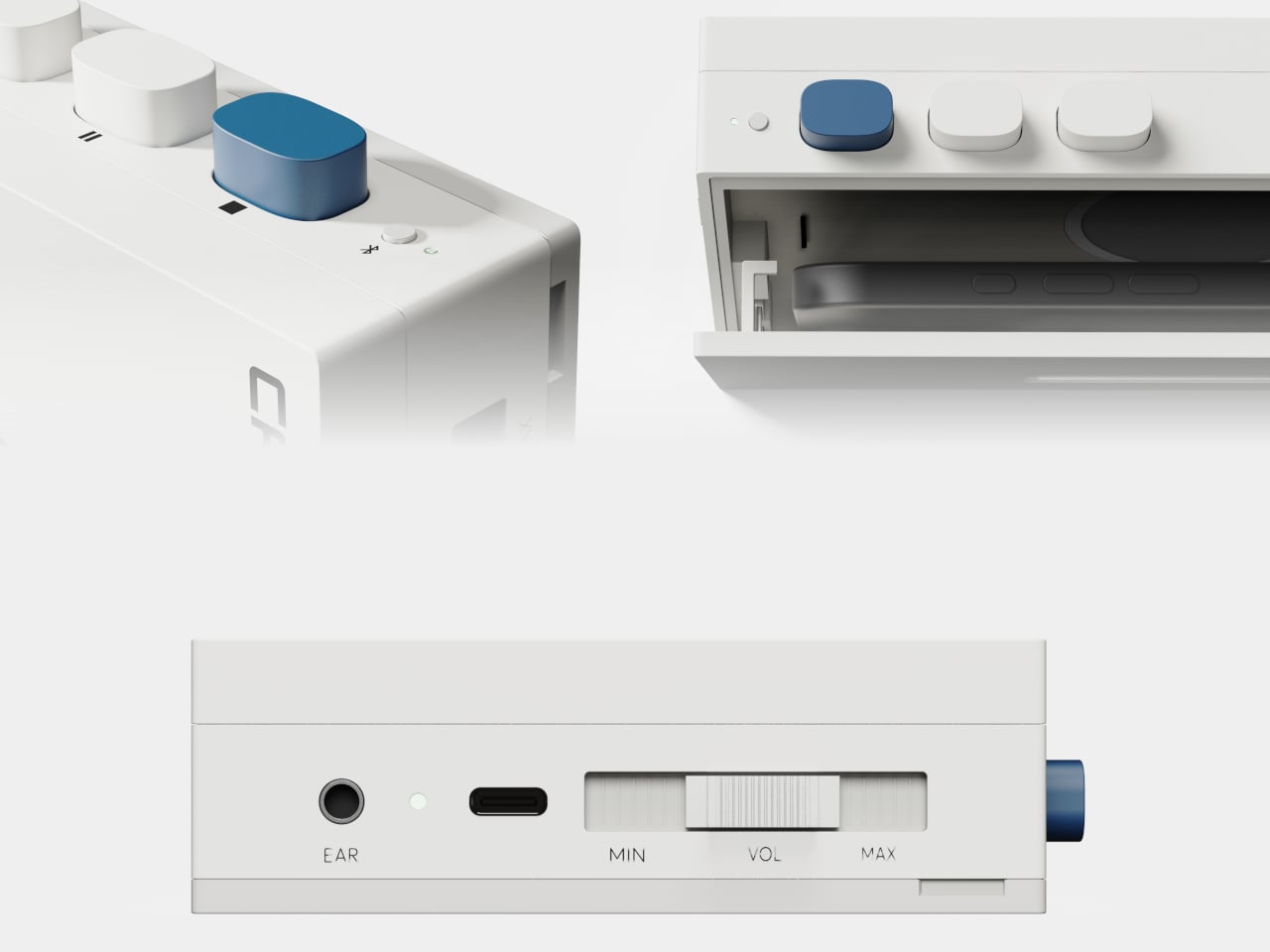
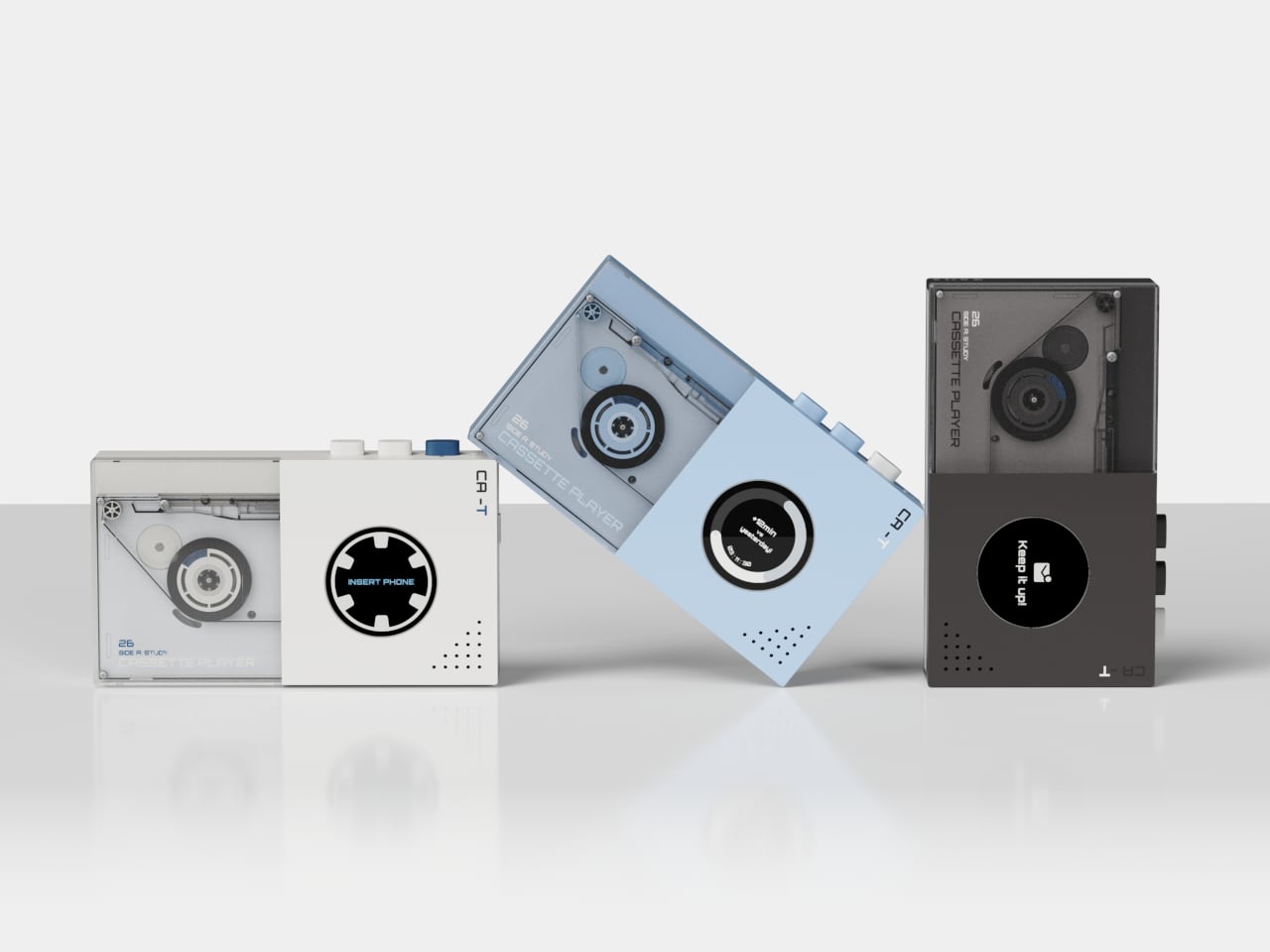
The session moves through four states. Ready prompts the user to insert their phone. Focus runs the timer as the reel turns. Comment delivers brief encouragement during the session, minimal by design, intended not to interrupt but to sustain. Complete shows the accumulated result, offering a record of consistency rather than just a signal that time is up. The physical controls are kept sparse: a prominent blue button on top, two secondary white ones, a volume slider, and a headphone jack along the bottom edge.

The cassette reference earns its place here beyond the obvious nostalgia. A tape only plays when it’s loaded, and loading it is an unambiguous act; there’s no passive way to start. The design applies the same logic to starting a study session, using physical insertion as a commitment mechanism. The design also addresses what it calls “the pressure of having to start,” framing the gesture of inserting the phone as lower-friction than opening an app and navigating past whatever else is waiting on the screen.

CA-T is a concept, with no announced production timeline or pricing. What it puts on the table is a specific question: does the ritual of physically committing your phone to a device change your relationship to the session that follows? The wireless charging detail suggests the designers thought carefully about removing objections. You won’t need your phone back because it’s running out of battery. You’ll need it back because you chose to reach for it.

The post CA-T Traps Your Phone Like a Cassette Tape So You Can Actually Focus first appeared on Yanko Design.

The AI Doc explores how we can survive an uncertain AI future 

Anxiety, more so than technological rigor, sits at the heart of The AI Doc: Or How I Became an Apocaloptimist. Director Daniel Roher is anxious about the future he's bringing a child into — will it be an AI-driven utopia? Or does it spell certain doom, something explored in countless sci-fi stories. To figure it all out, he interviewed some of the most well known AI proponents and critics, including The Empire of AI author Karen Hao, AI researcher Emily Bender and Anthropic CEO Dario Amodei.  

The AI Doc, which hits theaters this weekend, doesn't really shed new light. For that, I'd recommend reading Hao's industry-defining book, which chronicles the rise of OpenAI and the precarious nature of its business. But I don't think tech-heads are the main audience for this film. Instead, Roher is trying to break down the state of AI for mainstream audiences, the folks who may occasionally use ChatGPT or Google's Gemini, but aren't aware of why they're controversial. In particular, the film exposes the near-religious devotion many in the tech world have around AI. 

It's not a spoiler to say that Roher ultimately adopts an "apocaloptimist" viewpoint. He's aware of the potential dangers of AI, and that it will likely have some serious societal impact. But, he also thinks humans have the ability to shape where it's headed. AI proponents have a near-religious belief in the eventuality of artificial general intelligence (AGI), or AI that can match and surpass human capabilities. But AGI isn’t inevitable, and Roher argues there’s room for critics and the public to push back. 

We’re seeing small examples of AI resistance already. Just look at the viscerally negative response to NVIDIA's DLSS 5 AI upscaling; Microsoft's recent plans to pull back on Copilot AI features in Windows 11; or OpenAI shutting down its Sora AI video generation app. (The latter may be due to the sheer expense, but Sora has certainly seen plenty of criticism.) If enough people say no to various implementations of AI, tech companies will be likely to respond.

Daniel Roher in The AI Doc.
Focus Features

The AI Doc splits its narrative between true believers — like OpenAI CEO Sam Altman and Anthropic CEO Dario Amodei — and prominent AI critics — like Tristan Harris, the co-founder and president of the Center of Humane Technology, as well as linguistics professor Emily M. Bender. It's easy to feel a bit of whiplash when the film moves from people who genuinely think AI will lead to some sort of utopia (and who will also become insanely rich in the process), and the extreme critics who think it will mean the end of humanity. At one point, Harris mentions that some of his friends working in AI risk assessment believe that their kids "won't see high school." There's that anxiety again. 

While The AI Doc squeezes an impressive amount of notable interviews in its hour-and-43-minute runtime, I would have liked to hear more from critics like Timnit Gebru, a former Google AI researcher who also ties the development of AI into a rise of "techno-fascism" in Silicon Valley. She appears briefly in the film, but her perspective isn't fully fleshed out. The AI Doc doesn't dig very deeply into the driving forces behind AI, whereas Ghost in the Machine, this year's other major AI documentary, draws a direct line between the rise of eugenics and Silicon Valley. (Ghost in the Machine is headed to theaters this summer, and will air on PBS in the fall.) 

It's the sort of energetic, animation-heavy documentary that wants to make sure the audience is never bored. But the threat of AI deserves more nuance and critical scrutiny. At worst, The AI Doc may make more people question the value of AI as the tech industry becomes more desperate to make it a success.

This article originally appeared on Engadget at https://www.engadget.com/entertainment/tv-movies/the-ai-doc-explores-how-we-can-survive-an-uncertain-ai-future-154341735.html?src=rss
Soft Means Spoiled, and That’s Actually Brilliant

Most kitchen appliances are desperate for your attention. They beep, flash, and send you notifications just to remind you that they exist. Dolce, a conceptual refrigerator handle designed by Zhujun Pang, goes in the opposite direction entirely, and that restraint is exactly what makes it so interesting.

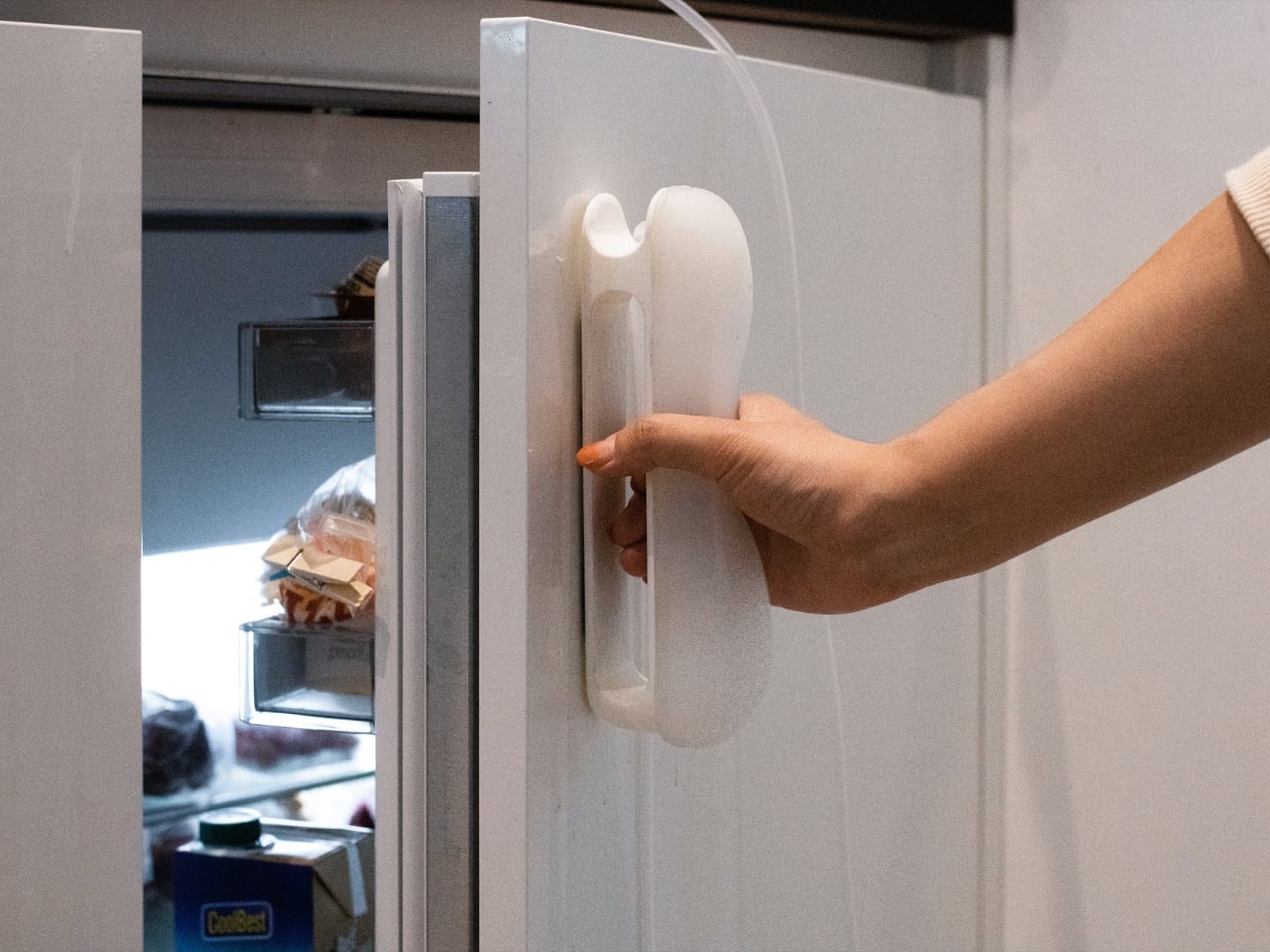
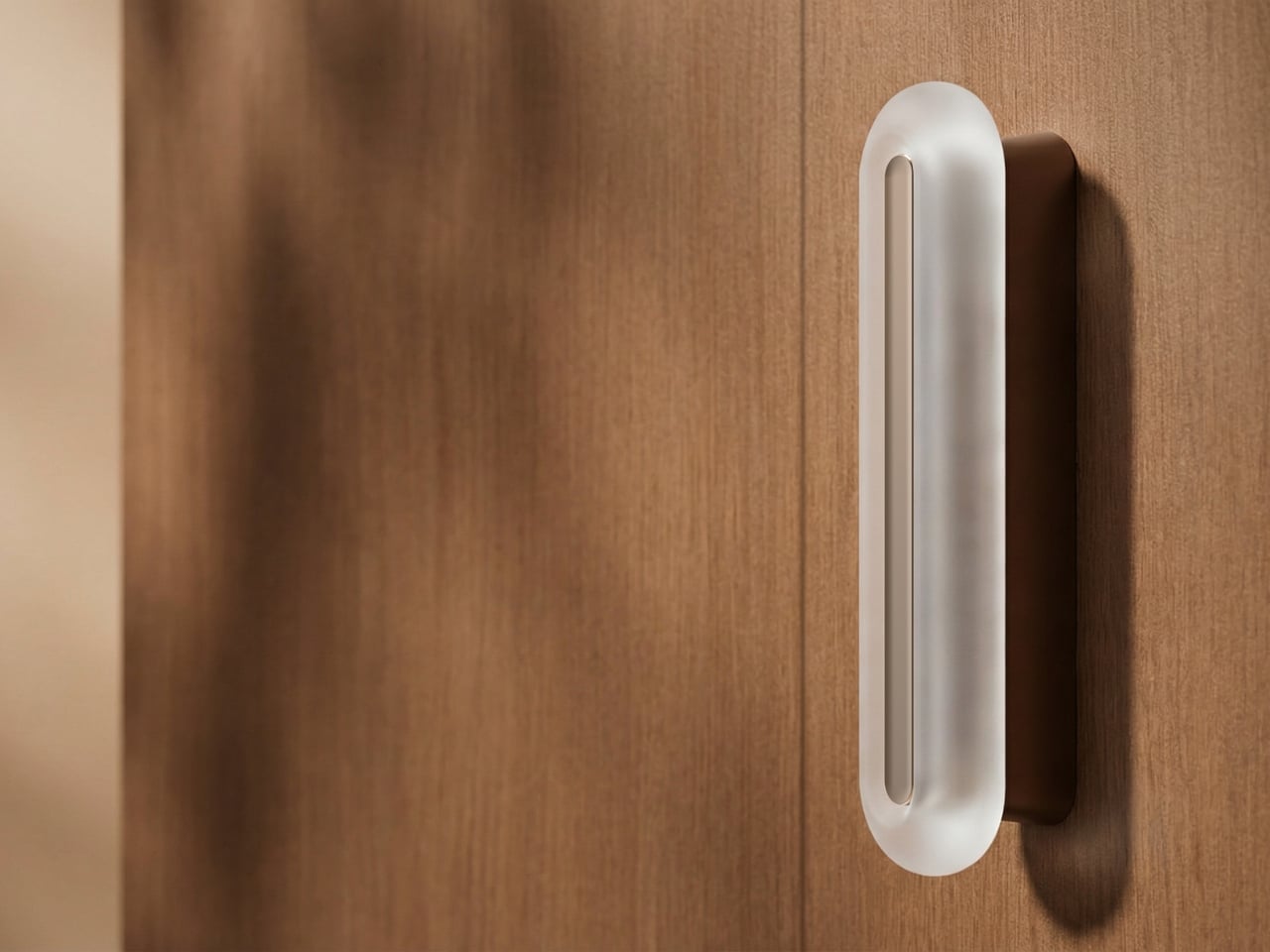
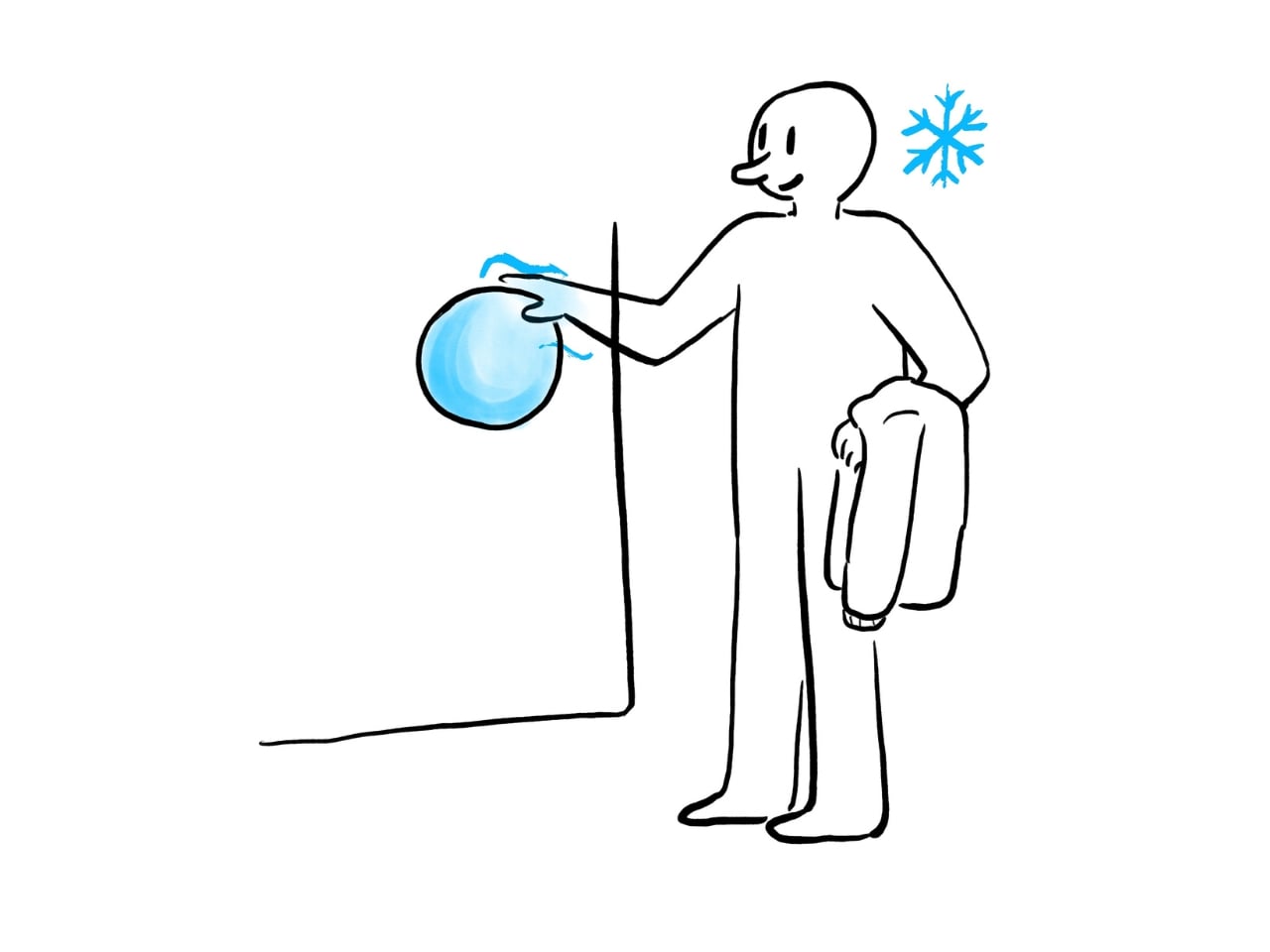
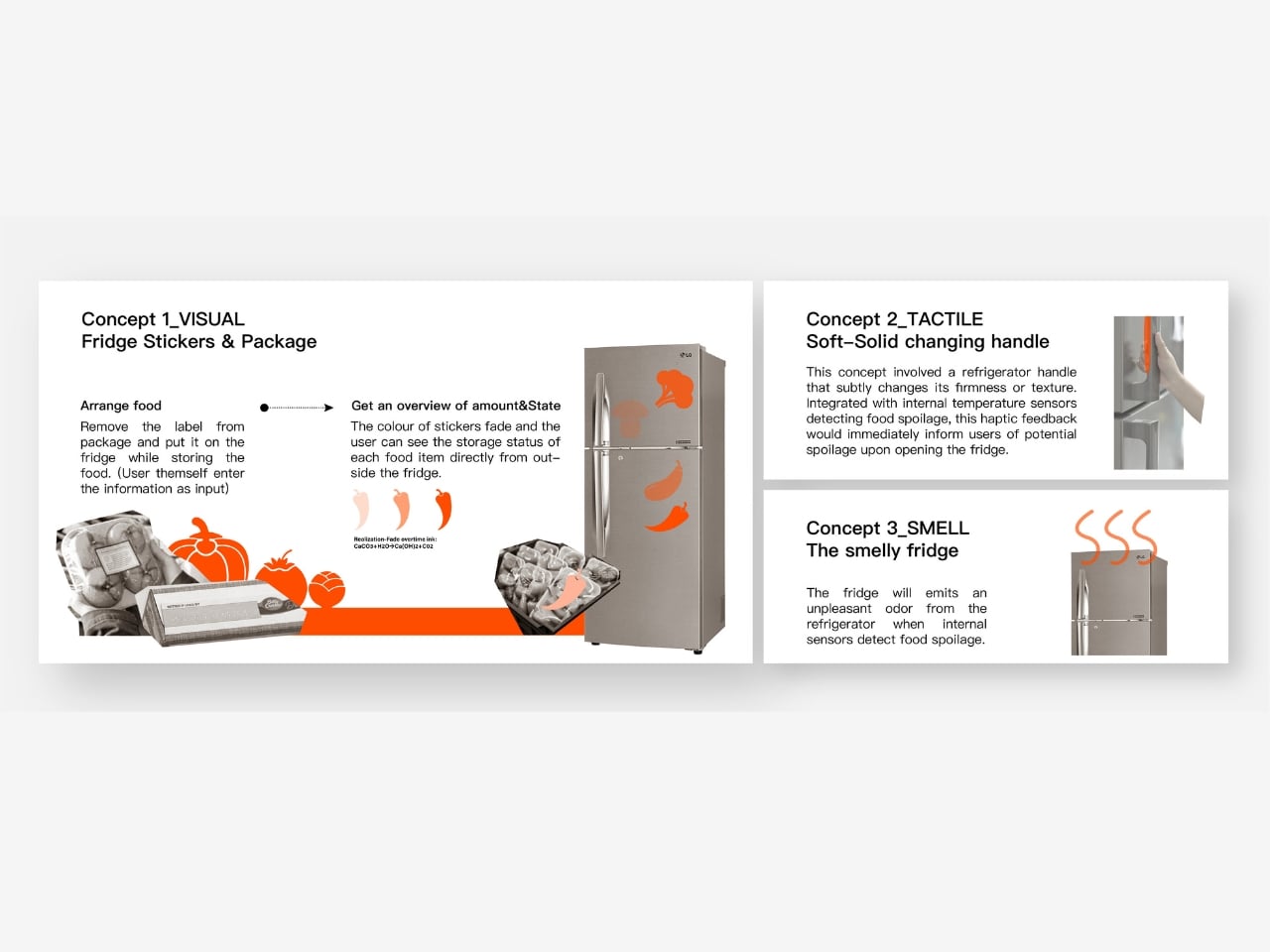
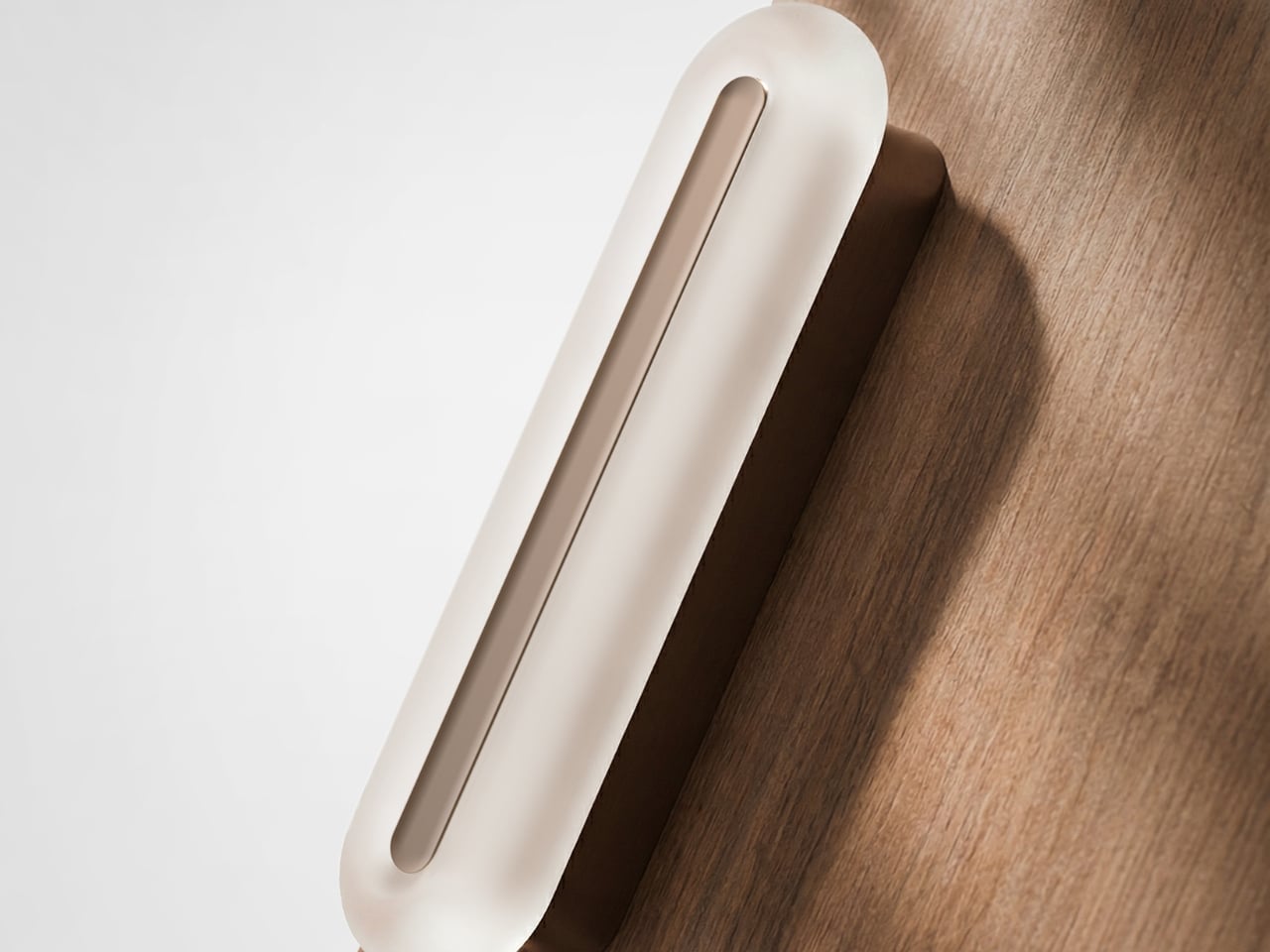
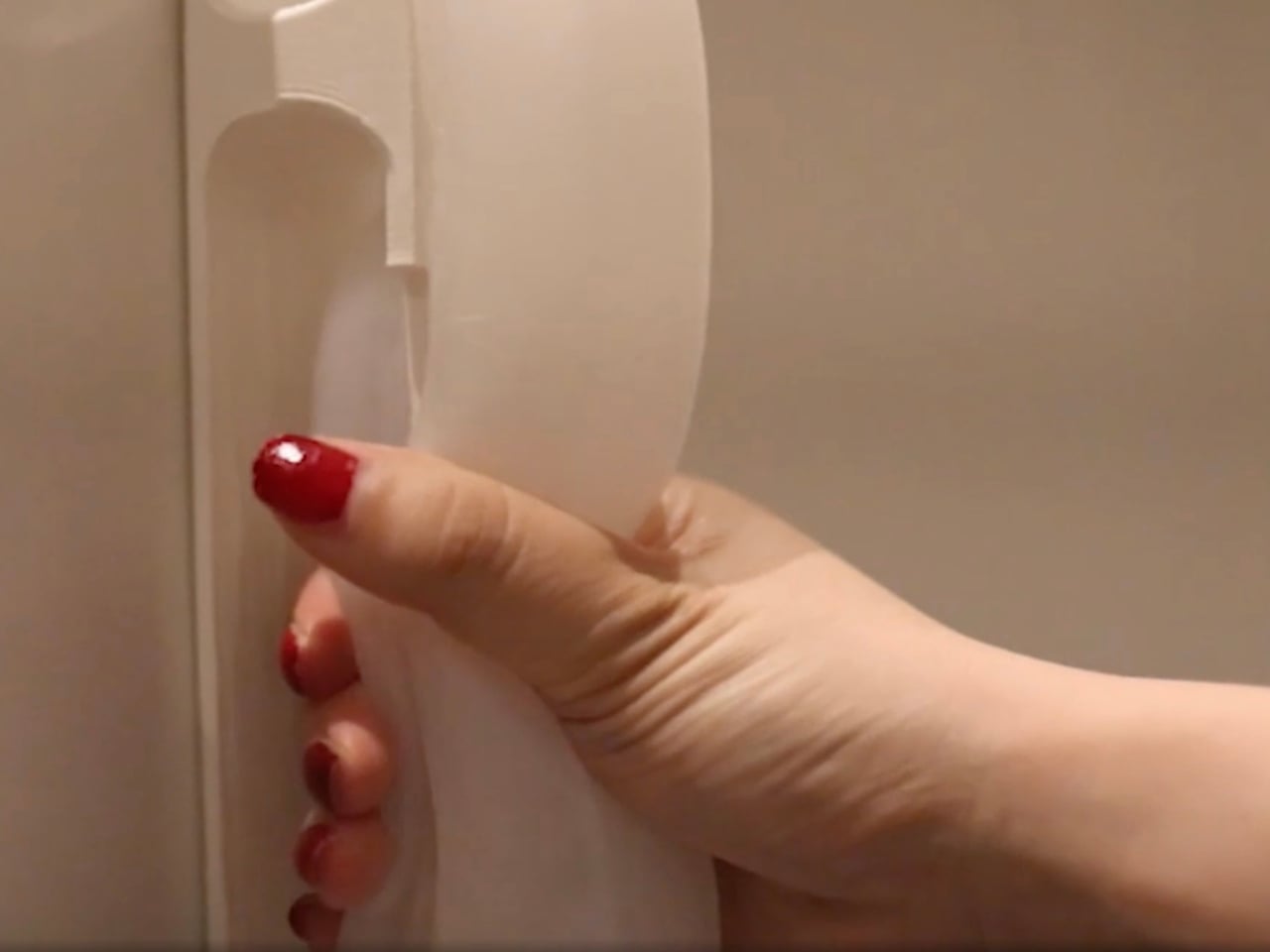
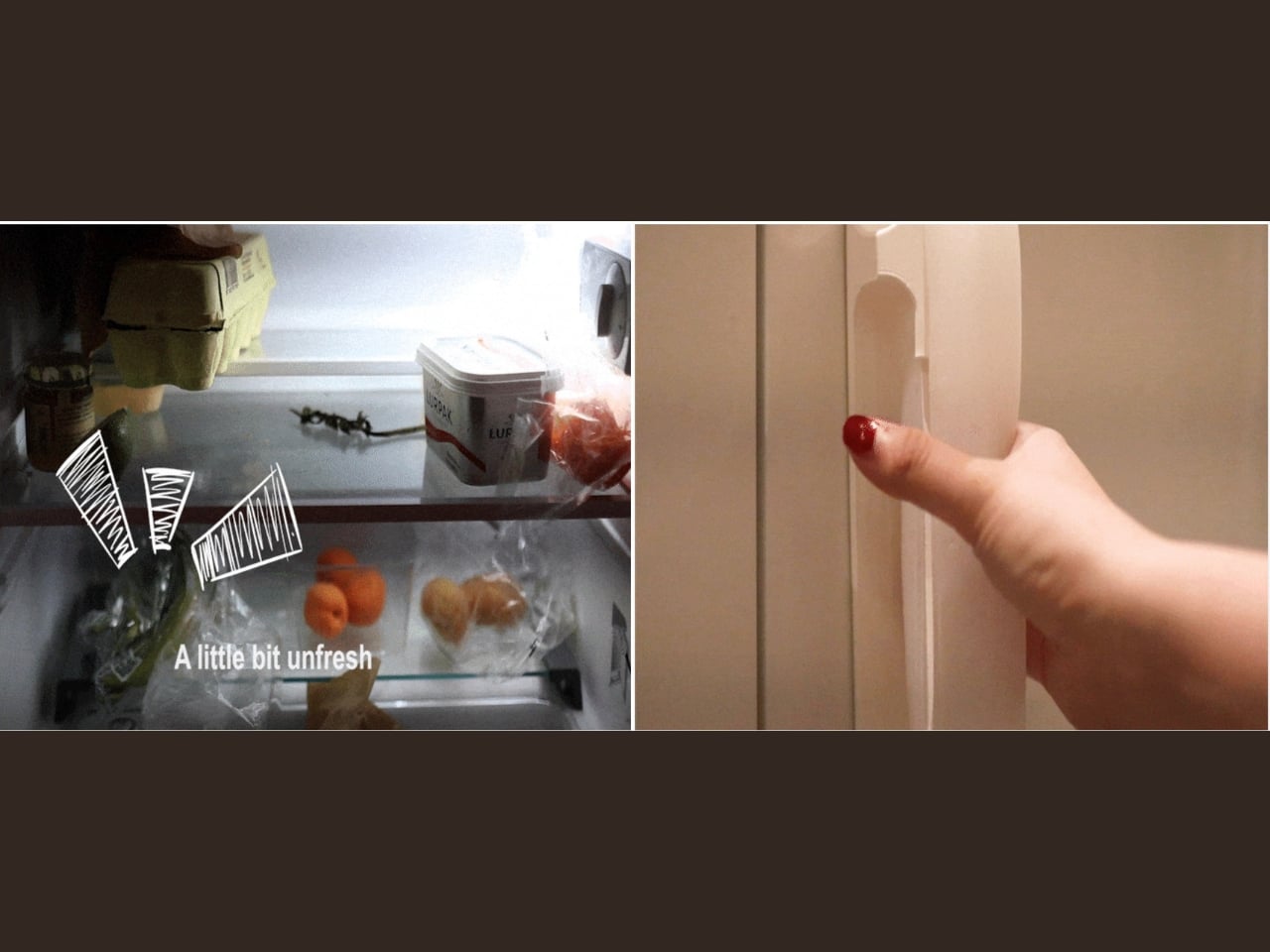
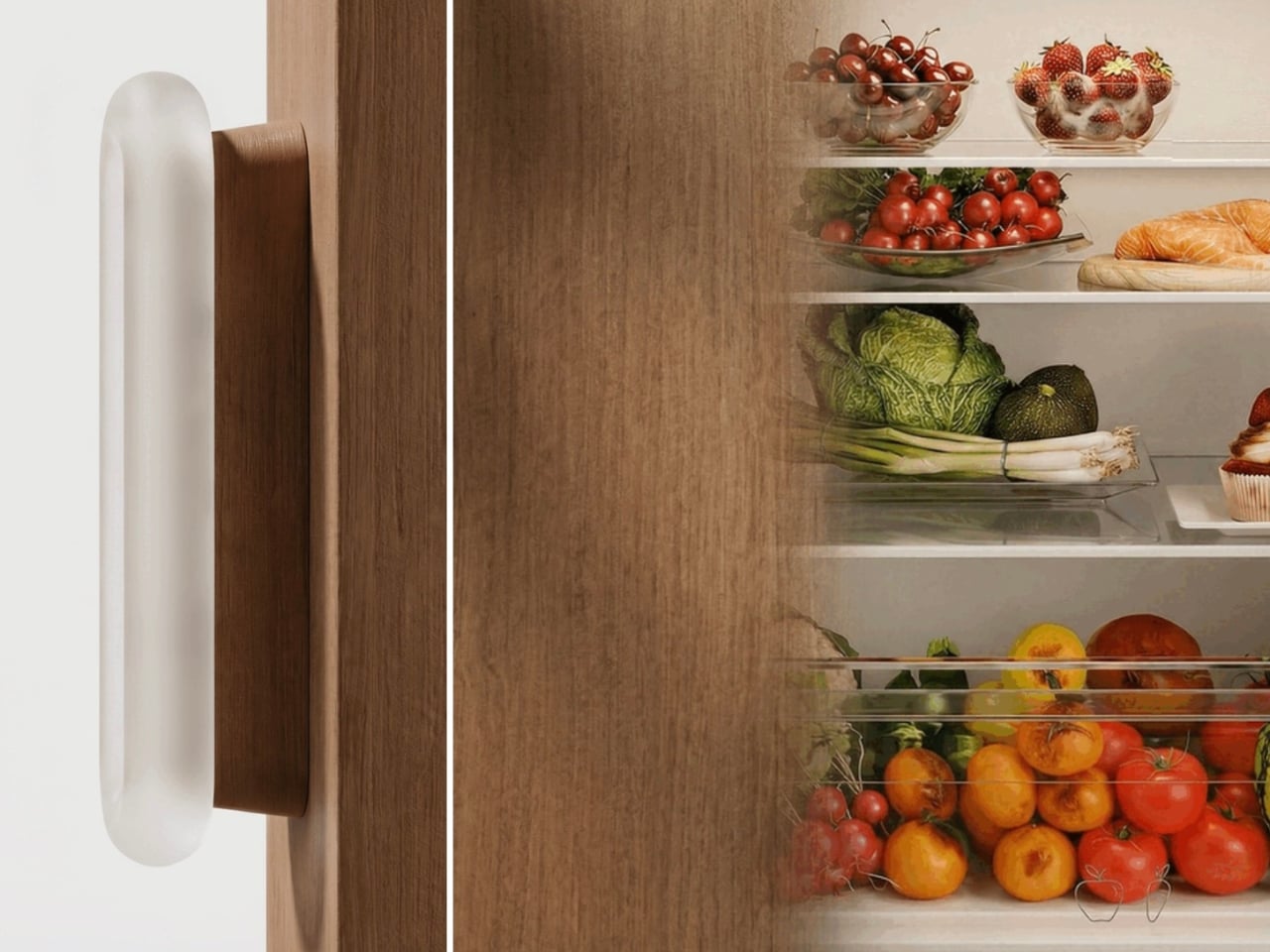
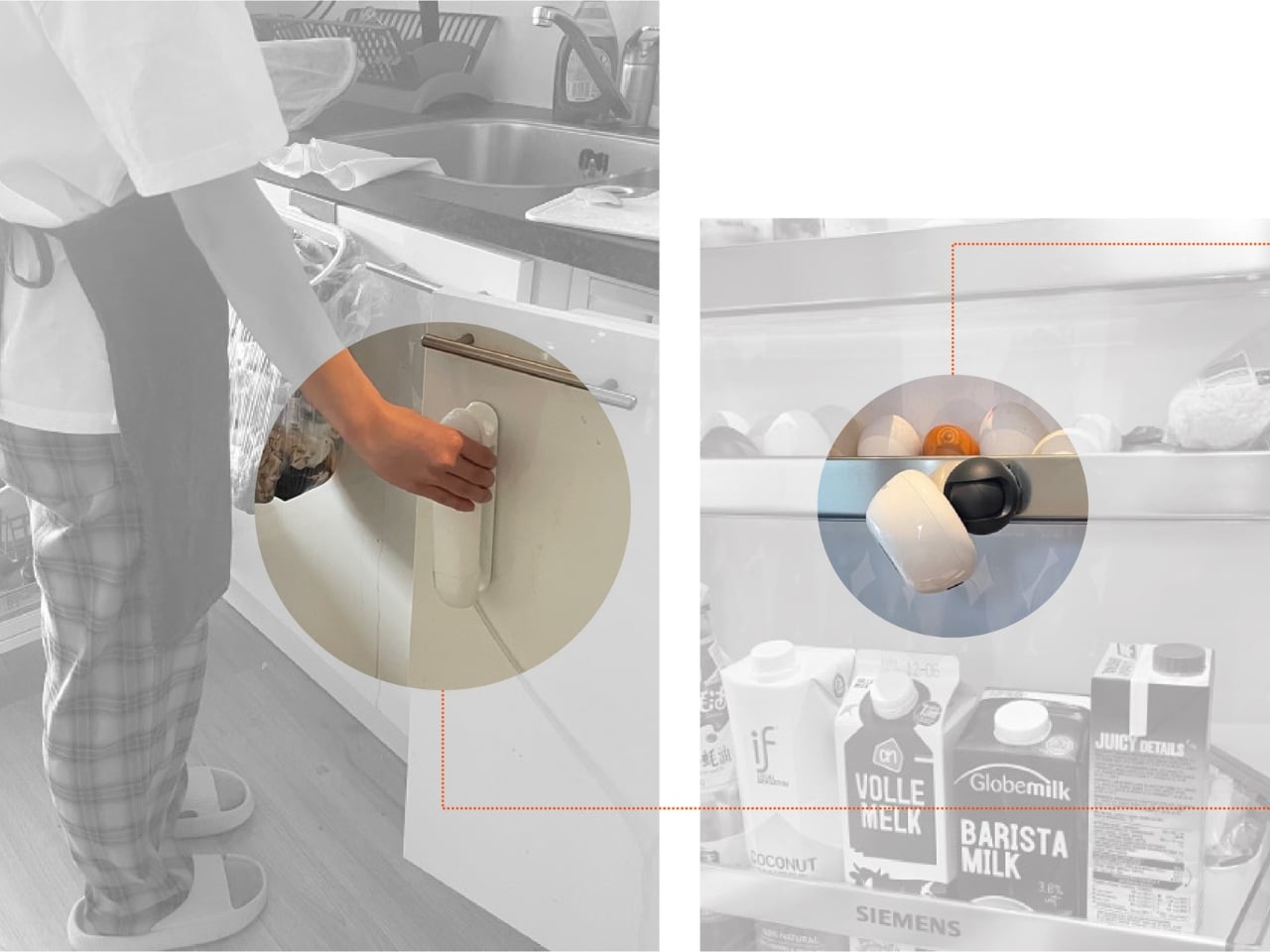
The premise is deceptively simple. The handle, made of frosted silicone with a clean, pill-shaped profile, changes its physical firmness based on the freshness of the food stored inside the refrigerator. When everything’s fine in there, the handle feels firm to the touch. When something is going bad, it softens. No beep. No notification. No app to check. You just reach for the fridge and the handle tells you what you need to know before you’ve even opened the door.

Designer: Zhujun Pang

The metaphor doing the heavy lifting here is the banana. Firm when fresh, soft when it’s past its prime. It’s one of those pieces of embodied knowledge so universal it barely registers as knowledge at all. Pang took that intuition and designed around it, which is the kind of thinking that tends to produce the best objects: not inventing a new language for a user to learn, but borrowing one they already speak fluently.

Aesthetically, Dolce is striking in a way that sneaks up on you. The handle has a warmth and softness even in its “firm” state, that frosted translucency sitting beautifully against the warm wood grain of a cabinet door. It looks almost like a piece of cast glass or a studio ceramics piece. It doesn’t scream “smart home gadget,” and that’s a huge point in its favor. A lot of connected objects fail because they look like what they are: gadgets strapped onto otherwise elegant things. Dolce looks like it belongs.

What Pang identified at the core of this problem is quietly profound. The refrigerator is, in a sense, a box that separates us from our food. You can’t smell your leftovers through the door. You can’t see whether that cucumber at the back is starting to go. The fridge solves the preservation problem but creates an information problem in the process. Dolce’s answer isn’t to add a screen or a camera interface or a connected app. It’s to restore something tactile and immediate at the one point of contact you already have with the appliance every single day.

It’s also worth noting that the handle looks exactly like what a modern refrigerator handle should look like right now. That matters more than it might seem. Design that carries function without calling attention to its function has a longer life. Trends come and go, but an object that is quietly beautiful tends to stay relevant. Dolce is the kind of piece that could sit in a design museum or in an IKEA kitchen and feel at home in either setting.

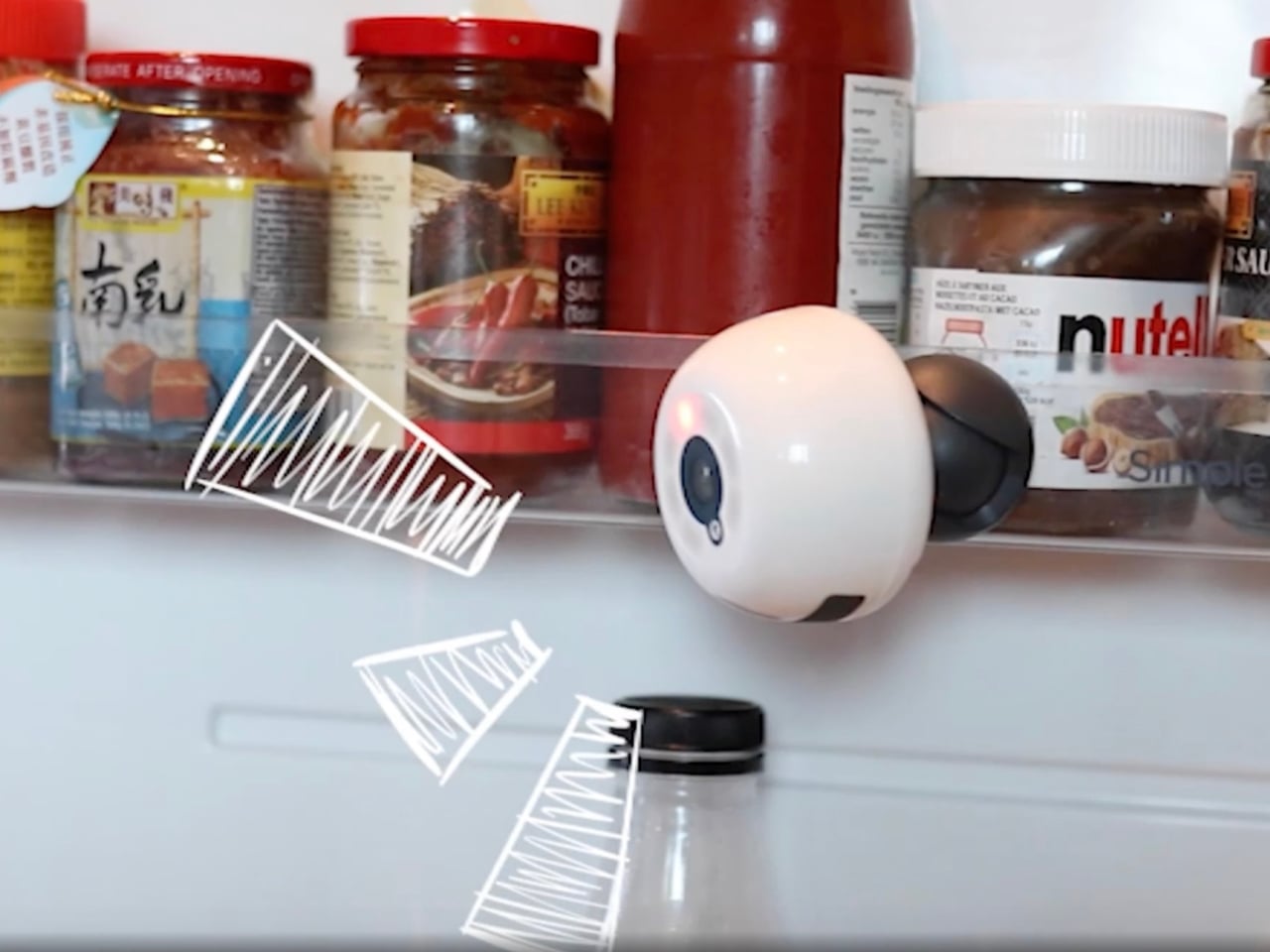
The technology underneath is also worth a moment of appreciation, even if we’re not deep-diving into the engineering. Internal sensors read the fridge’s environment, an onboard microcontroller processes that data, and a small air pump inflates or deflates a silicone bladder inside the handle. The firmness you feel when you grab it is literally driven by air pressure responding to actual conditions inside the fridge. That the end result of all that is just “firm” or “soft” is the whole point. Complex input, simple output. The user carries none of the cognitive load.

It would be easy to dismiss this as a design concept that will never see production, and maybe it won’t. But the thinking it represents is what the appliance industry desperately needs more of. Most smart home products are still asking us to do more, check more, manage more. Dolce asks us to do less. It removes a small decision from your day and delivers the answer at the precise moment you need it, through the sense that requires the least interpretation of all.

The post Soft Means Spoiled, and That’s Actually Brilliant first appeared on Yanko Design.