The 100-Year-Old Light Bulb Design Just Got Its First Real Fix

We have been screwing the same shape of light bulb into our lamps for over a century. Think about that for a second. The smartphone in your pocket has been redesigned thousands of times since it launched. Your running shoes have gone through countless iterations. But the humble light bulb? More or less, the same. Which is exactly why iiode’s Re27 feels so refreshing, and so overdue.

iiode is a Swiss studio that specializes in sustainable electronics, and the Re27 is their first product. It’s a retrofit E27 LED bulb, meaning it fits into the same socket your current bulb uses right now. But the similarities to your average LED stop there pretty quickly.

Designer: iiode
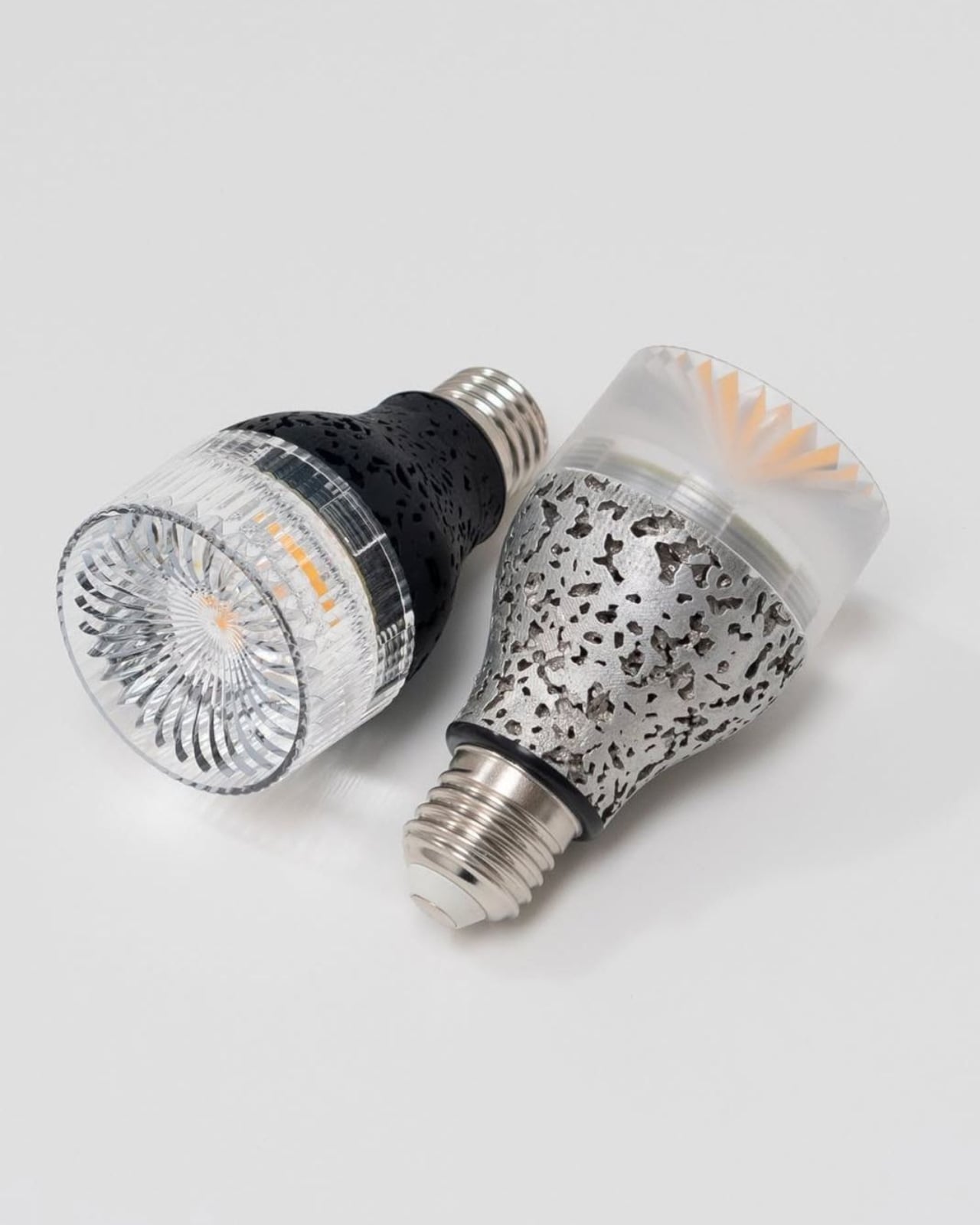
The Re27 is built around an idea that the lighting industry has, for the most part, chosen to ignore: that a light bulb should be something you repair, not just replace. The bulb is modular, with clip-in components that can be swapped out when one part fails. You don’t have to toss the whole thing. You don’t have to buy a new one if one section gives out. The design actually encourages you to keep it going, which is a genuinely rare thing in consumer electronics of any kind.

The body is die-cast aluminum, and not the smooth, polished kind you might expect. The porosity of the casting creates a natural texture that helps dissipate heat while also giving the bulb a physical presence that’s hard to describe without actually seeing it. Domus called it a texture that “overturns expectations regarding the materiality and aesthetic presence of this everyday object,” and I think that’s a fair read. It’s a bulb you actually want to look at, which sounds like a strange thing to say about something that usually lives inside a shade.

Almost all of the materials are recycled, and the whole thing is assembled in Switzerland using mostly EU-made parts. For anyone who has started paying attention to where their products actually come from, that matters. The Re27 doesn’t just gesture at sustainability the way so many products do now, folding it into their marketing as an afterthought. It builds it into the structure of the object itself.

The light quality is where iiode earns serious points. The Re27 delivers a high CRI output, which means colours under its light look the way they’re supposed to, the way they’d look in natural daylight. It’s flicker-free, which is one of those things you don’t notice until you’ve been sitting under bad lighting for three hours and your eyes are tired for no apparent reason. The colour temperature and intensity are tunable, and the smart control is integrated directly into the bulb, so you don’t need a separate hub or app ecosystem to make it work.
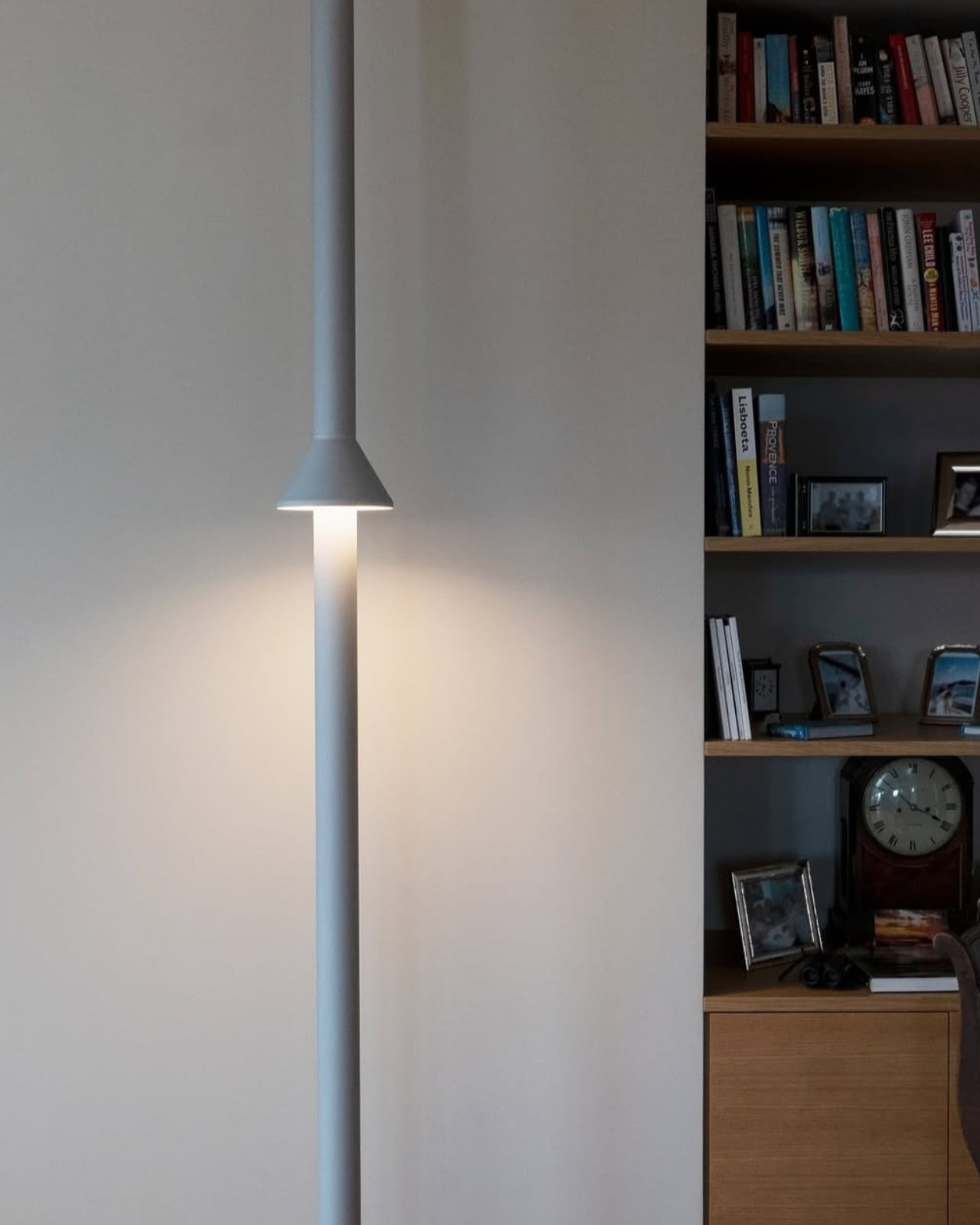
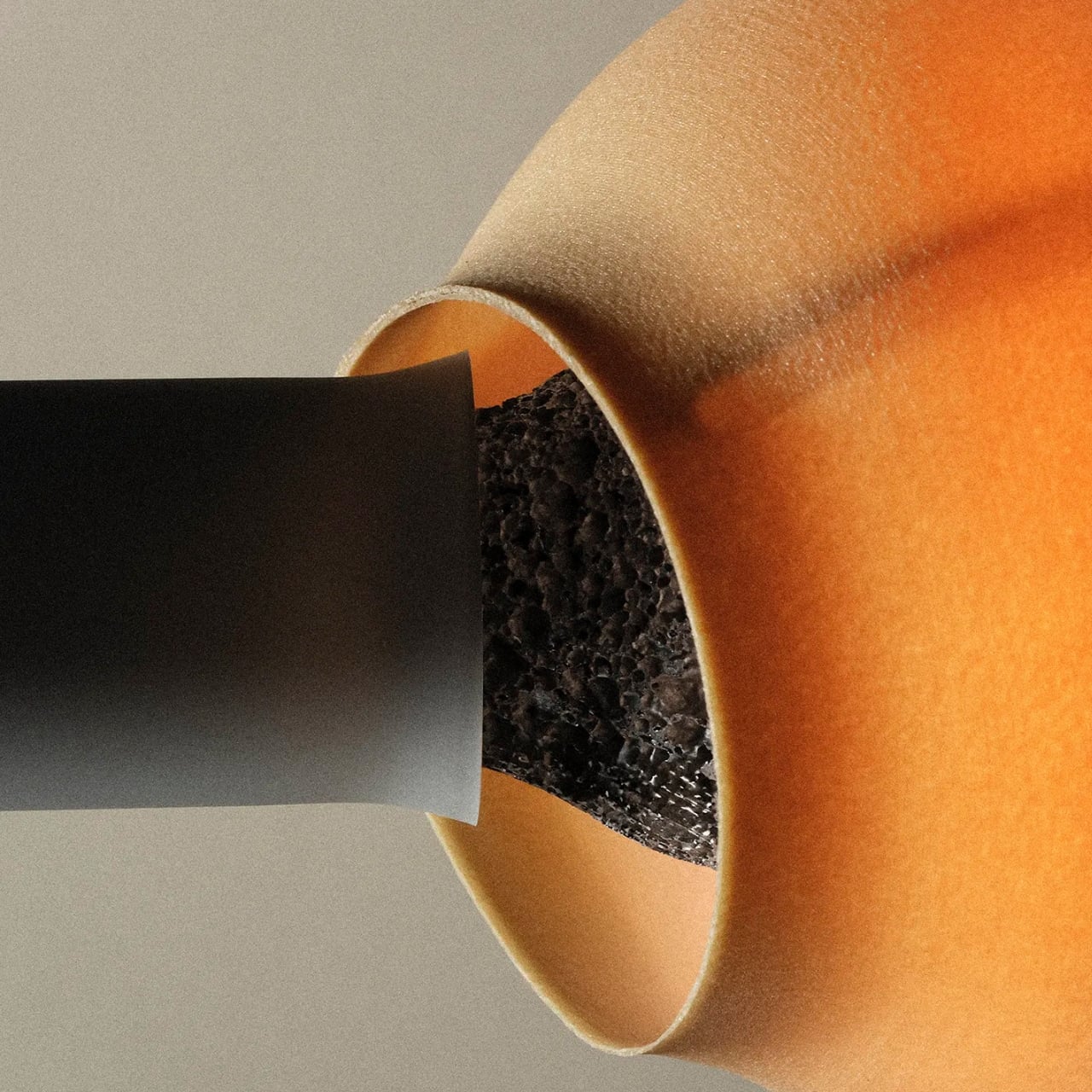
To celebrate the launch, iiode invited eight design studios to create lampshades specifically for the Re27. It’s the kind of move that tells you a lot about how a brand sees its own product. They’re not treating it as a commodity. They’re treating it as an object worth designing around, worth collaborating over, worth dressing up. That creative confidence comes through in every aspect of what they’ve built.

The Re27 is currently available for pre-order, and iiode is presenting it during Milan Design Week 2026 as part of the House of Switzerland Milano showcase. Seeing it make its way into that conversation, alongside furniture, installations, and collectible pieces, makes complete sense. The Re27 belongs there not because it’s trying to be art, but because it’s genuinely well-considered design applied to something we use every single day.
Lighting is one of those things most of us don’t think about until it’s wrong. The Re27 is a bulb made by people who clearly think about it all the time, and the result is something that makes you want to pay attention too. Sometimes the most interesting design isn’t the flashiest object in the room. Sometimes it’s just the light that makes the room worth being in.


The post The 100-Year-Old Light Bulb Design Just Got Its First Real Fix first appeared on Yanko Design.

Microsoft’s new college deal is a half-hearted answer to the $500 MacBook Neo

Apple's MacBook Neo is a $600 (or $500 for students) shot across the bow at affordable Windows laptops, and it seems like Microsoft has ready its first response. The newly announced "Microsoft College Offer" is a bundle of Microsoft 365 Premium, Xbox Game Pass Ultimate, custom Xbox controller and discounted laptop that the company thinks could woo students away from Apple's new deal. 

With the purchase of a discounted machine directly from Microsoft, retailers like Amazon and Best Buy or PC makers like HP, ASUS and Acer, you can get what the company says is an extra $500 of value from its bundle. The laptop deals include a Lenovo IdeaPad Slim 3x with a Snapdragon X chip, 16GB of RAM and 256GB of storage for $500 from Best Buy, around $250 off the laptop's usual $750 price. Or if you wanted something even cheaper, Walmart is selling an HP Omnibook 3 for $429, a discount of $270 off its usual $699 price. Microsoft is less generous with the deals on its own laptops and tablets, but you can even get a discount on a Surface Laptop as part of the offer.

A discounted laptop is great, but where the value of the Microsoft College Offer gets harder to define is with the services the company is packing in. Getting what would normally be a $200 year-long subscription to Microsoft 365 Premium for free is a meaningful deal, but many colleges give their students access to Microsoft's apps (and other software) with the cost of their tuition. A year of Xbox Game Pass Ultimate, which costs $30 per month as of October 2025, sounds like significant savings, but the offer is only valid for new subscribers. That leaves the free custom Xbox controller as the simplest bonus of the bunch, a value of around $76.

Windows PC makers are expected to make more serious attempts to compete with the Neo over the next year. For now, though, the Microsoft College Offer isn't exactly a bad deal, but it's certainly not as straightforwardly appealing as an Apple-quality laptop for $500 with a college discount.

The Microsoft College Offer is available to students starting April 15 and runs through June 30, 2026. Microsoft says redemption of the full bundle of services and accessories it’s offering needs to happen by July 31, 2026.

This article originally appeared on Engadget at https://www.engadget.com/computing/laptops/microsofts-new-college-deal-is-a-half-hearted-answer-to-the-500-macbook-neo-215336362.html?src=rss

De’Longhi Just Turned 5 Coffee Machines Into Tiny Cafés

If you’re a coffee lover, chances are you’re also a fan of going to coffee shops. While most die-hard connoisseurs would probably prefer to make a cup for themselves, apparently 72% of consumers still believe that the best coffee can only be made in a café, by actual experts who trained for it (well, unless you did train as an actual barista and have the complete equipment at home).

De’Longhi wanted to show that you can have café-quality coffee at home, and they did it in the most charming, unexpected way possible: by turning their machines into miniature versions of the world’s most iconic cafés. The campaign is called “The World’s Smallest Coffee Shop,” developed in partnership with creative agency LOLA Madrid and brought to life by master miniaturist Simon Weisse and his collaborator Cindy Schnitter. Weisse is no stranger to creating miniature movie magic; he is best known for his work with director Wes Anderson on films like The Grand Budapest Hotel and Asteroid City, where his tiny, hand-crafted worlds became just as iconic as the stories themselves.

Designer: Simon Weisse and Cindy Schnitter for De’Longhi

The idea was simple yet brilliant: create five intricate, handcrafted miniature café façades and mount them directly onto De’Longhi’s bean-to-cup coffee machines. Each of these five miniature coffee shops is inspired by an iconic global coffee culture city and paired with an elite De’Longhi machine:

🇫🇷 Paris mounted on the Rivelia
🇯🇵 Tokyo mounted on the Magnifica Evo Next
🇮🇹 Milan mounted on the Eletta Ultra
🇩🇰 Copenhagen mounted on the Eletta Explore
🇩🇪 Berlin mounted on the Primadonna Aromatic


It’s not just a simple miniature, of course, given the credentials of the designers and their team. Each piece was hand-built over 1,500 hours total using traditional model-making techniques by specialist model makers. They incorporated architectural textures, aged finishes, and intricate detailing, including tiny windows and miniature signage, just as if they were crafting a set for a major film production. The level of care poured into every surface and every tiny detail is nothing short of extraordinary.

What makes this campaign particularly compelling is the signature technique Weisse’s studio brings to the table: “forced perspective,” the same cinematic method used on film sets to make miniature environments appear life-sized and completely believable. When De’Longhi approached the studio, Weisse immediately recognized an opportunity to apply this storytelling craft to something most of us interact with every single morning: a coffee machine. The goal wasn’t just to create something beautiful to look at, but to shift the way we think about where great coffee truly comes from.

The result is nothing short of a collector’s dream. Looking at each machine, it’s hard not to imagine yourself sitting at a tiny cobblestoned café in Paris, warming your hands around a bowl of café au lait, or perched on a Tokyo street corner, breathing in the scent of a perfectly pulled espresso. The detail is so immersive and so deliberate that the machine stops being an appliance and becomes an experience, or rather, an entire world in miniature.

The campaign made its stunning debut at Milan Design Week 2026, one of the most prestigious design events in the world, where all five machines were showcased together for the very first time. And the timing couldn’t be more fitting: in a world where home has become our office, our restaurant, and our gym, why shouldn’t it also be our favorite café?

De’Longhi CMO Aparna Sundaresh summed it up beautifully: “The café hasn’t just been miniaturised; it has been brought home.” Whether you’re a collector drawn to the artistry, a coffee lover chasing the perfect cup, or simply someone who appreciates craftsmanship that makes you stop and stare, The World’s Smallest Coffee Shop is a masterclass in how great design can transform the everyday into something truly extraordinary, one tiny façade at a time.

The post De’Longhi Just Turned 5 Coffee Machines Into Tiny Cafés first appeared on Yanko Design.

Federal jury finds concert business Live Nation is a monopoly

Live Nation, which operates the Ticketmaster platform, has been determined to be a monopoly. A federal jury handed down its decision today that the company violated federal and state antitrust rules. This finding won't surprise anyone who has used Ticketmaster and been sticker-shocked by their final bill. However, it's unclear what the jury’s decision will mean in practice. 

For starters, the judge overseeing the case hasn't determined what remedies will be applied. The actions could go as far as requiring Live Nation to sell off Ticketmaster. There are also monetary damages to be awarded, which haven't been set yet. And whatever the judge decides, it's likely that Live Nation will appeal the decision. In a statement released by Live Nation today, the company noted that there are other motions still pending that could also impact the jury's ruling. "Of course, Live Nation can and will appeal any unfavorable rulings on these motions," it said.

The Department of Justice and a group of state and district attorneys general sued Live Nation on monopoly claims in 2024. The government agency reached a settlement with Live Nation last month, but the other parties continued their action. There's also a separate case being waged by the Federal Trade Commission questioning whether Live Nation colluded with ticket resellers.

Update, April 15, 2025, 6:31PM ET: Added statement from Live Nation.

This article originally appeared on Engadget at https://www.engadget.com/entertainment/music/federal-jury-finds-concert-business-live-nation-is-a-monopoly-203924011.html?src=rss

Segway Muxi is a compact cargo e-bike that carries more style than bulk

Segway has rarely been a brand that plays it safe, and the Muxi feels like a natural extension of that design-forward thinking. The ebike is designed with an approach that prioritizes not just function, but the emotional appeal of everyday mobility. In a space where cargo e-bikes often lean toward bulky, utilitarian silhouettes, Muxi refreshes the landscape with a sense of restraint, blending compact proportions with a personality that feels closer to a lifestyle product than a workhorse.

First introduced at CES 2026, the Muxi is Segway’s first short-tail utility e-bike, designed to deliver cargo-ready practicality without the visual and physical heft of traditional long-tail alternatives. It supports a total payload of up to 418 pounds, making it capable of handling groceries, gear, or even a passenger when paired with optional accessories like a child kit.

Designer: Segway

The step-through frame keeps things accessible, while integrated storage solutions within the frame add a layer of thoughtful convenience that aligns with its everyday usability. Powering the bike is a 750W rear hub motor producing around 80 Nm of torque, paired with a 48V, 716Wh battery. This combination enables a range of up to 80 miles on a single charge, giving it enough endurance for extended urban commutes or weekend errands. Riders can switch between Class 1 and Class 2 modes depending on their preference, allowing the Muxi to adapt to different riding scenarios without compromising on control or efficiency.

Muxi’s feature set leans heavily into safety and connectivity, reinforcing Segway’s push toward smarter mobility solutions. Hydraulic disc brakes provide consistent stopping power, while integrated lighting with turn signals improves visibility in traffic. The inclusion of Segway’s Intelligent Ride System adds a connected layer to the experience, with features like Apple Find My compatibility, AirLock proximity unlocking, and a Lost Mode that can disable the bike remotely if it’s misplaced or stolen. These additions move the ebike beyond the realm of a conventional e-bike, positioning it as part of a broader ecosystem of intelligent transport.

Design remains at the core of its unrelenting appeal, with the 20 x 3-inch tires striking a balance between stability and comfort. Particularly when carrying additional load, while the overall geometry keeps the ride approachable despite the bike’s roughly 73-pound weight. Visually, it walks a fine line between cruiser and utility machine, resulting in a form that feels both functional and expressive, which is an uncommon combination in this niche.

Priced at $1,699.99, the Segway Muxi is positioned as an accessible yet well-equipped option for urban riders who want versatility without compromise. It doesn’t attempt to replace full-sized cargo bikes, but instead redefines what a compact utility e-bike can be. The two-wheeler is everything you need in a practical, connected, and distinctly designed electric commuter that fits your modern city life.

The post Segway Muxi is a compact cargo e-bike that carries more style than bulk first appeared on Yanko Design.

Segway Muxi is a compact cargo e-bike that carries more style than bulk

Segway has rarely been a brand that plays it safe, and the Muxi feels like a natural extension of that design-forward thinking. The ebike is designed with an approach that prioritizes not just function, but the emotional appeal of everyday mobility. In a space where cargo e-bikes often lean toward bulky, utilitarian silhouettes, Muxi refreshes the landscape with a sense of restraint, blending compact proportions with a personality that feels closer to a lifestyle product than a workhorse.

First introduced at CES 2026, the Muxi is Segway’s first short-tail utility e-bike, designed to deliver cargo-ready practicality without the visual and physical heft of traditional long-tail alternatives. It supports a total payload of up to 418 pounds, making it capable of handling groceries, gear, or even a passenger when paired with optional accessories like a child kit.

Designer: Segway

The step-through frame keeps things accessible, while integrated storage solutions within the frame add a layer of thoughtful convenience that aligns with its everyday usability. Powering the bike is a 750W rear hub motor producing around 80 Nm of torque, paired with a 48V, 716Wh battery. This combination enables a range of up to 80 miles on a single charge, giving it enough endurance for extended urban commutes or weekend errands. Riders can switch between Class 1 and Class 2 modes depending on their preference, allowing the Muxi to adapt to different riding scenarios without compromising on control or efficiency.

Muxi’s feature set leans heavily into safety and connectivity, reinforcing Segway’s push toward smarter mobility solutions. Hydraulic disc brakes provide consistent stopping power, while integrated lighting with turn signals improves visibility in traffic. The inclusion of Segway’s Intelligent Ride System adds a connected layer to the experience, with features like Apple Find My compatibility, AirLock proximity unlocking, and a Lost Mode that can disable the bike remotely if it’s misplaced or stolen. These additions move the ebike beyond the realm of a conventional e-bike, positioning it as part of a broader ecosystem of intelligent transport.

Design remains at the core of its unrelenting appeal, with the 20 x 3-inch tires striking a balance between stability and comfort. Particularly when carrying additional load, while the overall geometry keeps the ride approachable despite the bike’s roughly 73-pound weight. Visually, it walks a fine line between cruiser and utility machine, resulting in a form that feels both functional and expressive, which is an uncommon combination in this niche.

Priced at $1,699.99, the Segway Muxi is positioned as an accessible yet well-equipped option for urban riders who want versatility without compromise. It doesn’t attempt to replace full-sized cargo bikes, but instead redefines what a compact utility e-bike can be. The two-wheeler is everything you need in a practical, connected, and distinctly designed electric commuter that fits your modern city life.

The post Segway Muxi is a compact cargo e-bike that carries more style than bulk first appeared on Yanko Design.

PlayStation Plus April catalog adds include Horizon Remastered, Squirrel with a Gun and Frank Stone

For PlayStation Plus subscribers, April is going to be a little bit spooky, a tad sporty and extra squirrelly. PlayStation Plus Extra and Premium players will get access to The Crew Motorfest, Horizon Zero Dawn Remastered, Football Manager 26 Console, Warriors: Abyss, Squirrel with a Gun, The Casting of Frank Stone and Monster Train. Additionally,Wild Arms 4 will be exclusive to Premium libraries. Expect the full lineup to go live on April 21.

The Crew Motorfest, Horizon Zero Dawn Remastered, Warriors: Abyss and Wild Arms 4 will hit PS4 and PS5 consoles, while the rest of the month's additions are PS5 only. In the case of Horizon, PS4 players will receive Horizon Zero Dawn Complete Edition, rather than the PS5 remaster. 

Horizon, The Crew and Football Manager are self-explanatory at this point in gaming history, but here's a quick rundown of the more underground titles on April's list: Warriors: Abyss is a hectic hack-and-slash roguelite from Koei Tecmo; Squirrel with a Gun is a silly yet competent third-person shooter from a two-man indie team; Monster Train is a much-loved demonic deckbuilder from Shiny Shoe and Good Shepherd Entertainment; and Wild Arms 4 is a PS2-era RPG from Japanese studio Media.Vision.

The Casting of Frank Stone is what PlayStation Plus was made for, in my estimation. It comes from Supermassive, a campy-horror studio that I'm quite fond of, but it's a crossover with Dead by Daylight, a game I've never played, despite a latent interest in its vibe. For whatever reason, Frank Stone never eclipsed other titles in my to-play pile and in the harsh light of 2026, I was on the verge of forgetting all about it. Now that it's being shoved in my digital face (complimentary), I'm ready to give it a go. And who knows, maybe it'll be a gateway into the rich world of Dead by Daylight

Most of the games on this month's list can fit this description to some degree — minus the Dead by Daylight hook, unless you really squint at Monster Train — so it feels like a quality batch.

This article originally appeared on Engadget at https://www.engadget.com/gaming/playstation/playstation-plus-april-catalog-adds-include-horizon-remastered-squirrel-with-a-gun-and-frank-stone-194534366.html?src=rss

Meet the CMF Flip: The Budget Foldable Phone We’re Desperately Waiting For

Foldables have had a pricing problem for a while now. Look for the cheapest folding phone you can find and you’re faced with either the $599 Moto RAZR 60 (which you can overwhelmingly trust, given Motorola’s reputation as a global company), or take a risk with the $320 Ai+ Nova Flip, which does technically classify as the cheapest folding phone there is, but at the cost of having fairly negligible global brand recall. That valley, between $599 and $320 represents what I call the foldable affordability gap. You either spend 600 bucks for a decent foldable phone from a reputed brand, or half the amount for a foldable phone from a brand nobody’s heard of. Somewhere in between that valley lies a phone that would fit perfectly into CMF‘s roster.

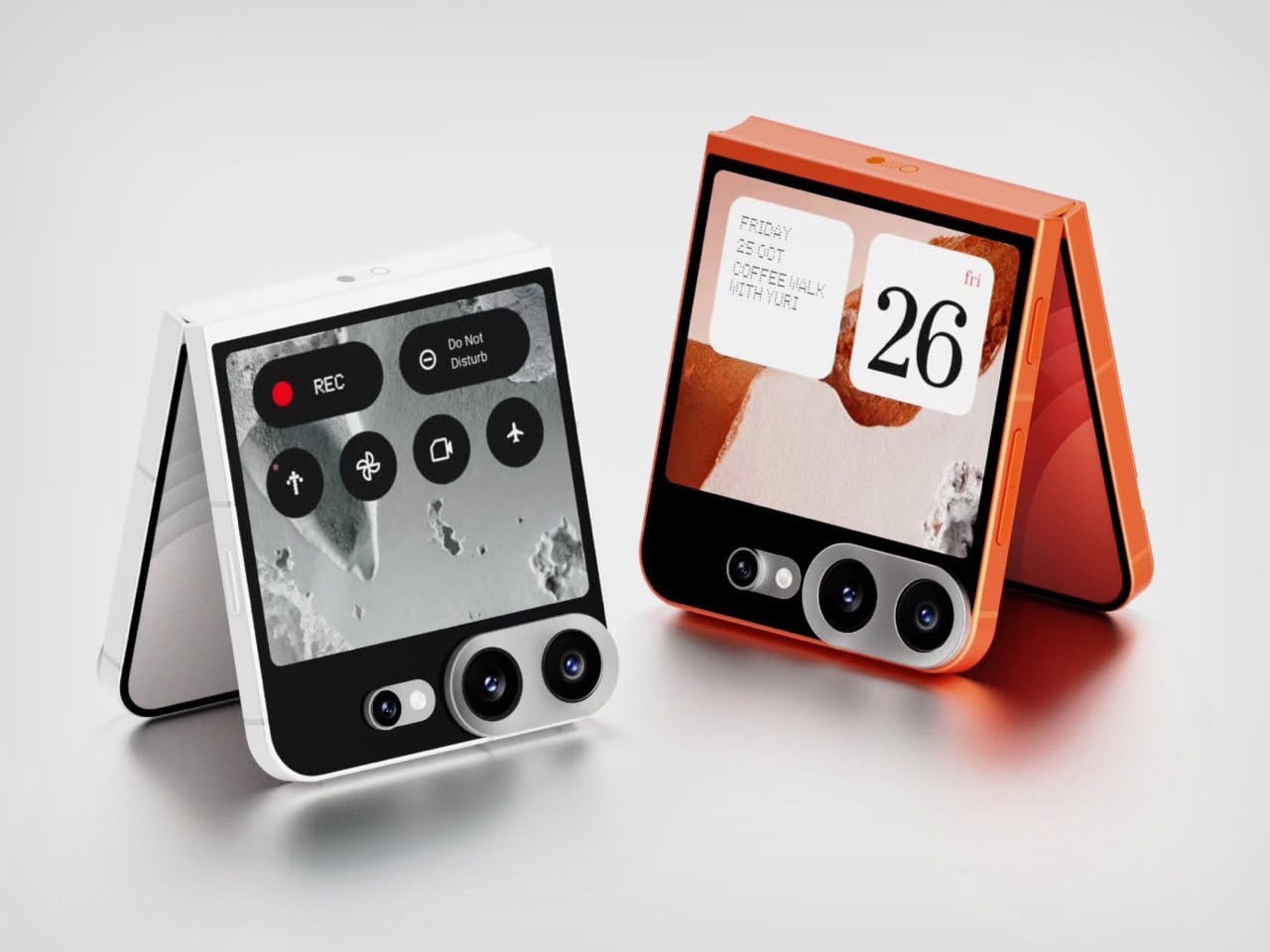
Meet the CMF Flip, a foldable concept that I so desperately wish existed. Designed by Shreyansh Onial, the CMF Flip was created to fit within the foldable affordability gap. It’s just a concept, so we can project all our dreams and wishes onto it, but Carl Pei has always treated as Nothing’s sub-brand as a playground for the lower-mid consumer. That being said, a CMF Flip Phone within the $450-$499 category sounds like exactly what the foldable market needs – a workhorse for the 90% who otherwise wouldn’t spend thousands on a phone with a hinge.

Designer: Shreyansh Onial

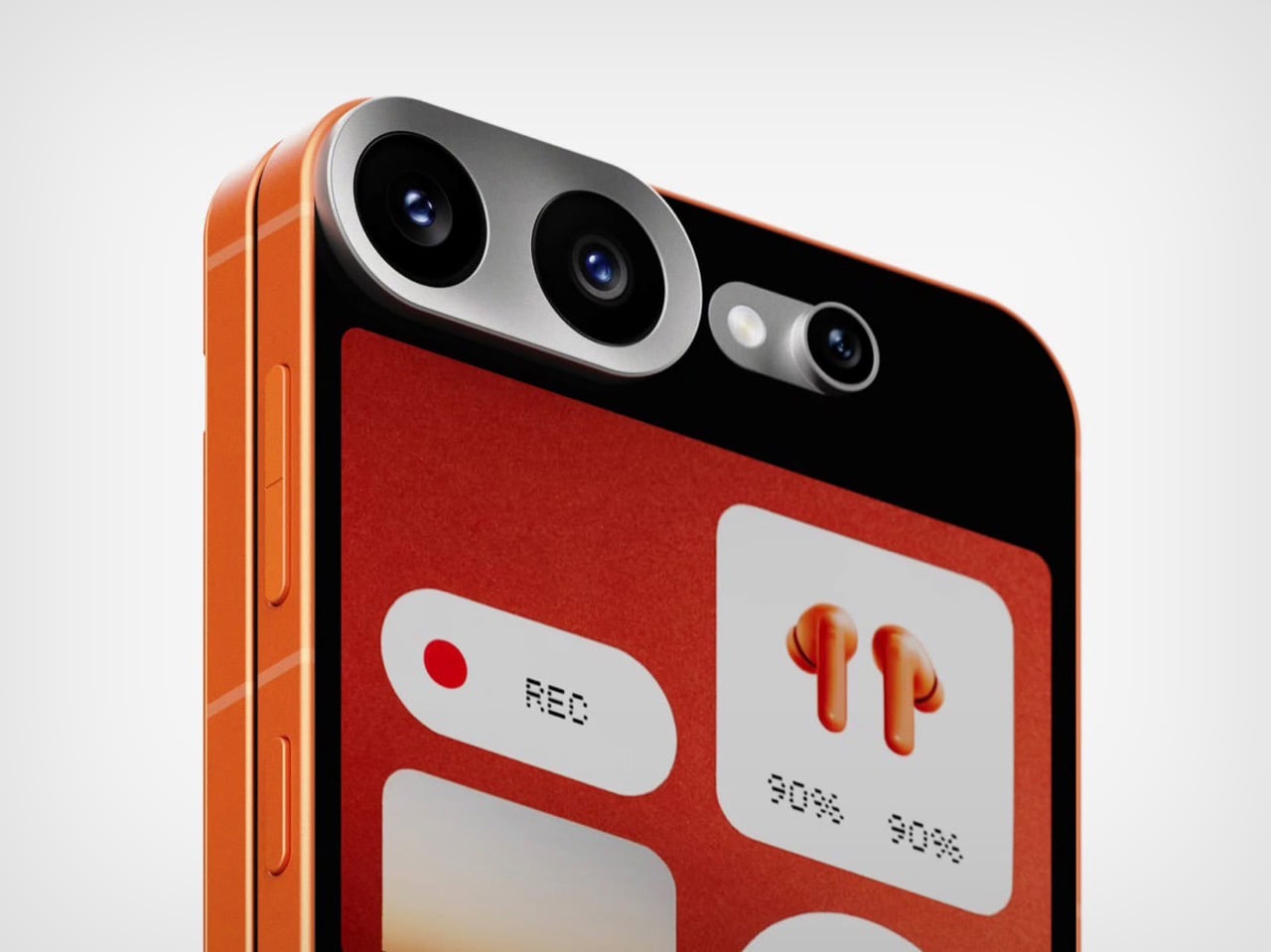
Onial’s CMF Flip channels the CMF’s design fairly effectively with zero compromise. The camera bump merges older and newer phone styles (with 3 lenses like the Phone 2 Pro), laid out horizontally now to make space for a 4:3 secondary screen. It isn’t inconceivable to imagine that CMF would pack this phone with the same sensors as the Phone 2 Pro underneath too, two 50MP main shooters along with an 8MP Ultra-wide third camera. After all it would make way more sense to just use the same hardware to help keep the cost of goods in check.

I can’t help but feel that this new camera array, along with the front facing screen and the orange colorway, gives the CMF Flip the ability to be the perfect Rabbit R1 replacement. Look at it, multiple eyes to see everything around you, a screen to interact with, and Nothing’s Essential Space that the company is building to be their next big innovation? Sounds perfect if you ask me. Look, you’ll even see the Essential Space button on the side of the phone!

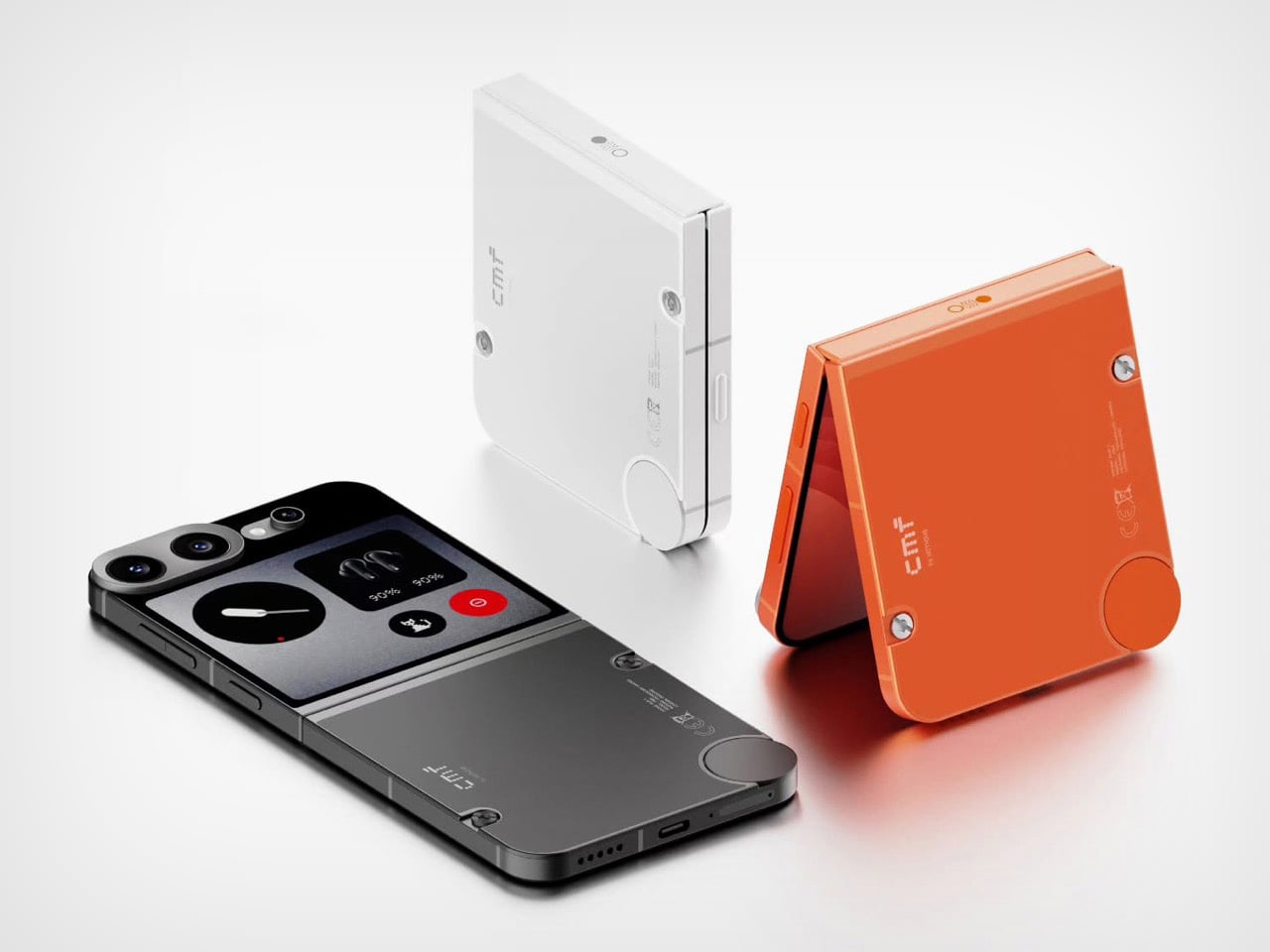
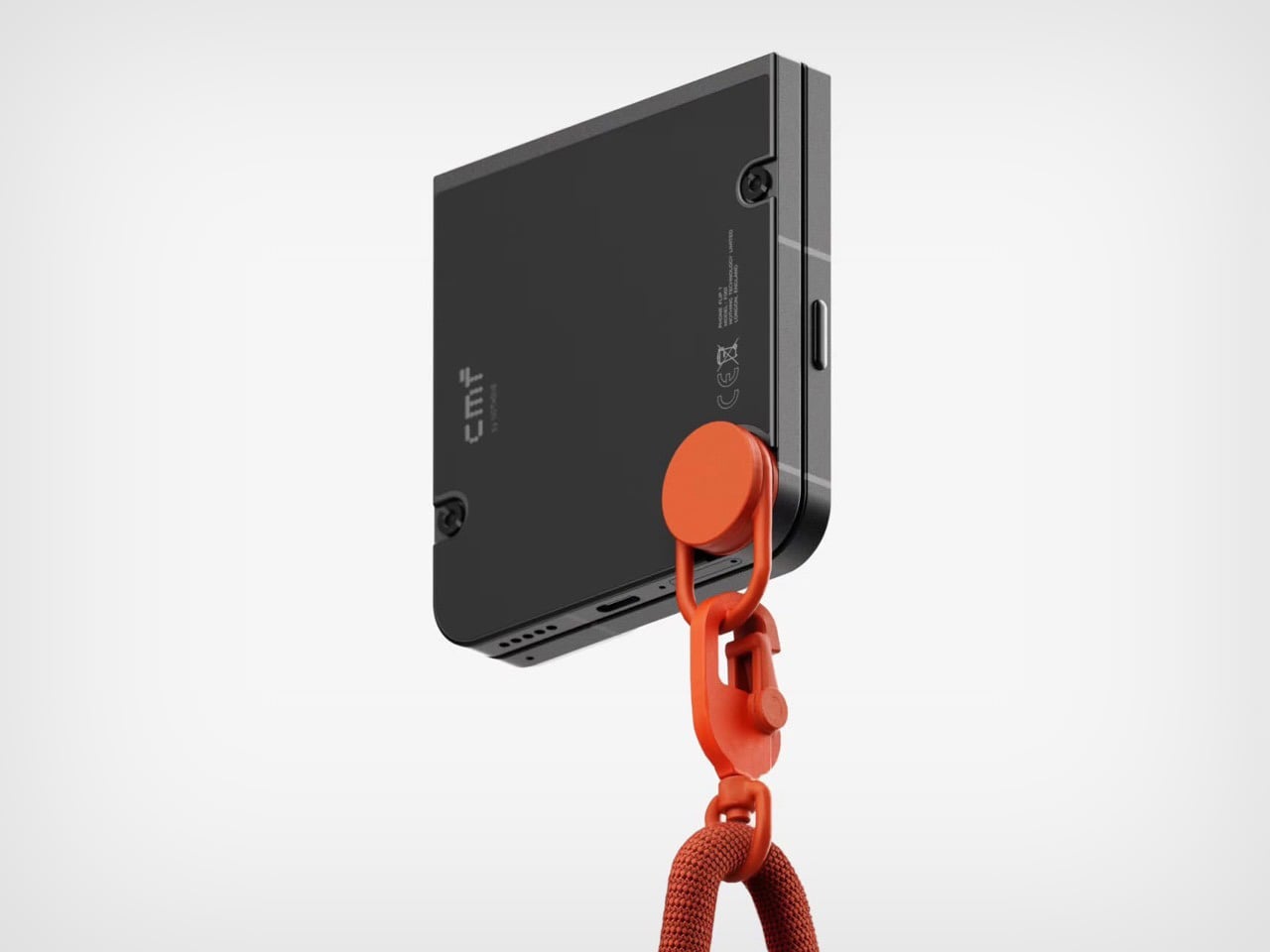
The remaining half of the phone is undeniably CMF too. The modular back exists on the lower half, allowing you to unscrew the backplate and change colors with ease, as well as add accessories using the iconic knob on the bottom right. The colors remain aligned with CMF’s orange, black, and white palette for now, although we’ve seen the company occasionally experiment with a new color every season.

Nothing has no plans of launching a CMF foldable for now. Just given the fact that it makes better business sense to launch a Nothing foldable before a CMF one, this CMF Flip exists only in our minds and hearts for now. But given its simple design, and fairly budget-friendly hardware, one can simply predict that a phone of this caliber shouldn’t cost more than $499, especially given that the Phone 2 Pro has a $279 price tag.

The post Meet the CMF Flip: The Budget Foldable Phone We’re Desperately Waiting For first appeared on Yanko Design.

There’s yet another study about how bad AI is for our brains

A group of researchers from across the US and the UK have conducted a study on what AI does to our brains and the results are, in a word, grim. These results were published in a paper called "AI assistance reduces persistence and hurts independent performance" which kind of tells you everything you need to know.

“We find that AI assistance improves immediate performance, but it comes at a heavy cognitive cost,” the study declares. Researchers went on to state that just ten minutes of using AI made people dependent on the technology, which led to worsening performance and burnout once the tools were removed.

The study followed people who use AI for "reasoning-intensive" cognitive labor. This refers to stuff like writing, coding and brainstorming new ideas, which are some of the most common use cases.

The researchers recruited 350 Americans, who were asked to complete some fraction-based equations. Half of the participants were randomly granted access to a specialized chatbot built on OpenAI's GPT-5 for help and the others had to go it alone. Halfway through the exam, the AI group had their access cut off.

This led to a steep decline in correct answers by the AI group and many instances of people simply giving up. This result, in which performance and perseverance both dropped, was repeated in a larger experiment with 670 people. Finally, the scientists performed one final experiment with reading comprehension questions, and not math. The results were more of the same.

“Once the AI is taken away from people, it’s not that people are just giving wrong answers. They’re also not willing to try without AI," Rachit Dubey, an assistant professor at the University of California and coauthor of the study, told Futurism. "People’s persistence drops."

Dubey went on to warn that rapid deployment of AI in the education sector could lead to a "generation of learners and people who will not know what they’re capable of, and then that will really dilute human innovation and creativity."

The study likens using the technology to the "boiling frog" effect, in which "sustained AI use erodes the motivation and persistence that drive long-term learning." These effects accumulate and "by the time they are visible, they will be difficult to reverse."

There are two caveats here. The study has yet to be peer-reviewed. Also, researchers found one tiny bright spot regarding the use of AI. People who used AI tools for hints and clarification had a much easier time once the chatbot was removed when compared to those who used the bot to essentially prompt the answers.

This is just the latest study trying to get to the bottom of what AI is doing to our collective noggins. It has been found to increase fatigue among full-time workers who rely on the tools, which led to the term "AI brain fry." To that end, researchers discovered that employees who use AI actually end up working harder and longer than those old-fashioned luddites.

The results are even starker in the world of education. Studies have found that AI use in school leads to poor social and intellectual development and that kids who rely on chatbots tend to do worse on tests.

This article originally appeared on Engadget at https://www.engadget.com/ai/theres-yet-another-study-about-how-bad-ai-is-for-our-brains-183418494.html?src=rss

Google unleashes a native Gemini app for the Mac

Not content with stuffing Gemini into all of its own apps and services, Google wants you to adopt its AI assistant on desktops and laptops too. The company released a Gemini Windows app on Tuesday and it's following that up a day later with one for Macs.

Google says the macOS Gemini app is a "native desktop experience" that you can access with a keyboard shortcut. By default, pressing option and space will open a mini chat, while a combo of option, shift and space will open the full Gemini chat experience. You'll be able to adjust these bindings in the app settings.

Users will be able to share anything that's on their screen, including files they have saved on your system, with the chatbot and ask it questions about whatever they’re seeing. This can include anything from images to documents, and data to code.

There's an option to share full web pages with Gemini, not just what's on your display. The Gemini app also supports image and video generation with Nano Banana and Veo, respectively. The app is available on Macs that are running macOS 15 (i.e. macOS Sequoia) or later in all countries and languages in which Gemini is supported. 

"We're building the foundation for a truly personal, proactive and powerful desktop assistant, with more news to share in the coming months," Michael Friedman, group product manager for the Gemini app, wrote in a blog post. That's intriguing, given that Apple's long-delayed, generative AI revamp of Siri may finally debut at WWDC in June. Apple's retooled chatbot, which is slated to have deep integration with macOS apps, is powered by Gemini models.

This article originally appeared on Engadget at https://www.engadget.com/ai/google-unleashes-a-native-gemini-app-for-the-mac-170500185.html?src=rss