
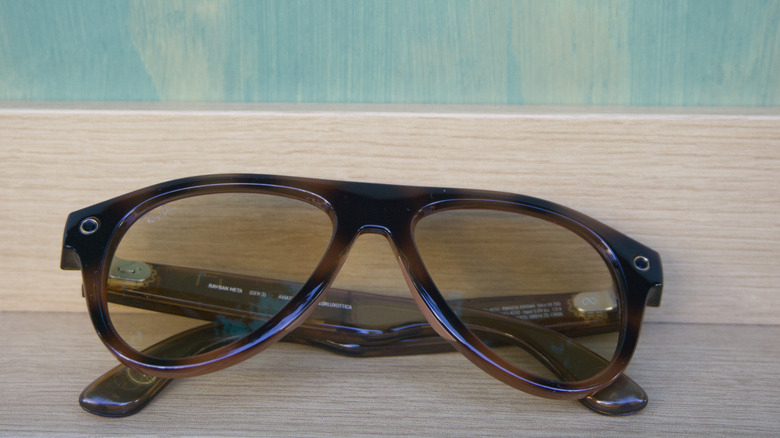
Meta’s $1,300 VR Glasses look like the Vision Pro sequel Apple should be making
Sorry Apple, it looks like Meta's VR Glasses are the real Vision Pro successor.


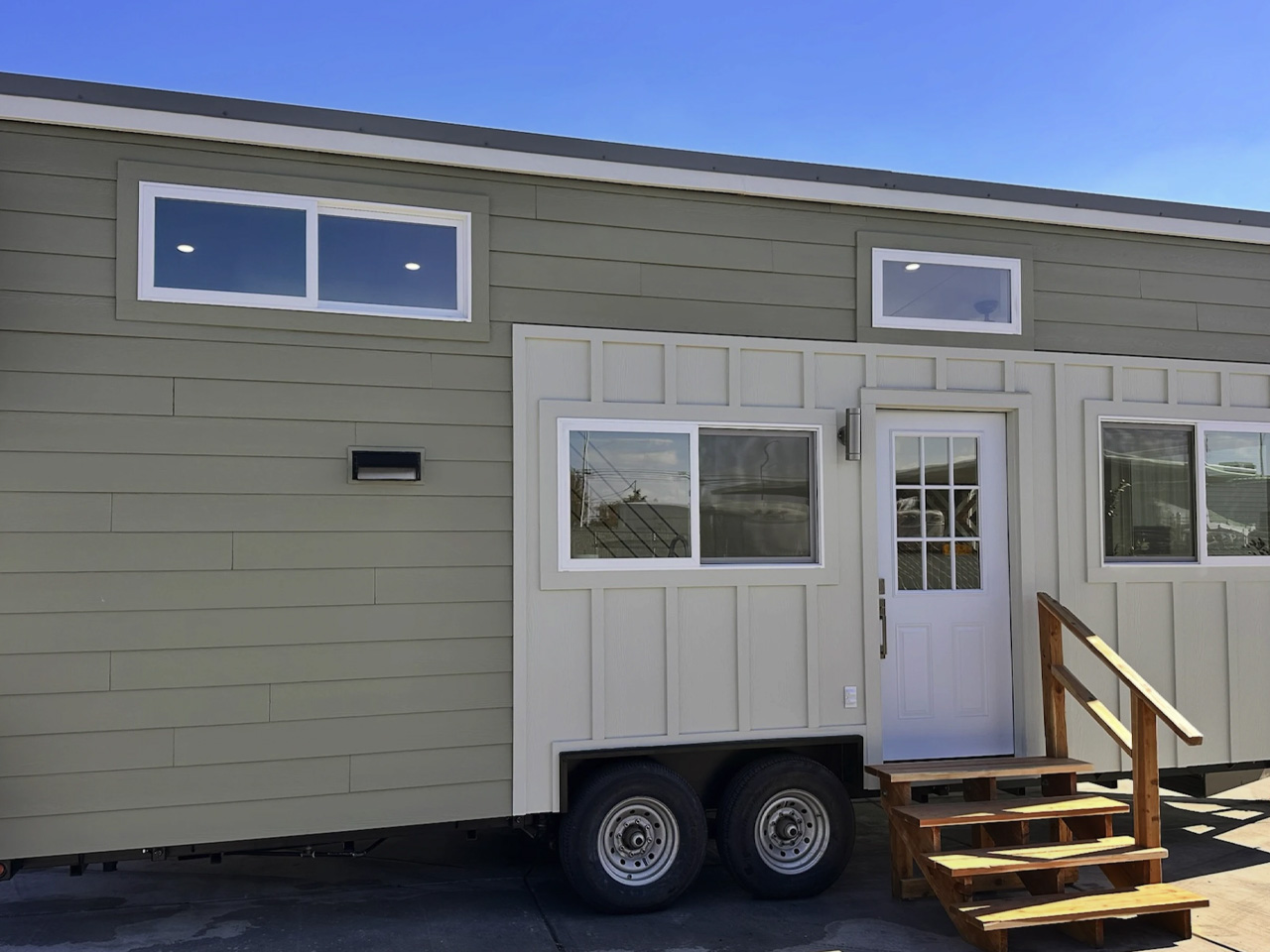
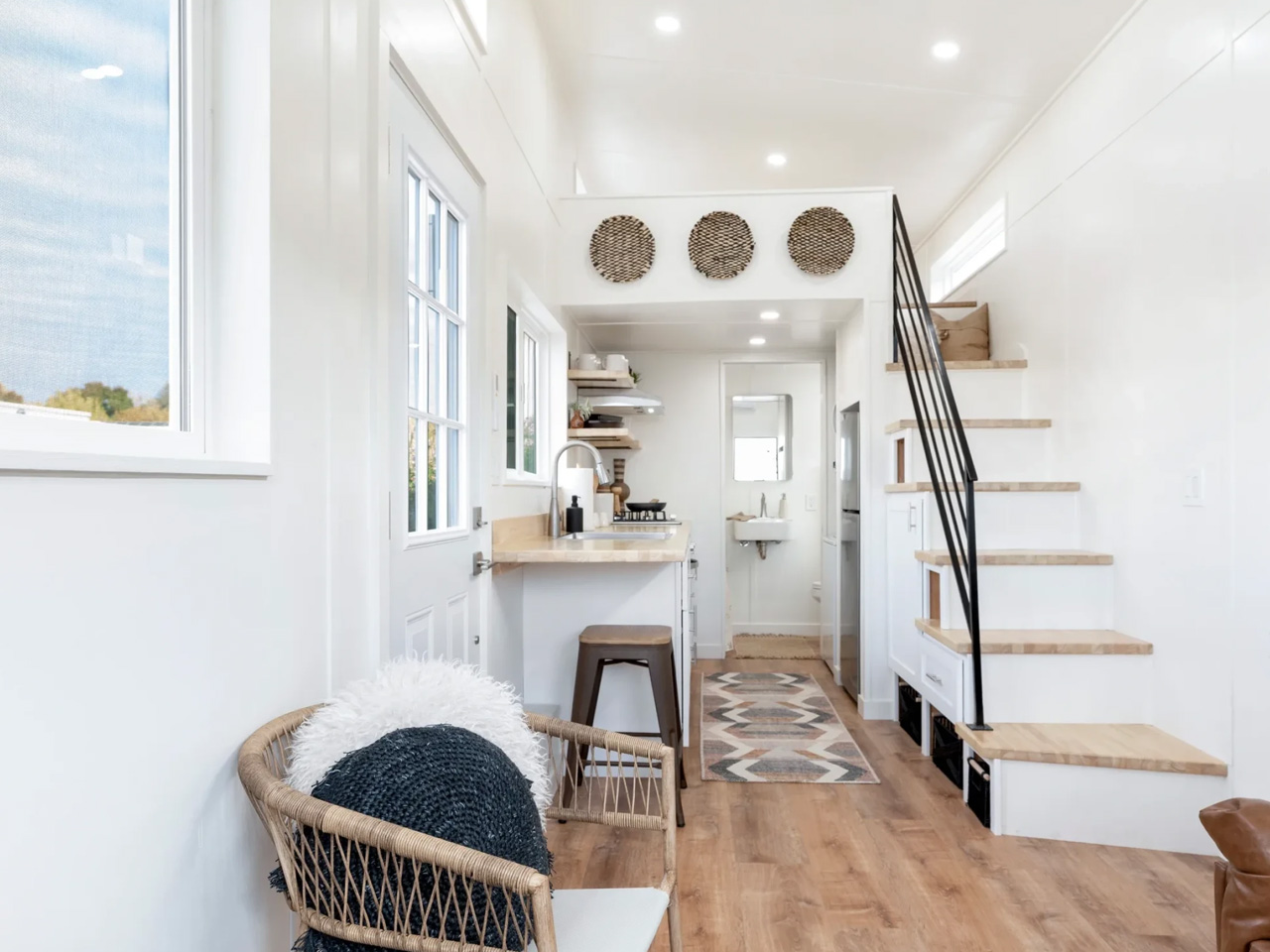
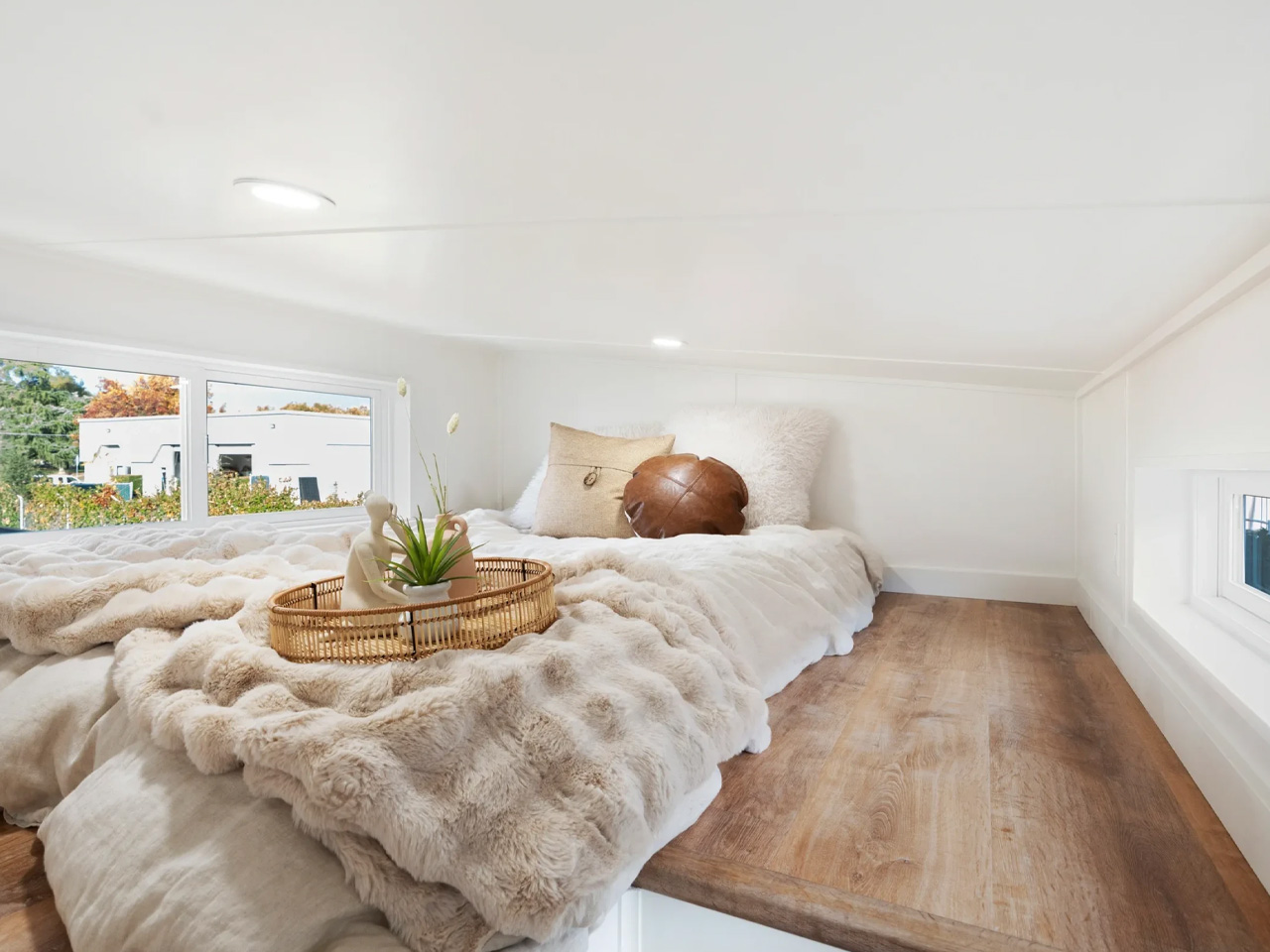
The floor plan question in a tiny house almost always comes down to one thing: where does the bedroom go? JT Collective answered it by pushing sleep upstairs in the Magnolia, a 26-foot tiny home on wheels, and using every square foot freed on the ground level to build a kitchen worth actually cooking in. It’s a trade-off that’s easier to admire in photographs than to live with at 2 a.m., but the layout logic holds.
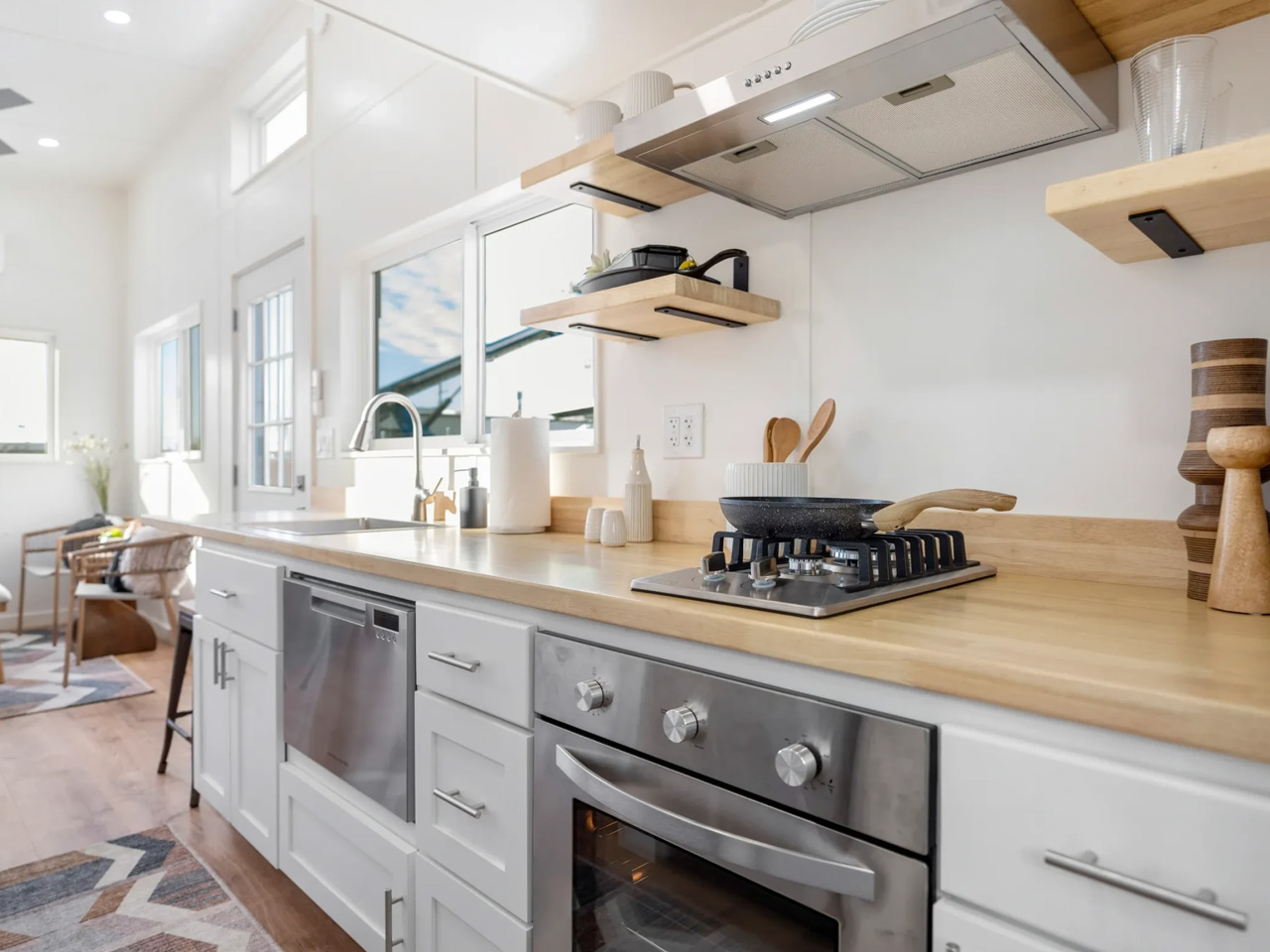
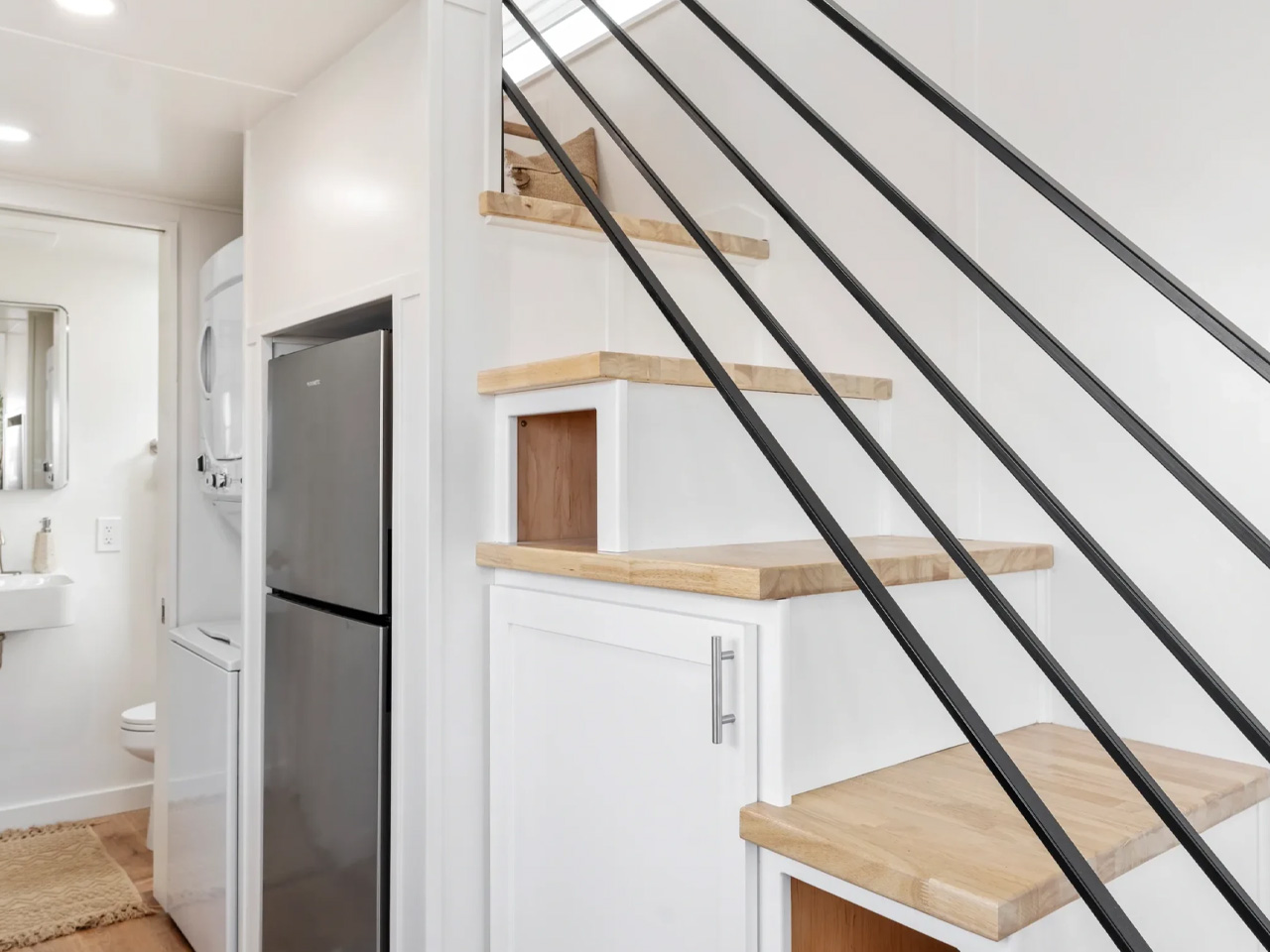
With the bedroom removed from the ground-floor circulation, the Magnolia opens into a continuous zone shared by the kitchen and living area. The service core runs along one side: a drawer dishwasher fits within the kitchen run, a compact appliance choice that preserves counter height without reducing the layout to a series of workarounds. Stacked laundry is folded into the plan nearby, present but not announcing itself across the room. For anyone who cooks regularly, that kind of clarity matters. Prep, clean-up, and laundry become a legible daily routine rather than a negotiation with the footprint.
Designer: JT Collective
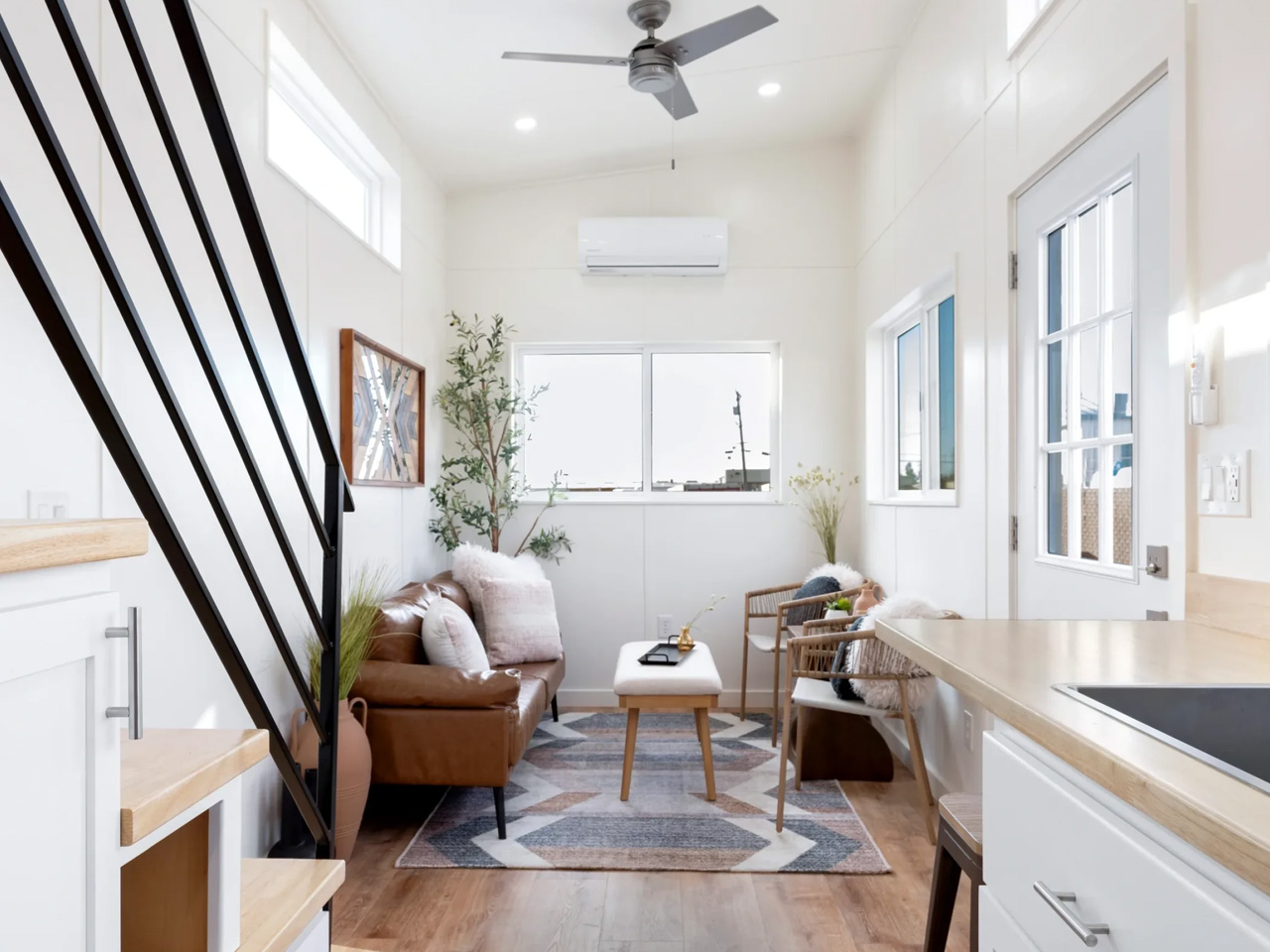
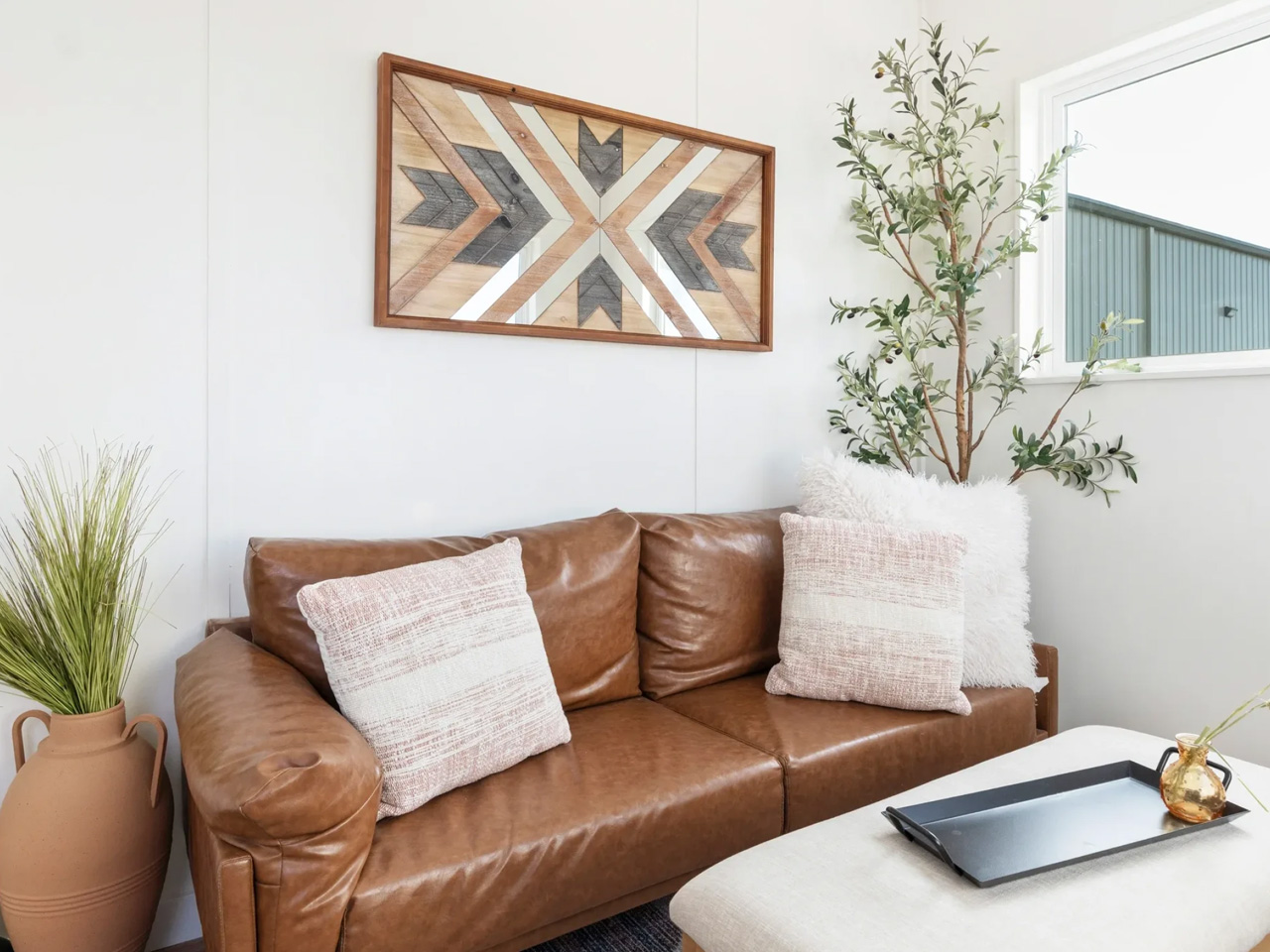
The staircase handles more than circulation. Drawers and compartments are built into each step, holding items that would otherwise migrate to the counter edge, the arm of the sofa, and every available flat surface in between. A stair that only moves you between floors is a missed opportunity in 26 feet of length. This one earns its place in the plan, and the living area reads better for it.
What the loft configuration can’t resolve is access. A storage stair climbed nightly works well for a solo occupant or a couple without mobility concerns. It asks significantly more of anyone with a knee issue, a young child in the house, or a need to move at night without thinking through the steps. That isn’t a design flaw. It’s a design position with a defined audience, and it’s worth naming honestly before a build deposit changes hands.
JT Collective describes the Magnolia as its most popular loft model. Prospective buyers should contact the builder directly for the build weight, loft headroom clearance, egress specifications, utility connection requirements, regional approval documentation, and a full itemised quote covering delivery and site preparation. The listed base price is not a delivered or installed cost.
Towing regulations and permanent occupancy conditions vary by jurisdiction and site. The Magnolia makes one clear call: sleeping moves up so the kitchen can breathe. Whether that trade holds over months of full-time living depends entirely on who’s doing the climbing.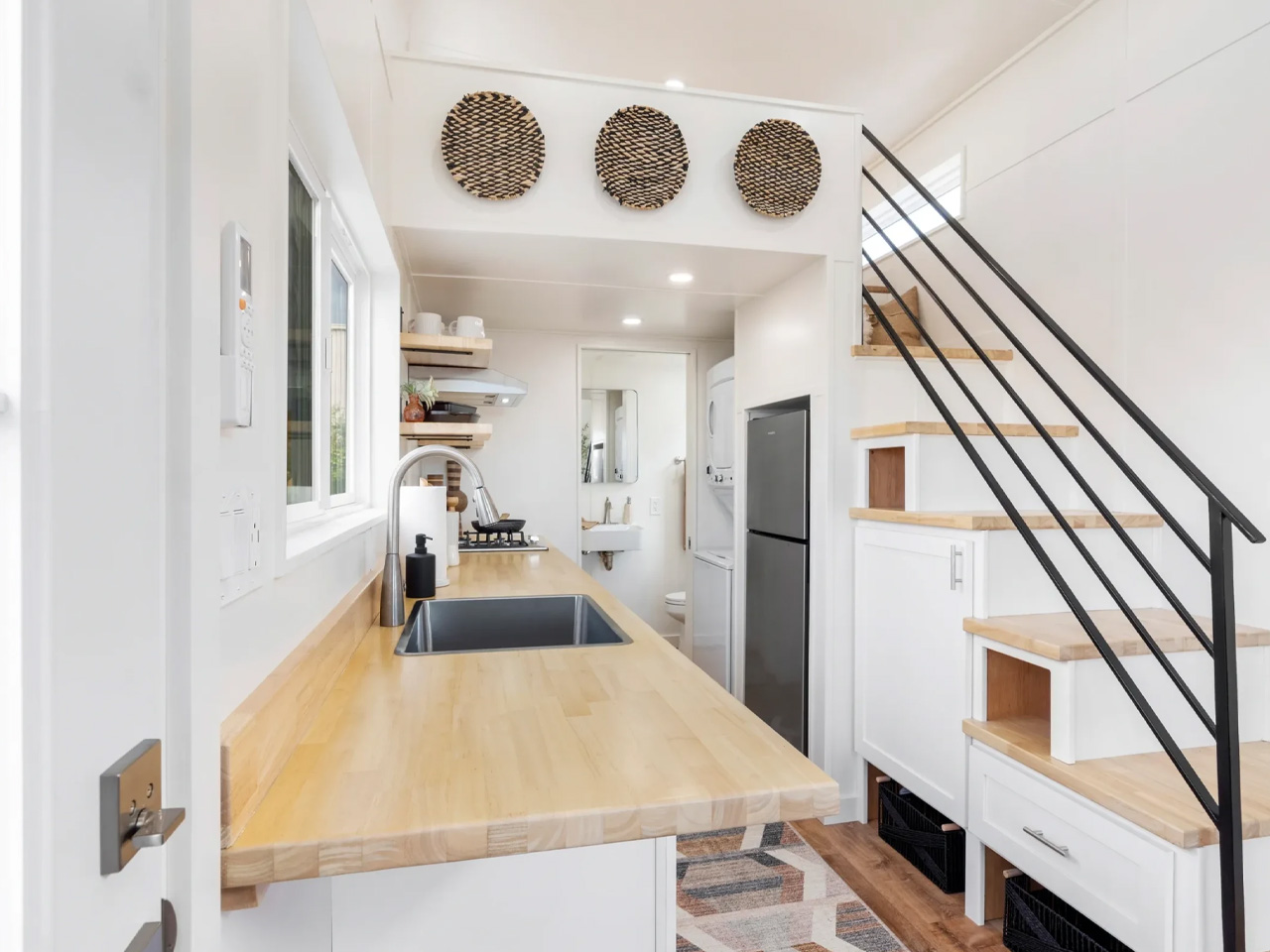
The post The Tiny Home Design That Has Americans Rethinking Where the Bedroom Should Go first appeared on Yanko Design.



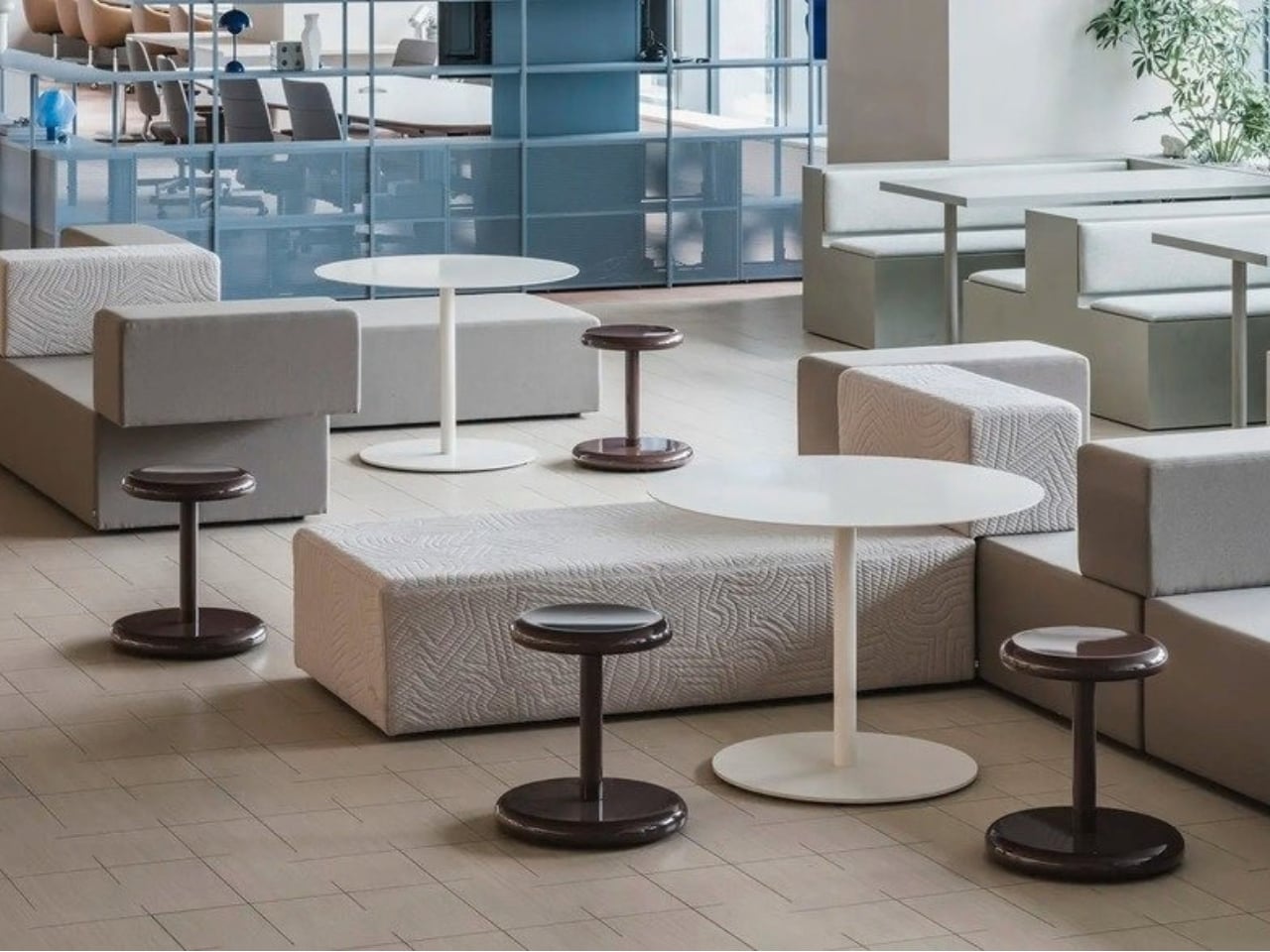
Walk into any modern office, studio, or collaborative classroom and you’ll spot the same compromise everywhere. Furniture either sits still and looks good, or it moves and looks like it rolled out of a hospital waiting room. Task chairs with exposed casters get the job done, but they broadcast “corporate cubicle” the second you glance at them. Anyone trying to build a space that feels warm, creative, or design-forward has had to choose between mobility and mood.
That tension is exactly what Hirotaka Tako set out to dissolve with Allround, a stool for the Japanese furniture brand NII, where he serves as creative director. The wheels are there, tucked completely beneath the base, so the stool reads as a clean, sculptural object first and a mobile one second. Nobody glances at it and thinks “conference room reject.” It just looks like a good stool that happens to glide when you nudge it.
Designer: Hirotaka Tako
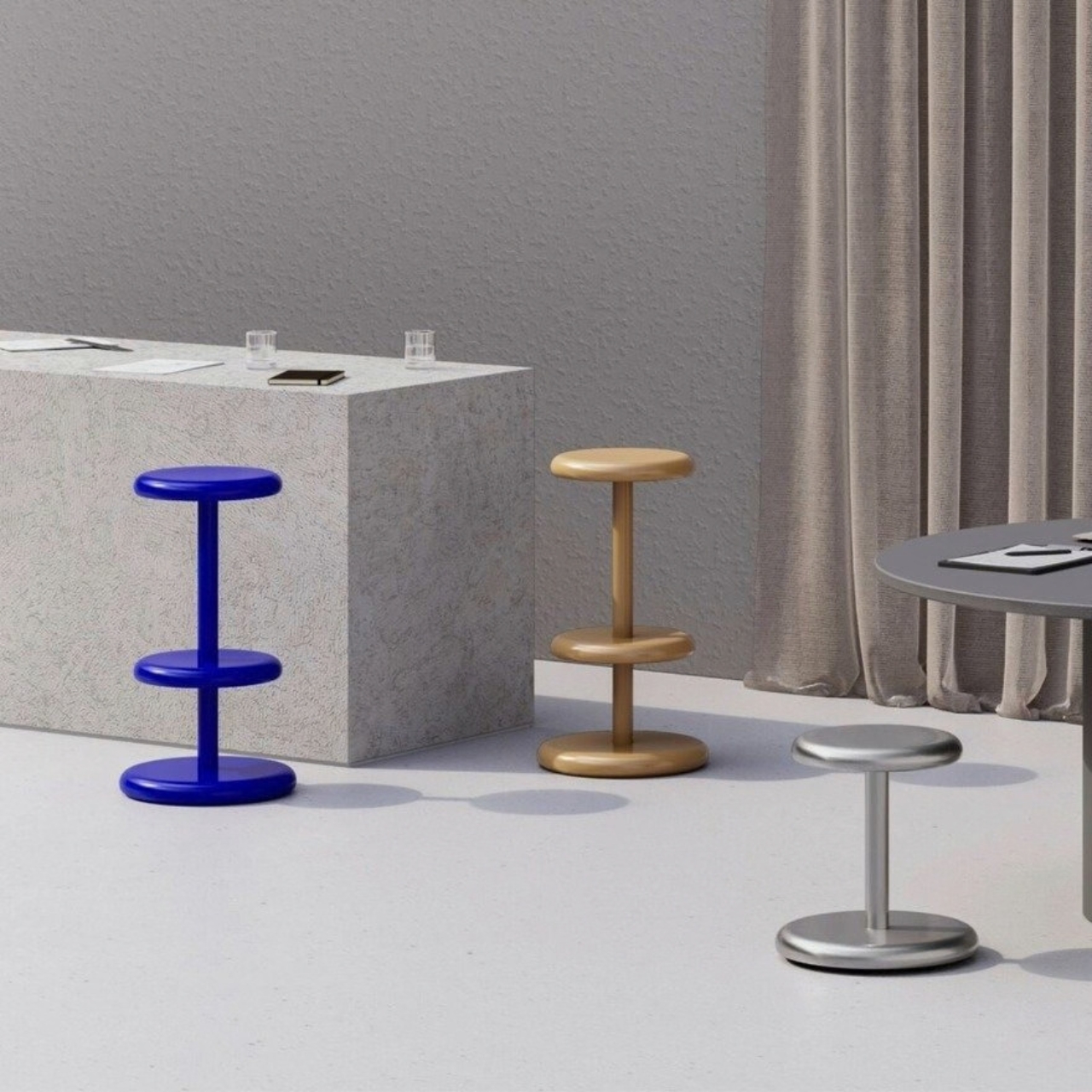
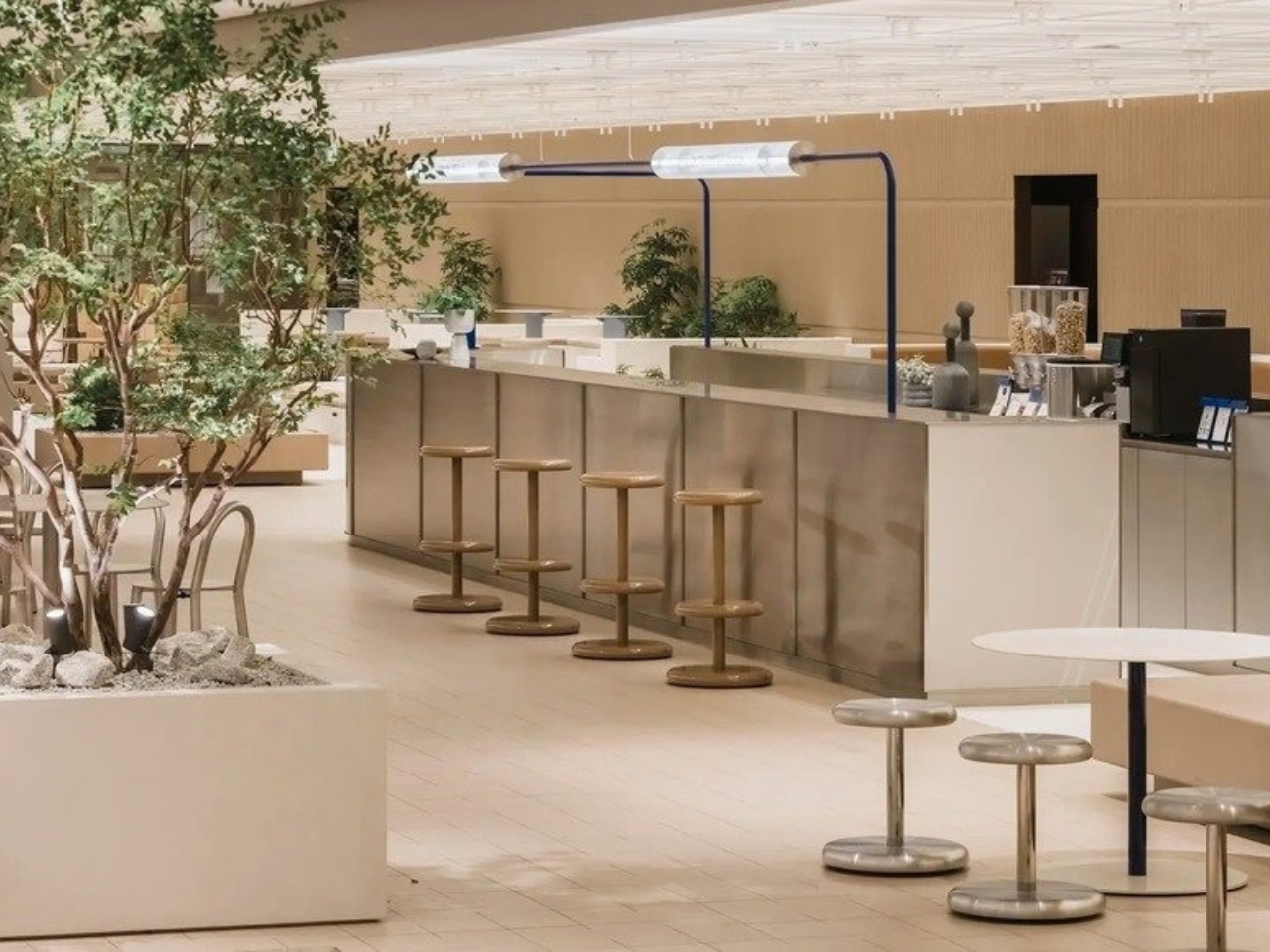
I’ve always had a soft spot for furniture that solves a problem without announcing that it’s solving anything. Allround does that well. The whole piece is built around a single design idea, the full-round fillet, which is engineering language for a curved edge treatment, but it also doubles as wordplay for “all-rounder,” a piece meant to adapt to whatever room it lands in. That kind of double meaning in a name usually feels like a stretch. Here it actually tracks, because the stool genuinely looks built for anywhere: a design studio, a retail floor, a kitchen island, a hallway that needs the occasional extra seat.
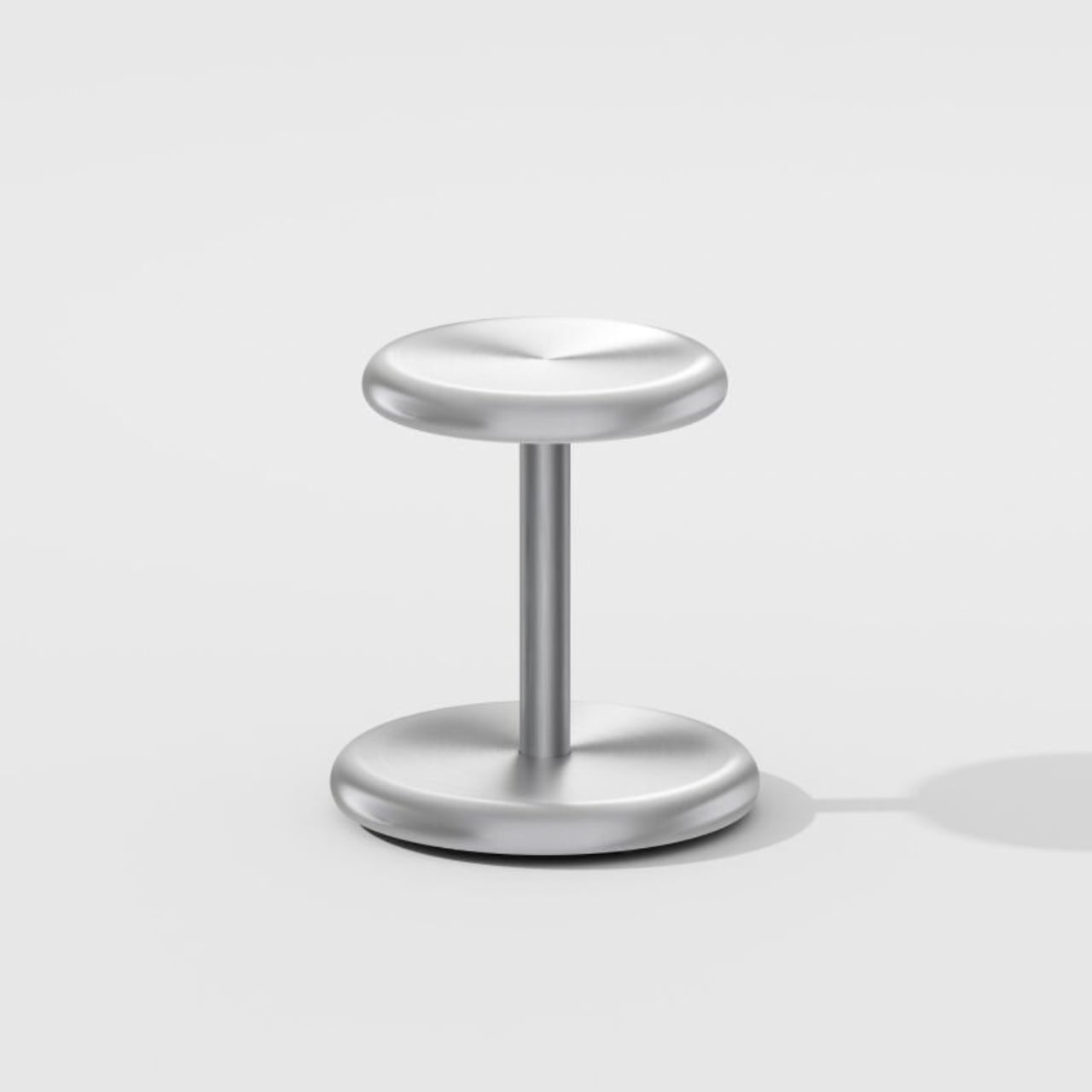
The construction is aluminum and steel, standing 750mm tall with a 415mm by 415mm footprint, small enough to tuck away without feeling flimsy. There’s a taller barstool version too, with a swiveling top and a third disc built in as a footrest, which is a smart touch for anyone who’s ever perched on a bar stool with nowhere to rest their feet. Both versions ship flat-pack, which matters more than it sounds like it should. Furniture that disassembles for shipping and storage tends to age better in real use, since offices and studios rearrange constantly and nobody wants to haul a fully welded stool across a building.
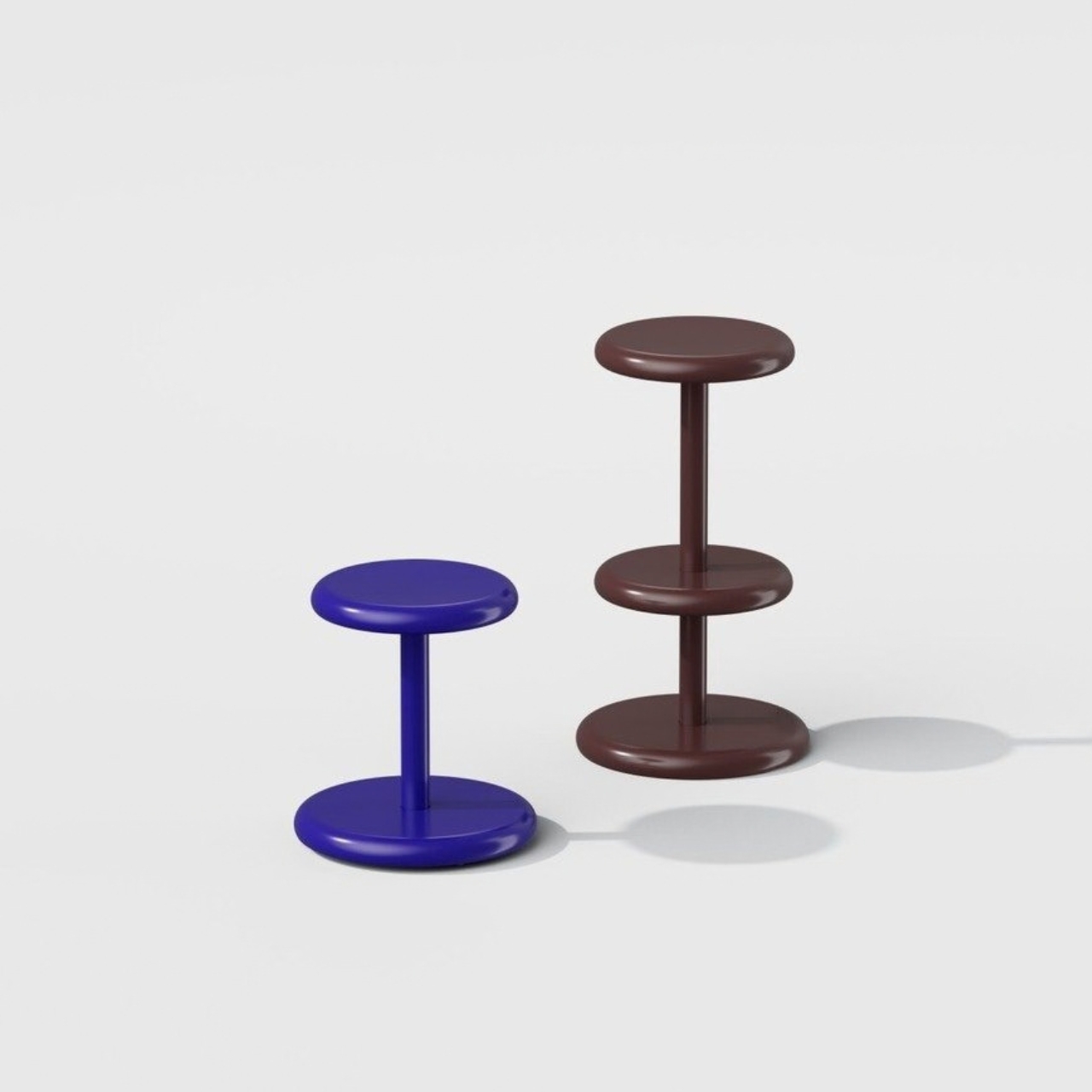
Color is where Tako lets the design breathe a little. Alongside a brushed hairline aluminum finish, Allround comes in six finishes with names like Gloss Ultramarine, Gloss Vermilion, and Satin Pale Olive. That range signals something about who this stool is for. It’s not trying to disappear into beige office neutrality, and it’s not cosplaying as a designer showpiece either. It sits in a middle lane, confident enough in color to hold its own in a photographed interior, restrained enough not to fight with the rest of a room.
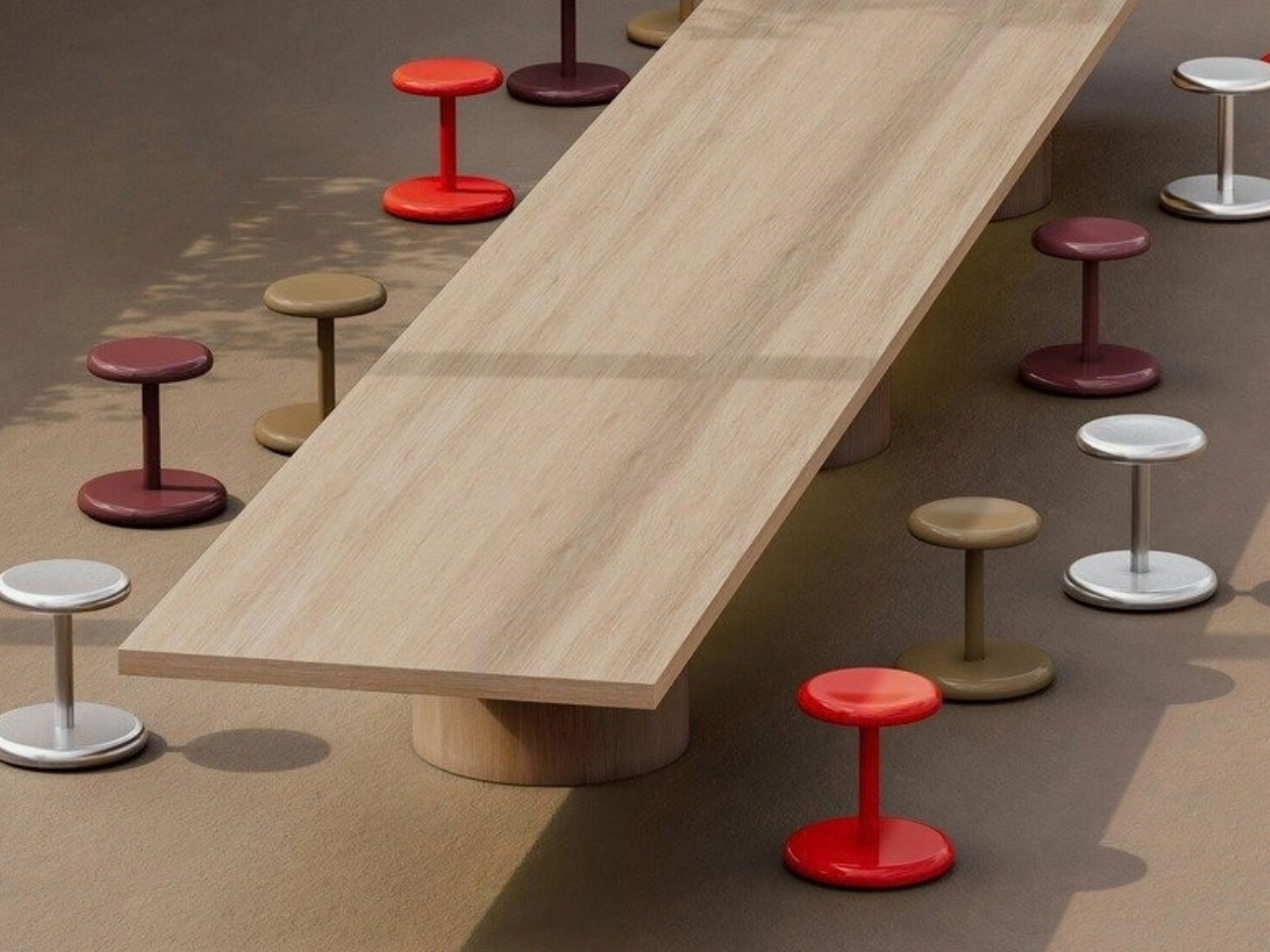
What strikes me most is how the hidden casters change the emotional register of the object. A visible wheel base tells your body “this is temporary, this is a workstation, don’t get comfortable.” A hidden one lets a stool feel permanent and considered, even while it’s doing something mechanically clever underneath. Tako himself put it simply, saying the stool’s rounded form and finishes create a “delicate, melting impression” despite the robust metal frame. That contrast between softness and sturdiness is doing a lot of the emotional work here.

None of this reinvents seating. It’s a stool with wheels, dressed up smart. But there’s real value in a piece of furniture that quietly expands what a shared space can do without making anyone stop and think about ergonomics or floor plans. Design like this tends to get labeled minimalist, and sure, the silhouette earns that word. What it actually offers is flexibility that refuses to look like flexibility, which is a much harder trick to pull off than it sounds.
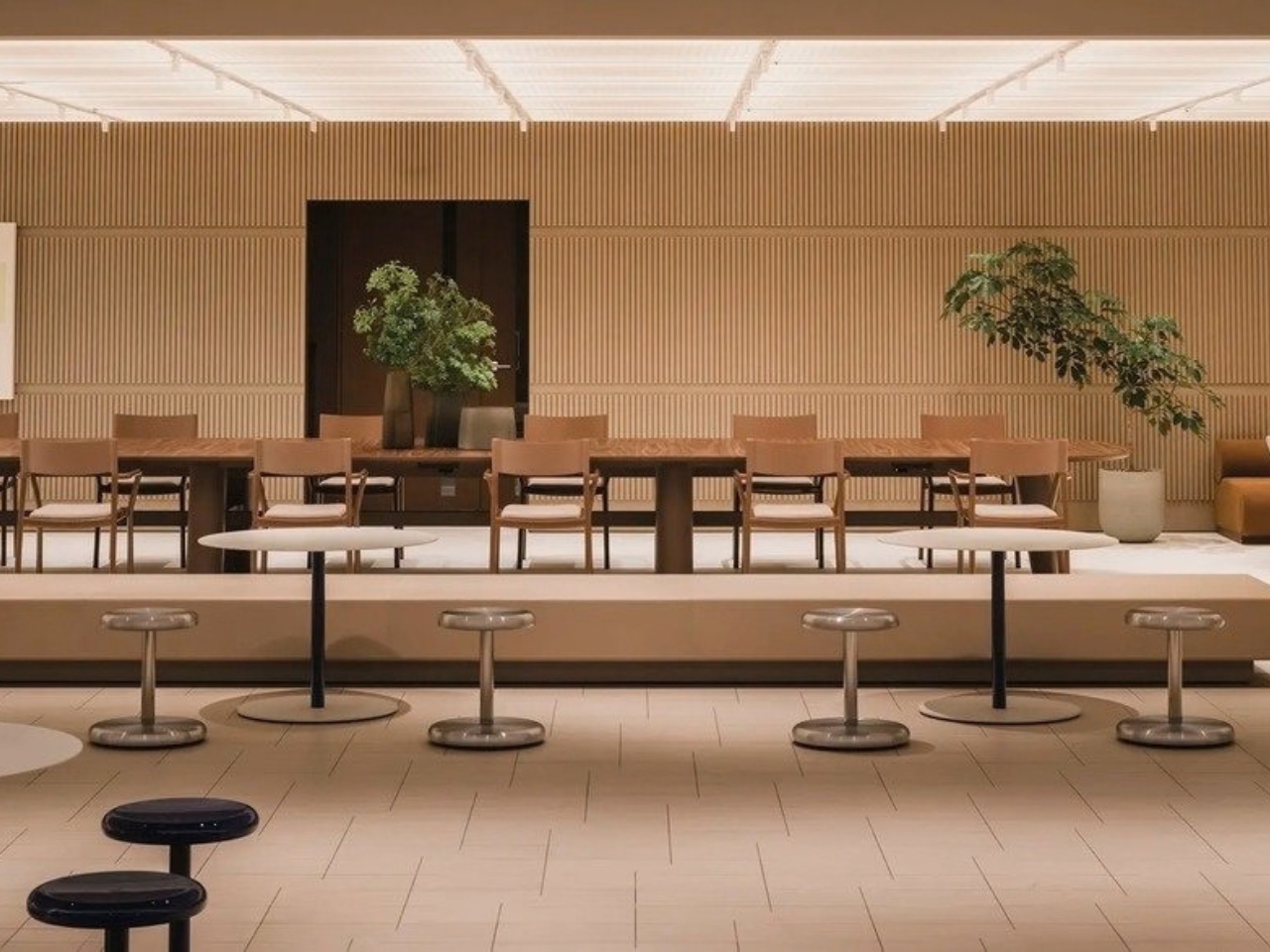
Whether Allround shows up in American offices and studios the way it clearly will in Japanese ones remains to be seen, but the appetite for furniture that moves without looking like it’s built to move isn’t going anywhere. NII has a stool ready for the moment more people start asking their furniture to do two jobs at once.
The post Nobody Will Guess This Stool Actually Has Wheels first appeared on Yanko Design.
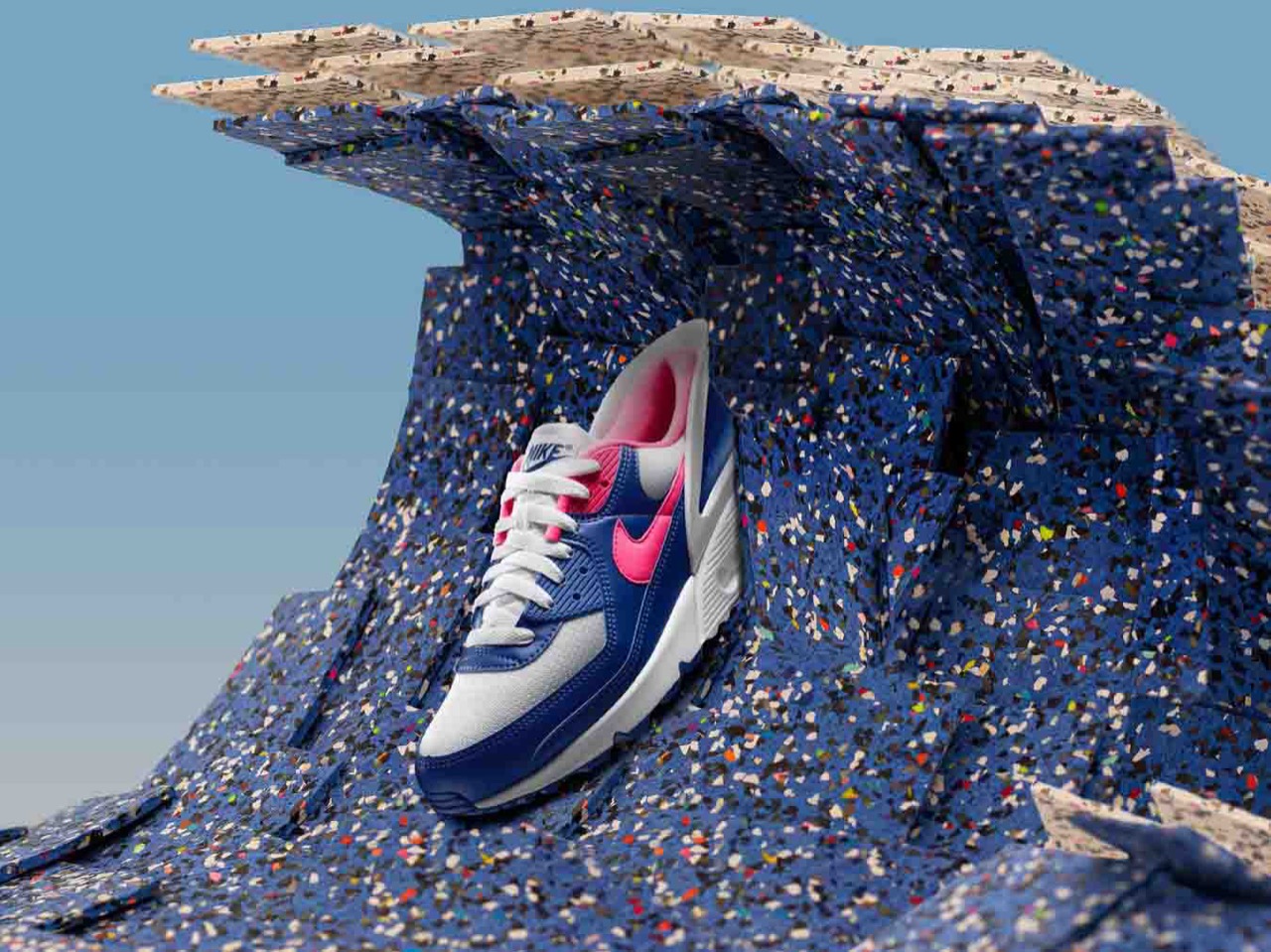
Every sneaker eventually dies, and most of them die badly, tossed into a landfill where the rubber outsole will outlive everyone who ever wore it. Nike has spent over three decades trying to intercept that fate with Reuse-A-Shoe, a program that grinds old kicks and factory scraps into a material called Nike Grind. What started as a scrappy basketball court test at a Nike facility in Oregon has since gone into more than a billion square feet of sport surfaces worldwide. Now it has landed somewhere I did not expect, as commercial flooring backed by the largest flooring manufacturer on the planet. Mohawk Group just folded a small Nike Grind partner called Hero Flooring into its lineup, and the headline product is called Hero Rubber made with Nike Grind.
Reade Palmer, a former rower, founded Hero Flooring (now part of Mohawk Group) in 2014 and spent years pitching Nike before landing an official partnership in 2020. The result is a rubber flooring program built entirely around the size of the recycled granule, with three current styles called Original, Vitality, and Axis. Original uses the finest Nike Grind for a tight uniform speckle, Vitality blends two granule sizes for a terrazzo effect, and Axis goes bold with visible sneaker outsole chunks. All three ship in 17 colorways, skip recycled tires (so no tire odor, a real complaint with rival rubber floors), and carry FloorScore and Declare Red List Free certification. It has already won recognition from the AZ Awards, HiP Awards, and Best of NeoCon, and now rides Mohawk’s distribution into design firms nationwide.
Designer: Reade Palmer (Mohawk Group)
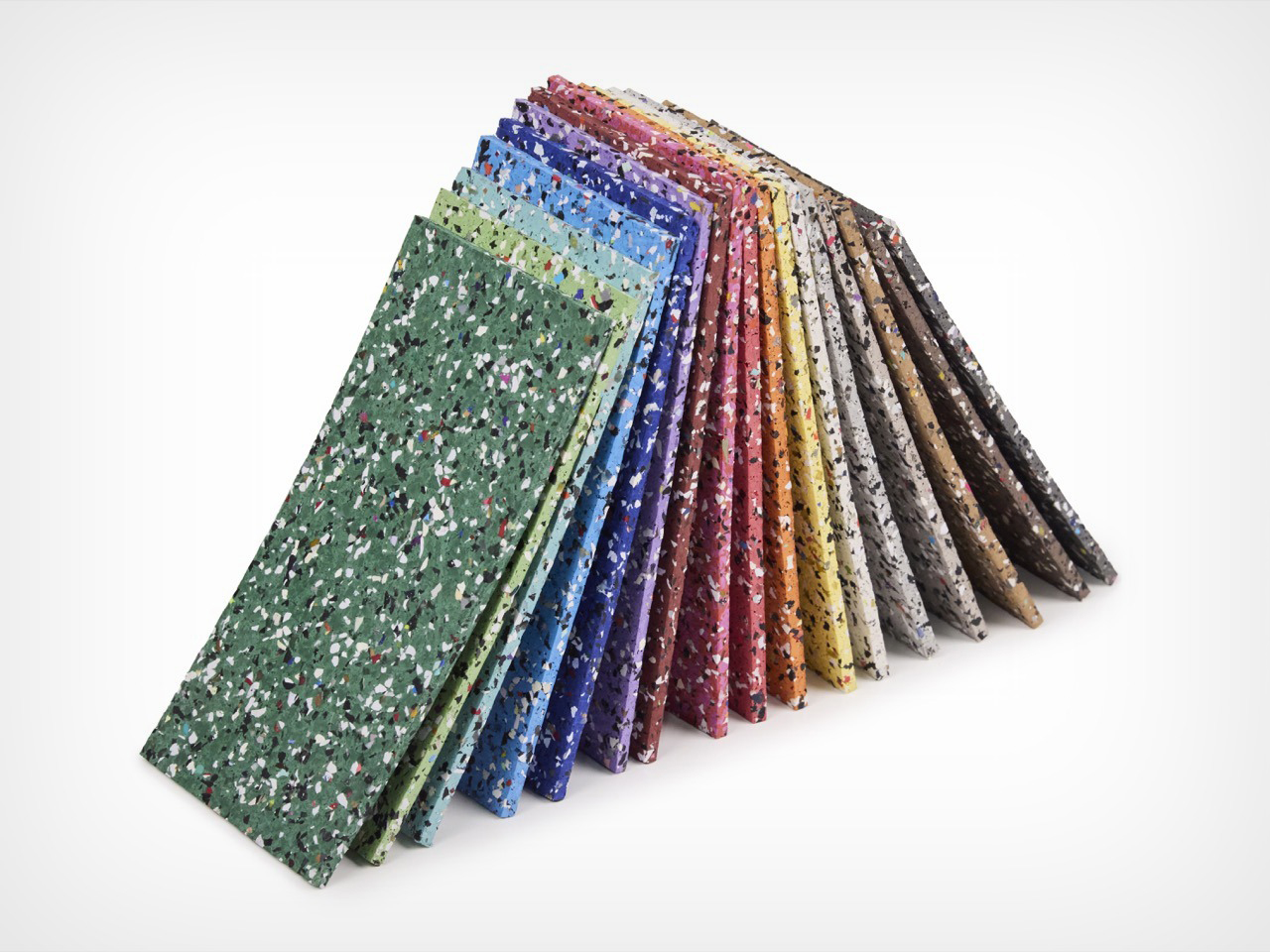
A big chunk of the shoes feeding Nike Grind come from drop bins sitting inside actual Nike stores, which means this floor started life as somebody’s actual Nikes. Grind them up, press them flat, install them in a gym, and now you have got people in fresh Nikes squatting and sprinting on top of dead Nikes. Old shoe, new shoe, same brand, same square footage, closing the loop in the most on-the-nose way possible. I keep picturing some guy doing burpees completely unaware he is standing on last year’s Pegasus.
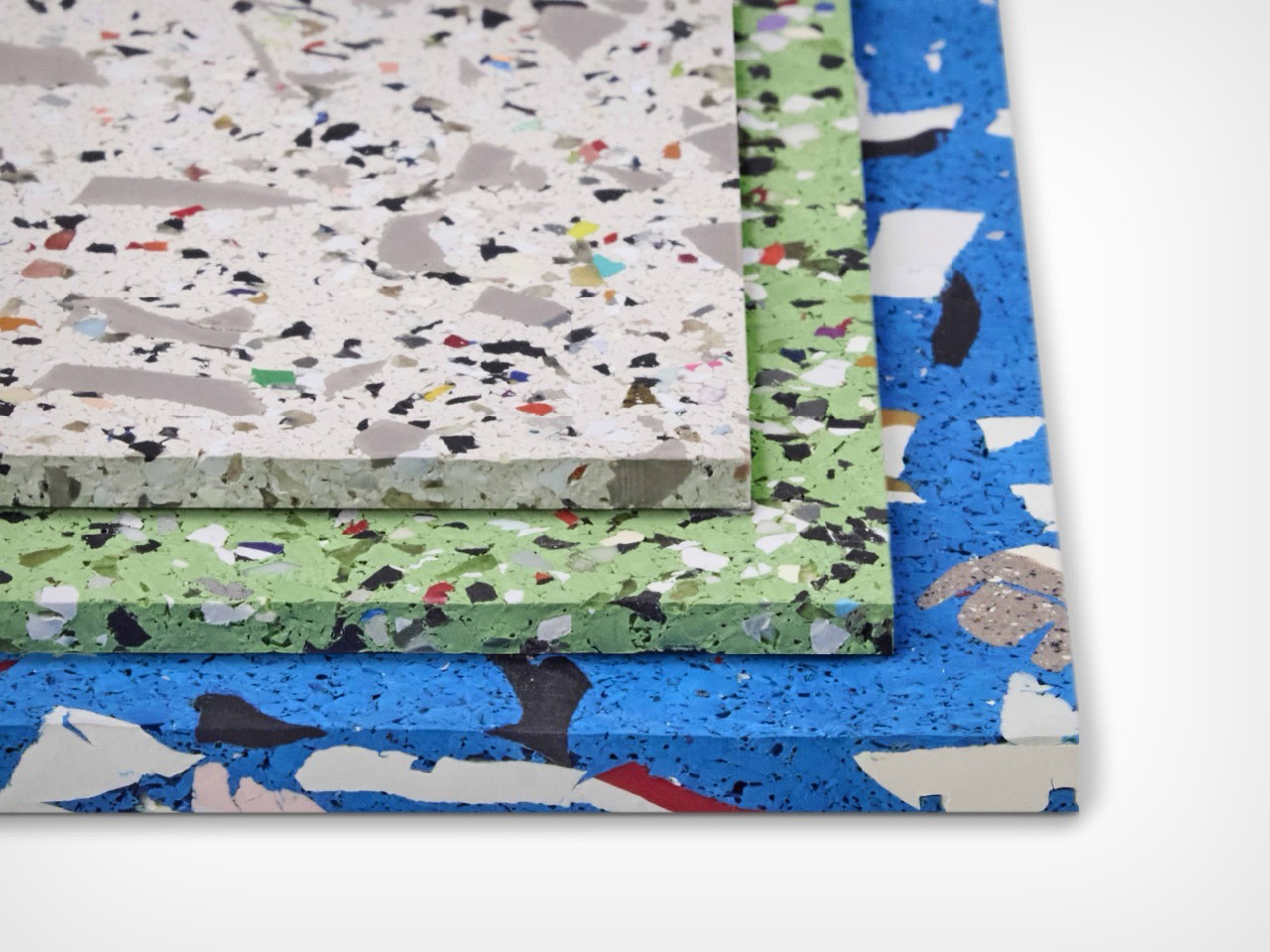
The three styles are basically the same trick shot at three different zoom levels. Original is the tightest and calmest of the bunch, a fine confetti speckle that would not look out of place in an office lobby that does not want to shout about being made from garbage. Vitality loosens the grain up, mixing two granule sizes so it starts looking like actual stone terrazzo instead of a printed knockoff of it. Axis is the one that goes for broke, with chunks big enough that you can actually clock they used to be a shoe sole. It is basically the difference between whispering “recycled” and yelling it, and I respect that all three options exist under one roof.
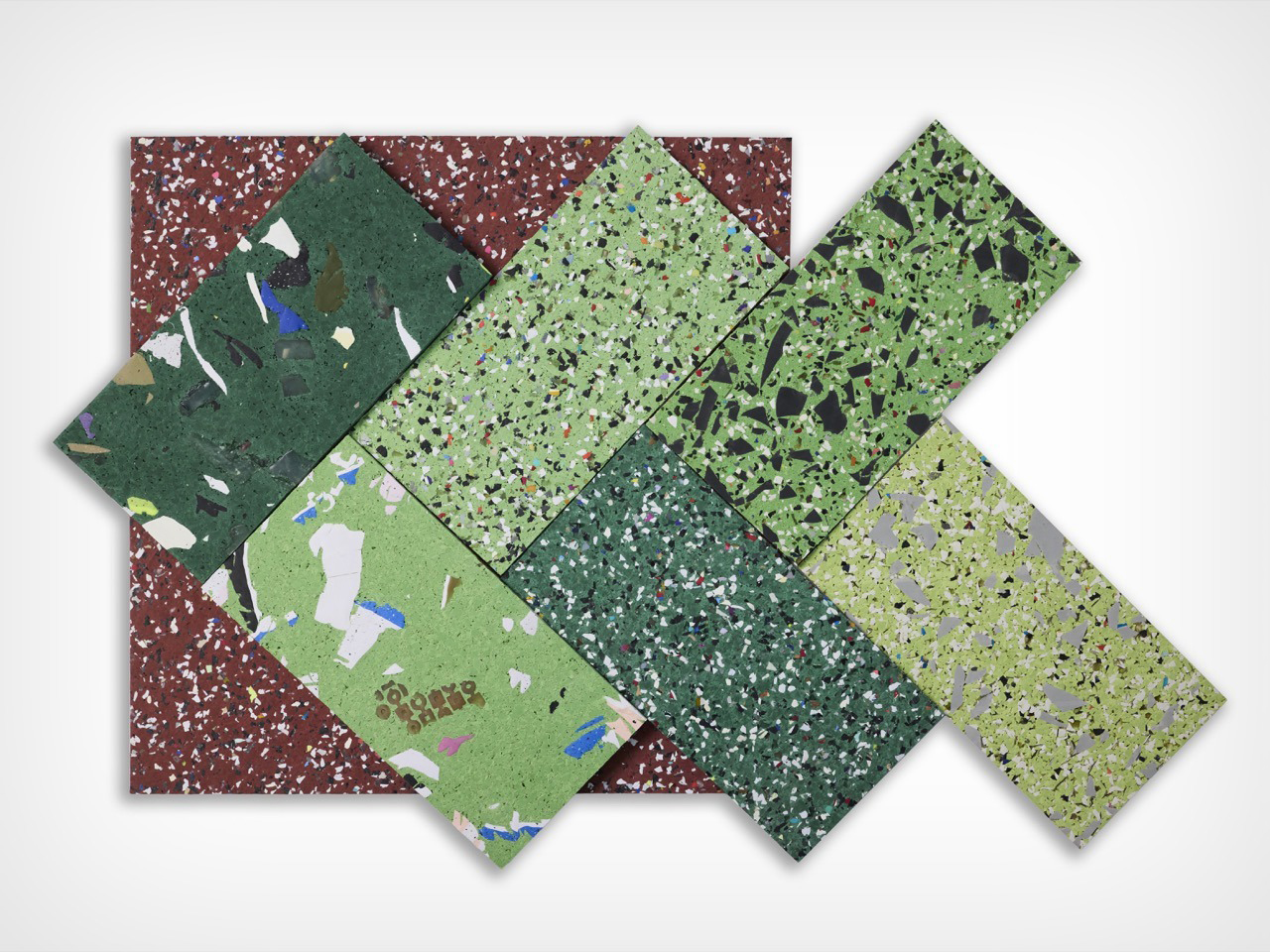
Axis is rated for actual athletic use under ASTM F2772, with an energy restitution score of 87.3 percent, meaning it eats a chunk of the impact when you drop a barbell instead of letting your knees eat it instead. Every style skips crumb rubber entirely, which matters more than it sounds like it should, because regular rubber gym flooring made from old tires smells like, well, old tires. Add FloorScore certification, a Declare Red List Free label, and a verified environmental report card, and you have got a floor that is doing its homework. The one thing I could not dig up anywhere, not on Mohawk’s site and not on Architizer, is a price. So budget for a phone call to a rep before you fall in love.

What I like most here is that this floor is not embarrassed about where it came from. Most recycled flooring tries to hide the recycled part, smoothing everything into a boring gray so nobody clocks the backstory. Hero Rubber does the opposite, letting actual shoe chunks sit right there on the surface for anyone paying attention. You show up to lift, you are standing on somebody else’s old kicks, wearing your own current pair, and the floor does not let you forget it. That is a better sustainability pitch than most brands manage with an entire ad campaign.
The post Old Nike sneakers are getting shredded and recycled into sustainable gym flooring first appeared on Yanko Design.