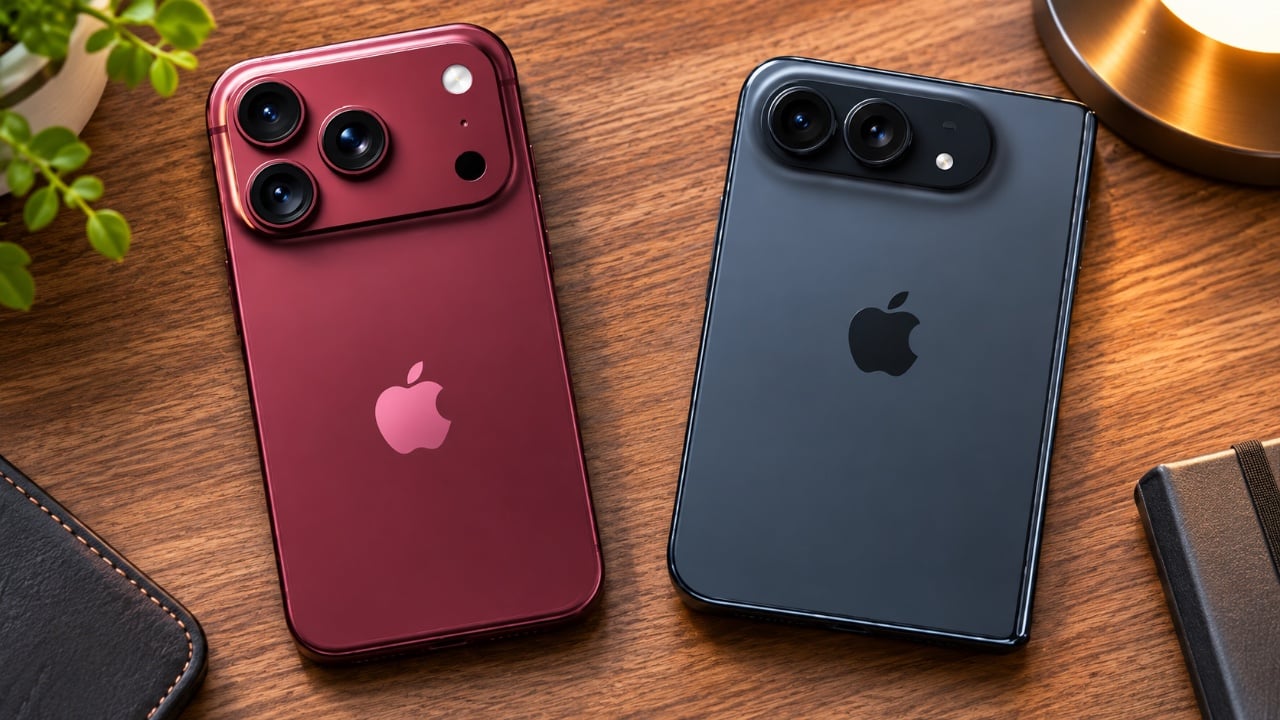
Apple’s latest flagship smartphones, the iPhone Duo and iPhone 18 Pro, cater to distinct user preferences, offering a choice between refinement and innovation. The iPhone 18 Pro builds upon Apple’s traditional design philosophy, emphasizing performance, durability and a familiar user experience. In contrast, the iPhone Duo introduces a foldable design that merges smartphone and tablet […]
Back in 1998, Nintendo sold a tiny thermal printer that hooked up to your Game Boy and printed grainy Game Boy Camera photos onto sticker paper. It was gloriously pointless, and I wanted one more than I wanted world peace. Those pixelated stickers ended up on lunchboxes, diaries, and the occasional bedroom wall, much to parents’ dismay. Nearly three decades later, the idea is back as a holiday gift built to get kids creating instead of scrolling. MUNBYN’s SP01 is a thermal sticker printer for kids, and where Nintendo’s needed a camera, this one runs on imagination and a microphone.
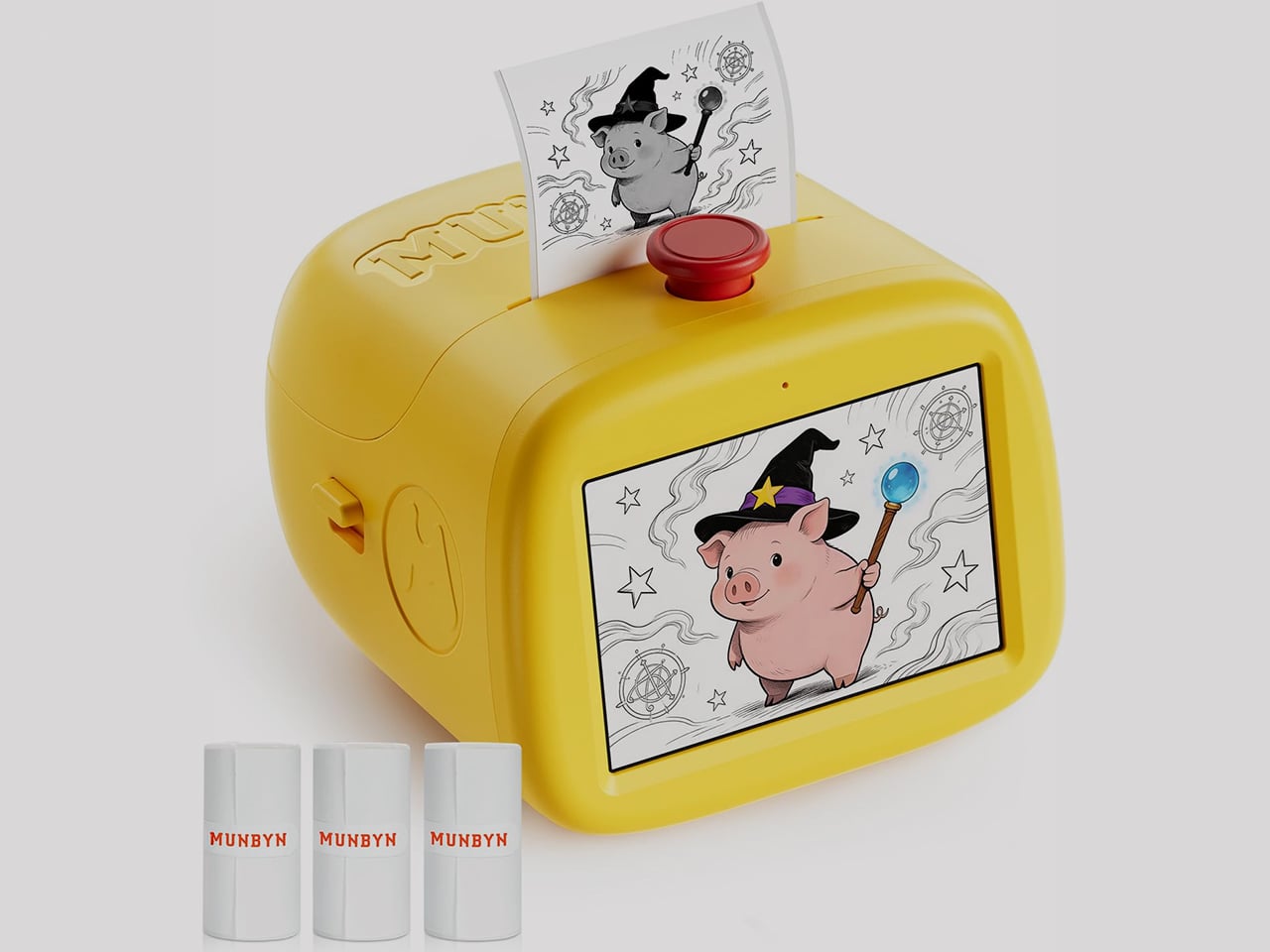
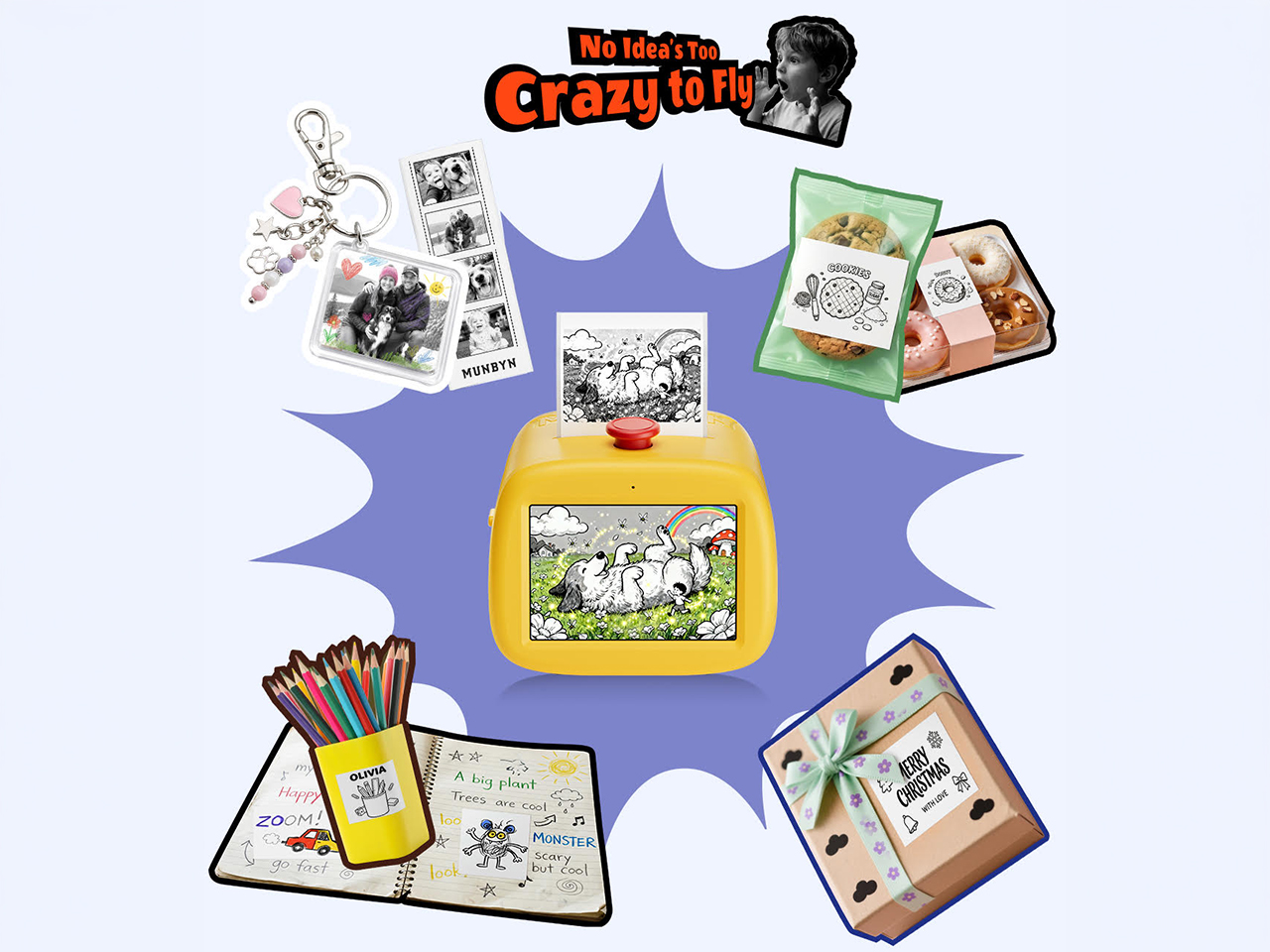
Kids press and hold a chunky red button on top, describe whatever they’re dreaming up, and AI turns it into black-and-white line art. That drawing prints on BPA-free thermal sticker paper, ready to be colored in, stuck down, and traded. MUNBYN mostly makes shipping-label printers, so the inkless hardware is familiar territory, but the bright yellow, toy-box styling is a fun new look for the brand. The mic only listens while the button is held down, which should put parents at ease. It costs $99.99 (available at a discounted $55.99 right now), and the AI side doesn’t come with a monthly bill.
The SP01’s chunky yellow shell looks like a TV set from a Saturday morning cartoon, with rounded corners, an embossed MUNBYN wordmark on top, and a little smiley face molded into the side. The star of the show is that oversized red button, borrowed straight from the vocabulary of game-show buzzers and arcade cabinets. Hold it, talk, let go, and the printer comprehends your prompt back out loud with a little jingle before it prints. The 3.5-inch screen sits tilted back 10 degrees, which MUNBYN says is meant to help with posture and eye comfort. The one-press lid is designed to be child-friendly and to protect children’s soft fingernails. With a gentle press, the lid pops open easily, so kids can change the paper themselves without needing an adult’s help or having to pry the lid open.
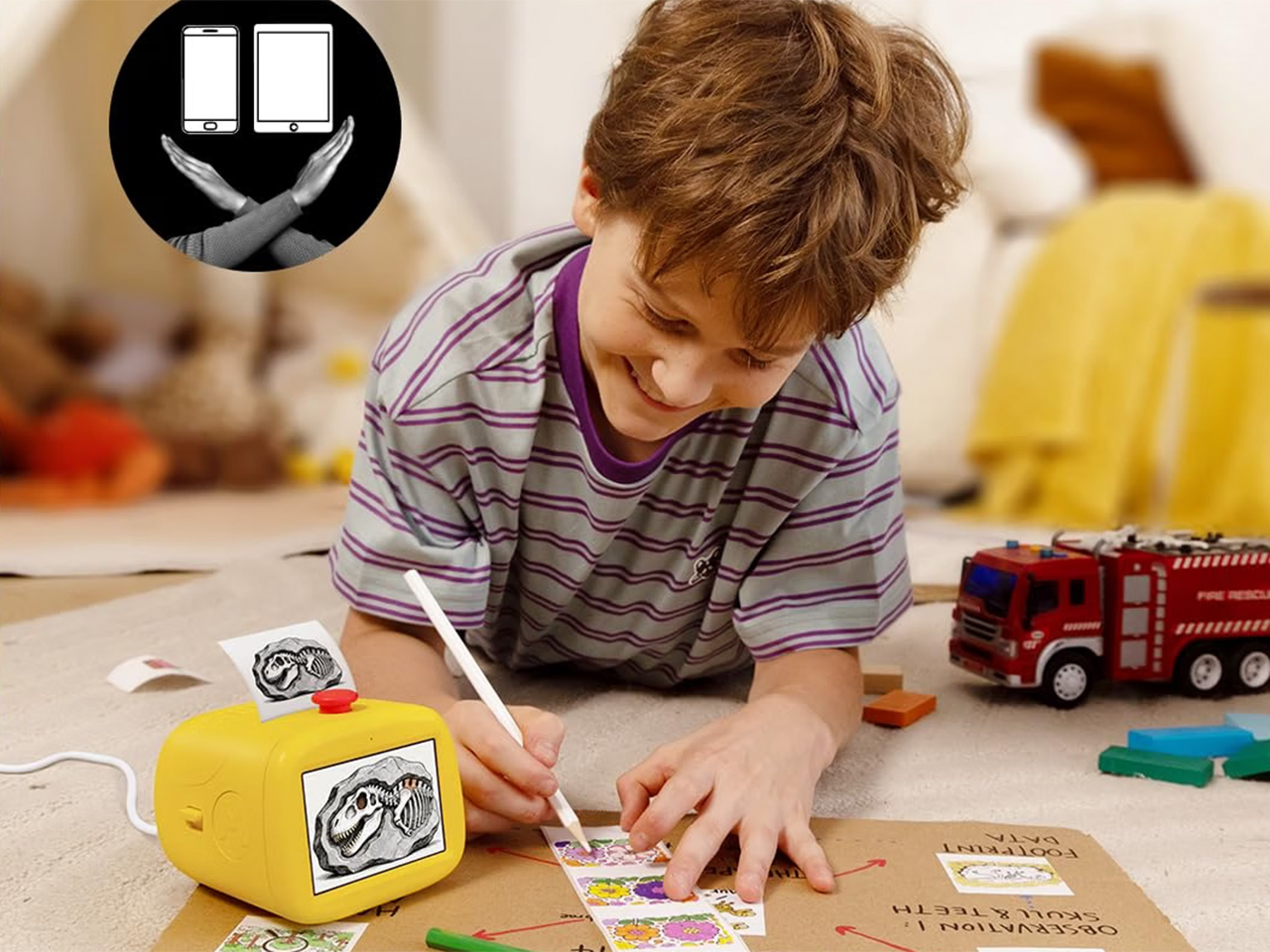
Also, no scissors are needed to tear the stickers. Kids can simply follow the visual guide on the top of the machine and tear the paper accordingly, which allows them to get a clean, neat edge without using scissors.
The button also doubles as the privacy policy, and I think it’s the smartest call on the whole device. The microphone only listens while it’s held down, so there’s no always-on assistant eavesdropping on dinner, and MUNBYN says voice data is processed on the device itself. MUNBYN also skipped the sharp cutter blade found on most label printers, so kids pinch, pull, and peel stickers off the roll. You’ll want scissors handy for neat edges, a fair trade for keeping blades away from seven-year-olds. Best of all, that screen shows sticker previews and menus, with no feed, no autoplay, and nothing to scroll.
Black-and-White Stickers that Kids can Color
Every sticker prints as black-and-white line art at 203 DPI, on BPA-free thermal paper that needs no ink, toner, or cartridges. The printhead moves at roughly 2 inches (50mm) per second, so the wait between saying “a pig wizard” and holding an actual pig wizard is short enough to keep a kid’s attention. The color happens afterward, with markers, crayons, and whatever else is rattling around the craft drawer. Out of the box you get three sticker rolls and a blank sketchbook to stick finished creations into, which is basically a starter scrapbook. A Photobooth mode turns four quick photos into a printed strip, mall photo booth style, minus the mall.
That monochrome output makes the AI a starting point and leaves the finishing to the kid. Coloring books have worked this way for well over a century, handing you outlines and trusting you with everything inside them. Stickers add the bit that made the 90s sticker binder so addictive, which is that you can trade them, gift them, and slap them on a sibling’s homework. A sticker a kid dreamed up, printed, and colored becomes something they actually made, and that feeling beats any number of likes. Digital art apps can do plenty, but none of them let you peel the result off and put it on a water bottle.
Why the SP01 Belongs Under the Tree
The SP01 lists at $99.99 and is currently $55.99 on MUNBYN’s US store as part of an early Black Friday deal, and it’s on Amazon too. AI generation is free and unlimited, so there’s no subscription auto-renewing in January. It meets ASTM F963 and CPSIA, the US toy safety standards, alongside CE, FCC, and RoHS certifications. Parents handle a one-time Wi-Fi setup through the companion app, and after that kids can create on their own without borrowing anyone’s phone. It runs off a wall adapter rather than a battery, which makes it a tabletop craft station, ideally parked in the living room where everyone can watch the chaos unfold.
Kids’ gifts tend to land in two camps: the ones that vanish into a closet by February, and the ones that swallow screen time whole. The SP01 sidesteps both by giving kids something new to make every day, whether that’s a dinosaur for a lunchbox, a label for a pencil pouch, or a sticker for Grandma’s birthday card. Everything it prints ends up stuck on the fridge, traded at school, or pasted into that sketchbook, which is about as far from another hour on a tablet as kids’ tech gets. I never did get that Game Boy Printer, but I still remember the thrill of watching a sticker roll out of a machine at a friend’s house. Give a kid that feeling this holiday season by grabbing the SP01 from MUNBYN’s website.
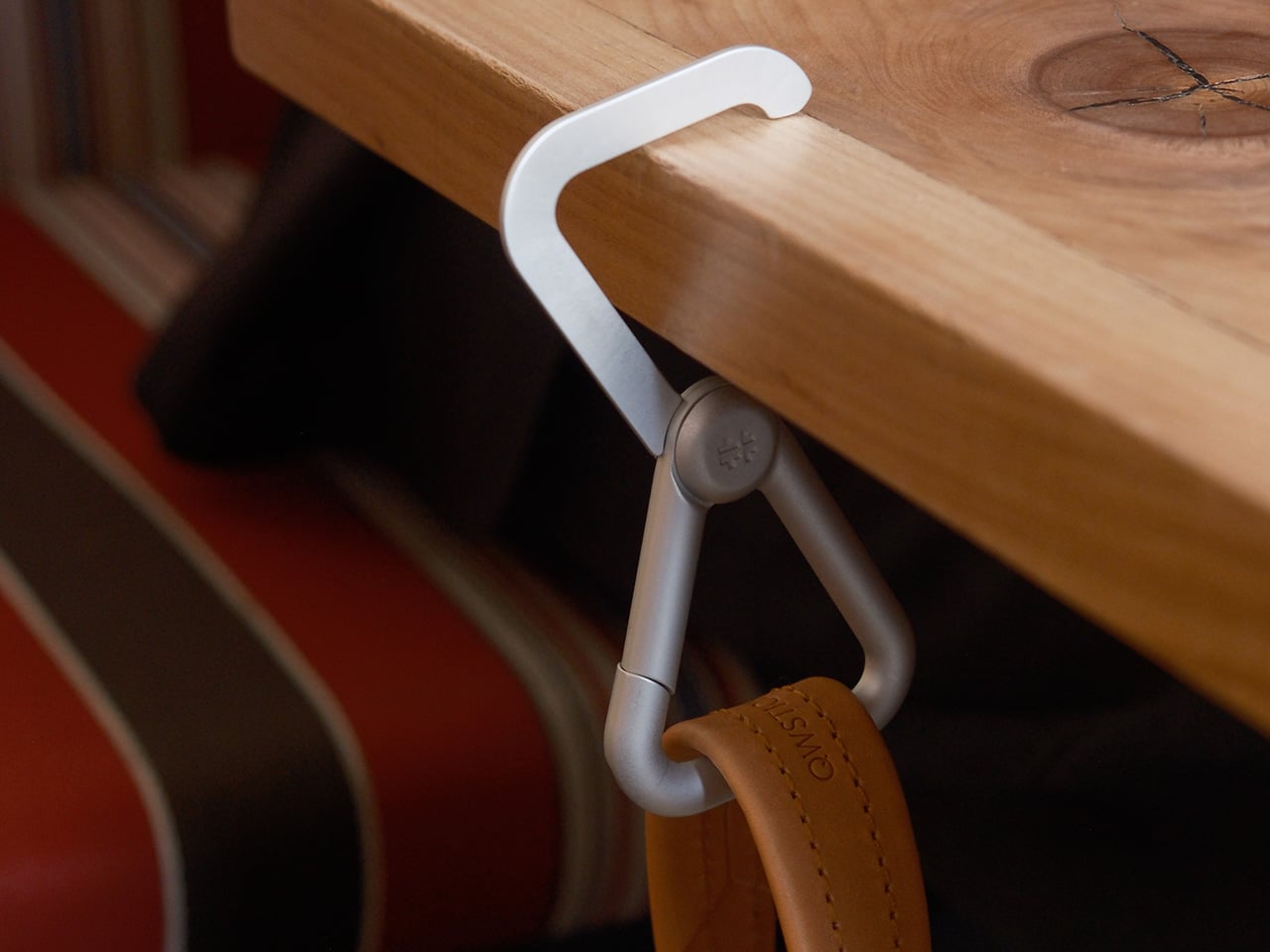
The carabiner has had a wild career. It started as the Karabinerhaken, German for “carbine hook,” a clip that let soldiers attach their carbines to a belt. Climbers adopted it in the early 1900s, and somewhere along the way it ended up holding the keys of every college student, dad, and barista on the planet. Now KOLABO, a travel accessories brand out of Los Angeles, has taught it a new trick. The Axl HOOK is a carabiner with an arm that rotates out into a hook, so you can hang your bag off a table instead of dumping it on the floor.
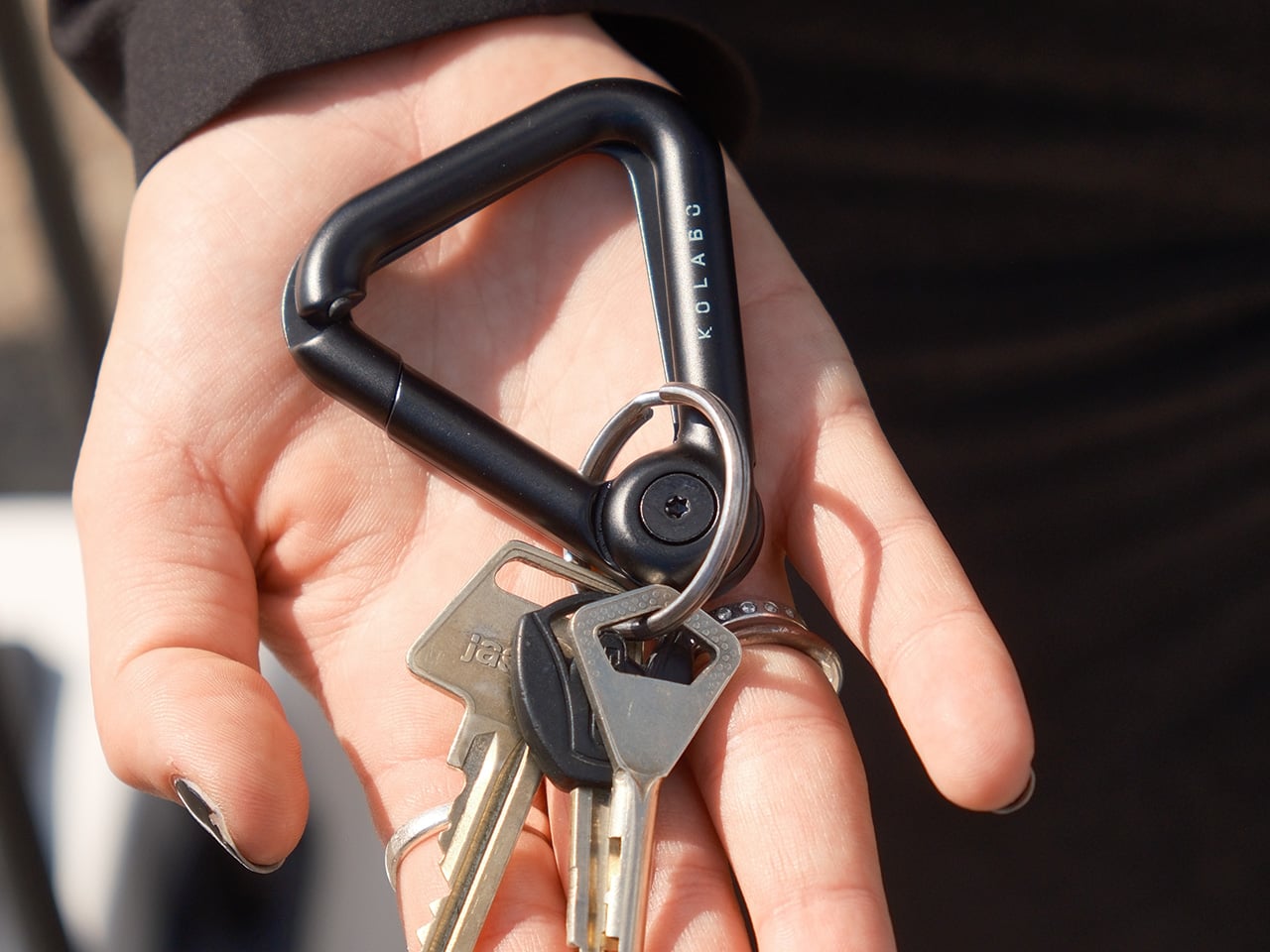
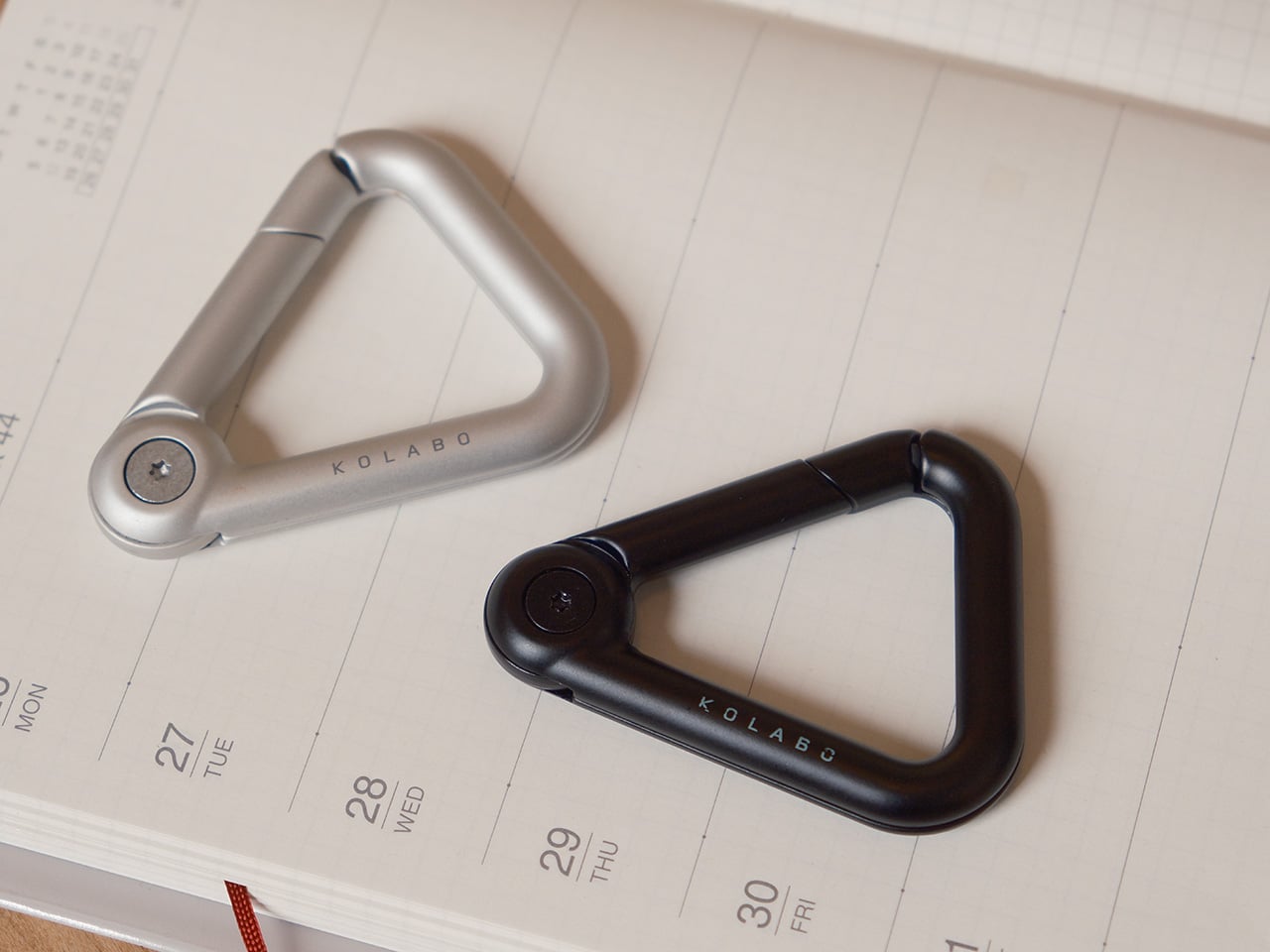
Designed with Copenhagen studio Wahl&Ross, the Axl HOOK takes the shape of a soft-cornered triangle. One corner hides a pivot, and the integrated rotating mechanism allows the hooked arm to swing outward . A rubber tip at the end is designed to grip the table surface so your bag stays put. The whole thing is forged and CNC-machined from 6061 aluminum, measures 2.76 x 2 inches (70 x 51 mm), and weighs a feathery 1.1 ounces (32 grams). KOLABO rates it for 48 pounds (22 kg), offers it in Matte Black or Matte Silver, and lists the retail price at $28. First soldiers, then climbers, and now commuters who just want somewhere to put their tote bag.
From Keyring to Bag Hanger in One Swing of the Arm
The entire transformation hinges (literally) on one integrated pivot tucked into a corner of the triangle. A single screw anchors the joint, and the hooked arm rotates around it, swinging up and away from the body until it stands proud of the frame. Fold it back and the arm nests into the triangle’s outline, so the carabiner looks like a plain carabiner again with nothing poking out. KOLABO sums up the motion as press, rotate, hook, and that really is the whole user manual. I’m a big fan of mechanisms you can figure out without squinting at an instruction card, especially ones you’ll be working one-handed with a coffee in the other.
A discreet rubber pad caps the end of the arm, adding grip right where metal meets tabletop. That little tip is meant to keep the hook from skating across glossy café counters or lacquered wood when a heavy bag starts tugging on it. On the opposite side, a solid spring-loaded gate handles regular carabiner duty, snapping shut when you let go. It’s a straight, chunky bar instead of a skinny wire, which suits the object’s sculpted look and gives your thumb a broad surface to press. Clip it to a belt loop, a water bottle, or a bag strap between stops.
Forged 6061 Aluminum Rated for 48 Pounds
KOLABO builds the Axl HOOK from 6061 aluminum, an alloy containing magnesium and silicon that shows up everywhere from bike frames to camera rigs. The parts are forged first and CNC-machined second. Forging presses the metal into shape under enormous force, aligning its grain structure for toughness, while machining carves in the crisp edges and precise detailing. KOLABO lists a maximum recommended load of 48 pounds (22 kg), enough for a packed laptop bag, a grocery tote, or a weekender stuffed with questionable souvenirs. It’s built for bags and keys rather than people, so keep it far away from your climbing harness.
The frame measures 2.76 x 2 x 0.39 inches (70 x 51 x 10 mm), small enough to disappear into a palm. At 1.1 ounces (32 grams), your keyring will barely register the extra passenger. The 10mm thickness keeps the profile slim against a bag strap or inside a pocket. Every edge is rounded and the tube-like arms carry soft, continuous curves, intended to keep them from snagging fabric or digging into your hand. Matte Black leans architectural and minimal, while Matte Silver reads clean and technical. Personally, I’d go black for how it turns the triangle into something close to jewelry.
A Postmark From Copenhagen, Laser-Etched Into Aluminum
Axl HOOK came out of a collaboration between KOLABO in Los Angeles and Wahl&Ross in Copenhagen, with final refinements worked out alongside a precision manufacturing partner in Taiwan. The development photos show walls of sketches and rows of 3D-printed prototypes in different shapes and proportions. The Copenhagen link is laser-engraved right into the frame, along with the studio’s coordinates, a sweet little postmark of where the design took shape. Even the box gets a minimal printed carton with a line drawing of the hook that you’ll probably keep in a drawer for no reason. Axl HOOK is the first product from KOLABO, a Los Angeles-based design brand focused on rethinking everyday travel essentials. Inspired by movement and the moments in between, the brand aims to create functional objects with a restrained design language.
I’ve always believed the best everyday objects fade into the background until the exact moment you need them, and the Axl HOOK fits that idea beautifully. It rides on your keys as a tidy triangle, then becomes a bag hanger when a table shows up. The Axl HOOK will retail for $28 and is currently available on Kickstarter at $24 per unit, or $22 while early-bird slots last, with multi-packs dropping the price to as low as $18 each. Matte Black and Matte Silver are both on offer, and you can mix finishes across multi-unit orders. Fulfillment is planned through a U.S. partner with delivery estimated for December 2026.
A record sleeve gives you something to hold while you decide what to play. A cassette asks you to pick a side. Neither action is especially efficient, which is part of the appeal. When music is always a tap away, an object that asks for a little attention can make listening feel like a choice again, rather than another app left quietly running somewhere behind the rest of your day.
These three audio designs give that attention somewhere specific to go. Waiting for Ideas simplifies the mechanics of vinyl, the Portable CD Cover Player makes room for album artwork, and We Are Rewind puts cassette controls back within reach. They approach physical music from different directions, without requiring the argument that older formats automatically sound better. The interest here is how each object changes what you actually do before listening.
1. PP-2 Turntable
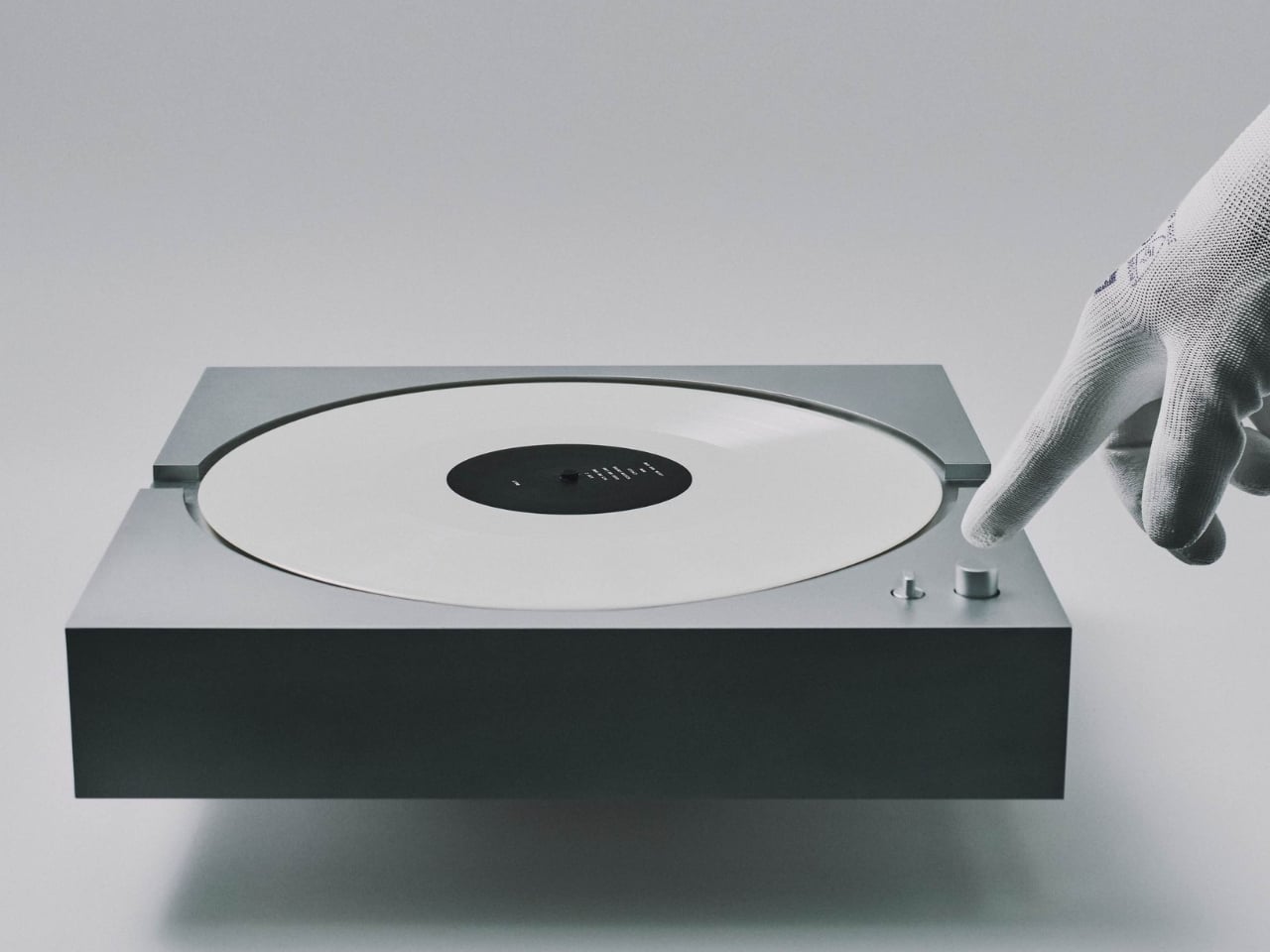
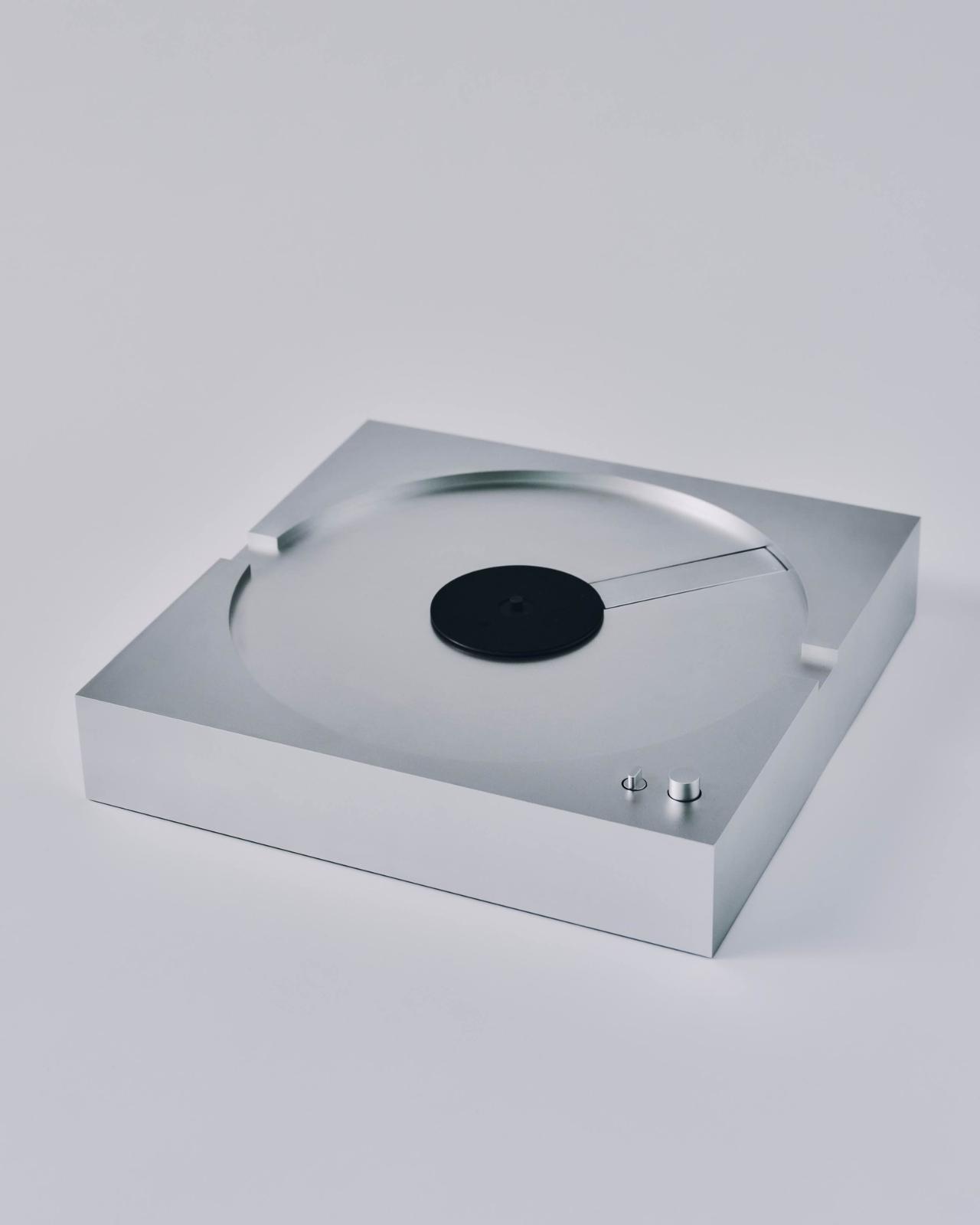
Waiting for Ideas’ PP-2 keeps the record but hides much of the machinery associated with playing it. The Paris studio’s turntable is CNC-machined from a solid block of aluminum, with no exposed tonearm to position. You place the record upside down and press Play, leaving the mechanism underneath to follow the groove. It’s an appealing distinction for anyone drawn to vinyl’s physical format but less enthusiastic about turning cartridge setup and tonearm adjustment into a second hobby of their own.
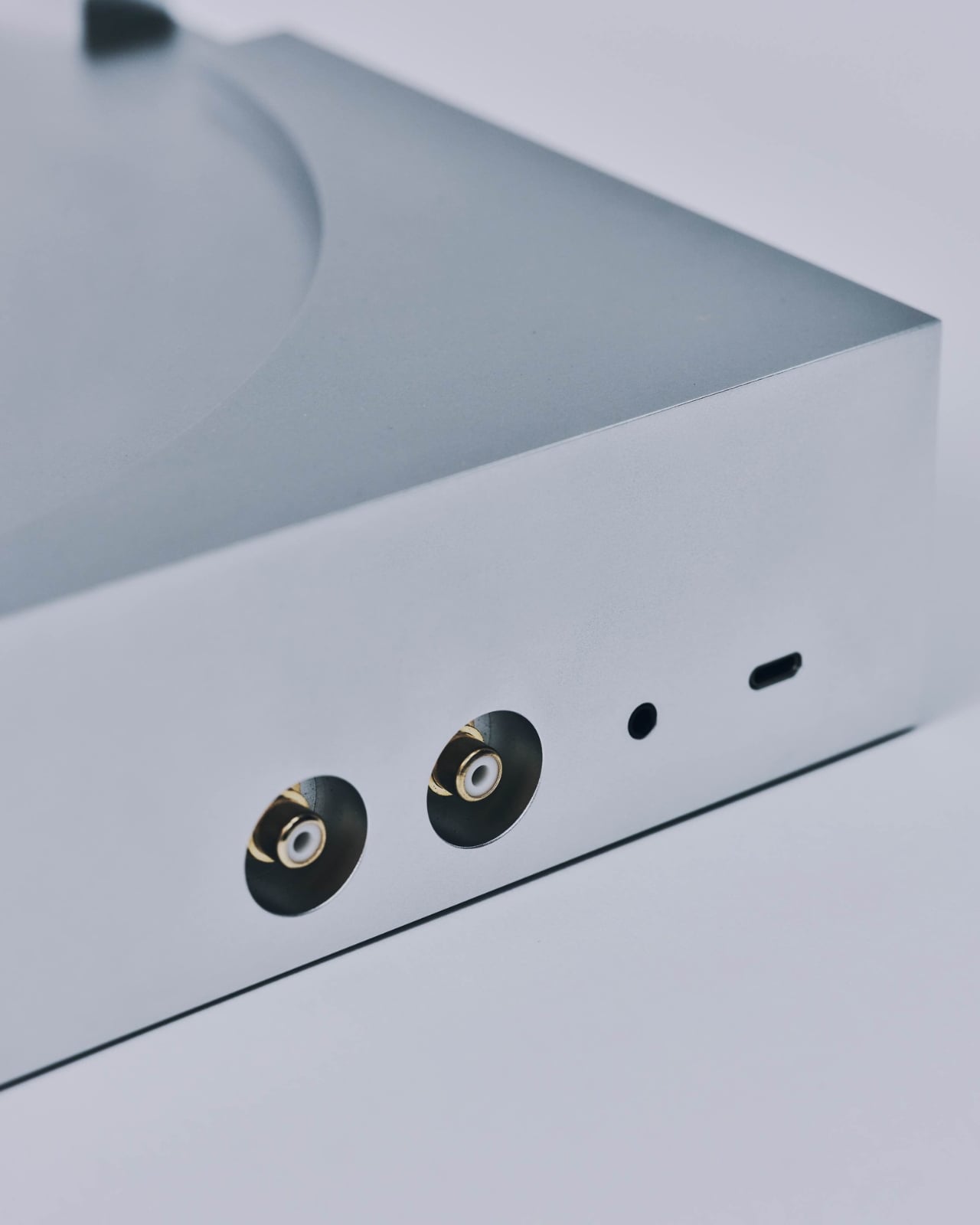
The optical pickup still uses a stylus touching the record; light measures its movement rather than magnets and coils. A built-in Harmony preamplifier lets the PP-2 connect to an amplifier’s line input or active speakers without a separate phono stage. That makes the simplicity more than cosmetic, though the US$9,76 price puts it firmly in luxury territory. Currently listed for preorder, this is a considered system purchase, not an impulse route into playing the records you already own at home.
What we like
Playback from underneath removes manual tonearm cueing.
The integrated preamplifier reduces the supporting equipment needed.
What we dislike
€8,900 is a substantial premium for simplified playback.
Preorder status means waiting before you can start listening.
2. Portable CD Cover Player
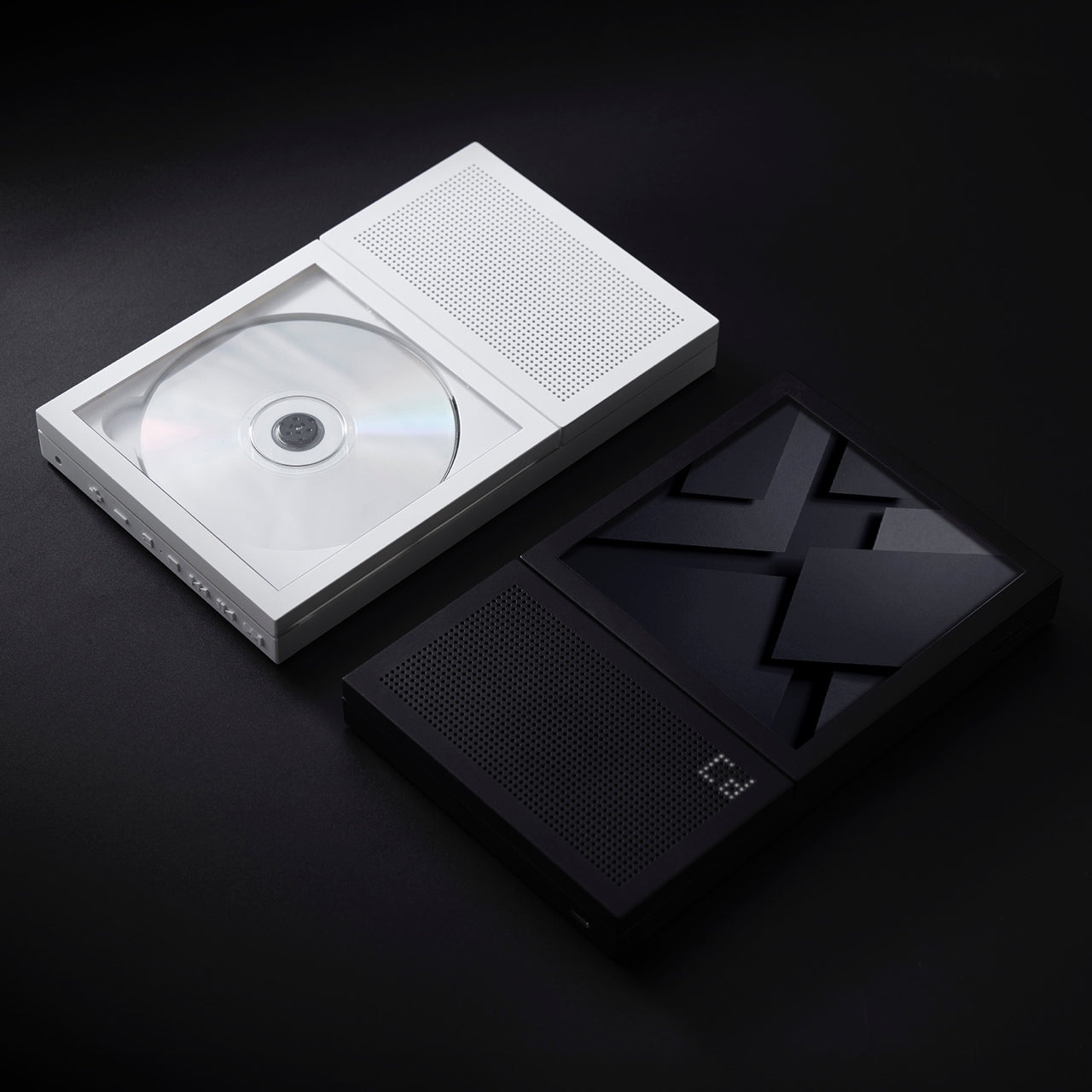
The Portable CD Cover Player gives the album sleeve a job after you’ve taken the disc out. A dedicated pocket displays the jacket artwork while the player handles the music, making the cover part of the object rather than something returned to a drawer. That decision feels especially well suited to a shelf or bedside table. You can see which album is playing without waking a phone, and the artwork gets more space than a thumbnail on a streaming interface.
It has a built-in speaker, a rechargeable battery, USB-C charging, and a 3.5mm headphone output. Those inclusions let it work without a separate speaker or a permanent place beside a wall outlet. The shop lists six to seven hours of speaker playback per charge, though that’s a stated figure rather than our test result. Wall mounting is possible with a separately sold bracket, turning a favorite CD into a modest piece of musical decor.
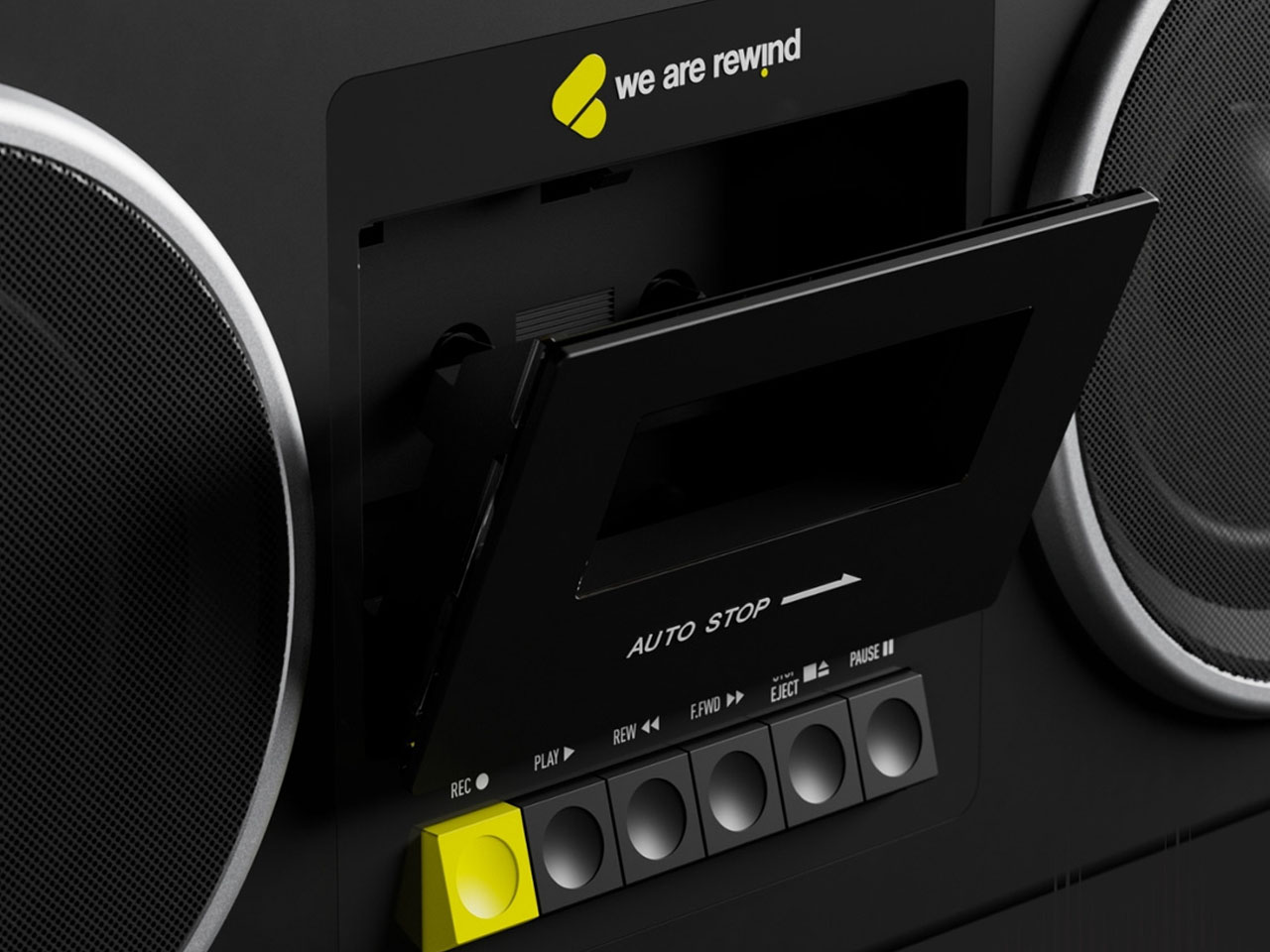
We Are Rewind’s GB-001, now sold as the Blaster Curtis, makes a much larger gesture. Its cassette deck sits between prominent speaker grilles, with physical transport buttons and a folding metal handle completing the familiar boombox arrangement. Backlit VU meters give playback and recording levels a visible presence, while dedicated bass, treble, and balance controls keep adjustments on the machine. For anyone who misses operating a stereo rather than navigating an app, that accessible collection of controls is the attraction.
This is a working cassette player and recorder, supporting Type I and Type II tapes, with Bluetooth available when your collection runs out. Four speakers and a rechargeable, replaceable battery make it a self-contained system rather than a deck awaiting other components. Portability needs some perspective: the manufacturer lists a weight of 6.81 kilograms, roughly 15 pounds. That handle is useful for moving it between rooms, but this is a substantial object to carry, even before you pack any cassettes.
What we like
Recording capability gives blank tapes a practical purpose.
A replaceable rechargeable battery is a welcome ownership detail.
What we dislike
Roughly 15 pounds is heavy for casual carrying.
At nearly 20 inches wide, it needs proper shelf space.
Give the Player a Job
Before making room for any dedicated player, think about the part of listening you actually want back. It might be choosing one album, reading its credits, or making a recording for someone else. Buying hardware won’t supply that habit on its own. The object earns its place when its controls, storage needs, and everyday setup make that particular activity easier to return to, rather than another project waiting for attention.
That also leaves plenty of room for streaming. There’s no need to make every commute, dinner, or background playlist into a ceremony. A physical player can serve a smaller, more deliberate purpose: giving an album a place and a stretch of time that belongs to it. The design succeeds when picking up the record, disc, or tape feels worth doing, even with a perfectly convenient phone sitting within easy reach.
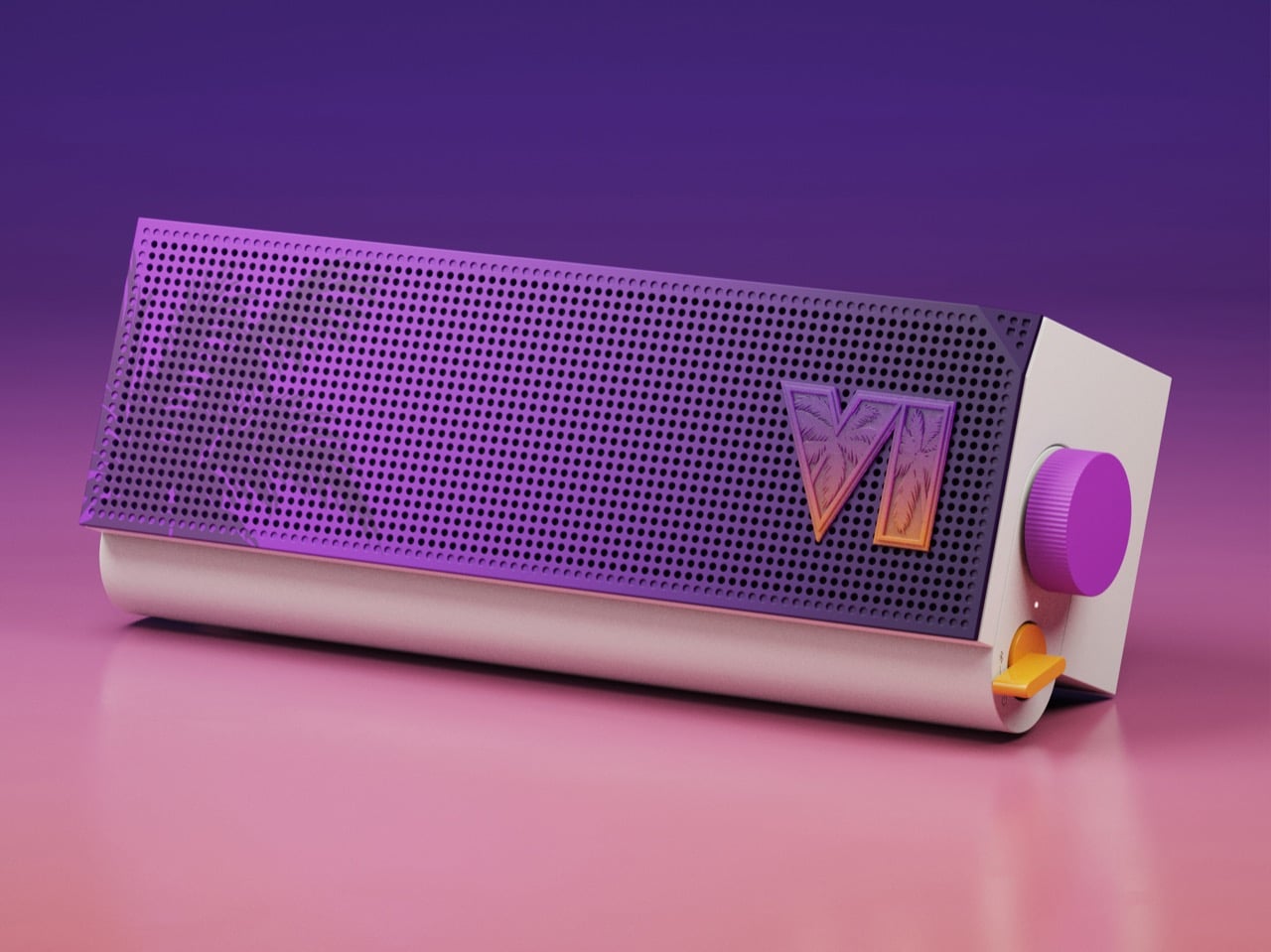
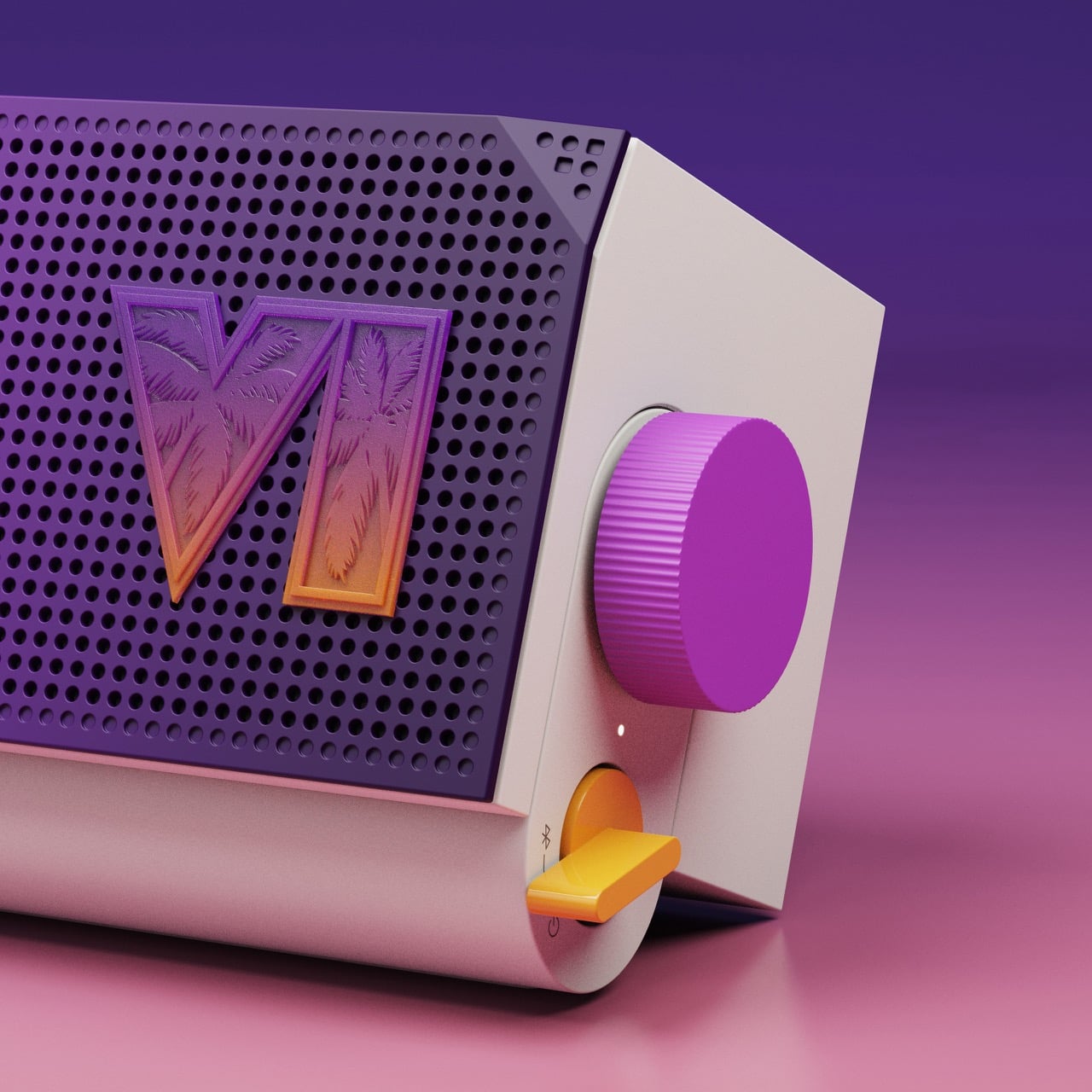
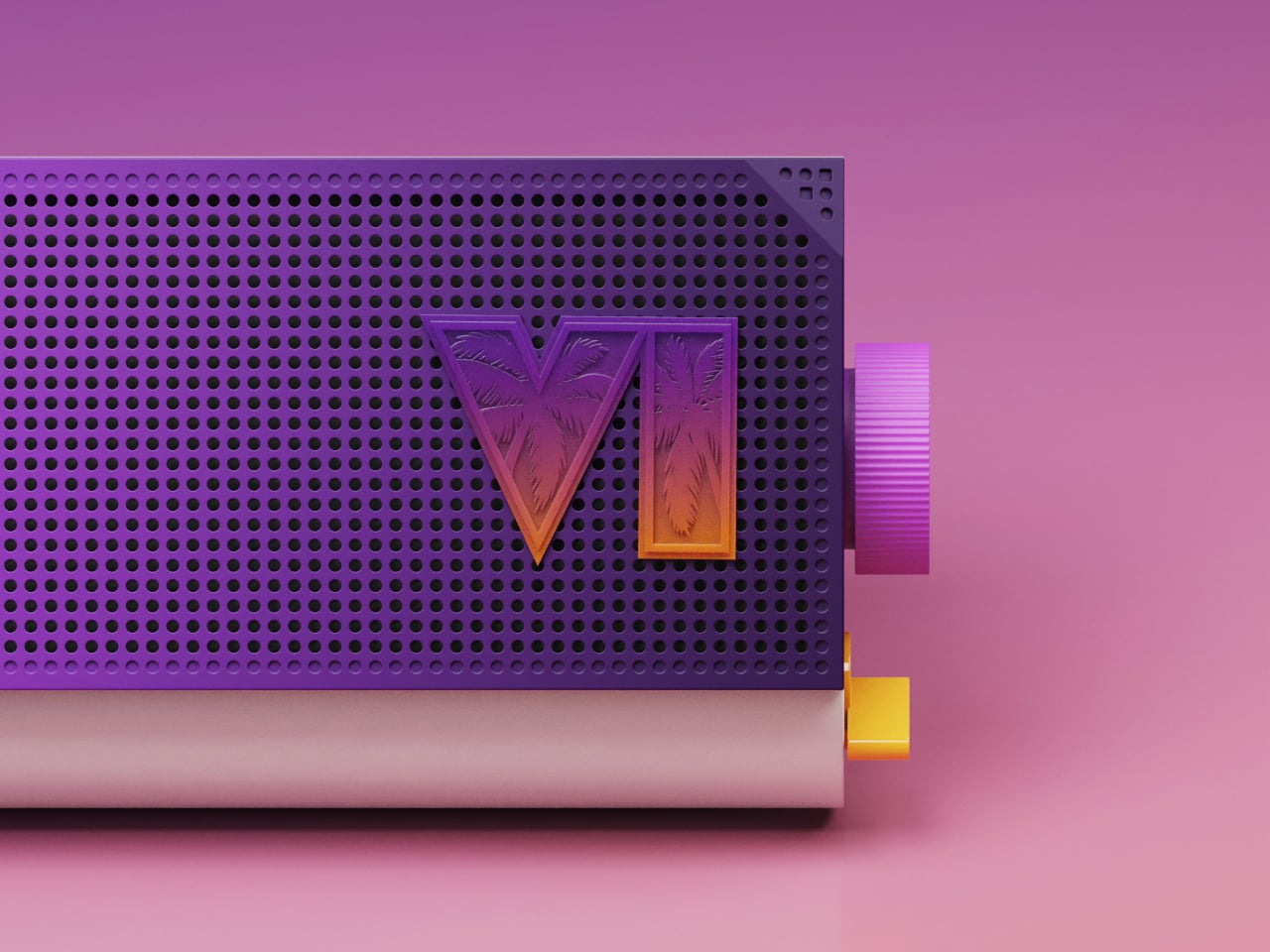
GTA VI dropped yesterday, and the brand tie-ins are already piling up. Rimowa already ushered things in by rolling out a GTA VI-themed travel case with a custom PS5 inside. Give it a week before we’re drowning in VI sneakers, VI energy drinks, and probably a VI toaster. Sidhant Patnaik’s contribution is more useful at a desk: a Vice City edition of his BT20, a compact near-field Bluetooth speaker. The grille goes full purple, palm fronds cast shadows across the perforations, and a chunky gradient VI badge sits up front like it owns the place. It’s an unofficial fan design, and it nails the vibe better than most licensed merch ever does.
Sidhant designed the original BT20 to replace what he calls “tinny built-in monitor speakers” with something more substantial, though he also wanted it “not too serious.” Think of it as the middle ground between wearing headphones all day and getting up to switch on the big room speaker, a problem he half-jokingly admits might be niche. I’d argue it describes basically everyone with a desk job. The original wears navy, mustard, and orange, and the GTA edition gives the same design a completely different personality.
Designer: Sidhant Patnaik
The BT20’s profile comes down to two shapes: a long cylinder along the base and a rectangular grille block resting on it. Angular end plates cap each side and extend below the cylinder like kickstands, leaning the entire speaker back toward a seated listener. That tilt addresses a familiar problem in desk audio: speakers sit at keyboard height while your ears sit a foot or two higher. Audio brands like Audioengine sell angled stands to address this, typically tilting speakers back around 15 degrees. Sidhant skips the accessory and builds the angle into the chassis, so the grille points toward your face instead of your sternum.
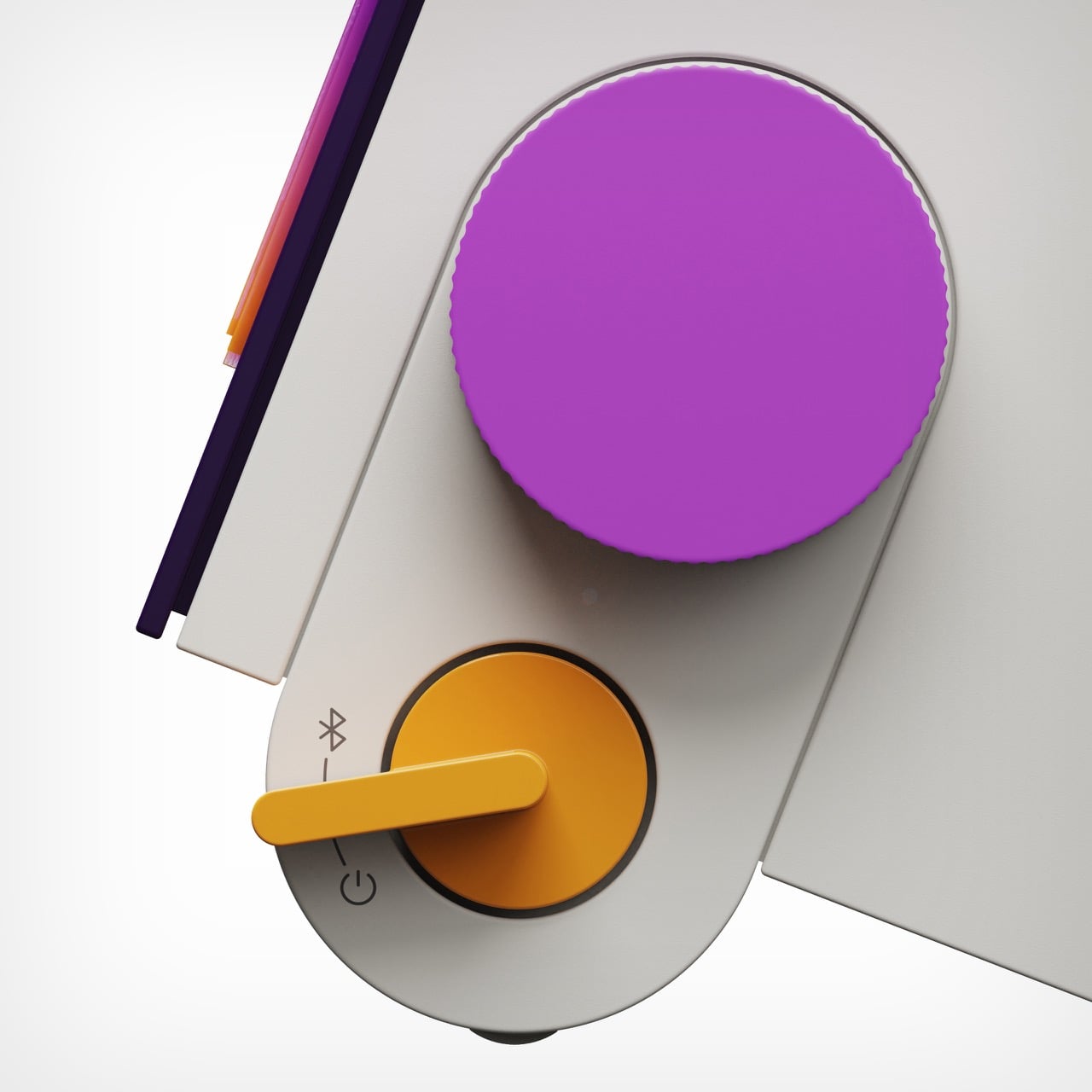
All the controls live on the right end plate, and they’re gloriously physical. A big knurled dial controls volume and pauses playback with a press, while a stubby lever beneath it handles power and Bluetooth pairing, pivoting like the film-advance lever on an old SLR. Sidhant wanted “mechanical satisfaction,” and his Google Pixel Headphones concept made the same bet on real buttons over touch panels. The perforated grille follows a strict square grid that recalls Dieter Rams’ work at Braun, with one top corner chamfered into a tiny triangle of square holes. It’s a small rule-break that keeps the whole thing from looking like a radiator cover.
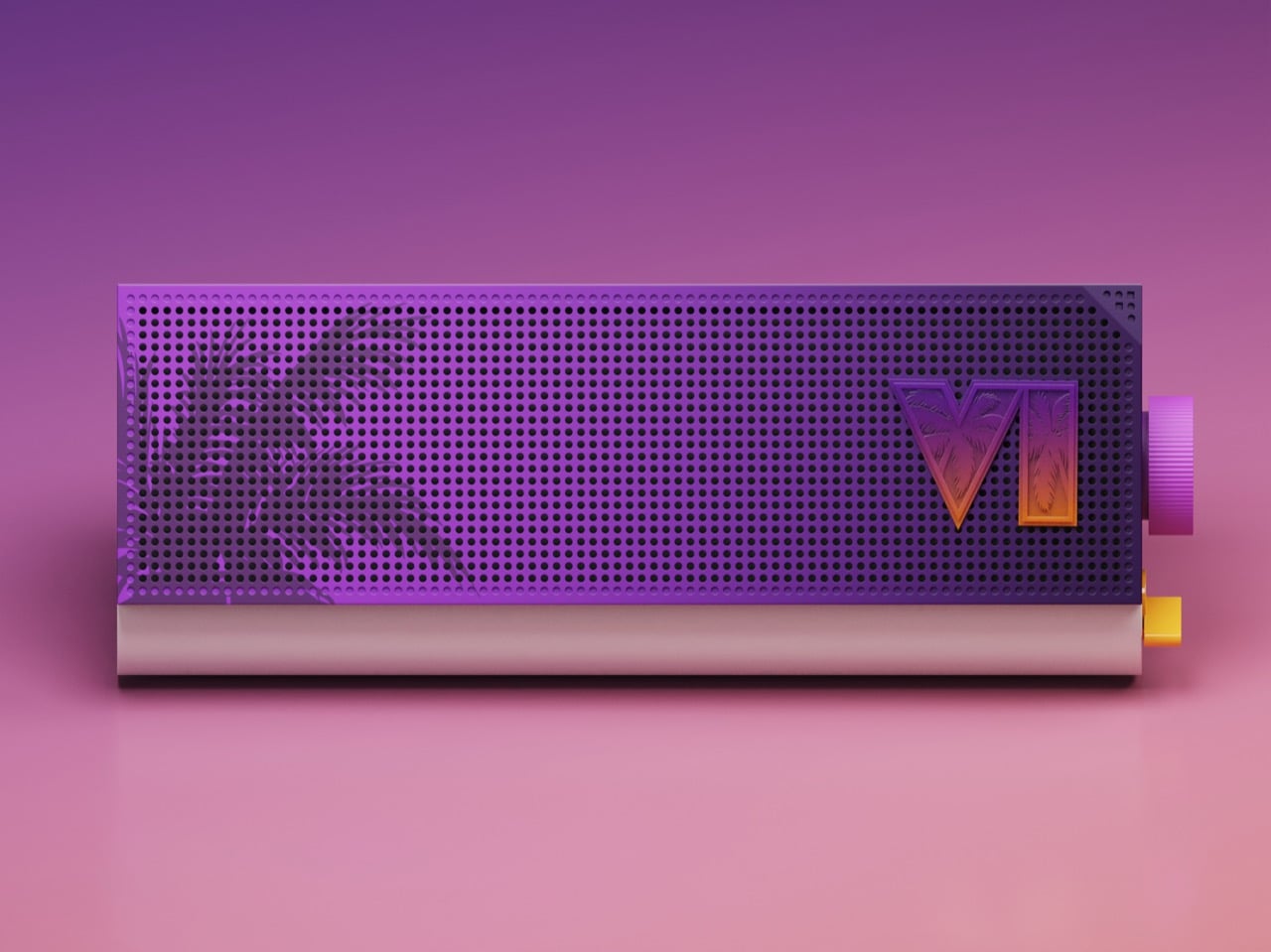
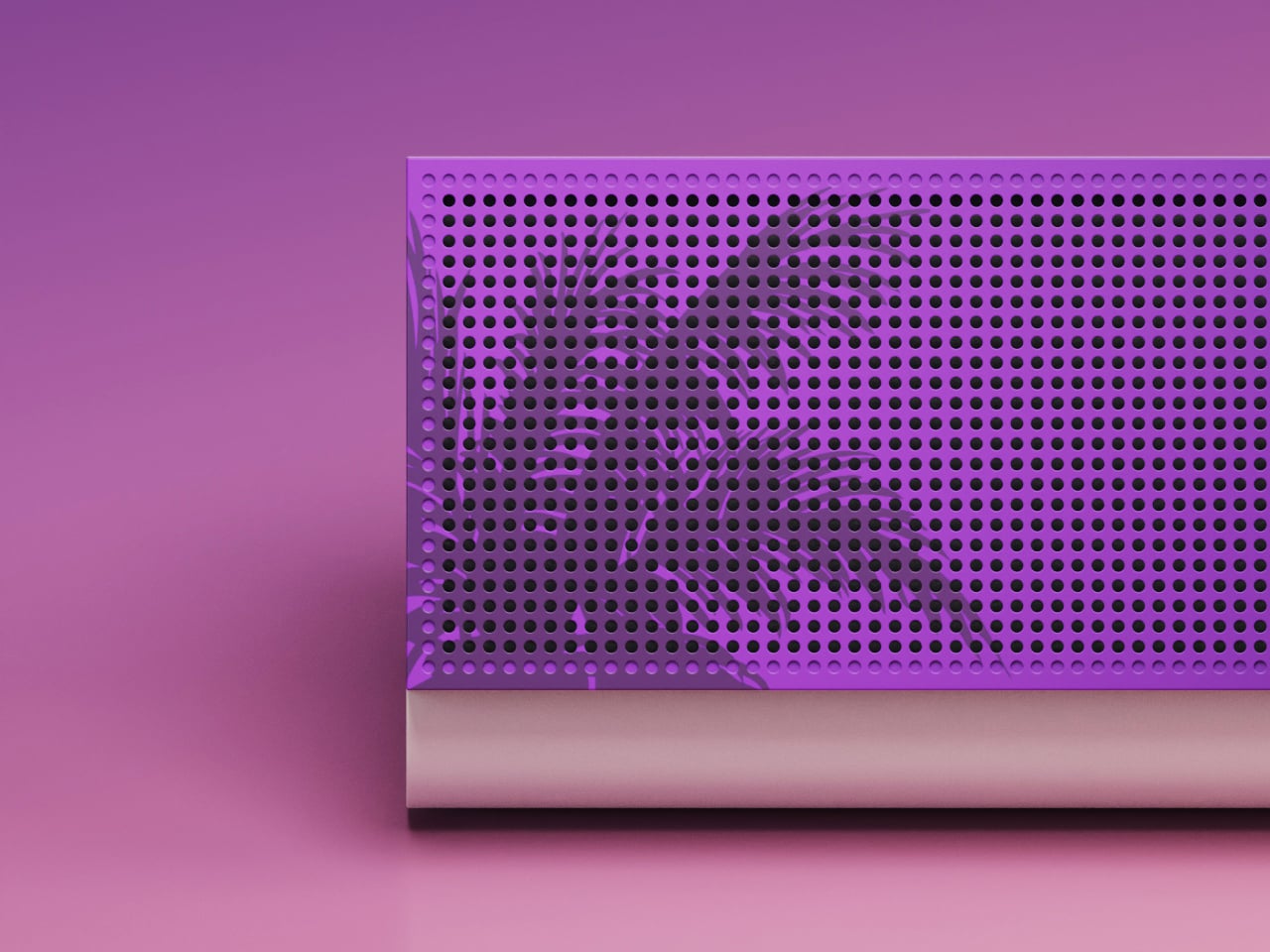
The Vice City edition swaps the navy for a violet gradient that deepens toward the edges, with a palm frond shadow printed across the left side of the grille, as if a tree were catching the last of the sunset behind you. The perforations break up the image like halftone dots, a happy side effect of printing graphics on a perforated panel. The raised VI badge borrows directly from Rockstar’s logo, with palm trees etched inside the numerals and a purple-to-orange gradient fill. The body flips to pearl white, the dial goes magenta, and the lever turns amber. It reads like Vice City’s 2002 pastel palette run through a 2026 render engine.
The flat grille gives the graphics a broad canvas that a cylindrical speaker doesn’t. Speakers like the JBL Flip wrap their graphics around a curve and lose half of them to the back, while the BT20 presents one big flat panel to the viewer. Sidhant’s Behance portfolio includes work on boAt’s Airdopes and Nirvana lines, plus a Marvel edition, so special editions are familiar territory. Here, the shape and controls stay put while the colors and graphics change. If Rockstar ever wants an official desk speaker for Leonida’s finest, the brief is basically sitting right here, palm shadows and all.