You can now use ChatGPT to open Shazam instead of… just opening Shazam

Shazam is now available within ChatGPT, if you don’t want to launch the music discovery app on your phone for, well, reasons. You will have to link the Shazam app with the chatbot first from its Apps page, after which you can summon it in-chat to identify whatever song is playing. To summon Shazam in-chat, you can use prompts like “Shazam, what’s playing?” or “Shazam, what is this song?”

A box will pop up that you can tap on to launch the music discovery service, which will then listen to the tune playing. ChatGPT will display the song’s name, artist and artwork, along with the option to save the song to Shazam. Take note that the feature will work within ChatGPT even if you don’t have the music discovery app downloaded on your device, which does make it useful if you’re using a phone with full memory. The Shazam integration has started rolling out globally within ChatGPT on iOS, Android and the web.

This article originally appeared on Engadget at https://www.engadget.com/apps/you-can-now-use-chatgpt-to-open-shazam-instead-of-just-opening-shazam-114000363.html?src=rss

The World’s First Privacy Display? Things to Do First with Your New Samsung Galaxy S26 Smartphone

The World’s First Privacy Display? Things to Do First with Your New Samsung Galaxy S26 Smartphone Samsung Galaxy S26 Smartphone

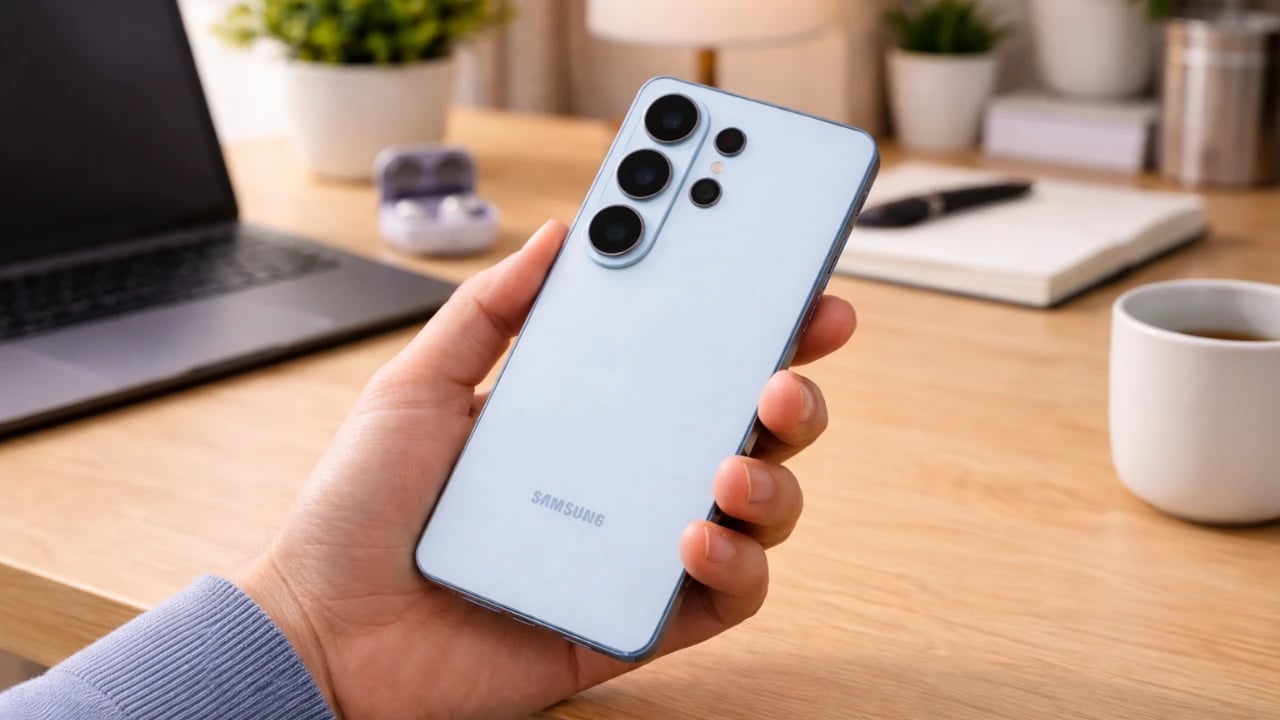
  The Samsung Galaxy S26 and S26 Ultra are equipped with a wide array of advanced features designed to elevate your smartphone experience. From enhanced privacy tools to state-of-the-art camera technology, these devices offer a comprehensive suite of options to optimize performance, personalization, and usability. The video below from WhatGear explores 17 essential features that […]

The post The World’s First Privacy Display? Things to Do First with Your New Samsung Galaxy S26 Smartphone appeared first on Geeky Gadgets.

Posted in Uncategorized

Helix 02 Humanoid Robot: Whole-Body Manipulation & Flexible Object Handling

Helix 02 Humanoid Robot: Whole-Body Manipulation & Flexible Object Handling Figure’s Helix 02 humanoid robot tidies a living room, picking up scattered items and placing them in bins.

The Helix 02 humanoid robot from Figure Robotics showcases a remarkable ability to handle the complexities of living room cleanup, a task that demands both adaptability and precision. Unlike the structured layouts of kitchens, living rooms present unpredictable challenges, such as cluttered surfaces, narrow spaces and a variety of objects ranging from rigid remotes to […]

The post Helix 02 Humanoid Robot: Whole-Body Manipulation & Flexible Object Handling appeared first on Geeky Gadgets.

Posted in Uncategorized

FAA opens up real world testing for air taxi startups

US regulators have approved eight pilot programs across 26 states that will allow Archer, Joby and other eVTOL companies to finally start testing aircraft this summer, according to a US Department of Transportation (DoT) press release. That will allow those manufacturers to run trials for use cases like urban air taxi services, regional passenger transportation, cargo, emergency medical operations and autonomous flight technology. 

The new projects were made possible by the White House's Advanced Air Mobility and eVTOL Integration Pilot Program (e-IPP) approved last year to allow certification for such aircraft to progress after being stuck in the mud for years. "By safely testing the deployment of these futuristic air taxis and other AAM vehicles, we can fundamentally improve how the traveling public and products move," US Transportation Secretary Sean Duffy said at the time

Other FAA aircraft partners include Beta, Electra, Elroy Air, Wisk, Ampaire and Reliable Robotics. Key pilot programs were approved for the Texas, Utah, Pennsylvania, Louisiana and North Carolina Departments of Transportation, along with New York and New Jersey Port Authority and the City of Albuquerque. We've already glimpsed some of the ideas, like Archer's plan to use air taxis between New York's major airports and city heliports.

A number of eVTOL startups have launched in recent years, but so far none of the aircraft have received "type certificates" for carrying passengers or other commercial purposes. Archer and Joby are the farthest along in that process, having been granted the FAA's final airworthiness criteria — the final step before full approval. 

The delays are mostly about safety and working eVTOL planes into existing aviation flows. "The gap isn't technical capability anymore. It's regulatory synchronization," the FAA's Kalea Texeira said last year on LinkedIn. "[That includes factors like] vertiports. Energy supply chains. Part 135 [commercial] integration. Pilot training frameworks that match the aircraft timeline." In the same post, Texeira added that Joby wouldn't certify until mid-2027 at the earliest, with Archer following in 2028.

The new program could help accelerate plane-makers' plans. In a YouTube video, Beta CEO Kyle Clark said selection for the program will help his company start operations a year earlier than it previously expected. Archer, meanwhile, compared the program to robotaxi testing and said it will help build trust with the public for its Midnight aircraft. "This is the clearest sign yet... that bringing air taxis to market in the United States is a real priority," said Archer CEO Adam Goldstein.

This article originally appeared on Engadget at https://www.engadget.com/transportation/faa-opens-up-real-world-testing-for-air-taxi-startups-112219316.html?src=rss

The Morning After: The new iPad Air M4 is Apple’s best overall tablet

Now that Apple is designing and engineering its own silicon, the updates come fast. It’s been less than two years since the company released the M2-powered iPad Air and we’re already on our third iPad Air iteration, one with the M4 inside. That’s the same chip that was inside the iPad Pro in 2024.

That’s one way of expressing how powerful 2025's iPad Air now is – and it remains a step above the base iPad in most ways. However, there’s room for improvement. Apple has stuck with the same display for another year. The 11-inch iPad Air that Nathan Ingraham reviewed seems to have has the same screen in 2026 as it did when the first no-Home button iPad Air was released in late 2020. (And that’s the one I’m still using!) Also, why still no FaceID?

– Mat Smith


Qualcomm, which bought microcontroller board manufacturer Arduino last year, just announced a new single-board computer that marries AI with robotics. The Ventuno Q is more sophisticated (and expensive) than Arduino's usual AIO boards, thanks to the Dragonwing IQ8 processor that includes an 8-core ARM Cortex CPU, Adreno Arm Cortex A623 GPU and Hexagon Tensor NPU that can reach up ot 40 TOPs. It also pacs in Arduino App Lab, with pre-trained AI models including LLMs, VLMs, gesture recognition and object tracking, all running offline.

Continue reading.


Bloomberg’s Mark Gurman is back with the latest rumors on new Apple hardware and the company’s continued Siri woes. His sources say that Apple is expected to postpone its smart home display until later in 2026, possibly September, when it often introduces another barrage of new gadgets. The hardware has reportedly been finished for months, but the AI-centric overhaul of Siri is still not done.

Continue reading.


TMA
Engadget

Dell’s revamped XPS 14 is more powerful than ever. The XPS series has long been a favorite at Engadget, and this one’s lightweight and features a gorgeous OLED screen. However, Dell’s keyboard this year has a baffling flaw: its keyboard. It somehow forces you to type more slowly to log each key press. And this isn’t a capacitive touchscreen or anything complicated. According to Dell, “a small batch of early XPS units” have these quick typing issues. They also say the issue is currently resolved and doesn’t affect XPS units shipping now. We’ll be checking once a firmware update, meant to fix the issue, lands.

Continue reading.


This article originally appeared on Engadget at https://www.engadget.com/general/the-morning-after-engadget-newsletter-111539860.html?src=rss

Boost Your iPhone’s Performance With Ultra Fast Mode in iOS 26

Boost Your iPhone’s Performance With Ultra Fast Mode in iOS 26 Face ID setup view with the Alternate Appearance option selected to improve unlock consistency on iOS 26.

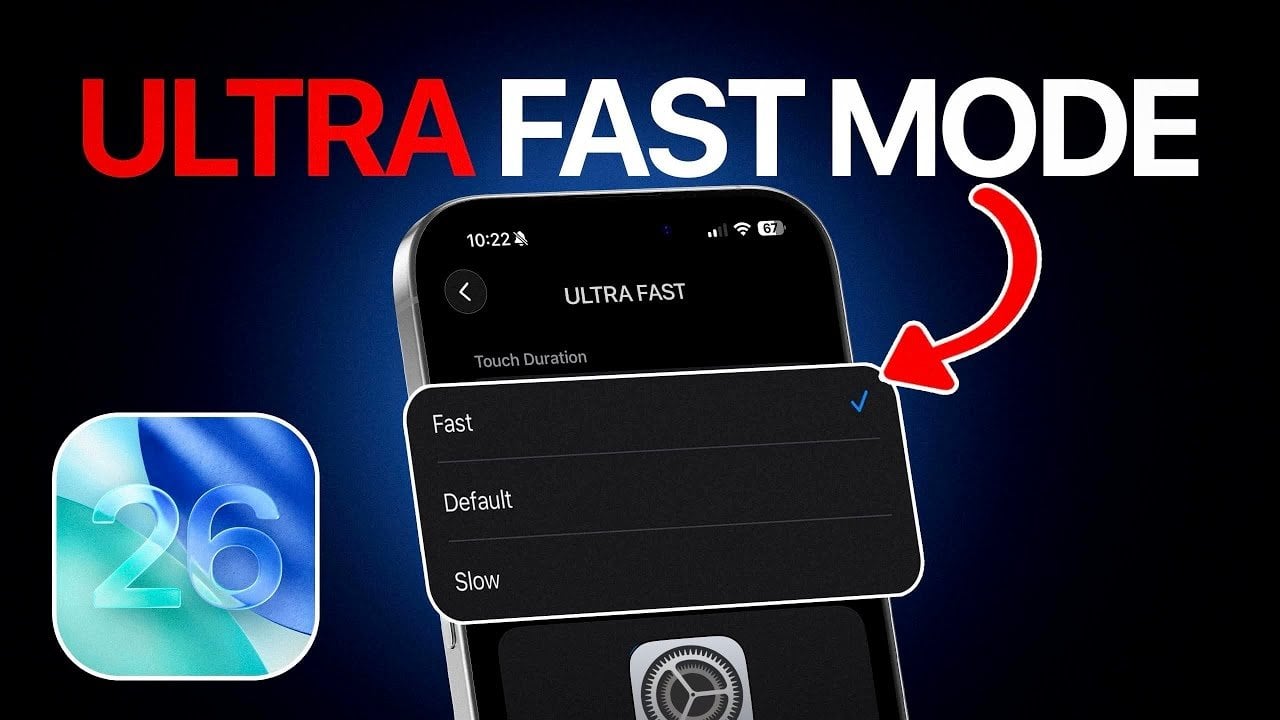
iOS 26 introduces a range of features designed to enhance your iPhone’s performance and streamline everyday tasks. By adjusting specific settings related to unlocking, navigation, haptic feedback, and camera access, you can create what feels like an “Ultra Fast Mode” for your device. These optimizations not only improve speed but also make your iPhone more […]

The post Boost Your iPhone’s Performance With Ultra Fast Mode in iOS 26 appeared first on Geeky Gadgets.

Posted in Uncategorized

6 Claude Code Levels Explained : Map Skills from Prompts to Agent Teams

6 Claude Code Levels Explained : Map Skills from Prompts to Agent Teams Diagram showing the six Claude Code levels, from prompt writing to multi-instance scaling and agent teams.

Chase AI breaks down the journey of mastering Claude Code into six distinct levels, each building on the last to deepen your understanding and expand your capabilities. Starting with Level 1, the focus is on becoming a proficient “Prompt Engineer,” where you learn to craft precise, task-specific prompts and develop foundational skills like terminal literacy […]

The post 6 Claude Code Levels Explained : Map Skills from Prompts to Agent Teams appeared first on Geeky Gadgets.

Posted in Uncategorized

Apple’s $599 Experiment is a Beast: MacBook Neo Benchmarks Crush the M1 Air

Apple’s $599 Experiment is a Beast: MacBook Neo Benchmarks Crush the M1 Air Student using a MacBook Neo for web browsing and documents, highlighting the $499 education pricing and entry-level focus.

Apple has introduced the MacBook Neo, a budget-friendly laptop that combines affordability with impressive performance. Priced at $599 for general consumers and $499 for educational buyers, the Neo is Apple’s most affordable MacBook to date. It features the innovative A18 Pro chip, adapted from the iPhone 16 Pro, offering a unique blend of power and […]

The post Apple’s $599 Experiment is a Beast: MacBook Neo Benchmarks Crush the M1 Air appeared first on Geeky Gadgets.

Posted in Uncategorized

Google GWS CLI Brings Full Workspace Access to AI Agents

Google GWS CLI Brings Full Workspace Access to AI Agents Terminal window showing Google GWS CLI installed with commands for Gmail, Drive, and Calendar access.

The Google Workspace CLI (GWS CLI) offers businesses a streamlined way to automate and manage tasks across Google Workspace applications like Gmail, Drive, Calendar and Sheets. With features such as programmatically drafting emails, organizing files and automating workflows, it simplifies repetitive processes while enhancing efficiency. Rob Shocks highlights how the GWS CLI integrates with AI […]

The post Google GWS CLI Brings Full Workspace Access to AI Agents appeared first on Geeky Gadgets.

Posted in Uncategorized

ASUS ROG’s First Open-Ear Earbuds: Hear the Game and the Room

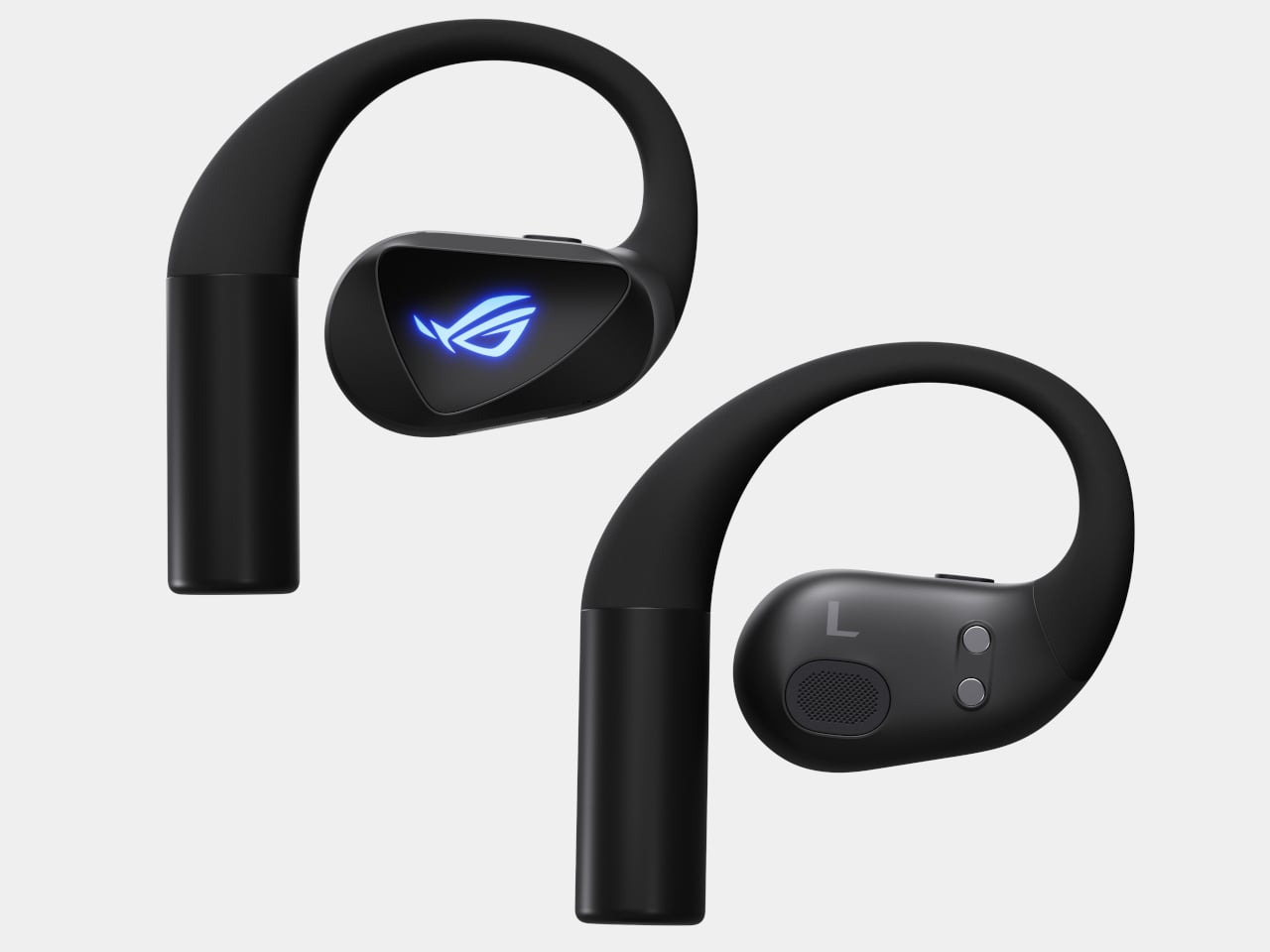
Gaming earbuds have long operated on an unspoken assumption: that total audio immersion requires cutting yourself off from the world around you. Sealed tips, passive isolation, the whole sensory cocoon. The ROG Cetra Open Wireless throws that logic out entirely, producing a pair of gaming earbuds that wants you to hear both the firefight and the person calling your name from the other room.

The open-ear design rests outside the ear canal rather than sealing into it, sitting against the outer ear with liquid silicone hooks that wrap around the back. It is the same air conduction approach used in sports earbuds, where hearing your environment is a feature rather than a flaw. The difference here is that ROG has tuned the hardware around gaming, not just fitness, which changes both the driver choice and the connectivity options.

Designer: ASUS Republic of Gamers (ROG)

Each earbud is built around a 14.2mm diamond-like carbon-coated diaphragm driver. DLC coatings are favored in higher-end audio hardware because the material’s rigidity resists deformation at high frequencies, resulting in cleaner transient response and lower distortion. Open-ear designs lose low-end naturally from air leakage, so ROG included Phantom Bass, a perceptual processing mode that restores the sense of low-frequency weight without sealing the canal.
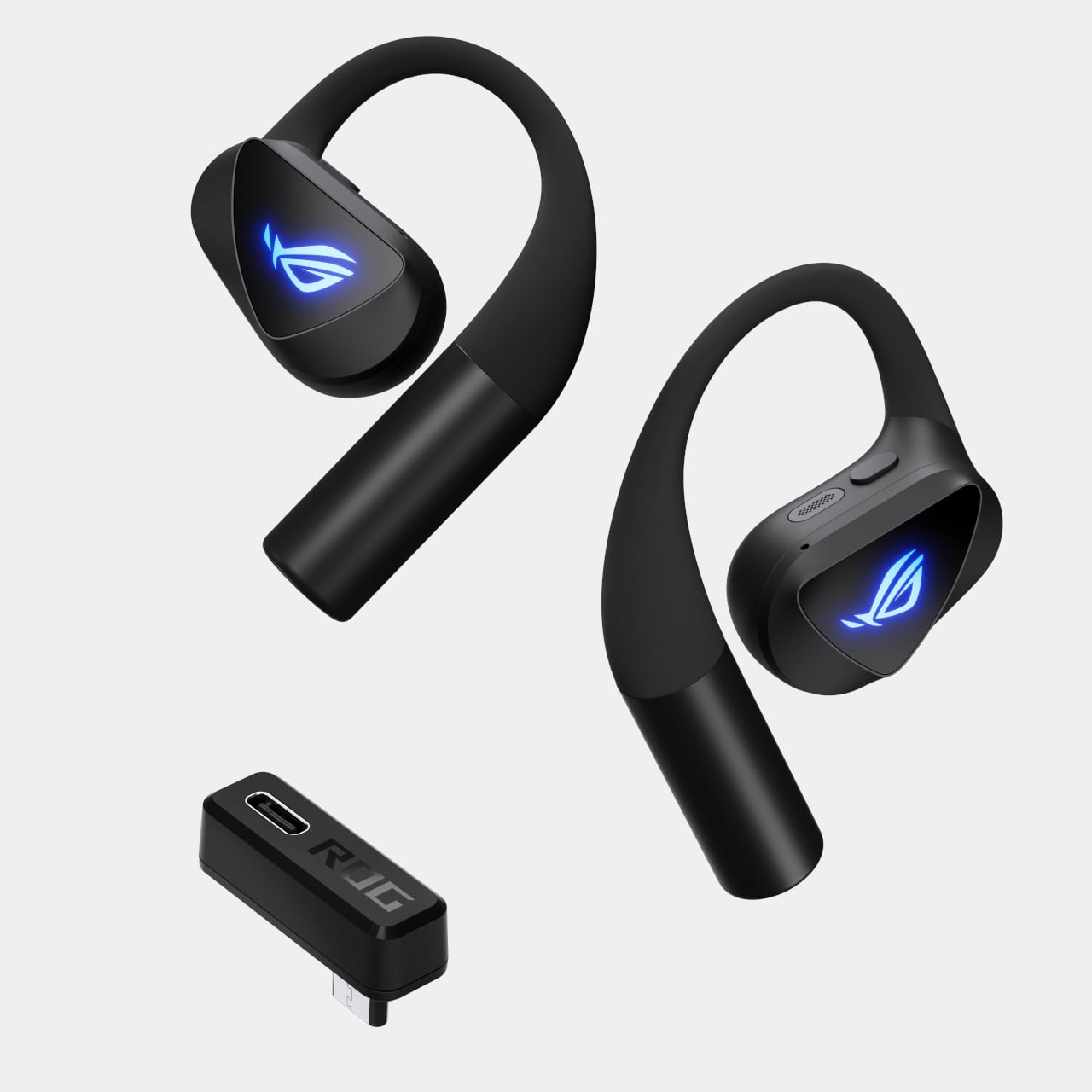
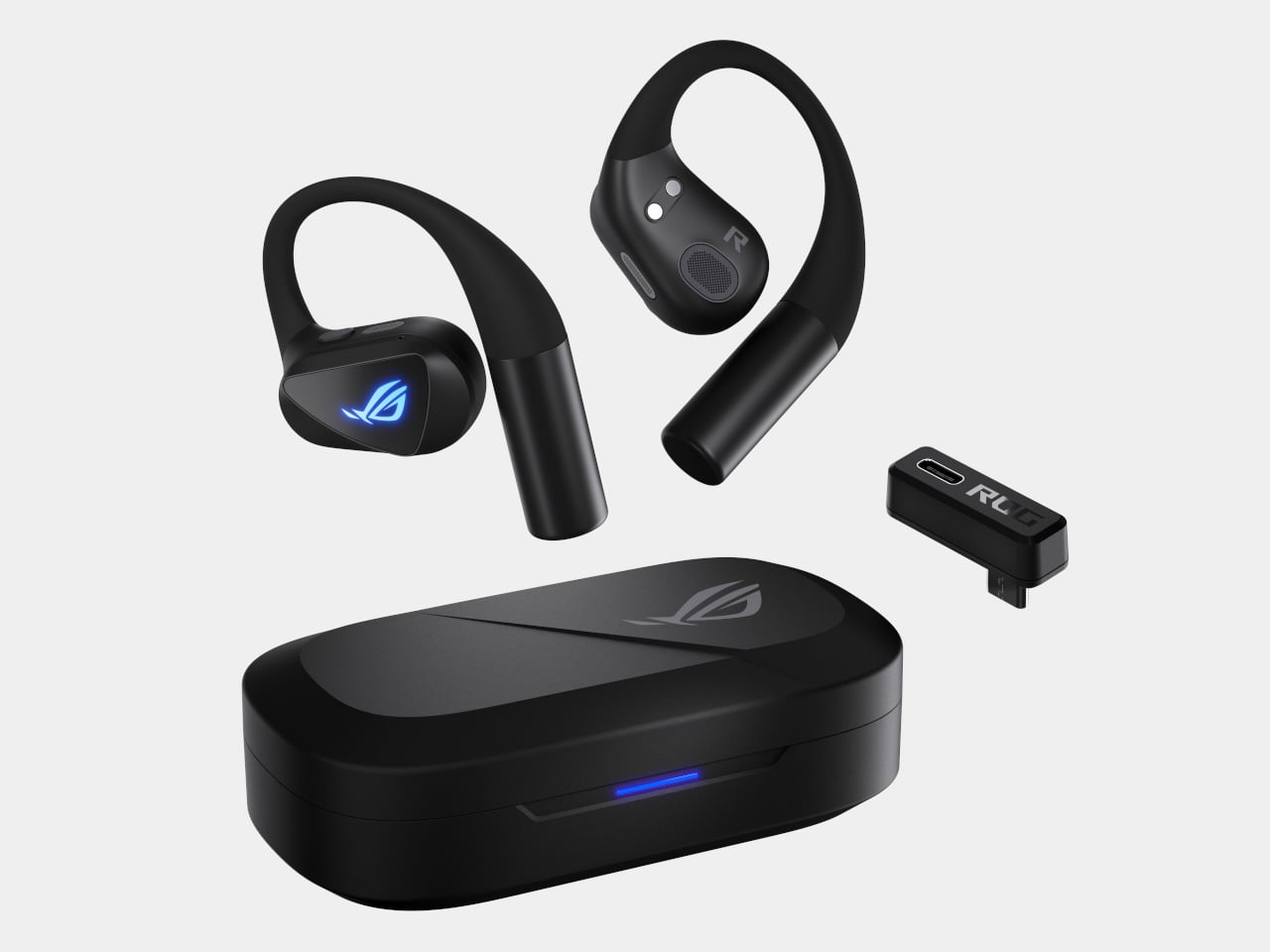
The connectivity is where the gaming identity becomes explicit. Bluetooth 6 handles general pairing, but the included USB-C 2.4GHz dongle, running ROG’s SpeedNova technology, delivers latency 6 times lower than Bluetooth mode. That difference is meaningful in competitive play where audio sync affects reaction timing. The dongle also supports one-way passthrough charging, keeping a phone powered while the low-latency connection stays active.
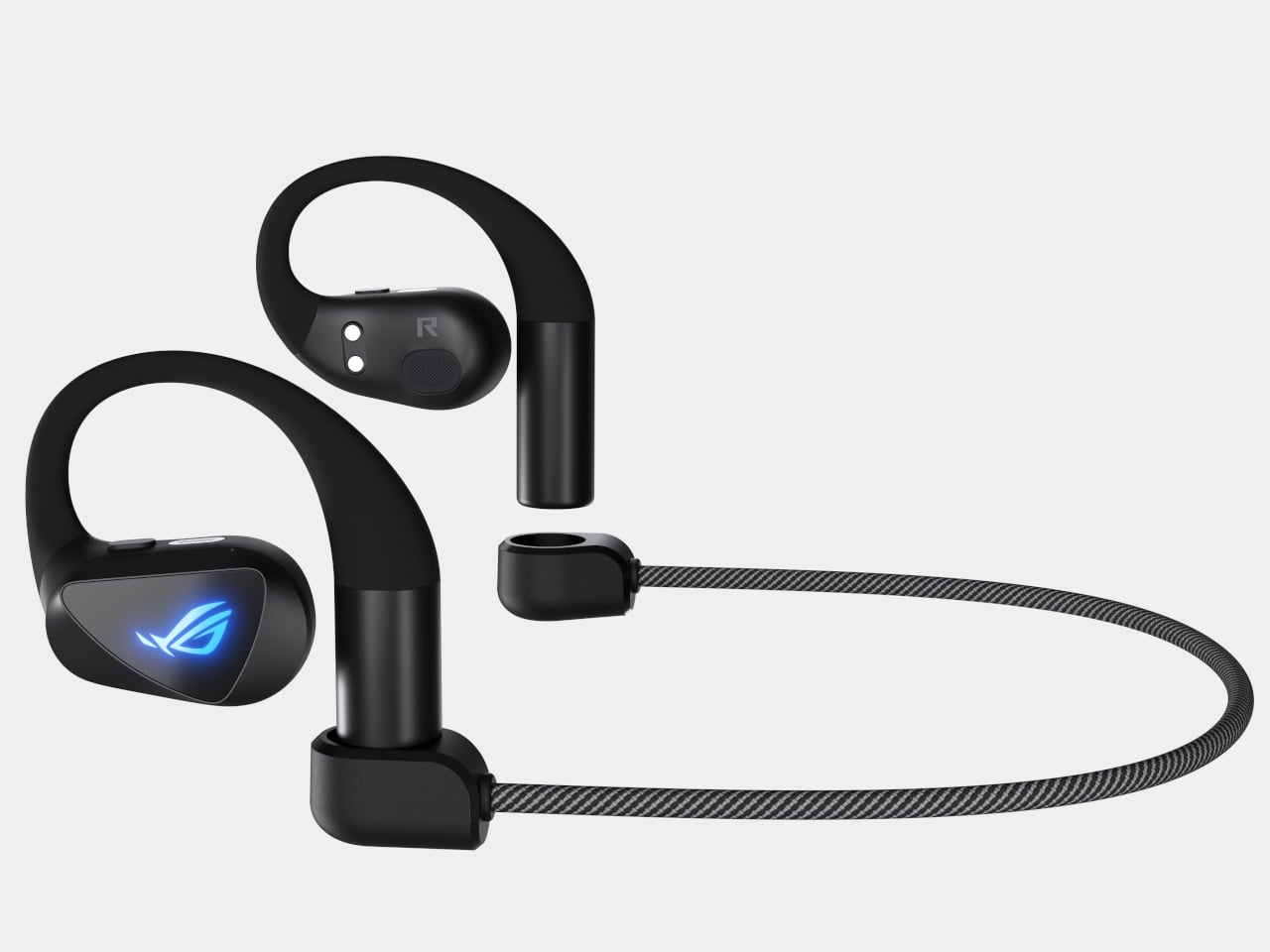

Communication gets its own dedicated hardware: four MEMS microphones arranged for beamforming pickup, with AI noise cancellation suppressing ambient sound in real time. ROG’s testing, conducted by PAL Acoustic Technology, a Microsoft-certified third-party lab, puts the MOS-LQO voice quality score at 4.1, clearing the Microsoft Teams certification threshold of 3.9. For earbuds worn during commutes or at the gym, that score carries practical weight.
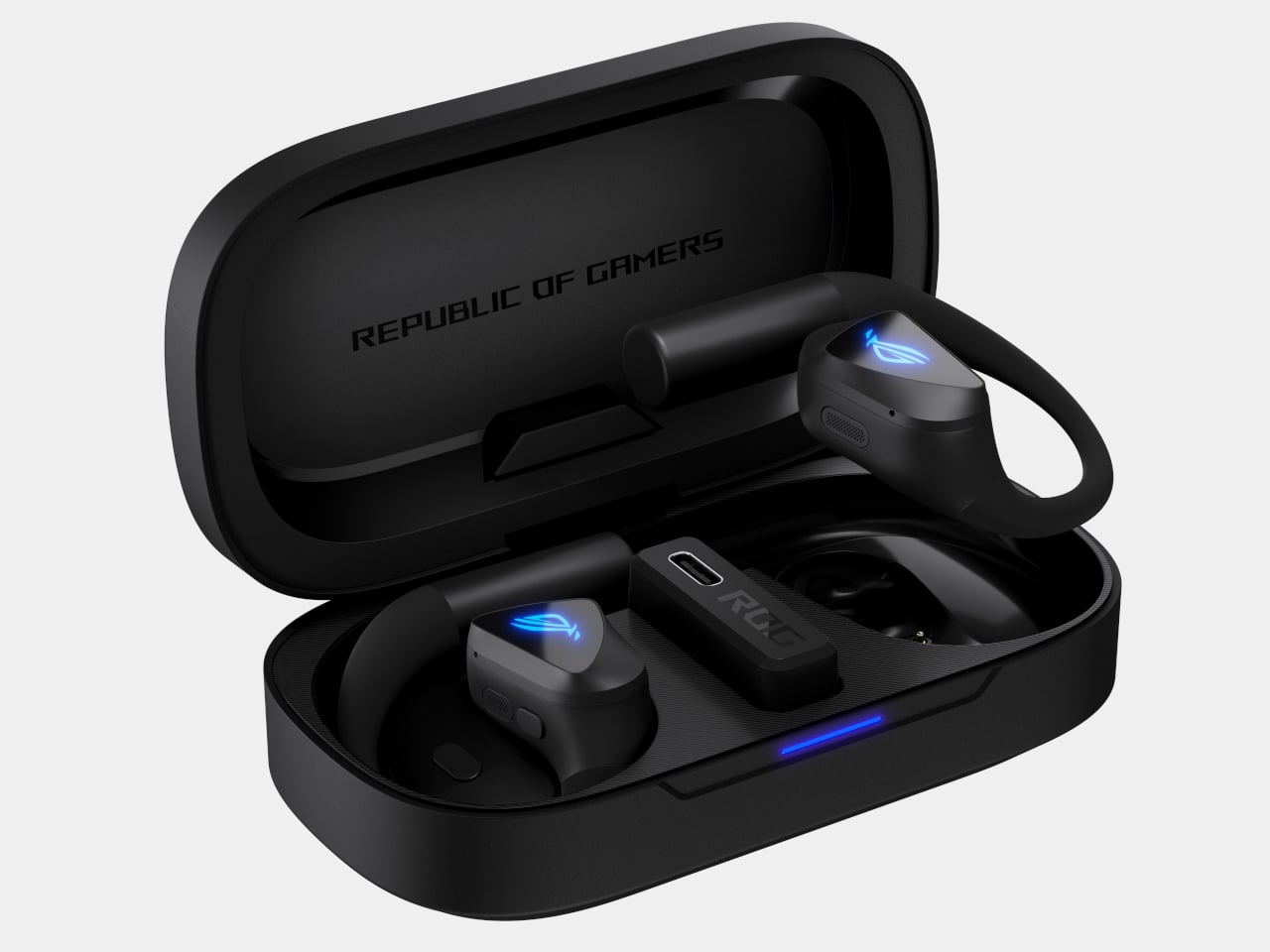
Battery life is rated at 16 hours per charge in Bluetooth mode, with the charging case adding 48 hours more, bringing the combined total to 64 hours. A 15-minute charge delivers 3 hours of playback. Physical buttons handle on-device control rather than touch surfaces, which stay reliable in sweaty or wet conditions. EQ profiles, button mappings, and lighting are all adjustable through Gear Link, a browser-based tool that needs no software installation.

The ROG Cetra Open Wireless is priced at $229.99 and available through the ASUS eStore, Amazon, Micro Center, and Newegg. For gaming earbuds that pull off the unusual trick of staying useful to a competitive mobile gamer and to someone who simply cannot afford to be sonically sealed off from their surroundings, it makes a harder argument against itself than the open-ear format usually does.

The post ASUS ROG’s First Open-Ear Earbuds: Hear the Game and the Room first appeared on Yanko Design.