DJI FPV Goggles Concept Uses Foldable Antenna Panels to Fix Signal Reception

FPV flying is phenomenally fun and almost completely non-transferable. You’re seeing through the aircraft’s perspective, feeling every input through the video lag, reading the environment in ways that only make sense when you’re in the feed. But to everyone around you, you’ve just put on a box that makes you unavailable for the next however-long. They can’t see what you’re seeing unless you’ve brought extra gear specifically for that purpose. Flying becomes this weirdly solitary activity even when you’re surrounded by people, which is partly why FPV remains niche despite being objectively amazing.

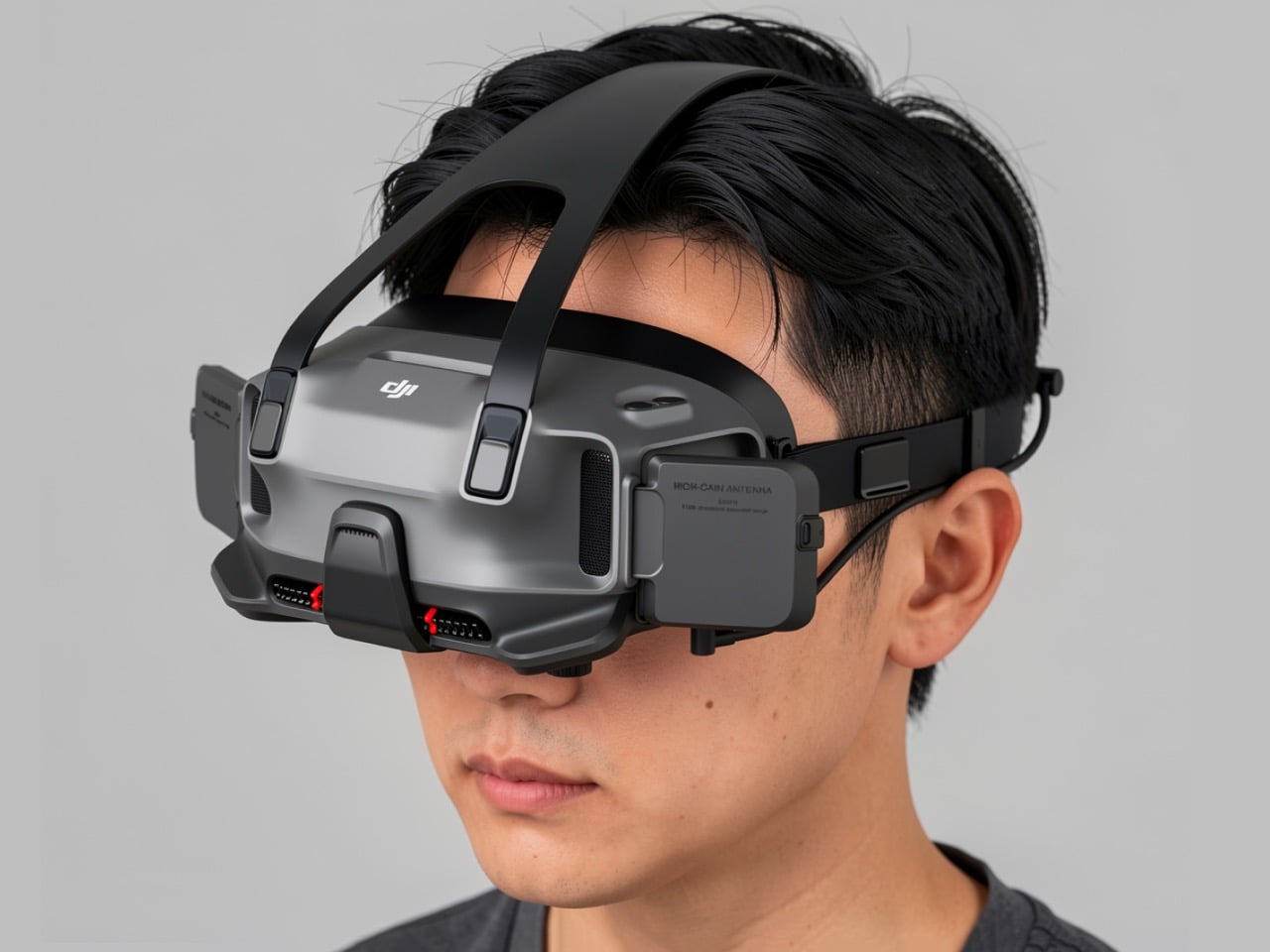
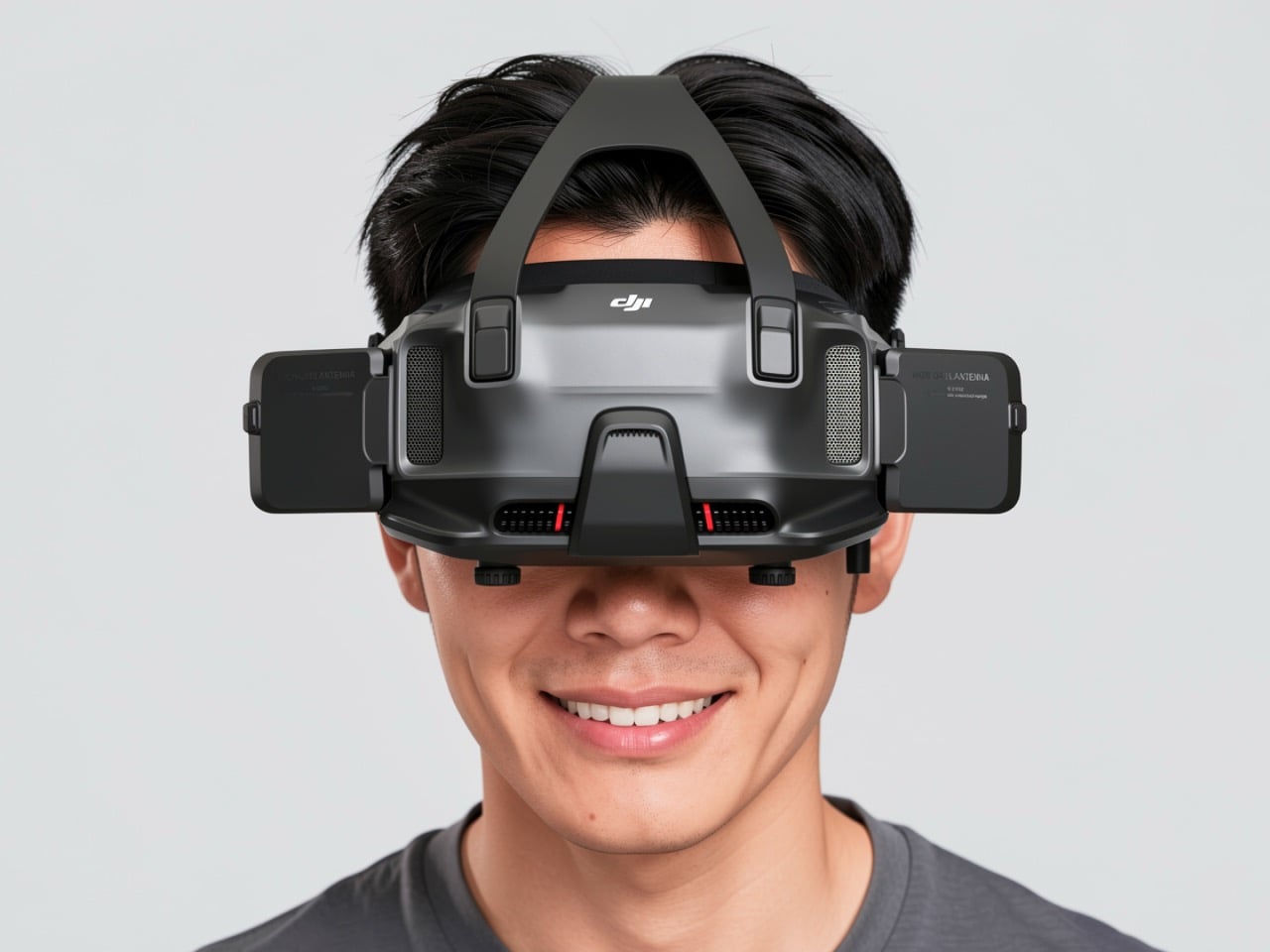
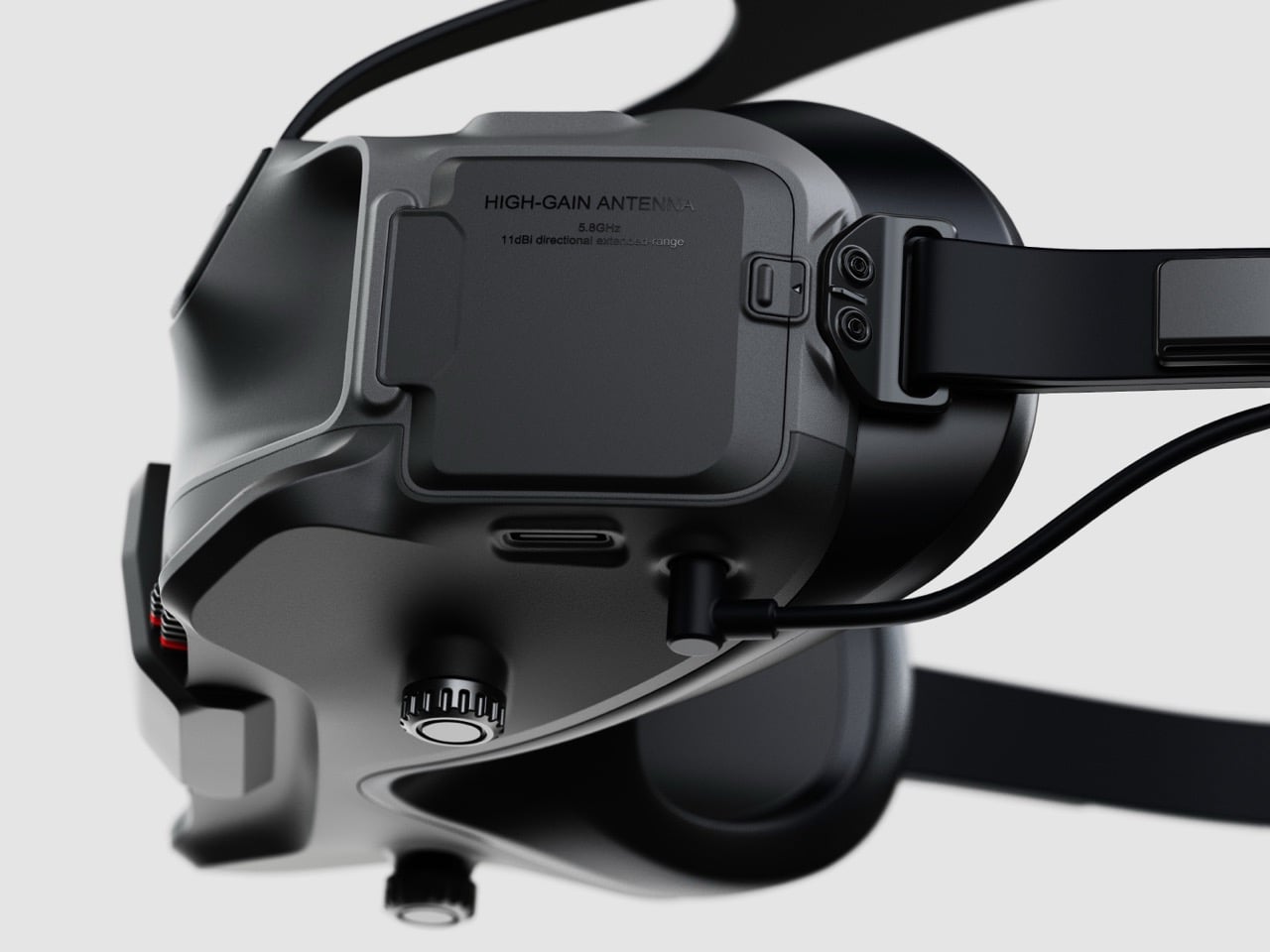
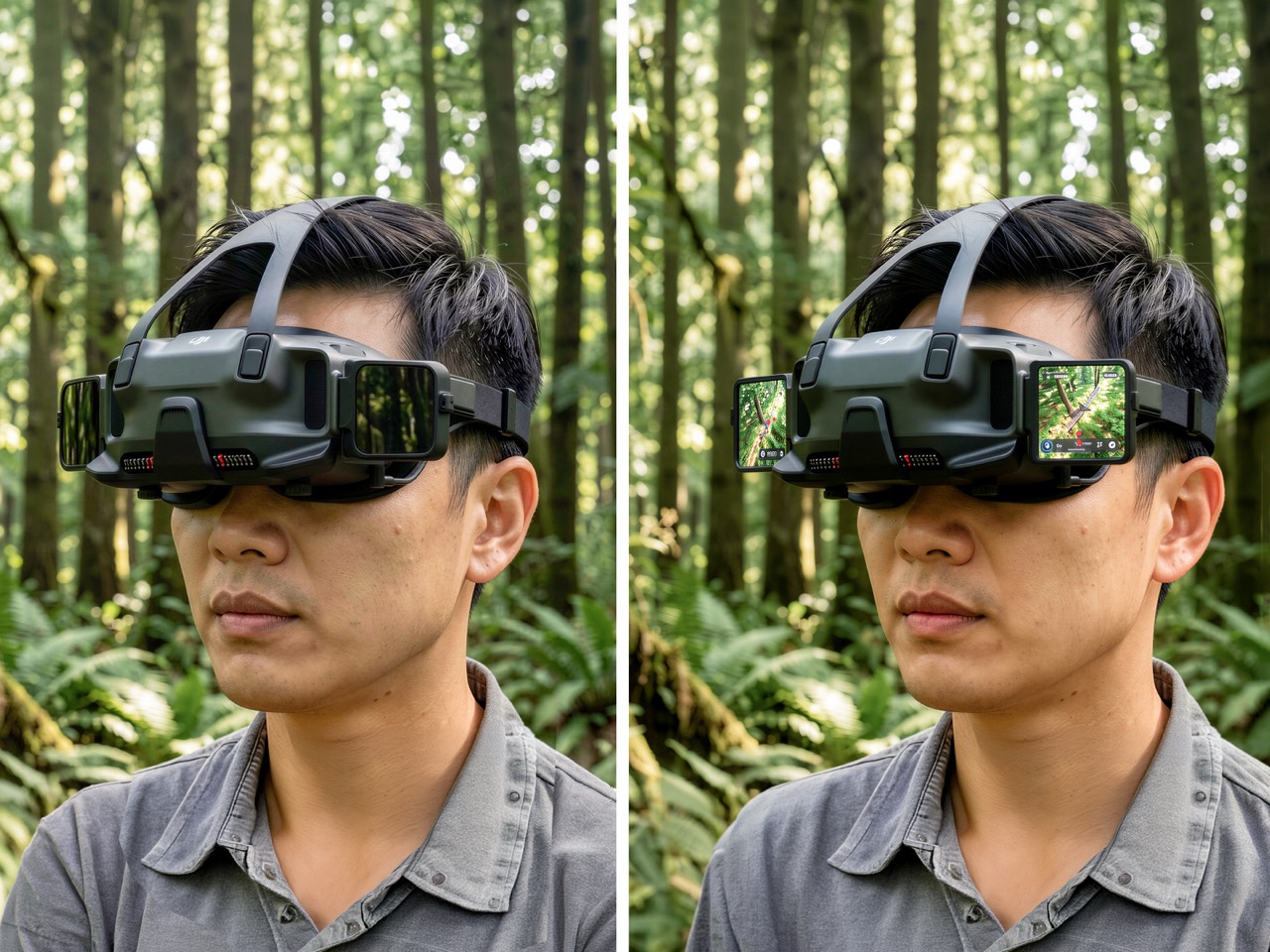
This concept headset tackles radio frequency challenges first and foremost. Those fold-out panels house high-gain antennas that deploy for better signal reception and fold flush for transport, following DJI’s industrial design language closely enough to suggest these could be internal explorations for future Goggles iterations. But one variant shown in the forest shots takes things further: outward-facing displays embedded in those same antenna panels, broadcasting the pilot’s FPV feed to anyone standing nearby. It’s the kind of feature that transforms the headset wearer from someone who’s checked out into the center of a shared experience, addressing one of FPV’s biggest adoption barriers while solving legitimate antenna placement problems.

Designer: Baozi Brother
Radio frequency propagation operates on physics that industrial designers can’t negotiate with. The 5.8GHz band used for FPV video transmission behaves predictably but unforgivingly. Obstacles attenuate signal. Distance degrades quality. Antenna polarization and orientation determine whether you get clean video or digital snow. DJI’s early FPV Goggles buried antennas inside the housing for clean aesthetics and struggled with reception compared to competitors running external stick antennas that looked awkward but performed better. The Goggles V2 improved things. The Goggles 2 and Integra finally achieved competitive range by respecting rather than fighting antenna requirements, but they still used conventional mounting approaches that pilots have relied on for years.
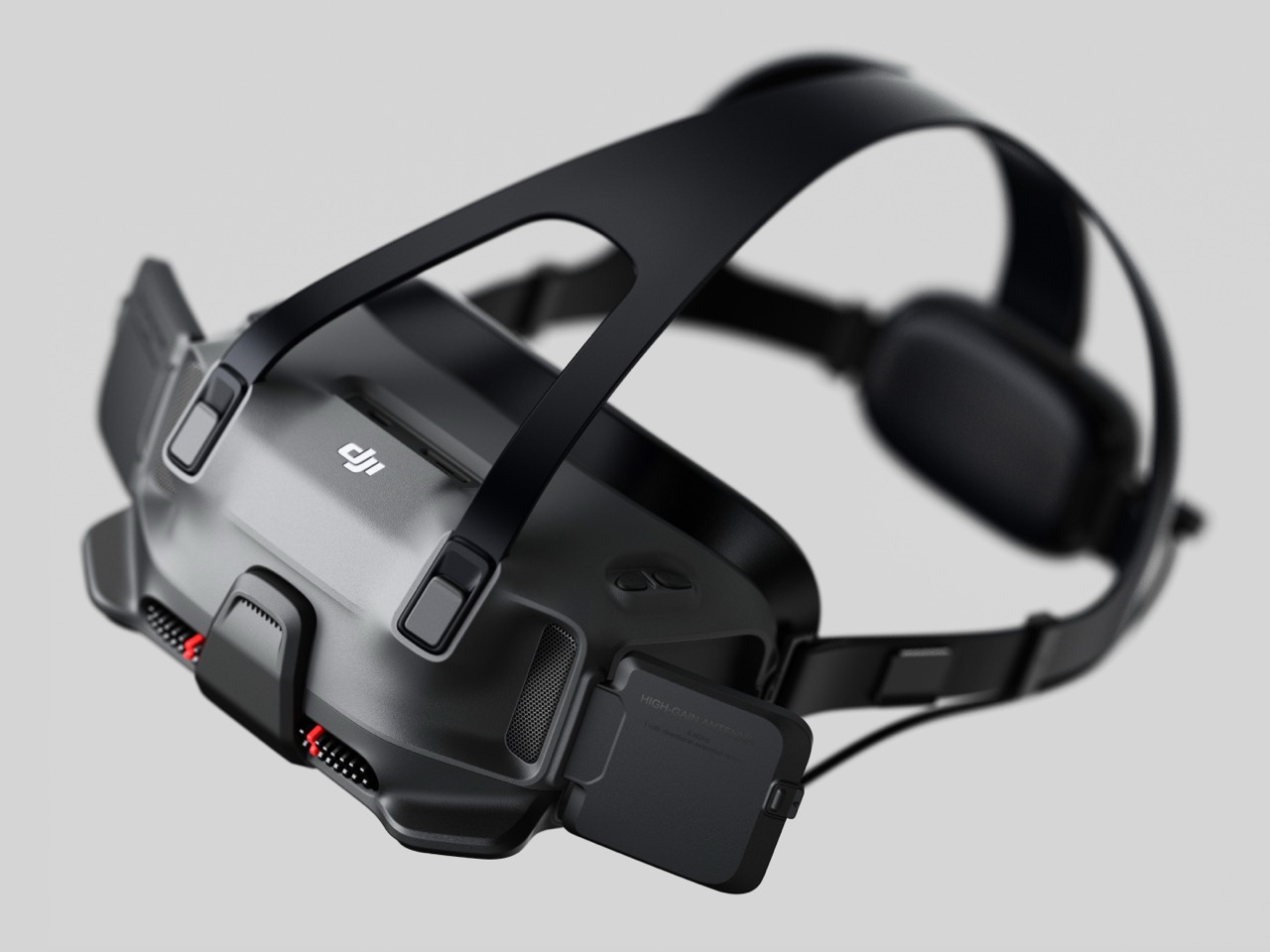
Baozi Brother’s concept makes antenna placement the core organizing principle rather than a constraint to work around. Those wing-like panels extending from either side create physical separation between antenna elements, which matters tremendously for diversity reception. When one antenna’s signal weakens due to aircraft orientation or obstacles, the receiver switches to whichever antenna currently has the stronger feed. Spacing them wide apart on opposite sides of the headset maximizes the likelihood that at least one maintains clean line of sight to the aircraft, even during aggressive maneuvers or when flying behind structures.
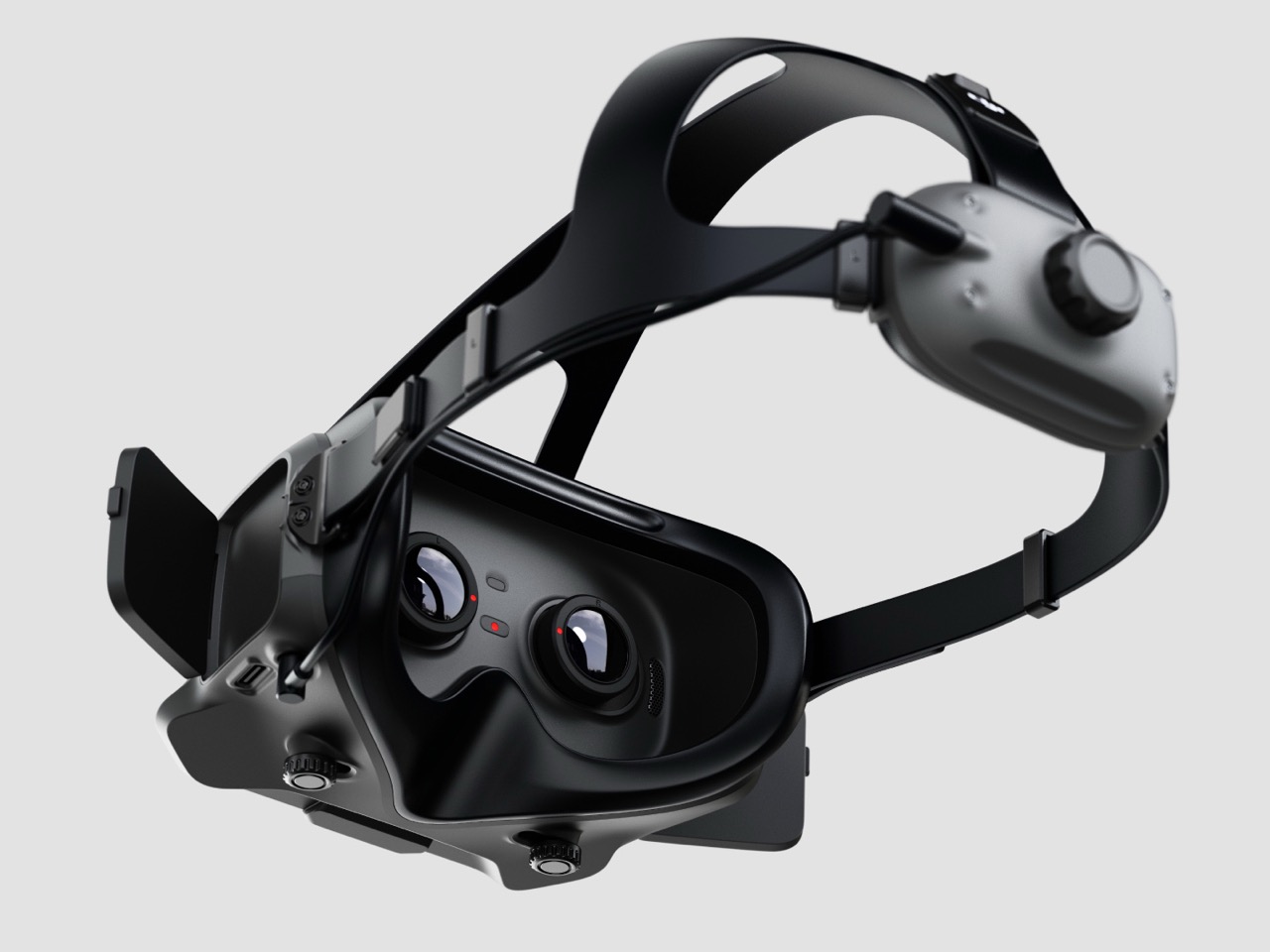
The mechanical deployment system uses what appears to be a friction hinge with detents, letting pilots snap the panels into position without tools or fumbling with locks. When folded, the headset’s profile stays compact enough for standard gear bags. When deployed, the panels extend at roughly 45 degrees, positioning antennas away from the head and creating better unobstructed reception angles than current goggles achieve. DJI’s design vocabulary runs throughout: gunmetal gray housing, matte black elastomer padding, sculpted ventilation channels. A BOA-style micro-adjustment dial handles head strap tension at the rear. Port placement on the right side shows USB-C, likely HDMI, and what might be an audio jack.
Now about those screens. The variant shown in the forest environment embeds displays on the outward-facing surfaces of the antenna panels. When deployed, they broadcast the pilot’s FPV feed to spectators, instructors, or anyone nearby. Your instructor watches your training flight without needing separate gear. Your friends see why you’re excited about that gap you just threaded. Content creators capture genuine reactions without additional equipment. Whether PUXIANG moves this beyond rendering remains unclear, but as far as rethinking FPV headset architecture around actual RF performance while making the experience more accessible, this gets closer than most attempts at reinventing goggles.
The post DJI FPV Goggles Concept Uses Foldable Antenna Panels to Fix Signal Reception first appeared on Yanko Design.

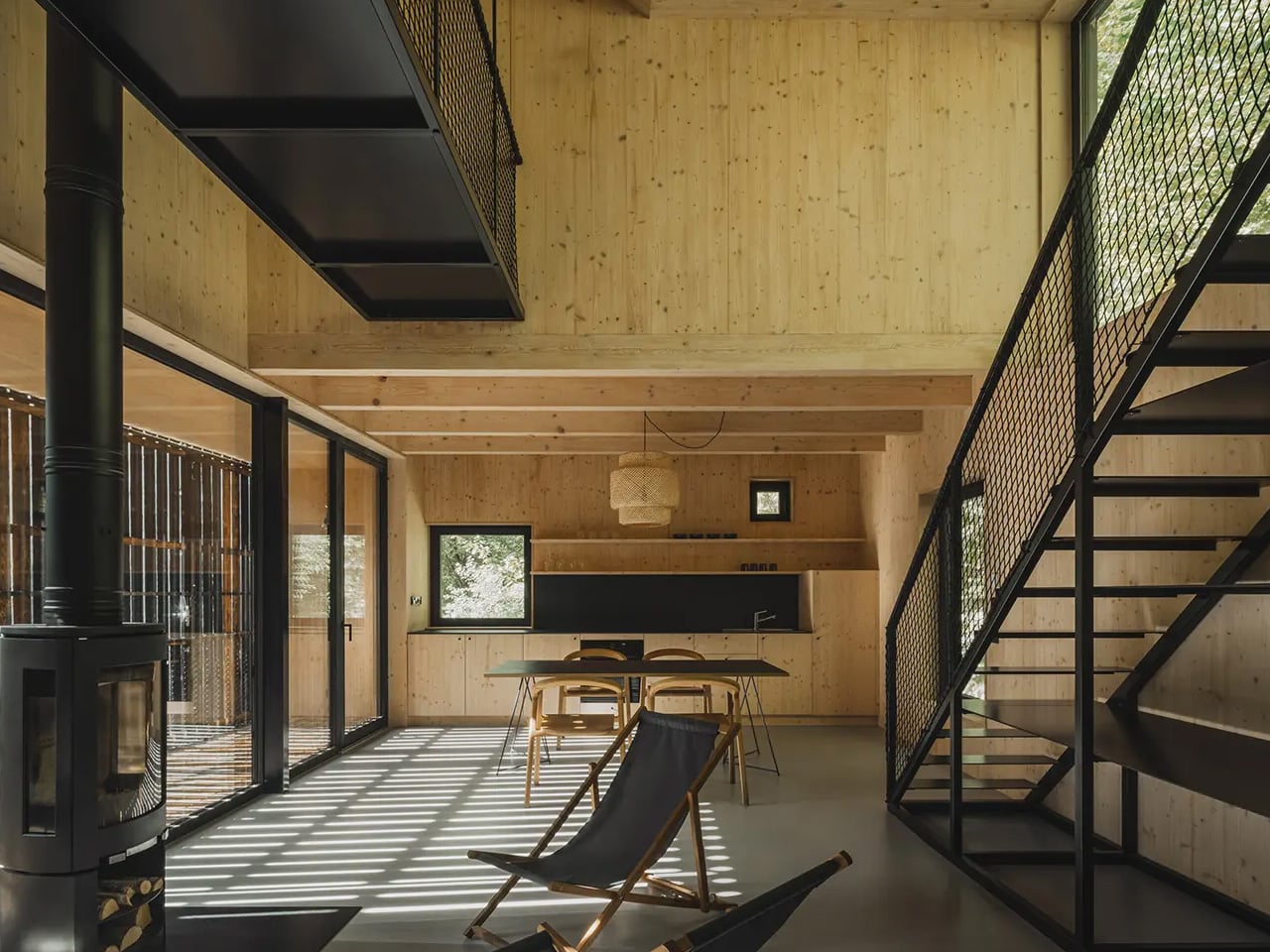
This Charred Timber Cabin on the Sázava River Was Built From the Ruins of the One It Replaced

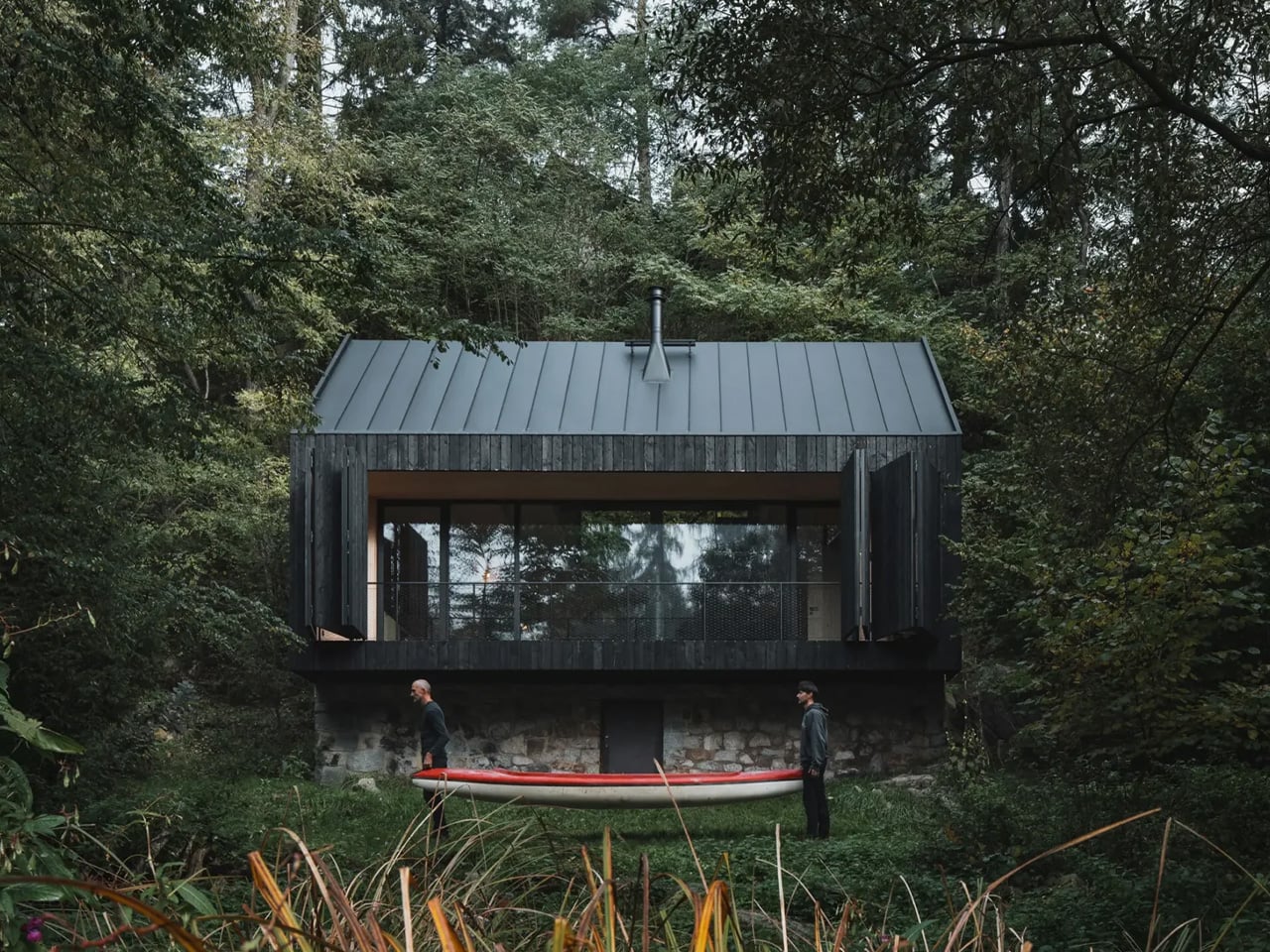
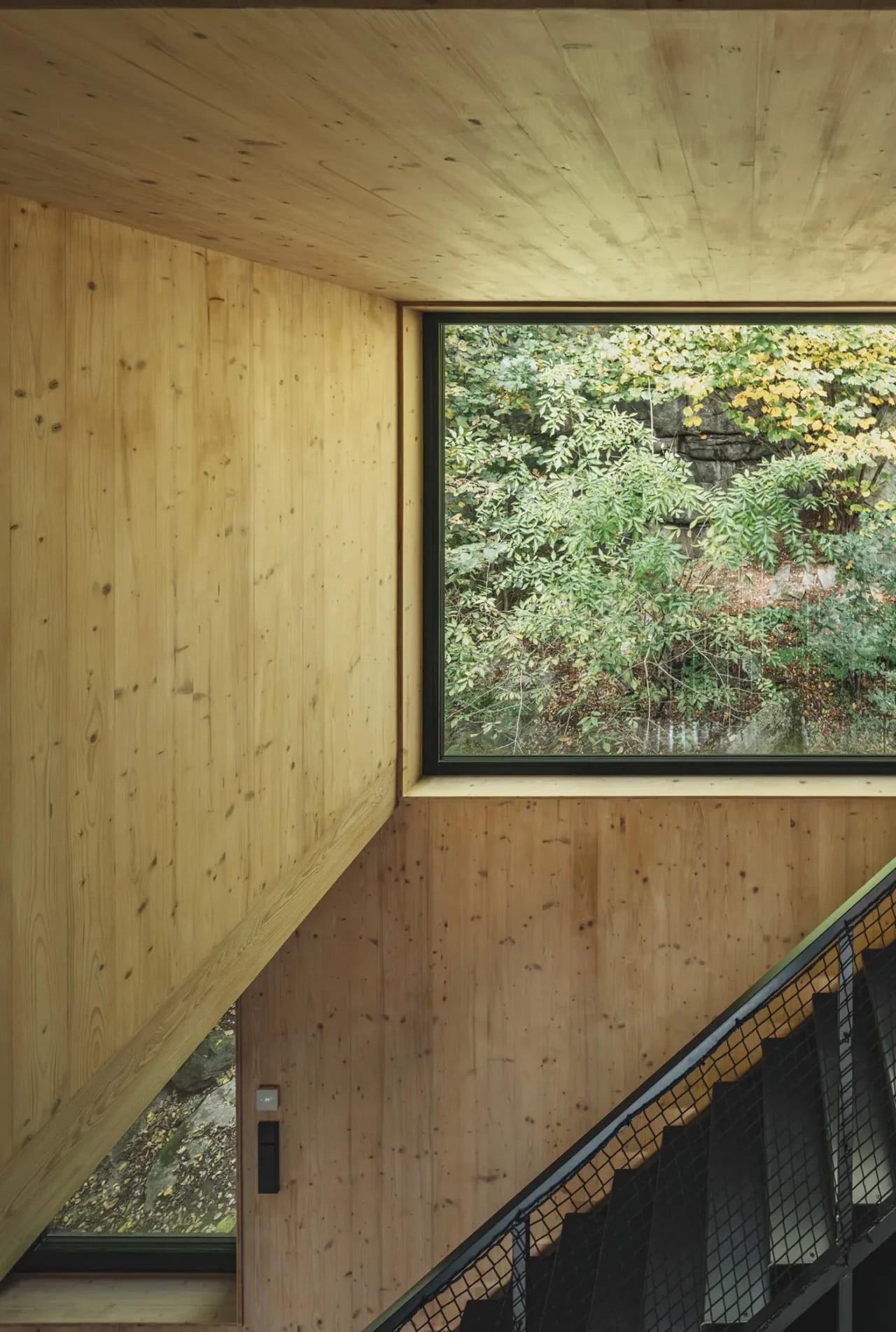
Most architects would have cleared the site and started fresh. Mimosa Architekti did the opposite. Perched on the banks of the Sázava River in Prosečnice, Czech Republic, Between the Rock and the River is a retreat born from ruin, designed to make peace with its past.

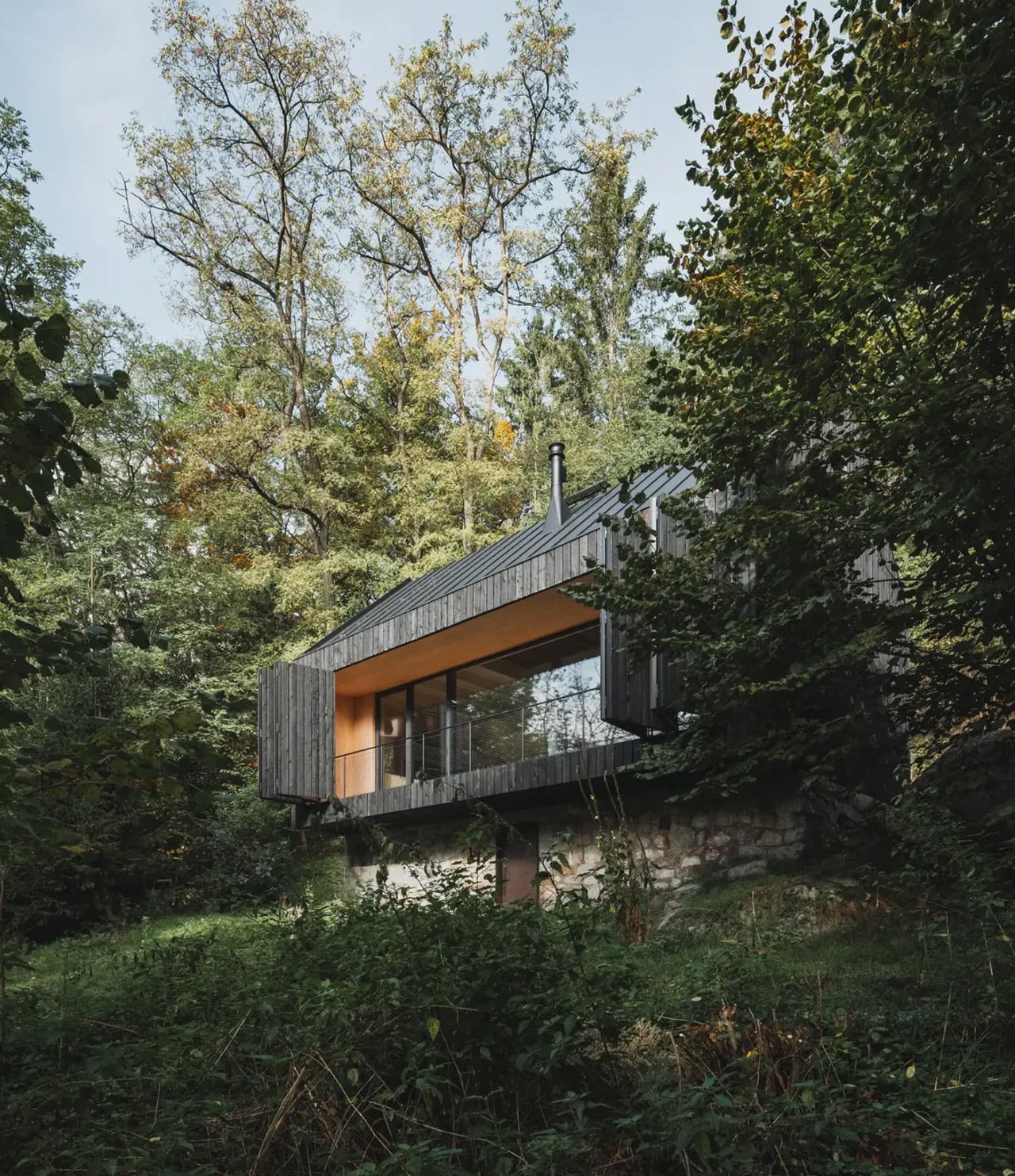
The story begins with a fire. The original cabin burned down, leaving behind only its stone plinth — a rugged, load-bearing pedestal that the architects chose not to demolish but to build upon. That decision, more than any other, defines the entire project. The plinth isn’t a footnote; it’s the foundation — both literally and conceptually. It lifts the new timber structure above the floodplain, offering protection from the river’s seasonal moods while granting the cabin an elevated sense of perspective. Slide open the shutter facing the water, and you’re rewarded with an uninterrupted view of the rapids, the boulders, and the kingfishers skimming the surface.

Designer: Mimosa Architekti

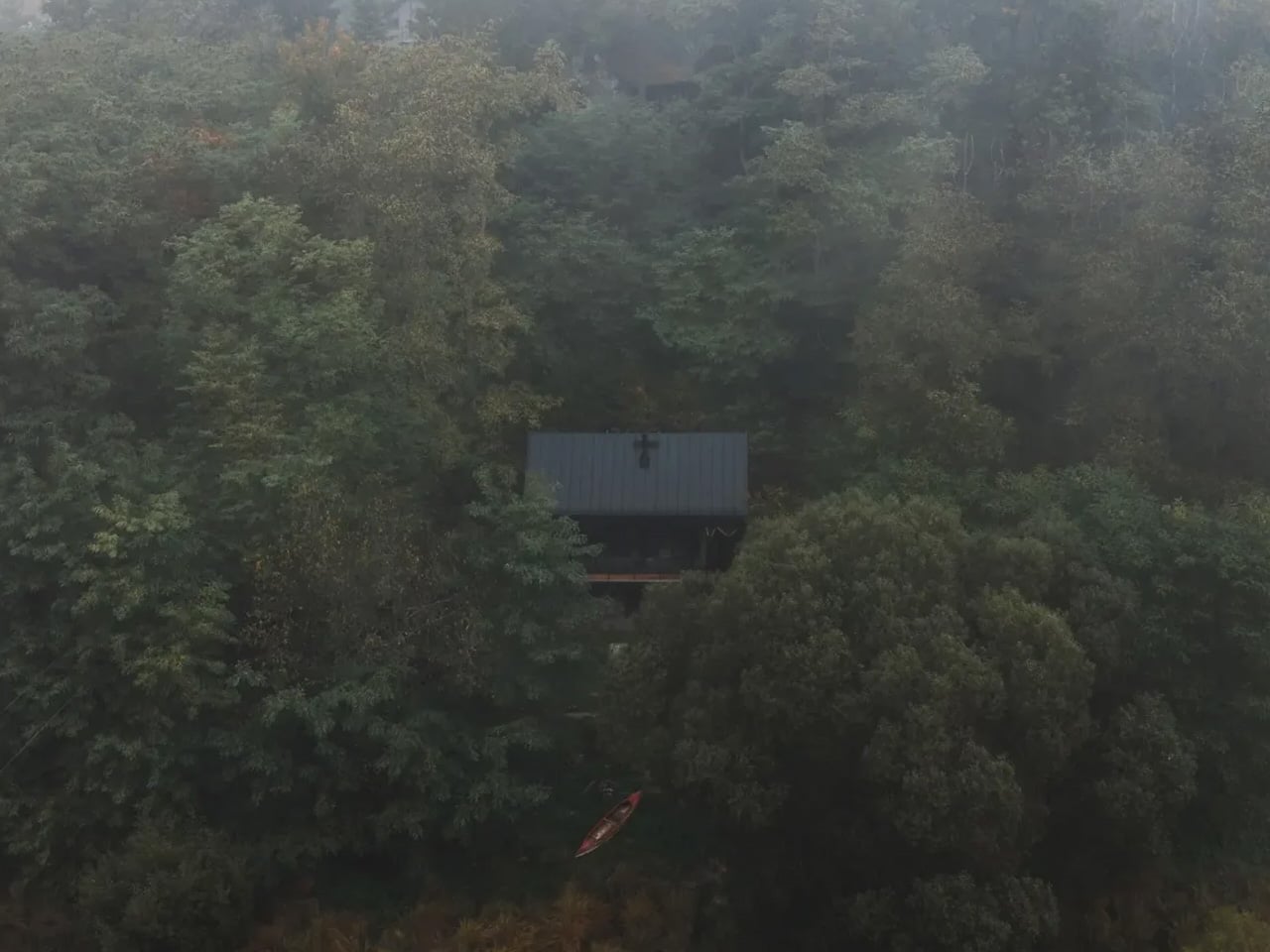
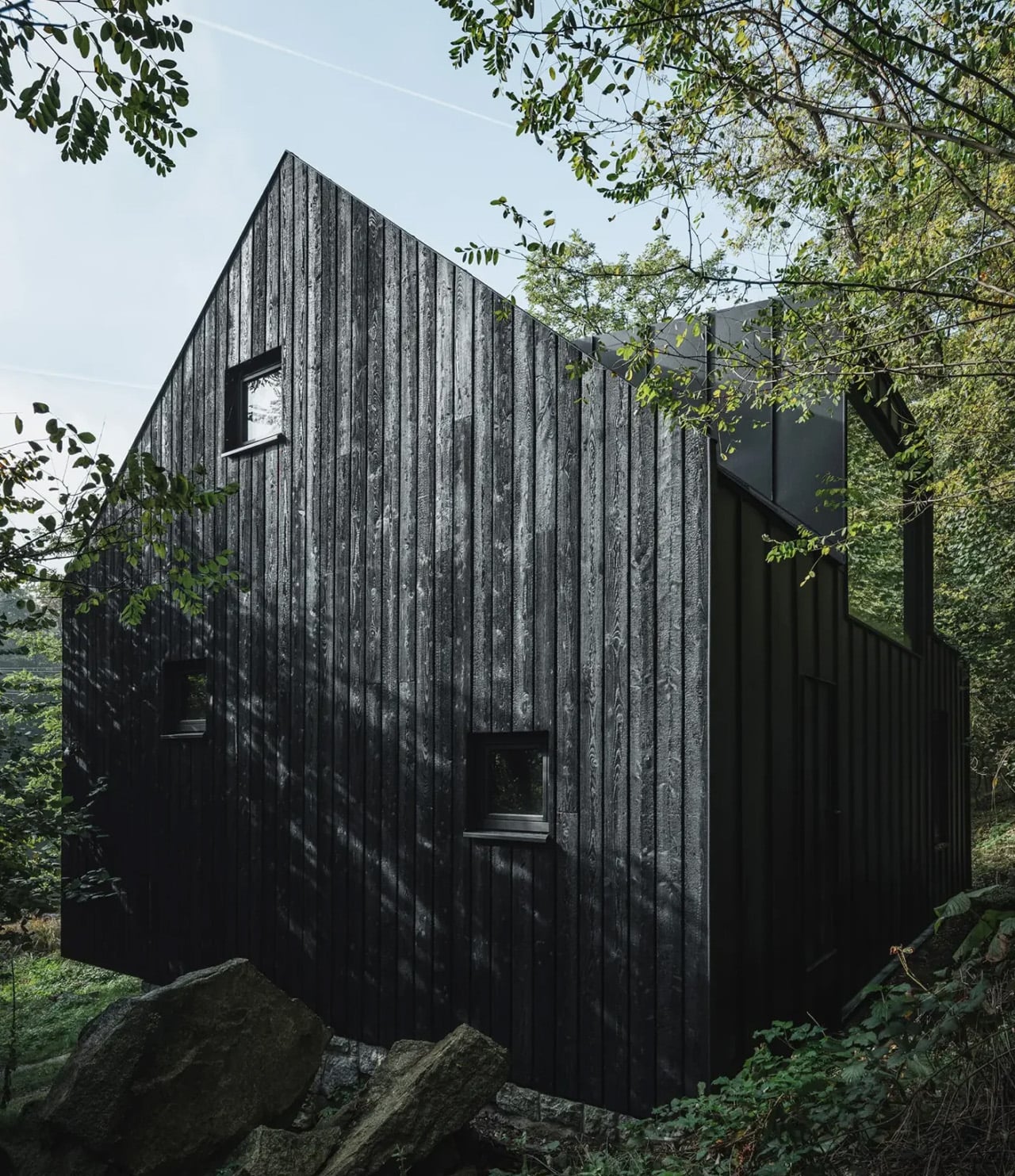
The exterior is wrapped in charred larch cladding — a nod to the Japanese yakisugi technique, where timber is scorched to enhance its durability and resistance to the elements. It’s a material choice that reads as both pragmatic and symbolic. The blackened skin mirrors the charred history of the site, turning an act of destruction into a design principle. From a distance, the cabin appears almost to dissolve into the dense pine forest surrounding it, its dark silhouette blending with shadow and bark.

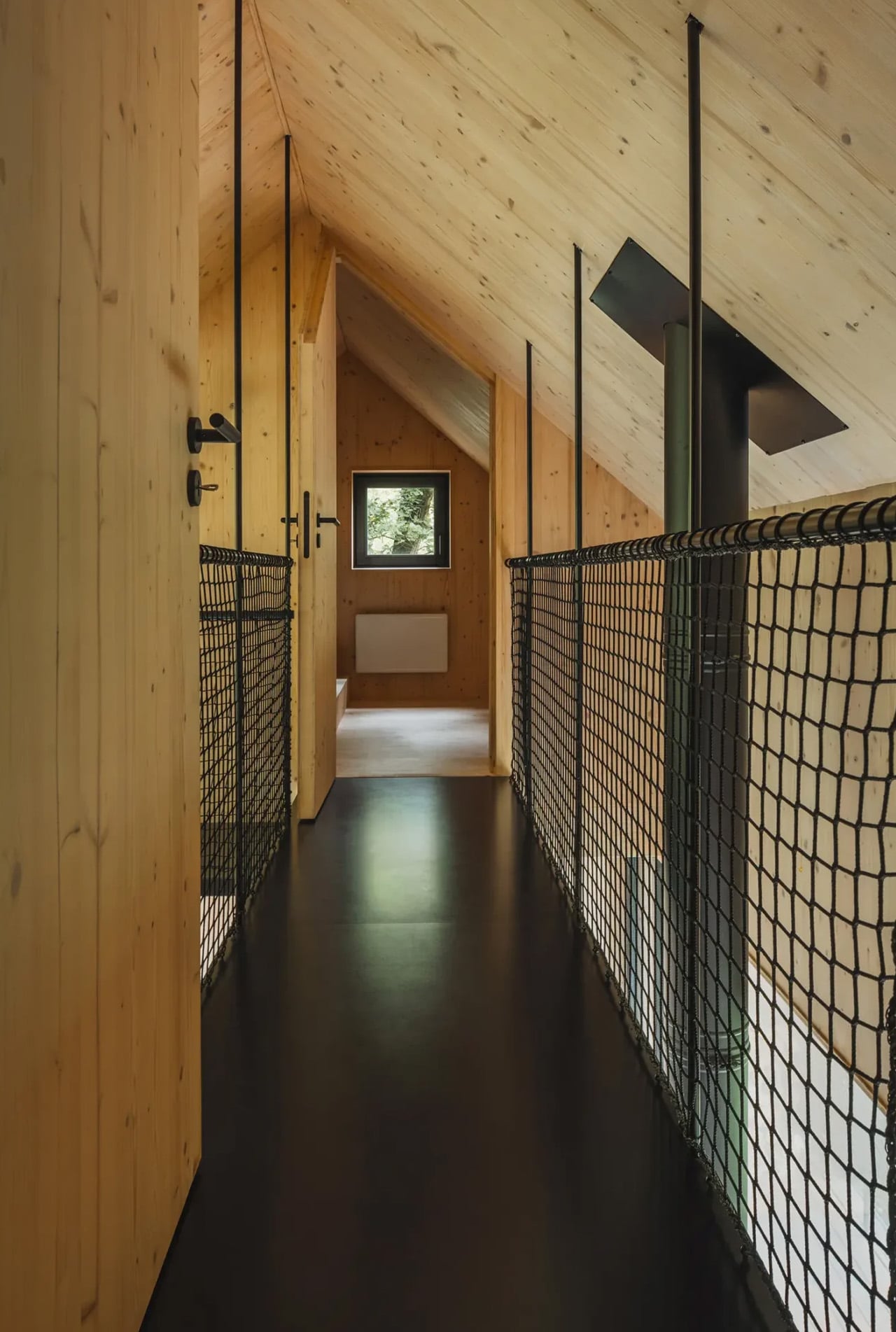
Step inside, and the palette shifts entirely. The wooden frame is clad on the interior with spruce wood panels — warm, pale, and luminous against the darkness of the exterior. The contrast is deliberate: rough and weathered on the outside, soft and considered within. It creates a sense of crossing a threshold, of leaving the exposed landscape behind and entering something more sheltered and human in scale.

The cabin occupies a narrow strip of land between the riverbank and rising cliffs — a site defined by constraint and compression. Mimosa Architekti responded not by fighting the geography but by working within it. The result is a structure that feels inevitable, as though it could only ever exist in this exact spot. Designed in 2020 and completed in 2025, the project took five years to realize — and you can sense that patience in every detail. Between the Rock and the River isn’t a cabin that shouts. It whispers — in the language of scorched wood, old stone, and moving water.

The post This Charred Timber Cabin on the Sázava River Was Built From the Ruins of the One It Replaced first appeared on Yanko Design.
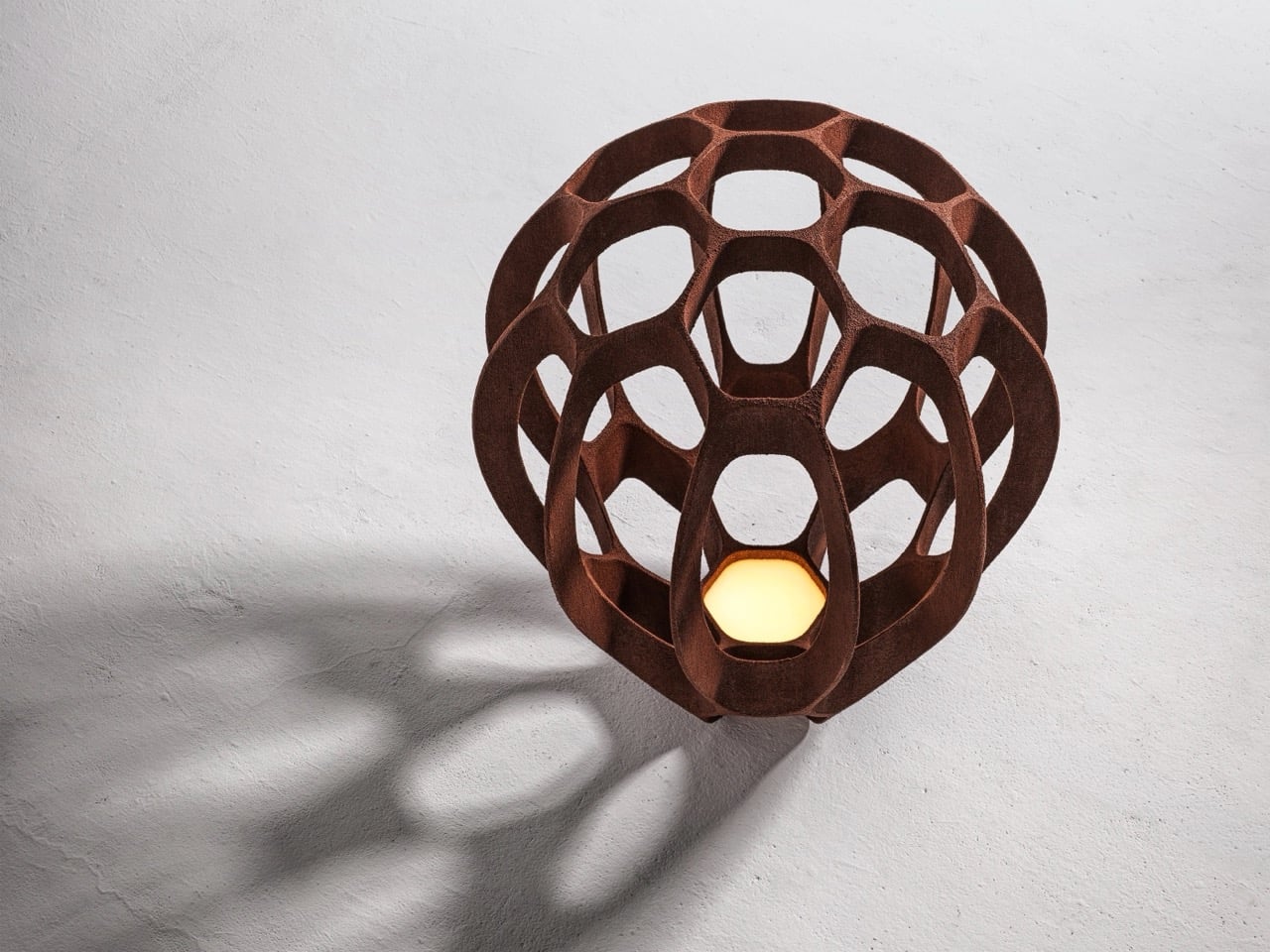
This Sculptural Lamp Treats Light as Secondary and its Decorative Shell as Primary

Floor lamps typically exist in your peripheral vision. They illuminate a corner, frame a reading chair, or cast ambient light from behind the couch, and beyond choosing between brass or matte black, their design language is predictable. You get a pole, a shade, maybe a tripod base if the designer is feeling mid-century. Lacuna flips that entire playbook by treating the lamp as a sculptural centerpiece first and a lighting instrument second.

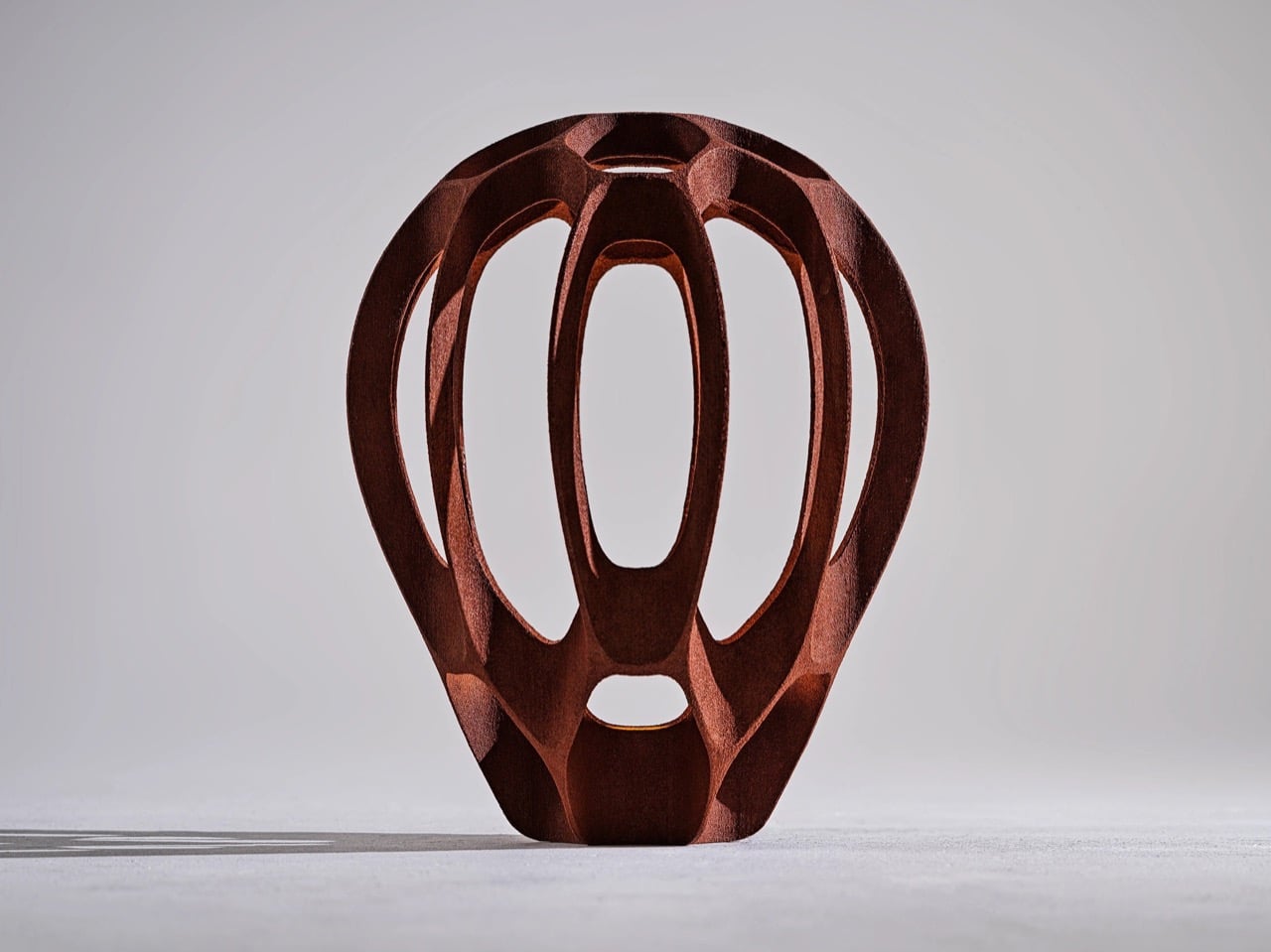
Designed by Kenji Abe, this large-scale floor lamp takes its name from the Latin word for cavity or void, drawing direct inspiration from the porous structures found in skeletons, honeycombs, coral reefs, and foraminifera. The result is a lighting object that feels simultaneously organic and architectural, as if someone carved a lamp out of petrified bone.

Designer: Kenji Abe

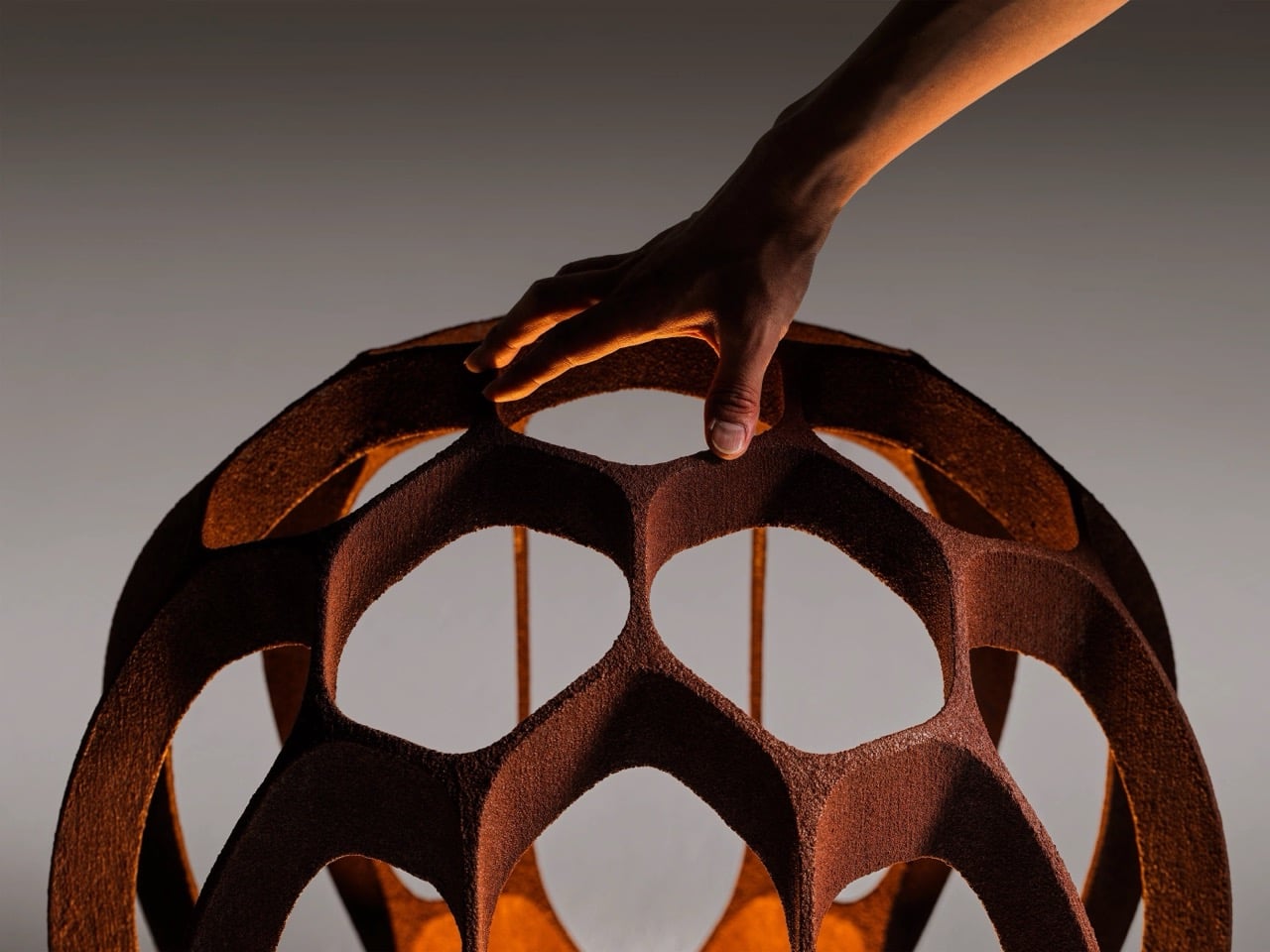
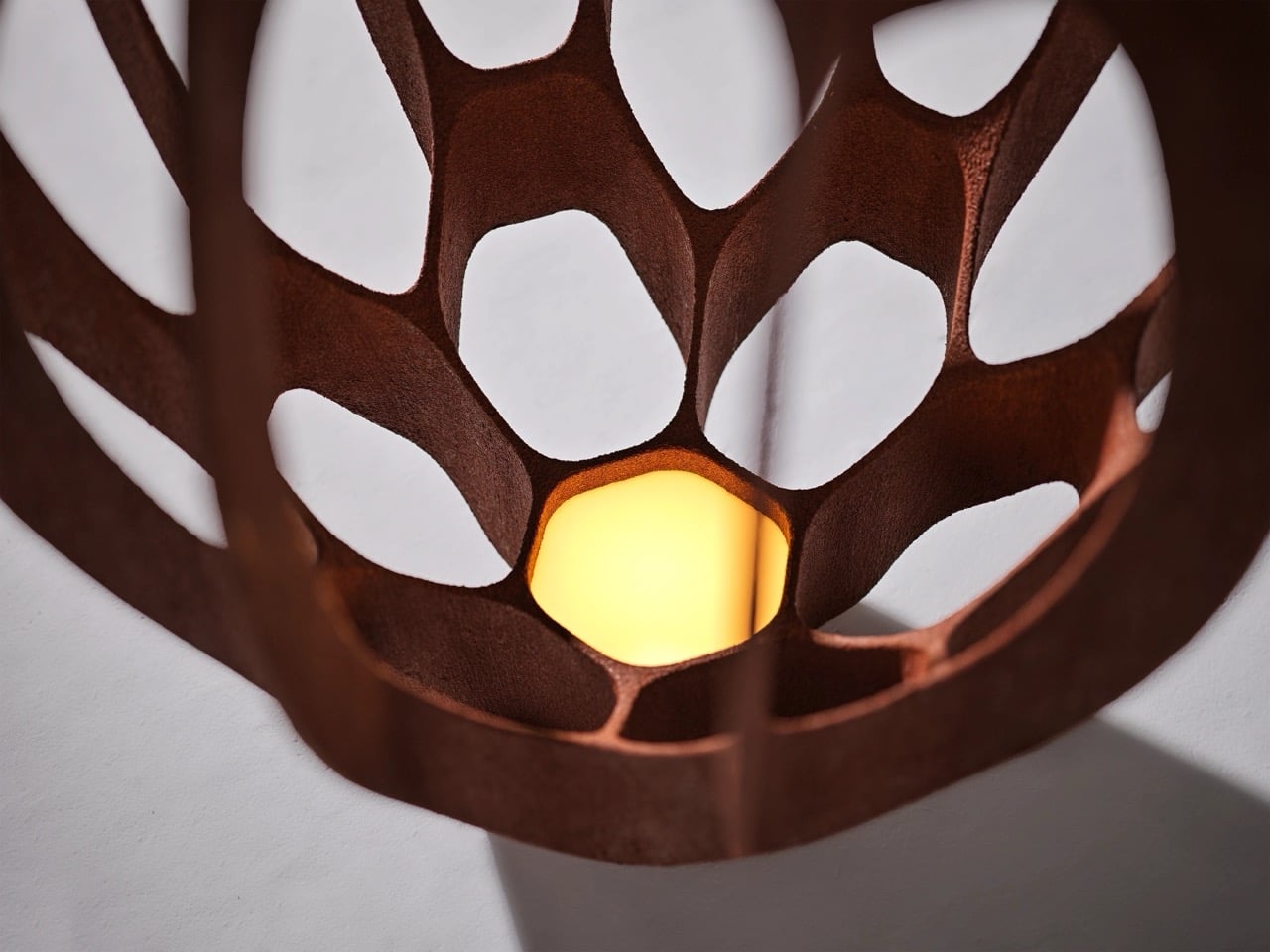
The hexagonal lattice structure that defines Lacuna is where the design earns its sculptural credibility. Most floor lamps hide their light source behind fabric or frosted glass, treating the shade as a functional diffuser. Lacuna does the opposite. The perforated shell becomes the entire visual identity, a rust-toned exoskeleton that exposes the warm glow radiating from within. Light escapes through the voids in the structure, casting intricate shadows across surrounding surfaces and creating a layered interplay between solid and negative space. The design feels intentionally unfinished, weathered in a way that bridges natural erosion and deliberate craft. That rust-like coating gives the lamp a presence that reads more like an artifact than a consumer product, something that could belong in a contemporary art gallery as easily as a living room.

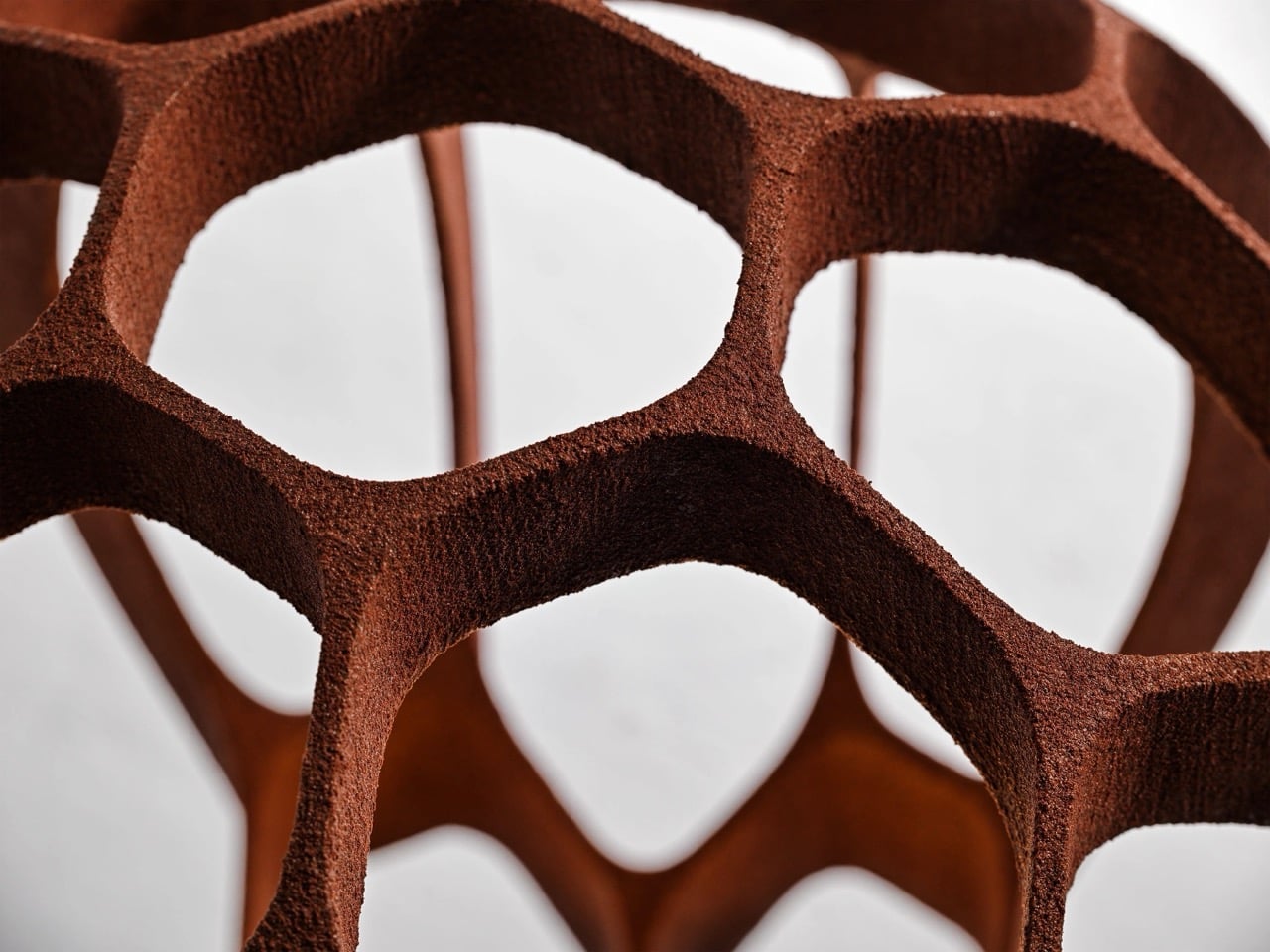
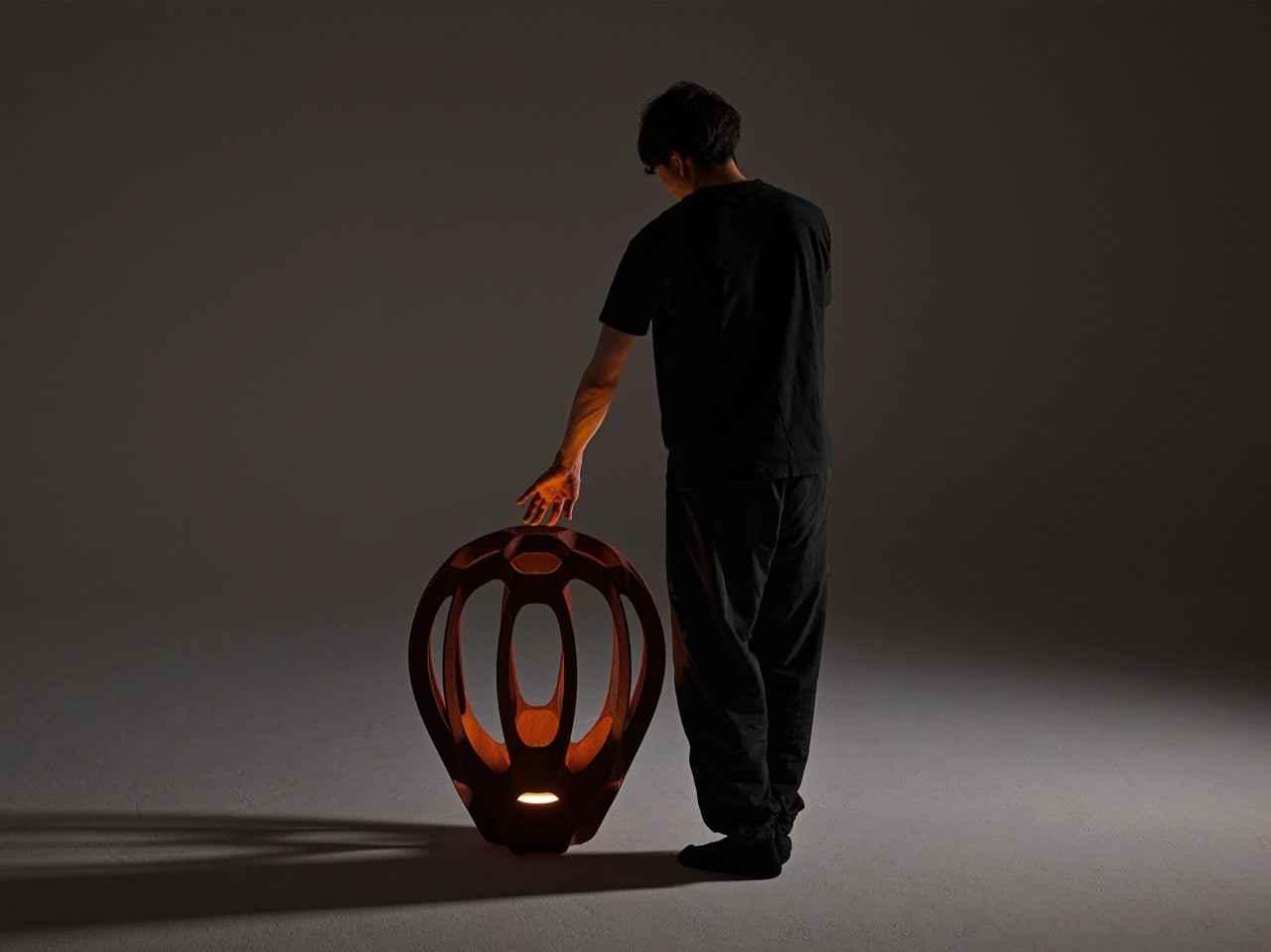
Abe’s material choice reinforces the organic narrative. The structure appears to be manufactured through some form of additive process, given the continuous, flowing geometry and the lack of visible seams or fasteners. The surface texture has a granular, almost sintered quality that enhances the weathered aesthetic. This is a lamp that wants you to notice it when it is off, which is a rare ambition in lighting design. The scale pushes it into statement-piece territory. This is a floor lamp with genuine heft and visual mass, portable enough to relocate but substantial enough to anchor a space.

The warm internal light source, visible through the hexagonal voids, provides ambient illumination rather than focused task lighting. You are not reading by this lamp. You are setting a mood with it, using the interplay of light and shadow to transform how a room feels at night. The honeycomb geometry creates a diffuse glow that softens as it filters through the lattice, avoiding the harsh directional quality of exposed bulbs while maintaining enough warmth to feel inviting. Lacuna proves that floor lamps can be sculptural without sacrificing their functional purpose, turning an often-overlooked category into an opportunity for genuine artistic expression.

The post This Sculptural Lamp Treats Light as Secondary and its Decorative Shell as Primary first appeared on Yanko Design.
Apple Wants To Put A Camera In Your AirPods… To Improve Siri’s Visual Intelligence

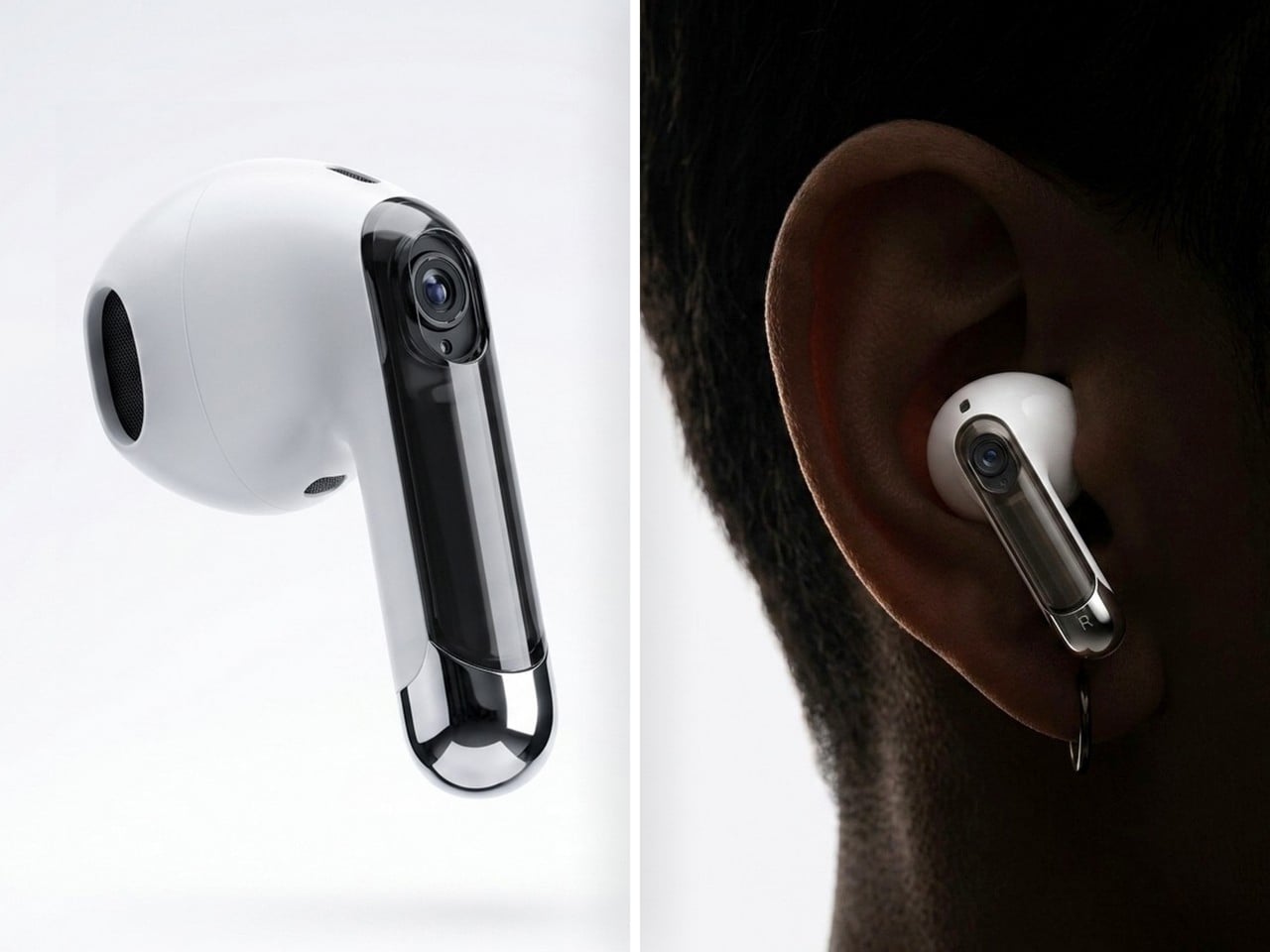
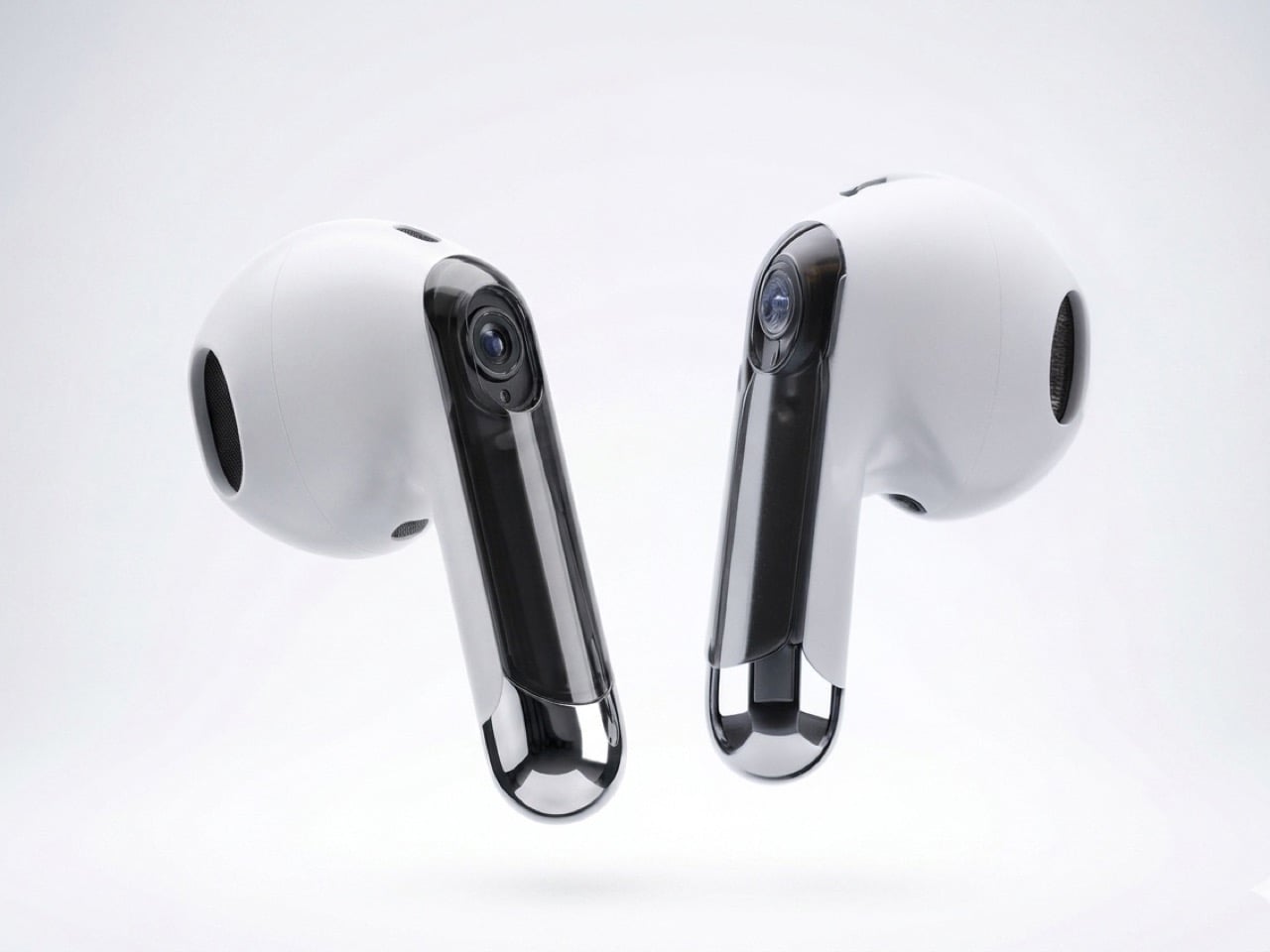
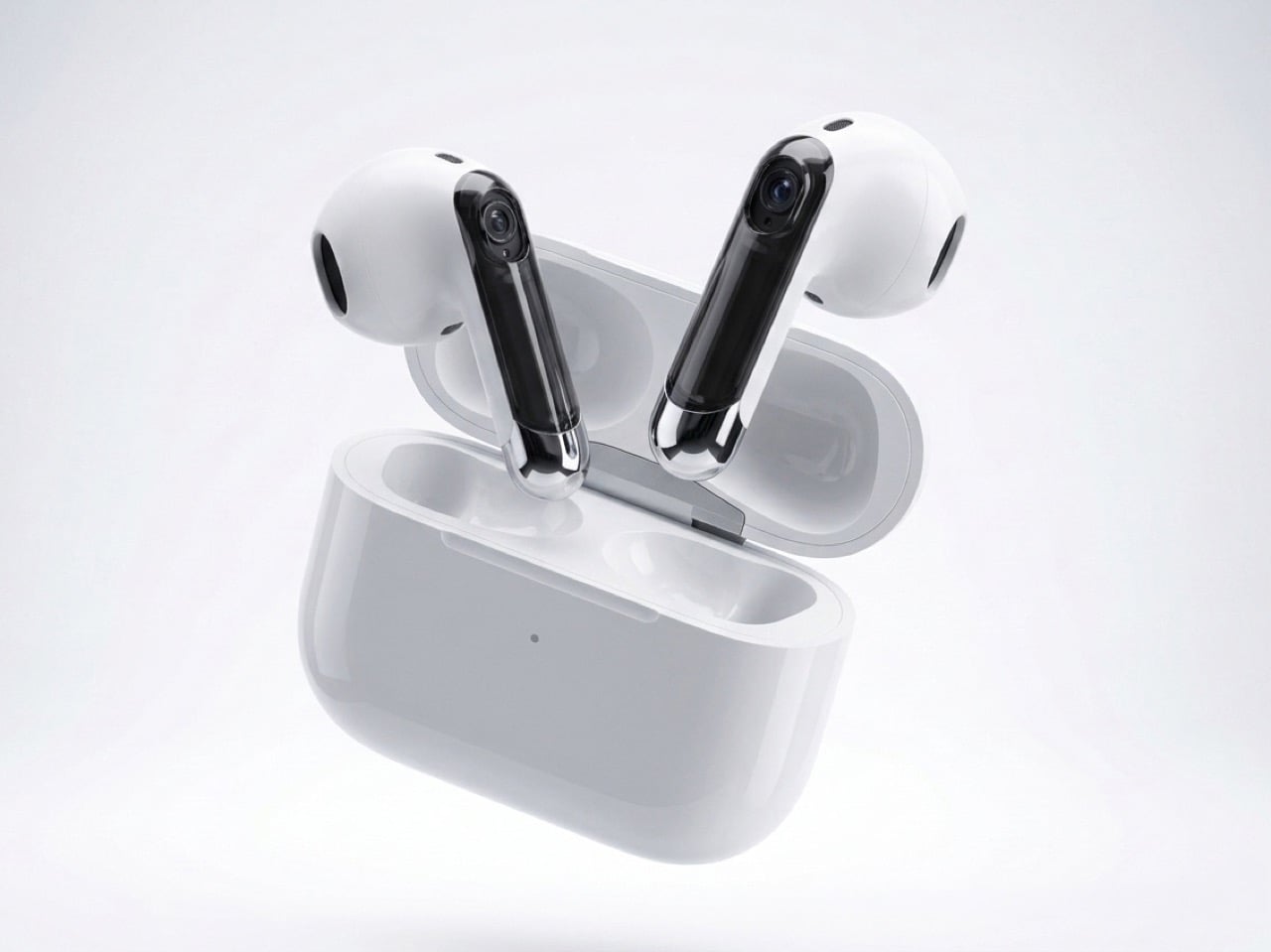
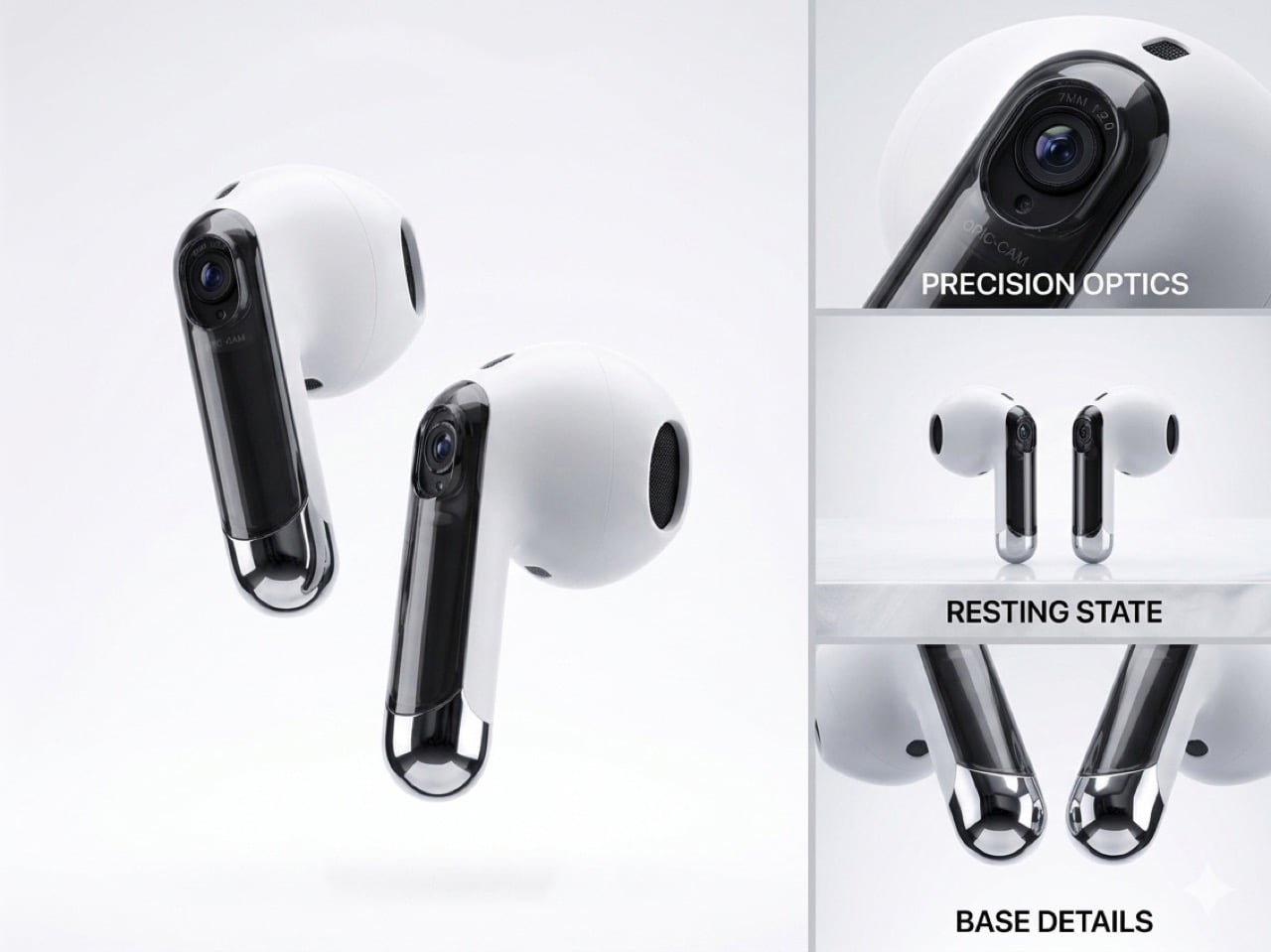
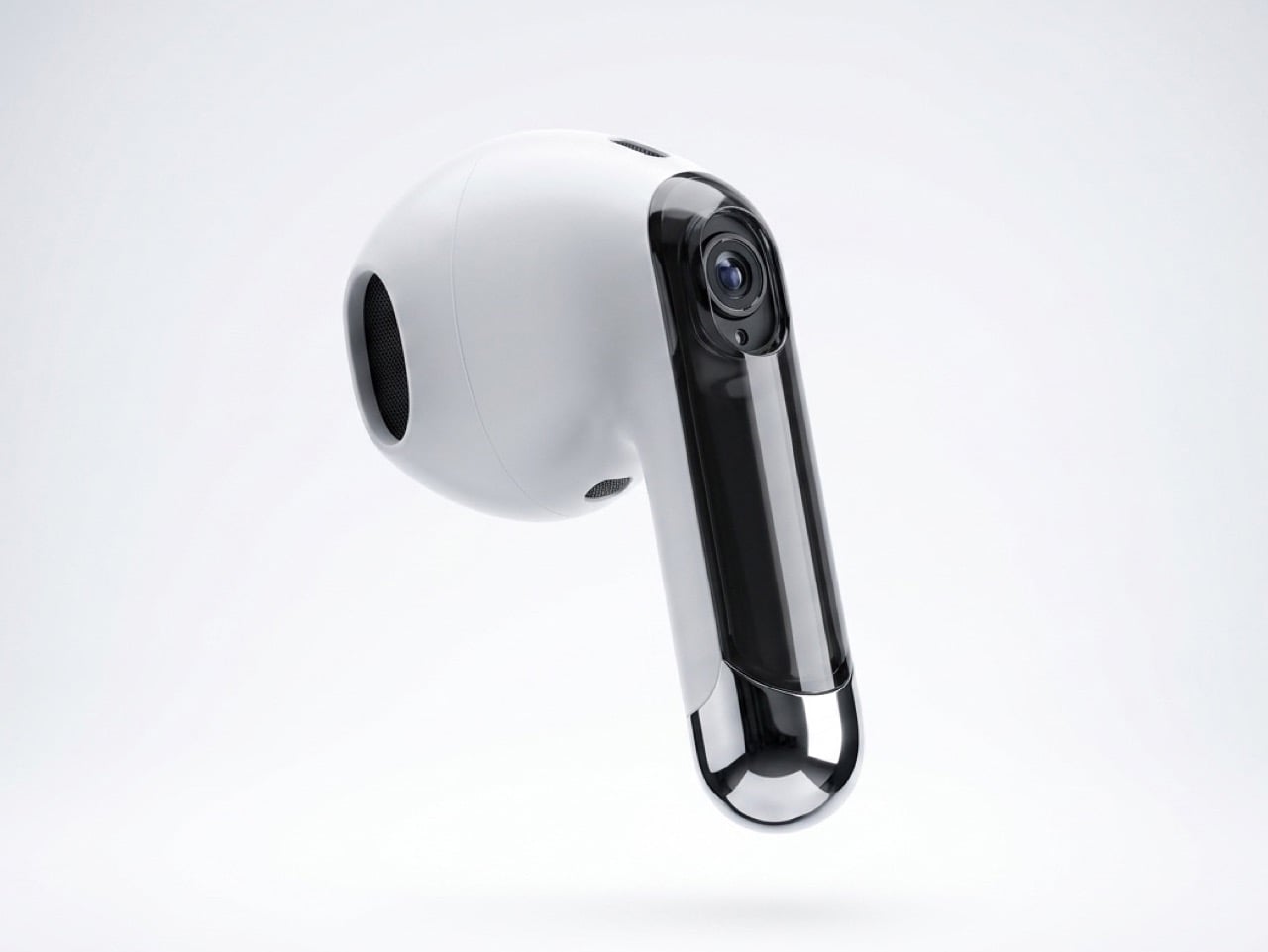
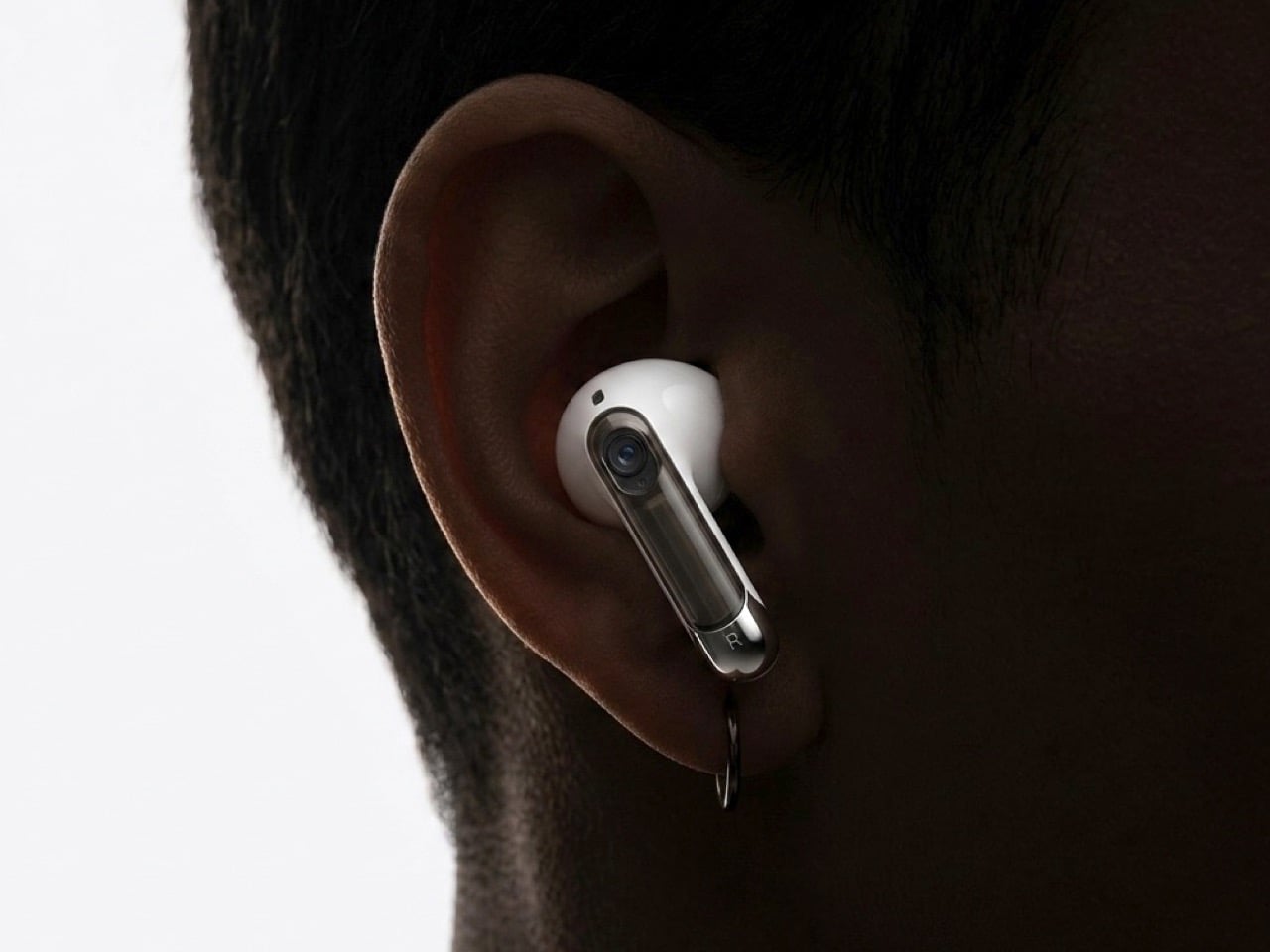
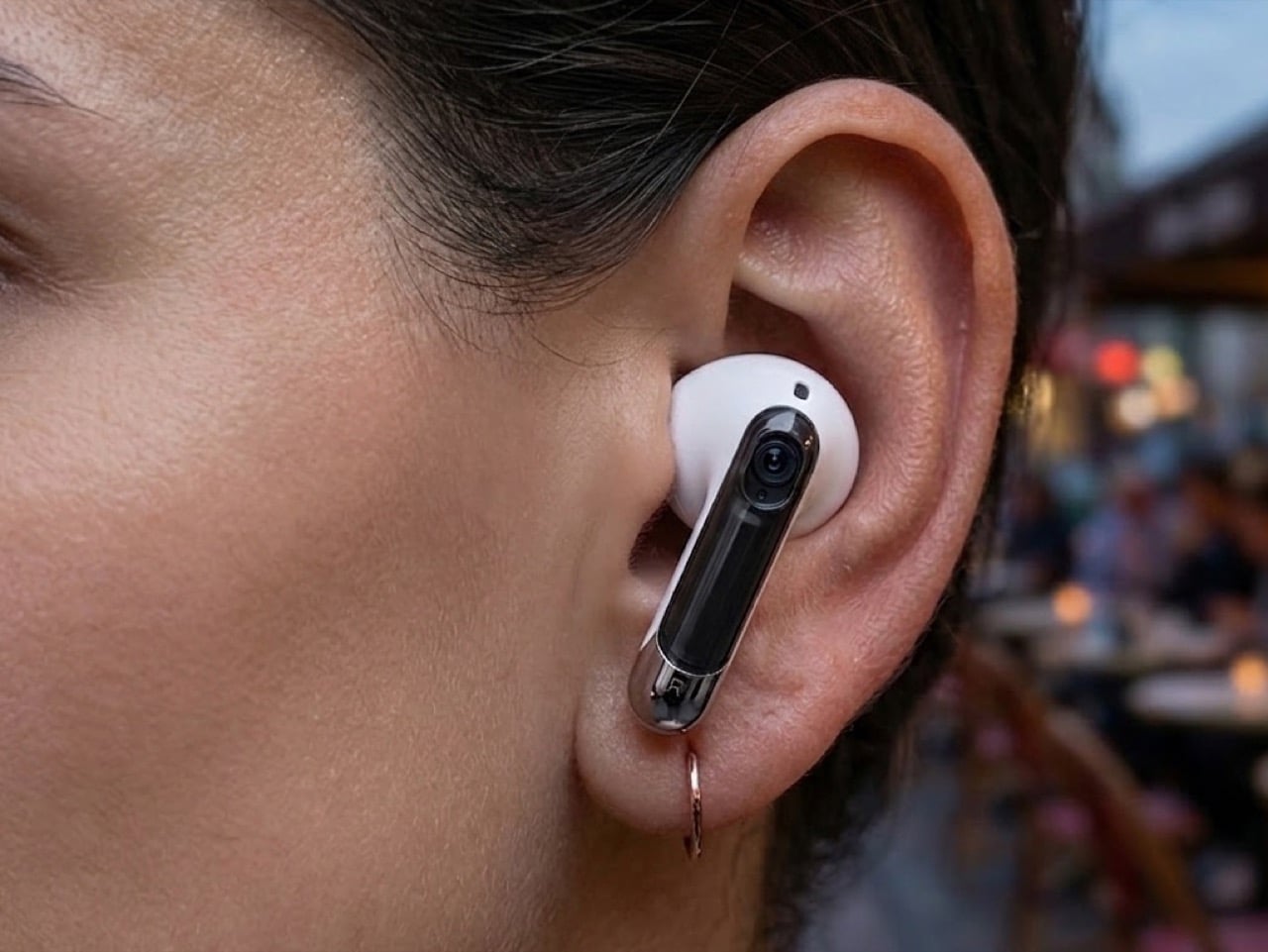
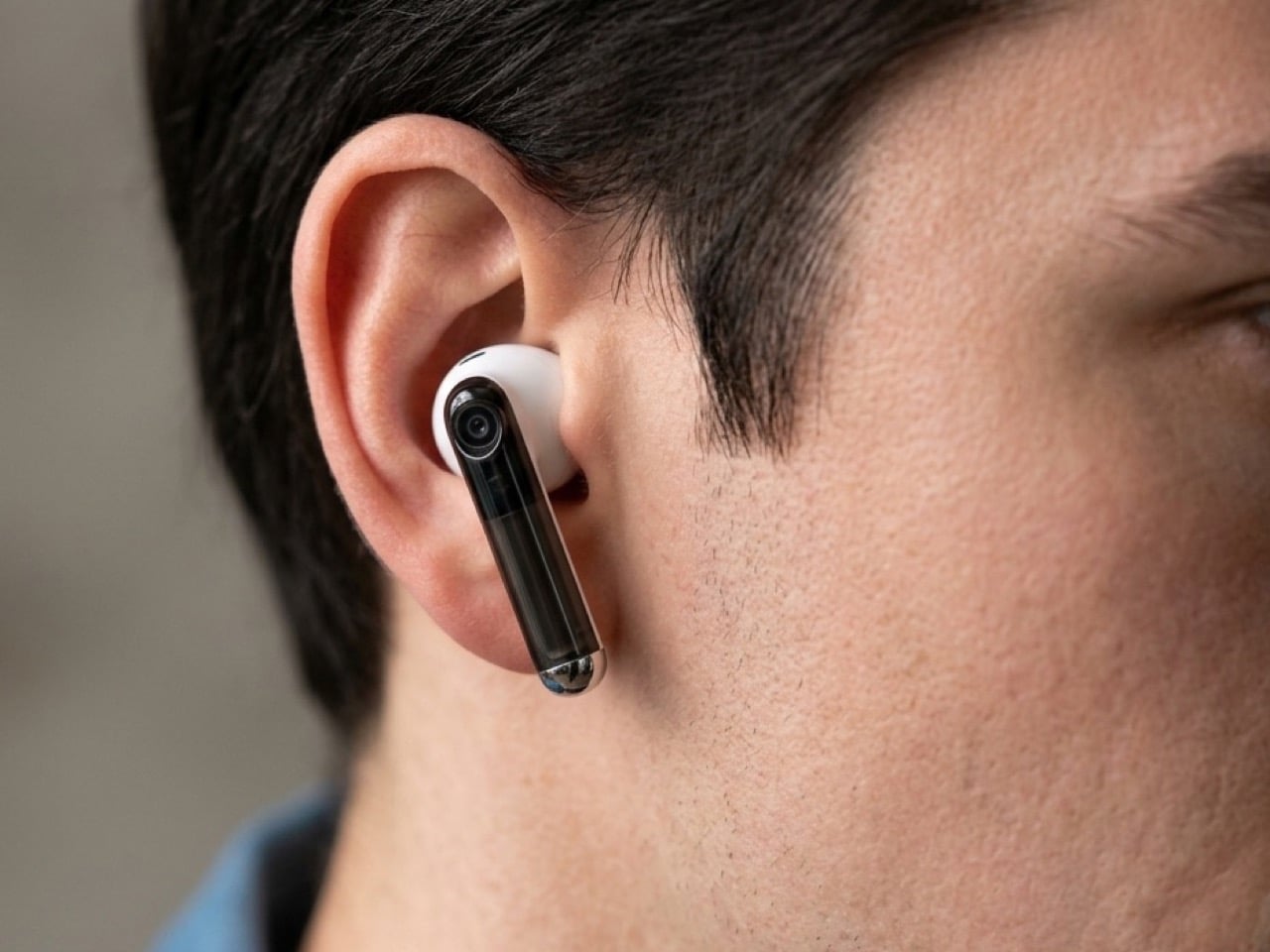
Your earbud can read your body temperature, heart rate variability, and sleep quality. No, I’m not joking, there are TWS earbuds on the market that can gather medical-grade data aside from playing music or your favorite podcast. Now, Apple wants to put a camera on them too. The AirPods Pro 3 already ships with a heart rate sensor. Brands like Amazfit and Soundcore have been quietly building health-monitoring earbuds for a couple of years now. The earbud has become a sensing platform in its own right, and Apple’s next move is to take that considerably further with infrared cameras baked into a premium new model, reportedly called the AirPods Ultra, that would sit above the existing AirPods Pro lineup and bring computer vision to the most personal wearable most people actually wear every day.

According to Bloomberg’s Mark Gurman, who has been tracking this story for months, the cameras won’t capture photos or video. They are infrared sensors, closer in nature to the Face ID array on iPhone, designed to scan the environment around the wearer and feed contextual data to Siri in real time. The goal is a smarter assistant that knows what you’re looking at and what’s happening around you, without you having to describe any of it. Gurman has described the product as a “major new product category,” and the branding alone tells you something: AirPods Ultra would sit above the AirPods Pro 3, which currently retails at $249, making it the most expensive AirPods Apple has ever sold. The concept has been circulating since Ming-Chi Kuo first floated it in mid-2024, but the story has crystallized considerably in recent weeks, with multiple sources converging on an expected September 2026 launch window.

Image Credits: Sarang Sheth

The Apple Watch Ultra and the M-series Ultra chips established “Ultra” as Apple’s signal for extreme capability and premium positioning within a product family, and the AirPods Ultra branding carries exactly that weight. 9to5Mac noted that what was previously reported as a high-end AirPods Pro variant has shifted in the rumor landscape toward a genuinely new product tier. The reported pricing reflects that: these will cost more than the AirPods Pro 3, which sits at $249. Apple is also reportedly developing an iPhone Ultra and MacBook Ultra for 2026, meaning the earbuds would join a broader product family refresh built around the tier. Apple is constructing a new ceiling for its entire hardware lineup, and the AirPods Ultra sits at an intersection of audio, AI, and ambient sensing that no earbud has occupied before.

The infrared camera’s job description, as currently understood from Gurman’s reporting, is to make Siri situationally aware. Visual Intelligence on iPhone 15 Pro and newer already allows the camera to identify objects, read menus, and pull up contextual information about whatever it points at. Moving that capability to an earbud means the system could, in theory, understand your environment passively, without you reaching for your phone or issuing a voice command first. Apple’s next-generation Siri, expected to arrive alongside iOS 27, is reportedly being rebuilt around exactly this kind of ambient, context-first intelligence. The AirPods Ultra cameras would feed that system continuous environmental data, turning a passive audio device into something closer to a spatial awareness layer running alongside your daily life.

Kuo’s original 2024 report framed the camera feature around in-air gesture control, the idea that waving a hand near your head could manage calls or control playback without touching the earbuds. It was a compelling angle, and it made for a more immediately legible pitch than “cameras for Siri.” Gurman has since walked it back, stating he does not expect the AirPods to support hand gestures at launch. A 2025 Apple patent did explore gesture recognition through the earbud camera system, so the underlying research exists even if the shipping product won’t lead with it. The gap between what Apple patents and what it actually ships in a first-generation product is well-established history, and gesture control reads like a capability that may surface in a second-generation AirPods Ultra rather than the first.

Visual Intelligence on iPhone has proven genuinely useful in contained scenarios, but earbuds introduce a layer of ambient, always-on sensing that is harder to control and considerably harder to explain to the person standing next to you. The privacy implications are real, and the design challenge of making an IR camera in your ear feel considered rather than intrusive is one Apple will have to solve in both hardware and communication. The AirPods Ultra, if it lands in September 2026, will be one of the more consequential product launches Apple has attempted in years, because it represents the company’s clearest statement yet about what a wearable is actually for. The earbud went from audio device to health monitor quietly enough that most people barely noticed. Adding computer vision to the mix is considerably harder to ignore.

The post Apple Wants To Put A Camera In Your AirPods… To Improve Siri’s Visual Intelligence first appeared on Yanko Design.