8 Best Pens and Writing Instruments That Make You Actually Want to Pick Up a Pen Again

There is an argument happening on desks everywhere, and it is not about productivity systems or the right notebook grid. It is about whether the thing you write with deserves the same design attention as everything else you choose to own. For most people, a pen is a pen. For a small and growing number, it is the one object that connects thought to surface, and that connection is worth getting right. The instruments on this list take that idea seriously.

What unites them is not price or prestige. It is that each one treats the act of writing as a design problem worth solving from the beginning — the weight, the mechanism, the material, the way it sits in the hand before the nib or tip ever touches paper. Some are concepts. Some are products you can order today. All of them make the case that the writing instrument is still one of the most interesting objects in design.

1. Yamaha Swing Scribe
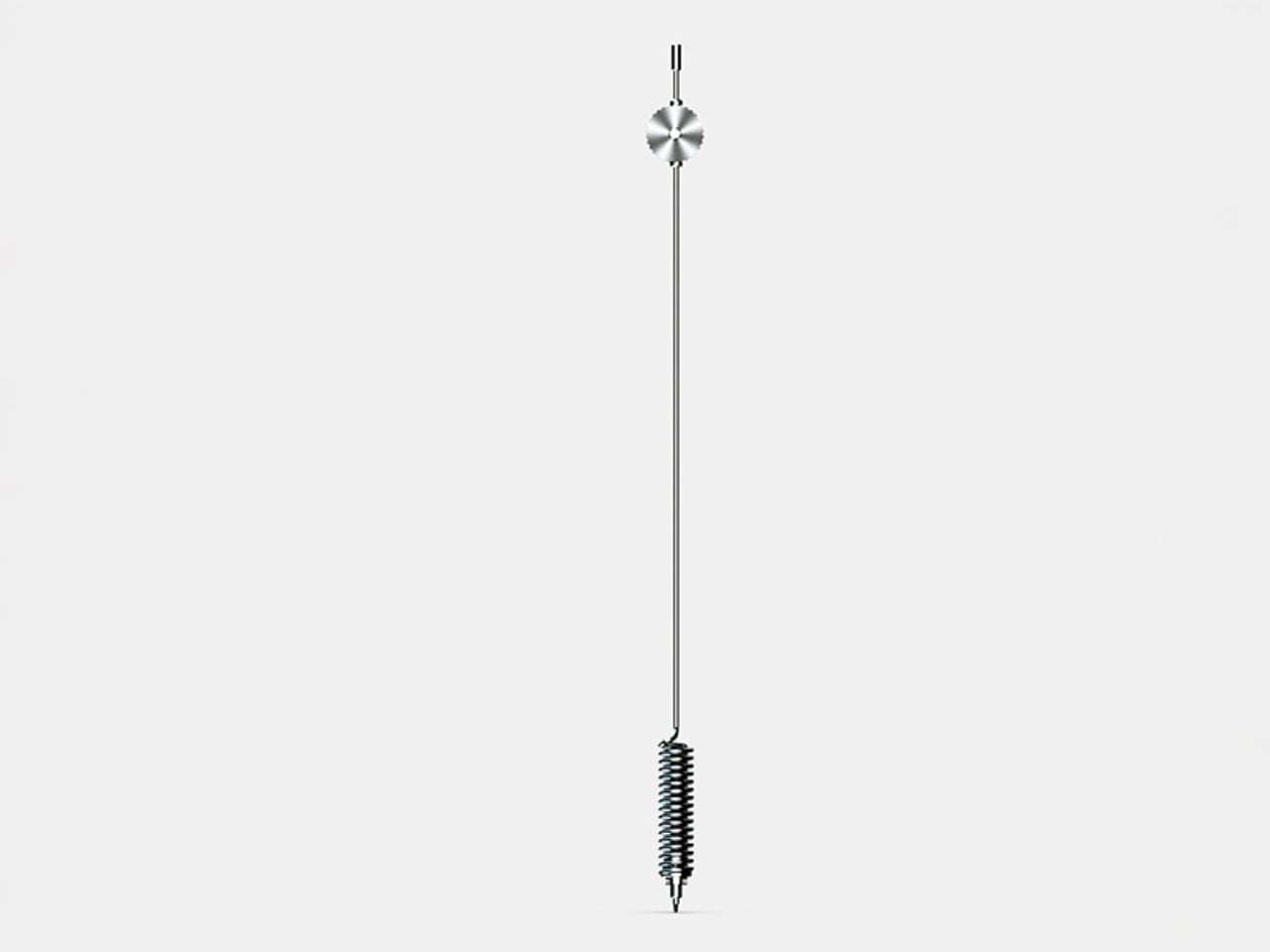
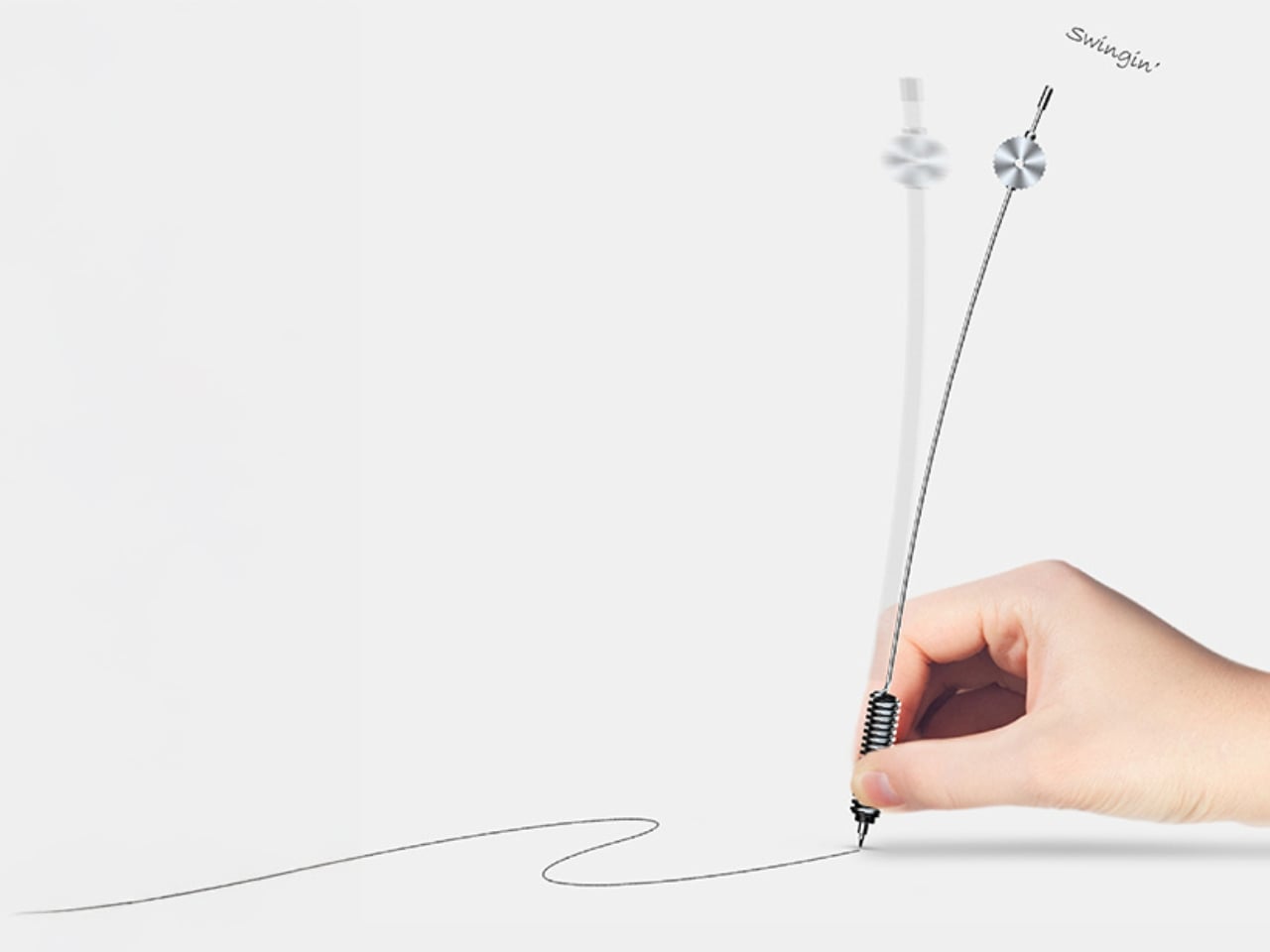
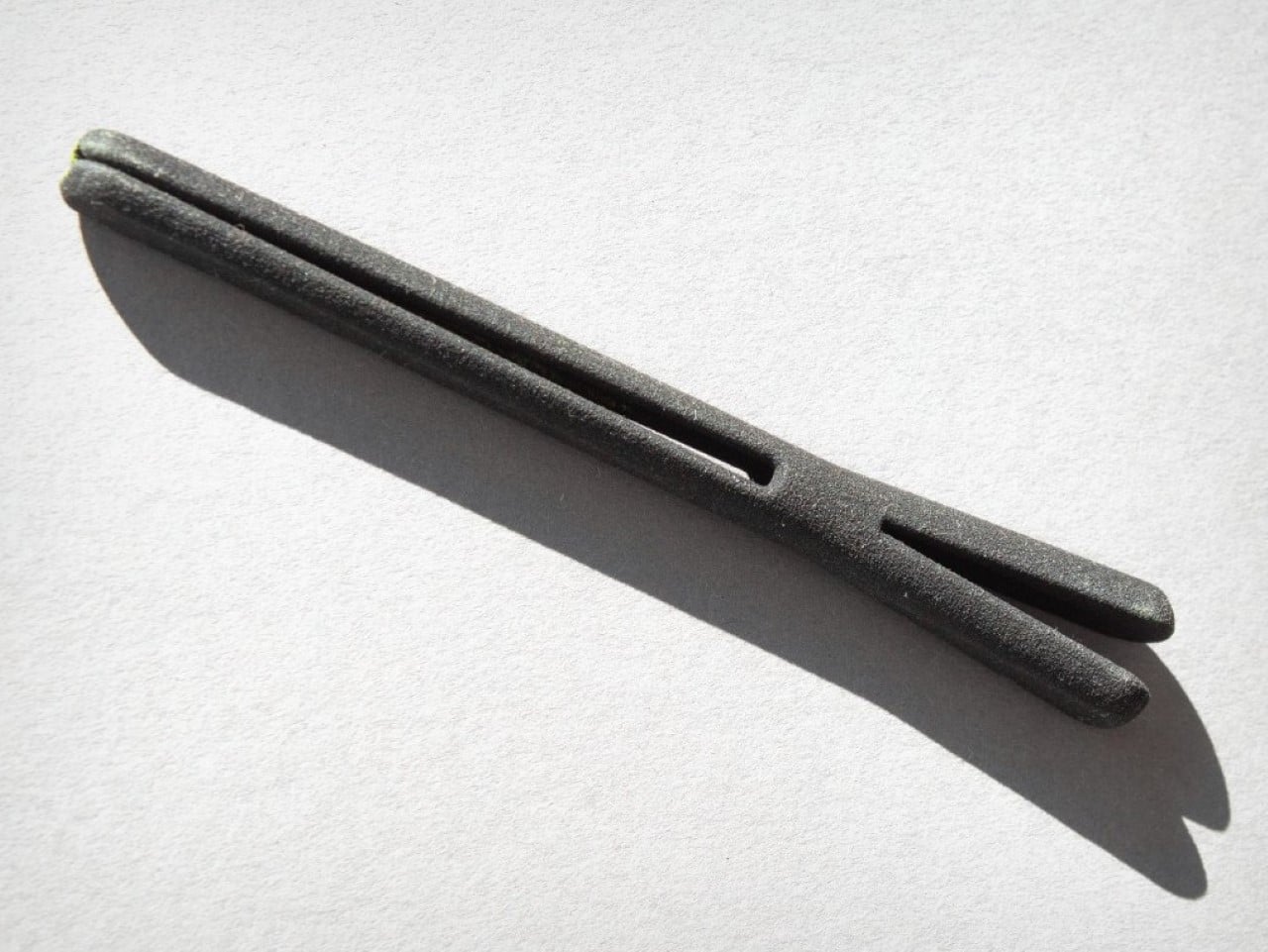
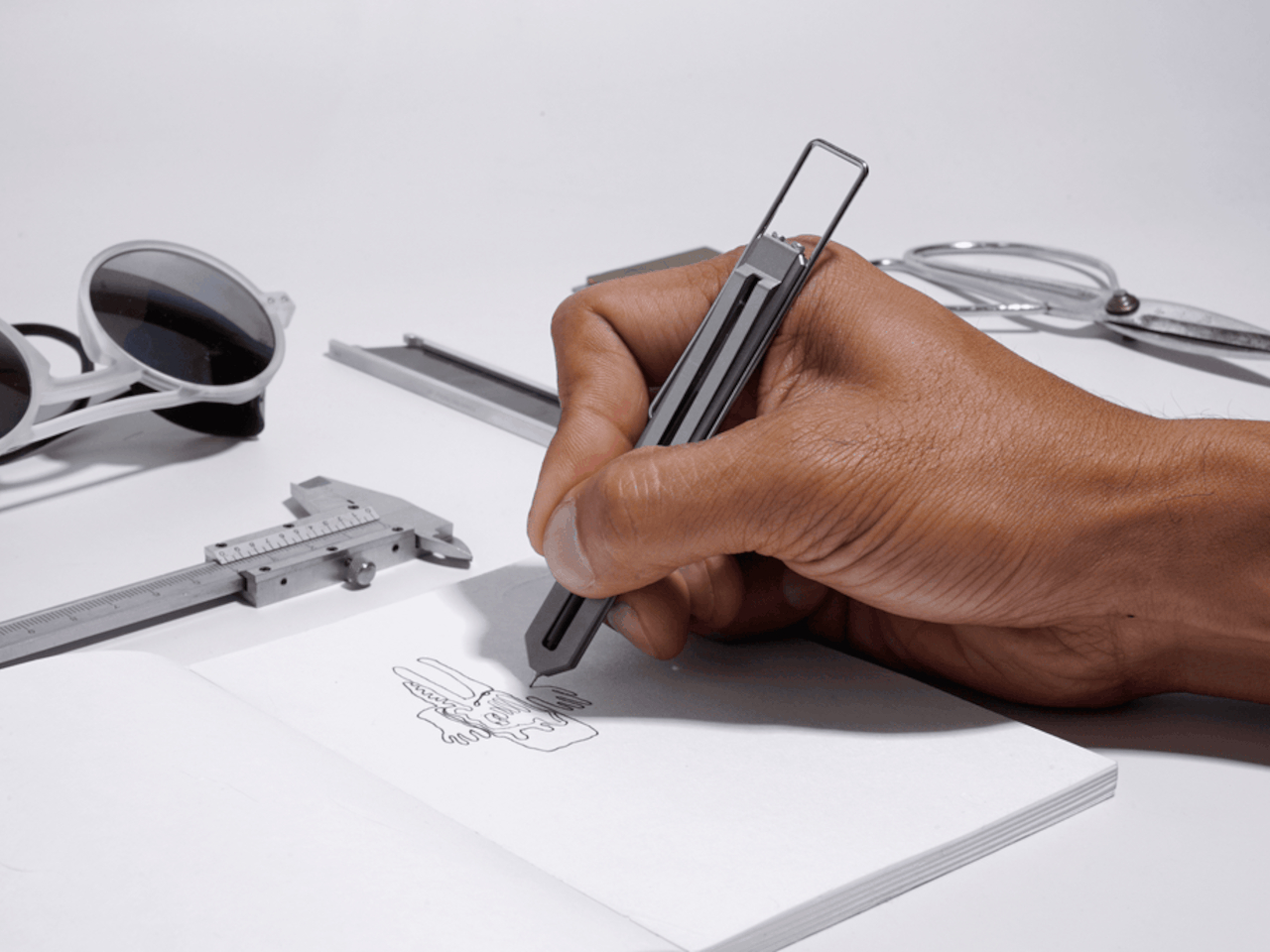
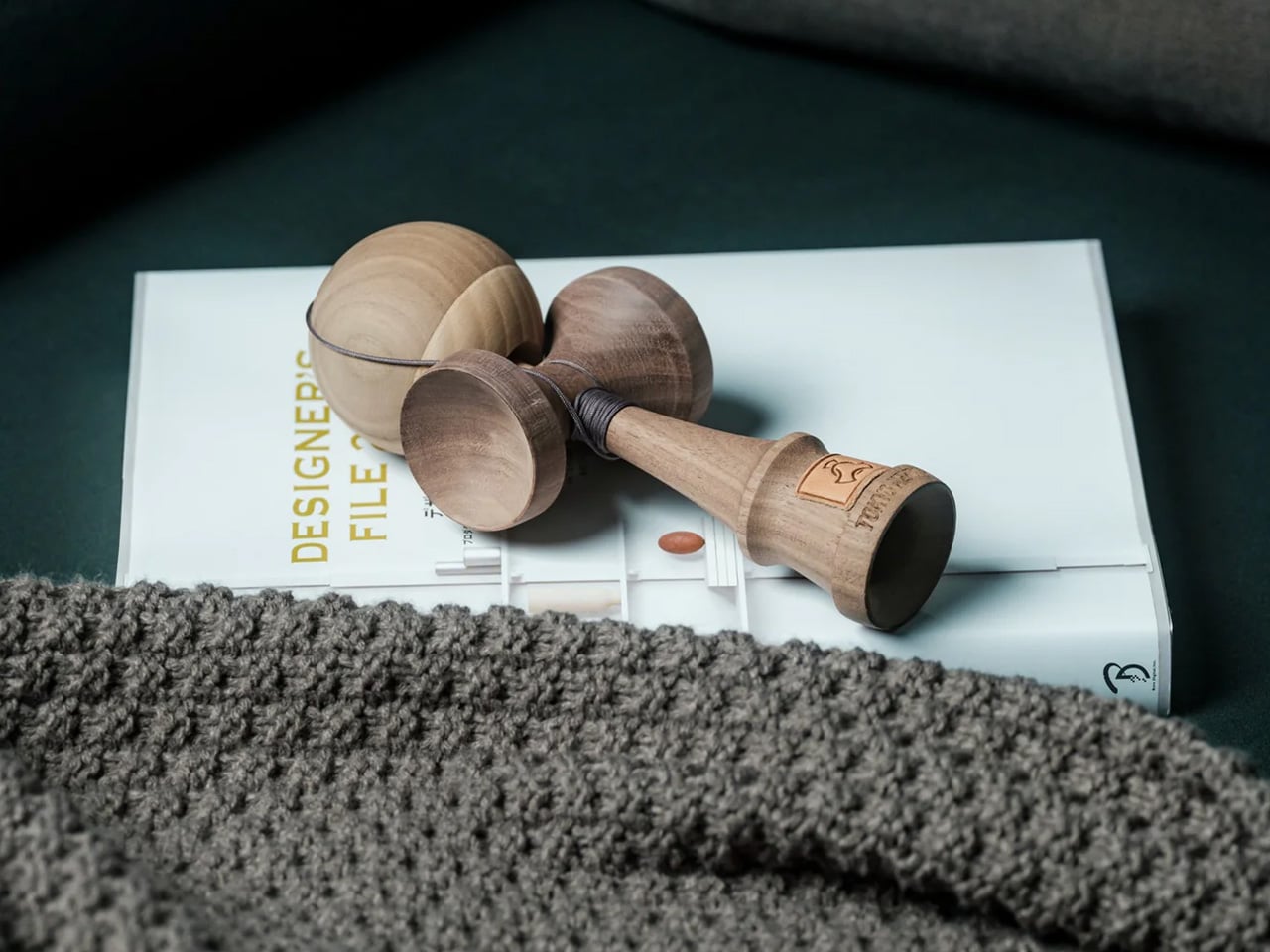
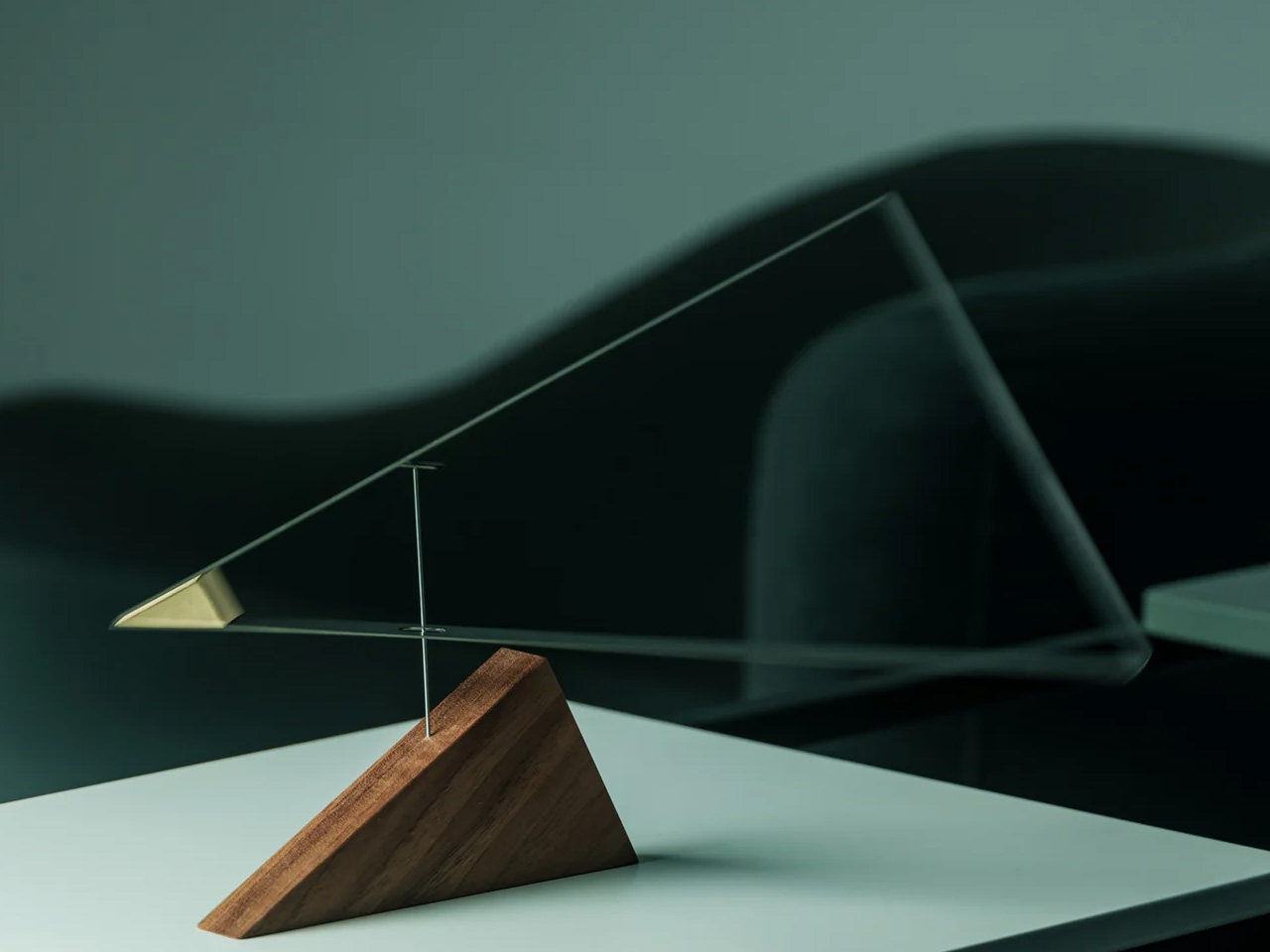
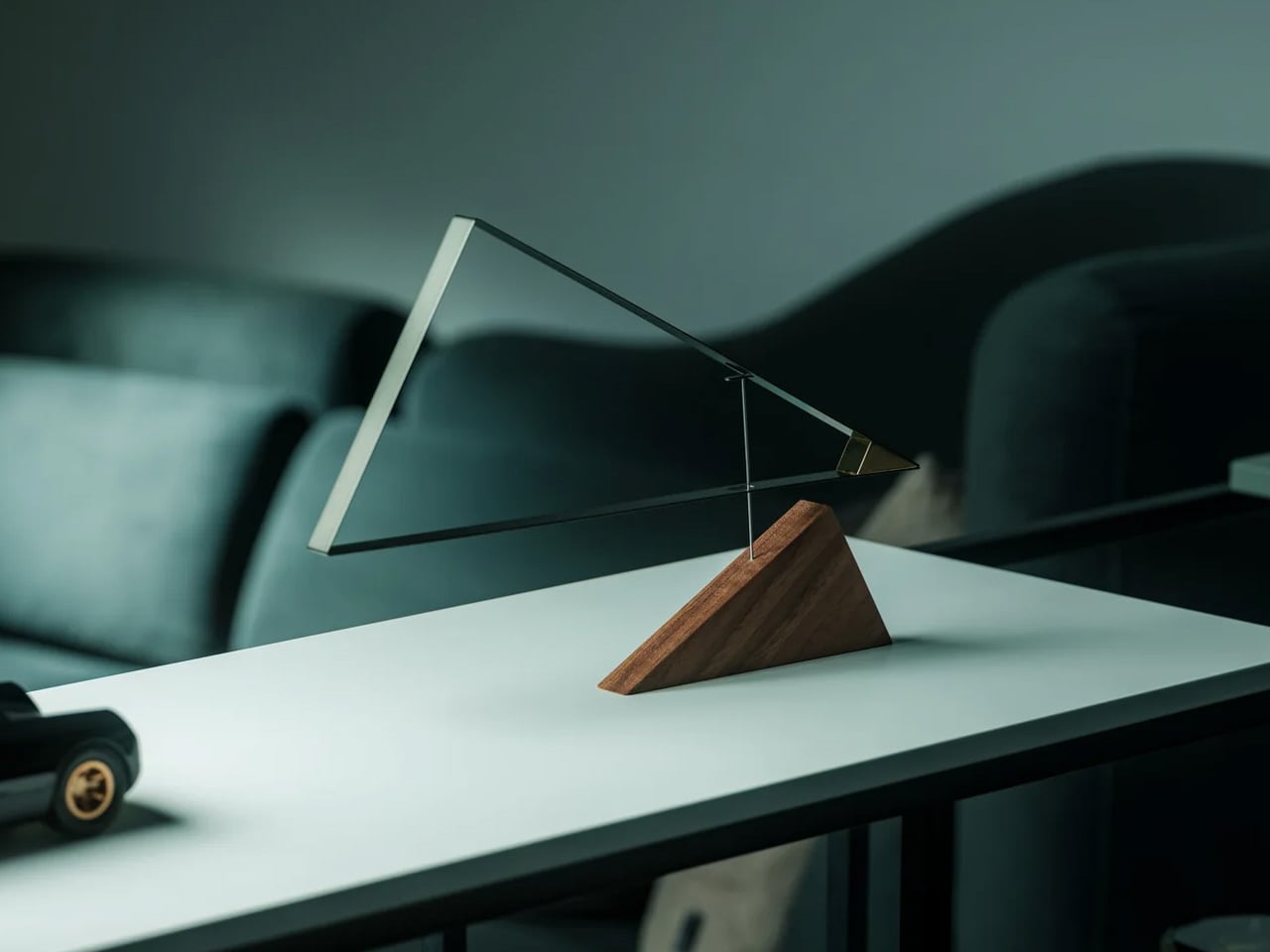
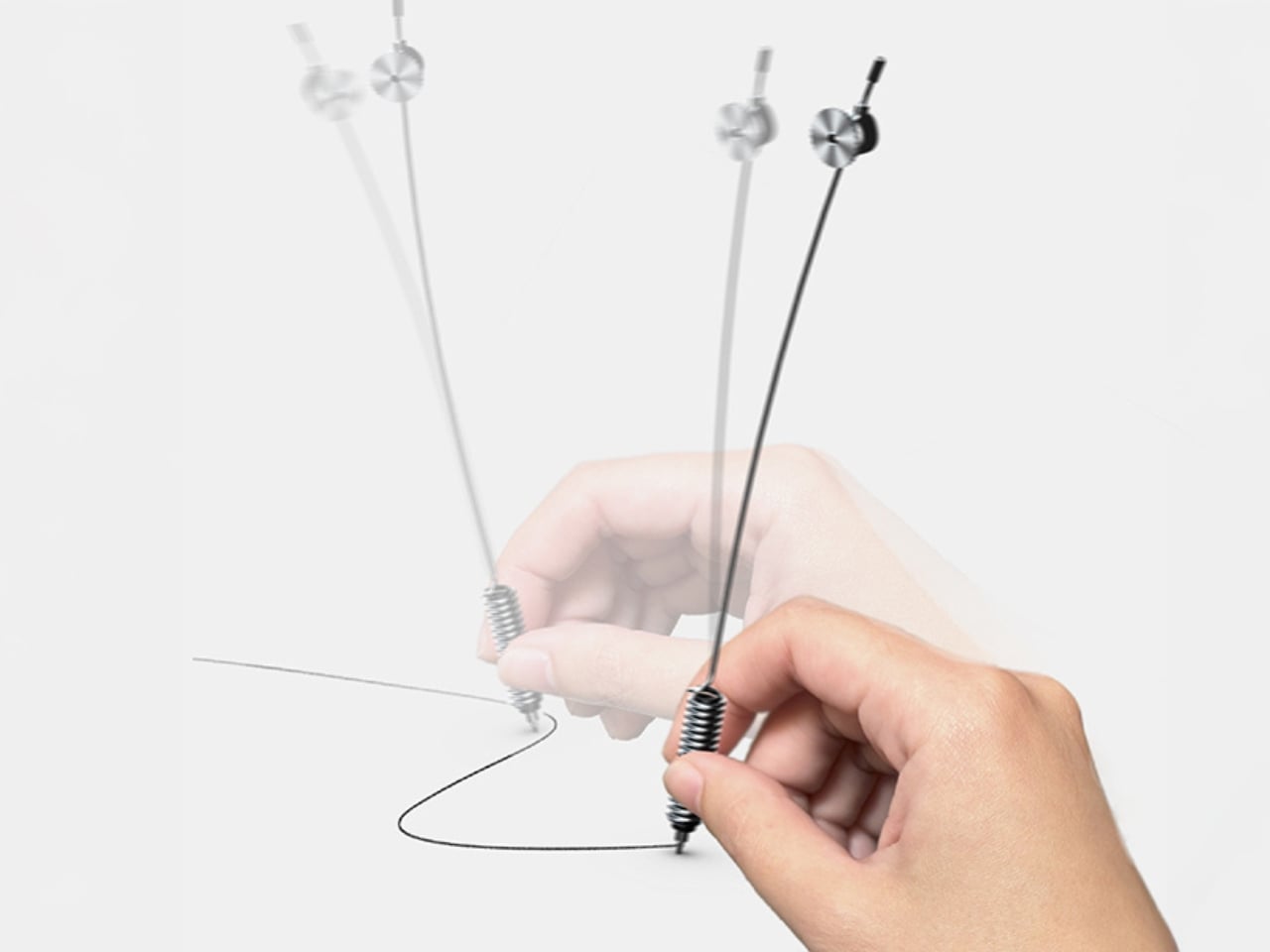
Yamaha’s answer to the question nobody thought to ask — what if a pen had a heartbeat? Part of the brand’s Scribe Tool Design 2024 project, the Swing Scribe draws its logic from the quill: as a feather naturally wobbles under air resistance while writing, it gives the act a physical rhythm. Yamaha made that incidental quality intentional. A weighted tip attached to a metal bar swings as the pen moves, feeding a small, steady pulse back into the hand with every stroke. No batteries. No app. Just physics.

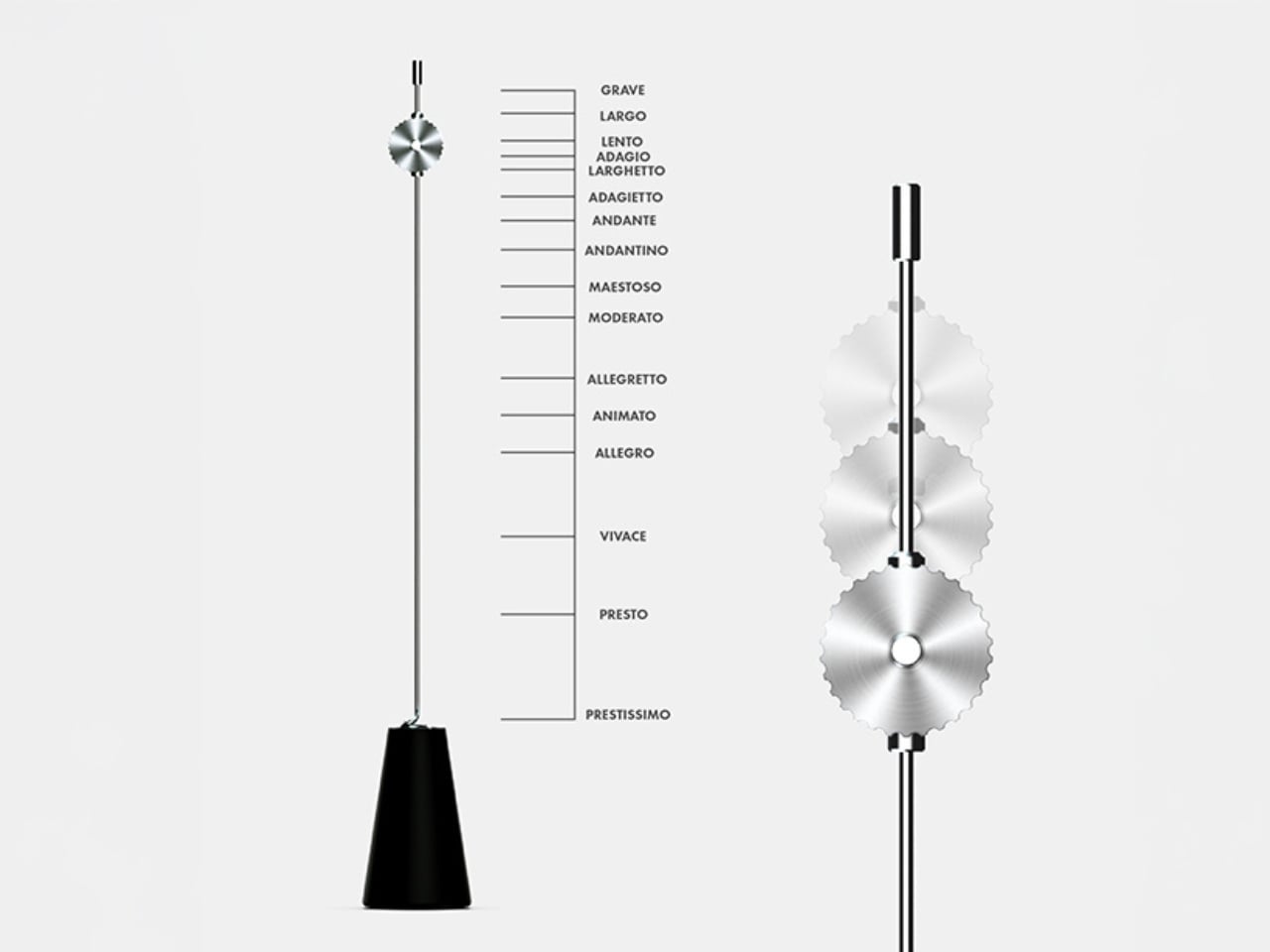
The weight slides along the bar, letting you dial in the arc of the swing to match how you’re writing at any given moment. Pull it close to the pivot for a tighter, faster beat. Let it run wide for slow, deliberate work. This is the kind of design thinking that earns the word Kando — the Japanese concept of emotional resonance that sits at the core of everything Yamaha builds, from concert grands to this pen. It doesn’t make writing faster. It makes it more felt.

What we like:

  • The pendulum mechanism works without any power source, making it completely self-contained
  • Adjustable weight position means it adapts to the writer rather than demanding the writer adapt to it

What we dislike:

  • The swinging arm adds visual complexity that won’t suit every context or desk aesthetic
  • The concept hasn’t been tested across extended, high-volume writing sessions yet

2. Inseparable Notebook Pen
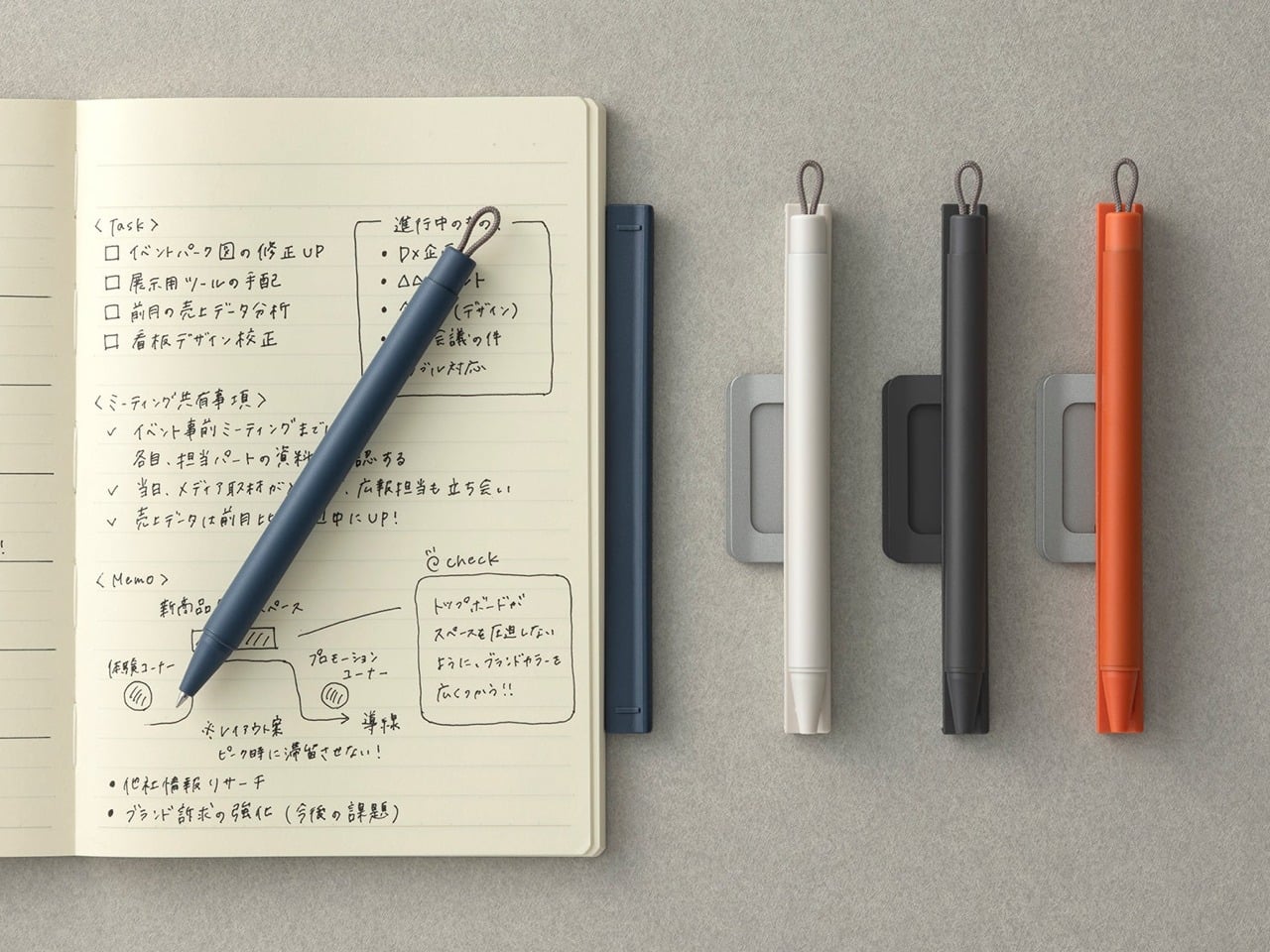
The premise is embedded in the name. Most pens and notebooks exist in a state of constant near-separation — the pen migrates to a bag, a pocket, another room, and the notebook sits waiting and useless. The Inseparable concept addresses this directly, building pen and notebook as a single resolved object rather than two products that happen to be sold together. The pen lives within the notebook’s architecture rather than being clipped to it as an afterthought, and removing it feels deliberate rather than accidental.

What makes this design interesting isn’t just the integration — it’s that the integration is the premise, and everything else follows from it. The proportions of the pen are dictated by the notebook. The notebook’s form is shaped around the pen’s presence. Neither object is compromised to serve the other, which is harder to achieve than it sounds. When a design solves a problem this specific and this common, it has a right to exist.

Click Here to Buy Now: $19.95

What we like:

  • Eliminates one of the most common and most irritating failures of the writing ritual entirely
  • The formal resolution between pen and notebook is tight — neither object feels like a concession

What we dislike:

  • Integration at this level commits you to one notebook format, limiting flexibility for writers who move between sizes
  • Writers who prefer their own paper choices will find the pairing restrictive

3. Da Vinci Pencil
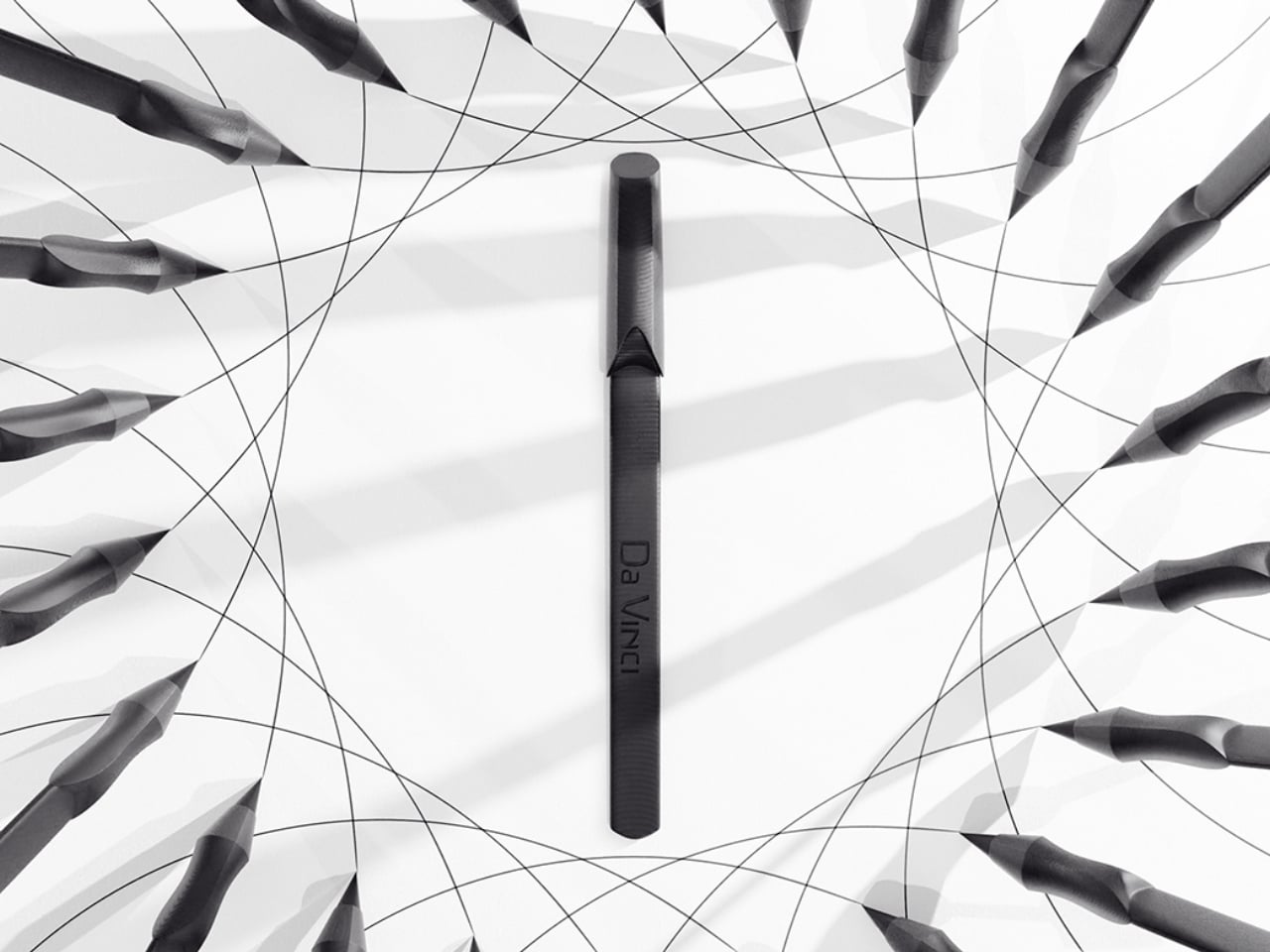
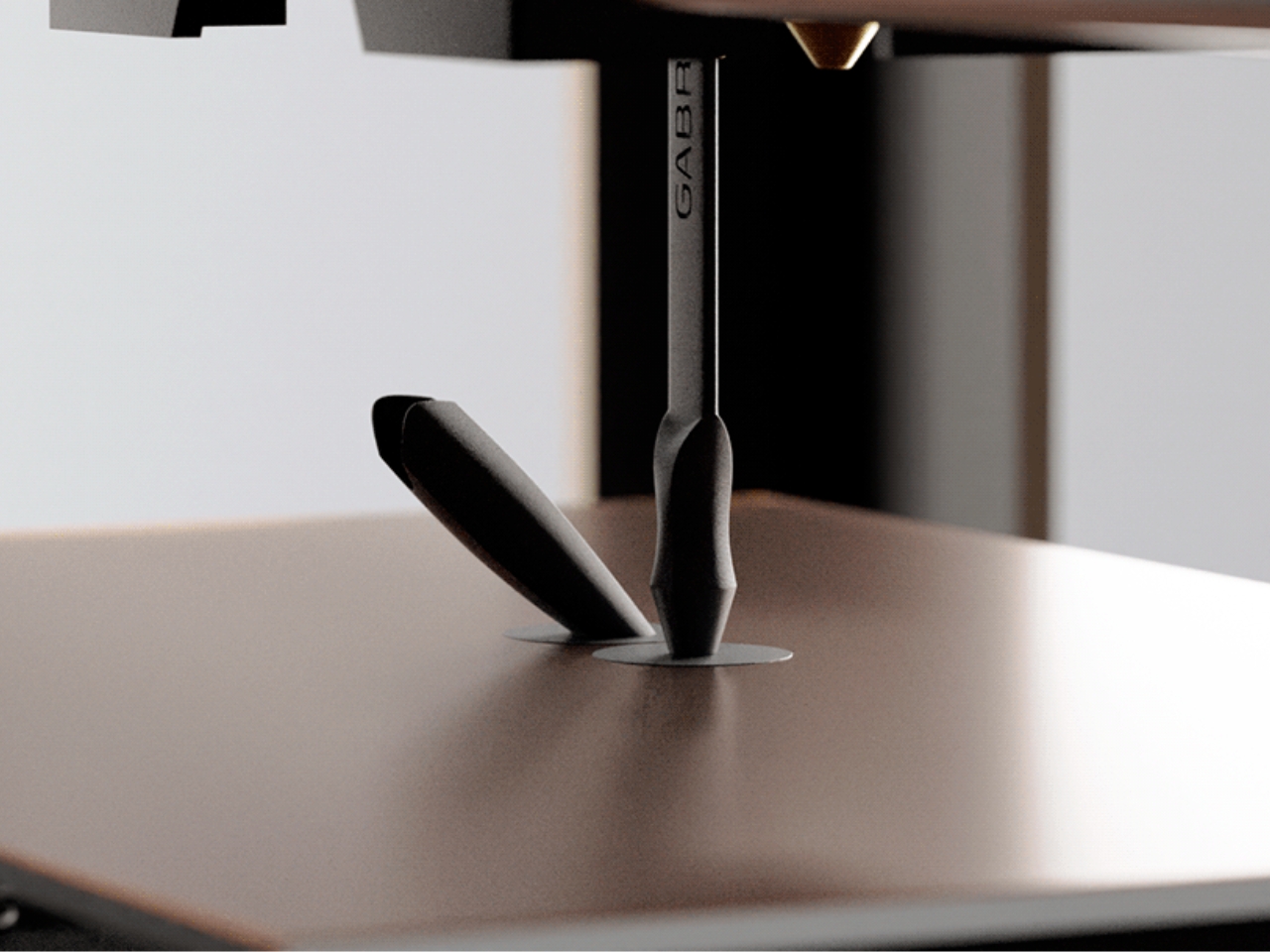
Gabrilevich Design’s Da Vinci pencil concept earns its name not through ornamentation but through the kind of cross-disciplinary thinking that made Leonardo’s notebooks worth studying in the first place. The design draws from da Vinci’s own mechanical sketches — the geometry, the visible logic of moving parts, the sense that an object should reveal how it works rather than hide it. The result is a pencil that functions as a small piece of mechanical sculpture, beautiful precisely because nothing about its construction is concealed.

The concept challenges the pencil’s conventional muteness. Most pencils look like nothing in particular. The Da Vinci concept looks like something that was thought about — that has a position, a point of view about what a mark-making tool should communicate about the hand that uses it. Whether it writes better than a standard pencil is beside the point. It writes differently, and it makes you think about the act differently, which is often the more interesting design outcome.

What we like:

  • Treats a pencil as a vehicle for design philosophy rather than a commodity object
  • The exposed mechanical logic gives it a conceptual depth that most stationery completely lacks

What we dislike:

  • Concept-driven designs at this level of visual complexity often struggle in extended daily use
  • Visible mechanisms can introduce maintenance friction that disrupts the writing ritual

4. Levitating Pen 2.0 Cosmic Meteorite Edition

The levitating pen is a category that could easily slide into novelty, and the original versions of magnetic levitation pens leaned into that direction unapologetically. The 2.0 Cosmic Meteorite Edition changes the conversation by adding material seriousness to the spectacle. The pen itself incorporates genuine meteorite fragment material — iron-nickel alloy from outside the atmosphere — which gives the levitation a context it previously lacked. The object that hovers above its base is, in a measurable sense, from space.

That combination of astronomical material and magnetic suspension creates an object that earns its place on a desk in a way that pure spectacle cannot. It is a writing instrument that happens to be made partly from the oldest solid material you will ever hold, suspended above a surface by the same electromagnetic principles that govern planetary orbits. The writing experience is secondary to what the pen communicates as a resting object, and for a desk piece that doubles as a conversation anchor, that hierarchy is entirely appropriate.

Click Here to Buy Now: $399.00

What we like:

  • The meteorite material elevates the concept from a gadget to a genuine collectible
  • The levitation serves the narrative of the material rather than competing with it

What we dislike:

  • The magnetic base required for levitation eliminates any possibility of portability
  • Its function as a writing instrument is always secondary to its function as a display object

5. Qui Magnetic Pencil System
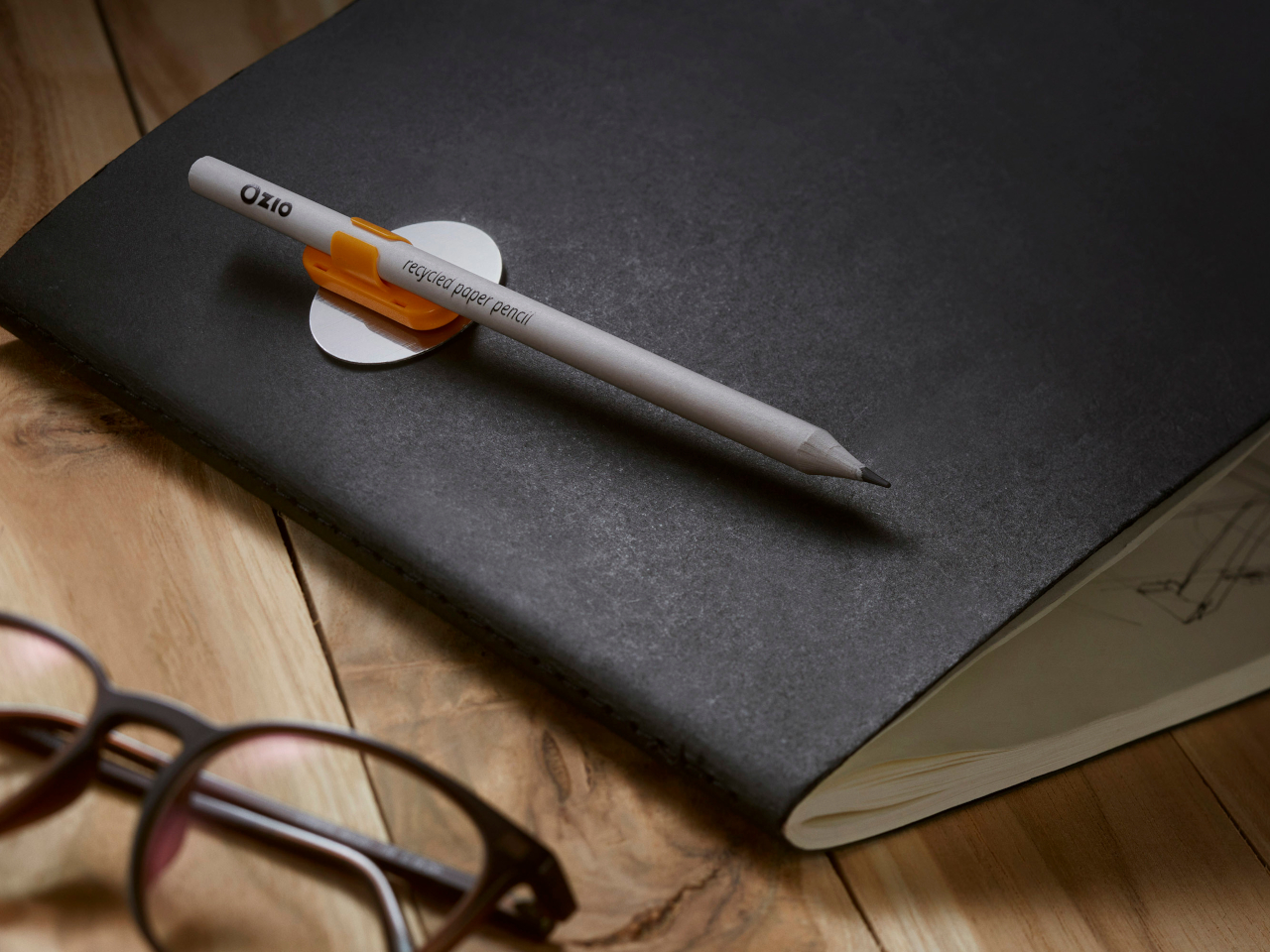
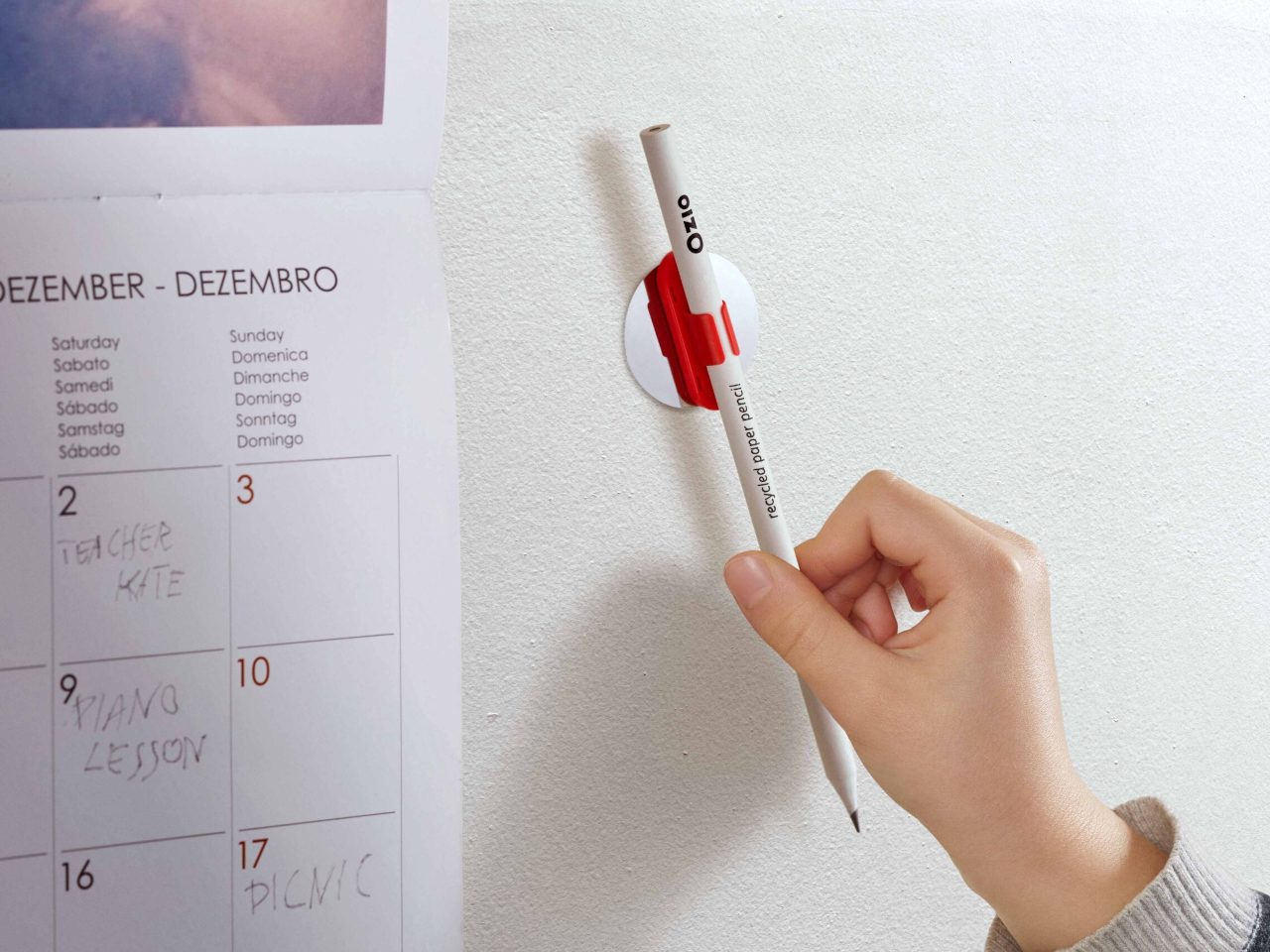
Qui operates on the premise that the friction between a pencil and the surface it lives on — a desk, a notebook, a wall — should be designed rather than incidental. The magnetic system allows the pencil to attach and detach from its designated surface with a satisfying, calibrated resistance, making the act of picking it up and setting it down feel considered rather than casual. This is a small interaction, but it happens dozens of times a day, and designing it well changes the quality of the entire writing practice.

The system thinking extends beyond the magnetic connection. The pencil’s geometry is resolved with the mounting surface as part of the design problem, not as a separate accessory. The result is that Qui occupies space well even when not in use, which is most of the time. A pencil that looks intentional when it is sitting still is a harder design challenge than one that merely writes well, and Qui understands that the resting state is part of the design.

What we like:

  • The system approach treats the pencil and its environment as a single design problem
  • The resting interaction — picking up and setting down — is as considered as the writing experience itself

What we dislike:

  • The magnetic system creates a dependency: without its base, the pencil loses its defining characteristic
  • Committing to a fixed mounting point works against the natural portability of a pencil

6. PENTAPA
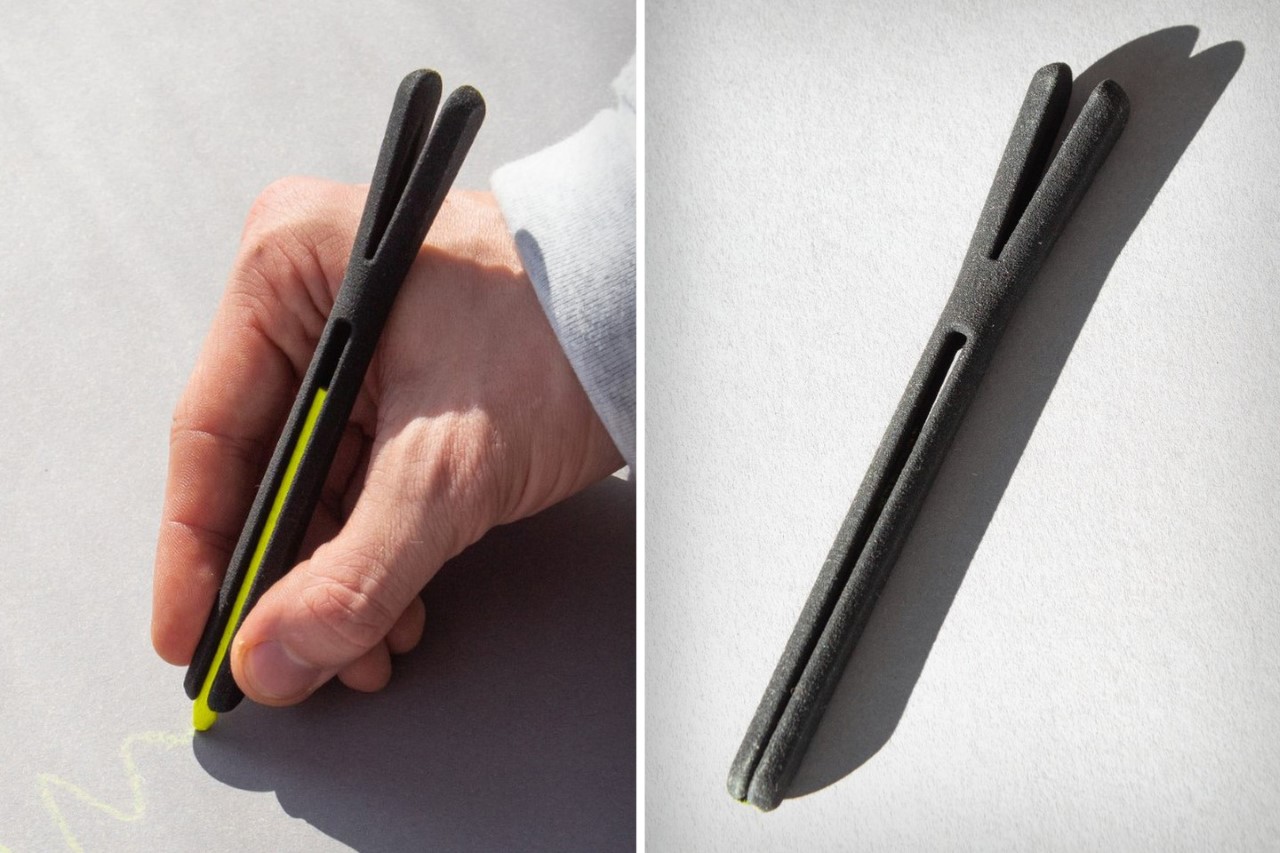
Konstantin Diehl’s PENTAPA takes its name and its logic from the pentagon — five sides, each one a resolved surface rather than a generic round barrel. The five-sided form is unusual enough to read as a design decision the moment you pick it up, and practical enough to hold well once you begin writing. Pentagons don’t roll off desks. They register against the fingers in a way that circular barrels don’t, giving you tactile information about the nib’s orientation before the tip reaches paper.

PENTAPA belongs to a tradition of geometric pen design that runs from the hexagonal tradition of rOtring and Kaweco through to contemporary CNC-machined objects, but it finds its own position in that tradition rather than merely referencing it. Five sides is not the expected answer. It is the interesting one — the number that offers enough symmetry to feel resolved and enough irregularity to feel considered. That balance between the expected and the surprising is where most good pen design lives.

What we like:

  • The pentagonal form solves the rolling problem with more formal interest than a standard hexagon
  • The five-sided barrel gives the pen a distinct tactile identity that rewards extended daily use

What we dislike:

  • The unconventional geometry won’t suit every grip style or hand size
  • Finding a compatible pen case or sleeve requires more effort than standard round or hexagonal barrels

7. Everlasting All-Metal Pencil

The all-metal pencil solves a problem that the pencil has had since its invention: it runs out. A graphite core depletes. A pencil shortens. Eventually, it disappears entirely and takes with it whatever patina or character it had developed through use. The everlasting all-metal pencil replaces graphite with a metal alloy tip — typically an aluminum or similar soft-metal formulation — that deposits a mark through controlled abrasion rather than core consumption. The pencil does not shorten. It does not run out.

The mark is different from graphite — lighter, slightly metallic in tone, with a distinctive quality that serious writers and sketchers tend to either embrace or reject immediately. The design interest is in what remains when the core is removed: a pure metal object whose entire form is determined by how it feels to hold, since there is no pencil-to-grip ratio to manage, no sharpener to carry, no length to account for. The result is one of the most resolved objects in everyday carry design.

Click Here to Buy Now: $19.95

What we like:

  • Removes the pencil’s built-in obsolescence entirely, changing the object from consumable to permanent
  • With no core to deplete, the entire form is determined purely by how it feels to hold

What we dislike:

  • The mark quality is distinct enough from graphite to require genuine adjustment and won’t suit every application
  • Some writing and sketching tasks — particularly those requiring dense, dark marks — simply don’t translate well to a metal alloy deposit

8. The Bolen
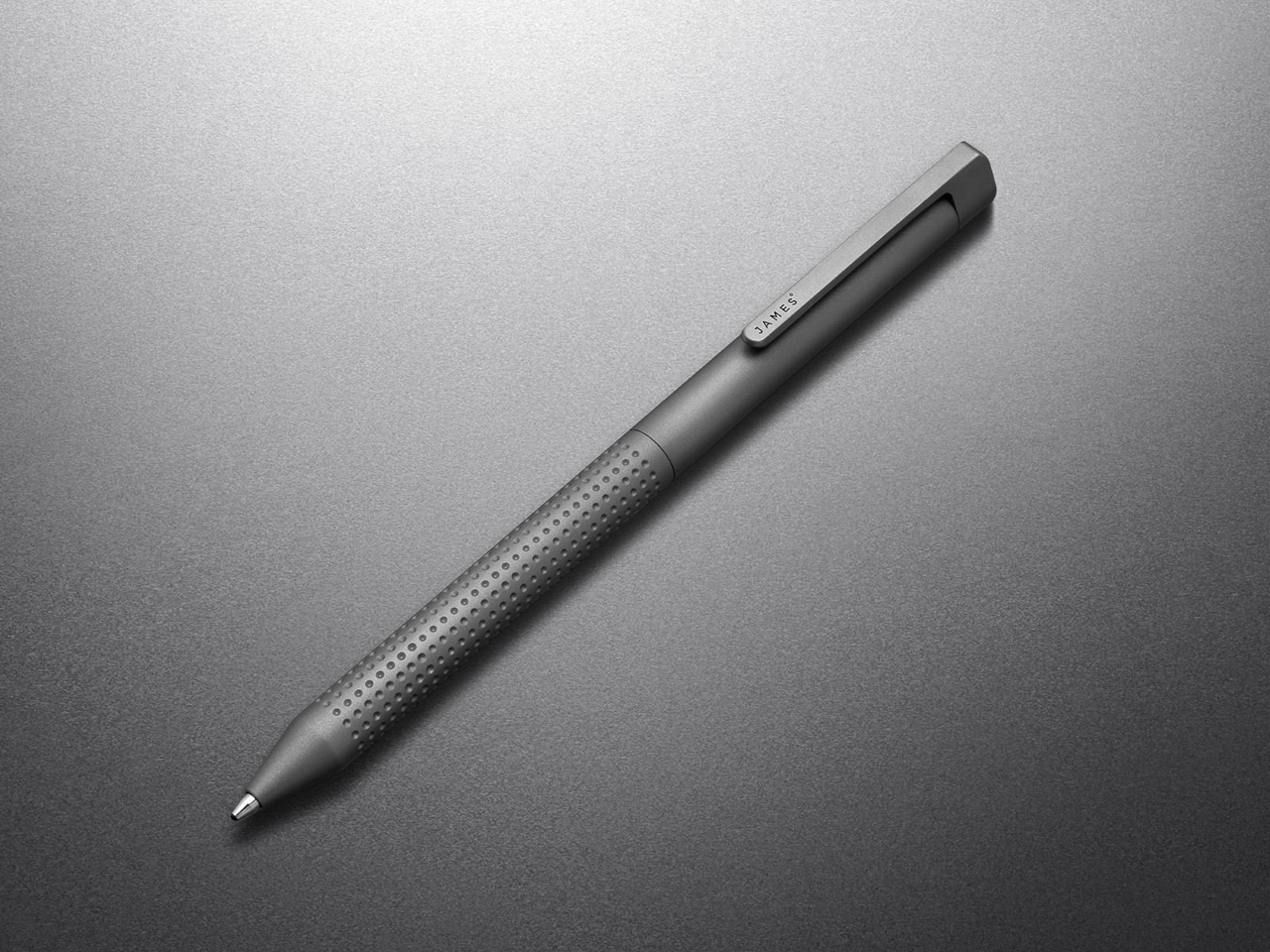
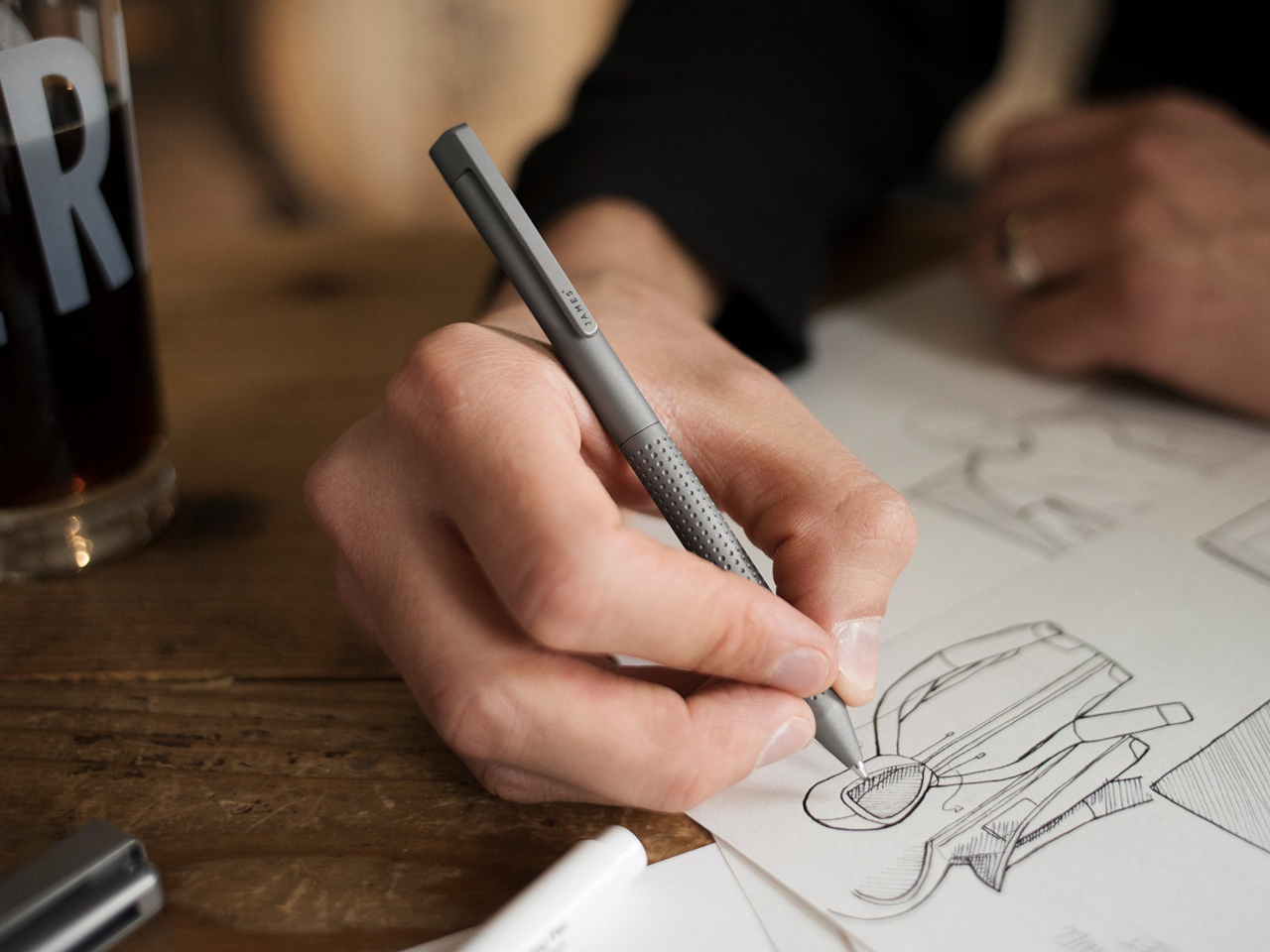
The James Brand has built its reputation on EDC objects with no unnecessary elements — knives, tools, and pens that look like they were designed by someone who uses them. The Bolen is the brand’s pen, and it carries the same design logic as everything else in their catalogue: machined from quality materials, resolved in form, designed to be carried without thought and used with satisfaction. The clip works. The mechanism engages cleanly. The proportions sit right in the hand without adjustment.

What distinguishes the Bolen from most EDC pens is that the James Brand comes from a tool-making tradition rather than a stationery one, which means the pen is designed for carry first and desk presence second. That priority ordering produces a different object than you get from pen-first design — one that is slightly more aggressive in material and slightly more considered in how it lives in a pocket. It is the writing instrument for someone who doesn’t think of themselves as a pen person, and that is exactly who needs it most.

What we like:

  • The tool-making heritage produces genuine material integrity, with nothing present without a reason for being there
  • Carry-first design logic makes it the most naturally portable instrument on this list

What we dislike:

  • The EDC-first approach means it lacks the expressive personality of instruments designed for desk use
  • Writers who want the pen to feel special on the page rather than merely functional in the pocket may find it underwhelming

The Object in Your Hand Shapes the Thought on the Page

Eight instruments that represent eight different positions on what a writing tool should be. The Yamaha asks what happens when you give a pen a pulse. The Levitating Pen asks what happens when the material itself carries a story. The Bolen asks what happens when you design for the pocket before the page. None of these answers is the same, which is the point. The best design in any category is the kind that expands your sense of what the category can contain.

What they share is the conviction that the instrument matters — that the weight, the mechanism, the material, and the form of the thing in your hand have a real effect on what ends up on the page. That conviction used to belong only to serious writers and professional draughtsmen. The fact that you can now find it in a magnetic pencil system, a levitating desk object, and a pen designed by a motorcycle company suggests the rest of the world is catching up.

The post 8 Best Pens and Writing Instruments That Make You Actually Want to Pick Up a Pen Again first appeared on Yanko Design.
10 Best Kitchen Tools and Appliances Designed to Live on Your Counter, Not in Your Cupboard

The kitchen counter is prime real estate. Most appliances waste it, sitting there looking generic and visually forgettable until they get pushed to the back and eventually into a box. A smaller category of kitchen objects earns that space differently. They are worth looking at, whether in use or not. The ten products here belong to that category, and each one makes a quiet but convincing case for staying exactly where it is.

The question has never really been about function alone. It is about form meeting function so completely that putting the object away would feel like a loss. A Dutch oven with architectural presence. A kettle that handles like nothing you have owned before. A grater shaped like a curled sheet of paper. These are not kitchen tools that happen to look good. They are objects that happened to end up in the kitchen and have no intention of leaving.

1. Smeg Air Fryer + Steam

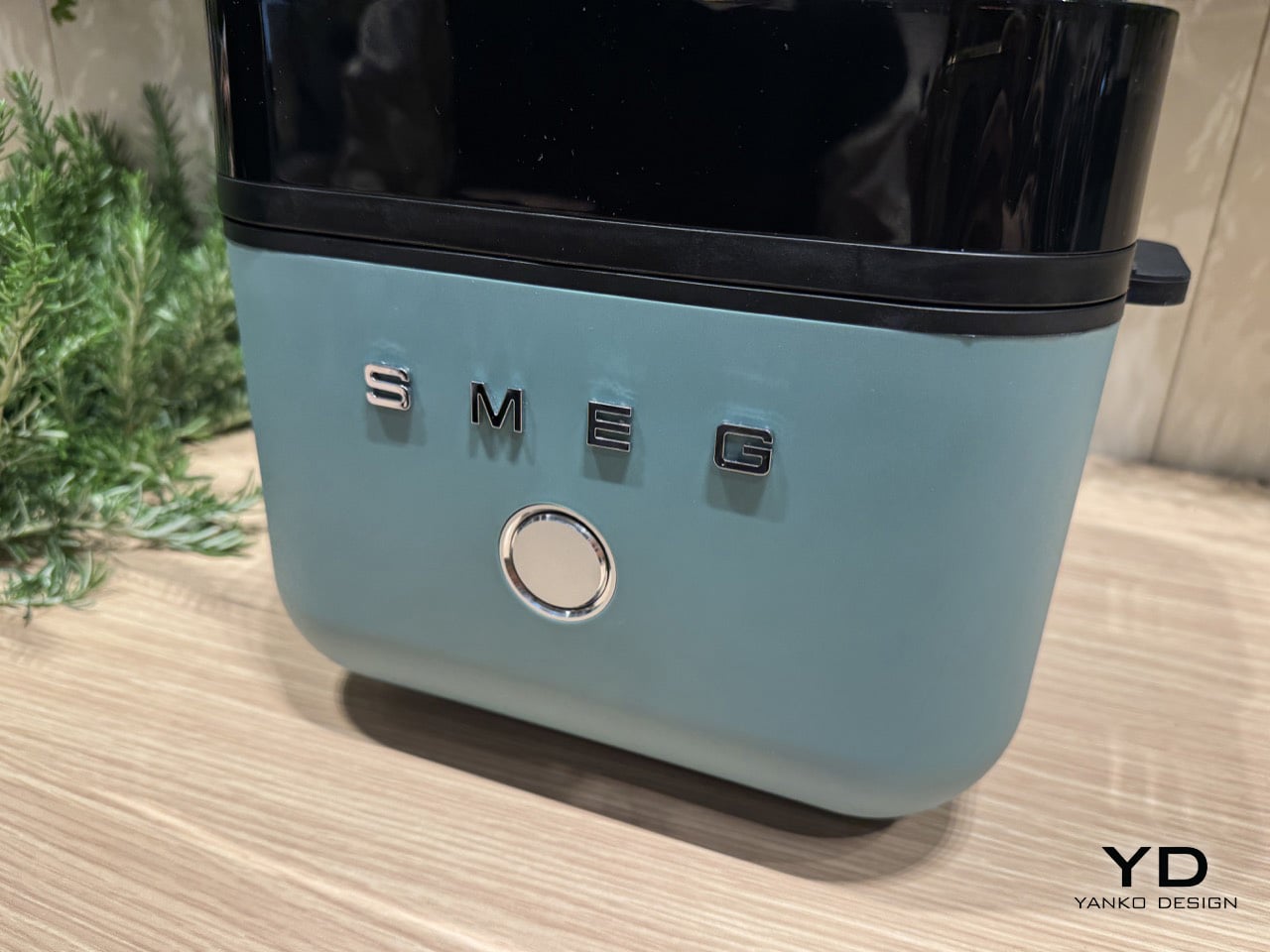
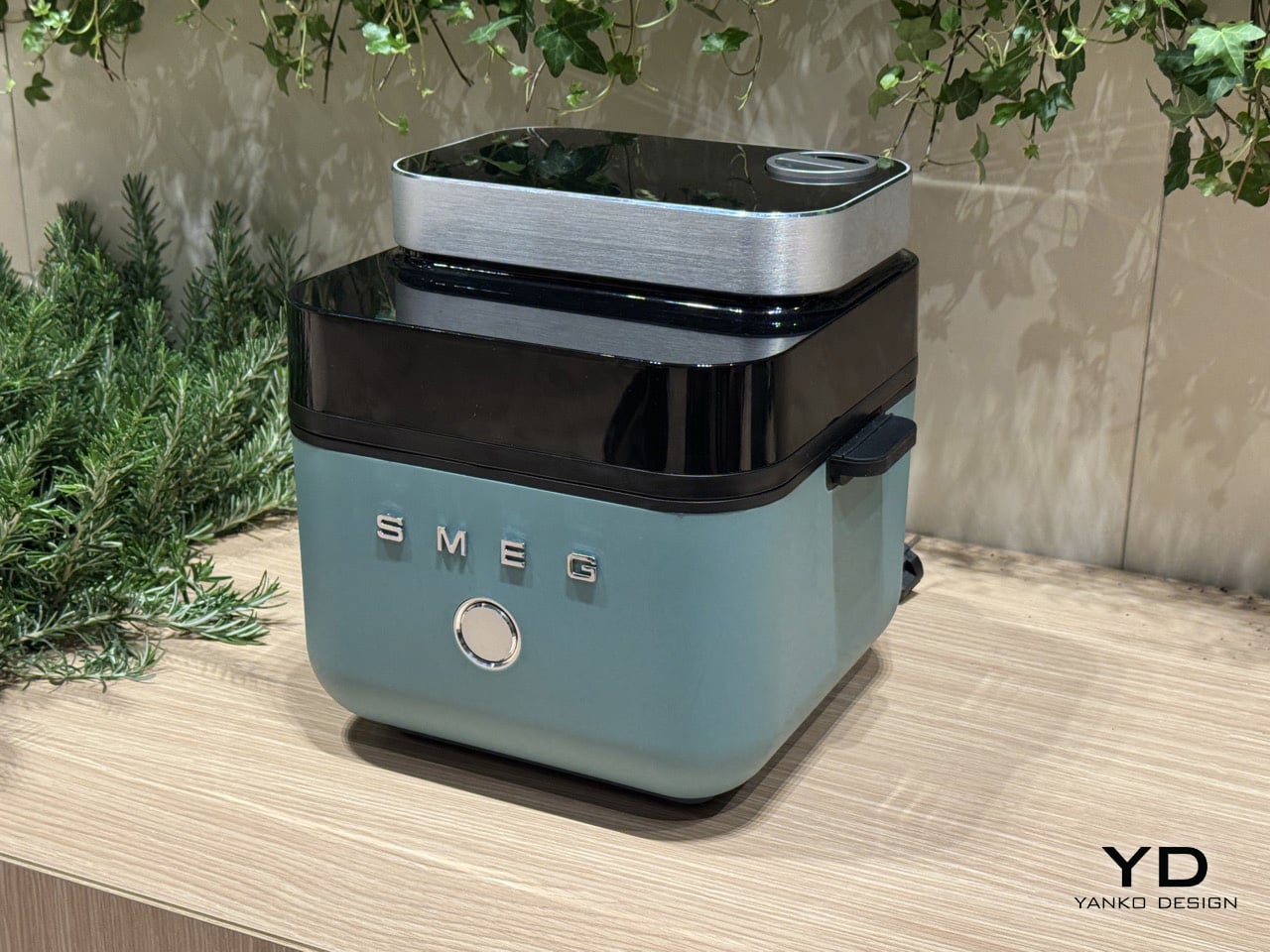
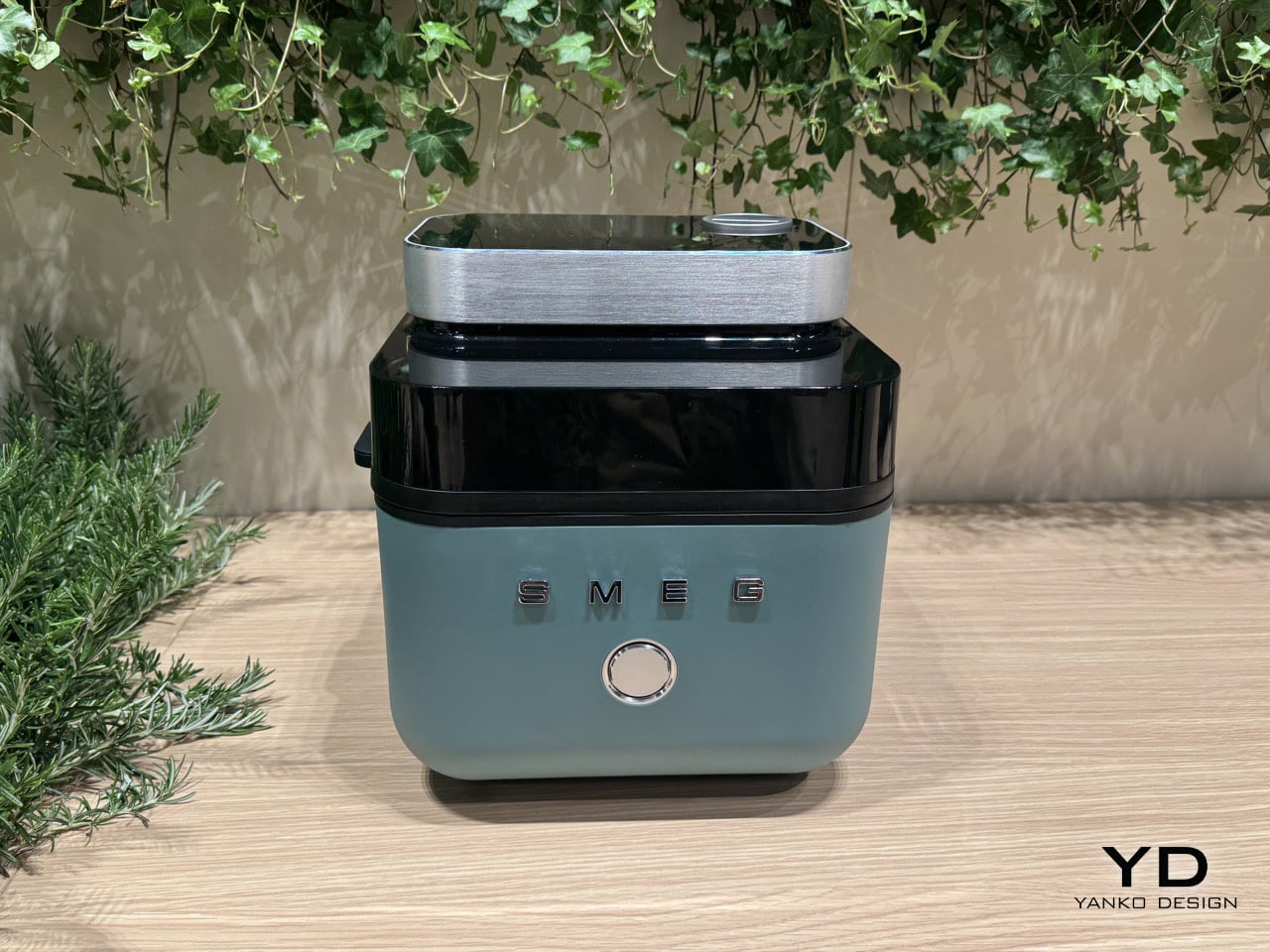
Smeg’s origins are in enamel technology, not the candy-colored kitchen appliances the brand became famous for. At Milan Design Week 2026, the Italian company debuted a concept air fryer that brings genuine cooking innovation to a form that could hold its own in any design-forward kitchen. The fryer opens from the top rather than the front, its lid ejecting at the press of a button to reveal a 7-liter basket, an exposed heating coil, and a tinted black visor that lets you see inside while it works.

What separates it from the broader category is a built-in steam function. A removable water cartridge feeds moisture into the basket via a top-mounted nozzle, creating an environment where food crisps on the outside while retaining moisture within. Chicken wings come out with a fried texture and no oil. Bread develops the kind of crust usually reserved for a professional oven. Currently a concept with no confirmed launch before 2027, it already sets the benchmark for where the category is heading.

What we like

  • The steam function produces results that no standard air fryer can replicate
  • The top-opening form and enameled body make it worthy of permanent counter placement

What we dislike

  • Not available to purchase, with no confirmed launch before 2027
  • Bold color options lean maximalist, which won’t suit every kitchen aesthetic

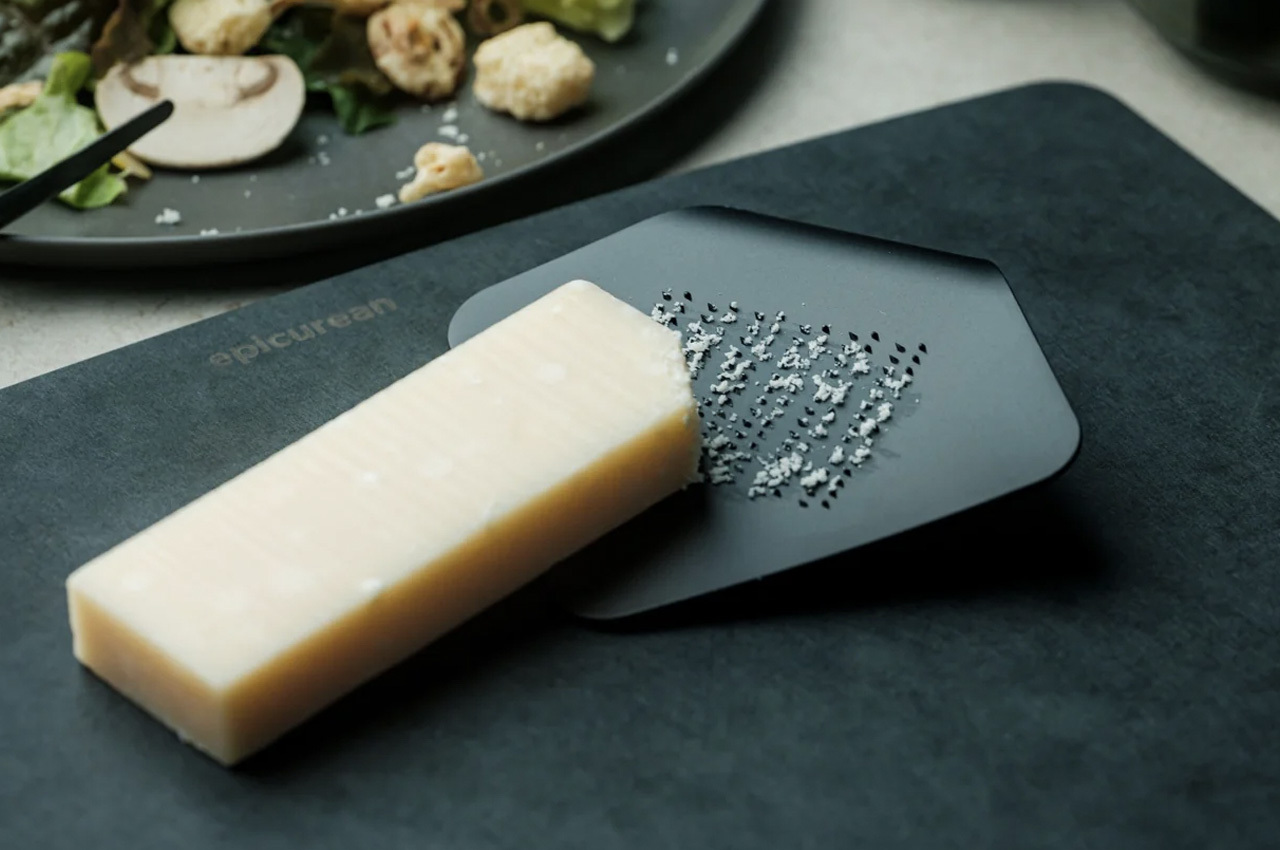
2. Playful Palm Grater

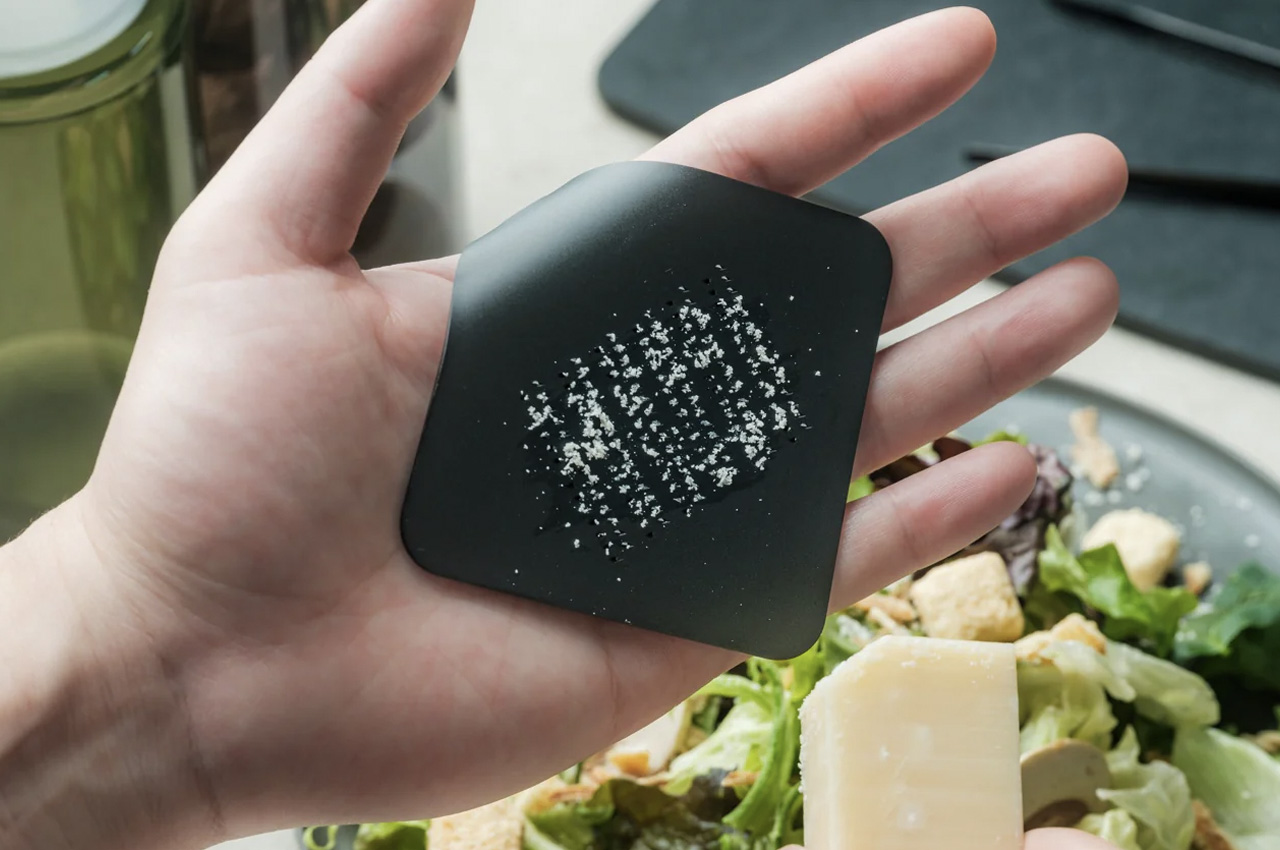
Most kitchen tools that try to be playful end up decorative and useless. The Playful Palm Grater avoids that completely. Designed to look like a sheet of paper curled at one corner, its form solves the ergonomic problem that plagues standard graters: it sits inside the palm of your hand, keeps knuckles clear of the surface, and contains what you are grating rather than scattering it across the counter. The object makes a strong aesthetic case while being entirely serious about its purpose.

At $25, it is the price anchor of this list and arguably its sharpest surprise. Guests who pick it up typically ask what it is before they realise it is a grater, which is the clearest signal that the design is working at the level it intends to. Hard cheese, citrus zest, ginger, chocolate: it handles all of it without protest. It also stores flat, so the playfulness does not come at the cost of practicality.

Click Here to Buy Now: $25

What we like

  • Palm-hold grip makes grating more controlled than any flat or box grater alternative
  • A genuine design achievement delivered at a $25 price point

What we dislike

  • Compact surface area limits it to small-quantity grating tasks
  • Not suited for bulk preparation, where a larger, fixed grater would serve better

3. Mitsubishi Bread Oven

The Mitsubishi Bread Oven exists at the opposite end of the appliance spectrum from multi-function, multi-mode, multi-button. It does one thing: toast a single slice of bread to a standard that no conventional toaster approaches. It’s a sealed, thermally insulated chamber that locks moisture in during the process, producing a slice that is crisp at the edges and genuinely fluffy at the center. The boxy silhouette and matte finish make it look less like a toaster and more like an object recovered from a mid-century Japanese archive.

For anyone serious about morning rituals, it rewires the relationship between bread and appliance entirely. One slice goes in, and a considered, unhurried result comes out. Its compact footprint occupies less counter space than most four-slice toasters while commanding considerably more visual presence. The Bread Oven is the kind of appliance that prompts questions from anyone who enters your kitchen, not because it looks complicated, but because it looks so deliberately, confidently simple.

What we like

  • A sealed thermal chamber produces toast that no pop-up toaster can replicate
  • Minimal Japanese form earns counter presence through restraint rather than spectacle

What we dislike

  • Limited to a single slice at a time, which doesn’t suit households cooking for multiple people

4. BØYD Espresso Machine

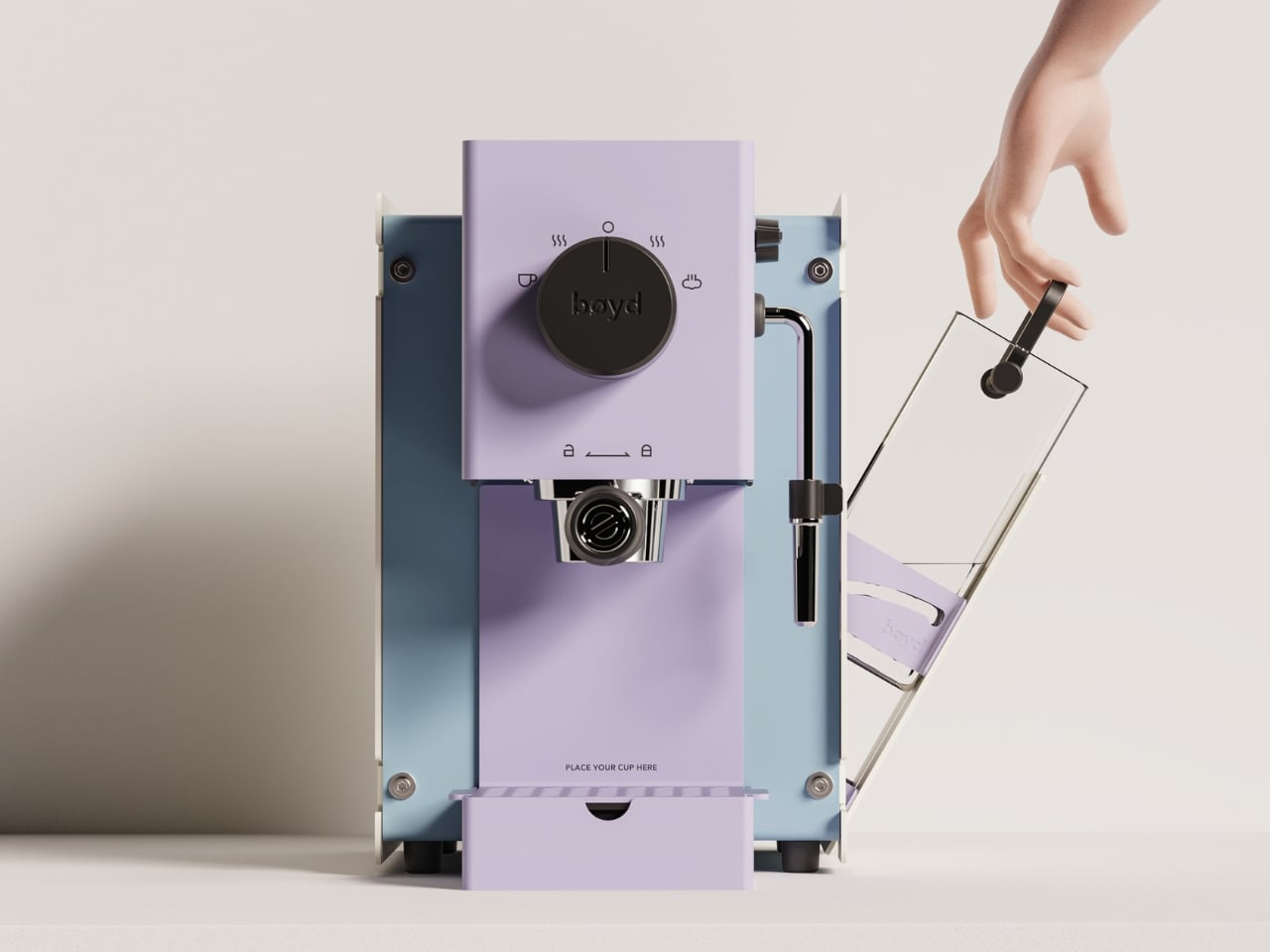
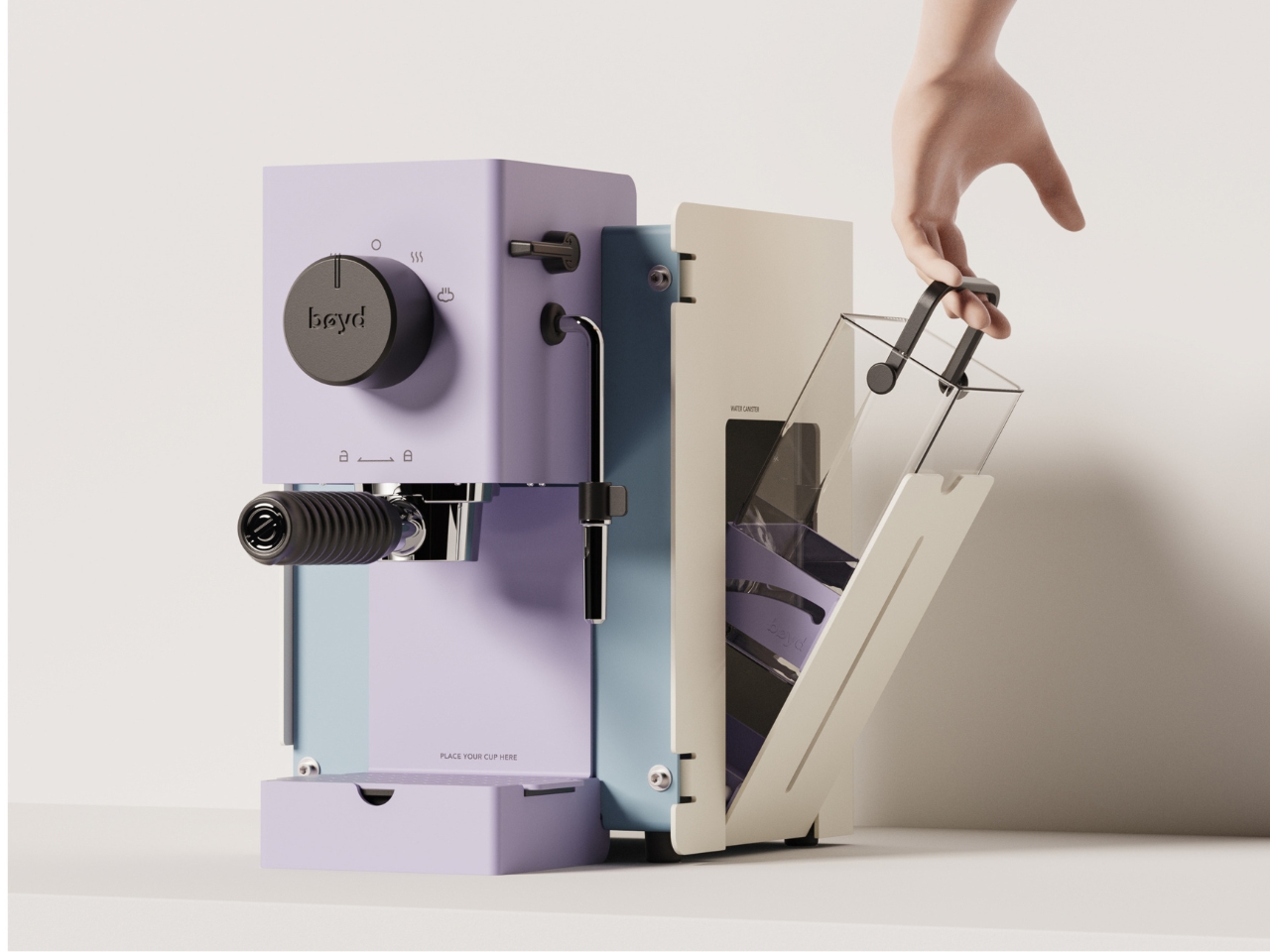
The BØYD Espresso Machine is a coffee machine that reads as modern sculpture before it reads as equipment. Its smooth curves and pure lines result from stripping the object back to what the design actually requires. No panel clutter, no unnecessary controls. Just form shaped around the daily ritual of pulling a shot, and a counter presence that justifies every centimeter it occupies.

It belongs to a growing movement of coffee equipment that treats the counter as an extension of living space rather than a working surface. BØYD understands that an espresso machine is often the first thing reached for in the morning and the last object you look at before leaving the kitchen. Making that object worth looking at is not superficial. It is the point. For a home barista who cares as much about the counter as the cup, BØYD answers both without compromise.

What we like

  • Sculptural form elevates the morning coffee ritual beyond the purely functional
  • Minimal interface keeps the countertop visually clean and uncluttered

What we dislike

  • The stripped-back aesthetic works best in kitchens that can match its visual confidence
  • Design restraint offers little warmth for kitchens that lean more traditional in character

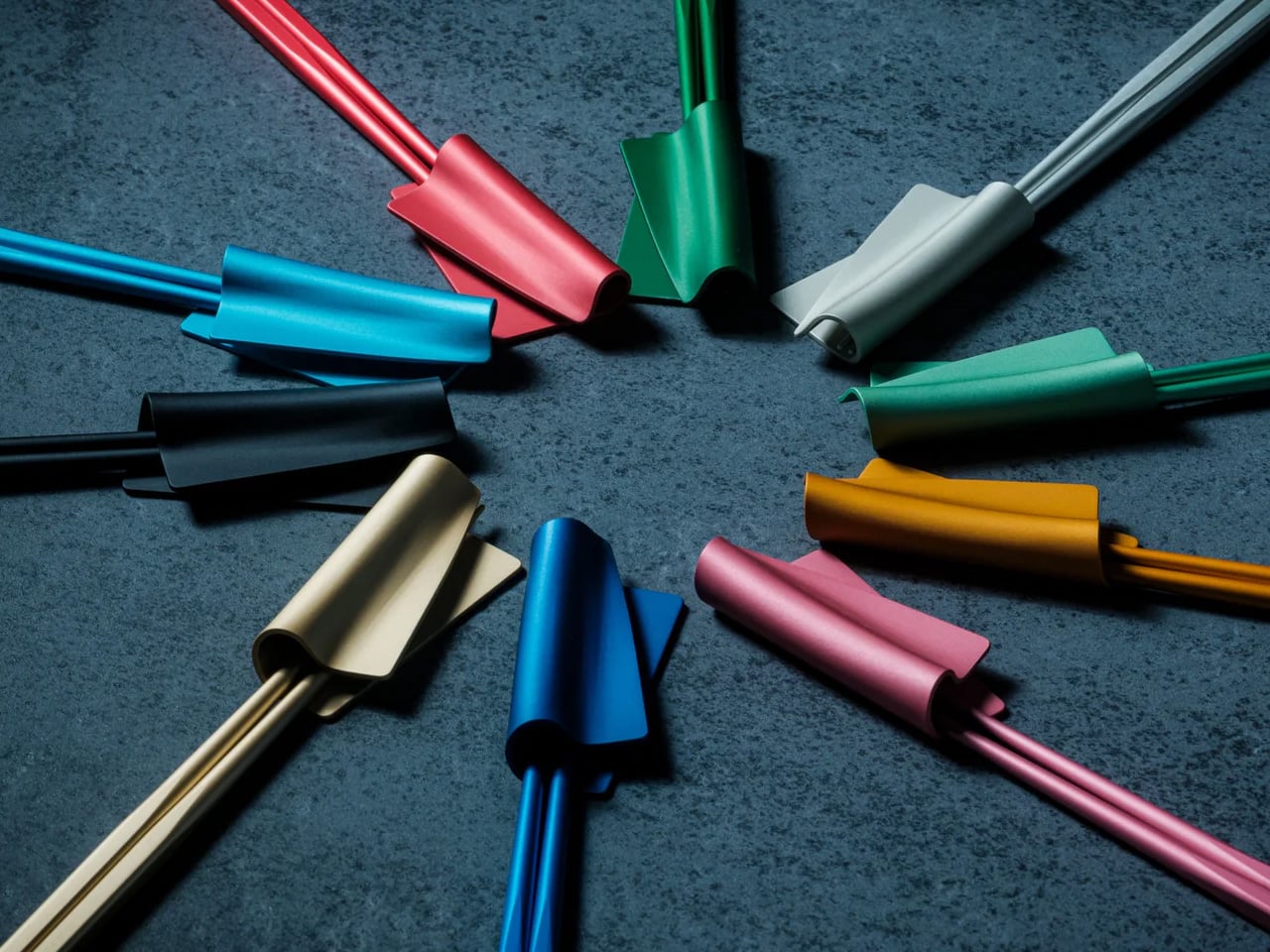
5. FineLine Aluminum Chopsticks

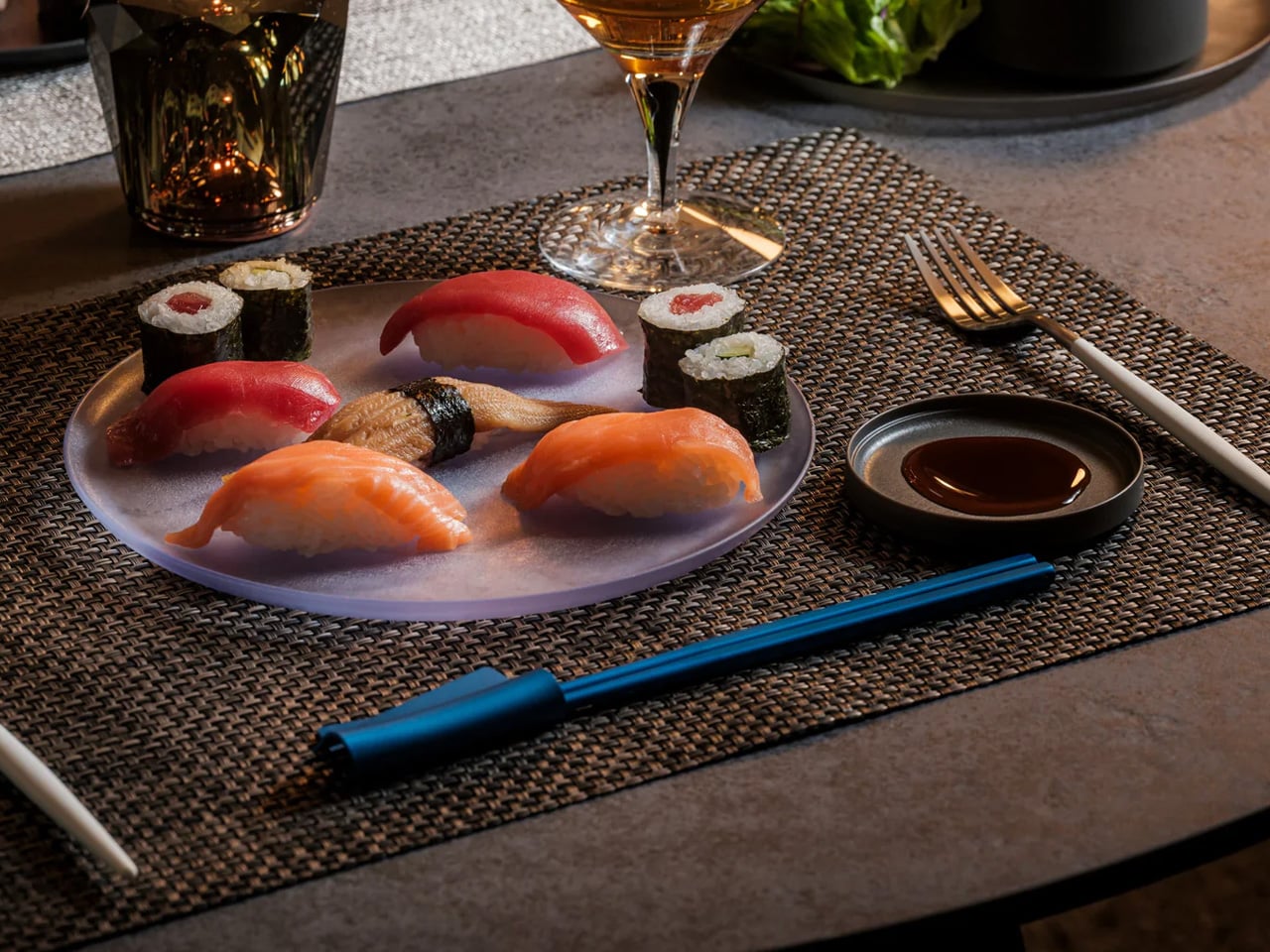
Chopsticks are rarely considered as design objects in Western kitchens, which is precisely the space the FineLine Aluminum Chopsticks occupy. Machined from aluminum with a finish that sits somewhere between tool and instrument, they bring the same material confidence to the table that a well-made knife brings to the counter. For everyday use, the grip is secure and the balance calibrated enough that switching from wooden chopsticks feels immediately like a step worth taking.

Left beside the matching chopstick rest, they form a composition rather than a cutlery arrangement. That distinction makes them worth the counter space: they are objects you would display even without daily use. Aluminum resists staining and absorbs minimal heat, so hot dishes do not require the caution that some metal utensils demand. The design is one of those cases where the material logic and the aesthetic argument arrive at the same answer.

Click Here to Buy Now: $30.00

What we like

  • Machined aluminum delivers a material precision and weight that wooden chopsticks cannot match
  • The finish reads as a considered object rather than a utensil, earning a counter display

What we dislike

  • Aluminum conducts heat, which can be uncomfortable with very hot food over an extended period of contact
  • The refined finish requires careful washing to maintain its quality over time

6. Kenwood Go Compact Stand Mixer

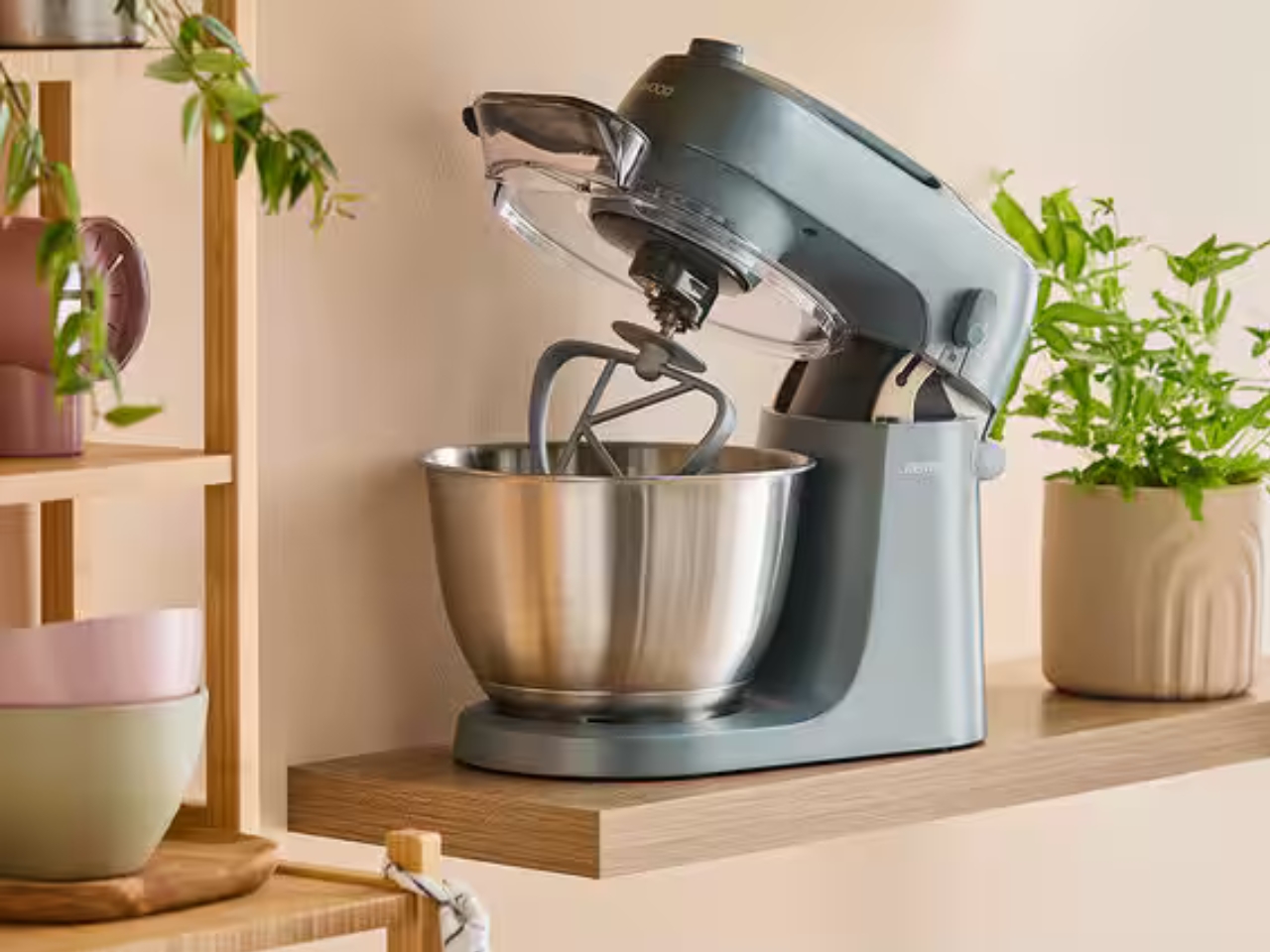
The stand mixer has always been a counter occupant by necessity rather than by design. They are large, heavy, and most look like they belong in a professional bakery. Kenwood’s Go Compact reframes the category. It packages the performance of a full stand mixer into a footprint small enough to coexist with everything else on a compact counter without requiring the kitchen to reorganize itself around one machine.

Its value is in the everyday bake rather than the occasional showpiece production. It handles the mechanical work of mixing dough, whipping cream, or folding batter without demanding that the kitchen dedicate itself to the task. That restraint in form, paired with Kenwood’s track record for motor reliability, makes it a counter object rather than a stored appliance. Compact proportions mean it stays where it sits, ready for the next session, without becoming a visual intrusion between uses.

What we like

  • Compact footprint genuinely rethinks the stand mixer for smaller kitchens without sacrificing performance
  • Kenwood’s motor reliability means the scaled-down size doesn’t compromise on results

What we dislike

  • Smaller bowl capacity limits batch sizes for high-volume or professional-scale baking sessions
  • Can feel less stable than full-size alternatives when working with particularly stiff doughs

7. JIA Inc. Rolling Mortar

The mortar and pestle have been functionally unchanged for roughly 35,000 years, which is either a testament to the design or an invitation to rethink it. JIA Inc., a Taiwan-based design brand, chose the second view. Their Rolling Mortar replaces the vertical pounding motion with a rolling action: a stone sphere moves across a curved ceramic base, grinding herbs and spices through rotation rather than force. The gesture is more intuitive, considerably less tiring, and far more interesting to watch.

On a counter, it reads as a sculptural object long before it reads as a kitchen tool. The sphere and base form a self-contained composition that earns its space whether in use or not. Fresh pesto, ground spices, crushed garlic: the results are consistent, and the process is more enjoyable than the traditional method. It also cleans easily, which is the practical detail that tends to close the case for anyone still on the fence.

What we like

  • The rolling mechanism reduces the physical effort of traditional pounding significantly
  • The sphere-and-base composition is sculptural enough to justify permanent counter display

What we dislike

  • Slower than traditional methods for particularly coarse or hard spices, requiring significant force
  • The sphere needs adequate clearance to move freely, demanding more counter space during active use

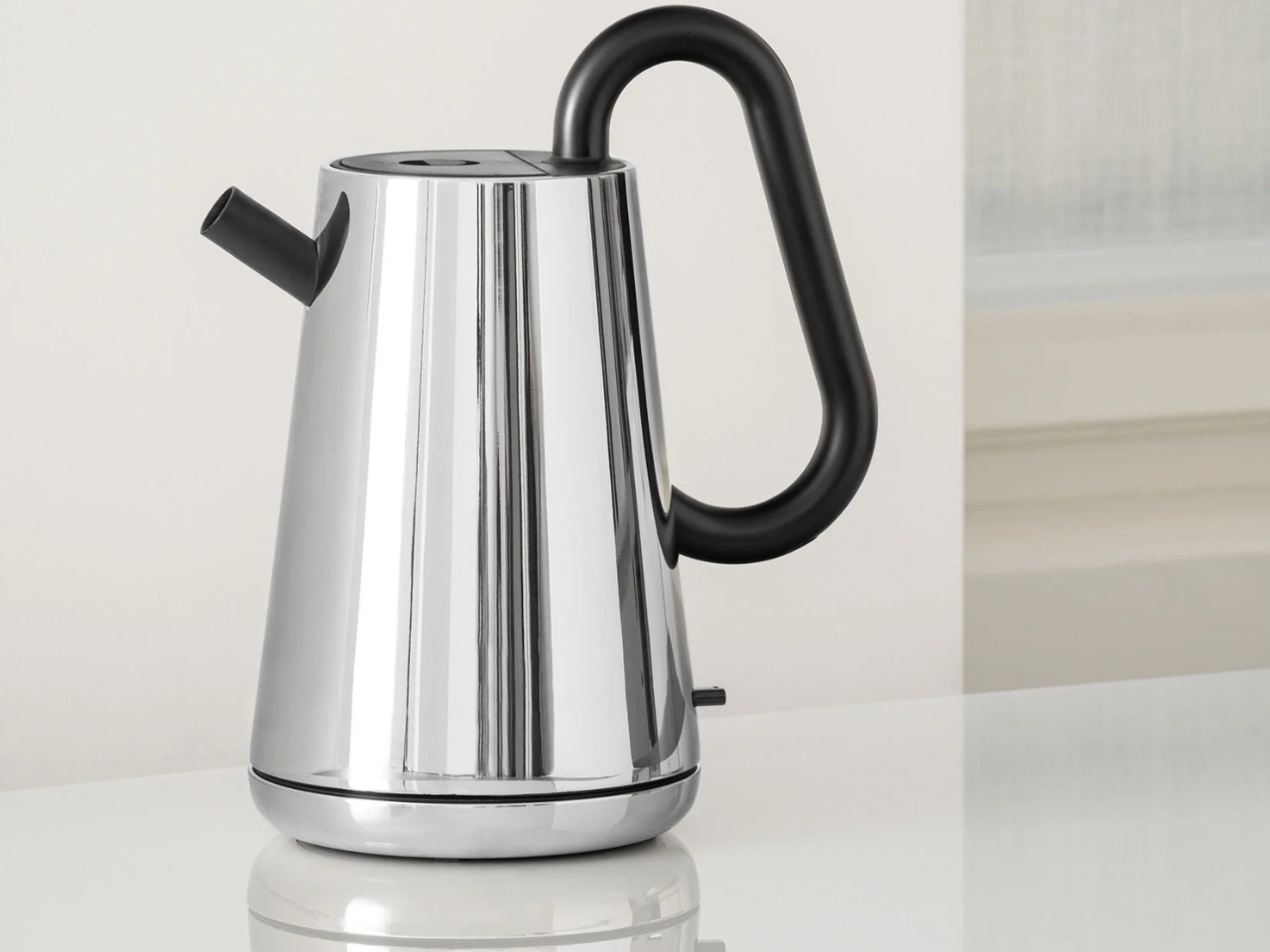
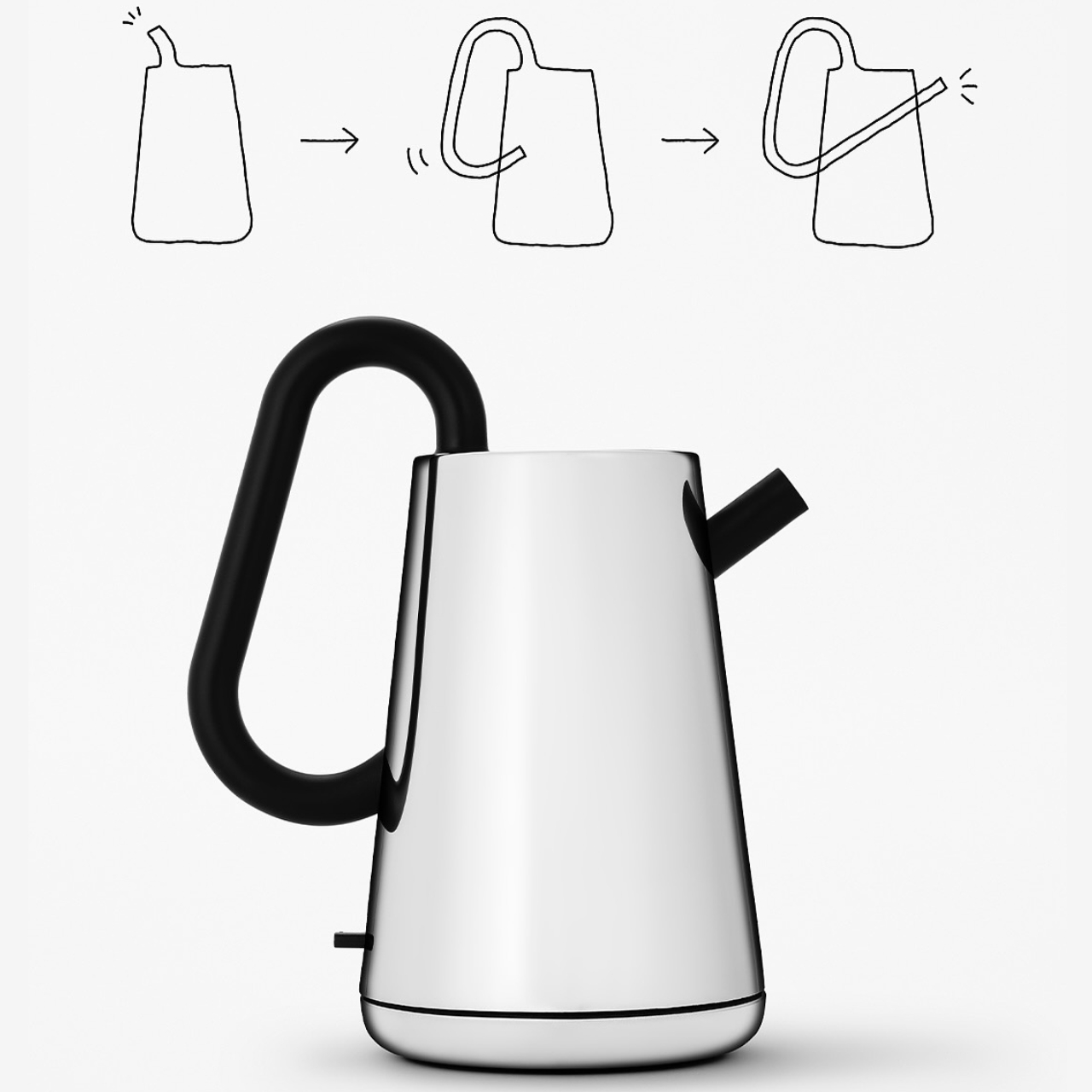
8. Toru Kettle

Nendo’s design work is consistent in one quality: it takes a familiar object, finds the assumption buried inside it, and quietly dissolves it. With the Toru kettle for Alessi, that assumption is how a kettle is held. Rather than a handle attached to the side, a black tube runs through the body of the stainless-steel vessel, becoming the grip itself. Toru means “through” in Japanese, and the name describes the design principle with complete accuracy.

Alessi’s metalworking precision is evident in the finish, and the contrast between the brushed steel body and the matte black tube creates a tonal balance that reads as sculpture before it reads as kitchen equipment. On the counter, it occupies the same visual register as a considered ceramic object or a well-made vase. Boiling water in it feels slightly ceremonial, which is not incidental to the design. Nendo and Alessi intended the daily ritual to feel like one.

What we like

  • The through-handle design transforms a routine gesture into something worth noticing every morning
  • Alessi’s metalworking gives it a material quality that mass-market kettles cannot replicate

What we dislike

  • The unconventional grip takes some adjustment, particularly when pouring with precision
  • The stainless and matte-black palette, while refined, can feel cool in warmer-toned kitchens

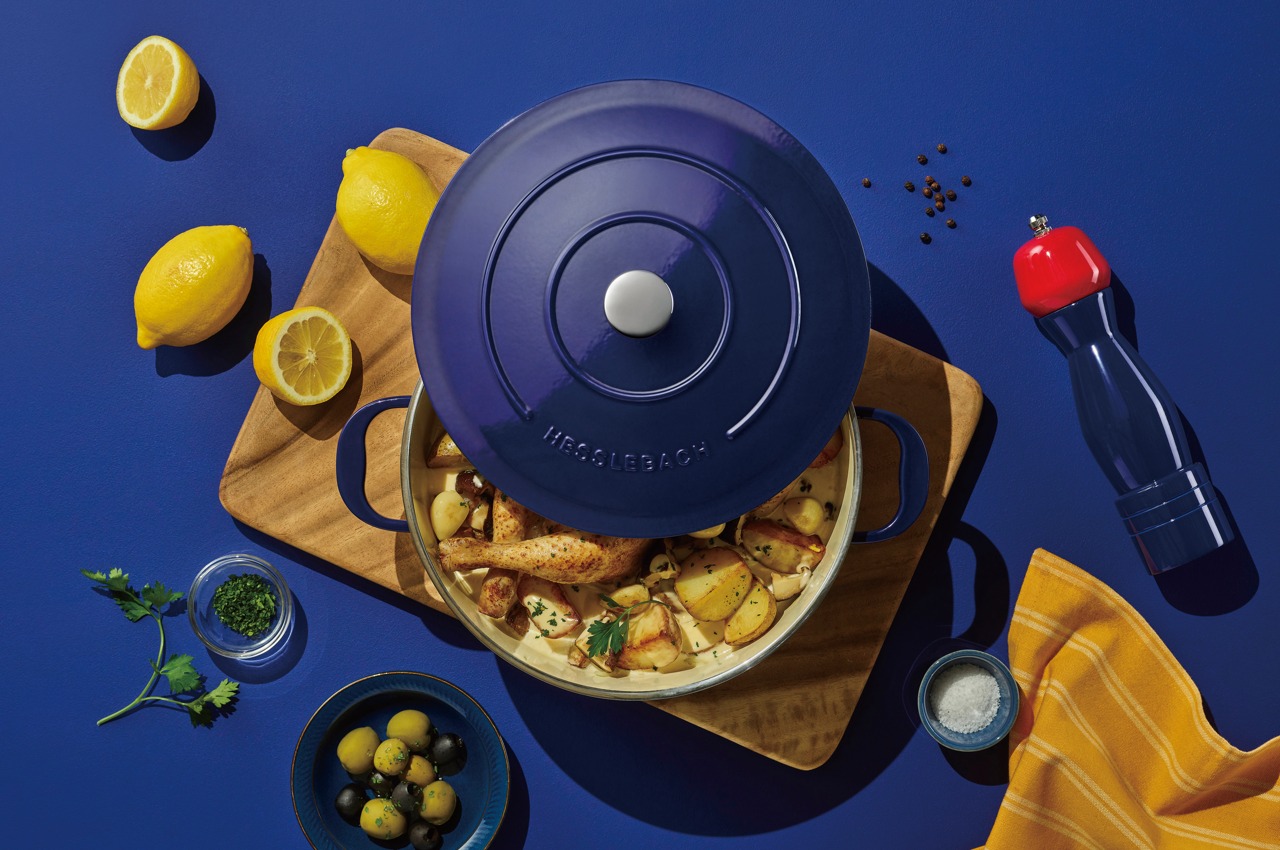
9. Hesslebach Dutch Oven

The Dutch oven is the kitchen’s most honest piece of cookware. It travels from stovetop to oven to table without changing character, and the finest examples improve with use rather than degrade with it. HK Kim’s Hesslebach takes that functional lineage and applies a design sensibility that treats the vessel as an object worth placing rather than simply setting down. Its counter presence communicates something deliberate about the kitchen it occupies, a quality very few pieces of cookware achieve.

A well-made Dutch oven retains and distributes heat in a way that makes slow-cooked dishes genuinely superior in result. Braises develop deeper flavor, bread develops a crust that rivals a professional deck oven, and soups reach a depth of reduction that stovetop-only pots rarely match. The Hesslebach is built to that standard, and its form carries the confidence of its material. Left on the counter between sessions, it functions as an aesthetic anchor for the kitchen space around it.

What we like

  • Heat retention and distribution deliver cooking results that lighter cookware simply cannot match
  • A form confident enough to remain on the counter between uses without apology

What we dislike

  • Weight and material density demand more deliberate handling than lighter everyday cookware
  • The investment required places it well above casual kitchen upgrade territory

10. FineLine Chopstick Rest

The chopstick rest is the punctuation mark of a table setting: small enough to be overlooked, significant enough to shift the character of everything around it. The FineLine Chopstick Rest is machined from the same aluminum as the chopsticks it accompanies, creating a material consistency across the table that reads as intentional rather than assembled. Its form is architecturally proportioned, a precisely angled piece that holds the chopsticks cleanly off any surface.

What it does for the FineLine chopsticks is what any well-designed accessory does for its counterpart: it completes the object. Chopsticks left flat on a table look forgotten. Placed on a form machined to hold them, they look arranged. That distinction carries through to the counter, where rest and chopsticks together become the kind of small arrangement that makes a kitchen feel curated rather than accumulated. Very few objects at this price point deliver that quality of visual return.

Click Here to Buy Now: $20.00

What we like

  • Machined aluminum matches the FineLine chopsticks precisely, creating a coherent tabletop object
  • The angled form elevates the chopsticks from a utensil to a display piece between uses

What we dislike

  • Designed specifically around the FineLine chopsticks, which limits pairing with other styles
  • The minimal form is unforgiving if placed on a visually cluttered or busy surface

The Objects That Stay

A kitchen that looks considered doesn’t happen through a single purchase. It accumulates through a sequence of decisions, each one small enough to seem insignificant until the room starts to reflect them. The ten objects here span different categories, different price points, and different materials. What they share is a refusal to be hidden away. Each one earns its counter space not through function alone but through the integrity of its form.

The Smeg fryer shows where cooking technology is heading. The Mitsubishi Bread Oven shows what happens when a brand stops trying to do everything. The Toru Kettle shows that the most familiar object in a kitchen can still be entirely rethought. The rest follow the same logic: that good design and daily use are not competing priorities. They are, at their very best, the same thing.

The post 10 Best Kitchen Tools and Appliances Designed to Live on Your Counter, Not in Your Cupboard first appeared on Yanko Design.
This Ceramic Vase Is Actually a Phone Speaker That Needs No Power

The home has become increasingly cluttered with gadgets that need charging, pairing, and their own dedicated spaces. Even something as simple as playing music from a smartphone often involves a Bluetooth speaker sitting on a shelf, waiting for its battery to drain. There’s been a quiet counter-movement in product design, where objects do their jobs without power and sit in a room the way a vase or a mug would.

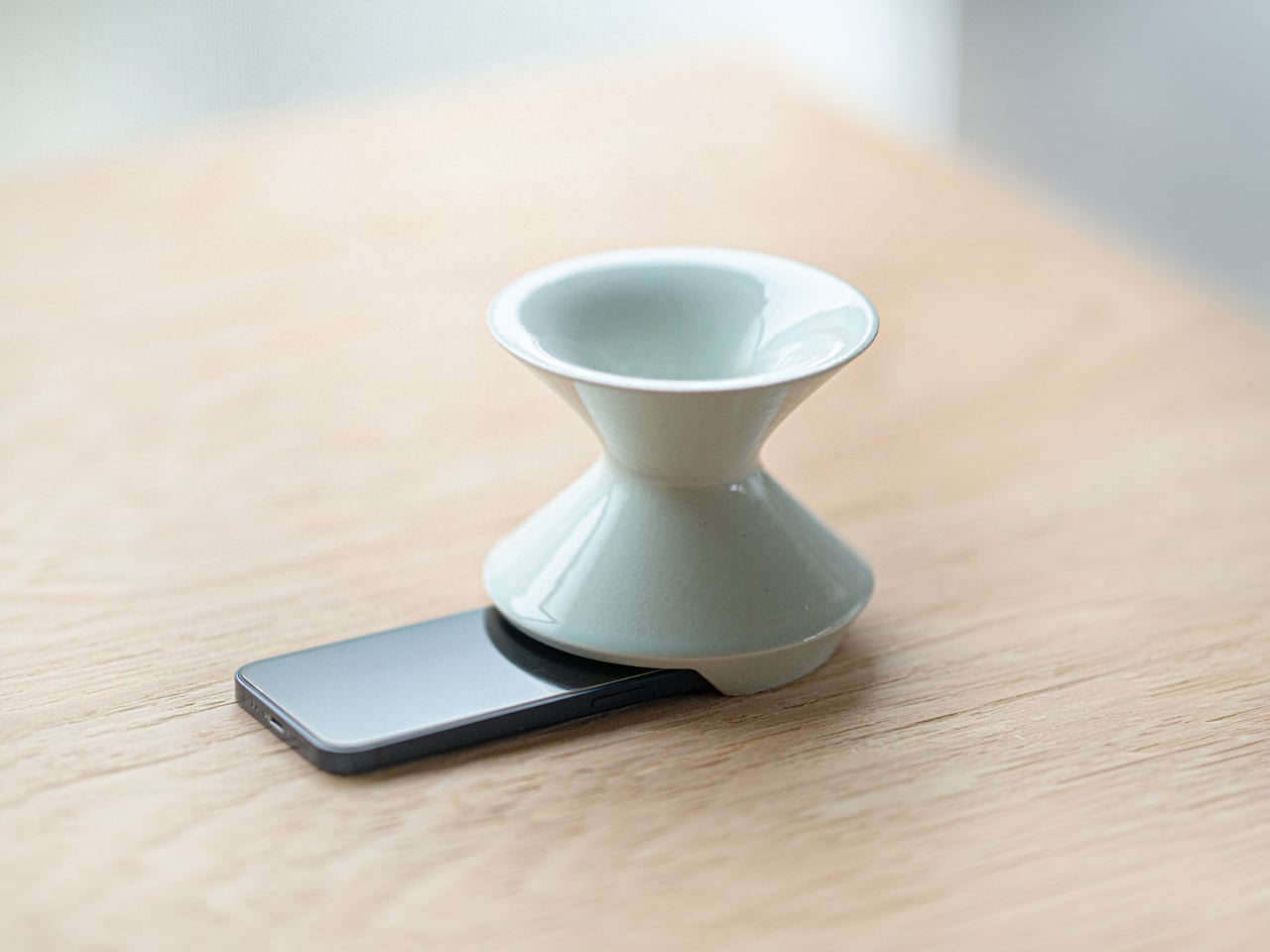
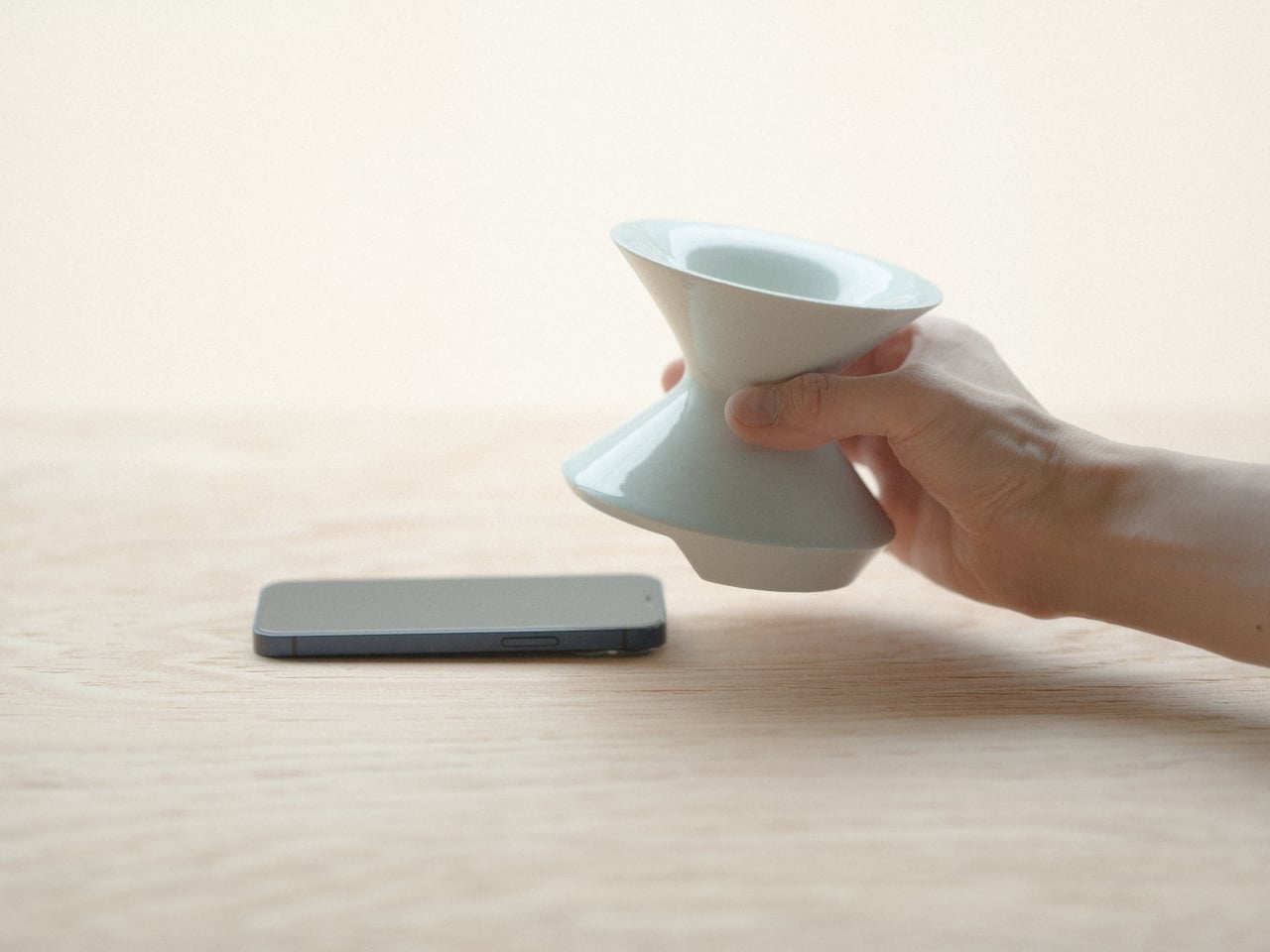
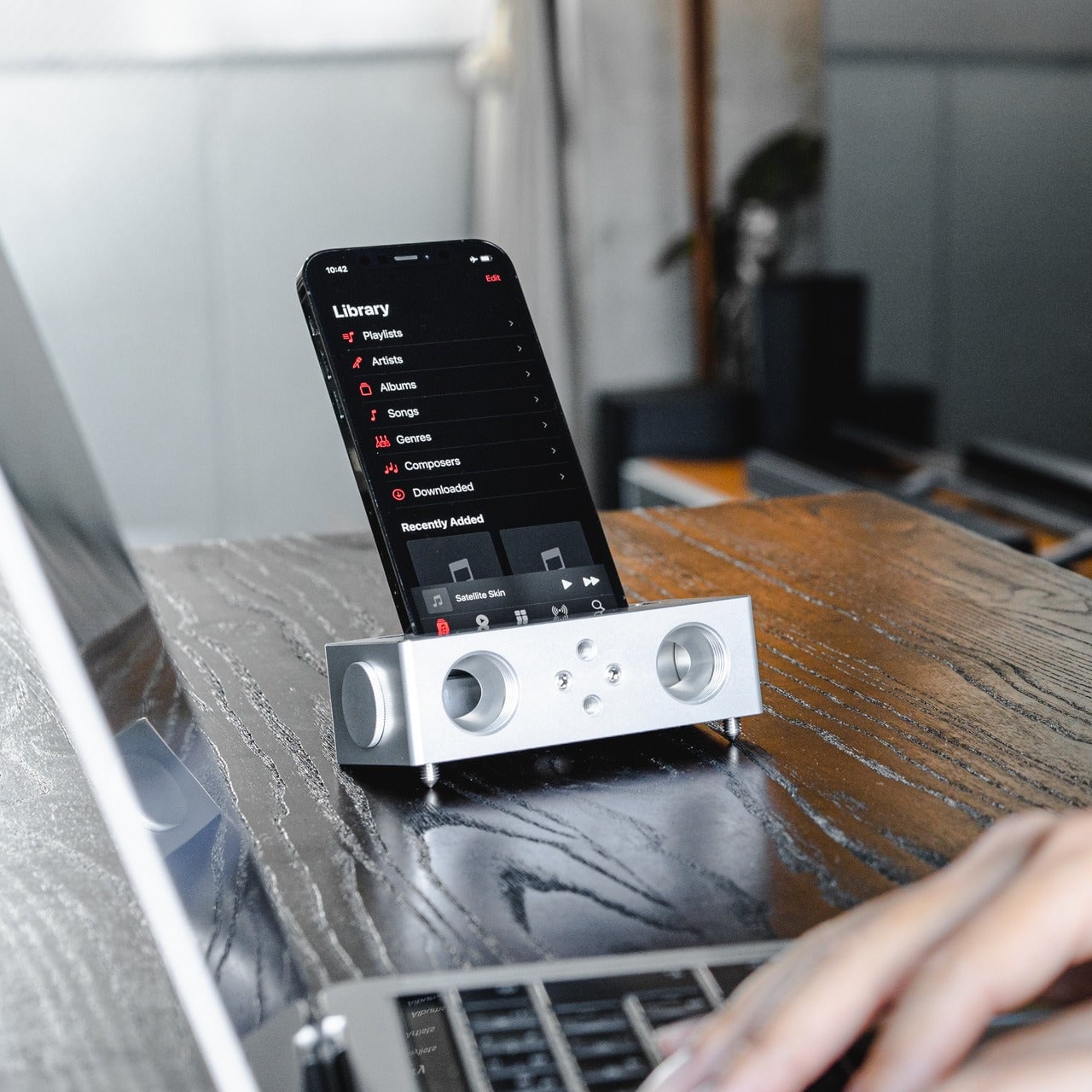
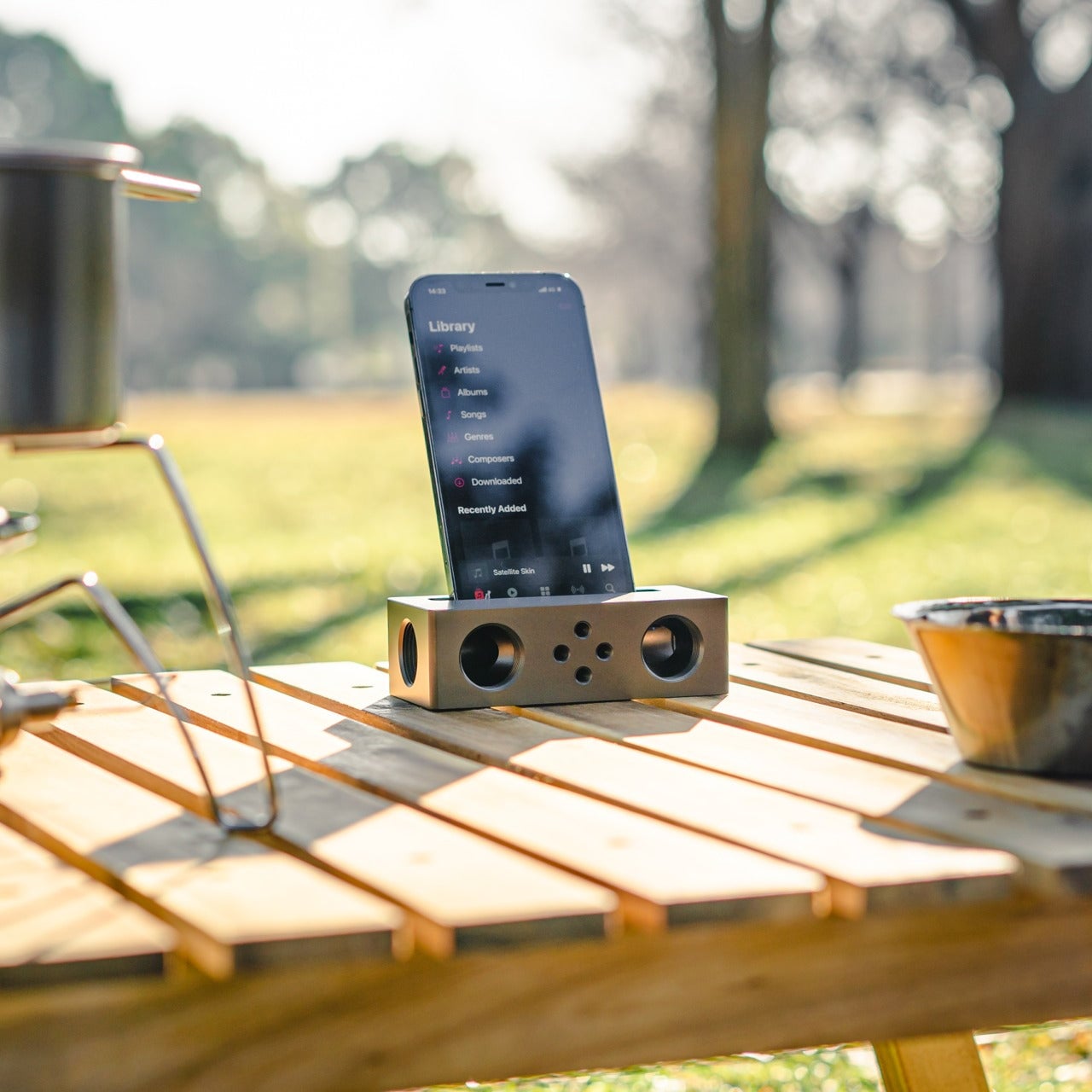
Kenji Abe’s ECHO is exactly that kind of object. It’s an analog speaker that amplifies smartphone audio simply by being set on top of the phone, requiring no power, no pairing, and no setup beyond placing it down. The concept takes its cues from wind instruments and seashells, two forms that have been shaping and projecting sound for centuries without the help of electricity.

Designer: Kenji Abe

The inside of ECHO works like a chamber, built to catch the phone’s audio and carry it outward in soft, diffused waves rather than projecting it directly. The geometry draws from the same logic as a cupped hand, but with more control over how sound travels. The result isn’t a dramatic volume boost so much as a room-filling quality that feels warmer than a powered speaker on a desk.

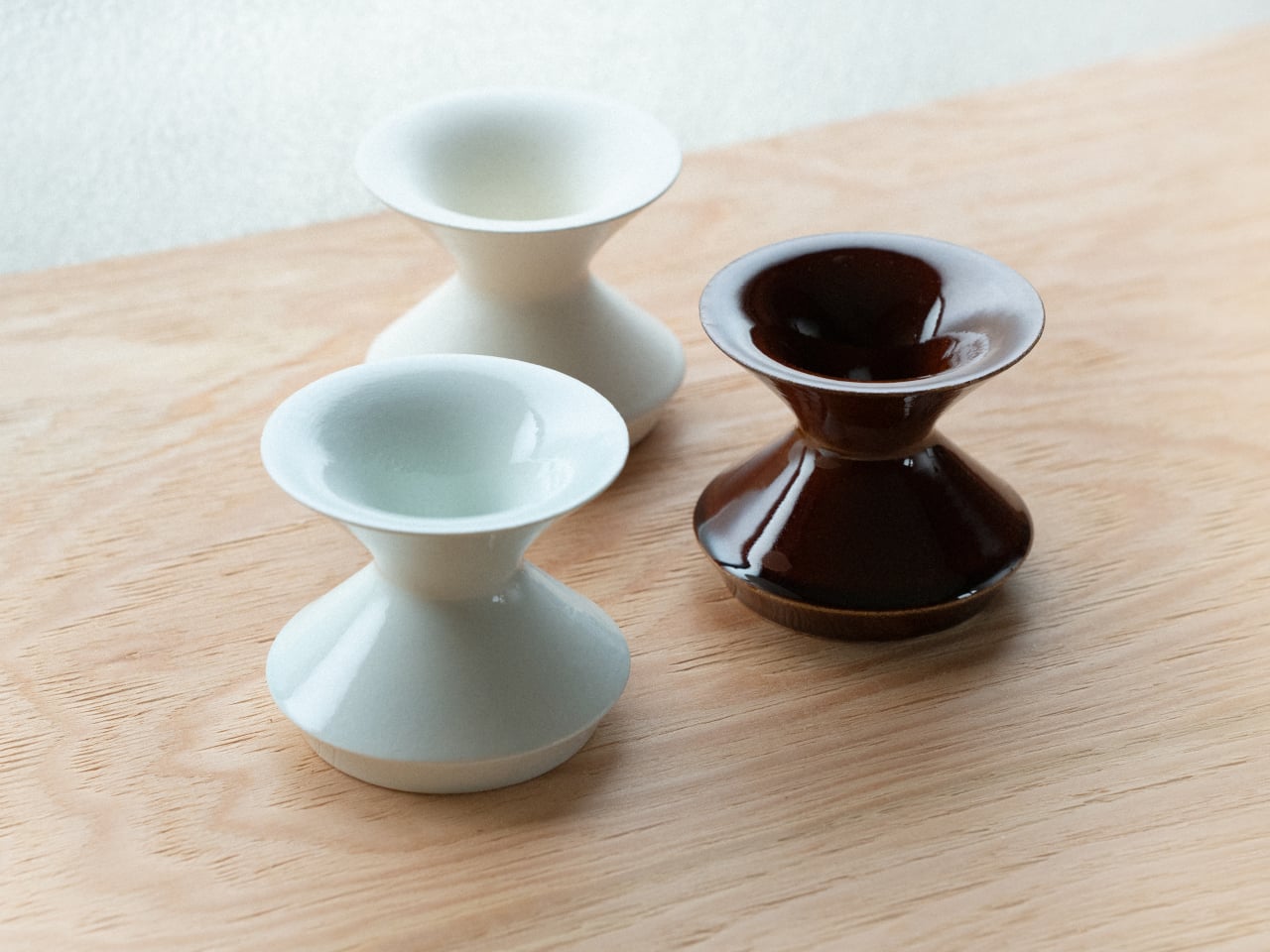
The choice of material makes as much of a statement as the form. Abe uses glazed ceramic, the same material found in vases, mugs, and tableware, giving ECHO a texture and presence that belongs in a home rather than on a tech shelf. It doesn’t look like an accessory. It looks like something that was always there, something that simply happened to be placed near a phone.

That quality matters when the phone is on the kitchen counter and you want music while cooking, or on a desk where you’d rather not have a speaker taking up permanent residence. ECHO doesn’t need to live next to a charging cable or be put away between uses. It sits on the table and becomes part of the room, as unobtrusive as any other ceramic piece nearby.

A guest walking in wouldn’t necessarily clock it as a tech product. That’s partly the point. The glazed surface catches light the way pottery does, and the form is quiet enough to sit beside books or plants without demanding attention. When a phone is slid underneath it, it starts doing its job. When the phone is gone, it just stays there, still looking like it belongs. The same underlying principle runs through the Battery-free Amplifying iSpeakers, where a Duralumin metal enclosure amplifies a smartphone’s audio without any power.

Abe designed ECHO to exist comfortably in a room even when it isn’t doing anything, a goal most speakers never consider. Most audio accessories announce themselves. This one quietly waits, and when a phone is close enough to fill the cavity with sound, the room gets a little warmer and a little fuller without anyone having to reach for a power button.

The post This Ceramic Vase Is Actually a Phone Speaker That Needs No Power first appeared on Yanko Design.
The 5 Best Tech Gadgets of May 2026

May 2026 is a good time to be paying attention. Gadgets aren’t just getting faster or thinner; the best ones this month are getting more intentional. There’s a shared thread running through every standout: each was built around a real constraint, a real behavior, or a real cultural moment, rather than a spec sheet searching for an audience. Five products rose above the rest, and each earns its spot for a distinctly different reason.

From a foldable phone that demolishes the category’s $800 price floor to a Nintendo Switch add-on that turns a gaming console into a live production rig, the range here is unusually wide. What connects them is the quality of thinking underneath. These aren’t renders looking for investment. They’re real objects designed to change how you work, listen, create, and move through a day. That’s the only brief that actually matters.

1. NASA Artemis Watch 2.0

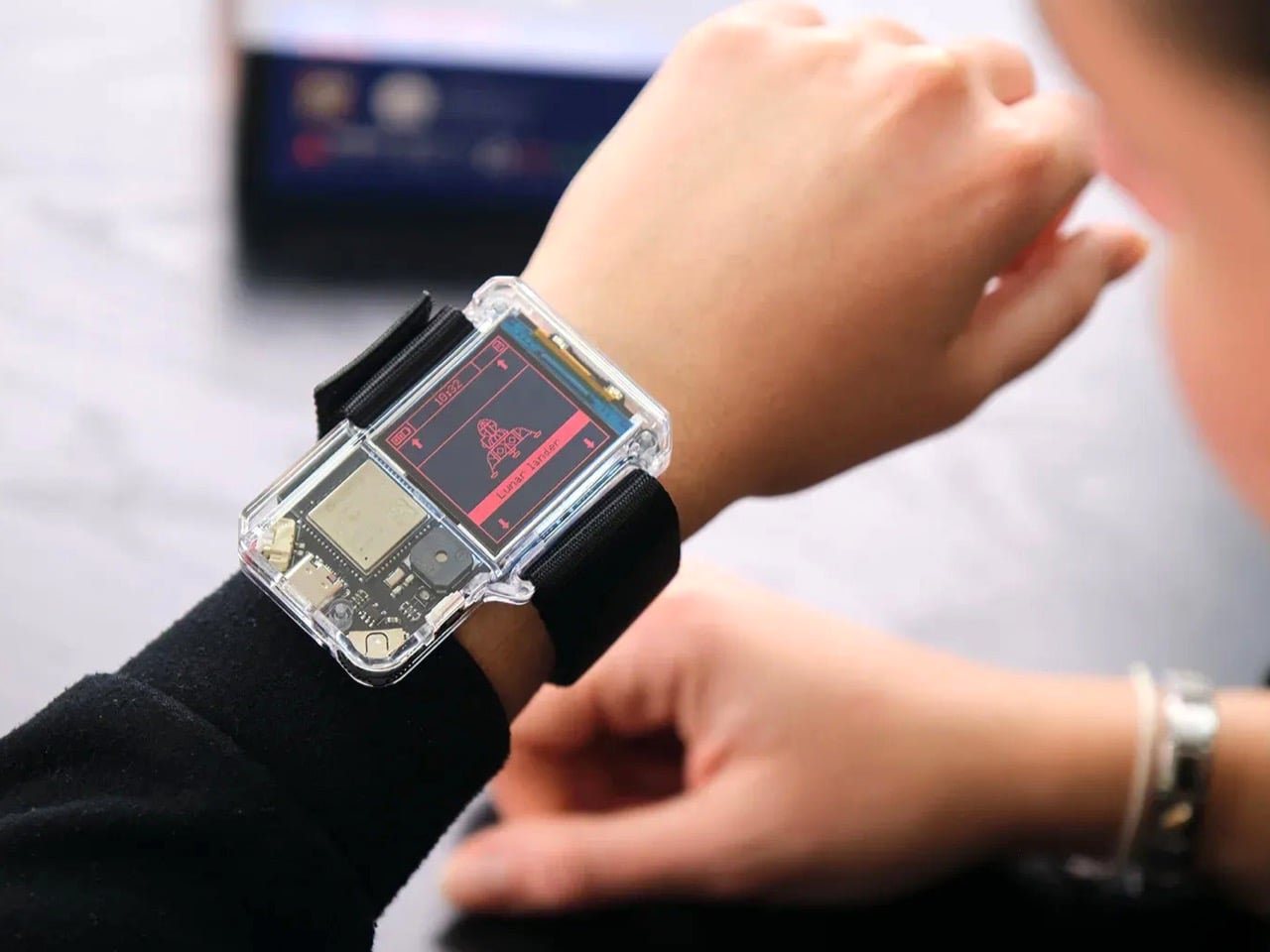
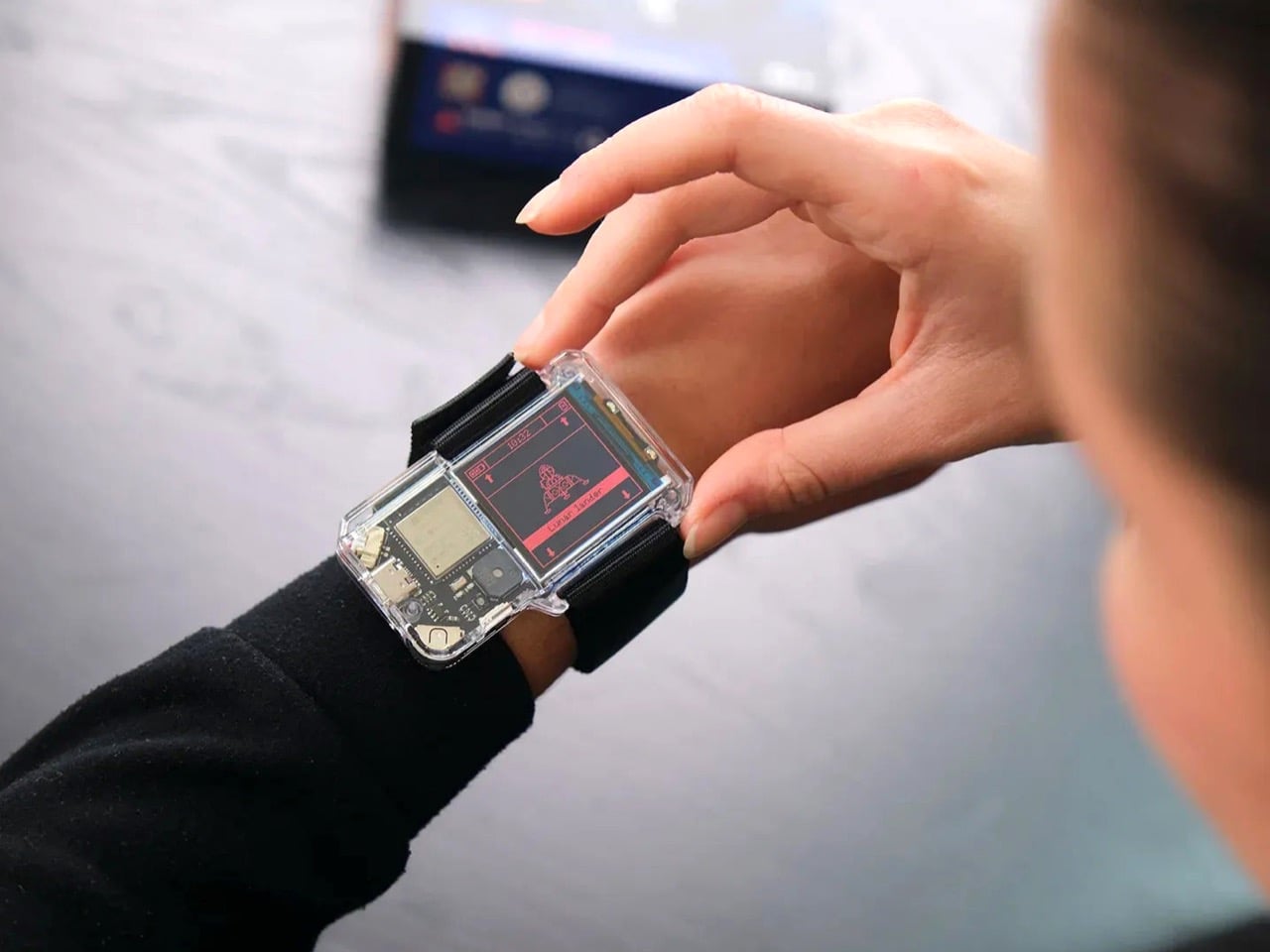
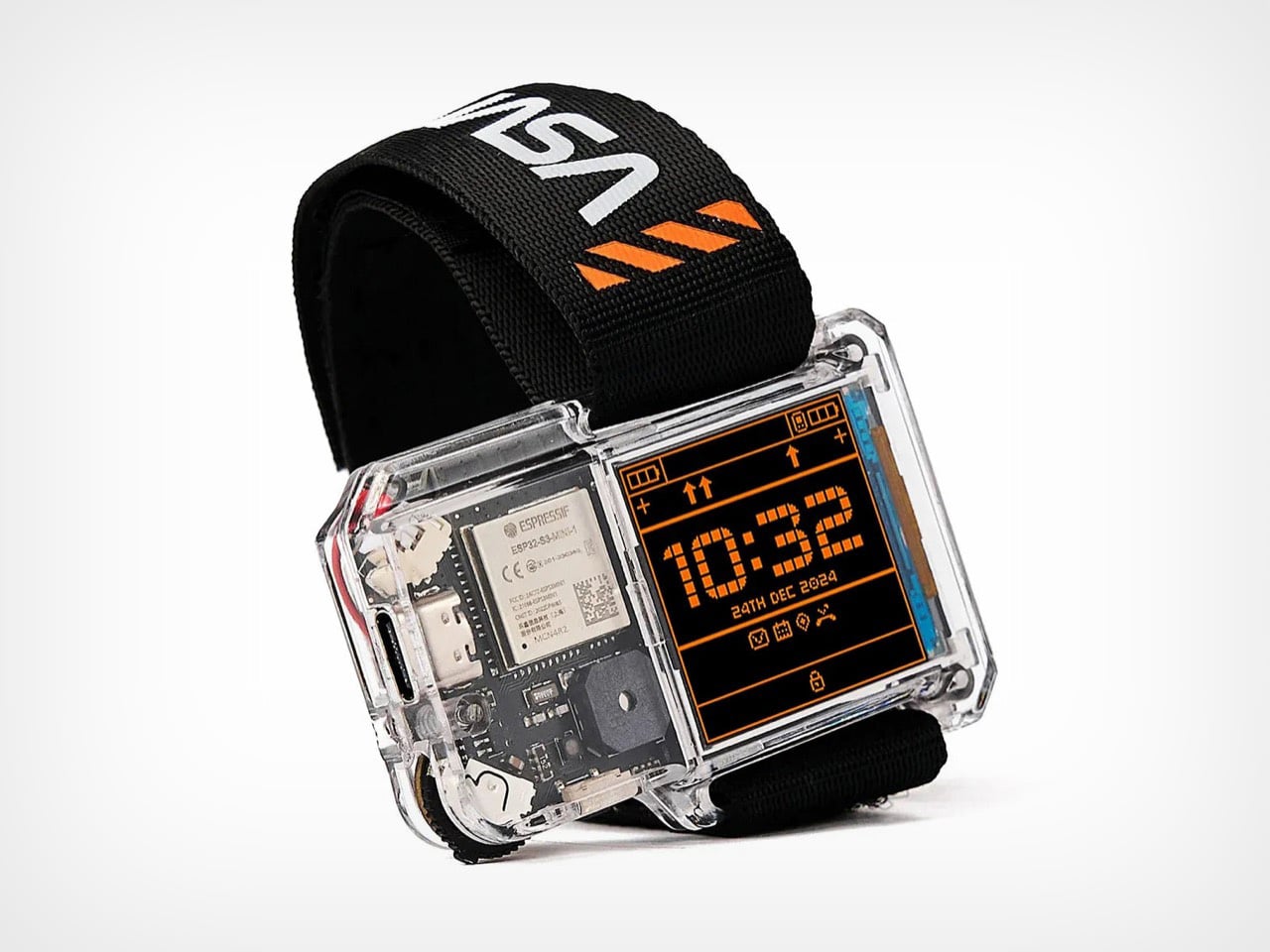
NASA’s Artemis II lifted off from Kennedy Space Center on April 1, 2026, carrying four astronauts on humanity’s first crewed lunar journey in over 50 years. CircuitMess timed the NASA Artemis Watch 2.0 directly into that cultural gravity. At $129, it’s a fully assembled, ready-to-use programmable smartwatch built around a dual-core ESP32 microcontroller, with a full-color LCD screen, accelerometer, gyroscope, compass, and temperature sensor packed into a wristband designed for anyone aged nine and up who wants more than a fitness tracker strapped to their wrist.

What makes it worth your attention is the depth it offers without demanding anything upfront. Out of the box, it pairs with iOS and Android over Bluetooth for activity tracking and notifications. When curiosity takes over, the firmware is fully open-source and reprogrammable in Python, CircuitBlocks, or the Arduino IDE. Build custom watch faces, write your own apps, and modify sensor behavior as far down as you want to go. The Artemis Watch 2.0 is one of the rarer gadgets at this price: it genuinely grows with the person wearing it.

What we like

  • Fully open-source firmware supports Python, CircuitBlocks, and Arduino, giving both beginners and experienced coders meaningful room to explore and build
  • Ships fully assembled and ready to use straight out of the box, lowering the barrier to entry without removing any of the technical depth underneath

What we dislike

  • At $129, it asks for more commitment than most impulse purchases in the kids’ tech category allow for
  • Screen performance in direct sunlight hasn’t been addressed in any available documentation

2. OrigamiSwift Mouse

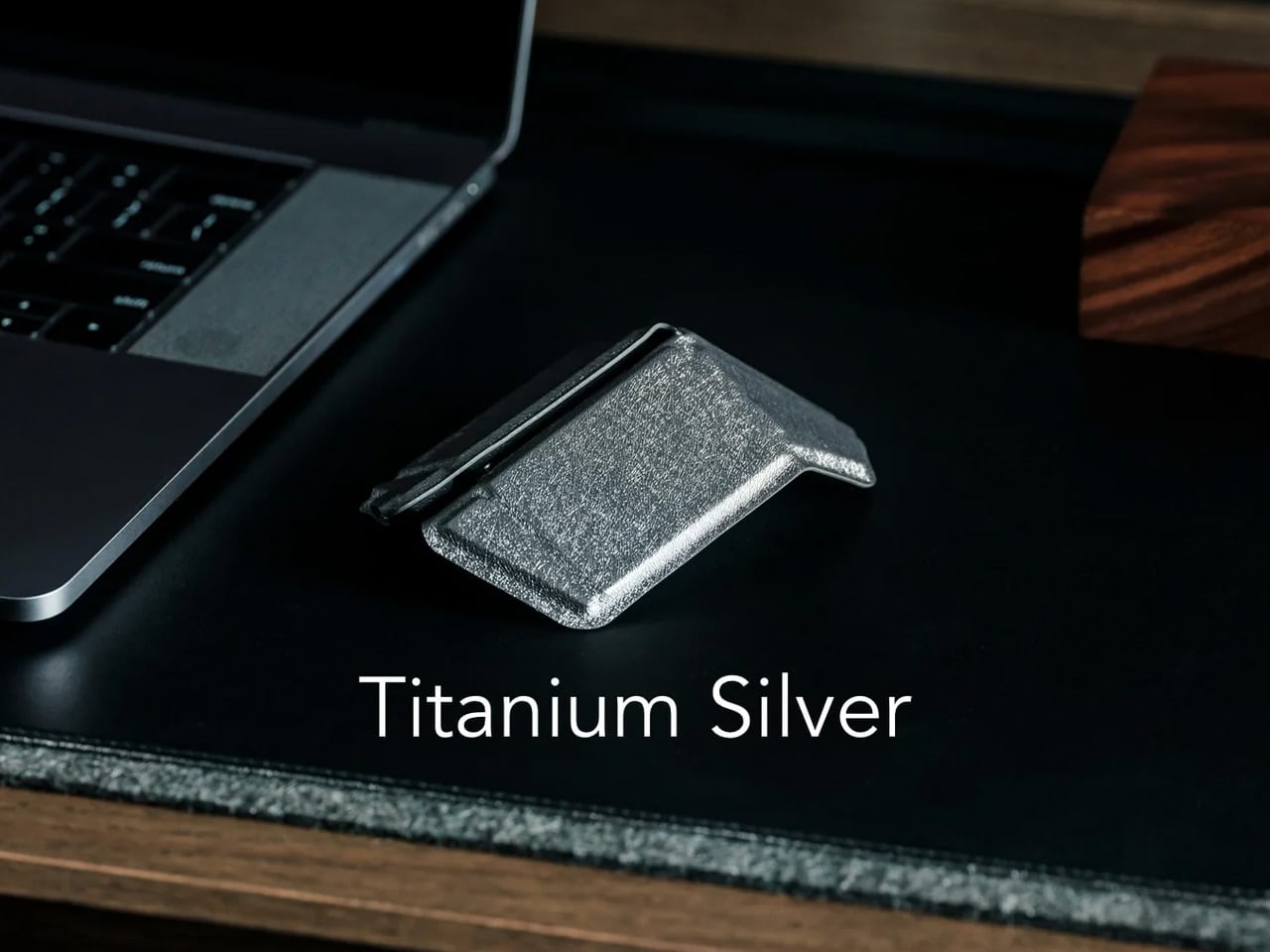
Every frequent traveler has made the same quiet compromise: leave the proper mouse at home or carry something too small to work with comfortably for more than an hour. OrigamiSwift was built precisely around that problem. It’s a Bluetooth mouse that folds flat when not in use, weighs just 40 grams, and opens into full working position in under half a second. The origami-inspired form isn’t a styling exercise. It’s a structural answer to the oldest tension in portable peripherals: comfort has always cost you size.

The ergonomic shaping holds up across extended work sessions, which matters more than most product pages acknowledge. Whether you’re finalizing a presentation at an airport gate or editing documents in a co-working space, OrigamiSwift stays comfortable in your hand and disappears into a bag when you’re done. The ultra-thin profile and minimal build weight mean it never adds anything meaningful to your load. For anyone who genuinely works from wherever they happen to be, this is the mouse that finally makes sense to own.

Click Here to Buy Now: $85.00

What we like

  • 40-gram weight and flat-fold profile make it practically invisible in any bag, disappearing entirely until you actually need it
  • Sub-0.5-second activation means there’s no friction at all between being packed and being productive

What we dislike

  • Available listings don’t confirm DPI range or scroll wheel responsiveness for anyone doing precision work
  • Bluetooth-only connectivity may create compatibility friction with older desktop setups that lack wireless support

3. Ai+ Nova Flip

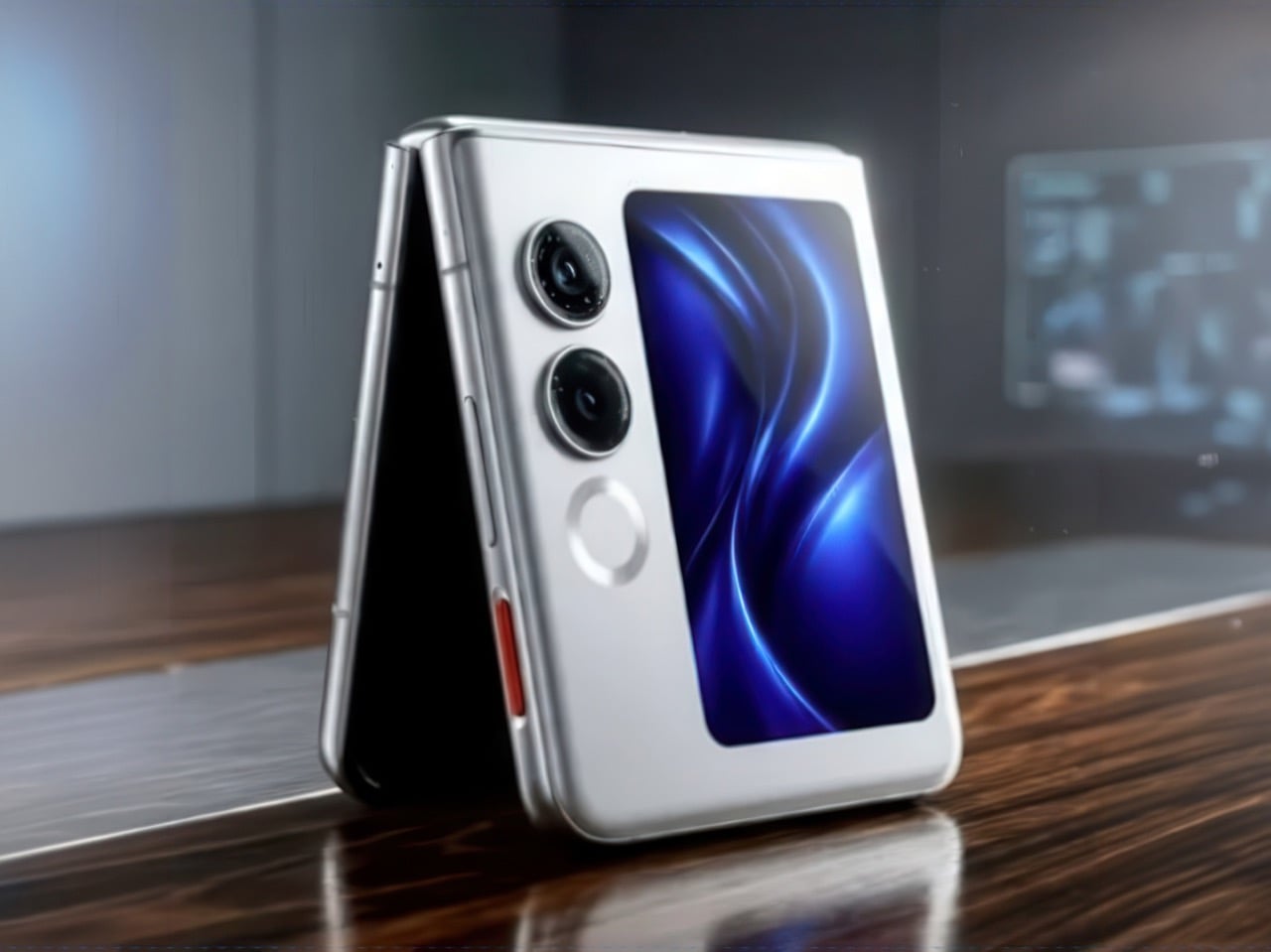
The foldable phone category has spent five years convincing itself that the flip experience carries a natural premium of $800 or more. Ai+ is testing that assumption head-on with the Nova Flip, launched in India at Rs 29,999, roughly $320, making it the most accessible foldable phone on the market. The inner display is a 6.9-inch AMOLED panel resolving at 2790 x 1188 pixels, complemented by a 3.1-inch AMOLED cover screen. MediaTek’s Dimensity 7300 handles processing, paired with 8GB of LPDDR4X RAM and 256GB of internal storage.

The spec list doesn’t read like a budget compromise. A 50-megapixel primary camera, a 32-megapixel front shooter, and a 4325mAh battery with 33W wired charging all hold credibly against devices at double the price. 5G, NFC, and an IP64 dust and splash rating close out a package that would feel serious in any category. The Nova Flip doesn’t just undercut the competition on price. It quietly forces a harder conversation about what the flip form factor has genuinely been worth at $1,000 all along.

What we like

  • $320 pricing opens the foldable phone experience to an entirely new audience that the category has ignored since its beginning
  • The 4325mAh battery is a genuinely surprising capacity for the flip form factor at any price point, let alone this one

What we dislike

  • The 2-megapixel depth lens reads as the weakest component in an otherwise strong and well-considered camera array
  • Long-term hinge durability at this price tier is unproven and worth tracking carefully over time

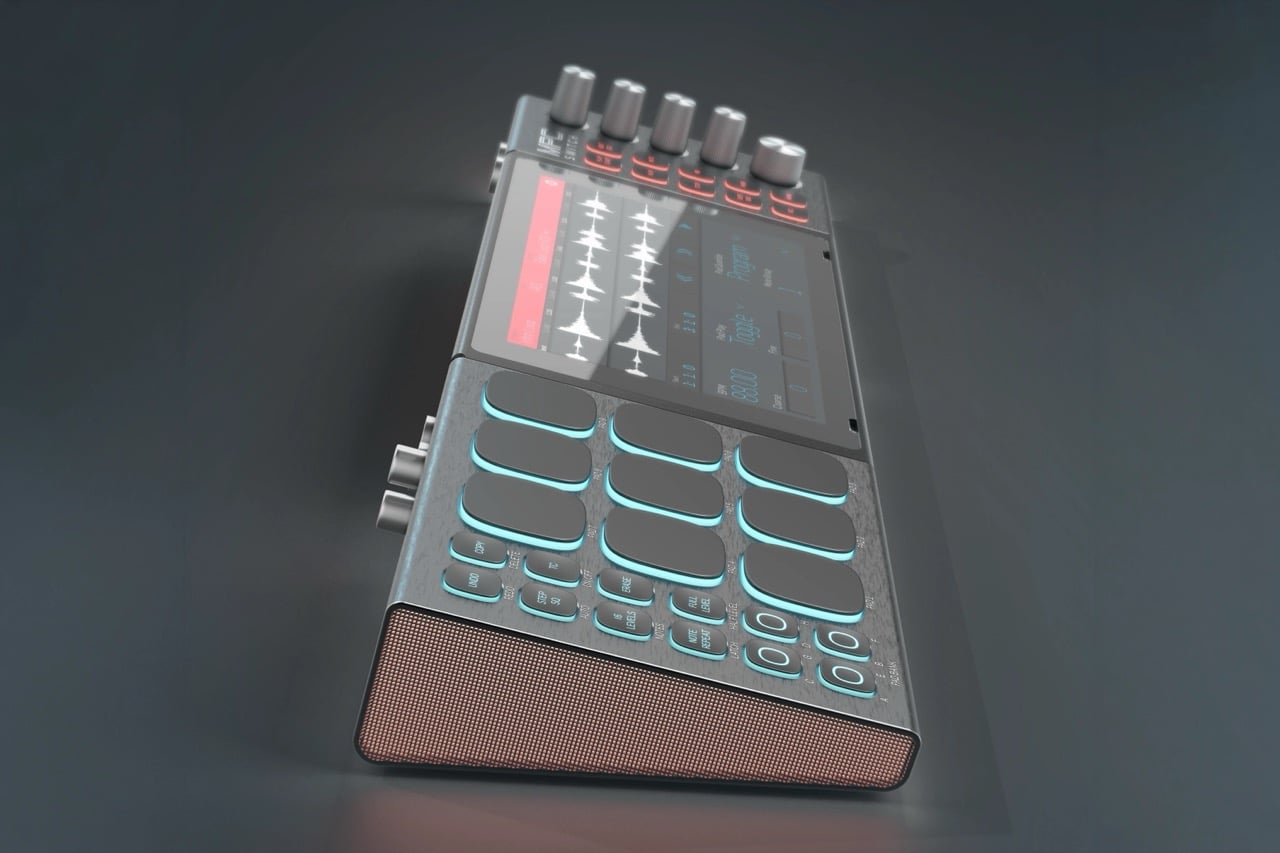
4. Akai MPC Switch

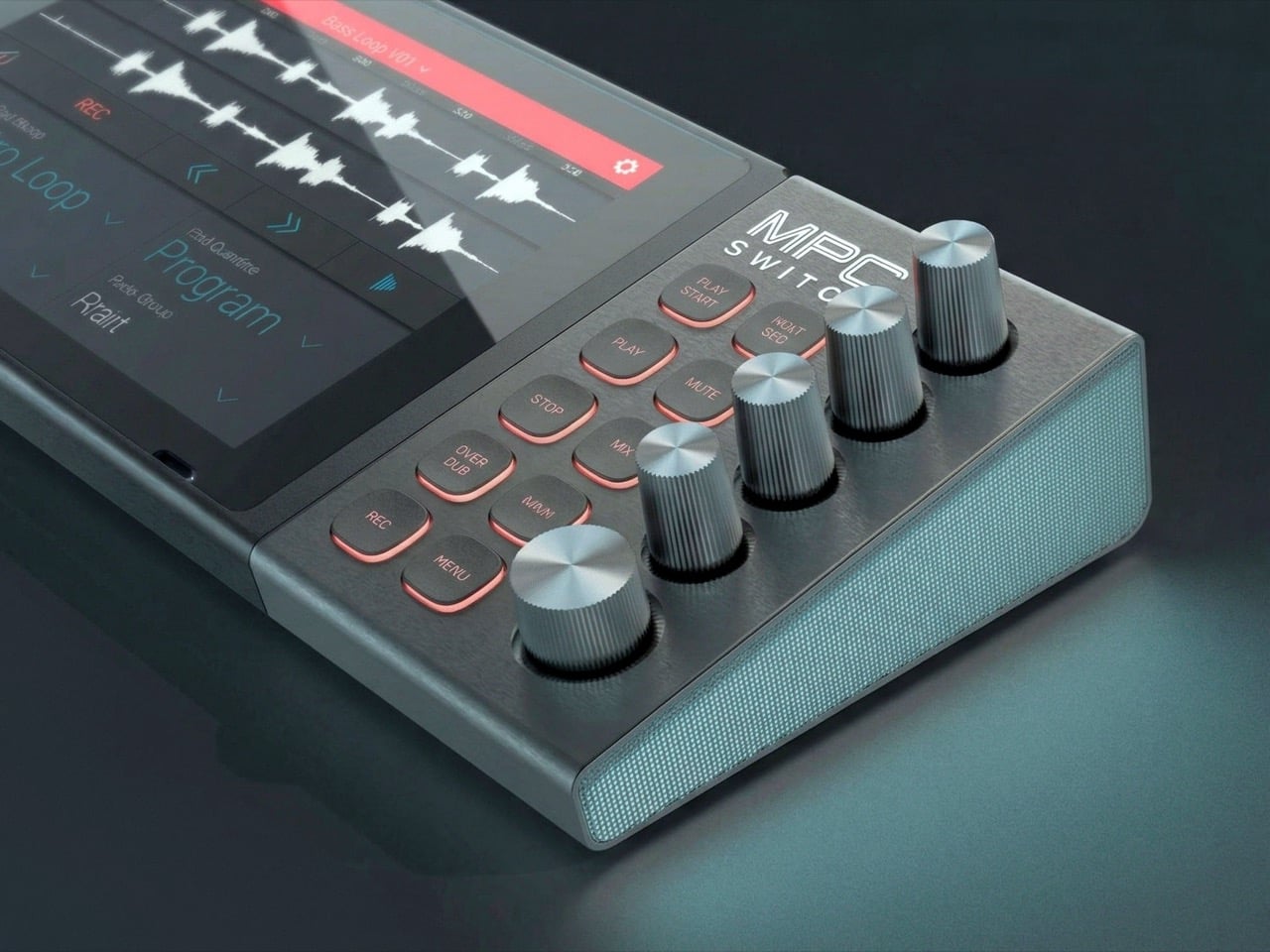
Alquemy’s Akai MPC Switch concept asks a question that feels obvious the moment someone finally puts it to you: if laptop-grade software can run on portable hardware, why can’t a capable gaming console handle serious music production? The MPC Switch is a pair of controller units designed to snap directly onto the sides of a Nintendo Switch, replacing the Joy-Cons with MIDI inputs, outputs, and a full DAW running on the console’s own screen. The control layout reflects real production workflows rather than a stylized render built for social media.

The appeal runs deeper than the novelty of the form. The concept treats the Switch as a legitimate interface surface: something you game on when you need to and produce or perform on when the moment calls for it. Swap the Joy-Cons for the MIDI setup, and you’re there. Whether Nintendo or Akai ever moves this into production is a separate question entirely, but Alquemy has made a persuasive case that the idea deserves a real answer. The best concepts don’t just look good. They make you wonder why nobody shipped it first.

What we like

  • MIDI integration and a credible DAW interface position the Switch as a serious production platform rather than a novelty peripheral
  • The Joy-Con snap mechanism makes the transition between gaming and music production genuinely seamless in concept

What we dislike

  • No confirmed production timeline means this remains aspirational, with no clear path in your hands
  • The Switch’s processing ceiling may be a real constraint for complex, multi-layer production sessions

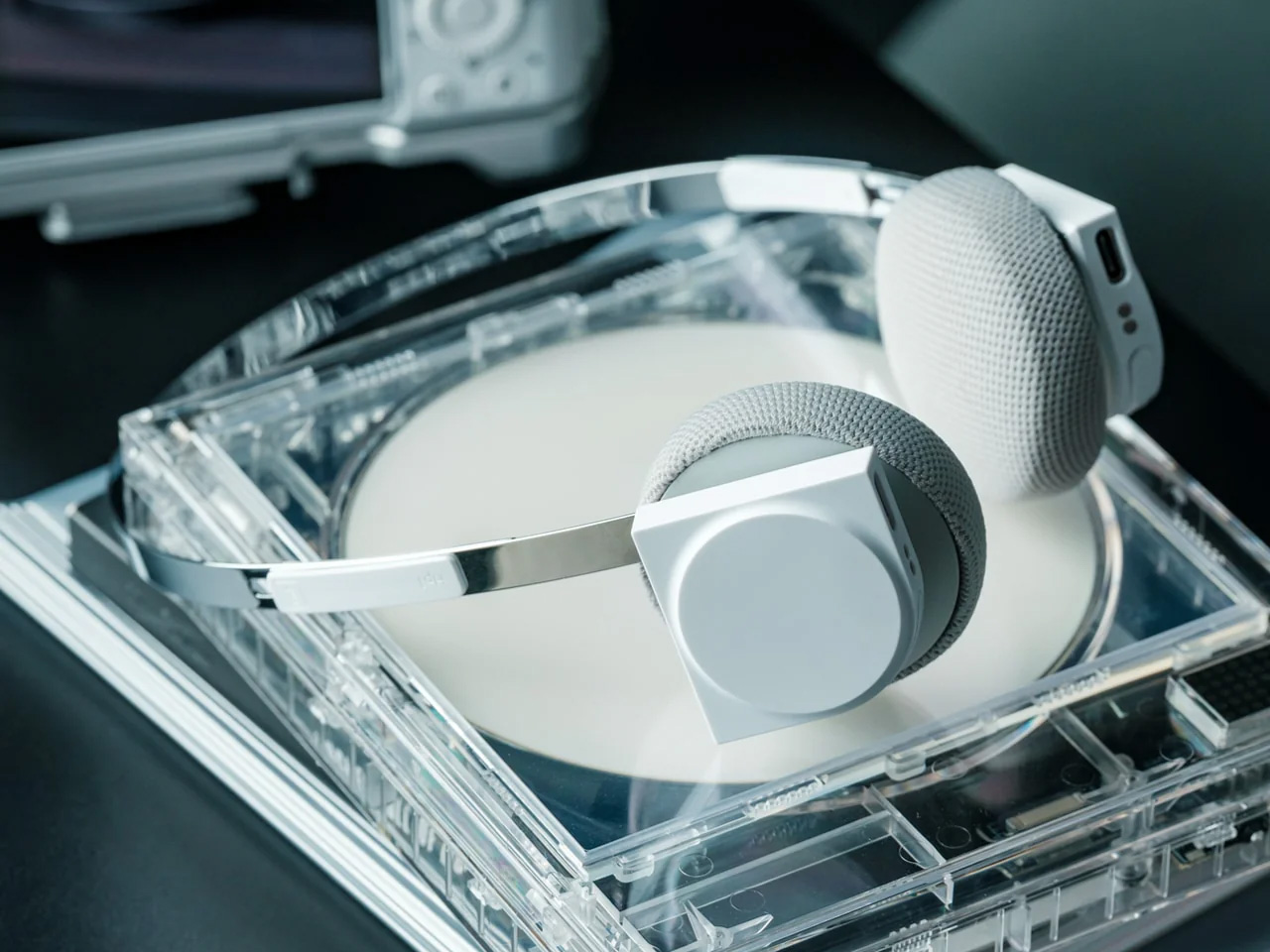
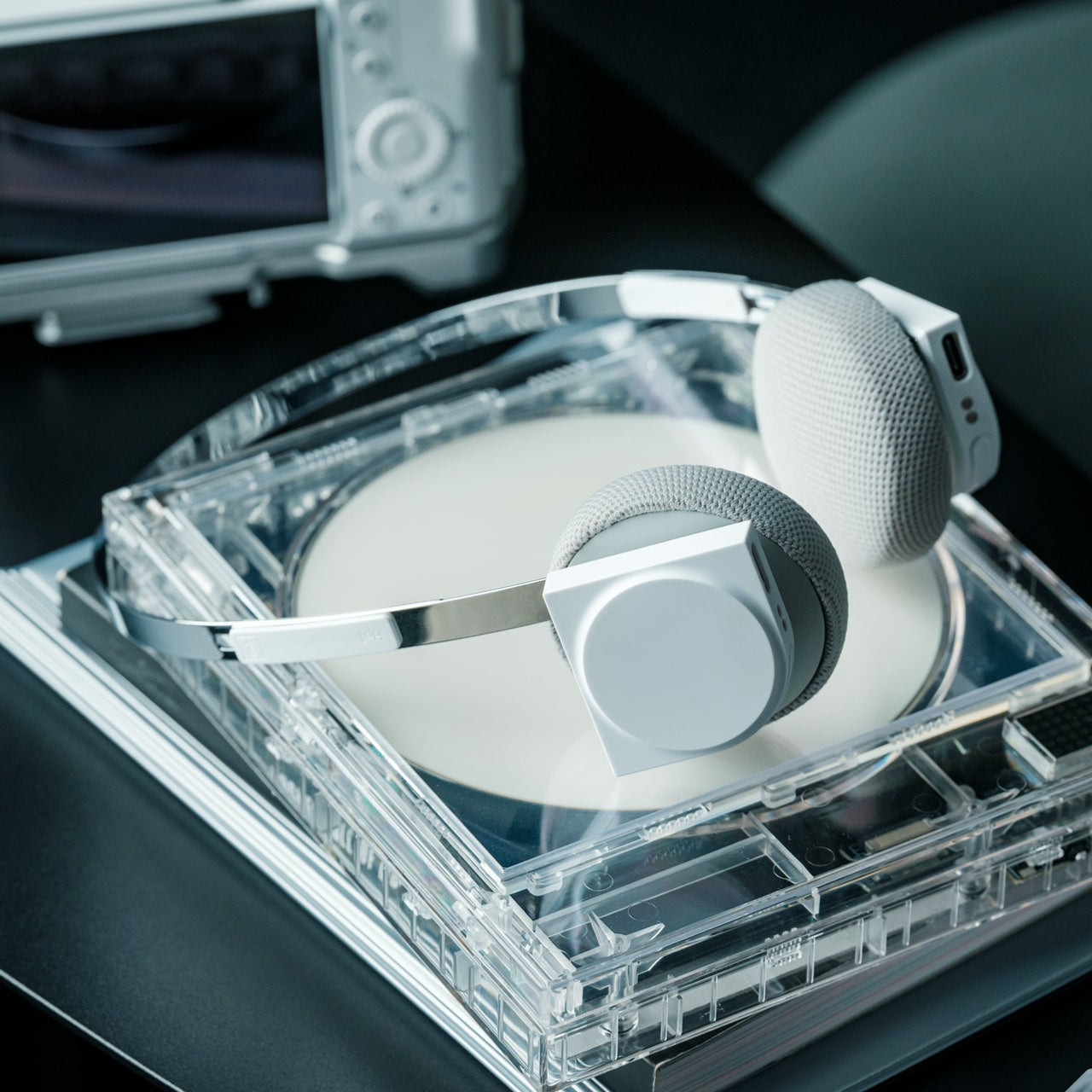
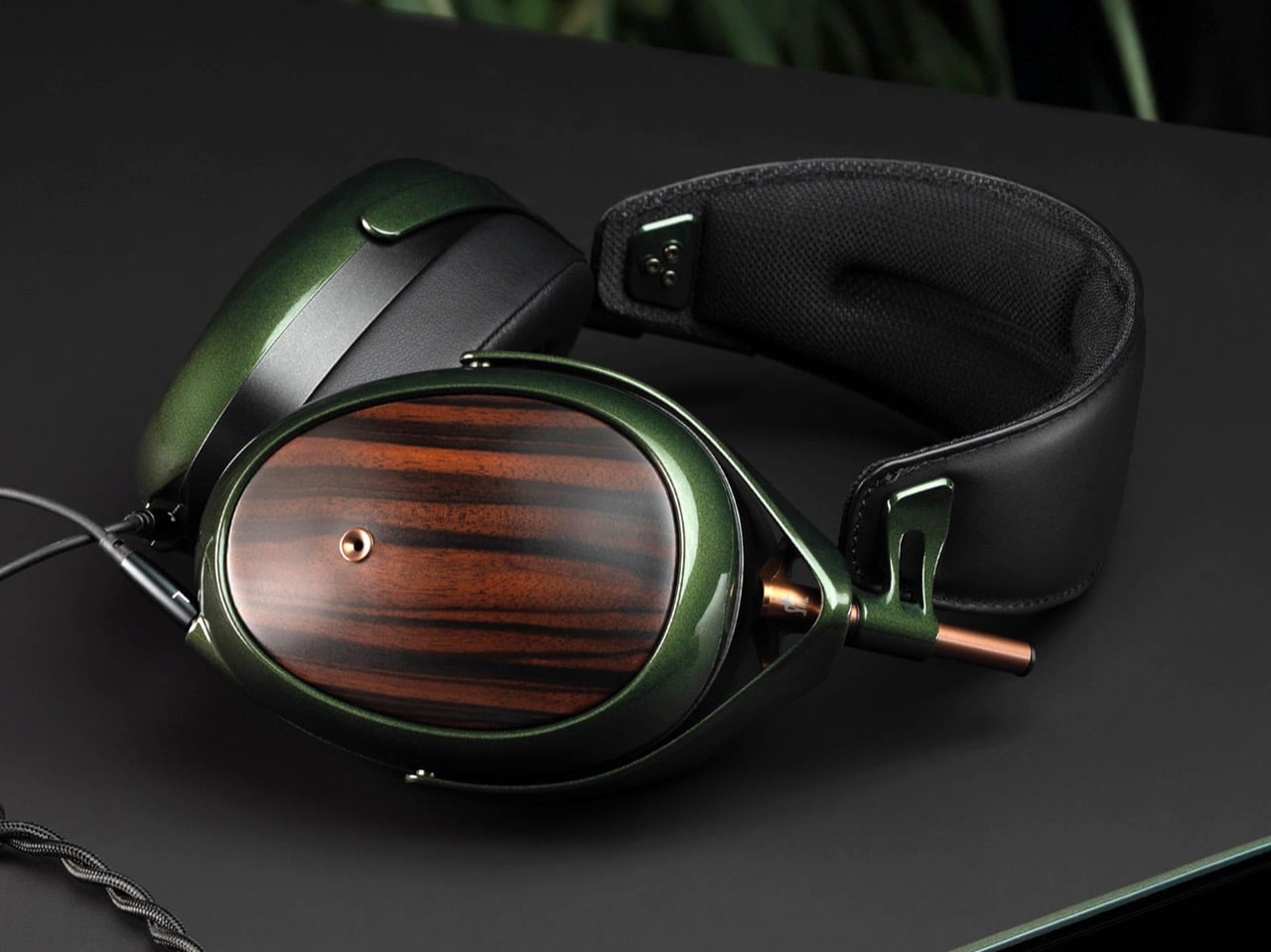
5. StillFrame Headphones

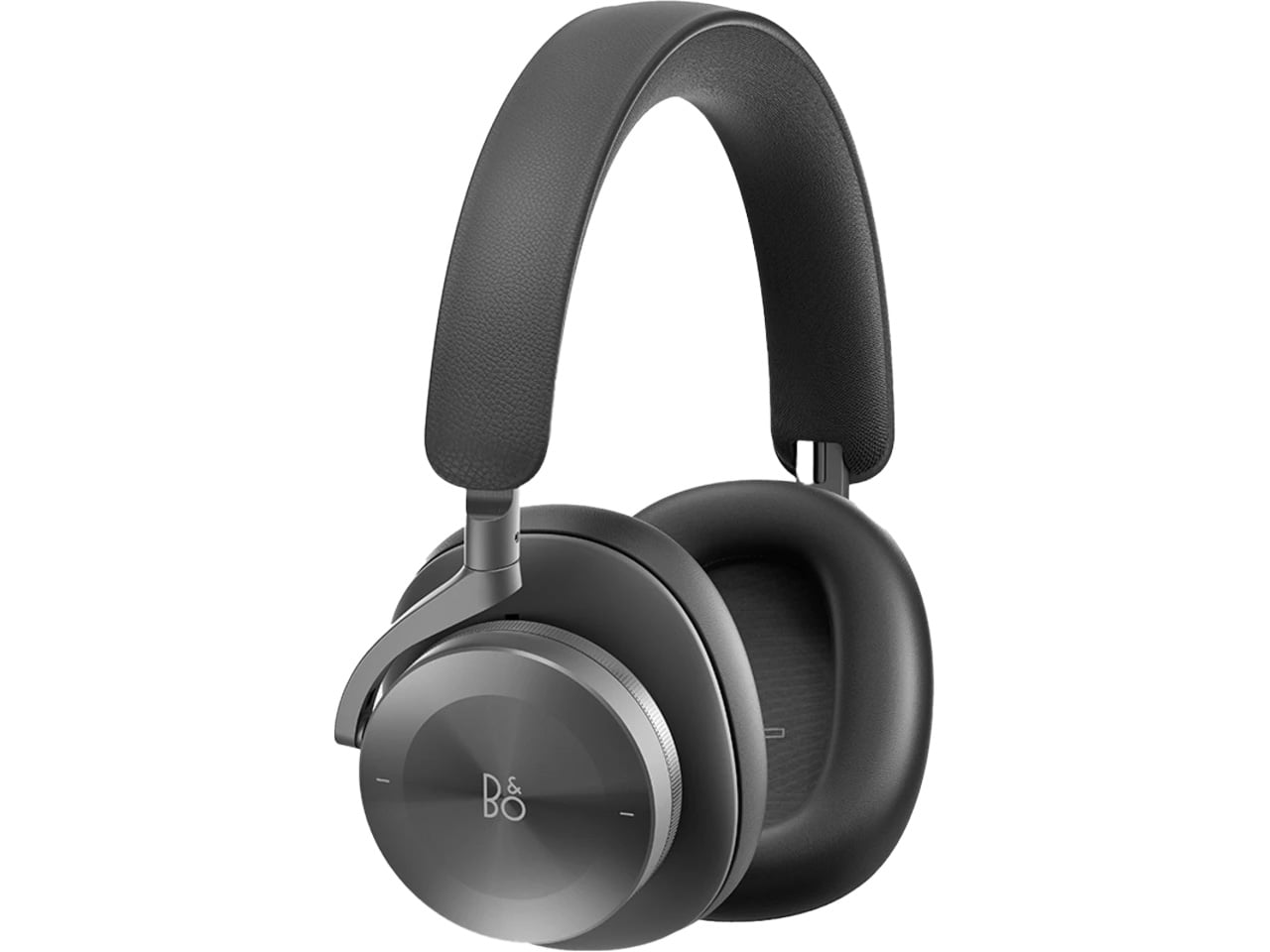
Most headphone designs land at one of two poles: the over-ear build that announces itself before you even put it on, and the in-ear solution that disappears but gives nothing back in soundstage. StillFrame lands somewhere more considered than either. At 103 grams, it sits closer to weightless than wearable. The 40mm drivers are tuned for a wide, open soundstage that pulls spatial detail and melodic texture out of tracks that most headphones flatten into undifferentiated background noise.

Active noise cancellation closes you off when focus demands it. Transparency mode reconnects you to the room when the world around you matters more. Battery holds at 24 hours, covering a full workday, an overnight flight, and the morning after with no cable required. Switching between modes takes a single tap. StillFrame was designed around the premise that how you listen should adapt to where you are, not the other way around. That’s a harder brief to execute cleanly than it sounds, and the weight alone suggests it’s been taken seriously.

Click Here to Buy Now: $245.00

What we like

  • 103 grams is a genuinely rare achievement for an over-ear headphone carrying both ANC and full-size 40mm drivers
  • 24-hour battery life covers the kind of all-day, real-world use that most headphones in this category only claim to handle

What we dislike

  • No published information on codec support, like LDAC or aptX, for listeners who prioritize wireless audio fidelity
  • Colorway and finish options appear limited in current listings, which may be a sticking point for buyers who care about visual identity

The Only Standard That Matters Is the One You Can Feel

May 2026’s strongest gadgets share something harder to write into a spec sheet than battery life or pixel count. Each was designed around a specific friction point and resolved it with a precision that feels purposeful rather than accidental. The Artemis Watch converts a cultural moment into a learning platform. The Nova Flip resets the floor of an entire category. The OrigamiSwift solves a portability problem that dozens of mice before it never genuinely addressed.

StillFrame and the Akai MPC Switch represent opposite ends of the development spectrum, one shipping and one conceptual, but both make the same underlying argument: that considered design changes the terms of what a product is allowed to be. Whether you’re optimizing a travel bag or rethinking a music studio from a gaming console, the standard these five set is worth taking seriously. The best gadgets this month aren’t the loudest ones in the room. They’re the most resolved.

The post The 5 Best Tech Gadgets of May 2026 first appeared on Yanko Design.

10 Genuis Gadgets That Turn Any Hotel Desk Into a Proper Workstation in 2026

The hotel desk is a fiction. A flat surface with a lamp, a notepad nobody uses, and an ethernet port from 2009. For the digital nomad, making it functional is entirely a gear problem — solved or compounded by what is in the bag. The right tools collapse the gap between a rented surface in a foreign city and a setup that performs as well as anything permanent back home.

Ten products made this list because each one addresses something specific about the mobile workstation problem. Not the flashy kind of specific that reads well in a press release, but the unglamorous kind — the port you ran out of, the cable you excavated for four minutes, the surface that made everything feel temporary. These are the tools that stop you from tolerating the desk you are given and start letting you build the one you need.

1. OrigamiSwift Mouse

A trackpad handles most things until the work demands precision. Editing photos, building detailed spreadsheets, reviewing design files — these sessions expose the trackpad’s limits inside the first hour. The OrigamiSwift folds completely flat at 4.5mm, weighs 40 grams, and snaps open into a full-sized ergonomic mouse in under half a second via magnetic clips. Bluetooth 5.2 connects without a dongle, the infrared sensor tracks at 4000 DPI, and three months of battery life run on a single USB-C charge.

What makes this a permanent carry item rather than a novelty is the form factor. It slides into a laptop sleeve, drops into a shirt pocket, or sits flat in any corner of a tech pouch without displacing anything else. The fold is not a compromise — the shape is fully ergonomic and properly contoured for extended sessions. For nomads working in applications that reward a real mouse, this removes every excuse for not carrying one.

Click Here to Buy Now: $85.00

What We Like

  • Folds to 4.5mm and weighs 40 grams, pocketable without sacrificing full-size ergonomic comfort
  • Three-month battery life on a single USB-C charge keeps it out of the daily charging rotation entirely

What We Dislike

  • The touch-sensitive scroll area replaces a physical wheel, requiring real adjustment for heavy scrollers
  • Bluetooth-only connectivity means no wired fallback for tasks where minimal latency matters

2. HubKey Gen2

Two USB-C ports on a modern ultrabook sound fine until you are simultaneously charging, running an external display, reading an SD card, and needing ethernet at a co-working desk with unreliable Wi-Fi. HubKey Gen2 resolves the port shortage with 11 connections in one compact cube: dual 4K/60Hz HDMI outputs, USB-A 3.1, USB-C 3.1, SD and TF card readers, 2.5 Gbps ethernet, a 3.5mm audio jack, and 100W USB-C power delivery through a single cable.

The programmable shortcut keys and central control knob on the top panel are what separate this from every other travel hub. Volume, mute, screenshot, and display toggle become physical actions rather than keyboard shortcuts buried in menus. For anyone driving dual monitors from a co-working space or managing video calls across time zones, five tactile keys and a precision knob turn a connectivity device into a proper control surface. At 7 × 7 × 3 centimeters, it fits anywhere without announcing itself.

What We Like

  • Dual 4K/60Hz HDMI outputs let you build a two-monitor workstation from a single compact device
  • Programmable keys and a physical control knob bring hands-on workflow control that no standard hub offers

What We Dislike

  • Tightly packed ports mean thick cables or large drives can crowd each other along the edges
  • The cube form factor, while compact, is less pocketable than flat card-style hub alternatives

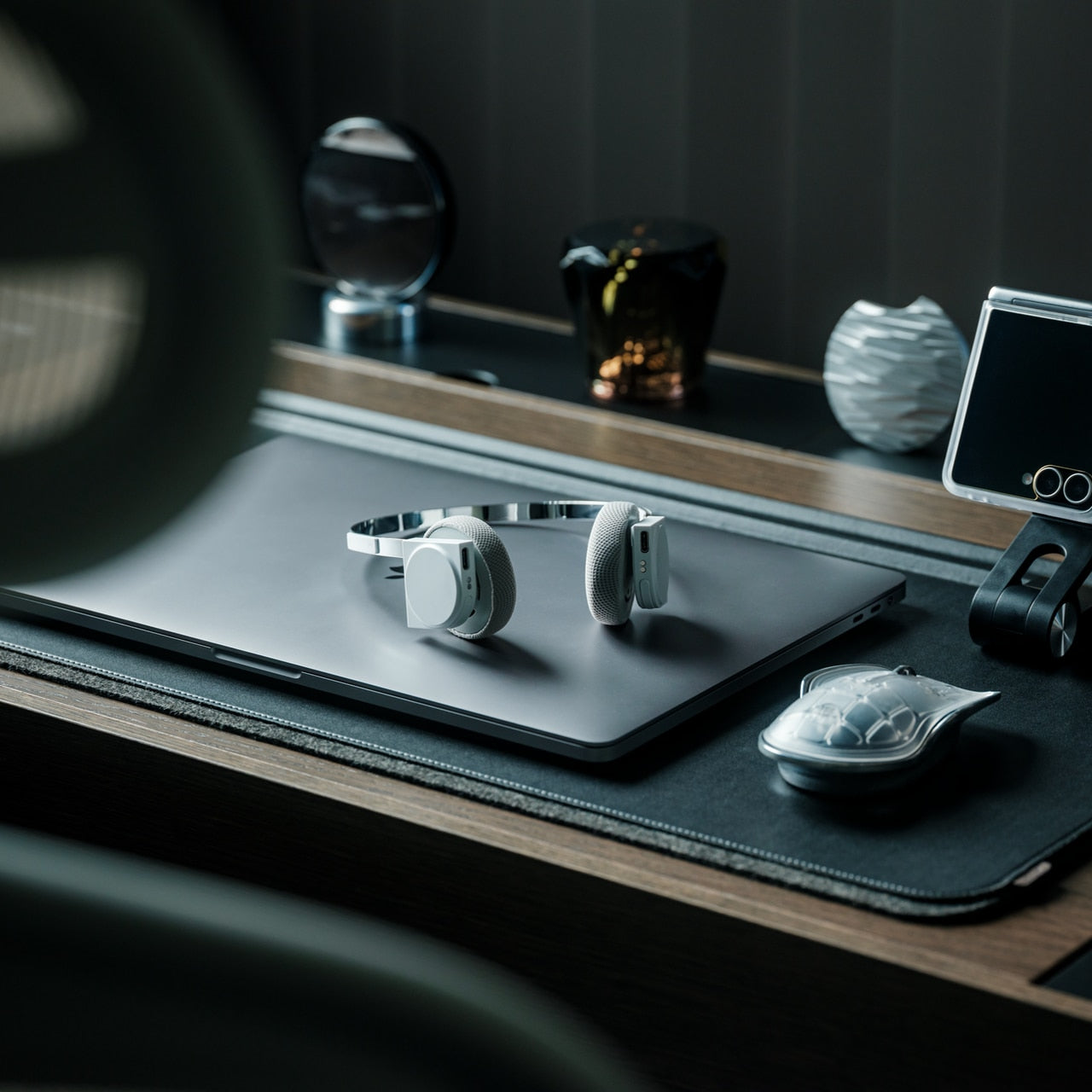
3. StillFrame Headphones

Concentration in a café, a co-working lobby, or an airport gate is a skill that requires backup. StillFrame provides it at 103 grams — on-ear headphones with 40mm drivers that produce an open, layered soundstage rather than a compressed signal. Active noise cancellation removes the environment when deep work requires it. Transparency mode pulls it back in with a tap when a gate announcement or colleague’s question needs to land. Both transitions happen cleanly, without drama or lag.

Twenty-four hours of battery life is the figure that justifies carrying these on long international routes. New York to Singapore, including a layover, without reaching for a charging cable. The retro-informed aesthetic references the deliberate listening era of physical media — a design decision that reads quietly and carries well in client-facing environments. For nomads spending serious hours in headphones across work sessions and transit days, the combination of weight, battery life, and sound quality earns the price.

Click Here to Buy Now: $245.00

What We Like

  • 24-hour battery life covers the longest intercontinental travel days without requiring a charge
  • At 103 grams, these stay genuinely comfortable through extended wear across full working days

What We Dislike

  • On-ear design provides less passive isolation than over-ear models in extremely loud transit environments
  • The retro aesthetic is distinctive but polarizing — not everyone wants a conversation piece on their ears

4. ASUS ZenScreen OLED MQ16AH

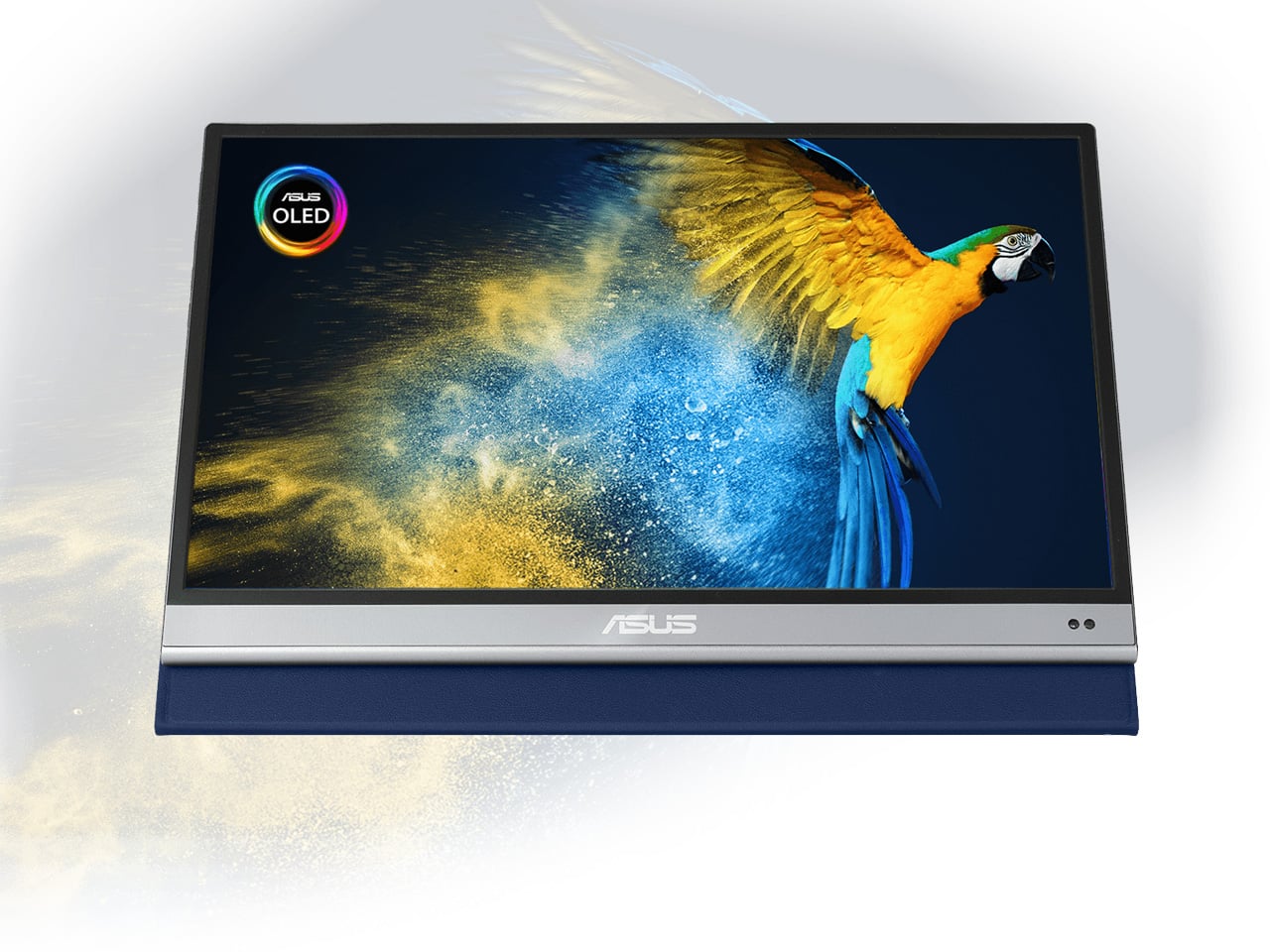
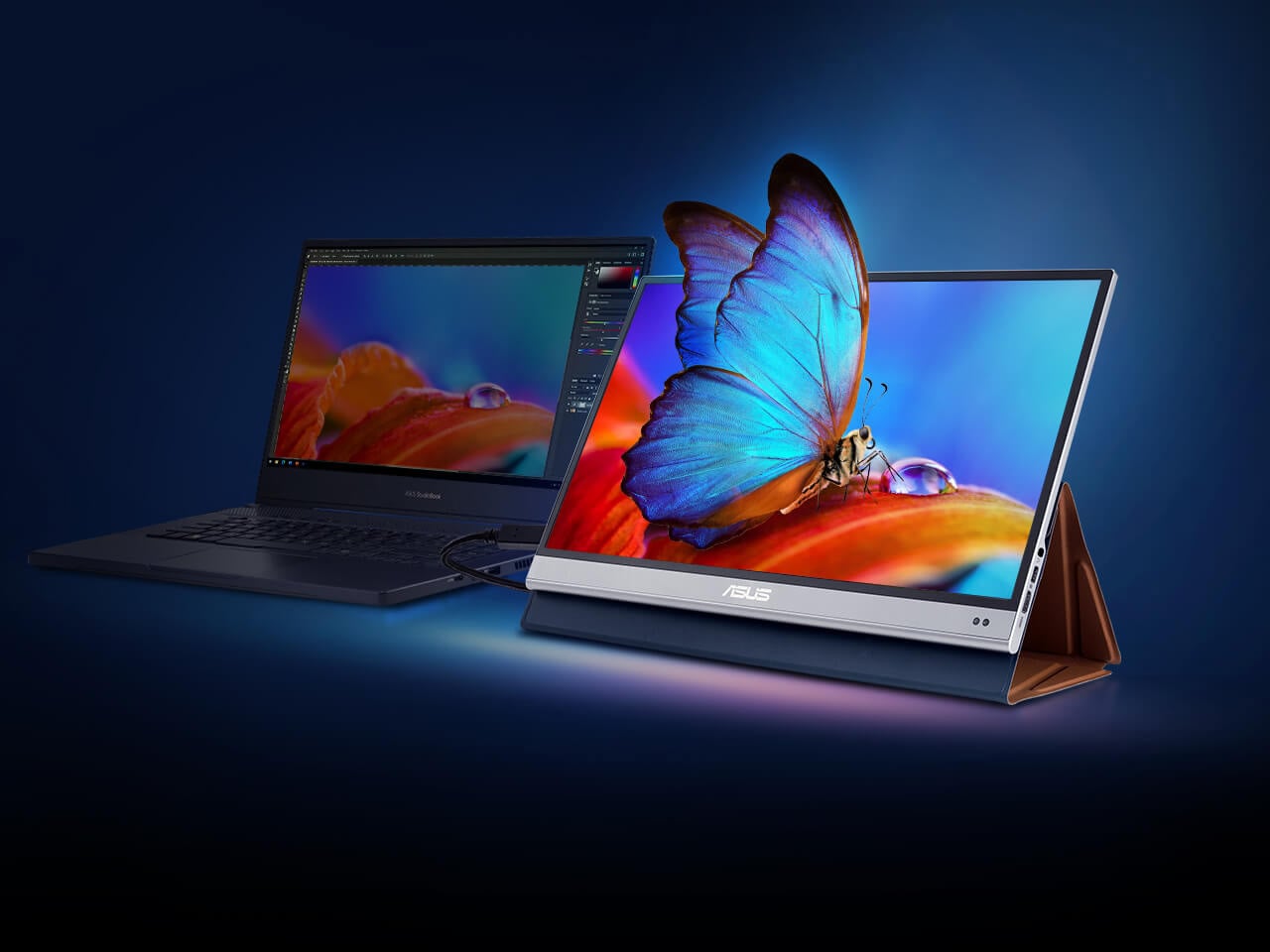
A second screen changes how you work, and the ZenScreen OLED MQ16AH is the portable monitor worth carrying. The 15.6-inch OLED panel delivers 100% DCI-P3 color coverage, matching studio-grade display accuracy at a fraction of the footprint. At 730 grams, it slides into most laptop sleeves alongside a thin ultrabook without requiring its own bag compartment. USB-C handles both video input and power delivery through a single cable, and the adjustable cover doubles as a multi-angle stand.

What makes OLED relevant specifically for nomadic work is panel behavior in variable light. Café windows, outdoor co-working terraces, hotel rooms with inconsistent artificial lighting — OLED handles contrast and legibility in conditions where LCD panels wash out and lose precision. ASUS includes a fabric sleeve so the screen travels protected. For creative professionals editing in temporary locations, this removes the monitor as a point of compromise in the mobile setup.

What We Like

  • 15.6-inch OLED with 100% DCI-P3 delivers studio-quality color accuracy in a 730-gram form that travels cleanly
  • Single USB-C cable handles both video signal and power delivery, keeping the desk free of extra cables

What We Dislike

  • At roughly $399, it sits at the premium end of portable monitors, with capable IPS alternatives at a lower cost
  • OLED panels carry a higher burn-in risk than IPS alternatives when static interface elements stay on screen long-term

5. Peak Design Tech Pouch

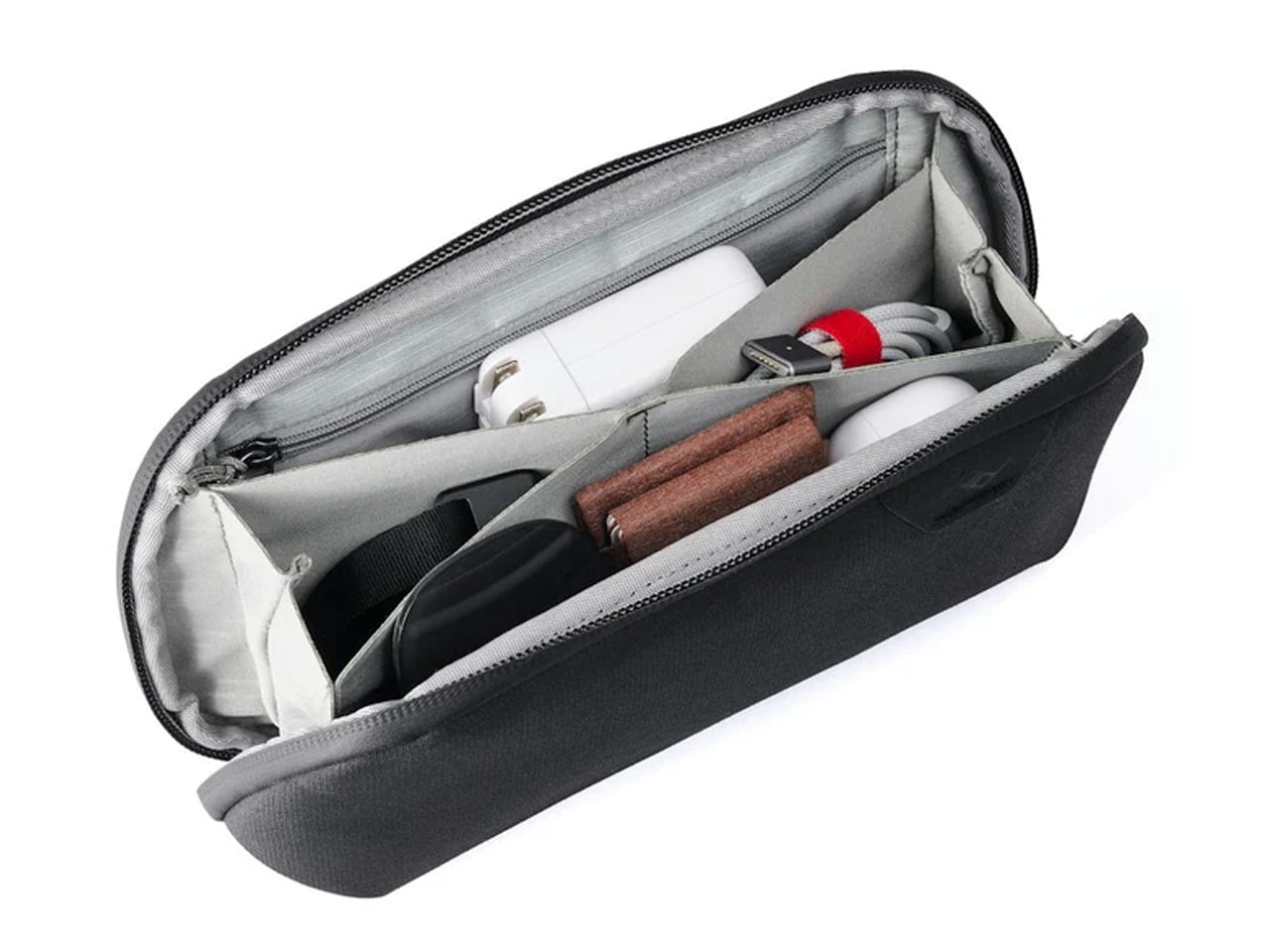
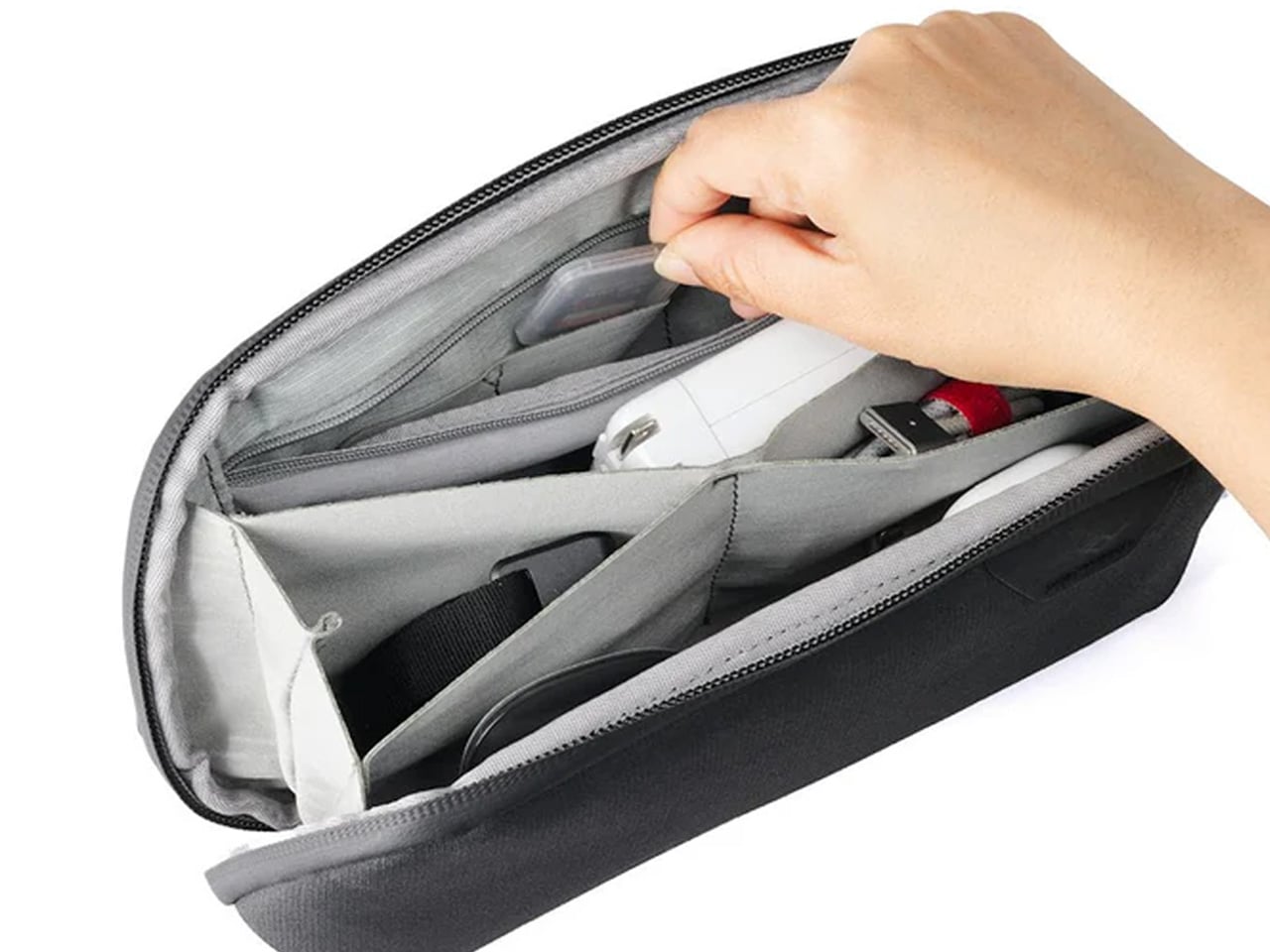
Cable management is the invisible tax on nomadic work. The time spent untangling cords, hunting for the right adapter, and repacking scattered accessories across a year of constant travel accumulates into something genuinely absurd. Peak Design built the Tech Pouch as an accordion-style organizer that opens completely flat, revealing modular loops, elastic pockets, and zippered compartments arranged with the same intentionality the brand applies to its camera gear. Everything has a designated position and stays there across every repacking cycle.

The weatherproof shell handles what transit actually looks like: overhead bins, bag drops, and light rain between a taxi and a terminal. What justifies the premium over a generic cable case is the layout logic. Cables stay separated. Adapters surface when reached for. The daily ritual of setting up at a new desk becomes faster and less irritating. For something touched every single day, the build quality means it survives years of travel without visible wear.

What We Like

  • Accordion design opens fully flat, giving complete visual access to every cable and adapter without excavation
  • Weatherproof construction handles the genuine roughness of daily transit without requiring careful handling

What We Dislike

  • At $59.95, it is a meaningful spend for a cable organizer, though the quality distributes that cost across years of use
  • Structured form takes up more interior bag volume than a soft-sided pouch, even when lightly packed

6. Xiaomi UltraThin Magnetic Power Bank 5000 15W

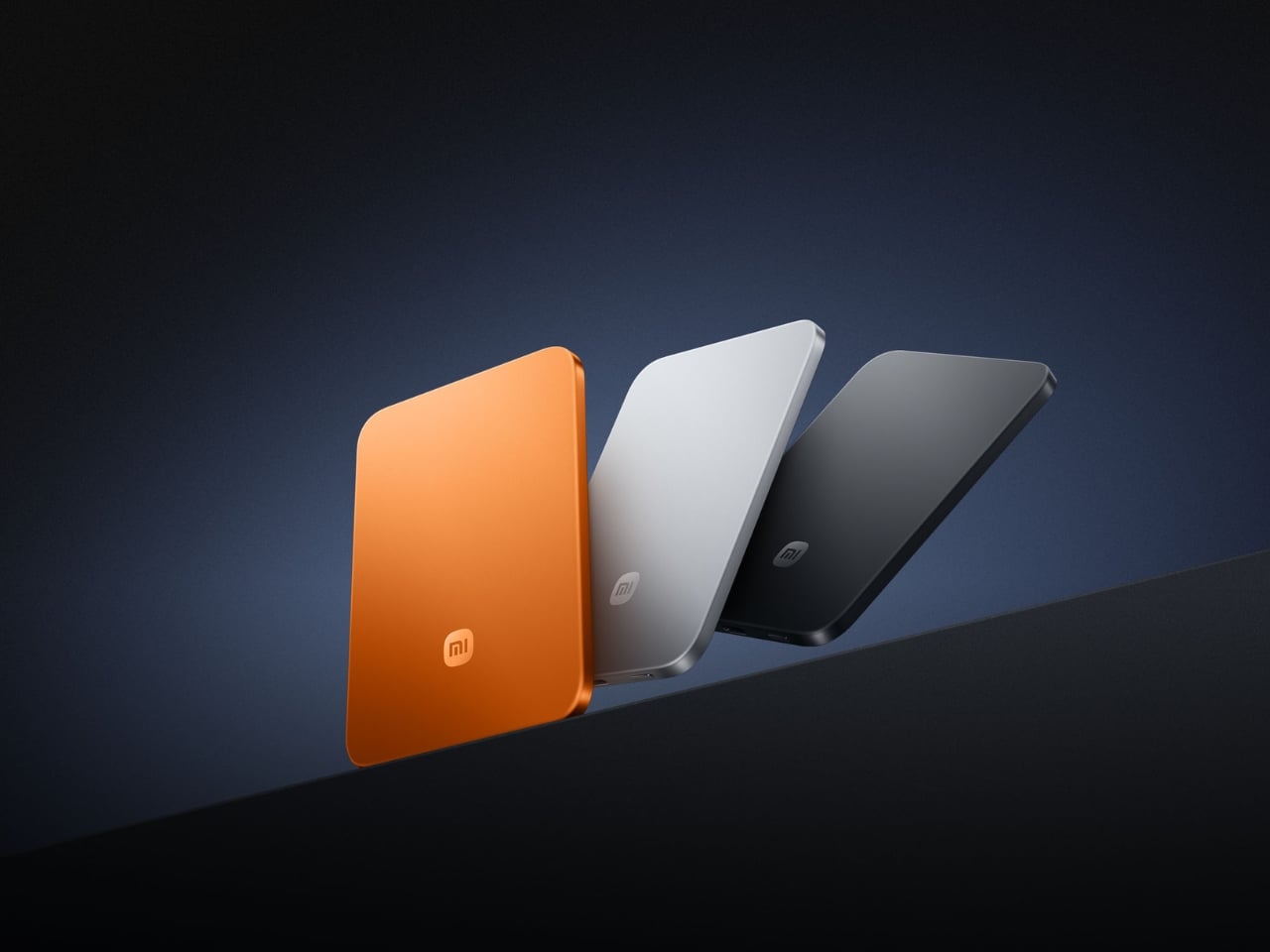
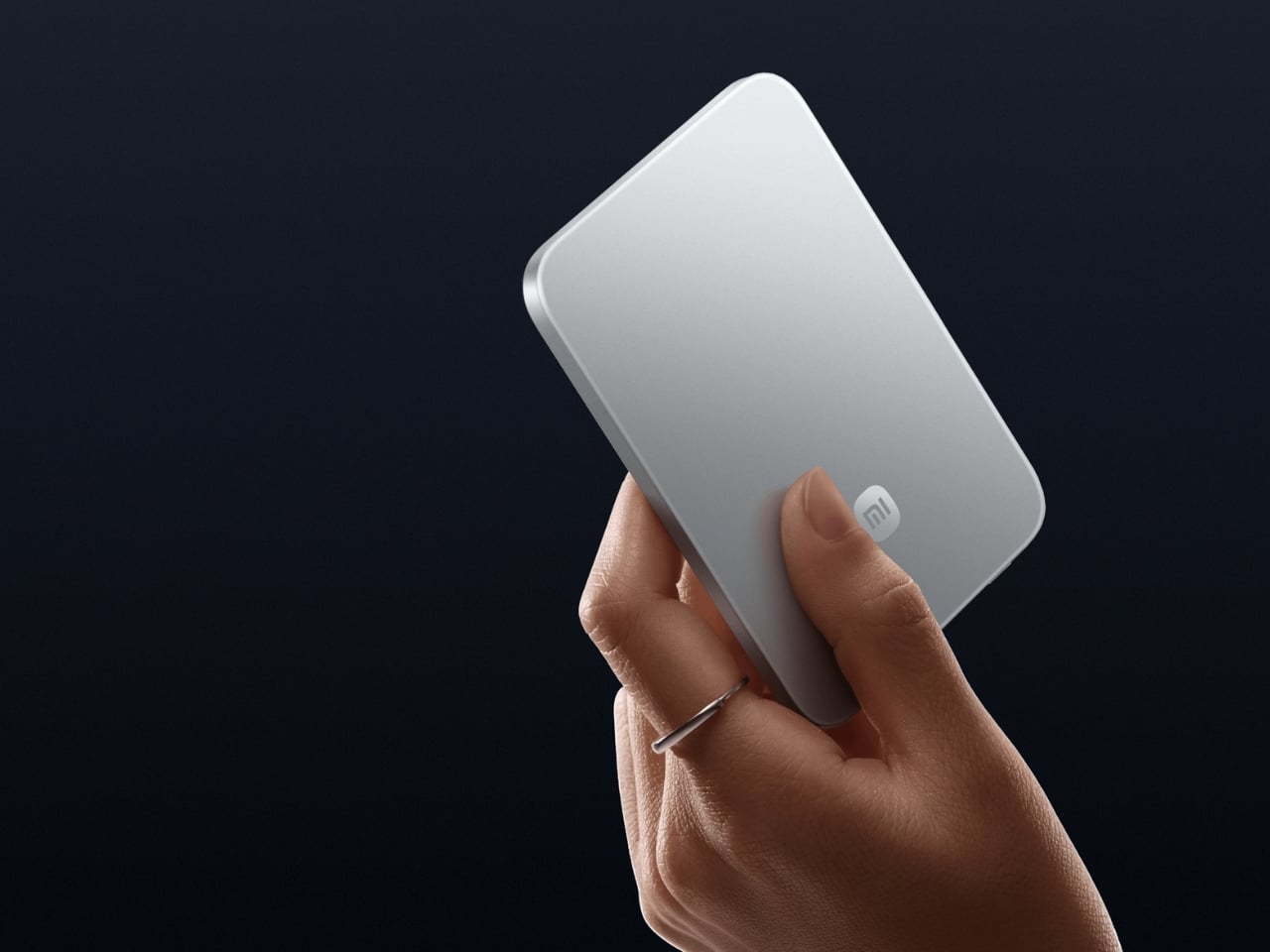
Power banks have had a design problem since the category was invented. They are essential and clunky in equal measure, reliable and bulky in the same breath. Xiaomi’s UltraThin Magnetic Power Bank 5000 starts with an answer at 6mm — thinner than most smartphones currently shipping. The aluminum alloy shell comes in Glacier Silver, Graphite Black, and Radiant Orange, each finished with a photolithographically etched logo. At 98 grams, it weighs less than two eggs and carries like nothing at all.

The engineering behind that form is silicon-carbon battery chemistry with 16% silicon content, enabling the energy density to fit 5,000mAh into a body this slim. It supports 15W wireless charging for compatible Android devices, 7.5W for iPhone, and 22.5W wired via USB-C, with two devices chargeable simultaneously while being recharged itself. Showcased at MWC 2026 in Barcelona, this is the first power bank in the category that genuinely does not feel like a concession made to the carrying requirement.

What We Like

  • At 6mm and 98 grams, it is the most pocket-friendly 5,000mAh power bank available — effectively weightless in daily carry
  • Silicon-carbon battery chemistry delivers the full 5,000mAh capacity without any dimensional sacrifice

What We Dislike

  • Wireless charging for iPhone is capped at 7.5W, noticeably below dedicated MagSafe speeds
  • 5,000mAh suits phones and earbuds well, but will not meaningfully extend a laptop’s runtime in a pinch

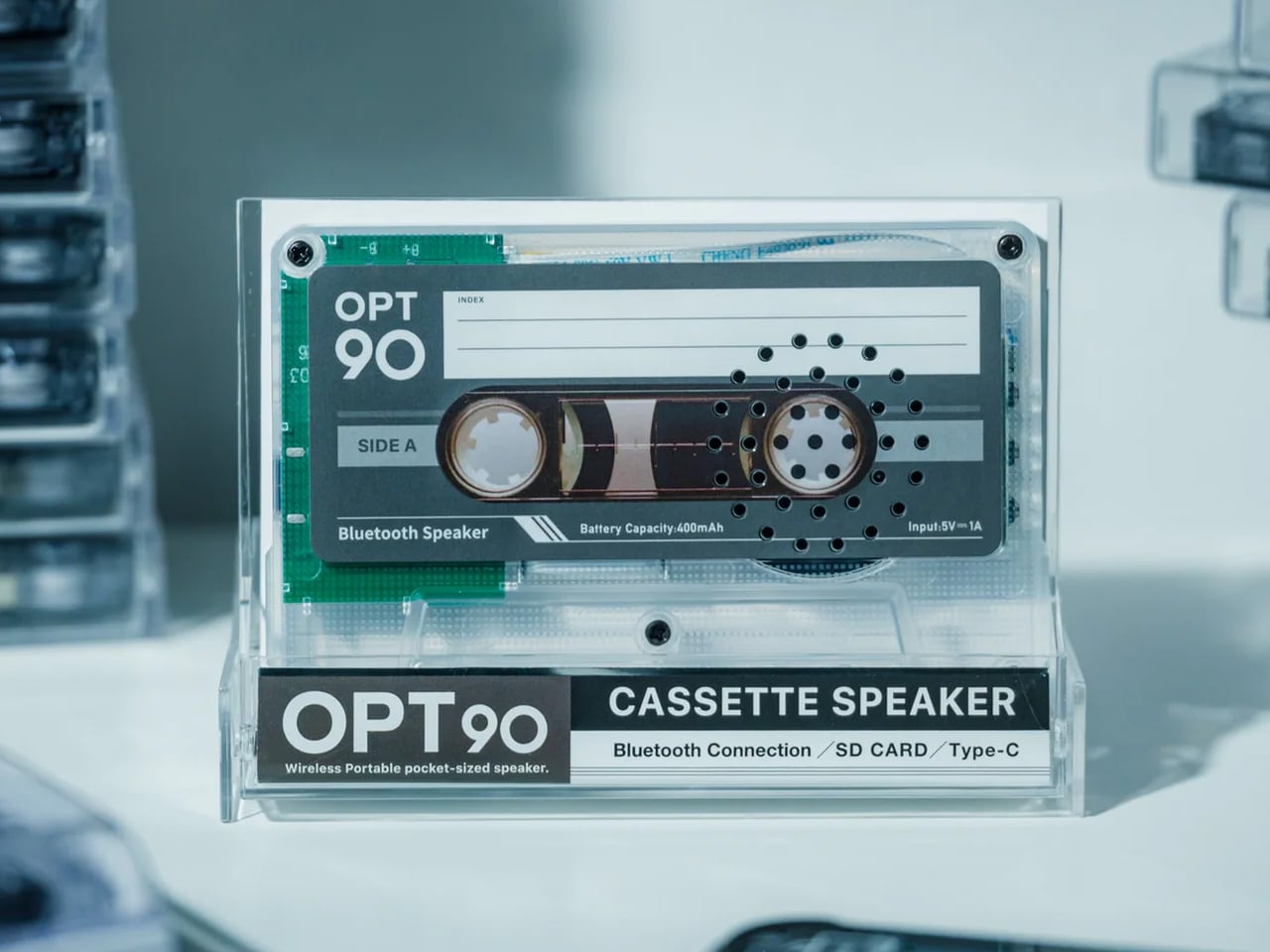
7. Side A Cassette Speaker

Music changes a workspace, even when the workspace is a shared lounge in Chiang Mai or a rented desk in a Lisbon co-working building. The Side A Cassette Speaker earns its bag space through character as much as function. Roughly the size of an actual cassette tape, it runs Bluetooth 5.3 with microSD support for offline playback when the Wi-Fi situation is characteristically unreliable. The clear shell and cassette label make it the kind of object people ask about across café tables.

The protective case doubles as a stand, keeping the speaker elevated and projecting properly on any flat surface. The warm, analog-tuned sound suits morning background music in a temporary apartment and wind-down playlists after a long day of client calls in equal measure. It is light enough to forget it is in the bag and distinctive enough to feel worth carrying. Among the ten products on this list, it is the one most likely to start a conversation at the desk next to yours.

Click Here to Buy Now: $49.00

What We Like

  • Palm-sized form with a case that doubles as a stand makes it the most packable speaker in its class
  • microSD support enables offline playback even when connectivity is completely absent

What We Dislike

  • No built-in microphone means it does not support speakerphone calls or group video conferencing
  • Volume ceiling suits personal and small-room listening, but will not carry in outdoor or open-plan group settings

8. Medispace

The ten-minute gap between back-to-back video calls is rarely used well. Most nomads fill it with email or a phone scroll — the cognitive equivalent of eating fast food between meetings. Medispace is a concept designed by Suosi Design, inspired by Himalayan singing bowls. It simulates more than ten types of bowl sound changes through a metal disc on the top surface, and houses noise-canceling earbuds inside its body, stored in what functions as an integrated case. The whole device fits in a palm.

The gesture of using it — tapping and touching the metal disc to trigger sound — mirrors the physical ritual of the Tibetan instruments it references. For nomads managing cognitive load across multiple time zones, the design makes a case for deliberate ten-minute resets between work blocks as a productivity strategy rather than a distraction. Medispace is currently a concept, and not yet in commercial production, but as an object that understands where sustained focus actually comes from, it belongs in this conversation.

What We Like

  • The singing bowl interaction model turns a between-meeting break into a deliberate reset rather than a passive phone scroll
  • Earbuds nested inside the device create a complete self-contained system that functions as both a case and a meditation prompt

What We Dislike

  • Medispace is a concept and is not currently available as a production product
  • Effectiveness as a focus tool depends on the user’s willingness to actually stop and use it during real work sessions

9. Orbitkey Desk Mat Slim

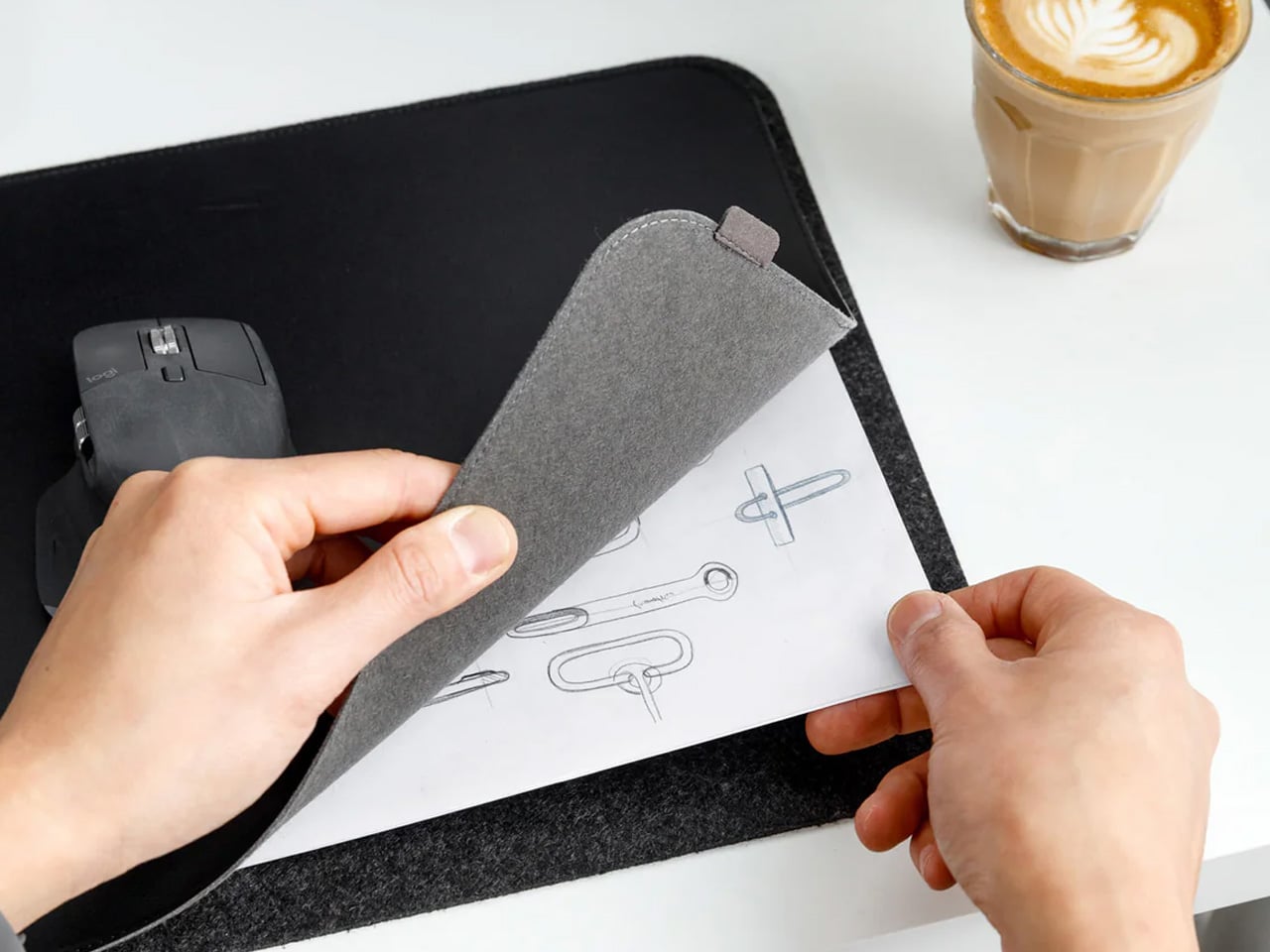
The working surface in a co-working space or hotel room is rarely clean, rarely the right size, and rarely yours. The Orbitkey Desk Mat Slim claims it anyway. Made from premium vegan leather on top and 100% recycled PET felt underneath, it lies flat, stays planted via an anti-slip backing, and turns whatever surface it lands on into a proper workspace. A magnetic cable holder keeps charging cables from drifting to the edge. A slim document pocket along the front holds papers out of sight.

For nomads who set up and break down a working surface daily, this mat compresses the ritual into a single unrolling action. Everything that belongs on the desk goes on the mat. When it is time to move, it rolls tight and fits inside a laptop sleeve or along the flat edge of a backpack. The vegan leather ages without cracking, the recycled PET felt resists compression over time, and the restrained design works equally well in a client-facing meeting room or a hostel common area.

What We Like

  • The document pocket reduces visible surface clutter without adding bulk or requiring a separate organizer
  • Rolls tightly enough to travel inside most laptop sleeves without claiming dedicated bag space

What We Dislike

  • The slim format may feel narrow for users running wide multi-monitor setups who want full horizontal coverage
  • The magnetic cable holder manages a small cable count cleanly, but becomes less effective in heavily wired configurations

10. Timekettle W4 AI Interpreter Earbuds

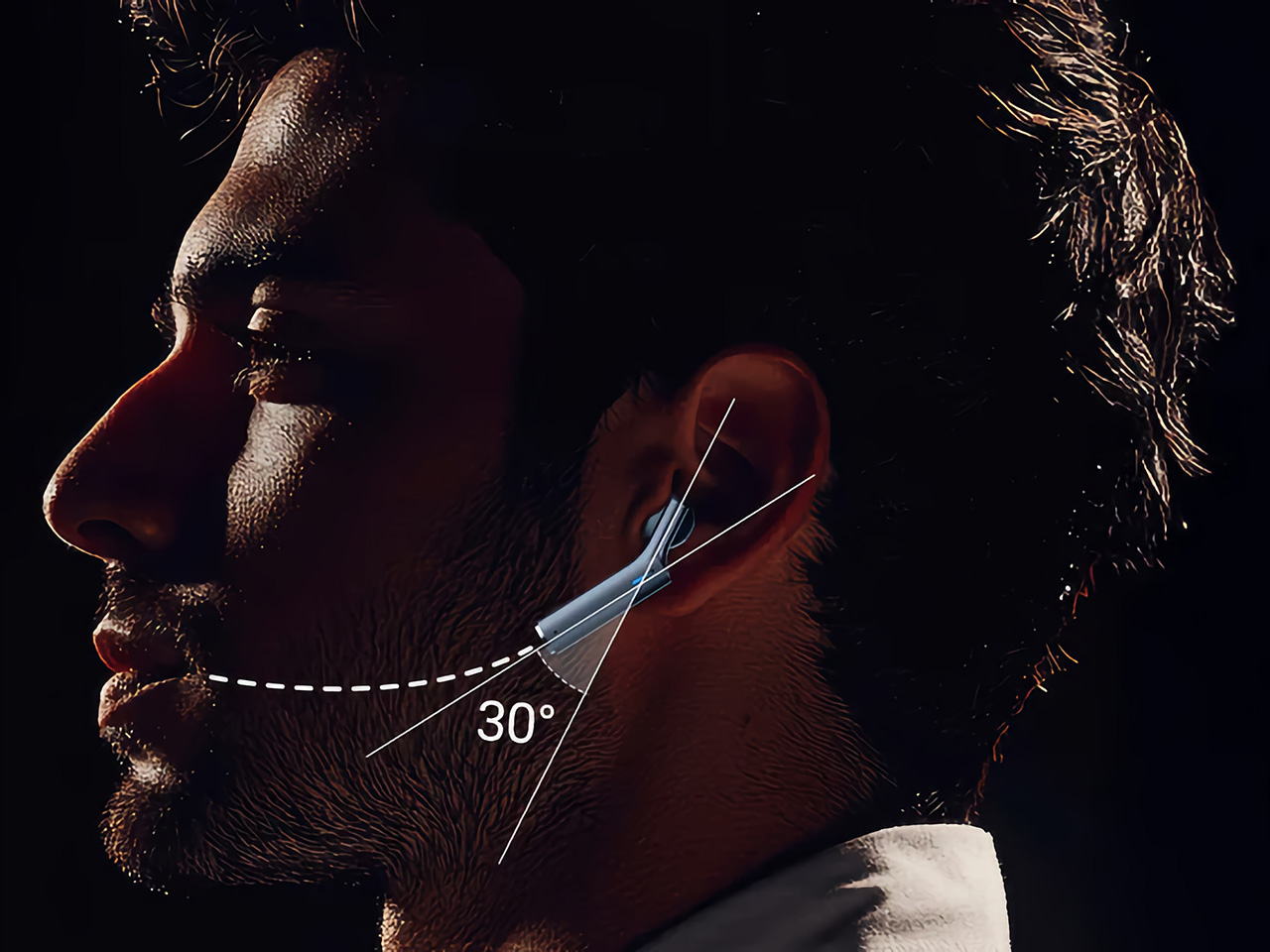
Language is the friction point that no amount of productivity hardware addresses. Client calls in Tokyo, supplier negotiations in Milan, co-working introductions in Mexico City — the moment a conversation requires a translation app, the professional register of the interaction collapses entirely. The Timekettle W4 treats this as a design problem worth solving properly: real-time two-way translation across 43 languages and 96 accents, with 98% accuracy and a 0.2-second lag that keeps conversation moving rather than stopping it between sentences.

The Bone-voiceprint sensor picks up speech through vibrations rather than ambient microphone capture, which means background noise from a conference hall or a busy co-working café stops interfering with the translation input. Share an earbud with a counterpart, speak naturally, and the Babel OS engine handles the rest. Four hours of continuous translation per charge extends to ten with the case. For nomads managing international client relationships from a carry-on, this closes the gap between understanding the meeting and merely attending it.

What We Like

  • Bone-voiceprint sensor isolates speech from background noise in loud environments where microphone-based translation fails
  • A 0.2-second translation lag keeps conversation genuinely natural rather than halting it into a sequence of pauses

What We Dislike

  • At $331.55, this is a professional investment rather than a casual travel accessory — positioned and priced accordingly
  • Four hours of continuous translation per charge requires active battery management across a full day of back-to-back meetings

The Desk You Build Is Better Than the One You’re Given

Every product on this list addresses a different layer of the same problem: making a temporary surface in a foreign city perform as well as a setup you designed yourself. The hub covers ports. The monitor covers screen real estate. The mat claims the surface. The translation earbuds cover language. The mouse, headphones, power bank, speaker, and pouch handle the frictions that accumulate quietly across a hundred working days in rooms that were never designed for serious output.

The nomadic workstation is personal by necessity — built piece by piece through the kind of deliberate editing that only comes from actually doing the work on the road. These ten products survive that edit. None of them announces themselves. Each one earns its bag space through what it changes about the day: fewer compromises, faster setups, cleaner surfaces, and the quiet confidence of arriving somewhere new and knowing the work will get done.

The post 10 Genuis Gadgets That Turn Any Hotel Desk Into a Proper Workstation in 2026 first appeared on Yanko Design.
8 Memorial Day Weekend Gadgets for the Man Who’d Rather Be Outside

The campsite is not a compromise. For a certain kind of person, the space between the trees gets the same deliberate attention as a living room — gear chosen for how it looks before dawn and how it performs after midnight. Memorial Day weekend is the season’s first real test of that instinct. These eight products are for the man who sets up camp with the same consideration he’d give a well-arranged shelf.

None of these are impulse buys. They’re the objects that earn a permanent spot in the pack — things you reach for every trip, not things that get forgotten in the garage. The sequence here runs from what you carry in your pocket, a titanium cylinder that glows for a quarter century without a battery, to what you use to cut the final rope of the night. A full campsite, deliberately assembled.

1. NoxTi

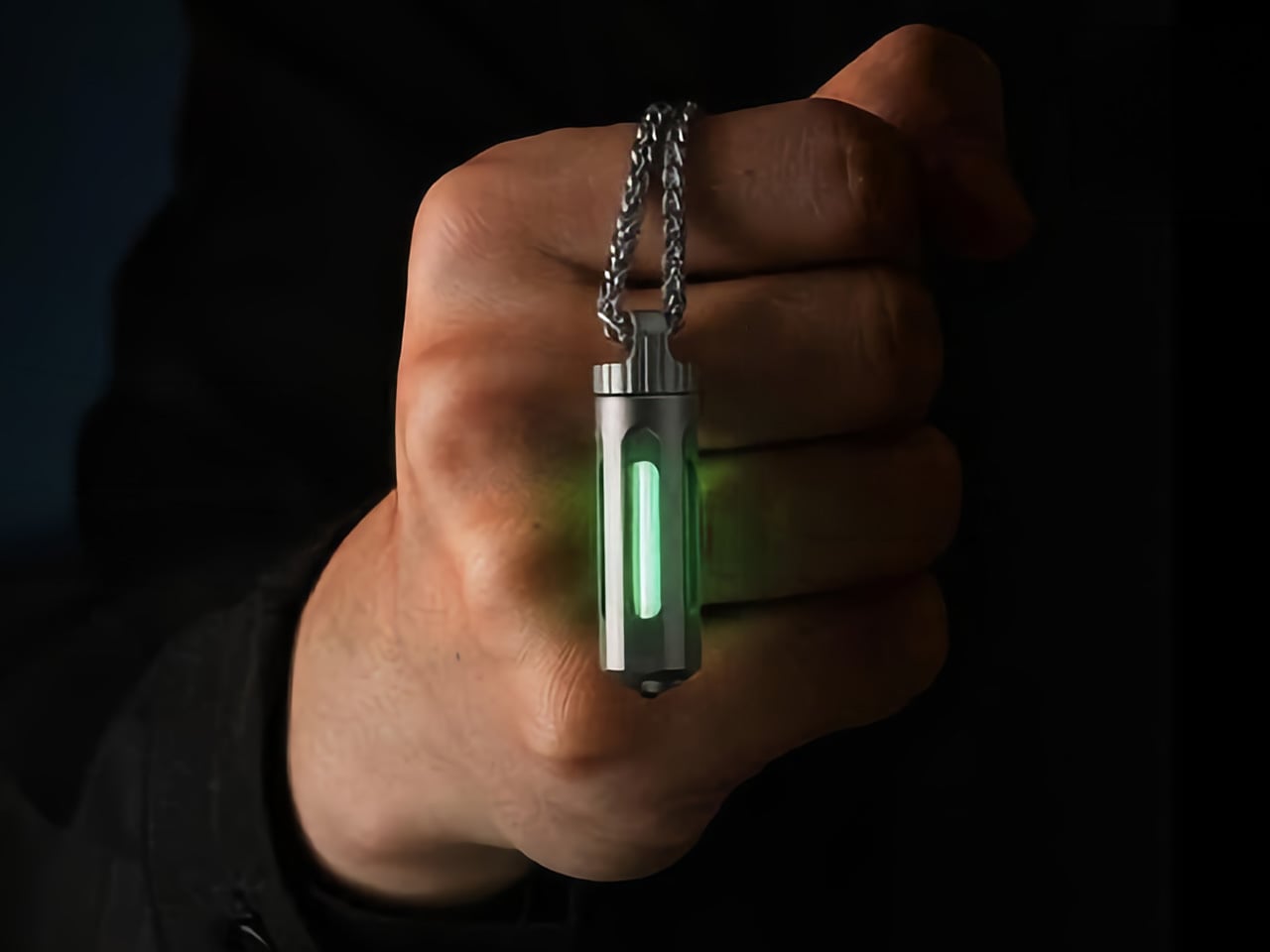
The NoxTi is a 45mm titanium cylinder that glows in the dark for 25 years without a battery, a charge, or any maintenance beyond replacing the tritium vial when it eventually dims two decades from now. The physics are not LED and not phosphorescent. Tritium is a radioactive isotope whose decay generates light continuously — the same principle behind military watch lume and nuclear exit signs. Xedge has machined this process into something that lives on your keychain.

The body is Grade 5 titanium — Ti-6Al-4V, the aerospace alloy — CNC-machined to tight tolerances with two silicone O-rings securing a quartz-protected vial that transmits 92% of available light. A ceramic-tipped glass breaker sits at one end. At 10.7 grams, it registers on the keychain the way a quality key does: present but not intrusive. Six color options run from Ice Blue to Sunset Orange. At camp, it tells you exactly where your keys are without reaching for your phone. That is the entire point.

What We Like:

  • Twenty-five years of continuous glow with zero batteries is a design achievement no other consumer lighting product can match
  • CNC-machined Grade 5 titanium with a field-replaceable vial system makes this effectively a permanent carry object
  • Six colorway options mean it reads as a design choice, not a utility clip

What We Dislike:

  • The glow is intentionally faint — it’s an orientation tool, not a navigation light, and expecting it to illuminate a path is a misreading of what it is

2. RetroWave 7-in-1 Radio

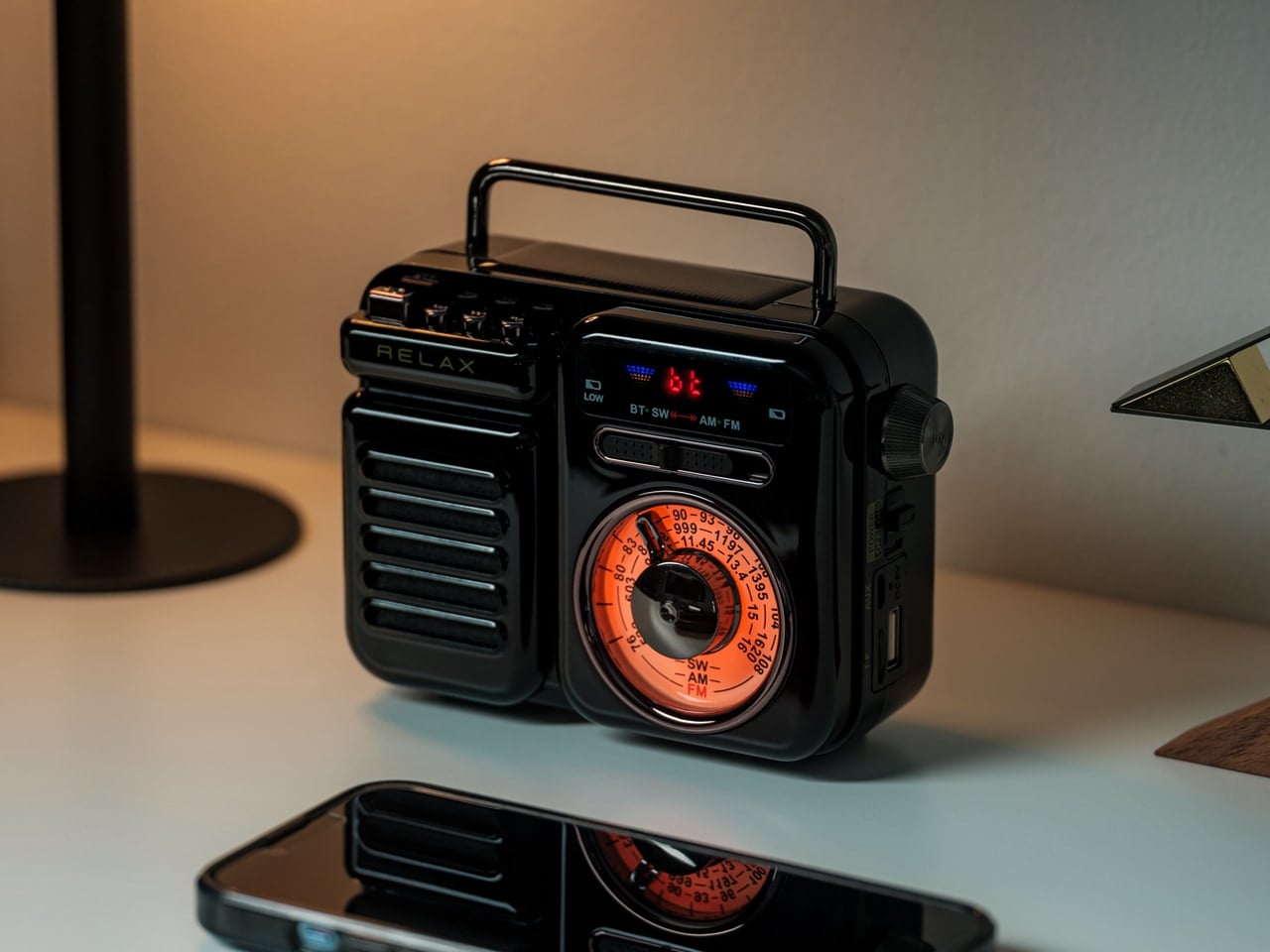
The RetroWave is seven things in one body: AM/FM/NOAA weather radio, Bluetooth speaker, USB charger, flashlight, reading lamp, SOS beacon, and clock. What makes it relevant for this list isn’t the feature count — it’s the form. The body is warm, compact, and tactile in a way that most multi-function gadgets simply aren’t. It looks like something discovered in a well-curated mountain cabin rather than panic-bought before a storm. That quality of looking chosen rather than grabbed is the distinction that matters here.

The hand-crank and solar charging panel mean the RetroWave can generate its own power, shifting it from a convenience item to a genuine piece of off-grid infrastructure. Up to 20 hours of radio playback on a full charge gives you a real entertainment window across the whole weekend. At $89, it sits at exactly the right price for a camp staple — the kind of thing that earns a permanent place in the bag because removing it would feel like forgetting something essential.

Click Here to Buy Now: $89.00

What We Like:

  • Hand-crank and solar charging make this fully self-sufficient — no cables, no wall outlet, no dependency on a power bank that itself needs charging
  • The warm retro form makes it the one piece of gear on the table that reads as a design decision rather than a utility purchase
  • NOAA weather radio is genuinely useful emergency infrastructure, not a gimmick

What We Dislike:

  • The Bluetooth speaker is functional, but won’t satisfy audiophiles

3. Haven Spectre

The Haven Spectre solves the problem every hammock sleeper knows: the banana curve. Traditional hammocks fold your body into a shape your lumbar tolerates for an hour and resents for the rest of the trip. The Spectre uses carbon fiber spreader bars and Monolite mesh panels to hold you flat — the same sleep position as a proper bed, suspended between two trees. At 4 pounds 4 ounces for the full kit, it’s lighter than most sleeping bags at a fraction of the pack footprint.

The Spectre includes a Silpoly rainfly, interior mesh pockets, an internal ridgeline for hanging gear, and an external sling for footwear. The mesh walls give you a full 360-degree view of wherever you’ve camped, which is either the point or not — the Spectre doesn’t decide that for you. Haven prices this from $485 with a 285-pound weight capacity and a packed size of 16 by 7 by 5 inches. For the man who considers where he sleeps as carefully as where he sits, this is the right answer to the right question.

What We Like:

  • Carbon fiber spreader bars deliver a genuinely flat sleep position that no conventional hammock can replicate — this is the difference between sleeping in a hammock and sleeping on one
  • The full kit, coming in under 4.5 pounds, is a meaningful spec for anyone packing in on foot
  • 360-degree mesh walls make wherever you camp feel worth waking up inside

What We Dislike:

  • From $485, this is the most expensive item on the list and reflects a very specific solution to a very specific problem — it’s not the entry point for casual hammock camping
  • Setup requires two trees at appropriate spacing, which means the terrain selects you as much as you select it

4. All-in-One Grill

The All-in-One Grill is made in Japan from stainless steel, and it carries that origin in its proportions. This is not a portable grill that apologizes for being portable — the construction is taut, the lines are clean, and the 11.8-inch base feels proportioned rather than compromised. It functions as a grill, a pot, and a smoker through a modular lid system, which means the same object that handles your morning eggs can be doing low-and-slow work by mid-afternoon. That’s a significant range for one piece of equipment.

At $449, this is the investment piece of the list, and it earns that position through longevity rather than novelty. Stainless steel built to Japanese manufacturing standards doesn’t warp, doesn’t corrode, and doesn’t develop the hot spots that ruin cheaper grills after a single season. The thick plate grill net and included pot lid for steaming and smoking mean you’re not returning for accessories down the line. Compact enough for a car boot, deliberate enough for a kitchen shelf once camping season ends.

Click Here to Buy Now: $449

What We Like:

  • Three distinct cooking modes — grilling, pot cooking, and smoking — from a single compact body is the kind of functional intelligence that makes you question why other portable grills are built the way they are
  • Japanese stainless steel construction is built for decades of use, not seasons
  • The proportions are clean enough that this sits on a kitchen counter without embarrassment when camping season ends

What We Dislike:

  • The compact dimensions are ideal for two; feeding a larger group requires patience between rounds and a considered approach to sequencing what cooks when

5. Olight Baton 4

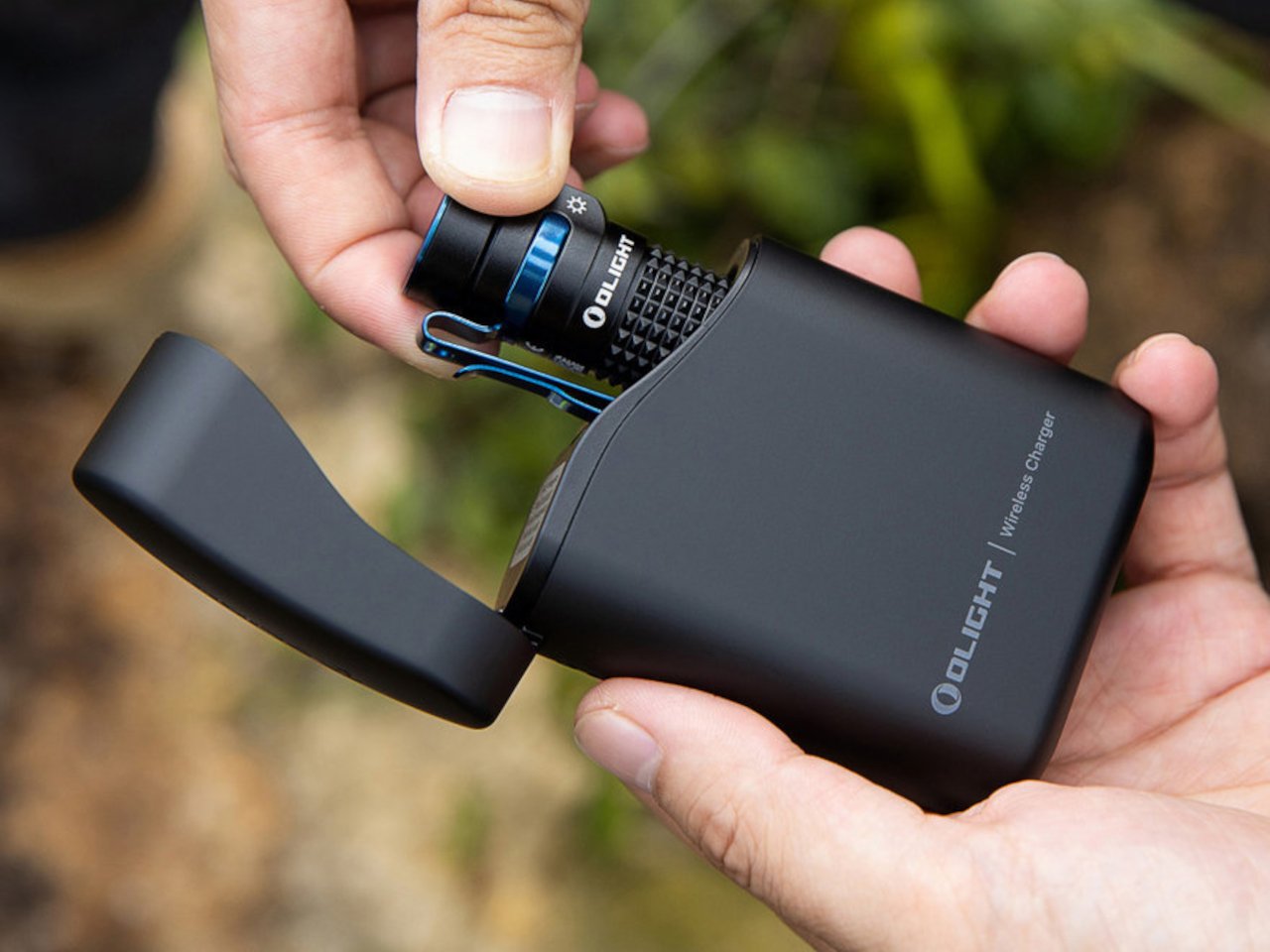
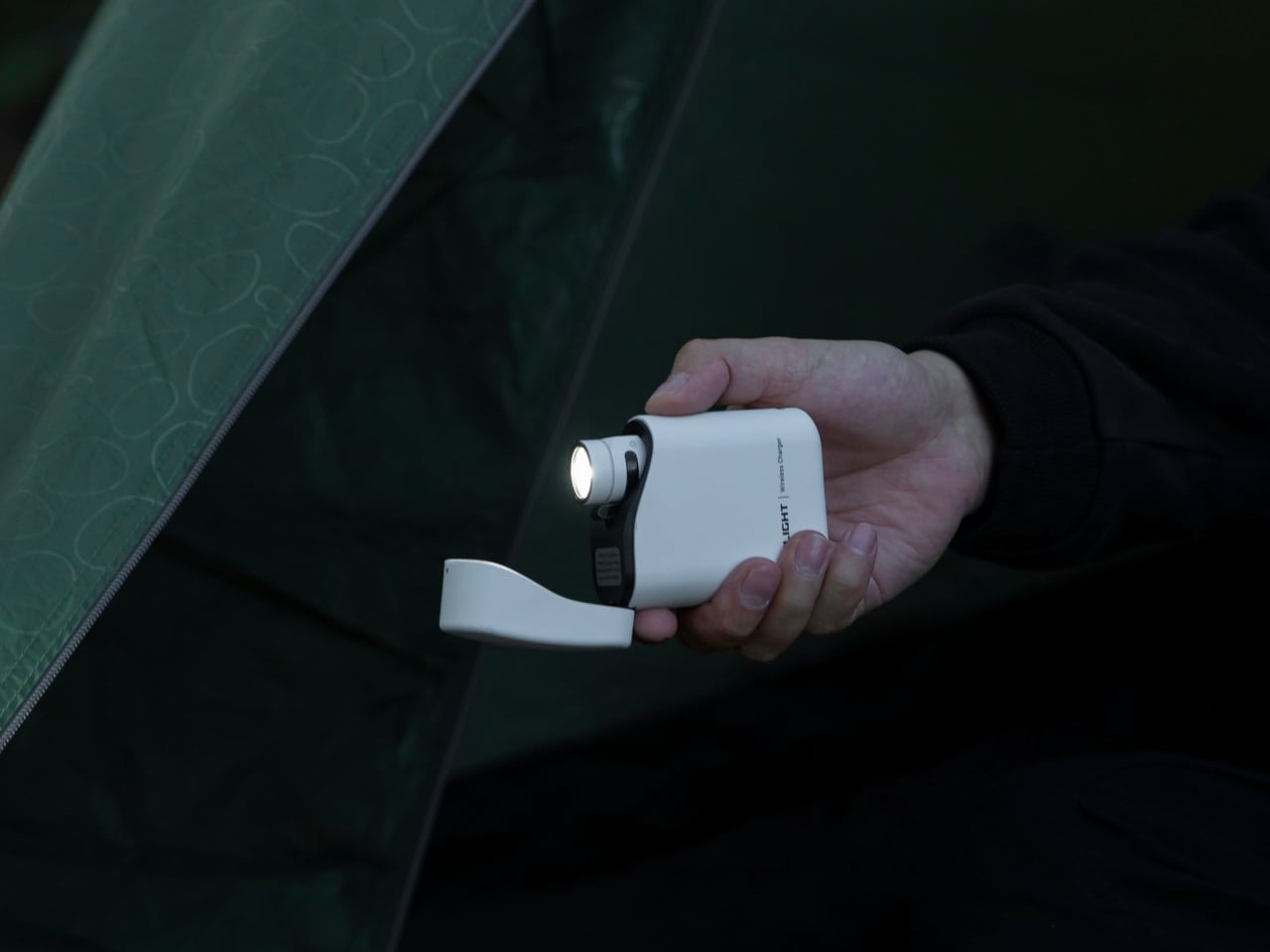
The campsite flashlight is the object most people under-invest in, and the one they most regret the moment the sun drops. The Olight Baton 4 is the correction to that habit. At 1,300 lumens from a body not much larger than a lighter, it puts out more light than most people realize is possible at this price. The magnetic charging case doubles as a 5,000mAh power bank, meaning the Baton arrives at the campsite charged and stays that way across the full weekend without drama.

What earns the Baton 4 its place here over cheaper alternatives is Olight’s attention to the carry experience. The clip sits deep in the pocket, the button has a deliberate texture that works with gloves, and the machined body feels significantly more expensive than $54.99. Five brightness modes cover everything from reading in a tent to lighting a path fifty meters out in total darkness. It disappears into your pocket until the moment it becomes the most important thing at your site.

What We Like:

  • 1,300 lumens from a body small enough to forget about until needed is a remarkable engineering result at this price
  • The charging case solving two problems — storage and backup power — with one purchase is exactly the kind of design thinking that creates long-term loyalty
  • Five brightness modes mean the Baton handles reading light and trail light from the same pocket object

What We Dislike:

  • The charging case adds bulk that doesn’t sit comfortably alongside the light in a single pocket — you carry them separately or leave the case in the bag
  • USB-C charging is reserved for the newer Pro model; the base Baton 4 uses a proprietary magnetic connector

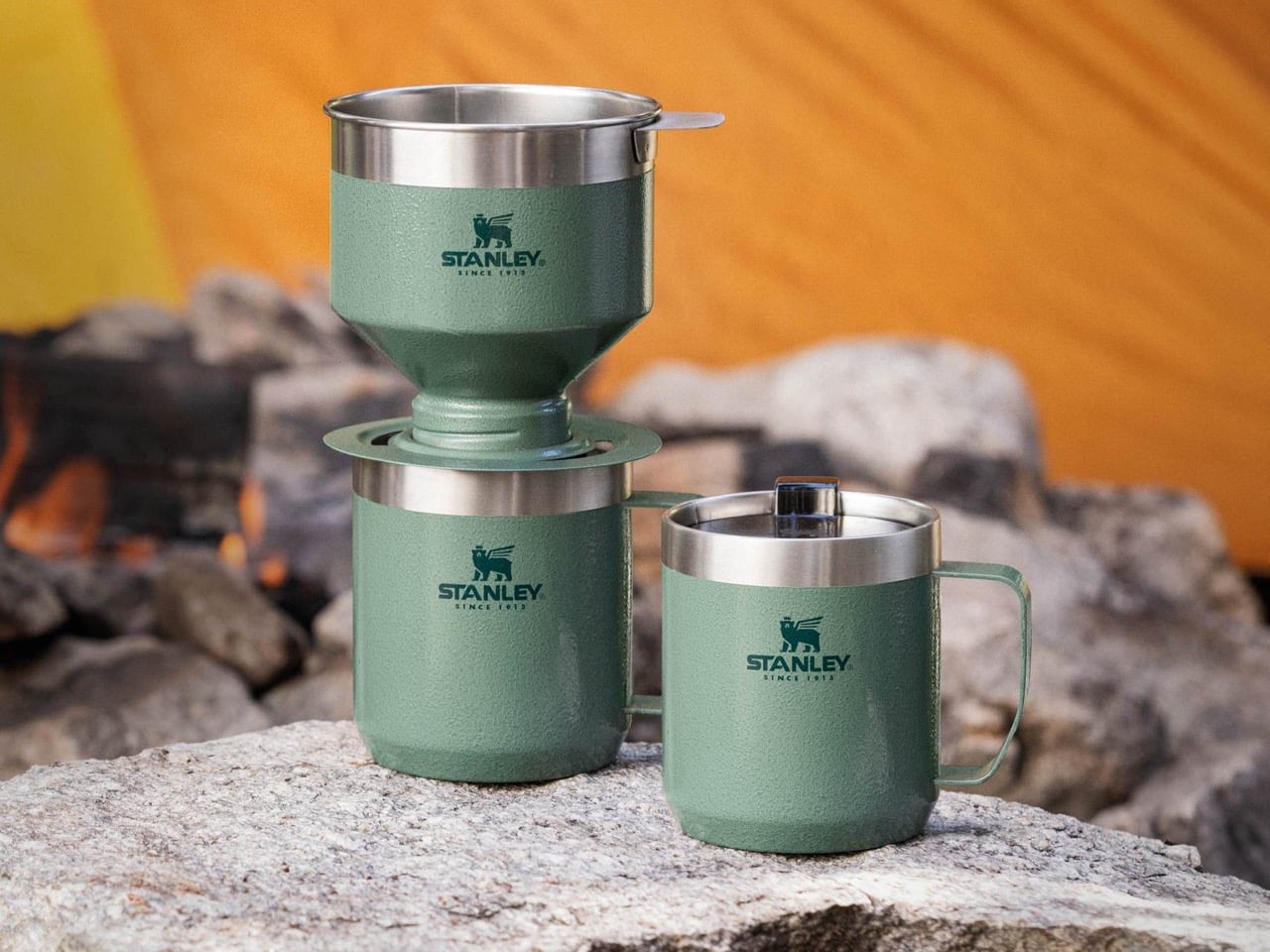
6. Stanley Perfect Pour Over Brew Set

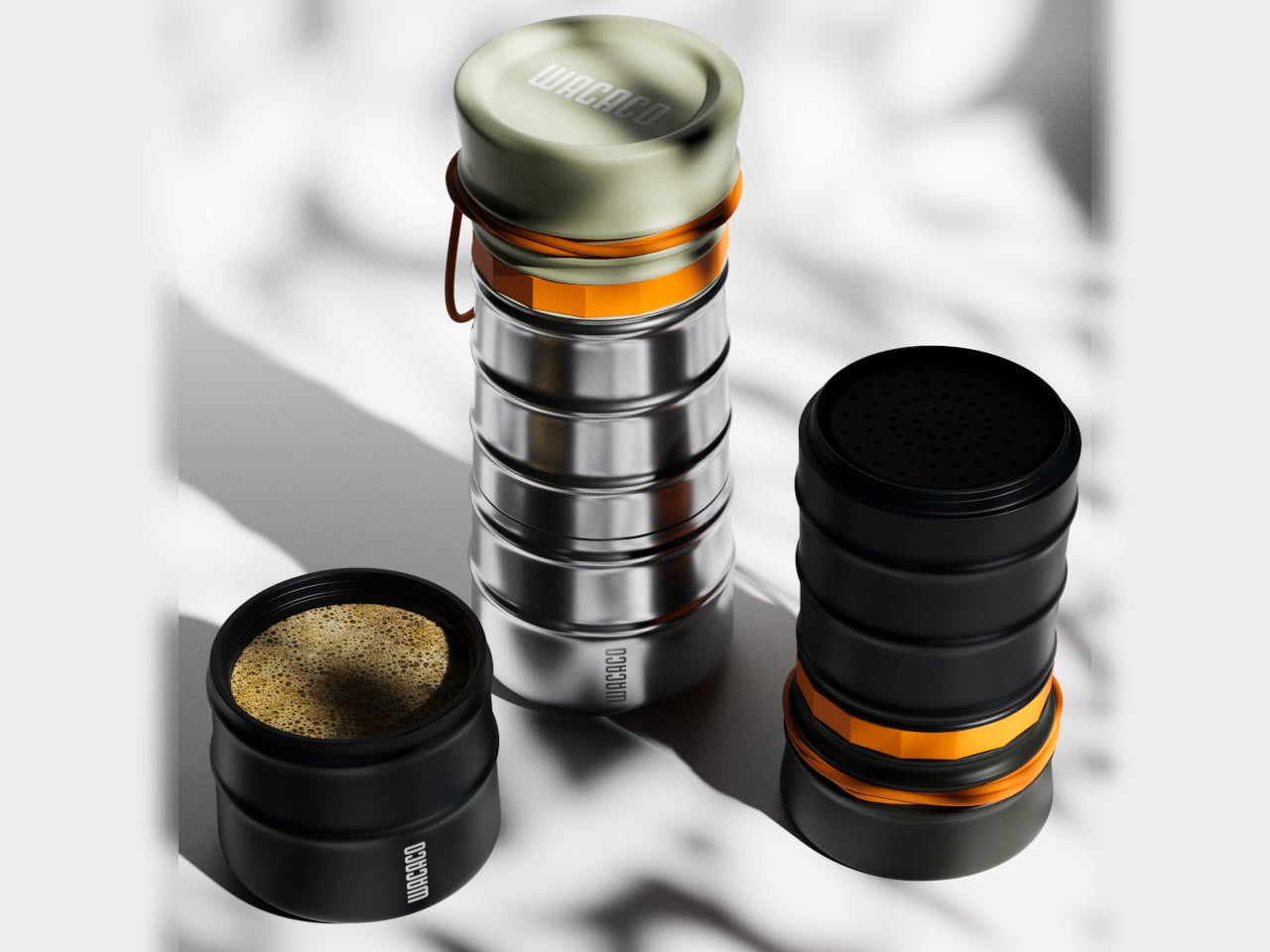
The Pour Over Brew Set strips the morning ritual down to its essentials: a stainless steel cone filter, a cup base that doubles as your vessel, and nothing disposable. No paper filters, no waste, no fragile glass sitting at risk on a folding table. You grind your beans, pour your water, and the coffee lands in a Stanley cup ready for the day. The whole thing stacks into itself, making it one of the most compact brewing systems available for outdoor use.

What separates this from the sea of portable coffee gadgets is Stanley’s refusal to compromise the cup. The base isn’t an afterthought — it’s the same vacuum-insulated construction as the tumblers the brand built its reputation on. Your coffee stays genuinely hot for hours, which matters less at a kitchen counter and considerably more at a campsite at 6 am with the temperature still in the low thirties. At $79.99, it’s one of the most honest objects on this list: built to last, built to be used every single morning.

What We Like:

  • The metal cone filter eliminates disposables — no paper filters, no emergency store runs mid-trip
  • The vacuum-insulated base keeps coffee hot well past the pour, which at altitude and in cold morning air is less a luxury than a necessity
  • The whole system stacks into itself with nothing left over — it’s one of the tidiest pack-and-go brewing solutions available

What We Dislike:

  • This is a single-cup system — group camping requires multiple sequential pours, and the output speed depends heavily on grind size, which takes some practice to dial in correctly
  • It’s a ritual for one, not a breakfast solution for four

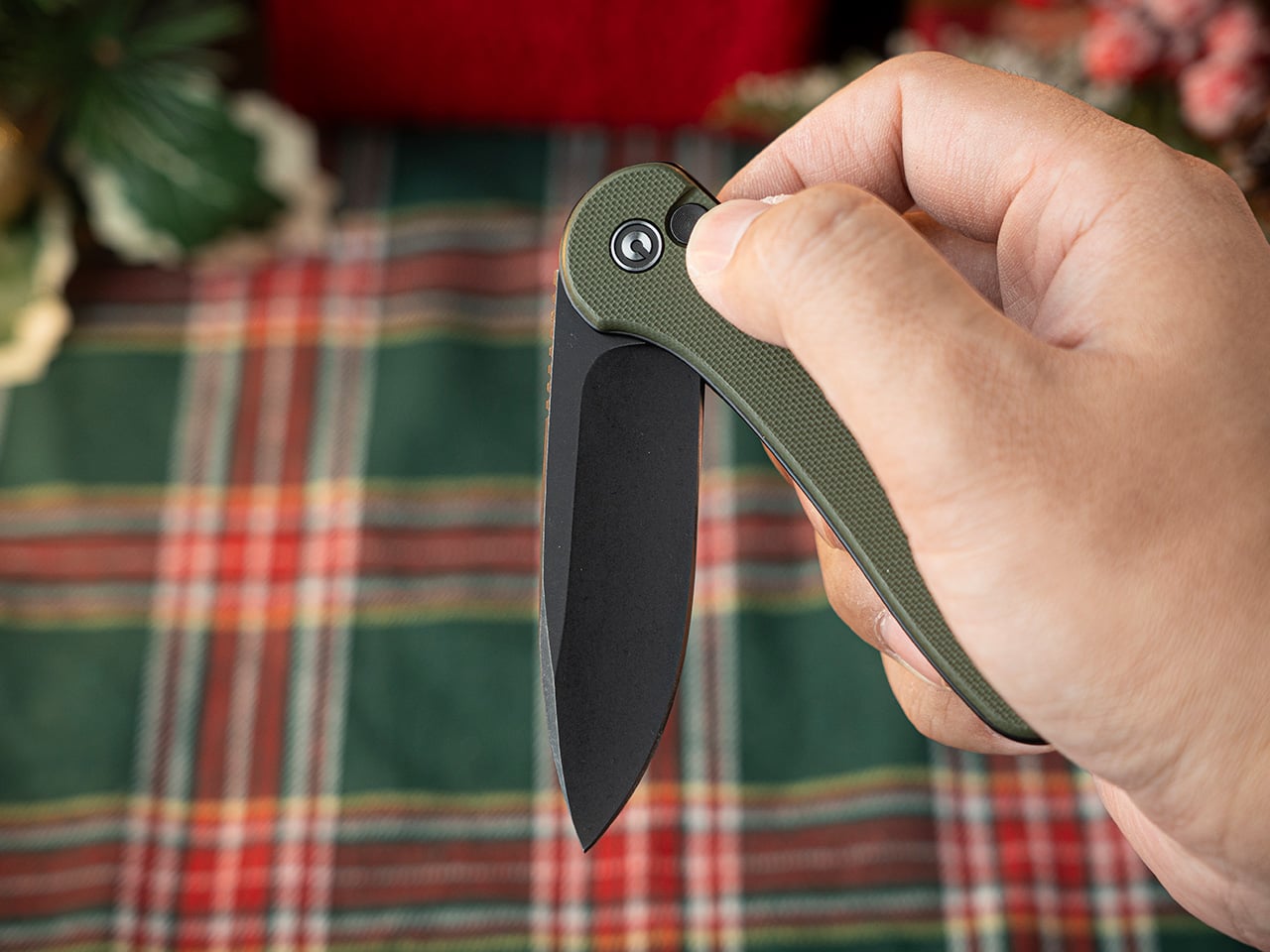
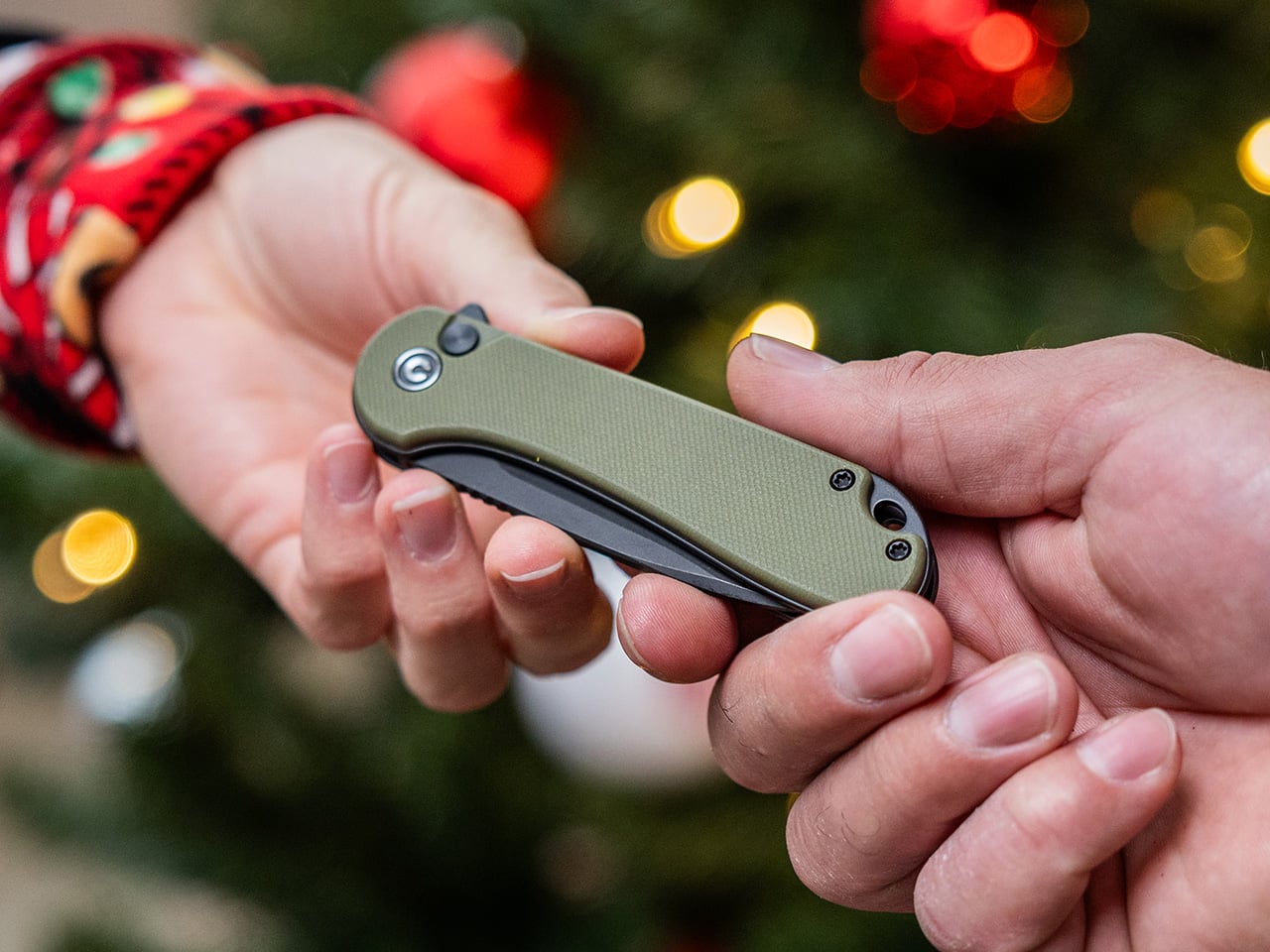
7. CIVIVI Button Lock Elementum II

A camp knife earns its place not through drama but through frequency: the rope that needs cutting, the package that won’t open, the branch that wants trimming. The Elementum II handles all of that without demanding attention. At 3.12 ounces with a 3-inch Nitro-V steel blade, it carries like it isn’t there until the moment you need it. The button lock opens single-handed — a detail that sounds minor until you’re holding something else with the other hand.

CIVIVI’s design language is where this knife punches well above its price point. The G10 handle scales sit flush against titanium-anodized liners, and the overall profile is lean enough to disappear in a front pocket without printing. Nitro-V holds an edge longer than the VG-10 steel found in knives twice the cost.

What We Like:

  • The button lock deploys cleanly one-handed every time, and the deep-carry clip keeps the knife invisible in a pocket without shifting during a full day of activity
  • Nitro-V edge retention is genuinely better than anything in this price bracket has any right to deliver
  • The slim profile and anodized liner finish make this look like a $150 knife in hand

What We Dislike:

  • At 3 inches, the blade sits at the shorter end for heavier camp tasks — batoning or breaking down larger cuts of food will show its limits quickly
  • G10 color options are conservative for a knife that otherwise looks this considered

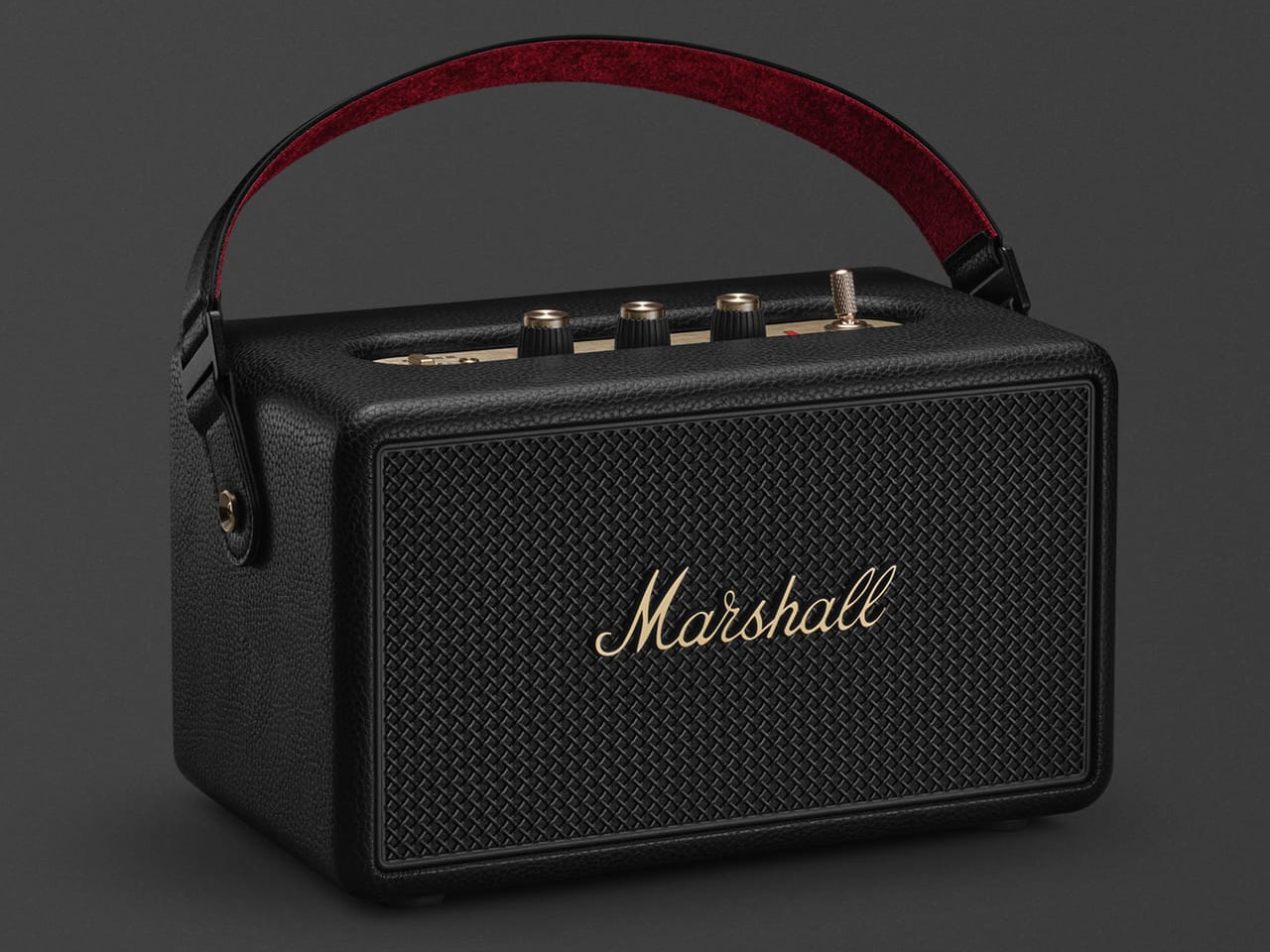
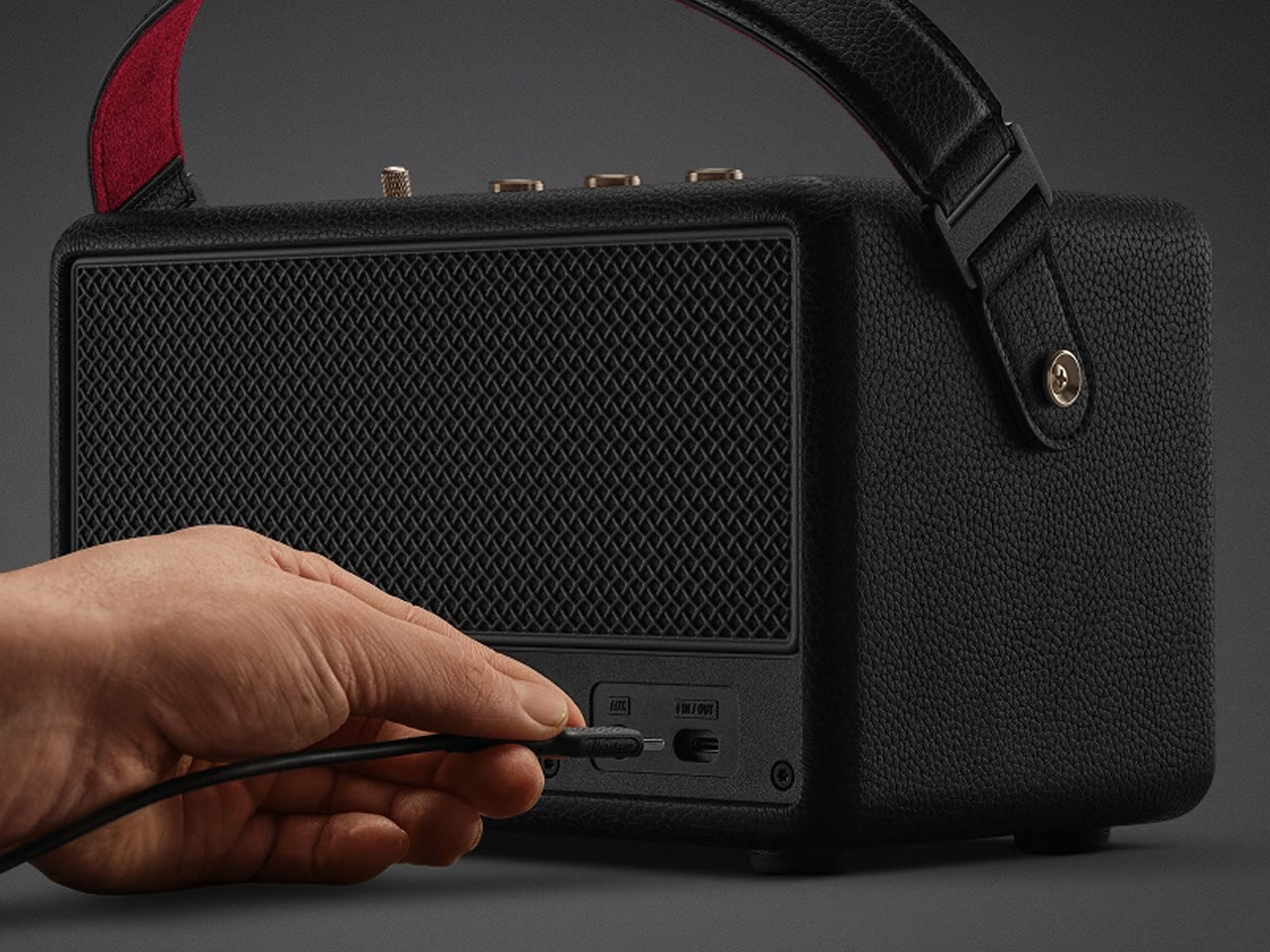
8. Marshall Kilburn III

The Kilburn III is what happens when a speaker brand takes outdoor audio seriously without abandoning the aesthetic identity that made it recognizable. The guitar amp proportions, the gold script logo, the herringbone strap — these aren’t cosmetic decisions bolted onto a utility product. They’re what make the Kilburn the speaker people leave sitting on the picnic table rather than packing back into a bag. At 40 hours of battery life, you don’t need to manage it across a long weekend. It simply plays.

Where the RetroWave Radio earns its place through versatility, seven functions, self-sufficient power, and emergency utility, the Kilburn earns its place through one thing done exceptionally well. If music is the reason you’re packing a speaker at all, this is the one that justifies the weight. The Kilburn III adds reverse charging to its feature set, meaning it can top up your phone or flashlight from its own battery, a practical outdoor function that speakers at this price point rarely bother to include. The sound is tuned for open space rather than indoor rooms: the wider the environment, the more the Kilburn opens up and fills it.

What We Like:

  • Forty hours of battery across a weekend means you set it down Friday afternoon and don’t think about charging it until Monday
  • Reverse charging turns the speaker into backup power for other gear — a thoughtful outdoor feature that makes the price easier to justify
  • The design holds up on a picnic table the way it does on a shelf — it looks like it belongs wherever you put it

What We Dislike:

  • At 2.6 kilograms, the Kilburn III is a car-camping speaker — backpackers need not apply
  • The $379.99 price demands a committed relationship with good outdoor audio; this is not the speaker you buy casually

Pack Well, Camp Better

The best campsite doesn’t happen by accident. It’s the result of eight or ten or twenty decisions made before you leave the driveway — what you bring, how it’s designed, and whether the sum of those choices creates something that feels assembled with genuine intention. Every product on this list earns its place through that logic: not because it has the most features or the most impressive spec sheet, but because it’s worth carrying, worth using, and worth looking at.

Memorial Day weekend is three days. That’s enough time for coffee at dawn, a full day over the grill, an evening of music around a fire, and a night spent flat in a hammock looking at whatever sky you drove to find. These objects exist to make those three days feel less like roughing it and more like the kind of life you’d choose if you designed one deliberately. Pack well.

The post 8 Memorial Day Weekend Gadgets for the Man Who’d Rather Be Outside first appeared on Yanko Design.
9 Best Travel Gadgets & Gear That Make Summer 2026 Actually Worth Packing For

Transparent display of an OPT90 cassette speaker in a clear case, with 'CASSette SPEAKER' and 'Bluetooth Connection' labels visible.

The best travel packing lists have always been exercises in subtraction. What earns its weight. What survives a summer of trains, guesthouses, and long airport mornings? The objects that endure are the ones designed with enough intention that they feel better used than new. This year, that edit has gotten easier. A handful of products have arrived that understand travel not as a logistics problem but as a mode of living worth designing for.

There is a particular pleasure in a bag that weighs nothing and contains everything you need. The nine objects below represent that standard. They range from a pressure brewer disguised as a travel mug to a titanium pen that barely exists. What they share is the belief that good design removes friction from the day rather than adding features to it. Pack all nine, and you will still have room for a change of clothes.

1. Side A Cassette Speaker

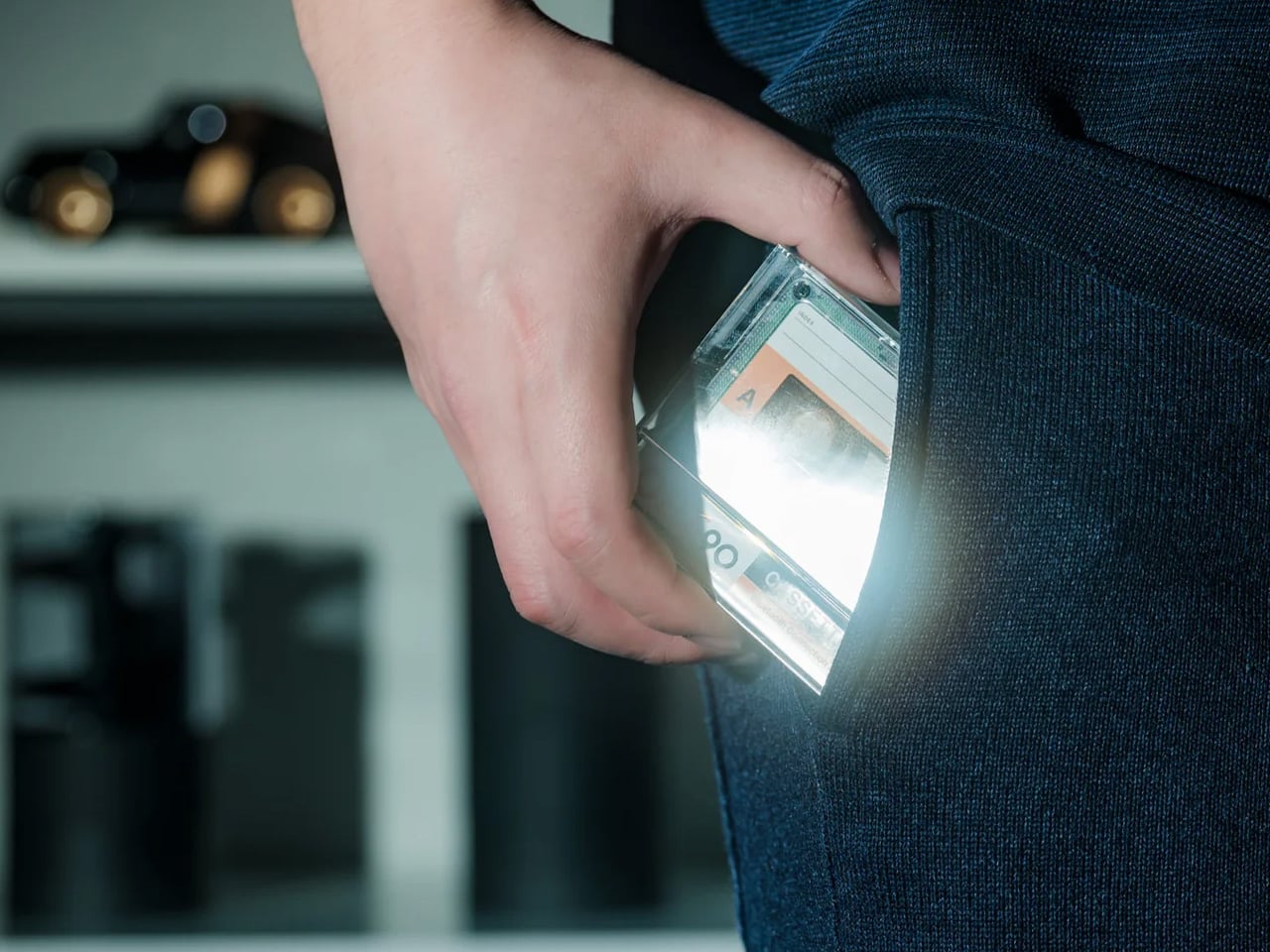
The Side A is a cassette tape that plays music, which makes it one of the quietest pieces of industrial design to land on a travel shelf in years. The form is exact: the dimensions of a 1970s compact cassette, the weight of an afterthought, and a sound quality that has no business coming from something this small. It fits in the coin pocket of your jeans, clips to a bag strap, and starts a conversation with everyone who notices it in a hostel common room or on a beach towel.

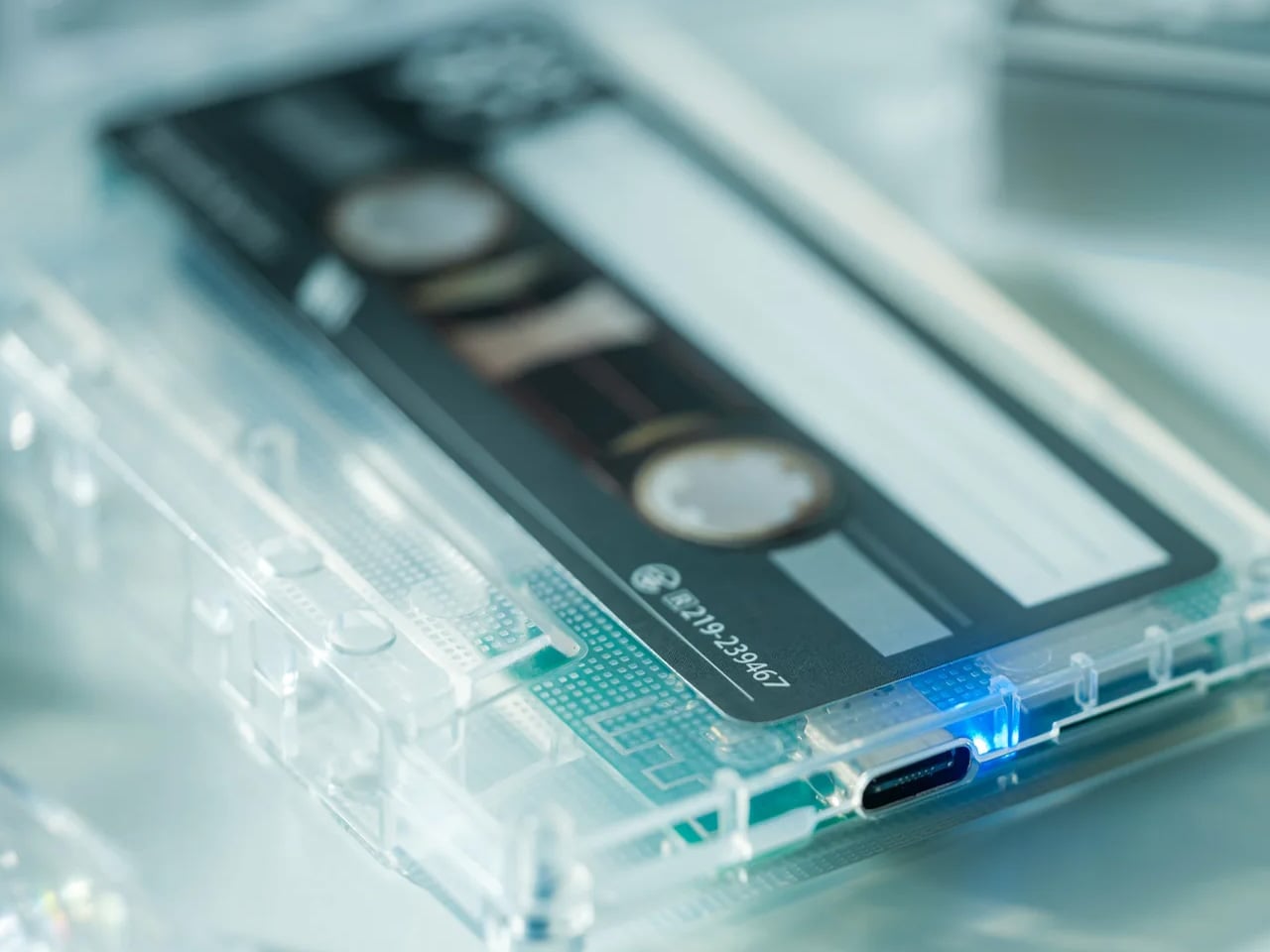
For travel, the emotional dimension matters as much as the functional one. The Side A is the object you pull out at a guesthouse in Lisbon or a rented apartment in Kyoto and place on a windowsill while you unpack. It signals something about the kind of traveler you are before you say a word. It runs wirelessly via Bluetooth and charges via USB-C, so the retro aesthetic is purely visual. The ritual of pressing play on something shaped like a tape deck turns any room temporarily yours.

Click Here to Buy Now: $49.00

What We Like

  • The cassette form factor fits in places no other speaker can, including pockets, passport holders, and the side mesh of a water bottle sleeve.
  • Wireless Bluetooth and USB-C charging mean the vintage look carries none of the vintage inconvenience.

What We Dislike

  • Sound projection is directional and intimate rather than room-filling, which large outdoor spaces tend to expose.
  • The compact size means battery life is capped shorter than bulkier travel speakers in the same price range.

2. MokaMax

The hotel room coffee situation has not improved. The MokaMax accepts this and brings its own solution: a ridged stainless steel travel mug that contains a full pressure brewer inside its body. You fill the chamber, add grounds, apply pressure through the integrated mechanism, and have something approximating an espresso in under three minutes using nothing but boiling water from the kettle on the credenza. It is a singular piece of design that treats a genuine travel problem with the seriousness it deserves.

The ridged stainless exterior gives it a profile that belongs on the shelf of a Scandinavian kitchenware shop rather than in a carry-on bag. It travels as a sealed container with no separate parts to lose across time zones. The lid doubles as a cup. The whole thing weighs 400 grams fully loaded and fits in the front pocket of most travel backpacks. For coffee people who have tried every in-room alternative and arrived at the same disappointing conclusion every morning, this ends the conversation.

What We Like

  • The integrated brewer and mug in a single sealed body means no separate components, no loose parts, and no compromises across a summer of movement.
  • The ridged stainless exterior is visually distinctive enough to qualify as an object worth owning well beyond its function.

What We Dislike

  • Cleaning the pressure chamber on the road requires access to a proper sink and a few spare minutes that airport transit rarely provides.
  • The 400g weight, while justified, is noticeable in a carry-on where every gram has already been negotiated.

3. AirTag Carabiner

The AirTag Carabiner treats Apple’s tracking disc the way a good frame treats a painting: it makes the object inside worth looking at. Machined aluminum, a clean gate mechanism, and a profile that clips to bag straps, belt loops, and zipper pulls without reading as gear. Most AirTag cases are either cases or carabiners. This one is genuinely both, and the design is considered enough that you clip it on and forget it exists entirely until the moment you need it.

For travel, the peace of mind is architectural. You clip one to your checked bag and one to your day pack, and the anxiety of watching a baggage carousel empty while your luggage doesn’t arrive shifts from dread to information. The form is compact enough that it adds nothing to the weight profile of a bag. The aluminum patinas naturally over months of use into something that looks earned rather than bought. It is the category of object whose value you only understand the first time it does its job.

Click Here to Buy Now: $149.00

What We Like

  • The machined aluminum gate and clean profile make it one of the few AirTag carriers that genuinely improve the look of whatever bag it attaches to.
  • The combination of carabiner utility and tracking function eliminates the need for a separate clip and a separate case simultaneously.

What We Dislike

  • The AirTag itself is sold separately, which means the full experience requires an additional purchase; most listings bury this in fine print.
  • Aluminum gates can feel stiff in cold weather, and the opening requires two hands during the first weeks of regular use.

4. Comes

Siwoo Kim’s Comes is a small AI companion device designed specifically for solo travel, and the premise is more considered than it sounds. It sits in your palm, connects to your phone, and acts as a conversational layer between you and unfamiliar places: translating menus, suggesting detours, and responding to the low-stakes questions that feel embarrassing to search for in public. The design is rounded and quiet, built to stay in a pocket rather than demand a wrist, a screen, or a face to look at.

What makes Comes worth including in any honest travel list is what it refuses to do. It is not a phone. It has no screen. It does not try to replace anything except the particular loneliness of standing in a new city without anyone to ask. For solo travelers who find the performance of looking confident in unfamiliar places genuinely tiring, Comes offers a private layer of support without the social cost of visibly consulting a device. It turns navigation into conversation, which is a different kind of travel entirely.

What We Like

  • The screenless, pocket-sized form means it assists without demanding attention, which is the rarest quality in any device designed for travel.
  • The AI layer is built specifically for travel contexts, making it meaningfully more useful than a repurposed general-purpose assistant.

What We Dislike

  • Connectivity depends entirely on your phone’s data plan, which in rural or international contexts can make the experience inconsistent.
  • The concept is stronger than the current feature set, and early adopters will encounter limits that future firmware will eventually address.

5. Kinto Travel Tumbler

KINTO has been making drinkware in Japan since 1972, and the Travel Tumbler is the product that explains why the brand has a following among people who pay attention to objects. Matte stainless steel, a one-handed screw lid with a silicone seal, and an opening wide enough to drink from without tipping your head back. There is no rubber gasket on the exterior. No logo beyond a debossed stamp. No color options are engineered to attract attention. It disappears into your morning routine and becomes difficult to travel without.

The 500ml capacity is the most considered part of the design. It is enough for a double espresso topped with hot water, or a full cup of whatever the guesthouse kitchen offers, without being the oversized vessel that forces you to drink fast or carry heavy. It keeps liquids at a temperature for six hours in either direction. For a summer of early trains and long afternoons in cities you are still learning, the Kinto becomes the object you reach for more often than any other in your bag.

What We Like

  • The matte stainless exterior and restrained detailing place it closer to Japanese tableware than outdoor gear, which is a genuine category distinction.
  • The 500ml capacity hits the precise middle ground between espresso-sized and inconveniently large for everyday carry.

What We Dislike

  • The screw lid takes slightly longer to open than a flip-top, which becomes apparent when you are holding a tray and a boarding pass simultaneously.
  • The matte finish marks with fingerprints in warmer climates and requires more frequent wiping than a polished surface would.

6. Casabeam Everyday Flashlight

The Casabeam occupies the specific design territory between a tool and an object worth keeping on a desk. The body is machined to a clean cylindrical profile with a pocket clip that doubles as a satisfying fidget mechanism, and the beam output is serious enough for actual use without the tactical overdesign that plagues most EDC lights. It charges via USB-C and remembers its last mode, which sounds minor until you have spent thirty seconds cycling through strobe mode in a dark guesthouse corridor at 2 am.

Travel reveals how often you need a light that is not your phone. Cobblestone streets with broken lamp posts. Power cuts in cheaper accommodation. Reading in a top bunk without waking the rest of the room. The Casabeam handles all of it from a body that fits alongside a pen without adding bulk. The light quality is warm enough to be comfortable and bright enough to be useful. It earns more appreciation the longer you carry it, because it keeps solving problems you had quietly given up on solving.

Click Here to Buy Now: $50.00

What We Like

  • USB-C charging and mode memory remove the two most common sources of friction in EDC flashlight ownership entirely.
  • The machined cylindrical body is refined enough to sit alongside design objects rather than tools without any visual apology.

What We Dislike

  • The warm beam color, while pleasant for ambient use, is less useful for reading text at a distance than a cooler 5000K alternative.
  • The pocket clip was clearly designed for trouser pockets rather than shirt pockets, and the thinner fabric requires deliberate re-positioning.

7. CW&T Pen Type-C Ultra — gnuhr Edition

CW&T is a small New York studio that produces objects in limited runs for people who pay close attention to manufacturing. The Pen Type-C Ultra gnuhr Edition is Grade 5 titanium, hollowed and precision-milled to a skeletal profile that removes every gram that does not need to exist. It weighs almost nothing. It looks like it belongs next to aerospace hardware in a design archive. It takes a standard ballpoint refill and writes exactly as a pen should, with no drama and no compromise in either direction.

Traveling with this pen converts the act of writing into something you notice. Filling in a form at a hotel desk, signing a restaurant receipt, sketching a street corner in a notebook: these are the moments when an object of this quality distinguishes itself from everything else in your pocket. It does not perform its material. It simply is the material, in a form tight enough to disappear on a keychain or in the spine of a notebook. For a summer of movement, something is clarifying about carrying a pen that will outlast every passport you own.

What We Like

  • Grade 5 titanium construction and skeletal precision milling place this in a different category from every other writing instrument at any price point.
  • Standard ballpoint refill compatibility means the most beautifully made pen you own is also the easiest to maintain anywhere in the world.

What We Dislike

  • The skeletal body offers minimal grip surface, which becomes fatiguing during longer writing sessions on bumpy transport.
  • CW&T produces in limited runs, so availability can disappear without notice, and restock timelines are rarely predictable.

8. PROOF Wallet

The PROOF Founder pairs an aerospace-grade aluminum plate with top-grain leather and a wide elastic strap in a form that reads as professional rather than tactical. Most minimalist wallets solve their problem by holding less. This one solves it by holding more without growing. The Founder handles anywhere from one to twenty-five cards, with the elastic strap compressing the stack and the leather wrap keeping it contained. It sits flat in a jacket pocket and does not announce itself, which, for travel, where your wallet becomes a daily tool rather than a background object, is the entire point.

The aluminum plate is the structural element that separates this from fabric-only alternatives: it prevents the flex and collapse that plagues elastic wallets after months of use and creates a satisfying resistance when fanning through cards. The leather wrap patinas over a summer into something that looks considered rather than worn. There is no branding on the exterior beyond the material itself. For the kind of traveler who finds the Ridge wallet slightly too aggressive in a formal setting, the Founder is the obvious alternative that nobody else at the table will recognize.

What We Like

  • Aerospace aluminum structure paired with top-grain leather produces a material combination that improves with use rather than degrading with it.
  • The one-to-twenty-five card capacity range makes it genuinely flexible across the context shifts that define summer travel without structural compromise.

What We Dislike

  • The elastic strap shows its age before the leather or aluminum does, and replacement options require contacting the brand directly.
  • The profile, while slim, is wider than card-only holders, which feels unnecessary on short day trips when you carry two cards and nothing else.

9. Traveler’s Notebook

The Traveler’s Notebook has been in continuous production since 2006 and has changed almost nothing about itself, which is as strong an endorsement as any product can receive. The black edition is oiled buffalo leather stretched over a brass clip and elastic cord, aging into something that looks genuinely lived-in after a single trip. The passport size fits a shirt pocket. The paper is cream-colored, fountain-pen-friendly MD stock that resists bleed-through with quiet success. The inside becomes whatever you need it to be: journal, sketchpad, receipt keeper, boarding pass sleeve.

In a list built partly around technology and connectivity, the Traveler’s Notebook earns its place by doing nothing digital. It is the object that captures the parts of a trip that photographs miss: the light on a piazza at seven in the morning, the menu item you want to remember, the address someone wrote down for you on a napkin now tucked into the inner fold. Travel writing done by hand in a book that costs less than a meal has a particular relationship to memory that no app has yet replaced. This is the pocket-sized argument for why.

What We Like

  • Oiled buffalo leather and brass clip construction will outlast every phone, charger, and piece of luggage in the bag by a significant margin.
  • The refillable insert system means the notebook’s physical character accumulates across years while the interior renews for each new destination.

What We Dislike

  • The elastic cord binding requires an initial period of loosening before the inserts sit flat, which new users consistently find frustrating in the first week.
  • The narrow passport format can feel constrained for wider handwriting styles, particularly for left-handed writers working on moving transport.

Pack Less. Pay Attention.

Nine objects across nine categories, and the through-line is identical across all of them. Each one was made by someone who asked a specific question about how a thing should work rather than how it should be marketed. That specificity is what makes a bag lighter, a morning better, and a new city feel less like a problem to manage and more like the reason you left home in the first place.

The best travel gear does not make travel easier in the way a better suitcase wheel makes transport easier. It makes travel richer in the way a good book makes a long flight disappear. These nine objects will not tell you where to go. They will make you pay closer attention once you get there, which is the only travel advice worth taking.

The post 9 Best Travel Gadgets & Gear That Make Summer 2026 Actually Worth Packing For first appeared on Yanko Design.
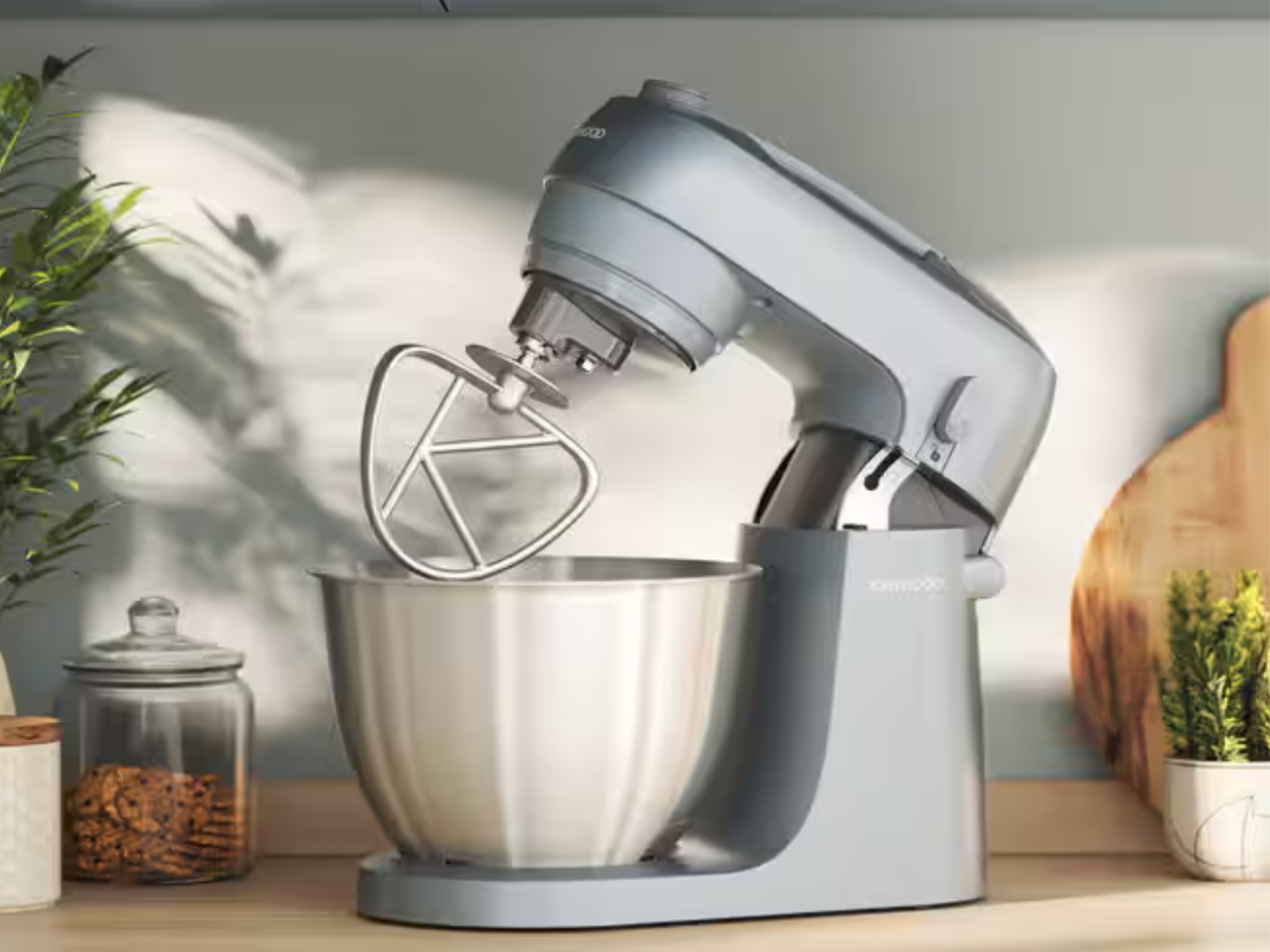
5 Best Products For A Minimalist Coffee Table That Does More By Doing Less

The coffee table is the hardest surface in the living room to get right. Put too much on it, and it looks like a staging mistake. Put too little and the room reads unfinished. The minimalist approach settles this by demanding each object justify its place twice — once as something useful, once as something worth looking at. Every product on this list earns on its own terms.

These five objects were chosen because they share a logic rather than a matching aesthetic. A kinetic toy, a modular ceramic, a structural tray, a floating mobile, a handpoured candle vessel — different categories, different price points, one consistent standard. Each one does more than its category suggests, and none of them requires anything around it to look complete. That is the whole point of a surface that does more by doing less.

1. ClearMind Kendama

Wooden yoyo with string resting on a white design magazine page, partly covered by a gray knitted blanket/rug in the foreground.

The ClearMind Kendama is the object on this list that will raise the most eyebrows and earn the most genuine conversation. Crafted in Tokyo from solid, unpainted walnut and maple, it’s a Japanese skill toy that sits on a minimalist coffee table the way a chess set sits on a side table — quietly suggesting a way of spending time that isn’t a screen. The two-tone wood grain reads as sculpture when it’s at rest, and the proportions are tight enough that it occupies almost no footprint while contributing significant material presence and warmth to the surrounding surface.

What makes the Kendama work as a coffee table object rather than just a novelty is the quality of its materials and the honesty of its finish. Walnut and maple at this weight don’t look like toys — they look like considered objects, which is exactly what they are. The practice itself is deliberately simple: the ball catches on the cup, the spike, the base plate. Each successful catch requires a small act of focus that pulls you out of passive consumption and toward something genuinely present. On a minimalist table, it functions as an invitation — to pick up, play, put down — and every time it rests, it returns to being a beautiful wooden form that needs no explanation.

Click Here to Buy Now: $59.00

What we like:

  • The unpainted natural wood reads as a sculpture at rest
  • The meditative play pattern offers something no other object on this list provides

What we dislike:

  • The cup-and-ball proportions are an acquired taste for anyone who associates kendamas with children’s toys
  • The string can feel visually busy if left extended rather than gathered

2. Torre Modular Ceramic Vase

The Torre Modular Ceramic Vase by Scott Newlin for Dudd Haus is the most expensive object on this list by a significant margin, and the one that earns that price most transparently. Each piece is hand-thrown at Powerhouse Arts in Brooklyn and arrives as a set of stackable ceramic modules — two, three, or four components depending on the configuration — that interlock through consistent diameters and lipped rims. The forms are architectural, muted, and deliberately quiet: off-white, sand, stone. On a coffee table, they read as a composed sculpture from any angle, at any height.

What sets the Torre apart from a standard ceramic vase is that it offers a choice every time you approach the table. Stack the modules high for a vertical moment, separate them into a low cluster, or pull one aside entirely and set a dried stem inside the remaining piece. The act of rearranging them is part of the object’s value — it rewards attention in a way that static objects never can. For a minimalist surface, the price demands justification, and it finds it here: the Torre is three objects in one, each configuration as resolved as the last, none of them requiring anything around them to look finished. It is the closest thing on this table to pure design.

What we like:

  • Each reconfiguration creates a genuinely different visual read
  • The hand-thrown ceramic carries natural variation that improves with close attention

What we dislike:

  • At $1,200, it is a significant commitment for a surface object
  • The off-white and sand palette, while intentional, can disappear on lighter table materials

3. Sail Away Tranquility Mobile

The Sail Away Tranquility Mobile is the only object on this list that moves, and movement is precisely why it belongs here. Three balanced triangular forms — drawn from the geometry of sailboats — hang in calibrated tension and respond to the slightest air current in the room. On a coffee table, it introduces a kinetic quality that no static object can replicate: the table becomes the most animated surface in the living room without adding any visual weight. The proportions are compact enough for a tabletop, the construction is clean, and the physics are genuinely surprising the first time you see it shift in still air.

What makes the Sail Away work as a minimalist object is its restraint. The movement is subtle rather than theatrical — a slow drift rather than a spin — and it never demands attention so much as rewards it, which is the correct register for a surface meant to feel considered rather than performed. At $145, it occupies a different design category from every other object on this list: not sculpture exactly, not functional exactly, but somewhere between the two that feels honest rather than decorative. Set at the far edge of the Platform Tray, it creates a vertical moment that anchors the whole composition without competing with anything around it.

Click Here to Buy Now: $129.00

What we like:

  • The kinetic movement brings a living quality to the table that no static object can match
  • The geometric forms hold their visual logic from any angle

What we dislike:

  • The mobile requires a stable surface — consistent vibrations from foot traffic or sound can overanimate it
  • The string suspension looks considered but feels delicate in a high-use living room

4. Simple Candle Co. Concrete Vessel

The Simple Candle Co. Concrete Vessel is the most affordable object on this list and the one that punches furthest above its price. Each vessel is hand-poured in small batches from a grey concrete body with a short soy wax wick and no label. The scent runs deliberately clean — white linen, cashmere cedar, or unscented — and the vessel itself is the product as much as the candle inside it. At $20, it brings concrete’s material seriousness to the table at a price that makes it easy to keep two: one lit, one resting, both earning their place on the surface.

The concrete body doesn’t get hot to the touch during burning, which is a practical advantage that most candle vessels at three times the price can’t claim. Burn time runs approximately 25 to 30 hours, and when the wax is finished, the bowl stays. Rinse it out, and it becomes a catch-all for a matchbox, a small stone, a ring. That second life is built into the object from the first glance — the vessel was always the point, and the candle is what justifies buying it for $20 rather than considerably more. Alongside the Kendama’s natural wood and the Torre’s matte ceramic, the concrete introduces a third material that completes the tactile range without competing for visual dominance.

What we like:

  • The vessel earns its place before and after the candle burns
  • The concrete stays cool during use, which is a genuine functional advantage over glass and ceramic alternatives

What we dislike:

  • The scent throw is intentionally subtle and reads as ambient rather than strongly aromatic
  • The hand-pour process means each vessel varies slightly, so a replacement may not match an existing piece exactly

5. Muuto Platform Tray — Grey

The Muuto Platform Tray is the object that makes every other object on this list look better. Available at Finnish Design Shop for $109 in grey, it’s a round tray with an oak veneer surface and small metal legs that lift it just enough off the table to create a clear visual boundary between the objects inside and the surface beneath. That boundary does more compositional work than it should — it turns a group of objects into a considered arrangement rather than a collection of things that happen to be sitting on the same surface. The grey metal and warm oak read well together, and the form is simple enough to disappear.

In practical terms, the Platform Tray is the anchor. The candle vessel sits inside it. The Kendama rests at its edge. The mobile grounds one end. The tray doesn’t organize these objects so much as it frames them, and the difference between a frame and a container is the difference between editorial and domestic. The oak veneer surface develops warmth over time, and the small legs mean it can be lifted off the table intact when the surface needs to be cleared without disturbing the composition it holds. At $109, it is the least visually dramatic piece on this list and almost certainly the most indispensable one.

What we like:

  • The oak veneer surface brings warmth to a mixed material setup
  • The raised legs separate the composition from the table surface with minimal visual noise

What we dislike:

  • The round form can feel restrictive on a narrow or strongly rectangular table
  • It comes in one size, so there’s no option to scale up for a larger surface

The Only Five Objects Your Coffee Table Needs

Five objects, five categories, one shared logic. The tray frames. The candle grounds. The mobile moves. The Kendama invites you to participate. The Torre rewrites what a vase can be. Together they fill a coffee table without crowding it, and none of them needs the others to look resolved. That is the discipline a minimalist surface asks for, and these five meet it.

The full build comes to $1,444, with the Torre carrying most of that weight. Buy the other four first — at $344 combined, they build one of the strongest minimalist coffee table setups available at that price — and treat the Torre as the object you earn over time. Start with the Platform Tray. Everything else finds its place from there.

The post 5 Best Products For A Minimalist Coffee Table That Does More By Doing Less first appeared on Yanko Design.
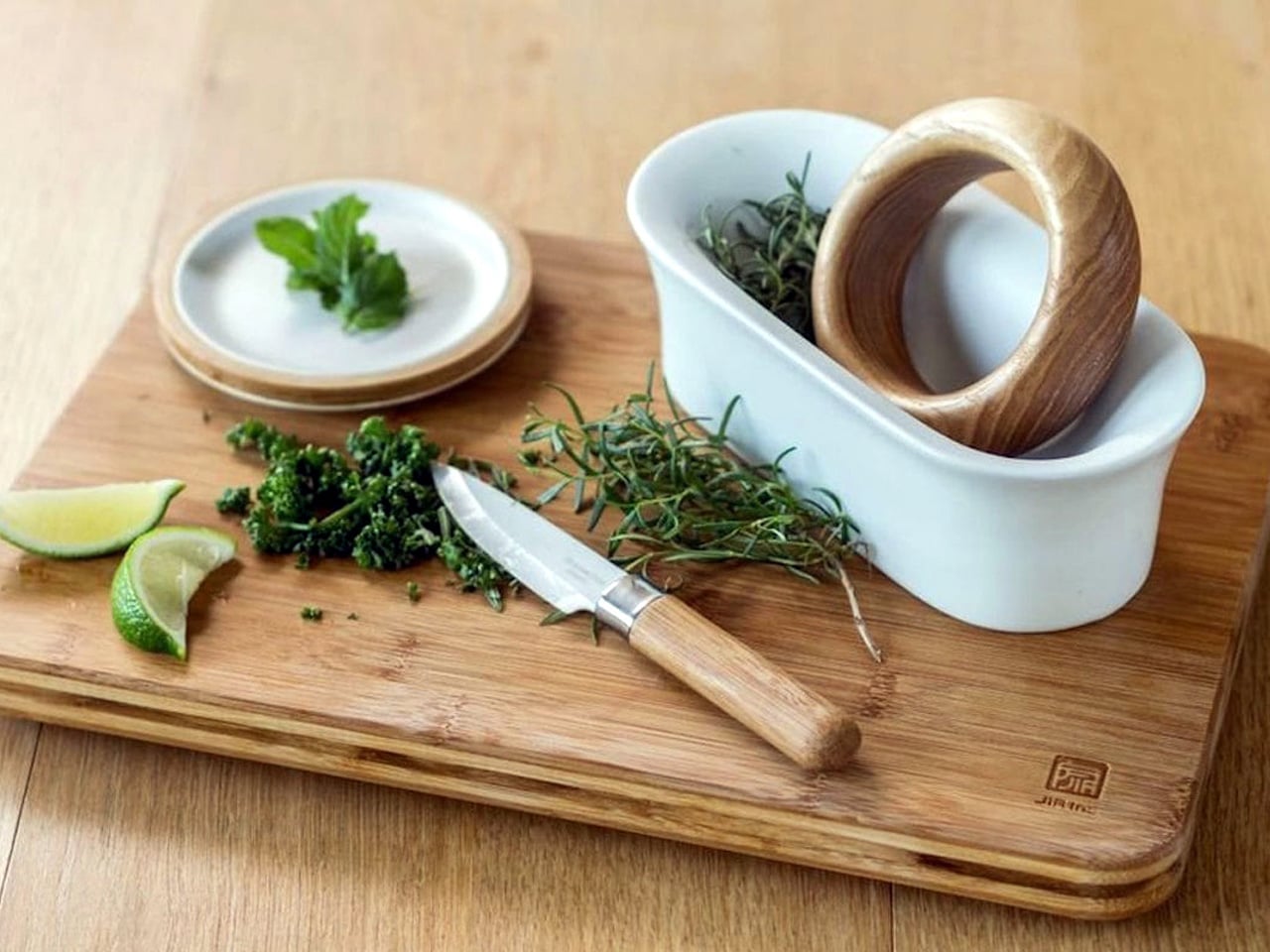
5 Gifts for the Person Who Takes Beer More Seriously Than Anyone Else You Know

Some people drink beer. Others study it, serve it with real intention, and actually feel the difference between a proper pour and a careless one. For that person in your life — the one who owns a specific glass for a specific brew and can tell you exactly why foam matters — a six-pack isn’t enough. What they need is something that matches the level of care they bring to every drink.

These five picks range from precision glassware engineered in Japan to a machine that replicates a professional draft tap at home. Each was designed with the same quiet seriousness your beer person applies to every single pour. If they treat drinking as a practice rather than a pastime, these are the gifts that speak their language — objects built with intention for someone who notices the difference between good and exceptional.

1. DraftPro Top Can Opener

There’s a version of drinking from a can, and then there’s the DraftPro version. Designed by award-winning Japanese designer Shu Kanno, this tool removes the entire top of a can with one clean motion, transforming it into something far closer to drinking from a proper glass. The wide-mouth opening lets aroma escape freely and allows the beer’s full range of flavor to come through completely unobstructed. For someone who selects their beer thoughtfully and actually wants to taste what they chose, this simple tool changes the nature of the experience entirely. It’s quiet, precise, and turns the ordinary act of cracking a can into something that feels far more considered and deliberate.

Beyond the drinking experience itself, the DraftPro functions as a capable bar tool in the most compact form possible. With the top removed, ice goes directly into the can for fast chilling on a hot day, or the can becomes the vessel for a quick cocktail with no shaker and no extra glass to clean afterward. It’s lightweight, portable, and compatible with both domestic and international can sizes, so it works wherever the drinking happens to be. The kind of object that earns a permanent place in a bag or kitchen drawer because it quietly solves problems you didn’t know you had until the first time you actually put it to use.

Click Here to Buy Now: $60.00

What We Like

  • Removes the entire top to create an open, aroma-forward experience that genuinely mirrors drinking from a glass
  • Universal compatibility with domestic and international can sizes makes it useful at home or anywhere else

What We Dislike

  • Designed exclusively for cans, with no application for bottles or other containers
  • The fully open-top format may feel less practical or contained depending on the setting

2. Prism Titanium Beer Glass

Most beer glasses do one thing: hold the beer. The Prism Titanium Beer Glass does something more carefully considered. Lined with 99.9% pure aerospace-grade titanium, it neutralizes metallic aftertastes and gently breaks down off-notes, leaving only the true, refined flavor of what’s been poured. Its gently flared rim softens texture and guides beer across the palate in a way that feels deliberate rather than incidental. Available in the timeless Silver with its quiet luster, or the Infinite with its shifting aurora of color, each version is finished with symbolic patterns that evoke longevity and prosperity. It’s the kind of glass that quietly resets the standard you hold everything else to.

This is a glass for someone who treats drinking as a ritual rather than a reflex. Clear glass meets softly reflective titanium inside, creating a visual interplay that reveals the beer’s true color with a quiet, elegant glow. The combination of material and shape means what you’re tasting stays as close to the brewer’s original intention as possible, without interference from the vessel itself. Japanese precision runs through every detail, from the balance of it in your hand to the way light plays across its surface at the table. For the person who thinks carefully about what they drink and how, this is the glass they’ve been looking for without quite knowing what to call it.

Click Here to Buy Now: $100.00

What We Like

  • Aerospace-grade titanium lining preserves pure flavor by neutralizing metallic aftertastes and off-notes that would otherwise interfere
  • The gently flared rim simultaneously improves both aroma delivery and mouthfeel for a more complete tasting experience

What We Dislike

  • Premium material and Japanese craftsmanship come at a higher price point than conventional glassware
  • The titanium interior may feel unfamiliar to those accustomed to standard glass or ceramic vessels

3. Hodi

The hodi is what happens when someone asks what a travel mug could genuinely be if it actually tried harder. Its unique two-part design splits into two separate glasses — one for hot drinks, one for cold — while an airtight lid doubles as a snack container and a built-in mesh filter handles all the brewing on the go. Coffee, tea, beer, wine, juice, milkshakes: hodi takes all of it, making it the kind of object a serious drinker carries without compromise.

What makes hodi visually impossible to ignore is the shape. Its curvy, tapered silhouette is directly reminiscent of the iconic Guinness glass — one of the most recognizable beverage vessels ever made —, and that’s entirely the point. Carry it anywhere, and it reads as intentional, not utilitarian. Functionally engineered to handle everything from a cold craft beer to a hot brew, yet portable enough to go wherever a standard travel mug would, hodi doesn’t ask you to trade form for function.

What We Like

  • The two-part split design offers two separate glasses for hot and cold drinks, making it genuinely versatile for every drink in a beer person’s rotation
  • Its Guinness-inspired silhouette carries the visual language of fine glassware into a portable, travel-ready format

What We Dislike

  • The multi-part construction means more components to keep track of and clean after every use
  • Its Swiss Army Knife versatility may feel like overkill for someone who wants a single-purpose, dedicated beer vessel

4. Fizzics DraftPour

The Fizzics DraftPour does something most people assume requires a full bar setup: it turns any can or bottle of beer into a creamy, nitro-style draft pour without leaving the house. Using patented Micro-Foam technology, it converts the beer’s existing carbonation into uniformly sized micro-bubbles that enhance aroma, flavor, and mouthfeel in a way a straight hand pour simply can’t replicate. It works across every beer style from IPAs and lagers to porters and stouts, and fits cans up to 32oz and bottles up to 750ml. No beer is excluded, and no special additives or gas cartridges are required to get that result at home.

What makes it exceptional as a gift is that it asks nothing extra from the beer itself. No CO2 cartridges, no nitro canisters, no complicated setup. Plug it in or run it on two AA batteries and take it wherever the occasion calls. The technology optimizes all three phases of foam production: nucleation, beading, and disproportionation — the same metrics brewers and cicerones rely on when evaluating the quality of a proper draft pour. For the person who knows what those words mean and cares enough to apply them at home, this is the most meaningful upgrade their home bar has ever seen.

What We Like

  • No CO2 or nitro cartridges required — the machine works entirely with the beer’s own existing carbonation
  • Compatible with all beer styles and most standard can and bottle sizes, making it broadly and consistently useful

What We Dislike

  • Requires a power source via plug or AA batteries, which adds a layer of setup compared to more passive tools on this list
  • Functions as a countertop appliance rather than a compact or easily portable bar accessory

5. Nendo Perfect 3Way Beer Glass

Japanese design firm Nendo built the Perfect 3Way Glass specifically around the flavor and aroma of Sapporo’s Kuro Label draft beer, and the result is one of the most intentional drinking vessels ever produced. The glass is asymmetrical by design, with three distinct zones that each deliver a different mouthfeel when you drink from them. Start at the straight side: the beer travels to the center of the tongue and flows toward the back of the mouth, delivering the initial crisp, clean finish that defines a well-served draft. That first side is the foundation, and what follows on the other two makes this glass genuinely unlike anything else on the market.

Move to the left side, where the curvaceous, wider rim fills the mouth with a mellow, rich aroma and bouquet of liquid. Then shift to the right, where the bulbous shape hits the middle of the tongue and controls the flow for a third, completely distinct sensation. Three sides, three moments, one glass. This isn’t a novelty. It’s a precision instrument for someone who understands that how beer enters the mouth shapes what they ultimately taste. For anyone who takes draft beer seriously, the Perfect 3Way Glass turns a single pour into three separate, considered experiences without ever needing to refill the glass or reach for something else.

What We Like

  • Three distinct mouthfeel zones deliver three genuinely different tasting experiences from a single pour
  • Built with draft beer specifically in mind, making it a meaningful and focused tool for serious enthusiasts

What We Dislike

  • The asymmetrical shape requires some orientation before the full experience lands as intended, which takes practice
  • Conceived around a specific style of draft beer, which may feel limiting for drinkers with broader or more varied tastes

The Right Gift for the Right Pour

The best gifts for a beer person aren’t about quantity. They’re about showing you understand exactly how they think about what they drink — the attention they give to temperature, aroma, foam, and the weight of a glass in the hand. Every pick here reflects that same level of care in how it was designed and what it was built to achieve. One thoughtful gift says more than any case could.

Pick one, and let the presentation carry the message. These aren’t items you grab from a shelf because the occasion demands something wrapped. They’re tools built by craftspeople and designers who understand what it means to give a drink the respect it deserves. For the person who brings that same respect to every pour, that’s a language they’ll recognize immediately — and appreciate far longer than anything else you could choose.

The post 5 Gifts for the Person Who Takes Beer More Seriously Than Anyone Else You Know first appeared on Yanko Design.
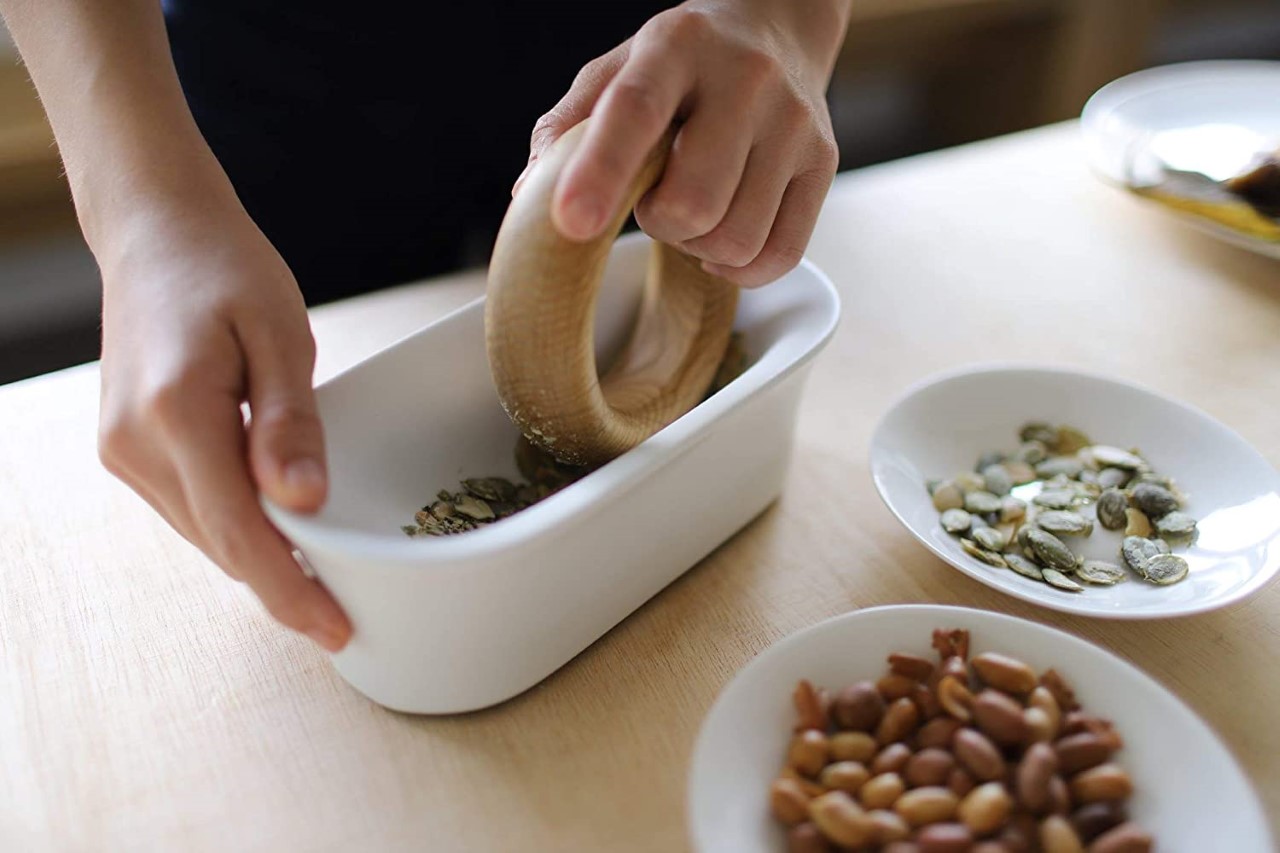
5 Over-Ear Headphones That Look as Good When They’re Around Your Neck as When They’re on Your Head

The headphone has become something it was never originally designed to be: a silhouette. Worn around the neck on a subway platform or draped over a chair at a coffee shop, a great pair of over-ears communicates taste in much the same way a watch or a well-chosen bag does. The best ones are now designed with that resting moment in mind, not as an afterthought, but as a deliberate part of the brief.

What separates a good headphone from a great one is increasingly less about frequency response and more about how the object behaves when it’s not in use. The five pairs on this list earn their place on both counts. Worn on the head, they deliver. Worn around the neck, they still look like they were built by people who thought carefully about that exact resting moment, collarbone and all.

1. StillFrame Headphones

Most headphones achieve lightness by sacrificing material quality somewhere along the way. StillFrame achieves it by rethinking the entire structure from scratch. At 103 grams, it sits on your head with the kind of effortless presence most pairs spend an entire product page trying to claim. The ultra-minimal design, clean lines, no exposed hardware, and no decorative flourish anywhere on the frame is the kind of restraint that reads as confidence rather than budget constraint.

Around the neck, StillFrame does what minimal design always promises and rarely delivers: it disappears into your outfit rather than competing with it. The 24-hour battery means you’ll reach for these in the early morning and still have charge well into the evening without thinking about a cable. For anyone who wants headphones that age well, that look as right in three years as they do today, this is where the search ends.

Click Here to Buy Now: $245.00

What We Like

  • At 103 grams, this is one of the lightest over-ear headphones available without any sacrifice in build integrity, and the weightlessness is felt the moment you put them on
  • A 24-hour battery life means this pair genuinely runs from morning to night on a single charge, removing the low-battery anxiety that comes with most wireless headphones on the market

What We Dislike

  • Minimal colorway options are a direct consequence of the same design restraint that makes the StillFrame look this considered, and that trade-off is real and visible
  • With so little on the frame to grab visual attention, this pair asks you to commit fully to its design language, which rewards patience but does not suit every aesthetic

2. Meze Audio Strada

Romanian audio atelier Meze has spent two decades treating headphones as craft objects, and the Strada makes that philosophy fully explicit. Hand-carved walnut and ebony ear cups, each unique in grain and tone, sit alongside a magnetic ear pad system that snaps on and off cleanly, making them the first pair that genuinely anticipates its own aging. The leather headband drapes naturally against the collarbone. At $799, you’re investing in the idea that daily objects deserve this level of material care.

Worn around the neck, the Strada does something genuinely rare: it makes you look considered rather than plugged in. Those hand-carved wood cups catch light in a way that aluminum never quite manages, and the closed-back design delivers warmth and isolation without the clinical precision of most audiophile gear.
What We Like

  • The hand-carved wood ear cups make every unit genuinely one-of-a-kind, an unusual distinction in a product category that typically prizes consistency and uniformity above everything else
  • The magnetic ear pad system solves a real longevity problem that most headphone manufacturers still choose to ignore, making the Strada feel genuinely built for the long term from the start

What We Dislike

  • The warm, closed-back tuning leans toward intimacy over accuracy, which won’t satisfy listeners who prefer a flat, analytical sound profile for critical or reference listening sessions
  • No active noise cancellation at $799 is a deliberate aesthetic choice, but it will not suit everyone who regularly listens in open, noisy, or busy urban environments

3. Bang & Olufsen Beoplay H95

 Bang & Olufsen has been designing objects that make a room better simply by existing in it since 1925. The Beoplay H95 carries that logic to your ears. Brushed aluminum arcs support lambskin ear cushions with the quiet authority of something that was never trying to impress anyone. Custom 40mm titanium drivers deliver an expansive, unhurried soundstage, and 38 hours of battery life with ANC active means you rarely need to think about charging. At $1,250, it reads as inevitable rather than expensive.
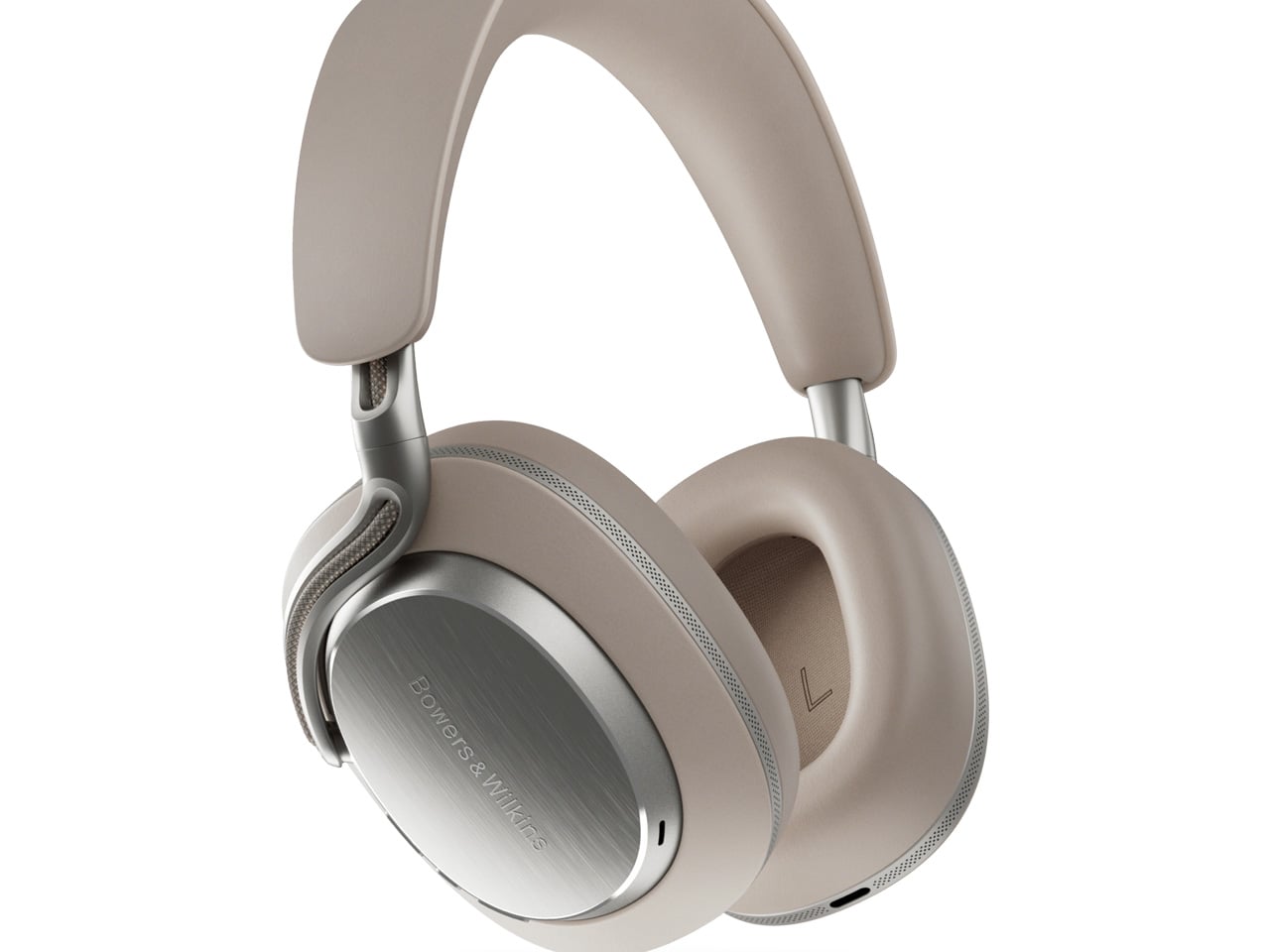
Around the neck, the H95 makes its strongest case. The slim profile rests cleanly against the collarbone, the aluminum catches light without glare, and the lambskin ages into something better than what you started with. Vogue Scandinavia named it the headphone that pairs best with the softest cashmere roll-neck and a cocooning wool coat, which is not exactly a mid-range endorsement. The tactile control dial and hard carrying case complete the picture of a brand that hasn’t needed to shout for a century.

What We Like

  • Lambskin ear cushions and brushed aluminum give the H95 a material quality that makes every other pair on this list look like it is working a little harder to impress you
  • 38-hour ANC battery life is class-leading and genuinely difficult to match at any price point, making this the pair most likely to outlast a long-haul journey without any hesitation

What We Dislike

  • At $1,250, this is a significant investment for a product category where $400 already delivers very strong audio performance from multiple well-regarded and respected manufacturers
  • The control dial is elegant but carries a subtle learning curve that takes several days of regular use to feel completely intuitive and second-nature in the hand

4. Bowers & Wilkins Px8 S2

The Px8 S2 looks like it was designed by someone who spent too much time around luxury automobiles and not enough time worrying about what people thought. Diamond-quilted Nappa leather ear cups sit inside angular aluminum driver housings that don’t apologize for taking up space. Bowers & Wilkins built their reputation on speaker cabinets in British living rooms, and that obsession with material quality is fully present in the Px8 S2. At $799, it’s the most visually assertive pair on this entire list.

Worn on the head, the 40mm Carbon Cone drivers deliver a focused sound that rewards careful listening. Worn around the neck, the quilted leather and aluminum geometry create a silhouette that reads closer to jewelry than consumer electronics.

What We Like

  • The diamond-quilted Nappa leather ear cups are a genuinely distinctive design move that no other headphone brand at this price point is executing with this level of craft and conviction
  • 40mm Carbon Cone drivers bring the kind of focused sound detail that makes streaming audio feel like it might be holding something back, consistently rewarding attentive listeners on every session

What We Dislike

  • The angular form does not fold into a compact carry position, making the included case noticeably bulkier than most direct competitors when packed into a bag for daily commuting use
  • The firm clamping force is necessary for the acoustic seal, but it makes itself felt during extended listening sessions, which matters for anyone who wears headphones for several consecutive hours at a time

5. Sonos Ace

Sonos spent two decades being the most thoughtfully designed speaker company in the world before ever touching headphones. The Ace is what happens when a brand famous for restraint and material quality finally commits to an entirely new product category. Stainless steel arms, memory foam ear cushions, and a clean form in Midnight or White carry the same quiet authority as Sonos’s best home equipment. At $449, it sits below the B&O and B&W while fully matching them on design character and material coherence.

What makes the Ace genuinely stand out is what you don’t notice: no visible seams on the headband, no mismatched materials, no hardware that apologizes for itself. Active noise cancellation and a 30-hour battery complete a pair that wears as well around a neck as it sounds through the drivers, making it the most versatile pick on this list.

What We Like

  • The material cohesion across every surface, every finish, and every seam speaks one consistent and considered design language, which is an unusually disciplined achievement at the $449 price point
  • Active noise cancellation combined with a 30-hour battery puts the Ace ahead of most competitors on the two specifications that matter most for daily and travel listening

What We Dislike

  • The body is predominantly high-quality plastic rather than metal, which is a material trade-off that some buyers will feel at this price point relative to the B&O and B&W alternatives
  • Head-tracking spatial audio is most effective when paired with a Sonos home speaker system, limiting the feature’s full appeal for listeners who don’t already own Sonos hardware at home

The Best Headphones Are the Ones You Never Want to Take Off

What all five of these pairs share is a seriousness of intent that goes well beyond frequency response. They were built by companies that think about how objects live in the world, not just during a listening session, but on a train platform, at a desk, hanging around a neck. That’s a harder problem to solve than noise cancellation, and the brands that crack it tend to stay relevant far longer than those that don’t.

The range here runs from $449 to $1,250, but the price gaps matter less than they appear at first. What you’re really choosing between is design language: Romanian craft warmth, Scandinavian restraint, British precision, speaker-first material thinking, or clean minimalism that genuinely disappears. Any of these pairs earns the right to hang around your neck. The question is which one earns it in a way that feels made for how you actually move through the world/

The post 5 Over-Ear Headphones That Look as Good When They’re Around Your Neck as When They’re on Your Head first appeared on Yanko Design.