A 1930s French Cabin Brought Back the Pit, and It’s the Best Part

If you grew up watching old movies or flipping through your parents’ architecture magazines from the 70s, you probably remember the conversation pit. That sunken, circular seating area built into the floor, ringed with cushions, usually occupied by someone in a turtleneck holding a glass of wine. It felt like the most optimistic design idea of its era: a room within a room, purpose-built for the act of simply talking to each other. Then open-plan living came along and flattened everything, and the pit more or less disappeared.

Studio Razavi just brought it back, and they did it in about the best possible setting you could imagine. The Paris, London, and New York-based firm recently completed Seaside House, a renovation of a 1930s coastal cabin at the tip of Cap Ferret, a narrow peninsula near Bordeaux, France. The structure sits nestled among towering pine trees, which is already a lot for any building to live up to. But the interior is where things get quietly radical.

Designer: Studio Razavi

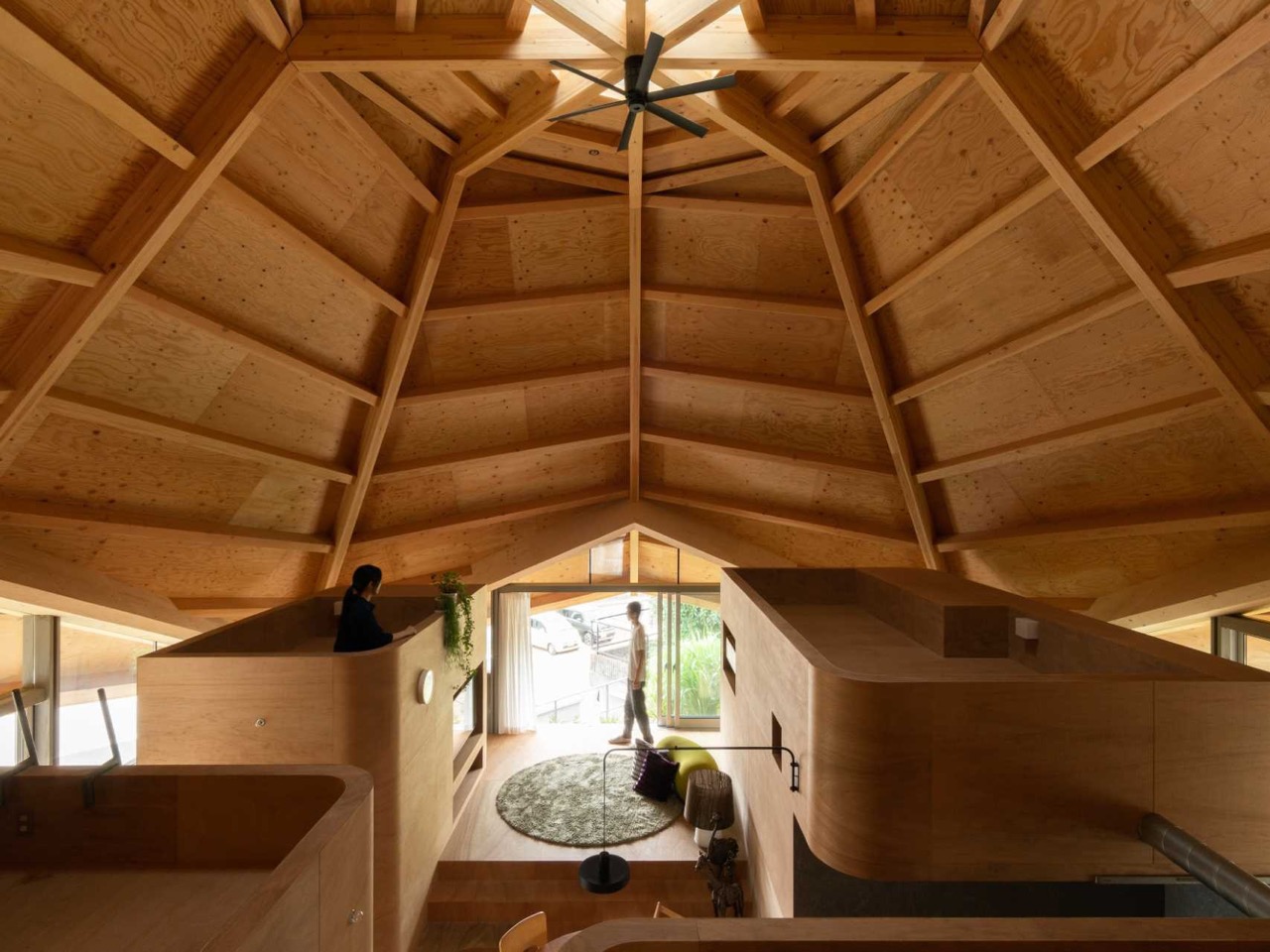
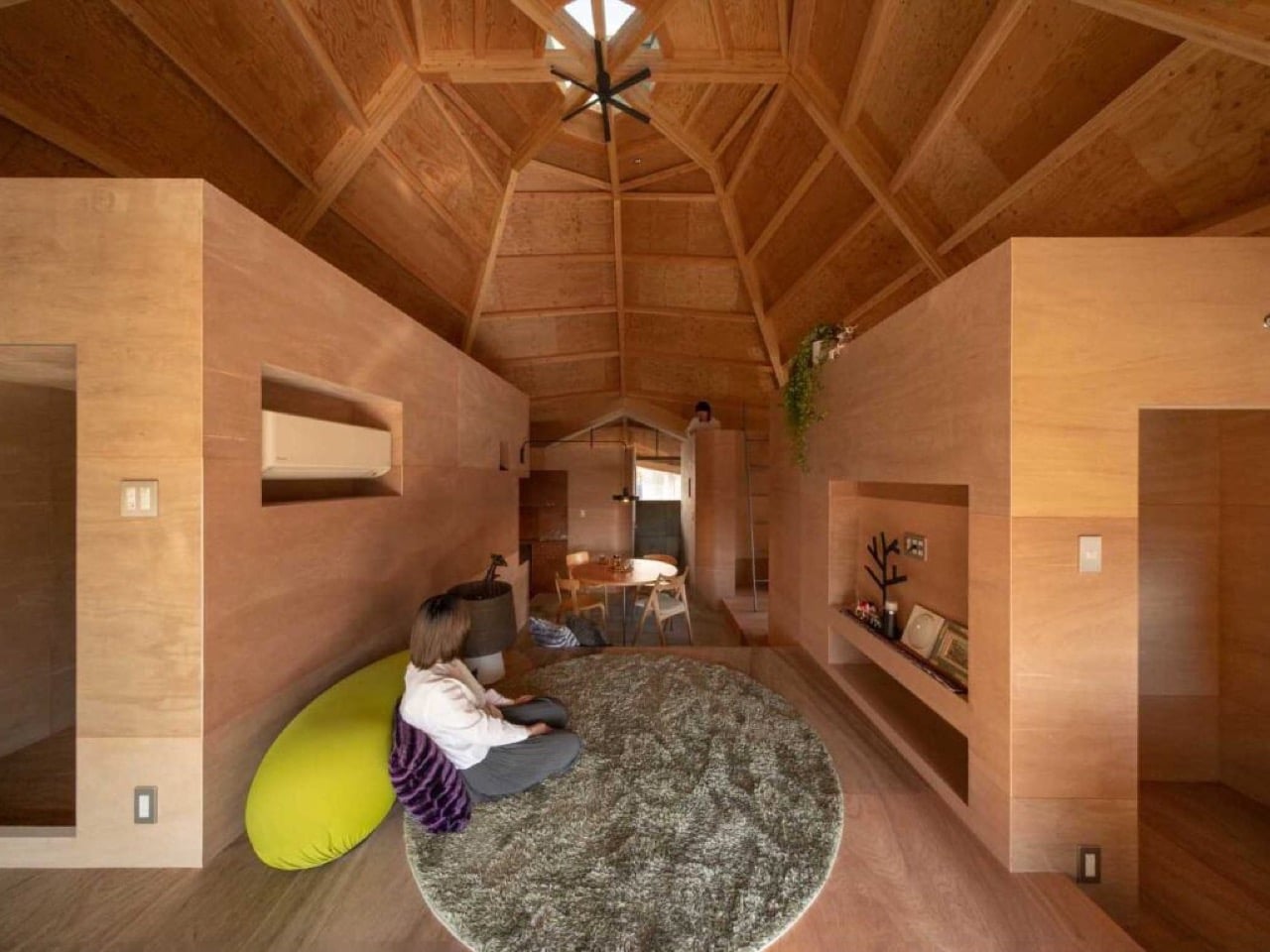
All of the cabin’s original partition walls were stripped out entirely, leaving just the building’s envelope standing. In the center of what became one long, open living space, the architects placed a circle. A sunken circular living room, specifically, with a low perimeter wall that integrates the kitchen sink and storage on one side, and steps leading down into the seating area on the other. Two decked terraces bookend the space, one on each facade of the house.

Project architects Guillen Berniolles and Michele Sacchi described it as a direct response to the local lifestyle around Cap Ferret, where people are constantly moving between indoors and outdoors. “The local lifestyle revolves around constantly moving in and out of houses, which led us to opt for a centrally sunken living room that creates a circulation flow all around,” they told Dezeen. The pit, in other words, isn’t just decorative. It gives the house its entire traffic pattern.

That reasoning matters because it pushes back against the way we usually justify bold design choices. We tend to dress them up in language about “flow” and “intention,” which often means nothing. Here, the logic is actually grounded in how real people use a real place. You come in from the terrace, the circle pulls you in, and then you drift out the other side. It’s a house that choreographs you without you noticing, and that kind of invisible architecture is genuinely hard to pull off.

The material choices are just as considered. Solid wood furniture and veneer are used throughout as a nod to the surrounding Landes forest, which is not only France’s largest but also Europe’s most extensive man-made forest. That context matters. A coastal house in Cap Ferret sits at the intersection of sea and forest, and the design doesn’t pretend otherwise. It leans into both, which gives the whole renovation a rootedness you don’t always see in coastal homes.

A separate guest annexe, clad in dark timber, sits to the west of the main cabin, blending quietly into the tree trunks around it. It’s the kind of restrained detail that separates a thoughtful renovation from a merely stylish one.

The conversation pit feels timely for a reason that goes beyond nostalgia. We spend so much time designing spaces for productivity, for content, for function, that a space designed specifically for conversation feels almost radical now. A sunken circle in a beach house that says, essentially, sit here and talk to each other, is a quiet but pointed statement. I don’t think it’s a coincidence that it lands now.

Studio Razavi has always been good at finding the architectural move that feels both inevitable and completely unexpected once you see it. Seaside House is that in full. The shell stayed. Everything else became about the circle at the center of it, and somehow, that’s more than enough.

The post A 1930s French Cabin Brought Back the Pit, and It’s the Best Part first appeared on Yanko Design.
SOM’s New Kazakhstan Towers Look Like a Sci-Fi Set. They’re Not.

Kazakhstan is building a new city, and it just got a centerpiece worthy of the ambition. On March 5, 2026, Skidmore, Owings & Merrill unveiled the Alatau Iconic Complex and Gateway District, a pair of pyramidal towers set to define the skyline of Alatau, a brand-new city rising along the Almaty–Qonaev highway in south-eastern Kazakhstan. This is the same firm behind the Burj Khalifa, One World Trade Center, and Jin Mao Tower. The pedigree speaks for itself.

Alatau is planned to span 88,000 hectares across four districts, positioned along the Western Europe–Western China transport corridor, with a master plan stretching through 2050. SOM’s Iconic Complex sits at the heart of the city’s fourth zone, the Gateway District, designed as a dense, walkable neighborhood anchored by multimodal transit. It’s not just a building drop. It’s a full urban proposition.

Designer: Skidmore, Owings & Merrill

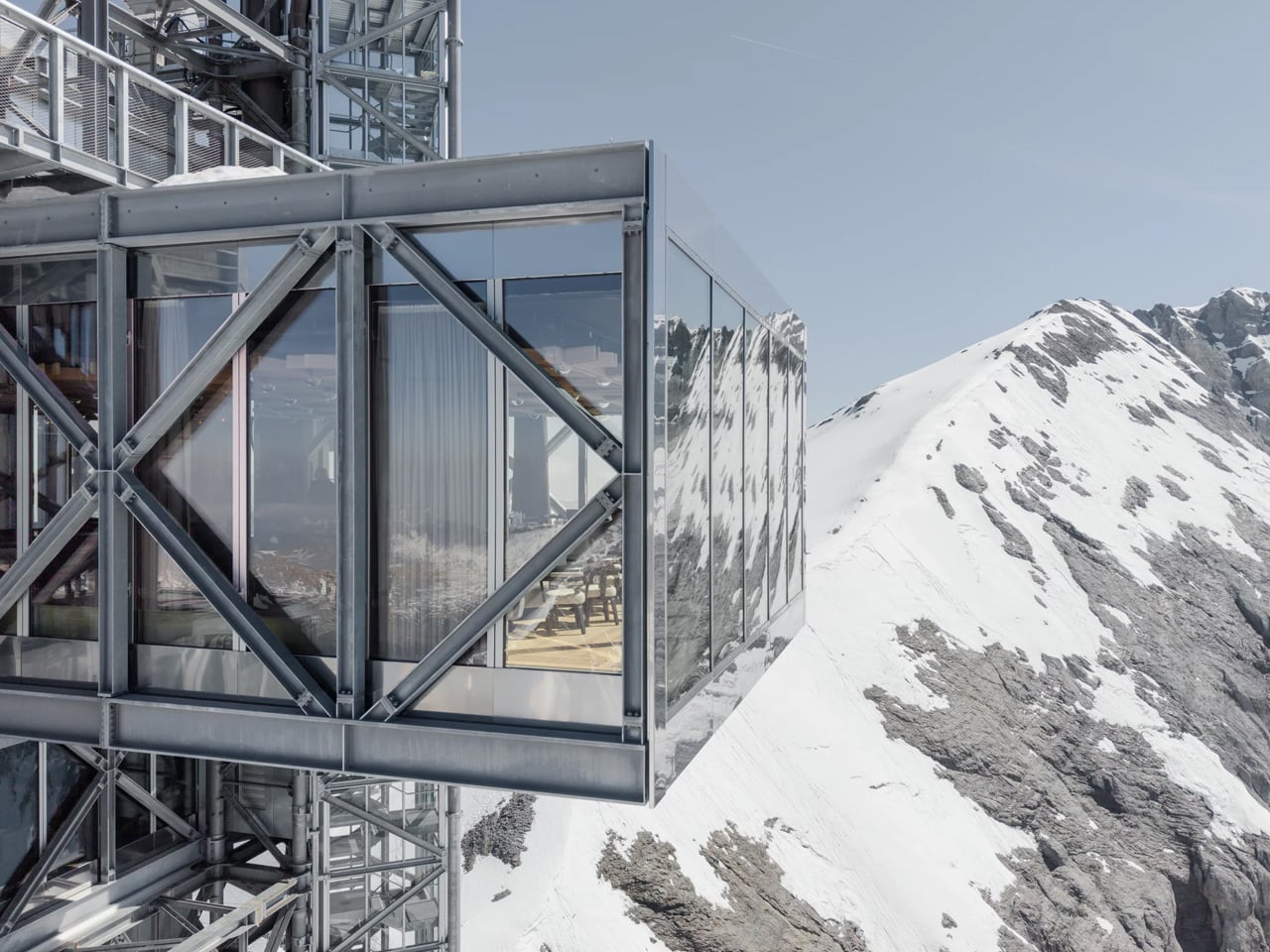
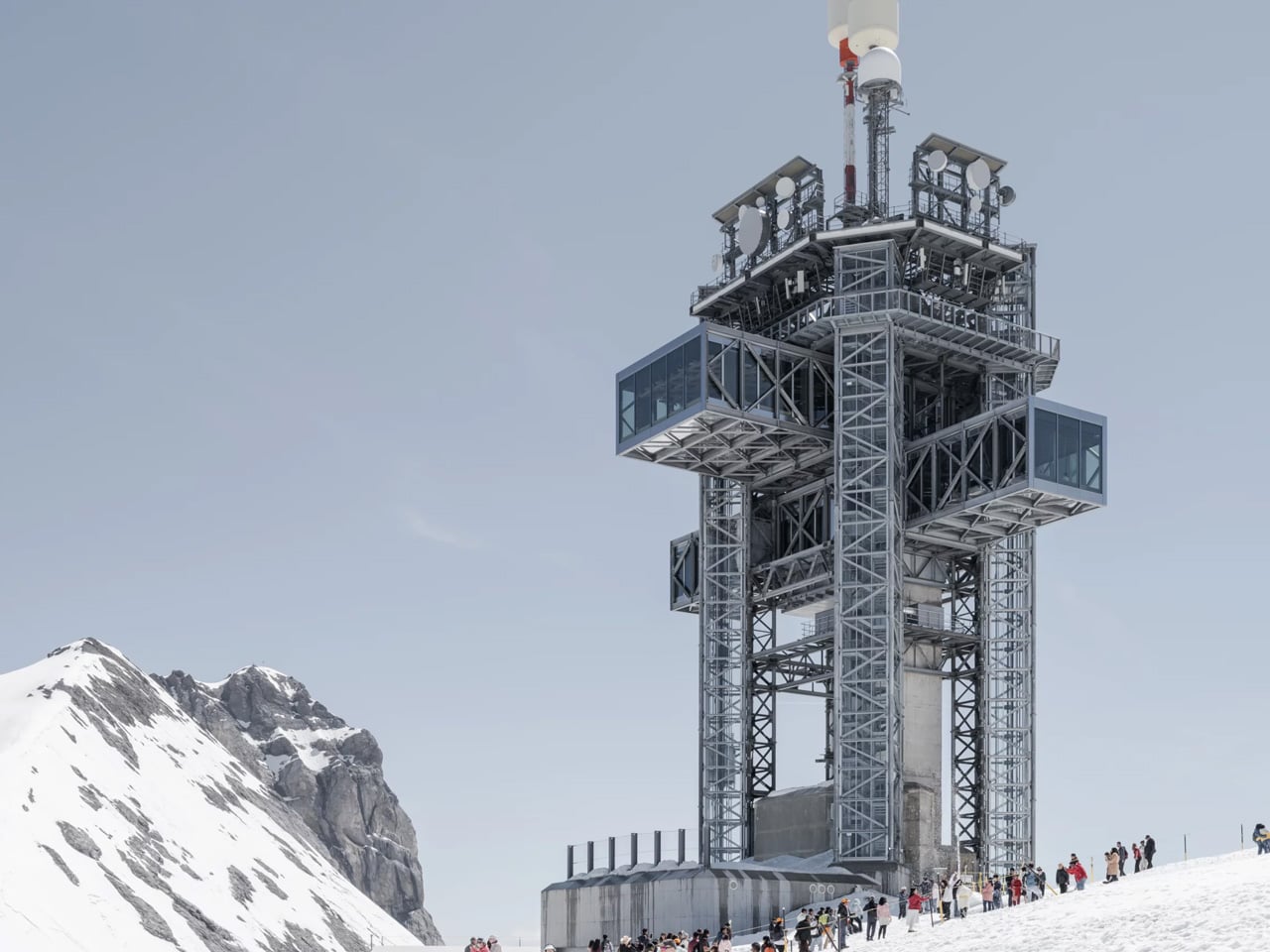
The complex totals 276,800 square meters across two towers: a 272-meter, 56-floor primary skyscraper housing offices and premium residences, and an 80-meter luxury hotel tower with branded residences and retail. When complete, the taller structure will be the tallest building in the region. The design concept, titled “Mountain Landscape,” pulls directly from the Trans-Ili Alatau, a 350-kilometer range of valleys, glaciers, and stratified terrain that forms the natural backdrop to the site. SOM translated that geology into architecture through stepped, wedge-shaped volumes, each level lined with external terraces and large central atria that pull light deep into the interiors.

Engineering the towers required serious thinking. The region sits in a high-seismic zone, which led to a dual structural strategy: a Japanese seismic damping model that absorbs earthquake energy through controlled structural movement, paired with an American reinforced framework built around a high-strength steel skeleton. The project also integrates eVTOL infrastructure alongside pedestrian and transit networks, future-proofing the complex well beyond its 2029 completion date.

Construction has been handed to China State Construction Engineering Corporation, a partnership announced during President Kassym-Jomart Tokayev’s state visit to China in September 2025. Full-scale excavation is scheduled to begin in May 2026, with total private investment exceeding $800 million.

For Kazakhstan, this goes beyond architecture. With Parliament recently approving a Constitutional Law on Alatau’s special status, the Iconic Complex is set to become the economic and cultural core of Central Asia’s most closely watched new city. SOM has built skyline-defining towers before. This one carries the weight of an entire nation’s next chapter.

The post SOM’s New Kazakhstan Towers Look Like a Sci-Fi Set. They’re Not. first appeared on Yanko Design.
The Ping Pong Tables at This French School Have No Rules

Most of us learned to play ping pong the same way: flat table, net in the middle, bounce, smash, repeat. The rules were never really up for debate. You either knew them or you didn’t, and the table gave you very little room to imagine doing things differently. That’s exactly the kind of thinking French architecture studio Exercice decided to challenge.

Their project, called Ping Pong Park, recently landed at a high school in Ingré, France, and it is not your standard schoolyard furniture. Exercice installed four table tennis tables on the school grounds, each one looking like it wandered out of an art gallery and accidentally became a playground fixture. They were designed to make children question the rules, experiment with play, and figure out how the game works for them, not for a referee.

Designer: Exercise

The four tables each have a distinct character. The Rebound table has raised sides that expand the playing surface vertically, so the ball doesn’t just travel across the table. It can careen off walls you didn’t anticipate. Every rally becomes a small physics experiment. The Golf table narrows at the centre and features holes on either side that can count as a winning point or a foul, depending entirely on what players decide before the match starts. Even the geometry pushes you toward longer, more strategic shots. Then there’s the Rotating table, which is circular and designed for tournante, the French schoolyard favourite where multiple players run around the table taking turns hitting the ball. The round shape accommodates up to six or seven players and keeps everyone moving, which means the social energy is essentially designed into the form.

Exercice describes these as “social sculptures: accessible, participatory and constantly evolving through collective appropriation.” That’s a mouthful, but it’s also kind of perfect. The tables aren’t static objects kids use and then forget. They change meaning every time a new group decides what the rules are going to be that afternoon. One day the holes in the Golf table are winning points. The next, they’re instant fouls. The table is genuinely indifferent either way, and that neutrality is the whole idea.

I love this approach because it trusts kids to be more interesting than we usually give them credit for. The whole premise assumes that children are capable of designing their own experience if you give them the right starting point. A regulation ping pong table says: here are the rules, now compete. The Ping Pong Park tables say: here’s a surface, now figure it out. That’s a subtle but genuinely different message about what play is for, and what sports equipment is really supposed to do.

The design itself holds up visually, which matters more than it might seem. The tables are made from galvanised steel and high-pressure laminate, built to survive daily use, not just an exhibition. They have clean, confident shapes that could hold their own as standalone sculptures in a public space. Exercice has framed them that way deliberately, noting that each table has a “distinctive aesthetic identity” that allows it to function as an autonomous artwork. The fact that they’re also durable enough for a schoolyard is the point. Art that only survives gallery conditions is less interesting to me than art that survives contact with twelve-year-olds.

The complete range, including indoor and outdoor versions, is available through French brand Nedj. So while the Ingré school installation is the most visible showcase right now, these aren’t a one-off concept piece locked behind a museum velvet rope. They’re in production, which means the logic behind them, that sports equipment can also be social infrastructure, is something other schools and public spaces could genuinely access. That’s the part that feels most exciting. Good ideas should travel.

Play is serious business when it’s done well. Exercice seems to understand that the best playground equipment doesn’t hand children a script. It hands them a question. And a ping pong paddle.

The post The Ping Pong Tables at This French School Have No Rules first appeared on Yanko Design.
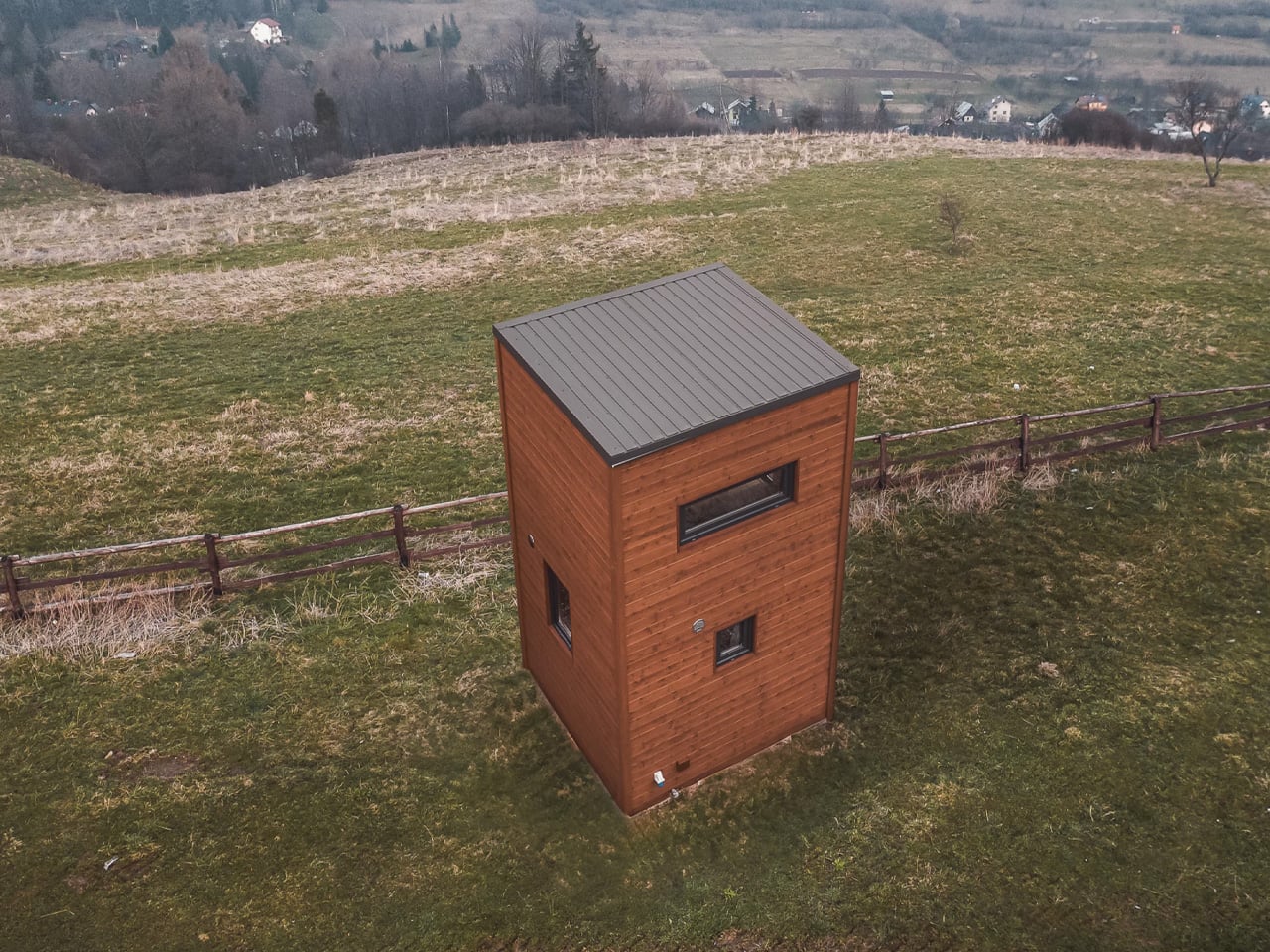
The Erica by Craft House Is the Tiny Home That Thinks Vertically

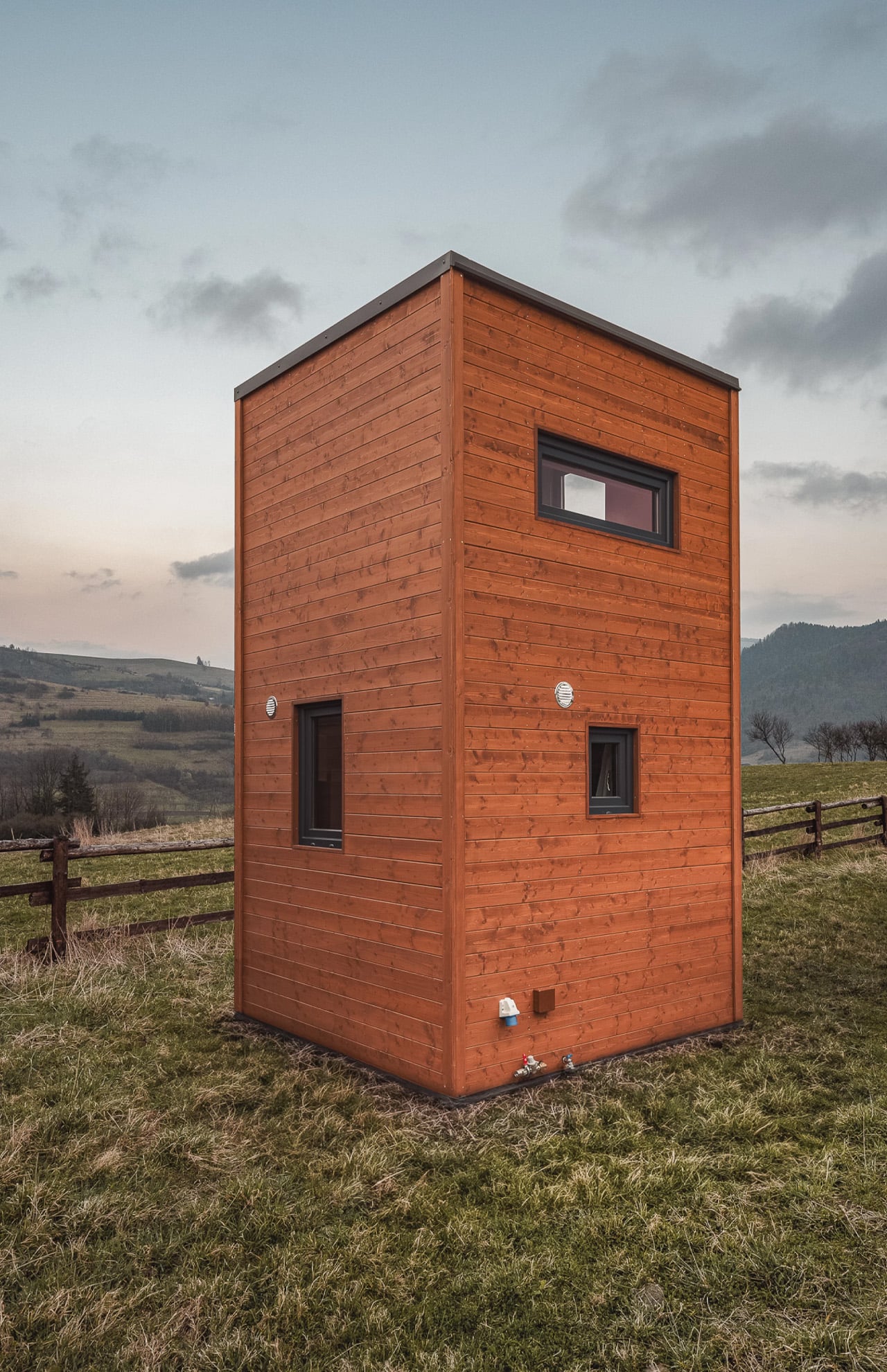
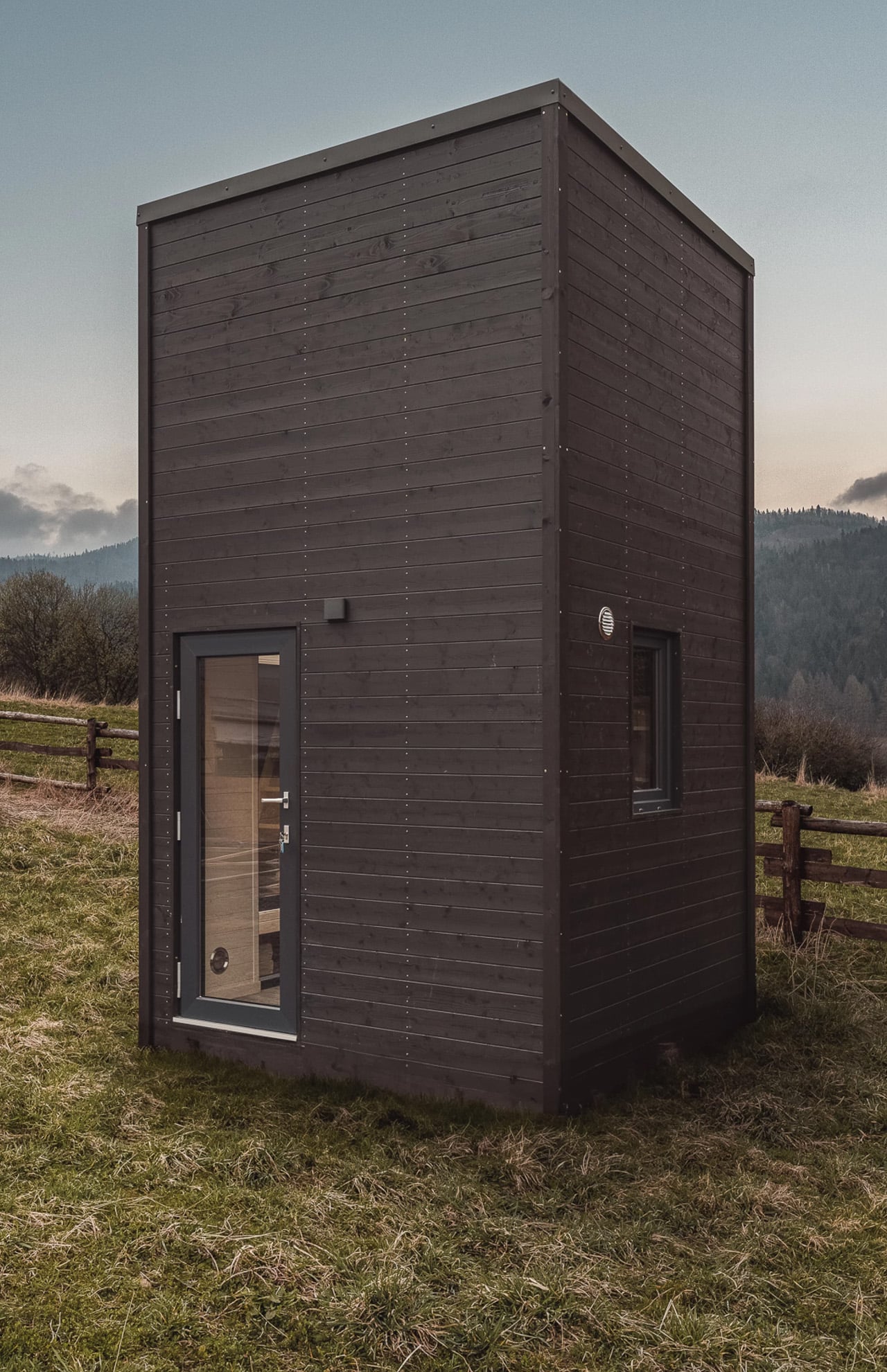
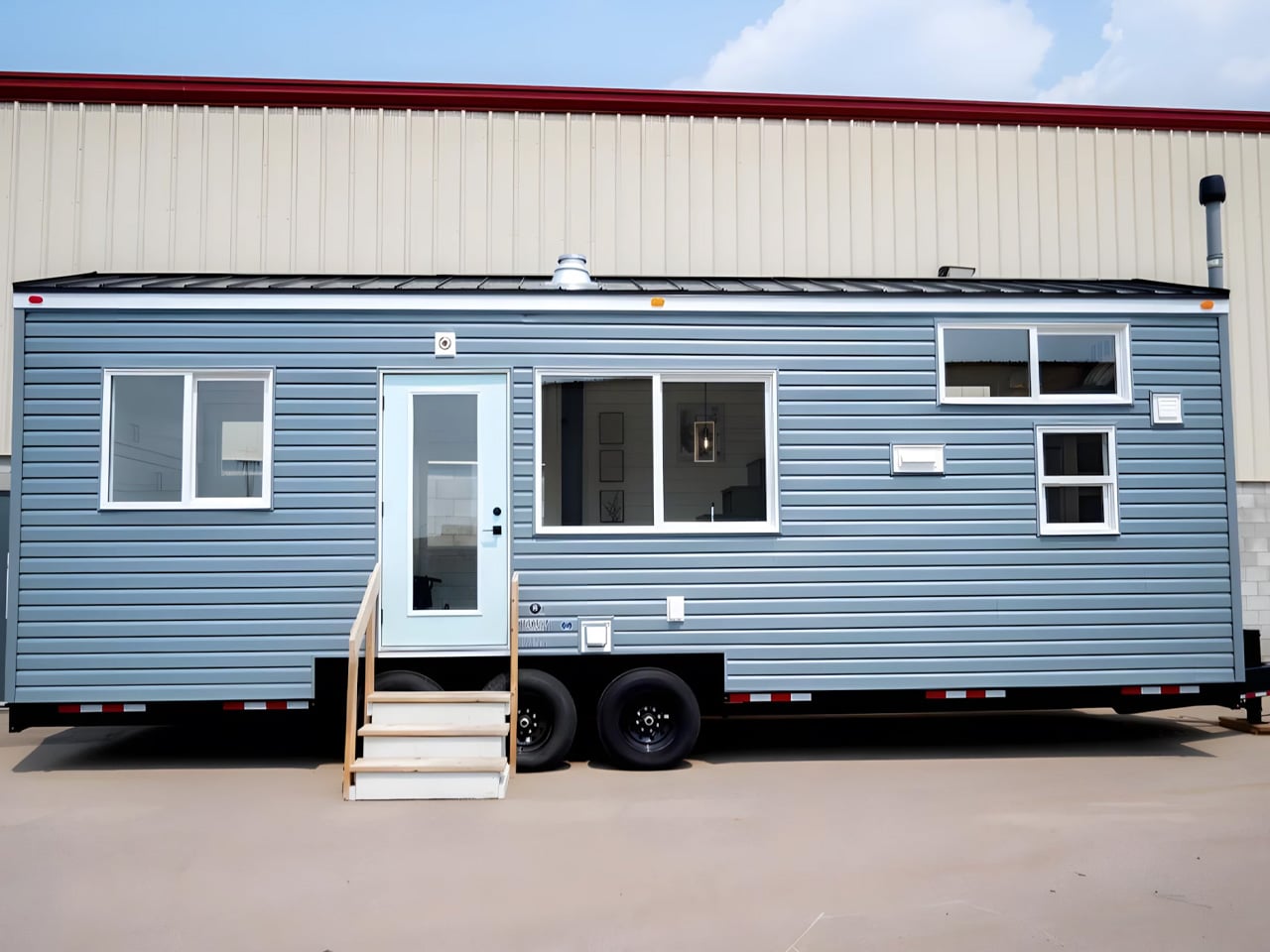
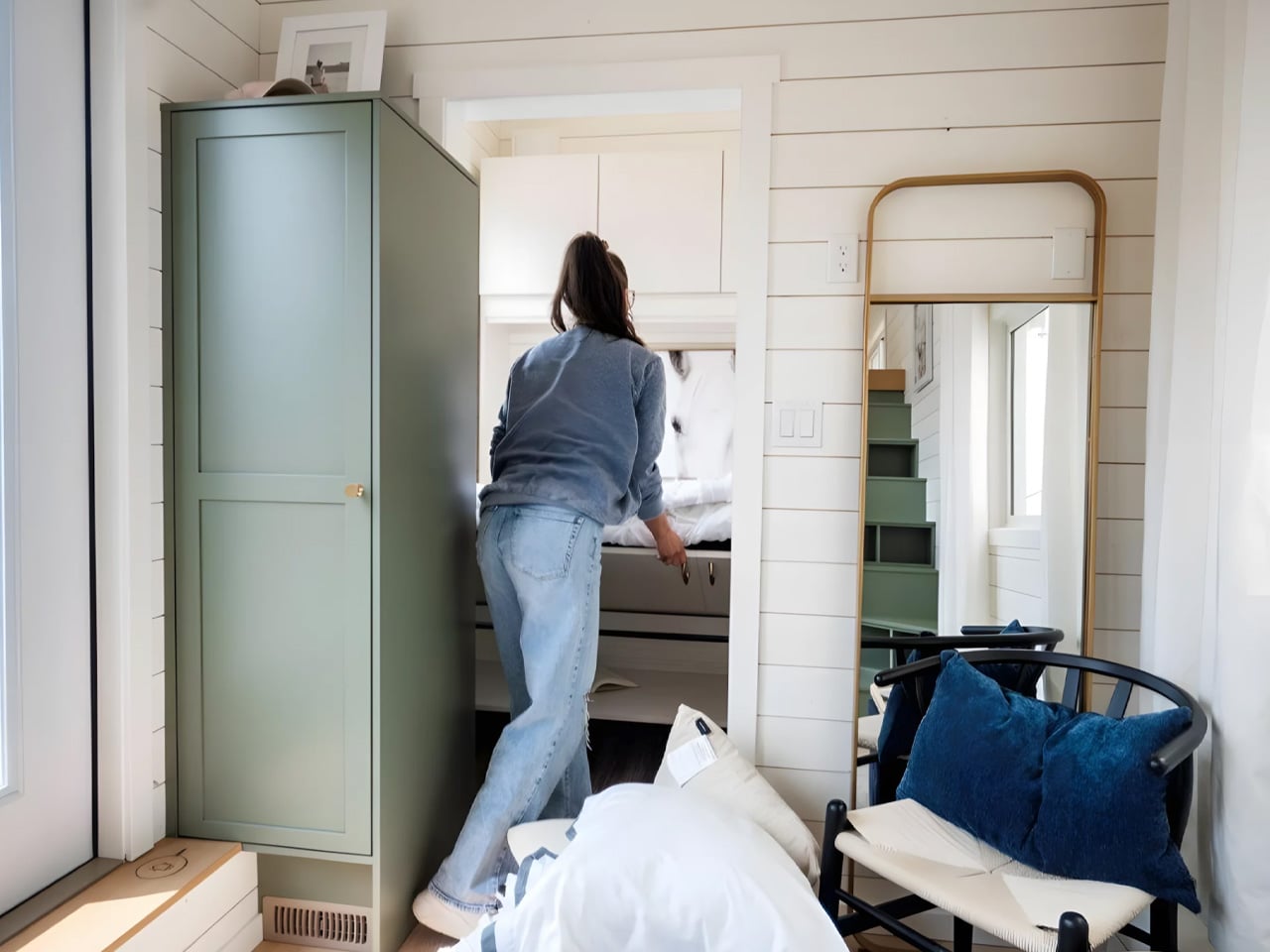
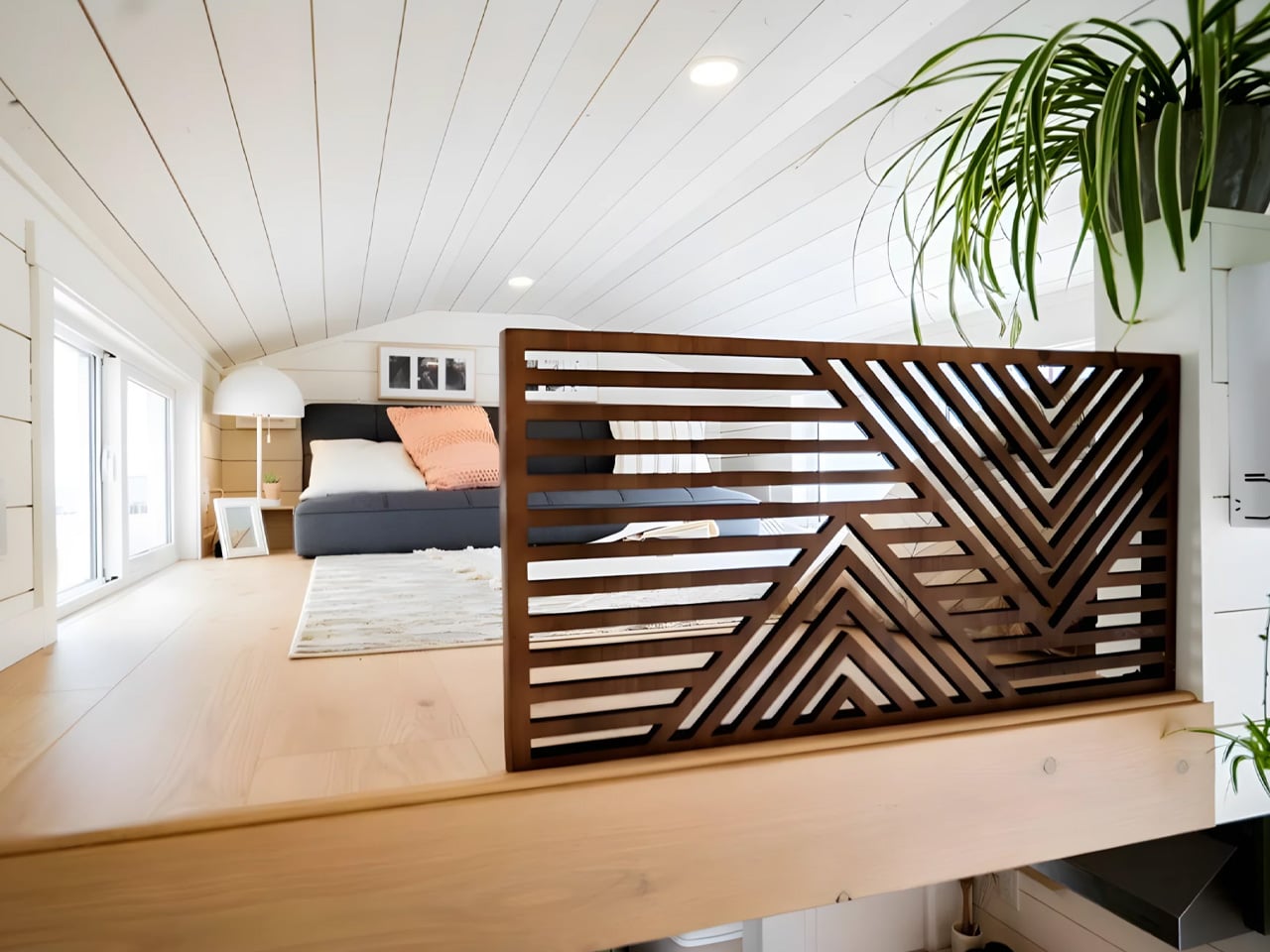
Tiny living has always been a negotiation. You trade square footage for freedom, density for mobility, and somewhere in that exchange, comfort usually takes the first hit. The Erica by Craft House is a direct response to that tradeoff, a 24-foot towable tiny home that refuses to accept the ceiling as a ceiling. Craft House, a builder with roots across Poland, Austria, and Ireland, designed the Erica around a simple but underused idea: when you can’t build out, build up.

The rooftop terrace is the home’s defining move — an accessible outdoor space that extends livable square footage without touching the home’s road-legal width. It’s the kind of solution that makes you wonder why more tiny home builders haven’t gone there. The home sits on a double-axle trailer and can be fitted with an optional ground-level deck, shifting it from purely mobile to something closer to semi-permanent. That flexibility is part of the appeal; Erica doesn’t force you to choose between a life on wheels and a home that actually feels settled.

Designer: Craft House

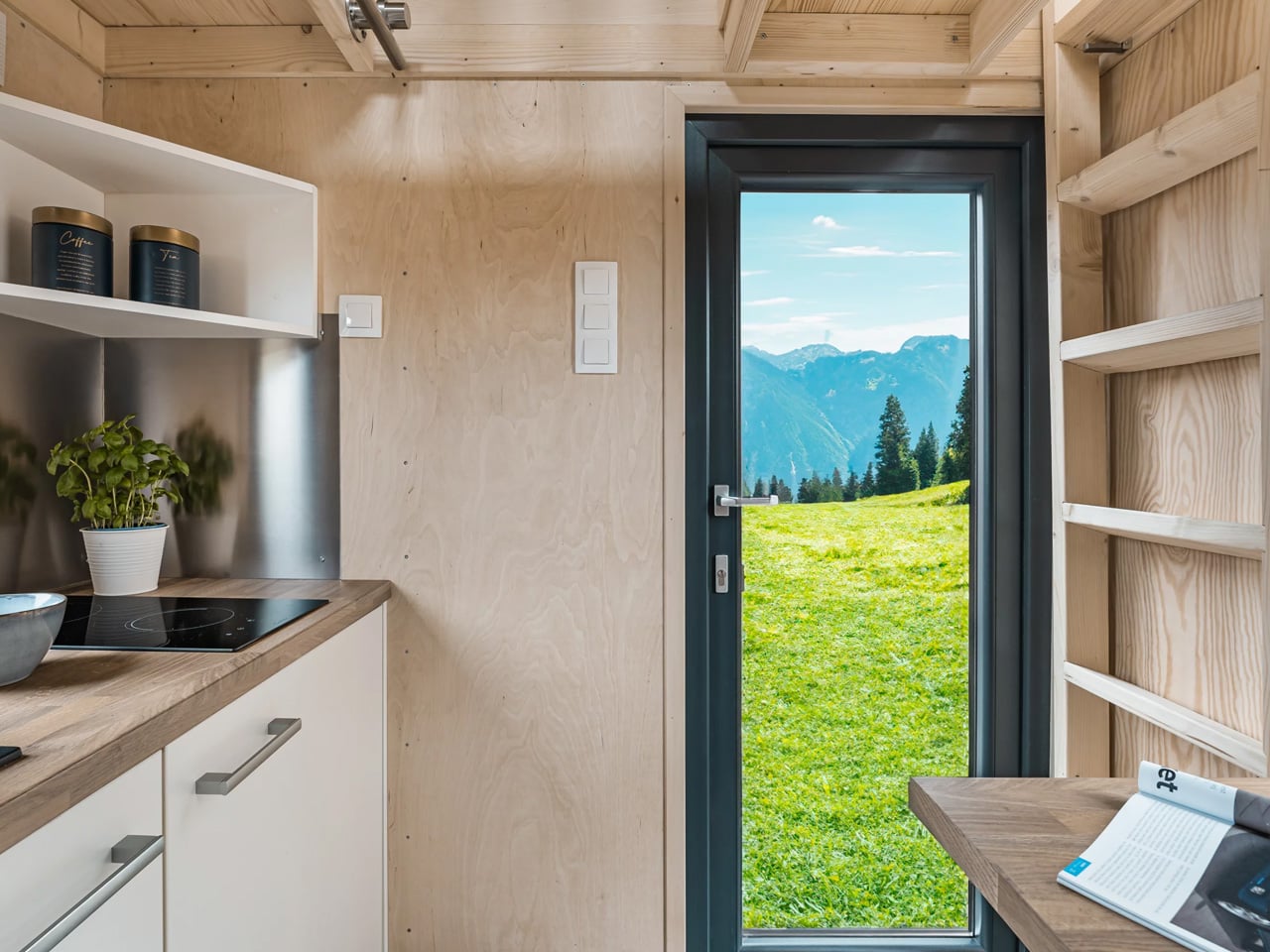
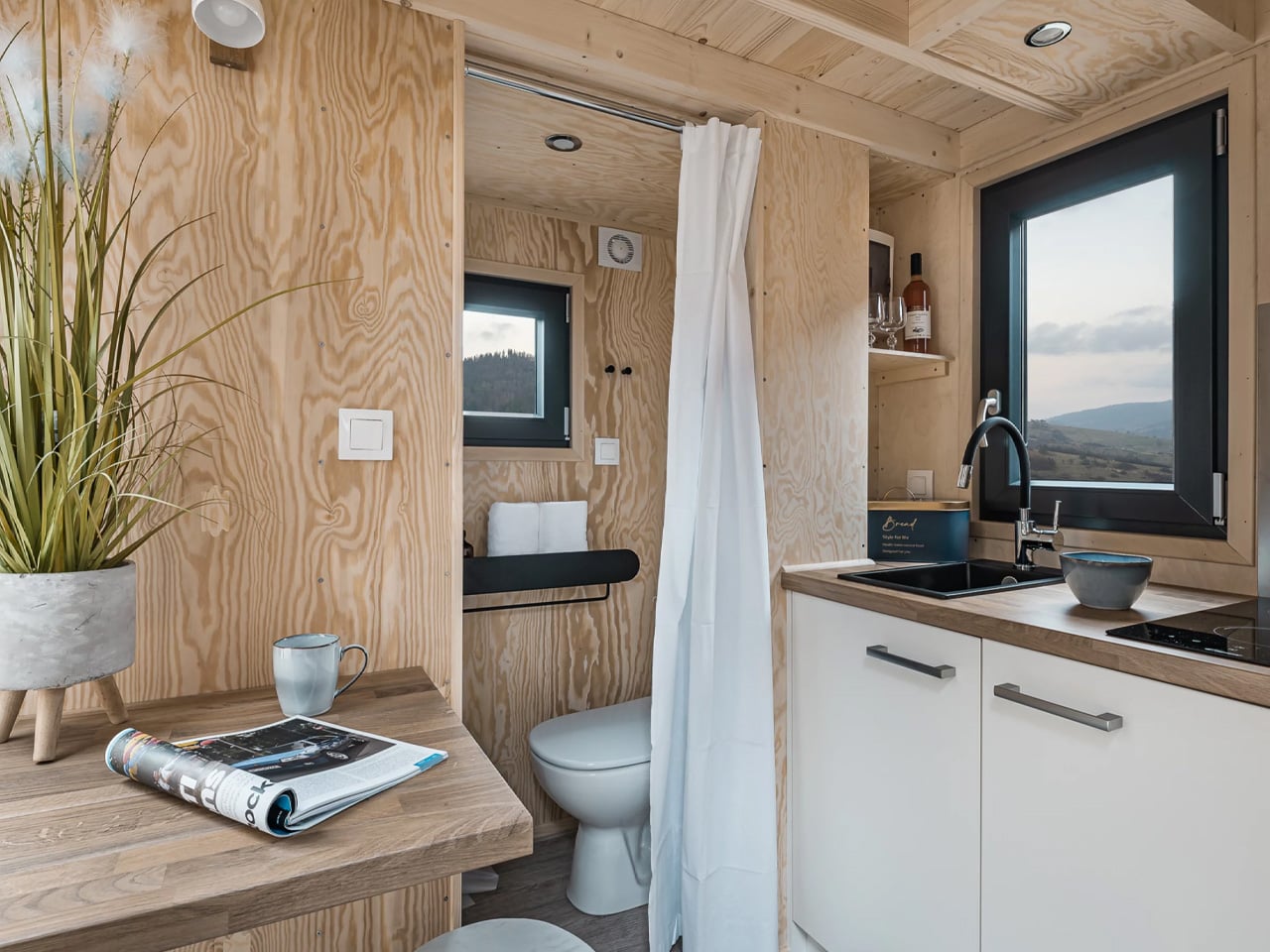
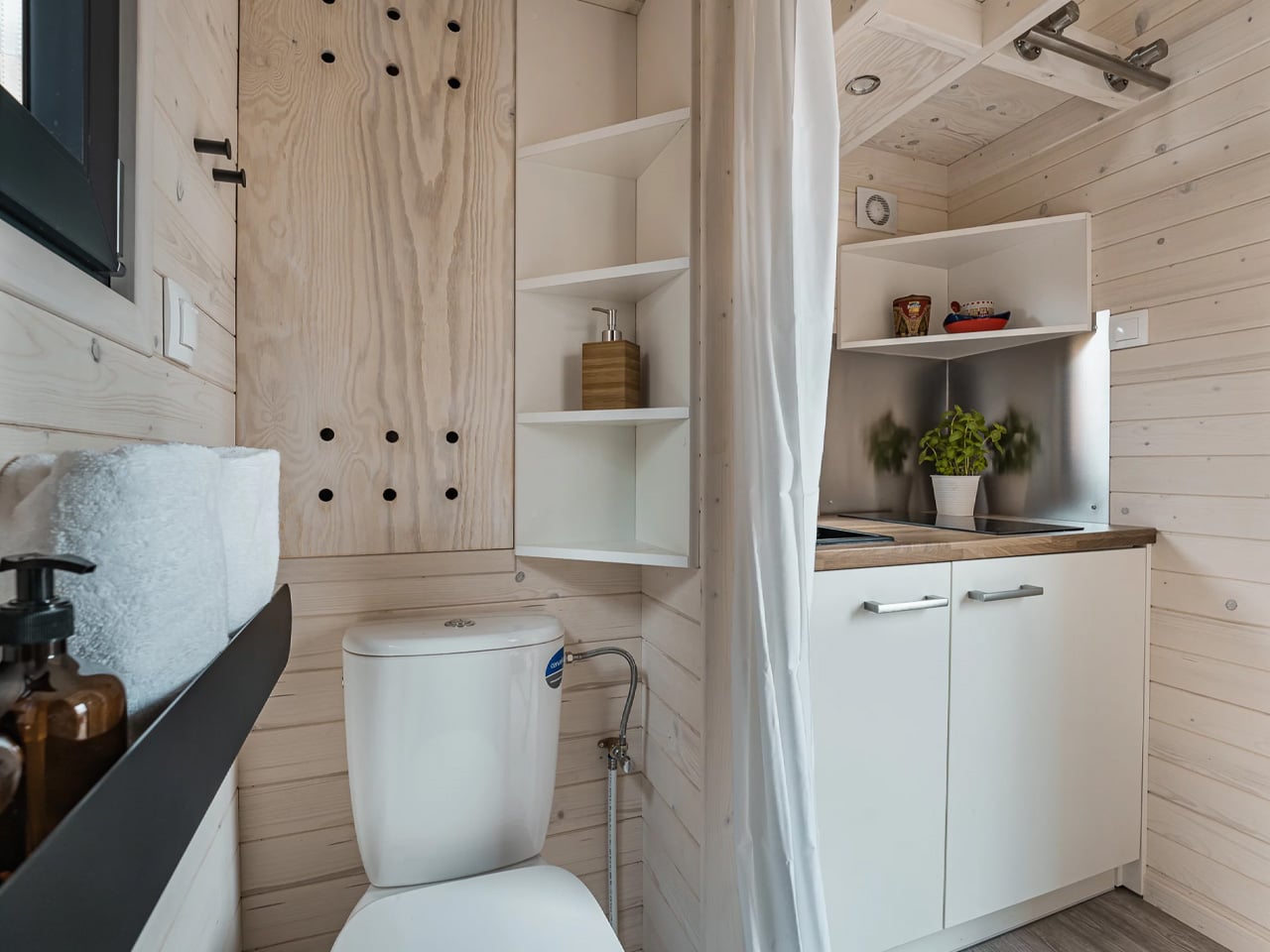
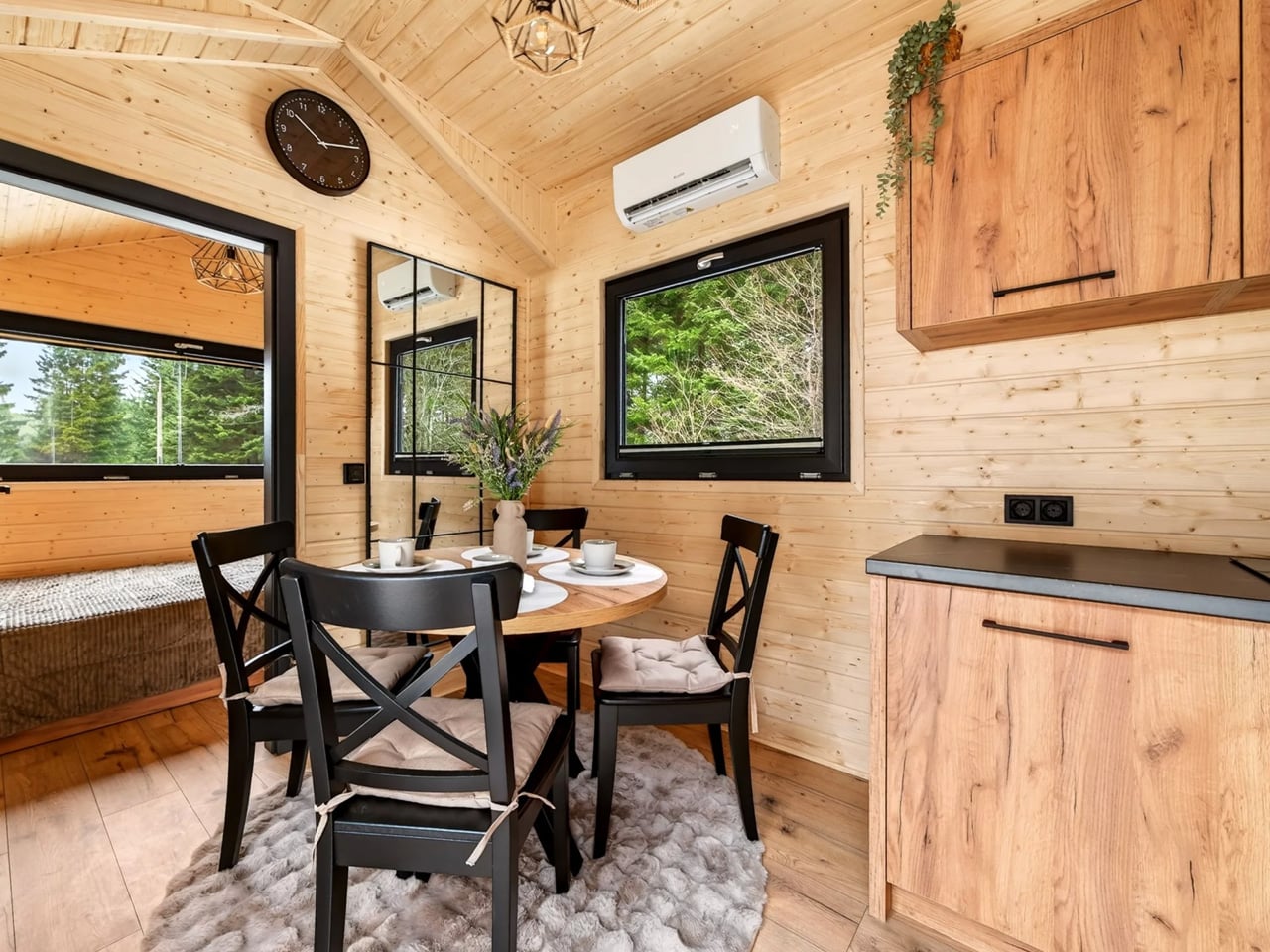
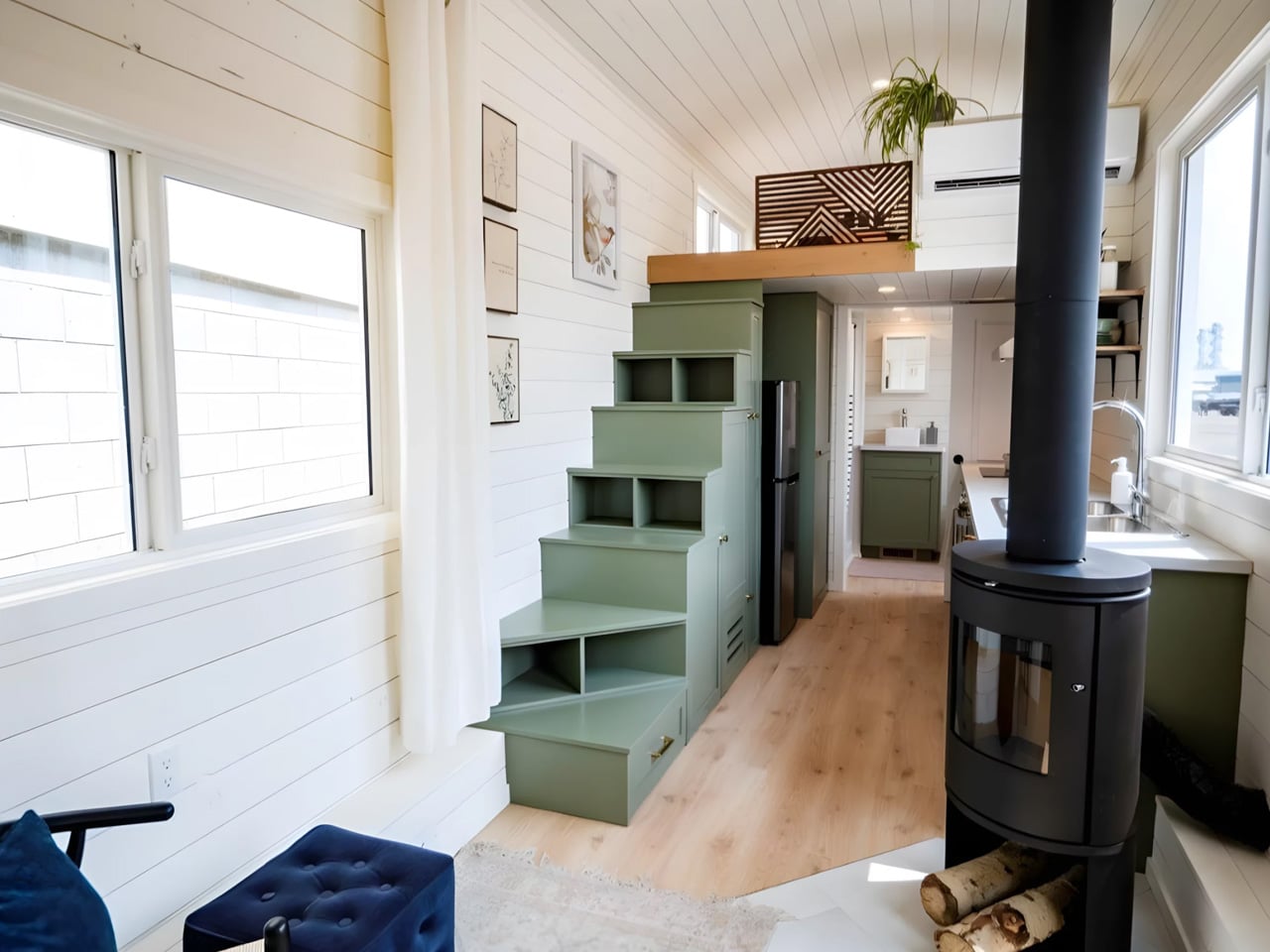
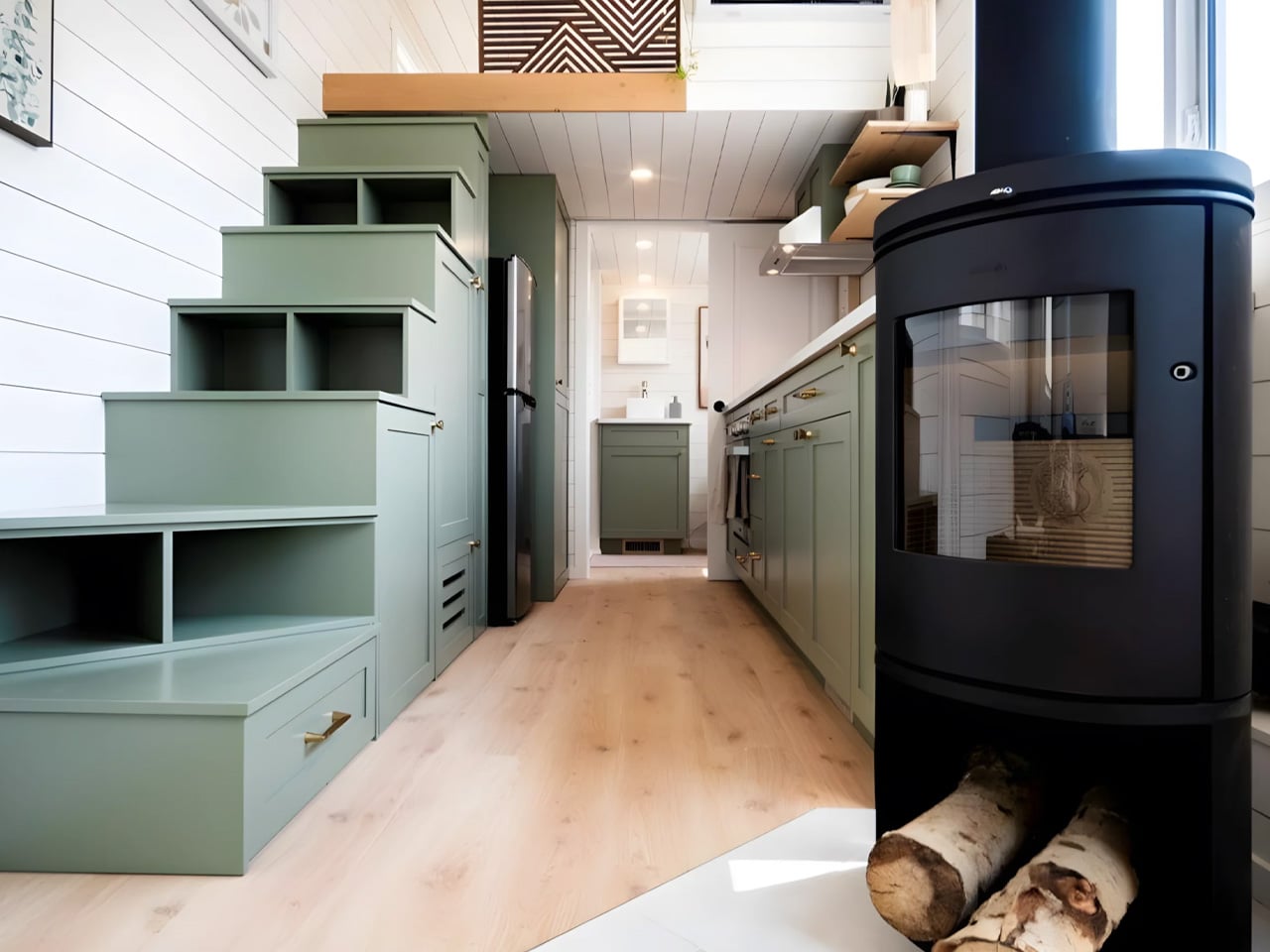
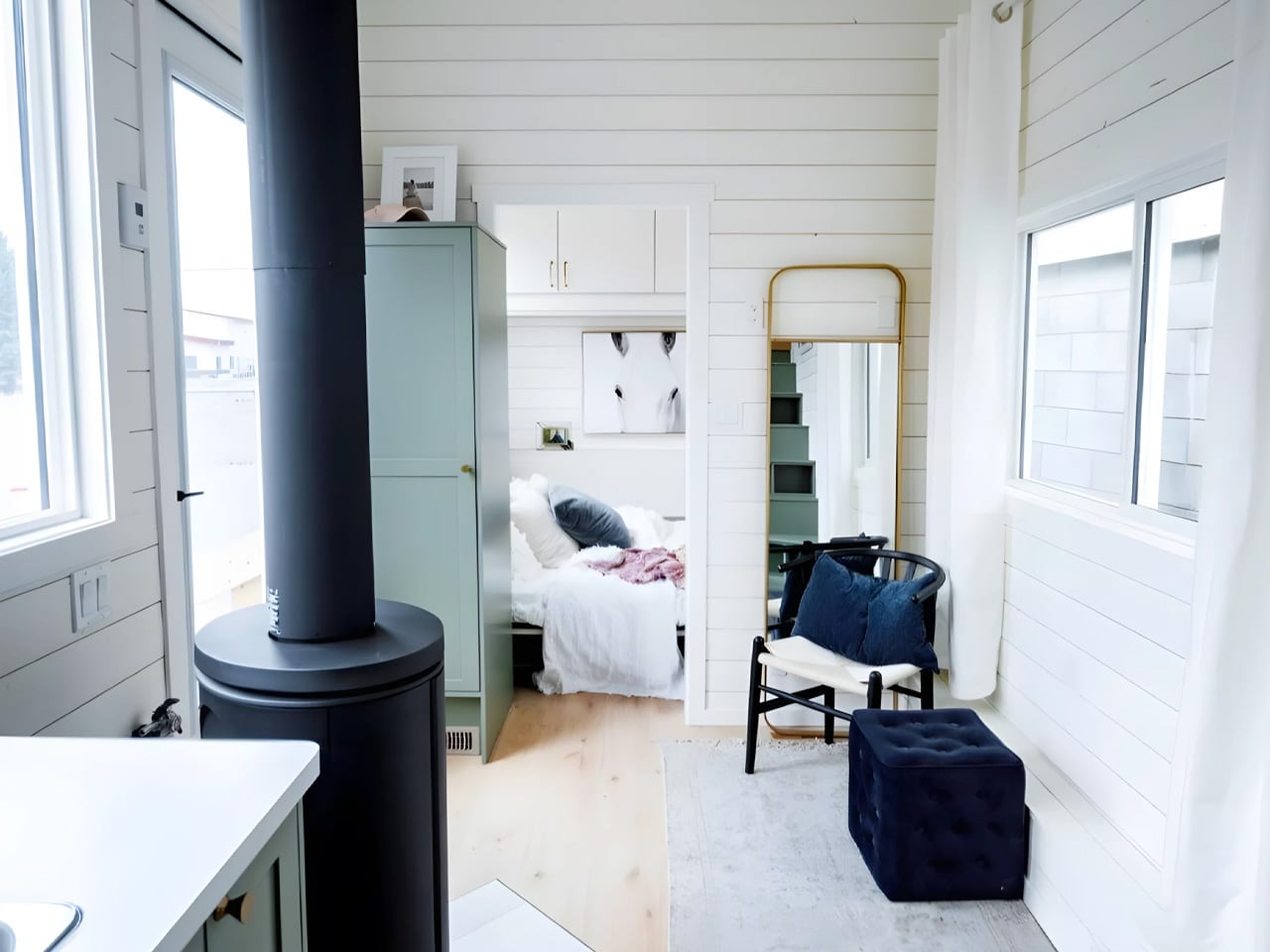
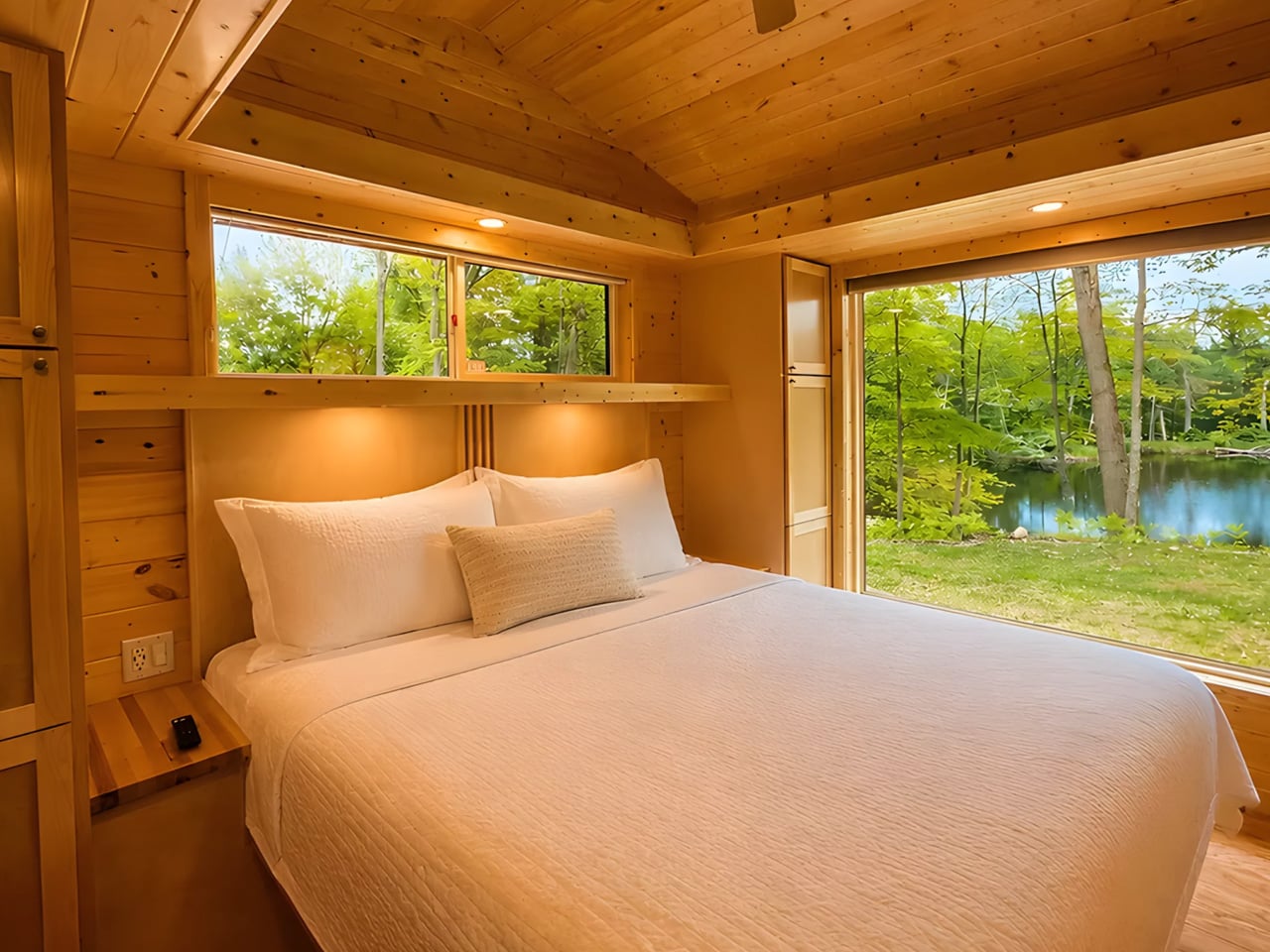
Step inside, and the ground floor, finished in Scandinavian spruce, does a convincing job of feeling larger than its 129 square feet. The open-plan layout keeps the kitchen and living area in conversation with each other, which does a lot of the heavy lifting spatially. It’s a simple design decision that pays off immediately.

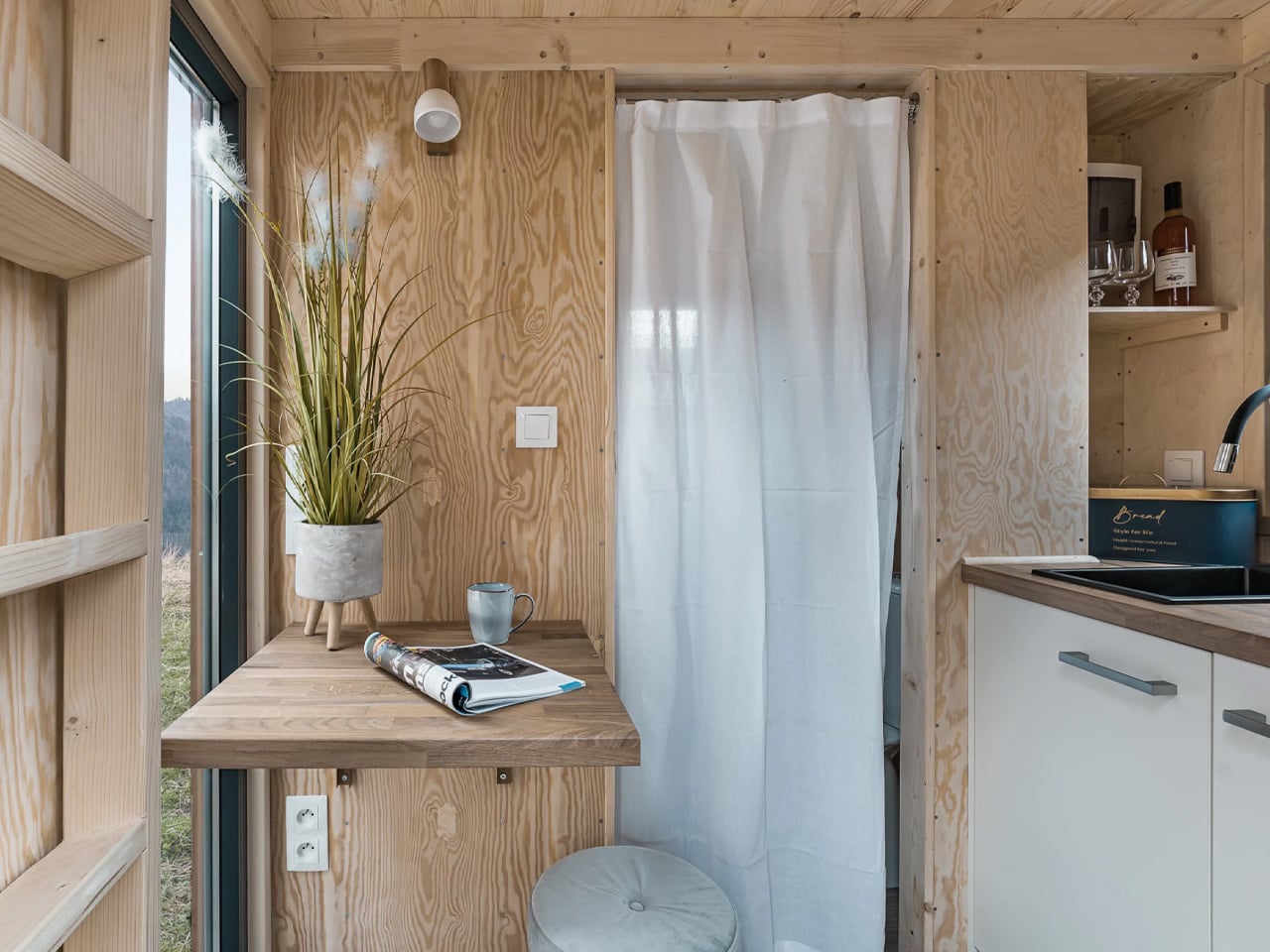
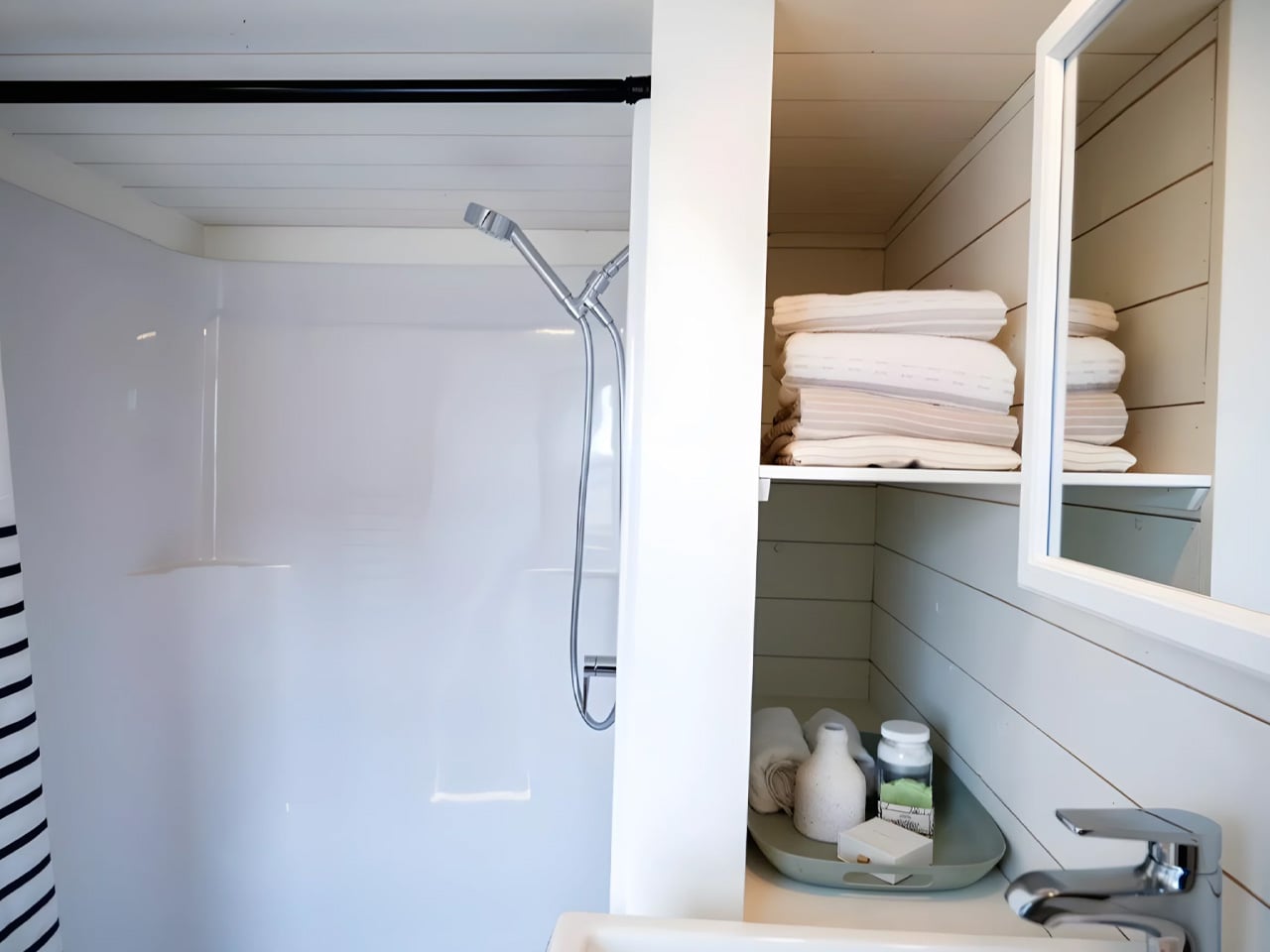
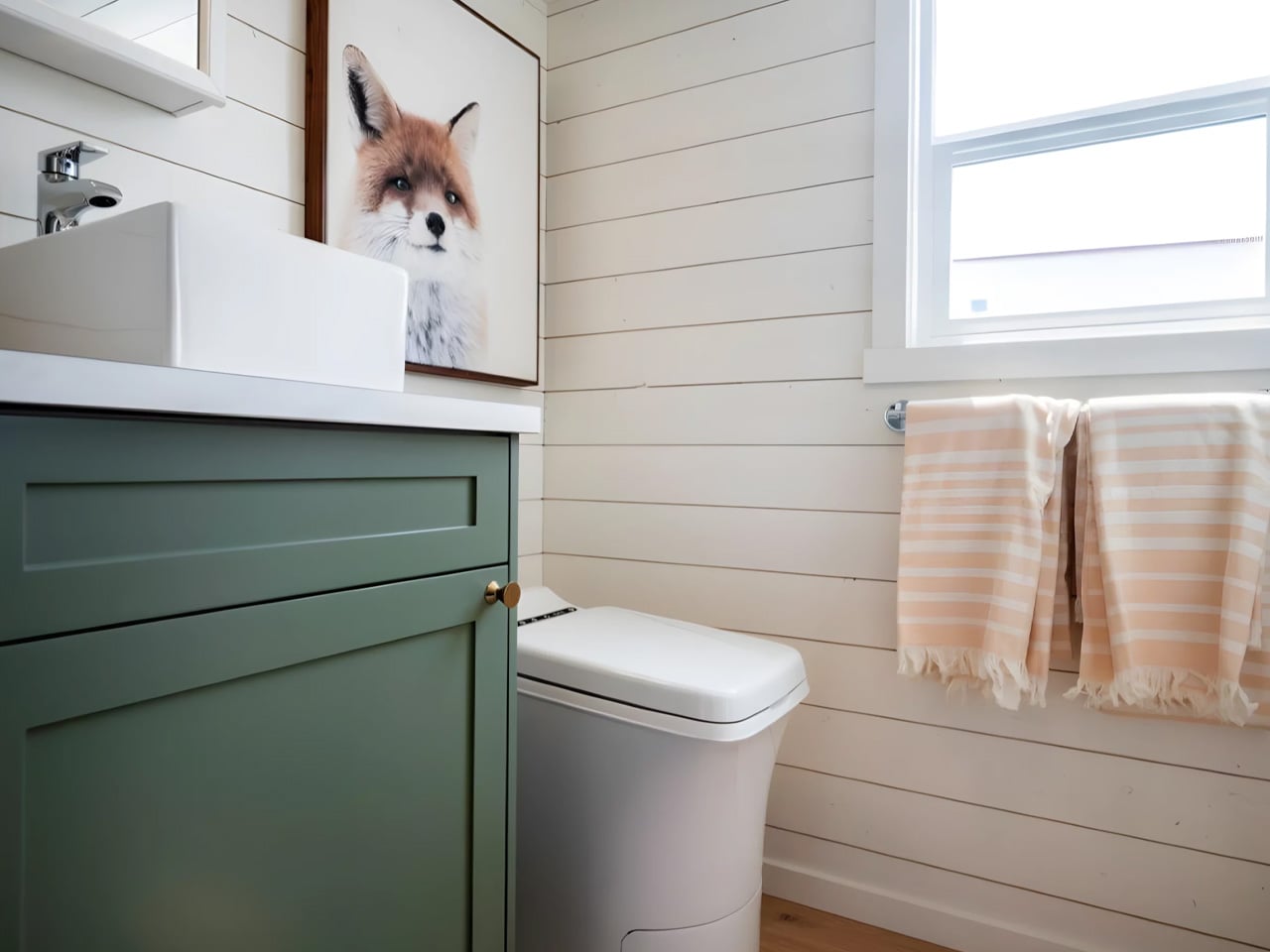
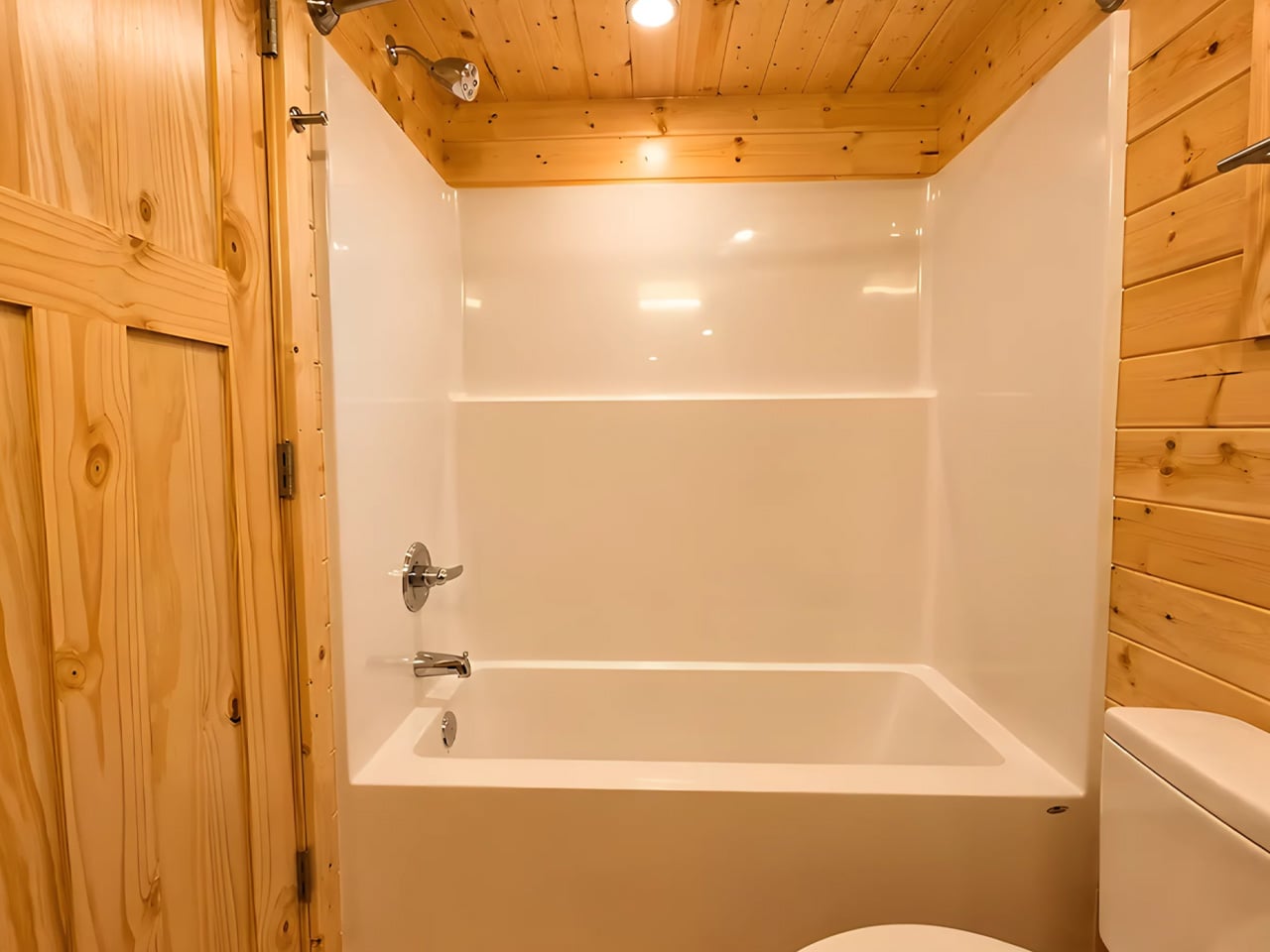
The kitchen is well-equipped: induction cooktop, oven, fridge, sink, and enough cabinetry to keep things from feeling like a camping setup. The breakfast bar seats two and doubles as a work surface…exactly the kind of multitasking that earns its keep in a space this size. The bathroom sits at the opposite end of the home with a flushing toilet, vanity sink, and glass-enclosed shower. Tight, but complete.

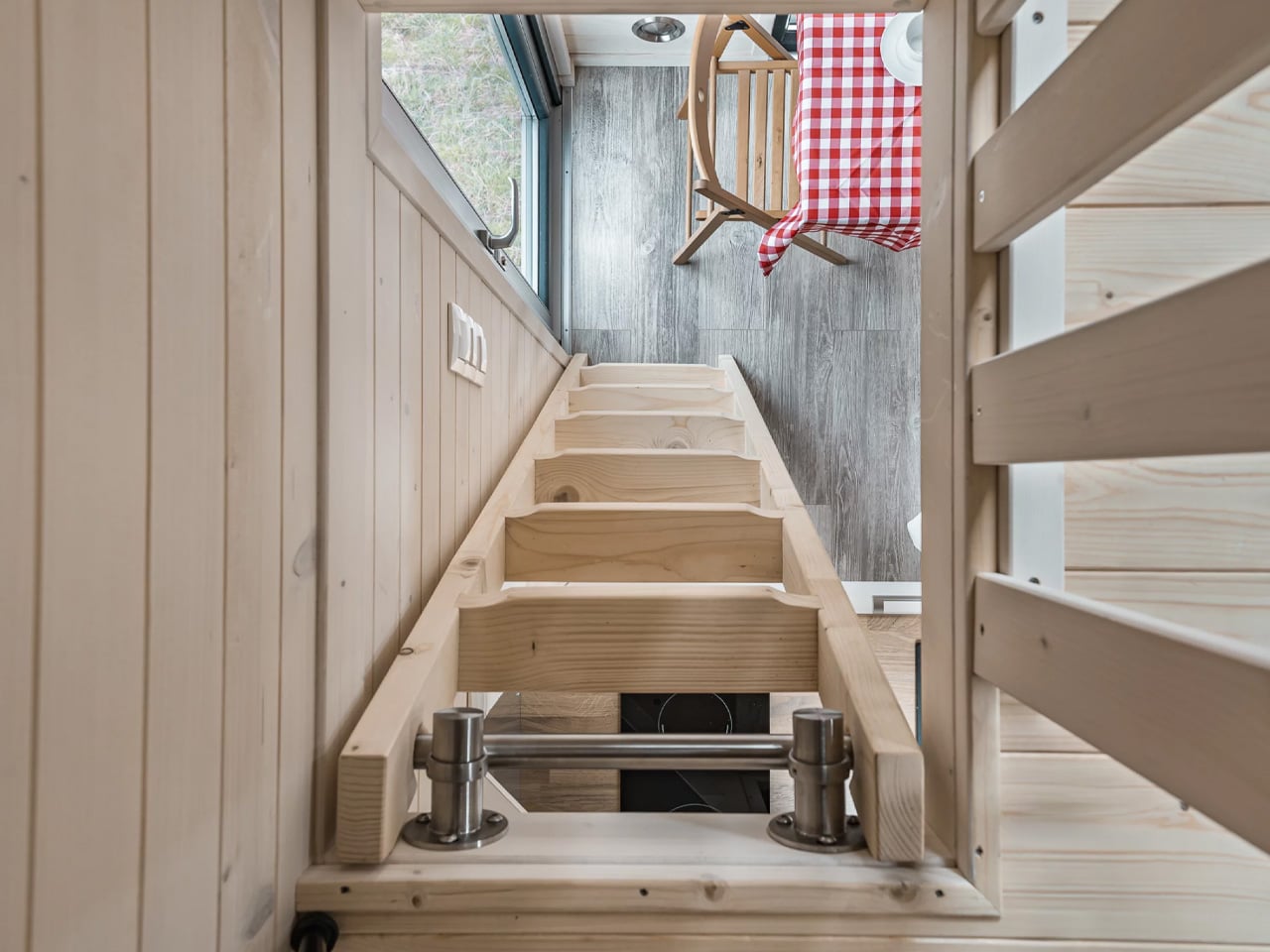
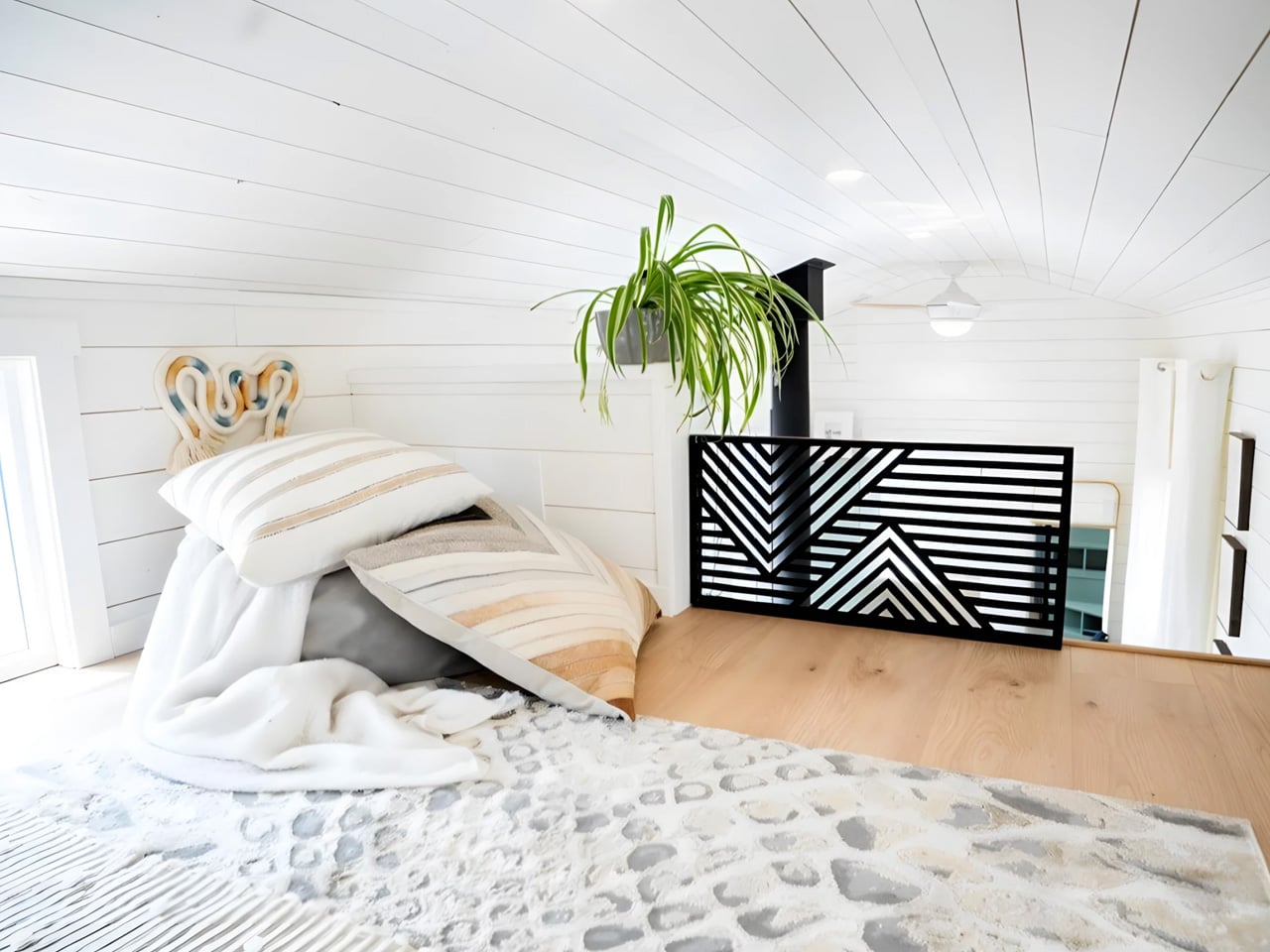
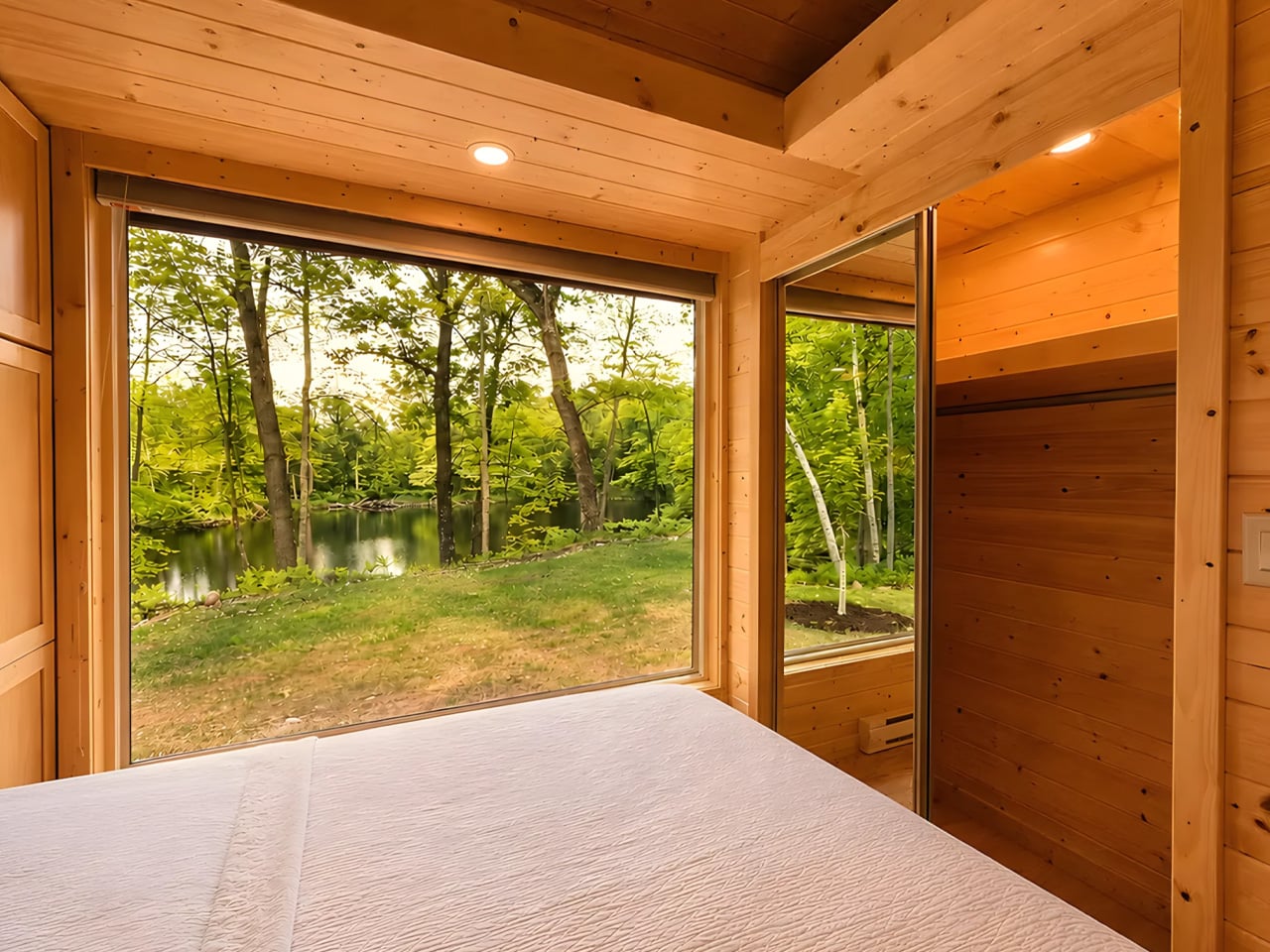
The bedroom is a loft reached via a staircase smartly built out with integrated storage underneath. The ceiling is low, as loft ceilings in tiny homes tend to be, but the tradeoff is a ground floor that stays clear and breathable. A mini-split air conditioning unit handles climate control; a practical choice that doesn’t eat into the floor plan the way bulkier systems would.

Solar power is available as an optional add-on, giving owners a path toward off-grid living without hardwiring it into the base spec. It’s a considered choice that keeps the entry point accessible while leaving room to grow. The Erica isn’t trying to reinvent tiny living — it’s trying to do it better. And in a market full of homes that look alike, that rooftop terrace alone makes it worth a second look.

The post The Erica by Craft House Is the Tiny Home That Thinks Vertically first appeared on Yanko Design.
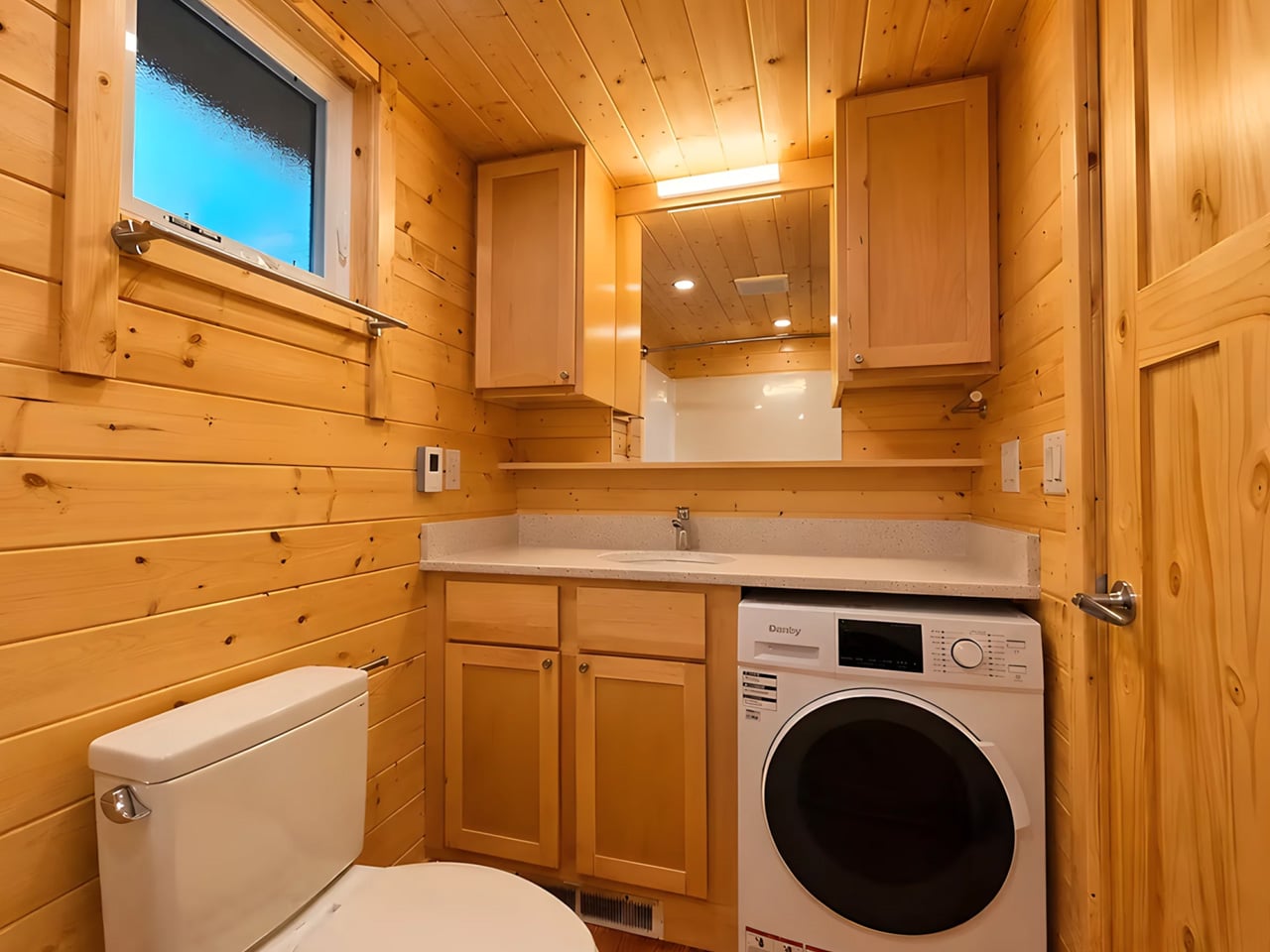
The Most Creative Public Space Design Right Now Is Made of Trash

The first time I saw images of Concrete Utopia, I assumed it was a render. The kind of thing that circulates on design Instagram before quietly disappearing into the “concepts that never got built” pile. Chunky grey pipes arranged in an open courtyard, people moving through and around them like it was always supposed to be this way. But the project is real, it lives outside the Museum of Contemporary Art Busan in South Korea, and the more I sat with the images, the more I found myself studying them the way you study something that seems simple until it isn’t.

Concrete Utopia is the work of South Korean designer Hyunje Joo. The material is straightforward: discarded concrete pipes, the kind used in construction infrastructure and typically hauled away once a build wraps up. What Joo does with them is the interesting part. Rather than disguising or dramatically transforming them, he arranges the pipes into a configuration that preserves exactly what they are while completely changing what they do. The cylinders are grouped and stacked at varying orientations, creating a composition that reads less like a salvage pile and more like a spatial argument. You can tell it was designed. You just can’t immediately tell how.

Designer: Hyunje Joo

The circular geometry is doing a lot of work here. Repetition is a classic design tool, but it tends to flatten things when overused. Joo avoids that by letting the pipes vary in how they cluster and orient without introducing anything new to the material vocabulary. The result is a rhythm that feels considered without feeling controlled. There’s a looseness to the arrangement that invites you in rather than holding you at a visual distance, which is harder to pull off than it looks.

What the design gets genuinely right is the question of scale. These are large industrial pipes, and placing them in a public setting without any softening or mediation could easily read as aggressive or alienating. Instead, the proportions end up working in the project’s favor. The openings in the pipes are wide enough to pass through, to sit inside, to lean against. The structure accommodates a body without being designed around one specific use. A child runs through it differently than an adult pauses inside it, and the design makes room for both without trying to orchestrate either. That kind of spatial generosity is something a lot of more considered, more expensive design projects fail to achieve.

The surface quality matters too. Concrete has a particular visual weight that doesn’t disappear regardless of context. It doesn’t soften under museum lighting or become decorative just because it’s been repositioned. Joo leans into that rather than working against it. The rawness of the material is part of the design language, not an obstacle to it. Up close, the texture of the pipes carries the evidence of their previous life, which gives the project a material honesty that polished surfaces simply can’t replicate.

The layout itself avoids fixed hierarchy, meaning there’s no obvious front or back, no primary axis that tells you where to stand or which direction to face. That’s a deliberate compositional choice, and it changes how the space feels to move through. Most public structures, even good ones, have a logic that steers you. Concrete Utopia doesn’t. You arrive at your own reading of it, and that openness is built into the arrangement rather than incidentally landing there.

Placed within the grounds of a contemporary art museum, the project sits in an interesting position between sculpture and architecture. It functions like a building but doesn’t resolve like one. It reads like an installation but behaves like infrastructure. That in-between quality is where the design lives, and it’s what makes Concrete Utopia more compelling than a straightforward sustainability gesture or a purely formal exercise would have been. Joo found a space where the design question and the material answer are the same thing. That’s not a given. Most design keeps those two things at a distance from each other for the whole project.

The post The Most Creative Public Space Design Right Now Is Made of Trash first appeared on Yanko Design.
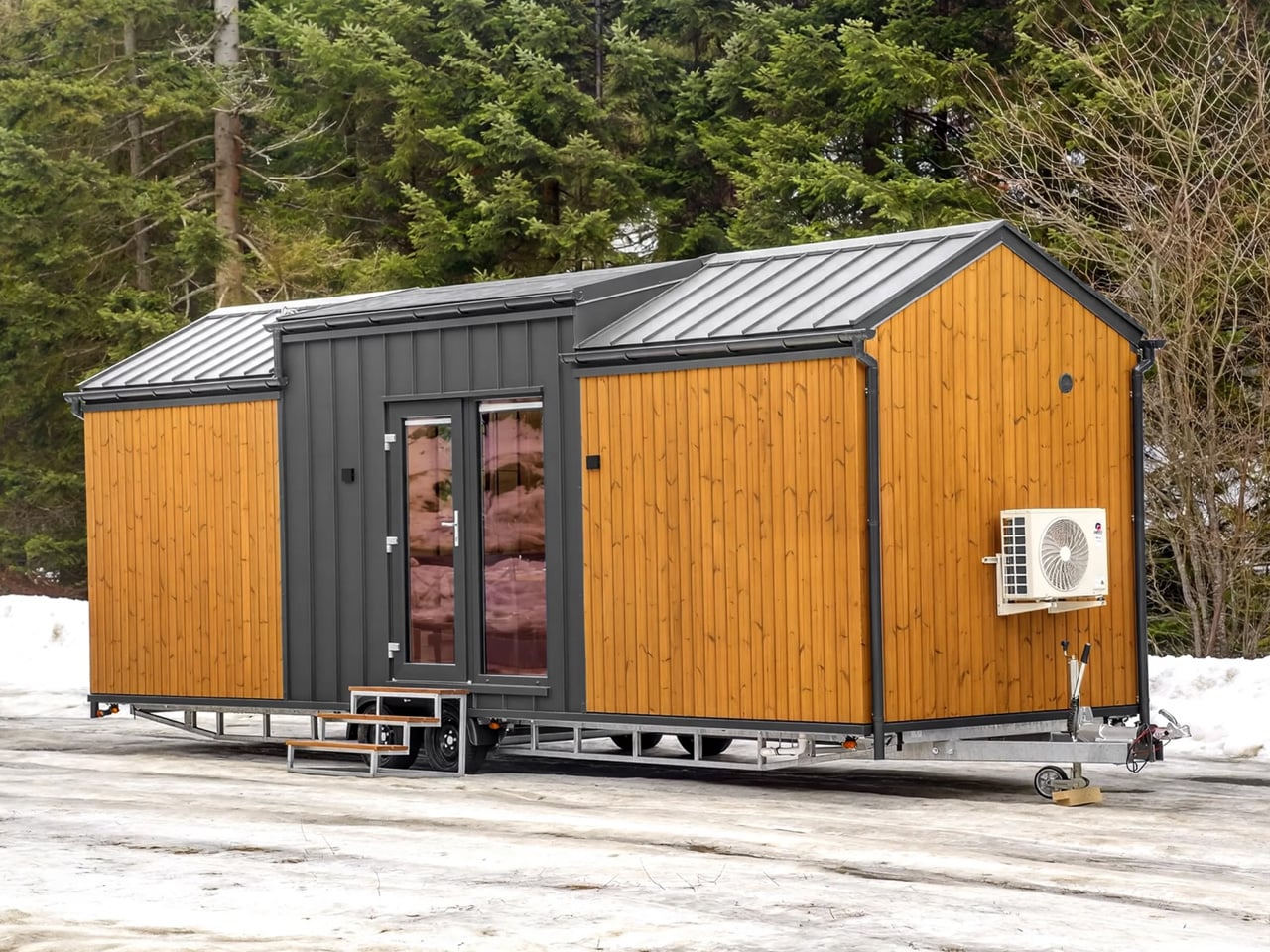
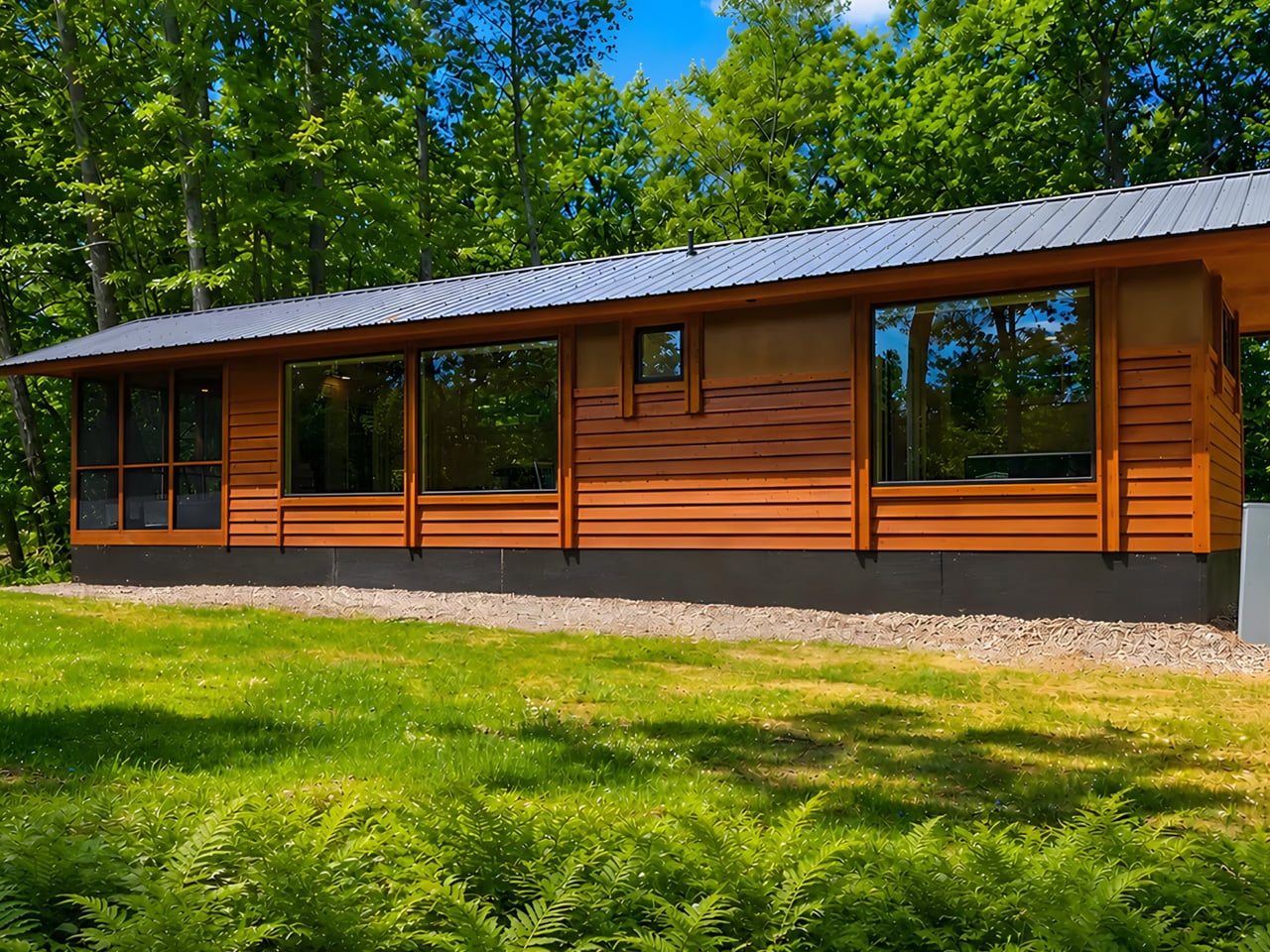
Irontown Modular Built a Tiny Cabin With Vaulted Ceilings & Warm Wood Walls for Under $50K

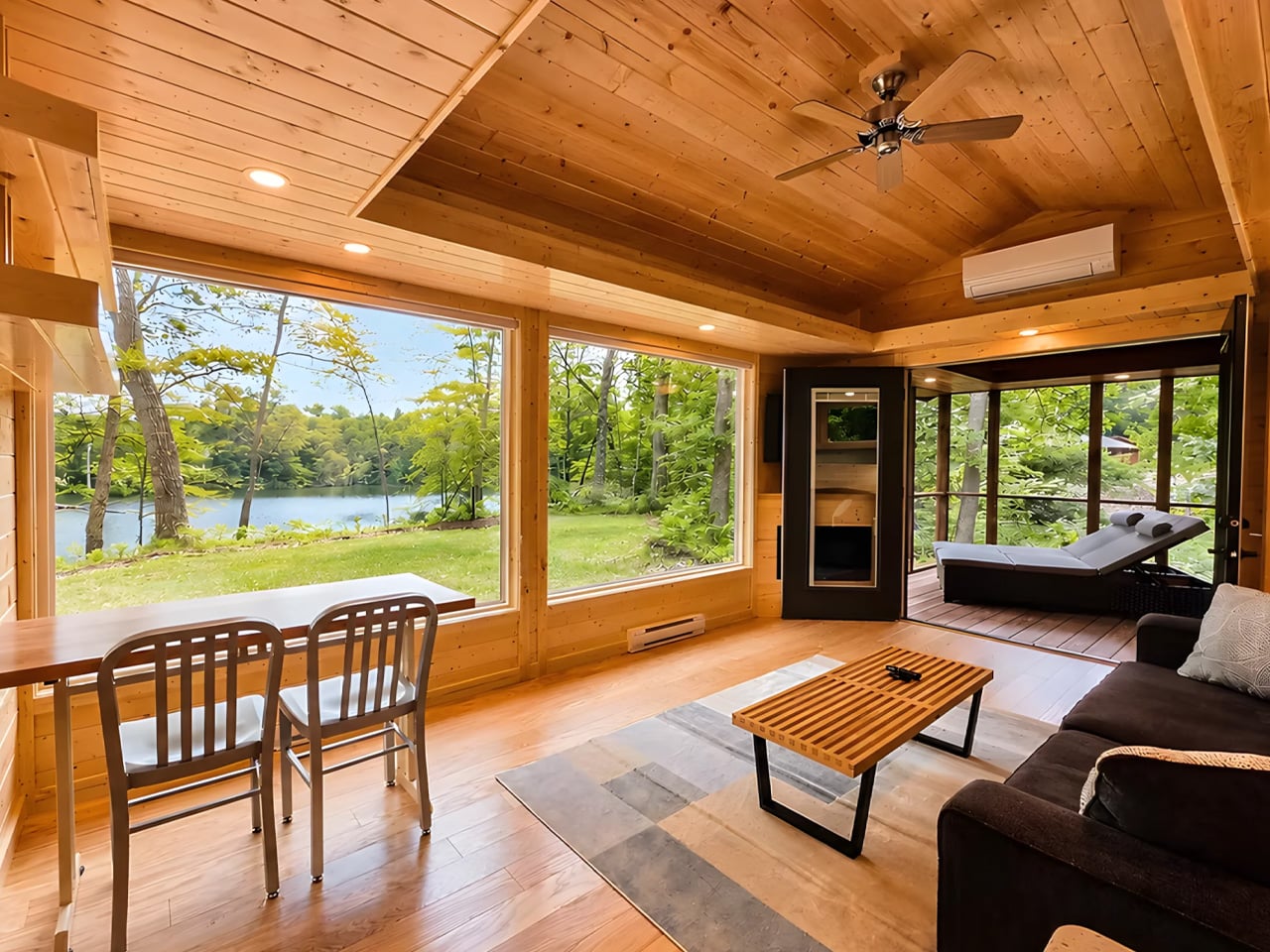
Two hundred square feet sounds like a limitation until you actually see what Irontown Modular did with it. The Sledhaus 200, the latest park model from the Utah-based builder, arrives as a compact, considered cabin that strips the idea of home back to what actually matters.

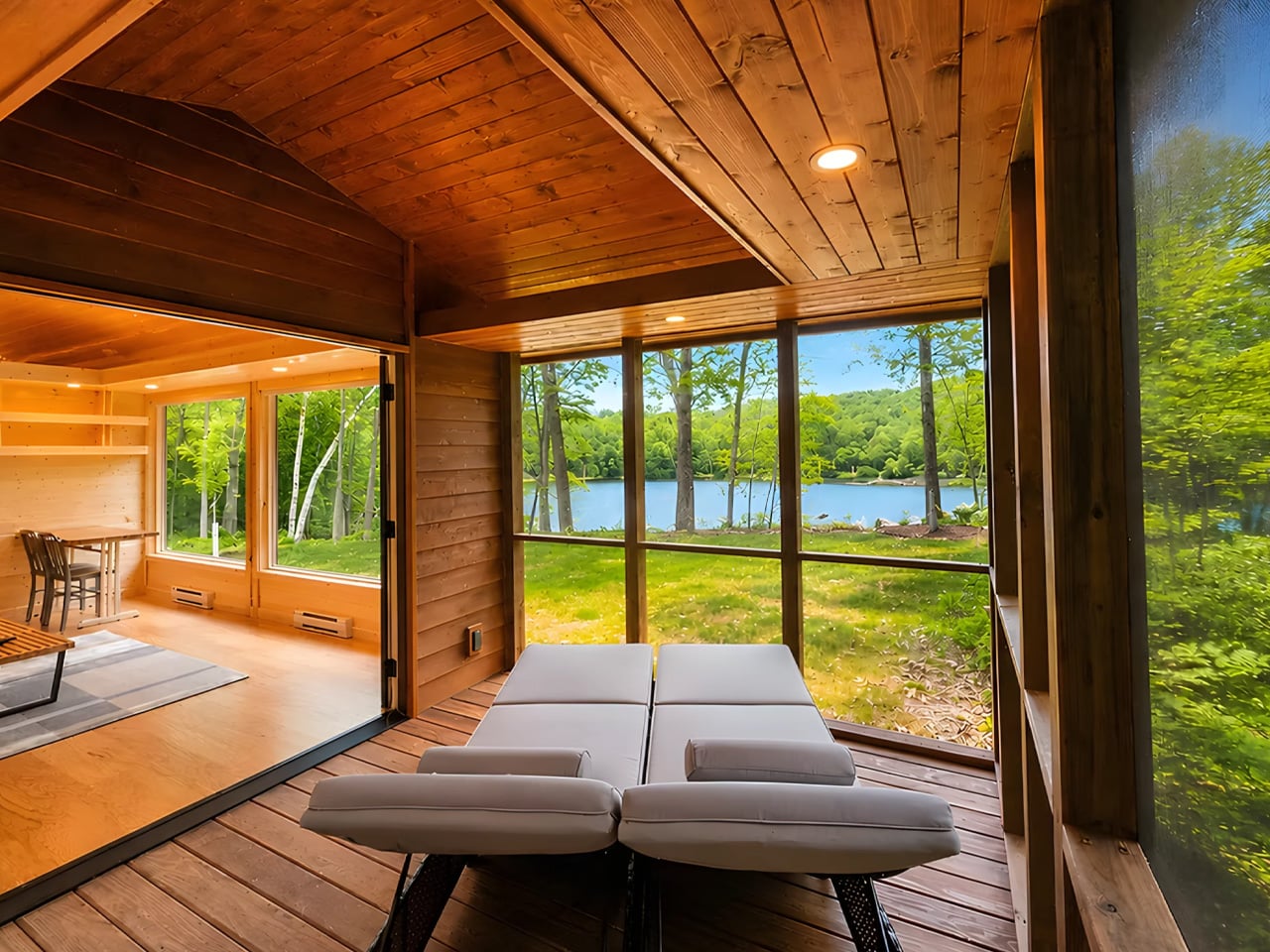
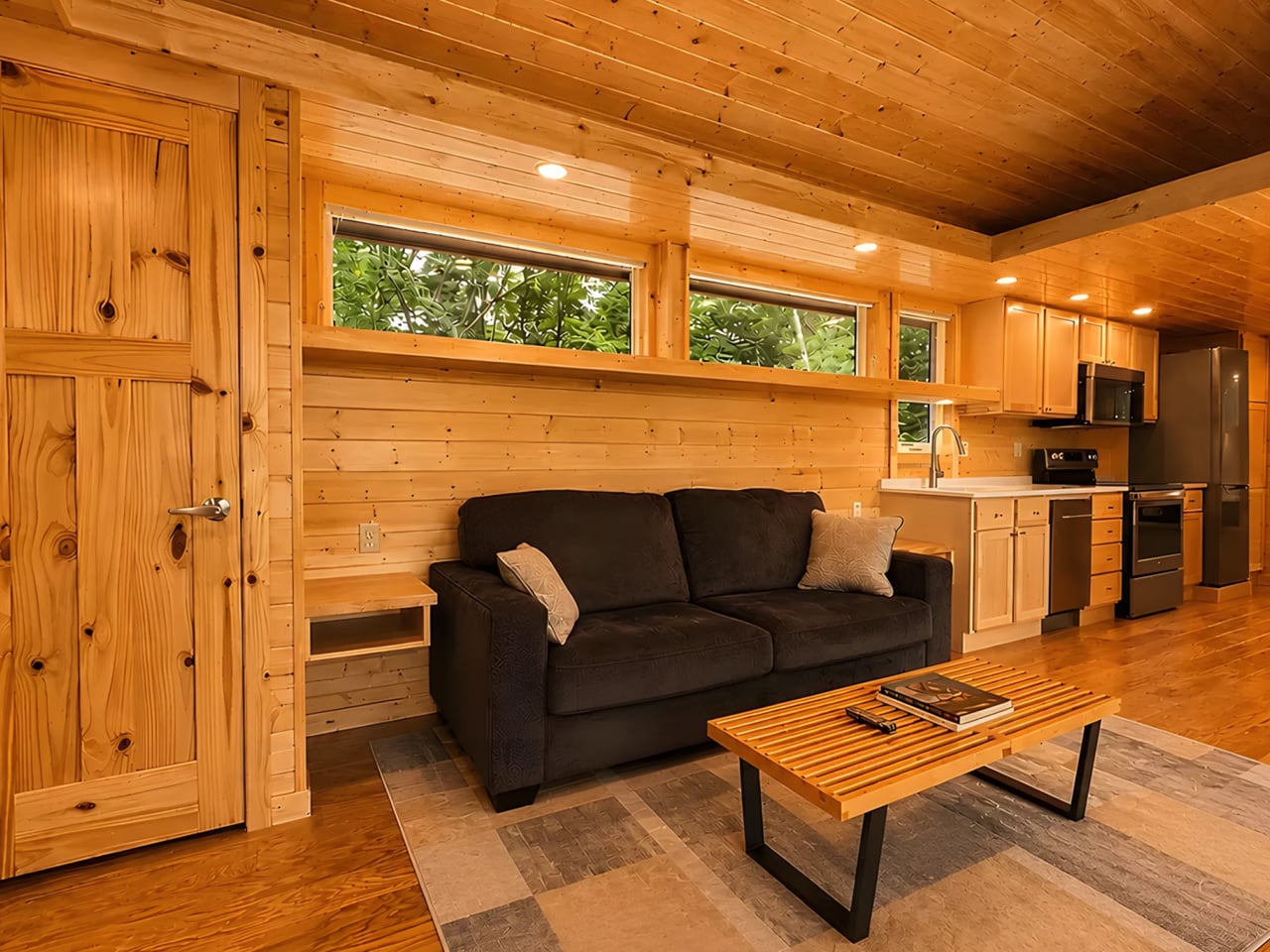
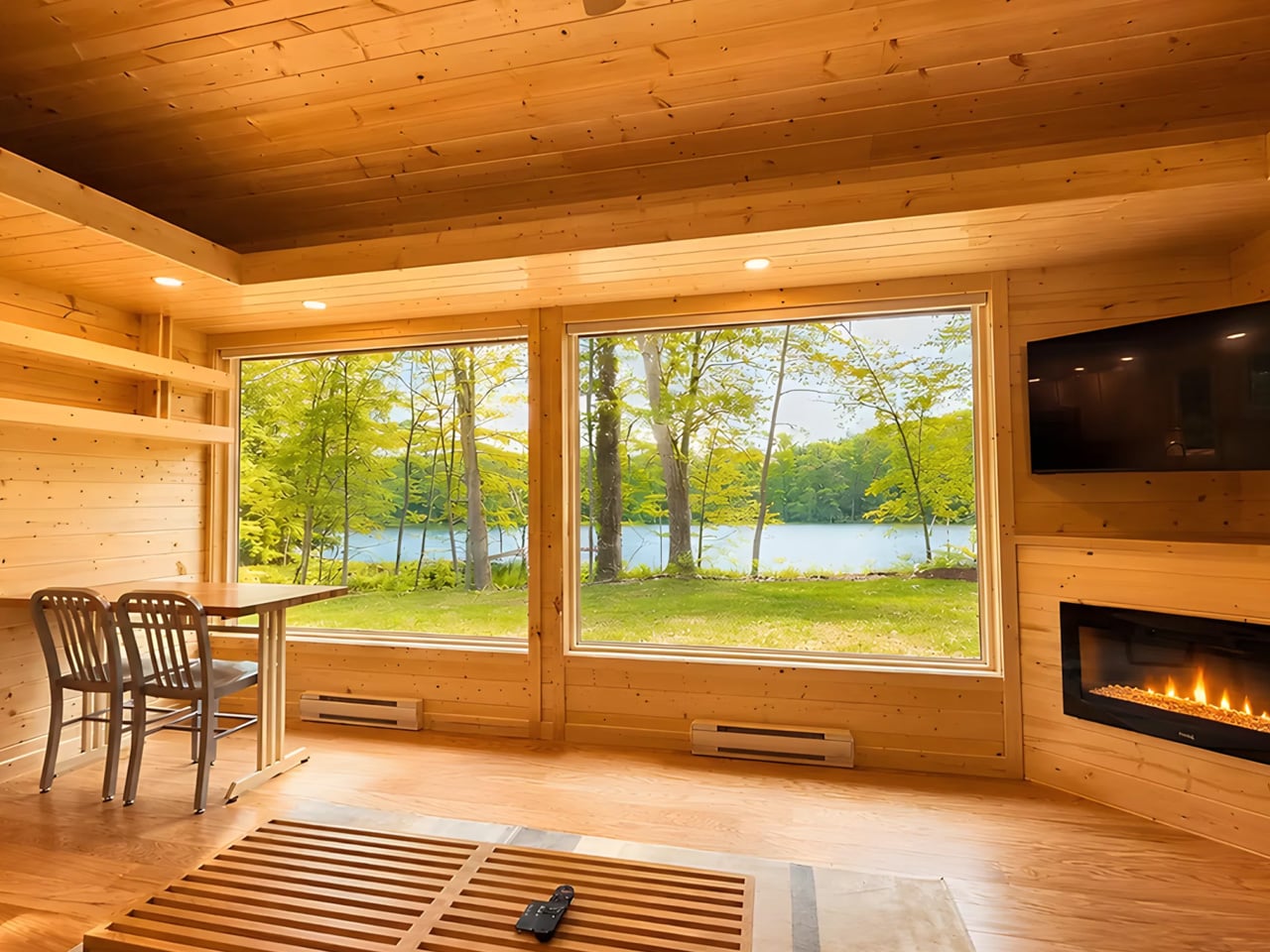
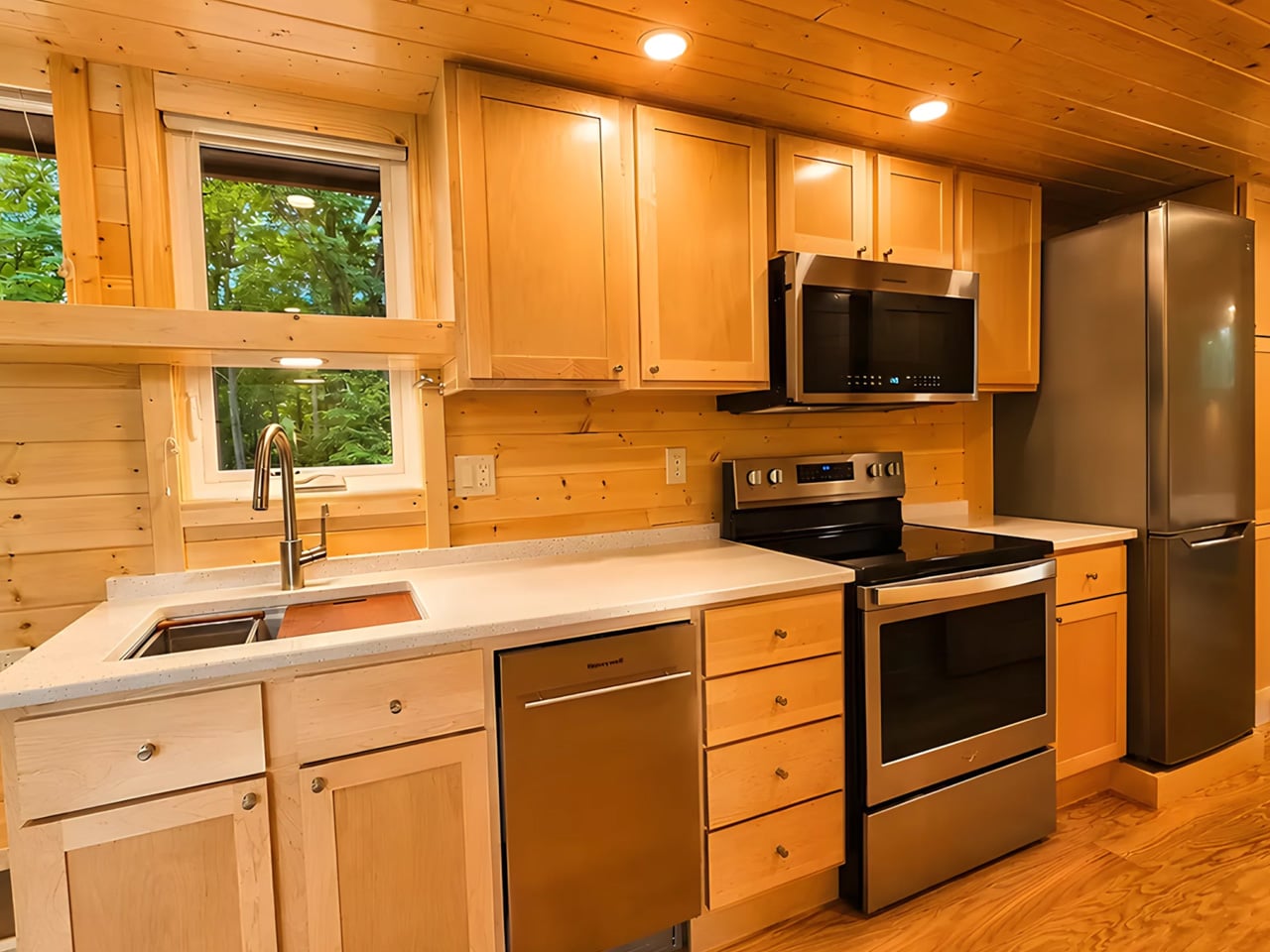
At just 10 feet wide and 20 feet long, the Sledhaus 200 packs a lofted bedroom, an optional bathroom, a galley kitchen, a living and lounge area, and a front covered porch into its 200 square feet of living space. On paper, that sounds like a tight squeeze. In practice, the design tells a different story. Big windows flood the interior with natural light, warm wood tones wrap the walls with a sense of groundedness, and a vaulted ceiling does the heavy lifting, making the space breathe in a way you wouldn’t expect from something this small.

Designer: Irontown Modular

Irontown Modular describes the Sledhaus 200 as built for “simplicity, style, and serious charm,” and that language isn’t just marketing. The cabin sits within the brand’s Sledhaus line, a series of recreational property-focused designs built for people who want a real retreat, not a compromise. It can be placed directly on a trailer chassis for mobile flexibility or installed as an ADU (accessory dwelling unit) on a fixed foundation, making it one of the more versatile entries in Irontown’s growing catalog.

The use cases are where the Sledhaus 200 gets genuinely interesting. Irontown positions it as the ideal backyard guest suite, a weekend mountain getaway, or even a full-time tiny home for those willing to go all-in on a downsized life. It can be dropped on gravel or fully hooked up to water, electricity, and sewage, giving owners real flexibility in how they choose to use it. For property owners in the American West, particularly, where land is abundant but building costs are not, this is a sensible and stylish answer to a growing need.

Pricing starts at $49,600, making the Sledhaus 200 one of the more accessible entries in the modular park home space. A ready-to-ship model is also currently available at $117,000, which does not include transport or taxes. Irontown ships across Arizona, California, Colorado, Idaho, Montana, Nevada, Oregon, Utah, and Wyoming. In a market crowded with tiny homes that try too hard, the Sledhaus 200 earns its place by doing the opposite, trusting the architecture, keeping the details honest, and letting the space speak for itself.

The post Irontown Modular Built a Tiny Cabin With Vaulted Ceilings & Warm Wood Walls for Under $50K first appeared on Yanko Design.
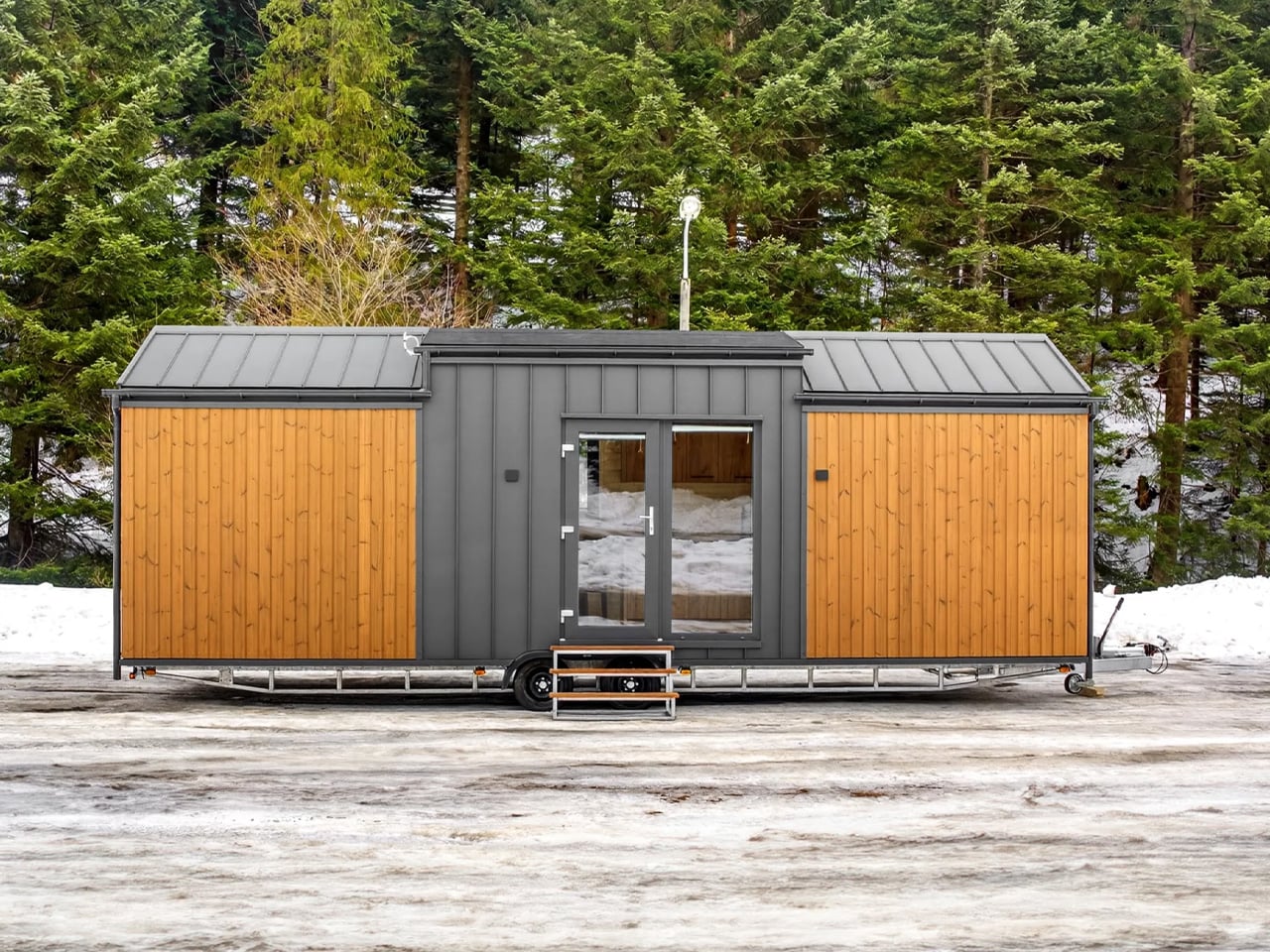
This Finnish Professor Built His Family Home From Old Tires and Fishing Nets

Most architects study sustainable housing. Matti Kuittinen actually lives in it. The Aalto University professor and architect didn’t just design the Tiny House Shadow as a thought experiment. He built it in Lohja, Finland, about 40 miles from Helsinki, moved his family in, and made it his primary residence. The result is one of the most provocative arguments for a different kind of future that architecture has produced in years.

The numbers are the opening statement. At just 365 square feet, Shadow is built from 56% recycled or reused materials: old fishing nets for flooring, scrap steel for the frame, recycled car tires for the roof, upcycled windows and doors, and insulation made from recycled glassware. What isn’t salvaged is responsibly sourced, including fossil-free steel. The house uses 85% fewer resources than a conventional home, 43% less land, and delivers a 53% smaller carbon footprint per resident. For Kuittinen, these aren’t talking points. They’re proof of concept. “We have a limited carbon budget,” he has said. “Construction must learn to stay within it.”

Designer: Matt Kuittinen

The name comes from Jun’ichirō Tanizaki’s 1930s essay In Praise of Shadows, in which the Japanese writer reflected on the quiet beauty of darkness and restraint. The metaphor tracks. Shadow is literally built from what the linear economy discarded, a home made from the world’s leftovers, dressed in matte black, standing still and serious against the Finnish landscape. The exterior reads as avant-garde. The interior is equally deliberate.

Inside, minimalism operates as a lifestyle logic, not just an aesthetic. The main living area transforms between working, dining, and sleeping through heavy black curtains that divide the space without walls. Sleeping pods take cues from Japanese capsule hotels and stack vertically to save floor space. The kitchen runs on open shelving instead of cabinets. There’s a full bathroom and, true to form, a 22-square-foot wood-fired sauna. Every square foot earns its place. Construction took four months; the full project, from first drawing to moving in, took one year.

Shadow has since been exhibited at construction fairs as a working prototype and featured in Aalto University’s Designs for a Cooler Planet exhibition. Kuittinen is clear that the project is bigger than one house. “Shadow proves that recycled and low-emission materials can work at scale,” he says. “This isn’t just about one house. It’s about changing the whole mindset of construction.” In 365 square feet, he’s making a very large point.

The post This Finnish Professor Built His Family Home From Old Tires and Fishing Nets first appeared on Yanko Design.
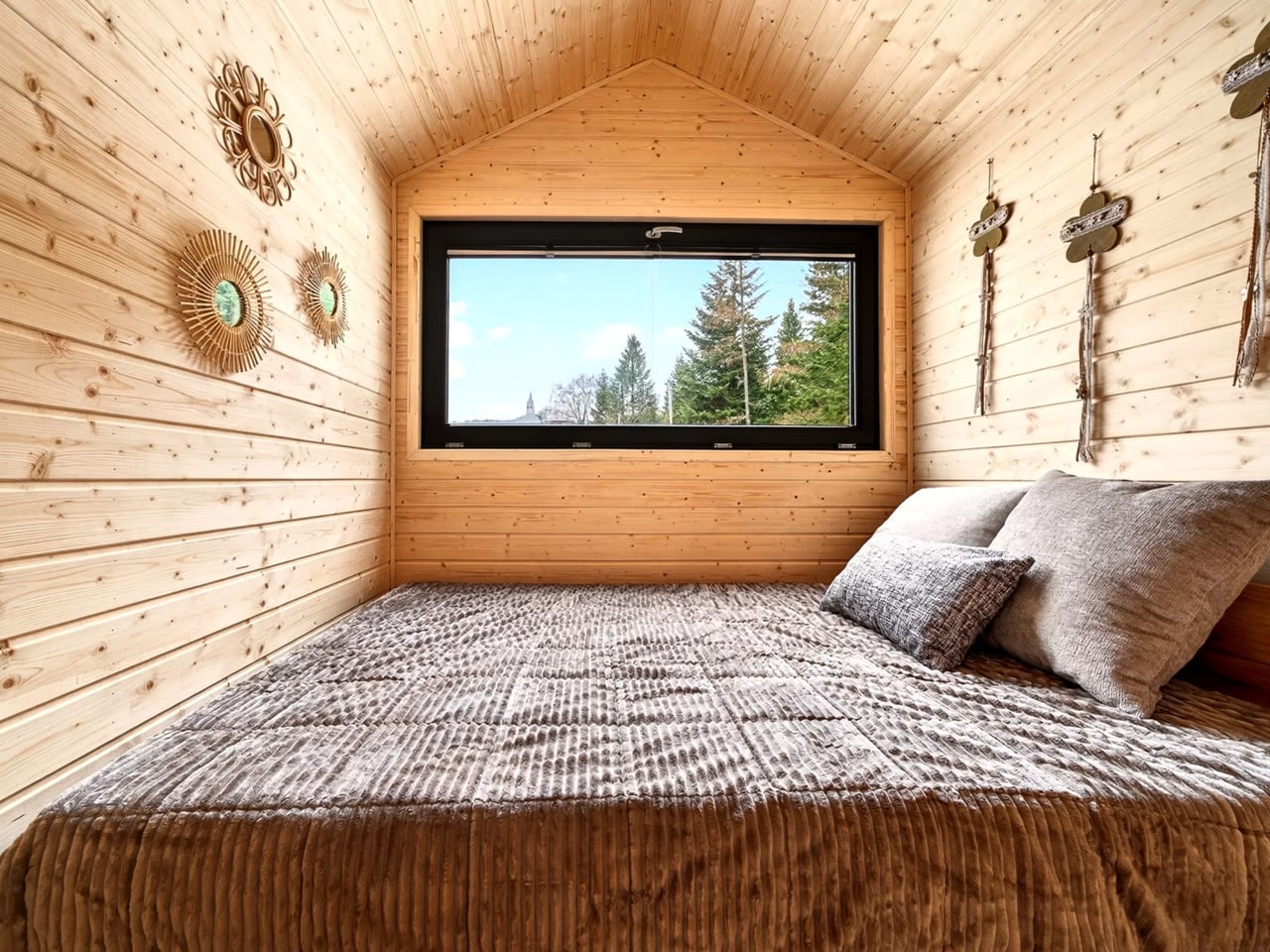
This Red House Buried in a Czech Forest Is the Opposite of Every Forest Home You’ve Ever Seen

Deep in the spruce forests of Jevany, a municipality of barely 800 people in the Czech Republic’s Central Bohemian Region, a flash of cherry red cuts through the trees. This is Villa Jevany, a new residence by local studio Architektura, and it has absolutely no interest in blending in. Where most forest homes default to timber, stone, and muted tones, Architektura went the other way entirely, dressing the structure in saturated red steel and calling it exactly what it is: a deliberate, uncompromising act of contrast.

The site itself set the terms. The plot spans a generous 3,027 square meters on a steep southern slope, inhabited by deer, birds, and mature trees that tower up to ten meters above the building level. Architektura responded by carving the villa into the hillside rather than placing it on top, creating a structure the studio describes as an “organism” embedded in the earth. The red steel skeleton, visible in the sawtooth carport roof from the moment of arrival, signals that this is industrial thinking applied to domestic life, and it doesn’t apologize for it.

Designer: Architektura

The colour choice is rooted in theory as much as instinct. Architektura used green and red as complementary colors, a logic borrowed from the colour wheel and, more pointedly, from abstract art. The irregularly divided glazing across the façade draws a quiet reference to Mondrian, the rhythmic geometry of the windows creating a visual tension against the organic verticality of the trees behind them. From the road, the house reads almost like a painting hung in the forest. From the inside, the forest becomes the painting.

Internally, the layout unfolds across five distinct levels. The entrance opens into a hall with a 3.5-meter ceiling height, where a curved wall guides visitors into the main living space, or what the architects call the “day zone.” Here, industrial red steel windows frame the surrounding green; white walls meet black details; reddish stone counters anchor the kitchen alongside a floating steel fireplace. It’s a space of deliberate contrasts, domestic in function and raw in feeling.

The private quarters, reached through a long corridor lined with minimalist white cabinetry, are stripped of excess. The parents’ suite and children’s rooms are quiet and restrained, a counterpoint to the drama of the exterior. Terraces and balconies extend the living area into the canopy itself, turning the house into what Architektura intended all along: not just a place to live, but a place to look.

The post This Red House Buried in a Czech Forest Is the Opposite of Every Forest Home You’ve Ever Seen first appeared on Yanko Design.
The Philosopher Wanted Silence. The Artist Built on Water.

In 1914, Ludwig Wittgenstein did something that, depending on your perspective, was either the most logical or the most eccentric thing a Cambridge-trained philosopher could do. He left England behind and built a tiny wooden cabin on the steep shoreline of Lake Eidsvatnet in Skjolden, Norway. The only way to reach it was by boat, or by walking across ice in winter. His mentor Bertrand Russell reportedly told him it would be lonely. Wittgenstein replied that he “prostituted his mind talking to intelligent people.” The anecdote is funny, but the philosophy behind it was completely serious.

What Wittgenstein found in that remote hut was the particular kind of quiet that forces real confrontation with your own thoughts. He was productive there in ways he couldn’t replicate anywhere else, later writing to a colleague that he “couldn’t imagine working anywhere as he did there,” and that the place had “a quiet seriousness” he found nowhere else. Some of his foundational thinking for Tractatus Logico-Philosophicus took shape in that small space, part of it on a boat his friend David Pinsent sailed across the Sognefjord. A philosopher doing his deepest work on open water, surrounded by mountains. That image stays with you.

Designer: Dionisio González

Spanish artist Dionisio González clearly felt it too. His series, Wittgenstein’s Cabin, takes that founding image as both premise and provocation. González works across photography, digital manipulation, and what you might call architectural fiction, and his practice has long focused on reimagining how people live in extreme or overlooked conditions. For this project, he envisioned a cluster of amphibious dwellings set directly on the Norwegian fjords, floating on artificial islands against the same vast and indifferent landscape that Wittgenstein once sought out. They are not proposals for construction. They are something closer to visual arguments.

The structures themselves are striking. Made primarily of weathered metal, they feel industrial and oddly organic at the same time. Each one has its own distinct form, but they share a visual family resemblance, like siblings built from the same strange blueprint. They sit on the water in ways that feel simultaneously precarious and deliberate. González has spoken about being drawn to “the confrontation, the frontality” of Wittgenstein’s original cabin with the fjord. For Wittgenstein, the water wasn’t backdrop. It was the actual condition of his solitude. González takes that thought and makes it architectural.

The project keeps pulling me back to one of the more persistent tensions in design conversation: the relationship between isolation and creative thought. The idea that you need to escape in order to think clearly is ancient, but it feels newly charged when genuine silence has become a luxury most people can’t really access. González frames philosophy itself as an “amphibian endeavour,” something that lives between the stable and the fluid, the settled and the speculative. His floating cabins give that metaphor a shape and a weight. They’re not quite houses. They’re more like habitable hypotheses.

None of these structures are intended to be built, and I think that’s precisely where their power lies. Architectural fiction as a practice asks you to sit with ideas rather than just objects. It creates room to think seriously about how we want to inhabit the world, even when the answer falls outside what’s commercially or technically possible. González’s designs carry a visual seriousness that separates them from pure fantasy, a quality that makes them feel genuinely worth spending time with.

Wittgenstein wanted to disappear from the world in order to think more clearly inside it. González takes that same instinct and places it on open water, wrapped in oxidized metal, asking what solitude actually looks like when landscape isn’t just a setting but a condition of being. The answer he offers is beautiful and strange, which feels entirely fitting for a project named after one of the twentieth century’s most beautiful and strange minds.

The post The Philosopher Wanted Silence. The Artist Built on Water. first appeared on Yanko Design.
A Restaurant in China Where Wood Behaves Like a Forest

The first thing you notice about the Lakeside Restaurant at Silk Road Friendship Park in Dingzhou, China, is that the building doesn’t announce itself. It doesn’t shout or compete. It simply arrives at the water’s edge like it’s always been there, wooden columns branching upward like trees that never needed permission to grow.

Completed in 2025 by THAD SUP Atelier, the restaurant sits within a cultural park in Hebei Province, a place layered with historical significance tied to Silk Road trade routes. The building spans 2,400 square meters and was designed by principal architects Song Yehao and Chen Xiaojuan. But the numbers don’t explain why this project feels so quietly extraordinary. The design does.
Designer: THAD SUP Atelier (photos by Xiaoqing Guan, Xinxhing Chen)

The central concept is deceptively simple: the building takes its visual language from the forest canopy above and the lake below. Blossoming wooden columns rise from the ground and fan out to meet a flowing roof structure, all designed as one integrated system. The result looks less like constructed architecture and more like something that grew out of the ground and arched over the water because it felt like the right thing to do.

What makes this possible, practically speaking, is the fusion of digital fabrication and traditional woodworking. The team used modern glued laminated timber and relied on digital industrial prefabrication for precise form control, while simultaneously optimizing each wooden component’s dimensions through digital tools to preserve the handcrafted quality you can feel at eye level. The idea that a process this technically demanding could produce something this warm and tactile is one of the better arguments for what design technology can actually do when it’s used thoughtfully rather than just to show off.

Functionally, the layout is equally deliberate. The building slopes gently from south to north along the shoreline. The west facade, facing the main park road, is relatively closed, concealing the kitchen and back-of-house areas from view. But that restraint on the west side is there for a reason: it channels visitors toward a central arch opening on the ground floor. You pass through it, and suddenly you’re standing at the water’s edge. The progression is intentional, moving from arrival to view to lingering, and it works the way good spatial storytelling always does.

Three sides of the building open toward the lake, and the overhanging roof creates layered corridor spaces that shift and change as you move through them. During the day, the wooden structure casts shadows across the glass curtain wall, projecting a forest canopy effect that bleeds into the interior. At night, when the interior lights come on, the boundary between inside and outside softens, and the full curve of the wooden structure becomes luminous. It’s the kind of building that earns a second visit just to see it at different hours.

The choice of wood throughout isn’t arbitrary or just aesthetic. Wood is warm where glass is cold, organic where steel is industrial, and in a restaurant, those qualities matter in ways that aren’t always consciously named. Diners feel the difference even if they can’t articulate it. The building creates an environment that is simultaneously impressive and approachable, which is a difficult balance to strike and one that a lot of high-design spaces fail to achieve.

THAD SUP Atelier has built a reputation for projects that sit thoughtfully within their landscape, and this one continues that thread. The Silk Road Friendship Park is a place carrying weight and cultural meaning. Dropping a flashy, look-at-me building into that context would have been easy. Instead, the team chose restraint, materiality, and sequence. The restaurant doesn’t dominate the park. It listens to it.

Architecture that knows when to stay quiet tends to be the kind that stays with you. This is one of those buildings. Not because it announces itself, but because the moment you move through it toward the lake and look back at the way light plays through those wooden branches, you understand exactly what it was trying to say.

The post A Restaurant in China Where Wood Behaves Like a Forest first appeared on Yanko Design.