This underwater dog robot comes with its own horror soundtrack

The dog-esque robots created by the likes of Boston Dynamics and MAB Robotics are already horrifying thanks to a mix of the “Metalhead” episode of Black Mirror and humanity’s natural apprehension for an uncertain future. This one highlighted by TechCrunch really got under my skin in an unnatural way.

MAB’s Honey Badger Legged Robot can walk underwater and they took it on a test run for its YouTube channel. The steps it takes on the bottom of the pool create this weird ringing noise that’s just alarming as all hell. It’s like the engineering team hired John Carpenter to write a score for its robot.

It’s even scarier when the robot walks towards the camera like it’s hunting me down just before asphyxiation sets in and I drown. It sounds like they took a cue from the Skinamarink soundtrack. Someone make the horror in my head stop.

This article originally appeared on Engadget at https://www.engadget.com/big-tech/this-underwater-dog-robot-comes-with-its-own-horror-soundtrack-215325892.html?src=rss

The Morning After: Pokémon hack exposes future games, beta designs and more

Pokémon developer Game Freak has confirmed its servers were hacked in August. The breach meant internal materials — from source codes to early and even scrapped character designs — were circulating on social media over the weekend.

Leaked documents and images flooded Reddit and X after Centro Leaks began dumping it all on Saturday afternoon. It allegedly includes source codes for past games and codenames for the Switch 2 and the upcoming Gen 10 Pokémon games. There are also references to a Pokémon MMO, future movies and a new anime series. The leak revealed tons of beta character designs and concept art.

— Mat Smith

Get this delivered daily direct to your inbox. Subscribe right here!

The biggest tech stories you missed

TMA
Casio

Casio (of watch and calculator fame) is taking pre-orders in Japan for Moflin, the adorable robotic plushie with AI “emotional capabilities,” which debuted during CES 2021. Moflin, developed in a partnership with the Japanese startup Vanguard Industries, is meant to work like an emotional support pet — and is as fluffy as it looks.

Continue reading.

Last week, robot vacuums across the country were hacked, allowing attackers to not only control the robovacs, but use their speakers to hurl racial slurs and abusive comments at anyone nearby. Specifically, it was the Ecovacs Deebot X2s, which has a reputation for being easy to hack. The company says it’s developed a patch to eliminate the security flaw — but that won’t roll out until November. Maybe October is a messy house kind of a month?

Continue reading.

Redbox is dead, but its cuboid corpses remain in malls and shops nationwide. The machines are heavy and cumbersome, with a former Redbox executive suggesting it costs $500 to remove one kiosk. Note: Some machines are actually embedded in concrete. Some devotees have taken to adopting them regardless. Yet another note: These boxes use massive amounts of energy. Walgreens told a judge it costs the company $184,000 each month to power 5,400 kiosks, roughly $35 per month for a single machine. That was fine 10 years ago, when the company drew in $2 billion in annual revenue.

Continue reading.

This article originally appeared on Engadget at https://www.engadget.com/general/the-morning-after-engadget-newsletter-111103297.html?src=rss

Daft Punk’s Iconic Coachella Pyramid Stage gets turned into a 2000-piece LEGO set

Four years ago, a father-son duo won the Grand Prize in the global LEGO competition Music To Our Ears! for their LEGO rendition of the Daft Punk Pyramid Stage from Coachella 2006. Although the MOC (My Own Creation) won the award, it wasn’t selected by LEGO’s internal team to be turned into a box set. However, the duo responsible for the design are hoping to Get Lucky by submitting this entry One More Time, and they’re banking on support from Around The World to help turn this one-off piece into a set that LEGO and music enthusiasts can buy and play with!

Designer: Robotrock

Not many people knew that Daft Punk’s 2006 Coachella set would be the last time they headlined the event. When the duo took the iconic pyramid-shaped stage back in 2006, they set what’s still considered a gold standard in Coachella performances – something that even nearly 2 decades later is difficult to match. However, being the elusive robots they are, Daft Punk never really decided to pull off such a feat again, and they disbanded in 2021, after 28 years together. The Coachella Pyramid is an iconic part of music history, and Robotrock – the moniker behind the LEGO set – did full justice to it with their 2,000-brick recreation of this moment.
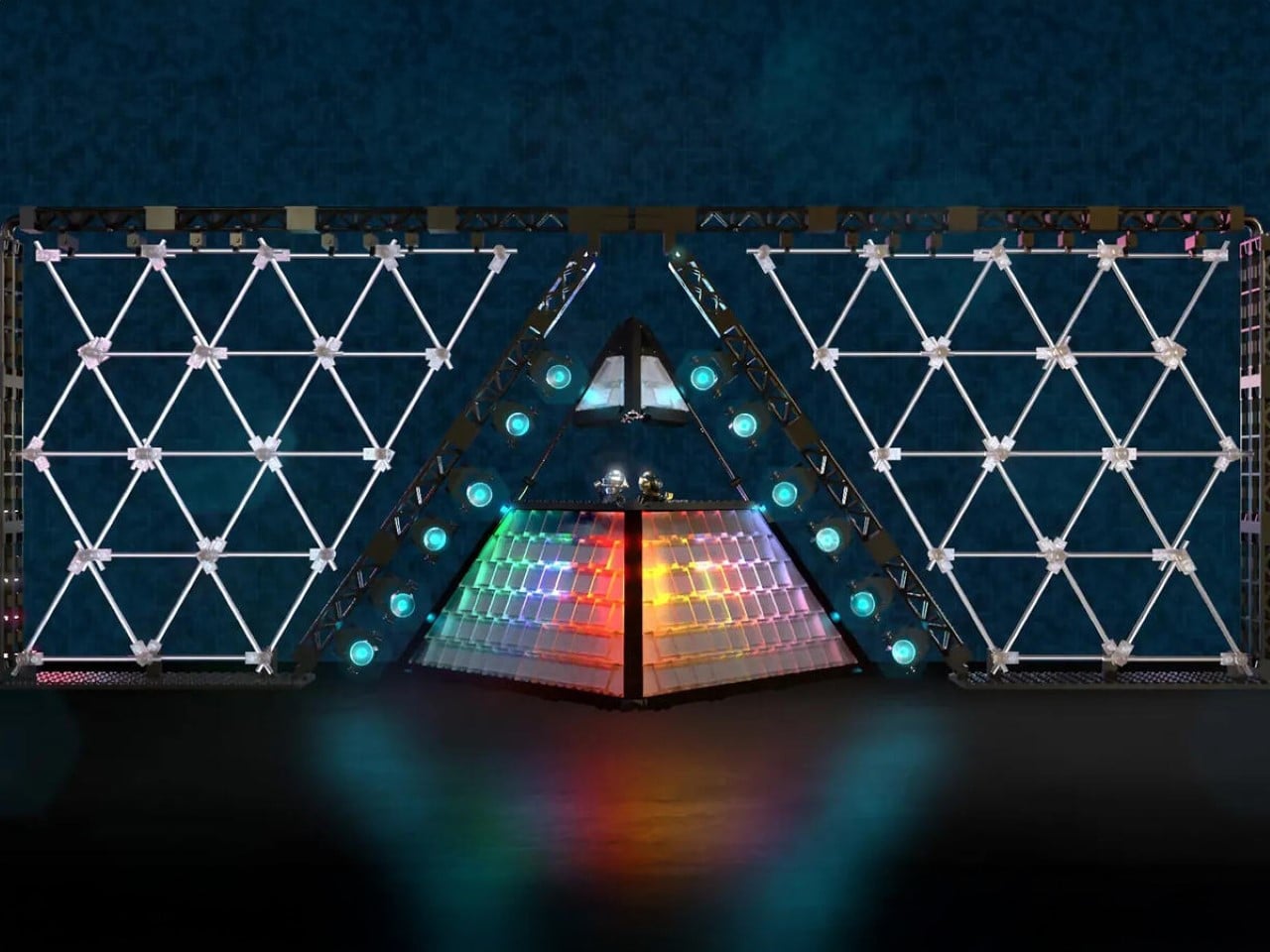
The set features the two artists on a colorful pyramid-shaped stage, with lights inside the pyramid glowing as the duo performed music. The two artists are perched on their platform, dressed in their robot-shaped garb, while working on the mysterious electronic console that helps them produce, remix, and perform their music.

“This project began in 2020 as a fun father-son collaboration, growing into something epic as we found ourselves needing a creative escape during lockdown,” says Robotrock. “Both huge Daft Punk fans, this build is a fusion of 2 passions. I spent my teenage years listening to Homework on my Walkman, while my son’s 1st favorite baby song was Get Lucky. It felt only natural to blend our love for Daft Punk’s music with our love for LEGO. My then 8-year-old son started with a prototype built from the bricks we had at home, and I expanded on it digitally.”

The centerpiece of the design—a rotating box of transparent bricks inside a pyramid—is powered by a motor, with a set of lights dangling inside to recreate that iconic Daft Punk Alive 2007 pyramid. This 2000-piece set was a real challenge. Lego bricks aren’t typically used to create triangular shapes, so we had to get creative in finding ways to make all those angles fit together.

LEGO builders are very meticulous, and abide by a strict code of conduct to ensure bricks aren’t used in ‘illegal’ ways to create MOCs or My Own Creations. Here, Robotrock points out that LEGO doesn’t have an official Daft Punk retail set, which means the helmets being shown in the MOC can’t be bought off the shelf. Although this would mean they’re an ‘illegal’ creation, Robotrock points out that there’s a technical legality in their design since Pharrell’s upcoming LEGO biopic, Piece By Piece, features LEGO minifigures of Daft Punk too!

The LEGO Ideas Daft Punk Coachella Pyramid is currently a submission on the LEGO Ideas forum, where fans and enthusiasts can vote for their favorite fan-made LEGO creations. With enough votes, the LEGO Ideas team reviews the design and decides whether to turn it into a retail box set or not. As a massive Daft Punk fan myself, I sincerely hope they do! You too can vote for the LEGO Ideas Daft Punk Coachella Pyramid on the LEGO Ideas website here.

The post Daft Punk’s Iconic Coachella Pyramid Stage gets turned into a 2000-piece LEGO set first appeared on Yanko Design.

Pangolin-inspired robot can dig and “poop” out seeds to plant trees

Not all robots have to look, well, robotic. There is a growing number of robots that are inspired by real life creatures (sometimes, even humans, but that’s a whole other discussion) or so called bio-inspired bots. The latest winner of the Natural Robotics Contest is inspired by a pretty unlikely animal: the insect-eating mammal called the Pangolin.

Designer: Dorothy and Dr. Robert Siddall

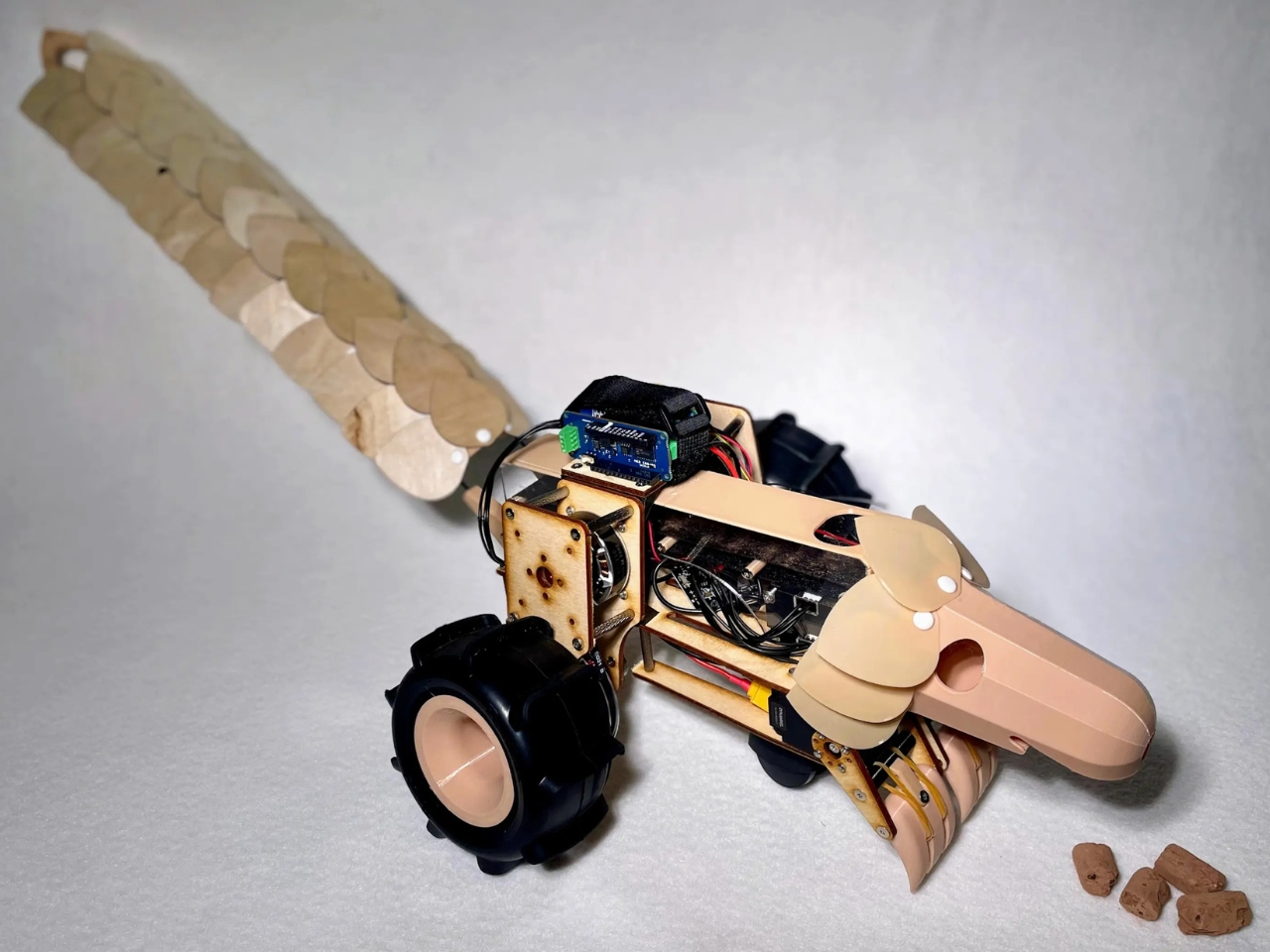
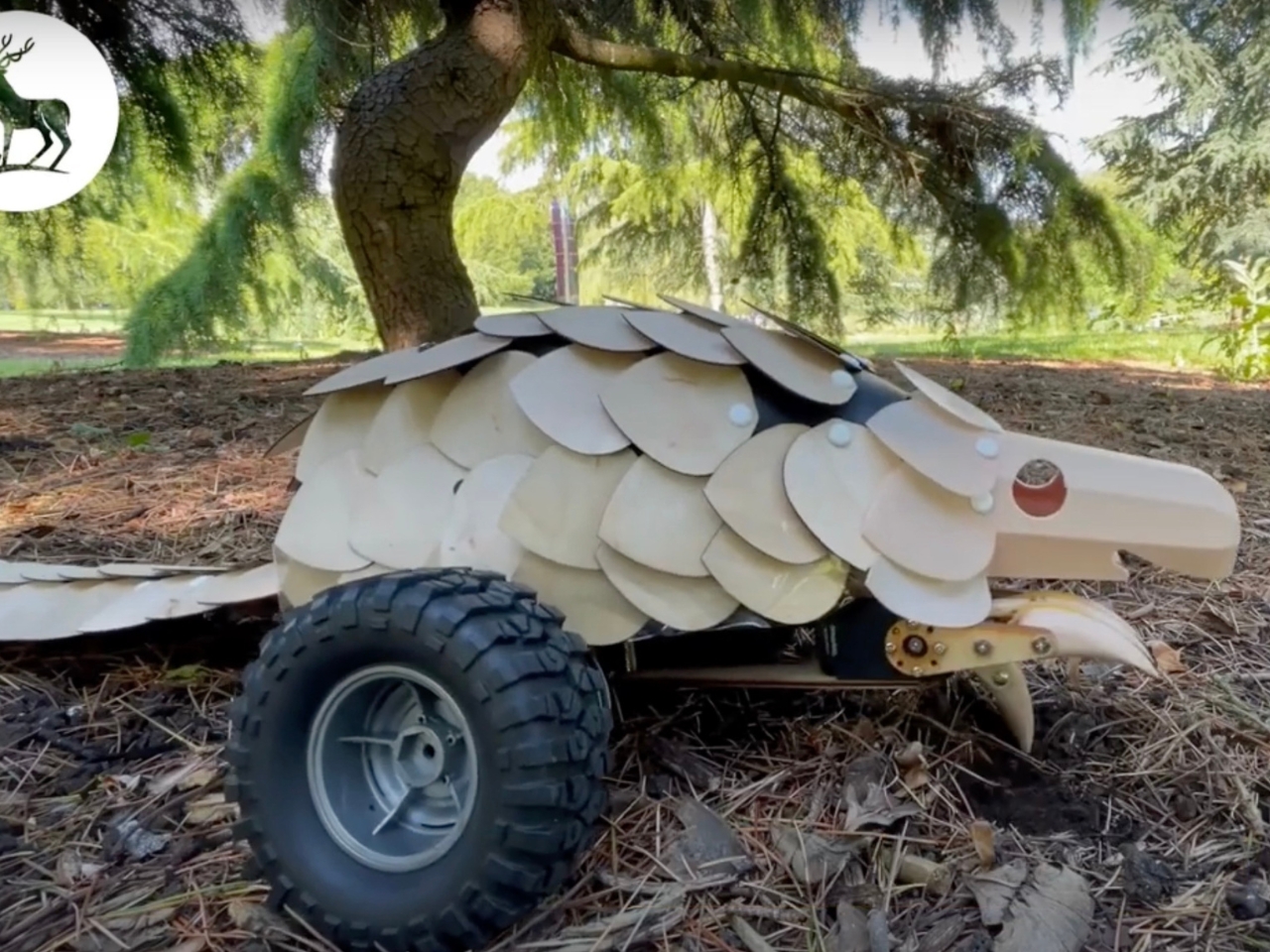
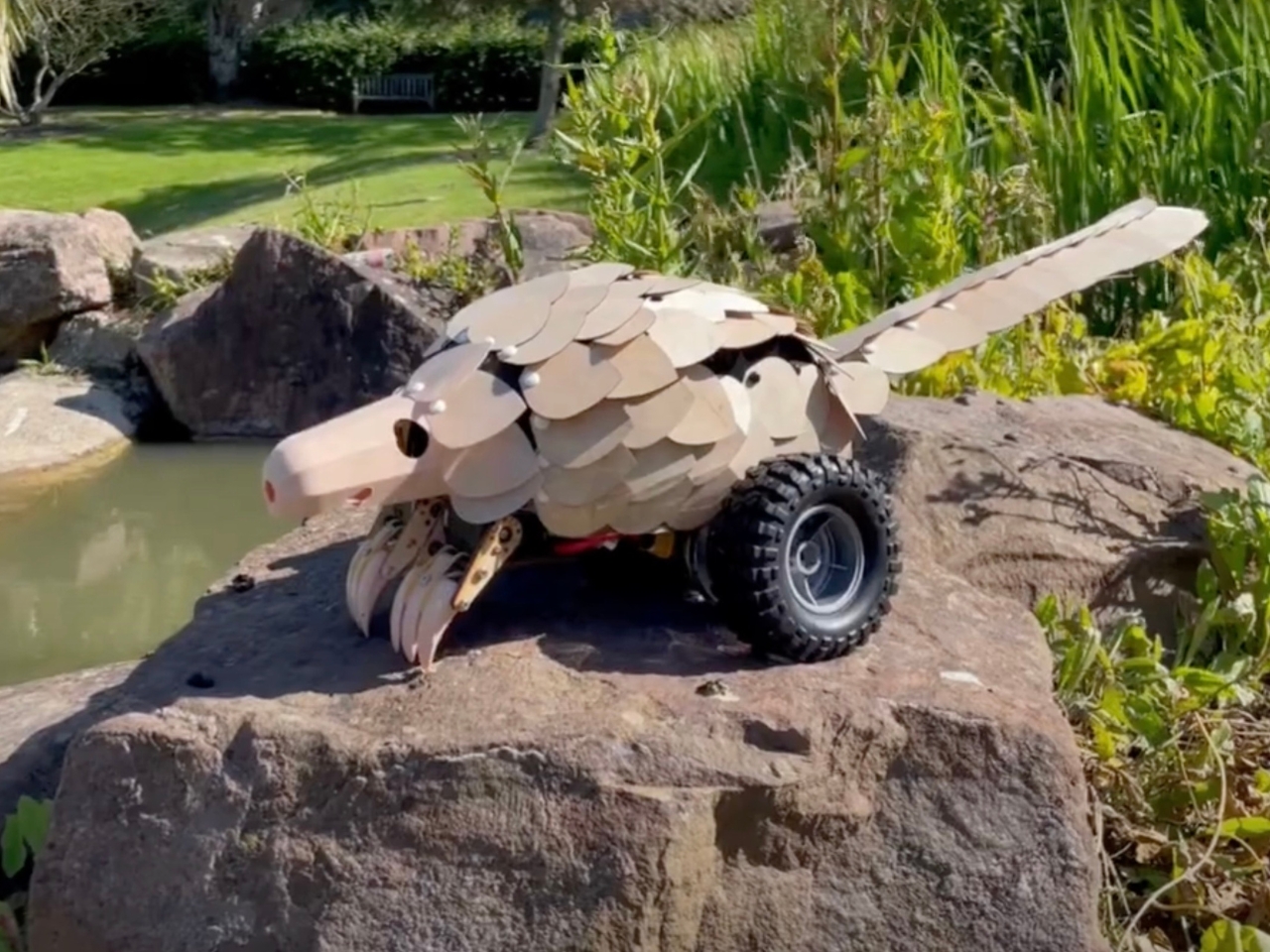
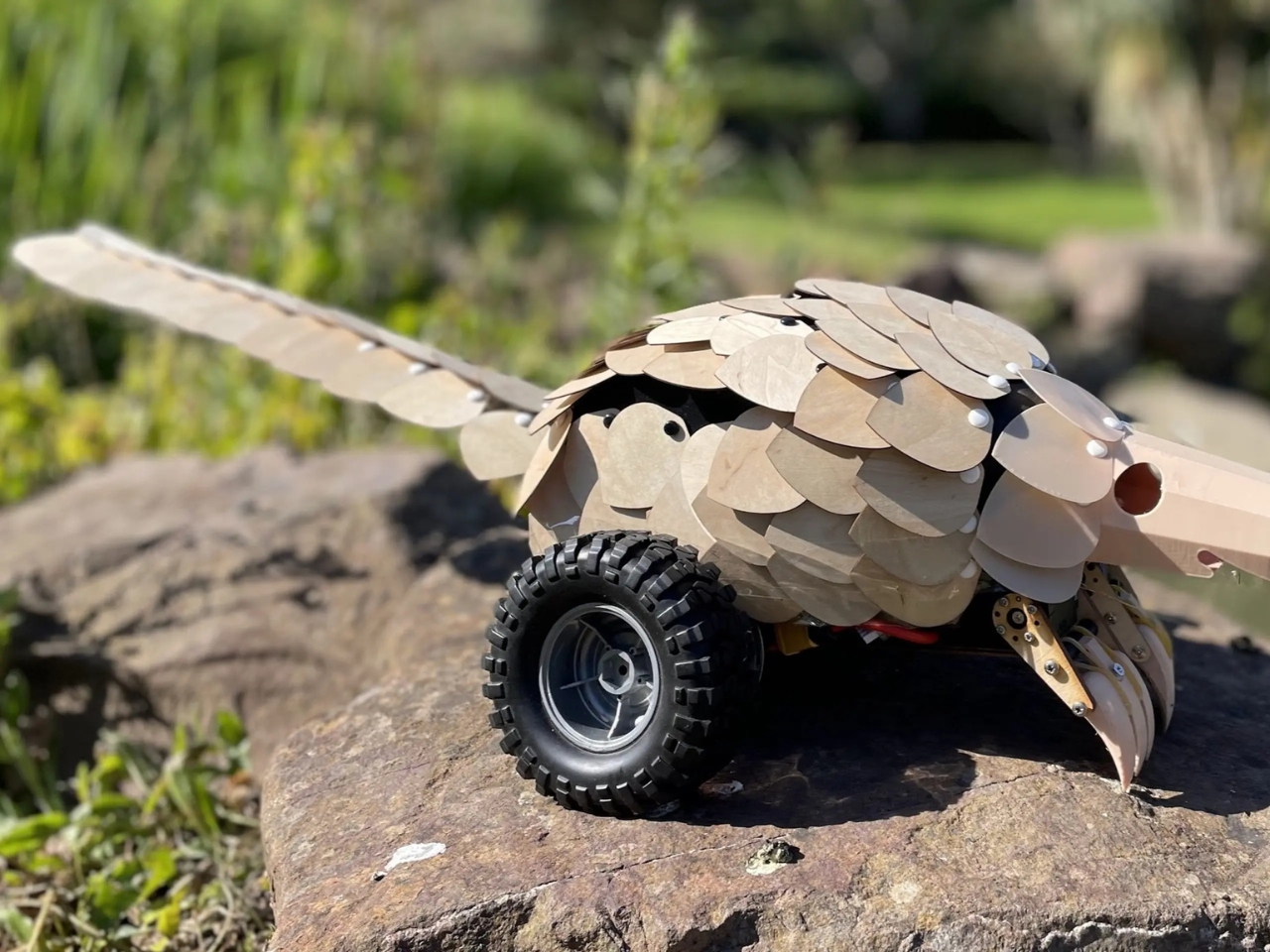
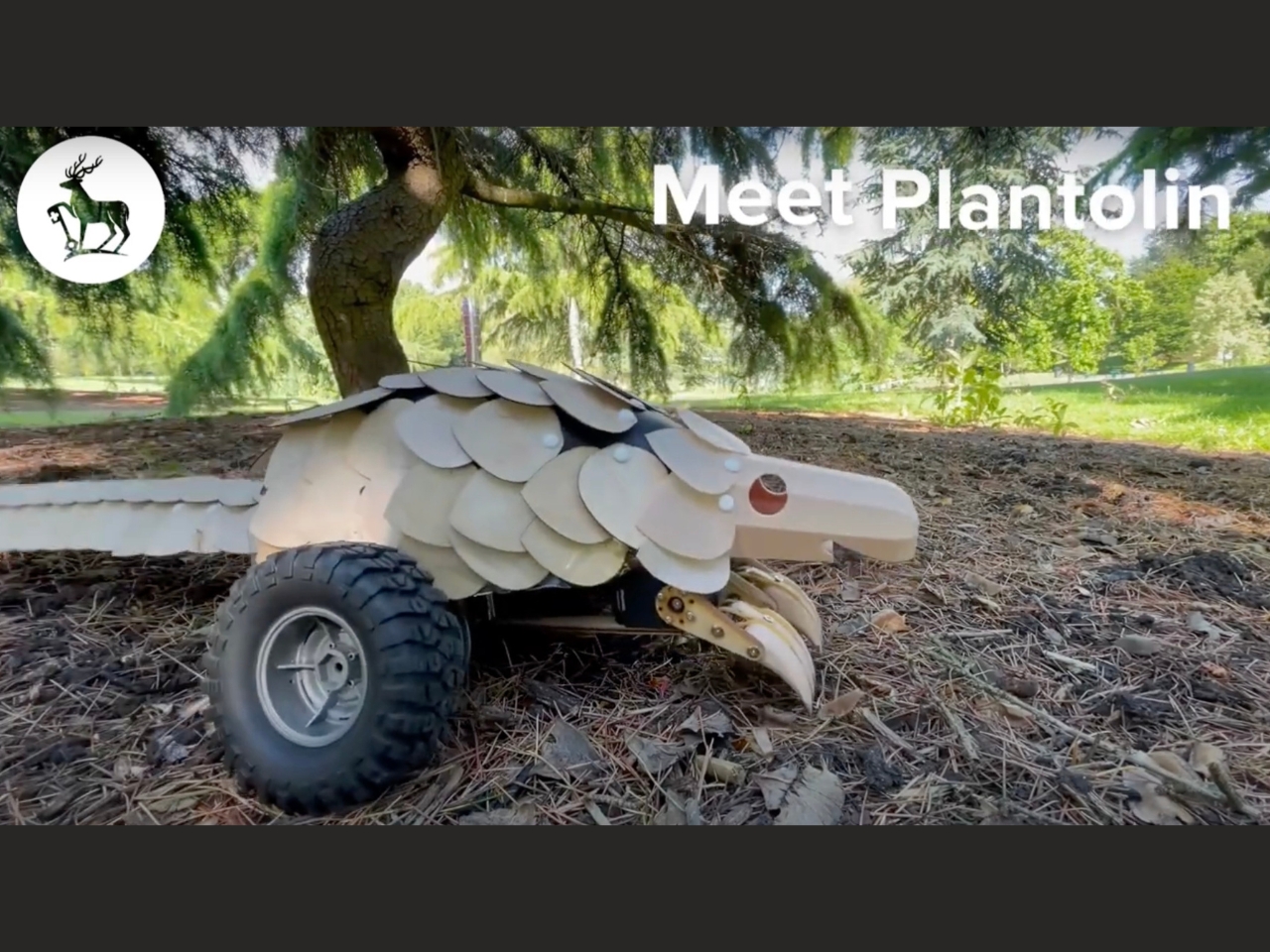
A high school student from California named Dorothy designed a robot whose main goal is to dig and plant seeds. Since pangolins are naturally digging animals, why not use it to create a robot that can help populate areas with more trees? The winning concept was turned into an actual prototype called the Plantolin by the partner research institute. More than just looking like a pangolin, it uses features from the mammal and incorporate it into the functions of the robot.

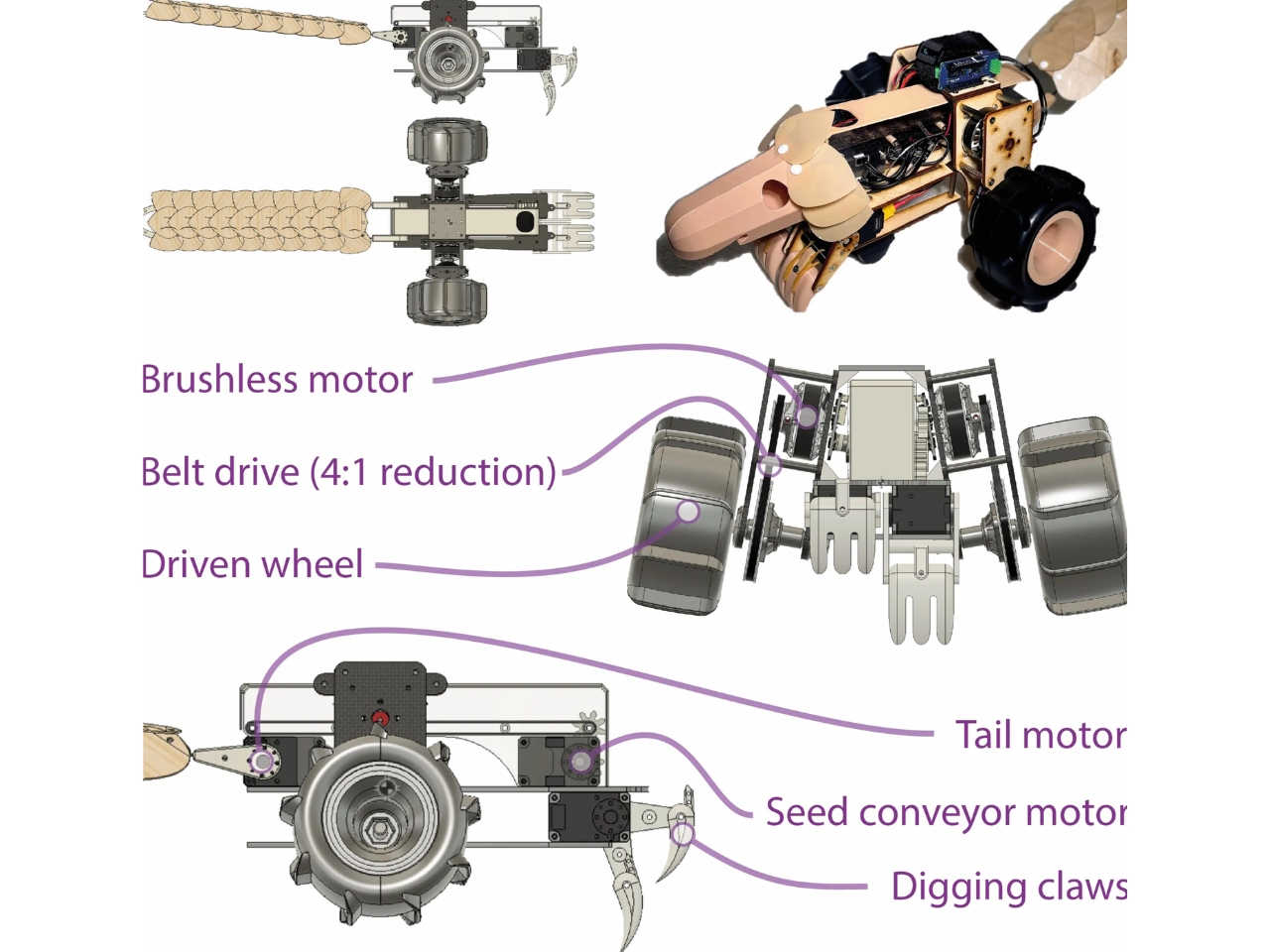
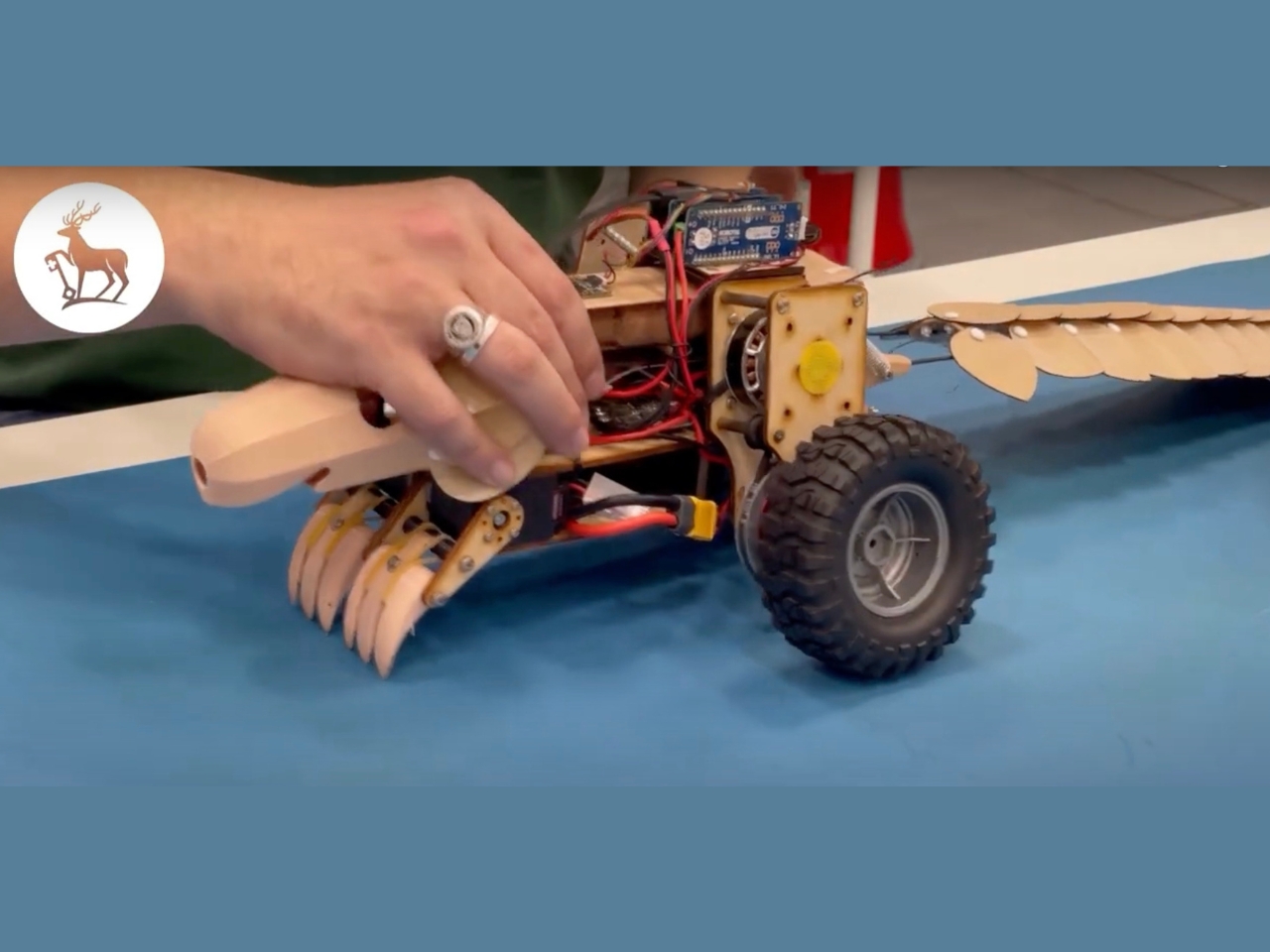
The Plantolin roves around on two wheels and just like the pangolin, it balances on its long, movable tail. Each of the wheels has an electric quadcopter drone motor. The digging is done by these two front legs with the tail tilting down once it starts to provide leverage. Once there’s a hole already, the robot drives over it and poops out a yew tree seed bomb nugget (containing both seeds and soil).

It’s a pretty interesting way to re-populate a space with more trees. It will probably be faster and will need minimal human intervention when it’s programmed right, so no need to train actual pangolins to do the job.

The post Pangolin-inspired robot can dig and “poop” out seeds to plant trees first appeared on Yanko Design.
The best Prime Day vacuum deals that are still available include discounts of up to $400 off on Amazon today

Robot vacuums are some of the pricier smart home gadgets you can get, which is why waiting until a sale like Amazon Prime Day is a smart shopping move. October Prime Day may be behind us, but you can still save on some robot vacuums, and cordless stick vacuums, today post-sale event. Some of our top picks for the best robot vacuums remain discounted, including models from iRobot and Shark. Here are the best October Prime Day vacuum deals you can still get today.

iRobot Roomba 694
iRobot

The best robot vacuums take a chore than many of us would rather not do and automates it to the point where the most you have to do is set a cleaning schedule and empty a bin every once in a while. Of course, that level of smart home automation comes at a cost — which is why it’s a good idea to take the leap on that robo-vac you’ve been eyeing while it’s still on sale.

Dyson V15 Detect
Photo by Valentina Palladino / Engadget

There are some of us who actually enjoy vacuuming (guilty!), and for those folks, a cordless vacuum makes the most sense in 2024. They’re lighter and easier to maneuver than traditional, upright vacs, and some of them even come with self-emptying bases like their robot counterparts do. These are some of our favorites that you can still grab for less.

Follow @EngadgetDeals on Twitter for the latest tech deals and buying advice, and stay tuned to Engadget.com for all of the best tech deals coming out of October Prime Day 2024.

This article originally appeared on Engadget at https://www.engadget.com/the-best-prime-day-vacuum-deals-that-are-still-available-include-discounts-of-up-to-400-off-on-amazon-today-084931027.html?src=rss

iRobot’s Roomba Combo j9+ robot vacuum and mop is $600 off for Prime Day

Prime Day has returned for the fall, which means there are tons of deals to check out at Amazon. Robot vacuums (and cordless ones for that matter) are some of the machines we most recommend picking up during sale events like this because you can often save hundreds on the stick price. One of the best Prime Day robot vacuum deals we found is on the iRobot Roomba Combo j9+, which is a vac-and-mop hybrid. You can snag it for $800 right now, which is $600 off.

This is our pick for the best robot vacuum and mop combo. The Roomba Combo j9+ covers all the bases — and floor types — as it offers just about everything you could want in such a device.

It has strong suction, the ability to give your floors a deep scrub and the intelligence to avoid obstacles. The accompanying Clean Base not only allows the Combo j9+ to self-empty, it refills the robot's liquid tank with water or solution. As such, you shouldn't have to empty the debris bin or top up the base's liquid tank for weeks at a time.

You can set up vacuuming and mopping routines, and ask Alexa or Google Assistant to start an ad hoc cleaning. The Combo j9+ can map out your home faster than previous models and you can label objects to help direct the Roomba to clean a specific area.

The Combo j9+ is certainly a more premium option, but there are other Roombas on sale for Prime Day. Another vacuum and mop combo (Y0140) has dropped from $275 to $219. Meanwhile, you can pick up the even more budget-friendly Roomba Q0120 vacuum for $190. It usually costs $250.

Follow @EngadgetDeals on Twitter for the latest tech deals and buying advice, and stay tuned to Engadget.com for all of the best tech deals coming out of October Prime Day 2024.

This article originally appeared on Engadget at https://www.engadget.com/irobots-roomba-combo-j9-robot-vacuum-and-mop-is-600-off-for-prime-day-172009289.html?src=rss

iRobot Roomba vacuum and mop machines are up to $420 off right now

Some of iRobot’s best robo-vacs are on sale. Wellbots has the ultra-premium Roomba Combo 10 Max + Autowash Dock for $420 off with Engadget’s code ENGDT420. Or, if you want a high-end model without spending quite as much, the Roomba j9+ and Roomba Combo j7+ are on sale for up to $320 off with these exclusive deals.

The iRobot Roomba Combo 10 Max + Autowash Dock is the company’s most advanced (and expensive!) robot vacuum. This model sucks up dirt, mops and even self-cleans: Its dock can wash and dry the mopping pad, leaving less work for you. You can run self-cleaning manually, but its companion app will also remind you when it’s time for standard maintenance or deeper cleaning.

This model’s base can store dirt and debris for up to 60 days before emptying. Its mopping pad and self-cleaning tank hold up to seven days of water.

Usually a whopping $1,399, Wellbots has the Roomba Combo 10 Max + Autowash Dock on sale for $979. Although that’s still a pretty penny, this deal puts the vacuum within range of alternate models that don’t match its feature set. Use Engadget’s exclusive code ENGDT420 to see that price.

Product image for the iRobot Roomba j9+. The robot moves along a carpet with a dog in the background. Overlaid smartphone app, showing its mapping abilities.
iRobot

Also on sale is the Roomba j9+. This model doesn’t mop, but it gives you powerful automated vacuuming in a stylish package that won’t be an eyesore in your home. It has a three-stage cleaning system, multi-surface rubber brushes and high-end suction.

This model is usually a daunting $899, but you can get the Roomba j9+ for $619. Use Engadget’s code ENGDT270 during your checkout at Wellbots.

Finally, the Roomba Combo j7+ is a slightly older vacuum / mop model with high-end features. It has a 96.4 percent debris removal rate, obstacle avoidance and a four-stage cleaning system. This model has an edge-sweeping brush, dual multi-surface rubber brushes and power-lifting suction. The Combo j7+ can empty itself for up to 60 days.

You can pick up the Roomba Combo j7+ for only $679 (compared to its usual $999). Just enter the coupon code ENGDT320 while checking out.

Follow @EngadgetDeals on Twitter and subscribe to the Engadget Deals newsletter for the latest tech deals and buying advice.

This article originally appeared on Engadget at https://www.engadget.com/deals/irobot-roomba-vacuum-and-mop-machines-are-up-to-420-off-right-now-130046509.html?src=rss

This floating cart could become a dream come true for shoppers and workers

The shopping cart, also known as a trolley or buggy, is one of the most essential tools people use inside stores, especially supermarkets, both for customers as well as store workers. Despite its importance, its design has basically remained unchanged in almost a century, even when that design doesn’t really take the comfort of users in mind. Yes, the four wheels and the spacious metal basket can hold your groceries and take them from one point to another, but they are difficult to control, heavy, and more importantly, unable to climb up or go down the stairs. This prototype tries to address those pain points to make dealing with groceries and packages easier, safer, and more accessible.

Designers: Geonwoo Park, Hyungeun Park, Wooyong Park, Dongjae Lee, Murim Kim, Seung Jae Lee (Seoul National University of Science and Technology)

Shopping carts are so iconic that they have literally become icons in digital stores that don’t have anything to do with wheeling physical objects around. Despite that popularity, they’re not exactly the easiest tools to use and offer only the bare minimum convenience so that we don’t have to carry our groceries. Considering their cheap and mass-produced designs, it’s no surprise that many have damaged wheels that make them difficult to turn. These wheels also don’t let you drive the cart up or down places that don’t have inclined planes for them to roll on.

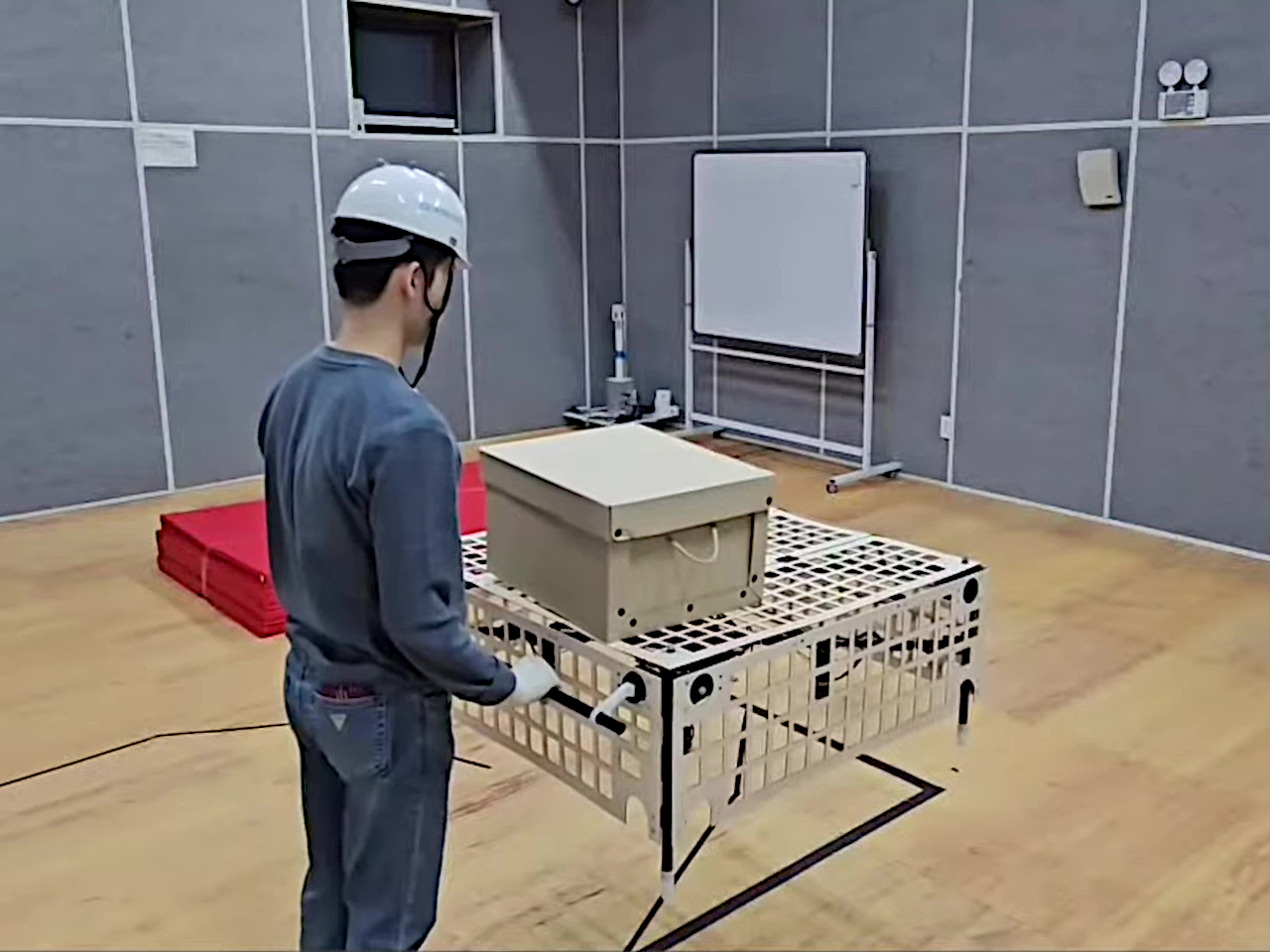
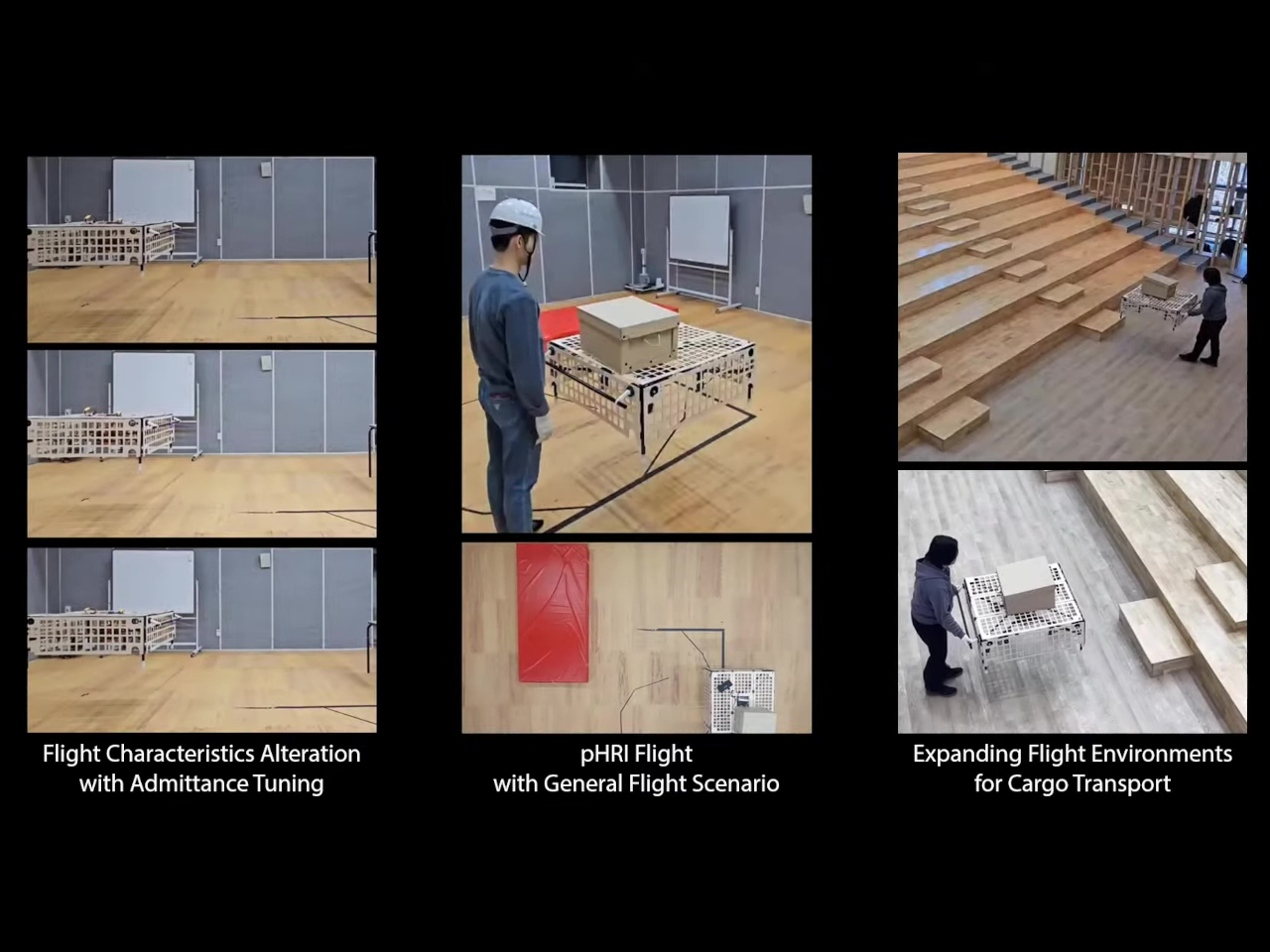
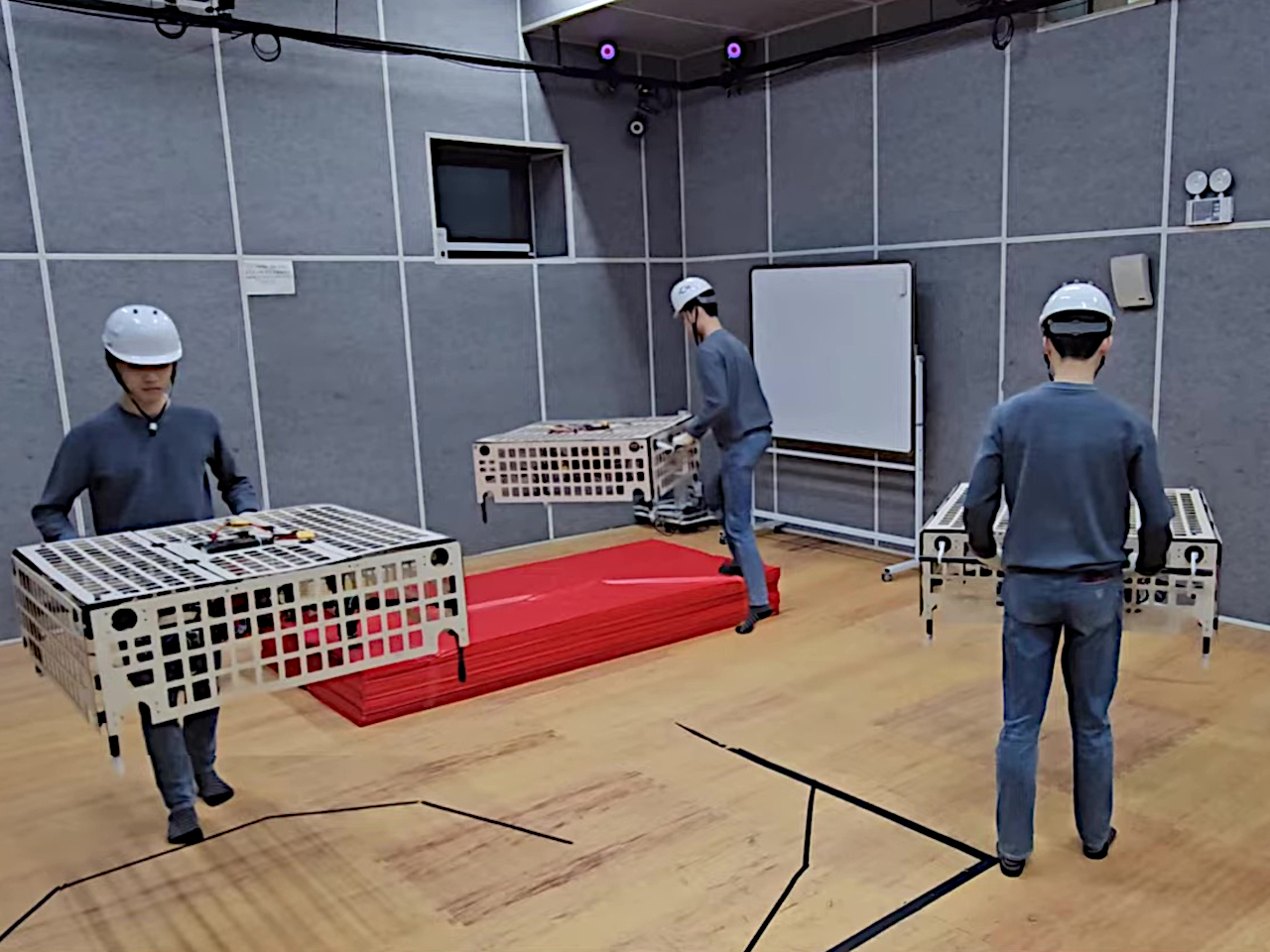
Palletrone’s solution is to do away with those problematic wheels completely. Instead, it uses a rather large drown to lift a platform that will hold your groceries and boxes. There’s also a cage around the drone to protect humans from those powerful and dangerous propellers. Think of it like an upside-down basket with the drone inside, flying to keep the platform off the ground.

The description might sound simple, but there’s definitely a lot complicated technology involved. For one, the Palletdrone always flies at around the person’s chest height, which means that it will also ascend or descend as the person goes up or down stairs. It also doesn’t tilt so that the contents on top of it don’t slide off. Finally, it moves and turns as the person pushes or pulls it, so the experience is more or less exactly like a shopping cart minus the wheels. And it can do all this by knowing if the force being exerted is being done by a human or from the weight of the objects on top of it.

This floating and hovering “cart” sounds dreamy and very useful both for shoppers as well as personnel who have to bring goods from storage to the aisle. That said, the design is far from perfect, let alone presentable and aesthetic. For one, everyone who has ever used a drone will know how noisy they can be, especially one of this size. For another, the current Palletrone is only able to carry less than 3kg of cargo, which is significantly less than a family’s typical grocery bag. It’s a start, though, and one that finally addresses one of the biggest inconveniences when going to the supermarket by boldly giving the decades-old shopping cart a do-over.

The post This floating cart could become a dream come true for shoppers and workers first appeared on Yanko Design.

Serve Robotics and Wing will partner for drone delivery pilot in Dallas

A new joint venture between Serve Robotics sidewalk delivery robots and Alphabet’s Wing flying drone service will do a dual test run. Both tech companies hope that flying and sidewalk drones can cover areas its counterpart can’t and speed up delivery times.

TechCrunch reported that Serve Robotics and Wing will start making deliveries in Dallas sometime in the coming months. The test will include a select number of customer orders being delivered by a combination of sidewalk robots and flying drones.

One of the biggest challenges for drone delivery is coverage. Flying drones can only travel a certain distance away from its headquarters. Sidewalk drones can find it hard to navigate densely populated areas and certain rocky terrains. Drone companies often have to upgrade their facilities to meet these distances and obstacles.

Wing and Serve Robotics will make deliveries in Dallas as part of a new pilot program.
Wing

Serve Robotics and Wing’s idea is to use both types of robots for delivering orders to cover areas traditional delivery services cannot. A road-based Serve bot picks up the order from a restaurant and carts the food to an “AutoLoader” where the Wing drone, a flying drone that can carry five pounds and fly at speeds up to 65 mph, picks up the order and completes the delivery.

It’s not known which restaurants or merchants will be part of the test, the areas in Dallas where the drones will deliver orders and any post-test plans for the new drone delivery fleet. Serve Robotics already makes deliveries for 300 restaurants in Los Angeles. Wing also works with Walmart in Dallas and participated in a pilot program with DoorDash and Wendy’s in Virginia.

Correction, October 2 2024, 1:00PM ET: This story originally stated that Serve Robotics was an Uber company. Originally, Serve Robotics was part of Uber but was spun out into an independent company several years ago. We apologize for the error.

This article originally appeared on Engadget at https://www.engadget.com/big-tech/serve-robotics-and-wing-will-partner-for-drone-delivery-pilot-in-dallas-205628612.html?src=rss

Rectangular robot vacuum concept proposes a more efficient design for smaller spaces

Robot vacuum cleaners and mops are common sights these days, but despite all the advancements they’ve made in terms of technology, their basic shape has remained unchanged since the first-ever Roomba. They’re almost all circular, though the are some that have taken on rounded square forms, a shape that was dictated by the limitations of old technologies that don’t seem to be relevant today. This standard design, however, still carries over other limitations, like squeezing into tight spaces or cleaning corners. Perhaps it’s time to rethink that old and outdated design, which is what this concept tries to do in order to cater to homes with smaller, cramped spaces and messy floors.

Designer: Subin Kim

The initial design of robot vacuums was made primarily for the robot and not the humans. The circular shape made it easier for the machine to turn and correct its direction, something that was all too common given the very basic technologies from decades past. Today, however, most robot cleaners have no problem navigating the most cluttered floors, so there’s now an opportunity to rethink that basic shape.

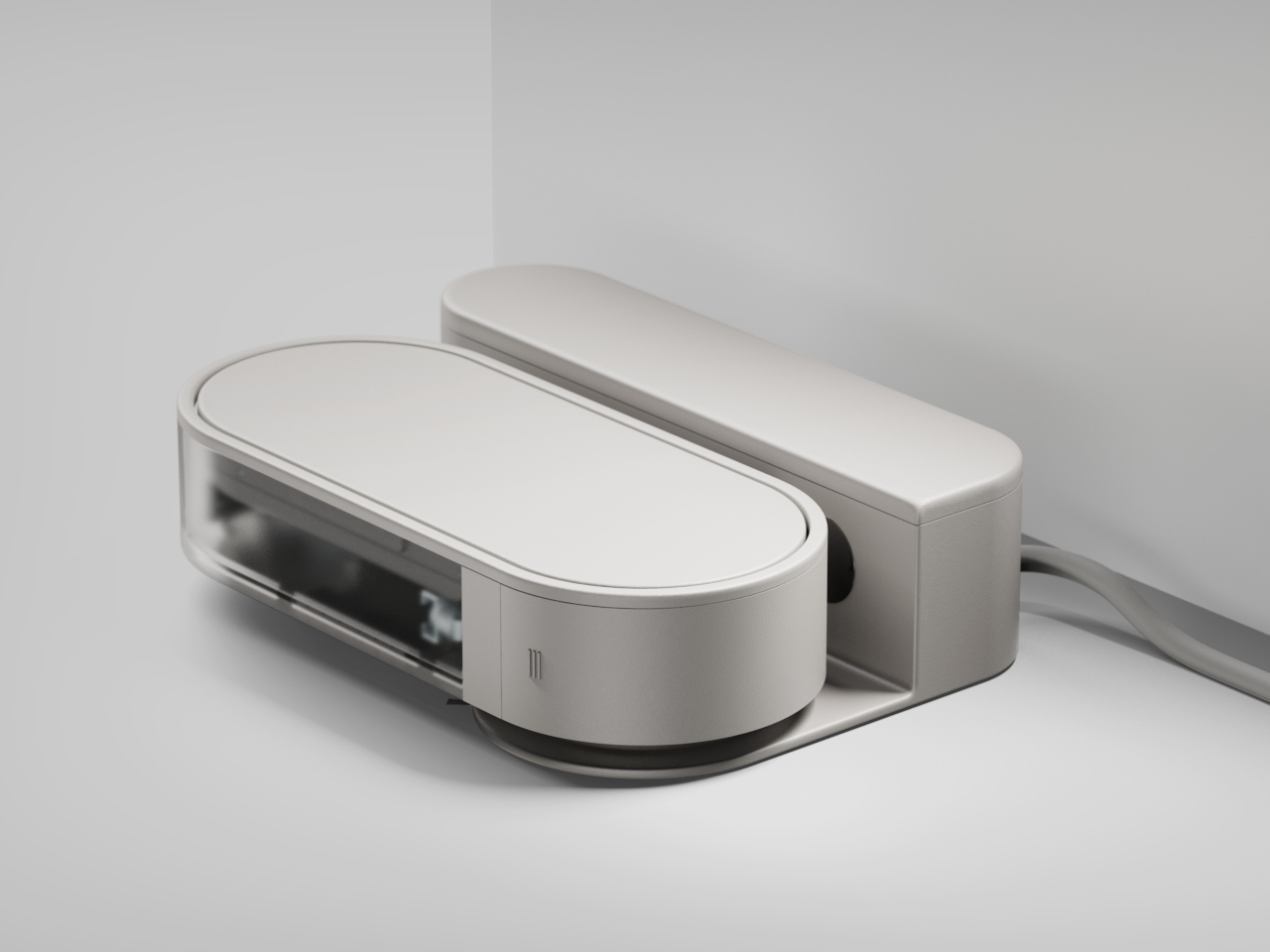
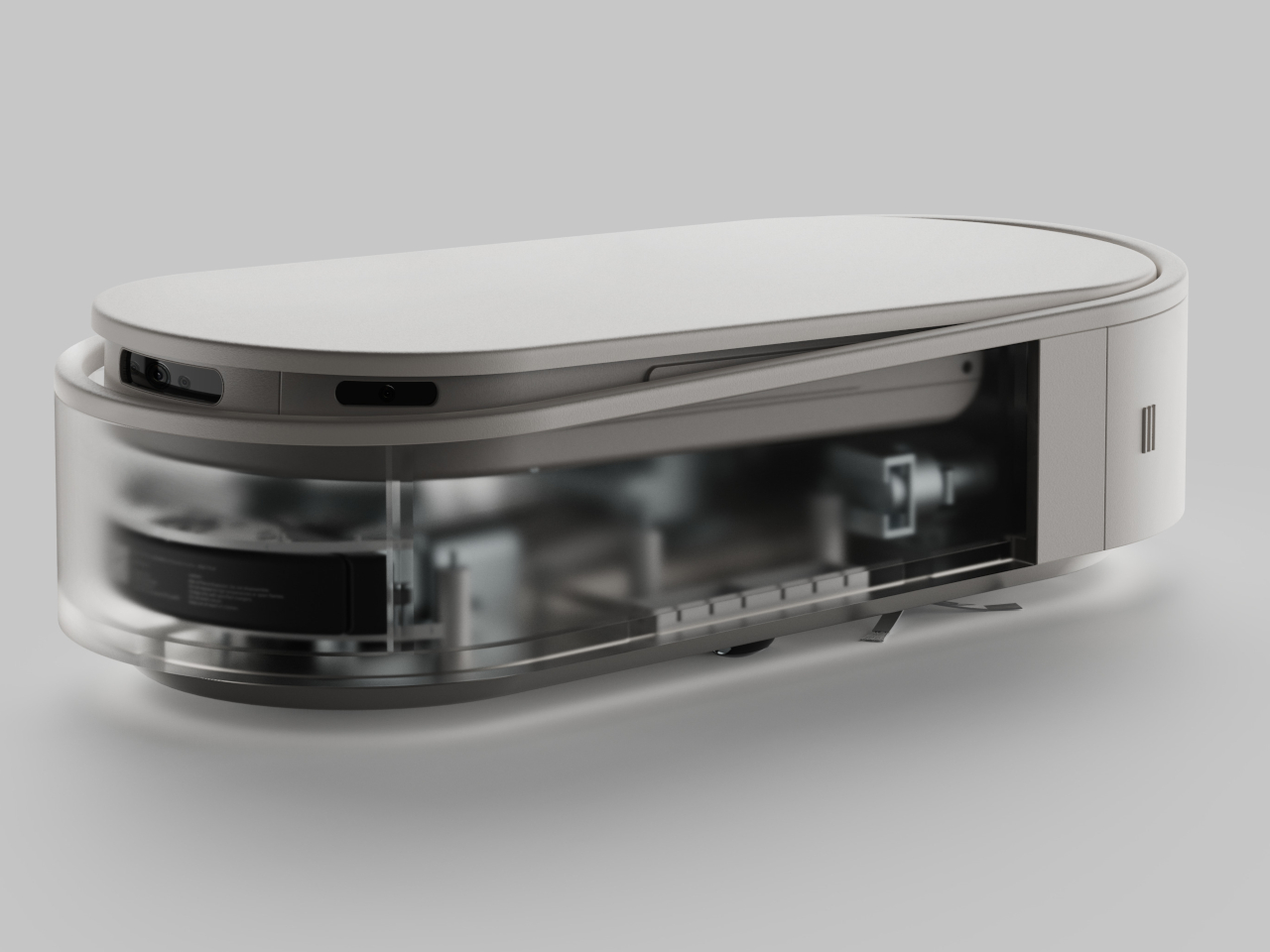
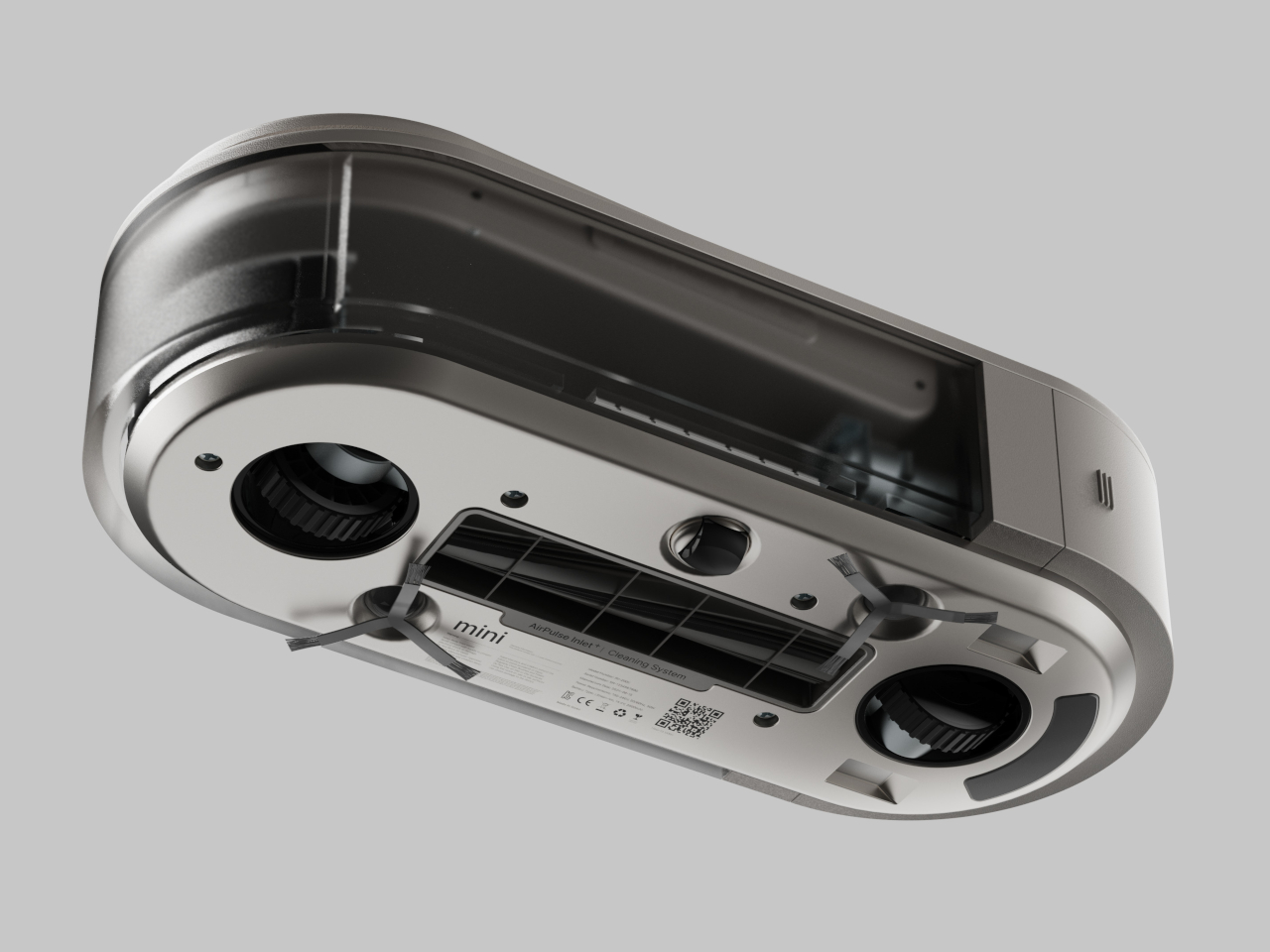
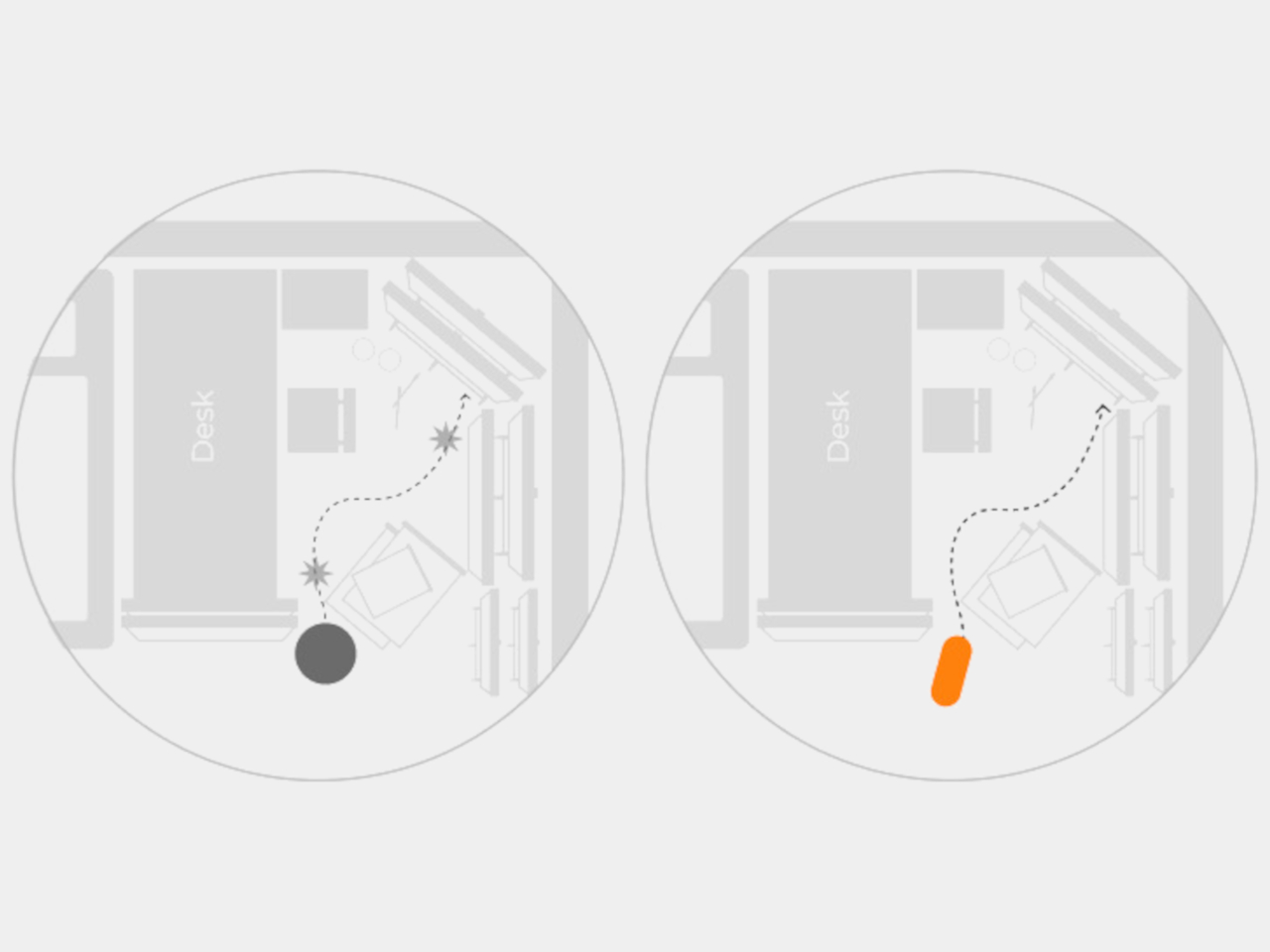
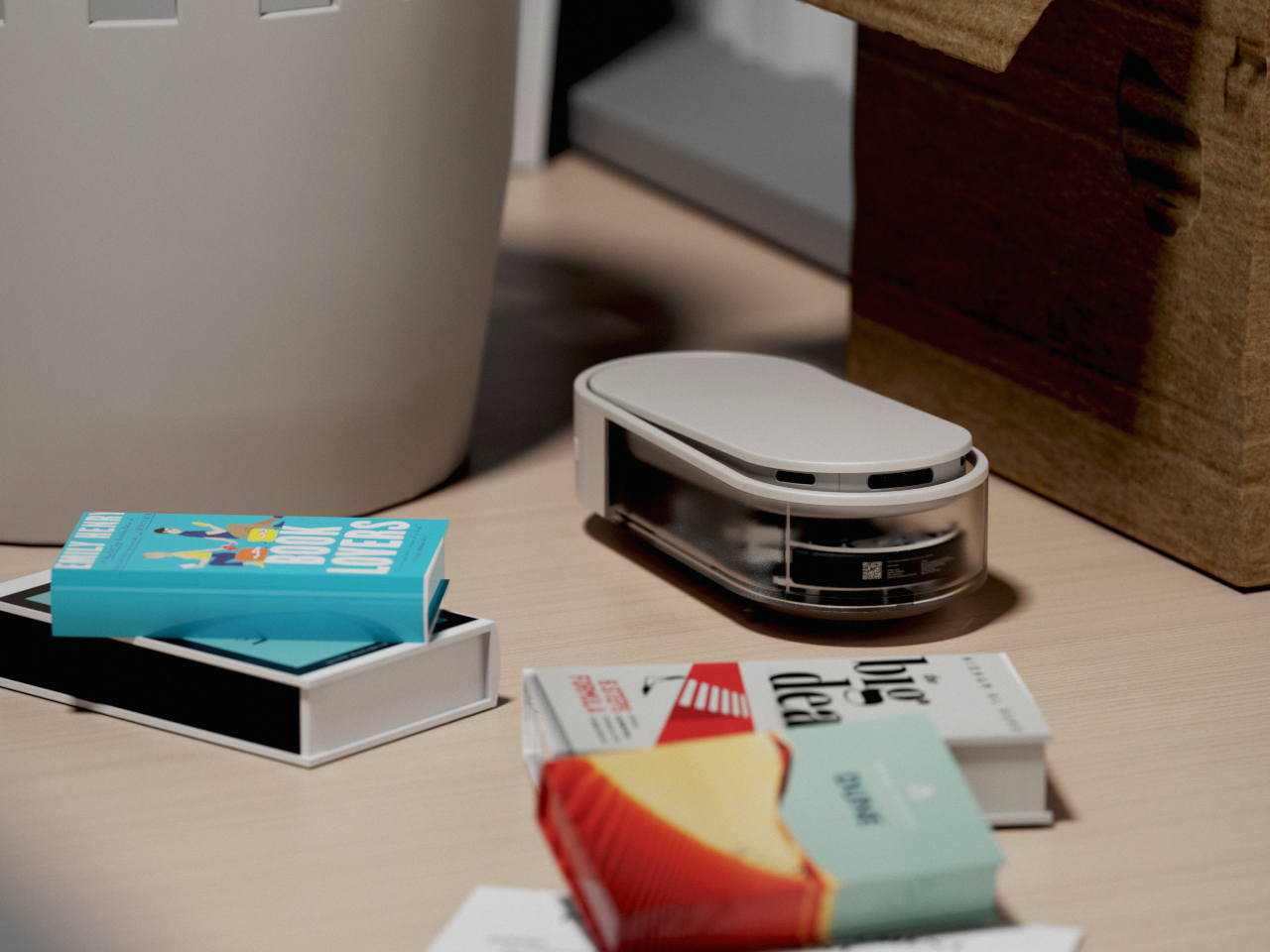
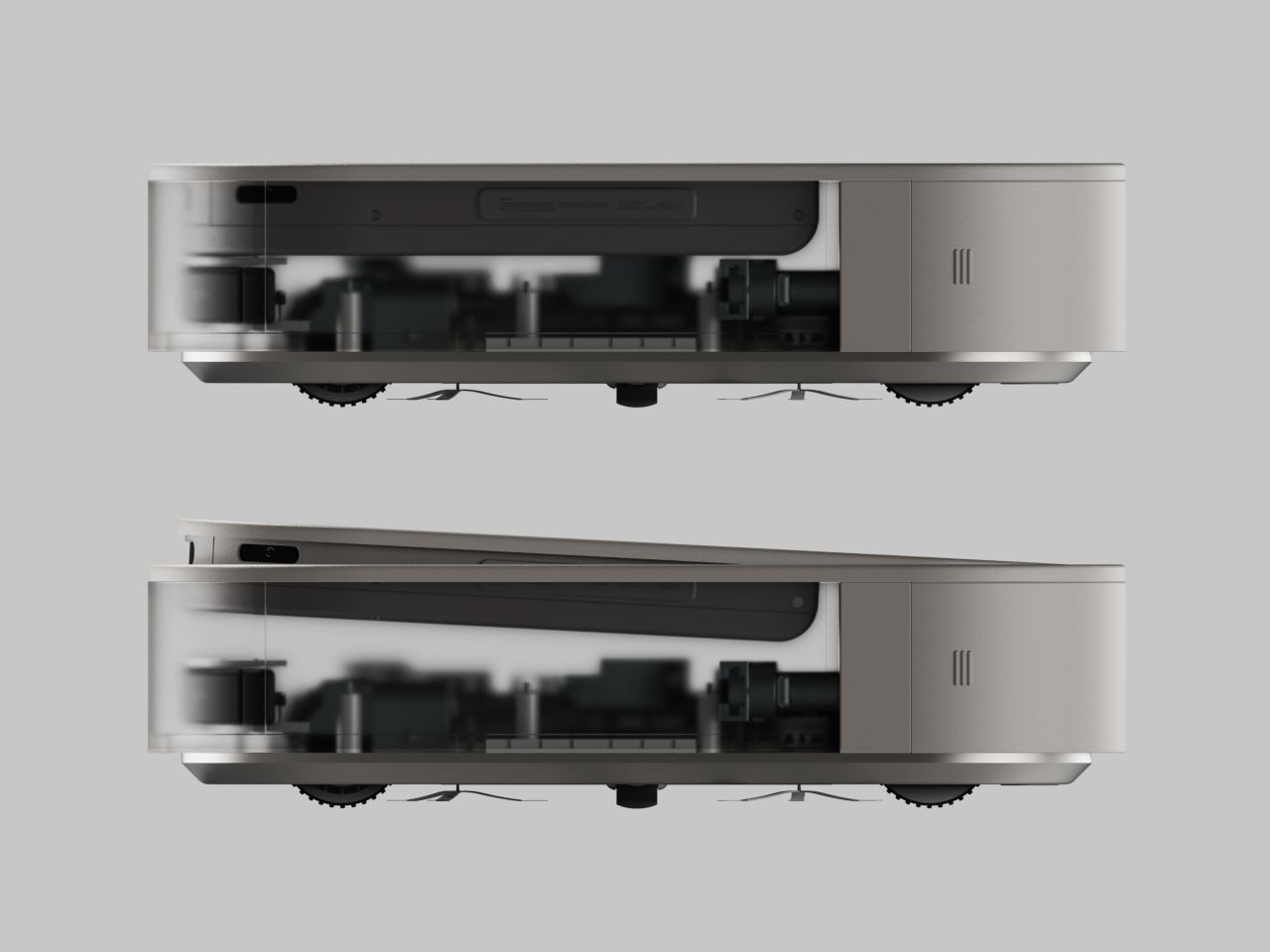
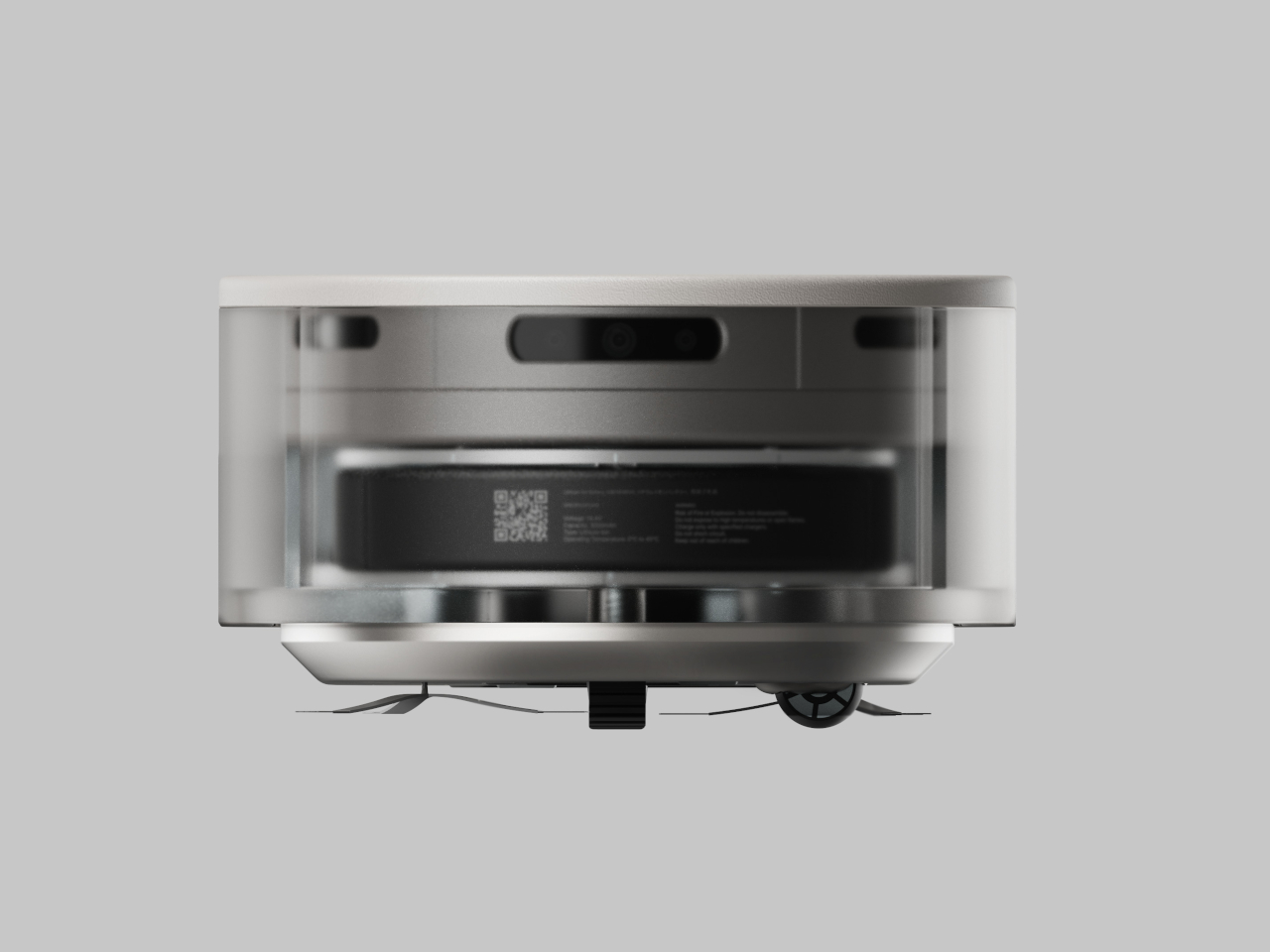
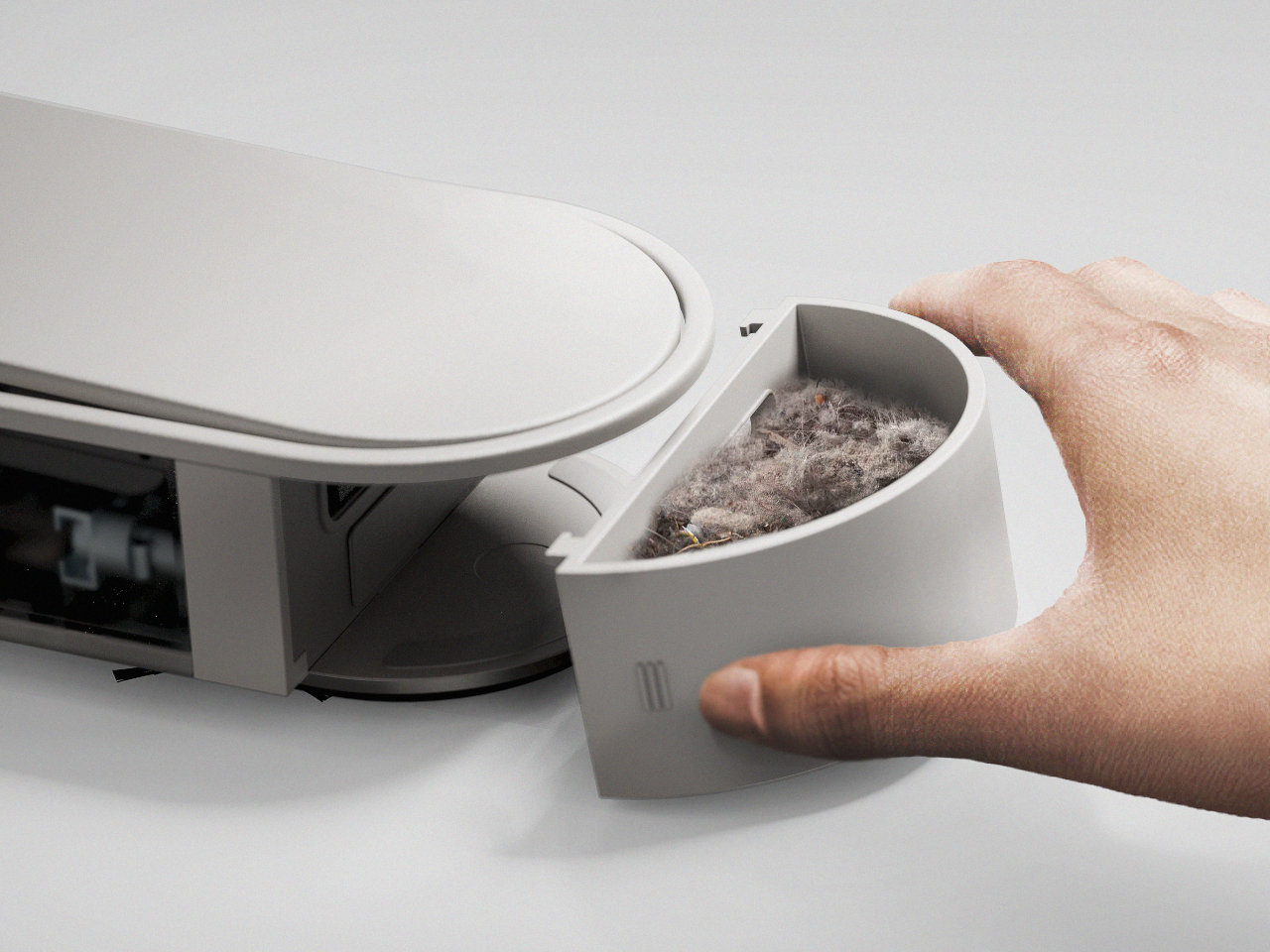
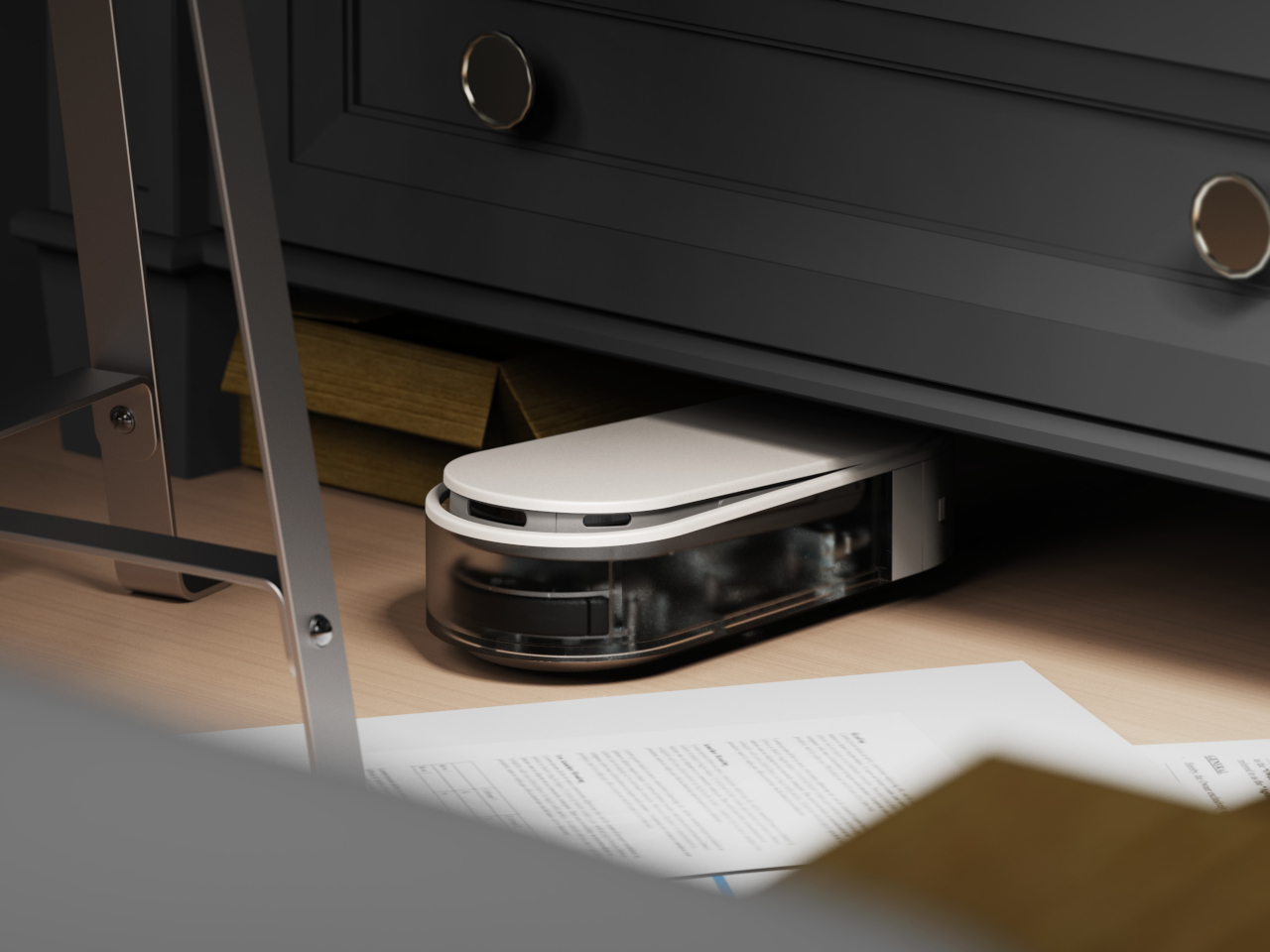
mini is a concept design that stretches the robot vacuum into a more rectangular form, technically more pill-shaped with its rounded sides. The idea is that this robot can better squeeze itself into narrow spaces, like those between walls and furniture, or hug edges to properly brush and vacuum areas that even the most sophisticated circular robot can’t reach. In small apartments or tiny homes, that is more often the case, so such a design is more useful than the majority of round or square robots.

The design can actually be even more efficient than standard robot vacuums because it can change its orientation depending on the area of the floor to be cleaned. In its vertical mode, it can easily clean out narrow gaps, but then it can rotate and switch to horizontal mode if there’s a wider space available for it to move. Such a feat would require AI and advanced sensors, both of which are readily available on most robot cleaners today.

mini’s design does mean it won’t be able to turn quickly, but that can be handled by better obstacle detection and smarter navigation. Although it might not work perfectly in practice, the concept does challenge the status quo and encourages a design that really puts the user at the center, rather than simply turning such robot helpers into technological showcases.

The post Rectangular robot vacuum concept proposes a more efficient design for smaller spaces first appeared on Yanko Design.