Have you ever felt overwhelmed by the sheer number of tools and features in a productivity platform? Microsoft Outlook 365, a cornerstone of modern communication and organization, is packed with capabilities that often go unnoticed. From streamlining your inbox to managing tasks and calendars, this platform offers more than just email, it’s a powerful hub […]
F1: The Movie, the cinematic love letter to Formula One and — quite possibly even more so — consumer products made by Apple, is finally available to stream on Apple TV if you’re a subscriber. It follows the sports thriller’s long theatrical run, during which it raked in more than $630 million globally, comfortably making it Apple’s most successful original film.
Directed by Joseph Kosinski (Top Gun: Maverick, Tron: Legacy), F1: The Movie follows the washed-up former F1 prodigy Sonny Hayes (Brad Pitt), who is convinced by an old friend (Javier Bardem) to get back in the driver's seat and help rescue his failing team. Seven-time F1 world champion Lewis Hamilton served as a producer on the film to ensure it represented the sport as authentically as possible.
Engadget’s Devindra Hardawar reviewedF1: The Movie when it arrived in theatres in the summer, calling it a "shameless Apple ad that will blow your socks off." Should you manage to keep your eyes from rolling straight out of their sockets when a pair of AirPods Max appear on screen beforeanyone says a word, then a deliriously entertaining blockbuster awaits.
For all of the film’s formulaic storytelling and generic characters, the Really Fast Car bits are so well done that they put F1: The Movie among the very best racing movies, as far as our reviewer is concerned. In truth, it’s the kind of film that deserves to be seen on the biggest screen you can find, but failing that, the TV in your living room should do the job just fine, too.
Apple recently dropped the "+" from its streaming service’s name, so it’s now just called Apple TV (yes, the same name as one of its products). If you’re a new subscriber you can take advantage of a seven-day free trial, after which it costs $13 per month following a recent price hike.
This article originally appeared on Engadget at https://www.engadget.com/entertainment/streaming/f1-the-movie-now-streaming-on-apple-tv-following-a-long-theatrical-run-133531702.html?src=rss
You may be surprised to learn electricity only accounts for 21 percent of the world’s energy consumption. Fossil fuels and the rest all play their part to make the world go around, but their role is likely to diminish no matter what happens. The International Energy Agency believes electricity’s share of global energy consumption is going to double in the next decade alone. You all know the causes: Electrification, EVs, data centers and AI mean the planet needs to dramatically increase its power generation, transmission and storage capacity. It’s a shame, then, that the world is nowhere near ready to satisfy such an outrageous surge in demand.
Re-learning to love the atom
The US has certainly spent the year opening doors to dramatically increase domestic energy production. Part of that has to give the signal that the US will embrace nuclear power in ways it hasn’t for generations. This January, an executive order titled Unleashing American Energy included an instruction for the government to eliminate rules and regulations related to power generation. Its primary focus was to destroy environmental regulations limiting the extraction of oil, natural gas and coal, but also to remove roadblocks to the construction of new nuclear plants. Then, in May, a subsequent order declared a desire to ensure the deployment of “advanced nuclear technologies.”
As the driving force behind the AI push, big tech has made some high profile moves to buy up extra generation capacity. Meta signed a 20-year deal with Constellation to own the output of the Clinton Power Station, preserving the 1.1GW facility once its state tax credit expires next year. Microsoft has its own 20-year deal with Constellation to own the power generated by reactor 1 at Three Mile Island, now renamed the Crane Clean Energy Center. On November 18, that project was also given the backing of the Department of Energy which authorized a $1 billion loan. But even without the backing of big tech, other mothballed reactors are being restarted, like the Palisades plant in Michigan. Earlier this year, the Department of Energy handed out a $1.52 billion loan to get the facility, capable of generating 800MW, back up and running.
Big tech is also betting on the future of nuclear power, signing deals with a number of startups looking to build out a new generation of reactors. Google, for instance, has backed Kairos Power and its plan to build a series of small, modular reactors. Amazon, meanwhile, invested in X-Energy and has published plans for its own buildout in Washington State.
It’s not just the US that is learning to fall back in love with nuclear power, as the rest of the world is also building out new capacity. The World Nuclear Association says there are 70 reactors currently under construction across 15 countries. Russia, India, Argentina, Turkey, South Korea, Japan, and Brazil, to name just a few, are all working on new reactors.
China on its own is presently building 33 reactors and, as Nuclear Business Platform reported earlier this year, greenlit a further 10 this April. That same report adds that China’s policy of producing multiple reactors at a time has seen costs crater. It says that while the UK’s two new reactors at Hinkley Point will cost in excess of $60 billion, each of these new reactors will cost $2.7 billion.
Bridging the nuclear gap
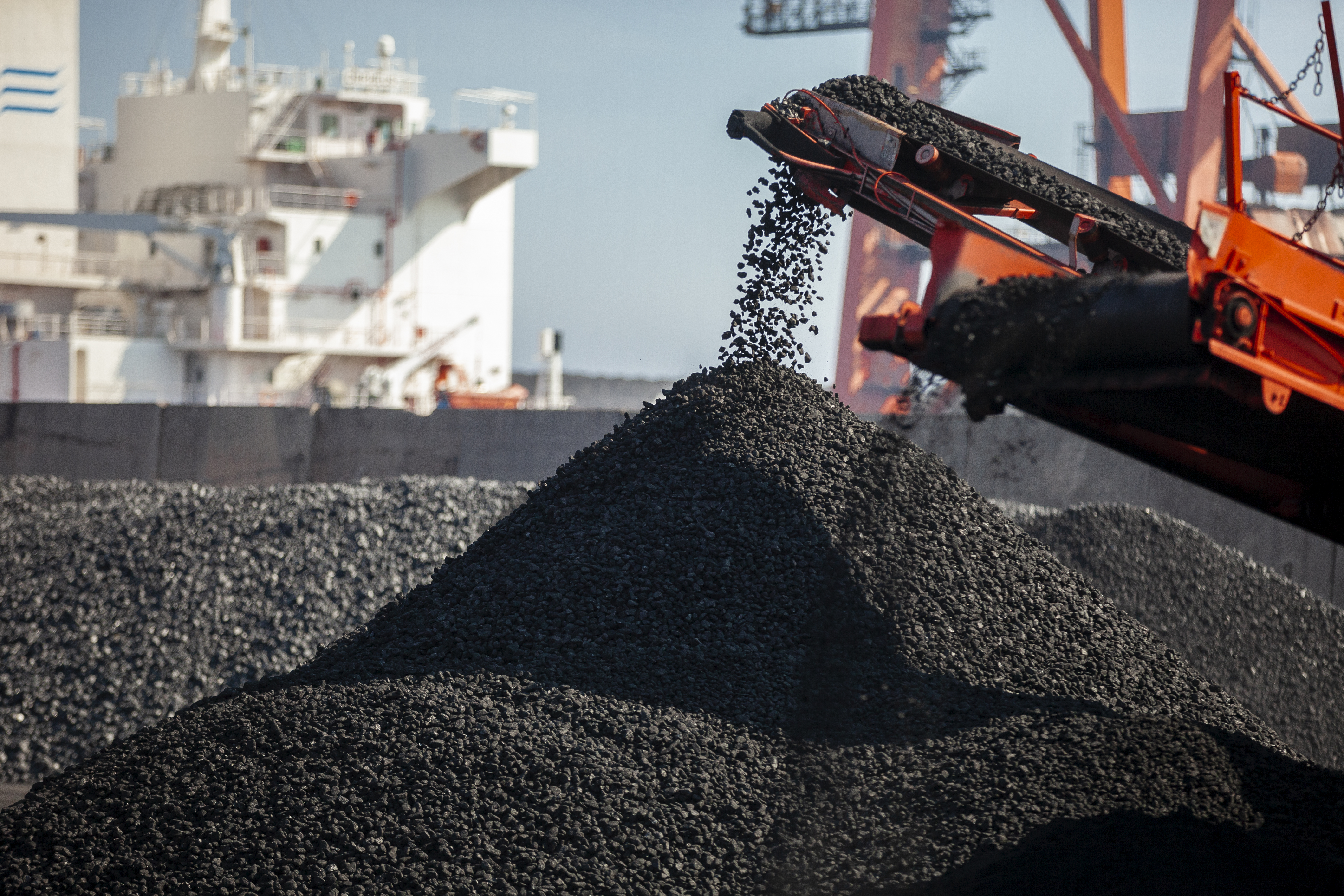
coal handling in a port
Indigo Division via Getty Images
Building a nuclear reactor is not a swift process, and construction of a facility can take the better part of a decade. You can add on a few more years if you include the necessary procedural steps that need to be undertaken before a single piece of concrete is poured. Consequently, any major shift in the US’ power generation fleet will be measured in generations, rather than years. It’s a concern that, for all of the attention nuclear power is getting, it’s merely a smokescreen for a renewed push for fossil fuel extraction.
After all, one major casualty from the Big, Beautiful Bill was the eradication of subsidies for the US’ solar industry. As we reported back in July, the act has kicked the legs out from domestic solar panel manufacturing, handing renewable energy dominance to China. This goes hand in hand with the US Department of Energy setting up a $625 million funding stream to revive America’s coal industry and recommission old power plants. Or that it is also awarding contracts to grow America’s strategic petroleum reserve.
Back in September, Energy Secretary Chris Wright made the implausible claim to BBC News that fossil fuel extraction was nothing to worry about as fusion power would be on the grid in the next decade. Wright, himself the former CEO of fracking company Liberty Energy, was taken to task by a number of climate experts for publishing a report riddled with “misleading or fundamentally incorrect” assertions. Similarly, on November 20, the Department of Energy reshuffled its org chart to eliminate several departments responsible for renewable energy and energy efficiency while forming the Office of Fusion.
Solar’s unstoppable rise
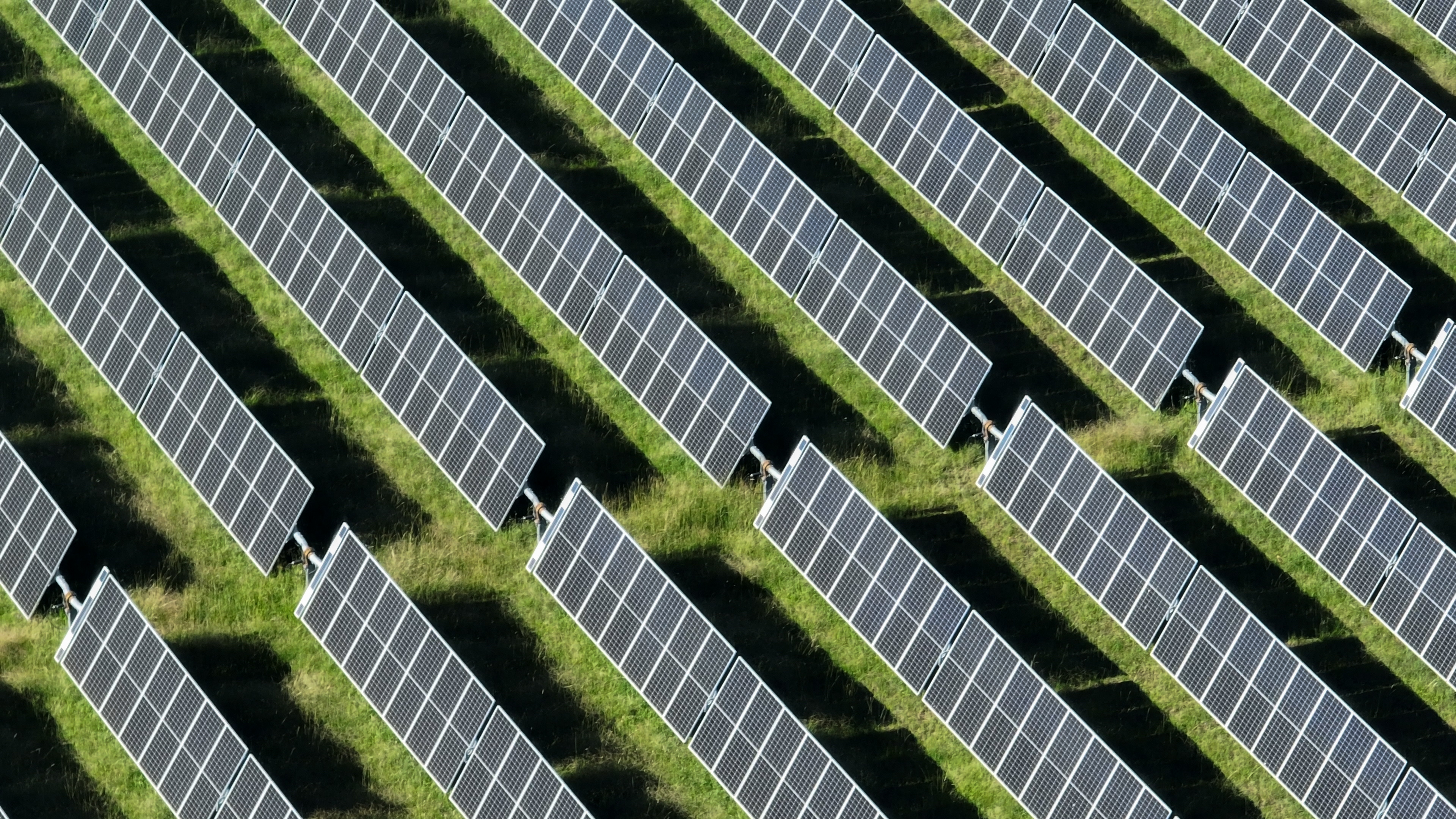
This stunning aerial view captures an array of solar panels arranged in neat, parallel rows across the landscape. From above, the panels shimmer under the bright sunlight, creating a striking contrast against the natural terrain below. The organized rows of solar panels stretch across acres of land, symbolizing the growing global shift toward renewable energy. The grid-like pattern highlights the efficiency and scale of modern solar farms, contributing to sustainable energy production.This high-resolution image showcases the incredible reach and potential of solar power as a clean, renewable energy source. Whether situated in rural fields, expansive deserts, or atop rooftops, these solar panels represent a major step toward reducing carbon footprints and combating climate change. The solar farm's orderly rows and reflective surfaces create a visually appealing scene, demonstrating both technological innovation and environmental responsibility.
Diane Keough via Getty Images
The US may have kneecapped its domestic solar industry, but it may not be enough to defeat renewables’ momentum. In October, the International Energy Agency projected renewable energy will grow by 4.6 TW by 2030 — a figure equal to the combined generation capacity of China, the EU and Japan combined. 77 percent of that figure is expected to come from solar power alone, despite the loss of subsidies in the US and less favorable circumstances in China.
The domestic US forecast has been revised downward significantly as a consequence of its policy choices. But despite this, the obvious benefits of solar power haven’t gone away even if the price may be higher than it was at the start of the year. It remains the fastest and cheapest way to add new power in many countries, and can be installed on a grid or individual basis. Not to mention its utility in remote areas with poor generation resources, where it can reduce dependency on fossil fuels. This year, clean energy think-tank Ember reported on the growth of solar power in the last decade, and how it went from adding just one percent of global power generation in 2015 to 8.8 percent in the first half of 2025.
“AI demand for electricity is the macro driver of US made solar,” said Rob Gardner, VP at the Solar Manufacturers for America Coalition. “AI investments can’t deliver expected returns without quickly deployed power, and US solar is the fastest and cheapest to deploy,” he said. Gardner cited a recent FERC forecast which predicts that 92.6GW of solar will come online between now and July 2028.
The dream of fusion
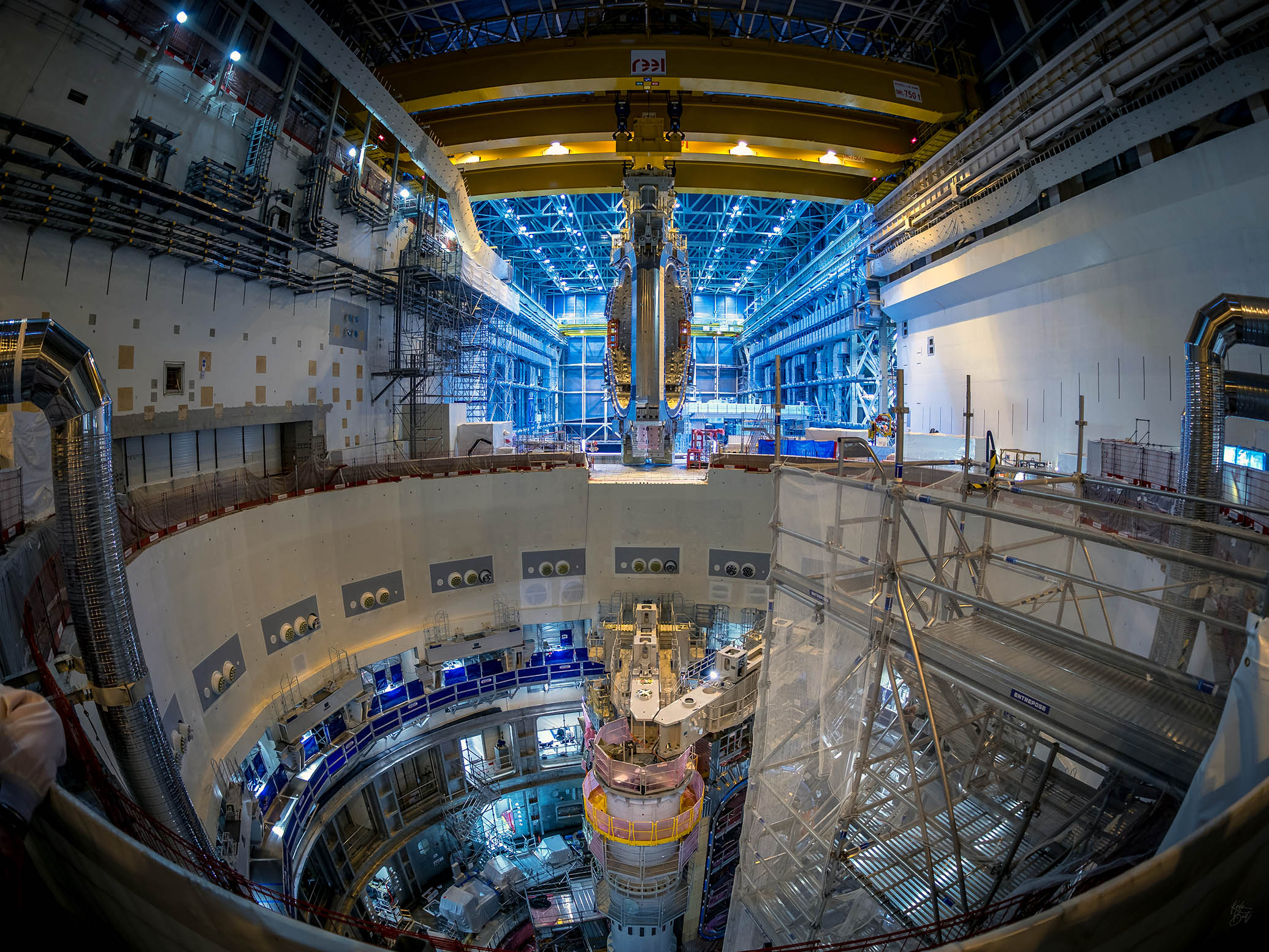
Construction inside the reactor of ITER.
ITER
The US is pinning a lot of its hopes on fusion power to wipe away the debt of our fossil fuel past. Earlier this year, the Department of Energy released a roadmap to get fusion out of the lab and into the world. It wants to coordinate the remaining resources of the federal government to close the fusion world’s “critical science, materials and technology gaps.” In the next three years, officials have been tasked with designing facilities for reactors and developing sources of fuel. Within the next decade, it’s hoped the government will be able to offer large-scale fuel cycle plants to help private sector plants start operations.
If fusion power can be harnessed, it has many of the same upsides as nuclear fission with a lot fewer downsides. If nuclear fission harnesses the energy released when an atom is broken apart, then fusion harnesses the energy released when two smaller atoms are smashed together to create a larger one. It harnesses the same principle as you’ll find inside our sun: Superheated hydrogen atoms fusing to create helium. And while nuclear fusion requires radioactive material, we can source deuterium and tritium from water and lithium.
ITER (International Thermonuclear Experimental Reactor) is a giant experimental fusion reactor under construction in France which, when operational, will be the world’s largest. It is backed by a coalition of nations, including the US, EU and China, and has the aim of both generating power and developing the technologies necessary to make Fusion a reality. The organization claims that there is enough of both materials available on the planet to run fusion plants for at least a thousand years, if not longer. There are also a raft of safety benefits, as there’s no creation of the sort of long-lived and dangerous waste associated with nuclear power, no risk of a meltdown, and its raw materials can’t be used to make weapons.
But while fusion is entirely possible, and on paper could be the salve to all of the world’s energy ills, it’s not yet a reality. There are a large number of engineering challenges sitting between us and a viable commercial reactor. The shift that has happened this year is that fusion is now being treated as a “strategic national priority,” according to the International Atomic Energy Agency. More than 160 fusion facilities are operational worldwide, each one looking to explore ways of solving the hard problems standing between us and limitless power.
But as well as ITER, there are other major nations working to build out their own fusion capacity. The biggest would likely be China’s Experimental Advanced Superconducting Tokamak (EAST) which has already set a record for energy generation. At the start of this year, it was able to produce a steady state for 1,066 seconds.
But what we are seeing now, which may offer some degree of hope, is the surge in interest from the private sector. Companies like Commonwealth Fusion, Type One Energy, Helion and Pacific Fusion are all working on their own fusion facilities. These projects have received billions in funding, but it’s likely all will need time to work out if their approaches are viable.
Stuart White is a spokesperson for Tokamak Energy, a British-Japanese startup spun out from the UK’s Atomic Energy Authority which is developing its own fusion technologies. In 2022, the company’s own reactor was able to reach a plasma temperature of 100 million degrees celsius. “It’s an incredible achievement but that isn’t going to power homes around the UK or anywhere,” he said. White believes the fusion world will spend the next decade “scaling up,” projects to find the right pathway to building commercial reactors. He cited national programs, like the UK’s STEP which is targeted to begin working in 2040, while the US’ plan for the mid-2030s he feels is “aggressive.”
White also explained that, as equally important as solving the key physics issues, is building out the supply chain to actually make the equipment. He cited the importance of manufacturing in Japan and China to produce the hardware necessary to build fusion reactors. And that this process, while time consuming now, will help accelerate the eventual development of the technology down the line. White added that another positive sign is that regulators aren’t likely to want to scrutinize fusion reactors with the same intensity as they do nuclear reactors. That will both speed up the construction of new facilities and reduce costs when they do eventually enter service.
What’s clear, however, is that Fusion is not going to be able to swoop in and decarbonize the world’s energy needs in the sort of time scale it’s likely to be required. (White said it is likely to arrive in time to complement other clean sources of energy over the next half century, rather than so quickly that every other power station gets mothballed instantly.) Consequently, the government of the world must keep prioritizing the rollout of renewables rather than hoping that fusion will simply bail everyone out in the next decade.
This article originally appeared on Engadget at https://www.engadget.com/science/in-2025-ai-and-evs-gave-the-us-an-insatiable-hunger-for-power-133000673.html?src=rss
Last week, Netflix surprised us all when it announced plans for an $82.7 billion acquisition of Warner Bros., a move that would fundamentally reshape the world of streaming video and Hollywood. But Paramount isn't giving up on WB — this week it launched a $108 billion hostile takeover effort. In this episode, we discuss why everyone is fighting for WB, and why Netflix may be the best worst option for the storied movie studio.
What the Netflix bid for Warner Bros. means for at-home streamers and moviegoers – 1:55
Disney characters are coming to Sora after OpenAI struck a deal – 32:59
Meta may be giving up on open source for Llama – 43:53
Google CEO says we’re just going to have to grin and bear societal disruption via AI – 46:46
Around Engadget: The Kindle Scribe Colorsoft is good, but is it $630 good? – 49:06
The best trailers and announcements from The Game Awards’ Day of the Devs stream – 51:28
Here’s why projectors won in 2025 – 54:31
Working on – 56:15
Pop culture picks – 57:33
Credits
Host: Devindra Hardawar Guest: Nathan Ingraham Producer: Ben Ellman Music: Dale North and Terrence O'Brien
This article originally appeared on Engadget at https://www.engadget.com/social-media/engadget-podcast-why-netflix-is-the-best-worst-option-for-warner-bros-132156232.html?src=rss
What if you could turn an idea into a fully functional, scalable AI-powered application without feeling overwhelmed by the complexity of development? The rise of AI SaaS applications has opened doors for entrepreneurs and developers to create innovative solutions that solve real-world problems. Yet, the process of building and deploying such applications often feels like […]
The Xbox Ally X, a $1,000 handheld gaming console co-branded with ROG, positions itself as a premium alternative to the Nintendo Switch and Steam Deck. Designed as a portable Windows-based gaming device, it promises high performance, modularity, and durability. However, its steep price and certain design choices raise questions about its overall value when compared […]
The best workspace tools seamlessly integrate into your creative flow, making every interaction feel intentional. For designers who spend hours surrounded by materials, implements, and ideas, the objects on their desk become extensions of their thinking process. This holiday season presents an opportunity to replace utilitarian clutter with pieces that spark joy through thoughtful design and refined aesthetics.
These five gifts represent a different approach to workspace essentials. Each one reimagines everyday tools through the lens of considered design, transforming mundane interactions into moments of tactile pleasure. From Japanese steelwork to magnetic innovation, these pieces prove that functional objects deserve the same design attention we give to creative projects themselves. They elevate workspaces not through decoration but through intelligent form meeting purposeful function.
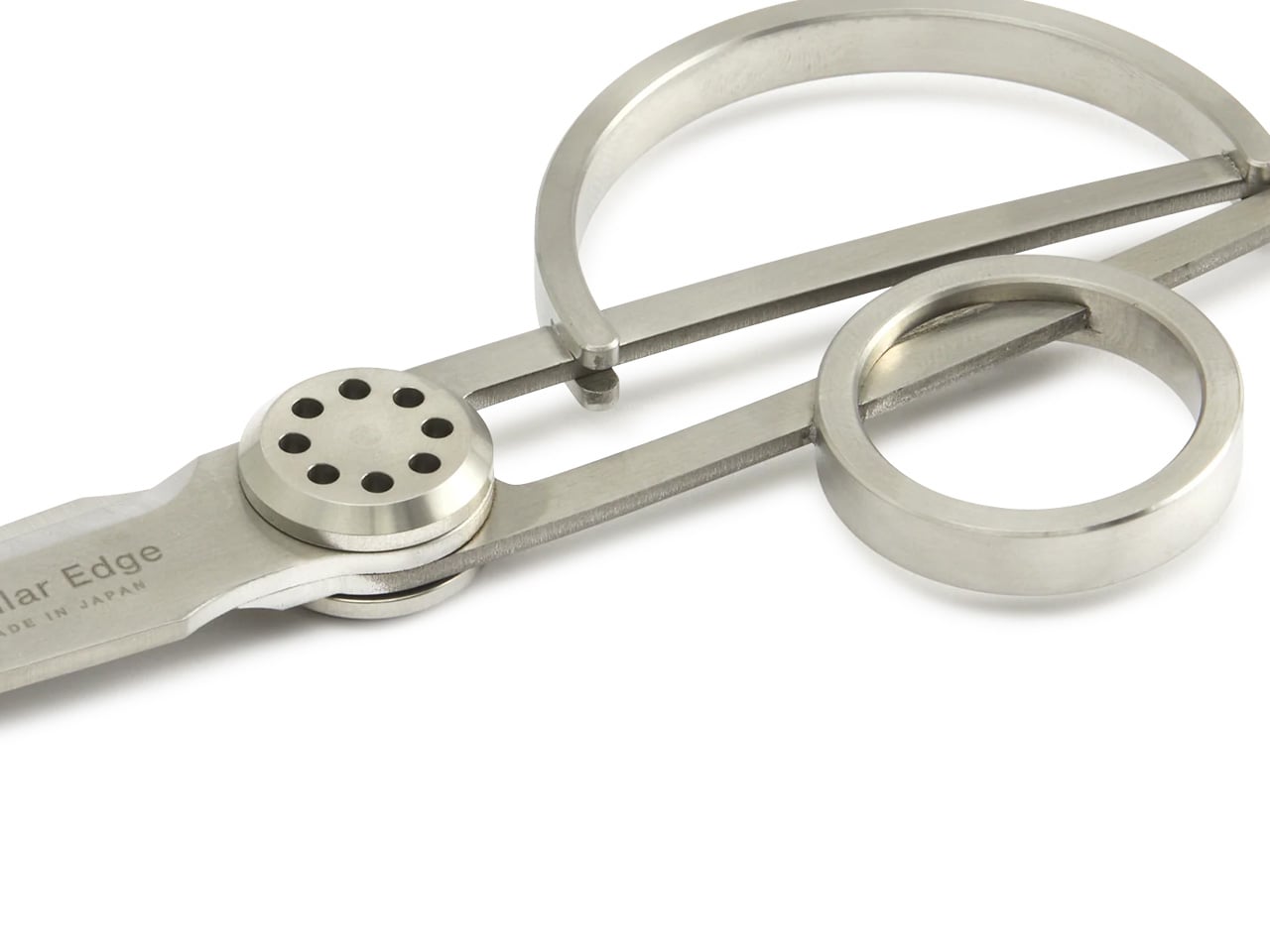
1. Stellar Edge Scissors
The moment you pick up these scissors, you understand why they come from Seki, Japan’s legendary blade-making region. Their asymmetrical handles challenge expectations while delivering surprising comfort, creating a sculptural presence that commands attention on any desk. The seamless stainless steel construction catches light beautifully, turning a cutting tool into an object worth displaying. When designers reach for scissors dozens of times daily, that repeated interaction deserves this level of refinement and visual consideration.
What makes these scissors exceptional goes beyond their museum-worthy appearance. The blade geometry ensures clean, effortless cuts through various materials, from delicate tracing paper to thick cardstock. That perfect balance point makes extended cutting sessions feel weightless rather than tedious. The polished finish resists fingerprints while providing just enough grip for control. These scissors transform routine tasks into satisfying rituals, proving that tools designed with genuine care create measurably better experiences throughout your workday.
What we like
The architectural form creates an instant focal point on any workspace surface.
Japanese stainless steel maintains razor sharpness through thousands of cuts.
Ergonomic engineering makes asymmetrical handles surprisingly comfortable for extended use.
Seamless construction and polished finish elevate them beyond typical office supplies.
What we dislike
The premium price point places them out of reach for budget-conscious buyers.
Their artistic appearance might make colleagues hesitant to borrow them for quick tasks.
2. Magboard Clipboard
Traditional notebooks impose structure before you’ve captured a single thought. This magnetic clipboard system throws out those constraints, letting you work with loose sheets that can be rearranged, removed, or inserted as ideas evolve. The hardcover design provides solid backing for writing anywhere, whether you’re sketching at your desk or capturing inspiration during a standing meeting. That simple magnet and lever mechanism holds up to thirty sheets securely while making page changes effortless and intuitive.
The beauty lies in removing friction from your creative process. Tear out pages that don’t work, reorder sequences that do, and add fresh sheets without committing to bound permanence. The water-resistant cover protects your work while staying easy to clean, making it genuinely portable rather than precious. For designers who think visually and need to see multiple concepts simultaneously, this system supports fluid thinking rather than forcing linear progression through pre-bound pages.
Magnetic binding system lets you reorganize pages instantly without tearing or waste.
Hardcover backing provides a stable writing surface for standing or mobile work sessions.
Water-resistant construction protects notes while remaining lightweight and portable.
Minimalist design strips away unnecessary features that complicate simple note-taking.
What we dislike
Loose sheets can scatter if the clipboard accidentally opens in a bag.
The system requires maintaining a supply of appropriately sized paper for ongoing use.
3. Everlasting All-Metal Pencil
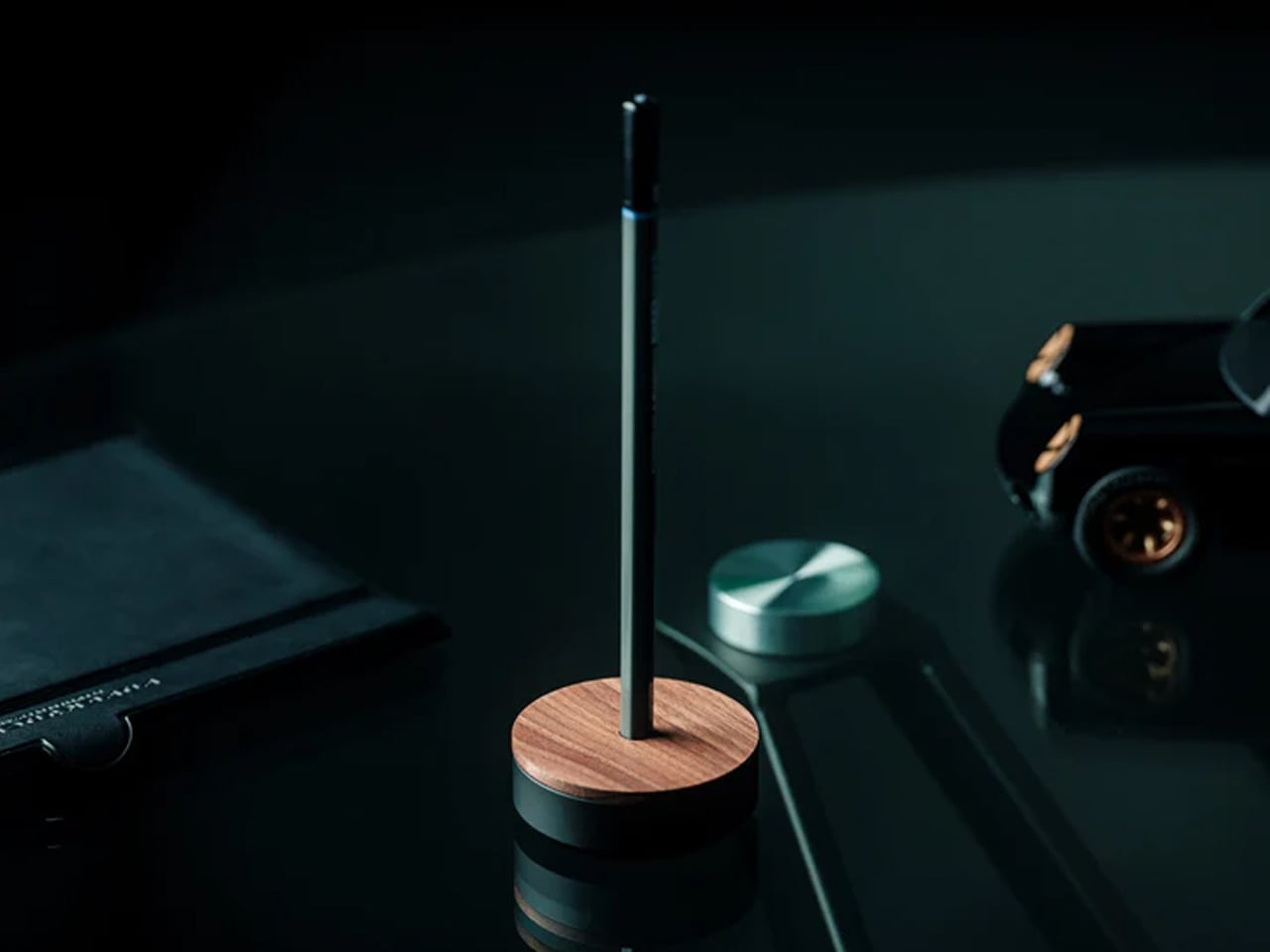
Pencils break, dull, and disappear precisely when you need them most. This metal alternative writes like graphite but never requires sharpening, combining a special alloy core with an aluminum body that feels substantial without being heavy. The marks it leaves behave exactly like traditional pencil writing, erasing cleanly and refusing to bleed when you add watercolor or markers over your sketches. It’s the kind of tool that makes you forget about the tool itself and focus entirely on the marks you’re making.
The engineering behind its “everlasting” claim deserves attention. Rather than soft graphite that wears away with each stroke, this alloy core releases tiny particles that create marks without significant material loss. You get consistent line weight and darkness through thousands of uses. For designers who sketch constantly throughout their day, eliminating the sharpen-write-sharpen cycle removes an annoying interruption from creative flow. The metal construction also means no snapped leads or splintered wood to derail your momentum mid-thought.
No sharpening required means uninterrupted sketching and writing sessions.
Alloy core provides consistent line quality through extensive use.
Standard erasers remove marks cleanly without special techniques.
Compatible with watercolor and water-based markers since the core doesn’t bleed or smear.
What we dislike
The metal body lacks the warmth and texture some prefer from traditional wooden pencils.
Line darkness may not satisfy those who love the rich blacks from soft graphite grades.
4. Quick Access Pencil Sharpener Stand
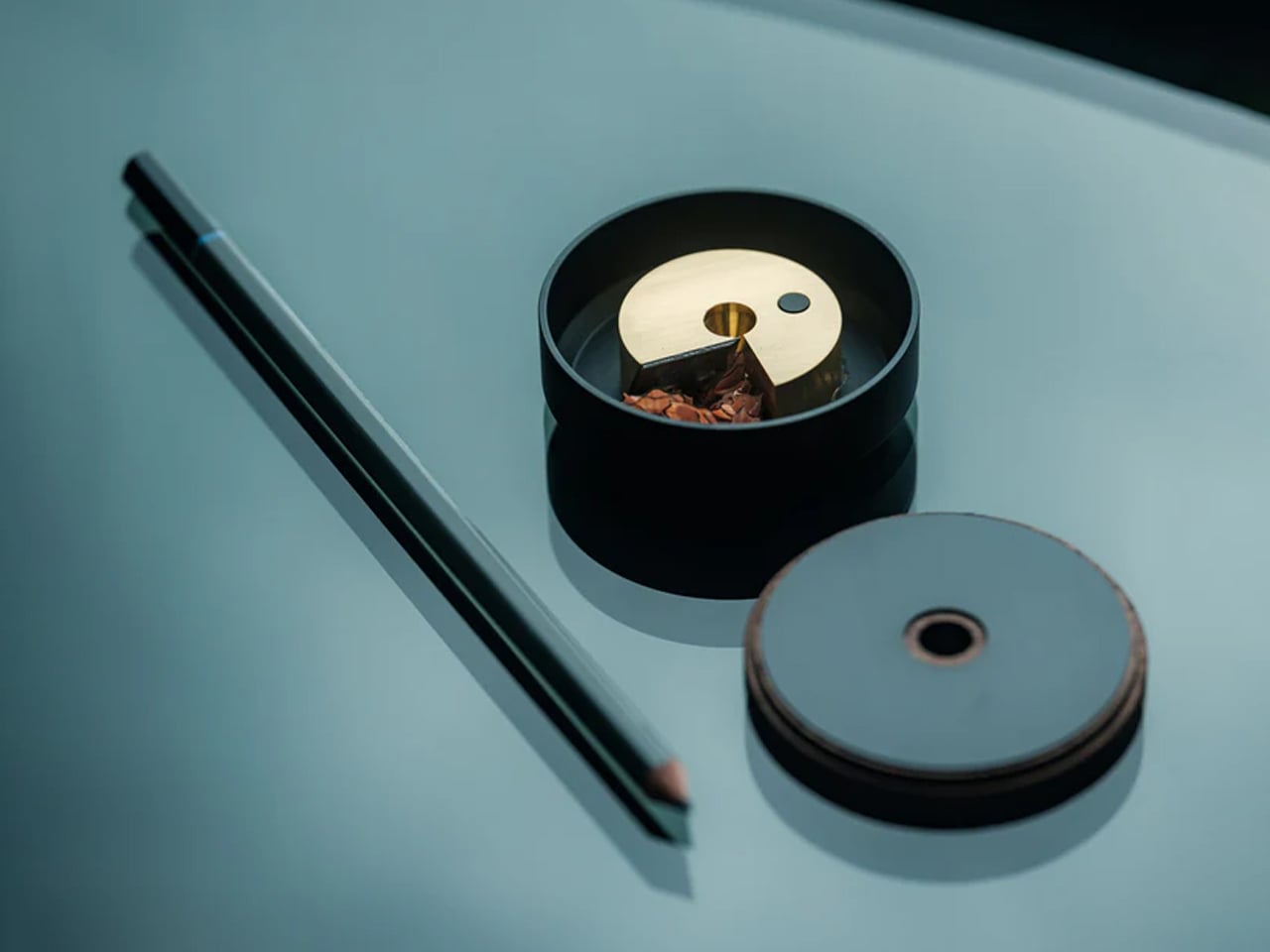
This disc-shaped object solves the eternal problem of misplaced sharpeners through brilliant simplicity: your pencil stands in the sharpener when not in use. The walnut wood cover and anodized aluminum base create an elegant desktop presence that justifies permanent placement rather than drawer banishment. That specially angled sharpening mechanism extends pencil life while reducing waste, making each sharpening session more purposeful. The brass mechanism prevents accidental opening, keeping shavings contained until you’re ready to empty them.
Beyond functional innovation, this piece brings warmth to workspaces dominated by glass and metal. The wood’s natural grain patterns ensure each sharpener carries a unique character, while the magnetic connection between cover and base provides satisfying tactile feedback. Designers who still value traditional pencils for sketching gain both a reliable sharpening solution and a sculptural desktop accent. It’s the kind of thoughtful industrial design that makes everyday interactions feel special rather than merely efficient or functional.
Dual function as a sharpener and a stand keeps everything organized in one elegant object.
Specially angled blade prolongs pencil life while creating less waste.
Walnut wood adds natural warmth to typically cold office environments.
Strong magnet prevents accidental spills while providing satisfying closing feedback.
What we dislike
The single-pencil capacity doesn’t accommodate designers who work with multiple pencils simultaneously.
Premium materials and construction result in a higher price than basic sharpeners.
5. reMarkable Paper Pro Move
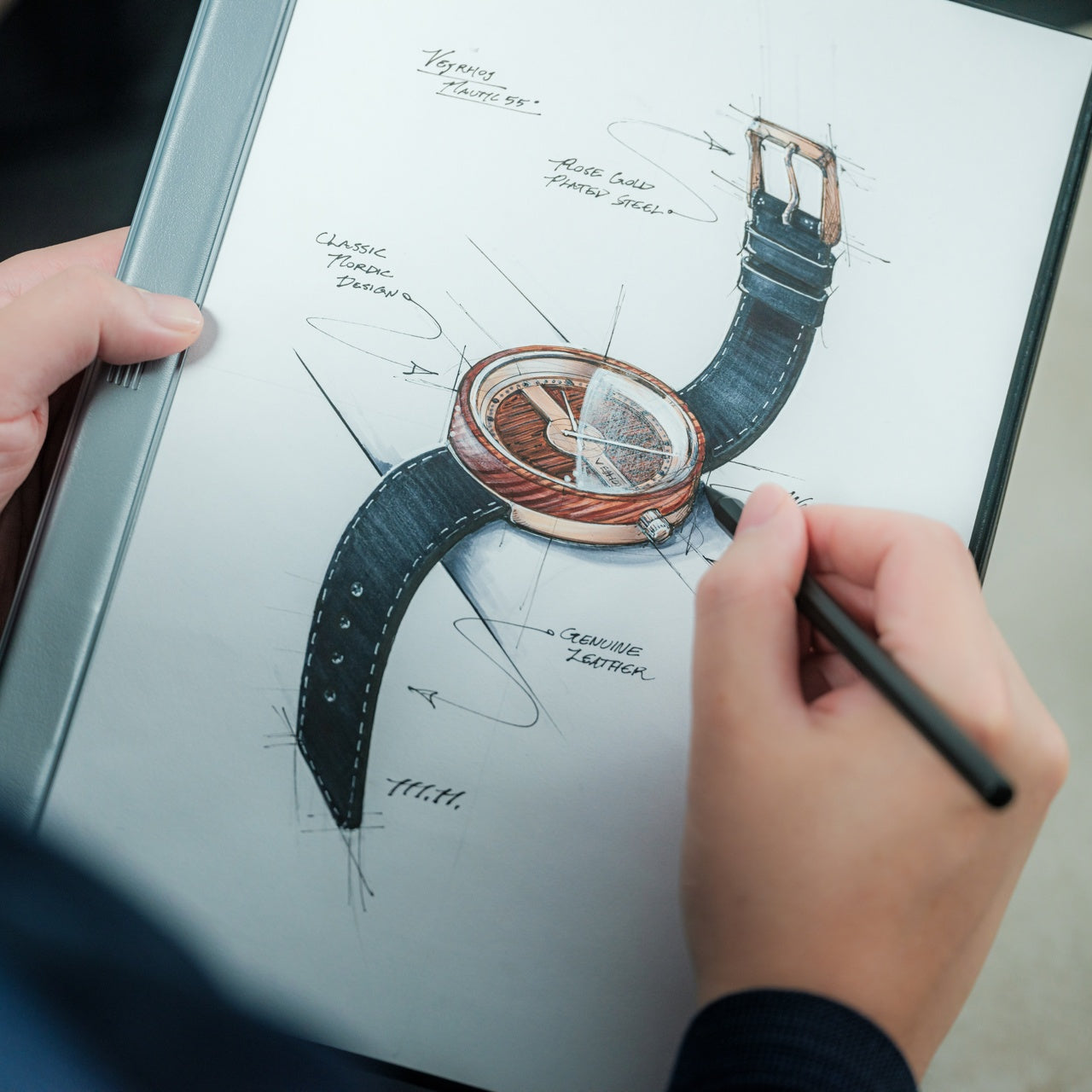
Digital notes often disappear into folders, never to resurface. This E Ink tablet bridges analog satisfaction with digital organization, offering that pen-on-paper texture designers crave while maintaining searchable, shareable files. The 7.3-inch color display fits comfortably in jacket pockets while providing enough real estate for meaningful sketching and notation. At $449, it occupies premium territory, yet the refined materials and thoughtful engineering justify the investment for designers serious about capturing ideas throughout their day.
The included Marker stylus delivers genuine tactile feedback that makes extended writing sessions genuinely pleasurable rather than tolerable. The E Ink screen eliminates eye strain from backlit displays, letting you work comfortably for hours without fatigue. Magnetic attachment keeps the stylus secure during transport while adding minimal bulk. The responsive surface captures subtle pressure variations, making sketches feel natural and expressive. For designers transitioning between physical and digital workflows, this device removes friction while maintaining the creative experience of working on actual paper.
What we like
The color E Ink display provides comfortable viewing during extended creative sessions.
Pocketable size makes it genuinely portable without sacrificing usable screen space.
Tactile feedback from the Marker stylus creates an authentic pen-on-paper sensation.
Magnetic stylus attachment prevents loss while keeping the profile slim and portable.
What we dislike
The $449 price point represents a significant investment compared to paper notebooks.
E Ink refresh rates can’t match the instant response of traditional paper or iPad displays.
Wrapping Up Workspace Elevation
Transforming a workspace isn’t about adding decoration. These five gifts demonstrate how reimagining fundamental tools creates measurably better daily experiences. Each piece removes friction from creative work while bringing visual refinement to surfaces where designers spend countless hours. They’re investments in the quality of repeated interactions, understanding that the tools you touch dozens of times daily deserve genuine design consideration and thoughtful engineering.
The best Christmas gifts for designers don’t gather dust on shelves. They integrate seamlessly into existing workflows while quietly elevating every interaction. From Japanese scissors to magnetic clipboards, these pieces prove that functional objects can spark joy through intelligent form and purposeful design. They’re reminders that workspace elevation comes from choosing tools that respect both your creative process and your aesthetic sensibilities.
What if the barrier to entry for flight simulation wasn’t as steep as you thought? The MOZA AB6, with its $399/€449 price tag, is making waves in a market often dominated by expensive, high-end systems. Positioned as a mid-range solution, this kit promises to deliver a blend of affordability and functionality that could redefine expectations […]
Honestly, compiling the biggest losers for Engadget is more fun than talking up the winners. While we reviewed nothing as atrocious as those ill-fated AI assistant gadgets from 2024, AI companies and services straddled both the winner and loser podiums.
The losers might be you, the American consumer. (Sorry.) In the US, anyone wanting a drone will have to find something that isn’t made by DJI. The company has been targeted by regulators since 2017 over concerns its products could spy on sensitive US infrastructure on behalf of China.
The problem is DJI has such a high market share (over 75 percent) that its absence will effectively upend the industry. Oh, and its drones are consistently the best too. The US government hasn’t yet attempted to work with DJI to assess whether its products pose a risk. DJI recently made a final plea for a security review, sending letters to five US agencies that could assess its products. If that fails, US drone options will shrink massively.
In the same 12 months, EV sales across the globe are up around 25 percent this year. Germany set a record in the first half of 2025, with electric cars accounting for nearly one in five new registrations. In China, EV sales are growing so fast (over 50 percent market share) that the country is flooding the global market with gas-powered cars it can’t sell at home. However — remember this is about losers — in the US, the Trump administration ended the EV tax credit. And shock! Sales of EVs in the US slumped, with some automakers, such as Ford, seeing a 60 percent year-over-year decline.
As Sam Rutherford puts it, this policy change puts more roadblocks (his inadvertent pun, not mine) in the way of making cheaper battery-powered cars. It also affects EV investment and could mean US automakers fall even further behind their rivals elsewhere.
We also point and shake our heads at Xbox, Grok and TV streaming. Check it all out right here.
If you missed The Game Awards 2025, you missed a historic sweep by Sandfall Interactive’s Clair Obscur: Expedition 33. The Belle Epoque saga, which was expected to win several categories, even bagged Game of the Year and eventually picked up more wins than any title in the show’s 12-year history.
Naturally, there were trailers and game reveals too, which were pleasantly notable. We got a first look at the Control sequel, Resonant, Star Wars: Fate of The Old Republic is coming, headed by Mass Effect veterans, while Larian Studios is returning to the Divinity series following the success of Baldur’s Gate 3. Heck, if you want a good chance of winning at The Game Awards, hire Jennifer English to voice one of your main characters — she was in both BG3 and Clair Obscur.
Disney announced a three-year licensing agreement with OpenAI to bring more than 200 of its characters, including those from Star Wars and Pixar, to the Sora app and ChatGPT. With the deal in place, OpenAI users will be able to prompt ChatGPT to generate images that tap into Disney’s intellectual property, with costumes, props, vehicles and environments covered. Additionally, Disney will invest $1 billion in OpenAI, with the option to purchase additional equity down the road.
Learn about tennis from Serena Williams or music from John Legend.
If you’re struggling to find a good present for the holidays, MasterClass has discounted its subscriptions by up to 40 percent. I secured a similar deal for myself and was pleasantly surprised by the solid interface and the number of courses. I also forgot to update my subscription, whoops. Maybe this offer will get me back on board.
It’s already getting the details wrong on its own shows.
Amazon’s plan to offer AI-generated recaps of Prime Video shows isn’t off to a great start. The company’s recap of the first season of Fallout has multiple errors. First, the AI-generated recap incorrectly identifies the era of the show’s Los Angeles-set flashbacks as being the 1950s — they’re actually 2077. Perhaps more egregiously for a recap, it misunderstands the ending of the first season, which sets up season two’s partnership between vault dweller Lucy and The Ghoul.
What if the future of work, creativity, and problem-solving was redefined overnight? With the release of GPT 5.2, OpenAI has delivered what many are calling the most fantastic update in the history of AI. Building on the solid foundation of its predecessor, GPT 5.1, this new iteration doesn’t just raise the bar, it shatters it. […]