Citroën’s ELO Concept Car Transforms Into a Mobile Camp With Inflatable Beds and Built-In Power

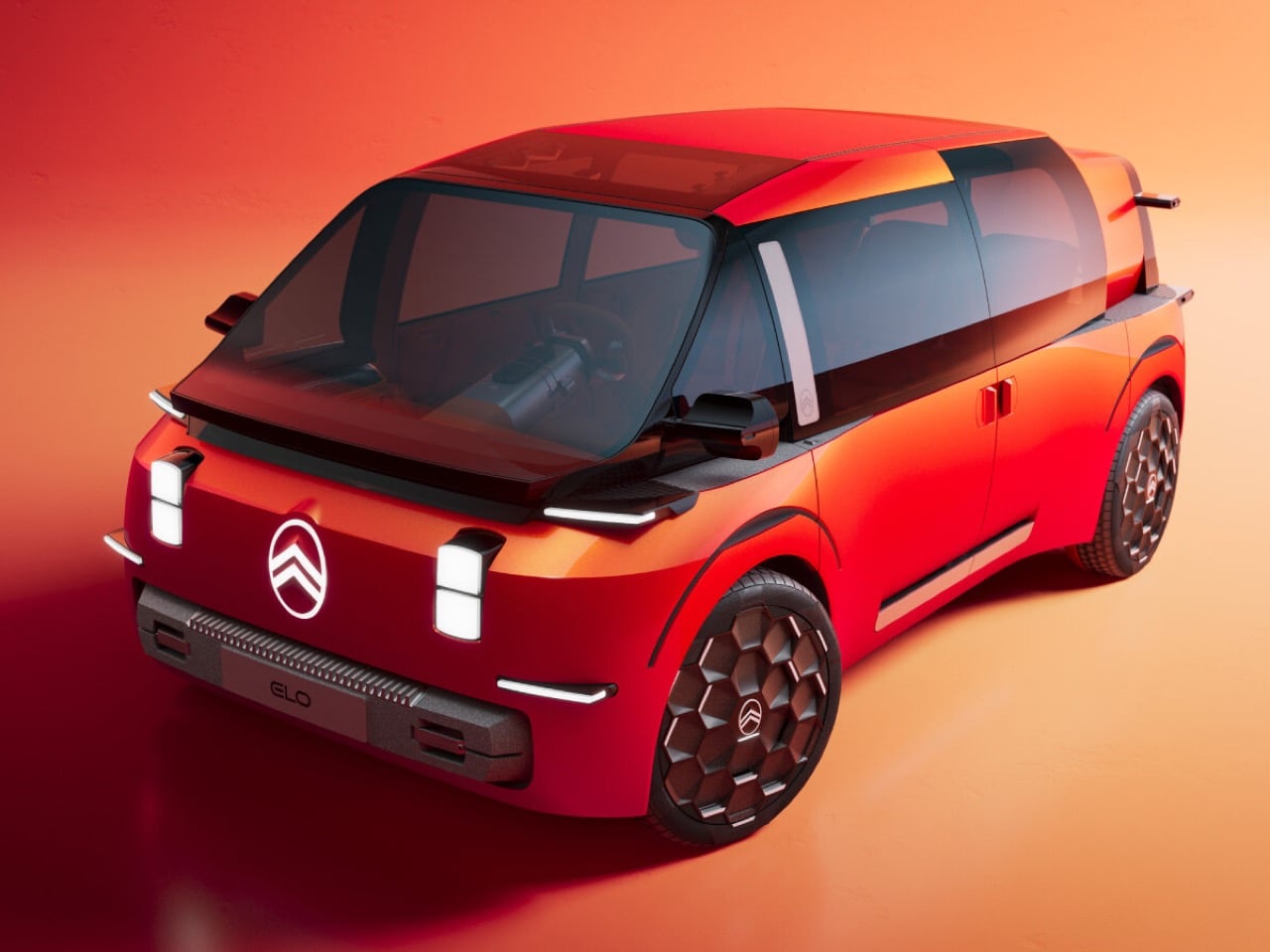
French automaker Citroën just unveiled a concept that treats your car like a Swiss Army knife for modern nomads. The ELO is an electric vehicle that doubles as a bedroom, triples as an office, and moonlights as a power station. We’ve seen plenty of concepts that promise versatility, but most end up being vaporware with a nice press kit. This one actually has me convinced someone at Citroën has spent time living out of their car.

Two inflatable mattresses live in the rear cargo area, and they deploy using the car’s built-in compressed air system. You’re not wrestling with a manual pump or some finicky electric one you bought off Amazon. The mattresses fill the entire rear space to create an actual sleeping area for two adults. The roof slides open so you can stargaze without getting eaten alive by mosquitos, and the side lamps flip into bedside light mode. There’s a projector mounted inside with a pull-out screen for outdoor movies. Citroën partnered with Decathlon for the storage systems, which explains why everything feels less “auto show prop” and more “gear you’d actually use.”

Designer: Citroën
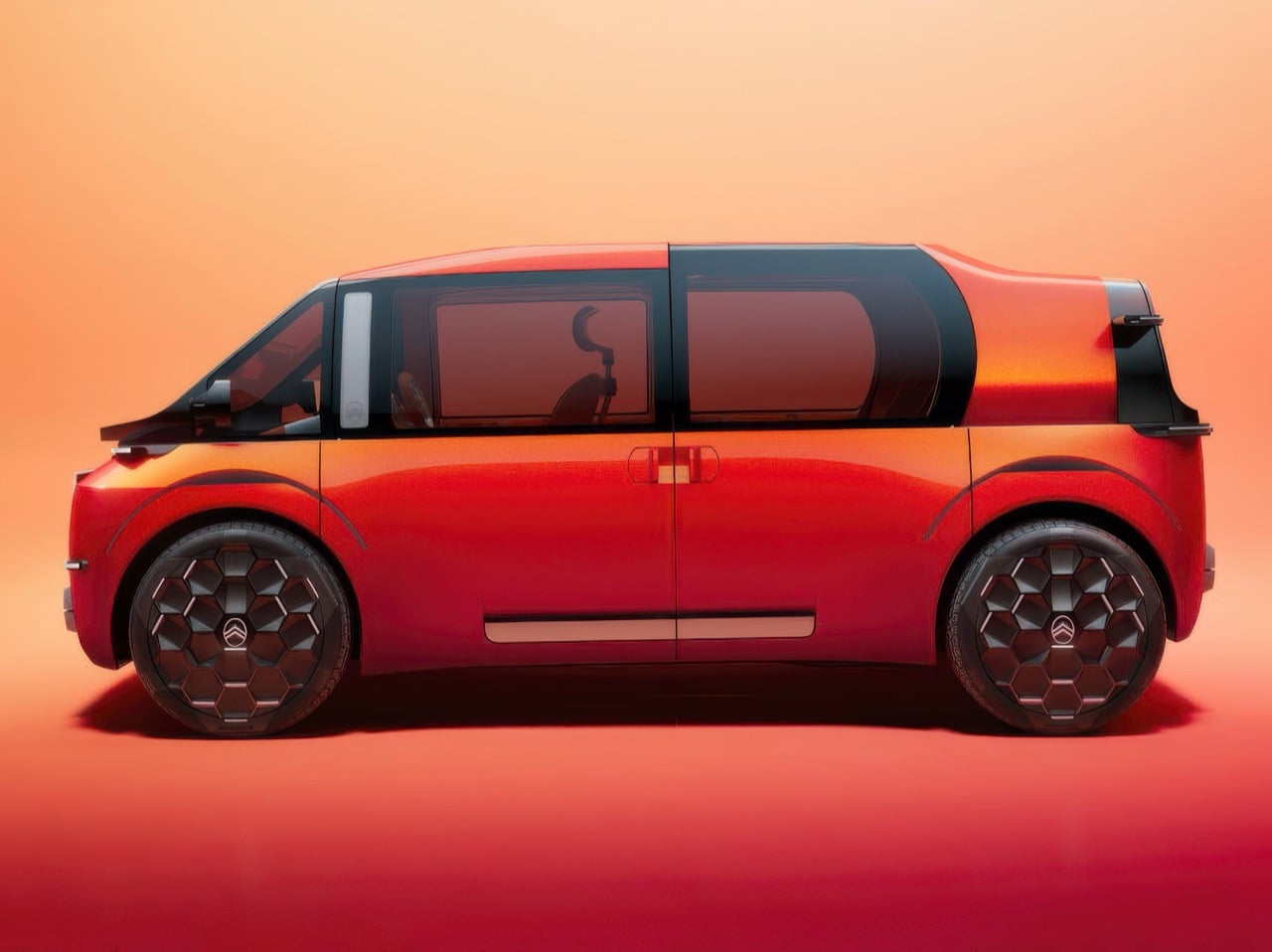
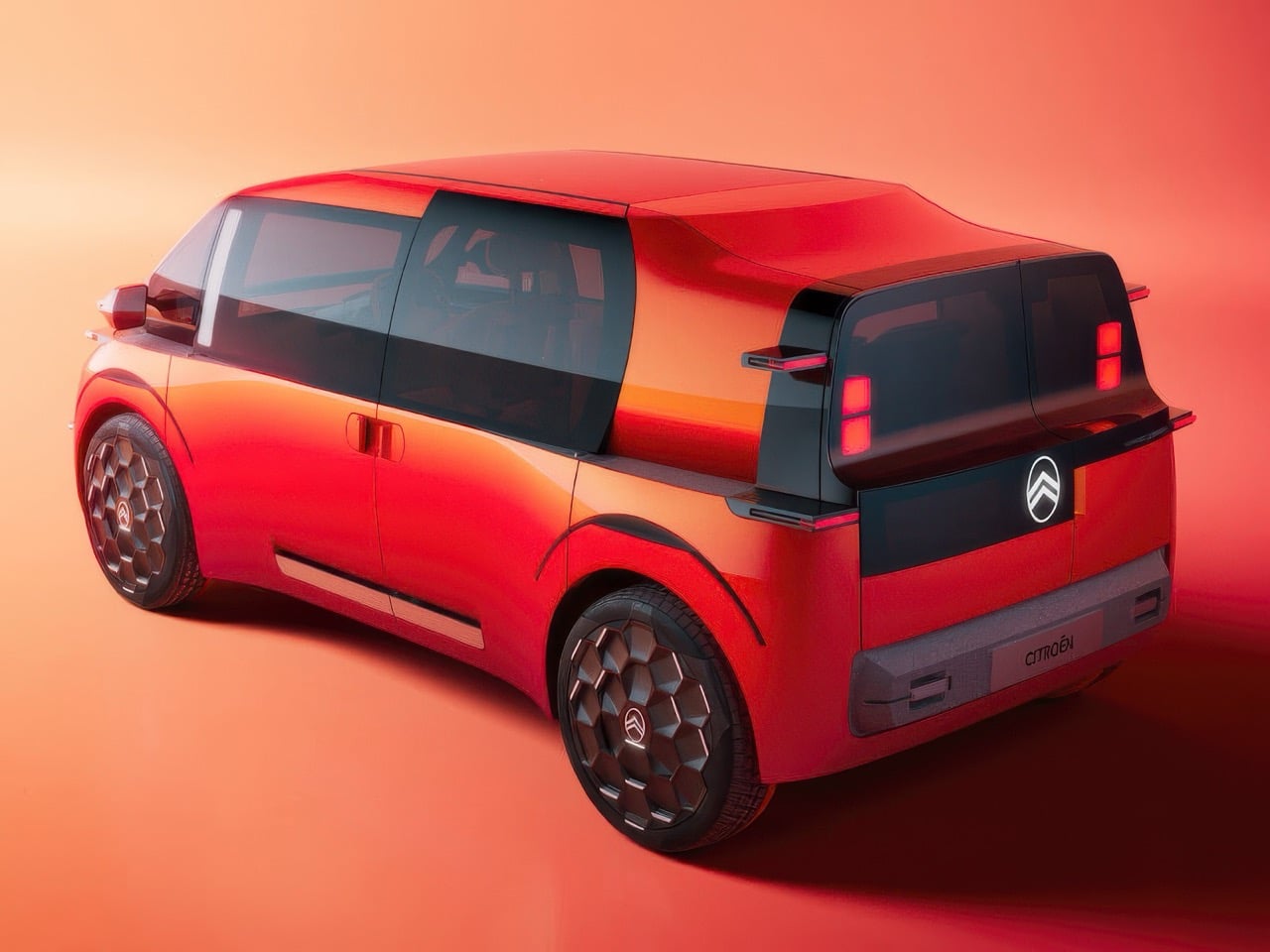
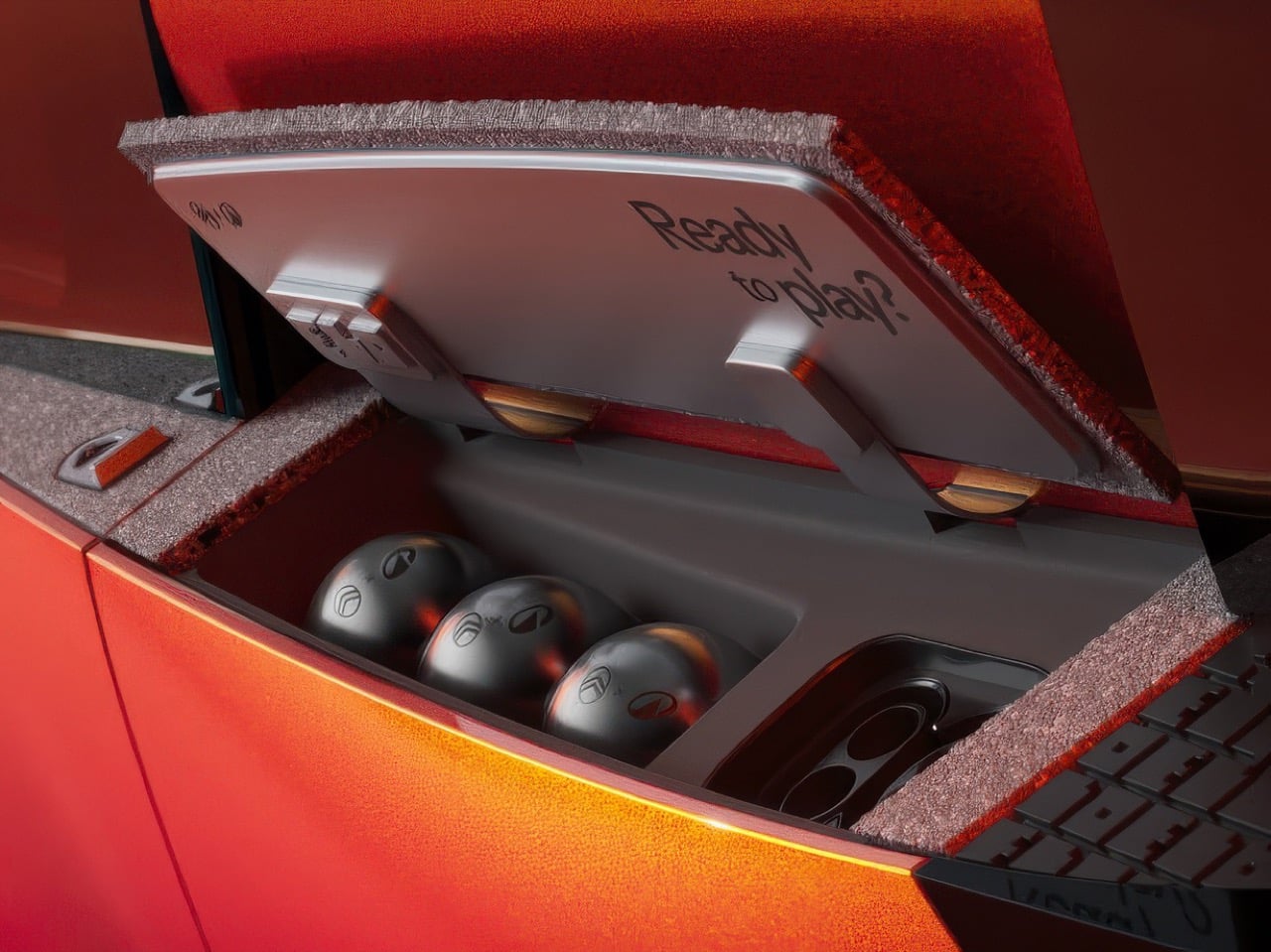
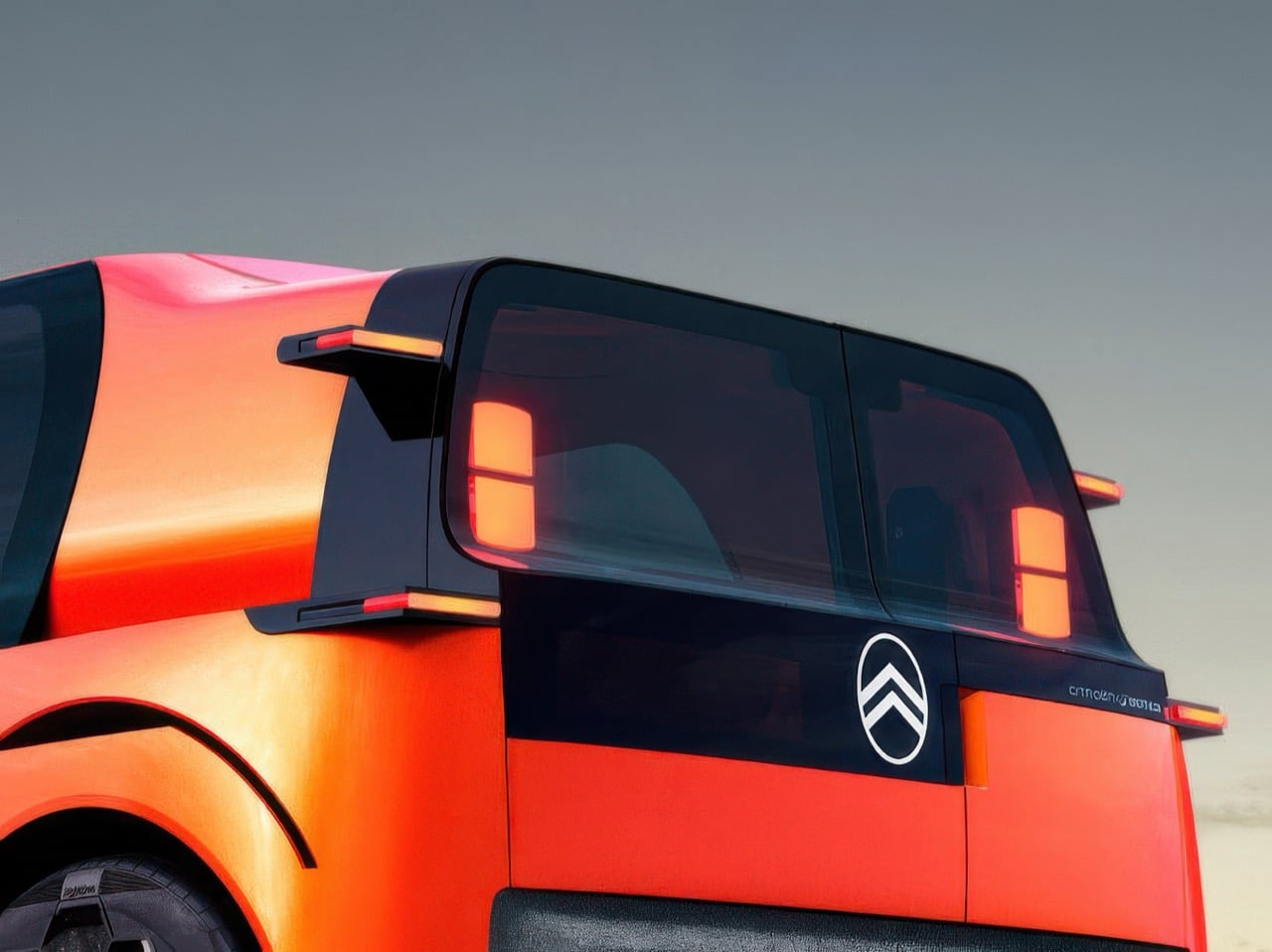
The exterior looks like Citroën told their designers to prioritize function over flash and actually meant it. The body is boxy and van-like, painted in a bold coral-orange that screams “adventure vehicle” without trying too hard. Those honeycomb wheel covers aren’t just styling exercises – they integrate the Citroën chevron logo and protect the wheels while looking distinctive. The front is minimalist with vertical LED strips flanking the badge and a textured grille pattern that’s more utilitarian than aggressive. Large glass surfaces dominate, including that massive windscreen and the sliding panoramic roof section. The doors open wide with no center pillar, making entry and exit genuinely easy instead of the usual concept car gymnastics. Above each wheel arch sits a flat platform for storing small items when parked – the photos show pétanque balls, because of course the French put boules storage on their concept car. The proportions are short and tall, maximizing interior volume without making the thing a nightmare to park in European cities.
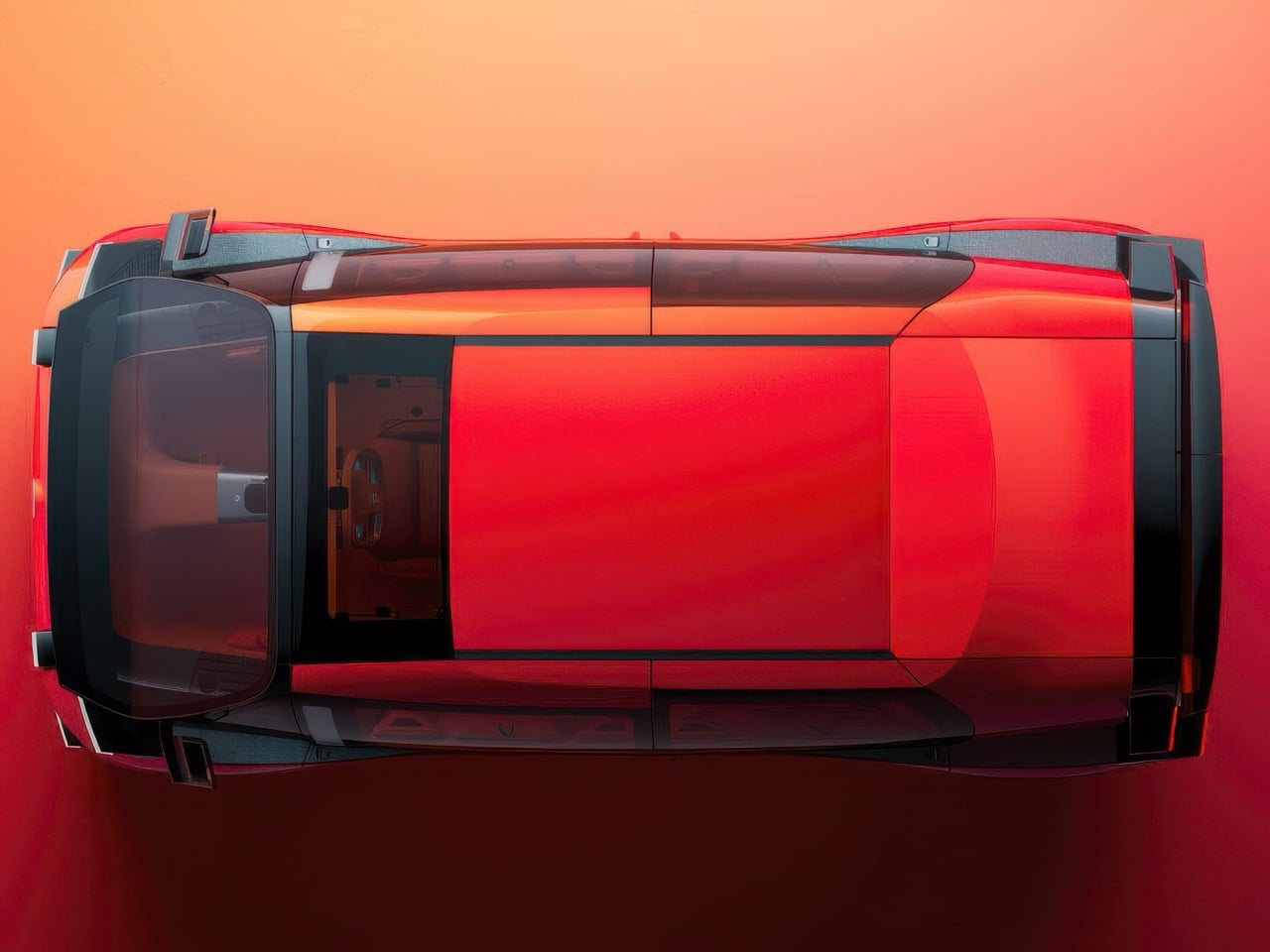
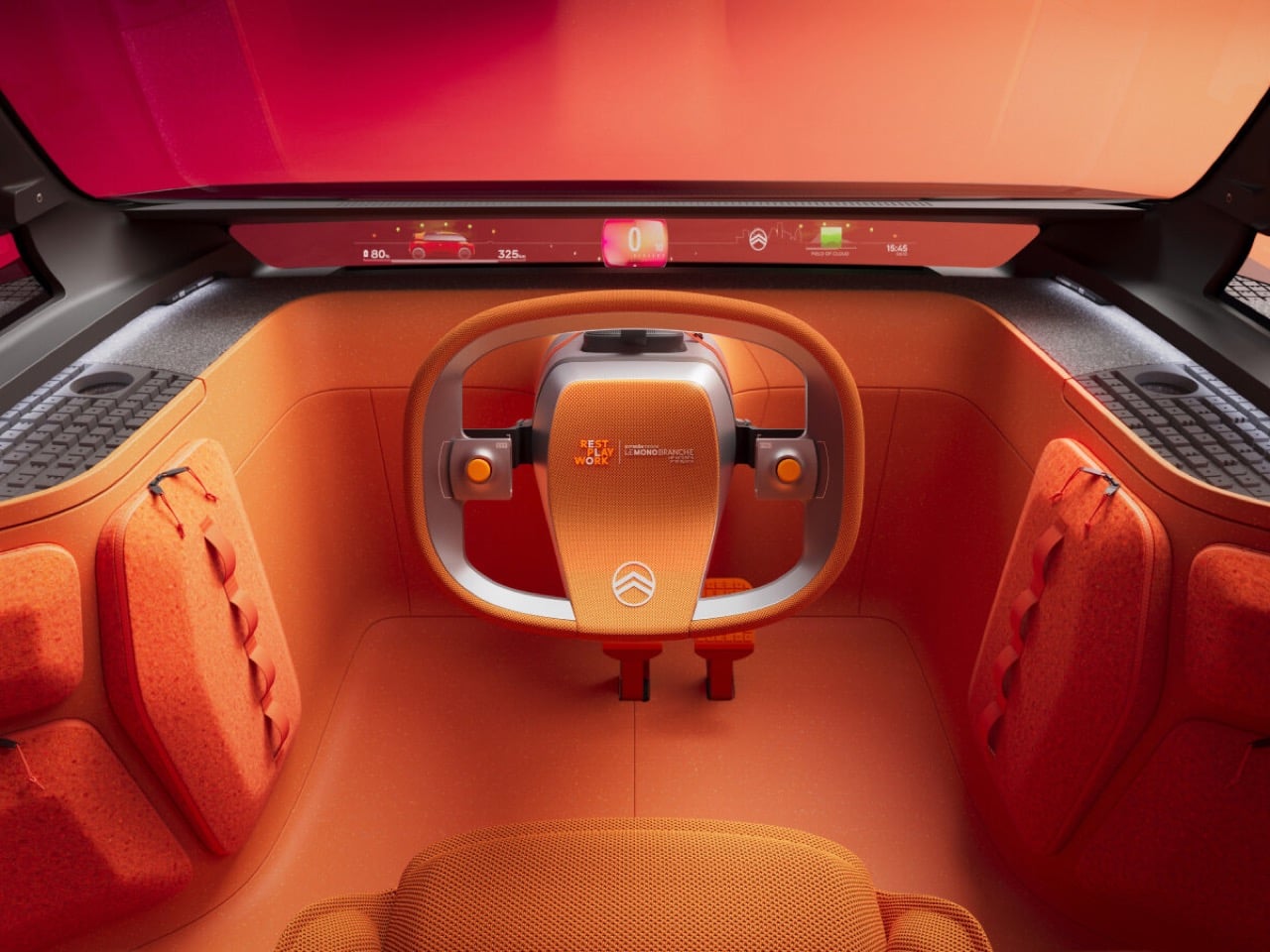
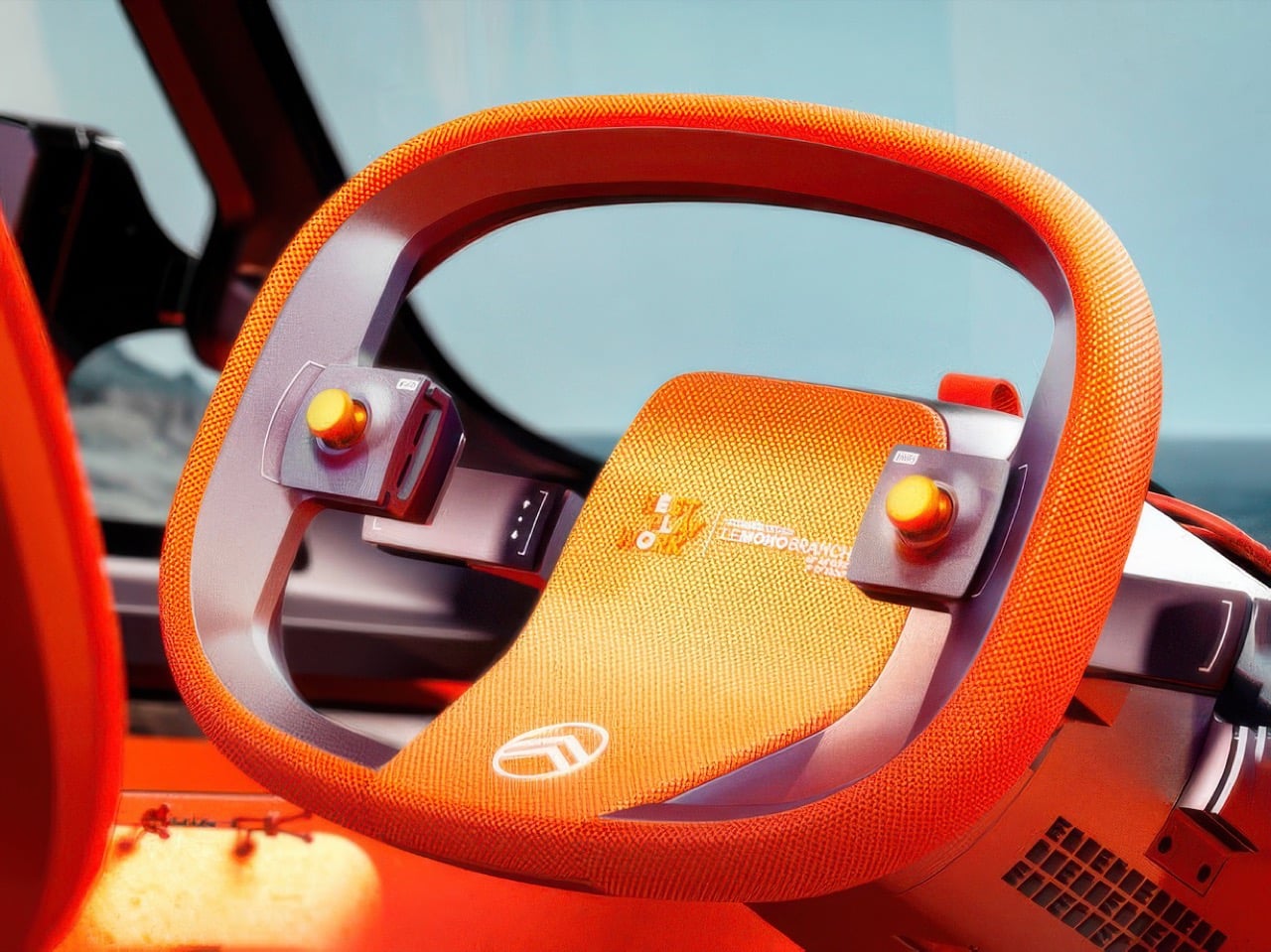
The driver sits in the center of the front row instead of off to one side. This isn’t some McLaren F1 tribute. It’s purely functional, giving you an unobstructed view through what is genuinely one of the largest windscreens I’ve seen on a vehicle this size. The steering wheel has a single spoke design with a massive opening in the middle, and Citroën ditched the traditional dashboard entirely. Everything projects onto a transparent strip across the windscreen. Two joystick controls sit on the wheel within easy reach of your thumbs. The interface is stripped down because this car needs to work when you’re tired, when you’re working, and when you’re just trying to get somewhere.
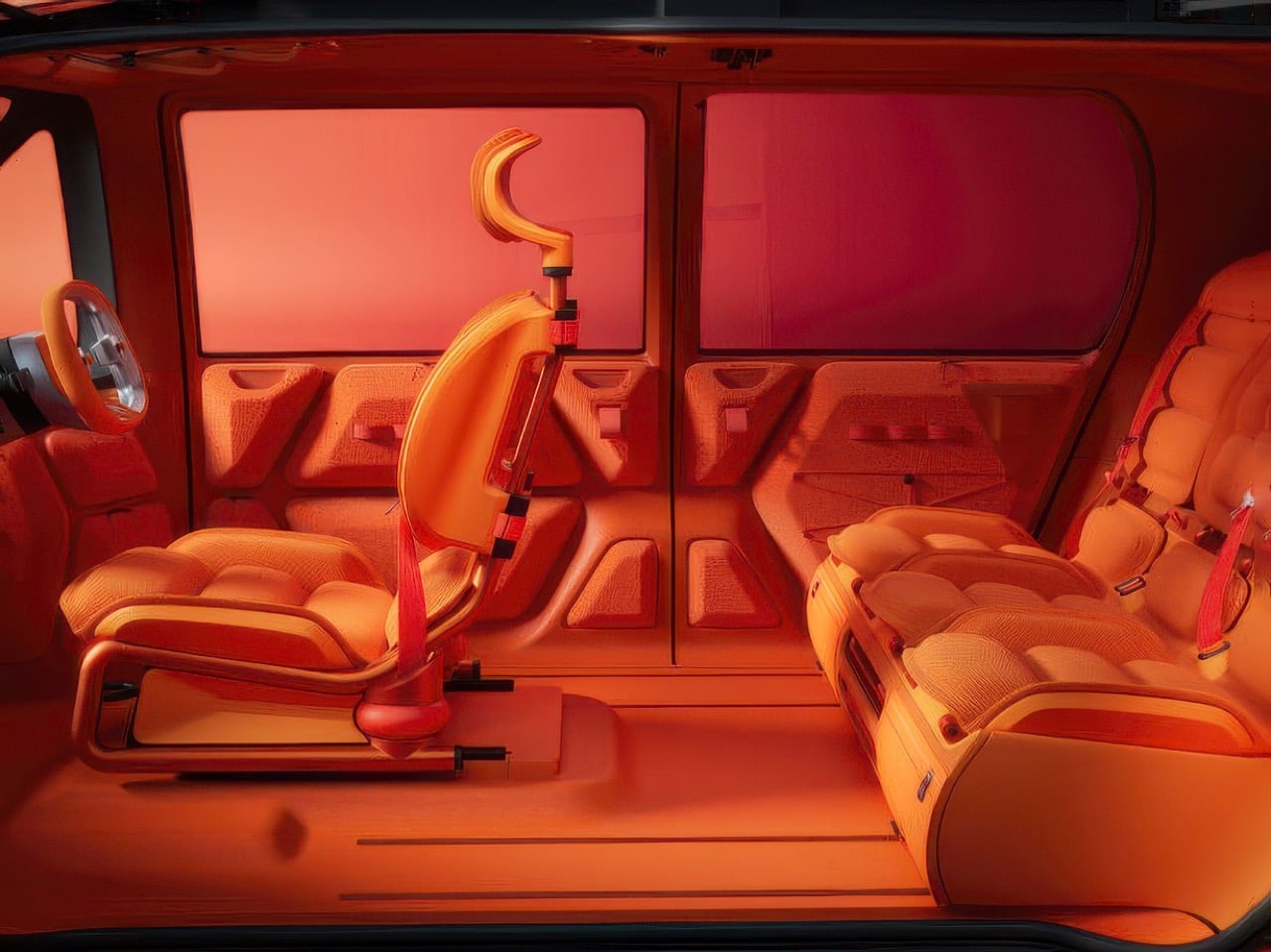
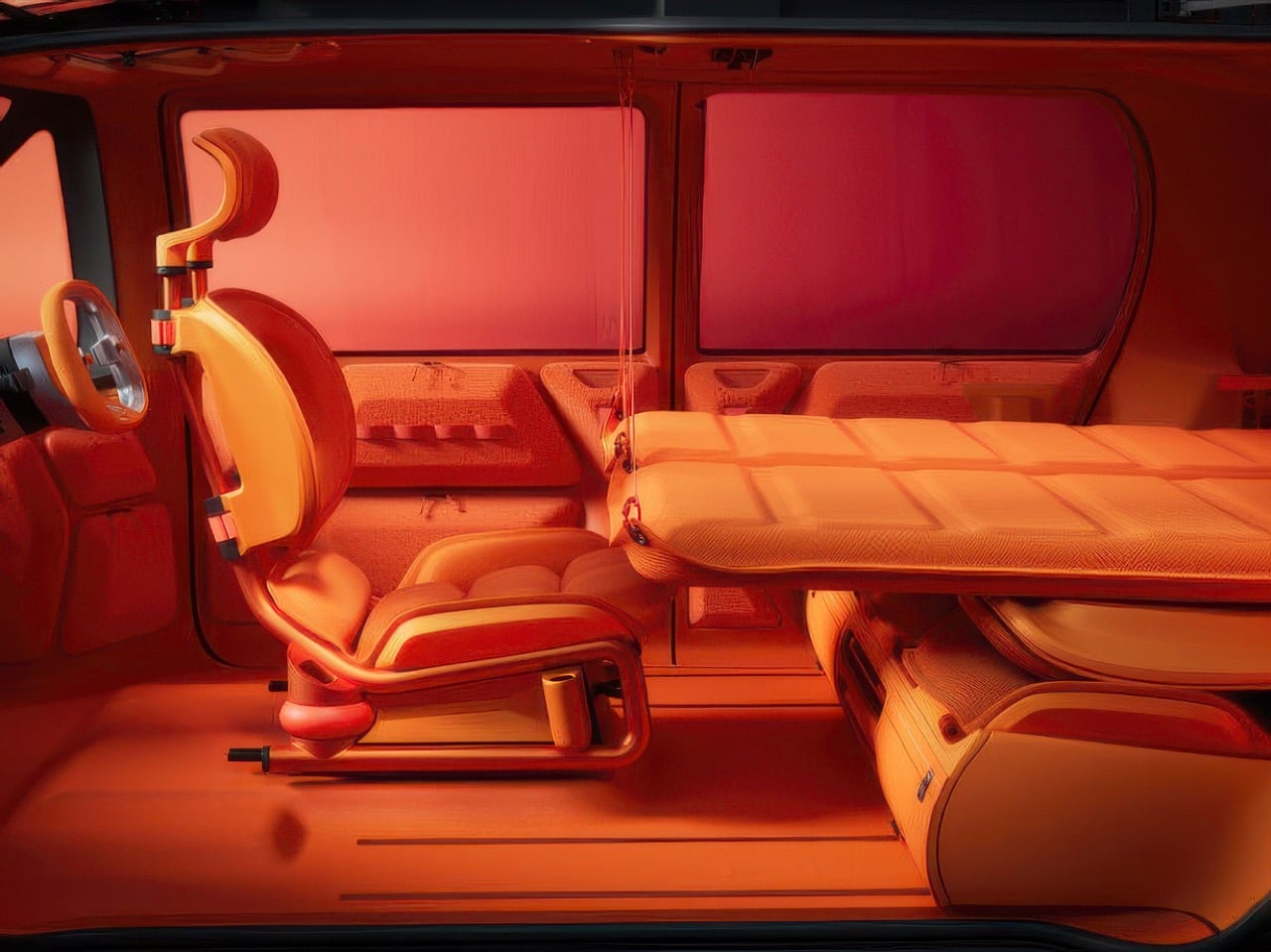
Modularity usually means “kind of adaptable if you spend twenty minutes reconfiguring things.” Not here. The second row has three identical seats that fold flat and detach completely. Use them as camp chairs. Two extra seats hide under the side seats, so you can haul six people when needed. Even with all six seats up, there’s cargo space left over. The driver’s seat spins 180 degrees to face backward. A work table folds out from under the center seat in the second row. If you forgot your laptop, the projection system works for video calls. The wheel arches have cutouts that hold phones and headphones.
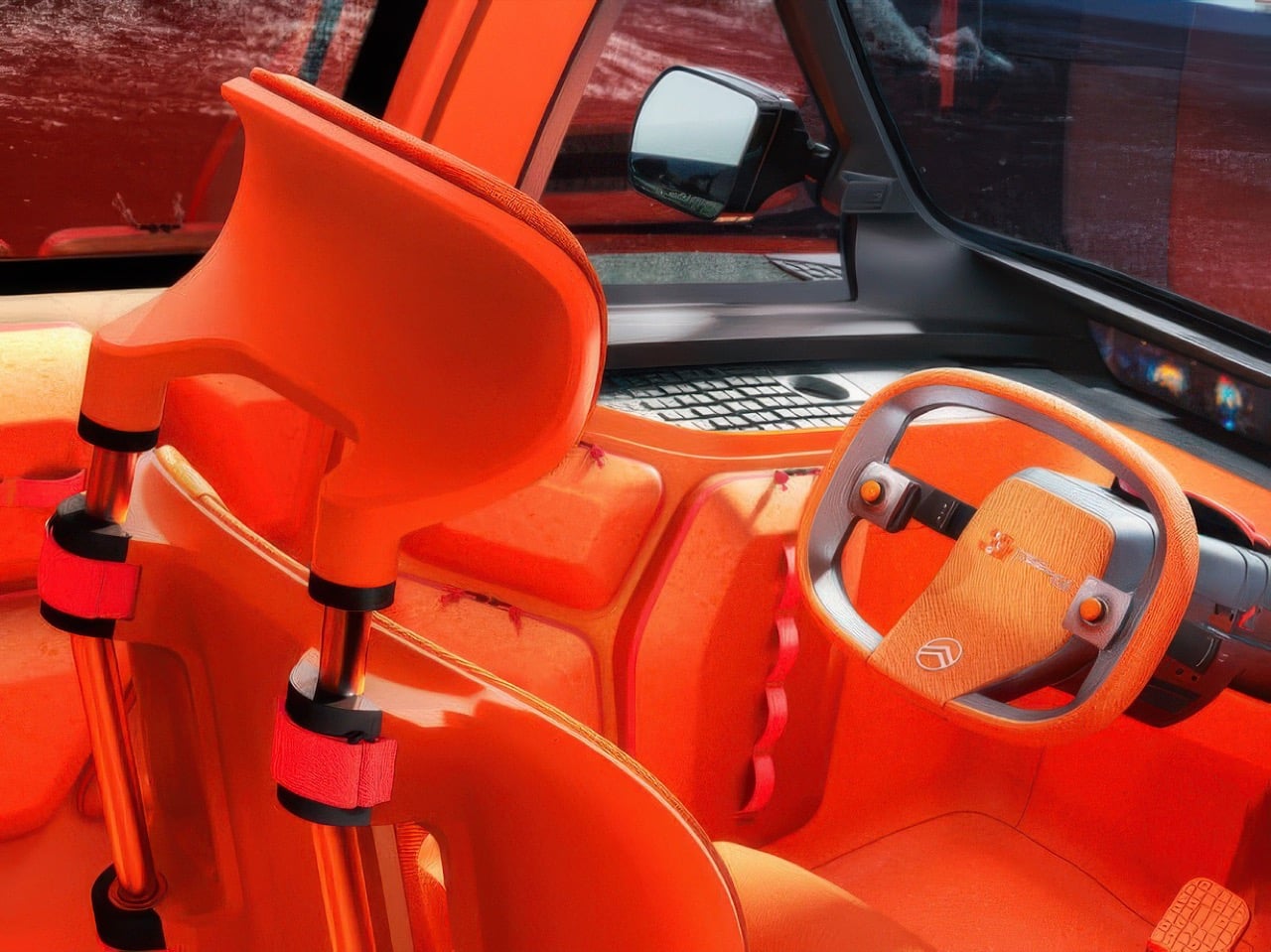
Expanded polypropylene keeps weight down and recycles easily. Same stuff they use in bike helmets. Felt sections come from recycled fabric scraps from other Citroën projects. The second-row seats have water and wear-resistant covers because obviously you’re going to trash them. The exterior stays simple with huge windows and wide doors that have no center pillar. Front and rear bumpers are identical to reduce parts count.
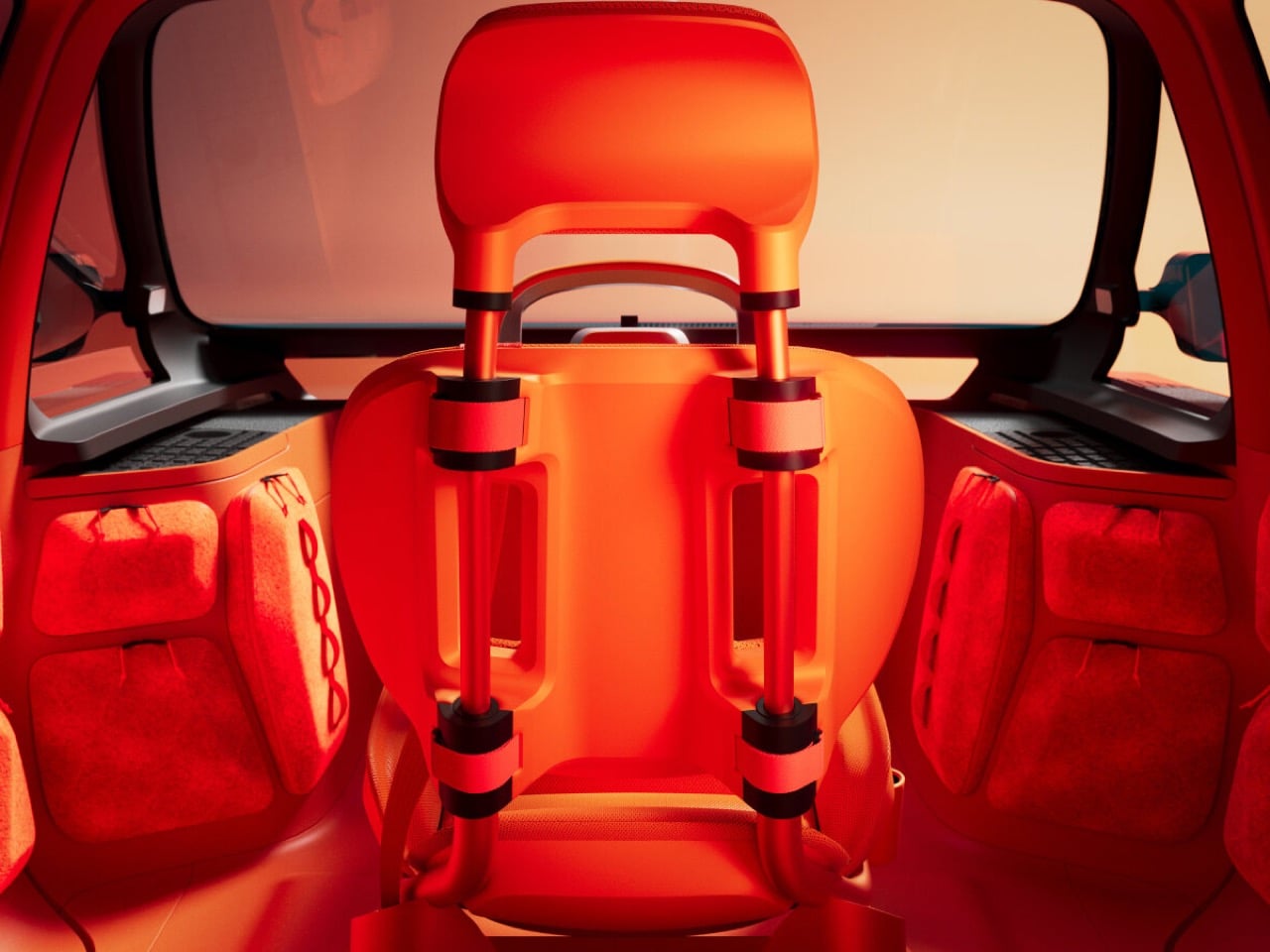
Power options go beyond the drive battery. The V2L system lets you run speakers, charge devices, or power cooking equipment. A built-in compressor handles paddleboards, bike tires, whatever needs air. Hooks on all four doors mount a large awning for covered outdoor space. You could genuinely set up a small basecamp without bringing any extra equipment.
Citroën calls this a mobility study, which is corporate speak for “we’re not committing to production yet.” But unlike most concepts that feel like design school fever dreams, the ELO solves real problems for people who work remotely, chase outdoor activities, or just refuse to stay in one place. It’s compact enough for cities but functional enough for extended trips. Whether this becomes a real product or just influences future designs, someone finally built a car for people whose home, office, and garage are increasingly the same place.
The post Citroën’s ELO Concept Car Transforms Into a Mobile Camp With Inflatable Beds and Built-In Power first appeared on Yanko Design.
Fortnite is back on the Google Play Store

Epic Games has spent a lot of time in court over the past several years, but it seems the company's litigious era may be winding down. The company announced today that its game Fortnite is back on the Google Play mobile store in the US. Fortnite's return to Android devices means Epic's popular hit is now available on just about every gaming platform following five years of arguing antitrust lawsuits. 

Epic took both Google and Apple to court over their policies for mobile payment systems back in 2020. The gaming company has been successful on the whole in its challenges, most recently reaching a settlement with Google in November. The companies agreed to a modified version of the order US District Judge James Donato originally placed on Google regarding fees charged to developers and handling of in-app payments and third-party billing systems. 

The same saga unfolded earlier this year with Apple. US Judge Yvonne Gonzalez Rogers also sided with Epic Games in May, ordering Apple to stop collecting commissions on purchases made outside its own App Store. After a bit of back and forth, Fortnite finally returned to iOS in the US a few weeks later.

This article originally appeared on Engadget at https://www.engadget.com/gaming/fortnite-is-back-on-the-google-play-store-195507458.html?src=rss

Clover Emotion Tracker Turns Small Happy Moments into a Daily Desk Ritual

People are more stressed than ever, yet still find it hard to talk honestly about how they feel, even with therapists or friends. Most mental health tools live inside apps that want you to rate your mood on a slider or fill out forms about your day, which can feel clinical or like homework you forgot to do. Clover is a concept that tries to make emotional check-ins gentler and more tangible, focusing on collecting small moments that went right instead of cataloging everything that went wrong.

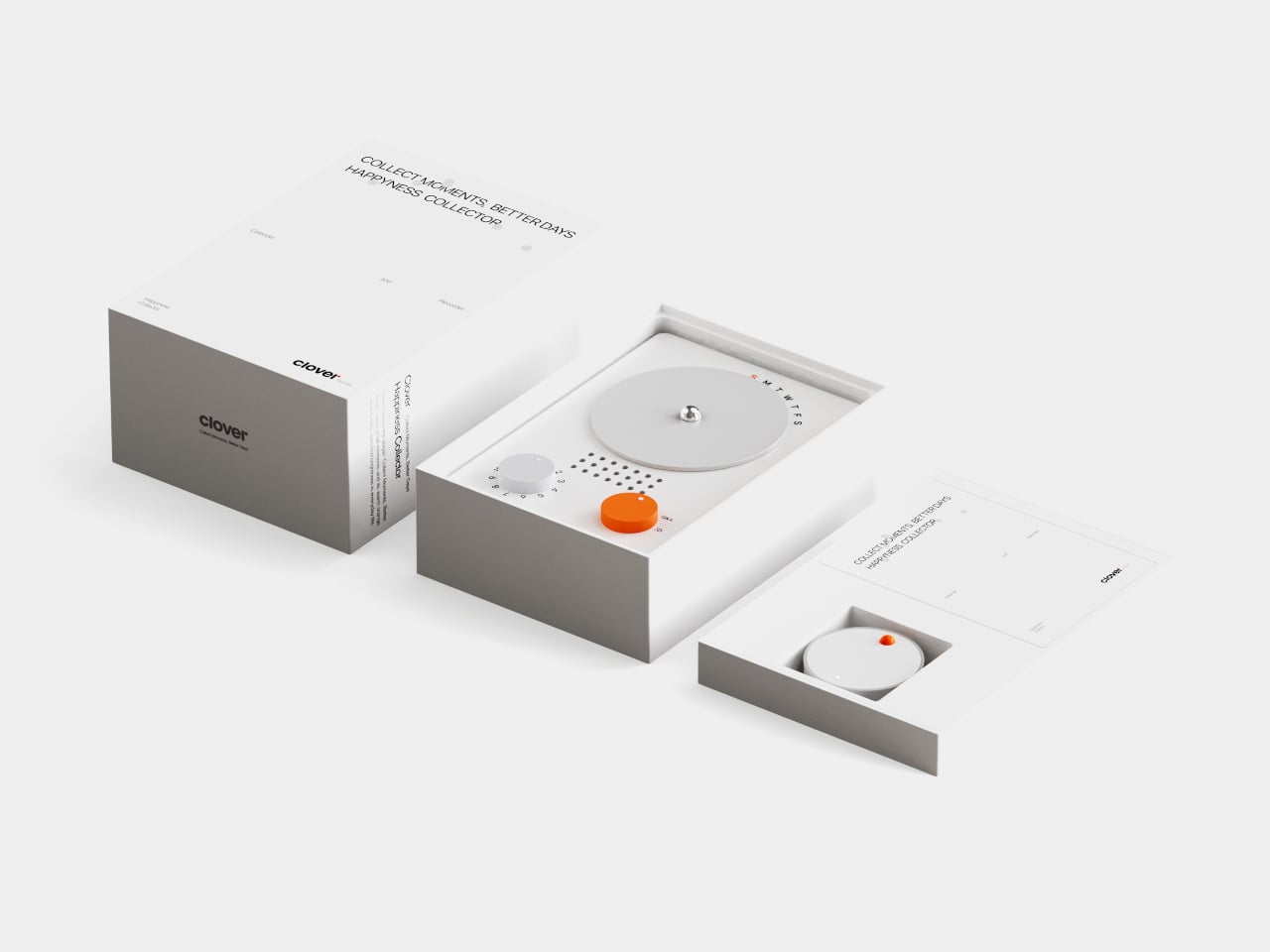
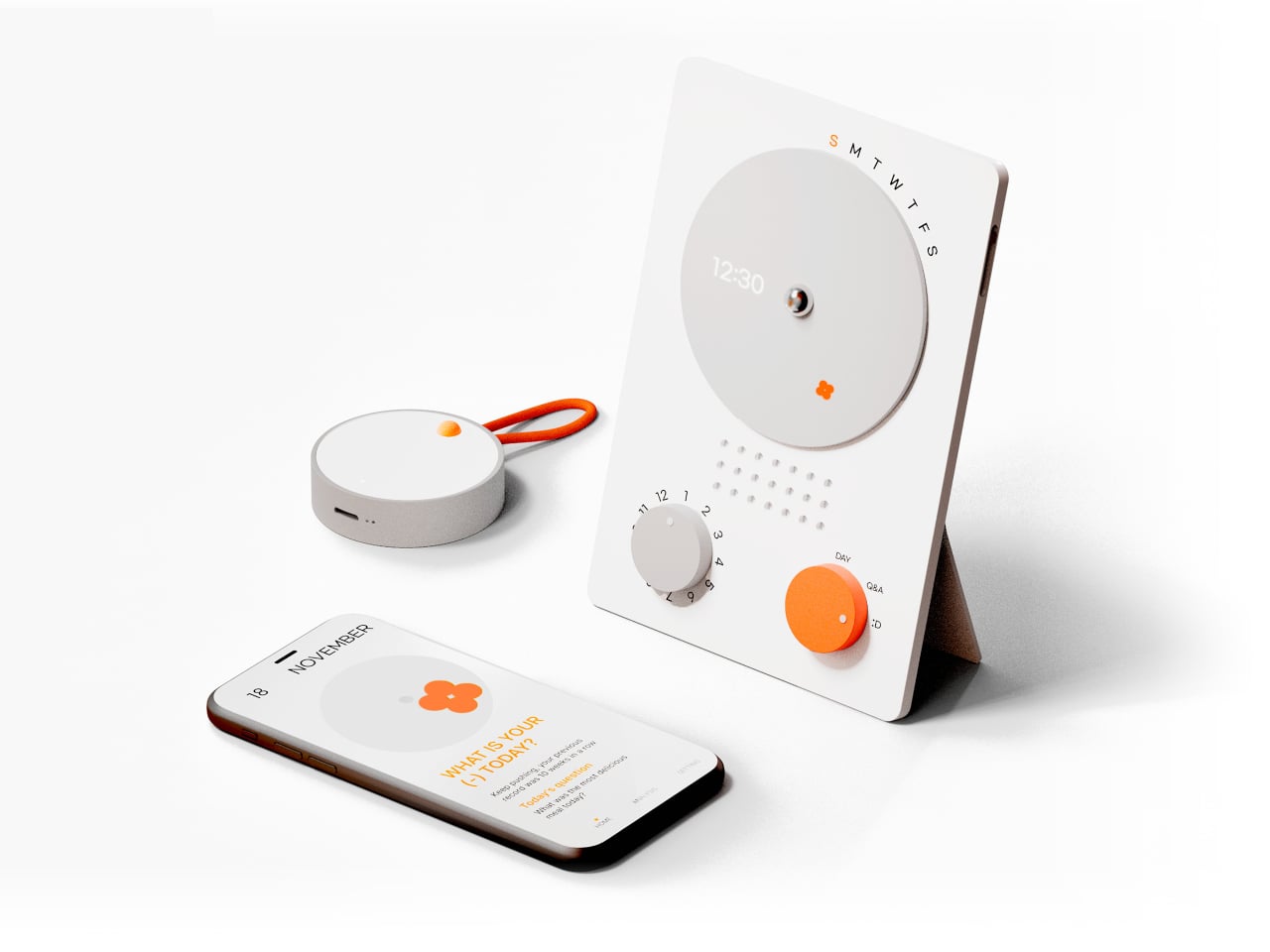
Clover is a small ecosystem built around three pieces: a pocketable voice recorder, a desk-calendar device, and a companion app. Instead of logging stress or symptoms, you press a button and record short voice notes whenever something makes you genuinely happy. Those moments are then visualized on the calendar and analyzed in the app, turning your week into a kind of happiness log that quietly reframes how you see your days.

Designers: Seyeon Park, Bhin Son, Yu Jin Song, Jiwon Park, Jinya Kim

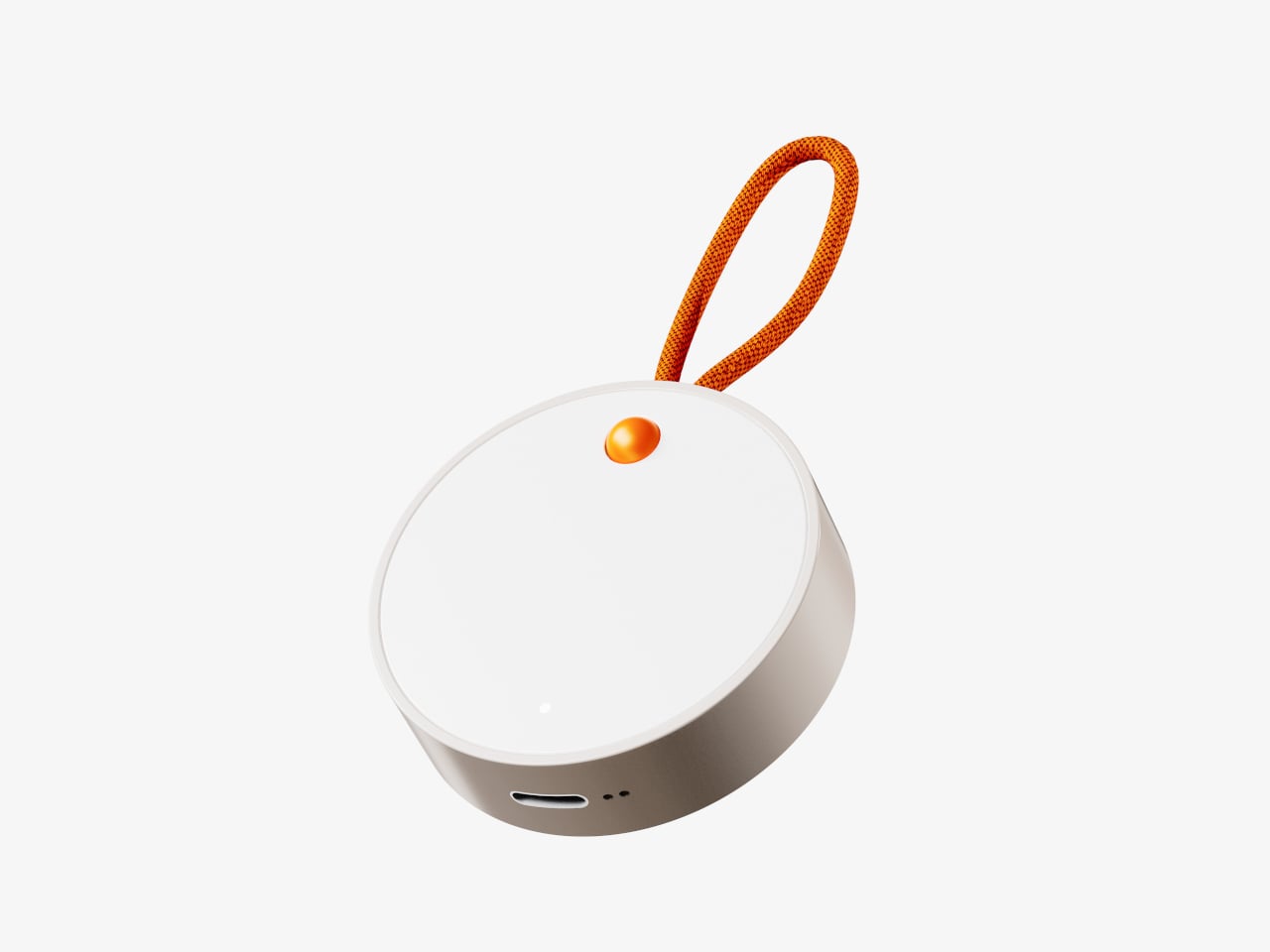
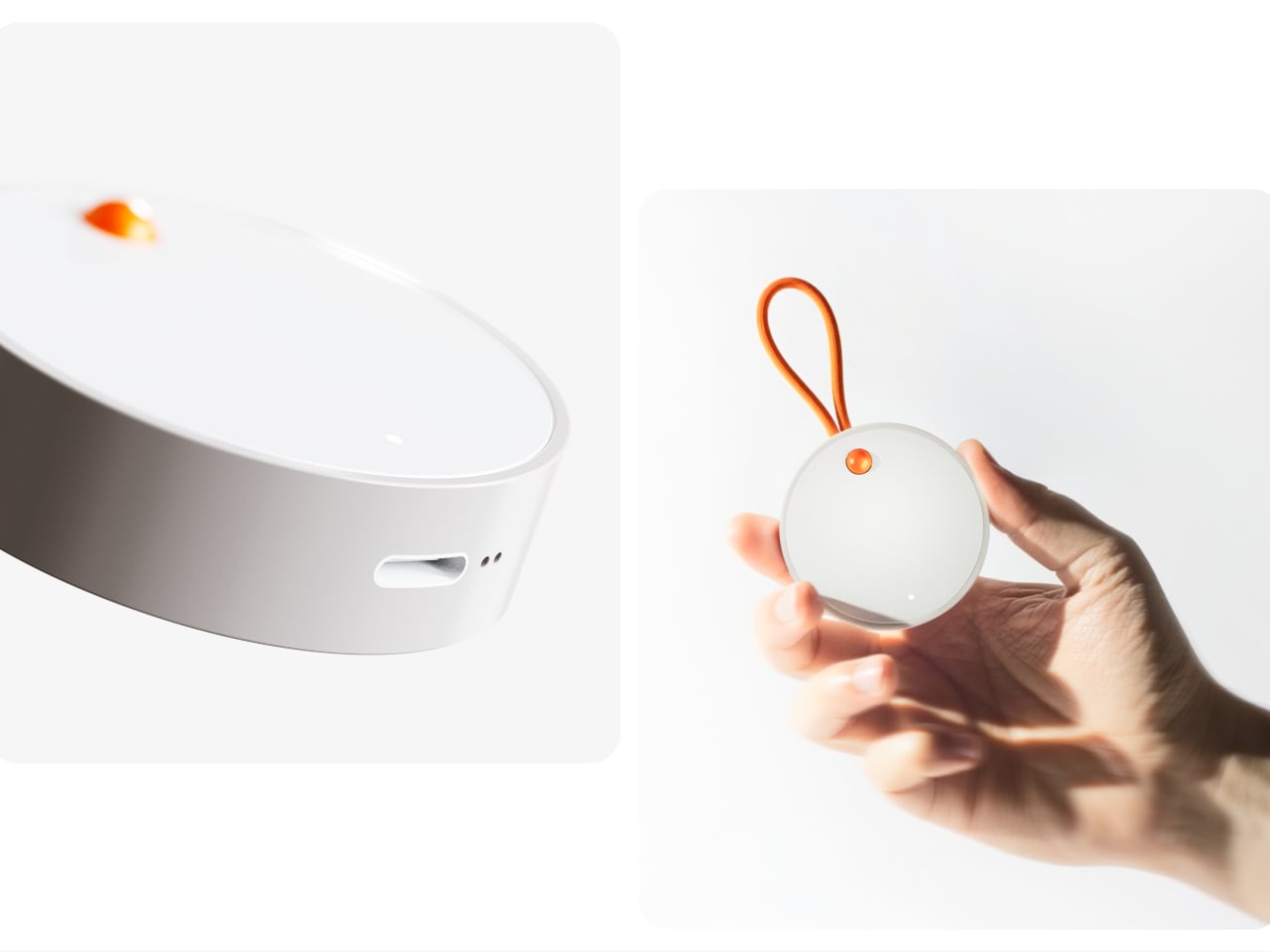
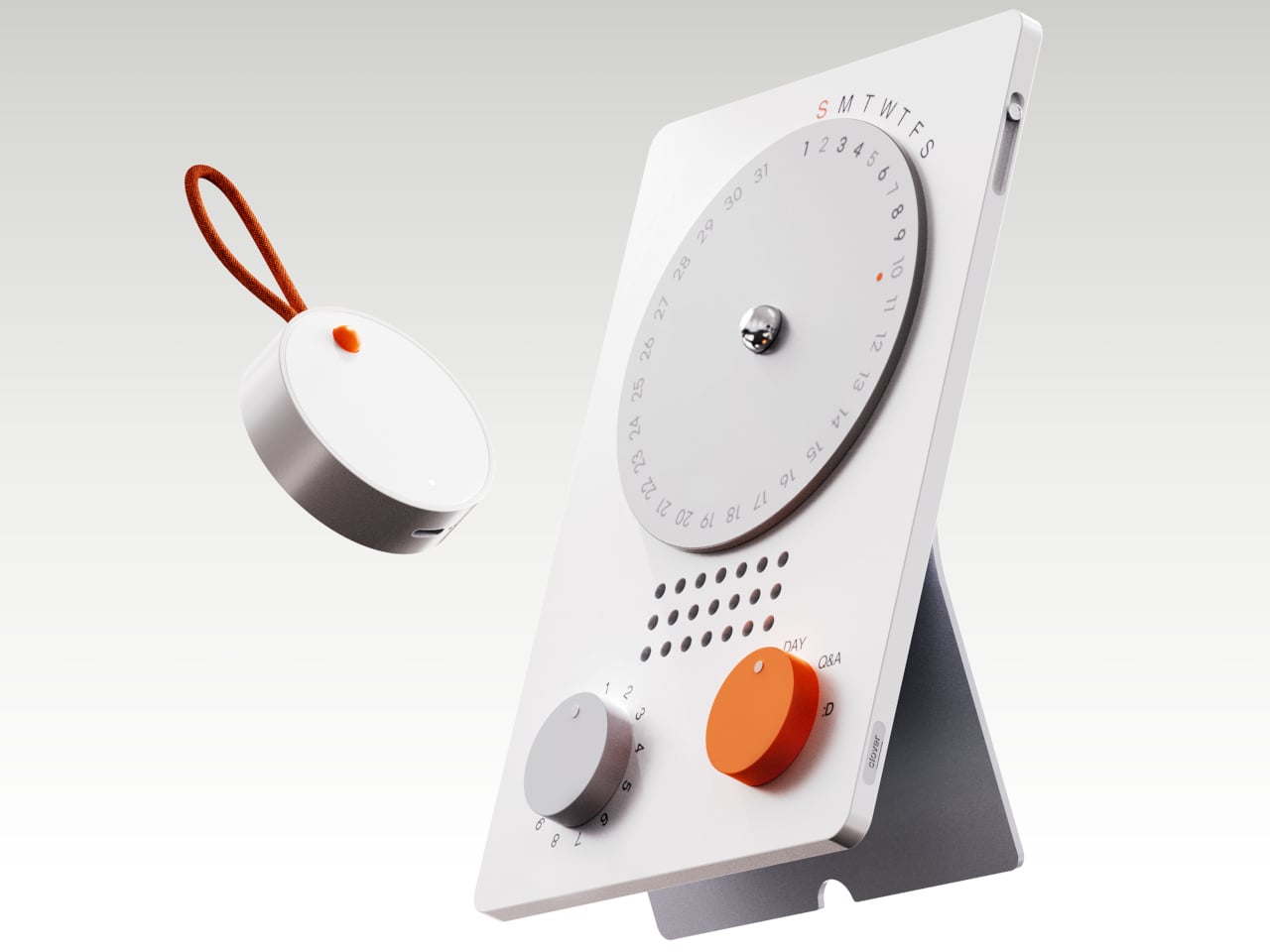
The recorder is a small, circular object with a single orange button and a loop strap, designed to be grabbed and pressed quickly. It is meant for capturing tiny, specific moments, sunlight on your desk, a good cup of tea, a joke from a friend, in your own voice. The goal is to lower the friction so much that recording a positive moment feels as easy as taking a photo, no unlocking, no tapping through screens, just press and speak.

1

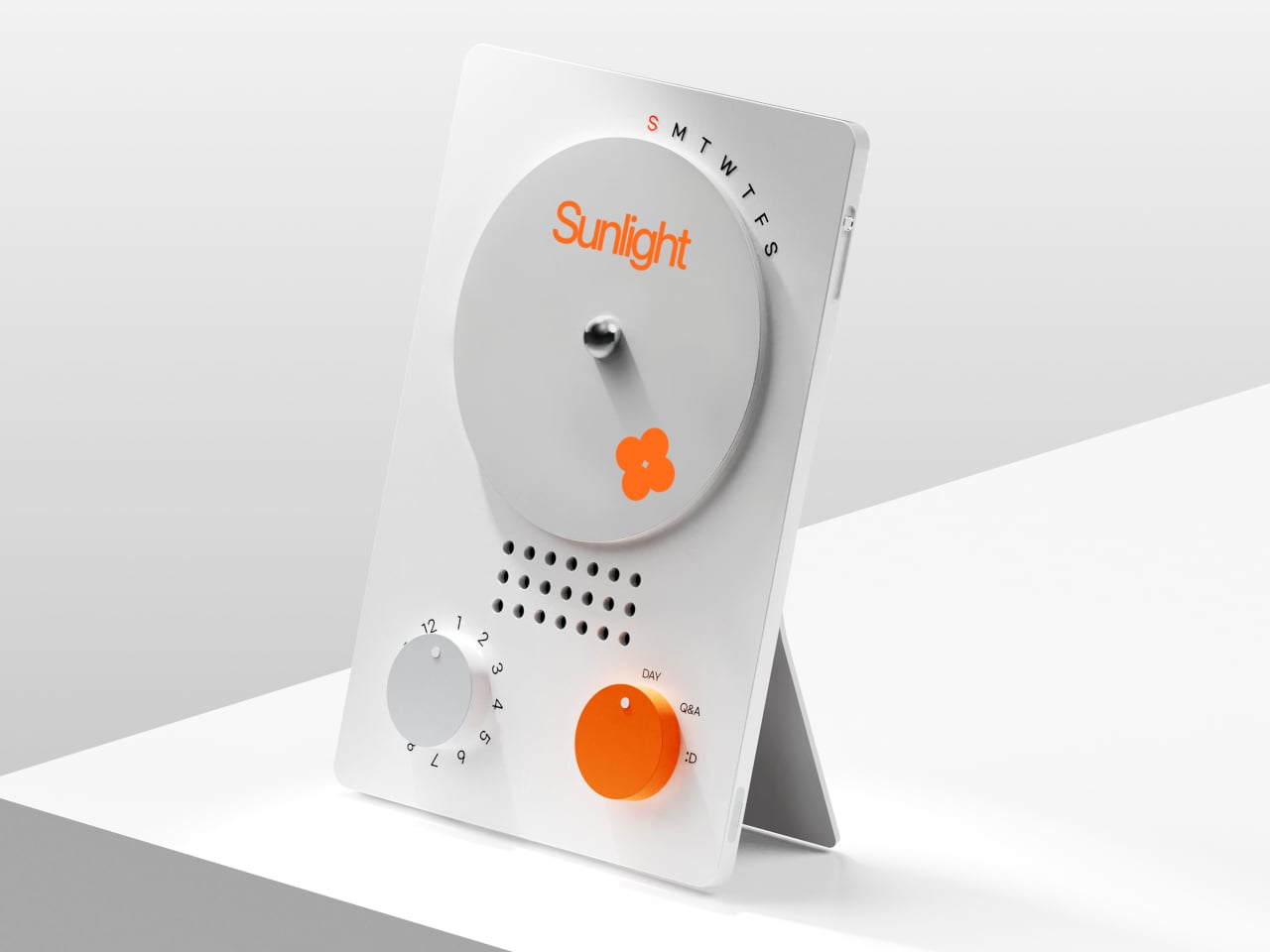
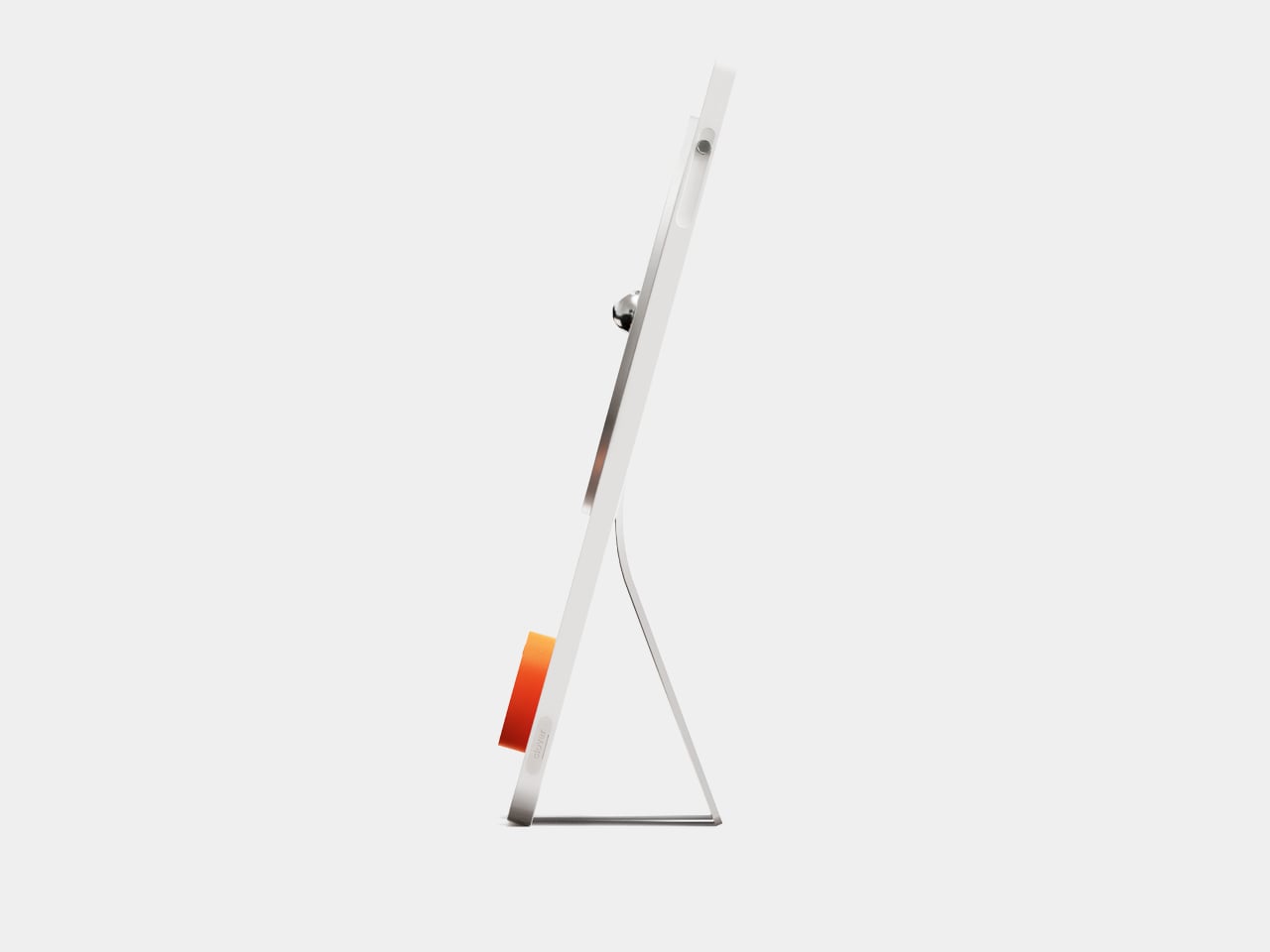
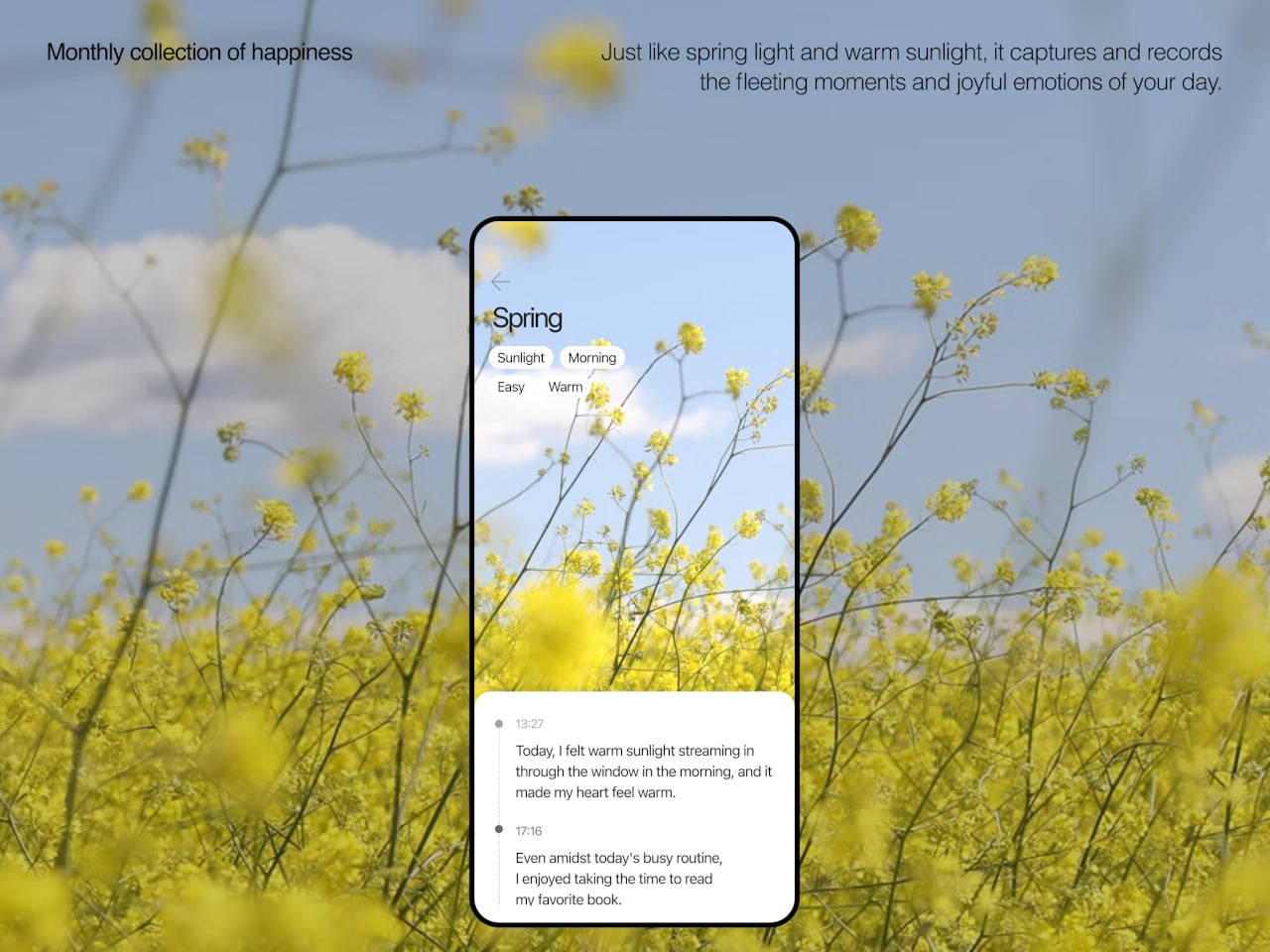
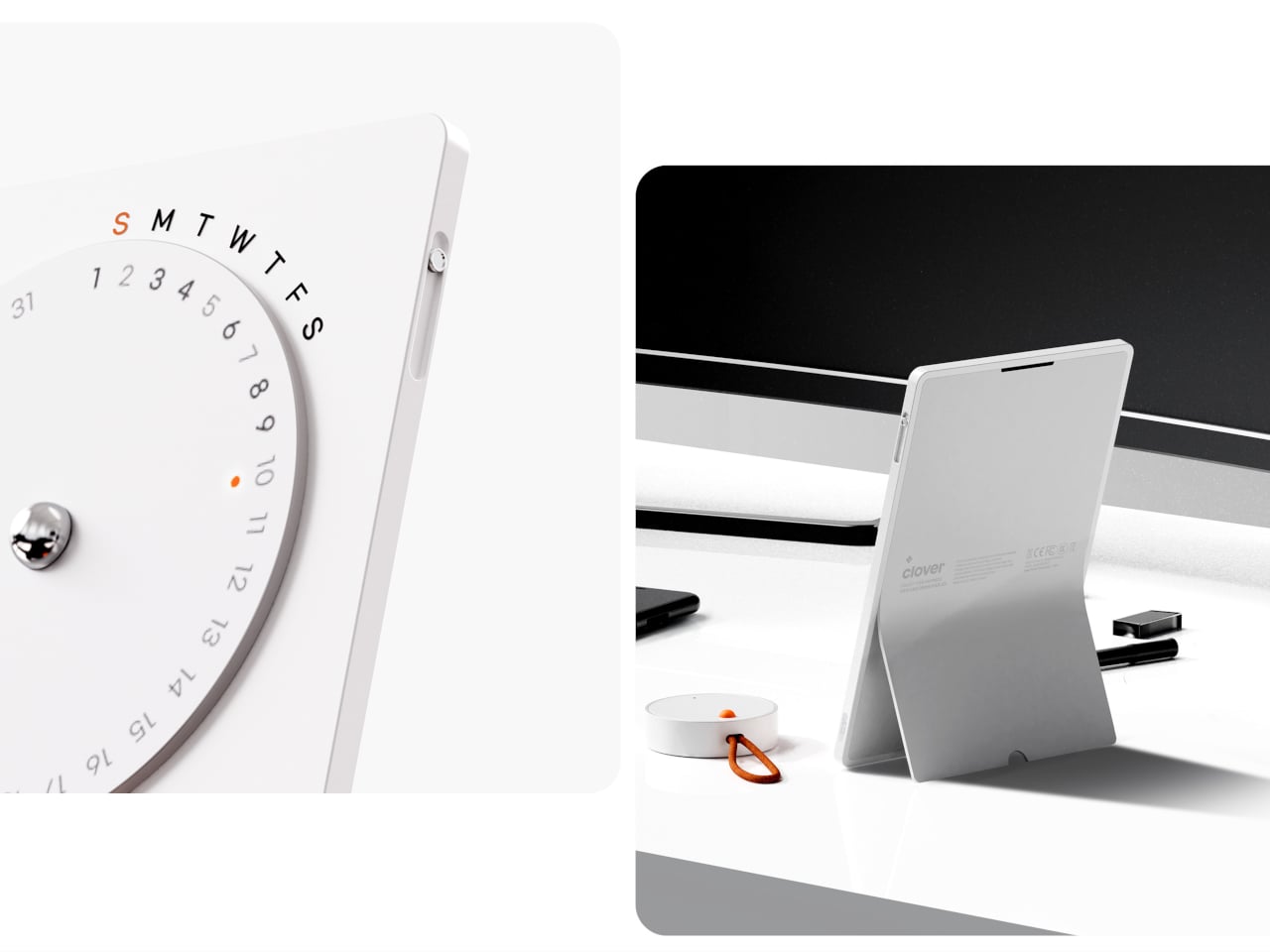
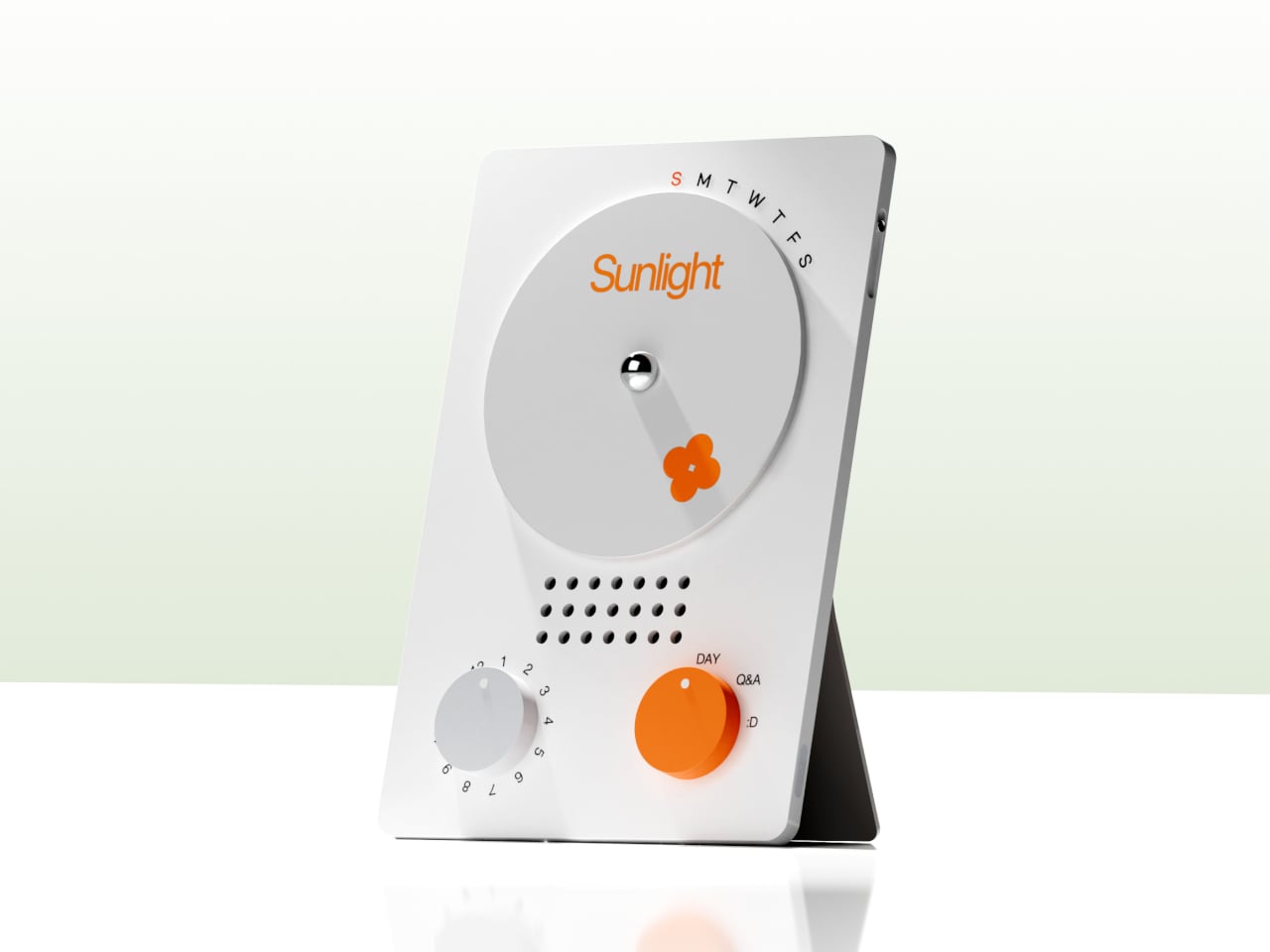
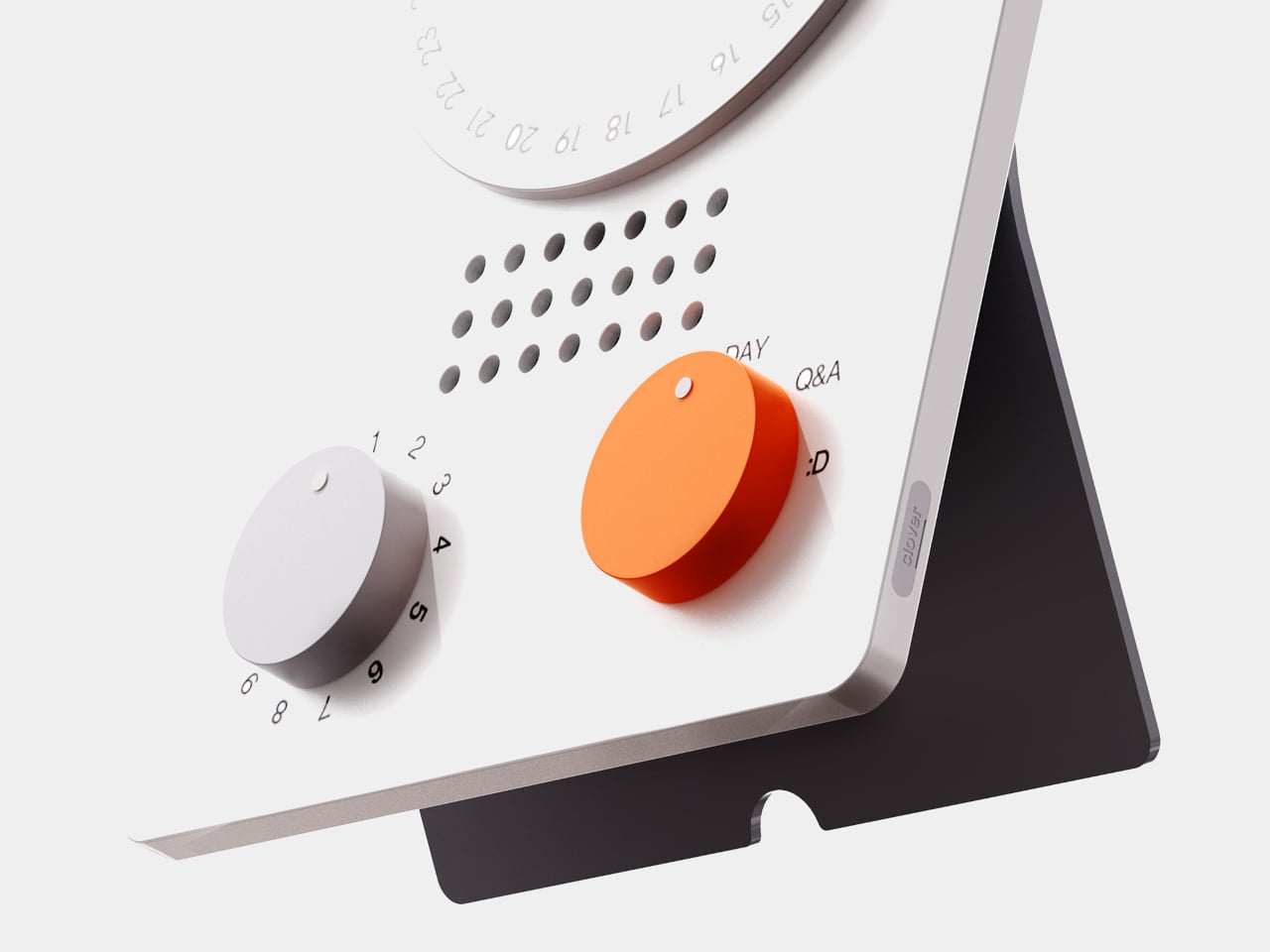
The desk calendar is a tilted white slab with a large circular dial labeled with days of the week and a small screen that displays words like “Sunlight” or “Spring.” It plays back or summarizes your voice recordings by day, and turning the dial lets you move between Day mode, Q&A mode, and long-term overview modes. Checking your emotional log becomes a physical ritual, more like flipping through a calendar than scrolling a feed or staring at another glowing interface.

1

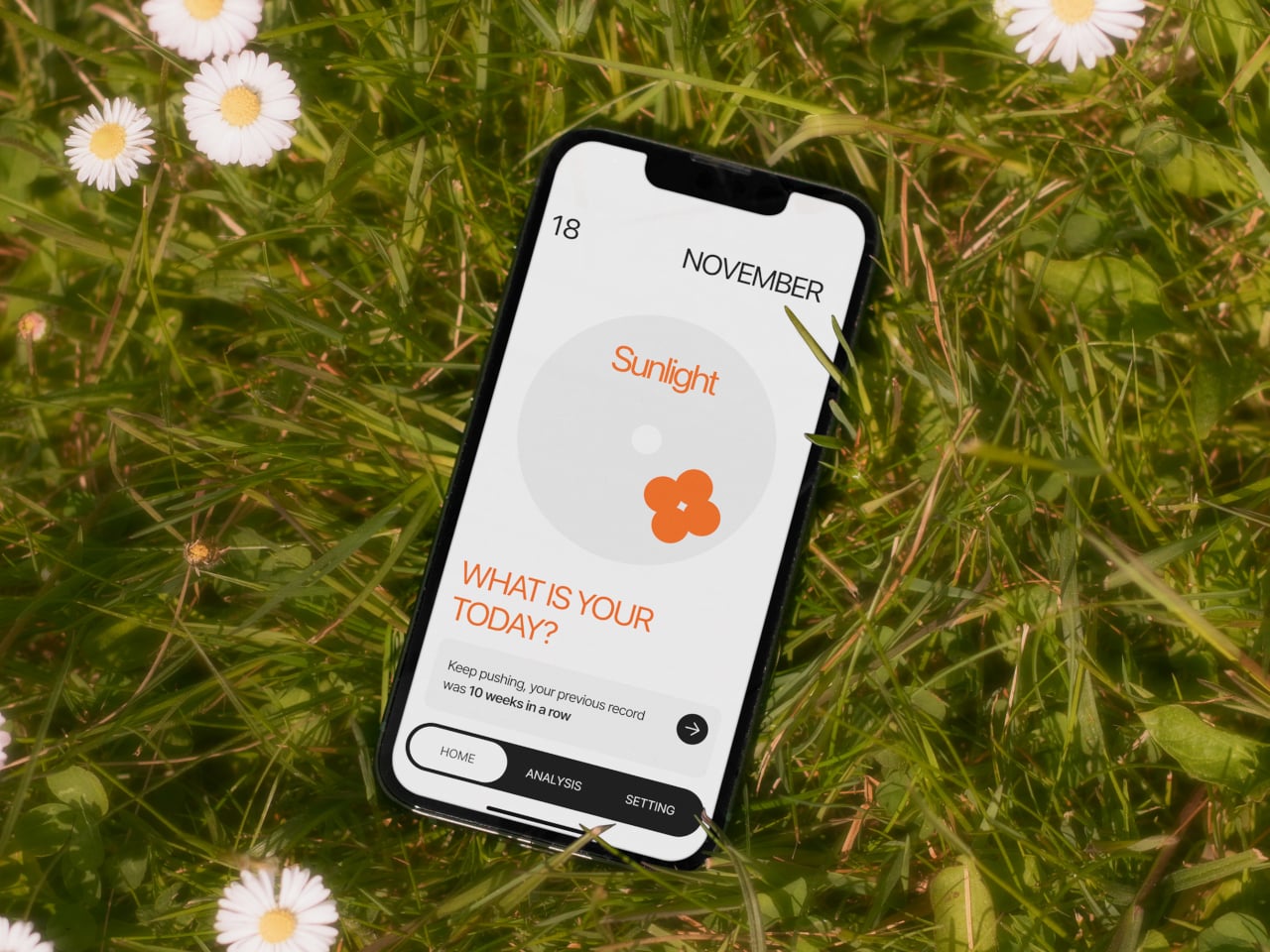
The app brings everything together, with daily cards asking “What is your today?”, weekly and monthly views full of dots and bars, and simple text insights that highlight recurring themes. You can tag entries by time, category, or keywords, and later see which people, places, or activities show up most often in your happiest moments. The analysis stays gentle, showing patterns without drowning you in numbers or making you feel like you failed when a week looks sparse.

1

Clover’s visual language, white and grey surfaces with orange accents, soft typography, and a clover icon that appears on hardware and UI, keeps the system from feeling like medical equipment. The core values, self-honesty, emotional balance, and everyday positivity, are baked into how it looks and behaves. It frames itself as a friendly desk object and app you would not mind seeing every day, not a reminder that something is broken.

Clover quietly flips the usual tracking script. Instead of asking you to monitor symptoms or productivity, it asks you to notice and collect small good things, then shows you that they happen more often than you think. For people who are tired of mood sliders and habit streaks, the idea of a physical recorder and calendar that simply help you remember what felt right might be the most calming part of the concept.

The post Clover Emotion Tracker Turns Small Happy Moments into a Daily Desk Ritual first appeared on Yanko Design.

OpenAI releases GPT-5.2 to take on Google and Anthropic

OpenAI's "code red" response to Google's Gemini 3 Pro has arrived. On the same day the company announced a Sora licensing pact with Disney, it took the wraps off GPT-5.2. OpenAI is touting the new model as its best yet for real-world, professional use. “It’s better at creating spreadsheets, building presentations, writing code, perceiving images, understanding long contexts, using tools, and handling complex, multi-step projects,” said OpenAI.

In a series of 10 benchmarks highlighted by OpenAI, GPT-5.2 Thinking, the most advanced version of the model, outperformed its GPT-5.1 counterpart, sometimes by a significant margin. For example, in AIME 2025, a test that involves 30 challenging mathematics problems, the model earned a perfect 100 percent score, beating out GPT-5.1’s already state-of-the-art score of 94 perfect. It also achieved that feat without turning to tools like web search. Meanwhile, in ARC-AGI-1, a benchmark that tests an AI system’s ability to reason abstractly like a human being would, the new system beat GPT-5.1’s score by more than 10 percentage points.

OpenAI says GPT-5.2 Thinking is better at answering questions factually, with the company finding it produces errors 30 percent less frequently. “For professionals, this means fewer mistakes when using the model for research, writing, analysis, and decision support — making the model more dependable for everyday knowledge work,” the company said.

The new model should be better in conversation too. Of the version of the system most users are likely to encounter, OpenAI says “GPT‑5.2 Instant is a fast, capable workhorse for everyday work and learning, with clear improvements in info-seeking questions, how-tos and walk-throughs, technical writing, and translation, building on the warmer conversational tone introduced in GPT‑5.1 Instant.“

While it's probably overstating things to suggest this is a make or break release for OpenAI, it is fair to say the company does have a lot riding on GPT 5.2. Its big release of 2025, GPT-5, didn't meet expectations. Users complained of a system that generated surprisingly dumb answers and had a boring personality. The disappointment with GPT-5 was such that people began demanding OpenAI bring back GPT-4o.      

Then came Gemini 3 Pro — which jumped to the top of LMArena, a website where humans rate outputs from AI systems to vote on the best one. Following Google's announcement, Sam Altman reportedly called for a "code red" effort to improve ChatGPT. Before today, the company's previous model, GPT-5.1, was ranked sixth on LMArena, with systems from Anthropic and Elon Musk's xAI occupying the spots between OpenAI between Google. 

For a company that recently signed more than $1.4 trillion worth of infrastructure deals in a bid to outscale the competition, that was not a good position for OpenAI to be in. In his memo to staff, Altman said GPT-5.2 would be the equal of Gemini 3 Pro. With the new system rolling out now, we'll see whether that's true, and what it might mean for the company if it can't at least match Google's best.     

OpenAI is offering three different versions of GPT-5.2: Instant, Thinking and Pro. All three models will be first available to users on the company’s paid plans. Notably, the company plans to keep GPT-5.1 around, at least for a little while. Paid users can continue to use the older model for the next three months by selecting it from the legacy models section.

This article originally appeared on Engadget at https://www.engadget.com/ai/openai-releases-gpt-52-to-take-on-google-and-anthropic-185029007.html?src=rss

Lawsuit accuses ChatGPT of reinforcing delusions that led to a woman’s death

OpenAI has been hit with a wrongful death lawsuit after a man killed his mother and took his own life back in August, according to a report by The Verge. The suit names CEO Sam Altman and accuses ChatGPT of putting a "target" on the back of victim Suzanne Adams, an 83-year-old woman who was killed in her home.

The victim's estate claims the killer, 56-year-old Stein-Erik Soelberg, engaged in delusion-soaked conversations with ChatGPT in which the bot "validated and magnified" certain "paranoid beliefs." The suit goes on to suggest that the chatbot "eagerly accepted" delusional thoughts leading up to the murder and egged him on every step of the way.

The lawsuit claims the bot helped create a "universe that became Stein-Erik’s entire life—one flooded with conspiracies against him, attempts to kill him, and with Stein-Erik at the center as a warrior with divine purpose." ChatGPT allegedly reinforced theories that he was "100% being monitored and targeted" and was "100% right to be alarmed."

The chatbot allegedly agreed that the victim's printer was spying on him, suggesting that Adams could have been using it for "passive motion detection" and "behavior mapping." It went so far as to say that she was "knowingly protecting the device as a surveillance point" and implied she was being controlled by an external force.

The chatbot also allegedly "identified other real people as enemies." These included an Uber Eats driver, an AT&T employee, police officers and a woman the perpetrator went on a date with. Throughout this entire period, the bot repeatedly assured Soelberg that he was "not crazy" and that the "delusion risk" was "near zero."

The lawsuit notes that Soelberg primarily interfaced with GPT-4o, a model notorious for its sycophancy. OpenAI later replaced the model with the slightly-less agreeable GPT 5, but users revolted so the old bot came back just two days later. The suit also suggests that the company "loosened critical safety guardrails" when making GPT-4o to better compete with Google Gemini.

"OpenAI has been well aware of the risks their product poses to the public," the lawsuit states. "But rather than warn users or implement meaningful safeguards, they have suppressed evidence of these dangers while waging a PR campaign to mislead the public about the safety of their products."

OpenAI has responded to the suit, calling it an "incredibly heartbreaking situation." Company spokesperson Hannah Wong told The Verge that it will "continue improving ChatGPT's training to recognize and respond to signs of mental or emotional distress."

It's not really a secret that chatbots, and particularly GPT-4o, can reinforce delusional thinking. That's what happens when something has been programmed to agree with the end user no matter what. There have been other stories like this throughout the past year, bringing the term "AI psychosis" to the mainstream.

One such story involves 16-year-old Adam Raine, who took his own life after discussing it with GPT-4o for months. OpenAI is facing another wrongful death suit for that incident, in which the bot has been accused of helping Raine plan his suicide.

This article originally appeared on Engadget at https://www.engadget.com/ai/lawsuit-accuses-chatgpt-of-reinforcing-delusions-that-led-to-a-womans-death-183141193.html?src=rss

Huawei’s Dubai Trio: A Foldable That Disappears, Earbuds That Double Down, and a Router Disguised as a Mountain

Five years into the foldable smartphone experiment, thinness remains the singular obsession. Huawei just crossed a threshold that reframes the conversation. The Mate X7, unveiled today at the company’s Dubai global launch alongside the FreeClip 2 earbuds and a Wi-Fi 7 mesh router, measures 4.5mm when unfolded. That figure matters less as specification than as experience: the fold becomes incidental to use rather than the defining characteristic of handling.

The Mate X7: Engineering the Fold Away

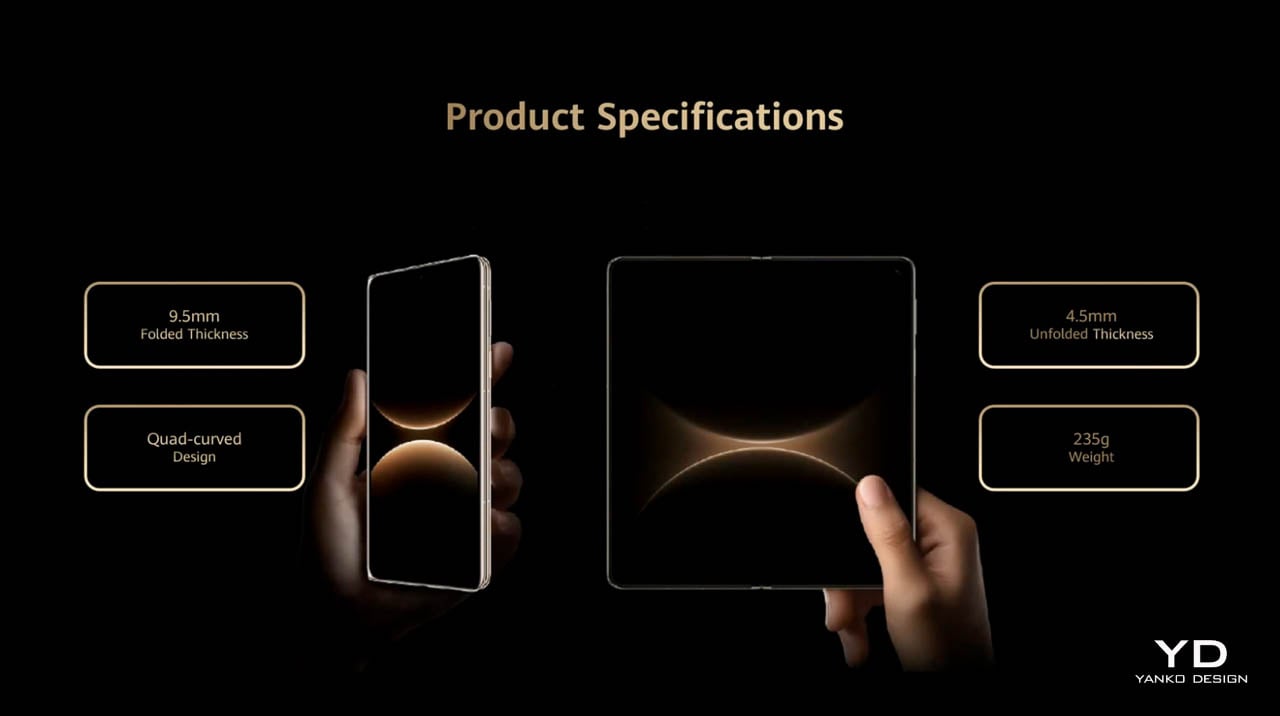
Huawei traces its foldable lineage to 2019, positioning itself as the category’s original commercializer. Six generations later, the design philosophy has crystallized into something specific and unambiguous: make the fold invisible to daily interaction. Quad-curved edges. A 4.5mm unfolded profile. Under 10mm closed. These dimensions place the Mate X7 closer to conventional smartphone territory than any previous book-style foldable has achieved. The engineering ambition centers not on what the fold enables, but on eliminating what the fold disrupts.

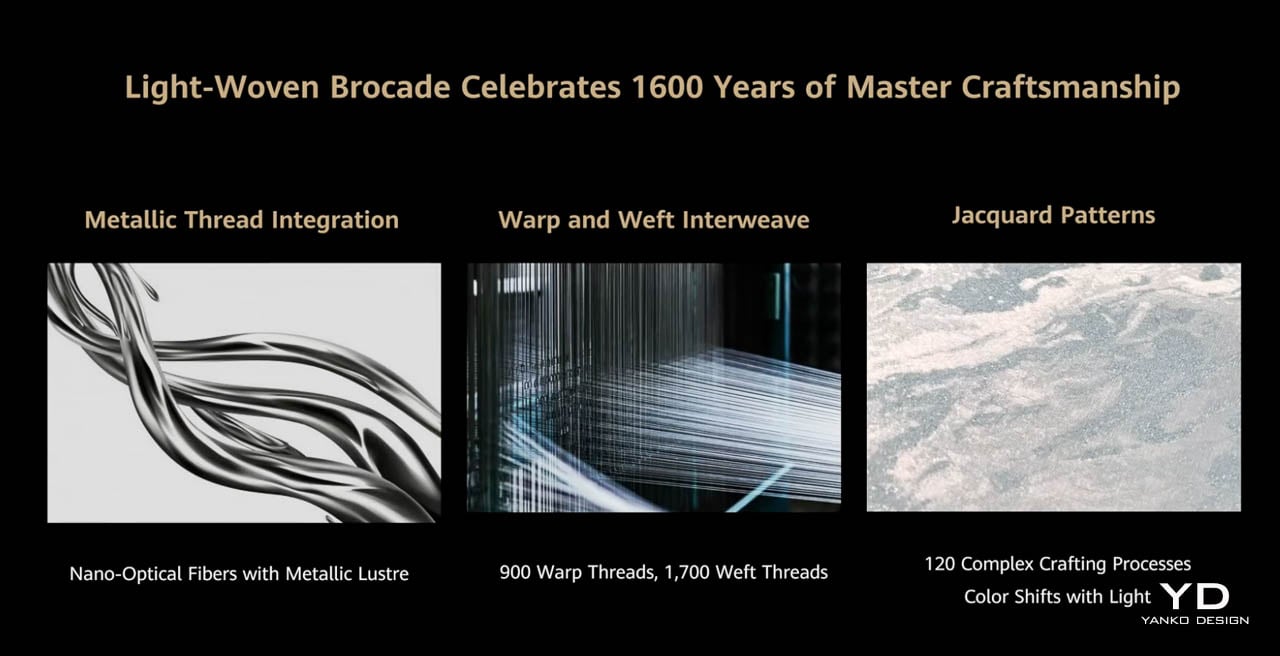
Where previous generations housed cameras in circular modules, the Time-Space Portal introduces flat edges to the protrusion. Huawei weaves between 900 and 1,700 threads into the finish, creating a textile-like visual texture that catches light across micro-patterns. This thread-woven treatment ships exclusively in China. Global variants arrive in standard colorways. The material strategy treats the camera bump as design opportunity rather than engineering compromise, an approach that signals continued investment in tactile differentiation where competitors minimize and apologize.

Both displays run at 2.4K resolution. Adaptive refresh spans 1Hz to 120Hz. The outer screen peaks at 3,000 nits while the inner reaches 2,500 nits, and high-frequency PWM dimming addresses the eye strain concerns that have plagued OLED panels since their adoption. These specifications alone would be unremarkable in any conventional flagship. Achieving them across two flexible panels within a 4.5mm envelope represents the actual engineering story, the quiet difficulty hidden beneath familiar numbers.

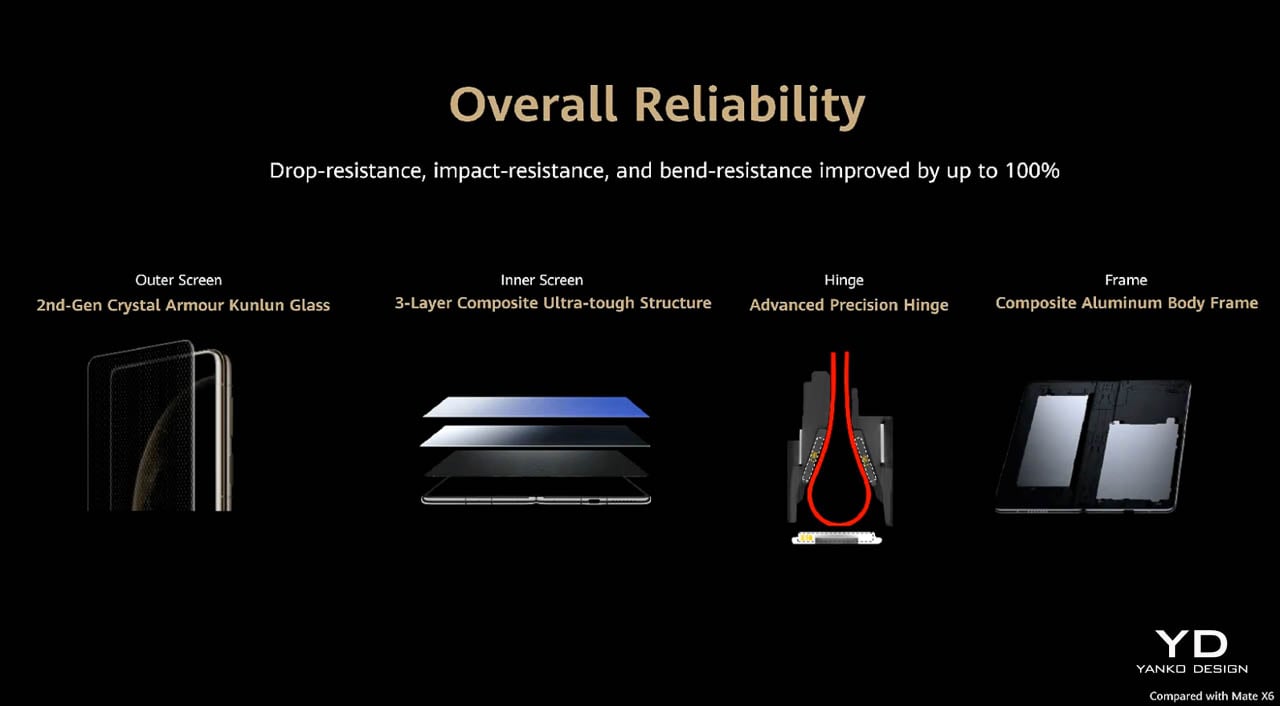
Durability targets the foldable’s historical weakness with measurable aggression. Drop resistance improved 100% over the previous generation according to Huawei’s internal testing. Impact resistance matched that improvement. The outer glass uses second-generation crystal armor technology. The inner screen employs a three-layer composite structure including a non-Newtonian fluid layer, material that increases rigidity under sudden impact pressure while remaining flexible during normal operation. Hinge redesign contributes over 100% improvement in bend resistance. IP59 certification covers high-temperature and water-jet resistance when open, with IP8 rating when the device closes.

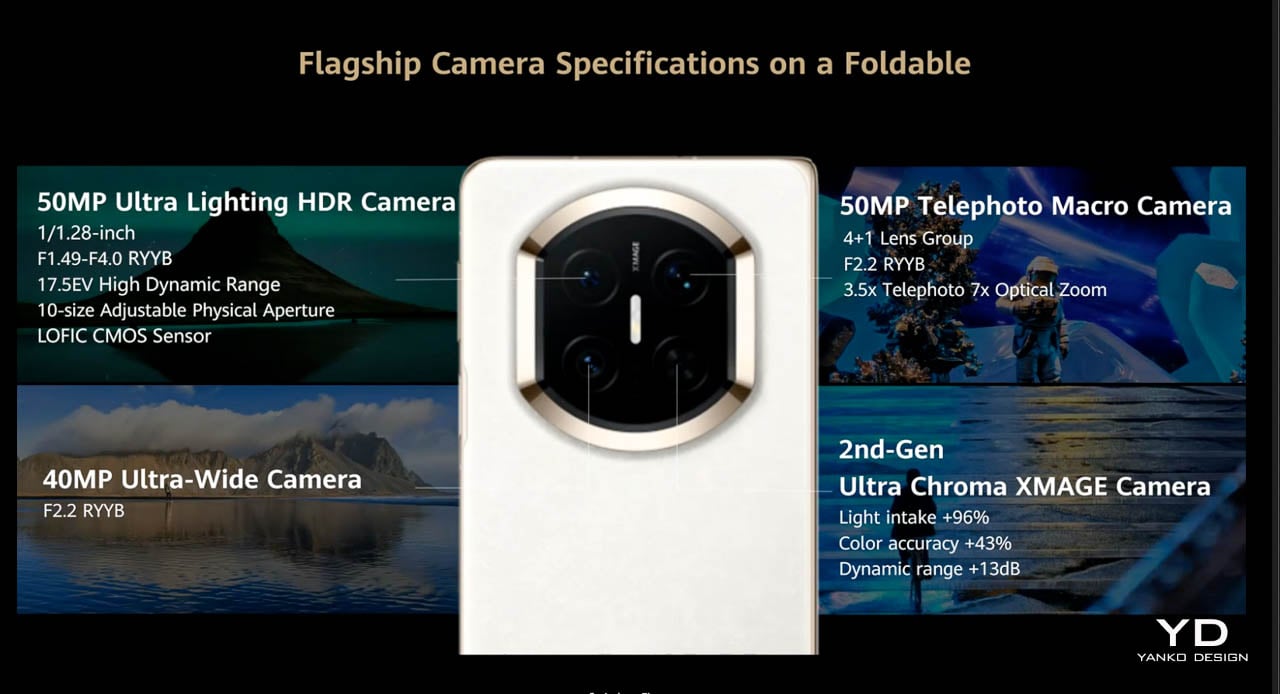
Camera architecture compresses flagship-grade optics into 26% less volume than equivalent modules. A 50MP main sensor pairs with variable mechanical aperture reaching f/1.49. The 50MP telephoto deploys a vertical periscope structure, a first for the foldable category, achieving 3.5x optical zoom within constrained depth. Light intake improved 127% through these spatial optimizations. Second-generation ultrachroma sensors handle color science while LOPIC technology extends dynamic range for stills and video alike.

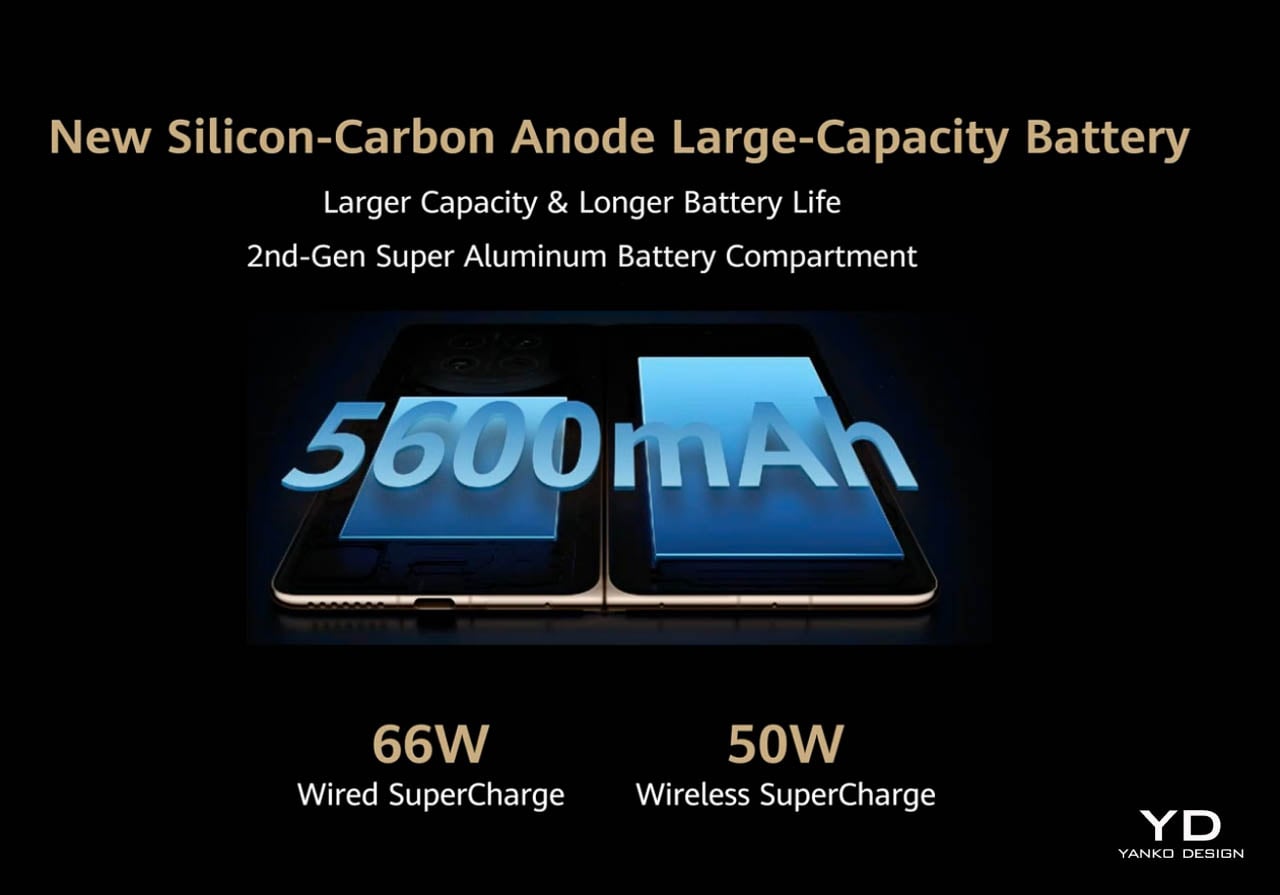
Battery capacity reaches 5,300mAh for global markets. The Chinese variant ships at 5,600mAh, the difference attributed to European import regulations that cap certain cell chemistries. Wired charging supports 66W. Wireless reaches 50W. Thermal management relies on an 18% larger vapor chamber paired with graphene-based loop dissipation. Additional antennas distributed around the device edges address connectivity challenges arising when folding reorients internal components relative to cell towers and Wi-Fi access points.

Wi-Fi 7 Mesh: Infrastructure as Object

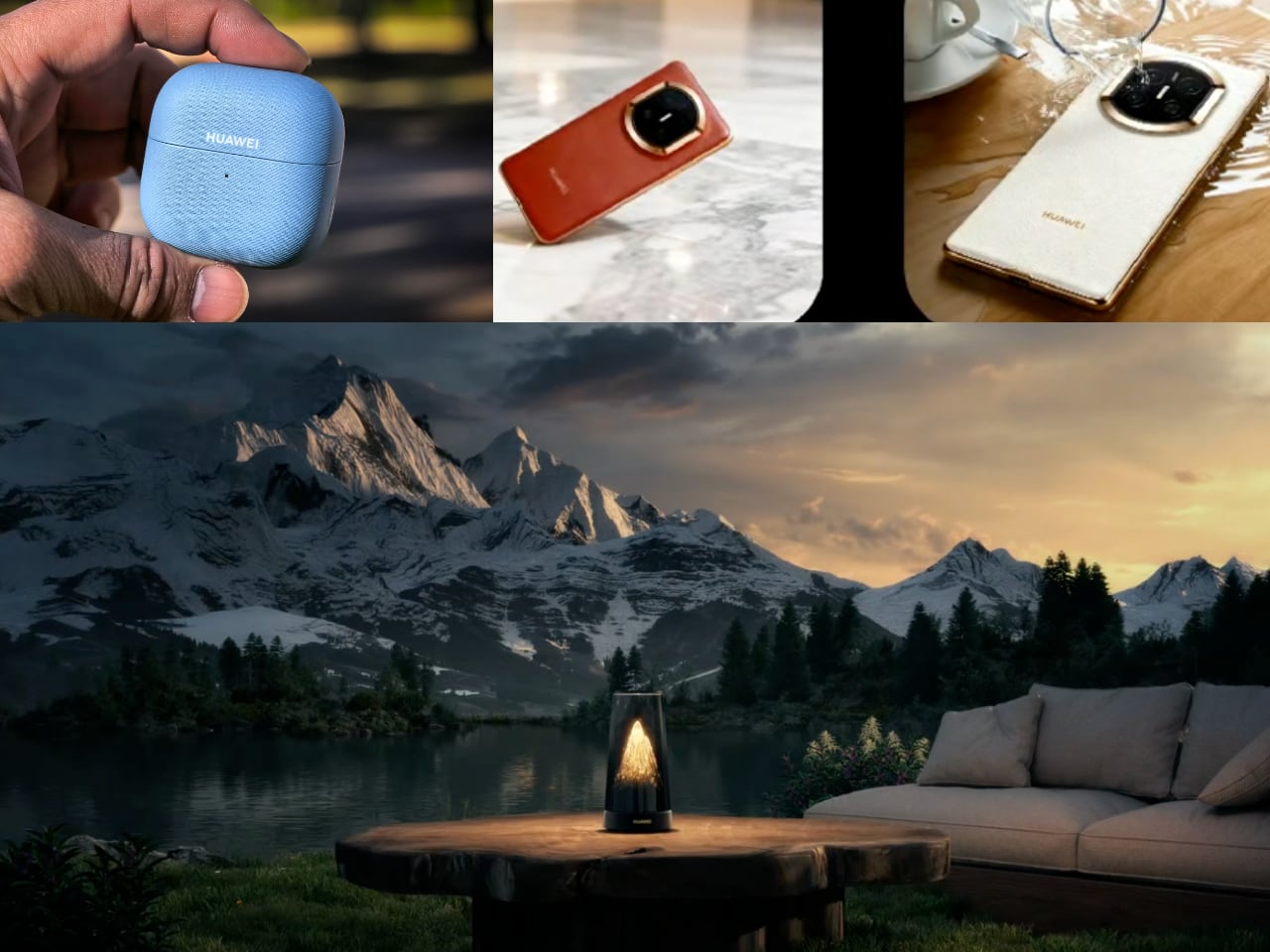
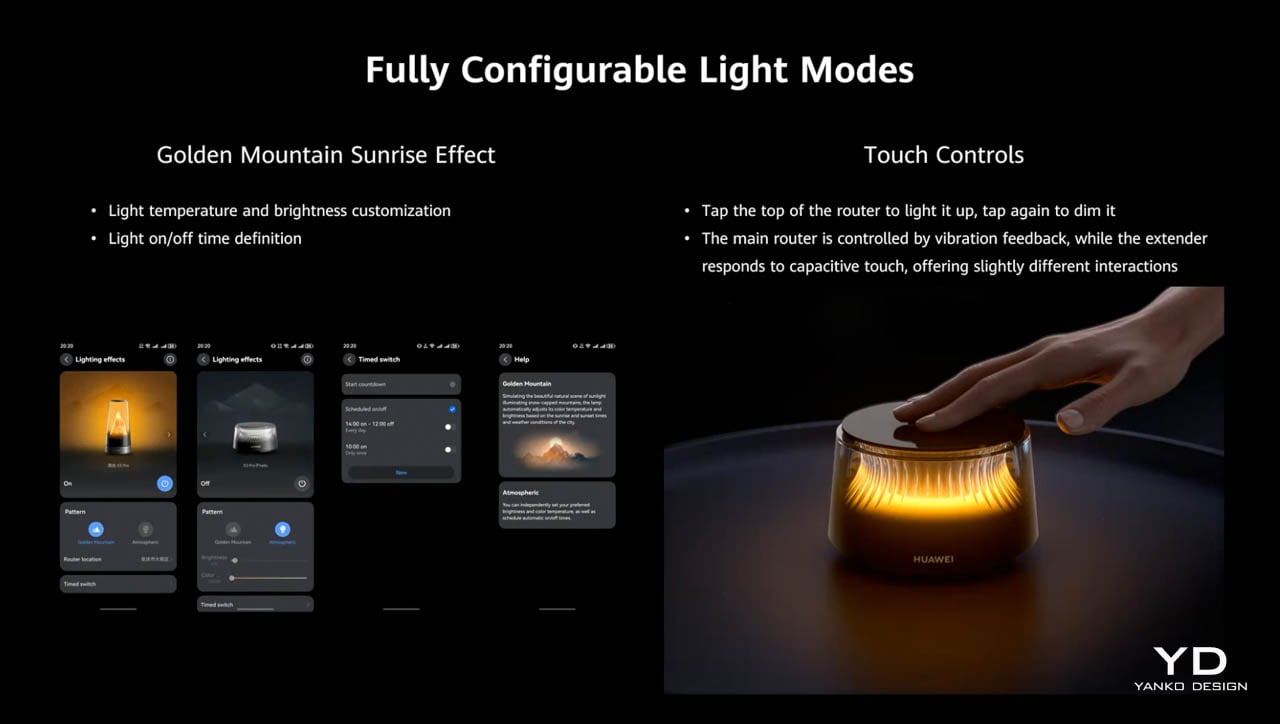
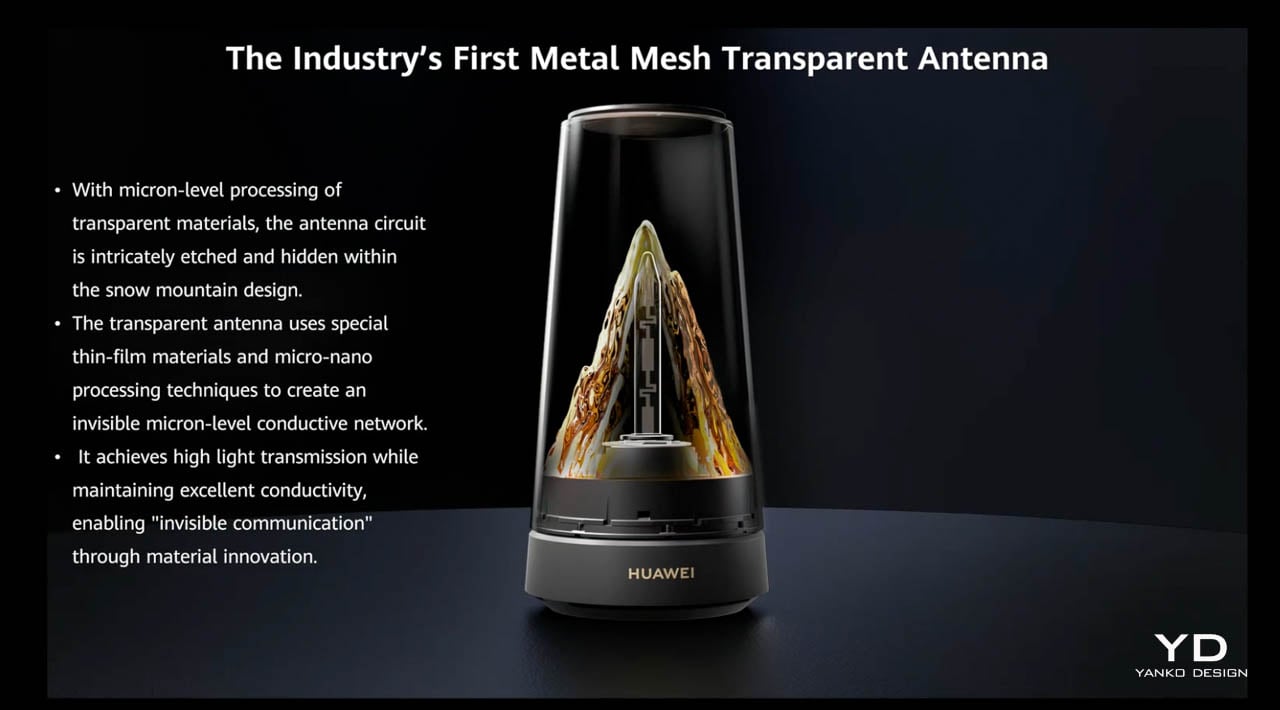
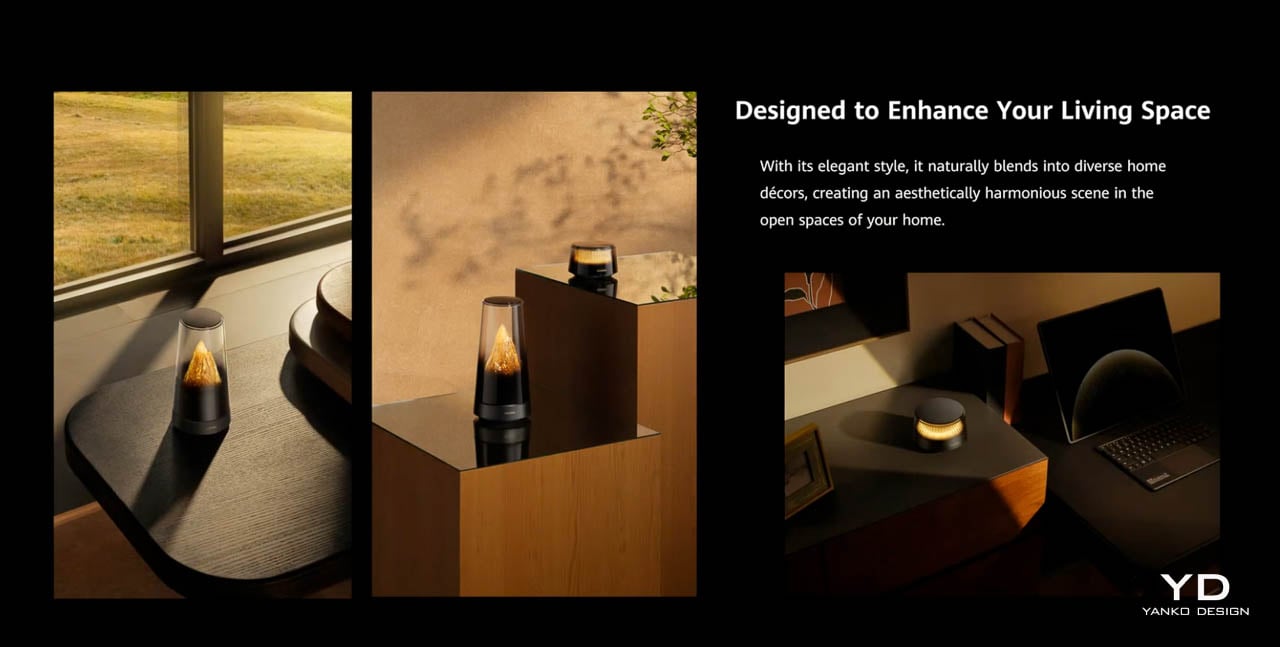
Router design typically optimizes for invisibility. Mesh systems tuck behind furniture or blend into wall-mounted anonymity. Huawei inverts this assumption entirely. The main unit mimics a mountain range enclosed within a transparent dome. Extender units feature indirect lighting resembling whisky glasses set on a shelf. Touch controls on each surface adjust lighting modes and network settings. The design explicitly treats network infrastructure as decorative object rather than functional necessity demanding concealment.

Technical specifications support the visual ambition without contradiction. Wi-Fi 7 operates with six antennas, three at 2.4GHz frequency. 4K SQAM and Multilink Operation enable simultaneous connections across frequency bands for devices supporting the standard. The main router includes active cooling via internal fan for sustained high-throughput scenarios. Up to two extenders pair with each base unit.

This approach acknowledges domestic reality: mesh routers occupy visible positions in living spaces. Huawei treats that visibility as opportunity for intentional form rather than problem requiring solution.

FreeClip 2: Iteration on a Proven Form

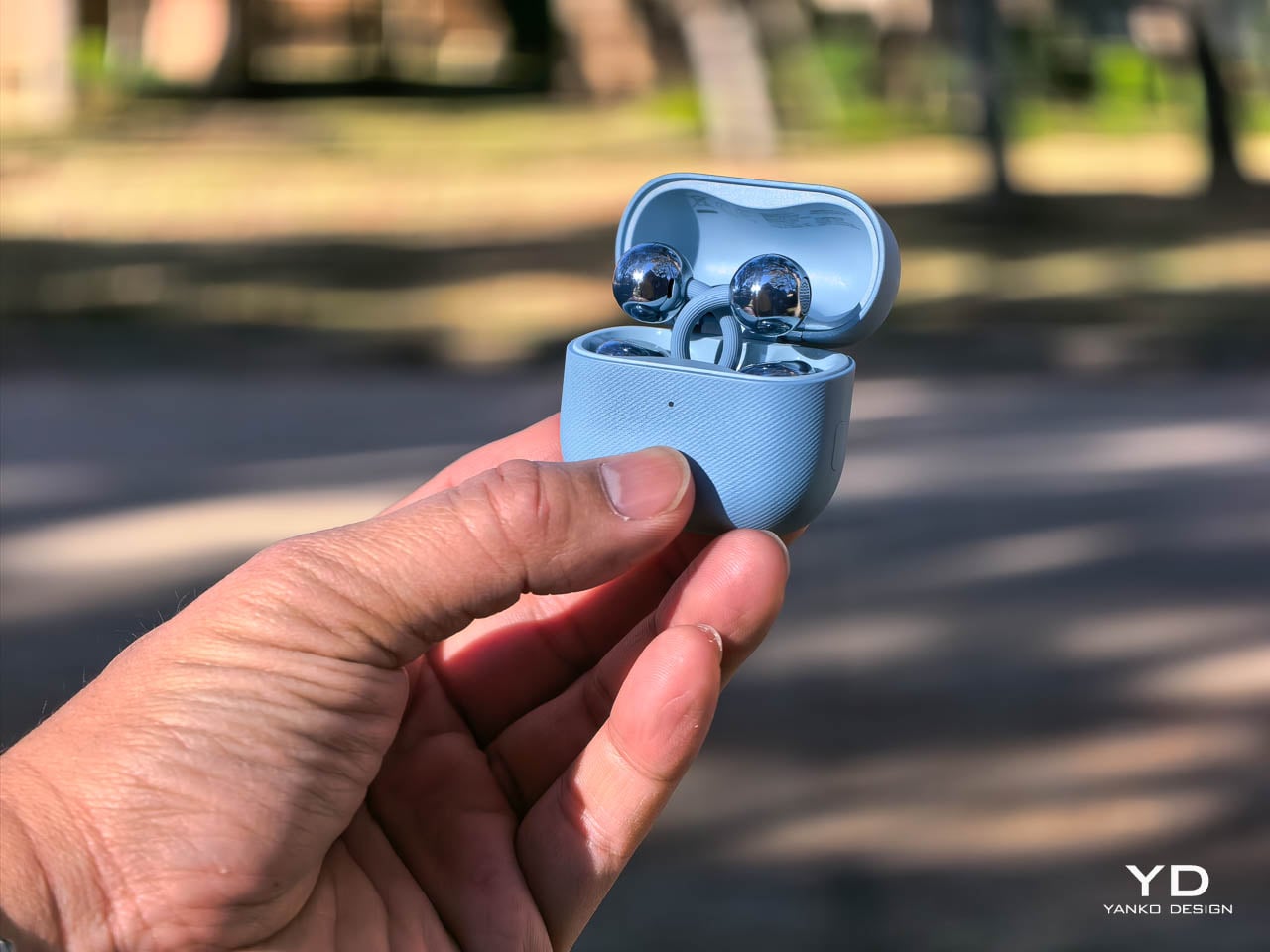
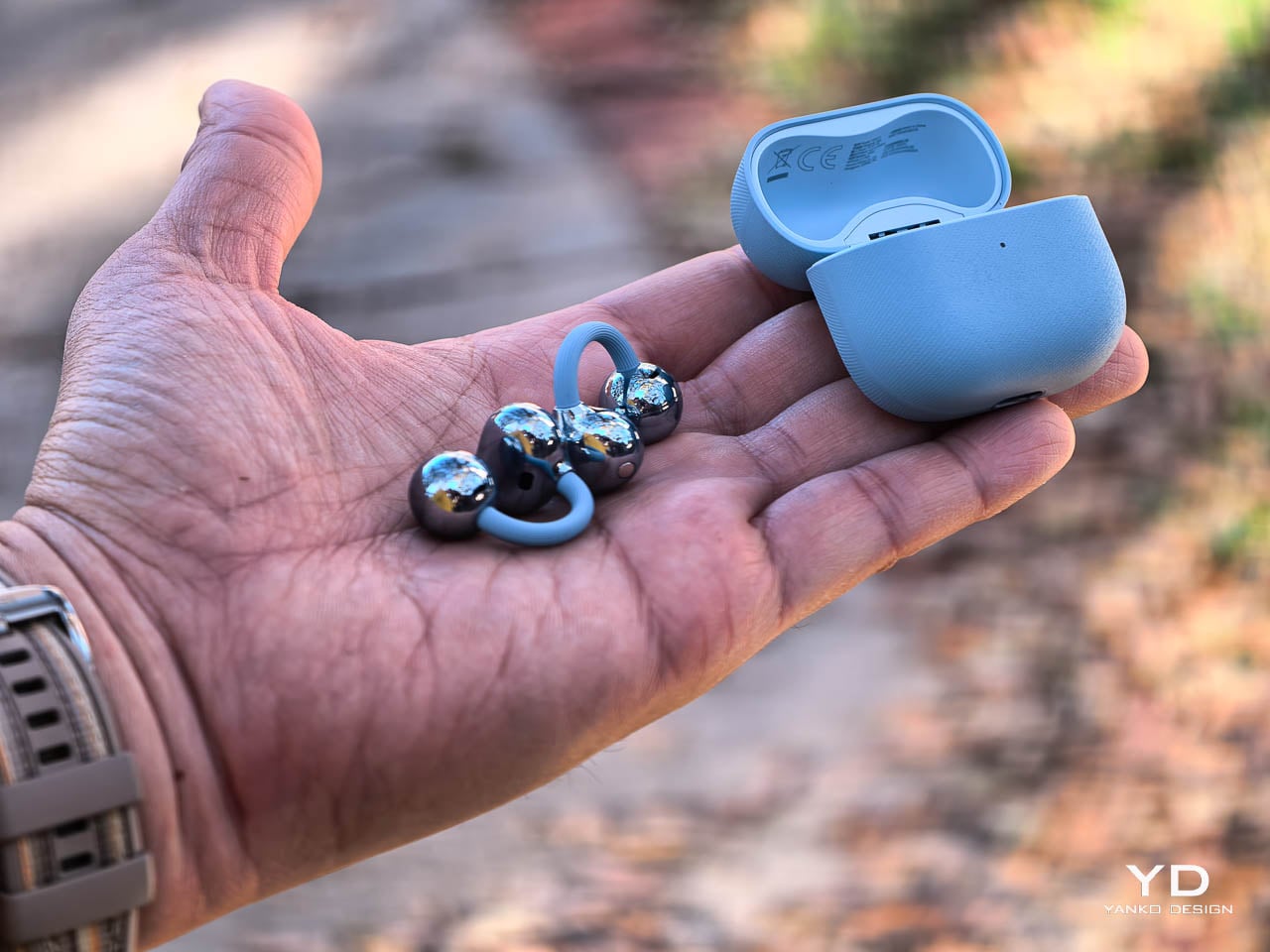
Three million first-generation FreeClip units shipped, establishing category viability that justifies continued investment. Open-ear designs occupy a specific niche: awareness of surroundings traded against audio immersion. The sequel addresses the original’s primary limitations through incremental refinement. Weight dropped 9% to 4.1 grams per earbud. Case dimensions shrank 11% while narrowing 17%. The redesigned Seabridge improves comfort across extended wear sessions where the previous generation began to fatigue.

Dual 11mm diaphragms share a single magnetic circuit, an engineering choice that doubles bass output compared to the previous generation while reducing acoustic ball size by 11%. The architecture trades spatial efficiency for low-frequency presence that open-ear designs historically lacked. Battery life extends to 9 hours per earbud and 38 hours total with case, improvements of one and two hours respectively. IP57 certifies the earbuds while the case carries IP54.

For deeper examination of the FreeClip 2’s material execution and acoustic performance, my full review covers the dual-diaphragm engineering and comfort improvements in detail.

Automatic left/right detection, swipe volume controls, and head gesture support complete the interaction model. Huawei Audio Connect supports iOS and Samsung devices, with no Google Play availability announced. Color options span Denim Blue, Feather Sand White, Modern Black, and Rose Gold.

Market Position

Global launch proceeds December 11, 2025 from Dubai. Pricing remains unannounced. Product configuration suggests premium positioning matching or exceeding the previous generation’s placement.

For the foldable category broadly, the Mate X7’s dimensional achievements demonstrate that thinness progression continues regardless of engineering complexity. The mesh router and FreeClip 2 complete an ecosystem play: smartphone, audio, and home networking under unified design language. Huawei signals capability breadth alongside flagship ambition, using Dubai as statement of global market re-entry after years of constraint.

The post Huawei’s Dubai Trio: A Foldable That Disappears, Earbuds That Double Down, and a Router Disguised as a Mountain first appeared on Yanko Design.
Google Disco is an experimental web browser that builds AI widgets based on your tabs

The latest experiment emerging out of Google Labs is Disco, which is the company's AI-driven approach to web browsing. The first feature for Disco is called GenTabs, built on Google's Gemini 3 model. 

GenTabs are interactive widgets created from a mix of user prompts, open tabs and chat history. The preview examples demonstrate how GenTabs can create a model to demonstrate entropy as a study aid, or collect trip ideas into one screen for building an itinerary. The GenTab can be further refined with natural language requests, and it will also offer contextual suggestions for additions that may be helpful. Google's blog post announcing this concept notes that information given in a GenTab will include links to its sources. 

Google has a waitlist for people who want to try out Disco and GenTabs, although for now it's only on macOS. Google Labs projects don't always go the distance to an official public release, and the company even acknowledged that GenTabs will likely have some wonkiness at this experimental stage. But it's been clear for months that big tech companies are gunning for the best and fastest ways to put their AI tools into browsers, so it seems likely that there will be more features in this vein coming up soon.

This article originally appeared on Engadget at https://www.engadget.com/ai/google-disco-is-an-experimental-web-browser-that-builds-ai-widgets-based-on-your-tabs-180000701.html?src=rss

Rivian goes all in on ‘universal hands-free’ driving at its first Autonomy and AI day

EV automaker Rivian just held its inaugural Autonomy and AI day which, unsurprisingly, focused extensively on hands-free driving. An upcoming software update promises the introduction of "universal hands-free" driving. The company says its vehicles will be able to autonomously navigate more than 3.5 million miles of roads in North America, "covering the vast majority of marked roads in the US."

This is coming to the R2 line of EVs, but also Gen 2 R1 vehicles like the recently-released Rivian R1S. The service will be locked behind a subscription for something called Autonomy+ that includes self-driving, but also offers access to forthcoming and unannounced autonomous features. Rivian customers can pay $2,500 for lifetime access to the platform or $50 per month.

The R2 is getting LiDAR sensors, which will presumably help enable some of those upcoming autonomous features, in addition to a new chip called the Rivian Autonomy Processor. The processor has been designed for multimodal applications and runs the company's proprietary neural net engine. Both of these features are expected "to ship on R2 models starting at the end of 2026."

Today's event wasn't just about hands-free driving. Many of the company's vehicles will soon be given access to the AI-powered Rivian Assistant, which uses LLMs and can connect to apps like Google Calendar. This assistant will be model-agnostic, as it will "orchestrate different models and choose the best one for the task."

In addition to the upcoming R2, the company is prepping the R3 and R3X. A Rivian offshoot just introduced an extremely expensive, but modular, electric bike called the TM-B.

This article originally appeared on Engadget at https://www.engadget.com/transportation/evs/rivian-goes-all-in-on-universal-hands-free-driving-at-its-first-autonomy-and-ai-day-172004733.html?src=rss

Disney has accused Google of copyright infringement on a ‘massive scale’

Disney has accused Google of copyright infringement on a "massive scale," alleging that the tech giant is training its AI tools on protected materials as well as allowing those tools to generate infringing images and videos. Variety reports that Disney attorneys sent a cease-and-desist letter to Google on Wednesday.

“Google is infringing Disney’s copyrights on a massive scale, by copying a large corpus of Disney’s copyrighted works without authorization to train and develop generative artificial intelligence (‘AI’) models and services, and by using AI models and services to commercially exploit and distribute copies of its protected works to consumers in violation of Disney’s copyrights,” reads the letter, which Variety reviewed.

The letter includes examples of images from several Disney properties including Deadpool, Moana, Star Wars and others, reproduced by Google's AI tools. Disney is demanding that Google implement guardrails within all its AI products to prevent further infringement. The media giant sent a similar letter to Character.AI in September, and is currently suing Hailuo and Midjourney over alleged copyright infringement.

Copyright enforcement has become more challenging in the face of AI-created imagery, and companies are increasingly taking an "if you can't beat them, join them" approach. Today Disney announced a deal with OpenAI to license its characters for use in Sora, OpenAI's video generator. The deal will see Disney invest $1 billion in OpenAI (a paltry sum by some standards), with the option to purchase additional equity at a later date.

This article originally appeared on Engadget at https://www.engadget.com/ai/disney-has-accused-google-of-copyright-infringement-on-a-massive-scale-163737642.html?src=rss

The Kia Seltos: Redefining the Compact SUV

The Kia Seltos: Redefining the Compact SUV

The all-new Kia Seltos is transforming the compact SUV market with its bold design, innovative technology, and exceptional functionality. Designed under Kia’s innovative “Opposites United” philosophy, the second-generation Seltos seamlessly blends the rugged strength of an SUV with the refined elegance of modern design. This unique combination makes the Seltos an ideal choice for urban […]

The post The Kia Seltos: Redefining the Compact SUV appeared first on Geeky Gadgets.

Posted in Uncategorized